Category: City Guides

  • The Best Things to Do in Vilnius, Lithuania

    The Best Things to Do in Vilnius, Lithuania

    A city trip to Vilnius is easier than you think: an hour and a half flight and you’ll land in the Lithuanian capital, which apart from a turbulent history also has a lot of modern adventures to offer! Vilnius is young, a bit wild and quite innovative! I’ll show you what you can experience here, especially in winter – and why you should definitely visit Vilnius!

    The main sights in Vilnius + history of the city

    Cathedral Square & St.Stanislaus Cathedral

    The Cathedral Square with the Cathedral of St. Stanislaus is a must-see during a sightseeing tour in Vilnius. On Cathedral Square you will also see a large monument to Gedeminas, Grand Duke of Lithuania from 1316 and founding father of Vilnius (you will come across the name more often in the city! Right next to the cathedral is the bell tower, from which you have a good view of the surroundings.

    ➜ Buy tickets for the bell tower here*

    Vilnius Cathedral and Bell Tower Illuminated at Night

    Gedeminas Tower

    But you’ll also have a good view from the Gedeminas Tower nearby. There is also a small cable car up there, in case you are too lazy from all the sightseeing to walk all the way up! Gedeminas Tower is part of the Lithuanian National Museum.

    Facts about Vilnius:

    • Lithuania has 2.8 million inhabitants, 570,000 of them live in Vilnius.
    • The Old Town is a UNESCO World Heritage Site, the largest in Eastern Europe and famous for its many Baroque churches.
    • Vilnius is the capital of Lithuania.

    Palace of the Grand Dukes of Lithuania

    The Palace of the Grand Dukes of Lithuania, which was actually destroyed at the beginning of the 19th century and has only recently been completely reconstructed, is also located on Cathedral Square. Here you will also find the archaeological excavations found in the process, which you can see in an interesting exhibition.
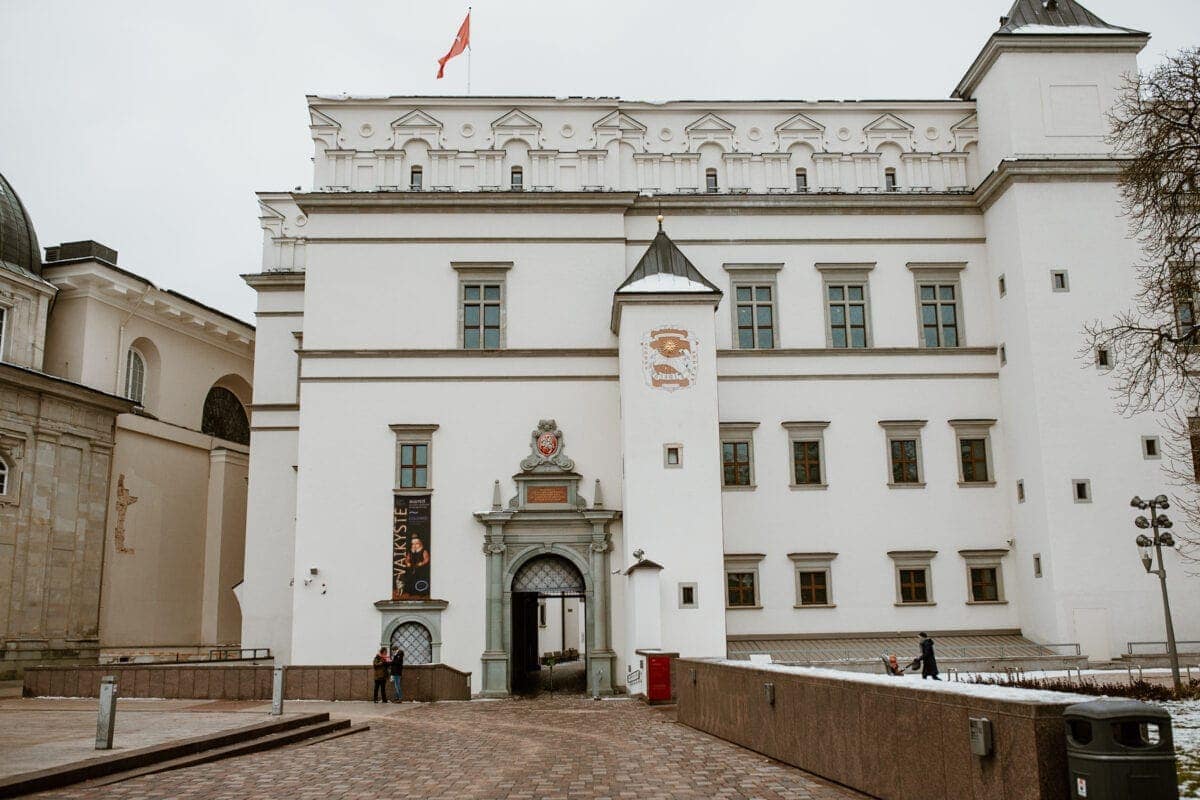
    As you can see, you can find a high concentration of historical places around the cathedral. Now you should have a really good overview of Vilnius and its origin!

    Gate of Dawn

    You shouldn’t miss the Gate of Dawn while exploring the main sights in Vilnius. Actually, it is a city gate of the old city wall around the old town. On the side, there is a small entrance from which you go up a staircase just above the archway. There is a really nice little chapel with a Madonna. The Gate of Dawn is an important pilgrimage site and is visited by many believers. (Taking photos is therefore not allowed).

    Gate of Dawn with the Mater Misericordiae Chapel in Vilnius

    St.John’s Church & Vilnius University

    Churches, churches, churches. You won’t get past that in Vilnius, because the many baroque churches are simply part of the cityscape. You’re probably already a little tired from so much history and heavy church history.

    But there is one more church you should see: St. John’s Church is part of the Vilnius University campus (one of the oldest in Europe, by the way!) and the altar with its many columns shows very well why the baroque churches in Vilnius are considered quite unique. By the way, in summer you can also climb the bell tower here for a small fee. The bell tower is the highest building in the old town and you’ll have a perfect view!

    Baroque church with a bell tower, photographed from below
    Best view of Vilnius Old Town: The bell tower of St. John’s Church

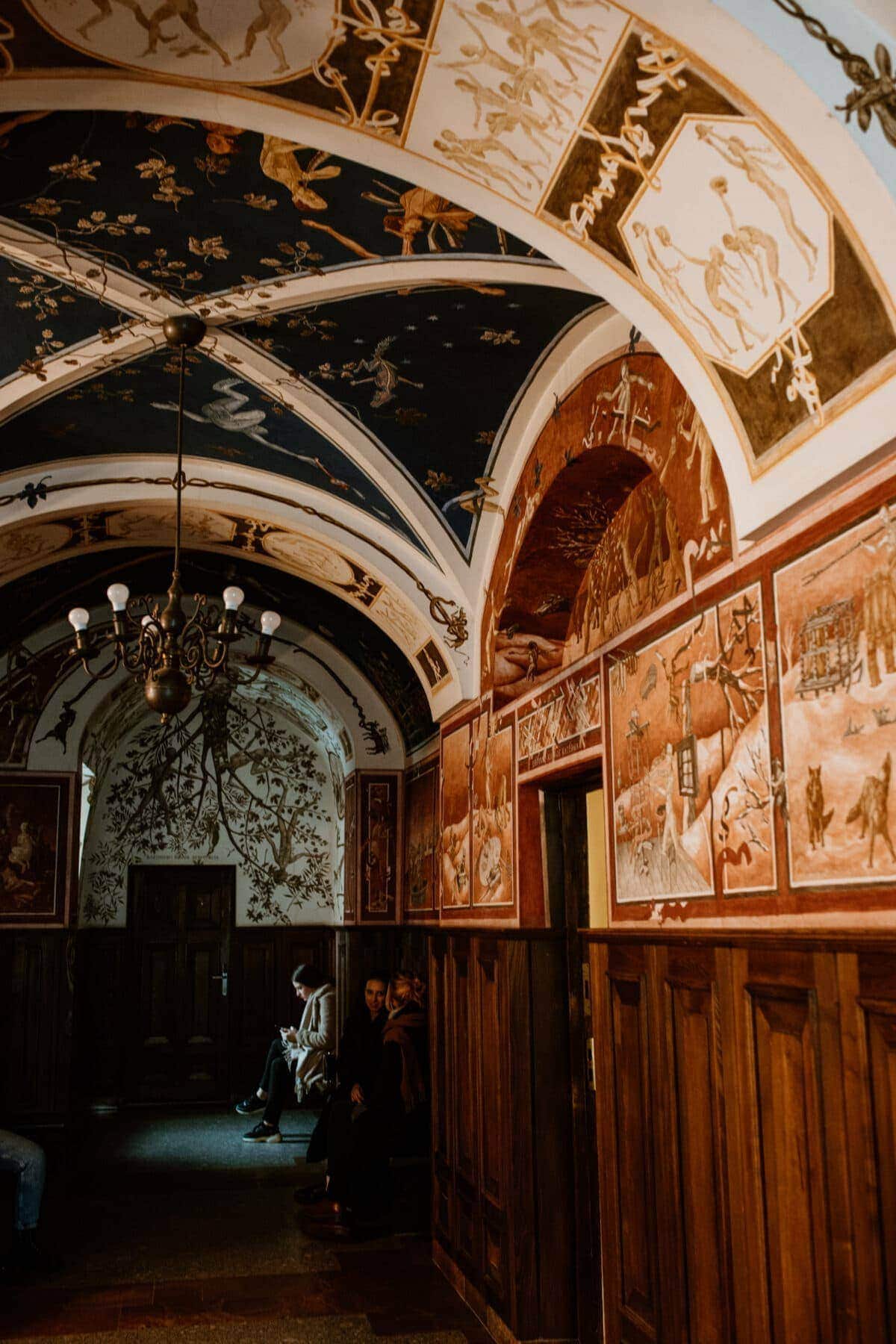
    Tip: If you’re discreet, you can mingle with students on weekdays and explore the old university. In the philological faculty, thanks to my local guide, I also came across a hall with impressive murals!
    Looking for accommodation in Vilnius?
    Check prices & availability for hotels in Vilnius* here

    Vilnius: Young, modern & creative

    Surprising how much history there is in Vilnius, isn’t it? Considering that Lithuania has been part of the EU for quite a long time, it is one of the countries in Europe that I knew very little about, and I bet I am not alone. But as interesting as the history of Lithuania and Vilnius may be, the present is also: there really is a special creative wind blowing through Vilnius, the city is young, in constant upheaval, and very creative. Vilnius itself, for example, advertises itself with the slogan“Vilnius: Amazing wherever you think it is” and so much self-irony already suggests that behind all the history you’ll find a pretty casual city.

    The artists’ quarter Užupis

    On the other side of the Vilnia river, next to the old town, you end up in Užupis. What somehow started by a group of several artists in the 1990s is now a must-see on any visit to Vilnius.

    In Užupis you can find galleries, studios, street art and many small stores. Especially in summer, the pubs here are well attended. Užupis was proclaimed a republic with its own constitution and parliament in 1998 by some of its inhabitants; probably a bit tongue-in-cheek, but still you feel a bit like you’re entering a different world.

    ➜ Official website of the Republic of Užupis

    Goldsmith's workbench with tools and jewelry components
    With a little luck you can also watch artists at work in Užupis

    MO Museum

    If, like me, you also like to look at contemporary art, then you should definitely visit the MO Museum. (In general, you should check out the quarter around the museum, here you’ll find some exciting stores and cafés like Raštinė or the Urban Garden.) The privately funded museum was designed by Daniel Libeskind and offers an interesting permanent exhibition as well as interactive temporary exhibitions. Nice design.

    Art gallery featuring stone sculptures, paintings, and photographs

    Prison 2.0: Strange things in Lukiškės

    I walked through the open, large gate, to the right and left high, dark brick facades with teeny tiny windows. If the gate were to close behind me now, I definitely would feel uncomfortable. A very dominant-looking, broad-shouldered security guard with a bald head warns me that photos with a large camera are not allowed (I had overlooked the mini sign at the entrance) and for a brief moment I think he is part of the production – because Lukiškės Prison 2.0 is no longer a prison, but is now part of the creative scene in Vilnius.
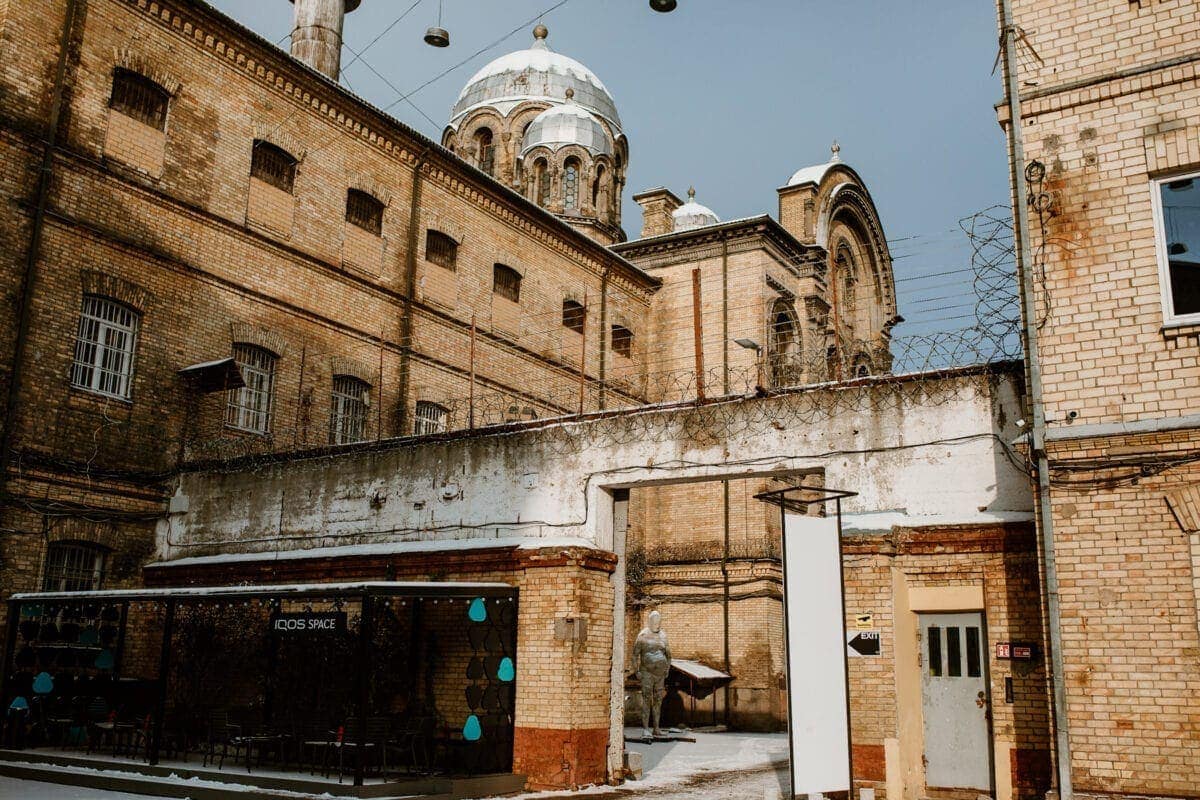
    Historic prison building with a domed church and a modern café

    Lukiškės & Stranger Things

    If you’ve watched Stranger Things on Netflix, it will look familiar: In the fourth season of the series, the former Lukiškės Prison served as a filming location. In general, the old prison is a special place, and I think quite representative of the general vibe in Vilnius. The city is young, lively and open to new concepts: creating an event space and creative center in an old prison is very unique.

    A snow-covered city street with old brick buildings in winter

    Lukiškės 2.0: A place for creatives

    Some of the old wings now house studios, exhibition spaces, concert stages or even a bar. The former cells can be visited on a guided tour – and here you can also learn more about the history of the prison. The courtyard is also being put to new use: This winter, a large skating rink was opened, and if you’re too exhausted, you can enjoy snacks afterwards at one of the street food stands outside.

    A festively lit historic interior with string lights and visitors
    Historic prison interior with staircases, bars, and green doors

    However, I recommend that you think carefully beforehand about when and if you are going to visit Lukiškės 2.0. (My mood was slightly dampened, at least afterwards; certain places just do something to you).

    The history of Lukiškės

    Lukiškės Prison was one of the most notorious penal institutions in the country for over 100 years; executions were still carried out here until 1996, when the death penalty was abolished in Lithuania. The undignified conditions, as well as international pressure (not least due to Lithuania’s accession to the EU), eventually led to the prison’s closure in 2019.

    A dilapidated prison hallway with rusty cell doors and peeling paint

    And once you have experienced the barren cells, the musty smell in the dark corridors, the eerie basement cells for solitary confinement (photos were not allowed in the cell wings as well as the individual cells, but I didn’t feel like it anyway) or the 10-square-meter outdoor cells live, in which the prisoners could spend their only hour outside of the cell to walk around the yard (together with the cellmate, mind you, with whom you had already spent the other 23 hours hanging on each other), then you ask yourself: Only in 2019???

    The flippant tone of the tour doesn’t make it any better, and as much as I like creative concepts, I personally found the very casual approach to the past of this place (which wasn’t that long ago) and the fates associated with it very disconcerting. However, you can’t see most parts of the prison without a guided tour, so you just have to go through such embarrassments as a Polaroid mugshot to say goodbye. I didn’t like this kind approach that much, but others might feel different. See for yourself!

    Nevertheless, I would recommend you to visit it, because Lukiškės 2.0 is really a moving place. Just take care of yourself. <3

    Christmas time & Winter in Vilnius

    Let’s put it this way: winter is a rather exotic time to visit Vilnius. It can get very, very cold; especially in January, and sometimes on the already short days you really have to look for the sun under the thick cloud cover. But during Christmas time it can also be cozy in Vilnius: Many stores and pubs decorate their facades festively and on the Cathedral Square a huge, illuminated Christmas tree creates the right atmosphere.

    A building decorated for Christmas with teddy bears and string lights at night
    Decorated for Christmas: The Old Town of Vilnius

    And cold temperatures are an excellent excuse to stop off at a different café or restaurant every ten meters: The gastronomic scene in Vilnius is so unique that I have a little food guide for you!

    ➜ Click here for the Food Guide to Vilnius!

    An elegant gourmet dish featuring fish, caviar, and pickled red onions
    Full of surprises: The food scene in Vilnius

    Helpful tips for your trip to Vilnius

    One thing in advance: a city trip to Vilnius is very easy. I would even say that you can just spontaneously get on a plane and spend a few days here without thinking too much about the organization. Still, I have a few tips for you that might help!

    Where to stay in Vilnius

    In the low season you can find some good deals in Vilnius; there are accommodations for every taste. I stayed in an old mansion from the 17th century, which was converted into a design hotel a few years ago with great attention to detail.

    White mansion-style hotel with winter floral decorations at the entrance
    Hotel tip: Hotel Pacai – it’s as dreamy as it looks!

    I enjoy good hotels anyway (although I spend so much time in hotel rooms anyway), but Hotel Pacai is really an absolute recommendation. Certainly not for every budget, but perhaps still worth a night or two – I promise you won’t forget this highlight in a hurry.

    ➜ Book our stay at Hotel Pacai in Vilnius here*

    Currency & Money

    • The currency in Lithuania is Euro.
    • Card payment is common, you don’t need much cash.

    Getting around in Vilnius

    • Public transportation is available (streetcar, bus, train), but I didn’t use it at all during my stay. The Old Town is best explored on foot anyway and for further distances I used Bolt (available in Vilnius instead of Uber). Bolt is also a good choice to the airport, costing about 15€ one way.
    • The flight time to Vilnius is e.g. from Frankfurt about 1:40h, from Berlin only 1:10h.

    Language

    Lithuanian is spoken in Lithuania, which I find super fascinating as a language. Lithuanian, as a Baltic language, belongs to the Indo-Germanic language family, but don’t let the “Germanic” fool you, you don’t understand anything 🙂 I’ve always tried to pick out at least a few chunks, but I didn’t get beyond “hello” and “thank you”.

    The native language is very much cultivated in Lithuania. Similar to France with its radio quota, Lithuania has a kind of language committee that makes sure that the Lithuanian language is not riddled with Anglicisms, for example. Thus, all English words are Lithuanianized, so to speak, “computer” becomes “kompiuteris”, for example.

    Younger Lithuanians, however, often speak English, especially in sights, cafes, restaurants, etc.. Older Lithuanians, on the other hand, also speak and understand Russian, but due to the historical background and the current situation, it is better to avoid this topic.

    Transparency: My trip to Vilnius was at the invitation of Go Vilnius.

  • 10 Best Things to Do in Tarragona, Spain

    10 Best Things to Do in Tarragona, Spain

    I can highly recommend Tarragona as a travel destination in Catalonia: The city is really nice to explore and is bursting with great sights. I’ll show you my tips for Tarragona here and explain why you should definitely make a detour here!

    Sooner or later, you’ll come across another name for the city of Tarragona: Tarraco. That was Tarragona’s name in ancient times. In the 1st and 2nd centuries, Tarragona (or Tarraco, as it was then known) was one of the most important Roman cities on the Iberian Peninsula.

    Tarragona Roman Excavations

    After the fall of the Roman Empire, however, Tarragona disappeared into insignificance. Many of the pompous buildings were simply built over afterwards in the course of the centuries. Today, the ensemble of monuments from the Roman period is a UNESCO World Heritage Site and is managed by the Museu d’Història de Tarragona.

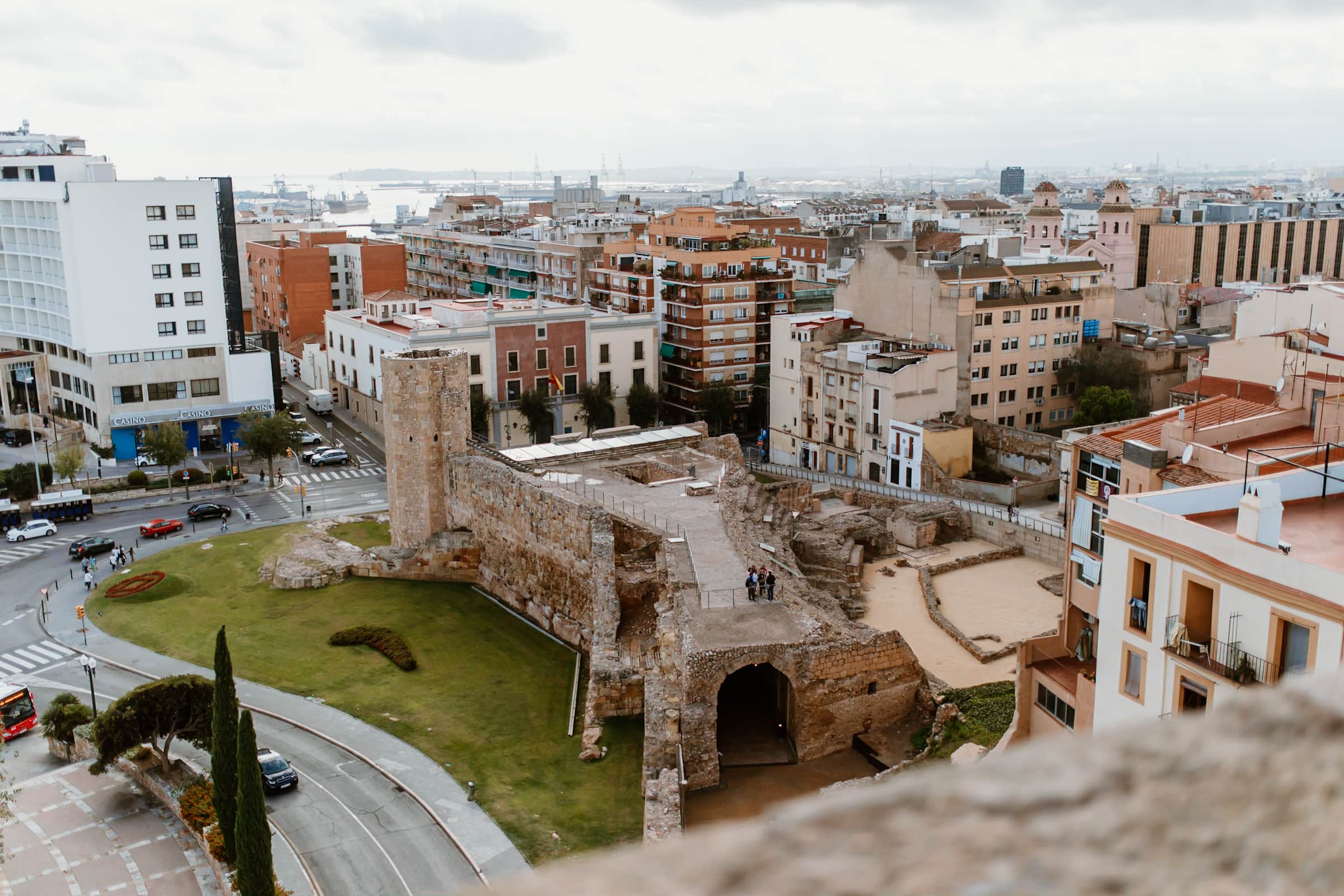
    Roman ruins in Tarragona with a panoramic view of the city and the harbor

    These are the attractions you should see in Tarragona:

    The Circus

    Hard to believe how big the Circus was in ancient Tarragona! On an area of 325 meters long and between 100 and 115 meters wide, chariot races took place here, one of the greatest spectacles ever! Today you can see especially the huge vaults underneath the Circus, which actually only served to stabilize the heavy stands above. Unbelievable, for which crowds of people the Romans built at that time!

    Tarragona Circus vault

    The Amphitheater

    Situated directly on the sea, in Roman times the amphitheater hosted gladiatorial fights and bloody chases with wild animals that lost their lives for the amusement of the spectators.

    Tarragona Amphitheater

    Torre del Pretori (Praetorian Tower)

    From the Torre del Pretori you have a fantastic panoramic view of Tarragona. Especially the view of the amphitheater and the old town with the cathedral enthroned in the middle are really worth seeing!

    Panoramic view of Tarragona, featuring the cathedral and the Old Town

    Tip: You can buy an entrance ticket for each monument individually. However, there is also a collective ticket, with which you save money already from the second location!

    For a small fee, you can also join a walking tour of the Roman sites: Book here*

    Tarragona Cathedral

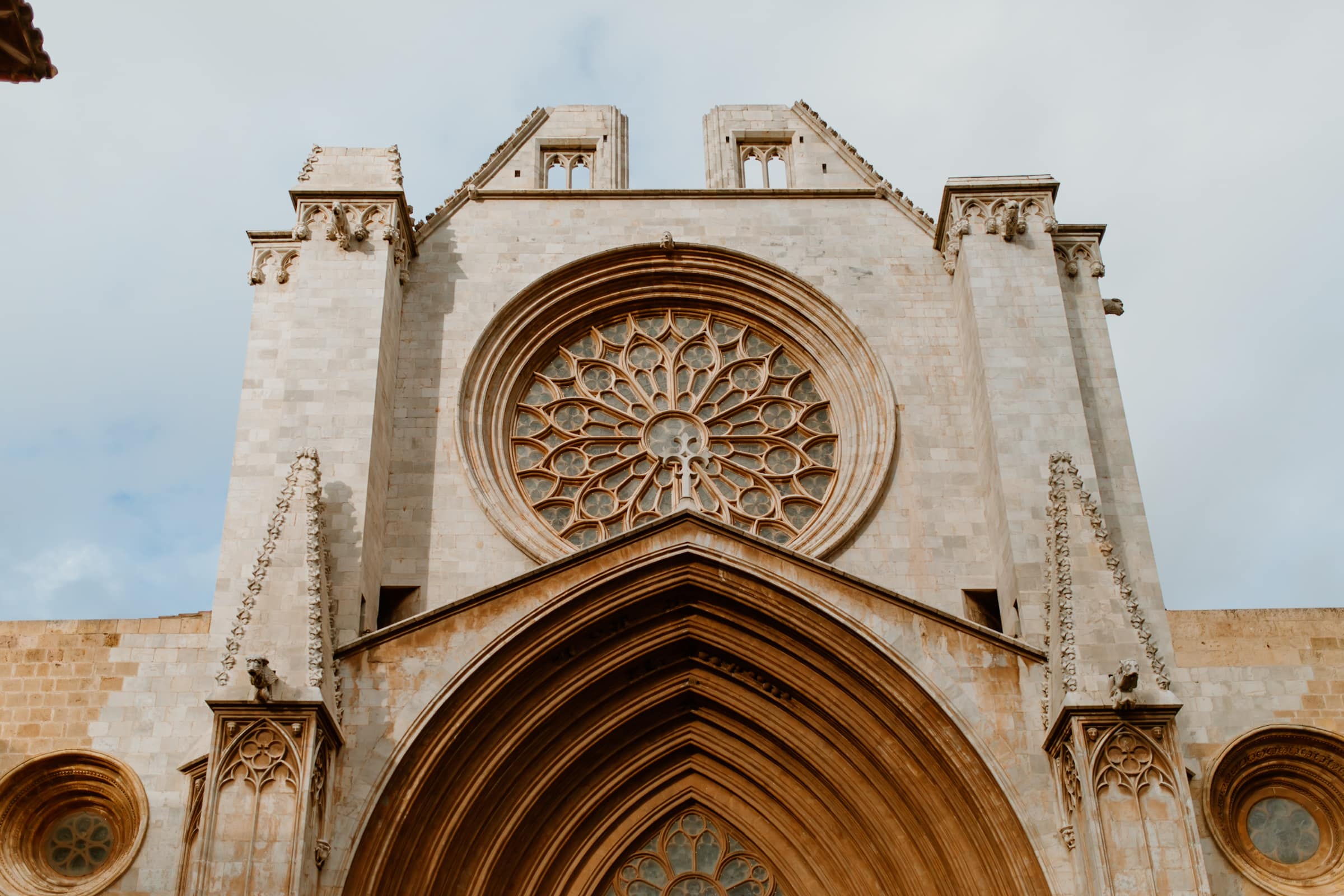
    Situated on a hill in the middle of the old town, between buildings, Tarragona Cathedral seems almost small and inconspicuous. But you should definitely take a look! The main church and the huge organ are very impressive. And inside the complex, the romantic cloister awaits you. A real oasis!

    ➜ Buy your tickets for the cathedral here*

    Gothic cathedral with a rose window and an ornate portal
    Medieval monastery garden with a fountain and Gothic arcades

    Castellers: The human towers of Catalonia

    On Sundays, the square in front of Tarragona Cathedral often hosts one of the absolute highlights: Here you can watch the various groups of castellers build their dizzying towers, the castells, in a combination of teamwork and acrobatics. Every two years there is a big competition lasting several days, in which the best group is chosen. In Tarragona alone there are four different clubs that maintain this tradition with great dedication.

    I was particularly impressed by how much cohesion (in the truest sense of the word) is required for a tower: hundreds of Castellers come together in a precisely thought-out formation! There is no real competition between the groups either; they even help each other to wrap the ultra-long waistbands, which provide the necessary stability in the lumbar region.

    Attention: In case of rain or wet ground the whole spectacle is cancelled for safety reasons.

    Catalan castellers build a human tower at the festival
    Catalan castellers form a human tower in front of a historic cathedral

    You can find more tips for the area around Tarragona, the Costa Dorada and Catalonia here:
    Catalonia tips & sights

    Balcó del Mediterrani (Balcony to the Mediterranean Sea)

    The balcony to the Mediterranean Sea: that’s the name of the popular beach promenade in Tarragona! And really, the promenade seems like one huge balcony: You’ll have the perfect view of the sea from up here! People like to stroll here, which the locals also call “tocar ferro” (touching the iron). In fact, superstition says that touching the railing of the Balcó del Mediterrani brings good luck!

    Ocean view through pink oleanders and palm trees on the Mediterranean coast

    Museu d‘art Moderna MAMT

    If you are even a little bit interested in modern art, you should definitely take a look at the Museu d’Art Moderna de Tarragona (called “MAMT”). In addition to different exhibitions, you can see the famous Tapis de Tarragona by Joan Miró, behind which there is a touching story.

    Large, colorful tapestry featuring abstract figures in a museum-style design

    In 1966, Miró’s only daughter had a serious car accident near Tarragona, but was rescued and treated in a hospital in Tarragona. Grateful for the efforts of everyone involved, Miró donated his work “Tapis de Tarragona” to the Red Cross of Tarragona in 1970, which can now be seen in the MAMT. The tapestry was knotted by Josep Royo, with whom Miró went on to create further tapestries for special locations. One of these tapestries (and the largest) hung in the World Trade Center in New York until its destruction on September 11, 2001.

    By the way, admission to the MAMT is free!

    Beaches in Tarragona

    Do you feel like going to the beach? In Tarragona this is not a problem! Even though you’re in the middle of a city and part of the coast is taken up by the admittedly unattractive harbor, you can still have a great beach day here: Tarragona even once won an award for the most natural city beaches in Spain!

    A coastal town with a turquoise-blue sea and a cloudy sky

    From the Torre del Pretori you can see especially well the Platja Arrabassada and the Platja Savinosa. Although Tarragona’s beaches are very close to the city, they are largely unspoiled. You’ll really find a lot of greenery and great hiking trails in the area.

    Shopping in Tarragona

    Tarragona is not as much of a shopping destination as Reus. Nevertheless, on Calle Major, for example, which leads down from the cathedral, you will find some nice stores where you can also buy typical souvenirs such as wickerwork or porcelain.

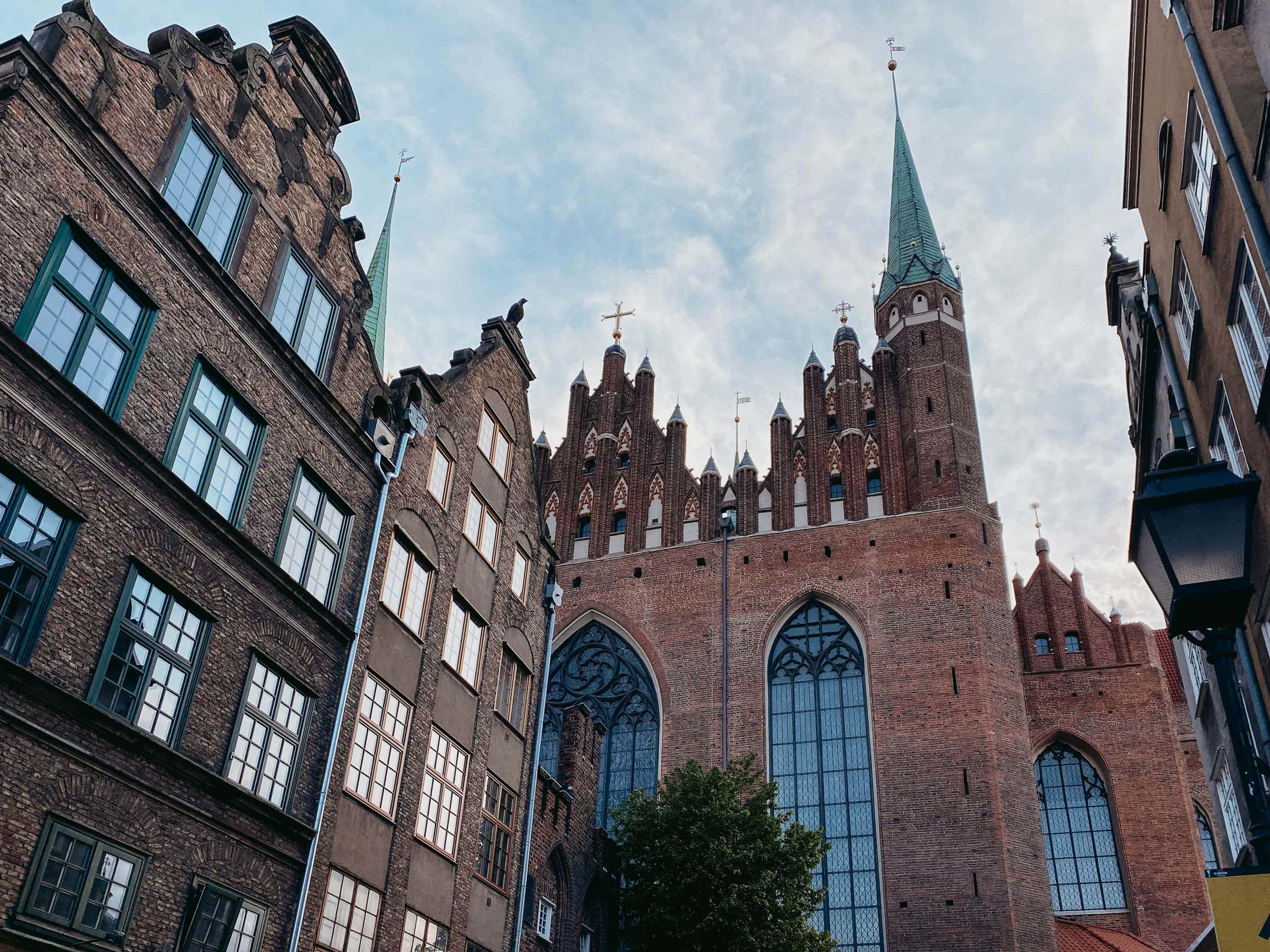
    A narrow alley in the old town with a view of the Gothic cathedral in Tarragona

    Small handbags made of wicker are in style or can be used as a trendy basket at home. And they are often simply cheaper here than at home!

    Larger stores can be found on Rambla Nova, a large shopping street, or in the Centre Comercial Parc Central.

    Woven straw bags in a rustic home decor store

    Where to eat in Tarragona

    The old town of Tarragona with its small winding streets is just too romantic! Here you will find many great locations for a cozy glass of Vino Tinto in the evening or right away for dinner. But note: Take your time, because the evening starts much later in Spain! 🙂

    A bustling staircase in the Old Town, lined with passersby and historic buildings

    You can sit outside until the evening in one of the many bars on Plaça de la Font! And the terrace of Pizzeria Pulvinar on Calle Mayor is a great place to enjoy the Tarragona vibe.

    A bustling town square with a historic city hall in Tarragona, Spain

    For rainy days or cooler weather, I recommend Entrecopes. Here you can enjoy typical Catalan cuisine in a cozy cellar vault!
    Where to stay in Tarragona

    Just like Reus, I was also very enthusiastic about Tarragona. I love big cities like Barcelona, but sometimes it’s the small, at first glance inconspicuous places that I really enjoy discovering.
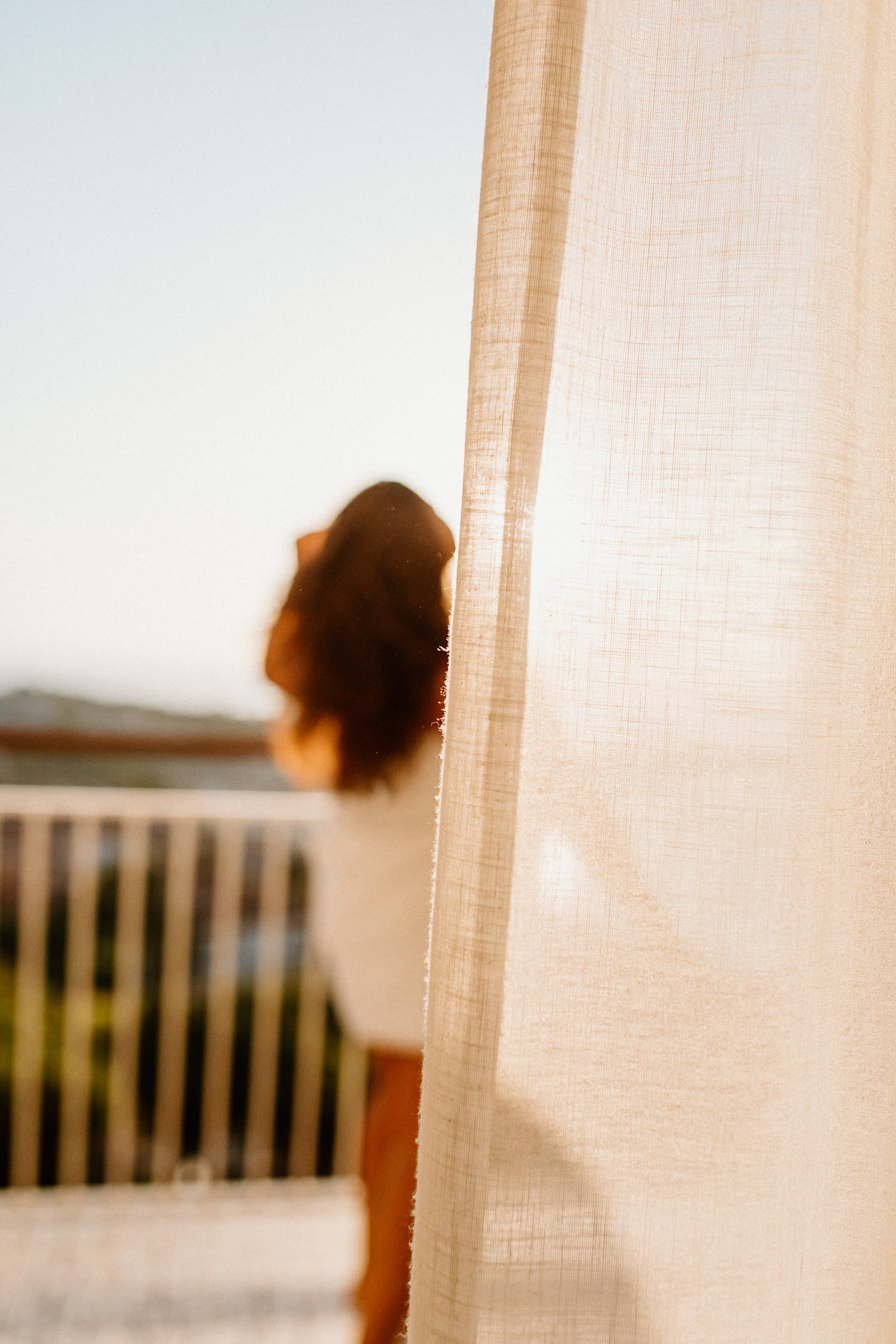
    I really liked Tarragona. Its location right by the sea, the charming old town, and the historic sites are simply unbeatable. And the hotel certainly added to the experience: watching the orange-glowing sun slowly rise over the turquoise-blue Mediterranean right from my room’s balcony in the morning is simply one-of-a-kind.

    Woman behind a white curtain on a sunny balcony

    And yet the H10 Imperial Tarraco is actually one of those massive hotels that usually leave me pretty cold. But this time, I had to eat my words: Not only is the view impressive, but so is the hotel’s overall vibe—somewhere between cool Miami style and warm tropical charm!

    A woman in a towel enjoys the sunset from the hotel balcony overlooking the ocean
    A woman relaxes on a white hotel bed with decorative wall paneling

    By the way, on the roof there is a rooftop bar with pool – and a fantastic view over the sea!

    ➜ You can book a stay at the H10 Imperial Tarraco here

    An elegant hotel restaurant with a view of palm trees through large panoramic windows

    How to get there / Day trip from Barcelona

    From Barcelona you can reach Tarragona in just one hour by a regional train! The city is therefore perfect for a day trip if you are in Barcelona anyway.

    ➜ Train timetables & tickets from Barcelona

    And Barcelona itself is always worth a trip, too! From many German airports there are good and cheap connections to Barcelona:

    ➜ Find a cheap flight to Barcelona here*

    Aerial view of a Mediterranean coastal town with a turquoise-blue sea

    Where to go next

    Tarragona is located on the Costa Dorada. Nearby you will find many small coastal towns such as Cambrils, which are especially popular in the summer! You can also take a trip to beautiful Reus, the city of Modernisme. Or you can plan a complete road trip through Catalonia – it’s worth it!

    ➜ Rent a car from Barcelona here*

    ➜ Here you can find all my tips for a trip to Catalonia

    Disclaimer: The Tourism Board of Catalonia invited me on this trip.

  • The Best Things to Do in Reus, Spain

    The Best Things to Do in Reus, Spain

    The city of Reus in Spain is a real treasure! A hundred kilometers from Barcelona, you will find a place with a lot of history, great architecture and great spots for foodies. In any case, I was immediately hooked by the lovely town of Reus and would recommend it any time as a city trip in Spain!

    Statue of a horseman in Plaça del Mercadal in Reus, Spain
    Plaça Prim in the center of Reus also often serves as a meeting place

    What to see in Reus

    The city center of Reus is dominated by Modernist buildings and the flair of a once very rich commercial city. In addition, Reus is still the absolute shopping destination in the south of Catalonia. If you love cozy alleyways, old building architecture and small boutiques, this is the place for you. And although Reus, with its 100,000 inhabitants, seems like a village next to a city like Barcelona, there are many interesting sights here.

    Looking for more inspiration for your trip?
    Here you can find all my tips for Catalonia

    Plaça Prim

    At Plaça Prim, you can see the important role Reus once played as a trading center in Catalonia. The pompous arcades along one side give the square a truly stately flair! The square is named after General Joan Prim i Prats, who was born in Reus and fell victim to an assassination attempt in 1870 during his later office as Spanish Prime Minister.

    Reus sights Plaça Prim with Teatre Fortuny

    Especially worthwhile here is a visit to the Teatre Fortuny, which should look just as glamorous from the inside, as I was told. Guided tours are not available, but maybe you’re in the mood for a concert or an operetta?

    ➜ Schedule of the Teatre Fortuny

    Hand holding a historic photo of Plaça Prim in Reus

    Unfortunately, not all of the buildings from Reus’ heyday at the beginning of the last century on Plaça Prim have been preserved. Where high society once met in the Gran Hotel de Londres, there is now an unadorned building from the 1970s. That’s a shame, but you should still take in the elegant atmosphere of the square.

    If you want to get a feel for what Reus used to look like here, it’s worth visiting Foto Niepce. In this photo store on Plaça Prim, founded in 1926, you’ll find a small photography museum with pieces from the history of this traditional family business.

    Plaça del Mercadal

    The Plaça del Mercadal is another central point in the center of Reus. Here you will find the City Hall, the Gaudí Centre and the opulent Casa Navàs.

    View of the Plaça del Mercadal from Casa Navàs
    From Casa Navàs you have the perfect view of Plaça del Mercadal

    If you want to take a little break, here’s the perfect opportunity! My café tips:

    Roslena Modern café with self-service and affordable snacks, but at the same time a well-stocked magazine store! Located next to the Gaudí Museum.

    Café de Reus Located a bit off Plaça del Mercadal, but you can hardly miss it with its red facade. Great location for drinks & tapas, in the evening there’s also sometimes live music.

    Café de Reus terrace with red facade
    Very pretty: the facade of the Café de Reus

    Modernism in Reus

    Buildings worth seeing from the Modernisme period in Reus include Casa Navàs, the Pere Mata Institute, Casa Rull and Casa Gasull. Most of the buildings were designed by Lluís Domènech i Montaner, another famous representative of Modernism along with Gaudí.

    If you’re as interested in architecture as I am, you can book a special architecture tour at the tourist information office in Reus, which will take you to and inside many buildings that you wouldn’t otherwise have seen!

    Or you can follow the “Ruta del Modernisme” on your own: 29 of the almost 80 Modernisme buildings have been combined into a tour. You can get the map at the tourist information office in Plaça del Mercadal.

    ➜ The Ruta del Modernisme in Reus

    What is Modernisme?

    The architectural style of Modernisme emerged in Catalonia between 1885 and 1920. Similar to Art Nouveau, which emerged in parallel in Germany, Modernisme is characterized by novel curved lines and organic forms. Modernisme, however, was not only a style of architecture, but also a social movement that spanned all areas of life such as art, culture, and politics. One of the most famous architects of this era is Antonio Gaudí.

    Casa Navàs

    Built between 1901-1907, Casa Navàs is one of the best examples of the Modernist architectural style. The merchant Joaquim Navàs lived here with his wife on the upper floors, and on the first floor was the family department store until 2018, which now serves as an event location after a change of ownership. The upper floors are still furnished with the original furniture. You can visit Casa Navàs as part of a guided tour.

    Personally, I love the playful style of Modernism, but at the same time the vibe of an era in which so much has changed in the whole world in terms of culture and society. In Barcelona, I was always very taken by the wealth of detail in houses such as Casa Milà, and I don’t know anyone who isn’t fascinated by the architecture there. At Casa Navàs, however, my jaw dropped by excitement. The dedication with which the entire house was designed can be felt in every room.

    Just for the Casa Navás a trip to Reus is worth it! As soon as you enter the stairwell, you realize that you are entering a very special house. My tip: Ask for a tour with Ben – his love for the house is absolutely contagious and he’s a natural as a museum guide! Once I’d got my jaw dropped, I couldn’t stop laughing because the tour with him was so entertaining.

    Gaudí Centre

    The city’s most famous son, Antonio Gaudí, has an entire museum dedicated to him in Plaça del Mercadal. Although Gaudí was born in Reus and spent his entire childhood and youth here before moving to Barcelona, there is not a single one of him in the city of his birth. This is in stark contrast to Barcelona, where he played a major role in shaping the city’s appearance with buildings such as the Sagrada Familia, Casa Milà, Casa Batlló and Parc Güell.

    ➜ Gaudí Centre

    Gaudì Centre Reus at Plaça del Mercadal

    The Famous Vermouth of Reus

    If you’re in Reus, you should definitely try a vermouth. The white wine mixed with herbs and sugar is the traditional drink of the city. In the 19th century, vermouth and the trade in it brought wealth to the town. Around Reus today there are still eight different vermouth producers.

    Wooden barrels with vermouth in Reus, Spain

    Eating & Drinking in Reus

    Even if you haven’t become a fan of vermouth (with its herbal taste, it’s not for everyone), I recommend Vermuts Rofes in Reus. Once vermouth was produced here, now the former manufactory has become an atmospheric restaurant.

    Tip: Walk through to the inner courtyard! Here you can try typical Catalan dishes at large, rustic industrial-style tables. And if you wish, treat yourself to a glass of the company’s own vermouth, because Vermuts Rofes is still being produced, just in a different, modern location.

    Plate with mussels in vermuts Rofes Reus

    Shopping in Reus

    Reus is still the first port of call for the surrounding region when it comes to shopping. In the narrow pedestrian streets of the city center, you will not only find the usual suspects such as Mango and Zara, but also a surprising number of small boutiques and family-run stores.

    Colmado Baró

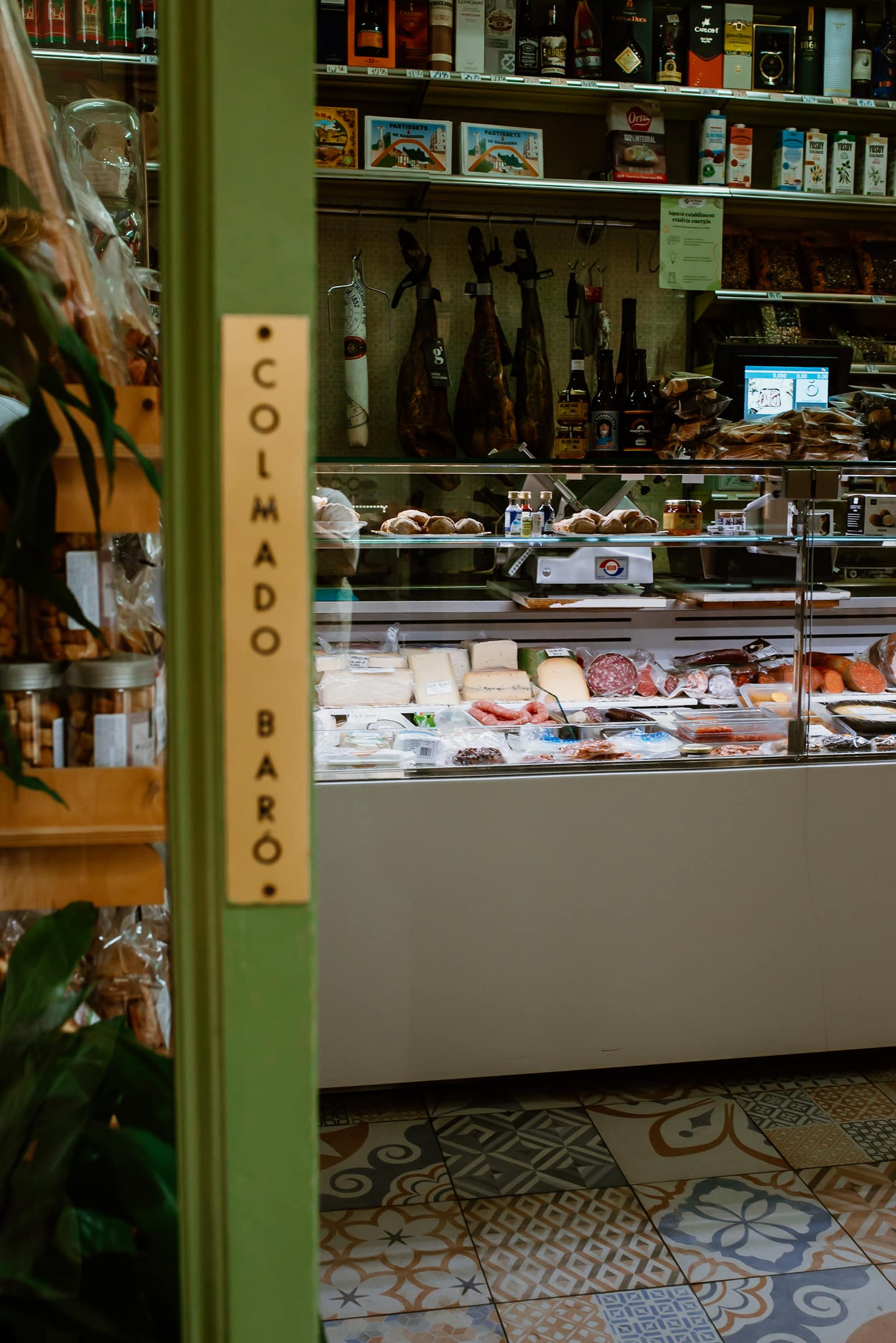
    At Colmado Baró you can stock up not only on vermouth, but also on many other typical goodies. Still family-run, this delicatessen has a very special charm. The perfect opportunity for culinary souvenir shopping!

    Cheese counter with ham at Colmado Baro in Reus, Spain
    Old tiles in modernisme style

    El Barato

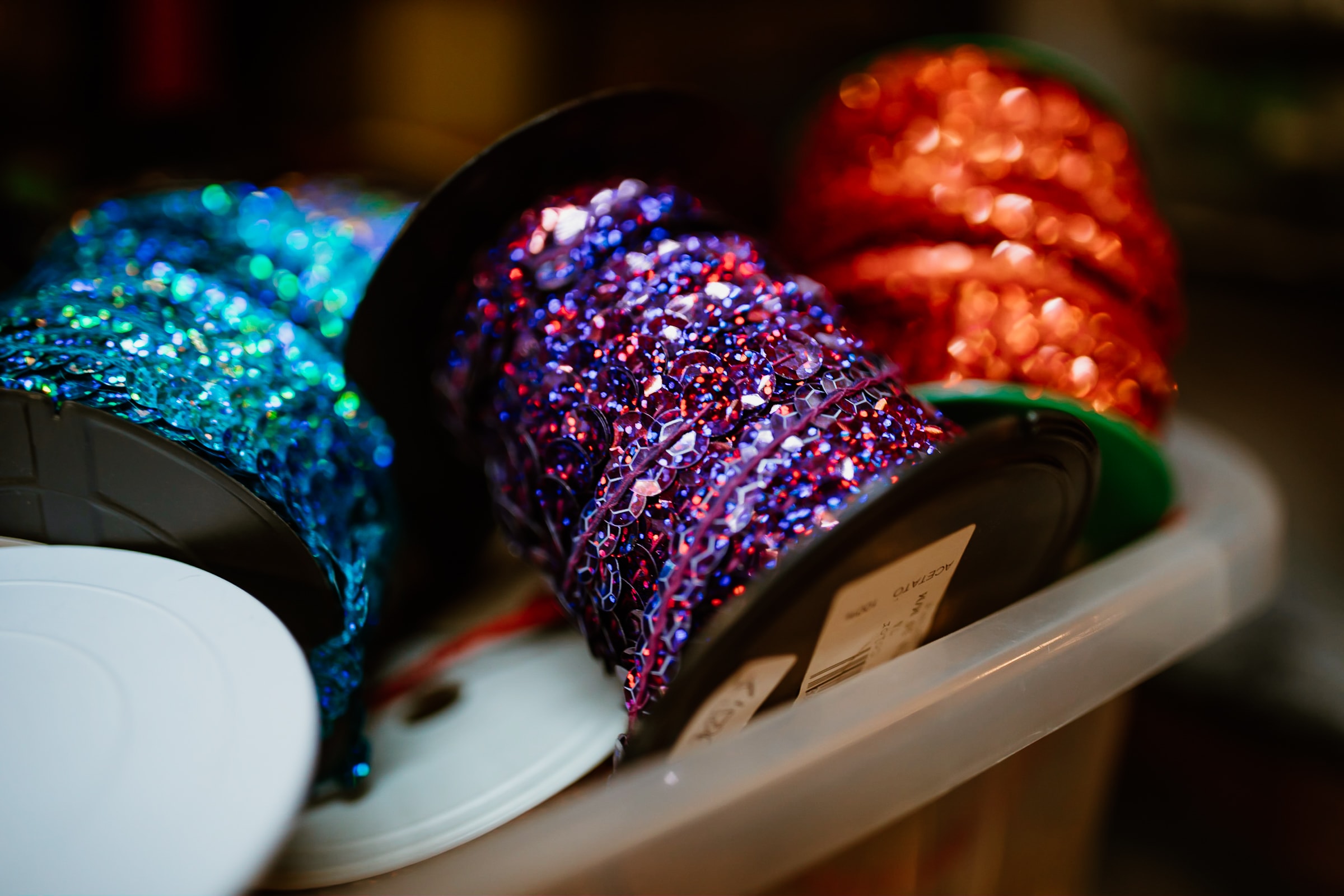
    The stylized O behind the name El Barato is reminiscent of the time of the military dictatorship under General Franco: back then, the traditional fabric store had to drop its Catalan name “Barat” and change its name to the Spanish version “El Barato”. Then as now, hobby tailors, designers, artists, folklore groups and carnival clubs stock up on the wildest fabrics here – and probably spend whole days browsing through the overflowing shelves.

    sequin ribbons on spools in a box

    Do you want to spend several days in Reus?
    Here you’ll find lovely little boutique hotels

    How to get to Reus

    What is the best way to get to Reus?

    Perhaps Reus might sound familiar to you: It has an airport that is mostly served by low-cost carriers & very popular for reaching the beaches of the Costa Daurada. This is often advertised as Barcelona-Reus, although Barcelona’s actual airport El Prat is almost a hundred kilometers away. However, most airlines only fly to Reus from spring to fall.

    ➜ Find cheap flights to Reus*

    The most practical option is therefore a flight to Barcelona. So you can connect both cities!

    ➜ Here you can find cheap flights to Barcelona*

    How to get from Barcelona to Reus

    From Barcelona, the best way to get to Reus is by regional train or by bus if you are traveling without your own car or rental car. The route can also be easily driven there and back in one day. Reus is therefore also perfect for a day trip from Barcelona!

    ➜ Check the timetable here & buy tickets for the bus

    ➜ Check the timetable for the regional train

    ➜ For more flexibility: Book a rental car from Barcelona*

    What else can you see in Catalonia?

    If you are traveling by car or rental car, I can highly recommend a tour through the hinterland of Catalonia. If you like being out in nature or hiking, you will find great opportunities here. It’s also not far to the Pyrenees, where you can go skiing in winter.

    Otherwise, Catalonia also has popular coastal towns. The Costa Brava and the Costa Dorada are dotted with beautiful beaches, such as those around Cambrils. Or you can simply continue south along the Spanish coast. France borders Catalonia to the north, and the beautiful city of Perpignan is only 170 kilometers from Barcelona.

    Red fishing boat in a Spanish harbor with white houses
    Reus is only eight kilometers away from the Costa Daurada

    The entire coastal region is also easy to travel by train. If you have more time and don’t want to drive yourself, you can plan a great trip through Spain and France.

    ➜ Check train connections of Renfe here (Spanish railroad company)

    More inspiration for your trip Catalonia:
    Road Trip through Catalonia
    Cambrils: A Cute Coastal Town on the Costa Daurada
    Tarragona: Highlights in the City of the Famous Castellers

    Note: This research trip was supported by Catalonia Tourism.

  • Top 10 Things to Do in Bremen, Germany

    Top 10 Things to Do in Bremen, Germany

    As an old Hanseatic city, Bremen has so many attractions to offer due to its eventful history. Did you know, for example, that Bremen’s impressive town hall is over 600 years old? But I was very surprised when I recently discovered some great spots in Bremen outside the usual tourist magnets! I’ll show you what you should see in the Hanseatic city and give you some pretty good insider tips that you’d otherwise have to search long and hard for!

    Colorful Gründerzeit facades with an antique shop and bicycles
    Rainy day in Bremen

    1. Schnoorviertel

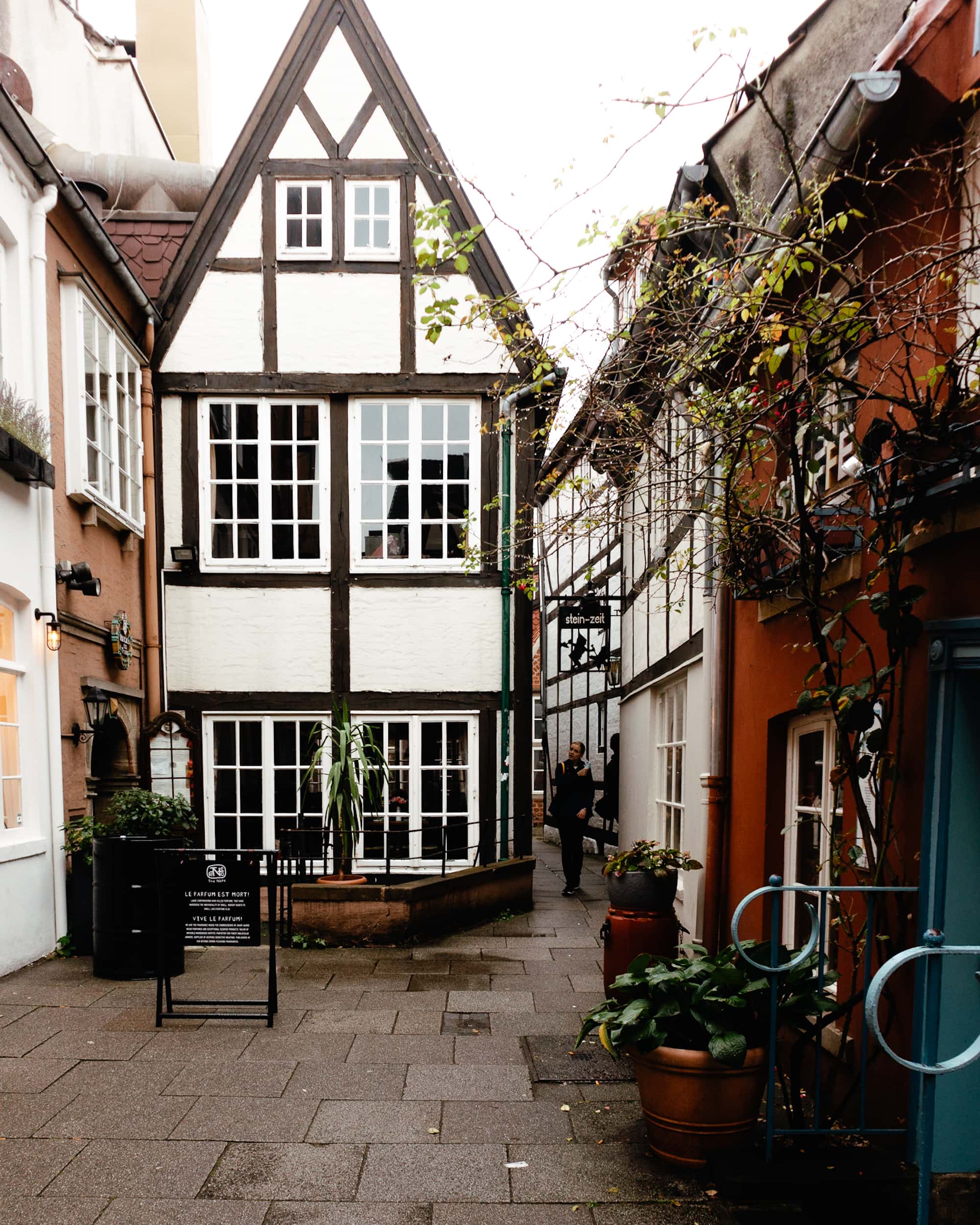
    The oldest district of Bremen is an absolute must-see! Like a small oasis, the Schnoorviertel (or “the Schnoor”) is located in downtown Bremen. Schnoor, by the way, comes from the German word for string, “Schnur”, because the many small houses are strung together like pearls on a string.

    Some alleys are so narrow that you can touch the facades of the houses on the right and left at the same time with your arms outstretched! Unfortunately, the Schnoorviertel consists of only a few streets, but they are an absolute feast for the eyes with their pretty half-timbered houses.

    Bremen tourist attractions Schnoor
    Particularly cozy: the Schnoorviertel in Bremen.

    You will also find some small stores and restaurants – some of them very touristy – but it’s worth a closer look!

    ➜ Tour through the Schnoorviertel district*.

    Bremen's historic Schnoor district, with its cobblestone streets and half-timbered houses

    My recommendations:
    The Note – perfumery with an extraordinary assortment The perfect address if you love individual perfumes!
    808 Boba Bar – Delicious bubble teas in minimalist style No seating, but perfect as to-go during a stroll through the Schnoor district

    Historic half-timbered house in a charming alley in a German old town

    2. The Bremen Town Musicians / Bremer Stadtmusikanten

    Curiously enough, the melody of the old children’s song about the Bremen Town Musicians is always the first thing that comes to my mind when I think of Bremen: Eeeh-aah, woof-woof, meow, cock-a-doodle-doo! The fairy tale of the Brothers Grimm is simply inseparable from the city.

    Bronze sculpture of the Bremen Town Musicians in front of a historic brick wall

    Since the 1950s, a bronze statue of the Town Musicians has also adorned Bremen’s Town Hall. But if you think of a huge statue here, you are mistaken – the four animals are not depicted life-size, and the statue is somewhat hidden on one side of the town hall. By the way, clasping the donkey’s legs with both hands at the same time is said to bring good luck!

    3. Bremen City Hall

    The first Bremen town hall is said to have stood here on the market square as early as the 13th century. The town hall, what you see here now, was built from 1405 to 1410 and is still used by the Bremen Senate and the mayor! The striking building can also be visited from the inside – it’s worth it! Today it is also called the Old Town Hall, after an addition, the New Town Hall, was added in 1917.

    Bremen City Hall on the Market Square, with passersby and a church tower

    You can book a guided tour of the town hall here:
    Tickets for the Old Town Hall

    Tip for foodies: In Bremen’s Ratskeller, located under the Old Town Hall, you can enjoy the rustic ambience with hearty delicacies!

    Inscription on a Building in Bremen Commemorating the Division of Germany
    Historic gabled houses on Bremen's Market Square with cafés

    More sights around the town hall and Bremen’s market square:
    St. Peter’s Cathedral
    from the 11th century
    Spitting stone in the cathedral courtyard: the serial killer Gesche Gottfried was beheaded here in 1831

    Bremen Cathedral with two towers on Market Square in Bremen

    By the way, are you a True Crime fan? Then this might be an exciting tour for you to get to know Bremen better:
    ➜ Tatort Bremen: Of manslayers and cutthroats*

    4. Bremer Roland

    The Bremer Roland is one of the most important landmarks of Bremen! The large statue of Roland in front of the town hall shows a knight with a sword and symbolizes the independence of a city and the associated city rights.

    With the separation from the until then ecclesiastical rule and the change to an independent city around 1400, Bremen was the forerunner among many European cities. Therefore, the Bremen Roland as a symbol of freedom and self-determination has great significance to this day and can be found as the name sponsor for many Bremen institutions.

    The Roland Statue in Bremen's Market Square

    5. The Schlachte

    Going out in Bremen? No problem – the Schlachte is the promenade on the Weser and is located in the middle of the city. Here you can also sit on the Weser promenade during the day, drink coffee or enjoy an after-work beer and people-watch. In the evening it gets more crowded depending on the day of the week.

    You can get a real maritime feeling on the old sailing ship “Alexander von Humboldt”, which is located directly on the Schlachte and houses a restaurant and hotel.
    ➜ Prices & availability on the “Alexander von Humboldt “*

    Enchilada Beer Garden Sign Featuring the Paulaner and Carlsberg Logos
    Bremen's Weser Promenade with historic brick buildings and a dock

    6. Böttcherstrasse

    A narrow dark alley leads from the spacious market square down to a very special street in downtown Bremen – and if I hadn’t spotted a small sign saying “to Böttcherstraße,” I probably would have walked right past it. Indeed, if you walk down the narrow Schüttingstraße from the market, you walk directly towards the impressive archway that marks the beginning of Böttcherstraße.

    Böttcherstraße in Bremen, featuring a golden relief and passersby

    Here, since 1931, art, culture and crafts are concentrated on a small street that seems like a whole other world. With the support of coffee HAG (a very popular decaffeinated coffee brand in Germany until today, many German still call decaf coffee “Kaffee HAG”) inventor Ludwig Roselius, a center for creative people was created here at the beginning of the last century, which has retained its charm to this day.

    Historic Böttcherstraße in Bremen, with passersby and brick buildings

    Every single house on Böttcherstrasse is individually designed: The Paula Modersohn Becker House, which contains the associated museum about the painter’s life’s work, is particularly striking.

    Historic brick building with a sundial in Bremen

    Especially at the time of the Third Reich, the expressionist style of the house was controversial; in any case, I was very impressed by the unusual architecture.

    Bremer Bonbon Manufaktur storefront with a decorative brick wall

    Worth seeing here, in addition to the small stores and studios, are the Seven Owls Fountain (Sieben-Faulen-Brunnen) whose story is based on a Bremen folktale, and the Craftsmen’s Courtyard (Handwerkerhof).

    You can find out more about the interesting history of this unusual street on this short tour:
    ➜ Tour of Böttcherstrasse*

    7. Wallanlagen & the Mill

    You feel a bit like you’re in Holland when you look at the mill in the Wallanlagen. Located in the middle of the ramparts of the old Bremen city wall, the former coffee mill is not only a pretty photo motif, but also houses a restaurant today. (But you can also stop here just for a coffee.) However, sometimes there are some shady around from the nearby main train station, the Hauptbahnhof. So better just walk along here during the day and be a bit more careful.

    A historic windmill is reflected in a tranquil park pond

    8. The Viertel

    This neighborhood was my very big surprise in Bremen. Or maybe I just didn’t notice it before simply because of the name. The Viertel in German means actually just “the neighborhood”.

    Street art graffiti featuring Ernie and Bert on a building wall

    The Bremer Viertel stretches from Sielwall to Sankt-Jürgen-Strasse and is something like THE hipster district of Bremen. Actually just a small part of town, but here you can spend the whole day strolling and eating. Or at least that’s how I felt! I have discovered so many great little stores and fantastic food locations, that the next time I’m in Bremen I’ll definitely go straight to the Viertel and check out my favorites first!

    My secret tips for the Viertel:

    Juli liebt Kaffee good coffee, but also great interior design Delicious breakfast/brunch in a relaxed atmosphere. Worth coming out of downtown for.

    Fritzfrank Concept Store right next door Owner Anastasia chooses everything herself with a good hand and taste If you like supporting small businesses, you’ve come to the right place. At fritzfrank you will find decoration and accessories from many small labels, which you will definitely not find everywhere in Germany.

    A cozy gift and home decor shop with colorful shelves

    Nora’s I’ve only had a Turmeric Latte and a Carrot Cake here, and that alone is a reason to come back; because I would have loved to taste more! The ambience is refined yet casual, the service attentive, and really everything on the menu is homemade according to clean-eating principles. Eating healthy has rarely been better. Still affordable. Also available to go.

    9. Parks & other great outdoor experiences in Bremen

    In Bremen there are a few more tips and sights that you can also still see during a longer stay:

    Maritime Meile Vegesack – outside the city center you can learn more about Bremen’s maritime history around the old Vegesack harbor, for example, in the Museumshaven.
    Bürgerpark – located behind Bremen’s main train station, you’ll find a huge green space with plenty of opportunities to relax, unwind or play sports.
    Rhodendron Park – May is the perfect month for a trip to Rhodendron Park: that’s when the more than 10,000 plants are at their best in full bloom! Admission is free, by the way.

    10. Museums in Bremen

    It’s not just when the weather is bad that you might want to treat yourself to a visit to a museum. Anyway, still on my list are these two museums that make Bremen an exciting destination.

    Kunsthalle Bremen – In addition to its own collection, which includes works from over 700 years of art history, you will also find interesting temporary exhibitions here. A look at the website with the current events is worthwhile!
    Weserburg The Weserburg is the museum for international contemporary art, housed in a historic building directly on the Weser. The collection includes works from various disciplines, from paintings and sculptures to installations. Changing exhibitions.

    Stay overnight in Bremen

    If you’re not traveling from the surrounding area, you may need a place to stay. Not a problem in Bremen! You should take a closer look at the following locations:

    Klabauterbett* Sleep on a two-mast clipper! Cozy ship very close to the old town and Schlachte.
    Vienna House Bremen City* stay comfortable, modern & at a good price. A bit outside the city center, but due to the short distances and good public transport in Bremen you are still close by. Advantage if arriving by train: it’s within walking distance of the main train station.
    Designhotel Überfluss* a bit more expensive, but with a wellness area and absolutely centrally located by the Weser river. For a nice weekend for two but quite affordable if you want to treat yourself!

    Bremen's Weser Promenade with a historic sailing ship and a view of the city
  • Top 10 Things to do in Gdansk

    Top 10 Things to do in Gdansk

    An old town center peppered with sights and medieval vibes, plus the vibrant life of a modern Polish city and the proximity to the Baltic Sea: every time I’m in Gdansk, I’m seeing the city from a different angle. Because Gdansk is just so diverse! In this article, I’ll show you the most important sights in Gdansk , so you can start sightseeing right away!

    ➜ See Gdańsk and the Baltic Sea resorts of Sopot and Gdynia in just one day*
    ➜ Affordable places to stay in Gdańsk
    ➜ Day trip tip: Take a pirate ship to Westerplatte

    1. Historical center of Gdansk: The Main City

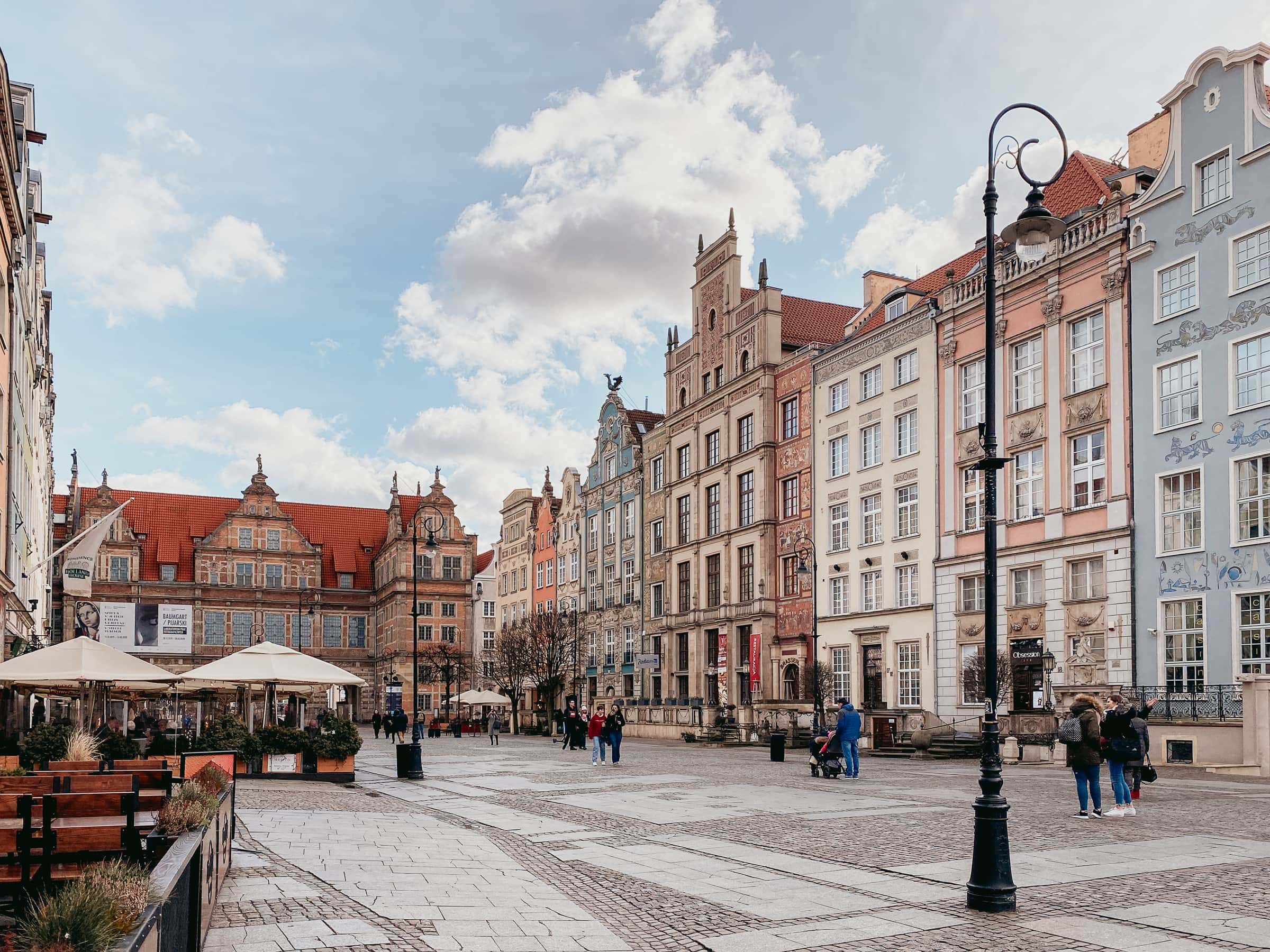
    You will find most of the sights in the Main City. That’s where the historical center of Gdansk is. The Main City is home to the most popular tourist destination in the city: the Long Lane (Ulica Długa) is the main street where everything is taking place!

    2. Long Lane/Ulica Długa

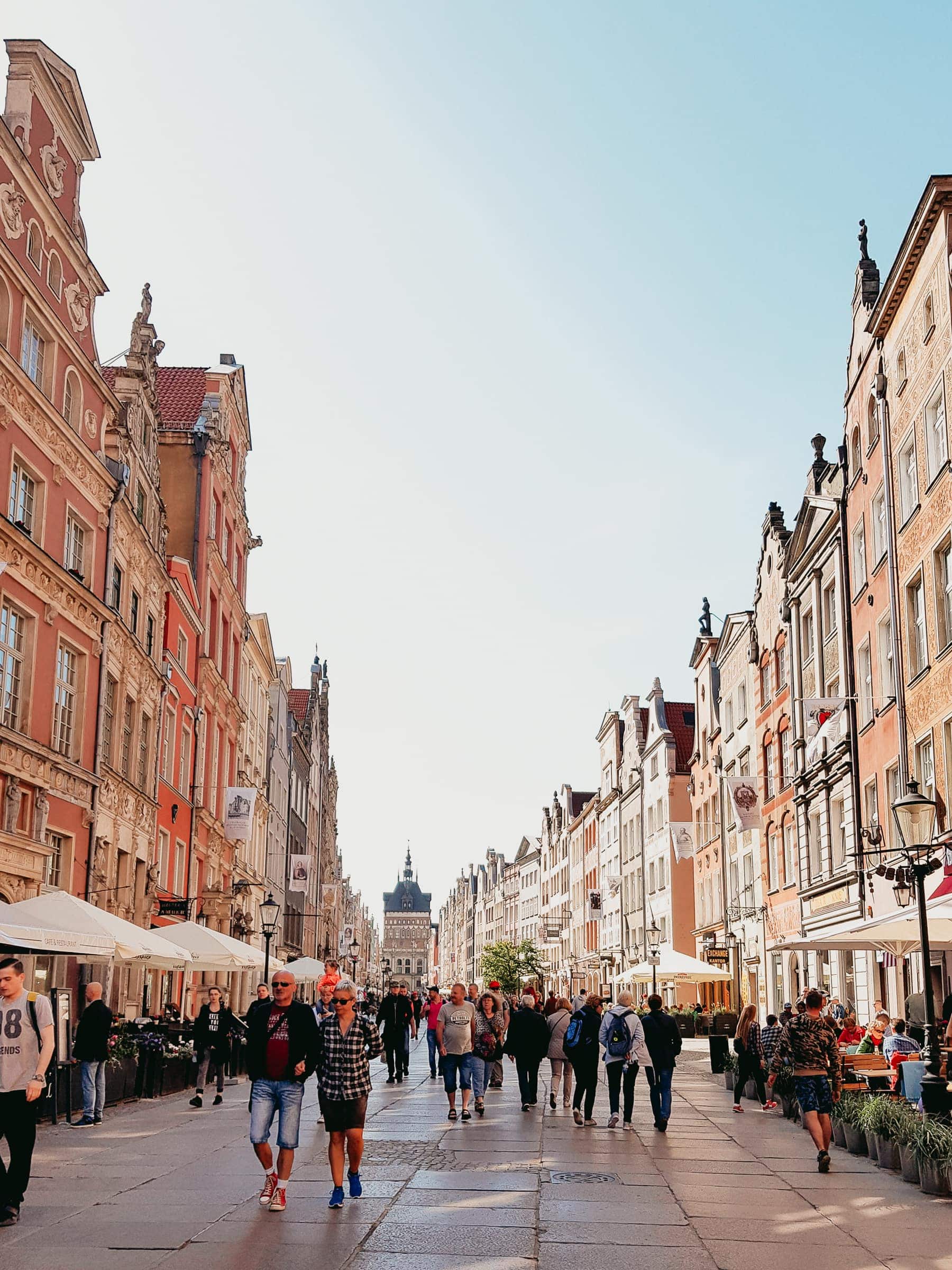
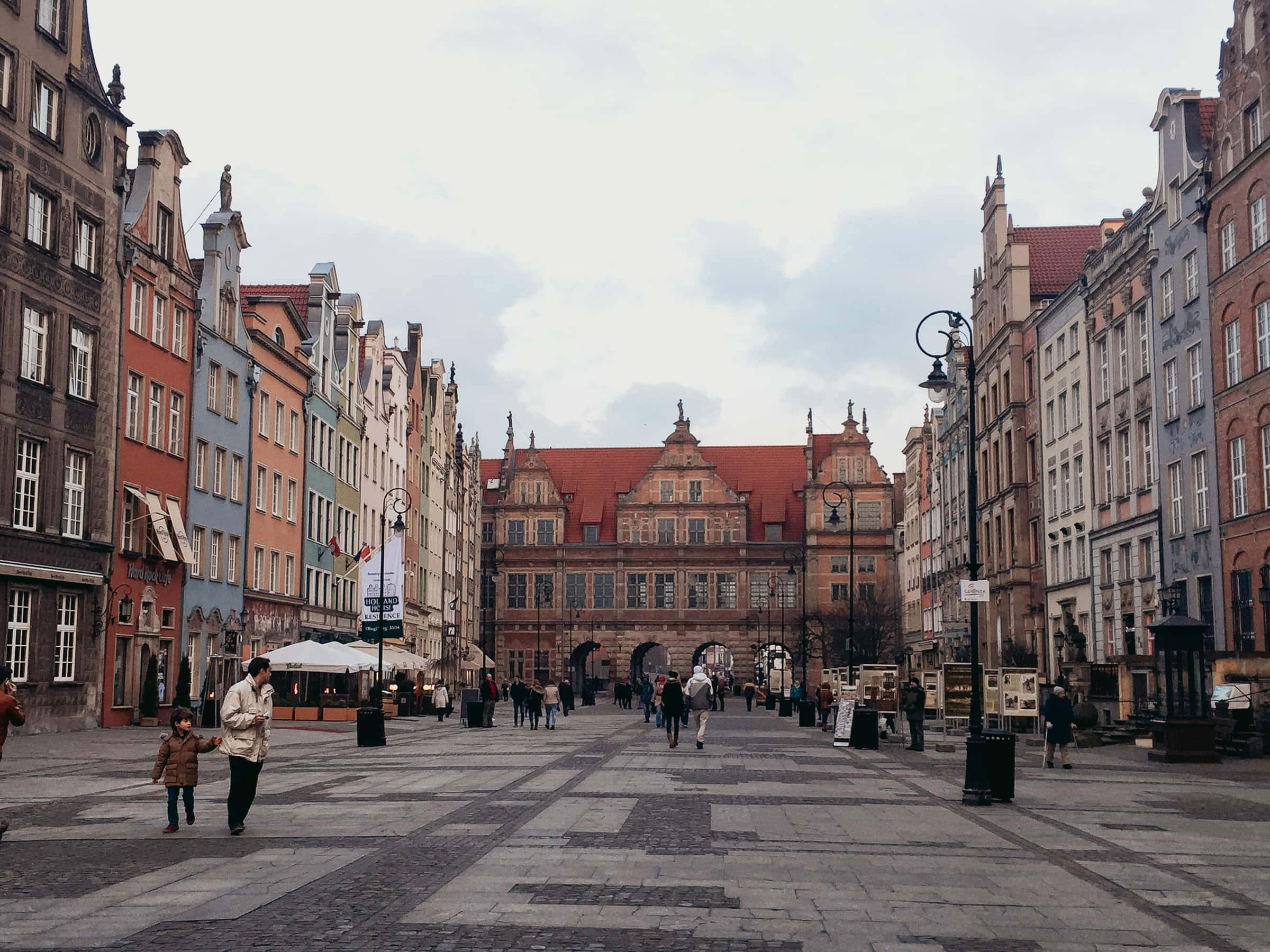
    The Long Lane runs from the Golden Gate to the Long Market and is truly a feast for the eyes. The facades of the houses along the Long Lane clearly show the economic and cultural importance of the former Hanseatic city of Gdansk . Already in the Middle Ages, Gdansk was an important trading port due to its location on the Baltic Sea, and many merchants and nobles settled here.

    Gdansk Long Lane

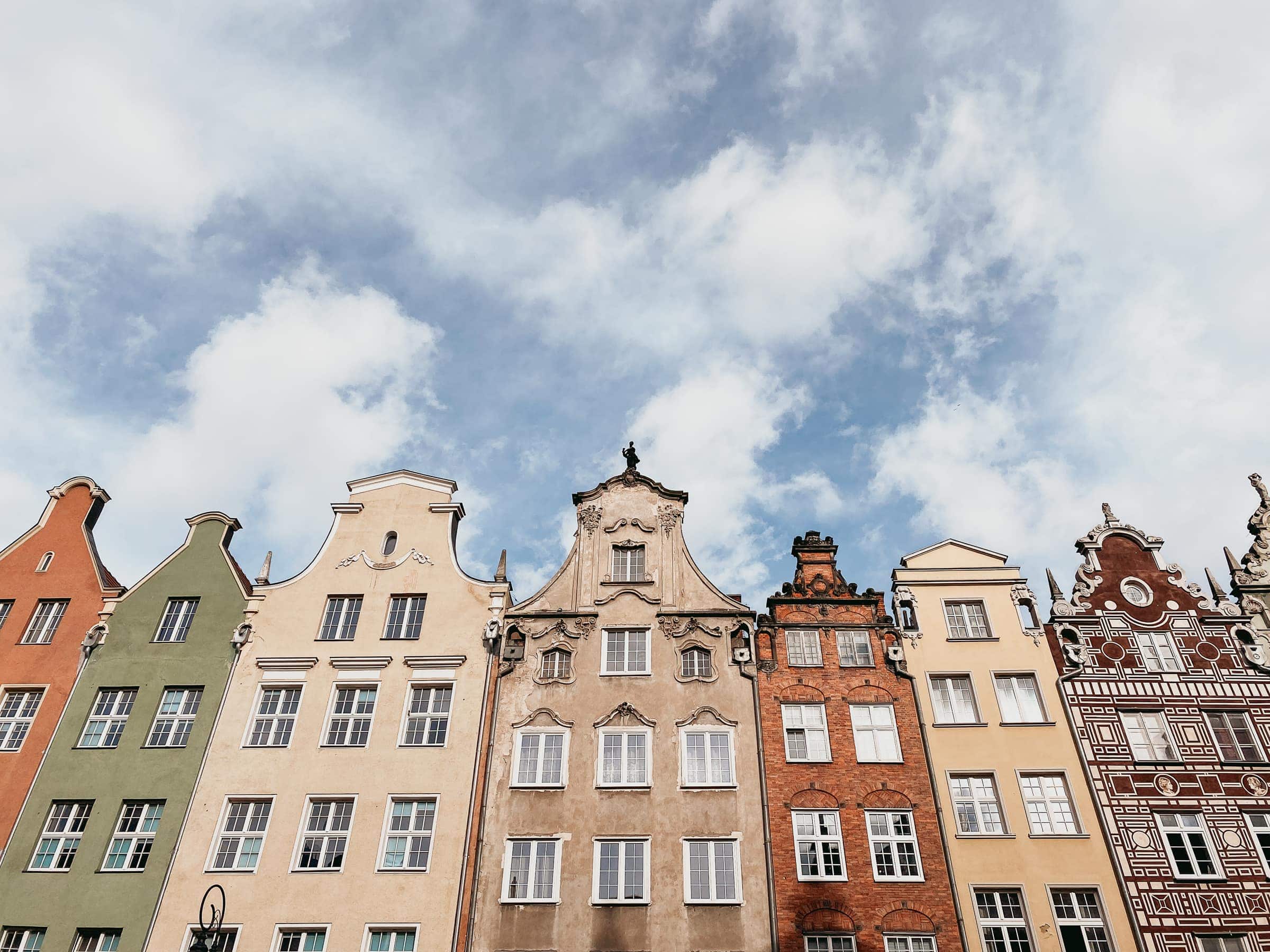
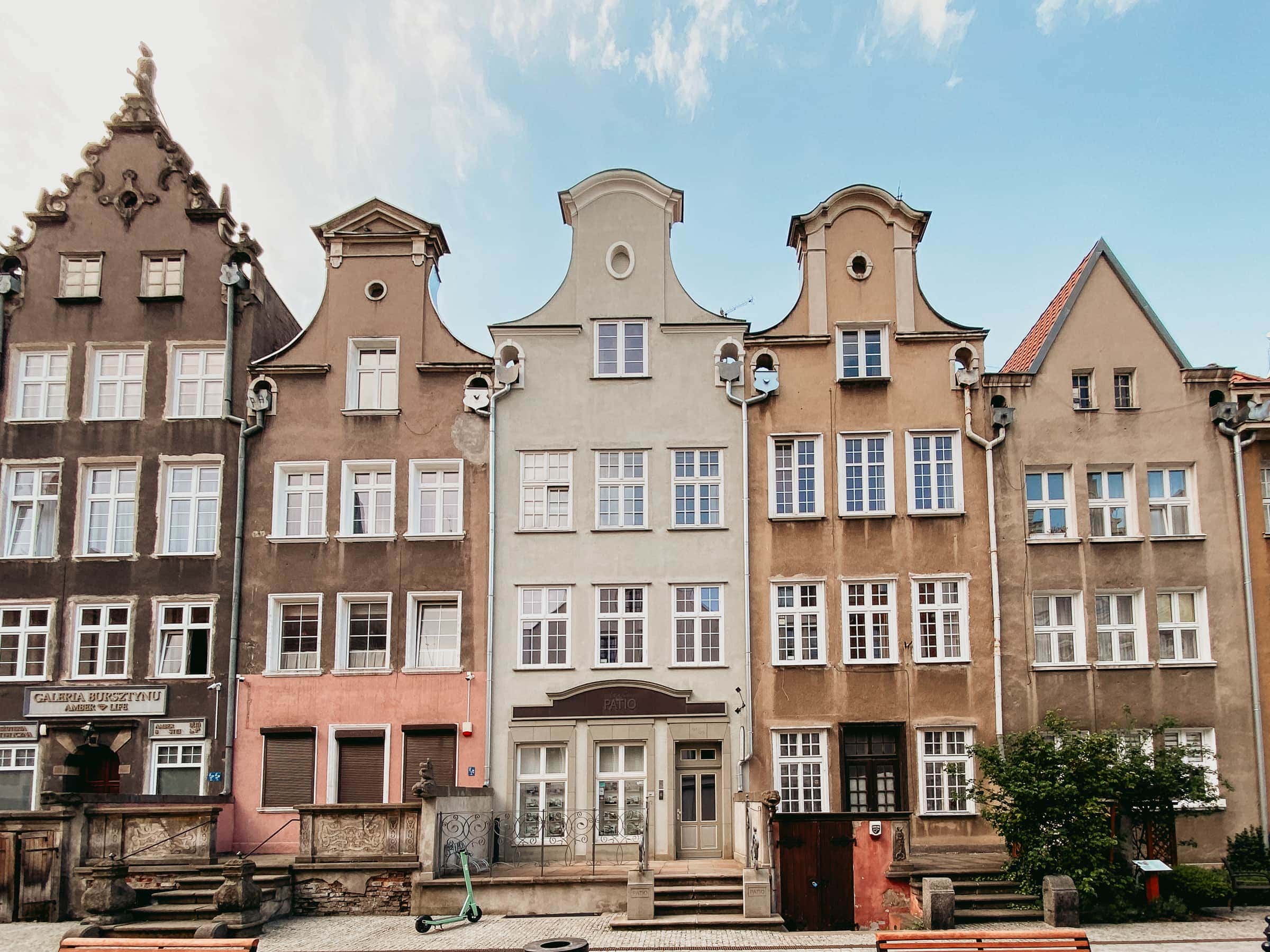
    Not obvious at first glance, because it’s just too beautiful and well done: The beautiful medieval-looking facades are not quite original. In fact, during the Second World War, over ninety percent of the houses on the Long Lane were destroyed. After the war, all facades were rebuilt, but the backyards and blocks behind them were constructed according to modern urban planning principles.

    Gdansk sights colorful houses long lane
    Rebuilt after the Second World War: The house facades on the Long Lane
    Neptune Fountain Gdansk
    Neptune Fountain in front of the City Hall

    3. Long Market

    The Long Market at the end of Langgasse is always busy, especially during the high season from spring to fall and on weekends. You can sit here in the surrounding cafes and watch all the hustle and bustle, but Gdansk has so much more great cafes and restaurants to offer that you should also take a look into the small side streets. Good coffee can be found, for example, at the Café Oficyna.

    Long Market and Green Gate in Gdansk

    Polish cities are definitely worth a trip! Find more inspiration for a short trip to Poland here:
    ➜ All articles about Poland

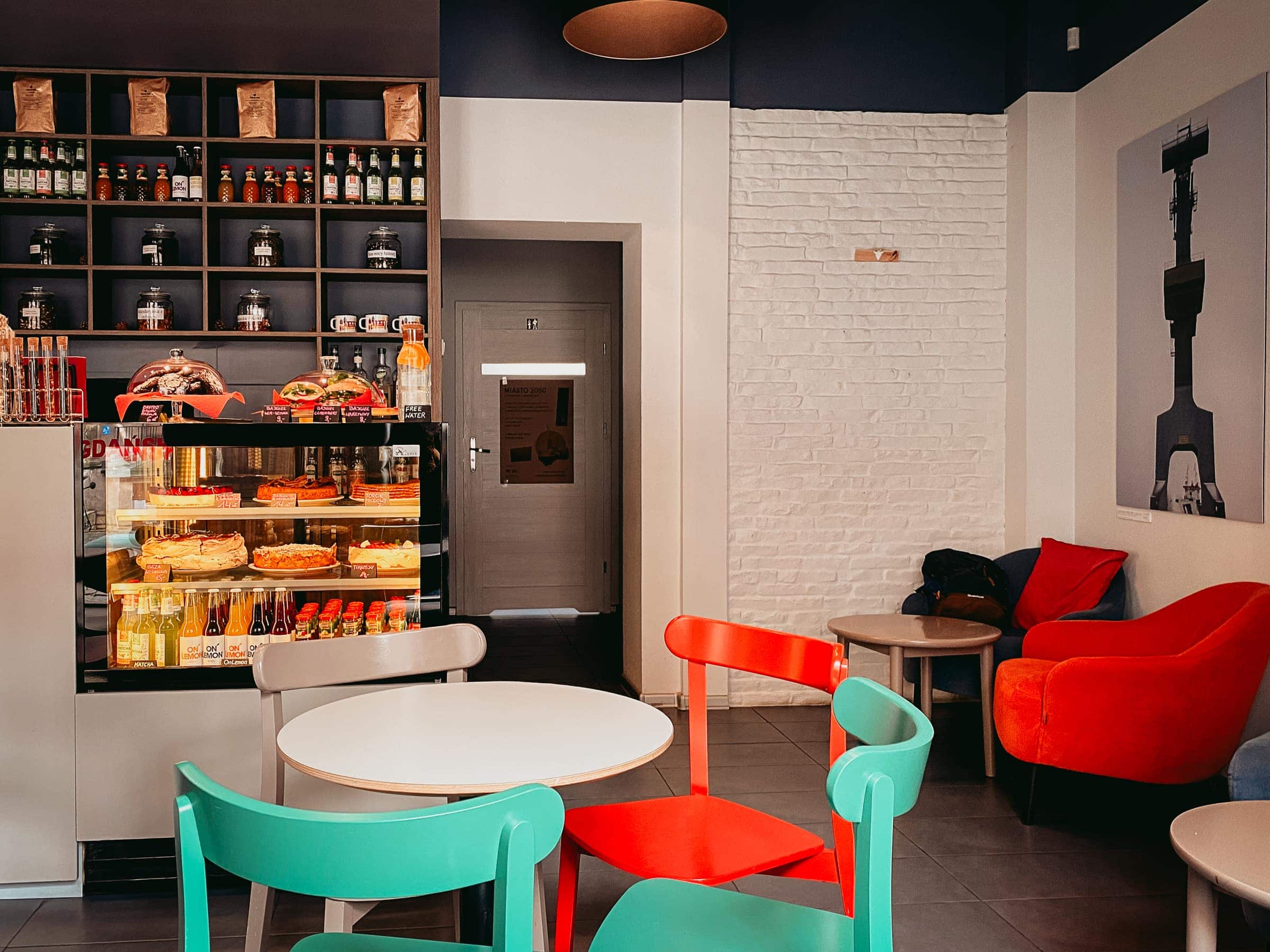
    Cafe Oficyna Gdansk
    Café Oficyna in Gdansk

    4. Green Gate

    The end of the Long Market is unmistakably formed by the Green Gate. For me one of the most beautiful photo motifs of Gdansk! There is also an offshoot of the National Museum here, where changing exhibitions are held at irregular intervals. It’s worth taking a look!

    Gdansk Sights Green Gate
    The Green Gate at the end of the Long Lane

    5. Waterfront promenade

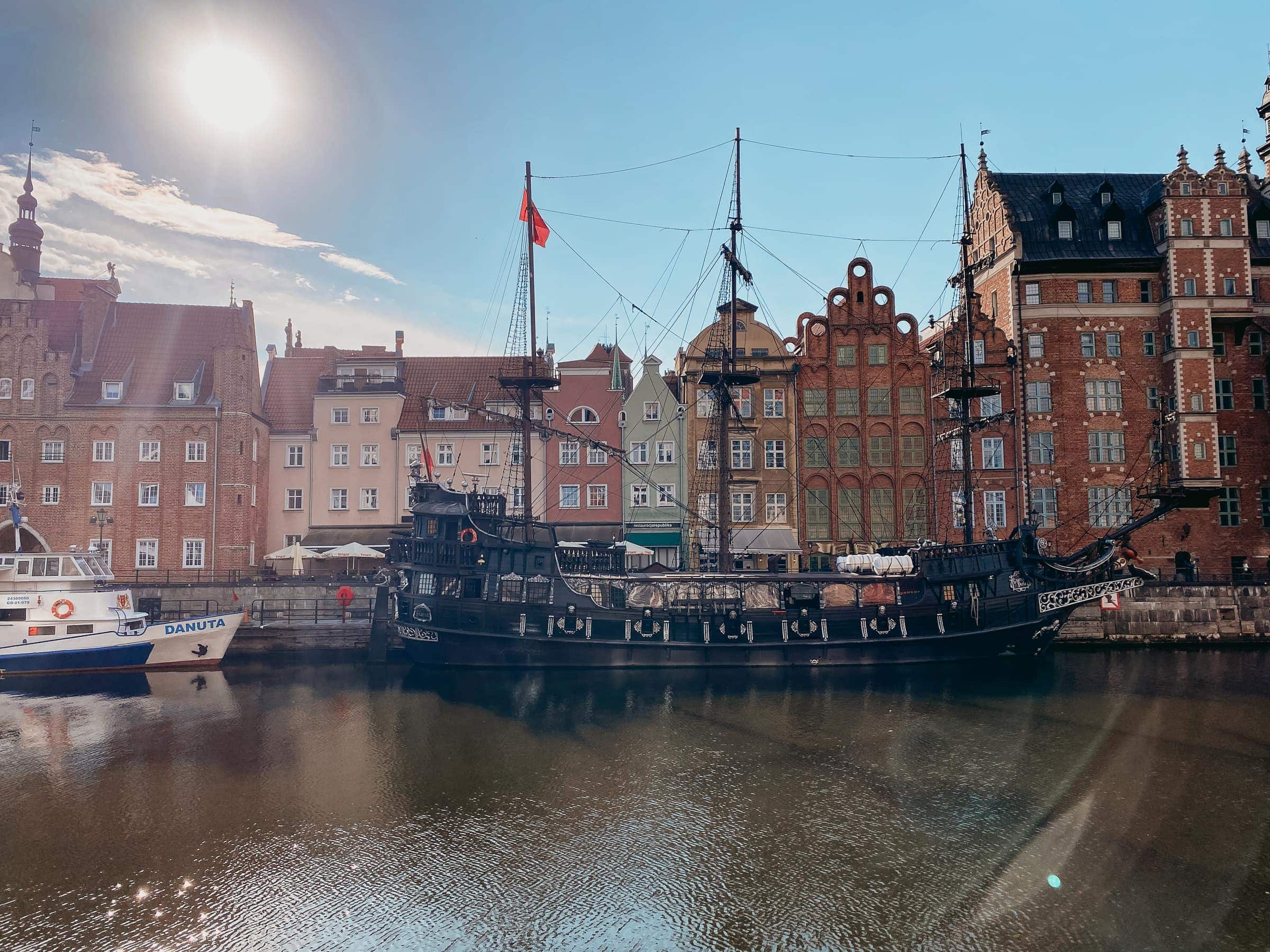
    Through the Green Gate you’ll get straight to the waterfront promenade on the Motlawa, where you can enjoy the maritime feeling! You can already feel the fresh Baltic Sea breeze a bit here, and a few older ships provide the right flair. Among others, you can even see a real pirate ship!

    Pirate ship on the Motlawa River in Gdansk
    The pirate ship on the Motlawa
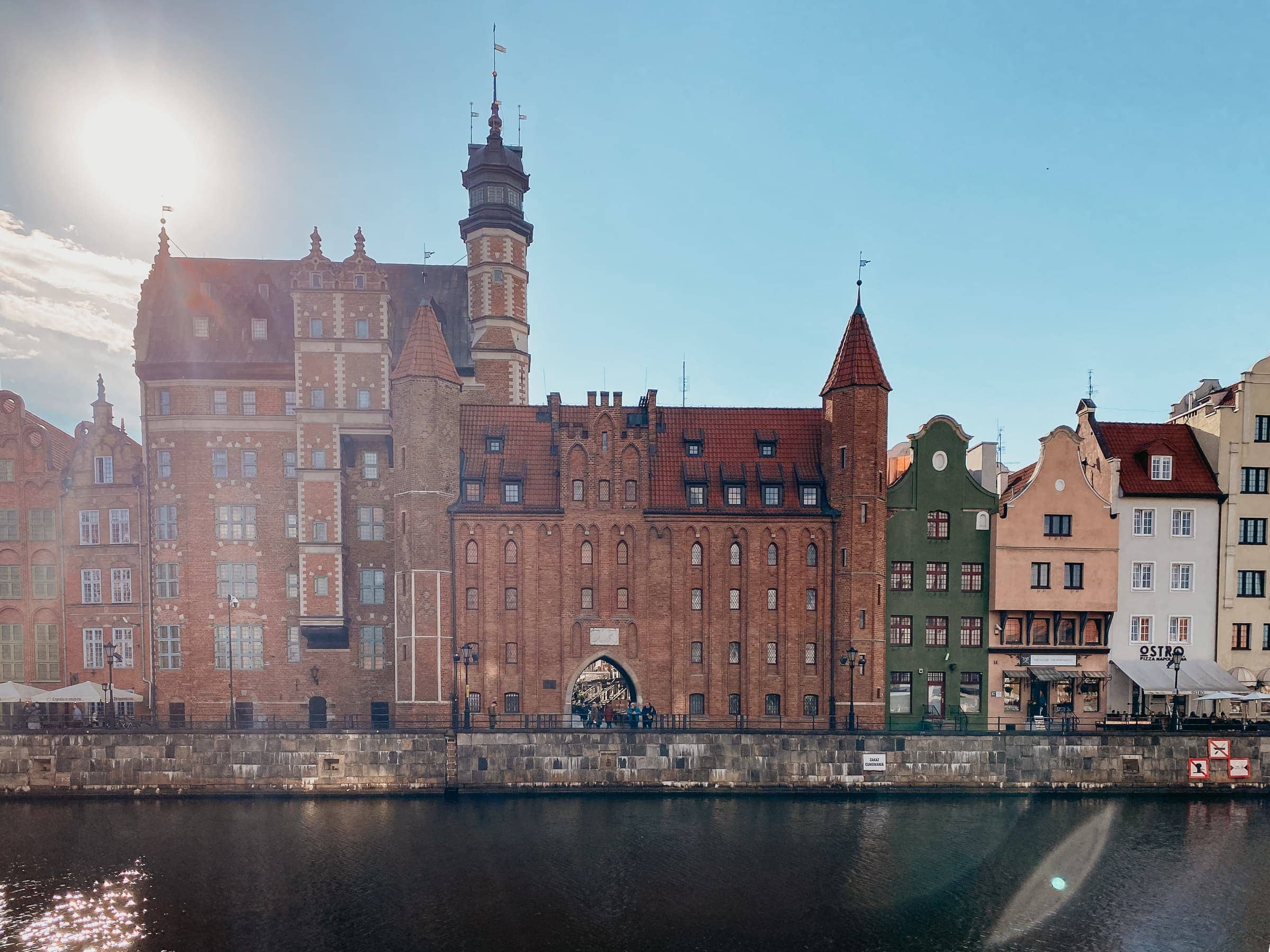
    St Mary's gate on the waterfront Gdansk
    St Mary’s gate on the waterfront

    6. Crane Gate

    By the way, among the many eateries on the waterfront, the huge Crane Gate stands out. Ships were once loaded and unloaded here since the 15th century. In the Second World War, like so many buildings in Gdansk, it was destroyed, but then completely rebuilt.

    Today, the Crane Gate is one of the most famous postcard motifs and landmarks in Gdansk. The single, large wheels of the crane can also be seen through the construction from the waterfront. But in the Crane Gate itself there is also a museum (currently closed for renovation), where you can see the mechanism up close and learn more about life in medieval Gdansk.

    Current info Museum in the Crane Gate

    Crane gate Gdansk sights
    One of the most striking sights of Gdansk: The Crane Gate

    7. Mariacka Street

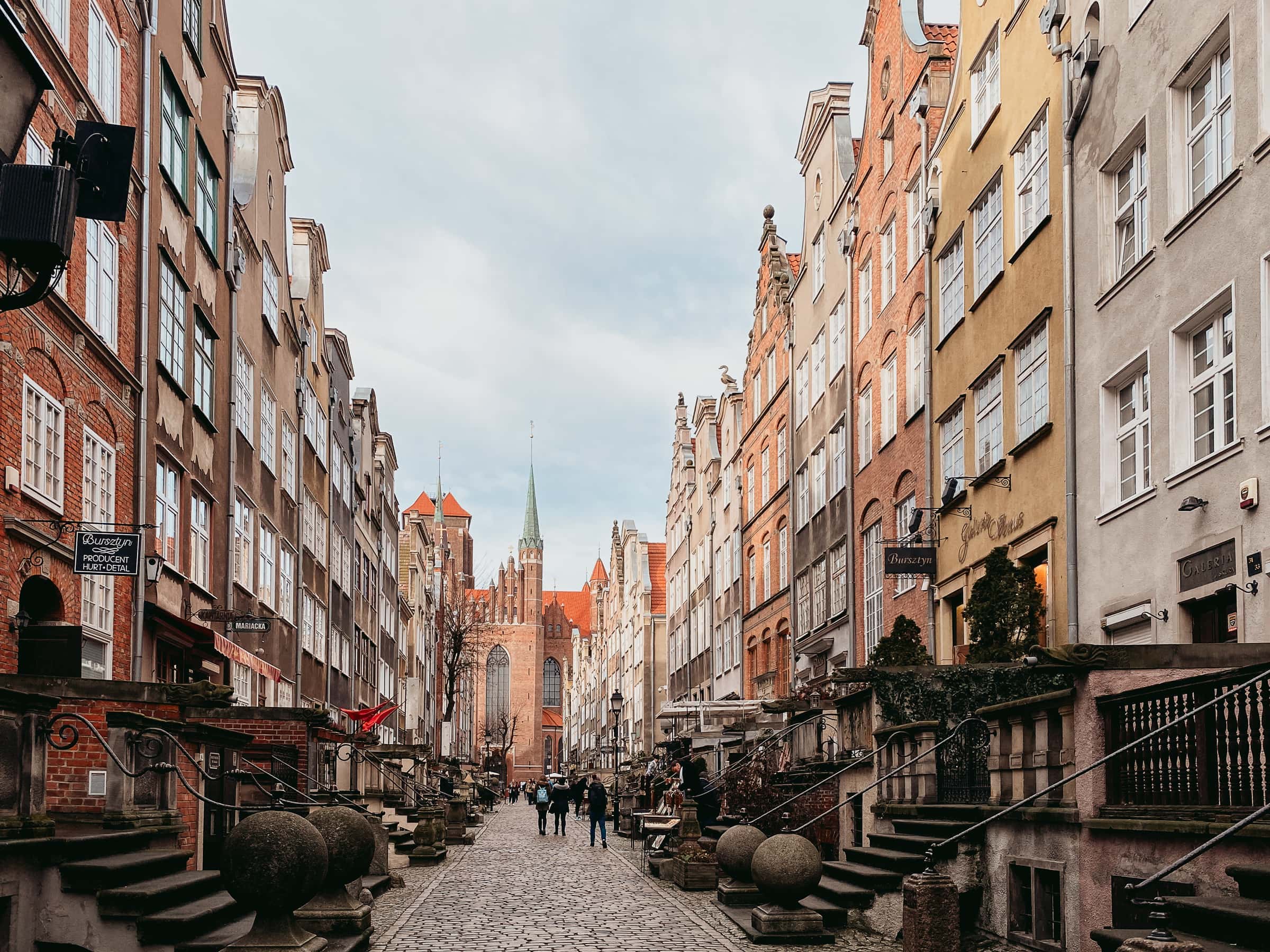
    Even before the Crane Gate, you can pass through the St Mary’s Gate ontoMariacka Street, which to me, is the most beautiful street in the center of Gdansk! Mariacka Street is lined with stylish town houses and is also the center of the amber trade. Gdansk is famous for its amber! Personally, I don’t like it that much, but the street itself is so pretty – an absolutely perfect photo op!

    Amber Street in Gdansk
    Center of the amber trade: Mariacka Street
    Mariacka Street Gdansk

    What is amber?
    Amber is not a precious stone, but fossil resin. It is also called “Baltic gold” because it has the largest deposits in the Baltic Sea region around Gdansk and in the Baltic States. Attention when buying: Meanwhile there are also synthetically produced fakes!

    ➜ Learn to recognize fake amber & process amber yourself! (material included) *

    8. St. Mary’s Church

    The Mariacka Street leads to the unmissable St. Mary’s Church, which is interesting even you are a big fan of churches in general. From the church tower you have a perfect view over Gdansk!

    (Alternatively, you can enjoy the view over the city from the ferris wheel “Amber Sky” on Granary Island).

    Sights in Gdansk St. Mary's Church
    Best view: From the tower of St. Mary’s Church
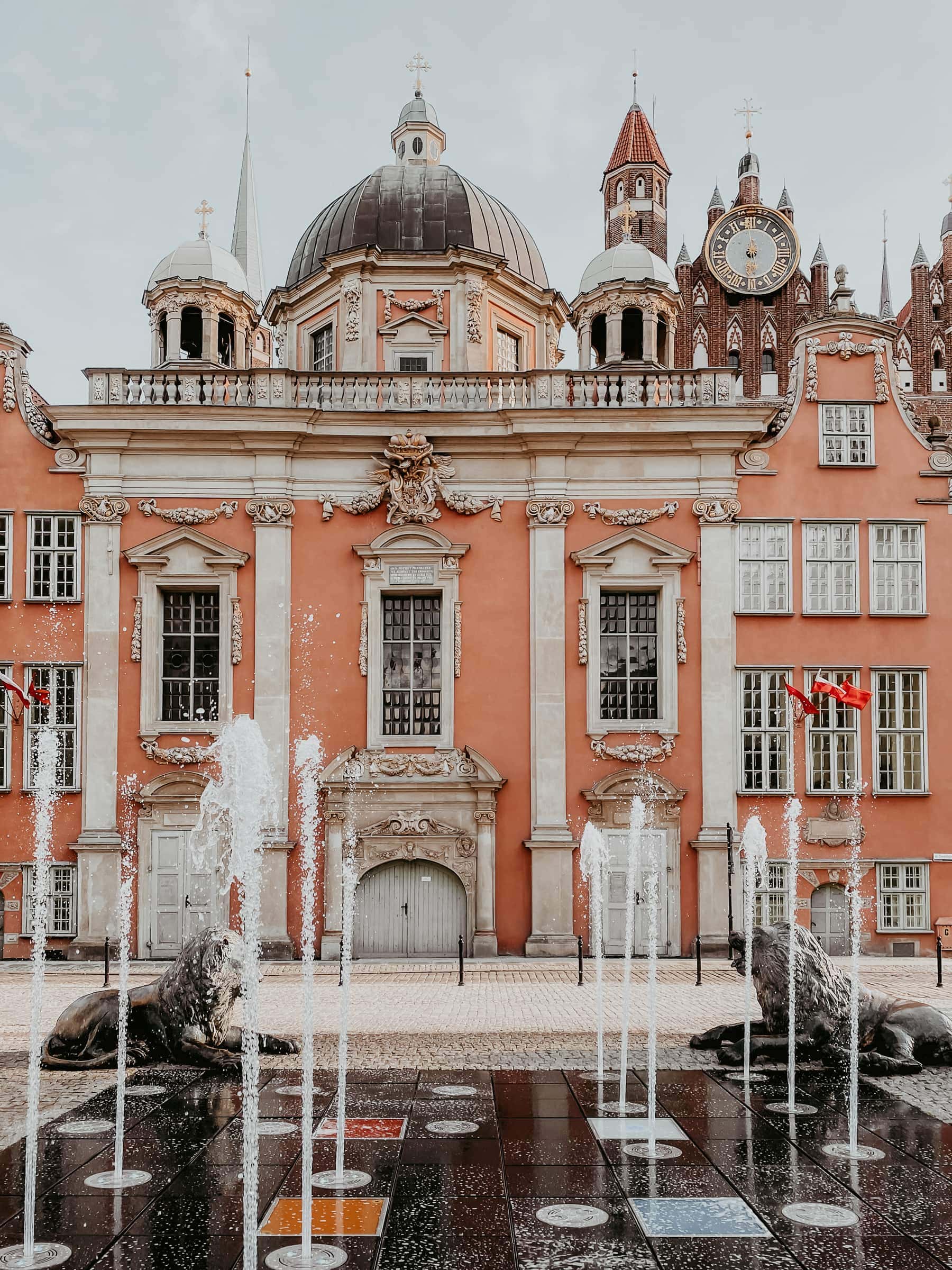
    Royal Chapel Gdansk with fountain

    9. Granary Island

    The Granary Island opposite the old town has only really been developed in recent years. There is still a lot of construction going on here, new things are being built and the atmosphere here is younger and fresher than in the historic Main City. I’m excited to see what else is created here!

    The pedestrian swing bridge that connects the Speicherinsel with the opposite waterfront promenade of the Main City is also new!

    Pedestrian bridge over the Motlawa
    Pedestrian bridge over the Motlawa
    Ferris wheel in Gdansk

    10. Street Art in Zaspa

    A bit away from the tourist hustle and bustle, you can marvel at exciting murals and street art in the usually less picturesque Zaspa district. You can find an overview of all murals here:

    Murale Gdansk Zaspa

    Food & Drinks in Gdansk

    You’ll encounterGoldwasser on every corner, a spiced liqueur with a whopping 40% alcohol is the signature liquor of Gdansk. By the way, the name actually comes from the gold leaf that is added to the liqueur! It’s too hard for me, but fortunately Gdansk has much more to offer than just Goldwasser! As in most Polish cities, the choice of good, modern restaurants and cafés is great!

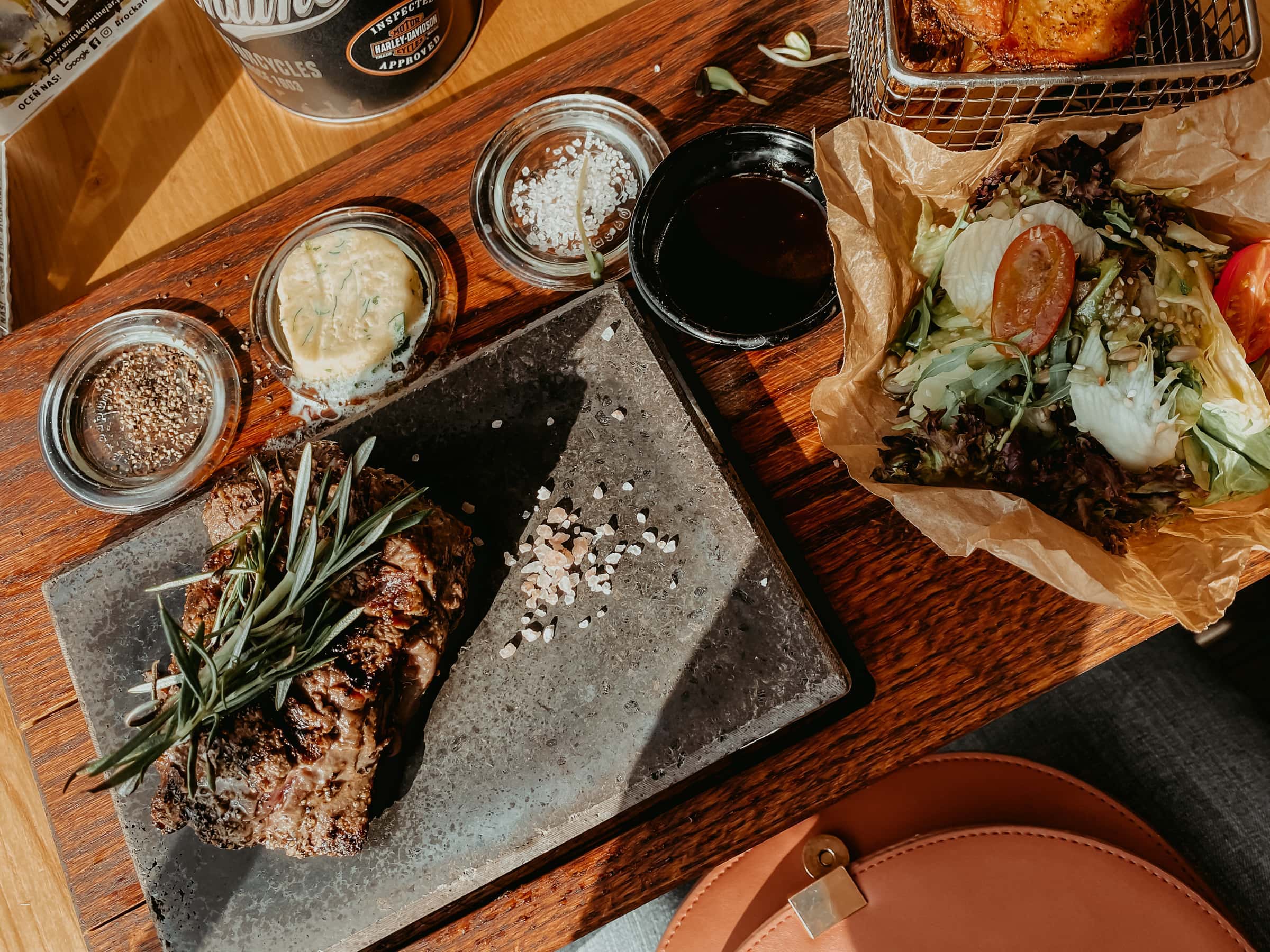
    Steak on hot stone in restaurant Whiskey in a Jar Gdansk
    Tip: Whiskey in the Jar on Granary Island

    Beer is popular in Poland anyway and in Gdansk even more so! So if you like beer and want to experience craft beer from small, local breweries that you might never find like this, then this might be for you:

    ➜ Private beer tasting with local craft beer*.

    Day trips from Gdansk

    If you’ve had enough of the city and crave even more Baltic flair, there are some great trips you can take from Gdansk.

    Westerplatte

    History nerds in search of the historical hotspots will be drawn here anyway: This is where World War II began in 1939 with Germany’s invasion of Poland. A large monument to honours the soldiers defending Poland commemorates these first battles today.

    But also the location on the Baltic Sea and the wide beach make the peninsula a great place to visit! By the way, you can take a trip here with the pirate ship, which is located on the waterfront – and yes, it is quite touristy with music and animation; but it is also just beautifully done.

    Gdansk riverside promenade on the Motlawa river

    There are also water trams by Gdansk’s public transport company in summer. Line F5 also departs from the Green Gate and stops at Westerplatte. The stay on the Westerplatte with a fresh breeze are a nice contrast to the lively Old Town.

    In general, you should take a boat tour in Gdansk – it’s really cheap, and a nice opportunity to get to know the history of the city from the water!

    ➜ City tour on a historic wooden boat*
    ➜ Boat tour of the Imperial Shipyard at sunset*
    ➜ On a small motorboat across the Mottlau*

    A boat trip to Westerplatte also takes you past the huge cranes of the Danziger Werft: This is where the Solidarnosc movement around Lech Welesa, later Nobel Peace Prize winner and Polish president, was born in the 1980s. The Gdansk shipyard, today rather insignificant, built huge freighters and passenger ships here at that time. One of the first ships build here is now moored as a museum ship on the Motlawa River, opposite the crane gate.

    Museum ship Soldek

    Ship Soldek in Gdansk
    Museum ship Soldek

    Sopot

    Very close to Gdansk is Sopot, an old Baltic seaside resort, which is still a popular nightlife destination for many Gdansk residents. There you can walk along the busy main street Monte Cassino to the Sopot pier, a wooden jetty that juts hundreds of meters into the Baltic Sea.

    You can get there in less than half an hour by regional train from Gdansk Central Station (Gdańsk Główny), which is just outside the Old Town. You can also take an Uber!

    Or you can book a full day with a guide who will show you not only Sopot, but also Gdansk on the fly and Gdynia. It’s a really a good investment to experience more of the area and at the same time, you don’t have to worry about transportation, etc:

    ➜ Gdansk, Sopot & Gdynia in one day*.

    Travel planning tips

    Where to stay in Gdansk

    Gdansk is one of the most popular travel destinations in Poland. There is therefore a huge range of accommodation on offer here. Accommodation is relatively cheap, especially in the low season, so you are sure to find a nice place to stay.

    I have some great tips for you here:

    Radisson Blu Hotel & Suites —Newly renovated on Speicherinsel and furnished in a clean, Scandinavian mid-century style. The perfect location for exploring all the sights on foot!

    ➜ More places to stay in Gdańsk

    On the road

    You can explore the center of Gdansk perfectly on foot. Everything is close together and you will find less public transportation there anyway. To get to Westerplatte, Sopot or nearby Gdynia, for example, you can take the bus, train or, in summer, the water streetcar.
    Timetables and times (Polish only): [https://ztm .gda.pl /]

    Less adventurous, but also not very expensive, is Uber; it works in Gdansk without any problems.

    Best time to visit Gdansk

    I think I’ve been to Gdansk at pretty much every time of year. In summer Gdansk is very busy and touristy, especially on weekends, this may be too much for some. However, the temperatures are then also perfect for a swimming trip to the Baltic Sea coast.

    In spring and autumn, Gdansk is quieter, and perfect for a short city trip. In winter I find the morbid charm very exciting, especially the Main City is completely empty, but to me personally the Baltic Sea climate in winter is just too cold – but I’m a fan of warmer temperatures anyway 😉 Depending on your preferences, you can visit Gdansk all year round.

    Alley in Gdansk Old Town

    How to get to Gdansk

    You can easily get to Gdansk from Germany by train, plane or car. There are also bus connections, but at least from Berlin this is quite a long journey (approx. 9 hours).

    The airport is easy to reach by public transport. It is also only 10 kilometers from the city centre – so cabs and Uber are also a good alternative.

    Money & Currency

    The currency in Poland is the Polish Zloty (PLN). The conversion rate is more or less 1:4, i.e. 4 Zloty are converted to 1 Euro.

    Card payment is widespread, sometimes you can even pay in euros and get change in zloty. (Usually a bad deal). When paying by credit card, be sure to choose payment in zloty instead of euro or your currency.

    But it never works quite like that without local cash. That’s why I still withdraw some cash in Poland with my DKB credit card*, which allows me to withdraw cash free of charge from almost any ATM and I’m prepared for all eventualities.

    Get more info about DKB here*

    In the city you can also find some independent exchange offices, but the exchange rate there is worse.

    Houses in the Old Town of Gdansk

    Language & Communication

    In many places, information is available only in Polish, and even though I’ve been to Poland so many times—the language just gets the better of me. There are just too many consonants 🙂 At some point, I gave up trying to get beyond “Hello” and “Thank you” and resigned myself to my fate. Fortunately, many younger Poles speak English these days, so you can get by just fine with English, especially in tourist hotspots like Gdańsk.

    You can also find more about Poland here:

  • How to See Paris in Just One Day: Full Itinerary + Map

    How to See Paris in Just One Day: Full Itinerary + Map

    The imposing Eiffel Tower, the intricately decorated facades of historic buildings, sipping café au lait at a sidewalk bistro table, and the charm of a cosmopolitan city steeped in history: Paris never ceases to fascinate me. But the city is huge, the most beautiful sights are right next to one another, and somehow you just don’t know where to start with your sightseeing itinerary. Experiencing Paris in a single day (and mostly on foot, at that) seems impossible, but I’ll show you how to make the most of your short trip or weekend in Paris, even if you’re short on time!

    Quick Tips:
    ➜ Affordable Accommodations in Paris
    ➜ For Those Who Don’t Feel Like Walking: Get Around by Hop-On-Hop-Off Bus*

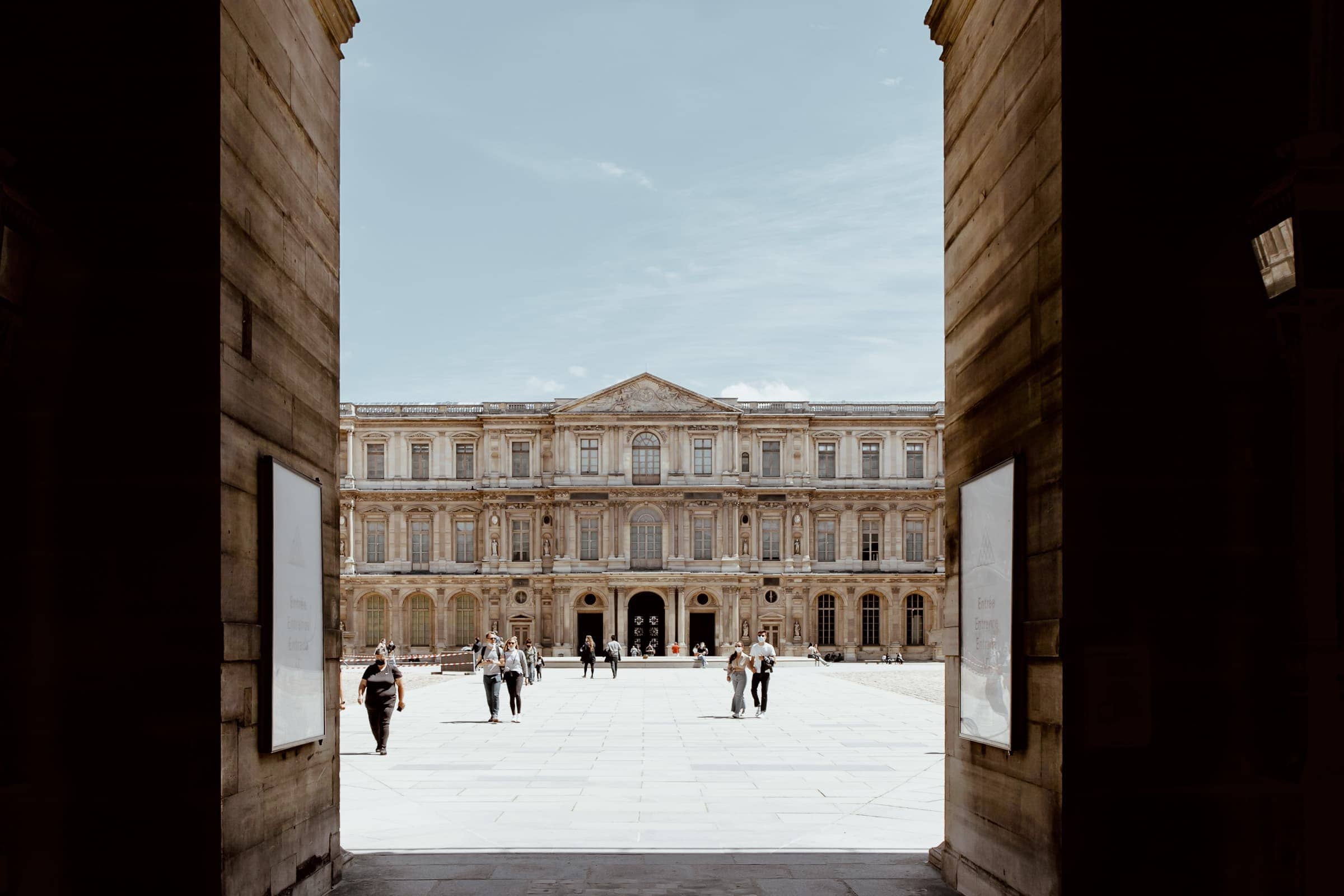
    View through an archway into the courtyard of the Louvre in Paris

    How to see Paris in one day

    I had an overnight stay in Paris in early summer for the first time in years and the day couldn’t have been better: I wanted to see a lot of Paris on this one day, enjoy the city, soak up the flair, gather a little inspiration. My sightseeing plan was ambitious, I was highly motivated and willing to check off a long list of places I wanted to see again or get to know anew. But in the end, everything turned out differently.

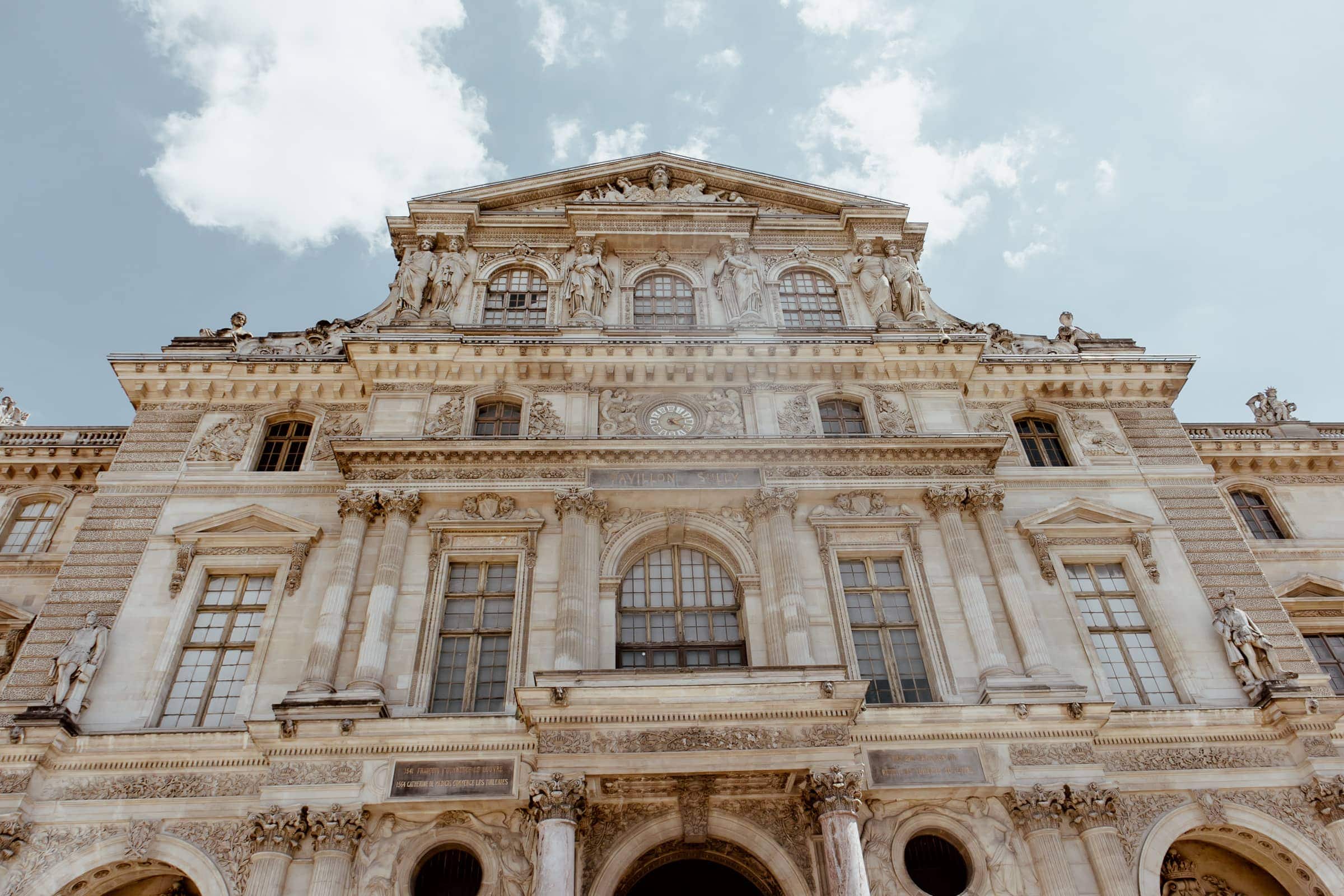
    The magnificent facade of the Louvre Museum in Paris, viewed from below

    The Eiffel Tower: The most important sight in Paris

    I didn’t leave the hotel until early noon, so I even had a little less than a day in Paris. But if you have a full day in Paris, I advise you to start the morning at the Eiffel Tower. Especially if it’s your first time in Paris!

    The Eiffel Tower is still the most important and impressive sight in the city! Even though I’ve been to Paris many times, the sight of it never ceases to amaze me.

    You should definitely go up, and right to the top, of course to enjoy the full view over Paris!

    Tip: The Eiffel Tower is very popular, and wait times can be extremely long! Especially if you’re short on time.
    ➜ Book your ticket for the Eiffel Tower here*

    Seine in Paris with the Eiffel Tower in the background
    The Eiffel Tower can be seen from far away!

    A day in Paris: Around the Arc de Triomphe

    From the Eiffel Tower, you can then walk across the Pont d’Iéna to the other side of the Seine. At the Trocadero, you’d better take the metro for a few stops to Place Charles de Gaulle; you’ll definitely walk enough, as I did.

    The metro stations can be real mazes, but the Paris Métro is so fascinating! For that reason alone I always enjoy riding a few stations in Paris. (For tips on riding the metro in Paris, see below!)

    Take line 6 to the Charles de Gaulle Étoile station.

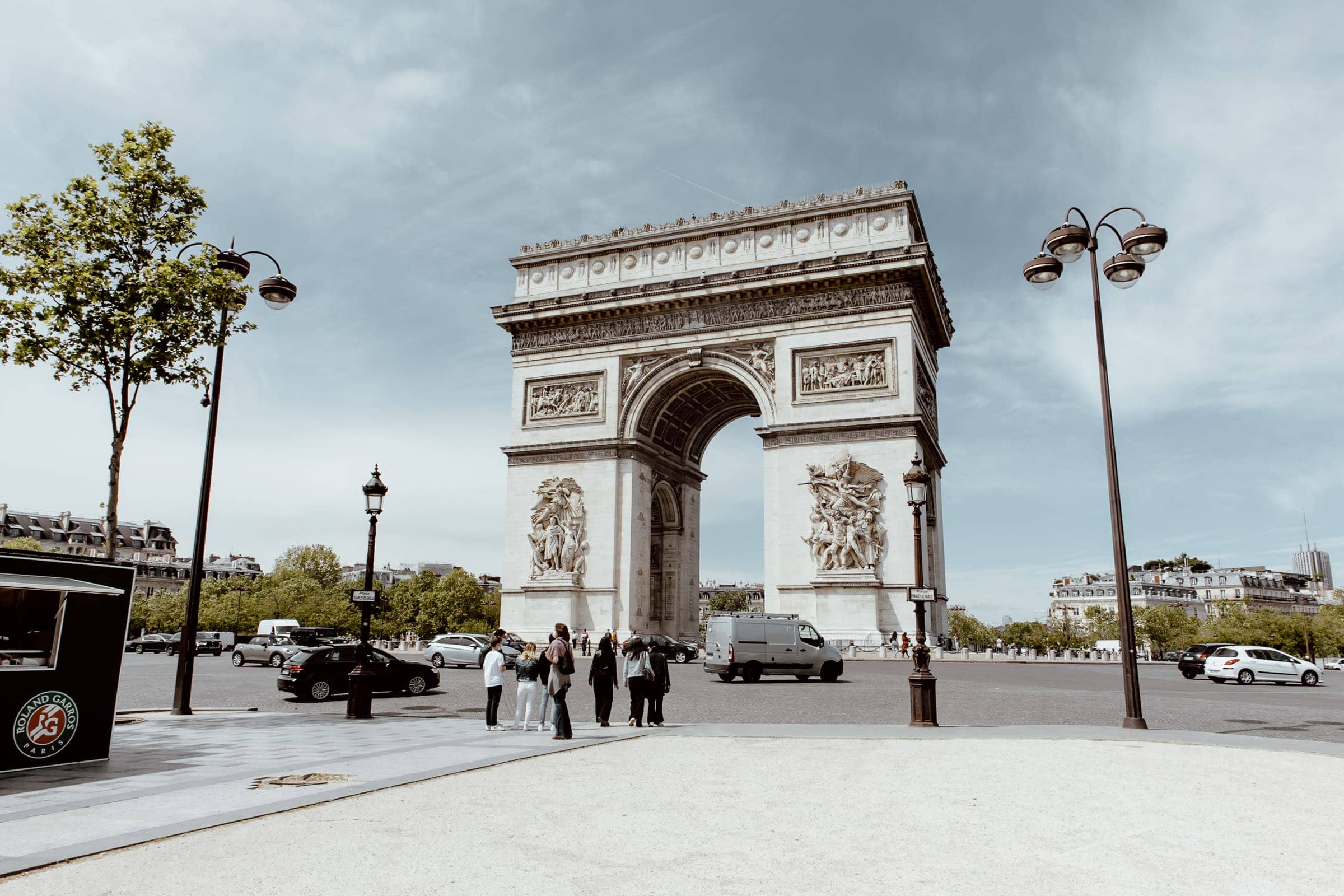
    The Arc de Triomphe in Paris, with tourists and a cloudy sky
    The Arc de Triomphe on the Place Charles de Gaulle

    By the way, you can’t go wrong trying to find the right exit here, because the station is huge and you can exit at pretty much any of the entrances leading to the star-shaped Place de Charles de Gaulle. I can’t remember which exit I took, but it’s best to head toward Avenue des Champs-Élysées/Georges V; it’s actually quite well signposted. Once you’re above ground, you’ll immediately see another of Paris’s landmarks: the Arc de Triomphe.

    If you like, you can also go up to the roof of the Arc de Triomphe*! The Arc de Triomphe may not be quite as high and spectacular as the Eiffel Tower, but the view of the huge traffic circle below and the magnificent Champs-Élysées is very impressive.

    But here, too, the same rule applies (especially if you only have one day): Be sure to book your ticket in advance*

    Strolling on the Champs-Élysées

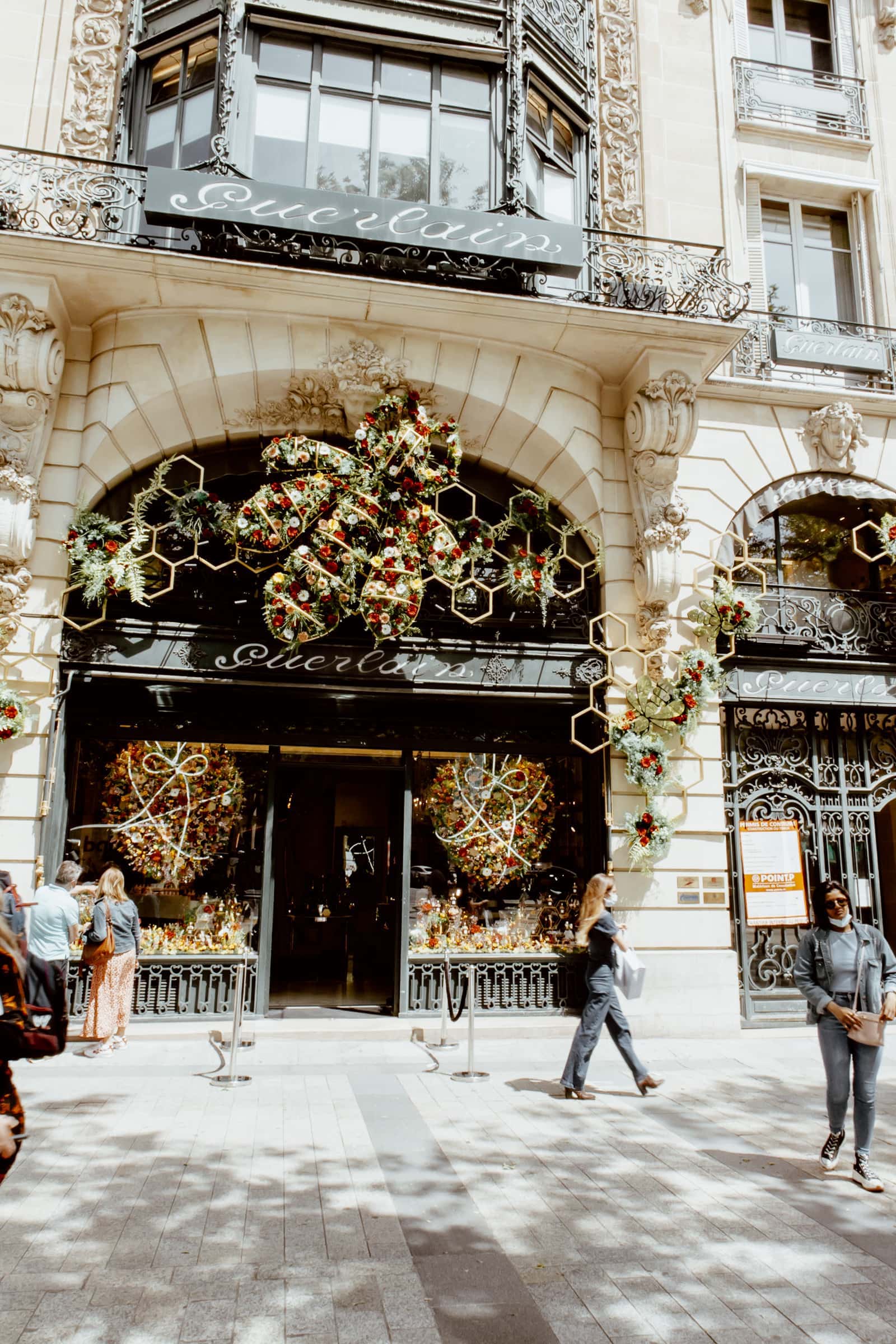
    This is where the famous Avenue des Champs-Élysées begins, and even if you’re not into excessive shopping, the huge flagship stores here are in a class of their own, and long-established brands like Guerlain, for example, turn their window displays into veritable works of art on the building facades.

    Guerlain Boutique Paris with festive floral decorations and passersby
    Beautifully decorated: The shop windows on the Champs-Élysées

    At the end of the Avenue de Champs-Élysées is Avenue Montaigne, the street in Paris with the most famous luxury brands (incidentally, Marlene Dietrich spent her last years here). If you want to feel a little more glamorous, take a detour here. The many great storefronts alone are worth it!

    Place de la Concorde

    You’ll naturally find yourself walking along the Champs-Élysées toward the Place de la Concorde and the Luxor Obelisk—but be warned, it’s a long walk! I took the metro for the last bit, but there are also several buses that run that route.

    The Luxor Obelisk on the Place de la Concorde in Paris

    Jardin des Tuileries

    I had initially intended to head directly to the Louvre, but on a whim, I got off at Place de la Concorde and wandered through the Tuileries. It’s a fairly long walk, yet quite captivating: amidst the busy streets of Paris, the Tuileries stand out as a vast green oasis.

    People are relaxing in the Jardin des Tuileries with the Louvre in the background

    Louvre, the pyramid & Mona Lisa

    By now, at the very latest, you’re already overwhelmed by the splendor and history; and then suddenly you find yourself standing right in front of the famous Louvre. Bam. If you have a little more time (and are even slightly interested in art), you should definitely visit the Musée du Louvre; seeing Da Vinci’s famous Mona Lisa in person is worth the trip alone. But the collection is incomparable in every other way, too.

    ➜ Buy your Louvre ticket in advance*

    The Louvre Museum in Paris, featuring its glass pyramid and visitors
    The Turgot Pavilion at the Louvre Museum in Paris

    Unfortunately, a visit like that takes a lot of time, so if you only have one day in Paris, it’s hard to fit in museums. Which is especially a shame in Paris. If you have more time, be sure to check out the Centre Pompidou and the Musée d’Orsay in addition to the Louvre. I think these two museums are also well worth a visit.

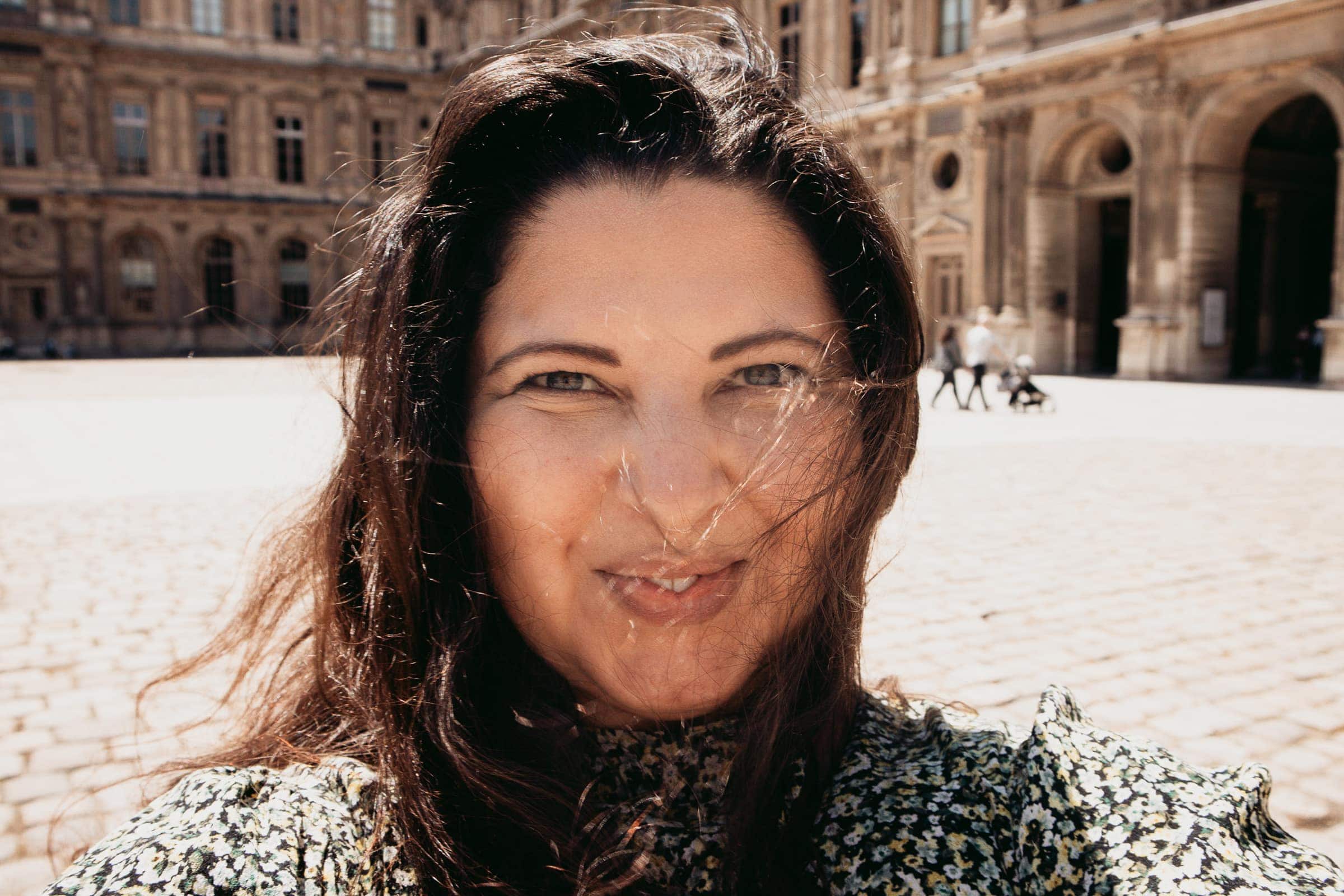
    Smiling woman with wind-tossed hair in front of the Louvre in Paris
    Très contente in Paris

    Seine & Quartier Latin

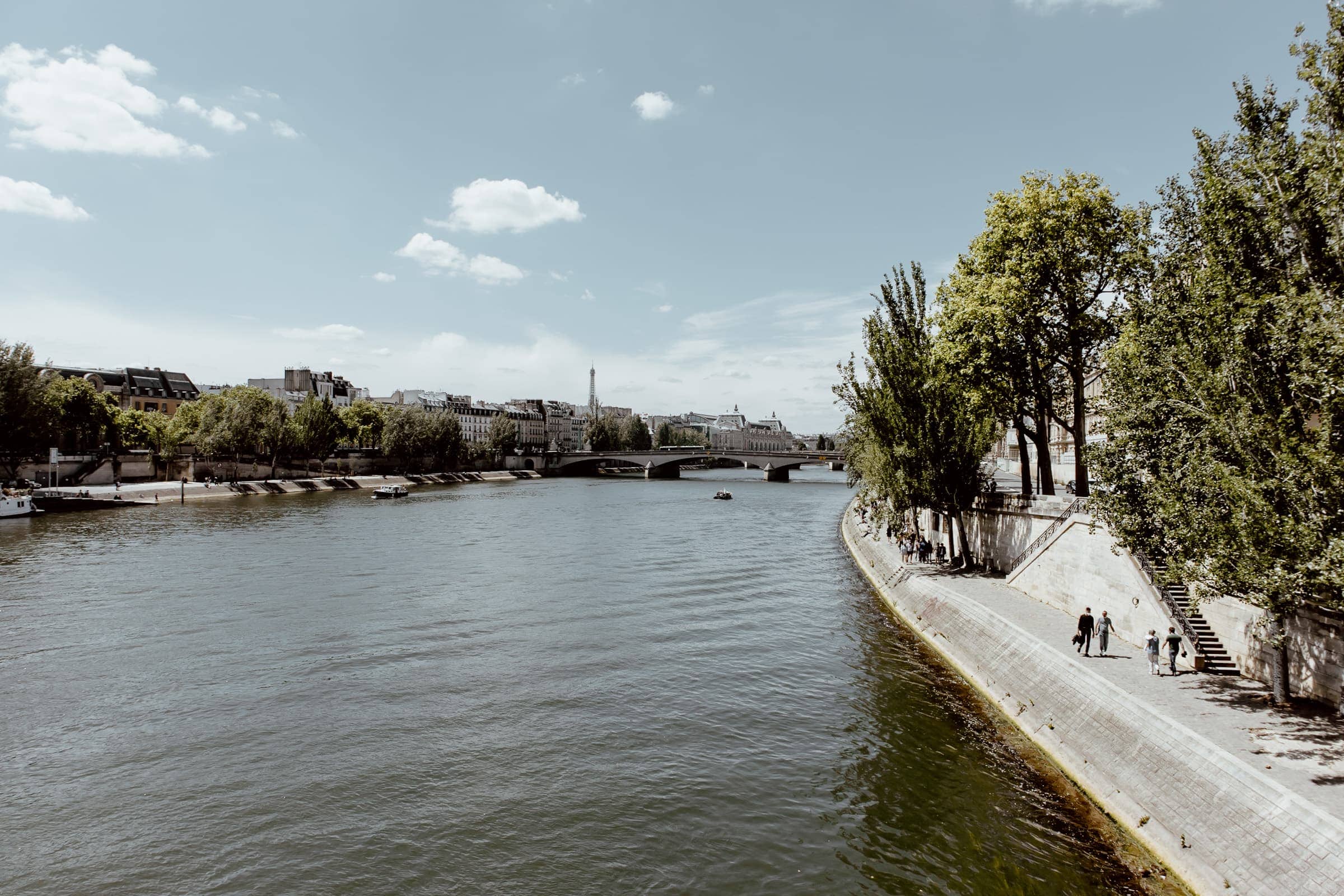
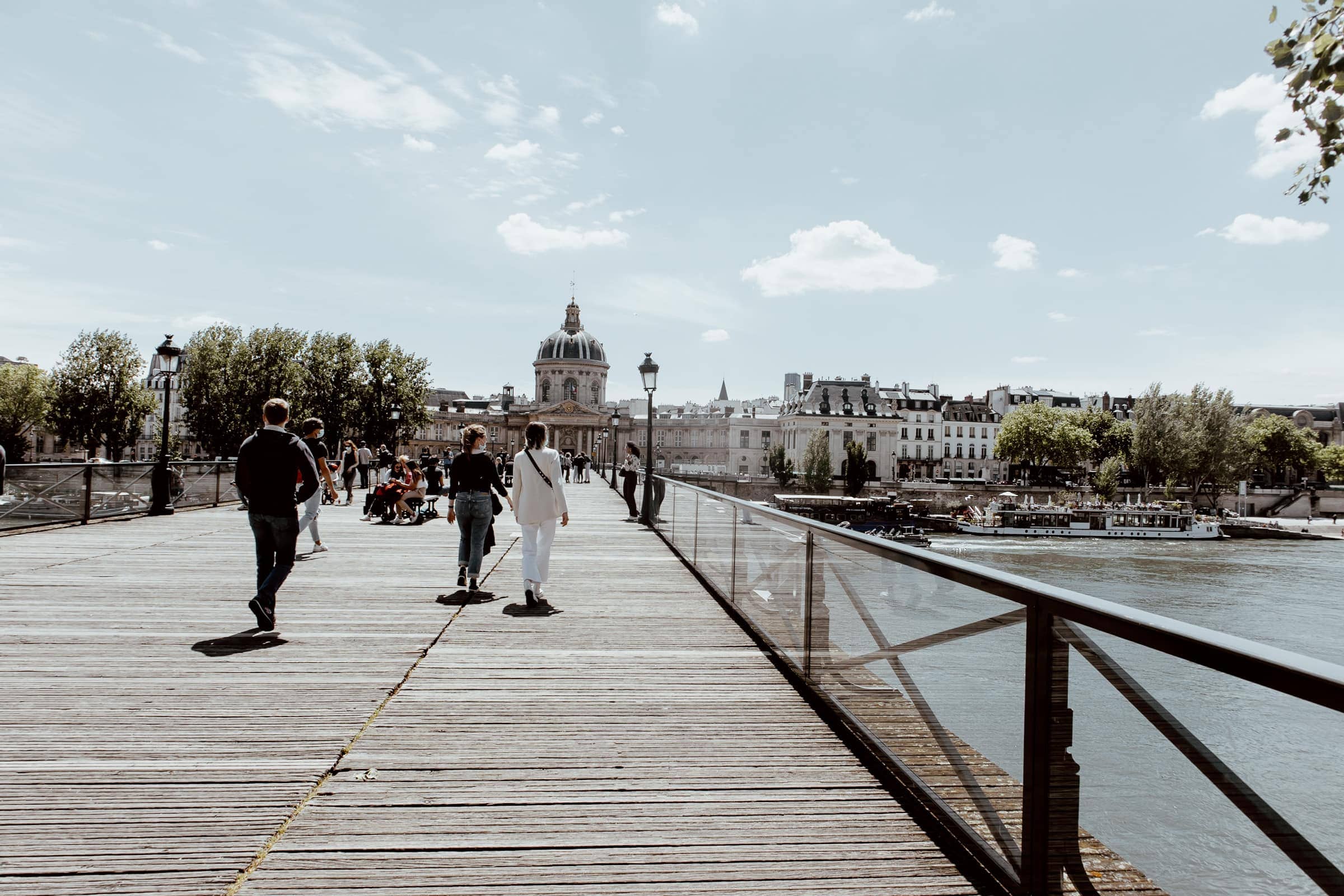
    Behind the Louvre, the route crosses the Pont des Arts. And here, with a view of the Seine, you’ll get that pure Parisian vibe all over again. The route continues along the riverbank toward the Latin Quarter. By the way, the next bridge is the famous Pont Neuf, the city’s oldest stone bridge.

    Pedestrians on the Pont des Arts in Paris along the Seine
    The Ponts des Arts above the Seine

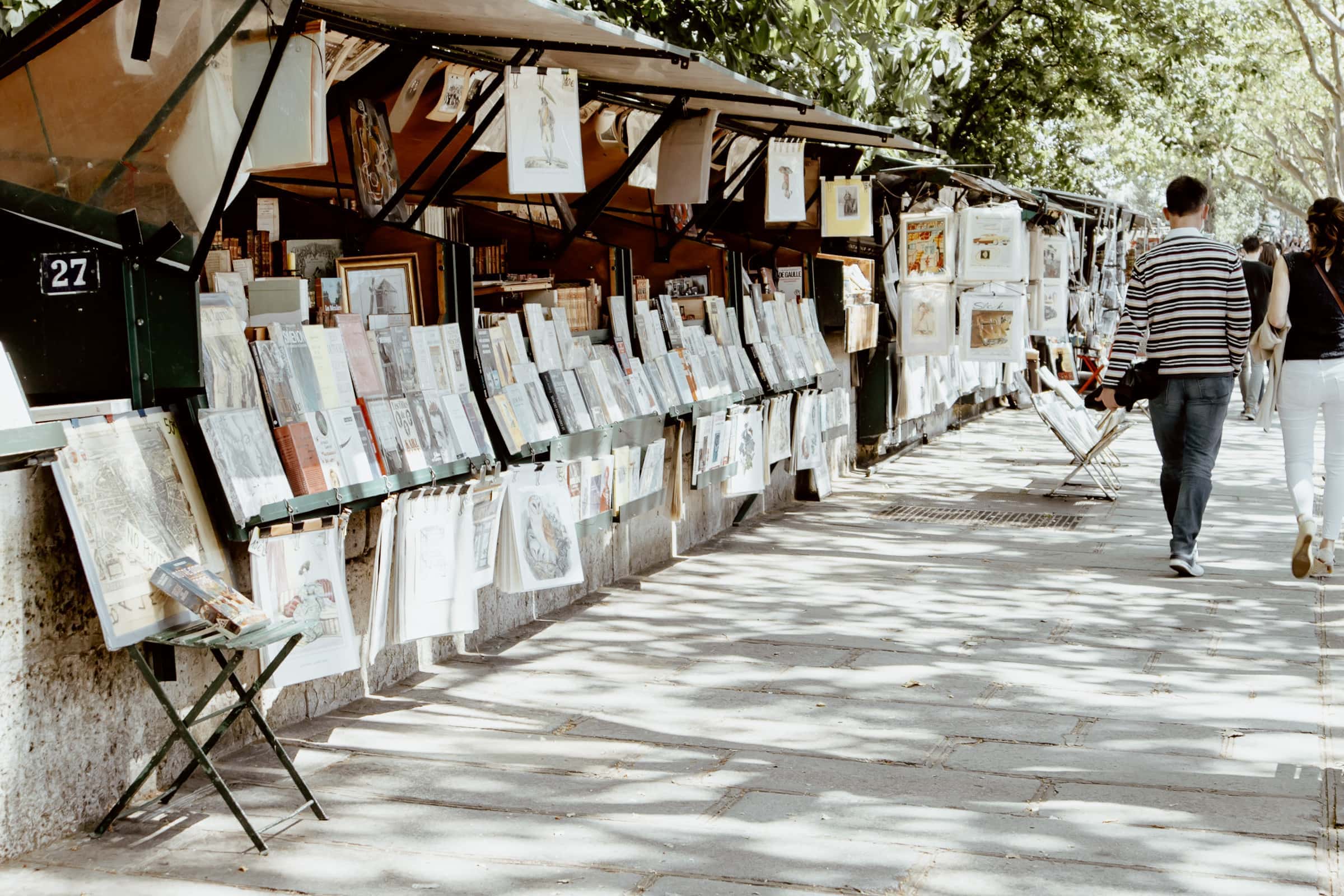
    At some point, the first bouquinistes start to appear—the booksellers with their charming little stalls along the Seine. Here you’ll find used books, coffee-table books, and prints.

    A Parisian bookseller's stall featuring historical prints and books
    Stalls selling antiquarian books and art prints along the Seine promenade in Paris

    The Latin Quarter is Paris’s traditional student and nightlife district. Numerous restaurants, cafés, and bistros line the streets here. But the Latin Quarter is also quite the tourist trap. If you’ve stuck with the whole itinerary so far just like I did, by now your stomach is probably growling, and you probably don’t care which lousy tourist spot you end up in—I know that feeling all too well 🙂 So avoid Rue de la Huchette and try your luck in the side streets.

    A bustling Parisian alley lined with restaurants and bistros

    I can recommend Shiso Burger —fresh burgers with an Asian twist. The little place is located right on Quai Saint-Michel, a bit off the beaten path from the usual tourist traps.

    Notre-Dame & Île de la Cité

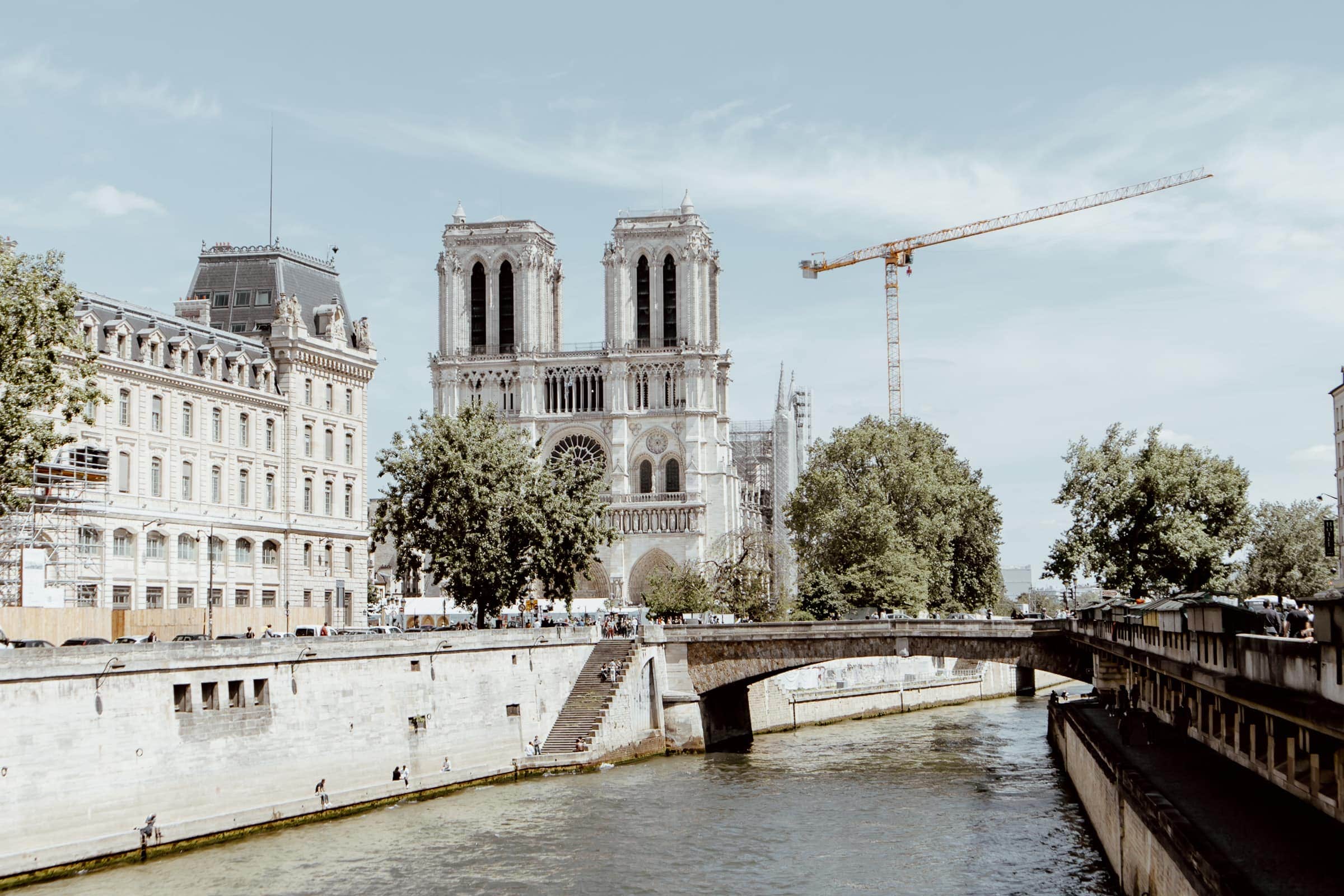
    Cross the Pont Saint-Michel to reach the Île de la Cité, the large island in the middle of the Seine—and, as a bonus, you’ll have a fantastic view of Notre-Dame Cathedral from here.

    Notre-Dame de Paris on the Seine with a renovation crane
    Notre Dame Cathedral

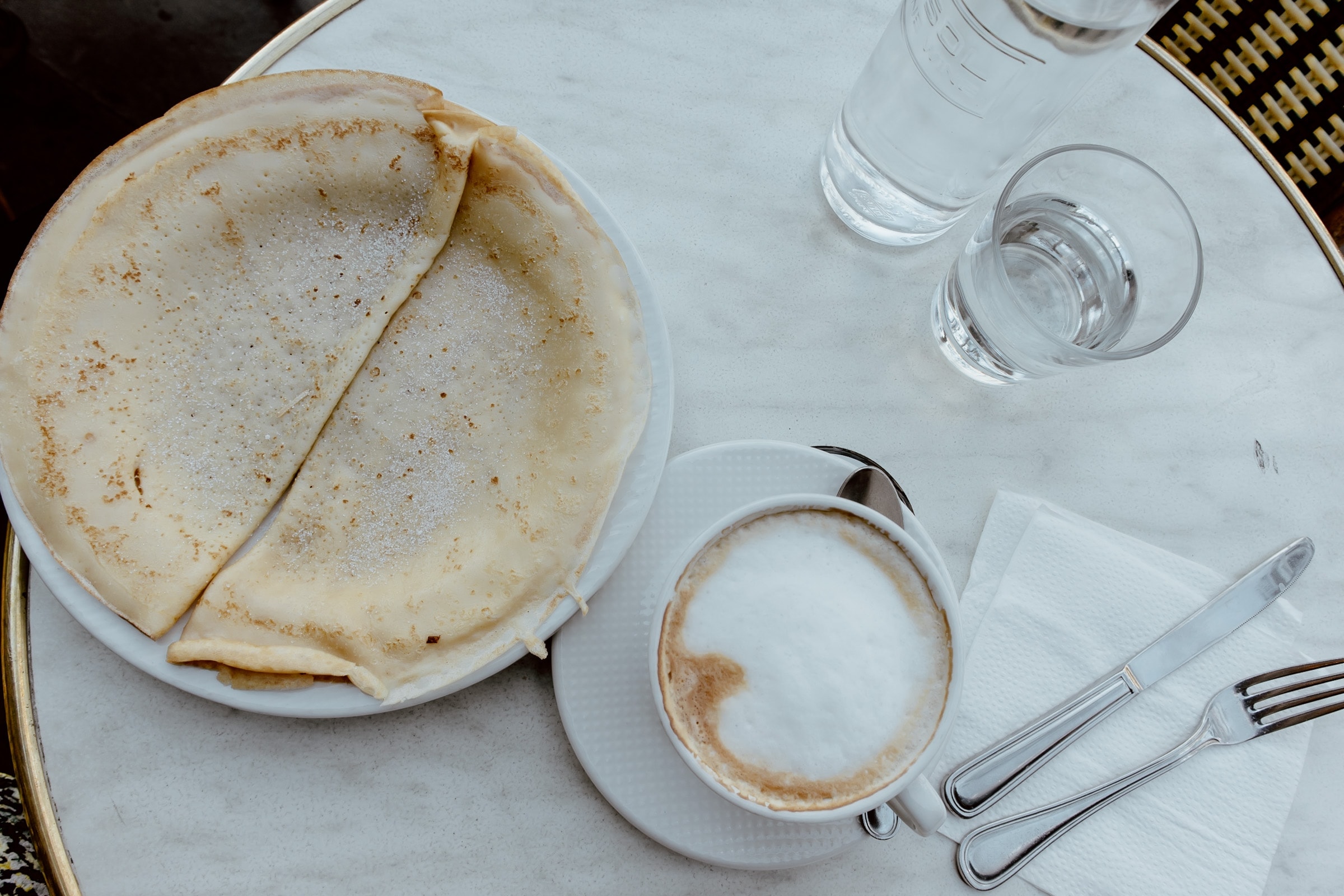
    I enjoyed a lovely break at Brasserie Les deux Palais, mostly because I wanted to sit by the street at a charming bistro table and savor a café au lait, just like in Paris. I’d say I definitely achieved that goal! Oh, and I also stumbled upon a wonderful tip for experiencing a classic old-school Parisian brasserie.

    Crêpe with sugar and cappuccino on a marble table
    Blurred streetlight in front of an old city building, in sepia

    Tour Saint-Jacques

    On the other side of the Seine, I discovered a true treasure (and, to be honest, felt a little disappointed that I hadn’t thought to bring a picnic, like many others relaxing here on their Saturday afternoon). The charming Square de la Tour Saint-Jacques, with its lush, shady trees, surrounds the Tour Saint-Jacques. It’s a lovely spot for a quick and peaceful break!

    Tour Saint-Jacques, a Gothic tower in Paris surrounded by trees
    Oasis in the middle of Paris: The Tour Saint-Jacques

    Marais Quarter

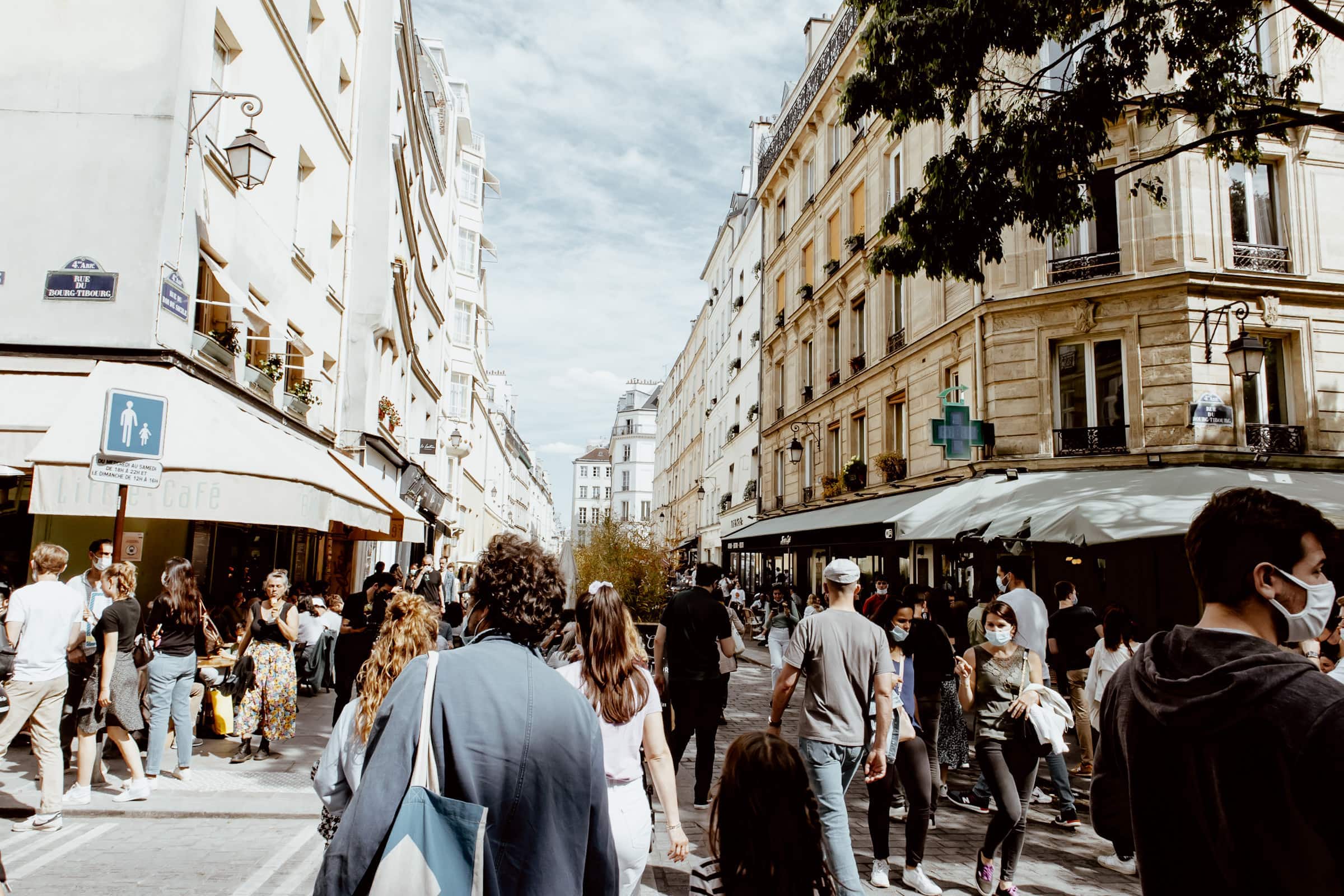
    I could have spent the whole day in the Marais: Strolling, drinking coffee and looking at gorgeous people. The Marais is the Jewish center of Paris, and here there are lots of exciting stores, the streets are bubbling over with neighborhood life, and Paris is exactly how I always imagine it to be.

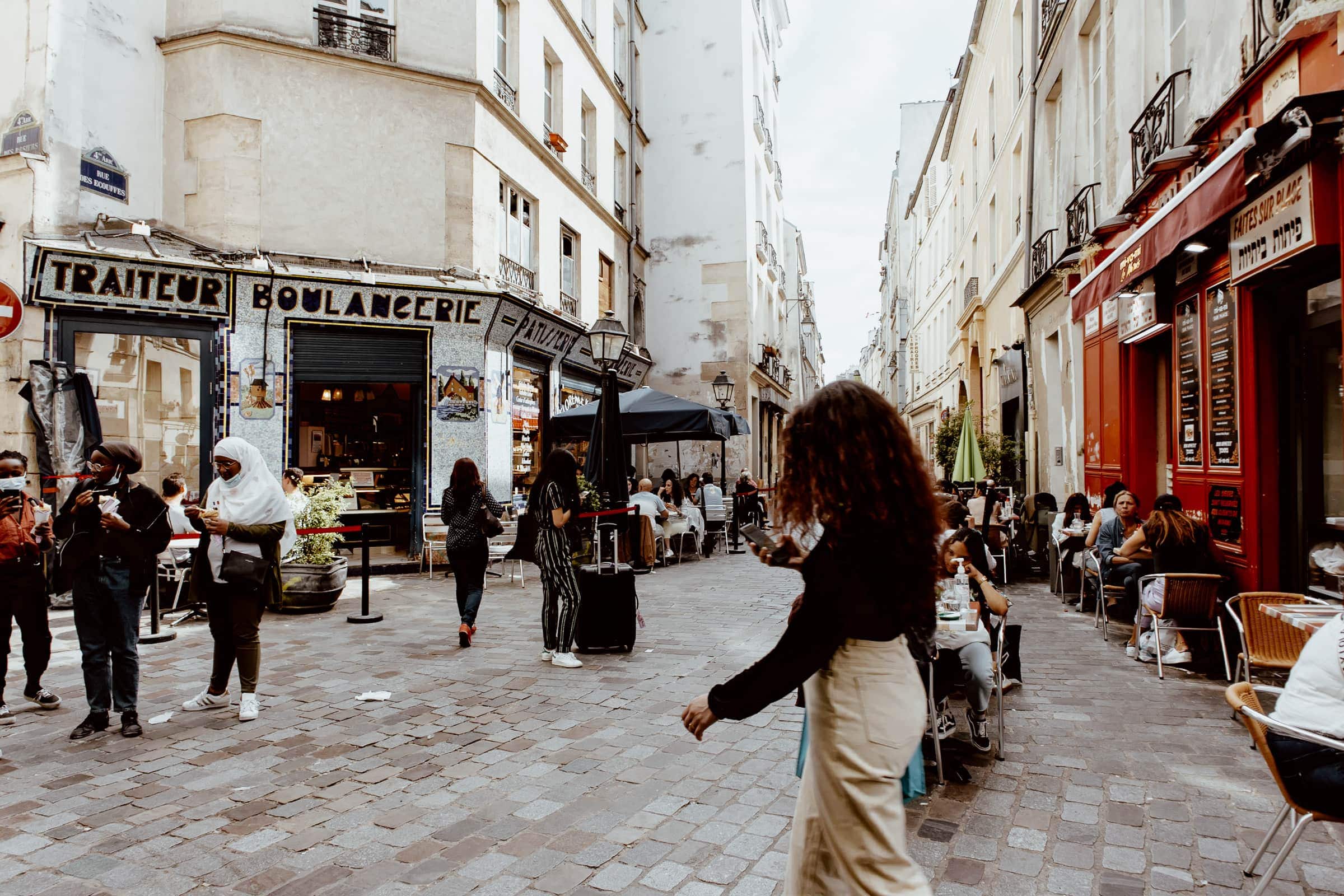
    A bustling Parisian street lined with pedestrians and historic buildings
    A bustling Parisian street with a bakery and passersby
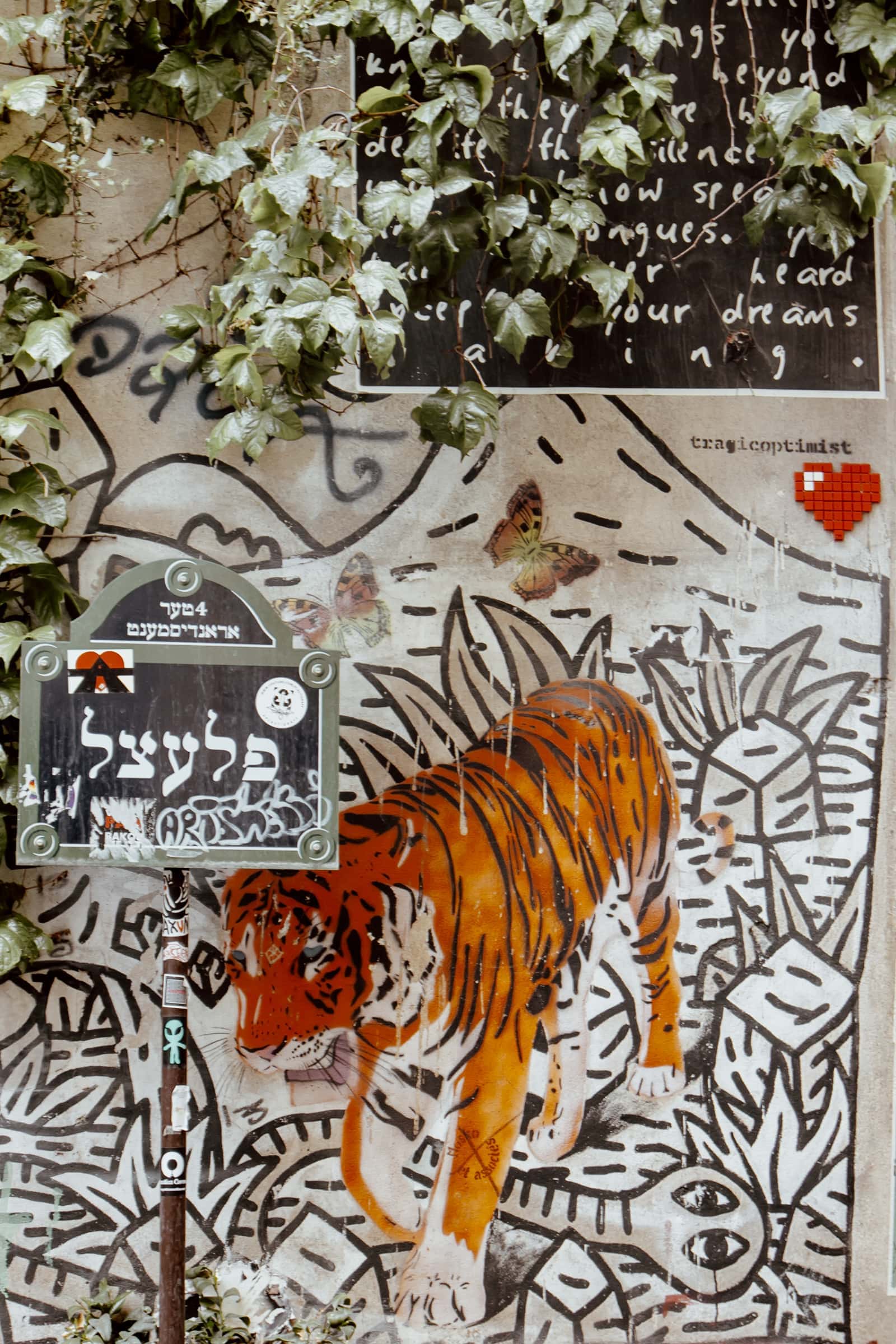
    Street art mural featuring a tiger, butterflies, and a Hebrew sign
    Mosaic street art featuring three variations of the Mona Lisa on a Parisian building wall
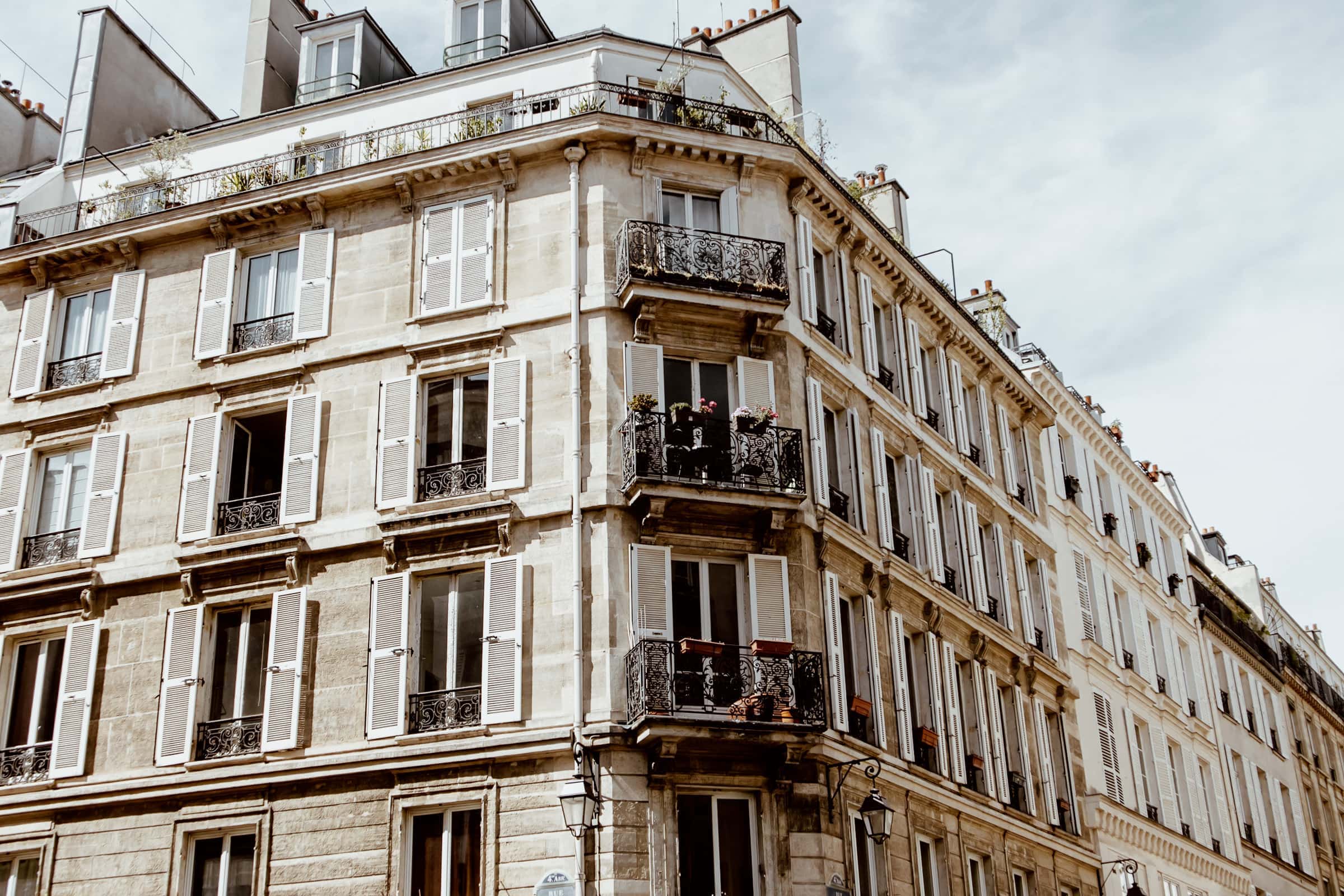
    Classic Parisian townhouse with balconies and white shutters

    I’ve put together a few tips for the Marais district here:

    Chanel Beauté Marais: a small Chanel boutique dedicated exclusively to beauty products

    Chanel Boutique with Rouge Coco Bloom Window Display

    Laize Bubble Tea Shop for minimalists

    Two people in front of the Laïzé tea shop in Paris

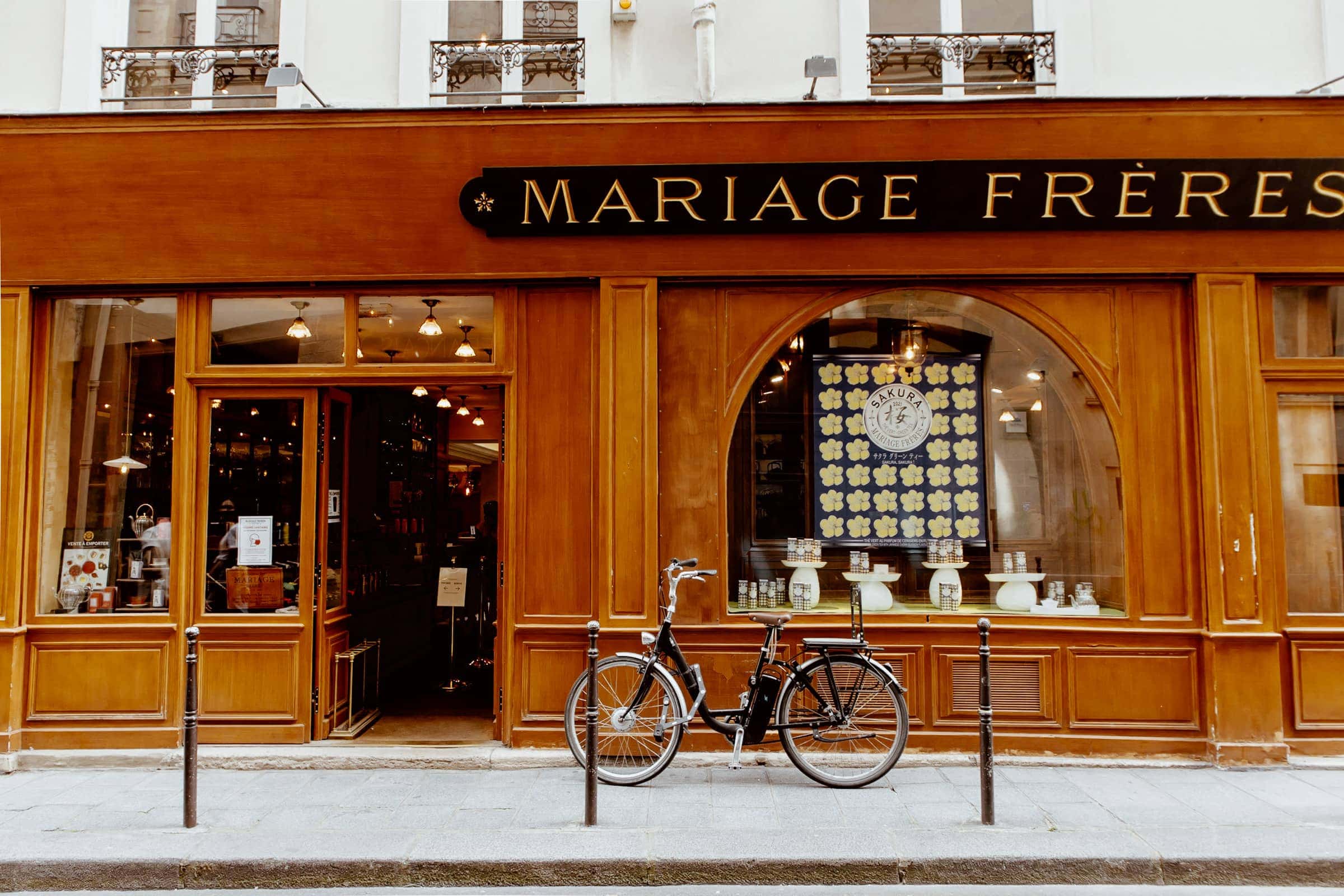
    Mariage Frères a Parisian tea house classic!

    Mariage Frères tea shop in Paris with a bicycle in front of it

    End the day in Paris: Tips for a successful evening

    Montmartre & Sacré-Cœur

    If I hadn’t gotten so completely lost in the Marais, I actually would have made my way up to Montmartre. If you’ve already been to the Eiffel Tower, you’ve already seen Paris from above—which I consider an absolute must. But the atmosphere at sunset at the Sacré-Cœur Basilica on Montmartre is something truly special!

    So if you have some more time and your feet are still up for it, you should head toward Montmartre from here. It’s best to take one of the metro lines heading north and then transfer to Line 2 to the Anvers station. From there, it’s just a short walk to the Montmartre Funicular, which will take you up to the gleaming white basilica with its pretty towers and the most beautiful sunset.

    Evenings on the Seine

    Or you can take a romantic boat trip on the Seine! These cruises are quite touristy and anything but an insider tip – but also really beautiful. Seeing the sparkling Eiffel Tower in the evening while sailing through one of the most beautiful cities of all time is a unique experience.

    As with most attractions, the same rule applies here: It’s best to buy your ticket in advance—that way, you’ll avoid long wait times.

    Tips for a short trip to Paris

    How to get there

    With a huge international airport like Paris Charles de Gaulle nearby and one like Paris Orly a little further away (this is where mainly budget airlines arrive), you’ll find a great selection of direct flights even from overseas.

    But there are also great connections from Germany with the French TGV high-speed train. From Cologne, Frankfurt or Stuttgart, for example, you can arrive in the middle of Paris at the Gare de l’Est in less than four hours!

    Getting from Germany to Paris by train

    Public transport in Paris

    Getting around Paris by bus and metro —it works like a charm! The metro stations may sometimes feel like an entire city underground, but you can get anywhere pretty quickly.

    For my day in Paris, I bought a day pass for all forms of public transportation, which actually wasn’t necessary at all. The only advantage of a day pass is that you don’t have to wait in line at a ticket machine every time. But since I walked so much, individual tickets probably would have been a better deal.

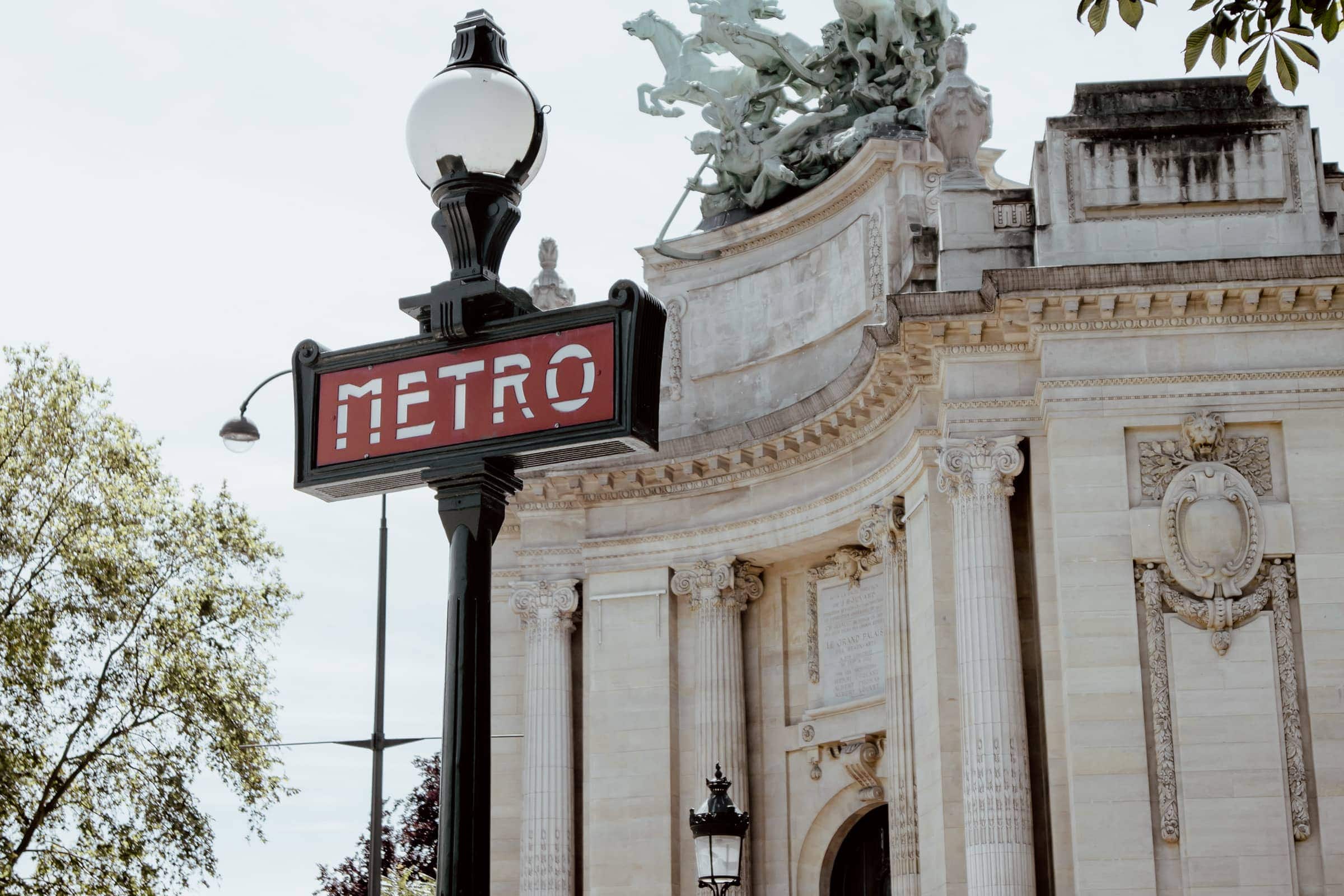
    Paris Metro sign in front of the Grand Palais
    The metro will take you halfway across Paris in no time.
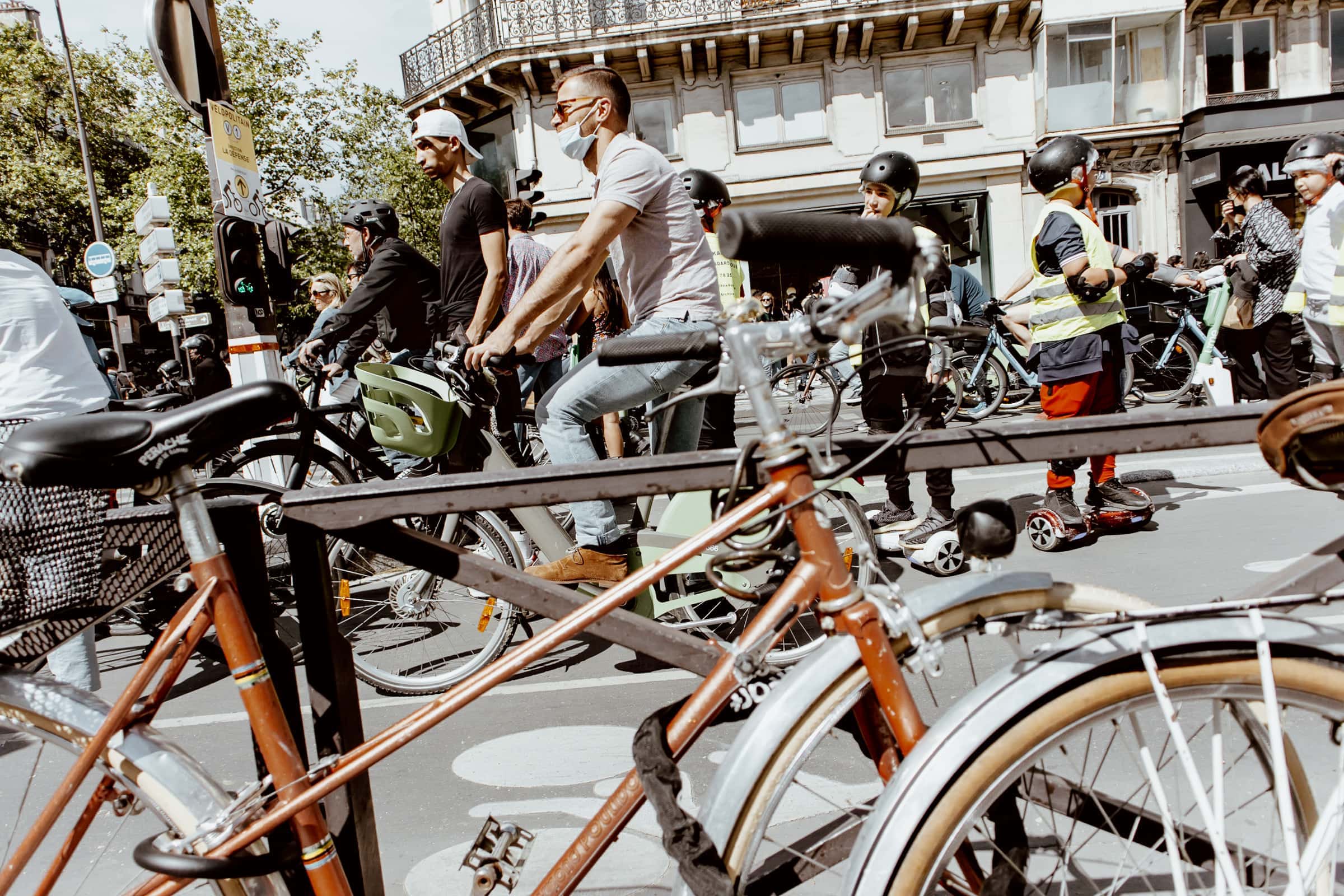
    Many cyclists on a busy city street in Paris
    In the past years, Paris has become a super bike-friendly city and rental bikes can be found everywhere! Just download an app of one the local providers and off you go!

    Tip: At the ticket machines, the tourist day pass will be displayed first. Aside from a few discounts that nobody needs, it’s nothing more than a regular day pass, but it costs a few euros more. Just scroll down one page, and you’ll find the regular day pass for 10 euros.

    Info & timetables for Métro, RER, buses etc.

    Note: The Paris Métro can really get on your nerves, though, if you’re not familiar with the individual stations. Getting lost can sometimes be quite time-consuming, and the walk to the actual line is often long.

    It’s definitely more comfortable to get around above ground, and if you’re not quite that adventurous, just take a hop-on-hop-off bus. Yeah, I know—they’re embarrassingly touristy and expensive to boot—but in cities like these, it’s just worth it, especially since they stop right at the main attractions and you don’t have to worry about changing buses or anything like that. And you’ll save yourself some precious time.

    Buy a ticket for the hop-on, hop-off bus here*

    Food Drinks

    Paris is an expensive city, and going out isn’t cheap. It’s best to steer clear of tourist traps—they only offer mediocre food and grumpy waiters who’ll just ruin your trip to Paris. But otherwise, Paris, like any big city, is full of great spots just waiting to be discovered.

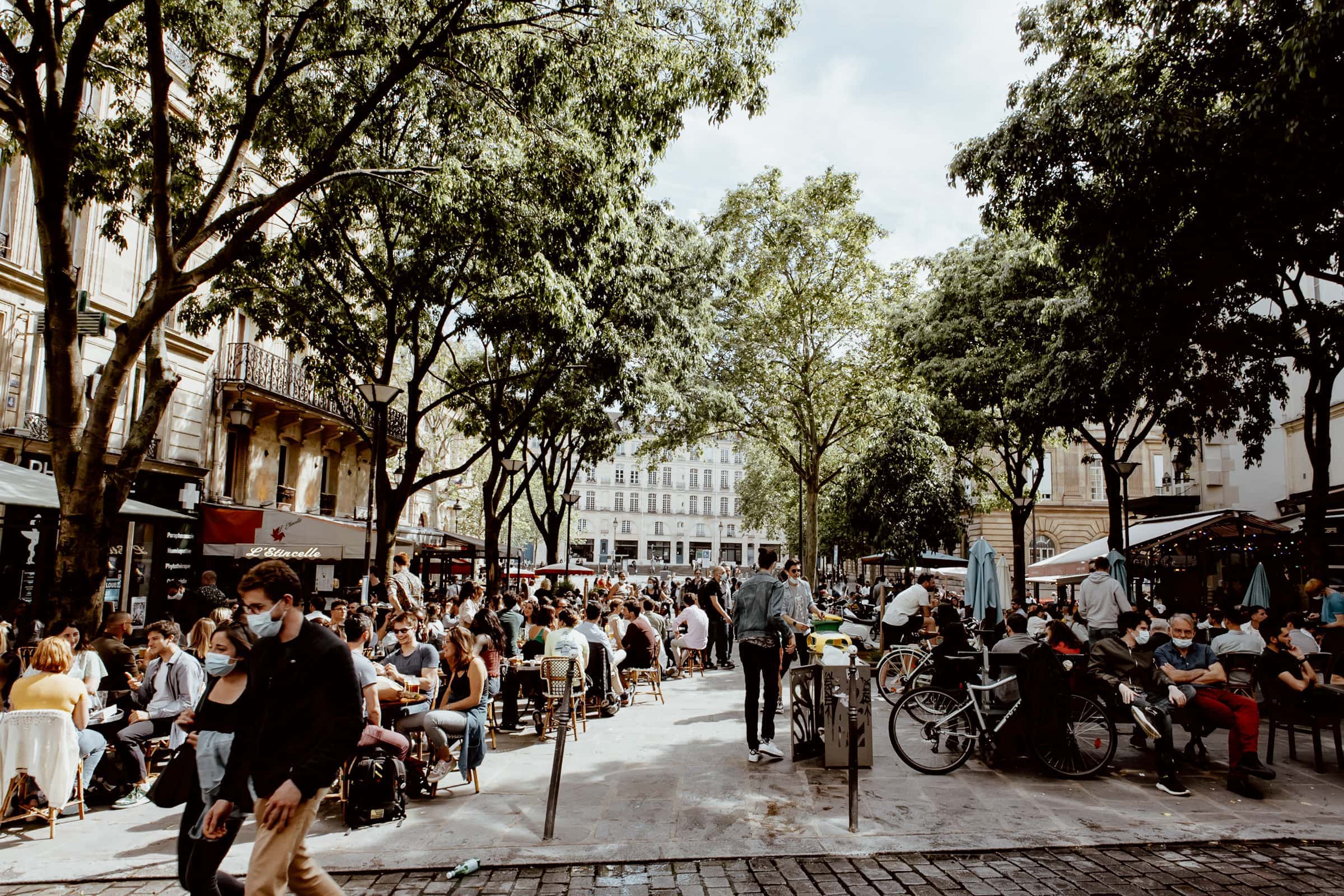
    A bustling square in Paris with cafés and people sitting under the trees
    In the Marais, you’ll find lots of great cafes and restaurants.

    Where to stay in Paris

    This time I was in Paris on business, so luckily I didn’t have to worry about finding a place to stay. That can sometimes be quite an adventure there, especially when you’re on a tight budget.

    Here you’ll find affordable accommodations in Paris

    Map for your short trip to Paris

    This map shows all the locations at a glance; you can also download it to your phone—it’s handy for checking while you’re out and about!

    The Louvre Museum in Paris, featuring the French flag and sculptures
  • Glasgow Sights & Tips for your Scotland Trip

    Glasgow Sights & Tips for your Scotland Trip

    > </div>“/>
<p class=Why not Glasgow? Scotland is a destination that has a lot to offer: Vast landscapes, wild coasts, castles steeped in history and, last but not least, the charming Scots themselves. But city trip lovers won’t miss out either: guest author Julia from Delicious Stories shows you the best Glasgow sights and tips for a successful city trip! You can learn more about Julia and her blog at the end of this article.

    The best tips & sights in Glasgow: On the road with Julia!

    I started my exploration tour of Glasgow. Unfortunately, the weather still did not play along, but that’s how it is in Scotland. Rain and dramatic clouds are just part of it.

    #1 St. Mungo’s Cathedral

    Glasgow was the last stop on my Scotland tour. Accordingly, I had already seen and experienced quite a bit! Topping that was difficult. So it was not surprising that Glasgow could not inspire me at first. Maybe I was tired from what I had already experienced, plus gray clouds and rain: I would have loved to snuggle up in bed! However, that was not an option. In 2 days the return flight left and I wanted to give Glasgow a chance to excite me.

    The medieval church is not located directly in the city center; you can reach it by bus or a walk. After the death of St. Mungo in 600 A.D., the present cathedral was built in place of the chapel erected by him. It is one of the few Gothic buildings that has survived the centuries.

    104 St. Vincent Street, Glasgow G2 5UB

    Glasgow Sights St. Mungo's Cathedral

    Typical for gothic churches is the gloominess, so no charm at first sight here either. It is all the more beautiful that the darkness is disturbed by colorful light from the stained glass windows. The most beautiful part of the cathedral for me was the chancel with an ornate wooden vault adorned with various coats of arms.

    #2 Necropolis

    Crossing a bridge in front of the cathedral, you reach the Glasgow Necropolis, the largest cemetery in the city. The bridge is also called the Bridge of Sighs because it leads directly to the cemetery where over 50,000 dead people began their final journey. Here you will find wonderful Victorian pavilions, monuments and crypts lined up on the hill.

    At the top of The Craigs hill is the pillar of the reformer John Knox, but he is not buried here at all. Previously, the site was to be used as a park, not a cemetery, and the monument was the focal point. Only in the 19th century, after a tender among architects, the park was transformed into a cemetery.

    Advertising / *affiliate link

    #3 George Square

    George Square is located in front of the City Hall, it is Glasgow’s central square and a very popular meeting place. In the square there are monuments and statues of Queen Victoria, Prince Albert and James Watt, a famous Scottish inventor. Here you can listen to bagpipers and watch the hustle and bustle of the city.

    The building of the former Bank of Scotland now houses a pub, The Counting House. The perfect place to take a little break and have a beer in an impressive atmosphere.

    #4 Glasgow Green

    In 1450 the king donated the park to the people, at that time the area was still more meadow than park. Over time, many sights were added. For example, the Nelson Obelisk, the McLennan Arch and the Doultain Fountain, a fountain dedicated to the then Queen Victoria for her Jubilee. Here is also the magnificent winter garden made of iron and glass.

    #5 Street Art in Glasgow

    Glasgow is famous for its street art pieces, which are spread all over the city. These murals make the otherwise somewhat gray city wonderfully colorful. While exploring the city, one always discovers one of the impressive works.

    One artist in particular stands out: Smug. He is responsible for many murals in Glasgow, including probably the most famous, a man in a red cap with a sparrow on his finger.

    Glasgow landmarks street art Smug Man with Bird
    The most famous mural in Glasgow: Man with bird by Smug

    To explore Glasgow, I recommend taking your cue from the street art pieces while also discovering the classic landmarks.

    You can also find more about Glasgow’s street art on Julia’s blog Delicious Stories: Streetart Tour through Glasgow .

    Glasgow landmarks street art mural

    Culinary Highlights: Restaurant tips for Glasgow

    You can always convince me with food, so I also started searching for culinary highlights in Glasgow. Even though I struggled to find restaurant tips while researching before the trip – I was not disappointed on the spot! Glasgow has something for everyone, whether classic, modern or international.

    Chaakoo Bombay Cafe

    Delicious Indian food in an impressively stylish ambience. Classic design, top service and great value for money.dishes from £7.

    79 St. Vincent Street, Glasgow G2 5TF

    Bread Meats Bread

    Award-winning burgers, hot dogs and poutine are available at Bread Meats Bread. There are a total of 3 branches in Glasgow. Simple, modern design, fast service and excellent burgers. Just the thing during a city trip. Burgers from £8.50.

    Ardnamurchan

    Modern Scottish cuisine and a great ambience. Here, the inexpensive lunch menu is especially recommended. I treated myself there to fresh mussels in white wine sauce and a juicy steak. Lunch menu from £20. Dishes from £15.

    325 Hope St, Glasgow G2 3PT, Scotland

    Shopping in Glasgow

    Glasgow is one of the shopping capitals of Great Britain, along with London and Birmingham. So if the weather is bad, no problem, shopping is always possible. The shopping district with many stores and malls stretches between Sauchiehall and Buchanan Street.

    Buchanan Street is a beautiful pedestrian street with beautiful architecture and very good shopping opportunities, which invites you to stroll.

    Stay overnight in Glasgow

    For the last few nights of my trip, I opted for a slightly more comfortable option. There would have been plenty of affordable Airbnb options as well. However, I decided on the Motel One right next to the main train station. You know exactly what to expect there, and the location was perfect—both for exploring the city and for the concert at the O2 Academy that I wanted to attend.

    At the reception I got a city map and some very valuable restaurant tips on request.

    From Glasgow Airport to the city

    The quickest way to get into the city from Glasgow Airport is to take the Glasgow Airport Express. During the day it runs every 10 minutes, at night every hour. Travel time from the airport to the Buchanan Bus Station in the city is 25 minutes. Depending on the location of your accommodation, you can also get off at Glasgow Central or Queen Street Station. Tickets are available from the bus driver or in advance online.

    You can also find more Scotland travel tips on Julia’s blog Delicious Stories: Scotland – An unforgettable road trip

    Or are you looking for more inspiration for unusual city breaks in Scotland? Then perhaps Aberdeen would be something for you: Tips for the Silver City Aberdeen

    About the guest author Julia

    • 34 years
    • Munich kid
    • Trained as a travel agent, studied tourism management, now work as IT project manager in a tourism company
    • I’ve had my food & travel blog Delicious Stories since 2015.
    • I love to travel and have adventures. I’m always on the lookout for culinary highlights, which regularly escalates into extensive research before each trip. My itineraries are often based primarily on restaurants, and then I look at what there is to see and otherwise experience.

    Click here to visit Julia’s blog Delicious Stories

  • 12 Amazing Things to Do in Salzburg, Austria

    12 Amazing Things to Do in Salzburg, Austria

    Salzburg is always suitable for a short city trip. To give you a good overview, I have put together a guide with the best sights in Salzburg! Salzburg is full of great locations that you can easily discover in a whole weekend or even a day!

    Tips for your trip to Salzburg:
    ➜ Find affordable hotels in Salzburg
    ➜ Save on high admission prices for many of Salzburg’s attractions and public transportation tickets with the Salzburg Card

    Things to do in Salzburg Austria
    Fortress Hohensalzburg: One of the major tourist attracions in Salzburg

    Best Things to Do in Salzburg

    The Hohensalzburg Fortress, the Mönchsberg, Mirabell Palace or the pretty old town with many sights such as the birthplace of Wolfgang Amadeus Mozart: Salzburg has a lot to offer in a small area! The best place to start is here:

    #1 Fortress Hohensalzburg & Fortress Funicular

    The city’s landmark also provides a breathtaking view of Salzburg and the surrounding mountains. At Hohensalzburg Fortress you can not only enjoy the panorama, but also explore one of the best preserved medieval castles in Europe! Almost 950 years ago, the first foundation stone for the huge castle overlooking Salzburg was laid on the fortress hill.

    sculpture man on golden ball in Salzburg in front of Hohensalzburg Fortress
    The man on the golden globe: the sculpture makes the view of Hohensalzburg Fortress perfect
    Things to do in Salzburg Austria
    View from the fortress over the old town of Salzburg

    By the way, the Festungsbahn takes you up and back down in just a few minutes. The train runs every 10 minutes and is free for Salzburg Card holders. It takes about 20 minutes to walk up to the castle; the path is paved but still requires some effort. Once you reach the top, you’ll also have to pay an admission fee if you don’t have a Salzburg Card.

    #2 Mozart’s Birthplace

    Even if you say that you have nothing to do with classical music – I bet you’ve certainly heard a piece by Wolfgang Amadeus Mozart. His compositions were legendary even in his lifetime! You can’t miss his birthplace in the Getreidegasse: Either the bright yellow facade or the long lines of waiting tourists in front of the door will show you the way.

    Inside the house itself, in the Mozarts’ former apartment and adjacent rooms, you’ll find a lovingly curated museum featuring old letters, Mozart’s original childhood violin, and, of course, plenty of music. Don’t let the crowds of tourists deter you—it’s well worth a visit and free if you’ve purchased the Salzburg Card in advance. Mozart’s birthplace is the quintessential Salzburg attraction.

    Looking for delicious food in Salzburg?
    Click here for the comprehensive Salzburg Food Guide

    #3 Mozart Residence

    At Makartplatz, on the other side of the Salzach, you will find the Mozart family’s residence. If you want to dive deeper into Mozart’s life, you’ve come to the right place! Destroyed during the Second World War, the former dancing master’s house was rebuilt and now houses a multimedia exhibition on the life of Mozart and his equally musical family.

    If you have little time, however, I would recommend that you give priority to the birthplace and only visit that one.

    ➜ Tip for Mozart fans: Mozart Week Salzburg and Where you can trace Mozart everywhere in Salzburg

    Exhibition in the Mozart residence on Makartplatz

    #4 DomQuartier & Salzburg Cathedral

    The Salzburg Cathedral is impressive. No wonder, Salzburg was ruled by archbishops for centuries. They ensured a correspondingly high density of churches in the city, with the Salzburg Cathedral as the most outstanding of all. And they did not spare any pomp, I can assure you! You should definitely take a look at the cathedral as well.

    Salzburg Cathedral from the outside
    Salzburg Cathedral
    The Salzburg Cathedral is really impressive from the inside!
    Salzburg DomQuartier Sightseeing
    Impressive ballrooms in the DomQuartier next door

    Insider tip: Via the DomQuartier next door, you can get through various state rooms and exhibition spaces via a large terrace on the upper floors directly to the organ loft! Between the antique organ and all kinds of orchestral equipment, you have a mega view of the nave.

    Salzburg sights Salzburg Museum in the Neue Residenz
    Great photo ops from the terrace of the DomQuartier: View of the Salzburg Museum in the Neue Residenz
    Salzburg sightseeing attractions Cathedral
    Inside Salzburg Cathedral
    cathedral of Salzburg
    Organ gallery in the cathedral

    Admission to Salzburg Cathedral is free. With the Salzburg Card, you also get free admission to the entire DomQuartier.

    Very cool photo spot: On Kapitelplatz stands the sculpture “Sphaera” by Stephan Balkenhol. The man on the golden sphere with the fortress Hohensalzburg is a super photo motif. (By the way, the sculpture is in two parts: can you find the female figure that goes with it?)

    Salzburg sights Man on the Golden Sphere
    The sculpture “Sphaera” with the man on the golden globe
    Perfect view from the other side with the Hohensalzburg Fortress in the background

    If you are interested in funny details of church history, you should definitely drop by the Kajetanerkirche on Saturdays exactly between 10 and 11 a.m. (not earlier and not later!). Then a small inconspicuous looking chapel opens, in which there is an offshoot of the Scala Santa from Rome. Like the “real” Scala Santa, this staircase may only be climbed kneeling! One of the insider tips among the Salzburg sights.

    You can also find more unusual places and wacky stories from over 800 years of Salzburg in this article: Salzburg and its secrets

    Scala Santa in the Kajetanerkirche in Salzburg
    May only be slid up kneeling: The Scala Santa in the Kajetanerkirche

    #5 Mirabell Palace and Gardens

    Very close to the Markartplatz you will find the Mirabell Palace with its beautiful Mirabell Gardens. The Mirabell Palace today houses parts of the city administration. Here you can see the impressive Marble Hall, where concerts are also held.

    Salzburg tourist attractions Mirabell Palace Marble Hall
    Not only beautiful for getting married: The Marble Hall at the Mirabell Palace

    The Mirabell Palace is also a popular place for weddings. Couples from all over the world come here to tie the knots. Maybe you’ll be lucky and are able to watch a fairytale wedding!

    Salzburg sights Mirabell Garden in Mirabell Palace with Hohensalzburg Fortress in the background
    The Mirabell Garden around Mirabell Palace
    Palm house in the Mirabell Garden Salzburg
    The small palm house in the Mirabell Garden

    In the Mirabell Garden you should also take a look at the small palm house. Another nice photo op! Admission is free.

    #6 The Getreidegasse & the old town of Salzburg

    The heart of Salzburg is the old town! Even though it can get crowded in high season, I love the pastel-colored houses in the winding alleys. After all, they are a sight in themselves in Salzburg! The main street here is Getreidegasse, where next to Mozart’s birthplace you can find a lot of stores from expensive to a little less expensive. In the old town of Salzburg cars are prohibited, so you can stroll leisurely through the streets.

    Salzburg landmark Goldgasse in the old town
    The Goldgasse in the old town
    Salzburg tourist attractions Getreidegasse old town
    One of the busiest streets in Salzburg’s old town: Getreidegasse
    Woman with umbrella in Salzburg old town at Schnürlregen, rain in Salzburg
    The typical thin rain in Salzburg is called “Schnürlregen”
    Hotel Altstadt in Salzburg
    Narrow alleys, pastel-coloured facades: Salzburg’s old town is a little dream.

    Tip: If you feel like shopping, on the other side of the Salzach you will also find Linzer Gasse with many shops and cafés!

    Are you a coffee addict like me? In my big Salzburg Food Guide you will find many extraordinary addresses for a cozy coffee in between!

    #7 The Mönchsberg

    You can walk up to the Mönchsberg from the old town. Much more impressive, however, is the ride on the Mönchberg elevator, which is simply carved into the middle of the massive rock and provides a total contrast between the picturesque old town and the futuristic complex.

    Salzburg Attractions Mönchsberg lift
    Entrance to the Mönchsberg lift

    At the top of the Mönchsberg is the Museum der Moderne, which you literally fall into from the elevator. A lot of concrete, a lot of art and regularly changing exhibitions: Salzburg is also a modern city! And the view over the old town is fantastic. One of my absolutely favourite places in Salzburg.

    Salzburg Landmarks Museum der Moderne on the Mönchsberg in Salzburg
    Museum der Moderne at the Mönchsberg in Salzburg
    In the middle of nature: the Museum der Moderne presents first-class exhibitions on several floors
    Salzburg Things to do View of the cathedral, the old town and the fortress
    View from Mönchsberg to the old town with the fortress Hohensalzburg

    Tip: The M32 serves fine Austrian cuisine and/or coffee in a relaxed atmosphere. Pretty cool, pretty nice atmosphere: A good address for a cozy evening above the roofs of Salzburg.

    Salzburg Card

    Salzburg Card Eintritt für Sehenswürdigkeiten

    The Salzburg Card not only gives you free travel on all public transport and the Festungsbahn, it also gives you free entry to sights such as the Mozart Birthplace and the DomQuartier.

    #8 Alter Markt | Café Tomaselli & Konditorei Fürst

    The Alter Markt is another central point in the old town. Café Tomaselli is one of the most famous cafés in Salzburg and is so old that even Wolfgang Amadeus Mozart was a guest here! The prices are reasonable, but there is an original coffee house atmosphere. The Fürst patisserie is located directly opposite.

    Things to do in Salzburg Café Tomaselli at the Alter Markt
    Even Mozart drank coffee here: Café Tomaselli
    Things to do in Salzburg Confectionery Fürst Mozart Balls Mozartkugeln
    You have to try this: The Mozartkugeln from the Konditorei Fürst
    Café Habakuk in the Linzer Gasse in Salzburg
    The Café Habakuk in Linzer Gasse also makes very tasty Mozartkugeln

    And if there’s one thing you really should have done in Salzburg, it’s to try the different Mozartkugeln! Yes, that’s right, there are several pastry shops that make Mozartkugeln! Ever since I tried the Mozartkugeln from Fürst and Café Habakuk in Salzburg, I’ve never had anything else in the house 🙂

    Tray with Mozartkugeln from Salzburg
    Tray with Mozartkugeln from Salzburg

    Salzburg is a true paradise for foodies! Be sure to read my great food guide for Salzburg with lots of great restaurant and café tips! There you will also learn everything about the most popular specialties such as the Salzburger Nockerln!

    Tip: Be sure to visit the nearby Goldgasse and Judengasse! The two alleyways in the old town exude a real Salzburg feeling.

    #9 The Nonntal & Stift Nonnberg

    If you want to escape the tourist hustle and bustle for a while and are blown away by all the sights in Salzburg, you should make a detour to the Nonntal. Here you will find the new and young Salzburg with some nice cafés and restaurants. But what is even more worthwhile is a visit to Nonnberg Abbey. And now you have to be strong, because you really have to get out of bed early for this experience. Every morning at 6.45 am – and I really mean EVERY morning – the nuns of the Benedictine monastery sing Gregorian chants in the collegiate church. Incredibly impressive.

    Things to do in Salzburg Nonnberg Abbey
    Sunrise at Nonnberg Abbey
    Salzburg Things to do Benedictine monastery Nonnberg with Gregorian chants
    Mystical: The chorales of the nuns in the Benedictine monastery of Nonnberg

    The church is open to everyone, you can just walk in. I’m telling you, it was quite an experience to sit in this dimly lit church and hear the nuns chanting out of nowhere from the gallery! I’m not a churchgoer, but that really blew my mind.

    Salzburg Things to do Benedictine monastery Nonnberg with Gregorian chants
    It’s worth getting up early for the view!

    From Nonntal, you can reach Hellbrunn Palace with its extensive park in about an hour’s walk along Hellbrunner Allee.

    #10 The Almkanal

    The Almkanal is a particularly fascinating construction in Salzburg that not many visitors know about! Connected to the Königsseeache, it still supplies parts of the city of Salzburg with water, such as the air conditioning system of the Festspielhaus.

    Guided tour through the Almkanal in September Things to do in Salzburg
    Important for the guided tour through the Almkanal: rubber boots!
    Salzburg Almkanal guided tour

    Every September, the Almkanal is shut down for three weeks for maintenance. During this time, you can wade through the narrow, 800-year-old Stiftsarmstollen, a tunnel that leads under the Mönchsberg to the Festungsbahn. An absolute experience! Unless you suffer from claustrophobia 😉

    See the current dates for the upcoming tunnel tours

    What to do in Salzburg Austria Entrance to the Stiftsarmstollen
    Entrance to the Stiftsarmstollen
    Almkanal Salzburg Stiftsarmstollen
    It is not allowed to enter the Almkanal without a guide!
    Salzburg sightseeing guided tour through the Almkanal
    Humid, dark and narrow: this is where the water of the Almkanal usually runs.

    #11 The Kapuzinerberg

    From the Kapuzinerberg you have a perfect view of the old town of Salzburg. Depending on your fitness level, the ascent is a little more strenuous, but it’s worth it!

    things to see in salzburg austria kapuzinerberg
    Up to the Kapuzinerberg

    If you’re lucky, you’ll see one of the dozen or so chamois that have settled on the mountain at some point and are now simply indispensable.

    View from Kapuzinerberg to the landmarks of Salzburg
    From Kapuzinerberg you have one of the best views of Salzburg

    You’ll find the entrances on Steingasse via the Imbergstiege, on Linzergasse via the Franziskuspforte, and on Fürbergstraße behind the “Im Berg” shopping center.

    #12 Augustiner Braustübl at the Kloster Mülln

    People from Salzburg are very sociable! So when the weather is nice, you shouldn’t miss out on a visit to a beer garden. At the Augustiner Braustübl in the Mülln Monastery, you’ll experience authentic Salzburg beer garden tradition on a massive scale. To give you an idea: the beer garden can seat 1,400 guests!

    Salzburg Places of interest Entrance to the Augustiner Bräustübl in Mülln Monastery with beer garden
    The Augustiner Bräustubl in Mülln Monastery is a Salzburg institution!

    Don’t be shy: Just grab a pitcher from the shelf, rinse it with ice-cold water, and have it filled with freshly tapped beer at the counter. You can bring your own snacks or even dinner, but in the Schmankerlgang with its many stalls there are plenty of delicacies to choose from. A classic is the Atanassoff family’s radish, which is available in all variations!

    You can find many more gastro tips in my big Salzburg Food Guide!

    Where to stay in Salzburg

    I can wholeheartedly recommend the luxurious Hotel Stein with its phenomenal rooftop bar (click here for the review) or the guesthouse at the Salzburg Seminary for those on a tighter budget.

    Find accommodations in Salzburg and the surrounding area

    Room at the Hotel Stein in Salzburg
    The Hotel Stein is one of the top addresses in the city.

    Note: Parts of this article were produced in collaboration with Tourismus Salzburg.

  • 10 Best Things to Do in Tel Aviv

    10 Best Things to Do in Tel Aviv

    In this ultimate article, I reveal my highlights in Tel Aviv: the best locations, tips and sights in Tel Aviv! And what you have to see in the party capital of Israel. Plus practical tips, because you’ll need them: Tel Aviv is an expensive place! Every budget tip is worth its weight in gold!

    Tip: Plan ahead and check the best hotel deals in Tel Aviv*

    Can I find the right words to describe the energy of Tel Aviv? Tel Aviv is bursting with life. No wonder Israel’s party stronghold is a popular travel destination. In addition to sightseeing, good food and a lively club scene, you can relax on the long beaches here, including the most beautiful sunshine.

    1. Beaches of Tel Aviv: Alma Beach to Gordon Beach

    The beaches in Tel Aviv blew me away: I didn’t expect such fine sandy beaches! Even in spring, the temperatures were perfect for swimming or at least sunbathing. And the beach life in Tel Aviv is unique. As if the whole life of Tel Avivis takes place on the city’s beaches. Beautiful people everywhere, active, sporty, cheerful – you’d think you were in Miami Beach. Each individual beach attracts its own audience, from families to LGBT to water sports enthusiasts.

    Gordon Beach

    At Gordon Beach there is even a 50-meter saltwater pool next to the beach, where you can swim a few lengths for a fee if the sea is too wild for you.

    Tel Aviv Sights Gordon Beach Promenade
    From Gordon Beach southwards: endless beach.

    Frishman Beach & Bograshov Beach

    The central beaches are Frishman Beach (the one with the brightly painted lifeguard bungalow) and Bograshov Beach: it’s busy here from morning until late at night.

    Tel Aviv Sights Frishman Beach Promenade
    Beautiful people, lots of sun: Frishman Beach in the center of Tel Aviv.
    Tel Aviv sights Frishman Beach lifeguard lifeguard
    Striking: The brightly painted lifeguard house is the landmark of Frishman Beach.
    Tel Aviv Beach Frishman Beach Volleyball at sunset
    Beach volleyball at sunset: the end of a day at the beach in Tel Aviv.

    There are always great beach bars on every beach where you can spend hours simply enjoying the beach life with a cocktail. Or you can come towards evening and watch the sun as it slowly sets into the sea.

    My tips for the best beach bar in Tel Aviv

    Gazoz Once you’ve sat in the almost-as-cool deckchairs in the sand and have your first drink in your hand, you won’t be leaving here in a hurry: it’s better to stop here at the end of the day!

    Tel Aviv Cocktail Bar on Alma Beach

    2. Jaffa: Romantic alleyways and a fresh sea breeze

    Jaffa (Yafo in Hebrew), a coastal town over 4000 years old, is located south of Tel Aviv. You should allow at least half a day for Jaffa! Here you will find the small stone alleyways and not forgetting the famous flea market. The small boutiques in Jaffa are a wonderful place to browse, the warm sea air wafts through the streets and in general I found the atmosphere here much more relaxed than in busy Tel Aviv. While Tel Aviv is a bit like Miami, Jaffa is Ibiza in hippie style: the clocks seem to tick more slowly here – and for me, the romantic alleyways in the old town are among the absolute must-see sights in Tel Aviv!

    Tel Aviv Sights Jaffa Old City Alley
    Alley in the old town of Jaffa.
    Tel Aviv sights panoramic view Jaffa
    From Jaffa you have a fantastic view of the Tel Aviv beaches.
    Tel Aviv sights Jaffa flea market stall with antiques
    You can find all kinds of treasures at Jaffa’s famous flea market.
    Tel Aviv Sights Jaffa Graffiti Street Art Mural
    Alternative: There is a lot of graffiti in the streets of Jaffa.
    Tel Aviv sights View from Jaffa
    Tel Aviv Sights Food Guide Abouelafia Salads
    Popular in Israel: small plates with salads and sauces that are served with every dish.

    Tour of Old Jaffa

    It’s best to start your tour at the Jaffa flea market and then head towards St. Peter’s Church. On the way, you have the best view of Tel Aviv and its endless beaches from the hill! Don’t miss it!

    Tel Aviv Sights Old Jaffa St Peter Church Clock Tower
    The clock tower of St. Peter’s Church in Jaffa can be seen from afar.

    Then let yourself drift from Kikar Kedumin Square through the narrow streets of the old town down to Jaffa Port, Jaffa’s old harbor. There are many restaurants and cafés on the promenade, perfect for a short break.

    Tel Aviv landmarks ships paper boats art installation sculpture Jaffa harbor
    This installation with paper boats hangs between old port buildings in Jaffa. Pretty, isn’t it?

    Tip: The archaeological excavation in the middle of a store in the old town of Jaffa at Adina Plastelina, lunch at Abouelafia (grill restaurant, but also bakery) or the hyped Dr. Shakshuka.

    3. Carmel Market

    Markets are always a good tip in foreign cities, especially for trying out culinary delights. Especially in Tel Aviv, where there is so much to discover in terms of food thanks to the different cultural influences!

    Tel Aviv Sights Carmel Market Street Food
    Tip for budget travelers: At the Carmel Market there are many stalls with cheap and delicious street food!

    At the Carmel Market you will find everything your heart desires, from underpants to fruit and the hippest coffee stalls. And as usual in Israel, the hustle and bustle is lively and spirited! Here you can try dishes from all over the world at one of the many street food beaches– or simply eat some falafel and hummus.

    Insta tip: Colorful umbrellas are set up at the entrance to the Carmel Market on Magen David Square – a beautiful photo location!

    Tel Aviv sights Carmel Market entrance with colorful umbrellas
    Instagrammable: The entrance to Carmel Market in Tel Aviv.

    You can find even more tips for Israel here

    4. Rothschild Boulevard

    See and be seen could be the motto on Rothschild Boulevard in the middle of the city center. A large boulevard with space for pedestrians, cyclists and scooters. There are always little stalls here that once sold gazoz (flavored soda water) and are now mostly home to hip little cafés. Unfortunately, the buildings along the boulevard are suffering from the ravages of time, as is often the case in the center of Tel Aviv: I was surprised at how neglected many of the neighborhoods appear.

    Tel Aviv sights Gazoz stalls Kiosk Cafés Rothschild Boulevard
    Refreshment on hot days: the kiosks on Rothschild Boulevard in Tel Aviv.
    Tel Aviv Sights Rothschild Boulevard
    Tel Aviv Sights Rothschild Boulevard

    5. Dizengoff Square

    One of the best locations to experience Bauhaus architecture in Tel Aviv is Dizengoff Square. When the glistening sunlight typical of Tel Aviv falls on the snow-white façades, it is impressive.

    Tel Aviv Sightseeing Dizengoff Square Bauhaus
    Snow-white: The Bauhaus-style buildings around Dizengoff Square.

    Dizengoff Square with its traffic circle is one of the central points of the city. Tel Aviv’s first shopping center is located along Dizengoff Street – you can forget about it, it’s just like everywhere else. Instead, the rest of the street is lined with small boutiques and inviting cafés.

    Tips around the Dizengoff Square: Yashka (stylish snack bar, I could have laid down in the shawarma! Attention: huge portions!), Bauhaus Center Tel Aviv, Ben Gurion House

    Tel Aviv sights Dizengoff Square Fountain
    Tel Aviv Dizengoff Square Falafel at Yashka
    Yashka serves falafel and shawarma galore: delicious Israeli street food.
    Tel Aviv Sights Gay Pride
    Even the dogs wear rainbows at Gay Pride: Tel Aviv is one of the most popular cities for the LGBT community.
    Tel Aviv Shopping Dizengoff Street

    6. Ben Gurion House

    Not far away is the house of Israel’s first Prime Minister David Ben-Gurion, the Ben-Gurion House. He proclaimed Israel’s independence in 1948 and is still revered in the country today. His home near Dizengoff Street can be visited and is one of the lesser-known sights in Tel Aviv. Nevertheless, I found it very interesting, also to learn something about the history of Israel. The strikingly modest furnishings are still in their original condition. Very informative. And: Admission is free!

    Tel Aviv Sights Ben Gurion House
    Modest conditions: The kitchen in the house of Israel’s first prime minister, Ben Gurion.

    7. Tel Aviv, Bauhaus and the White City

    Tel Aviv has the highest density of Bauhaus buildings in the world. As many of these buildings are white, this group of buildings is also known as the White City. You can get an overview of Bauhaus in Tel Aviv at the Bauhaus Center Tel Aviv.

    Where can you find Bauhaus in Tel Aviv?

    Unfortunately, many of the buildings are not quite as well preserved as they once were, but the Bauhaus influences can be seen quite clearly in certain corners, such as the impressive Dizengoff Square in the center of Tel Aviv.

    ➜ Architectural tour of Tel Aviv with many Bauhaus buildings*

    Why is there so much Bauhaus in Tel Aviv?

    Tel Aviv Sightseeing Dizengoff Square

    Tel Aviv is actually a very young city. At the beginning of the 20th century, Tel Aviv was just a tiny suburb of the historic city of Jaffa. Curious: today it works the other way around! Following persecution by the National Socialists, many Jews of German descent came to Tel Aviv in the 1930s and 1940s, bringing with them the modern architectural trends of the time.

    Tel Aviv Sights Bauhaus Center Tel Aviv White City
    In the Bauhaus Center you can learn all about Bauhaus and the White City in Tel Aviv.

    8. Sarona Market: A foodies’ paradise

    The Sarona Market is completely different, but still worth a visit. Situated a little further away, the Sarona Market is the finer counter-program to the Carmel Market. As a newly opened indoor market, it lacks a little of the patina and bustling market life, but you will find all kinds of culinary delights! They don’t shy away from experimental offerings either: there is even a stand with Bavarian street food. Freely interpreted, though, because Bavarian hot dogs? Anyway, somehow this is also typical of Tel Aviv: Tel Avivis seem to have little fear of trying out new things!

    Tip: Shakshuka at Benedict! (Benedict is a small chain of breakfast restaurants, some of which are open around the clock and serve breakfast throughout the day).

    Tel Aviv Sights Sarona Market
    Sarona Market is located in the middle of a high-rise district in Tel Aviv.
    Tel Aviv Sights Sarona Market
    The Sarona Market is modeled on a real market: Many small stalls with delicacies from all over the market.
    Tel Aviv Sights Sarona Market Bavarian Cuisine
    Bavarian specialties are also represented in the Sarona market. However, the dishes themselves are interpreted very creatively.
    Tel Aviv Food Shakshuka at Benedict
    Be sure to try it: Shakshuka is an oven dish made from poached eggs in a spicy tomato and bell pepper sauce. Typically Israeli and an absolute taste sensation!

    9. Florentin: Tel Aviv’s alternative neighbourhood

    While many parts of Tel Aviv are already modern and hip, Florentin tops them all. This district is probably the most alternative in Tel Aviv. Colorful street art adorns the walls, the cafés are full of digital nomads sitting behind their laptops. Florentin seems like a free island in an already detached Tel Aviv.

    Tip: Levinsky spice market (neighborhood market with many small stalls)

    By the way: Florentin is also a nice district to stay in! The atmosphere is relaxed and you can always find some nice accommodation here!

    ➜ Find places to stay in Florentin*

    10. Life in Tel Aviv: eating, drinking, partying

    It’s hard to escape the dynamism of Tel Aviv. Sometimes it seems as if everyone is out of control. Determined to enjoy life with all its ups and downs as intensively as possible. The mild climate means that people spend a lot of time outdoors – and Israelis are sociable anyway. As a matter of course, I was invited to private Shabbat dinners, yacht parties and other events – without much fanfare. Israelis value the community, and it’s easy to make friends. If you don’t have to worry about high walls and deep graves elsewhere in Israel, you are always welcome as a visitor in Israel. (Provided you get through the entry procedure unscathed; I was hit so badly on both trips to Israel that Israel will probably not see me again any time soon).

    Many Israelis originally come from other countries. Tel Aviv attracts young people from all over the world, and if you can prove your Jewish faith, the path to Israeli citizenship is short. I was warmly welcomed everywhere, which made up for the lack of service culture in many places, and I was very touched on more than one occasion.

    Indulgence is a top priority, so it is not surprising that Tel Aviv has an almost endless gastronomic offering. There is also no fear of alternative concepts: Bicicletta, for example, is a club/café/restaurant/plant store in the Nachalat Benjamin district.

    Tip: Go out for a good meal in the evening, turn night into day at Kuli Alma, an alternative club, and hang out on the beach the next day: Enjoy life in Tel Aviv to the full!

    Practical tips for Tel Aviv

    Money & Currency

    In Israel, you pay in Israeli shekels. But you can also pay by credit card in many places, which is rarely a problem in technologically advanced Israel.

    I always use my DKB credit card when I travel:

    ➜ Apply for a DKB credit card here*

    But: Tel Aviv, like the whole of Israel, is very, very expensive! The cost of living is also very high for Israelis, with low wages. I have no idea how the largely young population will cope with this. As a visitor, you simply have to go through it. You can spend a lot of money on food in particular, as many goods are imported. Which is a shame, because there is so much to discover in Tel Aviv, especially when it comes to food!

    Arrival & Visa

    With a German passport you do not need a visa for Israel. There are direct flights to Tel Aviv from many German airports, e.g. Easyjet and El Al fly directly from Berlin-Schönefeld. However, the journey itself can be adventurous, depending on which airline you choose. El Al, for example, has very strict safety regulations. Unfortunately, I didn’t have such good experiences and could write half a novel about my arrival and entry. However, as complications on arrival/departure also depend heavily on individual factors, I may prefer to go into this topic in more detail in another blog post.

    However, on my two trips to Israel, I had the strong feeling that if you have a southern European/slightly Arab appearance and a German passport, it is easier to fall into a group of people who are subject to more intensive checks. I personally found the security checks very stressful and degrading. This is currently preventing me from traveling to Israel again. However, other travelers from Germany had few to no problems with the security check.

    Accommodation in Tel Aviv

    Budget hotels and hostels in Tel Aviv

    Hostels such as the Abraham Hostel* or The Spot Hostel* are popular with budget travelers. The Abraham Hostel also has a rooftop bar, which is not only popular with guests, and offers many tours of Tel Aviv and the whole of Israel. However, I didn’t find the location particularly appealing.

    ➜ All hostels in Tel Aviv*

    Design and boutique hotels in Tel Aviv

    If you have a higher budget, you will be hard pressed to find designer accommodation in Tel Aviv. The Brown Hotels, of which there are a total of nine spread across the city, are particularly individually furnished: Brown TLV, Brown Beach House, Dave Gordon, Dave Levinsky, Poli House, Lighthouse, Theodor, Town House and Hôtel Bobo.

    ➜ Design hotels in Tel Aviv*

    My personal hotel tip for Tel Aviv

    I ended up at Jojo TLV*, a small boutique hotel located in an old factory floor. Absolutely inconspicuous from the outside, the operators have created an inspiring place here. Due to its small size (there are only a few rooms), the Jojo TLV is more of a stylish shared flat than a hotel. In the shared lounge/kitchen there is the best coffee and nice conversation for free. Very communicative – and I found the close location to Jaffa and the beach perfect. The price-performance ratio is absolutely right.

    ➜ Prices and availability at Jojo TLV*

    Security in Tel Aviv

    The military/police presence in Tel Aviv is quite high, but not as massive as in Jerusalem, where I was before. Nevertheless, conscripts in full uniform with machine guns are part of everyday life. Irritating, but overall I found the atmosphere in Tel Aviv more relaxed than in Jerusalem. I never felt unsafe, even when I was out alone in the evening. Due to the constantly changing political situation, I recommend that you take another look at the information page of the Federal Foreign Office on Israel, which is constantly updated.

    Transportation & public transport

    On foot in Tel Aviv

    The actual center of Tel Aviv is not as big as you might think: You can get to many places on foot. I have explored most of Tel Aviv on foot myself.

    Rent bikes & e-scooters in Tel Aviv

    For example, I always wanted to rent one of the many rental bikes (there are several providers in Tel Aviv), but in the end I mainly got around on foot. Scooters are also very popular in Tel Aviv (and very fast – watch out!).

    Public transportation: Bus & Train

    There is also a well-developed bus network and, more recently, a streetcar line. However, I didn’t try any of this, as I was in Tel Aviv on one of the highest Jewish holidays (Shavuot), and there is no public transportation at all! This also applies to every Shabbat/Saturday! Cabs also run less on these days.

    Cab & Uber

    Instead of Uber, Gett is used in Tel Aviv, unfortunately the app is mostly in Hebrew and it is not always possible to pay by app. On one trip I had to pay the driver at the end, who then promptly and loudly demanded double. It was only thanks to my spirited Israeli companion, who showed the driver just as loudly where the frog’s curls were, that we got away again: People like to argue loudly and aggressively in traffic, and Israel is a service desert in my eyes anyway. So keep your eyes open when traveling with Gett.

    Excursions & onward journey from Tel Aviv

    Israel is a small country, and Tel Aviv is right in the middle. From Tel Aviv you can book day trips or tours lasting several days, or travel on your own. So it’s worth taking a little more time and discovering more of Israel!

    With long-distance buses through Israel

    The state-owned bus company Egged will take you to every corner of the country, including Jerusalem, for little money.

    Car rental in Israel

    I spent most of my time in Israel traveling by rental car. This gave me more flexibility, especially for the route to Masada and the Dead Sea, and I was able to return the rental car directly to the airport for my return flight. Despite the reckless driving skills of some Israelis outside Tel Aviv, driving in Israel is relatively relaxed and the roads are well developed. Like everything else, however, rental cars in Israel are quite expensive, so it’s worth comparing prices early on!

    ➜ Find the best rental car deal here*

    From Tel Aviv to Jerusalem

    I really recommend a trip to Jerusalem! It’s a completely different world to Tel Aviv and hard to digest, but if you’re ever in Israel, you shouldn’t miss this place. From Tel Aviv you can easily travel to Jerusalem on your own, there are good train and bus connections. Or you can join a guided tour that travels to Jerusalem in the morning and back again in the afternoon.

    ➜ Book a day tour from Tel Aviv to Jerusalem here*

    You can also find out more about Jerusalem in my blog articles:

    Jerusalem: All the most important sights & a great travel guide!
    City of David: An archaeological excavation with depth
    Jerusalem: Thoughts on a difficult city

    The Masada fortress is also well worth a visit!
    Masada: Sunrise over the Dead Sea

  • Best Things to Do in Tirana, Albania

    Best Things to Do in Tirana, Albania

    Tirana is one of those cities that you might not have on your radar for a city trip! In this article, I’ll tell you why a trip there is still worthwhile and lots of things to do for one of the new insider spots in Southeast Europe!

    Blloku

    My first visit to Tirana about ten years ago left me with a bleak impression: a gray, characterless cityscape dominated by countless old German Mercedes sedans and evident poverty. I didn’t pay much attention to the Blloku district; there were a few shops and restaurants, but the overall environment wasn’t welcoming.

    Tirana Blloku Block Quarter

    My overnight activities were mainly limited to hanging out by the pool of our crew hotel, which, with its luxurious ambiance, made us feel like we were on an island away from the world in the middle of the dreariness. I left the hotel only to immediately realize that there was simply nothing to see. Nothing but everyday life, which was so oppressive that it made me feel guilty with my banal desire for a bit of sightseeing.

    Today, Tirana is still not Berlin or Barcelona, and perhaps it never will be. Nevertheless, the change that has taken place in recent years is remarkable. The Blloku district is located in the center of Tirana and is one of the most exciting neighbourhoods to have developed.

    Korner Cafe Tirana Block Quarter Street Art

    Cafés, bars and restaurants in Blloku

    Here you will find boutiques, cafés, bars and restaurants in a wild mixture of Albanian tradition and international influences, always well frequented, with the flair of Tirana’s haute volée. By Albanian standards, Blloku is not a cheap spot in the city, but by European standards it is – which has made Tirana extremely attractive to more adventurous city travelers in recent years.

    Tirana Hotspot Blloku

    It’s a bit like Italy in general, when the cafés here are full even on a midweek morning and locals and expats sip delicious, creamy cappuccinos as if they were in Milan, Turin or Rome.

    Villa Enver Hoxha

    Amidst the hustle and bustle of the high-rise district, a notable curiosity stands out in Tirana. It’s a sizable plot featuring a multi-storey, detached villa, fenced in, guarded, yet visibly abandoned: the former residence of dictator Enver Hoxha, who governed Albania with an iron fist from 1944 to 1985. This entire block was once sealed off and designated for top party officials and their families. Now, the villa sits vacant as Albania continues to grapple with its past.

    Tirana Sights Villa Enver Hoxha

    Tirana and its bunkers: Sightseeing tip!

    Enver Hoxha was not only the head of state of Albania at the time, but also highly paranoid. In contrast to his Eastern European neighbors, the staunch communist initially aligned himself not with Russia but with China, until he also distanced himself from Chinese Maoism and isolated Albania politically.

    This circumstance and the fear of military intervention by other states led Hoxha to have hundreds of thousands of bunkers built all over Albania. Some of them are open to the public in Tirana today:

    ➜ Click here for the website of the two bunker museums in Tirana

    Skanderbeg Square

    Skanderbeg Square is the heart of Tirana. This square is so huge that it is almost unreal. You get a good impression of how architecture was also used as a demonstration of power in Tirana.

    Skanderbeg Square is also home to one of Tirana’s two bunker museums.

    The Pyramid

    You will immediately notice the pyramid in the center of Tirana: Once intended as a museum and eulogy for the late Enver Hoxha, it was used in many ways after his fall, including as a conference center. What will happen to it in the future is still being planned. Until then, the pyramid remains one of Tirana’s most striking buildings and sights.

    Tirana Pyramid Museum

    There are also many interesting city tours that deal with the unusual history of Tirana and Albania:

    Where to Stay in Tirana

    For those who don’t want to compromise on comfort, there are a few more luxurious hotels in Tirana that meet international standards, such as the Mak Albania(formerly the Sheraton) or The Plaza. Accommodation prices in Albania are generally quite low, so you can certainly look for higher-end hotels if you’d like to treat yourself to something a little more special.

    Tirana Arte Cafe Blloku

    With the rise of tourism, however, a number of boutique hotels have now opened, such as the Arté Hotel, which features a truly charming atmosphere, as evidenced by its Arté Café (also a great spot in the Block District!).

  • Mutianyu: From Beijing to the Great Wall of China

    Mutianyu: From Beijing to the Great Wall of China

    I’m slowly starting to look back on the last few years of travel. Not only have I flown halfway around the world what feels like hundreds of times, I’ve battled jet lag – sometimes more, sometimes less happily – and perfected my talent for getting to know cities with millions of inhabitants like Beijing completely within 24 hours (or at least trying to). Until the ultimate sightseeing and travel burnout. Yes, there is such a thing. In Beijing, I made it to the Great Wall of China in Mutianyu, to the Forbidden City, to two gluttonous feasts with full plates (they like to serve up in China) and even to one of the most stupid tourist traps I’ve ever fallen into in 24 hours.

    More and more often, I find myself squinting at the Germany shelf in the travel book section of my favorite bookstore instead of looking at the latest books on some faraway destination, as I usually do. Other people dream of exotic destinations like Beijing and the Great Wall of China, I sometimes dream more of wet beach walks on windy North Sea islands or worse, hikes in the Elbe Sandstone Mountains. But don’t worry, this blog will probably never become a politically correct I’ve-seen-the-world-and-now-no-one-can-sustain-it blog. As a flight attendant, I will forever remain the worst contact person for this anyway. For someone like me, who has actually only had the worst wanderlust in the last few years, a nice feeling. Finally, no restlessness, but satisfaction about what I have left there in retrospect travel memories like from Beijing. Or who would have thought that I would ever stand on the Great Wall of China?

    For the first time in Beijing.

    I must have had a good day – on the street I saw only a few people wearing respirators and there was no sign of a smog bell. Could I probably leave mine at the hotel – my company at the time provided a mask for each crew member, then it usually had to be really bad. In general, Beijing made a surprising first impression on me. Somehow, I thought, you should feel more communism, so everything gray in gray as before in the GDR, long lines at fruit stores, lurking everywhere secret service officers, control without end and nothing with shameful capitalist stuff like Coca-Cola and McDonald’s. Hurray for unprejudiced travel! But all was not. Or at least not obviously. It did not become love between me and Beijing. But quite good friends. Later I was to get to know China in a completely different way!

    You can find all my travel stories on my China page

    From Beijing to the Great Wall of China: Mutianyu or Badaling?

    The first insight: The Chinese do not call the Great Wall of China the Great Wall of China in English. But Great Wall. Makes sense, in China every wall is Chinese. From Beijing you can get to the Great Wall relatively quickly, by car you can be there in about 1 1/2 to 2 hours, depending on the place. There are two places that are particularly good for a trip from Beijing: Badaling and Mutianyu.

    While Badaling is also accessible by bus and train, Mutianyu can only be reached by car. Mutianyu is therefore not quite as crowded as Badaling, which is something like a Great Wall pilgrimage site and must be bursting with tourists. Mutianyu, on the other hand, was quite pleasant, no crowds – and the weather was unique. Also uniquely hot and sunny – sunscreen was THE tool of the trip!

    Book your tour to Mutianyu from Beijing*

    Great Wall of China Beijing Mutianyu
    An incredible masterpiece: The Great Wall of China winds its way through the most impassable mountain landscapes.
    Ropeway at the Great Wall of China
    The last part up to the Great Wall of China is by cable car.

    And then I stood there, as a little dot on this huge centuries-old endless wall that is supposed to be over 8,800 kilometers long. Quite crass. And it looked like in a movie: Hilly mountain landscapes in lush green – over which then up and down and around it the great wall meandered. Unbelievable that this was built by man in the middle of nowhere.

    Great Wall of China Mutianyu Beijing Length
    Every few hundred meters there are watchtowers on the Great Wall of China, which was manned by sentries.

    Down you can again with the cable car or on foot. Or tobogganing on the toboggan run. Which is actually really fun. Unless you have the only tobogganing expert in front of you who doesn’t realize that the brake is a brake and not a throttle. And so we just tobogganed down into the valley at the fabulous speed of three kilometers per hour. My motorcyclist self cried. But still: I have actually seen the Great Wall of China!

    Toboggan run in Mutianyu China
    Mutianyu: Up on the cable car, down on the summer toboggan run.
    Great Wall of China Map Mutianyu
  • Where To Find The World’s Best Pizza in Naples, Italy

    Where To Find The World’s Best Pizza in Naples, Italy

    Not that you can’t find good pizzerias almost everywhere in Italy. But once in Naples, you should definitely stop by L’Antica Pizzeria Da Michele. Here you can get the best pizza in Naples, oh, even the best pizza in the world! At least that’s what pizza connoisseurs say. Da Michele is no longer an insider tip for the best pizza in Naples: celebrities such as Maradona, Bill Clinton and Julia Roberts have dined in this traditional pizzeria. The latter ate pizza here for the movie “Eat, Pray, Love”, and just like the island of Bali, which also appears in the film, the Da Michele pizzeria in Naples was given a new boost in popularity by the movie.

    Make your own original Neapolitan pizza? You can get the pizza recipe here
    ➜ Take a pizza course in Naples*

    Pizza Naples L'Antica Pizzeria Da Michele

    Neapolitan pizza at L’Antica Pizzeria Da Michele

    Neapolitan pizza is a little different from traditional pizza: the edges are still relatively crispy, but the dough is generally much softer. They don’t skimp on the tomato sauce either. This can make eating a little more adventurous. Especially if you want to eat your pizza in large pieces with your hands instead of piece by piece with a knife and fork.

    Looking for more tips for Naples? Take a look at this article:
    My Travel Guide for Naples – The best locations!

    Spoilt for choice: Pizza Margherita or Pizza Marinara

    The menu at Pizzeria Da Michele in Naples is simple: there is none! Why should they, there are only two types of pizza! For almost a hundred years, only two traditional Neapolitan pizzas have been served here: Pizza Marinara and Pizza Margherita. The Marinara pizza contains no seafood, but tomato sauce, garlic, oregano and olive oil. The Margherita pizza consists of tomato sauce, mozzarella, a little fresh basil and olive oil. These two varieties are the most traditional, original pizzas in Naples. And Da Michele in particular doesn’t serve anything else.

    Pizza Naples best Pizza Margherita at Da Michele
    The best Margherita pizza in the world?

    And the taste: you have to try it! The tomato sauce is juicy and fruity, with the light mozzarella cheese and the soft dough in the middle… and everything together tastes so passionately sun-kissed! It’s fascinating how you can conjure up such a delicious pizza from so few ingredients.

    Pizza Naples L'Antica Pizzeria Da Michele Pizzaiolo
    At L’Antica Pizzeria Da Michele in Naples, you can watch the pizzaiolos baking pizzas.

    Looking for a place to stay in Naples? Here is my recommendation:
    Perfect location and great atmosphere in a historic Neapolitan building

    Pizza Naples Most famous pizzeria Eat Pray Love

    Casual atmosphere: Eating pizza like a Neapolitan

    Despite the hype, despite the sometimes long queues outside the door: the atmosphere is unpretentious, people shout loudly, chatter, bake pizza, knead dough and simply squeeze themselves into one of the small tables, or simply join others if necessary. The ambience is like the menu: Simple, but good! And affordable.

    Pizza Naples L'Antica Pizzeria da Michele Snake
    Pizza Naples Waiting number for Pizzeria Da Michel in Naples

    It is not possible to reserve a table in advance. If all the tables are occupied, you get a waiting number from one of the waiters at the entrance and simply wait outside in front of the restaurant. The numbers are then called out loudly.

    L’Antica Pizzeria Da Michele Via Cesare Sersale 1, Naples (Centro Storico)
    Opening hours Mon-Sat 11-23h

    * * *

    Want more Italy tips? Then take a look at my other articles.

This site is registered on wpml.org as a development site. Switch to a production site key to remove this banner.