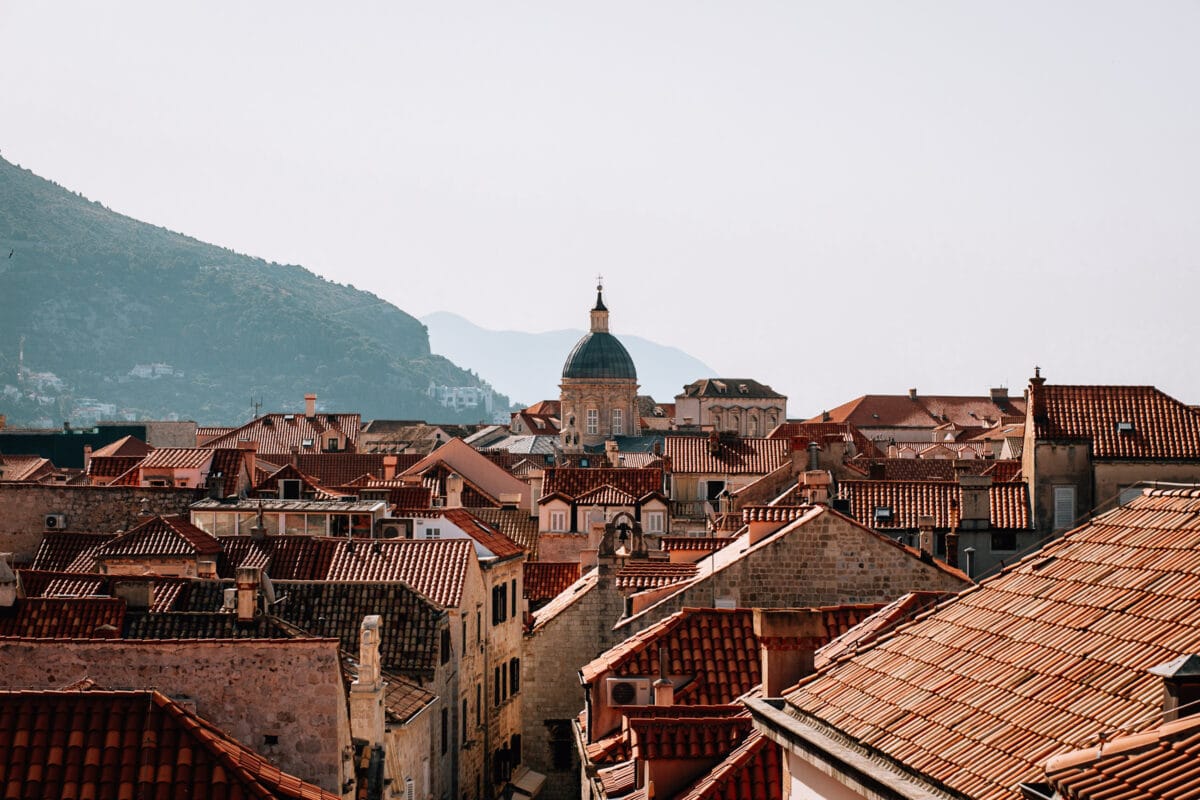
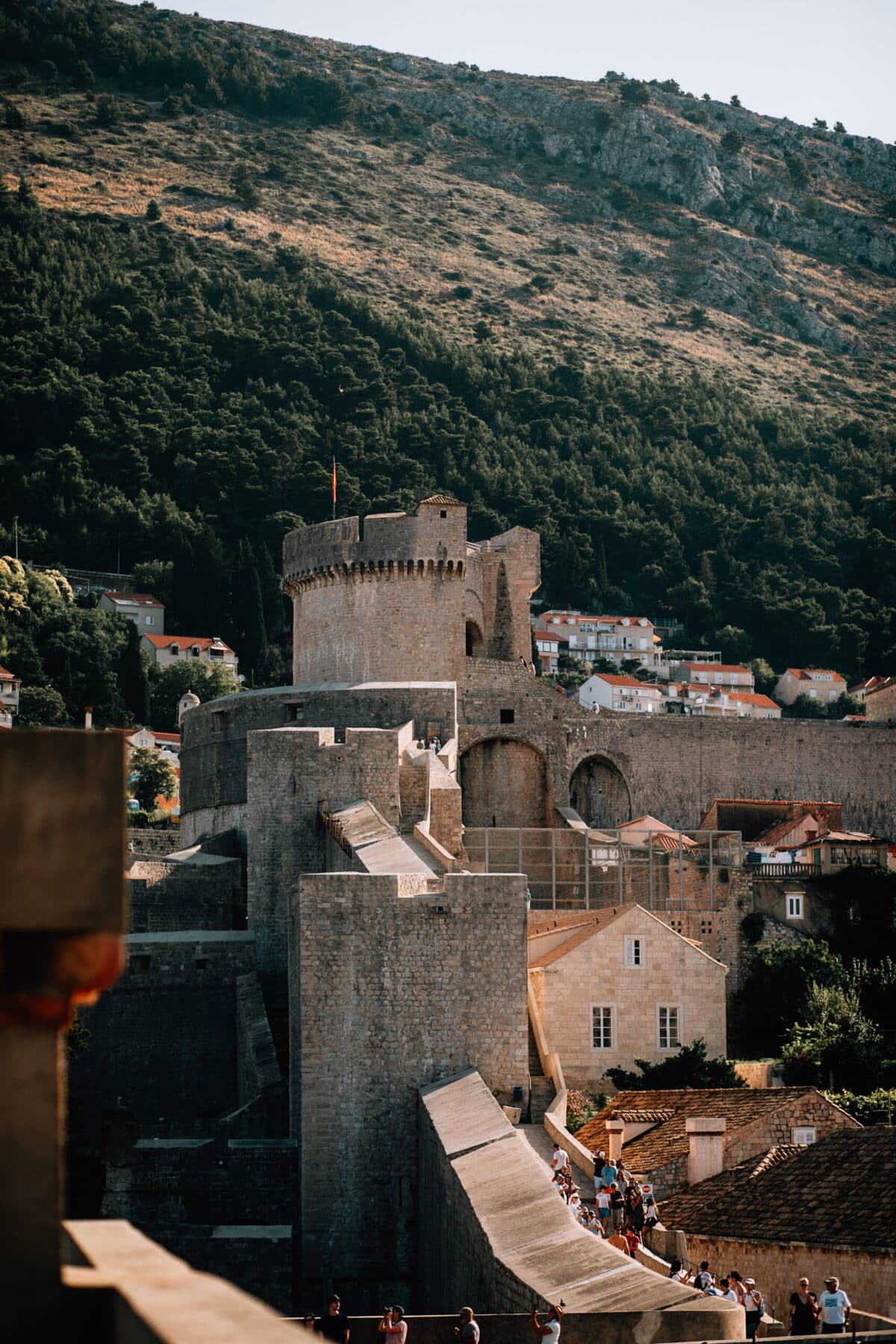
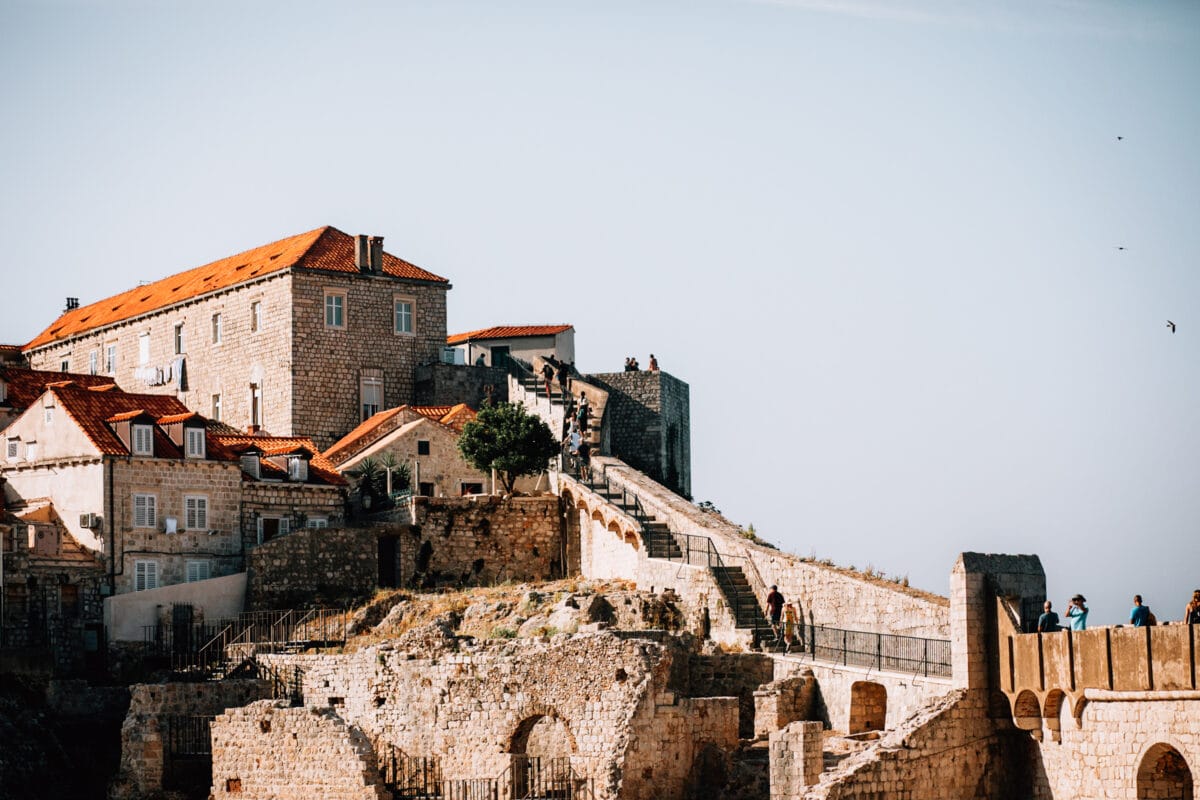
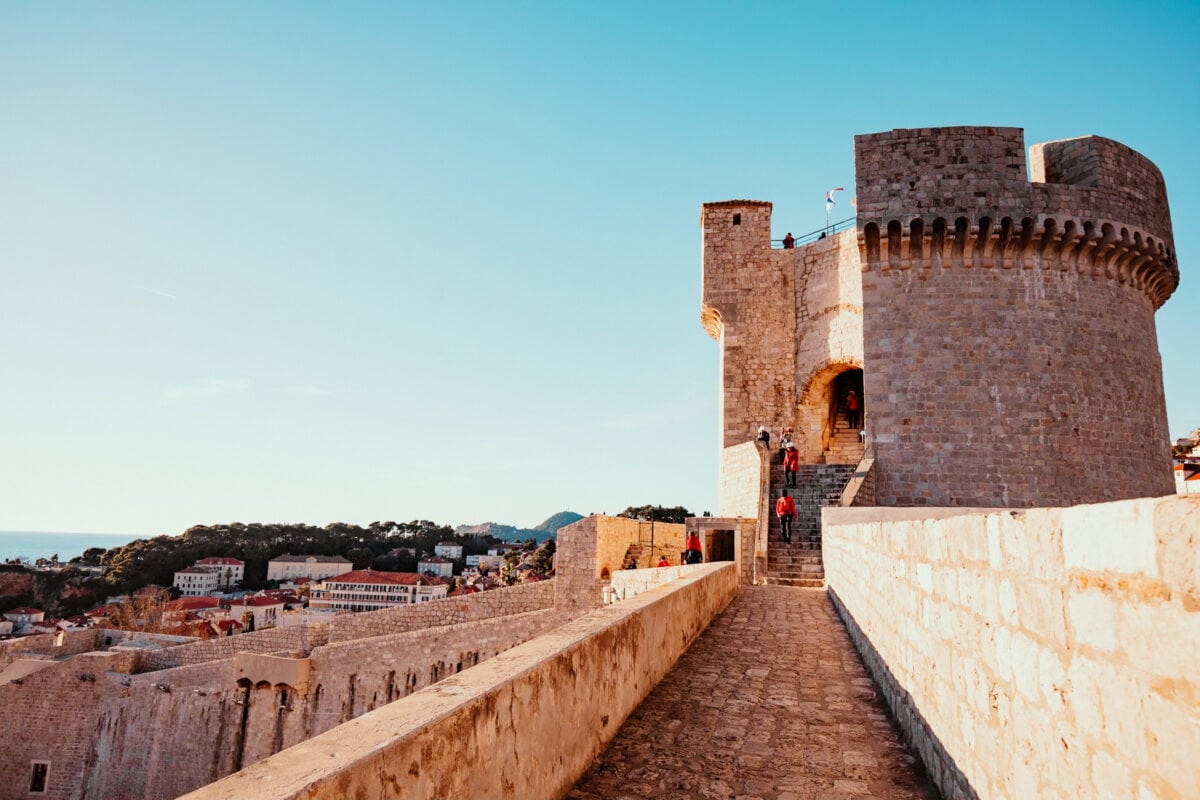
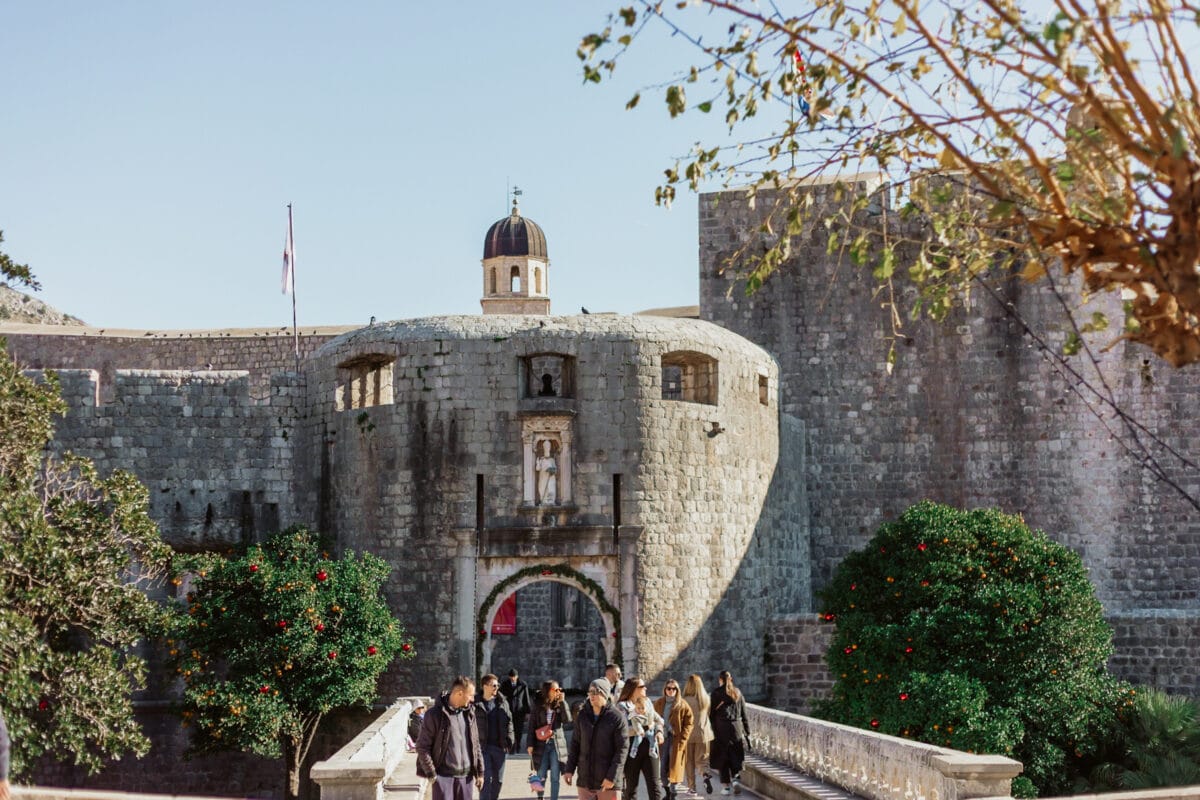
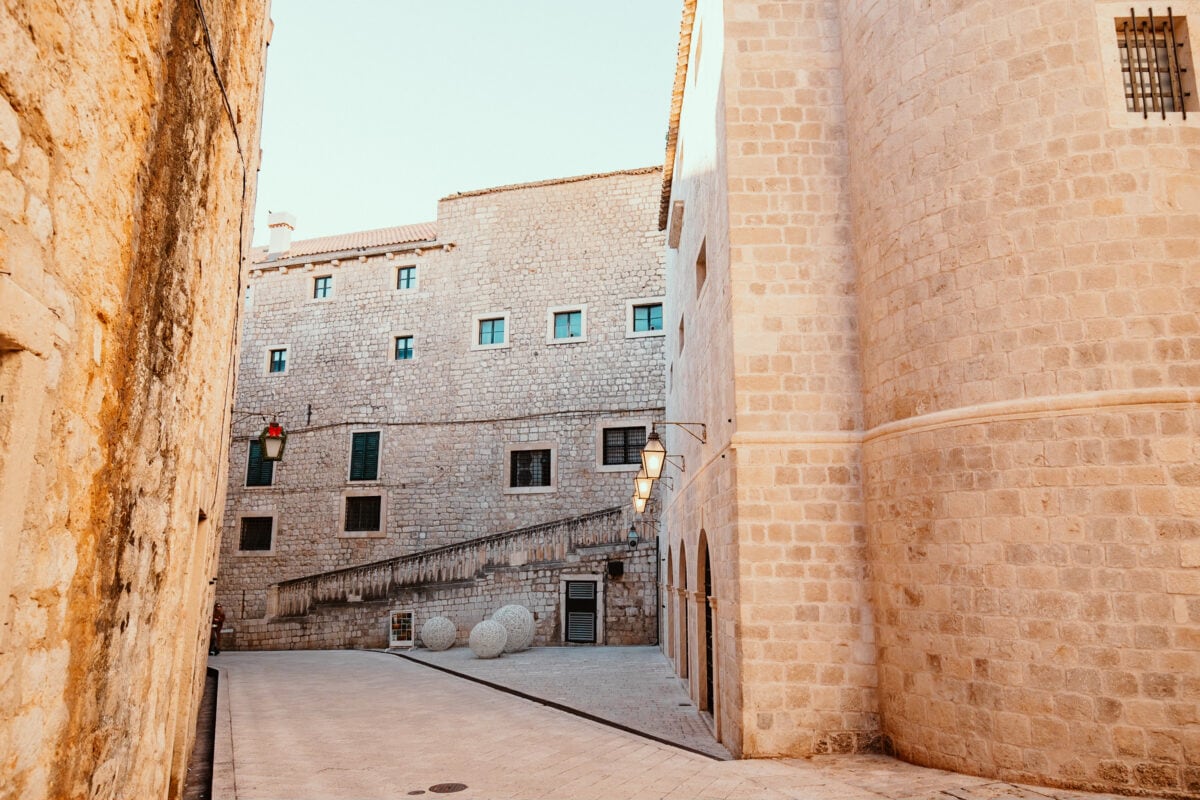
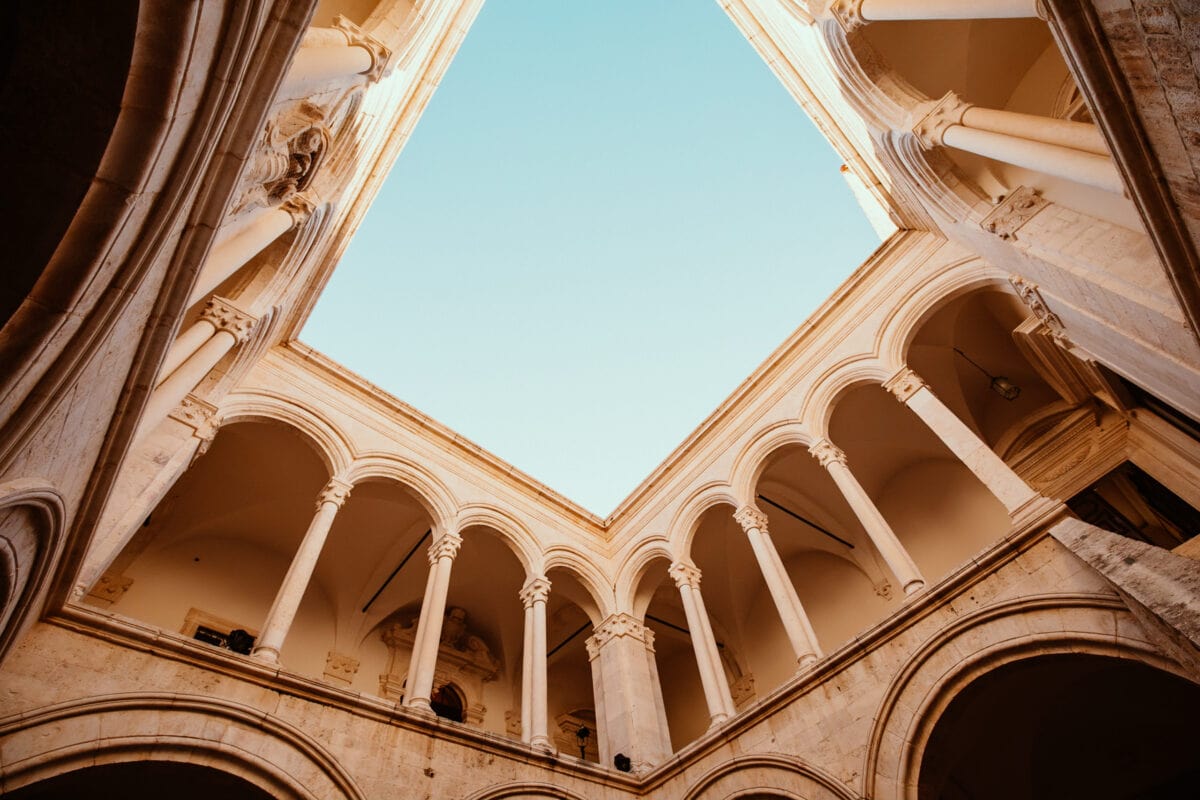
The city walls of Dubrovnik are one of the most visited sights in Croatia. Once built to ensure the security of the former Republic of Ragusa, the well-preserved walls are now a UNESCO World Heritage Site. A walk along the city walls is definitely a must-do when you are in Dubrovnik. I’ll show you the most important spots and give you my tips for your visit.
How to Visit the City Walls of Dubrovnik: Tips for a Tour
The city wall is one of the most important sights in Dubrovnik. This means that it is always well frequented, especially in the summer months. So you should make a good plan so that you don’t get caught up in the crowds of tourists that flood Dubrovnik every year.
Visiting time: It is best to plan your visit early in the morning or late in the afternoon. In summer, the city wall is open from 8 am. In the morning you have the best chance to explore the city walls at your leisure. You also avoid the midday sun.
Clothing: Comfortable shoes are an advantage. There is no shade on the wall, so remember to wear sun protection and a hat, especially on sunny days.
Duration: A round trip takes about 1 1/4 hours if you just walk normally. But there is a lot to see on the way and with photo stops and short breaks I would plan at least 2 hours for a complete tour.
Admission: The entrance fees for the city wall are quite steep. Admission costs €35 in summer and €15 in the winter months (although the opening hours are shorter).
Tip: You pay just as much for the Dubrovnik Pass, but in addition to admission to the city walls, it also includes many other sights in Dubrovnik, such as the Rector’s Palace and free travel on public transport. This makes the high expenditure worthwhile after all.
The Dubrovnik City Walls at a Glance
The city wall surrounds the entire old town of Dubrovnik
In some places it is up to 25 meters high and up to 6 meters thick
Length is 1940m
From here you have a breathtaking view of the city and the sea
Construction of the city wall began at the end of the 8th century. It proved its worth as early as 866-867 and withstood the siege by the Saracens. Over the centuries, the city wall was extended and reinforced more and more often. Between the 12th and 17th centuries in particular, further construction work shaped its current appearance. The fortress also largely survived the great earthquake of 1667 that struck the region. In 1979, the city walls of Dubrovnik became a UNESCO World Heritage Site.
Later, during the Yugoslav war in 1991, the city wall played an important role in the siege of the city by the troops of the Yugoslav People’s Army. Here the medieval fortress system proved itself once again. For nine months, the Croatian population behind the defenses withstood the massive attacks until Dubrovnik was recaptured by the Croatian army.
Dubrovnik’s city walls are divided into different sections. Each section plays an important role in the protection and structure of the old town. The various gates and towers are also good for orientation. These are the most important spots:
Minčeta Tower: The highest point of the fortress in the north of the old town. From here you have the perfect view of the iconic basketball court.
Pile Gate: The main gate to the old town. Cross a stone bridge through the fortifications and you will reach the western end of the Stradun, the main street in the old town of Dubrovnik.
Ploče Gate: The eastern gateway to the old town, less frequented but no less impressive. From here you can also reach the two eastern entrances to the city wall.
Lovrijenac Fortress: Located outside the city walls, it is nevertheless one of Dubrovnik’s fortifications.
Dubrovnik City Walls FAQ
How much is the entrance fee for the Dubrovnik city walls?
The entrance fees for the city wall vary depending on the season. For 2024, admission costs €35 for adults and €15 for children from March to October and €15 and €5 respectively in the remaining months. I recommend that you buy a Dubrovnik Pass. It costs the same for one day, but also gives you free entry to other attractions and free use of public transport.
Where are the entrances to the city walls in Dubrovnik?
There are three entrances to the city wall spread across the city:
Behind the Ploče Gate opposite the Dominican Church
At the Pile Gate opposite the Onofrio Fountain
Next to the Maritime Museum near St. John’s Fortress.
Please note: The city wall can only be walked in one direction, namely counter-clockwise. I recommend that you start at the Pile gate. In contrast to the other two, this entrance is the easiest to find.
Opposite the large Onofrio fountain is an entrance to the city wall.
How long does it take to walk around the city walls of Dubrovnik?
The complete tour of the city wall takes about 1 1/4 hours. However, I wouldn’t plan less than 2 hours, as you stop very often to enjoy the spectacular view or take photos.
What are the opening hours of the city walls in Dubrovnik?
Opening hours vary depending on the season. In winter, for example, the city wall closes at 3 pm. You can find the exact opening hours here.
Dubrovnik on the Croatian Adriatic attracts countless travelers from all over the world every year and has now mutated into an absolute hotspot. But not without reason: the old town of Dubrovnik is simply beautiful and, for me, one of the most romantic cities in Europe. I’ll show you the most important sights you need to see in Dubrovnik. And I still have one or two insider tips in store for you.
1. Old Town of Dubrovnik
Dubrovnik’s Old Town is an absolute gem. Like a massive fortress, it stands proudly on the rugged coast of the Croatian Adriatic and will impress you even as you approach it along the coastal road. Dubrovnik’s origins date back to the 7th century: thanks to its strategically important location in southern Croatia, Dubrovnik was once a major trading hub in the region.
5 highlights of Dubrovnik in a nutshell:
1. the city wall of Dubronik 2. Stradun 3. Game of Thrones filming locations: e.g. Walk of Shame, Blackwater Bay 4. Lokrum Island 5. Buza Bar: Drinks & Sea
The old town of Dubrovnik has been a UNESCO World Heritage Site since 1979 and is packed with sights. It is completely car-free and is best explored on foot: Don’t miss the opportunity to stroll through the narrow streets and enjoy the Mediterranean vibe of Dubrovnik!
2. Stradun
The magnificent main street, Stradun, is impossible to miss: The long street is lined with elegant palaces, cafés and stores and forms the main artery of Dubrovnik’s old town, so to speak. The Stradun runs directly from the western Pile Gate to the Ploče Gate and the city harbor in the east.
The Stradun also divides the old town into two halves, so to speak: Towards the sea, the old town is relatively flat; on the other side of the Stradun, the houses are situated on a slope and there are often narrow, steep steps to climb. (You should bear this in mind when choosing your accommodation. But more on this at the end of the article!)
3. Lovrijenac Fortress
The Lovrijenac fortress is enthroned high on a rock and impresses with its imposing appearance. The history of this fortress dates back to the 11th century! It once served as a defensive fortress and symbol of Dubrovnik’s power. Today, the fortress offers visitors a breathtaking panoramic view of the old town and the glittering sea. Cultural events and theater performances are also held here, combining the historical ambience with contemporary art.
Incidentally, you can visit Lovrijenac Fortress for free with the Dubrovnik Card.
4. Pile Bay
Below the Lovrijenac fortress there is a small, yet very atmospheric bay. Pile Bay will probably also look familiar to you if you’ve followed the series“Game of Thrones“: it was used as the filming location for Blackwater Bay. Located outside the bustling old town directly behind the Pile Gate, you can relax from sightseeing in one of the pubs here. In winter it is quieter and pleasantly mystical here.
5. Walk of Shame / Jesuit Staircase
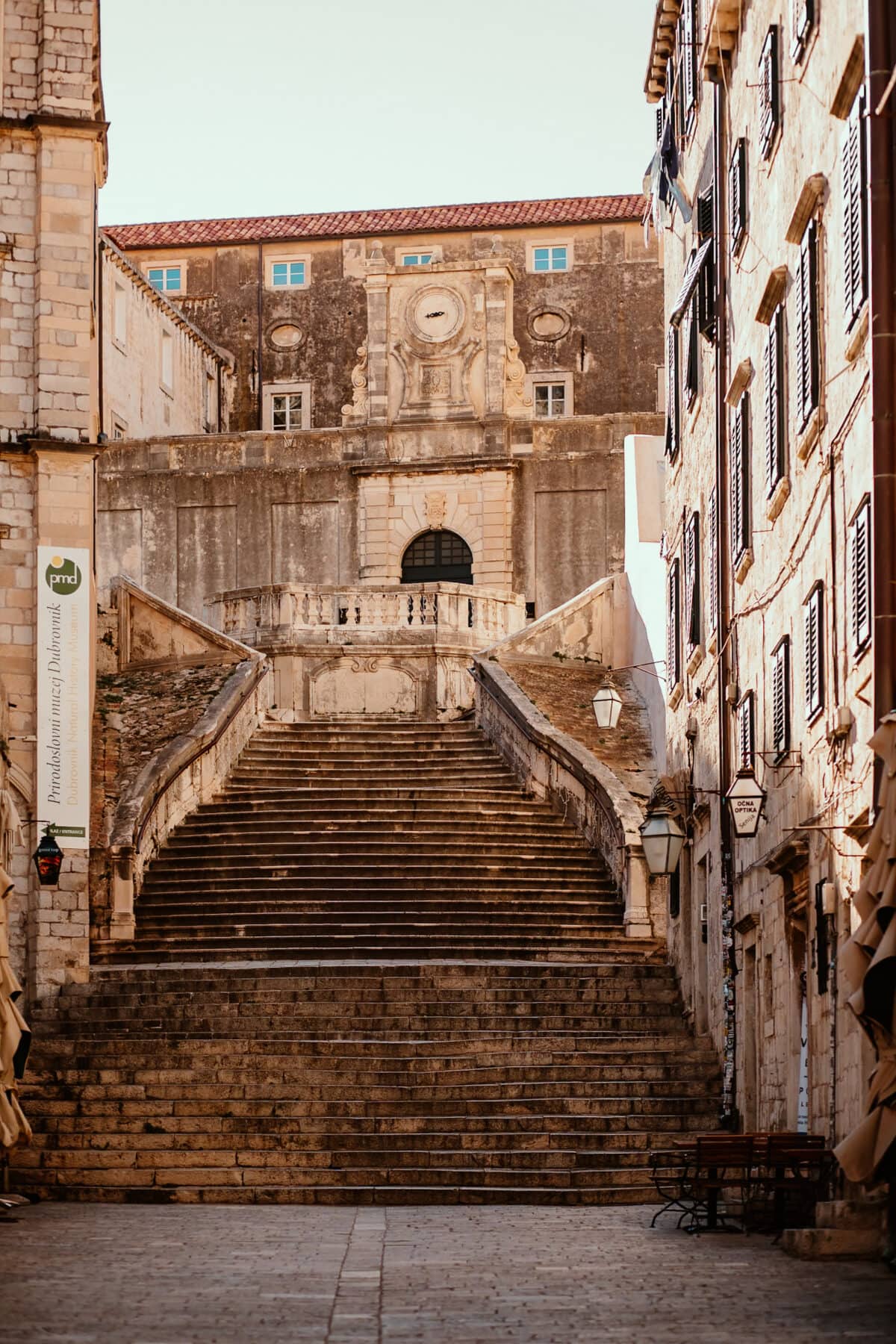
There is this one staircase that is probably partly responsible for the huge tourist boom of recent years: the Walk of Shame in Dubrovnik is probably the most famous filming location for “Game of Thrones”. This staircase has achieved worldwide fame and is now a place of pilgrimage for all fans of the series.
In the series, especially in the dramatic scene of the “Walk of Shame”, Cersei Lannister is forced to descend these stairs – exposed and exposed to the mockery of the crowd. This scene was not only a turning point for Cersei’s character, but also a defining moment in the entire series. I’ve never actually seen Game of Thrones, but even I can remember this scene because it was so impressive.
In reality, however, this staircase is known as the“Jesuit Staircase“. It is located near the Church of St. Ignatius and the Jesuit College. Built in the 18th century, it belongs architecturally to the Baroque era and bears witness to Dubrovnik’s former wealth. At the time, the construction was intended to compete with other European metropolises – and I think it was quite successful, because the staircase is really very impressive. A huge show staircase that is not only historically interesting, but has also become part of pop culture.
Want to know where more Game of Thrones filming locations are in Dubrovnik? Then why not take part in a special Game of Thrones tour*, where you will not only see all the locations, but also learn lots of details about filming in the city.
The Rector’s Palace immediately catches the eye in the old town of Dubrovnik. From the 14th century until 1808, today’s Dubrovnik was part of the Republic of Ragusa, a maritime city-state that was particularly wealthy. You can also see this in the Rector’s Palace, which was the seat of government at the time. From the outside, the Rector’s Palace is really very impressive and is somewhat reminiscent of Venice: Gothic and Renaissance architectural elements come together here. It is also considered one of the most important sights in Dubrovnik and is quite well visited.
But before you stand in line or have to spend extra money: In my opinion, the Rector’s Palace is pretty overrated. I had a Dubrovnik Pass and the entrance is free, but I wouldn’t spend any extra money. The permanent exhibition shows exhibits about the history and culture of the region, but I wasn’t that impressed.
7. Sponza Palace
The Sponza Palace is only a few steps away from the Rector’s Palace – and in my opinion much more interesting. The customs house used to be located here, and weapons and coins were also forged here. The impressive courtyard gives an idea of the important role the Republic of Ragusa must have played in the region in its heyday! As most tourists tend to rush into the Rector’s Palace, it is wonderfully relaxed here.
Tip: Directly to the front left is a hall in honor of the defenders of Dubrovnik in the 1991 Yugoslavian war, when Dubrovnik was besieged and massively shelled for months. In the small exhibition you can find out more about this difficult time and the background of individual Dubrovnik residents. Very moving!
8. Lokrum Island
A paradise just outside Dubrovnik is the island of Lokrum, which is only a short boat trip away. This green oasis attracts nature lovers with its impressive botanical diversity, which has been cultivated by monks and researchers over the centuries.
The botanical garden on Lokrum is home to rare plant species and actually offers a quiet retreat from the hustle and bustle of the city – but due to its proximity to the old town, you won’t really be alone here in summer. The boat trip from the old harbor takes just under ten minutes! But you can do a lot here. There are hiking trails, beautiful bathing spots and even a nudist beach!
Lokrum is also home to the Iron Throne from Game of Thrones, where you can even take souvenir photos!
The boat to Lokrum departs every 30 minutes during the season. The ticket is also valid as an entrance ticket for the Lokrum nature reserve and costs €27, children pay €5.
To enjoy an incomparable panoramic view over Dubrovnik, the cable car ride up Mount Srđ is an absolute must. From the top station, you have a breathtaking view of the red roofs of the old town and the sea in the background. A trip there at sunset is particularly spectacular. And if you want to highlight the view with a culinary experience, you will also find the perfect location at the top of the panorama.
10. Dubrovnik City Walls
A highlight is undoubtedly the impressive city wall, which surrounds the old town and is over two kilometers long. I will never forget the experience of walking along the top of this massive fortress wall and enjoying the view of the sea and the huge old town.
Admission is quite high during the summer season, but I think it’s really worth biting the bullet. In the season, admission with the Dubrovnik Pass now costs €35 (a few other sights are still included), in winter only €15. There is no option to buy a ticket for the city walls only.
Incidentally, I once read that the entrance fees were raised so exorbitantly in order to cope with the masses of visitors – the hope was probably to deter many tourists with high prices. But I can tell you: it didn’t work! In summer, however, the city wall is still very busy, so it’s best to get there early in the morning to avoid the crowds of tourists. But the view of the old town is worth every effort!
11. Buža Bar
One of the most unique bars in Dubrovnik is the Buža Bar, which is literally located in the rock walls of the city walls. The name “Buža” means “hole” in Croatian, and the name says it all – access to the bar is through a small hole in the wall. In this relaxed and casual setting, you can sip cold drinks while watching the brave plunge into the water from the rugged cliffs.
Although the view of the sunset here is not quite as good, the Buža bar is still a great place for a chilled drink at the end of an eventful day in Dubrovnik.
12. Old Harbor
As befits a coastal town, Dubrovnik also has a harbor. The Old Port in Dubrovnik is located in the east of the Old Town between Ploče Gate and Stradun. It is protected almost all around by the massive city wall and a long pier.
The long pier in the old harbor is called Porporella and has a special significance among locals: it is a popular meeting place for newlyweds. If a couple who have just fallen in love arrange to meet here, it is a sign that they are serious about love and ready for something more permanent.
This is also where the boats to the island of Lokrum depart. However, the many cruise ships that stop in Dubrovnik during the season have not anchored here for a long time. The port of Gruž, located a few kilometers to the north, was built for large ships just outside the old town.
What you can do in Dubrovnik & the surrounding area
Not only Dubrovnik is worth seeing, but there is also a lot to see all around. There are many interesting places along the Croatian Adriatic coast or you can simply hop from one Croatian island to the next. There is a good reason why Croatia is a good place for a vacation! Trips to neighboring countries are also popular.
Advertising / *affiliate link
You can easily explore the surrounding area by car, camper or rental car anyway. From Dubrovnik, you will also find many providers offering tours to Kotor in Montenegro, Mostar in Bosnia and Herzegovina or other parts of Croatia. So you don’t necessarily have to be traveling in your own car to experience a bit of that road trip feeling.
Staying overnight in Dubrovnik is a topic in itself. On the one hand, Dubrovnik is an expensive place, and on the other, you should really think carefully about where you choose your accommodation. The old town is completely car-free, which means you can have your Uber or cab drop you off in front of one of the three city gates and have to walk from there to your accommodation. Depending on your luggage, this can be more strenuous, as most of the old town consists of cobblestones. There are also a lot of stairs, especially in the upper part of the old town.
The maze of alleyways doesn’t make it any easier to find your way around, so you should ask for directions to your accommodation beforehand. If you don’t want to carry your luggage yourself, you can also use one of the luggage services. At the Ploce Gate, for example, you will find several providers who will bring your luggage to your accommodation by handcart.
The best places to stay in the Old Town (my recommendation)
Nevertheless, it’s really nice to spend the night in the middle of the Old Town. I found an absolutely cute apartment* I can definitely recommend! It is located in a quiet corner in the shade of the city wall, so you can spend the night here even in summer.
On the other hand, there are also many hotels and apartments around the Old Town that are a little more budget-friendly. The Lapad peninsula, which is located a few kilometers north of the old town, is very popular. You will also find more bathing opportunities there and the journey is not as complicated. Perfect if you are also looking for some beach life.
Seville is a city of passion: flamenco, the rousing dance full of emotion and energy, is everywhere you look. Add to this the typical Andalusian warmth and you are guaranteed to fall in love with this lively city. I’ll take you on a tour of the most beautiful sights that Seville has to offer.
The old town of Seville
The old town of Seville is really great and the perfect starting point for your exploration tour. You can simply let yourself drift through the streets and soak up the energetic atmosphere. Many sights can be reached from here, including the two most important: Seville Cathedral and the Real Alcázar de Sevilla.
The cathedral of Seville
An absolute must-see is Seville Cathedral, the largest Gothic church in the world. Even if, like me, you’re not particularly into religion and church, you’ll be amazed by the sheer size and attention to detail.
You should also definitely go up the Giralda Tower. The tower was once a Moorish minaret. It is now one of Seville’s most striking landmarks. The ascent is not easy, but it is unusual: for long stretches, there are no steps but wide ramps.
Once at the top, it offers you a panoramic view over Seville that you won’t soon forget. The view is a real highlight!
In the cathedral itself you will also find the tomb of Christopher Columbus, the navigator whose arrival in America in 1492 brought him great fame as an explorer. Although Columbus was actually Italian, he set off on his voyages of discovery around the world on behalf of the Castilian crown. Incidentally, it was unclear for a long time whether Columbus’ mortal remains could really be found here, as the grave changed location several times – but this now seems to have been proven.
The Alcázar of Seville
Just a short walk from the cathedral is the Alcázar royal palace, one of the most visited and important sights in Spain. The entire complex is really huge – and usually well frequented. Plan enough time for your visit (you should reserve an entire morning or afternoon) and be sure to buy your ticket in advance to avoid long queues.
The Alcázar was originally built in the 10th century and is an impressive example of Moorish architecture. Here you will find magnificent halls with intricate details, paradisiacal gardens and an atmosphere straight out of a thousand and one nights. Like Seville Cathedral, the Alcázar is nowalso a UNESCO World Heritage Site.
Patio de las Doncellas: The heart of the Alcázar
An absolute highlight of the Alcázar is the Patio de las Doncellas (Courtyard of the Virgins). You probably already recognize this courtyard: It is by far one of the most popular photo motifs in the Alcázar.
The influences of Islamic architecture can be seen very clearly here: there is a water channel in the middle of the courtyard and the courtyard is surrounded by richly decorated columns. If you visit the Alcázar early in the morning, you should come here first to enjoy the magical atmosphere in peace – it gets really crowded here later in the day.
Are you in the mood for even more Mediterranean lifestyle? Find even more great travel destinations in Spain here
Metropol Parasol (Las Setas)
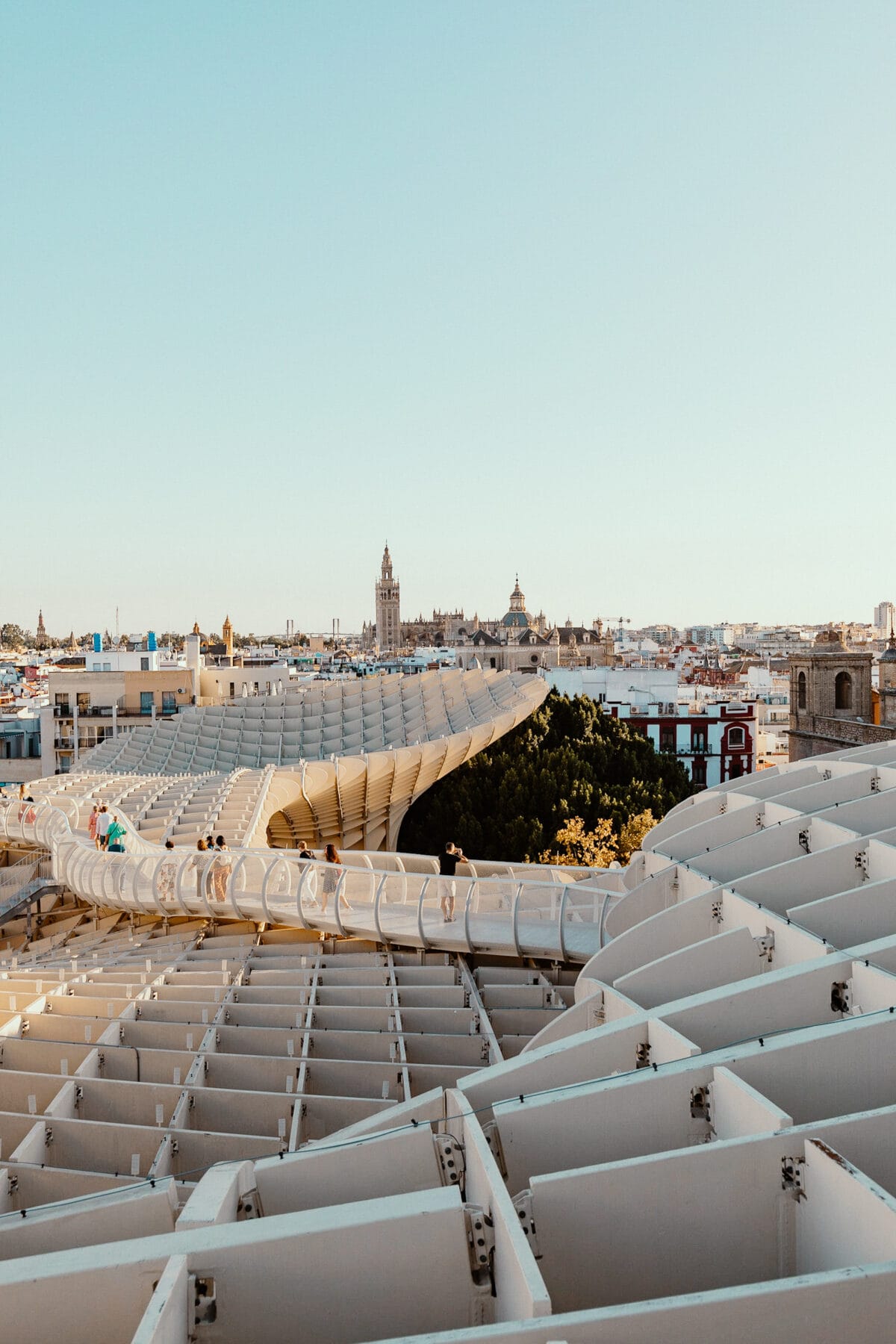
The Setas de Sevilla were probably the main reason why I wanted to visit Seville. The special architecture of the Metropol Parasol, which resembles mushrooms (hence the Spanish nickname “setas”), is simply fascinating and the view over Seville is unique.
The site, which is located in the middle of the city center, used to be a market hall. At some point, however, it was so dilapidated that it had to be demolished in the 1970s. The site then lay fallow for a long time.
The setas were completed in 2011 and now form a great contrast to the historic old town. Incidentally, the Setas are the largest wooden building in the world! The curved shapes and modern design are truly impressive.
From the observation deck on the Metropol Parasol, you’ll have the best view of downtown Seville. I definitely recommend visiting at sunset. When the last rays of sunlight bathe the city, the atmosphere here is especially wonderful! There are also many restaurants and bars in the area surrounding the Metropol Parasol where you can round off the evening.
Parque de María Luisa
Seville is amazingly green, and the Parque de María Luisa is a big part of this. Originally part of the private garden of the Palacio de San Telmo, this park was opened to the public for the Ibero-American Exposition in 1929 and is now considered the green lung of the city.
If you need a break from sightseeing, you can take a stroll under the shady trees or enjoy the atmosphere in the spacious Plaza de España.
Plaza de España
The Plaza de España catapults you into a completely different world. This semicircular square was built for the Ibero-American Exhibition of 1929 in the Neo-Mudéjar style . Like many buildings erected for world fairs or similar events during this period, the Plaza de España was also intended to reflect the progress of the time. And to this day, the Plaza de España is truly impressive.
You can even take a boat trip in the artificial pond. Take your time and let this special place work its magic on you!
With a bit of luck, you can even see spontaneous flamenco shows: Dancers and musicians often meet here and just start playing. A great alternative if you can’t find the time to attend a proper flamenco show in Seville.
Seville & the flamenco
Pure life is everywhere here and the positive energy of the Andalusians is omnipresent. Flamenco is a particularly good example of this. This dance is inextricably linked to Andalusian culture. A subtype of flamenco is even named after Seville: the Sevillanas.
If you don’t happen to see flamenco dancers somewhere, you should definitely look out for a flamenco show in one of the many tablaos in the city. The intensity and passion of flamenco are simply so intoxicating, you have to experience it live!
Advertising / *affiliate link
Food & drink in Seville
Seville is simply a feast for all the senses: the Andalusian capital also has a lot to offer in terms of cuisine. The tapas culture here is legendary, and a tapas tour through the city is the best way to get to know the local cuisine.
My tip: Just go to one of the traditional bars and order a selection of small dishes, from gambas al ajillo (prawns with garlic) to jamón ibérico (raw ham) and the classic tortilla Española. Tapas are usually ordered in small portions and shared among everyone at the table. If something tastes particularly good, simply order more. So you can taste your way through many specialties.
Another typical specialty you should try is gazpacho, a cold tomato soup. It’s perfect for hot days in Seville. For wine lovers, the Tinto de Verano, a wild mixture of red wine and lemonade, which is popular in Andalusia, takes some getting used to, but is very refreshing in summer temperatures.
Restaurants & Cafés in Seville
During my trip, I also discovered a few locations that I wholeheartedly recommend:
Filo Mini brunch store with great sandwiches, perfect for a little break in between. Freshly squeezed orange juice, tostada con tomates: everything is fresh here. Beautifully decorated.
There are only a few seats, but the team is super well organized and the wait is really worth it! Filo can be found in two locations not far from each other on the same street, Calle Hernando Colón 10 and 19 (I was in the latter store).
La Malvaloca Beautiful tapas restaurant directly opposite the Metropol Parasol. Perfect for drinks and a small snack in the evening.
Restaurante Cristina Bistró At first glance, it may seem somewhat inconspicuous and a little off the beaten tourist track, but this restaurant serves great bistro cuisine. Sit outside, eat well and enjoy the vibe of Seville!
Mercado Arenal
Located somewhat off the beaten track, the Mercado Arenal is a real insider tip. Actually a market hall, you will also find some street food stalls with delicious specialties in the historic building. The atmosphere is pleasantly casual and tourists are rarely seen here.
Practical travel tips for Seville
If you are planning a trip to Seville, I have a few helpful tips for you here. But don’t worry, Seville is a great destination and you’re sure to find your way around!
Best time to travel and climate
Seville can get very hot in summer. Temperatures often reach over 35 degrees Celsius. So if you really want to see something in the city, I advise you to avoid the hot summer months. The best time to visit is spring or fall. The temperatures are more pleasant then, but it is still often sunny and warm and you can enjoy the city to the full.
Staying overnight in Seville
Seville offers a wide range of accommodation, from luxury and boutique hotels to Airbnbs and hotels. If you are staying in the old town, you can reach most of the sights on foot.
My personal tip is La Parada de Marques*. Although it’s not in the middle of the old town, it’s particularly practical if you’re only staying in Seville for a few days. It is just a few meters from the bus station: from there, you can easily take the public bus to the airport and save yourself a cab or Uber. You can also easily get to surrounding cities by bus from here.
For example, I drove from Faro to Seville. You can also combine a trip to the Algarve in Portugal with Seville, for example.
Transportation options in the city
Seville may be a large city with just under 700,000 inhabitants, but many sights are within walking distance if you stay in the city center. However, you can also use streetcars, buses or bicycles to get around. In addition to regular cabs, there is also Uber in Seville.
Maybe you are on a road trip in the Balkans or just want to get to know a new city? The Slovenian capital is perfect for a short trip. I’ll show you which sights you can discover in Ljubljana in one day and give you my tips for a fairytale destination that has taken my heart by storm!
History of Ljubljana
Ljubljana has a turbulent past, and it’s hard to believe just how much history is packed into this relatively small capital city with a population of just under 300,000. The first pile dwellings were built here as early as 3600 B.C. Ljubljana gained fame in Greek mythology because the Greek hero Jason is said to have defeated a dragon at the source of the Ljubljanica River after stealing the Golden Fleece. That is why the dragon remains Ljubljana’s heraldic animal to this day and appears time and again throughout the cityscape.
The Romans later founded the settlement of Emona here in 14 AD, but it disappeared from the scene again after the Slavic invasion around 600. Today, for example, the street name Emonska cesta in the middle of the old town reminds us of this.
In the course of history, Ljubljana has been Austrian (the German name of the city, “Laibach”, comes from this period), Italian, French and, in a very inglorious part of its history, German, as a result of political wrangling, world wars and the occupations associated with them. In 1945, Slovenia became part of the People’s Republic of Yugoslavia; in 1991, it became the first of the Yugoslav republics to gain independence and, apart from a ten-day war, was largely spared the hardships of the Yugoslav war.
Sights in Ljubljana
Ljubljana Castle
The Ljubljana Castle towers above the city. You should not miss a visit here! You can easily make the climb on foot: there’s a pretty nice path to the top, which also offers a great view of the entire city and the mountains in the background along the way.
In places it’s a little steep and I personally thought: better up before eating! On the other hand, you’re also providing a bit of a daily workout. If you are lazy or prevented from walking for other reasons, you can also take the funicular that leads to the top of the mountain.
Once at the top, you can see the castle itself from the inside as well as the spectacular view. There is, for example, a museum on Slovenian history, a puppet theater museum and various temporary exhibitions. In summer, open-air events are often held in the castle courtyard.
You can also take a break up here: There are several cafes and restaurants on the castle grounds. If you like it very elegant, you will even find a star restaurant here with the Strelec.
Dragon Bridge
The Dragon Bridge is another landmark of Ljubljana and reminds with the dragons of the founding story from Greek mythology. The dragon sculptures were created in the period of the Viennese Secession and with their Art Nouveau character fit perfectly into the charming old town of Ljubljana.
Waterfront Promenade
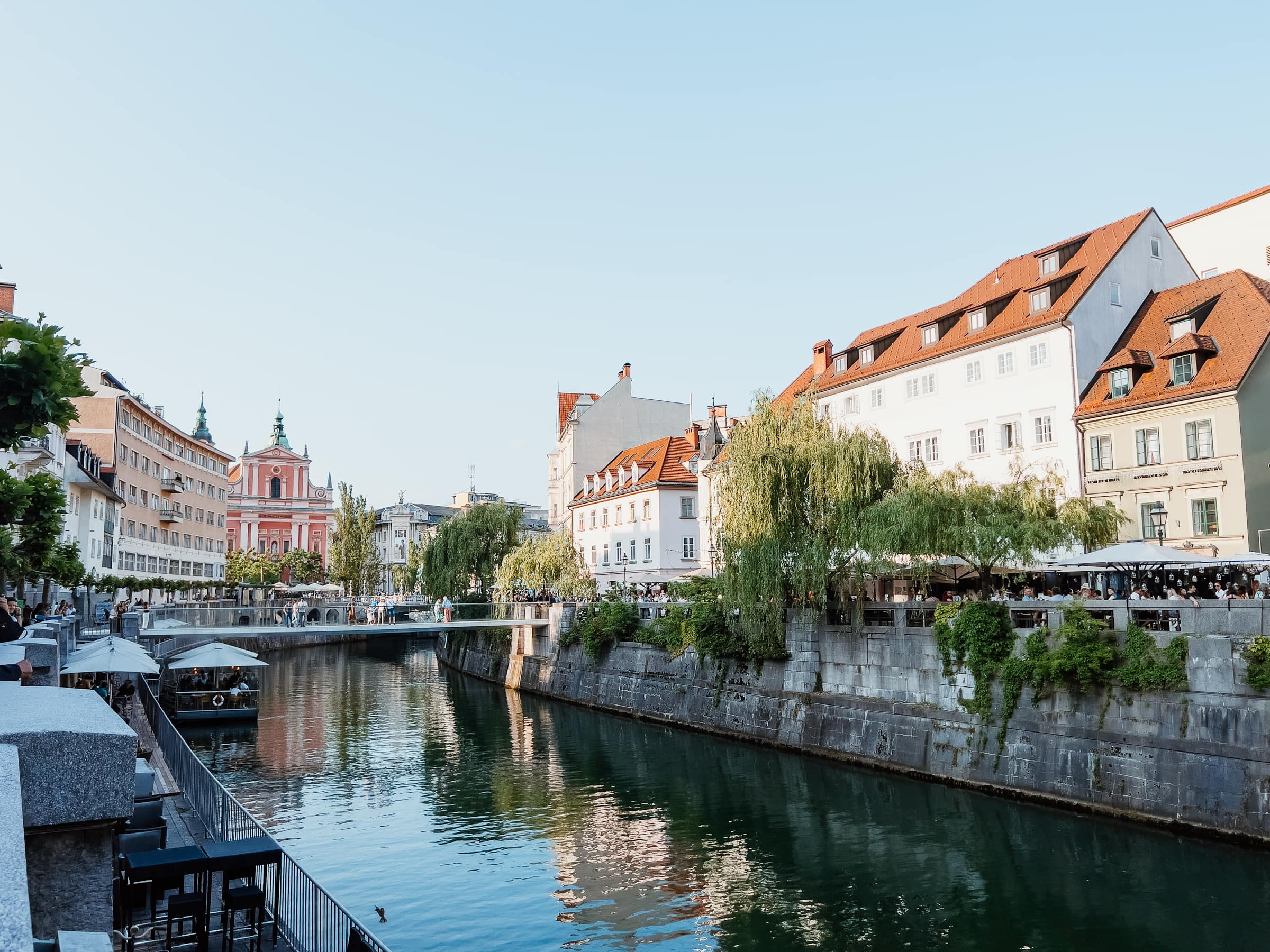
You should also plan an extensive walk along the waterfront promenade on the Ljubljanica. Here you will find many cafés and restaurants where you can really enjoy the picturesque atmosphere of Ljubljana.
The Slovenian architect Jože Plečnik, who also designed many other buildings in Ljubljana and played a major role in shaping the city’s overall appearance, is responsible for the successful design of the waterfront promenade. His urban planning concept is still evident in Ljubljana today, and in 2021, his work there was even added to the UNESCO World Heritage List. In addition to the riverside promenades and the bridges over the Ljubljanica River, the World Heritage Site also includes, for example, the Slovenian National and University Library.
Boat trip through Ljubljana
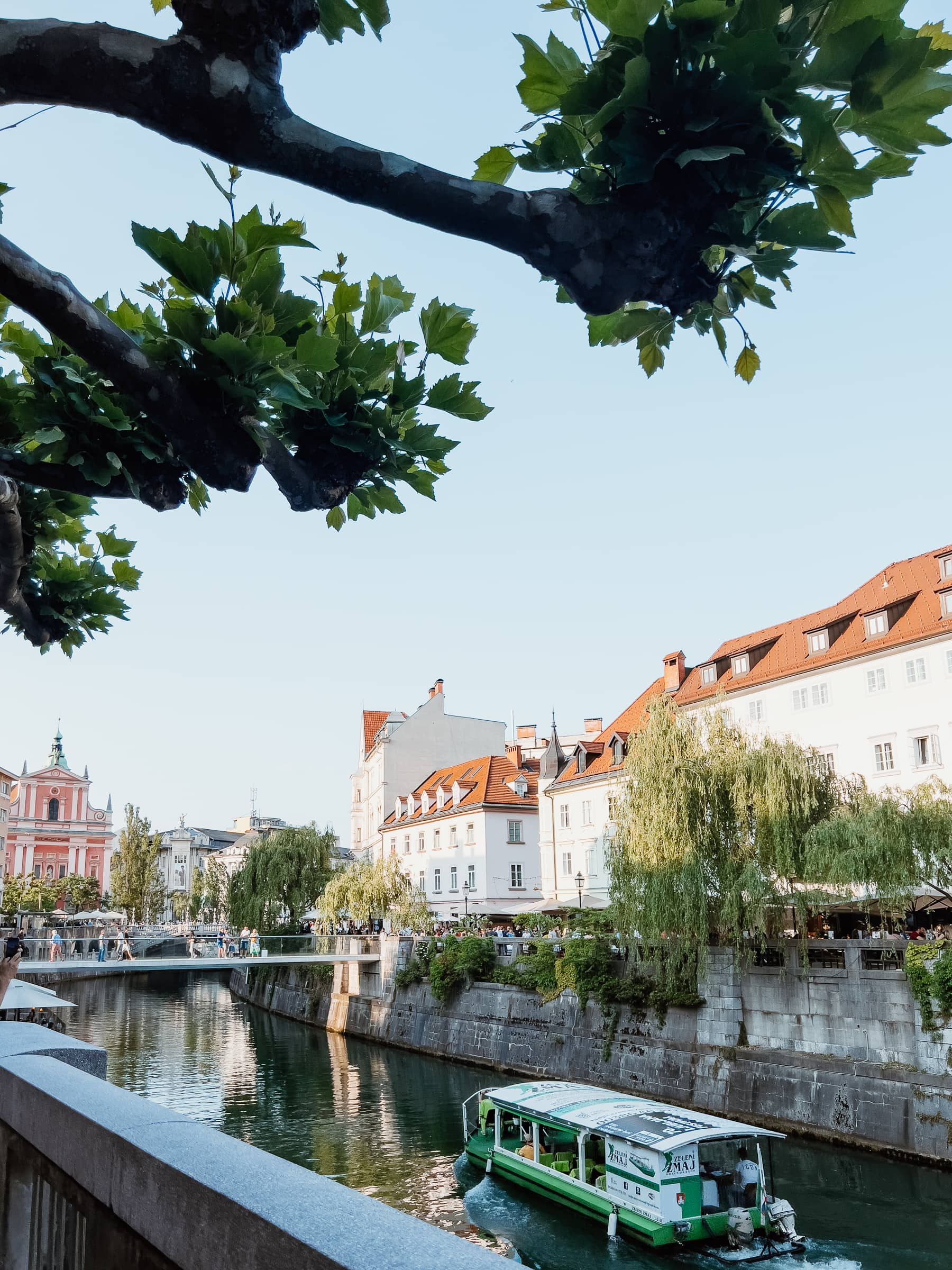
A boat trip on the Ljubljanica is also particularly worthwhile. The boat trip takes about 45 minutes and you just sail up and down the river – which I imagine is really romantic with the view of the enchanting old town and the castle. Definitely a must-do for my next visit.
Tip: With the Ljubljana Card*, you not only get free entry to the most important museums and galleries in Ljubljana, a guided city tour, a rental bike for 4 hours and a ticket for the cable car to Ljubljana Castle, but also a free boat trip!
Advertising / *affiliate link
Other sights in Ljubljana
I had to postpone many sights until a next visit. To explore the whole of Ljubljana in just one day is not easy after all. (I would recommend at least two days in the city for a short trip). I haven’t seen some of the locations, but I’ll list them here anyway; maybe you’ll make it!
Tivoli Park is one of the many green spots in and around Llubljana. The large green park also houses several museums. To get there from the Old Town, you just have to follow the Jakopič promenade to Tivoli Castle, which, by the way, was also designed by Jože Plečnik. You can be there in 15 minutes on foot.
Central Market The Central Market is another work by Jože Plečnik and consists of a marketplace as well as several market halls. Here you can find everything from fresh local produce and traditional food to handmade souvenirs. The market complex is open every day except Sundays and is definitely on my list for my next visit to Ljubljana!
I really want to explore Metelkova Mesto, the alternative cultural center, again in the evening. Many cultural events take place here, there are concerts and clubs. Nearby is also the Metelkova Museum of Contemporary Art, the Slovenian National Museum of Contemporary Art.
Where to eat in Ljubljana
I was very surprised by the range of exciting locations in Ljubljana! Going out for a good meal or finding nice cafes is really no problem here. Nevertheless, I have brought a few tips for you, so that you already have a first clue for your trip to Ljubljana.
Vigò Judging by the queue outside the door, this place must have the best ice cream in Ljubljana. In any case, it is really delicious. Tip: If you don’t fancy a long wait at the branch in Mačkova ulica, there is another branch, Vigò Sorbetto , which is somewhat hidden but still centrally located between Congress Square and the waterfront promenade.
Ljubljanski dvor Here you can get solid pizza, pasta and salads. The real attraction, however, is the terrace directly on the waterfront: the view from this vantage point is unbeatable. Perfect location to soak up the atmosphere of Ljubljana on a sunny day.
Not only is Ljubljana beautiful, but the rest of Slovenia also offers a variety of great places that are well worth exploring. Outdoor and nature lovers in particular get their money’s worth here. High mountains, enchanted caves, crystal clear lakes and a lot of untouched nature make Slovenia a popular destination.
The good thing is that the distances are short. With only 2 million inhabitants and an area of just over 20,000 square kilometers, Slovenia is one of the smallest states in Europe.
A trip to Bled from Ljubljana is especially worthwhile. St. Mary’s Church, located on an island in the eponymous Lake Bled (Blejsko jezero in Slovenian), has become Instagram-famous and attracts visitors from all over the world. You can also take a small wooden boat to the island and take a closer look at the pilgrimage church. Especially popular there is the ringing of the so-called “wish bell“.
Ljubljana is just a stone’s throw away by car from Munich or many cities in Austria. The travel time from Munich is about four and a half hours. (Attention: Tolls will be charged on the way!)
But Ljubljana is also easy to reach by train: From Munich’s main station, for example, there is a direct connection via Salzburg, which, by the way, is also very worth seeing. (Maybe you want to make a stop there, too? Here you can find my tips for Salzburg).
Accommodation in Ljubljana
I didn’t have to worry about the overnight stay in Ljubljana, because I was there on business. However, I’ve researched a few beautiful locations for every budget that you might enjoy as well.
Budget
Ibis Styles The Fuzzy Log* The Fuzzy Log is uncharacteristically a hostel for an Ibis Styles hotel, but the concept sounds very interesting; especially if you don’t want to spend a lot. Although there are only shared bathrooms, there are still some private accommodation options in the form of so-called “huts”. In good weather, the tent constructions on the roof are also an option.
Boutique
Bloom Hotel* The Bloom Hotel has recently opened and is located in the middle of the old town. It doesn’t get more central than this!
Upscale
Hotel Heritage* If you want to treat yourself, I would recommend Hotel Heritage. Not only the location in the middle of the old town is unbeatable, but also the ambience of the renovated old building, which perfectly matches the fairytale atmosphere of the city.
To be honest, I’m still debating whether I should really recommend The Westin Hamburg as a hotel for a trip to Hamburg. It’s just too tempting that you make yourself really comfortable in one of the great rooms with panoramic view and forget all about sightseeing in one of the most exciting cities in Germany! 🙂
Located at the tip of the Speicherstadt, The Westin Hamburg is the perfect starting point for a city trip to Hamburg. From here you are quickly in the city center, but also in St. Pauli, the Landungsbrücken and the Schanzenviertel. There is a subway and bus stop within walking distance, and with a Hamburg Card* you can use public transport in Hamburg free of charge. If you arrive by car, you can conveniently park it in the hotel’s underground parking garage for an additional fee.
Getting lost on the way to The Westin Hamburg is nearly impossible: the hotel is located in Hamburg’s newest landmark, the Elbphilharmonie building, which you can spot from afar.
The Elbphilharmonie is the new concert hall in Hamburg, opened in 2017 and is one of the most modern of its kind. The acoustics here are said to be unparalleled. Unfortunately, I haven’t gotten around to attending a concert here yet, but it’s definitely still on my wish list. If you’re not so keen on classical music, that’s no problem either: there’s often more modern music for your ears!
The rooms at The Westin Hamburg
The Westin Hamburg* is a five-star hotel that can easily be described as luxurious. So it is not surprising that the rooms are really perfectly equipped. Here you’ll find everything you need: mineral water for free, a small Nespresso machine for coffee in between, a good steam iron to freshen up your crumpled clothes (the flight attendant in me comes through again) and many other nice little things. But above all, well, an absolutely perfect bed that you could snuggle up in for hours.
The highlight is the panoramic view from the floor-to-ceiling windows of the Elbe and the gigantic Hamburg harbor, if you have a room facing outward (the extra charge is worth it!). My room also had a large bathroom with a shower and bathtub – also with a view. And that was really spectacular.
The Westin Hamburg offers various room categories; I stayed in the“Studio”category. But you should also have a similar view from the Premium rooms labeled“Water View.”I recommend paying the extra charge for a higher room category, because the view is truly breathtaking—and the higher up you stay, the better it gets.
In the larger rooms, you also have the chance to enjoy a not insignificant gimmick! In modern hotel buildings, it often happens that you can’t open the windows and everything is air-conditioned. At The Westin Hamburg, however, some rooms have a small porthole that is cleverly built into the mirrored window frames. Very unusual, but so you can still sniff fresh air even on the 18th floor!
There are certainly one or two options close to the hotel, but I only saw uninspired tourist traps as far as cafés and restaurants were concerned. The Speicherstadt is rather touristy and not very lively in terms of everyday life. But you are well taken care of at The Westin Hamburg itself!
The breakfast buffet is plentiful and really good, and there’s even a completely separate section with vegan options. The breakfast area is located on the lower level of the building, and I think it’s due to the building’s architectural history as a former warehouse that, unfortunately, you won’t find a panoramic view with huge floor-to-ceiling windows here. However, there is a small outdoor terrace with a view, so it’s best to come during the least popular breakfast times so you can snag a spot there.
By the way: Breakfast is available here until 11 am, on weekends even until 12 noon. If you still can’t make it out of your comfy bed, you can order your personal breakfast selection to your room via room service; it’s sinfully expensive, but you can enjoy your great room view even longer and avoid the hustle and bustle in the breakfast area when the hotel is busier.
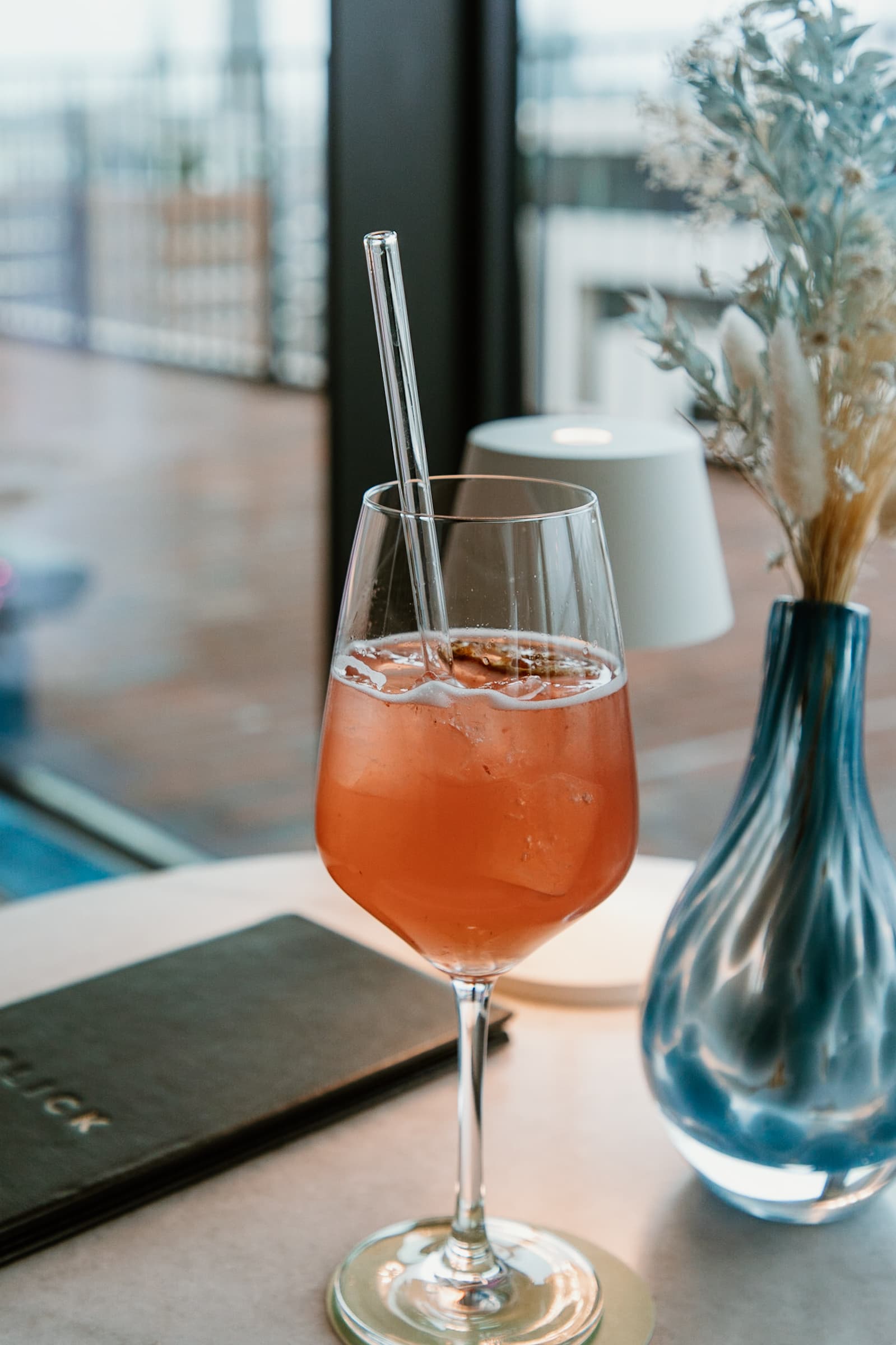
For a drink or coffee, check out the Blick Bar in the hotel lobby. Here, you’ll be on the same level as the Elbphilharmonie’s observation deck, which you can visit even if you’re not a hotel guest (though you may have to wait in line). I highly recommend the house cocktail, the Elphi Spritz, as well as the Signature Duo —a glass of champagne paired with a fish brioche.
For the big appetite in the elegant ambience there is still the restaurant Fang und Feld.
Spa & Wellness
As you’d expect from a Westin, there’s a fairly large wellness area here in Hamburg, located on the lower level of the building. Equipped with a pool, sauna area, and a small gym, you can relax to your heart’s content. I haven’t tried the spa area myself, but I did take a quick peek inside and found it very inviting.
Service
Because of my line of work, I’m always on the lookout for the little things that make for great service. And of course, given the scale of a hotel like this, there’s nothing to complain about—the service runs like clockwork in every area. Still, there are a few small details that leave a positive impression, such as the customary turndown service in the evening with chocolate hearts on the bed or the attentive staff at the Blick Bar.
All in all, The Westin Hamburg is a perfect choice if you are looking for comfortable accommodation with high standards and want to impress someone else (or yourself) with a spectacular view of Hamburg!
As a vibrant metropolis, Hamburg has a lot to offer in terms of gastronomy. You’ll find a brilliant mix of exotic cuisines, new concepts and endless creativity. The only problem: It can be hard to choose a location, because the choice is huge! To make it easier for you to choose for your next trip to Hamburg, I present my current favorite restaurants, bars and cafés in Hamburg in this food guide.
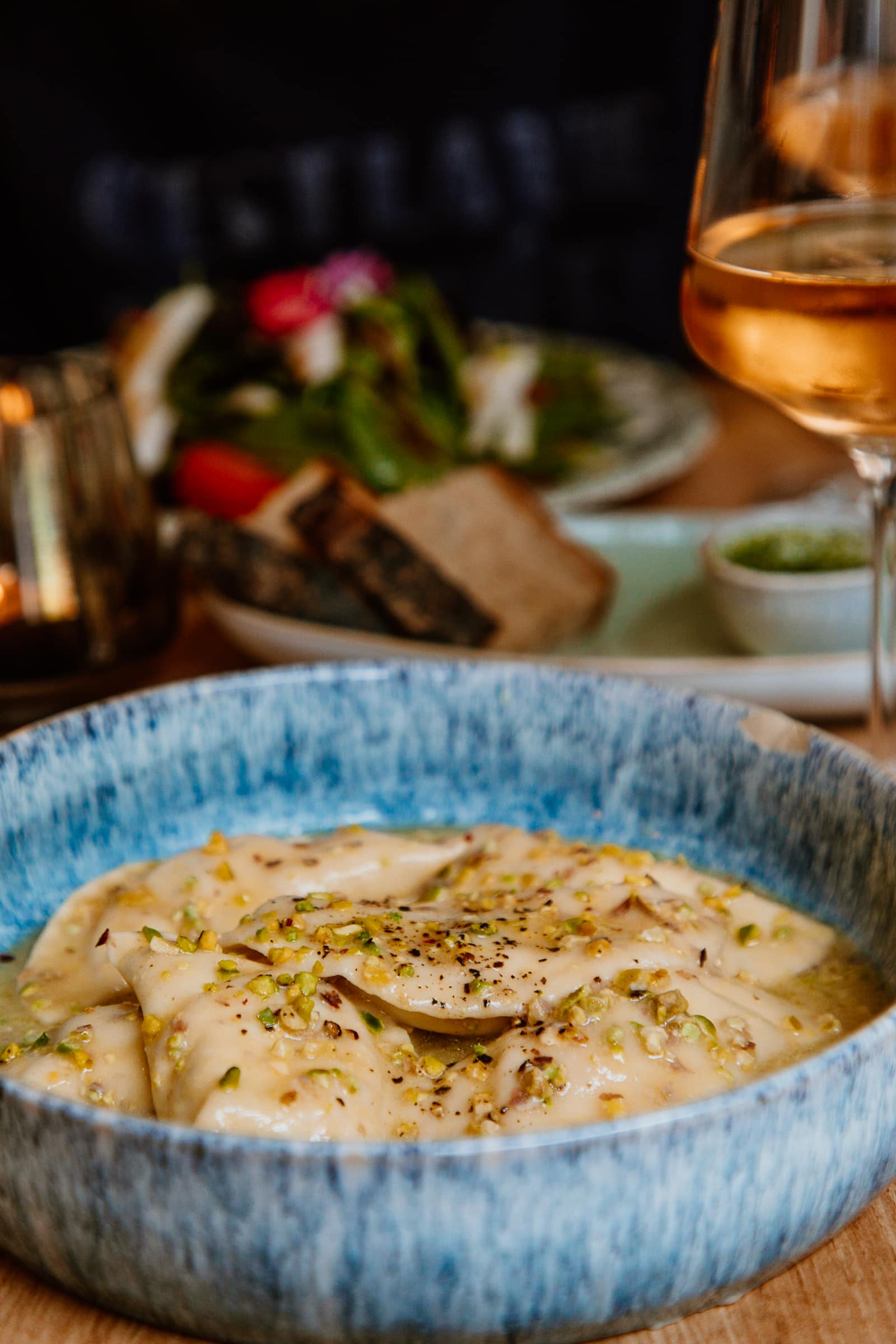
Pasta Autentica by Jill
Pasta Autentica by Jill is located just around the corner from Hamburg City Hall, yet tucked away in a small side street – the perfect spot for a city lunch between shopping and sightseeing. The store itself is not particularly large (reservations are a good idea!), the kitchen probably not either: The eponymous fresh pasta is namely made in the shop window on what feels like half a square meter in a corner of the guest room!
Pasta doesn’t get any fresher than this: The small pasta corner at Pasta Autentica by Jill
At your leisure, you can watch the cheerful pasta fairies as one ravioli after another is lovingly filled and only a short time later lands on the plates of the guests. This fact alone (and how incredibly neat they are in such a small space) would have earned Pasta Autentica by Jill a spot in my food guide – but it came to pass: my salmon ravioli in pistachio butter was so delicious that I was completely blown away. Absolute recommendation!
Among my favorite restaurants in Hamburg far ahead: Pasta Autentica by Jill
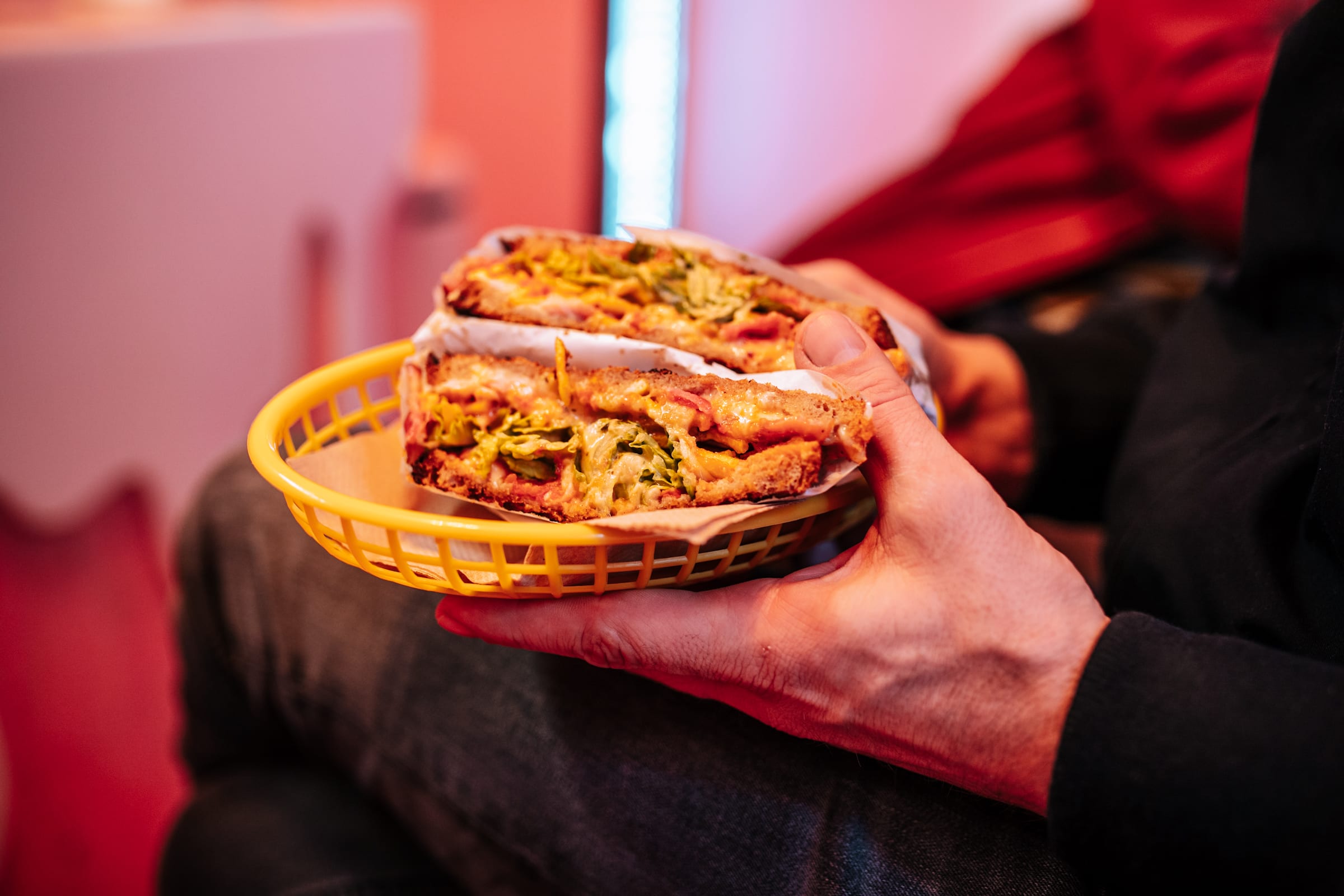
Frau Dr Schneider’s Grilled Cheese Wonderland
Bread, cheese and a grill: the most delicious things can be so simple! The pink Frau Dr. Schneider’s Grilled Cheese Wonderland gives grilled cheese sandwiches that little bit extra! My favorite was the Bacon Jam Grilled Cheese – the bacon jam made with their own recipe was so delicious! By the way, bring an appetite, such a sandwich is really a whole meal!
Admittedly, I’m not a very big fan of French toast: too buttery, too monotonous. I don’t know what possessed me to order a French toast at Marshall Street Coffee that day. Possibly, however, it was also the premonition that it would be really difficult to find something here that didn’t excite me.
Not only delicious, but also perfectly served: French toast at Marshall Street Coffee in Hamburg
In summary: French toast was great, the fresh juice too & great store anyway! Tip: Don’t be put off by queues at the door. It’s worth it!
As a port city, Hamburg was the first port of call for exotic goods from overseas centuries ago. So it’s no surprise that good coffee is easy to find: At the roastery in the Schanzenviertel, you can not only taste the in-house coffee, but also take it home with you.
The Elbgold roastery in the Schanzenviertel district
Mutterland
I only stumbled into the motherland by chance, because I had to kill a few hours at Hamburg’s main train station – and it’s not really inviting. Quite the opposite of the Mutterland, a real Hamburg institution.
Actually a delicatessen: in addition to delicacies from local manufacturers, there is also a great restaurant here. On the one hand, there is a take-away area with seating (a good opportunity to work), and on the other, a really good restaurant that is quite busy – be sure to try it out! There are also four other locations, including one in Eppendorf.
Either way, Wexstraße is a good place to go if you’re looking for a cozy atmosphere in Hamburg’s city centre. Here you’ll find cute stores, small restaurants and great locations such as the recently opened Mimosas Brunch Club.
Mimosa’s Brunch Club in Wexstraße
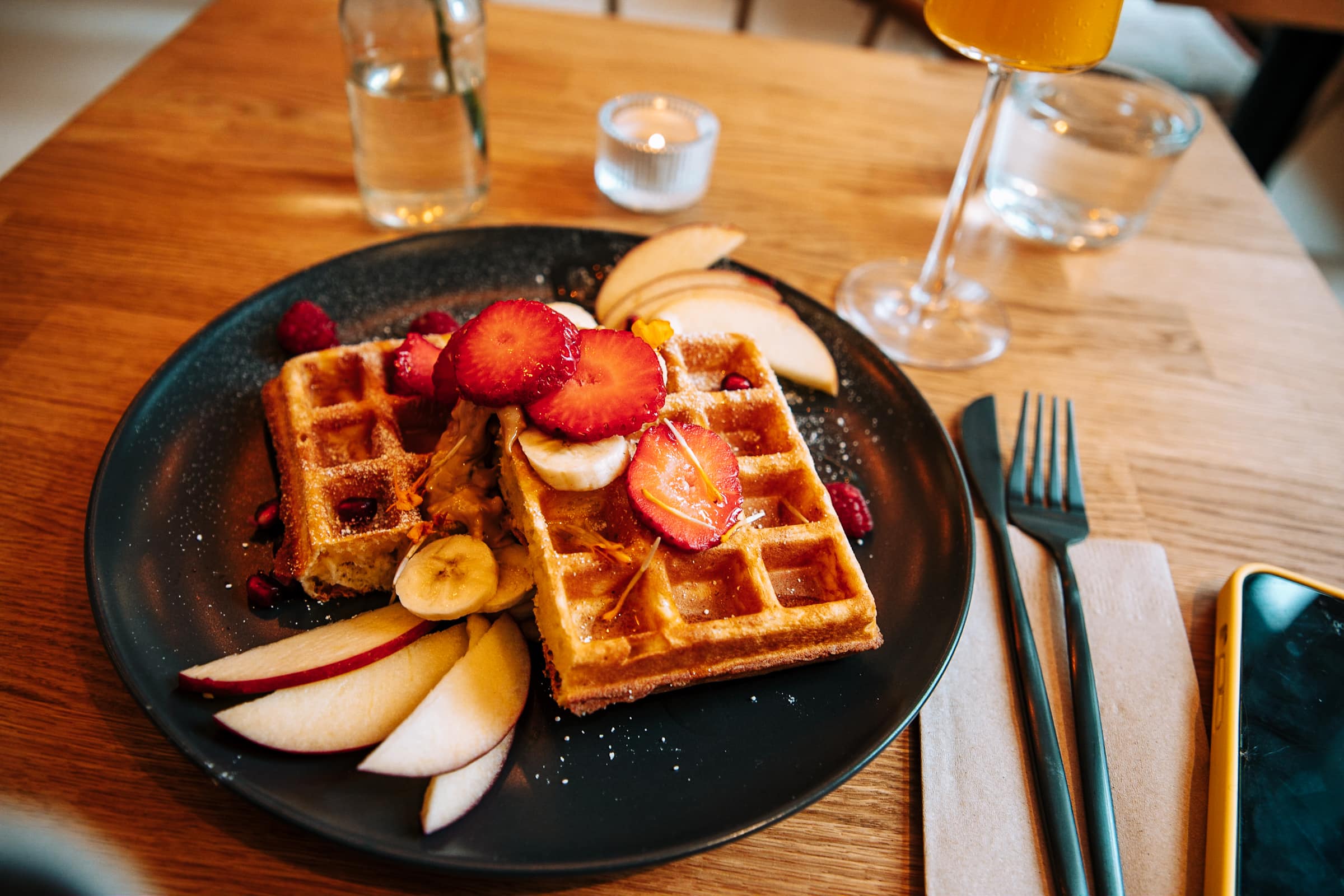
Mimosas Brunch Club is, as the name suggests, a great idea for an extensive brunch for two or with friends, but also for a small coffee break with delicious waffles. And if you can’t get enough of the fruity mimosas, there’s even a mimosas flat rate!
Tip: Despite new opening very popular, on weekends you should reserve!
With tacos it is such a thing, I think. Eating tacos completely drip and spill free just won’t work for me. Especially not with the tacos from La Casita, because they are so well filled!
Tip: The tacos are the perfect snack when the flea market takes place around the small snack bar on Saturdays, a really good flea market with lots of vintage treasures.
La Casita, Neuer Kamp 30, 20357 Hamburg (Schanzenviertel)
Blick Bar
If the typical fish sandwiches are too mundane for you, or if you are curious about a completely different variant, then I recommend a visit to the Blick Bar. Not only can you enjoy a beautiful view of the city of Hamburg here, but you can also get to the Elbphilharmonie’s viewing platform without having to wait – because the Blick Bar is actually the house bar of The Westin Hamburg, whose rooms are located above the concert hall.
Be sure to try the signature duo of a glass of champagne and a fish brioche and just take a break from sightseeing. And don’t worry, the Blick Bar is wonderfully unpretentious and relaxed despite all the luxury!
Blick Bar, Platz d. Deutsche Einheit 2, 20457 Hamburg (city center)
Planning a quick trip to Palma and interested in exploring Mallorca’s popular markets? The biggest markets are outside the city, requiring extra time to visit. Instead, here are some excellent alternatives right in the capital: the best markets in Palma!
Weekly Markets & Market Halls in Palma
A quick visit to Palma is a great opportunity to gather some delicious Mallorcan specialties like ensaimadas, sobrasadas, or Flor de Sal from Es Trenc. Or perhaps you’re craving fresh fruits and vegetables right from the farm. Luckily, Palma offers many spots to pick up fresh produce from local farmers. Besides the lively outdoor weekly markets, you’ll also find several indoor markets full of variety.
At Palma’s markets, you’ll find traditional Mallorcan goods such as popular wicker baskets in various sizes.
Mercat de l’Olivar
The Mercat de l’Olivar is located right in the heart of the city, between the lively Plaça d’Espanya and the pedestrianized Carrer Sant Miquel. The large market hall was opened in 1951 and is one of the most traditional in the city. In addition to the usual market stalls with fresh fruit, vegetables, cheese, fish and meat, you will also find small snack bars where you can eat cheaply, especially at lunchtime. Some fishmongers even offer to prepare and serve the freshly purchased fish right on the spot. In addition, you will find culinary souvenirs to take the mediterranean vibe home with you.
Mon-Fri 7am-2.30pm Fri 2.30pm-8pm partly open Sat 7am-3pm Gastronomy: Mon-Fri until 4pm
Here’s a handy tip: If you’re traveling by rental car or your own vehicle, there’s a parking garage located under the Mercat d’Olivar. It can get quite busy sometimes, but it’s really convenient, especially if you’re planning to buy in larger quantities.
MALLORCA
Interested in more insider tips and top spots? Click through the pages below for a quick overview!
The Mercat Pere Garau is situated in downtown Palma but is tucked away in a typical residential neighborhood east of the Avenidas, which locals refer to as Palma’s ring road. The Pere Garau district has a rich history as an immigrant area, offering an exciting blend of international cuisines and a diverse range of shops nearby the market hall—perfect even for those on a budget. If you want to experience authentic local life, this is the place to visit!
Tip: right in front of the market hall, you’ll find a lively open-air market that offers different items depending on the day. On Mondays, Wednesdays, and Thursdays, you can discover a great selection of clothes and shoes. On Tuesdays, Thursdays, and Saturdays, it’s the perfect place to pick up fresh fruits, vegetables, beautiful flowers, and green plants.
Saturday is the busiest day at the Mercat de Pere Garau, with more stalls and a lively atmosphere!
Foodie Hotspot: Boira in Pere Garau (& Great Boutique Hotel!)
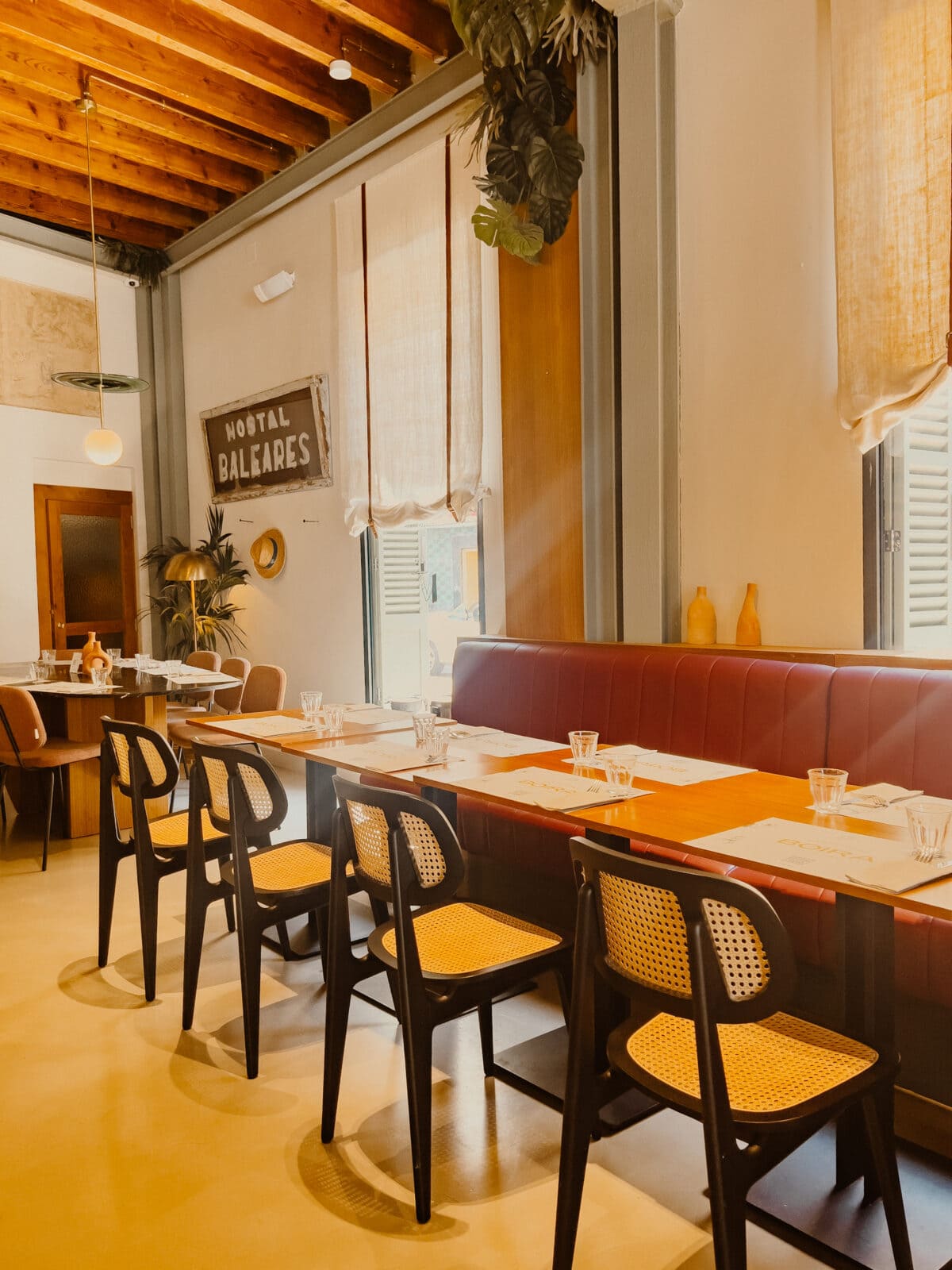
Hungry? Market-fresh cuisine is available very close to the Mercat de Pere Garau. At Boira, you can enjoy modern cuisine in an urban-Mediterranean ambience. By the way: the location belongs to the boutique hotel Nou Baleares* & is the perfect address if you’re looking for stylish accommodation away from the usual tourist areas among locals!
The Mercat ecològic de Palma in Plaça del Patins (also: Plaça Bisbe Berenguer de Palou) is one of the smaller weekly markets in the city. But at this market in Palma you will find only organic products! A great opportunity to stock up on fresh organic fruits and vegetables straight from the island.
Tue + Sat 8pm to 2pm
Tip: Nearby you’ll find a branch of one of Palma’s most popular coffee roasters! La Molienda on Carrer del Bisbe Campins serves the best specialty coffee and delicious brunch dishes.
Just around the corner, you’ll find Carrer de Bonaire, a charming street in Palma lined with small boutiques and excellent restaurants, still largely undiscovered by most tourists. Perfect for a little walk!
Discover the best hotels in the center of Palma
Advertising / *affiliate link
Mercat de Santa Catalina
The Mercat de Santa Catalina is worth visiting not just for its market, but also for the vibrant neighborhood around it. Santa Catalina, centered around the lively market hall, is truly one of the trendiest areas in Palma!
The area features a succession of popular restaurants, with renovated house facades that give the former fishing village a distinctive charm. Additionally, there’s a historic old mill and breathtaking views of Palma’s port.
Let’s head back to Mercat Santa Catalina! You’ll discover a delightful array of Mallorcan delicacies and a variety of exquisite delicatessen specialties. The quality of the ingredients is so outstanding that even top chefs in town love to shop here. While the market is open six days a week, Saturday is unquestionably the most vibrant and bustling day, full of energy and lively atmosphere.
Mon-Sat 7am to 5pm
Markets Near Palma
Did you enjoy those locations? The island features many more fantastic weekly markets!
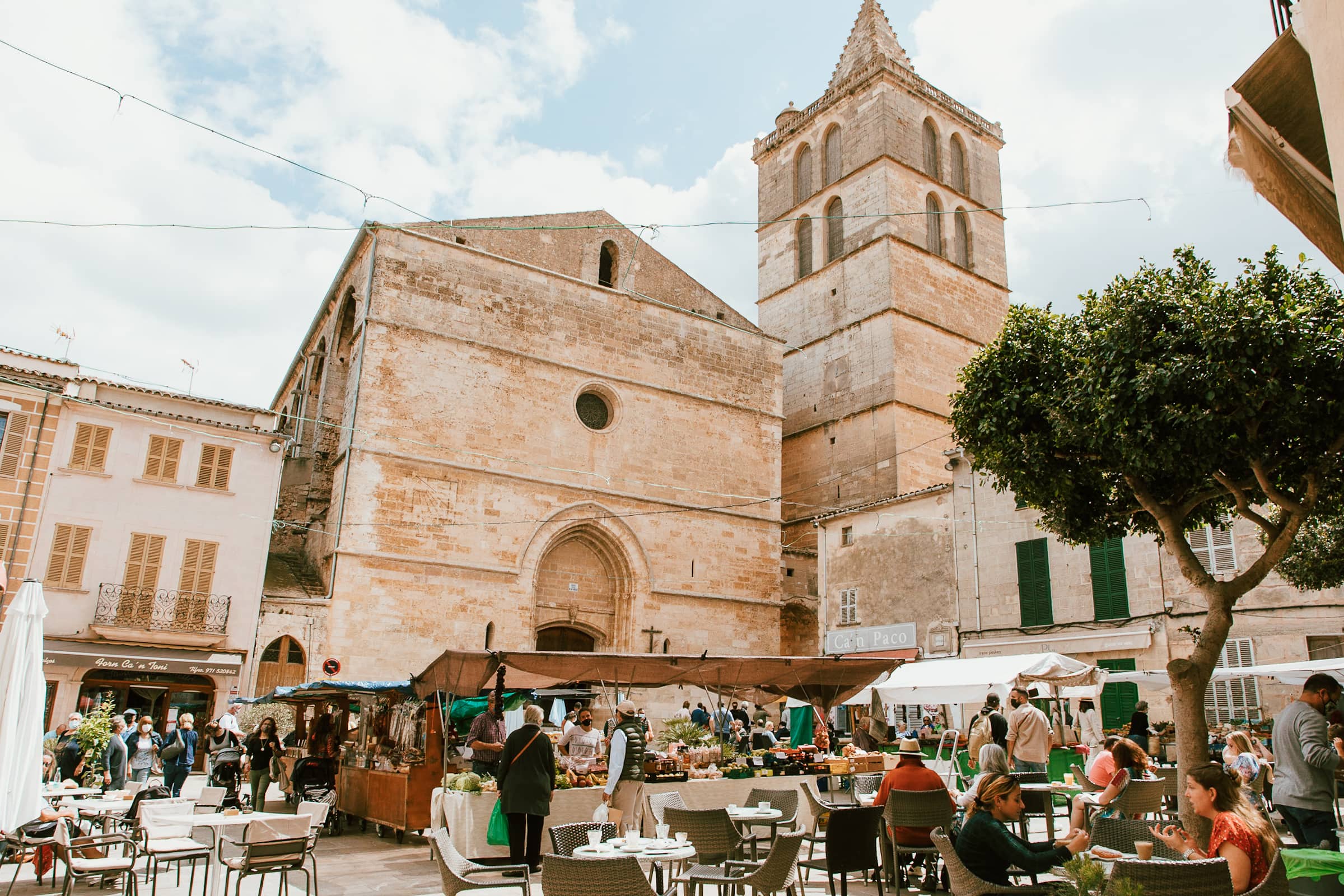
The picturesque farmer’s market in Sineu takes place every Wednesday.
Tip: Just outside Palma, the large Sunday market of Santa Maria is easily accessible by public transport from the city center. At Plaza España’s Estació Intermodal, simply take one of the trains (lines T1, T2, or T3), and you’ll reach Santa Maria station in about 20 minutes, which is conveniently close to the town center.
Or you can continue to Sineu (line T3) and on Wednesdays visit the oldest farmer’s market in Mallorca, which is one of the biggest attractions on the island. (Travel time from Palma approx. 50 minutes)
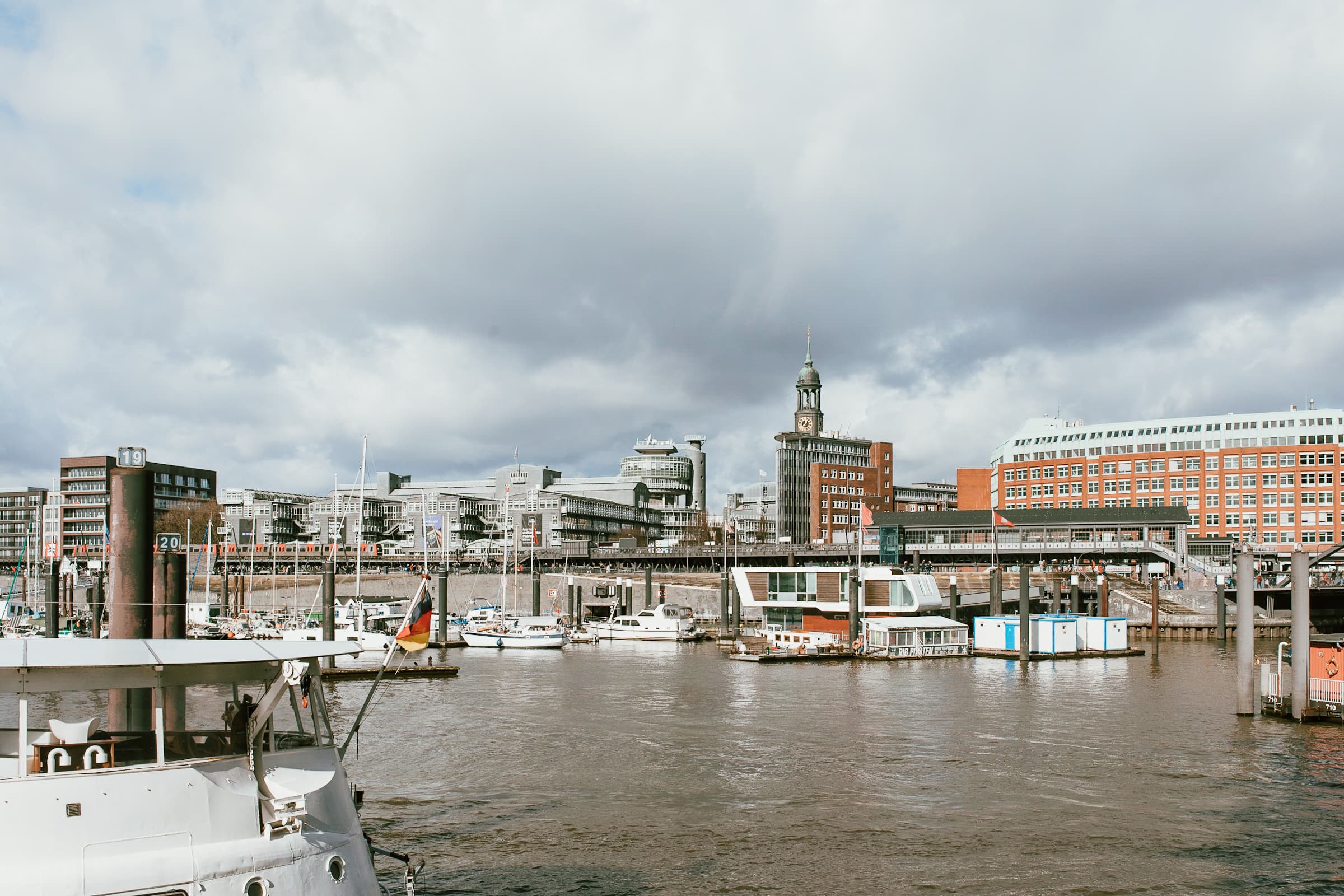
When you’re in Hamburg, don’t miss out on a harbor tour! The Port of Hamburg is the third-largest seaport in Europe and has shaped the cityscape for many centuries. The harbor is truly impressive, and a tour is the perfect opportunity to get to know Hamburg from the water. In this article I’ll give you tips for the best harbor tour!
The Port of Hamburg: The Gateway to the World
I’ve been to Hamburg countless times, but a harbor tour was still on my to-do list. In a city like Hamburg, whose history has been significantly shaped by the port, a harbor tour is naturally one of the most popular tourist attractions. Various shipping companies offer such tours, sometimes with different focuses. The trips usually start at the Landungsbrücken.
A harbor cruise opens up completely different perspectives on the city, like here at the Elbphilharmonie, Hamburg’s extraordinary new concert hall.
Harbour tour in Hamburg: My tip!
By chance I stumbled towards a small launch, in front of which the captain himself is still checking the tickets. Before I can waste a single thought on the question of whether a harbor tour is really such a good idea with the bad weather on that day, I’m already sitting on the boat.
Hotels in Hamburg Are you looking for accommodation for your trip? That can quickly become expensive in Hamburg! Therefore, book well in advance! The best hotel deals for Hamburg*
Impressive even in rainy weather: the port of Hamburg with its huge facilities.
We cast off and just at that moment it rains, storms and snows at the same time. If you are traveling in Hamburg, you have to be prepared for any weather. I’m not very fond of rainy weather but from the boat, you have a good view through the large panoramic roof even in sleet. And in general, I am preoccupied with the view of the many containers, the huge port cranes and the sheer size of the port. The low height of the launch means you sit almost at eye level with the waterline, which makes the view all the more impressive.
Our captain isn’t just a ticket inspector—he’s also a tour guide—and he entertains us with humorous anecdotes in the Hamburg dialect. “Have you always wondered where this mysterious ‘Gateway to the World’ is supposed to be here in Hamburg?” The boat turns, and right in front of me, the Elbe stretches out in all its breadth. There’s no end in sight on the horizon, and for a moment it really feels as if the world is opening up before me.
On the wide river Elbe, you almost feel a bit like you’re on the high seas, and the rough weather made it extra dramatic.
By the way, I recommend you to look for a round trip that also goes to the Speicherstadt (depending on the water level). Gliding between the massive brick buildings by boat is simply an impressive experience.
The rainy weather sometimes flies away as quickly as it comes: In sunshine we sail through the Speicherstadt.
The tour is organized by Reederei Abicht, but this special one-and-a-half-hour harbor tour with a detour to Speicherstadt can only be booked online:
In general, the harbor tours can be divided into 4 categories:
1-hour harbor tour On these harbor tours you will see the basics that you should have seen in the port of Hamburg. However, an hour passes by really fast!
Grand Harbour Tour (approx. 1 1/2 to 2 hours) On the longer tours, there is more time for a grand tour: you have many more opportunities to survey the size of the Port of Hamburg and usually learn even more about the history and significance of the port.
Light cruises In the evening, the so-called light cruises* take place. After dark you can experience the port of Hamburg and especially the Speicherstadt at night. Attention: Possibly the lighting is not quite as spectacular as usual due to the current energy saving concept of the city of Hamburg.
Tip: Make sure that the boat is a launch, because they are low enough to be able to enter the Speicherstadt when the water level is right.
What sights can you see on a harbor tour in Hamburg?
A harbor tour is also a great way to see many Hamburg sights at once. Especially if you have little time, a harbor tour is therefore particularly practical! You can see the following sights from the water and combine them with a harbor tour:
Speicherstadt: The 19th century red brick warehouses are the largest historic warehouse complex in the world! The entire Speicherstadt is a listed building and a UNESCO World Heritage Site. Some of the houses are still used as warehouses by traders (e.g. carpets), but you will also find many interesting museums here, such as the Speicherstadtmuseum, the Hamburg Spice Museum*, the Dialoghaus Hamburg*(where people with impaired vision are guided through a very special sensory experience – exciting!) or the Miniatur Wunderland.
Elbphilharmonie: The concert hall was built on an old quayside warehouse and quickly became one of Hamburg’s most impressive sights with its spectacular facades. The Elbphilharmonie can be admired particularly well from the water.
By the way: you can enjoy the sensational view of the Elbe from the rooms of The Westin Hamburg.
St. Pauli Landungsbrücken: The Landungsbrücken are not only the departure point for most harbor tours, but also one of the most popular sights on the Elbe. The historic jetty is over 100 years old and a popular meeting place. You will also find the entrance to the Old Elbe Tunnel here – just as worth seeing!
Container terminals in the port: Hamburg is one of the largest container ports in the world, and you can experience first-hand how containers are loaded and unloaded during your harbor tour – and marvel at the incredible size of the container ships!
Tips for planning a harbor tour in Hamburg
There’s so much to see in Hamburg anyway – organization is key! To make planning your harbor tour easier, I have a few valuable tips for you here:
Book in advance: Especially in high season, in good weather and on weekends it can get crowded on the harbor tours. Especially the small boats, which were also through the Speicherstadt, have limited space. Therefore, it is best to book in advance so that your planning is not thrown off.
Make sure you have the right clothing: Hamburg’s weather is very changeable and it can get chilly on the water. Many boats are air-conditioned, but it is advisable to bring an extra sweater or similar. On my boat, for example, it was possible to go on deck and there was already a stiff breeze.
Route: If you want to see specific parts of the port or have a special area of interest, you can take that into account when choosing your tour. For example, I really wanted to go through the Speicherstadt and therefore chose this tour.
Proper timing: You can save a lot of time if you schedule your harbor tour properly. If you also want to visit the fish market on Sundays, for example, I would recommend going to the fish market first thing in the morning and then strolling towards the Landungsbrücken. There you can then, for example, visit the Old Elbe Tunnel and then take the harbor tour at noon. Some tours also offer other exit points, e.g. at the Elbphilharmonie. So you can then directly continue your sightseeing day there.
Duration: There are harbor tours of different lengths, from one hour to several hours. Think in advance how much time you have and what sights you want to see to choose the right harbor tour.
Advertising / *affiliate link
How much does a harbor tour cost?
A harbor tour in Hamburg costs between 15 and 40€, depending on the duration and provider. Special boat tours, e.g. with an evening program like this one*, can sometimes cost more.
Budget tip: If you want to save money and don’t mind working out a route yourself, you can simply buy an HVV day ticket and use the regular HADAG ferry lines. There is just no specific info there then and you have to figure out for yourself where you want to go.
Extra tip for those looking to save: The regular day ticket for the Hamburg AB fare zone (is pretty much all of Hamburg) costs €8.40. However, there is still a cheaper 9 am day pass that excludes rush hour from midnight to 9am Monday through Friday. If you then buy them online (either on the website or in the HVV app), you’ll get an extra discount and pay just €6.60!
But if you also want to visit lots of sights, it’s worth buying the Hamburg Card: this not only gives you free travel on all public transport around the clock for a period of one to five days, but also lots of discounts at over 150 Hamburg sights!
Vilnius is not only an interesting city with an extraordinary history, but also an absolute insider tip for foodies. In this article I’ll show you a few of my favorites among the numerous cafes, restaurants and bars in the Lithuanian capital, but a trigger warning in advance: your mouth will water!
Vegan food in Vilnius: Rosehip Vegan
Located diagonally across from the MO Museum, Rosehip Vegan is already in a pretty cool neighborhood. For me, it’s the perfect spot for an “after-art” lunch—especially if you can’t get enough of the amazing exhibitions! As the name suggests, Rosehip Vegan serves delicious vegan cuisine that’s also quite photogenic. The only downside is the huge portions, which make it hard to resist trying everything on the menu right away.
Tip: For coffee, I recommend you move to the Raštinė located on the opposite street corner.
Fresh and delicious: The vegan restaurant in Vilnius.
Vilnius is an exciting destination: Find out what else you can do in Vilnius in my big Vilnius guide!
The cute tea house: Pinavija
The icy wind whipped through the streets, I was cold, my feet hurt from all the sightseeing (because who would have thought that there really is so much to see in Vilnius!) and actually I just wanted to take a quick break when I stumbled into Pinavija.
But I could have guessed right away that there was another highlight waiting for me, because honestly: In Vilnius, one great location follows the next. Pinavija is a tea house, girl’s dream and cupcake heaven at the same time. In any case, I can highly recommend the mini quiche, but afterwards I was annoyed that I didn’t go for the sweet tartlets with the artfully swirled meringue topping – maybe you can make up for it for me?
Cupcakes at the tea house Pinavija.
Breakfast in Vilnius: My Favorite
I would love to show off a very special breakfast location at this point, but the truth is: I didn’t even make it out of my hotel. But that’s no wonder, because breakfast at Hotel Pacai* really is the kind of hotel breakfast that impresses.
Cozy & elegant: Hotel Pacai in Vilnius.
On the one hand, there is the really attentive and cordial service and the casual atmosphere despite the five stars that promise luxury emblazoned at the entrance, and on the other hand, the offer of a small, fine buffet and various à la carte dishes.
When it comes to buffets, I’m now part of the “less is more” team: rather a few, but good products, and I’m in breakfast heaven. In general, I didn’t want to leave Hotel Pacai again, and I can highly recommend it to you if you want to treat yourself.
Something sweet for in between, good coffee or just a place where you can answer some mails on your laptop in a nice atmosphere? In the cozy Italala Caffè you will find everything at once.
Sugamour: Sweets for night owls
Perhaps you should save your sweet tooth for a little longer, because just a few doors down you’ll find one of six Sugamour branches. Is already the facade pompously decorated – inside it continues with the finest petit fours and tartlets!
The interior design with thousands and thousands of teddy bears takes some getting used to, but somehow it’s also pretty cute. And perfect for night birds: the branch at Vokiečių gatvės is open daily until 11 pm, and even until midnight on Friday and Saturday!
Sweet delicacies late into the evening: Sugamour in Vilnius.
Alchemikas: Booze & Co.
At Alchemikas, I ended up hanging out with a few nice people—even though it almost didn’t happen. The extensive menu at this classic cocktail bar, perfect for cozy evenings, literally fills an entire book, and I had a hard time choosing between all the delicious, evocative cocktails. The good news: Somehow, everything sounded really, really good, and in the end, I was more than satisfied with my choice!
Amandus: Fine dining in Vilnius
In itself, it’s unusual that a Michelin-starred restaurant like Amandus is located in the middle of the alternative artists’ district of Uzurpis – but after an evening there, you won’t be able to stop marveling anyway. When chef Deivydas Praspaliauskas flambéed my already appetizing-looking duck breast to ultimate perfection right in front of me at the table, I was convinced: an evening at Amandus is my absolute Vilnius tip for anyone with a taste for good food. And yes, it really is affordable!
The tasting dinner costs 70 euros, which is really nothing compared to what you would pay for a meal of this quality in many other European capitals – and for a surcharge, there is an extensive wine accompaniment.
But if you have any preconceptions about the amount of food on your plate and all the fuss, I can reassure you: Firstly, I was more than full after the umpteen courses and explosions of flavor and secondly, the atmosphere at Amandus is pleasantly unpretentious!
Every good backpacking trip through Thailand starts right here: Khao San Road is the gateway for anyone who wants to explore Thailand or the whole of Southeast Asia with a backpack. In this article, I’ll show you what the myth of Khao San Road is all about and give you a few insider tips if you want to experience more than morning hangovers from all-nighters and grilled scorpions on the side of the road.
Kilometer Zero: The Khao San Road is where many Thailand trips really got started.
Where is Khao San Road located?
Khao San Road is located in the Banglamphu district of Bangkok, the capital of Thailand. Although it is difficult to identify a real city center in the megacity of Bangkok, Khao San Road is relatively central and close to popular sights such as the Grand Palace with the famous Wat Phra Kaeo temple, the Wat Pho temple and the lesser-known Wat Suthat temple.
By the way, another beautiful temple in Bangkok is Wat Traimit with its Golden Buddha!
Loud music is part of the night on the Khao San.
Why Khao San Road is so famous
Somehow, Khao San Road has always been a major attraction in Bangkok. The mix of shops, street food stalls, bars, and restaurants keeps the street bustling around the clock. But Khao San Road didn’t really become a must-see for every backpacker until 1996, with the publication of Alex Garland’s novel “The Beach.” In the book, the protagonist begins his trip to Thailand right here, amid the hustle and bustle of cheap bars and the wild nightlife. The subsequent film adaptation starring Leonardo DiCaprio did the rest, and the legend of Khao San Road was born.
Are you also planning a trip to Southeast Asia? You can find all my articles about Bangkok and Thailand here
Especially for backpackers, Khao San Road used to be the first port of call in Bangkok.
Khao San Road: Now for everyone
Originally more of a meeting place for low-budget vacationers and backpackers, Khao San Road is now actually a must-see for any Bangkok visitor. In the evenings, the atmosphere ranges from parties to social gatherings, while during the day there are endless shopping opportunities. Street food is available around the clock anyway. Particularly popular photo motifs are snack stands with grilled insects, worms or scorpions, which are always used for culinary tests of courage. Even tattoo studios can be found here. I don’t want to know how many people wake up early in the morning with a tattoo as a souvenir: The nights on Khao San Road can get wild!
Nightlife on Khao San Road in Bangkok
If you’re not into dancing the night away, you can take it easy around Khao San Road. Between the bars, there are always individual massage parlors where you can have your feet massaged in comfortable armchairs right on the street, for example. Personally, I don’t find it particularly appealing and always somehow a bit unhygienic, but people seem to be into it!
Rambuttri Road: The laid-back alternative to Khao San
The parallel street, Rambuttri Road (or Rambuttri Alley), is much quieter. There you will find not only tourist hangouts, but also very cozy bars and unexpectedly hip food locations!
Worth seeing: Rambuttri Road is much more atmospheric than Khao San Road.
From the Molly Bar, you can watch the hustle and bustle on the street, listen to music and enjoy the nightlife with a cocktail. And Camp Burger has really good burgers if you’re not into Thai cuisine.
Insider Tip: Samsen Road
I’ve been to Bangkok several times and I’m not necessarily one of those people who has to start a Thailand trip compulsorily near Khao San Road. For many, this is simply part of a perfect trip to Bangkok. What I can also somehow understand is that the vibe around Khao San Road is very special. During my last stay in Bangkok, I also ended up there rather by chance, because I had booked a hotel so spontaneously that I didn’t really realize where it was. But it was still a 20-minute walk to Khao San Road. That way, I’ve discovered quite another insider tip!
If you’re in the mood for a cozy, tropical-warm evening with good food and want to escape the hustle and bustle of Khao San Road for a while, you only need to walk a few streets further in the direction of Samsen Road. Around Soi 2 (the side streets of a main street are often just numbered) you’ll find a cute little neighborhood with nice restaurants, like So Samsen, which is really nicely decorated. Along Samsen Road itself there are also some less touristy, exciting locations like Neighbourhood (address: 59, 61 Samsen Rd) for evening/nighttime or Ganja Café for daytime.
Insider Tip: Samsen Road
Shopping on Khao San Road
You can shop endlessly on Khao San Road and the surrounding area. However, the stores are very focused on tourists. So if you can no longer see the infamous Elephant Pants either, I recommend a visit to Chatuchak Market or The One Ratchada night market, which replaced the formerly popular Ratchada Train Night Market after the pandemic.
Shopping tip: Something about us
If you don’t have time to browse through the huge markets, I have a little shopping tip for you near Khao San Road: At something about us, you will find beautiful little things such as costume jewelry, accessories and fine stationery by local artists.
Where to stay near Khao San Road
In the immediate vicinity of Khao San Road, you will mainly find low-budget accommodation, but now also typical tourist hotels. If you want to stay in the middle of the party and tourist hustle and bustle, this is the place for you!
However, I find that there are so many great neighborhoods and exciting locations to stay in Bangkok that I tend to avoid the direct area around Khao San Road.
I was really happy with my hotel, which was located a little further away from Khao San on Samsen Road. Overall, I found the area surprisingly cool for staying overnight—very local and safe (though, to be honest, I rarely feel unsafe in Bangkok anyway). And I can highly recommend Lost in BKK, whether as a hotel or a hostel (they offer both private and shared rooms): friendly staff who go above and beyond!
There are direct bus connections to Khao San Road from both the major Suvarnabhumi Airport, where all long-haul flights land, and Don Mueang Airport, which is often served by low-cost airlines. Alternatively, you can take a cab or the Thai equivalent of Uber, Grab.
Suvarnabhumi Airport is also connected to the city by the Airport Rail Link, a skytrain. While this is super convenient and fast, it only has a few stations. To use it to get to Khao San Road, you would have to get off at Phaya Thai station, and then transfer to bus or cab.
I want to travel more again, get to know new places and rediscover old ones. Is that what you also set out to do? Then my list of ideas for a few great city trips in Europe is definitely something for you! Just save this post somewhere and you can always get ideas for the next spontaneous city trip throughout the year!
More on the road again: we are traveling for all we’re worth.
What can I say? Before I tell you about the little insider tips in Rome, you should also have seen the classics in Rome. This city is simply so bombastic and interesting that the usual sights such as the Colosseum, the Trevi Fountain or St. Peter’s Basilica alone are enough to keep you busy.
Spanish Steps in Rome
#2 Seville
Spaniards are generally Mediterranean, warm and open, but Andalusians really go the extra mile. “Hola reina”, “como estás reina”, “aqui tiene reina” – I really like this Andalusian habit of always being affectionately addressed as “reina”, meaning “queen”. If you’re looking for joie de vivre and positive energy, Seville is definitely the place for you!
Tip: Watch the flamenco dancers at the Plaza de España and let yourself be carried away by the passionate atmosphere of a city that is bursting with warmth.
If you’re looking for a place to stay in Seville, I recommend the Boutique Hotel La Parada de Marques. It’s relatively new, beautifully designed, and the staff are friendly—you’ll love it.
True to style in an Andalusian old building: My hotel tip for Seville
#3 Paris
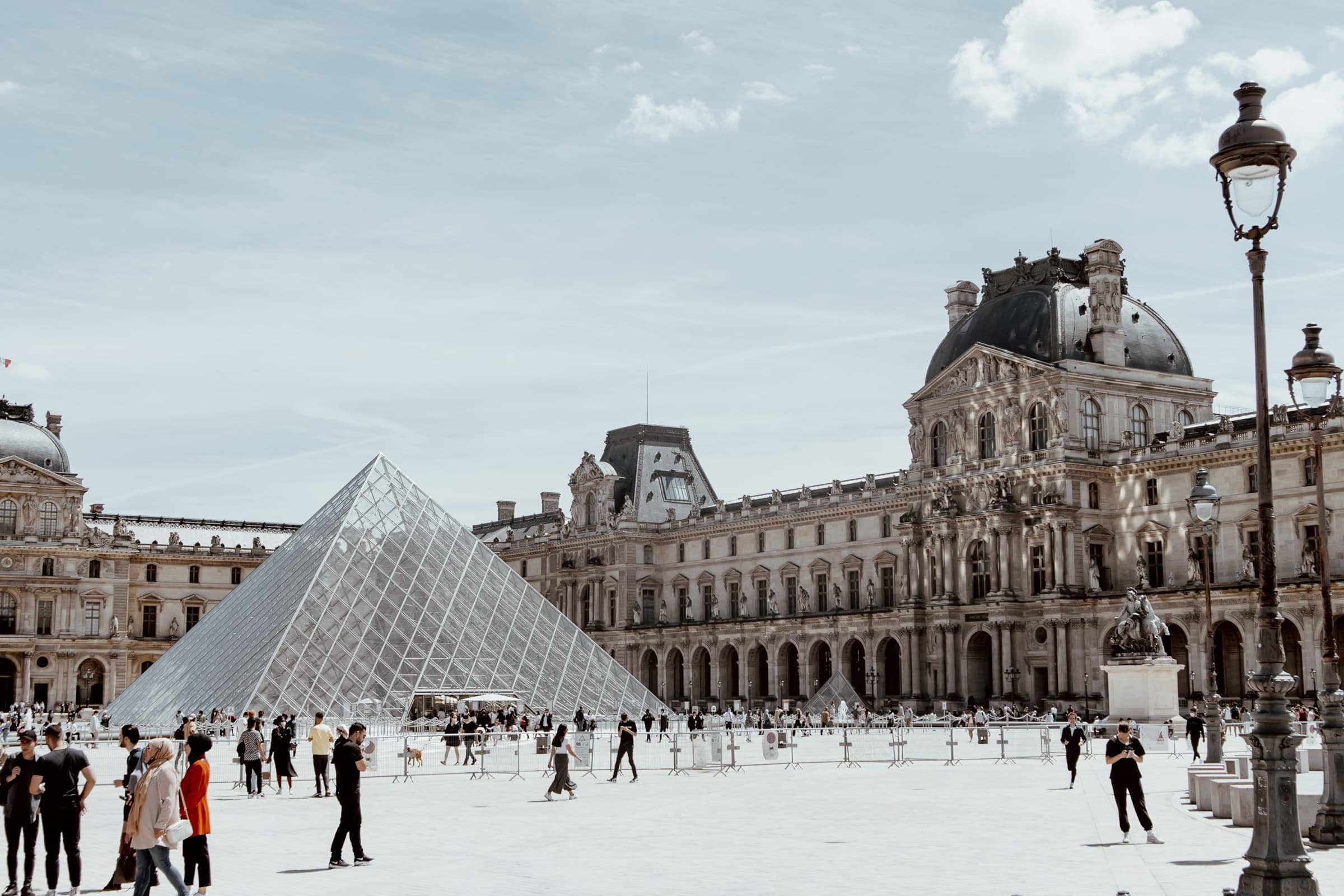
Oh Paris! This city is just such a classic. Even though it’s super expensive and most people complain about the grumpy and overly proud French. I really can’t understand that, because I rarely find the French or Parisians rude (well, I also live in Berlin, so I have different standards) and if I were French – hey, I’d be pretty proud of this awesome city too!
If you have time: Be sure to visit the Louvre – also a must in Paris!
#4 Zagreb
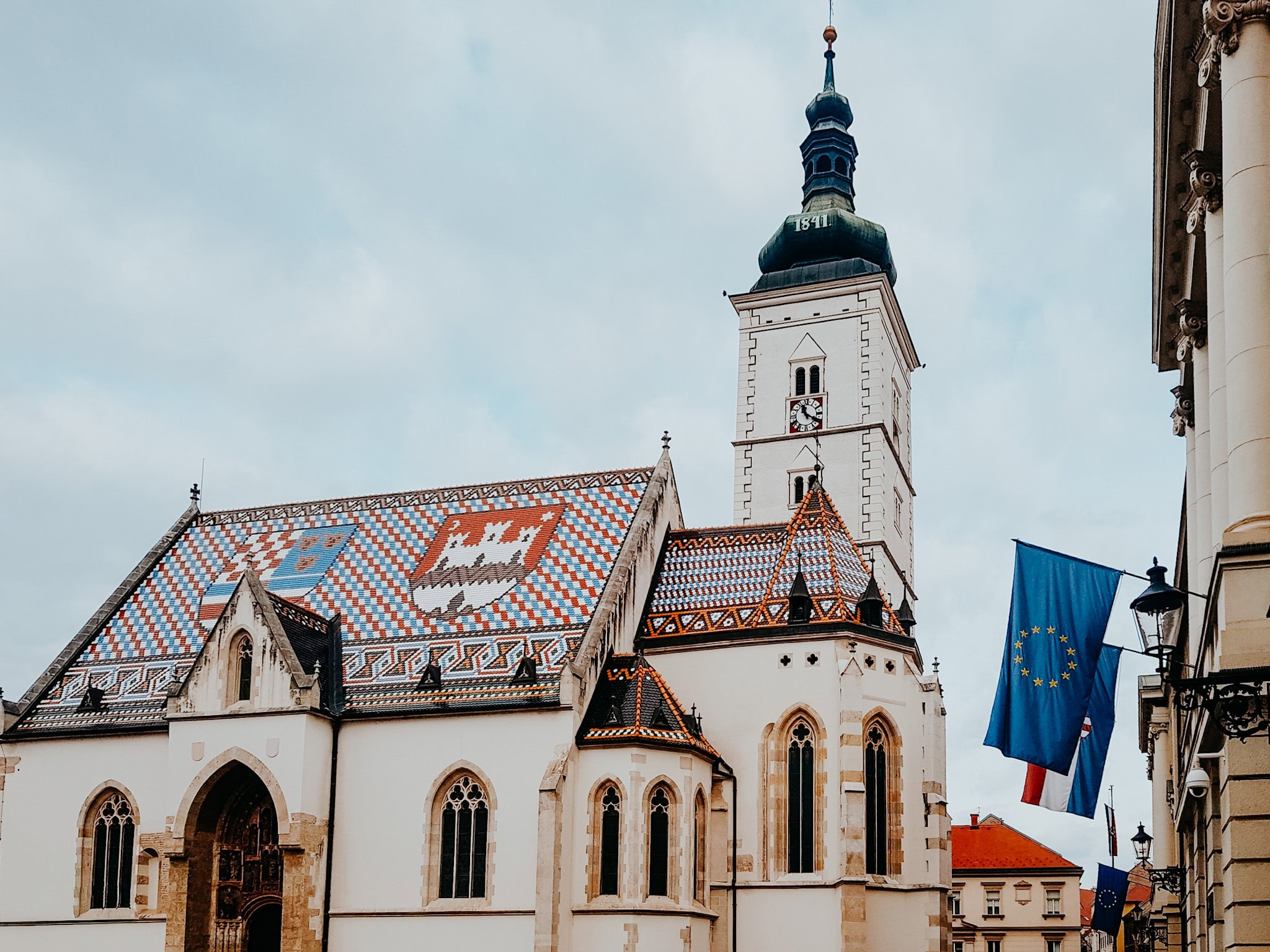
In Zagreb, I probably experienced the most memorable museum visit of my life: the Museum of Broken Relationships features artifacts from broken relationships. Sounds crazy, and a bit like those tourist museums that are supposed to seem fun, but in the end you’re just annoyed about the money you’ve spent. But it’s very different there, and not only once have the exhibits brought tears to my eyes, whether out of joy or sadness. Definitely worth a recommendation. And Zagreb as a city anyway.
The beautiful roof of St. Mark’s Church in Zagreb
#5 Graz
Okay, Austrians are probably rolling their eyes right now, but to me, Graz—along with Salzburg —is one of Vienna’s little sisters. Less crowded, less overwhelming, but still a mix of tradition, culture, and pretty good cuisine. And thanks to its picturesque location on the Mur River and its green surroundings, Graz is perfect for a relaxing city getaway! By the way: It’s absolutely perfect if you stay at the Grand Hôtel Wiesler, which is right on the Mur River in the city and is simply gorgeous!
Tip: Visit the current exhibition at the Kunsthaus Graz (admire the impressive futuristic building on the side!) and then enjoy the panorama with a glass of wine on the Schlossberg.
View of Graz from the Schlossberg
#6 Vilnius
Vilnius was, so to speak, my last stop of the year (you can find my article about Vilnius here). When I arrived in Vilnius, winter was already just around the corner, and for someone like me—who’s notoriously sensitive to the cold—that was a real challenge. Still, the mix of history, culture, and a young, open atmosphere was really exciting. And at Hotel Pacai, I had one of the most enjoyable hotel stays I’ve had in a long time. It was relatively quiet in the winter, but from previous visits (admittedly, a long time ago), I can still remember how lively it gets here in the summer.
Tip: Vilnius is the only city in Europe where you can float over the city center in a hot air balloon.
Advertising / *affiliate link
Crazy: The former Lukiskies prison in Vilnius now houses an event space
#7 Venice
Venice is always a good idea, and even if Venice is hijacked by tourists in summer – it is still an incredibly fascinating city. The location in the lagoon, the old palazzi, so much art: I’ve actually been to Venice only once, but this was certainly not the last time!
My advice: Go up to the terrace of the Fondaco dei Tedeschi for sunset & browse the shelves at the Libreria Acqua Alta.
Advertising / *affiliate link
Fantastic view over the Grand Canal from the roof terrace of the Fondaco dei Tedeschi
#8 Prague
Last year I unexpectedly ended up in Prague again and was just super happy about the day I got to spend there. Prague is just one of those cities full of history and old glamour and has a very special vibe.
It can get crowded on Charles Bridge in the summer, even though it’s so wide!
#9 London
I don’t know if it’s the upcoming coronation of King Charles III or the hype around Harry and Meghan at all, but London has been dominating my Instagram feed lately as far as major cities in Europe go! Well, London always works anyway – so why not consider it for this year?
Tip: Pick up the London Harry Potter vibe at platform 9 3/4 at Kings Cross station & then sip champagne at the bar right next door at St.Pancras station.
Très chic: The Champagne Bar at St.Pancras Station
#10 Gdansk
I’ve been to Gdansk a few times and rediscovered some great locations there. For example, it was my first time on the site of the old Gdansk shipyard – and it was so exciting! I hope to go there again in the spring or summer. That’s when the huge crane is open, from where you have a really good view over the city.
Especially in summer, the location on the Baltic Sea is worth its weight in gold: in Gdansk you can perfectly combine sightseeing & a beach day in one weekend.
#11 Palma de Mallorca
Actually, my second home, Palma, is already crowded enough in summer. Every year there are new discussions about limiting the number of cruise ships docking and thus the crowds that flood the streets of the old town during the day.
Anyway, the cruise tourists usually flock in the same direction and I still have so many tips for great locations in Palma (like my favorite neighborhood, Molinar) that the mainstream doesn’t know about. So get ready for more insider tips for Palma here on the blog!
My absolute favorite beach in Palma, for reasons 🙂
#12 Hamburg
Hamburg is only an ICE train ride away from Berlin. I like to travel by train anyway, and I don’t let constant delays or a non-existent service culture like from our German train service stop me! (By the way, with the Flixtrain there is still a good alternative to the Deutsche Bahn in Berlin; also not always perfect, but sometimes a refreshing alternative).
I’ve never been a big fan of Madrid. But after hearing my blogger bestie Sandra rave about so many tips in Madrid all last year, I should give the city another chance and go in search of the best tortillas in Madrid myself.
Advertising / *affiliate link
#14 Dresden
My insider tip for Dresden: The organic café in the Japanese Palace, with its own small garden in the courtyard!
Semper Opera House in DresdenSmall oasis: the café in the Japanese Palace in Dresden
Dresden has always been a beautiful destination. Besides the usual sights like the Zwinger, the Semper Opera and the Frauenkirche, I recommend a trip to the Neustadt where Dresden gets a bit wilder and alternative.
Advertising / *affiliate link
#15 Timisoara
Admittedly, Timisoara and I took off on bad terms. I’ve probably been there too many times, and at a time when Timisoara and, for that matter, the rest of Romania were anything but hip and trendy. Or maybe it was due to the rather revealing nightclub advertisement in the elevator of our crew hotel, which was meant to attract guests to the hotel bar in the basement. And I bet many (mostly male) guests on a business trip were very happy about the hint. Already a very unusual flair for one of the better hotels in town. Be that as it may, Timisoara has been really spruced up in recent years, and perhaps the last windy fortune-hunters will soon disappear.
#16 Lisbon
I realized with horror how long it has been since I’ve been to Lisbon. Yet the Portuguese capital is my absolute place of strength; especially in winter, when it’s gray and dreary in Germany, a sunny day in Lisbon is worth its weight in gold I don’t know what it is, but the light, the water around it, the wind of the Atlantic make it one of my favorite cities in Europe. And of course the Portuguese, the delicious food, the great old town and much more.
The best view of Lisbon is from the many miradouros in the city
#17 Faro
After my trip to the Algarve, I almost got stuck in Faro. I just didn’t want to go back to Berlin. What it is, I don’t know, but Faro is possibly just the perfect mix of Portuguese lifestyle, laid-back cafes and stunning beaches just outside the city.
Close to Faro you will find the most amazing beaches!
#18 Manchester
Whenever I think of Manchester and English, I always think of that hot potato that every Mancunian seems to have in their mouth when they speak. That broad accent is just so cool! And anyway, I feel a bit at home in Manchester—probably because there are quite a few parallels between Manchester, as an old industrial city, and my home region, the Ruhr area. And hey, we often talk a bit funny there, too, right?
Expert tip for Manchester: Tib Street in the hip Northern Quarter with street art, specialty coffee cafés and craft beer pubs until you drop
#19 Basel
Okay, Basel is in Switzerland, so that makes it extra expensive, and anyway, in Swiss cities you always have to ask yourself if it’s worth having half a heart attack every time you run up a bill at the café. But Basel in summer is just cool because of its Rhine swimming: Put your clothes in the so-called “Wickelfisch” (a waterproof plastic bag), swimwear on, jump into the Rhine and let yourself drift on the Wickelfisch with the quite swift current. Always an amazing experience!
If you don’t want to swim: You can also chill out by the Rhine in BaselRhine swimming in Basel
#20 Poznan
Actually, I’ve had quite an overdose of stays in Poland in the last few years, because I’m there all the time for work reasons. But that also means that a considerable number of tips have piled up that I still absolutely have to share with you here on the blog – from the best St. Martin’s croissants to a real jungle, I still have quite a few in store for Poznan. And if you’re looking for a nice and easily accessible destination for a short trip that won’t blow a huge hole in your travel budget, Poznan is just perfect!
Beautiful facades: The market square in the old town of Poznan
Advertising / *affiliate link
#21 Torino
Omg, I just miss overnights in northern Italy! In the meantime, I have given up hope of ever returning to Milan, Bologna or even Torino on duty. Whether for a casual cappuccino or tango dancing under arcades, I’ll definitely have to return!
Reus was one of my new discoveries in Spain last year, along with Tarragona! Only a hundred kilometers from Barcelona, it is perfectly accessible by train for a day trip from there! Find out what you can experience there in my travel guide for Reus!
Tip: A trip to Catalonia is well worthwhile. Here you can find my Catalonia insider tips!
Casa Navas in Reus is so beautiful – an absolute discovery!
#23 Berlin
Opinions differ about my current hometown, which I constantly quarrel with, but which is also simply unique in many ways. Berlin is loud, chaotic and dirty – but you shouldn’t let such trivialities stop you!
Besides, there’s so much to see in Berlin, there’s a pretty good chance there’s still plenty to discover. When I talk to people who didn’t like the city so much, I often realize that they were just exploring the wrong corners. To make sure that doesn’t happen to you, I’ve resolved to share more tips for Berlin here on the blog this year!
Good breakfast locations are a dime a dozen in Berlin. But did you know that you can also have breakfast in the Reichstag? I show you here a very special idea for your next visit to Berlin!
Breakfast in Berlin
In probably no other city in Germany is breakfast celebrated as much as in Berlin. I’d like to be proven wrong, but I’ve never seen another city in Germany where you can eat breakfast around the clock. Finding a breakfast menu in cafés until the early afternoon hours is less the exception than the rule. And the range of dishes offered is huge. But if you really want to have breakfast in a fancy location in Berlin, you should stop by the Reichstag!
Breakfast in Berlin: Insider tip in the Reichstag
Breakfast at Käfer in the Reichstag in Berlin
You’ll probably be surprised: Breakfast in the Reichstag – where the Bundestag, the German parliament, usually meets? That’s right, because upstairs in the Reichstag there is a branch of the Munich-based delicatessen specialist Käfer. After a visit to the Reichstag, you can not only enjoy a fancy breakfast in the roof garden restaurant, but also a unique view over Berlin!
Especially in good weather and on weekends, the rooftop garden restaurant is really busy. That’s why you should definitely book in advance!
Don’t be surprised: When making a reservation, you must provide your name, date of birth and ID number. This is important because your reservation will be deposited at the bottom of the entrance and you will be allowed directly through the security gate.’ If the Reichstag is well visited, long queues can form at the entrance! But you’ll get in faster with a restaurant reservation. For this reason alone, breakfast at Käfer is a real insider tip to save time when sightseeing in Berlin!
What is the Reichstag?
The Reichstag in Berlin is the seat of the German Bundestag, the parliament of the Federal Republic of Germany. Opened in 1894, it was originally the parliament building of the German Empire. During the Second World War it was very destroyed and was without function until the fall of the Berlin Wall. From 1990, the Reichstag was again used for parliamentary sessions of the new all-German Bundestag.
The Reichstag from the outside
The glass dome of the Reichstag
You should definitely take a look at the glass dome of the Reichstag. It was completed in the late 1990s as part of the major reconstruction work on the Reichstag. The funnel-shaped dome with many glass and mirror elements was designed by British architect Sir Norman Foster and is truly fascinating.
How to visit the Reichstag?
You can visit the dome and the roof terrace of the Reichstag every day. However, registration in advance is absolutely necessary. You can register here: https://www.bundestag.de/besuch/anmeldung
If you are in the area spontaneously, you can also register on the spot. You will then receive an appointment within the next two hours if available, or you can request an appointment for the next two following days.
However, with a restaurant reservation you save a lot of time and get a great breakfast on top. Check the availability for breakfast here:
Important: To get into the Reichstag, you absolutely need a valid identification document (identity card or passport) in the original!
Breakfast Alternatives at the Reichstag
Not in the mood for breakfast? No worries! The roof garden restaurant also offers an early afternoon aperitif, where you can also visit the dome and the roof terrace of the Reichstag: