Category: Spain

Not without reason, Spain is one of the most popular vacation destinations. On my blog, I’ll show interesting places and everything you need to know for your trip to Spain!

Mallorca | Catalonia

  • Balmaseda: Charming Town in the Basque Country

    Balmaseda: Charming Town in the Basque Country

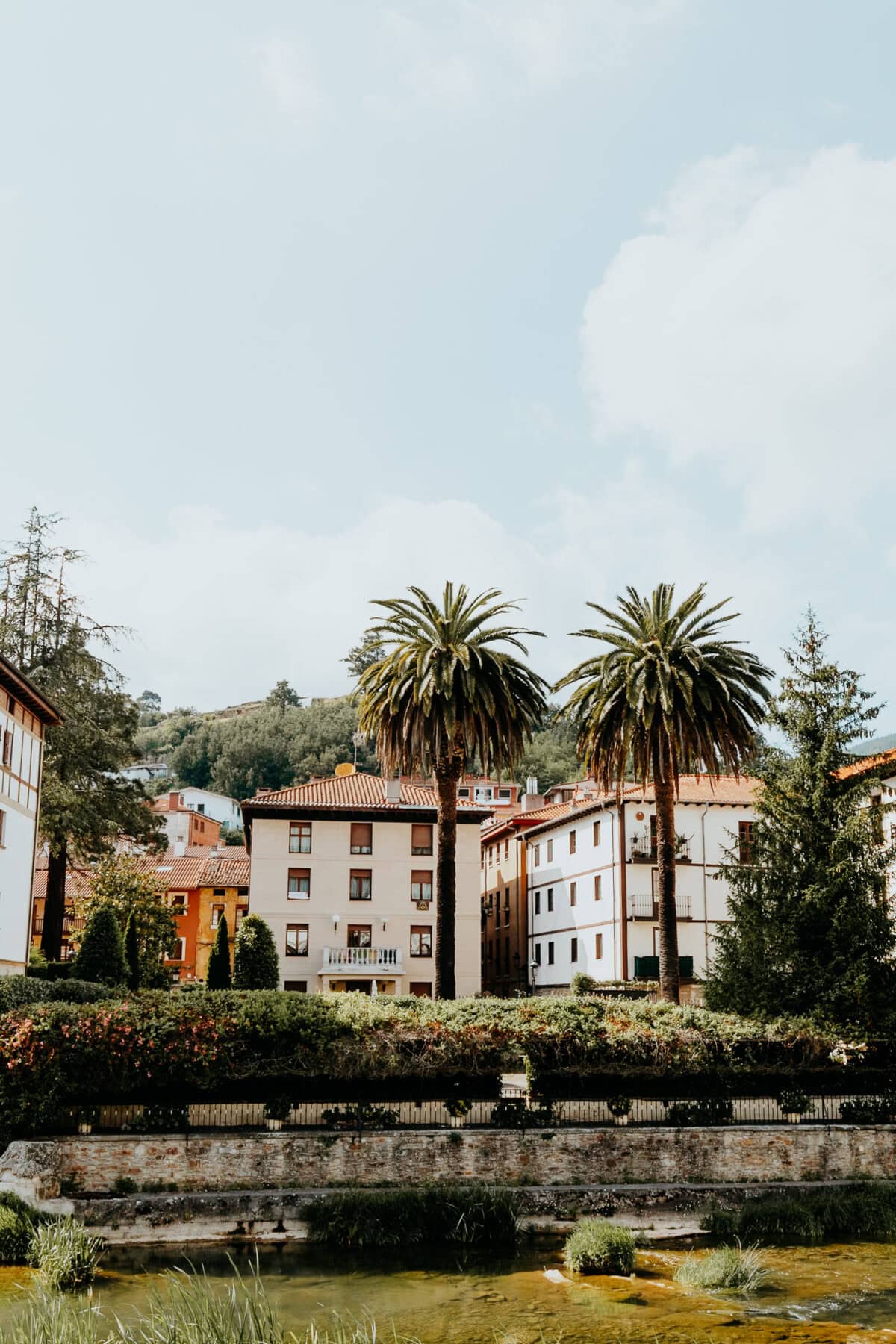
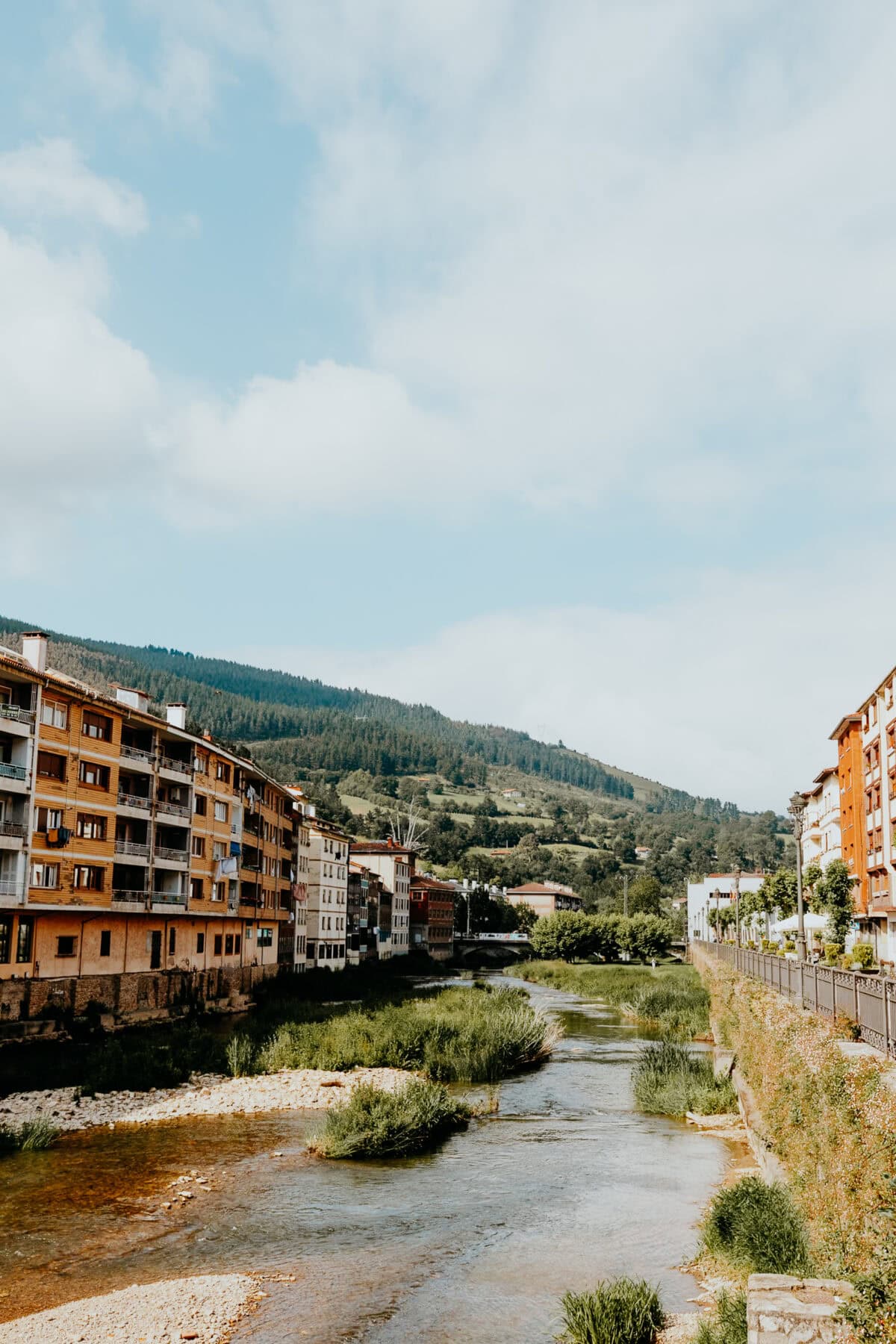
    It’s truly amazing: You drive just a few kilometers out of bustling Bilbao, and suddenly you find yourself in the middle of a lush, green mountainous landscape. In Balmaseda, a small town in the Encarterri region, you can not only learn more about the long and eventful history of the Basque Country, but also indulge in one of the Basques’ favorite pastimes: eating.

    The Comarca Enkarterri (in Spanish Las Encartaciones) is a region in the far west of the province of Bizkaia (Vizcaya). The comarca comprises several municipalities, including Balmaseda as the historical center, and is known for its traditional architecture, its important role in industrial history and an impressive landscape.
    The Role of Balmaseda in the Basque Country

    Its strategically favorable location made Balmaseda an important trading hub for centuries. Located in the valley of the river Kadagua, Balmaseda connected the coast with the Castilian hinterland. A less frequented but scenic side route of the Camino de Santiago, the Camino Olvidado, also passes through Balmaseda. As a result, not only traders, but also many travelers and pilgrims passed through the town, which shaped Balmaseda economically and culturally for a long time.

    The Old Town

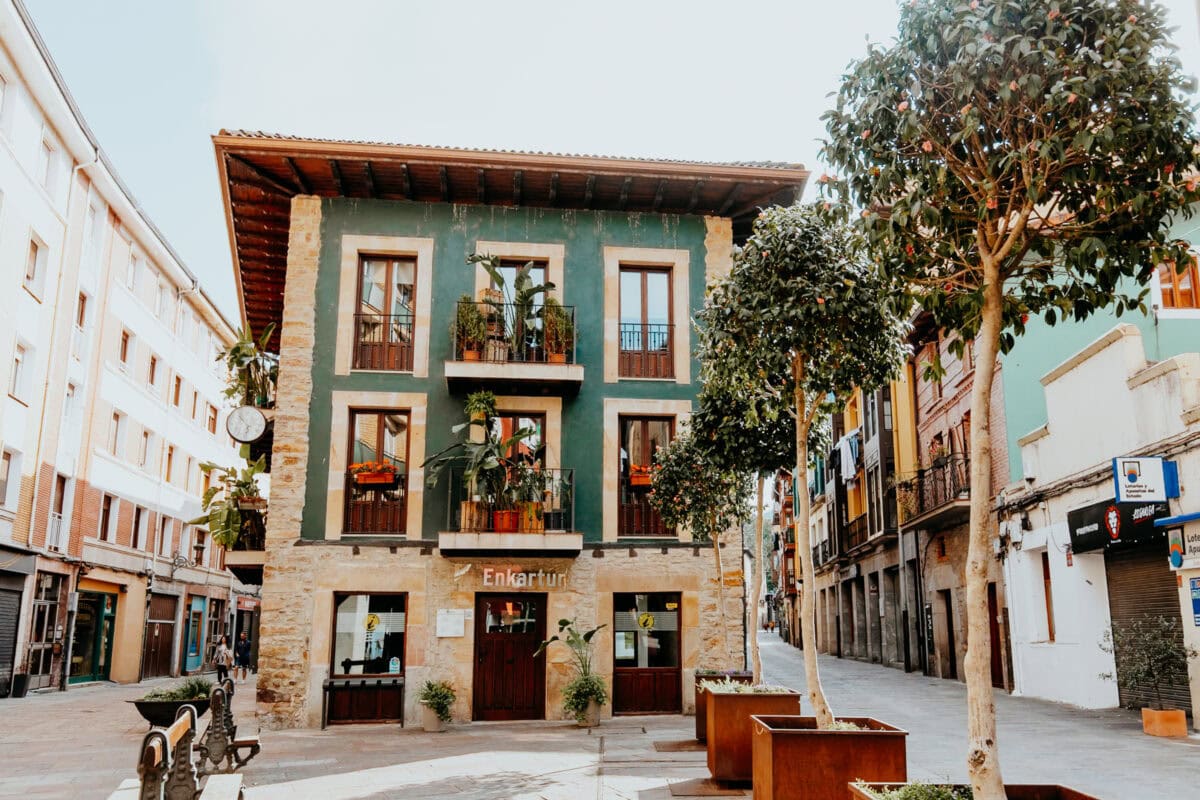
    Founded in 1199, Balmaseda is considered the oldest town in the province of Bizkaia. You will therefore find a large piece of Basque history here with many architectural highlights from different eras. The old town of Balmaseda is small, well laid out and not overcrowded: Perfect for a short exploration tour. The town itself is not particularly touristy, so you can stroll through the medieval alleyways and explore the surrounding area at your leisure. I’ll introduce you to a few of the most striking buildings.
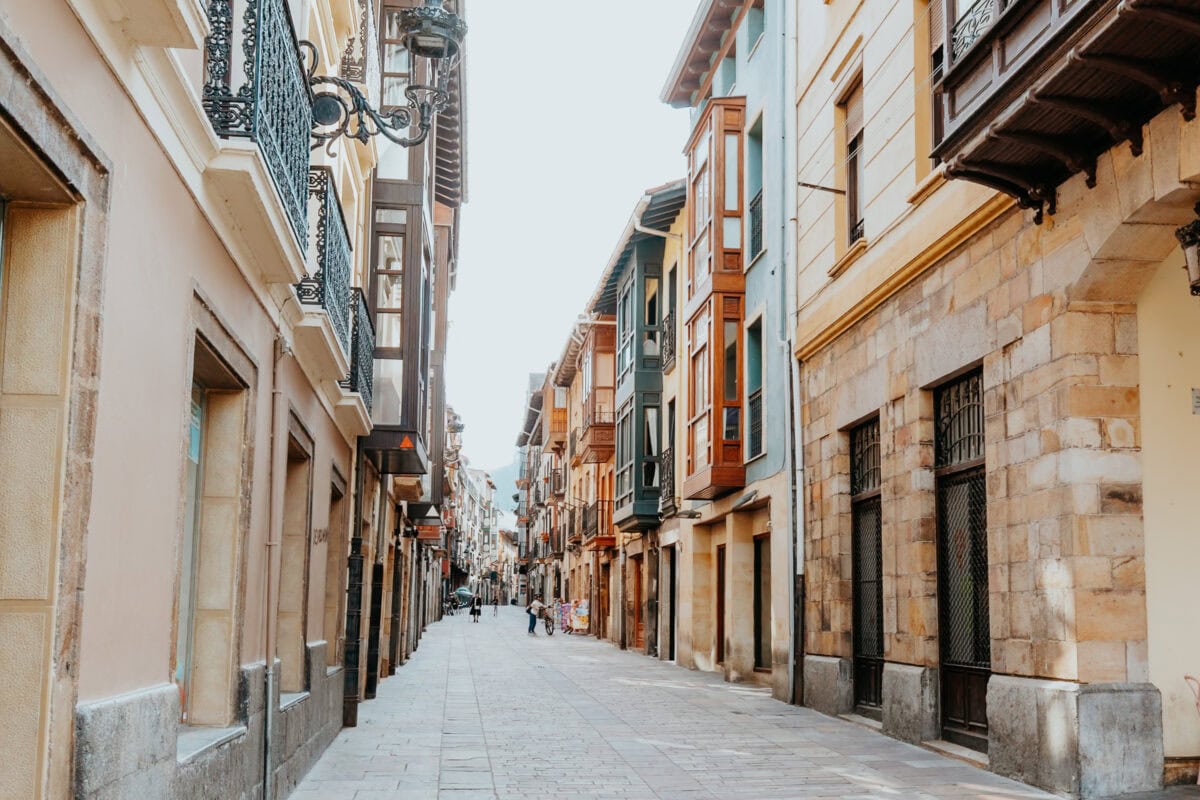
    Narrow alley in the old town of Balmaseda
    A green building in the historic district of Balmaseda.

    Most important sights in Balmaseda

    Puente de la Muza or Puente Viejo

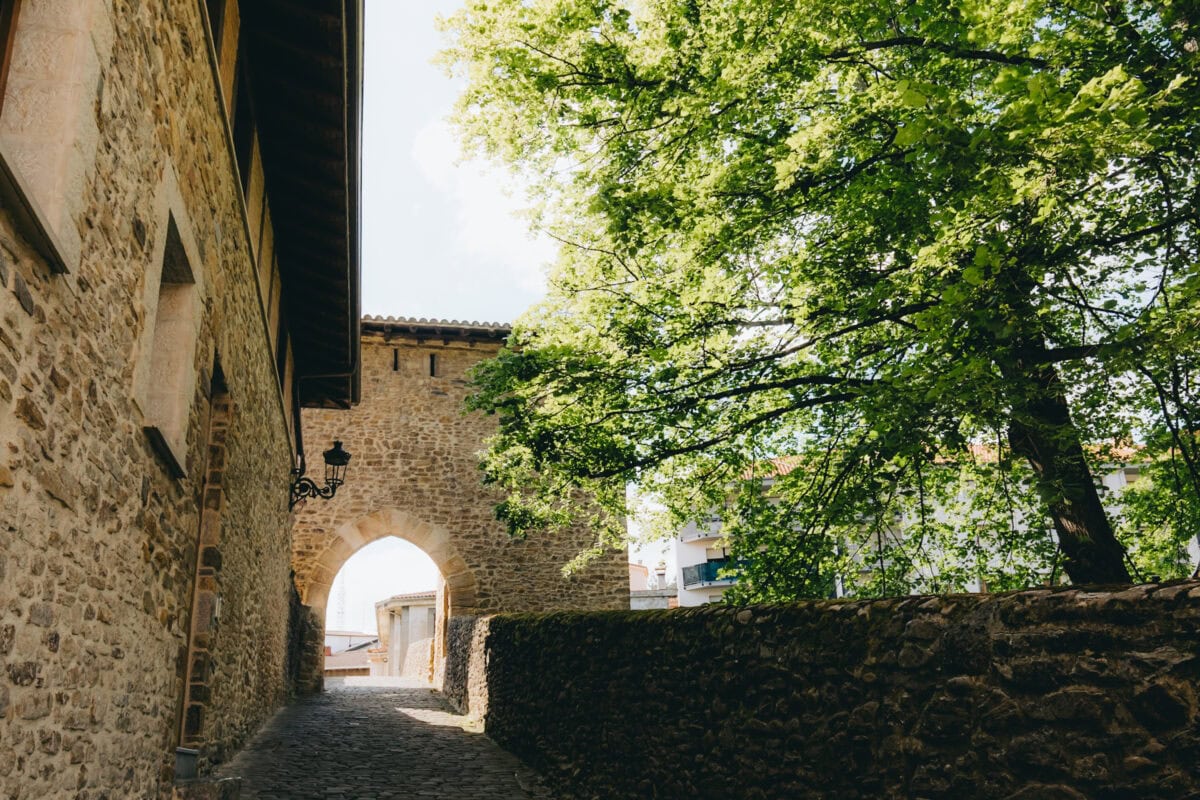
    The Puente de la Muza is particularly striking. It is guaranteed to catch your eye immediately, as the medieval bridge provides the romantic panorama of Balmaseda. It is often simply called the Puente Viejo, or old bridge. As Balmaseda was located on an important trade route in the Middle Ages, bridges such as the Puente Viejo played an important role in the daily movement of goods as a customs post. The small bridge tower still bears witness to this time.
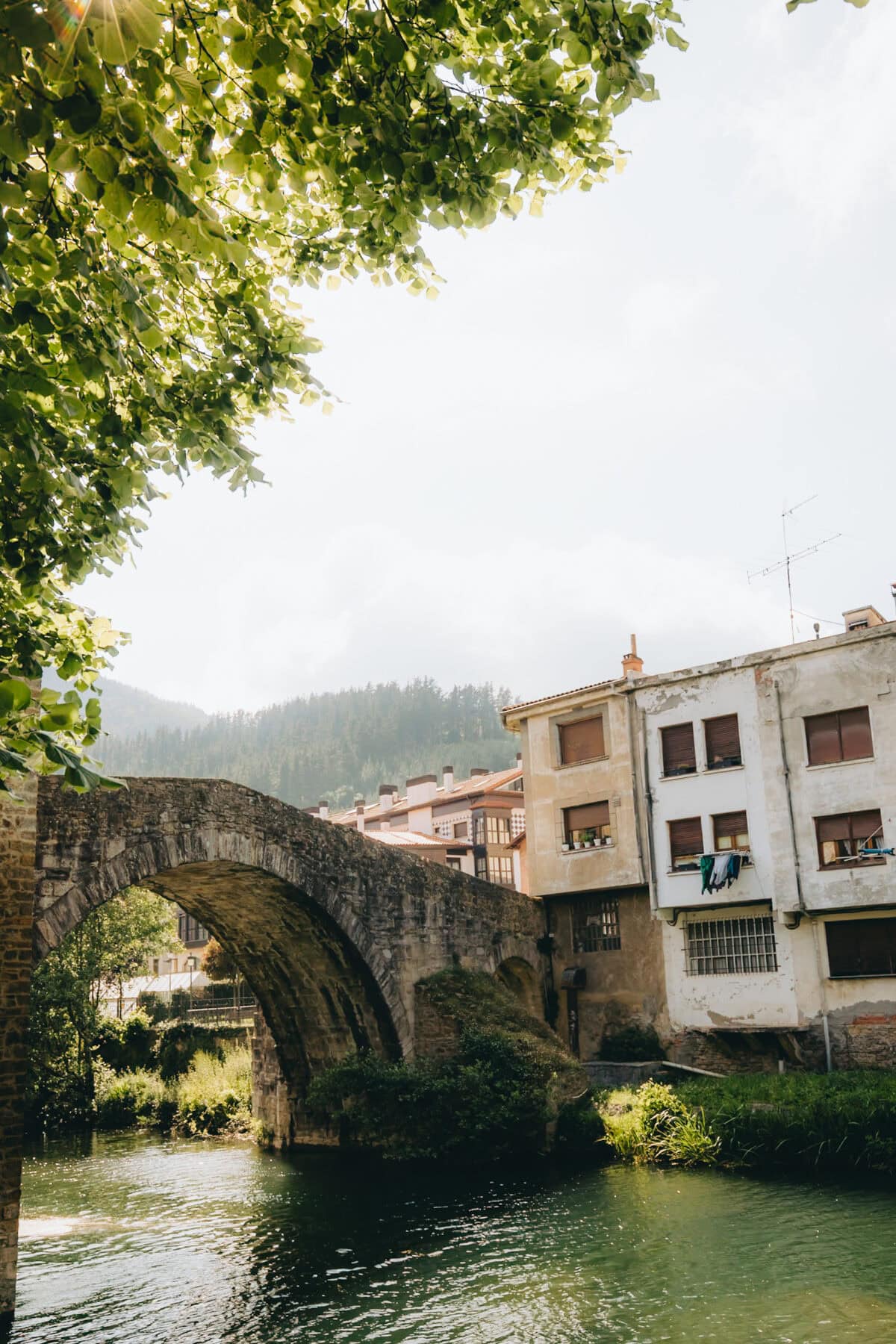
    Puente de la Muza in Balmaseda, a medieval stone bridge.
    Stone wall at the Puente de la Muza in Balmaseda.

    Church of San Severino

    The church of the same name is located in the middle of the old town on Plaza San Severino. Built in Gothic style in the 15th century, the church of San Severino is dedicated to the patron saint of the city.

    Tip: Every year on 23 October, a large street festival is held in honor of the patron saint San Severino, which you should not miss if you are in the area. Friends and families meet on the streets on Día de las Putxeras to cook a putxera together.
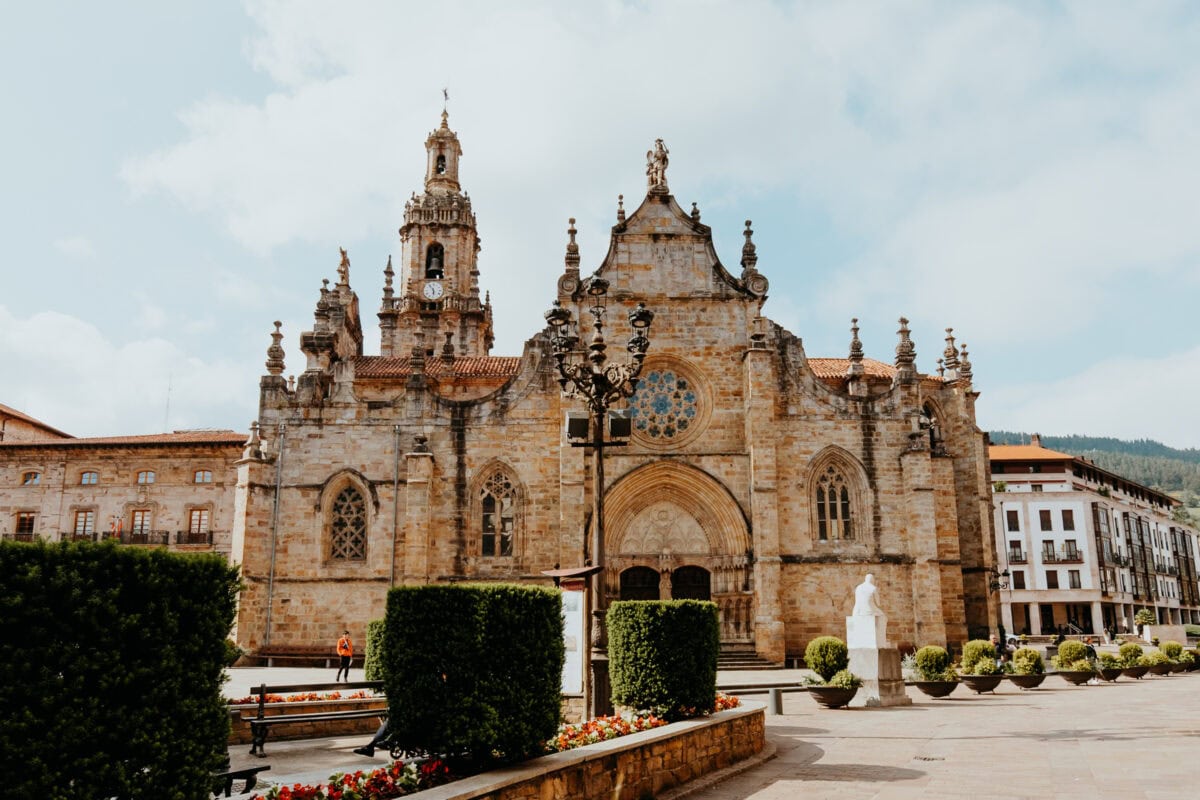
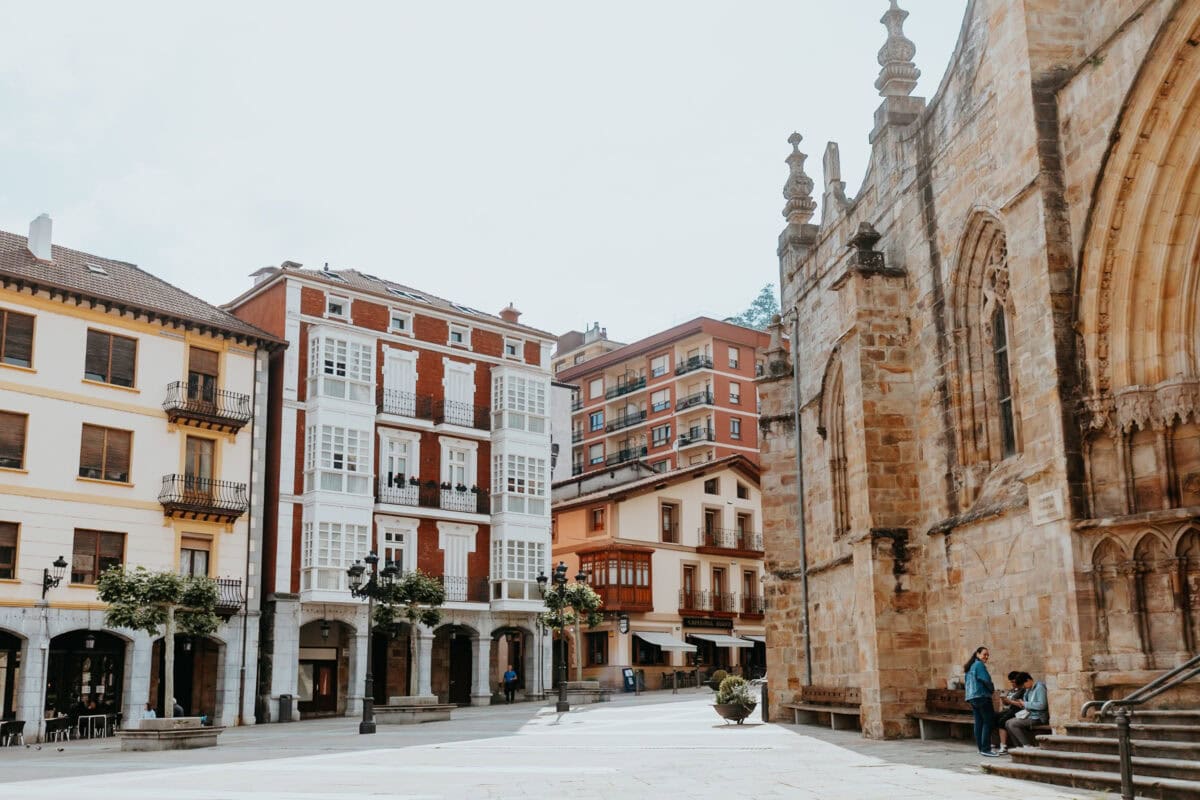
    Church of San Severino in Balmaseda, Spain
    Historic buildings on Plaza San Severino in Balmaseda, Spain

    Putxera is a bean dish that is typically prepared in an aluminum pot – an old railroad tradition. In the past, train drivers, brakemen and other railroad employees used to cook it over charcoal on long journeys – today, putxera is a local specialty. By the way, part of the festivities includes the putxera competition, where a jury selects the best putxera in front of the whole town!
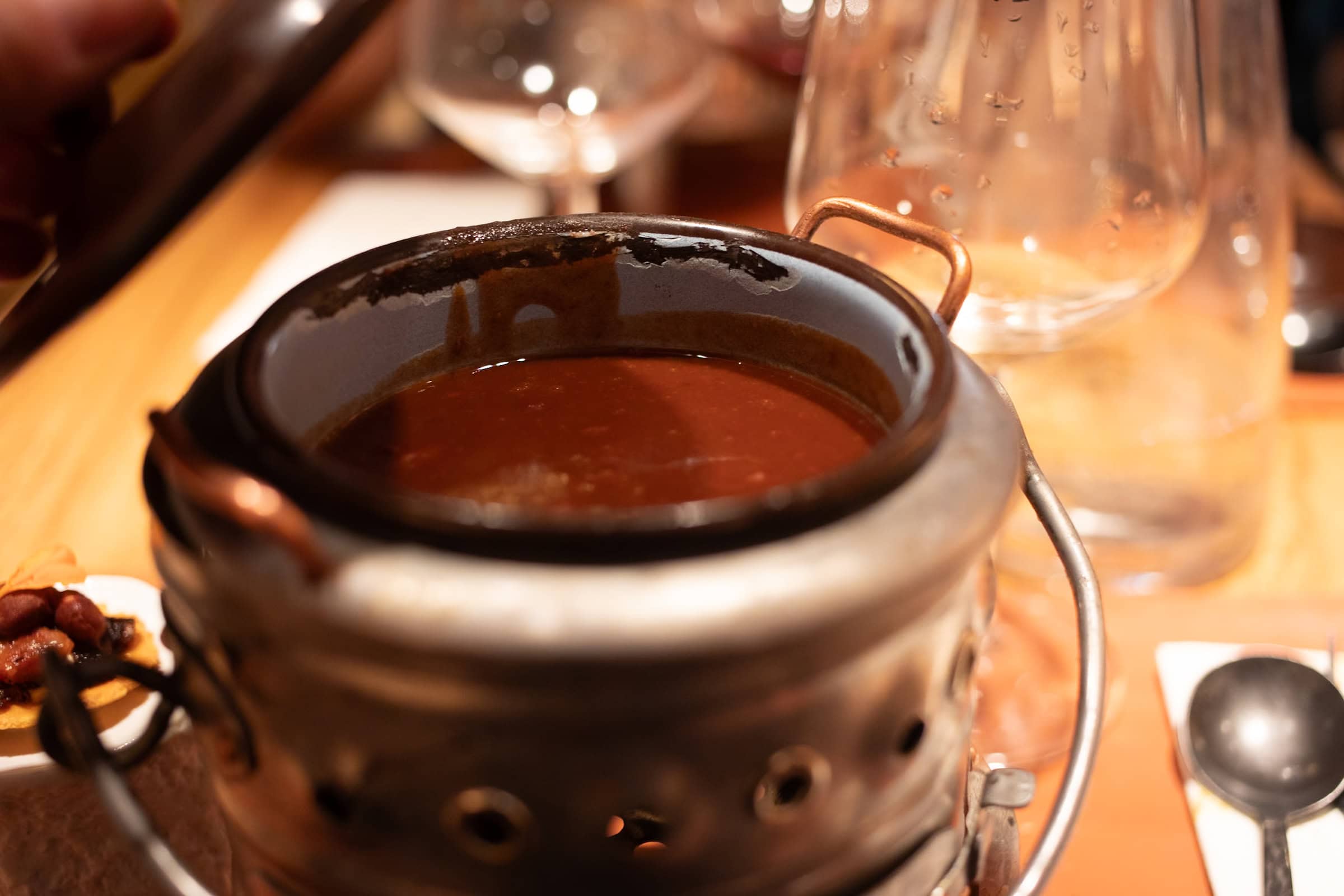
    A typical putxera in an iron pot on a table at Resturante Teike in Balmaseda, Spain.

    Church of San Juan

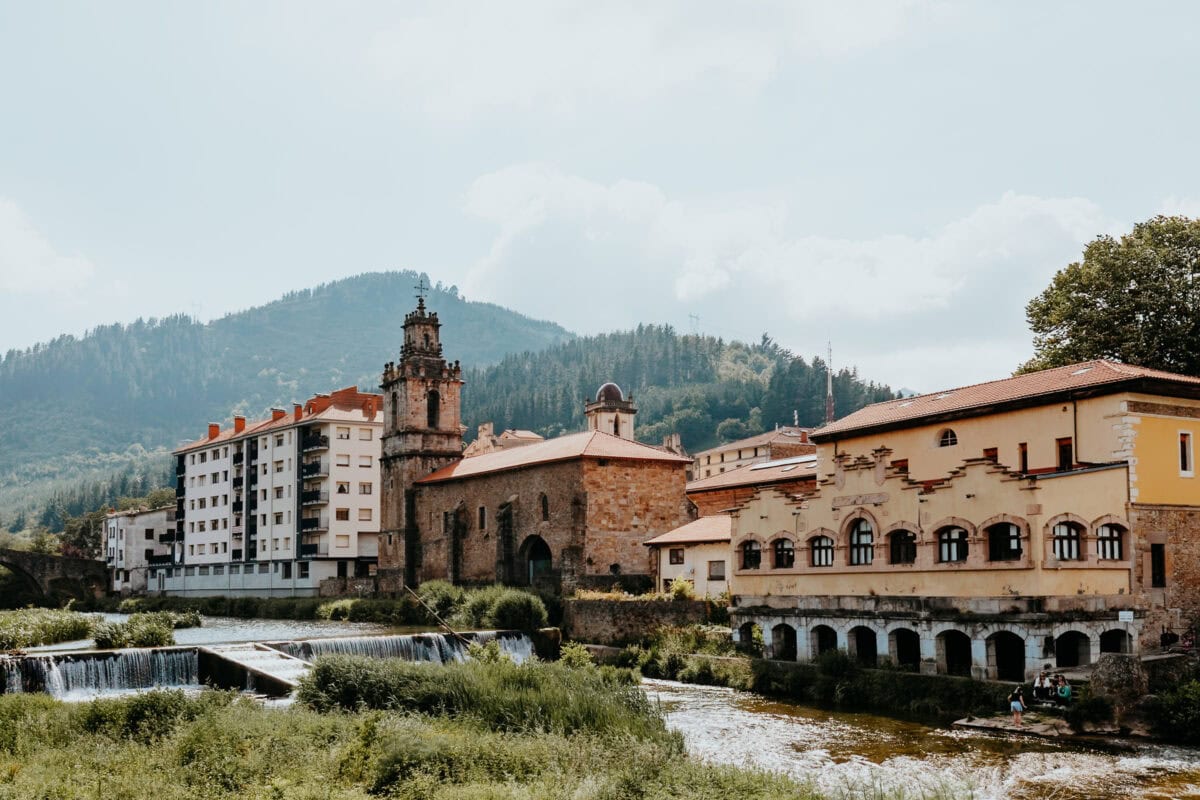
    The church of San Juan was also built at the same time in the 15th century in the Gothic style. It is located directly on the River Kadagua near the Puente de la Muza and houses the city museum.
    Opening hours of the city museum

    Historic buildings set against wooded hills along the Kadagua River in Balmaseda.

    Museum La Encartada

    The old wool factory La Encartada is one of the absolute highlights of Balmaseda. It is located just outside the old town, but is just under two kilometers away and can also be reached on foot. A great way to enjoy the countryside, as the factory is surrounded by greenery.
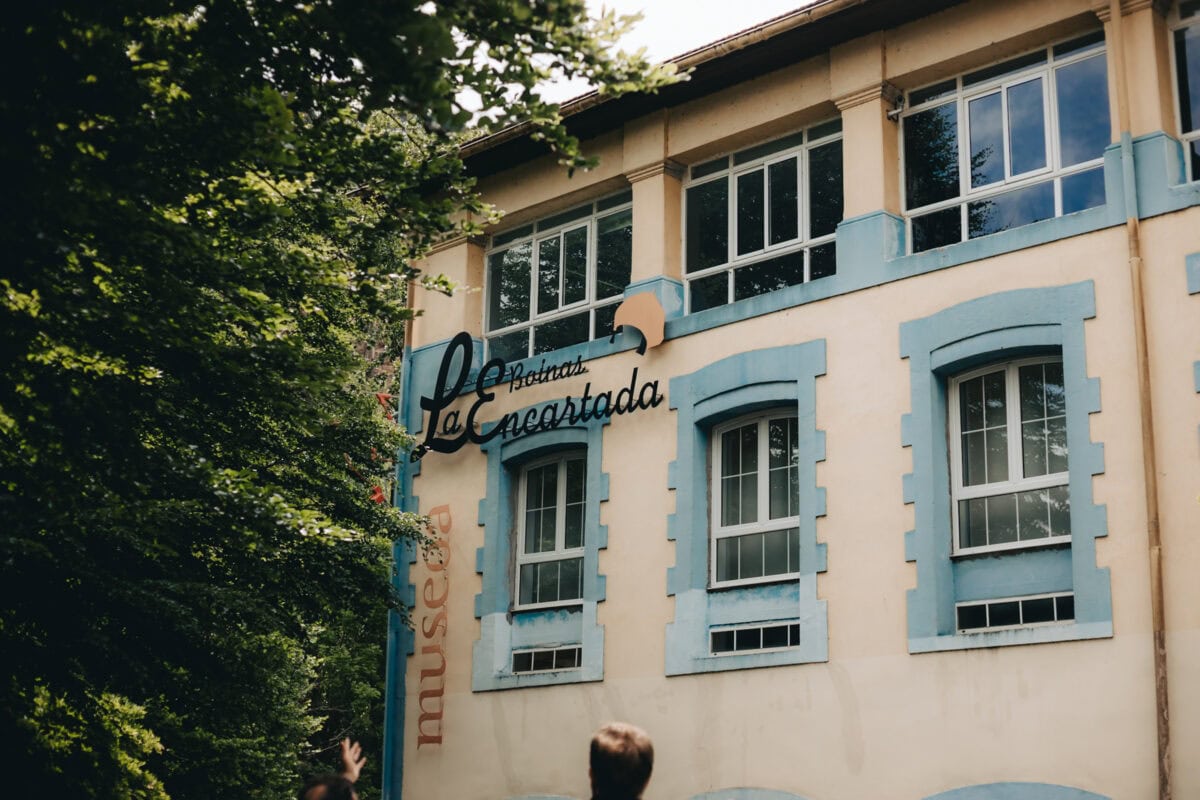
    La Encartada Museum: A historic building with a blue facade and windows.

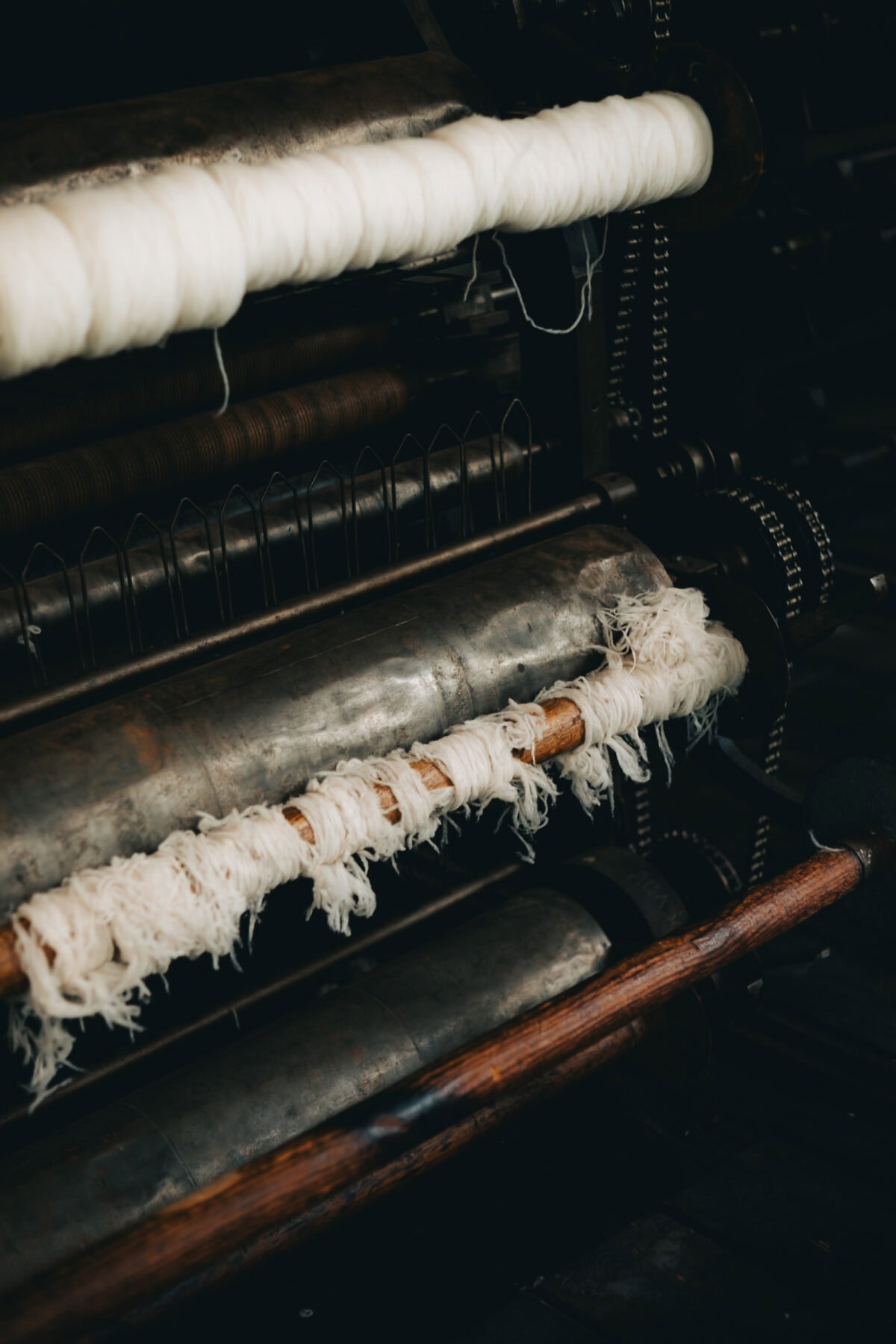
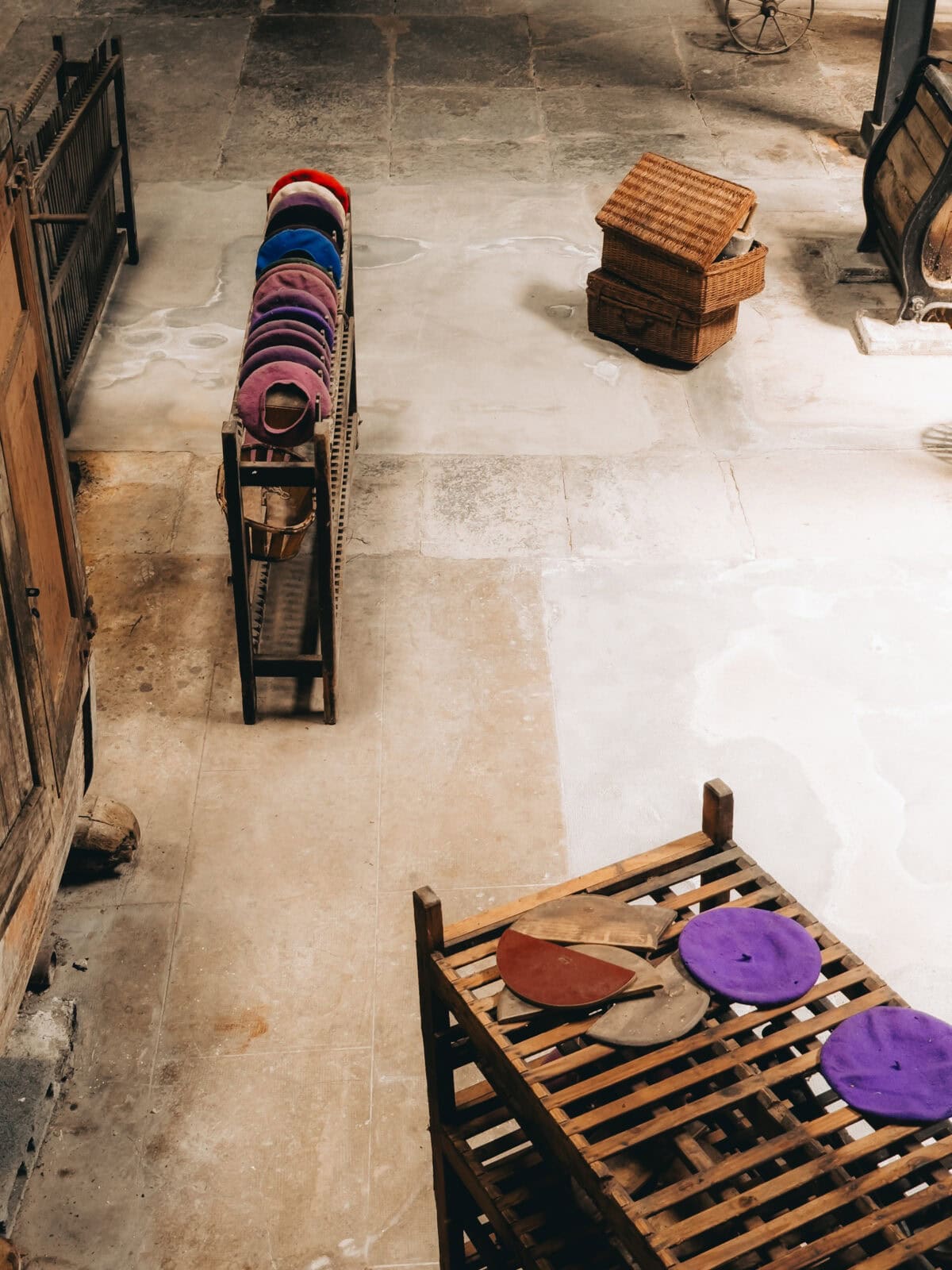
    For exactly one hundred years, from 1892 to 1992, woolen goods, but above all the famous berets, the boinas, were produced here. After its closure, time simply stood still in the old halls and the factory was finally reopened as a museum in 2007. It is remarkable how well the furnishings have been preserved.

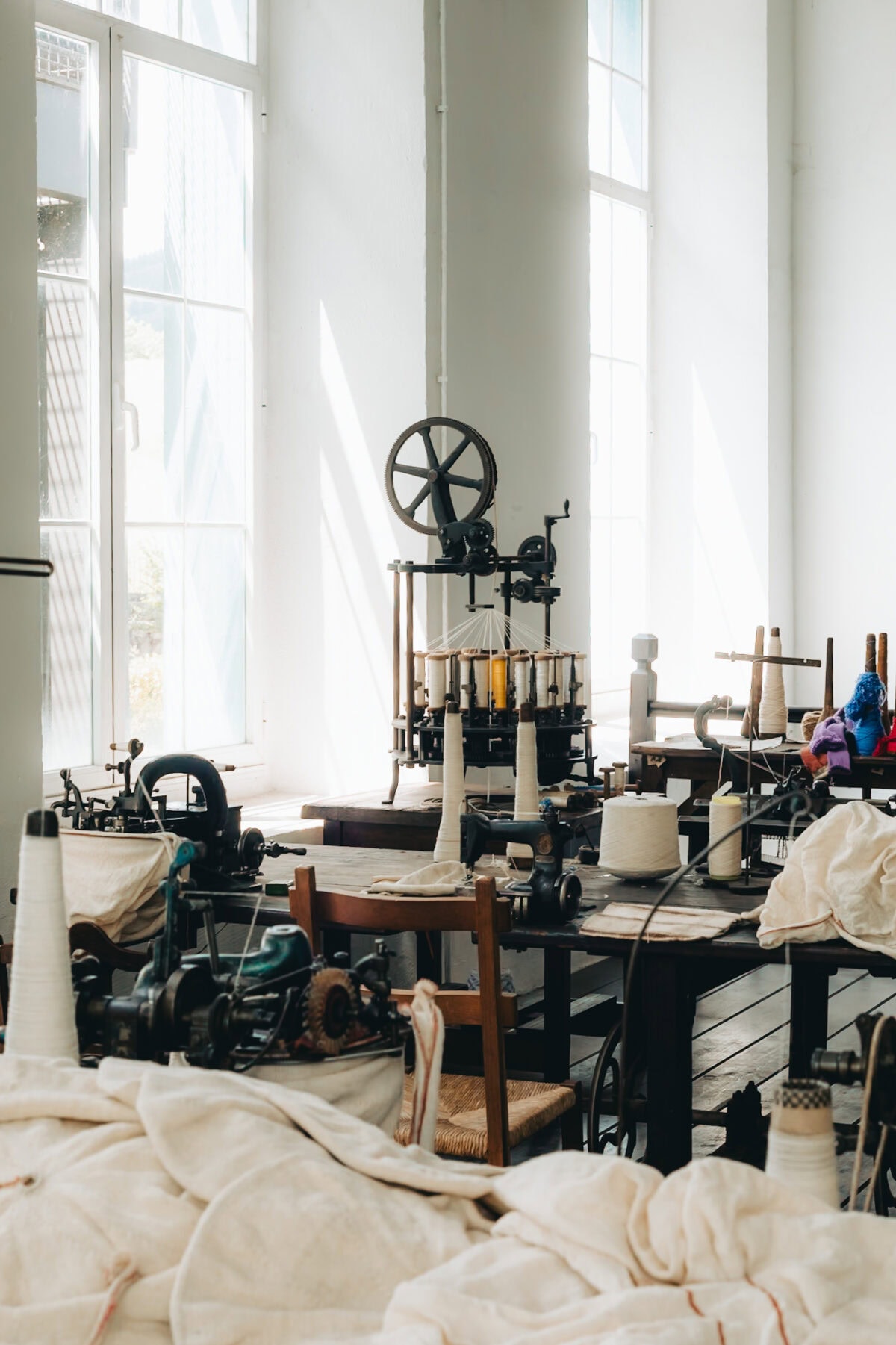
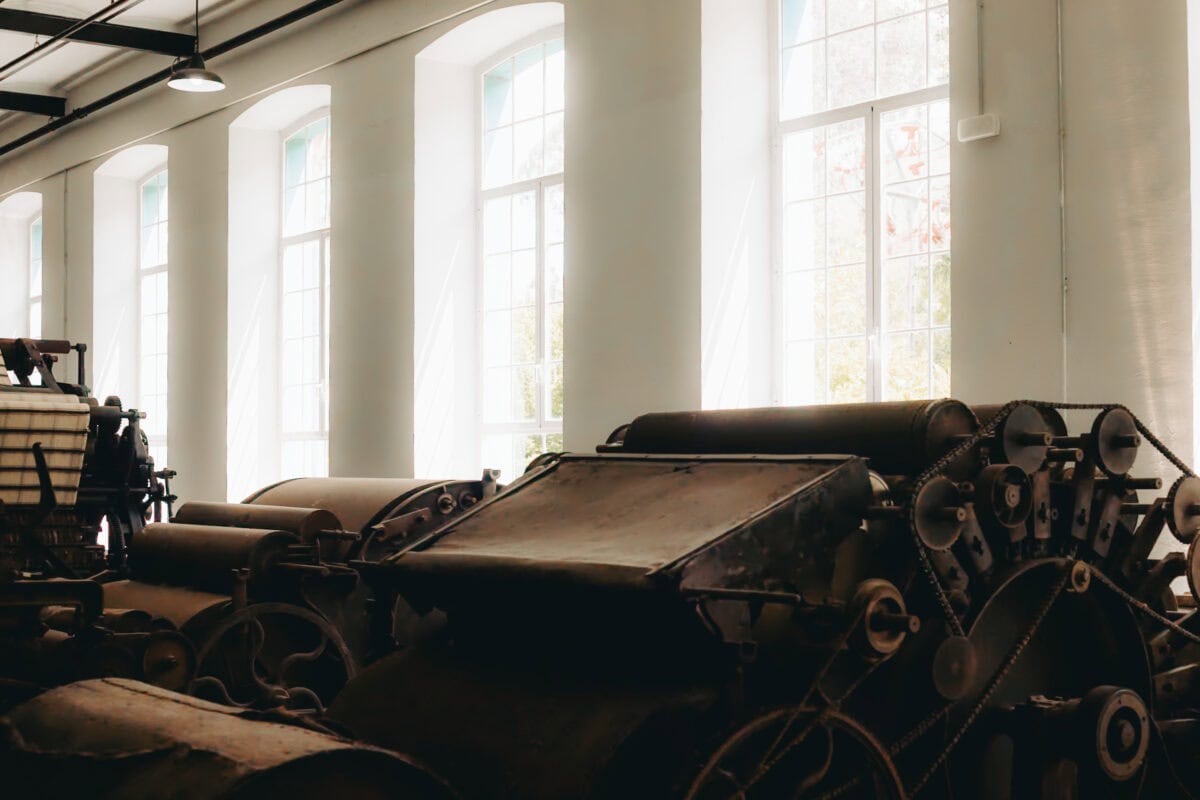
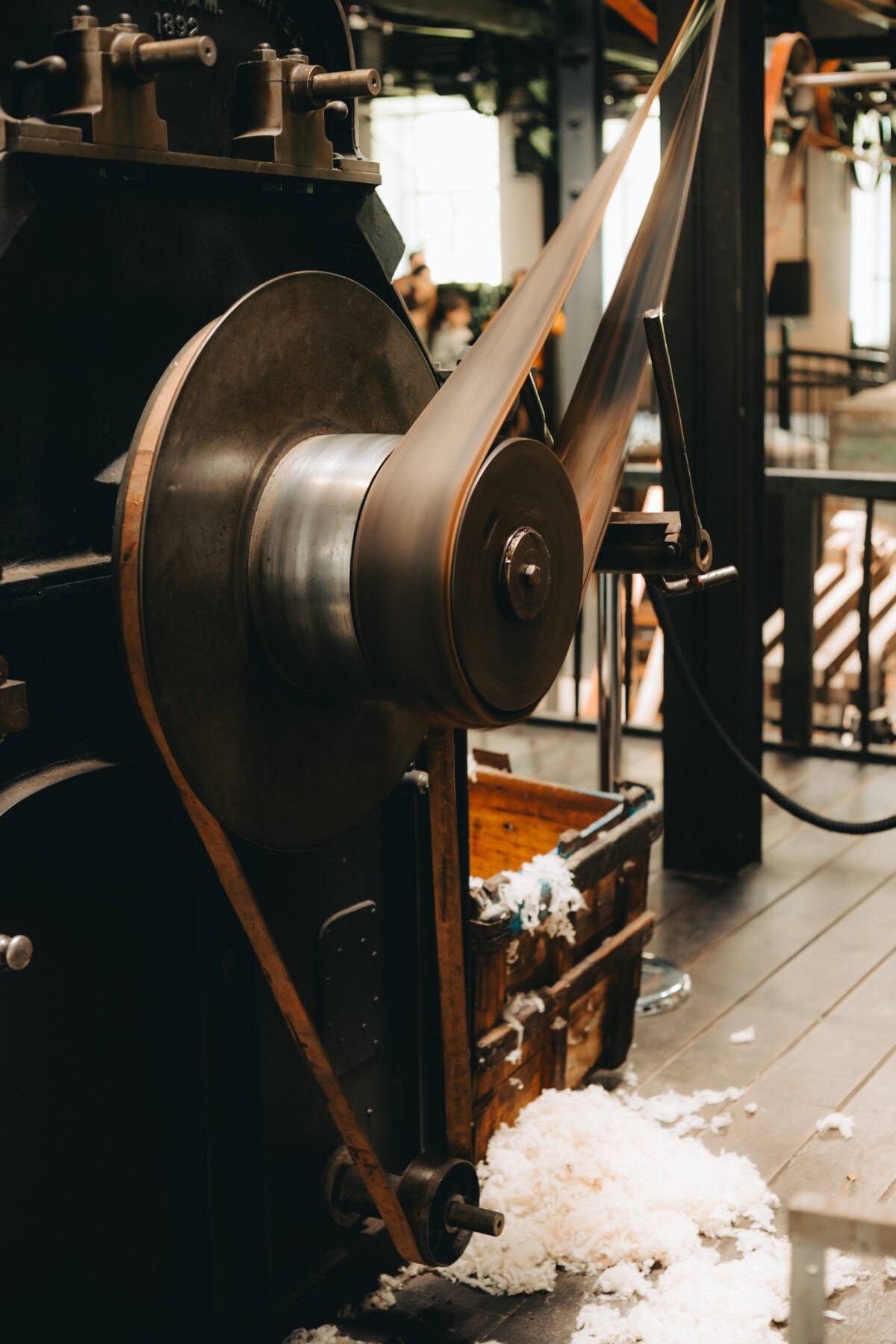
    Many of the machines even date back to the late 19th and early 20th century. You can also follow the entire production process from the raw material to the finished product in one place.
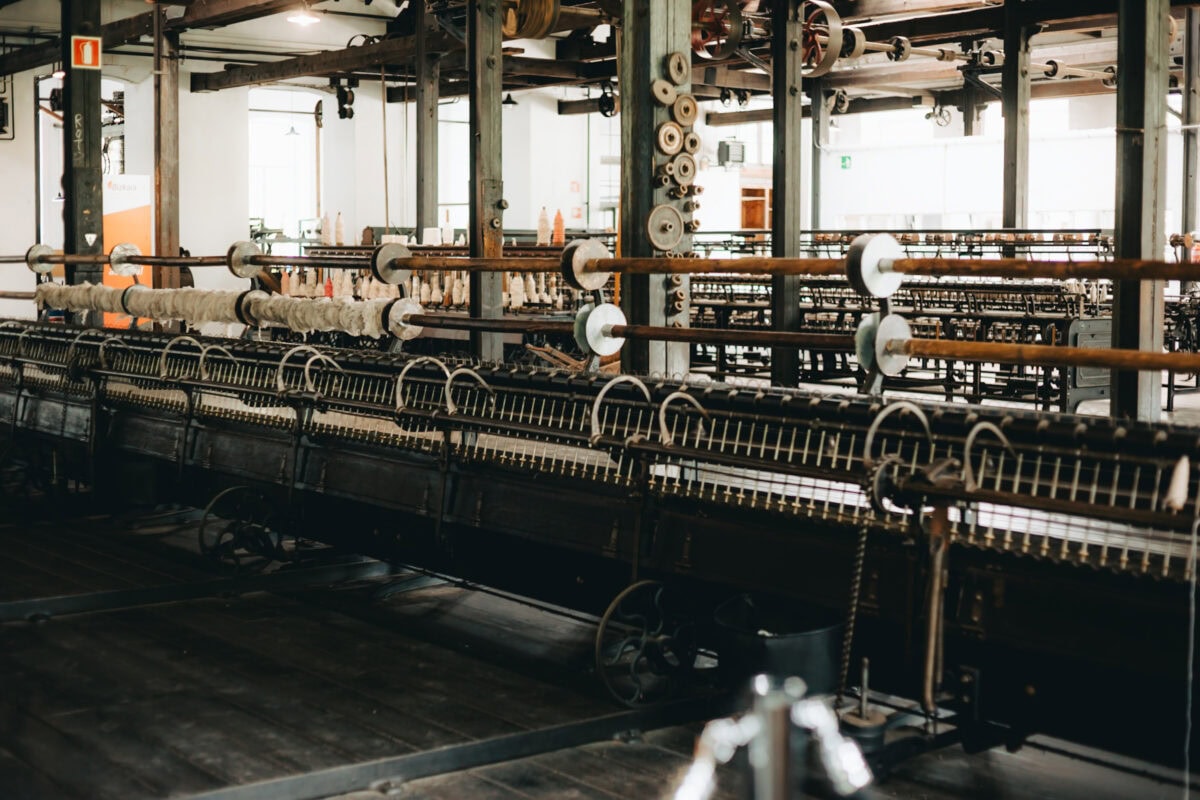
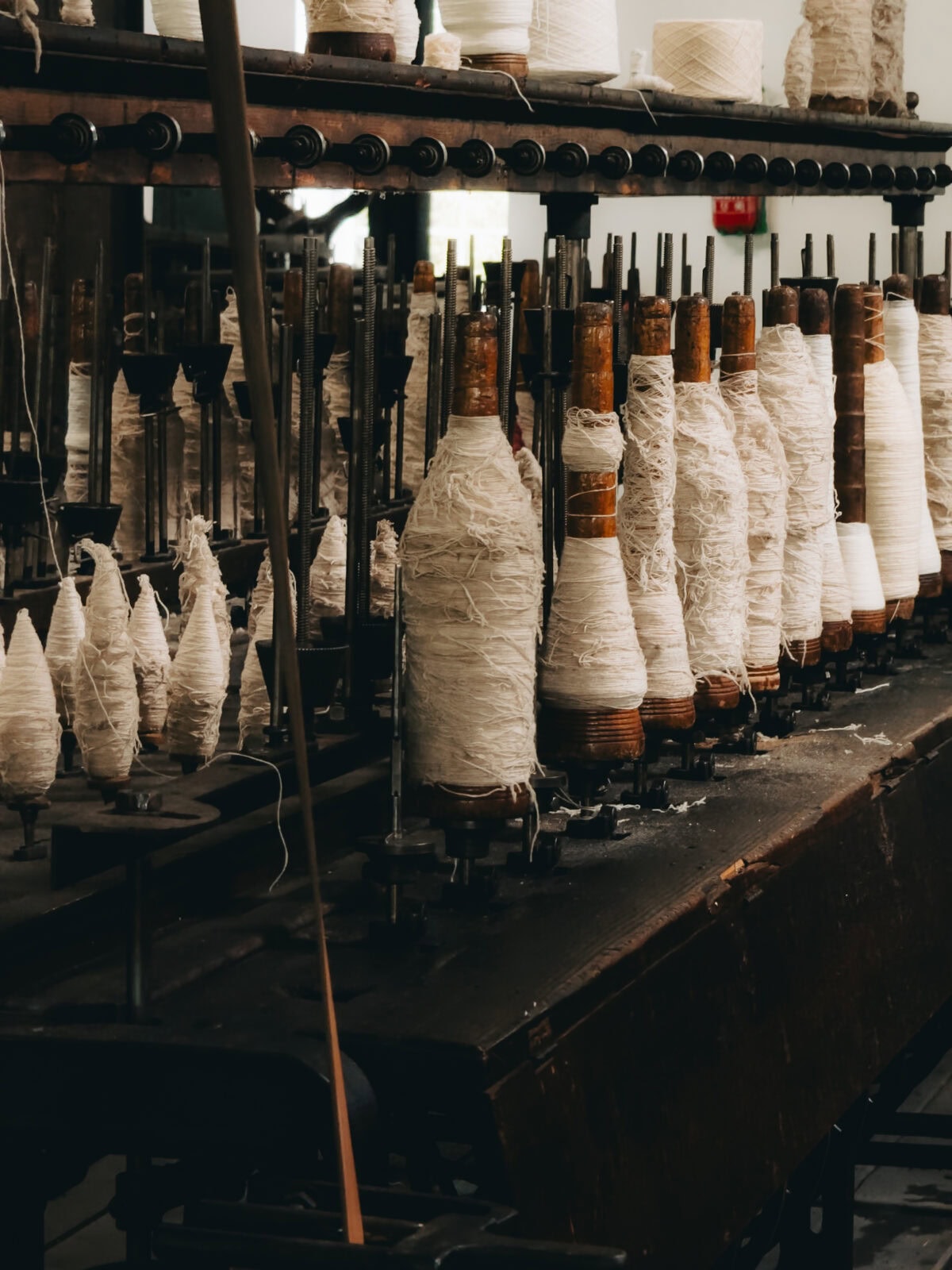
    Historic spinning mill at the La Encartada Museum with machines inside
    Historic textile machines at the La Encartada Museum in Balmaseda, Spain.
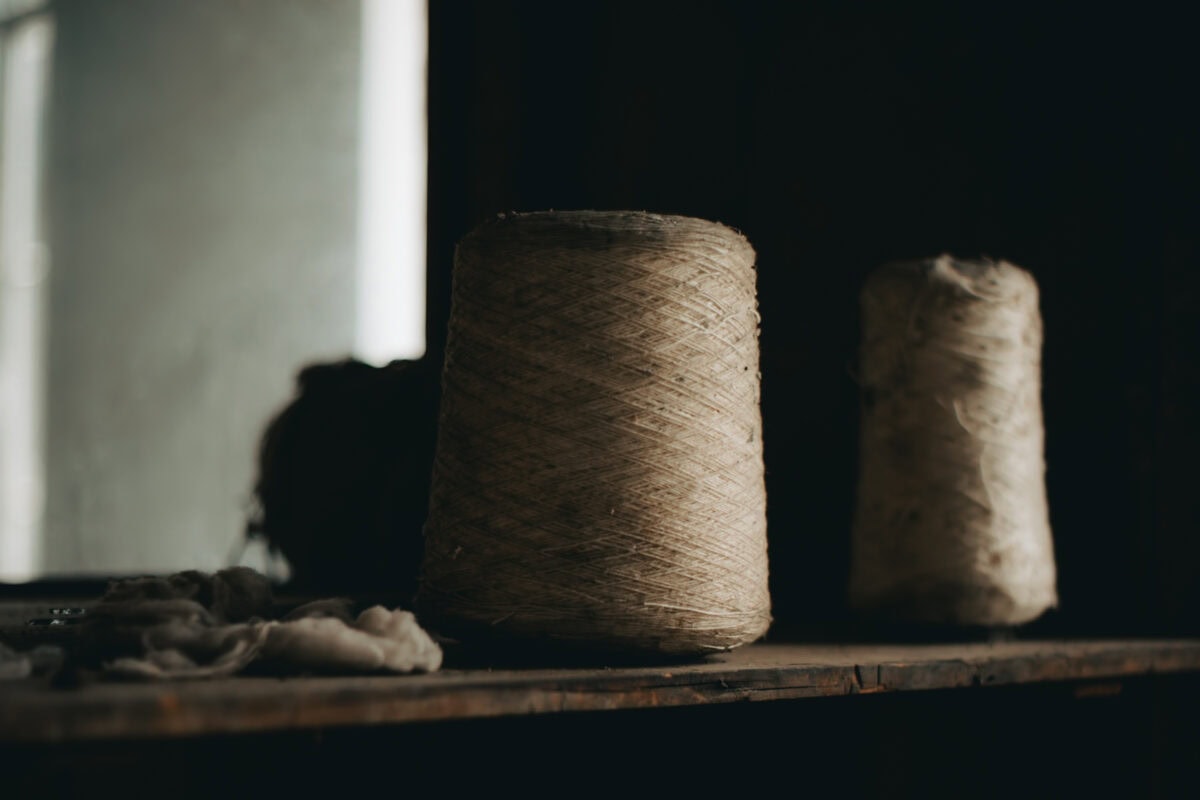
    Two large spools of thread in a dark room

    You can also take a look at life at the time, as the workers originally lived on site. And in general, you will find lots of information and documents from a time when industry in the Basque Country had a major influence on the economy of the time.
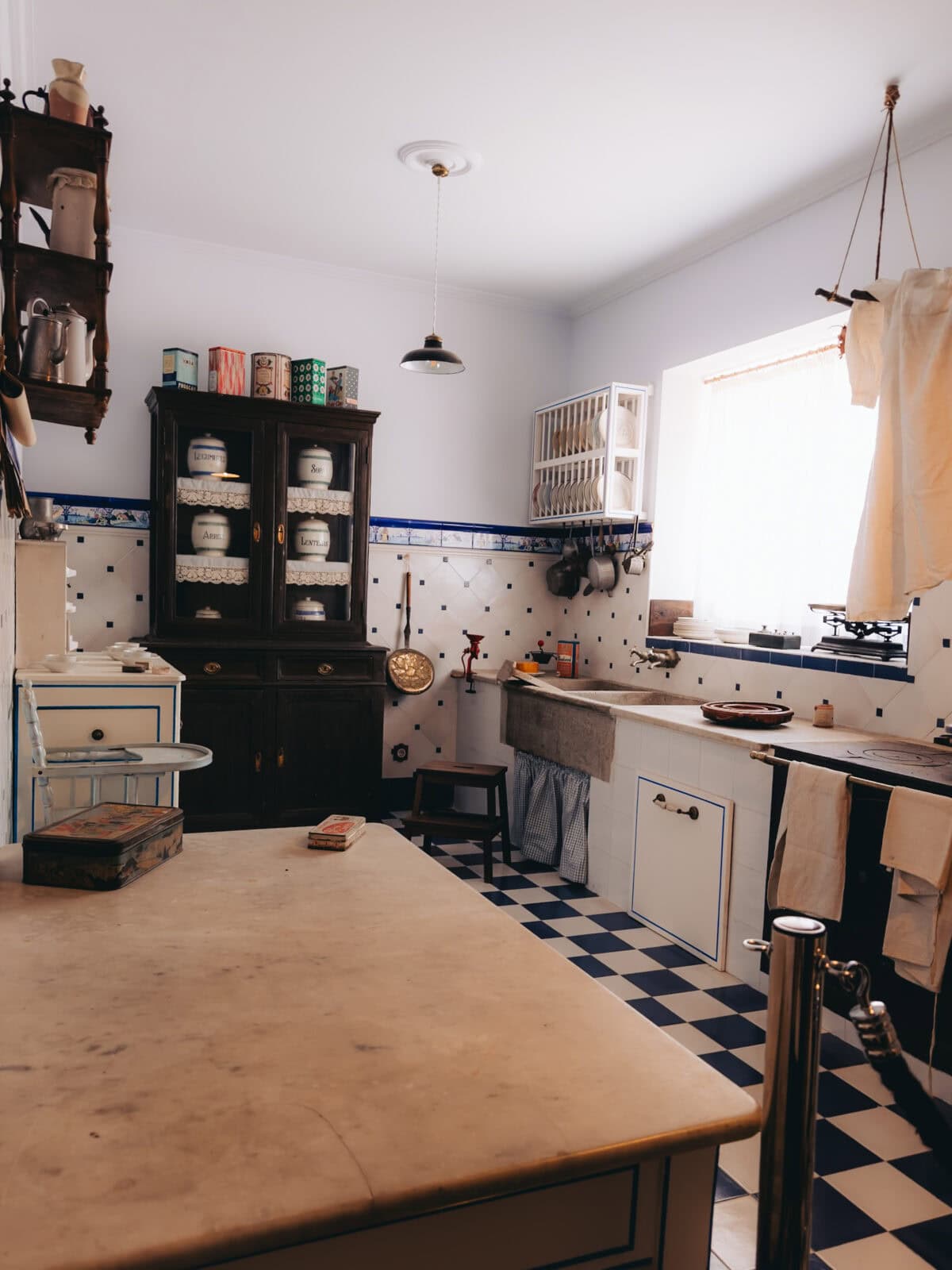
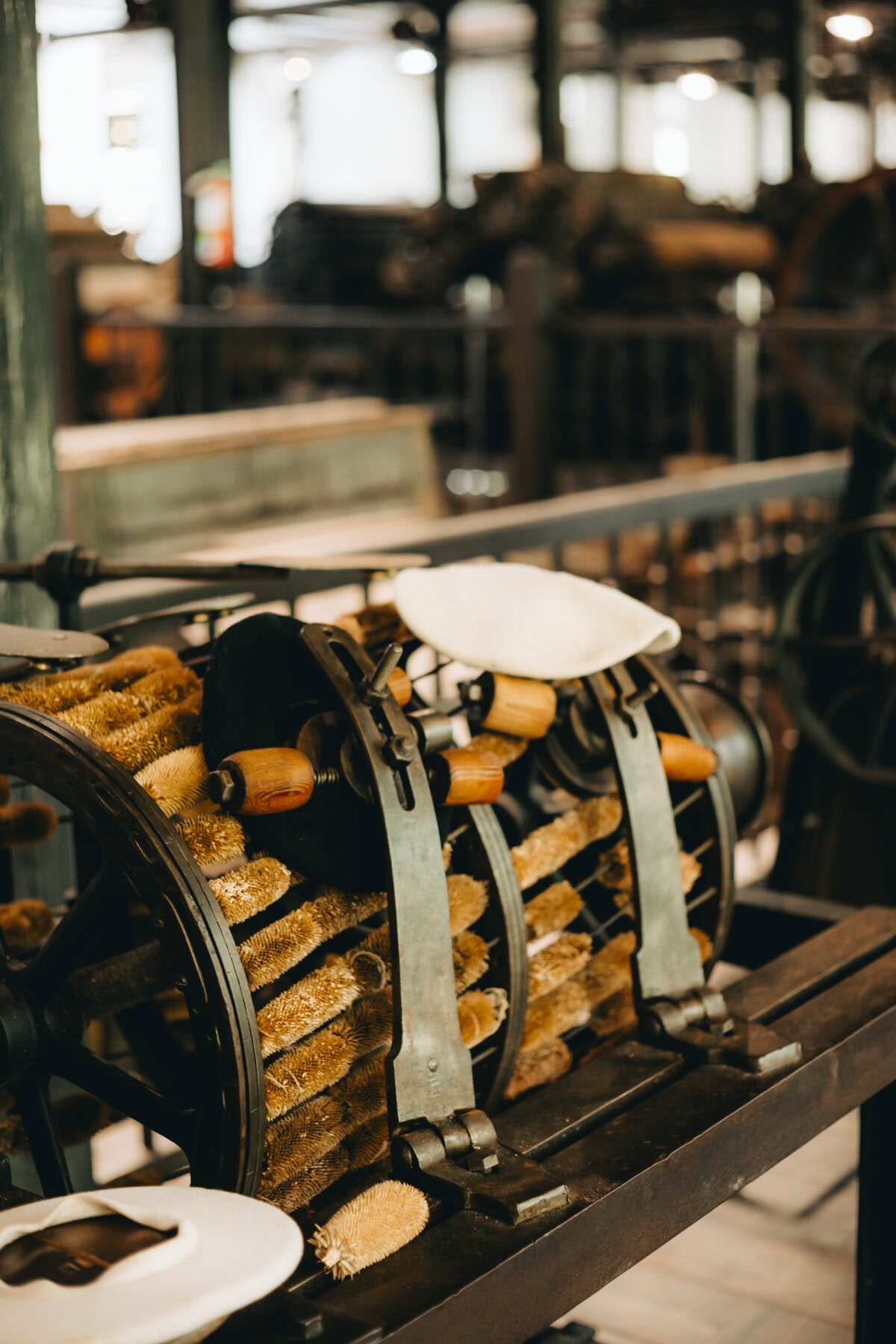
    Old machines in a sunny room at the La Encartada Museum
in Balmaseda

    I found La Encartada really impressive. The exhibition with the production facilities and the decorated details in the disused factory is attractively designed and you can immediately imagine how hard people used to work here. It is also unbelievable that these machines were still in use until they were closed in 1992 – they were so robustly made.
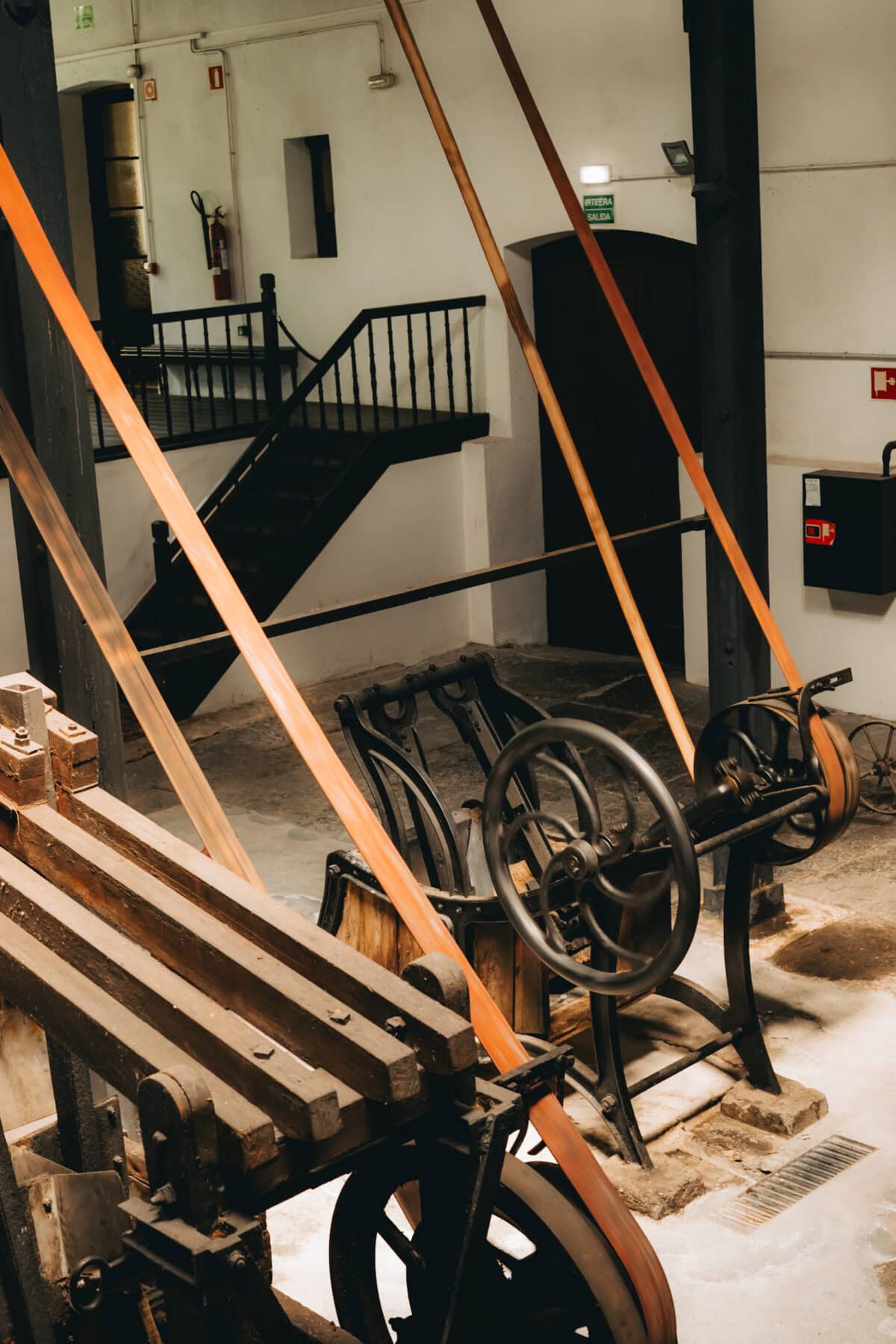

    It’s just a shame that there is no real souvenir store – after so much textile knowledge and Basque industrial history, I would have loved to browse through a large selection of berets and buy myself a suitable souvenir.

    But well – La Encartada is no longer in production anyway. As far as I could see, some models are sold at the checkout; but you can also still find small, traditional stores in the old town of Bilbao, for example, where the genuine berets made of merino wool from the last remaining manufacturer in Spain, Elósegui from Tolosa, are sold.
    Looking for tips for Bilbao?
    You can find my complete guide here

    Where to Eat in Balmaseda

    If you’re not yet convinced that it’s worth making a detour here – you won’t regret it, if only because of the following location. In typical Basque fashion, great importance is also attached to good cuisine outside the larger cities.
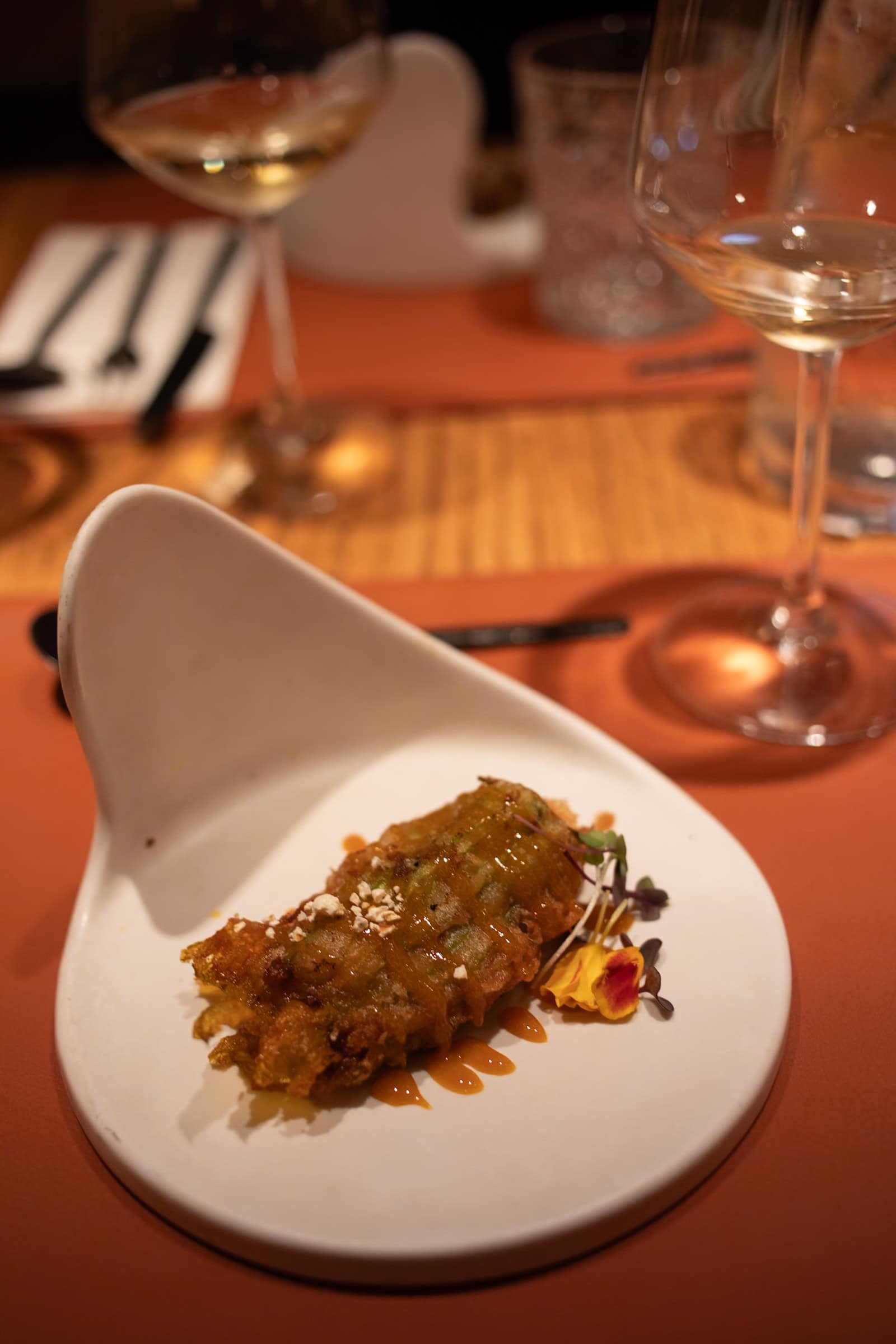
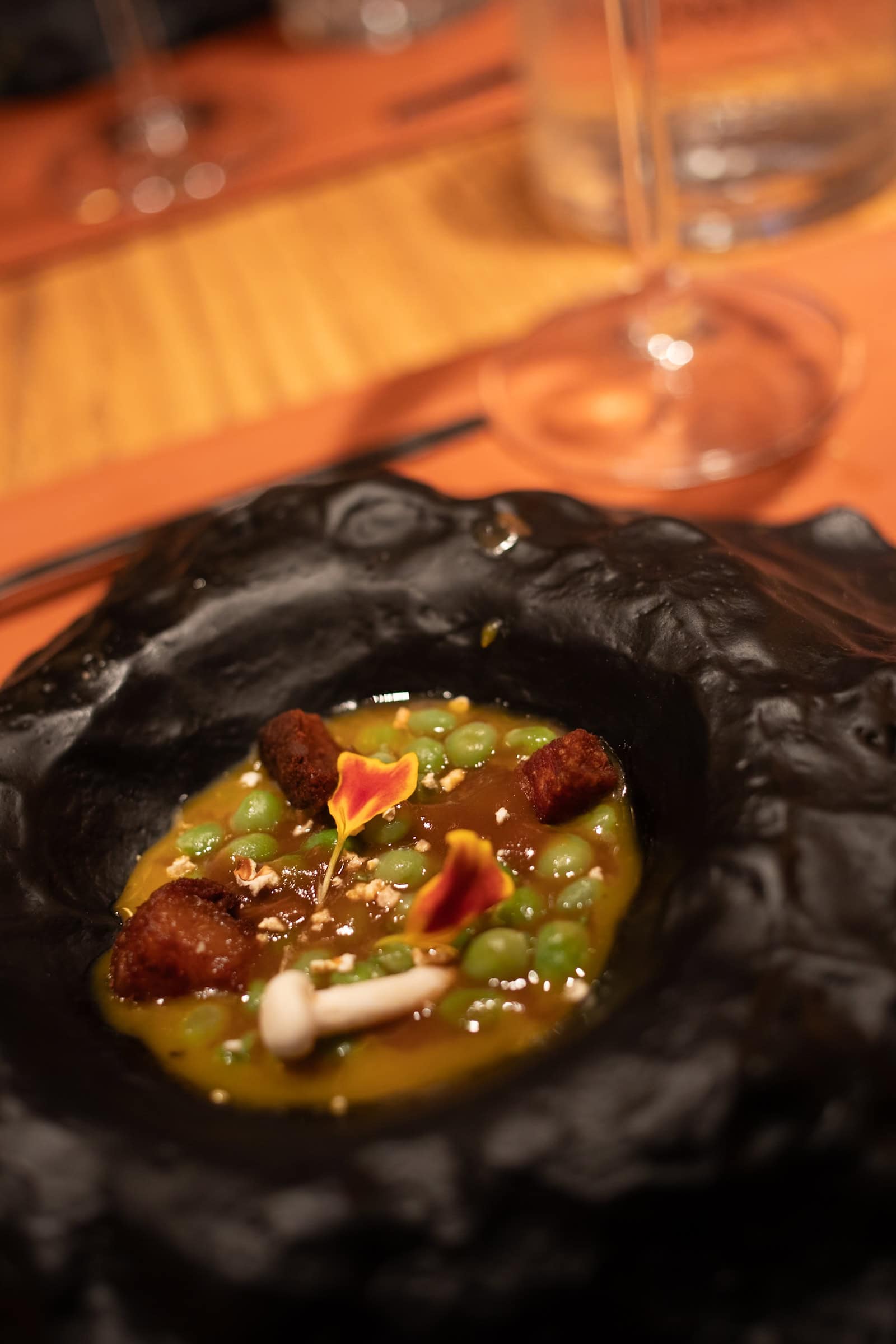
    Teike is a pretty fine-dining restaurant right in the heart of the city and serves both traditional dishes such as the hearty putxera stew, which is served in a small aluminum pot, as well as modern creations. It is best to book in advance and try all the delicacies on the tasting menu.
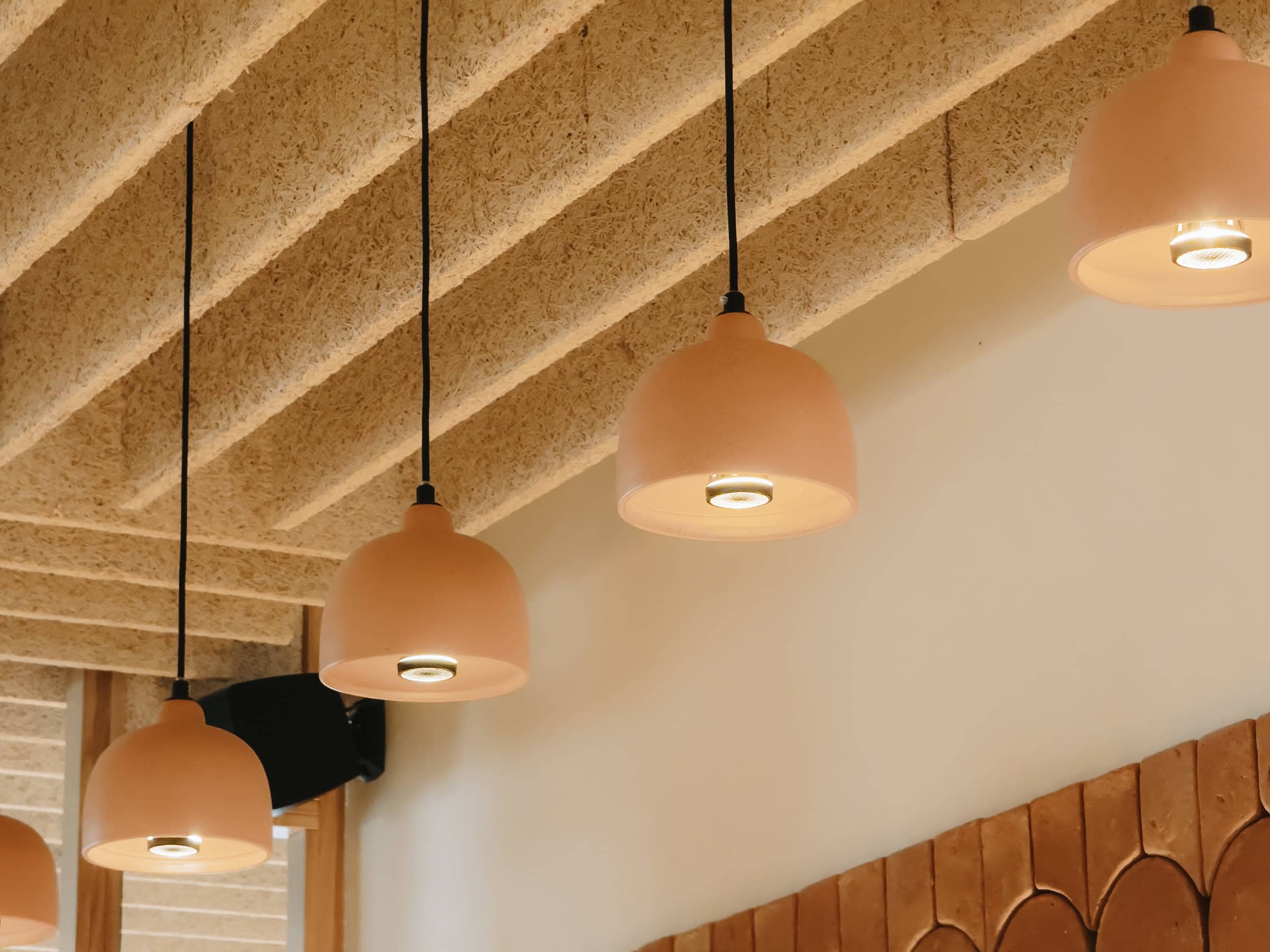
    Lighting at the Teike in Balmaseda.

    Torre Lozaiga

    If you are traveling to Balmaseda by car, the Torre Lozaiga with its adjoining museum is a nice stopover. Situated in the middle of the lush green mountain landscape of the Basque Country, you will find a medieval fortified tower typical of the region. These fortified towers once served as residences and defenses for noble families.
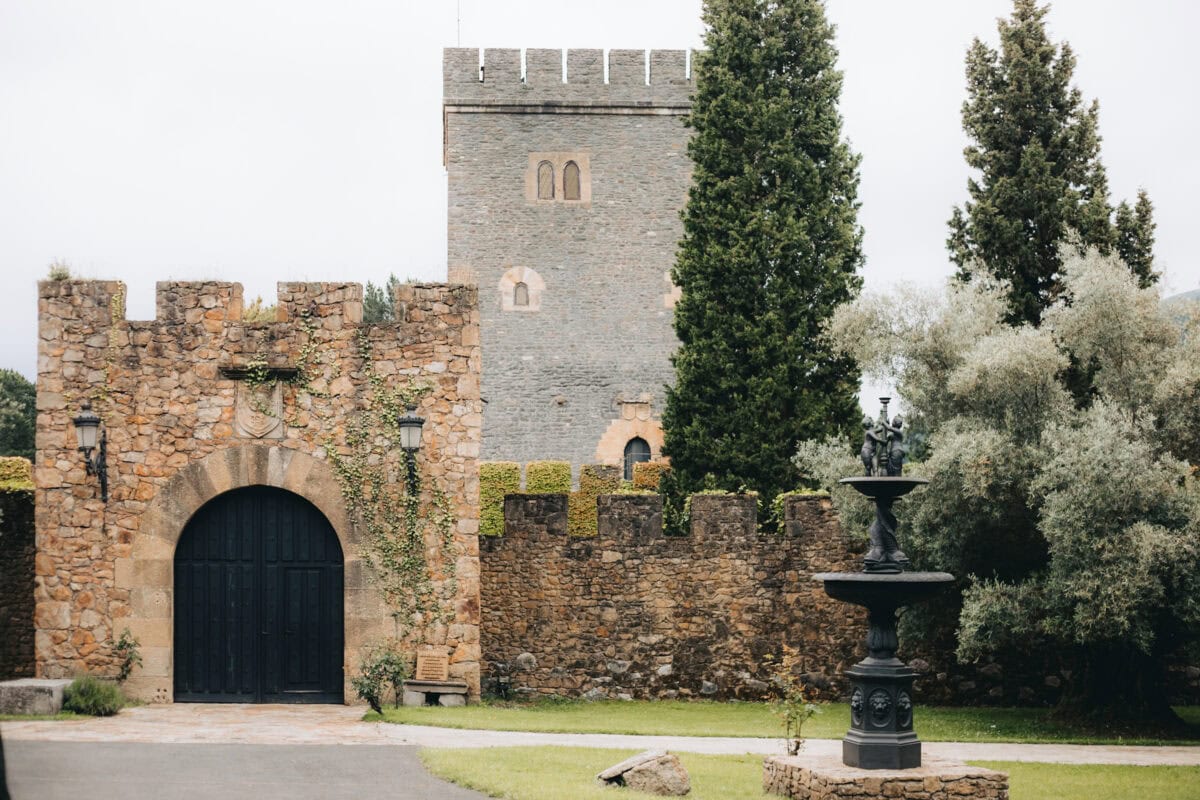
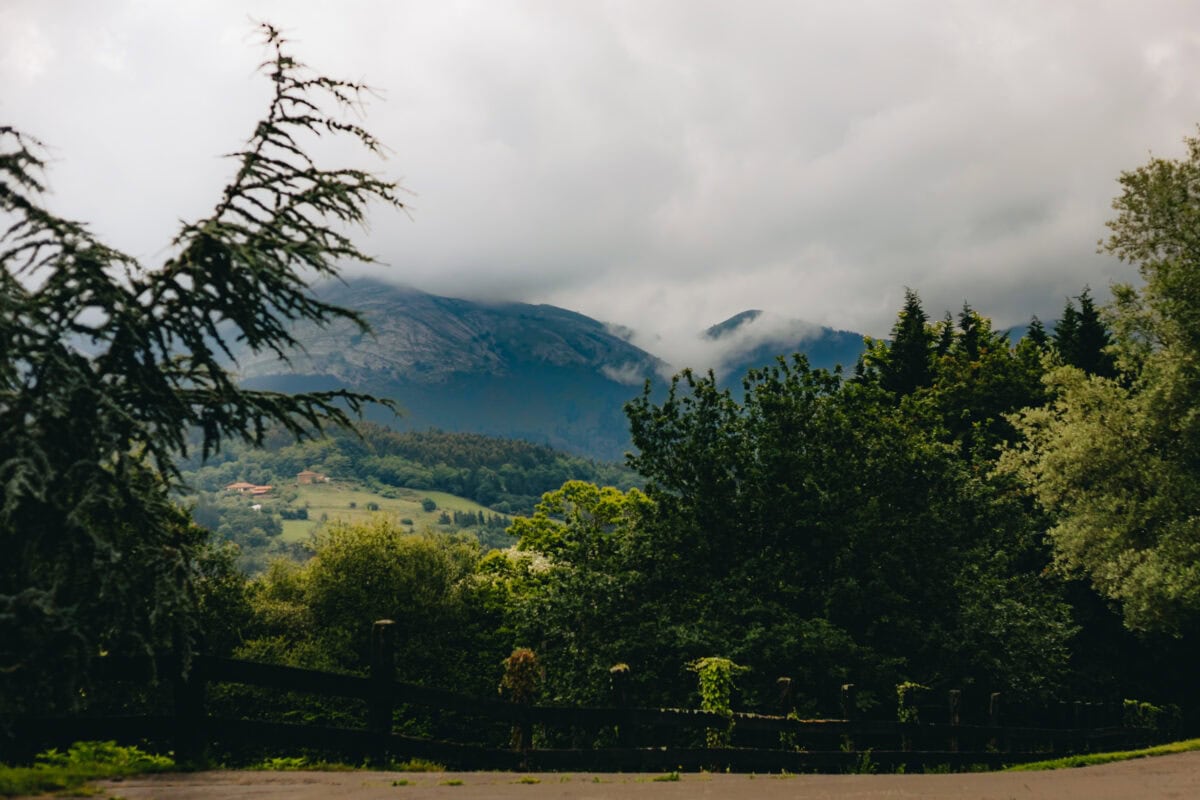
    Entrance to the Torre Lozaiga in the Basque Country, Spain.
    Cloudy mountains behind green trees and meadows.

    These fortified towers are characterized by their massive construction with smaller openings in the lower sections. This design was intended to increase protection against intruders. You can’t visit the tower itself, but there is an extensive automobile museum on the site with a comprehensive Rolls-Royce collection of every model ever built between 1910 and 1990. If you’re interested in classic cars, you’ll be in for a real treat here!
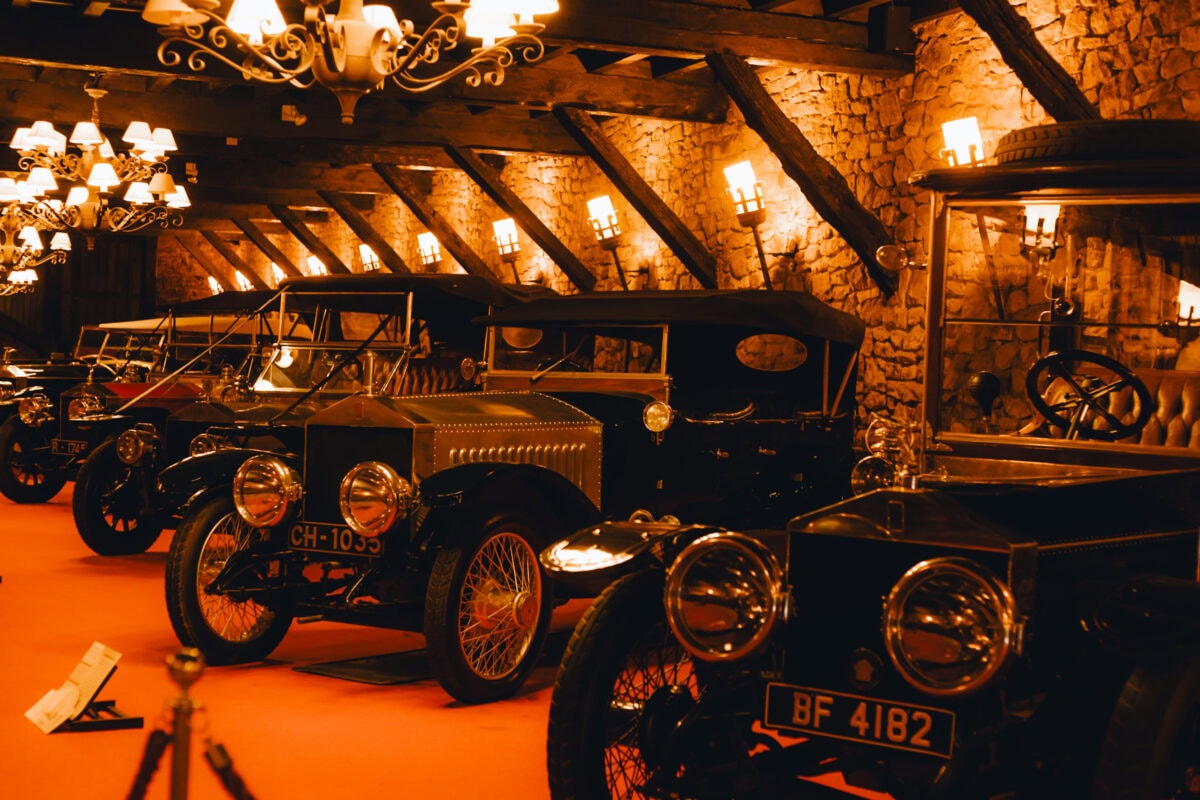
    Classic Car Exhibition at the Museo de Coches Clásicos y Antiguos in Torre Loizaga
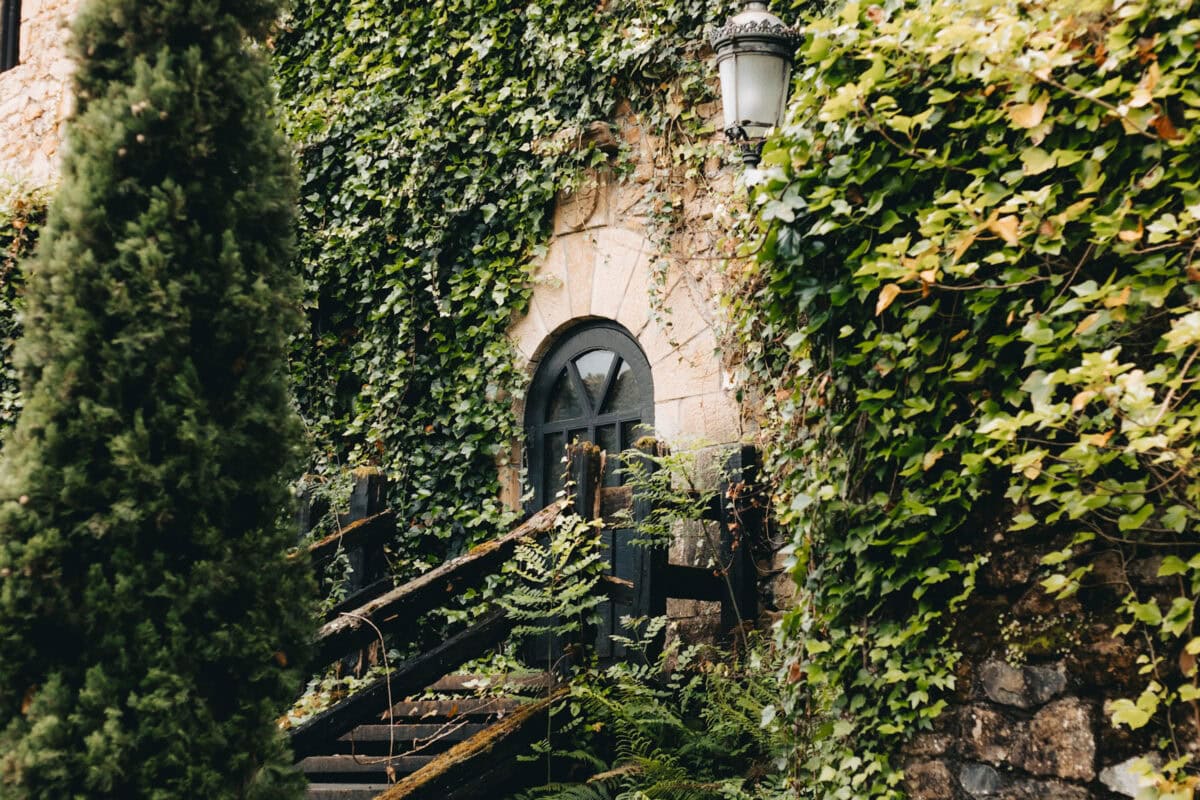
    A stone wall overgrown with vegetation, featuring an old window and a lamp, at Torre Lozaiga
in the Basque Country.

    The privately run museum is quite an insider tip and somewhat remote. You should therefore definitely check the opening times before visiting.

    Museo de Coches Clásicos y Antiguos in the Torre Loizaga

    How to Get There

    Balmaseda is very easy to reach from Bilbao by public transport. A regional train connects the two cities; the journey from Abando station in Bilbao takes about an hour. Even without a rental car or your own car, Balmaseda is a nice day trip if you want to get to know the Basque hinterland off the beaten track.

    Check the timetable for the regional train between Bilbao and Balmaseda here

    However, you will need a car or rental car* to visit Torre Lozaiga, which is a little out of the way halfway along the route.

    This article was written with the support of Visit Euskadi.

  • The Best Things to Do in Donostia-San Sebastián

    The Best Things to Do in Donostia-San Sebastián

    Donostia / San Sebastián really is a special destination: with 180,000 inhabitants, it is the third largest city in the Basque Country, but exudes the elegant charm of a wealthy spa town from days gone by. The old town of San Sebastián is not only picturesque, but also a foodie’s dream come true: Pretty much every visitor falls for the refreshing txakoli and elaborate pintxos in no time. And don’t even get me started on the breathtaking beaches. Find out what else you can experience in San Sebastián in this article.

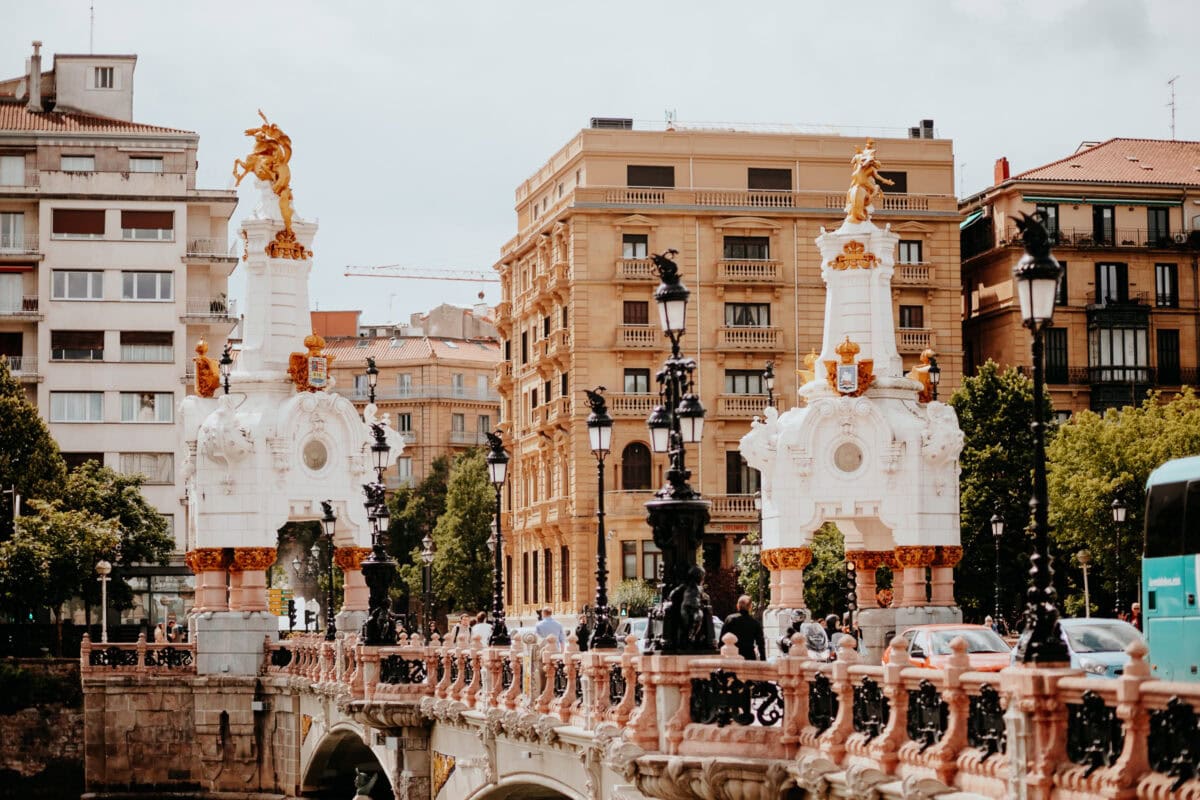
    Historical bridge in front of townhouses with statues.

    What you must see in San Sebastián: The most important sights

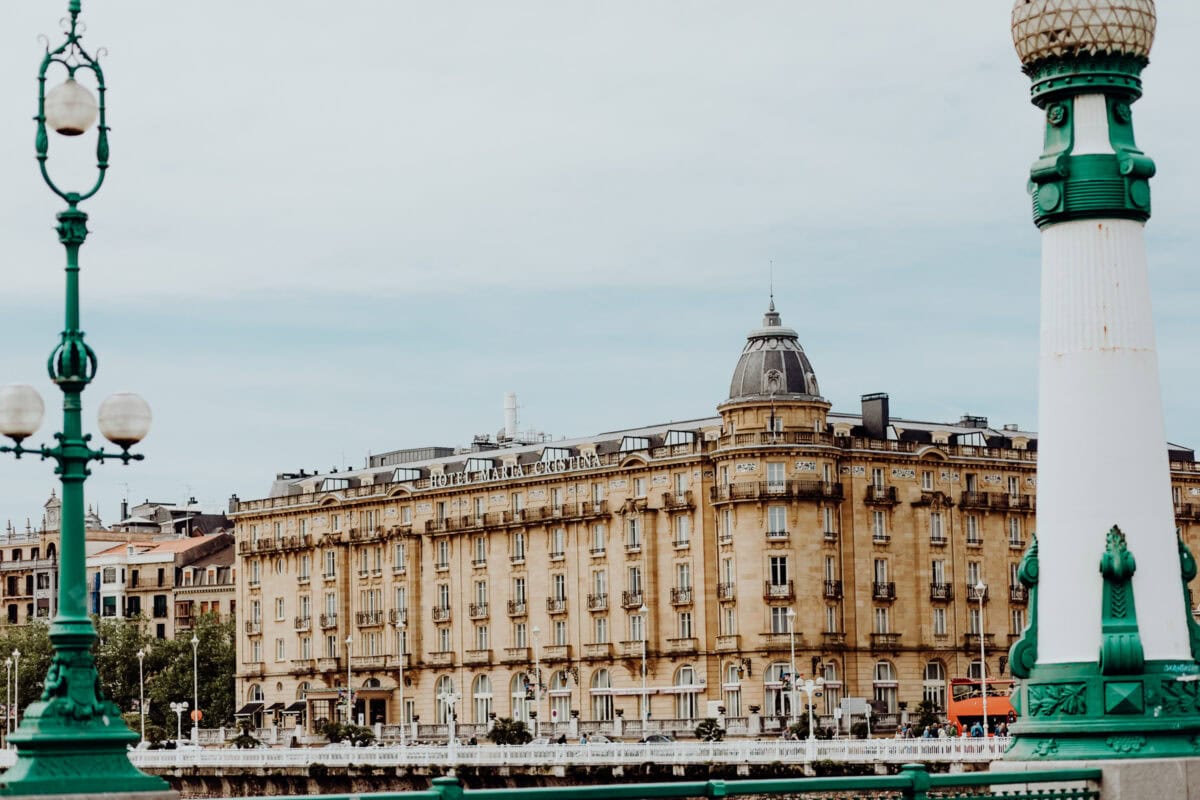
    San Sebastián, or Donostia as it is known in Basque (officially it is also called Donostia-San Sebastián), has some real highlights to offer. You might even be reminded of one or two spas: No wonder, as the Queen of Spain chose San Sebastián as her summer residence at the end of the 19th century, laying the foundations for the social boom. Numerous buildings from this period still adorn San Sebastián today and make it one of the most beautiful cities in Spain.

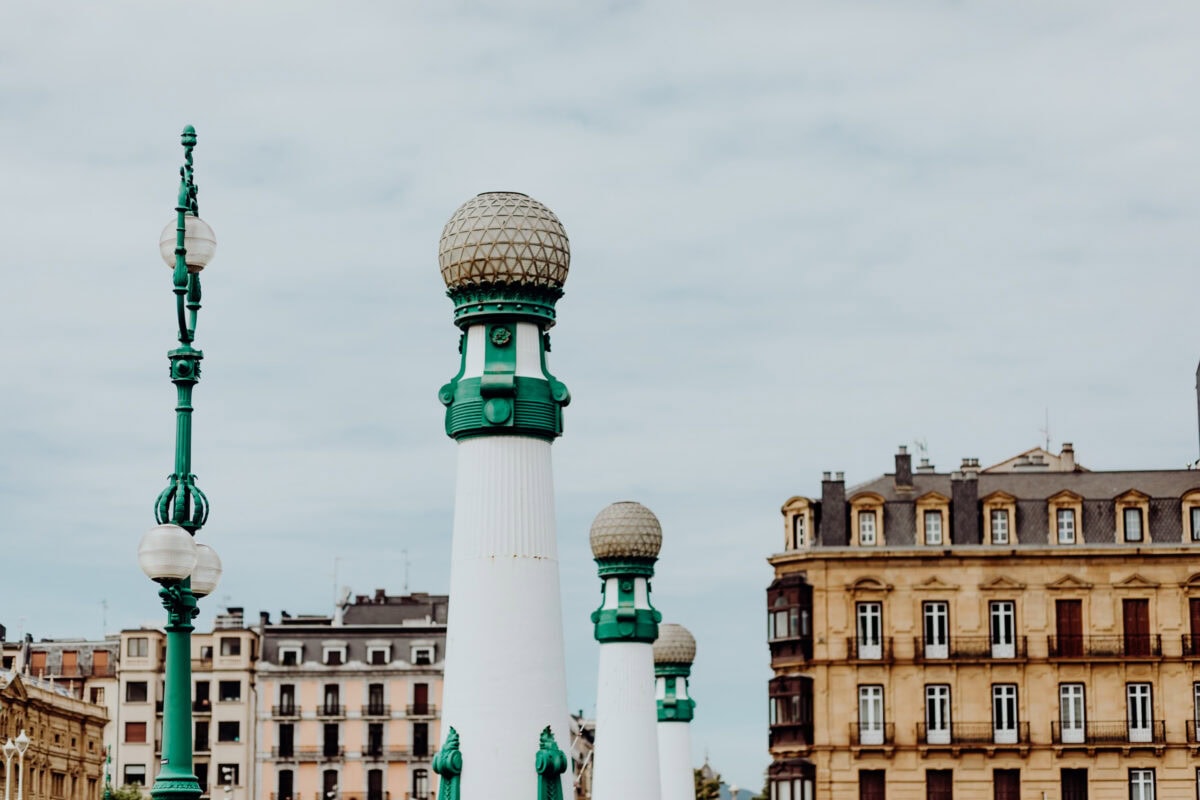
    Historical building and lampposts in city view.

    1. Old Town (Parte Vieja)

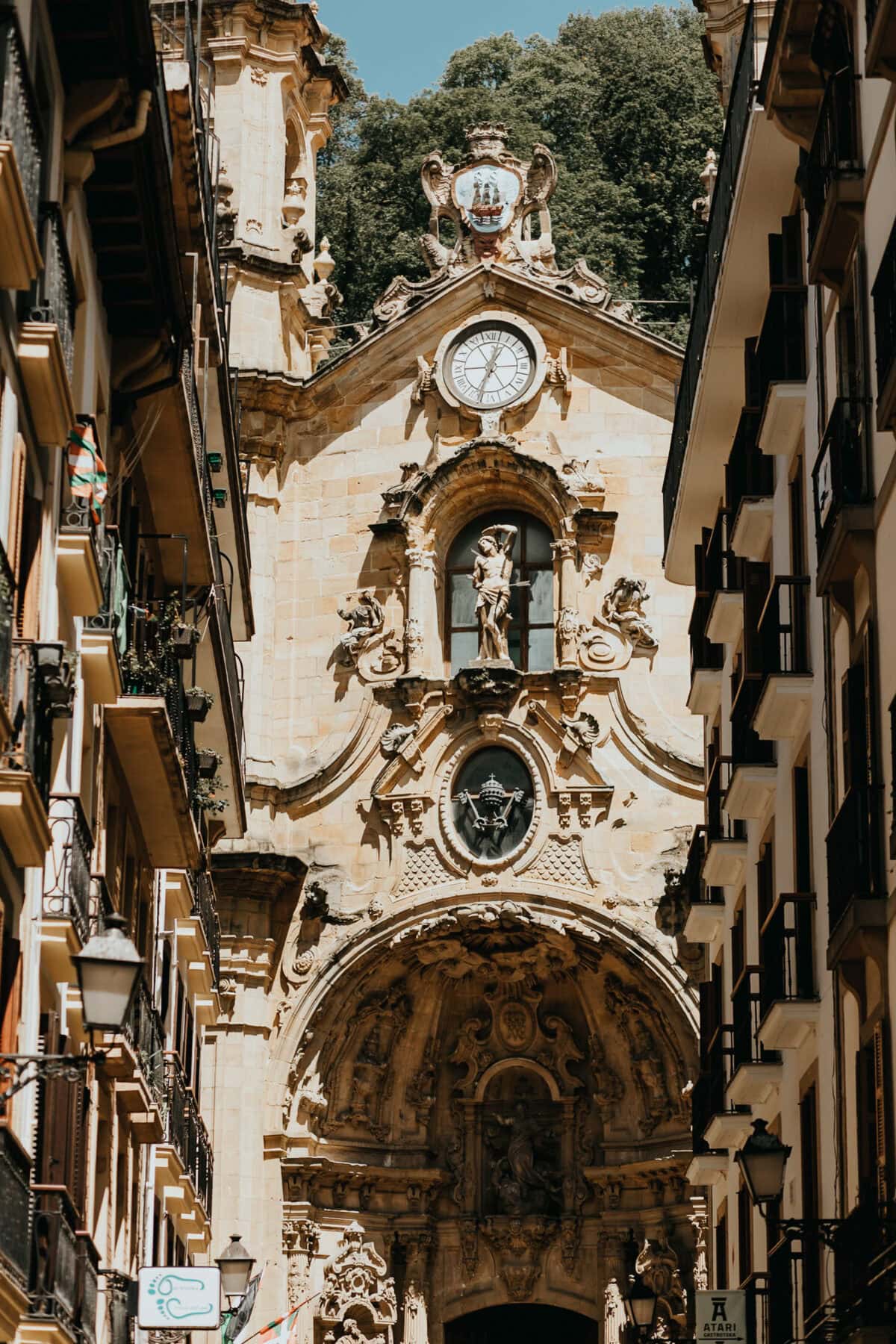
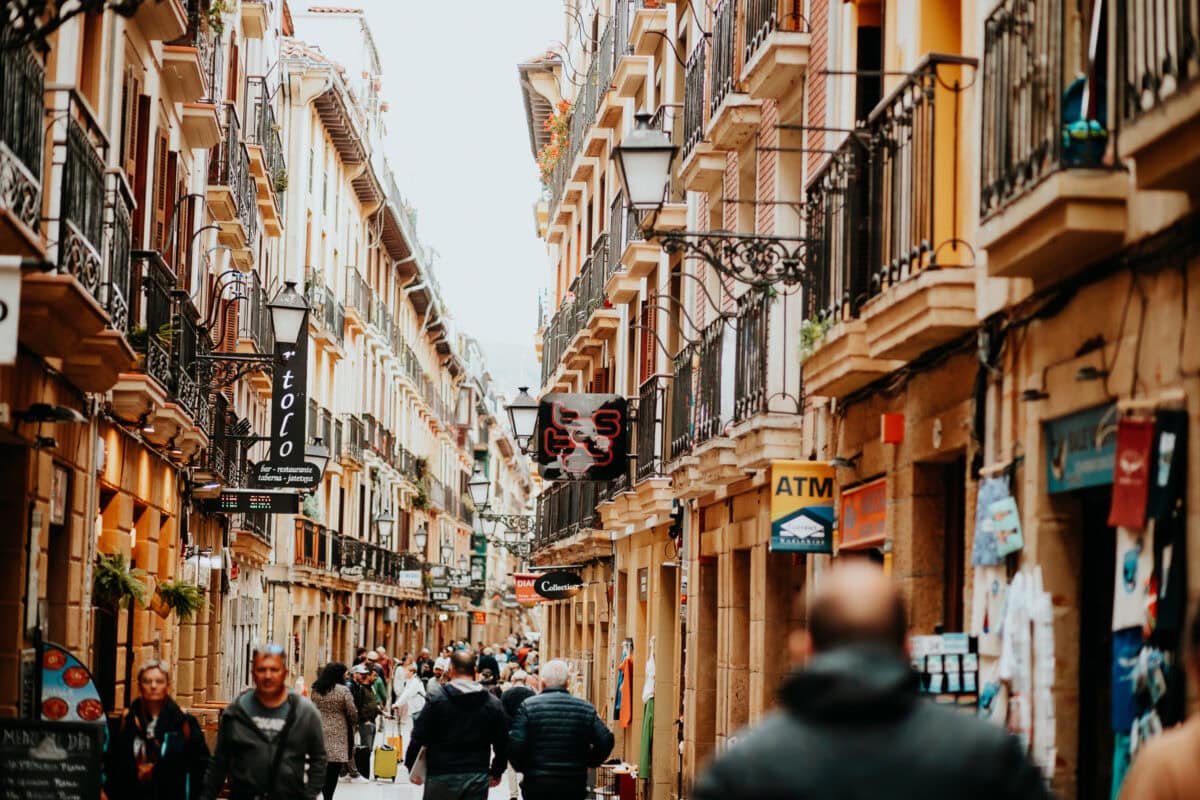
    The Old Town is the heart of San Sebastián. Narrow streets, historic buildings and countless pintxo bars give it its charm. In the middle of it you will find the impressive Basilica de Santa María del Coro and, somewhat hidden, the central Plaza de la Constitución, which is surrounded by arcades and small restaurants.

    Baroque church facade with clock in San Sebastián Old Town
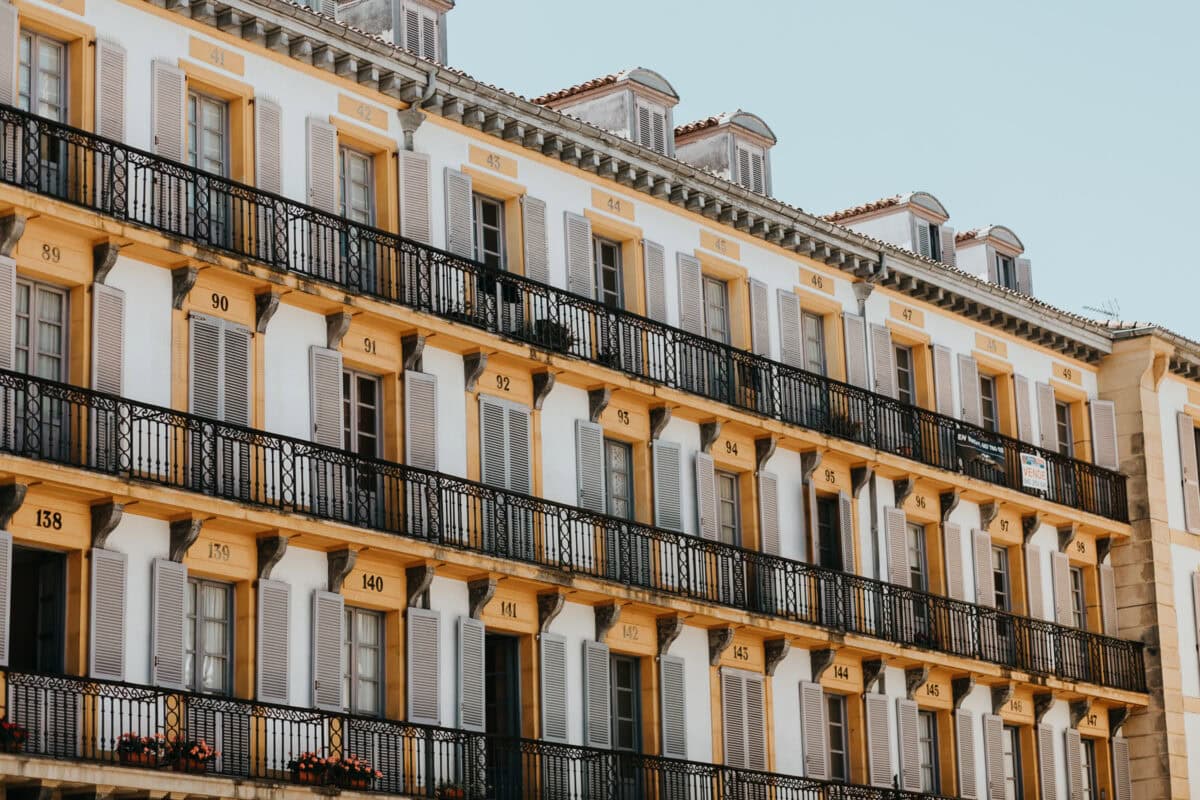
    Classic French building facade with balconies and shutters
    Lively Old Town shopping street in San Sebastián with passersby

    2. Playa de la Concha & Ondarreta

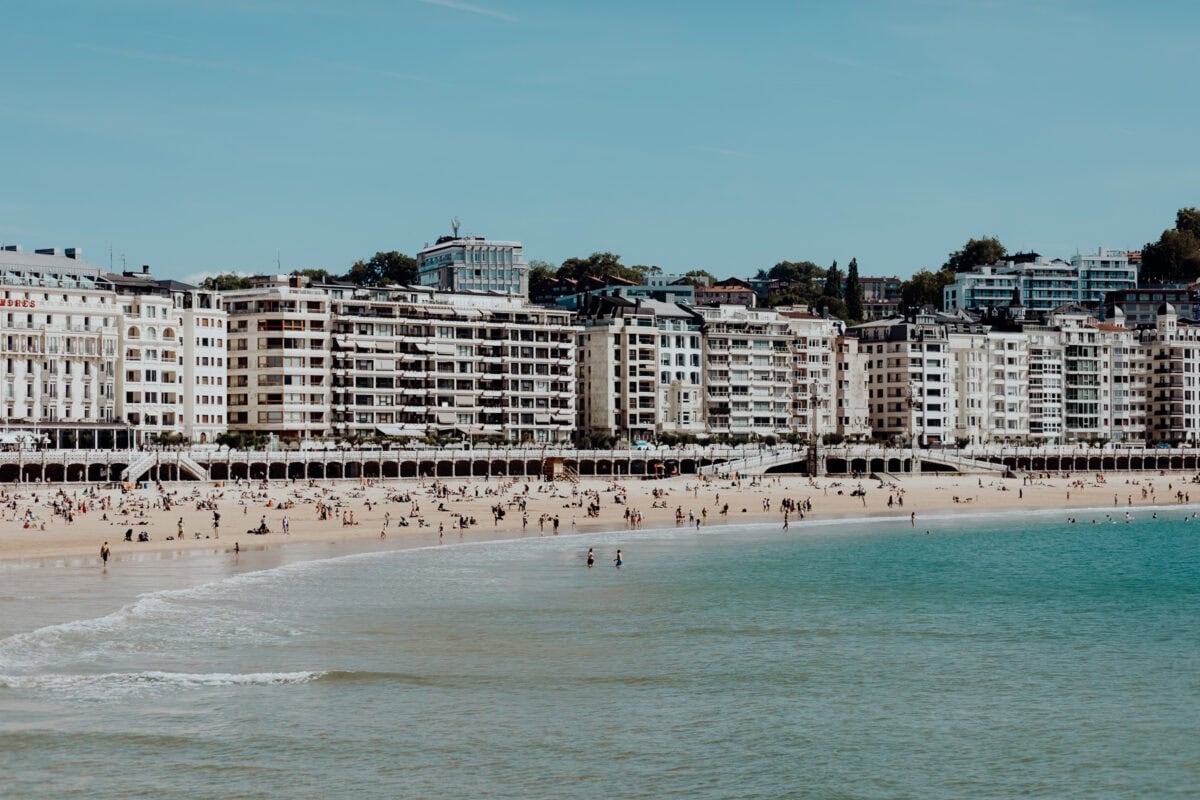
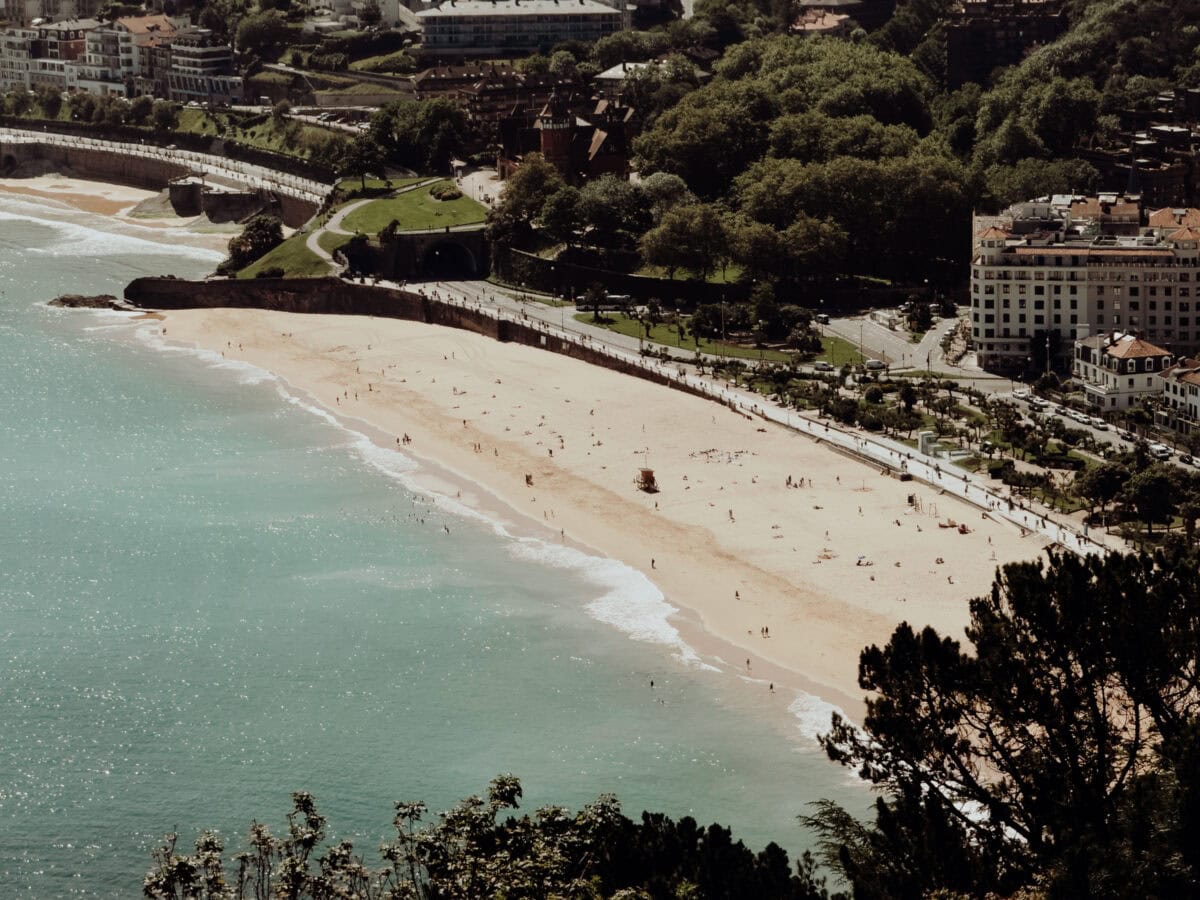
    With the Playa de la Concha, San Sebastián has an impressive city beach. According to various beach rankings, the crescent-shaped bay of La Concha with its fine sand and turquoise blue water is one of the most beautiful beaches in the world. As a beach fan, La Concha has long been on my bucket list and I was not disappointed.

    Lively city beach with white buildings and turquoise sea
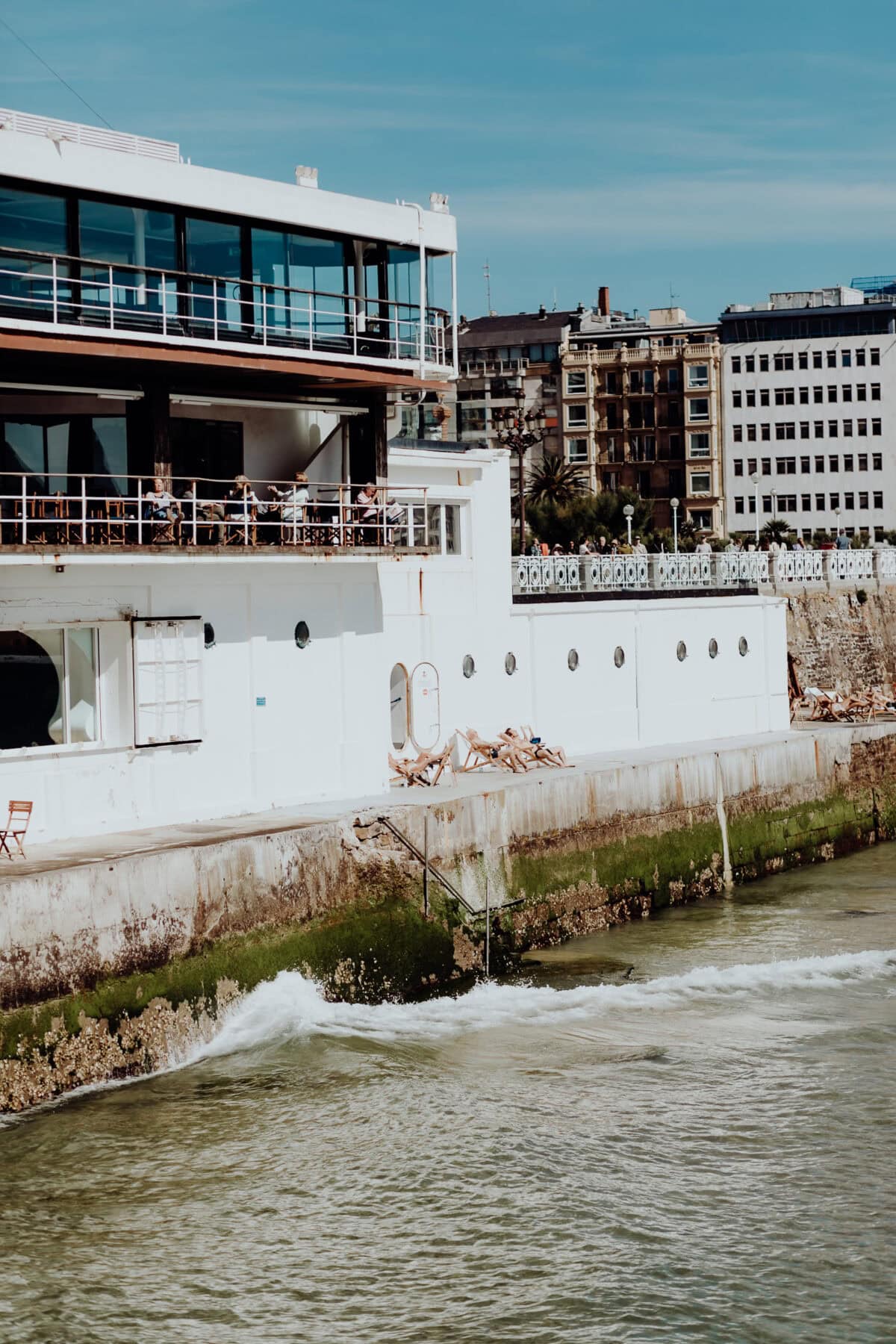
    White building by the water with terrace and sun loungers

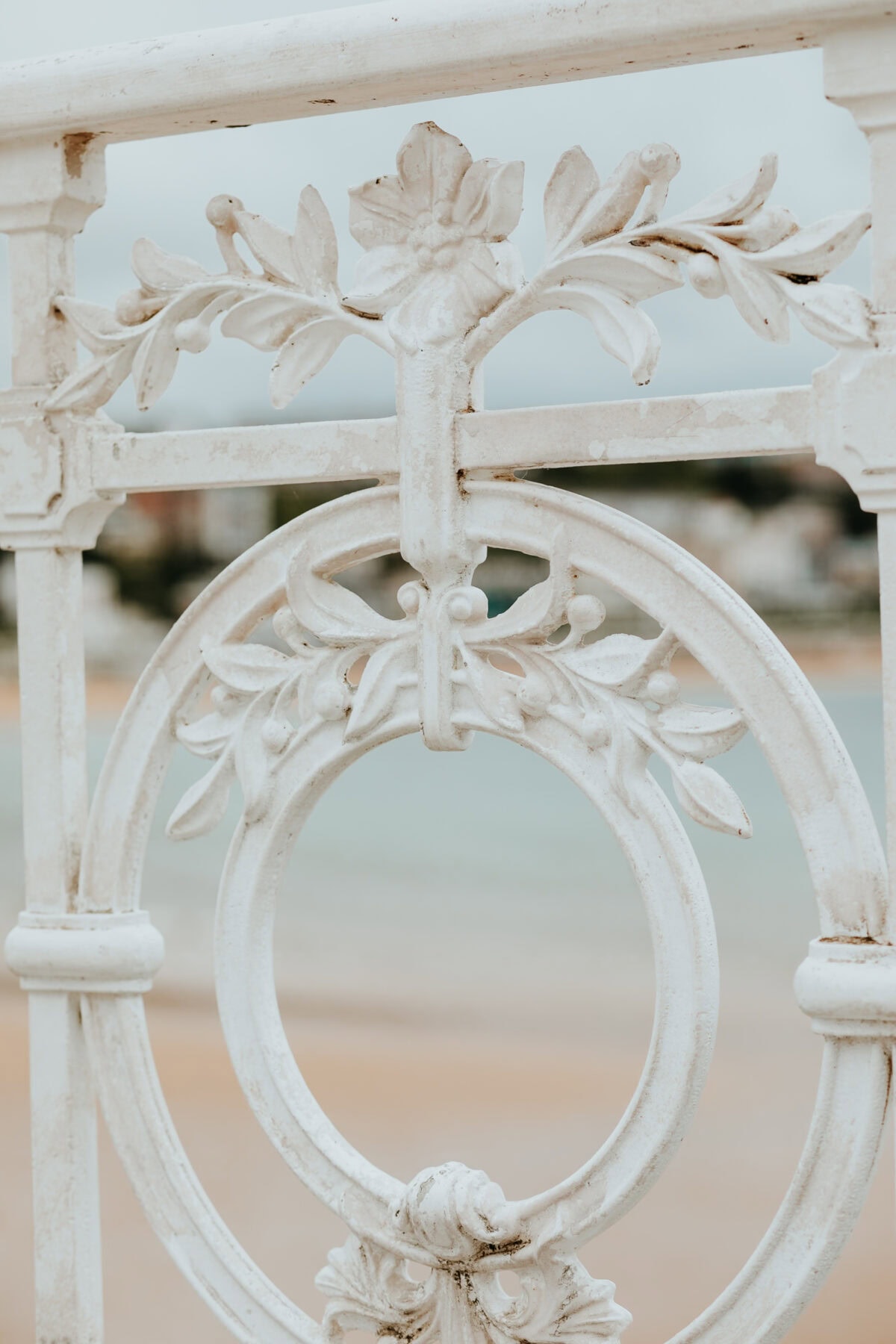
    San Sebastián was the summer residence of the Spanish Queen Maria Christina from the end of the 19th century, and especially along the beach promenade you still have the feeling of being in an elegant spa town like in the old days. The elaborately decorated railing of the promenade with its filigree floral pattern is now one of the city’s landmarks.

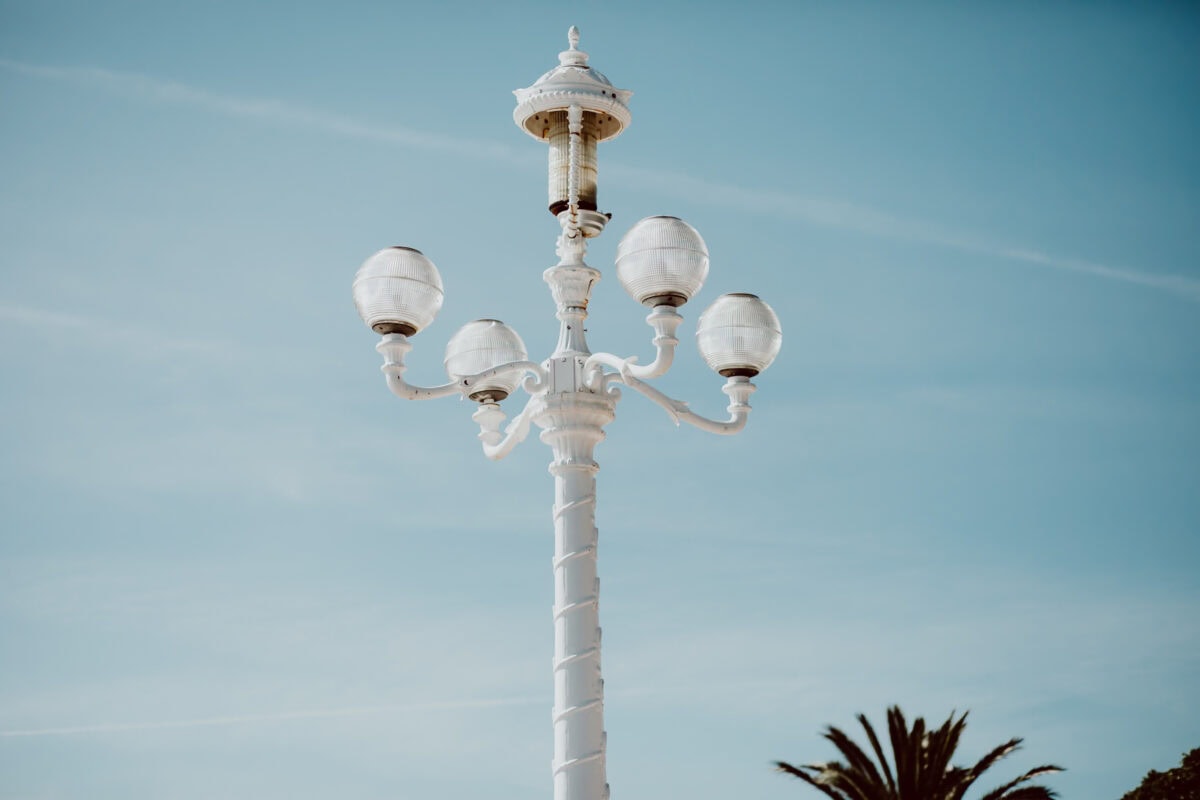
    White historic lamppost with five globe lights against a blue sky
    White ornate wrought-iron railing with floral ornaments by the sea

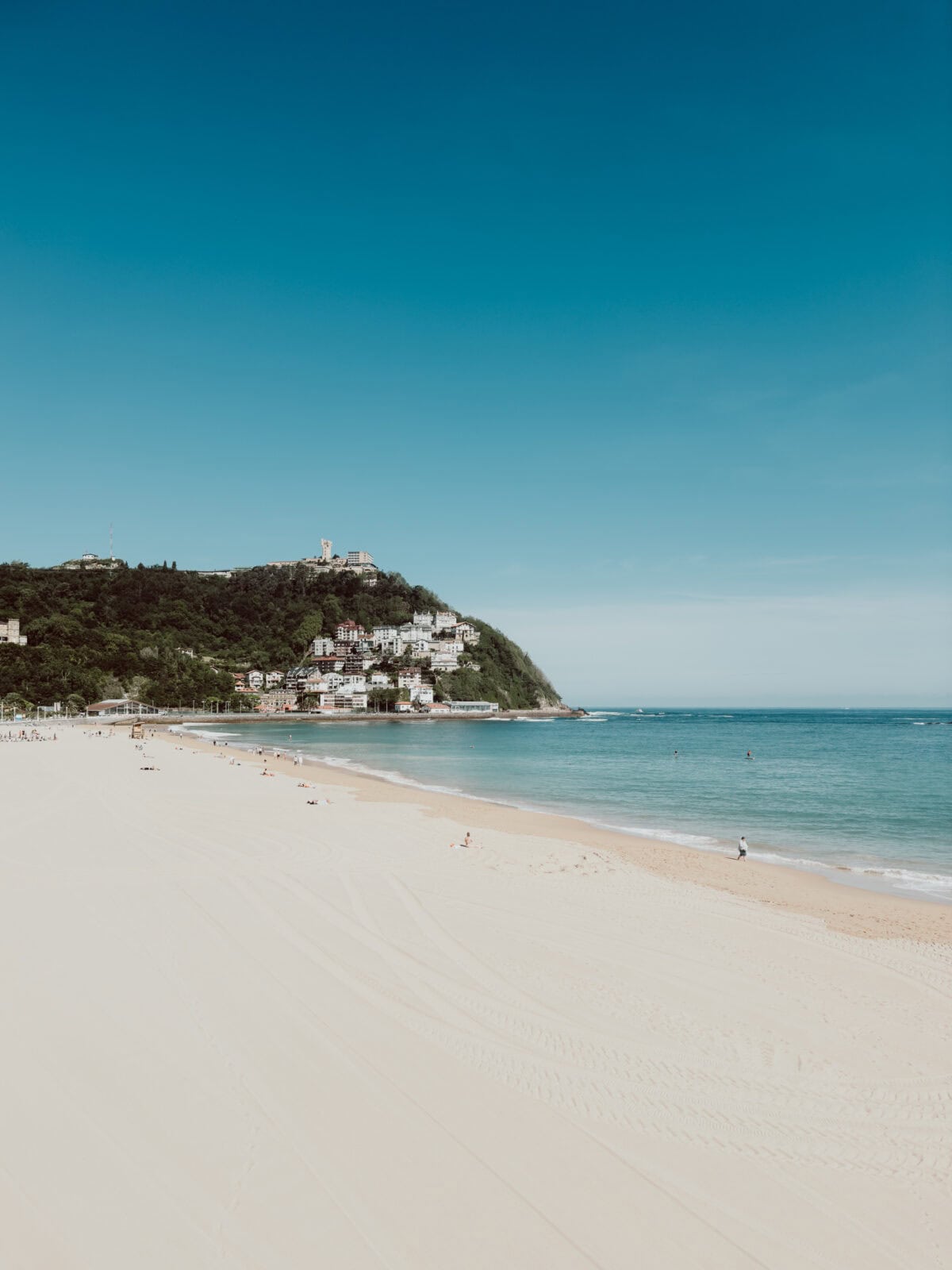
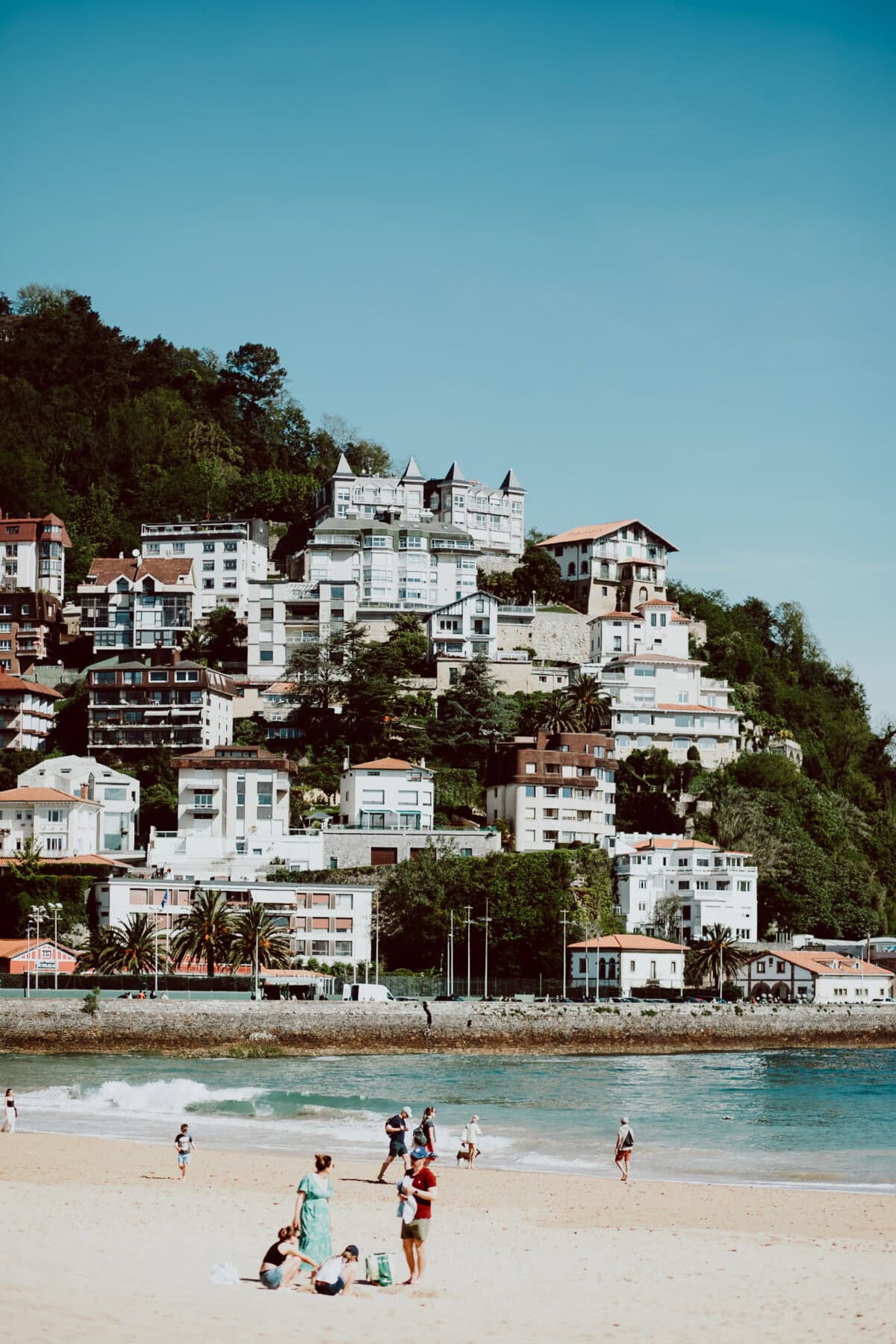
    A little further away from the Old Town is the Playa Ondarreta. The beach here is also wide and beautiful, and the buildings around it are not as high and massive as on the Playa de la Concha. Perfect for chilling out for a few hours and enjoying the unique landscape.

    Expansive sandy beach with hill and village in the background
    Sandy beach with people and white houses on the hill

    3. Monte Urgull

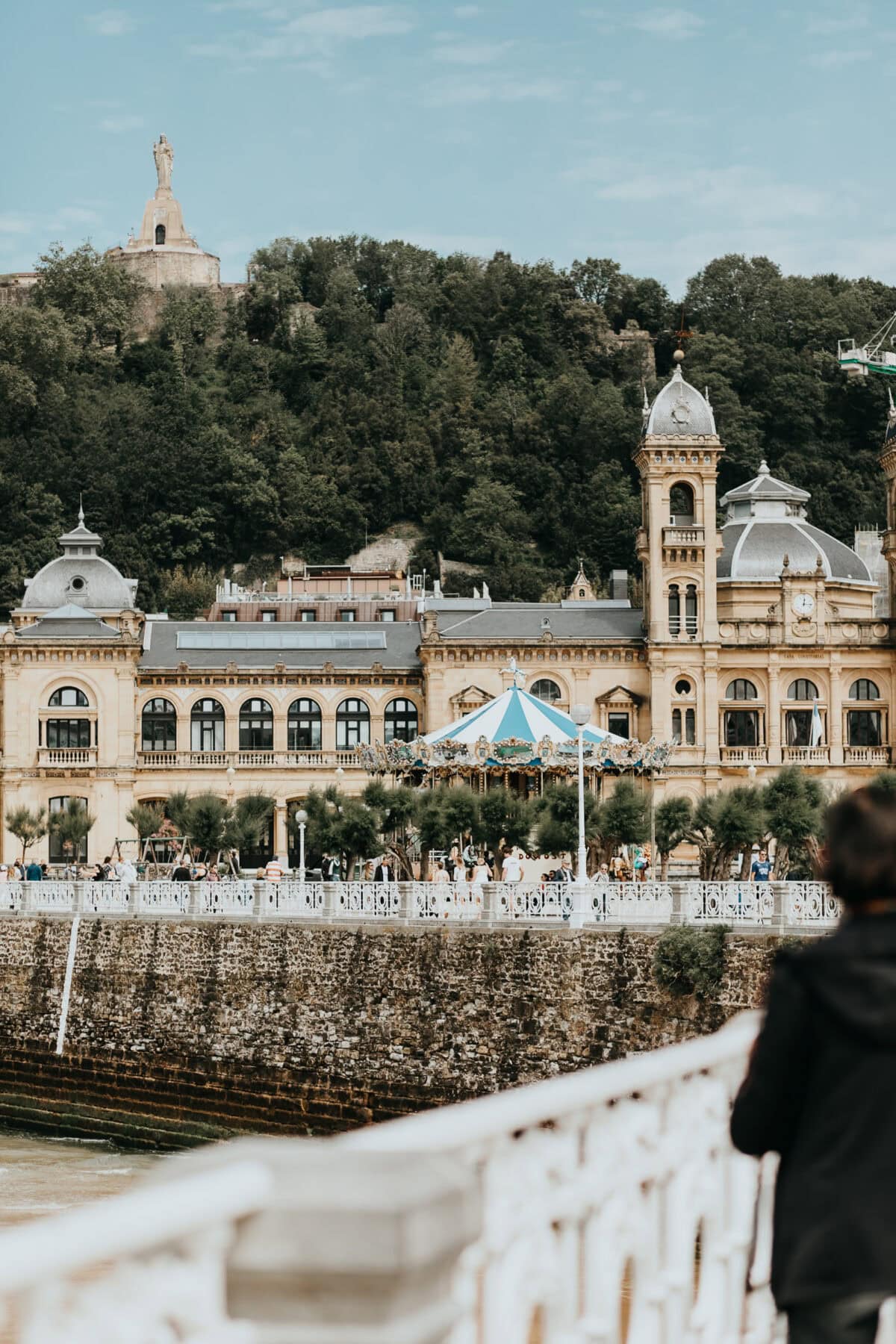
    This hill offers you not only a fantastic view over the city and the bay, but also a piece of history. On the summit is the Castillo de la Mota and the Statue of the Sacred Heart. The ascent is pleasant and you can stop again and again along the way to enjoy the view.

    Historical building with carousel and statue

    4. Monte Igueldo

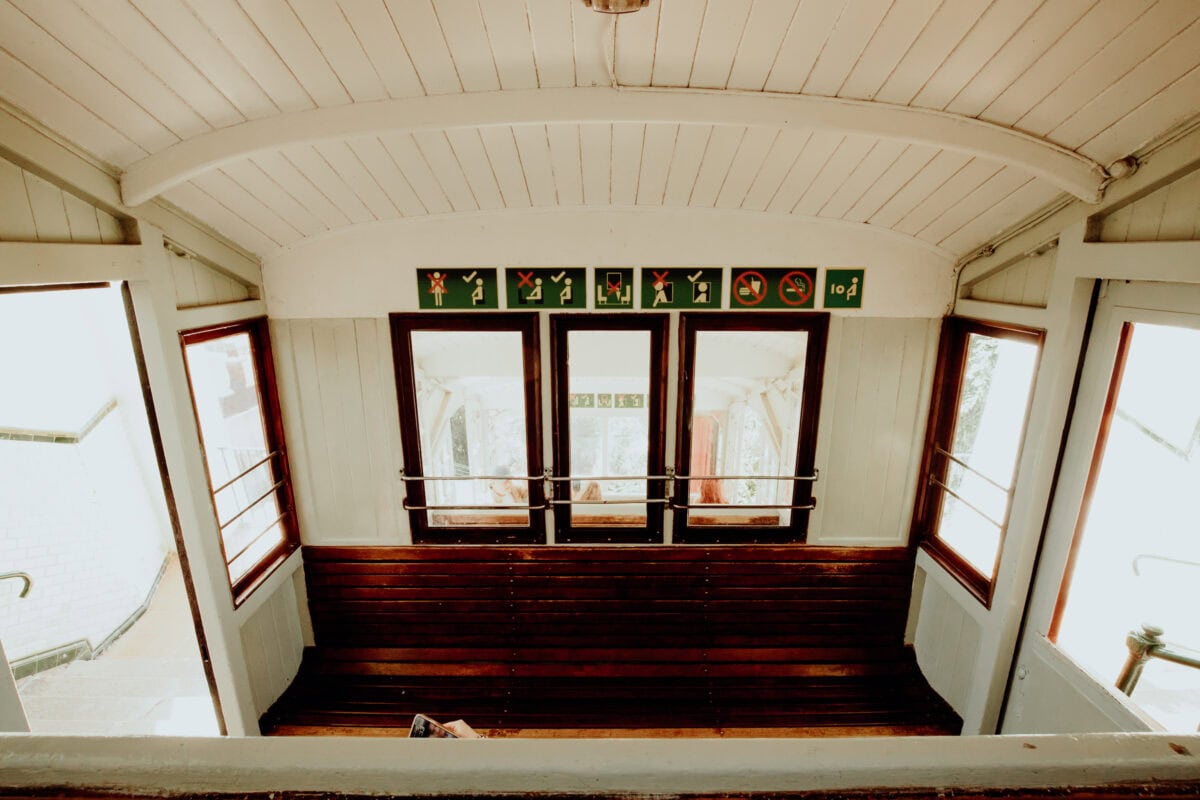
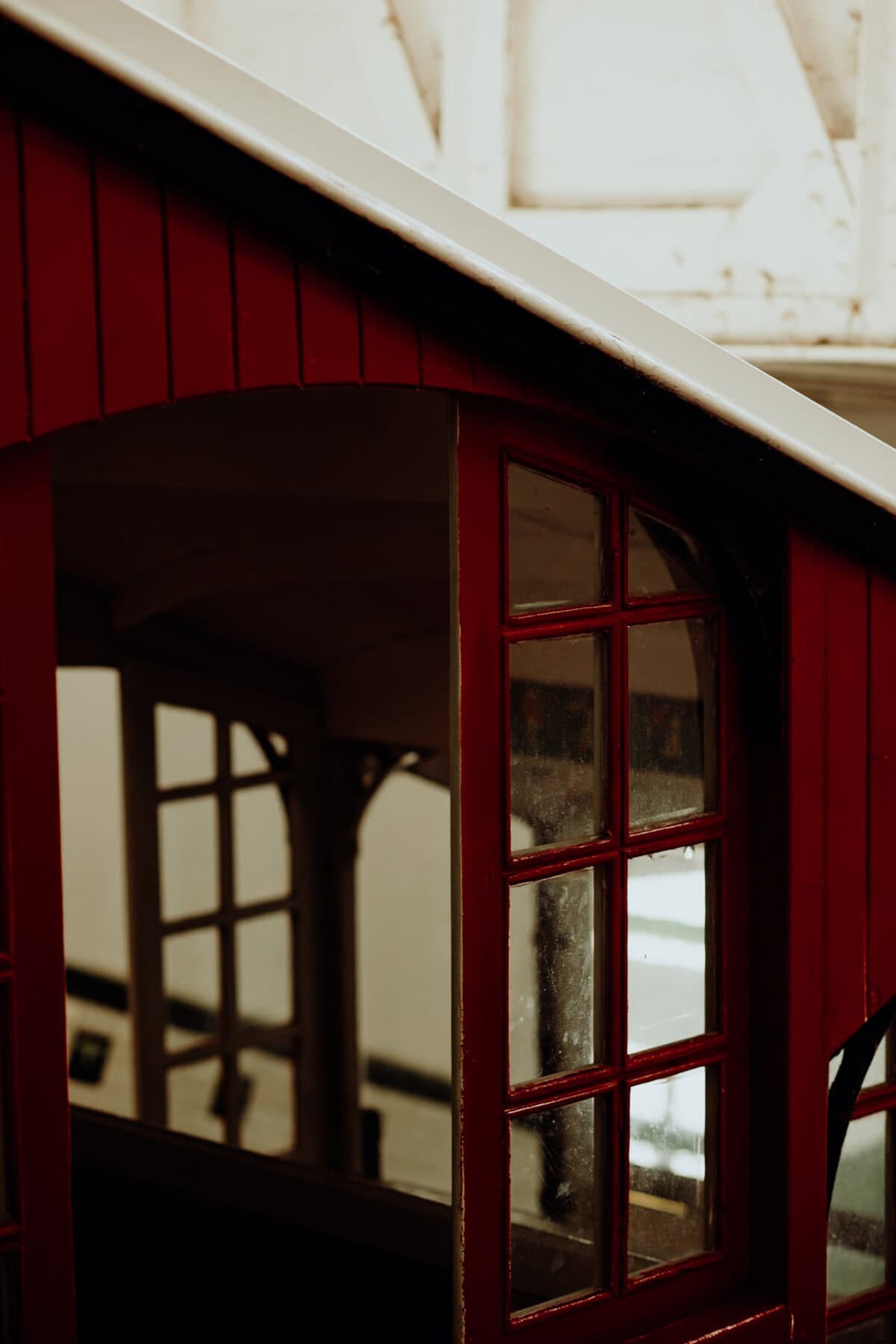
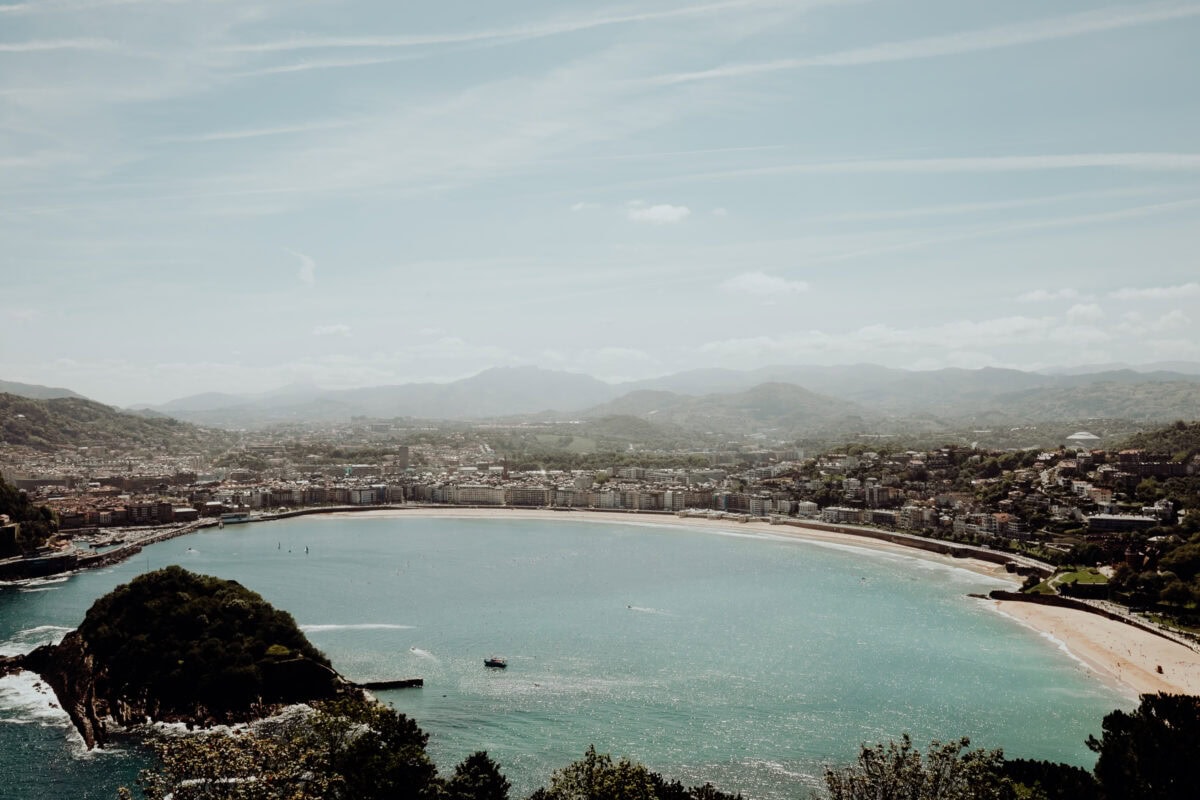
    For an even more spectacular view, you can take the historic funicular to Monte Igueldo. Once at the top, a small amusement park and a view over the entire coast await you.

    Empty wood-paneled cabin with instructions on the wall.
    Red historic streetcar with windows

    The funicular is really well preserved, and you should definitely take a ride on it on your trip to San Sebastián. And the view from Monte Igueldo is fantastic anyway.

    Beach and coast in sunny weather.
    Panoramic view of coastal town and mountains in the background.

    5. Peine del Viento

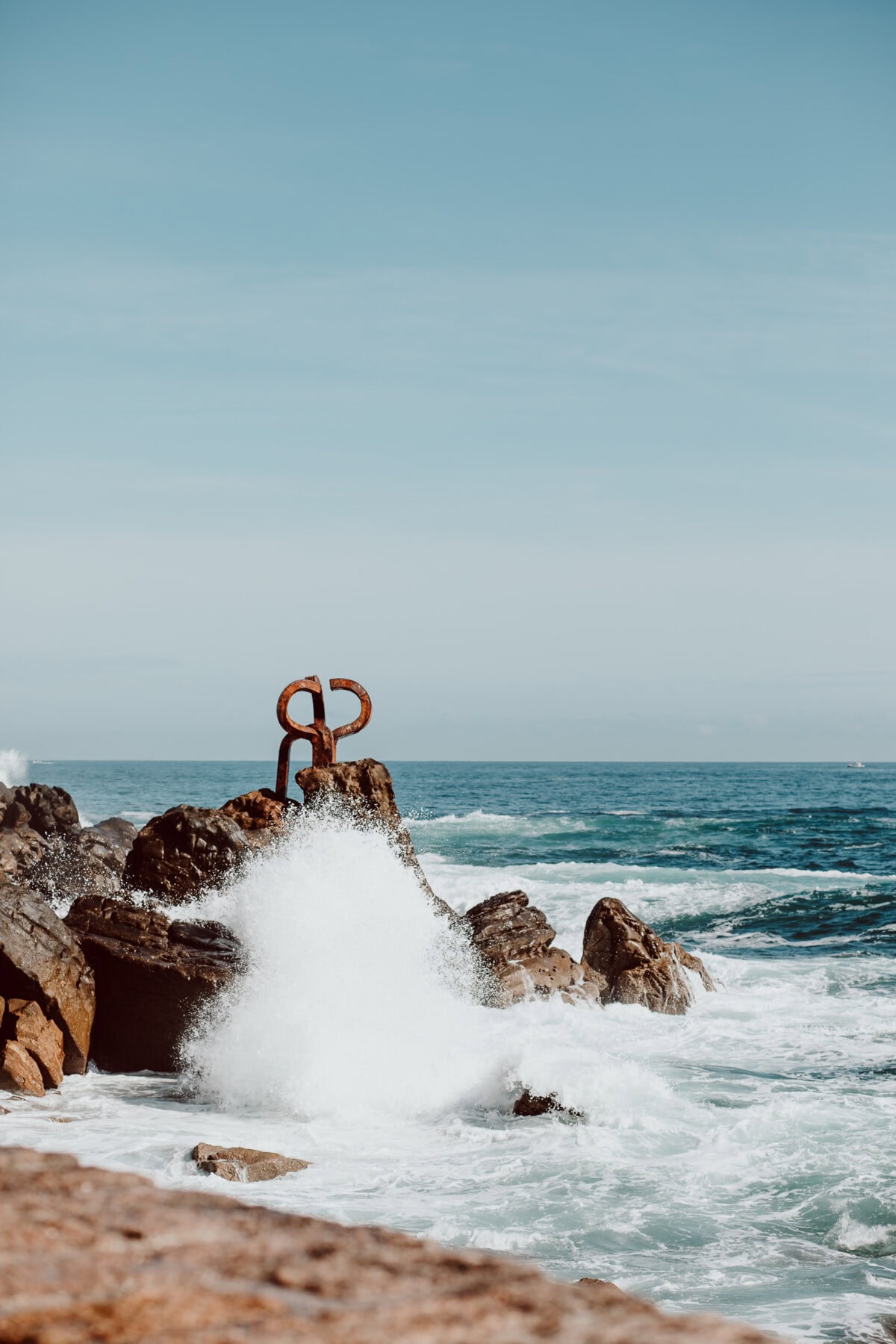
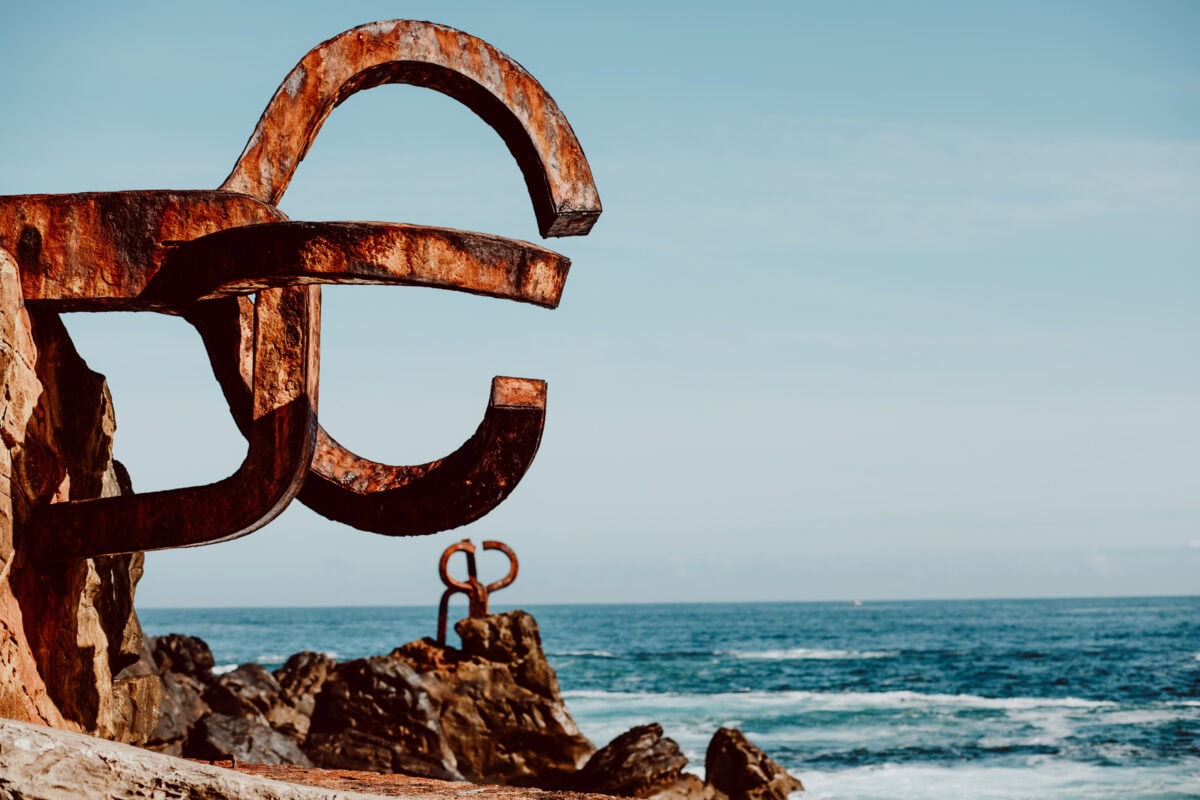
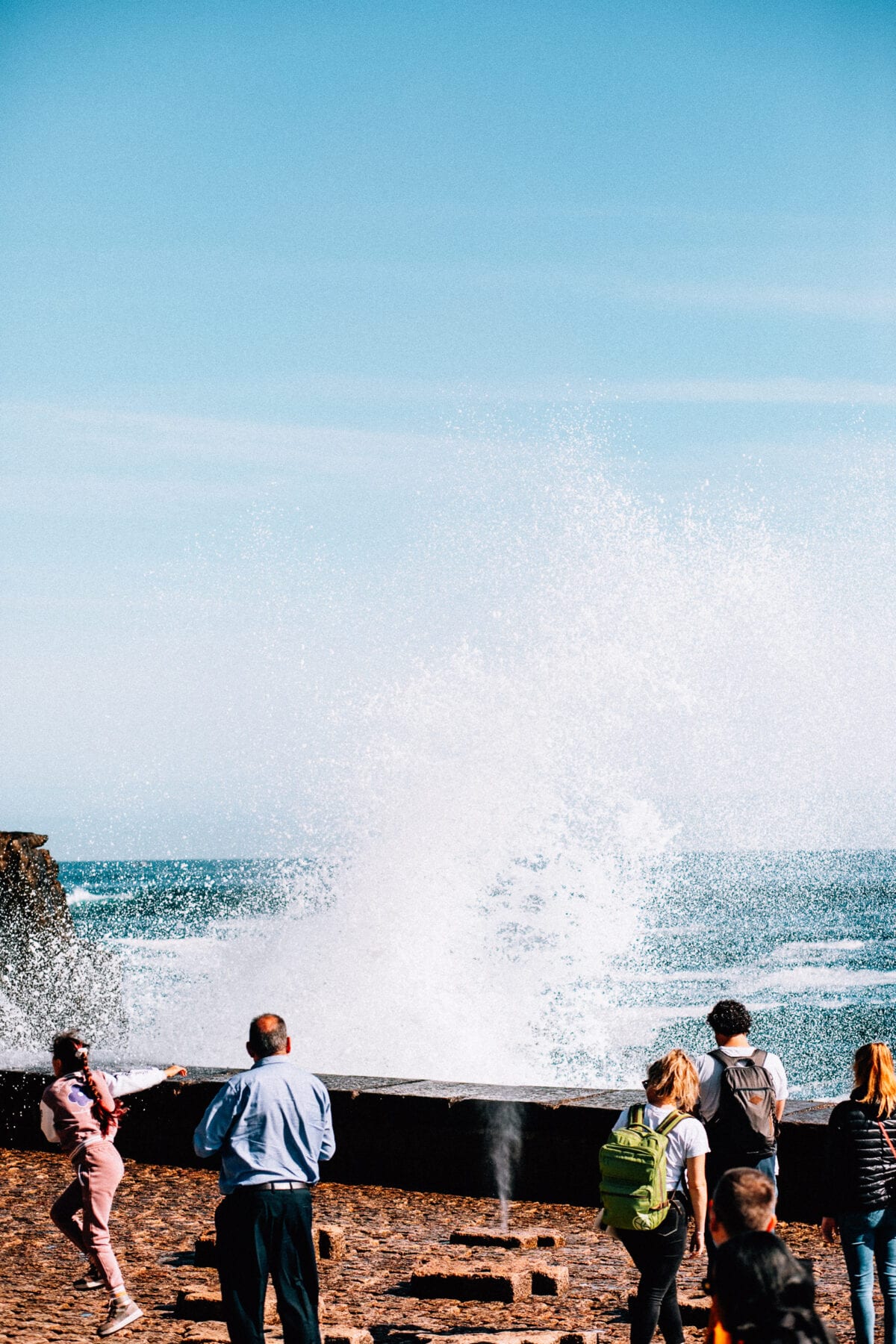
    The modern sculpture “Peine del Viento” by the Basque sculptor Eduardo Chillida is located at the western end of the bay of La Concha. The three gigantic steel sculptures are integrated directly into the rocks and offer a fascinating sight, especially when the waves crash against them.

    Waves break on rocks at a coastal sculpture
    Artwork by the sea with rocks and waves
    People watch waves on the shore

    6. Chillida-Leku Sculpture Park

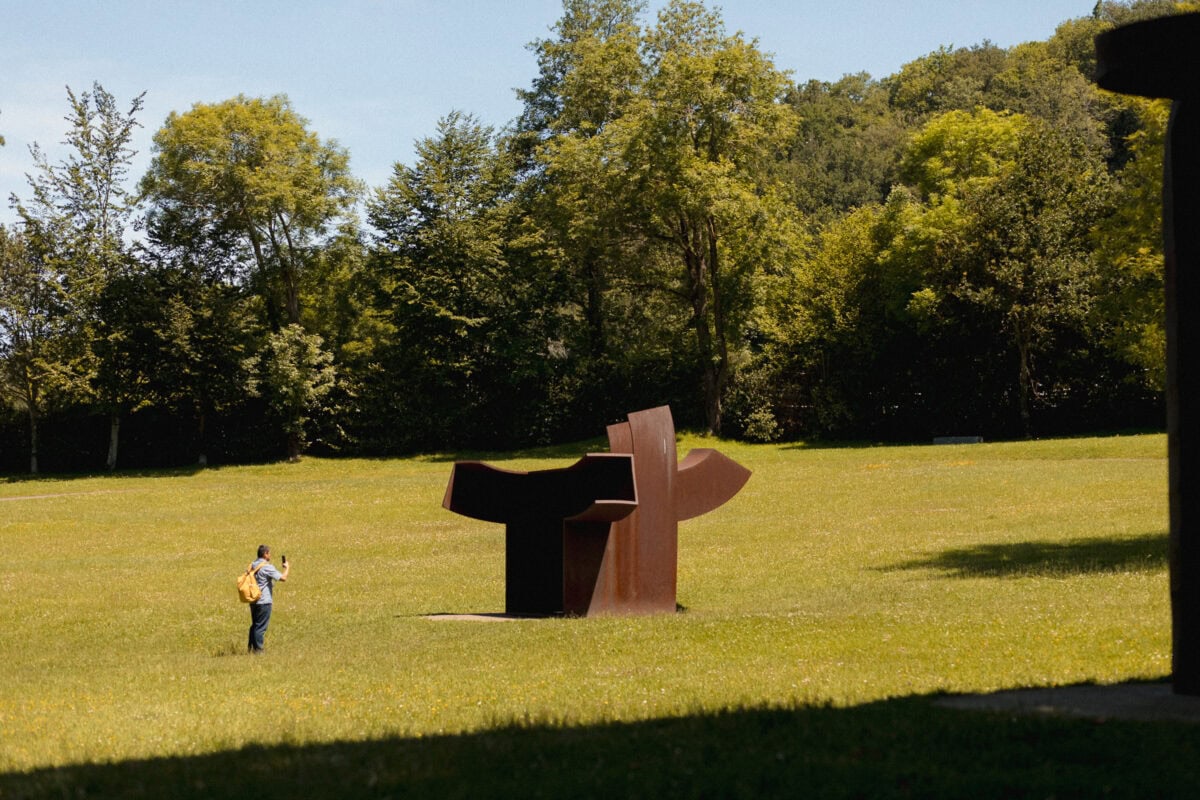
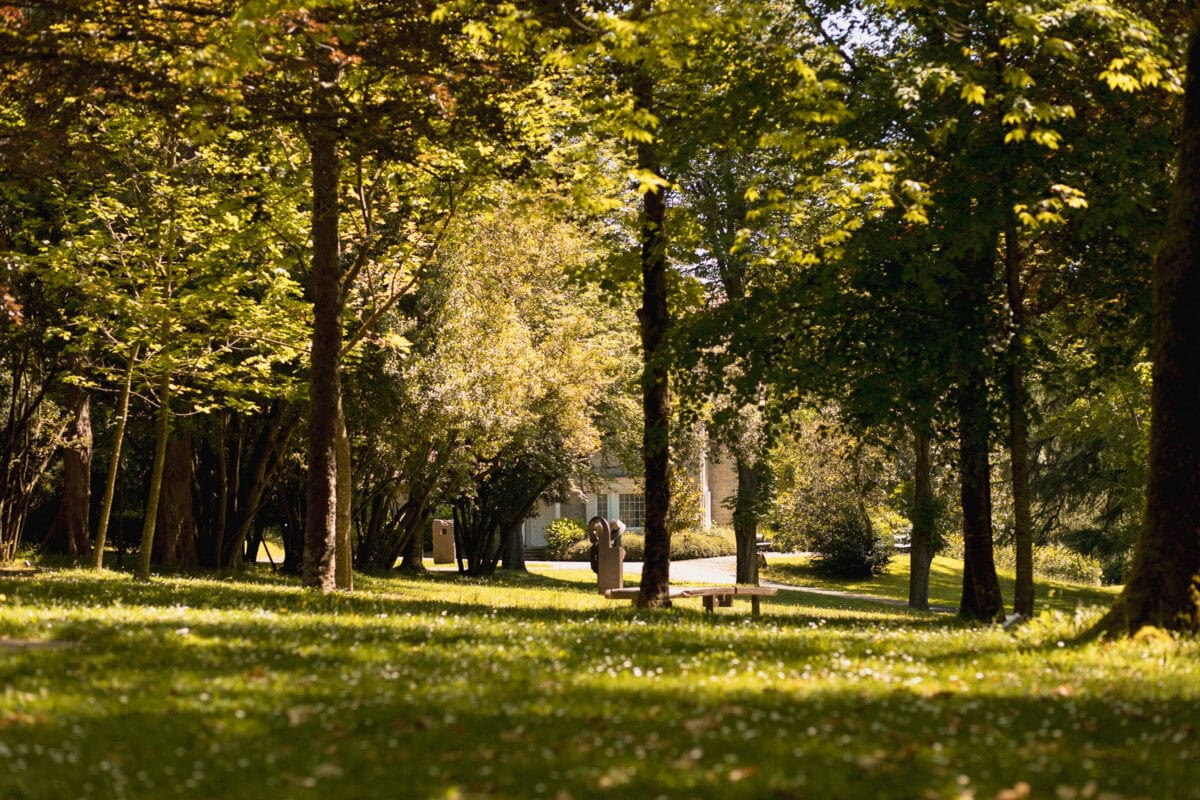
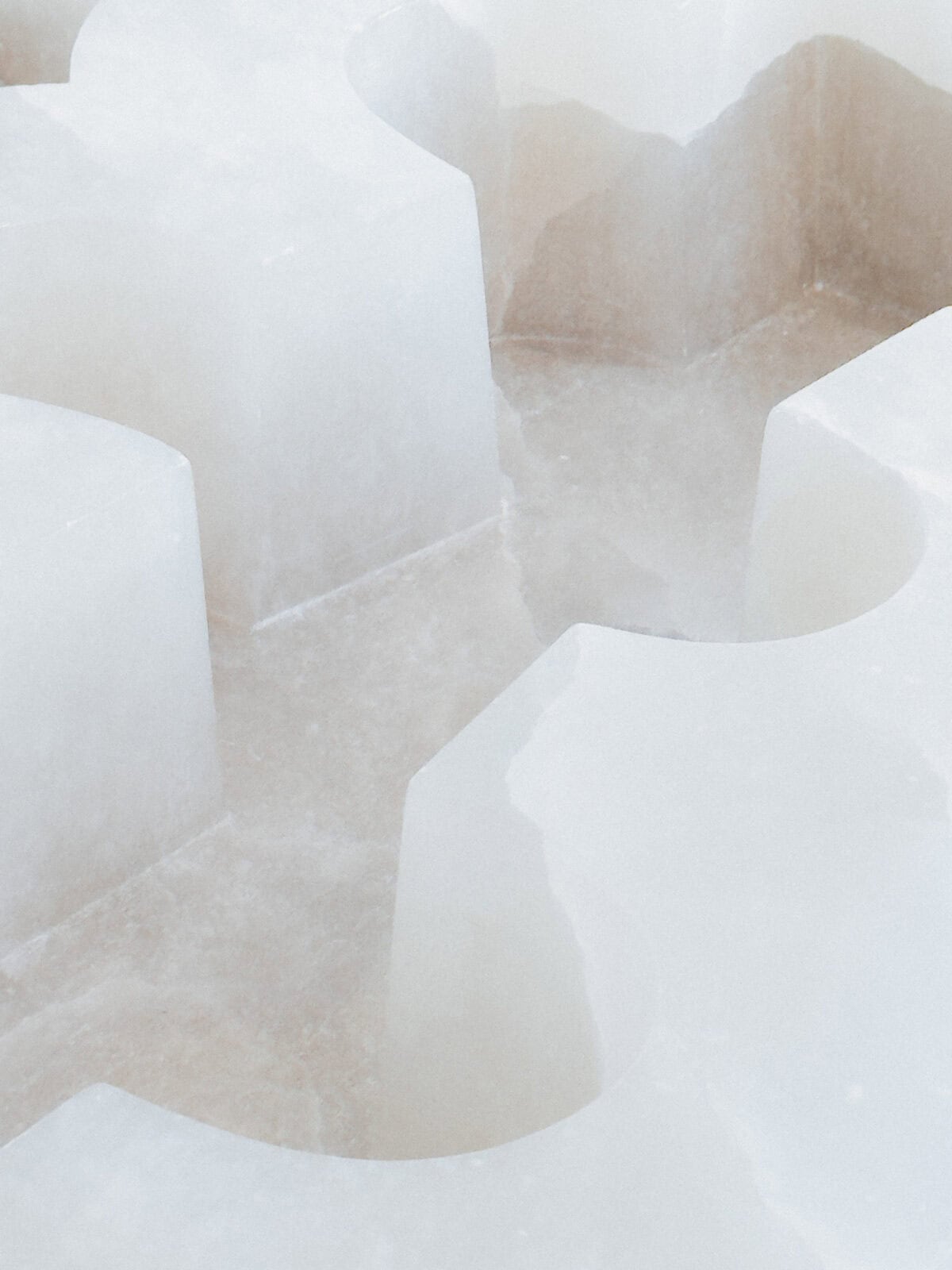
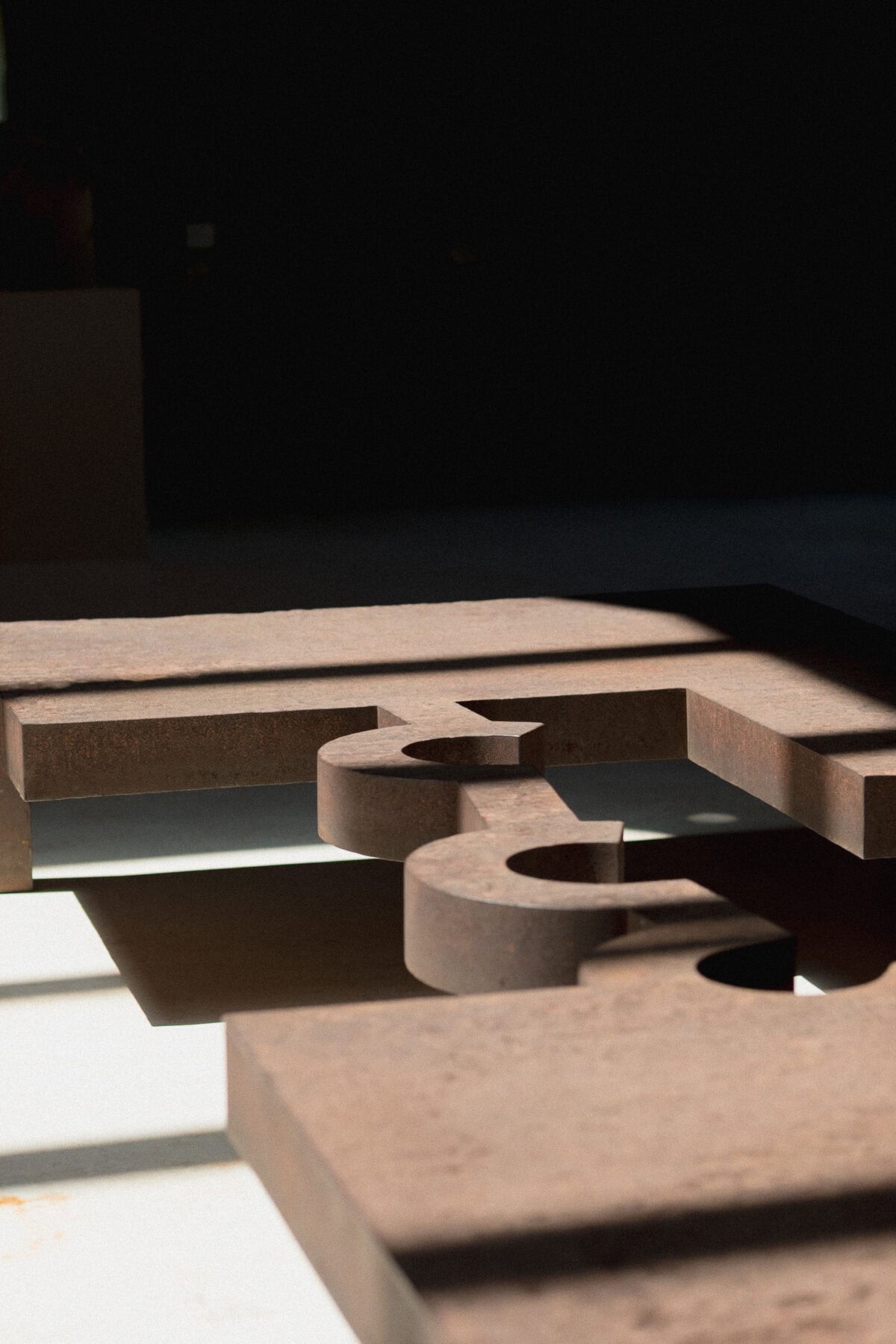
    A little outside of San Sebastián is the sculpture park and museum Chillida-Leku, which is dedicated to the work of Eduardo Chillida. In a beautiful, spacious park you can admire his impressive sculptures in the midst of nature: A place of peace and inspiration.

    You can book your ticket for the Chillida Leku in advance here*

    Person photographing statue in park
    Quiet park with trees and sunshine.
    White marble sculpture with geometric forms by Eduardo Chillida
    Rusty metal structure in sunlight

    7. San Telmo Museoa

    The San Telmo Museoa is a museum for Basque culture and history and is located in an old Dominican monastery and offers an exciting exhibition that ranges from prehistory to the modern age. A visit is worthwhile to get a deeper insight into the regional culture.

    8. Palacio de Miramar

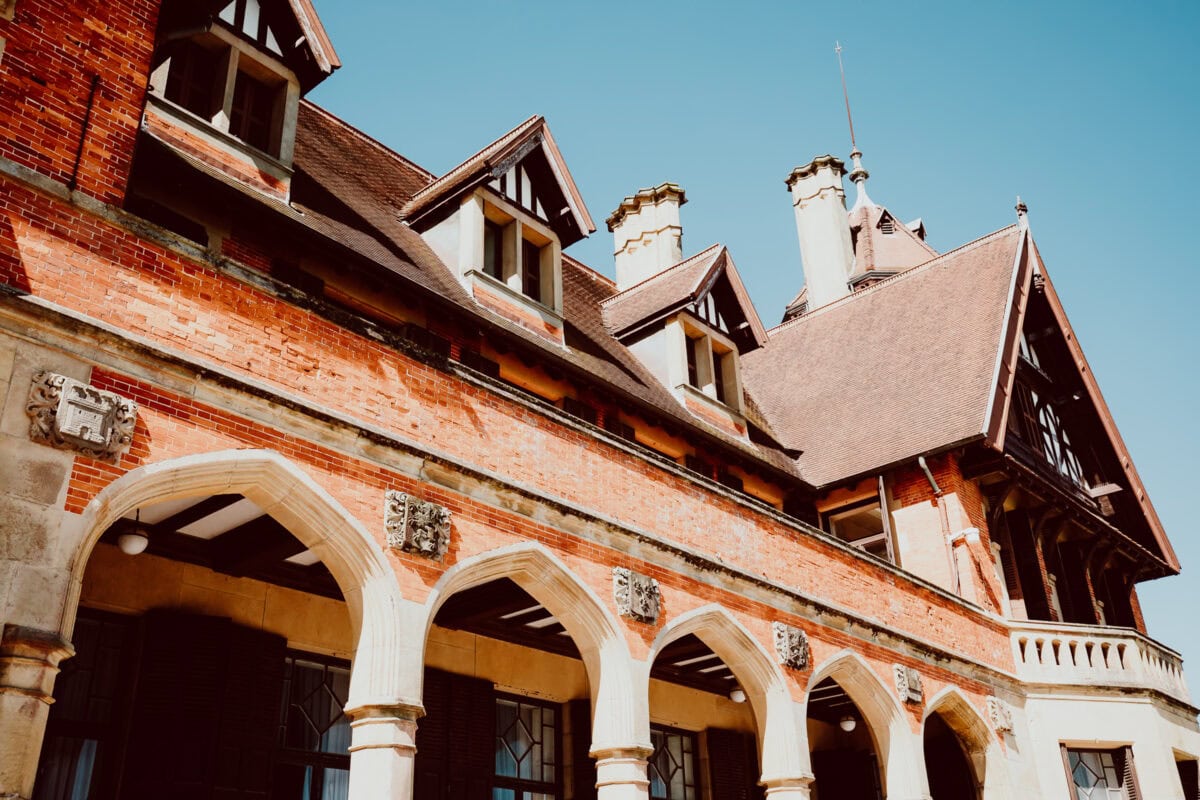
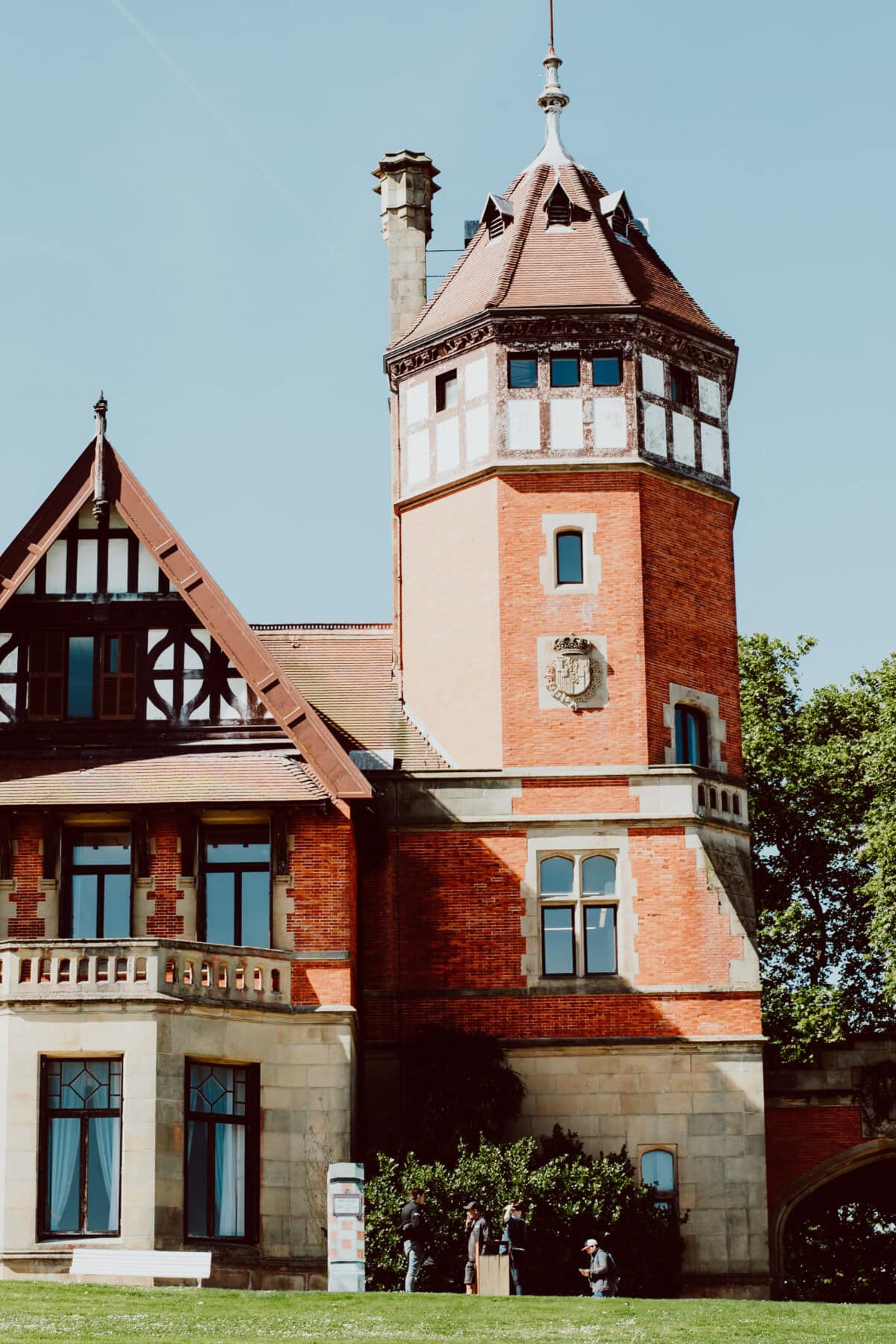
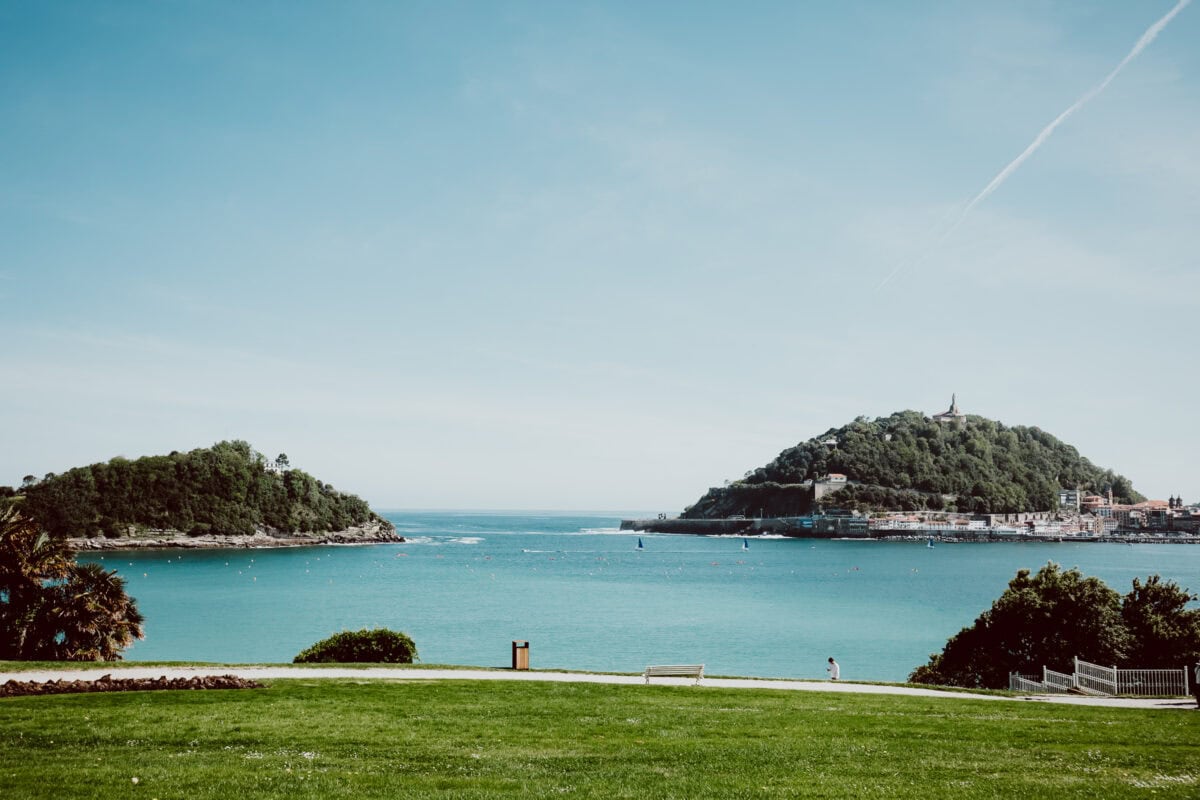
    The royal palace Palacio de Miramar was built at the end of the 19th century for the Spanish royal family. From here you have a wonderful view of the bay of La Concha and feel a bit transported back to the glory days when San Sebastián was an exclusive spa resort for nobles and the wealthy. The surrounding park is perfect for a relaxing walk.

    Historic red brick mansion with Gothic arches
    Historic castle with red brick tower and half-timbering
    Panoramic view of San Sebastián Bay with green hills

    9. Catedral del Buen Pastor

    The neo-Gothic cathedral is the largest religious building in the city. With its high tower and beautiful stained glass windows, it is really striking and is one of the most eye-catching sights in the city.

    10. Plaza Gipuzkoa

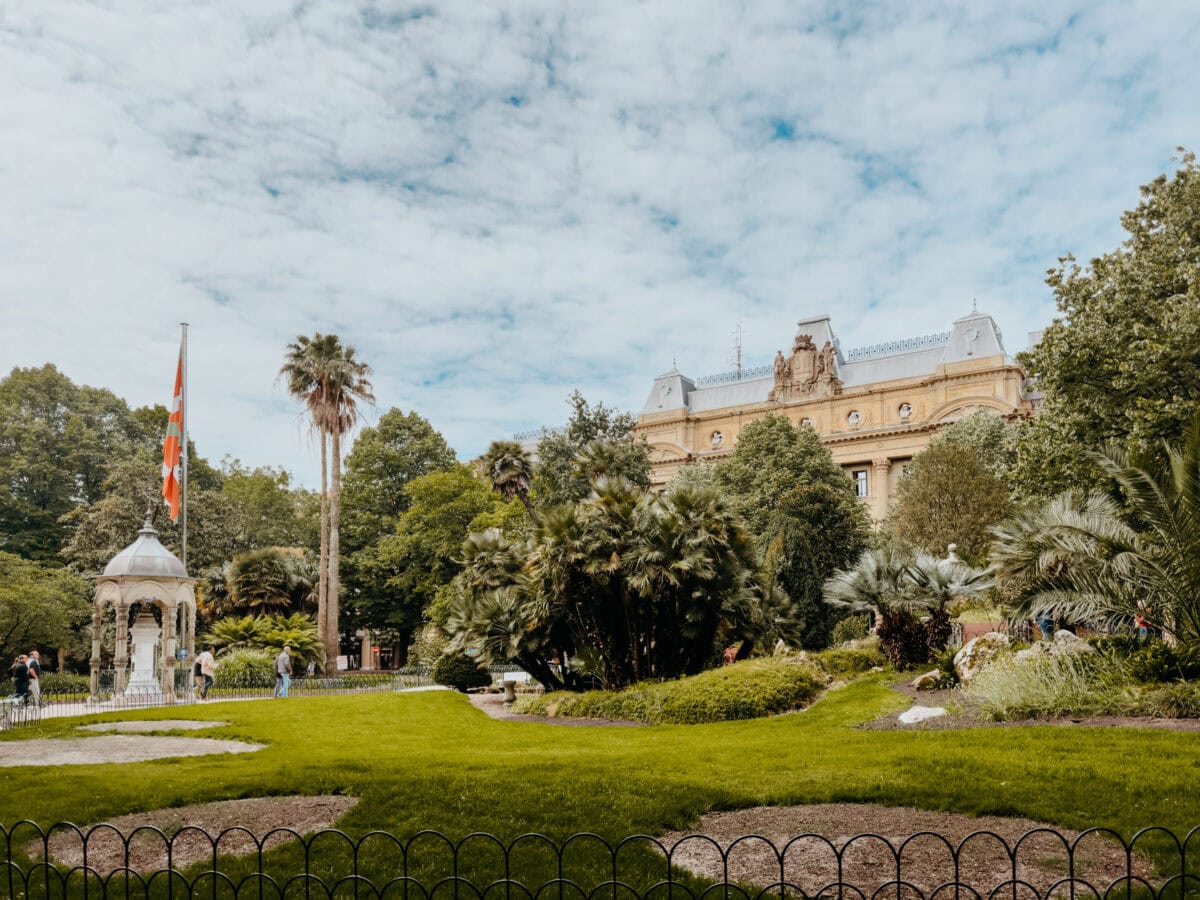
    The centrally located Plaza Gipuzkoa is the green heart of the city. The well-tended gardens are the perfect place to take a break from sightseeing.

    Historical building behind green park with flag.

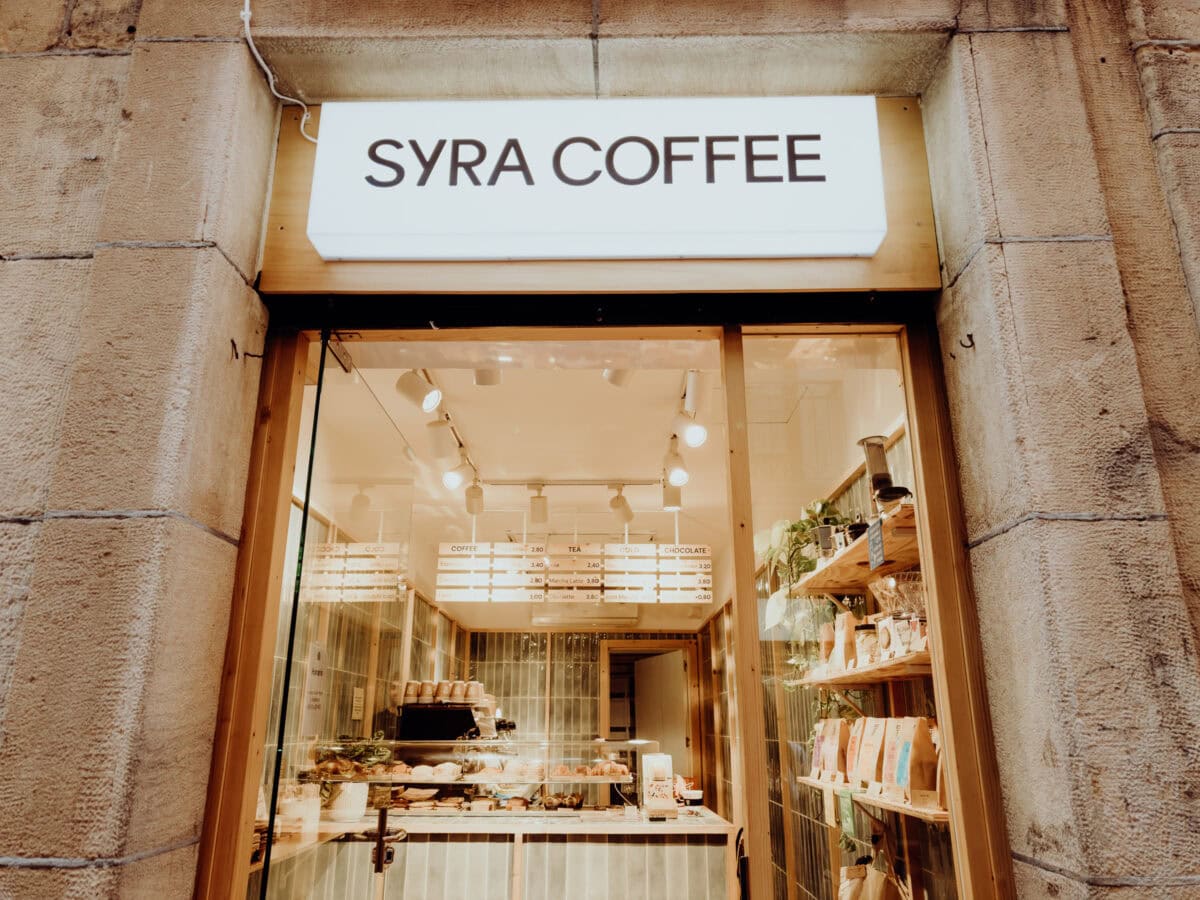
    It’s best to grab a coffee at the adjacent Syra Coffee (unfortunately only to go) and enjoy the charming city life of San Sebastián on one of the park benches. Or you can go a few meters further to the casual Koh Tao, where you can sit for longer.

    The entrance to Syra Coffee in Donostia-San Sebastián, featuring modern decor.

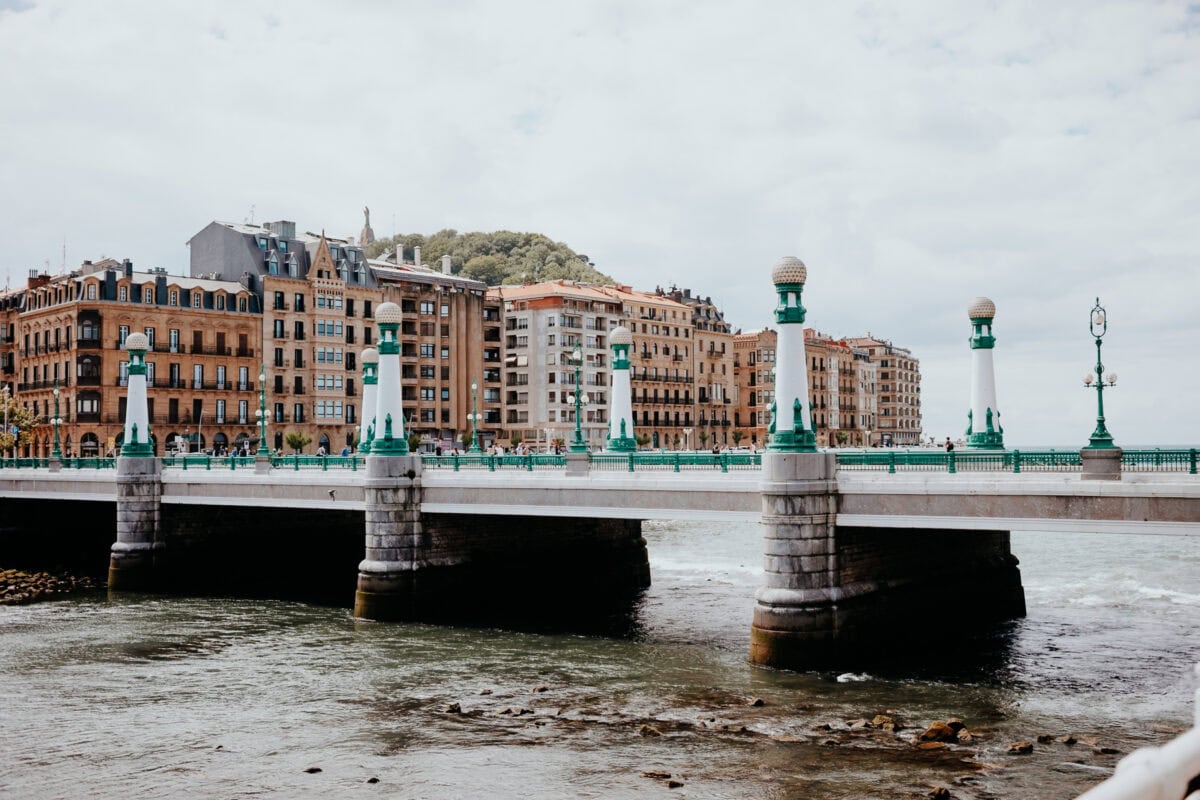
    11. Kursaal Congress Center

    The Kursaal is located just outside the actual center of San Sebastián, but is still within walking distance. It regularly hosts major events and congresses, as well as events as part of the world-famous San Sebastián Film Festival.

    Green and white bridge piers, historical buildings in the background.
    Bridge with buildings in the background

    Would you like to go south?
    You can find even more great travel destinations in Spain here

    Food & Drink in San Sebastián

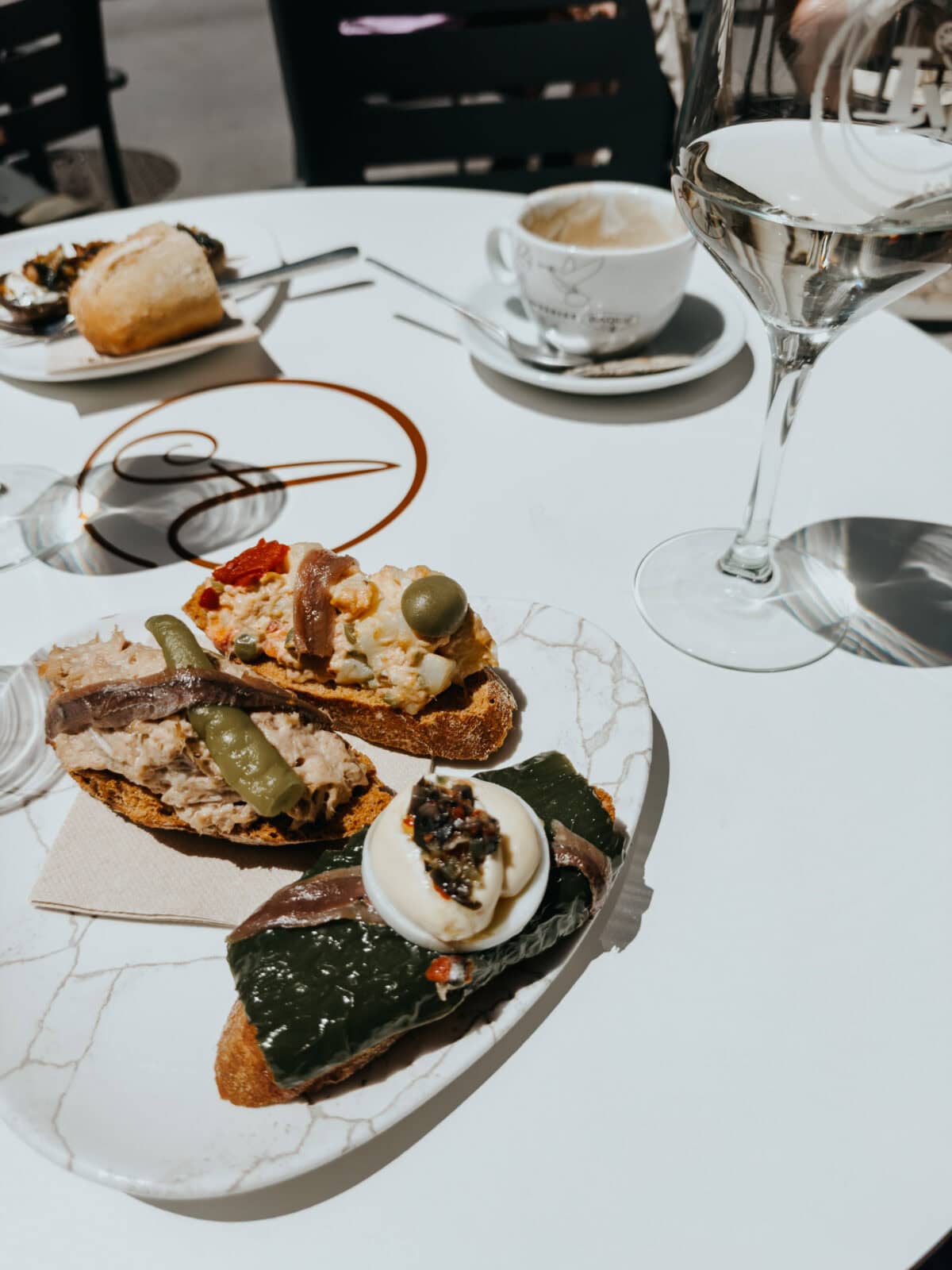
    San Sebastián is an absolute paradise for gourmets. The city has the highest density of Michelin stars per square meter in Europe. If your budget doesn’t stretch to star-rated cuisine, you don’t need to worry. Even with a normal wallet you will be able to sample the local specialties fantastically: San Sebastián is considered the cradle of the Pintxo tradition.

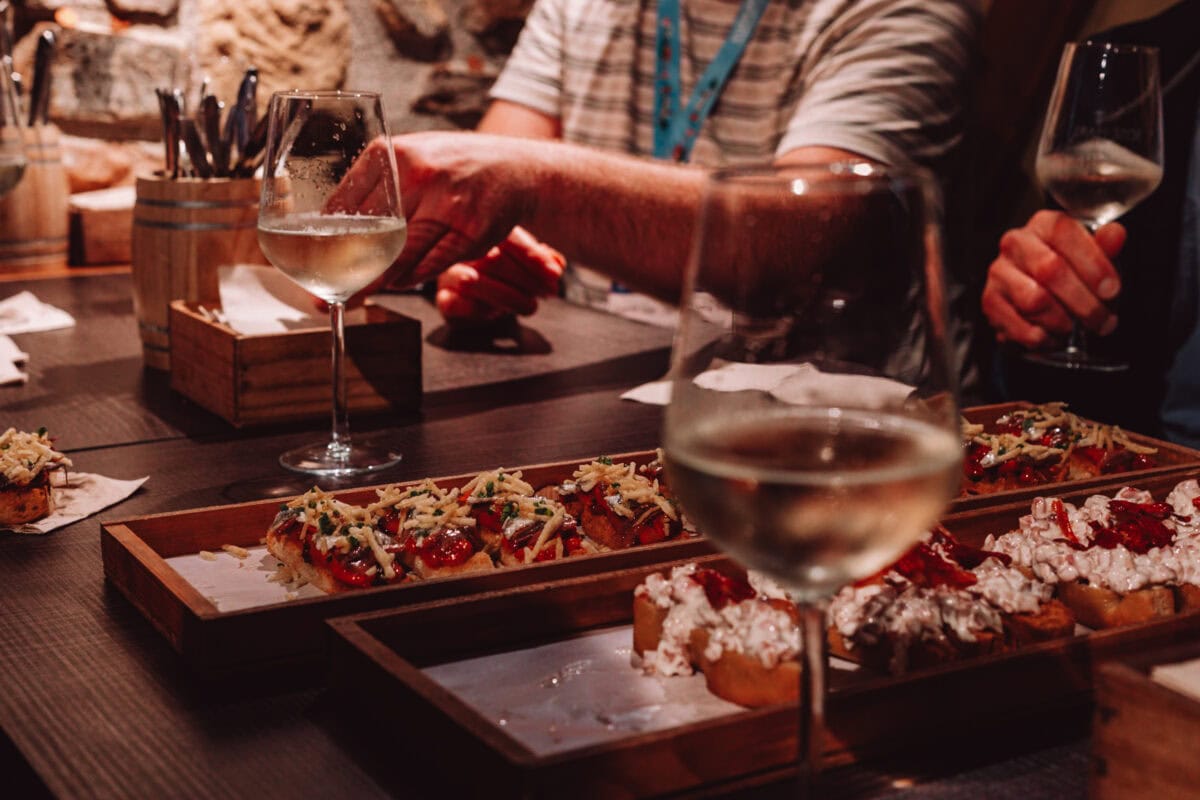
    Tapas and wine on a cafe table.

    On a pintxos tour through the Old Town

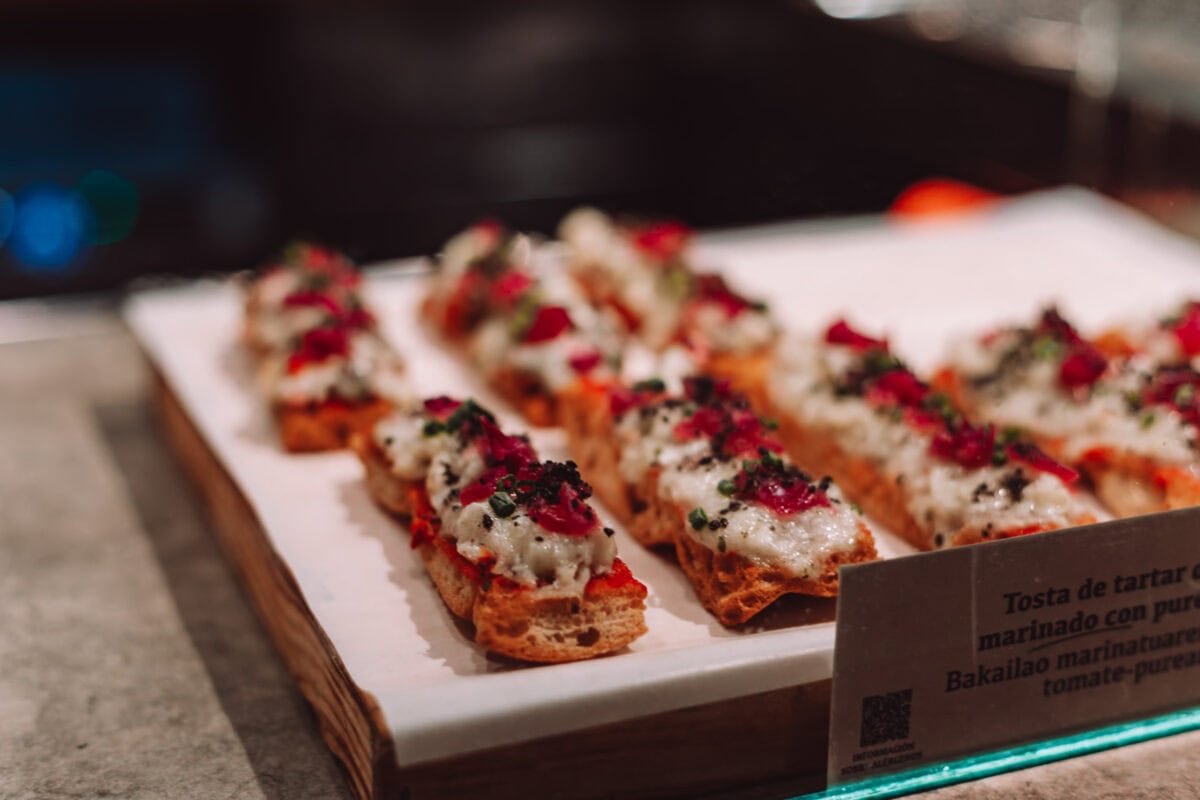
    Pintxos are small snacks that are served like tapas with a drink. You often choose your pintxos at the bar and then have them served at your table. In the old town of San Sebastián, there are many restaurants that have almost elevated their pintxos to an art form, the canapés are so elaborately assembled and presented.

    Tip: If you don’t know where to start because of all the offers, I recommend a food tour through the old town!

    You can book a food tour through the Old Town of San Sebastián here*

    Modern tapas arranged on a tray.
    Wine and tapas on a table

    Txakoli: The perfect wine accompaniment

    Pintxos are perfectly accompanied by a glass of Txakoli (pronounced: Chak-ko-lee); this is a very light, fruity white wine with some carbonation and typical from the Basque Country. Maybe your Txakoli will also be poured in the traditional way: For this, the bottle is stretched high and the wine is swung so vigorously in the glass that it foams up again. A real show!

    Cidre: The sparkling cider with show effect

    Incidentally, cider, a sparkling wine made from apples, is also popular in the region. Like Txakoli, cider is super refreshing, but has a lower alcohol content. I personally like Txakoli much better. The cider I tried everywhere in San Sebastián was too tart for me. But as always, it’s a matter of taste – it’s best to see for yourself and try both!

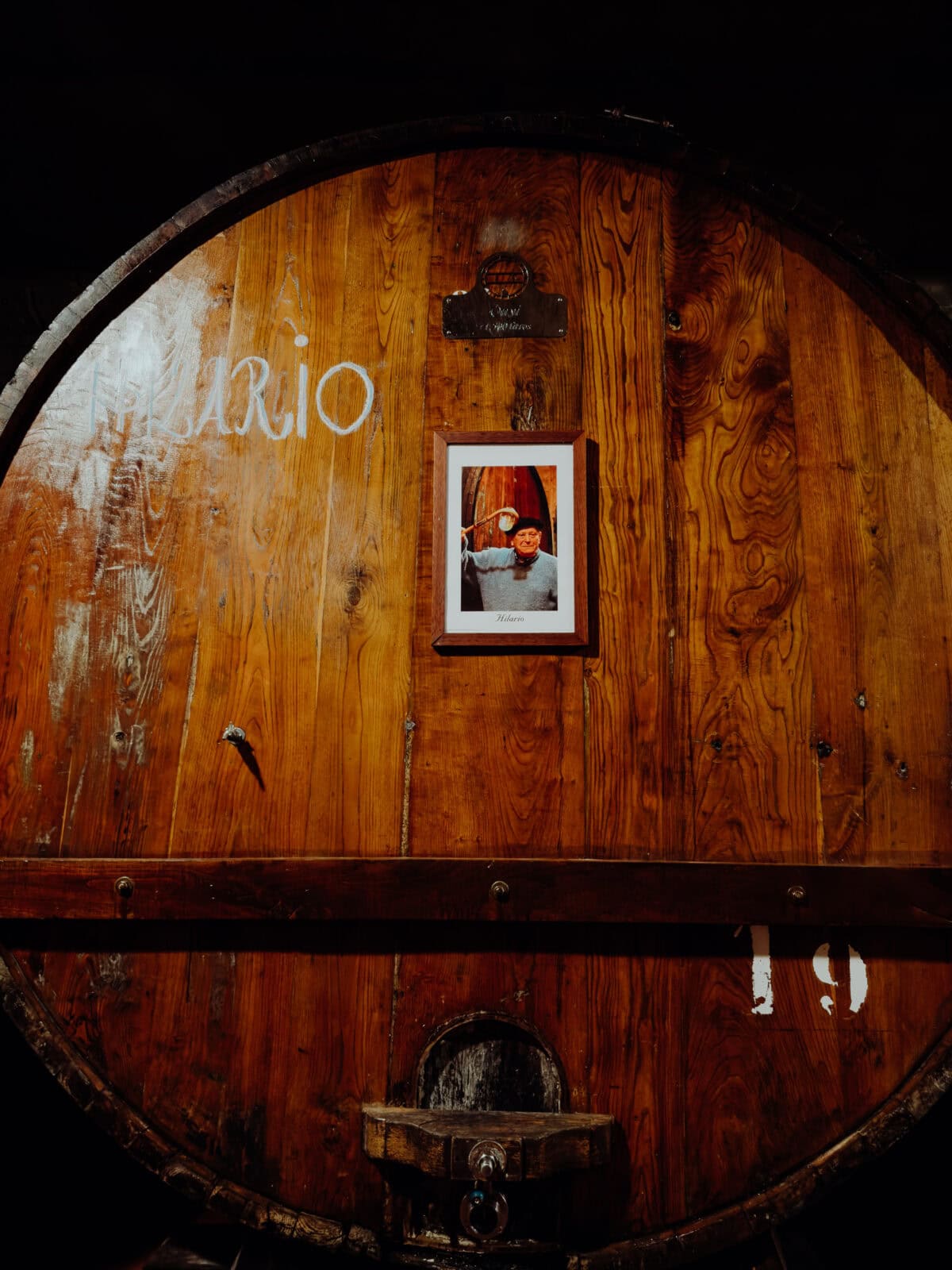
    Large wooden cider barrel decorated with a picture.

    You can get cider in many pubs in the city. But it’s also worth taking a trip to a traditional sidreria such as Petritegi. Here you can experience the entire production process, from growing and harvesting to maturing the cider. Particularly impressive are the large barrels in which the cider is stored and the traditional restaurant, where you can sample other Basque specialties in a rustic atmosphere.
    Tip: These traditional sidrerias are located outside the city. If you are not traveling by car, you can also join a tour. It’s more relaxed anyway, because then you can try the cider at your leisure!

    You can book a tour to a Sidreria here*

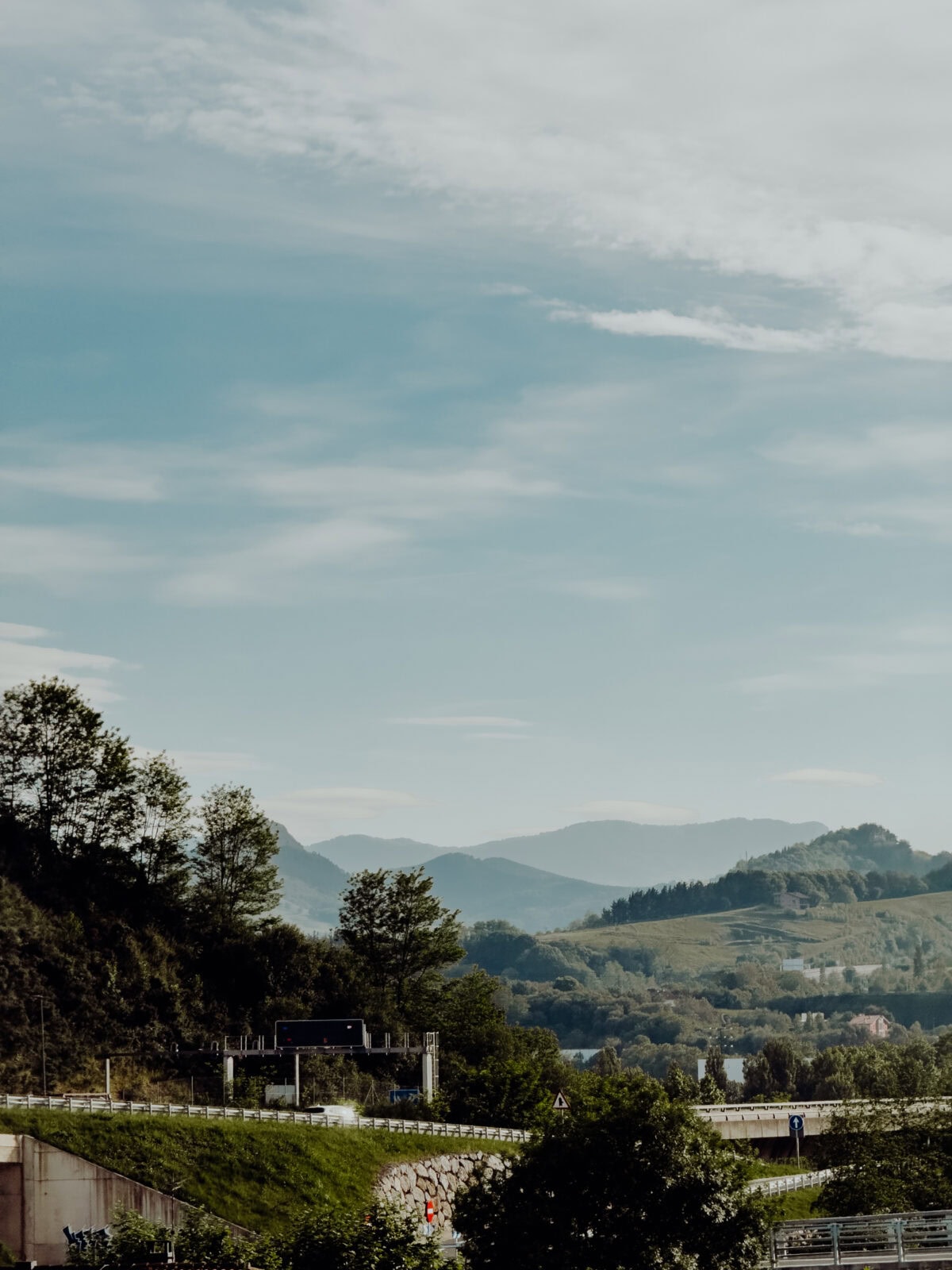
    Landscape with hills and road under blue sky.

    Do you feel like visiting the Basque Country?
    Find more articles here

    Food locations in San Sebastián: My tips

    Here are a few food tips that you shouldn’t miss out on:

    Bar La Cepa This traditional pintxo bar in the Old Town is a classic. Be sure to try the Jamón Ibérico and the delicious Bacalao pintxos (cod snacks).

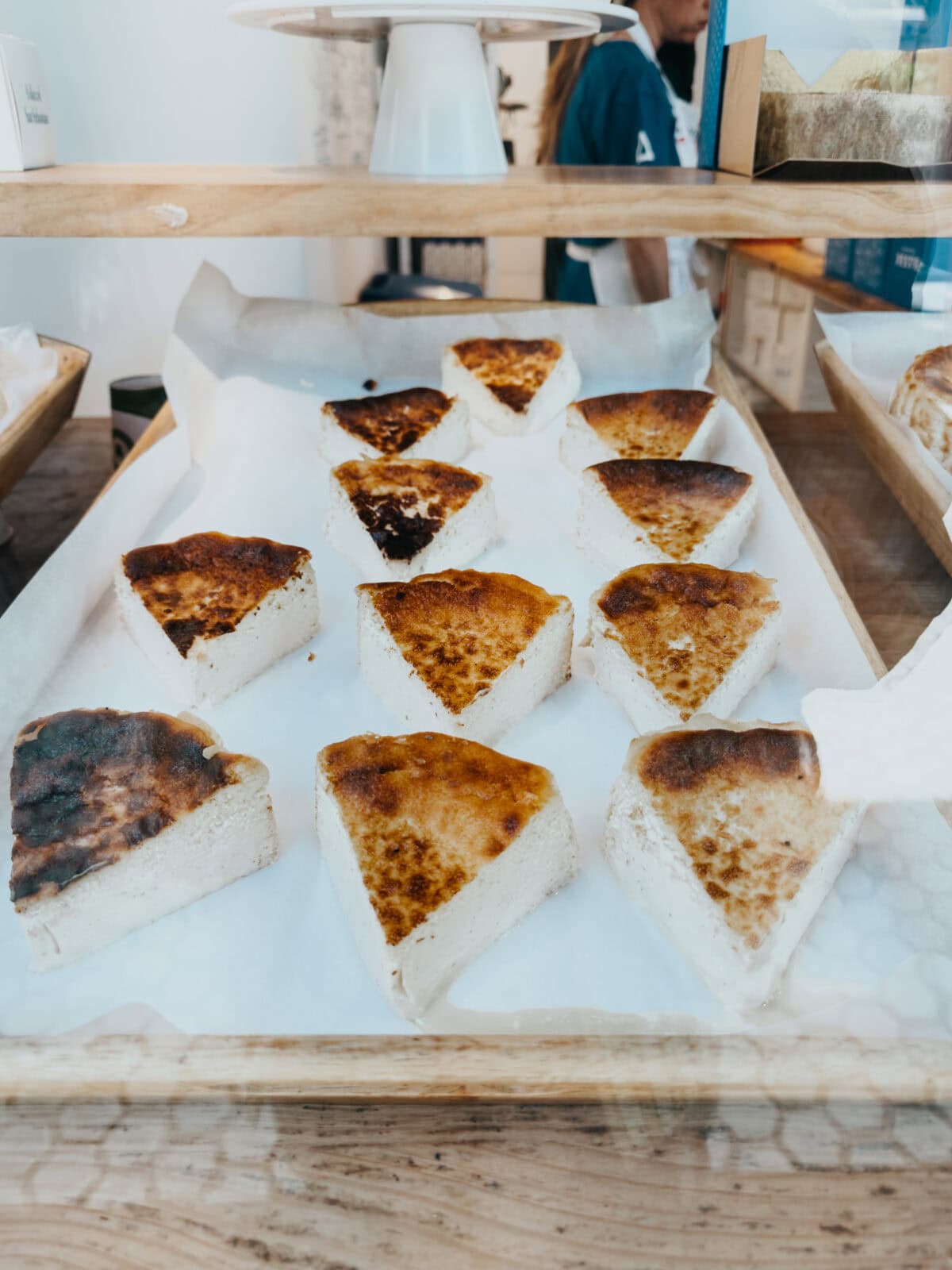
    La Viña Here you get the best cheesecake in town. Maybe you’ve already heard of San Sebastián Cheesecake? It is world famous and literally melts on the tongue. Personally, it is far too creamy and buttery for me, but you should definitely try it.

    Mercado de la Bretxa If you love fresh, local products, you should visit this market. Here you will find everything from fresh fish to Basque cheese specialties. Perfect for buying a few treats for a picnic on the beach.

    But there are so many more great food locations to discover in San Sebastián! More tips will therefore soon be available in my San Sebastián Food Guide.

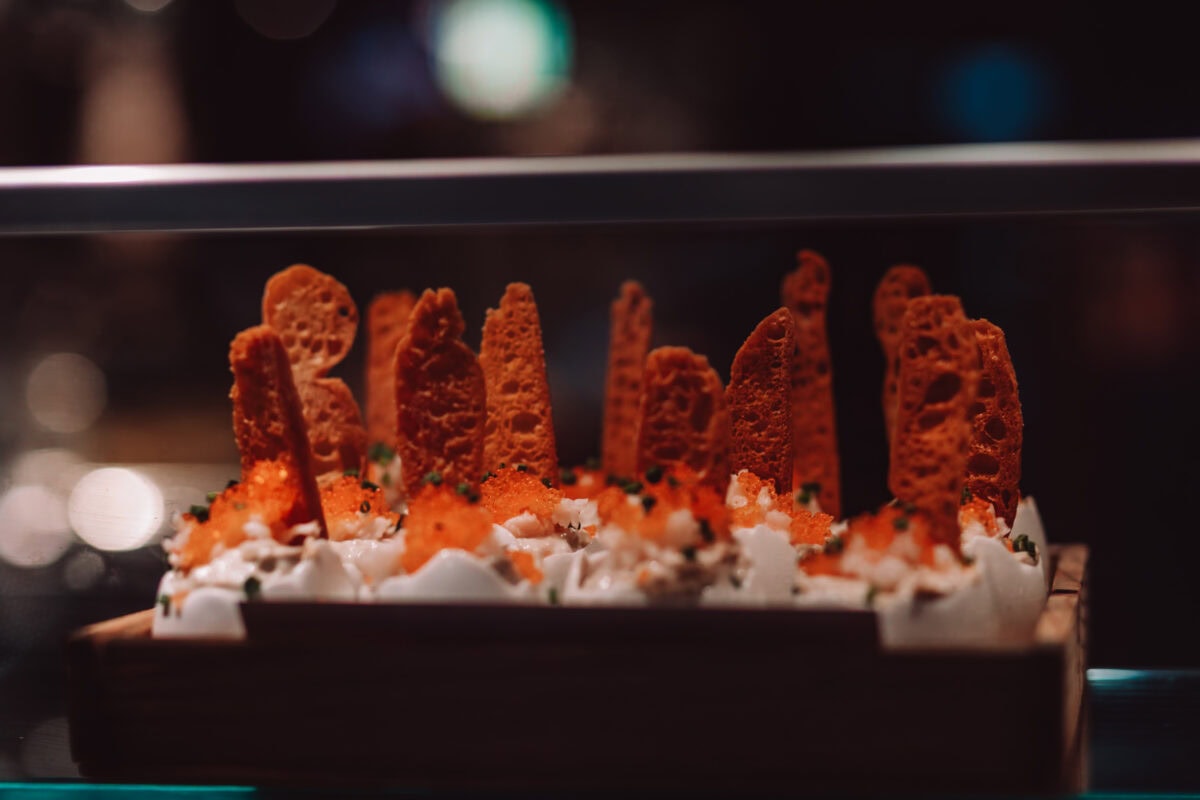
    A close-up of tapas with crispy elements.
    Slices of cheesecake on a tray, ready to serve.

    Staying in San Sebastián

    Finding a pretty hotel in San Sebastián is not difficult. However, I would rather advise against choosing a place to stay in the middle of the Old Town. Especially in the season and on weekends it can get very loud here at night. In addition, the entire Old Town is car-free, so you have to carry all your luggage over cobblestones through the narrow streets to your accommodation.

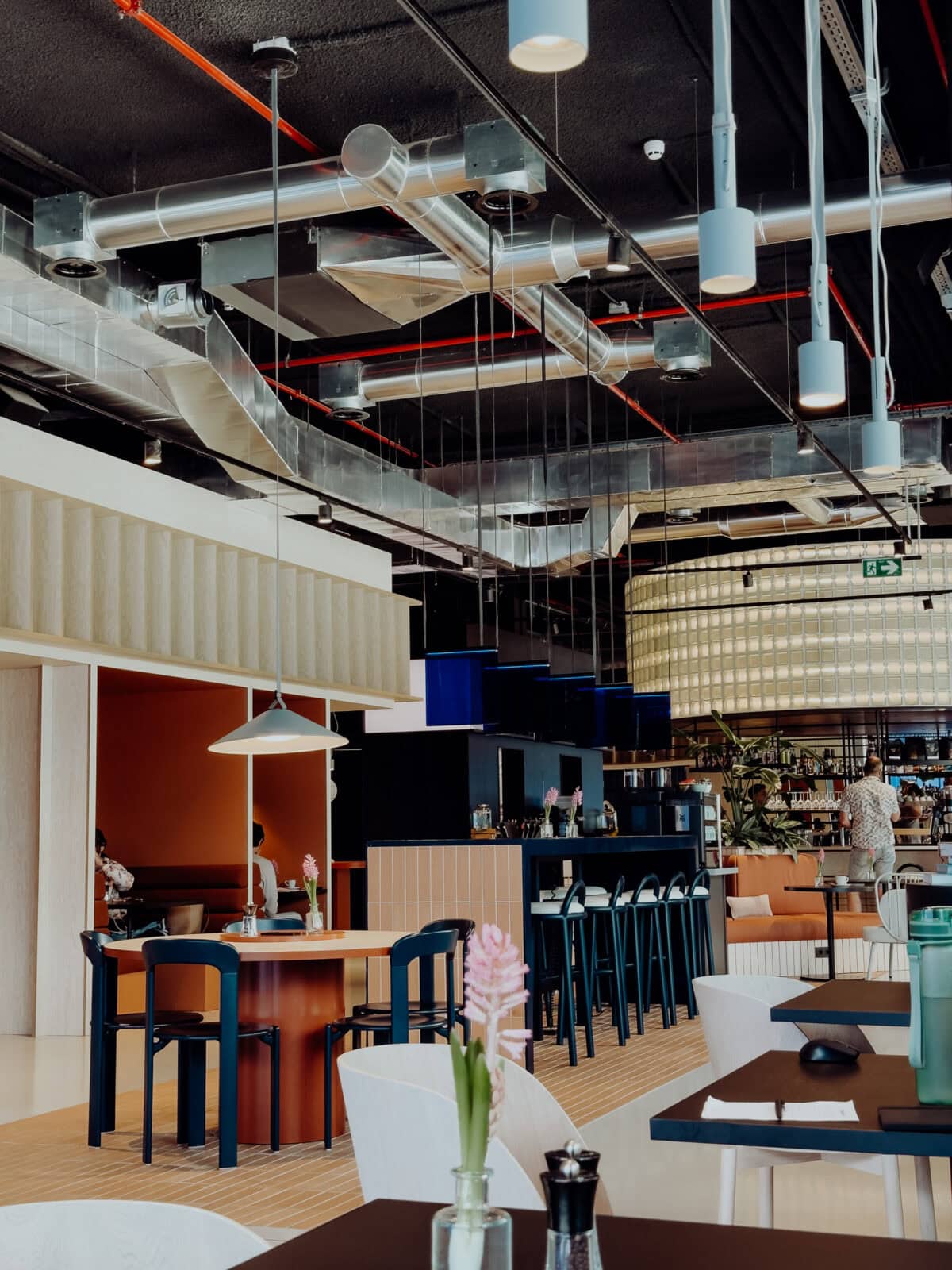
    Modern cafe with industrial design and seating area.

    I can recommend The Social Hub San Sebastián*. Although it is not directly in the city center, you can be in the middle of the city in 15 minutes by bus; you can simply buy contactless tickets on the bus when boarding. The rooms are super spacious and stylish, and you can work, read or just sit together in the lobby or restaurant. In summer, there’s also a great rooftop bar with a pool and a view; events are held regularly.

    Here you will find more accommodations in San Sebastián*

    Events and activities: What you can do in San Sebastián

    San Sebastián International Film Festival The renowned film festival attracts film stars and cineastes from all over the world every year in September. A great opportunity to discover new films and maybe even meet a star or two.

    Tamborrada: On January 20, the day of Saint Sebastian is celebrated. The whole city is in a festive mood and there are parades with drummers in traditional costumes. An experience you should not miss if you are in the city around this time.

    Water sports: San Sebastián is perfect if you are into water sports. The Zurriola beach in the Gros neighborhood, for example, is particularly popular with surfers. Don’t feel like lugging around all the equipment? You can book a full-day surfing trip here*

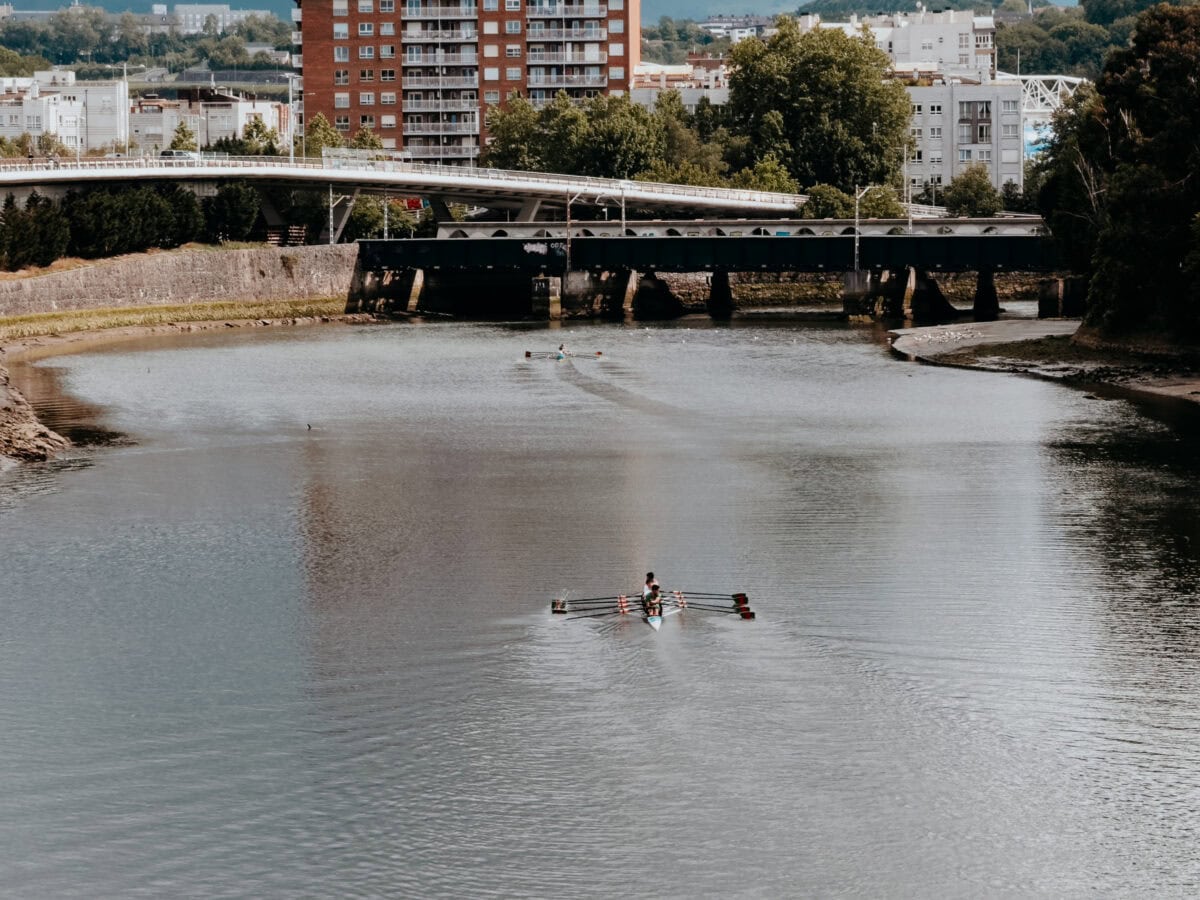
    Or you can try your hand at the Basque national sport, rowing!

    Rowers on a river in front of city view
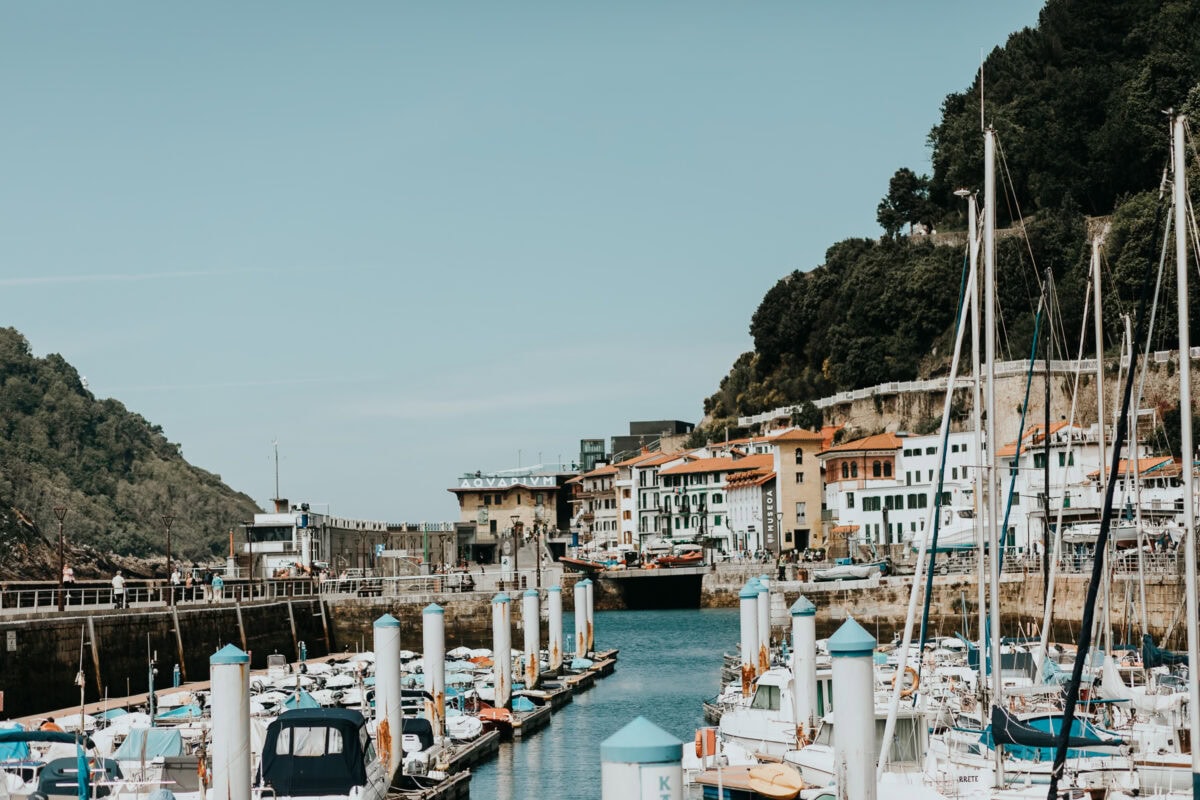
    Small harbor quay with boats and buildings

    Around San Sebastián

    In general, the Basque Country is a super exciting region and it’s worth spending more time here. San Sebastián, for example, can easily be incorporated into a road trip through the Basque Country and the French Atlantic coast with Saint-Jean-de-Luz and Biarritz is also not far away.

    Or you can combine your trip with a detour to Bilbao, the equally worth seeing Basque metropolis. Here you can find my guide to Bilbao

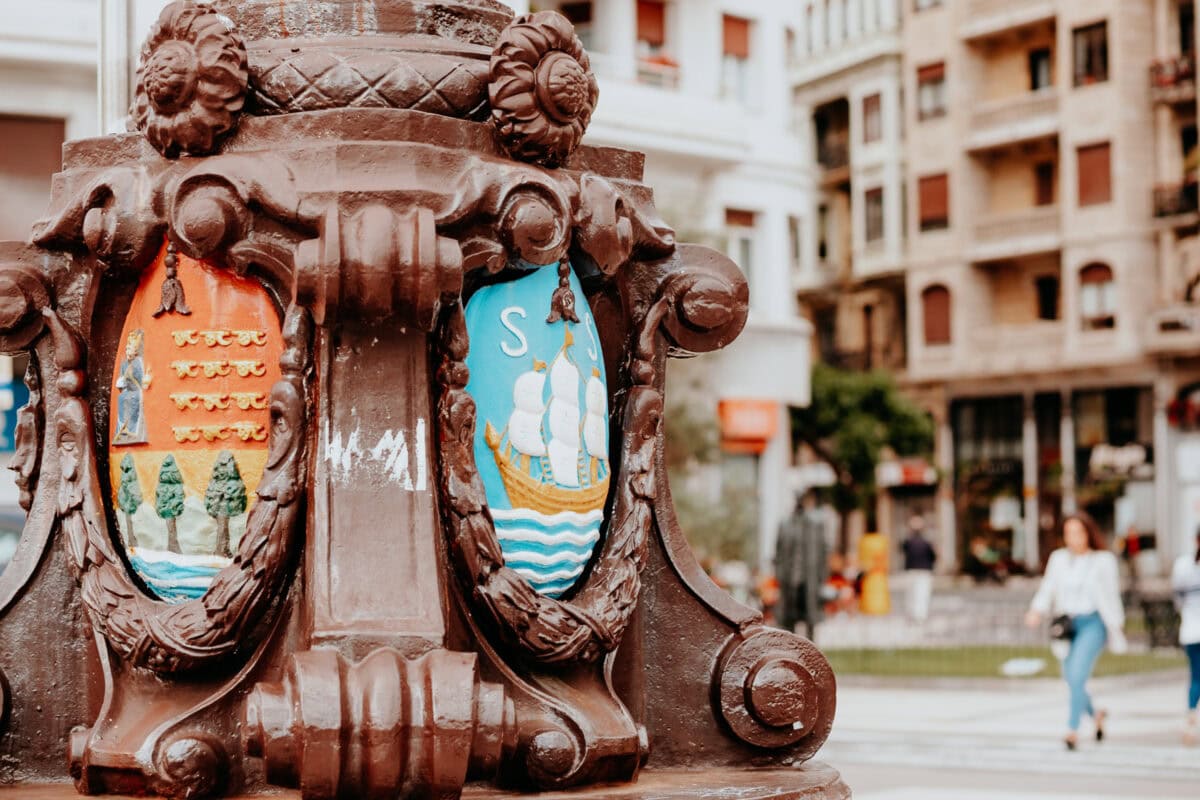
    Historical monument with coat of arms in city view

    Getting to San Sebastián

    San Sebastián has its own airport. However, it is very small and is usually only served by Spanish airlines that connect San Sebastián with other domestic destinations.

    It is more practical to travel via Bilbao airport. From there, there is a regular bus service (approximately every hour) to the bus station in San Sebastián. Although this is not directly in the city center, it is still easily accessible by public transport.

    Check flight connections to Bilbao (BIO) here*

  • Correfoc in Palma: All about the great fire spectacle

    Correfoc in Palma: All about the great fire spectacle

    If you’ve ever experienced Palma in summer, you won’t recognize the capital of Mallorca, especially in January. The alleyways of the old town are no longer bustling with people, some stores are even completely closed and you are generally more likely to meet locals than tourists. But January still has a lot to offer – such as the exciting Correfoc!

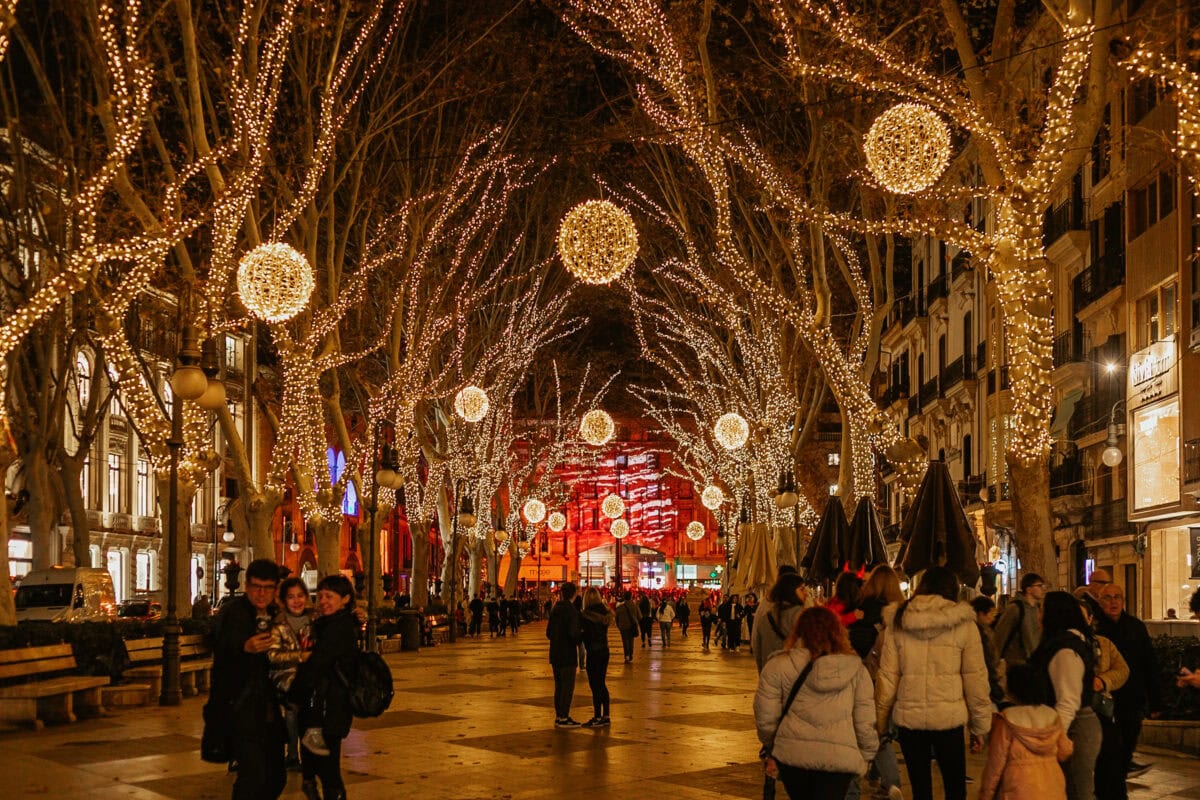
    Passeig del Born in Palma, illuminated by string lights in the trees.
    The Correfoc also moves along the Passeig del Born, which is still lit up for Christmas.

    What is Correfoc?

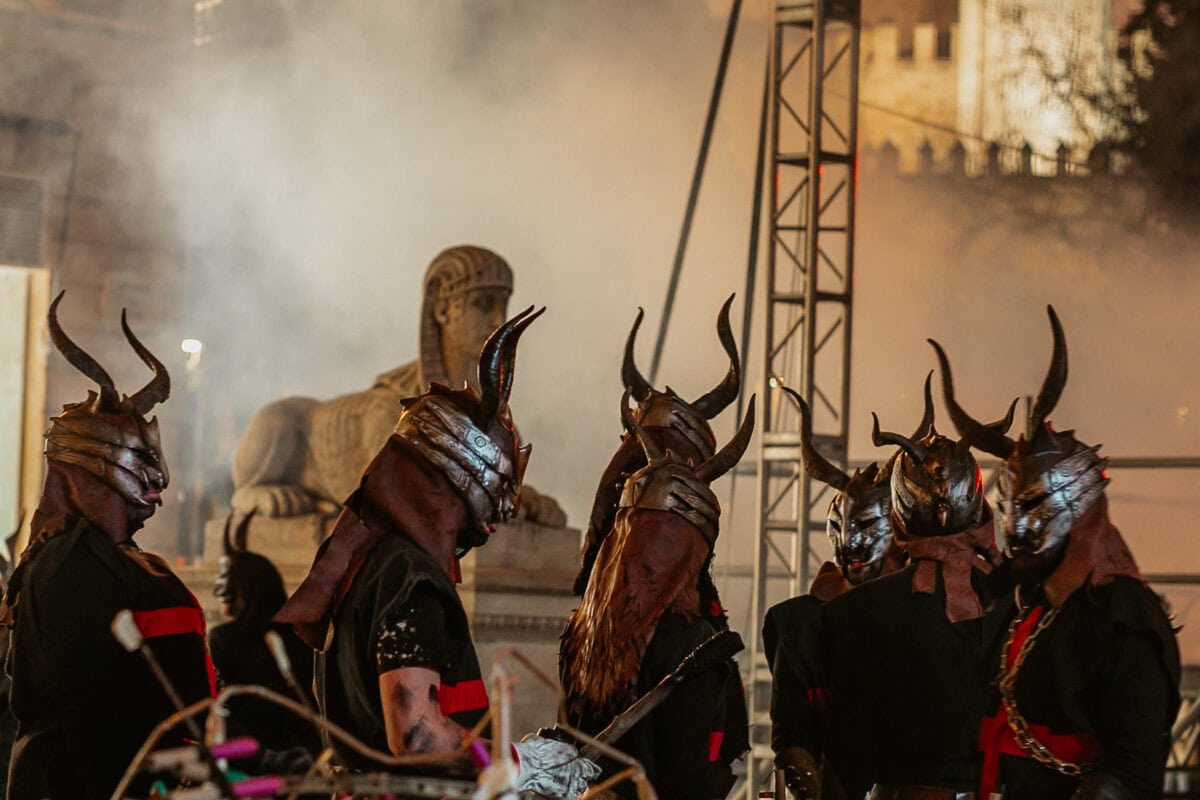
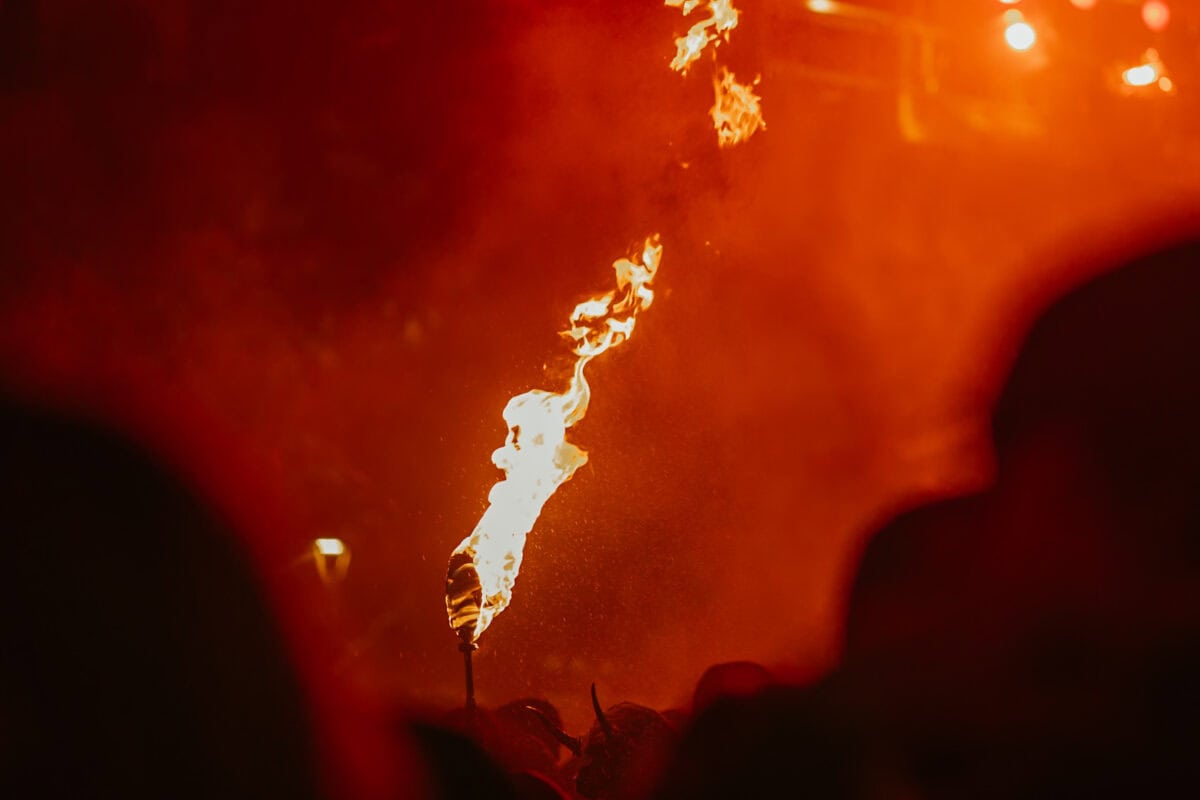
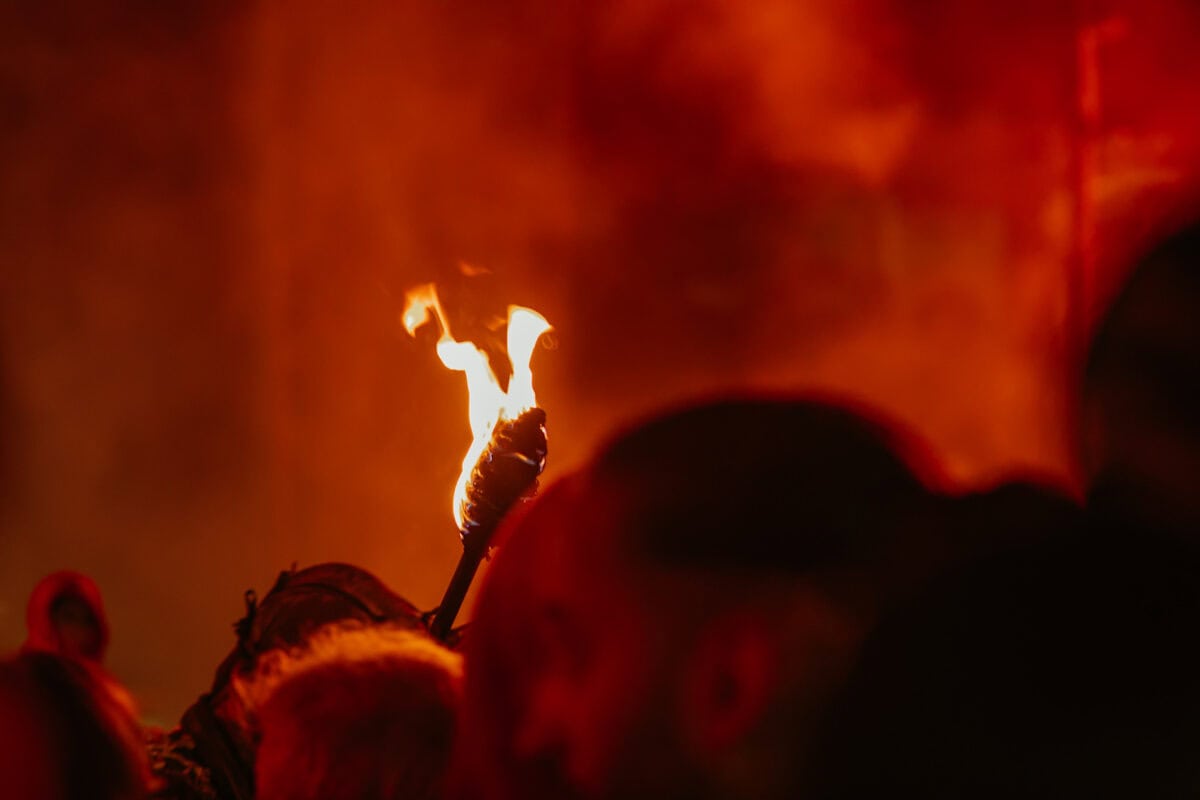
    Correfoc can be translated as “fire walk“: Several traditional groups parade through the city with flaming torches and fireworks of all kinds, dressed up as devil-like “Dimonis” and are accompanied by loud drums. The Correfoc is a Catalan tradition that has been practiced for centuries. Although Mallorca forms its own province with the other Balearic islands of Ibiza, Menorca and Formentera, it shares similar roots with Catalonia.

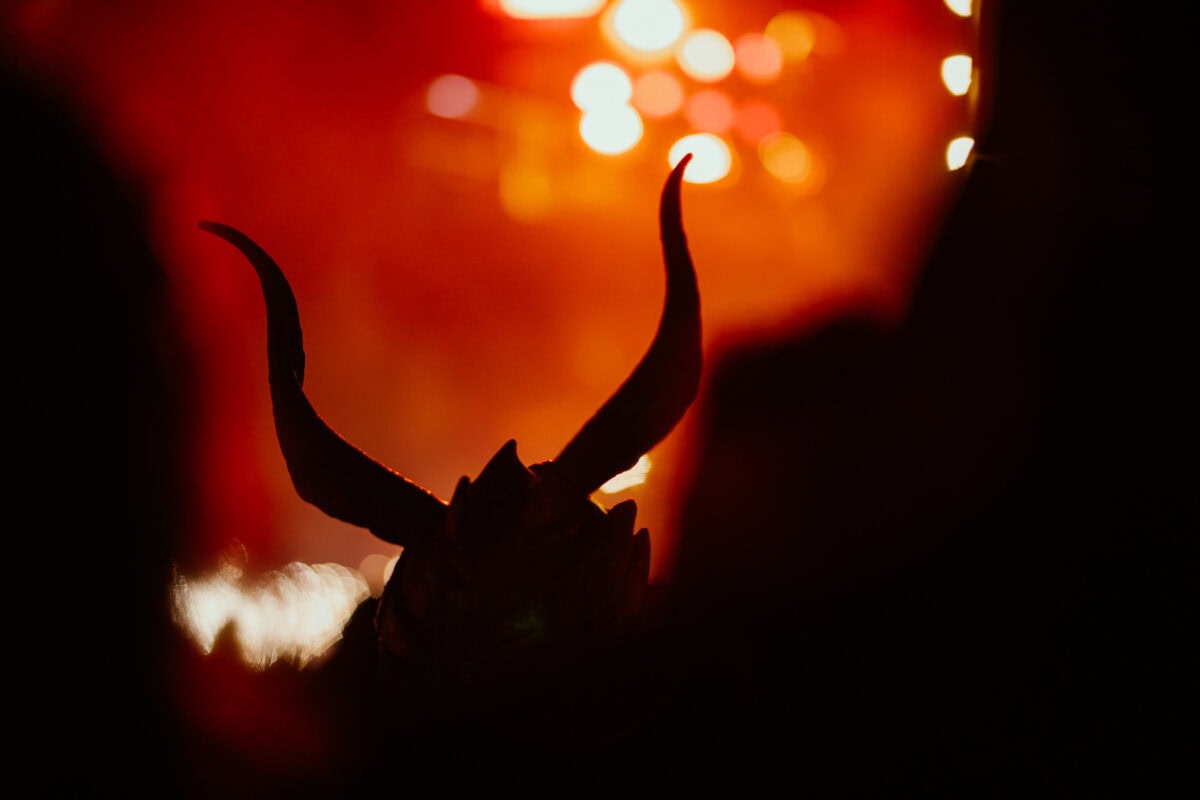
    Shadows of demons against an orange sky at the Correfoc

    The Correfoc is also an integral part of the island’s cultural life. In summer, these parades are held for various events, but the biggest is the Correfoc as part of the Sant Sebastián festivities.

    Sant Sebastián is the patron saint of the city and many big events take place in Palma around his anniversary in January, which are mainly attended by locals. So if you want to immerse yourself in Mallorcan culture, January is an excellent month for a trip to Palma.

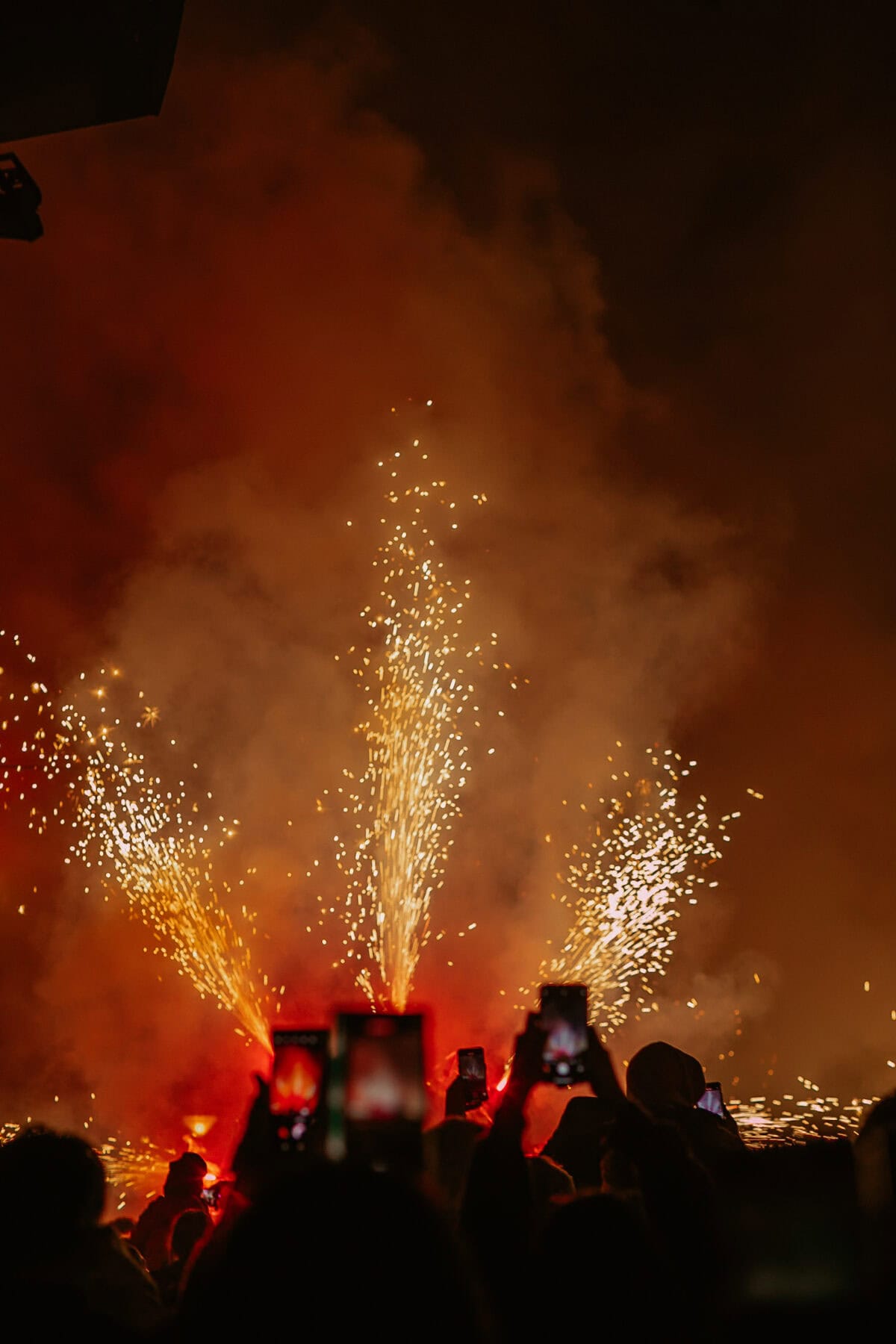
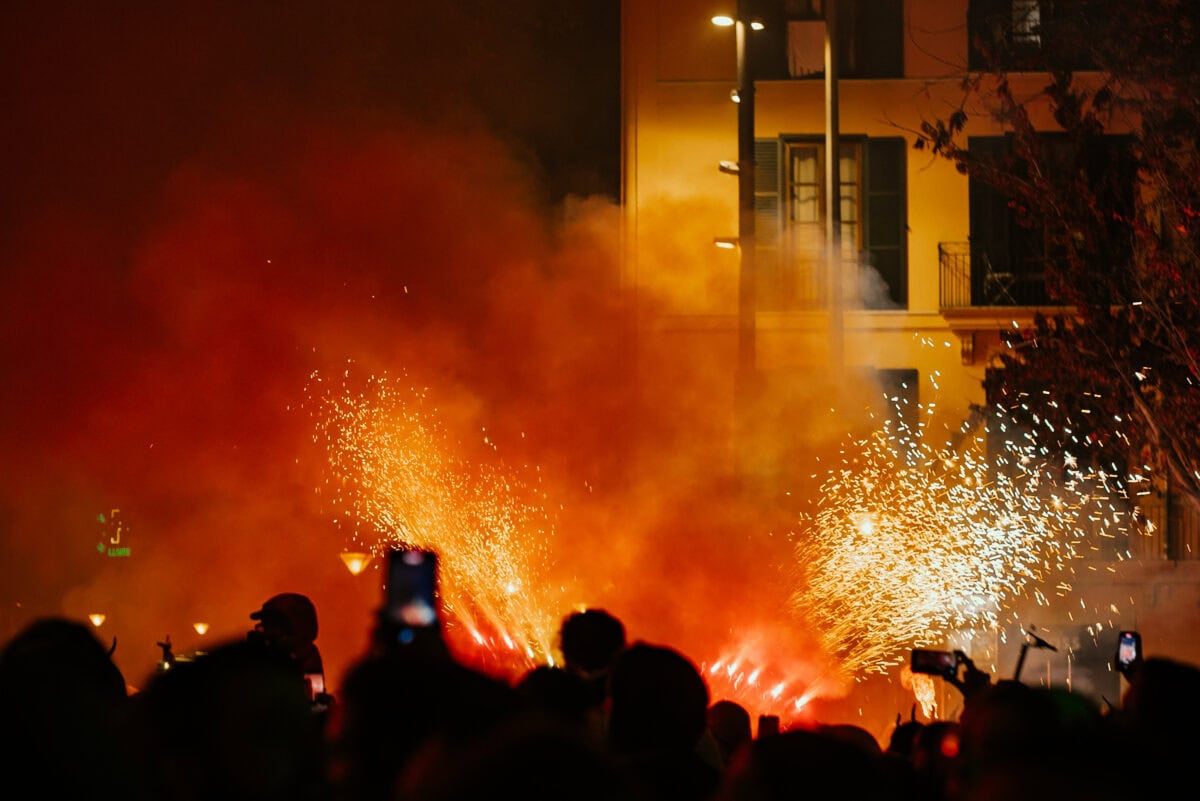
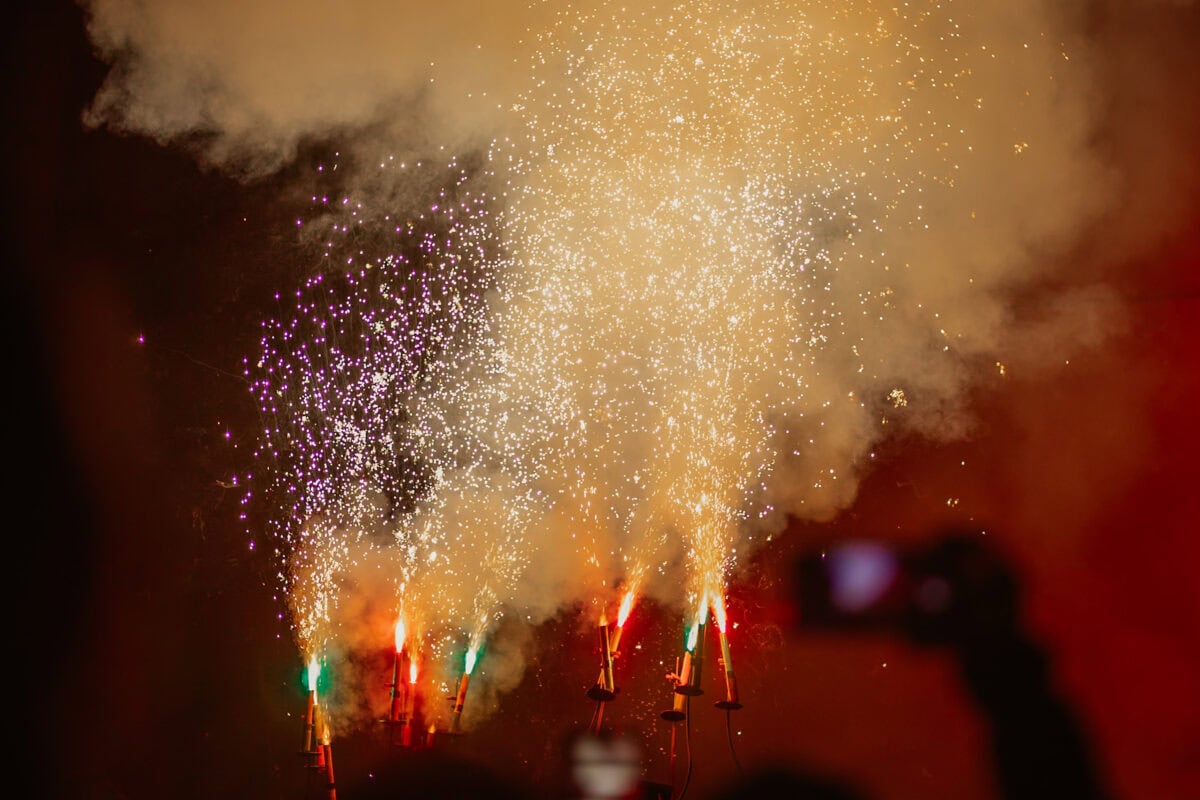
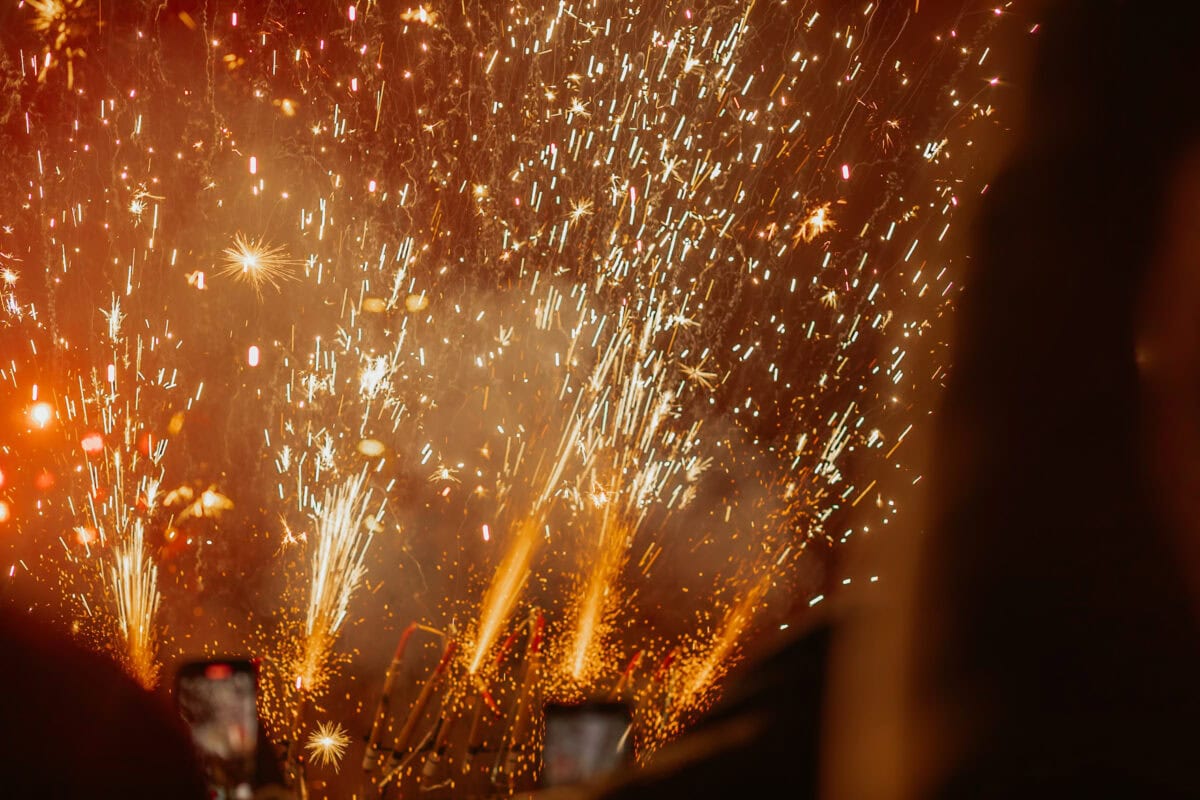
    Fireworks and people with smartphones in the dark

    Correfoc & the background

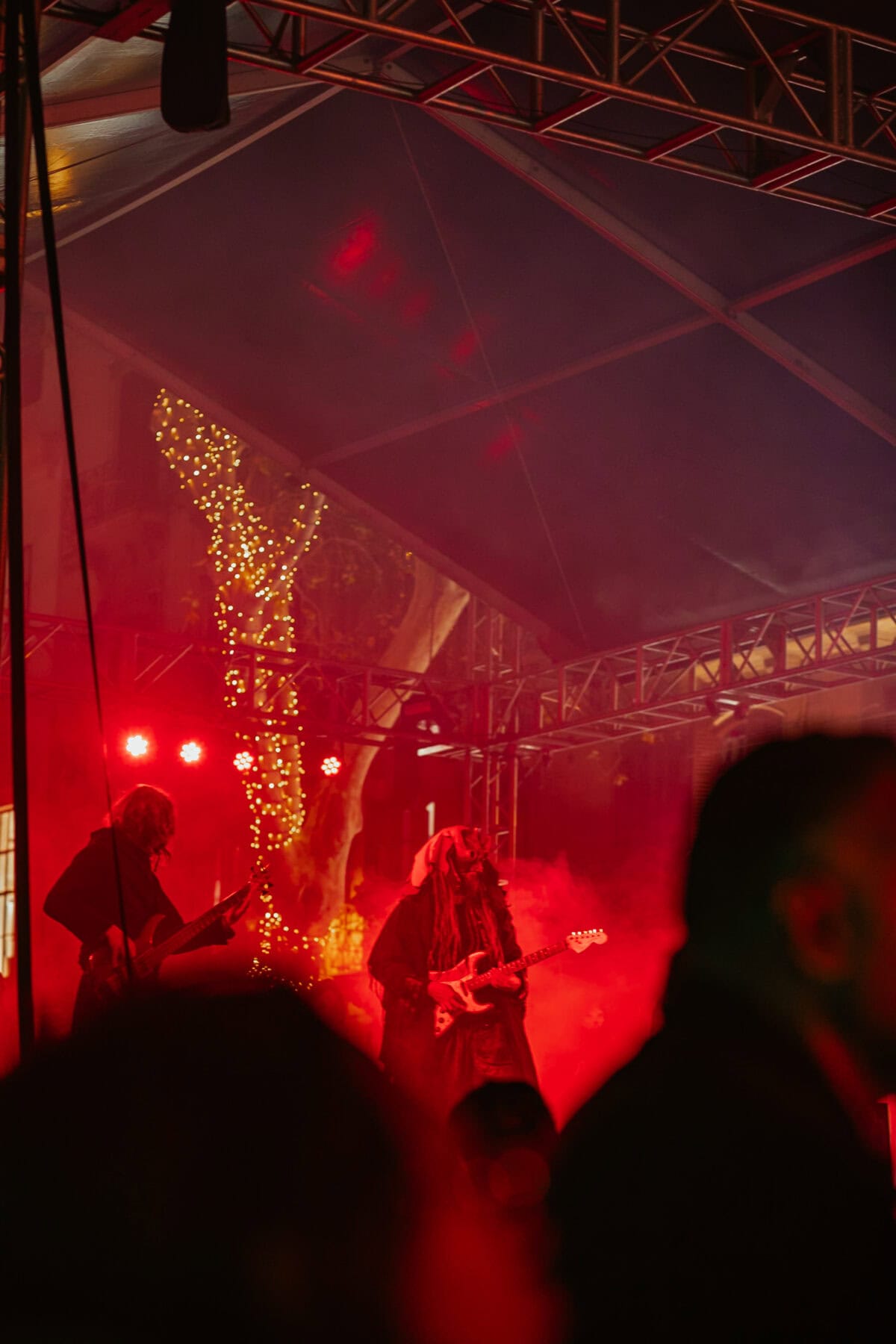
    Originally, the Correfocs had a largely religious background: the Dimonis symbolize evil and need to be driven away with fire and loud drumming. Over the centuries, the Correfocs have developed into an integral part of Catalan culture. Today they have more of an entertaining folk festival character, even if they initially seem very frightening. For the big Correfoc in January, for example, a large stage is set up on the Passeig del Born where local acts perform.

    Musicians with guitars on a stage lit in red at the Correfoc in Palma

    The mood among the Dimonis

    The fireworks, the loud drums and the disguised Dimonis are very impressive. Similar to the Alemannic carnival in southern Germany, the parade is rather sombre in nature. However, the audience is still involved and despite the intimidating backdrop, the atmosphere is cheerful and relaxed.

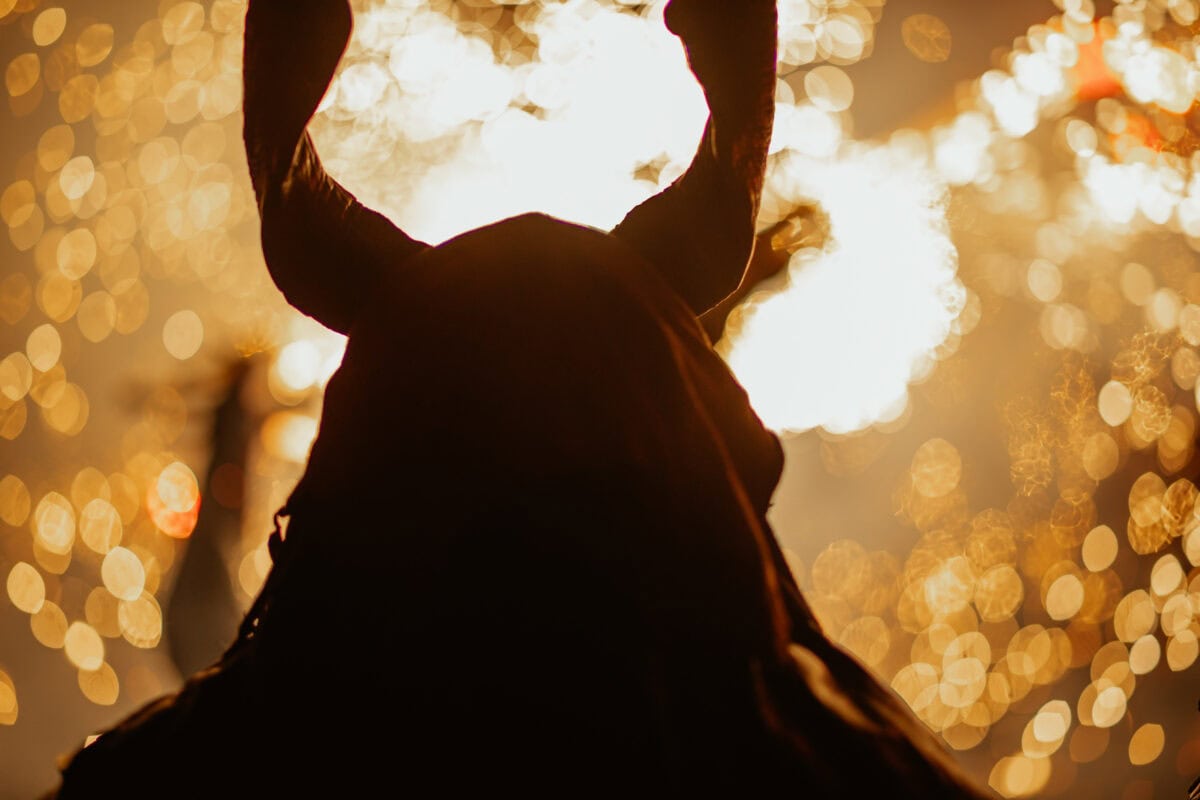
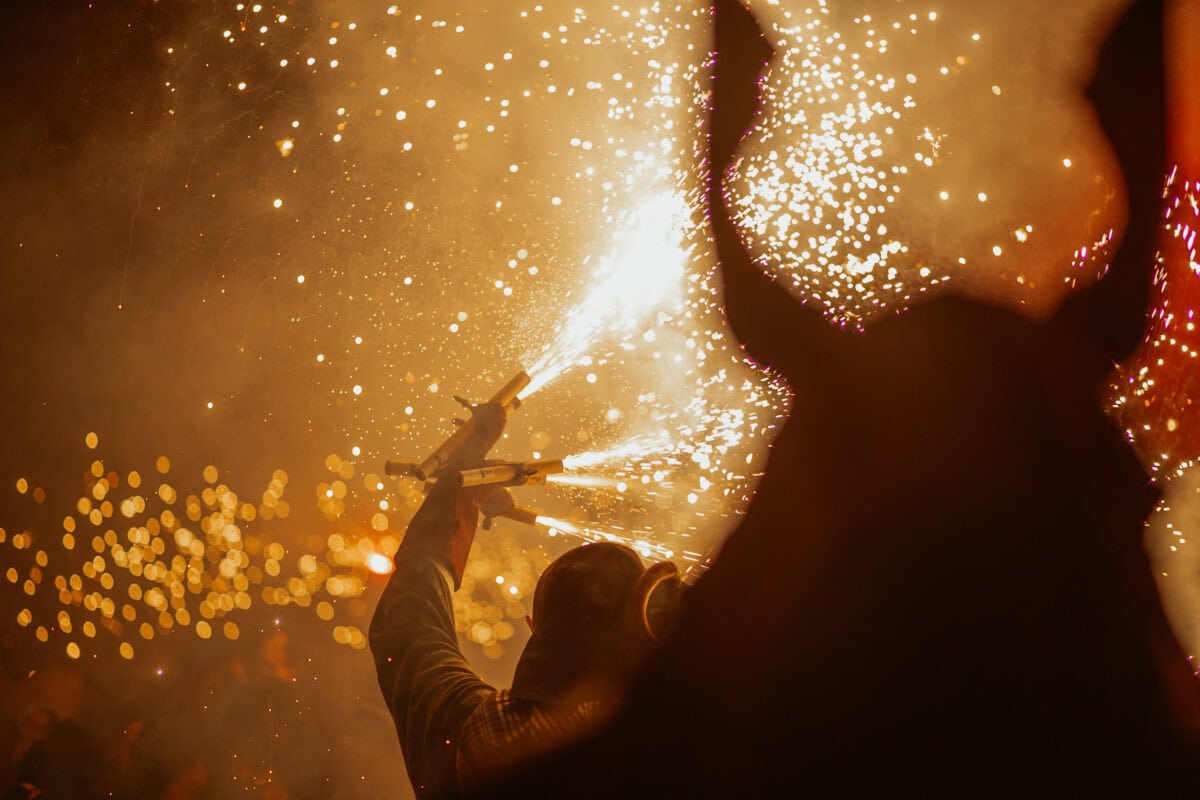
    People wearing helmets with horns at the Correfoc in Palam, Mallorca.
    Silhouette with horns in front of sparks and light.

    Participate in the Correfoc

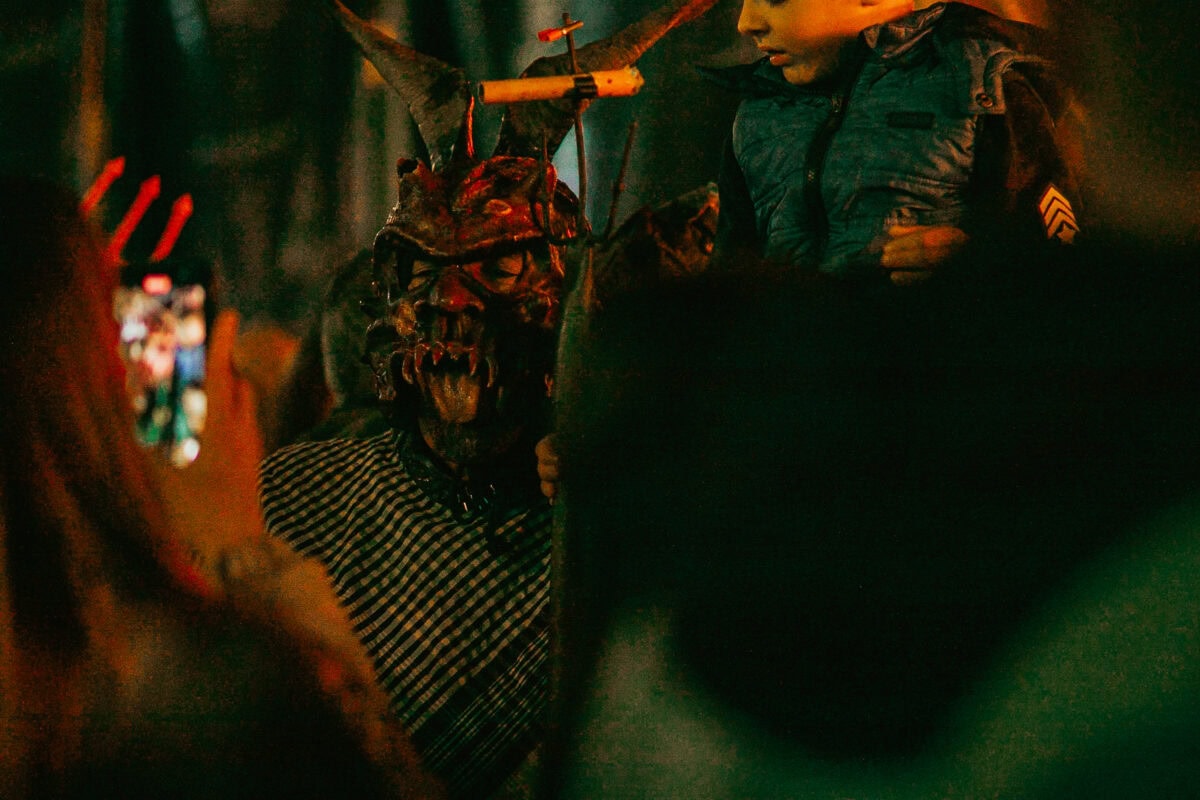
    The Dimonis also sometimes parade through the crowds, are willing to be photographed and enjoy joking with the spectators. Young people in particular enjoy mingling with the dancing Dimonis and their fire-breathing torches. Participation is officially allowed and part of the spectacle.

    A demonic mask and a child at the Correfoc in Palma, Mallorca.
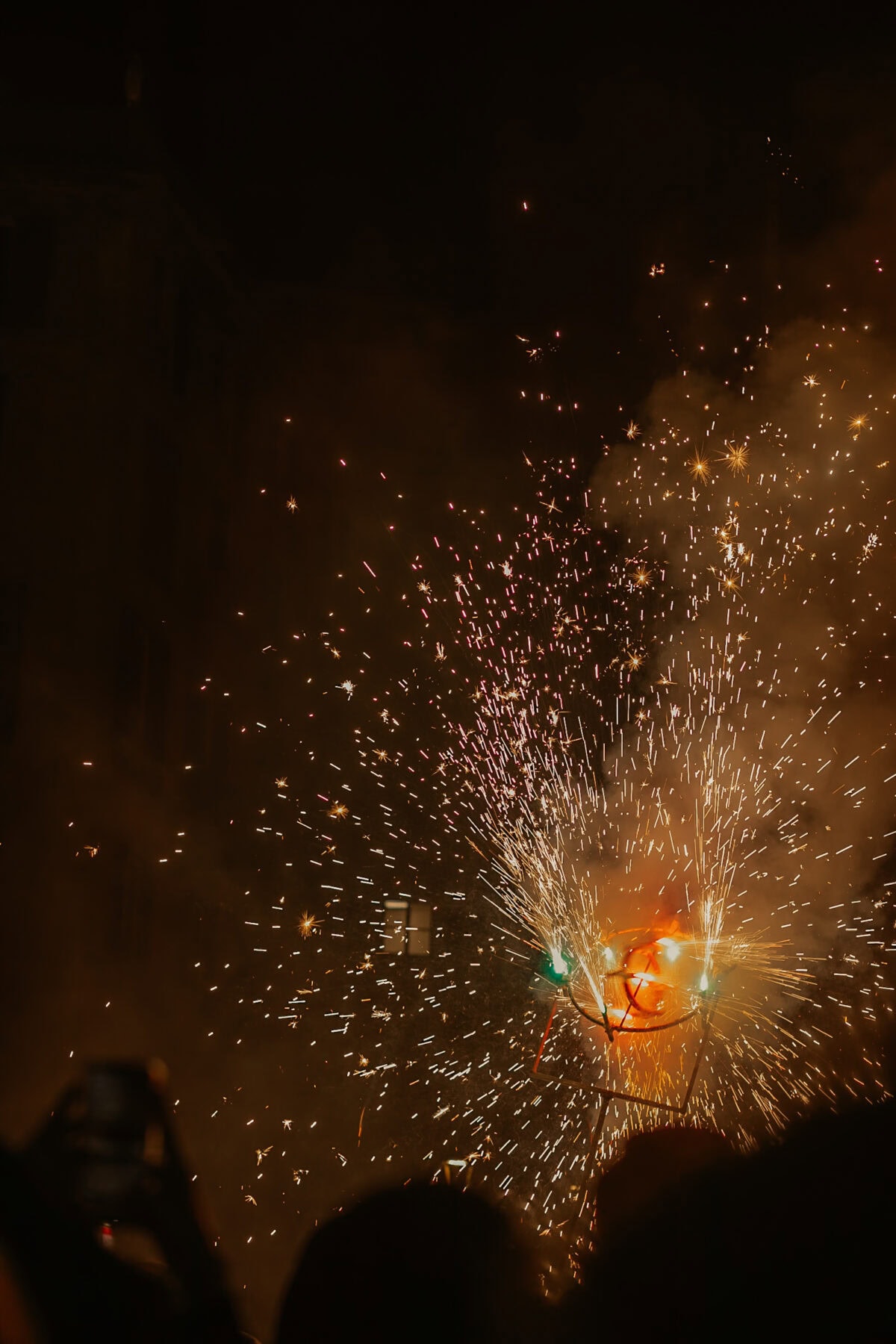
    Fireworks at Night in a Crowd at the Correfoc in Palma

    Even as a mere spectator, you can get very close to the fireworks; sometimes even unintentionally if a Dimonis suddenly stands next to you and lights his pyrotechnics. As a rule, however, people are very considerate of each other and no one is deliberately bothered by fireworks.

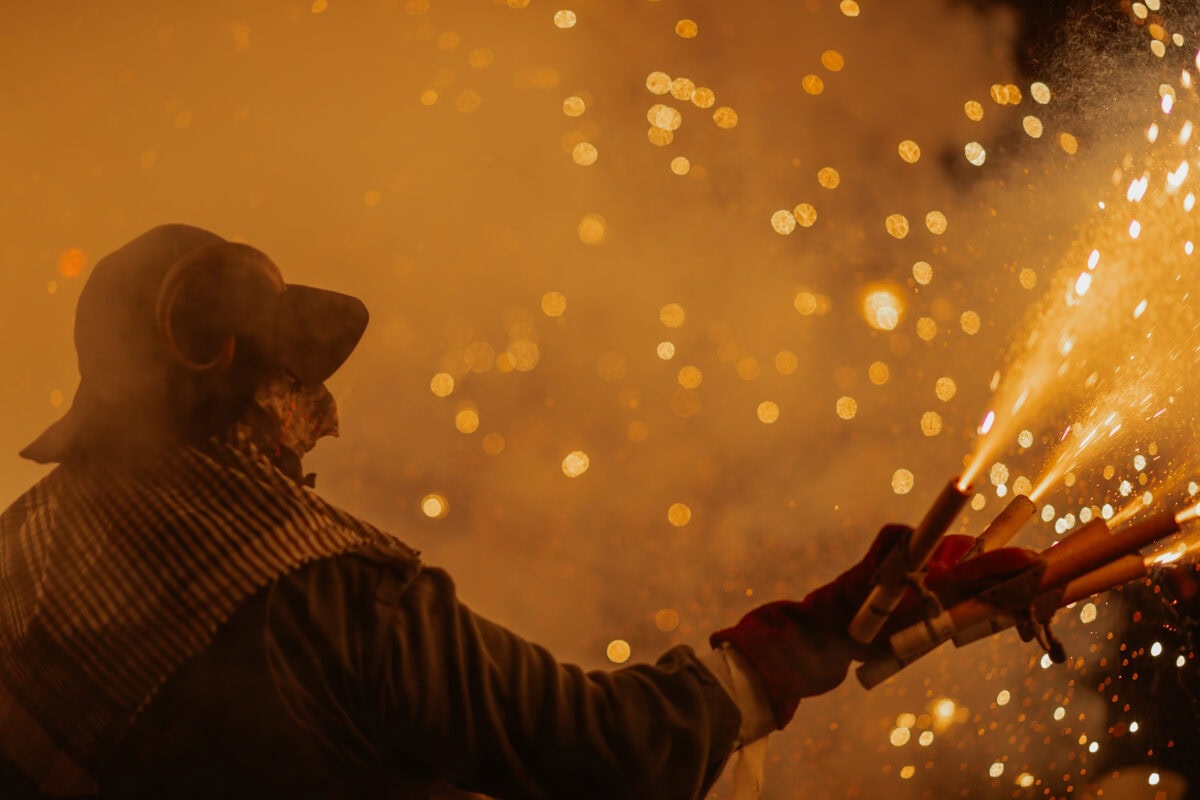
    A person holding sparks and fireworks
    Pyrotechnics with sparks flying from a Dimonis' hand during the Correfoc.

    Safety measures: What you need to be aware of when attending a Correfoc

    Nevertheless, you should be especially prepared when you go to a Correfoc and keep the following important things in mind:

    • Clothing: Wear clothes that you can put up with if necessary if they get a burn hole – the flying sparks should not be underestimated! Make sure that your arms and legs are covered.
    • Headgear: Protect your hair, for example with a baseball cap or simply choose an old hoodie.
    • Hearing protection: The Correfoc is really loud! The drums and whistling pyrotechnics are not for the noise-sensitive.
    • Sturdy shoes: With the lower temperatures in January, closed shoes are a good choice anyway. However, make sure you choose shoes with robust soles and upper material.
    • Camera/smartphones: Photography and filming is permitted, but the lenses in particular can be damaged by sparks. Some people tape the lenses of smartphones with tape.
      For cameras with interchangeable lenses, screw-on filters are a good option. (I always have a UV filter on my camera lenses for protection anyway, which has saved me from major damage several times). It’s best to use lenses with a long focal length so that you can take photos from a safe distance.
    Person films fireworks with cell phone at night

    The safety standards at Correfocs are really high. Both Dimonis and spectators are very considerate of each other. Aggressive behavior is not tolerated. For example, bringing your own fireworks is strictly forbidden! You are also not allowed to borrow fireworks from the Dimonis. If you still get hit by a spark, you do so at your own risk – so protect yourself well!

    Colorful fireworks explode in the night sky.

    Where does the Correfoc take place in Palma?

    At around 7pm, the individual groups will run in a star shape from various starting points towards the central Passeig del Born. The final event with a large stage will then take place in Plaça Rei Joan Carles I.

    Are you planning a trip to Palma? You can find even more tips here!

    Fireworks light up the night sky with colorful sparks.
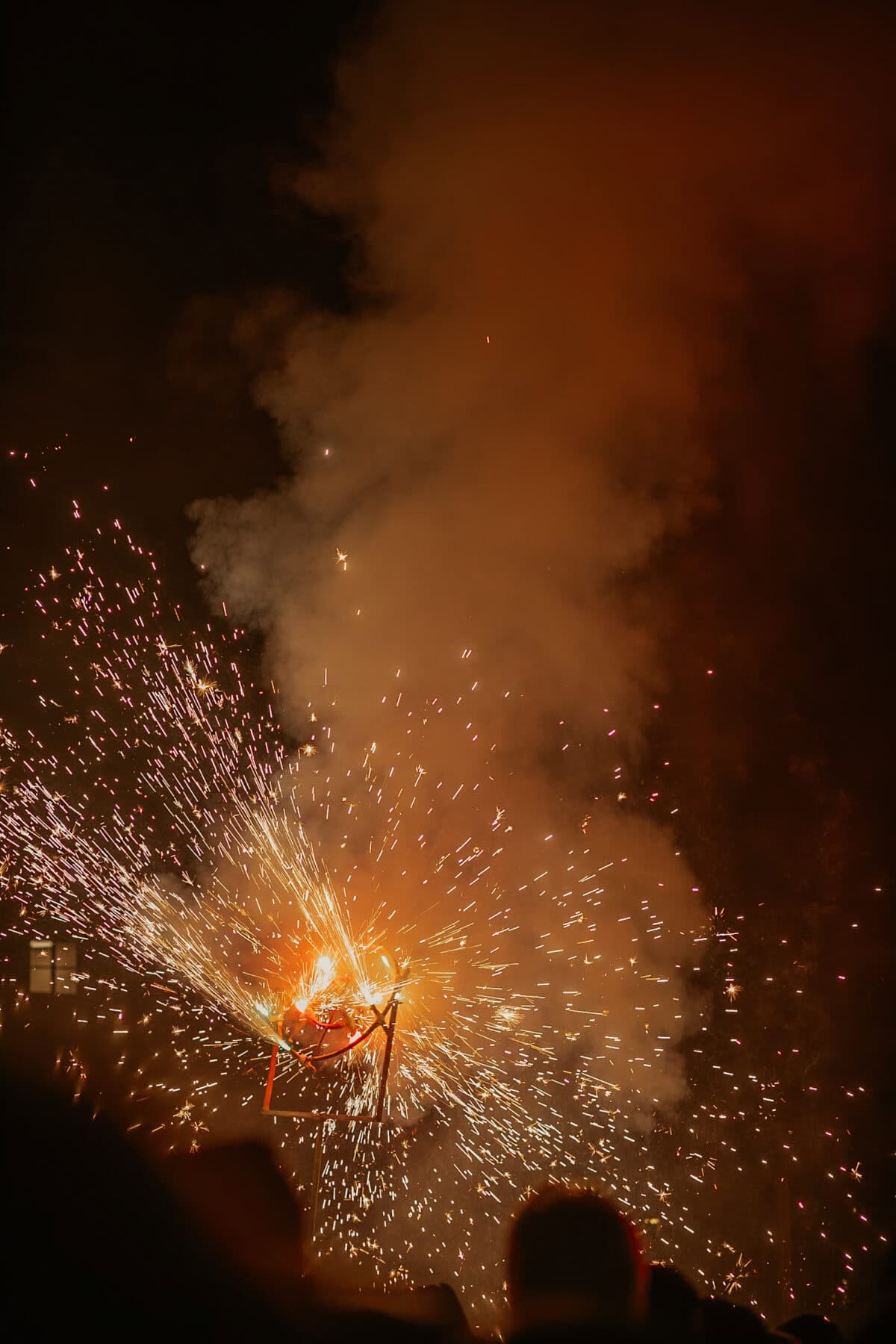
    Torch shines brightly in the night.
    A Dimonis' burning torch against a dark background
  • Bilbao Food Guide: Where to Find the Best Pintxos

    Bilbao Food Guide: Where to Find the Best Pintxos

    Good food plays a major role in the Basque Country: Nowhere else in Europe is the concentration of Michelin-starred chefs as high as it is here. But even if you don’t have a big budget for gourmet restaurants, you’ll find plenty of great spots in Bilbao that will make any foodie’s heart skip a beat. Here, I’ll introduce you to my favorite cafés and restaurants in Bilbao.

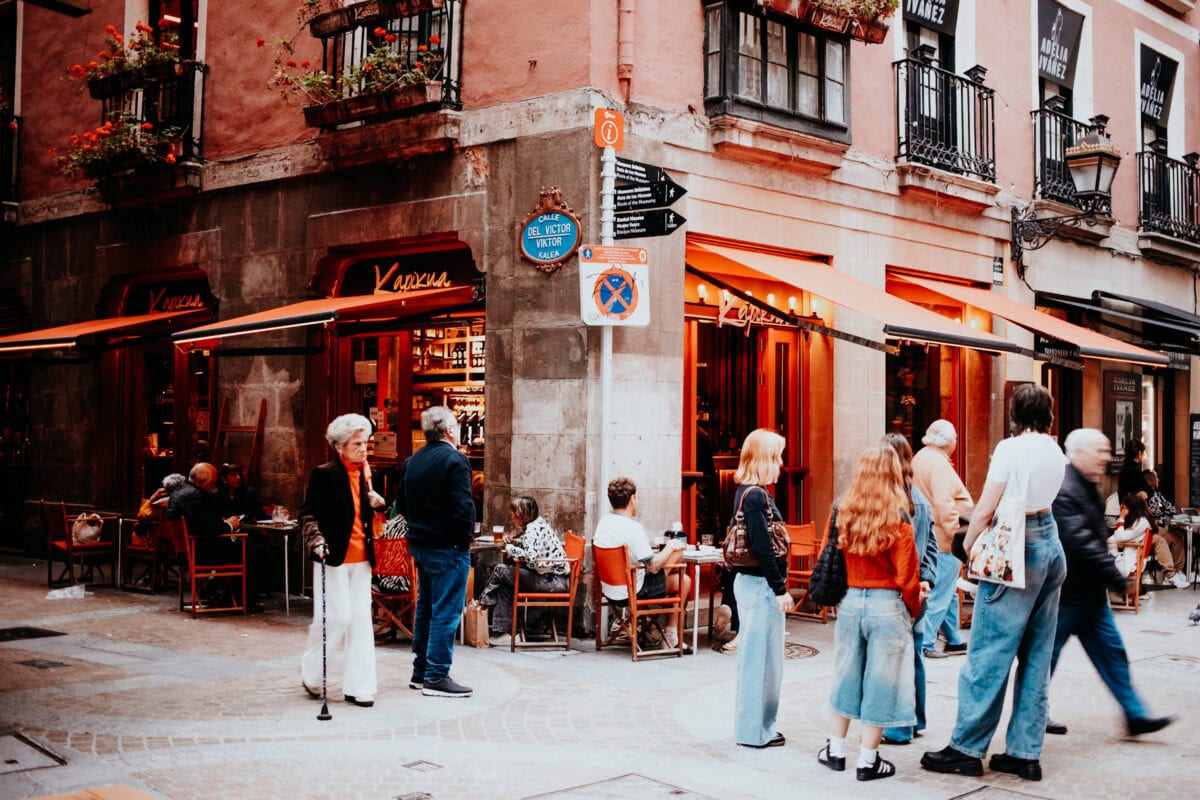
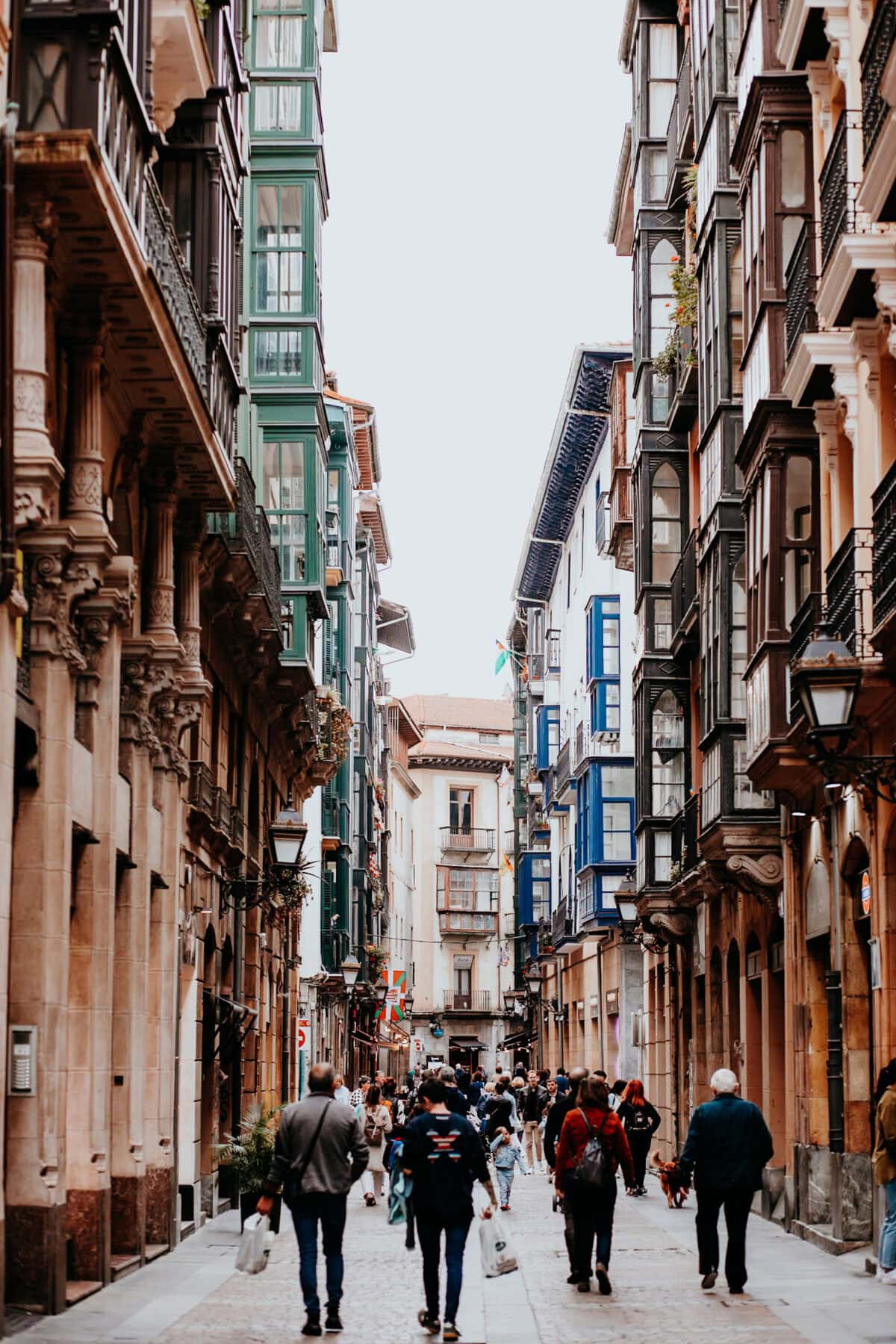
    Lively old town alley in Bilbao with colorful facades

    Bilbao & The Pintxos

    But before you dive into the hustle and bustle of the many bars, you should familiarize yourself with the tradition of pintxos in Bilbao . Pintxos (in Spanish: pinchos) literally means skewers and are slightly larger snacks that are often eaten with a drink.

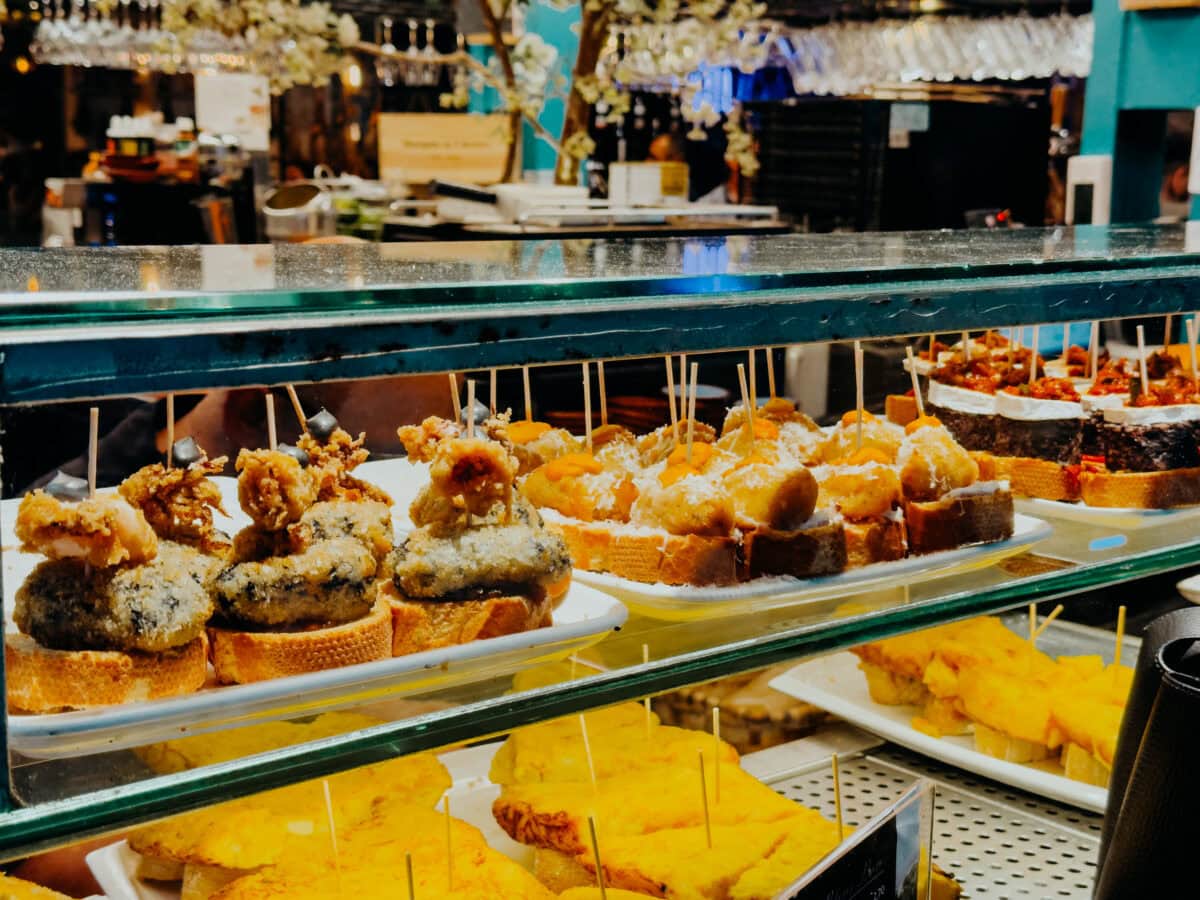
    Spanish tapas with mussels and anchovy bruschetta in a display case

    Originally, they were artfully stacked on large plates on the bar counter and each guest helped themselves as they pleased. The bill was then simply based on the number of wooden skewers that held each morsel together and were left on the plate at the end. This tradition has changed a little: Pintxos are often no longer completely open on the counter, but in glass cabinets, and there are also differences in price depending on the ingredient.

    Are you interested in the Spanish Basque Country? The region in the northeast with its very own culture and language is super exciting!
    Here you can find my tips for the Basque Country

    My recommendations for restaurants, pintxos and cafés in Bilbao

    Finding good locations in Bilbao is not difficult. The quality is very good and the choice is huge. Here are a few of my favorites:

    Baristas Club Right behind the cathedral and therefore in the heart of the old town. Good coffee, relaxed vibe – perfect for a coffee break while sightseeing.

    La Olla de la Plaza Nueva & Toma y Daka These two venues are located directly on the Plaza Nueva in the old town. There is a huge selection of pintxos here. Simply stop off at a bar, try a few pintxos and move on.

    Spanish pintxos on a bar counter
    Dessert served in eggshells with caramel cream and crispy chips
    Spanish pintxos with ham and Padrón peppers on bread

    Los Fueros Centrally located on the edge of the old town, yet somehow hidden away. Small restaurant with really great Basque cuisine made from fresh local produce. Highly recommended for a cozy evening with good food and wine.

    Tapas skewers with an orange sauce and white dipping cups

    By the way: As a vegetarian or vegan, it can be a little difficult in more traditional restaurants, as many dishes are prepared with fish (e.g. the popular bacalao) or meat. However, in a modern city like Bilbao, it shouldn’t be a problem to find good alternatives.

    Food tours through Bilbao

    Nevertheless, pintxos are a great way to eat your way through Basque cuisine for little money. You can stroll casually from bar to bar and explore Bilbao’s food scene.

    A fun way to try pintxos is also a food tour through Bilbao, where you can get to know the tastiest specialties and learn more about Basque cuisine.

    Book a food tour through Bilbao here*

    Fresh red beefsteak tomatoes on straw in a metal bowl

    Where else you can find good places to eat in Bilbao

    I won’t be able to list all the great places in Bilbao here – there’s simply too much on offer. Going out or eating out is a big part of Basque culture, so you will find bars and restaurants almost everywhere. Some streets have a particularly high concentration of eateries, so it’s worth taking a stroll and discovering them for yourself.

    You’ll find plenty of restaurants on these streets and in these districts:

    Poza Lizentziatuaren Kalea This street parallel to Gran Vía is particularly busy on Atletico Bilbao match days. The street leads directly to the San Mames stadium, whose glittering façade can be seen from afar through the street canyons.

    Ledesma Kalea Calle Ledesma is conveniently located between Gran Vía, the Guggenheim Museum and the old town. It is also a pedestrian-only zone and one restaurant follows the next.

    Lively city street featuring Bar Antomar and historic buildings

    Looking for more tips for Bilbao? The most beautiful highlights in the Basque metropolis

    Are you planning a road trip through the Basque Country? Here you can find cheap rental cars at Bilbao Airport (BIO)*

  • The Best Things to Do in Bilbao

    The Best Things to Do in Bilbao

    Are you planning a trip to the Basque Country? Then Bilbao will certainly be on your sightseeing list! In this article, I’ll show you which sights in Bilbao you shouldn’t miss – but I’ll also tell you why I personally wasn’t really impressed by the city, even after several visits! (More on this later in the article).

    Guggenheim Museum

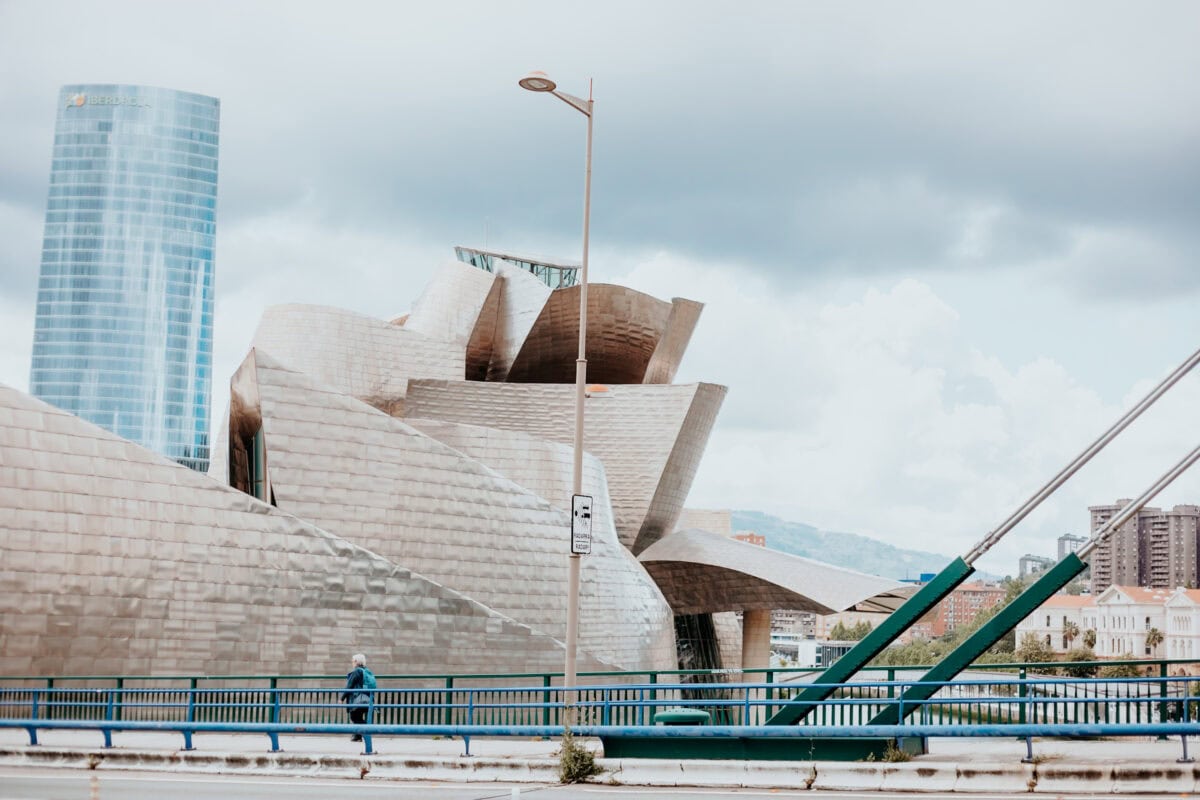
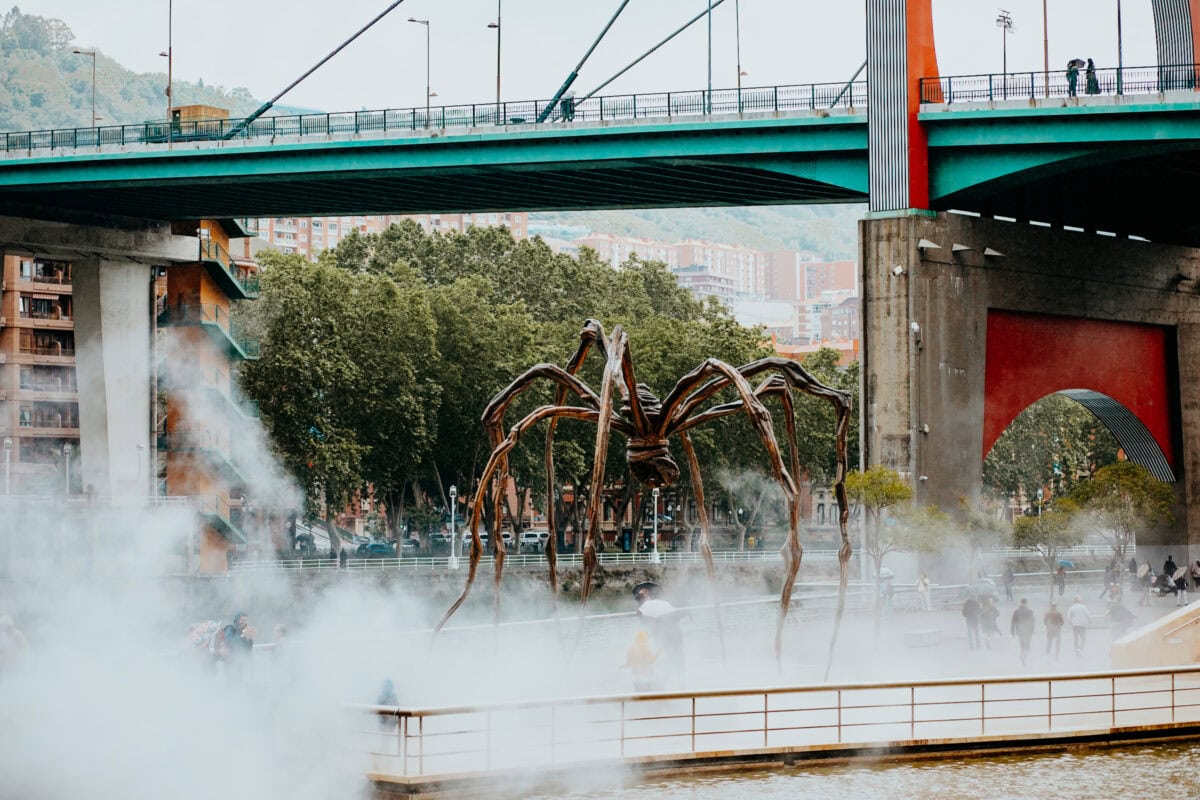
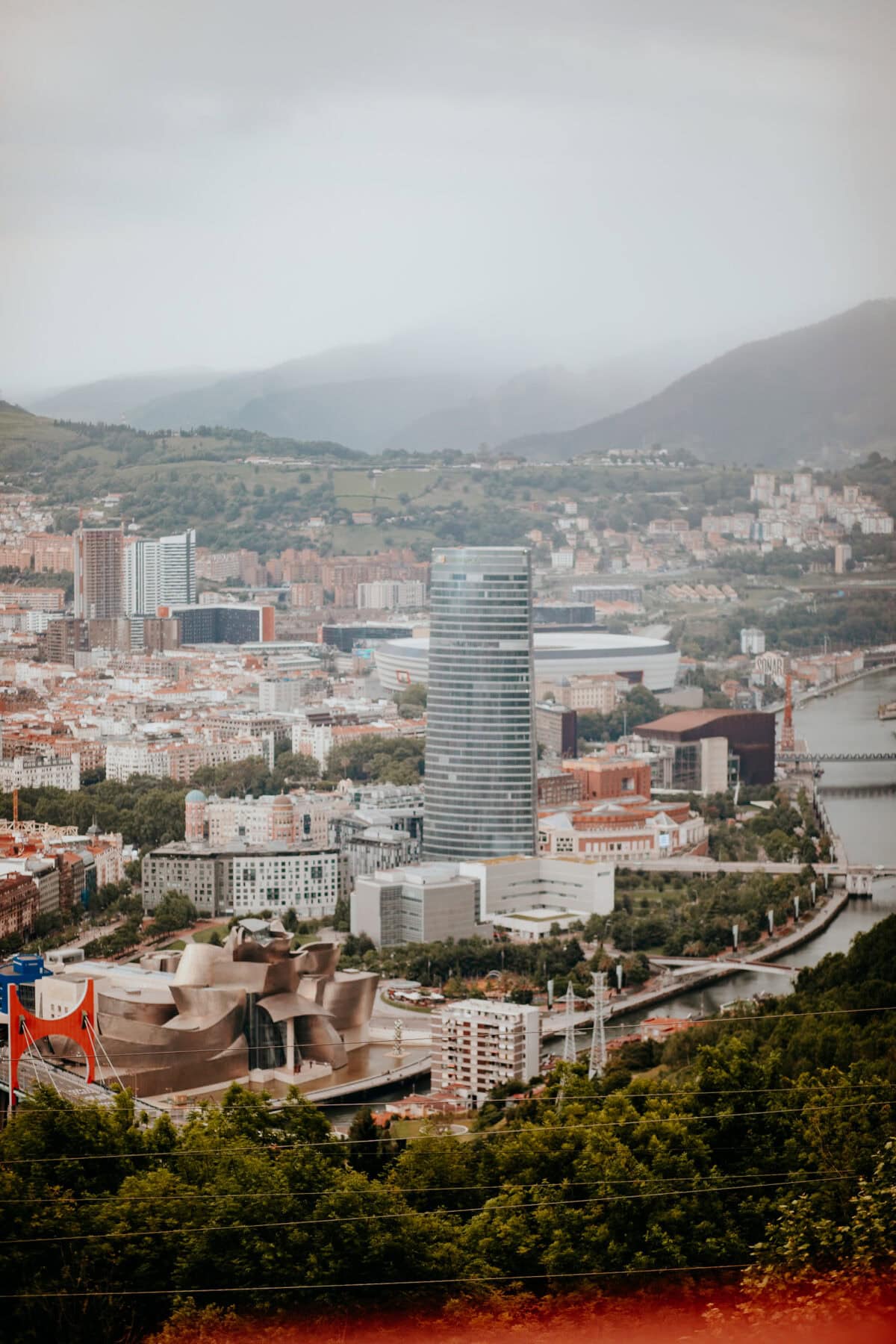
    The Guggenheim Museum is probably THE landmark of Bilbao. The Museum of Modern Art is a branch of the Guggenheim Museum in New York and is probably the very first location that visitors head for in Bilbao. The construction of this architectural super project, designed by Frank O. Gehry, has transformed the former industrial city to such an extent that a phenomenon has even been named after this incisive event: The Bilbao effect describes the upgrading of a place solely through a spectacular building.

    Guggenheim Museum in Bilbao, futuristic architecture.
    Metallic spider sculpture in the fog in front of the bridge.

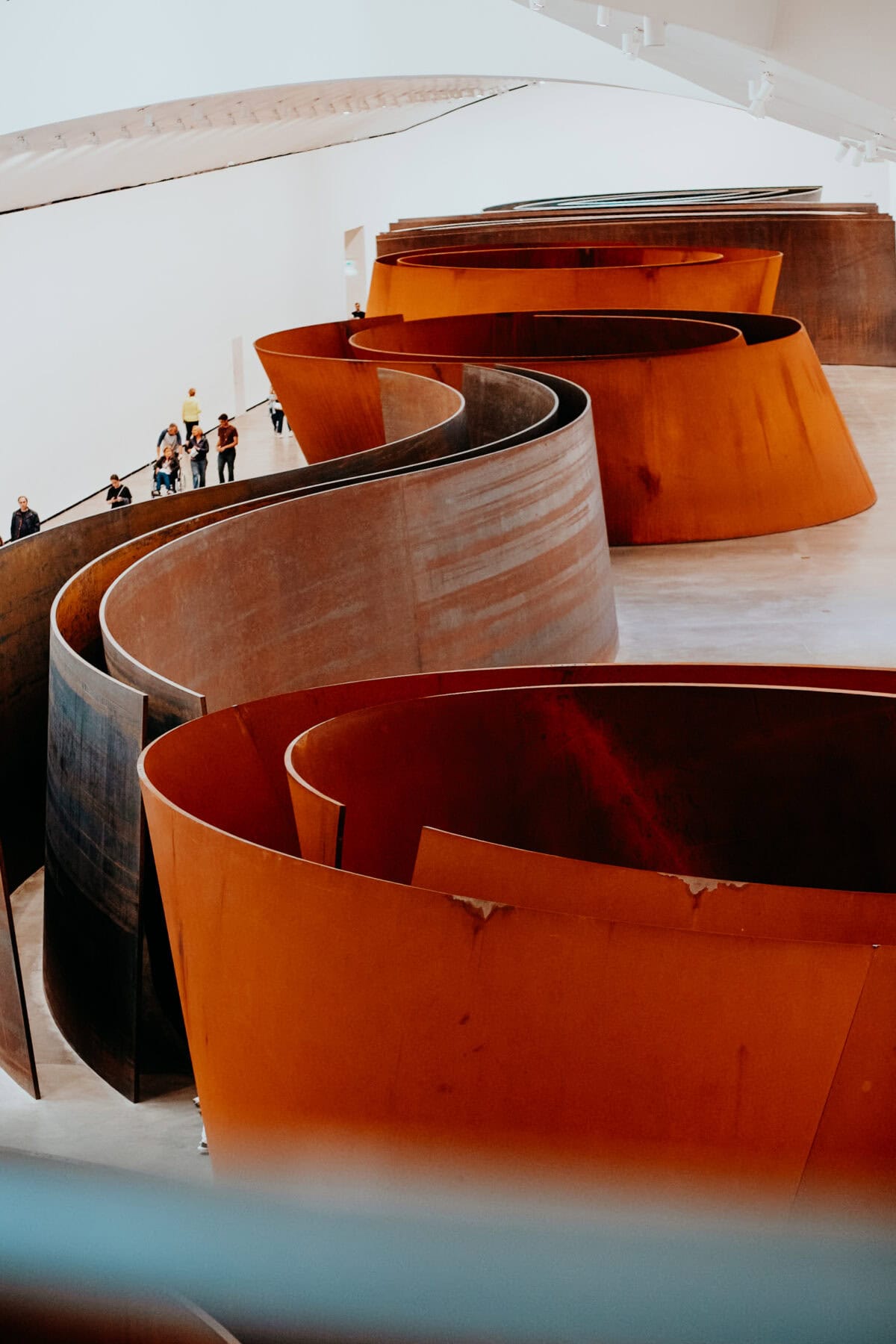
    However, the Guggenheim Museum Bilbao is not just a feast for the eyes from the outside: inside you can see really impressive contemporary works of art in the permanent exhibition. In addition, there are always spectacular temporary exhibitions and works on display.

    Buy tickets for the Guggenheim Museum Bilbao here

    Insider tip: If you want to know what Bilbao used to look like, you will find a small room with a video installation called “Zero” directly to the right of the ticket office. (Most visitors simply walk past it).

    It shows what Bilbao used to look like and how drastically the city has changed over the last hundred years. By the way: you don’t need a ticket for the museum to see the installation, as it is located in front of the entrance control. But honestly: if you’re already here, you shouldn’t miss the exhibition!

    Don’t miss this tour in Bilbao

    The best way to admire the full beauty of the Guggenheim’s architecture is from the water. The 1- or 2-hour boat tour doesn’t cost much and you will learn more about Bilbao’s dramatic development from an industrial city to a tourist magnet.

    Zubizuri Bridge

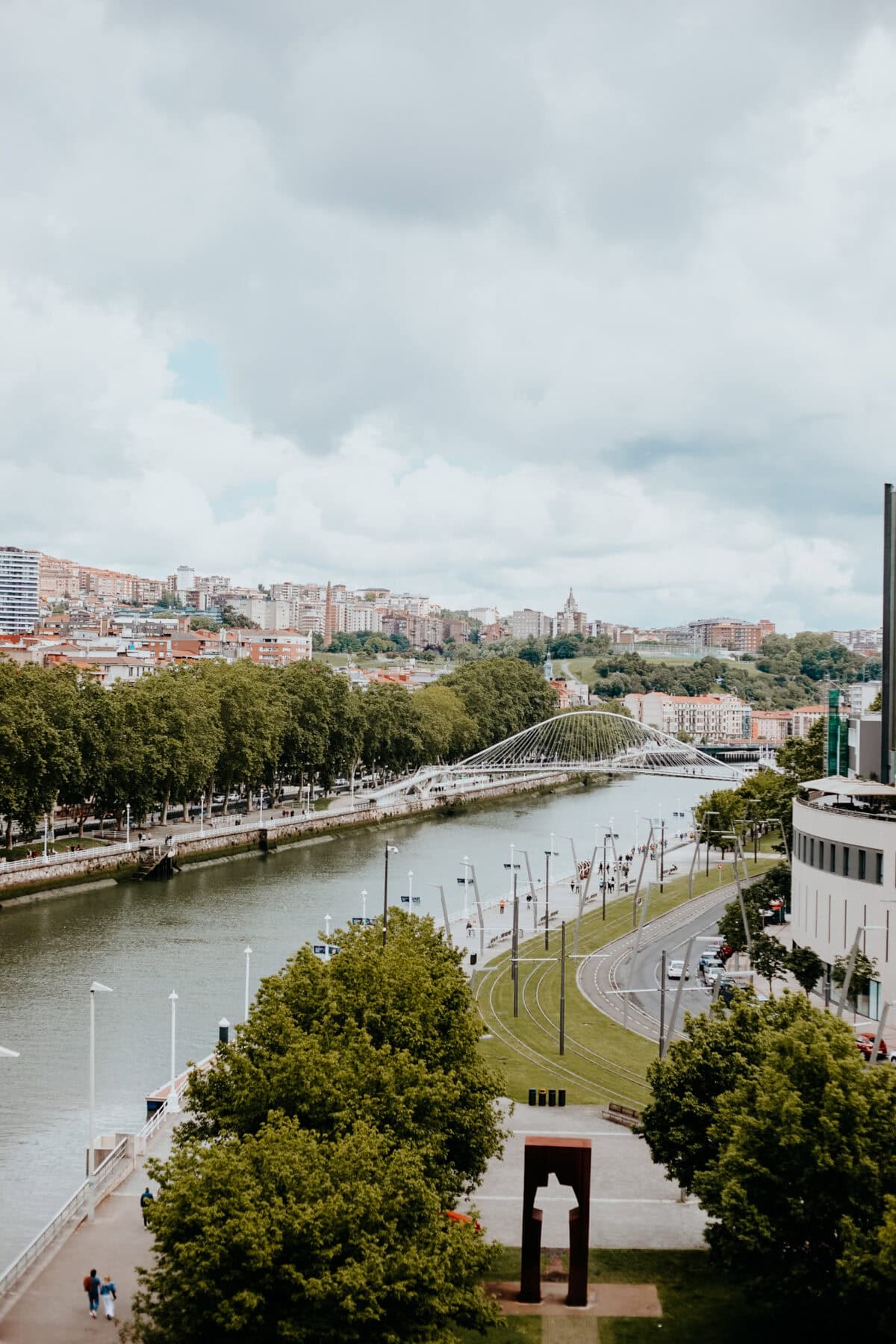
    Does the design of the Zubizuri Bridge not far from the Guggenheim Museum look familiar? On the one hand, the curved shape is supposed to be reminiscent of a sail – on the other, it looks quite similar to the terminal at Bilbao airport. No wonder, as both the pedestrian bridge over the Nervión and the terminal were designed by Spanish star architect Santiago Calatrava.

    View of riverbank and modern bridge in urban landscape.

    Old town of Bilbao / Casco Viejo

    You should also not miss out on a visit to Bilbao’s old town. It is all too easy to get lost in the narrow streets with their numerous eateries. The Basque Country is also known for its excellent cuisine and the number of Michelin-starred restaurants is exceptionally high. So it’s best to come hungry!

    Lively scene at a European street café.

    Don’t have a big budget for fine gourmet restaurants? No problem either! In the old town of Bilbao you will also find numerous bars and restaurants that offer really good pintxos for a small price. Pintxos are small snacks, similar to tapas, which are traditionally eaten with a drink – but you can also easily fill up on the large selection.

    Here you can find my food guide for Bilbao

    Lively old town street with colorful facades and passers-by.

    If you’re unsure about how the pintxos work, I recommend a food tour through the old town – you’ll love it!

    Book your food tour through the old town of Bilbao here*

    Spanish tapas displayed in a bar.

    Plaza Nueva

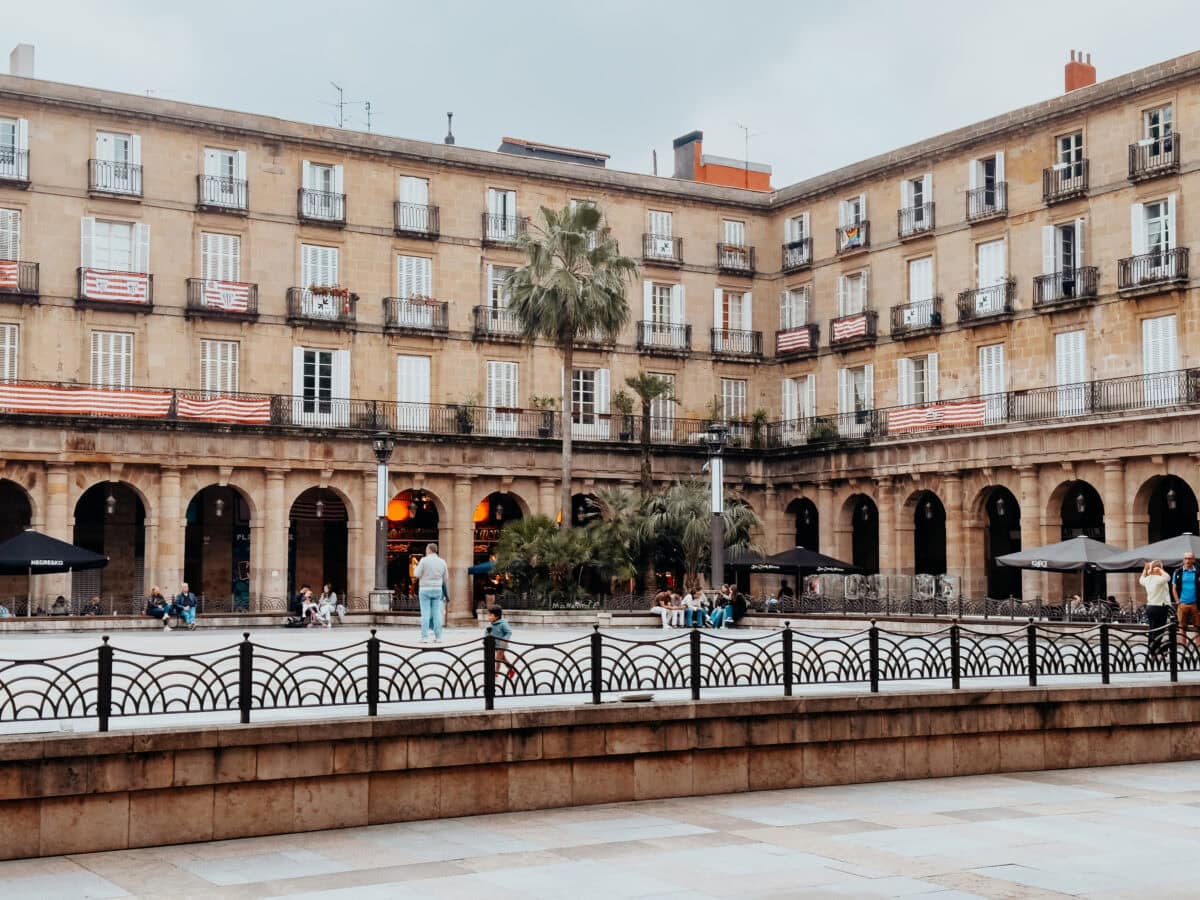
    Known as Plaza Mayor in many Spanish cities, Plaza Nueva is the heart of the old town, so to speak. You will also find many good bars and restaurants around the square, where you can sample a selection of pintxos.

    A historic square in Bilbao with palm trees and benches, with Basque architecture in the background.

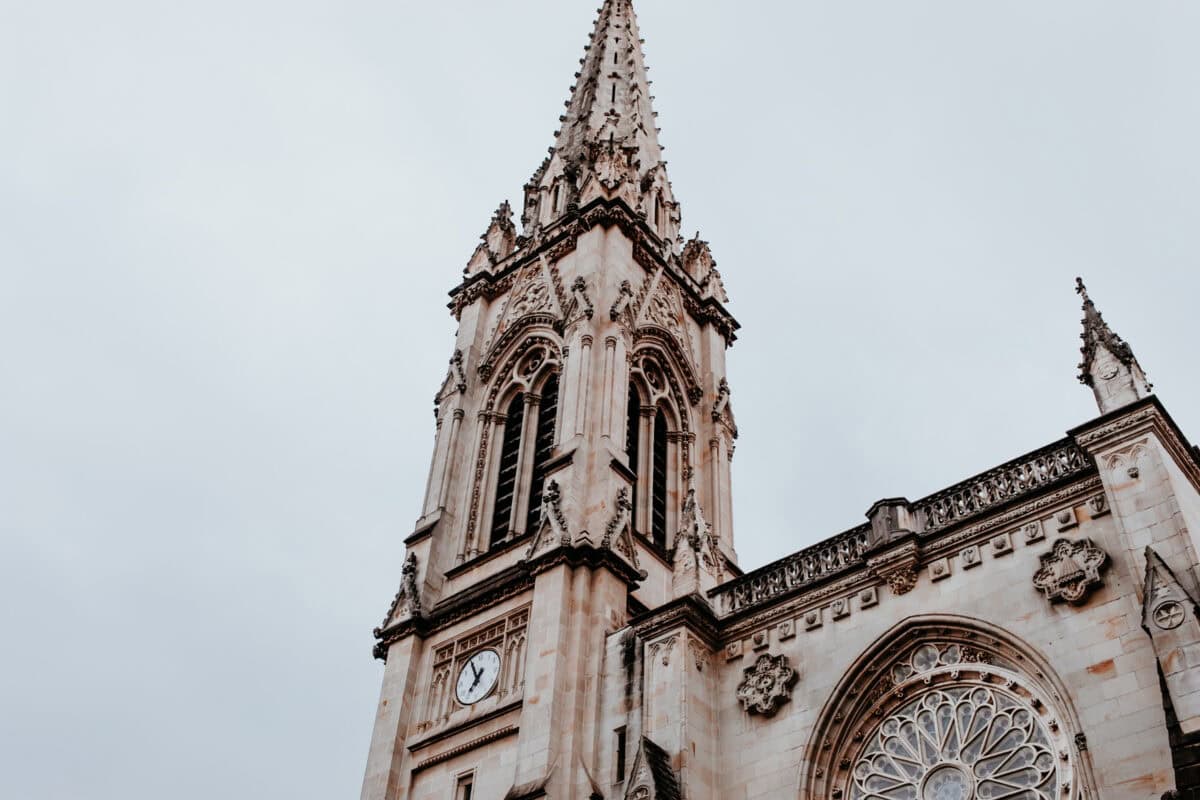
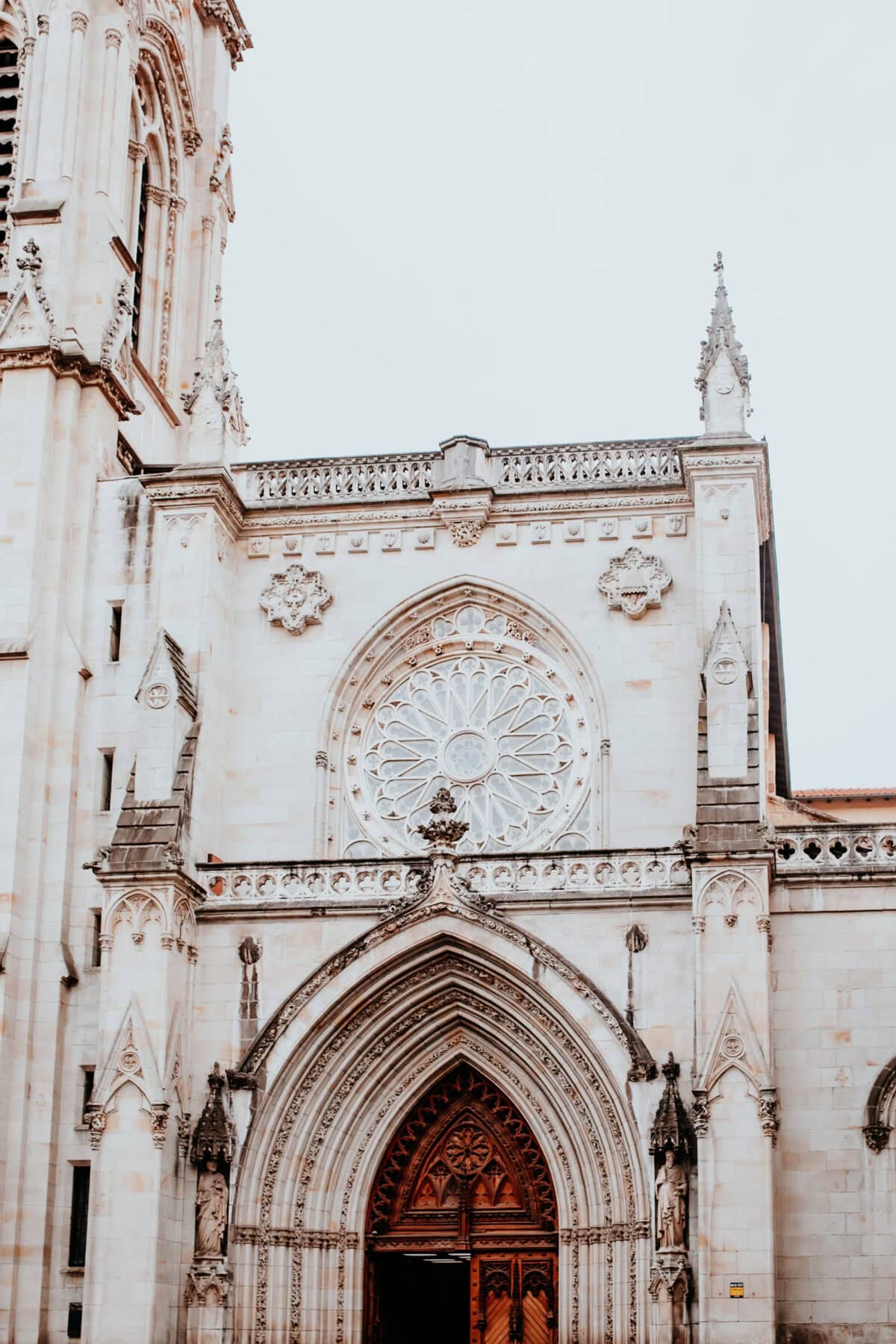
    Bilbao Cathedral

    Bilbao Cathedral is also located in the middle of Bilbao’s old town. It is practically impossible to miss. Interesting fact: Bilbao is on the Way of St. James and Bilbao Cathedral dates back to an old pilgrimage church. That’s why you’ll often meet pilgrims here who are on their way to Santiago de Compostela.

    Buy your ticket for the Cathedral of Bilbao here*

    Gothic church tower with clock and rose window.
    Gothic cathedral façade with rose windows.

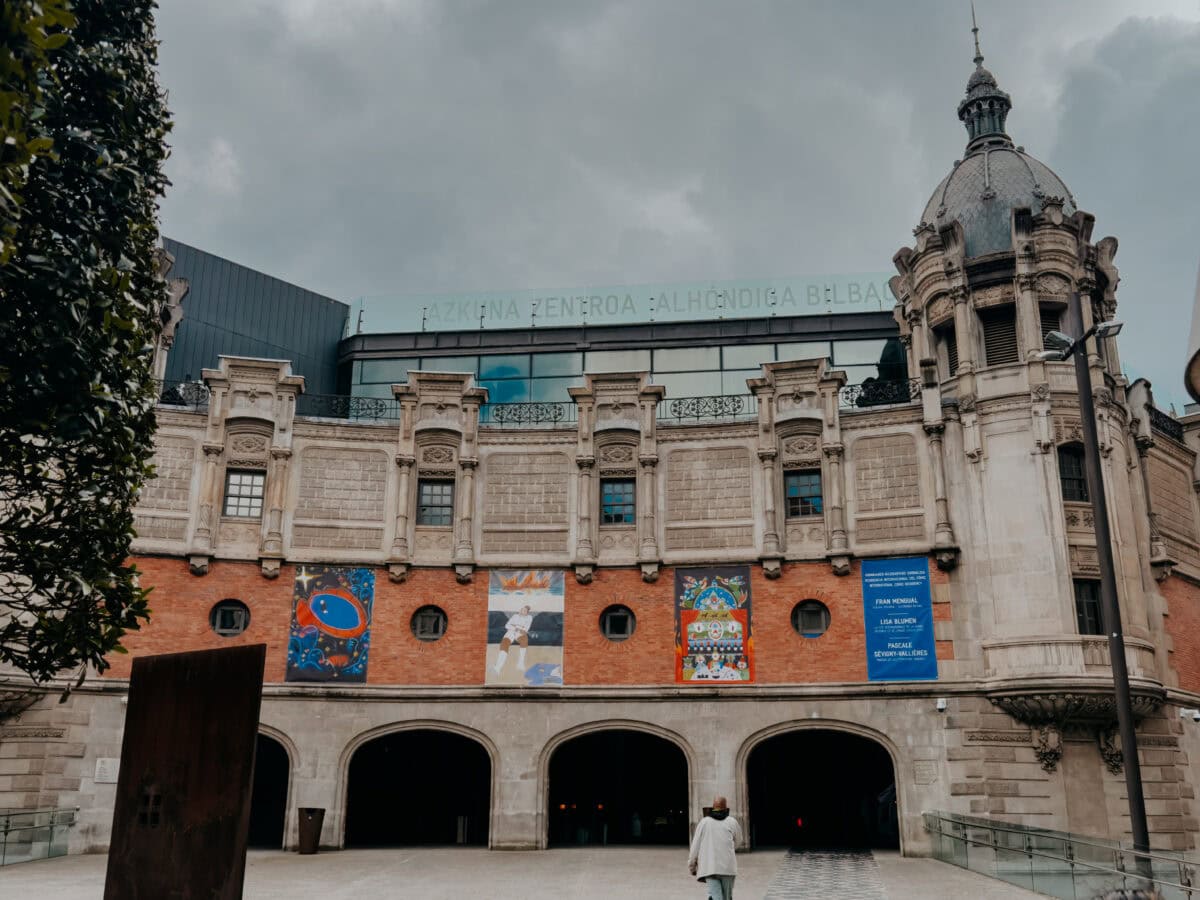
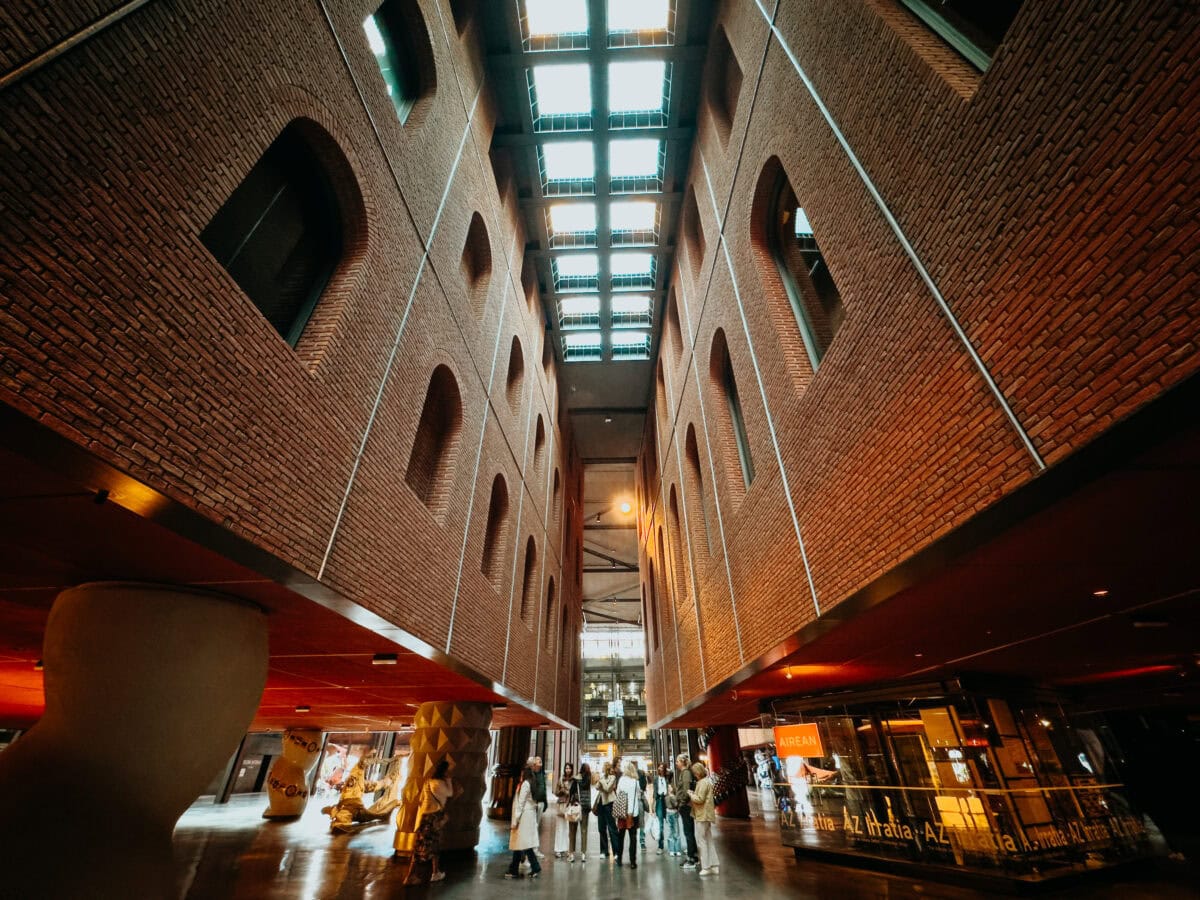
    Azkuna Zentroa (Alhóndiga Bilbao)

    Originally, the vacant former wine storehouse was under discussion as the location for the Guggenheim Museum; the project ultimately fell through due to the lack of space, among other things. Which is a stroke of luck from today’s perspective: the Azkuna Zentroa cultural and multi-purpose center designed by Philippe Starck was opened here in 2010.

    A historic building in Bilbao featuring modern art.

    In addition to cinemas, restaurants, an auditorium and a municipal library, there is also a fitness studio and a public swimming pool on the top floor of the complex.

    An interior view of a modern shopping center in Bilbao, featuring people and a glass roof.

    One of the pools even has a glass bottom, which you can see from the first floor! You can visit the swimming pool itself with a day ticket – if you have a bit more time in Bilbao, this is definitely a good idea for a bit of sport on the go!

    Puente de Viscaya / Bizkaya Bridge

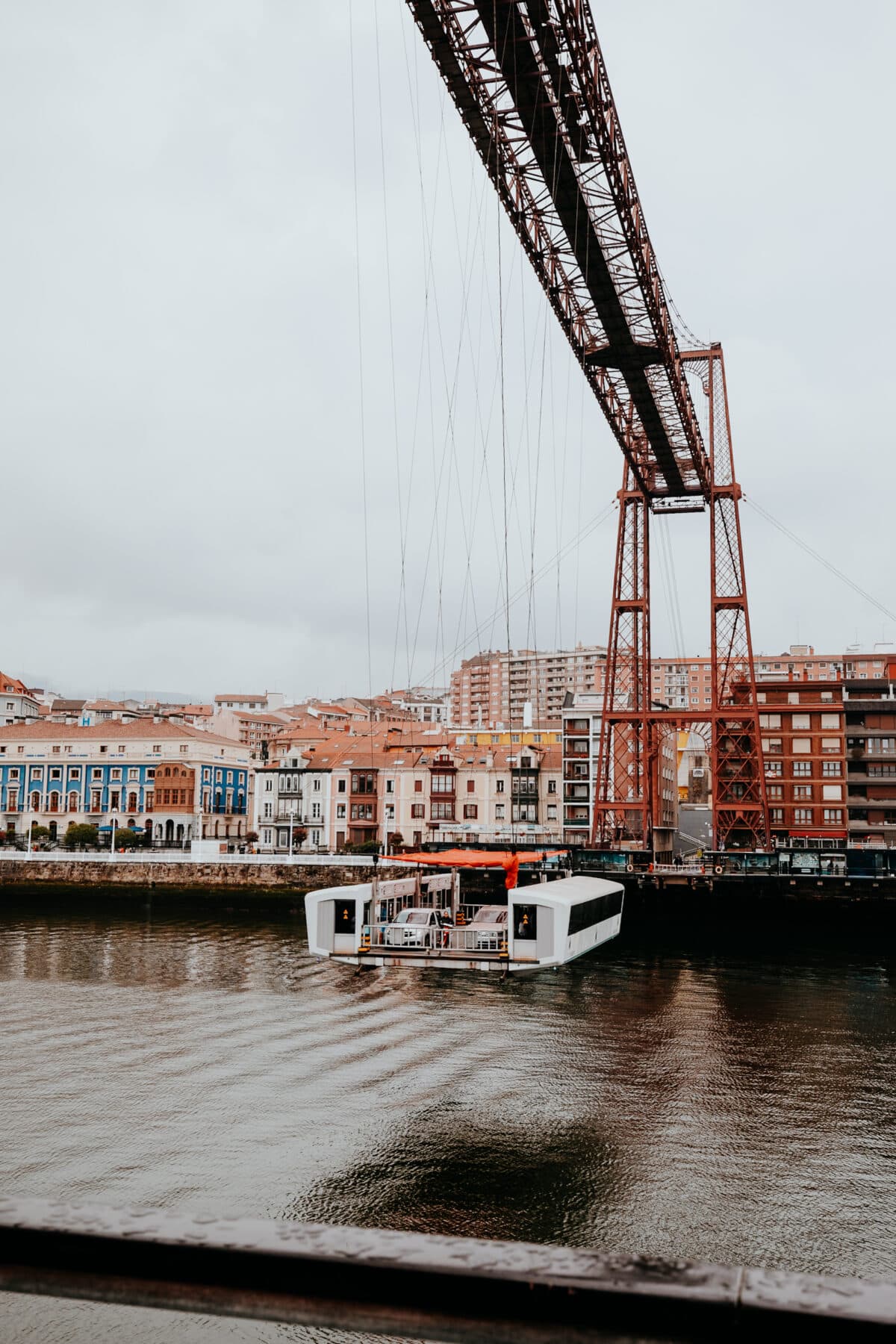
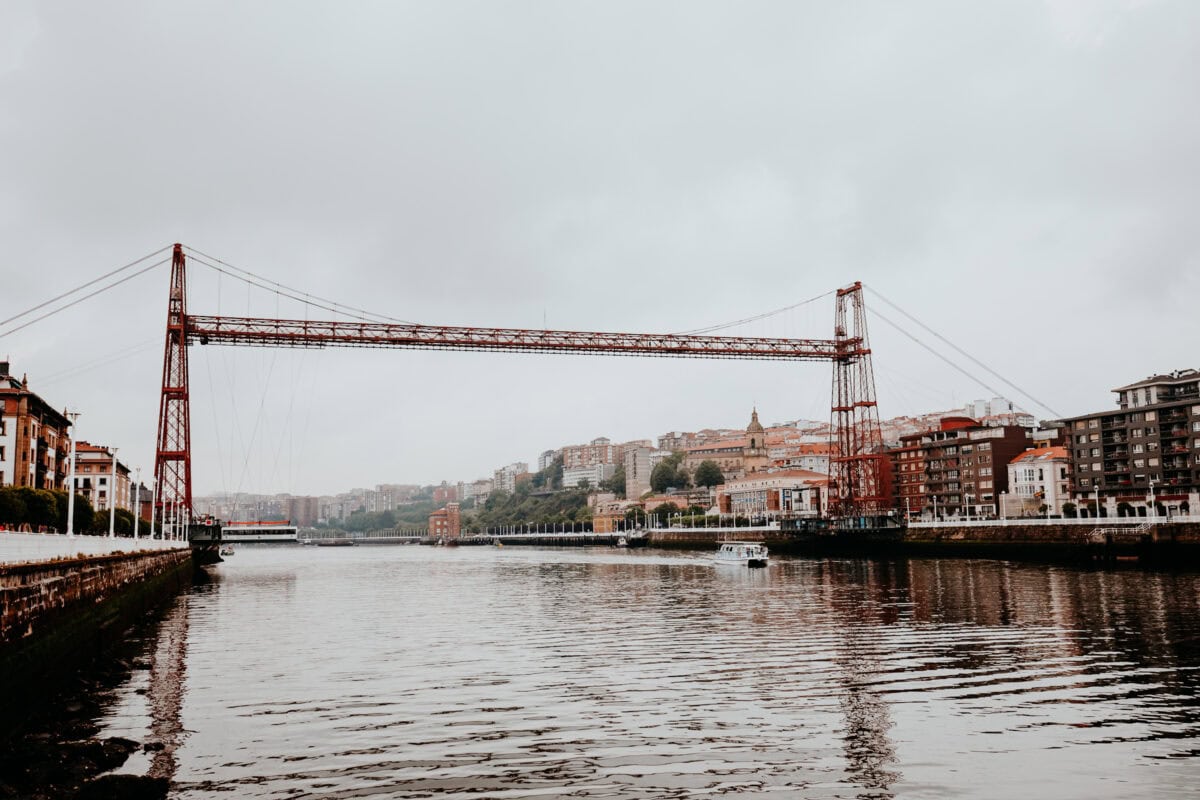
    Just outside Bilbao, there is a very unusual sight that you should definitely visit. The Puente de Biscay connects the two municipalities of Portugalete and Getxo and is a UNESCO World Heritage Site. What makes it so special: Pedestrians, cyclists and even cars do not cross the estuary via the bridge itself, but by means of a floating ferry suspended from the bridge structure. The ferry is used by local residents as a normal means of transportation; a one-way ticket costs just 55 cents during the day.

    Bridge over river with ferry and colorful houses.
    Historic suspension bridge over river in urban landscape.

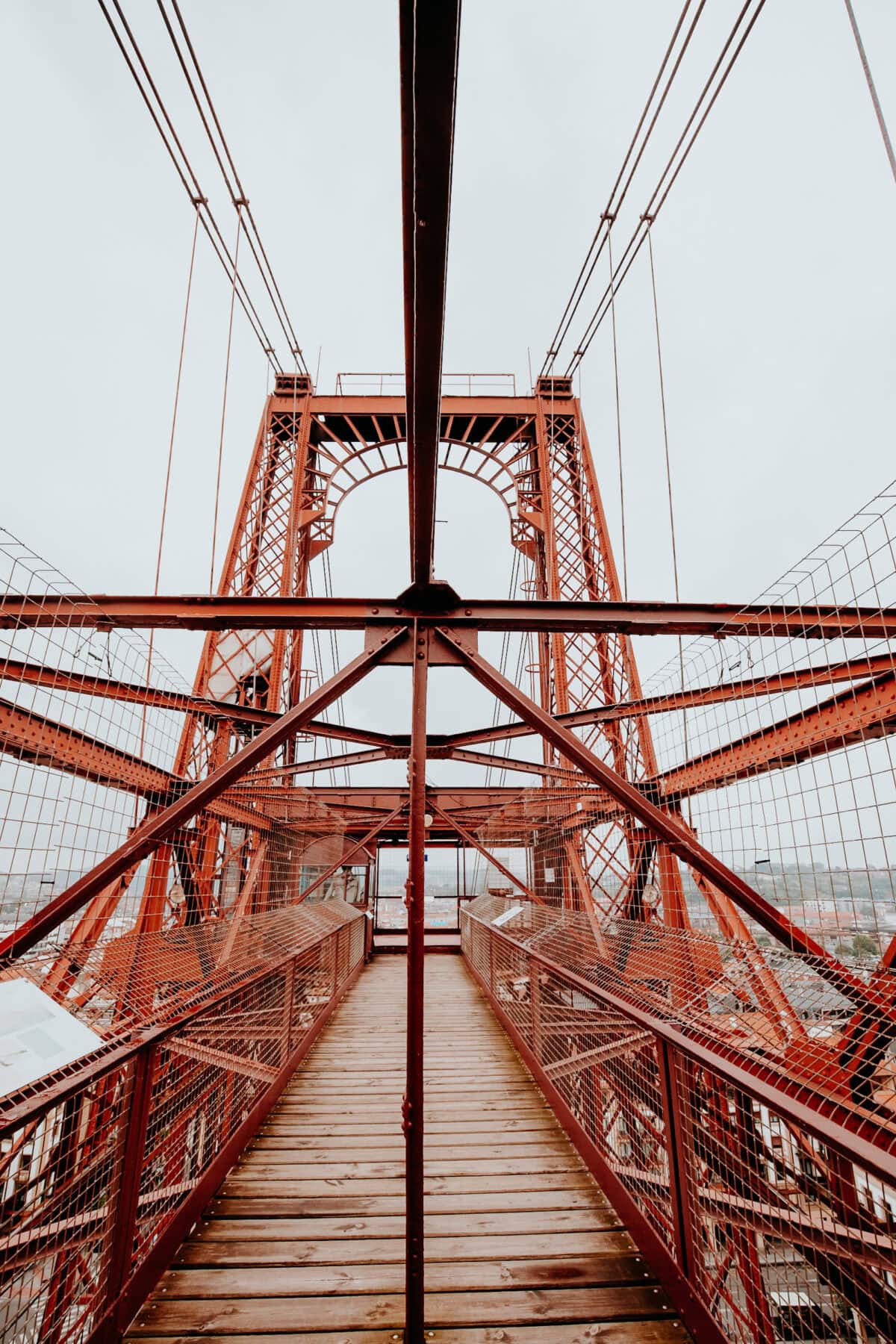
    You can also visit the bridge itself and take an elevator to the top; the entrance ticket for the bridge also includes a ferry ride. The Puente de Viscaya can be reached by metro from Bilbao city center.

    Red bridge tower with wooden walkway.

    Tip: Explore the rest of the pretty coastal town of Getxo too! From its promenade, you can also see what is now the port of Bilbao.

    Now that all the port facilities in Bilbao itself have disappeared and no large ships operate there, the majority of Bilbao’s port is located in the municipalities of Santurtzi and Zierbena, which lie on the estuary. And it really is huge: the port of Bilbao is the largest in Spain.

    Book a half-day tour to the Puente de Viscaya and Getxo here*

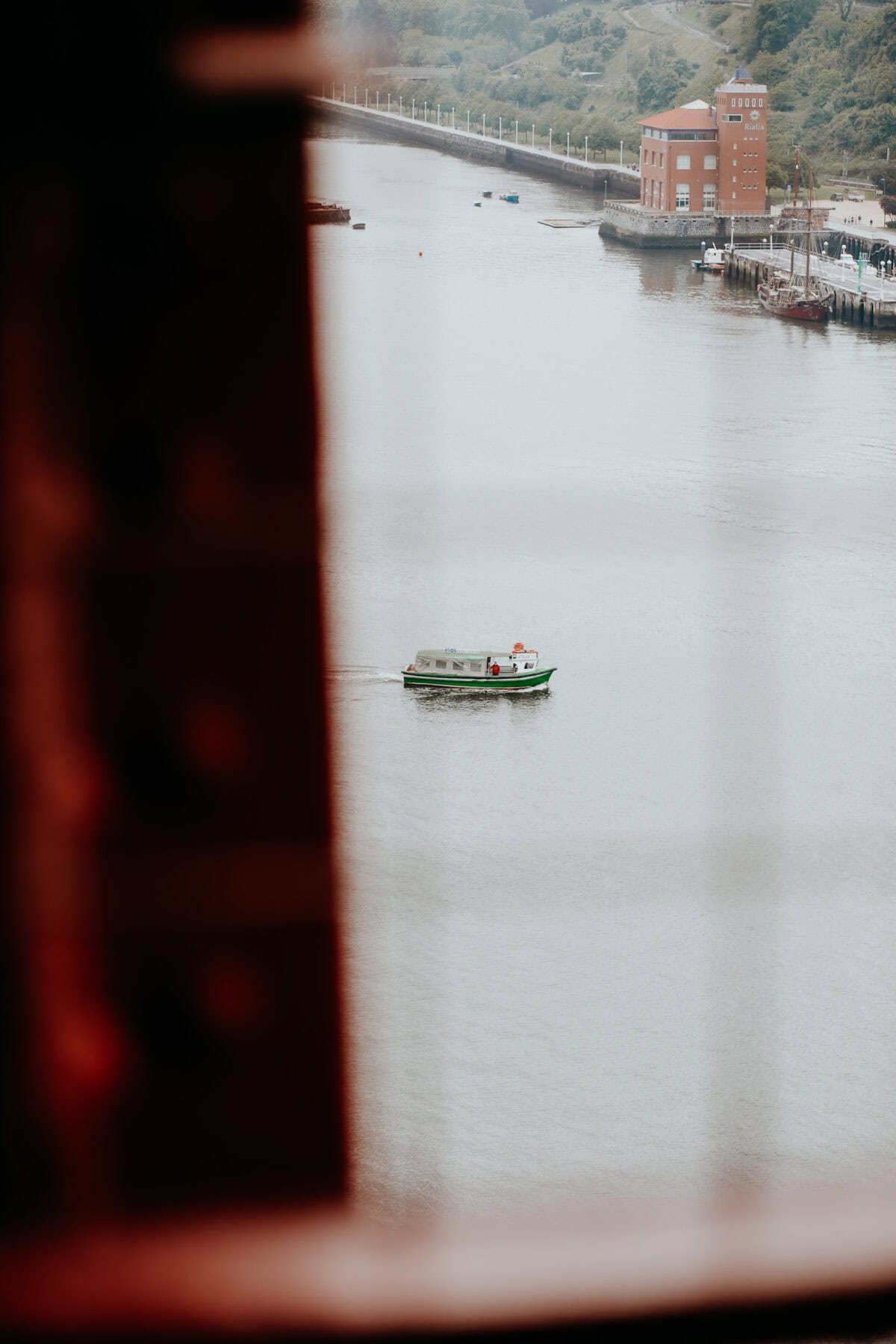
    Green boat sailing on a calm river.

    Artxanda

    From the summit of Artxanda, you have a unique view of Bilbao and the surrounding green mountains. The quickest way up is by funicular, the Funicular de Artxanda. Bilbao’s local mountain is also popular with locals, especially at the weekend: there are various leisure activities for young and old, as well as the popular Txakoli restaurant.

    Cityscape with modern architecture and green hills.

    Gran Vía

    Gran Vía is actually called Gran Vía de Don Diego López de Haro and is the main shopping street through the center of Bilbao. Over the course of one and a half kilometers, you will find stores from large chains such as Zara and Mango as well as two branches of the Spanish department store El Corte Inglés.

    Towards the old town, Gran Vía becomes even busier, and in the side streets you will always find a few corners with smaller bars and restaurants, for example in the parallel Calle Ledesma.

    Iberdrola Tower

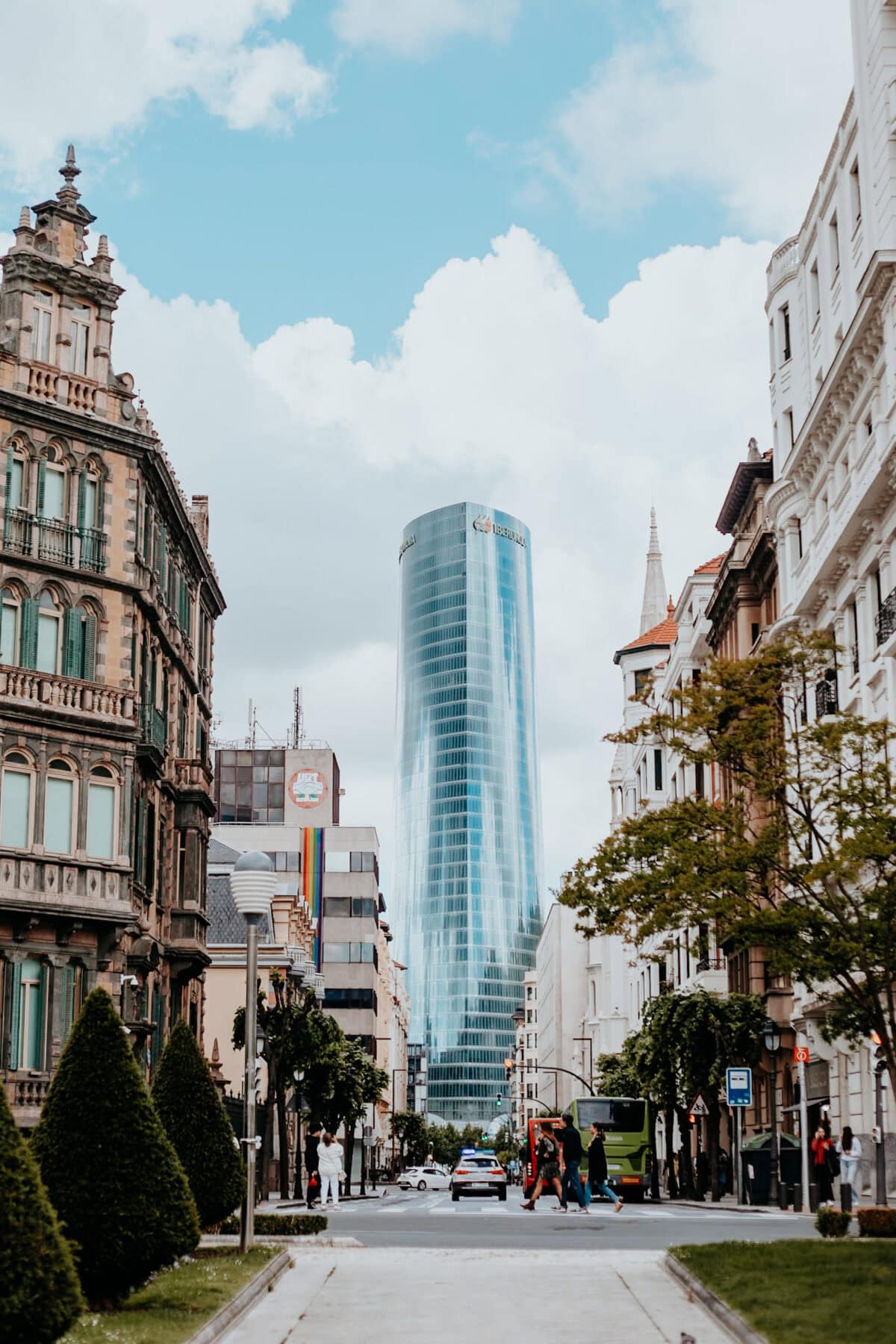
    Whether the Iberodrola Tower is really worth seeing is debatable. In any case, the office building is Bilbao’s tallest skyscraper and therefore a good landmark. And with a bit of luck and the right time of day, the sunlight sparkles so beautifully in the reflective façade that it makes a lovely photo motif.

    Modern and historic architecture in an urban street.

    More museums in Bilbao

    If the Guggenheim Museum has whetted your appetite (or if the weather isn’t playing ball), you can also visit the following museums in Bilbao:

    The Museo de Bellas Artes may not be quite as spectacular as the Guggenheim, but it is still one of the most important museums in Spain. You will find a large collection of art here, ranging from the present day to the 12th century. The building is currently being renovated and expanded, and it sounds very promising what is being created here.

    If you want to find out more about Bilbao, the history of the port and its connection to seafaring, you should pay a visit to the Itsas Museum.

    Staying overnight in Bilbao

    There is a wide range of accommodation options in Bilbao – and there is something for every budget. Personally, I would recommend accommodation around the Gran Vía, not in the old town, e.g. in the Abando district. Here you can easily get to all the important locations, do a bit of shopping and experience the life of the locals.

    Lively street with trees and outdoor bars in the city.

    Although the old town is connected to the metro network with one station, it is otherwise a pedestrian zone. This means you may have to walk halfway through the old town with your luggage to your accommodation. The old town is also very lively in the evening if you prefer a quieter atmosphere.

    I stayed at the Catalonia Gran Vía*, a comfortable boutique hotel in a great location (bus to the airport stops right outside the door) and with a really good breakfast buffet (I’m not normally a fan of this, but it’s really good here).

    Check availability and rates at the Catalonia Gran Vía*

    Click around in the map to find the best accommodations in Bilbao

    Advertising / *affiliate link

    Excursions from Bilbao

    If you have a little more time, I highly recommend exploring the surrounding area. Sophisticated San Sebastián, for example, is only an hour’s drive away or you can explore the surrounding coastal towns. You don’t necessarily need a rental car either, there are plenty of organized tours on offer from Bilbao:

    Arrival & transportation within Bilbao

    There are several daily flights to Bilbao from Frankfurt and Munich, but there are also direct flights to Bilbao from other airports in Germany.

    Check here for current flight connections to Bilbao (BIO)*

    You can easily get from the airport to the center of Bilbao on bus line A3247. You can buy the bus ticket directly from the driver on the bus (cash only); the bus stop is located directly in front of the arrivals hall. The bus runs mostly on the highway and also stops on Gran Via. The final stop is Bilbao Intermodal, from here you can change to the train, streetcars, metro or long-distance buses.

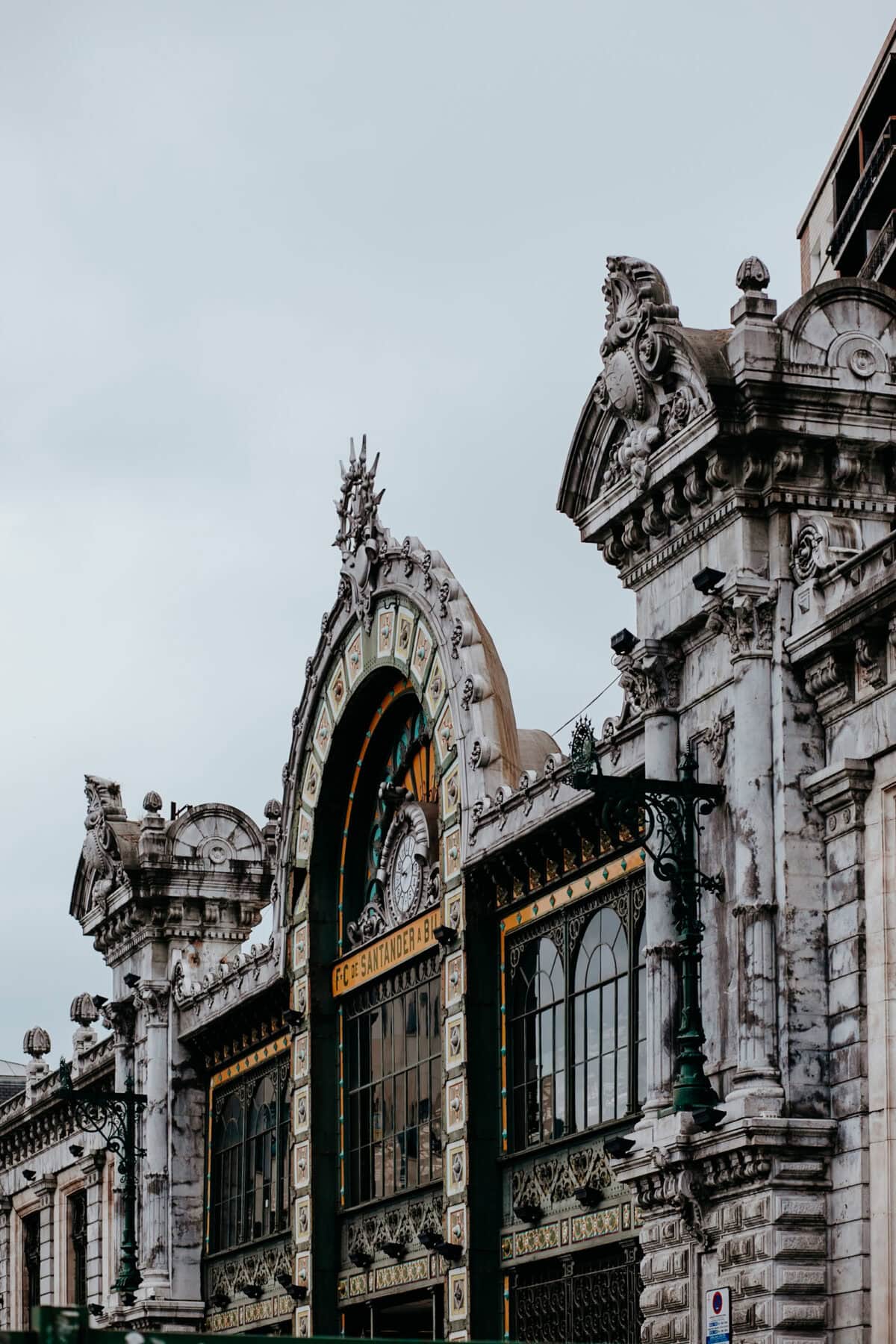
    Ornate station entrance with artistic sculptures.

    Within Bilbao, you can explore a lot on foot (especially in the old town). Bilbao also has a good streetcar and metro network. Tickets are available at the stops and stations and the prices are very reasonable.

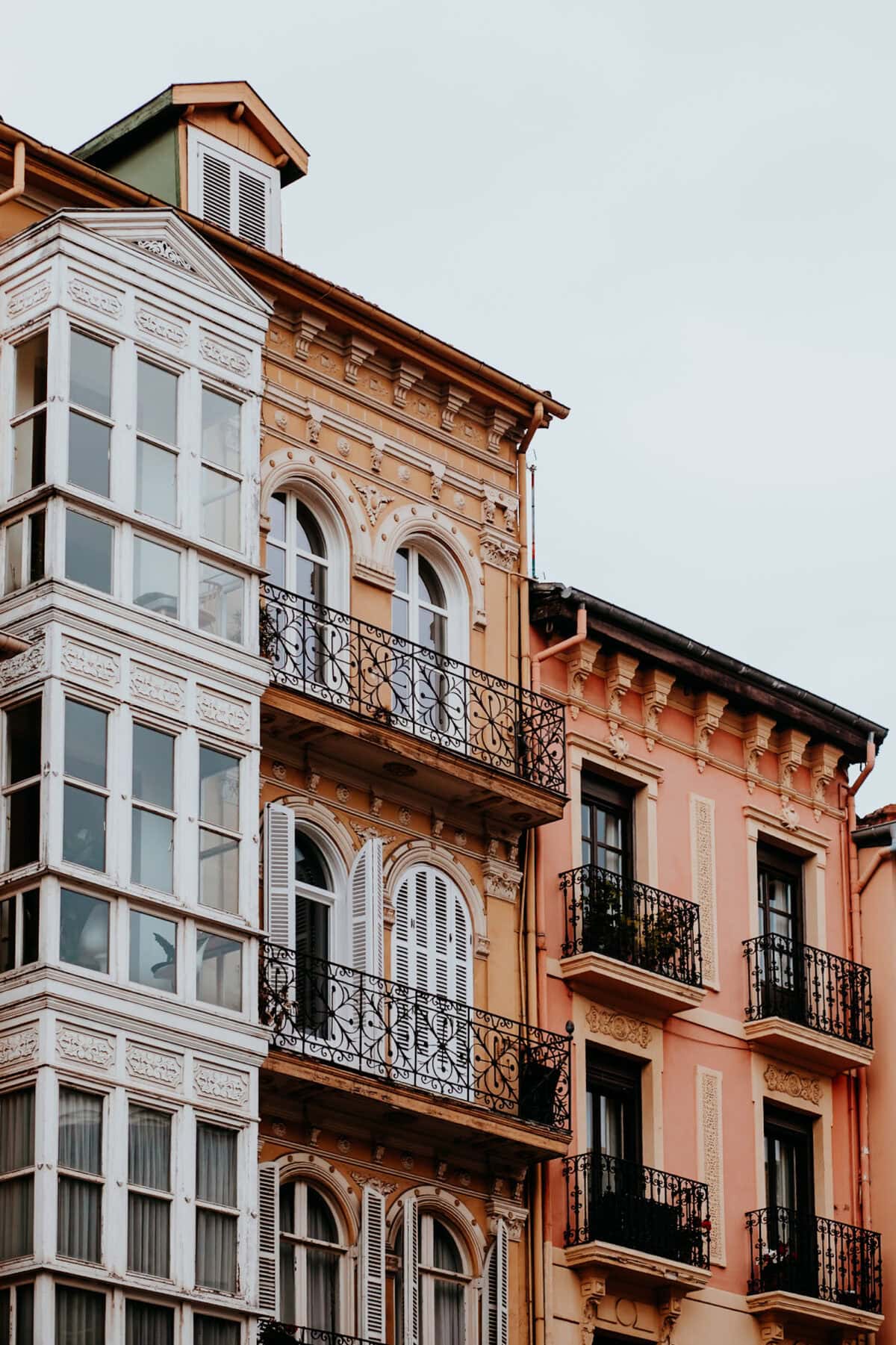
    Historic buildings with wrought-iron balconies.

    Language & culture in Bilbao

    Bilbao is located in the Spanish part of the Basque Country, but is not its capital. (That is Victoria-Gasteiz, an hour’s drive away.) As an autonomous community in Spain, the Basque Country has another official language: in addition to Spanish, Basque is also an equivalent official language here.

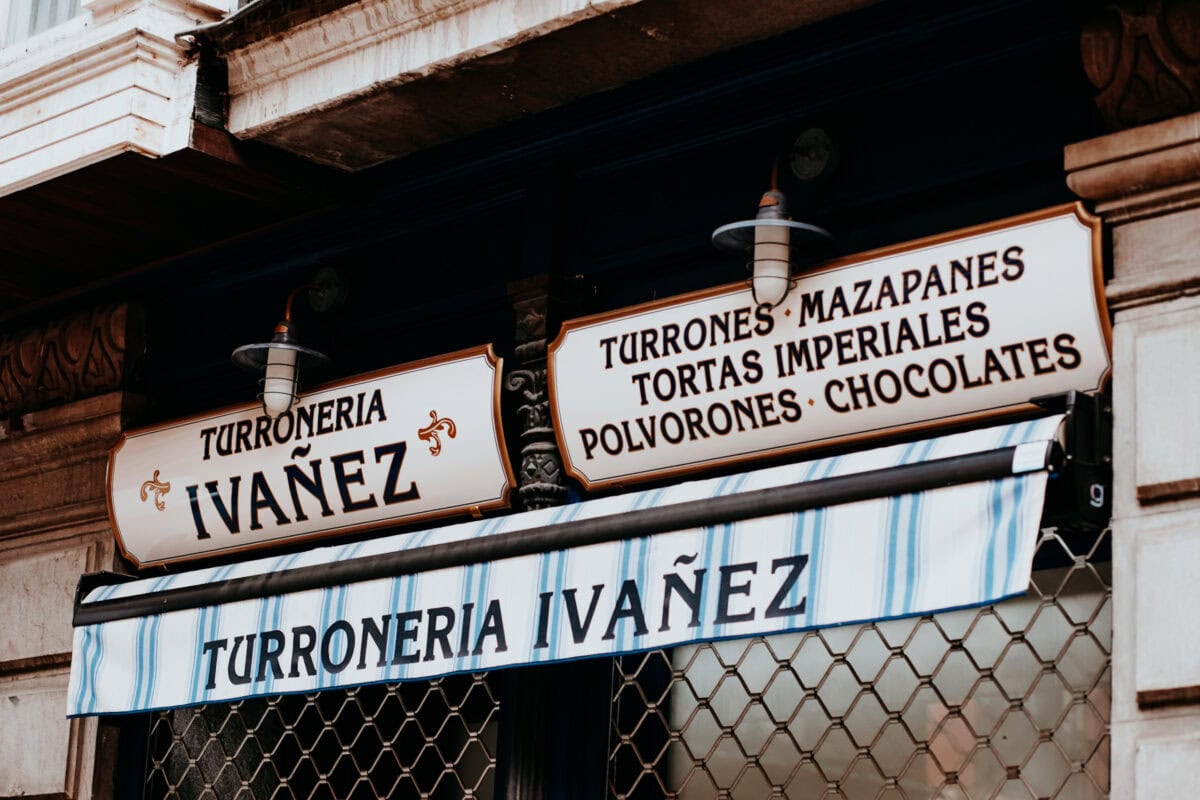
    Sign of a traditional Spanish sweet shop.
    Spanish is an official language alongside Basque

    As a visitor, however, you don’t need to worry about communication. As in other parts of Spain with other official languages (e.g. Catalonia), the locals generally also speak Spanish, and in an international city like Bilbao you will also get by fine with English.

    However, Basque is a super interesting language as it is not related to any other language. It is also spoken in part of neighboring Navarre and in the smaller French part of the Basque Country, where it is not an official language.

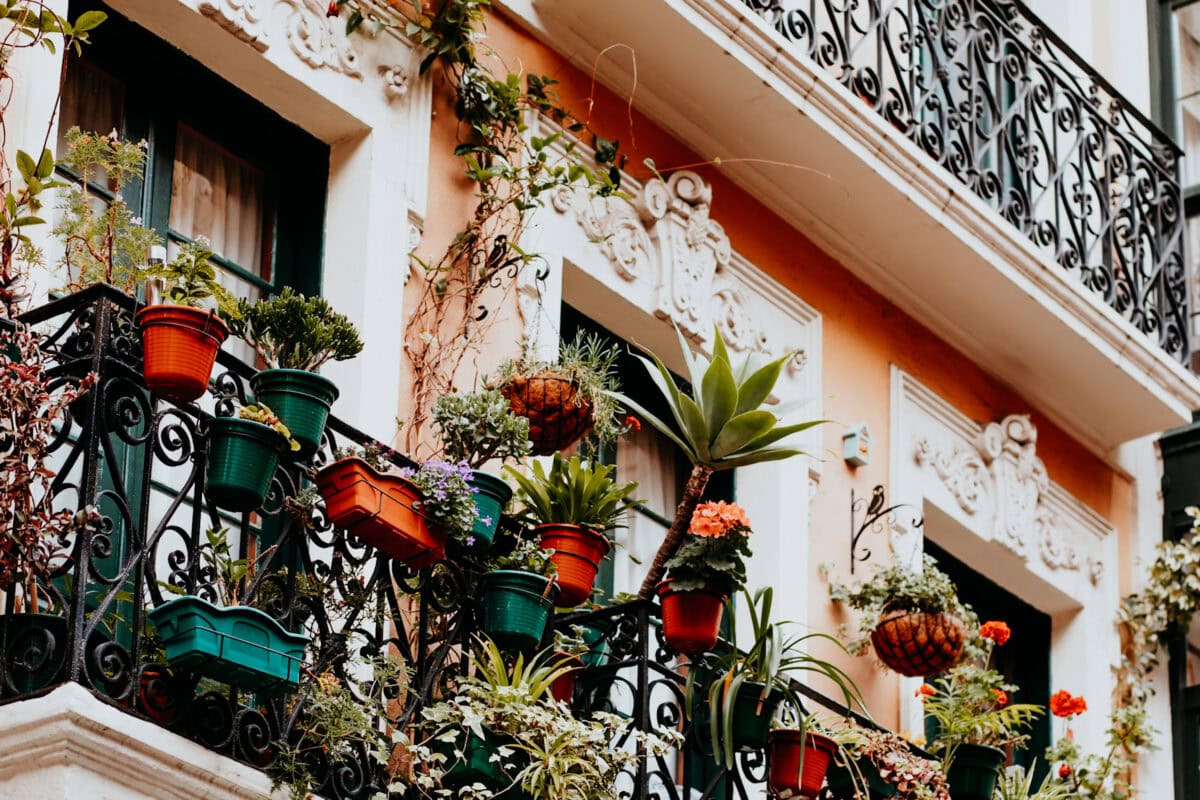
    Balcony with colorful flower pots and plants.

    Politically, the Basque Country has always been a bit of a hot potato. Independence efforts and resistance to Franco’s dictatorship in Spain, for example, gave rise to the terrorist organization ETA, which kept the country on tenterhooks for several decades with numerous attacks.

    This topic is still very sensitive today. If you want to find out more about it and talk to locals, I recommend that you read up on the subject beforehand to avoid putting your foot in your mouth. In this source you will find a very good overview of the political history and the current situation of the Basque Country.

    Weather & the best time to travel

    I’m no weather expert, but the combination of a location on the wild Bay of Biscay and the surrounding mountains makes the weather in Bilbao quite a challenge. In my memory, I have experienced the worst approaches of my flight attendant career in Bilbao – and so I perceive Bilbao as a constant weather hole.

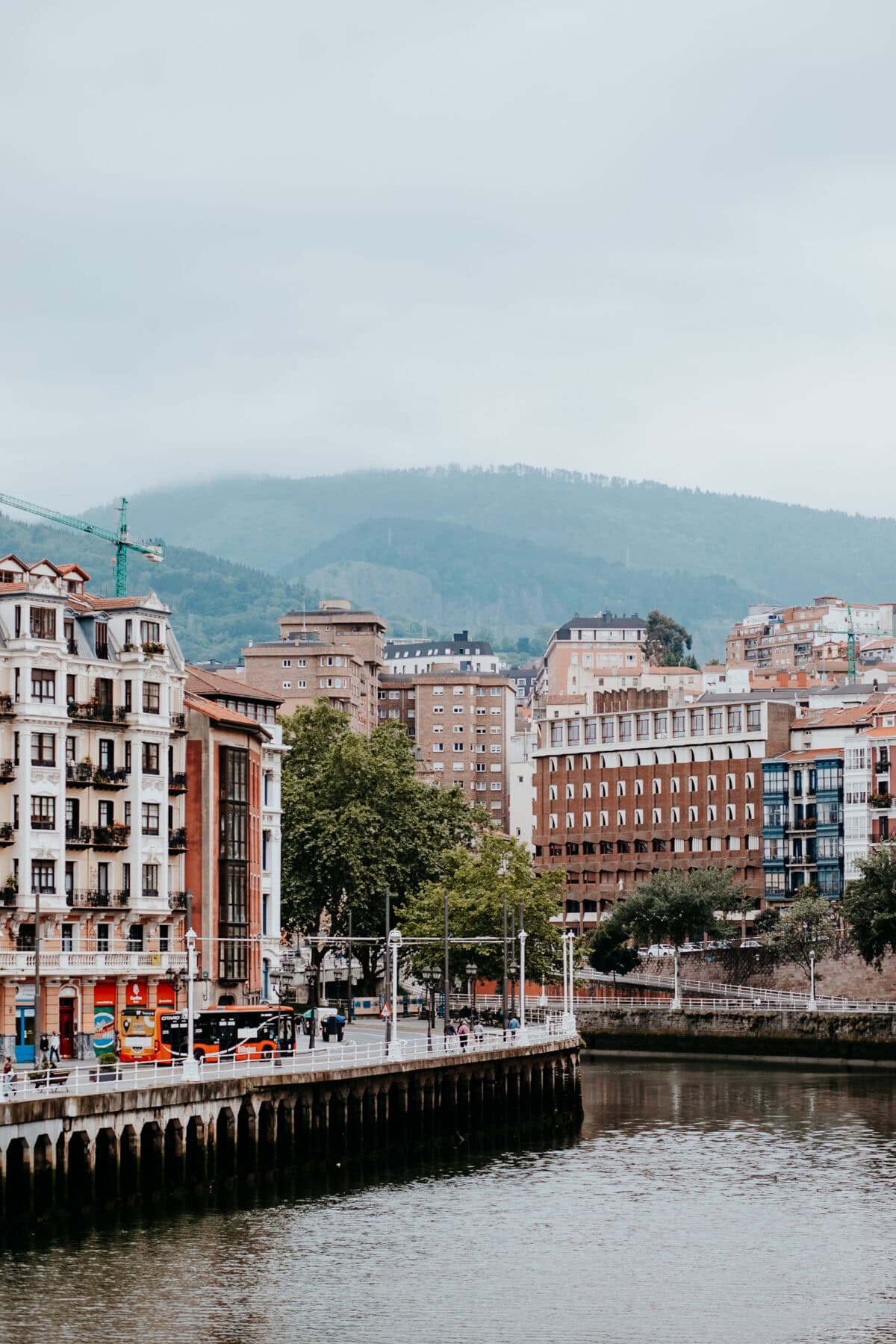
    City view with river and wooded hills in the background.

    It likes to be wet here, it often rains; but the summers are warm, but not oppressively hot like in the south of Spain, for example. And the abundant rainfall makes for lush green mountains around Bilbao.

    I therefore recommend that you avoid the fall and winter months, even if you have to squeeze through the city with the rest of the tourist crowds in the warmer months. But in my opinion, Bilbao is simply far too uncomfortable and inhospitable in bad weather.

    Safety in Bilbao

    If you read my blog regularly or follow me on Instagram, you’ll know that I can get excited about any destination. Bilbao also has really interesting sides, for example, I find the history of Bilbao and the changes to the cityscape over the last hundred years super fascinating.

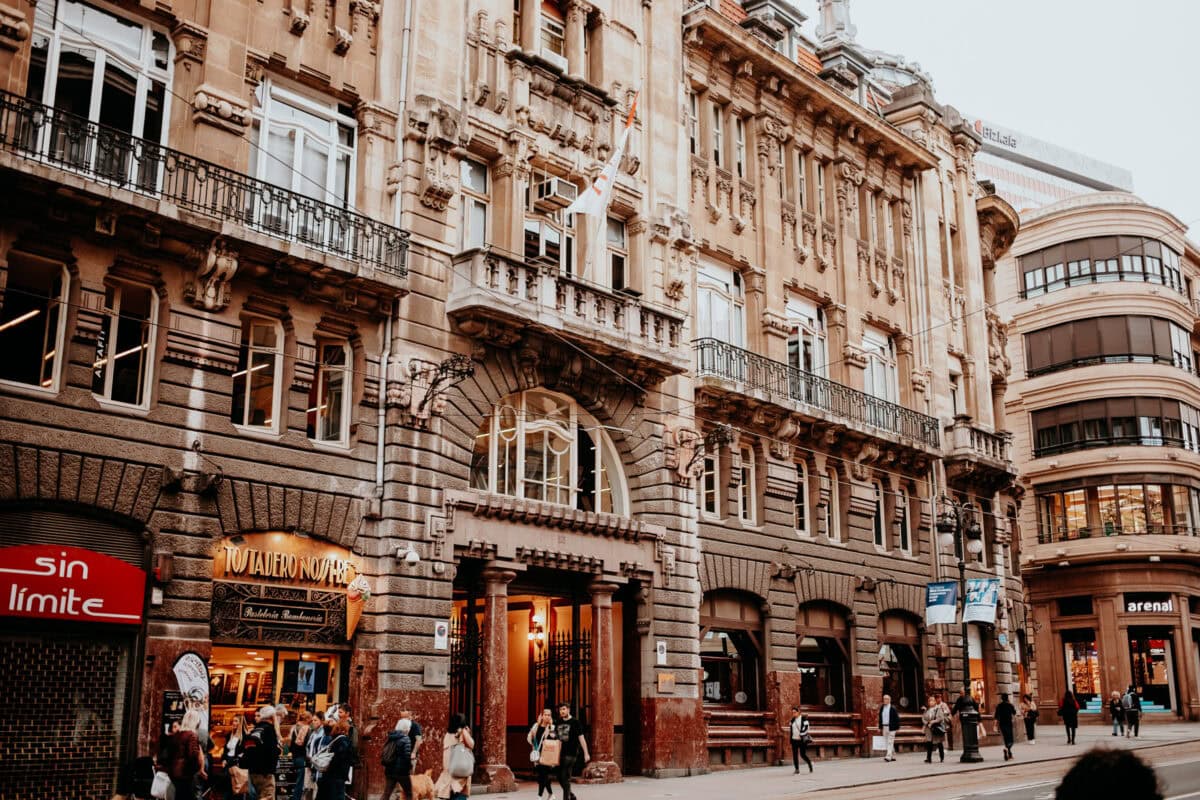
    Lively street scene with historic buildings in the city.

    Nevertheless, I haven’t become a big fan even after my last longer stay. This may be due to the city itself in general, which still exudes a bit of industrial dreariness for me, perhaps the occasionally damp weather, but also the fact that I had to part with my brand new iPhone here – it was stolen from my coat pocket.

    Pickpocketing happens every day in every major European city, and Bilbao has not yet achieved the notoriety of Barcelona, for example, in this respect, as far as I know. Nevertheless, I would like to take this opportunity to draw your attention to it. At first glance, Bilbao always seemed relatively relaxed and safe to me. But there are a lot of pickpockets out and about, especially in the busy old town with its narrow streets.

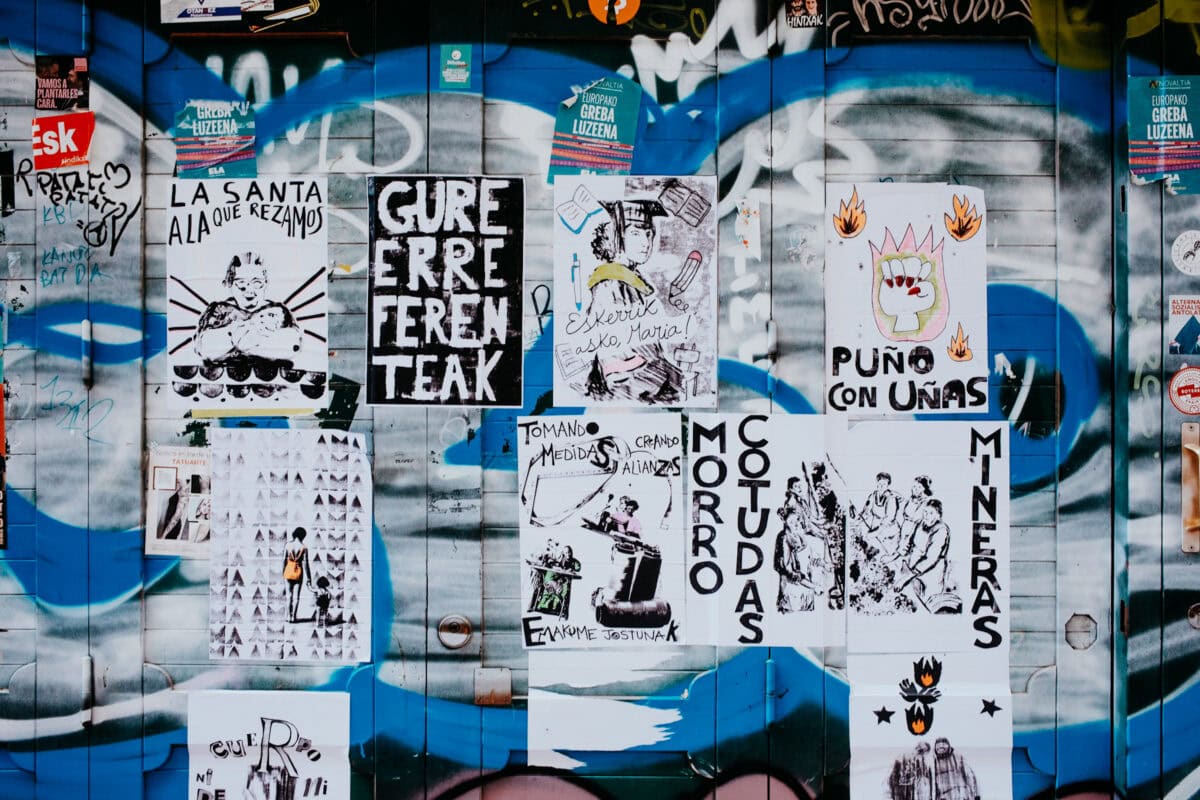
    Street art and graffiti in Bilbao, the Basque metropolis.

    Locals also urged me to pay more attention to the area around Calle San Francisco, a district on the other side of the river opposite Mercado Ribera. There’s a lot of street art, exciting restaurants and stores here – but it’s also a problem area and is often referred to as the most dangerous part of Bilbao. I was curious and actually wanted to explore the area, but after my pickpocketing experience, I didn’t feel like it. So if you want to go here (which I have actually decided to do on my next visit despite my experience) – take care.

    This article was written in part with the support of Visit Euskadi, the tourism organization of the Basque Country.

  • The Best Things to Do in Seville, Spain

    The Best Things to Do in Seville, Spain

    Seville is a city of passion: flamenco, the rousing dance full of emotion and energy, is everywhere you look. Add to this the typical Andalusian warmth and you are guaranteed to fall in love with this lively city. I’ll take you on a tour of the most beautiful sights that Seville has to offer.

    Horse-drawn carriage in a historic square in Seville, Spain

    The old town of Seville

    The old town of Seville is really great and the perfect starting point for your exploration tour. You can simply let yourself drift through the streets and soak up the energetic atmosphere. Many sights can be reached from here, including the two most important: Seville Cathedral and the Real Alcázar de Sevilla.

    Narrow Spanish alleyway with a yellow historic building
    Traditional Spanish bar with ceramic tiles in Seville

    The cathedral of Seville

    An absolute must-see is Seville Cathedral, the largest Gothic church in the world. Even if, like me, you’re not particularly into religion and church, you’ll be amazed by the sheer size and attention to detail.

    Gothic cathedral with richly decorated stone arches, viewed from below

    You should also definitely go up the Giralda Tower. The tower was once a Moorish minaret. It is now one of Seville’s most striking landmarks. The ascent is not easy, but it is unusual: for long stretches, there are no steps but wide ramps.

    Buy your ticket for the cathedral and the Giralda Tower here*

    Once at the top, it offers you a panoramic view over Seville that you won’t soon forget. The view is a real highlight!

    Panoramic view of Seville, featuring the cathedral and the Guadalquivir River
    View through the lattice windows of the Giralda toward Seville Cathedral

    In the cathedral itself you will also find the tomb of Christopher Columbus, the navigator whose arrival in America in 1492 brought him great fame as an explorer. Although Columbus was actually Italian, he set off on his voyages of discovery around the world on behalf of the Castilian crown. Incidentally, it was unclear for a long time whether Columbus’ mortal remains could really be found here, as the grave changed location several times – but this now seems to have been proven.

    Columbus's tomb with figures on pedestals in the Seville Cathedral

    The Alcázar of Seville

    Just a short walk from the cathedral is the Alcázar royal palace, one of the most visited and important sights in Spain. The entire complex is really huge – and usually well frequented. Plan enough time for your visit (you should reserve an entire morning or afternoon) and be sure to buy your ticket in advance to avoid long queues.

    Buy your ticket for the Alcázar of Seville here*

    The courtyard of the Real Alcázar in Seville, filled with tourists

    The Alcázar was originally built in the 10th century and is an impressive example of Moorish architecture. Here you will find magnificent halls with intricate details, paradisiacal gardens and an atmosphere straight out of a thousand and one nights. Like Seville Cathedral, the Alcázar is nowalso a UNESCO World Heritage Site.

    Gardens of the Alcázar of Seville, with palm trees and arcades
    The gardens of the Alcázar in Seville, with tall palm trees and hedges

    Patio de las Doncellas: The heart of the Alcázar

    An absolute highlight of the Alcázar is the Patio de las Doncellas (Courtyard of the Virgins). You probably already recognize this courtyard: It is by far one of the most popular photo motifs in the Alcázar.

    Courtyard of the Real Alcázar in Seville with a water feature

    The influences of Islamic architecture can be seen very clearly here: there is a water channel in the middle of the courtyard and the courtyard is surrounded by richly decorated columns. If you visit the Alcázar early in the morning, you should come here first to enjoy the magical atmosphere in peace – it gets really crowded here later in the day.

    Moorish arches and stucco ornamentation in the Alcázar of Seville
    Woman in white in front of a Moorish-style wall decorated with mosaic tiles

    Are you in the mood for even more Mediterranean lifestyle?
    Find even more great travel destinations in Spain here

    Metropol Parasol (Las Setas)

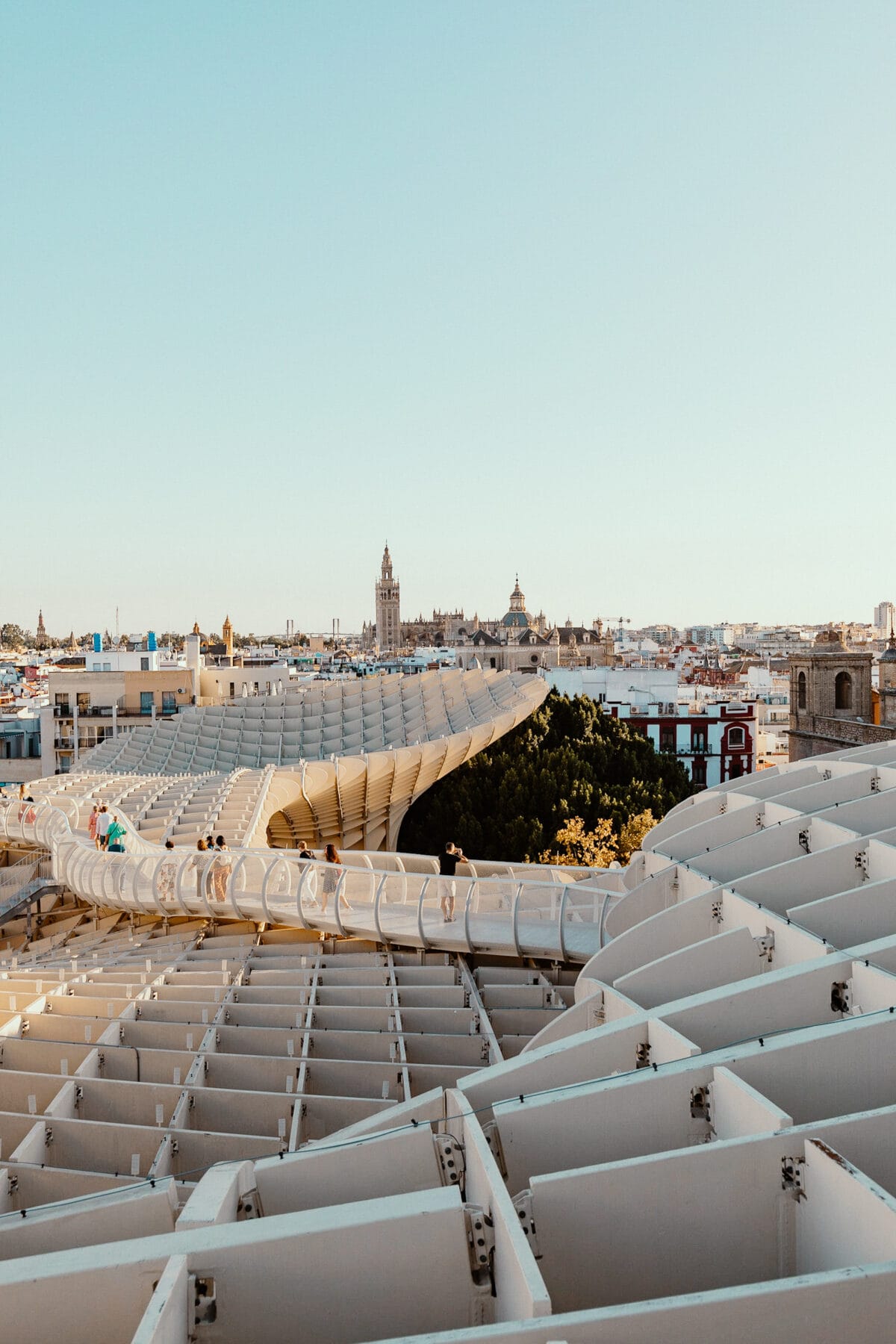
    The Setas de Sevilla were probably the main reason why I wanted to visit Seville. The special architecture of the Metropol Parasol, which resembles mushrooms (hence the Spanish nickname “setas”), is simply fascinating and the view over Seville is unique.

    Metropol Parasol Seville: A Modern Wooden Structure with Visitors
    Panoramic view from the Metropol Parasol over Seville's Old Town

    The site, which is located in the middle of the city center, used to be a market hall. At some point, however, it was so dilapidated that it had to be demolished in the 1970s. The site then lay fallow for a long time.

    The setas were completed in 2011 and now form a great contrast to the historic old town. Incidentally, the Setas are the largest wooden building in the world! The curved shapes and modern design are truly impressive.

    Metropol Parasol Seville Observation Deck with a panoramic view of the city

    From the observation deck on the Metropol Parasol, you’ll have the best view of downtown Seville. I definitely recommend visiting at sunset. When the last rays of sunlight bathe the city, the atmosphere here is especially wonderful! There are also many restaurants and bars in the area surrounding the Metropol Parasol where you can round off the evening.

    Metropol Parasol Seville Observation Deck with a panoramic view of the city
    Tourists on the Metropol Parasol Seville observation deck at sunset

    Parque de María Luisa

    Seville is amazingly green, and the Parque de María Luisa is a big part of this. Originally part of the private garden of the Palacio de San Telmo, this park was opened to the public for the Ibero-American Exposition in 1929 and is now considered the green lung of the city.

    If you need a break from sightseeing, you can take a stroll under the shady trees or enjoy the atmosphere in the spacious Plaza de España.

    Plaza de España in Seville, with a canal and a rowboat

    Plaza de España

    The Plaza de España catapults you into a completely different world. This semicircular square was built for the Ibero-American Exhibition of 1929 in the Neo-Mudéjar style . Like many buildings erected for world fairs or similar events during this period, the Plaza de España was also intended to reflect the progress of the time. And to this day, the Plaza de España is truly impressive.

    Plaza de España in Seville, with its historic architecture and canal

    You can even take a boat trip in the artificial pond. Take your time and let this special place work its magic on you!

    With a bit of luck, you can even see spontaneous flamenco shows: Dancers and musicians often meet here and just start playing. A great alternative if you can’t find the time to attend a proper flamenco show in Seville.

    Seville & the flamenco

    Pure life is everywhere here and the positive energy of the Andalusians is omnipresent. Flamenco is a particularly good example of this. This dance is inextricably linked to Andalusian culture. A subtype of flamenco is even named after Seville: the Sevillanas.

    If you don’t happen to see flamenco dancers somewhere, you should definitely look out for a flamenco show in one of the many tablaos in the city. The intensity and passion of flamenco are simply so intoxicating, you have to experience it live!

    Food & drink in Seville

    Seville is simply a feast for all the senses: the Andalusian capital also has a lot to offer in terms of cuisine. The tapas culture here is legendary, and a tapas tour through the city is the best way to get to know the local cuisine.

    Book a tapas tour through Seville here*

    Which food you have to try in Seville

    My tip: Just go to one of the traditional bars and order a selection of small dishes, from gambas al ajillo (prawns with garlic) to jamón ibérico (raw ham) and the classic tortilla Española. Tapas are usually ordered in small portions and shared among everyone at the table. If something tastes particularly good, simply order more. So you can taste your way through many specialties.

    Cheese platter with crackers, nuts, and jam on a plate

    Another typical specialty you should try is gazpacho, a cold tomato soup. It’s perfect for hot days in Seville. For wine lovers, the Tinto de Verano, a wild mixture of red wine and lemonade, which is popular in Andalusia, takes some getting used to, but is very refreshing in summer temperatures.

    Restaurants & Cafés in Seville

    During my trip, I also discovered a few locations that I wholeheartedly recommend:

    Filo Mini brunch store with great sandwiches, perfect for a little break in between. Freshly squeezed orange juice, tostada con tomates: everything is fresh here. Beautifully decorated.

    Five straw hats hang on a rustic white wall

    There are only a few seats, but the team is super well organized and the wait is really worth it! Filo can be found in two locations not far from each other on the same street, Calle Hernando Colón 10 and 19 (I was in the latter store).

    La Malvaloca Beautiful tapas restaurant directly opposite the Metropol Parasol. Perfect for drinks and a small snack in the evening.

    Restaurante Cristina Bistró At first glance, it may seem somewhat inconspicuous and a little off the beaten tourist track, but this restaurant serves great bistro cuisine. Sit outside, eat well and enjoy the vibe of Seville!

    Pan-Fried Meatballs on Potato Slices with White Wine

    Mercado Arenal

    Located somewhat off the beaten track, the Mercado Arenal is a real insider tip. Actually a market hall, you will also find some street food stalls with delicious specialties in the historic building. The atmosphere is pleasantly casual and tourists are rarely seen here.

    A bustling Spanish market hall with a tapas bar and a rainbow flag

    Practical travel tips for Seville

    If you are planning a trip to Seville, I have a few helpful tips for you here. But don’t worry, Seville is a great destination and you’re sure to find your way around!

    Intricately detailed Moroccan mosaic tiles with geometric patterns in blue and green

    Best time to travel and climate

    Seville can get very hot in summer. Temperatures often reach over 35 degrees Celsius. So if you really want to see something in the city, I advise you to avoid the hot summer months. The best time to visit is spring or fall. The temperatures are more pleasant then, but it is still often sunny and warm and you can enjoy the city to the full.

    Baroque church facade in Seville with blue ceramic tiles

    Staying overnight in Seville

    Seville offers a wide range of accommodation, from luxury and boutique hotels to Airbnbs and hotels. If you are staying in the old town, you can reach most of the sights on foot.

    My personal tip is La Parada de Marques*. Although it’s not in the middle of the old town, it’s particularly practical if you’re only staying in Seville for a few days. It is just a few meters from the bus station: from there, you can easily take the public bus to the airport and save yourself a cab or Uber. You can also easily get to surrounding cities by bus from here.

    Check availability & prices at La Parada de Marques in Seville*

    For example, I drove from Faro to Seville. You can also combine a trip to the Algarve in Portugal with Seville, for example.

    Transportation options in the city

    Seville may be a large city with just under 700,000 inhabitants, but many sights are within walking distance if you stay in the city center. However, you can also use streetcars, buses or bicycles to get around. In addition to regular cabs, there is also Uber in Seville.

    Horse-drawn carriage in front of the historic city walls in Seville
  • 10 Best Things to Do in Tarragona, Spain

    10 Best Things to Do in Tarragona, Spain

    I can highly recommend Tarragona as a travel destination in Catalonia: The city is really nice to explore and is bursting with great sights. I’ll show you my tips for Tarragona here and explain why you should definitely make a detour here!

    Sooner or later, you’ll come across another name for the city of Tarragona: Tarraco. That was Tarragona’s name in ancient times. In the 1st and 2nd centuries, Tarragona (or Tarraco, as it was then known) was one of the most important Roman cities on the Iberian Peninsula.

    Tarragona Roman Excavations

    After the fall of the Roman Empire, however, Tarragona disappeared into insignificance. Many of the pompous buildings were simply built over afterwards in the course of the centuries. Today, the ensemble of monuments from the Roman period is a UNESCO World Heritage Site and is managed by the Museu d’Història de Tarragona.

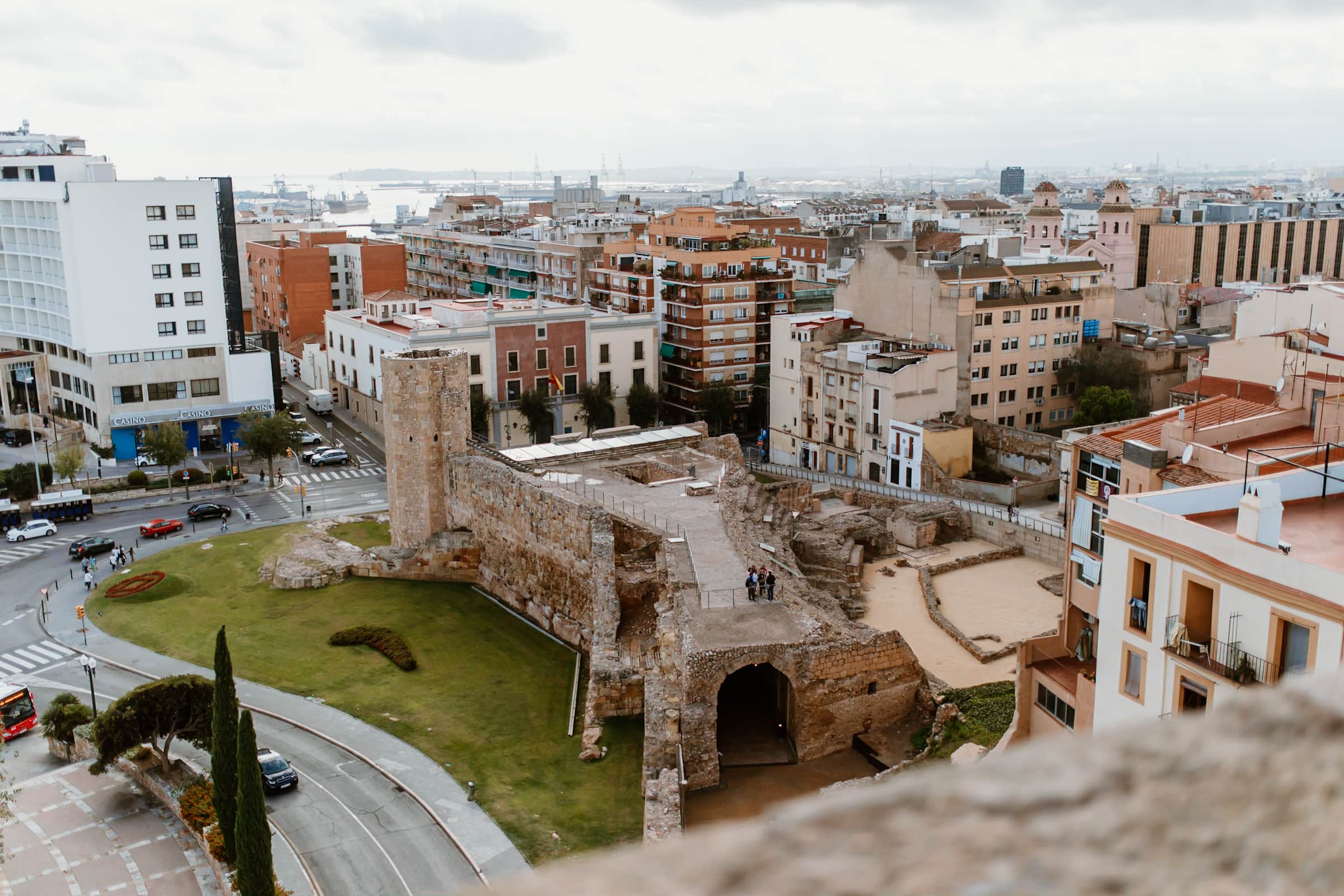
    Roman ruins in Tarragona with a panoramic view of the city and the harbor

    These are the attractions you should see in Tarragona:

    The Circus

    Hard to believe how big the Circus was in ancient Tarragona! On an area of 325 meters long and between 100 and 115 meters wide, chariot races took place here, one of the greatest spectacles ever! Today you can see especially the huge vaults underneath the Circus, which actually only served to stabilize the heavy stands above. Unbelievable, for which crowds of people the Romans built at that time!

    Tarragona Circus vault

    The Amphitheater

    Situated directly on the sea, in Roman times the amphitheater hosted gladiatorial fights and bloody chases with wild animals that lost their lives for the amusement of the spectators.

    Tarragona Amphitheater

    Torre del Pretori (Praetorian Tower)

    From the Torre del Pretori you have a fantastic panoramic view of Tarragona. Especially the view of the amphitheater and the old town with the cathedral enthroned in the middle are really worth seeing!

    Panoramic view of Tarragona, featuring the cathedral and the Old Town

    Tip: You can buy an entrance ticket for each monument individually. However, there is also a collective ticket, with which you save money already from the second location!

    For a small fee, you can also join a walking tour of the Roman sites: Book here*

    Tarragona Cathedral

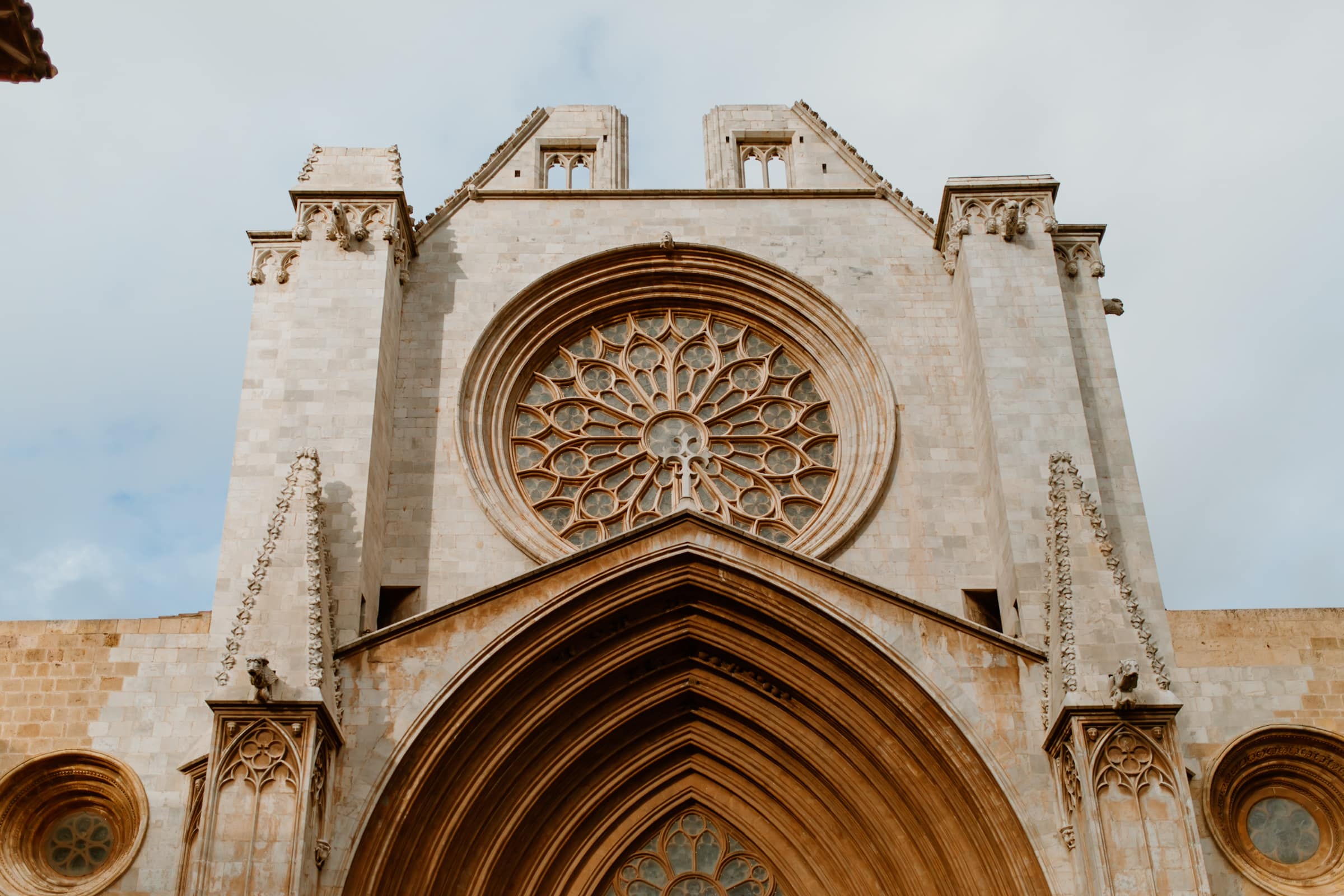
    Situated on a hill in the middle of the old town, between buildings, Tarragona Cathedral seems almost small and inconspicuous. But you should definitely take a look! The main church and the huge organ are very impressive. And inside the complex, the romantic cloister awaits you. A real oasis!

    ➜ Buy your tickets for the cathedral here*

    Gothic cathedral with a rose window and an ornate portal
    Medieval monastery garden with a fountain and Gothic arcades

    Castellers: The human towers of Catalonia

    On Sundays, the square in front of Tarragona Cathedral often hosts one of the absolute highlights: Here you can watch the various groups of castellers build their dizzying towers, the castells, in a combination of teamwork and acrobatics. Every two years there is a big competition lasting several days, in which the best group is chosen. In Tarragona alone there are four different clubs that maintain this tradition with great dedication.

    I was particularly impressed by how much cohesion (in the truest sense of the word) is required for a tower: hundreds of Castellers come together in a precisely thought-out formation! There is no real competition between the groups either; they even help each other to wrap the ultra-long waistbands, which provide the necessary stability in the lumbar region.

    Attention: In case of rain or wet ground the whole spectacle is cancelled for safety reasons.

    Catalan castellers build a human tower at the festival
    Catalan castellers form a human tower in front of a historic cathedral

    You can find more tips for the area around Tarragona, the Costa Dorada and Catalonia here:
    Catalonia tips & sights

    Balcó del Mediterrani (Balcony to the Mediterranean Sea)

    The balcony to the Mediterranean Sea: that’s the name of the popular beach promenade in Tarragona! And really, the promenade seems like one huge balcony: You’ll have the perfect view of the sea from up here! People like to stroll here, which the locals also call “tocar ferro” (touching the iron). In fact, superstition says that touching the railing of the Balcó del Mediterrani brings good luck!

    Ocean view through pink oleanders and palm trees on the Mediterranean coast

    Museu d‘art Moderna MAMT

    If you are even a little bit interested in modern art, you should definitely take a look at the Museu d’Art Moderna de Tarragona (called “MAMT”). In addition to different exhibitions, you can see the famous Tapis de Tarragona by Joan Miró, behind which there is a touching story.

    Large, colorful tapestry featuring abstract figures in a museum-style design

    In 1966, Miró’s only daughter had a serious car accident near Tarragona, but was rescued and treated in a hospital in Tarragona. Grateful for the efforts of everyone involved, Miró donated his work “Tapis de Tarragona” to the Red Cross of Tarragona in 1970, which can now be seen in the MAMT. The tapestry was knotted by Josep Royo, with whom Miró went on to create further tapestries for special locations. One of these tapestries (and the largest) hung in the World Trade Center in New York until its destruction on September 11, 2001.

    By the way, admission to the MAMT is free!

    Beaches in Tarragona

    Do you feel like going to the beach? In Tarragona this is not a problem! Even though you’re in the middle of a city and part of the coast is taken up by the admittedly unattractive harbor, you can still have a great beach day here: Tarragona even once won an award for the most natural city beaches in Spain!

    A coastal town with a turquoise-blue sea and a cloudy sky

    From the Torre del Pretori you can see especially well the Platja Arrabassada and the Platja Savinosa. Although Tarragona’s beaches are very close to the city, they are largely unspoiled. You’ll really find a lot of greenery and great hiking trails in the area.

    Shopping in Tarragona

    Tarragona is not as much of a shopping destination as Reus. Nevertheless, on Calle Major, for example, which leads down from the cathedral, you will find some nice stores where you can also buy typical souvenirs such as wickerwork or porcelain.

    A narrow alley in the old town with a view of the Gothic cathedral in Tarragona

    Small handbags made of wicker are in style or can be used as a trendy basket at home. And they are often simply cheaper here than at home!

    Larger stores can be found on Rambla Nova, a large shopping street, or in the Centre Comercial Parc Central.

    Woven straw bags in a rustic home decor store

    Where to eat in Tarragona

    The old town of Tarragona with its small winding streets is just too romantic! Here you will find many great locations for a cozy glass of Vino Tinto in the evening or right away for dinner. But note: Take your time, because the evening starts much later in Spain! 🙂

    A bustling staircase in the Old Town, lined with passersby and historic buildings

    You can sit outside until the evening in one of the many bars on Plaça de la Font! And the terrace of Pizzeria Pulvinar on Calle Mayor is a great place to enjoy the Tarragona vibe.

    A bustling town square with a historic city hall in Tarragona, Spain

    For rainy days or cooler weather, I recommend Entrecopes. Here you can enjoy typical Catalan cuisine in a cozy cellar vault!

    Where to stay in Tarragona

    Just like Reus, I was also very enthusiastic about Tarragona. I love big cities like Barcelona, but sometimes it’s the small, at first glance inconspicuous places that I really enjoy discovering.

    I really liked Tarragona. Its location right by the sea, the charming old town, and the historic sites are simply unbeatable. And the hotel certainly added to the experience: watching the orange-glowing sun slowly rise over the turquoise-blue Mediterranean right from my room’s balcony in the morning is simply one-of-a-kind.

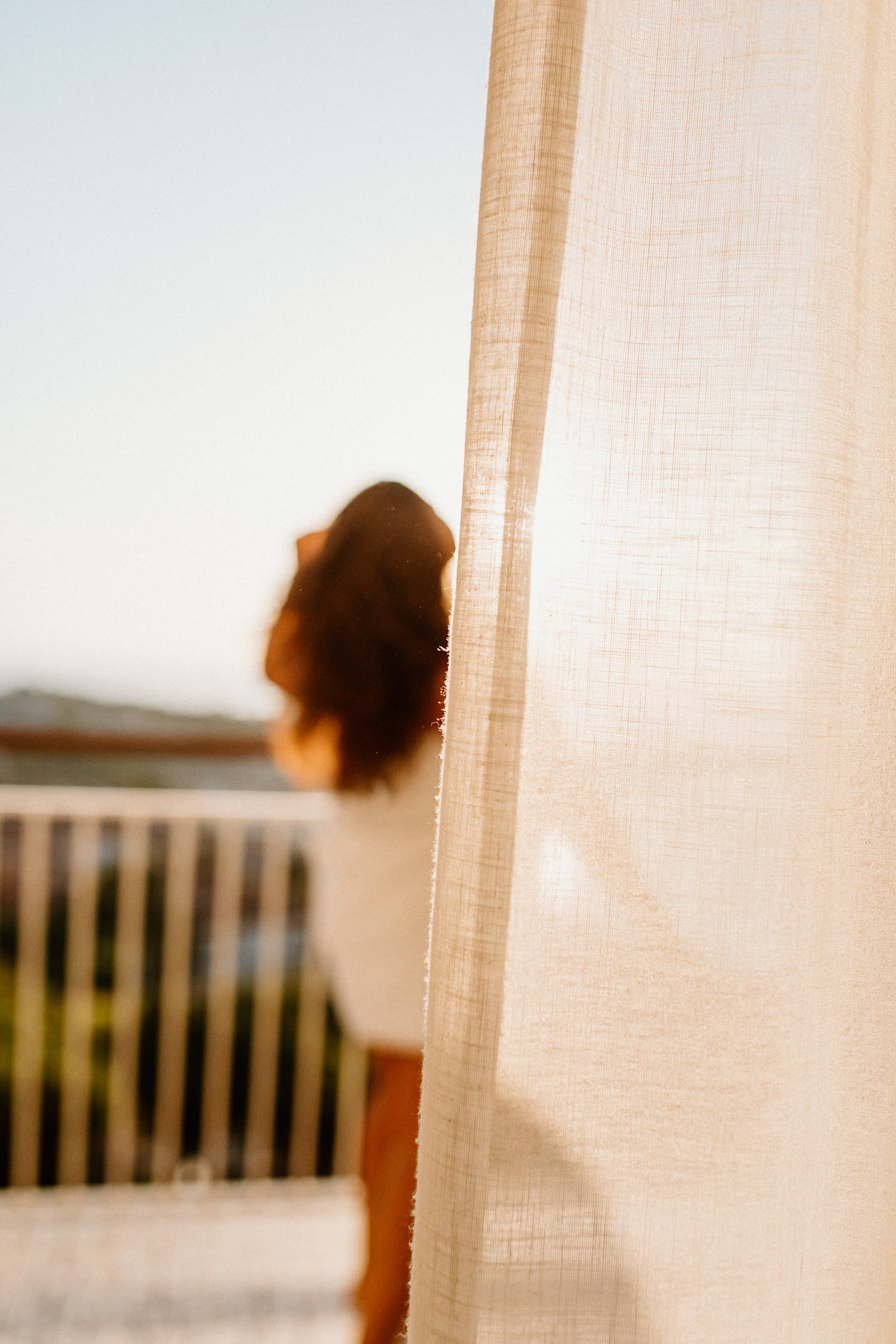
    Woman behind a white curtain on a sunny balcony

    And yet the H10 Imperial Tarraco is actually one of those massive hotels that usually leave me pretty cold. But this time, I had to eat my words: Not only is the view impressive, but so is the hotel’s overall vibe—somewhere between cool Miami style and warm tropical charm!

    A woman in a towel enjoys the sunset from the hotel balcony overlooking the ocean
    A woman relaxes on a white hotel bed with decorative wall paneling

    By the way, on the roof there is a rooftop bar with pool – and a fantastic view over the sea!

    ➜ You can book a stay at the H10 Imperial Tarraco here

    An elegant hotel restaurant with a view of palm trees through large panoramic windows

    How to get there / Day trip from Barcelona

    From Barcelona you can reach Tarragona in just one hour by a regional train! The city is therefore perfect for a day trip if you are in Barcelona anyway.

    ➜ Train timetables & tickets from Barcelona

    And Barcelona itself is always worth a trip, too! From many German airports there are good and cheap connections to Barcelona:

    ➜ Find a cheap flight to Barcelona here*

    Aerial view of a Mediterranean coastal town with a turquoise-blue sea

    Where to go next

    Tarragona is located on the Costa Dorada. Nearby you will find many small coastal towns such as Cambrils, which are especially popular in the summer! You can also take a trip to beautiful Reus, the city of Modernisme. Or you can plan a complete road trip through Catalonia – it’s worth it!

    ➜ Rent a car from Barcelona here*

    ➜ Here you can find all my tips for a trip to Catalonia

    Disclaimer: The Tourism Board of Catalonia invited me on this trip.

  • The Best Things to Do in Reus, Spain

    The Best Things to Do in Reus, Spain

    The city of Reus in Spain is a real treasure! A hundred kilometers from Barcelona, you will find a place with a lot of history, great architecture and great spots for foodies. In any case, I was immediately hooked by the lovely town of Reus and would recommend it any time as a city trip in Spain!

    Statue of a horseman in Plaça del Mercadal in Reus, Spain
    Plaça Prim in the center of Reus also often serves as a meeting place

    What to see in Reus

    The city center of Reus is dominated by Modernist buildings and the flair of a once very rich commercial city. In addition, Reus is still the absolute shopping destination in the south of Catalonia. If you love cozy alleyways, old building architecture and small boutiques, this is the place for you. And although Reus, with its 100,000 inhabitants, seems like a village next to a city like Barcelona, there are many interesting sights here.

    Looking for more inspiration for your trip?
    Here you can find all my tips for Catalonia

    Plaça Prim

    At Plaça Prim, you can see the important role Reus once played as a trading center in Catalonia. The pompous arcades along one side give the square a truly stately flair! The square is named after General Joan Prim i Prats, who was born in Reus and fell victim to an assassination attempt in 1870 during his later office as Spanish Prime Minister.

    Reus sights Plaça Prim with Teatre Fortuny

    Especially worthwhile here is a visit to the Teatre Fortuny, which should look just as glamorous from the inside, as I was told. Guided tours are not available, but maybe you’re in the mood for a concert or an operetta?

    ➜ Schedule of the Teatre Fortuny

    Hand holding a historic photo of Plaça Prim in Reus

    Unfortunately, not all of the buildings from Reus’ heyday at the beginning of the last century on Plaça Prim have been preserved. Where high society once met in the Gran Hotel de Londres, there is now an unadorned building from the 1970s. That’s a shame, but you should still take in the elegant atmosphere of the square.

    If you want to get a feel for what Reus used to look like here, it’s worth visiting Foto Niepce. In this photo store on Plaça Prim, founded in 1926, you’ll find a small photography museum with pieces from the history of this traditional family business.

    Plaça del Mercadal

    The Plaça del Mercadal is another central point in the center of Reus. Here you will find the City Hall, the Gaudí Centre and the opulent Casa Navàs.

    View of the Plaça del Mercadal from Casa Navàs
    From Casa Navàs you have the perfect view of Plaça del Mercadal

    If you want to take a little break, here’s the perfect opportunity! My café tips:

    Roslena Modern café with self-service and affordable snacks, but at the same time a well-stocked magazine store! Located next to the Gaudí Museum.

    Café de Reus Located a bit off Plaça del Mercadal, but you can hardly miss it with its red facade. Great location for drinks & tapas, in the evening there’s also sometimes live music.

    Café de Reus terrace with red facade
    Very pretty: the facade of the Café de Reus

    Modernism in Reus

    Buildings worth seeing from the Modernisme period in Reus include Casa Navàs, the Pere Mata Institute, Casa Rull and Casa Gasull. Most of the buildings were designed by Lluís Domènech i Montaner, another famous representative of Modernism along with Gaudí.

    If you’re as interested in architecture as I am, you can book a special architecture tour at the tourist information office in Reus, which will take you to and inside many buildings that you wouldn’t otherwise have seen!

    Or you can follow the “Ruta del Modernisme” on your own: 29 of the almost 80 Modernisme buildings have been combined into a tour. You can get the map at the tourist information office in Plaça del Mercadal.

    ➜ The Ruta del Modernisme in Reus

    What is Modernisme?

    The architectural style of Modernisme emerged in Catalonia between 1885 and 1920. Similar to Art Nouveau, which emerged in parallel in Germany, Modernisme is characterized by novel curved lines and organic forms. Modernisme, however, was not only a style of architecture, but also a social movement that spanned all areas of life such as art, culture, and politics. One of the most famous architects of this era is Antonio Gaudí.

    Casa Navàs

    Built between 1901-1907, Casa Navàs is one of the best examples of the Modernist architectural style. The merchant Joaquim Navàs lived here with his wife on the upper floors, and on the first floor was the family department store until 2018, which now serves as an event location after a change of ownership. The upper floors are still furnished with the original furniture. You can visit Casa Navàs as part of a guided tour.

    Personally, I love the playful style of Modernism, but at the same time the vibe of an era in which so much has changed in the whole world in terms of culture and society. In Barcelona, I was always very taken by the wealth of detail in houses such as Casa Milà, and I don’t know anyone who isn’t fascinated by the architecture there. At Casa Navàs, however, my jaw dropped by excitement. The dedication with which the entire house was designed can be felt in every room.

    Just for the Casa Navás a trip to Reus is worth it! As soon as you enter the stairwell, you realize that you are entering a very special house. My tip: Ask for a tour with Ben – his love for the house is absolutely contagious and he’s a natural as a museum guide! Once I’d got my jaw dropped, I couldn’t stop laughing because the tour with him was so entertaining.

    Gaudí Centre

    The city’s most famous son, Antonio Gaudí, has an entire museum dedicated to him in Plaça del Mercadal. Although Gaudí was born in Reus and spent his entire childhood and youth here before moving to Barcelona, there is not a single one of him in the city of his birth. This is in stark contrast to Barcelona, where he played a major role in shaping the city’s appearance with buildings such as the Sagrada Familia, Casa Milà, Casa Batlló and Parc Güell.

    ➜ Gaudí Centre

    Gaudì Centre Reus at Plaça del Mercadal

    The Famous Vermouth of Reus

    If you’re in Reus, you should definitely try a vermouth. The white wine mixed with herbs and sugar is the traditional drink of the city. In the 19th century, vermouth and the trade in it brought wealth to the town. Around Reus today there are still eight different vermouth producers.

    Wooden barrels with vermouth in Reus, Spain

    Eating & Drinking in Reus

    Even if you haven’t become a fan of vermouth (with its herbal taste, it’s not for everyone), I recommend Vermuts Rofes in Reus. Once vermouth was produced here, now the former manufactory has become an atmospheric restaurant.

    Tip: Walk through to the inner courtyard! Here you can try typical Catalan dishes at large, rustic industrial-style tables. And if you wish, treat yourself to a glass of the company’s own vermouth, because Vermuts Rofes is still being produced, just in a different, modern location.

    Plate with mussels in vermuts Rofes Reus

    Shopping in Reus

    Reus is still the first port of call for the surrounding region when it comes to shopping. In the narrow pedestrian streets of the city center, you will not only find the usual suspects such as Mango and Zara, but also a surprising number of small boutiques and family-run stores.

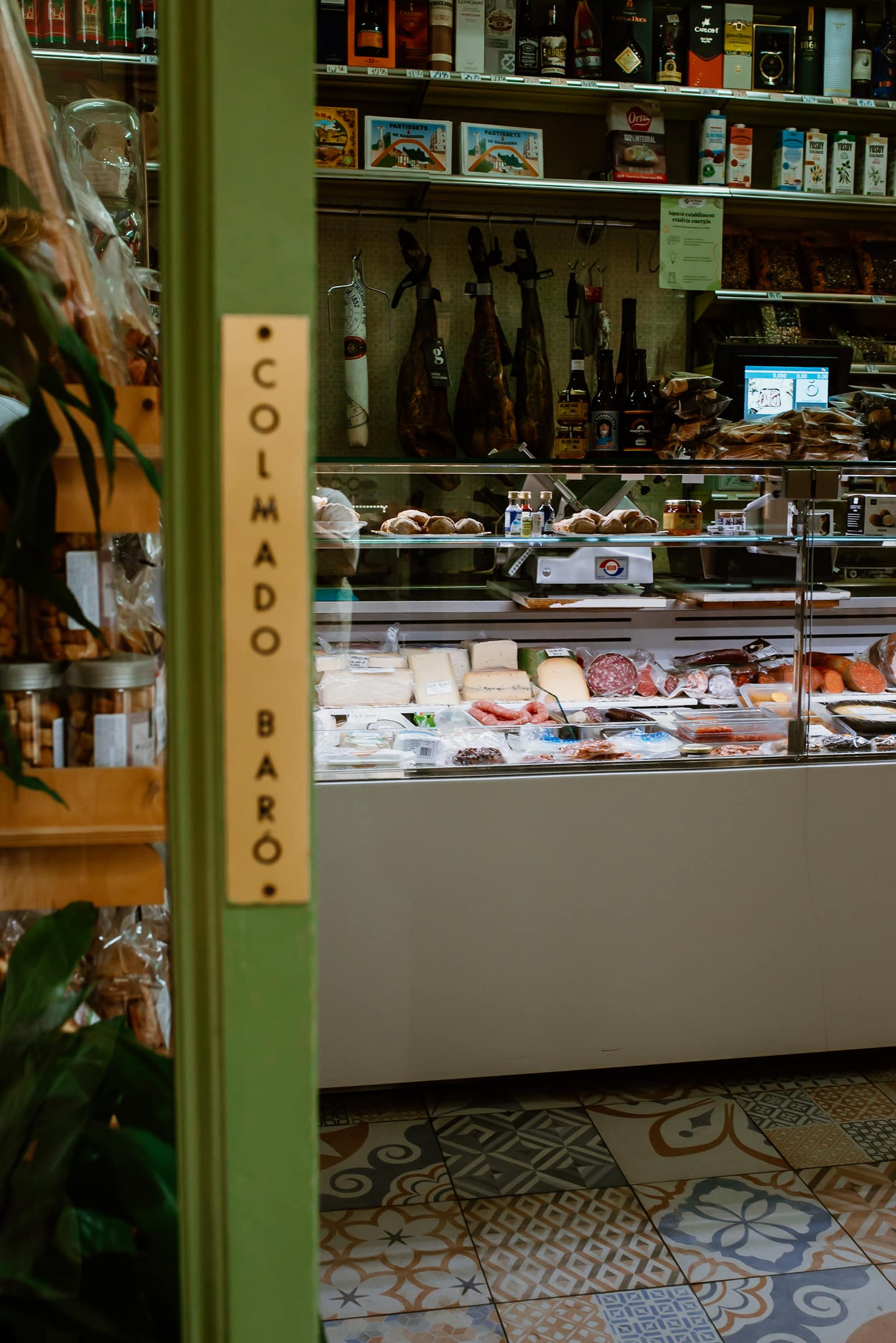
    Colmado Baró

    At Colmado Baró you can stock up not only on vermouth, but also on many other typical goodies. Still family-run, this delicatessen has a very special charm. The perfect opportunity for culinary souvenir shopping!

    Cheese counter with ham at Colmado Baro in Reus, Spain
    Old tiles in modernisme style

    El Barato

    The stylized O behind the name El Barato is reminiscent of the time of the military dictatorship under General Franco: back then, the traditional fabric store had to drop its Catalan name “Barat” and change its name to the Spanish version “El Barato”. Then as now, hobby tailors, designers, artists, folklore groups and carnival clubs stock up on the wildest fabrics here – and probably spend whole days browsing through the overflowing shelves.

    sequin ribbons on spools in a box

    Do you want to spend several days in Reus?
    Here you’ll find lovely little boutique hotels

    How to get to Reus

    What is the best way to get to Reus?

    Perhaps Reus might sound familiar to you: It has an airport that is mostly served by low-cost carriers & very popular for reaching the beaches of the Costa Daurada. This is often advertised as Barcelona-Reus, although Barcelona’s actual airport El Prat is almost a hundred kilometers away. However, most airlines only fly to Reus from spring to fall.

    ➜ Find cheap flights to Reus*

    The most practical option is therefore a flight to Barcelona. So you can connect both cities!

    ➜ Here you can find cheap flights to Barcelona*

    How to get from Barcelona to Reus

    From Barcelona, the best way to get to Reus is by regional train or by bus if you are traveling without your own car or rental car. The route can also be easily driven there and back in one day. Reus is therefore also perfect for a day trip from Barcelona!

    ➜ Check the timetable here & buy tickets for the bus

    ➜ Check the timetable for the regional train

    ➜ For more flexibility: Book a rental car from Barcelona*

    What else can you see in Catalonia?

    If you are traveling by car or rental car, I can highly recommend a tour through the hinterland of Catalonia. If you like being out in nature or hiking, you will find great opportunities here. It’s also not far to the Pyrenees, where you can go skiing in winter.

    Otherwise, Catalonia also has popular coastal towns. The Costa Brava and the Costa Dorada are dotted with beautiful beaches, such as those around Cambrils. Or you can simply continue south along the Spanish coast. France borders Catalonia to the north, and the beautiful city of Perpignan is only 170 kilometers from Barcelona.

    Red fishing boat in a Spanish harbor with white houses
    Reus is only eight kilometers away from the Costa Daurada

    The entire coastal region is also easy to travel by train. If you have more time and don’t want to drive yourself, you can plan a great trip through Spain and France.

    ➜ Check train connections of Renfe here (Spanish railroad company)

    More inspiration for your trip Catalonia:
    Road Trip through Catalonia
    Cambrils: A Cute Coastal Town on the Costa Daurada
    Tarragona: Highlights in the City of the Famous Castellers

    Note: This research trip was supported by Catalonia Tourism.

  • Cambrils: How to spend a lovely vacation at the Costa Dorada

    Cambrils: How to spend a lovely vacation at the Costa Dorada

    Cambrils is located on the Costa Dorada (Catalan: Costa Daurada) in the autonomous region of Catalonia in northeastern Spain and, like many of the small coastal towns there, is very popular with vacationers. In summer, flat beaches and vacation feeling attract a lot of visitors, but also in the off-season Cambrils has its charm!

    Tip: Book affordable hotels in Cambrils now!

    The port of Cambrils

    The center of the town is the small fishing port of Cambrils. Fishing boats leave here around the clock and ensure that there is always fresh fish in restaurants and local kitchens in the area. While the trawlers set out with their trawl nets in the morning, the light fishermen set out in the evening.

    A small Mediterranean harbor with colorful boats and town buildings
    Rusty rope with knots on a green fishing net

    Every day around 5 p.m. the trawlers enter the harbor again with their catch, which is a spectacle not only for the hungry seagulls around. If you are looking for really fresh fish, this is the place to be!

    Fishing boats in the port of Cambrils

    In general, the small port of Cambrils is very idyllic and a visit can always be combined with a walk along the promenade. The harbor itself hasn’t been around that long: on the information boards around it, you can see on black and white photos how the fishermen used to get into their boats right on the beach here and set off!

    Looking for inspiration for your next trip to the south?
    Click here for all articles about Catalonia and Spain!

    Two metal fish, part of the sculpture "El Pla de les Serenes" in Cambrils.
    The statue "El Pla de les Serenes" on the promenade of Cambrils shows two mermaids.
    The sculpture “El Pla de les Serenes” on the promenade shows two mermaids.

    Torre del Puerto

    The Torre del Puerto is an old watchtower right on the Passeig Miramar, the promenade of Cambrils. Built in the 17th century to defend the city against pirates, it now houses part of the Museo de Historia de Cambrils. The former watchtower is now used for events or temporary exhibitions on the history of Cambrils.

    Around the Torre del Puerto you will also find many restaurants where you can sit comfortably outside and enjoy the flair of the fishing village.

    Historic round tower next to the Miramar Restaurant in a Spanish coastal town

    Eating and drinking in Cambrils

    Mediterranean ambience, warm temperatures and southern European hospitality: in Cambrils you will find numerous good restaurants where you can try typical specialties. You can find my tips here!

    El Pòsit

    A little off the promenade you will find one of the most traditional restaurants in Cambrils. Originally located at the port of Cambrils for over 30 years, making it a popular spot for fishermen, El Pòsit moved to Plaça de Mossèn Joan Batalla near the pedestrian zone in 2004.

    Here you can get traditional dishes with fish and seafood in the best quality and at a good price.

    Open for lunch Monday through Friday; dinner only on Fridays and Saturdays.

    Rincón de Diego

    Things are more upscale at Rincón de Diego, but I wouldn’t have expected anything else in a Michelin-starred restaurant. Nevertheless, the gastronomic 6-course menu more than exceeded my expectations. And when the press text says “chef Diego Campos conjures up exquisite dishes with Basque and Mediterranean influences and displays extraordinary creativity” then that is an understatement: The presentation alone became more and more fascinating with each course.

    Table set with wine glasses and place plates at Rincon de Diego restaurant in Cambrils
    Star cuisine at Rincón de Diego in Cambrils

    The 6-course menu costs 60 euros, with wine, water and coffee 80 euros. Absolutely recommended if you want to enjoy star cuisine for once!

    Reservations & current menu at Rincón de Diego

    Marshmallows put on golden forks and spoons and red chocolate in the shape of lips for dessert

    Events and festivals in Cambrils

    Cambrils goes to great lengths to ensure that visitors are not bored: Throughout the year there are various festivals and events in the town. Like everywhere in Southern Europe, people like to eat well here, so there are also many culinary events. Especially popular are the “Jornades Gastronòmiques de la Galera i la Cuina Marinera“. Then, every February, everything in Cambrils revolves around the Galera, a type of lobster, and its importance for the place.

    But wine lovers don’t miss out either: in October, the Cambrils Wine Festival takes place in the Parc del Pescador.

    Cambrils wine festival in the evening
    Wine festival in the Parc del Pescador

    Apart from the fact that the location in the middle of the park is super cute, I found the whole implementation of the event so nice: at one of the booths at the entrance you buy your “Glups” and “Nyams“, which serve as drink or food vouchers, and if you have forgotten your own glass (everyone has to bring their own, nice environmental idea!) you can also get a small shoulder bag with a wine glass in it for a deposit. So pretty! Later in the evening, there’s also live music.

    More info about the wine festival “Cambrils: Entrada al pais del vi”.

    Several bottles of wine at stand at wine festival in Cambrils
    In Catalonia you can find numerous wine regions

    Stay overnight in Cambrils

    In and around Cambrils there are many places to stay. Often you can find big vacation hotels here, which I personally don’t find very appealing in the high season no matter in which place. In the low season, however, you can consistently make good bargains here, even rooms in hotels of the higher category then cost considerably less than in plain summer. At the same time, you can then enjoy the comfort of a larger facility with a pool and huge breakfast buffet – that’s also quite pleasant for a change. For example, I stayed at Sol Port Cambrils – central, well kept and very solid.

    ➜ Check prices and availability for the Hotel Sol Port Cambrils here

    Here’s a hotel tip given to me by a local: If you’re not at all into bed castles, but still want the vacation feeling of a resort, you should check out the Estival ElDorado Resort. It is located a little outside the city center, but directly on the beach. The resort has many amenities including multiple pools, a large fitness center, numerous restaurants and even a beach bar. Large hotels in high-rise buildings, such as those on the other side of the city in the direction of Salou, are not to be found here. Would keep in mind for the off season!

    ➜ Check rates & availability for Estival ElDorado Resort* here.

    Cambrils beach
    Popular: The beaches in and around Cambrils

    Helpful tips for a vacation in Cambrils

    When is the season in Cambrils?

    The vacation season in Cambrils lasts from April to October. July and August are the peak season. But like many places in southern Europe, the climate here is still mild even in October. If you want to escape the autumn in Northern Europe and enjoy a few rays of sunshine by the sea, you are definitely in the right place. By the way, many locations are closed in January, but otherwise there is always some activity in Cambrils even out of season.

    How far is Cambrils from Barcelona?

    Cambrils is about 120 kilometers from Barcelona. By car or rental car (book here)* the trip takes about an hour and a half. But you have the same travel time with the regional train, which goes from Barcelona along the coast and also stops directly in Cambrils. Or you can take one of the buses from BusPlana(click here for info)!

    Fishing boat in Cambrils harbor

    Thanks to Catalonia Tourism for the invitation to this trip!

  • Road Trip through Catalonia: Hidden Gems & Secret Spots

    Road Trip through Catalonia: Hidden Gems & Secret Spots

    Although Catalonia has a real visitor magnet with Barcelona, especially the countryside has been spared from the large tourist crowds of the capital. On a road trip through Catalonia you can therefore still explore really great spots: In this article, I’ll show you a few of my insider tips for Catalonia that I discovered recently!

    Amazing ideas for a road trip through Catalonia

    Whether you’re starting from Barcelona or if you are on a road trip through Spain anyway, these locations in Catalonia are worth a detour!

    Historic stone building with arcades and trees bathed in sunlight
    Just one of many insider tips in Catalonia: The Monestir de les Avellanes

    Congost de Mont-Rebei: The most beautiful gorge in Catalonia

    The Congost de Mont-Rebei is probably the most famous gorge in Catalonia and is not without reason called by many the “Grand Canyon of Catalonia”. The gorge is located in the province of Lleida and separates Catalonia from the neighboring region of Aragon.

    On a rather adventurous hike, you can explore the gorge (which, by the way, is only twenty meters wide at its narrowest point) on a narrow trail. Or you can choose a kayak tour and discover the fascinating wildlife of the Congost de Mont-Rebei from the water.

    A river winds through a green, forested mountain valley
    Pure nature: Hiking in Congost de Mont-Rebei

    Here you’ll find almost untouched nature, because the gorge is located in a nature reserve. When we were in the middle of the gorge, suddenly a bearded vulture circled above us: an impressive experience! If you are very patient, you can even see otters darting through the water at sunrise and sunset: In the past they were hunted here for their fur, but now the population has recovered a bit. However, otters are very shy of people, so there are special vantage points from which you can observe the watercourse from above.

    A river winds its way through a forested mountain gorge dotted with rocks

    Unfortunately, the kayak tour was cancelled during my visit, because this year, due to the very hot summer, the riverbed was quite dried up and a crossing by kayak was impossible. I can’t even imagine how beautiful it might be here with much more turquoise water shooting through the gorge here! But even so, the hike through the Congost de Mont-Rebei was a real nature experience!

    A golden field of grain with green mountains in the background

    Fortunately, I am not particularly afraid of heights! The suspension bridge, which must be crossed in between, may otherwise cause an anxiety attack if you’re a not a fan of heights. But also the unsecured high trail through the gorge is no trip to Disneyland: Next to the narrow path it goes straight down for maybe hundred meters!

    Suspension bridge over a rocky gorge surrounded by lush greenery

    Tip: Don’t forget to wear sturdy hiking shoes or sneakers suitable for trail hikes! The trail is very rough and more than once I was thankful for my trail running shoes.

    Hikers in a narrow rocky gorge with a river and a mountain trail

    Wine tasting in Castell d’Encus

    Did you know that Catalonia is the second largest wine region in Spain? In addition, the majority of all varieties of cava are grown here. Cava is, so to speak, the Spanish champagne variant, similarly protected and produced by means of vial fermentation.

    Vineyards in a hilly landscape with mountains in the background

    Therefore, there are wineries in Catalonia like sand on the Costa Brava – and nowhere else wines can be tasted better than in an absolute wine region. Admittedly, I probably won’t become a real wine connoisseur in this lifetime, but I simply enjoy drinking a good glass of wine. Besides, winegrowing is a world of its own, and I am always fascinated by the dedication and enthusiasm with which small wineries produce their wines.

    Very interesting, therefore, was my visit to Castell d’Encus in Talarn near Lleida, one of the many recent wine projects in Catalonia. In the 12th century already wine was cultivated by the monks living here. In fact, there was even a small village! All that remains from that time is a small chapel and a few ruins – and until the Castell d’Encus project revived viticulture a few years ago, there was simply nothing here.

    Since 2001, wine has been cultivated here again at an altitude of 850 to 1250 meters, as ecologically as possible and according to the latest scientific findings, but also with the help of the ancient traditions of the monks of yesteryear: the grapes are partly fermented in the large basins that were carved into the bare rock for wine production. Pretty crazy, but as I experienced myself at the tasting afterwards, it doesn’t seem to harm the wine 🙂

    The basins as well as the ruins can be visited during a tour – and the view of the landscape around is unique. Guided tours followed by a wine tasting take place from Monday to Saturday.

    ➜ Registration here via the website

    If you are hungry after the tour and tasting, I can recommend “L’Era de Balust” in the neighboring Salàs de Pallars. I would describe the cuisine as traditional Catalan home cooking and the ambiance in an old courtyard building is just too cozy. Be sure to try the Flam de ratafia: Ratafia is a typical Catalan herbal liqueur made from green walnuts and herbs and is served with sweet flan as a dessert.

    Rustic restaurant patio with stone arches and lush plants

    Tip: Castell d’Encus is already located in the pre-Pyrenees near Lleida. It’s a good two and a half hour drive from Barcelona – if you want to travel in a relaxed way or are looking for a nice place to stay nearby, check out the Monestir des Avellanes further down in this article.

    Visiting an olive oil manufacturer

    If wine isn’t your thing, but you still want to get a taste of the countryside, then you should pay a visit to an olive oil producer like Olicometes. That’s where I learned that olive oil, just like wine, can have the craziest flavors. Or did you know that there are olive oil connoisseurs who can even taste banana or vanilla from olive oil?

    But the story behind Olicometes is even more inspiring: the operating couple Martin and Neus fulfilled their dream a few years ago, bought a finca, ditched their jobs in Barcelona and are now olive farmers with heart and soul. Now you can visit them here on their finca and look over their shoulder at the olive harvest. Or you can just enjoy nature with a romantic breakfast or aperitif under olive trees, tasting the best olive oil in ecogical quality approved by Demeter.

    Smiling couple in front of a wooden frame in an olive grove
    Martin and Neus have created their own olive oasis with a lot of heart and soul

    By the way, the whole estate extends over a whole valley: 27 hectares belong to Olicometes. If you want to stretch your legs before or after the tasting, you are invited: For visitors, Martin and Neus have lovingly signposted a small circular route that leads past viewpoints and several caves across the finca.

    ➜ Register here for tours, harvest, breakfast or aperitif

    Cometes olive oil bottles of various varieties on a wooden shelf

    Counting stars at the observatory in Àger

    Incidentally, the Serra del Montsec mountain range is also known for its perfect astronomical conditions. On clear days, you have a dreamlike view of a clear starry sky at night here, completely free of light pollution. Even with the naked eye, entire constellations of stars can be easily seen here. It is also worth visiting the Parc Astronòmic Montsec with its observatory and exhibition.

      Observatory in Àger in Catalonia
    You just have to see it live: Capturing the fascinating starry sky above the Montsec is not that easy at all

    Tip: Go in the evening and definitely take in the film screening! The content is interesting, but much more impressive is the finale: the moment when the dome opens to reveal the starry sky is simply magical! Absolute goose bumps!

    Planetarium with a starry sky dome and panoramic screen at night
    Pure goose bumps: The dome of the cinema in the Parc Astronomic Montsec opens

    You can find more tips for Spain here:
    All articles about Spain

    Where to stay in Catalonia

    I always like road trips by car, because you are very flexible when it comes to accommodation. And it’s very easy to get to more remote locations, such as the Monestir de les Avellanes!

    Monestir de les Avellanes

    A really special place: the Monestir de las Avellanas, a protected monument, is actually a former monastery and a good choice if you love peace and seclusion. Embedded in a landscape that reminds you a bit of Tuscany, you can really come down here and find yourself. The rooms are simply furnished, and all parts of the monastery complex, such as the atmospheric chapel and the well-kept cloister, can be used by all guests.

    Monestir de las Avellanas near Lleida in Catalonia

    In the hotel’s own restaurant (which, by the way, is also popular with locals on weekends and holidays as an excursion restaurant), you can enjoy typical Catalonian cuisine at a low price: a 5-course meal here, for example, costs only 30€. By the way, as a wine accompaniment I recommend the in-house wine, which is grown around the Monestir de las Avellanas.

    ➜ Check prices & availability: Monestir de les Avellanes in Os de Balaguer

    A vineyard with cypress trees in a hilly landscape at sunset

    Hotel Finca Prats Golf & Spa

    Want to treat yourself after a day outdoors? Then perhaps a wellness weekend at the Hotel Finca Prats Golf & Spa is something for you: In the wellness area with pool and sauna you can relax as much as you like and in the evening you can indulge yourself with a multi-course menu of culinary delights in the hotel’s own restaurant.

    ➜ Check prices & availability: Hotel Finca Prats Golf & Spa in Lleida

    Info about Catalonia

    Is Catalonia an independent country?

    Catalonia is one of the 17 autonomous communities of Spain, located in the northeast of the country and bordering France. The capital is Barcelona.

    In the last few years, however, there has been a heated debate about Catalonia’s independence from Spain – a very hot political potato that has its origins in the historically recurring cultural conflicts.

    In many areas, Catalonia has a special status within Spain; for example, Catalonia has its own civilian police force, the “Mossos d’Esquadra.”

    The whole issue is highly emotionally charged. Many Catalans who still lived under Franco’s regime, which ended in 1975, remember well how living out Catalan culture, for example, as a spoken language, was forbidden and severely punished.

    What language is spoken in Catalonia?

    In many official occasions, Catalan is given precedence, but Spanish is also an official language. I would argue that every Catalan is fluent bilingual and can easily switch to the respective language according to the situation. Non-Catalans are never actually expected to speak Catalan.

    However, Catalan is also a Romance language and very similar to Spanish. If you have some knowledge of Spanish, you will certainly understand some things, even if you have trouble speaking. English is not widely spoken, especially in less touristy places, but personally I never feel it is a must-have on a trip – it just makes being on the road more exciting.

    Catalonia map with route & all tips

    Here you can find a map with all locations from the article. You can also download this map to your Maps account! That way, you’ll always have all tips at hand.

    Tips for a road trip through Catalonia

    Do you feel like going on a road trip through Catalonia now? The locations mentioned are part of the Grand Tour of Catalonia, which will take you to many other interesting spots in the region! On the website you will find route suggestions and excursion tips for tours with your own car, van or camper.

    Are you traveling without your own car? Just pick up a rental car at Barcelona airport and jet off into the countryside from there!

    ➜ Find a cheap rental car here*

    Disclaimer: This research trip was supported by Catalonia Tourism.

  • Jardines de Alfabia: The Tropical Botanical Garden in Mallorca

    Jardines de Alfabia: The Tropical Botanical Garden in Mallorca

    In the Jardines de Alfabia in Mallorca, close to Soller, you will learn a lot about the island’s history – and you can enjoy an amazing day in the middle of a well-kept botanical garden oasis. Was there really a time on Mallorca before binge-drinking at the beach and clubbing all night on the Britishs’ and Germans’ favourite party island? Still, to many people Mallorca is the place for a perfect party vacation. Nothing wrong with that, but Mallorca has also an interesting and long history – who knew?

    Jardines de Alfabia: Stepping into Mallorca’s exciting past

    On my way to learn more about Mallorca’s past I found myself at the Jardines d’Alfabia – an old manor house built in the 12th century surrounded by a tropical garden. Located at the foot of the Tramuntana mountains in between of a landscape which is usually very dry during the hot Mallorquinian summers with almost no rain, the Jardines are truly a cool and relaxing oasis.

    Get more inspiration for your trip to Mallorca in my Mallorca blog

    The architecture reflects various influences of the owners who have lived here – the land has been owned by Arabs, Andalusians, Moors, Spains and many more. Due to its geographic location in the middle of the Mediterranean Sea, the island of Mallorca has always been of interest for powerful European and Arabic imperors. Up to today, you will find traces of the most diverse cultures on Mallorca!

    Jardines de Alfabia: The Botanical Garden

    The main house and some stables can be visited – and once you are through you will arrive at the gardens. With enormously high palm trees and a well-cared, densely planted vegetation the gardens are a real sight. The blooming gardens also attract many animals and the twittering of an army of birds makes you feel like you were in an exotic forest.

    Lange Treppe mit Brunnen Jardines de Alfabia Mallorca
    Zwei Enten am Teich in Jardines de Alfabia Mallorca

    The Gardens of Alfabia: A small paradise on Mallorca

    And in the end, here’s the reason why I really fell in love with the Jardines de Alfabia: the donkey which lives on the property as well. Isn’t it the cutest with ist big brown eyes?

    Laubengang mit vielen Pflanzen Gärten von Alfabia Mallorca
    Wie gemalt: Die Gärten von Alfabia sind traumhaft schön.
    Botanischer Garten Jardines de Alfabia Mallorca
    Mallorquinische Orangen im Korb

    Best time to go to the Jardines de Alfabia on Mallorca

    The whole area isn’t very big, you take a look at the house, wander around the gardens and enjoy the panoramic view. Perfect for spending the morning or the afternoon, until you continue your trip around the island. Or, as the historic cable car from Palma to Soller has recently opened a station near the Jardines, you can stop for a few hours at the Jardines d’Alfabia and then head to Soller.

    ***

    Information: 

    The Jardines d’Alfabia are located near Bunyola, right next to the entrance of the tunnel to Soller.
    Good news for dog owners: Dogs are allowed in the gardens! (quite unusual for Mallorca)

  • Santa Catalina: The Coolest Neighborhood in Palma de Mallorca

    Santa Catalina: The Coolest Neighborhood in Palma de Mallorca

    When you visit Palma de Mallorca, the Passeig del Born will probably be this one special street you will remember when you come to the city. Starting at the beach promenade and the cathedral La Seu it’s like a big, inviting entrance to the city centre with more sights like the Plaza Mayor and the old town. A perfect starting point for a day visit to Palma. But maybe you want to explore something different and avoid the touristy crowds? Then be smart and explore the neighbourhood of Santa Catalina in Palma de Mallorca!

    Santa Catalina Palma de Mallorca View over haurbour and cathedral La Seu
    From Santa Catalina you have an excellent view over the harbour of Palma de Mallorca and the cathedral La Seu.

    Sometimes it seems that the Passeig del Born divides the city – on one side there is the spectacular cathedral which resides like a castle over the beach promenade and which is constantly surrounded with visitors and on the other there is this special little gem, an old charming village which I’m certain you will love.

    Santa Catalina: The trendiest neighborhood of Palma de Mallorca

    Sure, it’s no longer a secret that Santa Catalina became a hotspot in the last few years – the main street is filled with scandinavian real estate offices selling apartments in the area for tremendous prices to their fellow countrymen – but it still has this laid-back mediterranean flair mixed with modern bars and innovative restaurants.

    Santa Catalina Palma Nola Restaurant Cajun Creole food
    Santa Catalina has a vibrant restaurant scene: A foodie’s heaven!

    Nightlife in Santa Catalina

    And when it gets dark, Santa Catalina turns into the nightlife hotspot of Palma de Mallorca! Don’t worry about drunk tourists on pub crawls: This is where the locals go to have a good time! You will find a broad selection on restaurants, bars and clubs here, all very different from the usual tourist traps.

    Streets of Santa Catalina Mallorca

    Book your stay in Santa Catalina
    Click to see all hotels in the trendiest neighbourhood of Palma de Mallorca

    Santa Catalina Street Life Mallorca
    Santa Catalina Palma de Mallorca House with flowers

    Walking through Santa Catalina: The old fisherman’s village of Palma de Mallorca

    By day, you take the opportunity and explore the area by foot: Until a few years ago, Santa Catalina was a rather neglected part of town, dark streets, abandoned houses. Almost all houses were restored and now there are parts where it’s like the calm mallorquin village it was decades ago before tourism hit the island.

    Do you need more inspiration for your vacation in Mallorca? On my blog you find much more information and ressources for this beautiful island! Click here

    Santa Catalina Mallorca Old Town Streets
    Wandering around in the narrow streets of Santa Catalina.

    Wander around the small curvy streets and get lost in the quiet village! You won’t believe you are less than a 20 minute walk away from the busy cathedral!

    Santa Catalina Palma de Mallorca harbour view

    On top of Santa Catalina you get to see an original old mill – and you have the most wonderful view over the harbor.

    Santa Catalina windmill Mallorca Palma
    The old windmill is the landmark of Santa Catalina.

    On your return, take a coffee in one of the tiny cafés around the Mercat de Santa Catalina.

    The Mercat de Santa Catalina

    Many city guides mention the Mercat de Santa Catalina as a sight worth seeing. Unfortunately, it’s not THE authentic mallorquin market you might expect. After a big renovation years ago it’s more of a gourmet market and in my opinion, it lost a lot of its authenticity. And besides, almost everything is overpriced! If you want a better market experience, check out Mercat de Olivar in the city centre or one of the local farmers’ markets all over the island.

    Santa Catalina market hall
    Less touristy and catering to customers who value high quality: The mercat of Santa Catalina.
    Mercat de Santa Catalina Sobrasada Mallorca Food Sausage
    Don’t forget to try Sobrasada, the Mallorquinian sausage!

    How to get to Santa Catalina in Palma

    To get to Santa Catalina just turn left at the Bar Cuba at the Passeig del Born and go straight ahead – you are already there! By the way, the Bar Cuba is now part of an excellent hotel: Click here for the best room rate!

    Santa Catalina Mallorca Bar Cuba Palma
    An institution in Palma: The historical Bar Cuba.
This site is registered on wpml.org as a development site. Switch to a production site key to remove this banner.