Author: Tatiana

  • Best eSIM for Vietnam: How To Stay Connected While Traveling

    Best eSIM for Vietnam: How To Stay Connected While Traveling

    Advertisement: This article is sponsored by Sim Local.

    Vietnam is one of my favorite destinations in Southeast Asia, but the first moments after landing can be a little overwhelming. The warm, heavy air hits you as soon as you step off the plane, you’re tired from a long flight and everything feels different. Still, I’ve always been the type of traveler though who likes to walk out of the terminal as if I know exactly where I’m going, no matter if I already know the airport or not: The less you look like a clueless tourist on your first day, the smaller the chance that someone takes advantage of it. That’s why I always want to be online the moment I get off the plane, and why an eSIM is one of the first things I sort out before any trip.

    However, there are so many providers by now that it’s genuinely hard to choose one. If you’re looking for the best eSIM for Vietnam, Sim Local is well worth a closer look, and in this guide I’ll show you why.

    Planning your trip right now?
    Get your Sim Local eSIM for Vietnam and save 5% with my code HAPPYJETLAGGER

    Ha Long Bay is one of the must-sees in Vietnam

    Why Mobile Data Matters So Much in Vietnam

    Being online right away makes the first hours at a new destination so much easier, especially if you’re traveling alone and have to sort everything out yourself. I can check where my hotel actually is, and instead of jumping into the first taxi and relying on the meter, I order a Grab and see the price before I’ve even left the airport. During the ride, I can follow the route on the map, and if I spot a market or a café I’d like to come back to, I simply save the location for later. Being connected right away gives me a sense of control, and a good bit of safety too.

    Cloud Pass
    Knowing I’m always just a tap away from a map or a translation makes me a lot braver on my travels

    In general, your phone can make your trip so much easier. Hanoi’s Old Quarter, for example, is a maze of streets that change names every few hundred meters. In Ho Chi Minh City, much of the best street food is tucked away in narrow alleys you’d never find without a map. Or you might want to try to order your food in Vietnamese or just say thank you – a translation app lets you experience the culture on a whole different level.

    At street food stalls, a translation app sometimes comes in quite handy

    What Is an eSIM & Why I Don’t Miss Physical SIM Cards

    Many of us already use an eSIM at home. If you don’t, it’s basically a SIM card in digital form uploaded right to your phone. Instead of inserting a physical card, you can install a data plan by simply scanning a QR code or using an app to set it up. That’s how easy it is to use an eSIM!

    Back in the day, I bought local SIM cards on more trips than I can count, but it was never as seamless as with an eSIM. There was always the line at the airport counter (if I could find one at all, since in some countries it’s not that easy to buy a SIM card at the airport, not to mention the higher price tag), the hunt for the tiny pin to open the SIM tray, and the question of where to keep my home SIM so it wouldn’t get lost somewhere in my bag.

    With an eSIM, I install everything at home and simply switch it on when I land. Since switching to eSIMs, I’ve tried several providers on countless trips to countries like the U.S., Canada, Brazil, Montenegro, Serbia, Malaysia, Thailand and Vietnam, and I wouldn’t go back. (Within Europe, my regular cell phone plan from Germany covers most countries anyway.)

    A smiling woman sitting on a bench with a smartphone
    Buying a Vietnam travel eSIM has never been easier

    The best part is that you can still receive calls and text messages on your home number, including verification codes or any other messages, and WhatsApp stays exactly as it is. Most phones can also store several eSIMs at once. If Vietnam is the first stop on a longer route through Southeast Asia, you can install the plans for Cambodia, Laos, or Thailand in advance and simply switch when you cross the border.

    Traveling on after Vietnam? Sim Local covers more than 200 destinations. Browse all countries with Sim Local eSIM* and set up your whole route in one app!

    Why Sim Local Is My Pick for the Best eSIM for Vietnam

    With so many eSIM providers out there, it’s sometimes hard to keep up with all those different companies – and if you’ve never heard of Sim Local, you might be surprised that it’s actually an eSIM veteran. Sim Local was founded in Dublin in 2011(!) and opened its first shop at Dublin Airport. Today it’s Heathrow’s official eSIM partner, with stores in every terminal, and you’ll also find it at the airports in Brussels, Vienna and Athens. So when you buy an eSIM from Sim Local, you’re getting it from a company that has been helping travelers stay connected for well over a decade, both online and in person at some of Europe’s busiest airports. With its Vietnam eSIMs, Sim Local connects you to MobiFone and VinaPhone, two of the country’s best-known networks.

    Which Vietnam eSIM Is Right for You?

    What I like most about Sim Local is that you can choose an eSIM plan that fits your needs. If you don’t need much data, stick to one of the smaller plans; if you need more, there are plenty of options.

    Not sure how much data you’ll need? I always find it hard to estimate my own usage, especially since my habits on the road are often quite different from at home. That’s where Sim Local’s Find My Plan tool* comes in handy: it asks you four quick questions and suggests the plan that matches the way you travel.

    Fixed Data Plans

    These budget-friendlier plans start at around US$4.50 and go up to 20 GB for thirty days. They’re a good fit if you mainly use maps, messaging, and the occasional ride, and spend your evenings on hotel Wi-Fi. If you run low, you can add more data in the Sim Local app.

    Unlimited eSIM Vietnam Plans

    If you need a lot of data, you might want to opt for the unlimited eSIM Vietnam plans. With Unlimited you get 5 GB of high-speed data every day, and with Unlimited Pro it’s 10 GB. That’s enough to upload large files and stream Netflix or YouTube in high quality in the evening, and you’ll still have data left over for everything else. The allowance resets every 24 hours, and if you do reach it, you stay online at reduced speed until the next reset. Hotspot and tethering are included, so you can also connect your laptop or any other devices.

    MobiFone Plans With Calls and Texts

    Another option worth considering are the MobiFone Vietnam eSIM plans, which include calls and SMS. MobiFone is a well-known Vietnamese network, and although the plans aren’t unlimited, YouTube and Facebook don’t count toward your allowance. The 15-day plan comes with 75 GB of data plus calls and texts (currently US$33.25), and the 30-day plan includes 180 GB of data plus calls (currently US$40.25).

    Bought an eSIM, but your travel plans changed? Sim Local has a very customer-friendly refund policy: You can request a 100% refund within 14 days of purchase, no questions asked! Also, if you ever need help, Sim Local’s support team is available 24/7 via WhatsApp and email (which is even more remarkable, as real people respond to your questions rather than an impersonal AI chatbot).

    My discount for you: Choose your plan in the Sim Local eSIM* shop and save 5% with the code HAPPYJETLAGGER at checkout. It only takes a couple of minutes, and you’ll land in Vietnam already connected.

    How To Set Up Your Vietnam Travel eSIM

    At home, we rarely think about SIM cards. There’s one in the phone, the phone works, and that’s that. So the first time someone mentions an eSIM, it’s normal to wonder what exactly that is. The good news is that installing one is really easy, and Sim Local explains every step clearly. Once you’ve done it, you’ll know how it works, and next time it’ll take even less.

    1. Check that your phone supports eSIMs. (It very likely does. Every iPhone since the XS from 2018 can handle eSIMs, and so can most recent Android phones.) If you’re unsure, see the FAQ below or use Sim Local’s compatibility checker* on their website.
    2. Buy your Sim Local eSIM* and enter the code HAPPYJETLAGGER at checkout for 5% off.
    3. Install it before you leave. All you need is an internet connection, either Wi-Fi or cellular data, and you can do it via QR code or in the Sim Local app. Installing doesn’t start your plan yet. The eSIM stays inactive on your phone until you arrive.
    4. Switch it on when you land. Turn on the eSIM line, set it as your main line for cellular data, and enable data roaming for it. Your phone connects to the local network, and that’s when your plan starts.

    Make sure to keep data roaming turned off for your home SIM to avoid roaming charges later!

    Ready For Vietnam?

    All in all, Sim Local makes it wonderfully easy to find exactly the plan you need. And it doesn’t stop at Vietnam. With more than 200 destinations, you’re covered in almost every corner of the world, so your next trip is taken care of in the same app, whether it takes you to Japan, Mexico, or somewhere you haven’t even thought of yet.

    Get your Sim Local eSIM* now and save 5% with my code HAPPYJETLAGGER.

    (Keep the code handy: You can use it for your next trip, and the one after that, and the one after that!)

    FAQ: eSIMs in Vietnam

    Is an eSIM worth it in Vietnam?

    Absolutely. You’re online as soon as you land, without waiting in line at a counter or first figuring out where to buy a SIM card. You also don’t have to convert prices in Vietnamese dong, where even small amounts quickly run into hundreds of thousands, and it’s easy to slip by a zero. With an eSIM, you know exactly what you’re paying and what you’re getting.

    Why shouldn’t I stick to my provider from home?

    It’s probably much more expensive! I personally don’t know of any European cell phone plan that includes countries in Southeast Asia, and daily roaming packages are usually very pricey. With a dedicated Vietnam eSIM, the price is fixed, and there are no unpleasant surprises later on.

    Does the eSIM work with my phone?

    Most smartphones from the last few years support eSIMs, including iPhones from the XS onwards, recent Google Pixels, and many Samsung Galaxy models. Your phone shouldn’t be SIM-locked to your home provider, which is rare with phones bought outright. You can check your model with Sim Local’s compatibility checker*.

    When should I install my eSIM?

    Ideally at home before your trip, so everything is ready when you land. The Sim Local app explains each step clearly and is worth downloading beforehand, although installing via QR code works just as well without it.

    How good is mobile coverage in Vietnam?

    Very good, in my experience. With Sim Local, you’ll use well-known local networks, so your connection is just as good as that of the people who live there. I’ve traveled quite a lot around Vietnam, and in the cities and popular tourist areas, mobile data was always fast and reliable. Even when I ventured further out, for example over the Hai Van Pass, on a trip to Ha Long Bay or into the more remote corners of Con Dao, I honestly can’t remember ever losing my signal. In very remote regions, such as the mountains around Sapa, the Ha Giang Loop, parts of the Mekong Delta or the quieter parts of Phu Quoc, coverage can be patchier. That’s more likely to affect you if you’re heading off the beaten track for days than if you’re exploring Vietnam’s highlights on your first trip. Either way, it’s a good idea to download offline maps on your accommodation’s Wi-Fi before setting out on a hike or a motorbike tour.

  • Bainbridge Island: Day Trip from Seattle

    Bainbridge Island: Day Trip from Seattle

    Even in the summer, the weather in the Pacific Northwest can be unpredictable: Seattle is already known for its rainy spells, but during my trip, I got caught in a nasty one right in the middle of August. Days of rain combined with a drastic drop in temperature made sightseeing in Seattle quite a challenge. But when the sun finally came out again, I spontaneously decided to take a day trip to Bainbridge Island—and this trip is now definitely one of my personal recommendations for Seattle.

    Three passengers looking out at the sea through the ferry windows
    The ferry to Bainbridge Island offers great views of Puget Sound

    The Crossing Itself Is a Highlight

    The ferry to Bainbridge Island is part of the public transit system and carries hundreds of commuters and their cars to Seattle and back every day. But it’s also one of the most beautiful experiences Seattle has to offer. For just under $11 round-trip, you’ll spend 35 minutes cruising across Puget Sound while enjoying a view straight out of a movie.

    Passengers on the deck of a ferry under a blue sky

    The boat departs from Colman Dock, and within seconds, the entire Seattle skyline unfolds before you: You’ll see the Space Needle, the downtown skyline, the Ferris wheel on the waterfront, and on clear days, you can even make out Mount Rainier in the distance.

    Seattle skyline as seen from the water, featuring the Space Needle and the Ferris wheel

    Slowly, the skyline begins to fade, and before you know it, the forested coastline of Bainbridge Island comes into view. It’s a complete change of pace—perfect if you want to briefly escape the hustle and bustle of the big city and enjoy the stunning natural scenery around Seattle.

    Passengers on the deck of a ferry in calm waters
    View of the Seattle skyline and Puget Sound from the ferry

    Winslow: The Ultimate Vacation Vibe

    Once you arrive, it’s a ten-minute walk to Winslow, the heart of Bainbridge Island. And somehow, I immediately thought: Winslow looks exactly like what you’d imagine a typical American small town on a trendy island to look like. Here you’ll find a main street lined with indie shops, galleries featuring local arts and crafts, charming restaurants, and a handful of cafes with a relaxed atmosphere.

    A coastal town with houses and forests along the calm waters

    Want to see even more of Bainbridge Island in the shortest amount of time? Then your best bet is to join a tour:
    A Tour of Bainbridge Island

    Welcome sign for Bainbridge Island, Washington, featuring a ferry

    Interested in North America?
    Here you’ll find all our articles about the Pacific Northwest and other exciting travel destinations in the U.S. and Canada

    Pickleball: A Popular Sport on Bainbridge Island

    On Bainbridge Island, everything revolves around pickleball. In every souvenir shop, you’ll find everything from rackets, balls, T-shirts, and other gear—the sport is everywhere here. Pickleball was actually invented right here on Bainbridge Island in 1965, and the island is still proud of it today.

    Pickleball accessories, including balls and a blue jersey, in a basket

    The story behind it is as simple as it is charming: On a rainy summer day, three fathers—Joel Pritchard, Bill Bell, and Barney McCallum—were looking for something to do with their bored children. They found an old badminton court, but no suitable equipment. So they grabbed some table tennis paddles, a plastic ball with holes in it, and lowered the net. The kids had so much fun that the fathers joined in and began to establish official rules. Today, pickleball is the fastest-growing sport in the U.S. and has been Washington’s official state sport since 2022; the Bainbridge Island Historical Museum even has its own pickleball exhibit.

    Tip: Battle Point Park has public pickleball courts that anyone can use for free. More info here.

    Pickleball rackets and lights at the 2024 Founders Tournament

    My Tips for Strolling & Shopping

    Eagle Harbor Book Co.

    Bainbridge Island really does have that vacation vibe. I don’t know about you, but I quickly start feeling the urge to sit back and relax in a cafe somewhere and lose myself in an exciting book. Seattle is already very book- and culture-loving, so it’s no surprise that you’ll find a great indie bookstore here—Eagle Harbor Book Co.—right in the heart of Winslow. My tip if you’re looking for something to read.

    A bookstore with non-fiction books and works by local authors on the shelves

    La Mercerie

    La Mercerie offers a fine selection of wool, craft supplies, and all kinds of DIY accessories. If you enjoy crafting, knitting, or sewing and are looking for a nice souvenir, you’re sure to find something here.

    Storefront of the La Mercerie haberdashery, featuring wool yarn

    Conservatory Coastal Home

    If you’d like to bring a bit of Bainbridge Island’s laid-back vibe into your home in the form of the North American Coastal Living style, you should check out Conservatory Coastal Home.

    Entrance to a store with a wooden porch and an autumn tree
    Bainbridge Apothecary & Tea Shop: a charming white wooden house with flowers

    Dining on Bainbridge Island

    Proper Fish

    If you eat fish, you shouldn’t miss a stop at Proper Fish on this maritime-themed day. Here you can get fish & chips and fish tacos made with fresh, sustainably caught fish. I went with the fish tacos, and then it became clear to me why it wasn’t easy to find a seat here: crispy fish, fresh toppings, and the perfect sauce—absolutely delicious. Bring a little patience if you stop by during peak hours; it’s worth the wait.

    A cozy outdoor terrace at a seafood restaurant with guests
    A bustling restaurant with a bar, pendant lights, and green tiles
    Two tacos with fries and vegetables, along with a Corona beer

    Bruciato

    Bruciato would have been my second choice: They serve Neapolitan pizza from a wood-fired oven and seasonal cuisine that’s also quite popular with the locals on Bainbridge Island. So if you’d prefer a fish-free option, this is the place for you.

    Other Things to See on Bainbridge Island

    I’ll admit it: I was only on Bainbridge Island for half a day (unfortunately!) and somehow just ended up hanging out in Winslow—it was just too nice to stroll around there. But Bainbridge Island has a lot more to offer if you have a little more time. For example, the following places were also on my research list:

    Bainbridge Island Museum of Art (BIMA)

    The Bainbridge Island Museum of Art (BIMA) is located right at the beginning of Winslow Way, the main street, as you come from the ferry terminal. The museum features contemporary art and crafts from the Puget Sound region, and the exhibitions change regularly. Admission is free.

    Exterior view of the Bainbridge Island Museum of Arts featuring a colorful mural

    Pia the Peacekeeper

    In Sakai Park stands a 5.5-meter-tall troll sculpture made of recycled wood, created by Danish artist Thomas Dambo. Pia the Peacekeeper is part of the installation “Way of the Bird King,” a series of six giant trolls in the Pacific Northwest. The park is located about a mile from the ferry terminal and is easily accessible on foot via the Sound-to-Olympics Trail.

    Bloedel Reserve

    If you love gardens as much as I do and have a little extra time, you should take a detour to the Bloedel Reserve. On this 57-hectare estate in the northern part of the island, you’ll find a Japanese garden, a moss garden, an arboretum, and many winding forest trails. However, it’s about a 15-minute drive from the ferry terminal, and Uber service on Bainbridge Island is rather limited. Alternatively, you can take a local taxi, or with a bit of luck, one of the 390 or 391 bus routes might be heading in that direction.

    You can find public bus schedules here

    Yellow potted flowers next to the front door with a "Push" sign

    Where to Stay on Bainbridge Island

    If you want to turn your day trip into a weekend getaway—and to be honest, I was tempted to do just that—you’ll find some really nice places to stay on Bainbridge Island.

    The Eagle Harbor Inn is located in the heart of Winslow, just a few minutes’ walk from the ferry terminal, restaurants, and Winslow Way. This small boutique hotel features individually decorated rooms with great attention to detail, a cozy courtyard, and an atmosphere more reminiscent of a small Italian bed-and-breakfast than an American motel. It offers classic hotel rooms, larger suites, and even townhouses for families or longer stays.

    Rates and Availability for the Eagle Harbor Inn

    If you prefer something a little more comfortable: The Inn at Pleasant Beach on the south side of the island is a boutique-style resort with a pool, spa, on-site restaurants, and views of Puget Sound. To get there, you’ll need a car or you can take the free hotel shuttle from the ferry terminal.

    A quiet city street lined with trees and brick buildings in the summer

    Practical Tips

    How Do I Get to Bainbridge Island?

    The Washington State Ferry runs regularly between Colman Dock at Pier 52 in downtown Seattle and the Bainbridge Island Ferry Terminal. The crossing takes about 35 minutes, and the ferry runs every 40 to 70 minutes, depending on the time of day. As a walk-on passenger, you only pay for the one-way trip from Seattle—currently about $11 for adults; the trip is completely free for passengers under 19. The return trip from Bainbridge to Seattle is free for pedestrians.

    That makes the ferry one of the best budget tips for Seattle: For just a little money, you get a 35-minute boat ride with a stunning view of the skyline, and you end up on a charming island where you can wonderfully while away the time and enjoy the natural surroundings.

    Tugboat at the Port of Seattle with a Ferris wheel at sunset
    View from the ferry of sailboats in the golden evening light
    Ferris wheel at the Seattle Harbor at sunset

    Tip: In Seattle, you can easily walk to the ferry terminal from Pike Place Market, which gives you the chance to take a stroll along the Seattle waterfront. You can find the current schedule on the Washington State Ferries website. You can buy tickets on-site at the ferry terminal.

    By the way: You can also enjoy views of the Seattle skyline from the water on the Argosy Harbor Cruise, the classic one-hour harbor tour that’s included in the Seattle CityPASS, among other things.

    The Orion crane ship in the harbor at sunset, with the golden sun setting

    What’s the Weather Like?

    Seattle has a reputation for being pretty rainy at times, and I got hit right in the middle of it during my trip. Even though August is supposed to be warm and summery, I experienced several days of terrible rain and a massive drop in temperature. But that was very unusual.

    Summer in Seattle (June through September) is usually mild and mostly dry. But the weather in the region is unpredictable, and a cold front can still move through. So be sure to pack an extra layer of clothing, especially for the ferry, so you can enjoy the ride on the outdoor deck without getting cold.

    Bainbridge Tea Shop sign on a charming shopping street

    How Much Time Should You Set Aside for Bainbridge Island?

    Half a day is more than enough time for Winslow and the ferry. I actually went there on a whim; I was even at the Space Needle that morning. However, I’d advise you to take the ferry first thing in the morning. The island is really beautiful, and I would have liked to spend a few more hours there. If you have a full day, you can also check out the Bloedel Reserve or the beaches in the north of the island, for example. Or you could just plan to stay overnight here.

    Here you’ll find places to stay on Bainbridge Island

    Raspberry soft-serve ice cream in a waffle cone on a sunny day

    Note: I was traveling in the Pacific Northwest on behalf of Travellers Insight, Munich Airport’s online travel magazine. Among other places, I explored Vancouver, Vancouver Island, including its capital Victoria, and Seattle—and along the way, I tested Lufthansa Business Class with its new Allegris cabin. Check it out—you’ll find lots more great tips there. Enjoy!

  • Why Tiny Perast Is Worth a Stop on the Bay of Kotor

    Why Tiny Perast Is Worth a Stop on the Bay of Kotor

    If you’re not paying attention, you’ll just drive right past the tiny town of Perast on the Bay of Kotor. But in this article, I’ll tell you why it’s still worth stopping here!

    Around the Bay of Kotor: Traveling From Kotor to Perast

    I nearly missed my stop: On a bright summer afternoon, I took the local bus from Kotor to Perast—an adventure on its own. Traffic around the Bay of Kotor is chaotic during summer, and public buses rarely run on a fixed schedule. They appear randomly—sometimes a quarter to, sometimes a quarter past—the bus would show up. The bus stop? There isn’t an official one, just a spot in front of the city gate. No sign marks the stop; the bus just stops where it always does. I was somewhat proud to have managed to catch the bus, but I had no idea where I should get off either.

    A woman looks out over the coastal town of Perast in Montenegro

    Traveling alone as a woman can sometimes feel challenging, but it often brings wonderful opportunities as well. In my experience, young women frequently come up to me on their own, kindly helping me out during my travels, guiding me around, or sharing the latest hotspots and insider tips. I always enjoy answering their questions about what it’s like to travel solo and exchanging stories.

    Arched window with stained glass, view of the lake and mountains

    That was also the case with the woman sitting next to me, who was so kind to explain the bus system (which doesn’t actually exist) to me and make sure I got off at the right stop. I don’t know what it is, but I always feel so touched when I see kindness and helpfulness in unfamiliar places. We said goodbye, and once again, I promised myself to keep spreading good travel karma and help others if I see lost tourists somewhere in the world.

    The Perast Waterfront Promenade

    Perast is really just a cluster of a handful of houses lining the small main street, which also doubles as the lovely waterfront promenade. Like in other parts of the Bay of Kotor, some land here has been bought by foreign investors, resulting in the creation of several luxury and boutique hotels that add to its charm.

    Sign in Perast at the harbor, with the mountains and the Old Town in the background

    The main street in Perast is usually closed to regular car traffic, so the only vehicles passing through are golf carts from nearby hotels. Combined with the stunning mountains in the background and the turquoise waters of the Bay of Kotor, this scene resembles Lake Como in Italy.

    Historic building at the Perast harbor with mountains in the background
    Boats on calm water with mountains and a church in the background

    Our Lady of the Rocks

    Perast is a charming place, perfect for spending a relaxing afternoon at one of the lovely waterfront cafés. Many visitors are drawn here by the main attraction: the small island of Gospa od Škrpjela (Our Lady of the Rocks), home to its beautiful pilgrimage church. Nearby, there’s also another island with a church called Sveti Đorđe, although it’s not open to visitors. This makes Perast a wonderful spot to enjoy both its scenic beauty and its rich history.

    View from the boat of the monastery island of Sveti Đorđe in the Bay of Kotor
    Sveti Đorđe
    Our Lady of Škrpjela near Perast
    Our Lady of the Rocks
    Church of Our Lady of the Rock on a small island in the Bay of Kotor in Montenegro

    You can take a boat straight from Perast to the island. Several boat operators are waiting for customers in Perast’s small harbor—just head over to one of the boats. Or you can book your ticket online in advance*.

    On the island, you’ll enjoy stunning panoramic views of the Bay of Kotor and Perast, along with the opportunity to visit a charming chapel and its attached museum. During my visit, the staff at the entrance were somewhat brusque, frequently requesting visitors to pay an admission fee. However, I later learned that entry to the chapel is free, and only the museum charges an admission fee. Feel free to visit both, but it’s not necessary to pay if you only want to see the chapel.

    In addition, great care is taken to ensure modest clothing; crop tops and shorts are not allowed here—after all, this is a religious site.

    Many sightseeing boats in Kotor also stop at Gospa od Škrpjela, so you won’t need to travel all the way to Perast and handle arrangements on your own. However, catching a boat from Perast offers greater flexibility—you can stay as long as you want and, if you’re lucky, experience the peaceful moments between tour groups.

    However, if you don’t have much time or don’t want to organize the trip to Perast on your own, you can book a tour here that includes a stop at Gospa od Škrpjela:

    Boat Tour from Kotor to Gospa od Škrpjela (including the Blue Grotto)*

    Church of Gospa od Škrpjela on a small island
    Tourist boat in the Bay of Kotor with a jet ski and mountains
    Cruise ship in the Bay of Kotor with green mountains

    Architectural Highlights: Churches & the Seafarers’ Palaces

    Despite its small size, Perast is home to several churches and former palaces of Venetian captains. That’s right—the Bay of Kotor was part of the Republic of Venice from the 15th to the 18th century, and that influence still lingers in its architecture and culture. The Church of St. Nikola, with its striking bell tower—the town’s landmark—is especially worth seeing. You can climb the tower and be rewarded with a breathtaking panoramic view of the entire Bay of Kotor.

    An old church tower in a Mediterranean village set against forested mountains

    Many of the magnificent Baroque palaces date from the 17th and 18th centuries, when Perast flourished as an important seafaring town. Today, the Bujović Palace houses a museum that showcases the region’s maritime history. The Smekja Palace and the Visković Palace are also very impressive from the outside.

    Stone church with religious statues set against a backdrop of forested mountains

    Beaches in Perast

    Although Perast doesn’t have any large beaches, there are a few small swimming spots along the promenade. The crystal-clear water is perfect for swimming on hot summer days, and the mountain backdrop makes it a special experience. In any case, I’d much rather swim here than at Kotor’s city beach in Dobrota, since the bay here is a bit more open and the cruise ships don’t pass by or dock as close.

    Three boats are anchored in the calm waters of the Bay of Kotor

    Boat Tours and Kayaking

    In addition to the boat trip to Gospa od Škrpjela Island, you can rent kayaks and explore the bay on your own. Local operators also offer sunset tours or private boat trips to hidden coves.

    Book a boat tour from Perast here

    View from the boat of a picturesque Mediterranean harbor with an outdoor café
    A white boat named Perast in the Bay of Kotor
    Boats in the harbor of Perast with mountains in the background

    Where To Stay in Perast

    If you’re seeking that unique experience away from tourist crowds, consider the peaceful town of Perast. Unlike the lively Old Town of Kotor, Perast has limited evening entertainment, but its calm atmosphere by the bay and breathtaking scenery make up for it.

    Here you’ll find charming boutique hotels in Perast*

    Restaurant terrace by the bay with a white boat and mountains

    Is a Trip to Perast Worth It?

    Perast may be small, but it’s charming—allow approximately 2–3 hours for a relaxed exploration, or dedicate an entire day if you’d like to soak in the laid-back atmosphere. I enjoyed the vibe, and I felt a bit regretful for choosing Kotor’s Old Town as my base instead of Perast. However, this choice ultimately depends on personal preference.

    Here you’ll find my complete guide to Kotor

    The picturesque coastal town of Perast in the Bay of Kotor
    View from the boat of the island church, Our Lady of the Rocks
    Colorful boats are anchored in a quiet cove in front of green mountains
  • Vancouver by Seaplane: My Harbour Air Panorama Flight

    Vancouver by Seaplane: My Harbour Air Panorama Flight

    If you spend a few days in downtown Vancouver, you’ll see them all the time: small propeller planes gliding over Coal Harbour every minute, touching down on the water, and taking off again toward the mountains shortly afterward. Seaplanes are as much a part of the cityscape here as the skyline itself—Vancouver has one of the busiest seaplane harbors in the world, right in the heart of downtown.

    Seaplanes at the dock in Vancouver with mountains in the background

    Right in the Heart of Downtown: Departure from Coal Harbour

    Harbour Air is the name of the airline whose seaplanes keep Vancouver Harbor bustling with activity. In addition to sightseeing flights, you can also take regular scheduled flights on a seaplane. In addition to ferries and “regular” airplanes, seaplanes are a common mode of transportation in Vancouver for longer trips within British Columbia or even as far as Seattle. Conveniently, the departure point in Vancouver is right in the heart of downtown. The Vancouver Harbour Flight Centre is located right next to the large cruise terminal at Canada Place.

    Book your ticket for the scenic flight here

    Harbour Air seaplanes at the dock in Vancouver with the skyline in the background

    For the 30-minute scenic flight, you’ll check in at a small departure lounge (usually 40 minutes beforehand), and then head out to the jet bridges to board the plane shortly before departure. The flights are operated by small De Havilland propeller planes that can seat up to 19 passengers. I flew on a 14-seat DHC-3 Single Otter, and even though I’m used to flying on small commercial planes, it was still incredibly exciting.

    White seaplane numbered 302 against a city backdrop
    Passengers look at the cockpit instruments in a small plane

    A Flight Over Vancouver in a Seaplane

    I was feeling a bit down before my flight. My first few days in Vancouver were so sunny that I even caught a mild sunstroke! (Next time, don’t forget to wear good sunscreen, even if it doesn’t seem that hot!) Sadly, the weather on my departure day wasn’t as nice, and since I couldn’t change my reservation, I had to take the flight on that day anyway.

    Harbour Air seaplane lands on the sea off the coast of Bergen

    However, my mood brightened again quickly because, even without sunshine, the whole flight turned into a wonderful experience. It was my first time flying in a seaplane, and the fact that we took off and landed on water was so exciting and unique that it made the flight truly unforgettable.

    Aerial view from a seaplane of the harbor and city

    Vancouver: Surrounded by Unspoiled Nature

    The scenic flight is officially advertised as 30 minutes, but the actual flight lasts only 20 minutes. Nonetheless, it’s enough time to enjoy Vancouver’s unique beauty. Soon after takeoff, the plane starts to circle over stunning scenery: rugged mountains, vibrant green hills, and a fjord-like landscape that resembles Norway. Vancouver is truly encircled by pristine nature.

    Aerial view of forested islands and a lake from an airplane window
    Aerial view of a fjord with forested mountains, taken from an airplane

    Vancouver’s Skyline

    Our pilot quickly turned the plane around, circling downtown and the harbor. It felt like he was eager to remind us of the beautiful contrast once again: Vancouver’s skyline is truly impressive. Plus, we got lovely views of BC Place Stadium and the expansive harbor filled with countless containers.

    Aerial view of Vancouver from a small plane

    Are you looking for more inspiration for your trip?
    Read all my articles about Canada here

    Practical Tips for a Seaplane Sightseeing Flight

    How and when to book: Sightseeing flights are in high demand during the summer and cruise season—it’s best to make a reservation a few days in advance.

    Book the scenic flight right here

    What about the weather? Flights operate under visual flight rules. If low clouds or strong winds occur, the flight might be delayed; therefore, avoid booking the sightseeing flight on your last day.

    What are the costs of a sightseeing flight? It’s not exactly cheap—expect to pay about 150 CA$ (100€) for a 30-minute trip. In my opinion, it was worth every cent, and considering Vancouver’s typically high living expenses, the cost didn’t feel as steep once I was there.

    Are the planes safe? I didn’t have any safety concerns. However, if you’re very afraid of flying, this scenic flight might not be suitable for you. The planes are small, so you can feel every turn, and the cabin noise could add to stress. Still, the flight lasts only about 20 minutes. Overall, the view from above is truly breathtaking.

    A red Harbour Air seaplane at the dock in Vancouver
    Harbour Air Seaplanes Safety Card on the Aircraft Seat

    Where To Stay in Vancouver: My Recommendation

    Vancouver can be pricey, and good tips make a big difference! I suggest checking out The Burrard in downtown Vancouver—a charming spot that used to be a 1950s motel, complete with retro style, a lovely courtyard filled with palm trees, and surprisingly affordable prices by local standards. Plus, it’s just about a 20-minute walk to the seaplane terminal at Canada Place.

    Find more places to stay in Vancouver here

    More Than Just a Sightseeing Flight: Traveling to Vancouver Island by Seaplane

    Harbour Air isn’t only a sightseeing airline; it also offers scheduled flights across British Columbia. From the downtown Vancouver terminal, you can regularly fly to Victoria, Nanaimo, Tofino, and Whistler, with seasonal flights to Seattle as well. The trip to Victoria lasts roughly 35 minutes and lands directly in the Inner Harbour, making it the quickest way to reach Vancouver Island—from city center to city center.

    Harbour Air seaplanes at the dock in Vancouver Harbor

    These small seaplanes are highly sensitive to weight, so they require strict baggage limits. The amount of baggage allowed depends on your fare, with every item weighed, including the smallest bags. If you have a lot of luggage, confirm whether you can take everything and book early. Luggage space is very limited. Harbour Air’s baggage policies

    Alternative Option: Taking the Ferry to Vancouver Island

    Recently, there have been several changes to the ferry services. The traditional choice remains BC Ferries’ car ferries, but they don’t depart from downtown. Instead, departures take place from Horseshoe Bay (West Vancouver) and Tsawwassen, both about an hour away from downtown by bus or car.

    If you’re traveling without a car, there’s now a much more convenient option: Since 2023, the hullo express ferry has been providing a direct connection between downtown Vancouver and downtown Nanaimo in approximately 70 minutes, serving as a passenger-only ferry.

    Princess Cruises cruise ships in the Port of Vancouver

    The best part is that the ferry leaves from Canada Place, right next to the seaplane terminal. This means you don’t have to drive all the way out to Horseshoe Bay anymore—you can hop aboard right in the middle of downtown! For those walking to Vancouver Island, this is currently the simplest way to get there, and it’s especially more comfortable with luggage compared to taking a seaplane. I personally used the Hullo Ferry to travel from Vancouver to Vancouver Island, and I found it very easy and enjoyable.

    Is the Seaplane Sightseeing Flight Worth It?

    In my opinion, no trip to Vancouver is complete without a seaplane flight. Even though the weather wasn’t perfect during my visit, the whole experience was unforgettable.

    It offers a chance to experience Vancouver’s stunning location—surrounded by rainforest, ocean, and mountains—and the thrill of taking off and landing on water. Although it’s quite costly for such a brief flight, it’s a memorable experience that’s definitely worth the expense and will leave a lasting impression.

    Harbour Air seaplane at the dock against the backdrop of Vancouver's skyline

    Disclaimer: I traveled to the Pacific Northwest on behalf of Travellers Insight, Munich Airport’s online magazine. You can read more about Vancouver in this article —and be sure to check out my tips for Victoria and Seattle as well.

  • Hamburg’s 15 Highlights: What Not To Miss on a First Visit

    Hamburg’s 15 Highlights: What Not To Miss on a First Visit

    I feel a special bond with Hamburg (I’ll share more about that at the end of this article!), and I genuinely can’t recommend a trip there enough. To help you make the most of your visit to this charming Hanseatic city, I’ll guide you through the top sights in Hamburg and share some insider tips to enhance your experience.

    1. Speicherstadt

    The Speicherstadt is the world’s largest warehouse complex and a UNESCO World Heritage Site. These massive brick buildings were once used to store the many goods that arrived at the Port of Hamburg from all over the world; some of the buildings are still used for this purpose today.

    Hamburg's Speicherstadt with its canal and historic brick warehouses

    I recommend taking a stroll through the Speicherstadt with its charming bridges and peaceful canals. With a little luck, you might even have the chance to peek inside one of the buildings—warehouse sales are quite common here. I remember once discovering a lovely carpet shop, and stepping inside an old warehouse like that felt genuinely atmospheric and memorable.

    Tip: You might enjoy exploring the Speicherstadt either on foot or by water. Some harbor tours even take you along the charming narrow canals—like this one*.

    Boat on the canal in Hamburg's Speicherstadt with a bridge

    2. Elbphilharmonie

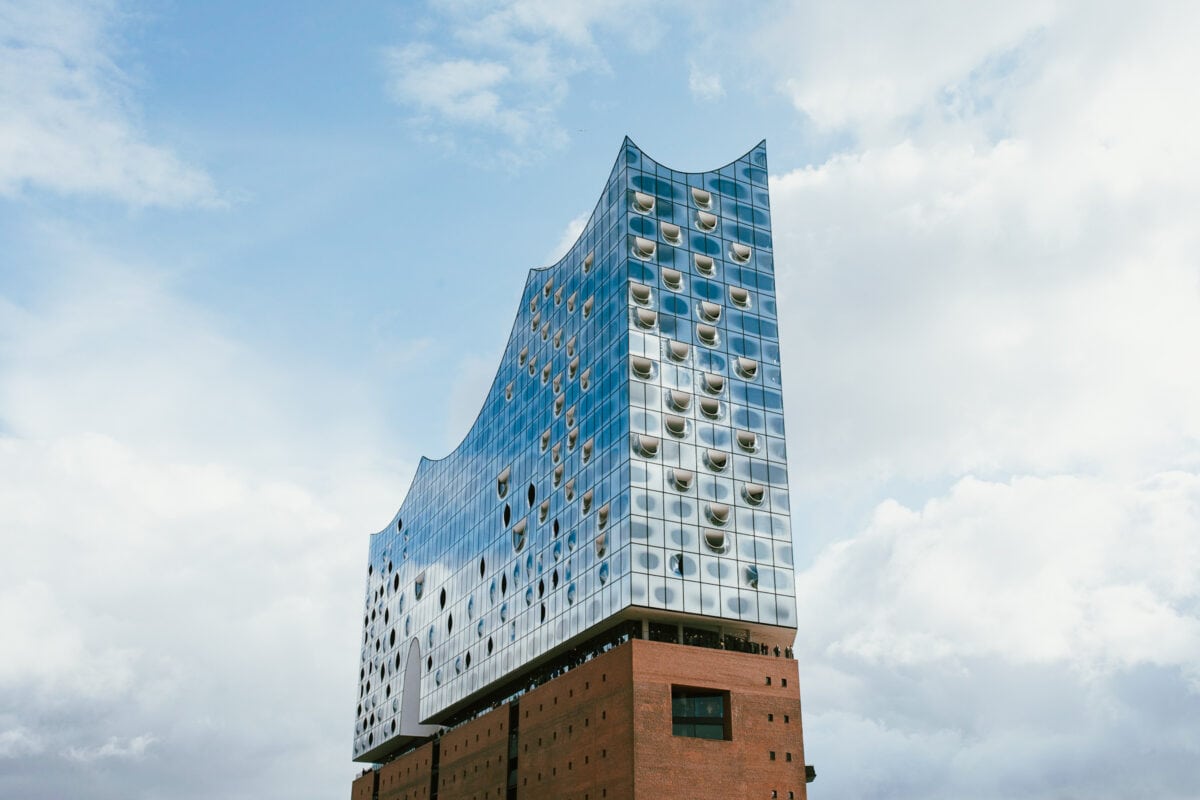
    The Elbphilharmonie, commonly called “Elphi,” is arguably Hamburg’s most striking modern landmark. While its construction costs were initially controversial, its distinctive glass façade has greatly influenced Hamburg’s skyline and made it a popular attraction. From the outside, the blend of the brick silo and glass wave is impressive, but the experience inside is truly extraordinary.

    The Elbphilharmonie in Hamburg, with its glass facade, against a blue sky

    The highlight is the observation deck that wraps around the Elbphilharmonie—the Elbphilharmonie Plaza—which offers stunning views of the Port of Hamburg, the Elbe River, and the Speicherstadt. To get up there, you go through a futuristic tunnel featuring the longest escalator in Western Europe. Best of all, access to the observation deck is free. You can either take a complimentary ticket available at the info point or reserve a specific time slot online for €3 for more convenience.

    Visitors in a modern tunnel with oval patterns on the walls

    The concert hall is situated within the building, with the luxurious Westin Hamburg above it. The hotel’s rooms offer stunning views of the Elbe and are highly appealing. If you ever wish to indulge, spending a night there is highly recommended.

    ➜ My Stay at The Westin Hamburg

    Photographer Captures the Port of Hamburg Through a Curved Glass Facade

    During the Elbjazz Festival, I attended a concert at the Elbphilharmonie and experienced its outstanding acoustics. Sitting high up, it felt as though I was right in the middle of the stage. Also, the venue hosts not only classical concerts but a diverse range of musical genres.

    ➜ Here you’ll find the Elbphilharmonie’s calendar of events

    A bird's-eye view of a concert hall with a stage and an audience

    If you’re not in the mood for a concert or would rather spend your evenings doing something else (there are so many options in Hamburg anyway), you can also take a guided tour of the concert hall. During the tour, you’ll learn more about this fascinating building—architecturally, the Elbphilharmonie is truly unique. Or did you know that the entire hall is mounted on 362 steel springs, which help distribute the sound so well throughout the hall?

    ➜ Book your guided tour of the Elbphilharmonie here

    3. HafenCity

    Just beside the Speicherstadt, you’ll find HafenCity, Europe’s biggest inner-city development project. It’s a completely new neighborhood that has risen on former port land, creating a contrast to the charming historic Old Town.

    Harbor ferry on the Elbe River in the Port of Hamburg

    Since 2025, HafenCity’s prominent feature is the Überseequartier, a development of 14 buildings with retail spaces, dining options, hotels, a cinema, and direct cruise terminal access. The office building “The Yard”, featuring a façade inspired by Venice’s Doge’s Palace, is particularly striking.

    A bustling outdoor area at Miamiplatz featuring a modern brick building and white arches

    Tip: If you get hungry in HafenCity and like fish or seafood, be sure to try Pesca. The restaurant’s concept is a crossover between a theater and a fish market—a wonderful experience, especially in the evening.

    4. Landungsbrücken

    When visiting Hamburg, you’ll surely notice the Landungsbrücken. For more than a hundred years, this impressive building with its distinctive towers and green domes has been a beloved part of the cityscape. Originally designed as a dock for transatlantic liners, today it welcomes visitors as the starting point for many exciting sightseeing tours in Hamburg.

    This is also where most of the harbor tours kick off, and I highly recommend experiencing one at least once. The Port of Hamburg is genuinely breathtaking. However, with so many tour operators and options out there, it’s easy to feel a bit overwhelmed. But don’t worry—there’s a perfect tour for everyone just waiting to be discovered!

    Hamburg Harbor Tour with a View of the Elbphilharmonie

    In this article, you’ll find the best providers, along with alternatives if you are on a budget: The Best Harbor Tours in Hamburg

    For a more affordable choice, hop on an HVV ferry (like Line 62) and pay with a standard public transit ticket. If you have a Hamburg Card, you can ride public transit for free.

    Near the Landungsbrücken, you’ll also see two of Hamburg’s most renowned museum ships: the Rickmer Rickmers and the Cap San Diego.

    ➜ Buy tickets for the Rickmer Rickmers here*

    ➜ Buy tickets for the Cap San Diego here*

    5. Old Elbe Tunnel

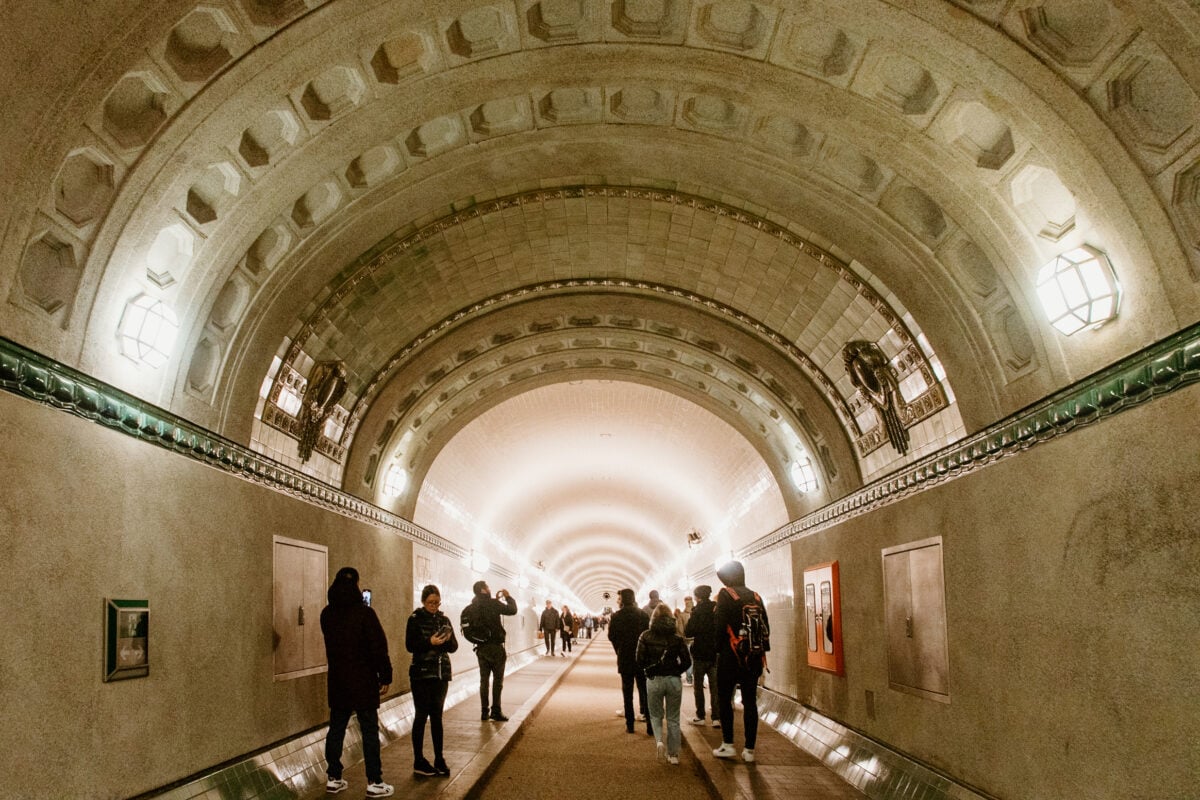
    Even after more than 100 years, the Old Elbe Tunnel remains an architectural masterpiece. It was originally built to handle the ever-increasing traffic between the city center on one side of the Elbe and the port facilities and shipyards on the other. In the 1970s, however, the Old Elbe Tunnel was effectively replaced by the newer Elbe Tunnel on the A7. Two tunnel tubes, each 426.5 meters long, run 24 meters beneath the Elbe, linking the two banks. They feature tiled walls, majolica reliefs of starfish and crabs, and subdued lighting.

    People in a subway station with impressive architecture and a lighted ceiling.

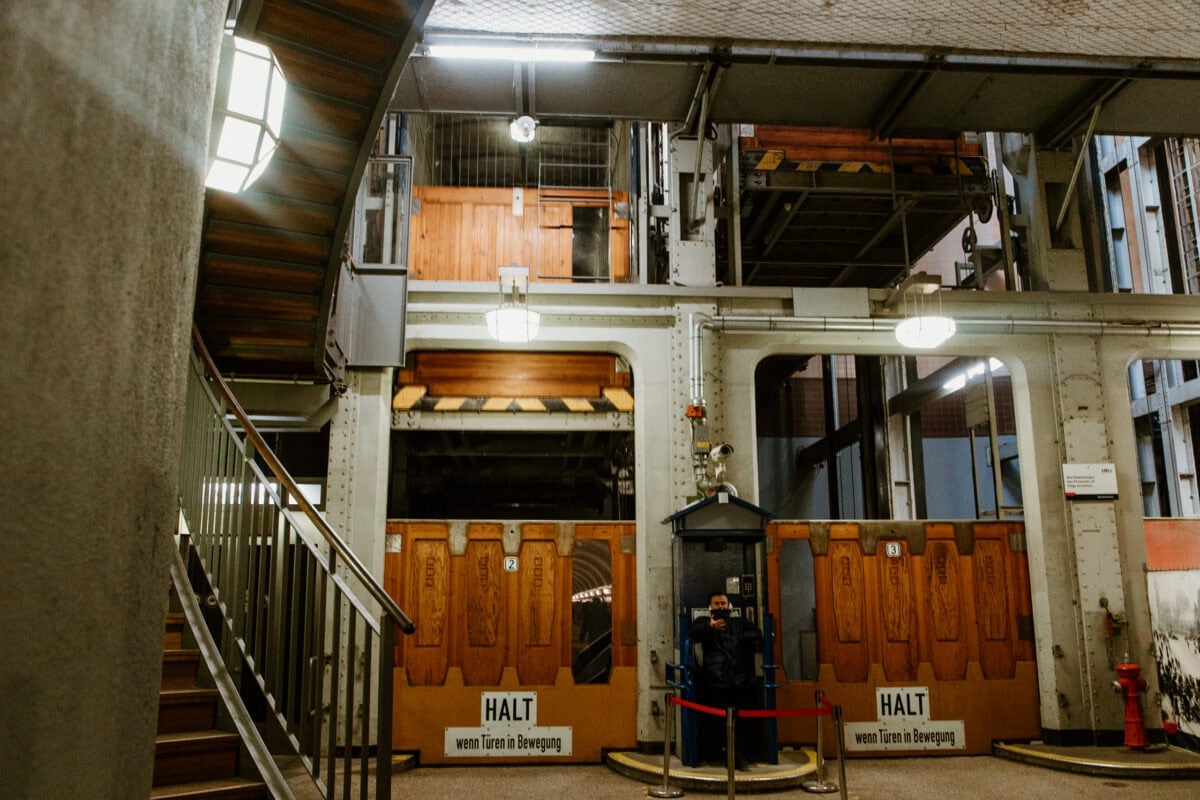
    What makes it unique: The Old Elbe Tunnel lacks access roads or ramps at its entrances, instead relying on impressive historic freight elevators that carry pedestrians, cyclists, and even cars.

    Tip: The Steinwerder lookout point across the Old Elbe Tunnel offers a fantastic view of the Elbe River and Hamburg’s skyline. Additionally, you can reach Wilhelmsburg, the stylish new district, easily by public transportation from there.

    Historic Hamburg Elbe Tunnel with old wooden elevators and warning signs

    6. Fish Market & Fish Auction Hall

    “Moin,” I’m greeting the bus driver as I head to the fish market early in the morning, though despite repeated practice, it always feels a bit awkward. I never quite capture a genuine North German accent. The fish market, held every Sunday in St. Pauli, remains a quintessential Hamburg tradition.

    Aale-Dieter's fish stand at the Port of Hamburg with cranes

    The lively market vendors here are famous, and you must maintain self-control to resist giving in to their convincing sales pitches and purchasing an overflowing fruit basket or a whole month’s supply of smoked eel. Eels, bananas, and flower bouquets zip across the counters—you’ve got to experience this firsthand at least once.

    Since 1703, the Altona Fish Market has operated every Sunday along the Elbe. Unfortunately, it really does close at 9:30 a.m. So, if you’re not an early riser, your only option is to stay awake all night. After all, enjoying a morning snack at the fish market after a long night on the nearby Reeperbahn is almost a tradition, especially in summer. The market draws a charmingly diverse crowd, including early risers, night owls, and tourists.

    Woven Hamburg baskets filled with fresh fruits and vegetables

    The fish market extends around the impressive fish auction hall. Every Sunday from 6 a.m. to 12 p.m., live bands perform here—the perfect way to spend the morning with a fish sandwich and an early beer (or a late one, depending on how you look at it).

    Tip: From April through October, the fish market opens as early as 5 a.m.; in winter (November through March), it has shorter hours and opens at 7:30 a.m. It always closes at 9:30 a.m. And be sure to bring cash.

    Weekday Option: Isemarkt

    If your trip to Hamburg doesn’t include a Sunday, or if you don’t want to stay up late or wake up before 6 a.m., take a detour to the Isemarkt in the Eppendorf/Harvestehude neighborhood instead (U3 between Hoheluftbrücke and Eppendorfer Baum). The Isemarkt is open on Tuesdays and Fridays from 8:30 a.m. to 2 p.m. and runs about one kilometer beneath the elevated railway viaduct. You’ll hardly find any tourists here, but you’ll experience the authentic Hamburg way of life.

    7. Reeperbahn

    The Reeperbahn in St. Pauli is Hamburg’s legendary party district, drawing millions of visitors from around the world each year. Originally, the area around the Reeperbahn was known more as a shady red-light district, with many legends surrounding pimps, drug lords, and criminals. Today, streets like Große Freiheit have become a single, nonstop party zone for young people, tourists, bachelor parties, and those looking for a good time. Here you’ll find a truly diverse mix of bars, clubs, theaters, and even upscale restaurants.

    Große Freiheit 36, Hamburg, Reeperbahn, with a neon sign featuring a guitar

    Are you looking for restaurant recommendations in Hamburg?
    Then check out my comprehensive Hamburg Food Guide!

    However, some establishments remain part of the red-light district, such as the infamous Herbertstraße. Shielded by a concrete wall, Herbertstraße is a tiny little street in the heart of St. Pauli that women aren’t allowed to enter—unless you work at one of the establishments there.

    During the day, you really get a sense of St. Pauli’s unique character: a little rough around the edges, a little creative, and very lively. It’s worth turning down the side streets to lose yourself in the special atmosphere of this ambivalent neighborhood.

    Graffiti mural at the Hamburg Fish Market featuring the "Digga" lettering

    Are you interested in the stories—big and small—about the Reeperbahn? There are some great themed tours that offer a glimpse into life in this unique part of Hamburg.

    The Best Tours in St. Pauli

    Sex & Crime in St. Pauli*(18+)

    Neighborhood tour with insiders from the famous Olivia Jones Family* – On this tour, you can choose your tour guide in advance based on which aspect of neighborhood life interests you most. Highly recommended!

    Night Watchman Tour Through the Neighborhood* – Led by a night watchman with that traditional maritime-Hanseatic charm, this tour offers a more relaxed exploration of the neighborhood.

    The Kiez-Kapitän Reeperbahn & Beatles Neighborhood Tour* – A tour of the Kiez, open to all ages, features the Beatles’ most important venues: Did you know the legendary Beatles began their careers in Hamburg’s Kiez?

    8. Feldstraße Bunker / St. Pauli Bunker

    If I had to recommend a spot in Hamburg that has undergone the most change in recent years, I’d probably point to the bunker on Feldstraße in St. Pauli. The massive World War II concrete block has been expanded to include a green rooftop garden. Today, on the bunker’s roof, you’ll find two restaurants, a bar, a hotel, and a memorial space dedicated to the building’s history.

    To reach the top, you have to walk along the 560 meter long trail, circling the bunker once until you arrive at the roof, which is 58 meters high. From there, you’ll enjoy what might be the most breathtaking view of Hamburg.

    Tip: Admission is free. Expect possible wait times during good weather and at sunset.

    You can find more information in this article: Grüner Bunker Hamburg

    Hamburg anti-aircraft bunkers with green rooftop terraces against a blue sky

    9. Schanzenviertel & Karolinenviertel

    If you’re looking to escape the typical brick buildings, the harbor, and the Hanseatic atmosphere, consider exploring the Schanzenviertel. This neighborhood offers a vibrant, slightly rebellious, and always lively part of Hamburg. You’ll find colorful street art, charming designer shops, and innovative concept stores. At the heart of it all is the Rote Flora, a former theater building that still stands as a proud symbol of Hamburg’s squatting movement and left-wing cultural scene.

    A bustling street in Hamburg with a café, graffiti, and shops

    The food scene in Schanze is especially lively, offering everything from casual breakfasts, brunch venues, bagel shops, and sourdough bakeries to small bistros, international cuisines, and top-notch bars—perfect for a relaxing day or a long evening.

    Open-faced sandwich with beets, lettuce, and cappuccino

    Adjacent to the exhibition halls is the Karolinenviertel, or Karoviertel—a quieter, smaller neighborhood next to the Schanze, featuring back-alley shops, vintage stores, and numerous small restaurants. These two districts blend so smoothly that it’s often hard to tell where one ends and the other starts.

    10. Planten un Blomen

    Planten un Blomen is the largest green oasis in the heart of Hamburg: Here you’ll find a 47-hectare park that’s free to visit. If you need a break from sightseeing, this is the place to go. The park includes several distinct areas, including a large Japanese garden — one of the largest of its kind in Europe.

    A sunny city park with a pond, trees, and people out for a walk

    The water and light shows are a highlight at Parksee—a free spectacle featuring dancing water fountains, light effects, and music. They take place daily from May through September (at 10 p.m. in May and June, and at 9 p.m. starting in July).

    11. Inner & Outer Alster

    Right in the heart of downtown Hamburg you’ll find the Alster, a beautiful recreational area. The smaller Binnenalster is bordered by the Lombards Bridge and the Kennedy Bridge—here, you’re right in the middle of the city and yet right on the water. The larger Außenalster stretches northward and is filled with sailors, SUP paddlers, joggers, and people enjoying the sun in summer.

    Sailboats anchored on a calm lake surrounded by trees

    Tip: Set aside some time for a walk or bike ride around the Außenalster (about 7.5 km). The route takes you through Pöseldorf, past old villas and boat docks. You can stop at the Alsterperle, a small kiosk-café right on the water.

    12. St. Michael’s Church / Hamburg’s Michel

    St. Michael’s Church, with its 132-meter-high tower, is another unmissable Hamburg landmark. The tower is best known by its nickname, “Michel.”

    The church tower of St. Michael's in Hamburg with its large clock

    The church has shaped the cityscape for centuries and was often the first sign for sailors entering the harbor that they had reached Hamburg. However, the Michel was destroyed by fire twice and rebuilt twice—which also makes it a symbol of the city’s resilience.

    Aerial view of downtown Hamburg with church spires

    From St. Michael’s Church, you will enjoy a truly stunning view of the city center and the harbor. It’s a wonderful spot that clearly shows how close downtown, the harbor, and the Elbe River are to each other. Inside, the church feels bright and inviting—almost Mediterranean in style, which is a lovely surprise for a major church in northern Germany. You can relax and take the elevator most of the way up, but if you’re feeling adventurous, you can also walk all the way—there are 453 steps in total. Just a friendly tip: depending on the weather, a gentle breeze up top might catch you, so A good scarf or wrap will keep you comfortable.

    Aerial panorama of Hamburg featuring the Elbphilharmonie, the harbor, and a container ship

    Tip: There’s an admission fee to go up the Michel, but with the Hamburg Card, you can save a few euros here, just as you can at many other attractions in Hamburg.

    13. Komponistenquartier & Großneumarkt

    Located in the center of Neustadt, just a short walk from St. Michael’s Church, Großneumarkt is a charming, seldom crowded square. Surrounded by cozy cafés—ideal for a quick break—and a few good restaurants, it offers a peaceful escape from the usual downtown hustle and bustle.

    A cozy street café with guests sitting on the sidewalk
    “feels like Coffee & Art” is one of the cute cafés near Großneumarkt

    Right next door is the Composers’ Quarter, which features the homes and birthplaces of Mendelssohn, Brahms, Telemann, Mahler, Bach (Carl Philipp Emanuel), and Hasse. These sites are now charming, small museums that collectively comprise the Composers’ Quarter. You don’t need to be a classical music enthusiast to enjoy it—just the unique ambiance of the alleyways makes it memorable.

    14. Hamburg City Hall

    Hamburg City Hall, with its beautiful Neo-Renaissance façade, creates a lovely contrast to the harbor and the brick façades of the Speicherstadt. Right in front of it, you’ll find the Rathausmarkt, a favorite spot for many summer events. During the winter season, it becomes even more special when hosting the Hamburg Christmas Market, which, by the way, is considered one of the most beautiful in Germany.

    Hygieia Fountain in the courtyard of Hamburg City Hall

    The courtyard is open to the public and surprisingly peaceful. You can also join a guided tour to see the inside of City Hall. Tickets are sold on-site, with a discount for Hamburg Card holders. The specific tour times can be found here.

    15. Stadthöfe & Stadthaus

    Just 3 minutes from City Hall is a spot that I personally find truly impressive because it’s right in the heart of the city and yet so little known: the Stadthöfe. They’re Hamburg’s elegant take on a backyard—and with a mix of architecture, arcades, cafés, and small shops, they’re perfect for a quick break from sightseeing.

    An elegant outdoor restaurant in a historic courtyard with guests

    There are also some great dining options here—including the bars and restaurants at the Boutique Hotel Tortue Hamburg, which, by the way, is also a great place to stay in Hamburg if you want to treat yourself.

    Directly adjacent to the Stadthöfe is the Stadthaus —a place with a dark history. During the Nazi era, it served as the Gestapo headquarters, where people were interrogated, tortured, and sent to their deaths. For a long time, this fact remained surprisingly overlooked by the public until the building was renovated and redeveloped. Today, a small memorial on the ground floor, which is open to the public free of charge, honors the victims of the Third Reich.

    My Personal Bond With Hamburg

    In case you’ve been wondering where my special connection to Hamburg comes from: As part of the “Friend of Hamburg” campaign with Hamburg Marketing, I had the opportunity to showcase Hamburg’s culinary highlights on my Instagram account @thehappyjetlagger for an entire year, which allowed me to get to know the city from a whole new perspective.

    Here you’ll find all blog posts on Hamburg

    Elegant plates with burrata and tomatoes on a wooden table
  • Langkawi, Malaysia: The Best Beaches & Things To Do

    Langkawi, Malaysia: The Best Beaches & Things To Do

    Langkawi is a well-known stopover heading to Koh Lipe, but it also deserves a shorter visit or even a full vacation. I’ll share the must-see attractions and how you can include Langkawi in your itinerary through Southeast Asia.

    Street restaurant with pizza and seafood signs nestled between trees

    Beautiful Beaches on Langkawi

    If you’re hoping for beaches as breathtaking as those on nearby Thai islands—like Koh Lipe—with their stunning turquoise waters, I have to be honest and share that Langkawi’s beaches might not quite match up to those. There’s a little quirk I’ll share with you later, too. But instead of bustling party spots, you’ll enjoy the beauty of nature and the warmth of a truly welcoming culture here.

    Man selling coconuts from a boat at a floating market

    Cenang Beach

    Cenang is the island’s most popular beach and a lively spot for tourists. The beach itself is long, wide, and quite lovely, offering a relaxing escape. The town nearby, however, has a more bustling feel, with a mix of large, sometimes plain buildings along the main street and lots of open spaces in between. While the architecture may not be spectacular, the generous stretch of beach ensures plenty of room for everyone, even when taking in the exciting nightly fire shows.

    People playing beach volleyball on a tropical sandy beach
    Fire show on the beach at night with spectators
    Beach restaurant at night with fairy lights and palm trees

    Pantai Tengah

    Pantai Tengah is just a short drive south of Cenang, and I genuinely enjoyed my time there. It’s quieter, better maintained, and has a more relaxed vibe that makes it really appealing. I had a lovely meal at the Frangipani Langkawi Resort, which also left a great impression as a welcoming place to stay. If you find Cenang too busy but still want to be close to all the conveniences, Pantai Tengah is a good choice as your base.

    Couple walking on a tropical beach with turquoise blue water
    Beach cafe with fairy lights and ocean views in a tropical setting

    Tanjung Rhu

    Tanjung Rhu, often called Langkawi’s most stunning beach, is beautifully situated in the northern part of the island. It’s much more peaceful than Cenang, and I liked it a lot; the whole area feels more natural and untouched, making it a special place to relax and enjoy.

    Tourists on a sandy beach with kayaks and rocky islands in the sea

    If that’s exactly what you’re looking for, the Tanjung Rhu Resort is worth checking out with its own private beach. The resort is very well-maintained and far away from the hustle and bustle. I didn’t actually stay there, but I liked the location so much that I made a mental note of the resort for a possible second visit.

    Tourists relaxing on a tropical beach with mountains in the background

    Please be aware that box jellyfish can be found in the waters around Langkawi, and their venom can be very dangerous. Sometimes, they wash up on the beaches, and there have been unfortunate incidents, including at Pantai Cenang. To stay safe, make sure to check the latest updates on the spot and take any warnings seriously.

    Discover more interesting blog posts about travel destinations across Malaysia

    Things To Do in Langkawi

    If you’re only in Langkawi for a few days, make sure to visit these two must-see attractions. They are easily accessible and absolutely worth the visit.

    Sky Bridge & SkyCab

    The Langkawi SkyBridge is definitely a highlight. The cable car ride from Oriental Village to Mount Mat Cincang lasts around 15 minutes, offering breathtaking views throughout. During the ascent, you can select from various cabin types and packages. I recommend choosing the best options available!

    Cable car over tropical rainforest with ocean views on Langkawi

    Here’s a little tip: consider upgrading to the 360-degree gondola with a glass floor. It might be more expensive, but you’ll enjoy breathtaking 360-degree views and, in my experience, a private ride all to yourself—while the regular gondolas get crowded with groups. Plus, these open-air gondolas offer an exciting, breezy experience instead of being fully enclosed and air-conditioned.

    Feet on the glass floor of a cable car over a green forest

    Once you arrive at the top, you’ll be treated to a breathtaking panoramic view of the entire island from the SkyBridge. And on a clear day, you might even catch sight of Thailand in the distance!

    Sky Bridge on Langkawi with tourists and mountain panorama
    Cable car gondolas over forested mountains with ocean views

    Tip: Set aside half a day to fully enjoy the SkyBridge experience. The entire complex is beautifully designed, and on less crowded days, you can spend a relaxing afternoon here.

    Save yourself the wait in line at the ticket counters: Buy your SkyCab and SkyBridge tickets here*

    Cable car over green jungle with ocean views in Langkawi

    Mangrove Tour at Kilim Geoforest Park

    The mangrove tour through Kilim Geoforest Park is one of the most popular excursions on Langkawi—and in terms of scenery, it’s well deserved. The boat takes you through mangrove forests and past limestone cliffs, eagles, and monkeys.

    Tourist boat on the river with mountains and birds
    Eagle catching a fish from the water
    Brahminy kite flying over treetops in the sky

    It’s unfortunate that some tours market themselves as “eco,” but often, there’s not much true eco-friendliness involved. During my trip, we were allowed to feed the monkeys, and some guests even brought bananas just for that. When I mentioned this to the guide, he was honest: whether they ban it or allow it, it always leads to discussions, so they’d rather not take a stand. Additionally, we visited a seafood restaurant with its own farm. Personally, I wasn’t comfortable hand-feeding caged manta rays and the whole venue raised concerns for me.

    Monkey sitting on tree roots in the mangrove forest
    Boat trip through a lush mangrove forest with passengers in life jackets

    Why do I still recommend the tour? Most tour operators follow a similar pattern, and genuine alternatives are rare. Even if you choose a Grab or rent a car to reach the dock, you’ll board the same boats. Second, the picnic. Our guide brought homemade curry with rice for everyone—simple yet delicious, made with genuine care, and for me, it was the unexpected highlight of the tour. Considering the tour’s cost, I never anticipated such a thoughtful touch.

    Book the mangrove tour in Langkawi here

    Eagles flying over the mangrove forest seen from a boat
    Bird of prey in flight in front of green trees and rocks
    Smiling guide holding a horseshoe crab in front of a group of tourists
    Man photographing a large ray in a fishing net
    Tourist boats at the pier with karst rocks and mangroves
    Black and white photo of water splashes with islands and mountains

    Where To Eat & Drink in Langkawi

    To me, the little street food restaurants are some of the most delightful spots on the island. They’re charming, affordable, and warmly inviting. Many of these places prefer cash payments—I didn’t realize that initially. One time, I was about to go find an ATM, but a very kind staff member kindly advised me otherwise. She reassured me that I could sit back, enjoy my meal and drink first, and settle the bill later—whether it was later that day or even the next. I was genuinely moved by such genuine warmth and trust. It’s a beautiful reminder of how friendly and caring people are, especially right here in Malaysia, where kindness seems to be everywhere.

    Bustling night market with fairy lights and many people

    What you should know: Langkawi has a Muslim culture, and many local restaurants don’t serve alcohol. I’ve been sober for a while now, so this wasn’t an issue for me—but if a sundowner beer is a must-have part of your vacation, you should expect that you won’t find it at every beach bar. Interestingly, Langkawi is also a duty-free zone, and you can get alcohol cheaper in the numerous duty-free shops than you might elsewhere in the country.

    In the evenings, the usual night market takes place on Cenang’s main street, featuring many street food stalls. It’s the perfect opportunity to sample a wide variety of specialties. Just make sure to bring cash; card payments are not accepted at most stalls.

    Fried noodles with vegetables and lime from a street food stall

    Where To Stay in Langkawi

    Bamboo Cottage —this is where I spent most of my nights, and it was exactly my style: simple rooms, but a very homey atmosphere, a nice pool, and the whole place completely surrounded by greenery. Unfortunately, it’s a bit far from Cenang Beach. You could walk there, in theory, but most of the route follows the main road and isn’t much fun—you’re better off taking a Grab. If you’re looking for nature and peace and quiet instead of being close to the beach, though, this is the place for you.

    Red wooden huts in a tropical landscape with palm trees and mountains

    Villa Abadi Resort —my choice for the last night because it’s conveniently located near Telaga Harbor, where the ferry to Koh Lipe departs in the morning. If you’re planning the same route, this is the most relaxed option.

    Tropical pool with fountain at Villa Abadi Resort

    Frangipani Langkawi Resort – I was only here to eat. But the resort and the stretch of beach at Pantai Tengah looked so well-maintained that I regretted a little not having stayed here as well.

    Tropical resort with a blue swimming pool and ocean views
    Tropical resort pool with palm trees and ocean views

    Getting Around on Langkawi

    Although Langkawi is an island, the distances can still be quite long. It takes a good 45 minutes by car to get from Cenang up north to Tanjung Rhu Beach. I didn’t use public transportation on Langkawi; Grab is very affordable and available almost everywhere on the island.

    If you’re planning longer trips and want to explore Langkawi at your own pace, you can also rent a car right at the airport. The road network is well developed, and traffic is generally light. Keep in mind, however, that in Langkawi—like in the rest of Malaysia— people drive on the left.

    Click here to find the best car rental deals in Langkawi

    For day trips, I suggest renting a car with a driver, making it simple to explore many of the island’s sights. Many Uber drivers also provide daily rental options, so if you’re planning a longer trip and encounter a friendly driver, just ask.

    If that feels too uncertain and you’d prefer to reserve a driver through an official tour operator beforehand, you can do so online here:

    Private driver in Langkawi for 8 hours, for up to 5 people, including a car *

    Good To Know: Practical Tips for Your Trip to Langkawi

    Getting There: I took a direct flight with Scoot from Singapore to Langkawi, and entry into the country was hassle-free. Here you’ll find cheap flights

    Money: The currency used on Langkawi is the Malaysian ringgit (MYR). Credit and debit cards are not widely accepted, especially in small restaurants or street stalls—these places often accept only cash. However, you can always find ATMs or currency exchange offices, for example, in downtown Cenang or at the airport.

    Malaysian street food stall with grilled skewers and colorful signs
    Street vendors often accept only cash.

    How many days should you plan to spend in Langkawi? Since I was traveling on from there, I figured four nights would give me a nice chance to explore a bit of the island and also enjoy some relaxing moments.

    Alcohol: Malaysia is predominantly Muslim, and some establishments in Langkawi do not serve alcohol. Langkawi is also not a party island.

    On to Koh Lipe: By Ferry From Telaga Harbor

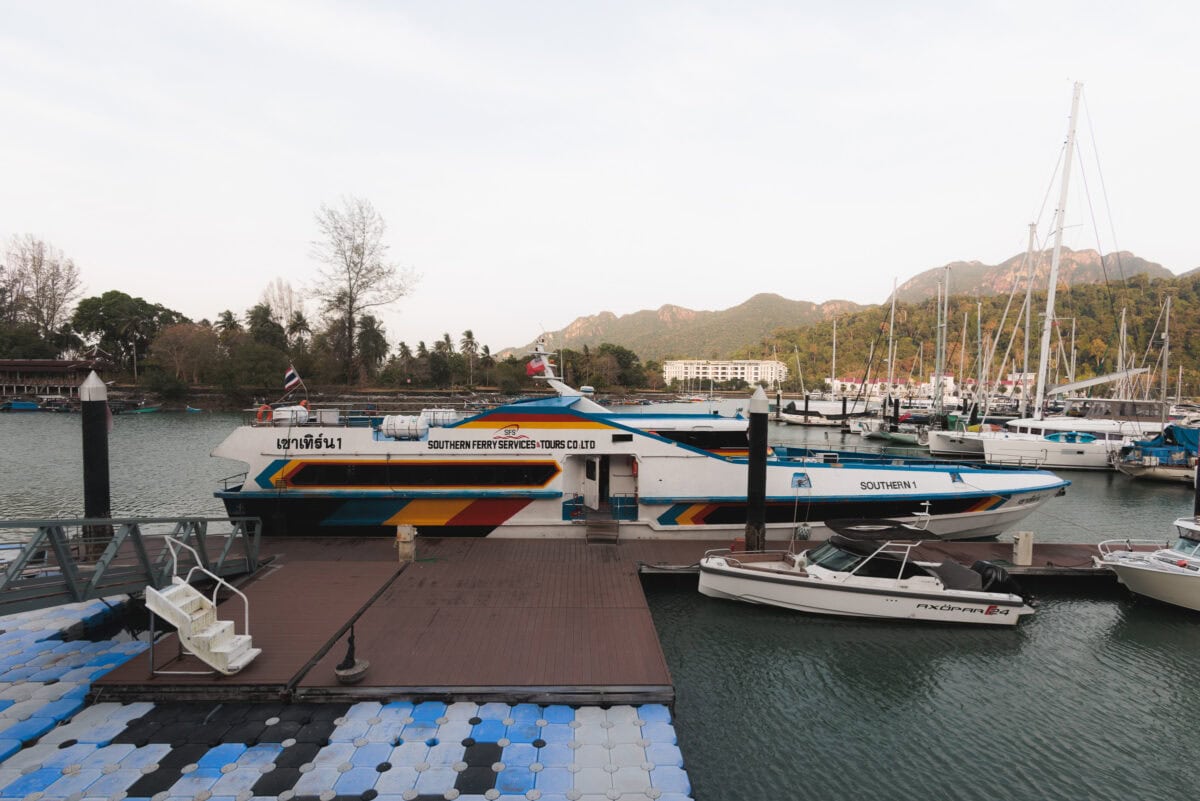
    If Koh Lipe is part of your travel plans, I highly suggest considering a visit to Langkawi. Instead of dealing with the hassle of long and complicated minivan and speedboat trips, you’ll find that the ferry from Langkawi to Koh Lipe is quick and easy, making your journey much more enjoyable.

    There are two ports on the island with ferry service to Koh Lipe: Telaga Harbor and Kuah Jetty at the other end of Langkawi. Telaga Harbor is just a short drive from Cenang and the airport. Langkawi Airport is well connected to the Malaysian Peninsula, with direct flights to Kuala Lumpur, Singapore, and Penang.

    The small ferry, though modest, offers greater comfort compared to the speedboats that travel between Koh Lipe and the Thai mainland.

    Please note: The ferry operates only during the peak season, roughly from mid-October to mid-June.

    Book your ferry tickets from Langkawi to Koh Lipe here

    Read more: Full Guide to Koh Lipe and My Island-Hopping Guide to the Andaman Sea

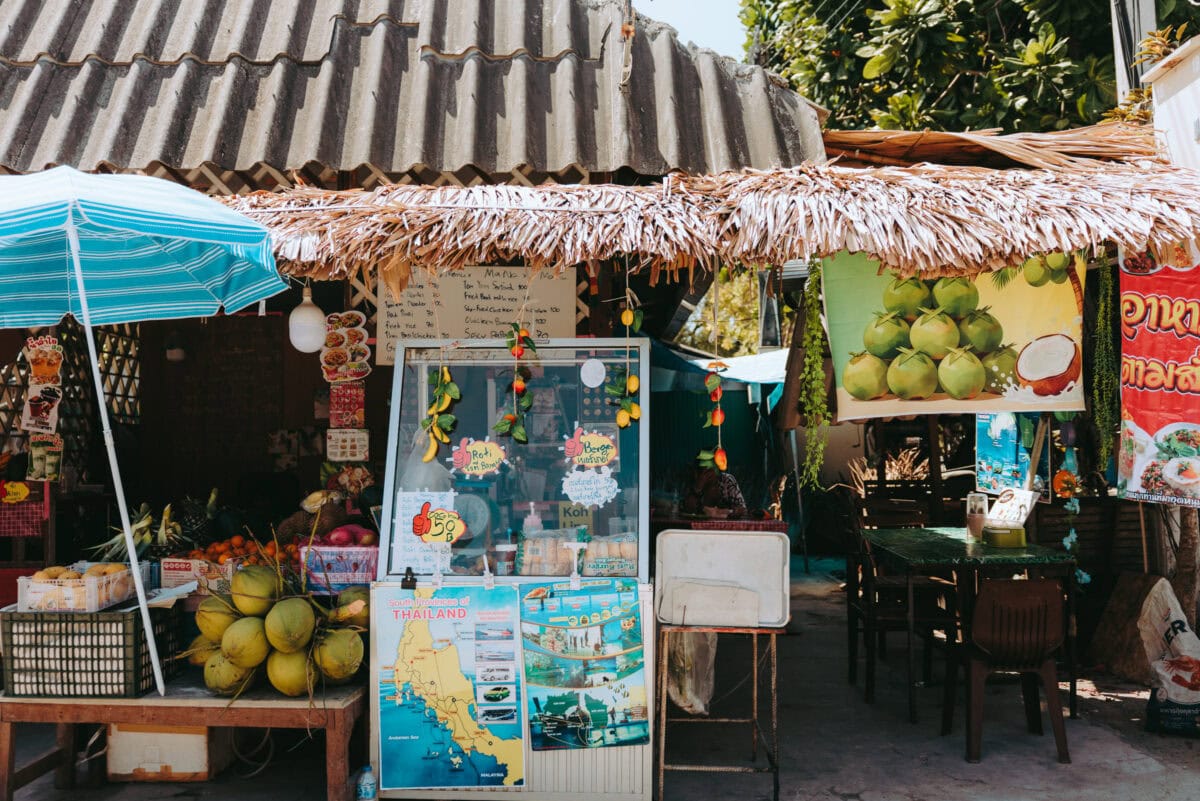
    Tropical market stall with bananas, mangoes, dragon fruit, and pineapple

  • Grand Prairie, Texas: BBQ, Epic Central, and the Largest Flea Market in the U.S.

    Grand Prairie, Texas: BBQ, Epic Central, and the Largest Flea Market in the U.S.

    Grand Prairie was the starting point of our road trip through Texas and marked the beginning of my journey through a pretty crazy state. In this article, I’ll show you what Grand Prairie has to offer—from the best brisket to the largest flea market in the U.S.

    Where To Find Grand Prairie

    Grand Prairie is located in the center of the Metroplex, a large metropolitan region between Dallas and Fort Worth—close to Dallas/Fort Worth International Airport (DFW), one of the world’s busiest airports. This prime location makes the city the ideal first stop after a long flight: rather than jumping directly into Dallas’s traffic or beginning your Texas road trip, you can use this time to rest and adjust to the time zone.

    Zavala’s Barbecue & Its Award-Winning Brisket

    There’s hardly a better introduction to Texas barbecue culture: According to Texas Monthly, Zavala’s Barbecue is among the top 50 BBQ spots in Texas — and in this barbecue-crazy state, that really means something. This family-run business is famous for its melt-in-your-mouth brisket, but its ribs and homemade jalapeño-cheddar sausages are just as good.

    Large BBQ platter with meat, beans, and mac and cheese
    Chef slicing smoked BBQ brisket on a wooden board

    Here’s a behind-the-scenes glimpse: the meat is slowly smoked for hours until it almost falls apart on its own. It is traditionally served on paper.

    Black BBQ smoker in a rustic wooden pavilion with backlighting
    Red Gothic script on a white wall in a bar

    Epic Central: Entertainment Complex with Water Park & Light Show

    Grand Prairie is characterized by Epic Central, a recently developed entertainment hub that includes hotels, restaurants, green areas, and various attractions.

    Epic Waters is a huge indoor water park with slides and pools—and thanks to its glass roof, it’s a great choice even in the Texas summer heat or on those rare rainy days. Next door, the Bolder Adventure Park offers climbing walls and fun for the whole family.

    Water fountains in a wave pool with people in the background

    In the evening, there’s a free light show right in the middle of the complex that mainly attracts locals. It’s a little cheesy, but also quintessentially American. If you’re staying at the Hilton Garden Inn at Epic Central, the light show (as well as the surrounding bars and restaurants) is within walking distance.

    People walking through a futuristic LED-lit tunnel at night

    Pickleball at Chicken N Pickle

    If you’re unfamiliar with it: Pickleball is currently the most popular new sport in the U.S. I first noticed it on Bainbridge Island near Seattle, the birthplace of pickleball, and was surprised to find courts elsewhere as well. It combines elements of tennis, badminton, and table tennis, using paddles and a perforated ball on a small court. Its simplicity is part of its charm, making it accessible and enjoyable—beginners can start playing within just five minutes.

    At Chicken N Pickle in Epic Central, you can see for yourself what all the buzz is about: The concept combines pickleball courts with a restaurant and bar.

    Traders Village: The Largest Flea Market in the U.S.

    Every weekend, Traders Village becomes a bustling fairground, hosting over 3,500 vendors, making it the largest flea market in the U.S. There are also countless street food stalls, a large stage for live music, and amusement rides.

    Amusement park with Pharaoh's Fury ride and visitors

    The selection includes fresh fruit, tools, and traditional Native American art—a diverse snapshot of authentic Texas off the beaten path. My tip: arrive early. In the morning, you can browse at your leisure; after noon, it becomes crowded and hot. It’s only open on Saturdays and Sundays; admission is free (parking costs extra).

    Market stall with mangoes and papayas in boxes
    Flea market in Grand Prairie with a water tower in the background
    Colorful Mexican ceramic mugs with traditional patterns at a market
    Embroidered cowboy boots in a Western shoe store
    Shop with Native American crafts, dreamcatchers, and feather headdresses
    Jackfruit stall with sliced fruit at a market
    Several vehicle grilles and bumpers in an auto parts warehouse

    Lone Star Park: Horse Racing Just Like in “Dallas”

    I’m unsure if a racetrack was featured in the show back then, but at Lone Star Park, set amidst Texas’s elite, I felt reminiscent of the classic TV series “Dallas.” From the grandstand, you can observe actual horse races and even place bets if you’re up for it. Even without knowing much about odds or jockeys, the atmosphere is an experience in itself: the lively chatter, the nervous energy before the start, the cheering on the home stretch.

    Spectators watching horse racing on a dirt track
    Jockeys on horses during a horse race at Lone Star Park
    Spectators watching an empty dirt horse track from above
    Rider with a protective vest on a horse at Lone Star Park
    Three rodeo queens with white cowboy hats and sashes
    Ornate Western saddle with lettering
    Person with a white cowboy hat standing by a dirt track
    Horse race with several jockeys on a green track

    Also To See in Grand Prairie

    The Grand Prairie Premium Outlets are located right off the interstate. In my opinion, the prices aren’t necessarily any lower than in Europe. However, I found an Estée Lauder outlet with brands like Clinique, Smashbox, and MAC—and there I was able to stock up on a whole year’s supply of skincare and makeup for a good price.

    Ripley’s Believe It or Not features its popular wax museum and offers a surreal experience: wax replicas of the Last Supper, cowboy legends like John Wayne, and nearby figures of Beyoncé alongside infamous dictators, creating an eclectic mix that might feel a bit odd. If you seek this kind of quirky Americana, this is the place to go.

    Ripley's Believe It or Not! Museum in Grand Prairie, Texas
    Wax figures of Beyoncé and Will Ferrell in the museum

    Food & Drink in Grand Prairie

    Vidorra offers upscale Mexican cuisine in a vibrant setting within the Epic Central complex. Here, you can enjoy modern interpretations of Mexican dishes. For weekends, reservations are recommended. Adjacent to it is an alternative venue, Chicken N Pickle.

    Smoking grilled meat with chili on a stone grill
    Busy modern restaurant with a bar and neon sign

    Good Day Café If you’re looking for an authentic brunch spot outside of Epic Central, you’ve come to the right place—here you can enjoy classic American breakfast dishes. But be warned: the portions are Texas-sized; one dish is easily enough for two.

    Hearty American breakfast with eggs, toast, and coffee
    American restaurant with guests and patriotic decorations

    If you’re in the mood for authentic Texas-style barbecue, I recommend Zavala’s Barbecue.

    All the stops on our road trip, for your reference:
    Grand Prairie – Grapevine – Lubbock – Amarillo

    Where To Stay in Grand Prairie

    We stayed at the Hilton Garden Inn at Epic Central. While I usually prefer more unique accommodations, this hotel stood out because it’s fairly new, boasts a sleek, modern design, and is conveniently located near the highway—making it easy to start your road trip fresh the next day. In the evenings, you can relax with a drink or a snack at the nearby bars and restaurants, adding a nice touch to your stay.

    Check prices and availability for the Hilton Garden Inn at Epic Central

    Practical Tips for Grand Prairie

    Getting There: From Dallas-Fort Worth (DFW) Airport, it takes about 20 minutes by car to reach Grand Prairie. The city is the perfect first or last stop on a Texas road trip.

    How much time should I set aside? One or two nights are enough. If your visit falls on a weekend, be sure to plan a stop at Traders Village.

    Getting Around: You won’t get very far without a car—the attractions are spread out. Only within Epic Central, everything is within walking distance. Book your rental car for Texas here

    Are you looking for more inspiration for your trip to the U.S.? Here you’ll find all articles about destinations in the U.S.

    Colorful mural with Grand Prairie Texas lettering
    Colorful string lights hanging from a corrugated metal roof
    Colorful religious rosaries and crosses with images of saints
    Colorful mural in Texas with the words Join the Movement
    Patriotic white animal figures with red and blue glitter decorations on a wooden counter
    E&W Trading Company flea market with clothing and souvenirs

    Note: Travel Texas helped organizing this research trip.

  • Hamburg’s Green Bunker: The Rooftop Garden Above St. Pauli

    Hamburg’s Green Bunker: The Rooftop Garden Above St. Pauli

    In the center of St. Pauli, a 58-meter-high concrete structure from WWII now features a large garden atop its roof! I hiked the newly created trail and spent a night up there. Discover all the details about the Green Bunker in Hamburg here.

    An Eventful Past: Architecture & History of the St. Pauli Bunker

    Before gaining fame as one of Hamburg’s most talked-about sites recently, the Feldstraße bunker was already a notable part of the cityscape. Officially called Flakturm IV, it is among the largest bunkers ever built, with a floor area of 75 by 75 meters.

    People are standing on a concrete balcony against a blue sky

    It’s not hard to guess what purpose the bunker once served: During World War II, it sheltered as many as 18,000 people, sometimes up to 25,000 during intense air raids in summer 1943. Built between 1942 and 1944 in record time, it was constructed with the help of forced labor, like many other structures of the period.

    Its massive construction and enormous size are the reasons why the bunker remains so prominent in St. Pauli today. While many German bunkers were demolished after the war, removing this one would have posed risks to the densely populated residential areas nearby due to the powerful explosives needed. The outer walls are up to three and a half meters thick, making the bunker a true colossus. Today, it is officially recognized as a historic landmark.

    A green bunker in Hamburg surrounded by trees and plants.

    Afterward, the bunker served various purposes, attracting many companies from the creative sector. The most famous venue there is likely the club Uebel & Gefährlich. Between 2019 and 2024, the roof was expanded and transformed into a green space, adding five new floors, a 560-meter mountain trail encircling the exterior, and a 1,400 m² rooftop garden with thousands of plants. Since summer 2024, the Green Bunker has been officially open to the public.

    Looking for some helpful tips for your trip to Hamburg?
    Here you’ll find all blog posts on Hamburg

    The Hamburg Bunker, a unique attraction in the St. Pauli district.

    Tour the St. Pauli Bunker: Head up to the Rooftop Garden

    The mountain trail leads upward—a 560-meter-long, five-meter-wide path that spirals around the outside of the bunker. You’ll reach the top faster than you think, because the view changes with every level and you’ll always find new and interesting perspectives.

    Hilldegarden Urban Garden Raised Bed with Plants and Graffiti
    A view of the green bunker in Hamburg in the sunshine.

    A rooftop garden covering approximately 1,400 square meters, with over 4,700 plants, is located at a height of 58 meters. It offers a unique panoramic view of Hamburg, including landmarks like the Elbphilharmonie, St. Michael’s Church, and the harbor. Just below, you can see the Millerntor Stadium, home of FC St. Pauli.
    Book a guided tour of the Millerntor Stadium here*

    Panoramic view of Hamburg, looking out over the city and the sky.
    Silhouette in front of stairs with the TV Tower in the background

    On the top floor, there’s a small exhibit about the bunker’s history, along with the entrances to the hotel and its dining areas. The association Hilldegarden also examines the bunker’s legacy critically and offers guided tours once a month. More information here.

    A view of the TV tower in Hamburg on a sunny day.
    A view of Hamburg with the TV tower and historic buildings on a beautiful day.
    Panorama of Hamburg with St. Michael's Church in the center.

    Helpful Tips for Your Visit

    You can visit the rooftop garden for free. However, access is limited, and there may be lines, especially on sunny weekends. You are not allowed to bring your own food or drinks, strollers, or dogs.

    There are a few hidden elevators, but they’re reserved for hotel guests (key cards are checked); I wasn’t able to find out whether visitors with limited mobility can use them as well.

    For the best experience, visit on a weekday morning or during sunset, as the view is particularly stunning at these times.

    The best way to reach the St. Pauli Bunker is to take the U3 to Feldstraße. Please note that the Millerntor Stadium is right next door, so the subway gets crowded on game days.

    The St. Pauli Bunker Hamburg is open daily from 9 a.m. to 10 p.m.

    Hamburg flak bunker with Mountain Path Visitor Walkway sign
    Art installation at the Grüner Bunker in Hamburg's St. Pauli district, featuring colorful heart and animal motifs.

    Staying at the St. Pauli Bunker Hamburg & Reverb by Hard Rock

    One of the most exciting highlights is that, with Reverb by Hard Rock Hamburg now open, you can even spend the night on the roof of the Grüner Bunker! It’s truly a one-of-a-kind experience. I have a soft spot for unusual accommodations, and if you’re ever on the hunt for a really special place to stay in Hamburg, I highly recommend checking out the Reverb hotel.

    Check prices and availability at Reverb by Hard Rock here

    Modern hotel room with a balcony, a view of the trees, light-colored furnishings, and comfortable.

    Actually, staying here isn’t as expensive as you might expect because of the location; the Reverb caters to a younger, mid-range crowd. Sadly, the Hard Rock vibe doesn’t always translate well, and I found the hotel to feel quite impersonal because it has few public spaces—mainly just the front desk and the restaurant.

    Some rooms provide stunning views overlooking the rooftop garden’s greenery. The location is truly special: situated in the center of St. Pauli but surprisingly quiet due to its elevation. However, despite the elevator, the walk from the street to your room is quite lengthy—so remember to bring everything you need before heading out for sightseeing.

    A view of Hamburg's city center with a church in the background, framed by trees.

    Food & Drinks at the Bunker

    The bunker offers several dining options. I only sampled the café, which features a stunning panoramic window, but I don’t recall much else. Still, I recommend exploring the surrounding area, as you’re in one of Hamburg’s most vibrant neighborhoods.

    For example, the Flohschanze flea market, one of the city’s premier markets, is held every Saturday on the site of the old cattle slaughterhouse, directly across from the bunker.

    A cozy café in Hamburg with bicycles and outdoor seating.

    Right next door in the Karoviertel, you’ll find charming small boutiques, quirky shops, and adorable cafés lining the street. The vibe here is always so laid-back and welcoming that I genuinely enjoy returning here over and over again.

    A fresh salad with carrots and cucumbers on a white plate, with coffee next to it.

    My recommendations for the Karoviertel:
    Café Marktstr. 25 —a café serving simple bistro fare, and it’s so, so good! Be sure to try one of their sourdough sandwiches.
    Hi, Karo Actually a small organic grocery store this place is great for a quick breakfast or a coffee on the go.
    Tibreizh: Delicious Breton crêpes and galettes; lovely outdoor seating.

    You can also find more dining tips in my Hamburg Food Guide

    Disclaimer: My stay at Reverb by Hard Rock was part of an ongoing collaboration with Hamburg Marketing.

    Busy Hamburg street with shops and graffiti
    City panorama with a church spire behind autumnal trees and berries
  • Amarillo, Texas: Route 66, Cadillac Ranch and Cowgirl Country

    Amarillo, Texas: Route 66, Cadillac Ranch and Cowgirl Country

    Amarillo made for a perfect stop on my Texas road trip — I couldn’t get the old hit song, “Is this the way to Amarillo?” out of my mind the whole way there! Tucked away in the heart of the Texas Panhandle, this charming city is where the iconic Route 66 meets cowboy culture and is home to one of the largest canyons in the U.S. In this article, I’ll share which sights in Amarillo are absolutely worth visiting, why a certain steakhouse feels more like an amusement park than a place to dine, and how you can embrace your inner cowgirl (or cowboy).

    Old Tasca Brewery in Amarillo, Texas, featuring a street scene and billboards.

    What’s Going on in Amarillo?

    Amarillo is located in the northernmost part of Texas, within the Panhandle— a slim stretch of land extending into Oklahoma, resembling the handle of a frying pan. The area is dotted with numerous large ranches, and the city historically served as a key stop on Route 66 connecting Chicago to Los Angeles.

    A gas station on Route 66 in Amarillo, Texas, with a gas pump and a car in the foreground.

    So if you really want to get to know Texas, you’ve come to the right place: Here you’ll experience the Texas of cowboys and endless expanses, paired with a healthy dose of American nostalgia.

    Historic Route 66 in Amarillo

    Having already explored a few places along the so-called Mother Road in Illinois, I was all the more excited to find Route 66 again in Amarillo. Here, too, the historic road has been replaced by modern highways and now runs right through the city, along Sixth Avenue in the San Jacinto District.

    Read also: 8 Great Stops Along Route 66 in Illinois

    Three chairs in front of a Texas Route 66 sign in Amarillo, Texas.
    Tourists on Route 66 in Amarillo, Texas.

    Today, this vibrant neighborhood features small antique shops, quirky secondhand stores, and charming cafés. Make sure to visit Aunt Eeks, a winding shop full of books, vintage decor, and curiosities, as well as Chapterhouse Books. The owner of the bookstore actively supports the LGBTQ+ and immigrant communities in the San Jacinto District, offering a much-needed safe space in these challenging times.

    Vintage photos and memorabilia in a nostalgic room.
    Vintage decorative items and candles in an antique shop.
    A cozy bookstore with shelves full of books and plants.

    By the way: Every June, Amarillo hosts the Texas Route 66 Festival in the San Jacinto District—featuring classic cars, live music, and street vendors.

    Want to see more of Texas?
    Find all the blog posts here

    Female musicians on stage at a live concert in Amarillo, Texas.
    Traditional Mexican dancers in colorful costumes at a festival in Amarillo, Texas.
    Classic Cadillac cars at a classic car event in Amarillo, Texas.
    Colorful VW bus in Amarillo, Texas, on Route 66.

    Cadillac Ranch: Amarillo’s Most Famous Photo Spot

    Ten Cadillacs, buried upside down in the Texas soil and covered with countless layers of colorful graffiti: Cadillac Ranch is Amarillo’s most famous attraction and a tribute to the golden age of Route 66.

    The art installation has been located in a field beside Interstate Highway I-40 since 1974 and is accessible for free at any time. It is unique because visitors are invited to leave their mark by spray-painting the cars. Participation is highly encouraged, and occasionally, visitors gift spray paint cans to others on-site, or you can bring your own. As a result, the Cadillac Ranch is constantly changing its appearance.

    Tip: It’s best to visit at sunset. The colorful cars look especially impressive in the warm light. Be sure to wear sturdy shoes if it’s raining.

    Colorful graffiti-painted Cadillac Ranch sculptures in Amarillo, Texas.

    Cowgirls & Cowboys in the West: Horseback Riding Along the Palo Duro Canyon

    Texas cowboy culture certainly has a contagious charm. You often see Texans dressed in cowboy boots, hats, and accessories, which might inspire you to experience the cowboy lifestyle yourself. “Cowgirls and Cowboys in the West” offers an ideal chance to do just that at Los Cedros Ranch, located just outside the city. After a successful hotel career, owner Phyllis left the business world behind to embrace ranch life, hiring authentic cowgirls to work on her farm.

    A woman wearing sunglasses and a hat stands in front of a red doorframe in Amarillo, Texas.

    After a short introduction, you’ll be riding along the rim of Palo Duro Canyon, enjoying stunning views of the red-orange cliffs. Phyllis has rescued numerous horses from other ranches and given them a loving new home, clearly showing her dedication. And don’t worry, even as a beginner, you’re in good hands—the cowgirls will match you with the perfect horse.

    Tip: Closed-toe shoes and long pants are required; long-sleeved shirts are recommended. And do better than I did—bring a hat. Or, for the full experience, a cowboy hat!

    A row of horses with saddles in front of a wooden fence in Amarillo, Texas.
    A map of Texas on a wooden wall with cowgirl accessories.

    Palo Duro Canyon: The Second-Largest Canyon in the United States

    Did you know Palo Duro Canyon is the second-largest canyon in the U.S., following the Grand Canyon? Stretching roughly 190 kilometers and reaching depths of up to 300 meters, it slices through the flat terrain of the Panhandle.

    Horsemen riding through the desert landscape of Texas.

    If you have more time, you can go hiking or mountain biking in Palo Duro Canyon State Park, or drive down the Scenic Drive to the bottom of the canyon. But keep in mind, as with anywhere in the region: it gets extremely hot in the summer, so take the park rangers’ warnings seriously and plan your activities for the morning hours.

    If you’re heading to Lubbock, consider taking a detour to Caprock Canyons State Park, where wild bison roam.

    Read also: Best Things To Do in Lubbock, Texas

    Bison graze in the green landscape along the riverbank in Caprocks Canyon State Park

    Buc-ee’s: The Legendary Gas Station Known for Its Superlatives

    Although it may seem odd to recommend a gas station—but Buc-ee’s is a Texas icon. On long road trips, frequent fuel stops are necessary, making this a logical spot to pause. This station is yet another striking example of how everything in Texas really is oversized.

    You’ll find what feels like hundreds of gas pumps here, with a store behind them the size of a Walmart, packed with snacks, travel gadgets, and Texas merchandise featuring the chain’s mascot, a beaver. Buc-ee’s also prides itself on having the cleanest gas station restrooms in America. It’s just crazy.

    Here you’ll find all Buc-ee’s locations

    Where To Eat and Drink in Amarillo

    Of course, you can get plenty of classic Texas fare in Amarillo. But if you’re looking for a change of pace, you’ll find plenty of options here, too. Here are my recommendations:

    The Big Texan Steak Ranch

    Amarillo is home to what is arguably Texas’s most famous steakhouse, The Big Texan Steak Ranch, which feels more like an amusement park than a restaurant. Crowds flock here; there’s a huge souvenir shop stocked with all kinds of merchandise, and entertainment everywhere. In the massive hall, reminiscent of a cross between an Oktoberfest tent and a giant barn, steaks are served in every variety. The entire experience includes live music at your table; roaming musicians often play and sing nearby, creating an lively atmosphere where everyone laughs, eats, and chats—truly unforgettable.

    Tourists outside the Big Texan Steakhouse in Amarillo, Texas, on Route 66.

    The restaurant gained international fame for its 72-ounce steak challenge: anyone who can consume the steak—about two kilograms—plus the sides in under an hour eats free. The contestants sit on a small stage at the restaurant’s center, cheered on by the entire crowd. It’s a lively spectacle—quirky, yet definitely worth witnessing—and very much characteristic of Texan culture.

    Cozy restaurant with lots of guests and rustic Western-style decor.

    Little Laos

    If you’ve been in Texas for a few days and want to escape the barbecue and large portions, I have a true hidden gem to recommend. Little Laos features a plain interior but offers genuine Laotian and Thai cuisine. Perhaps it was the sweltering Texas heat, but for a moment, I truly felt as if I were in Southeast Asia.

    Smokey Joe’s

    Located right in the heart of historic Route 66, Smokey Joe’s is exactly the kind of dive bar you’d imagine after watching countless American TV shows and movies—only this one’s the real deal. The menu offers the usual fare, from burgers to chicken wings. You don’t come here so much for the food as for the atmosphere.

    Old U.S. dollar bills and photos in a bar or café.

    Café Moonwater

    At Café Moonwater, the decor blends shabby chic with country charm. Although this style isn’t typically my preference, the café is charming and a delightful alternative to standard diners, perfect for a coffee or a light snack. If you’re exploring the San Jacinto District, it’s worth making a slight detour.

    A cozy dining room with vintage decor and wooden chairs.

    Where To Stay in Amarillo

    Honestly, hotel choices in Amarillo are quite limited. Instead of charming boutique options, you’ll mostly encounter chain hotels and numerous motels along the interstate. It’s worth doing some research, as some motels located right on the highway are better suited for a quick overnight stop. The most distinctive option is The Big Texan Steakhouse, which has its own motel next to the restaurant, featuring a matching Americana theme—it’s about as classic as it gets.

    Book your room at The Big Texan Motel here*

    Useful Tips for Your Trip to Amarillo

    Getting There: Amarillo is located along I-40, about 600 kilometers northwest of Dallas and quite a distance from other popular destinations in Texas. My route was a bit unusual—you can find the full itinerary here: My Road Trip Through Texas

    Best time to visit: Spring and fall are ideal. June has a special charm thanks to the Route 66 Festival—the atmosphere is truly fantastic. However, it can already get quite hot then.

    Transportation: A car is a must. The attractions are spread out, and there is virtually no public transportation. Book your rental car for Texas here

    Mobile Internet: For the U.S., I suggest using an eSIM that you can set up before your flight. In the sparsely populated Panhandle, long and isolated roads make it wise to have at least one cell phone with internet for safety reasons, such as when dealing with car trouble. Personally, I prefer using Saily or Holafly while in the U.S.

    Looking for even more inspiration for your next trip to the U.S.? Here you’ll find all articles about travel destinations in the U.S.

    Note: My road trip to Texas was made possible by Travel Texas.

    American flag decorations outside a shop in Amarillo, Texas.
    Colorful shops in Amarillo, Texas, with Route 66 and cowgirl motifs.
    Old, rusty car outside a church in Amarillo, Texas.
  • Grapevine, Texas: The Perfect Stopover Near Dallas/Fort Worth Airport

    Grapevine, Texas: The Perfect Stopover Near Dallas/Fort Worth Airport

    Dallas/Fort Worth International Airport ranks among the largest airports worldwide, so you’ll likely find yourself there at some point during a trip to Texas. If you have some extra time and want a break from the airport hustle, consider visiting the charming town of Grapevine. Located right next to the airport and accessible by train in just ten minutes, Grapevine offers more than just a quick stopover. In this article, I’ll explain why it’s worth exploring beyond the airport, why visiting a shopping mall is a must (spoiler: it’s not just about shopping!), and share my surprise at a boutique hotel you should check out.

    A historic train station with a clock and waiting passengers in Grapevine, Texas.

    Small-town charm beats airport boredom

    With the major cities of Dallas and Fort Worth nearby, it’s easy to overlook Grapevine. Yet Grapevine’s location is truly unique: The Trinity Metro TEXRail takes you from Terminal B of the massive airport straight to the historic downtown of this quintessentially Texan small town in just ten minutes. If you have a long layover at Dallas Fort Worth Airport, why not use that time to explore a whole new world? You can relax and enjoy your journey, and still make it back in plenty of time for your flight.

    A charming townscape in Grapevine, Texas, featuring a windmill and historic buildings.

    Tip: Grapevine is also a great starting point for a road trip through Texas. Click here to see a slightly unconventional route through one of the most exciting states in the U.S.

    Historic Main Street: The Heart of Grapevine

    Life in Grapevine revolves around Historic Main Street. Here, restored buildings from the city’s early days line the street; in between, you’ll find small boutiques, galleries, cafés, and numerous tasting rooms from Texas wineries. So you can take a leisurely stroll here well into the late evening and experience that quintessential small-town American charm.

    A cozy outdoor café with black and white umbrellas in Grapevine, Texas.
    Historical statue with signs.

    By the way, Grapevine is one of the few places in Texas where you can get by completely without a car. The Grapevine Visitors Shuttle connects all the major spots in town—Main Street, the hotels and resorts, and the Grapevine Mills Shopping Mall with Meow Wolf —and it’s completely free. By American standards, that’s almost revolutionary, because without this service, you really wouldn’t get very far beyond Main Street.

    A street scene in Grapevine, Texas, featuring the Lancaster Theatre and a crosswalk.

    Wine from Texas: Tasting Rooms in Grapevine

    Yes, you read that right: Texas is wine country—and one of the largest wine-growing regions in the U.S. Most of the grapes are grown in the High Plains around Lubbock, but tastings are often held in Grapevine, where numerous wineries operate tasting rooms right on Main Street, such as Messina Hof or Bingham Family Vineyards.

    Tip: Every September, Grapevine hosts GrapeFest, one of the largest wine festivals in the Southwestern United States.

    Red wine being elegantly poured into a wine glass

    Are you looking for more tips on Texas?
    Find all the blog posts here

    Grapevine Vintage Railroad: A Journey Through Time on a Historic Train

    The Grapevine Vintage Railroad departs from Grapevine Main Station for nostalgic tours in historic railcars from the 1920s. The ride takes you through the vast landscape of the Cotton Belt and feels like a little trip back in time to Texas’s railroad past—and the experience is completed with an original red locomotive.

    Book tickets for the Vintage Railroad Tour here*

    A historic train in Grapevine, Texas, in front of a covered train station.
    Historic water tower on the Cotton Belt Route in Grapevine, Texas, with windmill

    Harvest Hall: A food hall in a historic train station

    Harvest Hall is located right next to the train station—making it the first stop when you arrive on the TEXRail. This large food hall is part of the reconstructed former train station building and brings together several food stalls under one roof.

    Busy restaurant in a historic station hall with murals

    Tip: The station building also has an observation deck where you can spot the Dallas skyline and watch planes take off and land at Dallas Fort Worth Airport. Learn more about the Grapevine Observation Tower here.

    City skyline framed by columns of a historic building
    Two water towers in Grapevine, Texas, with city skyline

    Nash Farm: Hands-On Texas History

    Just off Main Street lies Nash Farm, a historic farm dating back to the mid-19th century. On the grounds, you can get a sense of how the first settlers in this region lived and worked—with an original farmhouse, barn, and animals.

    Travel guide pointing at a historic green wooden house with a white fence
    White towels are hanging on a clothesline in the garden in front of a white fence.

    Here, a guide will introduce you to the farm by stepping into the role of the farmer and leading you both around the property and through the preserved farmhouse. To be honest, I didn’t have high expectations for this location, but the insights into life back then were really interesting. And I was fascinated by how fully our guide stayed in character—that’s something I’ve really only seen in the U.S.

    Hand petting a sheep through a wooden fence on a farm
    Man in a straw hat and white shirt in front of a wooden wall
    Farmer holding a straw hat next to a rustic wooden barn
    A cozy dining area with antique chairs and a fireplace in the background.

    By the way: You can find more articles about travel destinations in the U.S. here
    USA Blog

    Meow Wolf Grapevine: Art in the Mall

    At the Grapevine Mills Shopping Mall, you’ll find a cultural experience of a completely different kind. A former Bed Bath & Beyond store is now home to Meow Wolf, an art installation that has already enjoyed success in other U.S. cities in similar forms.

    Colorful neon installation with glowing geometric shapes and a person at Meow Wolf in Grapevine

    “The Real Unreal” is the name of Grapevine’s installation, where you step inside what looks like an ordinary house—only to be pulled deeper and deeper into a colorful, psychedelic parallel universe of vividly decorated rooms and surreal installations. Woven through it all is an interactive story you can explore at your own pace. It’s a fever dream in the best possible way—and genuinely impressive.

    You can purchase tickets in advance here

    XXL Resorts at Lake Grapevine: Gaylord Texan & Great Wolf Lodge

    In addition to its historic center, Grapevine has a completely different side: gigantic resorts that, like so much else in Texas, are simply oversized. The best-known is the Gaylord Texan Resort on Lake Grapevine—a hotel complex with over 1,800(!) rooms and a corresponding number of restaurants and shops, as well as a completely covered atrium that you can stroll through even if you’re not a hotel guest. Let me put it this way: as a hotel guest, the sheer scale would actually put me off. But as a curious piece of Americana, a quick stop by is definitely entertaining.

    Gaylord Texan Resort atrium with visitors and DC banners

    Right nearby is the Great Wolf Lodge, which has a huge indoor water park—I just took a quick peek inside, but if you’re traveling with kids who need to let off some steam, this place is probably paradise.

    Where To Eat and Drink in Grapevine

    In Grapevine, in addition to the Harvest Hall at the train station, you’ll find a few restaurants that are worth a visit:

    Tolbert’s: A Main Street institution featuring live music in the evenings. Tolbert’s is particularly famous for its classic Texas-style chili—no beans. You can choose from different levels of heat, and yes, here “hot” really means hot! Add to that live music and a wonderfully unpretentious atmosphere: it doesn’t get much more authentic than this.

    A cozy bar with guests at an American restaurant in Texas.

    Main Street Bistro & Bakery If you’re in the mood for something different from the usual American breakfast in the morning, you’ll be happy at this French-inspired bistro—fresh pastries and a decent cup of coffee will give you a great start to the day before you set out to explore Main Street.

    Rock & Brews Admittedly, it’s a restaurant chain (co-founded, by the way, by the musicians from KISS)—but with burgers, craft beer, and rock ’n’ roll decor on the walls, it’s so quintessentially American that a visit is still a lot of fun.

    Nachos with cheese, jalapeños, and salsa on a baking tray

    Staying in Grapevine: Hotel Vin

    If you need to stay near the airport before or after a long-haul flight, there’s hardly a nicer option than Hotel Vin. This boutique hotel is part of the historic Grapevine Main Station complex and stands out from the usual airport hotels: stylish design, great attention to detail, and Main Street right on your doorstep. So if you’re looking for a place to stay right at the airport, this is a great alternative to a night in a generic airport hotel—especially since you can reach the terminal in ten minutes via TEXRail.

    Would you rather stay right in the city? Here you’ll find hotels in Downtown Dallas

    Helpful Tips for Grapevine

    Directions from the airport: The TEXRail runs from DFW Terminal B to Grapevine Main Station and takes about 10 minutes.

    Getting around: You can explore the historic center entirely on foot. The Grapevine Visitors Shuttle connects Main Street with the town’s hotels and resorts, and it’s free.

    How much time should you set aside? Four to five hours are enough for a stroll down Main Street, a wine tasting, and a light lunch. If you want to do more—such as taking a ride on the Vintage Railroad or visiting Nash Farm—it will turn into a full day—or even an overnight stay to kick off your road trip through Texas.

    Rental Cars: Thanks to the train service and the shuttle, you don’t really need a car in Grapevine. If you’re starting your road trip from here, it’s best to pick up your rental car right at the airport. Book your rental car for Texas here

    Note: Travel Texas invited me on this research trip.

    Farmers' market in Grapevine, Texas, featuring flowers and a historic building.
    Derelict building in Grapevine, Texas, with a modern skyline in the background
    Old farmer’s almanac page with a chicken figurine and a basket in the background
  • Koh Bulone in Thailand: The Hidden Dream Island

    Koh Bulone in Thailand: The Hidden Dream Island

    My main destination on this trip was Koh Lipe, the famous little island often called the Maldives of Thailand for its beaches. Koh Lipe really is beautiful, but it has also become very crowded. I ended up on Koh Bulone more by chance – and what can I say? I found another island paradise in Thailand here.

    Where is Koh Bulone?

    Koh Bulone (also spelled Koh Bulon Lae or Koh Bulon Leh) is in Satun province, south of Trang, about 45 minutes by speedboat from Koh Lipe. However, only a few visitors stop here, which suited me perfectly. I definitely enjoyed spending a few peaceful days on this tranquil, dreamlike island.

    A relaxing beach with lounge chairs, palm trees, and a view of the ocean near Koh Bulone, Thailand.

    The Fascination of Simplicity

    A village, a lengthy sandy beach, a handful of simple resorts, and a few restaurants make up the entire island. There are no roads, only bumpy gravel paths. Nightlife? None at all. This straightforward lifestyle is part of Koh Bulone’s charm. Spending the day doing nothing, free of stress and the obligation to do anything, allows you to simply enjoy this beautiful paradise. It’s a wonderful wellness retreat, perfect for anyone looking to embrace a simpler, more mindful way of life.

    A dream beach on Koh Bulone with crystal-clear water and shade from the trees.
    Koh Bulone is a small island paradise with turquoise blue waters.

    The main beach stretches almost the entire length of the island’s western side. The light-colored sand is incredibly fine, and the water is crystal clear. If you’re staying at the Bulone Resort or the Pansand Resort, you’ll have this view right outside your door every morning. You should definitely get up early here—the sunrises are simply magical.

    Sunset over the ocean at Koh Bulone, Thailand.
    Magical sunrises

    Where to Stay on Koh Bulone

    The island offers a small number of accommodations, mostly beachfront, with others nearby. Options range from simple wooden huts with fans to more comfortable bungalows with air conditioning. While there isn’t traditional luxury, guests can enjoy hammocks right on the beach and abundant natural surroundings.

    Prices & availability at Bulone Resort (direct booking only)

    A dream beach on Koh Bulone with trees and a hut in the background.
    The Bulone Resort is located on the beach
    A dream beach on Koh Bulone with palm trees and flowering plants in Thailand.
    Simple yet very well maintained: The grounds of the Bulone Resort

    I was super happy with the Bulone Resort, the lagę is the best on the island in my opinion and the atmosphere is warm and relaxed. The Pansand Resort further down on the same beach is just as good.

    Stunning bungalows on Koh Bulone in Thailand, surrounded by jungle.
    Bulon Hill Resort

    The Panka Bay Resort, located on the bay of the same name, is a more budget-friendly option. However, there are many rocks in the water here, and swimming can be rather difficult at low tide. You can reach School Beach on foot; however, you’ll have to walk through the village and over a small hill first, which isn’t very pleasant in hot weather. A little closer to School Beach is the Bulon Hill Resort, nestled in the countryside.

    Traditional Thai boats on the beach at Koh Bulone, Thailand.
    Panka Bay at low tide

    Please note: Capacity on Koh Bulone is limited. Bungalows at Bulone Resort are often reserved by regular guests a year in advance. Be sure to make your reservation early.

    Looking for more inspiration for your trip to Thailand?
    Read all articles about Thailand

    Practical Tips for Koh Bulone

    Koh Bulone is not nearly as touristy as some of the other islands in the region. There are therefore a few things you should bear in mind. The following information relates primarily to the Bulone Resort, but the other accommodations will be similar.

    Cash / Currency Exchange

    There are no ATMs on the island. Although resorts like the Bulone Resort try to minimize cash needs for guests, it’s wise to bring some cash with you. You can pay for everything at the resort—food, activities, boat tickets, and accommodation—by card when you leave. However, for the longtail boat that picks you up from the speedboat and takes you to the shore, you’ll need about 50 baht (€1.50) in cash. It’s also recommended to carry cash for the few small restaurants and food stalls.

    Internet

    The Wi-Fi at the resort worked surprisingly well. Just don’t expect blazing-fast upload or download speeds. As a backup, I recommend getting a local eSIM anyway—it’s always more convenient when you’re traveling. I can recommend providers like Holafly or Saily.

    Electricity

    Electricity is limited at the Bulone Resort, available only in the bungalows from 6 pm to 8 am. The resort has to generate power using diesel generators since Koh Bulone isn’t connected to the main grid. During the day, you can recharge your phone at the restaurant if you forgot to do so overnight. There’s no hot water, but tropical temperatures make cold showers comfortable—even for someone sensitive to cold like me.

    Hiking trail through a green, shady forest in Thailand.

    Waste / Recycling

    If you bring glass bottles (e.g., beer), they must also be returned off the island; the restaurant aims to minimize glass use. Since glass cannot be recycled on the island, it has to be transported to the mainland with other recycling waste like paper and plastic. Plastic is preferred because it is lighter.

    Overall, I thought Bulone Resort was especially well-maintained and spotless; however, some parts of the island may have a couple of less tidy spots. Sadly, as is common on many islands, this can be the case, but I found it to be particularly worse on Koh Mook or Koh Phi Phi, for example.

    Tip: Don’t forget to bring enough insect repellent and sunscreen!

    How Many Nights You Should Plan for Koh Bolune

    If you’re island hopping in the Andaman Sea, your schedule might be tight. However, it’s advisable to spend at least two nights on Koh Bulone, ideally three. Since boat arrivals are typically between midday and early afternoon, and departures are usually in the morning, two nights leave little time to enjoy the island’s relaxed vibe.

    Who Will Enjoy a Stay in Koh Bulone

    Koh Bulone is ideal for couples or solo travelers seeking tranquility. It provides a refreshing contrast to busier islands like Koh Lipe or the bustling cities such as Bangkok and Chiang Mai, which may already be on your itinerary. While there are no specific offers for families, children are welcome, as is common throughout Thailand. The beach in front of Bulone Resort gently slopes, making it safe for children. The accommodations are straightforward, emphasizing simplicity rather than luxury, allowing visitors to enjoy a more authentic, relaxed experience.

    Make sure to set aside a budget for your trip, as Koh Bulone, despite being simple, is not inexpensive. Almost everything, including drinking water and food, must be brought from the mainland by boat. Additionally, resorts send laundry off to the mainland because of the limited fresh water on Koh Bulone, which drives up the costs for both lodging and meals.

    Resorts typically feature small mini-markets, and there are also small shops in the village selling snacks and drinks. Still, prices tend to be significantly higher than elsewhere, and some people will suggest buying alcohol and food on the mainland beforehand. Honestly, I was too lazy to do that and believe it’s better to support local vendors and appreciate the effort they put into maintaining this little paradise.

    Best Time to Visit

    The typical travel period is from October or November to April, which is the dry season when the sea is calm and boats operate regularly. Outside this period, most accommodations close due to less favorable weather, and Koh Bulone becomes almost deserted. During this time, speedboats also cease operations, requiring visitors to arrange private boats, which makes reaching the island more challenging.

    Koh Bulone Beach in Thailand, with a boat and some shade—it feels like a dream island.

    How to Get There

    The arrival is part of the experience. You can get to Koh Bulone by boat from Pak Bara Pier on the mainland, Koh Kradan or Koh Lipe. There is no real pier, and the speedboat anchors at various points off the island depending on the weather conditions. A smaller longtail boat then picks you up, bags and suitcases are simply thrown across and the island adventure can begin.

    Depending on your resort, you’ll be dropped off at the appropriate beach. You step into shallow water, flip-flops in hand, and your luggage quietly makes its way ashore dry with the help of kind assistance. As is common in Thailand, everything seems very simple, but is nevertheless well organized.

    A stunning beach setting on Koh Bulone with palm trees and ocean views.

    I always check the exact times on 12go*. It offers tickets from all shipping companies, so there’s no need for complicated research.

    From the mainland to Koh Bulone
    Speedboats to Koh Bulone depart from Pak Bara Pier, taking approximately 30 minutes. The boat ticket includes options to book direct minivan transfers to the pier from Trang or Hat Yai. In high season (November to April), boats operate daily, while in the low season, they run much less frequently or not at all.

    From Koh Lipe to Koh Bulone
    The speedboats that run between Koh Lipe and Pak Bara also stop off Koh Bulone on the way. The trip from Koh Lipe to Koh Bulone takes about 45 minutes.

    A traditional Thai boat with colorful fabrics on the bow.

    Tip: Plan a generous buffer on days you need to catch a flight. While boats are usually punctual, it’s best not to depend on arriving at a mainland airport on schedule from a remote island like Koh Bulone. Trang and Hat Yai are also an hour and a half to two hours’ drive from the pier.

    Other Islands in the Area

    Koh Bulone feels too quiet for you? Or do you want a change of scenery? Either way, this region of Thailand offers many stunning spots, and I highly recommend visiting several islands. Most can be conveniently reached by speedboat during the season, and mainland transfers are also well coordinated.

    Here are some islands I recommend:
    Koh Jum Originally favored by backpackers, but it remains very laid-back, featuring long, secluded beaches and a glimpse into local everyday life.
    Koh Lanta Popular with families, lots of great nature, better infrastructure
    Koh Lipe Super beautiful beaches, turquoise blue water, very small, but still a bit busier; many luxurious resorts
    Koh Mook Slightly larger island with more local life and lots of activities (hiking up to Viewpoint, Emerald Cave etc.)
    Koh Kradan & Koh Ngai Tiny islands with great beaches (accessible as a day trip from other islands, but you should definitely plan an overnight stay)
    Langkawi Already part of Malaysia, lots of nature and culturally enriching. There is a direct ferry linking Koh Lipe and Langkawi. (I can also highly recommend Malaysia: All about Malaysia)

    Find out how to plan your island hopping and which route is best in this article: Island hopping in the Andaman Sea

  • Koh Lipe: Thailand’s Most Beautiful Island

    Koh Lipe: Thailand’s Most Beautiful Island

    Koh Lipe is one of Thailand’s hottest islands. Located at the southern tip of the country, it boasts breathtaking beaches and crystal-clear, turquoise waters. It’s no wonder Koh Lipe is often compared to the Maldives. I’ll show you the most beautiful spots and share tips on how to plan your stay on Koh Lipe.

    A palm-fringed beach with lounge chairs and turquoise waters in Thailand

    Koh Lipe: The Perfect Island in the South of Thailand

    Even the arrival feels special. I took a ferry from Malaysia’s island Langkawi since Koh Lipe is so far south in Thailand it’s just a short distance from Malaysia. Like most small islands in the Andaman Sea, it lacks a proper port. Instead, a few hundred meters from one of Koh Lipe’s two main beaches, the anchor is dropped into the clear turquoise water, and passengers along with their luggage are transferred onto several small longtail boats.

    The entry formalities are completed directly on site. A small hut serves as a border control point for the Thai authorities. Everybody has to wait for their turn on plastic chairs neatly lined up in the sand; the passports had been collected earlier by the crew in Malaysia. Everything seems improvised, but as is so often the case in Thailand, everything runs like clockwork. And it won’t be the last time that I am amazed at how well this small island copes with the enormous rush of visitors during the high season in terms of organization and infrastructure.

    Narrow tropical road with a motorcycle and sidecar in Thailand

    Beaches on Koh Lipe

    Pattaya Beach

    Koh Lipe is really very small; in principle, you can explore the entire island on foot. When you arrive, you’ll get to know one of the biggest beaches straight away: Pattaya Beach is the longest and liveliest beach on Koh Lipe. Most ferries dock here, longtail boats for excursions leave from here and resorts and beach bars are lined up side by side. Nevertheless, the water is crystal clear and the beach itself is beautiful.

    A tropical beach with turquoise-blue waters and swimmers in Thailand
    A palm-fringed beach with white umbrellas and lounge chairs in Thailand
    Beach bar on Koh Lipe with red cushions on the white sand

    Sunrise Beach

    I liked Sunrise Beach a little more than Pattaya Beach: the atmosphere is relaxed and there aren’t quite as many longtail boats anchored off the beach. The water is clear and turquoise, while the sand is fine and nearly white—truly a dream beach. Here, you’ll find several laid-back beach bars and resorts, ranging from simple to luxurious.

    Traditional longtail boats are anchored in the turquoise waters off Koh Lipe
    Tropical beach with palm trees and a turquoise sea in Thailand
    Longtail boats on a tropical beach with turquoise blue sea

    It gets crowded here in the afternoon and most beachgoers move on to the northern tip, North Point Beach, towards sunset.

    North Point Beach on Koh Lipe, with beach umbrellas and a beach bar

    From Sunrise Beach, you can also take one of the many long-tail boat taxis to the opposite island of Ko Adang for around 200 THB per person each way.

    Ko Adang is also part of the Tarutao National Park, but compared to Koh Lipe, it is basically undeveloped. Here you will find untouched nature, two waterfalls in the interior of the island and a black sand beach in the north of the island. Ko Adang is perfect for a day trip on your own, but you can also join a tour; these often visit several islands and snorkeling spots.

    Book your tour to Ko Adang here

    Sunset Beach

    Sunset Beach is located on the west side of Koh Lipe and is the smallest of the three main beaches at around 200 m in length. There is significantly less infrastructure on site than on Pattaya Beach or Sunrise Beach. However, there are only a few bars open, especially in the late afternoon until after sunset.

    Beach on Koh Lipe with a large tree and hanging decorations
    A rustic beach bar on Sunset Beach on Koh Lipe, under palm trees with plastic chairs
    Longtail boats with colorful scarves on the beach at Koh Lipe

    From Walking Street, simply walk along the cross street. Depending on the starting point, you can walk there in about 10-15 minutes or take one of the many tuktuks (50 THB per person).

    Sunset on the beach with boats and silhouettes

    North Point Beach

    North Point Beach is located at the northern end of Sunrise Beach. This spot is best known for its sandbank, which is visible in different ways depending on the tide. From here, you also have a perfect view of the setting sun – and unfortunately, this sundowner spot is not an insider tip. You should definitely arrive early to secure a cozy spot.

    Beach at sunset with bathers and boat
    People on the beach at sunset by the sea

    You can get delicious homemade coconut ice cream and refreshing drinks here at a small beach bar that’s part of the Bulow Casa Grand View Resort.

    Mango with sticky rice and coconut ice cream in a cup

    Walking Street

    Walking Street is the heart of Koh Lipe and runs almost all the way across the island from Pattaya Beach to Sunrise Beach. Mainly a pedestrian zone, it spares you the hustle and bustle of approaching tuktuks and allows you to take a leisurely stroll through the stores.

    Walking Street on Koh Lipe, with small shops and scooters

    Most stores offer tourist souvenirs or other essentials you might need during your stay, such as snorkeling gear, beachwear, and sunscreen. Several 7Eleven outlets are also available. Additionally, there are charming cafés and restaurants, with Walking Street bustling in the evenings.

    Tip: For beachwear, I suggest Onda on Walking Street, where you can find ideal beach outfits. However, keep in mind that, as is common on Koh Lipe, prices tend to be higher here compared to other parts of Thailand.

    Where To Eat & Drink in Koh Lipe

    Koh Lipe has developed into a surprisingly diverse food destination in recent years. What sets the island apart from many other places in Thailand is the mix of local Thai cuisine and international influences, which is much more present here than elsewhere. While in Bangkok or Chiang Mai you often have to choose between classic street kitchens and upscale restaurants, on Koh Lipe everything is a little more compact and diverse at the same time.

    Plate with fresh fruit on wooden table

    You will find authentic Thai cuisine here, along with cafés serving really good coffee, Western breakfast options and even some fusion restaurants. This is mainly due to the many international visitors who have created a high demand over the years. At the same time, however, prices are significantly higher than in other parts of Thailand. A simple Pad Thai here can cost twice as much as on the mainland.

    What sets Koh Lipe apart is its laid-back vibe, even in pricier venues. Many restaurants open directly onto the street or beach, and even upscale spots allow you to relax on the sand with an elegant table nearby. There are also some street food carts and simple eateries for quick bites. However, if you love street food, you might find Koh Lipe missing out—there are hardly any traditional, mobile street food stalls here.

    Busy halal street food stall at night

    Here are some of my favorites on Koh Lipe:

    Ton Ji Esan Food

    If you’ve been to Thailand before and are craving simple, delicious, and budget-friendly Thai food, Ton Ji Esan Food is perfect for you. It also offers traditional dishes from Isan in northern Thailand.

    The real gem is the charming terrace on the little, hut-like building. Just climb up the slightly shaky, steep staircase, and end your relaxing day on the beach under the stunning starry sky of the Andaman Sea with delicious food. It’s truly a wonderful experience to enjoy such a magical setting!

    Elephant

    I was really impressed by Elephant on Walking Street. You won’t find typical Thai food here, there’s really good fusion cuisine, great drinks and an ambience that is just the right mix for Koh Lipe: relaxed, but still special. For me, one of the nicest addresses on the island, both during the day and in the evening. Definitely recommending this one!

    Thai noodle soup with egg and crispy noodles at Elephant, Koh Lipe
    A cozy café with a wooden roof and guests in Thailand

    Mojo Café and Mojo Mini

    Mojo Café and Mojo Mini are both part of The Reef. If you stay there, breakfast at Mojo Café is included. For that reason alone, staying at The Reef was well worth it.

    Every morning, you can choose between a specialty coffee and a breakfast dish (sandwiches, bowls, pancakes and more). If you, like me, prefer a breakfast experience that has flavor and atmosphere rather than dull, tasteless buffets, then this is the spot for you to enjoy a good coffee and a relaxed café setting to start your day.

    I also really enjoyed Mojo Mini on Walking Street. The small rooftop terrace is especially charming—a little like a tree house amidst the hustle and bustle, offering a view down onto the busy Walking Street.

    Cozy terrace at Bloom Café, Koh Lipe, with wooden furniture and plants

    Bulow Café

    The Bulow Café is situated within the Bulow Casa Grand View Resort at the northern tip of Sunrise Beach, close to North Point. Its main appeal is undoubtedly its prime location: it sits directly on one of Koh Lipe’s most stunning beach sections, offering views of the brilliantly turquoise waters that Koh Lipe is famous for.

    I can particularly recommend dinner at Bulow. A little more expensive, but well worth it: romantic vibe, great quality and attentive, warm service.

    Bulow Café beach restaurant on Koh Lipe at sunset, with string lights and guests

    Café Lipe

    Café Lipe is located on Pattaya Beach and is a classic on the island: not super fancy, but just right if you’re at the beach during the day. You can grab a bite to eat here or simply enjoy a cool drink in the shade on the otherwise tree-free Pattaya Beach at lunchtime. Close to Walking Street.

    Mango Sticky Rice with Blue Glutinous Rice and Coconut Sauce in Thailand

    Bloom

    Bloom is centrally located on Walking Street; you can’t miss it. You’ll find typical café food and a really nice atmosphere here. That said, I liked it better in other locations, though that may just be my personal impression. Just give it a try. Incidentally, the Bloom Hostel is also part of Bloom.

    A cozy café with wooden tables and a counter in Thailand

    Seeking more ideas for your Southeast Asia adventure?
    Here you’ll find all the latest articles about Thailand, curated just for you!

    Where to Stay on Koh Lipe

    If you’re planning to visit Koh Lipe during the peak season (December to March), it’s essential to book your accommodation well in advance. The island often reaches full capacity, and last-minute options can be extremely expensive. Additionally, Koh Lipe tends to become crowded again in mid-April during the traditional Thai New Year festival, Songkran.

    Wooden bungalows on the sandy beach under palm trees

    If you hesitate because of the prices and prefer to wait for a bargain, I would strongly advise against it. Koh Lipe is quite pricey compared to other popular destinations in Thailand, and it only becomes more expensive over time.

    Was die Auswahl an Resorts angeht, wirst du mittlerweile besonders im Hochpreissegment auf Koh Lipe fündig. Sehr gut gefallen hat mir das Bulow Casa Grand View Resort, allerdings finden es hier auch in der Hochsaison jeden Abend Heerscharen anderer Touristen schön und versammeln sich vor dem Resort für den allabendlichen Sundowner.

    Tropische Strandbungalows unter Palmen mit Reetdach im Bulow Resort, Koh Lipe

    If staying at the beachfront luxury resorts isn’t within your budget, you can still enjoy their pool and beach amenities. Some resorts, such as the Irene Resort*, also offer day passes.

    This is particularly useful if you would rather use comfortable beach loungers than simply lie on a beach towel. As is often the case in Thailand, you cannot rent individual beach loungers or parasols on the beaches of Koh Lipe.

    Strandpavillon mit weißen Vorhängen vor luxuriösem Resort auf Koh Lipe

    For the mid-price range, I recommend the Sita Beach Resort* if you want to stay at a resort with beach access. The benefit of a beach resort is that amenities like separate beach towels, sun loungers, and parasols are usually provided.

    Elegantes Hotelbett mit goldener Wanddekoration im Sita Beach Resort, Koh Lipe

    However, the Sita Beach Resort was not my first choice. Due to my spontaneous travel plans, I just had to take what was available. It has some minor flaws; the breakfast isn’t excellent, and there’s likely a small sewage issue—there was an unpleasant smell near the pond in the lower area of the resort.

    Koh Lipe is a tiny island lacking a proper sewage system. Honestly, I was surprised that garbage and sewage aren’t more apparent, given the high number of tourists.

    Tropischer Meerblick mit Booten und roten Dächern in Thailand

    However, I had a garden bungalow in the upper part. As the Sita Beach Resort is located on a very steep slope, the walk back up from the beach is a little more challenging. But it’s super quiet up there, and just a few meters away is an access to the road that leads to Walking Street and Sunset Beach.

    In general, you will find cheaper accommodation in the center of the island. However, you are more likely to experience night-time noise (e.g. from Walking Street) and you will also have to put up with a longer walk to the nearest beach.

    Quick-Check
    Where to Stay in Koh Lipe?

    Sunset Beach The beach itself is less beautiful, but still a nice spot if you are looking for accommodation near the sea.

    Sunrise Beach Quieter in the evening, but the most beautiful beach on the island. Lots of accommodation in various price categories.

    North Point If a breathtaking sunset spot on your doorstep in the evening is more important to you than proximity to the Walking Street nightlife district. There are also some great, luxurious resorts here.

    Walking Street Can get a bit noisy in the evening, but you’ll find more budget-friendly accommodation here

    Pattaya Beach Ferries and speedboats arrive here. Most practical if you are only staying one or two nights on Koh Lipe – no dragging around suitcases or backpacks across the island. Central location.

    Tip about Walking Street: If you prefer a quiet night, check the map or the reviews to see how close your accommodation really is to Walking Street. Sometimes it can get louder there in the evening and there are some accommodations on the island that are really quiet in the evening.

    I spent a few nights at The Reef. The volume level was a little higher at times during the night. However, the studio was completely open to the countryside, so I didn’t find it too bad.

    Preise und Verfügbarkeit im The Reef Koh Lipe (unbedingt das Forest Studio buchen – es ist super süß!)

    Blick von Holztreppe in modernem, tropischen Loft

    Getting around Koh Lipe

    The island is really super small, so you can easily reach most places on foot. However, if you are traveling to and from the island with luggage or don’t want to walk in the dark at night to a more distant accommodation, there are tuktuks available everywhere. There’s a fixed price: 50 THB per person, no matter where you are going.

    Schmale Gasse mit Motorroller und kleinen Geschäften: Walking Street auf Koh Lipe

    If you want to take a trip to the neighboring island of Ko Adang on your own, you can take a taxi boat from both Pattaya Beach and Sunset Beach. Cost: approx. 200 THB per person.

    Excursions from Koh Lipe

    Koh Lipe offers a variety of tours, including snorkeling, diving, deep-sea fishing, and sunset barbecue boat tour at sunset. If you want to see clownfish or vibrant coral up close, you should definitely book a tour!

    Discover exciting excursions from Koh Lipe* right here*

    Wooden sign Taxi Boat on a tree on the beach

    Getting There

    Koh Lipe is situated in southern Thailand. Travel time to the island varies depending on your route through the country. Like most tourist spots in Thailand, the infrastructure is well-developed: you can conveniently reach Koh Lipe using a combination of minivans, ferries, or speedboats, though it might sometimes take extra time.

    There are basically three ways to get to Koh Lipe:

    By Speedboat from Phuket, Krabi, Koh Lanta or Other Islands

    This is usually the most expensive option. During the high season, most shipping companies operate the following route:

    Phuket – Koh Phi Phi – Koh Lanta – Koh Ngai – Koh Mook – Koh Kradan – Koh Bulone – Koh Lipe – Langkawi

    Koh Lanta acts as a hub, so you usually have to change boats here.

    Speedboot vor tropischem Strand mit türkisfarbenem Wasser in Thailand

    Traveling by speedboat often seems to be the quickest option. However, please note that a speedboat ride is not particularly comfortable. It is really noisy on board and the boats take every wave in their stride. So if you get seasick easily, prepare yourself well (e.g. with motion sickness tablets). Earplugs or good headphones are also a good idea.

    Longtail-Boot vor tropischem Strand mit türkisfarbenem Wasser in Thailand

    Traveling from Koh Lanta to Koh Lipe typically takes about three hours with stops along the route. I rarely get seasick, but even I find three hours on a speedboat a bit much. I recommend splitting longer journeys, as all the islands en route are worth exploring and deserve at least an overnight stay.

    You’ll find more tips for each island in my big island hopping guide for the Andaman Sea

    By Ferry from Pak Bara

    Pak Bara serves as the primary port on the Thai mainland for traveling to Koh Lipe. Multiple boats leave here daily, with crossings lasting approximately 1.5 to 2 hours.

    Pak Bara can be reached by minivan or bus from larger cities such as Hat Yai, Trang or Krabi; all three cities have an airport with direct flights to Bangkok. You can book the ticket for the minivan together with the boat ticket; simply search for the corresponding route, e.g. Koh Lipe – Hat Yai or Koh Lipe – Trang.

    Buche hier dein Fährticket nach Pak Bara (und Minivan im Anschluss)

    Via Langkawi (Malaysia) by Speedboat or Ferry

    If you are traveling from Malaysia or planning a detour to the island of Langkawi, there are also speedboats and a ferry connection to Koh Lipe from there. This route is particularly convenient if you’re doing a larger Southeast Asia tour anyway, but you should also consider it otherwise.

    Fähre nach Koh Lipe im Hafen von Telaga auf Langkawi vor bewaldeten Bergen

    First of all, you’ll find the ferry ride to be much more enjoyable than taking the speedboat. Plus, it’s easier to fit Langkawi into your travel plans compared to the somewhat remote Pak Bara. Langkawi offers two ferry terminals: Kuah and Telaga, making your journey even more convenient.

    Telaga is just a stone’s throw away from Langkawi International Airport – depending on the connection, you can continue your journey on the same day. This saves you long journeys by minivan. Entering and leaving Malaysia is also quick and easy.

    Buche hier dein Fährticket Koh Lipe – Langkawi

    Checke hier günstige Flüge von und nach Langkawi (LGK)

    However, it might be worth lingering on the island a bit longer. While Langkawi doesn’t boast turquoise waters like Koh Lipe, its beaches are still worth visiting. Food, drinks, and accommodations tend to be more affordable than in Koh Lipe, and Malaysia remains an exciting destination overall.

    Discover additional travel ideas for Malaysia here

    The Best Time to Visit Koh Lipe

    The best time to visit Koh Lipe is clearly the dry season (November to April). This is when the Andaman Sea is generally calmer, the water is clearer and the speedboats are much more reliable than during the rainy season. If you come to Koh Lipe mainly for the beaches, snorkeling trips and island hopping, I would prefer these months.

    The transition months (November/early December and March/April) are recommended if you prefer to avoid the crowds on the island. You are more likely to encounter good weather, but it won’t be as overwhelmingly crowded or costly as during Christmas, New Year’s Eve, and the European winter holidays.

    December to February are often ideal in terms of weather, but at the same time they are also peak season: It’s a good idea to book your accommodation early, so you can avoid the surprisingly high prices that can come up on Koh Lipe, which are much steeper than elsewhere in Thailand.

    Tropisches Holzhaus mit Strohdach und Palmen in Thailand

    May through October is the rainy or low season. This does not mean it rains every day, but showers can be heavy, the sea can be rougher, and there are fewer boats. Some accommodations, restaurants, and tour operators are completely closed or open only to a limited extent during this time.

    Palm trees on the beach at sunset

    If you want to include Koh Lipe in a larger Thailand itinerary, I would recommend choosing the low season only if you are flexible with timing and don’t need perfect beach days. You should also be prepared for rough rides on the speedboat or the ferry to or from Langkawi.

    Is a Trip to Koh Lipe Worth It?

    Honestly, if you’re seeking a picture-perfect island paradise to truly unwind, it’s best to keep your expectations realistic. Koh Lipe might be that small island where you can feel like Robinson Crusoe and simply relax; with its turquoise waters and white beaches, Koh Lipe ranks among Thailand’s most stunning islands.

    Weißer Sandstrand auf Koh Lipe mit Booten, Sonnenschirmen und Palmen

    However, tourism has developed a lot in recent years. The island is bursting at the seams and it’s a miracle that so many visitors find space on Koh Lipe in the high season. Sometimes you really have to search for the authentic Koh Lipe.

    The island is quite beautiful and fairly well-maintained despite the crowds. Yes, you can discover some of Thailand’s most stunning beaches. However, during high season, accommodation prices soar astronomically, and everything seems tailored to tourists who prefer the comfort of familiar amenities even while on vacation.

    Thai-Straßenstand mit Kokosnüssen und Strohdach in Thailand

    Koh Lipe doesn’t really feel like the true Thailand. Still, I enjoyed it (despite generally not liking touristy spots) and ended up staying longer than I had planned.

    Wooden cab boat in the turquoise sea off the island

    I was also struck by how noisy the beaches are during the day. Longtail boats with rattling engines continuously cruise the coast; tourists are dropped off or picked up, while others go snorkeling or visit Ko Adang. Speedboats and ferries come and go, making the beaches resemble a central station in a big city. Sometimes it makes it hard to relax at the beach.

    Geschmückter Bug eines traditionellen Longtailboots am Strand

    My conclusion: Koh Lipe is unquestionably a highlight of any trip to Thailand. However, I suggest also exploring other islands or the mainland. For inspiration on more beautiful and unique destinations in Thailand, check out the blog: All articles about Thailand.

    Rattanlampen am Pattaya Beach auf Koh Lipe mit Lichterkette

    Tip: If you are looking for relaxation and a secluded island feeling, I recommend adding Koh Ngai, Koh Jum, Ko Siboya or nearby Koh Bulone to your itinerary. You won’t find much peace and quiet on Koh Lipe, at least in high season. At the same time, it’s not a great party island either – for that you should head to Koh Phangan for the Full Moon Party or to some place on Phuket, Koh Samui or the mainland.

    Woman walking along a tropical beach with palm trees
    Ko Siboya remains a hidden gem among the Thai islands — check out my blog post!
This site is registered on wpml.org as a development site. Switch to a production site key to remove this banner.