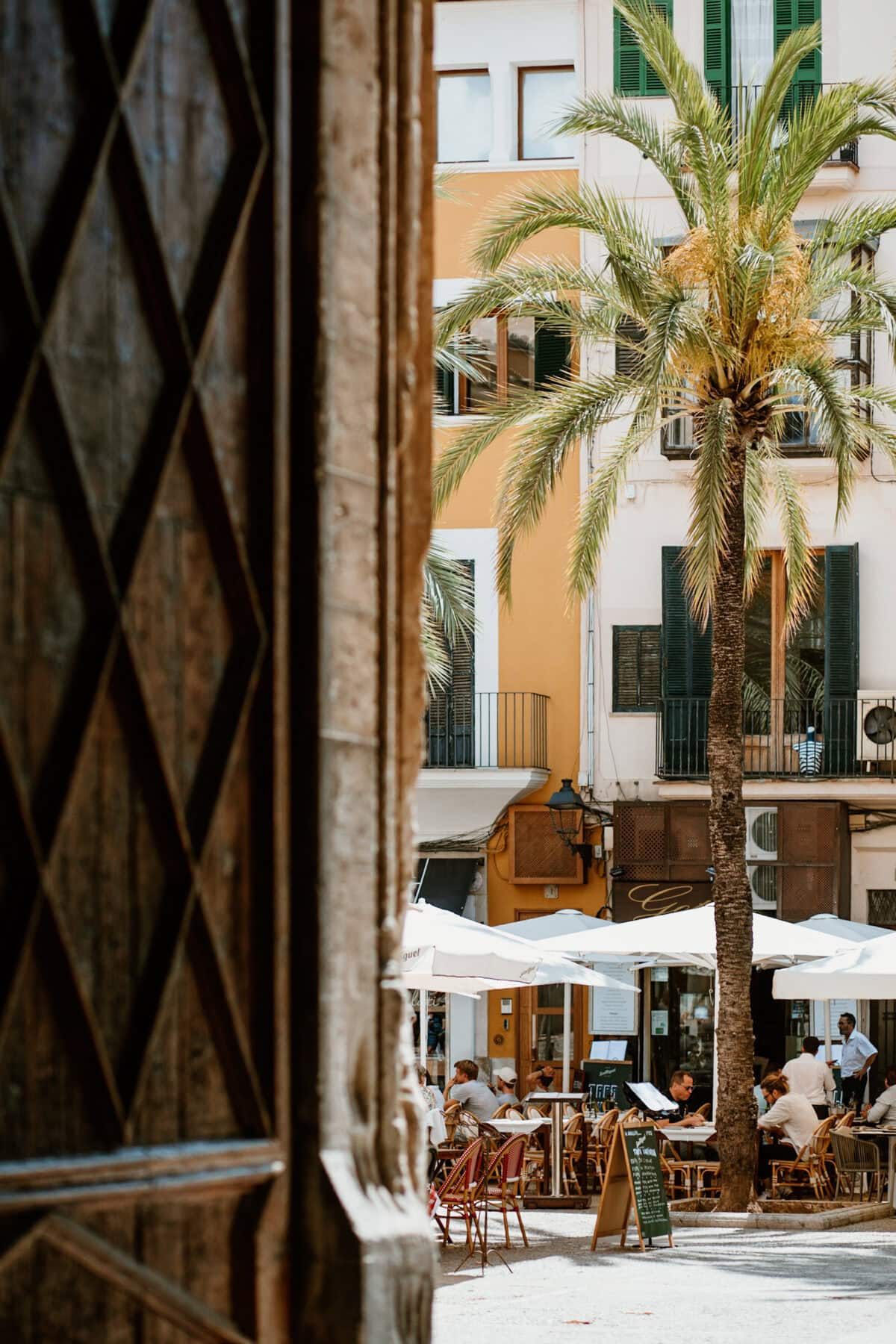
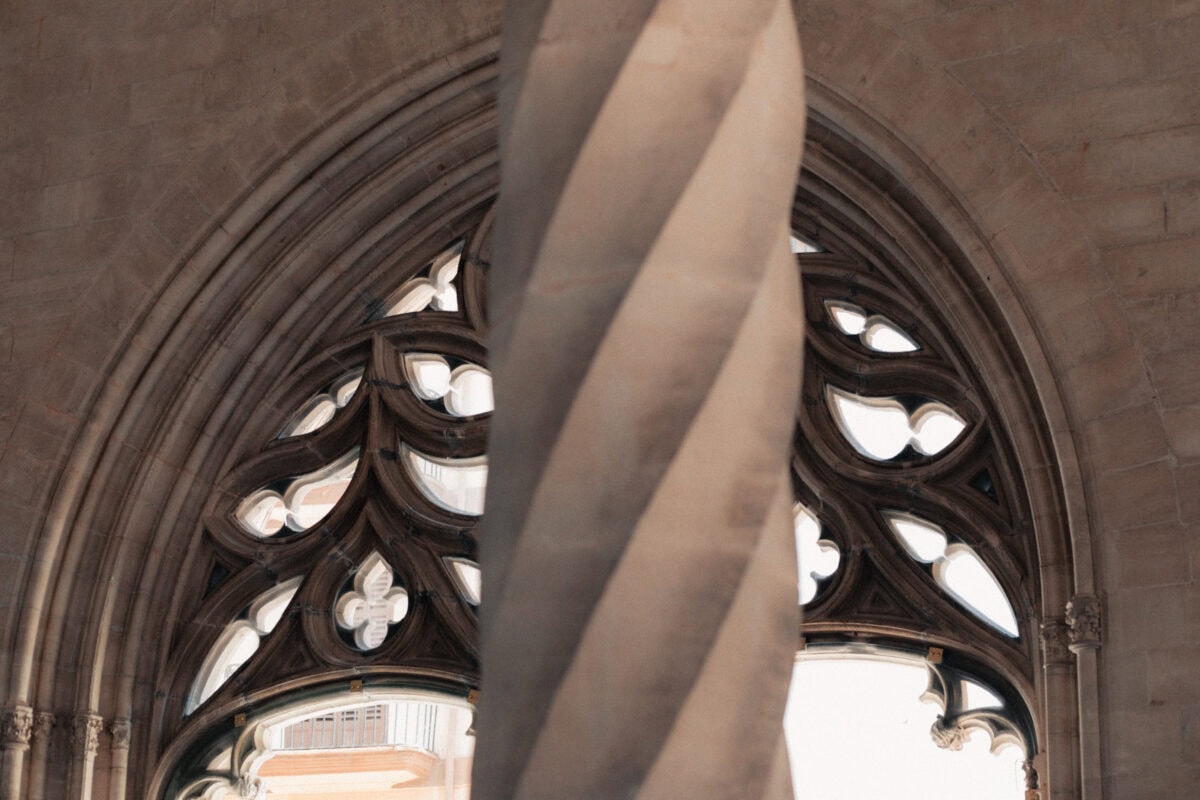
Author: Tatiana

  • From Dresden to the Bastei Bridge: The Perfect Day Trip to Saxon Switzerland

    From Dresden to the Bastei Bridge: The Perfect Day Trip to Saxon Switzerland

    Dresden is undoubtedly a fantastic destination. However, after seeing photos of the Elbe Sandstone Mountains, I’ve been eager to visit the nearby area. In this article, I’ll guide you on a day trip from Dresden to the Bastei Bridge! I’ll highlight the most stunning spots around the Bastei, share some hidden gems most tourists miss, and honestly advise you on whether a guided tour is worth it and when you can skip the expense.
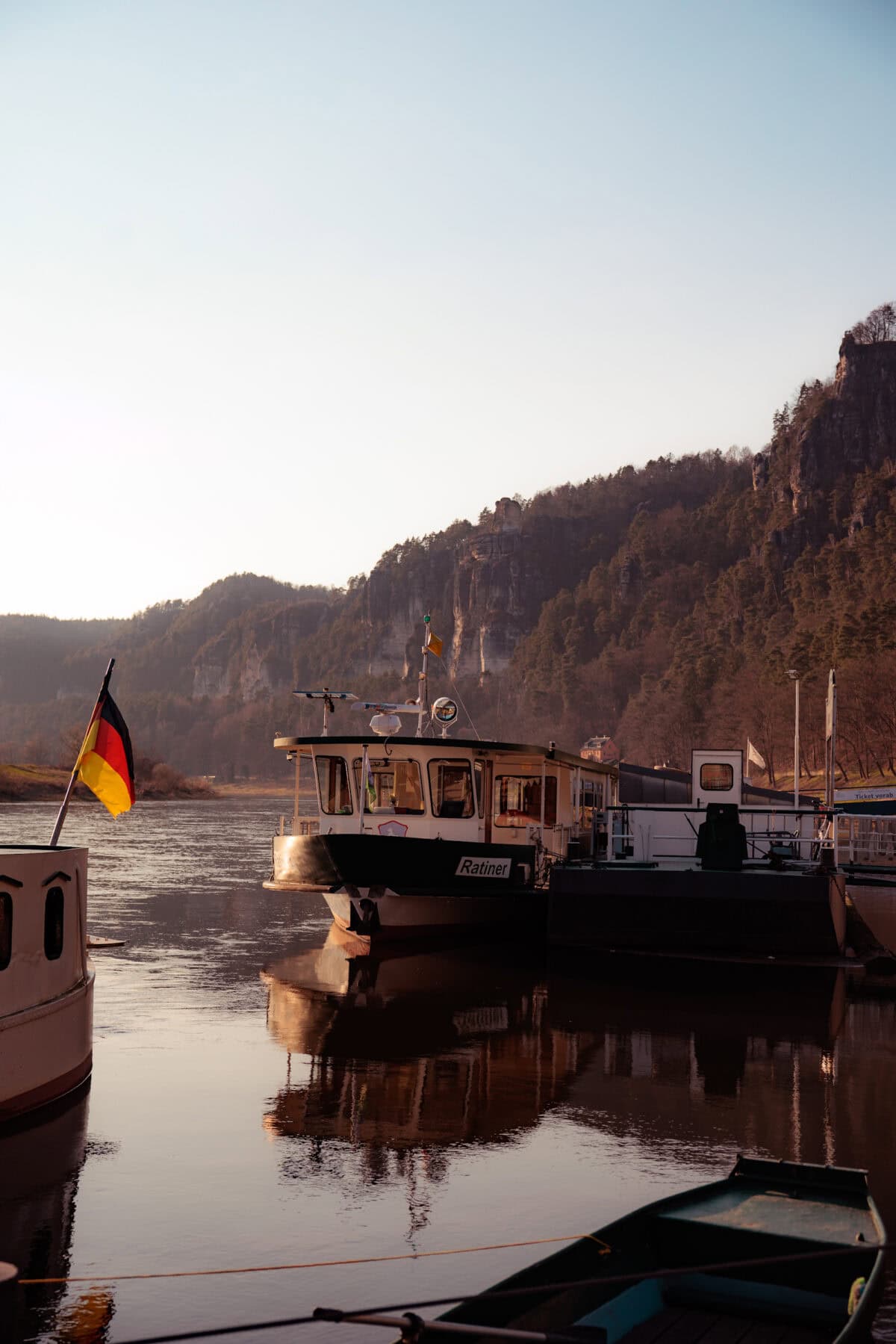
    Boat on the Elbe River in front of a rocky landscape at sunset

    The Most Beautiful Highlights Around the Bastei Bridge

    The Bastei Bridge is the most visited spot in the Saxon Switzerland National Park. The bridge draws more than 1.5 million visitors annually, and it’s understandable why: the stone bridge nestled among the bizarre rock formations of the Elbe Sandstone Mountains is truly worthwhile to visit.
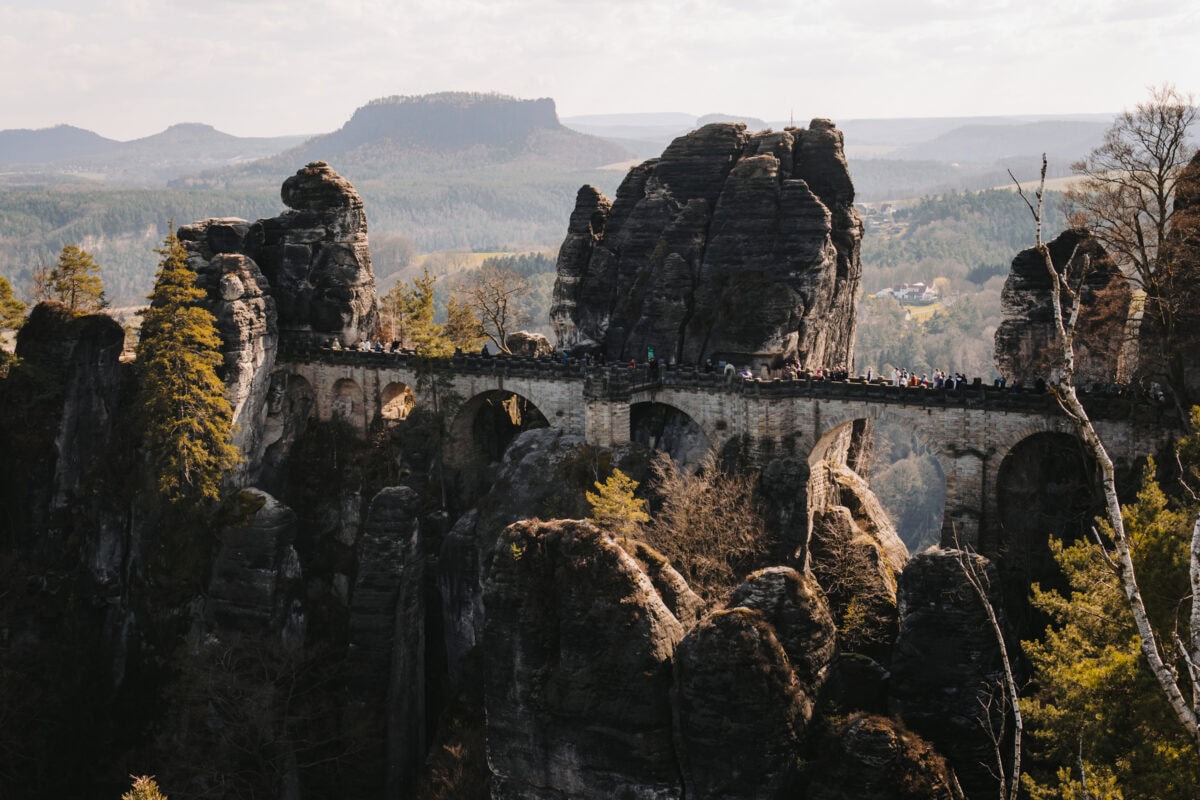
    Bastei bridge between rocks in the Elbe Sandstone Mountains
    The Bastei Bridge in Saxon Switzerland

    Built in 1851—to replace a wooden bridge that had been carrying visitors to the cliffs and what was then known as the Felsenburg since 1826—it spans 76.5 meters and crosses a 40-meter-deep gorge called Mardertelle. Access is available around the clock and free of charge, as is the entire Saxon Switzerland National Park.

    The Basics:
    Day Trip to the Bastei Bridge

    • Distance: approx. 40 km south-east of Dresden (approx. 50 min. by car, 35-40 min. by S-Bahn to Rathen)
    • Admission: free and access is open 24/7.
    • Duration: Approx. 4 hours/half day for arrival by S-Bahn, ferry and hiking trail to the bridge. With long hike, Schwedenlöchern and/or short coffee break: full day.
    • How to get there: S-Bahn S1 from Dresden main station to Kurort Rathen + ferry + hike (approx. 30-45 min. on foot – my recommendation!) or by car to the Bastei parking lot
    • Book a guided tour: From approx. €35 per person, pick-up in Dresden included. My recommendation: Day tour to Saxon Switzerland from Dresden*
    • Best time: During the week, early in the morning or at sunset for the best photos. Note: In good weather, it gets very, very crowded at weekends and on public holidays.

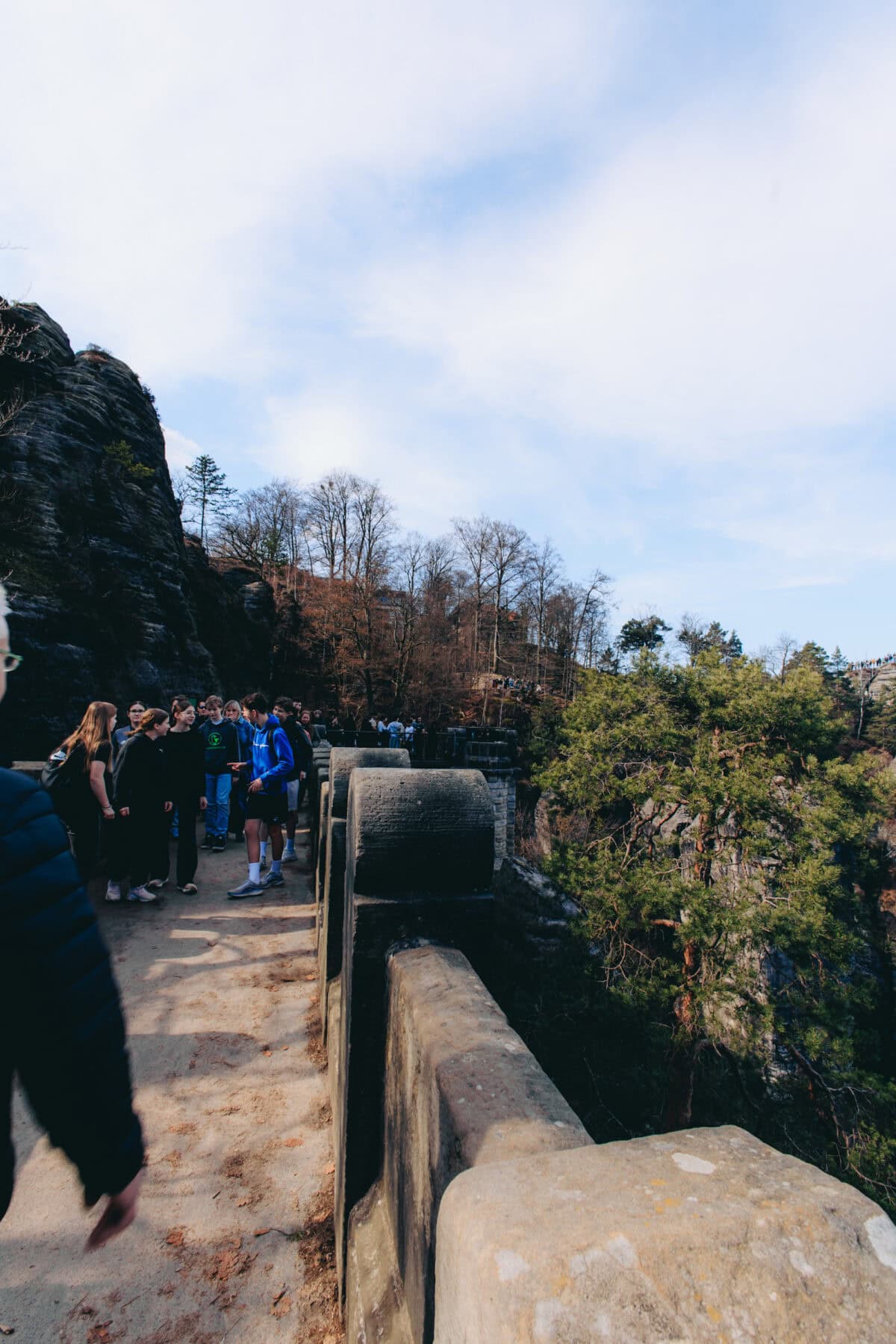
    The Bastei bridge isn’t as long as it appears in photos. It blends so well with its surroundings that I nearly didn’t realize I was walking on it. The trail leading there is quite spectacular, featuring numerous viewpoints that provide stunning views of the Elbe valley and the rocky peaks.
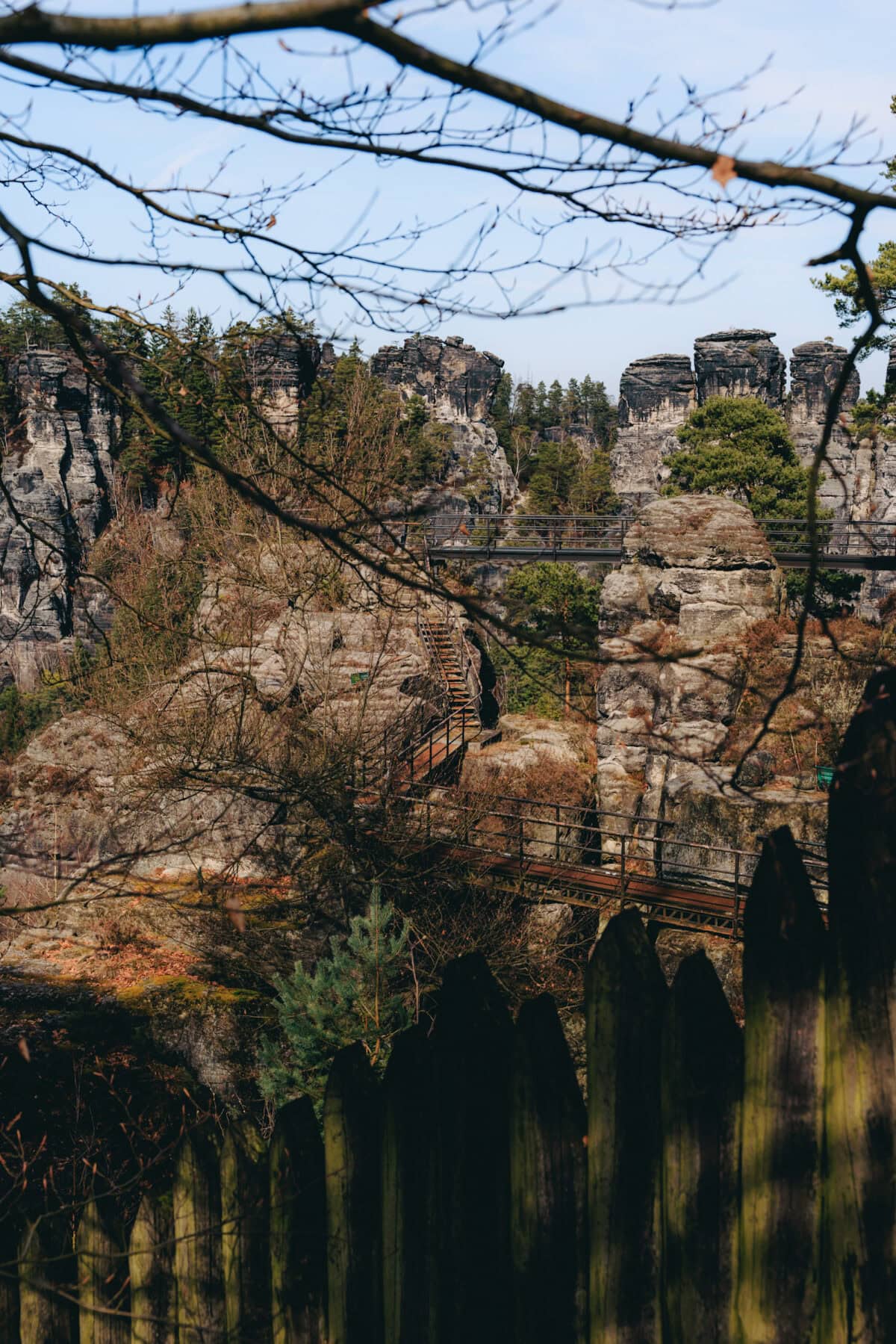
    Felsenburg Neurathen (Currently Closed)

    The ruins of the largest medieval rock castle in Saxon Switzerland are located right in front of the bridge, first documented in the 13th century. You can cross iron footbridges between the rocks and enjoy a entirely different view of the Bastei Bridge.
    Rocky landscape with bridge and stairs in the forest
    Currently, you can only view Neurathen Castle from the outside.

    Important: Felsenburg Neurathen has been closed since fall 2023 and remains closed until further notice (as of spring 2026). During routine measurements, millimeter-scale rock movements were detected, prompting the national park administration to close access for safety reasons. It is currently unclear when the castle will reopen.

    The route across the Bastei Bridge remains open—you can continue crossing as usual and access the viewpoints. Additionally, you can catch a glimpse of the rock castle from the path.

    The most recent updates are available on the official website of Saxon Switzerland.

    What exactly is the Bastei?

    The Bastei is a rock formation in Saxon Switzerland. It’s best known for its fantastic views of the Elbe Valley, the striking sandstone cliffs, and the historic Bastei Bridge, which connects several cliffs. The Bastei is one of the region’s most popular excursion destinations and can easily be visited as a day trip from Dresden.
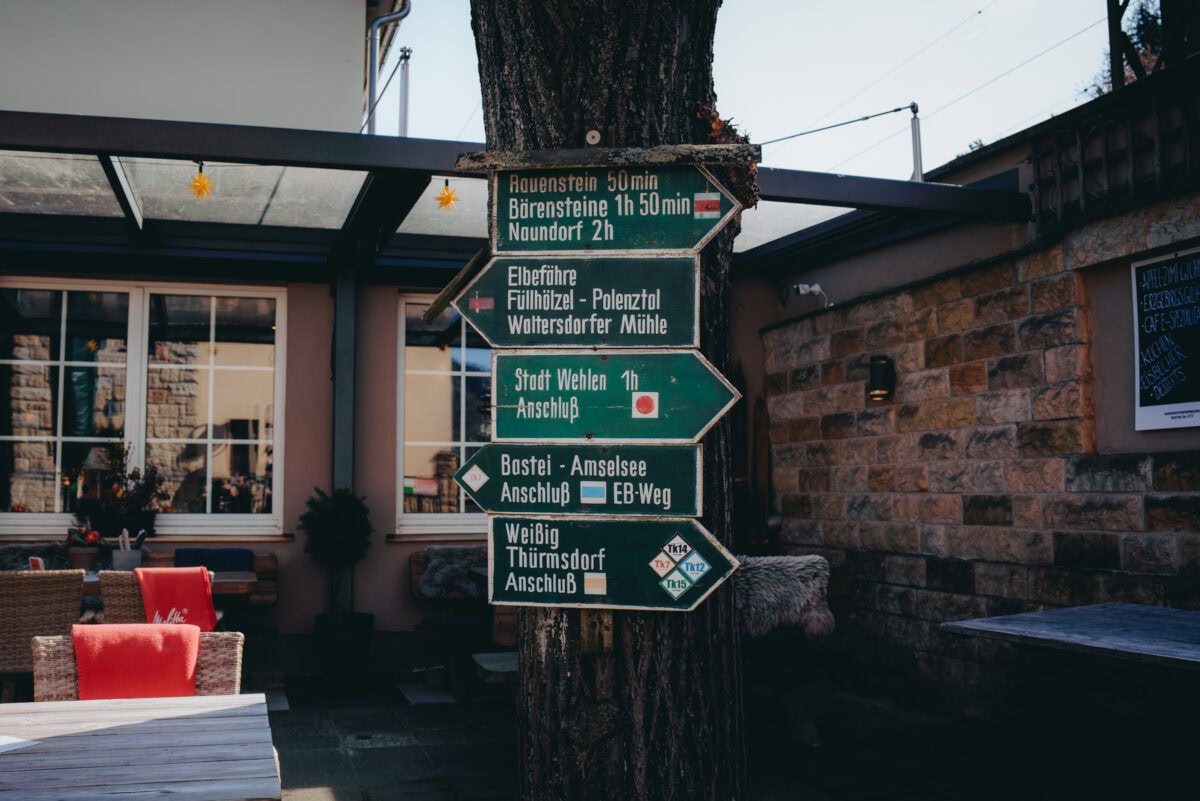
    Signpost on a tree near the café terrace in Saxon Switzerland, near Dresden

    The Most Beautiful Viewpoints Around the Bastei Bridge

    Of course, the Bastei Bridge is the main attraction, but six nearby viewpoints offer unique views of the rocks, the bridge, and the Elbe valley.
    The Bastei Bridge over the river in Dresden winds through a rocky valley

    You’ll automatically pass these four viewpoints on the ascent from Rathen via the Basteiweg:

    Panoramic View Bastei: The viewing platform is situated adjacent to the Berghotel, providing the broadest panorama. From here, you can gaze across the Elbe valley to Wehlen, and extend your view to Rauenstein, Königstein, Lilienstein, and deep into Saxon Switzerland.
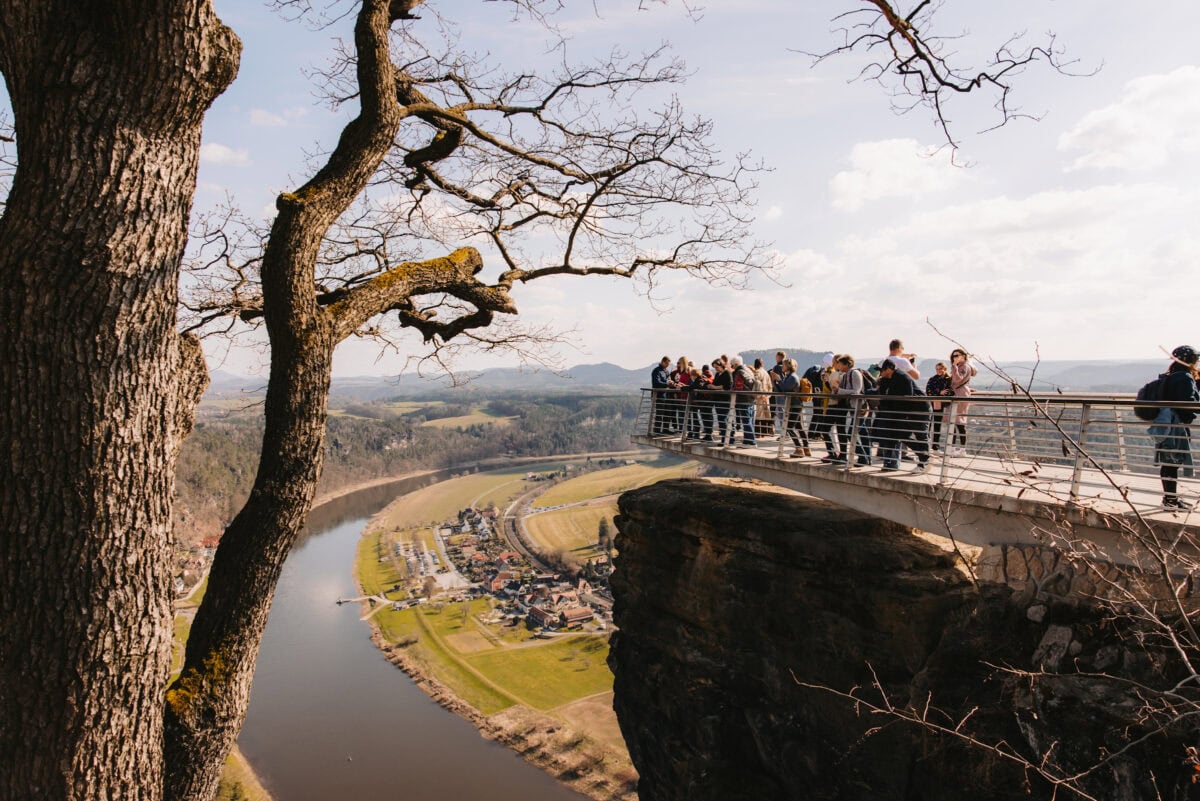
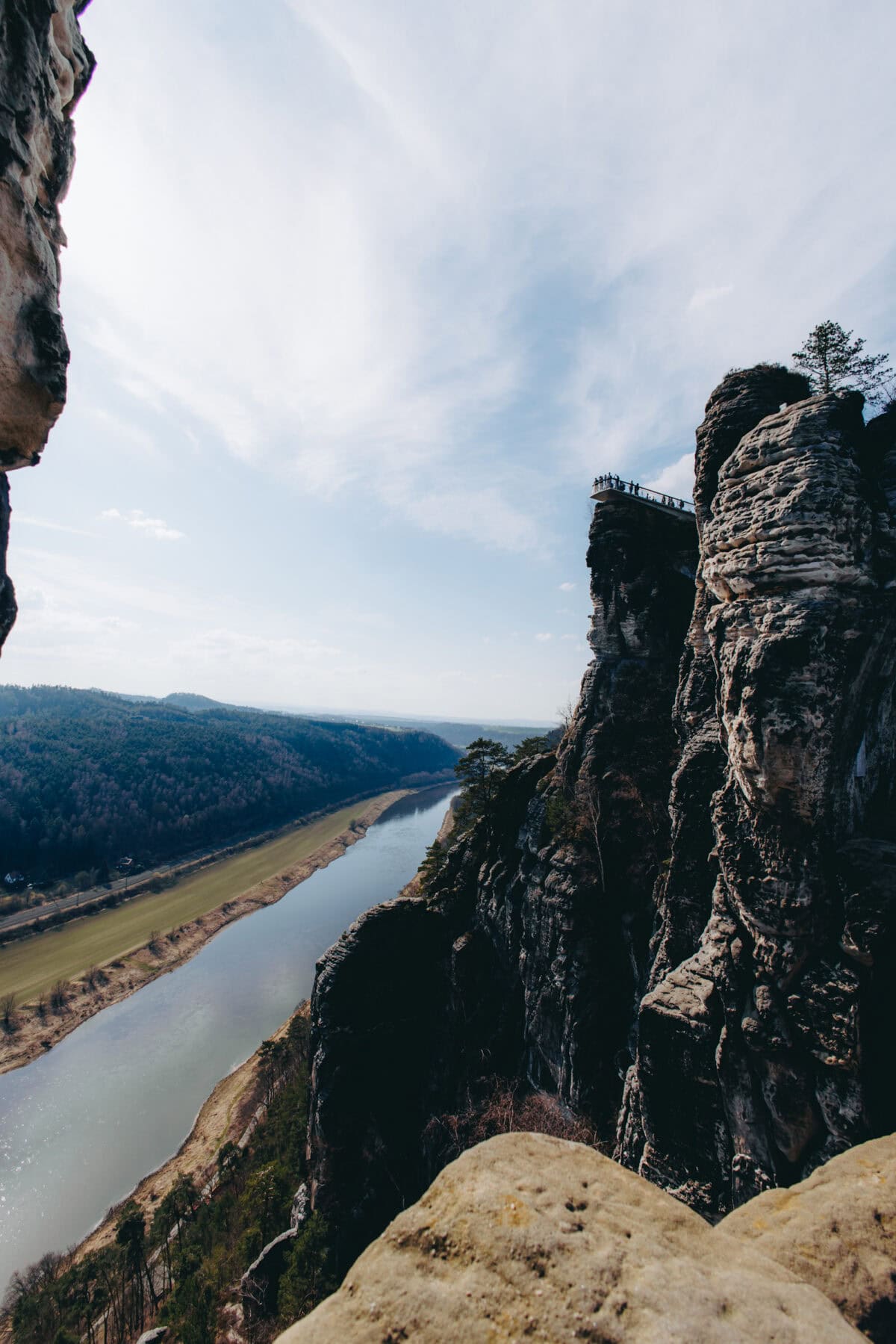
    Viewing platform overlooking the river landscape in Saxon Switzerland near Dresden, with tourists
    Rock cliffs with a viewing platform overlooking the river valley in Saxon Switzerland near Dresden
    The panoramic view towers high above the Elbe valley.

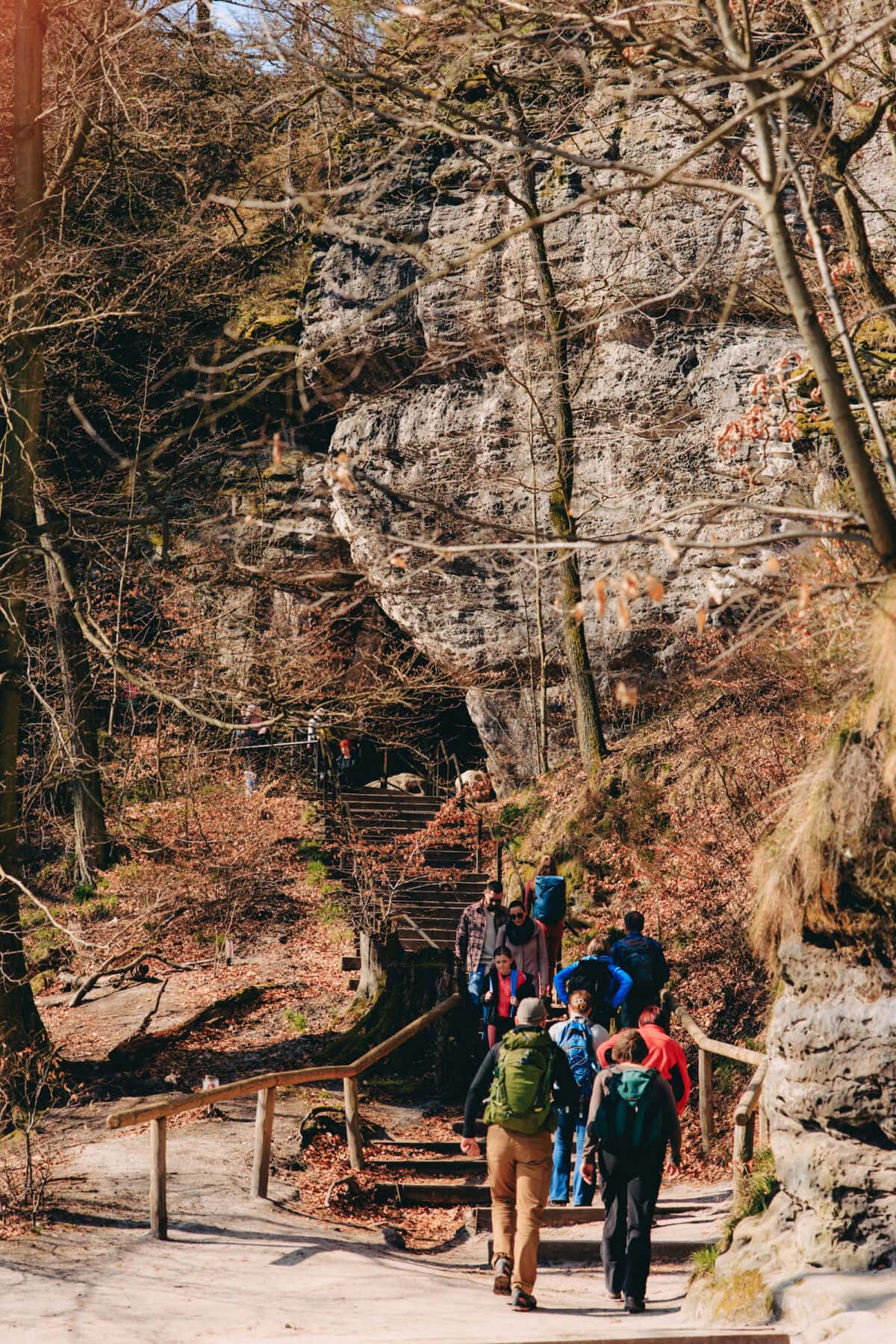
    The Ferdinandaussicht is my favorite spot, and it’s where the famous postcard images are captured from. It’s tucked away on the Ferdinandstein, a little rocky lookout just before you reach the Bastei Bridge. The turn-off is easy to miss, and many visitors walk right past without realizing it. We happened to visit on a Sunday—I’d probably suggest visiting on a calmer day if you can, but since it was the only time we had, we followed the crowd. The line of people on the stairs actually helped guide us to this lovely viewpoint.
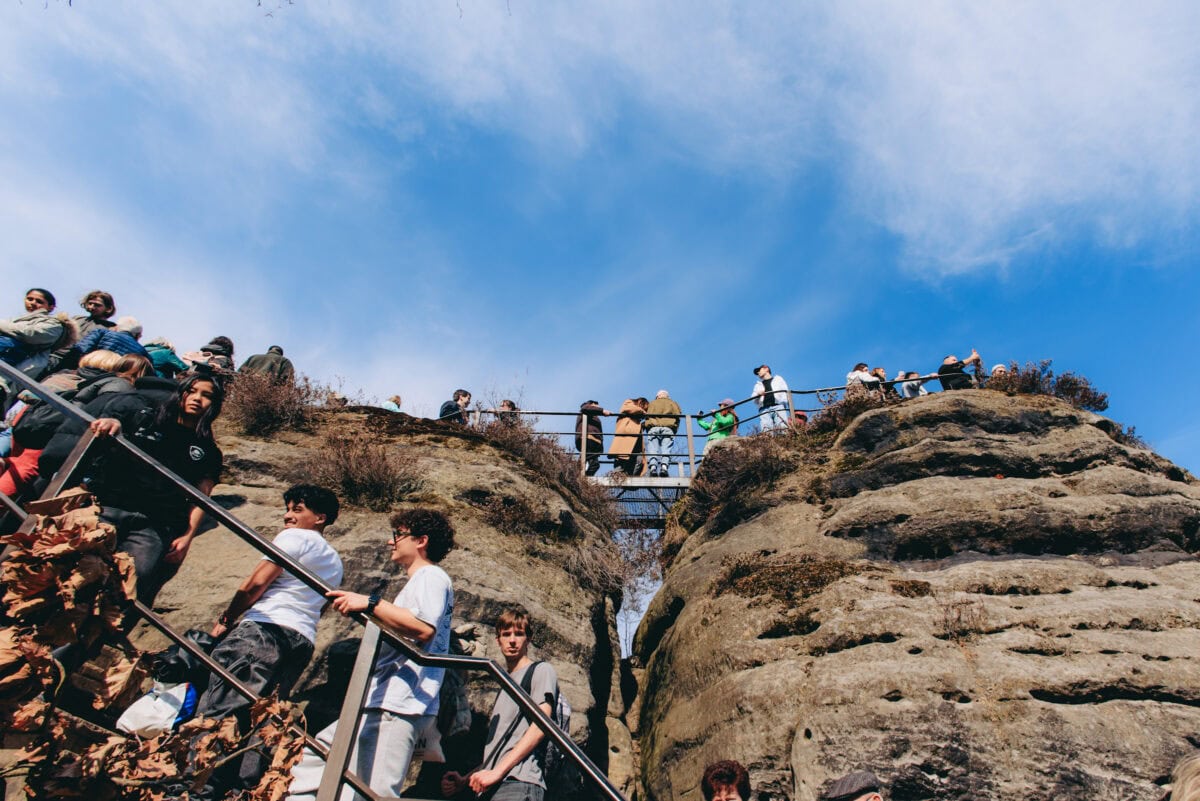
    Tourists visiting the Ferdinandaussicht viewpoint in the Elbe Sandstone Mountains.
    It’s best to avoid visiting on Sundays or during good weather when the crowds tend to be large.

    Waiting in line for a photo might not be my favorite thing either, but this spot offers you the full length of the bridge right in front of you—surrounded by the rock towers with Lilienstein in the background. It’s such a stunning panoramic view and definitely worth a little patience. Catch this view at sunrise, and you’re guaranteed a truly atmospheric and unforgettable scene of the Bastei Bridge.
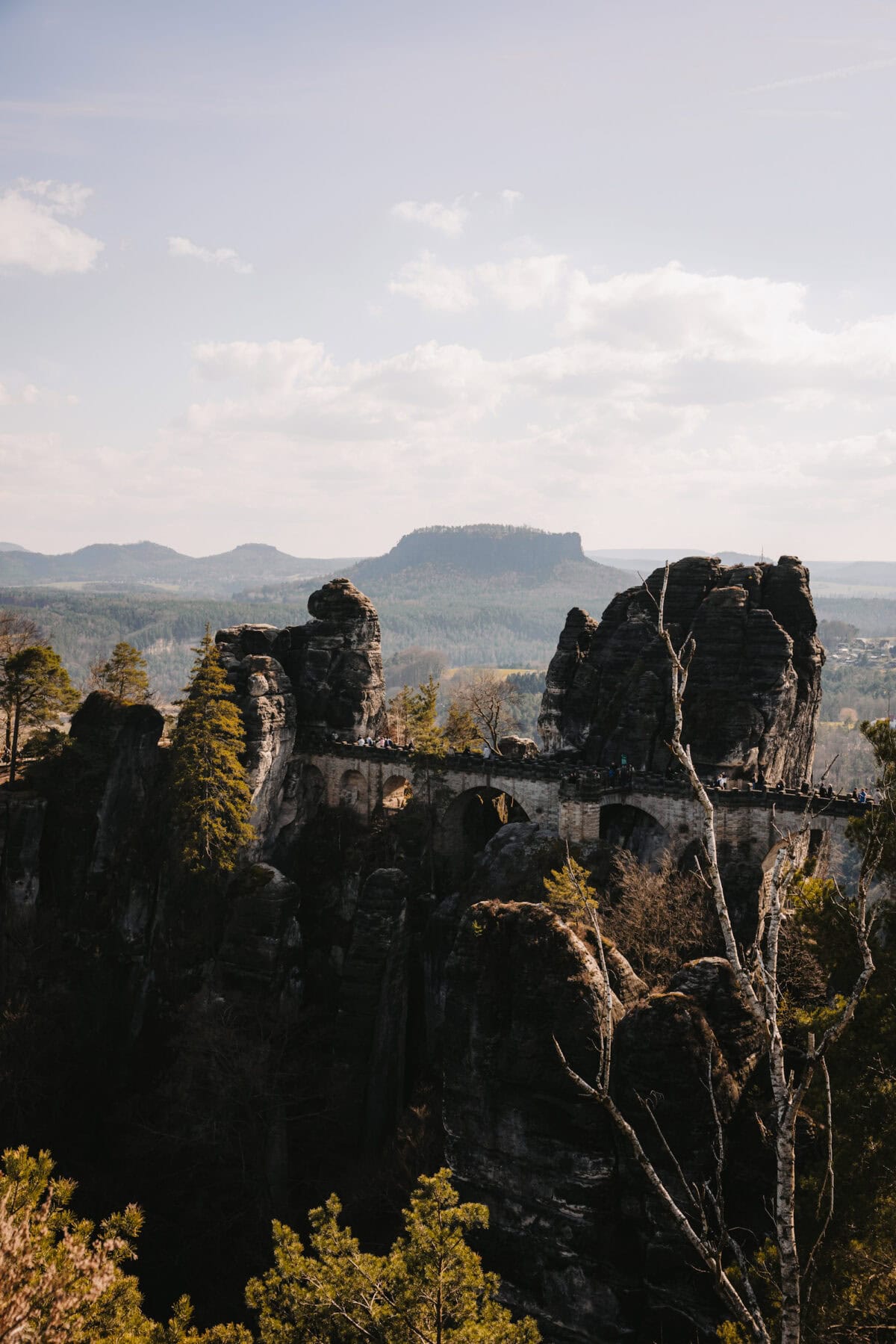
    Bastei bridge between rocks in the Elbe Sandstone Mountains
    The Ferdinandaussicht offers an excellent view of the Bastei Bridge.

    The Tiedgeaussicht and the Kanapee are lovely spots along the trail to Rathen, perfect for enjoying the beautiful views either while climbing up or heading back down the Basteiweg. The Tiedgeaussicht provides a breathtaking panorama over the Elbe Valley – less dramatic than the Ferdinandaussicht, it still captures the immense beauty of the landscape surrounding the Bastei. Just a few steps further, you’ll find the Kanapee. I was blown away by the view from both spots, feeling as if I had stepped into a painting by Caspar David Friedrich. The sweeping view, with the Elbe meandering through the scenery—it’s absolutely stunning!
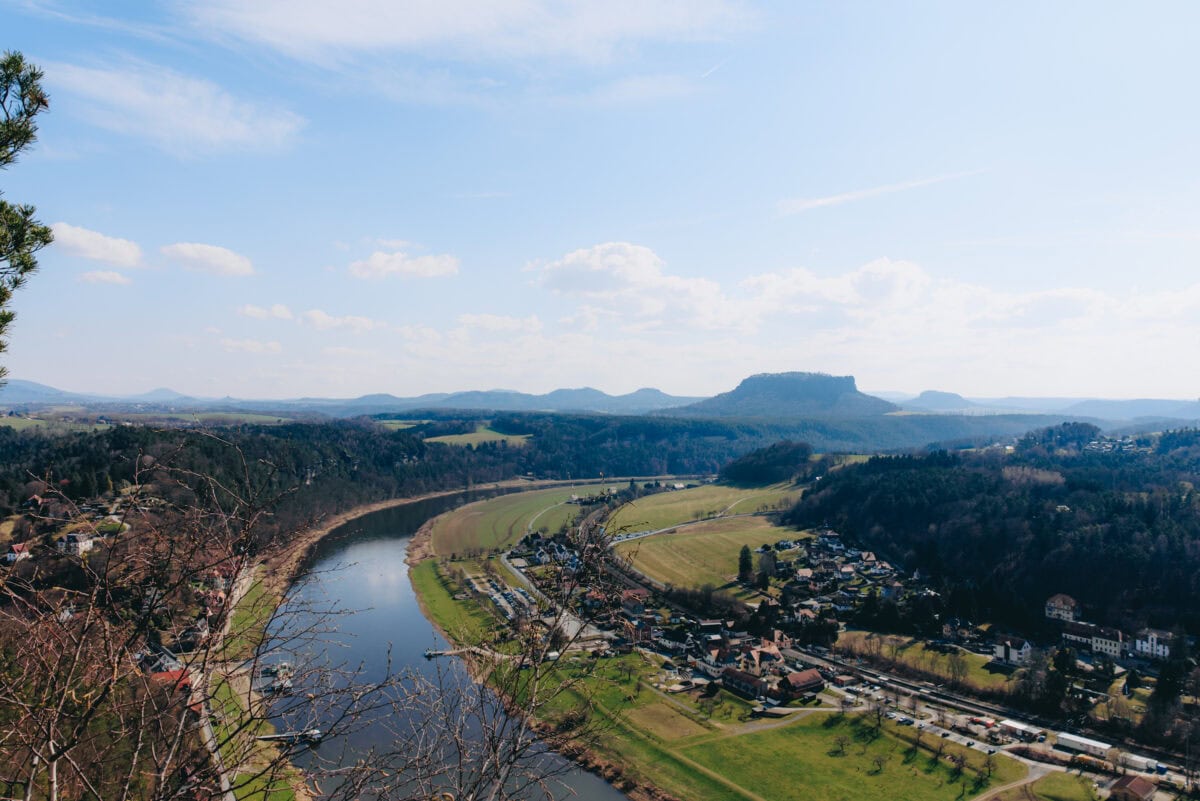
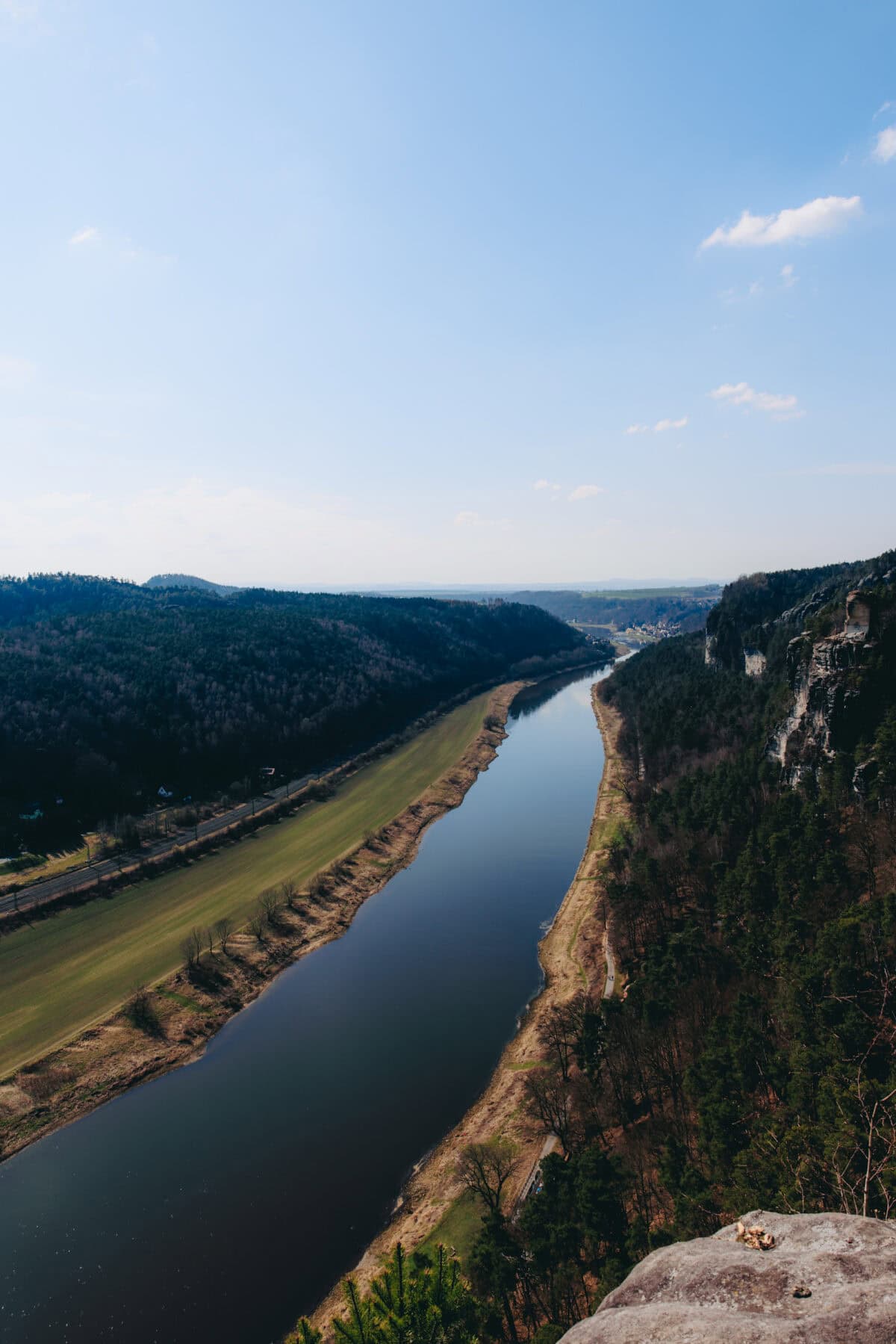
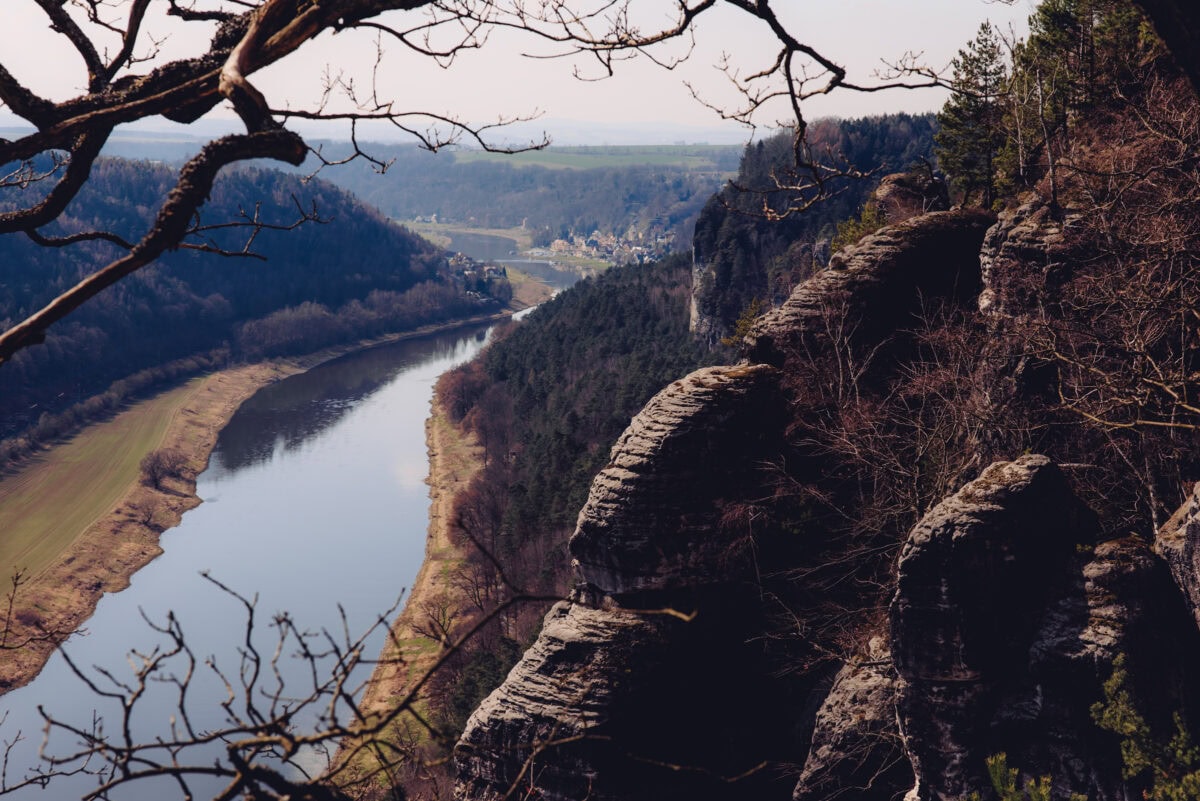
    Elbe River Valley
    A river winding through forested hills and rocks in Saxon Switzerland near Dresden

    The following viewpoints are on an alternative route from Rathen, which is slightly longer but also leads to the Bastei Bridge. You can also complete a full circular hike, including all six viewpoints, by doing the ascent or descent. (We only walked along the Basteiweg).

    Pavillonaussicht: located above the Schwedenlöcher, it offers a completely different view of the Bastei Bridge – from above and a little further away, with the surrounding rock formations framing the view.

    Wehlsteinaussicht: located to the left in front of the Berghotel. From here you’ll have a view of the Wehlgrund and the “Kleine Gans” and “Große Gans” rock formations.

    Thinking about exploring Dresden? Here are some helpful tips to make your trip even better!
    Read all articles about Dresden

    Many visitors often just head straight for the bridge, snap a few photos, and then walk back to the parking lot. However, you’ll find the most breathtaking spots if you hike up to the Bastei Bridge from Rathen. It’s a bit more challenging and the path is quite steep, but don’t worry—you can do it! Plus, you’ll be treated to incredible views that are totally worth the effort.
    Crossing the Elbe on the Cable Ferry

    If you’re traveling by S-Bahn from Dresden, you’ll find the ferry right there—it’s a lovely journey connecting the two parts of Rathen on either side of the Elbe. Plus, it’s just a short walk from the S-Bahn station to the ferry landing, making the whole experience smooth and enjoyable.
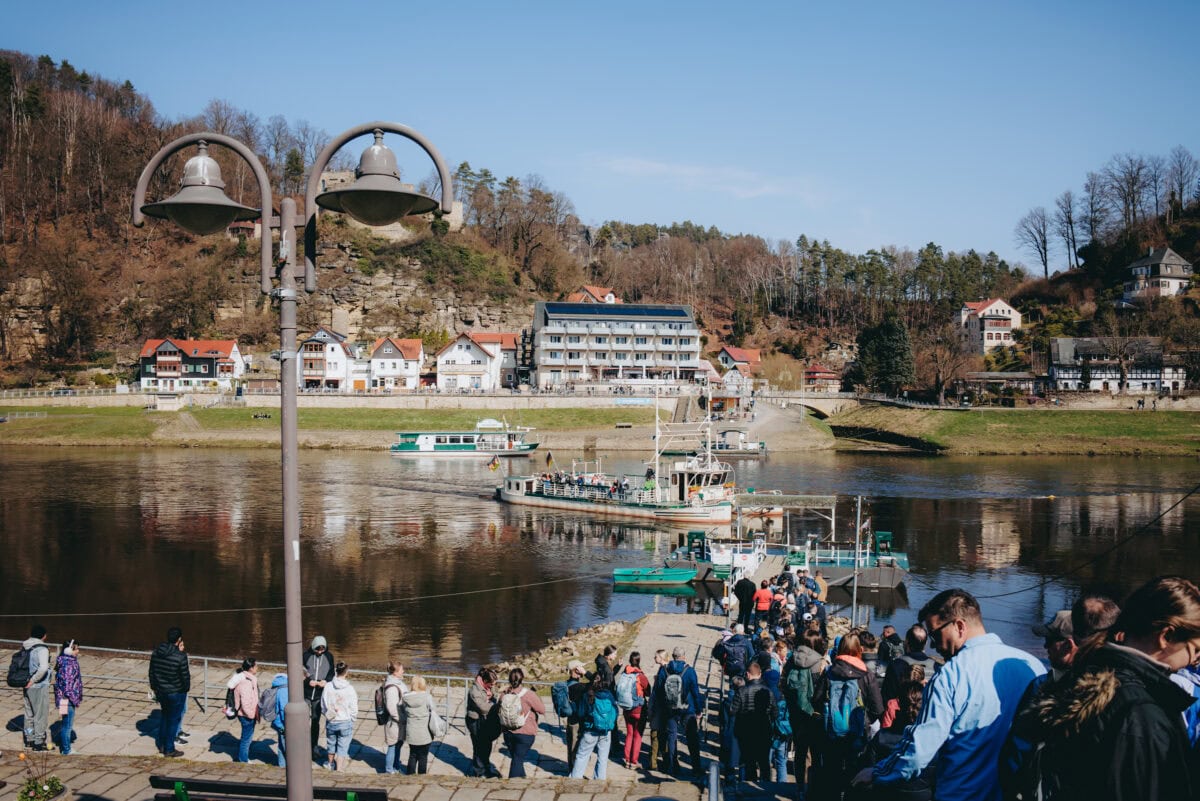
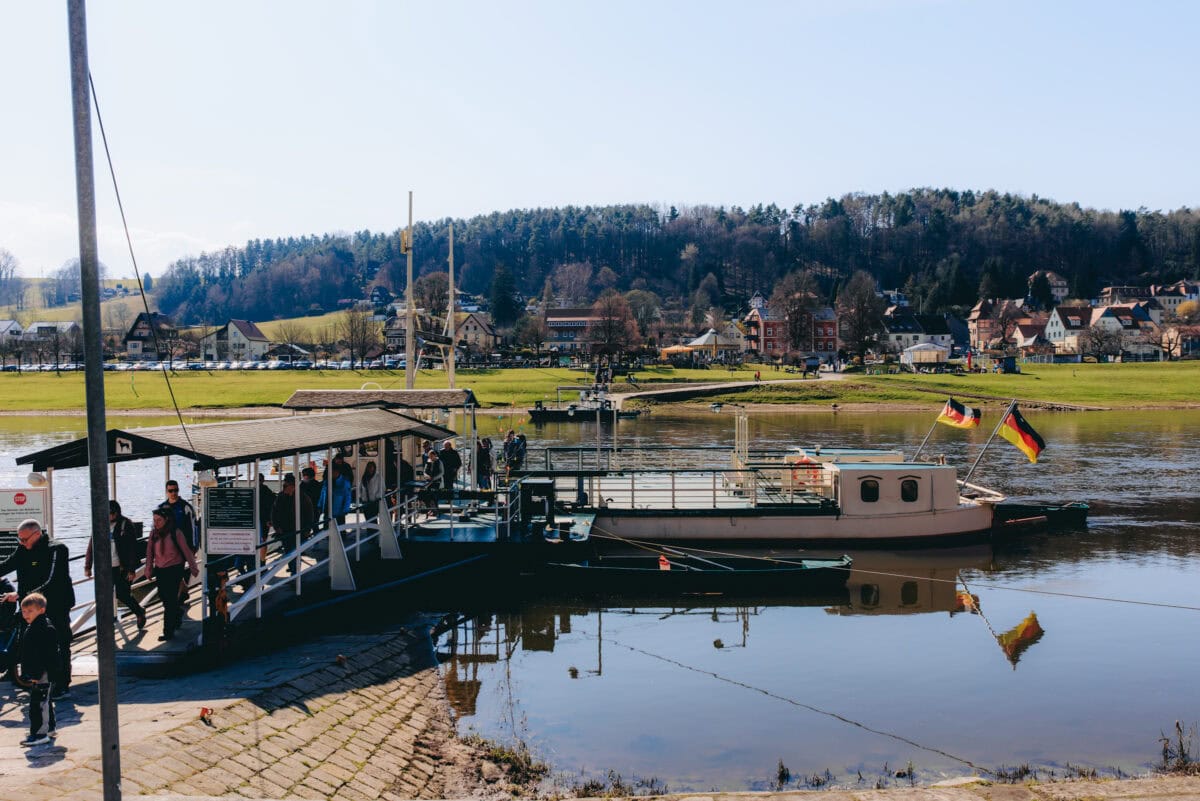
    People board a ferry in Rathen in Saxon Switzerland near Dresden
    Ferry on the banks of the Elbe

    The ferry in Rathen is a historic yaw rope ferry powered only by the Elbe’s current. This allows you to enjoy a quiet ride without engine noise and relax while viewing the stunning landscape. After crossing, simply follow the signs to the Bastei Bridge. To take the shorter Basteiweg, stay to the left.
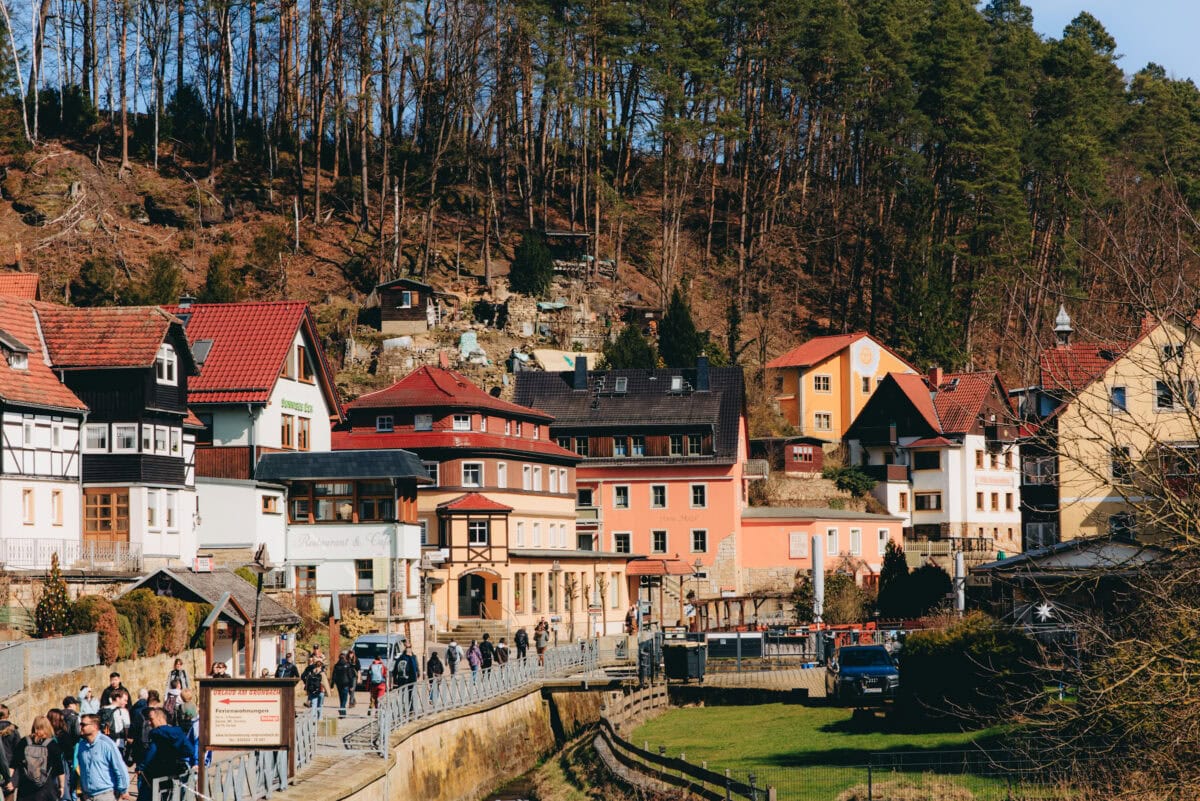
    Colorful village with half-timbered houses on the edge of the forest
    The hiking trails leading to Bastei Bridge start across the river in Rathen.

    Additional Insider Tips About the Bastei

    Before my trip, I gathered some tips I didn’t end up testing, but I noted them for my next visit.

    Elbe Cruises From Dresden

    By the way, during the season, tour boats also stop at the pier, and you can take short boat trips along the Elbe from Dresden on them.
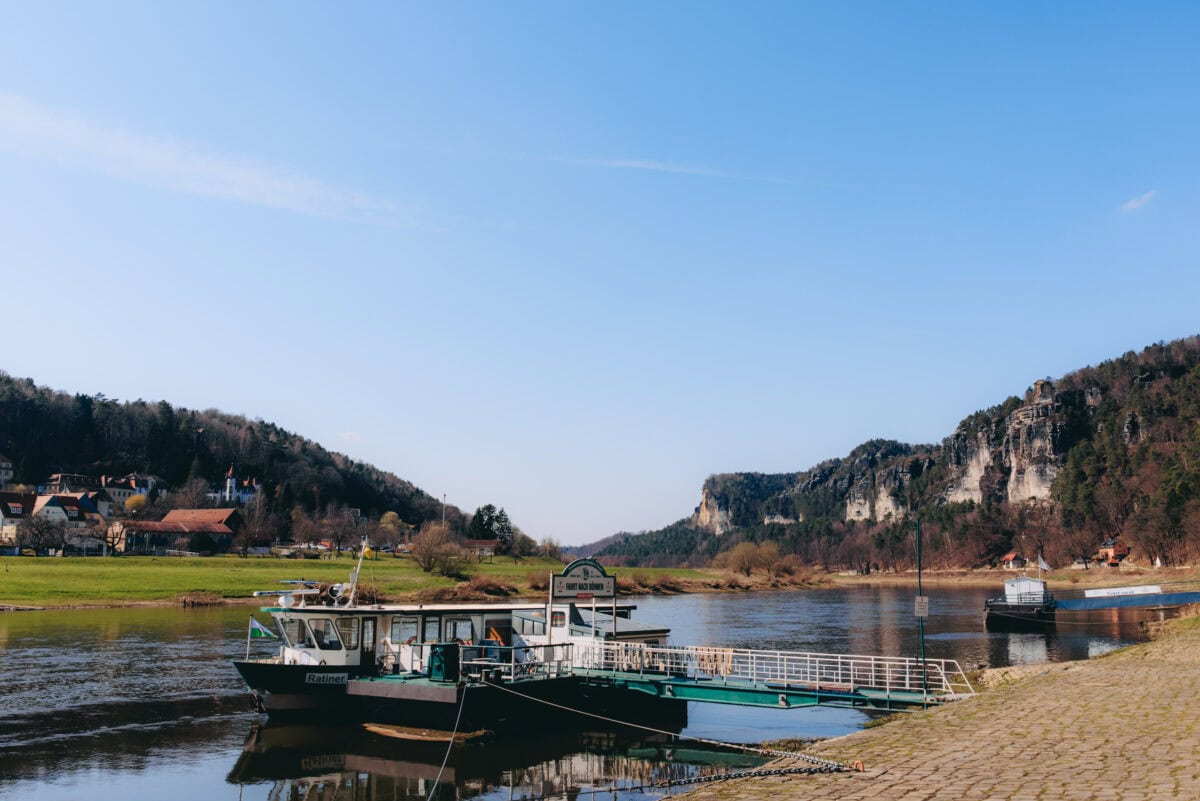
    Ferry crossing the Elbe river in Rathen with a rocky landscape in the background.

    Schwedenlöcher (Swedish Holes)

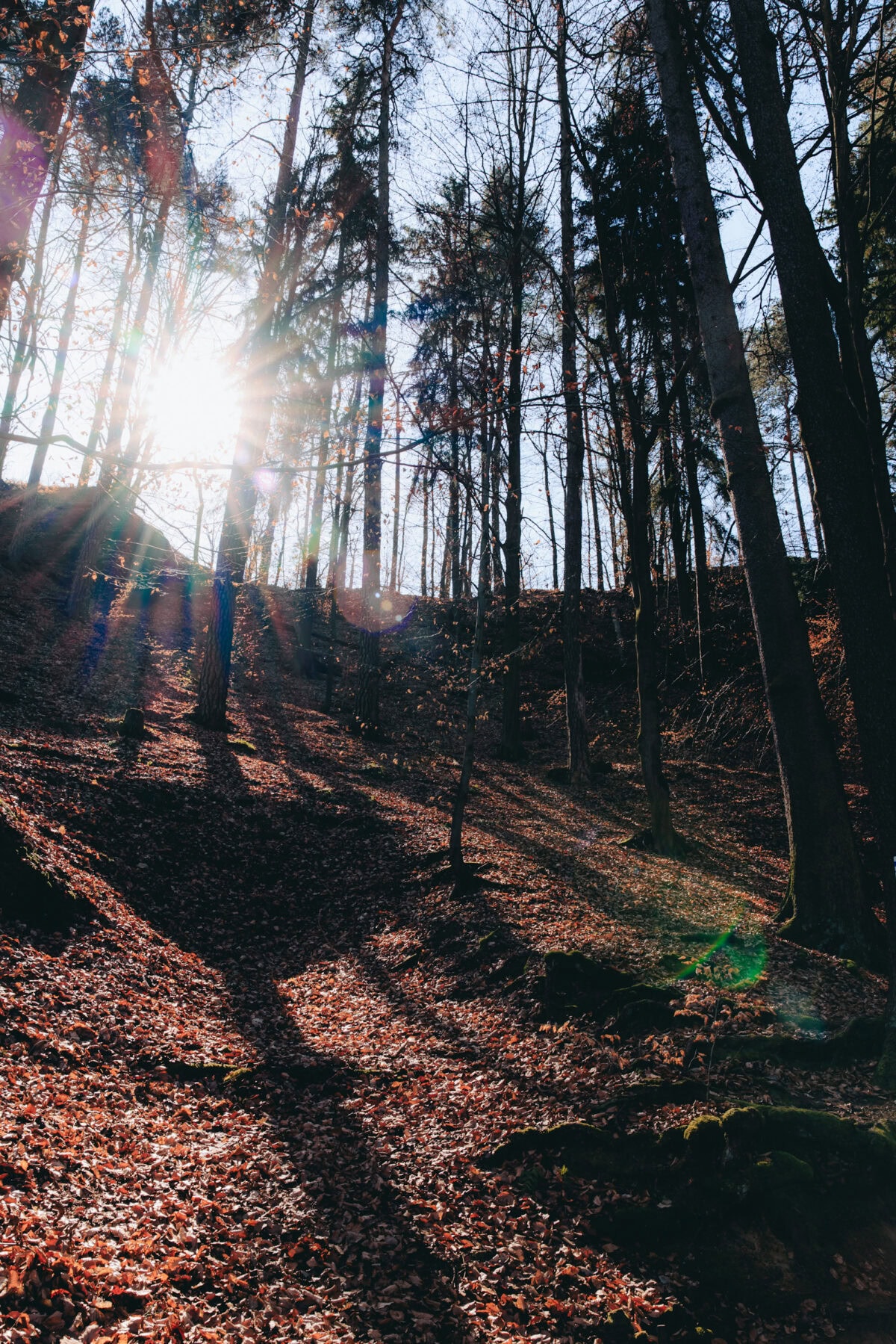
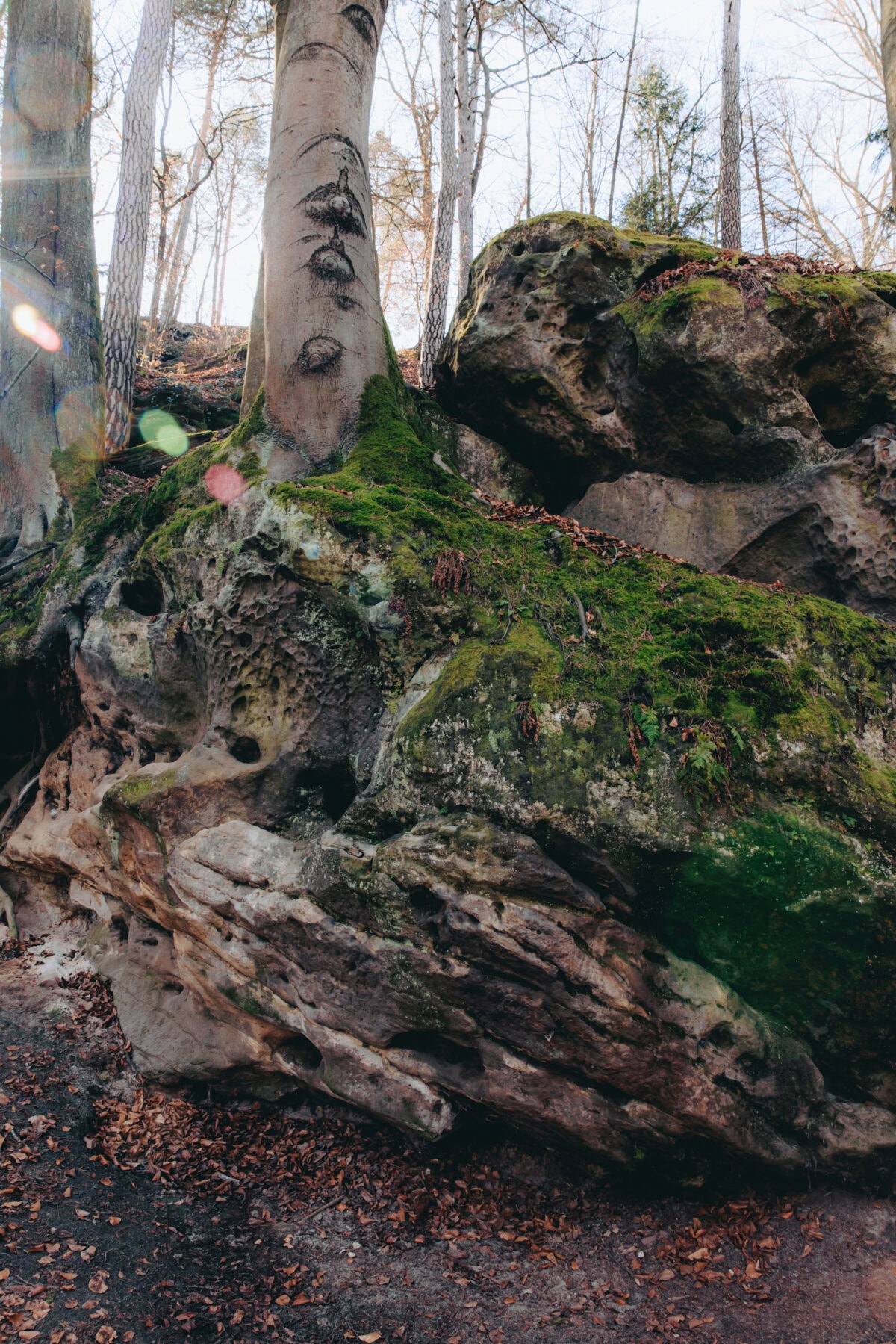
    The Schwedenlöcher is a narrow, shady gorge featuring steep wooden steps and moss-covered rocks. It contains remnants of an erosion landscape millions of years old, resembling a fairytale forest. The hike from the Bastei through the Schwedenlöcher to Rathen typically takes about 45 minutes. Sturdy shoes are essential for this route.

    Amselsee (Blackbird Lake)

    At the end of Schwedenlöcher, you’ll find the small Amselsee lake, where you can rent a rowing boat for a few euros.

    Uttewalder Grund

    Starting at the Bastei parking lot, a trail descends to Teufelsgrund and continues to Uttewalder Grund, known for its iconic rock gate. From there, you can hike back to Rathen through Wehlen. This route, called the “Golden Triangle,’ is among the region’s most favored day hikes.

    Where To Eat & Drink at the Bastei

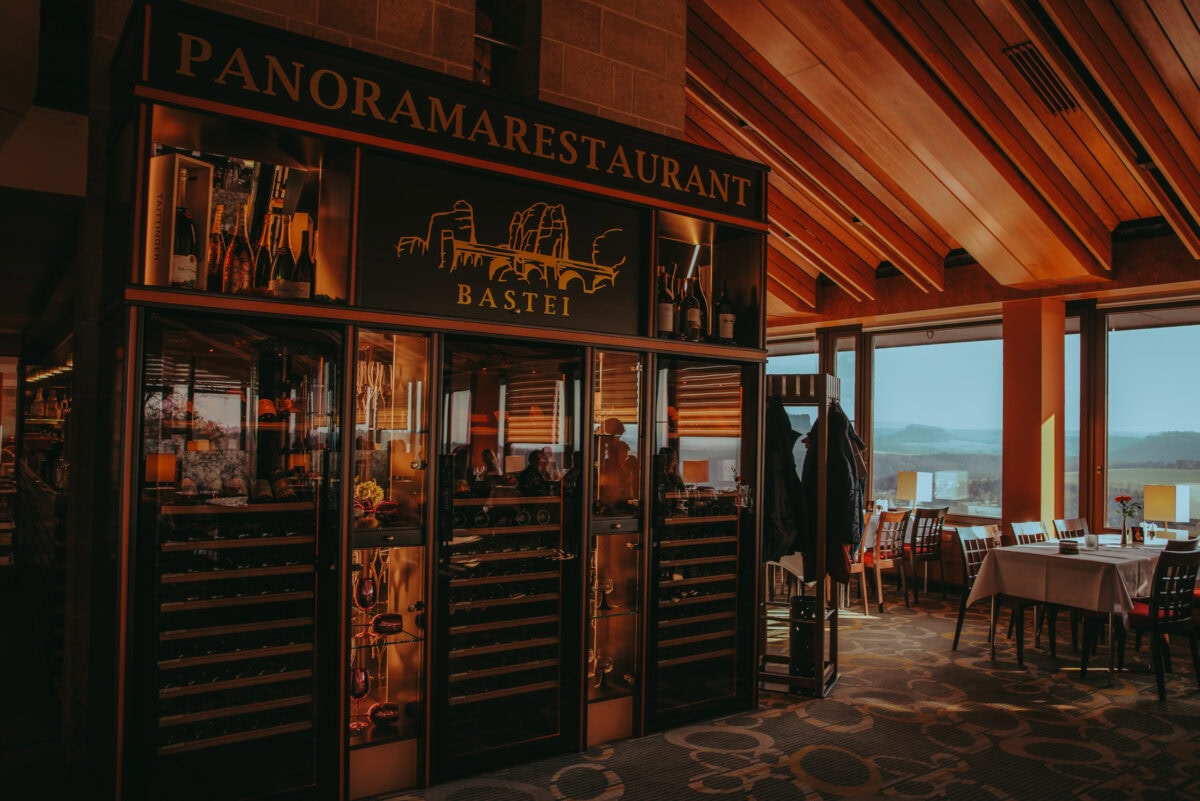
    A panorama restaurant is located at the Bastei, belonging to the Berghotel Bastei, yet open to all visitors. The atmosphere might seem somewhat formal, but the breathtaking view over the Elbe valley makes it worthwhile.
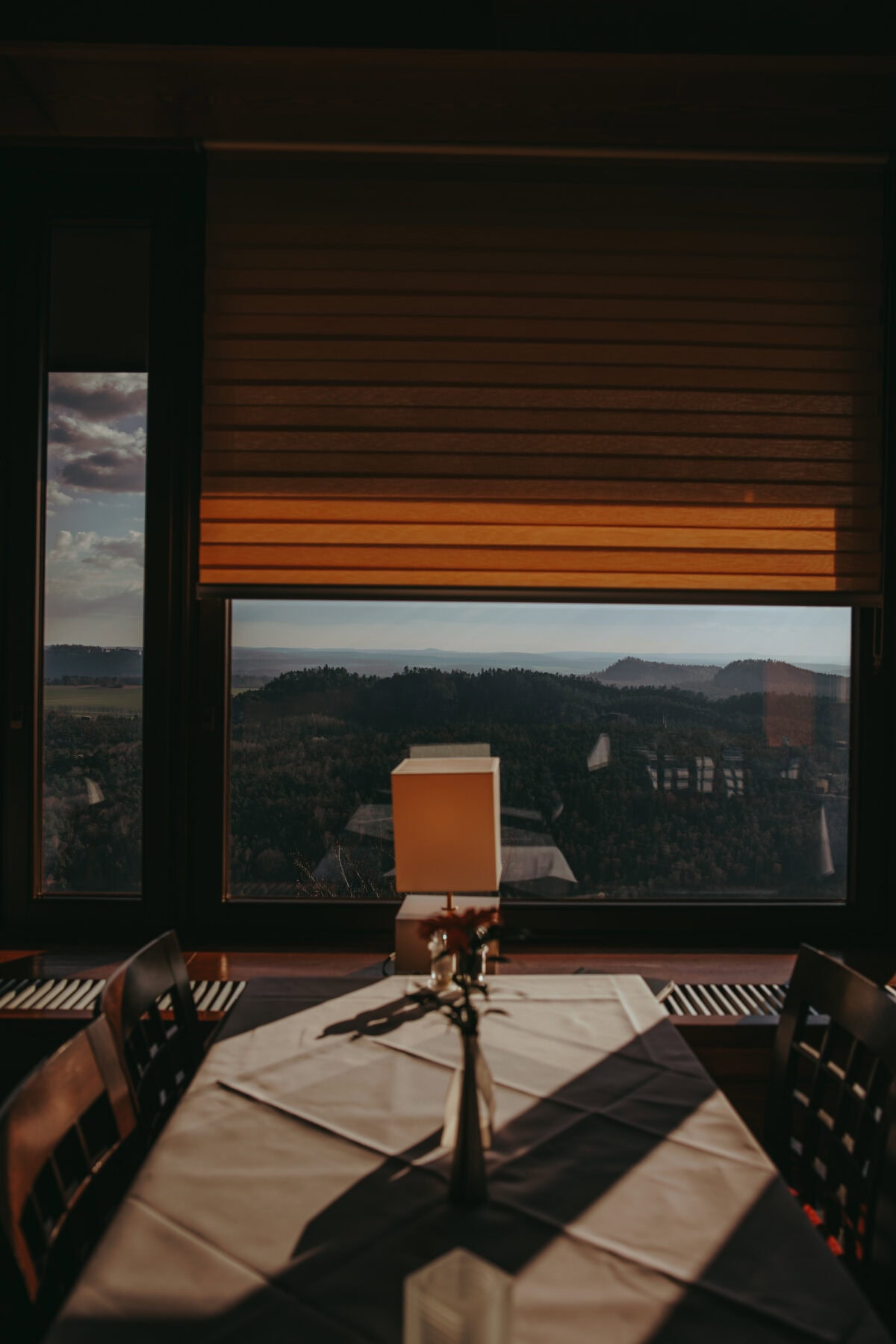
    Dining table in front of a panoramic window with a view of the mountains in Saxon Switzerland near Dresden
    Interior of the Bastei Panorama Restaurant with a wine cabinet in Saxon Switzerland near Dresden

    While I can’t judge the cuisine, I wouldn’t expect any exceptional dishes. However, it was an excellent spot for coffee and delicious cake, offering a nice opportunity to enjoy the stunning scenery once more.
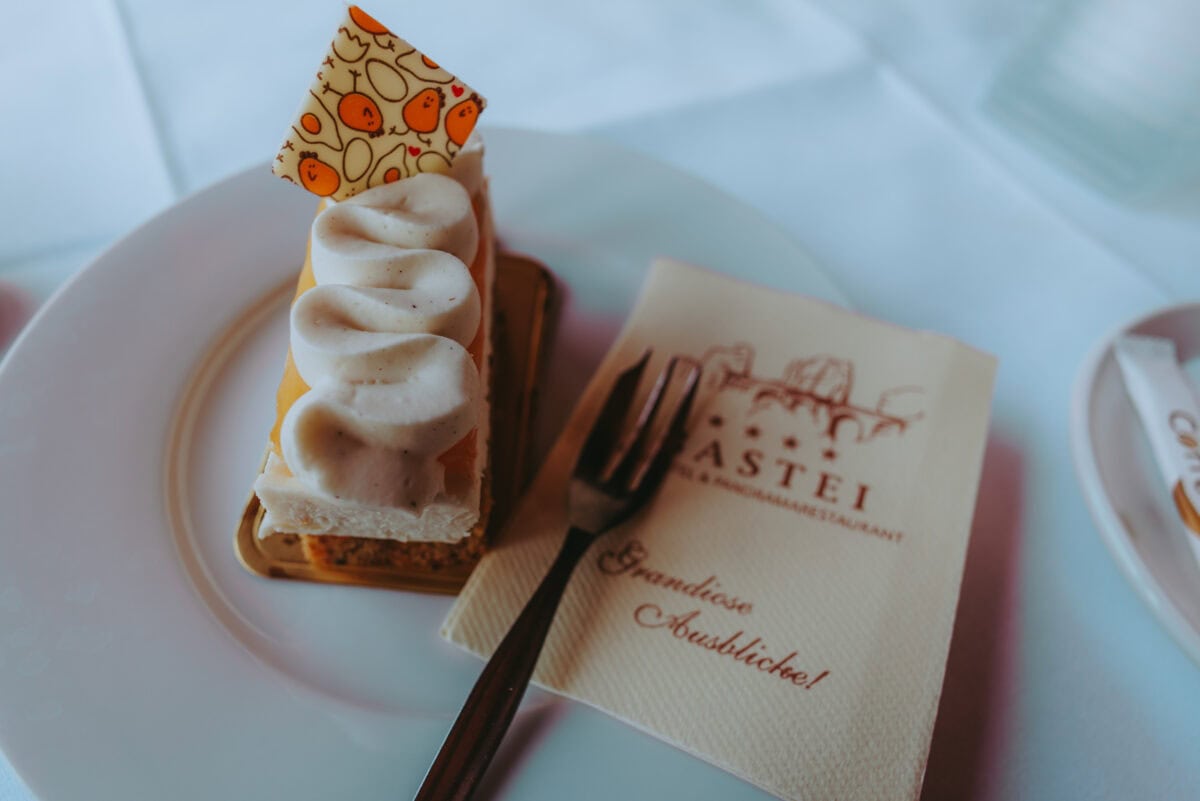
    A slice of cake topped with cream on a white plate at the Bastei Panorama Restaurant

    A more affordable choice is the snack bar at the panoramic viewpoint, where you can relax at one of the large picnic tables and enjoy snacks like a bratwurst (grilled sausage).

    In Rathen, located in the valley, you’ll discover several small restaurants and beer gardens. Whether you’re hiking up from below or descending via the Schwedenlöcher, Rathen makes a convenient stop.
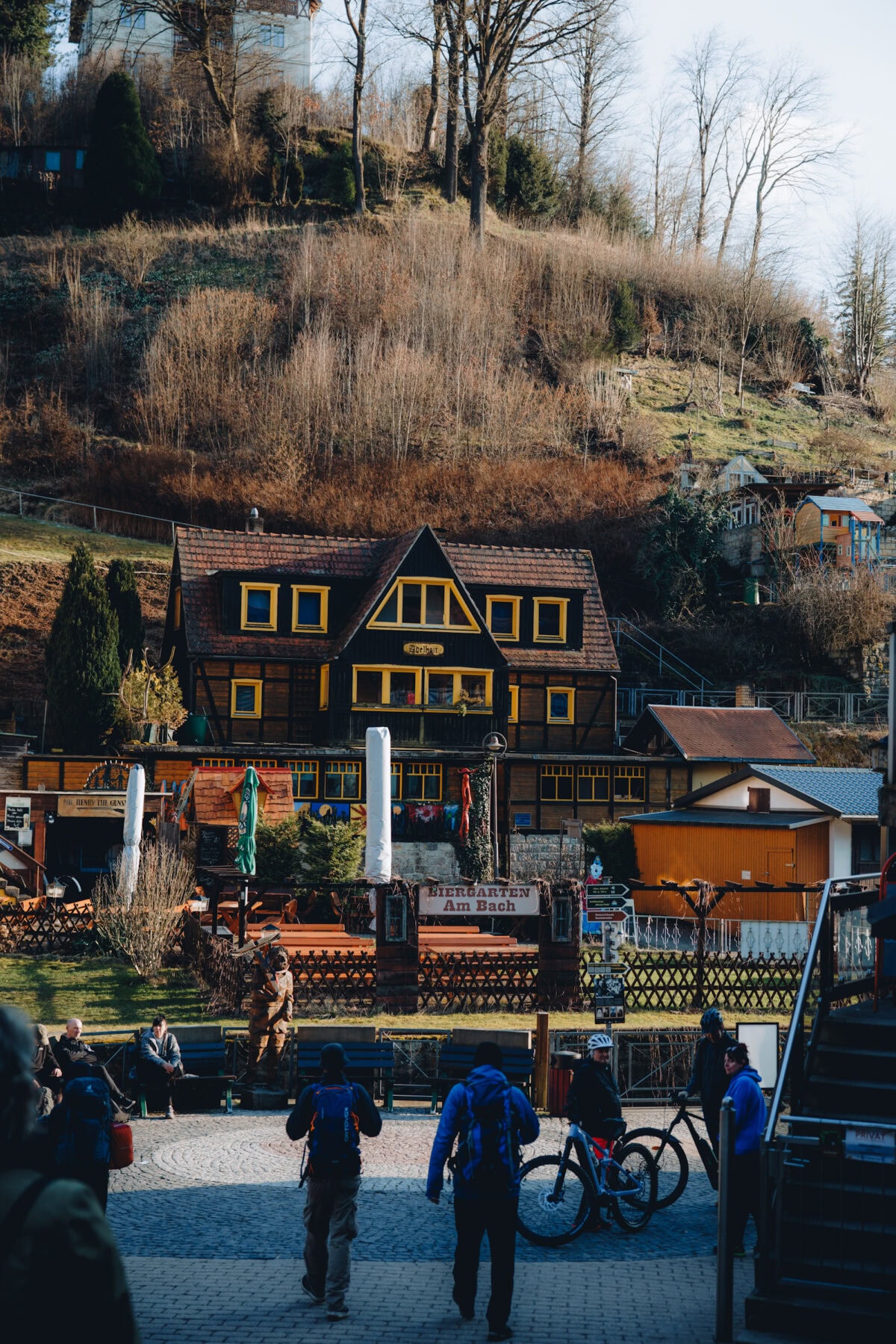
    Beer garden with a half-timbered house on a wooded hillside in Rathen near Dresden

    How To Get From Dresden to the Bastei Bridge

    Getting there from Dresden is really easy, even without a car. (And it’s actually the most beautiful way.)

    By S-Bahn and Ferry to the Bastei (My Recommendation!)

    The S-Bahn S1, a regional train, departs from Dresden Central Station toward Schöna roughly every 30 minutes. You can also get on at Dresden-Neustadt or Dresden-Mitte, depending on your hotel’s location.

    Are you on the lookout for charming hotels in Dresden?
    You’ll find some great deals here
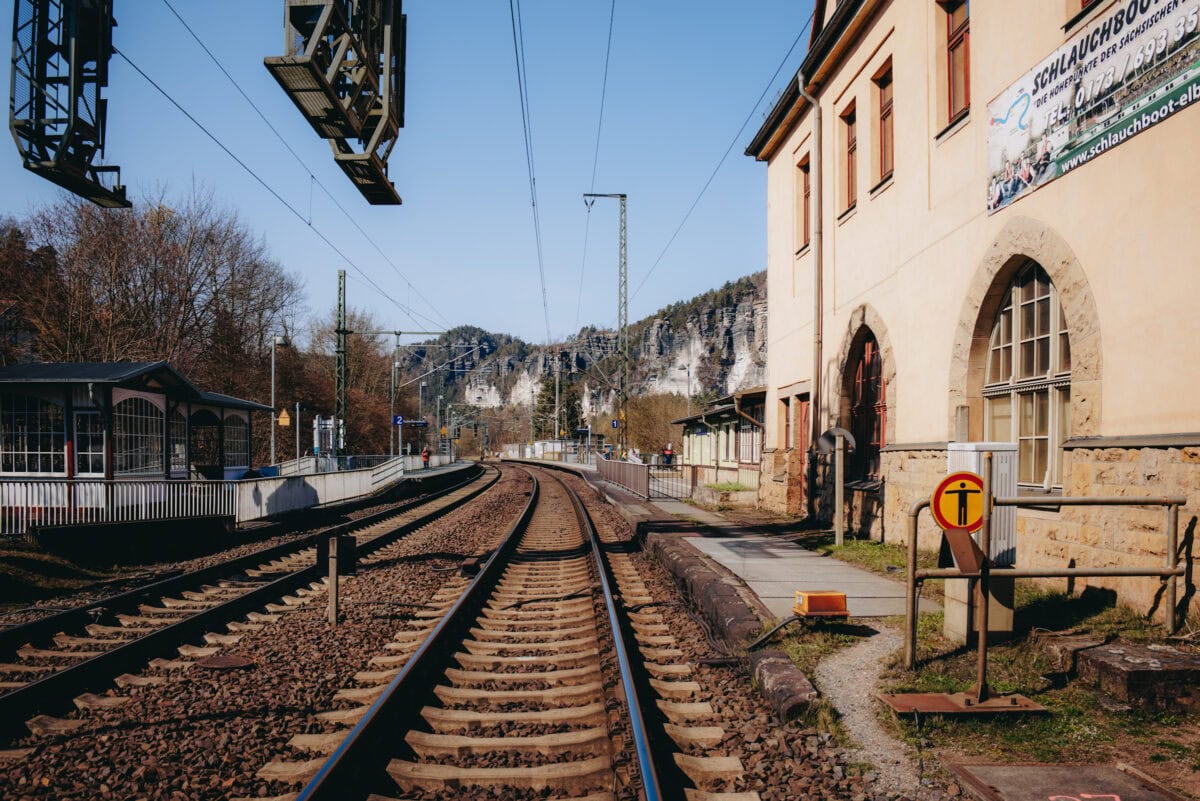
    Railroad tracks at the Kurort Rathen train station against a backdrop of rocky scenery in Saxon Switzerland near Dresden
    Train station Kurort Rathen

    After approximately 35 to 40 minutes, exit at Kurort Rathen station, a small stop right on the Elbe. From the platform, it’s a short walk to the ferry pier. At the pier, you can take the yaw rope ferry across the river to the other side, where the hiking trails to Bastei Bridge start. The crossing only takes a few minutes.

    The ferry operates from early morning until midnight, making it convenient to visit the Bastei Bridge at sunrise or sunset via S-Bahn. You can find the exact times in the official timetable.

    Total travel time from Dresden main station: approx. 1.5 to 2 hours to the bridge.
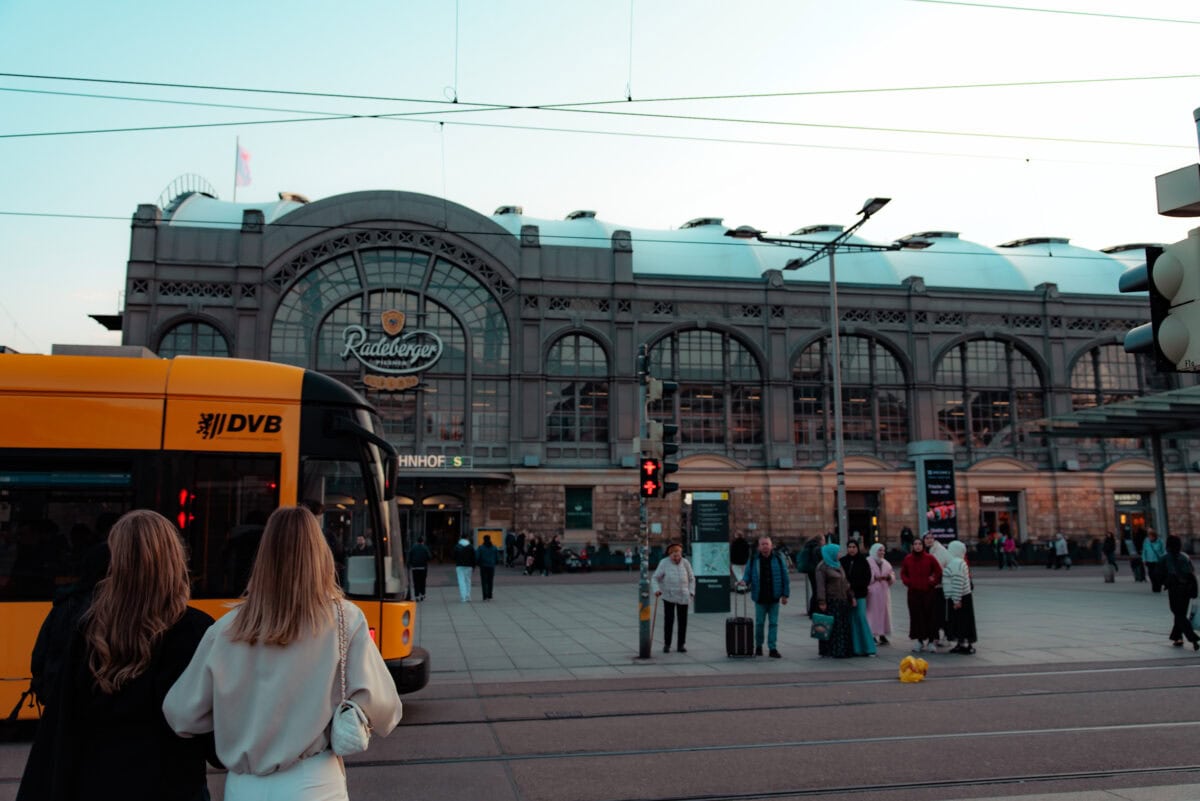
    Dresden main station with streetcar and passers-by
    You can easily travel straight to Rathen from Dresden main station.

    What is the cost of the journey? I found the S-Bahn tickets a bit expensive, so we went with a day ticket, which costs €19 per person. One-way tickets aren’t much cheaper. If you don’t have a Deutschlandticket, the Sachsen-Ticket starting at €27 for up to 5 people, is also valid in Thuringia and could be a better option. Additionally, the Saxon Switzerland Guest Card, often provided by local accommodations, allows free use of regional buses, making travel easier and more affordable.

    The round-trip ferry cost is €3. Note that the Deutschlandticket and other public transport tickets cannot be used here.

    By Car to the Bastei Bridge

    From Dresden city center, it takes approximately 45 to 50 minutes to reach Basteibrücke. You’ll arrive close to the top of the Bastei Bridge and have the option to park in the large main parking lot.

    Please note: On sunny weekends and during vacations, the parking lot fills up quickly. You will then be redirected to the reception parking lot, which is about 3 kilometers farther back. A shuttle bus (€1 each way) transports you from there to the bridge, or you can walk. Both parking lots require a fee.

    By Bus to the Bastei

    Also, bus lines go straight to the Bastei, saving you the hike from Rathen. For instance, line 237 departs from Pirna, which you can reach from Dresden via S-Bahn S1 or S2. Additionally, with the Saxon Switzerland Guest Card, you can travel on these buses for free.
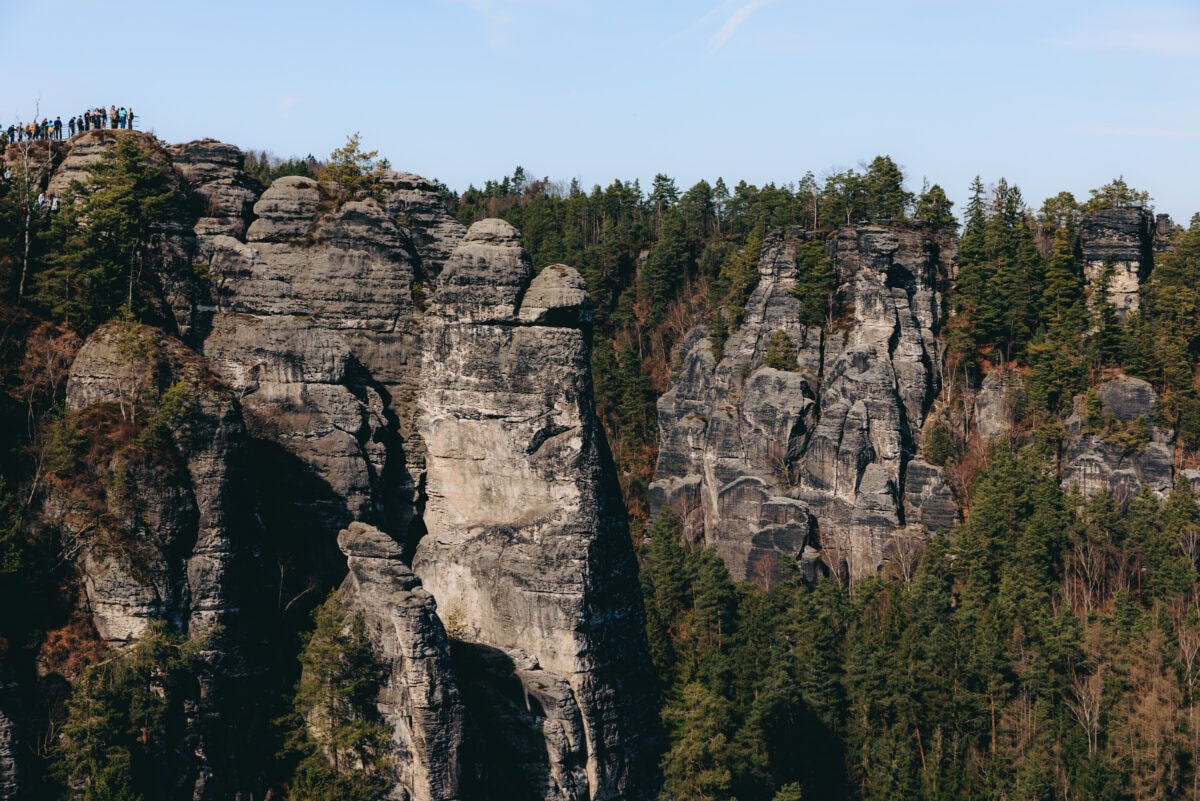
    Rock formations in the Elbe Sandstone Mountains with hikers

    Should You Plan the Day Trip Myself or Opt for a Tour? Here’s My Honest Opinion.

    In fact, I never realized how close Dresden is to the Elbe Sandstone Mountains, and I assumed it would be more difficult to get there. However, getting there by S-Bahn is super quick and easy.

    That’s why I highly recommend organizing a day trip from Dresden to the Bastei Bridge on your own!

    However, joining a group tour has its advantages. Many combined tours also link the Bastei Bridge with other attractions like Königstein Fortress or Bohemian Switzerland, which are difficult to visit in a single day without a car.

    The Best Tours From Dresden to the Bastei Bridge

    Classic Day Tour by Bus (Bastei + Königstein)

    This is the classic, most affordable tour to the Bastei Bridge. You will be picked up in Dresden in the morning, then travel through Saxon Switzerland in a spacious panoramic bus. After a brief visit to the Bastei with a short tour, you’ll be taken to Königstein Fortress. In the afternoon, the return to Dresden is scheduled.

    Duration: approx. 7-8 hours
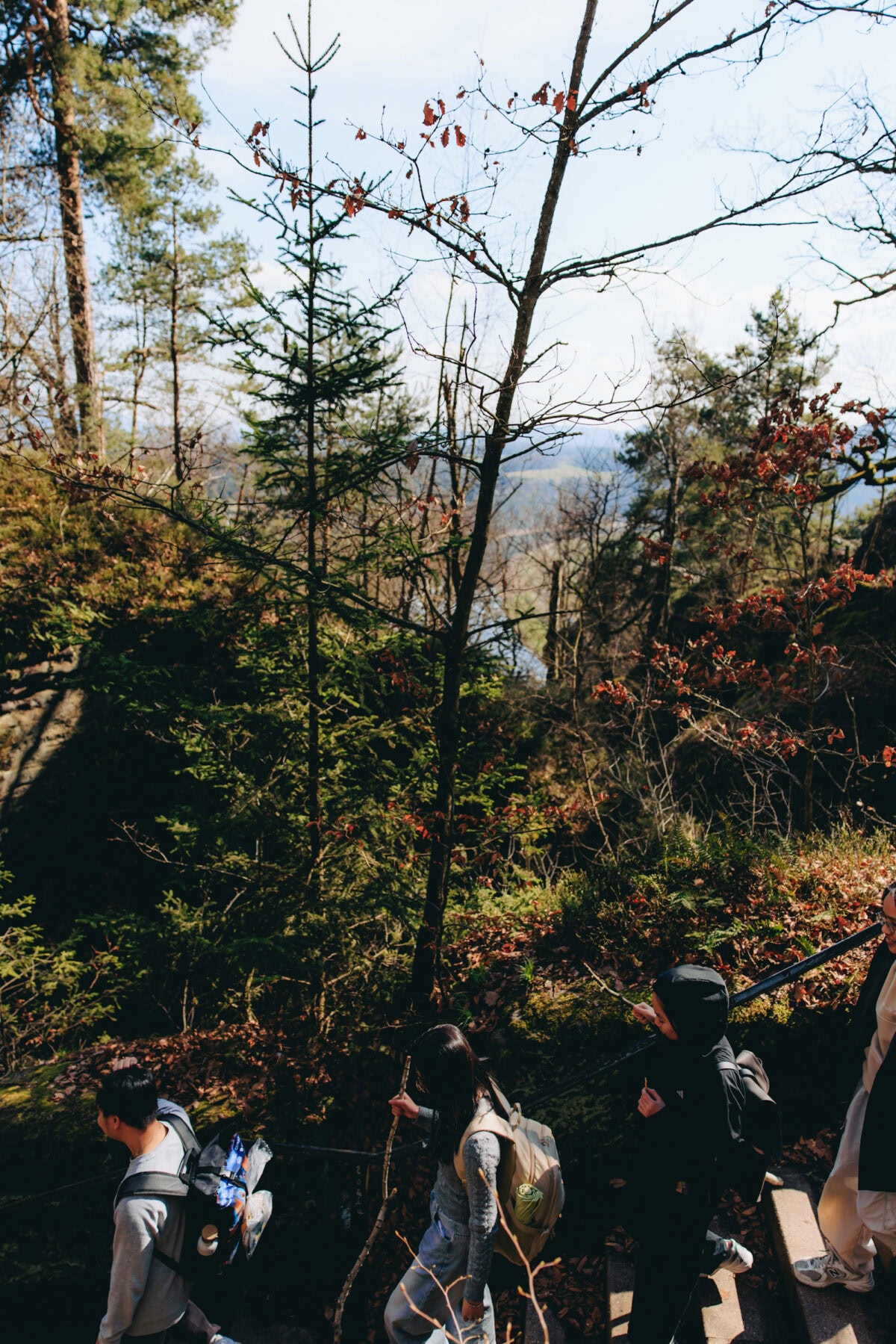
    ➜ Book the classic tour to the Bastei Bridge here*

    Hikers with rucksacks in the autumn forest

    Combined Tour: Saxon + Bohemian Switzerland

    These full-day tours merge the Bastei Bridge visit with key highlights on the Czech side of Bohemian Switzerland, including the Prebisch Gate, Europe’s largest natural rock gate, and the Kamenice Gorge with a boat trip. Such a comprehensive tour is hardly possible in one day on your own using public transport.

    Duration: 8-10 hours

    ➜ Book the combined tour of Saxon & Bohemian Switzerland here*

    What Is the Best Time To Visit the Bastei?

    The Bastei Bridge is open all year and worth visiting anytime. In spring and fall, the weather is milder and ideal for hiking, with fewer crowds and better lighting for striking photos. Winter brings snow-covered scenery that feels truly magical, although some paths may be icy and the Rathen ferry runs on a limited schedule. Summer is peak season, especially on weekends and public holidays, making the bridge quite crowded.
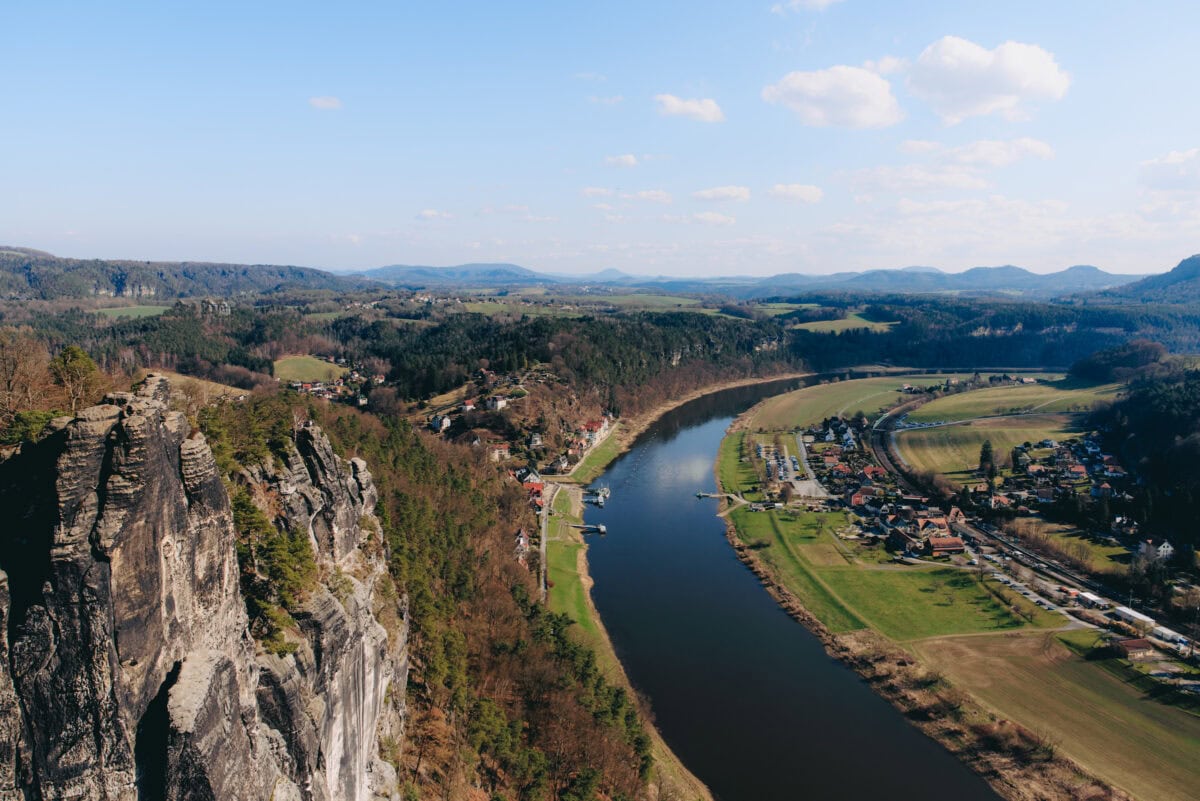
    Aerial view of a river valley with rocks and a village in Saxon Switzerland near Dresden

    Is a Day Trip From Dresden to the Bastei Bridge Worth It?

    Absolutely! The Bastei Bridge is genuinely one of the most breathtaking sights you can enjoy near Dresden. The view over the Elbe valley is absolutely stunning, and the bridge itself, tucked right into the middle of the gorge, seems like it’s straight out of a fairy tale. Best of all, you can reach it from Dresden in less than an hour—making it a fantastic quick getaway!
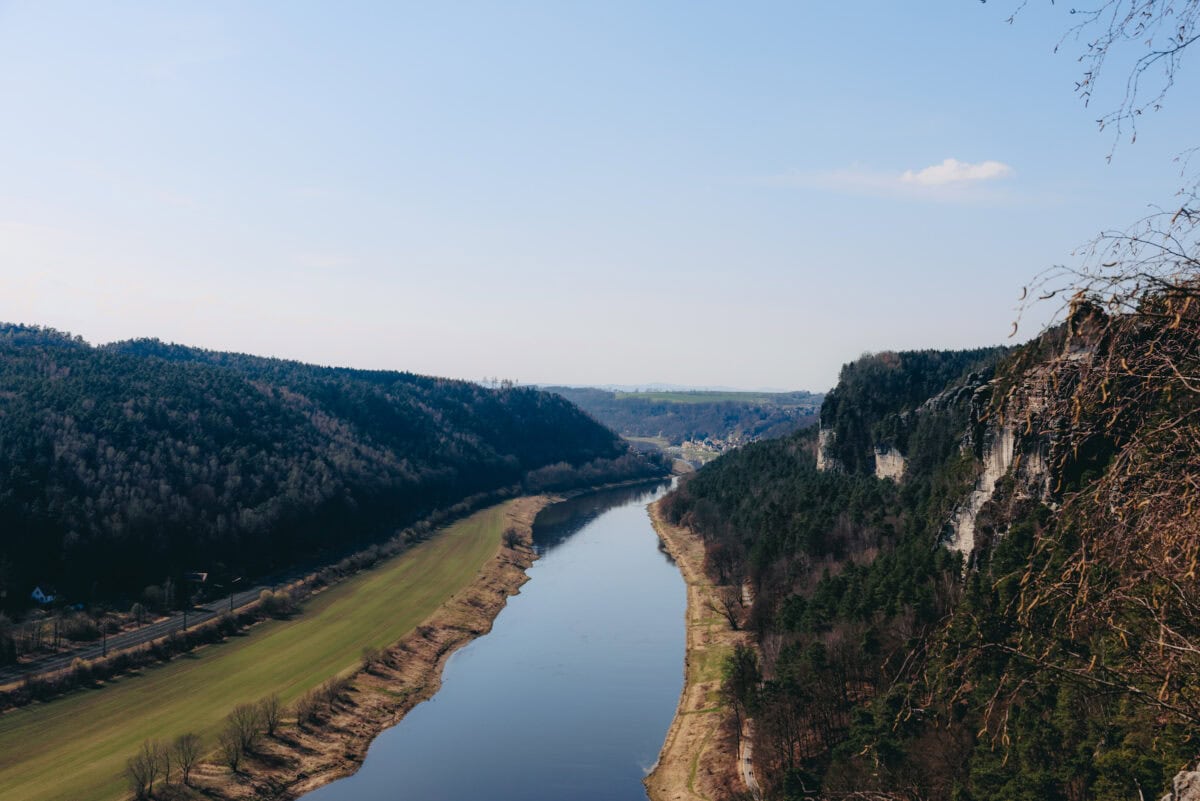
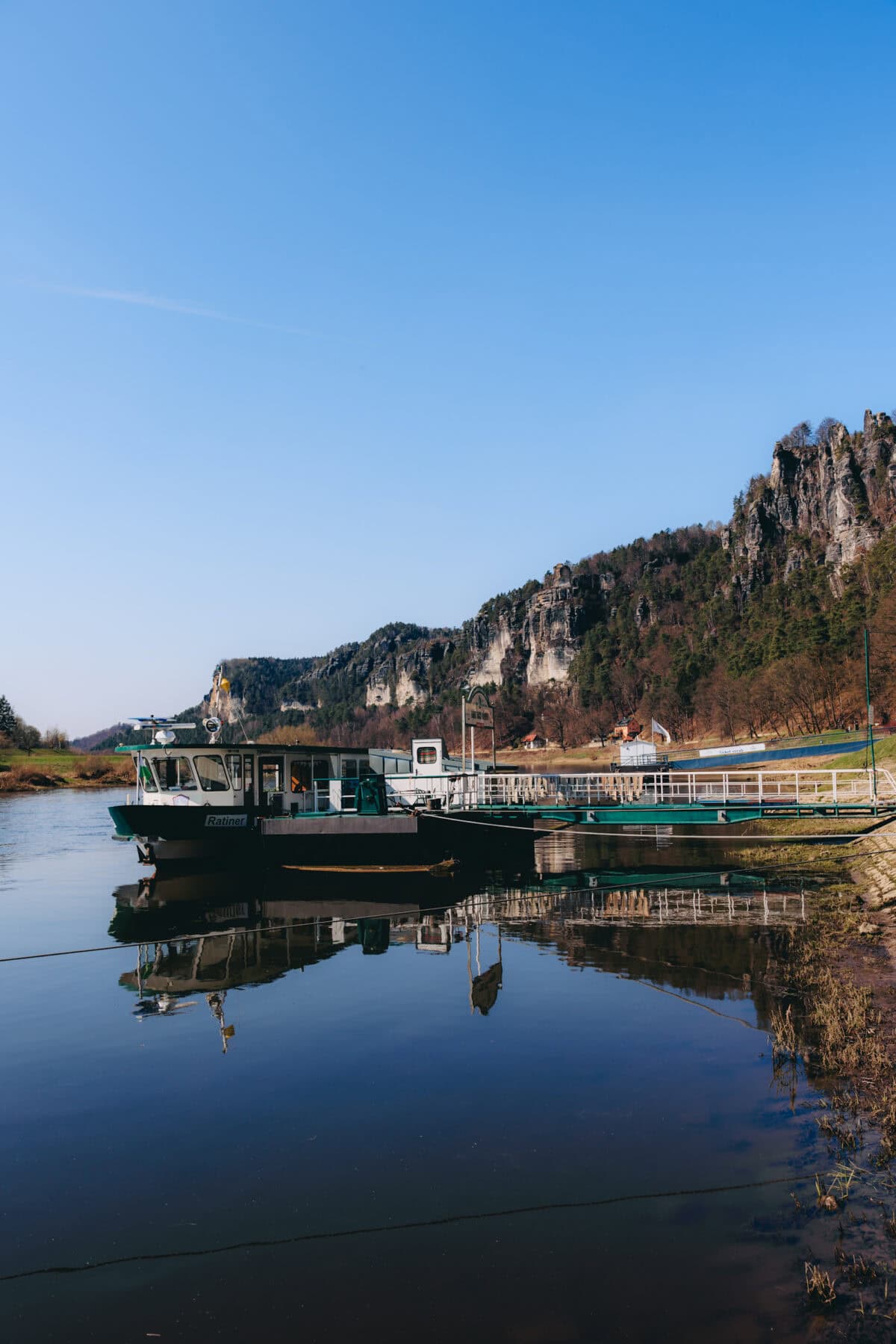
    River valley with cliffs and wooded hills in Saxon Switzerland near Dresden
  • Best Things to Do in Lubbock, Texas

    Best Things to Do in Lubbock, Texas

    Nestled in the heart of the Texas plains, Lubbock is a surprisingly creative city, characterized by cowboy charm, street art, and music. I spent three days in Lubbock, and in this article, I’ll show you my favorite spots that you shouldn’t miss.

    The Heart of the High Plains

    Lubbock is located in northwestern Texas, in the so-called High Plains. This region is characterized mainly by vast landscapes and huge fields. On our road trip through Texas, we drove through such sparsely populated areas that it really felt to me as if we were in a Hollywood road movie: The sky here seems bigger, the light clearer, the horizons farther. Lubbock itself sits at an elevation of about 1,000 meters and has a dry, sunny climate—perfect for early summer.

    Mobile home on a highway in Texas, USA

    Geographically speaking, you’re far away from the big cities like Austin or Dallas. But that’s exactly what makes Lubbock so appealing: Life moves at a slightly slower pace here, and you have the chance to get to know the real Texas, away from the tourist spots.

    Lubbock & Music: Where Rock ’n’ Roll Began with Buddy Holly

    Lubbock is deeply associated with Buddy Holly, one of the earliest iconic rock’n’roll stars. Born there in 1936, Holly influenced countless musicians with his unique style and signature glasses. His legacy remains evident in the city, notably at the Buddy Holly Center, which celebrates his life and music.

    Workshop wall with vintage signs and cabinets

    The music scene is still very lively today. Live concerts take place regularly, especially around Texas Tech University, with everything from country and jazz to indie. In the evening, it’s well worth stopping by one of the small bars or music lounges, where local artists often take the stage — many of them still true hidden gems.

    Cozy seating area at La Diosa Cellars in Lubbock, featuring a lamp and flowers

    What Else Is Lubbock Known For?

    Did you know? Lubbock is one of the world’s largest cotton-growing regions and agriculture has shaped the area for decades, leaving a lasting mark not only on the landscape but also on the local culture. In the fall, when the cotton harvest begins, white fields glow across the region — a truly fascinating sight.

    A walk through the blooming garden at the National Ranching Heritage Center in Lubbock

    At the same time, the region has begun to diversify in recent years: winegrowing, new technologies, and creative start-ups are emerging around the university. I found this blend of tradition and fresh momentum especially striking in Lubbock — down-to-earth and unmistakably Texan on one hand, young and progressive on the other.

    Cowboy hats on a wall in different colors

    Hotel tip: The Cotton Court Hotel* combines the tradition of cotton growing with modern design. Very aesthetic, quite trendy and there is even a large pool in the courtyard where you can cool off on hot summer days.

    What to See in Lubbock

    You can easily spend a relaxed day exploring Lubbock. As in many U.S. cities, the best way to get around is by car, since the main sights are fairly spread out and public transportation is limited. Uber is also available if you’re heading out in the evening and want to enjoy a drink.

    National Ranching Heritage Center

    The National Ranching Heritage Center is a large open-air museum where you can take a short journey through Texas history. Over fifty original buildings from the 18th to early 20th centuries have been reconstructed on the site.

    Adobe house with a fireplace and garden at the National Ranching Heritage Center in Lubbock, Texas

    Here you can wander through historic ranch houses, stables, log cabins, and saloons — and suddenly feel as if you’ve stepped right into a Western movie. What makes it especially fascinating are the authentic furniture, tools, and little details, which give you a real sense of just how tough and demanding life in this region once was.

    Looking for more tips for your trip?
    Read all articles about Texas

    Pottery course at LHuca

    Right in the heart of downtown Lubbock lies the Louise Hopkins Underwood Center for the Arts, or LHuca for short—a creative organization that, with its open studios, exhibitions, and workshops, seems completely out of place in this remote region of Texas. I highly recommend the Clay Studio, where pottery classes are held regularly.

    Ceramics workshop with materials and shelves

    I probably won’t become a passionate ceramicist in this lifetime — I’m simply not very gifted in that area — but I still found the creative atmosphere there really warm, welcoming, and inspiring. So if you’ve ever wanted to try pottery, or you enjoy discovering new creative experiences while traveling, this is a lovely place to give it a go!

    Person making pottery on a potter's wheel in a workshop

    Wild Honey Hats

    Actually, I usually feel a bit awkward imitating local fashion when traveling abroad — but cowboy culture is simply too en vogue right now not to bring home a little souvenir.

    Cowboy hat is decorated with vintage playing cards and cloth

    If you want to get yourself a real cowboy hat, Texas is definitely the place to be. You’ll find high-quality, classic styles at places like Cavender’s, a large Western-wear chain that is especially popular across Texas and the southern United States.

    If your Texas road trip takes you to Lubbock, I’d recommend saving your hat shopping for a little detour to Wild Honey Hats. There, you can create your very own DIY cowboy hat with accessories like vintage matchboxes, patches, playing cards, ribbons, and scarves in every style imaginable. And don’t worry — you don’t need to be crafty yourself. The lovely team at Wild Honey Hats will put it all together for you live on site.

    Vintage playing cards with clubs and diamonds symbols.

    A super cute idea that not only leaves you with a unique Texas souvenir, but also supports a small business founded by young, creative women.

    Caprock Canyons State Park

    If you’re heading north from Lubbock on your road trip (for example, to Amarillo), you should definitely plan a detour to Caprock Canyons State Park. Located just about 90 minutes from Lubbock, the park features a spectacular landscape of red sandstone cliffs, sprawling canyons, and even bisons roaming freely.

    Bison grazing in a meadow, seen through a car window.

    The Scenic Drive Route in the park takes you through dramatic rock formations, past viewpoints and small hiking trails where you have nature all to yourself. A real natural highlight – especially in the early hours of the morning or at sunset.

    More information about Caprock Canyons State Park

    Red cliffs in a green landscape at Caprocks Canyon State Park in Texas
    Bison graze in the green landscape along the riverbank in Caprocks Canyon State Park

    Where to Eat in Lubbock

    Brulee Bakery

    The Brulee Bakery is a great place to start the day. Here you will find fresh pastries, croissants, scones and cinnamon buns. The selection changes often and the coffee comes from Monomyth Coffee, a local coffee roaster.

    Colorful Pop-Tarts with lettering on plate

    Evie Mae’s Pit BBQ

    For vegetarians, Texas is definitely a more challenging destination. A real barbecue with plenty of meat is simply part of an authentic culinary experience in Texas. Evie Mae’s, near Lubbock, is considered one of the best spots in the state. The restaurant is located a little outside of town in Wolfforth, but it’s definitely worth the trip.

    Counter at Evie Mae’s Pit BBQ

    Juicy brisket, spicy roast turkey, and spare ribs so tender they practically fall off the bone: If you love barbecuing, you’ll feel like you’ve arrived in barbecue heaven here. This meat-lover’s feast is rounded out with sides like mac ’n’ cheese, jalapeño grits, or green beans.

    By the way: The meat is smoked and grilled right next door —where it’s slowly cooked for hours to give it that signature smoky barbecue flavor and tender texture. You can also just watch the barbecue pros at work, just like we did—and since Texans are so warm and open, if you’re interested, you’re sure to get a little private introduction to the secrets of smoking.

    Meat wrapped in paper on a grill

    Open from 11am until everything is sold out – so plan Evie Mae’s for lunch.

    La Diosa Cellars

    If you’ve been traveling around Texas for a while and need a little break from the very barbecue-heavy Texas cuisine, then I recommend La Diosa Cellars. The location alone—in an old warehouse in an industrial park —is extraordinary, but the interior is also colorful, creative, and simply unique.

    A colorful bar with decorative murals and bottles at La Diosa Cellars in Lubbock.

    Culinary-wise, the cuisine falls somewhere between Mediterranean and Latin American. The food is served in tapas-sized portions, so you can sample the truly delicious dishes as you like.

    La Sirena

    Tapas aren’t necessarily everyone’s cup of tea, especially if you’ve already gotten used to those huge Texan portions (and that can happen faster than you’d like to see on the scale!).

    La Sirena is a wonderful alternative for an equally atmospheric dinner: elegant, with excellent cuisine, yet relaxed. The cuisine has Mexican influences but with a modern twist: fresh ingredients are creatively combined and carefully plated. And the cocktail menu is just as well-curated.

    The terrace of La Sirena restaurant in Lubbock at night, decorated with string lights
    A variety of tapas served on small plates.

    Cast Iron Grill

    If you’re looking for a typical Texas breakfast, I recommend the Cast Iron Grill. They serve generous portions, the service is warm and friendly, and they have nonstop hot coffee fresh from a glass spherical coffee pot—just like in the movies.

    Full restaurant with people and decoration in Texas
    Various wall crosses and religious signs at the Cast Iron Grill in Lubbock, Texas

    In addition to the usual brunch dishes like pancakes, biscuits & gravy, bacon, eggs in all their variations, and French toast, you should definitely try the homemade cakes here. These creamy treats are made fresh every day according to a secret house recipe and are the cornerstone of the Cast Iron Grill’s success. But be careful—one slice is easily enough for three people 🙂

    Where to Stay in Lubbock

    In my opinion, a trip often stands or falls on the accommodations. If Lubbock hasn’t won you over yet, then maybe this charming boutique hotel will: The Cotton Court Hotel* is an absolute feast for the eyes and, on its own, is worth a stop in Lubbock. Finding good—and affordable—boutique hotels isn’t easy in some parts of the U.S.!

    Modern pool with bar and loungers at the Cotton Court Hotel in Lubbock, Texas
    Midcentury sofa in a hotel room
    Closet with bathrobe and hangers at the Cotton Court Hotel in Lubbock, Texas

    The rooms at the Cotton Court Hotel* are designed to reflect Lubbock’s history as a center of cotton farming. The high wooden ceilings are reminiscent of the large barns where the harvest was stored, and the small vintage details transport you back to the era of the cotton boom.

    On hot days, you can cool off in the refreshing pool on the spacious patio; in the evenings, the hotel bar also features live music —just as you’d expect in Lubbock as a music mecca.

    Rates and availability for The Cotton Court Hotel*

    Best Time to Visit the High Plains

    The best months to visit Lubbock are spring (March through May) and fall (September through November). During these months, temperatures are pleasant, the air is dry, and there are numerous events—from wine festivals and music series to historical reenactments at the National Ranching Heritage Center.

    Summer can be hot, with temperatures well above 35 degrees, while winter is cool but mostly dry and sunny. Rain is rare overall.

    Are you planning a trip to the U.S.? Click here to find plenty of inspiration for a wide variety of destinations in the Land of Endless Possibilities.

    Note: Travel Texas invited me on this trip for research purposes.

  • Balmaseda: Charming Town in the Basque Country

    Balmaseda: Charming Town in the Basque Country

    It’s truly amazing: You drive just a few kilometers out of bustling Bilbao, and suddenly you find yourself in the middle of a lush, green mountainous landscape. In Balmaseda, a small town in the Encarterri region, you can not only learn more about the long and eventful history of the Basque Country, but also indulge in one of the Basques’ favorite pastimes: eating.

    The Comarca Enkarterri (in Spanish Las Encartaciones) is a region in the far west of the province of Bizkaia (Vizcaya). The comarca comprises several municipalities, including Balmaseda as the historical center, and is known for its traditional architecture, its important role in industrial history and an impressive landscape.

    The Role of Balmaseda in the Basque Country

    Its strategically favorable location made Balmaseda an important trading hub for centuries. Located in the valley of the river Kadagua, Balmaseda connected the coast with the Castilian hinterland. A less frequented but scenic side route of the Camino de Santiago, the Camino Olvidado, also passes through Balmaseda. As a result, not only traders, but also many travelers and pilgrims passed through the town, which shaped Balmaseda economically and culturally for a long time.

    The Old Town

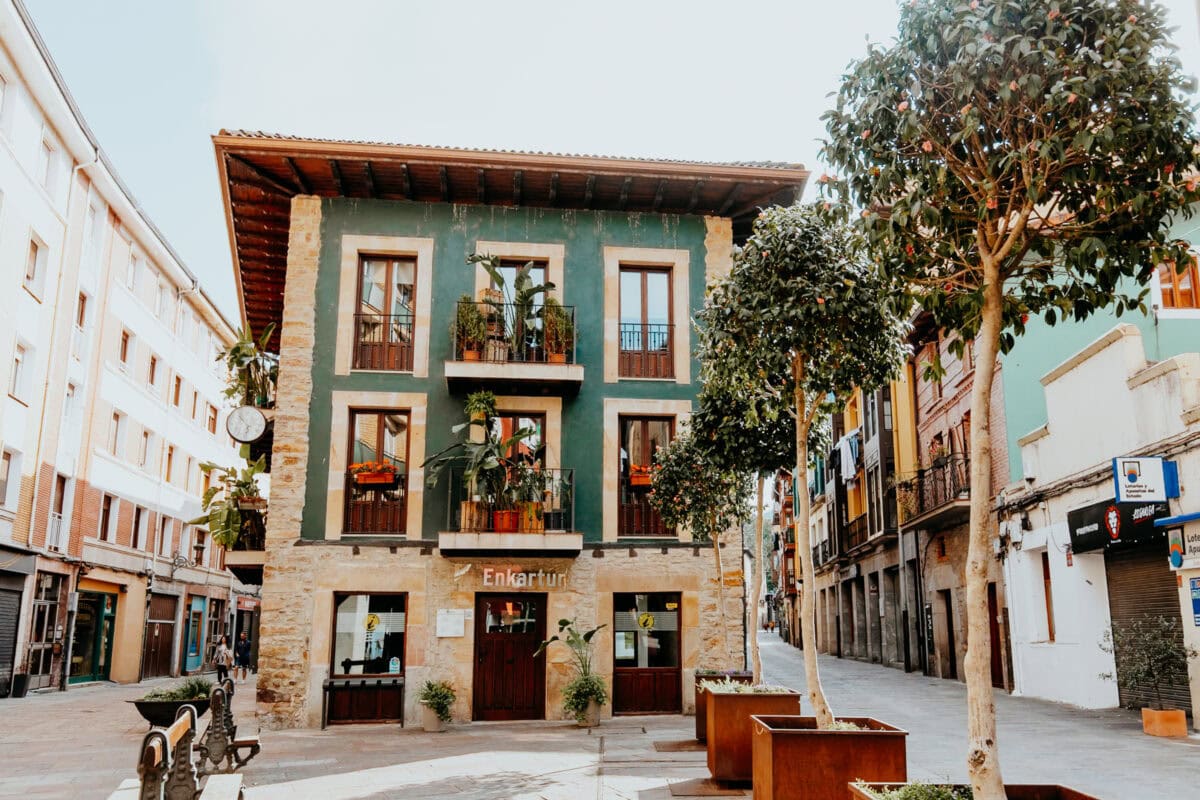
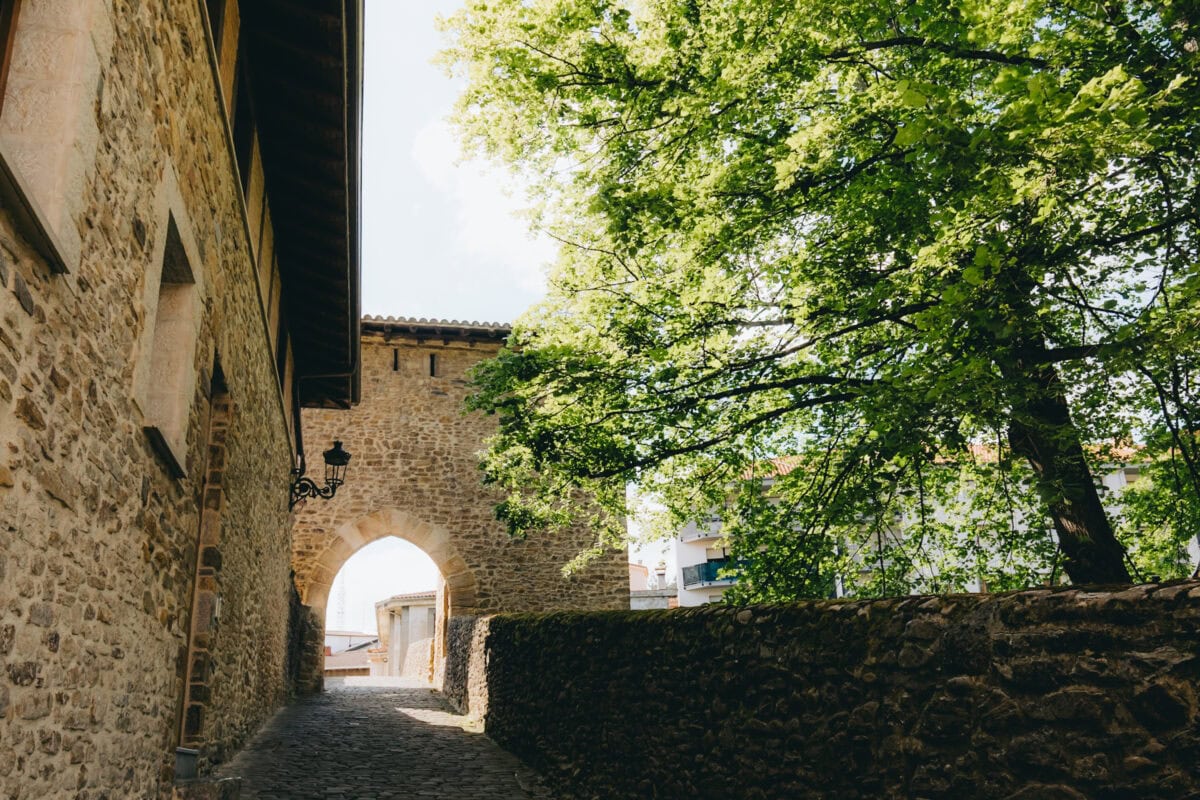
    Founded in 1199, Balmaseda is considered the oldest town in the province of Bizkaia. You will therefore find a large piece of Basque history here with many architectural highlights from different eras. The old town of Balmaseda is small, well laid out and not overcrowded: Perfect for a short exploration tour. The town itself is not particularly touristy, so you can stroll through the medieval alleyways and explore the surrounding area at your leisure. I’ll introduce you to a few of the most striking buildings.

    Narrow alley in the old town of Balmaseda
    A green building in the historic district of Balmaseda.

    Most important sights in Balmaseda

    Puente de la Muza or Puente Viejo

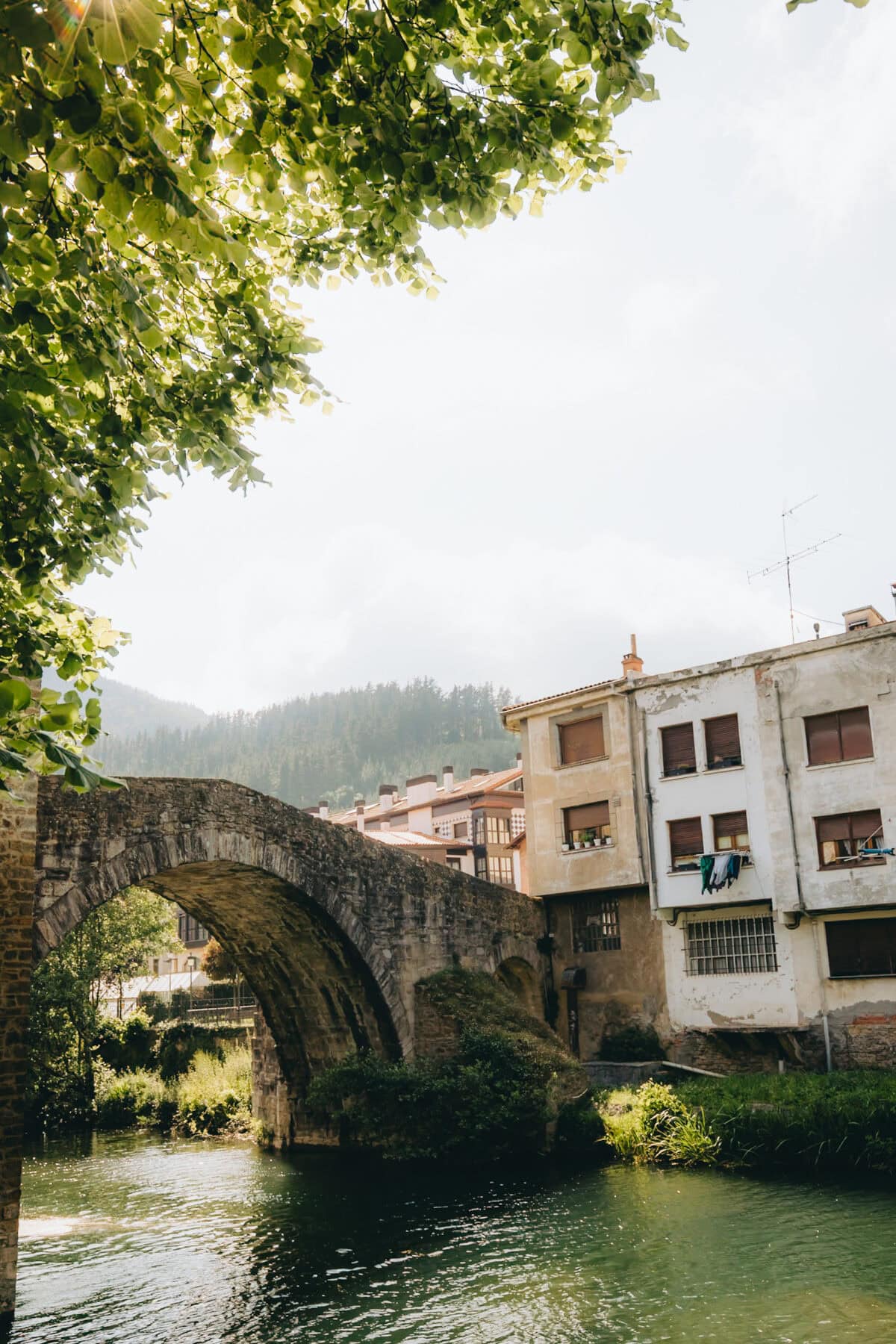
    The Puente de la Muza is particularly striking. It is guaranteed to catch your eye immediately, as the medieval bridge provides the romantic panorama of Balmaseda. It is often simply called the Puente Viejo, or old bridge. As Balmaseda was located on an important trade route in the Middle Ages, bridges such as the Puente Viejo played an important role in the daily movement of goods as a customs post. The small bridge tower still bears witness to this time.

    Puente de la Muza in Balmaseda, a medieval stone bridge.
    Stone wall at the Puente de la Muza in Balmaseda.

    Church of San Severino

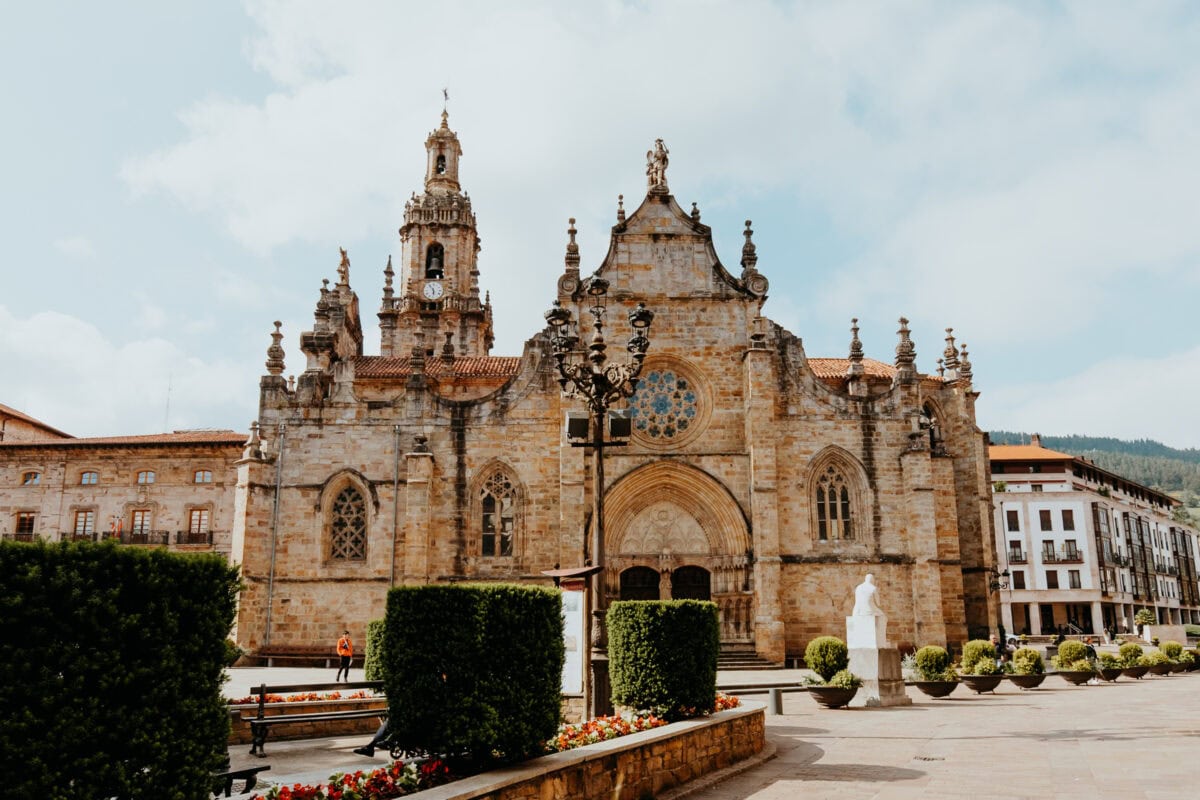
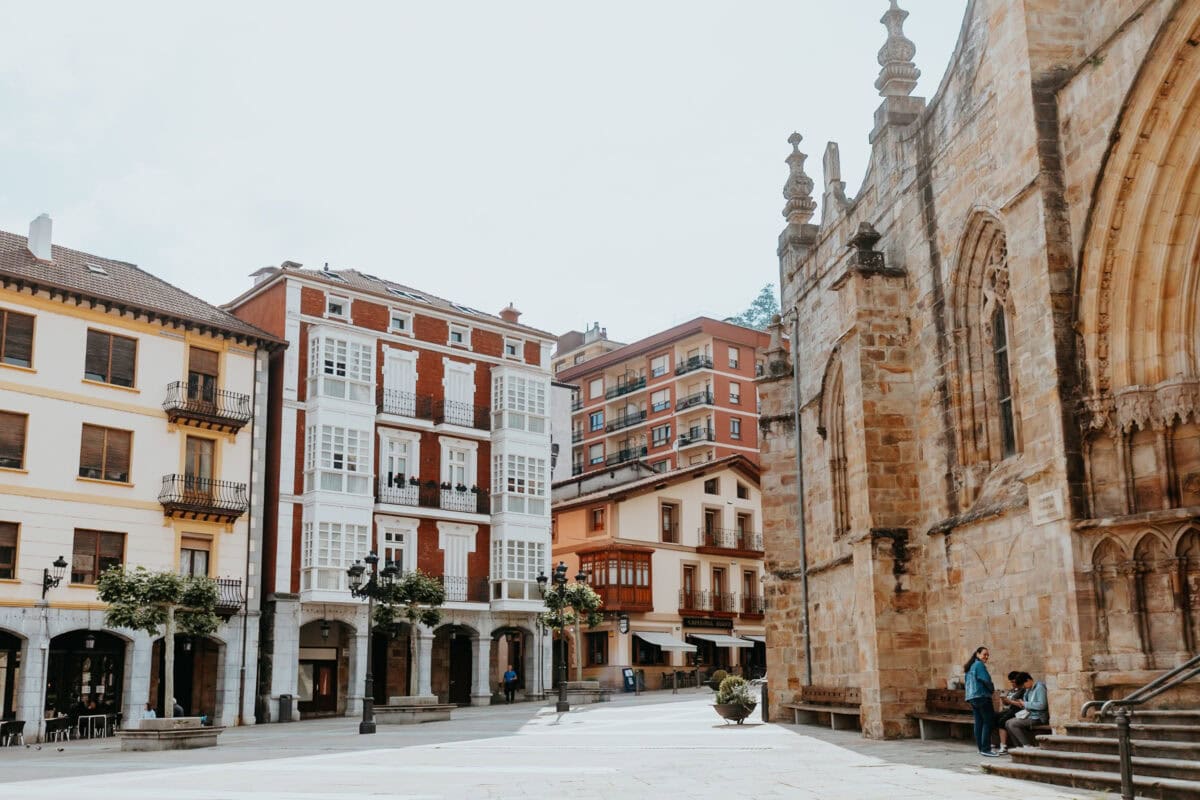
    The church of the same name is located in the middle of the old town on Plaza San Severino. Built in Gothic style in the 15th century, the church of San Severino is dedicated to the patron saint of the city.

    Tip: Every year on 23 October, a large street festival is held in honor of the patron saint San Severino, which you should not miss if you are in the area. Friends and families meet on the streets on Día de las Putxeras to cook a putxera together.

    Church of San Severino in Balmaseda, Spain
    Historic buildings on Plaza San Severino in Balmaseda, Spain

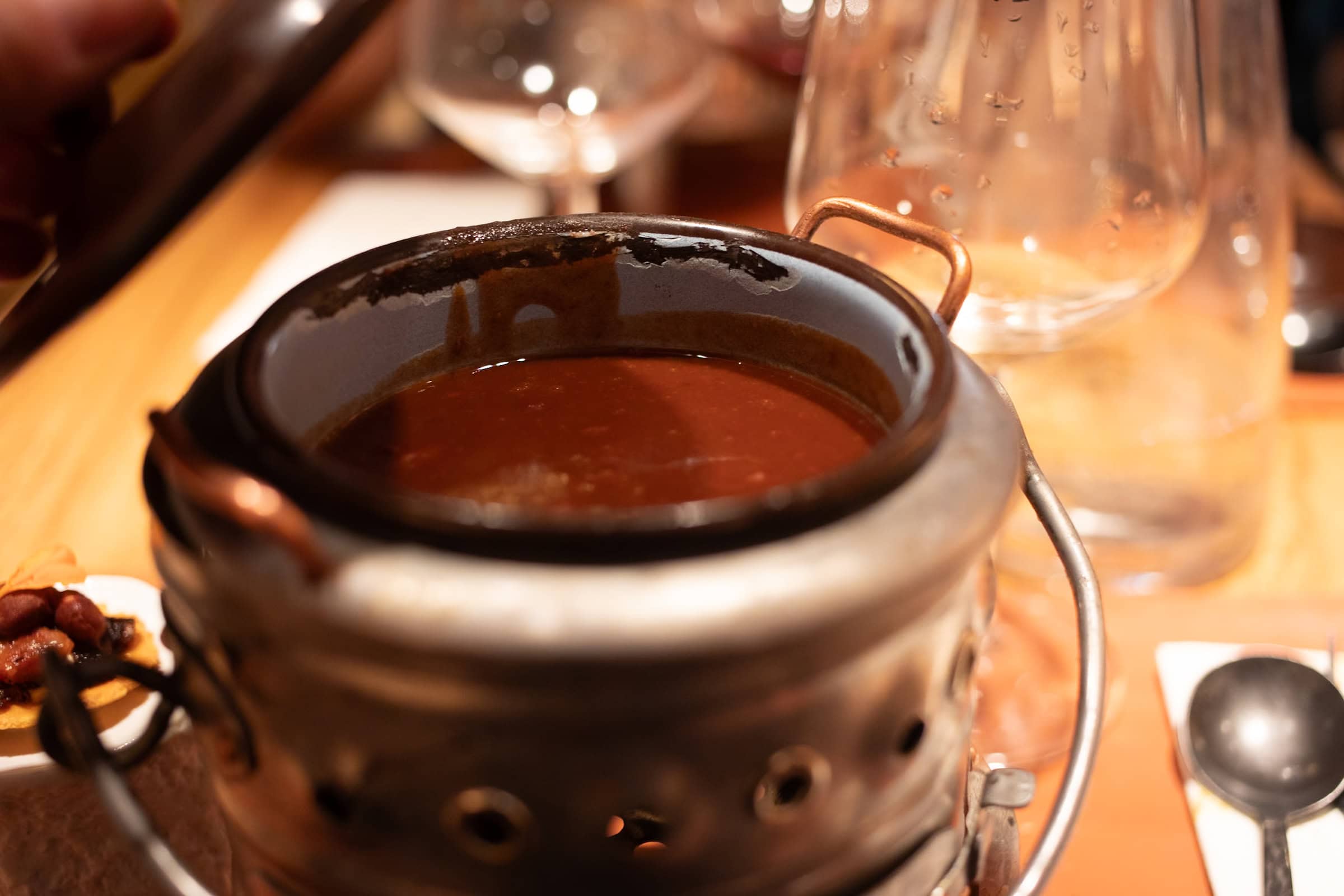
    Putxera is a bean dish that is typically prepared in an aluminum pot – an old railroad tradition. In the past, train drivers, brakemen and other railroad employees used to cook it over charcoal on long journeys – today, putxera is a local specialty. By the way, part of the festivities includes the putxera competition, where a jury selects the best putxera in front of the whole town!

    A typical putxera in an iron pot on a table at Resturante Teike in Balmaseda, Spain.

    Church of San Juan

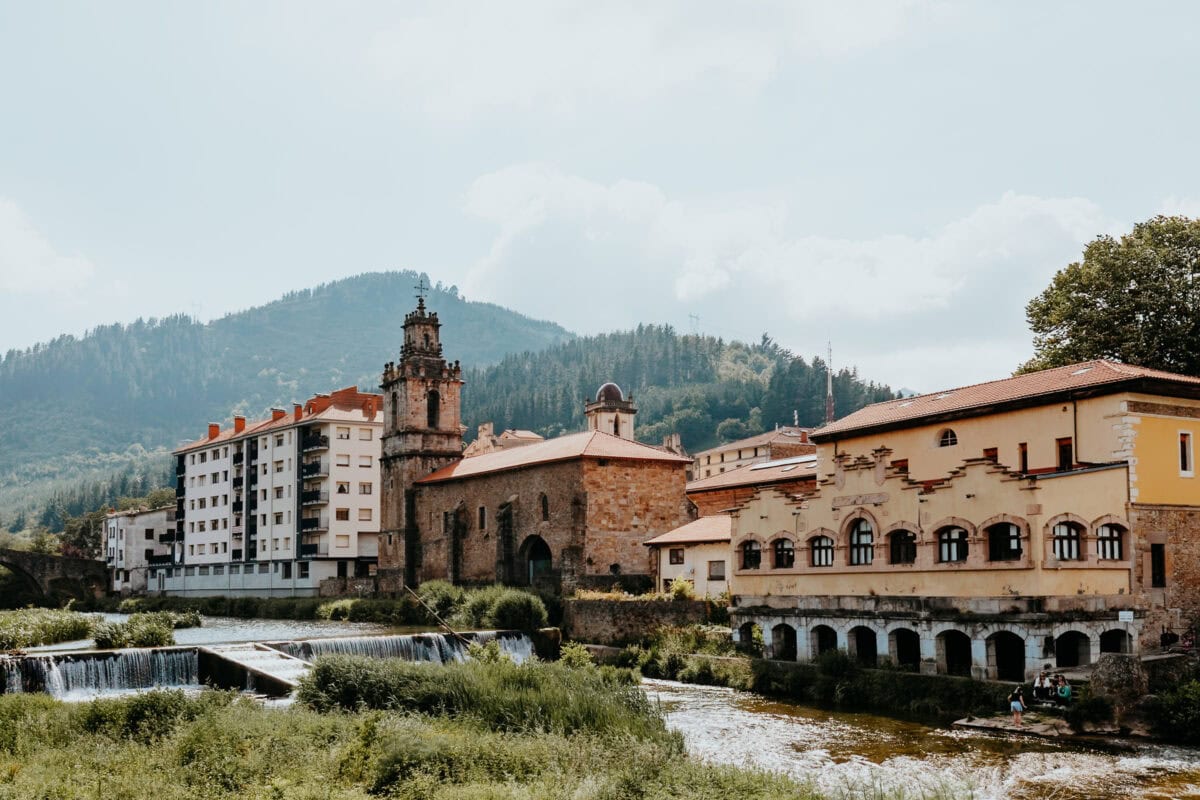
    The church of San Juan was also built at the same time in the 15th century in the Gothic style. It is located directly on the River Kadagua near the Puente de la Muza and houses the city museum.

    Opening hours of the city museum

    Historic buildings set against wooded hills along the Kadagua River in Balmaseda.

    Museum La Encartada

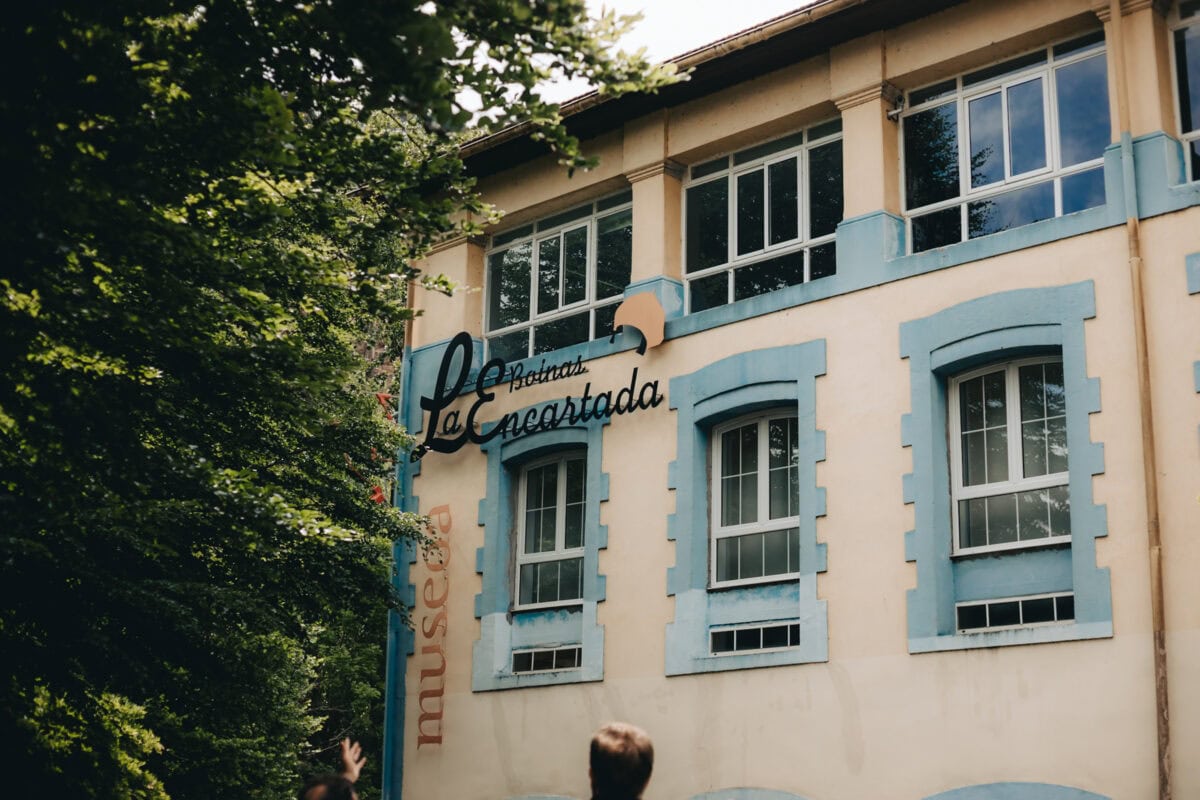
    The old wool factory La Encartada is one of the absolute highlights of Balmaseda. It is located just outside the old town, but is just under two kilometers away and can also be reached on foot. A great way to enjoy the countryside, as the factory is surrounded by greenery.

    La Encartada Museum: A historic building with a blue facade and windows.

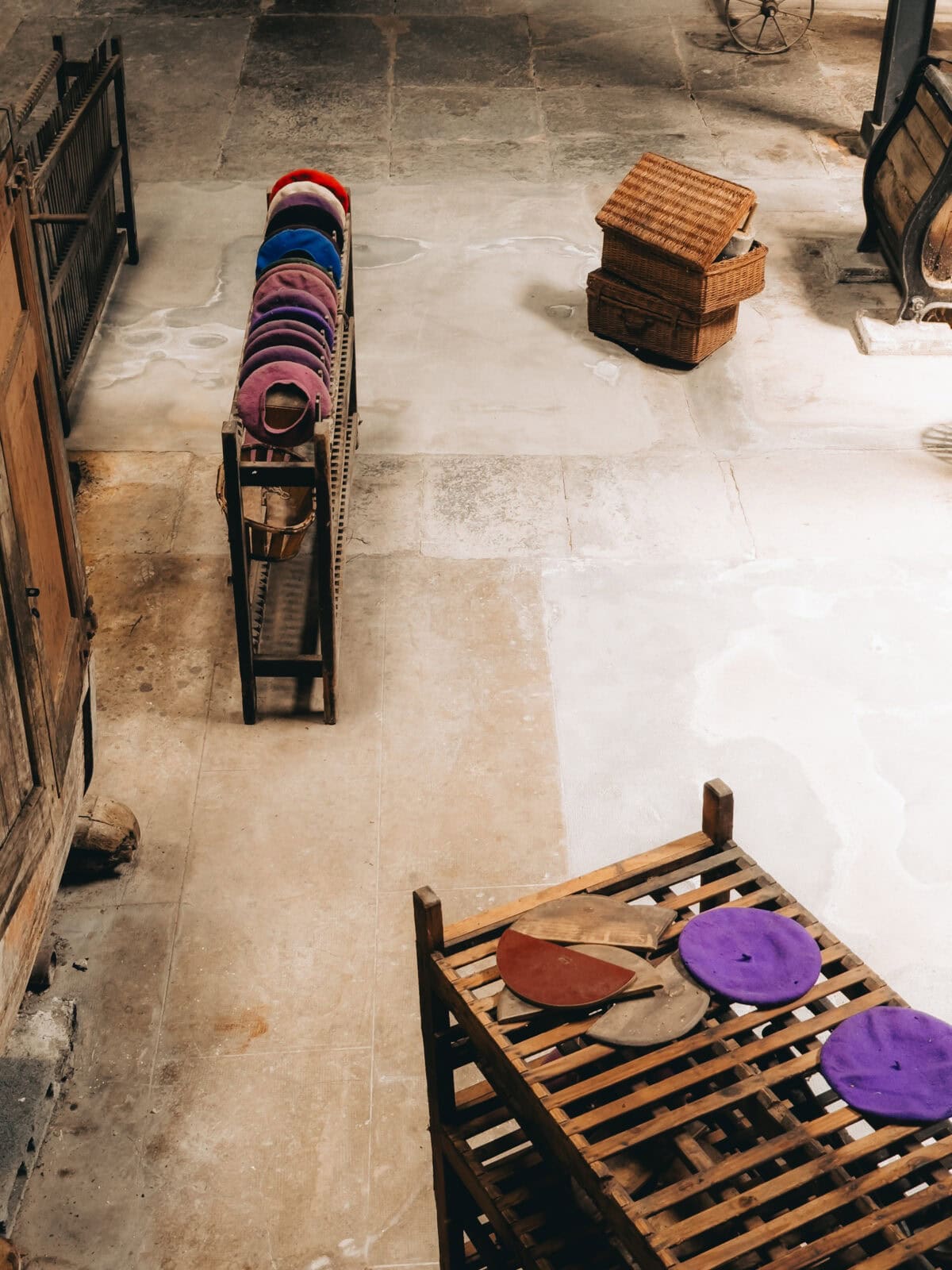
    For exactly one hundred years, from 1892 to 1992, woolen goods, but above all the famous berets, the boinas, were produced here. After its closure, time simply stood still in the old halls and the factory was finally reopened as a museum in 2007. It is remarkable how well the furnishings have been preserved.

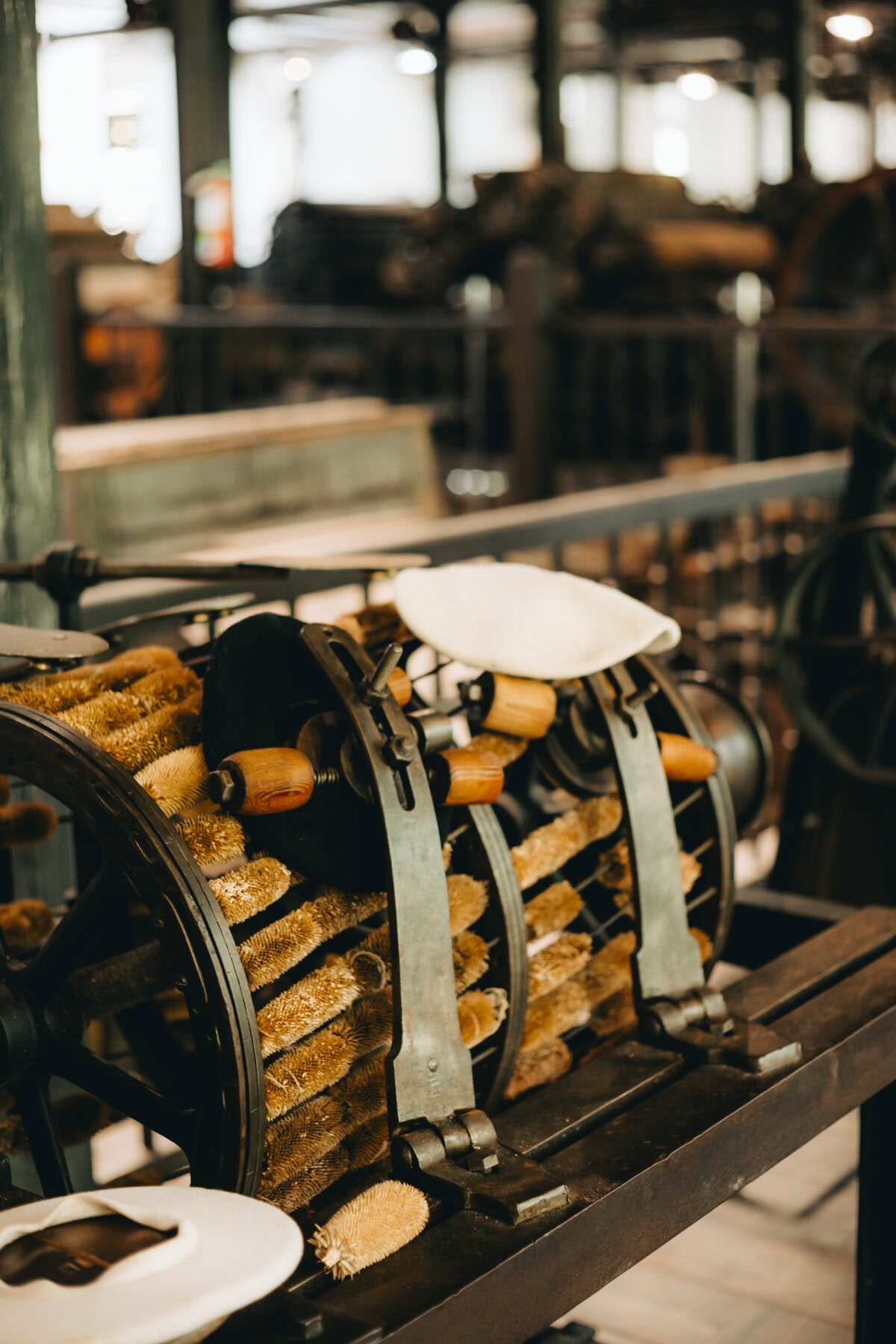
    Many of the machines even date back to the late 19th and early 20th century. You can also follow the entire production process from the raw material to the finished product in one place.

    Historic spinning mill at the La Encartada Museum with machines inside
    Historic textile machines at the La Encartada Museum in Balmaseda, Spain.
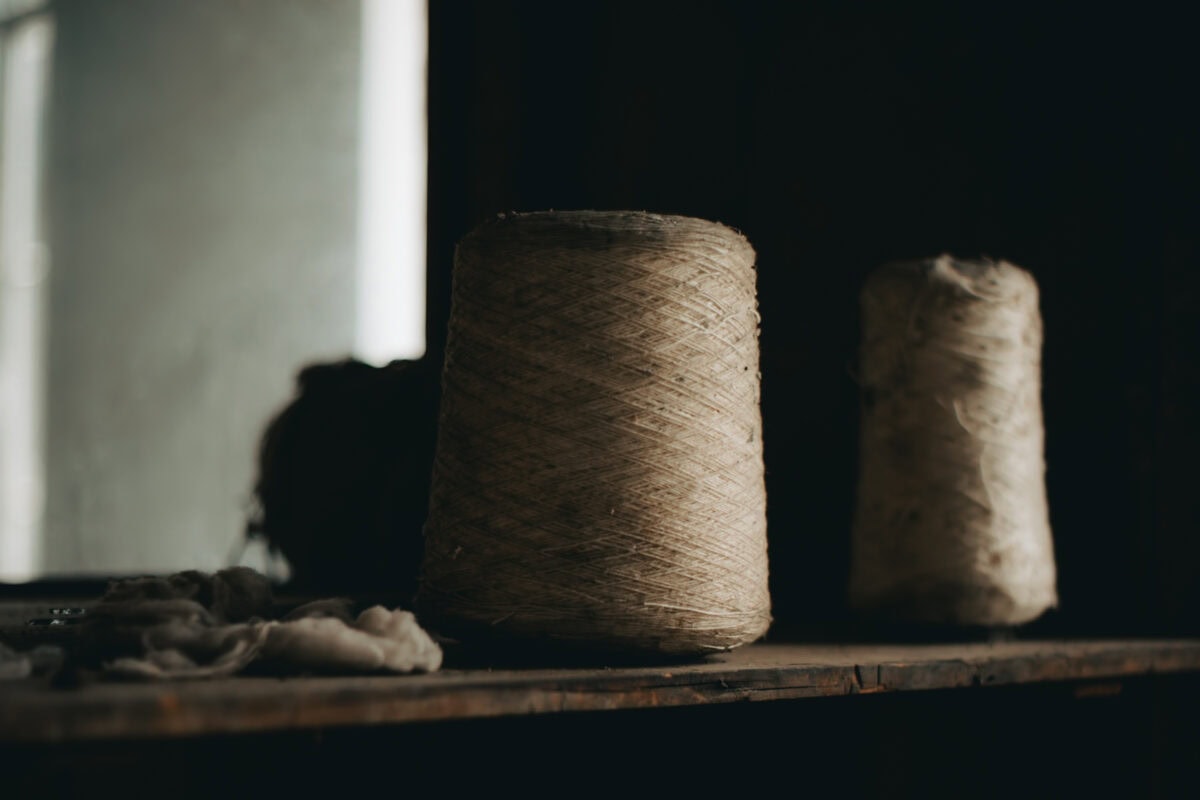
    Two large spools of thread in a dark room

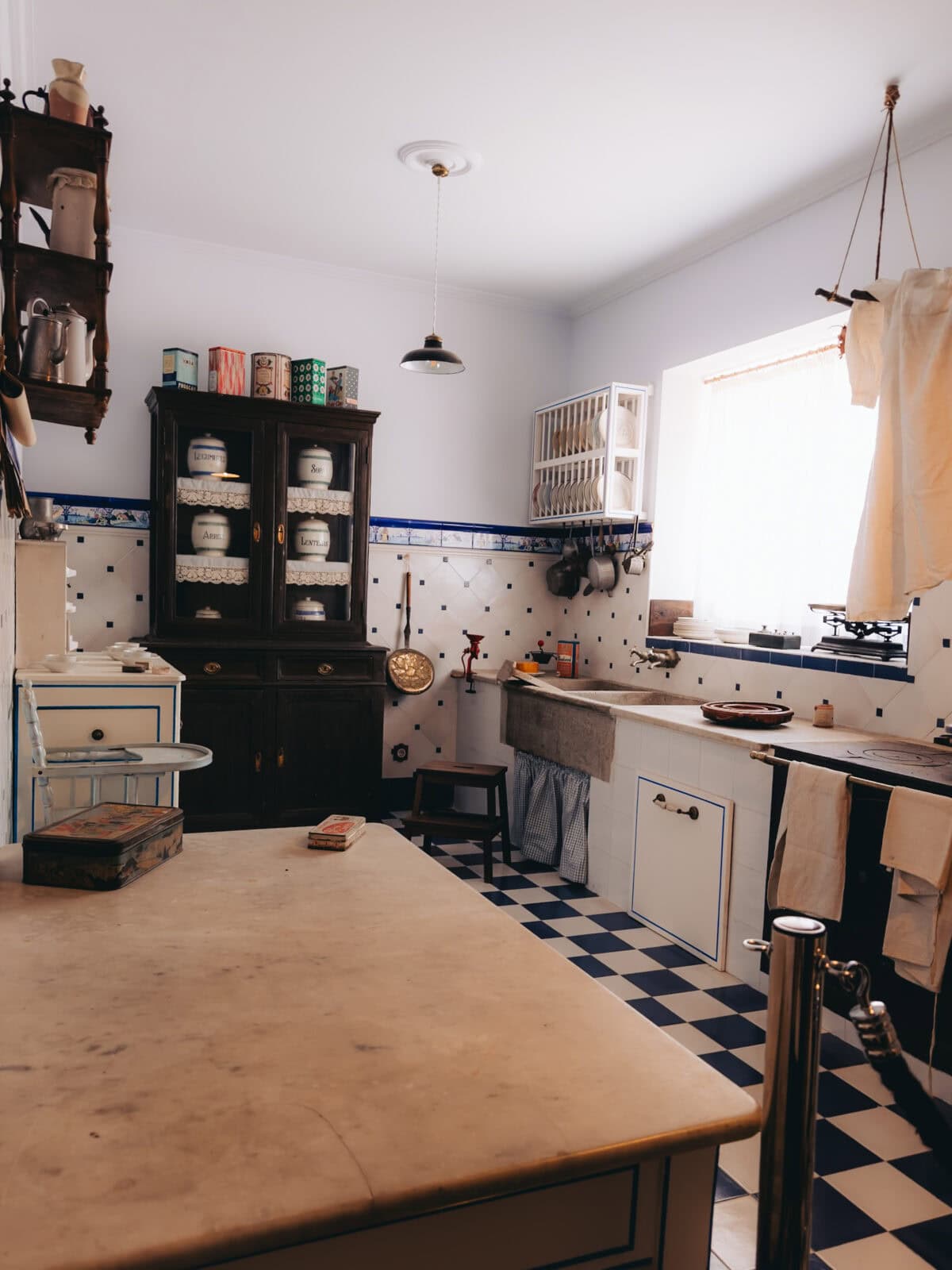
    You can also take a look at life at the time, as the workers originally lived on site. And in general, you will find lots of information and documents from a time when industry in the Basque Country had a major influence on the economy of the time.

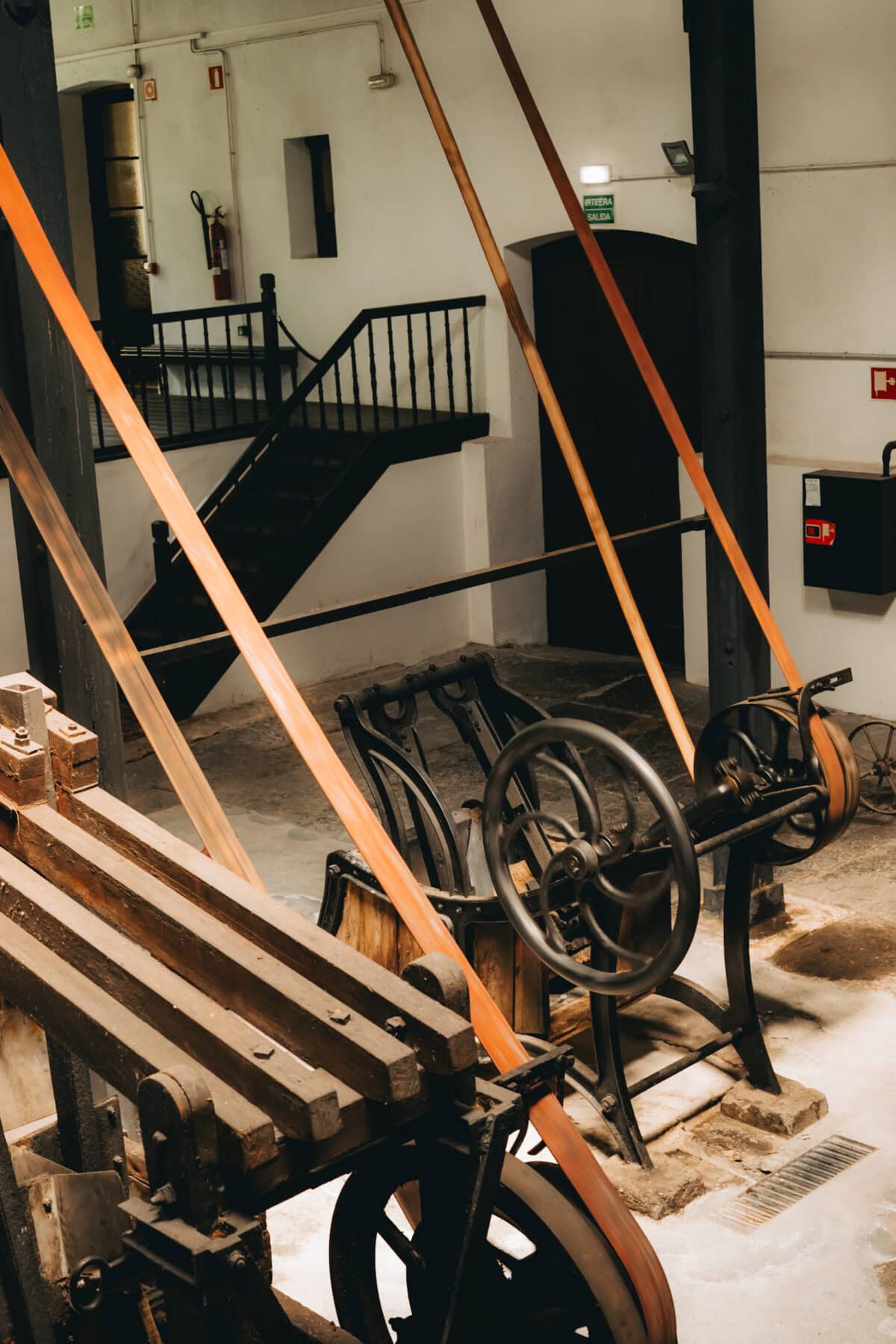
    Old machines in a sunny room at the La Encartada Museum
in Balmaseda

    I found La Encartada really impressive. The exhibition with the production facilities and the decorated details in the disused factory is attractively designed and you can immediately imagine how hard people used to work here. It is also unbelievable that these machines were still in use until they were closed in 1992 – they were so robustly made.

    It’s just a shame that there is no real souvenir store – after so much textile knowledge and Basque industrial history, I would have loved to browse through a large selection of berets and buy myself a suitable souvenir.

    But well – La Encartada is no longer in production anyway. As far as I could see, some models are sold at the checkout; but you can also still find small, traditional stores in the old town of Bilbao, for example, where the genuine berets made of merino wool from the last remaining manufacturer in Spain, Elósegui from Tolosa, are sold.

    Looking for tips for Bilbao?
    You can find my complete guide here

    Where to Eat in Balmaseda

    If you’re not yet convinced that it’s worth making a detour here – you won’t regret it, if only because of the following location. In typical Basque fashion, great importance is also attached to good cuisine outside the larger cities.

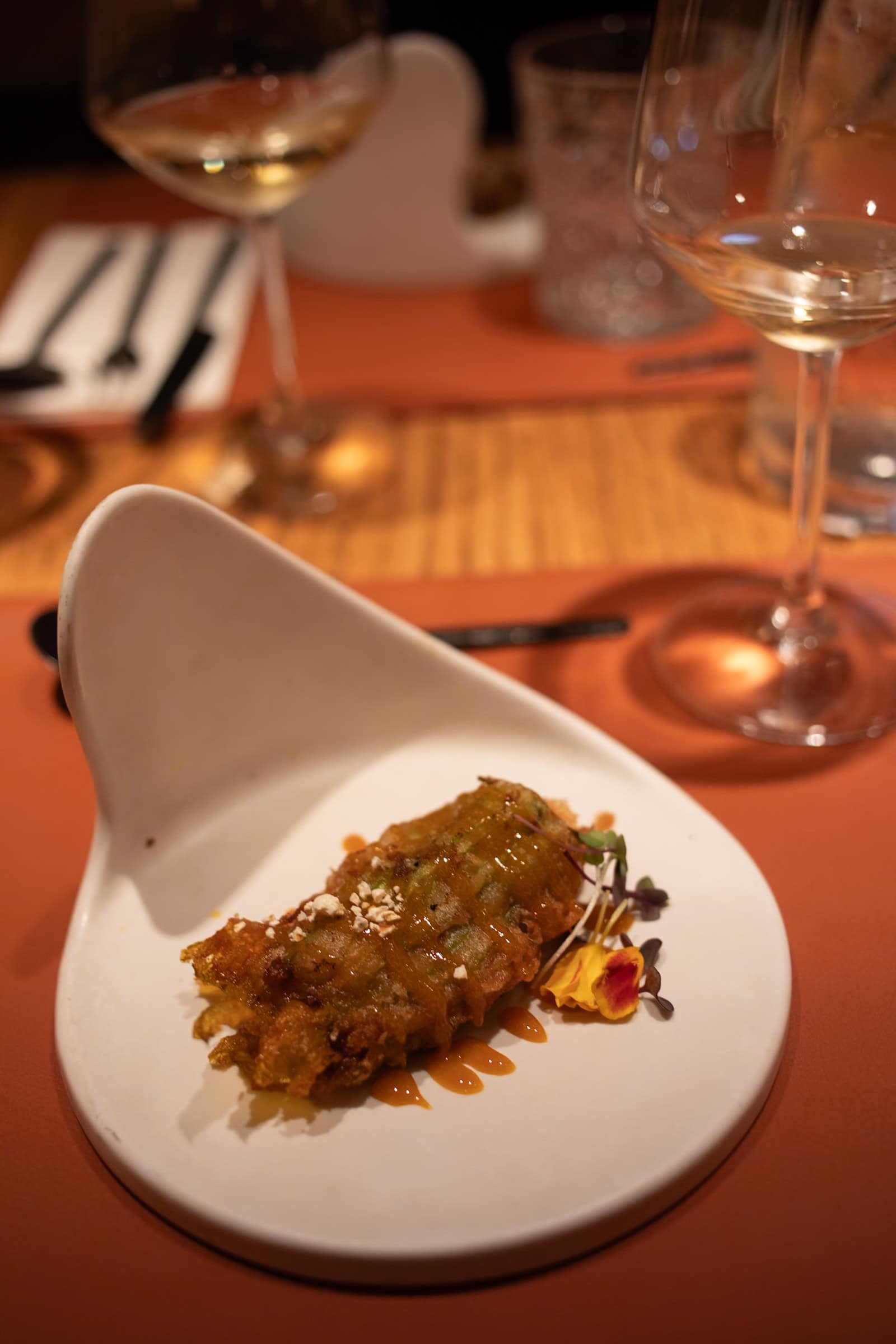
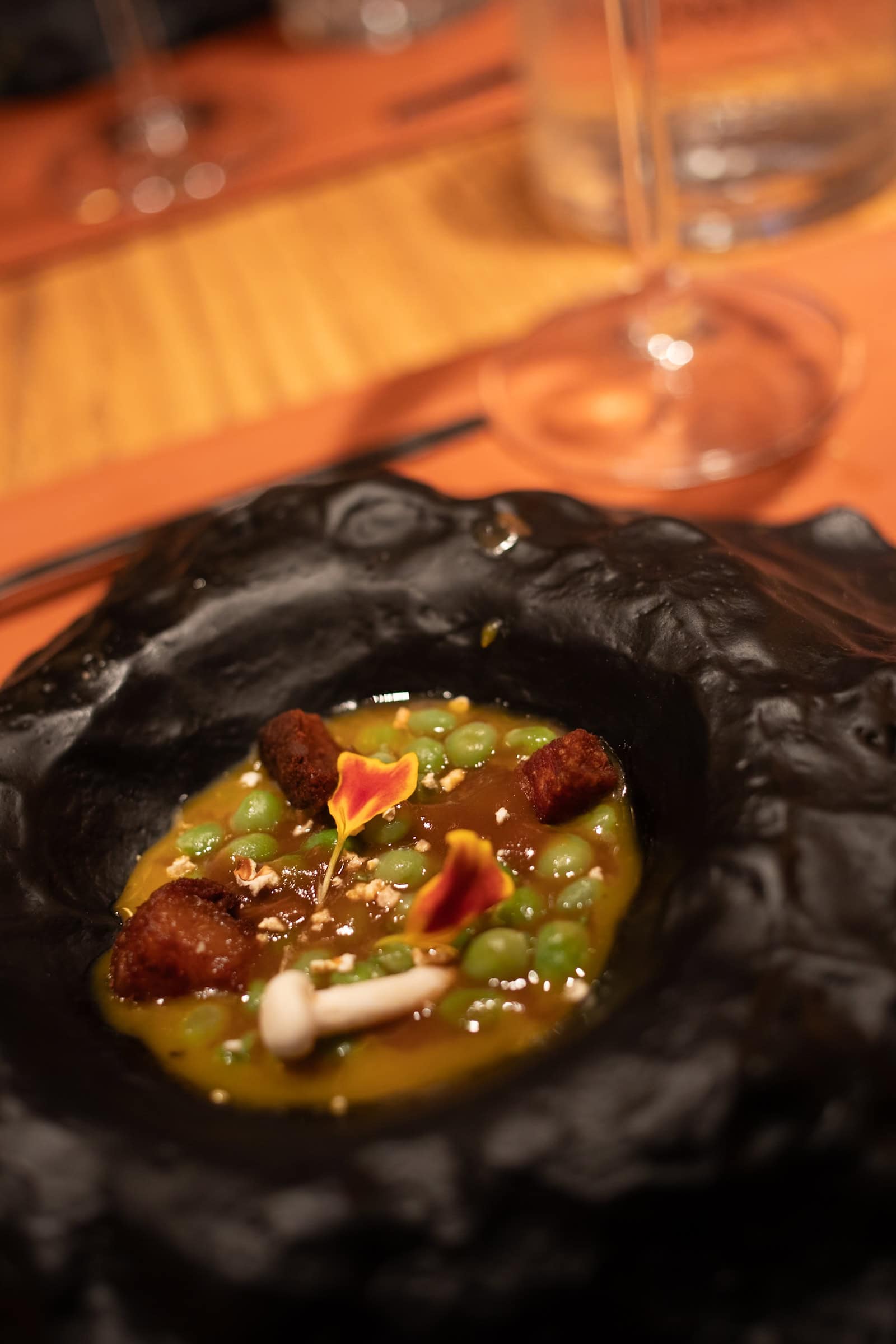
    Teike is a pretty fine-dining restaurant right in the heart of the city and serves both traditional dishes such as the hearty putxera stew, which is served in a small aluminum pot, as well as modern creations. It is best to book in advance and try all the delicacies on the tasting menu.

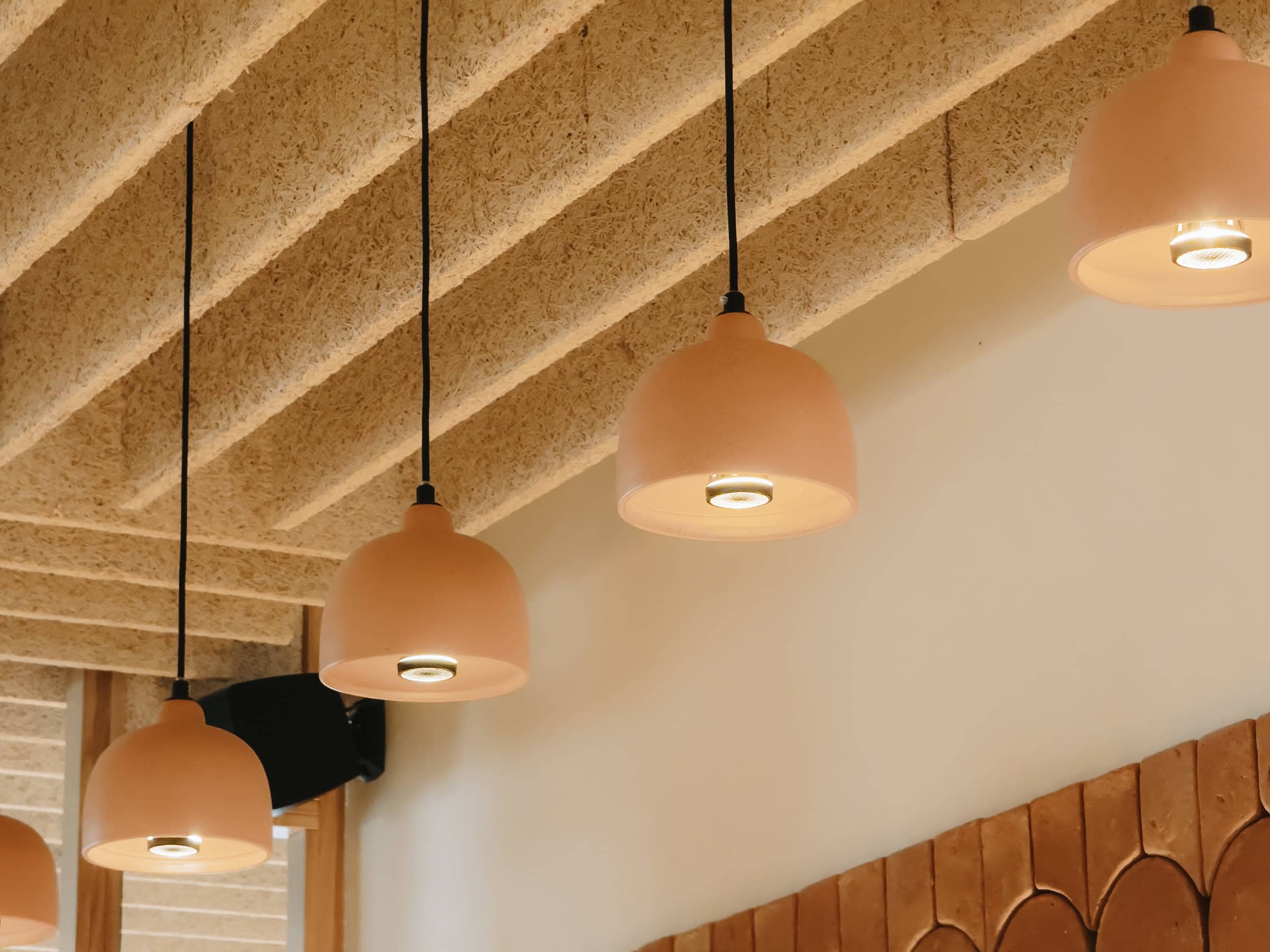
    Lighting at the Teike in Balmaseda.

    Torre Lozaiga

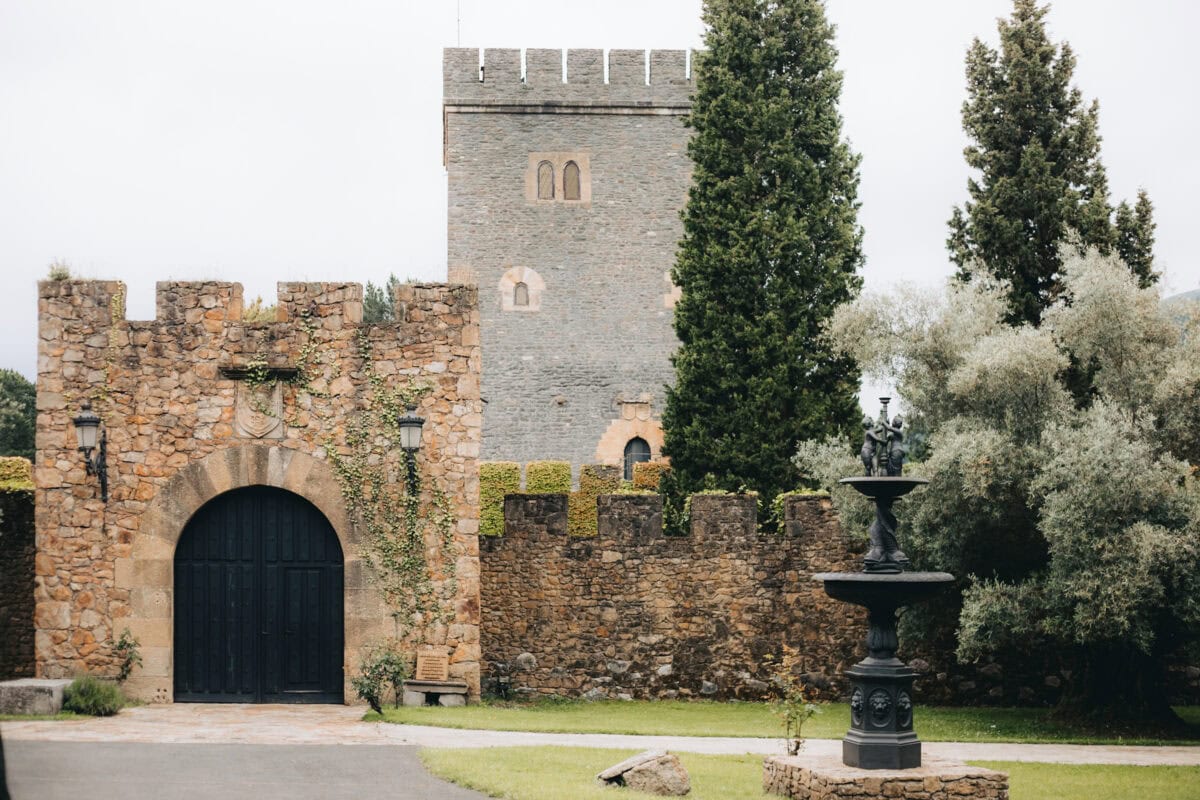
    If you are traveling to Balmaseda by car, the Torre Lozaiga with its adjoining museum is a nice stopover. Situated in the middle of the lush green mountain landscape of the Basque Country, you will find a medieval fortified tower typical of the region. These fortified towers once served as residences and defenses for noble families.

    Entrance to the Torre Lozaiga in the Basque Country, Spain.
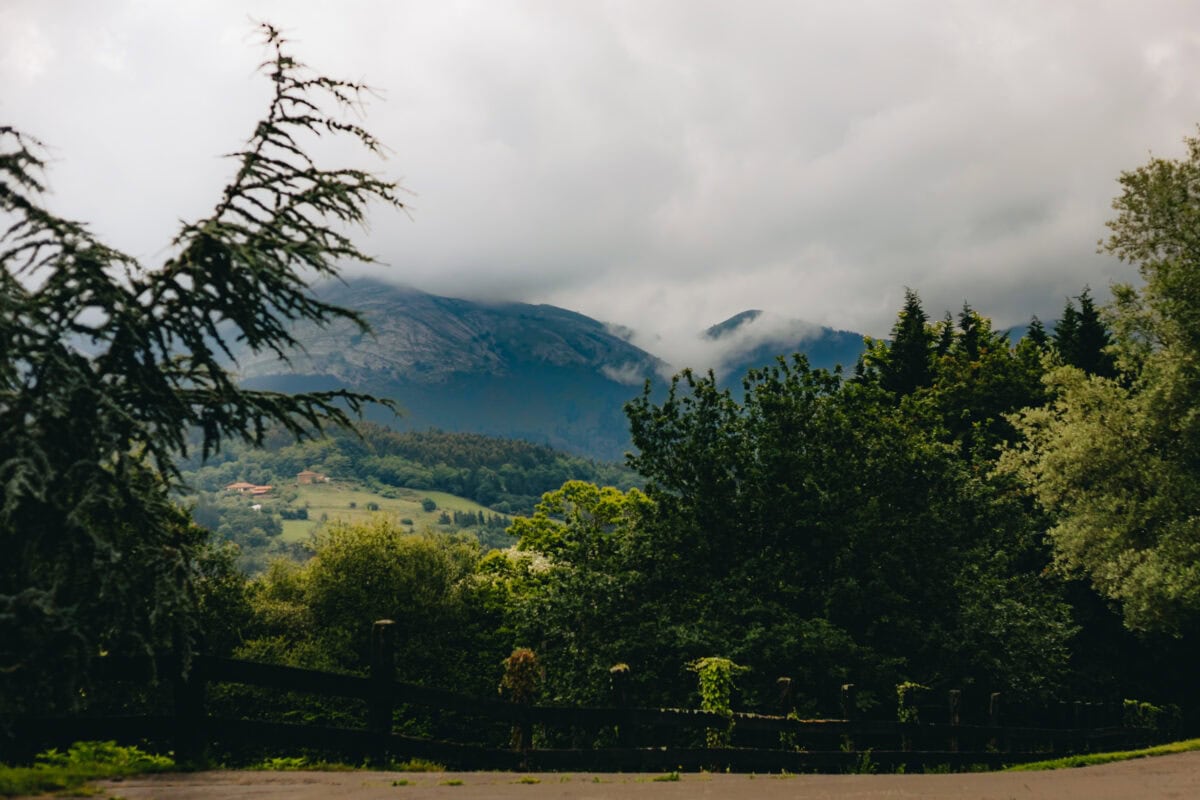
    Cloudy mountains behind green trees and meadows.

    These fortified towers are characterized by their massive construction with smaller openings in the lower sections. This design was intended to increase protection against intruders. You can’t visit the tower itself, but there is an extensive automobile museum on the site with a comprehensive Rolls-Royce collection of every model ever built between 1910 and 1990. If you’re interested in classic cars, you’ll be in for a real treat here!

    Classic Car Exhibition at the Museo de Coches Clásicos y Antiguos in Torre Loizaga
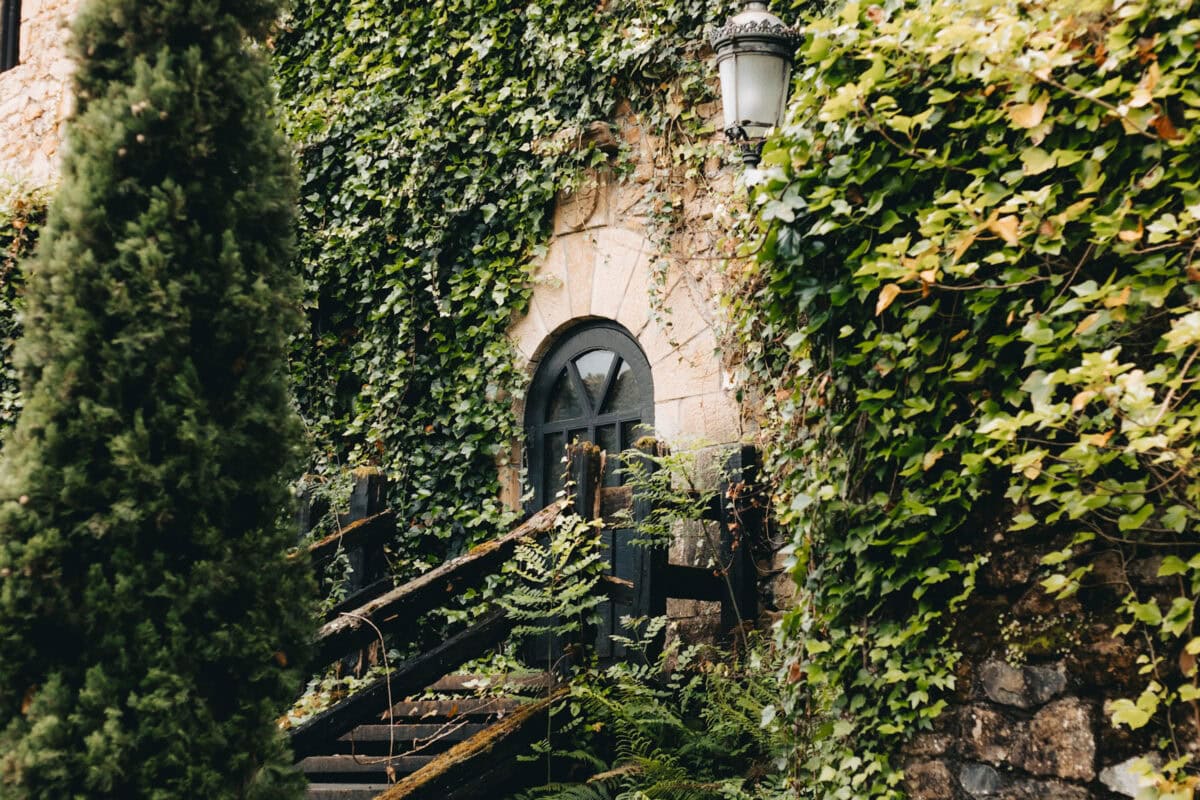
    A stone wall overgrown with vegetation, featuring an old window and a lamp, at Torre Lozaiga
in the Basque Country.

    The privately run museum is quite an insider tip and somewhat remote. You should therefore definitely check the opening times before visiting.

    Museo de Coches Clásicos y Antiguos in the Torre Loizaga

    How to Get There

    Balmaseda is very easy to reach from Bilbao by public transport. A regional train connects the two cities; the journey from Abando station in Bilbao takes about an hour. Even without a rental car or your own car, Balmaseda is a nice day trip if you want to get to know the Basque hinterland off the beaten track.

    Check the timetable for the regional train between Bilbao and Balmaseda here

    However, you will need a car or rental car* to visit Torre Lozaiga, which is a little out of the way halfway along the route.

    This article was written with the support of Visit Euskadi.

  • A Week-Long Texas Road Trip: Cowboys, Canyons & Culture

    A Week-Long Texas Road Trip: Cowboys, Canyons & Culture

    A trip to the USA has always felt like a safe choice: welcoming people, exciting sights, and unique culinary treats that are so special, you’re glad not to encounter them too often at home. It’s an adventure that’s sure to leave you with great memories!

    Chicken and fries with dip in a basket

    The world feels upside down right now, and I’ve been hearing reactions such as: “You’re traveling to the USA of all places?” and “Aren’t you worried about entering the country?” – I’ll share my thoughts on that later in this article. Despite everything, I still love exotic destinations, and surprisingly, Texas definitely qualifies as one for me.

    A saddle in front of a map of Texas on a wooden wall.

    I spent about a week exploring Texas with Travel Texas, one of the most iconic states in the USA. It wasn’t always smooth sailing, especially with the tense political climate hanging over us. But as the saying goes, there are two sides to every story. With destinations like Texas, it’s important to keep an open mind and appreciate the adventure for what it was: a lively, unforgettable journey.

    Colorful canopy with stripes and a star pattern.

    Epic Entertainment in Grand Prairie

    Grand Prairie is located exactly between the two Texan metropolises of Dallas and Fort Worth – and thus also near Dallas/Fort Worth International Airport (DFW), one of the largest airports in the world.

    Zavala’s Barbecue

    Our road trip starts with an impressive introduction to Texan barbecue culture: At Zavala’s Barbecue, award-winning brisket awaits us, but their other house specialties like ribs or jalapeño cheddar sausages are equally outstanding.

    "Lone Star Beer" neon sign in the window of Zavala's Barbecue in Grand Prairie, Texas.
    Two large mixed meat platters on paper plates at Zavala's Barbecue.
    People eating barbecue with sides and drinks.

    Epic Central

    My impression of Grand Prairie is certainly shaped by Epic Central, a recently created, family-friendly entertainment complex featuring an indoor water park, a bouldering gym, hotels like the Hilton Garden Inn at Epic Central*, green spaces, and a dining area.

    People are swimming in the sunny pool at Epic Central Water Park in Grand Prairie.
    People walk through a futuristic LED tunnel at night at Epic Central in Grand Prairie, Texas.

    Traders Village

    In Grand Prairie, you’ll also find Traders Village, the largest flea market in the USA. With many street food stalls, a large stage for live music, and numerous rides, a real fairground atmosphere emerges here every Saturday and Sunday. If you’d like to enjoy a peaceful browse through the incredible selection of over 3500 vendors, try to arrive early!

    Various fruits displayed at a market stall.
    At Traders Village, you’ll truly find everything from food…
    Traditional Native American art and crafts at Traders Village near Grand Prairie, Texas.
    …to unusual souvenirs.
    Shopping street in Traders Village with the water tower in the background.
    Traders Village in Grand Prairie is only this empty early in the morning.

    Where to Eat in Grand Prairie

    My food recommendations for Grand Prairie include Vidorra for upscale Mexican cuisine in a trendy setting, and Chicken N Pickle for snacks and drinks after a game of pickleball on the courts nearby. For a brunch spot, I suggest the Good Day Café – just be prepared for Texas-sized portions!

    More tips for Grand Prairie: Click here for the complete guide to Grand Prairie

    Charcoal-grilled meat served at Vidorra in Epic Central
    Modern Mexican cuisine at Vidorra.

    Grapevine: Perfect Stopover in Dallas

    If you ever find yourself needing to kill time at Dallas/Fort Worth Airport but don’t feel like hanging out at the airport itself, you can escape to Grapevine for a few hours or even an overnight stay.

    An outdoor café on Main Street in Grapevine with a striped umbrella and cars

    The Trinity Metro TEXRail takes you directly from the airport to the historic center of Grapevine in just 10 minutes, where you’ll find some charming boutiques, cafes, and restaurants along Main Street.

    The entrance to the farmers' markets in Grapevine, decorated with flowers.

    Harvest Hall

    Right at the train station, you should make a stop at Harvest Hall, a large dining area with many food stalls. Harvest Hall is part of a replica of the former train station building, which also houses a charming boutique hotel, the Hotel Vin*. A great tip if you ever need to stay overnight near the airport.

    Prefer to stay directly in the city? Find hotels in Downtown Dallas here*

    Interior of Harvest Hall in Grapevine, featuring a food court.

    Vintage Railroad Tour

    From the train station, you can switch to a short tour on the historic train, which takes you through the vast landscape of the Cotton Belt and sends you on a small journey back in time to Grapevine’s past.

    Book tickets for the Vintage Railroad Tour here*

    You can find more tips for Grapevine here: Click here for the complete guide to Grapevine

    A car from the Cotton Belt Vintage Railroad at the train station in Grapevine
    Red locomotive No. 2016 of the Cotton Belt Vintage Railroad at the train station in Grapevine, Texas
    Water tower in Grapevine, Texas, with a windmill and the inscription: Cotton Belt Route

    Lubbock: Art & Culture in the Texas Panhandle

    Lubbock is about 560 kilometers from Dallas and is famous for being at the heart of one of the world’s biggest cotton-growing regions. As you drive toward the South Plains of Texas, you can really see the area’s farming roots. The road ahead feels like it goes on forever, and the large fields on either side stretch out as far as the eye can see. Every now and then, a tiny village pops up, so small that you almost miss it!

    Looking for even more exciting travel tips for the USA? Click here to discover exciting travel destinations across the land of opportunity, all ready to inspire your next adventure: All posts on destinations in the U.S.

    Fabric patch with cowgirl saying and cowboy boot image

    Art District

    Although Lubbock seems very remote, the city surprises with a young, art-interested scene: I would never have thought it possible that I would take a pottery class in the newly created Art District in Lubbock, right in the middle of the Texas Panhandle.

    Artist's workshop with shelves and materials
    Lubbock: Arty and young.
    Hand with decorated hat and matchbox
    At Wild Honey Hats in Lubbock, I had a cowboy hat custom designed.

    Where to Stay in Lubbock

    Hotel tip: The Cotton Court Hotel* – a very pretty boutique hotel where you can stay in rooms designed in the style of old cotton barns.

    Pool area at the Cotton Court Hotel, Lubbock.
    Tip: The Cotton Court Hotel in Lubbock

    By the way: Here’s my full guide to Lubbock

    Caprocks Canyon State Park

    If you’re more into nature, I recommend a detour to Caprocks Canyon State Park. There you can not only admire the wild nature around the canyon with its impressive red cliffs, but also observe wild bison.

    A green landscape with red rocks in Caprocks Canyon State Park in Texas.

    Caution: In the summer months, it gets very hot here – pay attention to the warnings from the park rangers. Avoid hot days and equip yourself well with water and sun protection. The risk of sunstroke or even heatstroke should not be underestimated. As an alternative to various trails, there is also a Scenic Drive that takes you by car through part of the park.

    Bison in Caprocks Canyon State Park, seen from the car window.
    Bison graze in a meadow along the riverbank in Caprocks Canyon State Park in Texas.

    Amarillo: Route 66 & Cowgirl Moments

    Before my trip to Amarillo, only Tony Christie’s old hit came to mind: “Is this the way to Amarillo?” But did you know that Amarillo is also a stop on the famous Route 66? Having already explored some places along this once important main thoroughfare in Illinois, I was even more surprised!

    Here you can find all articles about Route 66

    For the complete guide to Amarillo

    Classic cars on Route 66 in Amarillo.

    Historical Route 66

    The historic Route 66 is now located right in the middle of Amarillo and is lined with small antique shops, quirky second-hand stores, and charming cafes.

    There you’ll find interesting shops like the atmospheric Aunt Eeks or Chapterhouse Books, whose owner advocates for the rights of the LGBTQ+ and migrant communities in the area, offering a vital safe space to marginalized groups.

    A street scene featuring a vintage VW bus and a blue water tower with a Route 66 sticker in Amarillo.
    Chapterhouse Books bookstore in Amarillo, Texas, with shelves and books on a table.

    Cadillac Ranch

    Also a tribute to the important significance of Route 66 is the Cadillac Ranch, which is located next to today’s Interstate Highway I-40.

    Colorful, painted car wrecks in the desert at Cadillac Ranch in Amarillo, Texas.

    The vibrant art installation features ten Cadillacs embedded vertically in the ground, accessible free of charge. Visitors are encouraged to leave their mark by graffiti on the car bodies, causing the installation’s appearance to evolve continuously.

    Cowgirls & Cowboys in the West

    If you want to channel your inner cowgirl or cowboy, I recommend a trip to Cowgirls and Cowboys in the West just outside the city.

    Owner Phyllis decided, after a successful career in the hotel industry, to trade business life for a life on her Los Cedros Ranch. The special thing is: On the farm, almost exclusively genuine cowgirls work instead of cowboys.

    Several saddled horses belonging to cowgirls and cowboys in the West are tied to the fence.

    After a brief introduction, you can ride horses here like a real cowgirl or cowboy, which owner Phyllis lovingly rescued, partly from other ranches, and now gives them a new home. Additionally, you’ll enjoy spectacular views of Palo Duro Canyon, the second-largest canyon in the USA.

    Cowgirl riding a spotted horse in front of a barn.
    Two cowgirls wearing white hats standing in front of horses at Los Cedros Ranch near Amarillo, Texas.
    Tourists ride along the Palo Duro Canyon on a tour organized by Cowgirls and Cowboys in the West.

    Helpful Tips for your Texas Road Trip

    Is a Car Necessary for a Trip Through Texas?

    Absolutely. Especially if you want to leave major cities like Dallas, Houston, or Austin, you won’t manage without a car. The USA is known for driving culture, and Texas takes that to another level.

    What to Consider when Renting a Car in Texas?

    An EU driver’s license is all you need to rent a vehicle! Rental cars typically feature automatic transmissions, making driving a breeze. Plus, parking and navigating are quite manageable, even in busy city centers.

    Book rental cars in Texas here*

    A classic gold Cadillac with the license plate "Eat Beef."

    What is the Entry Process for the USA like?

    I entered the U.S. through Dallas-Fort Worth International Airport, and honestly, there’s not much exciting to say—just the usual routine: long wait times, immigration officers looking very serious and asking detailed questions. Just when I feel about to lose my nerves out of sheer respect, I’m greeted with a warm smile. The officer might even share a little joke, and in that friendly, typically American way, they wish me a pleasant stay. Before I know it, I’m in, and the entire entry process goes smoothly—no problems at all.

    ESTA or Visa: What You Need to Apply for before Entry

    I have a tourist visa for the USA, but it’s only nice to have and not a must. Otherwise, with a German passport you only need to apply for an ESTA. It’s easy to do online, currently costs 21 US dollars and is valid for two years if your passport doesn’t expire before then.

    Workshop with a vintage street sign and lockers at the Cast Iron Grill in Lubbock, Texas

    I personally feel that the current discussions about entering the USA are heavily influenced by the present political climate. That said, entry has never really been an exciting experience, even under different administrations.

    Having a German passport that grants access to nearly all countries can sometimes lead to feeling a bit frustrated when facing challenges. I personally experienced being thoroughly questioned twice by border officials in a different country; I still suspect it might have been due to racial profiling, as my diverse ancestry is quite noticeable. Because of that, I completely understand why some people prefer not to put themselves through the risk of detailed interrogations at borders. Ultimately, it’s best to form your own opinion and consider your own situation when making decisions.

    Authentic cowboy boots on a shelf

    Should You Travel to the U.S., or Specifically to Texas, Now?

    If your political stance is a reason why you’re asking yourself this question, you should carefully consider whether a trip to a rather conservative state like Texas is for you. Sometimes, in conversations with locals, their views do come to light, and if you have a strong opinion of your own (and/or, like me, a Latin/South American/general migration background), that can certainly become a challenge.

    However, I think there are always counter-movements that one can join – and these are worth discovering and supporting.

    Alternative magazines with colorful covers on a display stand at Auntie Eeks in Amarillo, Texas.

    In my opinion, now really is one of the best times to visit the USA. Popular spots that are often packed with tourists are much quieter these days, and with the dollar being so affordable, it’s perfect for a relaxing and enjoyable trip.

    In any case, you should keep an eye on current events and adjust your travel plans accordingly. Check the website of your country’s Foreign Office, watch the news and be vigilant – but this also applies to pretty much any other destination.

    Here you’ll find all articles about Texas

    Disclaimer: I was invited by Travel Texas, the official tourism organization of the State of Texas, to join this trip for research purposes.

  • Save money with Seattle CityPASS: Is it worth it?

    Save money with Seattle CityPASS: Is it worth it?

    Ad. | Seattle – nestled between the Pacific Ocean and majestic mountains – is the great metropolis of the Pacific Northwest. Of course, I had to spend a few days there on my West Coast trip. But like many big cities in the USA, Seattle is incredibly expensive and a sightseeing tour can be a small investment.

    The Seattle CityPASS* promises a range of savings on the most important sights. I researched for you in Seattle whether this is really true and for whom such a ticket is really worthwhile.

    The Space Needle in Seattle, seen from below on a sunny day.
    The famous Space Needle is also included in the Seattle CityPASS.

    What is the Seattle CityPass?

    The Seattle CityPASS* is basically a collective ticket that gives you access to the city’s most important sights. Instead of having to buy new tickets each time (and often paying more overall), you can use the CityPASS to put together an individual package of admission tickets that covers many highlights at once.

    This means you save time at the ticket office – and in most cases also money, as these combined tickets are cheaper overall and/or include other extras that are not included in individual tickets.

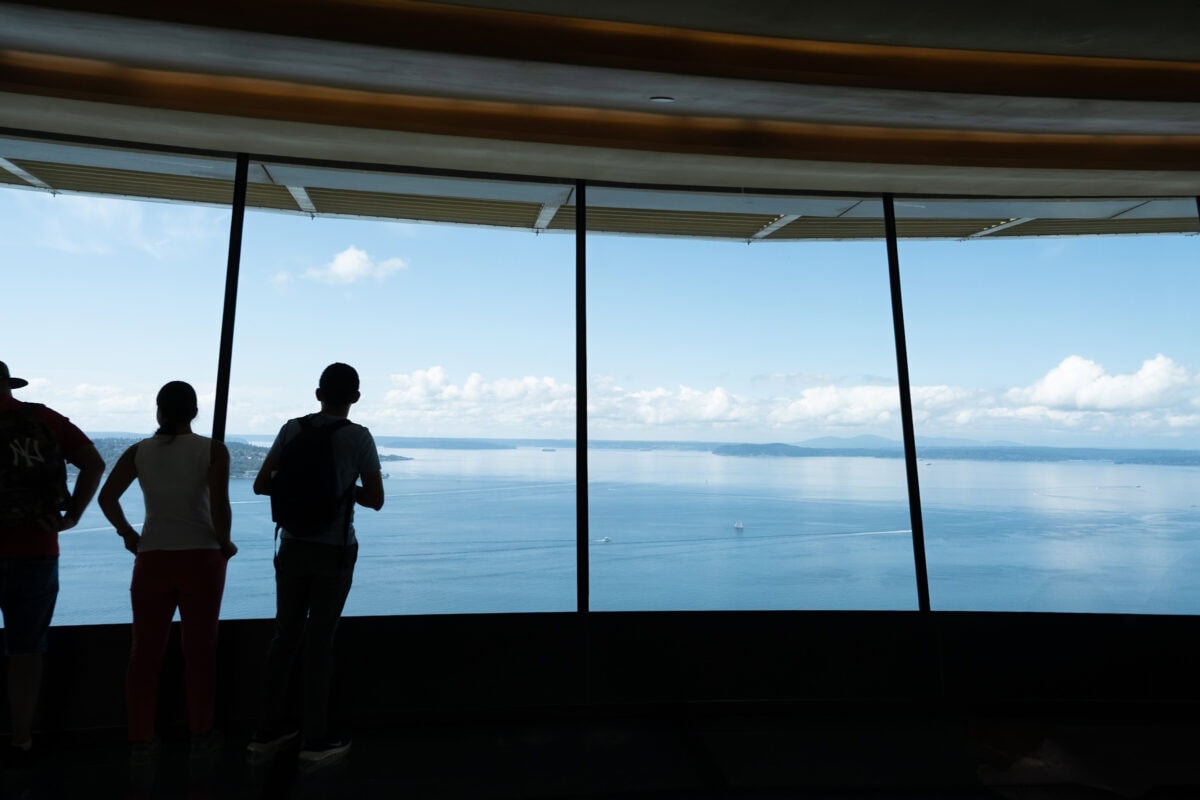
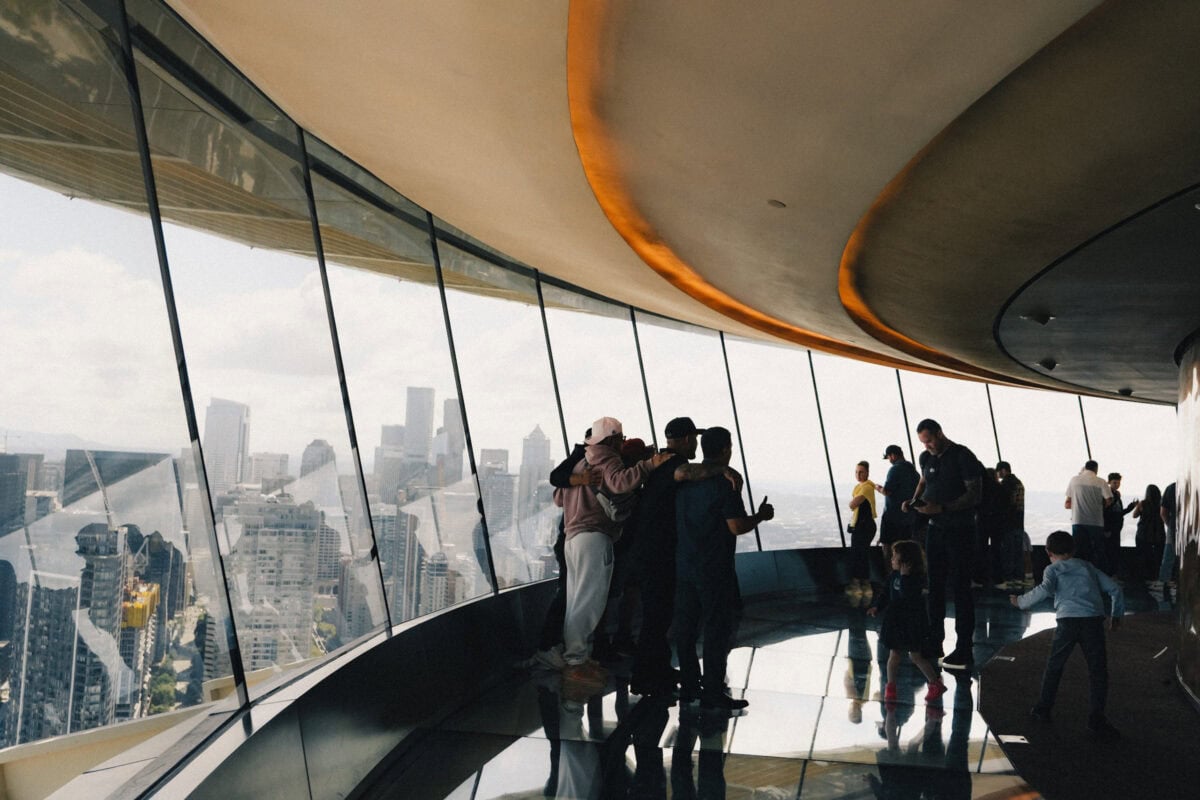
    People are looking out over Puget Sound from the observation deck of the Space Needle in Seattle.
    The breathtaking view of the Puget Sound alone makes a visit to the Space Needle in Seattle worthwhile.

    What is included in the Seattle CityPass?

    You can visit five attractions with the Seattle CityPASS. Included as standard are:

    • Space Needle – Seattle’s landmark and an absolute must-see. From the viewing platform, you’ll have a breathtaking view of Seattle’s skyline, the Puget Sound and the surrounding mountains.
    • Seattle Aquarium – Located on the waterfront, you can experience the fascinating underwater world of the Pacific.

    You also get access to 3 other attractions of your choice. You don’t have to decide at the time of purchase. This are the three attractions you can choose from:

    • Chihuly Garden and Glass
    • Argosy Cruises Harbor Tour A boat tour through Seattle Harbor, where you can see the skyline from the water.
    • Museum of Pop Culture (MOPOP)
    • Woodland Park Zoo
    • Pacific Science Center

    As soon as you use the pass for the first time, it is valid for nine consecutive days. This gives you enough time to see all the sights stress-free and at your leisure.

    Order the Seattle CityPASS here*

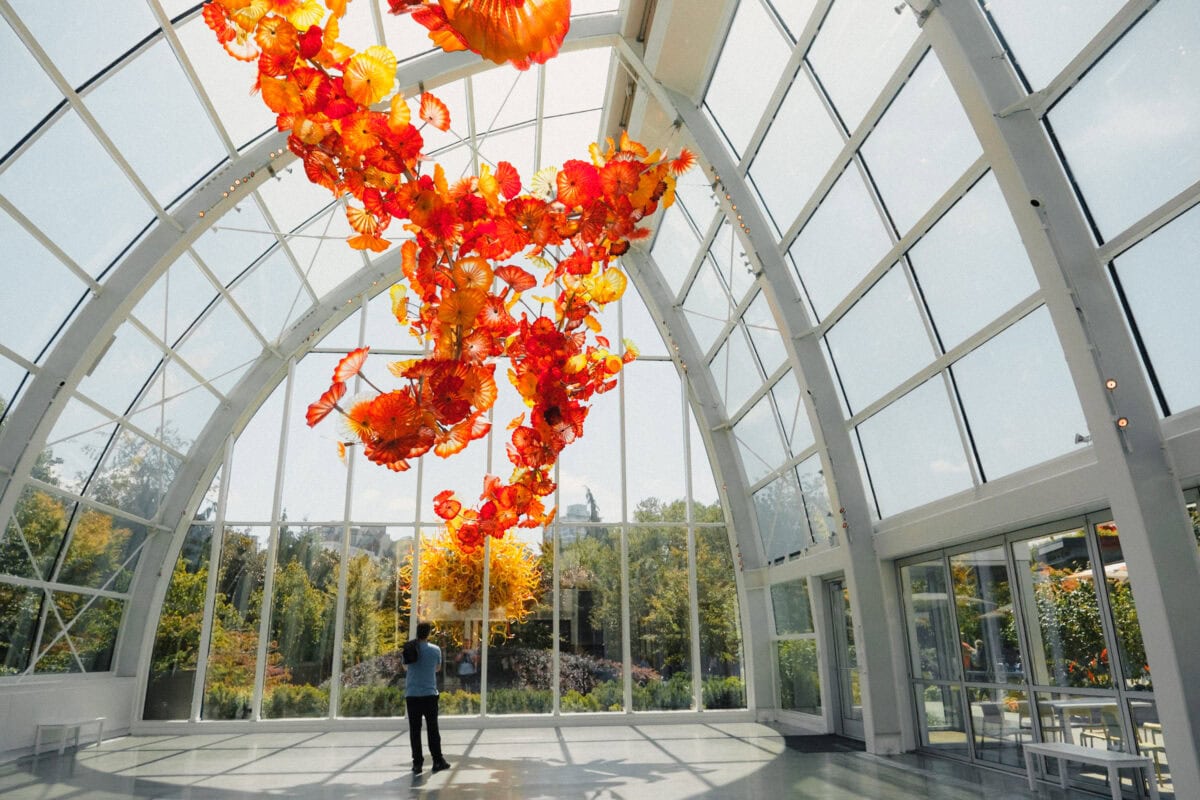
    A hanging installation of orange-yellow glass flowers in the glasshouse at the Chihuly Garden in Seattle.
    The Chihuly Garden and Glass with its impressive sculptures by glass artist Dale Chihuly is located close to the Space Needle.

    Why you should buy the Seattle CityPASS

    • Price savings: If you buy tickets for each attraction individually, it can really add up. The CityPASS bundles everything together for a lower total price.
    • Planning convenience: If you know that you want to see certain highlights, you have everything in one place with the CityPASS. You don’t need to keep looking for individual tickets.
    • Priority admission and less queuing: At some attractions, admission is slightly faster with the CityPASS, so you spend less time queuing.
    • Planning aid: Not only do you save time on queuing, but you also get a good overview of what you can see during your time in Seattle. I often find this very useful for structuring my days during the trip and making the most out of my time.
    • Perfect for first-time visitors: If you are new to Seattle and want to see as much as possible, the pass covers the must-see highlights.

    Downsides of the Seattle CityPASS

    • Time pressure: Even if you have nine days, they can pass quickly. If you plan too many other activities (trying out restaurants, day trips, strolling through different districts), you may not manage to see all the CityPASS attractions.
    • Limited selection: You may not be interested in all the attractions, or you may want to see something completely different. If you are more into visiting small trendy districts or other museums, the pass may not be worthwhile.
    • Advance planning: Of course, you need to know a little in advance when you will visit which sights. Spontaneously only visting a few attractions is often not worthwhile because the ticket price may then not be fully utilized.
    • Alternative discounts: Some attractions offer their own promotions, e.g. combined tickets for families or reduced admission tickets at certain times of day. If you like to be flexible and mix and match different options, this could be cheaper than the CityPASS in some cases.
    Observation deck at the Space Needle in Seattle, USA.

    Who should buy the Seattle CityPASS?

    • First-time visitors: I love city cards in general when I’m visiting a city for the first time. The most important sights are already covered and I don’t have to worry about buying individual admission tickets.
    • Families and groups: Especially if you are traveling with several people, the costs can escalate quickly. With the CityPass, the savings are even greater for several people, and group visits to popular sights are easier to organize if everyone already has their admission ticket ready.
    • Short-term travelers: If you only have a few days in Seattle and want to make sure you take in the main attractions, these combo tickets are worth their weight in gold.
    View of the Space Needle and Seattle skyline at dusk

    Are you looking for inspiration for your next trip to the United States?
    Click here to explore all my articles about US travel destinations.

    The alternative to the Seattle CityPASS: Seattle C3

    If you’re not interested in many of the sights on the Seattle CityPASS list, or you don’t have much time in the city, there’s a great alternative!

    With a Seattle C3 ticket, you can simply pick three sights from the following list:

    • Space Needle
    • Chihuly Garden and Glass
    • Seattle Aquarium
    • Argosy Cruises Harbor Tour
    • Museum of Pop Culture (MOPOP)
    • Woodland Park Zoo
    • The Museum of Flight
    • Sky View Observatory
    • Seattle Art Museum
    • Pacific Science Center

    Either way, the Space Needle is an absolute must-see and I can also highly recommend the Museum of Flight and the Seattle Art Museum. With a C3 ticket, you have an even greater choice and can concentrate on really selected spots. The C3 ticket is also a whole 30 euros cheaper.

    Pros of Seattle C3

    • more selection
    • a good 30 euros cheaper
    • no attractions that involves animals (the Seattle CityPASS always includes the Seattle Aquarium)
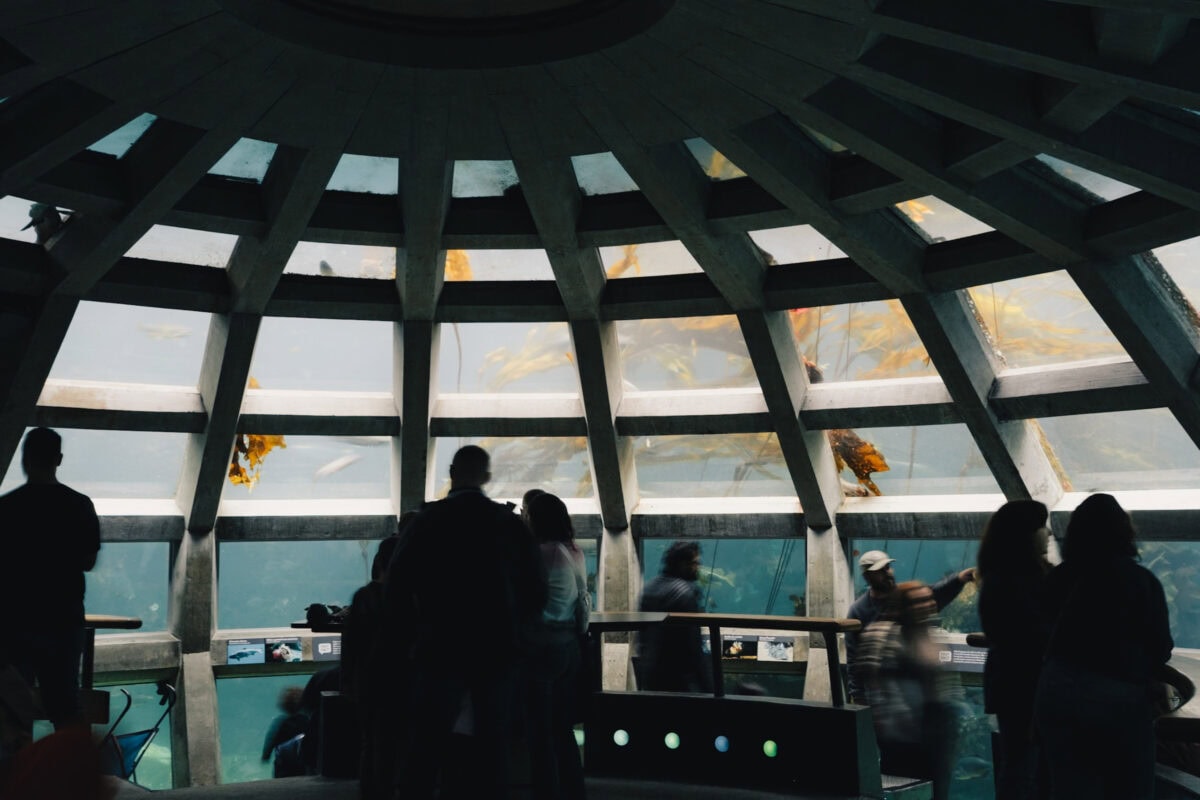
    People in a dome in front of an aquarium
    You can swap the Seattle Aquarium for another attraction with a C3 ticket.

    Please note: The Seattle C3 Ticket is only available on the CityPASS website. You can buy the Seattle C3 Ticket here*

    Is the Seattle CityPASS worth it?

    In my opinion, yes, if you are planning to see the most important sights in Seattle anyway. You’ll save time and money, especially on your first visit to Seattle – and the Space Needle is a must-see anyway. I also found it super convenient not to have to deal with buying tickets on the spot.

    If you want to be more flexible, I would recommend at least the Seattle C3 – you are guaranteed to visit the Space Needle and two other sights!

    Actually, you should also considered buying a CityPASS when you’re visiting other cities in the US: Read my full review on the Chicago CityPASS


    I visited Seattle as part of a research trip for Travellers Insight, the Munich Airport’s renowned travel blog. Read my article about Seattle here. The Seattle CityPASS was provided by CityPASS.

  • Top 15 Things to See in Palma

    Top 15 Things to See in Palma

    Palma has always felt like my second home. I’ll show you the 15 most beautiful sights in Palma and share a couple of insider tips, too! Before you start wondering: in 2016, the official name of Mallorca’s capital was changed from “Palma de Mallorca” to simply “Palma”. But of course, that doesn’t change a thing about the beauty of this wonderful city!

    1. Royal Palace La Almudaina

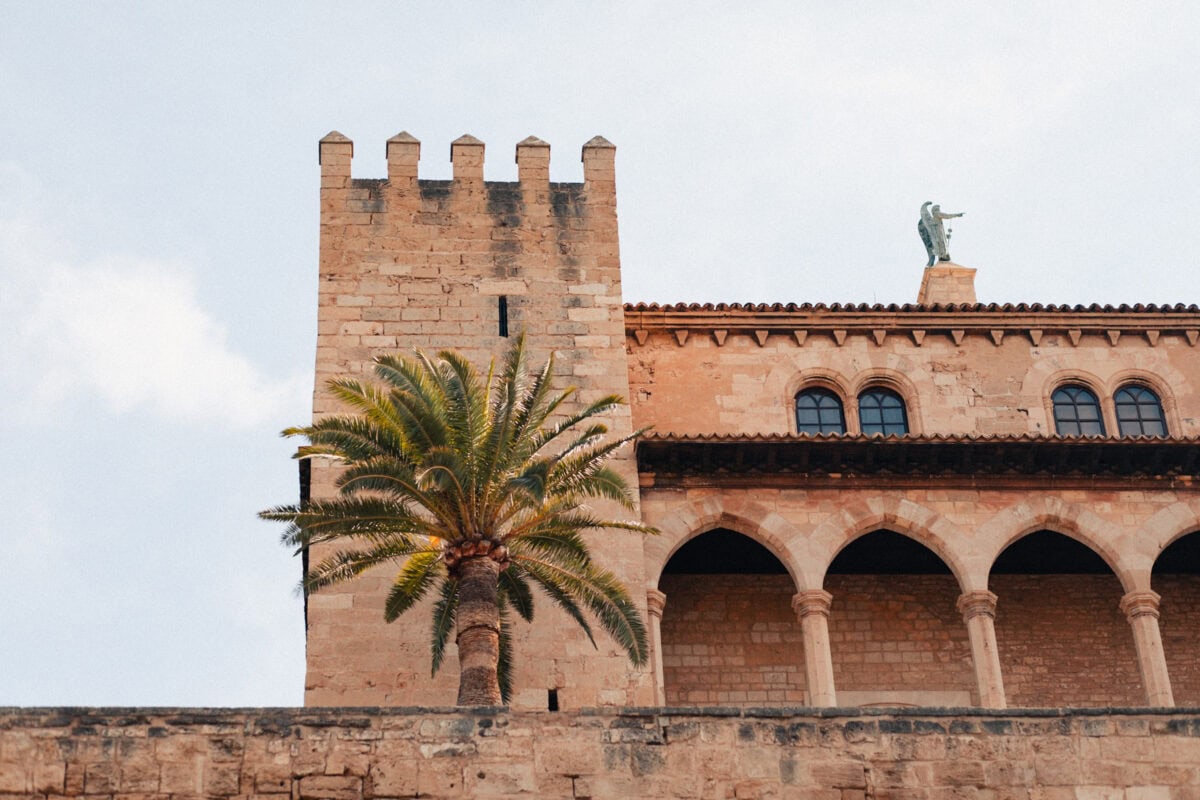
    The Royal Palace of La Almudaina has a long history: it was built in the 13th century during the Moorish occupation. Today, La Almudaina is the official residence of the Spanish royal family, who spend their summer vacation on Mallorca every year and use the palace for representative purposes. However, they live in the newer Palacio Marivent in Cala Mayor, whose gardens you can also visit.

    Tower of the Palacio Almudaina in Palma de Mallorca.

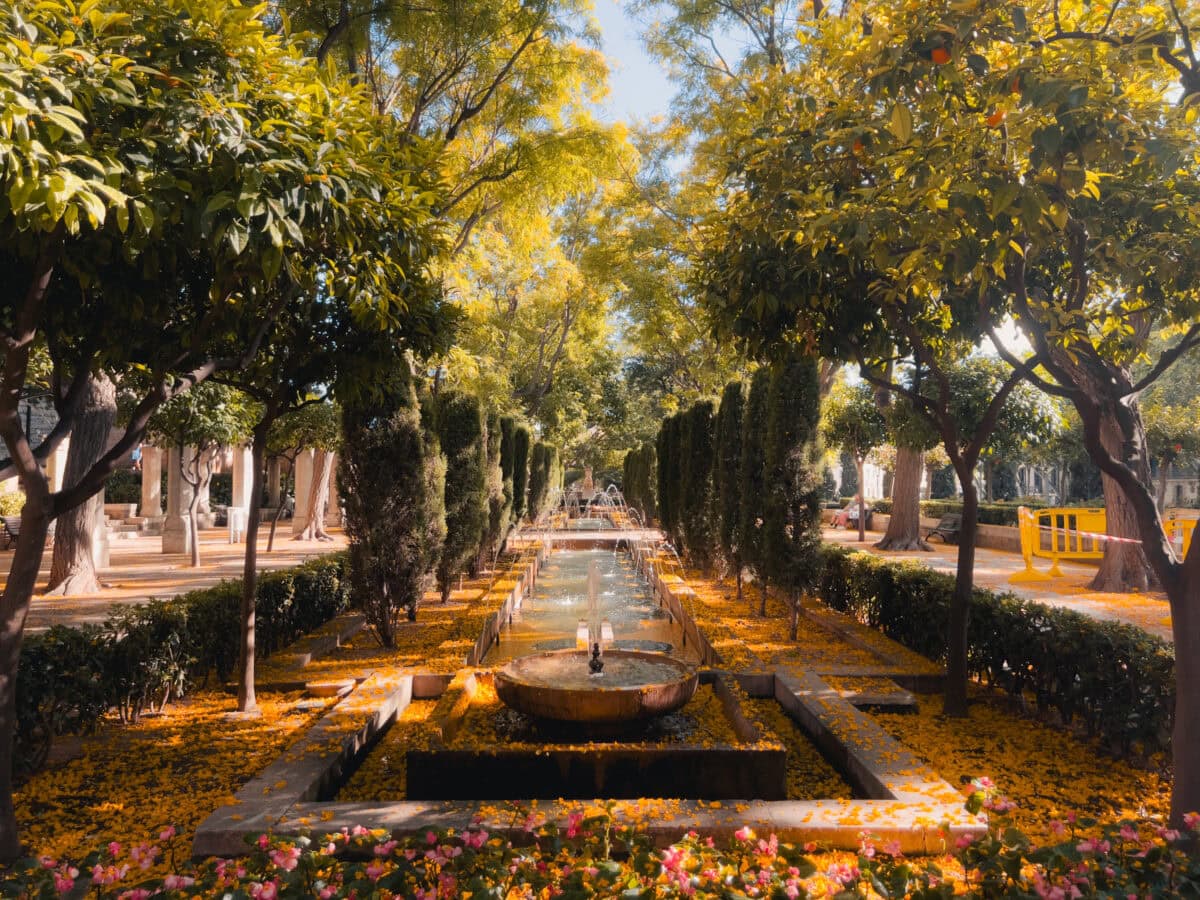
    The Palacio Almudaina, with its many exhibits from the eventful history of Mallorca and its extraordinary architecture, is one of Palma’s most popular attractions. At its foot you will find a small garden, the Jardines de S’Hort del Rei – a great photo spot and perfect for a short break from sightseeing.

    Tip: Admission is free on Wednesday and Sunday afternoons.

    Buy tickets for the Royal Palace of La Almudaina here*

    A garden in full bloom with a fountain and trees at the Jardines d'es Hort del Rei in Palma, Mallorca.

    2. Cathedral La Seu

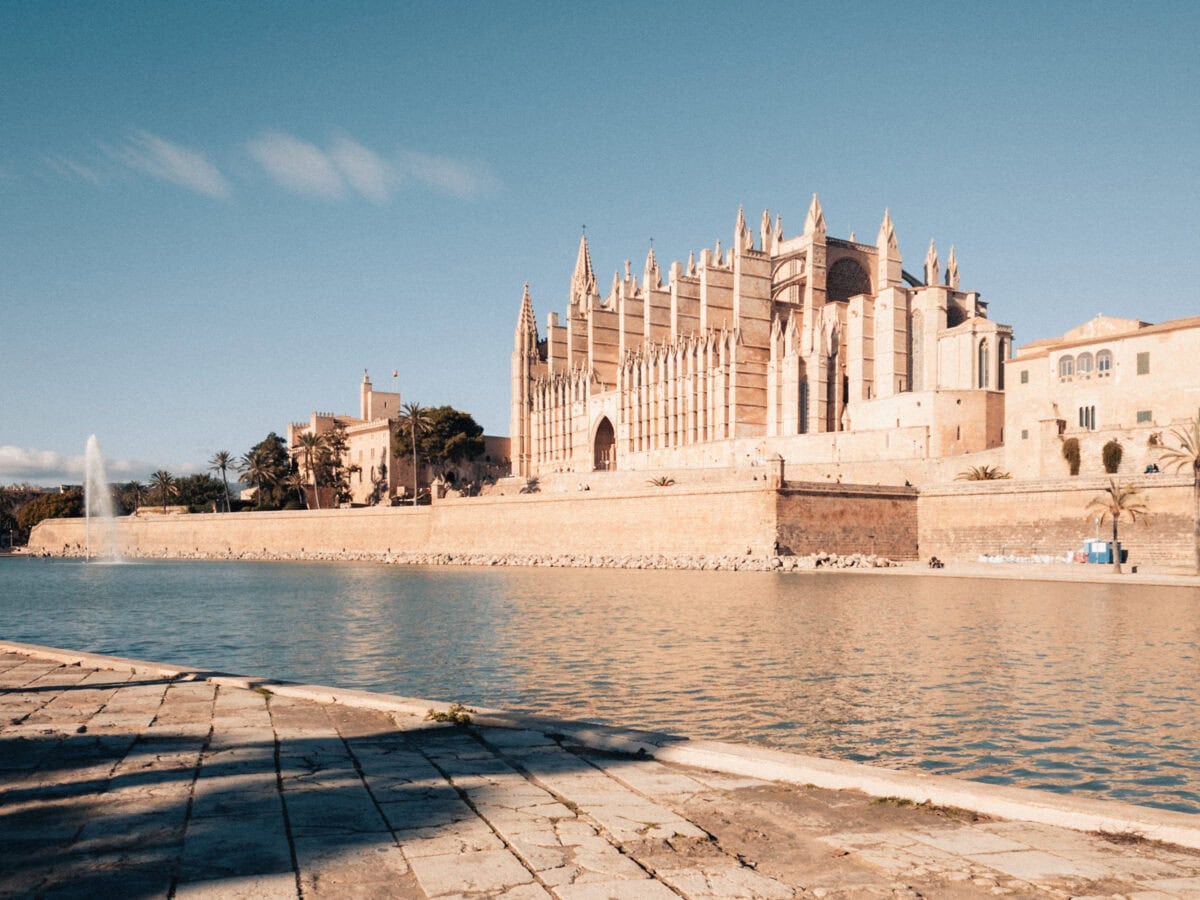
    The Gothic cathedral La Seu is the landmark of Palma. It dates back to the 13th century and cannot be overlooked due to its location on a hill. From here you also have a fantastic view of the sea. To see the cathedral from the inside, you need to buy a ticket – due to the crowds, especially in summer, I recommend booking your ticket online in advance.

    Beat the crowds: Buy your admission ticket for Palma Cathedral in advance here*

    La Seu Cathedral in Palma by the water in the sunshine

    By the way: from April to October, you can also take part in a guided tour on the roof of the cathedral for an additional fee – a truly special experience!

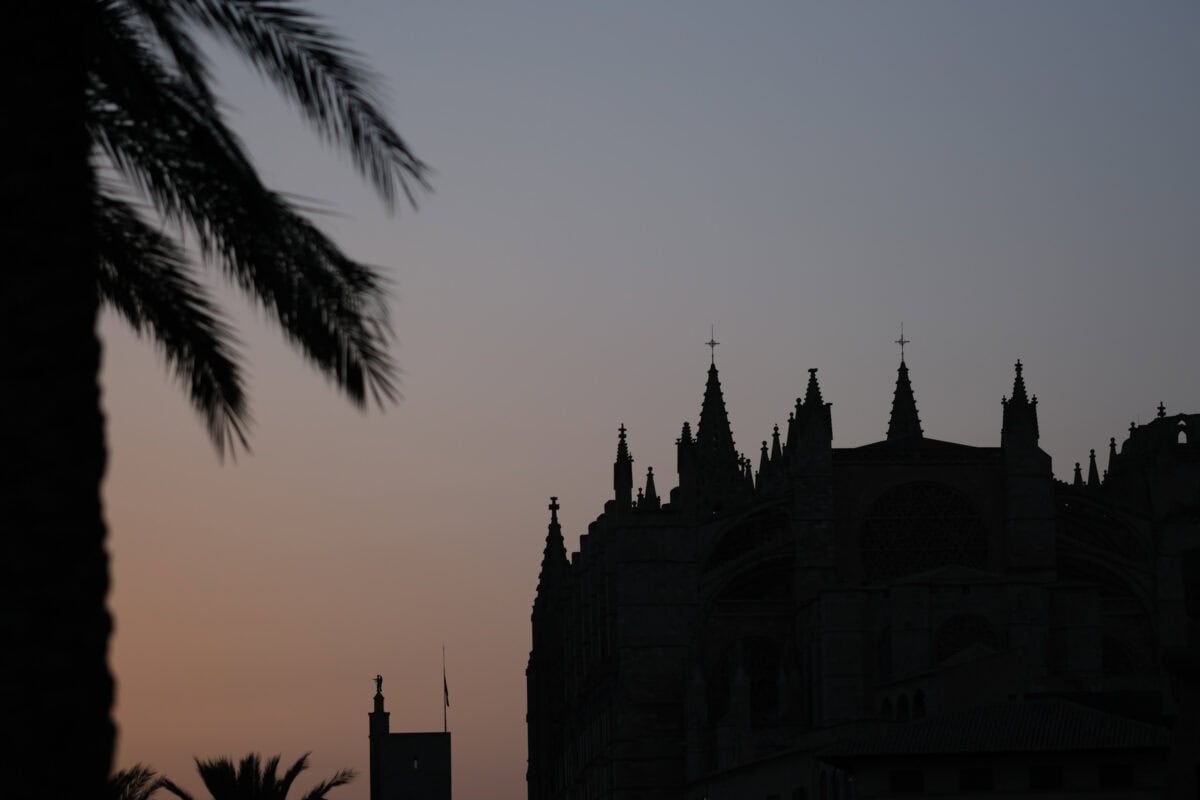
    Cathedral at sunset with palm outline

    3. Passeig des Born

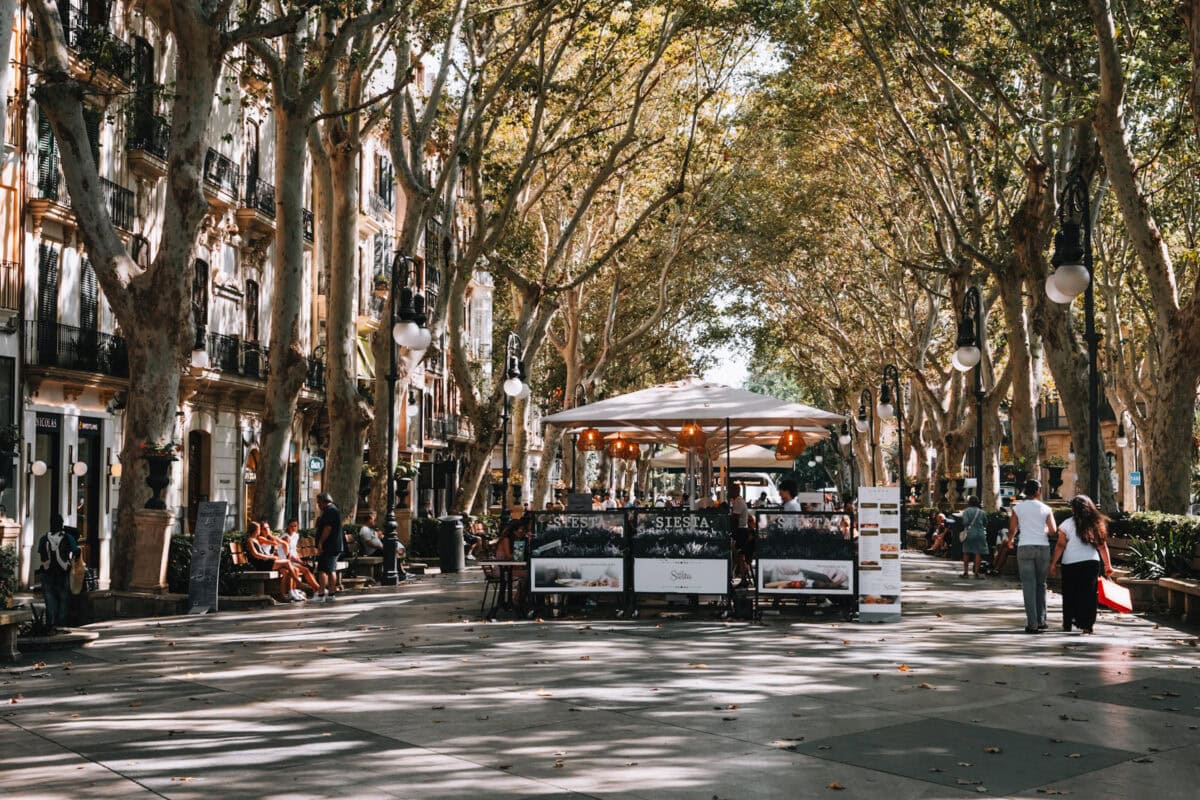
    Did you know that Palma is the perfect place for shopping? You’ll find everything from expensive designer boutiques to all kinds of branches of the big fashion chains. And the pompous Passeig des Born with its dreamy avenue is something very special: stores such as Zara Home or H&M are even housed here in beautiful old buildings.

    Passeig del Born Boulevard in Palma with a café

    During Christmas and New Year, the trees here are particularly decorated, making the entire street sparkle and twinkle every evening.

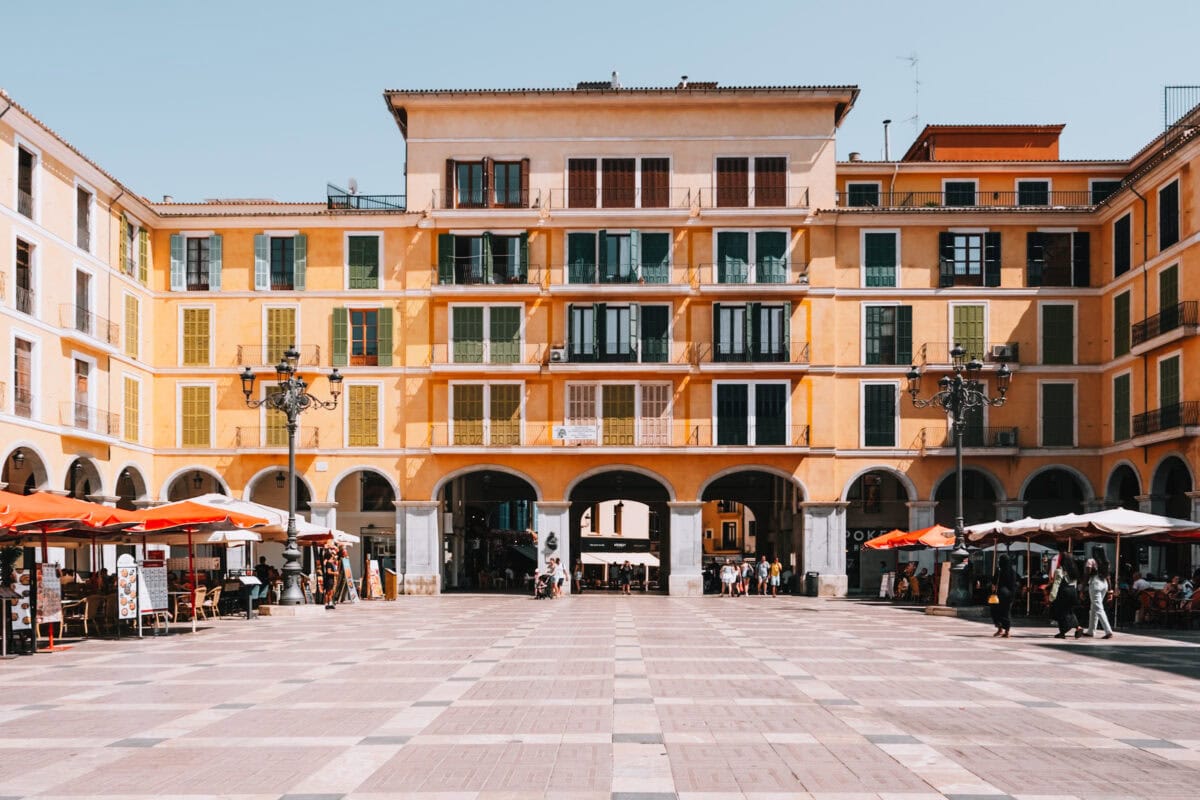
    4. Plaza Mayor

    As in many Spanish cities, the Plaza Mayor is the heart of Palma. When strolling through the old town, sooner or later you’ll pass this striking square. You’ll find many cafés and restaurants here, but most of them are tourist traps. It’s worth looking in the side streets or the smaller squares around it. You’re guaranteed to find better alternatives there.

    The empty Plaza Mayor in Palma, Mallorca.

    Are you looking for great accommodation in Palma?
    Here you will find hotels for every budget

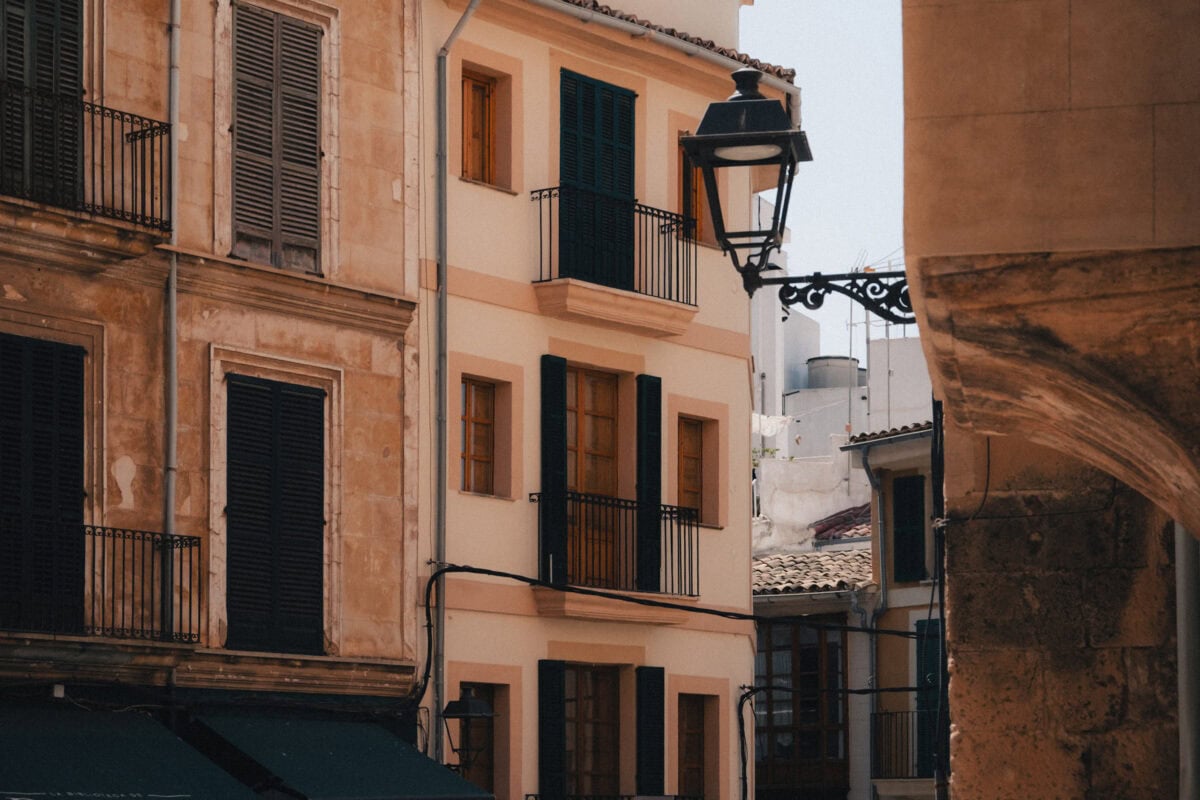
    5. The Old Town of Palma

    Palma’s old town offers a wonderfully immersive experience. You can enjoy lively shopping streets like Carrer Sant Miquel and Carrer Sindicat, full of charming stores and boutiques. At the same time, there are peaceful corners with beautiful squares and cozy alleyways, perfect for relaxing and soaking in the atmosphere.

    Historic buildings with balconies and shutters in the Old Town of Palma, Mallorca.

    My favorite places include the Plaça del Banc de l’Oli and the small square with cafés in front of the Església de Sant Nicolau.

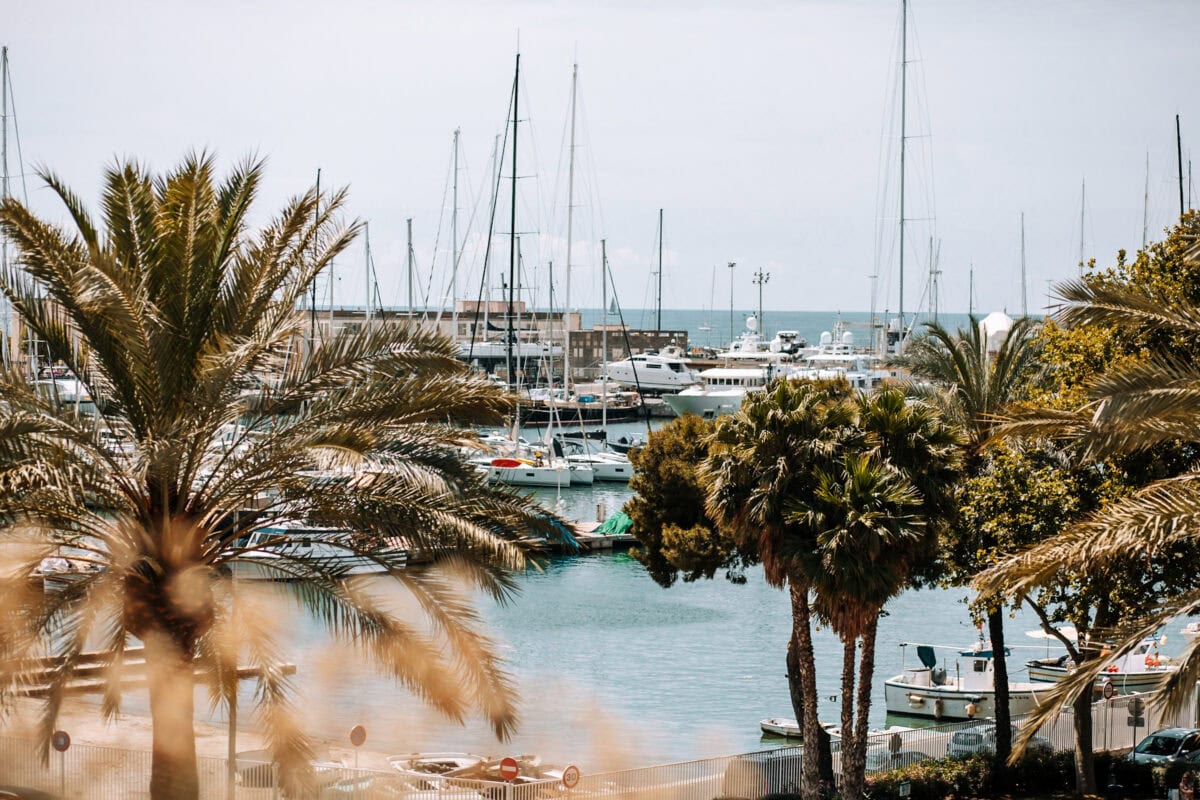
    6. Paseo Marítimo

    The Paseo Marítimo is the perfect place for an evening stroll. Enjoy the view of the luxury yachts and visit the many bars and restaurants. Especially at the weekend, the Paseo Marítimo between Avinguda de l’Argentina and Porto Pí turns into a lively party mile. And the vibe here is much more pleasant than on Playa de Palma!

    Marina with palm trees and sailboats in Palma.

    Tip: The sunset from the Varadero restaurant is the most beautiful! It is somewhat hidden at the entrance to Palma’s marina. Unlike many other high-priced restaurants around the harbor, the vibe is rather down-to-earth and many Palmesans meet here for a sundowner.

    Are you planning a visit?
    On my blog, you’ll discover a variety of helpful articles covering both popular and hidden gems of Mallorca!
    My tips for Mallorca

    7. The Trendy District of Santa Catalina

    Santa Catalina used to be an unadorned fishing village. Today, with its lively gastronomic scene, it is one of Palma’s trendy districts! You will also find one of the city’s last remaining windmills here, which once shaped the island. You should also not miss a visit to the Mercat de Santa Catalina, the district’s market hall.

    Read the full article about Santa Catalina here

    santacatalina

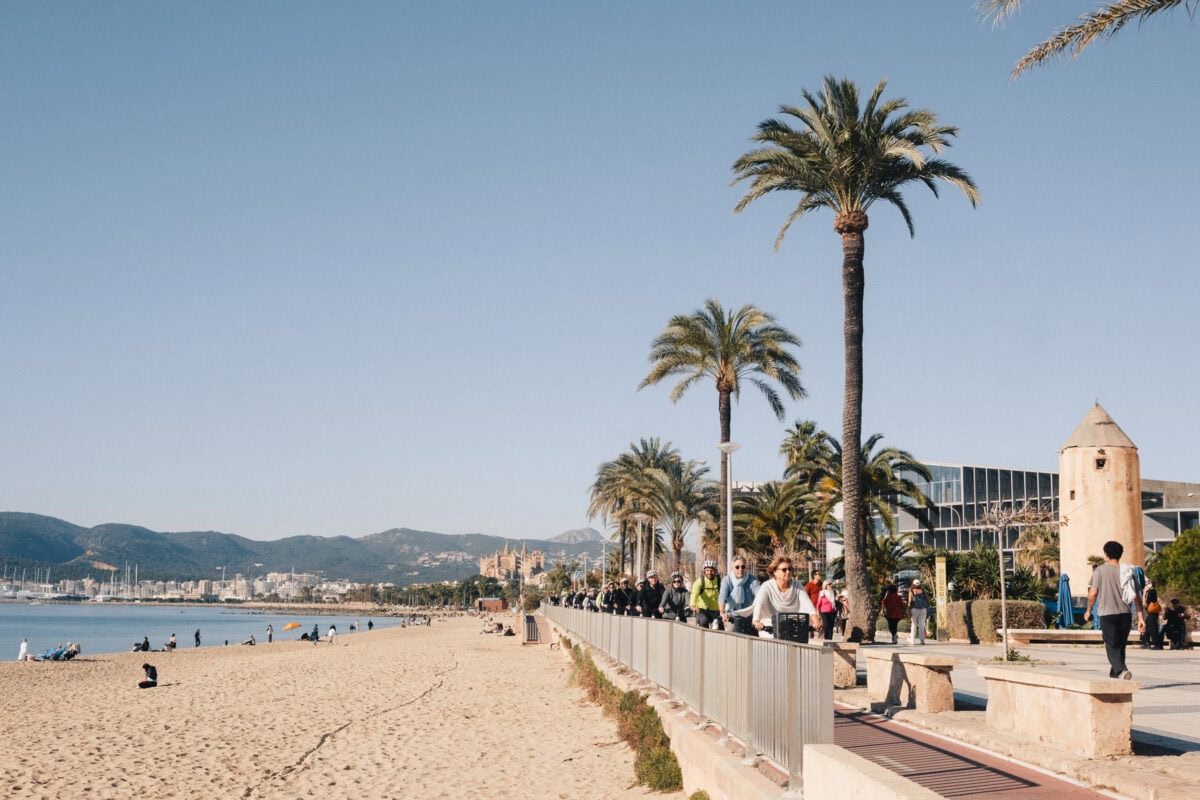
    8. Ca’n Pere Antoni Beach

    Ca’n Pere Antoni city beach is located just a short walk from the cathedral at the end of Paseo Marítimo. I especially enjoy this beach because it always has a very laid-back vibe, and you can swim comfortably here, despite its central location and proximity to the Palma port. On weekends or after work, locals often gather here to play volleyball or enjoy picnics.

    Can Pere Antoni beach promenade with a bike path in Palma, Mallorca.

    Tip: If you want to treat yourself, simply spend the day at Assaona with good drinks and delicious food. This beach club also has stylish sun loungers to chill.

    Want to see more of Mallorca? Here you will find the 20 most beautiful sights in the rest of the island!

    9. Playa de Palma

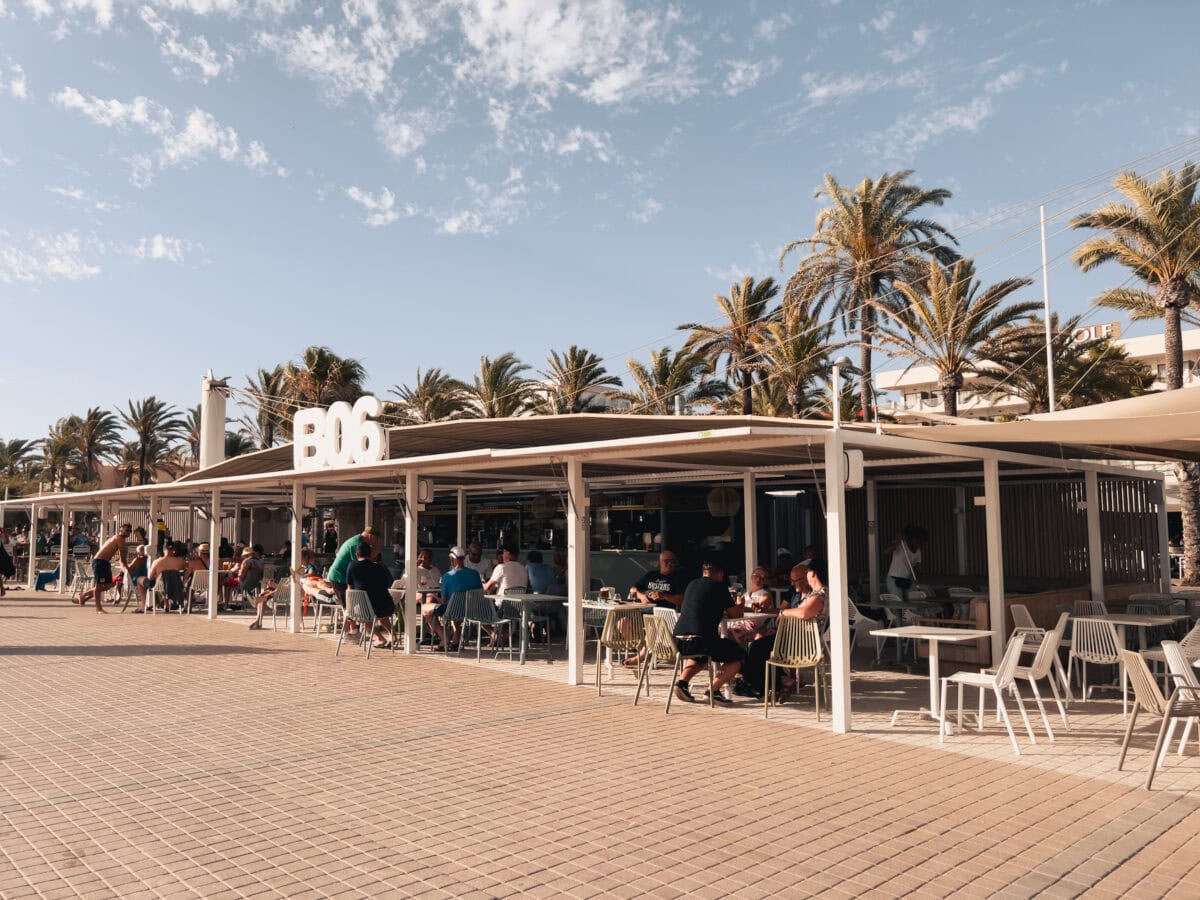
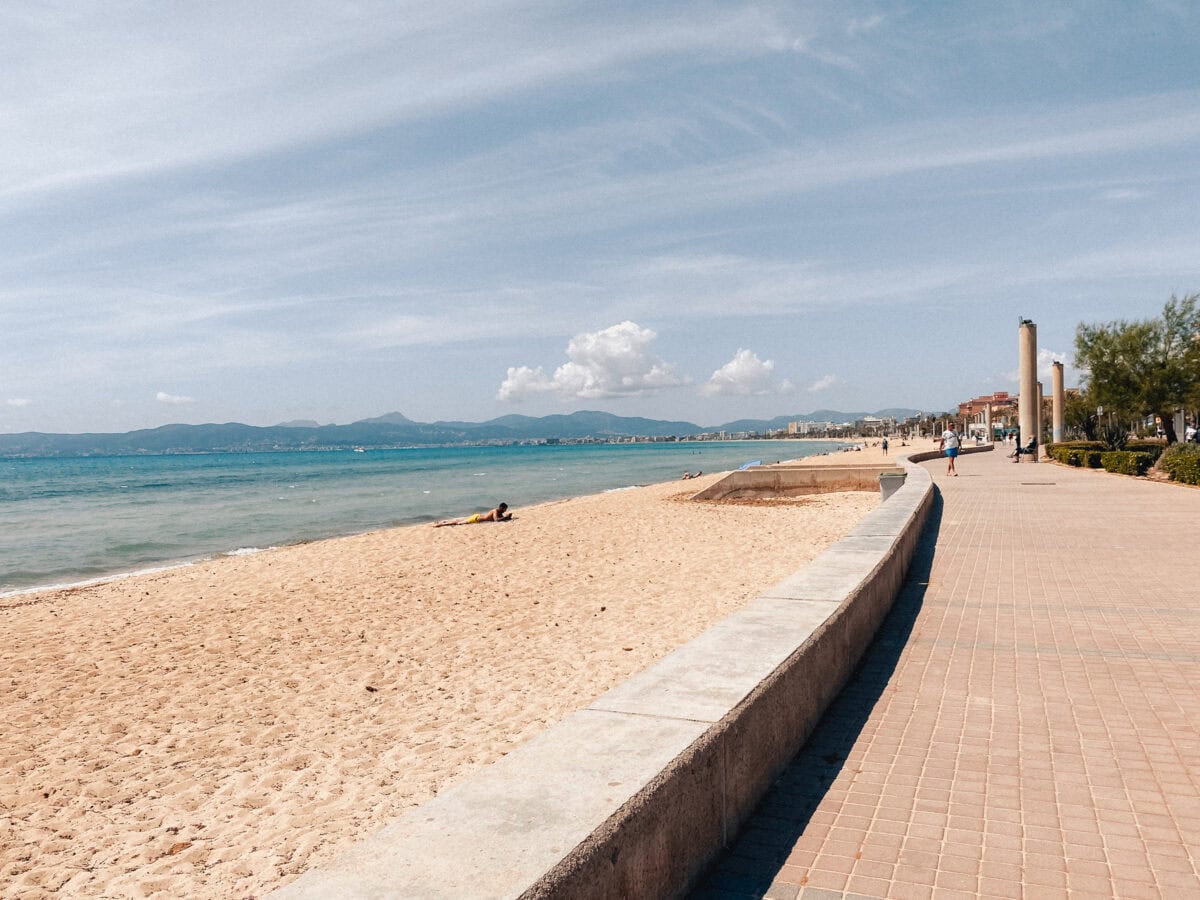
    Playa de Palma is situated east of Palma outside the city center. Famous for the lively nightlife near Ballermann 6, this four-and-a-half-kilometer-long beach has undergone significant changes recently. While partying continues, you can now also discover a few trendy venues along the promenade. The gently sloping shoreline makes it ideal for swimming.

    A beach bar marked "B06," also known as Ballermann 6, with guests sitting under palm trees.
    Balneario 6, better known as Ballermann 6 among Germans

    I wouldn’t recommend spending the night at Playa de Palma, as there are many prettier spots in Palma and across the island. Personally, I find it hard to get into the party mood with all the noise, beer, and sadly, the trash that sometimes comes with it.

    The promenade and beach in Playa de Palma, Mallorca, are separated by a small wall.

    Tip: Rent a bike and ride along the coast from Palma. It’s the best way to reach Playa de Palma via well-maintained cycle paths while enjoying the stunning sea views!

    You will also automatically pass by the charming Portixol marina and the neighboring district of Molinar, one of Palma’s most beautiful spots!

    Here you can find my insider tips for Molinar

    10. Banys Arabs (Arab baths)

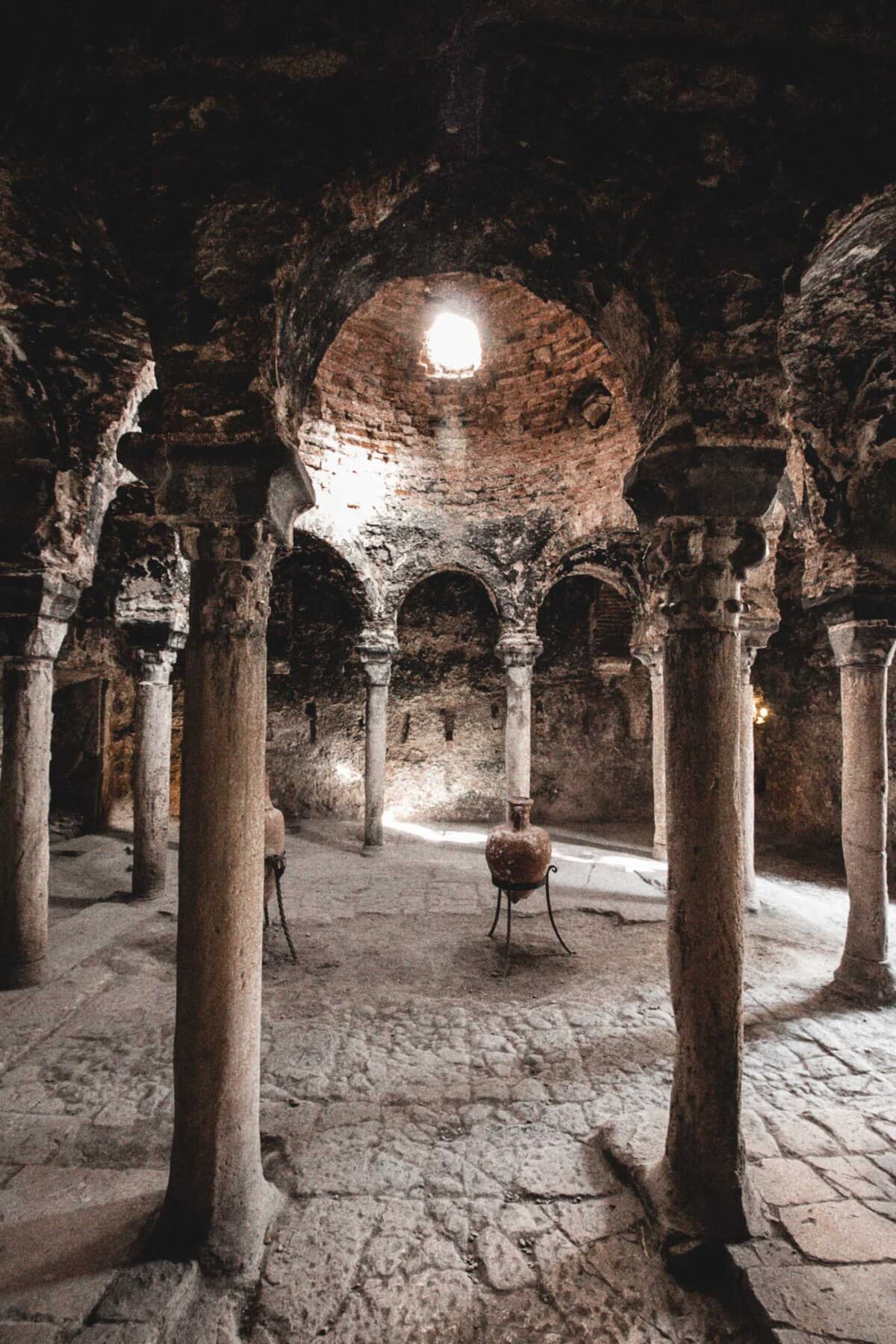
    The centuries-old Arab Baths (Banys Arabs) are tucked away on a small side street near the cathedral and stand as one of the few remaining examples of Moorish architecture in Palma. The steam bath, illuminated by skylights, offers a fantastic photo opportunity!

    banys arabs palma de mallorca

    Tip: The Arab Baths are located in the middle of an enchanting garden. Here you can take a wonderful break from the hustle and bustle of the old town or the cathedral.

    Read the full article on the Banys Arabs here

    banys arabs palma de mallorca

    11. Ferrocarril de Sóller

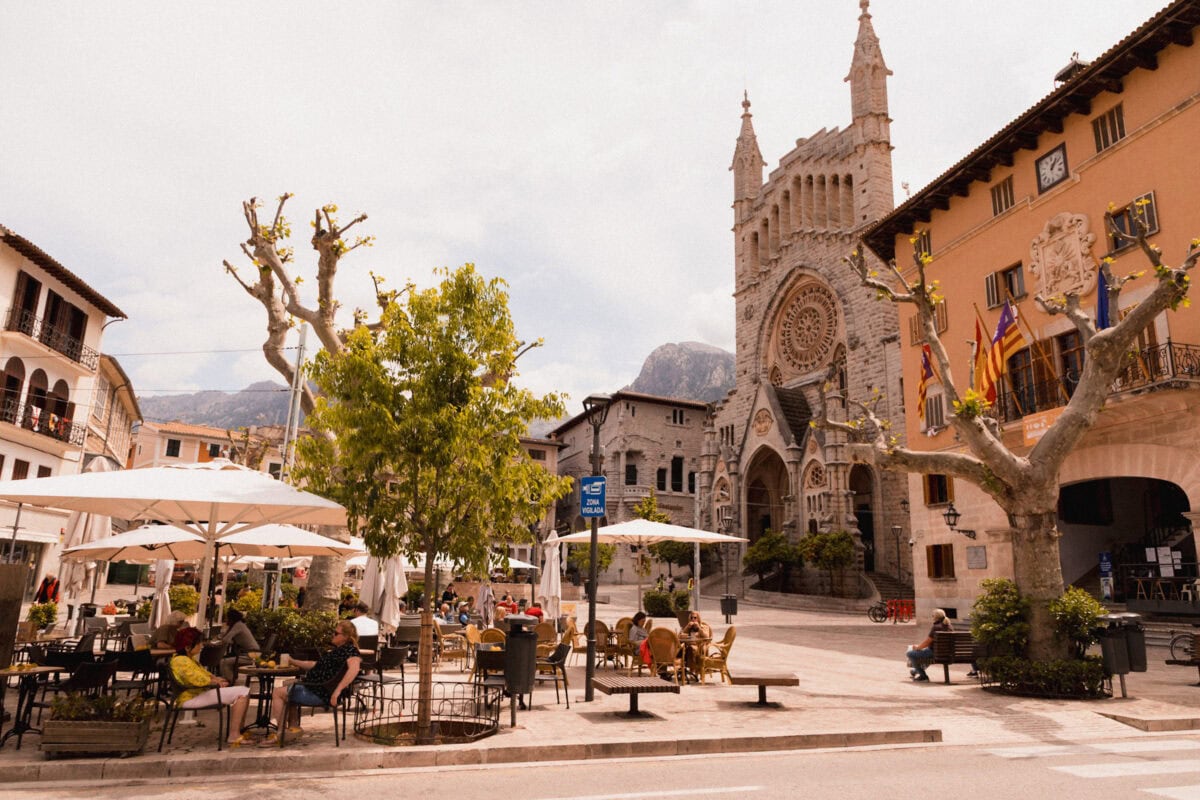
    A must-do experience is riding the historic train to Sóller, known as the “Red Lightning”. Despite its name, there’s nothing lightning-fast about this train: the wooden carriages offer a comfortable journey through the stunning Mallorcan scenery from Plaza España in Palma’s center to Sóller. From there, you can hop on a historic streetcar to Port de Sóller. Make sure to allocate a full day to enjoy the entire trip.

    An old train compartment on the historic Tren de Sollér, with a view of trees and buildings.

    The tickets are quite costly, but they are definitely worth the money! Tip: Opt for a return ticket that includes the streetcar ride, as it’s the most affordable choice.

    Buy tickets online here

    If you want to see even more of the island, there are other tours from Palma that only include one route on the Red Lightning, but also take you to Lluc Monastery and Sa Calobra – a nice alternative!

    Book a day tour around the island here*

    Plaça de sa Constitució with the Església de Sant Bartomeu and a café with outdoor seating in Sóller, Mallorca.

    12. Sa Llotja

    The former Sa Llotja stock exchange is one of the most beautiful buildings in Palma. During the day you can just go inside and admire the great architecture; sometimes the large hall is also used for art exhibitions. There are many bars and restaurants in the square around it and the whole place has a lovely atmosphere. Perfect for a little Aperol Spritz or some delicious tapas.

    View from Sa Llotja in Palma of a street café with umbrellas and palm trees.
    Gothic window and column at Sa Llotja, Palma.

    13. Mercat de l’Olivar

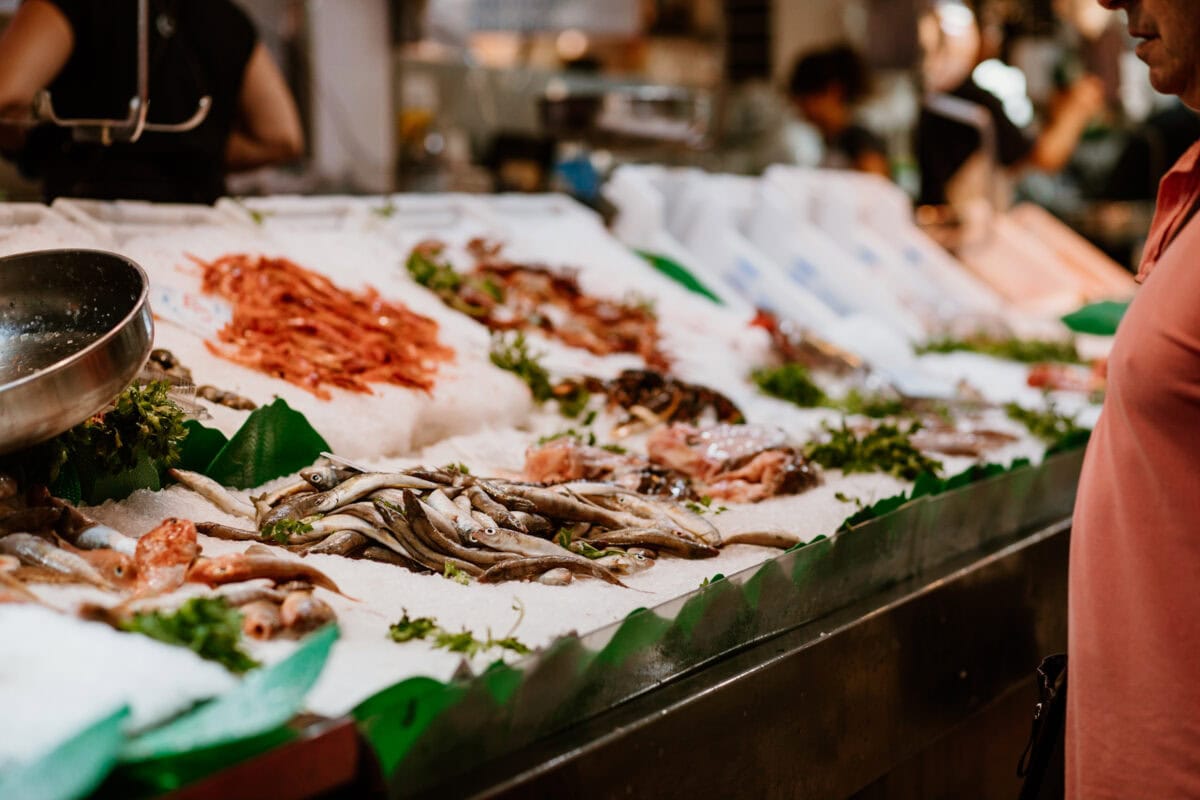
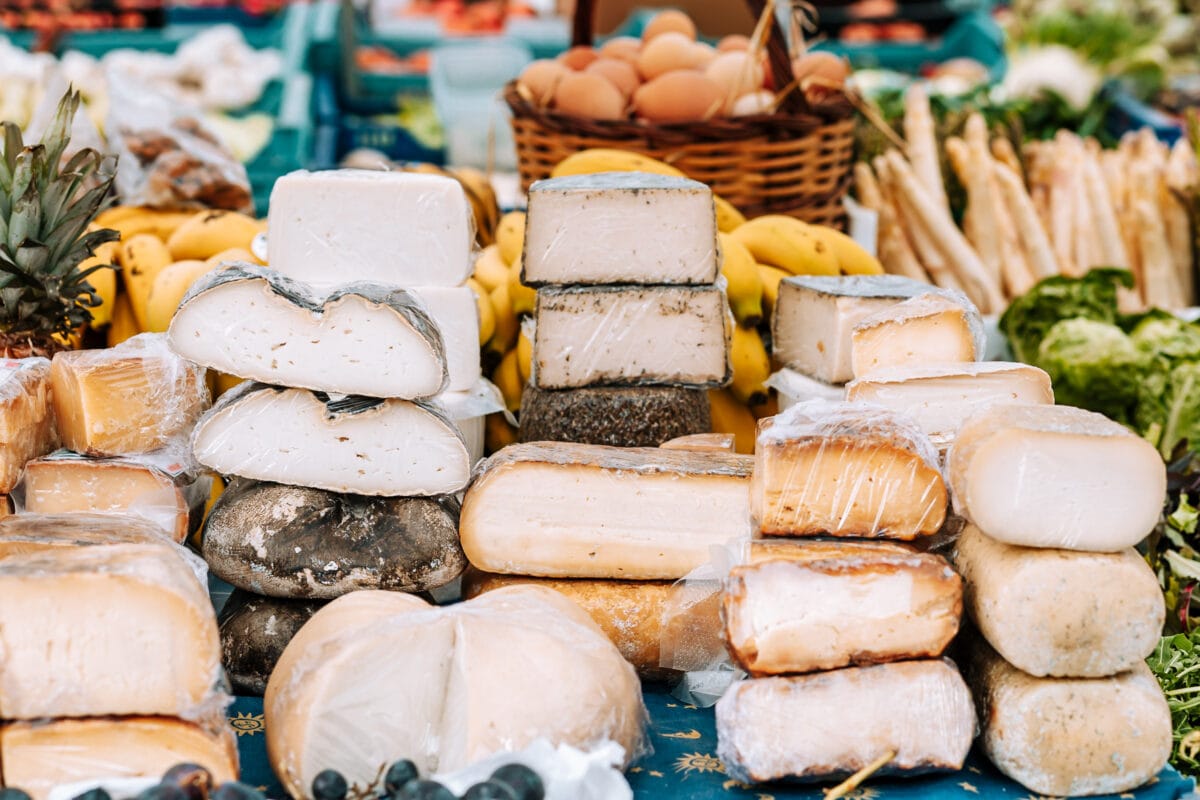
    The Mercat de l’Olivar is a traditional market hall right in the center of Palma. If you are looking for a local culinary experience, this is the place for you! Especially in the mornings, you will find everything from fresh vegetables to fish, seafood and delicacies such as cheese and ham.

    Fresh fish at a market stall at the Mercat Olivar in Palma, Mallorca.

    Tip: At lunchtime, there are also many stalls offering a typical “menú del día“, a budget-friendly meal with a starter, a main course, and a dessert. Drinks like water, a soda, or a glass of house wine are usually included.

    A variety of cheeses at a weekly market with fruit

    There are also some other great market halls and weekly markets in Palma: The most beautiful markets in Palma

    If you love strolling through markets as much as I do, then there are a few really big and well-known farmers’ markets on the island that you shouldn’t miss out on: The most beautiful markets on Mallorca

    14. Museum Es Baluard

    From Es Baluard, you not only have a fantastic view of the port of Palma, but you can also admire an impressive collection of modern artworks by Pablo Picasso, Joan Miró and Salvador Dalí. Other highlights include works by contemporary artists such as Banksy and Ai Weiwei. Interesting temporary exhibitions are also held regularly.

    Tip: Admission is free on Thursday evenings.

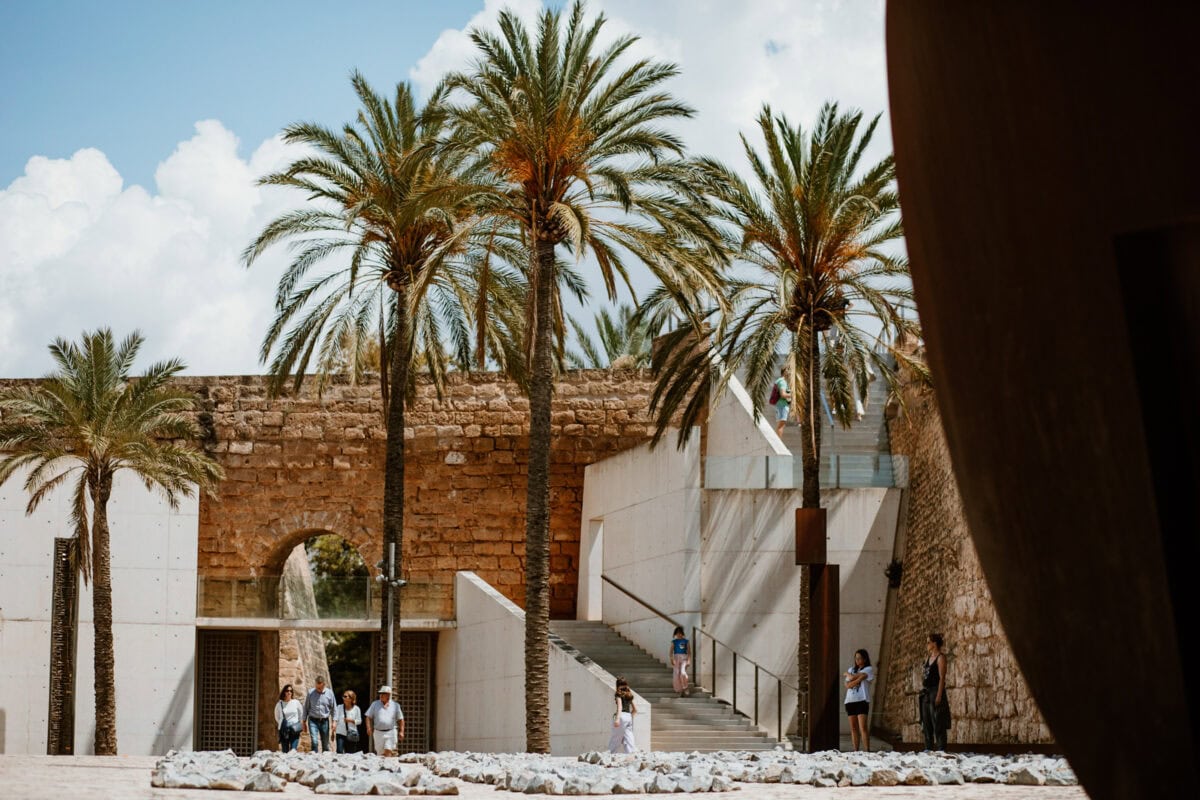
    Ancient stone wall and entrance to the Es Baluard Museum in Palma, Mallorca.

    By the way: If you are interested in modern art and you are making a detour to the north of Mallorca, you should also pay a visit to the Museo Sa Bassa Blanca in Alcúdia!

    15. Pueblo Español

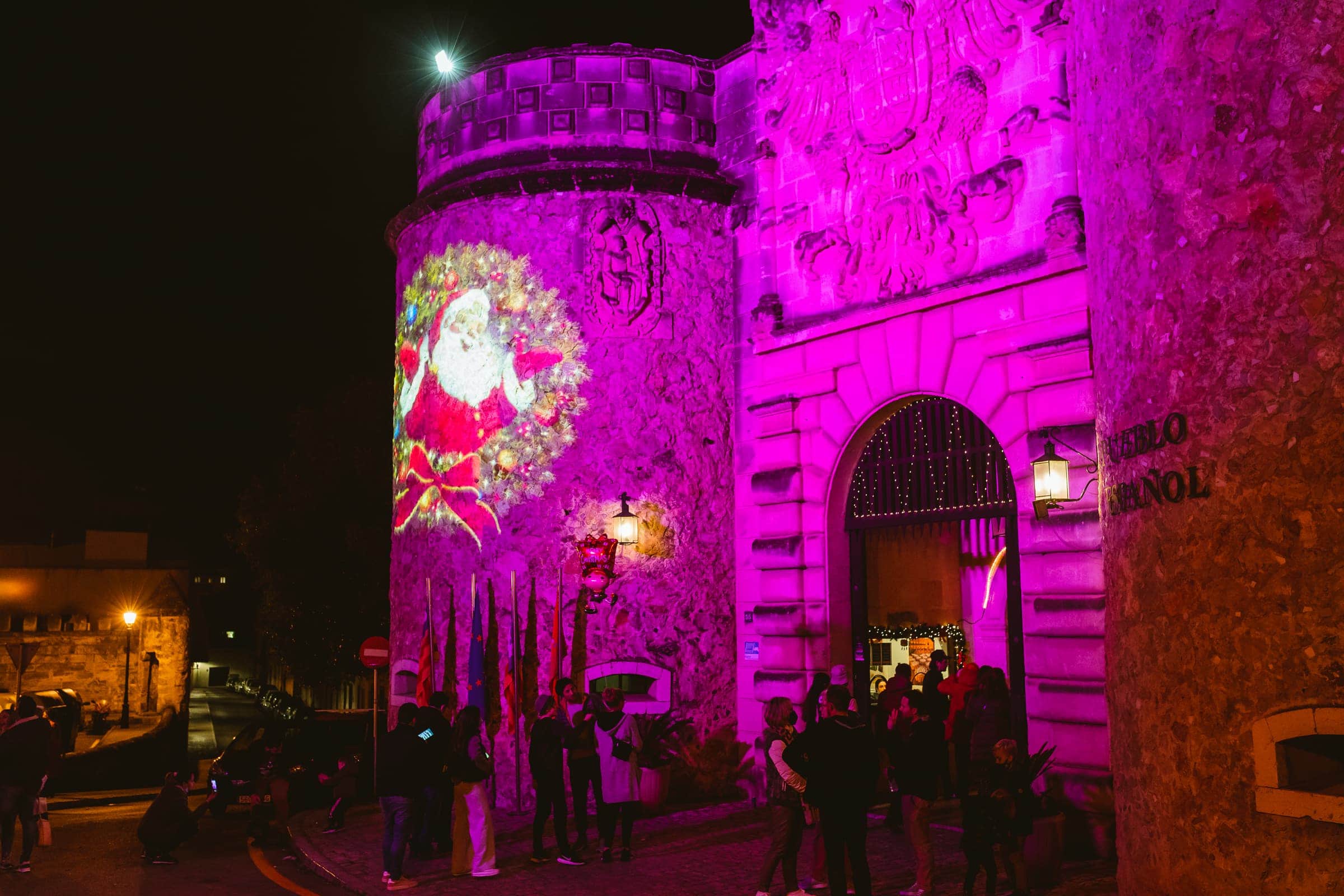
    The Pueblo Español is a popular tourist site where visitors can enjoy a miniature version of Spain. It features reconstructions of Spain’s most famous landmarks in the form of a small village.

    Tip: This place becomes especially stunning during Christmas. In December, the Pueblo Español turns into Palma’s most charming Christmas Market, where you can feel festive with a mug of mulled wine and browse for Christmas gifts at numerous small stalls offering arts and crafts.

    Bonus tip: Museu Fundación Juan March

    You will probably pass by one way or another, as the Museu Fundación Juan March is located in the middle of the pedestrian zone of Carrer Sant Miquel in the heart of Palma’s old town. However, most tourists simply walk past here, which is why this spot is a real insider tip!

    The museum hosts works by 20th-century Spanish artists and regularly organizes cultural events. Even if museums aren’t your main interest, it’s worth visiting—especially the patio of the old town house, which is truly impressive.

    Best of all: admission is free.

    Even more insider tips for Palma: Palma is a city close to my heart and there is always something new to discover. If you need more up-to-date tips from the island’s capital, follow me on Instagram or browse through my ever-growing collection of blog articles about Palma.

  • The Best Things to Do in Donostia-San Sebastián

    The Best Things to Do in Donostia-San Sebastián

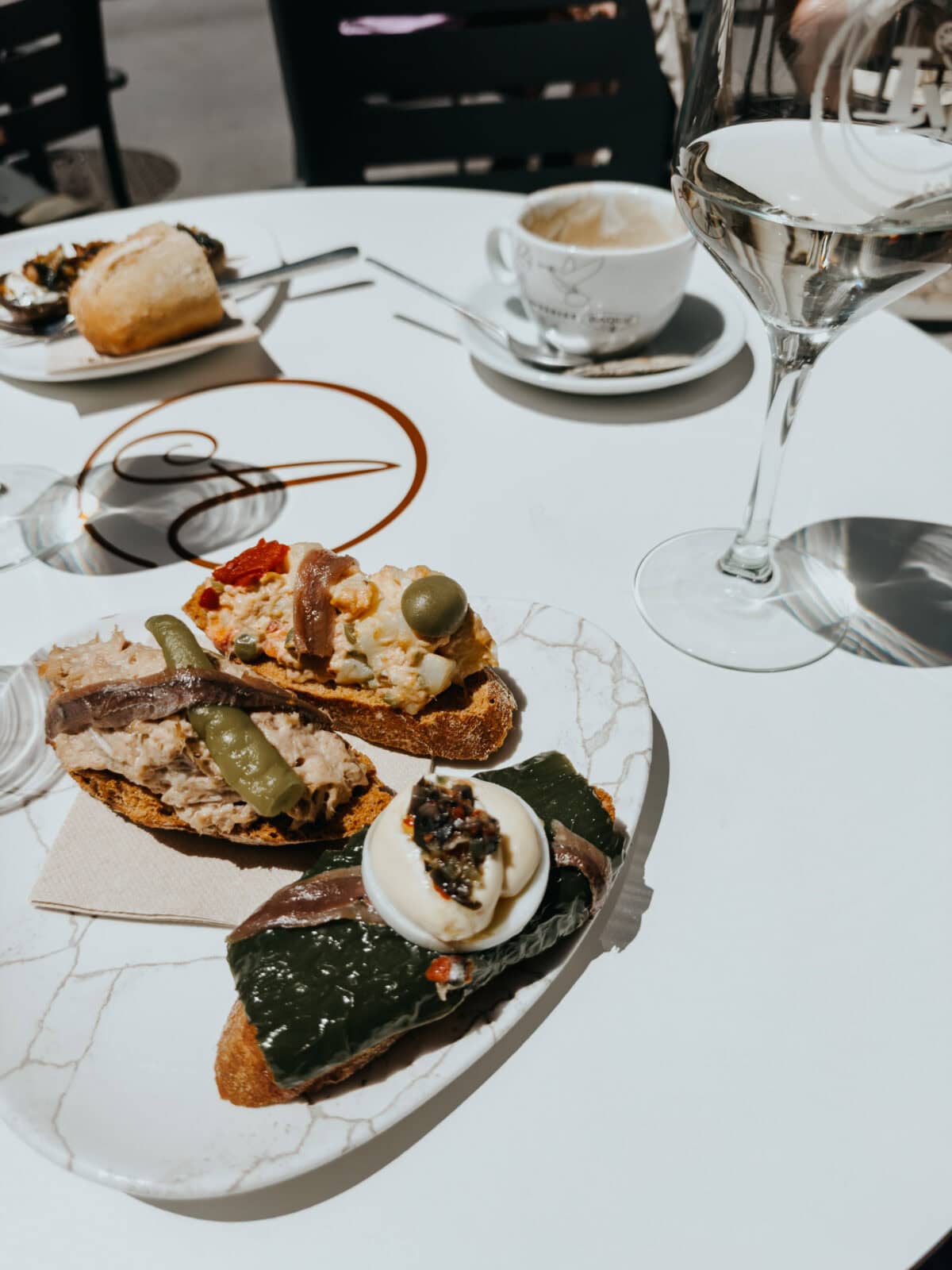
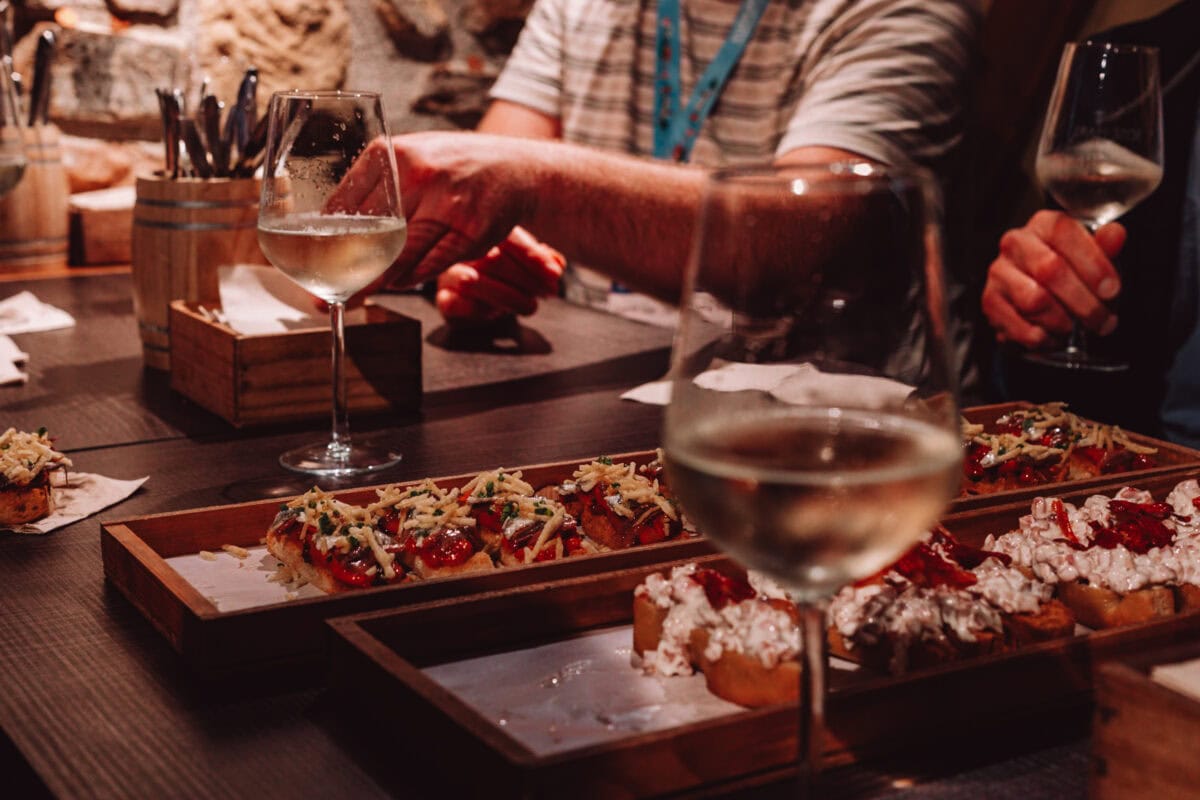
    Donostia / San Sebastián really is a special destination: with 180,000 inhabitants, it is the third largest city in the Basque Country, but exudes the elegant charm of a wealthy spa town from days gone by. The old town of San Sebastián is not only picturesque, but also a foodie’s dream come true: Pretty much every visitor falls for the refreshing txakoli and elaborate pintxos in no time. And don’t even get me started on the breathtaking beaches. Find out what else you can experience in San Sebastián in this article.

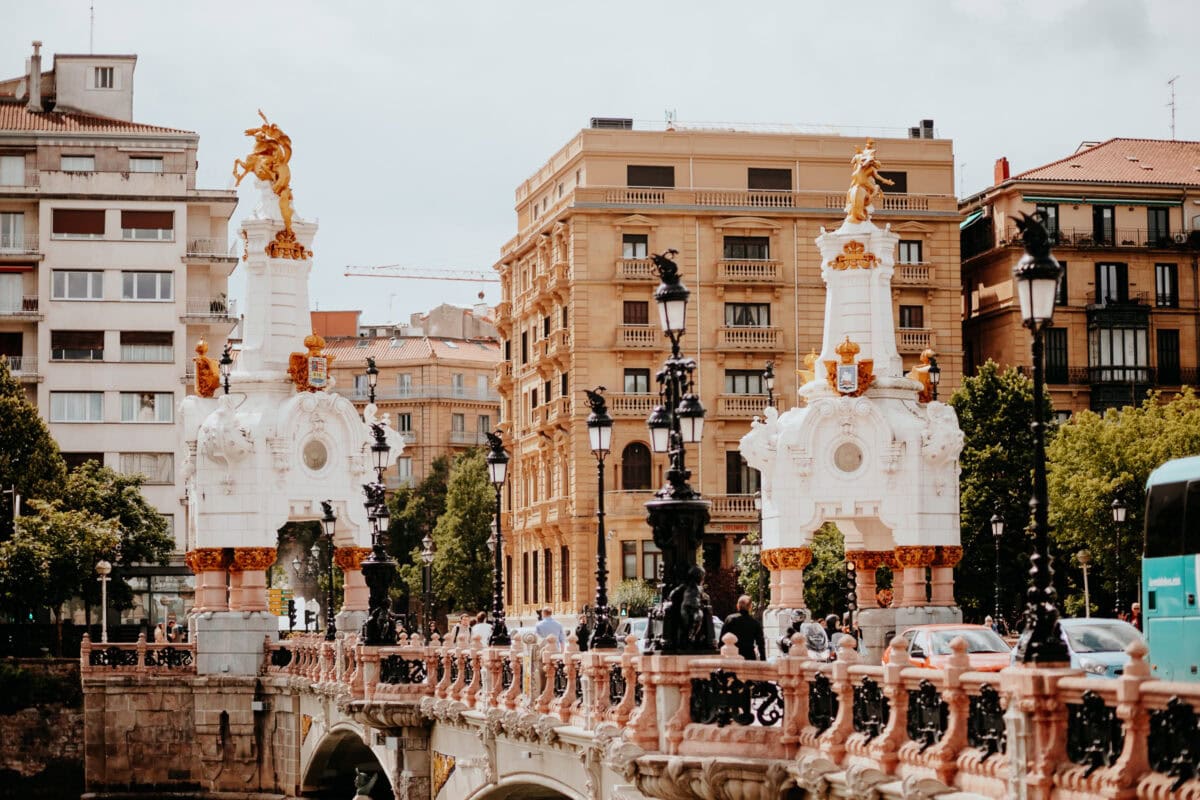
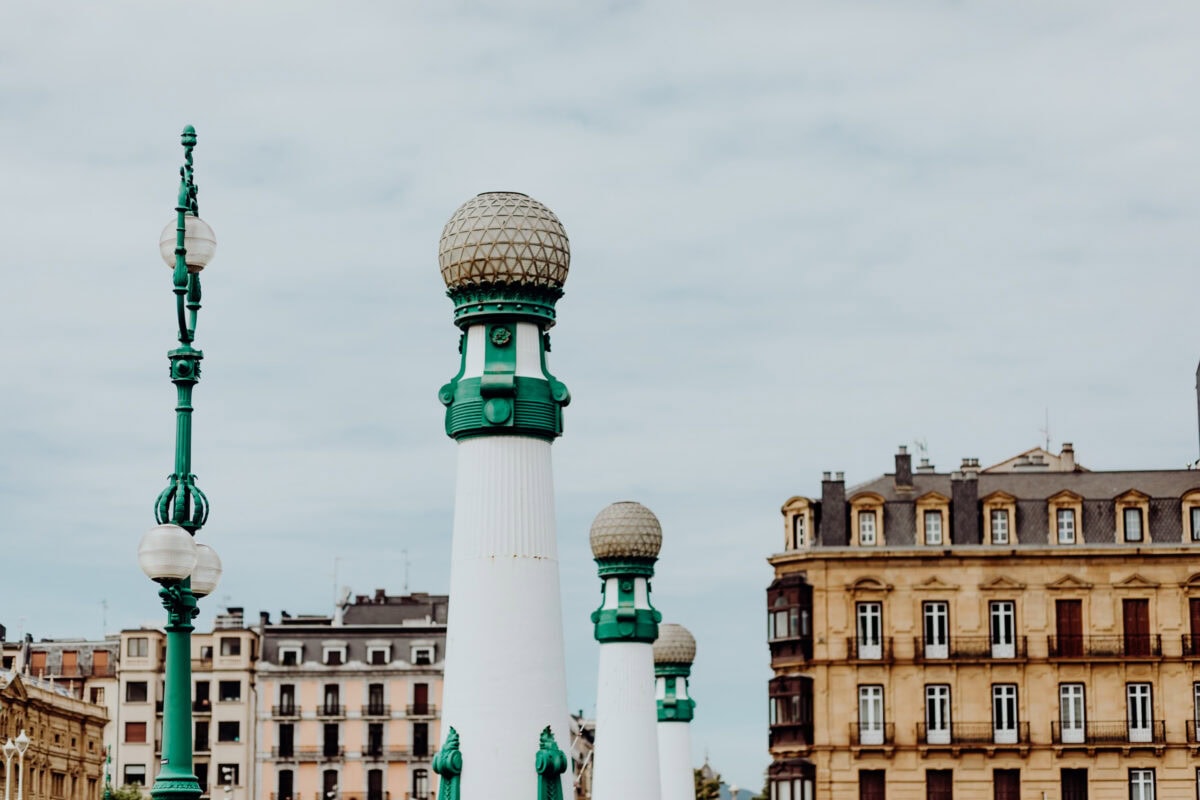
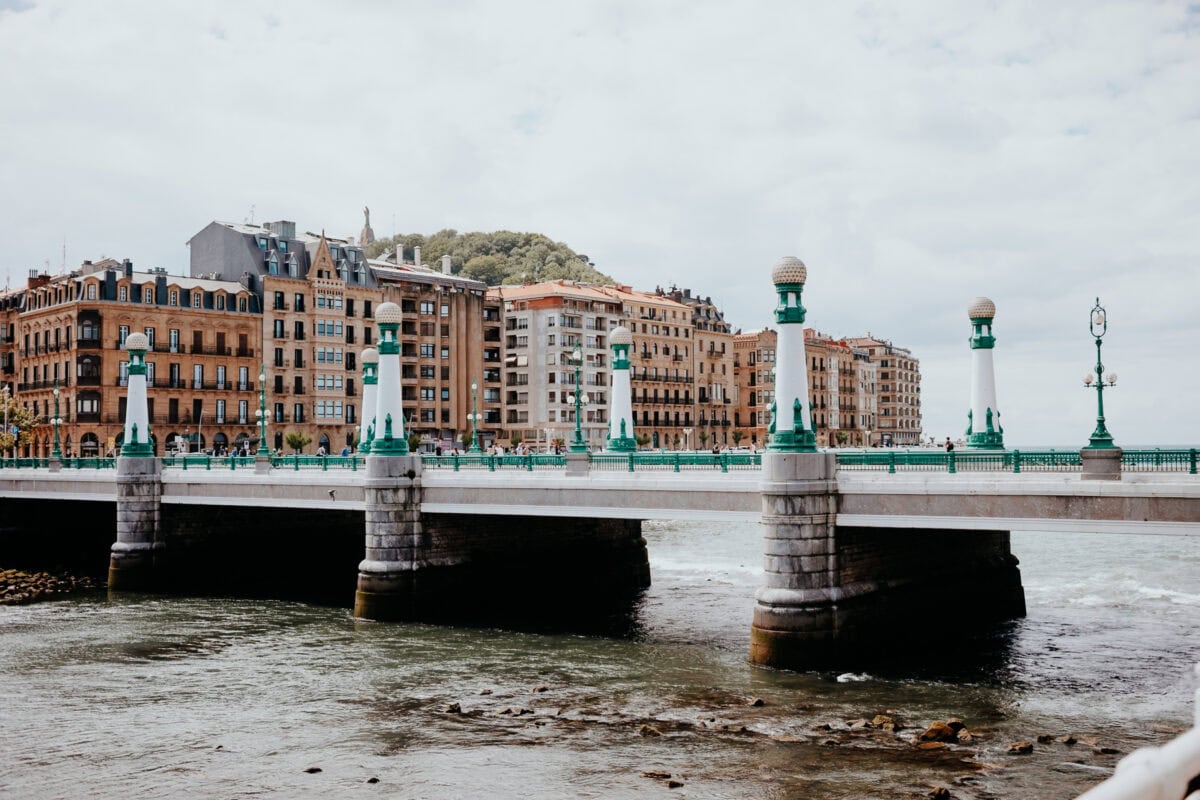
    Historical bridge in front of townhouses with statues.

    What you must see in San Sebastián: The most important sights

    San Sebastián, or Donostia as it is known in Basque (officially it is also called Donostia-San Sebastián), has some real highlights to offer. You might even be reminded of one or two spas: No wonder, as the Queen of Spain chose San Sebastián as her summer residence at the end of the 19th century, laying the foundations for the social boom. Numerous buildings from this period still adorn San Sebastián today and make it one of the most beautiful cities in Spain.

    Historical building and lampposts in city view.

    1. Old Town (Parte Vieja)

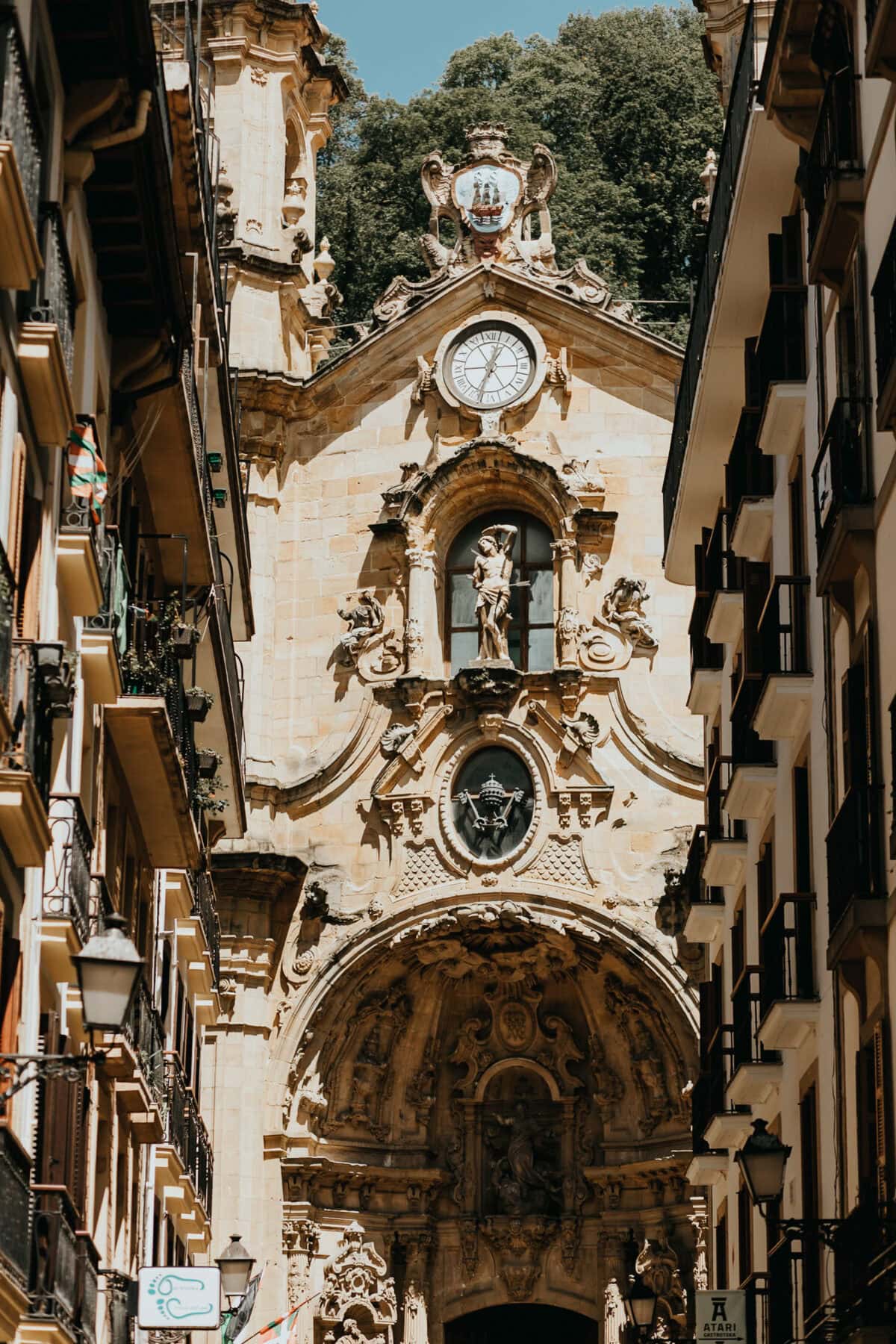
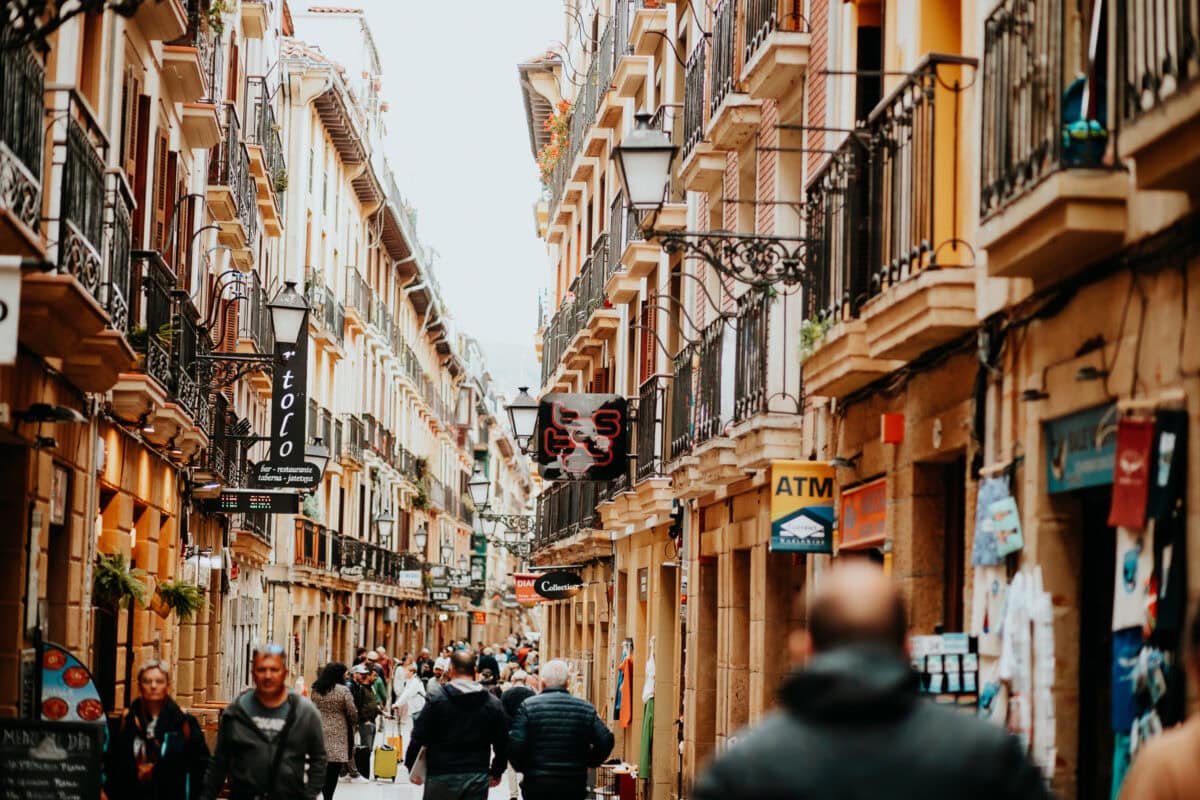
    The Old Town is the heart of San Sebastián. Narrow streets, historic buildings and countless pintxo bars give it its charm. In the middle of it you will find the impressive Basilica de Santa María del Coro and, somewhat hidden, the central Plaza de la Constitución, which is surrounded by arcades and small restaurants.

    Baroque church facade with clock in San Sebastián Old Town
    Classic French building facade with balconies and shutters
    Lively Old Town shopping street in San Sebastián with passersby

    2. Playa de la Concha & Ondarreta

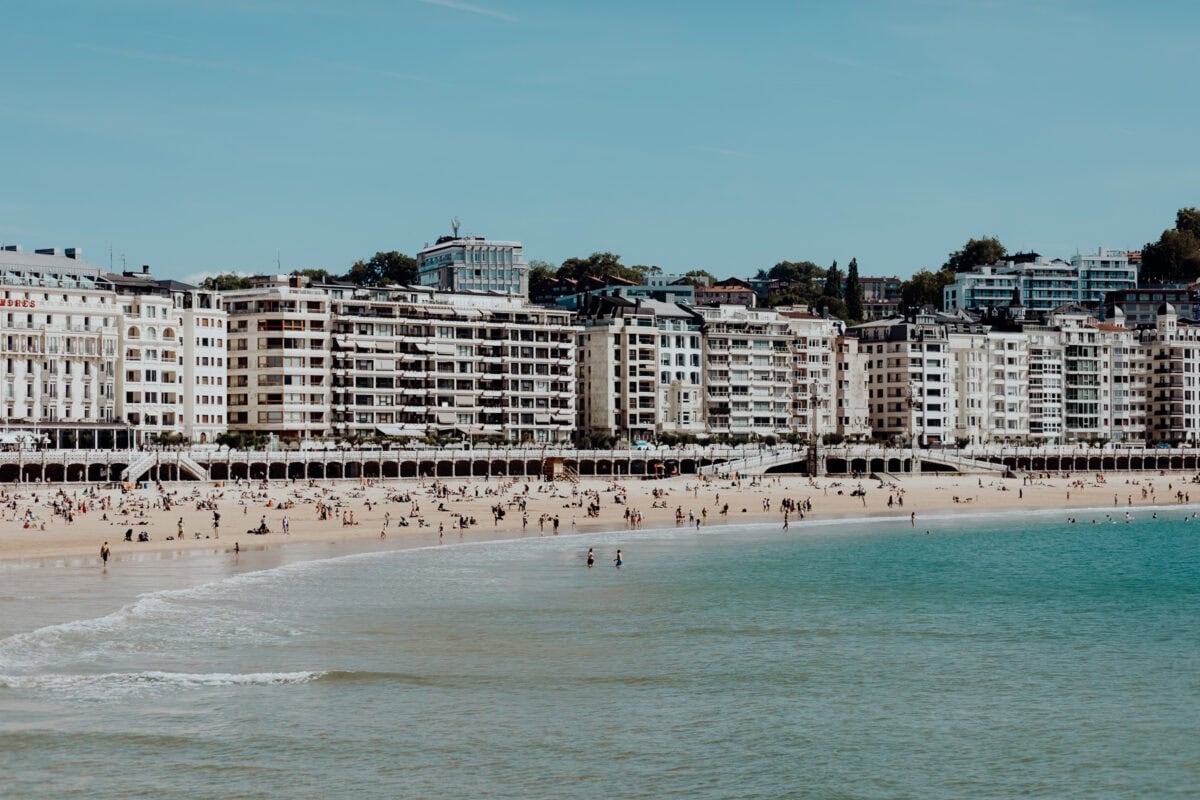
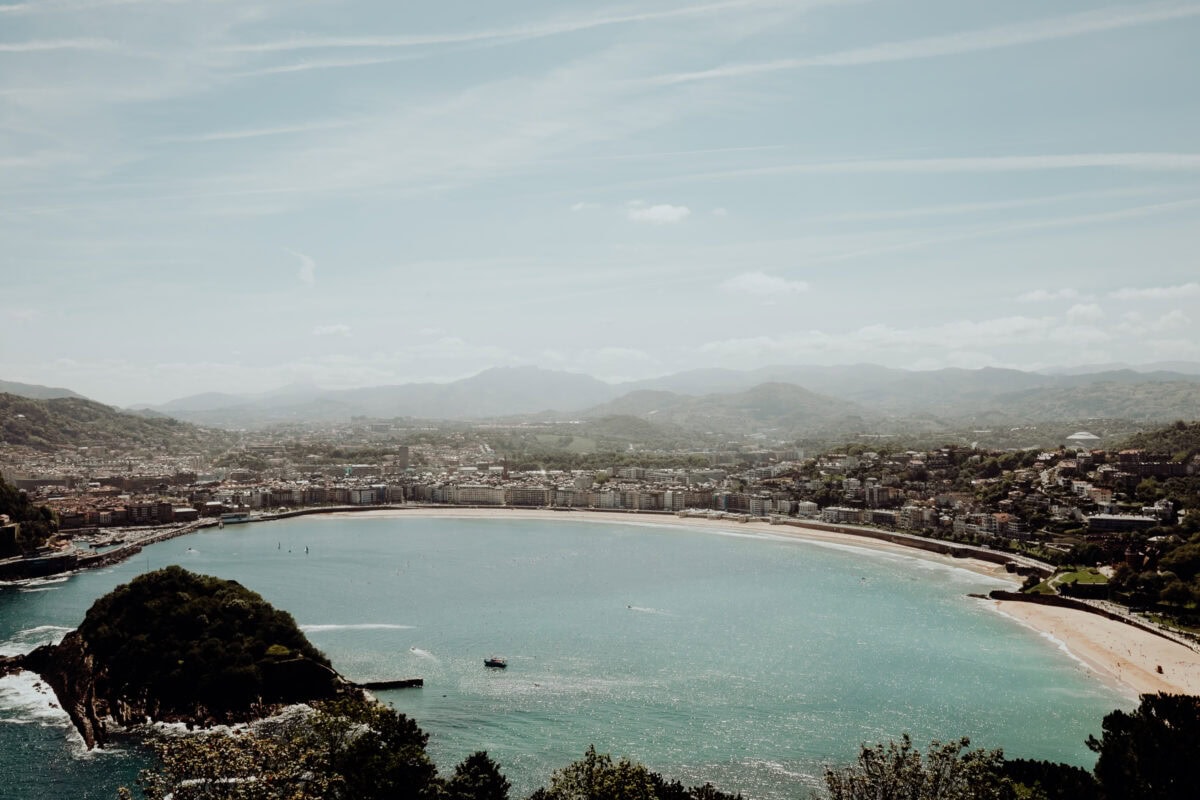
    With the Playa de la Concha, San Sebastián has an impressive city beach. According to various beach rankings, the crescent-shaped bay of La Concha with its fine sand and turquoise blue water is one of the most beautiful beaches in the world. As a beach fan, La Concha has long been on my bucket list and I was not disappointed.

    Lively city beach with white buildings and turquoise sea
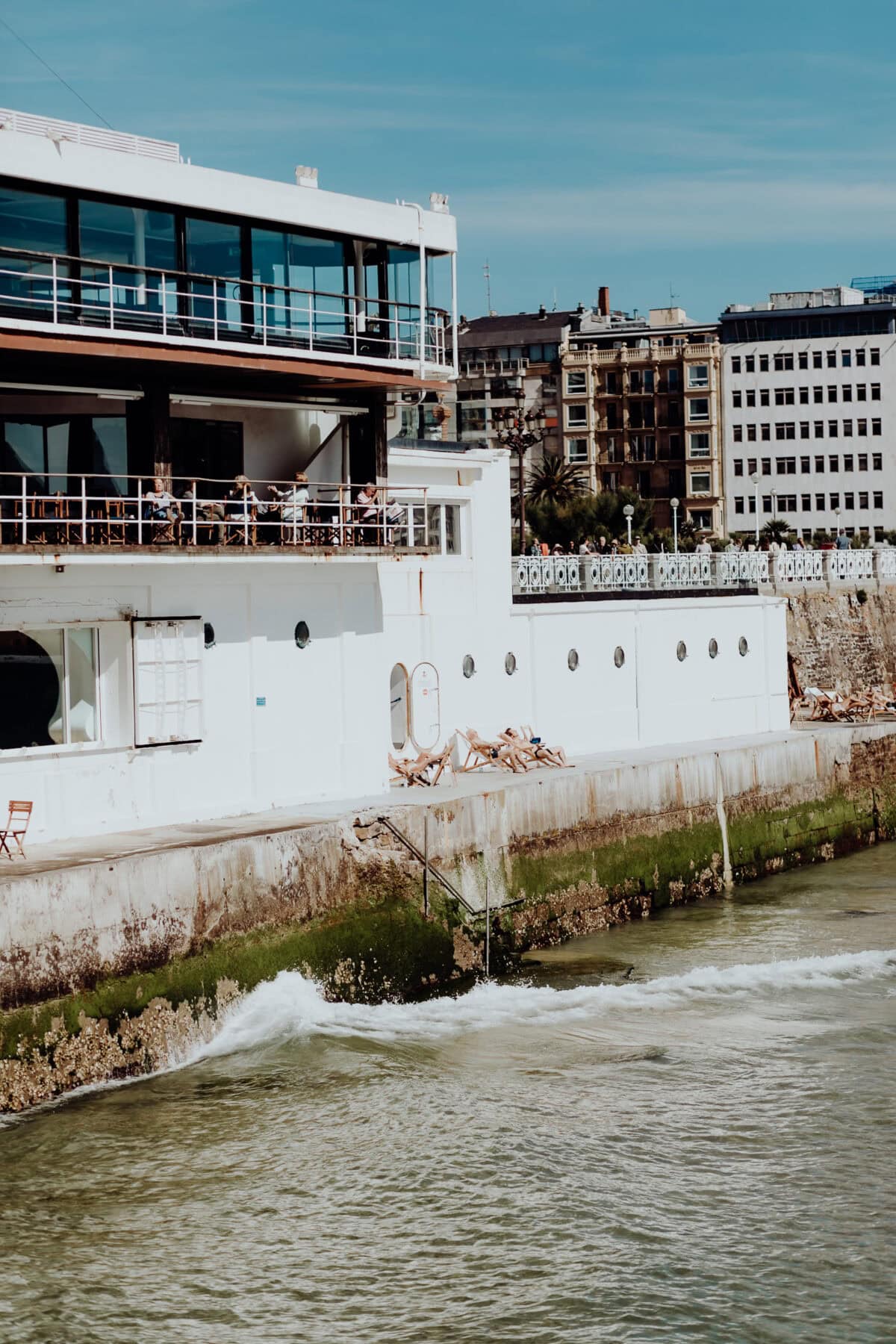
    White building by the water with terrace and sun loungers

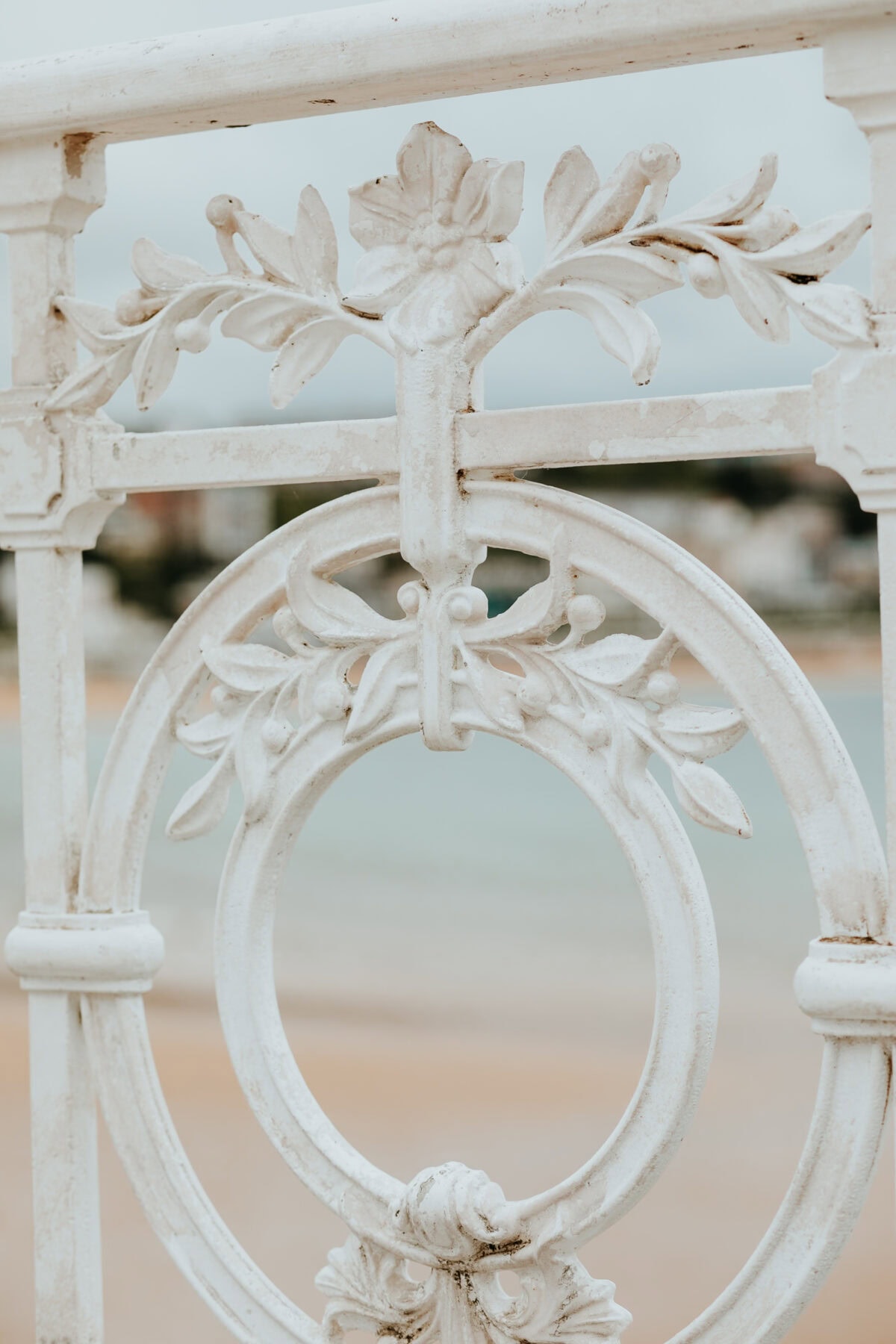
    San Sebastián was the summer residence of the Spanish Queen Maria Christina from the end of the 19th century, and especially along the beach promenade you still have the feeling of being in an elegant spa town like in the old days. The elaborately decorated railing of the promenade with its filigree floral pattern is now one of the city’s landmarks.

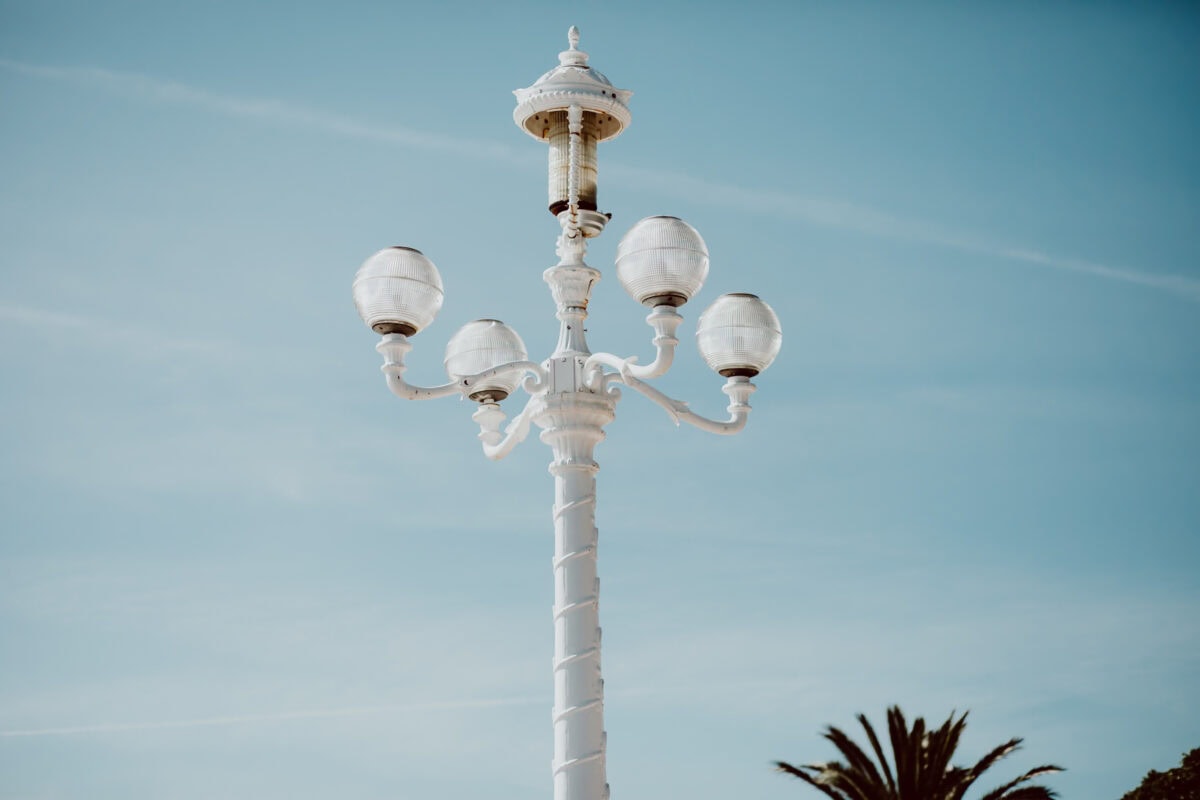
    White historic lamppost with five globe lights against a blue sky
    White ornate wrought-iron railing with floral ornaments by the sea

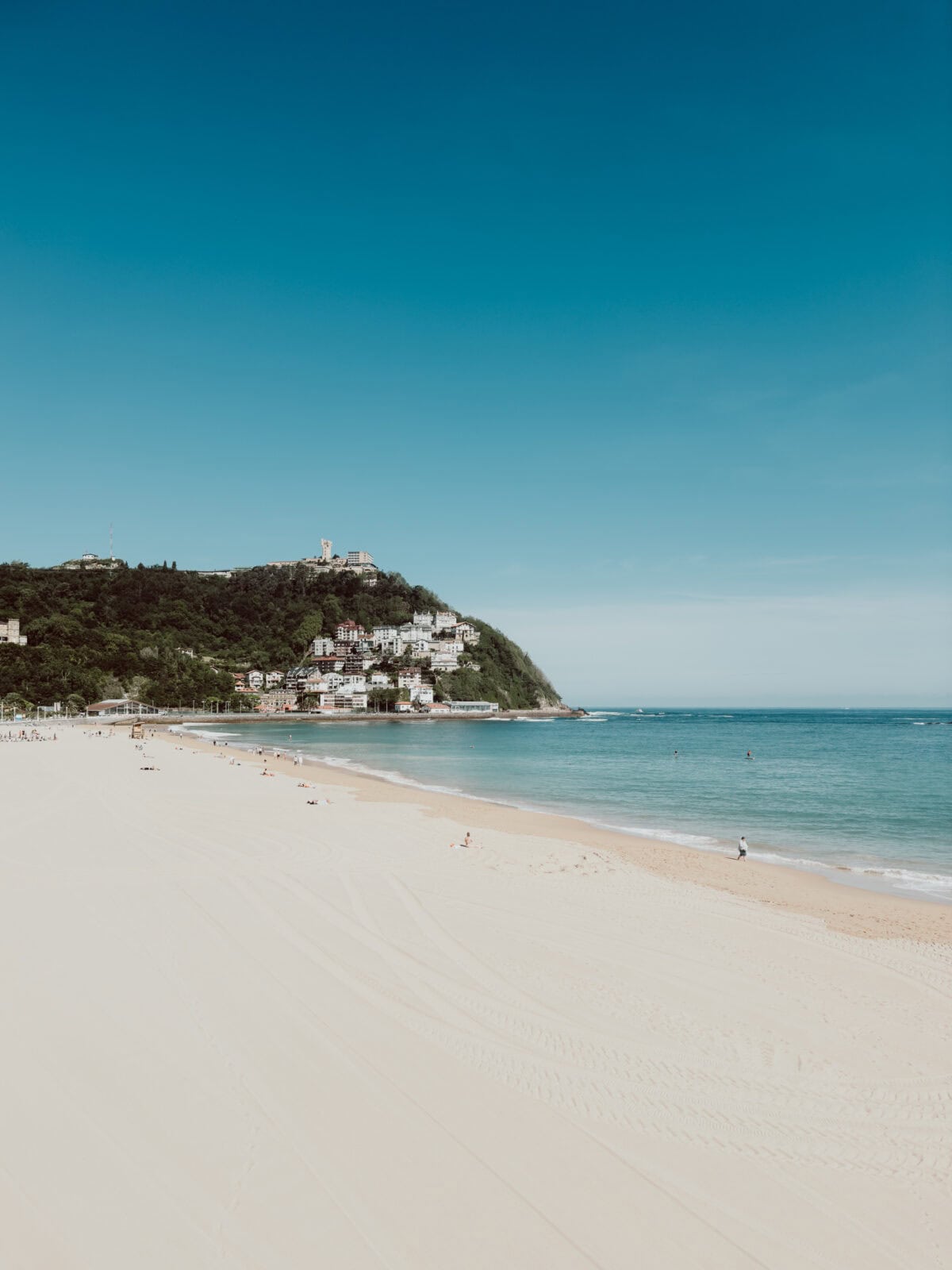
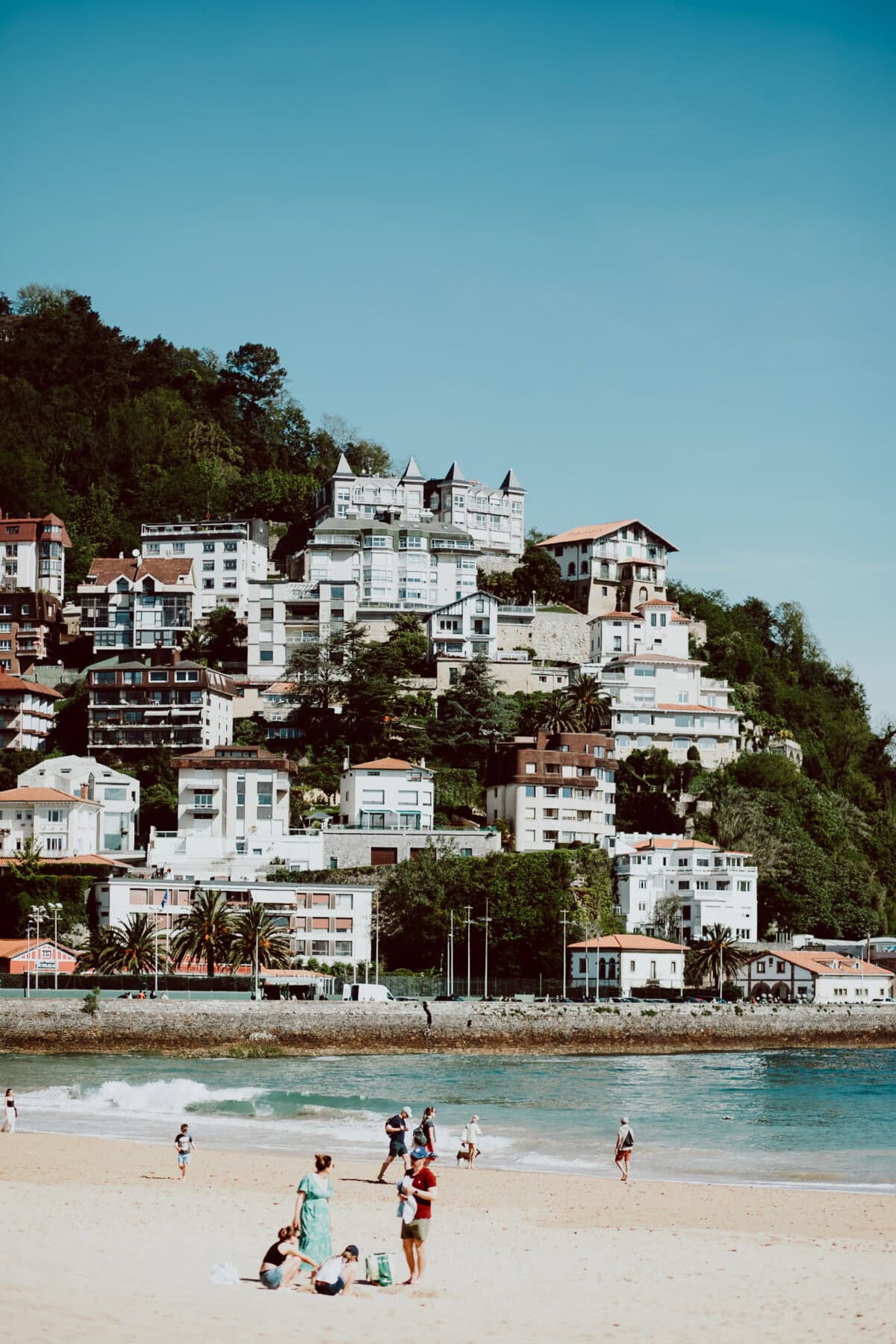
    A little further away from the Old Town is the Playa Ondarreta. The beach here is also wide and beautiful, and the buildings around it are not as high and massive as on the Playa de la Concha. Perfect for chilling out for a few hours and enjoying the unique landscape.

    Expansive sandy beach with hill and village in the background
    Sandy beach with people and white houses on the hill

    3. Monte Urgull

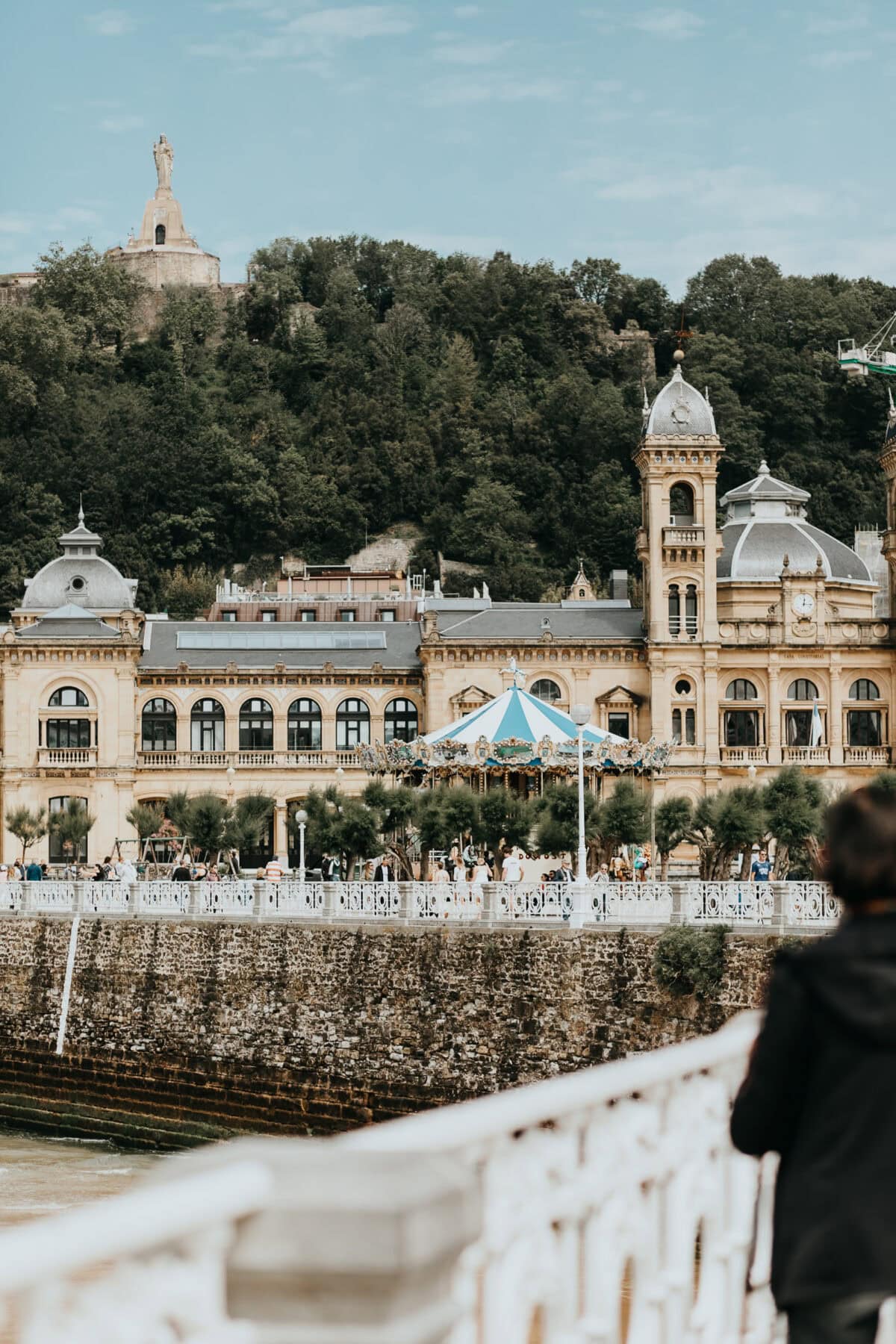
    This hill offers you not only a fantastic view over the city and the bay, but also a piece of history. On the summit is the Castillo de la Mota and the Statue of the Sacred Heart. The ascent is pleasant and you can stop again and again along the way to enjoy the view.

    Historical building with carousel and statue

    4. Monte Igueldo

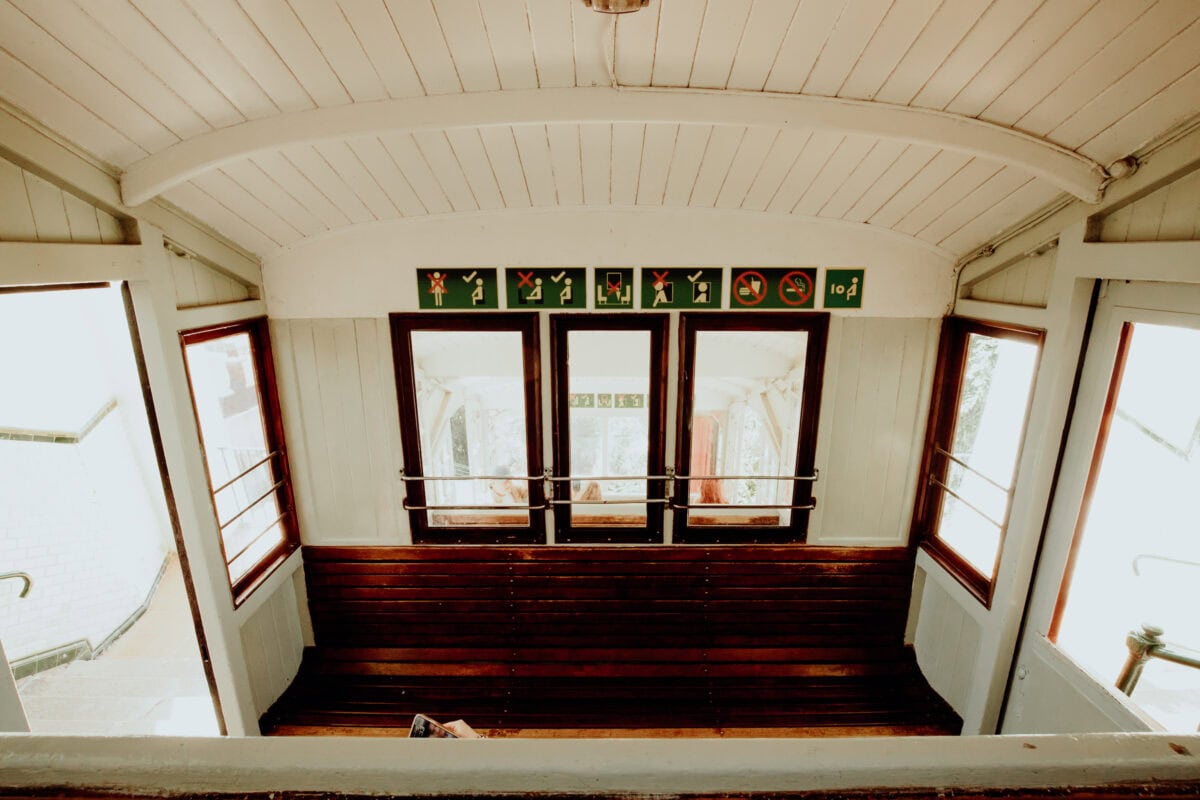
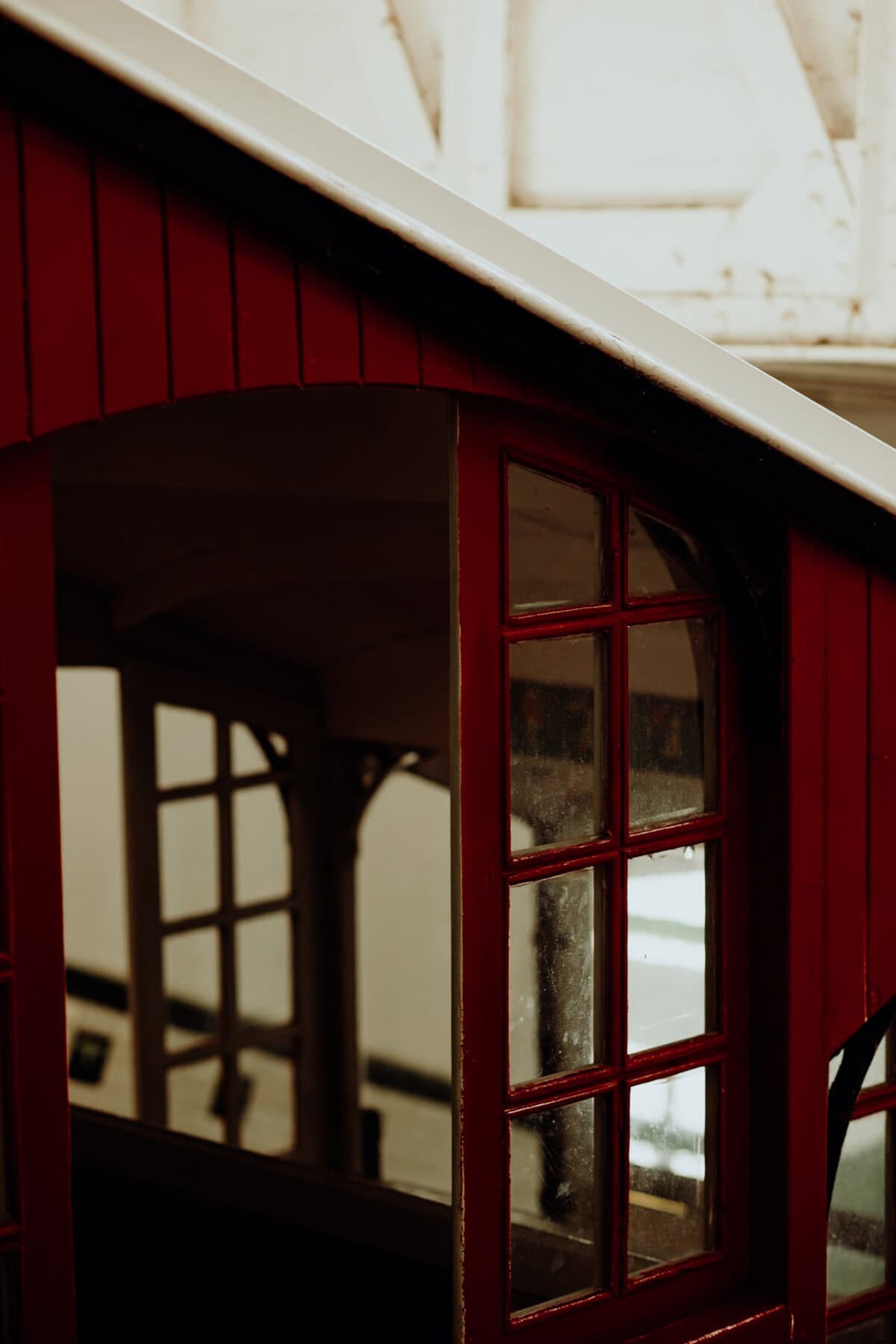
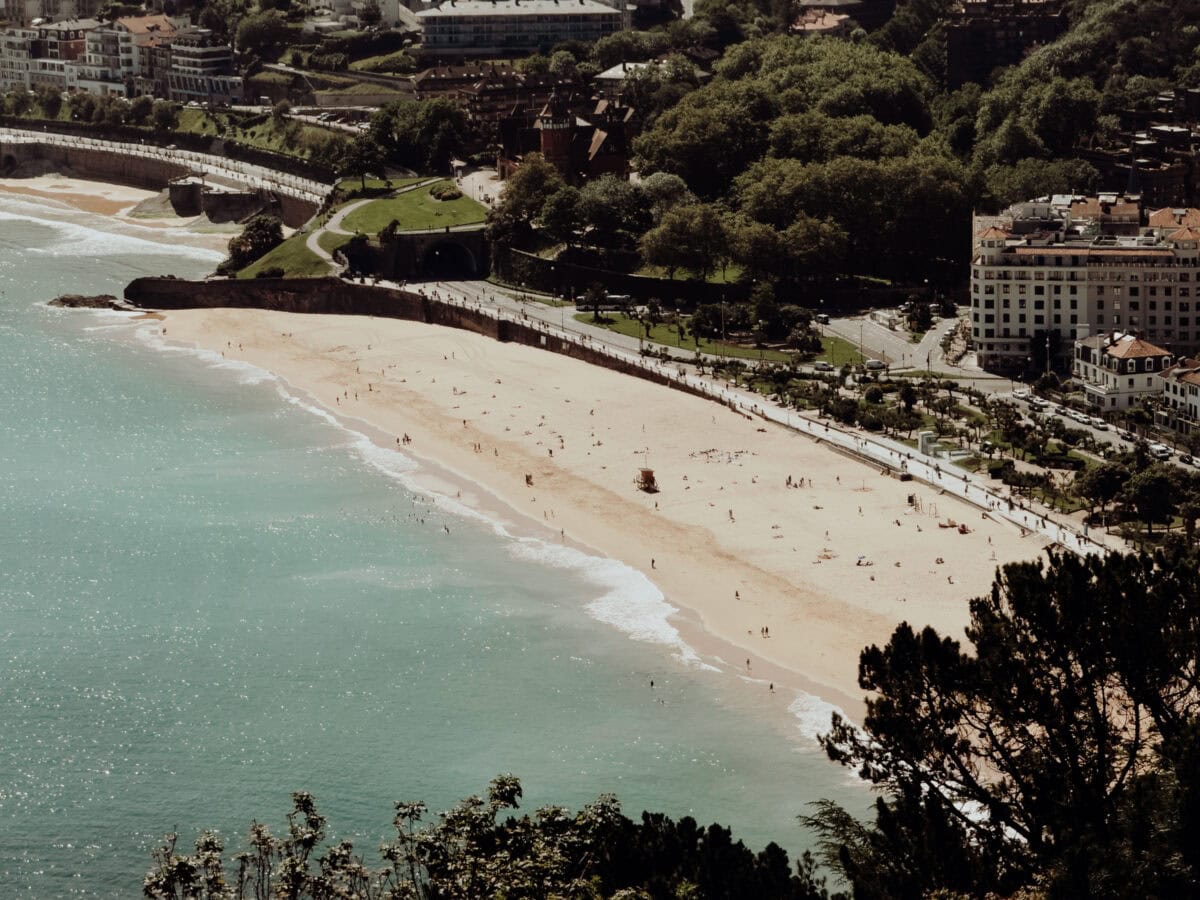
    For an even more spectacular view, you can take the historic funicular to Monte Igueldo. Once at the top, a small amusement park and a view over the entire coast await you.

    Empty wood-paneled cabin with instructions on the wall.
    Red historic streetcar with windows

    The funicular is really well preserved, and you should definitely take a ride on it on your trip to San Sebastián. And the view from Monte Igueldo is fantastic anyway.

    Beach and coast in sunny weather.
    Panoramic view of coastal town and mountains in the background.

    5. Peine del Viento

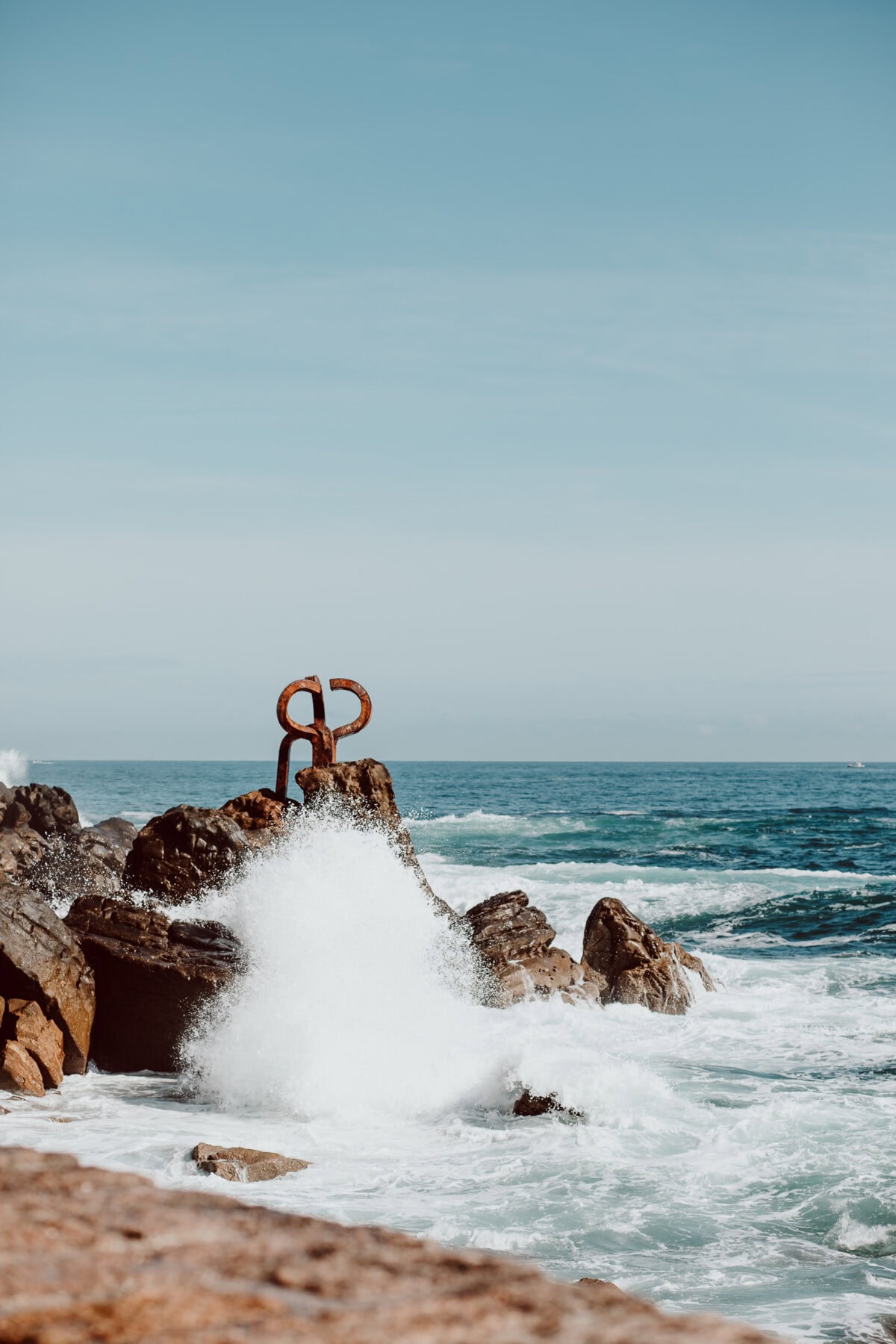
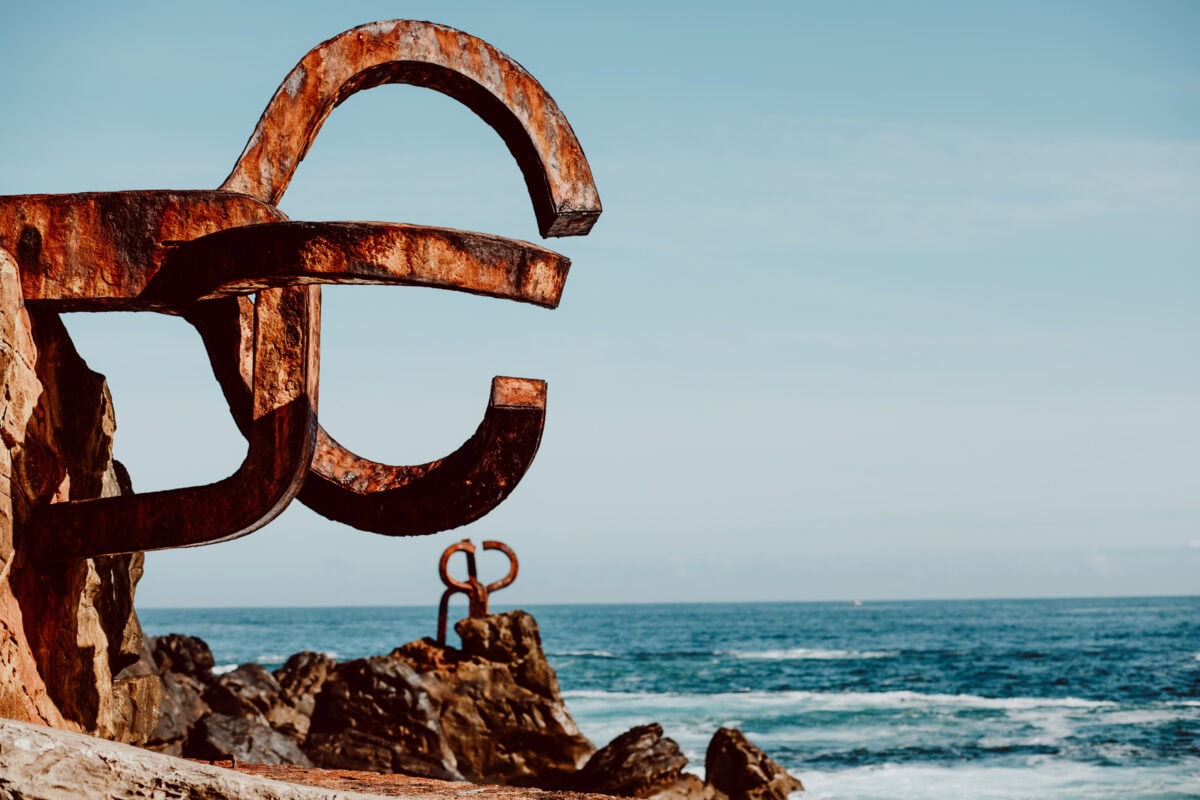
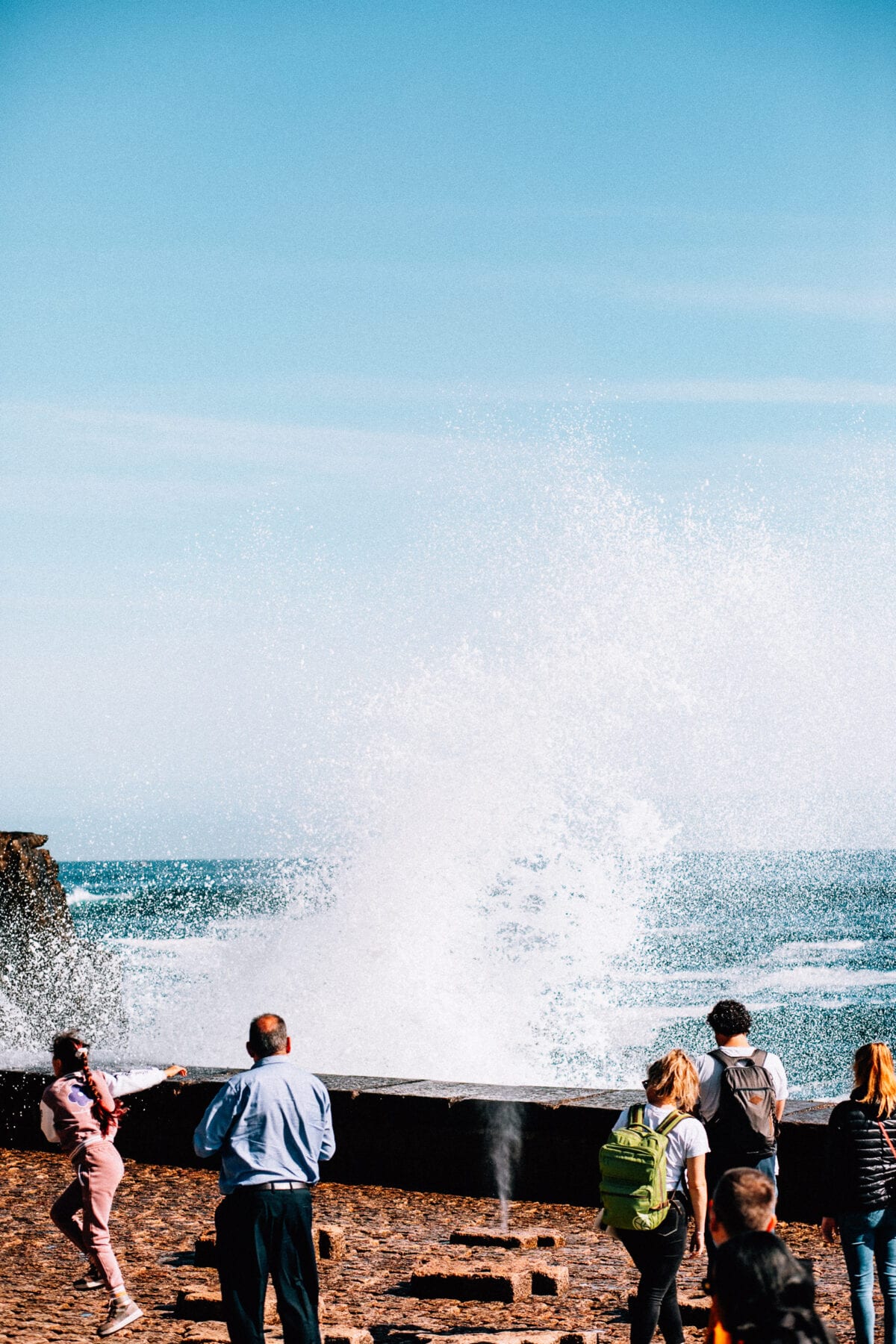
    The modern sculpture “Peine del Viento” by the Basque sculptor Eduardo Chillida is located at the western end of the bay of La Concha. The three gigantic steel sculptures are integrated directly into the rocks and offer a fascinating sight, especially when the waves crash against them.

    Waves break on rocks at a coastal sculpture
    Artwork by the sea with rocks and waves
    People watch waves on the shore

    6. Chillida-Leku Sculpture Park

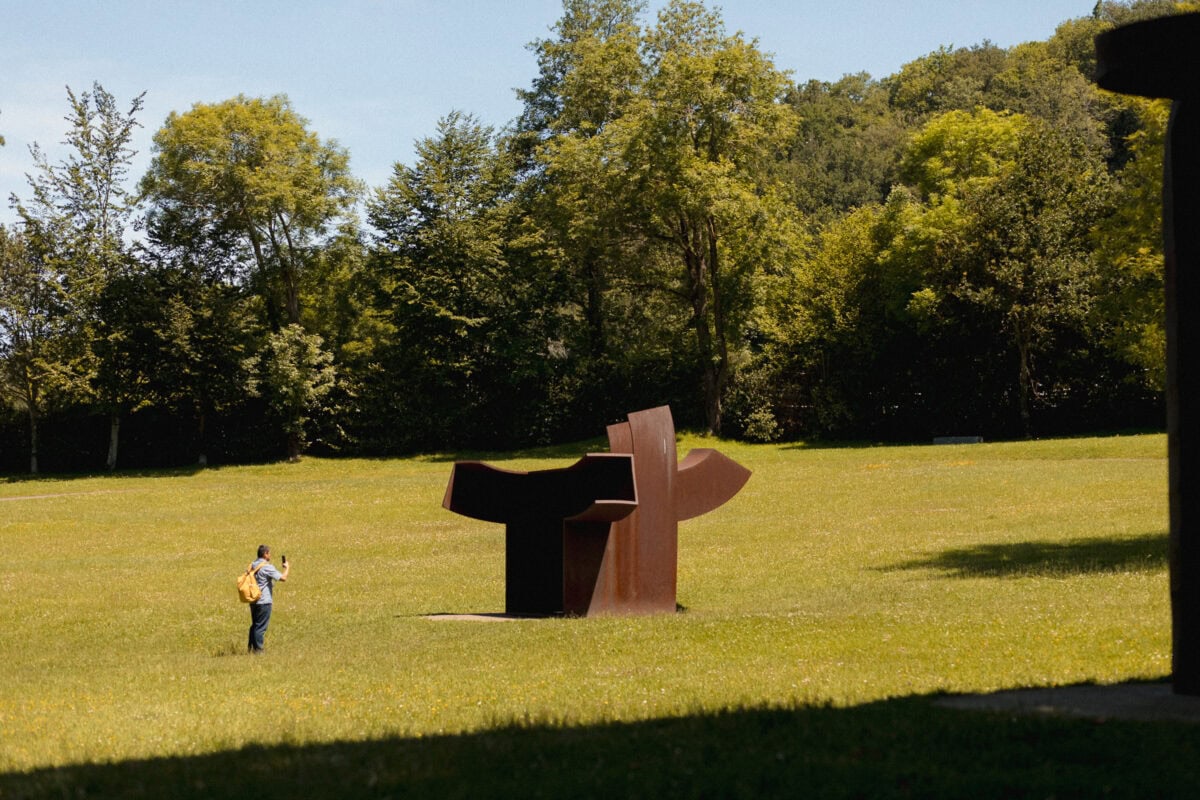
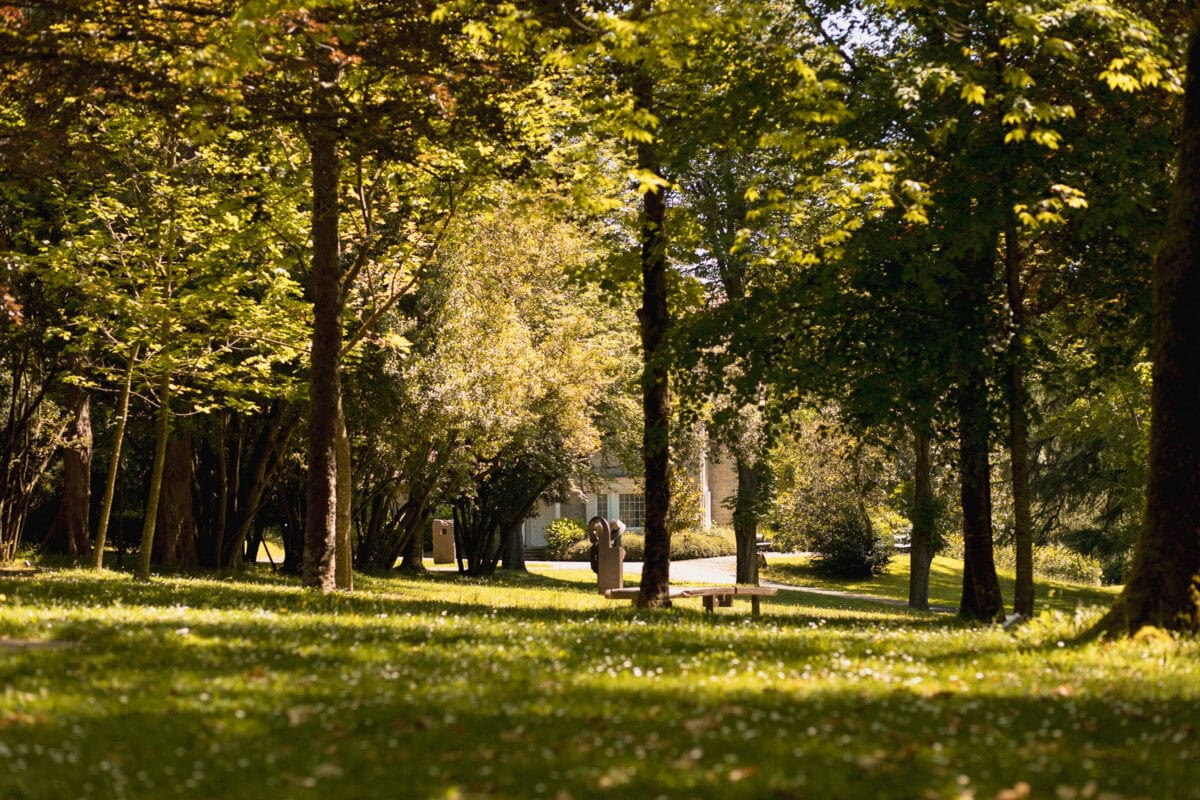
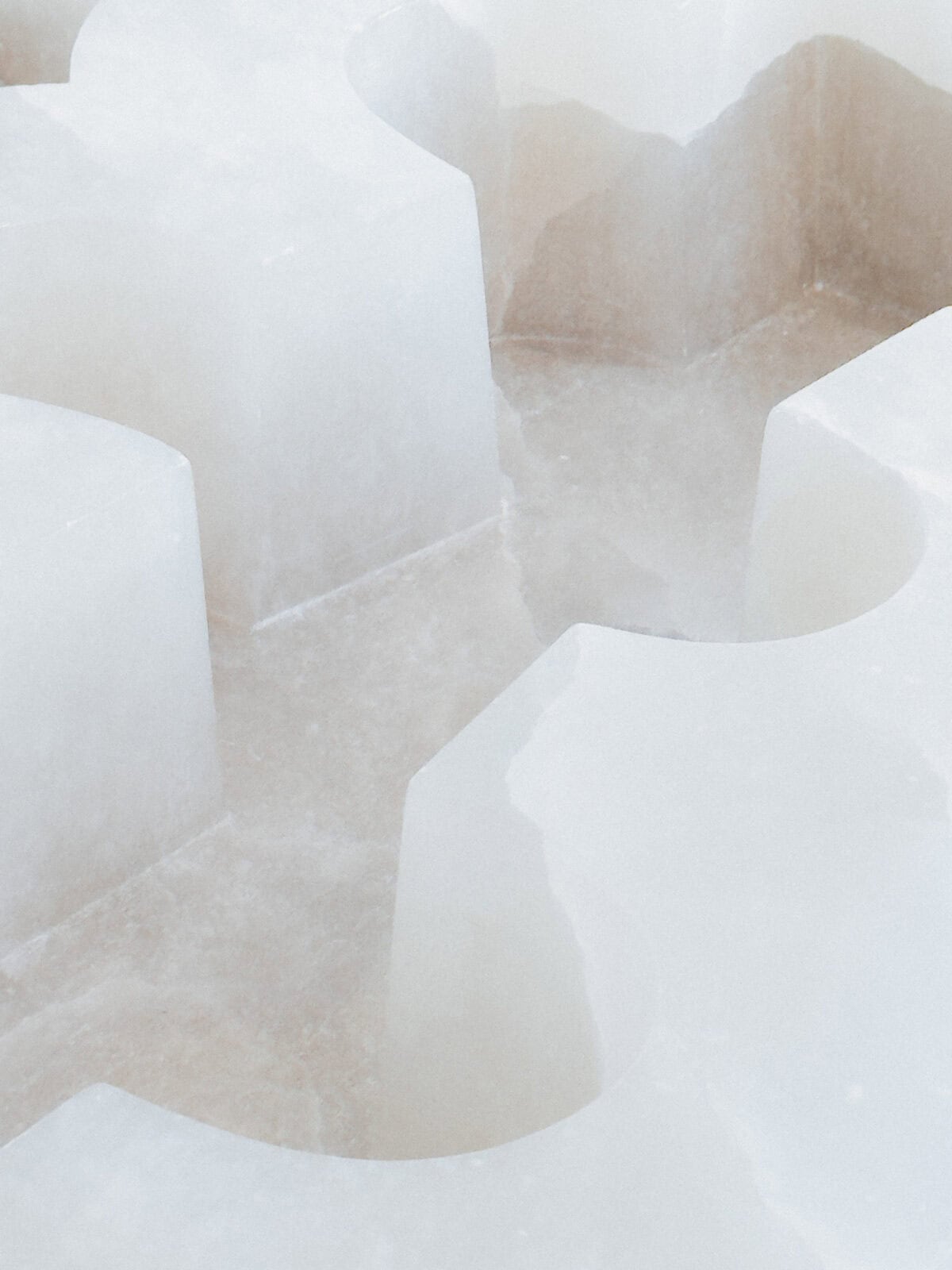
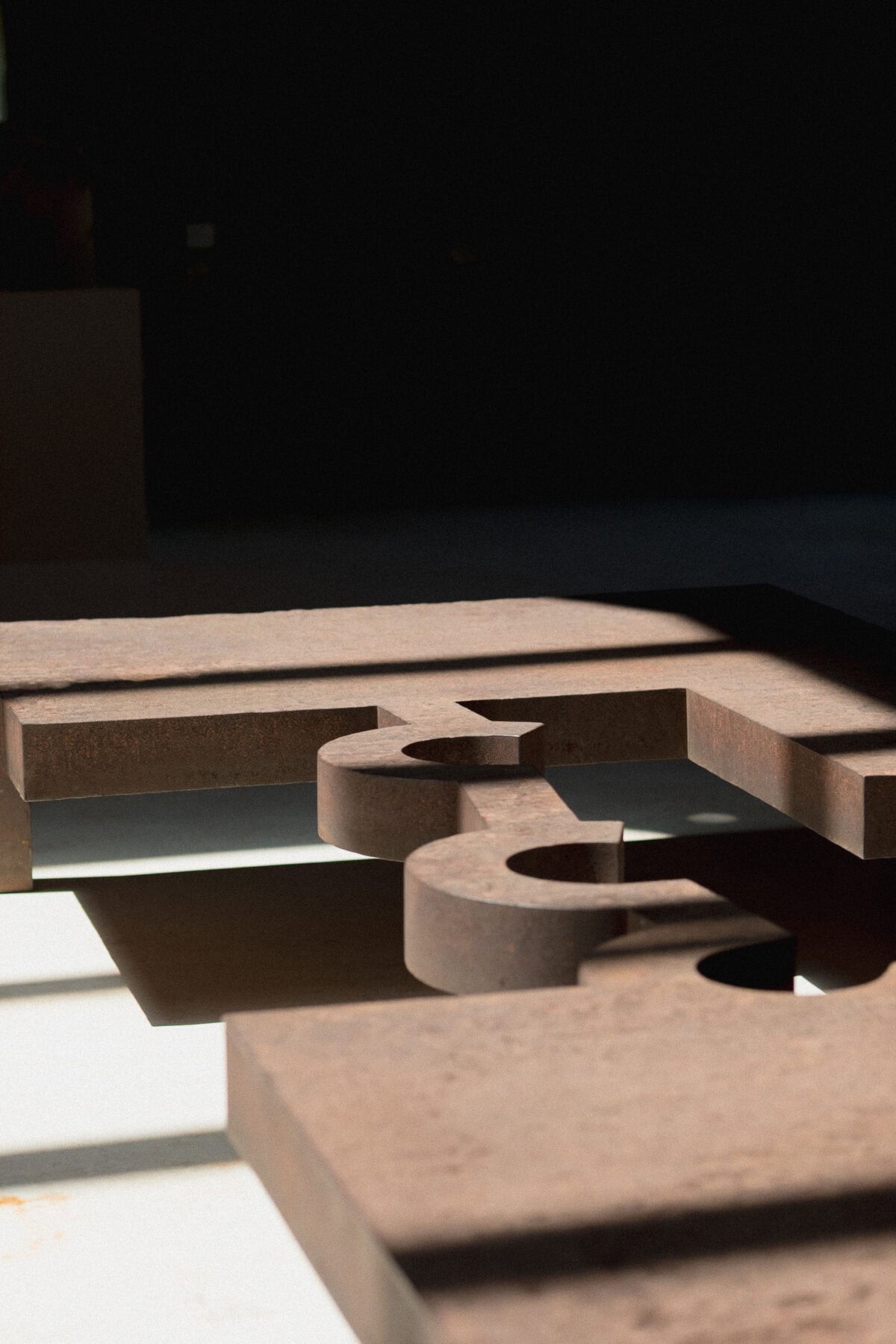
    A little outside of San Sebastián is the sculpture park and museum Chillida-Leku, which is dedicated to the work of Eduardo Chillida. In a beautiful, spacious park you can admire his impressive sculptures in the midst of nature: A place of peace and inspiration.

    You can book your ticket for the Chillida Leku in advance here*

    Person photographing statue in park
    Quiet park with trees and sunshine.
    White marble sculpture with geometric forms by Eduardo Chillida
    Rusty metal structure in sunlight

    7. San Telmo Museoa

    The San Telmo Museoa is a museum for Basque culture and history and is located in an old Dominican monastery and offers an exciting exhibition that ranges from prehistory to the modern age. A visit is worthwhile to get a deeper insight into the regional culture.

    8. Palacio de Miramar

    The royal palace Palacio de Miramar was built at the end of the 19th century for the Spanish royal family. From here you have a wonderful view of the bay of La Concha and feel a bit transported back to the glory days when San Sebastián was an exclusive spa resort for nobles and the wealthy. The surrounding park is perfect for a relaxing walk.

    Historic red brick mansion with Gothic arches
    Historic castle with red brick tower and half-timbering
    Panoramic view of San Sebastián Bay with green hills

    9. Catedral del Buen Pastor

    The neo-Gothic cathedral is the largest religious building in the city. With its high tower and beautiful stained glass windows, it is really striking and is one of the most eye-catching sights in the city.

    10. Plaza Gipuzkoa

    The centrally located Plaza Gipuzkoa is the green heart of the city. The well-tended gardens are the perfect place to take a break from sightseeing.

    Historical building behind green park with flag.

    It’s best to grab a coffee at the adjacent Syra Coffee (unfortunately only to go) and enjoy the charming city life of San Sebastián on one of the park benches. Or you can go a few meters further to the casual Koh Tao, where you can sit for longer.

    The entrance to Syra Coffee in Donostia-San Sebastián, featuring modern decor.

    11. Kursaal Congress Center

    The Kursaal is located just outside the actual center of San Sebastián, but is still within walking distance. It regularly hosts major events and congresses, as well as events as part of the world-famous San Sebastián Film Festival.

    Green and white bridge piers, historical buildings in the background.
    Bridge with buildings in the background

    Would you like to go south?
    You can find even more great travel destinations in Spain here

    Food & Drink in San Sebastián

    San Sebastián is an absolute paradise for gourmets. The city has the highest density of Michelin stars per square meter in Europe. If your budget doesn’t stretch to star-rated cuisine, you don’t need to worry. Even with a normal wallet you will be able to sample the local specialties fantastically: San Sebastián is considered the cradle of the Pintxo tradition.

    Tapas and wine on a cafe table.

    On a pintxos tour through the Old Town

    Pintxos are small snacks that are served like tapas with a drink. You often choose your pintxos at the bar and then have them served at your table. In the old town of San Sebastián, there are many restaurants that have almost elevated their pintxos to an art form, the canapés are so elaborately assembled and presented.

    Tip: If you don’t know where to start because of all the offers, I recommend a food tour through the old town!

    You can book a food tour through the Old Town of San Sebastián here*

    Modern tapas arranged on a tray.
    Wine and tapas on a table

    Txakoli: The perfect wine accompaniment

    Pintxos are perfectly accompanied by a glass of Txakoli (pronounced: Chak-ko-lee); this is a very light, fruity white wine with some carbonation and typical from the Basque Country. Maybe your Txakoli will also be poured in the traditional way: For this, the bottle is stretched high and the wine is swung so vigorously in the glass that it foams up again. A real show!

    Cidre: The sparkling cider with show effect

    Incidentally, cider, a sparkling wine made from apples, is also popular in the region. Like Txakoli, cider is super refreshing, but has a lower alcohol content. I personally like Txakoli much better. The cider I tried everywhere in San Sebastián was too tart for me. But as always, it’s a matter of taste – it’s best to see for yourself and try both!

    Large wooden cider barrel decorated with a picture.

    You can get cider in many pubs in the city. But it’s also worth taking a trip to a traditional sidreria such as Petritegi. Here you can experience the entire production process, from growing and harvesting to maturing the cider. Particularly impressive are the large barrels in which the cider is stored and the traditional restaurant, where you can sample other Basque specialties in a rustic atmosphere.

    Tip: These traditional sidrerias are located outside the city. If you are not traveling by car, you can also join a tour. It’s more relaxed anyway, because then you can try the cider at your leisure!

    You can book a tour to a Sidreria here*

    Landscape with hills and road under blue sky.

    Do you feel like visiting the Basque Country?
    Find more articles here

    Food locations in San Sebastián: My tips

    Here are a few food tips that you shouldn’t miss out on:

    Bar La Cepa This traditional pintxo bar in the Old Town is a classic. Be sure to try the Jamón Ibérico and the delicious Bacalao pintxos (cod snacks).

    La Viña Here you get the best cheesecake in town. Maybe you’ve already heard of San Sebastián Cheesecake? It is world famous and literally melts on the tongue. Personally, it is far too creamy and buttery for me, but you should definitely try it.

    Mercado de la Bretxa If you love fresh, local products, you should visit this market. Here you will find everything from fresh fish to Basque cheese specialties. Perfect for buying a few treats for a picnic on the beach.

    But there are so many more great food locations to discover in San Sebastián! More tips will therefore soon be available in my San Sebastián Food Guide.

    A close-up of tapas with crispy elements.
    Slices of cheesecake on a tray, ready to serve.

    Staying in San Sebastián

    Finding a pretty hotel in San Sebastián is not difficult. However, I would rather advise against choosing a place to stay in the middle of the Old Town. Especially in the season and on weekends it can get very loud here at night. In addition, the entire Old Town is car-free, so you have to carry all your luggage over cobblestones through the narrow streets to your accommodation.

    Modern cafe with industrial design and seating area.

    I can recommend The Social Hub San Sebastián*. Although it is not directly in the city center, you can be in the middle of the city in 15 minutes by bus; you can simply buy contactless tickets on the bus when boarding. The rooms are super spacious and stylish, and you can work, read or just sit together in the lobby or restaurant. In summer, there’s also a great rooftop bar with a pool and a view; events are held regularly.

    Here you will find more accommodations in San Sebastián*

    Events and activities: What you can do in San Sebastián

    San Sebastián International Film Festival The renowned film festival attracts film stars and cineastes from all over the world every year in September. A great opportunity to discover new films and maybe even meet a star or two.

    Tamborrada: On January 20, the day of Saint Sebastian is celebrated. The whole city is in a festive mood and there are parades with drummers in traditional costumes. An experience you should not miss if you are in the city around this time.

    Water sports: San Sebastián is perfect if you are into water sports. The Zurriola beach in the Gros neighborhood, for example, is particularly popular with surfers. Don’t feel like lugging around all the equipment? You can book a full-day surfing trip here*

    Or you can try your hand at the Basque national sport, rowing!

    Rowers on a river in front of city view
    Small harbor quay with boats and buildings

    Around San Sebastián

    In general, the Basque Country is a super exciting region and it’s worth spending more time here. San Sebastián, for example, can easily be incorporated into a road trip through the Basque Country and the French Atlantic coast with Saint-Jean-de-Luz and Biarritz is also not far away.

    Or you can combine your trip with a detour to Bilbao, the equally worth seeing Basque metropolis. Here you can find my guide to Bilbao

    Historical monument with coat of arms in city view

    Getting to San Sebastián

    San Sebastián has its own airport. However, it is very small and is usually only served by Spanish airlines that connect San Sebastián with other domestic destinations.

    It is more practical to travel via Bilbao airport. From there, there is a regular bus service (approximately every hour) to the bus station in San Sebastián. Although this is not directly in the city center, it is still easily accessible by public transport.

    Check flight connections to Bilbao (BIO) here*

  • Correfoc in Palma: All about the great fire spectacle

    Correfoc in Palma: All about the great fire spectacle

    If you’ve ever experienced Palma in summer, you won’t recognize the capital of Mallorca, especially in January. The alleyways of the old town are no longer bustling with people, some stores are even completely closed and you are generally more likely to meet locals than tourists. But January still has a lot to offer – such as the exciting Correfoc!

    Passeig del Born in Palma, illuminated by string lights in the trees.
    The Correfoc also moves along the Passeig del Born, which is still lit up for Christmas.

    What is Correfoc?

    Correfoc can be translated as “fire walk“: Several traditional groups parade through the city with flaming torches and fireworks of all kinds, dressed up as devil-like “Dimonis” and are accompanied by loud drums. The Correfoc is a Catalan tradition that has been practiced for centuries. Although Mallorca forms its own province with the other Balearic islands of Ibiza, Menorca and Formentera, it shares similar roots with Catalonia.

    Shadows of demons against an orange sky at the Correfoc

    The Correfoc is also an integral part of the island’s cultural life. In summer, these parades are held for various events, but the biggest is the Correfoc as part of the Sant Sebastián festivities.

    Sant Sebastián is the patron saint of the city and many big events take place in Palma around his anniversary in January, which are mainly attended by locals. So if you want to immerse yourself in Mallorcan culture, January is an excellent month for a trip to Palma.

    Fireworks and people with smartphones in the dark

    Correfoc & the background

    Originally, the Correfocs had a largely religious background: the Dimonis symbolize evil and need to be driven away with fire and loud drumming. Over the centuries, the Correfocs have developed into an integral part of Catalan culture. Today they have more of an entertaining folk festival character, even if they initially seem very frightening. For the big Correfoc in January, for example, a large stage is set up on the Passeig del Born where local acts perform.

    Musicians with guitars on a stage lit in red at the Correfoc in Palma

    The mood among the Dimonis

    The fireworks, the loud drums and the disguised Dimonis are very impressive. Similar to the Alemannic carnival in southern Germany, the parade is rather sombre in nature. However, the audience is still involved and despite the intimidating backdrop, the atmosphere is cheerful and relaxed.

    People wearing helmets with horns at the Correfoc in Palam, Mallorca.
    Silhouette with horns in front of sparks and light.

    Participate in the Correfoc

    The Dimonis also sometimes parade through the crowds, are willing to be photographed and enjoy joking with the spectators. Young people in particular enjoy mingling with the dancing Dimonis and their fire-breathing torches. Participation is officially allowed and part of the spectacle.

    A demonic mask and a child at the Correfoc in Palma, Mallorca.
    Fireworks at Night in a Crowd at the Correfoc in Palma

    Even as a mere spectator, you can get very close to the fireworks; sometimes even unintentionally if a Dimonis suddenly stands next to you and lights his pyrotechnics. As a rule, however, people are very considerate of each other and no one is deliberately bothered by fireworks.

    A person holding sparks and fireworks
    Pyrotechnics with sparks flying from a Dimonis' hand during the Correfoc.

    Safety measures: What you need to be aware of when attending a Correfoc

    Nevertheless, you should be especially prepared when you go to a Correfoc and keep the following important things in mind:

    • Clothing: Wear clothes that you can put up with if necessary if they get a burn hole – the flying sparks should not be underestimated! Make sure that your arms and legs are covered.
    • Headgear: Protect your hair, for example with a baseball cap or simply choose an old hoodie.
    • Hearing protection: The Correfoc is really loud! The drums and whistling pyrotechnics are not for the noise-sensitive.
    • Sturdy shoes: With the lower temperatures in January, closed shoes are a good choice anyway. However, make sure you choose shoes with robust soles and upper material.
    • Camera/smartphones: Photography and filming is permitted, but the lenses in particular can be damaged by sparks. Some people tape the lenses of smartphones with tape.
      For cameras with interchangeable lenses, screw-on filters are a good option. (I always have a UV filter on my camera lenses for protection anyway, which has saved me from major damage several times). It’s best to use lenses with a long focal length so that you can take photos from a safe distance.
    Person films fireworks with cell phone at night

    The safety standards at Correfocs are really high. Both Dimonis and spectators are very considerate of each other. Aggressive behavior is not tolerated. For example, bringing your own fireworks is strictly forbidden! You are also not allowed to borrow fireworks from the Dimonis. If you still get hit by a spark, you do so at your own risk – so protect yourself well!

    Colorful fireworks explode in the night sky.

    Where does the Correfoc take place in Palma?

    At around 7pm, the individual groups will run in a star shape from various starting points towards the central Passeig del Born. The final event with a large stage will then take place in Plaça Rei Joan Carles I.

    Are you planning a trip to Palma? You can find even more tips here!

    Fireworks light up the night sky with colorful sparks.
    Torch shines brightly in the night.
    A Dimonis' burning torch against a dark background
  • The Best Things to Do in Lunenburg, Nova Scotia

    The Best Things to Do in Lunenburg, Nova Scotia

    Creative vibe, lots of history and fresh sea air: A stop in the versatile port city of Lunenburg is simply a must on a trip through Canada’s second smallest province, Nova Scotia. In this guide, I’ll reveal my personal highlights in Lunenburg and give you some helpful tips for one of Nova Scotia’s greatest treasures.

    Colorful row of houses on the hill with craftsmen on roofs.

    Lunenburg may be a small town, but it still plays an important role in Nova Scotia’s history. It was founded by the British in 1753 in the hope of attracting more Protestants to the region. Although there were no British Protestants, there were more and more German emigrants who sought their fortune in Lunenburg. To this day, you can find the German-speaking influence not only in the city name, but also in many street names.

    Woman walking in front of a painted Lunenburg wall

    With its harbor, Lunenburg also became an important economic pillar of the region: Fishing became an important source of income and also attracted other industries such as large shipyards. Cod and lobster fishing still play a role in Lunenburg today, although not quite as big as they once were.

    Small town street with parked cars and shops.

    Thanks to its historic architecture and long-standing maritime tradition, Lunenburg was declared a UNESCO World Heritage Site in 1995 and is now a magnet for many tourists, without being too crowded, on the contrary. For me, Lunenburg was the perfect combination of history and the present, because the place exudes a creative vibe that I would not have expected!

    Pink Victorian house with turrets and autumn leaves.

    The most important sights in Lunenburg

    There are some sights in Lunenburg that you shouldn’t miss! Since the town itself is not particularly large, you can easily reach most of the locations on foot. If you want to delve deeper into the history of Lunenburg and get to know real locals, you can also take part in walking tours that take you to the most important places.

    A window flower box with fall flowers and pumpkins in Lunenburg, Nova Scotia.

    Fisheries Museum of the Atlantic

    To learn more about Lunenburg’s history, there is no way around the Fisheries Museum of the Atlantic. The bright red building directly on the harbor is also hard to miss and is so centrally located on the promenade that you can start your exploration of Lunenburg from here.

    Here you will learn about the important role that fishing has always played for Nova Scotia, learn sailor’s knots and simply marvel at the restored ships that are anchored directly in front of the museum.

    Red building of the Fisheries Museum with gift shop

    Bluenose

    Lunenburg’s shipyards have also produced a very special ship that every Canadian knows: The Bluenose is the legendary sailing ship that is depicted on the Canadian 10-cent coin. Originally built as a fishing and regatta ship, the schooner is still the ultimate symbol of Canada’s maritime history, similar to the Gorch Fock in Germany, and is considered a national treasure.

    Person on wooden pier in front of sailboat with flags.

    Unfortunately, the real Bluenose sank in 1946. Due to its historical significance, it was later decided to build a replica, which was launched in 1963. If you’re lucky, you can admire the Bluenose II today in Lunenburg on the quay directly opposite the Fisheries Museum, when it’s not on the road.

    Historic ship at the pier in sunny weather

    Tip: From Lunenburg and Halifax you can book harbor tours with the Bluenose II! Since the Bluenose II is very popular, it is best to book in advance.

    Reservation & timetable for the Bluenose II

    Lunenburg Academy

    The highest point of the city towers the Lunenburg Academy. In the past, the striking building was used as a school, today it houses offices, a kindergarten, but also rooms for cultural events. If you would like to see the building from the inside, you can also take a guided tour. You can find dates on the website of the Lunenburg Academy Foundation.

    Historic building with towers and red roofs.

    St. Johns Anglican Church

    A similarly striking building in Lunenburg is the white St. Johns Anglican Church. Inside, the light shines through impressive stained glass windows, giving the church its special atmosphere. In 2001, Lunenburg’s first church (and also one of the oldest in the country) was severely damaged in a fire, but was later completely reconstructed with great support from the population.

    Gothic church with tourists, blue sky.
    Interior of an old church with benches and altar.
    Church windows and decorative organ in the church

    Nova Scotia is such an exciting region in Canada!
    Discover many more inspiring ideas for an exciting journey in my article about our full road trip.
    Road trip through Nova Scotia

    Waterfront

    You can stroll along the waterfront promenade of Lunenburg and enjoy the sun. From here you also have a truly dreamlike view – absolutely postcard-perfect.

    Two colorful chairs on a wooden walkway in Lunenburg.
    Red buildings along the boardwalk in Lunenburg, Nova Scotia.

    Architecture in Lunenburg

    Lunenburg owes its entry as a UNESCO World Heritage Site to its wooden architecture and the many colorful, lovingly preserved houses. You should definitely take some time to explore the side streets on foot and take a look at the beautiful residential buildings with their peculiarities.

    Person looks on street with school bus
    Small house with blooming bushes

    Many houses on the top floor have a striking bay window, called Widow’s Watch. Since Lunenburg is partly situated on a hill, legend has it that the wives watched the harbor from here, waiting for the fishermen to return.

    A house roof with a typical "Widow's Watch" bay window in Lunenburg, Nova Scotia.
    Historic house with ornate facades and red doors.

    Food & Drink in Lunenburg

    Lunenburg is a port city and fishing is still very popular. You will especially get your money’s worth if you love fish and seafood – because of course, this is where you can find the best lobster and fresh fish in unique quality.

    But Lunenburg, like so many other places in Nova Scotia, surprised me a lot: The gastronomy scene here is surprisingly diverse and innovative! There are so many great locations that the decision is really difficult.

    Here are my personal tips for Lunenburg:

    Lincoln Street Food is a bit off the main street with most of the restaurants, but it’s a great insider tip. Emphasis is placed on regional ingredients, the menu changes frequently and the dishes are really very creative.

    Dish with vegetables and grilled bread on plate
    Jars of mixed pickles on a market stall.

    Bar Salvador Who would have thought that an absolutely authentic tapas bar would be located in a fishing village in Nova Scotia? Before you stop for dinner in one of the surrounding restaurants, I highly recommend a small aperitif in a Mediterranean atmosphere!

    Tapas with lemon drink on wooden table

    The Beach Pea Kitchen & Bar So cozy, right across the street – and the lobster pasta is a poem!

    The South Shore Fish Shack You should stop here for good Fish & Chips. From the terrace you have a beautiful view of the idyllic bay.

    Small restaurant with nautical motifs outside
    Colorful buoys hang on a wooden wall.
    Fish and chips on checkered tray

    The Half Shell Oysters & Seafood Next door there is fresh lobster and oysters, which you can also enjoy in the open air with a great view.

    Fresh lobster on ice at a market stall

    The Savvy Sailor Café If you’re in the mood for a hearty Canadian breakfast, then you should stop here. The Savvy Sailor Café is also located in the middle of Lunenburg with a view of the harbor.

    Sail mast and landscape on the water in the window view
    Breakfast plate with scrambled eggs and bacon.

    No. 9 Coffee Bar Absolutely love this café! With modern artworks by local artists adorning the walls and cozy, stylish furnishings, it feels both inviting and unique. Their homemade granola is a delightful treat! No.9 really has a warm, special atmosphere that makes it a favorite spot for locals to meet up and enjoy good times.

    Hand holds tea bag over a latte.
    Hot coffee and pastries on wooden table.

    The Laughing Whale is the place to go for coffee connoisseurs: As soon as you enter, you will be enveloped by the scent of freshly roasted coffee. The atmosphere is super warm and cozy.

    Man with dog walking in front of yellow café
    Wooden wall decorated with colorful pennant chain
    Cozy interior of a café with wooden table.
    Cozy café interior with wooden furniture and plants.
    Cozy seating area with plants and coffee sacks
    Coffee with oat biscuit served on wooden table.

    Lightship Brewery From hoppy-fruity IPAs to strong stouts, you can test local craft beers here. But even if you don’t like beer at all, you should definitely drive out to the Lightship Brewery on the opposite bank: From here you have a fantastic view of the historic center of Lunenburg and its waterfront.

    Creative drink menu on a wall.
    Port city with sailing ships and colorful buildings on the water.

    Next door at Boathouse Bites there is delicious poutine; the crispy fries with a topping of cream sauce and cheese cubes are a real temptation!

    A typical serving of poutine in a bowl: french fries with cheese and gravy.

    Fancy even more travel inspiration for a trip to Canada?
    Read more about destinations in Canada here.

    Shopping in Lunenburg

    If you enjoy exploring creative and unique stores and studios, then Lunenburg is the perfect destination for you. You’ll discover some charming, inspiring shops that are sure to spark your imagination.

    Lunenburg Bound is one of the small but fine bookstores where I could browse for hours. Plus point: Around the corner you will find the colorful Lunenburg mural on the facade.

    Shelf full of books and craft materials in a shop.

    Pearl’s Vintage & Thrift If you are looking for unusual unique pieces, then you will love this store. Vintage clothing and accessories are lovingly put together and just browsing here is a pleasure.

    Colorful vintage shop with clothing and accessories

    Staying in Lunenburg

    I really liked Lunenburg. There’s just something so charming about this city that I could have just settled down here for the rest of the trip. But maybe our accommodation wasn’t entirely innocent either.

    Cozy living room with window view

    Because from our attic in the B2 Lofts we had the perfect view over the harbor of Lunenburg. Being able to slowly watch the sunrise over the misty water here in the morning was simply magical. The location in the middle of the village is also perfect for strolling through the bars and restaurants in the evening without having to get in the car.

    Here you will find more great accommodations in the center of Lunenburg*

    Building with B2 Lofts lettering and windows
    Wooden table with bowls and chairs

    Map with the most important highlights in Lunenburg

    If you are planning a trip to Lunenburg, just save my map with all the highlights. So you always have all the tips from the article at hand on the go!

    Excursion from Lunenburg

    From Lunenburg you can also take a quick detour to the nearby Blue Rocks. The tiny fishing village is great for some great photo opportunities, especially at sunset.

    Boat in front of a lakeside cabin
    Wooden pier on the water with boats and island
    Fishing nets stacked by the coast
    Small house by the sea in the evening sun.

    Arrival: How to get there

    Lunenburg is located approximately 90 kilometers southwest of Halifax. The best way to reach Lunenburg is by car, e.g. with a rental car. However, there are also several tour operators that offer day trips from Halifax to Lunenburg; also in connection with Peggy’s Cove, which is also very worth seeing.

    Book a tour from Halifax to Lunenburg here*

    However, I would recommend that you plan a little more time for Lunenburg – the place is really very charming and I am sure you will love it!

    My trip to Nova Scotia took place in cooperation with Tourism Nova Scotia.

  • 36 hours in Halifax: The Best Things to Do

    36 hours in Halifax: The Best Things to Do

    If I had known what to expect beforehand, I would have planned a little more time for Halifax on our road trip through Nova Scotia. Its relaxed mix of maritime vibes and lots of street art were quite surprising.

    In my guide, I’ll show you what you can experience on a short trip to Halifax and which sights and hotspots in the capital of Nova Scotia you shouldn’t miss out on.

    Halifax: The most important facts in brief

    • is located on the east coast of Canada and is known for its natural harbor, which is one of the largest in the world
    • is the largest city in Canada’s Atlantic provinces with around 440,000 inhabitants
    • has historical sights such as the Halifax Citadel, interesting museums and a great harbor promenade, but also lots of street art and an exciting gastronomic scene
    • Best time to visit: between May and October

    The best sights in Halifax

    We only had a short time for our sightseeing tour of Halifax. Nevertheless, we were able to see a lot, as Halifax is also great to explore on foot.

    Waterfront Boardwalk

    The Waterfront Boardwalk stretches for several kilometers along the Halifax harbour. You can stroll along the promenade, explore gastronomic highlights or simply enjoy the view of the water.

    Colorful mural with sea elements on house wall.
    Historic steamship at the pier in the harbor
    Small store with passers-by.

    From here, you can also quickly reach many of Halifax’s other attractions, such as the Maritime Museum of the Atlantic or the Pier 21 Museum of Immigration, which are also located on the waterfront.

    Coast with lighthouse by the sea

    If you want to see the Halifax skyline from a distance, you can also take a sunset boat tour from the harbor or go on a short sightseeing tour through the city and on the water in one of the popular amphibious vehicles.

    Book the sunset boat tour with a view of the Halifax skyline* here

    Book the sightseeing tour with amphibious vehicle* here

    Budget tip, if you can: For a few dollars, you can also take the regular ferry to Dartmouth or Alderney. This is part of the public transport system in Halifax and runs every 15 to 30 minutes between the two ferry terminals.

    Advertising / *affiliate link

    Maritime Museum of the Atlantic

    The Maritime Museum of the Atlantic is not only worth a visit if you are interested in seafaring. The port of Halifax is one of the largest ports in North America and is not only quite busy, but also very historically significant.

    In 1912, the survivors of the sunken Titanic came ashore in Halifax, having been rescued by other ships. Part of the exhibition therefore also deals with the sinking of the Titanic and displays original objects from the ship as well as eyewitness accounts.

    Tablecloth with Royal Mail logo in the museum

    Another part of the museum deals with the great explosion in 1917 in the port of Halifax, which completely destroyed part of the city and killed or injured thousands of people. This catastrophe is still deeply rooted in the city’s history and remains one of the deadliest disasters on North American soil.

    Model of the ship Mauretania in the museum
    Model of a historic ocean liner in the museum.
    Titanic model on display in the museum
    Sailboats on display in the museum

    Pier 21 Museum of Immigration

    The Pier 21 Museum of Immigration deals with the maritime history of Halifax in a different way and is one of my absolute favorite spots in the city. Like the Maritime Museum of the Atlantic, the exhibition is rich in detail, but is also very interactive.

    Cruise ship in port in rainy weather
    Today, cruise ships dock directly behind the museum.

    On the one hand, the history of Canada as a classic country of immigration is shown here and examined in more detail using family stories from a wide variety of countries of origin. Thanks to its large harbor, Halifax has always been one of the places where countless immigrants came to the country in search of great fortune. On the other hand, interactive elements invite visitors to share their own family immigration history – and it is so beautifully designed that there really isn’t a dry eye in the house.

    Handwritten notes on a washing line.
    Handwritten messages on hanging paper labels
    Hand holding painted card in front of shelf

    I could really have spent hours browsing through the many moving snapshots and souvenirs that individual museum visitors have left behind. If, like me, migration has shaped your family history, you will certainly find yourself here and perhaps remember your roots.

    Colored world map with connected pendants

    I was also very impressed by how much Canada values its tradition as a destination for many immigrants and, contrary to what I see as a sad development in many other Western countries, very much cultivates its open welcoming culture. No wonder Canada is still a place of longing for many people.

    Book your ticket for the Pier 21 Museum of Immigration here*

    Handwritten quotes about immigration on signs.

    Queen’s Marque

    Queen’s Marque is the latest trendy district on the waterfront, and the large building complex in the middle of it is a sight in itself. The combination of contemporary architecture, art and gastronomy is really very successful. We stayed at the Muir Hotel*, which is integrated into the complex, and were able to really enjoy the vibe here.

    During the day, you can store in the small boutiques or sit down in a café. In the evening, you’ll find some of the best restaurants and bars in the city, and in summer it’s really lively outside with street music.

    More desire for Canada?
    Here you can find all Canada articles

    Halifax Central Public Library

    If you like modern architecture, you shouldn’t miss the Halifax Central Public Library on your sightseeing tour of the city center. The modern building with its striking design is a real eye-catcher and is located directly on one of Halifax’s main shopping streets, Spring Garden Road.

    Modern interior design with stairs and office area

    You can simply go inside and walk through the library. The long staircases between the floors inside the library are a great photo spot. At the top of the last floor there is a small café with a terrace: a great tip in summer for a quick coffee stop with a view over the rooftops of Halifax!

    Modern library with staircase and glass walls.

    Halifax Public Gardens

    On Spring Garden Road, you will find another of Halifax’s not-so-little treasures. The Halifax Public Gardens are one of the oldest Victorian gardens in North America.

    In this green oasis, you can recharge your batteries, go for a walk or simply enjoy the idyllic atmosphere in the middle of the busy city.

    Decorated wrought-iron gate with coat of arms in the park.
    Romantic garden bridge surrounded by lush greenery.
    Garden with fountain and ducks at the pond

    Street art in Halifax

    Halifax is extremely colorful: we kept coming across the most beautiful murals in the city. There really are so many that you can just walk around downtown and automatically come across street art somewhere. You’ll find a lot of street art around Gottingen Street in the North End in particular.

    Colorful flower mural next to white front door, house number 1547.

    If you are looking for specific murals, you can find a map with the most famous works of art in Downtown Halifax here.

    Colorful murals with lighthouse and woman

    Other highlights in Halifax & what else you can do

    36 hours is really not much time to explore Halifax, and even with our power program we didn’t manage to do everything we had planned. But if you have more time, I have another suggestion for you on what to see in Halifax.

    Halifax Citadel

    The Citadel is one of Halifax’s most famous sights, but unfortunately the recent rainy weather put paid to our visit and we preferred to head to the equally interesting museum on Pier 21.

    In good weather, however, you have a great view of Halifax and the surrounding landscape from the higher citadel. The fortress dates back to the 18th century and was built by the English to defend themselves against the French, who were also present in Nova Scotia.

    Especially if you are interested in history, the star-shaped complex with the Army Museum and a wide range of themed tours is a must-see. Tour guides in historical costumes can explain the entire background and at lunchtime you can watch the daily (!) cannon firing.

    Food & drink in Halifax

    My personal tips for restaurants in Halifax

    The Bicycle Thief was repeatedly mentioned to us as a tip, and the restaurant on the waterfront is indeed really popular. Even during the week and in the low season, it was so full that it was impossible to get a table without a reservation. It serves Italian cuisine with a Canadian twist (lots of fish and lobster) and it’s certainly very good – but it didn’t seem spectacular enough to justify the expense.

    Red bicycle sculpture with outdoor sign

    Bar Sofia in the Queen’s Marquee ended up being our alternative, and it couldn’t have suited us better. Here we were able to sample the wildest Latin American fusion dishes and enjoy really good cocktails. The colorful interior and super attentive service put us in such a good mood that I highly recommend a visit here when you’re in Halifax.

    Modern restaurant kitchen with plants and lighting
    Mixed plate with vegetables and meat dish.
    Graffiti and yellow structure on concrete wall

    The Drift is suitable for all times of day. It is actually part of the Muir Hotel, but like Bar Sofia, it is also part of the large Queen’s Marquee complex. We had breakfast here as part of our hotel stay and, contrary to what is on offer in many other (even more expensive) hotels, I would recommend the Drift to non-hotel guests at any time.

    Chic restaurant interior with modern lighting and furnishings.

    Breakfast is à la carte anyway, so you won’t find an uninspired hotel buffet here, but only what you actually order. So if you’re looking for a location for a relaxed breakfast or brunch in a great atmosphere, this is the place for you!

    Modern restaurant with set tables

    Typical specialties from Halifax

    It is impossible to imagine Halifax without the donair, a snack specialty that is now known beyond the borders of Halifax. However, the donair has little to do with the doner kebab invented in Germany: For a real donair, pita bread is served with meat, diced tomatoes, onions and a sweet garlic sauce.

    Gyros with onions and tomatoes in pita bread

    The most authentic donair is served at King of Donair on Quinpool Road (but there are other outlets in Halifax), which boasts of having introduced the donair to Halifax in the 1970s. Others prefer the donair from Tony’s Famous Donairs on Robie Street.

    Döner kebab held in the hand

    For the meat-free option, we went to Real Fake Meats, just outside the city center. The meat substitute tastes super delicious here, but I found the combination with the sweet sauce took some getting used to. The store is definitely interesting: all the meat substitutes are made on site and you can also take a look at the production process.

    Vegan restaurant with red bistro set.
    Vegan café with handwritten menu

    Staying overnight in Halifax

    In Halifax, you’ll find a good selection of hotels for every budget, but it’s worth spending a little more! The Muir* is a five-star hotel and is centrally located in the newly redeveloped Queen’s Marque District, right on the promenade – the location couldn’t be better! From here, you can reach the most important places in Halifax on foot.

    Modern hotel room with double bed
    Modern hotel room with a view of the cityscape.

    The best thing, however, is the exceptionally pleasant atmosphere, from the consistently attentive and cordial staff to the detailed room furnishings: everything has been thought of here to make your stay as relaxing as possible.

    Check prices & availability at Muir Halifax* here

    Person relaxing in the indoor pool

    If you need a bit of relaxation, the Muir also has a first-class spa with pool, sauna and steam room. After our eventful road trip and the short sightseeing tour through Halifax, this was simply the crowning glory of a great trip.

    You can find more hotels in Halifax here*

    Hand with room card in the hotel corridor
    Vase with dried flowers on a marble table

    Getting around Halifax

    Although Halifax is a big city, driving into the city in a rental car was no problem. There can be traffic jams during rush hour, but all in all driving is very relaxed, as it is elsewhere in Canada and the USA (at least in my experience).

    Halifax Airport is relatively far away. You should therefore consider renting a car if you are planning a road trip through Nova Scotia. Even if you use the rental car less in the city, it is much more practical this way. It is best to check with your accommodation beforehand whether parking is available so that you can park your rental car safely.

    Here you can compare prices for car rental from Halifax (YHZ)*

    If you are traveling without a rental car and simply want to go to the hotel in the city before or after the flight, you can also organize a private transfer .

    Book your transfer from the airport to the city here*

    If you are staying in the city center, you can also reach many locations on foot. The public transport network in the city only consists of buses, but is easy to use. Alternatively, you can also get around by Uber, which is relatively cheap.

    If you don’t want to bother with timetables or finding a parking space and are a little lazy when it comes to walking, you can also opt for a hop-on hop-off tour* for sightseeing.

    Map with all the highlights

    To help you find your way around Halifax, I have summarized all the locations from the article on a map. You can also save them. That way you’ll have everything to hand when you’re out and about.

    Excursions around Halifax

    Halifax is an excellent starting point for an exploration tour through Nova Scotia. However, if you don’t have much time, here are the best places to visit that you can reach within a day.

    Peggy’s Cove

    The picturesque fishing village of Peggy’s Cove is just 45 minutes from Halifax. Famous for its impressive lighthouse, it is a popular destination for day trips. The most beautiful photo opportunities can be found here, especially at sunrise and sunset. But Peggy’s Cove is also worth a detour during the day.

    Coastal harbor with boats and houses in the background

    In addition to the lighthouse, there are small galleries and souvenir stores in the small fishing village next door where you can stock up on handmade products and local art. Very cute indeed!

    Book a tour to Peggy’s Cove* here

    Lighthouse on rocks at sunset

    Lunenburg

    The historic town of Lunenburg is about an hour’s drive from Halifax and is a UNESCO World Heritage Site. Lunenburg is very touristy, but with its colorful wooden houses, cute cafés and pretty stores, it’s no wonder. If you haven’t already planned Lunenburg as a stop on a road trip through Nova Scotia, you can also book day trips to Lunenburg from Halifax.

    Book a day trip to Lunenburg* here

    Here you can find my complete guide for Lunenburg

    Woman sitting on pier in front of red buildings.
    Historic sailing ship at the dock in the harbor

    Mahone Bay

    Another worthwhile detour is Mahone Bay, which is actually known for its three churches that stand picturesquely on the shore. However, I personally found the special flair of this small town with its pretty cafés, antique stores and small craft stores much nicer.

    Autumnal street with colorful trees and houses

    Wineries in the Annapolis Valley

    If you like drinking wine, you shouldn’t miss the Annapolis Valley. This region is known for its wineries and large-scale fruit cultivation.

    I can highly recommend Luckett Vineyards, for example: Not only is the winery itself worth a visit (where else can you see an original British red telephone box in the middle of the vines?), but also the adjoining restaurant with a great view of the countryside: I had the most divine chicken pie of my life here with a glass of chilled rosé! Highly recommended!

    You can book a day tour with wine tasting in the Annapolis Valley here*

    Red apples in a wooden crate in the field

    The Annapolis Valley is particularly beautiful in autumn, when the leaves on the trees slowly turn their brightest colors and the harvest season begins. In many places you will find stalls with fresh apples, pumpkins and everything else that nature has to offer.

    Have you acquired a taste for the region and want to explore it for longer?
    You can find my complete route for a road trip through Nova Scotia here

    My trip to Halifax and Nova Scotia was organized in collaboration with Tourism Nova Scotia.

  • Road Trip through Nova Scotia: Full Itinerary & Insider Tips

    Road Trip through Nova Scotia: Full Itinerary & Insider Tips

    Nova Scotia is the second-smallest province in Canada and, admittedly, is sometimes a little overshadowed by other regions of the country when it comes to travel planning. But after a road trip through Nova Scotia, I still can’t tell you why that is: I was pretty impressed!

    Fantastic food, unusual accommodation, and the Nova Scotians’ nonchalance made this round trip from Halifax an unforgettable experience. In this article, I share the highlights of the route and some useful insider tips for your trip.

    Calm lake with cloud reflection and green hills

    Nova Scotia: A road trip for foodies & wellness seekers

    Nova Scotia is a true paradise for hikers, outdoor sports lovers, and nature enthusiasts, thanks to its endless coastline. However, I don’t always want to navigate rapids in a kayak, hike for days, or engage in the most extreme sports. Sometimes, I just want to explore the country and its people, leave daily routine behind, and find inspiration for life and beyond. If luck is on my side, I also get to enjoy the local cuisine—no problem at all in Nova Scotia!

    Breaded dish with mushrooms and colorful vegetables on a white plate

    On this somewhat different road trip, which mainly took us around the south coast of Nova Scotia, but also to Halifax and a little further north, we had a pretty good time and discovered some really great spots.

    Peggy’s Cove

    Peggy’s Point Lighthouse

    Just outside Halifax is one of Nova Scotia’s most important and beautiful sights: Peggy’s Cove Lighthouse, Peggy’s Point Lighthouse, is one of the most photographed lighthouses in the world.

    Woman walks towards lighthouse by the sea at sunset

    Incidentally, you will come across lighthouses again and again in Nova Scotia with its endless Atlantic coastline – you can easily discover the most popular ones, such as Peggy’s Point Lighthouse, if you follow the signposted “Lighthouse Route”.

    White lighthouse with red lantern on rocks by the sea

    Tip: If you have the opportunity, visit Peggy’s Point Lighthouse at sunrise or sunset. Then it is particularly atmospheric here.

    Peggy’s Cove

    A stone’s throw from the lighthouse, you can visit the actual fishing village of Peggy’s Cove. Only 30 people live here all year round, but the small harbor with its maritime atmosphere is one of the most beautiful on the south coast of Nova Scotia.

    Picturesque fishing village with colorful boats in calm harbor

    You can also stroll through really pretty souvenir stores and unique arts and crafts studios: if you are looking for original maritime decorations such as old buoys or driftwood, this is the place for you. And even if you don’t have room in your luggage: A visit to The Buoy Shack alone is an experience in itself.

    Old wooden house window with fishing nets and starfish decorations
    Picturesque fishing village with red wooden house by the pier
    Red fishing boat in the picturesque harbor of Peggy's Cove

    Where to stay in & around Peggy’s Cove

    If you want to see Peggy’s Cove at sunrise, you should stay nearby. I can recommend the Oceanstone Seaside Resort and Spa, which is just a few minutes’ drive from Peggy’s Cove. The cozy resort with its own beach was our first port of call straight after arriving at Halifax airport – and it was the best decision!

    Two women relaxing on white chairs in front of a beach house
    White Adirondack chairs on rocky coastline with pine trees

    Here you can start your road trip relaxed, as the Oceantime Seaside Resort and Spa has an outdoor spa area with aromatherapy sauna, steam bath, Kneipp stream, various pools and fire pits to warm up in cooler temperatures.

    You can check prices & availability at the Oceanstone Seaside Resort and Spa here

    Entrance to the Spa at Oceanstone with blooming gardens
    Gray coastal house with sea view and lush vegetation

    Mahone Bay: Fall vibes & Hollywood charme

    From Peggy’s Cove, we continue towards Mahone Bay, a small town straight out of a picture book. The main attraction here is actually the three churches on the bay of the same name, whose three steeples dominate the panorama of Mahone Bay – but the town itself is even more photogenic.

    Lobster traps on the shore with a Canadian small town in the background

    This was certainly also due to the annual Scarecrow Festival held in October, where artistically crafted scarecrows line the streets. Famous people, film characters or even monarchs such as the British King Charles I are sculpted into scarecrows and, together with the slowly changing colors of the leaves, create a colorful street scene in Mahone Bay.

    Mahone Bay sign with scarecrows and autumn decorations

    It was here that I realized for the first time that autumn is the perfect time of year for a trip to Nova Scotia: with a bit of luck, the days are sunny and dry – and the autumnal small-town atmosphere is like something out of a romantic Hollywood movie.

    Idyllic small-town street in autumn with colorful trees
    Blue wooden house by the canal with autumn trees in the background
    Blue wooden buildings with orange accents in autumn

    What to do in Mahone Bay

    In Mahone Bay, you’ll find some lovely locations where you can really enjoy the fall atmosphere: At The Barn, you can snuggle up in one of the cozy armchairs with a warm Pumpkin Spice Latte and enjoy the cozy atmosphere of an authentic coffee house. If you prefer tea, I recommend the Tea Brewery with its really good selection of loose tea.

    The Barn Coffee and Social House with orange flowers and an 'Open' sign
    Vintage shelf with brass candlesticks, pumpkin, and old photo
    Cozy shop with plants, candles, and natural cosmetics on wooden shelves

    Do you want to read more about Canada?
    Feel free to explore more articles here!

    Lunenburg: Art, culture & good food

    Lunenburg is a real grab bag: founded by mostly German settlers in the mid-18th century, the once most important port town in the region can look back on a long history.

    Colorful harbor town with wooden pier and sailboat on the water

    You’ll find lots of architecture from this period here, such as neat captain’s villas or significant sights such as the Bluenose II, a replica of the famous sailing schooner Bluenose, which has become Canada’s national treasure due to its enormous size and maneuverability.

    Woman walks on wooden deck of a historic sailboat with flags

    Tip: The Bluenose II is moored in Lunenburg harbor and can be visited with a ticket for the Fisheries Museum of the Atlantic.

    Why you shouldn’t miss Lunenburg

    So much history has even led to Lunenburg being named a UNESCO World Heritage Site in 1995. But apart from the important history, you will also find a pretty little town here that has a lot to offer: There’s plenty to discover in terms of culinary and cultural delights!

    Fish Shack Restaurant in Lunenburg, Nova Scotia with floral decoration

    Whether colorful fish stalls with freshly caught lobster(The South Shore Fish Shack), a Spanish tapas bar(Bar Salvador) or cozy coffee shops (No. 9 Coffee Bar ) is wallpapered all over with works by local artists – I could easily have spent a few more days in Lunenburg, also strolling through the many small galleries and vintage stores.

    Fresh seafood on ice in a Canadian fish restaurant
    Spanish tapas in clay bowls with lemon drink
    Woman poses in front of colorful Lunenburg mural in Canada

    Where to stay in Lunenburg

    It’s best to spend the night in the middle of it all, because you shouldn’t miss out on wandering through the bars here in the evening. We spent the night in the B2 Lofts – including a fantastic view of Lunenburg Bay.

    Find out more about Lunenburg & all the exact tips here.

    Cozy living room with bright window and white curtains

    From Lunenburg to Yarmouth: beautiful beaches, wild pets and a residential paradise

    The next stage had a few more kilometers in store – like everywhere else in Canada, the distances are not insignificant, even in a small province like Nova Scotia. And with the stunning coastal landscape in southern Nova Scotia , there are plenty of beautiful stops, so it’s really hard not to stop every few kilometers.

    My favorite spots on the way from Lunenburg to our next longer stop in Yarmouth:

    Liverpool

    We almost drove through, but sometimes it’s precisely these places that provide the biggest surprises on a road trip. Away from the big sights, Liverpool is a small, easily overlooked town. Nevertheless, I recommend you make a little stop here.

    Liverpool and Brooklyn street sign in front of a Victorian building

    On the one hand, you can experience real local life in Liverpool, and on the other, you can discover a real culinary gem. The Main & Mersey serves Japanese-Canadian fusion cuisine: Really, really good, absolutely unique and doesn’t even break the bank. Definitely worth a visit!

    Cozy cafe interior with plants, wooden furniture, and rattan lamps
    Crispy croquette with creamy sauce and bonito flakes
    Main & Mersey Café with outdoor seating in a brick building

    Summerville Beach

    Along the rugged, expansive south coast of Nova Scotia, there are some fantastic wild beaches – one of which is Summerville Beach. The almost one kilometer long sandy beach with turquoise blue water is considered one of the most beautiful in Nova Scotia.

    Rocky sandy beach with calm sea and horizon
    Secluded beach at low tide with autumn forest in the background

    The Quarterdeck Grill has the best view of the beach and is also a good option for a culinary stopover.

    Yellow bar stools on a wooden deck with sea view

    You can also spend the night in the adjoining Quarterdeck Beachside Villas – sea view included.

    Cape Sable Island: A wild surprise

    A detour to the southernmost tip of Nova Scotia takes you via the Cape Sable Island Causeway to Cape Sable Island, a small, inhabited island with endless, rugged Atlantic beaches. Perfect for enjoying the fresh breeze.

    Bright pebbles on the beach with calm sea in the background
    Driftwood on a pebble beach with a lighthouse in the distance

    But Cape Sable Island has another surprise in store: the southern part, known as The Hawk, is home to a small population of deer that settled on the island at some point, although there is no real forest to be seen here. In search of food, however, they roam quite naturally through the front gardens of the few houses on the island – and the residents have become so accustomed to them that they provide them with carrots and other food from time to time.

    Young deer stands on grass next to a red wooden house

    However, feeding from the car is forbidden, probably so that the animals don’t get used to cars and the risk of accidents increases. But it wasn’t long before we found ourselves having a fun chat on a couple’s veranda, a bag of carrots in front of us and surrounded by wild deer.

    Deer stands in front of a house porch, looking curiously
    Two deer grazing in the garden in front of a red wooden house

    If you’re passing by yourself, the local residents are happy to receive food donations. Especially during the hunting season, you will find street vendors selling large quantities of vegetables such as carrots (which are then used in a different way, namely as a lure) – just bring them with you, you will find donation boxes in The Hawk that you can fill.

    Yarmouth

    Rather quiet and inconspicuous, Yarmouth turned out to be an absolute insider tip for accommodation: the Rennesouth Apartments are located in an ensemble of historic merchant houses, which were in a poor condition and uninhabitable until they were renovated – unimaginable when you see the individual apartments today!

    Bright modern kitchen with marble countertop and floral decoration

    The entire renovation project was so impressive that the process was documented in its own television show on the HGTV channel.

    Industrial living room with Chesterfield sofa and brick wall
    Elegant bathroom with freestanding white bathtub and art painting

    What to do in Yarmouth:
    YarmouthFarmer’s Market Every Saturday there is a small farmer’s market with lots of handicrafts and delicacies from small producers. You’ll find the best and most unusual souvenirs here.
    Rudder’s Brew Pub Cozy pub with countless types of beer. Perfect for immersing yourself in small-town life.
    Warehouse 87 Antiques Emporium Small antiques paradise for vintage lovers, right on Water Street

    Colorful street art mural of a mermaid on a building wall
    Hands reaching for a plate of cheese fries

    Digby: The capital of scallops

    Having already eaten some pretty tasty lobster dishes, but still not a complete lobster (I just didn’t dare), I had to try another of Nova Scotia’s seafood specialties. Digby calls itself the“ scallopcapital of the world“, and if not here for the first time, then where else?

    Pan-fried scallops with lemon slice on a scallop shell
    Digby Crows Nest welcome sign with maritime decorations

    Admittedly, I haven’t really become a fan of scallops, but the rustic ambience of The Crow’s Nest with a view of Digby harbor and the Bay of Fundy is worth the visit. (And even if you’re not a seafood eater or vegetarian, you’ll still find something on the menu).

    Canadian waterfront with flags, cannon, and lighthouse
    Fishing boats in calm harbor under cloudy sky
    Wood carving with marine animals on a white house facade

    Harbourville: Close to nature

    Harbourville consists mainly of a small harbor and is probably not often on the agenda of visitors to Nova Scotia. But just a few minutes’ drive away, you’ll find a real insider tip if you just want to relax and enjoy nature.

    Small fishing harbor with blue boats at low tide
    Red Harbourville Fish Market with boat under blue sky

    Harbourville Villa West is the perfect place to recharge your batteries. There is nothing but nature around the building with 2 large maisonettes: the unobstructed view of the Bay of Fundy is breathtaking, and during the day you can even see bald eagles flying over the house.

    Eagle flies over gray sea with coastline in the background
    Green meadow with woodpile and sea view through trees
    Wildflower meadow with trees and sea view in autumn

    The entire house is very open and bright, which is a real blessing; being able to lie in bed at night and look up at the sparkling starry sky, which is completely free of distracting light sources all around, is simply magical.

    Cozy window seat with patchwork quilt and sea view
    Cozy living room with breakfast table and fruit

    Wolfville: Juicy apples and a bit of magic

    In Wolfville, we really immersed ourselves in the Nova Scotia fall atmosphere once again: just in time for harvest season, we trundled into this pretty little town that stole my heart a little.

    Visitors picking colorful pumpkins in an autumn pumpkin field

    There is a lot of agriculture in the Wolfville area. That’s why you’ll find lots of street vendors selling fresh fruit and vegetables, as well as pumpkin patches, which are large meadows with the most beautiful pumpkins in all kinds of colors. Or you can simply pick your own fruit – pick up a basket from the small market at the front of the street and disappear into the thicket of fruit trees. Home-picked apples are simply the tastiest!

    Freshly harvested red apples in a wooden crate
    Woman picking fresh apple from a tree in an orchard

    In Wolfville itself, you can wander through the small pubs, discover cozy coffee shops like the Charts Café or unusual stores like the Realm.

    Cafe menu with coffee, tea, and food offerings
    Various gemstones and minerals in glass bowls at market

    Wallace Bay: Wine & Wellness

    We still had a little time left on our road trip, so we made a detour to another area of Nova Scotia: the Northumberland Shore is known for its long beaches, where the water is warmer than in other places due to the geographical location (unique given the otherwise rather cold Atlantic temperatures) and one of Nova Scotia’s most famous wineries.

    Colorful Adirondack chairs overlooking golf course and sea

    At Jost Vineyards, you can stroll around the winery and taste one of Nova Scotia’s best wines.

    Four wooden chairs in front of a green vineyard in autumn

    However, it was already too cold for swimming in the sea in the fall, so we had a good time at the luxurious Fox Harb’r Resort right by the sea. Situated in the middle of a golf course (an absolute tip for golfers and those who want to become one – unfortunately we didn’t have enough time), you are surrounded by greenery and can relax in the large spa with sea views during the day and indulge yourself in the restaurant in the evening.

    Elegant indoor pool with wooden vaulted ceiling and clear water
    Elegant hotel bar with leather armchairs and illuminated liquor shelf
    Lamb chop with vegetables, mashed potatoes, and berry sauce

    Halifax: Nova Scotia’s big city with a big heart

    As the capital, Halifax is naturally much busier than other cities in the province. Here you can expect a big city with countless shopping opportunities and great cafés and restaurants. Nevertheless, Halifax also has the laid-back charm of Nova Scotia, so we were able to end our eventful road trip here in a relaxed manner.

    View of Halifax harbor with Canadian flags from the window.
    Vegan cafe with chalkboards and baked goods on counter
    Colorful floral mural on brick wall next to white door

    So make sure you leave some time for a little sightseeing tour through the city and explore edgy vintage stores like Elsie’s Consignment Clothing, colorful street art like at the Canadian Museum of Immigration at Pier 21 or innovative gastronomic concepts like the Latin American bar Sofia.

    Hotel tip for Halifax: Muir*

    Click here for the detailed Halifax guide with all my tips

    Woman in bathrobe smiling, sitting in white hotel bed
    Vintage second-hand shop with clothes, furniture, and accessories
    Mixed grill platter with meat, vegetables, and fries

    Map with all locations

    I have saved everything on this map so that you don’t have to write down all the locations individually. You can also load it into your Google Maps app – so you have all the locations to hand when you’re out and about.

    Freshly harvested red apples in a wooden crate

    Practical tips for your trip to Nova Scotia

    What is the best way to get to Nova Scotia?

    If you want to travel to Nova Scotia from Germany, there’s good news: You can fly directly from Frankfurt to Halifax, the capital of Nova Scotia, with Condor. As Frankfurt is a huge hub with connections to countless European cities, a flight with Condor might also be a good alternative if you’re starting your trip outside Germany. The flight itself is really short for a transatlantic flight with a maximum of only 7 hours! We took off from Frankfurt in the early afternoon, landed in Halifax at sunset and set off straight away.

    Condor airplane with striped livery at airport gate

    Condor flies to Halifax with a brand new A330neo, and even in Economy Class the service is very good in terms of comfort and in-flight catering. However, it is also worth keeping an eye out for possible upgrades.

    Sometimes the price difference to Premium Economy Class or Business Class is not as big as you might think. If you don’t want to commit yourself directly when booking, that’s not a problem. Depending on the booking situation, you can even spontaneously book an upgrade at the gate shortly before the flight (and sometimes get a good bargain!).

    Airplane window with reflected face.
    Hand stirring coffee in Condor paper cup with wooden stirrer

    What is the best time to travel to Nova Scotia?

    Good months for a trip to Nova Scotia are from June to September. The climate is mild to warm in summer. If you want to experience an impressive Indian summer, October is also a good month to travel.

    Nova Scotia’s landscape takes on its brightest colors and you can get into the autumn mood in the individual towns with events such as the Scarecrow Festival in Mahone Bay or preparations for Halloween.

    Orange and white pumpkins with colorful autumn flowers

    Do you need a rental car?

    In fact, yes. Traveling through Nova Scotia without a rental car is difficult. There are bus connections, but the distances are not to be underestimated. In addition, some of the places mentioned are not accessible by public transportation.

    However, driving in Nova Scotia is very easy. Traffic is relaxed and parking is never really a problem, even in larger towns. Canada uses the metric system, so unlike traveling in the USA, you won’t have any problems converting miles to kilometers.

    Even in Halifax, you can cruise through the city in a relatively relaxed manner; in the city center, you may just have to look for the best place to park your car overnight, depending on your accommodation – our hotel offered a space in the hotel’s own underground car park for an extra charge.

    It also makes sense to use the car for Halifax. The airport is located just outside the city, and it takes 35 to 40 minutes to get to the city center by car alone. By public transport, the journey takes more than an hour. It is therefore worth reserving a rental car for your entire stay, even if you don’t necessarily need it for sightseeing in Halifax.

    By the way, a German/EU driver’s license is sufficient for renting.

    You can book rental cars from Halifax here*

    Red apples in boxes labeled 'Product of Canada'

    Do I need a visa for Canada?

    If you have a German passport, you must apply for an electronic travel authorization (eTA) before entering Canada. The eTA costs €7 and is valid for up to five years, depending on the expiration date of your passport. You can also use it for subsequent trips to Canada.

    You can also download the ArriveCAN app ( iOS / Android ) for customs clearance. This may save you longer waiting times when entering the country.

    This article was written in collaboration with Tourism Nova Scotia.

  • Salina: The Island Paradise Near Sicily

    Salina: The Island Paradise Near Sicily

    Are you looking for a small island to relax on? Somehow remote, but still easy to reach within Europe and a destination that not everyone knows? Salina is the perfect place for a few relaxing days in absolutely breathtaking surroundings! I’ll show you a Mediterranean island that really impressed me with its charm – and one of the coziest accommodations I’ve experienced in a long time.

    Where is Salina actually located?

    Salina is a small island in the Tyrrhenian Sea off the northern coast of Sicily. Together with the six other islands of Stromboli, Lipari, Filicudi, Panarea, Vulcano and Alicudi, it forms the archipelago of the Aeolian Islands, which are often referred to as the Lipari Islands.

    The name Stromboli may sound familiar to you: This is where actress Ingrid Bergman shot the avant-garde film “Stromboli ” with director Roberto Rossellini, which also made the island itself more famous. The island is also home to Stromboli, one of the most active volcanoes in the world. It erupts regularly. As part of a guided tour, you can even observe these eruptions yourself during a climb.

    Book a tour to Stromboli here*

    Santa Maria Salina: Welcome to Salina

    Santa Marina is the lively main town on the island and the most important port of arrival for ferries. You can feel the special flair of this small harbor town as soon as you dock: it is lively, but not overcrowded.

    The main street, which runs from the harbor through the town, is lined with small boutiques, souvenir stores and cafés. You can take a leisurely stroll here, especially during the season from April to October, and soak up the relaxed atmosphere.

    Malfa: Foodie’s paradise

    Malfa is located in the north of the island and is the center of viticulture on Salina. Here you will find the famous Malvasia vineyards. Foodies will be delighted anyway: Salina is also known for its capers! The village itself is small and cozy – and my personal tip for spending a few days on Salina.

    Principe di Salina in Malfa

    The Principe di Salina* is a genuine boutique hotel: Family-run and designed with great attention to detail, you will feel like you are in a cozy nest that you will hardly want to leave.

    Basically, there’s everything you need here for a relaxing vacation: Nice company, breathtaking views and – really good food. The food is cooked on a large scale for all guests every evening, served at a long wooden table and everyone somehow gets to talk to each other.

    The Principe di Salina is my absolute heartfelt recommendation. However, there is a catch: it’s usually almost impossible to book spontaneously (I was very lucky because it was already the end of the season) – all rooms are usually fully booked by mid-October in spring! So if you find capacity, book quickly. You won’t regret it!

    Book your stay at the Principe di Salina here*

    Pollara: The end of the world

    Pollara is a small, remote village that became famous thanks to the 1994 film “Il Postino“. The film, in which the paths of a simple letter carrier and the Chilean author Pablo Neruda cross, is actually set on the island of Procida near Naples.

    But Pollara, with its striking half-crater and the rocks all around, has a very special atmosphere, so it’s not surprising that this place has made it into a movie set.

    Pollara is probably the most remote place on the small island of Salina, and many of the houses are abandoned. Together with the impressive surroundings, this creates a very special atmosphere. In good weather, you can also swim in the Baia di Pollara.

    There is no real sandy beach, but that is also the charm of this place. However, if you visit Pollara in stormy weather like I did, you’d better be careful; the rough rocks and high waves can quickly become dangerous.

    Helpful tips for your trip to Salina

    When is the best time to visit Salina?

    As always, it depends a little on what you want to do on the island. If you want to do a lot of hiking, e.g. through the Riserva Naturale Orientata or up to Monte Fossa delle Felci, the months of May/June and September/October are more suitable. The temperatures are mild to warm, but not too hot.

    If you want a real summer feeling, balmy nights and a bit of entertainment, then you should visit Salina in July and August. That’s when all the restaurants are open, the island is full of life and the Mediterranean climate means you’re almost guaranteed good weather during these months.

    But the island is small and the number of accommodations is limited. It is very difficult to find something spontaneously, especially in summer. The price level is correspondingly high and comparable to regions such as the Amalfi Coast or the Cinque Terre.

    Book your accommodation on Salina here
    *

    Many accommodations are closed from November to April. Ferry services may also no longer run regularly or may be canceled altogether due to weather conditions.

    I myself was on Salina at the end of October. The end of the season was already very noticeable and the last days of late summer had just come to an end. The tranquil atmosphere had something going for it, but I personally would have found it a little too quiet a few weeks later – then you really are very isolated on Salina.

    How many days do you need for Salina?

    If, like me, you are also traveling in Sicily and therefore don’t have that much time, two days are enough. Salina is not particularly big, so you can explore a lot in a short time if you plan well.

    However, I would plan an extra 1-2 days if possible. Salina is really great and simply very relaxing; it’s a real shame if you only experience the island in a rush. Especially if you’ve found such great accommodation as the Principe di Salina*, where you can really unwind.

    How to get to Salina

    By ferry to Salina

    There is no airport on Salina. You have to travel here by ferry or hydrofoil, which depart from various ports in Sicily, e.g. Milazzo, Palermo or Messina. The journey from Milazzo is the quickest and takes around 1.5 to 2 hours. There are connections several times a day with the ferry companies Liberty Lines and Siremar.

    Book your ferry ticket online*

    If you are already on one of the other Aeolian Islands, you can also take a boat from there to Salina. There are regular connections from Lipari in particular, the largest of the islands; the journey takes just 30 minutes.

    Mediterranean restaurant with a view of the sea and a boat at the harbor

    By car to Salina

    If, like me, you are traveling with a rental car on a road trip in Sicily, I recommend leaving the car in Milazzo. The crossing by car is very expensive, and you can always hire a car or scooter on the island. Most accommodations also offer pick-up services at the port of Salina. So it really isn’t necessary to take an expensive rental car with you.

    There are several garages near the port of Milazzo, as well as cheaper parking lots with a shuttle service a little outside. I simply parked my rental car for several days at Garage del Porto, and the car was parked for me in the parking lot outside and brought back to the garage when I picked it up. No problems and super easy!

    Arrival from outside Sicily

    If you are not already in Sicily, you can fly to either Catania or Palermo and from there take a rental car or bus to Milazzo. It takes a little longer from Palermo to Milazzo, but you will also pass beautiful places such as Cefalù. From Catania, a detour to Taormina is a good idea.

    You can find more inspiration here: What to see in Sicily

    If you have time, you can also get to Milazzo by train from the Italian mainland. Train travel in Italy is quite pleasant, and the north-south connection is often scenic.

    You can check train connections within Italy here

    This article was written on behalf of a research trip for Travellers Insight, the travel blog of Munich Airport. You can find more articles about Sicily here.

This site is registered on wpml.org as a development site. Switch to a production site key to remove this banner.