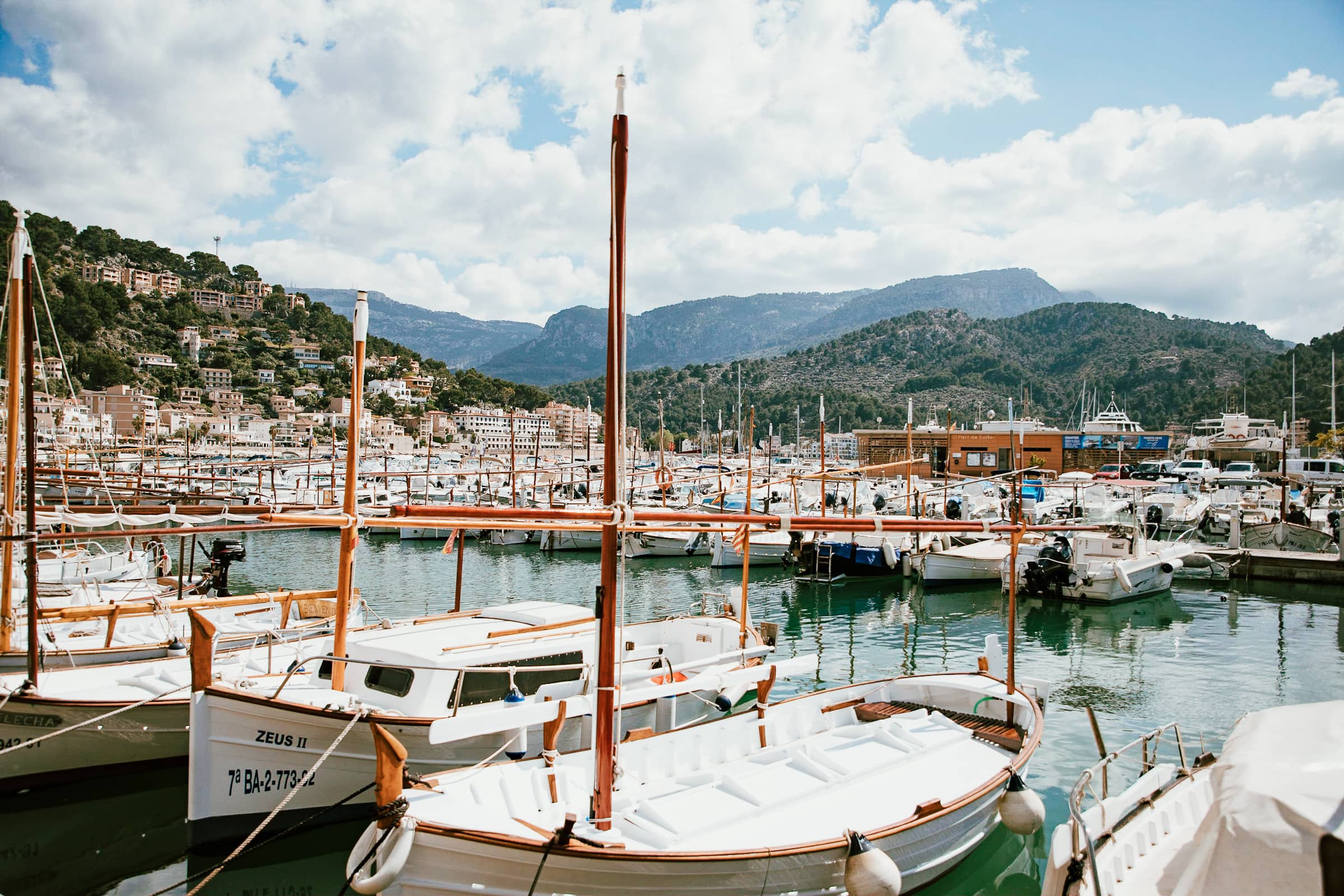
Small, white sailing boats gently bobbing in the turquoise waters, a secluded bay between pine groves and the Mediterranean charm of the surrounding boathouses: Cala Figuera is one of the most beautiful places on the island. In this article, I’ll show you why you should definitely visit this romantic fishing village on Mallorca!
The history of the port of Cala Figuera
The history of Cala Figuera dates back to the 18th century. Thanks to its sheltered location and natural harbor, Cala Figuera developed into an important fishing village.
Although fewer than in the past, fishing boats, the“Llauts“, still sail out to sea in the hope of a good catch. And the boathouses around the small harbor, which are so characteristic of Cala Figuera, are still used to store boats and equipment.
What makes Cala Figuera so special?
Cala Figuera is beautiful by nature alone. The bay, which extends deep into the land, forms an absolute postcard panorama with its turquoise-blue water and the wooded cliffs all around. The many small fishing boats, the “Llauts”, also provide a nostalgic flair – you can imagine how the fishermen set out here every day just a few decades ago.
The path around the small harbor is also special: you can walk around the bay on narrow wooden piers and enjoy the cozy atmosphere between the boathouses and the Llauts. As you are almost at water level here, you should wear reasonably non-slip shoes or simply walk barefoot, as the wooden walkways can be a little wet depending on the weather.
What’s more, you won’t find any huge hotel complexes or hordes of tourists here. In the town itself, you will only find a few small, family-run hotels. Cala Figuera has managed to retain its traditional charm and is the perfect place if you want to get away from the crowds. There is also no real nightlife – this is the place to be if you are looking for a Mediterranean idyll.
The Ruta Fotografica in Cala Figuera
For passionate photographers there is the so-called Ruta Fotográfica in Cala Figuera. This route takes you along the fjord-like harbor and to the town’s most beautiful viewpoints. Here you can take impressive pictures between the boathouses and fishing boats; one beautiful motif follows the next! It is particularly atmospheric at sunset.
It is actually exactly the route you would normally take along the jetties – but still a nice indication of the best viewing angles. The information boards also provide interesting background information about Cala Figuera and its history. And Cala Figuera is one of the most photogenic locations in Mallorca anyway!
Culinary highlights in Cala Figuera
Cala Figuera may be small, but it still has some nice restaurants and cozy bars to offer. Here are my tips:
Pura Vida – Beaches and therefore beach bars are unfortunately in short supply in Cala Figuera. The Pura Vida makes up for this not only with good food, but also with a spectacular view of the sea! And if you like, you can refresh yourself in the restaurant’s own pool.
Es Port – Charming restaurant on the harbour, specializing in fish and seafood. Best view from the terrace, especially at sunset.
Murmui – located right by the harbor – you can get delicious ice cream from one of Mallorca’s most popular ice cream makers.
Beaches near Cala Figuera
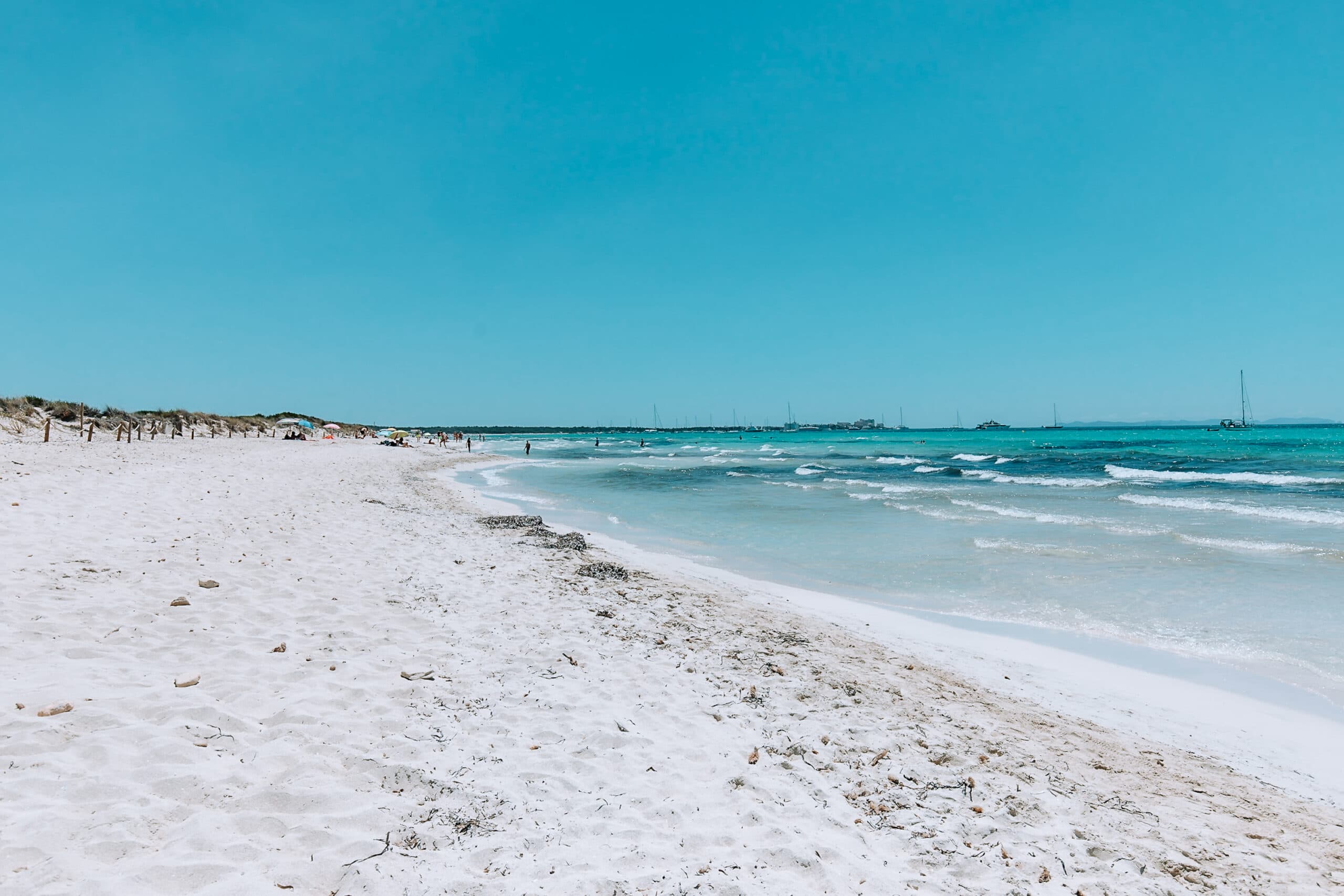
There is no beach in Cala Figuera itself. There are also virtually no bathing facilities if you are not out on a boat yourself. (This is probably the reason why it is less crowded here). Swimming is rather difficult in Cala Figuera.
However, there are some of the most beautiful beaches and bays in Mallorca in the surrounding area! Especially if you are traveling with a rental car, you can enjoy the atmosphere in Cala Figuera for a few hours and then move on to one of the great beaches or vice versa.
These beaches are located very close to Cala Figuera:
Cala Llombards
Cala Mondragó
Cala S’Almunia
Caló des Moro
The bay of S’Almunia
If you are looking for a slightly larger place with more bars and restaurants near the beach, then perhaps a trip to the nearby resort of Cala D’Or is something for you!
Places worth seeing near Cala Figuera
When you visit Cala Figuera, you should also take the opportunity to explore the surrounding villages:
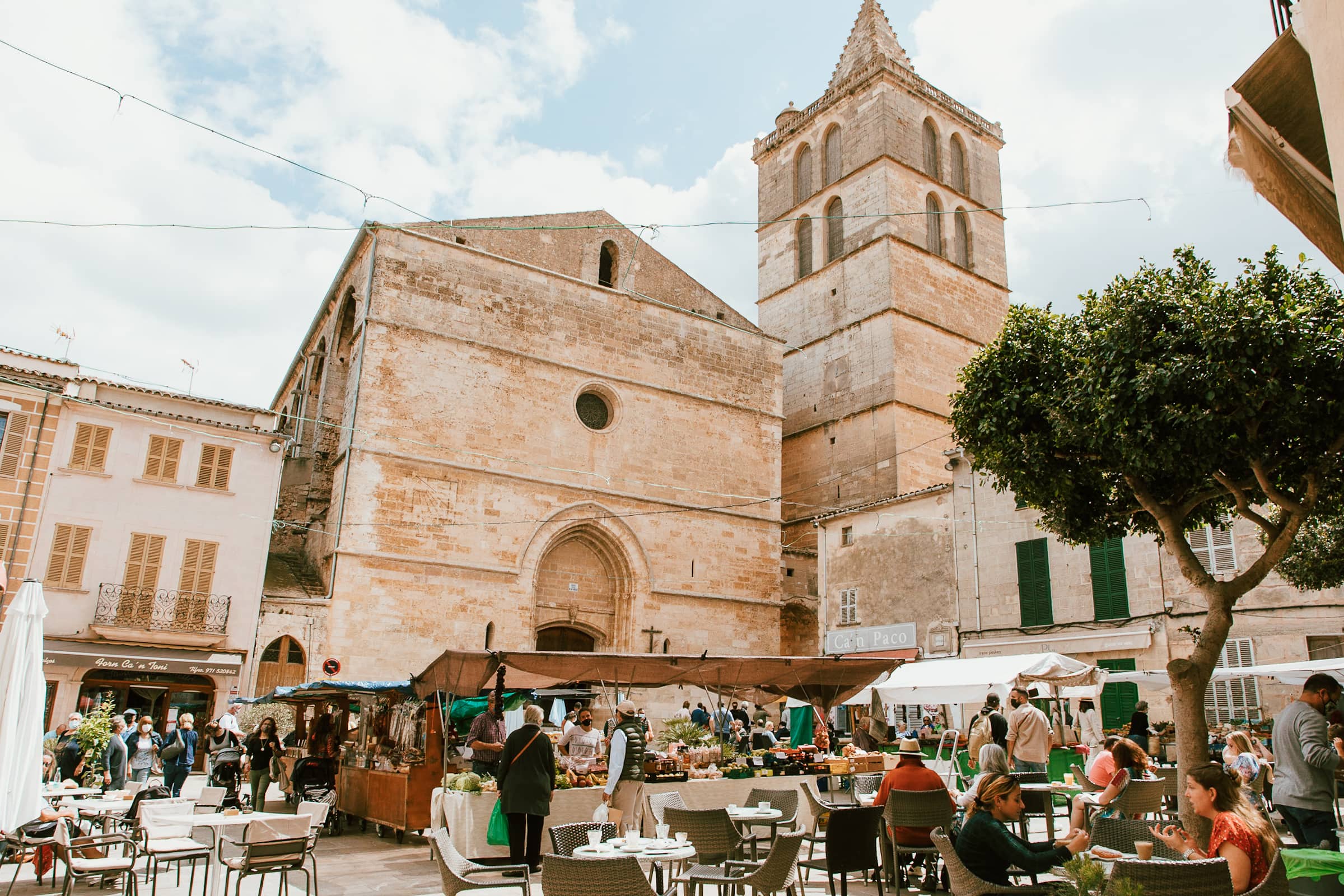
Santanyi – Known for its large weekly market with many Mallorcan products, Santanyi is one of the most important towns in the southeast of Mallorca. You will also find cozy pubs and small boutiques in the cute old town.
Santanyi is a typical Mallorcan village in the interior of the island.
Parc natural de Mondragó – In this nature reserve you will find numerous hiking trails (including along the coast) and Cala Mondragó, one of the most beautiful beaches in Mallorca.
S’Amarador beach in Parc Mondragó
Es Pontas – The rock arch on the coast is a popular photo motif and particularly spectacular at sunrise or sunset!
By the way, you can find more great places on Mallorca here: All about Mallorca
Boat tour from Cala Figuera
Don’t feel like driving? A great way to explore the surrounding beaches and bays is to take a boat tour from Cala Figuera. From here, you can easily explore dreamy bays such as Cala Santanyí with Es Pontàs, Caló des Macs, Caló Llombards, Caló des Moro, s’Almunia and Cala Màrmols from the water!
Cala Figuera is located in the southeast of Mallorca, only around 50 kilometers from Palma de Mallorca airport. Getting there is uncomplicated – the easiest way is by rental car. Booked in good time, rental cars on Mallorca are not expensive at all and guarantee you maximum flexibility to explore the rest of the island.
You can also take one of the bus lines that run regularly from Palma and other towns on the island to Santanyi or Campos. Both towns are important hubs in the south-east of the island. From Santanyi or Campos, the 516 line will take you to Cala Figuera.
Incidentally, this bus also stops at Cala Santanyi, another beautiful bay with a good sandy beach for swimming. So you can perfectly combine your trip to Cala Figuera with a day at the beach. Just pay close attention to the timetable, sometimes the bus stops in a different order, and unfortunately it only runs every two hours.
Note: There is another small bay on Mallorca called Cala Figuera. However, it is located in the very north of the island near Cap Formentor; don’t get confused!
Staying overnight in and around Cala Figuera
Do you like the romantic atmosphere of a real Mallorcan fishing village? Cala Figuera and its surroundings are perfect if you want to spend an individual vacation on Mallorca away from the tourist crowds. You’ll find small hotels or vacation apartments in the town itself, as well as great fincas further afield. And the most beautiful bays on the island are right on your doorstep, so to speak!
Want to discover a completely different corner of Europe? Kotor is located on the breathtaking bay of the same name in Montenegro and can look back on a turbulent past. Today, you’ll find a remarkable mix of south-eastern European culture, exciting history with Austrian and Italian influences and a unique landscape. I’ll show you the best spots in Kotor that you shouldn’t miss!
The Old Town of Kotor / Stari Grad
From the first time I entered, I was enthralled by the small labyrinth of charming alleys and I was so glad to have chosen an accommodation in the middle of the old town of Kotor after all. (Was of course a little more expensive, but it’s worth it!)
Just being able to stroll through the idyllic maze of alleyways undisturbed every morning was simply worth it. You only have to share the old town with the other numerous inhabitants of Kotor: cats are an integral part of the cityscape here and are looked after and cared for by the locals.
Especially in the evening, when the cruise tourists have left the old town of Kotor again, it gets really atmospheric, and the Italian influence of the last centuries is particularly noticeable: in the numerous romantically decorated restaurants there is pizza, pasta and seafood galore!
Most of Kotor’s sights are also located in the car-free old town. Just let yourself drift through the narrow streets and you will discover most of the locations all by yourself. I will introduce you to the most important sights here.
The Best Places to See in Kotor
The Square of Arms (Trg od Oružja)
You will probably end up in the old town first: The Square of Arms or Trg od Oružja is located right behind the main gate through which most visitors enter the old town of Kotor. The large clock tower is particularly striking here. Many cafés line the square, and events and concerts are often held here in summer. The Square of Arms is the heart of Kotor, so to speak!
In case you wonder about the name, in the Middle Ages, when Kotor was under the influence of the Republic of Venice, weapons and ammunition were stored here. At that time, Kotor was a strategically important port, which the surrounding powers fought over – the Venetian or Italian influences from that time can still be found in the cityscape today!
Saint Tryphon Cathedral (Sveti Trifun)
The Cathedral of St. Tryphon is one of the centerpieces of the old town of Kotor and also one of the oldest cathedrals on the Adriatic coast. Built in the 12th century, it is considered one of the most important sights in Kotor and the two church towers rise above the otherwise low houses in the old town. Incidentally, the relics of St. Tryphon, the patron saint of Kotor, are also kept here.
Maritime Museum / Museum Maritimum
If you want to learn more about the exciting maritime history of Kotor and Montenegro, the Maritimum Museum is the place for you. Housed in an old baroque palace, the museum shows the long maritime history of the region. From old nautical charts to traditional uniforms, this museum offers you an interesting insight into the maritime culture of Kotor. Not only for history buffs, this museum is a location worth seeing in the old town!
You can lose yourself in it: The beautiful Old Town of Kotor.
St. Nicholas Church
Only built at the beginning of the 20th century, the Serbian Orthodox Church of St. Nicholas cannot look back on as long a history as the Cathedral of St. Tryphon – but it is still worth taking a look inside. You can recognize it by the two onion domes; inside you will find impressive decorations. I always find Orthodox churches in particular very interesting, because they are usually very ornate.
Kotor fortress
From the fortress of Kotor on the mountain San Giovanni you have an incomparable view of the bay and the surrounding mountains. On the way up, you can see the old defensive walls and enjoy the fascinating view over the bay again and again. The way up drags quite a bit, but is also worth every effort!
The fortress itself may only be in ruins today, but the view from up there really was one of the highlights of Kotor for me.
Please note: The climb isn’t for everyone, and especially during the hot summer months, I recommend setting out very early. The ascent is quite steep, and there’s virtually no shade along the way. The trail up splits into a well-trodden set of steps (mostly used by people coming down) and a scree path. Right at the entrance, there’s a sign warning against wearing flip-flops on the trail, and you should really take that to heart. You’re really best equipped here with proper hiking boots or at least non-slip trail running shoes.
Very far up there was a water vendor; however, there is no place to stop (and no restrooms) all the way up and at the fortress. Therefore, take enough water with you!
There is still a rather unofficial way up to the fortress, climbing a rickety ladder through an old window in a fortification wall. This path has gained quite a bit of notoriety on social media in recent years; I haven’t used it, but I have heard that this access has been closed due to the high risk of injury and you can no longer get to the fortress from this path. Many visitors wanted to save the entrance fee for the official route and get some exciting shots.
But the conventional way is exciting enough – I would not try to find the ladder 🙂
This gate leads up to the ticket booth
Access to the trail is quite well signposted in the old town; there is a ticket office at the foot of the hill, which is manned from 8 a.m., at least in summer. If you arrive earlier, that’s no problem either: you can just slide past the turnstile – but you’ll still have to pay if you can’t show a ticket after descending.
City gates and walls of Kotor
The imposing city wall that still surrounds the old town today shows how well secured Kotor was during its heyday as an important trading port on the Adriatic. The old town can be entered through three city gates. Most impressive, however, is the main gate directly opposite the harbor, where huge cruise ships seem to be anchored almost directly at the old town. You can also enter parts of the city wall.
Gurdic Bastion
The Gurdic bastion is part of the southern city wall and shows particularly well how robust the defenses were built at that time. Here you can also find the Gurdic Gate or South Gate, one of the three city gates into the Old Town.
Kampana Tower
At the other end of the old town you will find the Kampana Tower, from where you can enjoy a beautiful view of the bay. This section of the city wall is beautifully designed with lots of park benches.
There is also a nice restaurant there. As far as the food is concerned, it is probably more of a tourist trap, but a romantic drink at sunset is always worthwhile here with the atmospheric lighting and the great view.
The Kampana Tower (left) and the impressive mountains around Kotor in the background
Around the Bay of Kotor
Not only is Kotor worth seeing, but the surrounding area is also really impressive. Montenegro is a small country and also impresses with its great landscapes in the hinterland. Around the Bay of Kotor you will also find small, charming towns that are also worth a visit.
Perast and the island of Our Lady of the Rocks
The charming village of Perast and the offshore island of Our Lady of the Rocks are a perfect half-day excursion. The artificial island with its picturesque chapel is a real eye-catcher and can be reached by speedboats from Perast.
You can easily reach Perast by public bus from Kotor: The bus stops near the main gate and runs about once an hour. However, there is no clear sign indicating the bus stop, nor are there any schedules. It’s best to ask the locals for directions.
Lovćen National Park
For nature lovers, Lovćen National Park is a must. Here you can hike, picnic and experience the diverse flora and fauna of Montenegro.
Montenegro is a true natural paradise.
If you are not traveling with your own car, camper or rental car, you can also experience Lovcén National Park and other great spots in the hinterland on a guided tour. I can wholeheartedly recommend this tour: really great guide, small group and great locations!
In the Blue Grotto, the water is said to shimmer in a surreal blue hue; in addition, a boat tour is usually taken to the historic Mamula Island, which once served as a fortress.
Admittedly, it was my first time in Montenegro, and I was expecting southeast European cuisine – so I was all the more surprised to find mainly Italian restaurants in Kotor. However, the Italian influence from Kotor’s history is still so great that Kotor seems like Little Italy within Montenegro, even in terms of culinary arts.
However, I found many restaurants very bland, so I went in search of more unusual locations! Here are my tips:
Pier 65 By chance I stumbled into the cute alley with Pier 65, right in the middle of the old town and yet chilled. The cuisine here may not be a culinary highlight, but I would describe it as solid comfort food. Super nice service and really nice ambience.
Rooftop Bar Hotel Hippocampus* I was even recommended the breakfast in the rooftop bar of the Hotel Hippocampus by locals! The Hippocampus itself is a beautifully designed boutique hotel and you can enjoy the view over the rooftops of the old town from the roof terrace while enjoying a hearty breakfast.
Restobar Taraca Located just outside the old town; fresh cuisine and good value for money. Also many vegetarian and vegan options.
Platanus Located on the seafront in Dobrota and perfect destination for a walk along the water. Pleasant ambience, especially outside on the terrace overlooking the water.
Moritz Eis Due to the Italian influences, there is ice cream on every corner in Kotor, but the extraordinary variations at Moritz Eis are especially good. Bit expensive, but really worth it!
I also recommend a visit to the small weekly market, which is located on the outside of the city wall between the Sea Gate (main gate) and the Gurdic Gate. Here you will find Montenegrin delicacies such as cheese, ham as well as fruit and vegetables from the region.
Overnight stay in Kotor
Most of the accommodation in Kotor can be found in the suburb of Dobrota. Many vacation apartments are dotted along the beach promenade and the main street behind it.
However, if you can do without the proximity to the water and don’t need a parking space for a rental car, I would advise you to stay overnight in the old town. Especially if you don’t have a car, it can take a long time to get to the old town. Personally, I wasn’t particularly impressed with Dobrota either – I liked the vibe in the cute old town around my little old apartment much better.
My tip: Stay overnight in the middle of the old town of Kotor!
I can recommend this apartment in the old town of Kotor; right in the middle and still very cozy: UNA Apartments in Kotor*
Especially in the high season, popular accommodations in the old town are quickly booked up. These accommodations here, for example, are also in high demand:
Kotor Nest Coliving* Montenegro as well as Kotor have become very popular with digital nomads in recent years. Rooms are tastefully decorated.
Hotel Hippocampus* Boutique hotels are a bit rare in Kotor and if you don’t just want to enjoy brunch on the roof terrace, you can also book a room at the Hotel Hippocampus: stylish ambience, right in the middle of the old town.
Beaches in Kotor
Is there a beach in Kotor? Yes. And no. Because I wouldn’t swim at the city beach in Dobrota just outside the old town. The next section of the beach is relatively small and consists of pebbles. Far more uncomfortable, however, are the cruise ships that pass relatively close by and dock just a short distance away in the harbor.
In addition, the Bay of Kotor is relatively closed, so I always had the impression that much of what is brought in simply stays in the bay for the time being – or, to use the words of a local who advised me against swimming in the bay: “Here, the sun oil is included when you swim.
Suitable beaches are more likely to be found in Budva, which is also popular for mass tourism and is about a half-hour drive from Kotor.
There are better beaches in Budva, but the place itself is less worth seeing.
On the road in Montenegro
Maybe you are traveling longer in Montenegro or don’t want to depend on organized tours. Then you can also rent a car at the airport in Tivat. A German driver’s license is sufficient in Montenegro, and probably from other European countries as well.
By the way, the roads around the bay are very narrow and cannot withstand the rush of tourists, especially in summer – traffic jams on the access roads to Kotor are normal.
I had also thought about hiring a car – but when I saw the really extreme hairpin bends in the mountains around Kotor on a tour, I was really glad I didn’t have to drive myself. Only something for experienced drivers or if you enjoy winding roads!
Helpful information for Kotor & Montenegro
How many days do you need for Kotor?
The old town of Kotor is relatively small and everything is within walking distance. Outside the old town, there is still a spruced-up riverside promenade, but all in all you can skip it and not miss much. So one day is easily enough for the old town itself.
However, Kotor is also relatively often visited by large cruise ships in the summer, which usually flood the old town only during the day. An overnight stay is therefore overnight stay is simply because you can experience the old town relatively empty early in the morning and enjoy the evening atmosphere in one of the restaurants.
Cruise ships are anchored next to the old town of Kotor
How to get to Kotor?
By plane
From Germany you can now fly directly to Kotor. Many airlines fly to Tivat airport, which is only about 20 minutes by car from the old town. Direct flights are available, for example, from Eurowings, but Austrian Airlines also offers regular connections to Tivat or the Montenegrin capital Podgorica via Vienna.
By rental car/car in Kotor
You can rent a car at the airports. Montenegro itself is relatively small – so you can easily plan a little road trip through the country. However, if you are staying in the old town of Kotor, a car is generally a hindrance. The old town is car-free and you will have to park the car outside. By the way, the roads in the mountains can be very curvy and narrow – only something for safe drivers!
By bus from Dubrovnik/Croatia
There are also regular buses from Dubrovnik to Kotor and the surrounding towns, for example – they do take a while due to the border controls between Croatia and Montenegro and you need to be a bit flexible when it comes to punctuality, but the bus connections are definitely an alternative if you are not traveling in the region with a rental car or your own camper.
When is the best time to visit Kotor?
May and June are among the best months to travel in Kotor. I was there in July, when good weather and sunshine is almost guaranteed, but Kotor is then also particularly well visited.
Especially the many large cruise ships that call at Kotor ensure a rush of visitors in the summer months, which the tranquil old town often seems to be unable to cope with. If possible, plan your visit around the ships.
It rains more often in the fall, and the winters in Kotor are not very cold, but they are wet – and the old town with its rustic cobblestones turns into a slide. Moreover, the landscape around the bay, so impressive in sunny weather, loses much of its charm.
What to consider when staying in Kotor?
Montenegro is not part of the EU
Montenegro is not part of the European Union, so it is advisable to check the entry requirements in advance. Unfortunately, I didn’t really do this beforehand, so I only found out about a little special feature for a stay of several days in Kotor by chance – and luckily saved myself a lot of trouble when leaving the country!
I entered the country by plane, went through passport control at the airport as normal and got an entry stamp in my passport.
Registration for tourists
If you are traveling to Montenegro as part of a package tour, you don’t need to worry about anything else. However, if you travel to Montenegro on your own like I did and organize your accommodation yourself, you must register at one of the tourist offices in Kotor within 24 hours of entering the country. Otherwise, you could face a fine of up to €200 when you leave the country. (Whether this is actually enforced in the end, I do not know. Online you will find reads about the most diverse experiences with non-compliance with this regulation).
How to register as a tourist in Montenegro
To register, you will need your passport with the entry stamp and your name or the address of your accommodation; for private accommodation such as vacation apartments, you will also need the name of the landlord. Registration costs €1 per day and takes just a few minutes. Then you will be issued a certificate of registration, which is best kept with your passport.
You’ll always need this registration certificate in Montenegro as soon as you stay in a municipality for more than 24 hours. I didn’t really understand the point of it, though. The whole system is just opaque, and nobody was really interested in my registration certificate anyway. Besides, I didn’t register until three days after I entered the country—and that wasn’t a problem either.
Dubrovnik is considered one of the new hotspots on the Croatian Adriatic coast and is only 60 kilometers away from Kotor. From there you can often find tour operators offering day trips from Dubrovnik. Basically, one day is enough to explore Kotor.
However, you will have to go through border control on the way from Croatia to Montenegro, as Montenegro is not a member of the EU. There are often long waiting times at border crossings in summer, and it can take a while for a coach to be processed, especially if you are traveling in a large group. It is therefore best to enquire about the group size in advance and avoid day trips from Dubrovnik in summer.
Sometimes the good things are not so far away: In the middle of Germany hides a not so small excursion paradise, which convinced me with lots of green, sparkling clear water and warm hospitality in no time. In this article, you can find out what makes Lake Edersee so special, which sights you shouldn’t miss and why it’s worth taking a detour or even a short vacation here.
This article contains advertising for the Edersee region.
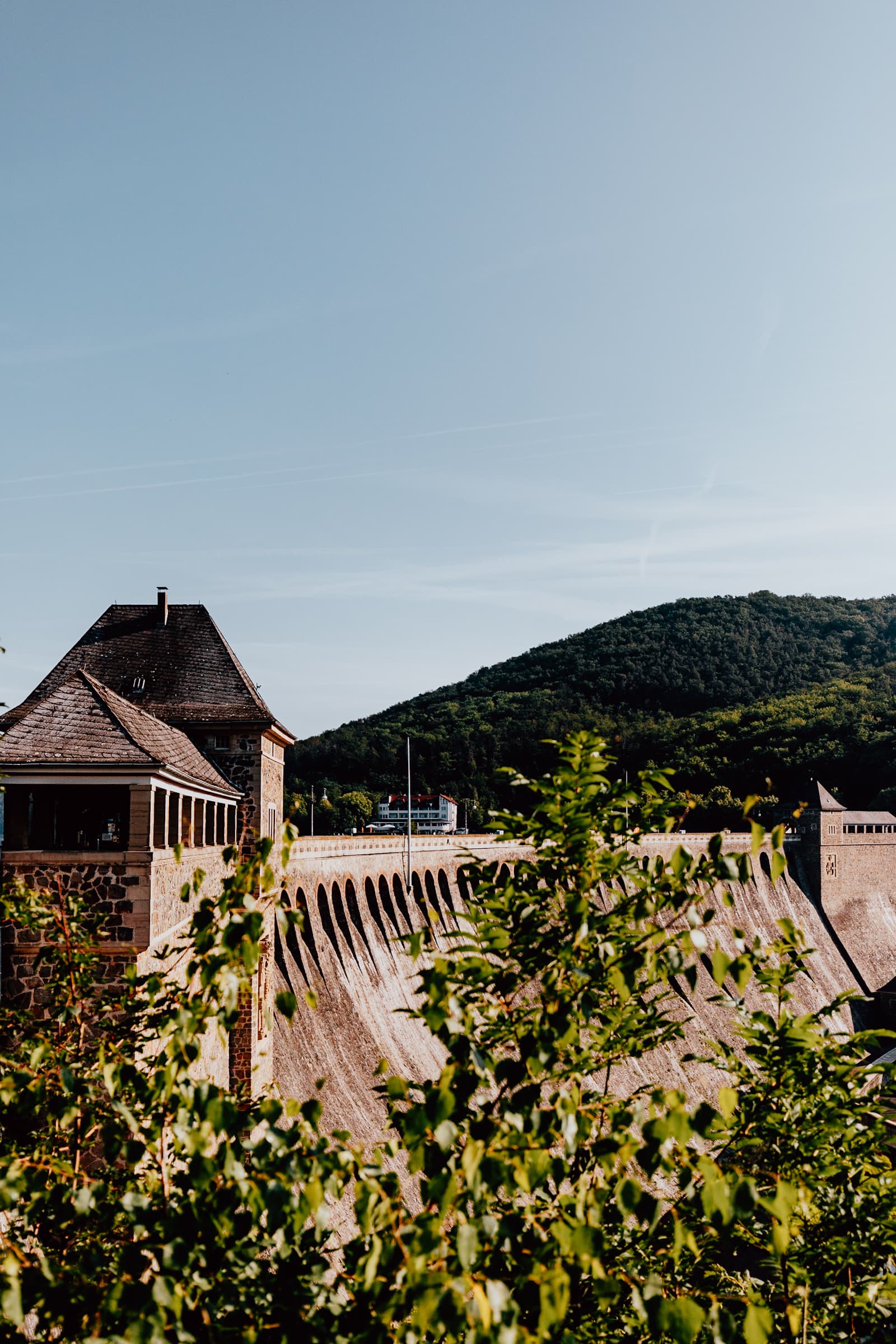
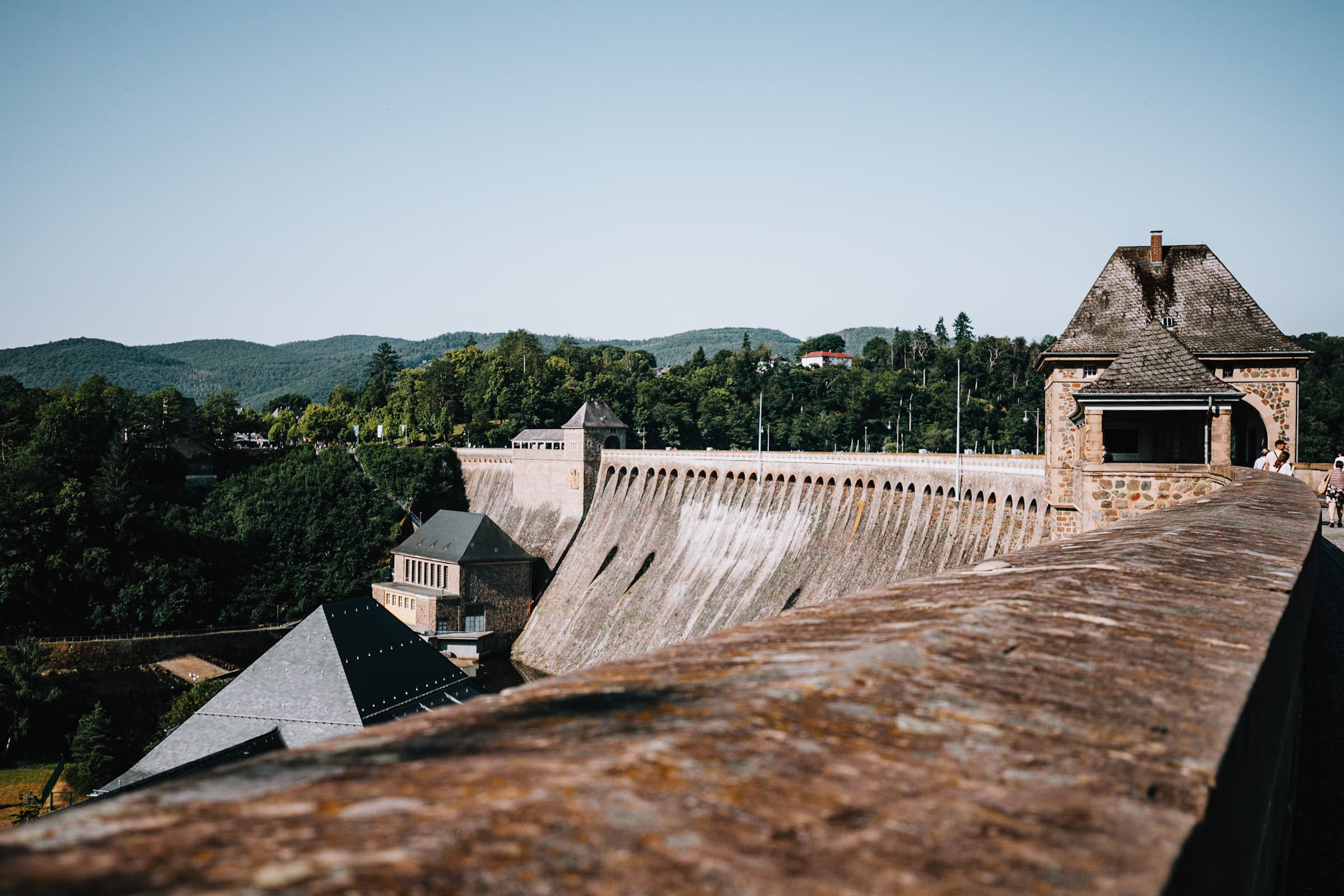
View from the Eder dam
What makes the Edersee so special
The Edersee in Hesse meanders a full 27 kilometers through the communities of Edertal and Vöhl as well as the town of Waldeck, surrounded by lots of nature. With the Kellerwald-Edersee National Park, you will not only find the only national park in Hessen, but also a UNESCO World Natural Heritage Site: the dense, old beech forests provide a very special natural experience. The national park is surrounded by the Kellerwald-Edersee nature park – as you can see, you really are in a small natural wonder here.
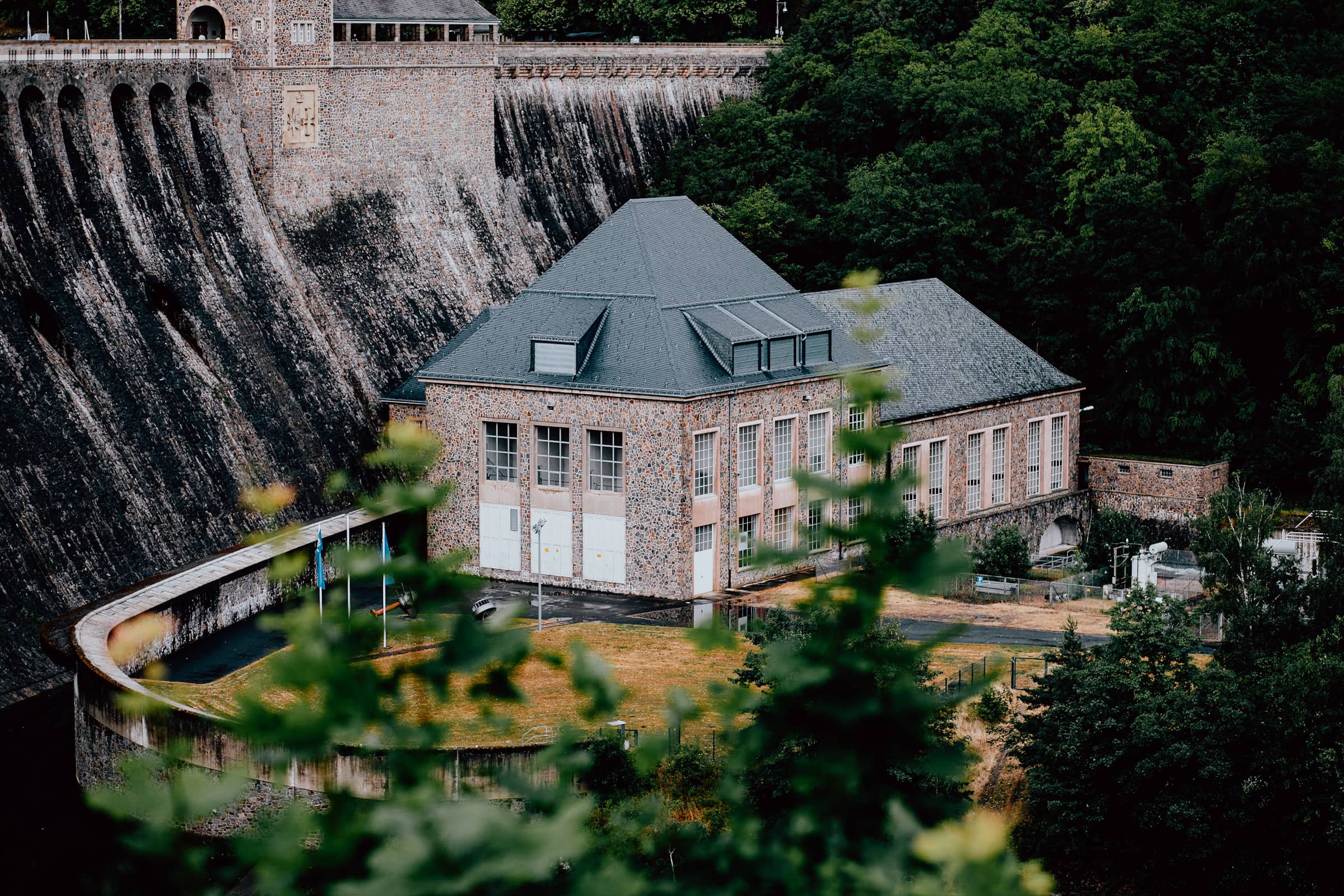
Barrier wall Eder dam
There is a reason why Lake Edersee is so large (and also quite deep, namely 42 meters at its deepest point near the barrier wall): Lake Edersee is a reservoir whose water is used to maintain shipping operations on important waterways such as the Weser or the Mittelland Canal, especially in the drier summer months.
Between 1908 and 1914, the Eder Dam was built near Hemfurth for this purpose, which is still one of the most exciting sights on Lake Eder. The massive dam wall is 48 meters high – and to my surprise, you can actually walk along the wall!
I would also recommend a visit after dark: then the dam wall lights up in the most colorful colors and even holds an entry in the Guinness Book of Records for the “longest permanently illuminated structure with color change”.
You might be particularly lucky on your trip and even be able to observe the overflow at the Eder dam. On a few days (usually in spring), the Edersee is so full that the excess water is drained and shoots out of the 39 spillways below the top of the wall like a rushing waterfall. The best way to find out if there’s a spill going on right now is to follow @dein.edersee‘s Instagram account.
Edersee Visitor Center
Right next to the dam wall is the brand new Edersee Visitor Center, which opened in spring 2023. At first glance a rather unusual building, the background becomes apparent on a second look: The massive building exactly mirrors the shape of the cross-section of the barrier wall.
The observation deck at the top does offer a great view of the dam; however, I highly recommend the panoramic lounge inside the visitor center. There you can lounge around in comfortable armchairs and see the dam wall from a completely different perspective.
For a small entrance fee, you can also watch an interesting video installation in the basement of the visitor center, which visually depicts the history of the dam. The bombing of the dam wall by the Allies during the Second World War and the resulting flood wave, which claimed several lives and severely destroyed the villages in the valley, play a major role here. The installation picks up on this striking event for the region in a very vivid way – truly moving, but perhaps not quite suitable for gentler minds or younger children.
Tip: After the dam wall and the visitor center, you will definitely feel like a little refreshment – and the best opportunity for this is an ice cream from Lecko Mio, practically next door. Unfortunately, there is no seating here and the store itself is tiny, but the ice cream creations that owner Steffen churns out here every day during the season from April to October have nothing to hide from trendy city ice cream stores.
Every day, in addition to well-known classics, more exotic varieties from asparagus with breadcrumbs to oakwood and caipirinha are freshly produced. On excursion days, the waiting time is correspondingly long, but don’t let the long queues put you off: it’s worth it!
To be honest, I didn’t really realize how big the Edersee really is until I saw it from above. A good option for this is a trip to Waldeck Castle. The castle complex dates back to the 11th century and towers high above the lake. From the castle’s observation terrace, you’ll have the perfect view of the Edersee meandering through the valley.
Tip: Access to the terrace is free of charge. For even more medieval vibes, you can visit the small exhibition “Behind Lock and Key” in the castle museum. Or you can stay overnight directly in the castle: today, the complex also houses a four-star hotel with an adjoining restaurant.
You can easily drive up to Waldeck Castle by car, but you will also miss out on one of the cutest highlights on Lake Edersee: the Waldeck cable car is the oldest cable car in Hesse and could have come straight out of a Wes Anderson movie!
Since 1961, it has connected the Edersee promenade with the mountain station between Waldeck Castle and the village of the same name – and much to the delight of my passion for vintage treasures, not much seems to have changed since then. The small colorful gondolas climb 120 meters in altitude and offer a beautiful view of Lake Edersee already on the way to the castle, provided you are sitting in the right direction. Absolute recommendation!
Tip: In special gondolas you can also transport bicycles and strollers with the Waldecker Bergbahn. Dogs are also welcome.
With so much water, it’s no wonder that Lake Edersee is an Eldorado for all kinds of water sports: kayaking, stand-up paddling, water skiing, windsurfing – the options are endless. Swimming is permitted everywhere around the lake, so if you are looking for quiet bathing spots away from the public (and incidentally free!) lidos, you should quickly find what you are looking for here.
Maybe you’d like to try something new? At Windsurfing Edersee you can learn windsurfing at fair prices even as a complete beginner – and after having experienced the angel patience of operator Lars and his son Michel, I would now claim that really anyone can learn with the two of them.
As a rule, I’m always a bit rough-motored when it comes to new sports and was really skeptical whether I’d even be able to stay on the board for longer than two and a half minutes and not sail in rather awkwardly instead of elegantly over the water.
But Lars and Michel made so much effort that I actually came ashore dry again after our lesson and on top of that found some real fun in windsurfing.
By the way, you can enjoy the absolute peace and relaxation on the Edersee even without physical exertion. At boat rentals like Edership you can easily rent a boat and sail around the lake. You don’t even need a boating license.
The boats are powered by an electric motor and steering is child’s play. By the way, motorboats are not allowed on the Edersee, with a few exceptions, so there are no boats or jet skis wildly roaring past you.
And that makes boating really relaxing: the electric motor makes you glide almost inaudibly over the deep blue water and all around you is dense greenery as far as the eye can see.
Due to the heavy thunderstorm that raged over the Edersee at the beginning of my stay, one of the highlights was unfortunately not possible: Hiking was not possible because many paths were simply impassable.
But if you want to try it out: The Urwaldsteig is a 68 kilometer long circular hiking trail that takes you once completely around the Edersee. You can run it in stages over several days or just a short distance.
The complete tour of the Urwaldsteig including the individual stages can be found here.
Cycling
If you prefer to explore the Edersee by bike, there is also a well-developed bike path. Just like the Urwaldsteig, the Edersee-Radrundweg takes you once around the lake. If you want to arrive without a bike or if you spontaneously decide to go on a bike tour, you can also rent a bike or e-bike at various places on site.
By the way, in some years, a completely different facet of the Edersee is revealed towards the end of the summer. Depending on how much water had to be drained from the Edersee to maintain inland navigation on the Weser, parts of the villages that were flooded during the construction of the dam wall come to light.
When the water level is particularly low, for example, even the 4-arch Asel Bridge becomes visible again and can be crossed completely. Where there is still ten meters of water above the bridge at full dam, the so-called Edersee Atlantis transforms the lake into a small river course, which is greened all around by the marsh grass found at the bottom of the lake.
Finding places to eat in excursion regions is usually no problem – but I’ve brought you a few tips that will help you avoid falling into the next tourist trap.
Fancy a snack? In keeping with the maritime vibe at the lake, I recommend a stop at the fish smokehouse Edersee in Rehbach. Here you get finely smoked, juicy salmon trout from the in-house smoker, neatly parried in a crispy roll with a delicious honey-mustard dressing that I would have loved to polish off a second one.
Naturally, the nightlife is a little quieter in the middle of the countryside, but you don’t have to miss out on a great spot for a sundowner at Lake Edersee.
At the Mun in Scheid, I not only enjoyed a beautiful view of the lake at the end of an eventful day, but also tried out various cocktail creations. By the way: the antipasti are so good that someone in the kitchen must be a real Italian – the perfect accompaniment for a sundowner.
Not directly on Lake Edersee, but in the immediate vicinity is Bad Wildungen; cafés with an extensive range of cakes are not uncommon in spa towns like this. At Chocolaterie & Patisserie Christian Bach, however, the selection is not only large, but also of such high quality that I absolutely had to take home a piece of cake after the more than filling étagère breakfast.
At home, by the way, were the Naturlodges Edersee, and yes – my lodge was so cute and cozy that I would have loved to nestle there even longer. But would have become a problem, because especially in the summer season the small cottages are pretty well booked.
Each lodge is completely self-sufficient and not only equipped with everything you need, but also designed with great attention to quality details. (Or who would suspect a 1a steam straightener in a vacation home, which makes the summer outfits crumpled in the suitcase look neat again in no time)? Inside, the lodges are completely paneled with light wood, which not only creates a cozy atmosphere, but also a pleasant indoor climate.
Perfect for a little time out in the countryside; even in winter, because that’s when the private sauna, which every lodge has, comes in all the more handy.
If you are not planning a bike tour or want to do most of your hiking, you are of course more mobile at Lake Edersee if you arrive by car.
But Lake Edersee can also be reached by train: The nearest ICE train station is in Wabern, from there, for example, a regional train to Bad Wildungen. Another station that is particularly easy to reach from the Ruhr area and Frankfurt is the Vöhl-Herzhausen National Park station.
The nearest airports are Kassel, Paderborn/Lippstadt and Frankfurt. (Maybe you don’t necessarily want to travel by plane, but at least you have a geographical direction).
All in all, the slightly hidden location ensures that you will find here a region relatively spared from large tourist crowds, which scores with a lot of nature and warm people!
Maybe you are on a road trip in the Balkans or just want to get to know a new city? The Slovenian capital is perfect for a short trip. I’ll show you which sights you can discover in Ljubljana in one day and give you my tips for a fairytale destination that has taken my heart by storm!
History of Ljubljana
Ljubljana has a turbulent past, and it’s hard to believe just how much history is packed into this relatively small capital city with a population of just under 300,000. The first pile dwellings were built here as early as 3600 B.C. Ljubljana gained fame in Greek mythology because the Greek hero Jason is said to have defeated a dragon at the source of the Ljubljanica River after stealing the Golden Fleece. That is why the dragon remains Ljubljana’s heraldic animal to this day and appears time and again throughout the cityscape.
The Romans later founded the settlement of Emona here in 14 AD, but it disappeared from the scene again after the Slavic invasion around 600. Today, for example, the street name Emonska cesta in the middle of the old town reminds us of this.
In the course of history, Ljubljana has been Austrian (the German name of the city, “Laibach”, comes from this period), Italian, French and, in a very inglorious part of its history, German, as a result of political wrangling, world wars and the occupations associated with them. In 1945, Slovenia became part of the People’s Republic of Yugoslavia; in 1991, it became the first of the Yugoslav republics to gain independence and, apart from a ten-day war, was largely spared the hardships of the Yugoslav war.
Sights in Ljubljana
Ljubljana Castle
The Ljubljana Castle towers above the city. You should not miss a visit here! You can easily make the climb on foot: there’s a pretty nice path to the top, which also offers a great view of the entire city and the mountains in the background along the way.
In places it’s a little steep and I personally thought: better up before eating! On the other hand, you’re also providing a bit of a daily workout. If you are lazy or prevented from walking for other reasons, you can also take the funicular that leads to the top of the mountain.
Once at the top, you can see the castle itself from the inside as well as the spectacular view. There is, for example, a museum on Slovenian history, a puppet theater museum and various temporary exhibitions. In summer, open-air events are often held in the castle courtyard.
You can also take a break up here: There are several cafes and restaurants on the castle grounds. If you like it very elegant, you will even find a star restaurant here with the Strelec.
Dragon Bridge
The Dragon Bridge is another landmark of Ljubljana and reminds with the dragons of the founding story from Greek mythology. The dragon sculptures were created in the period of the Viennese Secession and with their Art Nouveau character fit perfectly into the charming old town of Ljubljana.
Waterfront Promenade
You should also plan an extensive walk along the waterfront promenade on the Ljubljanica. Here you will find many cafés and restaurants where you can really enjoy the picturesque atmosphere of Ljubljana.
The Slovenian architect Jože Plečnik, who also designed many other buildings in Ljubljana and played a major role in shaping the city’s overall appearance, is responsible for the successful design of the waterfront promenade. His urban planning concept is still evident in Ljubljana today, and in 2021, his work there was even added to the UNESCO World Heritage List. In addition to the riverside promenades and the bridges over the Ljubljanica River, the World Heritage Site also includes, for example, the Slovenian National and University Library.
Boat trip through Ljubljana
A boat trip on the Ljubljanica is also particularly worthwhile. The boat trip takes about 45 minutes and you just sail up and down the river – which I imagine is really romantic with the view of the enchanting old town and the castle. Definitely a must-do for my next visit.
Tip: With the Ljubljana Card*, you not only get free entry to the most important museums and galleries in Ljubljana, a guided city tour, a rental bike for 4 hours and a ticket for the cable car to Ljubljana Castle, but also a free boat trip!
Advertising / *affiliate link
Other sights in Ljubljana
I had to postpone many sights until a next visit. To explore the whole of Ljubljana in just one day is not easy after all. (I would recommend at least two days in the city for a short trip). I haven’t seen some of the locations, but I’ll list them here anyway; maybe you’ll make it!
Tivoli Park is one of the many green spots in and around Llubljana. The large green park also houses several museums. To get there from the Old Town, you just have to follow the Jakopič promenade to Tivoli Castle, which, by the way, was also designed by Jože Plečnik. You can be there in 15 minutes on foot.
Central Market The Central Market is another work by Jože Plečnik and consists of a marketplace as well as several market halls. Here you can find everything from fresh local produce and traditional food to handmade souvenirs. The market complex is open every day except Sundays and is definitely on my list for my next visit to Ljubljana!
I really want to explore Metelkova Mesto, the alternative cultural center, again in the evening. Many cultural events take place here, there are concerts and clubs. Nearby is also the Metelkova Museum of Contemporary Art, the Slovenian National Museum of Contemporary Art.
Where to eat in Ljubljana
I was very surprised by the range of exciting locations in Ljubljana! Going out for a good meal or finding nice cafes is really no problem here. Nevertheless, I have brought a few tips for you, so that you already have a first clue for your trip to Ljubljana.
Vigò Judging by the queue outside the door, this place must have the best ice cream in Ljubljana. In any case, it is really delicious. Tip: If you don’t fancy a long wait at the branch in Mačkova ulica, there is another branch, Vigò Sorbetto , which is somewhat hidden but still centrally located between Congress Square and the waterfront promenade.
Ljubljanski dvor Here you can get solid pizza, pasta and salads. The real attraction, however, is the terrace directly on the waterfront: the view from this vantage point is unbeatable. Perfect location to soak up the atmosphere of Ljubljana on a sunny day.
Not only is Ljubljana beautiful, but the rest of Slovenia also offers a variety of great places that are well worth exploring. Outdoor and nature lovers in particular get their money’s worth here. High mountains, enchanted caves, crystal clear lakes and a lot of untouched nature make Slovenia a popular destination.
The good thing is that the distances are short. With only 2 million inhabitants and an area of just over 20,000 square kilometers, Slovenia is one of the smallest states in Europe.
A trip to Bled from Ljubljana is especially worthwhile. St. Mary’s Church, located on an island in the eponymous Lake Bled (Blejsko jezero in Slovenian), has become Instagram-famous and attracts visitors from all over the world. You can also take a small wooden boat to the island and take a closer look at the pilgrimage church. Especially popular there is the ringing of the so-called “wish bell“.
Ljubljana is just a stone’s throw away by car from Munich or many cities in Austria. The travel time from Munich is about four and a half hours. (Attention: Tolls will be charged on the way!)
But Ljubljana is also easy to reach by train: From Munich’s main station, for example, there is a direct connection via Salzburg, which, by the way, is also very worth seeing. (Maybe you want to make a stop there, too? Here you can find my tips for Salzburg).
Accommodation in Ljubljana
I didn’t have to worry about the overnight stay in Ljubljana, because I was there on business. However, I’ve researched a few beautiful locations for every budget that you might enjoy as well.
Budget
Ibis Styles The Fuzzy Log* The Fuzzy Log is uncharacteristically a hostel for an Ibis Styles hotel, but the concept sounds very interesting; especially if you don’t want to spend a lot. Although there are only shared bathrooms, there are still some private accommodation options in the form of so-called “huts”. In good weather, the tent constructions on the roof are also an option.
Boutique
Bloom Hotel* The Bloom Hotel has recently opened and is located in the middle of the old town. It doesn’t get more central than this!
Upscale
Hotel Heritage* If you want to treat yourself, I would recommend Hotel Heritage. Not only the location in the middle of the old town is unbeatable, but also the ambience of the renovated old building, which perfectly matches the fairytale atmosphere of the city.
When it comes to testing new hotels on Mallorca, I’m only too happy to take part. Cook’s Club Calvià Beach* in the southwest of the island recently opened and I spent a long weekend there!
The Cook’s Club hotel brand is pursuing a new, innovative concept for vacation hotels: here, a well-deserved break in the sun is celebrated in a casual yet stylish way, without compromising on a certain standard. All Cook’s Club hotels are designed in aesthetic minimalism and are pretty much the complete opposite of the usual accomodations at popular destinations.
Cook’s Club Calvià Beach in Mallorca
Cook’s Club Calvià Beach in Torrenova
One of the latest new locations in the Cook’s Club portfolio is Cook’s Club Calvià Beach* in Torrenova, located on a hill right between Playa de Magaluf and Playa Son Matias in Palmanova.
Located on a hill, the Cook’s Club Calvià Beach provides a breathtaking panoramic view of the surrounding bays, especially from the higher floors. From my room on the seventh floor, I was able to enjoy beautiful sunrises over the bay of Palmanova every morning.
Rooms at Cook’s Club Calvià Beach
Not your average vacation hotel is what they want to be, Cook’s Club themselves say – and judging by the rooms, they’ve stuck to their guns. The original building of Cook’s Club Calvià Beach, which just last year housed one of these aforementioned vacation hotels, has been transformed so that not much of the vibe of an interchangeable tourist hotel remains.
The rooms are spacious, have a large balcony and everything you need for a summer vacation is there. I was particularly pleased with the clean lines and cool tile floor; too many bells and whistles in a hotel room just isn’t my thing. And the view of the sea from your own balcony is ultimately the icing on the cake.
Adults Only: Only for adults
I’m always ambivalent when I hear the term “Adults Only” in reference to hotels because it sounds so exclusionary. However, it also helps to find the right hotel for your vacation!
Cook’s Club Calvià Beach, for example, is completely geared to the needs of a younger crowd traveling without children: Pool afternoons are often accompanied by chill-out house music, the cocktail bar offers delicious daiquiris as you like, and breakfast starts rather late at 8am only. Latecomers are served a hangover breakfast until midday – and by then it’s clear that this corner of Mallorca is less suitable for families with children.
Chilling & Parties: The new Magaluf
Magaluf is right next door and enjoys a similar reputation among Brits as Playa de Palma does among Germans. A lot has changed here in recent years: The days of excessive partying are over. People still party, but in a much more civilized and pleasant way.
The pedestrian zone in Magaluf has also been extensively renovated, so you’ll find the most important stores here – there’s even a well-stocked Mango if you’ve forgotten an item or two at home and don’t want to resort to the typical tourist boutiques. During the day, it’s quiet and you can chill out on the beach to your heart’s content or treat yourself to an ice cream at one of Mallorca’s best ice cream parlors, Rivareno.
Do you need any more tips for the island? Then be sure to check out my Mallorca blog!
Anyway, Magaluf is my tip for you if you want to spend a party vacation on Mallorca, but don’t really feel like the beating atmosphere around Ballermann. (Or simply do not want to meet acquaintances from Germany 😉 ) Because I find that it is always a lot of fun to party with Brits, I know that from several stays in the UK. Despite the high alcohol levels, the atmosphere is often very friendly and cheerful. Magaluf is also home to BCM, Mallorca’s biggest club with house and electronic music, for which even locals travel all the way from Palma to the southwest.
Palmanova: Even more beach clubs & beach restaurants
On the other side of Cook’s Club Calvià Beach is Son Matias beach, which belongs to Palmanova. It’s a little more dignified and family-friendly here, and that’s what makes the Cook’s Club location so special: you have the choice between two very different vacation resorts with correspondingly different vibes.
However, what is very successful on both beaches are the many beach clubs and beach restaurants, which also provide entertainment during the day if simply lying around on the beach is too boring for you.
For a warm summer evening with very good food, I can recommend Siso Beach; here you get Mediterranean-Asian fusion cuisine served in an upscale ambience with a view of the bay of Palmanova.
Cantina & Cocktails at Cook’s Club Calvià Beach
But you’ll also be well taken care of when it comes to food right here at Cook’s Club. Like all the other clubs, this one follows the“Cantina” concept, which reminded me a bit of Vapiano. Breakfast is plentiful and served buffet-style; fried eggs, waffles, and pancakes are made fresh at the respective stations.
Meals for the lunch and dinner menu are also prepared at the open kitchen counter. The Cook’s Club offers a good selection for every taste, from crisp salads and varied poke bowls to pasta and fresh pizzas. Orders are placed casually at the counter, and payment is made with the credit on the in-house chip, which also serves as a room card.
The prices are remarkably reasonable, and the cantina is open until 10 p.m., so you can also snack on a salad by the pool in the afternoon – I thought that was brilliant!
In general, very much attention is paid to quality: Again and again I ended up at the cocktail bar because the drinks there were really good! I’m particularly picky when it comes to cocktails, because although I love cocktails, I don’t like wild mixtures of cheap booze and thin juices.
Music & Nightlife
The musical entertainment in the club was also pleasant: in the afternoon there were mostly chill-out tracks being played by the pool, in the evening there was a DJ or even a saxophonist (and hey, saxophone music plus sunset plus palm trees plus sea view – what more could you want?). As the club has only just opened and is not yet fully established, there is still a lot to do.
Similar to its sister hotel Cook’s Club Palma Beach* in Playa de Palma, the aim is to attract guests from outside the city with chill-out parties by the pool and after-work events. I then took a look at Cook’s Club Palma Beach – and it really is a chilled out event location that is also popular with locals.
The sister hotel in Playa de Palma is known for its eventsPool area at Cook’s Club Palma BeachAt Cook’s Club Palma Beach, you’ll also find plenty of chill-out areas.
What else to do around Calvià
From Torrenova to Palma
Located in the southwest of Mallorca, Cook’s Club Calvià Beach is a very good starting point for a wide variety of excursions: you can be in the center of Palma in just 20-25 minutes by car or rental car and can explore the beautiful old town.
If you don’t have a rental car or don’t want to search for a parking space, you can also take a public bus within walking distance, which will take you to the center of Palma in 40 minutes. The bus stops at Plaza España, from where you can also hop on the famous Tren de Sóller or take the train to the Jardines de Alfabia or the markets of Santa Maria or Sineu.
Continue to the southeast of Mallorca
You can also explore the south-east of the island from Torrenova: In a hire car, you can quickly reach charming places such as Sant Elm or the exclusive marina of Puerto Portals.
How to get there
Cook’s Club Calvià Beach is just a 30-minute drive from Palma Airport. You can take a cab there directly, or try Uber. Uber is in fact starting to operate gradually on the island! If you are taking a rental car directly from the airport, it is best to ask the hotel in advance whether parking spaces are available, as capacity is limited.
If you’ve always wondered what luxury living on the Mediterranean coast is like, I recommend the Puerto Portals marina on Mallorca. Here you can immerse yourself in a glamorous world in an instant and feel like you’re in a glossy lifestyle magazine: Puerto Portals is one of the most exclusive places in Mallorca!
Puerto Portals marina in the southwest of Mallorca
The vibe of Puerto Portals
Imagine expensive, sophisticated yachts glistening like pearls in the sun, set against a breathtaking backdrop of turquoise waters and azure skies – that’s Puerto Portals. Order a cool drink in one of the exclusive bars at the marina and enjoy the fascinating view of the elegant harbor.
Where is Puerto Portals and how to get there?
Puerto Portals is located on the southwest coast of Mallorca and is part of the town of Portals Nous in the municipality of Calvià. The luxurious marina is just 10 kilometers from downtown Palma. From the Palma de Mallorca Airport, you can reach Puerto Portals by car in about 20 minutes. The best place to park is one of the paid parking lots around the harbor (quite expensive, but less stressful). If you are not traveling by rental car, you can also easily reach Puerto Portals by public transport or cab.
Puerto Portals is known for its high-quality gastronomy – the prices are in keeping with the ambience. However, please don’t let that stop you! You can eat well while enjoying the view of the yachts glittering in the sunlight at the popular restaurants Flanigan, Wellies or Ritzi.
I especially like the cappuccino. I usually avoid coffee shop chains, but the Cappuccino locations—which can be found in several places in Palma and throughout the rest of the island—are all so unique and beautifully designed that it’s always worth stopping by for a coffee or a drink! The branch in Puerto Portals is centrally located in the middle of the promenade, and from here you have a great view of everything going on.
Cappuccino in Puerto Portals, Mallorca
You can also get good drinks at Santina, an offshoot of the popular restaurant of the same name in the trendy Santa Catalina district.
MY RECOMMENDATION FOR PORTALS NOUS
Do you like the sun-drenched south-west of Mallorca? Here you will find the best accommodation in and around Portals Nous: The best hotel deals in Portals Nous*
Events in Puerto Portals
It’s best to keep an eye out for events taking place in Puerto Portals: Then a visit is particularly worthwhile. One of the highlights of the year is the“Puerto Portals Sailing Week“, a regatta where sailors from all over the world gather in Puerto Portals. But the annual Christmas market, which transforms the marina into a magical winter wonderland, is also a must-see.
The Sunset Market in Puerto Portals
I can particularly recommend the Sunset Market, which takes place in the summer months. Then the harbor promenade is transformed into an elegant hippie market with many stalls of small handmade labels, food trucks with delicious snacks and chilling live music.
Beaches near Portals Nous
Just a short walk from the marina you will find the Platja de Portals Nous, an idyllic beach with fine, golden sand and calm, crystal-clear water. The small bay is somewhat hidden at the end of the harbor promenade and is really very pretty. You will also find a few small beach bars here for a drink or a snack. Of particular note is Tabgha, a newly opened chiringuito with a social approach.
Nearby: The Platja de Portals Nous
On the other side is the Platja de Punta Portals, which in my opinion is a little less beautiful.
More tips for Mallorca
Have you got a taste for Mallorca? Find more articles about the Balearic island here, including insider tips: All articles about Mallorca
If you are interested in the southwest of Mallorca, then this pretty village might be something for you: Sant Elm
To be honest, I’m still debating whether I should really recommend The Westin Hamburg as a hotel for a trip to Hamburg. It’s just too tempting that you make yourself really comfortable in one of the great rooms with panoramic view and forget all about sightseeing in one of the most exciting cities in Germany! 🙂
Located at the tip of the Speicherstadt, The Westin Hamburg is the perfect starting point for a city trip to Hamburg. From here you are quickly in the city center, but also in St. Pauli, the Landungsbrücken and the Schanzenviertel. There is a subway and bus stop within walking distance, and with a Hamburg Card* you can use public transport in Hamburg free of charge. If you arrive by car, you can conveniently park it in the hotel’s underground parking garage for an additional fee.
Getting lost on the way to The Westin Hamburg is nearly impossible: the hotel is located in Hamburg’s newest landmark, the Elbphilharmonie building, which you can spot from afar.
The Elbphilharmonie is the new concert hall in Hamburg, opened in 2017 and is one of the most modern of its kind. The acoustics here are said to be unparalleled. Unfortunately, I haven’t gotten around to attending a concert here yet, but it’s definitely still on my wish list. If you’re not so keen on classical music, that’s no problem either: there’s often more modern music for your ears!
The rooms at The Westin Hamburg
The Westin Hamburg* is a five-star hotel that can easily be described as luxurious. So it is not surprising that the rooms are really perfectly equipped. Here you’ll find everything you need: mineral water for free, a small Nespresso machine for coffee in between, a good steam iron to freshen up your crumpled clothes (the flight attendant in me comes through again) and many other nice little things. But above all, well, an absolutely perfect bed that you could snuggle up in for hours.
The highlight is the panoramic view from the floor-to-ceiling windows of the Elbe and the gigantic Hamburg harbor, if you have a room facing outward (the extra charge is worth it!). My room also had a large bathroom with a shower and bathtub – also with a view. And that was really spectacular.
The Westin Hamburg offers various room categories; I stayed in the“Studio”category. But you should also have a similar view from the Premium rooms labeled“Water View.”I recommend paying the extra charge for a higher room category, because the view is truly breathtaking—and the higher up you stay, the better it gets.
In the larger rooms, you also have the chance to enjoy a not insignificant gimmick! In modern hotel buildings, it often happens that you can’t open the windows and everything is air-conditioned. At The Westin Hamburg, however, some rooms have a small porthole that is cleverly built into the mirrored window frames. Very unusual, but so you can still sniff fresh air even on the 18th floor!
There are certainly one or two options close to the hotel, but I only saw uninspired tourist traps as far as cafés and restaurants were concerned. The Speicherstadt is rather touristy and not very lively in terms of everyday life. But you are well taken care of at The Westin Hamburg itself!
The breakfast buffet is plentiful and really good, and there’s even a completely separate section with vegan options. The breakfast area is located on the lower level of the building, and I think it’s due to the building’s architectural history as a former warehouse that, unfortunately, you won’t find a panoramic view with huge floor-to-ceiling windows here. However, there is a small outdoor terrace with a view, so it’s best to come during the least popular breakfast times so you can snag a spot there.
By the way: Breakfast is available here until 11 am, on weekends even until 12 noon. If you still can’t make it out of your comfy bed, you can order your personal breakfast selection to your room via room service; it’s sinfully expensive, but you can enjoy your great room view even longer and avoid the hustle and bustle in the breakfast area when the hotel is busier.
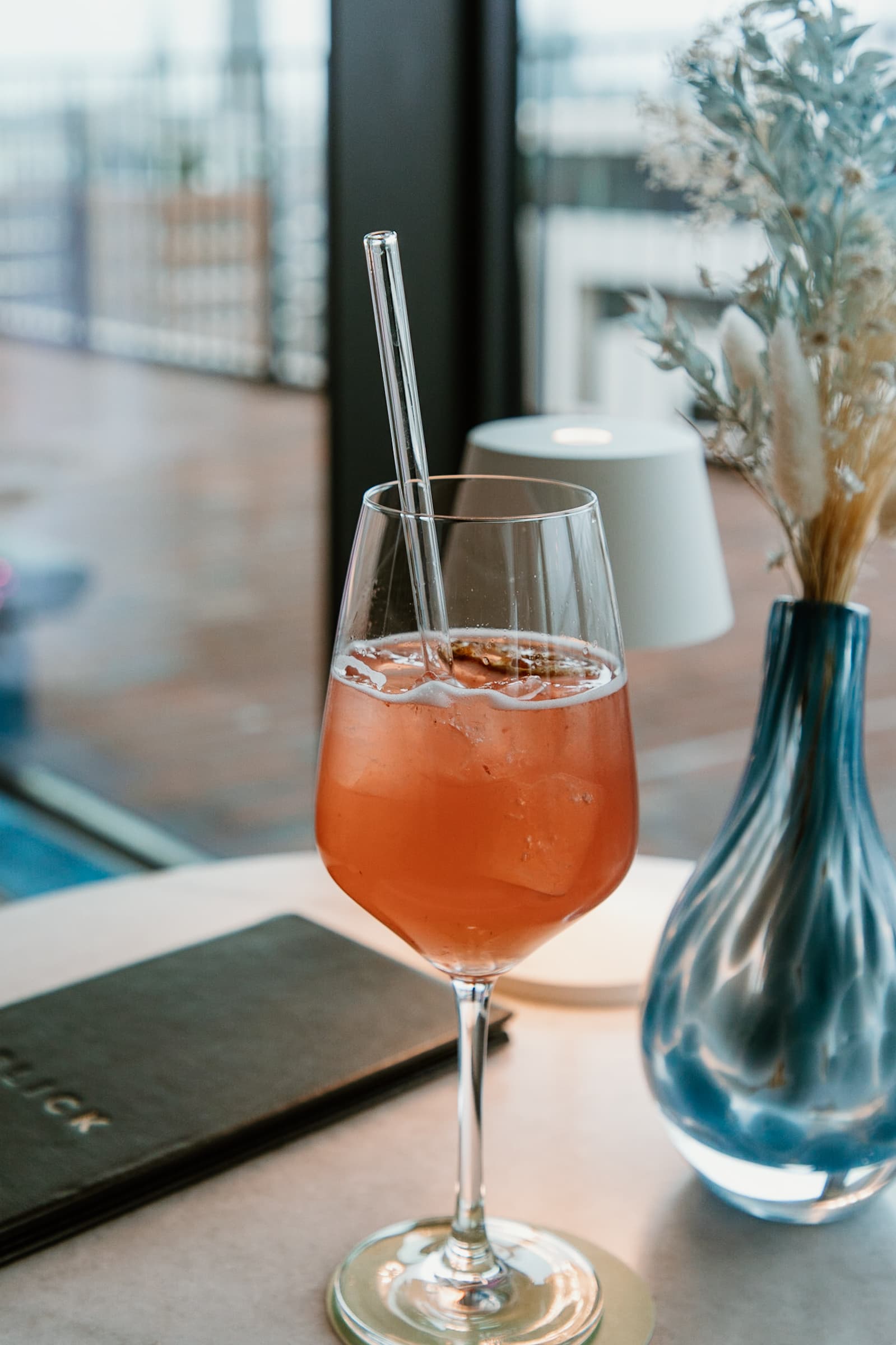
For a drink or coffee, check out the Blick Bar in the hotel lobby. Here, you’ll be on the same level as the Elbphilharmonie’s observation deck, which you can visit even if you’re not a hotel guest (though you may have to wait in line). I highly recommend the house cocktail, the Elphi Spritz, as well as the Signature Duo —a glass of champagne paired with a fish brioche.
For the big appetite in the elegant ambience there is still the restaurant Fang und Feld.
Spa & Wellness
As you’d expect from a Westin, there’s a fairly large wellness area here in Hamburg, located on the lower level of the building. Equipped with a pool, sauna area, and a small gym, you can relax to your heart’s content. I haven’t tried the spa area myself, but I did take a quick peek inside and found it very inviting.
Service
Because of my line of work, I’m always on the lookout for the little things that make for great service. And of course, given the scale of a hotel like this, there’s nothing to complain about—the service runs like clockwork in every area. Still, there are a few small details that leave a positive impression, such as the customary turndown service in the evening with chocolate hearts on the bed or the attentive staff at the Blick Bar.
All in all, The Westin Hamburg is a perfect choice if you are looking for comfortable accommodation with high standards and want to impress someone else (or yourself) with a spectacular view of Hamburg!
As a vibrant metropolis, Hamburg has a lot to offer in terms of gastronomy. You’ll find a brilliant mix of exotic cuisines, new concepts and endless creativity. The only problem: It can be hard to choose a location, because the choice is huge! To make it easier for you to choose for your next trip to Hamburg, I present my current favorite restaurants, bars and cafés in Hamburg in this food guide.
Pasta Autentica by Jill
Pasta Autentica by Jill is located just around the corner from Hamburg City Hall, yet tucked away in a small side street – the perfect spot for a city lunch between shopping and sightseeing. The store itself is not particularly large (reservations are a good idea!), the kitchen probably not either: The eponymous fresh pasta is namely made in the shop window on what feels like half a square meter in a corner of the guest room!
Pasta doesn’t get any fresher than this: The small pasta corner at Pasta Autentica by Jill
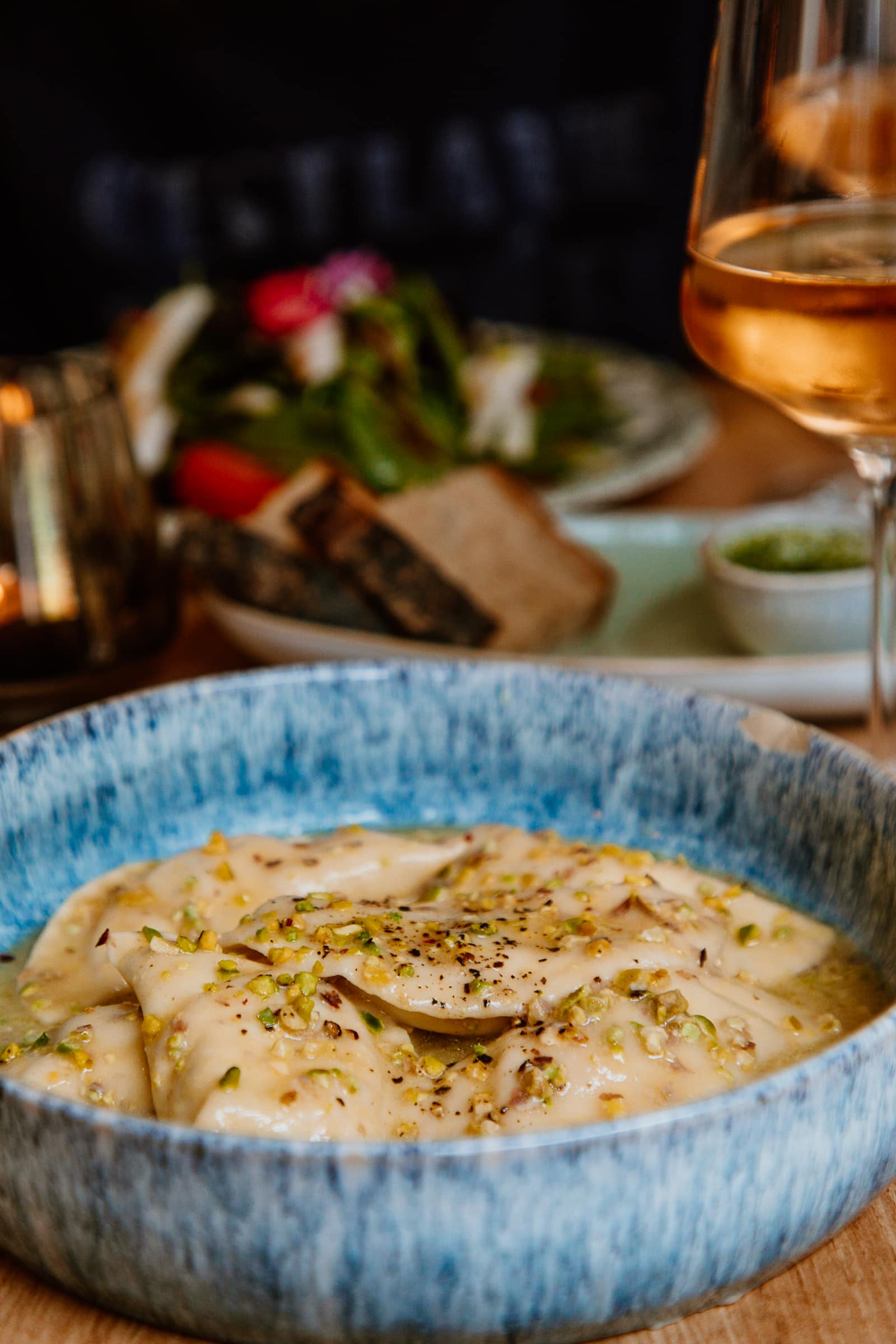
At your leisure, you can watch the cheerful pasta fairies as one ravioli after another is lovingly filled and only a short time later lands on the plates of the guests. This fact alone (and how incredibly neat they are in such a small space) would have earned Pasta Autentica by Jill a spot in my food guide – but it came to pass: my salmon ravioli in pistachio butter was so delicious that I was completely blown away. Absolute recommendation!
Among my favorite restaurants in Hamburg far ahead: Pasta Autentica by Jill
Frau Dr Schneider’s Grilled Cheese Wonderland
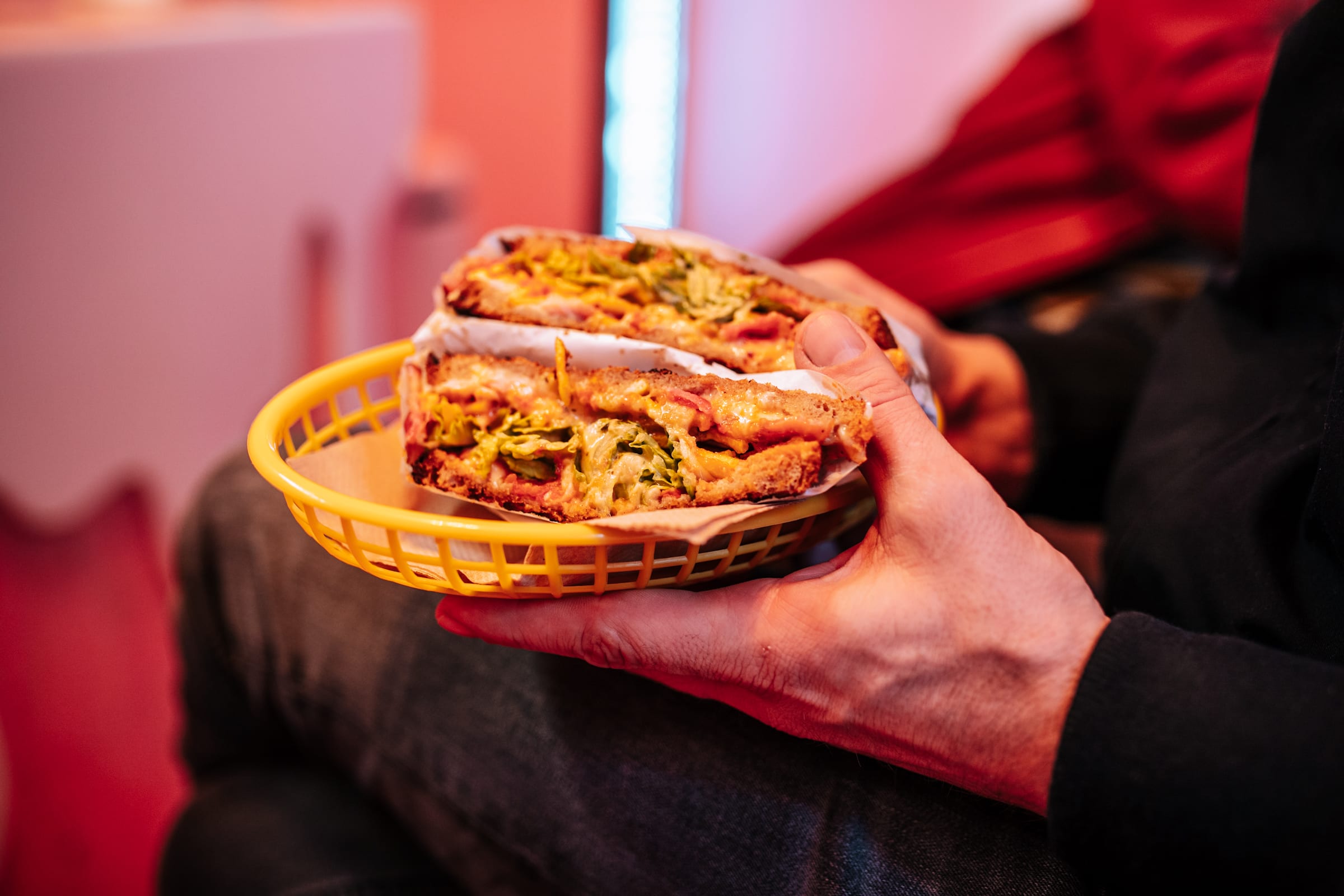
Bread, cheese and a grill: the most delicious things can be so simple! The pink Frau Dr. Schneider’s Grilled Cheese Wonderland gives grilled cheese sandwiches that little bit extra! My favorite was the Bacon Jam Grilled Cheese – the bacon jam made with their own recipe was so delicious! By the way, bring an appetite, such a sandwich is really a whole meal!
Admittedly, I’m not a very big fan of French toast: too buttery, too monotonous. I don’t know what possessed me to order a French toast at Marshall Street Coffee that day. Possibly, however, it was also the premonition that it would be really difficult to find something here that didn’t excite me.
Not only delicious, but also perfectly served: French toast at Marshall Street Coffee in Hamburg
In summary: French toast was great, the fresh juice too & great store anyway! Tip: Don’t be put off by queues at the door. It’s worth it!
As a port city, Hamburg was the first port of call for exotic goods from overseas centuries ago. So it’s no surprise that good coffee is easy to find: At the roastery in the Schanzenviertel, you can not only taste the in-house coffee, but also take it home with you.
The Elbgold roastery in the Schanzenviertel district
Mutterland
I only stumbled into the motherland by chance, because I had to kill a few hours at Hamburg’s main train station – and it’s not really inviting. Quite the opposite of the Mutterland, a real Hamburg institution.
Actually a delicatessen: in addition to delicacies from local manufacturers, there is also a great restaurant here. On the one hand, there is a take-away area with seating (a good opportunity to work), and on the other, a really good restaurant that is quite busy – be sure to try it out! There are also four other locations, including one in Eppendorf.
Either way, Wexstraße is a good place to go if you’re looking for a cozy atmosphere in Hamburg’s city centre. Here you’ll find cute stores, small restaurants and great locations such as the recently opened Mimosas Brunch Club.
Mimosa’s Brunch Club in Wexstraße
Mimosas Brunch Club is, as the name suggests, a great idea for an extensive brunch for two or with friends, but also for a small coffee break with delicious waffles. And if you can’t get enough of the fruity mimosas, there’s even a mimosas flat rate!
Tip: Despite new opening very popular, on weekends you should reserve!
With tacos it is such a thing, I think. Eating tacos completely drip and spill free just won’t work for me. Especially not with the tacos from La Casita, because they are so well filled!
Tip: The tacos are the perfect snack when the flea market takes place around the small snack bar on Saturdays, a really good flea market with lots of vintage treasures.
La Casita, Neuer Kamp 30, 20357 Hamburg (Schanzenviertel)
Blick Bar
If the typical fish sandwiches are too mundane for you, or if you are curious about a completely different variant, then I recommend a visit to the Blick Bar. Not only can you enjoy a beautiful view of the city of Hamburg here, but you can also get to the Elbphilharmonie’s viewing platform without having to wait – because the Blick Bar is actually the house bar of The Westin Hamburg, whose rooms are located above the concert hall.
Be sure to try the signature duo of a glass of champagne and a fish brioche and just take a break from sightseeing. And don’t worry, the Blick Bar is wonderfully unpretentious and relaxed despite all the luxury!
Blick Bar, Platz d. Deutsche Einheit 2, 20457 Hamburg (city center)
Planning a quick trip to Palma and interested in exploring Mallorca’s popular markets? The biggest markets are outside the city, requiring extra time to visit. Instead, here are some excellent alternatives right in the capital: the best markets in Palma!
Weekly Markets & Market Halls in Palma
A quick visit to Palma is a great opportunity to gather some delicious Mallorcan specialties like ensaimadas, sobrasadas, or Flor de Sal from Es Trenc. Or perhaps you’re craving fresh fruits and vegetables right from the farm. Luckily, Palma offers many spots to pick up fresh produce from local farmers. Besides the lively outdoor weekly markets, you’ll also find several indoor markets full of variety.
At Palma’s markets, you’ll find traditional Mallorcan goods such as popular wicker baskets in various sizes.
Mercat de l’Olivar
The Mercat de l’Olivar is located right in the heart of the city, between the lively Plaça d’Espanya and the pedestrianized Carrer Sant Miquel. The large market hall was opened in 1951 and is one of the most traditional in the city. In addition to the usual market stalls with fresh fruit, vegetables, cheese, fish and meat, you will also find small snack bars where you can eat cheaply, especially at lunchtime. Some fishmongers even offer to prepare and serve the freshly purchased fish right on the spot. In addition, you will find culinary souvenirs to take the mediterranean vibe home with you.
Mon-Fri 7am-2.30pm Fri 2.30pm-8pm partly open Sat 7am-3pm Gastronomy: Mon-Fri until 4pm
Here’s a handy tip: If you’re traveling by rental car or your own vehicle, there’s a parking garage located under the Mercat d’Olivar. It can get quite busy sometimes, but it’s really convenient, especially if you’re planning to buy in larger quantities.
MALLORCA
Interested in more insider tips and top spots? Click through the pages below for a quick overview!
The Mercat Pere Garau is situated in downtown Palma but is tucked away in a typical residential neighborhood east of the Avenidas, which locals refer to as Palma’s ring road. The Pere Garau district has a rich history as an immigrant area, offering an exciting blend of international cuisines and a diverse range of shops nearby the market hall—perfect even for those on a budget. If you want to experience authentic local life, this is the place to visit!
Tip: right in front of the market hall, you’ll find a lively open-air market that offers different items depending on the day. On Mondays, Wednesdays, and Thursdays, you can discover a great selection of clothes and shoes. On Tuesdays, Thursdays, and Saturdays, it’s the perfect place to pick up fresh fruits, vegetables, beautiful flowers, and green plants.
Saturday is the busiest day at the Mercat de Pere Garau, with more stalls and a lively atmosphere!
Foodie Hotspot: Boira in Pere Garau (& Great Boutique Hotel!)
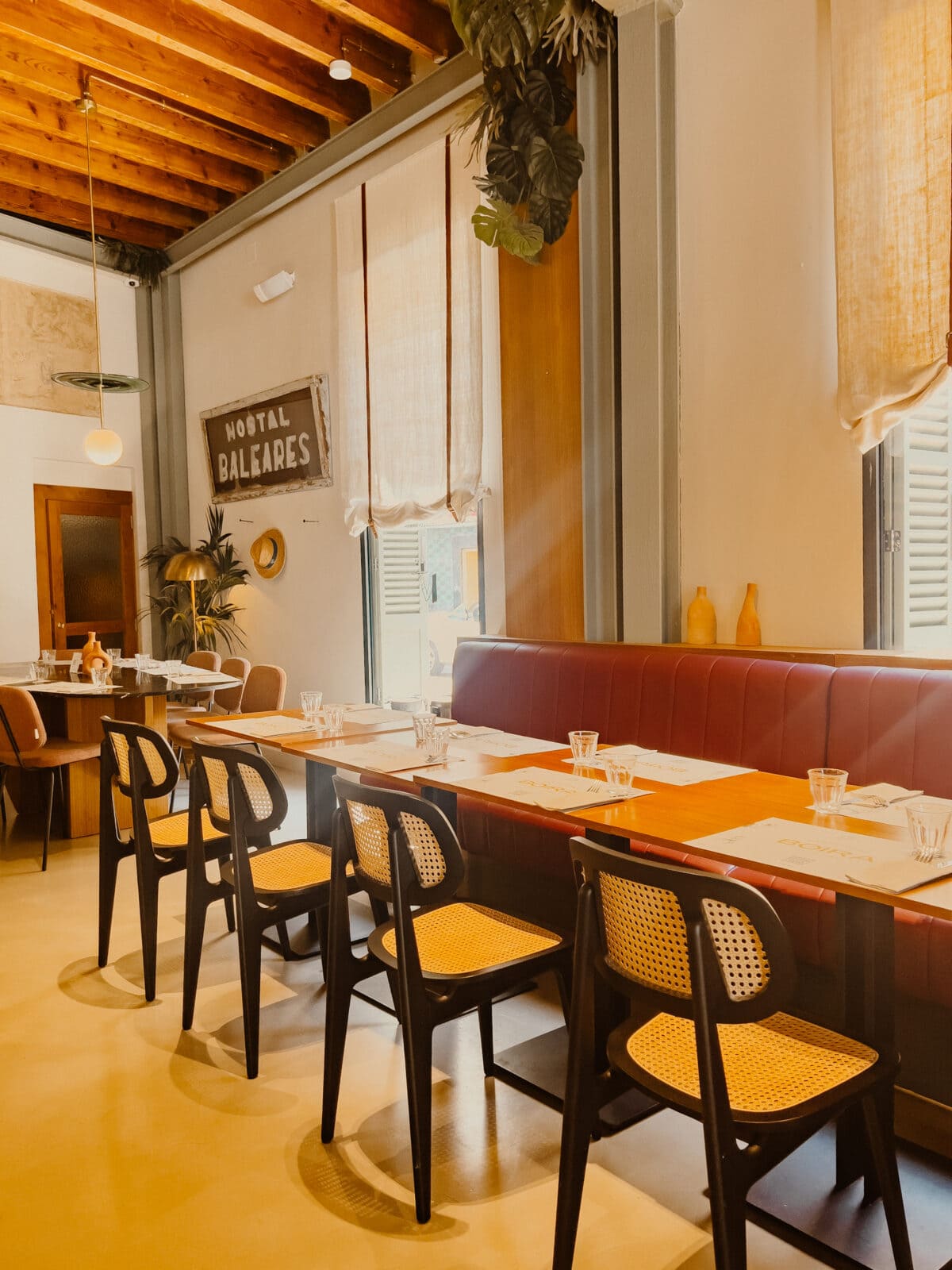
Hungry? Market-fresh cuisine is available very close to the Mercat de Pere Garau. At Boira, you can enjoy modern cuisine in an urban-Mediterranean ambience. By the way: the location belongs to the boutique hotel Nou Baleares* & is the perfect address if you’re looking for stylish accommodation away from the usual tourist areas among locals!
The Mercat ecològic de Palma in Plaça del Patins (also: Plaça Bisbe Berenguer de Palou) is one of the smaller weekly markets in the city. But at this market in Palma you will find only organic products! A great opportunity to stock up on fresh organic fruits and vegetables straight from the island.
Tue + Sat 8pm to 2pm
Tip: Nearby you’ll find a branch of one of Palma’s most popular coffee roasters! La Molienda on Carrer del Bisbe Campins serves the best specialty coffee and delicious brunch dishes.
Just around the corner, you’ll find Carrer de Bonaire, a charming street in Palma lined with small boutiques and excellent restaurants, still largely undiscovered by most tourists. Perfect for a little walk!
Discover the best hotels in the center of Palma
Advertising / *affiliate link
Mercat de Santa Catalina
The Mercat de Santa Catalina is worth visiting not just for its market, but also for the vibrant neighborhood around it. Santa Catalina, centered around the lively market hall, is truly one of the trendiest areas in Palma!
The area features a succession of popular restaurants, with renovated house facades that give the former fishing village a distinctive charm. Additionally, there’s a historic old mill and breathtaking views of Palma’s port.
Let’s head back to Mercat Santa Catalina! You’ll discover a delightful array of Mallorcan delicacies and a variety of exquisite delicatessen specialties. The quality of the ingredients is so outstanding that even top chefs in town love to shop here. While the market is open six days a week, Saturday is unquestionably the most vibrant and bustling day, full of energy and lively atmosphere.
Mon-Sat 7am to 5pm
Markets Near Palma
Did you enjoy those locations? The island features many more fantastic weekly markets!
The picturesque farmer’s market in Sineu takes place every Wednesday.
Tip: Just outside Palma, the large Sunday market of Santa Maria is easily accessible by public transport from the city center. At Plaza España’s Estació Intermodal, simply take one of the trains (lines T1, T2, or T3), and you’ll reach Santa Maria station in about 20 minutes, which is conveniently close to the town center.
Or you can continue to Sineu (line T3) and on Wednesdays visit the oldest farmer’s market in Mallorca, which is one of the biggest attractions on the island. (Travel time from Palma approx. 50 minutes)
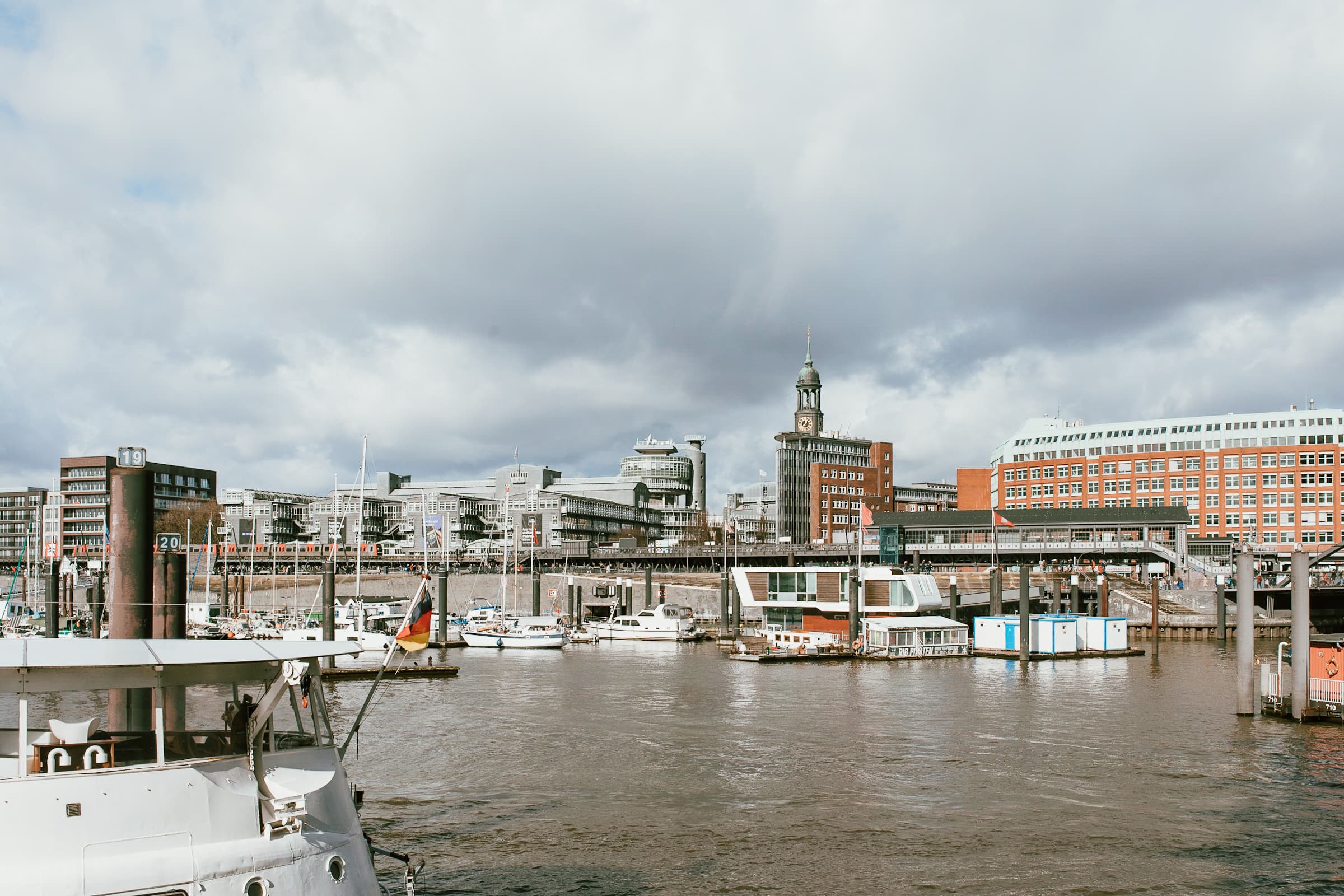
When you’re in Hamburg, don’t miss out on a harbor tour! The Port of Hamburg is the third-largest seaport in Europe and has shaped the cityscape for many centuries. The harbor is truly impressive, and a tour is the perfect opportunity to get to know Hamburg from the water. In this article I’ll give you tips for the best harbor tour!
The Port of Hamburg: The Gateway to the World
I’ve been to Hamburg countless times, but a harbor tour was still on my to-do list. In a city like Hamburg, whose history has been significantly shaped by the port, a harbor tour is naturally one of the most popular tourist attractions. Various shipping companies offer such tours, sometimes with different focuses. The trips usually start at the Landungsbrücken.
A harbor cruise opens up completely different perspectives on the city, like here at the Elbphilharmonie, Hamburg’s extraordinary new concert hall.
Harbour tour in Hamburg: My tip!
By chance I stumbled towards a small launch, in front of which the captain himself is still checking the tickets. Before I can waste a single thought on the question of whether a harbor tour is really such a good idea with the bad weather on that day, I’m already sitting on the boat.
Hotels in Hamburg Are you looking for accommodation for your trip? That can quickly become expensive in Hamburg! Therefore, book well in advance! The best hotel deals for Hamburg*
Impressive even in rainy weather: the port of Hamburg with its huge facilities.
We cast off and just at that moment it rains, storms and snows at the same time. If you are traveling in Hamburg, you have to be prepared for any weather. I’m not very fond of rainy weather but from the boat, you have a good view through the large panoramic roof even in sleet. And in general, I am preoccupied with the view of the many containers, the huge port cranes and the sheer size of the port. The low height of the launch means you sit almost at eye level with the waterline, which makes the view all the more impressive.
Our captain isn’t just a ticket inspector—he’s also a tour guide—and he entertains us with humorous anecdotes in the Hamburg dialect. “Have you always wondered where this mysterious ‘Gateway to the World’ is supposed to be here in Hamburg?” The boat turns, and right in front of me, the Elbe stretches out in all its breadth. There’s no end in sight on the horizon, and for a moment it really feels as if the world is opening up before me.
On the wide river Elbe, you almost feel a bit like you’re on the high seas, and the rough weather made it extra dramatic.
By the way, I recommend you to look for a round trip that also goes to the Speicherstadt (depending on the water level). Gliding between the massive brick buildings by boat is simply an impressive experience.
The rainy weather sometimes flies away as quickly as it comes: In sunshine we sail through the Speicherstadt.
The tour is organized by Reederei Abicht, but this special one-and-a-half-hour harbor tour with a detour to Speicherstadt can only be booked online:
In general, the harbor tours can be divided into 4 categories:
1-hour harbor tour On these harbor tours you will see the basics that you should have seen in the port of Hamburg. However, an hour passes by really fast!
Grand Harbour Tour (approx. 1 1/2 to 2 hours) On the longer tours, there is more time for a grand tour: you have many more opportunities to survey the size of the Port of Hamburg and usually learn even more about the history and significance of the port.
Light cruises In the evening, the so-called light cruises* take place. After dark you can experience the port of Hamburg and especially the Speicherstadt at night. Attention: Possibly the lighting is not quite as spectacular as usual due to the current energy saving concept of the city of Hamburg.
Tip: Make sure that the boat is a launch, because they are low enough to be able to enter the Speicherstadt when the water level is right.
What sights can you see on a harbor tour in Hamburg?
A harbor tour is also a great way to see many Hamburg sights at once. Especially if you have little time, a harbor tour is therefore particularly practical! You can see the following sights from the water and combine them with a harbor tour:
Speicherstadt: The 19th century red brick warehouses are the largest historic warehouse complex in the world! The entire Speicherstadt is a listed building and a UNESCO World Heritage Site. Some of the houses are still used as warehouses by traders (e.g. carpets), but you will also find many interesting museums here, such as the Speicherstadtmuseum, the Hamburg Spice Museum*, the Dialoghaus Hamburg*(where people with impaired vision are guided through a very special sensory experience – exciting!) or the Miniatur Wunderland.
Elbphilharmonie: The concert hall was built on an old quayside warehouse and quickly became one of Hamburg’s most impressive sights with its spectacular facades. The Elbphilharmonie can be admired particularly well from the water.
By the way: you can enjoy the sensational view of the Elbe from the rooms of The Westin Hamburg.
St. Pauli Landungsbrücken: The Landungsbrücken are not only the departure point for most harbor tours, but also one of the most popular sights on the Elbe. The historic jetty is over 100 years old and a popular meeting place. You will also find the entrance to the Old Elbe Tunnel here – just as worth seeing!
Container terminals in the port: Hamburg is one of the largest container ports in the world, and you can experience first-hand how containers are loaded and unloaded during your harbor tour – and marvel at the incredible size of the container ships!
Tips for planning a harbor tour in Hamburg
There’s so much to see in Hamburg anyway – organization is key! To make planning your harbor tour easier, I have a few valuable tips for you here:
Book in advance: Especially in high season, in good weather and on weekends it can get crowded on the harbor tours. Especially the small boats, which were also through the Speicherstadt, have limited space. Therefore, it is best to book in advance so that your planning is not thrown off.
Make sure you have the right clothing: Hamburg’s weather is very changeable and it can get chilly on the water. Many boats are air-conditioned, but it is advisable to bring an extra sweater or similar. On my boat, for example, it was possible to go on deck and there was already a stiff breeze.
Route: If you want to see specific parts of the port or have a special area of interest, you can take that into account when choosing your tour. For example, I really wanted to go through the Speicherstadt and therefore chose this tour.
Proper timing: You can save a lot of time if you schedule your harbor tour properly. If you also want to visit the fish market on Sundays, for example, I would recommend going to the fish market first thing in the morning and then strolling towards the Landungsbrücken. There you can then, for example, visit the Old Elbe Tunnel and then take the harbor tour at noon. Some tours also offer other exit points, e.g. at the Elbphilharmonie. So you can then directly continue your sightseeing day there.
Duration: There are harbor tours of different lengths, from one hour to several hours. Think in advance how much time you have and what sights you want to see to choose the right harbor tour.
Advertising / *affiliate link
How much does a harbor tour cost?
A harbor tour in Hamburg costs between 15 and 40€, depending on the duration and provider. Special boat tours, e.g. with an evening program like this one*, can sometimes cost more.
Budget tip: If you want to save money and don’t mind working out a route yourself, you can simply buy an HVV day ticket and use the regular HADAG ferry lines. There is just no specific info there then and you have to figure out for yourself where you want to go.
Extra tip for those looking to save: The regular day ticket for the Hamburg AB fare zone (is pretty much all of Hamburg) costs €8.40. However, there is still a cheaper 9 am day pass that excludes rush hour from midnight to 9am Monday through Friday. If you then buy them online (either on the website or in the HVV app), you’ll get an extra discount and pay just €6.60!
But if you also want to visit lots of sights, it’s worth buying the Hamburg Card: this not only gives you free travel on all public transport around the clock for a period of one to five days, but also lots of discounts at over 150 Hamburg sights!
Want to make money with your blog? Maybe you’ve heard of Ezoic, but you’ve never really looked into it? Or are you unsure whether you can monetize your blog with it?
In this article, I’ll share my personal experience as a travel blogger with Ezoic, tell you about my story with Ezoic, and explain the pros and cons so you can decide for yourself if Ezoic is for you and your blog.
Update: I have not used Ezoic since the end of 2023. The revenue was less instead of more as promised, the page speed was not great with Ezoic. And I don’t miss the constant technical problems either 🙂
What is Ezoic?
Ezoic may look like an advertising network, but it’s actually software that helps you place ads on your blog and generate revenue. Ezoic uses artificial intelligence to find out exactly which and how much advertising might interest your readers, and thus ensures, according to its own statements, that
a) the user experience improves and b) you achieve the best possible revenue.
Start with Ezoic
To embed Ezoic on your website, you need to register here. Unlike other networks like Mediavine or SheMedia, there is no complicated application process or minimum traffic requirement, so you can theoretically start right away.
However, this is not explicitly mentioned: You’ll only be assigned a personal account manager to help you set up Ezoic on your blog once you reach 10,000 pageviews/month of traffic, before that you’re pretty much on your own.
How to install Ezoic on your blog
Registering with Ezoic is a breeze and you’ll immediately get access to your Ezoic Dashboard, where you’ll see a to-do list consisting of four items. Once you’ve worked through these four points, Ezoic is ready to install and voila, the cash register can ring!
Sounds easy? Well, it’s not always quite that simple. I’ll go through it with you point by point:
1. set up account completely
Here you enter all the details about you and your site. This item is relatively self-explanatory and quickly completed.
2. integrate your website with Ezoic
Now it gets trickier: Here you will be asked to change the nameservers of your site in order to use the CDN (Content Delivery Network) from Ezoic. The best way to do this is to contact your hoster. I’m with The Happy Jetlagger at Hostpress*, where you can change the nameservers yourself in the backend, but with all-inkl, for example, this can only be done via customer support.
There is a second option that was shown to me at the time: The connection via a wordpress plugin to be installed. I don’t know if the option still exists, however, I had to install the plugin myself in the course of the setup additionally, because something (once again) did not run smoothly.
3. set up ad testing
Step 3 gets down to the nitty-gritty: Here you need to connect your Ezoic account to Google Ads Manager so that Ezoic can set up the Ads.txt. However, with a little help from Ezoic’s support pages, this is usually doable.
But things get tricky with the placeholders: That’s where you have to specify the locations where the ads will appear later. It sounds easier than it is! In any case, I was very glad that my assigned Ezoic support representative took care of this entirely and set up all the ad placements for me. He, too, apparently had to define every single placement; there doesn’t seem to be an automatic setting for this, as one might expect given all the AI technology and so on. Pretty wild.
4. set up Leap
In the last point you should set up Leap. Leap promises in principle exactly what caching plugins promise: The page is optimized to pass the Core Web Vitals.
Problems with the setup of Ezoic
However, Ezoic also works without Leap. Maybe you already use a caching plugin on your blog. But here comes the twist: caching plugins often lead to conflicts in connection with Ezoic.
I, for example, previously used the paid version of WP Rocket, as it is included in my (rather expensive, but good) hosting package at Hostpress* and gave the site significantly better loading times. Unfortunately, I had to switch to Leap to improve the loading times, which were bad without the caching plugin – a disadvantage of Ezoic for me.
All in all, setting up Ezoic is not as easy as it is made out to be. In any case, you should allow yourself enough time to take care of any stumbling blocks and choose the time so that you can get over any loading time problems or layout errors.
What is the support like at Ezoic?
Ezoic is originally a US company, but has a German branch and also offers German-speaking customer support. As much as I still struggle with Ezoic itself, I was more than thrilled with my onboarding experience with Ezoic. From day 1, I was accompanied by a dedicated consultant who was always at my side in countless emails and several video calls when things got stuck and I almost lost patience.
After the onboarding phase of several weeks or 2-3 months, depending on the situation, you are then handed over to regular customer support, which is also available in German on request.
Advantages and disadvantages of Ezoic at a glance
Advantages
regular income
Independence through another source of income
Passive income: once set up correctly, it (almost) runs by itself
good support
Disadvantages
Changed layout or great influence on the blog design
Possibility of cannibalization of affiliate revenue (you can exclude advertisers, but still the question remains whether your own affiliate links might not go down)
Incompatibility with many plugins
Influence on page speed: Although Ezoic advertises that its solution automatically improves page speed, I cannot confirm this. In pagespeed tools such as Google Pagespeed Insights and GTMetrix, scripts originating from Ezoic are always criticized. However, I would like to point out at this point that I cannot provide any empirical evidence for this and that I am not a real expert in this field.
Earn money with Ezoic: these are the earnings
Ezoic uses a very practical key figure to make revenues comparable. EPMV stands for “Earnings per Thousand Visitors”, i.e. revenue per 1000 visitors. For me, the EPMV rose continuously in August/September 2022, but has not exceeded 5$ in the meantime.
However, this may also be due to the fact that I have switched off many options that generate more revenue for a more pleasant user experience: I don’t use vignette ads (these are full-screen pop-ups that appear upstream when people click on the blog), I’ve blocked certain topics (e.g. ads for online casinos) and I’ve switched off the ads testing function, where the AI keeps testing new places and ads appear uncontrollably in the most impossible places. This then looks better, but unfortunately also reduces the revenue.
In the case of travel, by the way, the EPMV is probably generally lower; sectors such as finance, etc. probably achieve a better EPMV as a rule.
Here you can see the evolution of EPMV for my blog since August 2022:
Is Ezoic worth it for my blog?
Each case is individual, and I can only report from my experience with Ezoic for this blog. However, I am often asked if Ezoic is worth it. From my point of view, Ezoic only makes sense if you meet the following requirements:
min. 10,000 pageviews/month Then you will be assigned a personal support representative during the introductory phase. What’s more, at least when it comes to travel (maybe it’s different for more lucrative topics like finance, I don’t know), the income is disproportionate to the change in blog layout and the work involved in setting it up. Better make sure you get more traffic first!
Very good technical knowledge of blog topics When setting up Ezoic, problems occur again and again. If you get personal support, it’s really super dedicated, but it helps immensely if you know a bit about the tech behind your blog yourself!
No Elementor. At first, I was still using Elementor Pro* with the Hello Theme and actually designed all the pages with custom templates. It looked great, but it kept causing problems with Ezoic: Ads appeared in the wrong places, the layout was messed up, page speed simply couldn’t be improved, etc. Ezoic also informed me that achieving really good load times with Elementor is difficult (and it’s already difficult even without Ezoic). I haven’t tried other page builders like Beaver Builder, but I could imagine they’d cause similar problems. In general, Ezoic works best with cleanly coded, widely used off-the-shelf WordPress themes.
FAQ about Ezoic
Below you will find some questions that I also asked myself when I first started using Ezoic.
How I came to Ezoic
For a long time, I ran this blog as a hobby, until I really invested a lot of time and money in various plugins, a page builder and a very good host from around 2019. At some point, this was reflected in good Google rankings (it just takes time) and increasing visitor numbers. But then came a time with the evil C, which was quite counterproductive for my topic of travel (preferably far away).
And since I also had worries in my job as a flight attendant, the blog stood still for the time being. I didn’t want to specialize in banana bread recipes or a shift to traveling closer to home; it’s just not my thing. So 2020 and 2021 were relatively lean years, although I already had a good basis with the blog.
I think it was the same for many travel bloggers, anyway in 2022 more and more blogs appeared using Ezoic. I knew Ezoic before, had heard good and bad – but most of all I had one thing: No desire for advertising that spoils my blog!
However, I found the prospects of regular income without any particular effort of my own really tempting, especially after what were for me lean years overall.
My personal conclusion after 9 months with Ezoic
I would like to start the absolute adulation here, but unfortunately there are some points that still bother me about using Ezoic. I still haven’t managed to get the load times down to a level that produces optimal or at least very good core web vitals, and I think Ezoic contributes a good portion of that.
The test completely without Ezoic in comparison is still pending, but I think after switching from Elementor Pro and Hello to a very fast block theme and various optimization measures, the blog here should really load faster without Ezoic. Especially if I can then use WP Rocket again, which has always led to conflicts with Ezoic.
On the other hand, a constant source of income is always tempting and also offers a certain degree of independence. And I’ve basically changed my mind about advertising and now have fewer reservations – you really do get used to it.
Thinking about a vacation in Mallorca? It’s a wonderful island full of amazing sights just waiting for you to explore! I’ve put together my top 20 must-see attractions in Mallorca, along with some helpful tips to make your trip even better.
This is what you should do before your Mallorca trip!
If you’re lucky enough to be on the right side of the plane, you’ll notice it as soon as you approach Mallorca! The cathedral of Palma (also known as “La Seu”) is simply unmissable. It towers loftily between the old town and Palma’s long promenade.
Built in the 13th century and later extended and restored several times, the cathedral is the most important sight in Palma. You can admire the two huge rose windows from the outside, but a visit inside is also worthwhile. Since the cathedral is very popular, you should book a ticket in advance!
Tip: In the summer months, you can also visit the roof terrace of the cathedral for an additional fee!
Visiting hours: Monday to Friday 10-17.15h, Saturday 10-14.15h (high season April to October) Monday to Friday 10-15.15h, Saturday 10-14.15h (low season November to March)
On Sunday and most holidays the cathedral is closed for tours.
2. Palma’s Old Town
For the old town of Palma you should really take a day to explore all the important spots such as the imposing Paseo del Borne, the central Plaza Mayor or the market hall Mercat Olivar and the many small streets.
Many traditional stores are happy to welcome customers in the old town of Palma.
In addition to numerous branches of large clothing chains, you will still find small traditional stores as well as many cafés and restaurants in Palma, which give the island’s capital its special charm.
There is always something going on in the old town of Palma.
3. Coves del Drac
The final show is kitschy, with musicians on small boats gliding slowly over the water of Europe’s largest underground lake, the Llac Martel, and performing the same melancholy pieces over and over again – but a visit to the Coves del Drac near Porto Cristo is an absolute classic on Mallorca!
Romantic boat trip through the Coves del Drac
The stalactite caves near Porto Cristo with their large stalagmites and stalactites are truly impressive! They are also the ideal excursion tip if you have already soaked up enough sun on Mallorca’s beaches and are longing for a little cooling down underground.
If you want, you can also take one of the boats to the exit.
4. Es Trenc
It looks a bit like the Caribbean here: Es Trenc is one of the most popular beaches on Mallorca and is located in the middle of a nature reserve. Large beach stalls and littering aren’t allowed here. This is fortunate, because the approximately six-kilometer-long sandy beach with crystal-clear, turquoise-blue water is truly a place worth protecting.
Almost like the Caribbean: The beach of Es Trenc in the southeast of Mallorca
Es Trenc, however, is very popular and a few tricks are helpful if you want to spend a relaxing beach day here in high season. Read more in my full guide on Es Trenc
Tip: Be sure to visit the nearby salt pans & take some Flor de Sal with you!
The salt flats at Es Trenc
5. Cap Formentor
Deep blue water as far as the eye can see, impressive rocks all around and a fresh breeze: Cap Formentor is the northernmost point of Mallorca and is not without reason called the “meeting point of the winds”. You can’t climb the lighthouse at the tip of the peninsula, but the view here is so spectacular that in recent years the access road to the lighthouse and the Mirador Es Colomer viewpoint in front of it has had to be closed to private cars several times during the high season.
Visible from afar: The lighthouse at Cap Formentor.
In this case, you can take one of the public shuttle buses from Alcúdia or Port de Pollensa, which stop at both the Mirador and the lighthouse. Line 334 goes to Playa de Formentor, line 333 goes to the lighthouse. Timetable of the line 334 Timetable of the line 333
Chill out and enjoy the view: Cap Formentor is one of the most popular sights of Mallorca.
6. Valldemossa
A little road trip to the Serra Tramuntana mountain range is a real must in Mallorca. Don’t miss a detour to the picturesque mountain village of Valldemossa: the former winter home of Frédéric Chopin still delights with its pretty alleyways and the Carthusian monastery worth seeing.
Tip: You should definitely try fresh cocas de patata in one of the traditional bakeries! Cocas de Patata are fluffy, sweet rolls made of potato flour and especially typical for Valldemossa!
Speaking of beautiful mountain villages: The tranquil Fornalutx was once even voted one of the most beautiful villages in Spain and is also one of the many sights that make Mallorca so great.
In contrast to the popular Valldemossa, Fornalutx is really tiny, but in my opinion even a tad prettier! You can easily explore both on the same day, regardless of whether you are traveling by rental car* or by public transport: bus line 232 connects Fornalutx with Soller (and Port de Soller), from where you can also take a bus to Valldemossa.
Tip: From the viewpoint near the parking lot and the cute Plaça España, you have a fantastic view of the valley and the surrounding peaks of the Serra Tramuntana, a UNESCO World Heritage Site. And if you’re lucky, the countless orange trees are in full splendor and the fresh mountain air mixes with the beguiling scent of ripe oranges!
8. Cala Mondragó
Fancy one of the most beautiful bays that Mallorca has to offer? Okay, there are many, but Cala Mondragó is also located in a large nature reserve, the Parc natural de Mondragó. So if you prefer to get moving instead of lazing around on the beautiful beach, you’ll also find great hiking and cycling trails for an exciting outdoor experience. Cala Mondragó is located on the east coast of Mallorca between Cala Figuera and Portopetro.
One of the most popular calas in Mallorca: Cala Mondragó in the nature reserve of the same name.
9. Playa de Palma
Okay, maybe the area around the infamous Ballermann 6 isn’t your cup of tea concerning the music being played in all bars there. But firstly, Playa de Palma stretches for a whole 6 kilometers, not all of which are soaked in hits, and secondly, a visit to Ballermann 6 is almost obligatory, if only to wonder how much alcohol the human body can really take.
During the day, things are still relatively civilized at the notorious Ballermann 6.
Playa de Palma stretches from Can Pastilla to S’Arenal and is divided into 15 beach sections, each of which has a beach bar (“Balneario”) on the promenade. Probably the most famous of these is Balneario 6, with many party venues such as the Bierkönig or the Megapark within walking distance.
10. Alcúdia’s Old Town
Alcúdia is one of the oldest settlements on the island. Around the old town center you can still walk around the remains of the old city wall from the 14th century. In the old town itself, you can stroll through the pretty streets, store for vacation souvenirs in one of the small stores or simply sip a café con leche in the cozy Plaça de la Constitució.
Tip: On Tuesdays and Sundays, the weekly market of Alcúdia takes place on the Paseo Mare de Déu de la Victòria and partly also in the old town. Worth it!
Located in the very southeast of the island and accessible only by a winding country road, Sant Elm is located on one of the last tips of Mallorca. Mass tourism has not yet arrived here, on the contrary.
Sant Elm is a small, tranquil vacation resort set around a beautiful bay with turquoise waters. If you like to be out in nature, you will also find beautiful hiking trails here; in addition, the popular long-distance hiking trail GR221, which leads through the entire Serra Tramuntana, starts here.
The drive to Sa Calobra is not for the faint of heart. The road winds its way down from the Serra de Tramuntana, from an elevation of 800 meters, down into the bay. One of the curves was designed by the road engineer of the time, Antonio Paretti, to pass underneath the road itself, which is why it bears the telling name “Tie Knot.” And the hairpin bends are narrow too, so you should really be a safe driver if you take the road to Sa Calobra.
On the other hand, a romantic bay awaits you at the bottom and an impressive rock panorama awaits you in the Torrent de Pareis gorge.
Tip: If the trip is too tricky for you, you can also book a boat tour to Sa Calobra* and reach the Torrent de Pareis by sea.
13. Tren de Soller
When the wooden train rattles through the mountains like that, you feel as if you’ve been transported straight back to the last century. But it’s not just nostalgic types who love the historic Tren de Sóller—often called the “Red Flash” in German—which has connected the capital, Palma, with Sóller since 1912. The narrow-gauge railway may be anything but fast, but the journey from Palma through the Serra Tramuntana to the terminus in Sóller is simply picturesque.
Tip: From Soller, you can take a historic streetcar to Port de Soller and enjoy the beautiful atmosphere at the harbor!
A side trip to Port de Soller is one of the best day trips from Palma! Even if you don’t take a ride on the Tren de Soller, Port de Soller is really worth seeing. It is the only protected port on the west coast of Mallorca and its location makes it look like a small oasis in the middle of the high mountains of the Tramuntana.
Tip: At Fet a Soller, sip on sorbet made from genuine Mallorcan oranges and enjoy the view of the harbor!
15. Playa de Muro
Playa de Muro, between Port d’Alcúdia and Can Picafort, is one of the most popular beaches on Mallorca. Shallow white beaches and turquoise waters have ensured that many hotels and resorts with vacation apartments have settled along Playa de Muro, attracting especially families with children. Nevertheless, many sections of the beach itself are still relatively natural, sometimes you can find dunes.
Tip: One of the most beautiful beach restaurants on Mallorca, Ponderosa Beach, is particularly chic.
16. Cavalry Mountain in Pollença
Over 365 steps, the long staircase leads up the Kavalrien Hill, which is said to commemorate Jesus’ walk to his crucifixion on Mount Golgotha, in Pollença. Each level represents one day of the year. According to legend, as you ascend each step, you should review each day of the past year; as you descend, you think of your wishes for each day of the coming year.
You’ll probably never quite succeed: especially higher up, you’ll probably be distracted by the breathtaking views over Pollença and the surrounding area. Once at the top, you can take a snack break in the café next to the small chapel.
Tip: Make sure you also take time for a stroll through the picturesque town center of Pollença and explore the small stores, galleries and restaurants. Pollença has a very special charm and is really pretty!
Many creative people have settled in Pollença.
17. Port d’Andratx
In the hills around Port d’Andratx, the celebrity density on Mallorca is probably the highest: many well-known celebrities own a villa or a spacious vacation home here. But at some point you have to come down from your hill and so in Port d’Andratx it’s see and be seen.
The flair around the small harbor is sophisticated and the price level corresponding. Nevertheless, it is worth a visit because Port d’Andratx has managed to retain the atmosphere of a small fishing village despite the high density of celebrities: In the afternoon, you can still watch the fishermen returning with their trawlers.
Tip: You can buy the catch directly in the fish market hall at the harbor from Monday to Friday from 5 to 7 pm (in winter only Tuesdays to Fridays).
Harbor idyll in Port d’Andratx.
18. Farmers Market in Sineu
Almost every village in Mallorca has its own weekly market. The island’s oldest farmers’ market, held in Sineu, is particularly charming. Here, in addition to the usual mix of fruit and vegetable vendors, clothing, and household goods, you’ll also find products from local producers. The market is really big and stretches every Wednesday through the cozy streets of the old town of Sineu.
Tip: Get up early, as the market starts at 8 am and ends at 1.30 pm.
One of the most beautiful markets on the island: the farmers’ market in Sineu.
19. Jardines de Alfabia
The Jardines de Alfabia are a true green oasis at the foot of the Serra Tramuntana near Bunyola. Around the mansion, built in the 12th century, you will find an intricate garden with many exotic plants and animals like on a typical Mallorcan finca.
History buffs will also get their money’s worth here: In the Jardines de Alfabia you can find traces of Moorish rule in Mallorca at every turn.
For a long time it was an insider tip, the secluded bay between rough rocks, surrounded by fragrant pine forests. But Cala S’Almunia is still beautiful, even if you are not so alone here anymore. Next door, by the way, is the now often overflowing Caló des Moro, which can only be reached by water or by a small hiking trail.
Tip: If both bays are too crowded for you, there are numerous alternatives: The southeast of Mallorca offers many other great bays such as Cala Lombards, Cala Figuera and Cala Mondragó.
So beautiful: Mallorca from above.
More tips for Mallorca
Are you inspired? Just pin this post on Pinterest or bookmark it. Feel free to share this article with friends and family. If you’re looking for even more tips for your Mallorca vacation, just visit my Mallorca page or follow me on Instagram. I regularly post the latest tips from the island there.
This site is registered on wpml.org as a development site. Switch to a production site key to remove this banner.