Thailand is one of my favorite travel destinations! Traveling here is just wonderfully easy, the people warm and the food delicious! Here you can find my tips for well known and less known spots in Thailand.
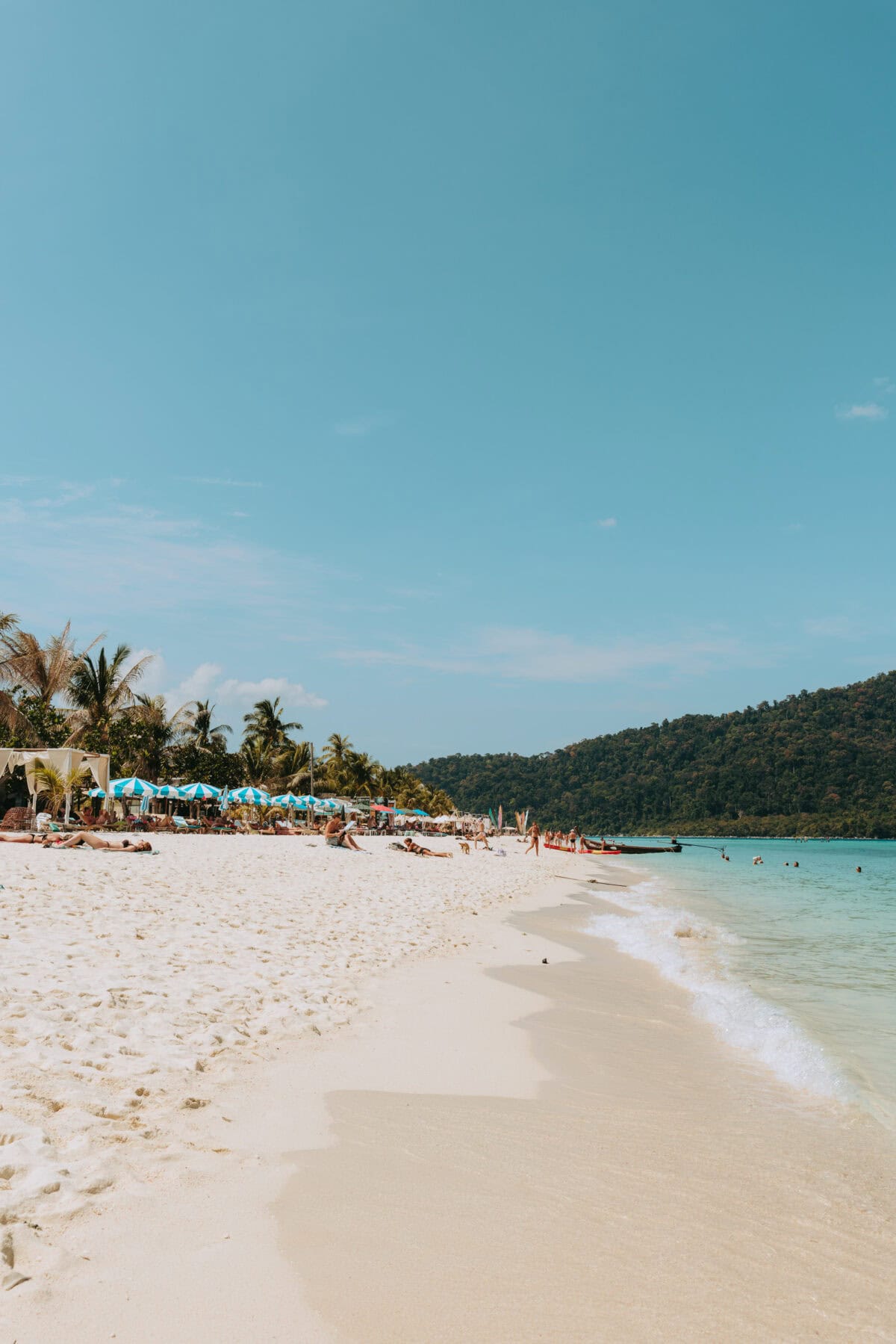
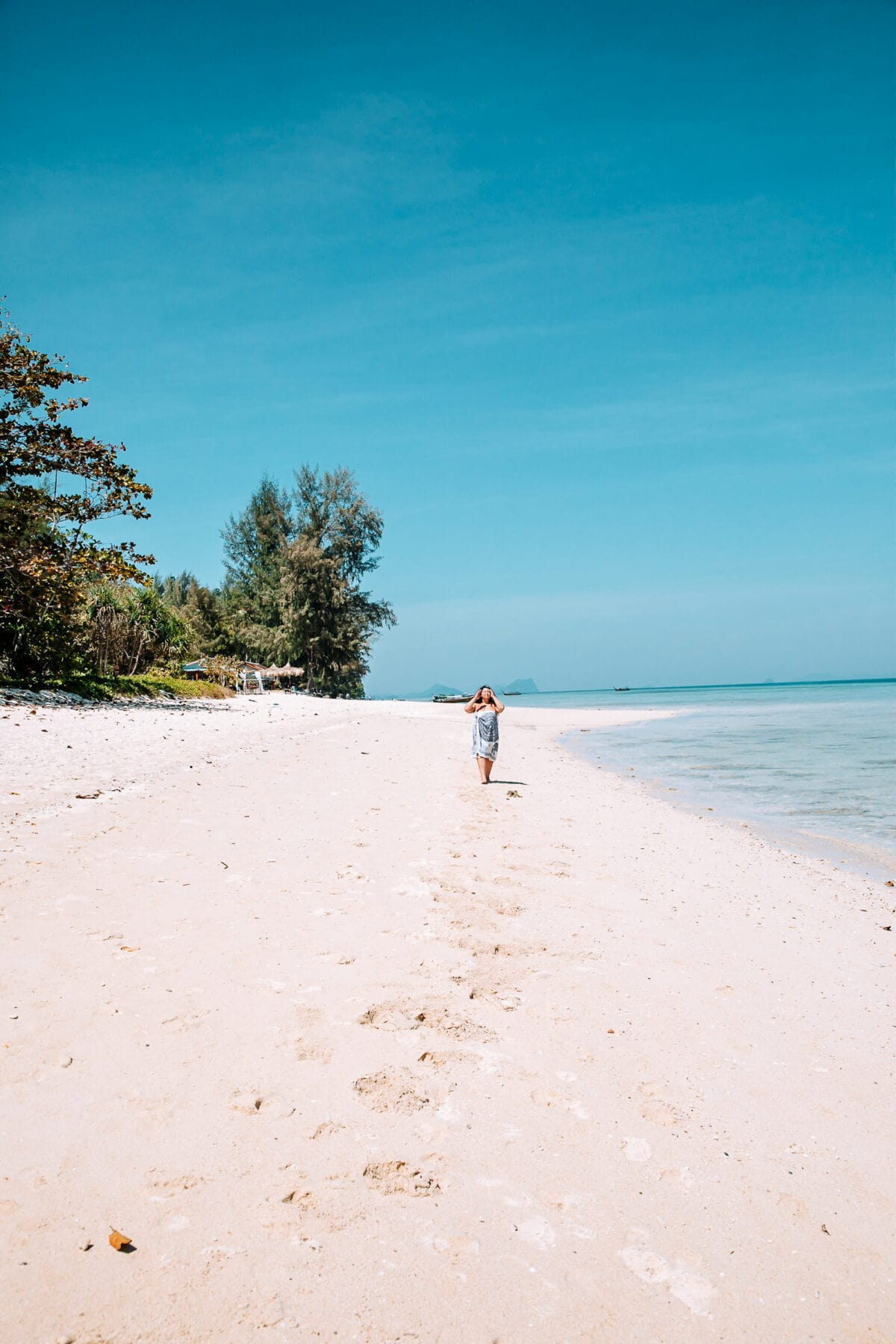
My main destination on this trip was Koh Lipe, the famous little island often called the Maldives of Thailand for its beaches. Koh Lipe really is beautiful, but it has also become very crowded. I ended up on Koh Bulone more by chance – and what can I say? I found another island paradise in Thailand here.
Where is Koh Bulone?
Koh Bulone (also spelled Koh Bulon Lae or Koh Bulon Leh) is in Satun province, south of Trang, about 45 minutes by speedboat from Koh Lipe. However, only a few visitors stop here, which suited me perfectly. I definitely enjoyed spending a few peaceful days on this tranquil, dreamlike island.
The Fascination of Simplicity
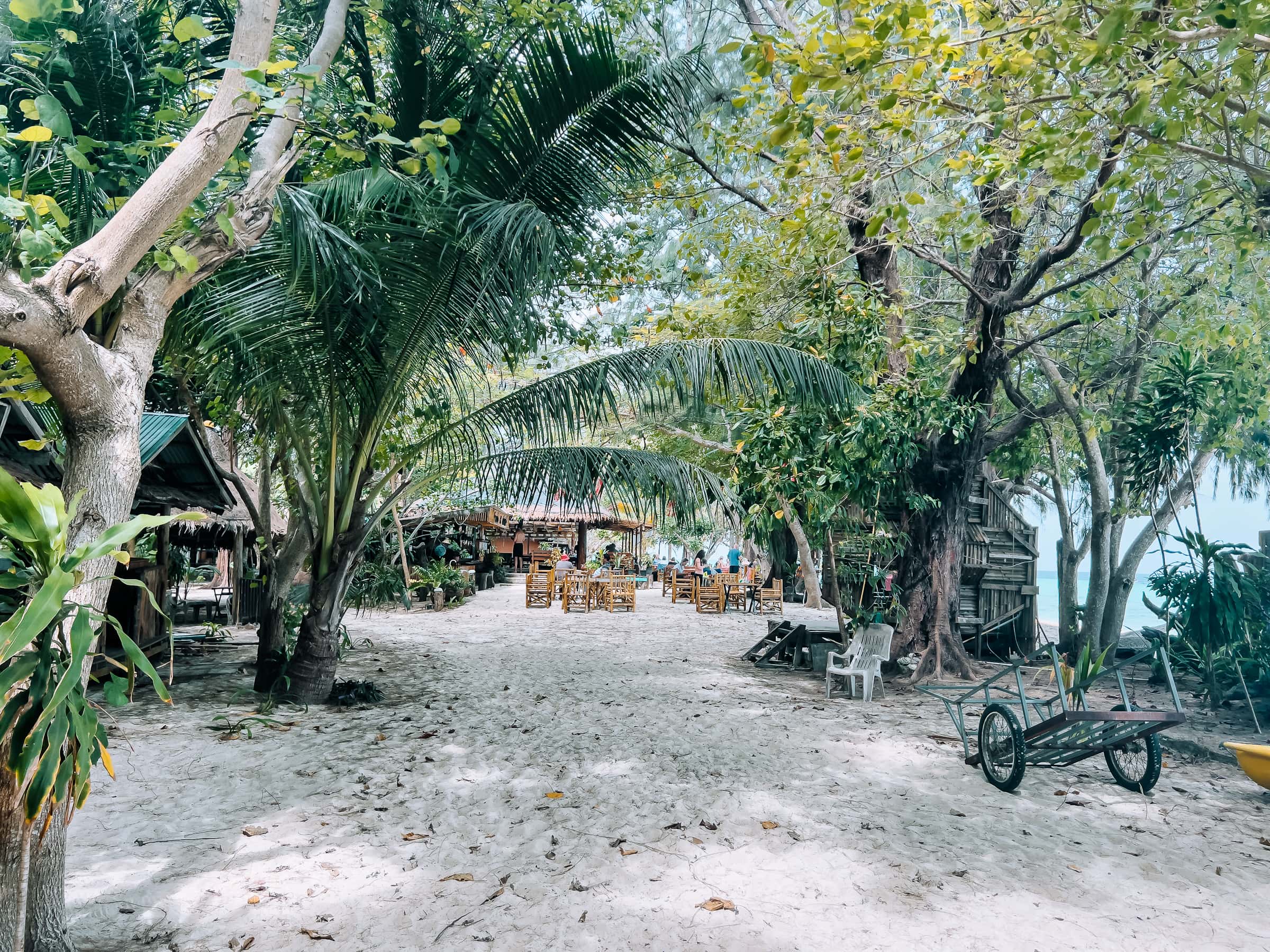
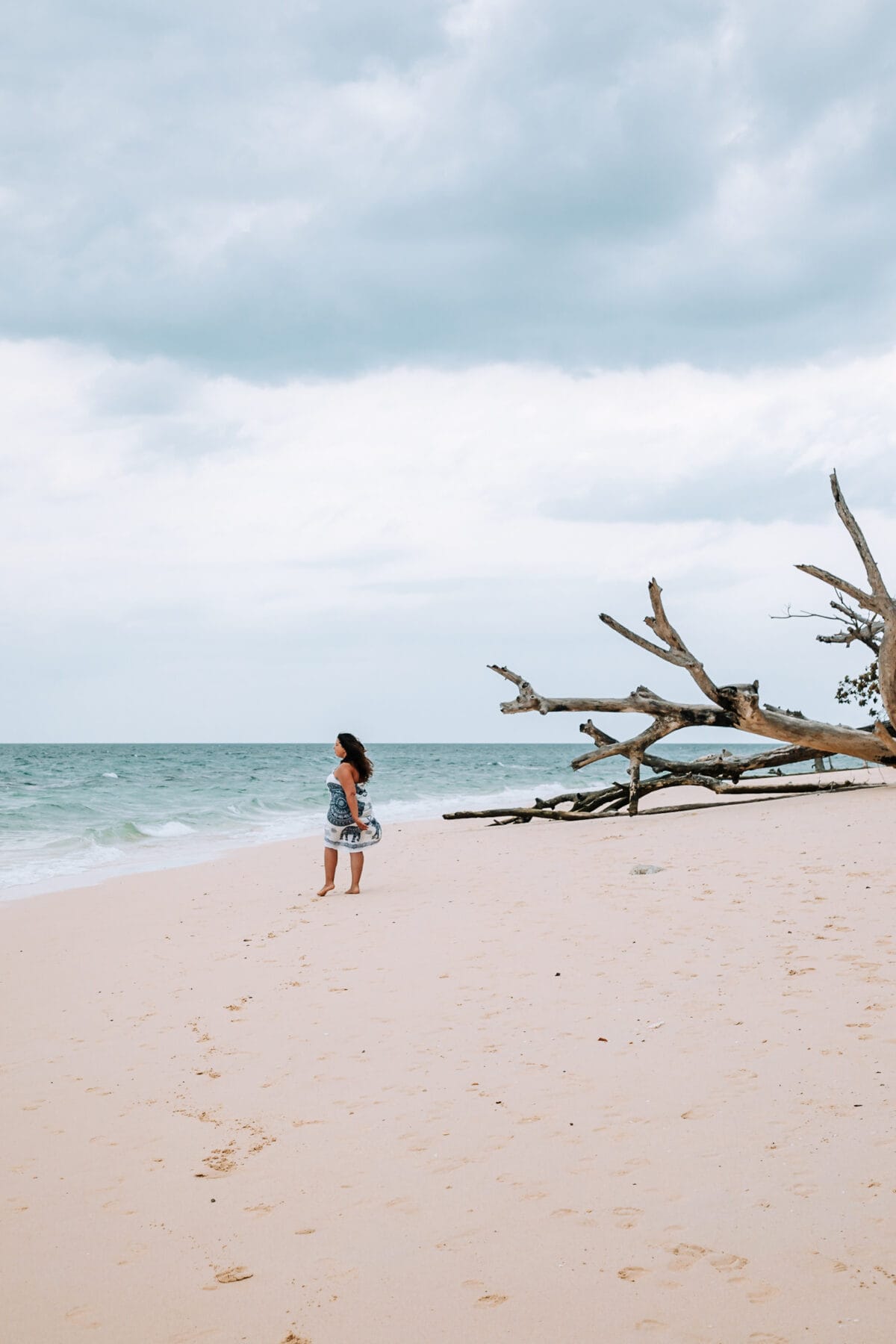
A village, a lengthy sandy beach, a handful of simple resorts, and a few restaurants make up the entire island. There are no roads, only bumpy gravel paths. Nightlife? None at all. This straightforward lifestyle is part of Koh Bulone’s charm. Spending the day doing nothing, free of stress and the obligation to do anything, allows you to simply enjoy this beautiful paradise. It’s a wonderful wellness retreat, perfect for anyone looking to embrace a simpler, more mindful way of life.
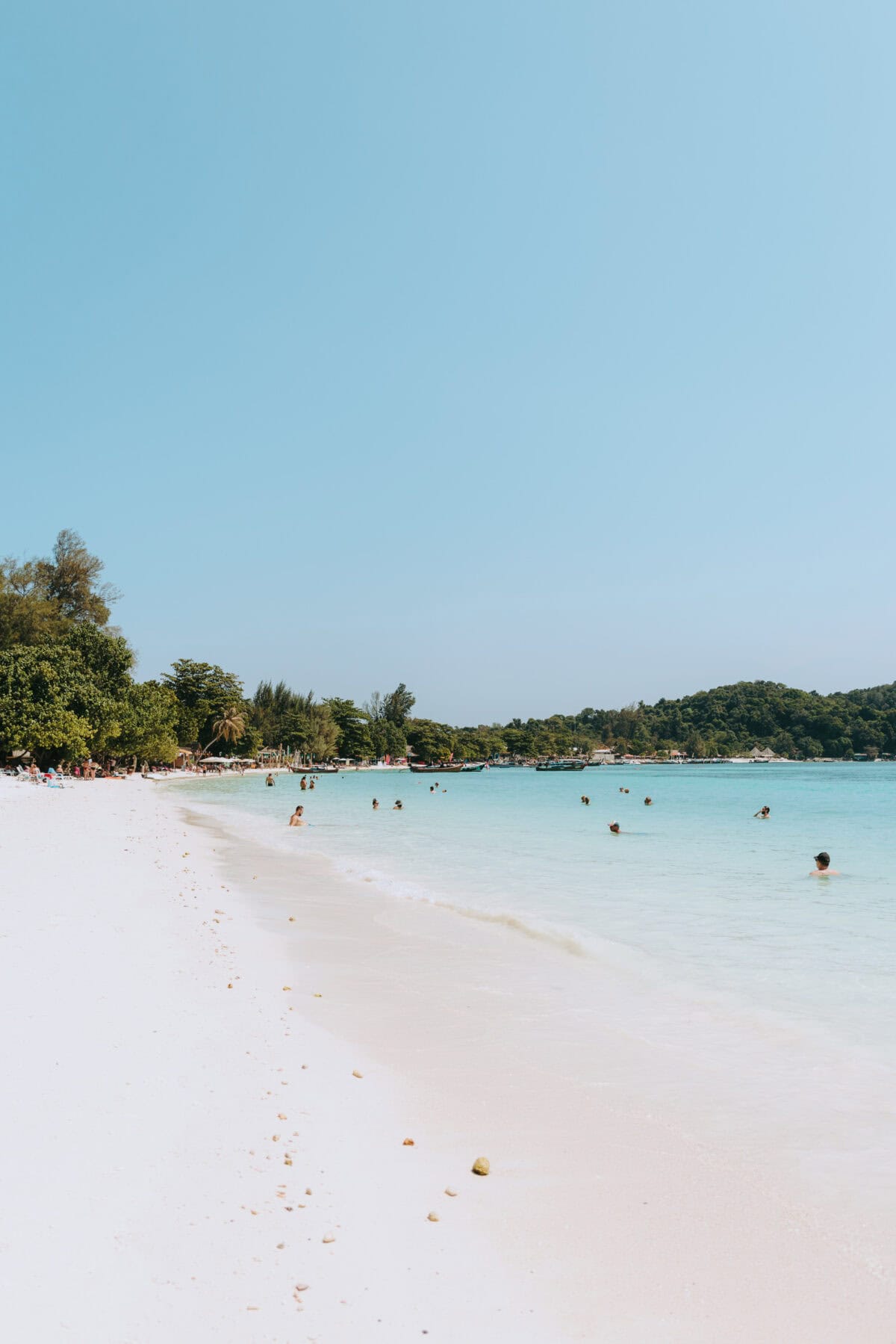
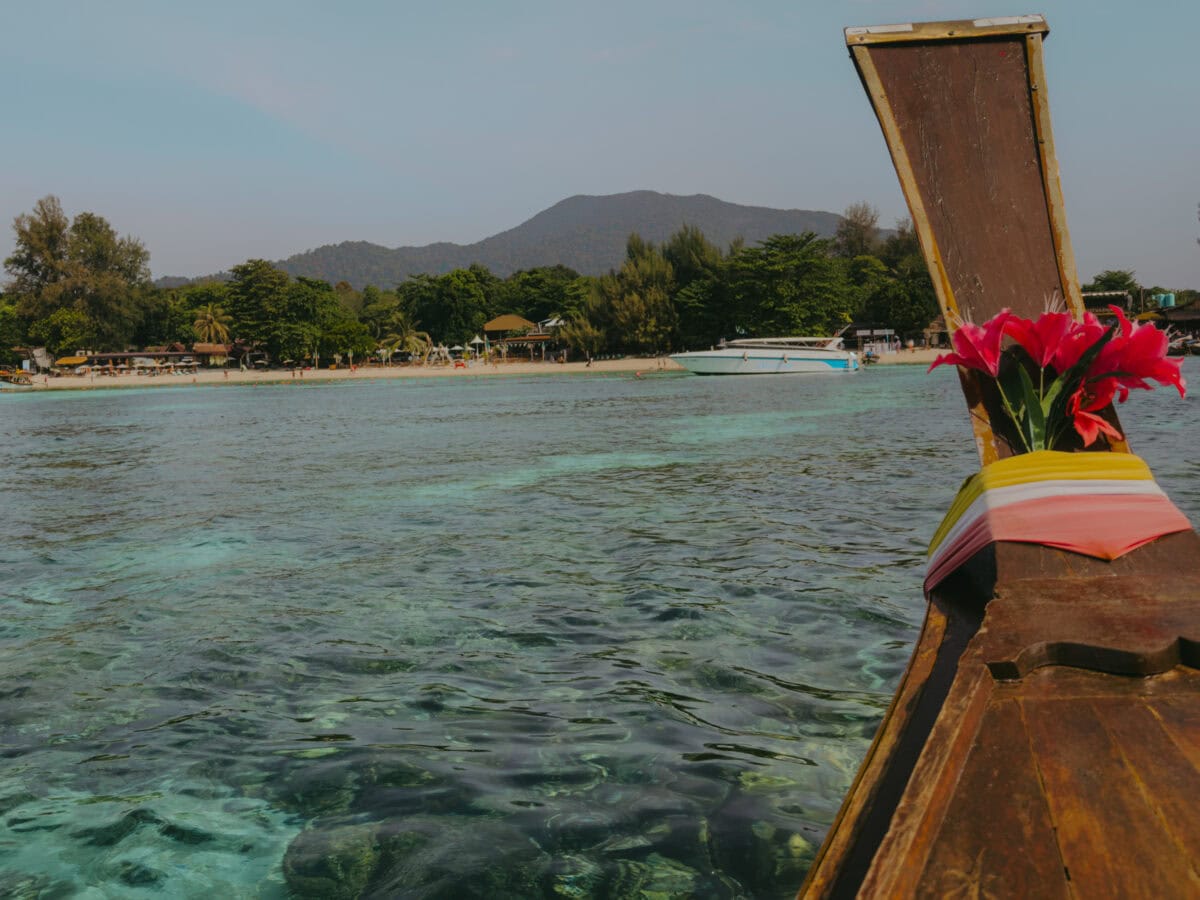
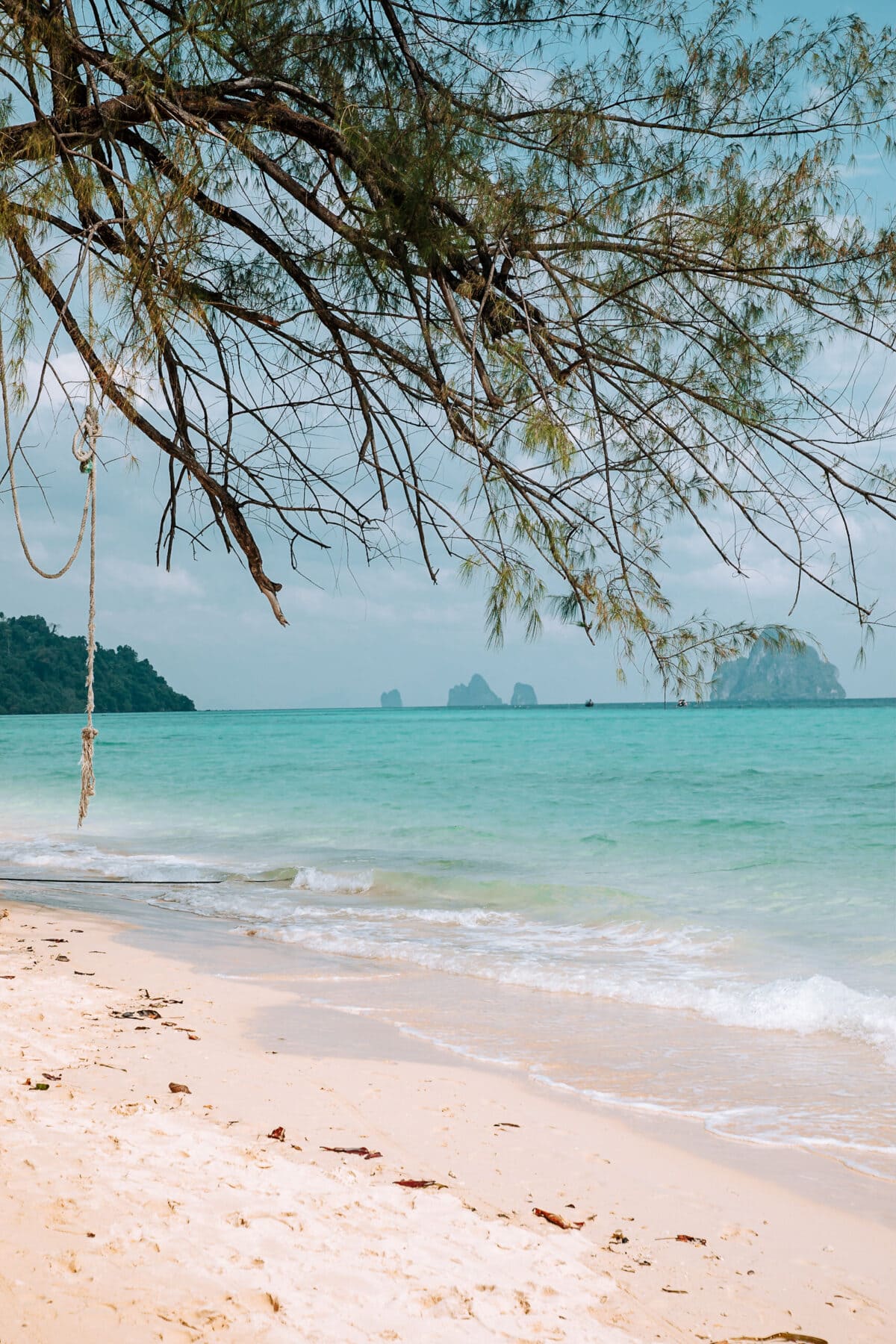
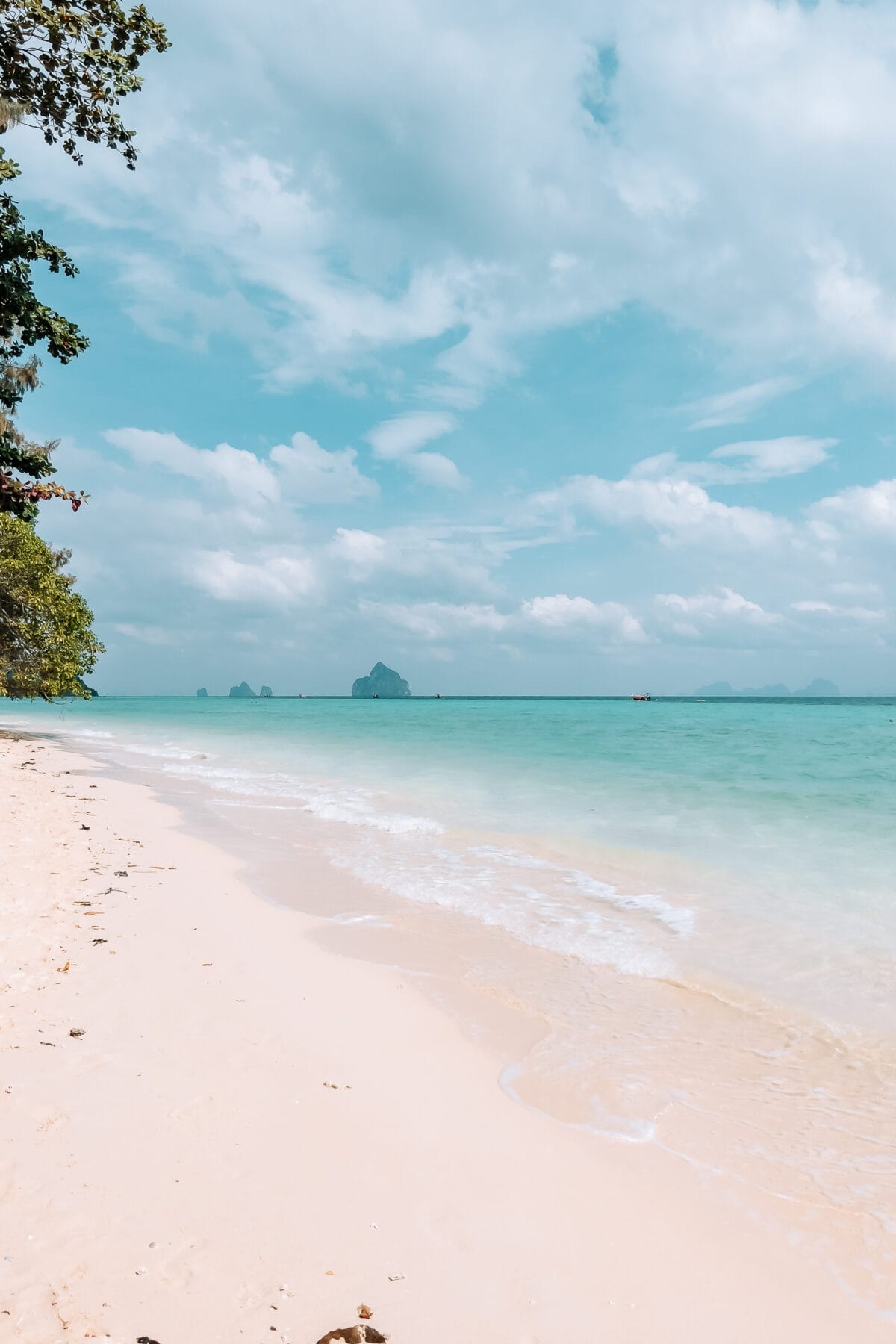
Koh Bulone is a small island paradise with turquoise blue waters.
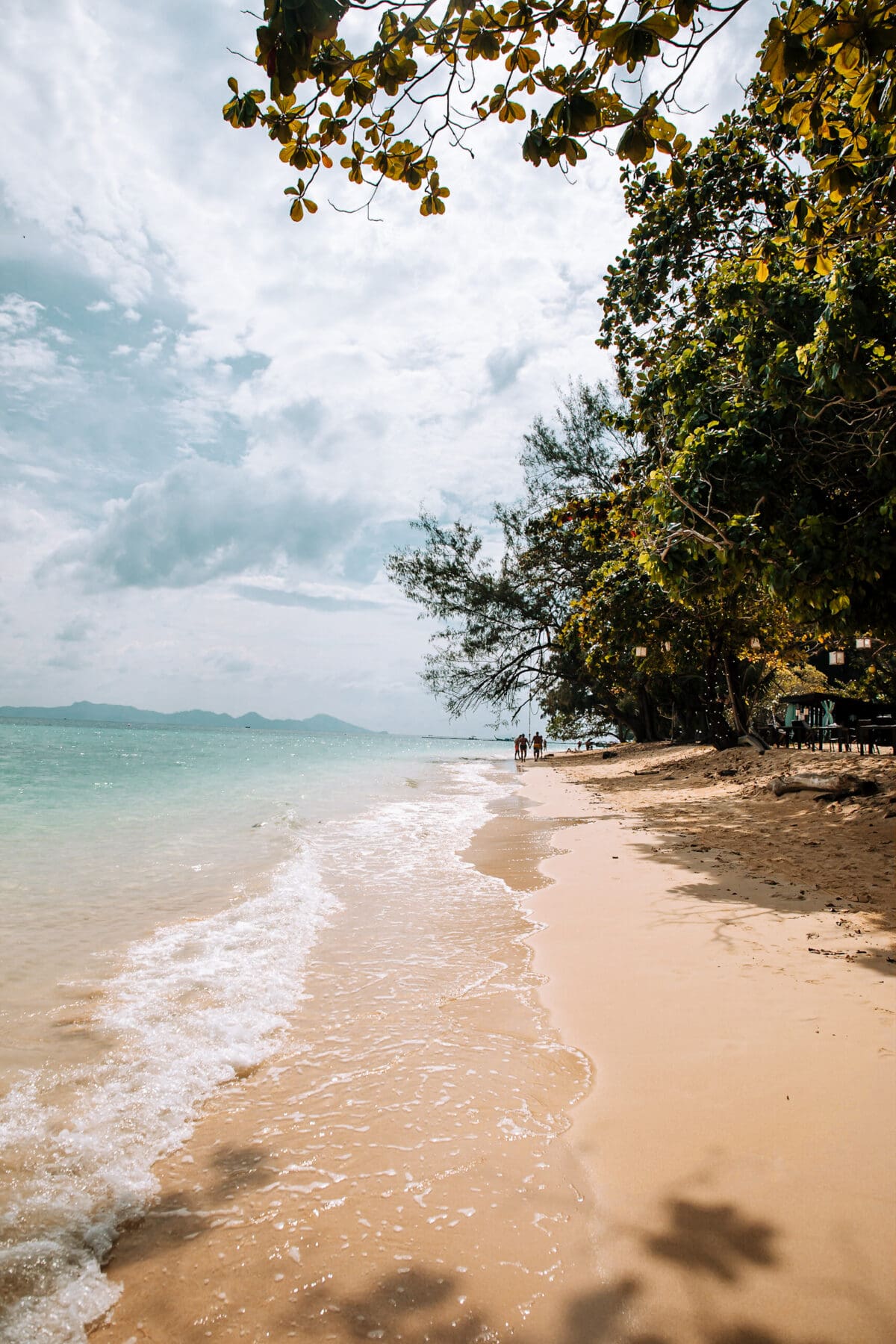
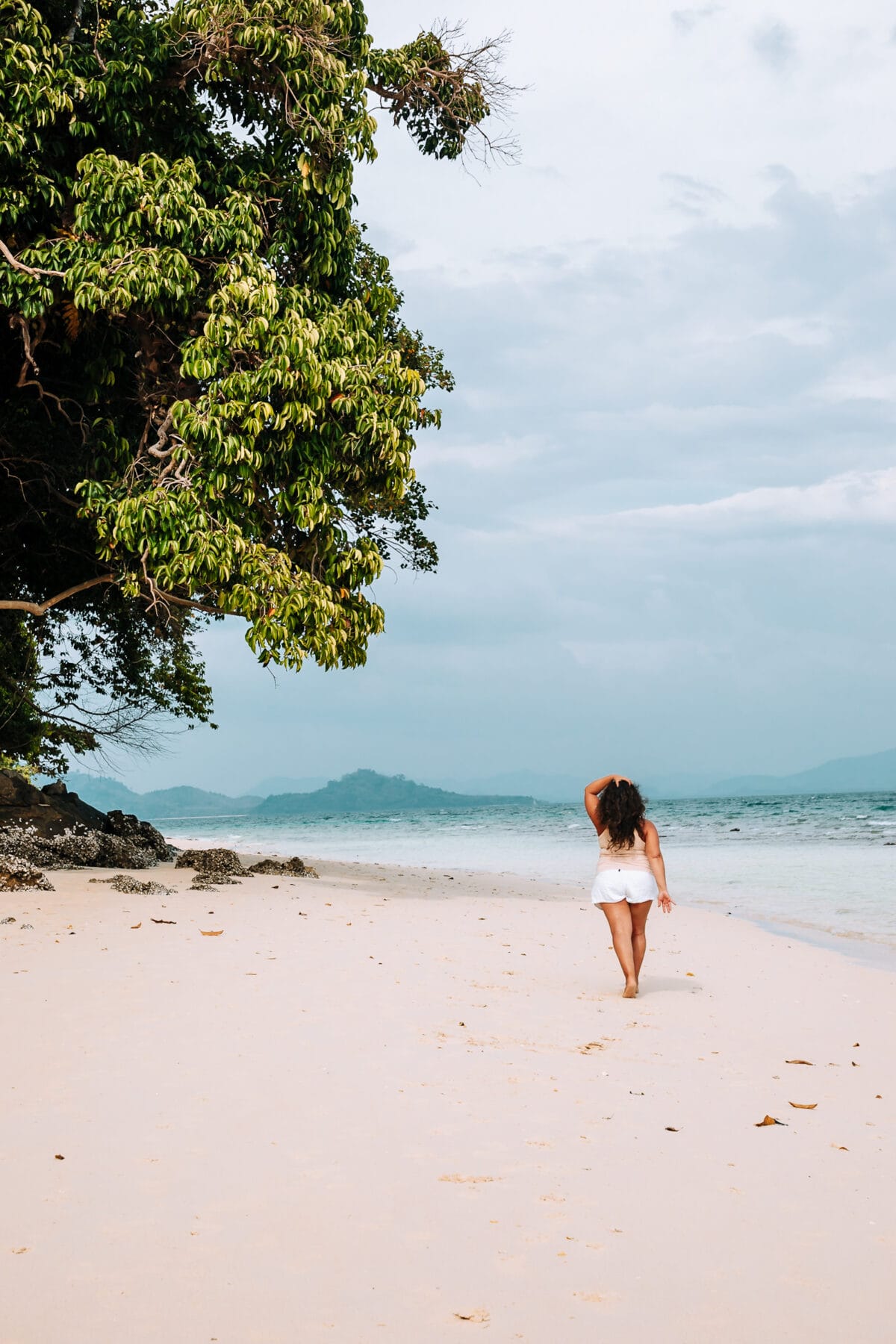
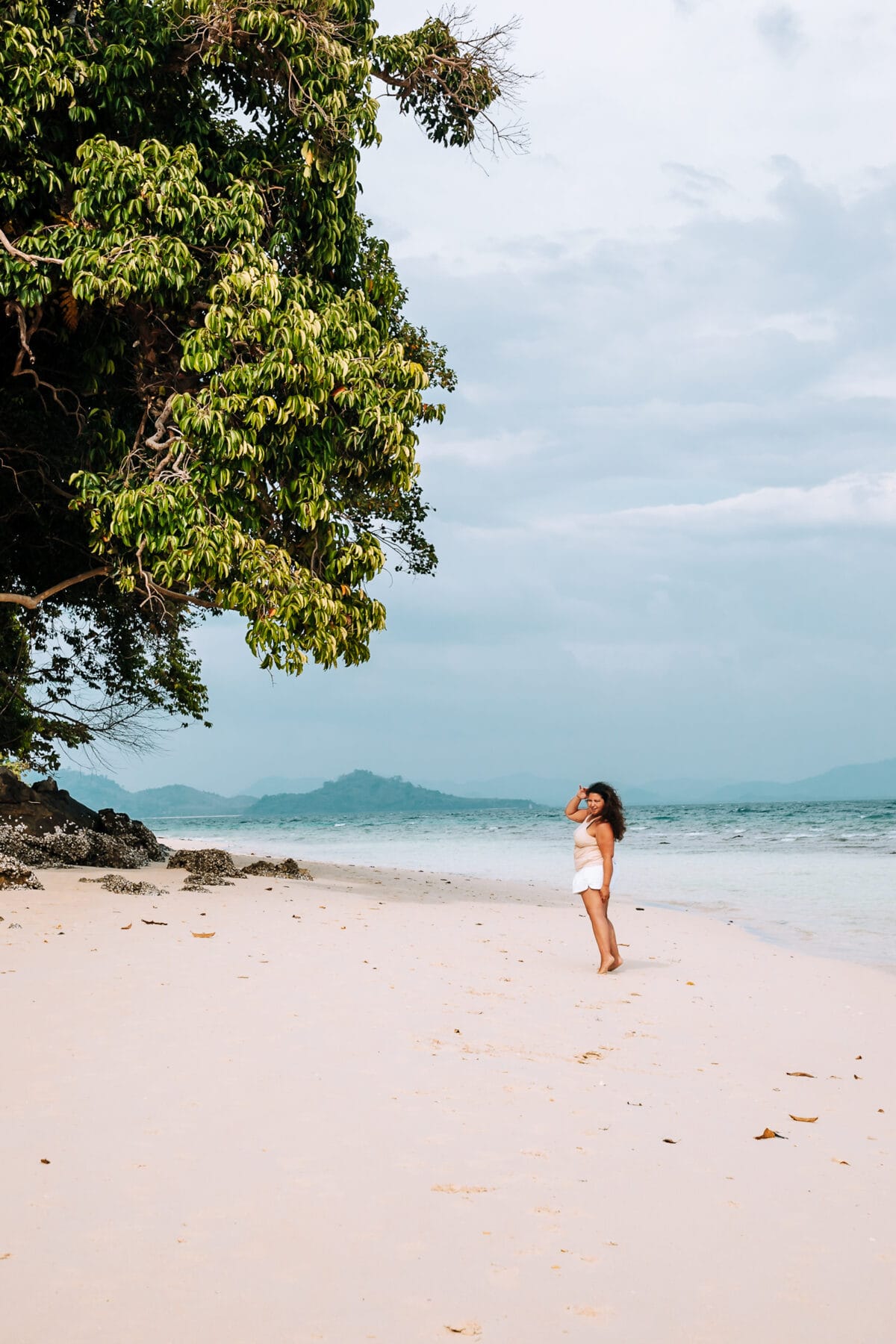
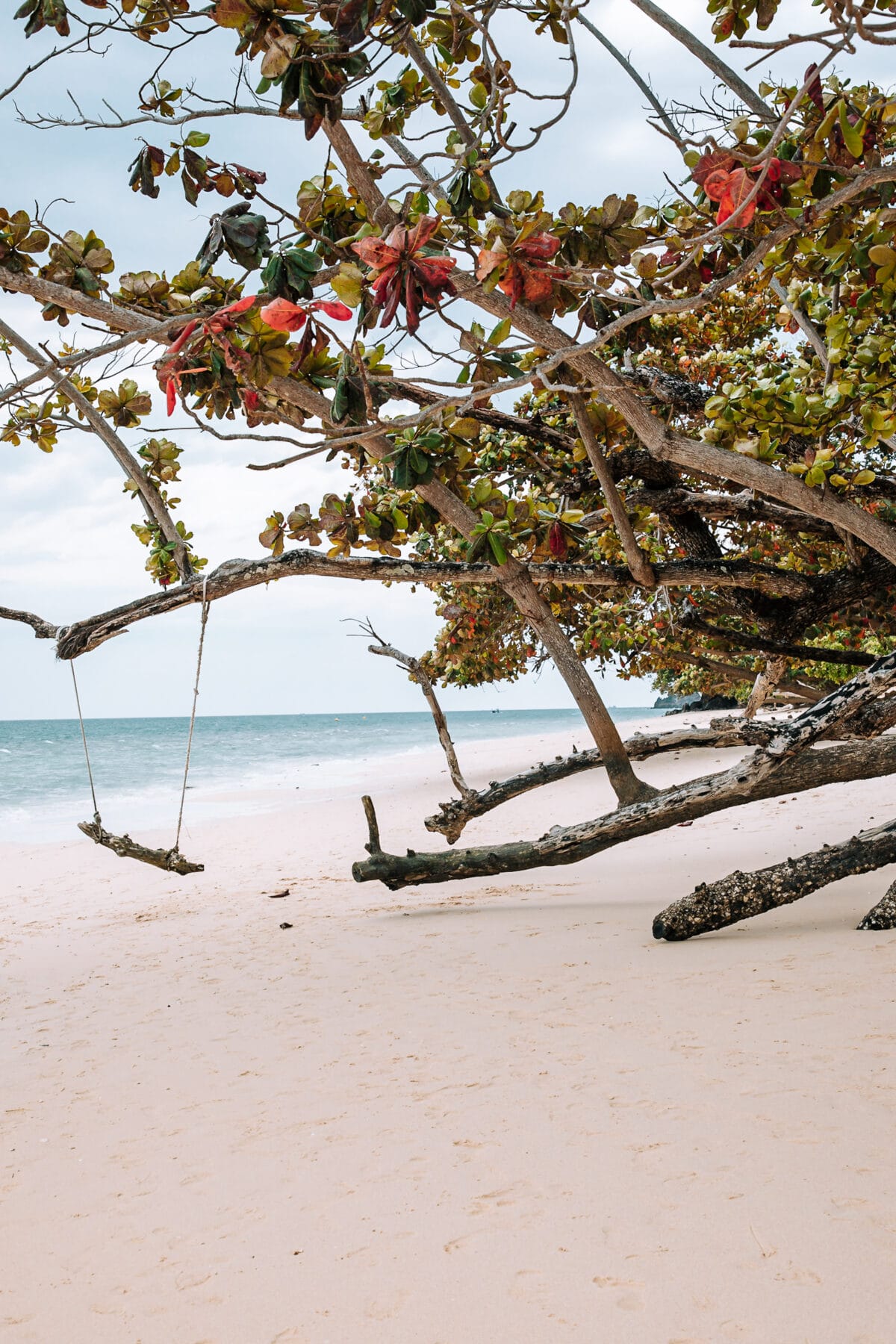
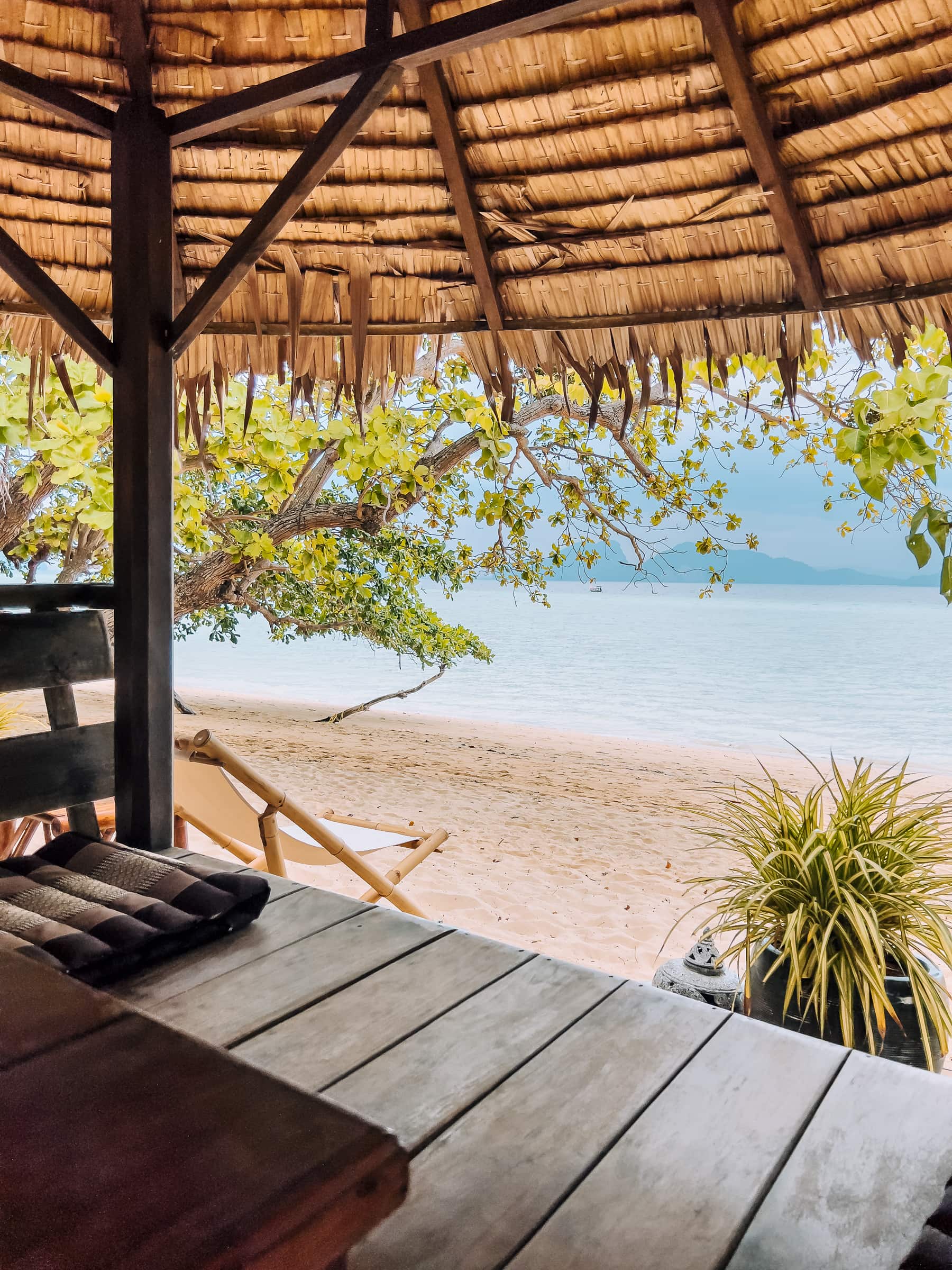
The main beach stretches almost the entire length of the island’s western side. The light-colored sand is incredibly fine, and the water is crystal clear. If you’re staying at the Bulone Resort or the Pansand Resort, you’ll have this view right outside your door every morning. You should definitely get up early here—the sunrises are simply magical.
Magical sunrises
Where to Stay on Koh Bulone
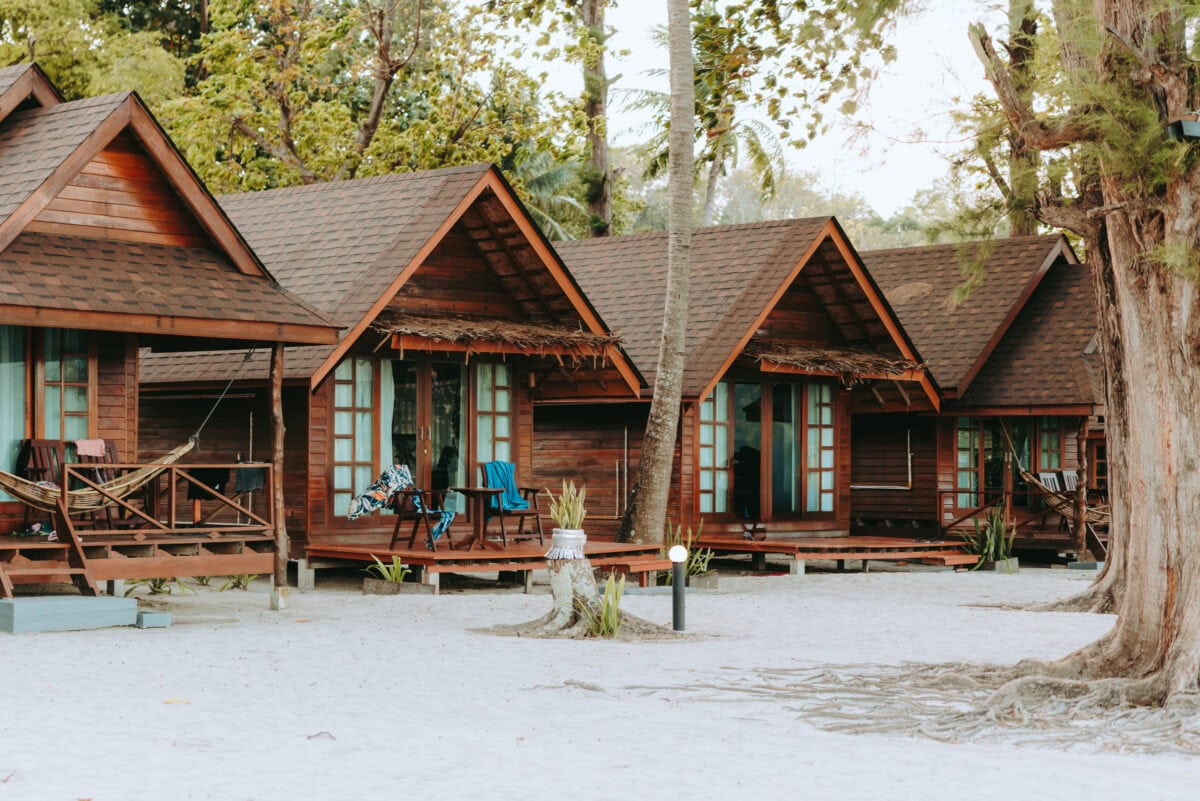
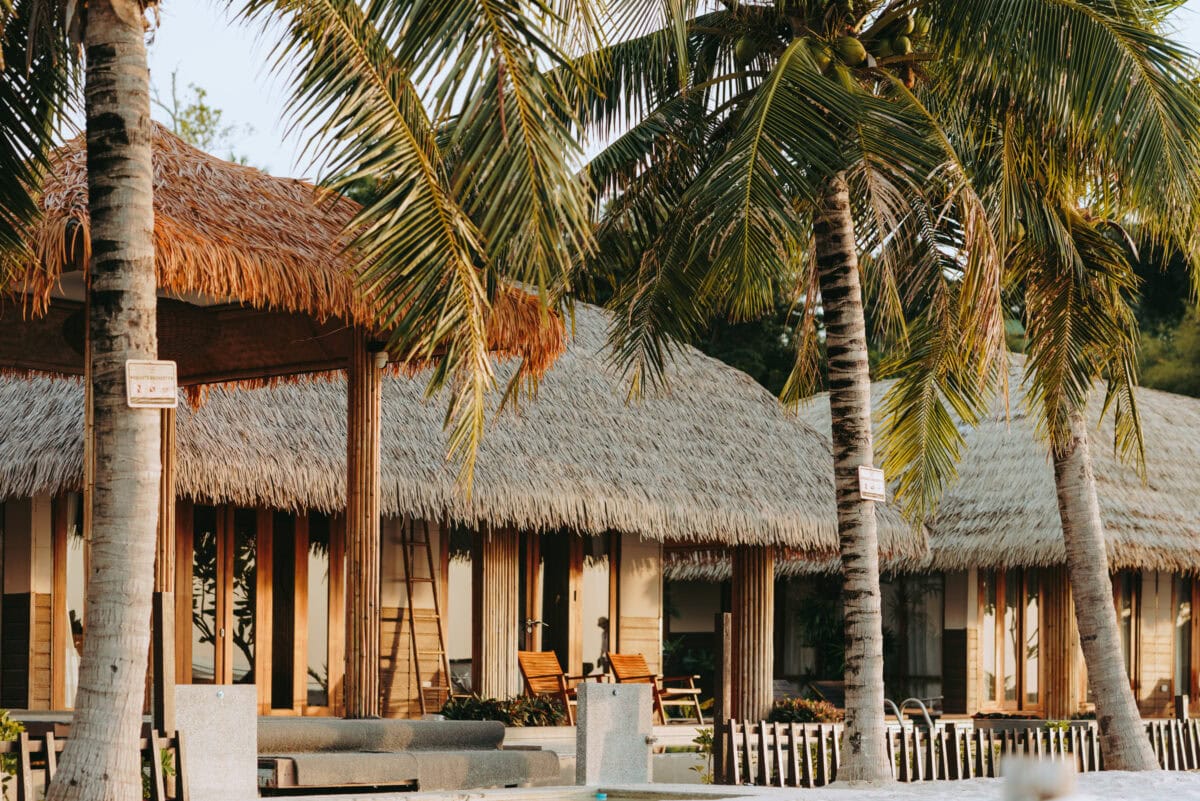
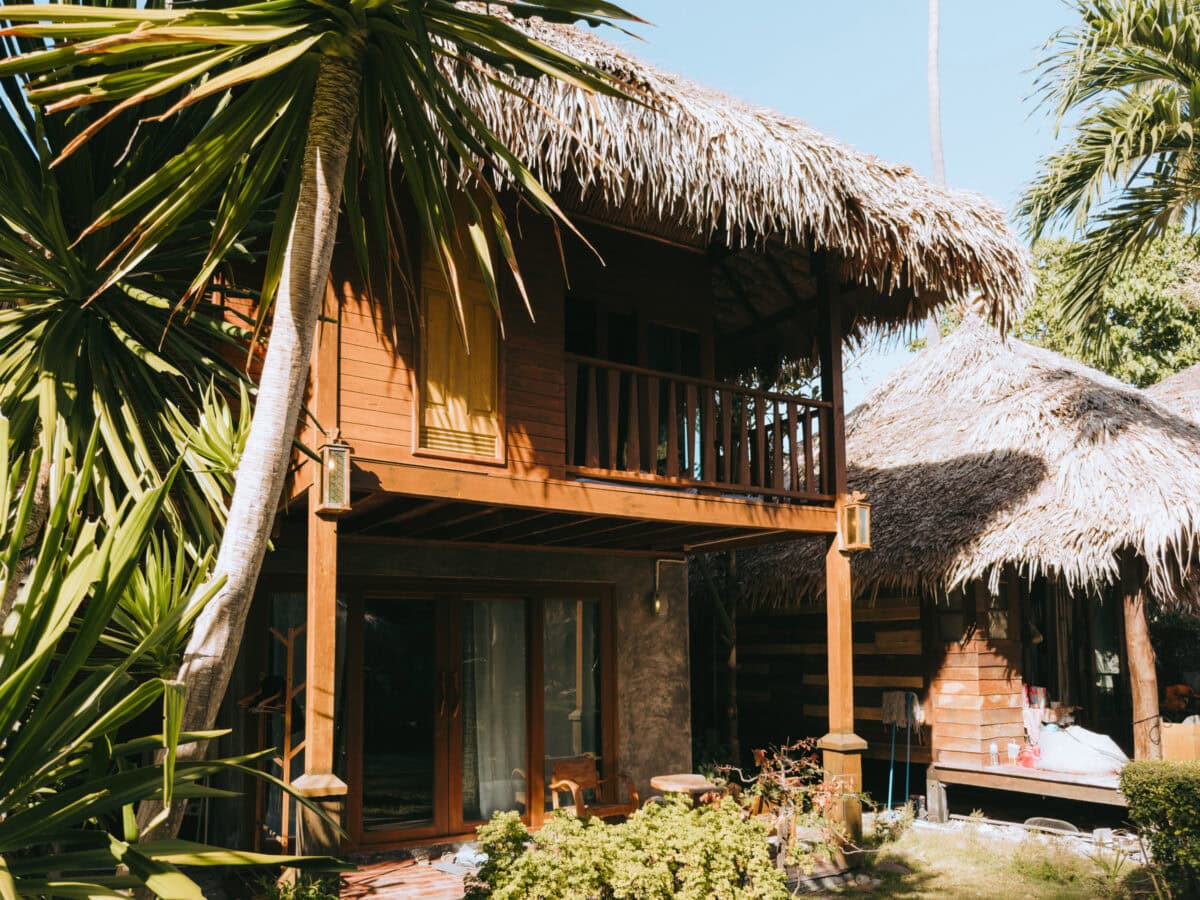
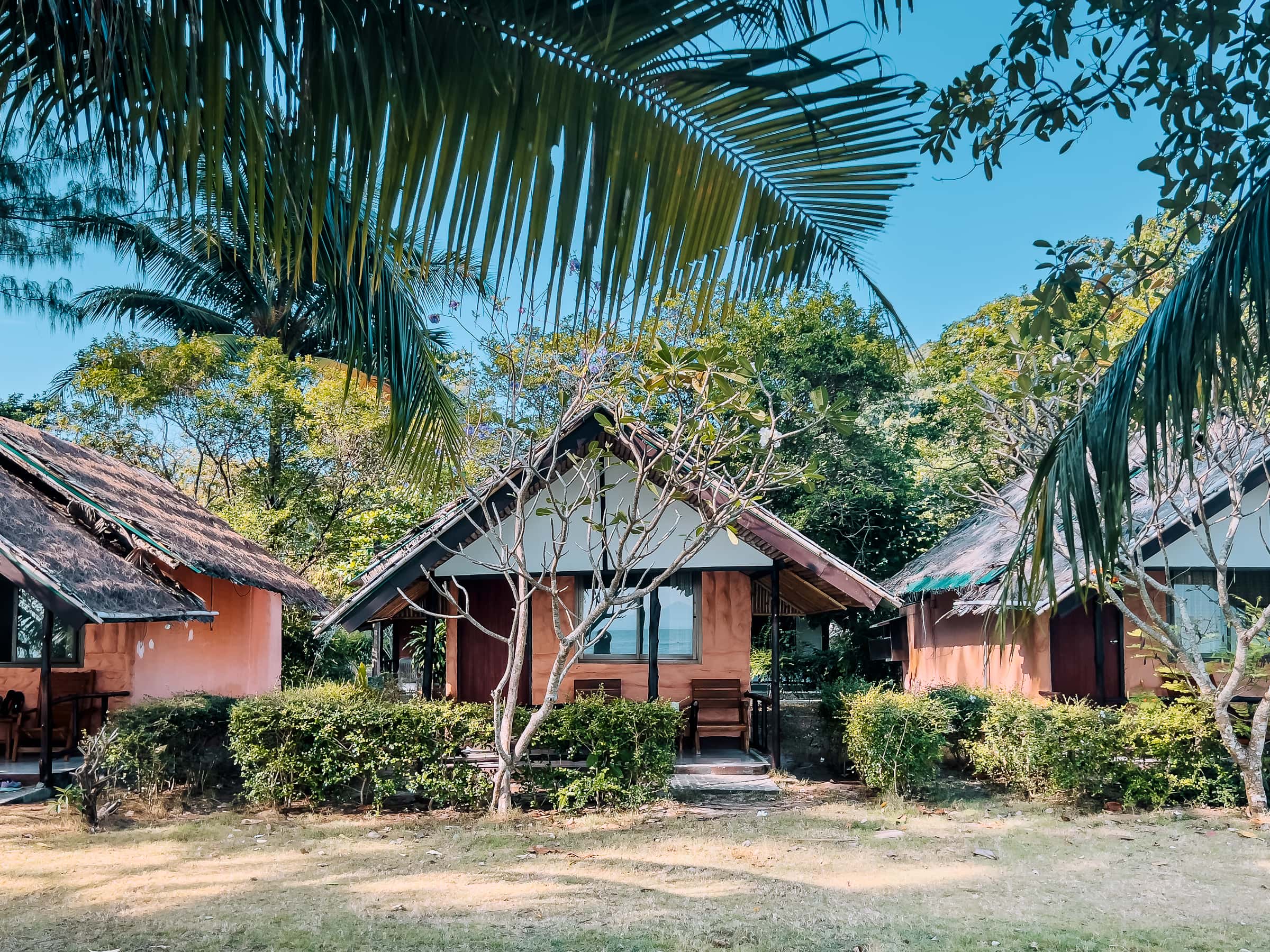
The island offers a small number of accommodations, mostly beachfront, with others nearby. Options range from simple wooden huts with fans to more comfortable bungalows with air conditioning. While there isn’t traditional luxury, guests can enjoy hammocks right on the beach and abundant natural surroundings.
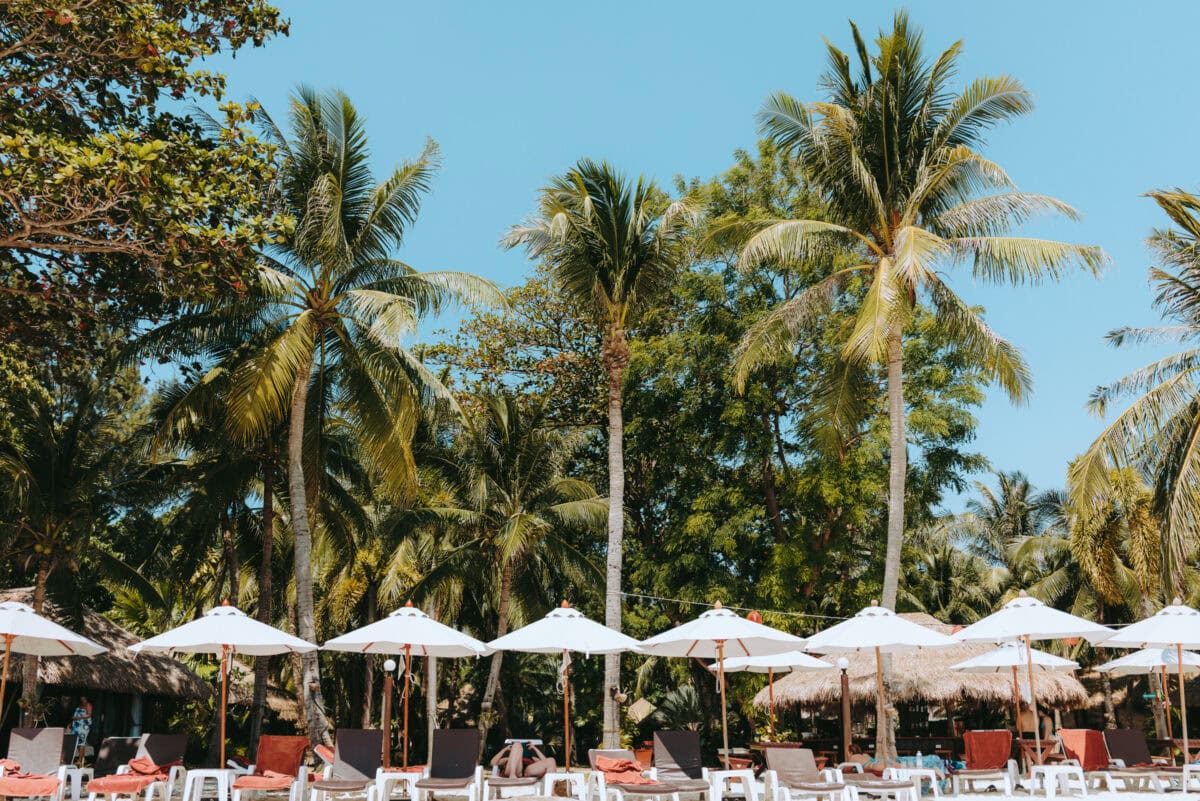
The Bulone Resort is located on the beachSimple yet very well maintained: The grounds of the Bulone Resort
I was super happy with the Bulone Resort, the lagę is the best on the island in my opinion and the atmosphere is warm and relaxed. The Pansand Resort further down on the same beach is just as good.
Bulon Hill Resort
The Panka Bay Resort, located on the bay of the same name, is a more budget-friendly option. However, there are many rocks in the water here, and swimming can be rather difficult at low tide. You can reach School Beach on foot; however, you’ll have to walk through the village and over a small hill first, which isn’t very pleasant in hot weather. A little closer to School Beach is the Bulon Hill Resort, nestled in the countryside.
Panka Bay at low tide
Please note: Capacity on Koh Bulone is limited. Bungalows at Bulone Resort are often reserved by regular guests a year in advance. Be sure to make your reservation early.
Koh Bulone is not nearly as touristy as some of the other islands in the region. There are therefore a few things you should bear in mind. The following information relates primarily to the Bulone Resort, but the other accommodations will be similar.
Cash / Currency Exchange
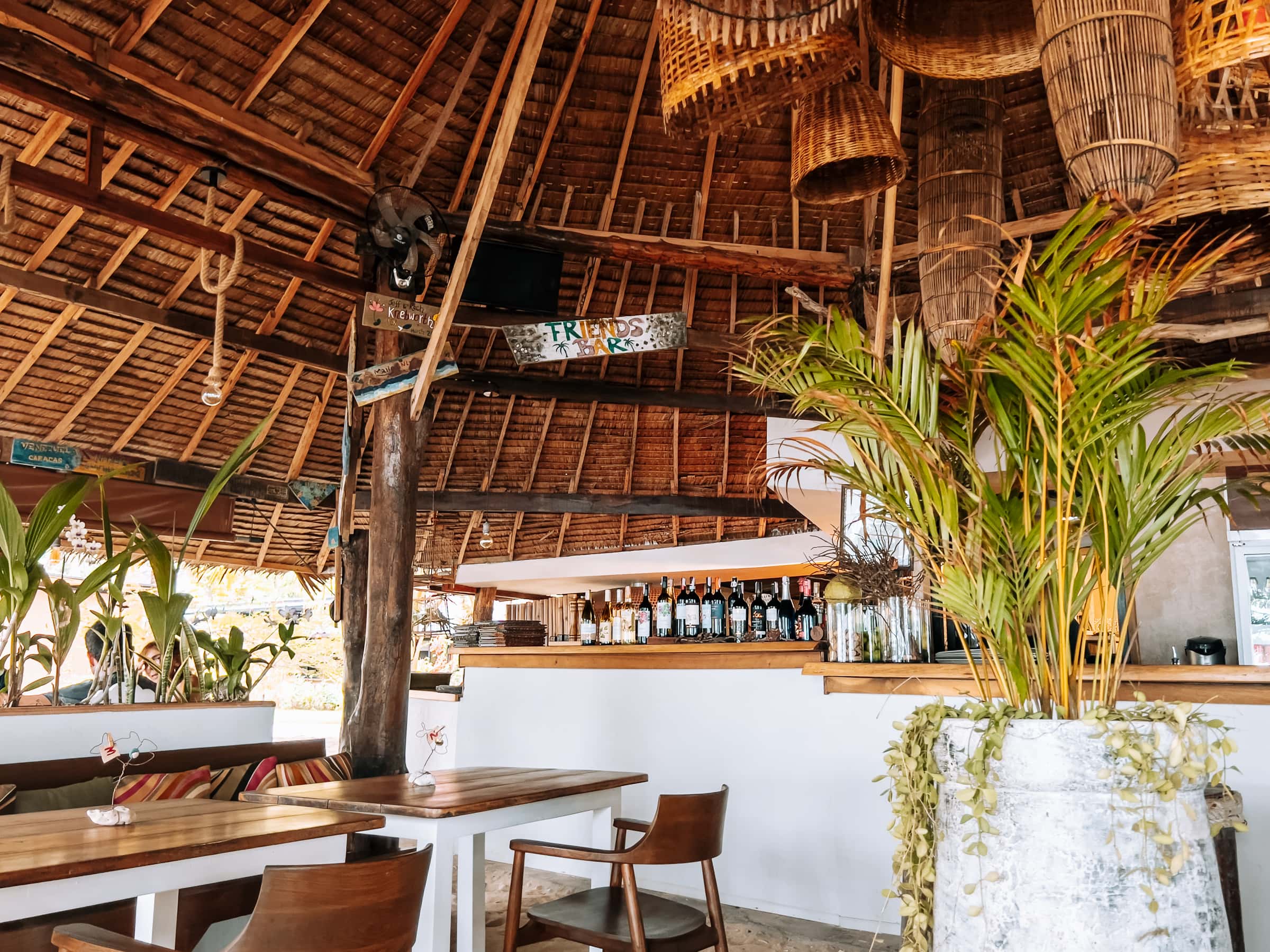
There are no ATMs on the island. Although resorts like the Bulone Resort try to minimize cash needs for guests, it’s wise to bring some cash with you. You can pay for everything at the resort—food, activities, boat tickets, and accommodation—by card when you leave. However, for the longtail boat that picks you up from the speedboat and takes you to the shore, you’ll need about 50 baht (€1.50) in cash. It’s also recommended to carry cash for the few small restaurants and food stalls.
Internet
The Wi-Fi at the resort worked surprisingly well. Just don’t expect blazing-fast upload or download speeds. As a backup, I recommend getting a local eSIM anyway—it’s always more convenient when you’re traveling. I can recommend providers like Holafly or Saily.
Electricity
Electricity is limited at the Bulone Resort, available only in the bungalows from 6 pm to 8 am. The resort has to generate power using diesel generators since Koh Bulone isn’t connected to the main grid. During the day, you can recharge your phone at the restaurant if you forgot to do so overnight. There’s no hot water, but tropical temperatures make cold showers comfortable—even for someone sensitive to cold like me.
Waste / Recycling
If you bring glass bottles (e.g., beer), they must also be returned off the island; the restaurant aims to minimize glass use. Since glass cannot be recycled on the island, it has to be transported to the mainland with other recycling waste like paper and plastic. Plastic is preferred because it is lighter.
Overall, I thought Bulone Resort was especially well-maintained and spotless; however, some parts of the island may have a couple of less tidy spots. Sadly, as is common on many islands, this can be the case, but I found it to be particularly worse on Koh Mook or Koh Phi Phi, for example.
Tip: Don’t forget to bring enough insect repellent and sunscreen!
How Many Nights You Should Plan for Koh Bolune
If you’re island hopping in the Andaman Sea, your schedule might be tight. However, it’s advisable to spend at least two nights on Koh Bulone, ideally three. Since boat arrivals are typically between midday and early afternoon, and departures are usually in the morning, two nights leave little time to enjoy the island’s relaxed vibe.
Who Will Enjoy a Stay in Koh Bulone
Koh Bulone is ideal for couples or solo travelers seeking tranquility. It provides a refreshing contrast to busier islands like Koh Lipe or the bustling cities such as Bangkok and Chiang Mai, which may already be on your itinerary. While there are no specific offers for families, children are welcome, as is common throughout Thailand. The beach in front of Bulone Resort gently slopes, making it safe for children. The accommodations are straightforward, emphasizing simplicity rather than luxury, allowing visitors to enjoy a more authentic, relaxed experience.
Make sure to set aside a budget for your trip, as Koh Bulone, despite being simple, is not inexpensive. Almost everything, including drinking water and food, must be brought from the mainland by boat. Additionally, resorts send laundry off to the mainland because of the limited fresh water on Koh Bulone, which drives up the costs for both lodging and meals.
Resorts typically feature small mini-markets, and there are also small shops in the village selling snacks and drinks. Still, prices tend to be significantly higher than elsewhere, and some people will suggest buying alcohol and food on the mainland beforehand. Honestly, I was too lazy to do that and believe it’s better to support local vendors and appreciate the effort they put into maintaining this little paradise.
Best Time to Visit
The typical travel period is from October or November to April, which is the dry season when the sea is calm and boats operate regularly. Outside this period, most accommodations close due to less favorable weather, and Koh Bulone becomes almost deserted. During this time, speedboats also cease operations, requiring visitors to arrange private boats, which makes reaching the island more challenging.
How to Get There
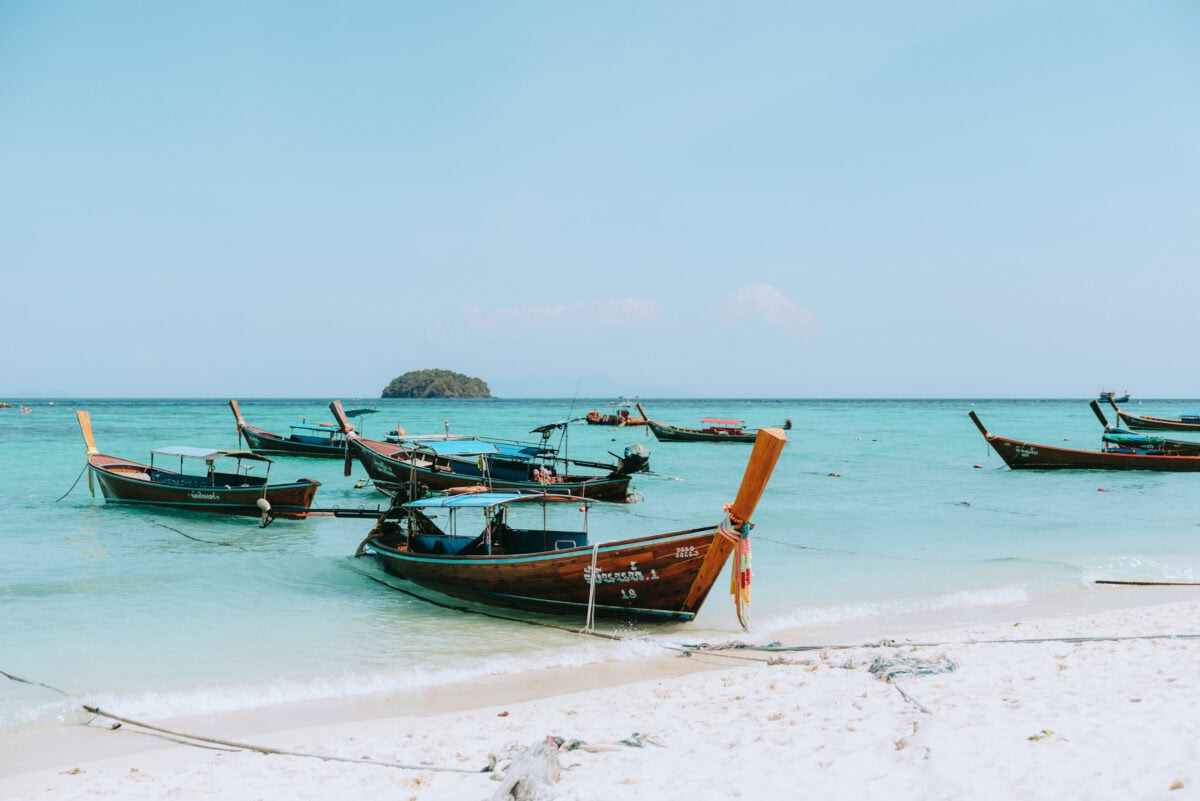
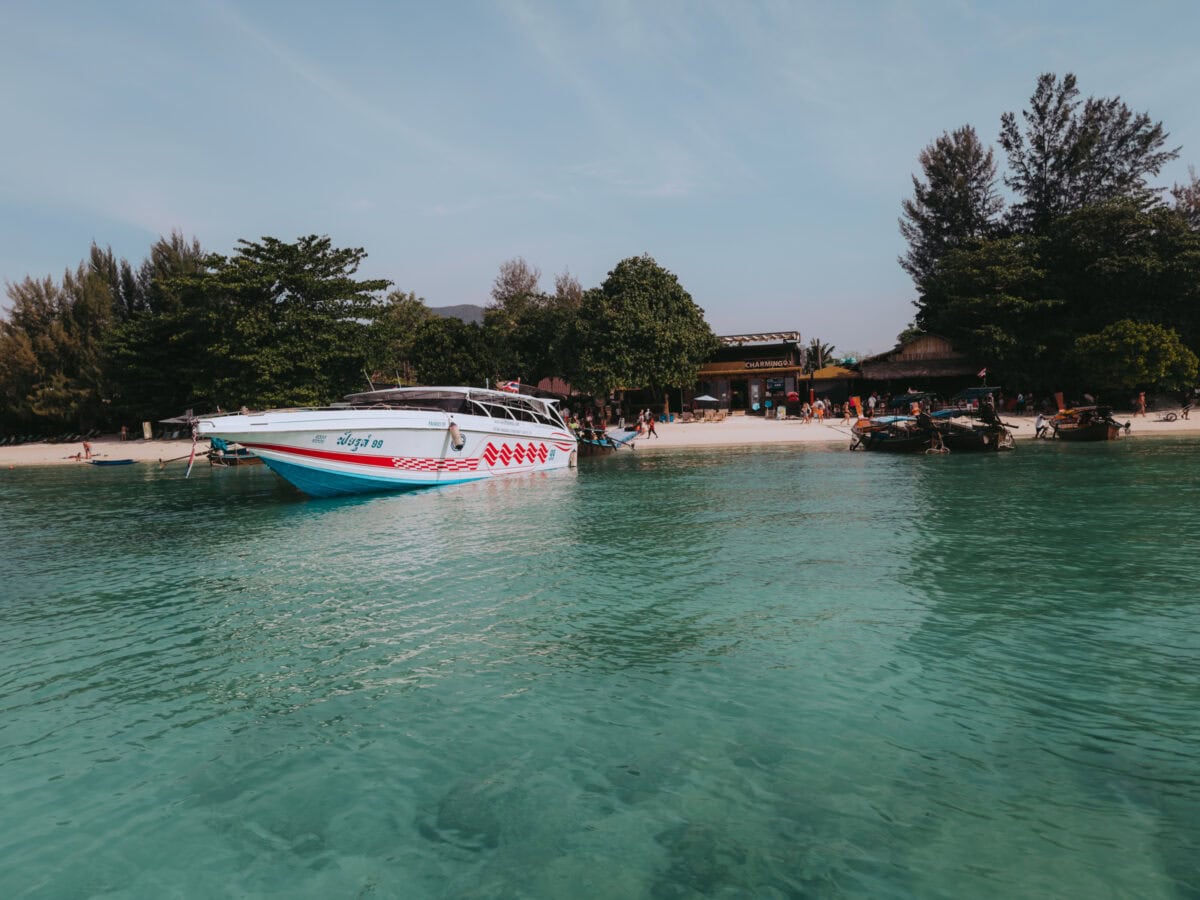
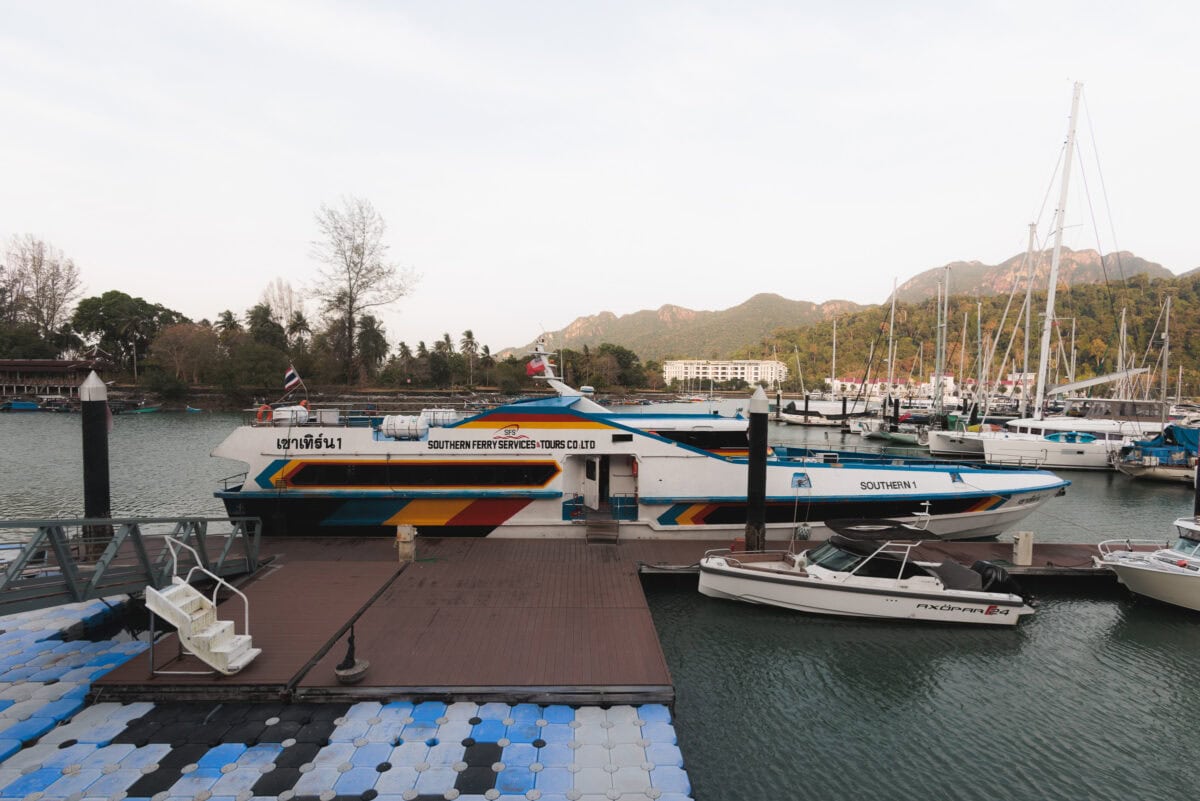
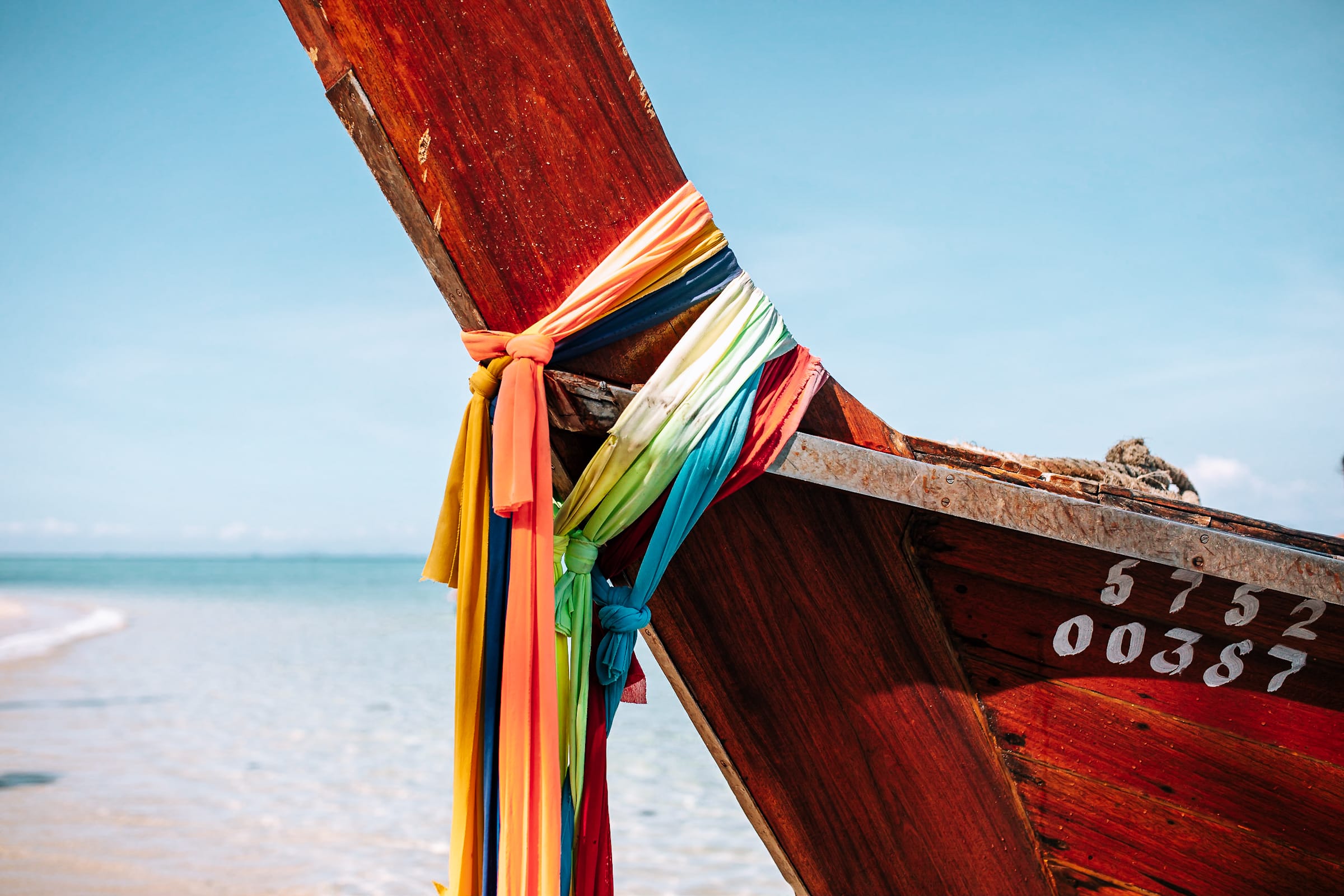
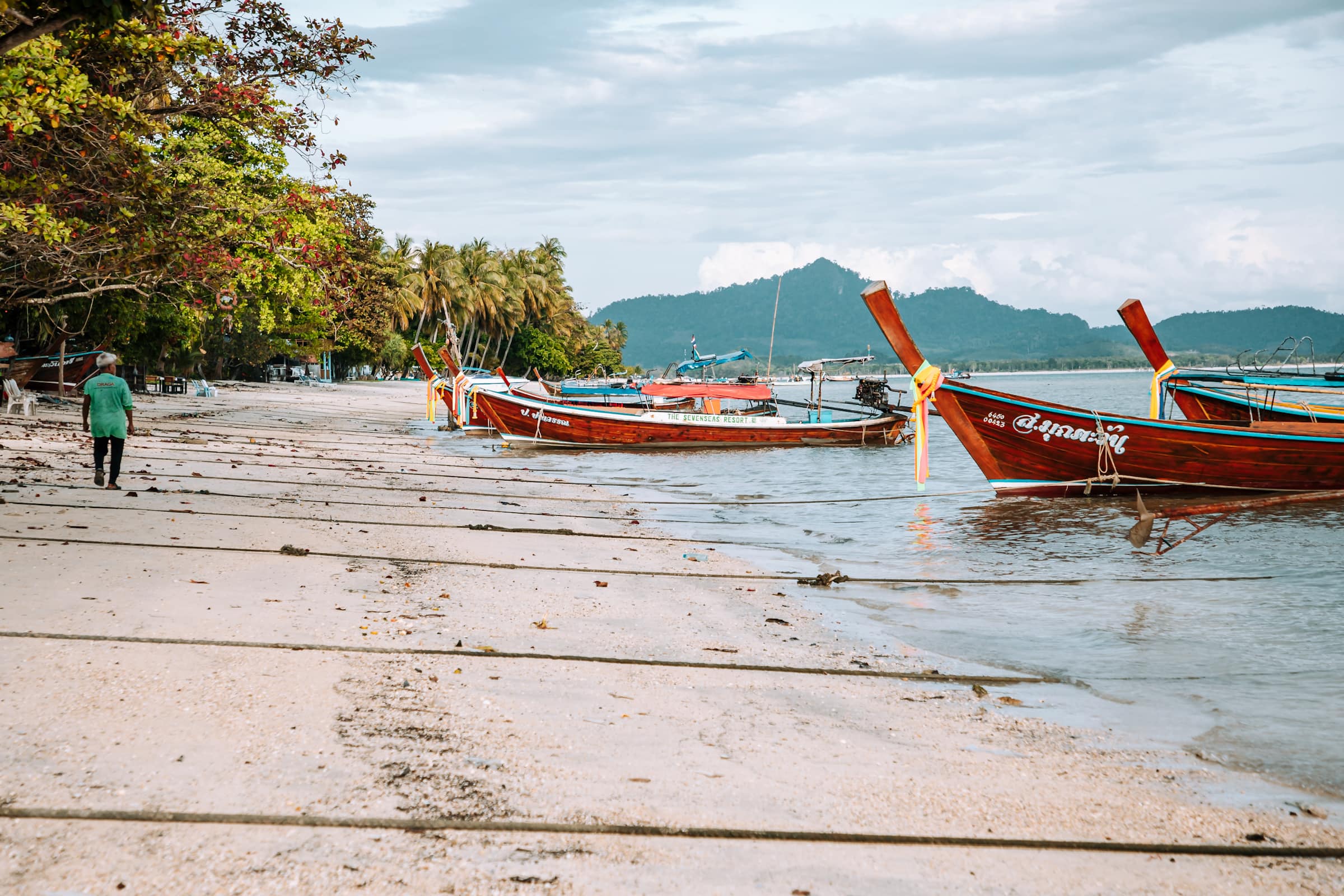
The arrival is part of the experience. You can get to Koh Bulone by boat from Pak Bara Pier on the mainland, Koh Kradan or Koh Lipe. There is no real pier, and the speedboat anchors at various points off the island depending on the weather conditions. A smaller longtail boat then picks you up, bags and suitcases are simply thrown across and the island adventure can begin.
Depending on your resort, you’ll be dropped off at the appropriate beach. You step into shallow water, flip-flops in hand, and your luggage quietly makes its way ashore dry with the help of kind assistance. As is common in Thailand, everything seems very simple, but is nevertheless well organized.
I always check the exact times on 12go*. It offers tickets from all shipping companies, so there’s no need for complicated research.
From the mainland to Koh Bulone Speedboats to Koh Bulone depart from Pak Bara Pier, taking approximately 30 minutes. The boat ticket includes options to book direct minivan transfers to the pier from Trang or Hat Yai. In high season (November to April), boats operate daily, while in the low season, they run much less frequently or not at all.
From Koh Lipe to Koh Bulone The speedboats that run between Koh Lipe and Pak Bara also stop off Koh Bulone on the way. The trip from Koh Lipe to Koh Bulone takes about 45 minutes.
Tip: Plan a generous buffer on days you need to catch a flight. While boats are usually punctual, it’s best not to depend on arriving at a mainland airport on schedule from a remote island like Koh Bulone. Trang and Hat Yai are also an hour and a half to two hours’ drive from the pier.
Other Islands in the Area
Koh Bulone feels too quiet for you? Or do you want a change of scenery? Either way, this region of Thailand offers many stunning spots, and I highly recommend visiting several islands. Most can be conveniently reached by speedboat during the season, and mainland transfers are also well coordinated.
Here are some islands I recommend: Koh Jum Originally favored by backpackers, but it remains very laid-back, featuring long, secluded beaches and a glimpse into local everyday life. Koh Lanta Popular with families, lots of great nature, better infrastructure Koh Lipe Super beautiful beaches, turquoise blue water, very small, but still a bit busier; many luxurious resorts Koh Mook Slightly larger island with more local life and lots of activities (hiking up to Viewpoint, Emerald Cave etc.) Koh Kradan & Koh Ngai Tiny islands with great beaches (accessible as a day trip from other islands, but you should definitely plan an overnight stay) Langkawi Already part of Malaysia, lots of nature and culturally enriching. There is a direct ferry linking Koh Lipe and Langkawi. (I can also highly recommend Malaysia: All about Malaysia)
Koh Lipe is one of Thailand’s hottest islands. Located at the southern tip of the country, it boasts breathtaking beaches and crystal-clear, turquoise waters. It’s no wonder Koh Lipe is often compared to the Maldives. I’ll show you the most beautiful spots and share tips on how to plan your stay on Koh Lipe.
Koh Lipe: The Perfect Island in the South of Thailand
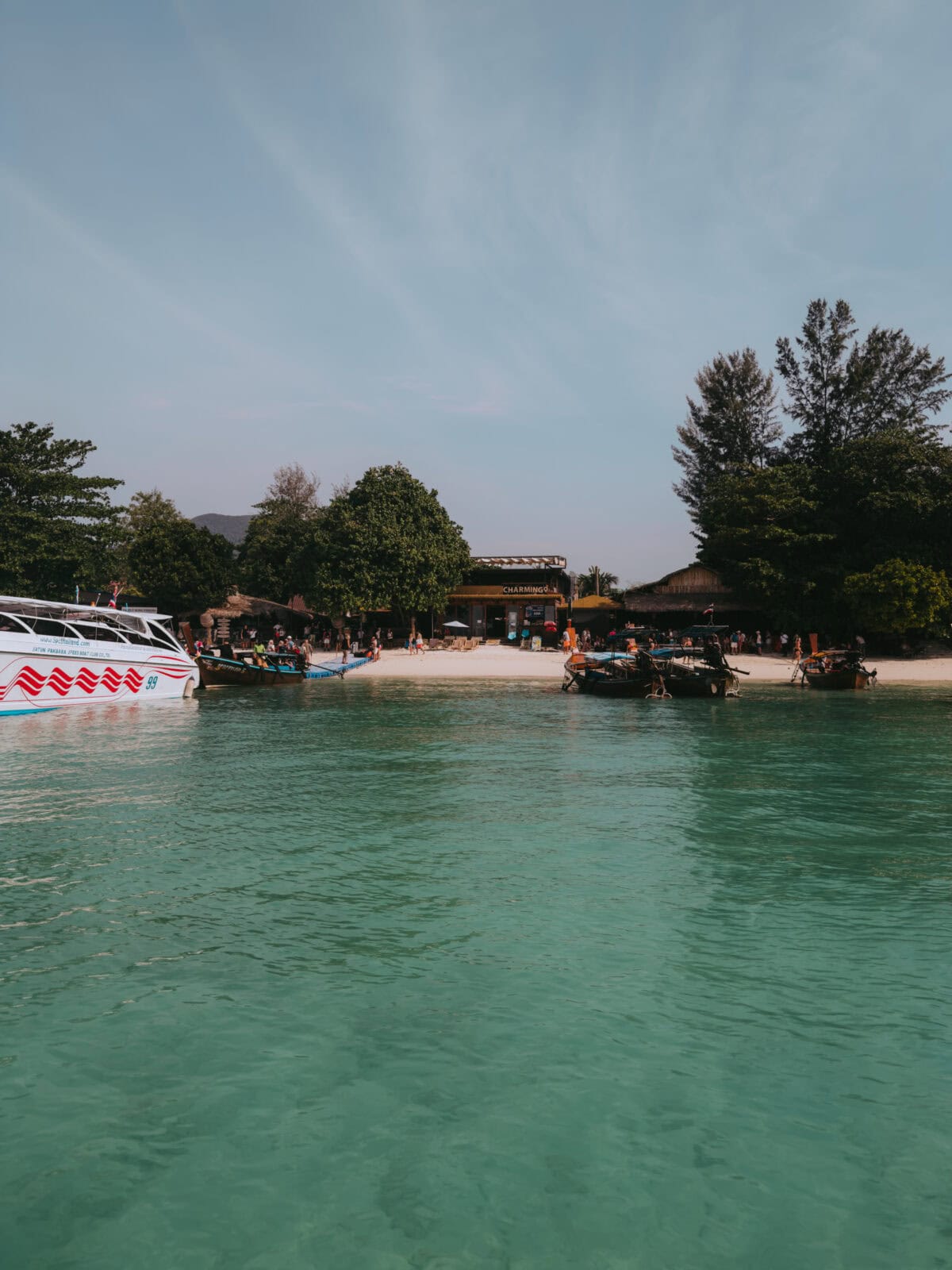
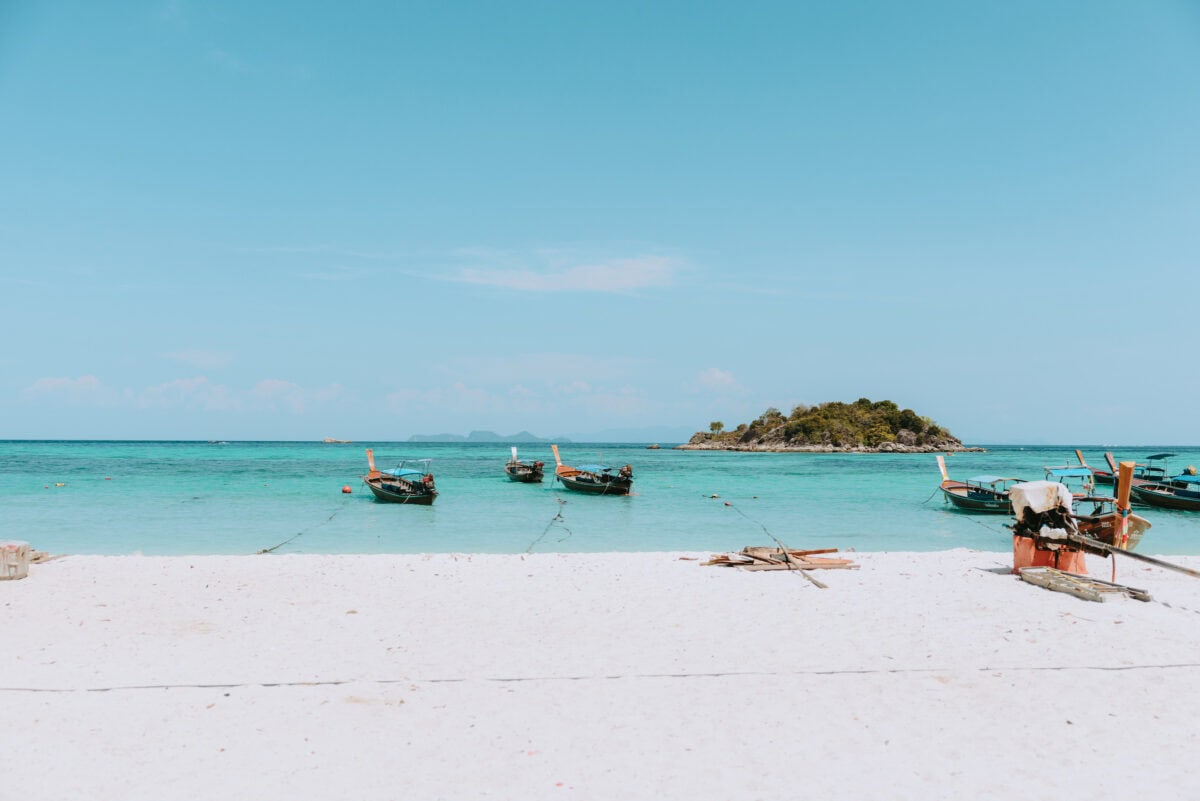
Even the arrival feels special. I took a ferry from Malaysia’s island Langkawi since Koh Lipe is so far south in Thailand it’s just a short distance from Malaysia. Like most small islands in the Andaman Sea, it lacks a proper port. Instead, a few hundred meters from one of Koh Lipe’s two main beaches, the anchor is dropped into the clear turquoise water, and passengers along with their luggage are transferred onto several small longtail boats.
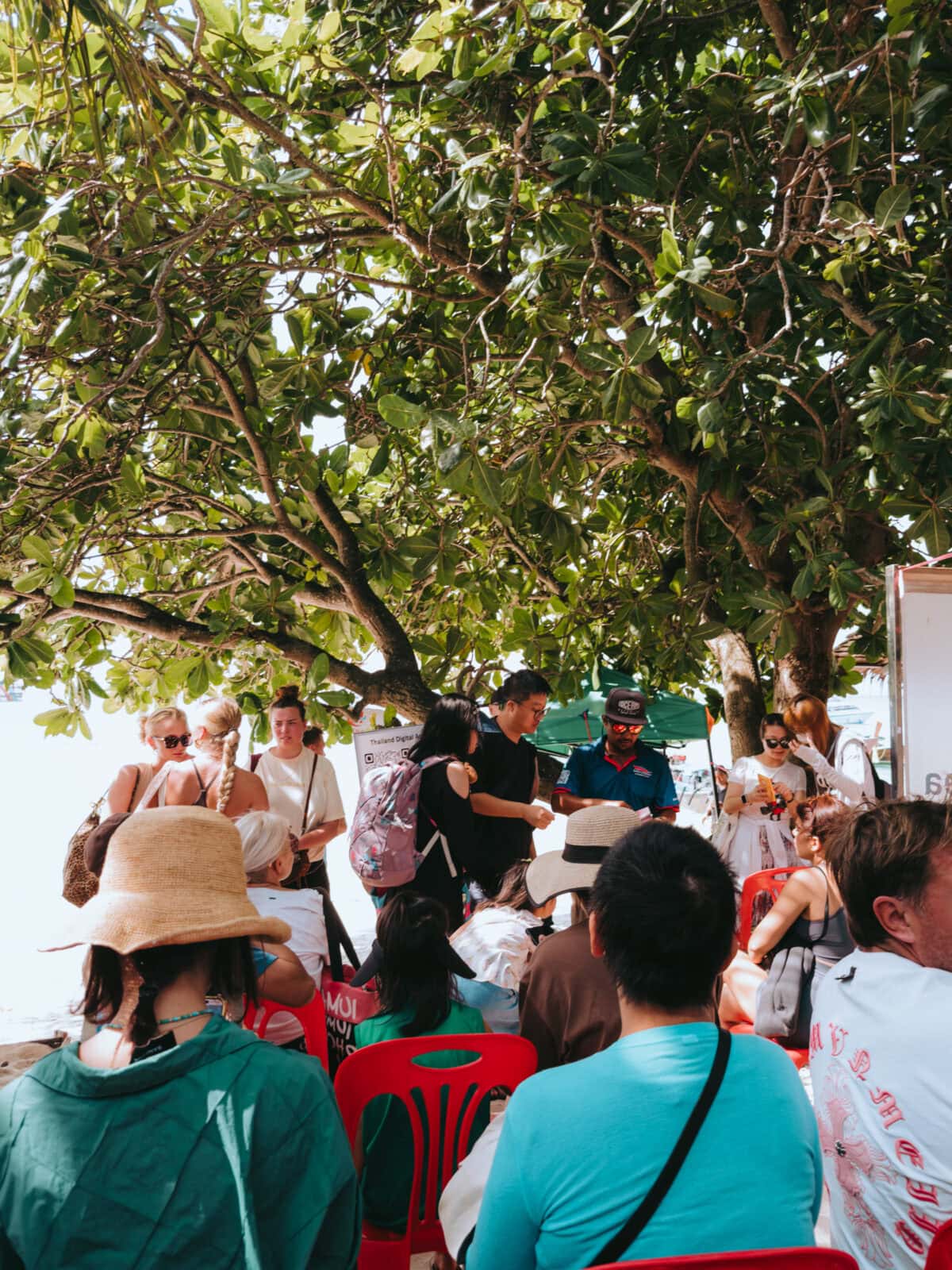
The entry formalities are completed directly on site. A small hut serves as a border control point for the Thai authorities. Everybody has to wait for their turn on plastic chairs neatly lined up in the sand; the passports had been collected earlier by the crew in Malaysia. Everything seems improvised, but as is so often the case in Thailand, everything runs like clockwork. And it won’t be the last time that I am amazed at how well this small island copes with the enormous rush of visitors during the high season in terms of organization and infrastructure.
Beaches on Koh Lipe
Pattaya Beach
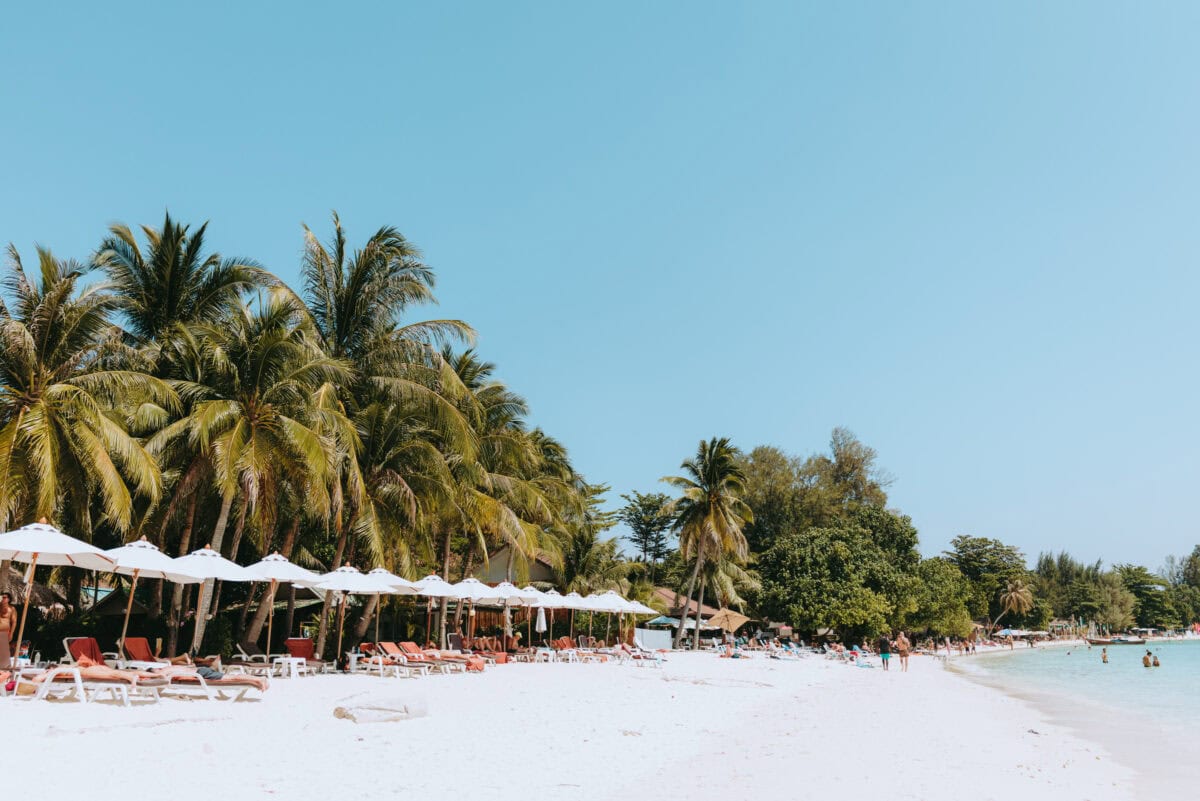
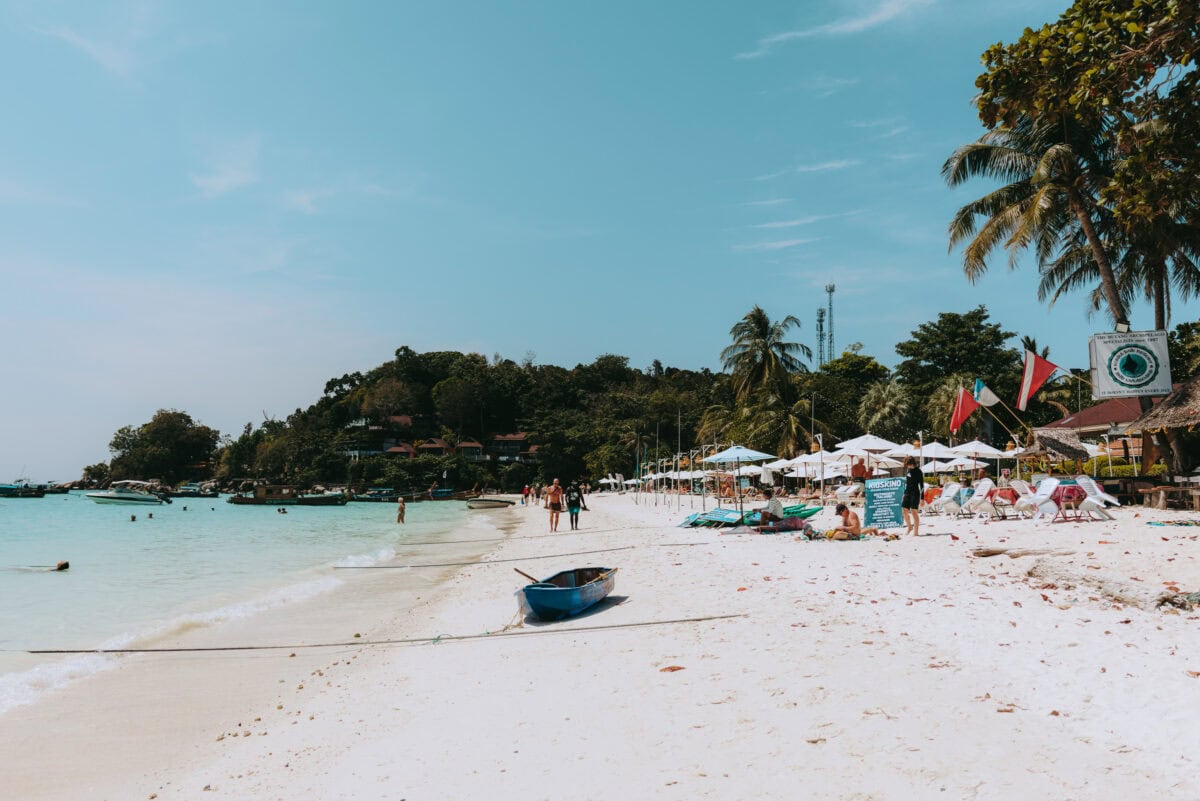
Koh Lipe is really very small; in principle, you can explore the entire island on foot. When you arrive, you’ll get to know one of the biggest beaches straight away: Pattaya Beach is the longest and liveliest beach on Koh Lipe. Most ferries dock here, longtail boats for excursions leave from here and resorts and beach bars are lined up side by side. Nevertheless, the water is crystal clear and the beach itself is beautiful.
Sunrise Beach
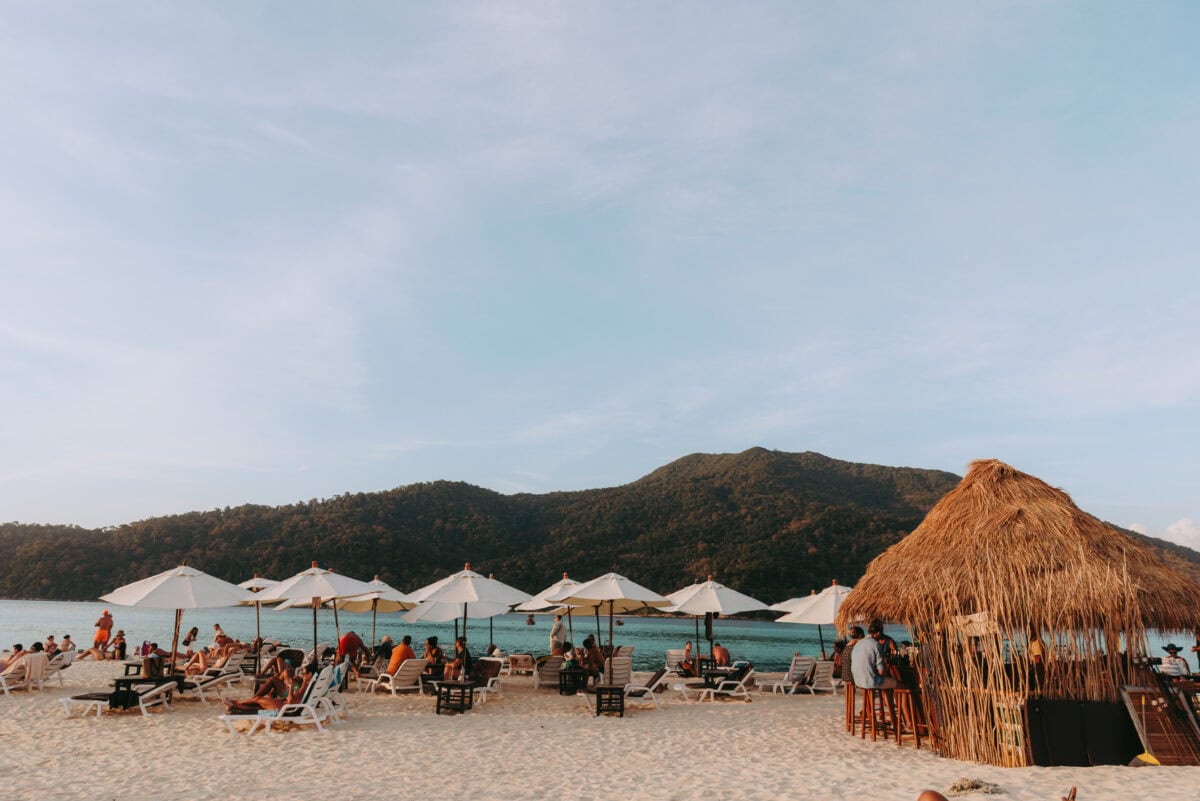
I liked Sunrise Beach a little more than Pattaya Beach: the atmosphere is relaxed and there aren’t quite as many longtail boats anchored off the beach. The water is clear and turquoise, while the sand is fine and nearly white—truly a dream beach. Here, you’ll find several laid-back beach bars and resorts, ranging from simple to luxurious.
It gets crowded here in the afternoon and most beachgoers move on to the northern tip, North Point Beach, towards sunset.
From Sunrise Beach, you can also take one of the many long-tail boat taxis to the opposite island of Ko Adang for around 200 THB per person each way.
Ko Adang is also part of the Tarutao National Park, but compared to Koh Lipe, it is basically undeveloped. Here you will find untouched nature, two waterfalls in the interior of the island and a black sand beach in the north of the island. Ko Adang is perfect for a day trip on your own, but you can also join a tour; these often visit several islands and snorkeling spots.
Sunset Beach is located on the west side of Koh Lipe and is the smallest of the three main beaches at around 200 m in length. There is significantly less infrastructure on site than on Pattaya Beach or Sunrise Beach. However, there are only a few bars open, especially in the late afternoon until after sunset.
From Walking Street, simply walk along the cross street. Depending on the starting point, you can walk there in about 10-15 minutes or take one of the many tuktuks (50 THB per person).
North Point Beach
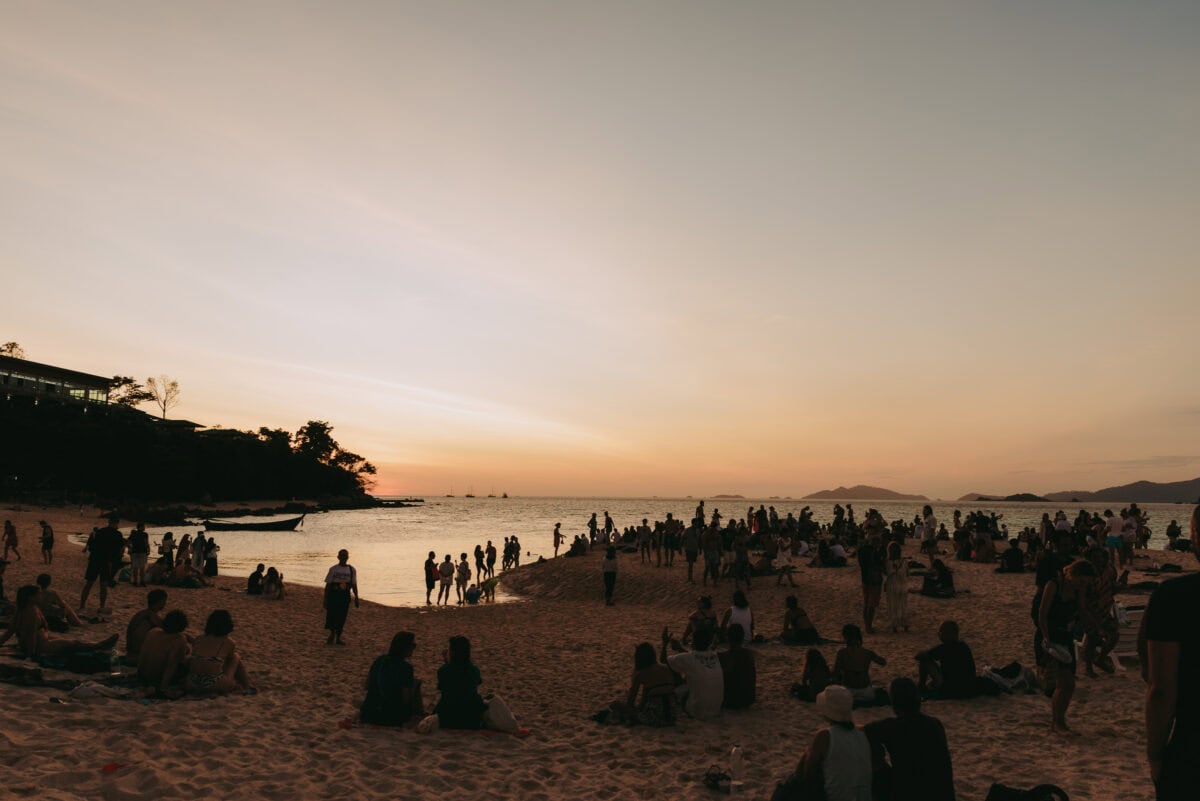
North Point Beach is located at the northern end of Sunrise Beach. This spot is best known for its sandbank, which is visible in different ways depending on the tide. From here, you also have a perfect view of the setting sun – and unfortunately, this sundowner spot is not an insider tip. You should definitely arrive early to secure a cozy spot.
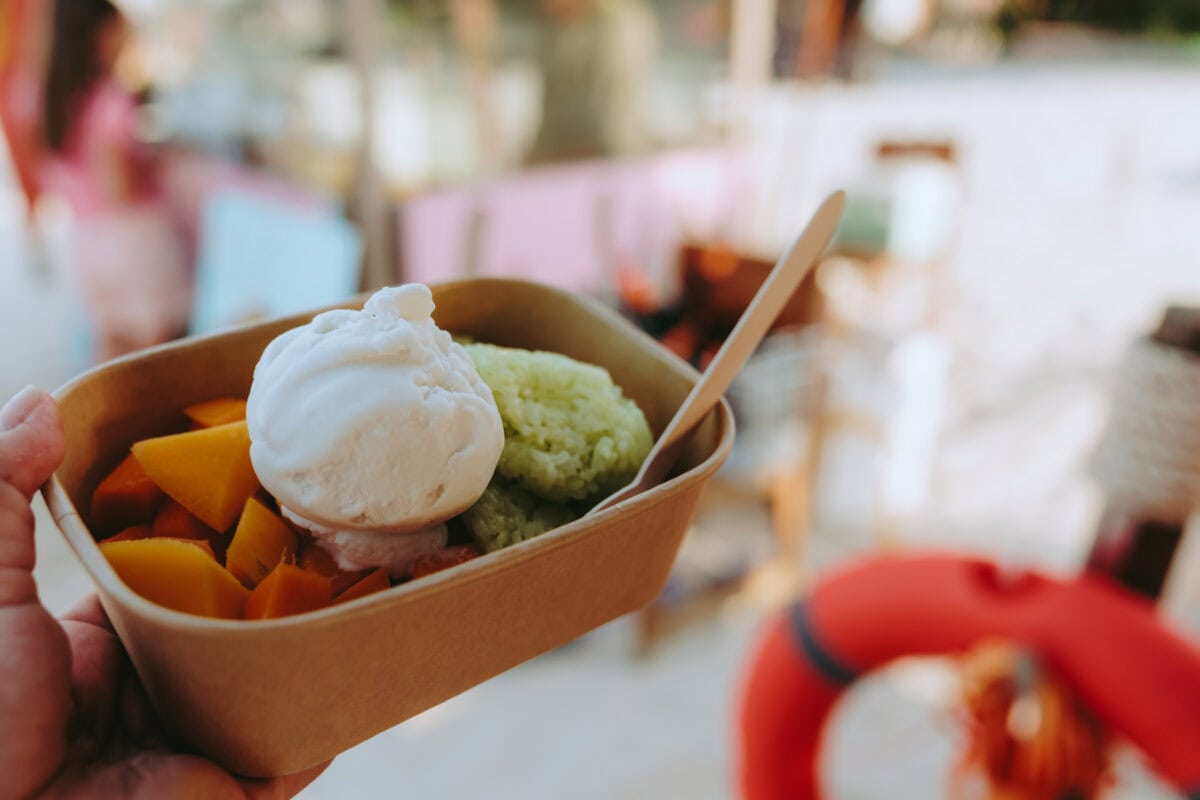
You can get delicious homemade coconut ice cream and refreshing drinks here at a small beach bar that’s part of the Bulow Casa Grand View Resort.
Walking Street
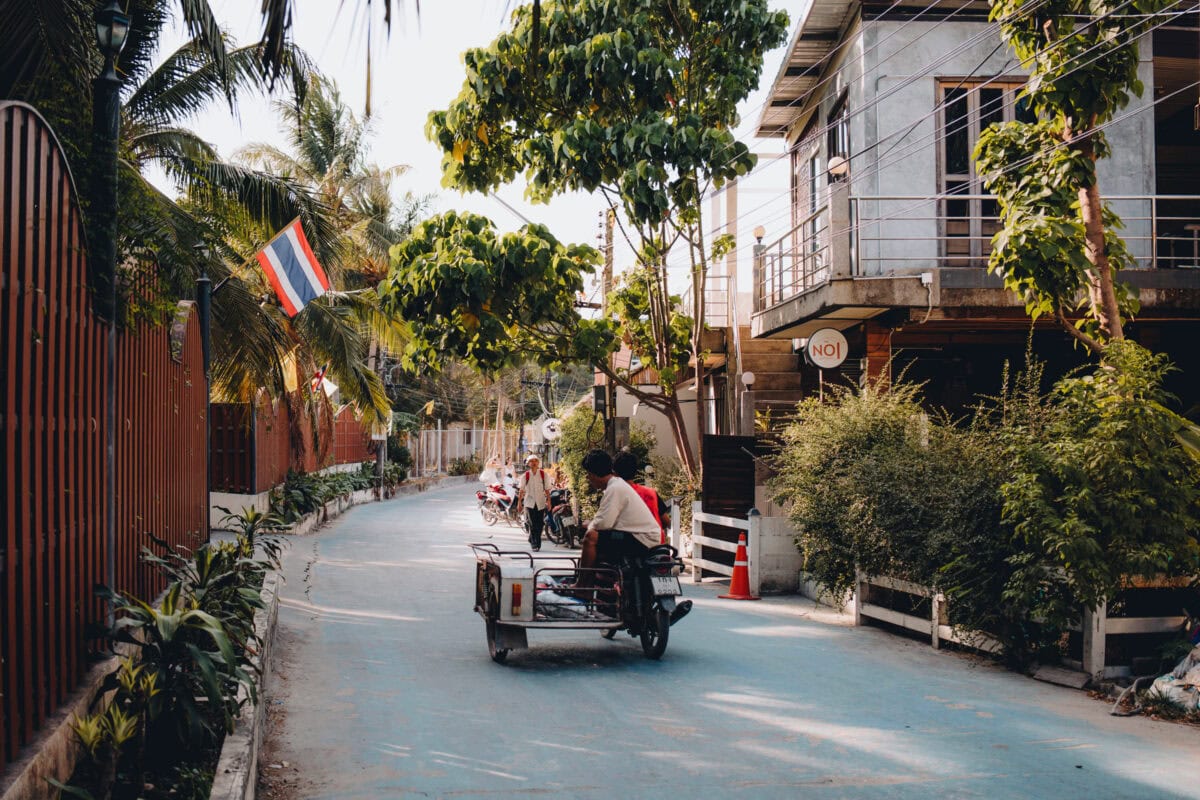
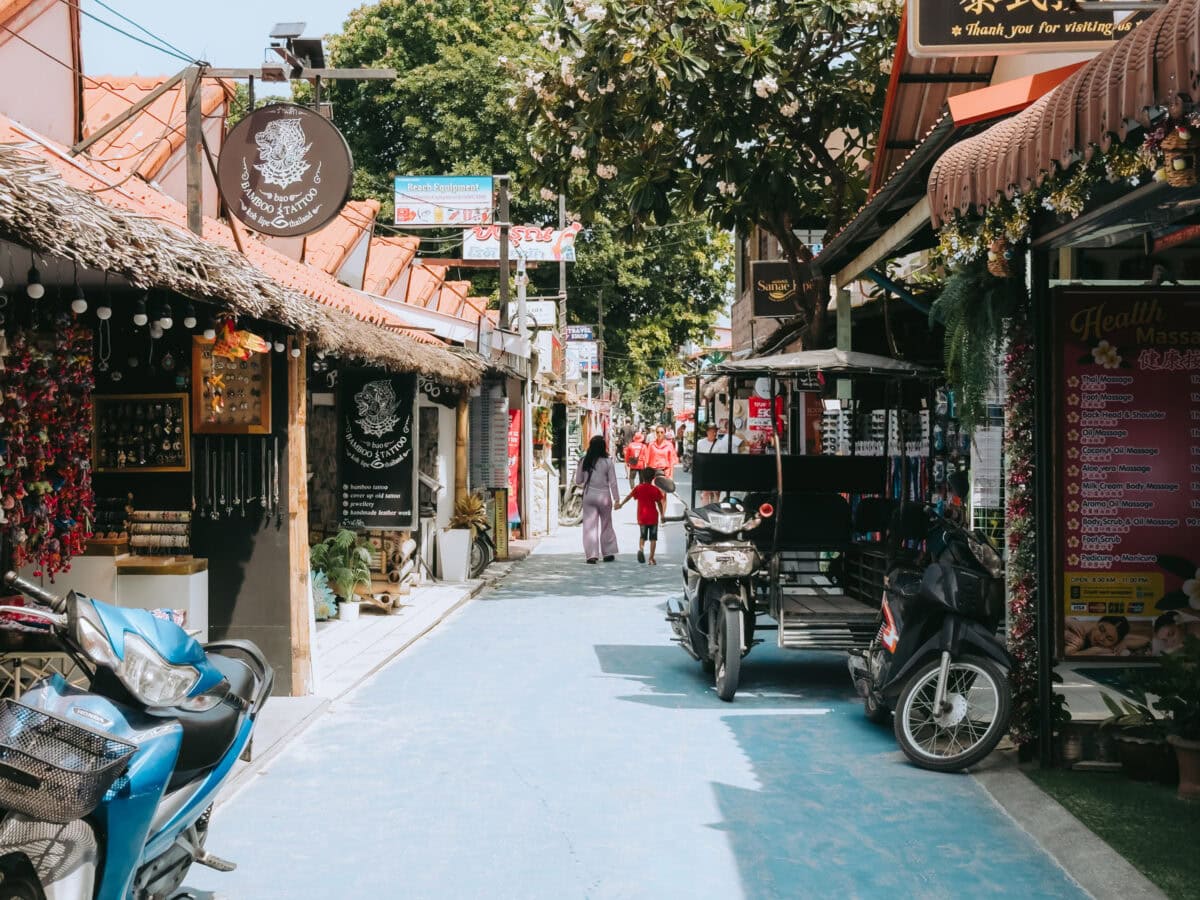
Walking Street is the heart of Koh Lipe and runs almost all the way across the island from Pattaya Beach to Sunrise Beach. Mainly a pedestrian zone, it spares you the hustle and bustle of approaching tuktuks and allows you to take a leisurely stroll through the stores.
Most stores offer tourist souvenirs or other essentials you might need during your stay, such as snorkeling gear, beachwear, and sunscreen. Several 7Eleven outlets are also available. Additionally, there are charming cafés and restaurants, with Walking Street bustling in the evenings.
Tip: For beachwear, I suggest Onda on Walking Street, where you can find ideal beach outfits. However, keep in mind that, as is common on Koh Lipe, prices tend to be higher here compared to other parts of Thailand.
Where To Eat & Drink in Koh Lipe
Koh Lipe has developed into a surprisingly diverse food destination in recent years. What sets the island apart from many other places in Thailand is the mix of local Thai cuisine and international influences, which is much more present here than elsewhere. While in Bangkok or Chiang Mai you often have to choose between classic street kitchens and upscale restaurants, on Koh Lipe everything is a little more compact and diverse at the same time.
You will find authentic Thai cuisine here, along with cafés serving really good coffee, Western breakfast options and even some fusion restaurants. This is mainly due to the many international visitors who have created a high demand over the years. At the same time, however, prices are significantly higher than in other parts of Thailand. A simple Pad Thai here can cost twice as much as on the mainland.
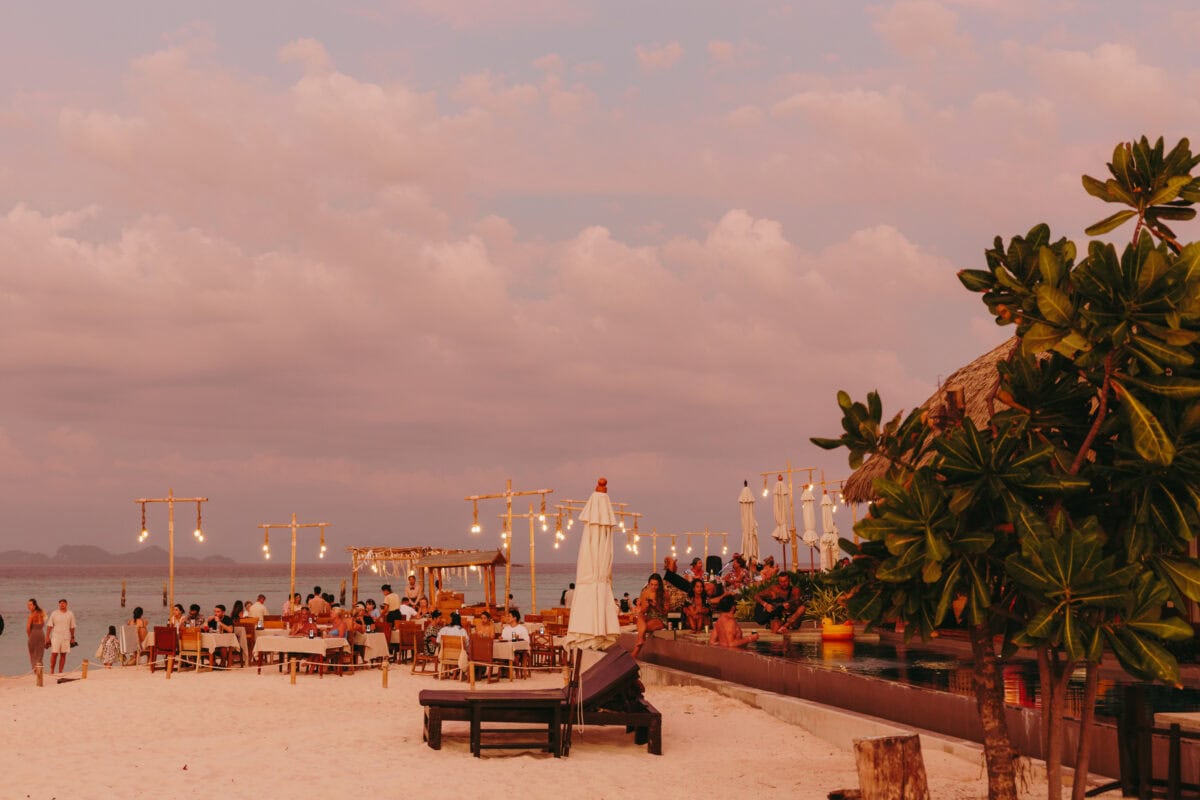
What sets Koh Lipe apart is its laid-back vibe, even in pricier venues. Many restaurants open directly onto the street or beach, and even upscale spots allow you to relax on the sand with an elegant table nearby. There are also some street food carts and simple eateries for quick bites. However, if you love street food, you might find Koh Lipe missing out—there are hardly any traditional, mobile street food stalls here.
Here are some of my favorites on Koh Lipe:
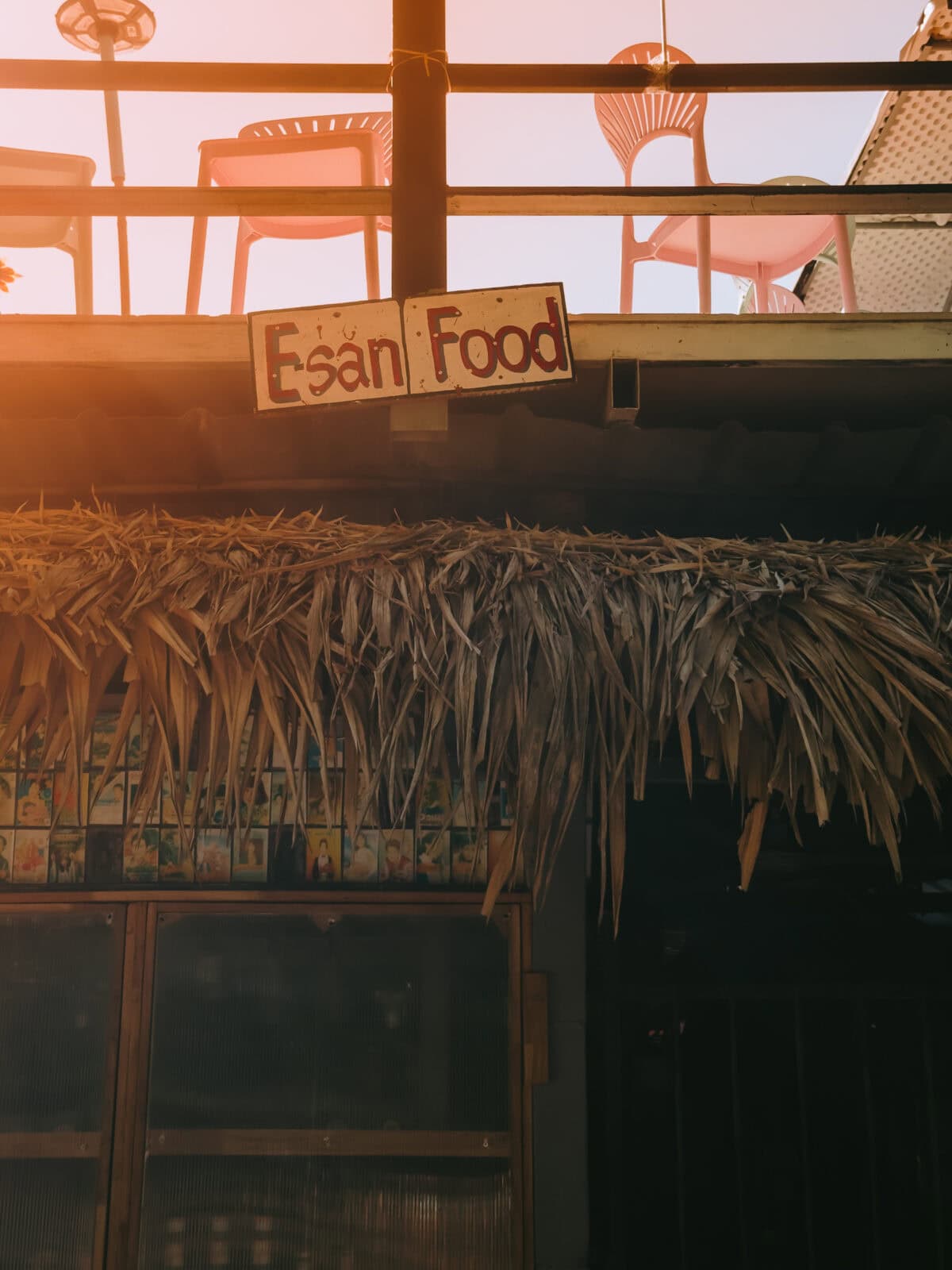
Ton Ji Esan Food
If you’ve been to Thailand before and are craving simple, delicious, and budget-friendly Thai food, Ton Ji Esan Food is perfect for you. It also offers traditional dishes from Isan in northern Thailand.
The real gem is the charming terrace on the little, hut-like building. Just climb up the slightly shaky, steep staircase, and end your relaxing day on the beach under the stunning starry sky of the Andaman Sea with delicious food. It’s truly a wonderful experience to enjoy such a magical setting!
Elephant
I was really impressed by Elephant on Walking Street. You won’t find typical Thai food here, there’s really good fusion cuisine, great drinks and an ambience that is just the right mix for Koh Lipe: relaxed, but still special. For me, one of the nicest addresses on the island, both during the day and in the evening. Definitely recommending this one!
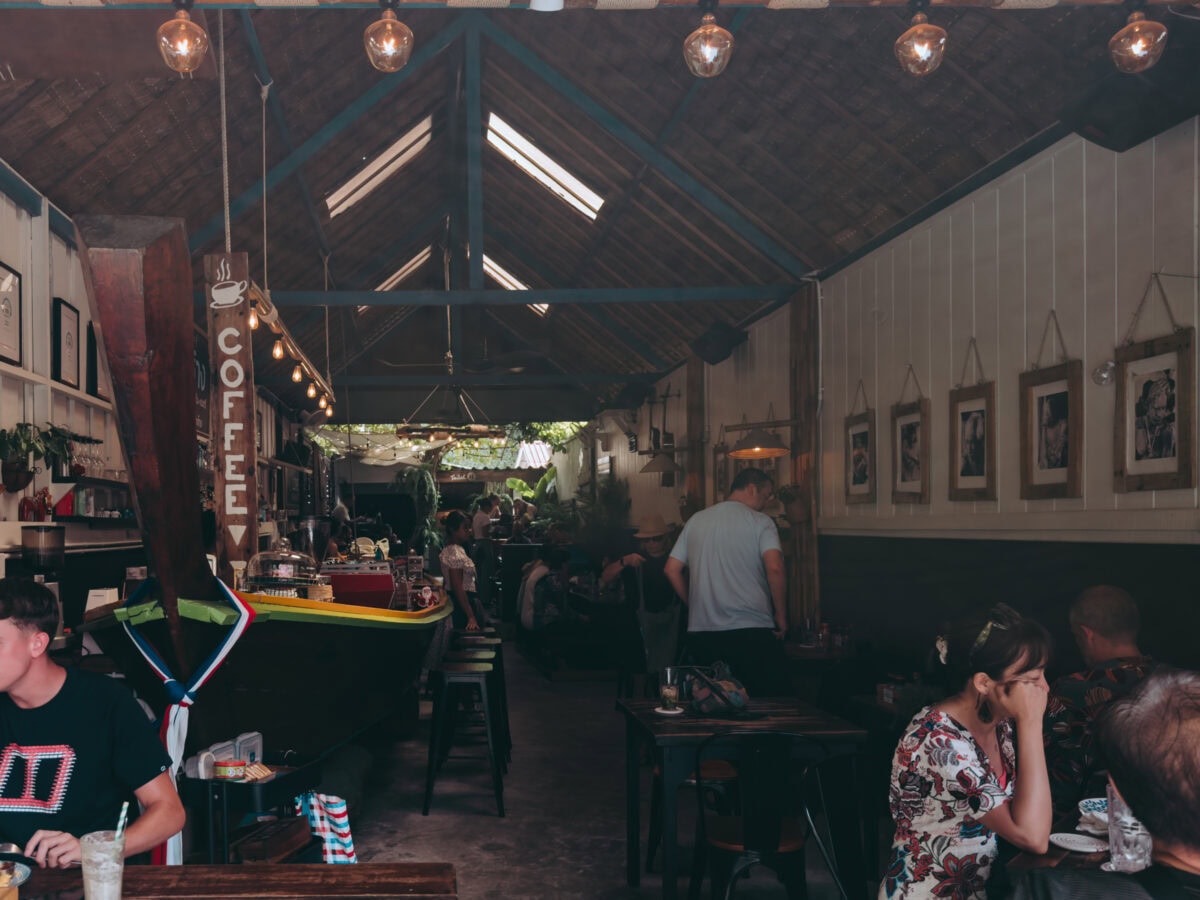
Mojo Café and Mojo Mini
Mojo Café and Mojo Mini are both part of The Reef. If you stay there, breakfast at Mojo Café is included. For that reason alone, staying at The Reef was well worth it.
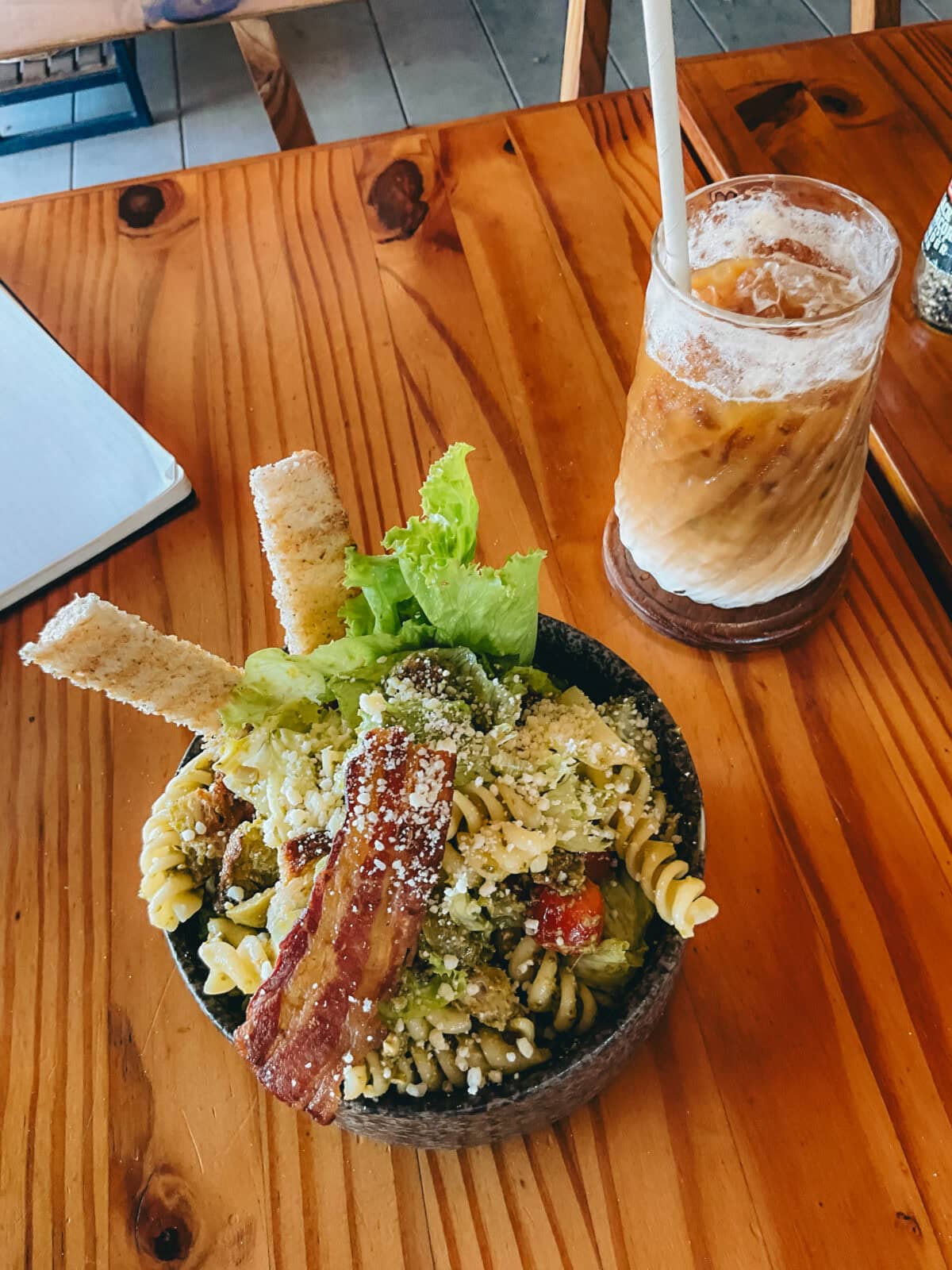
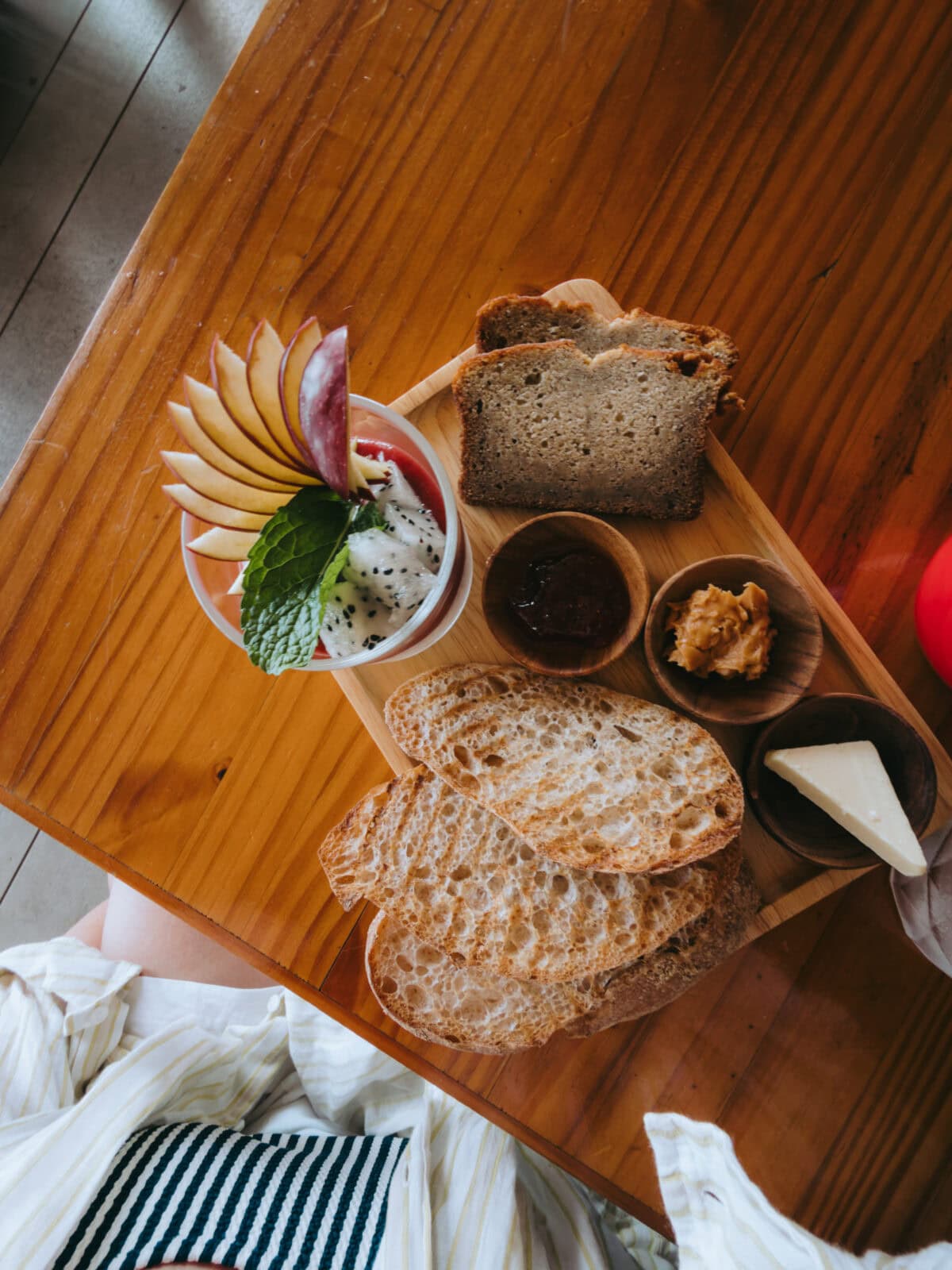
Every morning, you can choose between a specialty coffee and a breakfast dish (sandwiches, bowls, pancakes and more). If you, like me, prefer a breakfast experience that has flavor and atmosphere rather than dull, tasteless buffets, then this is the spot for you to enjoy a good coffee and a relaxed café setting to start your day.
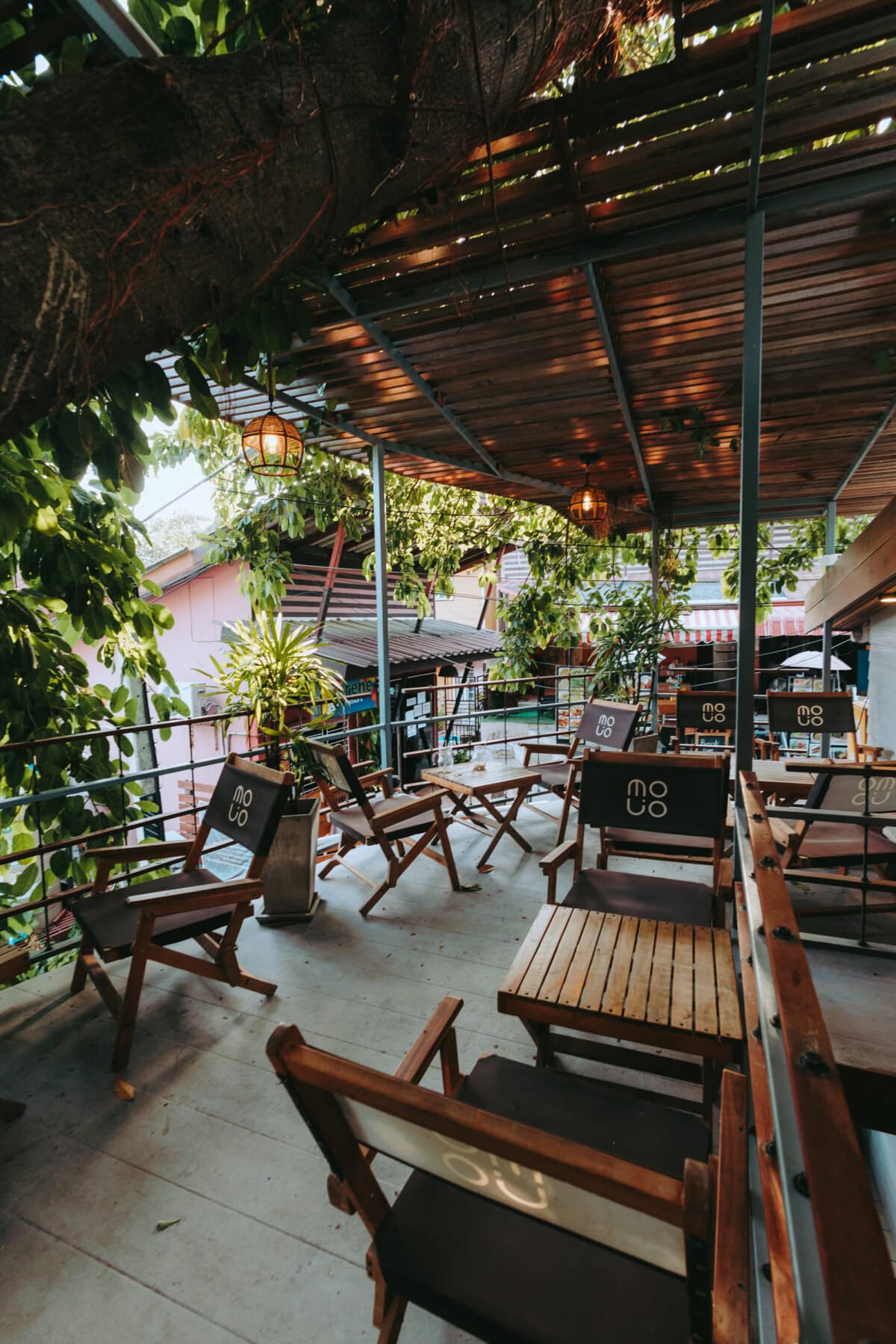
I also really enjoyed Mojo Mini on Walking Street. The small rooftop terrace is especially charming—a little like a tree house amidst the hustle and bustle, offering a view down onto the busy Walking Street.
Bulow Café
The Bulow Café is situated within the Bulow Casa Grand View Resort at the northern tip of Sunrise Beach, close to North Point. Its main appeal is undoubtedly its prime location: it sits directly on one of Koh Lipe’s most stunning beach sections, offering views of the brilliantly turquoise waters that Koh Lipe is famous for.
I can particularly recommend dinner at Bulow. A little more expensive, but well worth it: romantic vibe, great quality and attentive, warm service.
Café Lipe
Café Lipe is located on Pattaya Beach and is a classic on the island: not super fancy, but just right if you’re at the beach during the day. You can grab a bite to eat here or simply enjoy a cool drink in the shade on the otherwise tree-free Pattaya Beach at lunchtime. Close to Walking Street.
Bloom
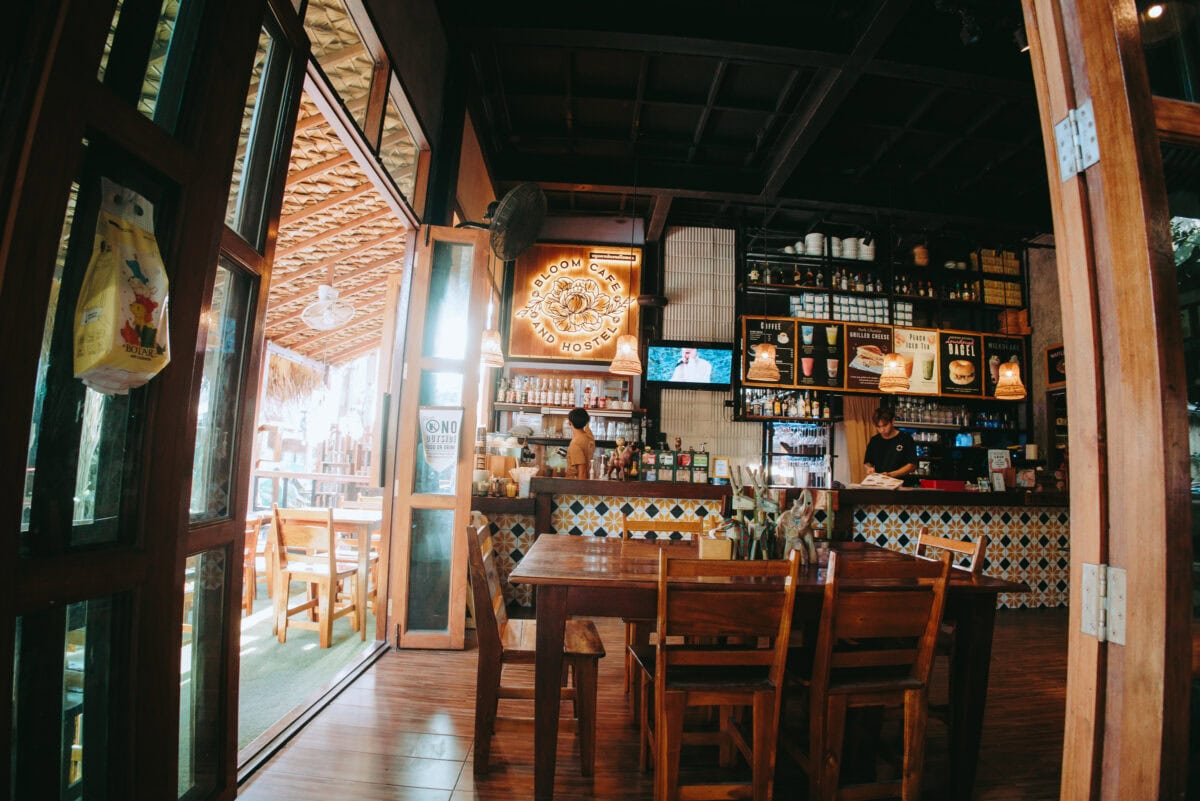
Bloom is centrally located on Walking Street; you can’t miss it. You’ll find typical café food and a really nice atmosphere here. That said, I liked it better in other locations, though that may just be my personal impression. Just give it a try. Incidentally, the Bloom Hostel is also part of Bloom.
If you’re planning to visit Koh Lipe during the peak season (December to March), it’s essential to book your accommodation well in advance. The island often reaches full capacity, and last-minute options can be extremely expensive. Additionally, Koh Lipe tends to become crowded again in mid-April during the traditional Thai New Year festival, Songkran.
If you hesitate because of the prices and prefer to wait for a bargain, I would strongly advise against it. Koh Lipe is quite pricey compared to other popular destinations in Thailand, and it only becomes more expensive over time.
Was die Auswahl an Resorts angeht, wirst du mittlerweile besonders im Hochpreissegment auf Koh Lipe fündig. Sehr gut gefallen hat mir das Bulow Casa Grand View Resort, allerdings finden es hier auch in der Hochsaison jeden Abend Heerscharen anderer Touristen schön und versammeln sich vor dem Resort für den allabendlichen Sundowner.
If staying at the beachfront luxury resorts isn’t within your budget, you can still enjoy their pool and beach amenities. Some resorts, such as the Irene Resort*, also offer day passes.
This is particularly useful if you would rather use comfortable beach loungers than simply lie on a beach towel. As is often the case in Thailand, you cannot rent individual beach loungers or parasols on the beaches of Koh Lipe.
For the mid-price range, I recommend the Sita Beach Resort* if you want to stay at a resort with beach access. The benefit of a beach resort is that amenities like separate beach towels, sun loungers, and parasols are usually provided.
However, the Sita Beach Resort was not my first choice. Due to my spontaneous travel plans, I just had to take what was available. It has some minor flaws; the breakfast isn’t excellent, and there’s likely a small sewage issue—there was an unpleasant smell near the pond in the lower area of the resort.
Koh Lipe is a tiny island lacking a proper sewage system. Honestly, I was surprised that garbage and sewage aren’t more apparent, given the high number of tourists.
However, I had a garden bungalow in the upper part. As the Sita Beach Resort is located on a very steep slope, the walk back up from the beach is a little more challenging. But it’s super quiet up there, and just a few meters away is an access to the road that leads to Walking Street and Sunset Beach.
In general, you will find cheaper accommodation in the center of the island. However, you are more likely to experience night-time noise (e.g. from Walking Street) and you will also have to put up with a longer walk to the nearest beach.
Quick-Check Where to Stay in Koh Lipe?
Sunset Beach The beach itself is less beautiful, but still a nice spot if you are looking for accommodation near the sea.
Sunrise Beach Quieter in the evening, but the most beautiful beach on the island. Lots of accommodation in various price categories.
North Point If a breathtaking sunset spot on your doorstep in the evening is more important to you than proximity to the Walking Street nightlife district. There are also some great, luxurious resorts here.
Walking Street Can get a bit noisy in the evening, but you’ll find more budget-friendly accommodation here
Pattaya Beach Ferries and speedboats arrive here. Most practical if you are only staying one or two nights on Koh Lipe – no dragging around suitcases or backpacks across the island. Central location.
Tip about Walking Street: If you prefer a quiet night, check the map or the reviews to see how close your accommodation really is to Walking Street. Sometimes it can get louder there in the evening and there are some accommodations on the island that are really quiet in the evening.
I spent a few nights at The Reef. The volume level was a little higher at times during the night. However, the studio was completely open to the countryside, so I didn’t find it too bad.
The island is really super small, so you can easily reach most places on foot. However, if you are traveling to and from the island with luggage or don’t want to walk in the dark at night to a more distant accommodation, there are tuktuks available everywhere. There’s a fixed price: 50 THB per person, no matter where you are going.
If you want to take a trip to the neighboring island of Ko Adang on your own, you can take a taxi boat from both Pattaya Beach and Sunset Beach. Cost: approx. 200 THB per person.
Excursions from Koh Lipe
Koh Lipe offers a variety of tours, including snorkeling, diving, deep-sea fishing, and sunset barbecue boat tour at sunset. If you want to see clownfish or vibrant coral up close, you should definitely book a tour!
Koh Lipe is situated in southern Thailand. Travel time to the island varies depending on your route through the country. Like most tourist spots in Thailand, the infrastructure is well-developed: you can conveniently reach Koh Lipe using a combination of minivans, ferries, or speedboats, though it might sometimes take extra time.
There are basically three ways to get to Koh Lipe:
By Speedboat from Phuket, Krabi, Koh Lanta or Other Islands
This is usually the most expensive option. During the high season, most shipping companies operate the following route:
Koh Lanta acts as a hub, so you usually have to change boats here.
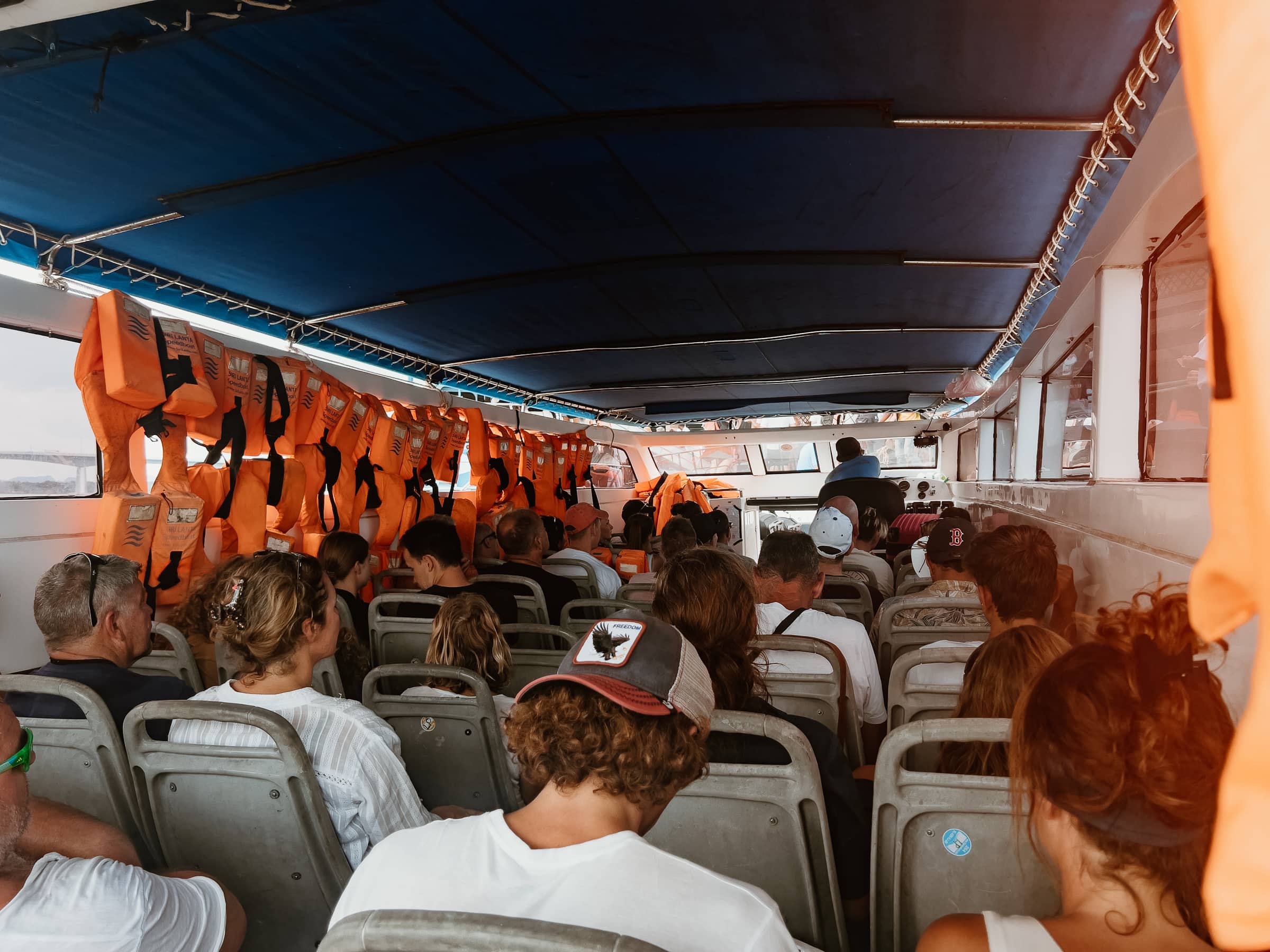
Traveling by speedboat often seems to be the quickest option. However, please note that a speedboat ride is not particularly comfortable. It is really noisy on board and the boats take every wave in their stride. So if you get seasick easily, prepare yourself well (e.g. with motion sickness tablets). Earplugs or good headphones are also a good idea.
Traveling from Koh Lanta to Koh Lipe typically takes about three hours with stops along the route. I rarely get seasick, but even I find three hours on a speedboat a bit much. I recommend splitting longer journeys, as all the islands en route are worth exploring and deserve at least an overnight stay.
Pak Bara serves as the primary port on the Thai mainland for traveling to Koh Lipe. Multiple boats leave here daily, with crossings lasting approximately 1.5 to 2 hours.
Pak Bara can be reached by minivan or bus from larger cities such as Hat Yai, Trang or Krabi; all three cities have an airport with direct flights to Bangkok. You can book the ticket for the minivan together with the boat ticket; simply search for the corresponding route, e.g. KohLipe– Hat Yai or Koh Lipe – Trang.
If you are traveling from Malaysia or planning a detour to the island of Langkawi, there are also speedboats and a ferry connection to Koh Lipe from there. This route is particularly convenient if you’re doing a larger Southeast Asia tour anyway, but you should also consider it otherwise.
First of all, you’ll find the ferry ride to be much more enjoyable than taking the speedboat. Plus, it’s easier to fit Langkawi into your travel plans compared to the somewhat remote Pak Bara. Langkawi offers two ferry terminals: Kuah and Telaga, making your journey even more convenient.
Telaga is just a stone’s throw away from Langkawi International Airport – depending on the connection, you can continue your journey on the same day. This saves you long journeys by minivan. Entering and leaving Malaysia is also quick and easy.
However, it might be worth lingering on the island a bit longer. While Langkawi doesn’t boast turquoise waters like Koh Lipe, its beaches are still worth visiting. Food, drinks, and accommodations tend to be more affordable than in Koh Lipe, and Malaysia remains an exciting destination overall.
The best time to visit Koh Lipe is clearly the dry season (November to April). This is when the Andaman Sea is generally calmer, the water is clearer and the speedboats are much more reliable than during the rainy season. If you come to Koh Lipe mainly for the beaches, snorkeling trips and island hopping, I would prefer these months.
The transition months (November/early December and March/April) are recommended if you prefer to avoid the crowds on the island. You are more likely to encounter good weather, but it won’t be as overwhelmingly crowded or costly as during Christmas, New Year’s Eve, and the European winter holidays.
December to February are often ideal in terms of weather, but at the same time they are also peak season: It’s a good idea to book your accommodation early, so you can avoid the surprisingly high prices that can come up on Koh Lipe, which are much steeper than elsewhere in Thailand.
May through October is the rainy or low season. This does not mean it rains every day, but showers can be heavy, the sea can be rougher, and there are fewer boats. Some accommodations, restaurants, and tour operators are completely closed or open only to a limited extent during this time.
If you want to include Koh Lipe in a larger Thailand itinerary, I would recommend choosing the low season only if you are flexible with timing and don’t need perfect beach days. You should also be prepared for rough rides on the speedboat or the ferry to or from Langkawi.
Is a Trip to Koh Lipe Worth It?
Honestly, if you’re seeking a picture-perfect island paradise to truly unwind, it’s best to keep your expectations realistic. Koh Lipe might be that small island where you can feel like Robinson Crusoe and simply relax; with its turquoise waters and white beaches, Koh Lipe ranks among Thailand’s most stunning islands.
However, tourism has developed a lot in recent years. The island is bursting at the seams and it’s a miracle that so many visitors find space on Koh Lipe in the high season. Sometimes you really have to search for the authentic Koh Lipe.
The island is quite beautiful and fairly well-maintained despite the crowds. Yes, you can discover some of Thailand’s most stunning beaches. However, during high season, accommodation prices soar astronomically, and everything seems tailored to tourists who prefer the comfort of familiar amenities even while on vacation.
Koh Lipe doesn’t really feel like the true Thailand. Still, I enjoyed it (despite generally not liking touristy spots) and ended up staying longer than I had planned.
I was also struck by how noisy the beaches are during the day. Longtail boats with rattling engines continuously cruise the coast; tourists are dropped off or picked up, while others go snorkeling or visit Ko Adang. Speedboats and ferries come and go, making the beaches resemble a central station in a big city. Sometimes it makes it hard to relax at the beach.
My conclusion: Koh Lipe is unquestionably a highlight of any trip to Thailand. However, I suggest also exploring other islands or the mainland. For inspiration on more beautiful and unique destinations in Thailand, check out the blog: All articles about Thailand.
Tip: If you are looking for relaxation and a secluded island feeling, I recommend adding Koh Ngai,Koh Jum, Ko Siboya or nearby Koh Bulone to your itinerary. You won’t find much peace and quiet on Koh Lipe, at least in high season. At the same time, it’s not a great party island either – for that you should head to Koh Phangan for the Full Moon Party or to some place on Phuket, Koh Samui or the mainland.
Ko Siboya remains a hidden gem among the Thai islands — check out my blog post!
Are you looking for long dream beaches and turquoise blue water in Thailand? Then you should not miss this island: Koh Kradan is a true paradise! In this article I will tell you how to get to Koh Kradan and what you can experience there!
Koh Kradan, like Koh Mook, is part of the Had Chao Mai National Park in the Andaman Sea and is a mere two and a half square kilometers in size. The island is located only 10 kilometers as the crow flies from the mainland in the south of Thailand and is also a popular destination for locals.
Koh Kradan: One of the most beautiful beaches in the world
You read that right: Koh Kradan is home to one of the most beautiful beaches in the world! In any case, in 2016, the British daily newspaper “The Guardian” voted Koh Kradan one of the top 10 most beautiful beaches in the world – and this has really raised Koh Kradan’s profile.
By the way, Koh Kradan is also known for its underwater weddings on Valentine’s Day, for which people willing to get married travel from all over Thailand.
Paradise Beach on Koh Kradan.
Beaches on Koh Kradan
The famous Paradise Beach is located on the east coast of the island; this is also where most of the resorts are located. Here you can snorkel directly and explore the underwater world.
You will also find other good snorkeling opportunities in the southeast of the island. Just walk south along Paradise Beach, past the ferry dock and the national park ranger base: Ao Nieng Beach doesn’t have as many tour boats and resorts as Paradise Beach.
A jungle path leads to Sunset Beach through the middle of the island to the west coast. It is said that you can experience a great sunset here. Unfortunately, the beach itself is a bit littered. Along the way, you’ll also pass Paradise Lost Bungalows*, the island’s only low-budget resort.
On Koh Kradan you will find only a handful of accommodations. This is also reflected in the prices: in general, everything here is much more expensive than in other vacation regions of Thailand and the price-performance ratio for accommodation is also rather poor.
Koh Kradan Beach Resort
If you are looking for something solid, I can recommend Koh Kradan Beach Resort . The bungalows have mostly beach or sea view, solidly built and for those who need it, also equipped with air conditioning.
The Koh Kradan Beach Resort is located directly on Paradise Beach in Koh Kradan.
Unfortunately, the associated restaurant is not special; the included breakfast is Western-oriented and rather uncharitable. But these are fundamental compromises that you have to make on the very touristy island of Koh Kradan.
Bungalows with sea view: At Koh Kradan Beach Resort, you fall asleep to the gentle sound of the sea.
Kalume’ Eco Boutique Resort
Very popular is Kalume’ Eco Boutique Resort*, a small resort run by Italians. The resort also has an Italian restaurant that offers really good Italian cuisine, from pizza to homemade pasta.
Whether that really has to be on a remote little island in Thailand is probably a matter of taste. Anyway, given the otherwise lousy food situation on the island (most restaurants are not special), it’s a good alternative. The facility is very beautiful, and certainly you have a good time here if you are one of the friends of the house, whose memories adorn the very nicely decorated bar. Unfortunately, everyone else has a bit of a hard time and has to fight for the favor of the service.
Koh Kradan is truly beautiful, but unfortunately it’s no longer a hidden gem. Sometimes the atmosphere at the resort gets a little out of hand, and surrounded by so many Western tourists, you can sometimes forget that you’re actually in Thailand. If you love Koh Samui or similar places in Thailand, you’ll still enjoy it; for others, one or two nights will be enough. (I’m in the latter group.)
However, there is another island among the Trang Islands that is very similar to Koh Kradan and where you can spend a few relaxing days.
Koh Ngai is also a small island paradise: Car- and scooter-free, quiet and perfect for snorkeling and relaxing.
Tip: You will also find beautiful beaches on Koh Ngai.
If you don’t have much time and would prefer to choose an island, I would recommend Koh Ngai. Koh Ngai is somewhat less visited by day trippers than Koh Kradan and is therefore quieter.
In addition, there is a really great boutique accommodation here, the Coco Cottage*, which I liked much better than the similar Kalumé Beach Resort on Koh Kradan. Since there isn’t really much to do on either island, you do spend a fair amount of time in and around your resort, so it’s an advantage to find something pretty right away.
Koh Ngai: The alternative to Koh Kradan
Journey to Koh Kradan
The nearest port on the mainland is Pak Meng Pier. From here boats depart regularly to Koh Kradan. The trip takes about 45 minutes.
In the high season from November to April, Koh Kradan is also on the speedboat route of all the major ferry operators, which connects many islands in the Andaman Sea from Phuket via Koh Lanta down to Koh Lipe. The speedboats are often very crowded, noisy and relatively expensive, but also a good way to hop from island to island.
As on many small islands, you should have some cash with you. Credit cards are often accepted only with difficulty or not at all. ATMs and the ubiquitous 7Eleven stores in Thailand are not to be found here. Some resorts have small stores where you can stock up on necessities. But it’s best if you bring everything with you.
In any case, Koh Kradan will suit you well if you long for relaxation and tranquility!
Useful are:
Mosquito repellent with DEET (you live here in the middle of nature, so to speak, with correspondingly many little animals), alternatively natural means such as citronella oil
own snorkeling equipment (depending on the accommodation you can borrow goggles and snorkel for free, but own is of course more comfortable)
Sunscreen with a high sun protection factor (look for a coral-friendly product)
a good book (here you’ll definitely have the leisure to finally start that one book you’ve always wanted to read!)
Are you looking for a relaxed island in Thailand with long beaches and chilled village life? Koh Jum (or Ko Jum, sometimes also called Ko Pu) is located south of the provincial capital of Krabi and could be the perfect island for you! Find out what you can do on Koh Jum in this article.
➜ Quick tip: Where to stay on Koh Jum? On Koh Jum, you will mainly find small bungalow resorts. Perfect for individual travelers if you want to fully enjoy island life with the great nature! Here you’ll find the best places to stay on Koh Jum
Relaxed island life: There are almost no cars on Koh Jum.
Koh Jum: A backpackers’ island?
Originally, it was classic backpackers who found their way to Koh Jum. Tourism was not particularly developed, amenities such as a developed electricity network did not exist and accommodation was limited to a few simple bungalows.
Those days are long gone; even the mainstream has discovered Koh Jum—and yet the island’s simple backpacker charm has been preserved. The former gravel road, which serves as the main thoroughfare across the island, has now been paved. The bungalow resorts are a bit larger and more comfortable, but you can still experience an authentic island vibe here. The atmosphere is generally very laid-back, and the people are exceptionally warm and friendly.
A bungalow in the green: no problem on Koh Jum.
Beaches on Koh Jum
If you love beaches as much as I do, you’ll get your money’s worth on Koh Jum. After my stay on the neighboring island of Ko Siboya, which I otherwise liked but doesn’t have particularly nice beaches, I was in heaven on Koh Jum. The Golden Pearl Beach, for example, is several kilometers long and partly deserted!
Golden Pearl Beach on Koh Jum
All beaches are located on the west coast of the island and therefore offer the most fantastic sunsets over the sea overlooking Koh Phi Phi.
At first glance, you might think that Koh Jum is a charming, yet somewhat sleepy island that doesn’t have any special hotspots. And yet I discovered one or two highlights that absolutely thrilled me!
Luboa Café
Formerly located in the village, the Luboa Café has since moved a bit further out into the countryside. The entrance is right on the street, but once you walk through the large wooden gate, you’ll find yourself in the middle of a jungle paradise! The Luboa Café serves the best coffee and an absolute rarity—freshly baked rolls made in-house every morning! So if you’re ever in the mood for a more Western-style breakfast, this is the place to be. But be warned: the rolls are very popular and sell out quickly. It’s worth arriving early.
If you can’t shake the jungle vibe with all the plants and butterflies buzzing around, you can also stay overnight on the premises (and then secure your rolls each morning) – owner Frank and his wife have tastefully built a small, sugary Tiny House in the garden! Definitely an exceptional accommodation!
Would you like to fish for your own dinner? That’s no problem at Mr. Boy: you can catch your squid from the pier on which the location is located and then have it freshly caught and prepared at Mr. Boy. I’m not so keen on squid and I also have my problems with fishing.
Absolute highlight: The atmospheric café of Mr. Boy on Koh Jum.
But the extraordinary vibe at Mr. Boy makes up for all that: the café on the wooden pier is a conglomeration of art gallery, restaurant, organic garden and hostel! Like everywhere else on Koh Jum, the atmosphere is absolutely chilled and the view of the calm water and the surrounding karst rocks does the rest.
From Mr. Boy Café you have a great view over the water.
Koh Jum: Relaxed evenings with panoramic view
If you are looking for excessive raves on the beach, the nightlife on Koh Jum will rather disappoint you. But with the Rock Bar at the end of Golden Pearl Beach, there is another extraordinary location on the island that will provide you with unforgettable evenings.
Quite hidden: The adventurous way to the Rock Bar on Koh Jum. Creatively designed: The Rock Bar is made of washed up driftwood.
Thailand is such a great destination! Click through my Thailand articles and get even more inspiration for your next trip!
On the one hand you can enjoy the free view of the most impressive sunsets, on the other hand the hidden spot between the rocks is unique. A cosy bar has been created from driftwood on several levels, where you’ll feel like you’re in a huge, cozy nest. The one or other cocktail in addition – and the vacation feeling is perfect!
Pure village life on Ko Jum
There are three villages on Koh Jum: Ban Ko Pu in the north, Ban Ting Rai in the middle and Ban Koh Jum in the south of the island. Koh Jum has a total of only 1000 inhabitants, the villages are correspondingly small. You won’t find big stores here, even ATMs are not available.
Life is simple, the people are all the more cordial and you quickly get into conversation, even if there are sometimes language barriers. Once a cab driver on his scooter overtook me, waved wildly and then almost slowed me down – only to show me the huge group of monkeys on the other side of the road, which was gyrating up and down the tree. And which, admittedly, were really cute. As a city kid who knows all the tricks of the trade, I immediately suspected some kind of scam, but it was actually just pure niceness.
Just like on Ko Siboya, locals wave to you on the street, ask where you’re from or are simply well-disposed. This also makes tourist life relatively carefree. In any case, I have always felt somehow in good hands.
While you have to worry less about things like pickpocketing in the rest of Thailand, my carelessness on Koh Jum has reached unimagined dimensions: While waiting for the next boat at the pier, I simply left my entire luggage including camera equipment at the roadside at a cookshop of an elderly lady on the day of departure and went to eat three houses away, because she unfortunately had nothing left and recommended me another stand. On Koh Jum everything no problem.
What I would also definitely recommend is to start your day with breakfast at one of these cookshops. Breakfast is not particularly worth mentioning in many simpler accommodations. Mostly they try to offer something western. This is often sweetly meant, but personally I can do without tasteless toast and prefer to stick to the local cuisine; and there’s plenty of options on Koh Jum.
Right next to my resort, for example, there was a really great street stall with all kinds of delicacies. Communication was a bit hands-on, but the warmth there blew me away again and I wondered why the site wasn’t full of tourists. If you also often have reservations about street food, just dare and trust your good sense! There, for example, they worked with the simplest of means, and yet everything was super clean and tidy.
What else you can do on Ko Jum
Koh Jum is not very big and with a scooter you can easily explore the island in one day. Most of the roads and paths are asphalted and the traffic is relaxed. If you prefer, you can also rent bikes from some roadside stores. Or you can take one of the scooter cabs. These are not really marked, but it is usually enough to stand on the side of the road and you will be approached as you drive past.
In the middle of the island there is also a viewpoint on the highest mountain of the island, Mount Pu, 422 meters high. If you don’t want to go it alone, you can also join a guided tour with a local guide.
Advertising / *affiliate link
The best accommodations on Koh Jum
I stayed at the Golden Pearl Beach Resort*. It was okay, but not very charming. Maybe you’ll be lucky and get one of the few bungalows right on the beach! Waking up in the morning and dipping your bare foot into the warm fine sand with your first step is unique. However, most of the bungalows are across the street and the scooter traffic makes it not quite as idyllic as it could be.
The OonLee Bungalows* are a bit more comfortable and closer to nature.
Arrival to Koh Jum
Koh Jum isn’t quite on the tourist radar yet, but getting there isn’t that complicated. There are several options from Krabi:
You can take a cab or songthaew or bus to the more distant Laem Kruad Pier to catch a boat to Mu Tu Pier on Koh Jum. This boat connection is used more by locals and for transporting goods, is cheap (120 baht) and personally I found the trips with it much more pleasant than on a packed speedboat.
From the more easily accessible Chao Fah Pier in the center of Krabi, you can take one of the speedboats that operate in the Andaman Sea during the high season from November to April. A ticket costs about 1500 baht.
There are also connections to Koh Jum from Koh Lanta, Koh Phi Phi or Phuket.
Tip: On 12go.asia* you can book not only boat tickets, but also complete connections with bus transfers to the nearest pier on the mainland!
Koh Jum Pier: Speedboats depart from here to many neighboring islands.
When is the best time to travel to Koh Jum?
The best time to visit Koh Jum is from November to April. Outside of these months, the weather is sometimes worse and the boat connections are fewer, or are sometimes suspended due to the weather conditions. December and January are the peak season, popular accommodations can be fully booked. Therefore, early booking is worthwhile!
What do I need to consider when traveling to Koh Jum?
Koh Jum is truly a sleepy, laid-back island with a fairly basic infrastructure. You can, however, find everyday essentials in small shops. If you’re looking for accommodations close to nature and you love animals as much as I do, it’s a good idea to have DEET-based insect repellent on hand from the start. There are no ATMs on the island, and credit cards aren’t accepted at many accommodations either.
However, there are some stores that exchange Euros or Dollars; in the village of Ban Koh Jum there are also a few small travel agencies that will easily pay you cash for a fee of about 4% cash and charge your credit card; higher amounts are also possible. If necessary, you can also get cash on Koh Jum, contrary to the information in many travel guides.
Who is Koh Jum suitable for?
Partygoers will likely find Koh Jum a bit boring; you won’t find any clubs or all-night dance parties here. But if you’re looking for relaxation, friendly people, endless beaches, and a laid-back island lifestyle, you won’t want to leave! Families with children are also very welcome here.
Looking for a pristine island in Thailand? Then you should definitely visit Ko Siboya ! The island is part of the Ko Siboya Tambon archipelago off Krabi, which also includes Ko Jum. In contrast to Koh Jum, Ko Siboya is almost completely undeveloped by tourists and perfect if you are looking for a few days of relaxation in absolute nature!
For the fact that the beaches on Ko Siboya are not supposed to be that inviting, it is quite pretty there! 🙂
The authentic Thailand on Ko Siboya
Already on the way to the only resort on the island, heads are stretching on the roadside at the simple snack stands, children are waving cheerfully, and somehow everyone is curious about who has just strayed onto the island. Very few people speak English here, so when visiting the village you have to rely on Google Translate or just try with your hands and feet. As a rule, the predominantly Muslim population does not live from tourism, but from work on the rubber plantations, which are spread over the entire island.
Looking for a place to stay on Ko Siboya? No need to spend a lot of time comparing options! There’s only one resort, and it’s really beautiful: SiBoya Bungalows
In the Siboya Bungalows you sleep in the middle of nature
Many families keep chickens, goats, cats and much more; most of the time all the animals run around freely and together with the wild animals like monkeys and iguanas you get the full program of nature here.
Tourism on Ko Siboya
Tourism plays virtually no role on Ko Siboya. The SiBoya Bungalows are frequented by long-term travelers or Thailand veterans who discovered the island for themselves at some point and have mostly been spending the winter here ever since. Some have even built their own bungalows on the resort grounds.
At first glance, this sounds a bit like a close-knit community, especially since there are not many external influences due to the isolated location. However, I have to say that the atmosphere was very positive and open. Even newcomers and first-time visitors like me are warmly welcomed not only by the resort owner Mr.Chung and his team, but also by the other guests, so that one quickly finds connection and immediately feels at home.
What you can do on Ko Siboya
The beaches are probably the main reason why Ko Siboya has not yet been stormed by crowds of tourists. There are certainly islands with more beautiful beaches such as Koh Kradan or Koh Ngai. Due to the strong tides, swimming is only possible at high tide and you won’t find powder-sugar white beaches. There are also more interesting spots for snorkeling.
At low tide you can’t swim so well on Ko Siboya. At high tide all the better for it!
But in the evening you will be rewarded with the most beautiful sunsets over the Andaman Sea.
Otherwise, there is not much to do on Ko Siboya except relax and enjoy the nature around. In the very small, but very well-kept, simple bungalows you live in the middle of the jungle, without having to do without worldly things like electricity or mobile phone network. On many small islands this is a problem, but not on Ko Siboya, which may make the island interesting for those who need a little internet in between.
However, you can also use the time here to lie down in one of the numerous hammocks and pick up the book you’ve always wanted to read.
Food & Drink on Ko Siboya
For the physical well-being one has to fall back on the resort’s own restaurant relatively often due to the lack of alternatives. They offer the usual Western food tourist menus there (not great), but the Thai options are really, really good, and definitely worth the higher price. Here I sipped the best Khao Tom (rice soup) ever and with luck Mr. Chung also organizes specialties out of the line, like Hor Mok with Barracuda, a fish curry pie cooked in banana leaves.
Not only to eat but also worth a trip with the scooter over the island. Officially, the resort does not rent bikes or scooters, but somehow you could always borrow the resort’s very good scooter for a small fee. The whole island can be circumnavigated in about 15 to 20 minutes; the roads are usually well paved.
On the roadside you will find here and there small, simple restaurants where you can eat for little money and still make contact with the absolutely warm locals. The curiosity and effort to show visitors a good time is omnipresent and truly heartwarming. If you are up early in the morning, you can have a delicious breakfast in the main village from six or seven o’clock.
No wonder that many travelers just get stuck here or keep coming back – Ko Siboya is a real insider tip and simply a beautiful, relaxing place!
Travel to Ko Siboya from Krabi
To get to Ko Siboya, you first have to go to Krabi. In Krabi there are popular places like Ao Nang Beach or Railay Beach; furthermore you can easily get to famous islands like Koh Lanta or Koh Phi Phi from there. Krabi is only a good hour’s flight from Bangkok.
Unlike other islands, getting from Krabi to Ko Siboya is a bit more complicated, but not completely impossible. Ko Siboya is simply not one of the islands and destinations that any of the numerous travel agencies in the area have on offer. To Koh Lanta or Koh Phi Phi, for example, you will find offers on every corner with pick-up at your accommodation and seamless transportation to your destination (as is so often the case in Thailand), so you don’t have to worry about a thing. Ko Siboya requires a little initiative.
By cab to Laem Kruat
The best boat connection to Ko Siboya departs from Laem Kruat Pier. This is located just outside of Krabi and the travel time from Krabi Town to there is about an hour. The easiest solution is to go there by cab. In Krabi there is also Grab, the Asian equivalent of Uber, but the likelihood of your ride being accepted is quite low due to the distance.
It is cheaper to get to Laem Kruat by public transport. To do this, take a songthaew (one of the Thai shared cabs) from Krabi Town to the bus station, which is just outside the town in the direction of the airport. From there there are buses or shared cabs to Laem Kruat Pier.
By boat to Ko Siboya
From Laem Kruat you simply take one of the boats to Ko Siboya. Just make sure to be at the pier by 4pm, after that there is no boat to Siboya. Not many tourists leave here, you’ll probably have a little trouble orienting yourself as to which boat is the right one. Just ask around, people are very helpful and you will end up on the right boat. The ride itself takes about 20 minutes and costs 70 baht.
Transportation on Ko Siboya
Since Ko Siboya isn’t particularly touristy, there isn’t a fleet of taxis waiting at the pier there, as you might be used to seeing on other islands in Thailand. However, you can contact the staff at SiBoya Bungalows in advance and let them know when you’ll be in Laem Kruat. Then someone will come pick you up. I’ve experienced firsthand just how well this works: I didn’t even let them know in advance because I literally hopped on the boat at the last minute, and yet, miraculously, someone was already at the pier to pick me up.
Onward journey from Ko Siboya
If you want to travel on from Ko Siboya to another island, you’ll usually have to head back to the mainland to Laem Kruat Pier and then take another boat, for example, to Koh Jum. Alternatively, you can charter a longtail boat, which is worth it if you’re traveling with a group. Or you can simply join a day trip and stay on the island. You can arrange this at the resort—just ask around, and you might find like-minded people with whom you can split the cost.
Turquoise waters, pure nature and a snorkeling paradise literally on your doorstep: Koh Ngai (also called Koh Hai) is one of the most beautiful islands in the southern Andaman Sea in Thailand. If you are looking for peace and quiet and want to relax, then this is the right place for you!
Where is Koh Ngai located?
The small island of Koh Ngai is still a real natural paradise. It is only a cuddly 5 square kilometers in size and is located south of the island of Koh Lanta in the Andaman Sea. Here are some of the most beautiful islands in Thailand and Koh Ngai is definitely one of them! It is only 15 kilometers to the nearest pier on the mainland, Pak Meng Pier. The next largest city on the mainland is Trang.
It’s easy to list the activities on Koh Ngai. Snorkeling, sunbathing, relaxing, and unwinding: there isn’t much else to do. You can stroll up and down the beautiful beach or explore the underwater world. In fact, there are small coral reefs right off the beach. The water is crystal-clear and turquoise blue.
The impressive hornbills live right in the neighborhood
If you need some exercise, you can also rent a kayak almost anywhere. If the water is calm, you can also paddle to one of the small inhabitated islands nearby.
You can reach Paradise Beach on the other side of the island after a short hike through the jungle. There’s a small beach there. However, the only resort there is closed. So be sure to bring enough water and food with you. Sturdy shoes are helpful.
Day trip to Koh Ngai
If you’re short on time, you can also take a day trip to Koh Ngai. Tours are offered from several islands around Koh Ngai as well as from the mainland. These usually include additional stops. You can either book a spot on one of these tours or charter an entire boat once you’re there. However, this is usually only worth it if you’re in a larger group.
If you are accommodated on Koh Ngai, the excursions can sometimes spoil the paradisiacal atmosphere, depending on the day of the week. On weekends, several boats can dock one after the other. However, the main beach is very spacious, and there are always longtail boats carrying small groups heading to Koh Ngai. So the crowds are spread out quite well.
More annoying are the loud longtail boats crisscrossing the waters off the coast, which serve as a reminder that you’re still relatively close to civilization—the mainland is clearly visible from Koh Ngai.
Thailand really is a fantastic travel destination and incredibly diverse. Why not take a look at my other articles on Thailand and see for yourself!
How expensive is Koh Ngai?
Koh Ngai is one of the more expensive vacation destinations in Thailand. This gives the island a kind of exclusivity and Koh Ngai is still not overcrowded like many other islands. However, this exclusivity also has its price.
Prices are higher than elsewhere in Thailand (e.g., a serving of spring rolls costs 140 THB, approx. €, and a large bottle of water for the day costs 40 THB). Restaurants typically add a 10% service charge and a 7% tax to the final bill.
Where to stay on Koh Ngai
Since the island is relatively small, there aren’t many places to stay. Unlike on other islands, it’s best to decide in advance where you’d like to stay and book right away. For one thing, accommodations here fill up quickly during peak season; for another, when you arrive by boat, you’ll be dropped off right in front of your resort.
There is a pier, but if your resort is located a bit further up the beach, the only way to get there would be to walk along the beach with all your luggage. However, the more expensive resorts usually find a convenient way to pick you up from the boat, luggage and all. That’s because there are no roads, scooters, or any other means of transportation on Koh Ngai. It’s best to contact your resort again after making your reservation.
Koh Ngai Seafood
Koh Ngai Seafood consists of a few small bungalows on the beach. The bungalows are simple, but are all facing the sea and even from the two cabins located in the second row you’ll have a sea view. There is no hot water (but that is really not bad considering the tropical temperatures) and electricity is also only available from about 6pm until about 8am in the morning.
Just don’t get the very first bungalow next to the restaurant, it’s not quite as heavenly in terms of noise.
If I had seen Coco Cottage before, I would have booked right here! In person, I found the small plant much prettier and more atmospheric. I would even say I could have spent an entire 2-week vacation here without really doing much and recover like never before. The restaurant is expensive, but a pleasant change from the other locations, and the service so nice that I became a regular here pretty quickly, even though I lived two resorts away.
Be sure to remember that you’re going to a nearly deserted island ! Here there is no 7Eleven like elsewhere in Thailand, which is open around the clock and which supplies you with everything. Some resorts have small “stores” where you can stock up on essentials, such as water for the day or if you run out of toothpaste. But it’s best if you bring everything with you beforehand.
Here’s a list of things you should pack:
Sunscreen (preferably coral friendly)
Mosquito repellent with DEET (you’re in the middle of the jungle, and there are already some pesky mosquitoes in the evening when there’s no wind).
Snorkeling equipment such as goggles and snorkels (the resorts also rent equipment, but it is usually only the simplest models, which are of course already very used. With the goggles you don’t necessarily have the best view).
How to get to Koh Ngai
Koh Ngai is connected to the speedboat network operated by the major ferry companies between Phuket and Ko Lipe. The boats run on this route between November and April and stop at just about every island along the way, such as Koh Kradan, Koh Jum, and Koh Mook. Operators on this route include Bundhaya, Tigerlinetravel, Phuketferry, and Satun Pakbara. As with all modes of transportation in Asia, you can easily book tickets in advance on 12go .
When I made my booking, I could still specify whether I wanted to book a transfer from the pier by longtail boat for an additional 100 baht, but in the end the speedboat itself docked on the beach in front of Koh Ngai Seafood. On departure, however, I was first taken to the speedboat by longtail boat. As always, the luggage is unloaded for you, you then simply hop off the boat into the sand and, if necessary, you also get help getting off.
If you are looking for parties and really want to party, Koh Ngai is not for you. You will also look in vain for milder forms of evening entertainment such as fire shows.
Nightlife on Koh Ngai
Hikers & Outdoor Enthusiasts
If you want to explore and hike a lot, it will be difficult on Koh Ngai. Basically, there is only the main beach, where most of the resorts are located, and Paradise Beach in the south, which you can reach via a hiking trail. The only resort there, however, has closed since the pandemic.
The rest of the island is completely densely forested, completely undeveloped and partly mountainous. For this, Koh Ngai is the perfect island to relax and enjoy the nature all around. You can see hornbills, sea eagles and many other exotic birds.
Families with children
I wouldn’t recommend Koh Ngai to families with smaller children: Although the beach slopes relatively shallowly in most places, the coral reef starts relatively close to shore and it can be hard to find a spot without uneven ground. Also, glass shards keep washing up, some dull, but others still very sharp. But older children will certainly enjoy the fascinating underwater world.
Solo travelers
With all the paradise vibes, you might think that Koh Ngai is mainly for couples in love. But even as a solo traveler I felt very comfortable here and was not the only person traveling alone.
Koh Ngai is simply perfect if you need a few days’ rest from traveling and want to relax. But beware, one or two people stayed on this beautiful island longer than planned 🙂
Are you also dreaming of an island vacation with wide sandy beaches, turquoise blue water and exotic cocktails? I in any case in continuous loop! On my last trip, I more than fulfilled this dream by island hopping in Thailand through the southern Andaman Sea and the Trang Islands. I’ll tell you here which islands I particularly liked and which island is still a real insider tip.
Island hopping in Thailand: From Krabi from island to island
Krabi is the perfect starting point for island hopping. From Bangkok, a flight of just over an hour will take you to a fairly laid-back Thai coastal town that’s also worth a quick stop. Many vacationers even spend their entire stay in Thailand here, as the popular Ao Nang Beach —with its many hotels and tourist amenities—is located just outside the town. Partygoers tend to head to Railay Beach, a stretch of beach surrounded by towering karst cliffs with a small village that’s accessible only by boat.
Krabi Town, the city itself, is less crowded, but if you have to make a stopover here, e.g. because the plane has landed so late and the last boat has already left, you can pass the time in great cafés, with a climb up the Tiger Cave Temple or a stroll through the atmospheric night market.
Tip: Organize your own excursion to Tiger Cave Temple or join a tour*.
“How many times have you been to Siboya?” my cab driver asks me curiously, and it seems like this is the standard question for all tourists heading there. The island Ko Siboya is namely unbelievably still like a black spot on the tourist map around Krabi. Either you don’t know the island at all, or once you’ve discovered it for yourself, you’ll keep coming back.
The only resort on the island: Ko Siboya Bungalows.
And indeed, the only resort on the island with few visitors is home to almost only repeat offenders, from older Thailand veterans, some of whom have even built their own little house on the grounds of the resort, to individual tourists who have been stranded here at some point and succumbed to the charm of sweet idleness on the edge of civilization. In any case, I was very surprised that this insider tip in Thailand has not yet spread!
Must-do: plunge into the sea right in front of the resort at high tide at noon, explore the island by scooter or on foot, and sip iced tea with the locals at the roadside.
Koh Jum (also known as Ko Jum or Ko Pu) used to be known primarily as a backpacker’s island. Most visitors who remember the island from that time rave about the simplicity and authentic island life of back then, when there weren’t even paved roads. Things have changed a bit since then; the main road running across the entire island is now easily passable. There are also expensive resorts here now—but Koh Jum has still retained its village charm.
Meanwhile asphalted: The main road on Koh Jum
Must-Do: Get infected by Mr. Boy’s good humor at the quirky pier restaurant & lose yourself in a walk on the endless beaches
Tip: Luboa Hut*, a Tiny House in the middle of the jungle & cozy coffee shop right outside the door
Endless beach: There are no space problems on Koh Jum.
Koh Mook
On Koh Mook, you can still find the authentic, rural Thailand. Unlike Koh Jum, however, Koh Mook is a bit livelier and even has a small shopping area in the main village. Somehow the whole island is terribly charming and the locals are really warm. Although Western tourists are no longer a rarity here, you are greeted with a smile at almost every corner when you pass the simple residential houses or whiz along the partly still unpaved streets on a scooter cab.
On Koh Mook you can hike to a spectacular viewpoint.
Unfortunately, Koh Mook also has problems like many other islands: Waste and sewage are a problem that is noticeable once you turn your gaze in other directions. However, Koh Mook has one of the most impressive beaches in the region, Sivalai Beach, and if you want to take your mind off things, simply book a few nights at the Sivalai Beach Resort* in a cottage right on the white dream beach and let yourself be pampered.
On Koh Ngai I stayed longer than planned, because the island is just too beautiful! Apart from snorkeling and lazing around on the beach, there’s not really anything to do, but that’s exactly what makes Koh Ngai so special. Here you can really relax and just enjoy the nature around you.
Every evening hornbills gather in the high trees directly at the beach, cicadas screech and even a small gecko got lost in my toilet bag once. Not to mention the underwater world right on your doorstep: On Koh Ngai, you can snorkel right from the beach.
You can observe the exotic hornbills on Koh Ngai from very close.
Koh Kradan
Once voted one of the most beautiful beaches in Thailand by the British newspaper “The Guardian“, the dream beach of Koh Kradan is an absolute island paradise. Similar to Koh Ngai, everything here is concentrated on one beach, and leisure activities are limited to snorkeling, basking in the sun, or simply staring at the unreal panorama.
The beach on Koh Kradan is one of the most beautiful in Thailand.
Unfortunately, the island experience is somewhat spoiled by the invasion of day tourists, whereby Koh Kradan is even more popular than Koh Ngai. In principle, I would also recommend spending at least one night on the island. However, if you have to choose between Koh Kradan and Koh Ngai, I would personally choose the quieter Koh Ngai.
If you are looking for a relaxed atmosphere, a bit of nature and reggae vibes, then you should check out Koh Lanta. Koh Lanta is well connected to the nearby mainland with several ferry connections and is therefore a good option if you don’t want to do quite as much boating or have less time.
Koh Lanta is particularly popular with Swedish families, but curiously also with cannabis lovers, even before legalization in Thailand. The long beaches are dotted with laid-back reggae bars.
Long beaches: Koh Lanta is also very popular with families.
Koh Phi Phi
One of Thailand’s most popular islands should not go unmentioned here: Alongside Koh Lipe, Koh Phi Phi is one of the biggest tourist hotspots. Unfortunately, the island itself is all the smaller, and is overrun with tourists, especially after Maya Bay, located on the neighboring island of Ko Phi Phi Leh, rose to fame through the film adaptation of the novel “The Beach”.
I think Koh Phi Phi is beautiful, of course, but I personally don’t want to see the negative effects of the overflowing tourism on the island, so a short visit was enough for me. But if you’re in the area for the first time, you might want to take a side trip to Koh Phi Phi as well.
Don’t expect a lonely dream island though! The density of 7-Elevens (the almost ubiquitous chain of small convenience stores in Thailand is always a good indicator) is frighteningly high, and sometimes you can’t see the beach at night because of all the fire shows.
When is the best time to travel to Thailand’s islands?
The best time to travel to Thailand to hop from island to island depends mainly on which region you are staying in. You should avoid the rainy season with its monsoon-like rainfall. Ferry and boat connections are severely limited then anyway, and sitting on a small island in constant rain (if you can get there at all) is no fun. In the Gulf of Thailand, where the islands of Koh Phangan, Ko Tao and Koh Samui are located, for example, the rainy season is somewhat shorter and only lasts from around October to December.
The best time to visit the Andaman Sea on the west coast of Thailand is from around December to April, although it gets hotter from March/April onwards. In addition, the speedboats that connect most of the islands from Phuket through Koh Lanta down to Koh Lipe only operate from November to April due to weather conditions.
How do I get from island to island?
In the main tourist season, the best way to get from island to island is by speedboat, which generally only transport tourists. For less developed islands, such as Ko Siboya, you simply travel like the locals on longtail boats or slightly larger boats, which transport pretty much everything you need on the island. It’s much cheaper and also a little more exciting!
You can book tickets for the speedboats in advance on 12go.asia*(in which case I am delighted that you are supporting this blog with your booking! Most accommodations also sell tickets for ferries, speedboats, buses and intercity transfers. Also, on islands with a bit of tourist infrastructure like Koh Jum or Koh Mook, you can find small travel agencies where you can book everything.
Which boat providers are safe?
Popular boat companies in the southern Andaman Sea are Bundhaya, Satun Pakbara, Phuketferry or Tigerlinetravel. Many ticket sellers don’t work with Tigerlinetravel because this provider probably has a very bad reputation when it comes to punctuality, but I didn’t notice any significant difference on my trip. Everyone was a bit unpunctual at times, whether due to the weather or unplanned stops along the way.
In any case, everything is well organized, even if it looks chaotic at first. Transferring to other boats always goes smoothly; Koh Lanta often serves as a sort of hub, and from some small islands, you first have to take a longtail boat to a speedboat and then make a somewhat adventurous transfer on the water. The crew always loads your luggage (as is often the case when traveling in Southeast Asia, backpacks are much more practical here) and unloads it again when you disembark. I also brought a small suitcase for my camera gear, which was always handled with extra care whenever I let them know—really great.
Speedboats are fast when island hopping in Thailand, but not always comfortable.
However, it is better not to insist on German safety standards. The speedboats are booked to the last seat in high season. Once I bought my ticket online and therefore didn’t have a paper ticket that I could exchange for the obligatory sticker with my destination on it at the pier. Nobody really checked this, and every time questions arose, I pointed out that I had bought my ticket online. Then everything was okay. I still had the impression that I was somehow a stowaway with the online ticket, as the speedboat was hopelessly overcrowded and other passengers and I had to stand on the narrow boat.
How to best survive the speedboat ride
Unfortunately, people often imagine island hopping in Thailand to be more romantic than it actually is. While the speedboats take you from one small island to another relatively quickly, the rides aren’t pleasant. For one thing, you’re seated so low that you can’t see the beautiful panorama outside with all the little islands and karst rocks jutting out of the water; for another, the noise from the engines is deafening. And the stench of diesel doesn’t help matters. When the sea gets a little rough, the boat can get quite rocky.
So if you get seasick quickly, it’s better to pack a few travel pills and a spit bag for the worst-case scenario (not available anywhere on board). Don’t travel with a hangover, an empty stomach or one that is too full. Luckily, I don’t get seasick quite that easily, but I’m pretty sensitive to noise—especially from engines—and I’ve been grateful more than once for my earplugs, which were always lying around somewhere in my purse. Listening to music is also helpful, so be sure to bring headphones and a charged cell phone (believe it or not, there’s cell service even out on the water—the coverage in Thailand is simply amazing. I recommend getting a SIM card for your stay in Thailand anyway!)
Looking for more tips for Thailand? Just browse through my Thailand articles
Alternative: charter longtail boat
One alternative might be to charter a smaller longtail boat yourself. This can be a good option for larger groups or families, especially since you’ll be able to decide for yourself when you want to go. You might even find other travelers who want to join you! Just talk to the people at your accommodation when you’re there , or ask at the pier or at travel agencies. By the way, you can also charter longtail boats for local excursions, such as to beautiful snorkeling spots. In popular areas, this can be an advantage if you want to avoid large tour groups!
Longtail boats you can also charter completely
What do I need to take with me
On some of the islands mentioned, such as Koh Ngai or Koh Kradan, there is really nothing except the resorts. Some facilities have small sales corners where you can find necessities like toothpaste, cookies or mosquito repellent. However, it’s better if you bring everything you need. Equipment for snorkeling can be rented everywhere. There are no ATMs even on larger islands like Koh Jum, but you can change money in many small stores or get cash on presentation of your credit card. However, you will be charged a fee of approximately 6% for this.
You won’t find stores like here on Koh Mook on the smaller islands like Koh Kradan and Koh Ngai: so stock up well!
In most resorts on the smaller islands such as Koh Ngai or Koh Kradan, you can also only pay with cash, even if you book online in advance. In exceptional cases, credit cards are also accepted, but this requires more effort and prior registration – someone has to come specially or be informed. Cash payment is simply no problem. So it’s best to remember to withdraw enough cash on the mainland. I always use my DKB credit card for this. It’s relatively cheap and easy to do at any ATM worldwide.
How much time do I have to plan for island hopping in Thailand?
In general, Thailand has an incredible number of beautiful islands. You will hardly be able to see them all on one trip. I would also advise you to concentrate on a single region. For example, if you want to see Koh Phi Phi and Koh Phangan at the same time, which is on the other side of the country, you will spend a lot of time on the bus, at best on a plane to Koh Samui, and on ferries. Especially if you only have 2-3 weeks, this is rather counterproductive.
You can also visit smaller islands such as Koh Ngai or Koh Kradan on a day trip. Of course, this has less of a Robinson Crusoe vibe in a large group, but it may be more practical to have a base on an island such as Koh Lanta for a few days longer.
However, two weeks is an absolute minimum – also because a direct long-haul flight to Bangkok or Phuket from Germany takes over 10 hours. And maybe you want to spend a few more days in Bangkok? In any case, the more time you have, the better!
Every good backpacking trip through Thailand starts right here: Khao San Road is the gateway for anyone who wants to explore Thailand or the whole of Southeast Asia with a backpack. In this article, I’ll show you what the myth of Khao San Road is all about and give you a few insider tips if you want to experience more than morning hangovers from all-nighters and grilled scorpions on the side of the road.
Kilometer Zero: The Khao San Road is where many Thailand trips really got started.
Where is Khao San Road located?
Khao San Road is located in the Banglamphu district of Bangkok, the capital of Thailand. Although it is difficult to identify a real city center in the megacity of Bangkok, Khao San Road is relatively central and close to popular sights such as the Grand Palace with the famous Wat Phra Kaeo temple, the Wat Pho temple and the lesser-known Wat Suthat temple.
By the way, another beautiful temple in Bangkok is Wat Traimit with its Golden Buddha!
Loud music is part of the night on the Khao San.
Why Khao San Road is so famous
Somehow, Khao San Road has always been a major attraction in Bangkok. The mix of shops, street food stalls, bars, and restaurants keeps the street bustling around the clock. But Khao San Road didn’t really become a must-see for every backpacker until 1996, with the publication of Alex Garland’s novel “The Beach.” In the book, the protagonist begins his trip to Thailand right here, amid the hustle and bustle of cheap bars and the wild nightlife. The subsequent film adaptation starring Leonardo DiCaprio did the rest, and the legend of Khao San Road was born.
Are you also planning a trip to Southeast Asia? You can find all my articles about Bangkok and Thailand here
Especially for backpackers, Khao San Road used to be the first port of call in Bangkok.
Khao San Road: Now for everyone
Originally more of a meeting place for low-budget vacationers and backpackers, Khao San Road is now actually a must-see for any Bangkok visitor. In the evenings, the atmosphere ranges from parties to social gatherings, while during the day there are endless shopping opportunities. Street food is available around the clock anyway. Particularly popular photo motifs are snack stands with grilled insects, worms or scorpions, which are always used for culinary tests of courage. Even tattoo studios can be found here. I don’t want to know how many people wake up early in the morning with a tattoo as a souvenir: The nights on Khao San Road can get wild!
Nightlife on Khao San Road in Bangkok
If you’re not into dancing the night away, you can take it easy around Khao San Road. Between the bars, there are always individual massage parlors where you can have your feet massaged in comfortable armchairs right on the street, for example. Personally, I don’t find it particularly appealing and always somehow a bit unhygienic, but people seem to be into it!
Rambuttri Road: The laid-back alternative to Khao San
The parallel street, Rambuttri Road (or Rambuttri Alley), is much quieter. There you will find not only tourist hangouts, but also very cozy bars and unexpectedly hip food locations!
Worth seeing: Rambuttri Road is much more atmospheric than Khao San Road.
From the Molly Bar, you can watch the hustle and bustle on the street, listen to music and enjoy the nightlife with a cocktail. And Camp Burger has really good burgers if you’re not into Thai cuisine.
Insider Tip: Samsen Road
I’ve been to Bangkok several times and I’m not necessarily one of those people who has to start a Thailand trip compulsorily near Khao San Road. For many, this is simply part of a perfect trip to Bangkok. What I can also somehow understand is that the vibe around Khao San Road is very special. During my last stay in Bangkok, I also ended up there rather by chance, because I had booked a hotel so spontaneously that I didn’t really realize where it was. But it was still a 20-minute walk to Khao San Road. That way, I’ve discovered quite another insider tip!
If you’re in the mood for a cozy, tropical-warm evening with good food and want to escape the hustle and bustle of Khao San Road for a while, you only need to walk a few streets further in the direction of Samsen Road. Around Soi 2 (the side streets of a main street are often just numbered) you’ll find a cute little neighborhood with nice restaurants, like So Samsen, which is really nicely decorated. Along Samsen Road itself there are also some less touristy, exciting locations like Neighbourhood (address: 59, 61 Samsen Rd) for evening/nighttime or Ganja Café for daytime.
Insider Tip: Samsen Road
Shopping on Khao San Road
You can shop endlessly on Khao San Road and the surrounding area. However, the stores are very focused on tourists. So if you can no longer see the infamous Elephant Pants either, I recommend a visit to Chatuchak Market or The One Ratchada night market, which replaced the formerly popular Ratchada Train Night Market after the pandemic.
Shopping tip: Something about us
If you don’t have time to browse through the huge markets, I have a little shopping tip for you near Khao San Road: At something about us, you will find beautiful little things such as costume jewelry, accessories and fine stationery by local artists.
Where to stay near Khao San Road
In the immediate vicinity of Khao San Road, you will mainly find low-budget accommodation, but now also typical tourist hotels. If you want to stay in the middle of the party and tourist hustle and bustle, this is the place for you!
However, I find that there are so many great neighborhoods and exciting locations to stay in Bangkok that I tend to avoid the direct area around Khao San Road.
I was really happy with my hotel, which was located a little further away from Khao San on Samsen Road. Overall, I found the area surprisingly cool for staying overnight—very local and safe (though, to be honest, I rarely feel unsafe in Bangkok anyway). And I can highly recommend Lost in BKK, whether as a hotel or a hostel (they offer both private and shared rooms): friendly staff who go above and beyond!
There are direct bus connections to Khao San Road from both the major Suvarnabhumi Airport, where all long-haul flights land, and Don Mueang Airport, which is often served by low-cost airlines. Alternatively, you can take a cab or the Thai equivalent of Uber, Grab.
Suvarnabhumi Airport is also connected to the city by the Airport Rail Link, a skytrain. While this is super convenient and fast, it only has a few stations. To use it to get to Khao San Road, you would have to get off at Phaya Thai station, and then transfer to bus or cab.
When I’m not traveling, I’m cooking! My favorite thing to bring back is recipes from the road, like this original recipe for red and green curry paste from Thailand! The right curry paste is the essence of a good Thai curry!
In addition to chili peppers, a curry paste contains many different herbs and spices.
Curry paste in Thai cuisine
The curry paste adds the right amount of spice to the curry! After it is fried in the pan, the aromas of the spices such as chili, lemongrass, coriander and many more exotic ingredients unfold. The spiciness is then regulated with coconut milk: The more coconut milk, the milder the curry. Then vegetables and meat/tofu are added.
Recipe for red and green curry paste
Green and red Thai curry paste (Nam Phrik Kaeng Khiaw Whaan + Kaeng Ped)
Original curry paste recipe from Thailand!
7 small green chili peppers ((for green curry paste))
1 tbsp dried red chilli peppers (for red curry paste)
4 garlic cloves
2 shallots
1 stalk of lemongrass
1 piece of galangal (approx. 2-3 cm long)
1 handful of fresh coriander
3 kaffir lime leaves
1 piece of fresh turmeric ((approx. 2-3cm long piece))
1/2 tsp white pepper ((whole))
2 tsp coriander seeds
1 teaspoon cumin seeds
1/2 tsp salt
1/2 tsp shrimp paste
Peel the garlic cloves, galangal and turmeric.
Chop the garlic, shallots, lemongrass, galangal, coriander, kaffir lime leaves and turmeric into small cubes. (For green curry, add the green chili peppers).
Roast the peppercorns, coriander seeds and cumin seeds briefly in a pan without oil.
Place all the ingredients (except the shrimp paste) in a mortar and grind everything until a paste forms.
Finally, add the shrimp paste and grind everything in a mortar until the paste is fine.
This quantity is enough for a curry dish for 2 to 3 people, depending on the desired degree of spiciness. You can also make a little more in advance: The paste will keep for a few days in the fridge if well sealed.
Where can you get the ingredients?
While you can now find turmeric and lemongrass in conventional supermarkets, it is difficult to find other exotic ingredients. In any case, you will find everything in the standard range of an Asian store.
You can also find most of the ingredients for a fresh curry paste in Asian stores.
Tip: You can usually find frozen kaffir lime leaves in the freezer.
Want the ultimate shopping experience during your stay in Bangkok? Then you have to go to Chatuchak market. Cheap clothes and souvenirs can be found on almost every corner in Bangkok, but the Chatuchak market is really worth seeing just because of its size.
The Chatuchak market at the weekend
Here you can spend away the whole day, because the market is the world’s largest weekend market! Lose yourself in the narrow, crowded aisles of the covered market and indulge in the shopping frenzy.
What can you buy at Chatuchak market?
You’ll find almost everything you can imagine at the Chatuchak Market! From clothes to household goods to live pets, the choice is endless! To give you an impression of how big the market is – here is the location map (you can also get a free folding map at the market’s information booth – and yes, it’s helpful!):
Street food at the Chatuchak market
Fortunately, the entire market is neatly divided by industry, so if you’re looking for specifics like vintage clothes, art, soaps or something, you’ll know right where to go. Of course, you can also eat here – there is one street food stand after another on the outer sides.
On the Thailand Blog, you’ll find even more tips and tricks for your trip to Thailand
There are also some bars, such as Viva 8, where you can enjoy a live DJ and show cooking.
Chatuchak Market Hours
Chatuchak Market is open Saturdays and Sundays from 6 a.m. to 6 p.m. and is very easy to reach by bus or metro.
Tip: Get there early, because it can get really hot around noon, especially inside the market in the narrow aisles. And as always: Drink loooooads of water!
I’m not a big fan of hotel chains. Sure, the amenities are usually pretty nice—but somehow it reminds me too much of work, because we usually stay at larger hotels with the crew. And when I have time off, I tend to look for more unusual places to stay, like The Memory at On On Hotel in Phuket.
I landed in Phuket at noon and was actually just passing through on my way to Koh Phi Phi. Half a day should be enough to get from the airport to the boat dock. But somehow it all went wrong, I found myself in a totally overpriced cab to Phuket town – and way too late to catch the ferry from Phuket to Koh Phi Phi.
In the middle of Phuket Old Town: The Memory at On On Hotel
So a hotel was needed, preferably in Phuket City – and The Memory at On On Hotel was just right. The location turned out to be absolutely perfect: there was a great night market just around the corner in the evening!
The location of the Memory at On On Hotel
The location is perfect, right in the heart of Phuket City’s Old Town. Although Phuket was never really a colony like Macau, the Portuguese used to have very close trade ties with Phuket. In addition, many Chinese immigrants arrived and also left traces of their culture, so in Phuket, Thailand, you’ll now find an old town full of Sino-Portuguese colonial architecture. It’s a truly unique blend.
An unique ambience in Sino-Portuguese colonial style
The Memory at On On Hotel is designed entirely in the colonial architectural style and is located near all the attractions in Phuket Old Town. For example, there’s a great street food market just around the corner on Sundays.
The rooms are simply but comfortably furnished. The real charm, however, lies in the atmosphere of the hotel itself. The Memory at On On Hotel is simply a sight to behold. I later learned that the Memory at On On even served as the backdrop for the movie “The Beach” starring Leonardo DiCaprio!
Breakfast is served downstairs in the beautifully decorated lobby; as is customary in Thailand, it isn’t lavish, but it is served beautifully, in keeping with the style of The Memory at On On Hotel.
I ended up stranded in Phuket—or rather, Phuket Town—unexpectedly during my trip to Thailand. Phuket is known for its beaches, package tours, and the Thailand you see in travel brochures. But after a long day of traveling and endless arguments with taxi drivers over far too expensive fares, I’d lost all interest in any major adventures. Lucky me!
It’s rare to find something like the Old Town of Phuket in Thailand: a mix of Chinese and Portuguese colonial flair.
I hadn’t actually planned to stay in Phuket, but rather to take the ferry directly to Koh Lanta—though the ferry for that day had already left. So, at the next available opportunity, I ended up near the pier in Phuket Old Town. There I was—right in the middle of Phuket’s wonderful Old Town, which I would never have discovered if everything had gone according to plan. Phuket Town was a surprise and completely different from what I’d heard about Phuket up to that point.
The red lanterns provide the Chinese touch in Phuket town.
Phuket Old Town: A mixture of China and Portugal
Phuket used to be a trading and transshipment hub for both the Chinese and the Portuguese —which is why many buildings in the Old Town still bear the hallmarks of this unusual combination.
Many buildings from that era still stand, and there has been a great deal of modernization and restoration, especially in recent years, which adds greatly to the charm of Phuket Town.
Even on rainy days, Phuket’s Old Town is a worthwhile destination: Many small, quirky cafés and shops invite you to pop in, and the overall atmosphere is young and creative. And the wonderful pastel-colored building facades do the rest, making it impossible to stop gazing and marveling.
Sunday Walking Street Market in Phuket Old Town
I was lucky to end up in Phuket Town on a Sunday, because that’s when the Sunday Walking Street Market takes place, featuring all kinds of street food stalls and the most delicious treats. I just love street food in Thailand!
For me, this is the best chance to try Thai cuisine. You often get small portions, too. That way, you can spend the whole evening strolling through a night market and working your way from one street food stall to the next.
Street Food & Live Music
At the night market in Phuket Town—the Sunday Walking Street Market—there’s not only street food but also plenty of entertainment! So you can simply stroll from stall to stall or just listen to the live music: there’s a small stage set up right in the middle of the market.
I didn’t see that many Western tourists either—actually, there were more Thai people around. So the market seems to be (still) a real hidden gem! The room at Memory at On On turned out to be a total stroke of luck—it was right around the corner! I highly recommend it, especially if you’re just passing through on your way to Koh Lanta, for example, or island-hopping through the Andaman Sea.
The market is held every Sunday from 4:00 p.m. to 10:00 p.m. on Thalang Road in Phuket Old Town. The name “Lard Yai” means “big market” and comes from the Talat Yai district.
Starting around 3:00 p.m., the entire street is closed to cars, and the vendors begin setting up their stalls. The stalls are set up in the middle of the street, leaving a narrow path on both the left and right for pedestrians. If you come in the afternoon, you can still take your time exploring the charming side streets and shophouses. Things get significantly busier starting around 7 p.m.
You should plan on spending one to two hours exploring the entire length of Thalang Road, plus a detour into the side streets—or even longer if you stop for meals. Most of the shophouses are open as usual during the market.
This site is registered on wpml.org as a development site. Switch to a production site key to remove this banner.