Graz has been one of my favorite destinations on duty ever since. Graz is quite a large city by Austrian standards, but for me as a Berliner it is small and tranquil. Nevertheless, there is a little bit of everything: Nature (the Mur river is wonderful to stroll along), a pretty good selection of large and small stores (in case you get the shopping urge), lots of nice cafés and restaurants and even great art exhibitions!
It’s just a shame that it was Monday, and my favorite museum, the Kunsthaus Graz, was closed. It’s really a shame, because no matter what exhibition is on, I always enjoy going there and marveling at the extraordinary architecture—so organically shaped and whimsical. It doesn’t fit in at all with the traditional old town surrounding it, and yet it’s interesting precisely because of the contrast.
Up the Schlossberg in Graz
By the way, one thing you can always do is head up to the Schlossberg and take in the view of Graz from above. The view over the city and the mountains in the background is uniquely beautiful—and luckily, the weather rewarded us with a golden November day.
There are three ways to get to the top: on foot (not an option for me after several days of early shifts with little sleep), by the Schloßbergbahn, or by the Schloßberglift. The Schloßbergbahn is a funicular, and a one-way ticket costs just €2.40. Convenient: Public transit tickets are also valid here. The Schloßberglift costs just €1.60 for a one-way ride but doesn’t offer the beautiful views along the way. However, racing through the massive rock in the glass elevator does have its own appeal. Tickets from the Graz public transit system aren’t valid here.
Once you reach the top, there are several places to stop for a bite to eat: At the very top is the Schlossberg Restaurant with its attached beer garden; right next to the Schlossberg Lift is the stylish Aiola Upstairs; and my absolute favorite, the Starcke Weinhaus, which, with its enchanting terraces on multiple levels, offers the very best view of Graz. I could have spent hours enjoying that view.
Accommodation tips for Graz
Two hotel tips for Graz at this point:
Hotel Daniel – The location next to the main train station takes some getting used to, but it’s impressive what they’ve done with this rather ugly postwar concrete block: a really cool, youthful hotel with a great design.
Grand Hôtel Wiesler – Located in the heart of the Old Town, on the banks of the Mur River, this historic hotel, steeped in tradition, has been restored to modern splendor following a complete renovation several years ago. It offers a wonderful atmosphere and a successful blend of old and new.
I was in Dresden recently. And then I remembered that I’d always wanted to see the Semperoper Dresden from the inside instead of just from the outside – I’ve been to Dresden several times, both professionally and privately, but I’ve only ever walked past the Semperoper. Not that I’m normally a big opera-goer. Somehow it’s one of those things you have to get from home – but nobody in my family was really interested in opera. It wasn’t bad either. Going to the opera was only for high earners.
Semperoper Dresden with King Johann monument on Theaterplatz
Semperoper Dresden: Best seats for little money
Actually nonsense. Opera is for everyone. Even for little money. And it doesn’t have to be a fine tux or the most beautiful evening gown. It also makes you look a little prettier – you always have something black in your wardrobe. Then you need a bit of luck: At the Semperoper Dresden, tickets are available at the box office for every (even sold-out!) performance. For the cheap seats. In the truest sense of the word. 22 euros, in the top right corner – and with a bit of stretching, they were really good seats. I only roughly knew the story of Carmen, but it didn’t matter, it was still impressively beautiful. The stage design, the music, the costumes, the singing. I was fascinated. Classical music doesn’t have to be boring.
Ranks and seats in the Semperoper Dresden
You can find even more ideas for travel destinations within Germany here
Guided tour of the Semperoper Dresden
Not to mention the surroundings: The Semperoper is one of the most striking buildings in Dresden. And the colonnades inside are gorgeous! The ceilings are completely painted in filigree and it is hard to imagine how long it must have taken to create the decorations.
If you want to explore the Semperoper even better, you can take part in a guided tour before the performance – but then it will be tight if you want to get one of the cheap seats at the box office. But you can also visit the Semperoper without the opera; there are also guided tours during the day. It’s really worth seeing the inside of the Semperoper!
It wasn’t far from our hotel on the Altmarkt to the Semperoper, which I can highly recommend: It couldn’t be more central. Otherwise, there are always good offers on sites like booking.com – if there are no major events like the Dresden Striezelmarkt before Christmas.
Save money & benefit from many advantages with the Dresden City Card*! With the City Card you get a number of discounts at museums, exhibitions & for tours. And the best thing is: you can travel free on all public transport and explore the whole of Dresden to your heart’s content! For 1 to 3 days.
Get to know the crazy bookstore in Venice! Don’t miss this amazing attraction! Cats in the bookstore as if it were the most normal thing in the world. But what is normal at the Libreria Acqua Alta in Venice?
Hidden: The entrance to the Libreria Acqua Alta is located in a small courtyard.
Libreria Acqua Alta: A Curiosity in Venice
Very small, the entrance to this other world is hidden in an alleyway of Venice, a bit off the usual tourist stream. If it weren’t for various piles of old maps, prints and books lying around in front of the door, one would hardly suspect this treasure for book nerds like me. There’s always something special about bookstores and libraries for me – they are so calming and so inspiring.
Books and more books at the Libreria Acqua Alta in Venice
And the Libreria Acqua Alta is not only that: it is magical. A total work of art. Thousands of stacks of books, old, new, a mess, it’s cramped, dark, yet fascinatingly beautiful. It’s like being in the middle of a Harry Potter book. In between all the books, there’s always a bowl of cat food, because the (I think) eight cats want to be fed, too.
You can find even more of the “Dolce Vita” on my Italy blog!
The most unusual bookstore in Venice
Books are stacked everywhere—whether in an old gondola or in a bathtub—the possibilities for storing books are endless. Creative chaos around every corner. The name Acqua Alta becomes immediately clear when you see the “emergency exit”: One little hop and you land in the canal that runs along the back of the store. Just a bit of typical Venetian high water—and the bookstore is flooded.
Right on the canal: During high water, the Libreria Acqua Alta is regularly flooded.
Unfortunately, Libreria Acqua Alta isn’t really a hidden gem anymore, so during peak hours you have to jostle your way through the store with dozens of other tourists—and if you also want to snap an Instagram photo in the particularly Instagrammable spots, you’ll have to wait in line for at least a quarter of an hour. Crazy, right? Still, it’s worth a visit!
Address: Libreria Acqua Alta, Calle Longa Santa Maria Formosa 5176 – Castello, 30122 Venice Hours: Daily from 9 a.m. to 8 p.m.
In Rome for the first time? I’ve put together a few tips for all Rome beginners here: what you must see, a few important and less important sights, important tips and first impressions.
Somehow I always thought that the Colosseum was right in the center of Rome. But that’s not true at all. But it was easy to walk there from my accommodation near the main train station, and for everyone else there’s a metro station right in front of it.
It’s unbelievable how big it was built back then and how much the construction method has influenced today’s stadiums. The massive stones everywhere, the sheer size: if you haven’t visited the Colosseum in Rome, you’ve missed out.
The Colosseum in Rome: an absolute must-see, but unfortunately also very crowded.
In summer, the queues are endless. Even if, like me, you think half an hour after opening at 8 a.m. is early enough. You can order tickets from the official ticket office – but they are often sold out.
Please note: In addition to the official ticket store, there are also various commercial tour providers who sell tickets both online and on site with preferential admission so that you don’t have to queue.
In desperation, I actually opted for this option on the spot and ended up paying €30 (probably more by now), which was already the bargain price (yes, be sure to negotiate!). You still have to wait until the whole group is together. In return, you also get some extra information from the tour guide.
Overall, the ticket situation is quite opaque and anything but stress-free on site. So better buy your ticket in advance! If you can’t get a ticket at the official presale anymore, try this tour provider online:
Tip: If you would like to visit even more sights in Rome, it may be worth buying the Roma Pass for 48 or 72 hours. This gives you free entry to one or two sights of your choice and free travel on public transport.
The same applies to St. Peter’s Basilica: queuing is inevitable (at least in summer). In the afternoon, the waiting time is supposed to be shorter, but still: In the end, it was 40 minutes in scorching heat. But you can pass the time by admiring St. Peter’s Square in all its glory: The huge area framed by colonnades is impressive. And inside – well, with so much art, gold and pomp, no one remains unflashed.
Visit to St. Peter’s Basilica: what you need to know!
Admission to St. Peter’s Basilica is free. However, before going in, you have to pass a security check. St. Peter’s Basilica is a religious site, so pay attention to the right clothing, especially in summer: Shoulders and knees should be covered, but no headgear!
If you have time, you can also visit the Sistine Chapel with Michelangelo’s ceiling paintings and the Vatican Museums with their huge art collection!
St. Peter’s Basilica in the Vatican is gigantic. With luck, the sun’s incoming rays will create an even more mystical atmosphere.
Rome Classic No. 3: Fontana di Trevi
Who does not know it, the huge Trevi Fountain, in which once bathed Anita Ekberg? Can still be seen today in Fellini’s film La Dolce Vita. The fountain, by the way, looks even more spectacular live, partly because of the really huge crowds that gather around it, but also because it is monstrous compared to the small Piazza di Trevi.
The Fontana di Trevi stretches across the entire façade of a palazzo and is so richly detailed in marble that you can always discover something new.
If you want to make the Rome experience complete, throw a coin over your shoulder into the fountain. But beware: getting directly to the fountain in summer is nearly impossible thanks to the crowds, unless you’re not afraid to poke your way through the crowd with your selfie stick.
Rome Sightseeing No.4: The Spanish Steps
Near the Fontana di Trevi is theScalinata di Trinità dei Monti – the original name of the Spanish Steps, named after the church it leads up to.
The German name derives from the square below, Piazza di Spagna. And actually, the Spanish Steps is just a staircase – but huge, overcomes quite a height difference and is a meeting place and hangout at the same time. There is enough space on the stairs.
Rome Classic No.5: The Pantheon
The Pantheon has been a Catholic church for over 1500 years – that alone is incredible. Even more unbelievable that it is even much older, almost 2000 years, and at that time was most likely a temple for all sorts of deities.
The Pantheon is a domed structure and was the inspiration for several famous buildings, such as the Capitol in Washington. In the middle of the dome there is a big hole as the only source of light – and when it rains, well, it just rains right into the Pantheon. Whereby the floor was designed so that all rainwater simply drains away. Quite fascinating.
Spend the night in Rome
Finding accommodation in Rome is not difficult, even or especially in the middle of summer. Many articles and travel guides advise against the area around Termini Station. There are a lot of hotels there, but many people are not very enthusiastic about the station flair around it. I admit, if you live in Berlin-Neukölln like I do, you probably have different standards; however, I was not afraid there in the evenings.
I can highly recommend the Generator Hostel (there are also cheap double rooms): Clean, nice, stylish.
The proximity to Termini station, from which you can also get to the airport and everywhere else quickly and easily, made the location perfect for me. Traffic-wise, it couldn’t have been better. Especially with a few days stay!
You really have to want to go to Venice a lot if you dare to travel there in August. In general, all of Italy is on the verge of absolute vacation collapse around August 15, the most important and significant of all Italian holidays for travel. On the Assumption of Mary, “Ferragosto”, all of Italy is on vacation – and this does not go unnoticed in Venice. Small stores lower their shutters, quickly written notes announce company vacations (“siamo di ferie”) and wish a nice summer.
Venice in August: vacation mood in Italy
Instead, the rest of Italy will be visiting Venice, or at least part of it. But they are not really noticeable, because in addition to Italian tourists, half the world from near and far is still a guest. Not to mention the day-trippers from the huge cruise ships that invade Venice every day – yes, you just have to say it. Everything must be seen before the ship departs, quickly a photo between the pigeons in St. Mark’s Square, a short gondola ride with one of the beautiful gondoliers and absolutely an ice cream, in the wafer, with scoops piled so high that the photo of it becomes particularly instagrammable – although it is far too much ice cream for so little time.
Especially when the mass of visitors and the summer heat make sightseeing even more arduous. Venice in one day is an impossibility anyway. Therefore, I wouldn’t exactly recommend high summer as a travel month – but still: Even tourist crowds and summer heat couldn’t spoil Venice for me. I just wanted to go to Venice so badly – because although I’ve been around Italy quite a bit professionally and privately, I only knew the city from stories.
Sightseeing in Venice – the tips: Where to start?
There is much to discover in Venice, art, history, architecture; and the fascinating geographical location with all the canals does her by the way. Seeing it all in a few days is a challenging undertaking, there are still the islands around Venice like Burano or Murano or the city beach on the Lido to discover.
St. Mark’s Square, St. Mark’s Basilica and Doge’s Palace in San Marco
The heart of Venice—an absolute must-see, both day and night. Many vaporetto lines stop here, so chances are you’ll pass by anyway.
In St. Mark’s Square, you’ll find St. Mark’s Basilica (note: admission is free, but you’ll still have to wait in line depending on the number of visitors), the Doge’s Palace with its beautifully romantic façade, the Campanile (which you can climb for a few euros), and various long-established cafés like Caffè Florian, where you can enjoy what’s probably the most expensive cappuccino of your life and, in the evening, be treated to sentimental love songs performed by the café’s own orchestra. It sounds cheesy, and it is. But there’s just an undeniable charm to sitting in this magnificent square and listening to the string section play old-school pop hits. By the way, if you don’t want to pay for a seat, just stand at the edge.
By the way, on the other side of the Doge’s Palace is the Bridge of Sighs, one of Venice’s most famous bridges. And with hundreds of bridges, that’s really saying something.
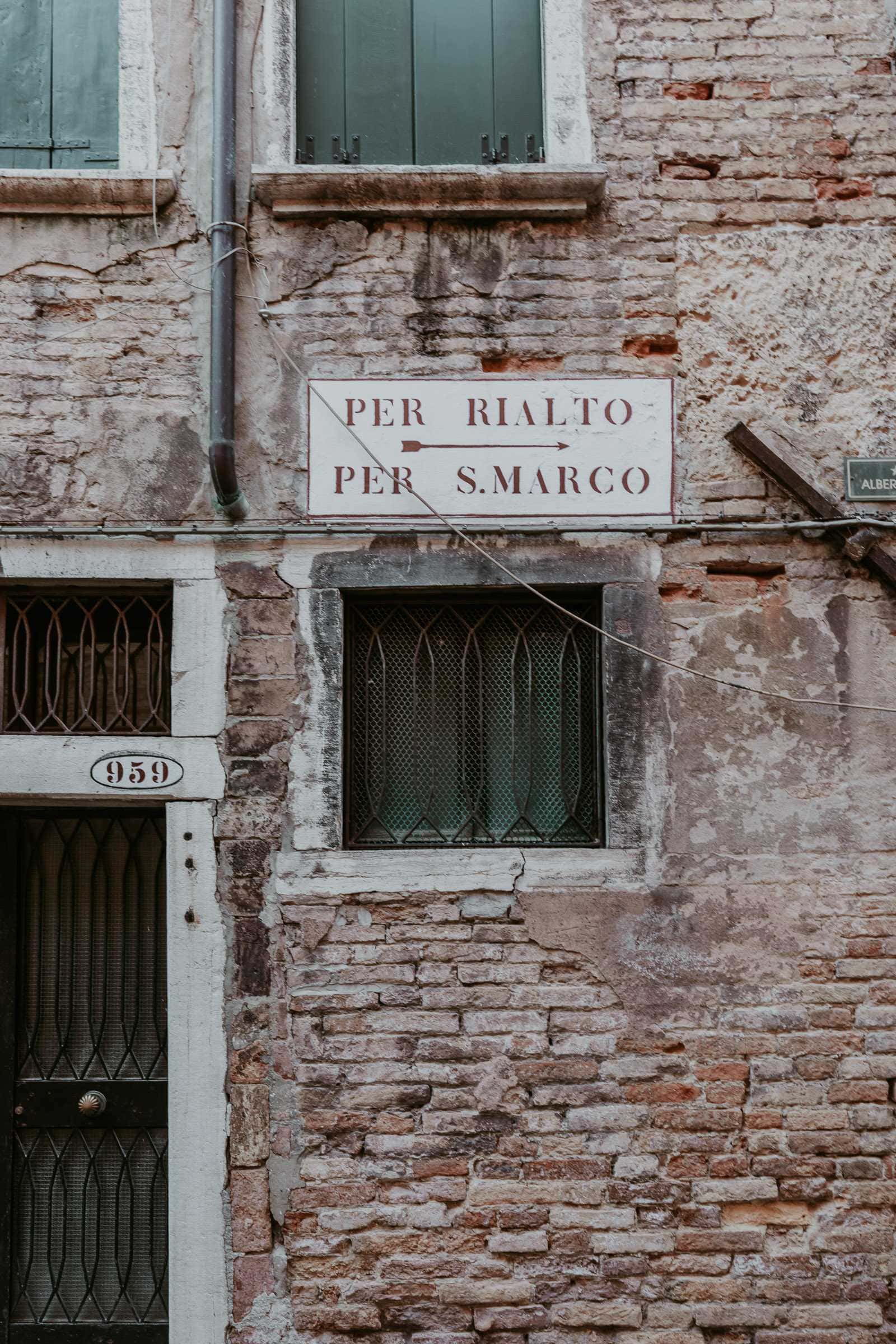
Finding the way to St. Mark’s Square in Venice is easy even without Google Maps: on many street corners and in many alleys the way to Piazza San Marco is marked, “La Piazza” is simply the central orientation point in the thicket of Venetian alleys and canals.
Grand Canal: Venice’s biggest street
The Grand Canal: Venice’s Lifeline: Instead of streets, Venice has only canals, and boats of all kinds are the main mode of transportation. In that sense, the Grand Canal is the highway that runs through the entire city. You’ll probably end up traveling along it at some point anyway, but it’s worth taking a vaporetto early in the morning to travel the entire length of the Grand Canal and watch the city come to life.
Contrary to my expectations, Venice is actually a city of early risers—no trace of that typical Italian leisureliness. Even at night, Venice is rather quiet; once the day-trippers have left, there isn’t much of a bustling nightlife. Another lovely thing to do on the Grand Canal: watching the sunsets.
Tip: It’s best to time your visit just right and head up to the terrace of the Fondaco dei Tedeschi, right next to the Rialto Bridge, at sunset. Admission is free, but you’re only allowed to stay on the terrace for 15 minutes—so timing is everything. When I was there, you could just walk right up to the rooftop terrace without a ticket. I only had to wait a little while. But the fantastic view over the Grand Canal is definitely worth it.
By the way, the (luxury) department store is also beautiful from the inside, the building used to be, as the name suggests, the trading place of the German merchants in Venice and later the main post office of the city.
Rialto Bridge and Rialto Market
The Rialto Bridge is both a bridge and a shopping street, much like the Ponte Vecchio in Florence. Small shops line the bridge on both sides. From the outer edges, you have a great view of the Grand Canal—unless hundreds of selfie sticks are blocking your view.
Right near the Rialto Bridge is the Rialto Market, where you can buy fresh fruits and vegetables the old-fashioned way. It’s all very traditional and a delight to behold. And don’t miss the fish market, right on the canal under centuries-old arcades—it’s worth getting there early.
Next door at Naranzaria, right on the waterfront and with the Rialto Bridge just around the corner, you can take a break with an Aperol Spritz and watch the gondoliers glide back and forth on the Grand Canal. More Venice is almost impossible.
Dorsoduro: Punta della Dogana, Basilica di Santa Maria della Salute and lots of museums
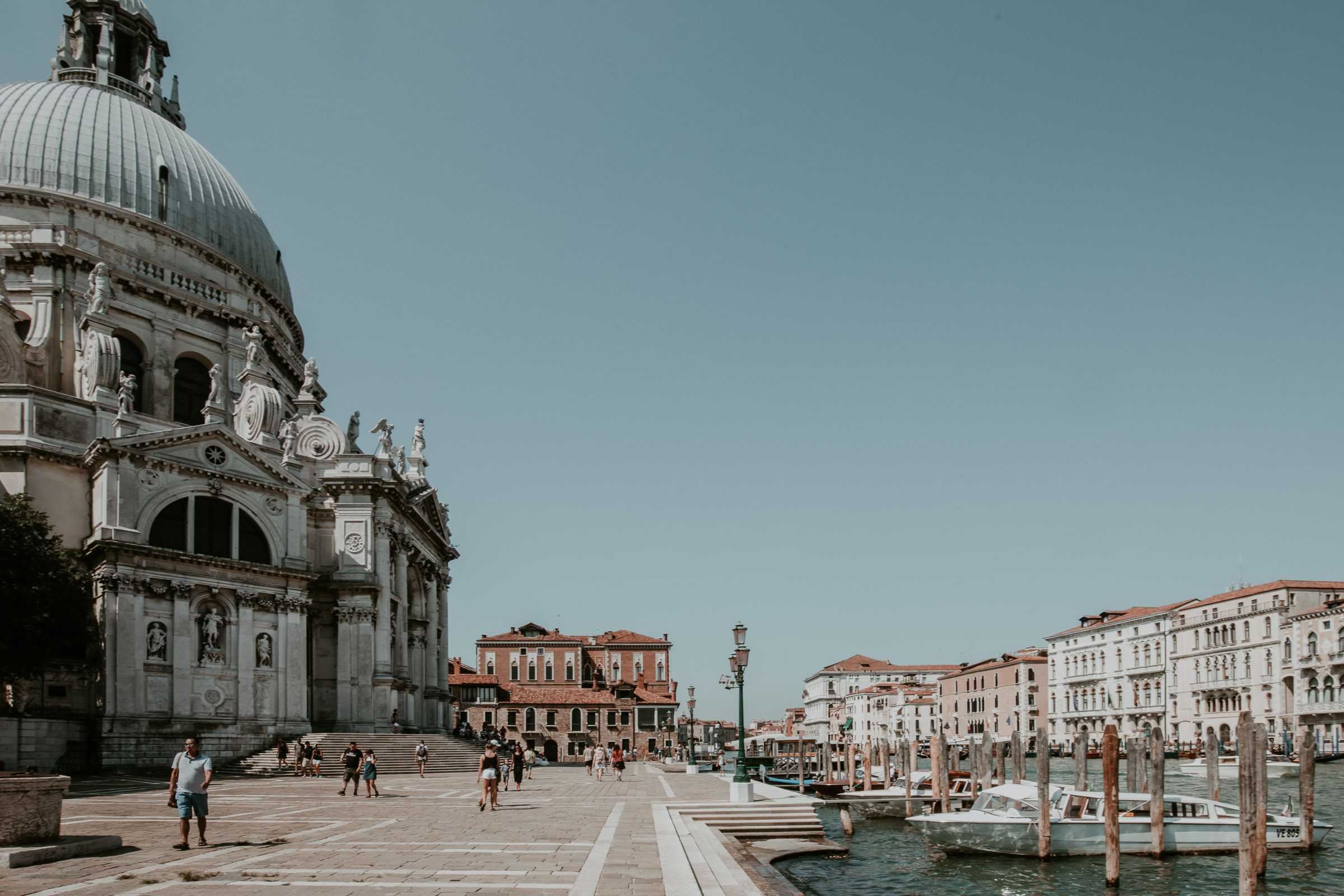
Directly across from the Doge’s Palace is the Punta della Dogana headland—and this is also the best spot to appreciate the sheer size of the Grand Canal’s entrance, through which all merchant ships used to sail. Next door is the Basilica di Santa Maria della Salute, which houses works by Titian.
Even if you’re not a fan of churches, when you’re in Venice, you simply can’t help but take a look inside a few of these impressive churches. Many of them house works by the most famous Venetian painters—so you get a free museum visit thrown in.
There are plenty of museums here in Dorsoduro, and anyone interested in art can easily spend at least a whole day exploring them all in this small area.
The most important museums in Dorsoduro:
Peggy Guggenheim Museum
Academia dell’Arte
Punta della Dogana
Giudecca – the island of the Venetians
Sitting on the promenade in the evening with a glass of red wine, the Venetian water at your feet and the view of the sun sinking into the sea – definitely one of the highlights that make a trip to Giudecca worthwhile. Incidentally, the restaurants and cafes here are a lot cheaper and better than in San Marco – despite the spectacular view.
Giudecca is one of the islands off the coast of Venice; it’s actually more of a residential area. In the meantime, a few hostels have also opened up here. The vaporetto service to San Marco is excellent, and despite the extra cost of a vaporetto pass, it’s worth staying overnight on Giudecca to escape the tourist crowds a bit and observe everyday Venetian life.
Besides Giudecca, Murano and Burano are two other islands to see!
Accommodations in Venice are a bit of a mixed bag: they’re expensive, they aren’t particularly nice, and they’re especially hard to come by during peak season. That said, I hope this post will inspire you to visit Venice outside of peak season, because Venice really doesn’t need any more visitors in the summer. I wouldn’t go back in August either.
Many visitors to Venice therefore prefer to stay in Mestre, on the mainland, since that means taking the train to Venice every day. That’s an option, but I really wanted to experience the authentic Venice vibe—and in the end, it was incredibly convenient not to have to embark on a long journey every morning or evening.
Although it also involves a daily vaporetto ride, Giudecca offers a truly Venetian atmosphere, which made it a much better choice in my opinion. There are accommodations for those on a tight budget, such as the new, trendy Generator Hostel or the Sunny Terrace Hostel, a former student dorm that’s converted for summer use. But you can also find more upscale accommodations like the Hilton Stucky, a new Hilton hotel housed in an old factory—with the best views and endless charm. Giudecca is still something of an insider tip, but that seems to be changing right now.
In San Marco, you’re right in the thick of things. The Hotel Alla Fava* isn’t anything special, but its location is fantastic thanks to its proximity to the Rialto Bridge. And it’s in a very quiet spot, tucked away between a church and a small canal. It’s almost unbelievable that the tourist hustle and bustle is just two streets away.
The Donà Palace boutique hotel, with its quintessentially Venetian grandeur, is also in a fantastic location—though, of course, much more expensive—but its Venixino bar is in an even better spot, and it’s my absolute top pick for an evening drink:
Tip: Right on the canal—which runs a few meters further on, passing under the Bridge of Sighs—you can sit here in a romantic, secluded garden and watch the gondolas glide by on the canal while sipping one of the excellent cocktails from the hotel’s bar. By the way, the bar isn’t just open to hotel guests.
What there is to see on Route 66 in Illinois! I could have spent weeks more driving along “The Mother of Roads” and discovering small and large towns and their stories. This trip was just full of surprises, like in Joliet, where I suddenly found myself quite unexpectedly in a fascinating lost place: the Old Joliet Prison.
Joliet, the Heritage Corridor and Route 66
Our very first stop from Chicago, where the famous Route 66 starts, was Joliet, just a few kilometers away. Joliet is part of the Heritage Corridor, an area around the Illinois and Michigan canal that connects the Great Lakes from Chicago to the Mississippi River. The Heritage Corridor is primarily a popular recreation area with many opportunities for outdoor activities. By the way, the Joliet Area Historical Museum and its Route 66 Welcome Center, which showcases the history of the area, are a great way to get in the mood for a drive along Route 66.
Lost Place: The insider tip Old Joliet Prison
But the real attraction – and really only recently officially open to visitors at all – is the old Joliet Correctional Center (also: Illinois State Penitentiary), a prison built in 1858 that was still in operation until 2002, believe it or not. Then the new prison opened across the street, inmates and guards moved. What remained was an abandoned building, left to decay – and now a dream for all photographers in search of atmospheric lost places.
The old jail in Joliet – How to get in?
Entering without permission is, of course, strictly forbidden, but in the meantime the city administration has given in to the increasing interest and offers guided tours.
The Old Joliet Prison, however, was a popular setting even when it was in operation, not only for photos, but also for major Hollywood movies and series! Our tour guide proudly showed us John Belushi’s cell from Blues Brothers, and we were not allowed to go any further without first having a photo taken of us in the cell. But the Old Joliet Prison is also a popular filming location in more recent productions!
If you have watched the series“Prison Break“, the prison facility will look familiar to you: The Old Joliet Prison served as the set here too! In the series, the prison was given the name“Fox River State Penitentiary“, where one of the two main characters, Lincoln Burrows, is wrongly serving a prison sentence, while his brother Michael Scofield does everything he can to free him.
Old prison – many stories
In many places, you can still sense an oppressive atmosphere. Many cells are still in their original condition, just as they were left; the bars and the cold, metal plumbing fixtures are still there. And when you consider that prisoners were still held here less than 20 years ago, it sends a chill down your spine.
The atmosphere throughout the facility is gloomy, and I wouldn’t want to know how many creepy stories these thick walls have witnessed.
Old Joliet Prison: Is it worth it?
Unique as a photo backdrop anyway, the visit to Joliet Prison was absolutely worth seeing. Due to the dilapidated condition and the unclear further use of the huge area, be sure to inquire about the current state of affairs beforehand. And: Don’t get any stupid ideas to visit the prison on your own, the area is monitored by the local police. You don’t want to end up in the other prison across the road 🙂
I’m not particularly religious, but churches and religious sites are always one of my go-to places when sightseeing in foreign places – they tell a lot about culture and society. And in Salzburg, with 800 years of church history, there is simply no getting around churches. Therefore, in this article I present you some highlights of the church city of Salzburg. And at the end it even gets really mystical!
It is impossible to imagine the famous panorama without the Salzburg Cathedral.
Salzburg: The Rome of the North
First lesson: Because of its really many churches Salzburg is also called “Rome of the North”. Which I found very funny, because I just came from a trip through Venice and Rome. And could compare directly: Salzburg really has Italian features. Not only because of the architecture, which was significantly influenced by the then Prince Archbishop Wolf Dietrich von Raitenau (1559-1617), but also because of the Salzburgers’ joie de vivre and the breath of dolce vita that wafts through the city. Music and more music, lots of art and culture, a good atmosphere despite Salzburg’s frequent “Schnürl rain” and of course, as befits an almost-Italian city, a penchant for delicious food garnished with a pinch of piety: Italy really isn’t far away anymore.
Important accessory in Salzburg: The umbrella for the famous Salzburger Schnürlregen
The secret treasure of Prince Archbishop Wolf Dietrich von Raitenau – and what Salzburger Nockerln have to do with it
In general, the said prince-archbishop was quite a rascal. A small scavenger hunt was organized for us as part of the program: We were supposed to find the old treasure of the prince archbishop and for this purpose we sped across Salzburg for one day – to finally find out that Wolf Dietrich’s secret treasure was his mistress Salomé, with whom he fathered 15(!) children. Celibacy and all that. Back then, things were wilder in church than Dallas and Denver Clan combined! But I don’t want to say anything – Salomé is said to have invented the Salzburger Nockerln, and without Salomé and the enterprising Wolf Dietrich I would probably have one favorite dessert less now! (More about Salzburger Nockerln in the Food Guide.)
Salomé is also immortalized in a tiny way in the dome of the otherwise pompous mausoleum of Wolf Dietrich von Raitenau, which we were then able to see for ourselves. Unfortunately, you are not allowed to visit the mausoleum regularly from the inside, but the St. Sebastian cemetery, where it is located, is also worth seeing.
You can find even more insider tips for Salzburg & tips for sightseeing in my Salzburg blog
The mausoleum at the cemetery St.Sebastian
The Catacombs of St. Peter: Death by tickling?
I’m not the ultimate cemetery goer – it creeps me out a little, on the other hand cemeteries always make me sad – but a bit of cemetery culture is part of church Salzburg after all. Especially when such curious stories emerge as that of the Salzburg man who is said to have tickled each of his seven wives to death. The women’s graves are located in St.Peter’s Cemetery, just behind Salzburg Cathedral and at the foot of Hohensalzburg Fortress.
Apart from the fact that the graves of Mozart’s equally musical sister Nannerl, of Johann Michael Haydn, the pioneer of sacred music, and of all Salzburg’s celebrities are located here, a visit is worthwhile for the catacombs alone. They’re not really catacombs, strictly speaking, since the caves carved into the rock never served as tombs, but it just sounds good, whatever. And the caves above St. Peter’s Cemetery do look a bit like catacombs. By the way, from here you have the most beautiful views of Salzburg!
Salzburg Cathedral with Cathedral Museum: a secret that millions simply pass by
Almost next door is the Salzburg Cathedral, one of THE tourist attractions of Salzburg. Not without reason, because the huge cathedral impresses even non-churchgoers like me, as I could already see during my first visit to Salzburg in spring. If you want to avoid the crowds of tourists, just head next door to the Cathedral Museum. There is an admission fee, but if you’ve already treated yourself to a Salzburg Card, you can simply skip the line at the ticket counter and walk right in.
The Salzburg Card, which is available for 24, 48 or 72 hours, also costs – but it’s worth it if you know in advance that you definitely want to visit some of the sights, such as the Hohensalzburg Fortress, the museums or the Mönchsberg.
The stairs leading up to the cathedral museum are conspicuously flat, wide and elongated – and this is not to enable the ladies of the time to climb up elegantly in their waistcoats: The stables for the horses were on the upper floor, and they actually had to climb up and down the stairs day in, day out. What the poor little horses had to endure back then….
The horses were then probably also cordially indifferent to the pompous premises, but the pomp is quite impressive for ours. Through the cathedral museum you then go over a terrace with a fantastic view (hello mega photo spot!) and a few hidden stairs over to the cathedral – where you suddenly then stand on the gallery right behind the ancient cathedral organ! Not many people seem to know, so you are quite undisturbed up there and can enjoy the great view of the cathedral interior from there, while down below the crowds press through the aisles.
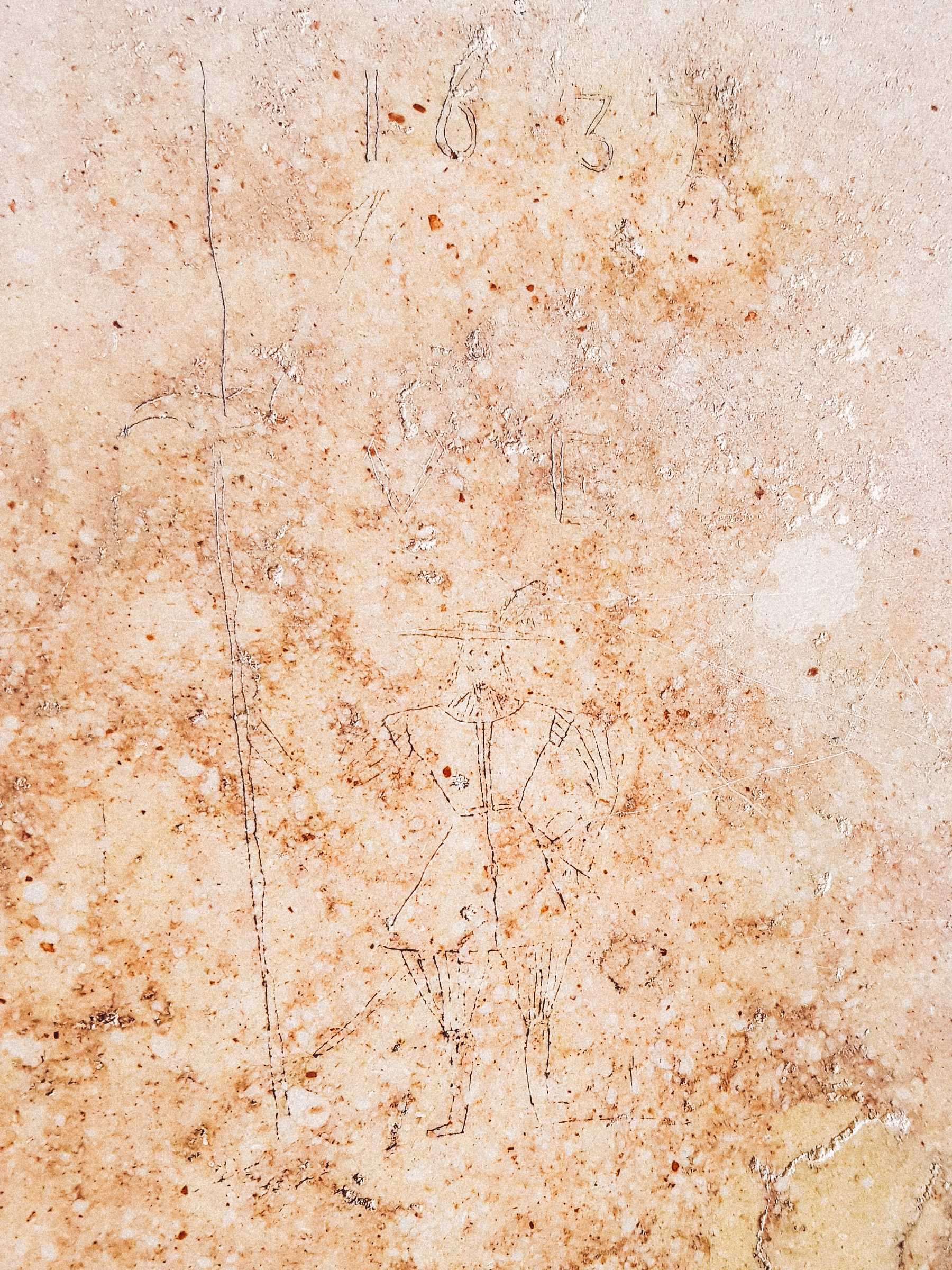
They simply walk past one of the small, fine secrets of the cathedral: directly at the main portal, fine scribbles can be seen, probably carved into the stone by bored guards hundreds of years ago – medieval street art, so to speak!
Insider tip: The Scala Santa in the Kajetanerkirche
A hidden gem among Salzburg’s churches is the Kajetanerkirche with its Scala Santa, a centuries-old replica of the famous original in Rome, which is said to have come from the palace of Pontius Pilate and which Jesus is said to have walked up before his trial. In any case, just like its famous counterpart, the Scala Santa in Salzburg may only be entered on one’s knees, and this rule is strictly observed on site.
The Scala Santa is located in an adjoining room of the also otherwise very pretty Kajetanerkirche and may only be visited (or slid up on knees) within one hour per week: Every Saturday from 10 to 11 am – and not a minute earlier or later. This is probably one of the reasons why Scala Santa is one of the insider tips in Salzburg.
Nonnberg Abbey: Chorals at sunrise
Things got really mystical when we set off at dawn for the Nonnberg, or more precisely the Benedictine Abbey of St. Nonnberg. Not only was this also one of the locations for the old Hollywood movie “Sound of Music”, but in modern times it hides a Salzburg secret that not even all the locals know.
Except for the mystical chorales of the nuns, absolute silence: mornings in Nonnberg Abbey
At Nonnberg Abbey, the Benedictine nuns always—without exception—begin their day by singing choral hymns, which you can listen to down in the nave under dim lighting. Just walk in, enjoy the devotional atmosphere, and listen to the music. And afterward, you’ll be rewarded outside with a postcard-perfect sunrise over the Nonntal valley. Well worth seeing and hearing—a hidden gem in Salzburg!
Dreamlike view: sunrise on the Nonnberg mountain
Maria Plain pilgrimage church: pure mountain idyll.
Devout Catholics make pilgrimages to Maria Plain —and what about the others? They, like me, enjoy the spectacular view of Salzburg, the mountains, the lush greenery, and the traditional customs.
The pilgrimage church Maria Plain was built in the 17th century because the image of grace Maria Plain was the only object that remained intact during a serious house fire – and this was such a great miracle for the believers of the time that it deserved a church. Today Maria Plain is a place of pilgrimage and even lies on the Austrian Way of St. James.
By the way: If you attend the Sunday service, you’ll get a real taste of local color—all the visitors are dressed in their finest traditional costumes, and with the stunning mountain scenery outside and the magnificently restored chapel inside, you can truly immerse yourself in Alpine culture!
Arrival: It’s best to rent an e-bike in the city of Salzburg (then it’s not quite as bad uphill) and incorporate a visit to Maria Plain into a bike tour along the Salzach River. You can take a break with a mega panoramic view either in the traditional Plainer Ansitz with a snack and Stiegl beer or more upscale next door in the Gasthof Maria Plain.
Where to Stay in Salzburg: Mystical Places.
When I’m looking for accommodations, I also always like to stick to the theme of the place I’m in. Because nothing helps better to immerse yourself in the local atmosphere than to spend the night accordingly. What could be more natural than to spend the night in a religious place in a city like Salzburg with such a great church history?
All accommodations are run by church organizations and are affordable. The Gästehaus im Priesterseminar, for example, charges for rooms based on the number of people, so if you’re traveling alone, you pay less for a double room than if you’re a couple—which I find particularly appealing and fair. The location is right in the heart of the city and impressive; the rooms are very well-maintained and clean; and the amenities—from the washing machine to the communal kitchen—are perfect.
I wonder if this travel blog won’t change into a food blog after all? In any case, I ran across a lot of delicious delicacies in Salzburg again. With so many good cafes and restaurants in Salzburg offering delicious cuisine, it’s hard to choose. Therefore, I’ve put together a few very impressive Salzburg restaurants and locations – you won’t stay hungry in Salzburg for long, I promise!
By the way: If you are planning a trip to Salzburg, you should also take a look at my big guide with the most important sights! ➜ To the big Salzburg guide
The Mozartkugel: Round, sweet and typical for Salzburg
In Salzburg, everything revolves around Mozart – and the Mozartkugel. When in Germany, you’ll immediately think of the Mozartkugeln in the red shiny packaging, but in Salzburg there are a few long-established confectioners who produce Mozartkugeln according to their own recipe and in part still completely by hand on site.
The truly original Mozartkugeln can be found at the Konditorei Fürst, whose flagship store is located on the Alter Markt directly across from the historical Café Tomaselli, Austria’s oldest coffee house. But also the small Café Habakuk in Linzergasse, for example, makes the most delicious Mozartkugeln, 100% handmade.
Salzburger Nockerln: 3 mountains for dessert
Salzburg is surrounded by three local mountains, the Kapuzinerberg, the Gaisberg and the Mönchsberg – and if you can’t remember that, just order Salzburger Nockerln in a restaurant. At the latest after seeing this huge powdered sugar dusted soufflé on a cherry sauce, you’ll remember it forever. Each Nockerl stands for a snow-covered local mountain. But be careful: Salzburger Nockerln are always served in only one size, supposedly for two people, but as a dessert they are easily enough for nine! Salzburgers are not stingy with their food portions!
A bit more upscale, but with down-to-earth, modern cuisine: K+K on Waagplatz serves classics like Wiener schnitzel, but also vegan curries. Upstairs you can sit in a traditional ambience with lots of wood, downstairs there’s a freshly renovated bar in the cozy cellar vault!
The portions are not quite as spectacular as elsewhere, but of very high quality.
Seven Senses at Hotel Stein
The Hotel Stein, founded in 1399, is Salzburg’s oldest hotel and was recently completely renovated with great attention to detail and an abundance of art. Salzburg is often described as the most Italian city north of the Alps, a reputation to which a Venetian architect contributed in the 17th century. At the Hotel Stein, this connection between Salzburg and Venice is being revived under the motto “Salzburg meets Venice” —and of course, I couldn’t contain my excitement, especially since I’d just been to Venice two weeks ago and had fallen so in love with the city.
If your budget allows, you should stay here – this hotel is so cozy!
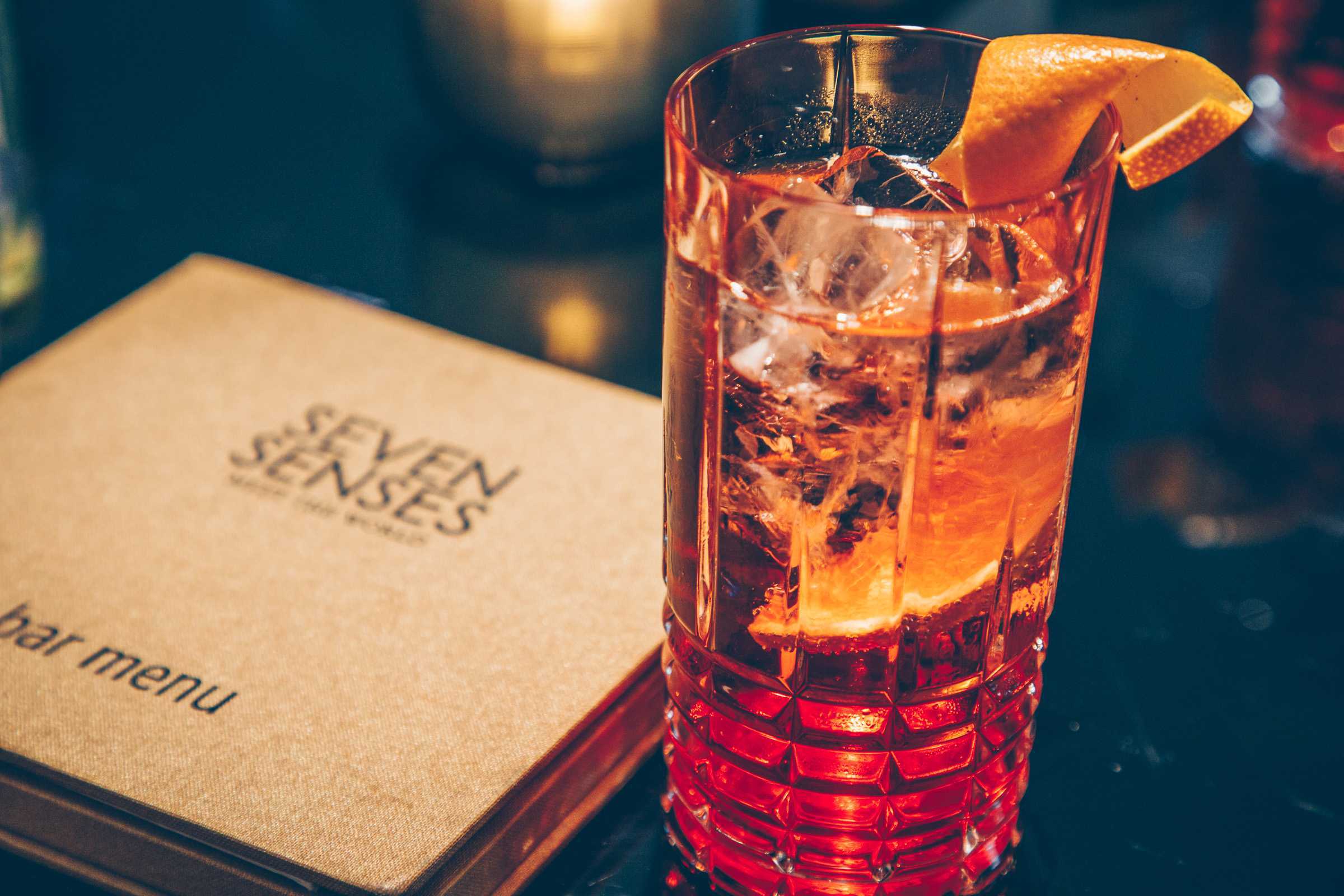
On the other hand, if you don’t want to splash out quite so much, simply enjoy the magnificent view on the terrace of the hotel’s own rooftop bar Seven Senses with an Airone Spritz (an Italian bitter somewhere between Ramazzotti and Aperol, which is only available here in Salzburg and the surrounding area!) You won’t regret it!
Bärenwirt
Quaint, classic, delicious. The name almost suggests it, but the addition “for the hunger (Bärenhunger) of a bear” in some dishes on the menu makes it clear: If you do not get full at the Bärenwirt, you are beyond help. My recommendation: beef goulash with football-sized dumplings. If you are really hungry!
Augustiner Bräustübl at Kloster Mülln
Growing up in the Ruhr area, between coal furnaces and breweries, beer always reminds me of home. On hot summer days I love a freshly tapped, cool beer as much as a fine Aperol Spritz. No need to mention that I felt at home immediately at the Augustiner Bräustübl.
You drink your beer from bucket-sized clay mugs here, pick one from a shelf yourself and hold it under cool water so that the beer stays nice and cold. You can buy food at one of the stalls inside, where you can buy everything from Leberkäse to finely sliced radish to sweet pastry like Schaumrollen – or you can bring your snacks from home, which I think is absolutely brilliant. Only beer must be bought on site, otherwise you can picnic here as you wish. And the atmosphere in the beer garden couldn’t be better: Young people sit here next to old people, original Salzburgers next to tourists, people in traditional costumes next to fashionistas, and everyone enjoys the extremely drinkable Augustiner.
Herr Leopold
Finding an open coffee house on Sundays away from the usual tourist attractions is not so easy. Salzburgers love their coffee house, but apparently not on Sundays. So you take what comes, and the Mr. Leopold is the most beautiful emergency solution of all. Foodies will be delighted with Buchteln and Strudel, fresh from the oven and bathed in creamy, warm vanilla sauce – and design junkies should take a look at the stylish wallpaper in the ladies’ room after the wonderful interior design. Definitely worth a visit.
Ludwig Burger
At Ludwig Burger you get probably the best burgers in town. Everything is homemade, from the burger to the ketchup(!). And the vegan mushroom patty is so good that even I as an absolute meat lover would immediately switch a regular burger for it.
Café Würfelzucker
After I already landed here on my first visit, I had to have another apple strudel at Café Würfelzucker: hand-pulled, freshly steamed and served in the coziest ambience right on the Salzach. Yum.
Pauli Stubm: rustic and cozy
The Pauli Stubm is a very cosy, iconic restaurant tucked away in a small alleyway in the old town and serves really hearty food! There’s a night-time establishment two doors down, if you know what I mean… and I mention this because even restaurants like this just look pretty here in picturesque Salzburg.
A few houses further on, at number 30, is the house of Salzburg’s last executioner from the medieval ages, by the way, for those who like to get a little spooky.
More insider tips for Salzburg
By the way: Salzburg, as an old city of churches, has even more spooky stories to share! If you’re interested, just book a spooky tour with Sabine—she knows just about every macabre medieval tale there is and tells them in a highly entertaining way during a tour that’s a little out of the ordinary. I highly recommend it!
Are you more interested in the small and quirky secrets of Salzburg? There are plenty of them in this historic city; I was also quite amazed! Then hop over to my article about churches in Salzburg – there are some interesting spots that you won’t find in a travel guide so quickly!
If you are only in Salzburg for one day, then I recommend my guide Salzburg in one day – and you can see the most important sights in Salzburg in short time!
Note: This article was produced in collaboration with Tourismus Salzburg.
To be honest, I had imagined the trip to the idyllic Perhentian Islands in Malaysia would be different. The waves were crashing harder and harder against the tiny nutshell of a boat we were sitting in, and by then I was thinking about how much of my camera gear I’d have to say goodbye to if the next wave washed into the boat—or worse, if we all fell out of the boat.
Dream beaches right on your doorstep: The Coral View Island Resort is located right on the beach.
Strangely enough, I wasn’t afraid for my life or of drowning. That might be because I always feel safe in the water, and thanks to years of swimming lessons when I was young, I’m also pretty good at moving around in it (at least one sport that comes easily to me!). Or perhaps because the boat ride from the Perhentian Islands back to the mainland takes only forty minutes and goes through fairly open and well-traveled waters—someone would surely fish us out of the water if all else failed. And with a life jacket (thankfully, we had one) and the water at a comfortable 27 degrees Celsius—just like a bathtub—we could probably stay in the water for quite a while.
The seemingly rough seas weren’t really the problem, but rather the boats—which aren’t really seaworthy—that serve as water taxis or ferry services connecting the Perhentians to the mainland. On a large ferry, you probably wouldn’t have noticed a thing. But those can’t even get close to the Perhentians in the first place. Because there’s no harbor. Paved roads? Nope. Buses? Cars? No. None of that. And so the two Perhentian Islands— Perhentian Besar (the large island) and Perhentian Cecil (the small island)—lie like two lost islands off the coast of East Malaysia.
Perhentian Islands: Malaysia’s Diving Paradise
According to Lonely Planet, the Perhentian Islands are supposed to be the fifth most beautiful diving spot in the world. As a complete diving novice, I had no idea that beforehand. In fact, I’d always been a bit wary of diving. Water itself is my element, sure, but actually diving down there, with just an oxygen tank to breathe, and then there’s the whole pressure thing! Afterward, I can’t handle the pressure difference, I have trouble equalizing the pressure, my ears go haywire, I lose it, my eardrum bursts and won’t heal—and just like that, hello, permanently unfit to fly.
Pretty lame for a flight attendant who really doesn’t feel like retraining at this stage in her life. Okay, maybe I’m being a bit dramatic, but that’s just how I feel about diving. Sometime in the last few years, I gave snorkeling a try on Koh Phangan—and that’s when I thought for the first time, looking at the colorful coral reefs and cute little fish: Maybe diving would be something after all.
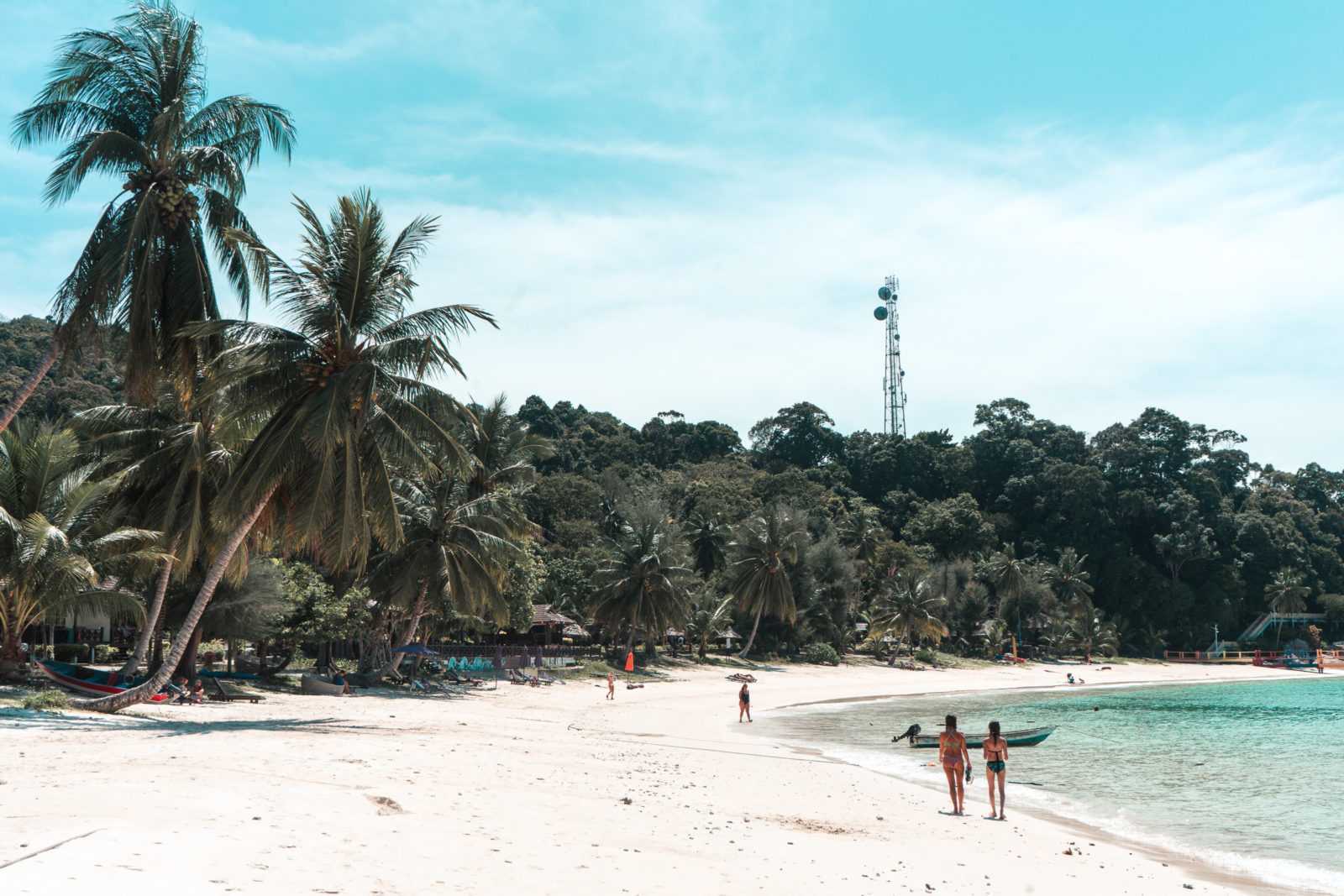
The Perhentian Islands have beaches straight out of *Robinson Crusoe*: During the off-season, you’re practically alone on Perhentian Besar.
But it took another snorkeling trip to the Perhentians to really convince me—I’ll be back, and next time I’ll have more time to dive! Unfortunately, I didn’t take any pictures underwater. But I have the most beautiful ones in my mind, and that’s worth something too: On our snorkeling trip, we saw just about every kind of marine life the reefs right off Perhentian Besar have to offer: brightly colored clownfish, huge and incredibly fast sea turtles, and sharks a meter and a half long.
And since it was the end of the season, there were only three of us on the boat anyway. We didn’t feel like we were intruding on the underwater world; instead, we were simply able to enjoy nature. Unfortunately, the end of the season also means the start of the rainy season, so the weather wasn’t quite as sunny anymore, and our guide assured us that the water—which already seemed as smooth as glass to me—would be even smoother, clearer, and simply amazing during the peak season. I guess I’ll have to go see it for myself after all. Even with the bad weather, the Perhentians were still pretty impressive.
A complete tour of Malaysia is also well worth it! You can find more travel stories on the Malaysia Blog
Perhentian Kecil or Perhentian Besar? The big island or the small island?
The water taxis serve both islands, and due to limited local capacity, it’s a good idea to book accommodations in advance on the Perhentian Islands—contrary to general travel habits in Southeast Asia. It’s also relatively expensive—Malaysia isn’t exactly a budget paradise like Thailand, but here on the islands, lodging is even a bit pricier. On top of that, you can’t really take care of your own meals—apart from a few small resort-run stands selling chips and crackers, I didn’t see much else. It’s just a remote island, after all.
By the way, I actually had the pleasure of trying out accommodations on both islands. Actually, I was only on Perhentian Besar and spent a day visiting friends on the neighboring island of Perhentian Kecil —and realized that getting around on the water taxis that connect the islands isn’t all that easy toward the end of the season. Or sometimes they don’t run at all because the waves are too high. So I ended up having to spend an unplanned night on the other island—with nothing but my beach bag. But that’s how the best stories happen, isn’t it? Anyway, the impromptu beach party with the locals—along with a few lost tourists like us, who were clearly in the minority by then—made up for it. And a little adventure in paradise never hurts.
Which island should I stay on? Perhentian Besar or Perhentian Kecil?
So here’s my tip: Be sure to check out and book accommodations in advance. Then ask yourself what you’d prefer: peace and quiet, or a family-friendly environment? If so, I recommend staying on Perhentian Besar. Or are you more in the mood for a laid-back hippie vibe and a backpacker atmosphere, with occasional nighttime fire shows on the beach and cheap booze from a makeshift cooler-beach bar? Then go for Perhentian Kecil. By the way, I liked both!
Toward the end of the season on the Perhentian Islands, the weather can take a turn for the worse. Even so, the colors of the water at Long Beach on Perhentian Kecil are amazing.
Basically, though, both islands are very quiet; there isn’t much to do besides hitting the beach, snorkeling, and diving —dining out is mostly limited to the resorts’ own restaurants, which are open to the public. And unfortunately, they’re usually not very good, in my opinion. But I was probably just spoiled by the foodie paradise in Georgetown, where I’d been before visiting the Perhentian Islands.
Getting There & Tips
How do you get to the Perhentian Islands?
The famous water taxis take you from the pier in Kuala Besut to the islands. If you’re flying in, like I did, the nearest airport is Kota Bharu, which has direct flights from Kuala Lumpur and Penang.
From there, it’s about an hour’s taxi ride to reach the boat dock. Right by the baggage carousel, there’s a booth where they sell taxi tickets. There are certainly even cheaper options, but you can usually find someone to share a taxi with. Despite the relatively long distance, as far as I recall, it doesn’t cost an arm and a leg. You can often find flights at good prices, even on short notice.
Staying Overnight on the Perhentian Islands
Accommodations are a bit of a challenge on the Perhentian Islands. Malaysia isn’t generally one of the cheapest countries for budget travelers. On the Perhentian Islands, prices are even a bit higher. And accommodations are limited.
Especially during peak season—the European summer—it’s a good idea to book your accommodations in advance. Personally, I always find this difficult in Southeast Asia; I rarely book far in advance, but on the Perhentian Islands, the better options can sell out quickly. However, don’t kid yourself—the value for money isn’t great.
I found the dining situation on Perhentian Besar particularly challenging; aside from a small shop at the Perhentian Islands Resort selling just a few bags of chips, I couldn’t find any way to take care of my own meals. So you’re dependent on the resorts’ restaurants around the clock, which, unfortunately, aren’t particularly good. Of course, it is an island, after all, so everything has to be shipped in. The situation seemed a bit better on Perhentian Kecil, though it isn’t quite as quiet and peaceful there as it is on Perhentian Besar.
My Hotel Recommendations for the Perhentian Islands
I stayed at The Barat Perhentian, which has simple cabins near the beach. If you don’t need luxury, you should be satisfied. During my stay on Perhentian Kecil, there was a lot of construction going on at Long Beach, so I spontaneously spent a night at the Rock Garden Resort. It’s really basic, but somehow also very pretty because of its hillside location. However, this is only for you if you don’t mind climbing stairs, since the cabins are on a steep slope. All around are new and nicer resorts. But it seemed to me that there might end up being a bit too much of a good thing in the future.
Best Time to Visit the Perhentian Islands
It’s essential to keep in mind that the tourist season on the Perhentian Islands lasts only from March through October—I was there toward the end of October, and while the trip there was still okay, the return trip by boat was quite a bit more adventurous than described above. Outside of the season, all resorts close, and the monsoon makes conditions unpleasant—so the Perhentians aren’t a year-round paradise.
But if you’re into idyllic beaches and a stunning underwater world and want to really unwind, then I highly recommend a trip to the Perhentian Islands.
Springfield, Illinois, one of the most historic places in the United States, is located 300 kilometers from Chicago. And no, it’s not the Springfield from *The Simpsons*: It’s just called that because Springfield is one of the most common names for small towns in the U.S. This Springfield is, for one thing, the capital of the state of Illinois (not Chicago—who would have thought?) and, for another, the place where arguably the most significant U.S. president— Abraham Lincoln—made his mark. The historic Route 66 also runs through Springfield, so a stop in Springfield on our Route 66 road trip was an absolute must for a full dose of American history.
Springfield Illinois: The main attractions
History always sounds so dull anyway – and what’s a European to do with American history? The whole of Springfield, Illinois, revolves around Abraham Lincoln, there’s no escaping it, and at first glance, the city that is so meaningful to Americans seems only moderately interesting to us. But turns out, Springfield is so interesting!
First of all, Lincoln was a great person who changed not only America but also the world. And second, Springfield, Illinois, is a charming town and the Lincoln attractions are so wonderfully designed that even if you’re a culture vulture, you’ll be enthralled. And you also learn something along the way. (By the way, as so often on this trip, I thought that such a road trip is also a nice trip for families: many museums and sights are designed to be kid-friendly and kids are always welcome in family-oriented Illinois anyway!)
Abraham Lincoln Presidential Library & Museum
Dedicated exclusively to the life and work of Abraham Lincoln, the museum is a mix of interactive exhibits and multimedia demonstrations. It’s very informative and people put so much detail into it!
Don’t miss the screening of “Ghosts of the Library” at the Holavision Theatre – and afterwards puzzle over whether the narrator was a hologram or actually on stage. And be sure to look out for costumed guards: they are part of the exhibition and perform pieces throughout the museum!
Abraham Lincoln was in and out of the Old State Capitol in Springfield, which served as the Illinois House of Representatives from 1840 to 1876, throughout his life as a politician and lawyer. Today, you can still visit all the halls there, including furnishings from that time. In 1858, Abraham Lincoln announced his presidential candidacy right here, and in 2007, he was followed by then Senator of Illinois: Barack Obama.
Here, in a sort of an open-air museum, you can see the home of Abraham Lincoln, where he lived until his election as president. The residence has been extensively restored to its condition during Lincoln’s lifetime. But not only was Lincoln’s residence preserved, but so was the entire street.
And with the help of the ubiquitous actors who show life at the time, a visit to the site is like going back in time! If you’re lucky, you might even encounter a deceptively real Abraham Lincoln strolling down the street every now and then.
Abraham Lincoln was buried in Oak Ridge Cemetery, which is one of the most visited cemeteries in the United States as a result. Don’t forget: Be sure to rub the nose of the Lincoln bust in front of the entrance to the mausoleum, it’s supposed to bring good luck! Judging by the scrubbed nose, this is probably really popular and for small people like me, there’s even a stool in front of it!
Shiny from all the rubbing: Abraham Lincoln’s nose.
A few Lincoln Facts:
Abraham Lincolm was President of the USA from 1861 to 1865
the first US president to die in an assassination attempt
Opponent of slavery, which led to the War of Secession between the liberal North and the slave-holding South
Won the Civil War, reunited the North and South, and ensured the end of slavery in all states
lived with his family in Springfield, Illinois, where he began his career as a lawyer and politician
Springfield also has a lot to offer outside of the Lincoln sites, so plan at least one full day for that, better yet two days! What else you should have seen:
Illinois State Capitol
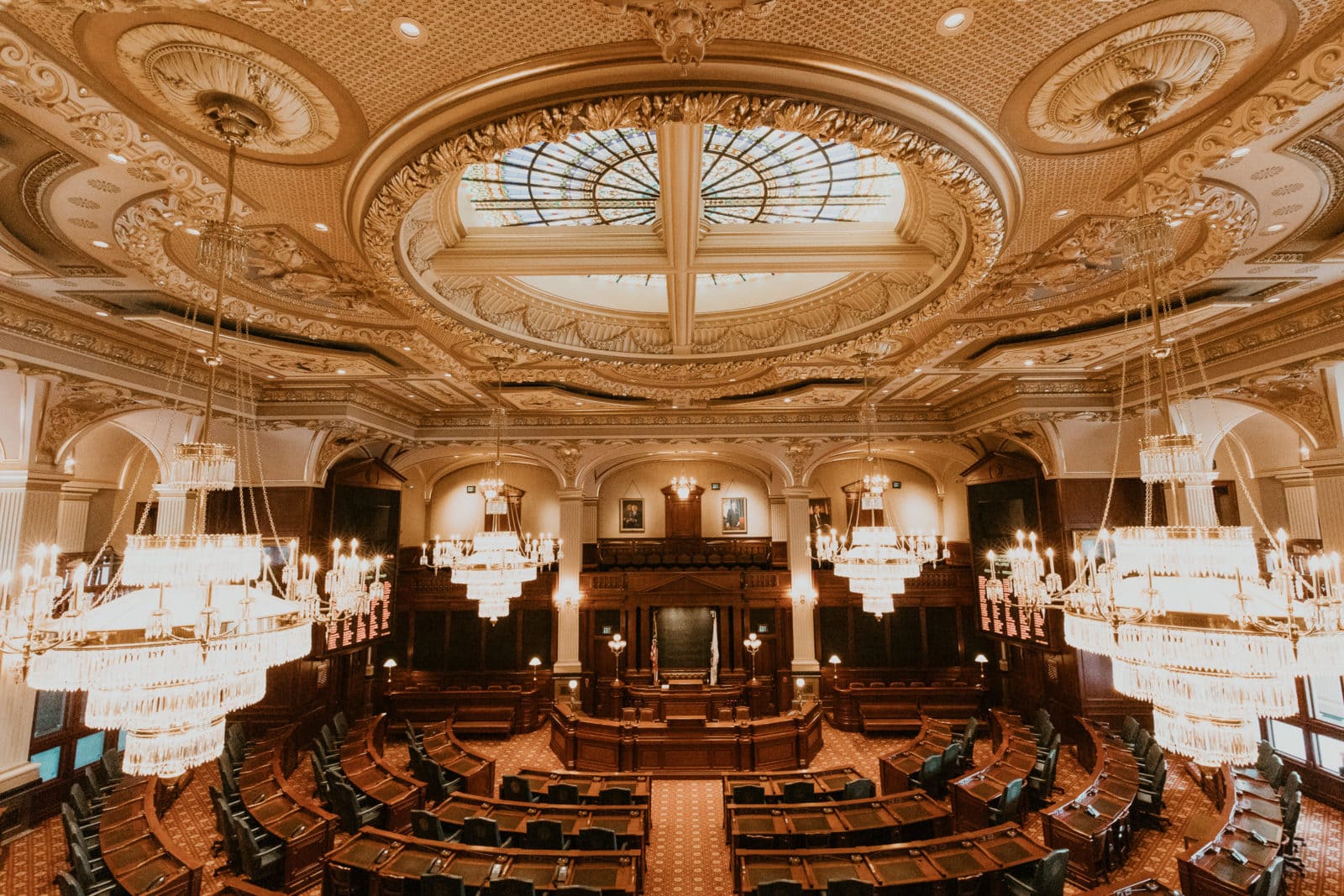
Inaugurated in 1877, the Illinois State Capitol still serves as the Illinois House of Representatives. The dome, visible from a great distance, is over 100 meters high (even taller than the Capitol in Washington, D.C.!) and truly spectacular, especially against the backdrop of the low-rise buildings in the small town of Springfield. (Although Springfield is the capital of Illinois, it has a mere 115,000 residents!)
Tours are held throughout the day, allowing visitors to explore the Chamber of Deputies with its impressive crystal chandeliers—subject to availability. The huge dome is even more impressive from the inside—after experiencing so much small-town charm along Route 66, I couldn’t believe my eyes when I suddenly saw such opulent architecture. Truly impressive.
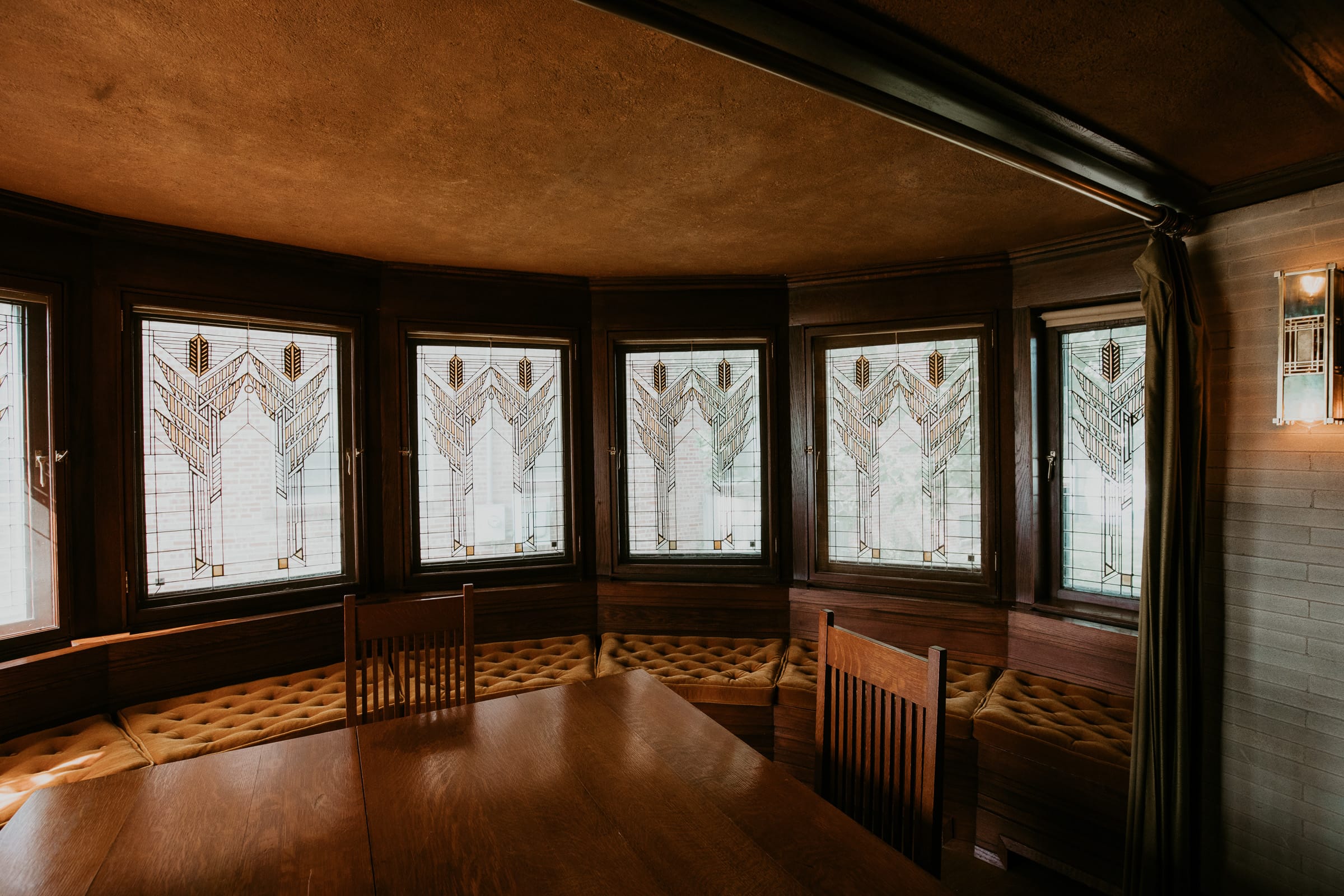
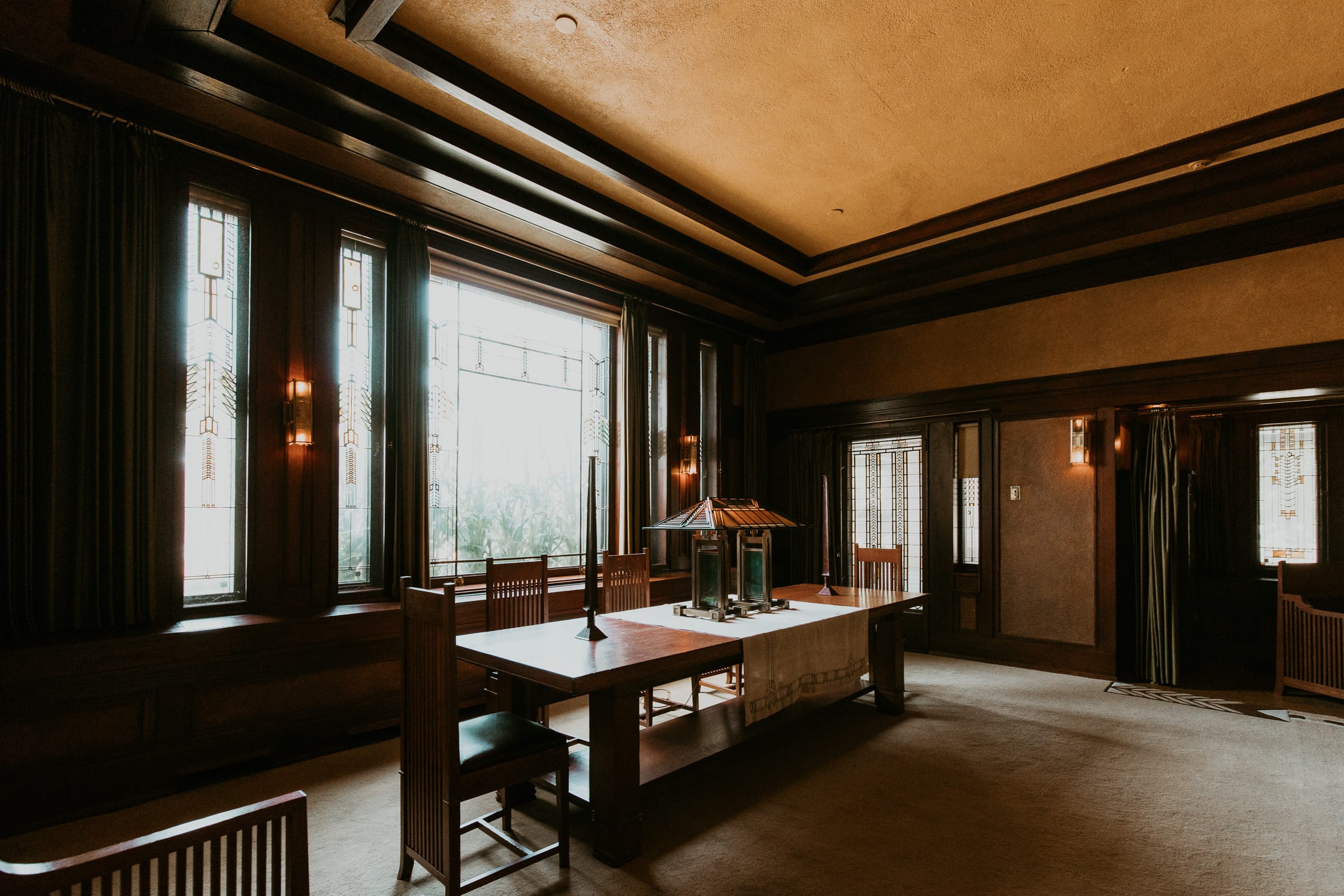
Frank Lloyd Wright was one of the most famous American architects of the last century: for example, he designed the Guggenheim Museum in New York. With his “Prairie Houses,” he created the concept of “organic architecture,” where houses and buildings were meant to blend seamlessly into the landscape, art, and culture.
One of these Prairie Houses is Susan Lawrence Dana‘s house: lots of wood, unexpectedly dark, but tremendously visionary for its year of construction (1902). 35 rooms spread over 3 floors and 16 mezzanines in total. Wild parties are said to have taken place here. Oh, and there’s also a bowling alley right behind the entrance.
Eating and drinking in Springfield: The best locations
In Springfield, Illinois, there are quite a few places you absolutely shouldn’t miss on your Route 66 trip! It doesn’t get any more American than this. And just like in the rest of Illinois, you’ll find plenty of “makers” here: creative small business owners in crafts, retail, and agriculture —producing fair, local, and sustainable goods. They’re all part of a public program called Illinois Made.
On our road trip through Illinois, we met a number of people along the way—café and restaurant owners, microbrewery operators, and artisans—and it’s impressive to see the enthusiasm with which these small businesses go about their work.
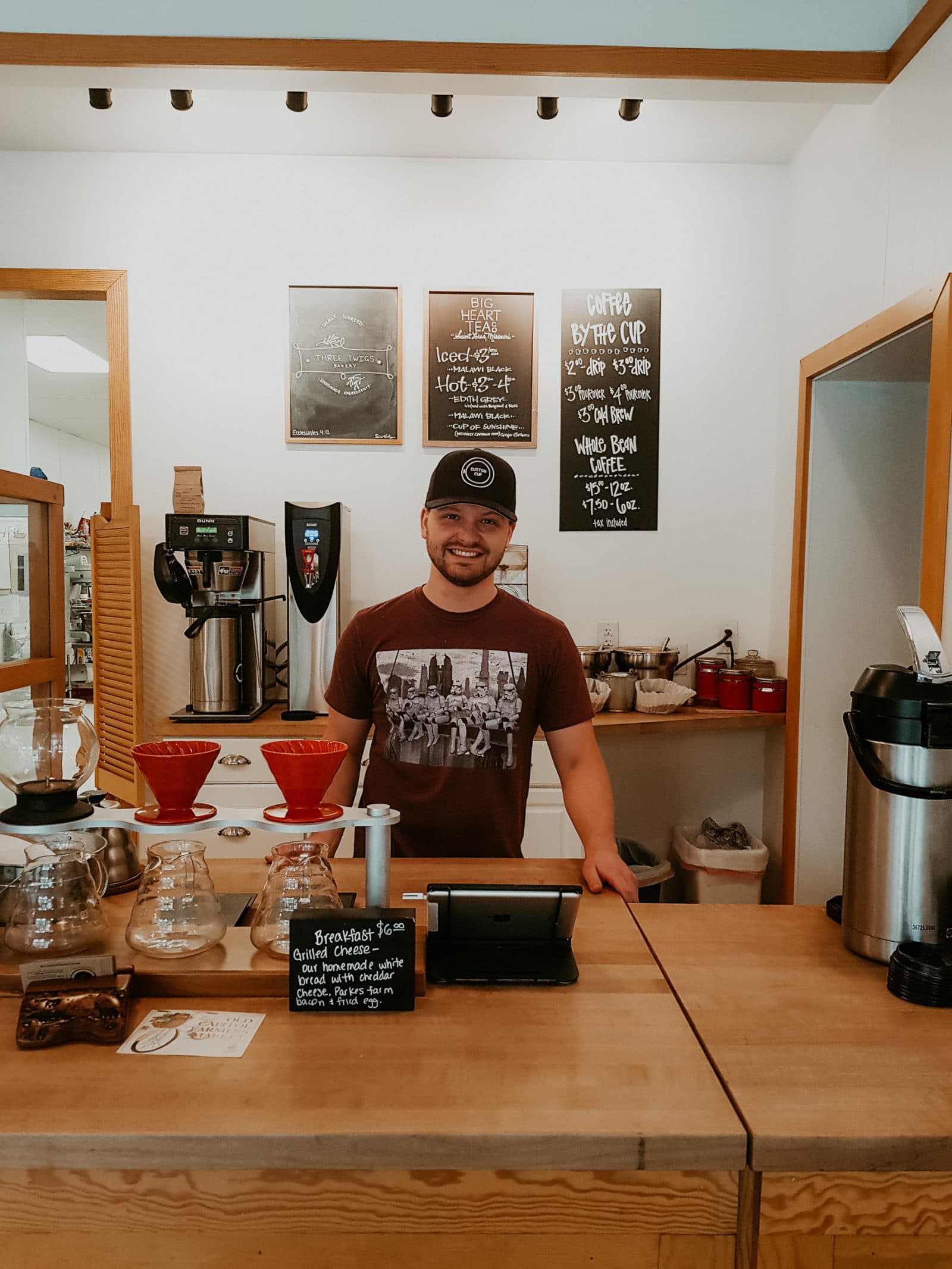
Custom Cup Coffee
The coffee is roasted right here on the premises—and you can even watch it happen! If you’re interested, they’ll answer any questions you have about coffee. The owners of Custom Cup Coffee are committed to fair-trade coffee and know most of their suppliers from around the world personally. And in addition to fantastic coffee and friendly service, they serve up the most amazing apple-cinnamon-bacon pastries ever.
Route 66 Motorheads Bar
The Route 66 Motorheads Bar isn’t just a classic Route 66 trucker bar on the side of the road—it’s also a museum, with classic cars parked out front, vintage signs inside and out, and plenty of neon. In the shed next door, you can not only admire even more exhibits but also watch the restoration work in progress. By the way: It’s an absolutely fantastic spot for photos!
Cozy Dog Drive In
A real must-see on Route 66: The Cozy Dog was invented at the Cozy Dog Drive-In —it’s a hot dog on a skewer, deep-fried in a batter coating. It sounds outrageously greasy—and it is—but it’s also kind of delicious. One order with fries for two is easily enough for four—just like everywhere else. The portions are huge.
The Cozy Dog Drive-In is a Route 66 institution. People of all ages—not just tourists—have been coming here since 1949! The atmosphere is warm and family-friendly; everyone knows everyone else, and everyone knows Bob Waldmire: This Route 66 legend—who has an entire exhibit dedicated to him at the Route 66 Hall of Fame and Museum in Pontiac —is the son of the founder, Ed Waldmire. Incidentally, the Cozy Dog Drive-In is still family-owned and is now run by one of Ed’s grandsons.
Engrained Brewery & Restaurant
At Engrained, they’re brewing up a storm: If you’d like, you can order a selection of five different beers, served on a wooden board. I highly recommend it—each one is more delicious than the last. By the way, Engrained uses the leftover grains from beer production to make the dough for their flatbread pizzas—nothing goes to waste!
And here, too, you’ll find the Horseshoe Sandwich, a Springfield, Illinois, classic: a slice of toast with a juicy burger patty, piled high with endless fries, and topped with cheese sauce. The portion, as always: huge. If that’s too much for you, order a “Ponyshoe.” Not that it makes much of a difference: Either way, on Route 66, between the beer, Horseshoes, and Cozy Dogs, you’ll have to slowly say goodbye to your diet anyway.
Practical tips for visiting Springfield, Illinois
Be sure to set aside enough time for Springfield—there’s plenty to see. It’s definitely worth making a stop in Springfield and staying overnight. The city has several large hotels offering good accommodations, including the Wyndham Springfield City Centre. From the outside, it’s an eye-catching high-rise—which some Springfield residents have given a suggestive nickname—but it has one major advantage: from the upper floors, you’ll have the best view of the city and the State Capitol. Be sure to ask for a room with a view of downtown.
By the way, you can also reach Springfield from Chicago by train if you don’t want to rent a car—but once you’re there, it’s actually often easier to get around by car, since public transportation isn’t particularly well-developed and some locations are quite far apart.
This research trip was sponsored byEnjoy Illinoiswas supported.
Route 66. The name alone evokes all sorts of associations: I dream of freedom, endless roads through the American Midwest, and driving, driving, driving into the vastness of a country that seems both more mysterious and more fascinating to me with every visit. Did you actually know that Route 66 starts right in the heart of Chicago? Just around the corner from The Bean, so to speak? This makes it perfect to combine a few days in Chicago with a short trip along Route 66: a truly American road trip! Just like in the movies. It’s always been on my “must-see-in-my-lifetime” list.
The charm of the Midwest
Starting in Chicago, you can follow the old Route 66 throughout Illinois, and it feels like traveling back in time through the America of the last century. Every place along Route 66 in Illinois has its own charm and its own history in connection with the road that criss-crossed not only the country but also people’s lives. And it was these that made this road trip so special.
Even in Chicago, I was struck by the incomparable friendliness of the people. The gruff Berliner in me was irritated when, on more than one occasion, complete strangers threw themselves in front of me just to hold the door open for me. Or spontaneous high-fives with shoe sellers who admired my shoes. Or strange women shouting at you in the middle of the street: “I love your skirt!” Just like that. Because you can say something nice out loud instead of just looking furtively. In general, being nice is a basic requirement for life here. And we were still in an anonymous city!
But things got even more amazing when we left the city on our road trip. Chicago itself only has 2.7 million inhabitants, and the rest is so spread out that you quickly get the feeling that you’re in the countryside as soon as you leave the city by car.
And this is where the positive energy and joie de vivre of the Midwest really hits you. Not once, not a single damn time, did I have the feeling of encountering bad-tempered or unfriendly people on our road trip. It was crazy, almost unreal. On the contrary, the joy of showing his city, his Route 66, his Midwest, was a gesture from everyone’s heart – and this paragon of a positive attitude to life and pure, genuine joy was so infectious that for the first time I really understood why people are so fascinated by America.
Route 66 – a road full of American history
Actually, Route 66 no longer exists as an official road. At some point, no one was in the mood for almost 4,000 kilometers of cobblestones and/or single-lane country roads: Route 66 was put into operation as early as 1926 as the most important east-west connection.
What was a revolution for the infrastructure at the time was no longer sufficient to cope with the increasing traffic. Route 66 was relocated and rebuilt several times until it was replaced by interstate highways in most places. What remained was the legend. Along with the quirky stories, the warm-hearted people and the many rest stops and stores along the road that lured passing cars with the most eye-catching signs and craziest buildings.
*Transparency: I was invited on this trip by Enjoy Illinois for research purposes. for research purposes.
Chicago is an absolute foodie paradise! Endless restaurants, bars, and cafés! Do people think you can only get bad food in the U.S.? Not in Chicago… researching this Chicago Food Guide was really no trouble at all. I have to admit that I often have a hard time finding good food in the U.S. Burgers and the like are certainly okay every now and then, but constantly eating fried, oversalted food, with little fresh fruit and vegetables and no variety in flavors, gets boring in the long run. In big cities, you can still find alternatives—expensive as usual, but not very spectacular or worth the price. Chicago, on the other hand, is a paradise for anyone who loves good food and drinks: here, one great restaurant follows another, just like the fantastic bars with excellent bartenders. I’ve put together a small selection for you here: My Top Restaurants in Chicago—Classics and New Trends!
1) Gino’s East: The Original Chicago Deep Dish Pizza
The Deep Dish Pizza is probably the most famous Chicago dish. Invented by Italian immigrants, deep dish pizza is as much a part of Chicago as the Willis Tower. You really shouldn’t leave Chicago without trying a Deep Dish Pizza once. At the same time, the Deep Dish Pizza is so very different from the traditional Italian pizza.
It’s smaller and thicker, similar to a quiche, and secondly, the toppings are placed in a different order, almost exactly the other way around. The dough is yellowish because it’s made of corn flour and is more like a mixture of puff pastry and shortbread. The cheese goes on the bottom of the pizza, tomato sauce and other toppings on top. Cut the pizza into quarters, and when you lift the pizza slice, the abundant cheese pulls oodles of strings.
Tip for pizza fans On this food tour, you will learn all about the famous deep dish pizza and can try different varieties: Bookyour pizza tour here*
Gino’s East has been one of Chicago’s institutions when it comes to deep dish pizza since 1966! The special thing about this location is not only the pizza, but the fact that every guest is lent a sharpie with the pizza, with which he can immortalize himself somewhere on one of the walls in this restaurant, which extends over several floors! And nothing is painted over! The probability is therefore very high that you’ll find your piece of art at the next visit!
There’s also real American food in Chicago! Located right at the end of the famous Route 66 (the beginning is on the parallel street, as both streets are one-way), Lou Mitchell’s is a classic American diner. The food is authentic, heavy as usual, and perhaps therefore not everyone’s cup of tea. However, what impressed me much more than the food (and that’s why I included it here in the list) is the absolutely authentic American diner atmosphere with the vintage interior. There’s really no better place to start a road trip along Route 66!
As with the pizza, I didn’t know that there was a Chicago-style hot dog, which is available on every corner in Chicago and is much more popular than the traditional versions with fried onions or sauerkraut.
The beer garden at Navy Pier has a particularly tasty hot dog! You get a fantastic view of Lake Michigan and the Chicago skyline for free. By the way, the Chicago hot dog has all kinds of fresh stuff on it: diced white onions, lots of tomato chunks, pickles, mustard and pickled vegetables. The bun is sprinkled with poppy seeds, the sausage is made of beef only. Colorful and delicious! Plus, ketchup is an absolute no-go on the Chicago-style hot dog!
Yes, I really did it: I ate frog legs. And what can I say? They taste like chicken! Of course! 🙂 Hugo’s Frog Bar is the Chicago institution for frog legs, the French influence has left its mark in Chicago. Hugo’s is a bit more high-priced, but also unbeatable when it comes to quality. I love to eat fish anyway, seafood like crabs and mussels rather less, but at Hugo’s I even ate king crabs with pleasure.
Hugo’s Frog Bar & Fish House, by the way, is owned by the best steakhouse in town, Gibson’s (right next door), and also serves the best Black Angus beef if you’re not into seafood. My filet was divine! The ambience is also classic American. Large bar, lots of dark wood, tables with checkered tablecloths and attentive service. Be careful with the desserts: One serving is easily enough for five – or you can take the rest in the doggy bag and still invite guests for coffee the next day.
A Soho House is always a guarantee of a nice cafe as well. In Chicago, you’ll find The Allis on the first floor of Soho House, nice for coffee, breakfast or afternoon tea. The decor is something between an English library and an American clubhouse, cozy but zero dusty. Drink coffee and be amazed.
6) Dove’s Luncheonette: Chicago Blues & Soul from the 70s
Another diner. This time, however, a successful symbiosis of retro look and modern Tex-Mex cuisine. The interior with wood paneling and jukebox immediately transport you to the 70s. In addition, the cuisine is modern: No overloaded plates, as you might be used to from Mexican cuisine in the USA, lots of fresh ingredients and unusual combinations.
Dove’s Luncheonette is located in Wicker Park just below the Damen CTA station. By the way, there are lots of exciting places to eat in the area, and right around the corner is Milwaukee Avenue, a really nice shopping street where you can find smaller boutiques, but also bigger stores like Urban Outfitters. Perfect if you don’t feel like shopping malls or the hustle and bustle around Michigan Avenue downtown.
Chicago has much more to offer, of course, but I think this is a nice sampling that represents well the range of possibilities. Discovering on your own is also fun – here are a few more areas where you can find great places to eat:
West Loop: a former industrial area, around Fulton Market and along Randolph Street you will find a lot of great places to eat and drink, also a nice nightlife area. Once a year, the “Taste of Randolph” food festival takes place with lots of music and food from the surrounding restaurants.
Wicker Park: around the Damen station, along Milwaukee Avenue and Division Street.
around Logan Square
and of course Downtown
More articles about Chicago and Illinois at a glance:


 The Pantheon is a domed structure and was the inspiration for several famous buildings, such as the Capitol in Washington. In the middle of the dome there is a big hole as the only source of light – and when it rains, well, it just rains right into the Pantheon. Whereby the floor was designed so that all rainwater simply drains away. Quite fascinating.