There are not many cities that always inspire me anew. My “second home” Palma for example. For me, this city has everything: not too small, not too big, the ocean always a few blocks away and a beautiful old town. No wonder tourists flood the city here in the summer. Most of the time, La Seu Cathedral is the first port of call because it stands out so prominently on the promenade.
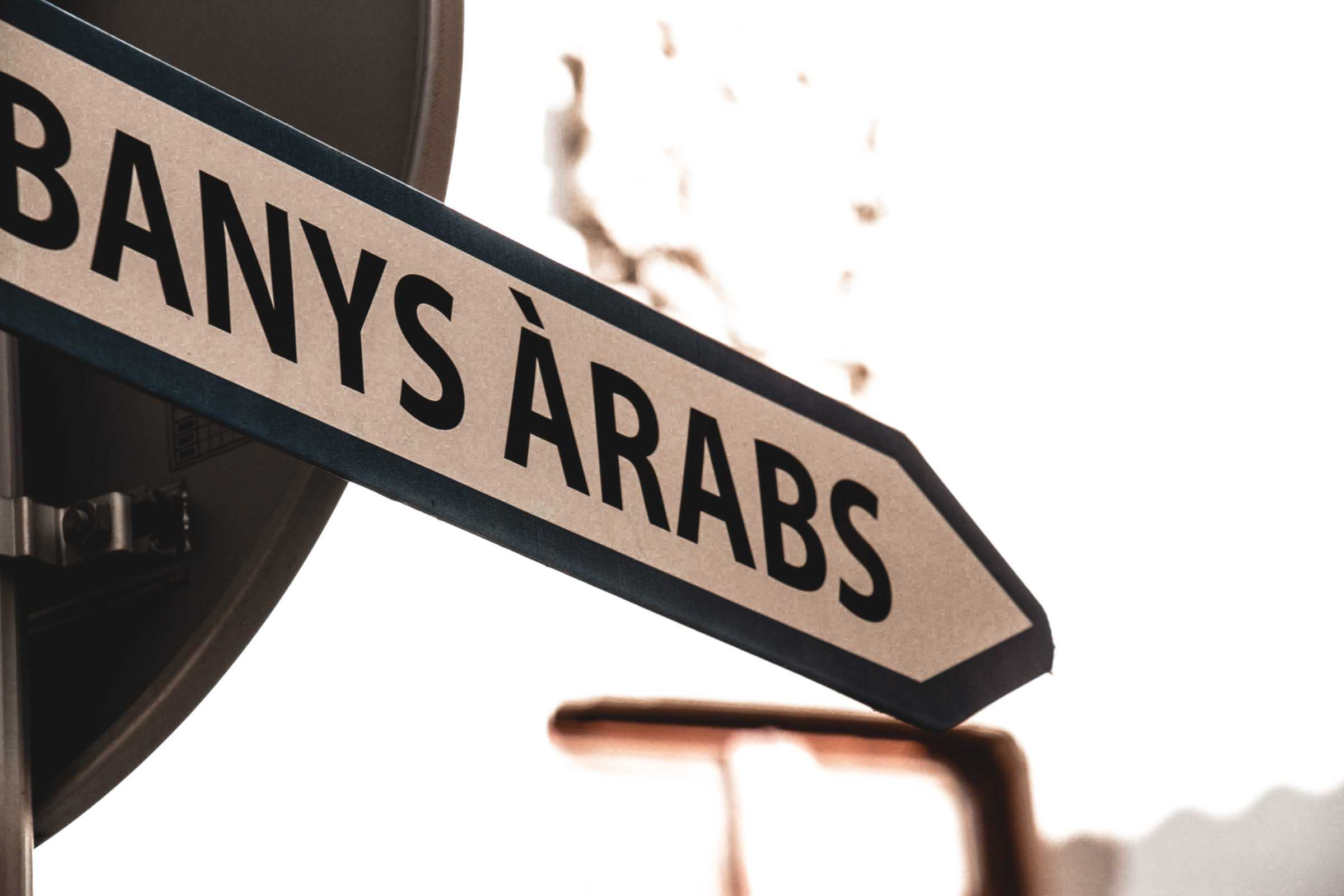
Most people then immediately head to the city via the Passeig del Born, but those who are already here should also take the opportunity to explore a little of the picturesque and, above all, often lonely alleys behind the cathedral. In addition to authentic Palma old town flair off the beaten track, you’ll find the Banys Àrabs (Arab Baths) here – with an entrance that blends so well with the surrounding houses that you could easily miss the open door.
Insider tip for Palma: The Banys Àrabs / Arab Baths
Especially in the summer, the Arab Baths are a great place to stop by when you’re exploring Palma’s Old Town. Popular spots like the cathedral or the Plaza Mayor often get so crowded that you find yourself longing for a little peace and quiet.
There, the Arabian Baths are a true oasis, as they are relatively unknown to tourists. It’s hard to believe that this beautiful, green courtyard hideaway is located just a few hundred meters from the bustling tourist flow in the old town! A real insider tip and perfect for those who like to be away from the crowds.
Completely hidden in the old town of Mallorca: The Banys Arabs.
Moorish traces in Mallorca
The two bathhouses from the 10th century give an idea of Mallorca’s long history. At that time, Mallorca was also inhabited by the Moors, who left some Arabic influences. Next to it is a beautifully landscaped patio, with many shady trees and a small cafeteria. Sit down, take a break and enjoy the balmy Mediterranean air!
You can find more Mallorca travel stories with lots of information and insider tips on my Mallorca blog
Information about the Arabic Baths in Palma de Mallorca
Tip: The old town of Palma is also a perfect place to stay! You are right in the middle of the city and everything is in walking distance! If you can do without the beach, or if you want to change locations after a few days of a finca or beach vacation, the old town of Palma is certainly a very nice addition!
Although Porto has been on my travel bucket list for a long time, I still never managed to get there. By now, it was almost a little too late—this former hidden gem in Portugal is more popular than ever and packed with visitors! Anyway, I was still thrilled: Here, I’m sharing my favorite sights in Porto!
I always felt right at home in Lisbon, and it wasn’t much different in Porto. As a Brazilian, the language barrier isn’t really an issue for me, and the Portuguese are so warm and hospitable!
The massive Dom Luís I Bridge is one of Porto’s most impressive landmarks
The Best Way to Explore Porto’s Sights
In general, Porto is a good place to spend a few relaxing days. Porto is the second largest city in Portugal, but you can still reach a lot on foot. The only drawback are the occasionally very steep hills, if you want to walk back to your accommodation after a long day of sightseeing – depending on where you are staying. For this case, you can always resort to public transport, cabs or Uber. All very well priced, like everything else in Porto. Or you can be happy about the extra calf workout.
You get lots of discounts with the Porto Card*—and you can use it to ride all public transportation for free!
#1 Cais de Ribeira
Ribeira is the port district of Porto – and sooner or later you’ll end up here anyway: life happens at the Cais de Ribeira, in the evenings there’s an atmosphere with street musicians, popcorn cars and full bars and restaurants, even in winter. Many of them are tourist traps, but sitting on the quay with a glass of Douro wine and watching the sunset is priceless.
Restaurant tip: At Bacalhau (a little off the beaten path and not quite as touristy), you can enjoy wine along with Portuguese bacalhau dishes given a modern twist. Eating bacalhau (salted cod) is an absolute must in Portugal.
The streets behind the promenade still have a truly quaint atmosphere, and in the dark, narrow alleys, you get that harbor charm for free!
#2 Dom Luís I Bridge
Arguably the most striking of all Porto’s sights: At the end of the Cais de Ribeira, the gigantic Ponte Dom Luís I towers over the Douro River, connecting Porto with Vila Nova de Gaia across the river, which is known for its port wine cellars. Vehicles travel on both the lower and upper levels of the bridge. Pedestrians can also cross the bridge on both levels and enjoy the view of Porto, especially from the top.
#3 Clérigos Tower
One thing in advance, claustrophobically inclined people may not make it all the way to the top of the clock tower of the Igreja dos Clérigos (or Clérigos Church). The climb is very narrow at the end and the viewing platform is more of a narrow walkway around the top of the tower. Fear of contact with strangers is out of place here, otherwise you will neither go forward nor back.
On busy days, access is probably restricted here, but even on quieter days it can quickly get crowded at the top of Torre dos Clérigos. But you will be rewarded with the very best view over Porto: The Torre dos Clérigos is the highest church tower in all of Portugal and one of Porto’s landmarks.
Can a dull train station be a place of interest? Yes, definitely! Especially when inside it is tiled all over with hand-painted azulejos, the typical tiles of Portugal. The white-and-blue artwork stretches from floor to ceiling in the Estação São Bento station concourse, leaving you in awe.
The station itself is a terminal station; trains depart from here to the rest of Portugal and also to the scenic Douro Valley. And if you’re traveling by train anyway and don’t feel like walking far, you can stay right at the station: The Passenger Hostel features ultra-modern accommodations and offers everything from dorms to large, maisonette-style family rooms.
One of the reasons I love Lisbon is its charm from days gone by, when Portugal was still a great seafaring nation and proudly displayed its wealth through its architecture. It’s not much different in Porto: The Palácio da Bolsa, the Stock Exchange Palace, is simply brimming with splendor. This is where major deals used to be struck—and a little cheating went on in those grand halls as well. What looks like ornate wood paneling at first (and even second) glance is, in many halls, simply cheap plaster. You wouldn’t notice it at all. A technique that was also used at Livraria Lello.
The Palácio da Bolsa can only be visited as part of a guided tour. Guided tours are available in Portuguese, Spanish, French, and English.
With the Porto Card*, you’ll get a 25% discount on in-store purchases.
#6 Rua das Flores
The Rua dos Flores (Street of Flowers) is something like the cozier shopping street in the old town of Porto. In contrast to the Avenidas dos Aliados, it is less spectacular and has fewer to no mainstream stores like Rua Santa Catarina, but you can still experience traces of the real Porto here. Small stores with goods for everyday use, traditional cafés and lots of art: even the electricity boxes here are all artistically painted throughout. Unfortunately, a form of gentrification is also setting in here – small, long-established stores like the bookstore further down have to leave Rua dos Flores and with them goes a piece of flair.
#7 Vila Nova de Gaia and Port Wine
On the other side of the Douro, in Vila Nova de Gaia, are the port wineries that have made Porto so famous (or vice versa). Port wine is definitely something you should have tried in Porto! How this works and where to go there, I tested in my port wine self-experiment. i
The Mercado do Bolhão is one of Porto’s most famous markets and is located right in the heart of downtown. The Mercado do Bolhão was recently restored and now shines in new splendor. Here you can stock up on Porto’s signature delicacies: canned sardines in all varieties, bacalhau (salted cod—absolutely delicious—I could have lived on nothing but bacalhau dishes during my time in Porto!), and wine, wine, wine. Alternatively, it’s also worth visiting the Mercado Bom Sucesso, located just outside the city center near the Casa da Música concert hall.
#9 Livraria Lello
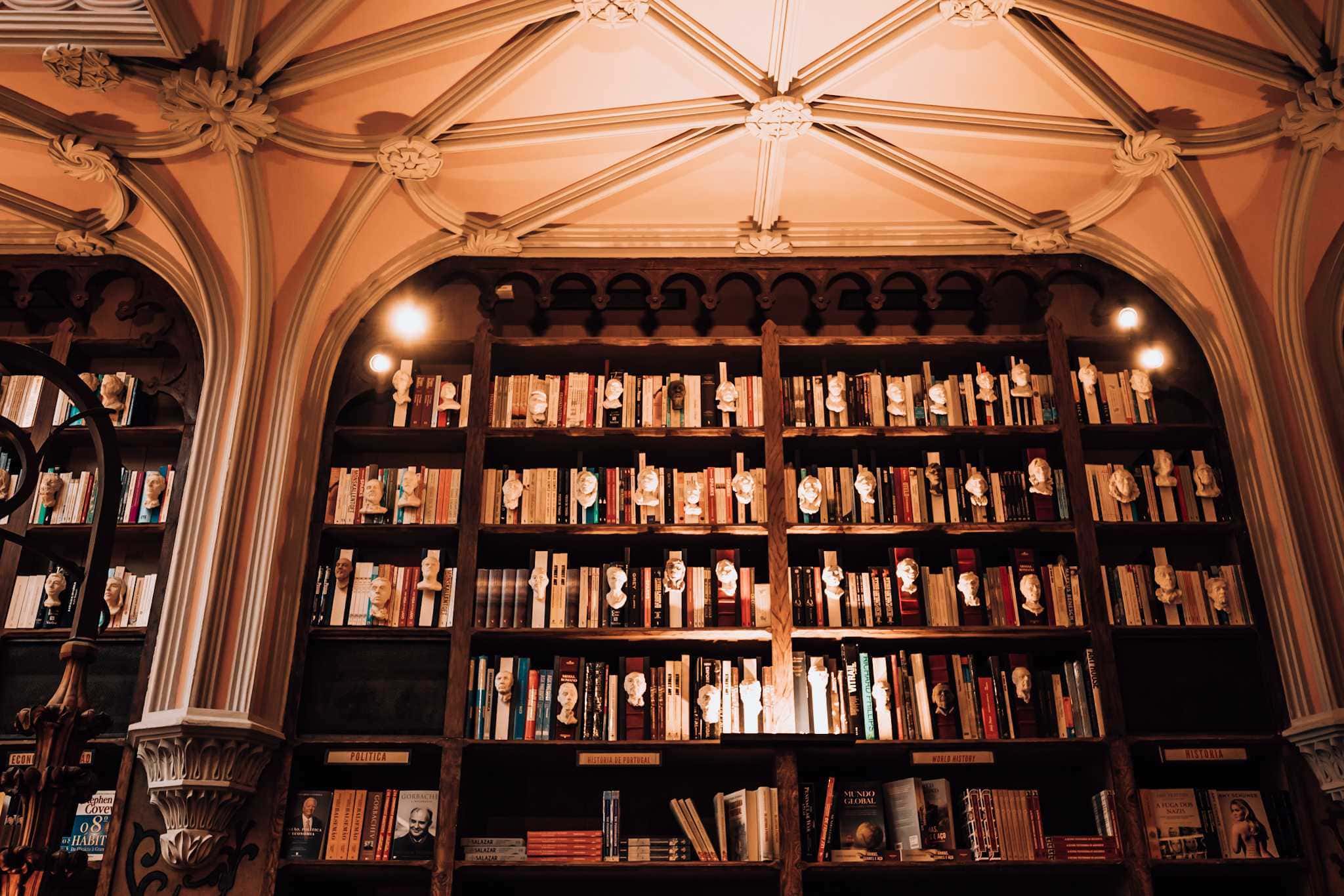
Livraria Lello is one of the most beautiful bookstores in Europe and is justifiably hyped. And it’s the first bookstore I’ve paid admission to. Unfortunately, the queues are now almost too long during the summer months, and you can’t really browse through books anymore: books are reduced to a minimum. Read also my article about the Livraria Lello.
#10 Foz do Douro
Porto is located on the sea, I had forgotten even on the spot before loud Douro panorama and old town hills. It takes only 20 to 30 minutes by bus or streetcar from the center to the suburbs of Matosinhos and Foz do Douro, located on the Atlantic coast. I was amazed how different Porto is here – rough sea, wild Atlantic. Total contrast to the tranquil old town.
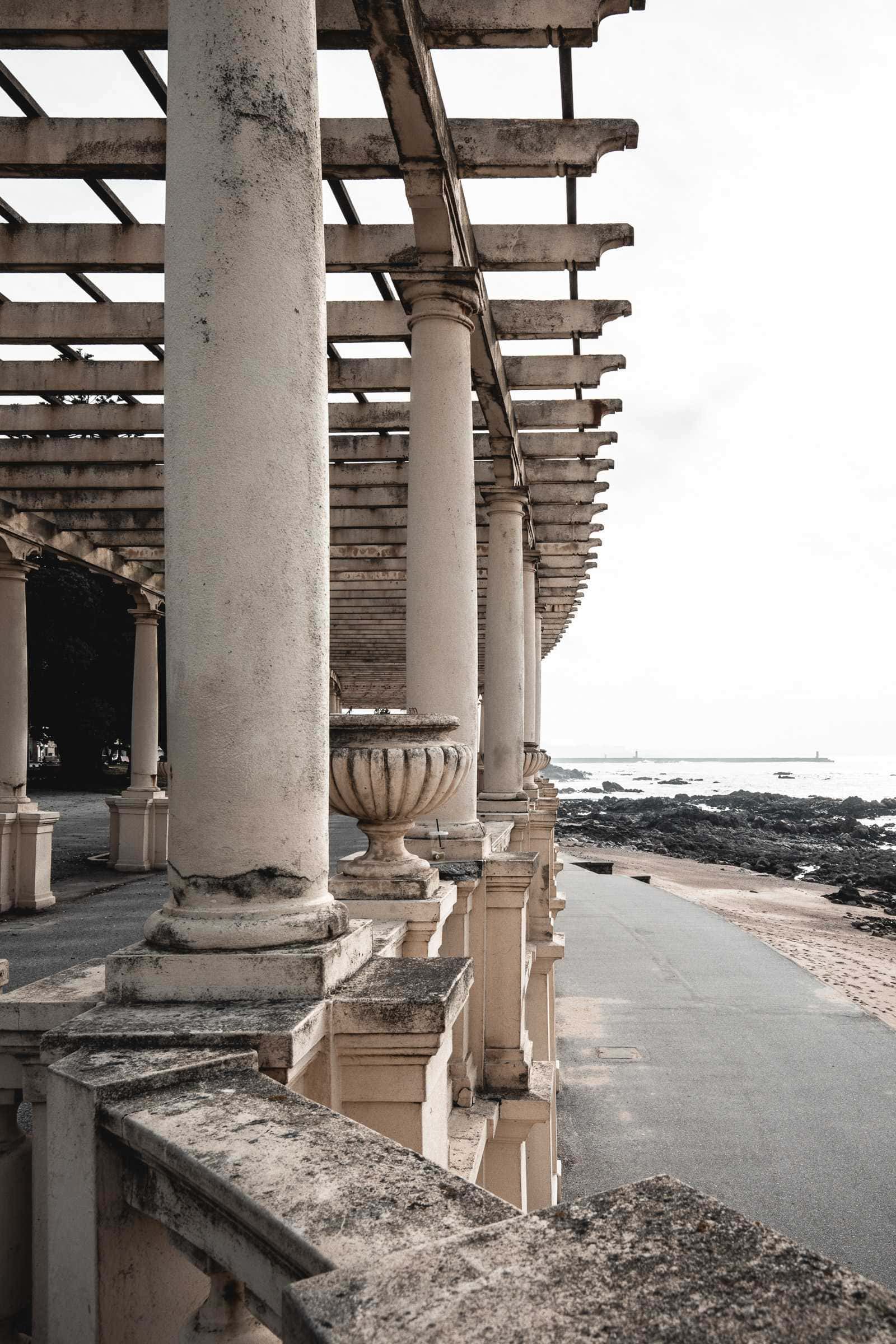
Foz do Douro is also home to the Pergola da Foz, a formerly grandiose (and now restored) portico right on the promenade – but it’s not much of an attraction. There are a few beach bars right on the beach. Even in winter one or the other bar was open! So I could soak up some sun and enjoy the salty-fresh sea air.
Where to stay in Porto
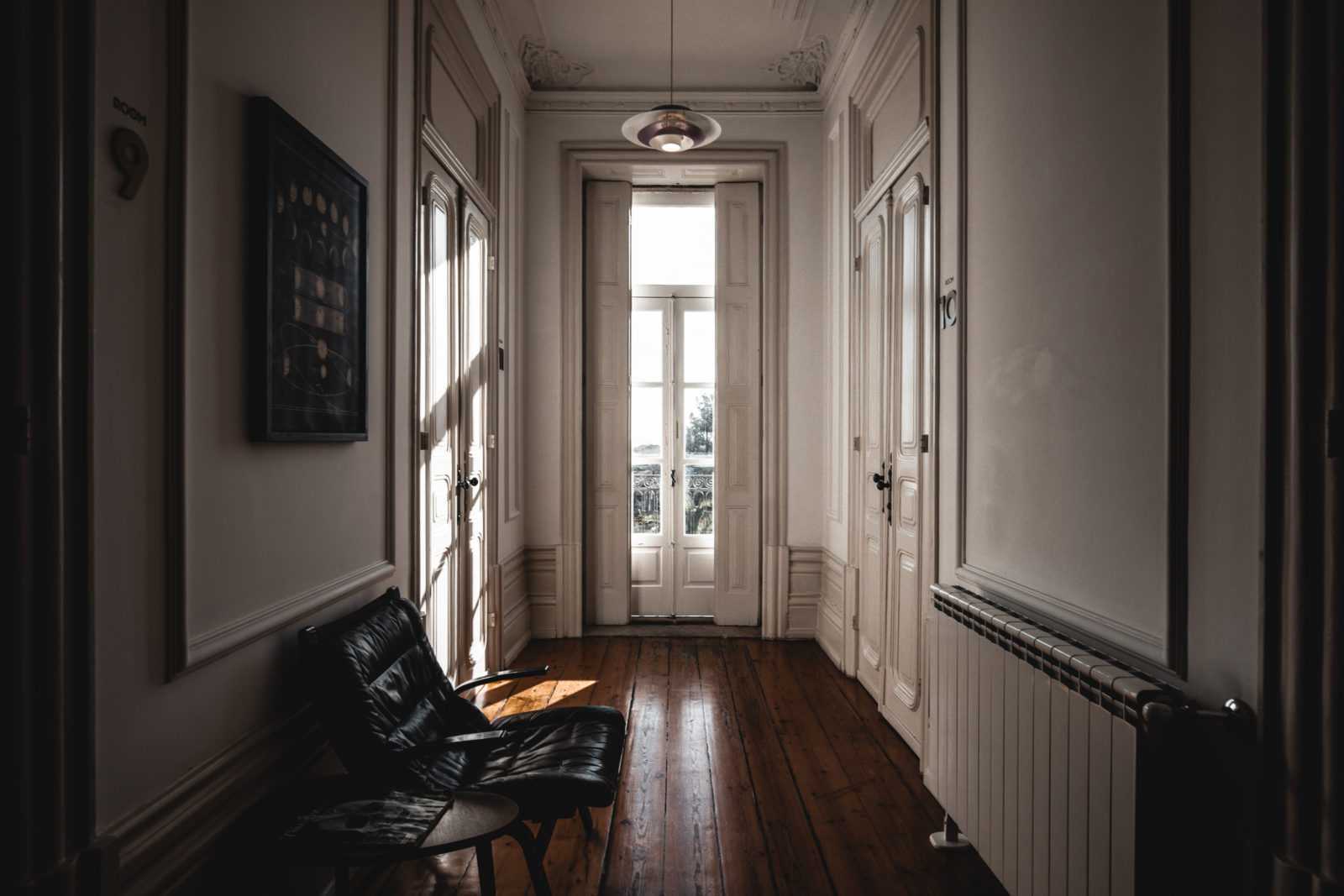
I stayed at the Porto Republica Hostel & Suites, and I couldn’t have found a better place. In addition to typical hostel beds in shared rooms, there are also cozy private rooms with en suite bathrooms. A room in the old building, with worn old wooden floorboards and a double door leading to the balcony, through which the sun always shone in the mornings—what more could you ask for? The hotel is relatively small and has a family-friendly atmosphere. It wasn’t fully booked during the off-season, though that’s certainly different in the summer. For me, it was the perfect mix of a great location, price, style, and just the right amount of coziness.
Arrival and Departure / Transportation within Porto
Porto is becoming more and more popular, which is also noticeable in the numerous flight connections. Among others, you can get to Porto from Germany with Lufthansa* or Eurowings*.
Within Porto you can get around the city very well by public transport. But even those I have used only little, because much is very good to reach on foot, and one explores cities anyway best walking.
However, there are affordable day passes for public transportation, or you can buy the Porto Card*—it includes many other discounts, such as admission to the Palácio da Bolsa.
No wonder J.K. Rowling is said to have been inspired to write her Harry Potter books in this bookstore! The Livraria Lello in Porto is one of the most beautiful bookstores in the world. Even if you are not a book nerd, you will be highly impressed by the intricate interior. Porto itself is already a fascinating city. Still full of history of when Portugal was a majestic country of seafarer, Porto is now one of the new trendy destinations in Europe. It’s welcoming, charming and young – and with its new fame it’s now keeping quite well with the ever-popular Portuguese capital Lisbon.
Livraria Lello: From Harry Potter to worldwide fame
While J.K.Rowling was most likely often able to browse the shelves of the old Livraria Lello alone in her Porto days, today it’s so crowded that you even have to buy a ticket before visiting. You’ve read it right: Livraria Lello is probably the only bookstore ever to charge an admission fee. There was no other way to cope with the crowds of visitors in what is actually a small bookstore! On many days, there is even a queue outside the bookstore because the store’s capacity is exhausted.
The spiral staircase in the middle of the store is the famous centerpiece of Livraria Lello in Porto.Very instagrammable: The Livraria Lello is a highlight in every Instagram feed.
Livraria Lello: One of the Instagram hotspots in Porto
I would have loved to have a look around Livraria Lello with more time, because the selection of books across all genres is absolutely gorgeous . But somehow you don’t feel much like browsing when people are pushing right and left to get the best Instagram photo in that limited space. Especially a place on the stunning red spiral staircase, which goes from the first floor to the second floor in the middle of the store, are highly sought after. But who could blame them? It’s really beautiful.
You can find out more about Portugal in my Portugal blog!
The secret of the Livraria Lello
The entire bookstore is completely paneled in ornately carved wood from top to bottom. At least it seems so. Because in addition to the Harry Potter story, the Livraria Lello also hides a small, not very well-known secret: The wood carvings, such as the imposing ceiling with its many scrolls, are in many places not made of wood at all, but of painted plaster, a technique that was also used in the Palácio da Bolsa in Porto. (Read more about the Palácio da Bolsa in my Porto Guide!)
Not as real as it seems: The interior of Livraria Lello.
Information & Admission Livraria Lello Porto
The entrance fee to Livraria Lello is currently 5€. You need to buy the ticket this next door in the separate ticket store, where you can also get lots of Harry Potter merchandise. Which is actually absolute unnecessary, because Livraria Lello is an amazing location even without all the hype around Harry Potter.
The entrance fee can be offset against a purchase, but often you won’t be able to browse in peace or finding something for exactly €5. If you don’t find anything, you get a small brochure about the history of the bookstore of the Lello brothers for your 5€ at the exit. Well, at least it’s something. 🙂
Harry Potter in Porto
If you are even more interested in Harry Potter, then this small but nice tour is definitely worth a visit.The admission fee is already included. Also great with kids, who will definitely remember their Harry Potter experience for a long time, because Livraria Lello is truly magical.
It should be no secret by now that I’m a book nerd – and in foreign cities I’m usually drawn to bookstores or libraries. Books are just so fascinating. And by books I mean “real” ones made of paper! I couldn’t get used to eBook readers and PDFs until today. There’s nothing like the feel of books on paper, is there?
Here you can find more about another very special bookstore that also fascinated me:
Great places to stay aren’t hard to find in Porto, but I can especially recommend the Porto Republica Hostel & Suites*! Don’t let the word “hostel” in the name put you off: they also have gorgeous double rooms with private bathrooms.
My hotel recommendation for Porto
The Porto Republica is located in a large historic building with high ceilings, herringbone parquet flooring, and a stylish atmosphere. It’s perfect for a city trip if you’re on a tight budget but don’t want to miss out on some eye candy.
Every year on January 27, Salzburg celebrates the birthday of Wolfgang Amadeus Mozart, the city’s most famous son. And that’s not all: Mozartwoche Salzburg is the festival in Salzburg that is all about Mozart and his life’s work.
It may not sound interesting to everyone, but a breath of fresh air will be blowing through the city during Mozart Week. A visit is also worthwhile for those who have previously shied away from classical music! I spent a whole weekend in Salzburg and followed in Mozart’s footsteps.
Mozartwoche Salzburg: Rolando Villazón and the Mariachis
The central day of Mozart Week Salzburg, which usually lasts a week and a half, is January 27 – Mozart’s birthday. The Mozart Birthplace offers free admission all day for birthday children and many other places also celebrate birthdays. This year, Rolando Villazón, the Mexican tenor and now also director, is the artistic director of the Mozart Week – and he is bringing almost revolutionary ideas to the Mozart Week!
There’s no other way to put it, because on January 27, I suddenly found myself at a spontaneous open-air concert in the streets of Salzburg’s old town: together with the Mariachis Negros, the master himself, Rolando Villazón, sang Mexican serenatas in honor of the birthday boy. Unusual. Highly off the beaten track. And pure goosebumps.
In addition to the classical concert events, there are also numerous events this year that address the theme of Mozart in Salzburg in a very special way – from a poetry slam with musical accompaniment to a ballet gala across all dance genres from classical ballet to breakdance. I couldn’t see everything, the time was far too short for that!
There are events every day during Mozart Week Salzburg: in the morning, at lunchtime and in the evening. Even the Oval, a location within the region’s largest shopping center, hosts a daily event. Unusual: The shadow theater Mozart’s Amazing Shadows tells Mozart’s life from the perspective of a mouse. So it’s also something for children – and very entertaining!
Concerts at the Mozarteum Foundation Salzburg
The Mozart Week Salzburg is organized annually by the Mozarteum Foundation, which is dedicated to preserving Mozart’s work and his traces in Salzburg. Many concerts therefore also take place in the Mozarteum Foundation itself. And to experience a concert in the gilded Great Hall is truly impressive – even if the average age of the audience at the matinee events drops dramatically, even if you are only halfway young.
Many concerts take place in the large hall of the Mozarteum Foundation during the Mozart Week in Salzburg.
Prices & Tickets Mozartwoche Salzburg
As you can imagine, tickets for Mozartwoche Salzburg events are not exactly cheap. However, if you book in good time, you can still get one of the rear seats, which are more affordable. Students up to 26 receive an additional discount. And the events, which are also aimed at a younger audience, are also cheaper, so that everyone can create their own personal Mozart Week.
I am the perfect tourist. Well, from a purely economic point of view. I visit the most overcrowded and stupid tourist traps. As long as they are among the top 10 must-see sights. Whatever the cost. Going to one place and skipping the most important spots – where would we end up? Ballooning in Mexico? (It was really unique!) For a mere forty dollars to the Rockefeller Center in New York? (Dream. Best sunset ever.) Whatever. You only live once. And who knows when you’ll ever come back? That’s why I always let myself be talked into it, even when common sense (or my wallet) tells me it’s not worth it.
I also suffer from acute FOMO: Fear of missing out, the perpetual fear of missing something. I always open the top 10 pages of the travel guide first, and then I more or less plan to make sure I catch everything. After all, I want to have seen the most important things.
Barcelona as the perfect city trip?
That was also the plan for Barcelona. I actually know it well, but it had been so long since my last visit that it was time for a full sightseeing tour again. In my memory, Barcelona was this energetic city full of lightness, sunshine, joie de vivre and the best pickpockets in Europe (I still remember a tearful visit to a police station that was bursting at the seams with other victims). Barcelona is also easy to get to for a few days and relatively cheap. Thought.
Barcelona’s most famous landmark (and permanent construction site): The Sagrada Familia
How your own memory can deceive you: Even in the gray cold of January, Barcelona is far too crowded at the tourist highlights for there to be any joy. And at prices that even scare me as an unshakeable tourist trap invader. I would have loved to see the Sagrada Familia again from the inside, Gaudi’s eternal construction site (and here in Berlin everyone laughs about the capital’s airport – just look at Barcelona, it took over 130 years to build!) The city’s landmark. A cathedral unlike anything else that has gone before. An architectural work of art. The plan: climb one of the towers at sunset and see Barcelona in the soft light of the evening sun.
The only problem is if you don’t buy your ticket in time for the coveted sunset phase, only the stupidest times are left – and then in the end you don’t have the scruples to fork out 32 euros for entry to a church, especially at a time you can’t do anything with. I mean: 32 euros – hello? Without me. That’s right. Because enough is enough. And you have to say no sometimes. Even if the top 10 list remains incomplete.
Tips for the Sagrada Familia
Be sure to buy tickets online in advance for the desired time. Even in the low season!
Good times are in the morning (it’s said to be less busy) and in the afternoon/evening at dusk. The soft light makes the interior glow and photographers love the mega view of Barcelona from the towers.
When you buy your ticket, you are asked which of the two open towers you would like to go up!
Tower on the Nativity façade – This side of the cathedral was designed during Gaudí’s lifetime. And you can walk on the upper bridge between the towers.
Tower on the Passion façade – This tower is higher and offers an unobstructed view of the city. This side of the cathedral was only built after Gaudí’s death. For the most part, however, this tower is considered to be the “better” one.
If you only want to visit the cathedral, you can also buy a one-way ticket without going up the tower for 15 euros.
Brasília is probably one of the most extraordinary capital cities in the world. I’ll show you which sights make Brasília so special and which highlights you should see on a trip there! And at the end there’s a little bit of Brasília’s history: how Brasília was built and when Brasília became the capital of Brazil!
The main attractions in Brasília
Planned on the drawing board by Oscar Niemeyer and Lúcio Costa in the 1950s, Brasília’s architecture is still unique today. The first time you drive through the center of Brasília, called Plano Piloto, you will notice the unusual urban planning with its long streets and perfectly divided blocks of houses. Don’t miss out on these sights:
#1 Catedral Metropolitana
The Catedral Metropolitana is quite small for a cathedral. At the same time, it is the perfect starting point for sightseeing and a good first impression of how architecture works here in Brasília. Lots of white, many clear lines and despite its age (Brasilia and thus all the buildings from the founding phase are almost 60 years old) still hypermodern.
Speaking of white: everything seems even whiter in Brasilia than anywhere else – the sun shines brighter, it always seems that way to me. The city is situated at an altitude of 1200m on a plateau and with so many sunny days, dark sunglasses are a good constant companion. Otherwise you almost become a little snow-blind. Only without snow, at an average temperature of 28 degrees.
Brasilia Cathedral is one of the city’s landmarks.
The entrance to the cathedral is hidden, with an underground staircase leading inside. And then, through the colorful glass mosaic windows, which seemed so inconspicuous from the outside, the full splendor of the cathedral unfolds. The acoustics in the church are also special: if you stand very close to the round wall as a couple, you can even hear quiet whispers, even if the other person is standing on the other side!
#2 Esplanada dos Ministerios & Praca dos Tres Poderes
The Esplanada dos Ministérios is home to all the country’s ministries and ends with the Praca dos Tres Poderes, where the most important government buildings are located. All the politics of the huge country of Brazil in one place – and nothing else. No stores, no restaurants, no cafés. This is the Brasília concept: everything is neatly arranged according to purpose, with the most important buildings of a capital city right in the middle.
Big decisions are made here: Brazil’s Senate and Parliament sit in the Congresso Nacional.
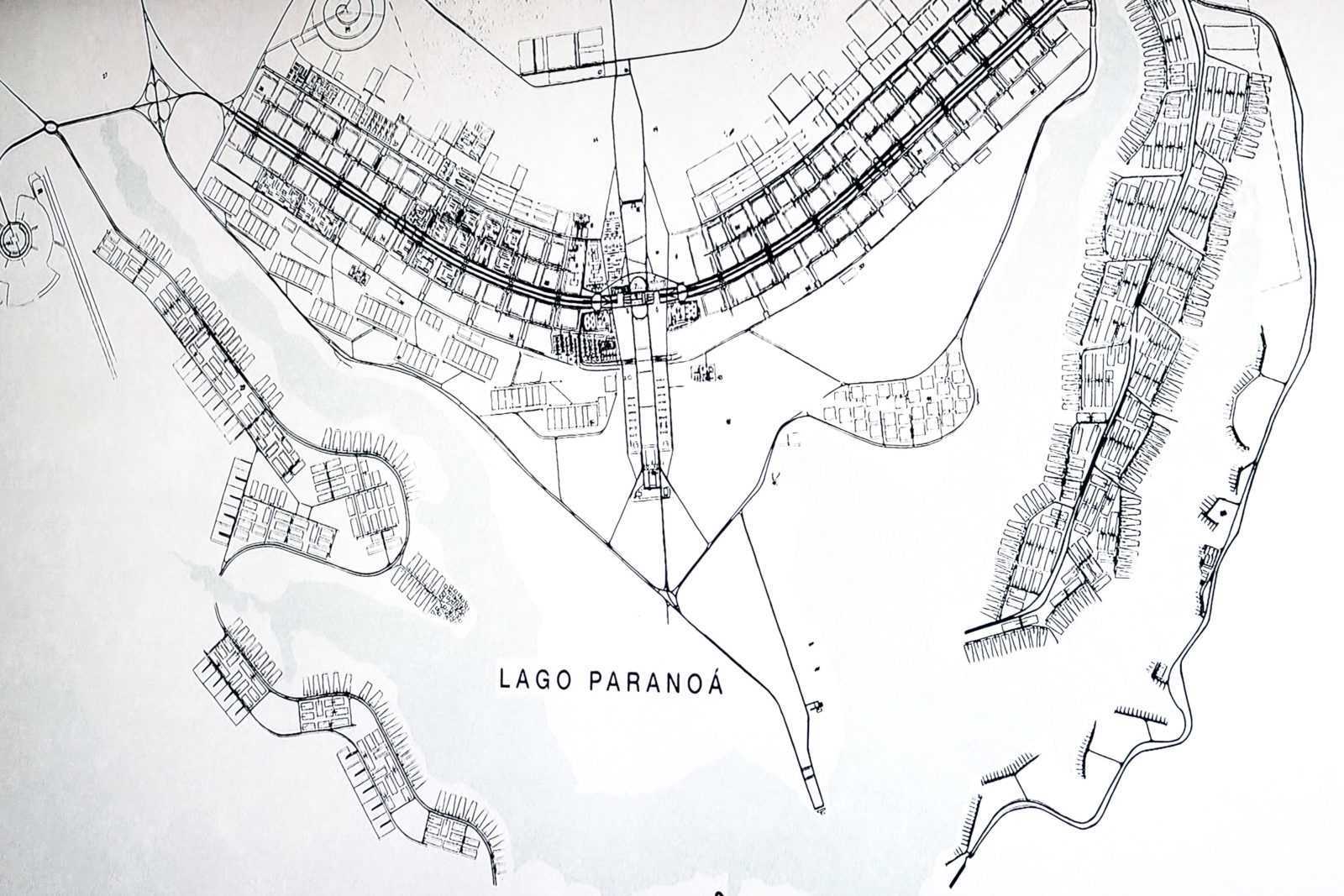
It’s worth taking a look at the map of Brasília: The Plano Piloto, the center of Brasília, looks like an airplane. The wings contain residential areas, while the fuselage houses government buildings and economic sectors such as hotels and banks. Arranged in order of importance: At the front of the cockpit, the Congresso Nacional (Congress consisting of the Senate and the House of Representatives), the Palácio da Alvorada (seat of the President) and the Supremo Tribunal Federal (Supreme Court) meet at the Praca dos Tres Poderes (Square of the Three Powers). All three powers gathered in one place. Very well thought out!
The development plan of Brasília: Looks like an airplane from above.
The Palácio da Alvorada, the seat of the Brazilian president, is not open to the public. What is interesting, however, is the built-in platform that protrudes from the palace and is specially designed for speeches to the people. The palace is guarded by the Dragões da Independência, a special unit of the Brazilian military, and with a bit of luck you can still observe a changing of the guard.
Seat of the president: The Palácio da Alvorada on the Praça dos Três Poderes.
Directly opposite the Palácio da Alvorada is the Supremo Tribunal Federal, the supreme court. The Praca dos Três Poderes is also a good example of the architectural concept: lots of space, straight lines and plenty of light. What you should definitely visit: the Museo Histórico de Brasília and the Panteao da Patria. Admission to both buildings is free and both provide very interesting insights into the history of Brazil. Tip: On the first Sunday of every month, the flag is ceremoniously changed on the huge flagpole with much fanfare, an event that many Brazilians also use as a family outing.
#3 Torre de TV / TV tower
From the Brasília TV tower you have the best view over the Esplanada and the entire Plano Piloto – and the best thing is: the view is free. Around the TV tower is the Feira da Torre, a permanent market with arts and crafts and street food. Since Brasília’s history has always made it a melting pot of all regions of Brazil, you can traditionally find the most exotic specialties from all over the country here, from tacacá from Pará to empadas from Goiás. The Feira da Torre is open every day, but on Sundays there are more stalls in addition to the regular ones and then it’s a funfair atmosphere!
#4 Memorial JK
JK (pronounced dschotta-kaa) is something you come across again and again in Brasília: it is the initials of the Brazilian president who got the long-dreamed-of Brasília project rolling in the first place. Unusually for a politician in Brazil, he is still revered like no other, especially in Brasília. Originally a doctor, Juscelino Kubitschek was known for being very close to the people and for his integrity – my aunt still talks with glazed eyes full of admiration about the day when she was allowed to meet JK for a brief moment as a young girl. JK brought about an economic boom not only in Brasília, but throughout the country, and lost all his political rights during the subsequent military dictatorship (1964-1984) because he was critical of the military. He died in 1976 in a traffic accident under circumstances that remain unexplained to this day.
After long negotiations and political pressure, the military finally gave in and granted the construction of the Memorial JK as a mausoleum and museum about JK’s life in 1981. The exhibition, which also contains a lot about the fascinating history of Brazil’s origins, is also recommended for non-Brazilians.
#5 Museo Nacional & Biblioteca Nacional
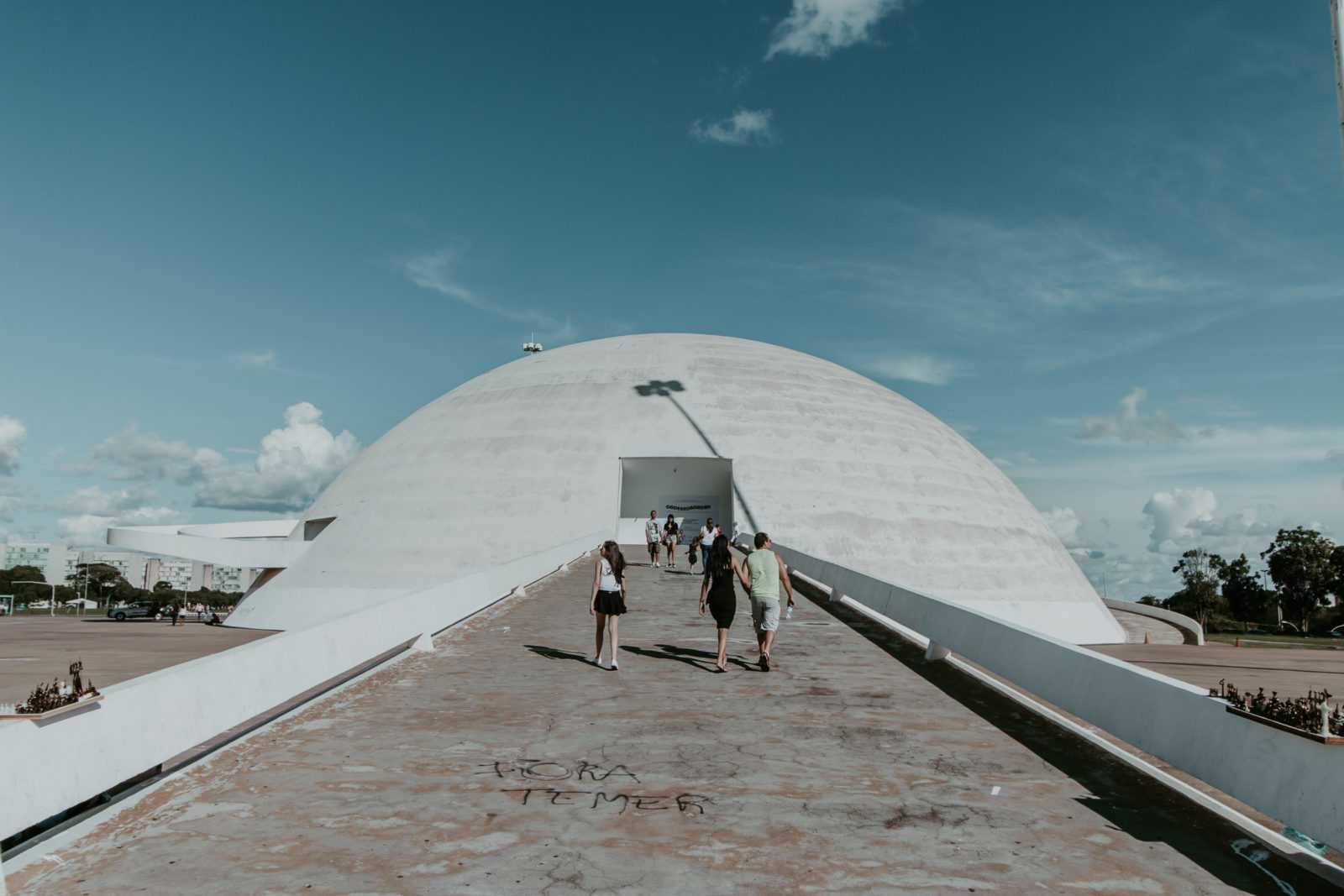
The Museo Nacional Honestino Guimarães and the Biblioteca Nacional de Brasília together form the Complexo Cultural da República João Herculino.
Another example of Brasília’s futuristic architecture: the Museo Nacional in Brasília.
Both buildings were only constructed in 2006 and yet fit seamlessly into the unusual 1960s architecture of Brasília. The Museu Nacional occasionally hosts exhibitions by contemporary artists and admission is free.
#6 Parque da Cidade
Those who have had enough of architecture can relax next door in the Parque da Cidade. Basically, it is no longer a park, but a huge leisure area that can only be crossed by car. Like everything in Brasília, the Parque da Cidade is very extensive, a bit like in the USA: you can’t do anything without a car. Even at weekends it never gets crowded here, although half of Brasília flocks here.
City of motorists: The Parque da Cidade (city park) in Brasilia is so huge that it can be accessed by car.
Helpful information for your stay: tips for your trip to Brasília
Arrival/departure from/to Brasília
If you are making a detour to Brasília as part of a longer trip to Brazil, traveling by plane is a good option. All major Brazilian airlines such as Latam, GOL, Avianca and Azul fly to Brasília. There are remarkably few international flights for a capital city; there are a few direct flights to the USA and neighboring countries such as Paraguay and Chile. As far as safety standards are concerned, I have never had any concerns with any of the airlines mentioned – certainly some things work differently than with European airlines, but I wouldn’t advise against any of them. The in-flight service and seat pitch have been reduced in recent years, but many Europeans are still surprised by the in-flight services offered by airlines that are considered low-cost carriers in Brazil, such as GOL. Tickets can also be purchased at short notice at reasonable prices – provided it is not the peak travel season (Christmas to Carnival or Easter week).
From the Rodoviária in Brasilia, the central bus station, buses travel to all parts of Brazil from Belém to São Paulo.
Although there is a well-developed bus network within Brazil with buses in every conceivable configuration (there are even pure sleeper buses with real beds), the journey can drag on like chewing gum. The roads are not always good and the distances are long. From Sao Paulo alone, it takes a good 20 hours to get to Brasília, and sometimes a day and a half to get up to the northeast. The security aspect should not be ignored: buses are occasionally robbed en route.
Train travel is not an alternative: the rail network in Brazil is virtually non-existent, and there are only a few freight train connections.
Getting around Brasília – public transport or car?
Unfortunately, public transportation within Brasilía is not recommended. Brasília is not a pedestrian-friendly city and public transport is poorly organized. To the delight of the Brazilians, two metro lines were added to the bus network a few years ago, connecting satellite towns such as Samambaia, Guará and Taguatinga with the Plano Piloto. These are not very suitable for visitors. The general rule for public transportation in Brasília is: if you can afford it, take the car because it saves a lot of time.
Wide streets, lots of concrete: Brasilia was designed for motorists. Pedestrians were somehow often forgotten in the planning.
I would recommend renting a car: As far as traffic is concerned, Brasília’s traffic is much more civilized than in other large Brazilian cities due to the size and space on the roads, so that even Europeans can manage there.
It often takes some getting used to the lack of street signs (this has improved somewhat, but not enough, with the hosting of the 2014 World Cup) and the fact that only the larger streets are named.
In residential and commercial districts, only the respective blocks of houses are numbered according to a specific system that varies from district to district or from city to city.
Please note: In Brazil, you used to have to carry an international driving license in addition to your German driving license. This is no longer necessary, a valid German driver’s license (+passport) is now sufficient in Brazil: https://infraestrutura.gov.br/carteira-internacional.html
If you don’t feel confident enough to drive yourself, you can now use Uber as well as regular cabs in Brasília.
Staying overnight in Brasilia
As everything in Brasília is neatly divided into different uses, most of the large hotels are located in the so-called Setor Hoteleiro (hotel sector) near the Esplanada. The majority are bed castles of larger chains without any real atmosphere.
So here are 3 tips for somewhat more unusual accommodation that matches the flair of Brasilia:
Brasilia Palace Hotel Designed by Oscar Niemeyer, the architect of Brasília. It also features the characteristic tile patterns of Athos Bulcao—truly typical of Brasília! Located right on the lake near the Palácio da Alvorada.
Hotel Nacional* Brasília’s first major hotel, opened in 1961, and once hosted all high-ranking state guests. Those days are long gone, but you can still get a feel for the flair of Brasília in those days.
Hotel Diplomat: Another one of the oldest hotels in Brasília—almost a relic. Simple, but very centrally located.
You can find a range of rooms in private accommodation on Airbnb, so look for accommodation in the Asa Norte or Asa Sul districts in typical older residential buildings in Brasília. You can also experience real Brasília flair there.
The retort city Brasilia: history and construction of the Brazilian capital
Brasília is a city planned on the drawing board. Through and through. Not much has changed to this day. Over the years, new so-called satellite cities have sprung up around Brasília proper, the Plano Piloto – but they all follow their own specific urban planning scheme. In 1960, Brasília was inaugurated as the capital after only five years of construction – quite a feat when you consider what had previously stood on this vast land: nothing. Nothing but Cerrado, the Brazilian savannah.
Life was concentrated in cities like Rio and Sao Paulo, with nothing at all happening in the center of Brazil. That should change with Brasília. The architects Lucio Costa and Oscar Niemeyer planned a visionary place right in the geographical center of the country. And to this day, I don’t know of any city that even remotely resembles Brasília. The architecture is unique and the reason why Brasília will always have a special place among all Brazilian cities and probably also among all retort cities in the world. Brasília has been a UNESCO World Heritage Site since 1987.
* * *
Are you interested in Brazil even more? You can find more articles about my second home here:
Somehow it’s no wonder that Tbilisi and Georgia end up more and more often on travel wish lists: Things are happening in Tbilisi. While tourists can still somehow come to terms with overcrowded and hyped city destinations like Berlin or Barcelona by going there out of season, the whole thing looks different for the ever-growing number of nomadic freelancers and artists. Berlin and Barcelona have always been prototypes for energetic, international cities where it was possible to live and work spontaneously and at low cost. But just: That was once.
The Fabrika in Tbilisi was once a – surprise – factory.
Fabrika Tbilisi: Hostel & Sanctuary for Creatives and Digital Nomads
Coworking spaces are no longer these small-scale organized office communities that you can book into spontaneously – they have now become a real industry in which big players are happy to play. At the appropriate price. It is also not getting any easier for artists to find suitable studio space.
And somehow, at least in Berlin, this is reflected in the mood of the city. Everything has become a little less creative, less spontaneous, less innovative. As a tourist, you may not care about that at first, but a creative, vibrant environment influences the atmosphere of a city. And this spontaneous, exciting – isn’t that what interests us about such cities? Fabrika Tbilisi is not only a coworking space, but also a pretty cool hostel! (By the way, there are also private rooms).
An old Volkswagen van serves as a photo booth at Fabrika Tbilisi.
Fabrika Tbilisi – the urban hotspot of Tbilisi
Fabrika in Tbilisi is such an exciting place. Formerly a large textile factory, here is a kind of cultural center of the city. The centerpiece is the large building on the side of the street: where sewing machines once rattled in Soviet times, hipsters from all over the world now sleep in the Fabrika Hostel. The lobby: an old hall with meter-high mullioned windows, furnished with comfortable sofas and pinball machines.
Next door is the adjoining restaurant with good cuisine, you can feel the will to create innovative dishes! So delicious!
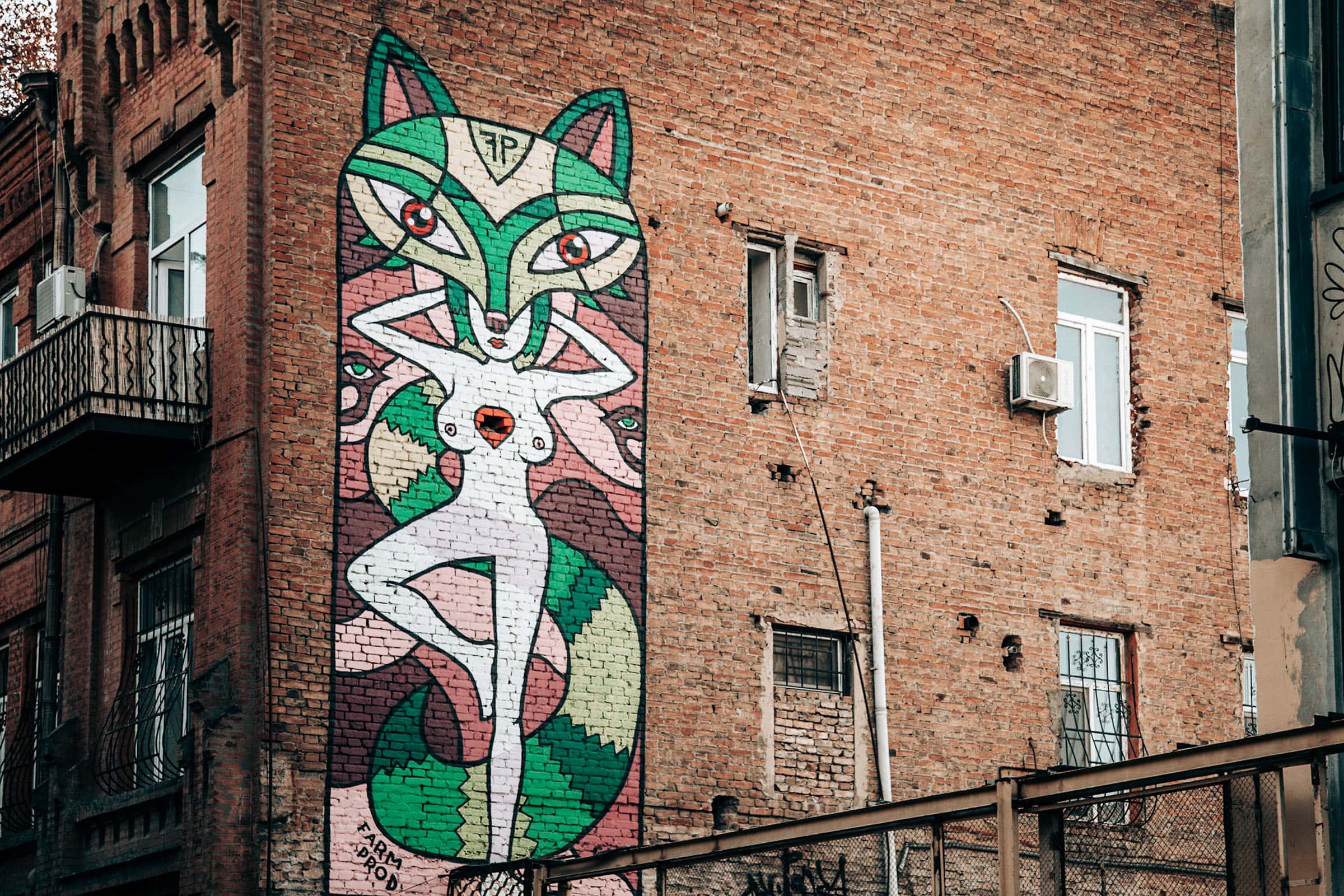
However, there are other bars and restaurants on the premises, plus artist studios and a large coworking space. And all kinds of little gimmicks: the most beautiful murals, a converted VW van as a photo booth and an old Lada as a photo spot.
It’s so beautifully called “Vinho do Porto” in Portuguese. And while you’re there, what could be more natural than a port wine tasting in Porto? Port wine is, after all, one of Porto’s oldest export hits and THE city’s signature product. Porto lies on the Douro River, and further east along the Douro lies the Douro Valley. This is where the grapes for this special wine are grown and pressed. In the past, boats known as “rabelos” transported the wine to Porto, to the most beautiful port wine cellars in Vila Nova de Gaia. There, the wines continue to age—for years or even decades, depending on their quality. By the way, today tourists cruise along the Douro on the Rabelos instead of transporting port wine—and I’ve heard it’s really worth seeing.
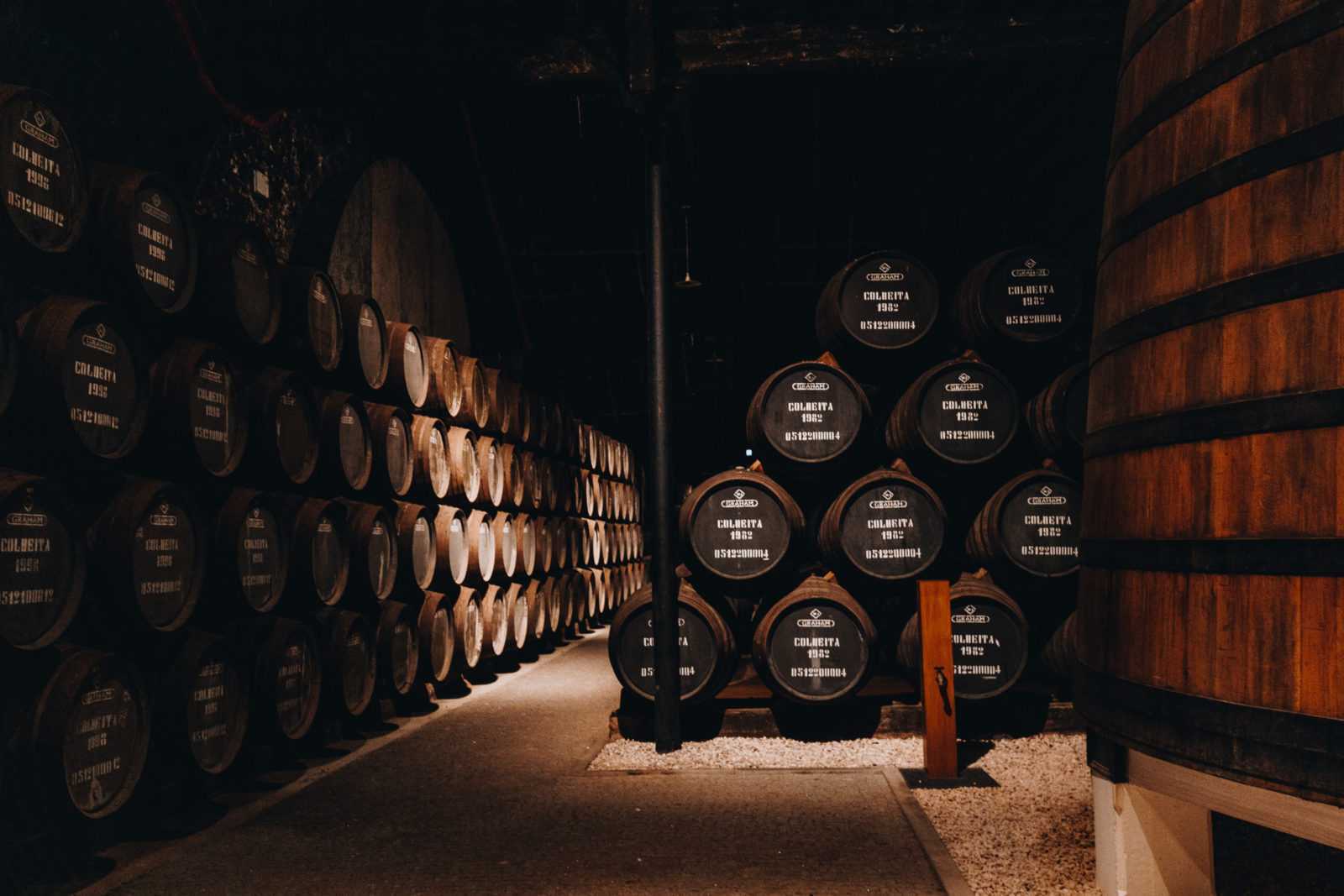
The younger port wines are stored in large wooden barrels.
Are you planning a trip to Porto? If so, I highly recommend my Porto Travel Guide!
What is port wine?
Actually, I’m not a big fan of port wine. Port wine is one of the sweet wines, they say, but it makes me sick to my stomach because it is so strong and reminds me more of cognac. And wine-wise, I’m generally not an expert. Although I’ve had plenty of opportunities to taste good wines, my wine knowledge doesn’t get beyond a simple “I like it” or “I don’t.” I’m sure they could slip me wine from a tetrapak and sell it as the most expensive wine ever. But I like to get to know new things on my travels, and Porto doesn’t work without port wine!
Kept like a treasure: some vintages are really valuable port wines.
When and how do you drink port?
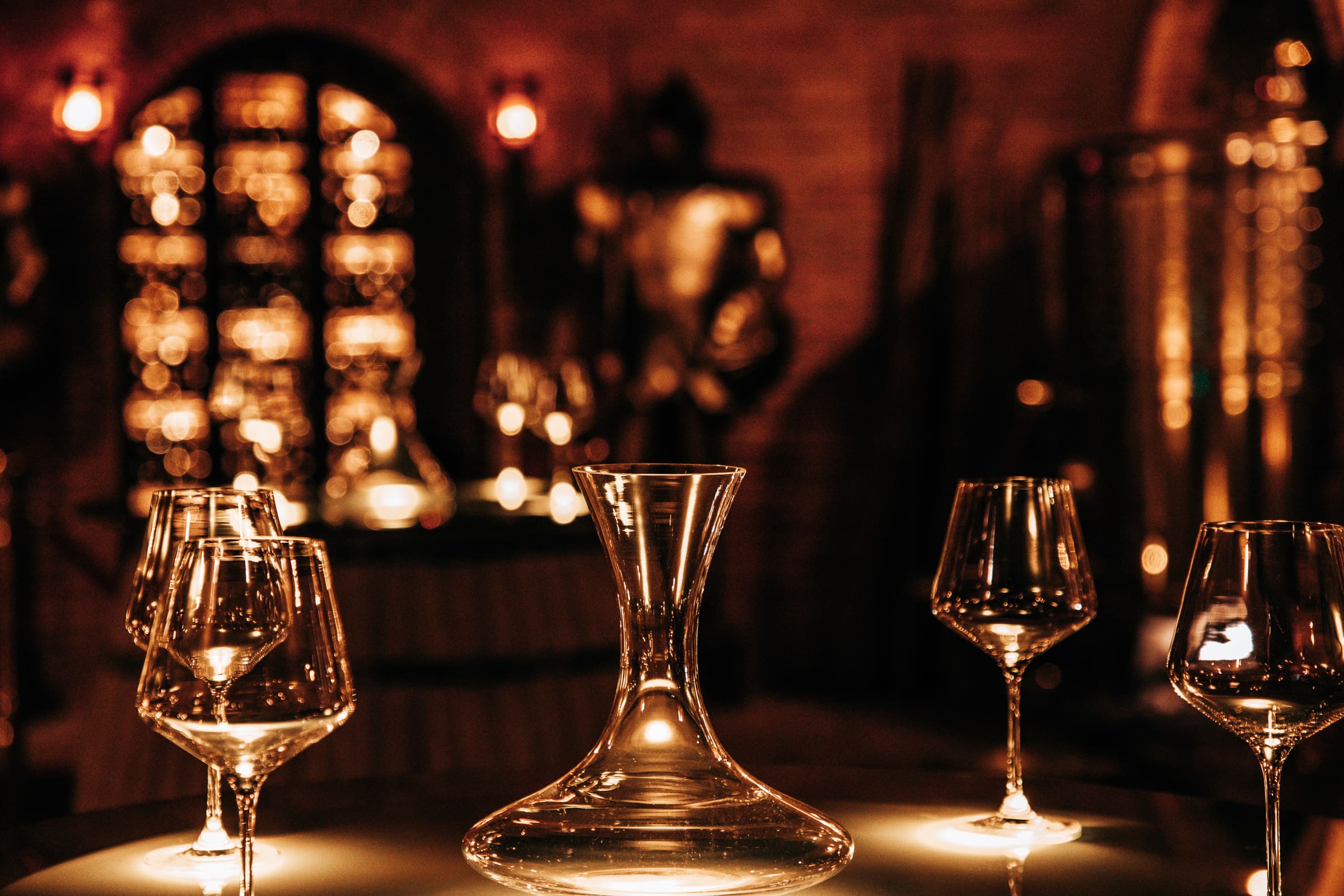
Traditionally, port is enjoyed as a digestif and paired with a cheese platter or dessert. It is served in tulip-shaped glasses that are slightly smaller than standard red or white wine glasses. Since port has a high alcohol content, only small amounts—typically about 80 to 120 ml— are usually served. However, port is also excellent when served chilled as an aperitif, as an accompaniment during a meal, or as an ingredient in cocktails.
Port wine tasting in Porto: Where to go for a good port wine tasting?
The friendly hotel employee recommended Graham’s Winery to me. Because when you stand on the banks of the Douro and look across to Vila Nova de Gaia, the dilemma becomes clear: one port wine winery follows another. Whether it’s Sandeman, Graham’s, Ferreira, Taylor’s, or Calem—one neon sign competes with another for attention. All the wineries offer guided tours followed by tastings; the Sandeman grounds even feature a hotel or hostel.
Graham’s in Vila Nova de Gaia: At this port wine cellar, you can buy and taste port wine
Guided tour of Graham’s Lodge
The tour of Graham’s winery is offered in different languages and is really informative: after a short film about the production in the Douro Valley, a tour guide leads you through the winery.
Port wine tasting at Graham’s in Porto
Port wine tasting with Tawny and Ruby
By the way, I ended up in the Portuguese-speaking tour with a handful of Brazilians. Which made it all the more amusing, because we Brazilians are communicative by nature and even more so after three glasses of port wine. In summer it must be even more beautiful up here: from the in-house restaurant you have the best view over Porto! Incidentally, I could taste out differences despite my untrained palate: I am more Tawny than Ruby. Further insight: Three port wines – and I’m blue.
Tawny or Ruby? With port wine, there are such differences.
The tour includes three different varieties, but connoisseurs can also go all out and sample the crème de la crème of port wines—provided they have the necessary cash on hand, since the wine tasting alone can cost as much as 200€.
Prior reservation is strongly recommended in high season!
How do you get to Graham’s Lodge in Vila Nova de Gaia?
Vila Nova de Gaia is located on the other side of the Douro River. If you’re staying in downtown Porto, it’s a bit of a trip to get to Graham’s Lodge by public transportation. However, with the Porto Card*, you can use public transportation—including the metro and buses—for free. There are many port wine cellars in Porto, but Graham’s Lodge is particularly beautiful with its impressive view of Porto.
If you don’t feel like looking up addresses and directions, you can also join a walking tour and visit several wineries in a single day:
If you don’t feel like or don’t have time to drive all the way out to Graham’s (I took the bus there and strolled back along the Douro in the evening—but it’s quite a distance), you can also visit the Calem wineries and sample some port there! Calem is also located on the other side of the Douro, but right on the riverbank and near the Ponte Dom Luís I.
Well, it would be a bit last-minute and pretty spontaneous—but would I maybe, just by chance, be up for a weekend in Tbilisi? Sandra from Tracks and the City didn’t even have to ask. Spontaneous trips? They’re always the best. So then—let’s go find the best sights and tips in Tbilisi.
The best sights in Tbilisi & what to do
It’s not that Georgia has nothing else to offer—quite the opposite! Georgia is kind of the new “it” destination for nature lovers because it’s a great place for hiking and has a certain exotic appeal—it’s not yet on the radar of package tour travelers and is blessed with incredible mountain landscapes.
But Tbilisi as a city break? Does Tbilisi have any sights? Here in Germany, Georgia’s capital is still relatively unknown. Unfairly so. And best of all: Tbilisi is accessible year-round. The flight takes 4 hours, but with a little luck, it’s pretty relaxing—and you’ll land in a destination that’s (still) spared from tourist crowds.
The beautifully decorated arcades are typical of the old buildings in Tbilisi.
Wear your most comfortable sneakers and off to the old town! The old town center of Tbilisi is well-kept and well-preserved, and houses many sights such as the clock tower of the Reno Gabriadze Theater, the Sioni Cathedral or the old caravanserai. Here you can also find the best examples of the typical old Tbilisi architecture: the romantic houses with their ornate wooden arcades make you want to move in right away!
#2 Mtatsinda
Tbilisi lies in a valley along the Kura River, so it makes sense to check out the city from one of the surrounding mountains. Mtatsinda is a popular destination, even for locals. You can get up (and down) via a fairly modern cogwheel railway. And at the top, you’ll find the most amazing view of the city, an amusement park with a Ferris wheel (for those who still want to go higher), a petting zoo, and various restaurants at the chic mountain station.
From Mtatsinda you can see far over Tbilisi.
By the way, the petting zoo is a Georgian thing: The Georgians are very fond of animals and next to the petting zoo, between the cotton candy stand and the fairground stalls, there is a stand where two huge St. Bernards can be cuddled for a small fee. Usually, I’m not a big fan of any kind of animal attraction, but these two seemed so relaxed and happy, probably even Peta would have given his blessing. Nice gimmick at night (besides the view) is the TV tower, which changes color almost every minute.
Yes, I know—I’m not really into religion or the church, but in the end I always end up in at least one anyway. Church history is simply part of the picture if you want to explore a country’s culture and history. This is especially true in Georgia, with its deeply religious population and very long church tradition. Georgians have their own version of the Orthodox Church, their own patriarch, and their own customs.
As is customary in Orthodox churches, there are no seats, and services can sometimes last half a day. But that’s okay—churches are often as bustling as a train station: sometimes you step outside for a smoke, then you run into acquaintances, and amid all the comings and goings, a baptism or even a wedding takes place. Even though we were obvious tourists, we were immediately welcomed into the congregation, but we ultimately declined the priest’s offer to present our intercessions to the Lord on our behalf due to the language barrier.
Please note: The dress code is strictly enforced. Women are required to wear head coverings, and in some churches, skirts are even mandatory (in most cases, headscarves and wrap skirts are available to borrow). Photography may be prohibited. The highlight is Sameba Cathedral, which was built as recently as 2004 and towers high above the city.
Sioni Cathedral in downtown Tbilisi is one of the most important churches of the Georgian Orthodox Church.
#4 The magnificent houses from the Wilhelminian period
From splendor to decay: There is much to discover in Tbilisi’s old buildings.
It’s unbelievable, how many architectural highlights are to discover behind some half-ruined facades. Some houses are inhabited and privately owned, but you can ring the doorbell and ask nicely. Georgians seem reserved toward strangers at first glance, but strangely enough have no problem with a group of tourists strolling through the backyard of their own house with their cameras.
#5 Georgian specialties
Definitely worth to try!
#6 Georgian wine and spirits
Georgians are no strangers to good food and drink: they drink, eat, drink, eat—until the doctor comes. And it’s no wonder: Georgia is the world’s first wine-growing region, and during the Soviet era, it was considered the Mecca of fine cuisine. Georgian cuisine is so incredibly good that it’s impossible to sum it up in this short paragraph: a separate food guide is coming soon. For now, let’s raise a glass of chacha (Georgian brandy)! And there’s good news for vegetarians: Georgian cuisine isn’t actually that meat-heavy—Sandra from Tracks and the City did some special research for her upcoming Veggie Food Guide.
Special: Georgian wine matures in clay jars and tastes particularly intense.
#7 The Georgian alphabet
With all the squiggles, the Georgian alphabet is really pretty.
I, being such a philistine, had no idea that Georgian had its own alphabet. I thought it was just Cyrillic letters or variations thereof. But it actually does have its own alphabet, which—in my opinion—looks absolutely beautiful with all its flourishes and curves. It’s kind of really flowery and a total feast for the eyes.
#8 Stray Dogs and Cats in Tbilisi
It’s immediately obvious: There are plenty of stray dogs and cats roaming the streets of Tbilisi. Before I could feel my heart break, I was assured that all the dogs were registered—and indeed, all the dogs are very well-groomed and appear healthy. And that’s not all. Most of them are so trusting that once they’ve taken you into their doggy hearts, it’s hard to get them to leave you alone. Nowhere are they chased away or mistreated, as one might be accustomed to seeing in other countries. On the contrary: even in front of the Prime Minister’s official residence, dogs are allowed to lounge around and lie completely relaxed in front of the building, right next to the security guards.
#9 The sulfur baths in Abanotubani
The smell of sulfur may be unpleasant at first sniff and remind you of rotten eggs, but that feeling disappears as soon as you see the magnificent baths in Abanotubani, such as the Orbeliani Bath.
Beautiful: The entrance portal to the Orbeliani Baths in Abanotubani.
Outside, it’s like a scene from *One Thousand and One Nights*; inside, you’ll find private bathing cabins where you can relax alone or with a partner or friends. Massages are also available—and as always, despite the opulence, everything comes at a bargain price. The perfect spot for a little getaway! You can bathe with or without clothes (which Georgians might find a bit strange)—it doesn’t matter, because once you’ve rented the bath, you have it all to yourself! By the way, it’s a good idea to make a reservation on weekends, since the sulfur baths in Abanotubani are very popular even among locals!
The sulfur baths of Abanotubani in Tbilisi.
#10 Getting to know the Georgians
Our travel guide to Georgia, which I’d grabbed just before departure, was brimming with enthusiasm for Georgian hospitality. While I had already pictured Georgians constantly singing and dancing, always inviting you home and practically forcing you to become part of the family, the reality was sobering. I found the locals to be very reserved, not to mention lacking in a service-oriented mindset. Friendly hellos, “please,” and “thank you” are rather rare, but that’s not meant in a negative way. And if you make an effort, you’ll definitely get a nice burst of positive energy in return.
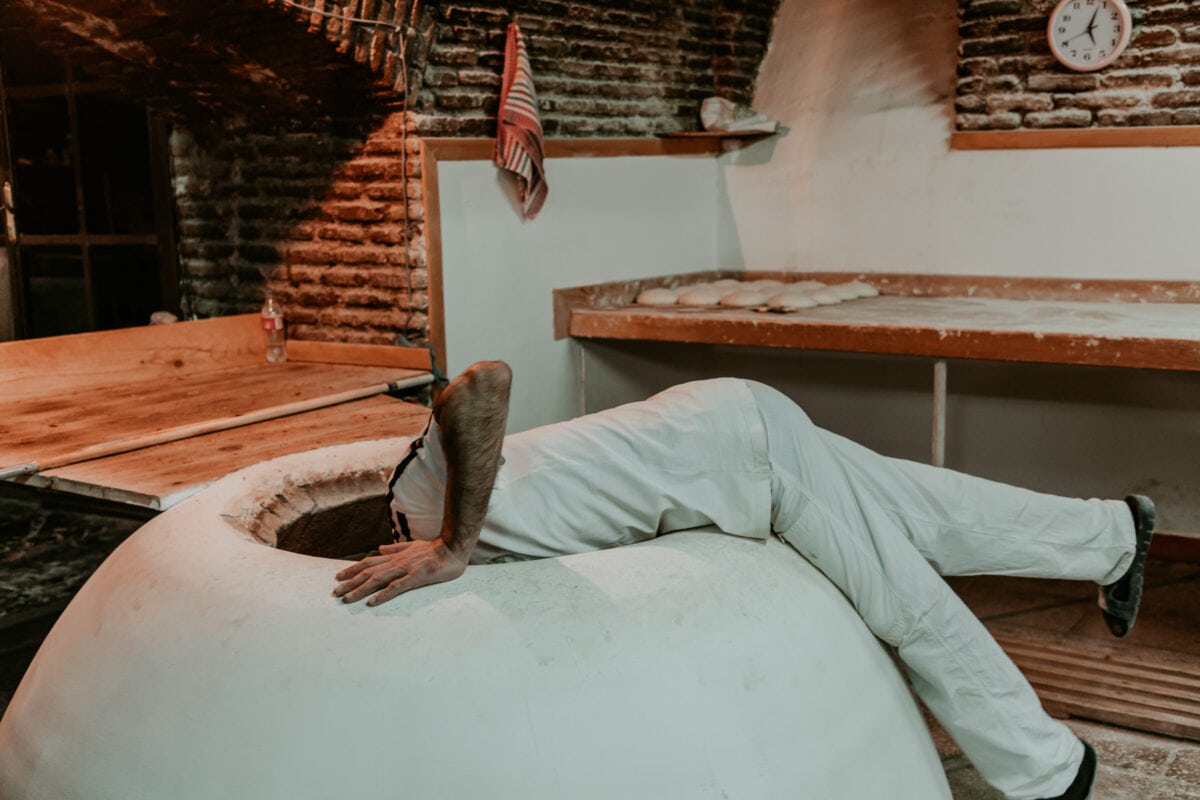
As with this baker here, who after a small warm up even asked us behind the sales counter, so that we could better film his bakery skills. Then he proudly presented his pastry and finally said goodbye to us with air kisses and a lot of winking.
By the way, the bakery is right across from the History Museum—there’s no sign, so just go down the stairs to the basement.
Tips for your stay in Tbilisi: Treat yourself to a local tour guide!
We probably would have missed out on most of these tips and background information forever if Sandra and I hadn’t had our gem, Irina, with us—she enthusiastically guided us through Tbilisi’s Old Town for almost an entire day, was always on hand as our photographer, and is the reason why there will be several more posts about Tbilisi to come.
The thing is, no one in Tbilisi is really geared toward international visitors yet, which is really great on the one hand, but on the other hand, it can be difficult if you’re interested in more background information. There isn’t that much travel literature about Tbilisi yet. Once you’re there, many interesting sights are labeled only in Georgian, and people don’t always speak English. While that looks nice (see 6.), it’s difficult for non-Georgians. All the better that we had Irina, who was also happy to speak German with us. She actually preferred that to English, since she studied in Germany for a long time.
Irina offers her tours on a very private basis, so to speak; she doesn’t have a website or anything like that—so she’s a real hidden gem! If you’re interested in tours in and around Tbilisi with Irina, feel free to leave a comment below this post, and I’ll put you in touch with her.
Boutique Hotels in Tbilisi
You can find good, affordable accommodations in Tbilisi, and some really great boutique hotels have opened there in recent years. One of them is the Museum Hotel Orbeliani, located in the Orbeliani family’s historic city villa (the Orbelianis, by the way, are also the creators of Orbeliani chocolates, a Tbilisi delicacy that’s hard to find—more on that in the upcoming Food Guide!). The location on the multi-lane main street takes some getting used to, but there are also rooms facing the back—and the hotel’s unique and ultra-stylish decor more than makes up for it.
More cool places to stay in Tbilisi:
Fabrika Tbilisi* – Not only meeting place for digital nomads, but also a great hostel! Private rooms are also available. Cheap. You can find out more about Fabrika in my article here.
Rooms Hotel Tbilisi – A very cool boutique hotel near Tbilisi’s grand Rustaveli Boulevard.
Radisson Blu Iveria – It may be a high-rise with a somewhat generic chain hotel vibe, but it has a rooftop pool with the best view of Tbilisi!
Christmas in Tbilisi: Extra tip for Christmas fans!
Georgia and Christmas? Christmas is celebrated extensively in Georgia, and in Tbilisi many main streets such as Rustaveli Boulevard are beautifully decorated for Christmas. The best thing: If you’re sad that the cozy Christmas season is over, you can get another one right after in Tbilisi: Georgians don’t celebrate Christmas until January 7, and until then, along with New Year’s Eve, it’s the most festive time of the year!
Cozy: Tbilisi is also a nice destination around Christmas time.
This research trip by Sandra from Tracks and the City and me was supported by the Tourism Development Department of Tbilisi City Hall.
Poland is generally an increasingly popular destination for city trips, whether it’s Poznan, Warsaw, Krakow, Gdansk or Wroclaw. I’ll show the unusual sights Wroclaw has to offer!
Wroclaw sights: 10 tips for a city trip
Unfortunately, Poland in November is not particularly inviting weather-wise, it is often already freezing cold. In these tips for your next trip to Wroclaw, I’ll tell you how you can still have a great time in Wroclaw even in colder temperatures (and enjoy the fact that the city is not quite as full of tourists as in summer): 10 sights that make Wroclaw so beautiful in winter!
As in many Polish cities, the Rynek, the market square, is the center and heart of the old town. There are numerous pubs here and in the evening there is always something going on. Wroclaw has a big university with many students living here, so there are many cheap bars and pubs and a lively nightlife. There are also many good restaurants everywhere.
#2 Krasnale: The Wroclaw Dwarfs
They are scattered all over the city: Little bronze dwarfs, just 30 centimeters tall, in amusing scenes or telling a funny story. They steal ice cream cones from ice cream parlors, take a siesta in front of restaurants with a full belly, or withdraw money from ATMs. And new, bolder ones keep popping up. There are now over 600 in the city!
Originally from the anti-communist movement, the dwarfs are now a landmark of the city. The Krasnale, as the Wroclawian dwarves are called in Polish, even have their own website, where you can also learn more about the interesting background story.
Situated almost on the Rynek, it is only a stone’s throw from the market square to St. Elizabeth’s Church. For just five zloty (about €1.25), you can get a fantastic view of the city from the tower of St. Elizabeth’s Church. However, the tower is open only from April to October.
#4 Time Travel at the Museum of Games and Computers
Probably younger generations won’t remember a lot of the exhibits here. Or it really feels like a museum with dusty, old things from a distant time.
But I’m a child of the eighties and I was immediately hooked at the sight of Gameboys, Super Mario &Co. in the Museum of Games and Computer in Wroclaw. Best of all, you can try out most consoles and games as you please and play as much as you like.
Around the corner from the Games Museum is Kolejkowo. Kolejkowo is a miniature world with railroads and shows an entertaining recreation of Wroclaw and Lower Silesia. Originally designed more for children, but we had fun there as well. The figures and landscapes are designed down to the smallest detail. And the amount of work people put in here is impressive!
#6 Vegan delicacies in Wroclaw
The fact that you can eat well in Poland is no longer a secret. Only vegetarians and vegans sometimes have a hard time with the hearty Polish cuisine with lots of sausage and meat. However, in cities like Wroclaw with a lot of young people, the options for vegans have improved a lot. There are more and more good vegetarian or even vegan restaurants and the quality is really good. Vega, for example, is a vegan paradise on two floors directly on the market square. (Tip: Sit upstairs, it’s more comfortable!).
Perhaps one reason why vegetarian dishes are so popular in Poland, despite many hearty meat dishes, are the bar mlecznys, or milk bars, from the socialist era. Milk bars were canteen-like eateries that served mainly home-cooked vegetarian meals for little money. Milk bars used to be on every corner instead of privately-owned restaurants, and now the milk bars of those days are experiencing a renaissance. So be on the lookout for milk bars!
You can find lots more tips for cool Polish cities on my Poland blog!
#7 Market life in Hala Targowa
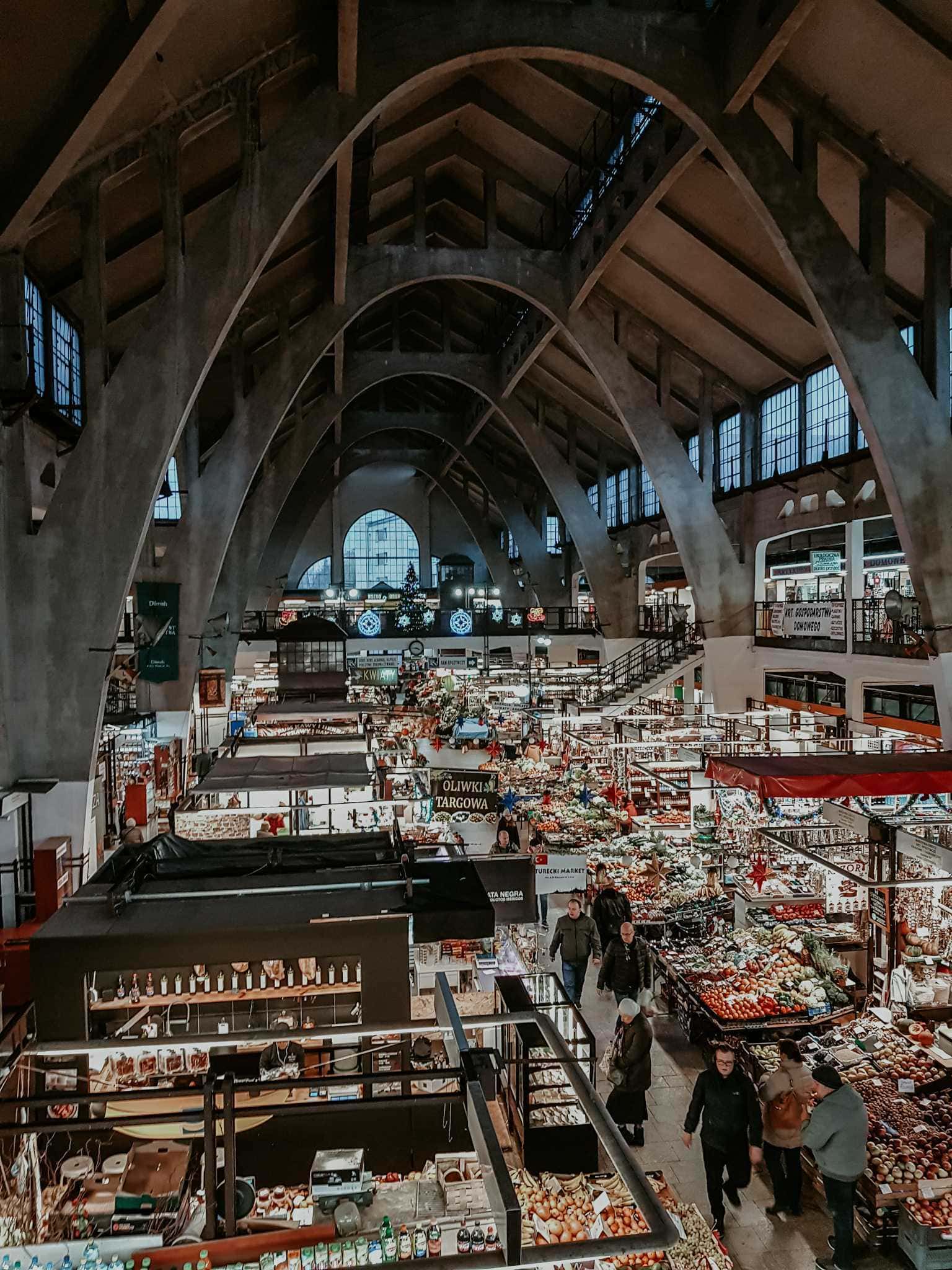
The Market Hall Hala Targowa is a nice place to visit even in winter. Here you can find all kinds of things: Flowers, fruits, vegetables, food and on the upper floor household goods and handicrafts at small prices. Architecturally worth seeing is the roof construction in shape of a ship. Of course, you can also eat well and cheap at Hala Targowa, and there’s even a milk bar here. Definitely worth a visit!
#8 Georgian food in Wroclaw
Not only Polish cuisine is delicious, there is plenty more to explore in Wroclaw. By chance we ended up at Chinkalnia with real Georgian cuisine. I have heard many good things about Georgia, including Georgian cuisine, and at Chinkalnia I was not disappointed. Not only did it taste really good, the really attentive service provided a complete introduction to Georgian food culture! This was the perfect preparation for my trip to Tbilisi I took later: Travel Guide Tbilisi
#9 Coffee culture in Wroclaw
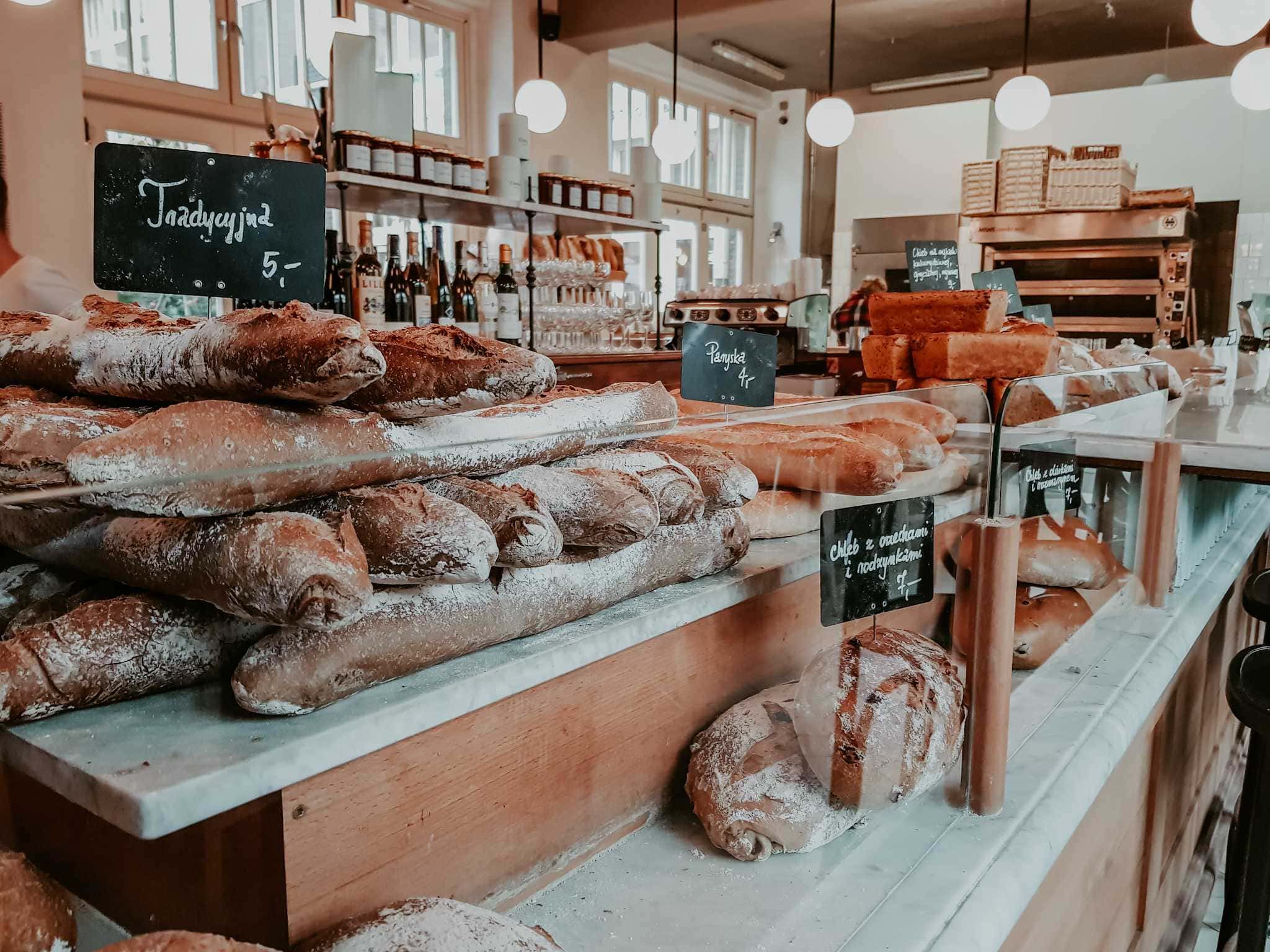
It’s cold outside, so what could be better than hopping from café to café? Not a problem in Wroclaw. A few of my favorites: Charlotte – Located in the middle of Wroclaw’s student district, in a courtyard that reminded me of the Hackesche Höfe in Berlin with its beautiful tiles. With a French touch, you can get freshly baked bread and fragrant croissants all day long, served with homemade chocolate creams and jams. Yum! And perfect for a second breakfast. You’ll feel like in the middle of Paris!
Chocolate Lounge E.Wedel – E.Wedel is something like the Polish Lindt Chocolate: fine chocolate and pralinés. The Café am Rynek has everything a chocolate lover’s heart desires. Be sure to try the pralinés!
Giselle – Small cozy café with Parisian flair. Here you can sit for hours with pleasant background music. And the omelets are great!
An alternative guide to Wroclaw
In their alternative travel guide, Ewa and Mirko give unusual tips off the beaten tourist track. Both also write a blog worth reading with lots of tips about Wroclaw – check it out: WroclawGuide.com
#10 Christmas market
If you come to Wroclaw in December, you can experience the beautiful Christmas market on the Rynek, which has a great atmosphere. Somehow Christmas markets in Poland don’t seem quite so terribly commercialized to me yet.
There are still many small stalls with beautiful handicrafts or treats like the Hungarian Kürtőskalács, which is a kind of Baumkuchen, also called Baumstriezel. These are really tasty when served steaming hot off the spit!
A short trip to Provence can work wonders: the balmy Mediterranean air, the scent of lavender—and everything feels right again. Here, I’ll share my very own tips for Aix-en-Provence.
Aix-en-Provence: The romantic small town in the south of France
I’m probably what you’d generally call a Francophile. While others complain that the French always refuse to speak even a single word of any other foreign language, I’m happy about it. It feels good to dust off my school French again. Admittedly, it’s a bit rusty, but it’s more than enough for a quick chat. French is a beautiful language, and honestly, I can totally understand why the French are so proud of their culture and language.
Rustic charm: In the middle of the old town of Aix-en-Provence is the Place d’Albertas.
That said, a lot has changed in recent years. I still remember well how, during my early years as a pilot on flights to France, there was hardly a single French person who spoke even a little English. Communicating without any knowledge of French was quite a challenge back then. That hardly ever happens these days—almost everyone speaks a few words of English, and if they don’t, they don’t expect the other person to speak French either. The French have really become quite modern. And I always look forward to our now-rare overnight stays in France—for example, in Aix-en-Provence.
Aix-en-Provence: Tips for an afternoon
I feel like I’ve been to Aix-en-Provence a hundred times—though in reality, it’s probably closer to fifty. That’s pretty often. It always surprises even me how much I’ve accumulated over my 18 years of flying. And yet I still manage to get lost time and again in the pretty old town center of Aix-en-Provence, which, admittedly, isn’t even that big. My sense of direction is truly abysmal. But that’s okay—there’s always something new to discover—and something old to enjoy.
Aix is one of the most expensive cities in France, but it also offers one of the highest qualities of life. That makes sense. The city is compact, small, and tranquil—and it’s a college town, so it’s not at all stuffy, as one might expect given its many historic buildings and rich history. The city is constantly reinventing itself without losing even a bit of its old charm.
And in the alleys you can find all kinds of nice little stores, cafes and restaurants. No wonder I’m always happy to while away an afternoon there. A few tips:
Pâtisserie Weibel – A pastry classic in Aix! A bit pricey, but you get mega tartlets, macarons, éclaires, and just about everything French pastry piggy you can imagine. And since the last renovation, the attached café is also visually an absolute pastel sugar dream!
Burger Bar – Open around the clock, which is quite handy in my case when I’m on early duty! Otherwise, in classic French fashion, most restaurants in Aix don’t open until dinner time at 7 p.m., and by then I’m usually already throwing on my pajamas.
Shopping in Aix-en-Provence
Even though Aix is a small town, there are plenty of shopping options—and, conveniently, they’re all concentrated in a small area. There’s even an Apple Store at the end of Cours Mirabeau! Next door, on the new little shopping street, you’ll also find the larger chain stores—like Zara, Zara Home, Sephora, and Fnac—that aren’t located in the historic city center. And there’s a branch of Maisons du Monde, my favorite home decor store. If you’re lucky, the farmers’ market will be on at Place Richelme. Or, on the weekend, check out the flea market on Cours Mirabeau with its beautiful antiques—it’s got that authentic Provence vibe.
Graz has been one of my favorite destinations on duty ever since. Graz is quite a large city by Austrian standards, but for me as a Berliner it is small and tranquil. Nevertheless, there is a little bit of everything: Nature (the Mur river is wonderful to stroll along), a pretty good selection of large and small stores (in case you get the shopping urge), lots of nice cafés and restaurants and even great art exhibitions!
It’s just a shame that it was Monday, and my favorite museum, the Kunsthaus Graz, was closed. It’s really a shame, because no matter what exhibition is on, I always enjoy going there and marveling at the extraordinary architecture—so organically shaped and whimsical. It doesn’t fit in at all with the traditional old town surrounding it, and yet it’s interesting precisely because of the contrast.
Up the Schlossberg in Graz
By the way, one thing you can always do is head up to the Schlossberg and take in the view of Graz from above. The view over the city and the mountains in the background is uniquely beautiful—and luckily, the weather rewarded us with a golden November day.
There are three ways to get to the top: on foot (not an option for me after several days of early shifts with little sleep), by the Schloßbergbahn, or by the Schloßberglift. The Schloßbergbahn is a funicular, and a one-way ticket costs just €2.40. Convenient: Public transit tickets are also valid here. The Schloßberglift costs just €1.60 for a one-way ride but doesn’t offer the beautiful views along the way. However, racing through the massive rock in the glass elevator does have its own appeal. Tickets from the Graz public transit system aren’t valid here.
Once you reach the top, there are several places to stop for a bite to eat: At the very top is the Schlossberg Restaurant with its attached beer garden; right next to the Schlossberg Lift is the stylish Aiola Upstairs; and my absolute favorite, the Starcke Weinhaus, which, with its enchanting terraces on multiple levels, offers the very best view of Graz. I could have spent hours enjoying that view.
Accommodation tips for Graz
Two hotel tips for Graz at this point:
Hotel Daniel – The location next to the main train station takes some getting used to, but it’s impressive what they’ve done with this rather ugly postwar concrete block: a really cool, youthful hotel with a great design.
Grand Hôtel Wiesler – Located in the heart of the Old Town, on the banks of the Mur River, this historic hotel, steeped in tradition, has been restored to modern splendor following a complete renovation several years ago. It offers a wonderful atmosphere and a successful blend of old and new.
This site is registered on wpml.org as a development site. Switch to a production site key to remove this banner.