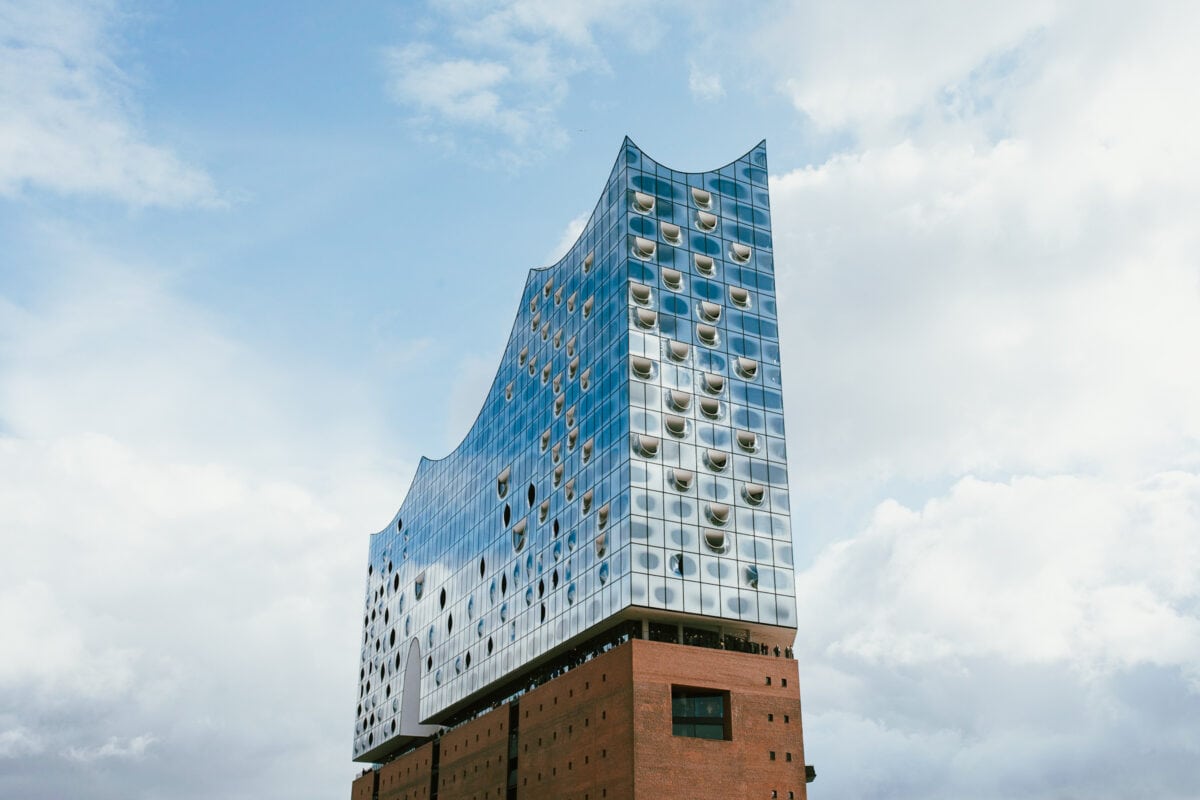
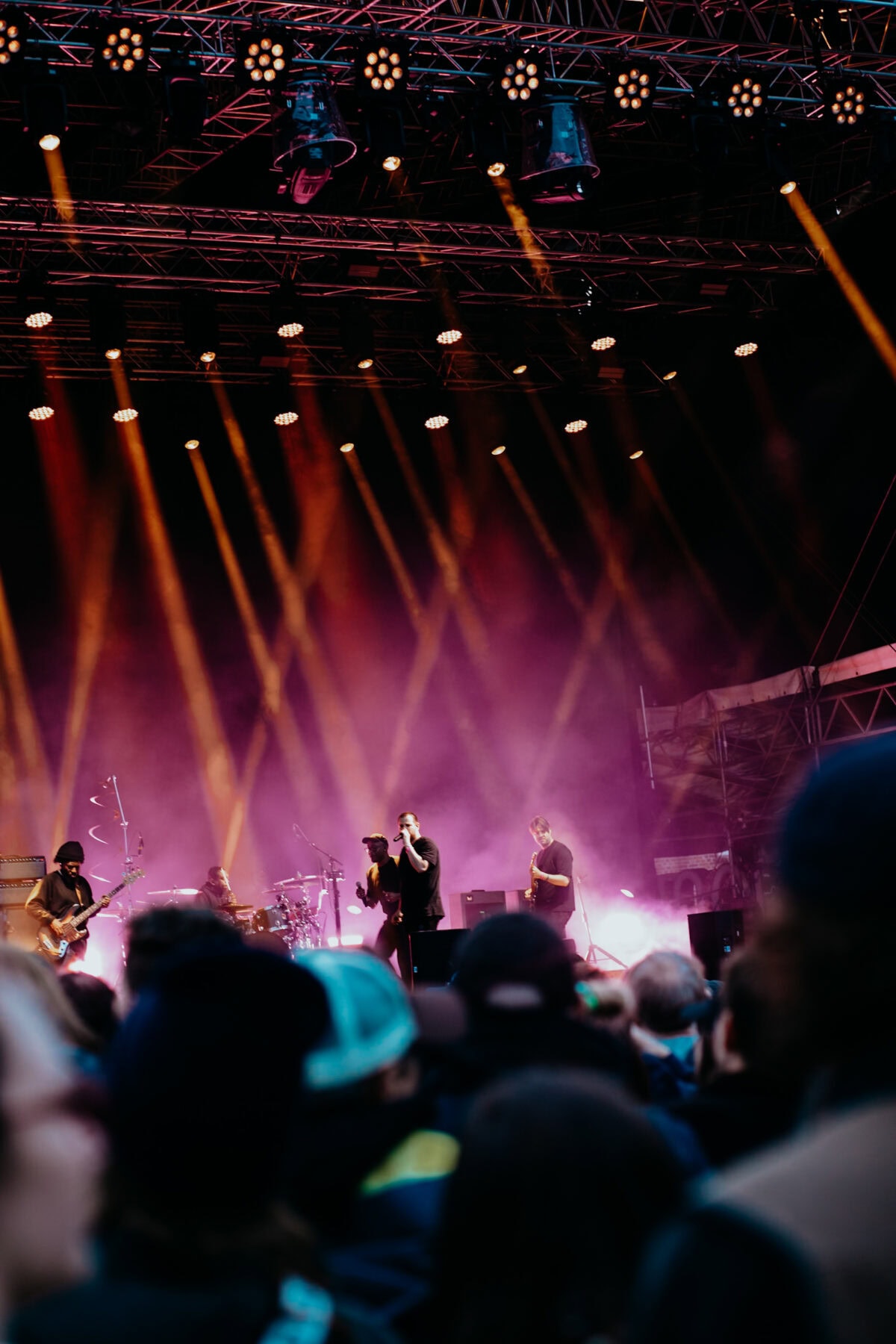
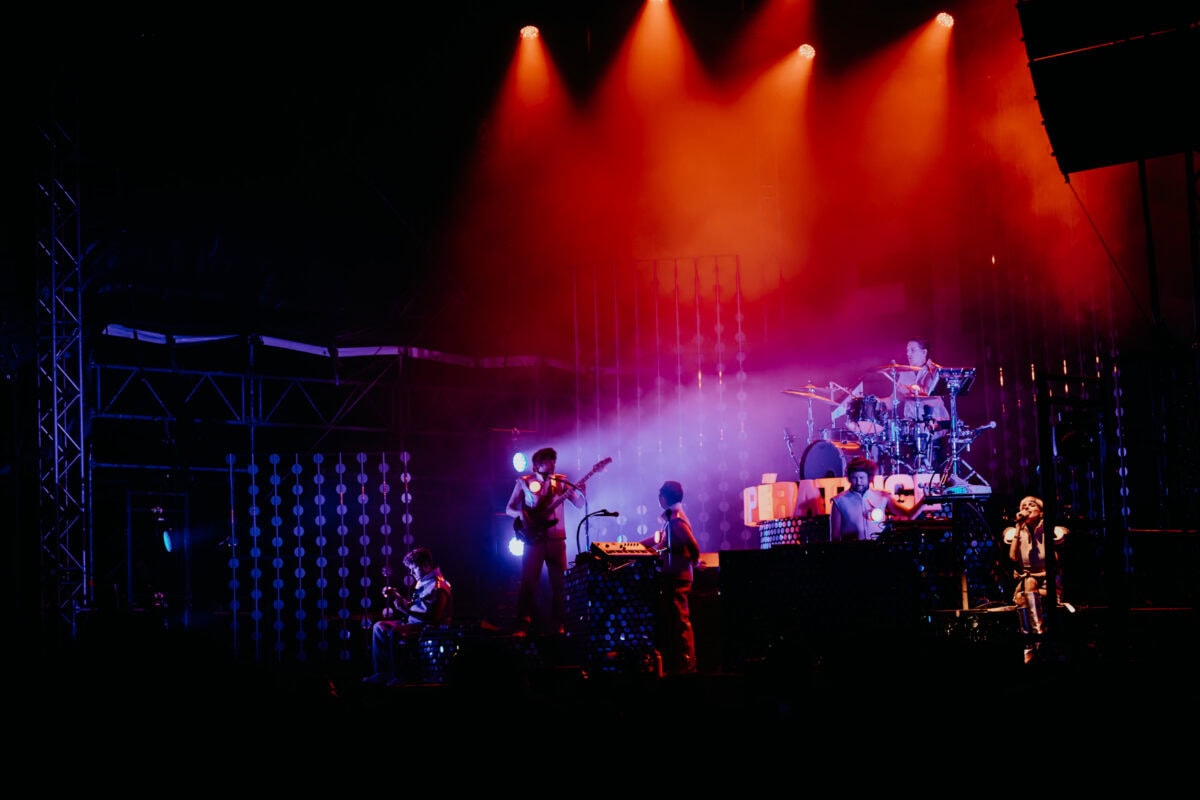
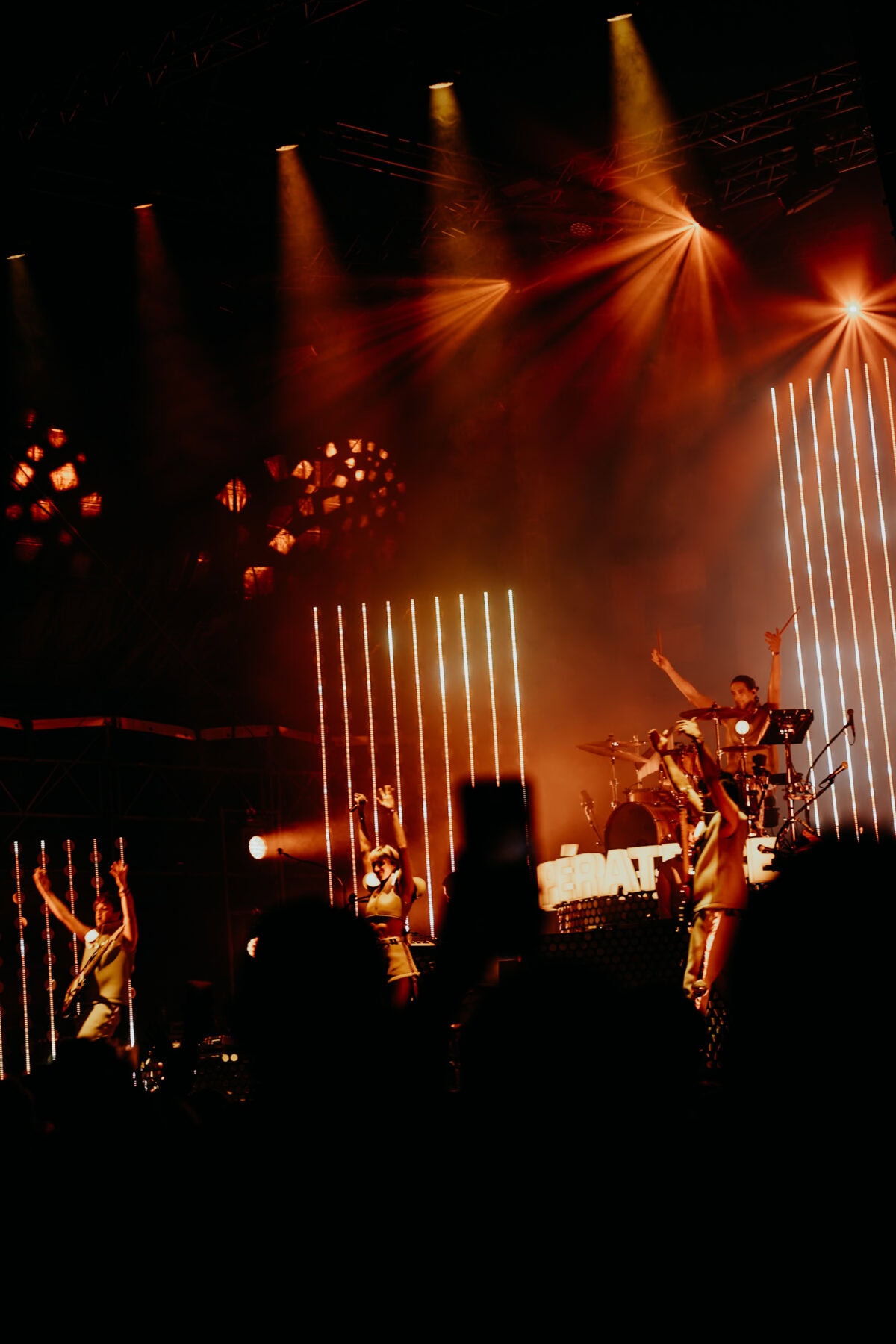
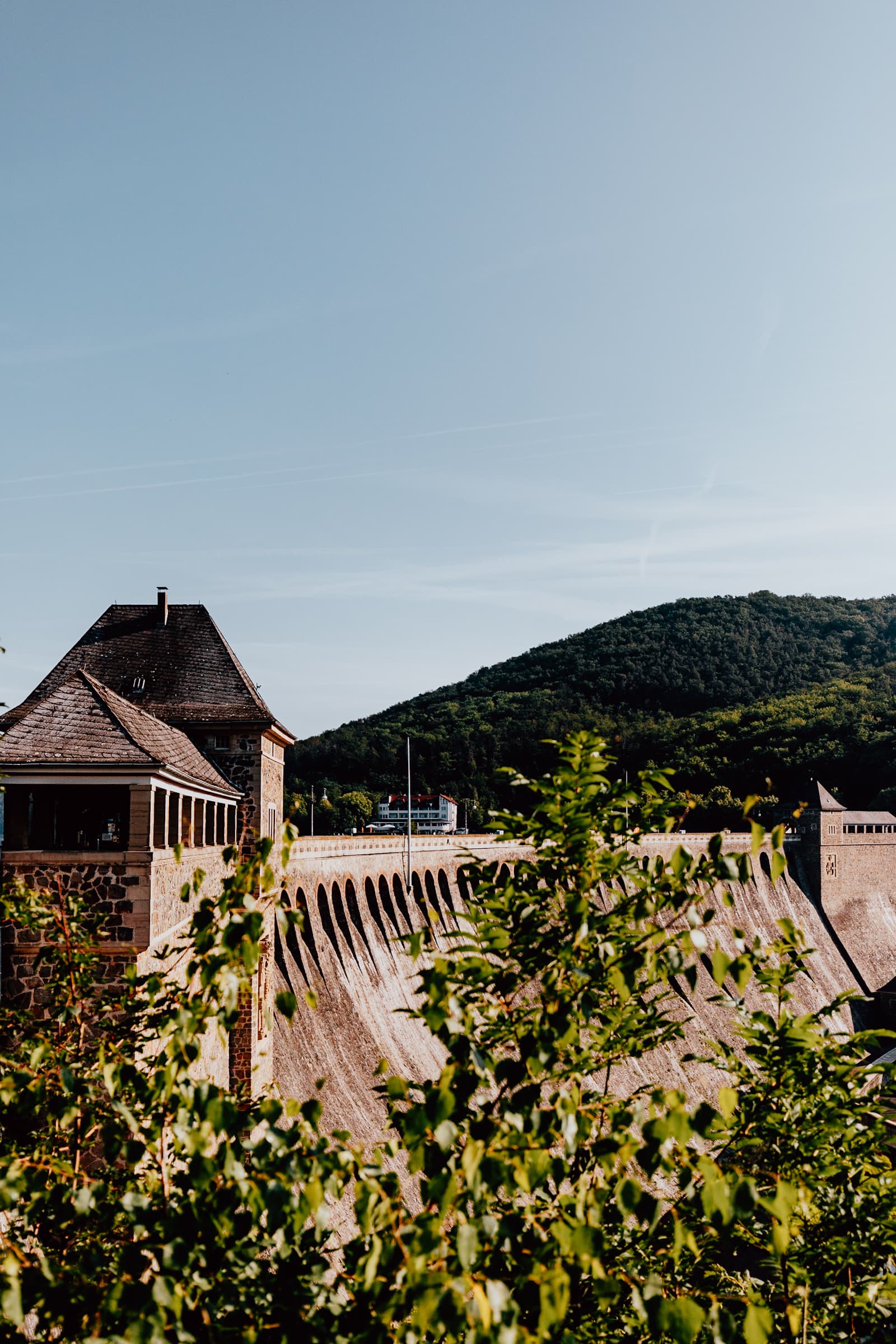
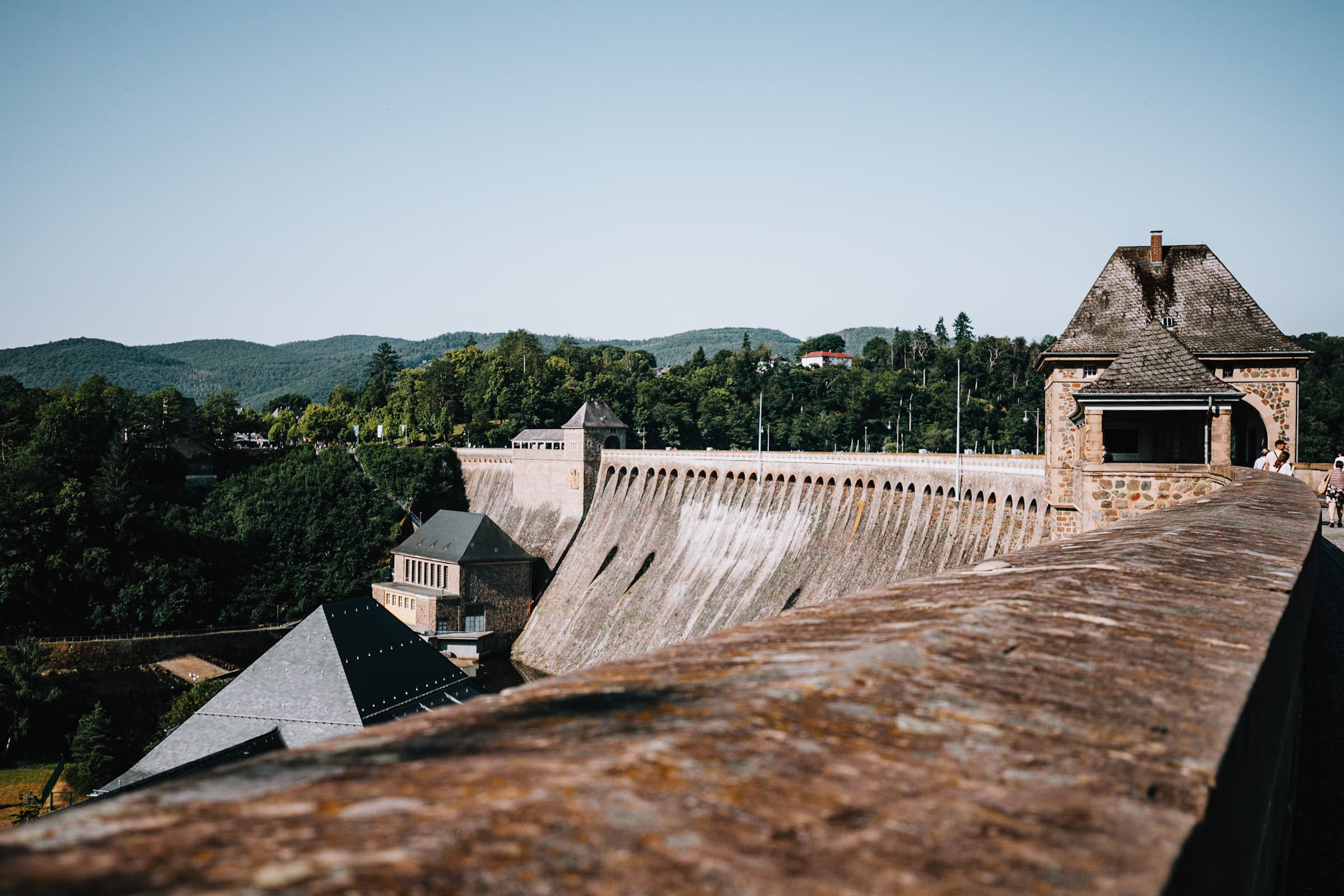
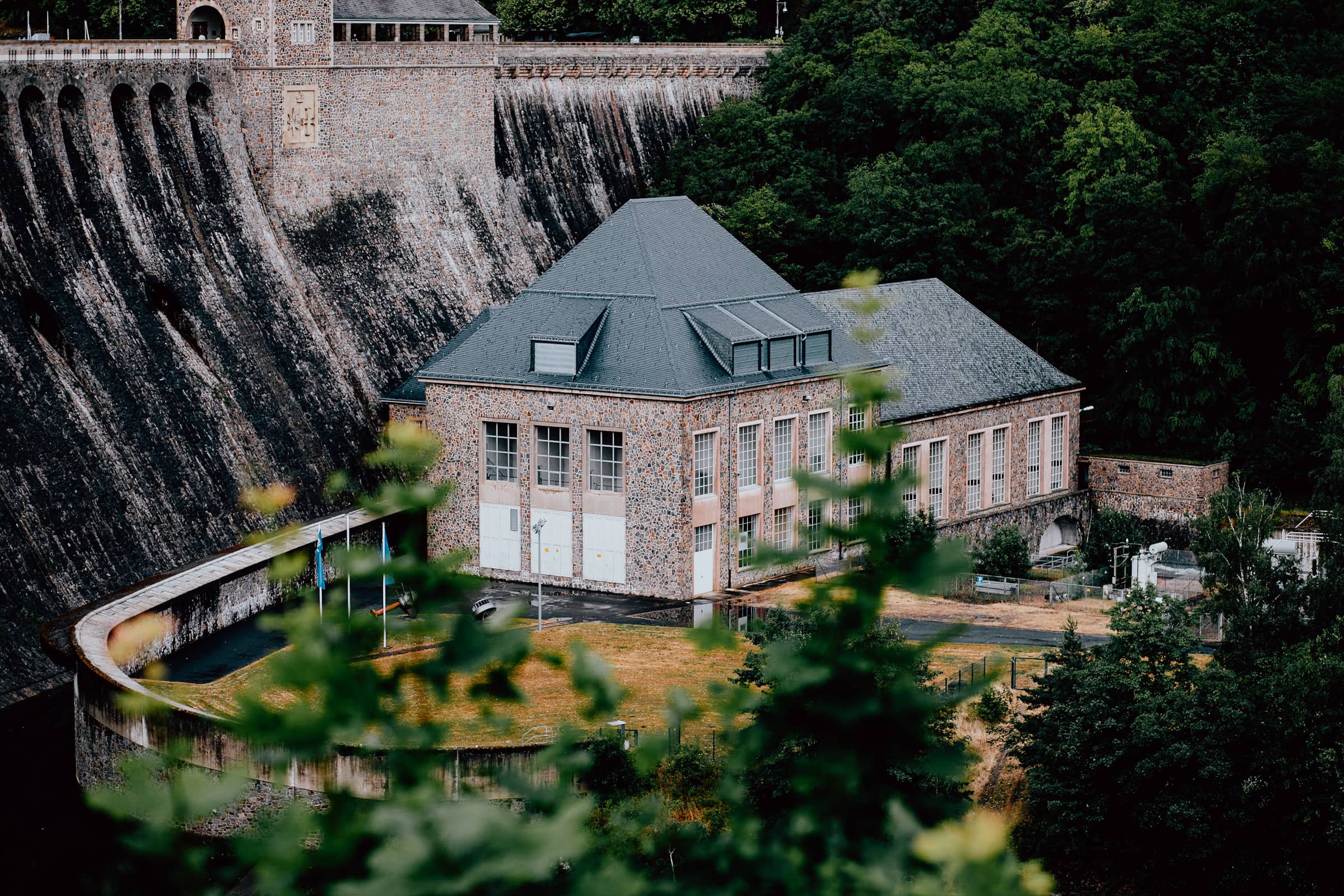
The Elbjazz Festival is a highlight in Hamburg every year, and 2024 was no exception. Despite the inconsistent weather, which ranged from constant rain to sunny moments, the atmosphere on the festival grounds was truly special.
Spectacular locations on the Elbe
The location of the Elbjazz Festival is quite unique. In fact, it takes place across two main venues situated on either side of the Elbe River. One venue is the expansive Blohm+Voss shipyard, a traditional site in Hamburg where the majority of the festival events occur. Meanwhile, the other venue is the stunning Elbphilharmonie, which also hosts concerts simultaneously on both days of the festival.
Getting to the festival site is also well organized. Shuttle buses and – even more exciting – shuttle ferries take festival visitors from the Elbphilharmonie to the shipyard and back. More Elbe feeling is hardly possible.
Festival grounds at the Blohm+Voss shipyard
For me, the first day of the festival began on the shipyard grounds – and unfortunately the weather didn’t play along at first. However, I also had to learn again how to ignore the North German weather like a true Hamburg girl until it no longer bothers me or simply gets better on its own. Fortunately, the latter was the case and oh boy, it got better and better.
My favorites were The Streets and L’Imperatrice, Jungle, contrary to my expectations, didn’t quite catch me. But that’s actually the beauty of festivals – the range, paired with the atmosphere, simply surprises again and again.
If you’re curious, you might think, “Hmm, this doesn’t quite sound like jazz,” and you’re not alone—many others have shared this sentiment. Leading up to the event, there was quite a bit of debate about opening it up to other musical genres. Personally, I found the blend of styles to be fascinating and successful; after all, it’s impossible to satisfy everyone.
Concerts in the Elbphilharmonie
I used the second day of the festival to tour the Elbphilharmonie from the inside.The large hall boasts exceptional acoustics, as demonstrated by the concert given by Shalosh, an Israeli jazz trio.
Feeling already touched by the frontman’s heartfelt call for more peace and humanity, I was completely swept away when the audience joined in, humming softly to one of Shalosh’s enchanting melodies. The warm, rich acoustics filled the venue, wrapping around us and enhancing the moment, creating an atmosphere that was truly unforgettable.
Tips for a great festival weekend in Hamburg
Hamburg not only offers great music events such as the Elbjazz, but is also worth a trip in other respects. So what could be better than combining a festival weekend with a bit of sightseeing and exciting spots in Hamburg? Here are a few tips on how to make the most of your festival weekend!
Chill out at a beach club in the middle of St. Pauli
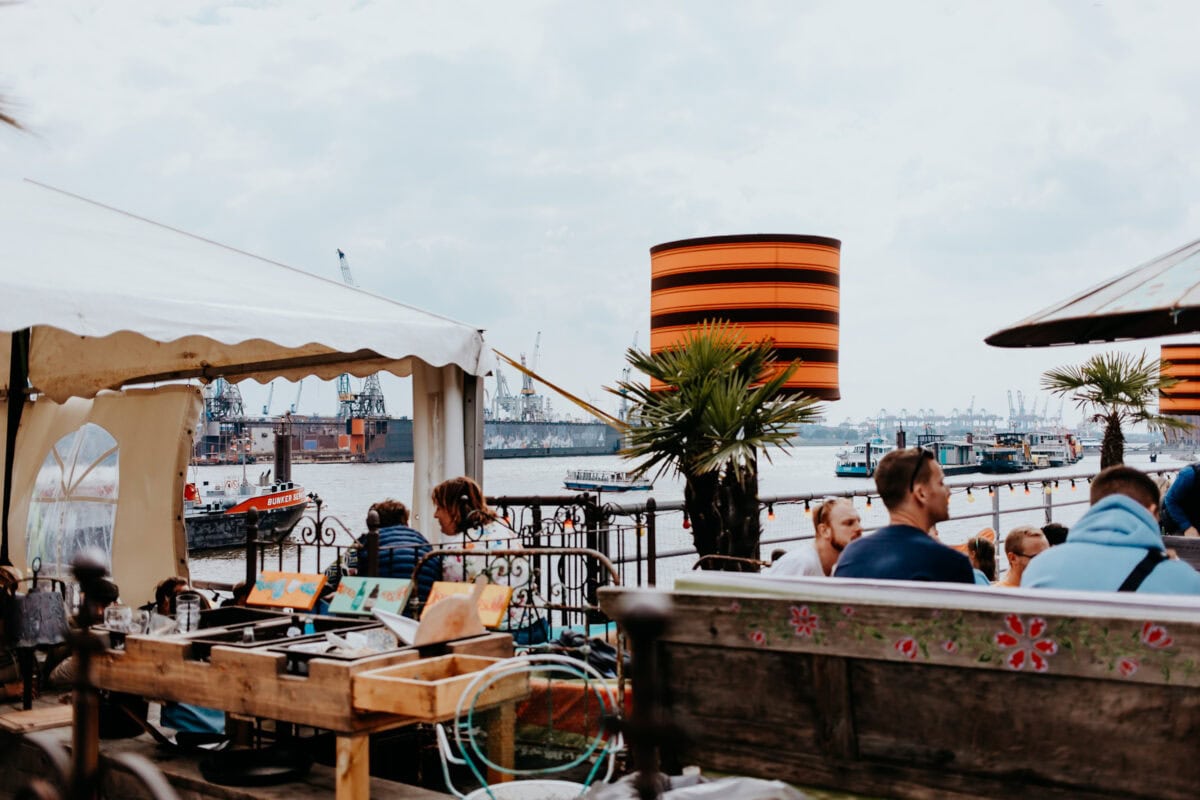
The trendy St. Pauli district also has a fairly large beach club on the Elbe. Not far from the Landungsbrücken jetties, you can lounge comfortably in deckchairs at StrandPauli, dig your feet into the sand and take a break from the hustle and bustle of the festival. From this spot, you have a clear view of the port of Hamburg.
If you have a little more time, I also recommend a harbor tour. You really should have done it once in Hamburg! However, there are so many options, so I’ve put together a selection of the best tours for you here: The best harbor cruises in Hamburg
Through the Old Elbtunnel to the festival
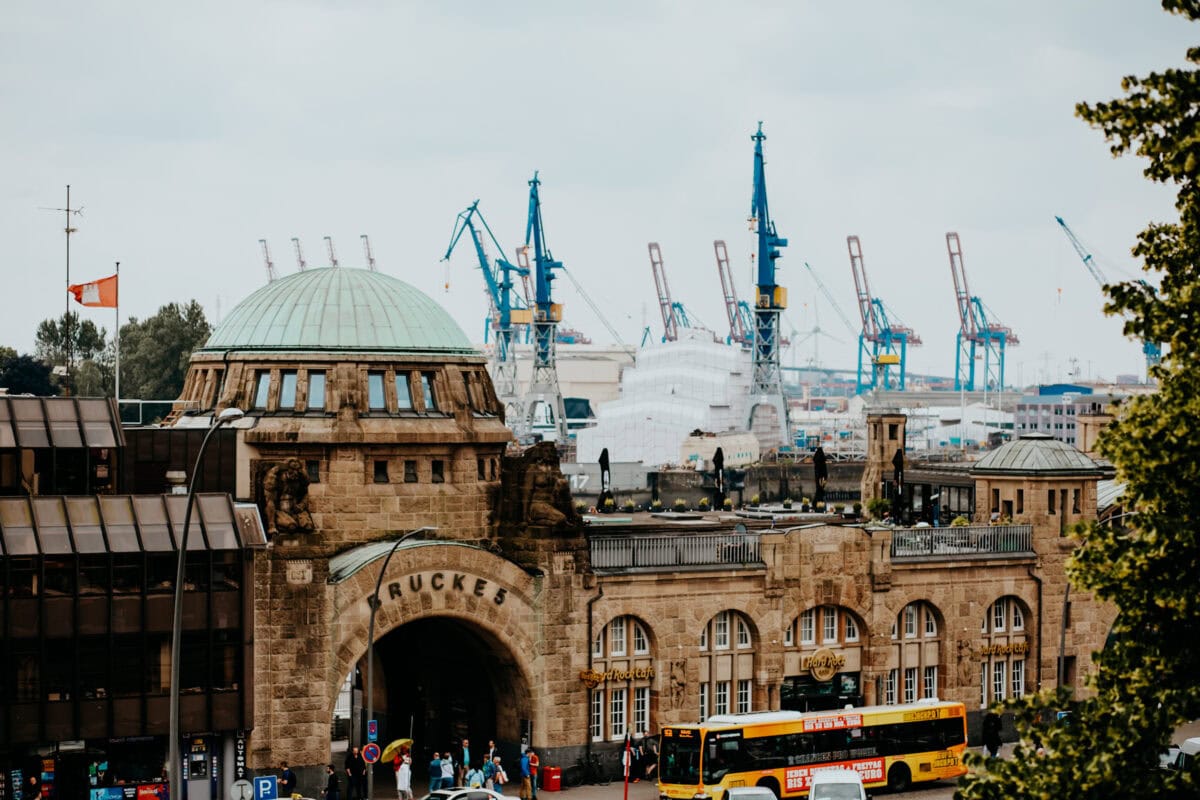
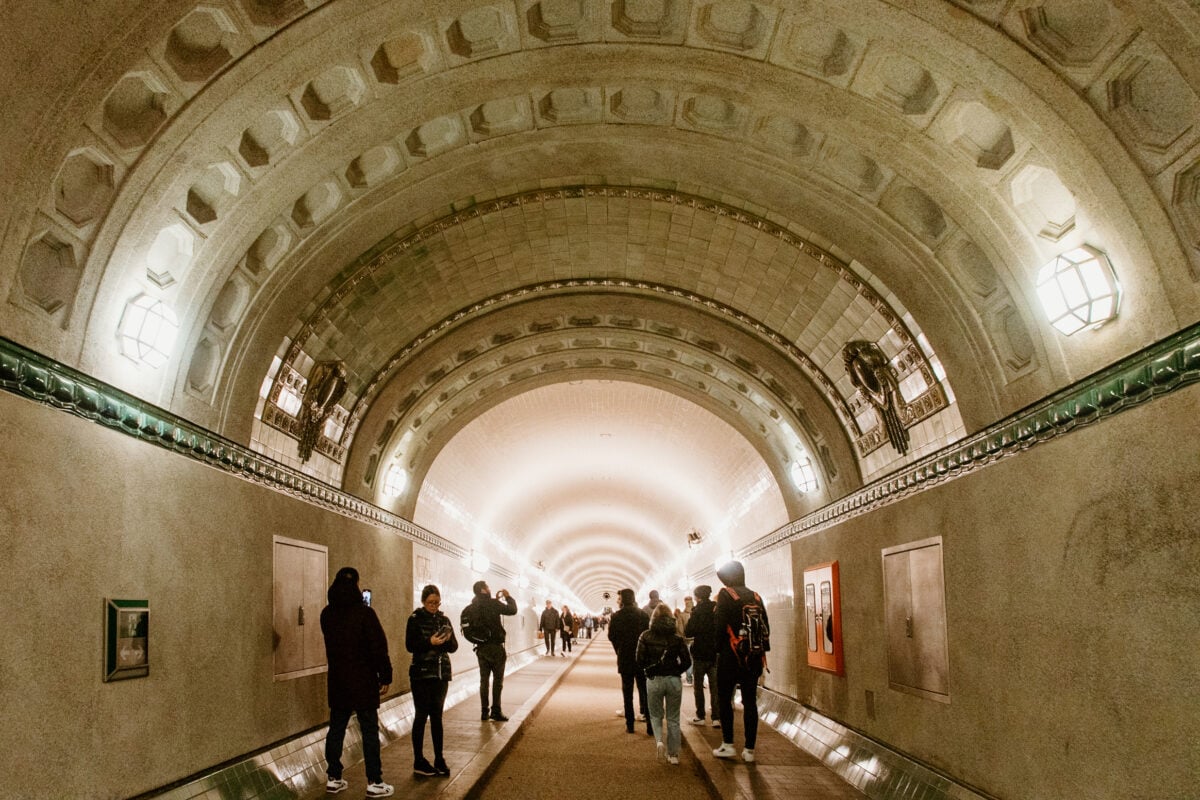
The Landungsbrücken serves as the entrance to one of Hamburg’s most fascinating attractions: the Old Elbtunnel. Built in the early 19th century, this tunnel connects the city center, including St. Pauli, with the shipyards located on the opposite side of the Elbe River.
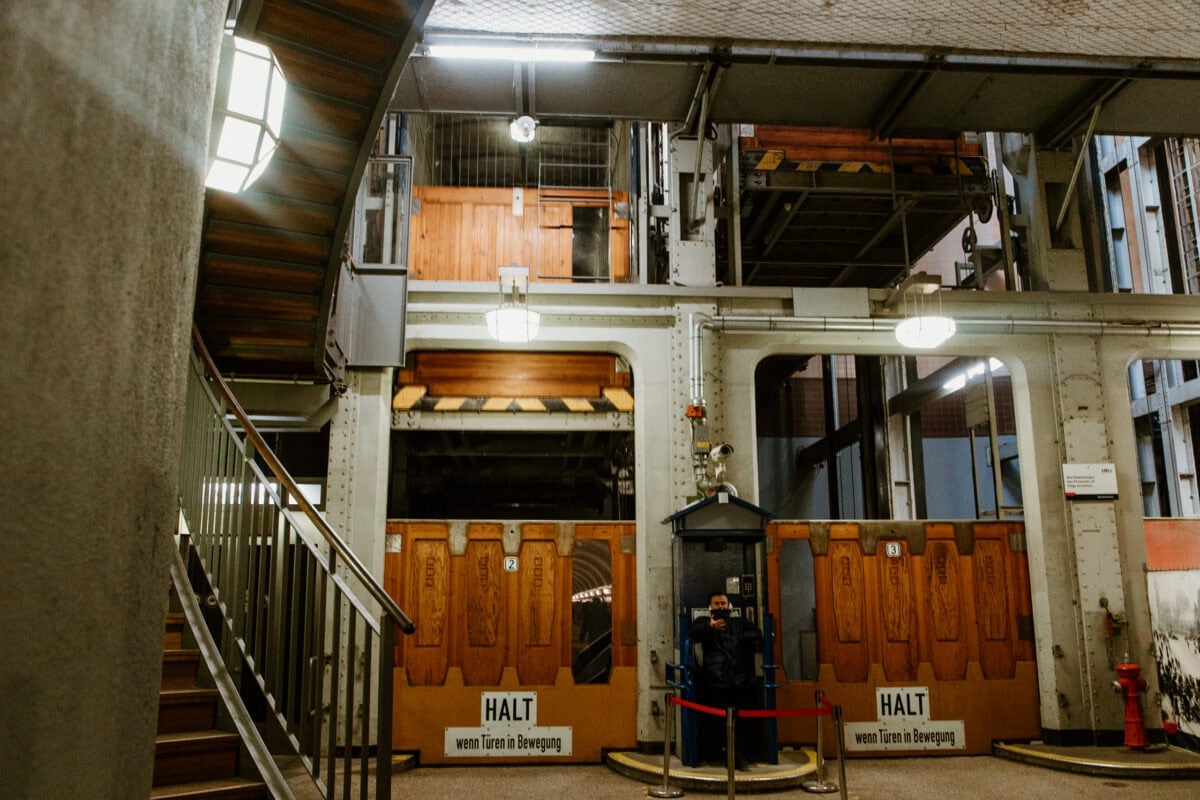
Until 2019, cars could still drive through the Old Elbe Tunnel, which seems quite unusual given its narrow structure. There is no direct access road to the tunnel; vehicles used to enter via historic freight elevators. Today, those elevators are utilized by cyclists and pedestrians, along with stairs and escalators.
Cruising through Hamburg’s canals by boat
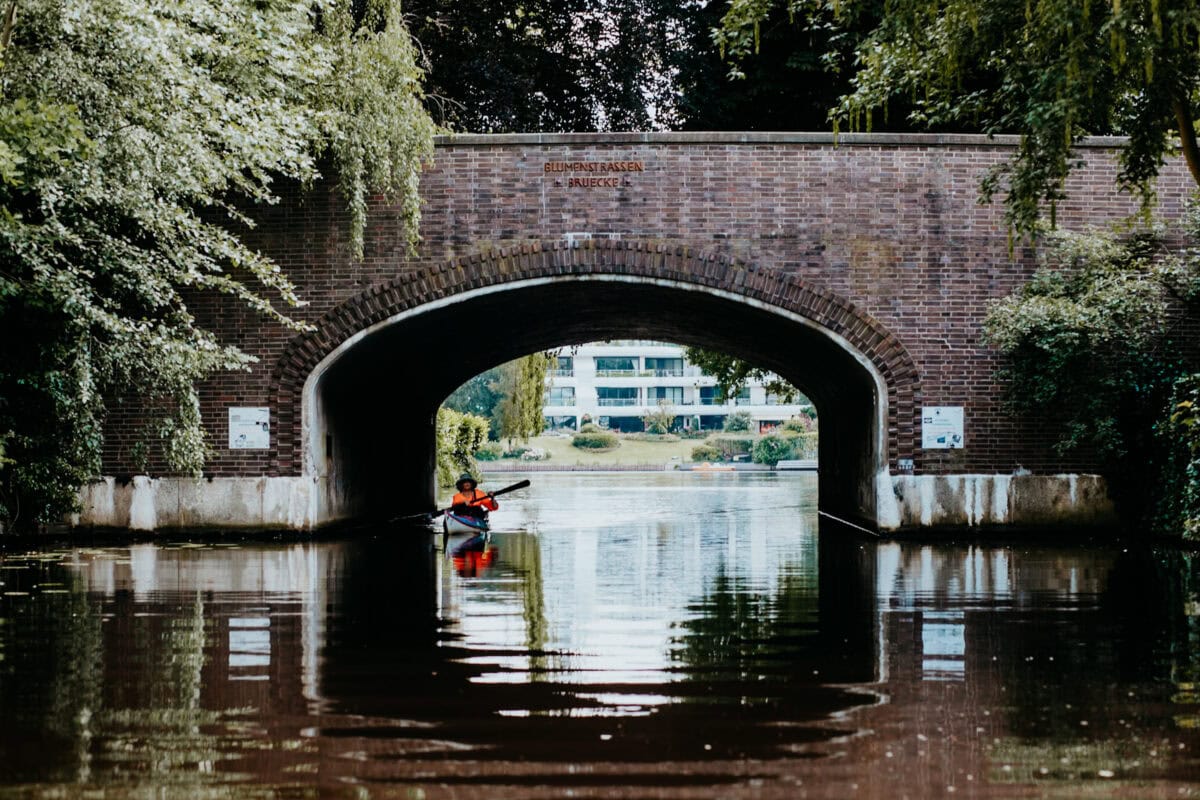
Need a bit of exercise? At Supperclub Hamburg, you can rent pedal boats, kayaks or stand-up paddle boards and explore the truly beautiful canals in Eppendorf.
Idyllically located on the Isebekkanal, you can also relax in the Supperclub after your exploration tour, take a short lunch break and enjoy the atmosphere.
Aperitivo in the Schanzenviertel
Do you want to go to the festival later or go out in the evening? Then Enchanté in the Schanzenviertel is a good place to start the evening.
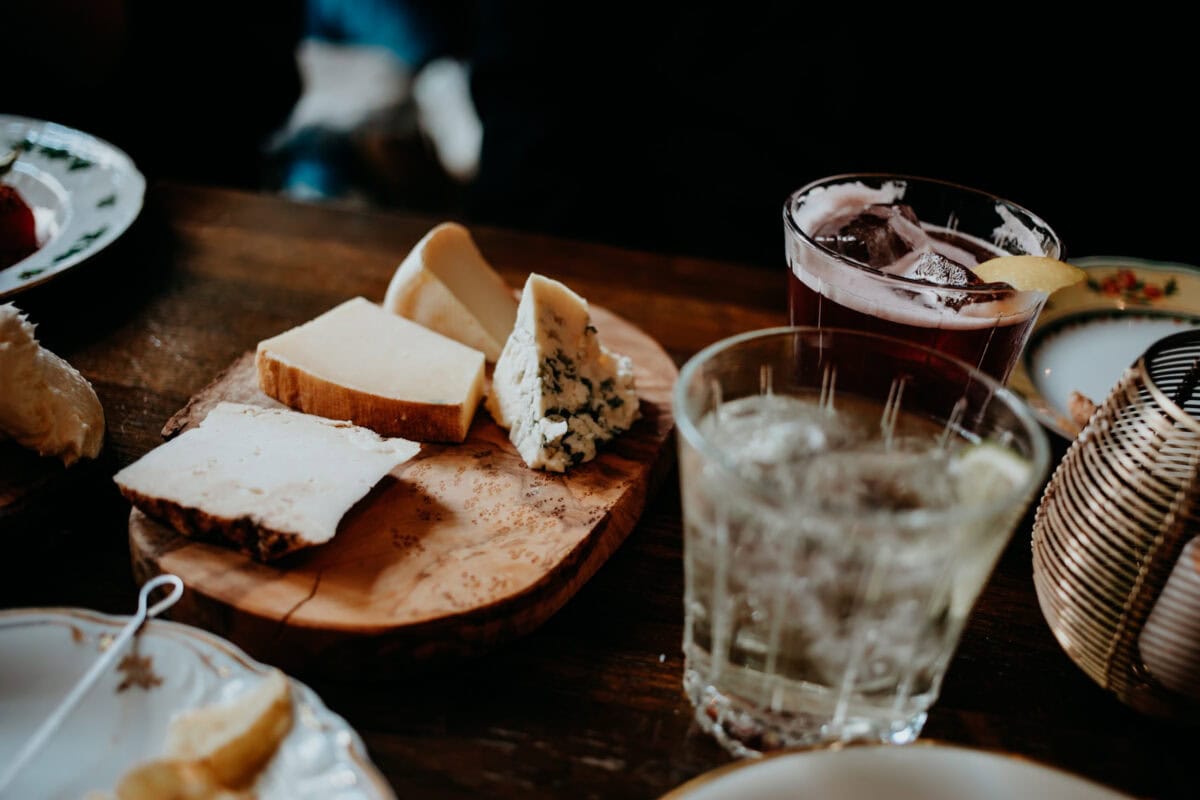
In addition to really good, unusual cocktail creations such as wineballs, there are also great little things to snack on with friends, such as extensive charcuterie boards with the best cheese or sardines au gratin.
You can also find more great food tips for Hamburg in my big Hamburg Food Guide.
Getting around in Hamburg
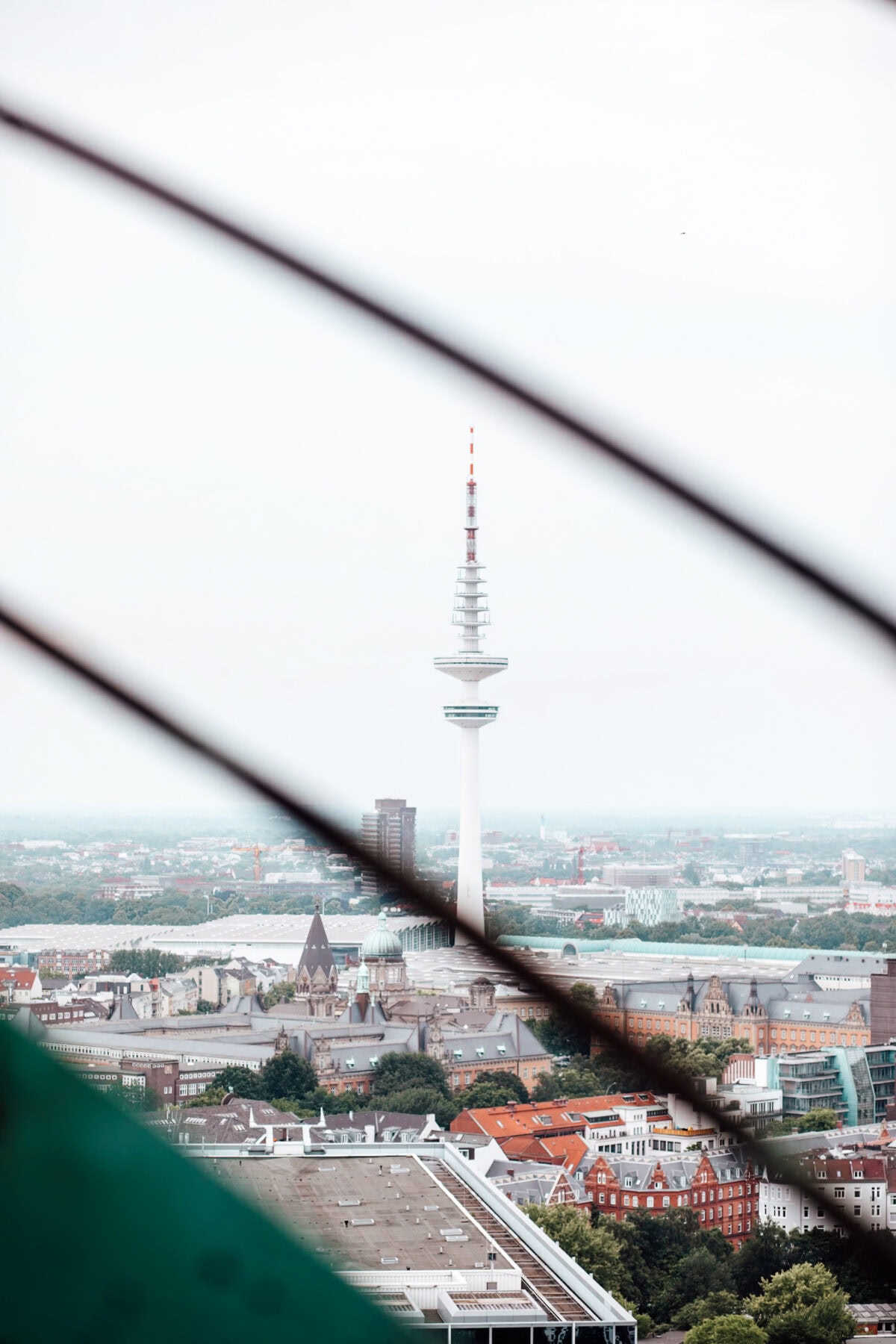
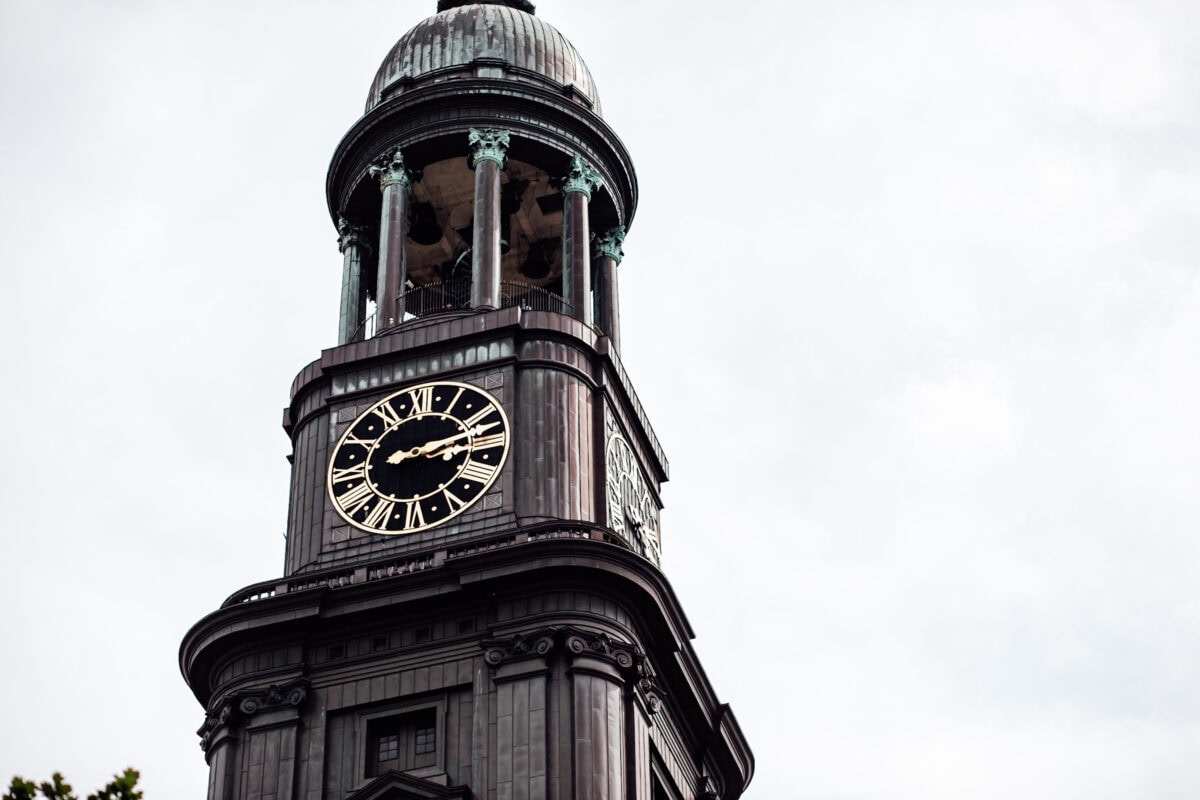
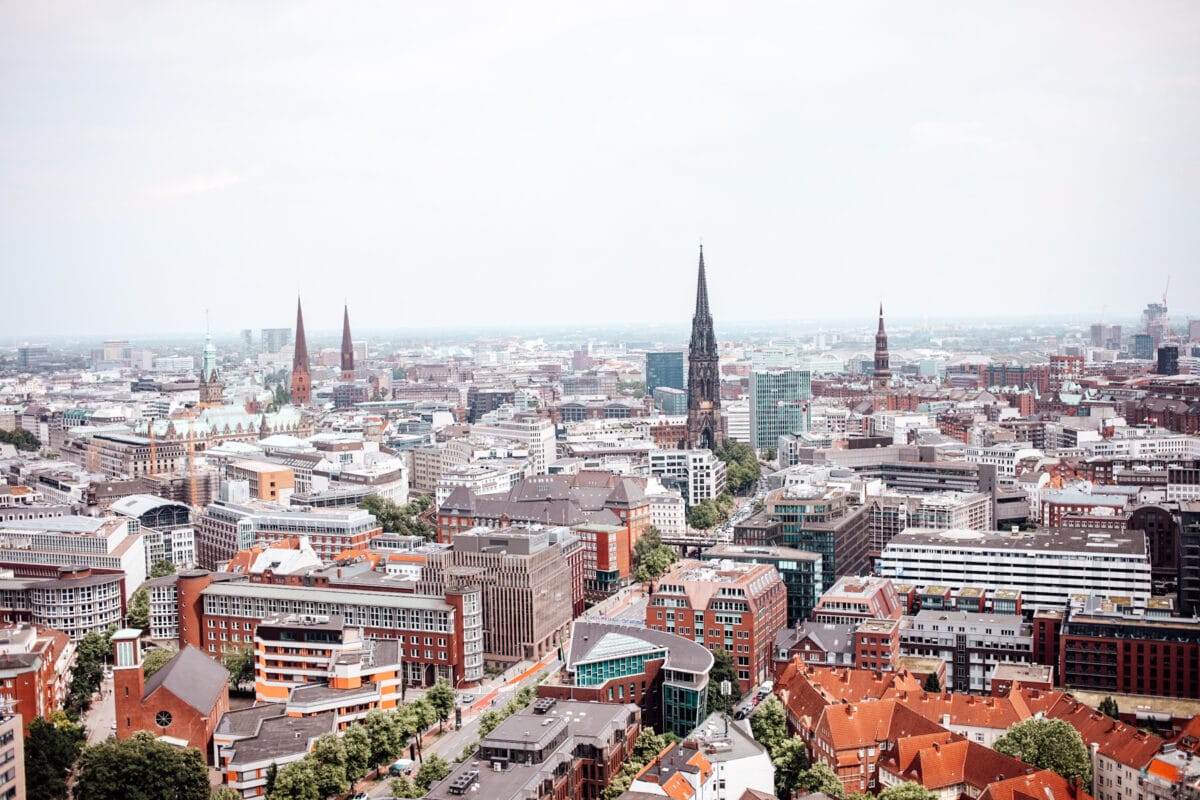
Regardless of the festival, I was once again glad to have my Hamburg Card*, which gets you discounts at most attractions. In the meantime, I really wanted to climb Hamburg’s Michel, which was just a short distance away from the hotel and offers a fantastic view over Hamburg, even in cloudy weather.
The Hamburg Card allows you to use all public transportation in Hamburg for free, providing you with a vast area to explore in this large city. The benefit is that you don’t have to look for ticket machines or figure out fares; you can simply hop on the next train or bus that comes your way.
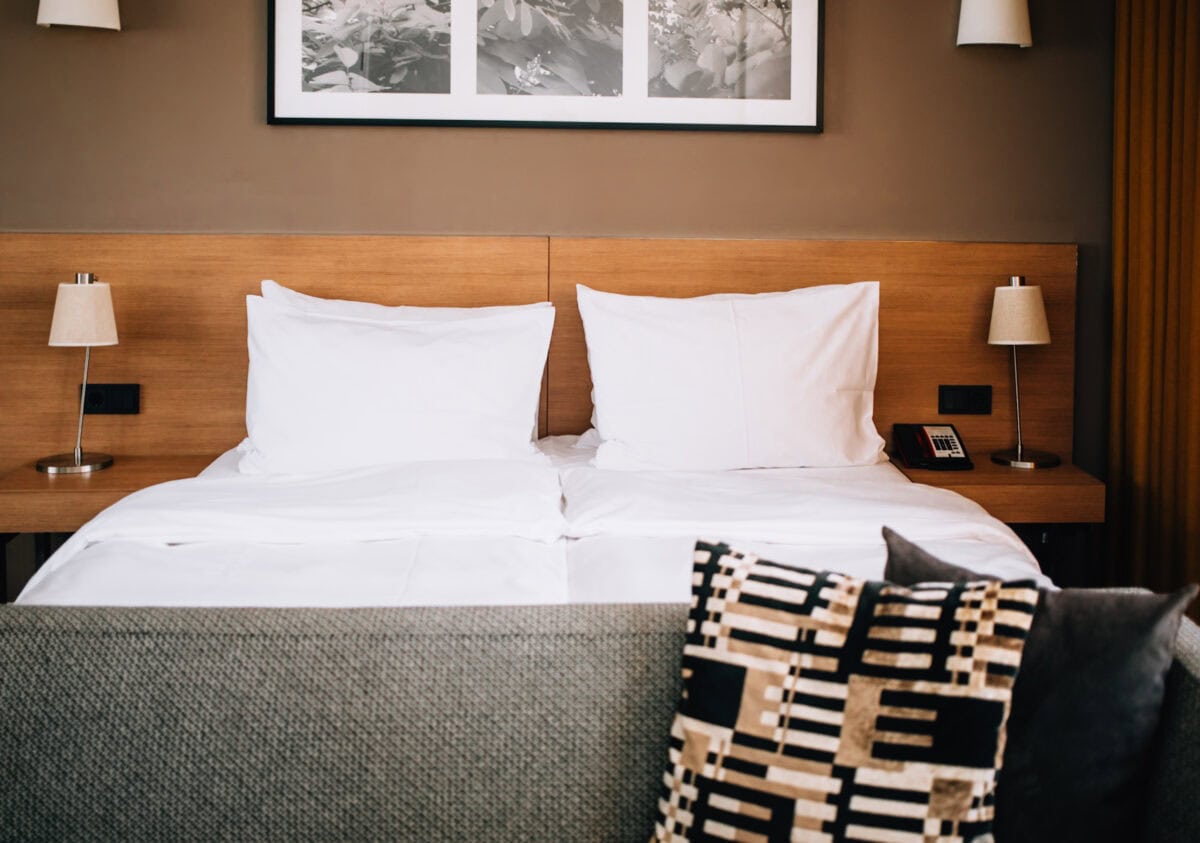
Finding a good place to stay in Hamburg isn’t difficult; the challenge lies in making a choice. I’ve stayed at several hotels in the city and still continue to discover new options! One hotel that I particularly enjoyed was the Adina Hamburg Michel*, thanks to its unique location in the recently trendy Neustadt district.
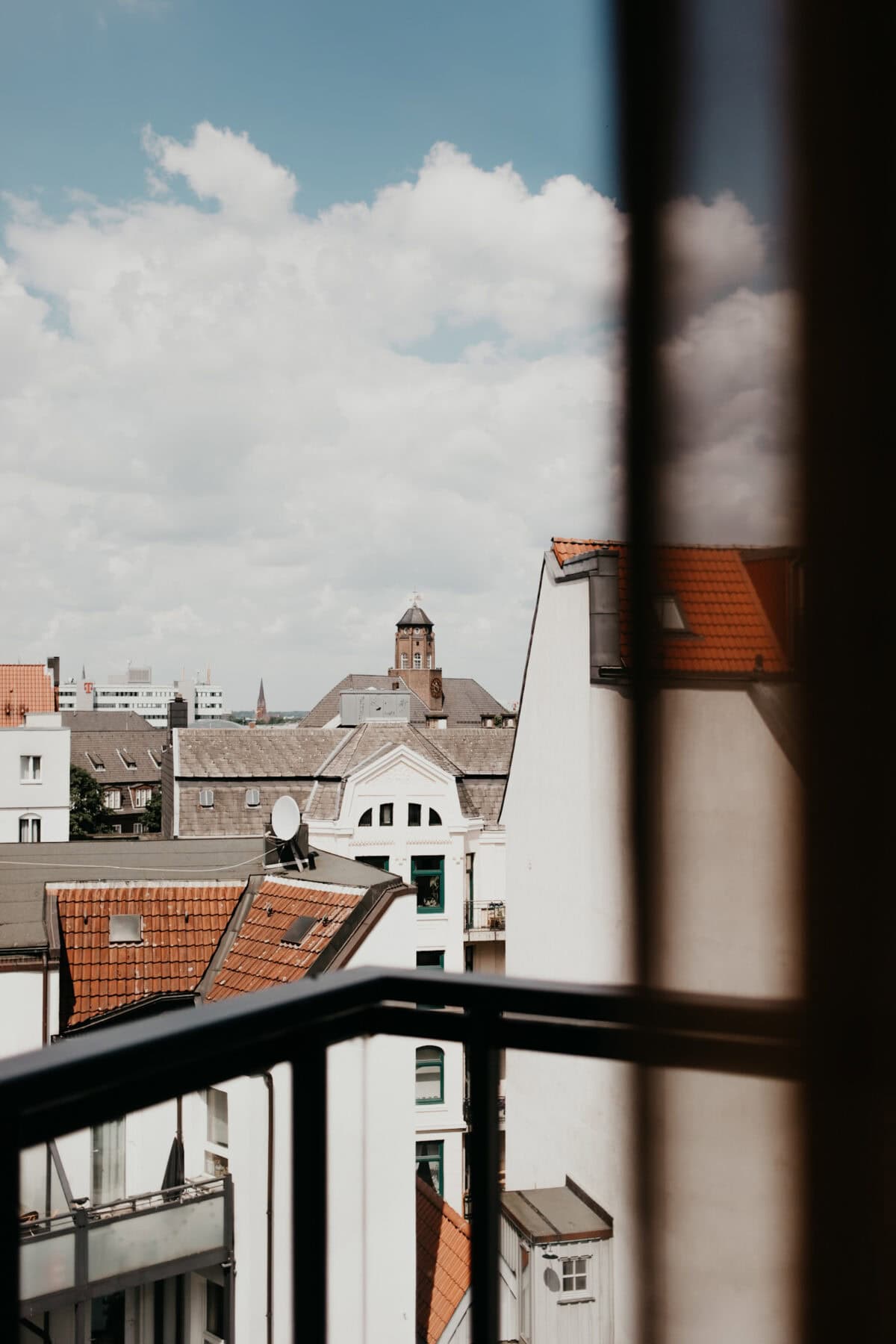
Although the bustling Reeperbahn is only a ten-minute walk away, it is located in a quiet neighborhood with cozy cafés and the things you need for everyday life, such as a supermarket or a great weekly market on Wednesdays and Saturdays on the Grossneumarkt.
The Adina Michel, like all hotels in this chain, offers small apartments equipped with a kitchen and dining area, making it perfect for those who prefer not to eat out or who want a simple breakfast in their room.
Catania is the second largest city in Sicily and always seems to be a little overshadowed by Palermo. But Catania is also unexpectedly charming and definitely worth a visit. In this article, I’ll show you Catania’s must-see sights and a few very interesting insider tips!
There’s plenty to see in Catania, and if you can, feel free to set aside a little extra time to explore this side of Sicily. After all, Catania has quite a few attractions to offer.
Cathedral of Catania, Piazza del Duomo & Fontana dell’Elefante
Almost more striking than the cathedral itself is the Fontana dell’Elefante on the Piazza del Duomo in front of it. The elephant fountain depicts the Liotru, symbol of the city of Catania.
There are many myths surrounding the Liotru, the most beautiful of which I found to be the interpretation as a symbol of the strength of the inhabitants of Catania to withstand severe natural disasters such as earthquakes and volcanic eruptions throughout history.
Piazza dell’Universita
The large Piazza dell’Universita is almost directly adjacent to the Piazza del Duomo. It also marks the start of the Via Etnea. Many walking tours through the center of Catania start from here.
When it comes to the traditional fish market in Catania, I’m still not sure whether I can recommend this place with a clear conscience: The many halved swordfish, bloody fish knives and a very rustic ambience can dampen your mood somewhat.
Despite everything, I found the hustle and bustle of the market super interesting and somehow fascinating. The fish market is located directly behind the Piazza Duomo, but the entrance is so well hidden in a corner behind a fountain, the Fontana dell’Amenano, that you think you are entering another world.
A few steps below the actual street level is the actual fish market with its many stalls, so that you have a perfect view of the action from above.
The tall buildings all around with their dark marble stone façades add to the atmosphere of the market.
In the side streets around the fish market, you will find other market stalls with fruit and vegetables as well as lots of great little bars and restaurants.
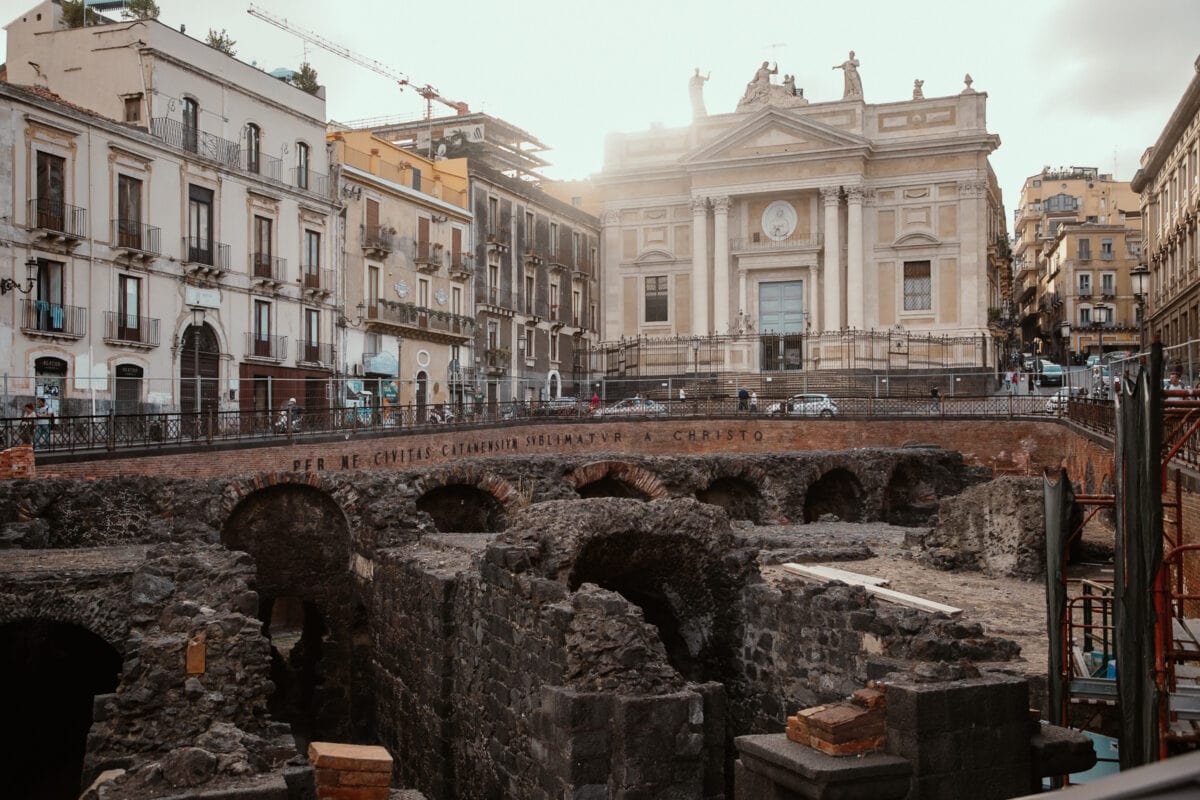
In addition to the Teatro Romano, there is another excavation in the middle of Catania. You can visit the Anfiteatro Romano in Piazza Stesicoro for a small fee.
Via Etnea
In contrast to Via Maqueda, the central shopping street in Palermo, Via Etnea in Catania is rather unadorned. Only partly pedestrianized, the Via Etnea is not necessarily the best place for a stroll. However, the name is no coincidence: from the Via Etnea you can see the summit of Mount Etna in good weather!
Via Crociferi
There is hardly a better example of Baroque architecture in Sicily in such a small space: the Via Crociferi was built after the earthquake of 1693 and became one of the most important urban planning projects in Catania at the time. Baroque churches and monasteries line the streets here.
Castello Ursino
In the middle of the city you will also come across the Castello Ursino. The medieval fortress was built in the 13th century under the rule of Frederick II of Hohenstaufen to protect Catania from attacks.
The enormous size and massive construction of the fortress in its present location seems strange, as it does not fit in at all with the rest of the cityscape. However, when it was built, Castello Ursino was located directly on the water! However, due to a major eruption of Mount Etna in 1669, lava flowed around the fortress and caused the coastline to shift.
Eating & drinking in Catania
Scirocco Sicilian Fish Lab
The street food hype in Catania really started with Scirocco: What once began as a small stall on the edge of the fish market is now THE place to go for fish and seafood on the go.
If you still need to get something down after the bloody fish market spectacle, there is no better place than Scirocco for a little snack in between. Or you can just come back in the evening.
Mooddika
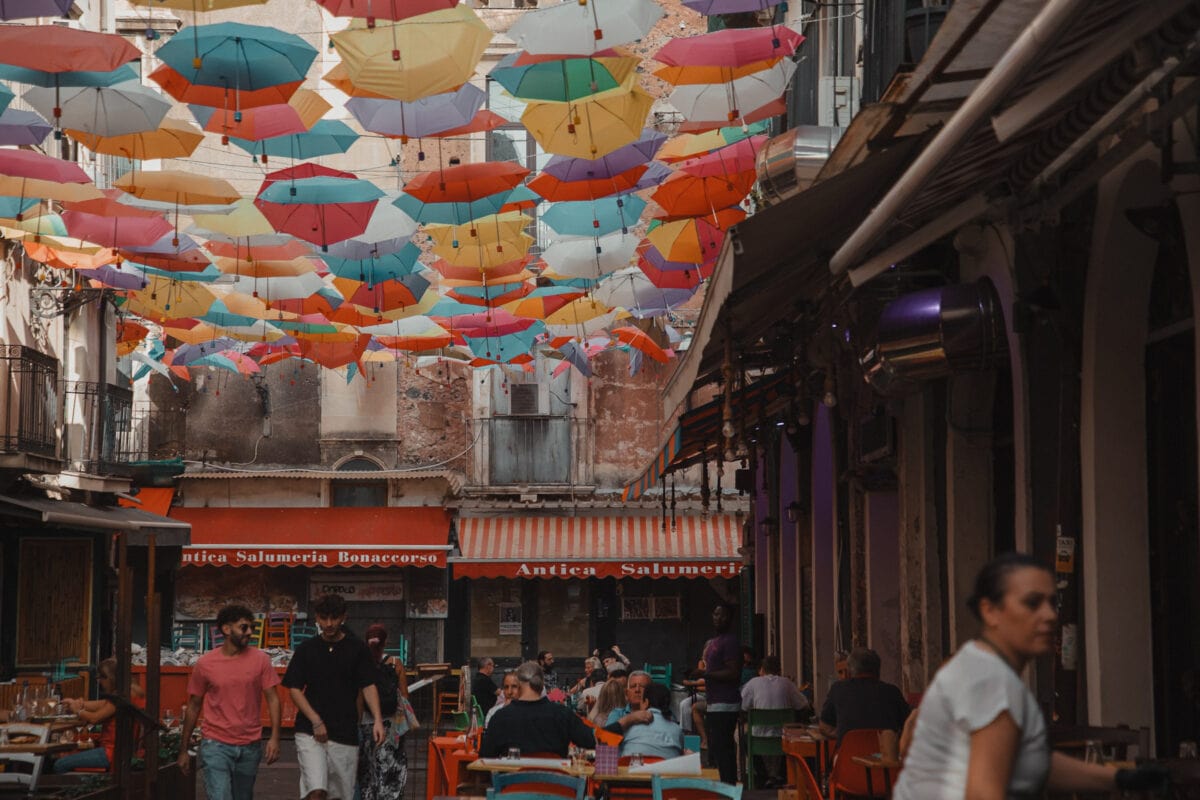
The Mooddika was a bit of a surprise. I had actually expected a boring tourist trap here, in a side street near the central Piazza dell’Università, and only ended up there out of convenience.
But the pasta was surprisingly fresh and delicious – and the ambience of the bar, restaurant and salumeria was very pleasant. Absolute recommendation!
I was on a big road trip through Sicily, so I was particularly pleased when I found an absolutely central boutique hotel with an attached parking space.
The B&B Palazzo Bruca* is located in an old palazzo and is just a few meters from the Piazza del Duomo. So if you’re looking for central accommodation in Catania, you’ve come to the right place!
Due to its proximity to Mount Etna, Catania is a great base for excursions to the still active volcano. You take a cable car up to the mountain station, from where you continue up in a jeep – alternatively, you can start the hike right away.
I definitely recommend a guided tour. On Mount Etna, the weather can change quickly, the paths are not necessarily safe and, in addition to orientation difficulties in the vast lava fields at an altitude of up to almost 3000 meters, there can also be discomfort caused by altitude sickness. Having a local guide with you is worth its weight in gold.
If you don’t want to climb Mount Etna, you can also take the Ferrovia Circumetnea almost all the way around the volcano. The last narrow-gauge railroad in Sicily exudes an absolute retro vibe and travels to many small villages around Mount Etna.
The Ferrovia Circumetnea starts in Catania at Borgo station in the northern city center.
From Catania, you can also reach many other interesting places on the east coast of Sicily. The romantic mountain town of Taormina, for example, is only 50 kilometers from Catania.
Tip: Save yourself the trouble of searching for a parking space in a hire car through narrow streets in Taormina or complicated journeys by public transport and book a day trip from Catania!
To help you find your way around Catania quickly, I have put together a map with all the tips from this article. You can also easily download them and use them on your cell phone when you’re out and about.
My trip to Sicily was sponsored by Travellers Insight, the travel blog of Munich Airport. Click here to find more exciting tips for Sicily, Trapani & Palermo.
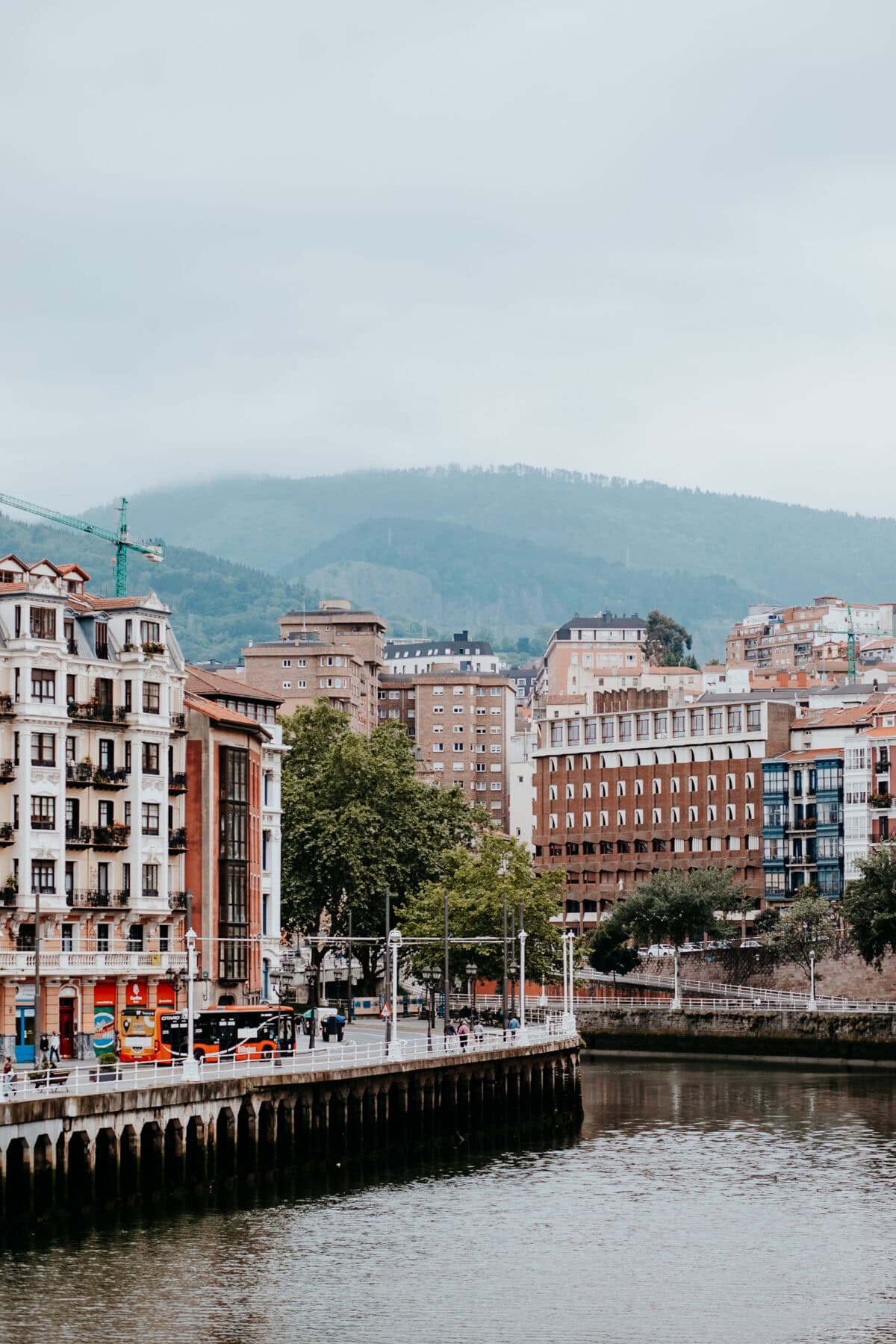
Are you planning a trip to the Basque Country? Then Bilbao will certainly be on your sightseeing list! In this article, I’ll show you which sights in Bilbao you shouldn’t miss – but I’ll also tell you why I personally wasn’t really impressed by the city, even after several visits! (More on this later in the article).
Guggenheim Museum
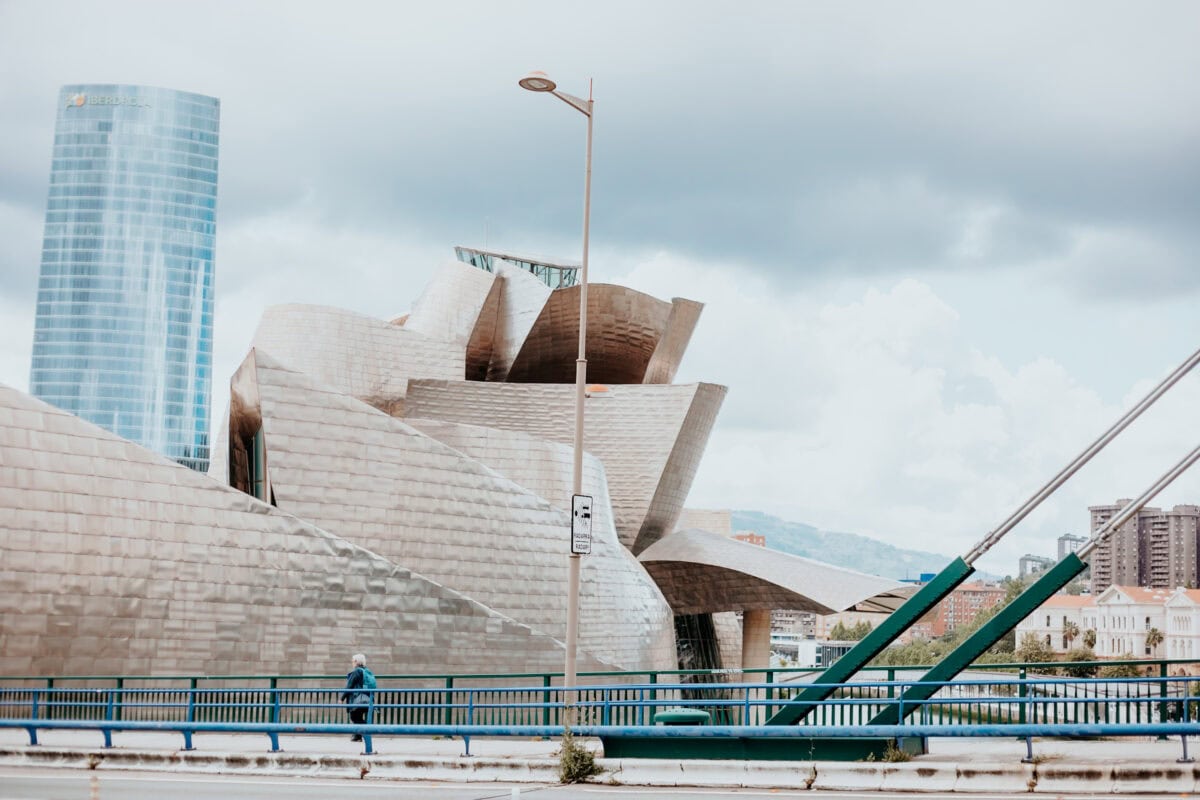
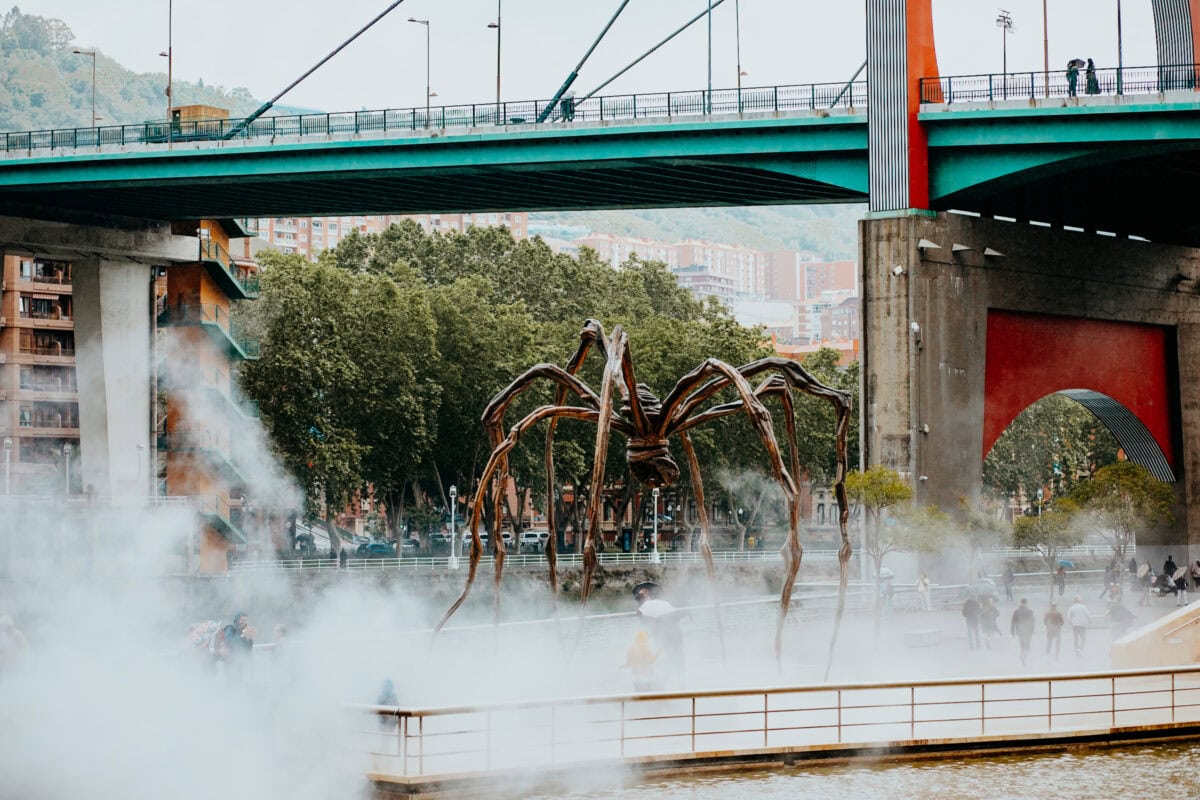
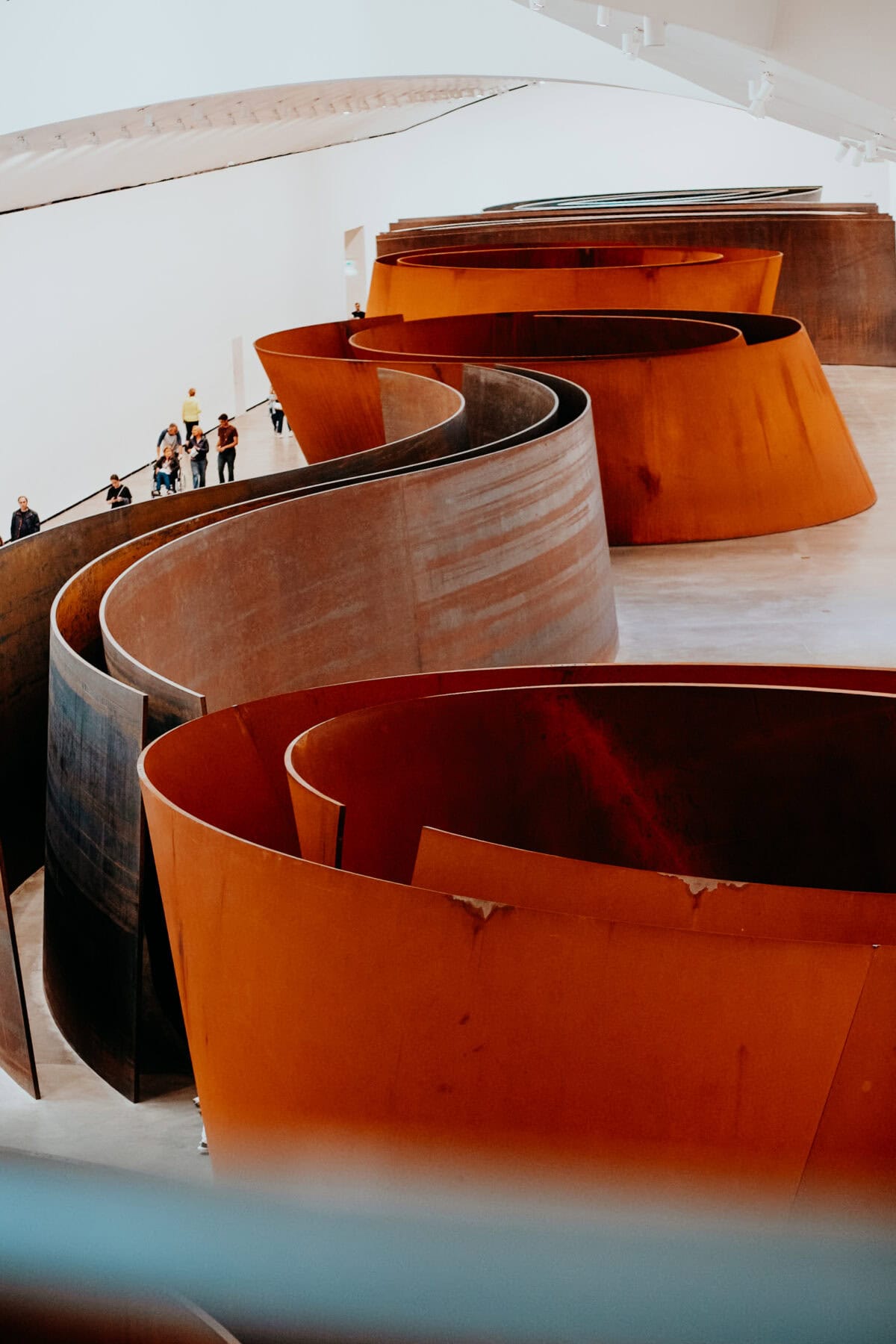
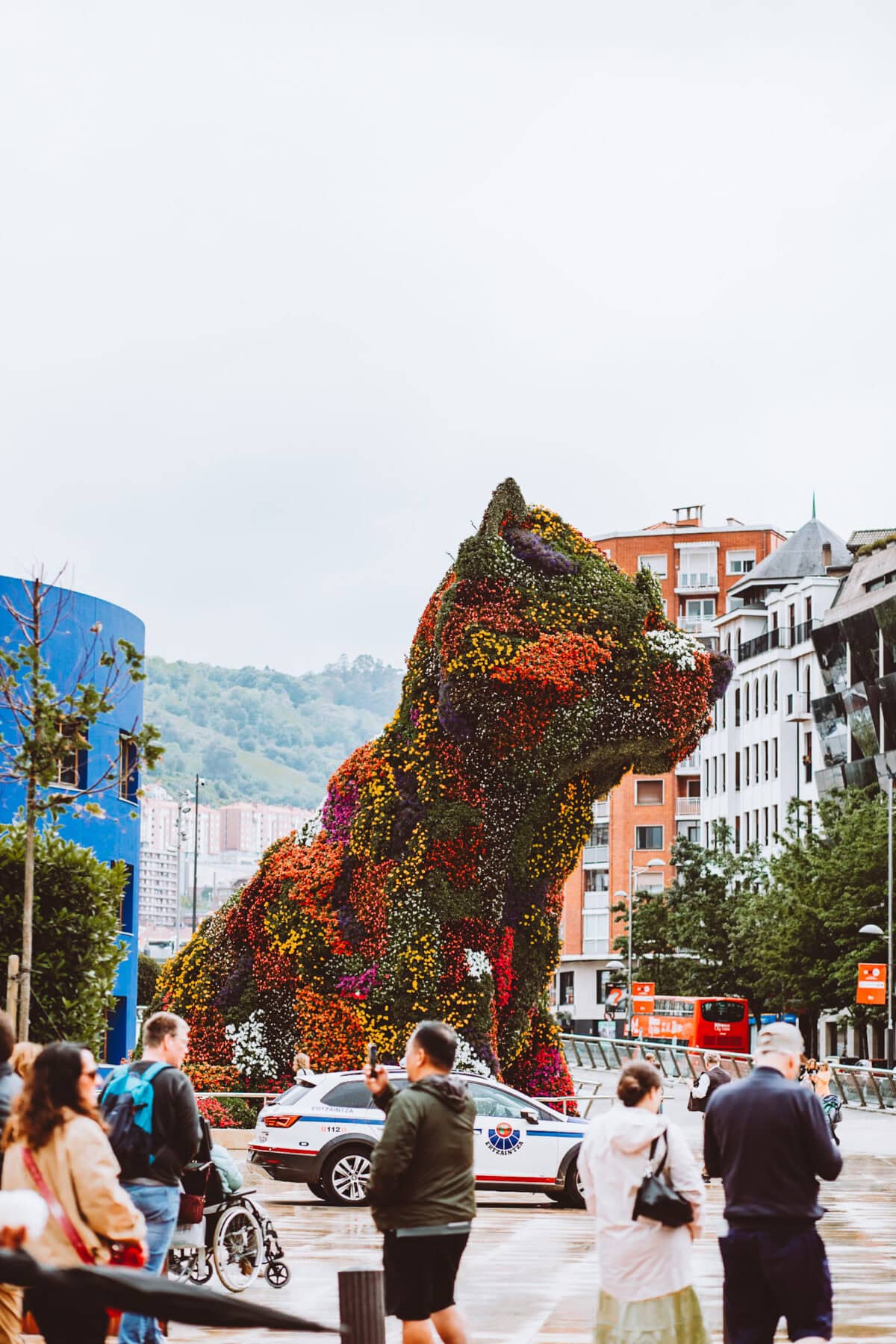
The Guggenheim Museum is probably THE landmark of Bilbao. The Museum of Modern Art is a branch of the Guggenheim Museum in New York and is probably the very first location that visitors head for in Bilbao. The construction of this architectural super project, designed by Frank O. Gehry, has transformed the former industrial city to such an extent that a phenomenon has even been named after this incisive event: The Bilbao effect describes the upgrading of a place solely through a spectacular building.
However, the Guggenheim Museum Bilbao is not just a feast for the eyes from the outside: inside you can see really impressive contemporary works of art in the permanent exhibition. In addition, there are always spectacular temporary exhibitions and works on display.
Insider tip: If you want to know what Bilbao used to look like, you will find a small room with a video installation called “Zero” directly to the right of the ticket office. (Most visitors simply walk past it).
It shows what Bilbao used to look like and how drastically the city has changed over the last hundred years. By the way: you don’t need a ticket for the museum to see the installation, as it is located in front of the entrance control. But honestly: if you’re already here, you shouldn’t miss the exhibition!
Don’t miss this tour in Bilbao
The best way to admire the full beauty of the Guggenheim’s architecture is from the water. The 1- or 2-hour boat tour doesn’t cost much and you will learn more about Bilbao’s dramatic development from an industrial city to a tourist magnet.
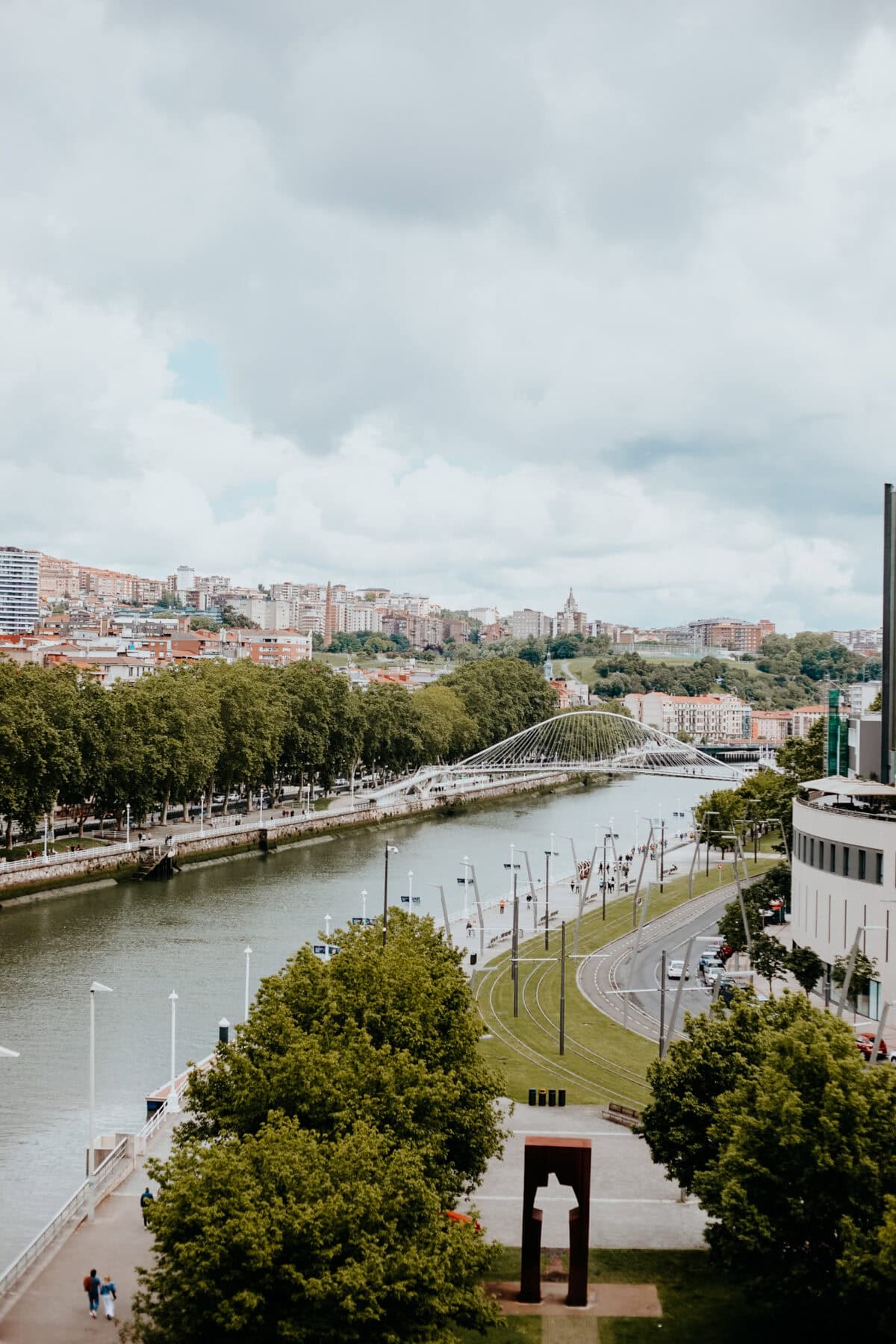
Does the design of the Zubizuri Bridge not far from the Guggenheim Museum look familiar? On the one hand, the curved shape is supposed to be reminiscent of a sail – on the other, it looks quite similar to the terminal at Bilbao airport. No wonder, as both the pedestrian bridge over the Nervión and the terminal were designed by Spanish star architect Santiago Calatrava.
Old town of Bilbao / Casco Viejo
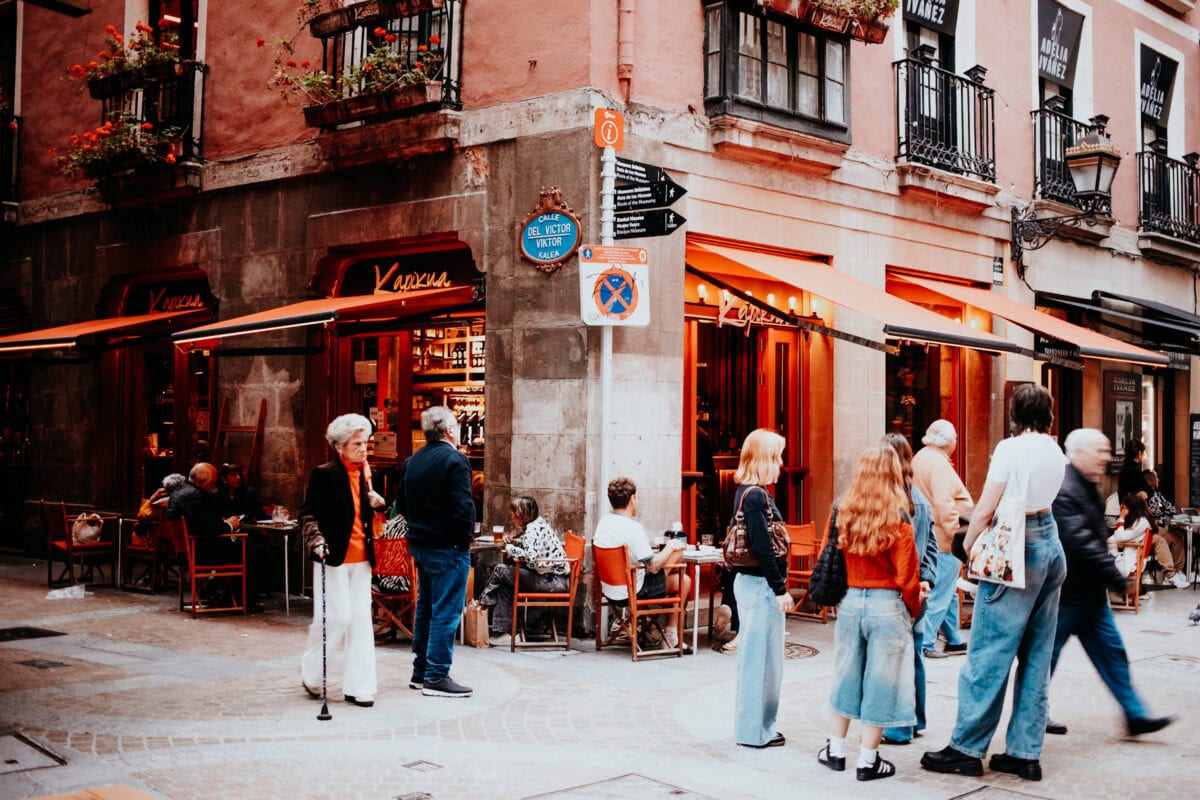
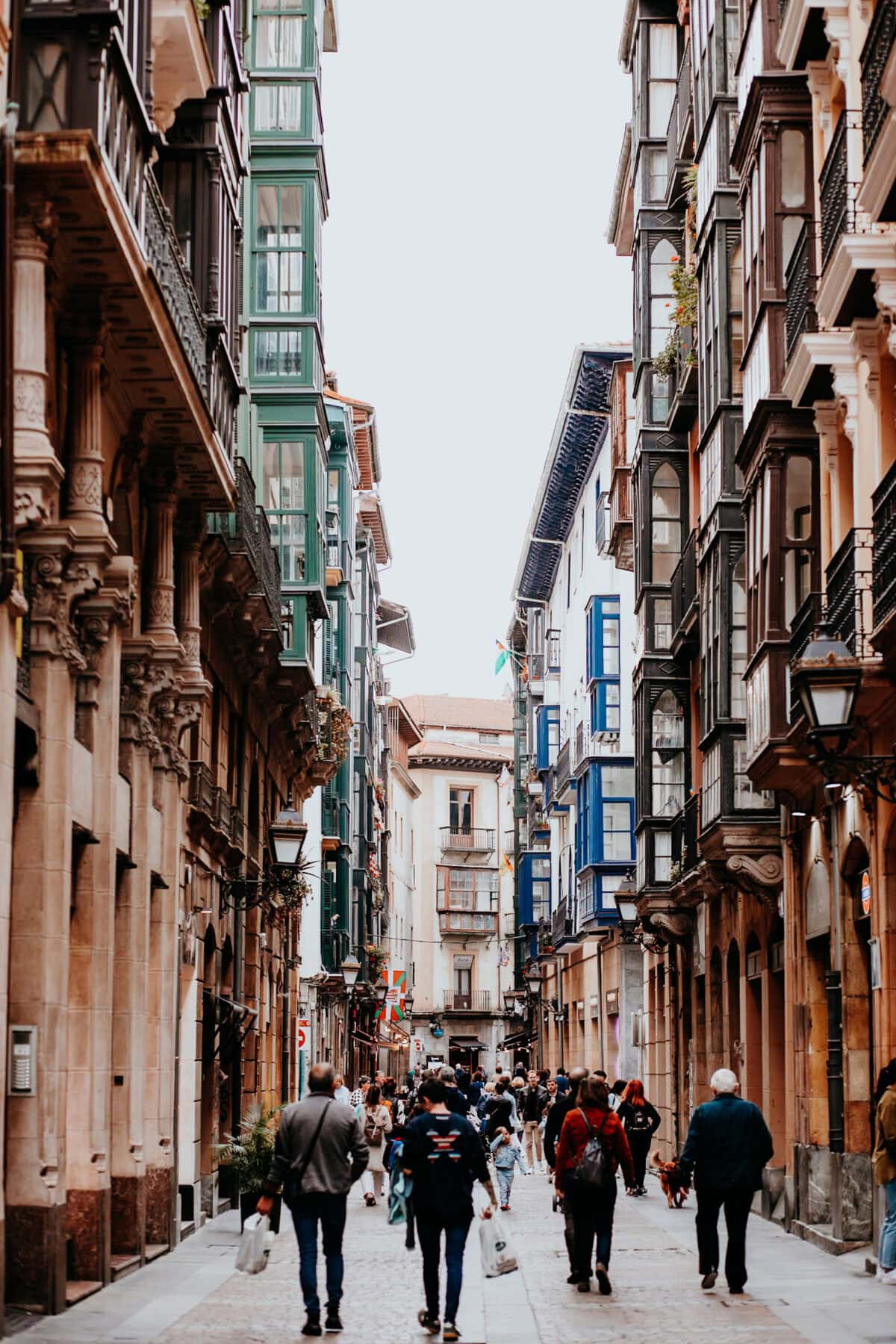
You should also not miss out on a visit to Bilbao’s old town. It is all too easy to get lost in the narrow streets with their numerous eateries. The Basque Country is also known for its excellent cuisine and the number of Michelin-starred restaurants is exceptionally high. So it’s best to come hungry!
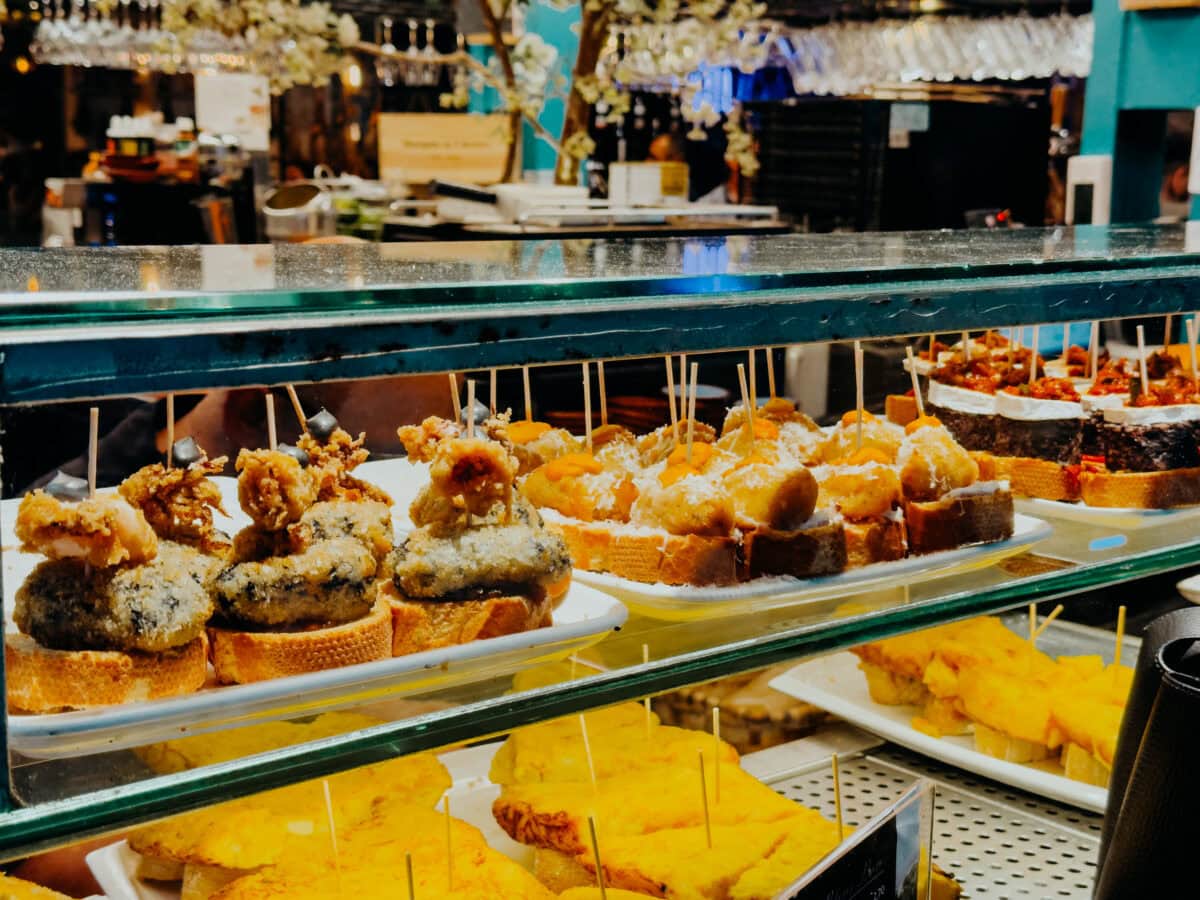
Don’t have a big budget for fine gourmet restaurants? No problem either! In the old town of Bilbao you will also find numerous bars and restaurants that offer really good pintxos for a small price. Pintxos are small snacks, similar to tapas, which are traditionally eaten with a drink – but you can also easily fill up on the large selection.
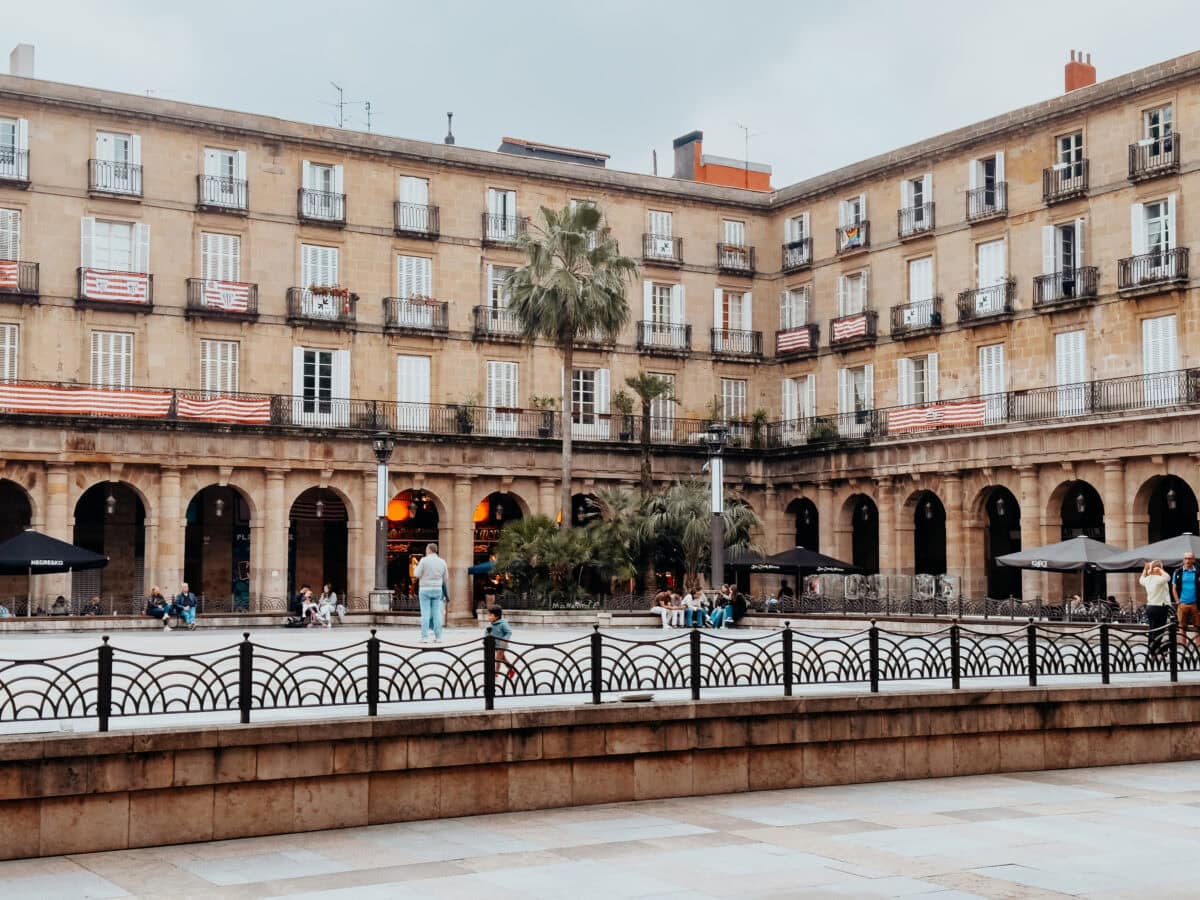
Known as Plaza Mayor in many Spanish cities, Plaza Nueva is the heart of the old town, so to speak. You will also find many good bars and restaurants around the square, where you can sample a selection of pintxos.
Bilbao Cathedral
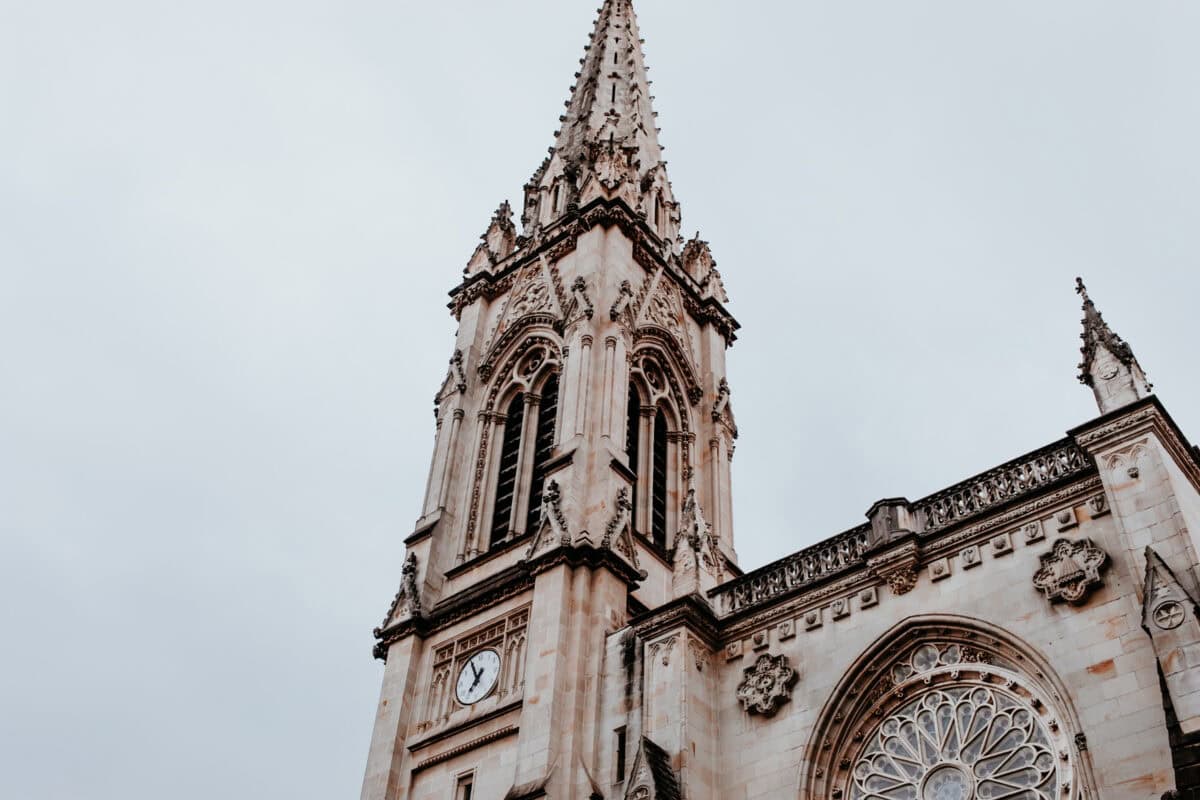
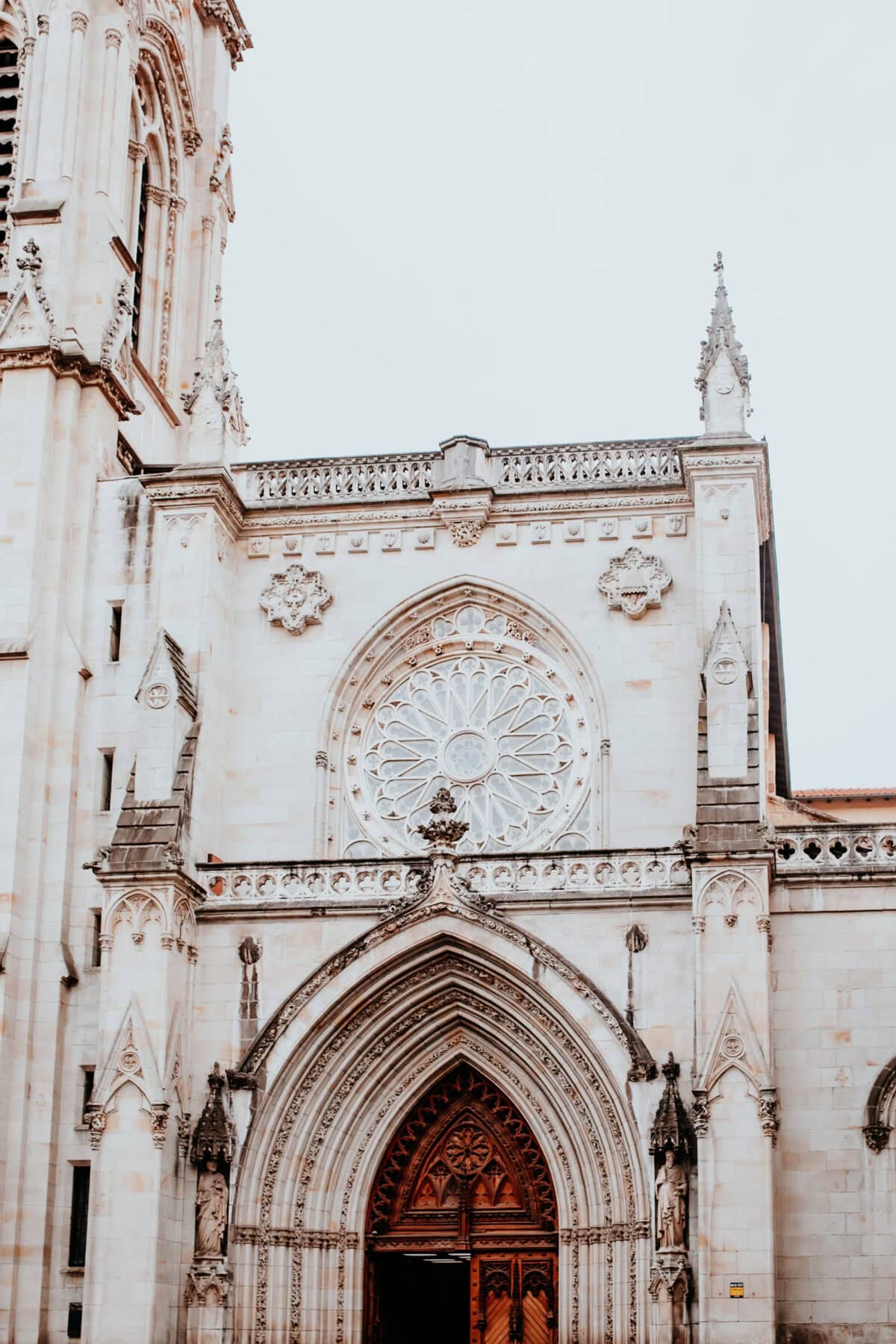
Bilbao Cathedral is also located in the middle of Bilbao’s old town. It is practically impossible to miss. Interesting fact: Bilbao is on the Way of St. James and Bilbao Cathedral dates back to an old pilgrimage church. That’s why you’ll often meet pilgrims here who are on their way to Santiago de Compostela.
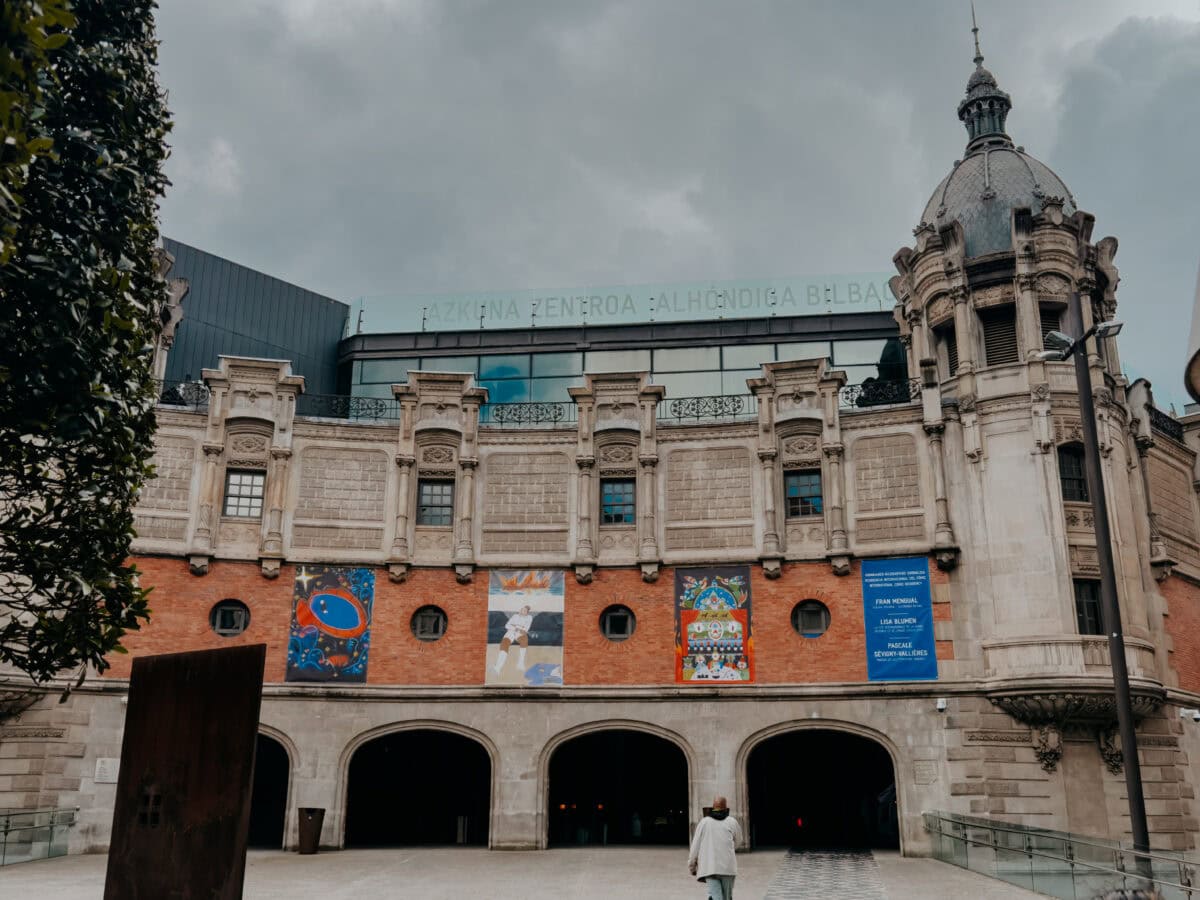
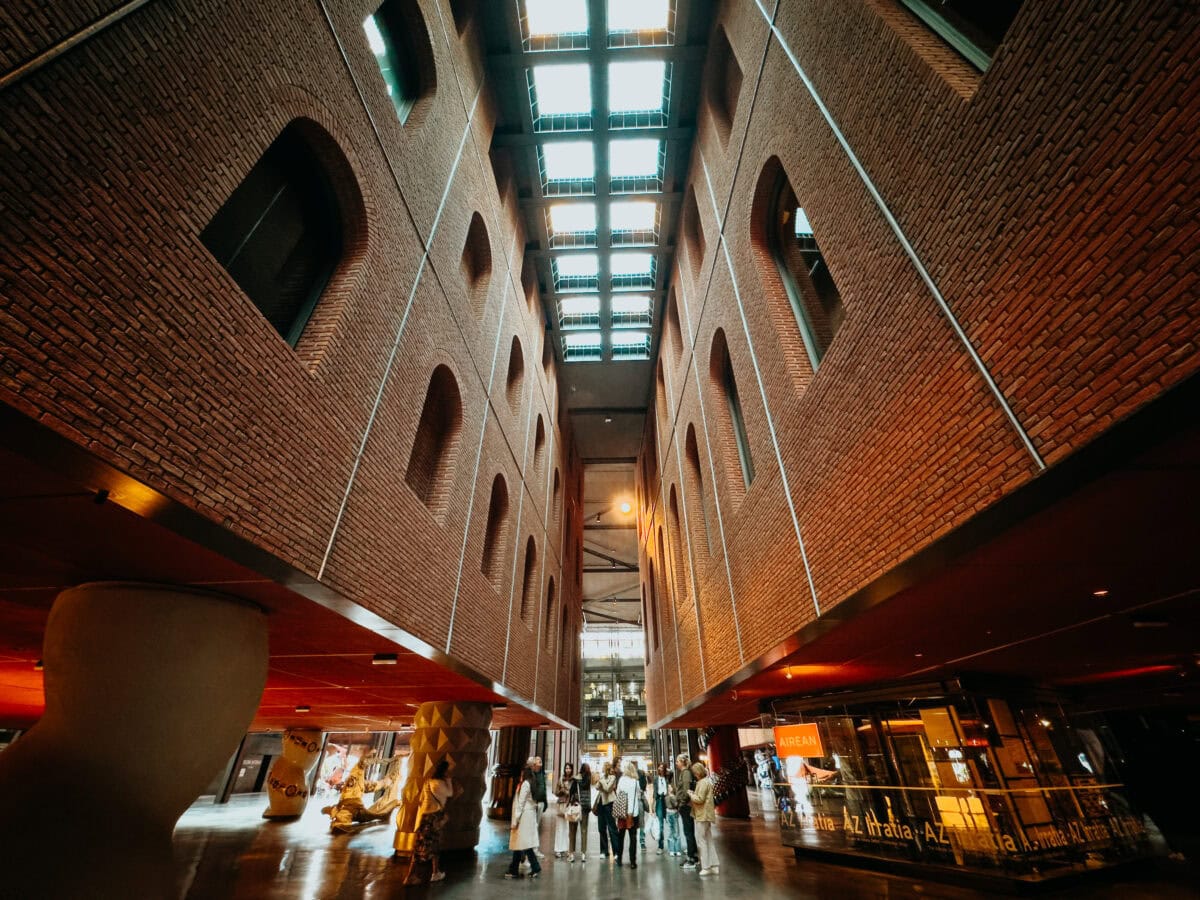
Originally, the vacant former wine storehouse was under discussion as the location for the Guggenheim Museum; the project ultimately fell through due to the lack of space, among other things. Which is a stroke of luck from today’s perspective: the Azkuna Zentroa cultural and multi-purpose center designed by Philippe Starck was opened here in 2010.
In addition to cinemas, restaurants, an auditorium and a municipal library, there is also a fitness studio and a public swimming pool on the top floor of the complex.
One of the pools even has a glass bottom, which you can see from the first floor! You can visit the swimming pool itself with a day ticket – if you have a bit more time in Bilbao, this is definitely a good idea for a bit of sport on the go!
Puente de Viscaya / Bizkaya Bridge
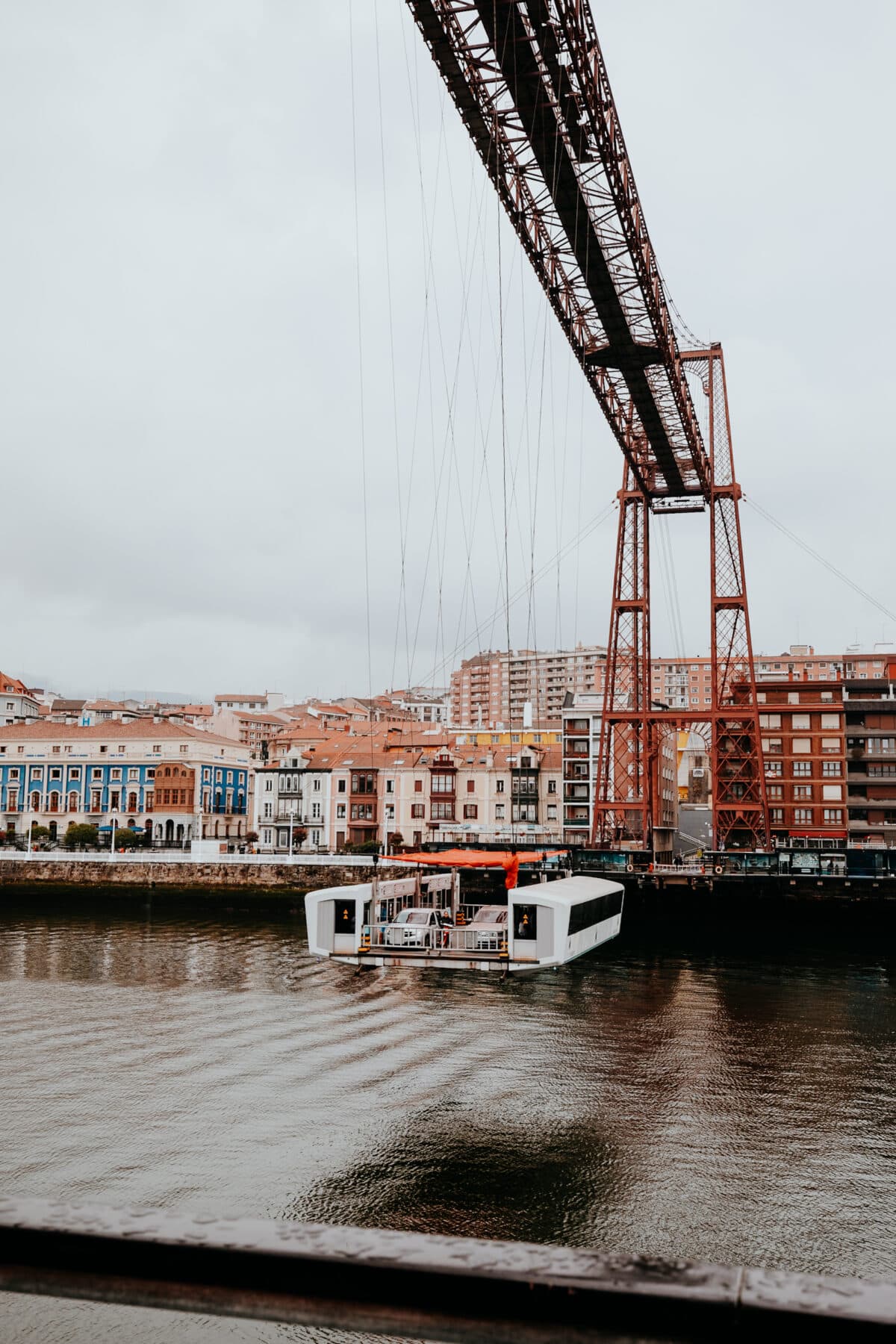
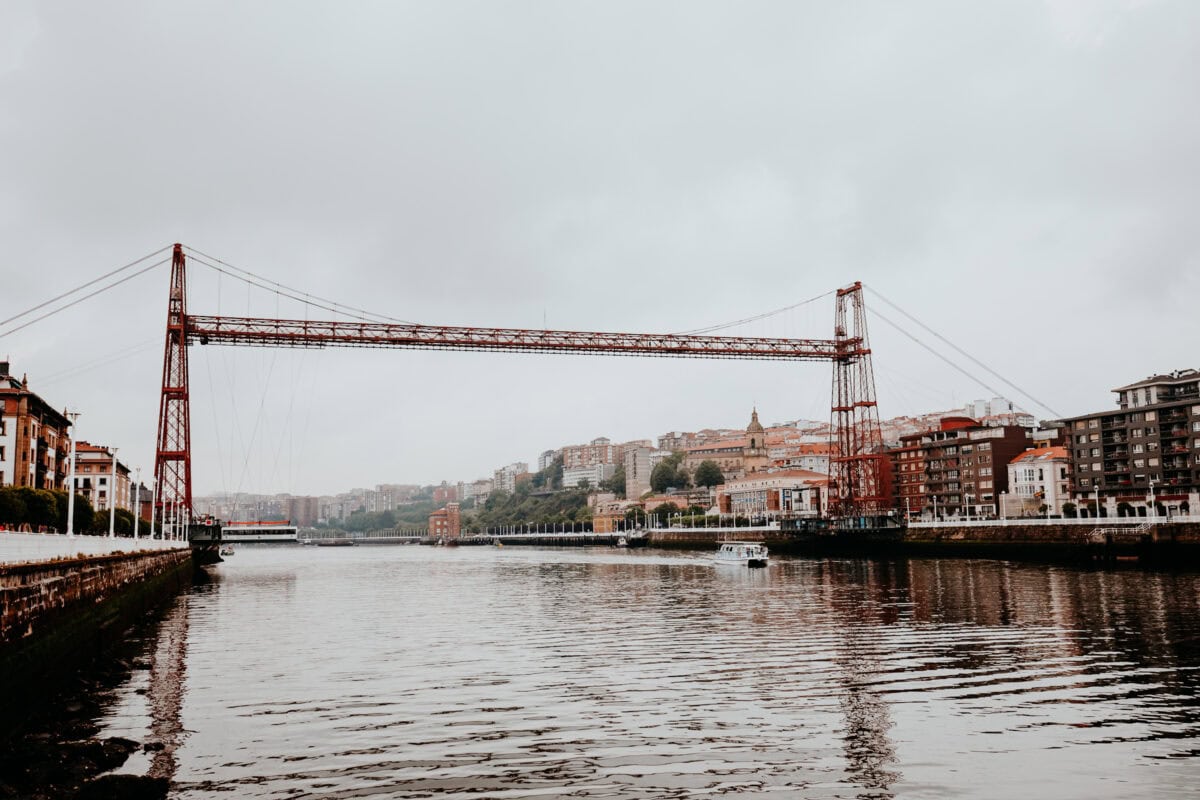
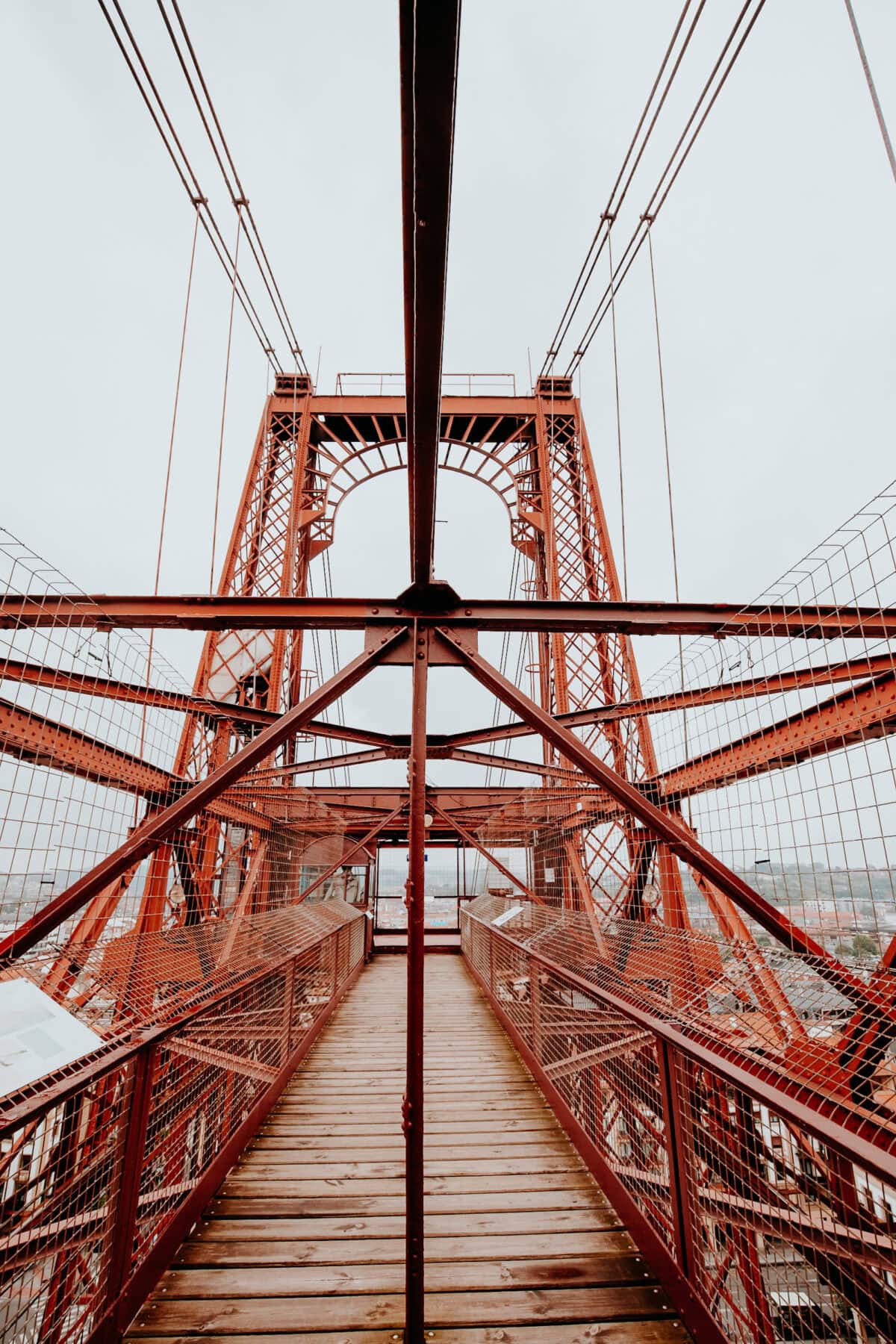
Just outside Bilbao, there is a very unusual sight that you should definitely visit. The Puente de Biscay connects the two municipalities of Portugalete and Getxo and is a UNESCO World Heritage Site. What makes it so special: Pedestrians, cyclists and even cars do not cross the estuary via the bridge itself, but by means of a floating ferry suspended from the bridge structure. The ferry is used by local residents as a normal means of transportation; a one-way ticket costs just 55 cents during the day.
You can also visit the bridge itself and take an elevator to the top; the entrance ticket for the bridge also includes a ferry ride. The Puente de Viscaya can be reached by metro from Bilbao city center.
Tip: Explore the rest of the pretty coastal town of Getxo too! From its promenade, you can also see what is now the port of Bilbao.
Now that all the port facilities in Bilbao itself have disappeared and no large ships operate there, the majority of Bilbao’s port is located in the municipalities of Santurtzi and Zierbena, which lie on the estuary. And it really is huge: the port of Bilbao is the largest in Spain.
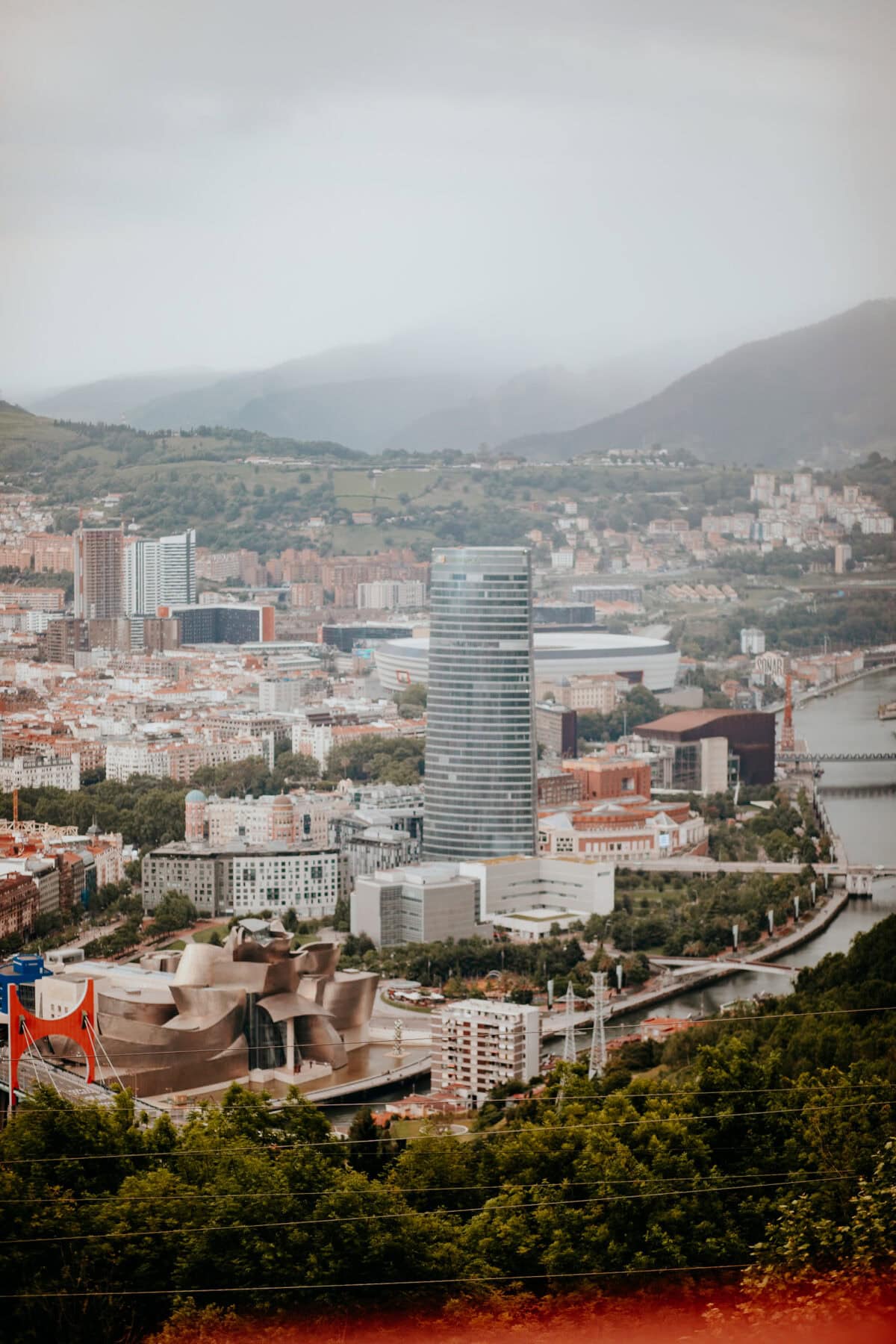
From the summit of Artxanda, you have a unique view of Bilbao and the surrounding green mountains. The quickest way up is by funicular, the Funicular de Artxanda. Bilbao’s local mountain is also popular with locals, especially at the weekend: there are various leisure activities for young and old, as well as the popular Txakoli restaurant.
Gran Vía
Gran Vía is actually called Gran Vía de Don Diego López de Haro and is the main shopping street through the center of Bilbao. Over the course of one and a half kilometers, you will find stores from large chains such as Zara and Mango as well as two branches of the Spanish department store El Corte Inglés.
Towards the old town, Gran Vía becomes even busier, and in the side streets you will always find a few corners with smaller bars and restaurants, for example in the parallel Calle Ledesma.
Iberdrola Tower
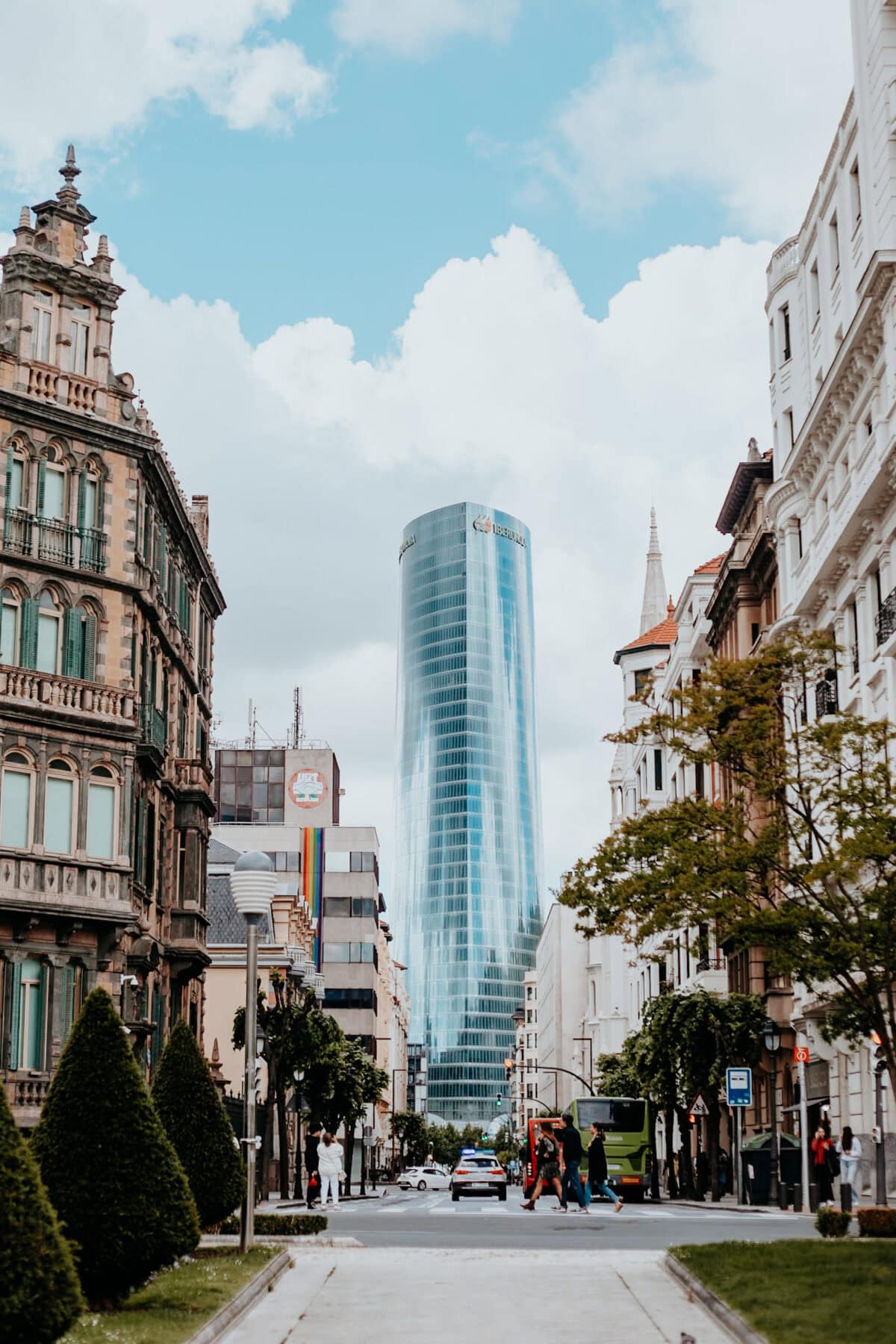
Whether the Iberodrola Tower is really worth seeing is debatable. In any case, the office building is Bilbao’s tallest skyscraper and therefore a good landmark. And with a bit of luck and the right time of day, the sunlight sparkles so beautifully in the reflective façade that it makes a lovely photo motif.
More museums in Bilbao
If the Guggenheim Museum has whetted your appetite (or if the weather isn’t playing ball), you can also visit the following museums in Bilbao:
The Museo de Bellas Artes may not be quite as spectacular as the Guggenheim, but it is still one of the most important museums in Spain. You will find a large collection of art here, ranging from the present day to the 12th century. The building is currently being renovated and expanded, and it sounds very promising what is being created here.
If you want to find out more about Bilbao, the history of the port and its connection to seafaring, you should pay a visit to the Itsas Museum.
Staying overnight in Bilbao
There is a wide range of accommodation options in Bilbao – and there is something for every budget. Personally, I would recommend accommodation around the Gran Vía, not in the old town, e.g. in the Abando district. Here you can easily get to all the important locations, do a bit of shopping and experience the life of the locals.
Although the old town is connected to the metro network with one station, it is otherwise a pedestrian zone. This means you may have to walk halfway through the old town with your luggage to your accommodation. The old town is also very lively in the evening if you prefer a quieter atmosphere.
I stayed at the Catalonia Gran Vía*, a comfortable boutique hotel in a great location (bus to the airport stops right outside the door) and with a really good breakfast buffet (I’m not normally a fan of this, but it’s really good here).
Click around in the map to find the best accommodations in Bilbao
Advertising / *affiliate link
Excursions from Bilbao
If you have a little more time, I highly recommend exploring the surrounding area. Sophisticated San Sebastián, for example, is only an hour’s drive away or you can explore the surrounding coastal towns. You don’t necessarily need a rental car either, there are plenty of organized tours on offer from Bilbao:
You can easily get from the airport to the center of Bilbao on bus line A3247. You can buy the bus ticket directly from the driver on the bus (cash only); the bus stop is located directly in front of the arrivals hall. The bus runs mostly on the highway and also stops on Gran Via. The final stop is Bilbao Intermodal, from here you can change to the train, streetcars, metro or long-distance buses.
Within Bilbao, you can explore a lot on foot (especially in the old town). Bilbao also has a good streetcar and metro network. Tickets are available at the stops and stations and the prices are very reasonable.
Language & culture in Bilbao
Bilbao is located in the Spanish part of the Basque Country, but is not its capital. (That is Victoria-Gasteiz, an hour’s drive away.) As an autonomous community in Spain, the Basque Country has another official language: in addition to Spanish, Basque is also an equivalent official language here.
Spanish is an official language alongside Basque
As a visitor, however, you don’t need to worry about communication. As in other parts of Spain with other official languages (e.g. Catalonia), the locals generally also speak Spanish, and in an international city like Bilbao you will also get by fine with English.
However, Basque is a super interesting language as it is not related to any other language. It is also spoken in part of neighboring Navarre and in the smaller French part of the Basque Country, where it is not an official language.
Politically, the Basque Country has always been a bit of a hot potato. Independence efforts and resistance to Franco’s dictatorship in Spain, for example, gave rise to the terrorist organization ETA, which kept the country on tenterhooks for several decades with numerous attacks.
I’m no weather expert, but the combination of a location on the wild Bay of Biscay and the surrounding mountains makes the weather in Bilbao quite a challenge. In my memory, I have experienced the worst approaches of my flight attendant career in Bilbao – and so I perceive Bilbao as a constant weather hole.
It likes to be wet here, it often rains; but the summers are warm, but not oppressively hot like in the south of Spain, for example. And the abundant rainfall makes for lush green mountains around Bilbao.
I therefore recommend that you avoid the fall and winter months, even if you have to squeeze through the city with the rest of the tourist crowds in the warmer months. But in my opinion, Bilbao is simply far too uncomfortable and inhospitable in bad weather.
Safety in Bilbao
If you read my blog regularly or follow me on Instagram, you’ll know that I can get excited about any destination. Bilbao also has really interesting sides, for example, I find the history of Bilbao and the changes to the cityscape over the last hundred years super fascinating.
Nevertheless, I haven’t become a big fan even after my last longer stay. This may be due to the city itself in general, which still exudes a bit of industrial dreariness for me, perhaps the occasionally damp weather, but also the fact that I had to part with my brand new iPhone here – it was stolen from my coat pocket.
Pickpocketing happens every day in every major European city, and Bilbao has not yet achieved the notoriety of Barcelona, for example, in this respect, as far as I know. Nevertheless, I would like to take this opportunity to draw your attention to it. At first glance, Bilbao always seemed relatively relaxed and safe to me. But there are a lot of pickpockets out and about, especially in the busy old town with its narrow streets.
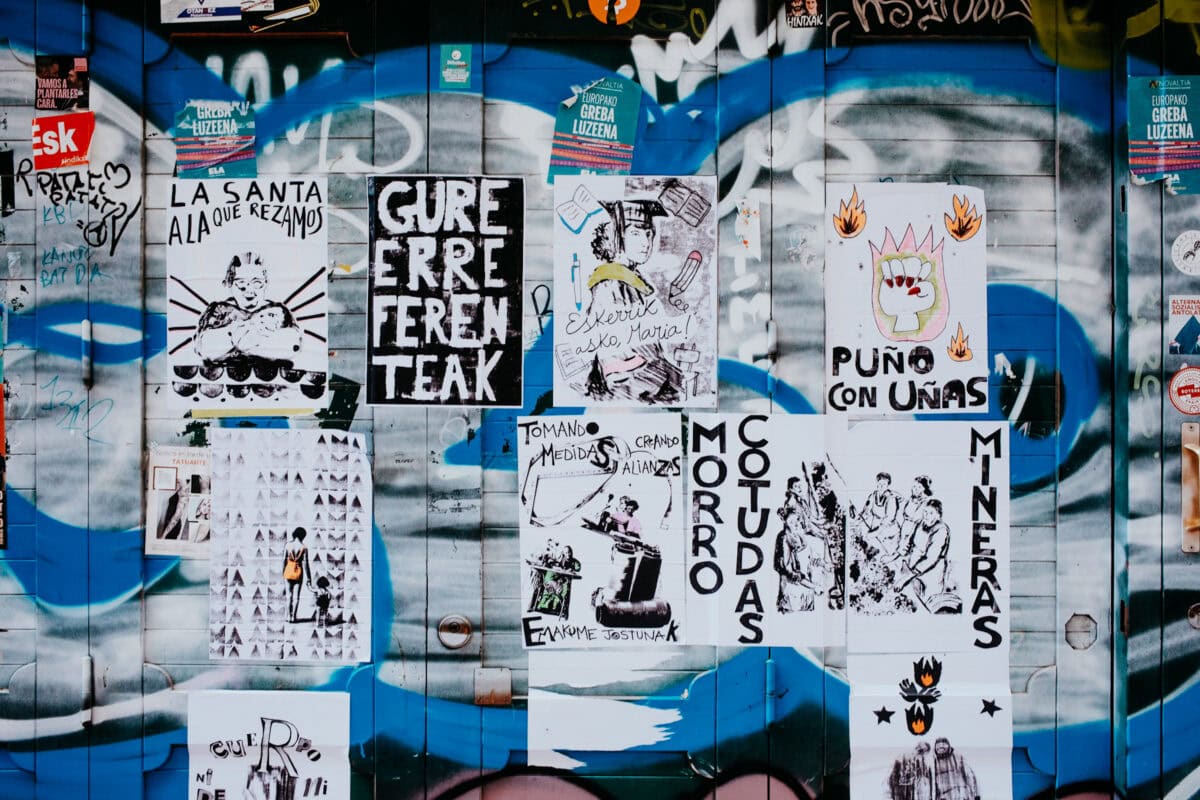
Locals also urged me to pay more attention to the area around Calle San Francisco, a district on the other side of the river opposite Mercado Ribera. There’s a lot of street art, exciting restaurants and stores here – but it’s also a problem area and is often referred to as the most dangerous part of Bilbao. I was curious and actually wanted to explore the area, but after my pickpocketing experience, I didn’t feel like it. So if you want to go here (which I have actually decided to do on my next visit despite my experience) – take care.
This article was written in part with the support of Visit Euskadi, the tourism organization of the Basque Country.
Located on the east coast of Sicily and blessed with fantastic views of the imposing Mount Etna and the azure blue Ionian Sea, the small mountain village of Taormina has always been a magnet for visitors. And that can sometimes be more of a curse than a blessing. In my big guide, I’ll show you the most important sights in Taormina and tell you whether visiting Taormina is really worth on your trip to Sicily.
You absolutely have to do this in Taormina:
Stroll along Corso Umberto
Admire the giant Mount Etna from the Teatro Greco
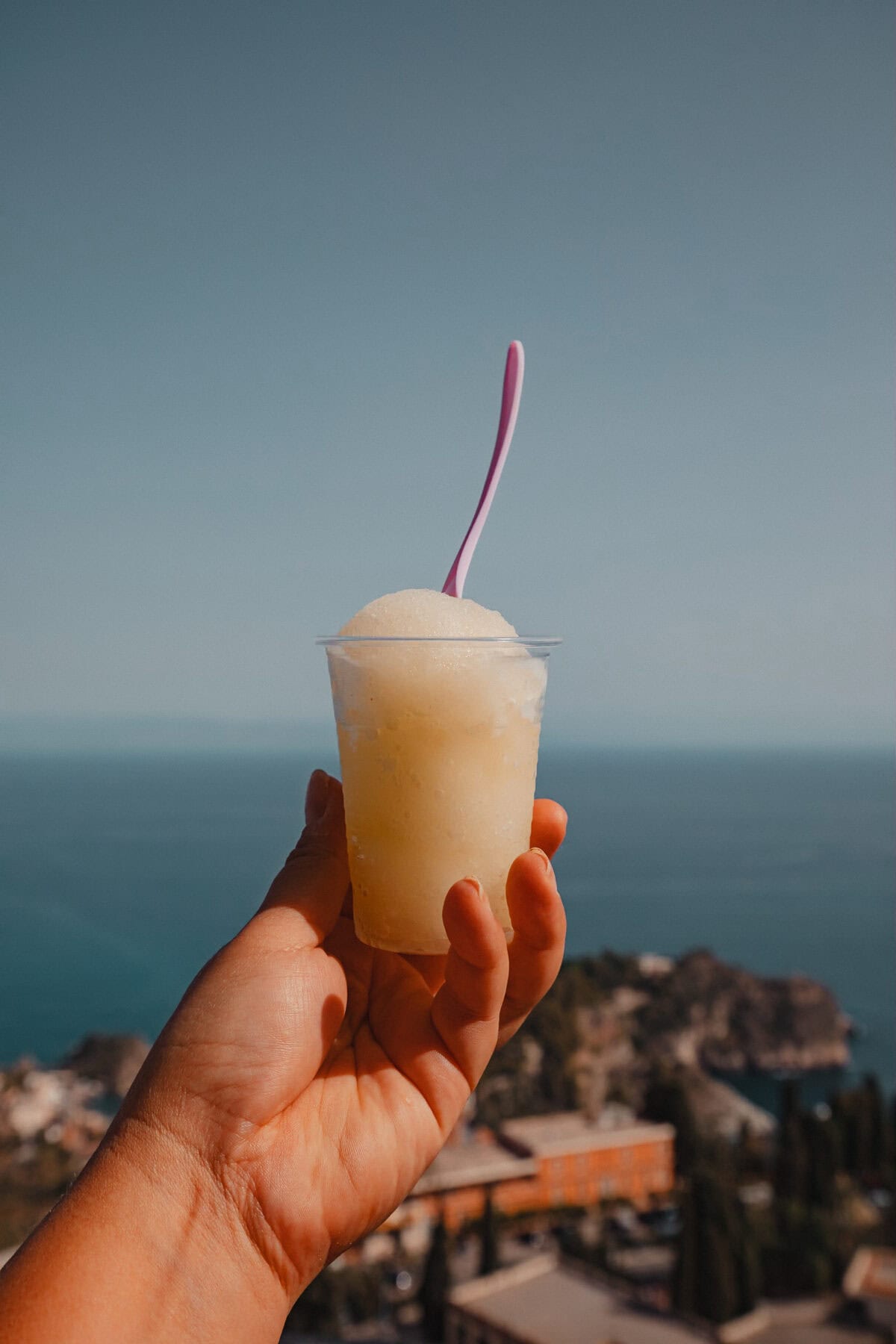
Sip a granita at the Bam Bar
In Taormina, it is also worth taking a look at the small side streets. Most visitors often concentrate on Corso Umberto and the Teatro Greco. Both are well worth seeing, but Taormina has a lot more charm to offer.
Places of interest in Taormina
Taormina is quite clearly laid out. Therefore you can easily explore the most important sights in the center in one day and enjoy the atmosphere of this special place in Sicily at the same time.
Corso Umberto I
Corso Umberto I is the lifeline of Taormina. Lined with medieval and Florentine buildings, you can stroll for all you’re worth. Here you will find small boutiques and luxury brands such as Dior or Louis Vuitton, boring stores with stuff for tourists, but also some small, quaint stores.
Daneu 1885 Old-fashioned store for home textiles and a bit of ceramics with a nostalgic flair
Di Blasi Typical Sicilian ceramics and the small store itself is a sight to behold
Tip: If you really want to breathe in the jet-set air on Corso Umberto, you should take a short break from sightseeing at the Louis Vuitton Café by Timeo. The café is part of the Belmond Grand Hotel Timeo*, which in turn also belongs to the LVMH Group.
In the café, you can enjoy a fantastic view of the sea with Louis Vuitton decorations – if I hadn’t been wearing my casual sightseeing outfit that day in Taormina, I would certainly have ended up here. (Unfortunately, you should look a bit more stylish here, otherwise you’re likely to be turned away or blasély ignored).
Piazza IX Aprile
Piazza IX Aprile is one of the most popular viewpointsin Taormina and is always busy. However, the square is very large, so that the crowds of tourists are well distributed here even in the high season. And the checkerboard pattern looks great on any souvenir photo!
Porta Messina & Porta Catania
Two city gates form the beginning and end of Corso Umberto I. The northern end is marked by the Porta Messina. To the south is the somewhat imposing Porta Messina. Both are part of Taormina’s medieval fortifications, which were built by the Arabs to protect the city from invaders.
The gates are also a popular meeting point for tours of Taormina.
Teatro Greco
The ancient Greek theater, the Teatro Greco, is an absolutely stunning location in Taormina that you should definitely not miss. The entrance fee is quite high, but the view of the city, the sea and Mount Etna from the stands is simply unique.
The theater was originally built by the Greeks in the 3rd century. BC. later used by the Romans and in the 2nd century. AD. into an arena for gladiator fights.
Large events and concerts take place here in the evenings. The atmosphere with this backdrop must be incredibly fascinating – if you have time, ask about current events on site.
The Duomo di Taormina dates back to the 13th century and is rather plain on the outside. You can also easily recognize the Norman influences in the straightforward architecture. The square in front of it with its baroque fountain is particularly pretty.
Find your accommodation in Taormina here
Advertising / *affiliate link
Naumachie
In a small side street off Corso Umberto you will find a very special sight in Taormina: the Naumachie is a massive brick wall about 120 meters long and 5 meters high, which probably once formed the boundary of a sports facility where athletes trained.
Villa Comunale
Taormina can be quite exhausting during the day, especially if you keep getting caught between tours of cruise tourists at neuralgic points such as the Corso Umberto or the Teatro Greco.
The gardens of Villa Comunale are a true oasis of calm and a perfect opportunity to take a breather. You also have a great view of the sea and the coast.
The gardens were originally owned by Lady Florence Travelyan, an English noblewoman who also owned Isola Bella. However, like Isola Bella, the park now belongs to the town of Taormina and is open to the public.
The small oriental-style buildings, the“beehives“, are particularly striking. These used to be used for birdwatching or afternoon tea, but are currently not accessible and unfortunately no longer in such good condition.
Via degli Artisti
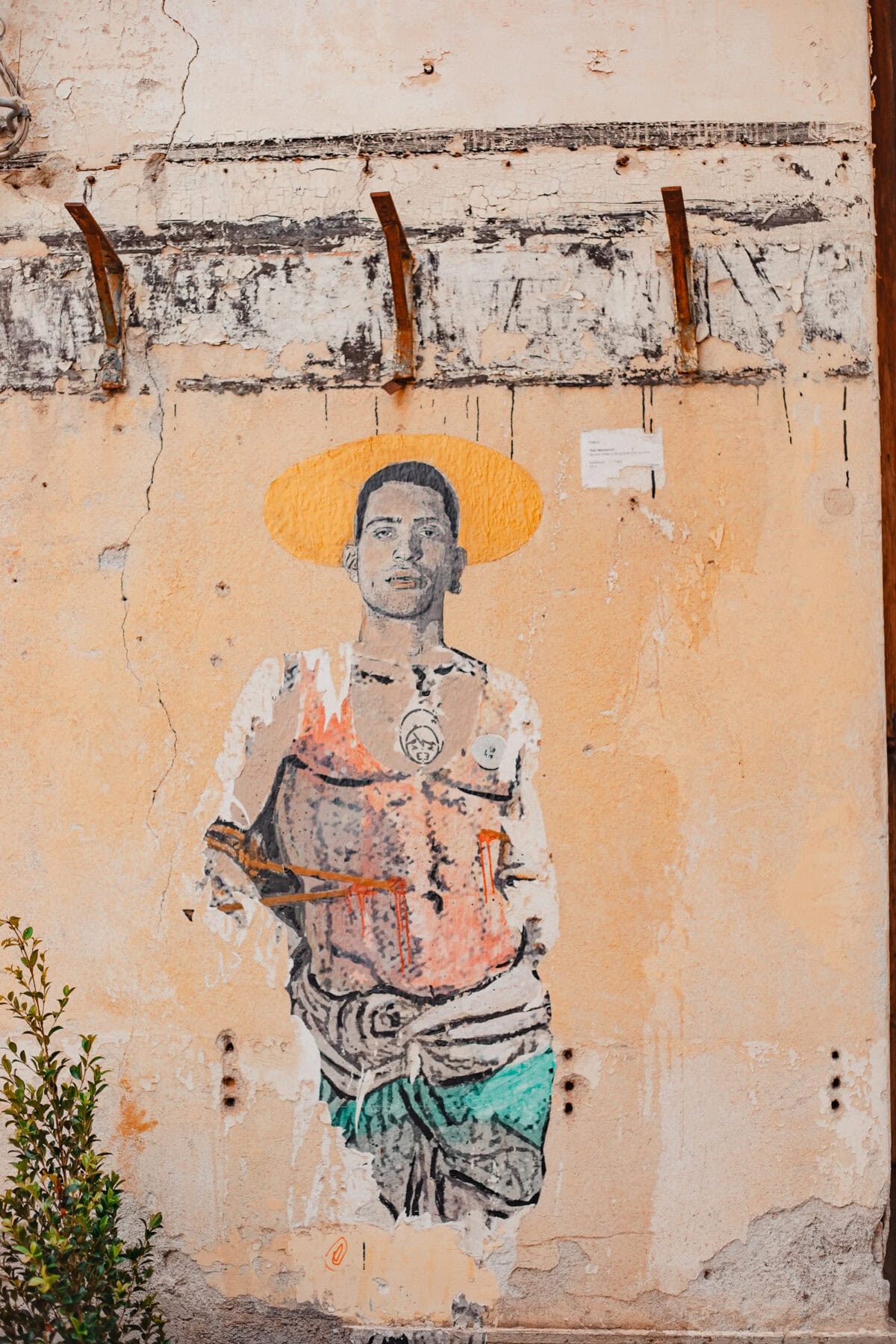
Via degli Artisti is also a great photo opportunity in Taormina. Here you will find galleries, murals and colorfully designed house facades.
Isola Bella
Isola Bella is a small island off the beach of Mazzaró. It is connected to the beach by a small sandbank and can therefore be reached on foot. Depending on the tide, your feet may or may not get wet, so it’s best to wear something that can be rolled up or put on a beach outfit.
The island itself is a nature reserve and part of it can be visited for a few euros.
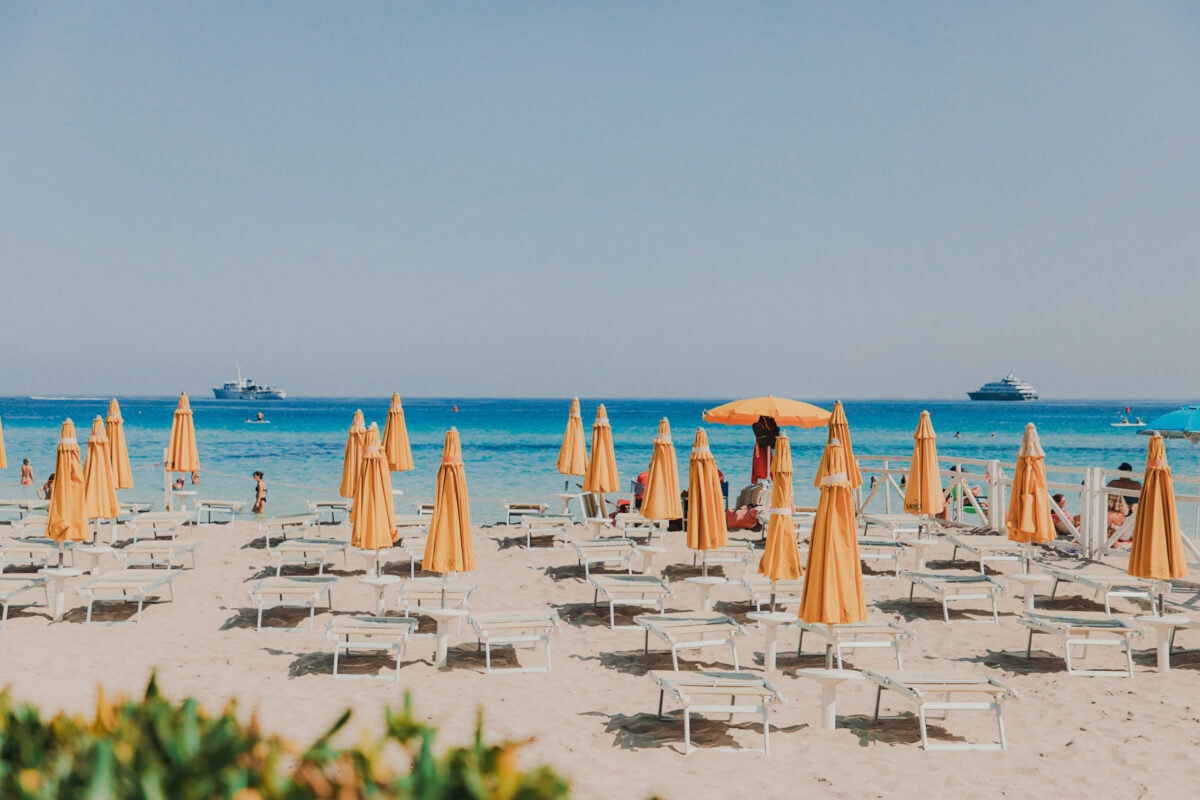
However, I personally didn’t find the beach at Mazzaró particularly nice for swimming. A large part of the beach is taken up by hotels and beach bars. And instead of a sandy beach, you’ll find coarse pebbles here.
The view of Isola Bella is nevertheless very beautiful and the elegant vibe at La Plage Resort* tempted me to settle down here for a cool drink – but it’s not exactly cheap, and spending an entire vacation here wouldn’t be my thing.
Where to dine in Taormina
You’ll find plenty of cafés and restaurants in Taormina. Unfortunately, the price level here is much higher and you also have to be careful with the quality: Tourist traps are not uncommon here.
Here are a few tips that won’t disappoint you and where you can enjoy typical Sicilian specialties without the touristy atmosphere!
Taverna Don Nino This small, cozy taverna is located near the Villa Comunale and quite away from the hustle and bustle. A real insider tip! There are only two pasta dishes on the menu: pasta alla norma (tomato, eggplant and ricotta) and pasta with pistachio cream and bacon, but they are really, really good and very cheap for Taormina. My recommendation for lunch!
Bam Bar The Bam Bar serves typical Sicilian granita, brioche and coffee in a colorful atmosphere – perfect for something sweet in between.
Chapeau Corso Umberto is of course bustling with life in the evening, but the Chaplin, whose terrace is somewhat hidden down a flight of steps to the side of the Duomo, is a really atmospheric place to sit. And the cocktails are great!
Casamatta Small, modern wine bar with a relaxed atmosphere. Also open during the day.
Budget tip: Rosticceria Da Cristina 2 always serves fresh and good pizza from the tray, delicious street food such as arancine and inexpensive daily specials!
If you want to learn a little more about Sicilian wine, a trip to Taormina is a good opportunity to take part in a wine tasting:
Taormina is definitely one of the most expensive spots in Sicily. This means that accommodation here is not exactly cheap and the price-performance ratio often leaves a lot to be desired.
However, if you want to spoil yourself with slightly more expensive accommodation, Taormina is the place for you! Here you will find beautiful boutique hotels or luxury hotels such as the San Domenico Palace*, known from the Netflix series “White Lotus”.
For example, if you want to stay in the middle of it all, but still in a stylish and cozy atmosphere, you should take a look at the Taodomus Small Boutique Hotel*. There are only a few rooms available, so book early.
I was just passing through and unfortunately made a complete mess of my first accommodation: Too expensive, too unfriendly, too dirty. That’s why I moved again, and I can really recommend the accommodation:
Budget tip: Just outside the city center, but within walking distance of the valley station of the cable car and Isola Bella, I discovered a quaint guesthouse in an old town villa. The Villa Moschella* is a little dated, but really well maintained – and the location is unbeatable. Please note: The rooms are very popular and get booked up quickly!
Taormina is relatively easy to reach despite its location on a mountainside. Day trips are offered from many places, e.g. from Catania. You can also take the train to Taormina-Giardini station on your own. From there, buses run up to the center.
Taormina cable car
Mazzaró beach can be reached by cable car from the center of Taormina. During the season, the cable car runs late into the night, so you can easily enjoy balmy summer nights in the atmospheric old town and then return to your beach hotel.
Driving in Taormina can be a sheer horror: The access roads are sometimes winding, narrow and crowded. In the high season, you also have to share the narrow roads with various coaches and the roads that you are allowed to drive on in the town center are often one-way streets.
This way you can avoid stress when traveling by car:
Head straight for Porta Catania. There is a large multi-storey parking garage where you have the best chance of finding a parking space close to Corso Umberto. Unfortunately, the driveways are relatively narrow and you sometimes have to drive up many floors. But the location is unbeatable.
There are many parking lots around Taormina that offer a shuttle service.
There are also several parking spaces around the valley station of the cable car.
Day trips to Taormina are also offered from many places, so you can simply leave the rental car/your car behind.
Are you staying overnight in Taormina and traveling by rental car? Find out in advance whether a parking space is available.
Taormina has a bit of a reputation: It’s posh, at the same time very crowded and somehow doesn’t really want to create a Sicilian atmosphere. And when the big cruise ships dock in neighboring Naxos, it gets even more crowded.
Nevertheless, Taormina is really very charming, and if you follow some of the tips in my guide here, you will certainly find one or two less crowded corners. You should also experience Taormina in the evening: The atmospherically illuminated old town in the evening is truly romantic.
However, I wouldn’t want to spend too much time here, it’s just too touristy and Sicily has so much more to offer! So: excursion definitely, longer no.
Here you can find a map with all the locations from this article. Perfect for saving for your trip!
This post was written on a research trip through Sicily for Travellers Insight, the travel blog of Munich Airport. On the website, you can find more exciting tips for Sicily, TrapaniPalermo.
Sicily blew me away: The largest island in the Mediterranean is so incredibly diverse and fascinating. Here you will find vibrant cities such as Catania and Palermo, beautiful beaches and bays, as well as historical sites from all eras. In this article, you will find my selection of the 20 most beautiful places in Sicily. Perfect for inspiring you to take a trip to Sicily or to start planning your itinerary right away.
What you need to know
Sicily has a long and eventful history, which is why you will even find influences from the ancient Greeks, Normans and Arabs in its architecture and culture.
Mount Etna, Europe’s highest active volcano, offers impressive hikes and day trips in a spectacular setting.
Sicily is home to many towns and villages with unique charm, such as Palermo, Taormina and Cefalù – all worth a visit!
Sicily sights: What you must see
Sicily is a destination for all the senses: the landscape is impressive, the Sicilians are open-minded – and oh my God, the food everywhere is simply delicious! A trip to Sicily is worthwhile for this alone. But the largest island in the Mediterranean also has other great sights to offer. You can discover natural wonders such as the brightly lit Scala dei Turchi or Mount Etna, Europe’s highest volcano.
And the Sicilian Baroque in the Val di Noto or the ancient temples near Agrigento are not just for history buffs. If you’ve had enough of history, you can simply plunge into the hustle and bustle of the capital Palermo and explore one of the most exciting cities in Europe. You’re guaranteed not to get bored in Sicily!
#1 Etna – Europe’s highest volcano
Have you ever stood on a volcano? Mount Etna is not just any volcano – it is Europe’s highest and also one of the most active volcanoes. It can be seen from afar, and on days with good visibility you can even see it from the Piazza del Duomo in the center of Catania or from the ancient theater in Taormina.
Advertising / *affiliate link
As Mount Etna is still an active volcano, you should only climb it as part of an organized tour. Most tours include a ride on the Funivia dell’Etna cable car and an experienced mountain guide who will accompany you safely to the best spots.
Opinions differ on Palermo – which I personally cannot understand at all. For me, Palermo is one of the most exciting cities in Italy or even Europe. The city is so full of life without being intimidating; it’s always busy around the clock – people dance, play music and live on the streets.
In Palermo’s old town, you can explore the exciting history of Sicily through all eras in a very small space, as you will find Norman, Arabic and Byzantine influences in the various architectural styles.
And there is hardly a better place to try so many Sicilian specialties at once: The street food at Palermo’s markets is simply legendary.
#3 Mondello: the city beach of Palermo
In summer, you will probably meet the whole of Palermo here at the weekends: Mondello is the city beach of the Sicilian capital, so to speak. Here you can stroll, sunbathe and swim in the truly turquoise waters.
And of course, Sicilian street food is a must: The food stalls serve delicious arancini – the stuffed rice balls are a typical beach snack on a hot summer’s day.
#4 Cefalù – coastal idyll and Norman architecture
Cefalù is only an hour’s drive from Palermo and is definitely one of my favorite places in Sicily. The small fishing village has managed to retain the charm of the old days and is now the perfect mix of beach, culture and vacation atmosphere: the perfect choice for a Sicilian vacation!
In the almost car-free city center, the Norman cathedral forms the center of Cefalú. Here you can sip a cappuccino in the large piazza and then stroll directly to the small beach at the old harbor of Cefalú to refresh yourself in the turquoise blue sea. And then there is the Rocca di Cefalù, the town’s local mountain, which towers above everything and which you can even climb via a hiking trail.
#5 Taormina – The pearl of Sicily
When it comes to the most beautiful places in Sicily, Taormina is often mentioned. Situated high on a hill, the town with its charming old town offers views that will blow you away.
The ancient theater is also one of the top sights in Sicily. Here you will not only learn more about the long history of Taormina, but you will also have a magnificent view of Mount Etna and the Gulf of Giardini-Naxos.
However, Taormina is literally flooded with tourists during the season. Many cruise ships also dock in nearby Giardini Naxos, so it can get quite crowded in the small old town during the day. Nevertheless, Taormina is really pretty and I would definitely recommend at least one trip here.
In Siracusa, you can experience Sicily’s history up close. In the Neapolis archaeological park, you can visit the ancient Greek theater and explore the Ear of Dionysius.
The old town of is located on the island of Ortigia, where you can stroll through the old, narrow streets. From the Norman fortress to the ancient temples – Ortigia is simply like one big open-air museum.
#7 The Valley of the Temples near Agrigento
Curiously, the Valley of the Temples near Agrigento is not a valley, but a hill. On days with good visibility, you can even see the sea from here!
In the Valley of the Temples you will find impressive remains of the ancient Greeks in Sicily, such as the Temple of Concordia, one of the best-preserved Greek temples in existence, the Temple of Hera and the Temple of Olympian Zeus, once one of the largest temples of antiquity.
The Valley of the Temples is particularly impressive at night when the buildings are specially illuminated.
#8 Noto
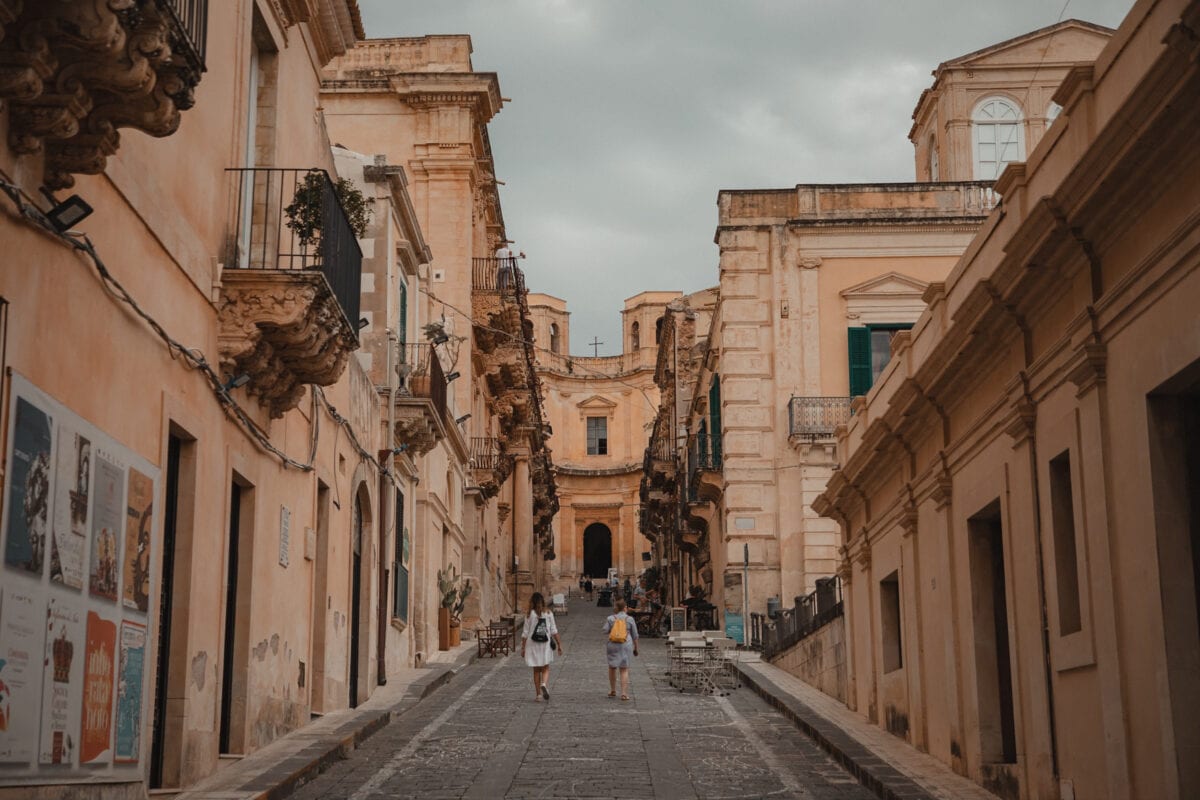
Noto is like a little treasure in the Val di Noto of the same name. Here you will find some of the Sicilian Baroque towns that are now UNESCO World Heritage Sites. Personally, I was most impressed by Noto: the small old town is clearly laid out, but still full of pretty cafés, great restaurants and, of course, really great baroque architecture.
And it is truly breathtaking to experience the sunset on one of the church towers. The warm sunlight then envelops the entire city and gives the sandstone of the buildings a golden glow.
#9 Riserva naturale orientata dello Zingaro
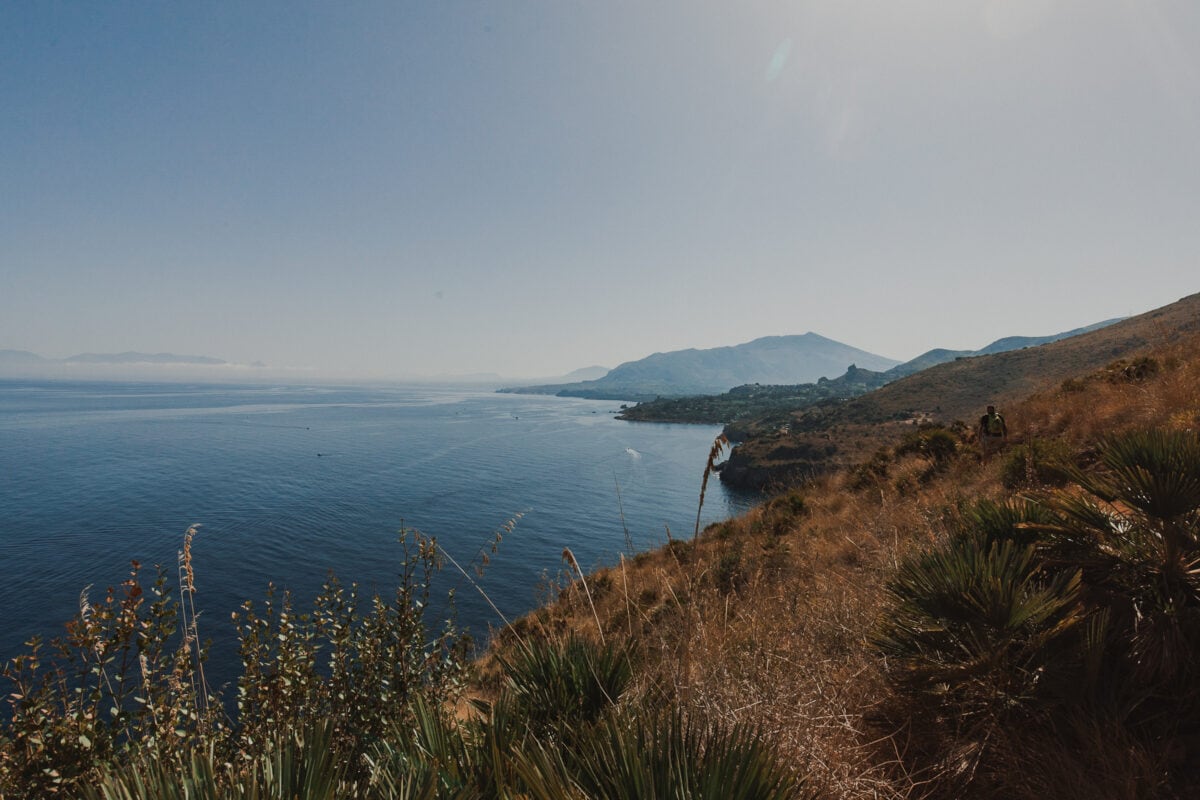
If you are looking for pure nature and tranquillity, then the Riserva dello Zingaro is the right place for you. In the nature reserve in the northwest of Sicily, there is nothing but breathtaking scenery and beautiful bays.
Several hiking trails lead through the reserve, which is located between Castellamare di Golfo and San Vito Lo Capo. Originally, a coastal road was planned here, but due to the continuous protests of local residents, the plans were scrapped and the region has now been protected forever – also to the delight of all visitors to Sicily, as the Zingaro is truly impressive.
#10 Aeolian Islands
The Aeolian Islands are a real insider tip if you love nature and especially volcanoes. The most famous of the Aeolian Islands (also known as the Lipari Islands ) is Stromboli.
The volcano of the same name on the island is one of the most active in the world and can be climbed as part of a guided hike*. There are also complete boat tours from the mainland, where you can explore Stromboli and the surrounding islands and, with a bit of luck, see the lava running down from the volcano from the sea after dark.
But I can particularly recommend one of the best-kept secrets of the Aeolian Islands: On Salina, you really enter another world.
The small island is also of volcanic origin and tends to be ignored by large crowds of tourists. Here you will find fine, cozy boutique hotels such as the Principe Di Salina* and relaxing nature – perfect for switching off!
#11 Trapani and its salt pans
Trapani is a real underdog among Sicily’s coastal towns. Many tourists don’t pay much attention to Trapani, and only set sail from here to the Egadi Islands.
But the old town of Trapani really does have some treasures to offer and scores highly in terms of architecture and cuisine with old Arabic influences. An exciting mix!
The salt pans on the outskirts of the city are also really great. You can even see wild flamingos in the extensive lagoon landscape! And a sunset with a view of the sea is unforgettable from here.
#12 Egadi Islands
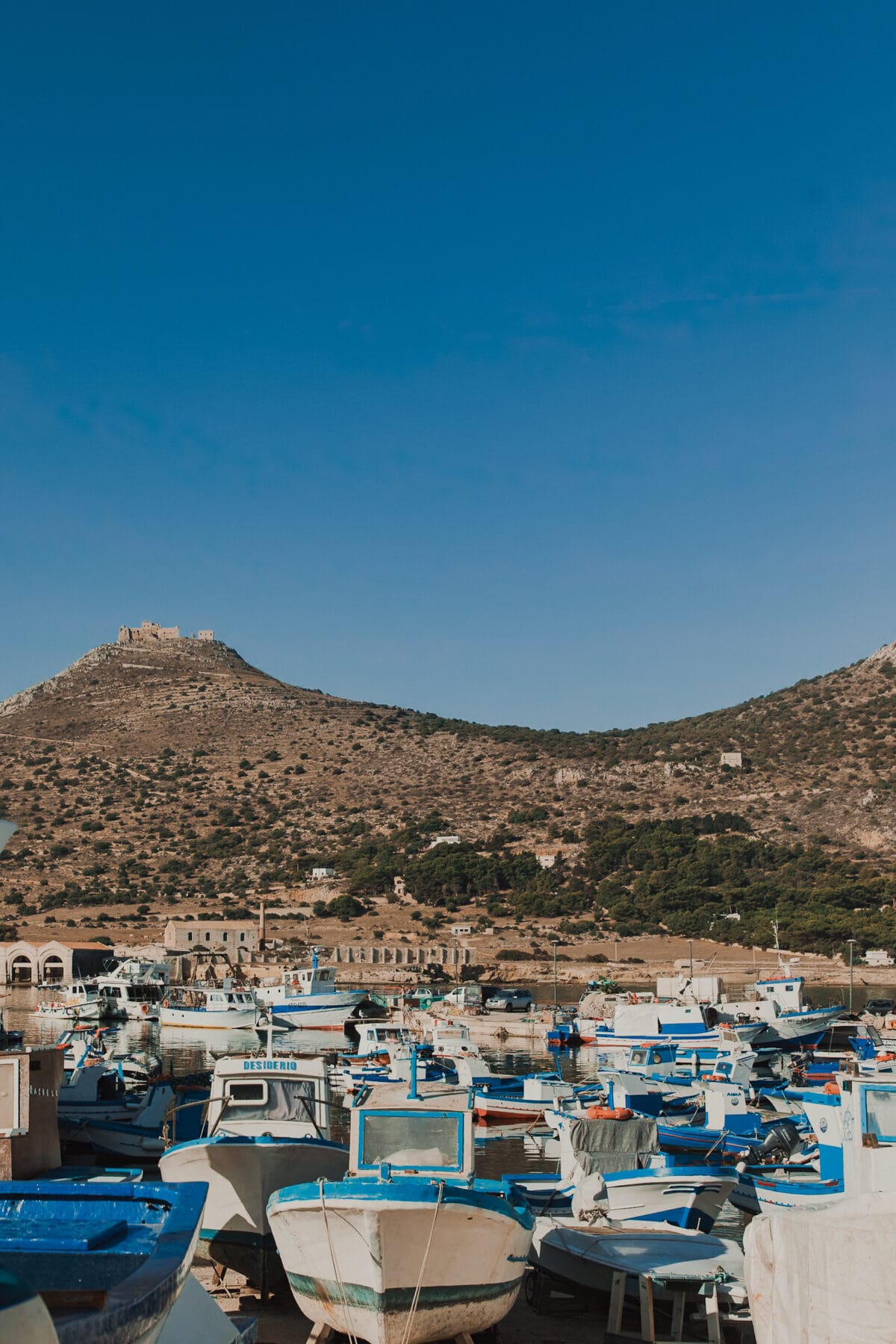
Trapani is also the best place to reach the Egadi Islands, consisting of Favignana, Marettimo and Levanzo. Favignana in particular is worth a detour.
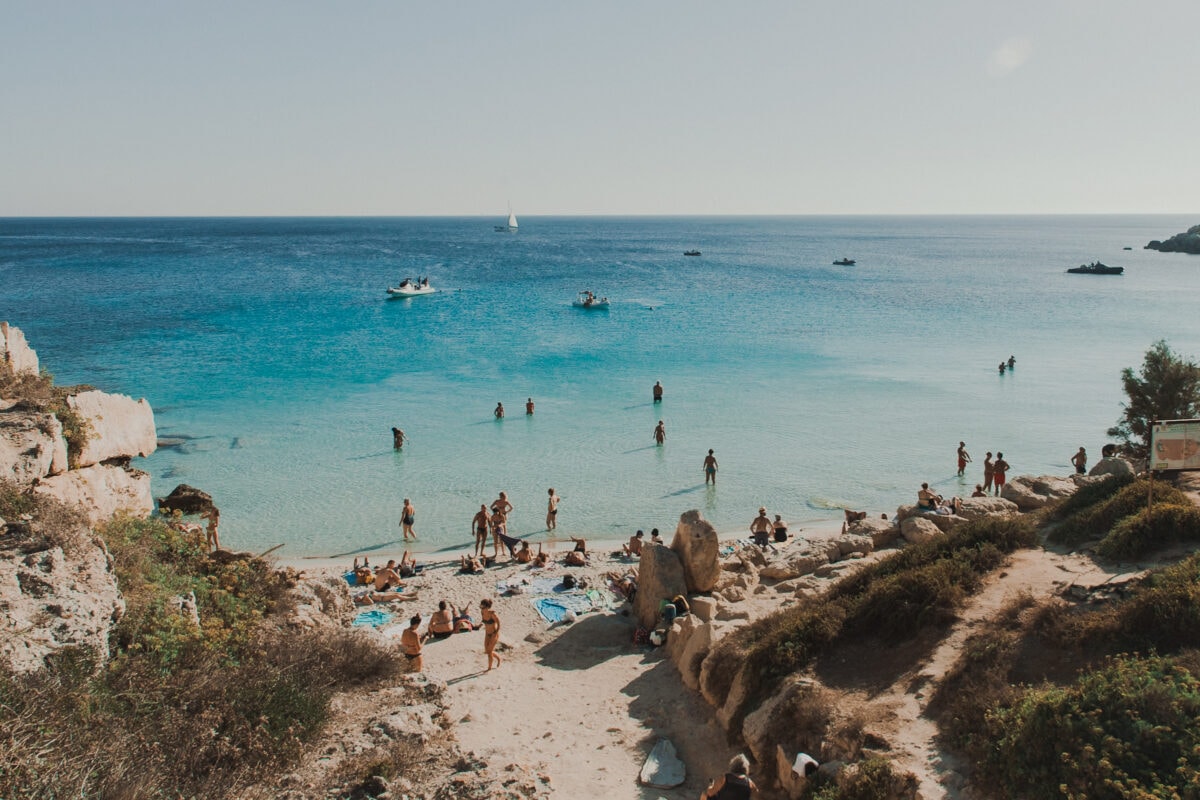
For me, the island seemed like a mixture of Ibiza and Sylt: lots of nature, beautiful beaches, crystal-clear water – but also Mediterranean, relaxed nightlife with great restaurants and cocktail bars in the small main town.
The characteristic tufa caves and the former tuna factory Ex Stabilimento Florio delle tonnare are just some of the sights you can discover on Favignana.
#13 Catania
Catania, the second largest city in Sicily, is bursting with energy. The many dark building facades are also striking: Lava stone from Mount Etna was used for many of the buildings, giving the city its unmistakable flair.
Here you will also find a piece of Sicily’s long history in the form of the Roman theaters.
But today’s Catania is also really exciting: at the fish market, which is located right in the center behind the Piazza del Duomo, it gets really busy almost every day when the freshly caught fish is brought to the people.
You will also find great bars and restaurants all around, where you can enjoy the typical Sicilian hustle and bustle until late in the evening.
Tuna fishing once played a major role in Sicily: entire families lived off the bloody mattanza for generations. Shoals of tuna swim past Sicily on their way to their spawning grounds in May. Off the coast, they are guided through a sophisticated system of nets and finally caught.
However, due to overfishing in the Mediterranean, tuna fishing in Sicily has declined sharply and fishing has been abandoned in many places.
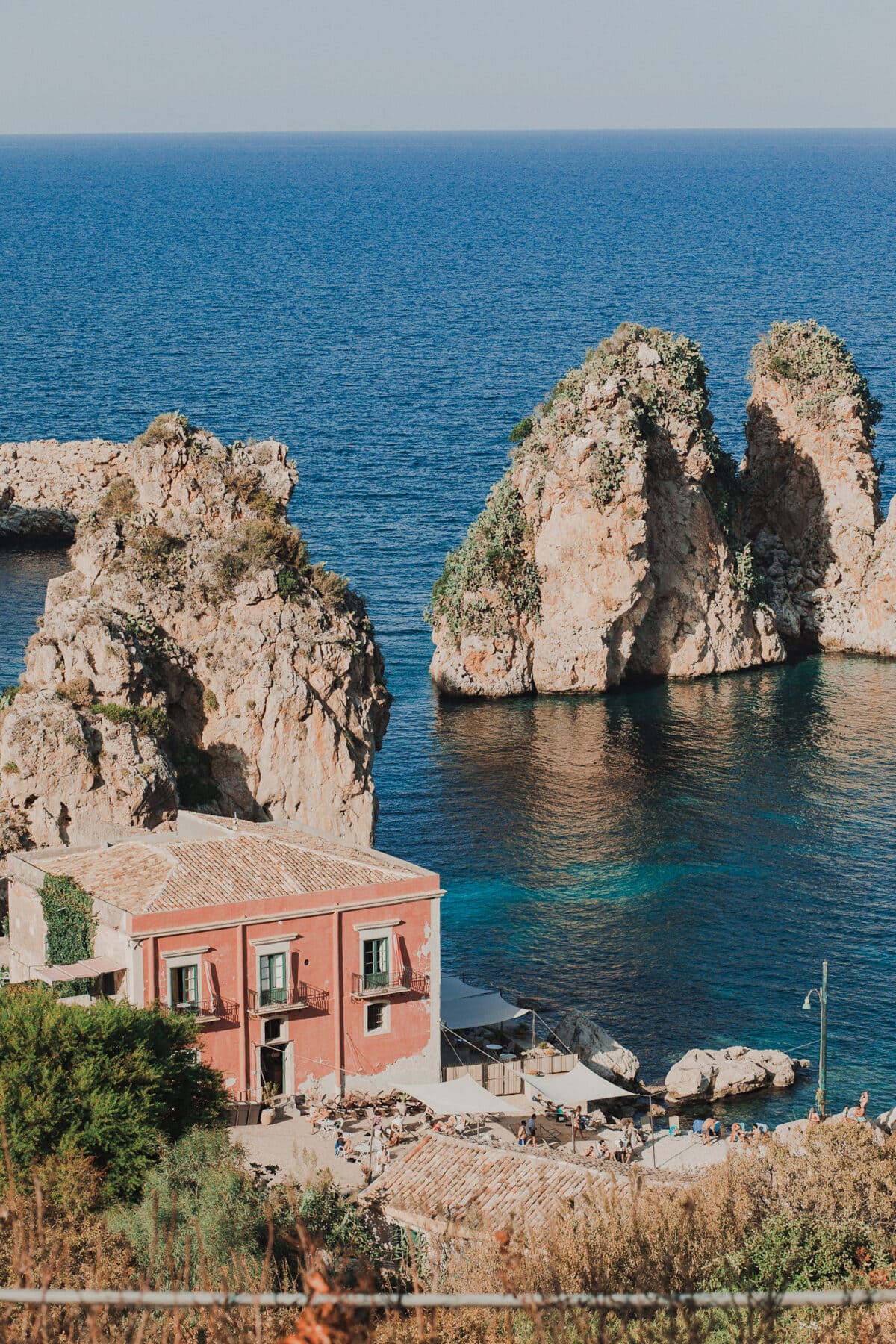
Today, the Tonnara di Scopello is one of the most popular Instagram spots in Sicily: the small bay with the rocks in front of it is simply a beautiful photo motif. The old tonnara itself is now home to a pretty boutique hotel and a small museum, which can also be visited by day visitors by appointment.
#15 Marzamemi
Although the fishing village of Marzamemi is no longer an absolute insider tip, only a fraction of Sicily’s holidaymakers find their way here to the south-eastern tip of the island. The region around Marzamemi is sparsely populated and the town itself has retained its original charm – the perfect conditions for a relaxing stay.
Around Marzamemi you will also find extensive beaches and a nature reserve with flamingos and many other wild birds.
Exciting: the former tuna factory has been converted into a small excursion destination! Colorful restaurants, small boutiques and delicatessens line the streets here.
#16 Scala dei Turchi
The Scala dei Turchi is a true natural wonder: the gleaming white limestone cliff drops into the sea like a staircase. Until recently, you could simply walk up to the rocks.
However, as there have been repeated cases of vandalism in the past, the rocks are now cordoned off and you can only admire them from a distance.
However, there are several beaches all around where you can go for a swim. The view from and to the Scala dei Turchi is particularly beautiful at sunset, when the sunlight reflects off the bright limestone.
#17 Ragusa
Ragusa consists of two parts: Since the severe earthquake in Sicily in 1693, the city has been separated by a gorge. The upper part is called Ragusa Superiore, the lower town Ragusa Ibla.
Most of the Baroque buildings worth seeing can be found in Ragusa Ibla. Here you can stroll through romantic alleyways or simply relax in the inviting Giardini Iblei.
If you are traveling by rental car, you can always stop at viewpoints on the winding mountain roads around Ragusa to enjoy the incomparable view of the valley.
Modica is also one of the Baroque towns in the Val di Noto. However, it is somewhat less touristy than Noto or Ragusa Ibla, for example. Nevertheless, there is plenty to discover in Modica, especially a famous sweet – chocolate from Modica is not only famous, but also really delicious.
The special feature: The cocoa is processed cold, so the sugar it contains does not dissolve completely, giving the chocolate a completely different texture. Be sure to try it!
#19 San Vito Lo Capo
San Vito Lo Capo, known for its beautiful sandy beach and relaxed atmosphere, is the epitome of a perfect seaside resort. In addition to sunbathing and swimming, you can also try out numerous water sports here.
Or you can go out on a boat and explore the bathing bays of the nearby Riserva dello Zingaro from the water.
#20 Sicilian street food
Especially on the streets of Catania and Palermo you can get to know the famous Sicilian street food. The many, mostly deep-fried delicacies and the stalls where they are prepared are a sight in themselves.
Most of the dishes are very filling, so bring enough hunger with you. Popular dishes include arancini (stuffed rice balls) and pani ca meusa (bread rolls with veal spleen).
There are so many great accommodations for every budget in Sicily! Whether in an old palazzo in Trapani* converted into a boutique hotel, on an idyllic farm near Scopello* or in a beach bungalow on Favignana*, I have never had a bad night’s sleep. Especially in the low season, you will find really good options for every taste in Sicily.
Frequently asked questions when traveling to Sicily
How many days do you need for Sicily?
Sicily is really very big. In order to visit most of the island’s sights in a relaxed manner, I recommend planning at least three weeks, preferably four. Or you can decide to visit only a certain part of Sicily. Conveniently, the two major airports of Catania and Palermo are located at two different ends of the island: if you want to explore the east coast of Sicily, it is best to fly directly to Catania; from Palermo you can easily reach Cefalù or Trapani with the Egadi Islands.
Both Catania and Palermo are served by many major airlines, including Lufthansa* and Eurowings* which fly directly to Sicily from many airports in Germany.
The small airport of Trapani on the west coast of Sicily is also served by some airlines.
Especially if you want to see a lot or go hiking, I recommend a trip in the low season. In July and August you will of course experience pure summer in Sicily, but it also gets very hot. Due to the vacation season, prices naturally rise and many places are overcrowded. Recommended months are therefore April, May, September or October. I was traveling in October and had really consistently warm late summer weather, where you could even swim in the sea for the most part.
Is Sicily dangerous?
The bad times of public clashes between hostile criminal groups seem to be largely over and as a tourist you don’t notice much of it anyway.
I was also very surprised at how safe I felt in Palermo and Catania – I find Naples and Barcelona much more stressful in this respect. Safety is always a personal impression, but I think the image of a dangerous Sicily that many people still have is outdated.
Is Sicily dirty?
Well, Sicily is probably not the first destination that comes to mind when you think of organized and clinically clean places. And if you turn into a quieter street in Palermo away from the hustle and bustle, you might find piles of garbage next to the overflowing containers.
Nevertheless, I never noticed garbage as a problem that could have dampened my enthusiasm for Sicily.
Do you need a rental car in Sicily?
Yes and no. If you are traveling in cities, I would advise against renting a car. In Palermo and Catania there is public transport such as buses, and Uber is not expensive either. You can also reach many locations and sights on foot.
You can also easily reach nearby towns such as Cefalú by coach or train. However, if you really want to explore the whole of Sicily or certain more remote corners, a rental car is almost indispensable.
This post was written on a research trip through Sicily for Travellers Insight, the travel blog of Munich Airport. On the website, you can find more exciting tips for Sicily, TrapaniPalermo.
The city walls of Dubrovnik are one of the most visited sights in Croatia. Once built to ensure the security of the former Republic of Ragusa, the well-preserved walls are now a UNESCO World Heritage Site. A walk along the city walls is definitely a must-do when you are in Dubrovnik. I’ll show you the most important spots and give you my tips for your visit.
How to Visit the City Walls of Dubrovnik: Tips for a Tour
The city wall is one of the most important sights in Dubrovnik. This means that it is always well frequented, especially in the summer months. So you should make a good plan so that you don’t get caught up in the crowds of tourists that flood Dubrovnik every year.
Visiting time: It is best to plan your visit early in the morning or late in the afternoon. In summer, the city wall is open from 8 am. In the morning you have the best chance to explore the city walls at your leisure. You also avoid the midday sun.
Clothing: Comfortable shoes are an advantage. There is no shade on the wall, so remember to wear sun protection and a hat, especially on sunny days.
Duration: A round trip takes about 1 1/4 hours if you just walk normally. But there is a lot to see on the way and with photo stops and short breaks I would plan at least 2 hours for a complete tour.
Admission: The entrance fees for the city wall are quite steep. Admission costs €35 in summer and €15 in the winter months (although the opening hours are shorter).
Tip: You pay just as much for the Dubrovnik Pass, but in addition to admission to the city walls, it also includes many other sights in Dubrovnik, such as the Rector’s Palace and free travel on public transport. This makes the high expenditure worthwhile after all.
The Dubrovnik City Walls at a Glance
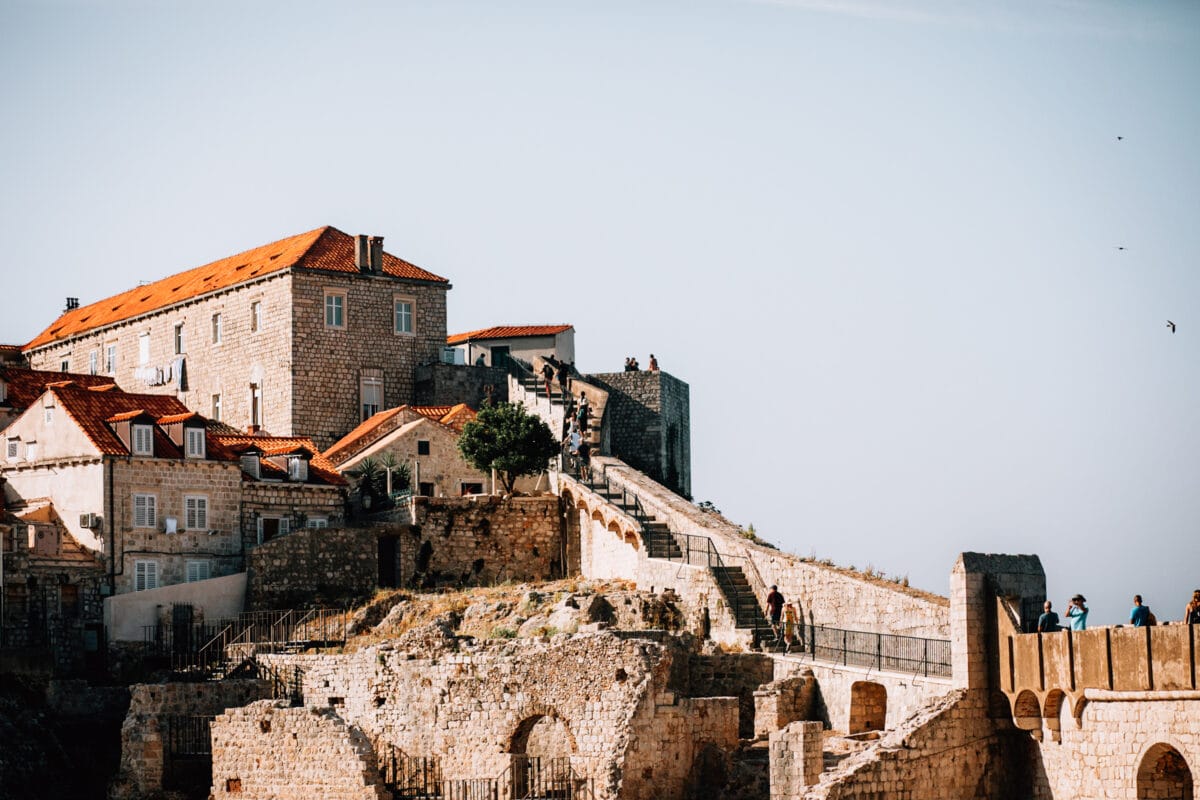
The city wall surrounds the entire old town of Dubrovnik
In some places it is up to 25 meters high and up to 6 meters thick
Length is 1940m
From here you have a breathtaking view of the city and the sea
Construction of the city wall began at the end of the 8th century. It proved its worth as early as 866-867 and withstood the siege by the Saracens. Over the centuries, the city wall was extended and reinforced more and more often. Between the 12th and 17th centuries in particular, further construction work shaped its current appearance. The fortress also largely survived the great earthquake of 1667 that struck the region. In 1979, the city walls of Dubrovnik became a UNESCO World Heritage Site.
Later, during the Yugoslav war in 1991, the city wall played an important role in the siege of the city by the troops of the Yugoslav People’s Army. Here the medieval fortress system proved itself once again. For nine months, the Croatian population behind the defenses withstood the massive attacks until Dubrovnik was recaptured by the Croatian army.
Dubrovnik’s city walls are divided into different sections. Each section plays an important role in the protection and structure of the old town. The various gates and towers are also good for orientation. These are the most important spots:
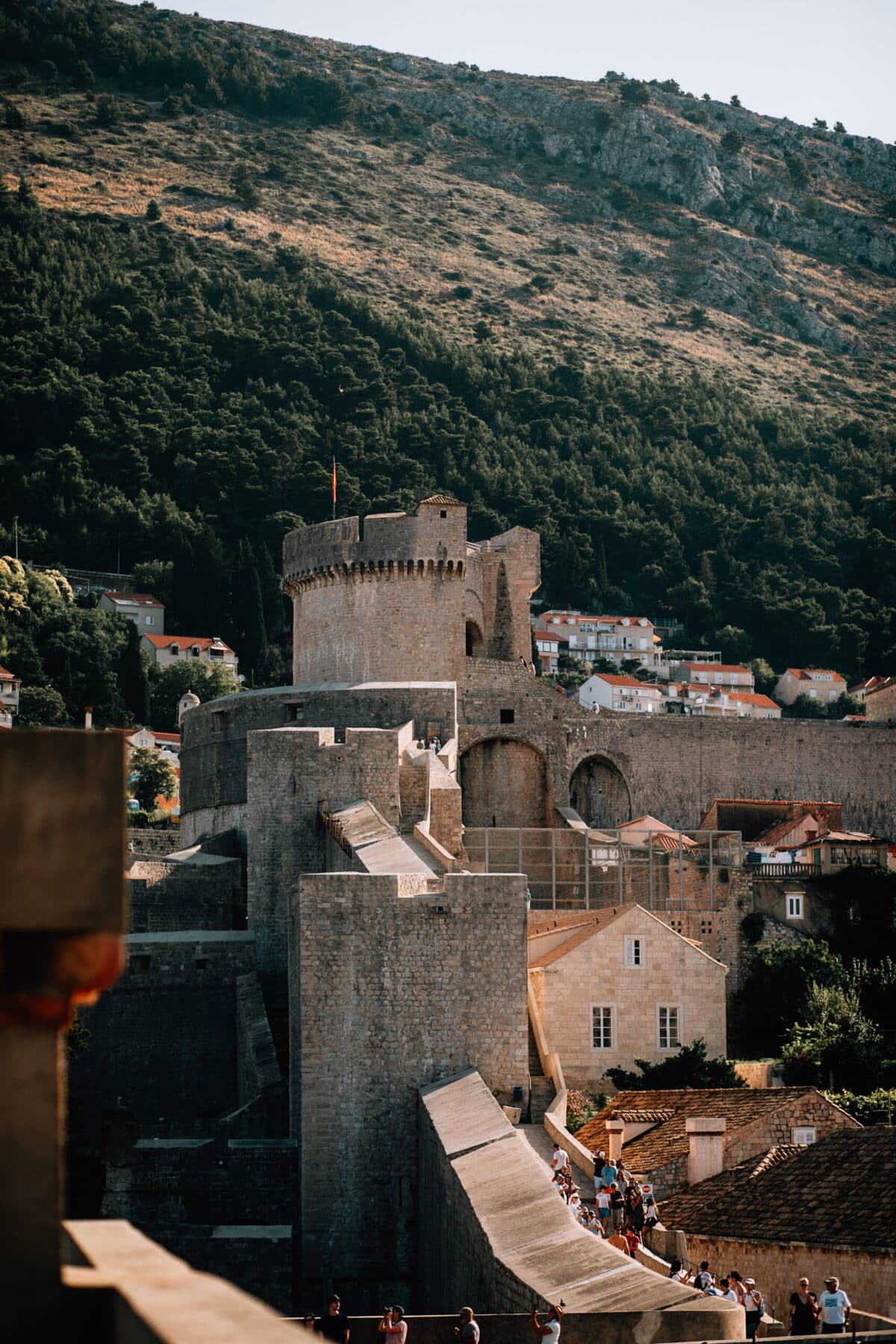
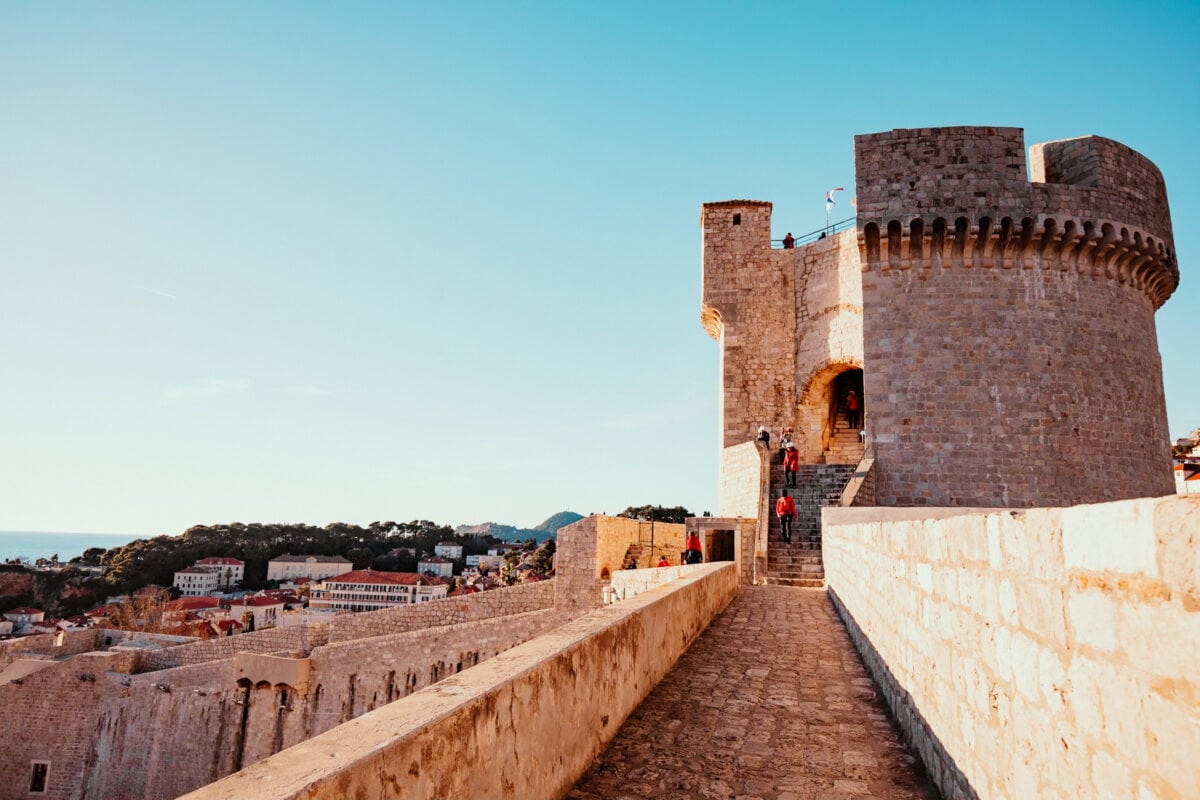
Minčeta Tower: The highest point of the fortress in the north of the old town. From here you have the perfect view of the iconic basketball court.
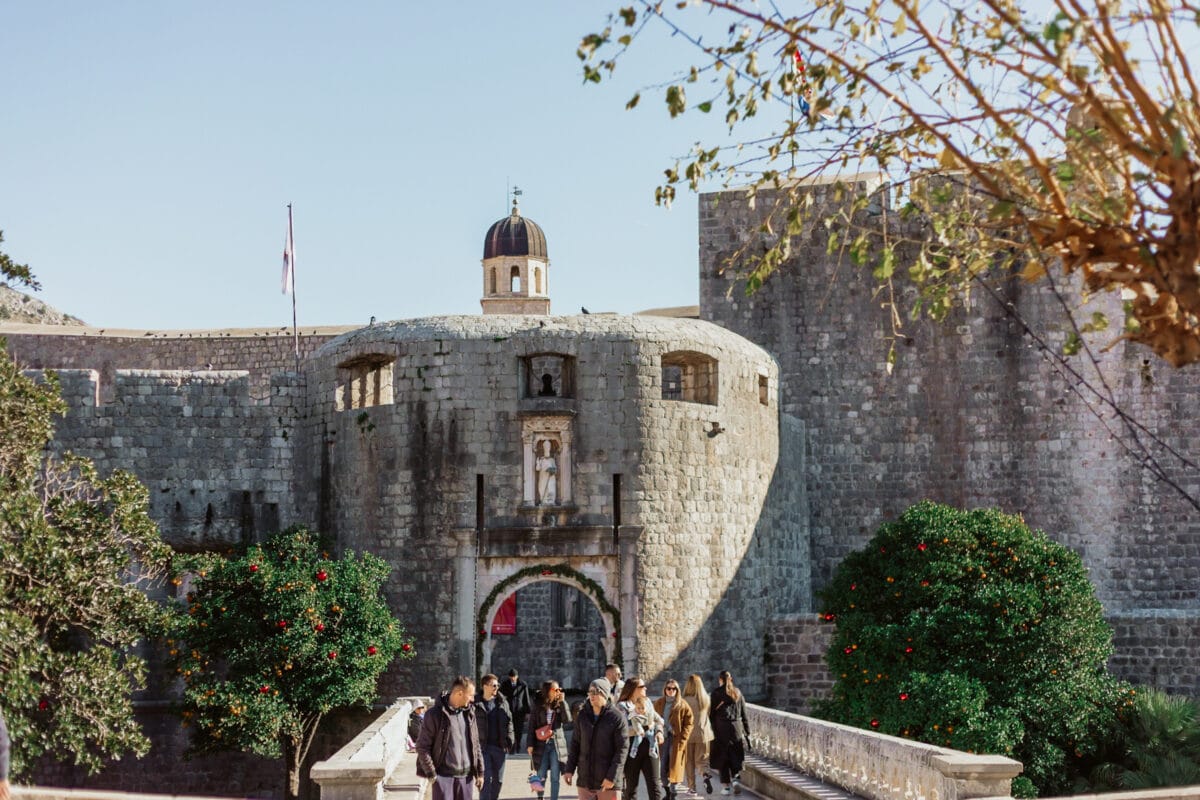
Pile Gate: The main gate to the old town. Cross a stone bridge through the fortifications and you will reach the western end of the Stradun, the main street in the old town of Dubrovnik.
Ploče Gate: The eastern gateway to the old town, less frequented but no less impressive. From here you can also reach the two eastern entrances to the city wall.
Lovrijenac Fortress: Located outside the city walls, it is nevertheless one of Dubrovnik’s fortifications.
Dubrovnik City Walls FAQ
How much is the entrance fee for the Dubrovnik city walls?
The entrance fees for the city wall vary depending on the season. For 2024, admission costs €35 for adults and €15 for children from March to October and €15 and €5 respectively in the remaining months. I recommend that you buy a Dubrovnik Pass. It costs the same for one day, but also gives you free entry to other attractions and free use of public transport.
Where are the entrances to the city walls in Dubrovnik?
There are three entrances to the city wall spread across the city:
Behind the Ploče Gate opposite the Dominican Church
At the Pile Gate opposite the Onofrio Fountain
Next to the Maritime Museum near St. John’s Fortress.
Please note: The city wall can only be walked in one direction, namely counter-clockwise. I recommend that you start at the Pile gate. In contrast to the other two, this entrance is the easiest to find.
Opposite the large Onofrio fountain is an entrance to the city wall.
How long does it take to walk around the city walls of Dubrovnik?
The complete tour of the city wall takes about 1 1/4 hours. However, I wouldn’t plan less than 2 hours, as you stop very often to enjoy the spectacular view or take photos.
What are the opening hours of the city walls in Dubrovnik?
Opening hours vary depending on the season. In winter, for example, the city wall closes at 3 pm. You can find the exact opening hours here.
Dubrovnik on the Croatian Adriatic attracts countless travelers from all over the world every year and has now mutated into an absolute hotspot. But not without reason: the old town of Dubrovnik is simply beautiful and, for me, one of the most romantic cities in Europe. I’ll show you the most important sights you need to see in Dubrovnik. And I still have one or two insider tips in store for you.
1. Old Town of Dubrovnik
Dubrovnik’s Old Town is an absolute gem. Like a massive fortress, it stands proudly on the rugged coast of the Croatian Adriatic and will impress you even as you approach it along the coastal road. Dubrovnik’s origins date back to the 7th century: thanks to its strategically important location in southern Croatia, Dubrovnik was once a major trading hub in the region.
5 highlights of Dubrovnik in a nutshell:
1. the city wall of Dubronik 2. Stradun 3. Game of Thrones filming locations: e.g. Walk of Shame, Blackwater Bay 4. Lokrum Island 5. Buza Bar: Drinks & Sea
The old town of Dubrovnik has been a UNESCO World Heritage Site since 1979 and is packed with sights. It is completely car-free and is best explored on foot: Don’t miss the opportunity to stroll through the narrow streets and enjoy the Mediterranean vibe of Dubrovnik!
2. Stradun
The magnificent main street, Stradun, is impossible to miss: The long street is lined with elegant palaces, cafés and stores and forms the main artery of Dubrovnik’s old town, so to speak. The Stradun runs directly from the western Pile Gate to the Ploče Gate and the city harbor in the east.
The Stradun also divides the old town into two halves, so to speak: Towards the sea, the old town is relatively flat; on the other side of the Stradun, the houses are situated on a slope and there are often narrow, steep steps to climb. (You should bear this in mind when choosing your accommodation. But more on this at the end of the article!)
3. Lovrijenac Fortress
The Lovrijenac fortress is enthroned high on a rock and impresses with its imposing appearance. The history of this fortress dates back to the 11th century! It once served as a defensive fortress and symbol of Dubrovnik’s power. Today, the fortress offers visitors a breathtaking panoramic view of the old town and the glittering sea. Cultural events and theater performances are also held here, combining the historical ambience with contemporary art.
Incidentally, you can visit Lovrijenac Fortress for free with the Dubrovnik Card.
4. Pile Bay
Below the Lovrijenac fortress there is a small, yet very atmospheric bay. Pile Bay will probably also look familiar to you if you’ve followed the series“Game of Thrones“: it was used as the filming location for Blackwater Bay. Located outside the bustling old town directly behind the Pile Gate, you can relax from sightseeing in one of the pubs here. In winter it is quieter and pleasantly mystical here.
5. Walk of Shame / Jesuit Staircase
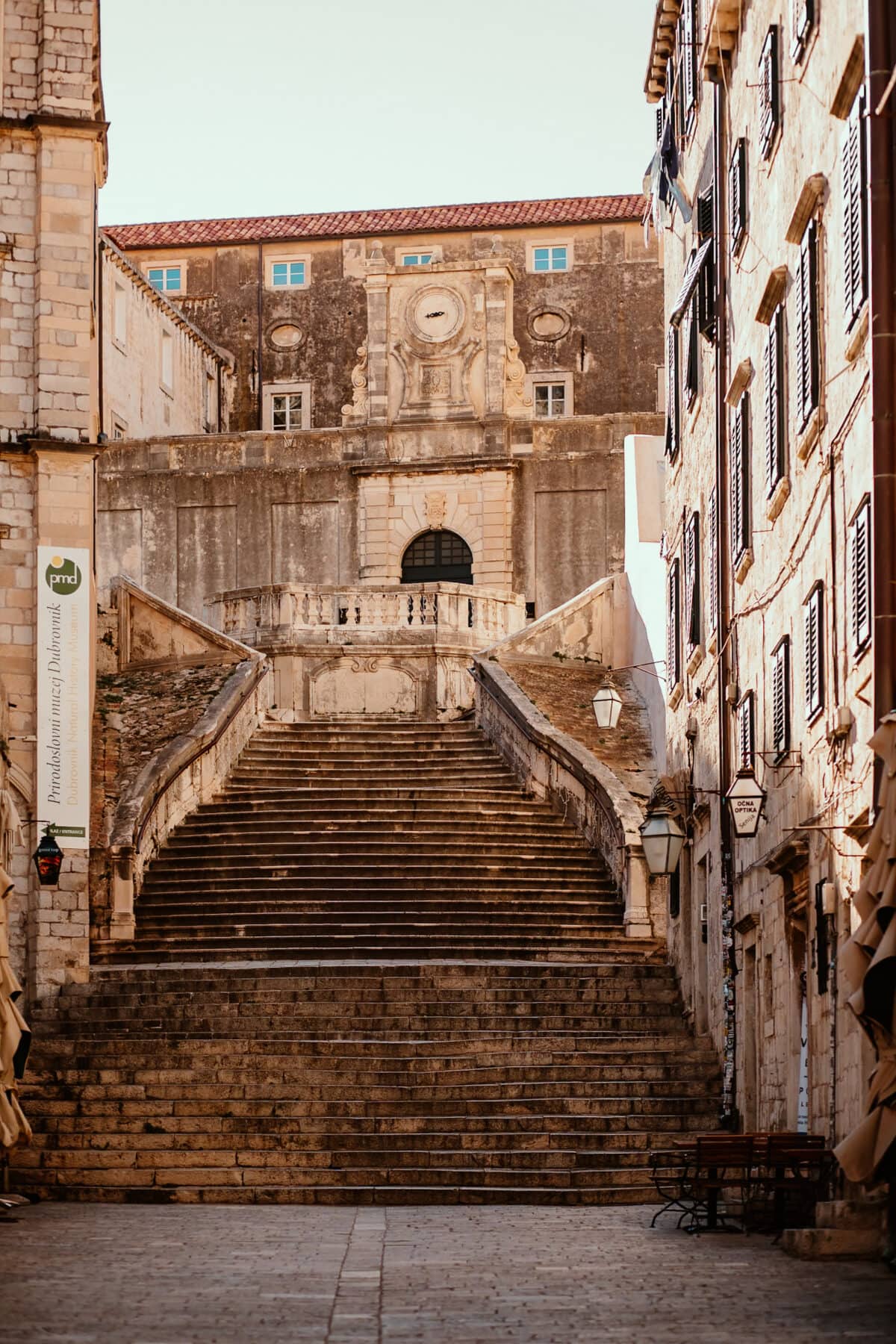
There is this one staircase that is probably partly responsible for the huge tourist boom of recent years: the Walk of Shame in Dubrovnik is probably the most famous filming location for “Game of Thrones”. This staircase has achieved worldwide fame and is now a place of pilgrimage for all fans of the series.
In the series, especially in the dramatic scene of the “Walk of Shame”, Cersei Lannister is forced to descend these stairs – exposed and exposed to the mockery of the crowd. This scene was not only a turning point for Cersei’s character, but also a defining moment in the entire series. I’ve never actually seen Game of Thrones, but even I can remember this scene because it was so impressive.
In reality, however, this staircase is known as the“Jesuit Staircase“. It is located near the Church of St. Ignatius and the Jesuit College. Built in the 18th century, it belongs architecturally to the Baroque era and bears witness to Dubrovnik’s former wealth. At the time, the construction was intended to compete with other European metropolises – and I think it was quite successful, because the staircase is really very impressive. A huge show staircase that is not only historically interesting, but has also become part of pop culture.
Want to know where more Game of Thrones filming locations are in Dubrovnik? Then why not take part in a special Game of Thrones tour*, where you will not only see all the locations, but also learn lots of details about filming in the city.
The Rector’s Palace immediately catches the eye in the old town of Dubrovnik. From the 14th century until 1808, today’s Dubrovnik was part of the Republic of Ragusa, a maritime city-state that was particularly wealthy. You can also see this in the Rector’s Palace, which was the seat of government at the time. From the outside, the Rector’s Palace is really very impressive and is somewhat reminiscent of Venice: Gothic and Renaissance architectural elements come together here. It is also considered one of the most important sights in Dubrovnik and is quite well visited.
But before you stand in line or have to spend extra money: In my opinion, the Rector’s Palace is pretty overrated. I had a Dubrovnik Pass and the entrance is free, but I wouldn’t spend any extra money. The permanent exhibition shows exhibits about the history and culture of the region, but I wasn’t that impressed.
7. Sponza Palace
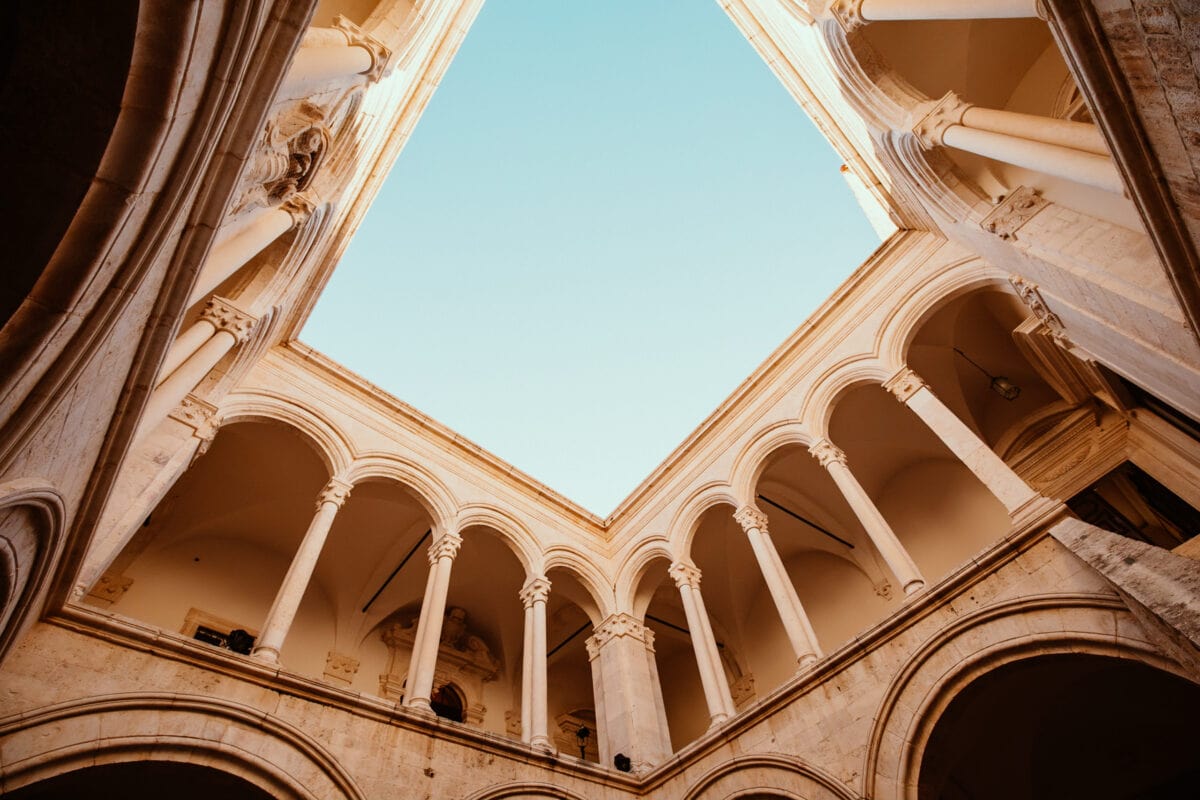
The Sponza Palace is only a few steps away from the Rector’s Palace – and in my opinion much more interesting. The customs house used to be located here, and weapons and coins were also forged here. The impressive courtyard gives an idea of the important role the Republic of Ragusa must have played in the region in its heyday! As most tourists tend to rush into the Rector’s Palace, it is wonderfully relaxed here.
Tip: Directly to the front left is a hall in honor of the defenders of Dubrovnik in the 1991 Yugoslavian war, when Dubrovnik was besieged and massively shelled for months. In the small exhibition you can find out more about this difficult time and the background of individual Dubrovnik residents. Very moving!
8. Lokrum Island
A paradise just outside Dubrovnik is the island of Lokrum, which is only a short boat trip away. This green oasis attracts nature lovers with its impressive botanical diversity, which has been cultivated by monks and researchers over the centuries.
The botanical garden on Lokrum is home to rare plant species and actually offers a quiet retreat from the hustle and bustle of the city – but due to its proximity to the old town, you won’t really be alone here in summer. The boat trip from the old harbor takes just under ten minutes! But you can do a lot here. There are hiking trails, beautiful bathing spots and even a nudist beach!
Lokrum is also home to the Iron Throne from Game of Thrones, where you can even take souvenir photos!
The boat to Lokrum departs every 30 minutes during the season. The ticket is also valid as an entrance ticket for the Lokrum nature reserve and costs €27, children pay €5.
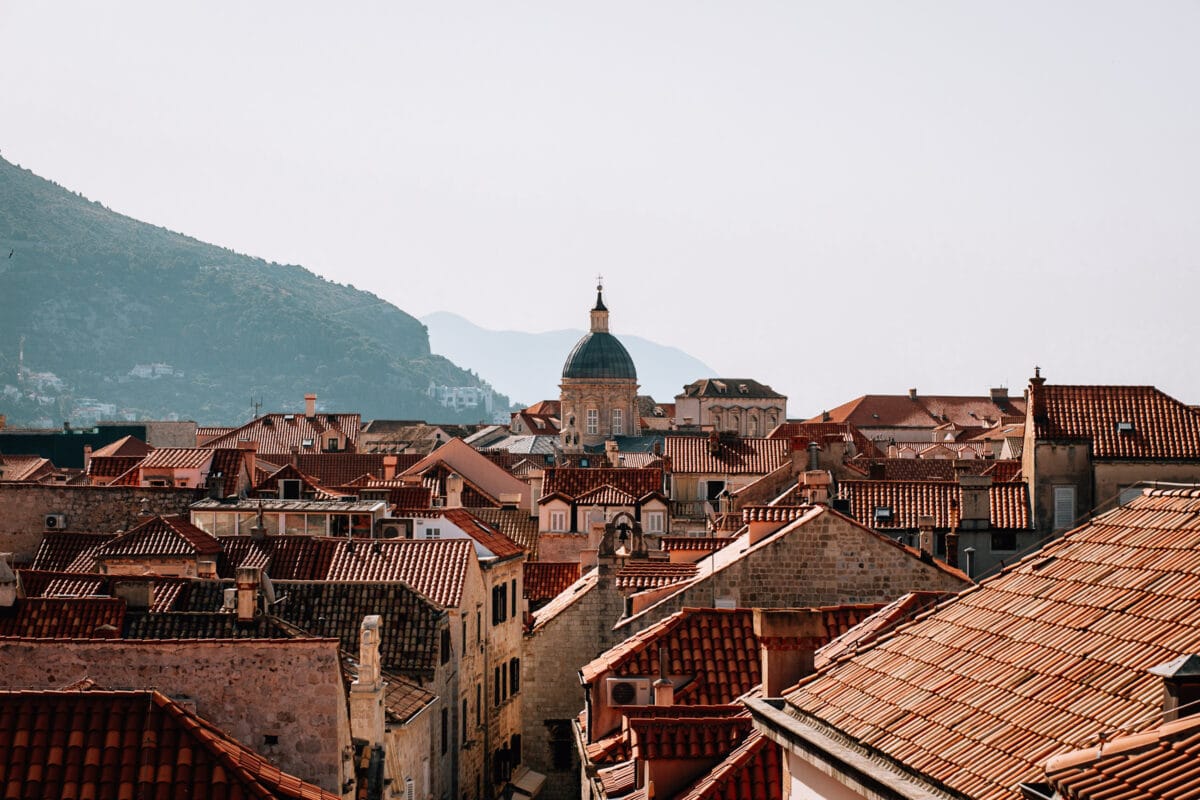
To enjoy an incomparable panoramic view over Dubrovnik, the cable car ride up Mount Srđ is an absolute must. From the top station, you have a breathtaking view of the red roofs of the old town and the sea in the background. A trip there at sunset is particularly spectacular. And if you want to highlight the view with a culinary experience, you will also find the perfect location at the top of the panorama.
10. Dubrovnik City Walls
A highlight is undoubtedly the impressive city wall, which surrounds the old town and is over two kilometers long. I will never forget the experience of walking along the top of this massive fortress wall and enjoying the view of the sea and the huge old town.
Admission is quite high during the summer season, but I think it’s really worth biting the bullet. In the season, admission with the Dubrovnik Pass now costs €35 (a few other sights are still included), in winter only €15. There is no option to buy a ticket for the city walls only.
Incidentally, I once read that the entrance fees were raised so exorbitantly in order to cope with the masses of visitors – the hope was probably to deter many tourists with high prices. But I can tell you: it didn’t work! In summer, however, the city wall is still very busy, so it’s best to get there early in the morning to avoid the crowds of tourists. But the view of the old town is worth every effort!
11. Buža Bar
One of the most unique bars in Dubrovnik is the Buža Bar, which is literally located in the rock walls of the city walls. The name “Buža” means “hole” in Croatian, and the name says it all – access to the bar is through a small hole in the wall. In this relaxed and casual setting, you can sip cold drinks while watching the brave plunge into the water from the rugged cliffs.
Although the view of the sunset here is not quite as good, the Buža bar is still a great place for a chilled drink at the end of an eventful day in Dubrovnik.
12. Old Harbor
As befits a coastal town, Dubrovnik also has a harbor. The Old Port in Dubrovnik is located in the east of the Old Town between Ploče Gate and Stradun. It is protected almost all around by the massive city wall and a long pier.
The long pier in the old harbor is called Porporella and has a special significance among locals: it is a popular meeting place for newlyweds. If a couple who have just fallen in love arrange to meet here, it is a sign that they are serious about love and ready for something more permanent.
This is also where the boats to the island of Lokrum depart. However, the many cruise ships that stop in Dubrovnik during the season have not anchored here for a long time. The port of Gruž, located a few kilometers to the north, was built for large ships just outside the old town.
What you can do in Dubrovnik & the surrounding area
Not only Dubrovnik is worth seeing, but there is also a lot to see all around. There are many interesting places along the Croatian Adriatic coast or you can simply hop from one Croatian island to the next. There is a good reason why Croatia is a good place for a vacation! Trips to neighboring countries are also popular.
Advertising / *affiliate link
You can easily explore the surrounding area by car, camper or rental car anyway. From Dubrovnik, you will also find many providers offering tours to Kotor in Montenegro, Mostar in Bosnia and Herzegovina or other parts of Croatia. So you don’t necessarily have to be traveling in your own car to experience a bit of that road trip feeling.
Staying overnight in Dubrovnik is a topic in itself. On the one hand, Dubrovnik is an expensive place, and on the other, you should really think carefully about where you choose your accommodation. The old town is completely car-free, which means you can have your Uber or cab drop you off in front of one of the three city gates and have to walk from there to your accommodation. Depending on your luggage, this can be more strenuous, as most of the old town consists of cobblestones. There are also a lot of stairs, especially in the upper part of the old town.
The maze of alleyways doesn’t make it any easier to find your way around, so you should ask for directions to your accommodation beforehand. If you don’t want to carry your luggage yourself, you can also use one of the luggage services. At the Ploce Gate, for example, you will find several providers who will bring your luggage to your accommodation by handcart.
The best places to stay in the Old Town (my recommendation)
Nevertheless, it’s really nice to spend the night in the middle of the Old Town. I found an absolutely cute apartment* I can definitely recommend! It is located in a quiet corner in the shade of the city wall, so you can spend the night here even in summer.
On the other hand, there are also many hotels and apartments around the Old Town that are a little more budget-friendly. The Lapad peninsula, which is located a few kilometers north of the old town, is very popular. You will also find more bathing opportunities there and the journey is not as complicated. Perfect if you are also looking for some beach life.
Seville is a city of passion: flamenco, the rousing dance full of emotion and energy, is everywhere you look. Add to this the typical Andalusian warmth and you are guaranteed to fall in love with this lively city. I’ll take you on a tour of the most beautiful sights that Seville has to offer.
The old town of Seville
The old town of Seville is really great and the perfect starting point for your exploration tour. You can simply let yourself drift through the streets and soak up the energetic atmosphere. Many sights can be reached from here, including the two most important: Seville Cathedral and the Real Alcázar de Sevilla.
The cathedral of Seville
An absolute must-see is Seville Cathedral, the largest Gothic church in the world. Even if, like me, you’re not particularly into religion and church, you’ll be amazed by the sheer size and attention to detail.
You should also definitely go up the Giralda Tower. The tower was once a Moorish minaret. It is now one of Seville’s most striking landmarks. The ascent is not easy, but it is unusual: for long stretches, there are no steps but wide ramps.
Once at the top, it offers you a panoramic view over Seville that you won’t soon forget. The view is a real highlight!
In the cathedral itself you will also find the tomb of Christopher Columbus, the navigator whose arrival in America in 1492 brought him great fame as an explorer. Although Columbus was actually Italian, he set off on his voyages of discovery around the world on behalf of the Castilian crown. Incidentally, it was unclear for a long time whether Columbus’ mortal remains could really be found here, as the grave changed location several times – but this now seems to have been proven.
The Alcázar of Seville
Just a short walk from the cathedral is the Alcázar royal palace, one of the most visited and important sights in Spain. The entire complex is really huge – and usually well frequented. Plan enough time for your visit (you should reserve an entire morning or afternoon) and be sure to buy your ticket in advance to avoid long queues.
The Alcázar was originally built in the 10th century and is an impressive example of Moorish architecture. Here you will find magnificent halls with intricate details, paradisiacal gardens and an atmosphere straight out of a thousand and one nights. Like Seville Cathedral, the Alcázar is nowalso a UNESCO World Heritage Site.
Patio de las Doncellas: The heart of the Alcázar
An absolute highlight of the Alcázar is the Patio de las Doncellas (Courtyard of the Virgins). You probably already recognize this courtyard: It is by far one of the most popular photo motifs in the Alcázar.
The influences of Islamic architecture can be seen very clearly here: there is a water channel in the middle of the courtyard and the courtyard is surrounded by richly decorated columns. If you visit the Alcázar early in the morning, you should come here first to enjoy the magical atmosphere in peace – it gets really crowded here later in the day.
Are you in the mood for even more Mediterranean lifestyle? Find even more great travel destinations in Spain here
Metropol Parasol (Las Setas)
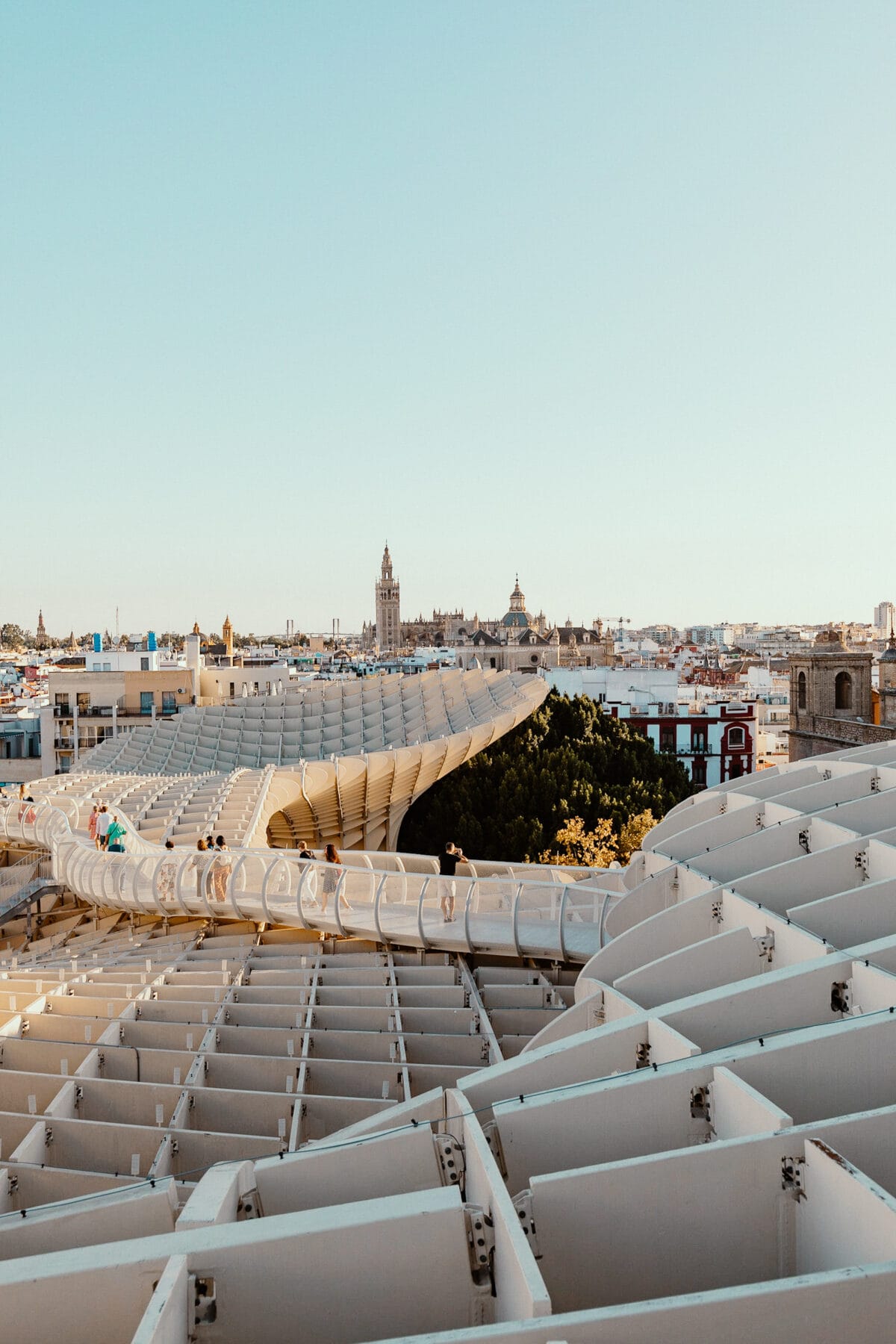
The Setas de Sevilla were probably the main reason why I wanted to visit Seville. The special architecture of the Metropol Parasol, which resembles mushrooms (hence the Spanish nickname “setas”), is simply fascinating and the view over Seville is unique.
The site, which is located in the middle of the city center, used to be a market hall. At some point, however, it was so dilapidated that it had to be demolished in the 1970s. The site then lay fallow for a long time.
The setas were completed in 2011 and now form a great contrast to the historic old town. Incidentally, the Setas are the largest wooden building in the world! The curved shapes and modern design are truly impressive.
From the observation deck on the Metropol Parasol, you’ll have the best view of downtown Seville. I definitely recommend visiting at sunset. When the last rays of sunlight bathe the city, the atmosphere here is especially wonderful! There are also many restaurants and bars in the area surrounding the Metropol Parasol where you can round off the evening.
Parque de María Luisa
Seville is amazingly green, and the Parque de María Luisa is a big part of this. Originally part of the private garden of the Palacio de San Telmo, this park was opened to the public for the Ibero-American Exposition in 1929 and is now considered the green lung of the city.
If you need a break from sightseeing, you can take a stroll under the shady trees or enjoy the atmosphere in the spacious Plaza de España.
Plaza de España
The Plaza de España catapults you into a completely different world. This semicircular square was built for the Ibero-American Exhibition of 1929 in the Neo-Mudéjar style . Like many buildings erected for world fairs or similar events during this period, the Plaza de España was also intended to reflect the progress of the time. And to this day, the Plaza de España is truly impressive.
You can even take a boat trip in the artificial pond. Take your time and let this special place work its magic on you!
With a bit of luck, you can even see spontaneous flamenco shows: Dancers and musicians often meet here and just start playing. A great alternative if you can’t find the time to attend a proper flamenco show in Seville.
Seville & the flamenco
Pure life is everywhere here and the positive energy of the Andalusians is omnipresent. Flamenco is a particularly good example of this. This dance is inextricably linked to Andalusian culture. A subtype of flamenco is even named after Seville: the Sevillanas.
If you don’t happen to see flamenco dancers somewhere, you should definitely look out for a flamenco show in one of the many tablaos in the city. The intensity and passion of flamenco are simply so intoxicating, you have to experience it live!
Advertising / *affiliate link
Food & drink in Seville
Seville is simply a feast for all the senses: the Andalusian capital also has a lot to offer in terms of cuisine. The tapas culture here is legendary, and a tapas tour through the city is the best way to get to know the local cuisine.
My tip: Just go to one of the traditional bars and order a selection of small dishes, from gambas al ajillo (prawns with garlic) to jamón ibérico (raw ham) and the classic tortilla Española. Tapas are usually ordered in small portions and shared among everyone at the table. If something tastes particularly good, simply order more. So you can taste your way through many specialties.
Another typical specialty you should try is gazpacho, a cold tomato soup. It’s perfect for hot days in Seville. For wine lovers, the Tinto de Verano, a wild mixture of red wine and lemonade, which is popular in Andalusia, takes some getting used to, but is very refreshing in summer temperatures.
Restaurants & Cafés in Seville
During my trip, I also discovered a few locations that I wholeheartedly recommend:
Filo Mini brunch store with great sandwiches, perfect for a little break in between. Freshly squeezed orange juice, tostada con tomates: everything is fresh here. Beautifully decorated.
There are only a few seats, but the team is super well organized and the wait is really worth it! Filo can be found in two locations not far from each other on the same street, Calle Hernando Colón 10 and 19 (I was in the latter store).
La Malvaloca Beautiful tapas restaurant directly opposite the Metropol Parasol. Perfect for drinks and a small snack in the evening.
Restaurante Cristina Bistró At first glance, it may seem somewhat inconspicuous and a little off the beaten tourist track, but this restaurant serves great bistro cuisine. Sit outside, eat well and enjoy the vibe of Seville!
Mercado Arenal
Located somewhat off the beaten track, the Mercado Arenal is a real insider tip. Actually a market hall, you will also find some street food stalls with delicious specialties in the historic building. The atmosphere is pleasantly casual and tourists are rarely seen here.
Practical travel tips for Seville
If you are planning a trip to Seville, I have a few helpful tips for you here. But don’t worry, Seville is a great destination and you’re sure to find your way around!
Best time to travel and climate
Seville can get very hot in summer. Temperatures often reach over 35 degrees Celsius. So if you really want to see something in the city, I advise you to avoid the hot summer months. The best time to visit is spring or fall. The temperatures are more pleasant then, but it is still often sunny and warm and you can enjoy the city to the full.
Staying overnight in Seville
Seville offers a wide range of accommodation, from luxury and boutique hotels to Airbnbs and hotels. If you are staying in the old town, you can reach most of the sights on foot.
My personal tip is La Parada de Marques*. Although it’s not in the middle of the old town, it’s particularly practical if you’re only staying in Seville for a few days. It is just a few meters from the bus station: from there, you can easily take the public bus to the airport and save yourself a cab or Uber. You can also easily get to surrounding cities by bus from here.
For example, I drove from Faro to Seville. You can also combine a trip to the Algarve in Portugal with Seville, for example.
Transportation options in the city
Seville may be a large city with just under 700,000 inhabitants, but many sights are within walking distance if you stay in the city center. However, you can also use streetcars, buses or bicycles to get around. In addition to regular cabs, there is also Uber in Seville.
Want to discover a completely different corner of Europe? Kotor is located on the breathtaking bay of the same name in Montenegro and can look back on a turbulent past. Today, you’ll find a remarkable mix of south-eastern European culture, exciting history with Austrian and Italian influences and a unique landscape. I’ll show you the best spots in Kotor that you shouldn’t miss!
The Old Town of Kotor / Stari Grad
From the first time I entered, I was enthralled by the small labyrinth of charming alleys and I was so glad to have chosen an accommodation in the middle of the old town of Kotor after all. (Was of course a little more expensive, but it’s worth it!)
Just being able to stroll through the idyllic maze of alleyways undisturbed every morning was simply worth it. You only have to share the old town with the other numerous inhabitants of Kotor: cats are an integral part of the cityscape here and are looked after and cared for by the locals.
Especially in the evening, when the cruise tourists have left the old town of Kotor again, it gets really atmospheric, and the Italian influence of the last centuries is particularly noticeable: in the numerous romantically decorated restaurants there is pizza, pasta and seafood galore!
Most of Kotor’s sights are also located in the car-free old town. Just let yourself drift through the narrow streets and you will discover most of the locations all by yourself. I will introduce you to the most important sights here.
The Best Places to See in Kotor
The Square of Arms (Trg od Oružja)
You will probably end up in the old town first: The Square of Arms or Trg od Oružja is located right behind the main gate through which most visitors enter the old town of Kotor. The large clock tower is particularly striking here. Many cafés line the square, and events and concerts are often held here in summer. The Square of Arms is the heart of Kotor, so to speak!
In case you wonder about the name, in the Middle Ages, when Kotor was under the influence of the Republic of Venice, weapons and ammunition were stored here. At that time, Kotor was a strategically important port, which the surrounding powers fought over – the Venetian or Italian influences from that time can still be found in the cityscape today!
Saint Tryphon Cathedral (Sveti Trifun)
The Cathedral of St. Tryphon is one of the centerpieces of the old town of Kotor and also one of the oldest cathedrals on the Adriatic coast. Built in the 12th century, it is considered one of the most important sights in Kotor and the two church towers rise above the otherwise low houses in the old town. Incidentally, the relics of St. Tryphon, the patron saint of Kotor, are also kept here.
Maritime Museum / Museum Maritimum
If you want to learn more about the exciting maritime history of Kotor and Montenegro, the Maritimum Museum is the place for you. Housed in an old baroque palace, the museum shows the long maritime history of the region. From old nautical charts to traditional uniforms, this museum offers you an interesting insight into the maritime culture of Kotor. Not only for history buffs, this museum is a location worth seeing in the old town!
You can lose yourself in it: The beautiful Old Town of Kotor.
St. Nicholas Church
Only built at the beginning of the 20th century, the Serbian Orthodox Church of St. Nicholas cannot look back on as long a history as the Cathedral of St. Tryphon – but it is still worth taking a look inside. You can recognize it by the two onion domes; inside you will find impressive decorations. I always find Orthodox churches in particular very interesting, because they are usually very ornate.
Kotor fortress
From the fortress of Kotor on the mountain San Giovanni you have an incomparable view of the bay and the surrounding mountains. On the way up, you can see the old defensive walls and enjoy the fascinating view over the bay again and again. The way up drags quite a bit, but is also worth every effort!
The fortress itself may only be in ruins today, but the view from up there really was one of the highlights of Kotor for me.
Please note: The climb isn’t for everyone, and especially during the hot summer months, I recommend setting out very early. The ascent is quite steep, and there’s virtually no shade along the way. The trail up splits into a well-trodden set of steps (mostly used by people coming down) and a scree path. Right at the entrance, there’s a sign warning against wearing flip-flops on the trail, and you should really take that to heart. You’re really best equipped here with proper hiking boots or at least non-slip trail running shoes.
Very far up there was a water vendor; however, there is no place to stop (and no restrooms) all the way up and at the fortress. Therefore, take enough water with you!
There is still a rather unofficial way up to the fortress, climbing a rickety ladder through an old window in a fortification wall. This path has gained quite a bit of notoriety on social media in recent years; I haven’t used it, but I have heard that this access has been closed due to the high risk of injury and you can no longer get to the fortress from this path. Many visitors wanted to save the entrance fee for the official route and get some exciting shots.
But the conventional way is exciting enough – I would not try to find the ladder 🙂
This gate leads up to the ticket booth
Access to the trail is quite well signposted in the old town; there is a ticket office at the foot of the hill, which is manned from 8 a.m., at least in summer. If you arrive earlier, that’s no problem either: you can just slide past the turnstile – but you’ll still have to pay if you can’t show a ticket after descending.
City gates and walls of Kotor
The imposing city wall that still surrounds the old town today shows how well secured Kotor was during its heyday as an important trading port on the Adriatic. The old town can be entered through three city gates. Most impressive, however, is the main gate directly opposite the harbor, where huge cruise ships seem to be anchored almost directly at the old town. You can also enter parts of the city wall.
Gurdic Bastion
The Gurdic bastion is part of the southern city wall and shows particularly well how robust the defenses were built at that time. Here you can also find the Gurdic Gate or South Gate, one of the three city gates into the Old Town.
Kampana Tower
At the other end of the old town you will find the Kampana Tower, from where you can enjoy a beautiful view of the bay. This section of the city wall is beautifully designed with lots of park benches.
There is also a nice restaurant there. As far as the food is concerned, it is probably more of a tourist trap, but a romantic drink at sunset is always worthwhile here with the atmospheric lighting and the great view.
The Kampana Tower (left) and the impressive mountains around Kotor in the background
Around the Bay of Kotor
Not only is Kotor worth seeing, but the surrounding area is also really impressive. Montenegro is a small country and also impresses with its great landscapes in the hinterland. Around the Bay of Kotor you will also find small, charming towns that are also worth a visit.
Perast and the island of Our Lady of the Rocks
The charming village of Perast and the offshore island of Our Lady of the Rocks are a perfect half-day excursion. The artificial island with its picturesque chapel is a real eye-catcher and can be reached by speedboats from Perast.
You can easily reach Perast by public bus from Kotor: The bus stops near the main gate and runs about once an hour. However, there is no clear sign indicating the bus stop, nor are there any schedules. It’s best to ask the locals for directions.
Lovćen National Park
For nature lovers, Lovćen National Park is a must. Here you can hike, picnic and experience the diverse flora and fauna of Montenegro.
Montenegro is a true natural paradise.
If you are not traveling with your own car, camper or rental car, you can also experience Lovcén National Park and other great spots in the hinterland on a guided tour. I can wholeheartedly recommend this tour: really great guide, small group and great locations!
In the Blue Grotto, the water is said to shimmer in a surreal blue hue; in addition, a boat tour is usually taken to the historic Mamula Island, which once served as a fortress.
Admittedly, it was my first time in Montenegro, and I was expecting southeast European cuisine – so I was all the more surprised to find mainly Italian restaurants in Kotor. However, the Italian influence from Kotor’s history is still so great that Kotor seems like Little Italy within Montenegro, even in terms of culinary arts.
However, I found many restaurants very bland, so I went in search of more unusual locations! Here are my tips:
Pier 65 By chance I stumbled into the cute alley with Pier 65, right in the middle of the old town and yet chilled. The cuisine here may not be a culinary highlight, but I would describe it as solid comfort food. Super nice service and really nice ambience.
Rooftop Bar Hotel Hippocampus* I was even recommended the breakfast in the rooftop bar of the Hotel Hippocampus by locals! The Hippocampus itself is a beautifully designed boutique hotel and you can enjoy the view over the rooftops of the old town from the roof terrace while enjoying a hearty breakfast.
Restobar Taraca Located just outside the old town; fresh cuisine and good value for money. Also many vegetarian and vegan options.
Platanus Located on the seafront in Dobrota and perfect destination for a walk along the water. Pleasant ambience, especially outside on the terrace overlooking the water.
Moritz Eis Due to the Italian influences, there is ice cream on every corner in Kotor, but the extraordinary variations at Moritz Eis are especially good. Bit expensive, but really worth it!
I also recommend a visit to the small weekly market, which is located on the outside of the city wall between the Sea Gate (main gate) and the Gurdic Gate. Here you will find Montenegrin delicacies such as cheese, ham as well as fruit and vegetables from the region.
Overnight stay in Kotor
Most of the accommodation in Kotor can be found in the suburb of Dobrota. Many vacation apartments are dotted along the beach promenade and the main street behind it.
However, if you can do without the proximity to the water and don’t need a parking space for a rental car, I would advise you to stay overnight in the old town. Especially if you don’t have a car, it can take a long time to get to the old town. Personally, I wasn’t particularly impressed with Dobrota either – I liked the vibe in the cute old town around my little old apartment much better.
My tip: Stay overnight in the middle of the old town of Kotor!
I can recommend this apartment in the old town of Kotor; right in the middle and still very cozy: UNA Apartments in Kotor*
Especially in the high season, popular accommodations in the old town are quickly booked up. These accommodations here, for example, are also in high demand:
Kotor Nest Coliving* Montenegro as well as Kotor have become very popular with digital nomads in recent years. Rooms are tastefully decorated.
Hotel Hippocampus* Boutique hotels are a bit rare in Kotor and if you don’t just want to enjoy brunch on the roof terrace, you can also book a room at the Hotel Hippocampus: stylish ambience, right in the middle of the old town.
Beaches in Kotor
Is there a beach in Kotor? Yes. And no. Because I wouldn’t swim at the city beach in Dobrota just outside the old town. The next section of the beach is relatively small and consists of pebbles. Far more uncomfortable, however, are the cruise ships that pass relatively close by and dock just a short distance away in the harbor.
In addition, the Bay of Kotor is relatively closed, so I always had the impression that much of what is brought in simply stays in the bay for the time being – or, to use the words of a local who advised me against swimming in the bay: “Here, the sun oil is included when you swim.
Suitable beaches are more likely to be found in Budva, which is also popular for mass tourism and is about a half-hour drive from Kotor.
There are better beaches in Budva, but the place itself is less worth seeing.
On the road in Montenegro
Maybe you are traveling longer in Montenegro or don’t want to depend on organized tours. Then you can also rent a car at the airport in Tivat. A German driver’s license is sufficient in Montenegro, and probably from other European countries as well.
By the way, the roads around the bay are very narrow and cannot withstand the rush of tourists, especially in summer – traffic jams on the access roads to Kotor are normal.
I had also thought about hiring a car – but when I saw the really extreme hairpin bends in the mountains around Kotor on a tour, I was really glad I didn’t have to drive myself. Only something for experienced drivers or if you enjoy winding roads!
Helpful information for Kotor & Montenegro
How many days do you need for Kotor?
The old town of Kotor is relatively small and everything is within walking distance. Outside the old town, there is still a spruced-up riverside promenade, but all in all you can skip it and not miss much. So one day is easily enough for the old town itself.
However, Kotor is also relatively often visited by large cruise ships in the summer, which usually flood the old town only during the day. An overnight stay is therefore overnight stay is simply because you can experience the old town relatively empty early in the morning and enjoy the evening atmosphere in one of the restaurants.
Cruise ships are anchored next to the old town of Kotor
How to get to Kotor?
By plane
From Germany you can now fly directly to Kotor. Many airlines fly to Tivat airport, which is only about 20 minutes by car from the old town. Direct flights are available, for example, from Eurowings, but Austrian Airlines also offers regular connections to Tivat or the Montenegrin capital Podgorica via Vienna.
By rental car/car in Kotor
You can rent a car at the airports. Montenegro itself is relatively small – so you can easily plan a little road trip through the country. However, if you are staying in the old town of Kotor, a car is generally a hindrance. The old town is car-free and you will have to park the car outside. By the way, the roads in the mountains can be very curvy and narrow – only something for safe drivers!
By bus from Dubrovnik/Croatia
There are also regular buses from Dubrovnik to Kotor and the surrounding towns, for example – they do take a while due to the border controls between Croatia and Montenegro and you need to be a bit flexible when it comes to punctuality, but the bus connections are definitely an alternative if you are not traveling in the region with a rental car or your own camper.
When is the best time to visit Kotor?
May and June are among the best months to travel in Kotor. I was there in July, when good weather and sunshine is almost guaranteed, but Kotor is then also particularly well visited.
Especially the many large cruise ships that call at Kotor ensure a rush of visitors in the summer months, which the tranquil old town often seems to be unable to cope with. If possible, plan your visit around the ships.
It rains more often in the fall, and the winters in Kotor are not very cold, but they are wet – and the old town with its rustic cobblestones turns into a slide. Moreover, the landscape around the bay, so impressive in sunny weather, loses much of its charm.
What to consider when staying in Kotor?
Montenegro is not part of the EU
Montenegro is not part of the European Union, so it is advisable to check the entry requirements in advance. Unfortunately, I didn’t really do this beforehand, so I only found out about a little special feature for a stay of several days in Kotor by chance – and luckily saved myself a lot of trouble when leaving the country!
I entered the country by plane, went through passport control at the airport as normal and got an entry stamp in my passport.
Registration for tourists
If you are traveling to Montenegro as part of a package tour, you don’t need to worry about anything else. However, if you travel to Montenegro on your own like I did and organize your accommodation yourself, you must register at one of the tourist offices in Kotor within 24 hours of entering the country. Otherwise, you could face a fine of up to €200 when you leave the country. (Whether this is actually enforced in the end, I do not know. Online you will find reads about the most diverse experiences with non-compliance with this regulation).
How to register as a tourist in Montenegro
To register, you will need your passport with the entry stamp and your name or the address of your accommodation; for private accommodation such as vacation apartments, you will also need the name of the landlord. Registration costs €1 per day and takes just a few minutes. Then you will be issued a certificate of registration, which is best kept with your passport.
You’ll always need this registration certificate in Montenegro as soon as you stay in a municipality for more than 24 hours. I didn’t really understand the point of it, though. The whole system is just opaque, and nobody was really interested in my registration certificate anyway. Besides, I didn’t register until three days after I entered the country—and that wasn’t a problem either.
Dubrovnik is considered one of the new hotspots on the Croatian Adriatic coast and is only 60 kilometers away from Kotor. From there you can often find tour operators offering day trips from Dubrovnik. Basically, one day is enough to explore Kotor.
However, you will have to go through border control on the way from Croatia to Montenegro, as Montenegro is not a member of the EU. There are often long waiting times at border crossings in summer, and it can take a while for a coach to be processed, especially if you are traveling in a large group. It is therefore best to enquire about the group size in advance and avoid day trips from Dubrovnik in summer.
Sometimes the good things are not so far away: In the middle of Germany hides a not so small excursion paradise, which convinced me with lots of green, sparkling clear water and warm hospitality in no time. In this article, you can find out what makes Lake Edersee so special, which sights you shouldn’t miss and why it’s worth taking a detour or even a short vacation here.
This article contains advertising for the Edersee region.
View from the Eder dam
What makes the Edersee so special
The Edersee in Hesse meanders a full 27 kilometers through the communities of Edertal and Vöhl as well as the town of Waldeck, surrounded by lots of nature. With the Kellerwald-Edersee National Park, you will not only find the only national park in Hessen, but also a UNESCO World Natural Heritage Site: the dense, old beech forests provide a very special natural experience. The national park is surrounded by the Kellerwald-Edersee nature park – as you can see, you really are in a small natural wonder here.
Barrier wall Eder dam
There is a reason why Lake Edersee is so large (and also quite deep, namely 42 meters at its deepest point near the barrier wall): Lake Edersee is a reservoir whose water is used to maintain shipping operations on important waterways such as the Weser or the Mittelland Canal, especially in the drier summer months.
Between 1908 and 1914, the Eder Dam was built near Hemfurth for this purpose, which is still one of the most exciting sights on Lake Eder. The massive dam wall is 48 meters high – and to my surprise, you can actually walk along the wall!
I would also recommend a visit after dark: then the dam wall lights up in the most colorful colors and even holds an entry in the Guinness Book of Records for the “longest permanently illuminated structure with color change”.
You might be particularly lucky on your trip and even be able to observe the overflow at the Eder dam. On a few days (usually in spring), the Edersee is so full that the excess water is drained and shoots out of the 39 spillways below the top of the wall like a rushing waterfall. The best way to find out if there’s a spill going on right now is to follow @dein.edersee‘s Instagram account.
Edersee Visitor Center
Right next to the dam wall is the brand new Edersee Visitor Center, which opened in spring 2023. At first glance a rather unusual building, the background becomes apparent on a second look: The massive building exactly mirrors the shape of the cross-section of the barrier wall.
The observation deck at the top does offer a great view of the dam; however, I highly recommend the panoramic lounge inside the visitor center. There you can lounge around in comfortable armchairs and see the dam wall from a completely different perspective.
For a small entrance fee, you can also watch an interesting video installation in the basement of the visitor center, which visually depicts the history of the dam. The bombing of the dam wall by the Allies during the Second World War and the resulting flood wave, which claimed several lives and severely destroyed the villages in the valley, play a major role here. The installation picks up on this striking event for the region in a very vivid way – truly moving, but perhaps not quite suitable for gentler minds or younger children.
Tip: After the dam wall and the visitor center, you will definitely feel like a little refreshment – and the best opportunity for this is an ice cream from Lecko Mio, practically next door. Unfortunately, there is no seating here and the store itself is tiny, but the ice cream creations that owner Steffen churns out here every day during the season from April to October have nothing to hide from trendy city ice cream stores.
Every day, in addition to well-known classics, more exotic varieties from asparagus with breadcrumbs to oakwood and caipirinha are freshly produced. On excursion days, the waiting time is correspondingly long, but don’t let the long queues put you off: it’s worth it!
To be honest, I didn’t really realize how big the Edersee really is until I saw it from above. A good option for this is a trip to Waldeck Castle. The castle complex dates back to the 11th century and towers high above the lake. From the castle’s observation terrace, you’ll have the perfect view of the Edersee meandering through the valley.
Tip: Access to the terrace is free of charge. For even more medieval vibes, you can visit the small exhibition “Behind Lock and Key” in the castle museum. Or you can stay overnight directly in the castle: today, the complex also houses a four-star hotel with an adjoining restaurant.
You can easily drive up to Waldeck Castle by car, but you will also miss out on one of the cutest highlights on Lake Edersee: the Waldeck cable car is the oldest cable car in Hesse and could have come straight out of a Wes Anderson movie!
Since 1961, it has connected the Edersee promenade with the mountain station between Waldeck Castle and the village of the same name – and much to the delight of my passion for vintage treasures, not much seems to have changed since then. The small colorful gondolas climb 120 meters in altitude and offer a beautiful view of Lake Edersee already on the way to the castle, provided you are sitting in the right direction. Absolute recommendation!
Tip: In special gondolas you can also transport bicycles and strollers with the Waldecker Bergbahn. Dogs are also welcome.
With so much water, it’s no wonder that Lake Edersee is an Eldorado for all kinds of water sports: kayaking, stand-up paddling, water skiing, windsurfing – the options are endless. Swimming is permitted everywhere around the lake, so if you are looking for quiet bathing spots away from the public (and incidentally free!) lidos, you should quickly find what you are looking for here.
Maybe you’d like to try something new? At Windsurfing Edersee you can learn windsurfing at fair prices even as a complete beginner – and after having experienced the angel patience of operator Lars and his son Michel, I would now claim that really anyone can learn with the two of them.
As a rule, I’m always a bit rough-motored when it comes to new sports and was really skeptical whether I’d even be able to stay on the board for longer than two and a half minutes and not sail in rather awkwardly instead of elegantly over the water.
But Lars and Michel made so much effort that I actually came ashore dry again after our lesson and on top of that found some real fun in windsurfing.
By the way, you can enjoy the absolute peace and relaxation on the Edersee even without physical exertion. At boat rentals like Edership you can easily rent a boat and sail around the lake. You don’t even need a boating license.
The boats are powered by an electric motor and steering is child’s play. By the way, motorboats are not allowed on the Edersee, with a few exceptions, so there are no boats or jet skis wildly roaring past you.
And that makes boating really relaxing: the electric motor makes you glide almost inaudibly over the deep blue water and all around you is dense greenery as far as the eye can see.
Due to the heavy thunderstorm that raged over the Edersee at the beginning of my stay, one of the highlights was unfortunately not possible: Hiking was not possible because many paths were simply impassable.
But if you want to try it out: The Urwaldsteig is a 68 kilometer long circular hiking trail that takes you once completely around the Edersee. You can run it in stages over several days or just a short distance.
The complete tour of the Urwaldsteig including the individual stages can be found here.
Cycling
If you prefer to explore the Edersee by bike, there is also a well-developed bike path. Just like the Urwaldsteig, the Edersee-Radrundweg takes you once around the lake. If you want to arrive without a bike or if you spontaneously decide to go on a bike tour, you can also rent a bike or e-bike at various places on site.
By the way, in some years, a completely different facet of the Edersee is revealed towards the end of the summer. Depending on how much water had to be drained from the Edersee to maintain inland navigation on the Weser, parts of the villages that were flooded during the construction of the dam wall come to light.
When the water level is particularly low, for example, even the 4-arch Asel Bridge becomes visible again and can be crossed completely. Where there is still ten meters of water above the bridge at full dam, the so-called Edersee Atlantis transforms the lake into a small river course, which is greened all around by the marsh grass found at the bottom of the lake.
Finding places to eat in excursion regions is usually no problem – but I’ve brought you a few tips that will help you avoid falling into the next tourist trap.
Fancy a snack? In keeping with the maritime vibe at the lake, I recommend a stop at the fish smokehouse Edersee in Rehbach. Here you get finely smoked, juicy salmon trout from the in-house smoker, neatly parried in a crispy roll with a delicious honey-mustard dressing that I would have loved to polish off a second one.
Naturally, the nightlife is a little quieter in the middle of the countryside, but you don’t have to miss out on a great spot for a sundowner at Lake Edersee.
At the Mun in Scheid, I not only enjoyed a beautiful view of the lake at the end of an eventful day, but also tried out various cocktail creations. By the way: the antipasti are so good that someone in the kitchen must be a real Italian – the perfect accompaniment for a sundowner.
Not directly on Lake Edersee, but in the immediate vicinity is Bad Wildungen; cafés with an extensive range of cakes are not uncommon in spa towns like this. At Chocolaterie & Patisserie Christian Bach, however, the selection is not only large, but also of such high quality that I absolutely had to take home a piece of cake after the more than filling étagère breakfast.
At home, by the way, were the Naturlodges Edersee, and yes – my lodge was so cute and cozy that I would have loved to nestle there even longer. But would have become a problem, because especially in the summer season the small cottages are pretty well booked.
Each lodge is completely self-sufficient and not only equipped with everything you need, but also designed with great attention to quality details. (Or who would suspect a 1a steam straightener in a vacation home, which makes the summer outfits crumpled in the suitcase look neat again in no time)? Inside, the lodges are completely paneled with light wood, which not only creates a cozy atmosphere, but also a pleasant indoor climate.
Perfect for a little time out in the countryside; even in winter, because that’s when the private sauna, which every lodge has, comes in all the more handy.
If you are not planning a bike tour or want to do most of your hiking, you are of course more mobile at Lake Edersee if you arrive by car.
But Lake Edersee can also be reached by train: The nearest ICE train station is in Wabern, from there, for example, a regional train to Bad Wildungen. Another station that is particularly easy to reach from the Ruhr area and Frankfurt is the Vöhl-Herzhausen National Park station.
The nearest airports are Kassel, Paderborn/Lippstadt and Frankfurt. (Maybe you don’t necessarily want to travel by plane, but at least you have a geographical direction).
All in all, the slightly hidden location ensures that you will find here a region relatively spared from large tourist crowds, which scores with a lot of nature and warm people!
Maybe you are on a road trip in the Balkans or just want to get to know a new city? The Slovenian capital is perfect for a short trip. I’ll show you which sights you can discover in Ljubljana in one day and give you my tips for a fairytale destination that has taken my heart by storm!
History of Ljubljana
Ljubljana has a turbulent past, and it’s hard to believe just how much history is packed into this relatively small capital city with a population of just under 300,000. The first pile dwellings were built here as early as 3600 B.C. Ljubljana gained fame in Greek mythology because the Greek hero Jason is said to have defeated a dragon at the source of the Ljubljanica River after stealing the Golden Fleece. That is why the dragon remains Ljubljana’s heraldic animal to this day and appears time and again throughout the cityscape.
The Romans later founded the settlement of Emona here in 14 AD, but it disappeared from the scene again after the Slavic invasion around 600. Today, for example, the street name Emonska cesta in the middle of the old town reminds us of this.
In the course of history, Ljubljana has been Austrian (the German name of the city, “Laibach”, comes from this period), Italian, French and, in a very inglorious part of its history, German, as a result of political wrangling, world wars and the occupations associated with them. In 1945, Slovenia became part of the People’s Republic of Yugoslavia; in 1991, it became the first of the Yugoslav republics to gain independence and, apart from a ten-day war, was largely spared the hardships of the Yugoslav war.
Sights in Ljubljana
Ljubljana Castle
The Ljubljana Castle towers above the city. You should not miss a visit here! You can easily make the climb on foot: there’s a pretty nice path to the top, which also offers a great view of the entire city and the mountains in the background along the way.
In places it’s a little steep and I personally thought: better up before eating! On the other hand, you’re also providing a bit of a daily workout. If you are lazy or prevented from walking for other reasons, you can also take the funicular that leads to the top of the mountain.
Once at the top, you can see the castle itself from the inside as well as the spectacular view. There is, for example, a museum on Slovenian history, a puppet theater museum and various temporary exhibitions. In summer, open-air events are often held in the castle courtyard.
You can also take a break up here: There are several cafes and restaurants on the castle grounds. If you like it very elegant, you will even find a star restaurant here with the Strelec.
Dragon Bridge
The Dragon Bridge is another landmark of Ljubljana and reminds with the dragons of the founding story from Greek mythology. The dragon sculptures were created in the period of the Viennese Secession and with their Art Nouveau character fit perfectly into the charming old town of Ljubljana.
Waterfront Promenade
You should also plan an extensive walk along the waterfront promenade on the Ljubljanica. Here you will find many cafés and restaurants where you can really enjoy the picturesque atmosphere of Ljubljana.
The Slovenian architect Jože Plečnik, who also designed many other buildings in Ljubljana and played a major role in shaping the city’s overall appearance, is responsible for the successful design of the waterfront promenade. His urban planning concept is still evident in Ljubljana today, and in 2021, his work there was even added to the UNESCO World Heritage List. In addition to the riverside promenades and the bridges over the Ljubljanica River, the World Heritage Site also includes, for example, the Slovenian National and University Library.
Boat trip through Ljubljana
A boat trip on the Ljubljanica is also particularly worthwhile. The boat trip takes about 45 minutes and you just sail up and down the river – which I imagine is really romantic with the view of the enchanting old town and the castle. Definitely a must-do for my next visit.
Tip: With the Ljubljana Card*, you not only get free entry to the most important museums and galleries in Ljubljana, a guided city tour, a rental bike for 4 hours and a ticket for the cable car to Ljubljana Castle, but also a free boat trip!
Advertising / *affiliate link
Other sights in Ljubljana
I had to postpone many sights until a next visit. To explore the whole of Ljubljana in just one day is not easy after all. (I would recommend at least two days in the city for a short trip). I haven’t seen some of the locations, but I’ll list them here anyway; maybe you’ll make it!
Tivoli Park is one of the many green spots in and around Llubljana. The large green park also houses several museums. To get there from the Old Town, you just have to follow the Jakopič promenade to Tivoli Castle, which, by the way, was also designed by Jože Plečnik. You can be there in 15 minutes on foot.
Central Market The Central Market is another work by Jože Plečnik and consists of a marketplace as well as several market halls. Here you can find everything from fresh local produce and traditional food to handmade souvenirs. The market complex is open every day except Sundays and is definitely on my list for my next visit to Ljubljana!
I really want to explore Metelkova Mesto, the alternative cultural center, again in the evening. Many cultural events take place here, there are concerts and clubs. Nearby is also the Metelkova Museum of Contemporary Art, the Slovenian National Museum of Contemporary Art.
Where to eat in Ljubljana
I was very surprised by the range of exciting locations in Ljubljana! Going out for a good meal or finding nice cafes is really no problem here. Nevertheless, I have brought a few tips for you, so that you already have a first clue for your trip to Ljubljana.
Vigò Judging by the queue outside the door, this place must have the best ice cream in Ljubljana. In any case, it is really delicious. Tip: If you don’t fancy a long wait at the branch in Mačkova ulica, there is another branch, Vigò Sorbetto , which is somewhat hidden but still centrally located between Congress Square and the waterfront promenade.
Ljubljanski dvor Here you can get solid pizza, pasta and salads. The real attraction, however, is the terrace directly on the waterfront: the view from this vantage point is unbeatable. Perfect location to soak up the atmosphere of Ljubljana on a sunny day.
Not only is Ljubljana beautiful, but the rest of Slovenia also offers a variety of great places that are well worth exploring. Outdoor and nature lovers in particular get their money’s worth here. High mountains, enchanted caves, crystal clear lakes and a lot of untouched nature make Slovenia a popular destination.
The good thing is that the distances are short. With only 2 million inhabitants and an area of just over 20,000 square kilometers, Slovenia is one of the smallest states in Europe.
A trip to Bled from Ljubljana is especially worthwhile. St. Mary’s Church, located on an island in the eponymous Lake Bled (Blejsko jezero in Slovenian), has become Instagram-famous and attracts visitors from all over the world. You can also take a small wooden boat to the island and take a closer look at the pilgrimage church. Especially popular there is the ringing of the so-called “wish bell“.
Ljubljana is just a stone’s throw away by car from Munich or many cities in Austria. The travel time from Munich is about four and a half hours. (Attention: Tolls will be charged on the way!)
But Ljubljana is also easy to reach by train: From Munich’s main station, for example, there is a direct connection via Salzburg, which, by the way, is also very worth seeing. (Maybe you want to make a stop there, too? Here you can find my tips for Salzburg).
Accommodation in Ljubljana
I didn’t have to worry about the overnight stay in Ljubljana, because I was there on business. However, I’ve researched a few beautiful locations for every budget that you might enjoy as well.
Budget
Ibis Styles The Fuzzy Log* The Fuzzy Log is uncharacteristically a hostel for an Ibis Styles hotel, but the concept sounds very interesting; especially if you don’t want to spend a lot. Although there are only shared bathrooms, there are still some private accommodation options in the form of so-called “huts”. In good weather, the tent constructions on the roof are also an option.
Boutique
Bloom Hotel* The Bloom Hotel has recently opened and is located in the middle of the old town. It doesn’t get more central than this!
Upscale
Hotel Heritage* If you want to treat yourself, I would recommend Hotel Heritage. Not only the location in the middle of the old town is unbeatable, but also the ambience of the renovated old building, which perfectly matches the fairytale atmosphere of the city.
To be honest, I’m still debating whether I should really recommend The Westin Hamburg as a hotel for a trip to Hamburg. It’s just too tempting that you make yourself really comfortable in one of the great rooms with panoramic view and forget all about sightseeing in one of the most exciting cities in Germany! 🙂
Located at the tip of the Speicherstadt, The Westin Hamburg is the perfect starting point for a city trip to Hamburg. From here you are quickly in the city center, but also in St. Pauli, the Landungsbrücken and the Schanzenviertel. There is a subway and bus stop within walking distance, and with a Hamburg Card* you can use public transport in Hamburg free of charge. If you arrive by car, you can conveniently park it in the hotel’s underground parking garage for an additional fee.
Getting lost on the way to The Westin Hamburg is nearly impossible: the hotel is located in Hamburg’s newest landmark, the Elbphilharmonie building, which you can spot from afar.
The Elbphilharmonie is the new concert hall in Hamburg, opened in 2017 and is one of the most modern of its kind. The acoustics here are said to be unparalleled. Unfortunately, I haven’t gotten around to attending a concert here yet, but it’s definitely still on my wish list. If you’re not so keen on classical music, that’s no problem either: there’s often more modern music for your ears!
The rooms at The Westin Hamburg
The Westin Hamburg* is a five-star hotel that can easily be described as luxurious. So it is not surprising that the rooms are really perfectly equipped. Here you’ll find everything you need: mineral water for free, a small Nespresso machine for coffee in between, a good steam iron to freshen up your crumpled clothes (the flight attendant in me comes through again) and many other nice little things. But above all, well, an absolutely perfect bed that you could snuggle up in for hours.
The highlight is the panoramic view from the floor-to-ceiling windows of the Elbe and the gigantic Hamburg harbor, if you have a room facing outward (the extra charge is worth it!). My room also had a large bathroom with a shower and bathtub – also with a view. And that was really spectacular.
The Westin Hamburg offers various room categories; I stayed in the“Studio”category. But you should also have a similar view from the Premium rooms labeled“Water View.”I recommend paying the extra charge for a higher room category, because the view is truly breathtaking—and the higher up you stay, the better it gets.
In the larger rooms, you also have the chance to enjoy a not insignificant gimmick! In modern hotel buildings, it often happens that you can’t open the windows and everything is air-conditioned. At The Westin Hamburg, however, some rooms have a small porthole that is cleverly built into the mirrored window frames. Very unusual, but so you can still sniff fresh air even on the 18th floor!
There are certainly one or two options close to the hotel, but I only saw uninspired tourist traps as far as cafés and restaurants were concerned. The Speicherstadt is rather touristy and not very lively in terms of everyday life. But you are well taken care of at The Westin Hamburg itself!
The breakfast buffet is plentiful and really good, and there’s even a completely separate section with vegan options. The breakfast area is located on the lower level of the building, and I think it’s due to the building’s architectural history as a former warehouse that, unfortunately, you won’t find a panoramic view with huge floor-to-ceiling windows here. However, there is a small outdoor terrace with a view, so it’s best to come during the least popular breakfast times so you can snag a spot there.
By the way: Breakfast is available here until 11 am, on weekends even until 12 noon. If you still can’t make it out of your comfy bed, you can order your personal breakfast selection to your room via room service; it’s sinfully expensive, but you can enjoy your great room view even longer and avoid the hustle and bustle in the breakfast area when the hotel is busier.
For a drink or coffee, check out the Blick Bar in the hotel lobby. Here, you’ll be on the same level as the Elbphilharmonie’s observation deck, which you can visit even if you’re not a hotel guest (though you may have to wait in line). I highly recommend the house cocktail, the Elphi Spritz, as well as the Signature Duo —a glass of champagne paired with a fish brioche.
For the big appetite in the elegant ambience there is still the restaurant Fang und Feld.
Spa & Wellness
As you’d expect from a Westin, there’s a fairly large wellness area here in Hamburg, located on the lower level of the building. Equipped with a pool, sauna area, and a small gym, you can relax to your heart’s content. I haven’t tried the spa area myself, but I did take a quick peek inside and found it very inviting.
Service
Because of my line of work, I’m always on the lookout for the little things that make for great service. And of course, given the scale of a hotel like this, there’s nothing to complain about—the service runs like clockwork in every area. Still, there are a few small details that leave a positive impression, such as the customary turndown service in the evening with chocolate hearts on the bed or the attentive staff at the Blick Bar.
All in all, The Westin Hamburg is a perfect choice if you are looking for comfortable accommodation with high standards and want to impress someone else (or yourself) with a spectacular view of Hamburg!