Find more great tips for your next trip to Italy by clicking here! Looking for the best sights in Rome? Or tips for Venice? Then you’ve come to the right place. Italian cities can be chaotic. But I will show you the best corners, so that you too will soon fall for the charm of Italy!
Are you looking for a small island to relax on? Somehow remote, but still easy to reach within Europe and a destination that not everyone knows? Salina is the perfect place for a few relaxing days in absolutely breathtaking surroundings! I’ll show you a Mediterranean island that really impressed me with its charm – and one of the coziest accommodations I’ve experienced in a long time.
Where is Salina actually located?
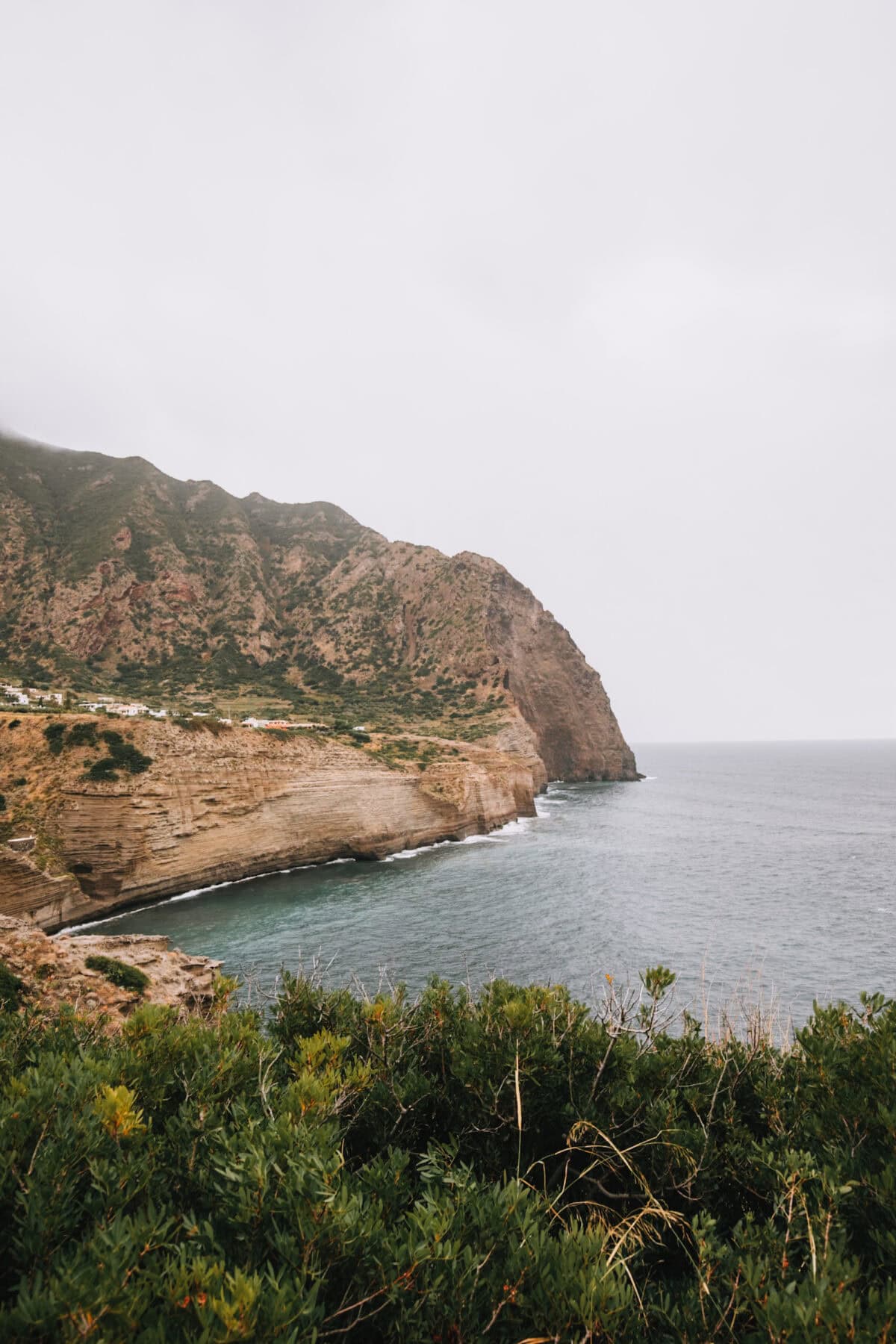
Salina is a small island in the Tyrrhenian Sea off the northern coast of Sicily. Together with the six other islands of Stromboli, Lipari, Filicudi, Panarea, Vulcano and Alicudi, it forms the archipelago of the Aeolian Islands, which are often referred to as the Lipari Islands.
The name Stromboli may sound familiar to you: This is where actress Ingrid Bergman shot the avant-garde film “Stromboli ” with director Roberto Rossellini, which also made the island itself more famous. The island is also home to Stromboli, one of the most active volcanoes in the world. It erupts regularly. As part of a guided tour, you can even observe these eruptions yourself during a climb.
Santa Marina is the lively main town on the island and the most important port of arrival for ferries. You can feel the special flair of this small harbor town as soon as you dock: it is lively, but not overcrowded.
The main street, which runs from the harbor through the town, is lined with small boutiques, souvenir stores and cafés. You can take a leisurely stroll here, especially during the season from April to October, and soak up the relaxed atmosphere.
Malfa: Foodie’s paradise
Malfa is located in the north of the island and is the center of viticulture on Salina. Here you will find the famous Malvasia vineyards. Foodies will be delighted anyway: Salina is also known for its capers! The village itself is small and cozy – and my personal tip for spending a few days on Salina.
Principe di Salina in Malfa
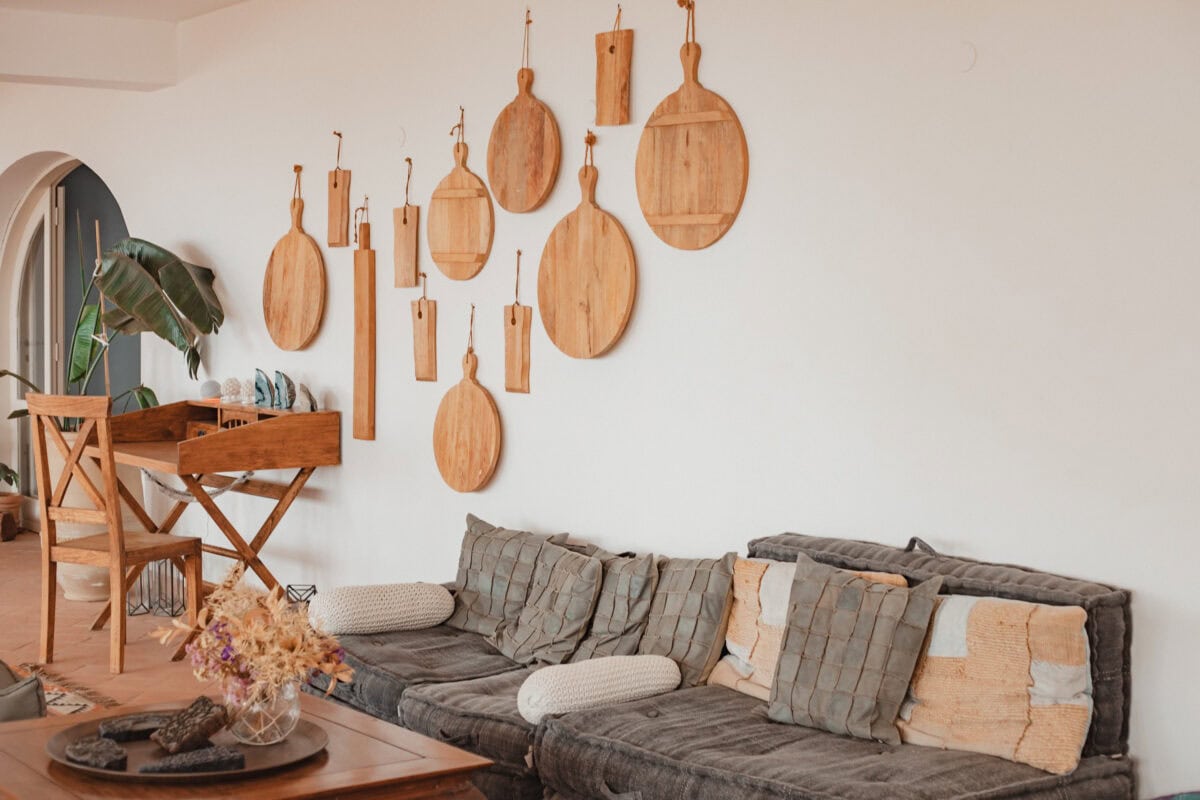
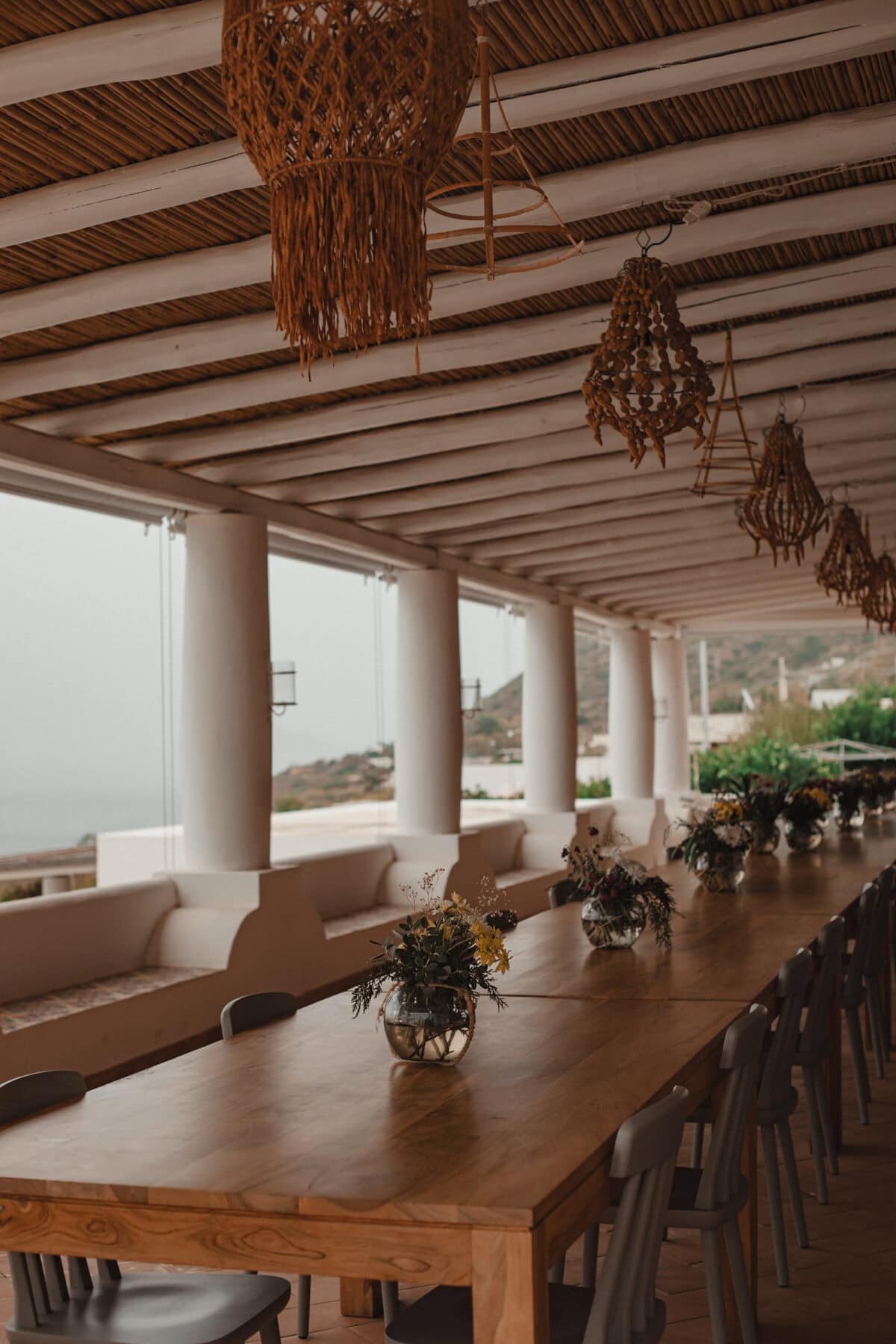
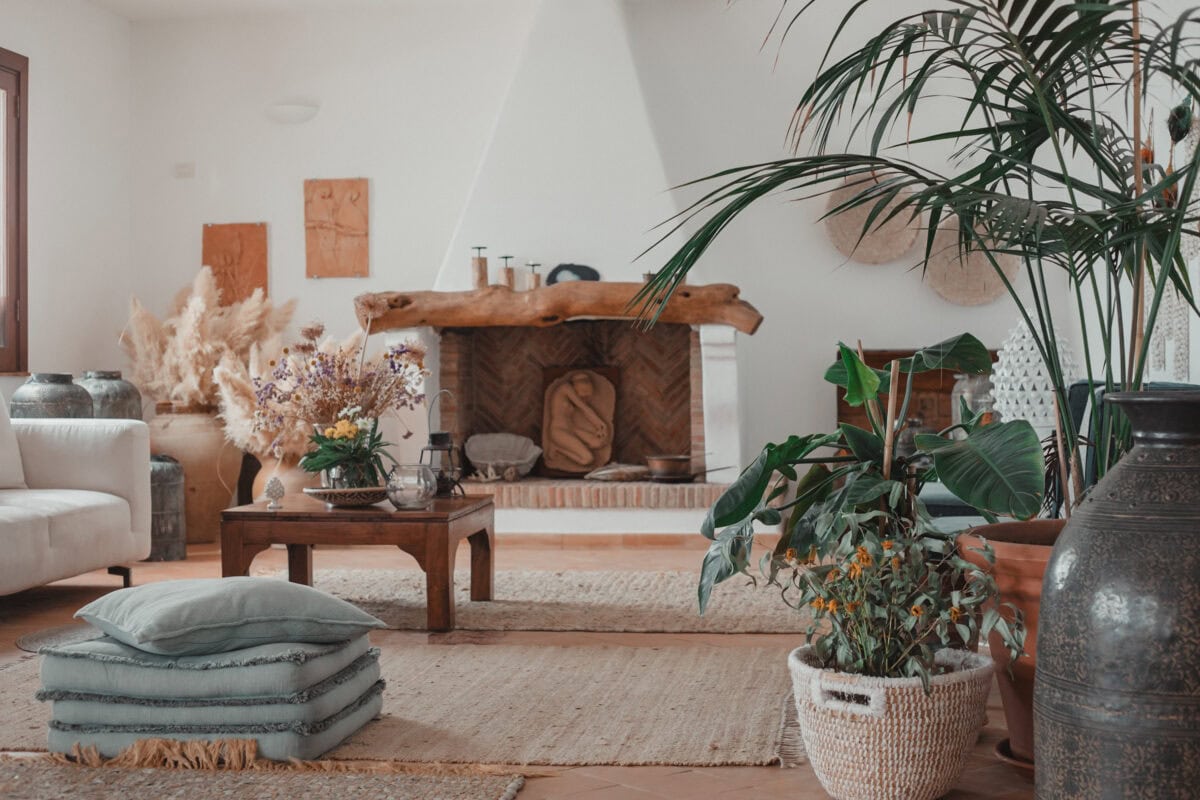
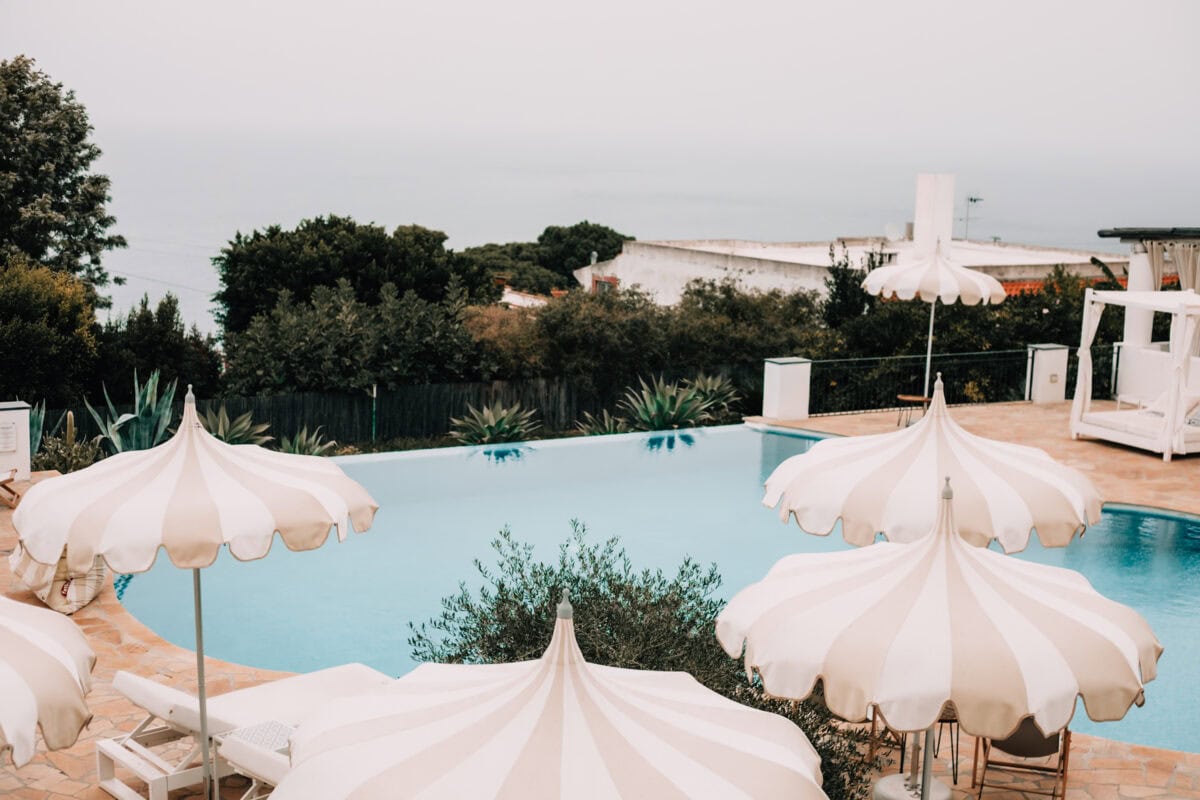
The Principe di Salina* is a genuine boutique hotel: Family-run and designed with great attention to detail, you will feel like you are in a cozy nest that you will hardly want to leave.
Basically, there’s everything you need here for a relaxing vacation: Nice company, breathtaking views and – really good food. The food is cooked on a large scale for all guests every evening, served at a long wooden table and everyone somehow gets to talk to each other.
The Principe di Salina is my absolute heartfelt recommendation. However, there is a catch: it’s usually almost impossible to book spontaneously (I was very lucky because it was already the end of the season) – all rooms are usually fully booked by mid-October in spring! So if you find capacity, book quickly. You won’t regret it!
Pollara is a small, remote village that became famous thanks to the 1994 film “Il Postino“. The film, in which the paths of a simple letter carrier and the Chilean author Pablo Neruda cross, is actually set on the island of Procida near Naples.
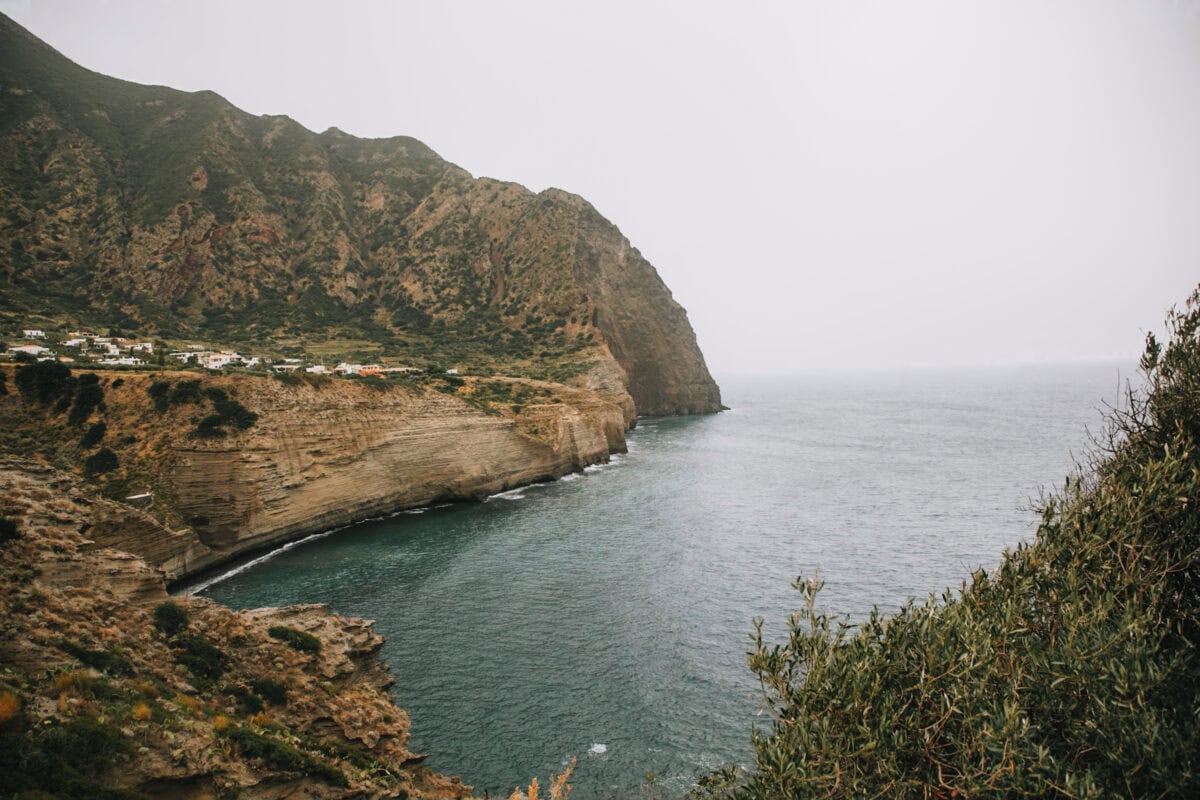
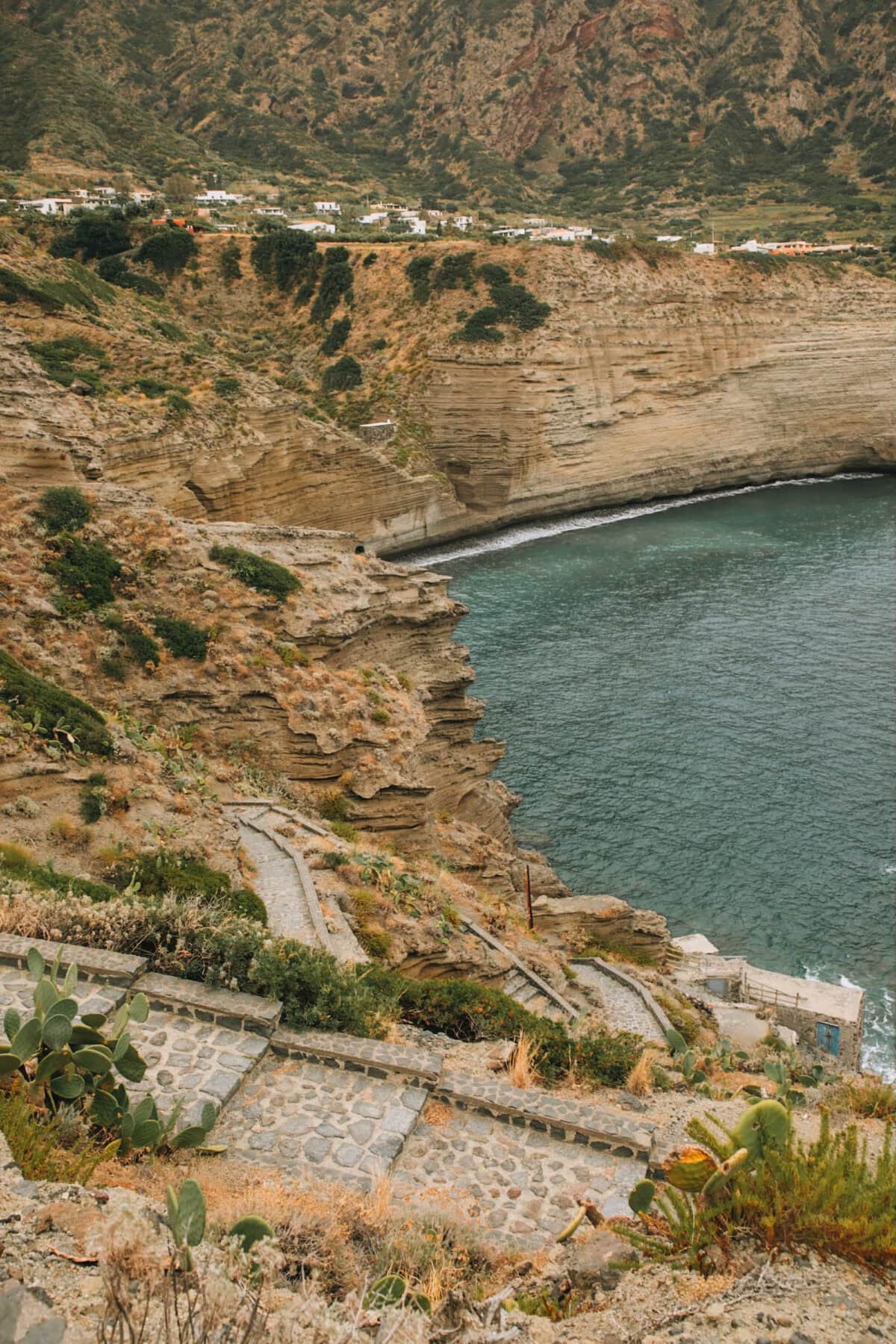
But Pollara, with its striking half-crater and the rocks all around, has a very special atmosphere, so it’s not surprising that this place has made it into a movie set.
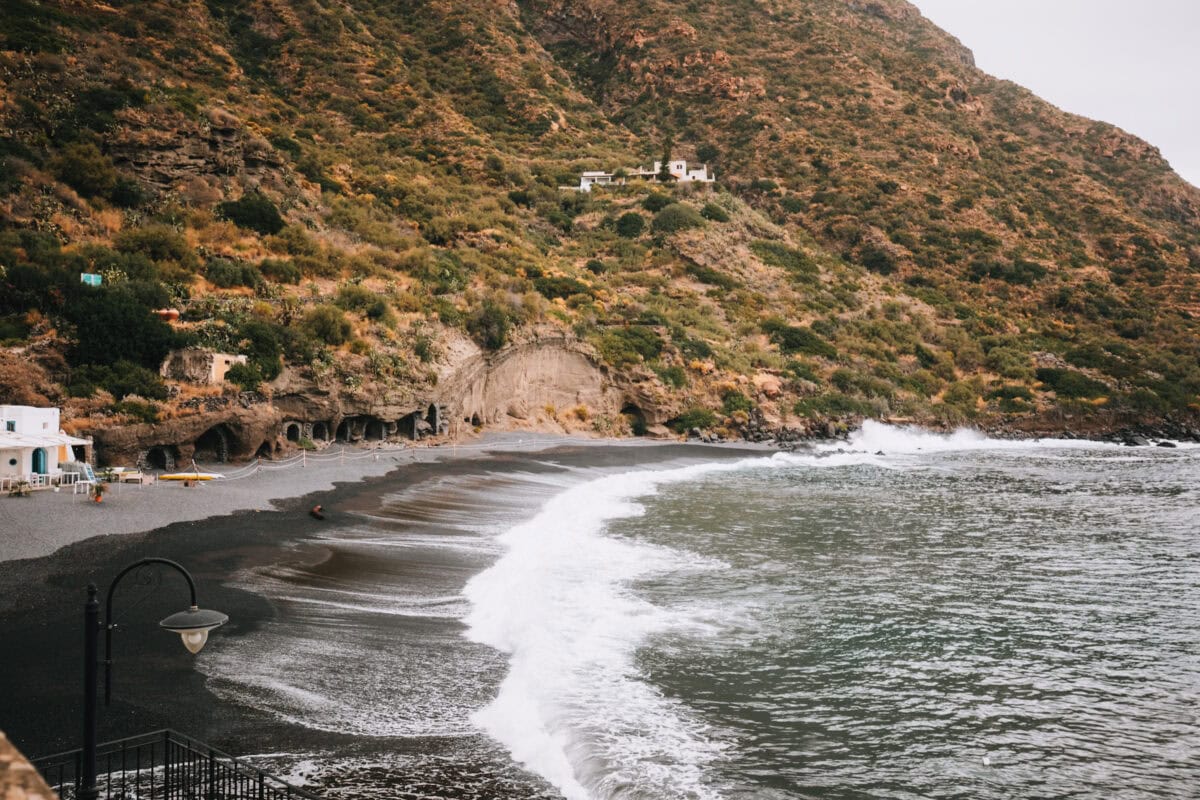
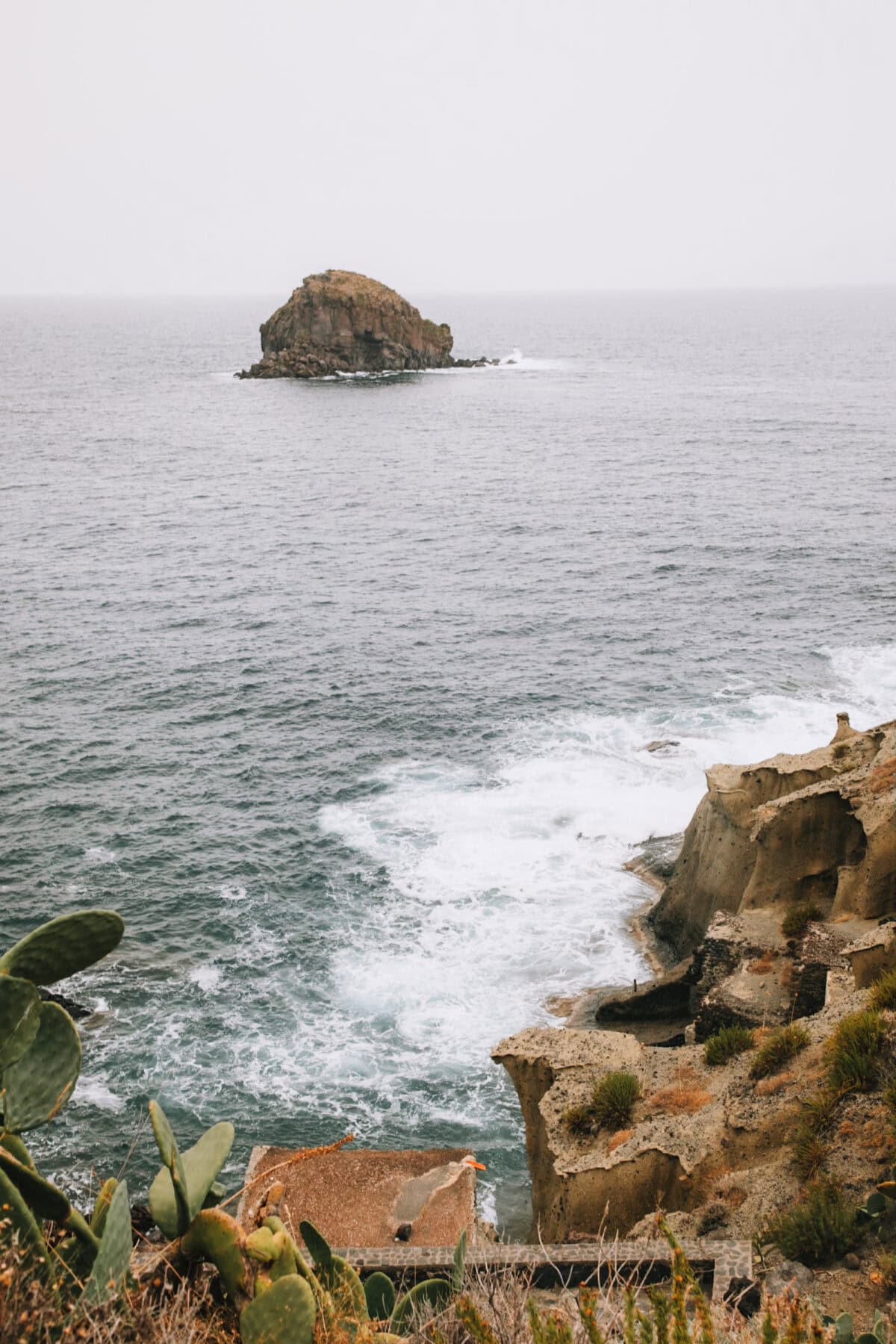
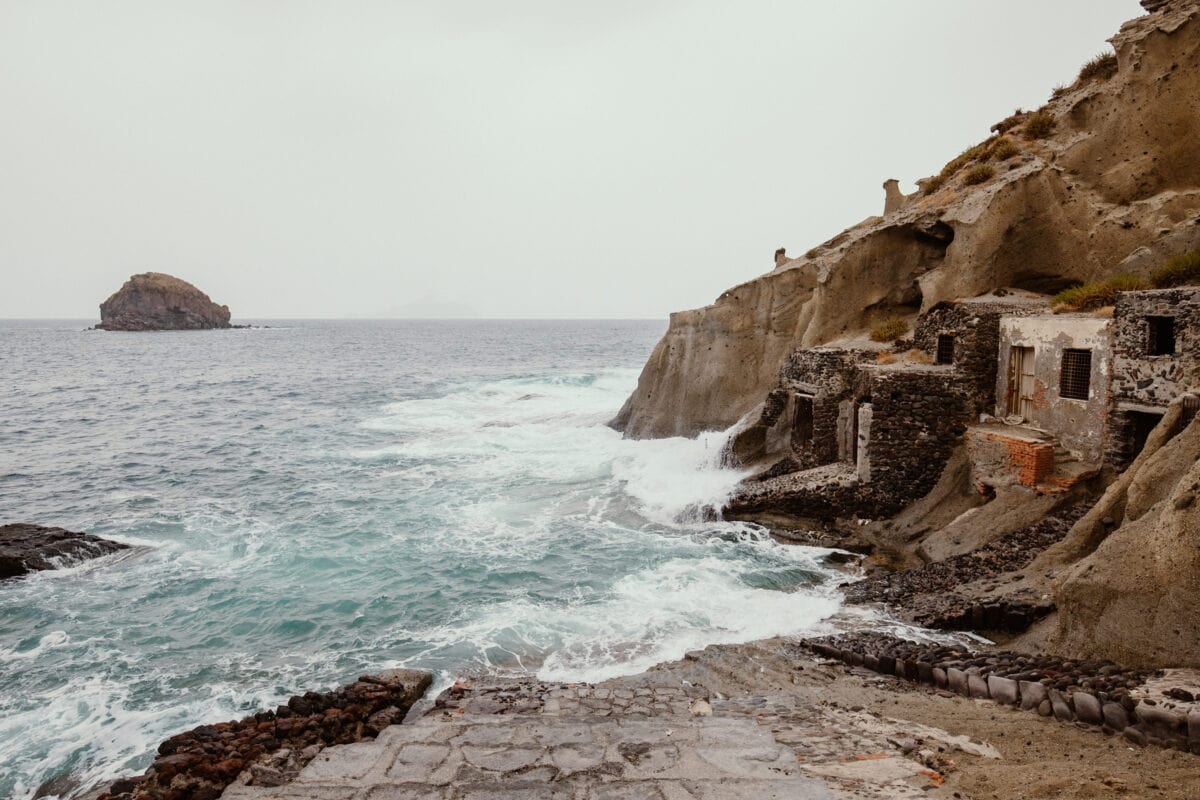
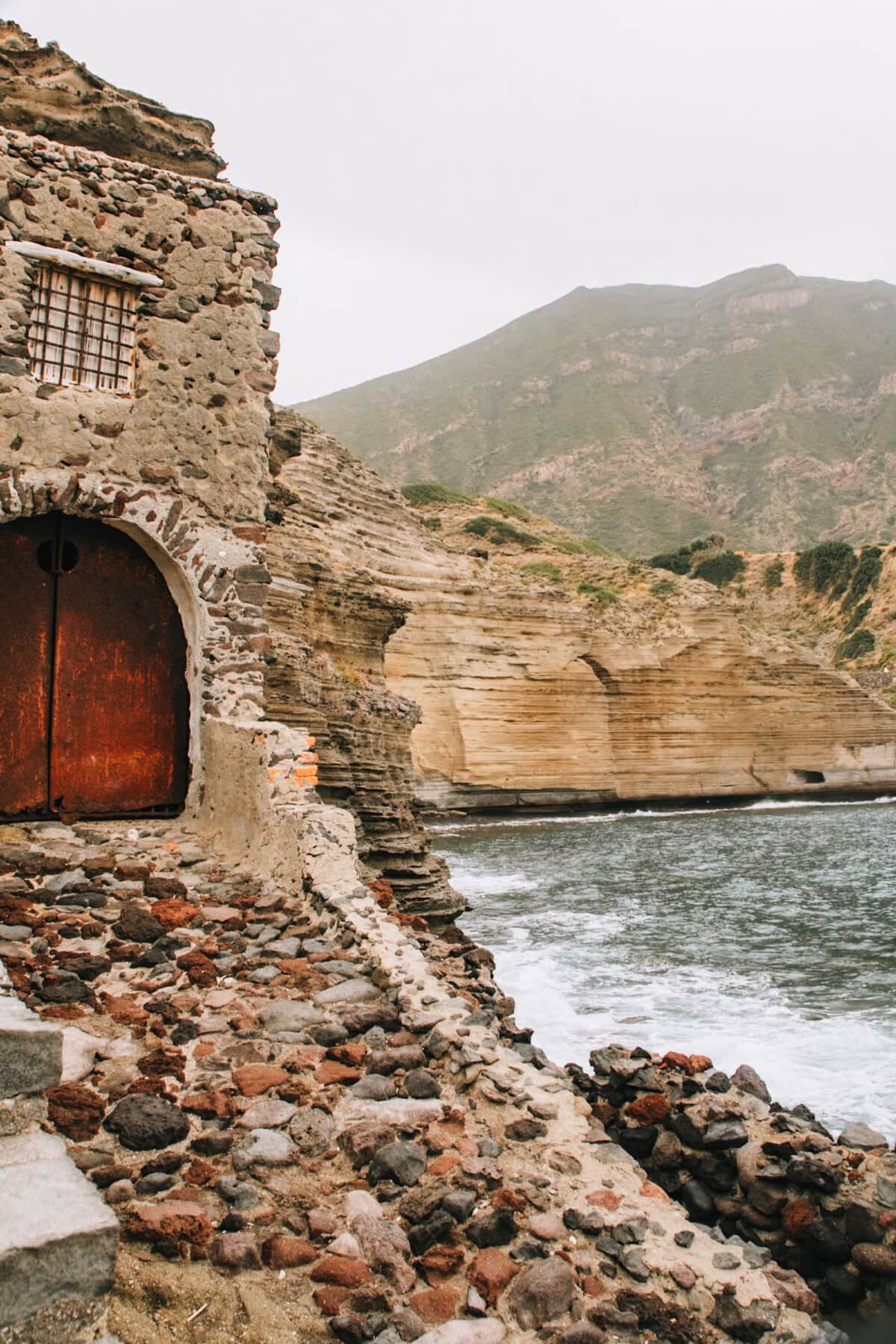
Pollara is probably the most remote place on the small island of Salina, and many of the houses are abandoned. Together with the impressive surroundings, this creates a very special atmosphere. In good weather, you can also swim in the Baia di Pollara.
There is no real sandy beach, but that is also the charm of this place. However, if you visit Pollara in stormy weather like I did, you’d better be careful; the rough rocks and high waves can quickly become dangerous.
Helpful tips for your trip to Salina
When is the best time to visit Salina?
As always, it depends a little on what you want to do on the island. If you want to do a lot of hiking, e.g. through the Riserva Naturale Orientata or up to Monte Fossa delle Felci, the months of May/June and September/October are more suitable. The temperatures are mild to warm, but not too hot.
If you want a real summer feeling, balmy nights and a bit of entertainment, then you should visit Salina in July and August. That’s when all the restaurants are open, the island is full of life and the Mediterranean climate means you’re almost guaranteed good weather during these months.
But the island is small and the number of accommodations is limited. It is very difficult to find something spontaneously, especially in summer. The price level is correspondingly high and comparable to regions such as the Amalfi Coast or the Cinque Terre.
Many accommodations are closed from November to April. Ferry services may also no longer run regularly or may be canceled altogether due to weather conditions.
I myself was on Salina at the end of October. The end of the season was already very noticeable and the last days of late summer had just come to an end. The tranquil atmosphere had something going for it, but I personally would have found it a little too quiet a few weeks later – then you really are very isolated on Salina.
How many days do you need for Salina?
If, like me, you are also traveling in Sicily and therefore don’t have that much time, two days are enough. Salina is not particularly big, so you can explore a lot in a short time if you plan well.
However, I would plan an extra 1-2 days if possible. Salina is really great and simply very relaxing; it’s a real shame if you only experience the island in a rush. Especially if you’ve found such great accommodation as the Principe di Salina*, where you can really unwind.
How to get to Salina
By ferry to Salina
There is no airport on Salina. You have to travel here by ferry or hydrofoil, which depart from various ports in Sicily, e.g. Milazzo, Palermo or Messina. The journey from Milazzo is the quickest and takes around 1.5 to 2 hours. There are connections several times a day with the ferry companies Liberty Lines and Siremar.
If you are already on one of the other Aeolian Islands, you can also take a boat from there to Salina. There are regular connections from Lipari in particular, the largest of the islands; the journey takes just 30 minutes.
By car to Salina
If, like me, you are traveling with a rental car on a road trip in Sicily, I recommend leaving the car in Milazzo. The crossing by car is very expensive, and you can always hire a car or scooter on the island. Most accommodations also offer pick-up services at the port of Salina. So it really isn’t necessary to take an expensive rental car with you.
There are several garages near the port of Milazzo, as well as cheaper parking lots with a shuttle service a little outside. I simply parked my rental car for several days at Garage del Porto, and the car was parked for me in the parking lot outside and brought back to the garage when I picked it up. No problems and super easy!
Arrival from outside Sicily
If you are not already in Sicily, you can fly to either Catania or Palermo and from there take a rental car or bus to Milazzo. It takes a little longer from Palermo to Milazzo, but you will also pass beautiful places such as Cefalù. From Catania, a detour to Taormina is a good idea.
If you have time, you can also get to Milazzo by train from the Italian mainland. Train travel in Italy is quite pleasant, and the north-south connection is often scenic.
This article was written on behalf of a research trip for Travellers Insight, the travel blog of Munich Airport. You can find more articles about Sicily here.
Catania is the second largest city in Sicily and always seems to be a little overshadowed by Palermo. But Catania is also unexpectedly charming and definitely worth a visit. In this article, I’ll show you Catania’s must-see sights and a few very interesting insider tips!
There’s plenty to see in Catania, and if you can, feel free to set aside a little extra time to explore this side of Sicily. After all, Catania has quite a few attractions to offer.
Cathedral of Catania, Piazza del Duomo & Fontana dell’Elefante
Almost more striking than the cathedral itself is the Fontana dell’Elefante on the Piazza del Duomo in front of it. The elephant fountain depicts the Liotru, symbol of the city of Catania.
There are many myths surrounding the Liotru, the most beautiful of which I found to be the interpretation as a symbol of the strength of the inhabitants of Catania to withstand severe natural disasters such as earthquakes and volcanic eruptions throughout history.
Piazza dell’Universita
The large Piazza dell’Universita is almost directly adjacent to the Piazza del Duomo. It also marks the start of the Via Etnea. Many walking tours through the center of Catania start from here.
When it comes to the traditional fish market in Catania, I’m still not sure whether I can recommend this place with a clear conscience: The many halved swordfish, bloody fish knives and a very rustic ambience can dampen your mood somewhat.
Despite everything, I found the hustle and bustle of the market super interesting and somehow fascinating. The fish market is located directly behind the Piazza Duomo, but the entrance is so well hidden in a corner behind a fountain, the Fontana dell’Amenano, that you think you are entering another world.
A few steps below the actual street level is the actual fish market with its many stalls, so that you have a perfect view of the action from above.
The tall buildings all around with their dark marble stone façades add to the atmosphere of the market.
In the side streets around the fish market, you will find other market stalls with fruit and vegetables as well as lots of great little bars and restaurants.
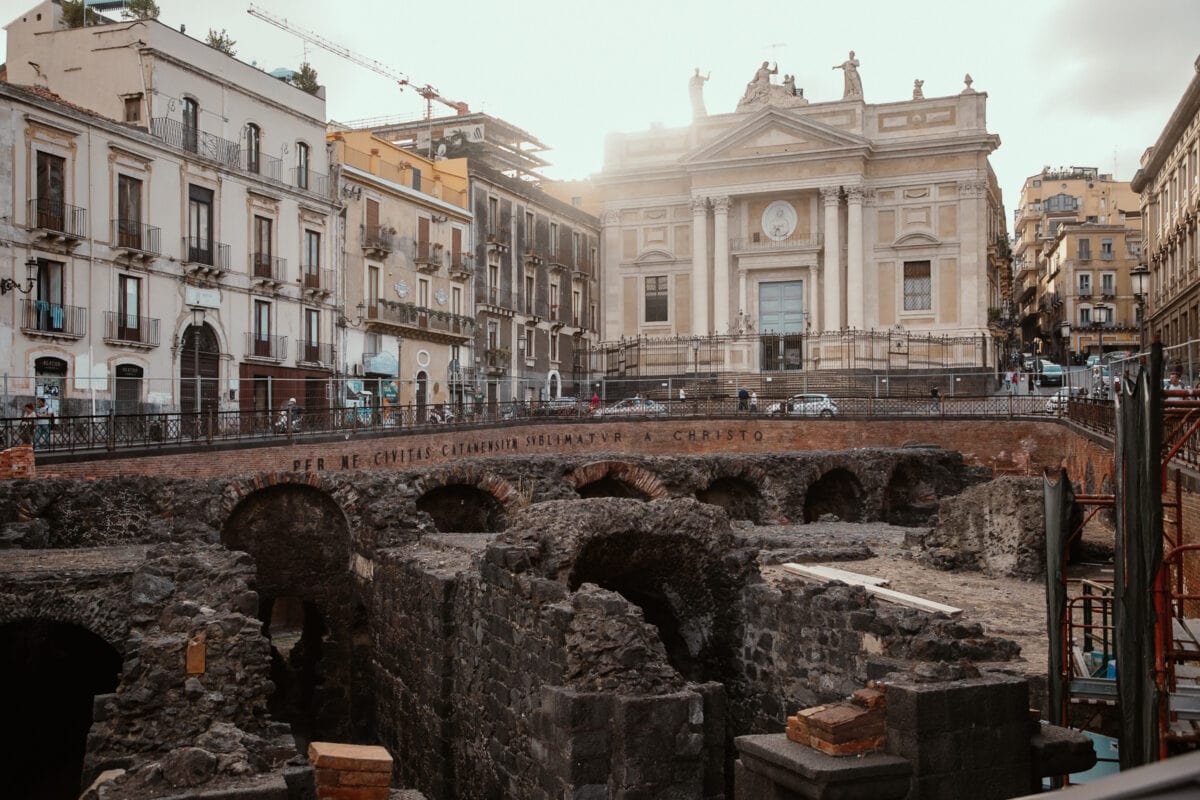
In addition to the Teatro Romano, there is another excavation in the middle of Catania. You can visit the Anfiteatro Romano in Piazza Stesicoro for a small fee.
Via Etnea
In contrast to Via Maqueda, the central shopping street in Palermo, Via Etnea in Catania is rather unadorned. Only partly pedestrianized, the Via Etnea is not necessarily the best place for a stroll. However, the name is no coincidence: from the Via Etnea you can see the summit of Mount Etna in good weather!
Via Crociferi
There is hardly a better example of Baroque architecture in Sicily in such a small space: the Via Crociferi was built after the earthquake of 1693 and became one of the most important urban planning projects in Catania at the time. Baroque churches and monasteries line the streets here.
Castello Ursino
In the middle of the city you will also come across the Castello Ursino. The medieval fortress was built in the 13th century under the rule of Frederick II of Hohenstaufen to protect Catania from attacks.
The enormous size and massive construction of the fortress in its present location seems strange, as it does not fit in at all with the rest of the cityscape. However, when it was built, Castello Ursino was located directly on the water! However, due to a major eruption of Mount Etna in 1669, lava flowed around the fortress and caused the coastline to shift.
Eating & drinking in Catania
Scirocco Sicilian Fish Lab
The street food hype in Catania really started with Scirocco: What once began as a small stall on the edge of the fish market is now THE place to go for fish and seafood on the go.
If you still need to get something down after the bloody fish market spectacle, there is no better place than Scirocco for a little snack in between. Or you can just come back in the evening.
Mooddika
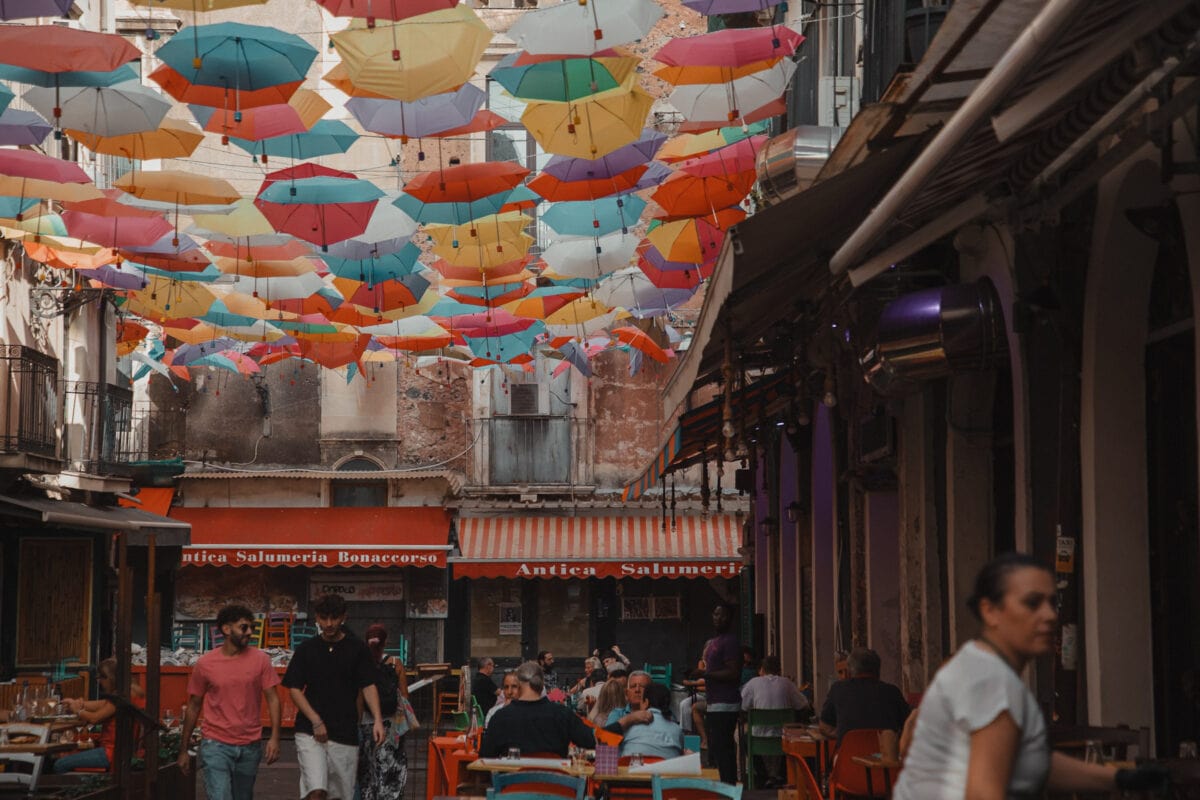
The Mooddika was a bit of a surprise. I had actually expected a boring tourist trap here, in a side street near the central Piazza dell’Università, and only ended up there out of convenience.
But the pasta was surprisingly fresh and delicious – and the ambience of the bar, restaurant and salumeria was very pleasant. Absolute recommendation!
I was on a big road trip through Sicily, so I was particularly pleased when I found an absolutely central boutique hotel with an attached parking space.
The B&B Palazzo Bruca* is located in an old palazzo and is just a few meters from the Piazza del Duomo. So if you’re looking for central accommodation in Catania, you’ve come to the right place!
Due to its proximity to Mount Etna, Catania is a great base for excursions to the still active volcano. You take a cable car up to the mountain station, from where you continue up in a jeep – alternatively, you can start the hike right away.
I definitely recommend a guided tour. On Mount Etna, the weather can change quickly, the paths are not necessarily safe and, in addition to orientation difficulties in the vast lava fields at an altitude of up to almost 3000 meters, there can also be discomfort caused by altitude sickness. Having a local guide with you is worth its weight in gold.
If you don’t want to climb Mount Etna, you can also take the Ferrovia Circumetnea almost all the way around the volcano. The last narrow-gauge railroad in Sicily exudes an absolute retro vibe and travels to many small villages around Mount Etna.
The Ferrovia Circumetnea starts in Catania at Borgo station in the northern city center.
From Catania, you can also reach many other interesting places on the east coast of Sicily. The romantic mountain town of Taormina, for example, is only 50 kilometers from Catania.
Tip: Save yourself the trouble of searching for a parking space in a hire car through narrow streets in Taormina or complicated journeys by public transport and book a day trip from Catania!
To help you find your way around Catania quickly, I have put together a map with all the tips from this article. You can also easily download them and use them on your cell phone when you’re out and about.
My trip to Sicily was sponsored by Travellers Insight, the travel blog of Munich Airport. Click here to find more exciting tips for Sicily, Trapani & Palermo.
Located on the east coast of Sicily and blessed with fantastic views of the imposing Mount Etna and the azure blue Ionian Sea, the small mountain village of Taormina has always been a magnet for visitors. And that can sometimes be more of a curse than a blessing. In my big guide, I’ll show you the most important sights in Taormina and tell you whether visiting Taormina is really worth on your trip to Sicily.
You absolutely have to do this in Taormina:
Stroll along Corso Umberto
Admire the giant Mount Etna from the Teatro Greco
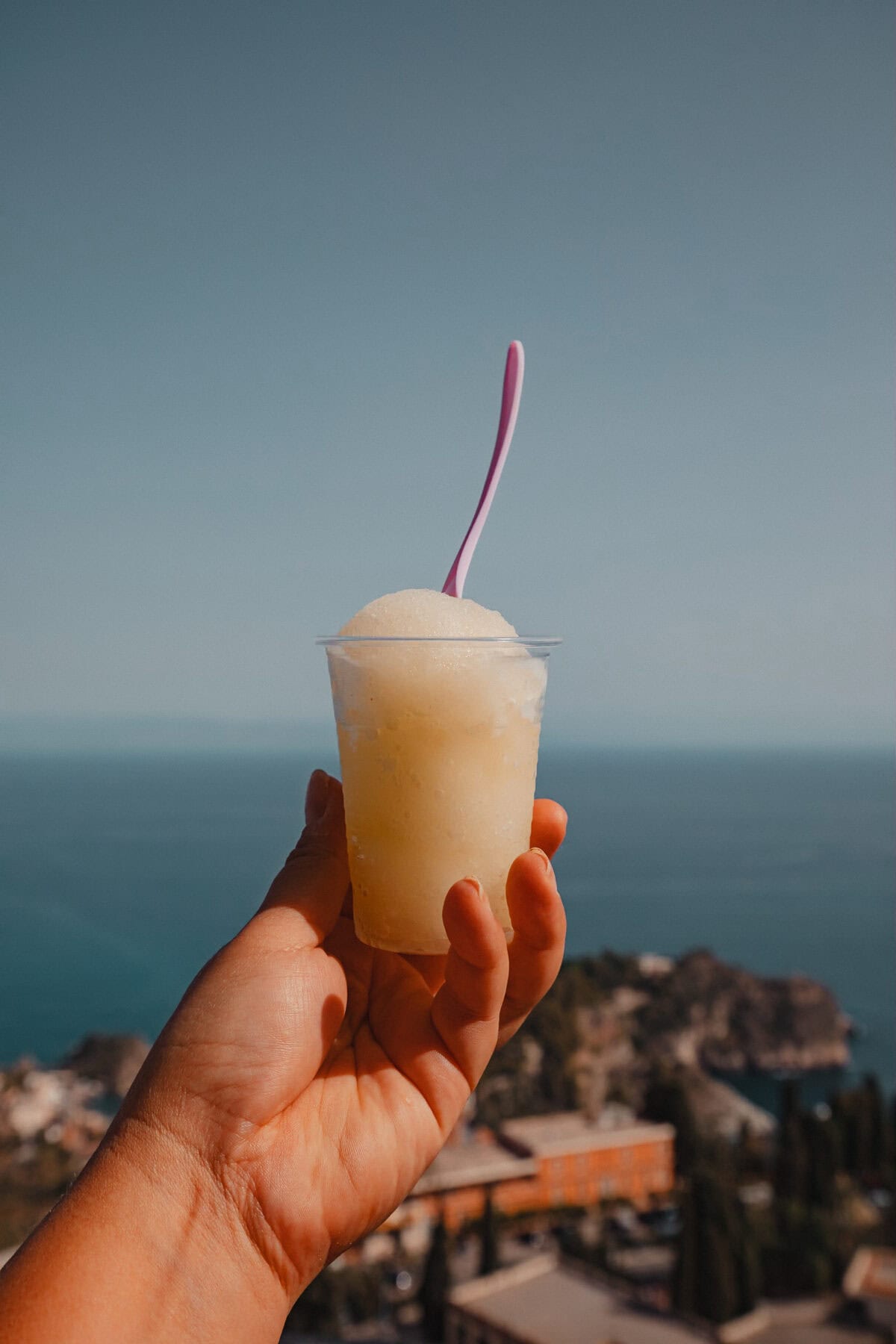
Sip a granita at the Bam Bar
In Taormina, it is also worth taking a look at the small side streets. Most visitors often concentrate on Corso Umberto and the Teatro Greco. Both are well worth seeing, but Taormina has a lot more charm to offer.
Places of interest in Taormina
Taormina is quite clearly laid out. Therefore you can easily explore the most important sights in the center in one day and enjoy the atmosphere of this special place in Sicily at the same time.
Corso Umberto I
Corso Umberto I is the lifeline of Taormina. Lined with medieval and Florentine buildings, you can stroll for all you’re worth. Here you will find small boutiques and luxury brands such as Dior or Louis Vuitton, boring stores with stuff for tourists, but also some small, quaint stores.
Daneu 1885 Old-fashioned store for home textiles and a bit of ceramics with a nostalgic flair
Di Blasi Typical Sicilian ceramics and the small store itself is a sight to behold
Tip: If you really want to breathe in the jet-set air on Corso Umberto, you should take a short break from sightseeing at the Louis Vuitton Café by Timeo. The café is part of the Belmond Grand Hotel Timeo*, which in turn also belongs to the LVMH Group.
In the café, you can enjoy a fantastic view of the sea with Louis Vuitton decorations – if I hadn’t been wearing my casual sightseeing outfit that day in Taormina, I would certainly have ended up here. (Unfortunately, you should look a bit more stylish here, otherwise you’re likely to be turned away or blasély ignored).
Piazza IX Aprile
Piazza IX Aprile is one of the most popular viewpointsin Taormina and is always busy. However, the square is very large, so that the crowds of tourists are well distributed here even in the high season. And the checkerboard pattern looks great on any souvenir photo!
Porta Messina & Porta Catania
Two city gates form the beginning and end of Corso Umberto I. The northern end is marked by the Porta Messina. To the south is the somewhat imposing Porta Messina. Both are part of Taormina’s medieval fortifications, which were built by the Arabs to protect the city from invaders.
The gates are also a popular meeting point for tours of Taormina.
Teatro Greco
The ancient Greek theater, the Teatro Greco, is an absolutely stunning location in Taormina that you should definitely not miss. The entrance fee is quite high, but the view of the city, the sea and Mount Etna from the stands is simply unique.
The theater was originally built by the Greeks in the 3rd century. BC. later used by the Romans and in the 2nd century. AD. into an arena for gladiator fights.
Large events and concerts take place here in the evenings. The atmosphere with this backdrop must be incredibly fascinating – if you have time, ask about current events on site.
The Duomo di Taormina dates back to the 13th century and is rather plain on the outside. You can also easily recognize the Norman influences in the straightforward architecture. The square in front of it with its baroque fountain is particularly pretty.
Find your accommodation in Taormina here
Advertising / *affiliate link
Naumachie
In a small side street off Corso Umberto you will find a very special sight in Taormina: the Naumachie is a massive brick wall about 120 meters long and 5 meters high, which probably once formed the boundary of a sports facility where athletes trained.
Villa Comunale
Taormina can be quite exhausting during the day, especially if you keep getting caught between tours of cruise tourists at neuralgic points such as the Corso Umberto or the Teatro Greco.
The gardens of Villa Comunale are a true oasis of calm and a perfect opportunity to take a breather. You also have a great view of the sea and the coast.
The gardens were originally owned by Lady Florence Travelyan, an English noblewoman who also owned Isola Bella. However, like Isola Bella, the park now belongs to the town of Taormina and is open to the public.
The small oriental-style buildings, the“beehives“, are particularly striking. These used to be used for birdwatching or afternoon tea, but are currently not accessible and unfortunately no longer in such good condition.
Via degli Artisti
Via degli Artisti is also a great photo opportunity in Taormina. Here you will find galleries, murals and colorfully designed house facades.
Isola Bella
Isola Bella is a small island off the beach of Mazzaró. It is connected to the beach by a small sandbank and can therefore be reached on foot. Depending on the tide, your feet may or may not get wet, so it’s best to wear something that can be rolled up or put on a beach outfit.
The island itself is a nature reserve and part of it can be visited for a few euros.
However, I personally didn’t find the beach at Mazzaró particularly nice for swimming. A large part of the beach is taken up by hotels and beach bars. And instead of a sandy beach, you’ll find coarse pebbles here.
The view of Isola Bella is nevertheless very beautiful and the elegant vibe at La Plage Resort* tempted me to settle down here for a cool drink – but it’s not exactly cheap, and spending an entire vacation here wouldn’t be my thing.
Where to dine in Taormina
You’ll find plenty of cafés and restaurants in Taormina. Unfortunately, the price level here is much higher and you also have to be careful with the quality: Tourist traps are not uncommon here.
Here are a few tips that won’t disappoint you and where you can enjoy typical Sicilian specialties without the touristy atmosphere!
Taverna Don Nino This small, cozy taverna is located near the Villa Comunale and quite away from the hustle and bustle. A real insider tip! There are only two pasta dishes on the menu: pasta alla norma (tomato, eggplant and ricotta) and pasta with pistachio cream and bacon, but they are really, really good and very cheap for Taormina. My recommendation for lunch!
Bam Bar The Bam Bar serves typical Sicilian granita, brioche and coffee in a colorful atmosphere – perfect for something sweet in between.
Chapeau Corso Umberto is of course bustling with life in the evening, but the Chaplin, whose terrace is somewhat hidden down a flight of steps to the side of the Duomo, is a really atmospheric place to sit. And the cocktails are great!
Casamatta Small, modern wine bar with a relaxed atmosphere. Also open during the day.
Budget tip: Rosticceria Da Cristina 2 always serves fresh and good pizza from the tray, delicious street food such as arancine and inexpensive daily specials!
If you want to learn a little more about Sicilian wine, a trip to Taormina is a good opportunity to take part in a wine tasting:
Taormina is definitely one of the most expensive spots in Sicily. This means that accommodation here is not exactly cheap and the price-performance ratio often leaves a lot to be desired.
However, if you want to spoil yourself with slightly more expensive accommodation, Taormina is the place for you! Here you will find beautiful boutique hotels or luxury hotels such as the San Domenico Palace*, known from the Netflix series “White Lotus”.
For example, if you want to stay in the middle of it all, but still in a stylish and cozy atmosphere, you should take a look at the Taodomus Small Boutique Hotel*. There are only a few rooms available, so book early.
I was just passing through and unfortunately made a complete mess of my first accommodation: Too expensive, too unfriendly, too dirty. That’s why I moved again, and I can really recommend the accommodation:
Budget tip: Just outside the city center, but within walking distance of the valley station of the cable car and Isola Bella, I discovered a quaint guesthouse in an old town villa. The Villa Moschella* is a little dated, but really well maintained – and the location is unbeatable. Please note: The rooms are very popular and get booked up quickly!
Taormina is relatively easy to reach despite its location on a mountainside. Day trips are offered from many places, e.g. from Catania. You can also take the train to Taormina-Giardini station on your own. From there, buses run up to the center.
Taormina cable car
Mazzaró beach can be reached by cable car from the center of Taormina. During the season, the cable car runs late into the night, so you can easily enjoy balmy summer nights in the atmospheric old town and then return to your beach hotel.
Driving in Taormina can be a sheer horror: The access roads are sometimes winding, narrow and crowded. In the high season, you also have to share the narrow roads with various coaches and the roads that you are allowed to drive on in the town center are often one-way streets.
This way you can avoid stress when traveling by car:
Head straight for Porta Catania. There is a large multi-storey parking garage where you have the best chance of finding a parking space close to Corso Umberto. Unfortunately, the driveways are relatively narrow and you sometimes have to drive up many floors. But the location is unbeatable.
There are many parking lots around Taormina that offer a shuttle service.
There are also several parking spaces around the valley station of the cable car.
Day trips to Taormina are also offered from many places, so you can simply leave the rental car/your car behind.
Are you staying overnight in Taormina and traveling by rental car? Find out in advance whether a parking space is available.
Taormina has a bit of a reputation: It’s posh, at the same time very crowded and somehow doesn’t really want to create a Sicilian atmosphere. And when the big cruise ships dock in neighboring Naxos, it gets even more crowded.
Nevertheless, Taormina is really very charming, and if you follow some of the tips in my guide here, you will certainly find one or two less crowded corners. You should also experience Taormina in the evening: The atmospherically illuminated old town in the evening is truly romantic.
However, I wouldn’t want to spend too much time here, it’s just too touristy and Sicily has so much more to offer! So: excursion definitely, longer no.
Here you can find a map with all the locations from this article. Perfect for saving for your trip!
This post was written on a research trip through Sicily for Travellers Insight, the travel blog of Munich Airport. On the website, you can find more exciting tips for Sicily, TrapaniPalermo.
Sicily blew me away: The largest island in the Mediterranean is so incredibly diverse and fascinating. Here you will find vibrant cities such as Catania and Palermo, beautiful beaches and bays, as well as historical sites from all eras. In this article, you will find my selection of the 20 most beautiful places in Sicily. Perfect for inspiring you to take a trip to Sicily or to start planning your itinerary right away.
What you need to know
Sicily has a long and eventful history, which is why you will even find influences from the ancient Greeks, Normans and Arabs in its architecture and culture.
Mount Etna, Europe’s highest active volcano, offers impressive hikes and day trips in a spectacular setting.
Sicily is home to many towns and villages with unique charm, such as Palermo, Taormina and Cefalù – all worth a visit!
Sicily sights: What you must see
Sicily is a destination for all the senses: the landscape is impressive, the Sicilians are open-minded – and oh my God, the food everywhere is simply delicious! A trip to Sicily is worthwhile for this alone. But the largest island in the Mediterranean also has other great sights to offer. You can discover natural wonders such as the brightly lit Scala dei Turchi or Mount Etna, Europe’s highest volcano.
And the Sicilian Baroque in the Val di Noto or the ancient temples near Agrigento are not just for history buffs. If you’ve had enough of history, you can simply plunge into the hustle and bustle of the capital Palermo and explore one of the most exciting cities in Europe. You’re guaranteed not to get bored in Sicily!
#1 Etna – Europe’s highest volcano
Have you ever stood on a volcano? Mount Etna is not just any volcano – it is Europe’s highest and also one of the most active volcanoes. It can be seen from afar, and on days with good visibility you can even see it from the Piazza del Duomo in the center of Catania or from the ancient theater in Taormina.
Advertising / *affiliate link
As Mount Etna is still an active volcano, you should only climb it as part of an organized tour. Most tours include a ride on the Funivia dell’Etna cable car and an experienced mountain guide who will accompany you safely to the best spots.
Opinions differ on Palermo – which I personally cannot understand at all. For me, Palermo is one of the most exciting cities in Italy or even Europe. The city is so full of life without being intimidating; it’s always busy around the clock – people dance, play music and live on the streets.
In Palermo’s old town, you can explore the exciting history of Sicily through all eras in a very small space, as you will find Norman, Arabic and Byzantine influences in the various architectural styles.
And there is hardly a better place to try so many Sicilian specialties at once: The street food at Palermo’s markets is simply legendary.
#3 Mondello: the city beach of Palermo
In summer, you will probably meet the whole of Palermo here at the weekends: Mondello is the city beach of the Sicilian capital, so to speak. Here you can stroll, sunbathe and swim in the truly turquoise waters.
And of course, Sicilian street food is a must: The food stalls serve delicious arancini – the stuffed rice balls are a typical beach snack on a hot summer’s day.
#4 Cefalù – coastal idyll and Norman architecture
Cefalù is only an hour’s drive from Palermo and is definitely one of my favorite places in Sicily. The small fishing village has managed to retain the charm of the old days and is now the perfect mix of beach, culture and vacation atmosphere: the perfect choice for a Sicilian vacation!
In the almost car-free city center, the Norman cathedral forms the center of Cefalú. Here you can sip a cappuccino in the large piazza and then stroll directly to the small beach at the old harbor of Cefalú to refresh yourself in the turquoise blue sea. And then there is the Rocca di Cefalù, the town’s local mountain, which towers above everything and which you can even climb via a hiking trail.
#5 Taormina – The pearl of Sicily
When it comes to the most beautiful places in Sicily, Taormina is often mentioned. Situated high on a hill, the town with its charming old town offers views that will blow you away.
The ancient theater is also one of the top sights in Sicily. Here you will not only learn more about the long history of Taormina, but you will also have a magnificent view of Mount Etna and the Gulf of Giardini-Naxos.
However, Taormina is literally flooded with tourists during the season. Many cruise ships also dock in nearby Giardini Naxos, so it can get quite crowded in the small old town during the day. Nevertheless, Taormina is really pretty and I would definitely recommend at least one trip here.
In Siracusa, you can experience Sicily’s history up close. In the Neapolis archaeological park, you can visit the ancient Greek theater and explore the Ear of Dionysius.
The old town of is located on the island of Ortigia, where you can stroll through the old, narrow streets. From the Norman fortress to the ancient temples – Ortigia is simply like one big open-air museum.
#7 The Valley of the Temples near Agrigento
Curiously, the Valley of the Temples near Agrigento is not a valley, but a hill. On days with good visibility, you can even see the sea from here!
In the Valley of the Temples you will find impressive remains of the ancient Greeks in Sicily, such as the Temple of Concordia, one of the best-preserved Greek temples in existence, the Temple of Hera and the Temple of Olympian Zeus, once one of the largest temples of antiquity.
The Valley of the Temples is particularly impressive at night when the buildings are specially illuminated.
#8 Noto
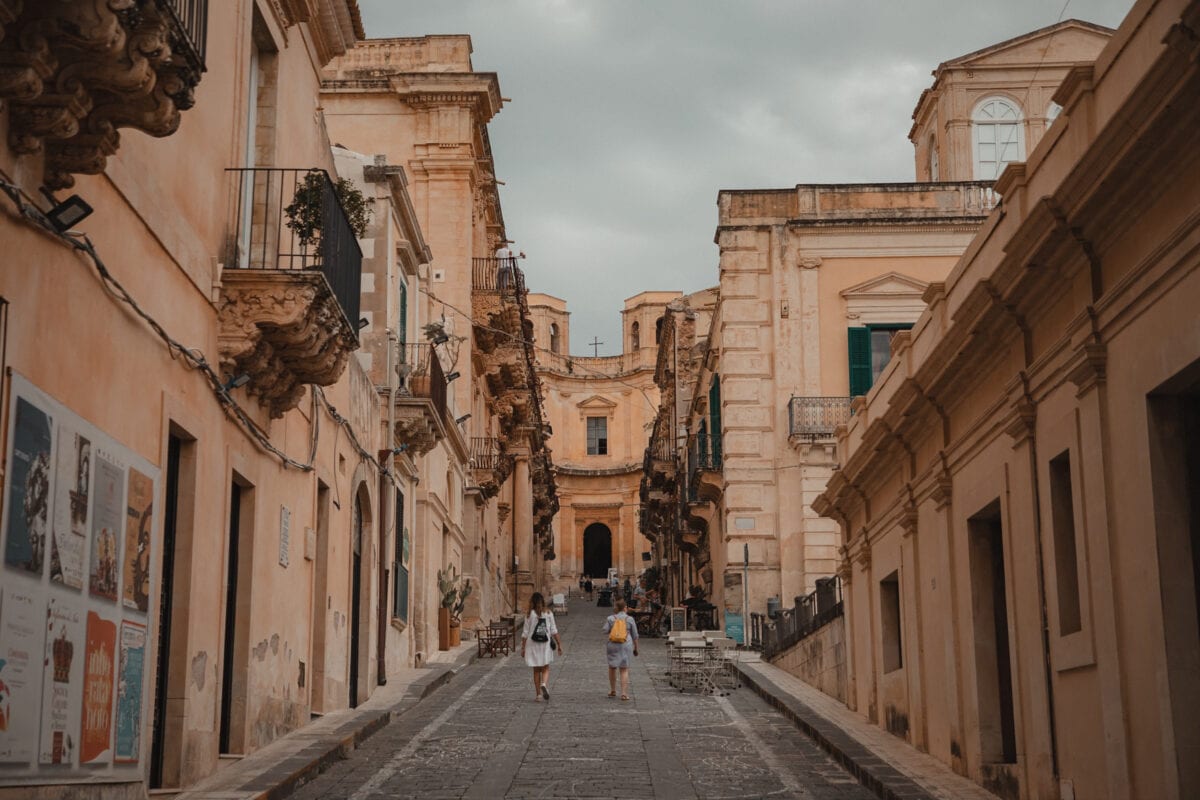
Noto is like a little treasure in the Val di Noto of the same name. Here you will find some of the Sicilian Baroque towns that are now UNESCO World Heritage Sites. Personally, I was most impressed by Noto: the small old town is clearly laid out, but still full of pretty cafés, great restaurants and, of course, really great baroque architecture.
And it is truly breathtaking to experience the sunset on one of the church towers. The warm sunlight then envelops the entire city and gives the sandstone of the buildings a golden glow.
#9 Riserva naturale orientata dello Zingaro
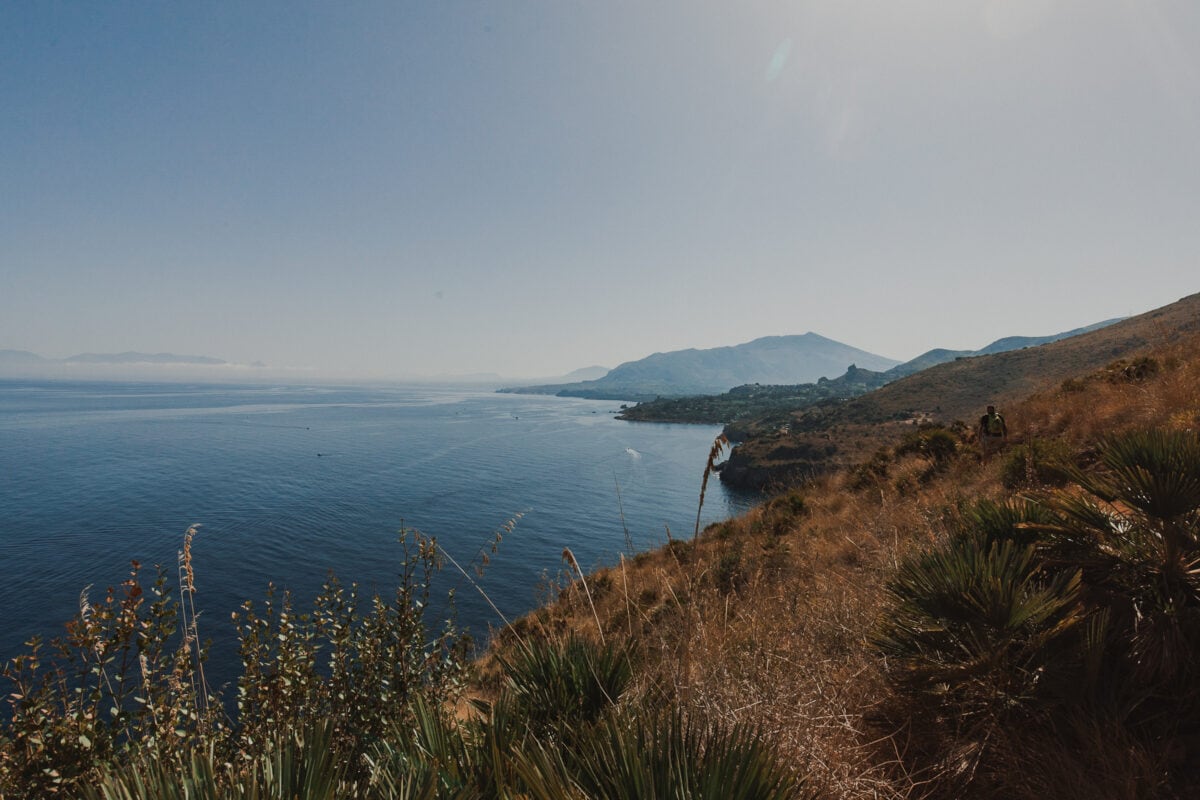
If you are looking for pure nature and tranquillity, then the Riserva dello Zingaro is the right place for you. In the nature reserve in the northwest of Sicily, there is nothing but breathtaking scenery and beautiful bays.
Several hiking trails lead through the reserve, which is located between Castellamare di Golfo and San Vito Lo Capo. Originally, a coastal road was planned here, but due to the continuous protests of local residents, the plans were scrapped and the region has now been protected forever – also to the delight of all visitors to Sicily, as the Zingaro is truly impressive.
#10 Aeolian Islands
The Aeolian Islands are a real insider tip if you love nature and especially volcanoes. The most famous of the Aeolian Islands (also known as the Lipari Islands ) is Stromboli.
The volcano of the same name on the island is one of the most active in the world and can be climbed as part of a guided hike*. There are also complete boat tours from the mainland, where you can explore Stromboli and the surrounding islands and, with a bit of luck, see the lava running down from the volcano from the sea after dark.
But I can particularly recommend one of the best-kept secrets of the Aeolian Islands: On Salina, you really enter another world.
The small island is also of volcanic origin and tends to be ignored by large crowds of tourists. Here you will find fine, cozy boutique hotels such as the Principe Di Salina* and relaxing nature – perfect for switching off!
#11 Trapani and its salt pans
Trapani is a real underdog among Sicily’s coastal towns. Many tourists don’t pay much attention to Trapani, and only set sail from here to the Egadi Islands.
But the old town of Trapani really does have some treasures to offer and scores highly in terms of architecture and cuisine with old Arabic influences. An exciting mix!
The salt pans on the outskirts of the city are also really great. You can even see wild flamingos in the extensive lagoon landscape! And a sunset with a view of the sea is unforgettable from here.
#12 Egadi Islands
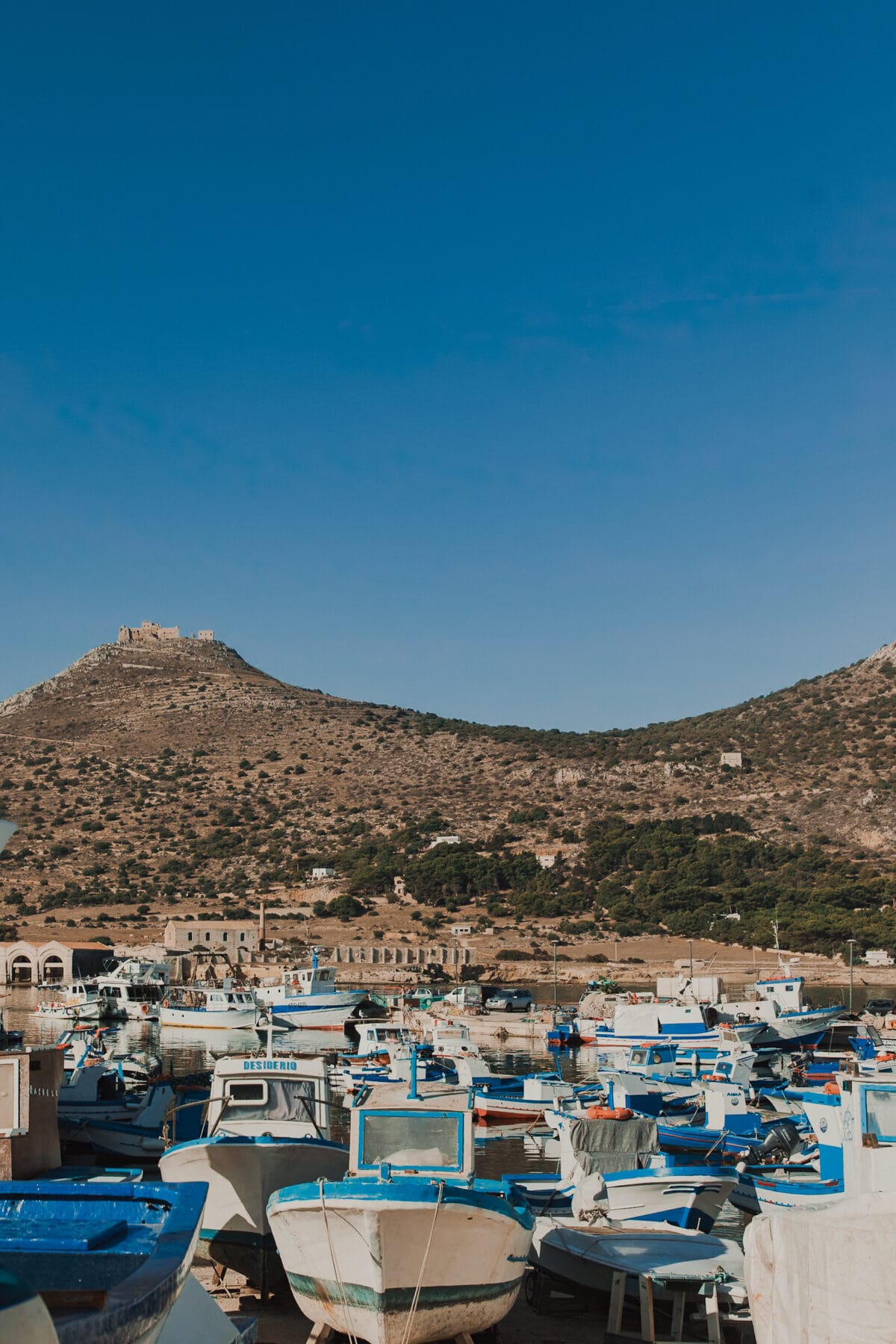
Trapani is also the best place to reach the Egadi Islands, consisting of Favignana, Marettimo and Levanzo. Favignana in particular is worth a detour.
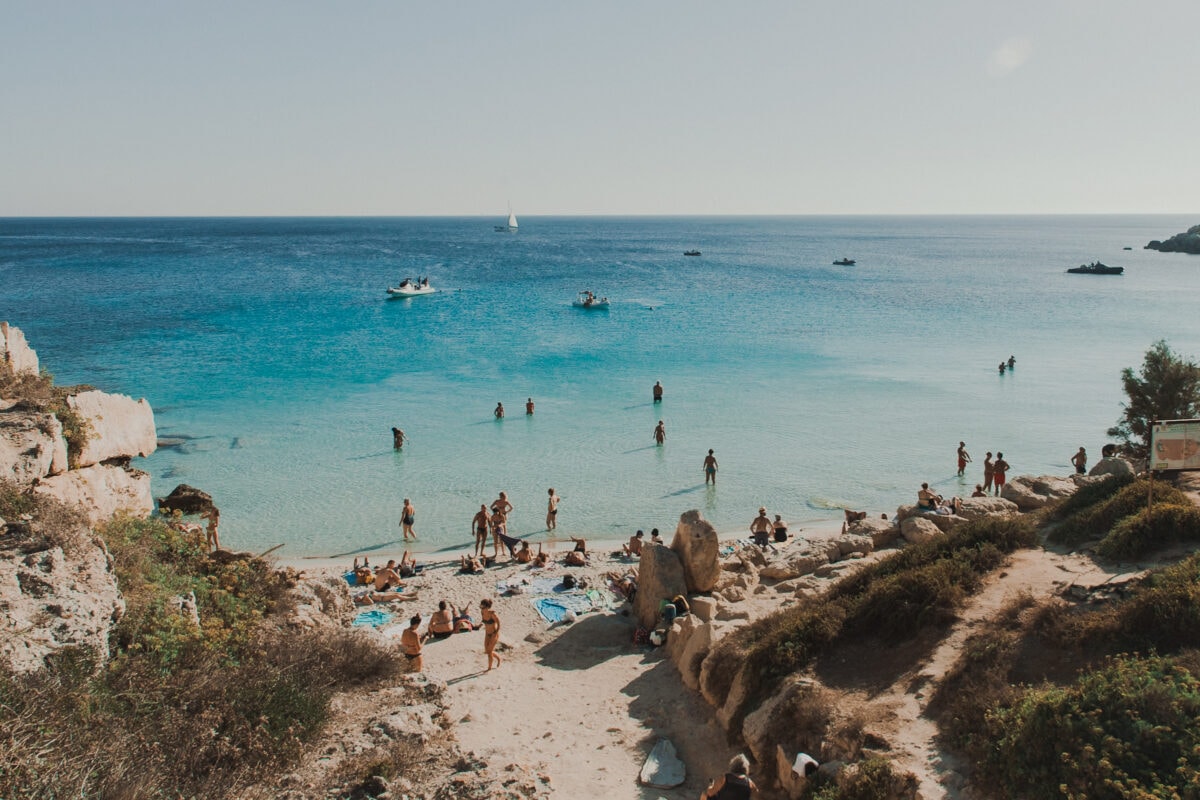
For me, the island seemed like a mixture of Ibiza and Sylt: lots of nature, beautiful beaches, crystal-clear water – but also Mediterranean, relaxed nightlife with great restaurants and cocktail bars in the small main town.
The characteristic tufa caves and the former tuna factory Ex Stabilimento Florio delle tonnare are just some of the sights you can discover on Favignana.
#13 Catania
Catania, the second largest city in Sicily, is bursting with energy. The many dark building facades are also striking: Lava stone from Mount Etna was used for many of the buildings, giving the city its unmistakable flair.
Here you will also find a piece of Sicily’s long history in the form of the Roman theaters.
But today’s Catania is also really exciting: at the fish market, which is located right in the center behind the Piazza del Duomo, it gets really busy almost every day when the freshly caught fish is brought to the people.
You will also find great bars and restaurants all around, where you can enjoy the typical Sicilian hustle and bustle until late in the evening.
Tuna fishing once played a major role in Sicily: entire families lived off the bloody mattanza for generations. Shoals of tuna swim past Sicily on their way to their spawning grounds in May. Off the coast, they are guided through a sophisticated system of nets and finally caught.
However, due to overfishing in the Mediterranean, tuna fishing in Sicily has declined sharply and fishing has been abandoned in many places.
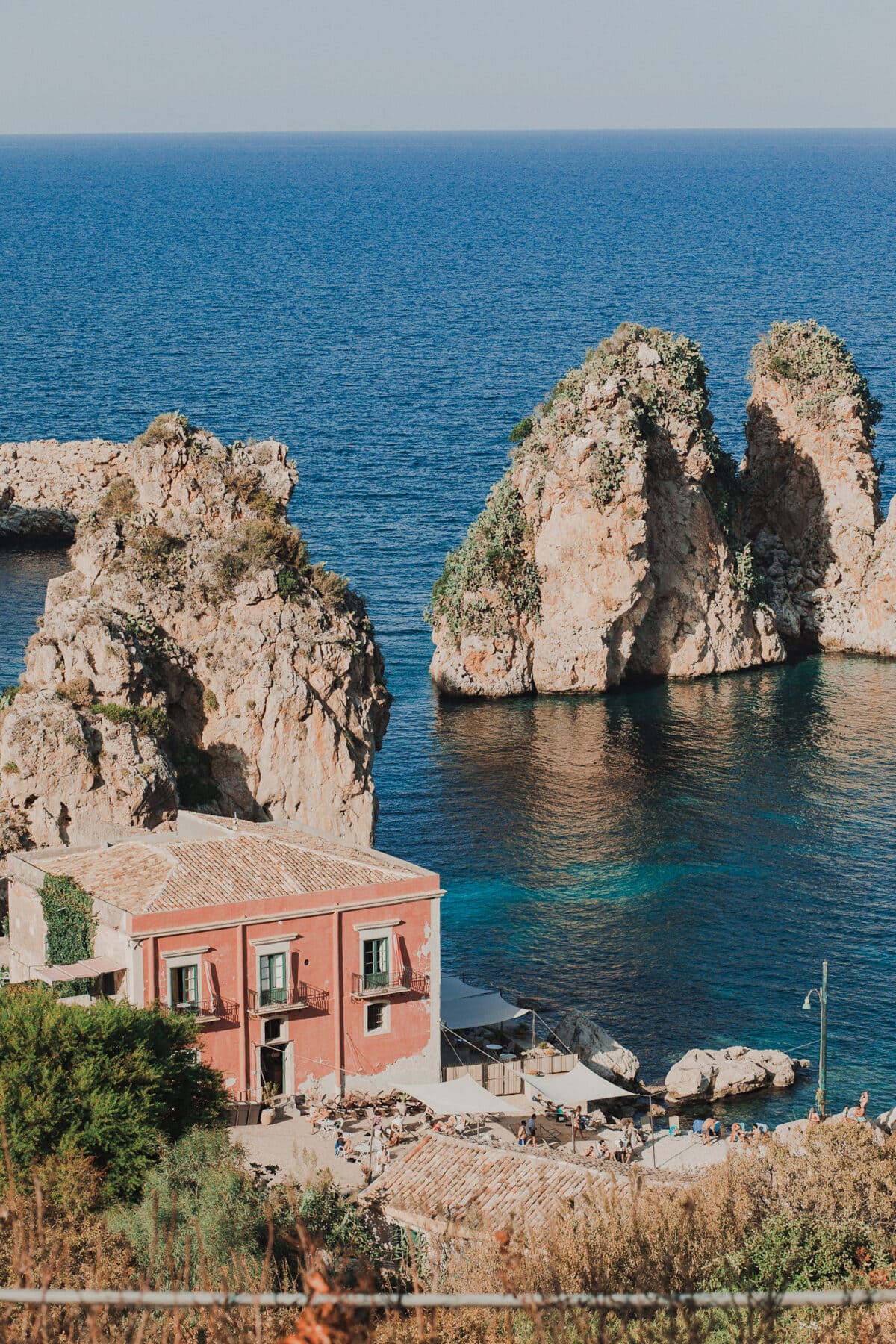
Today, the Tonnara di Scopello is one of the most popular Instagram spots in Sicily: the small bay with the rocks in front of it is simply a beautiful photo motif. The old tonnara itself is now home to a pretty boutique hotel and a small museum, which can also be visited by day visitors by appointment.
#15 Marzamemi
Although the fishing village of Marzamemi is no longer an absolute insider tip, only a fraction of Sicily’s holidaymakers find their way here to the south-eastern tip of the island. The region around Marzamemi is sparsely populated and the town itself has retained its original charm – the perfect conditions for a relaxing stay.
Around Marzamemi you will also find extensive beaches and a nature reserve with flamingos and many other wild birds.
Exciting: the former tuna factory has been converted into a small excursion destination! Colorful restaurants, small boutiques and delicatessens line the streets here.
#16 Scala dei Turchi
The Scala dei Turchi is a true natural wonder: the gleaming white limestone cliff drops into the sea like a staircase. Until recently, you could simply walk up to the rocks.
However, as there have been repeated cases of vandalism in the past, the rocks are now cordoned off and you can only admire them from a distance.
However, there are several beaches all around where you can go for a swim. The view from and to the Scala dei Turchi is particularly beautiful at sunset, when the sunlight reflects off the bright limestone.
#17 Ragusa
Ragusa consists of two parts: Since the severe earthquake in Sicily in 1693, the city has been separated by a gorge. The upper part is called Ragusa Superiore, the lower town Ragusa Ibla.
Most of the Baroque buildings worth seeing can be found in Ragusa Ibla. Here you can stroll through romantic alleyways or simply relax in the inviting Giardini Iblei.
If you are traveling by rental car, you can always stop at viewpoints on the winding mountain roads around Ragusa to enjoy the incomparable view of the valley.
Modica is also one of the Baroque towns in the Val di Noto. However, it is somewhat less touristy than Noto or Ragusa Ibla, for example. Nevertheless, there is plenty to discover in Modica, especially a famous sweet – chocolate from Modica is not only famous, but also really delicious.
The special feature: The cocoa is processed cold, so the sugar it contains does not dissolve completely, giving the chocolate a completely different texture. Be sure to try it!
#19 San Vito Lo Capo
San Vito Lo Capo, known for its beautiful sandy beach and relaxed atmosphere, is the epitome of a perfect seaside resort. In addition to sunbathing and swimming, you can also try out numerous water sports here.
Or you can go out on a boat and explore the bathing bays of the nearby Riserva dello Zingaro from the water.
#20 Sicilian street food
Especially on the streets of Catania and Palermo you can get to know the famous Sicilian street food. The many, mostly deep-fried delicacies and the stalls where they are prepared are a sight in themselves.
Most of the dishes are very filling, so bring enough hunger with you. Popular dishes include arancini (stuffed rice balls) and pani ca meusa (bread rolls with veal spleen).
There are so many great accommodations for every budget in Sicily! Whether in an old palazzo in Trapani* converted into a boutique hotel, on an idyllic farm near Scopello* or in a beach bungalow on Favignana*, I have never had a bad night’s sleep. Especially in the low season, you will find really good options for every taste in Sicily.
Frequently asked questions when traveling to Sicily
How many days do you need for Sicily?
Sicily is really very big. In order to visit most of the island’s sights in a relaxed manner, I recommend planning at least three weeks, preferably four. Or you can decide to visit only a certain part of Sicily. Conveniently, the two major airports of Catania and Palermo are located at two different ends of the island: if you want to explore the east coast of Sicily, it is best to fly directly to Catania; from Palermo you can easily reach Cefalù or Trapani with the Egadi Islands.
Both Catania and Palermo are served by many major airlines, including Lufthansa* and Eurowings* which fly directly to Sicily from many airports in Germany.
The small airport of Trapani on the west coast of Sicily is also served by some airlines.
Especially if you want to see a lot or go hiking, I recommend a trip in the low season. In July and August you will of course experience pure summer in Sicily, but it also gets very hot. Due to the vacation season, prices naturally rise and many places are overcrowded. Recommended months are therefore April, May, September or October. I was traveling in October and had really consistently warm late summer weather, where you could even swim in the sea for the most part.
Is Sicily dangerous?
The bad times of public clashes between hostile criminal groups seem to be largely over and as a tourist you don’t notice much of it anyway.
I was also very surprised at how safe I felt in Palermo and Catania – I find Naples and Barcelona much more stressful in this respect. Safety is always a personal impression, but I think the image of a dangerous Sicily that many people still have is outdated.
Is Sicily dirty?
Well, Sicily is probably not the first destination that comes to mind when you think of organized and clinically clean places. And if you turn into a quieter street in Palermo away from the hustle and bustle, you might find piles of garbage next to the overflowing containers.
Nevertheless, I never noticed garbage as a problem that could have dampened my enthusiasm for Sicily.
Do you need a rental car in Sicily?
Yes and no. If you are traveling in cities, I would advise against renting a car. In Palermo and Catania there is public transport such as buses, and Uber is not expensive either. You can also reach many locations and sights on foot.
You can also easily reach nearby towns such as Cefalú by coach or train. However, if you really want to explore the whole of Sicily or certain more remote corners, a rental car is almost indispensable.
This post was written on a research trip through Sicily for Travellers Insight, the travel blog of Munich Airport. On the website, you can find more exciting tips for Sicily, TrapaniPalermo.
Turquoise waters, breathtaking views and romantic places: The Amalfi Coast is definitely one of the most popular destinations in Italy! Situated on the Sorrento Peninsula in Campania, the world-famous Amalfitana coastal road runs past romantic villages worth seeing like Positano and the eponymous Amalfi. In this article, I’ll show sights and places you shouldn’t miss on a trip to the Amalfi Coast!
The Amalfi Coast is full of spectacular views and beautiful places & attractions
The most beautiful places along the Amalfi Coast: Sights & Tips
The Amalfi Coast is characterized by its rugged cliffs, hidden villages in the mountains and secluded bays, as well as an absolutely spectacular coastal road, where you often have to keep your nerves both as a driver and as a passenger.
Whether in a rental car*, with your own car, by public transport or on a tour: it is best to start at the western end of the Amalfi Coast in Sorrento and allow yourself at least a few days to explore the best sights of the Amalfi Coast place by place. It’s worth it!
Sorrento
Sorrento is the perfect starting point for a road trip along the Amalfi Coast. The village center is manageable, with a small pedestrian zone and a little less touristy than other places in the region. A touch of dolce vita passes through the streets and if the Amalfi Coast wouldn’t be ahead with its spectacular views, you could already spend a few beautiful days here.
Where to eat in Sorrento
The best pizza in town is said to be at Pizzeria da Franco. I couldn’t compare all the pizzerias, but the pizza has been really good here! The pizza is thinner and crispier compared to the Neapolitan version.
Where to stay in Sorrento
We stayed in Sorrento for a few days, which turned out to be an awesome decision. With the best view of Sorrento and in the middle of olive groves, we spent the night at the Village Camping Santa Fortunata*. Actually a campsite, this location with its small, fixed bungalows is also a good place for self-drivers! To park the rental car overnight can be an absolute challenge on the Amalfi Coast with its small villages.
Even campsites on the Amalfi Coast are on fleek
Parking is free at the campsite. In addition, the complex has a pool and a private beach. The beach is located in the middle of imposing rocks and is accessible only by a steep path.
Day trips from Sorrento to Capri
By the way, from Sorrento we crossed to the nearby island of Capri, also an absolute must-see on the Amalfi Coast!
From Sorrento on the Gulf of Naples, it’s only a relatively short ferry ride over to Ischia and Capri! Capri, for example, can easily be explored in just one or two days if you want to go easy on your wallet (Capri is very expensive!) and don’t want to stay there longer.
The most important sights in Capri
You shouldn’t miss an island boat tour around the island past the Faraglioni with a visit to the Blue Grotto and a walk through the old town of Capri Town.
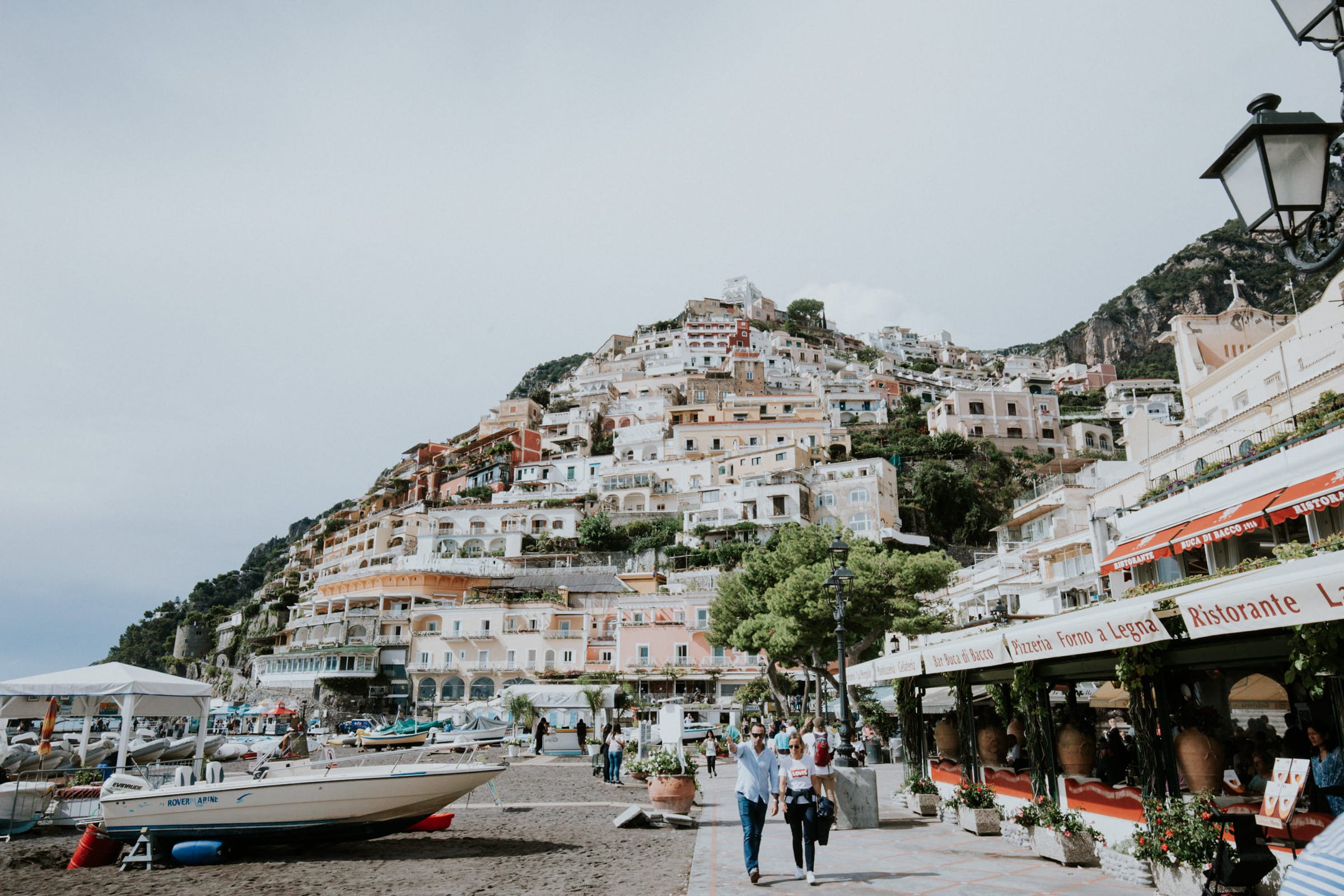
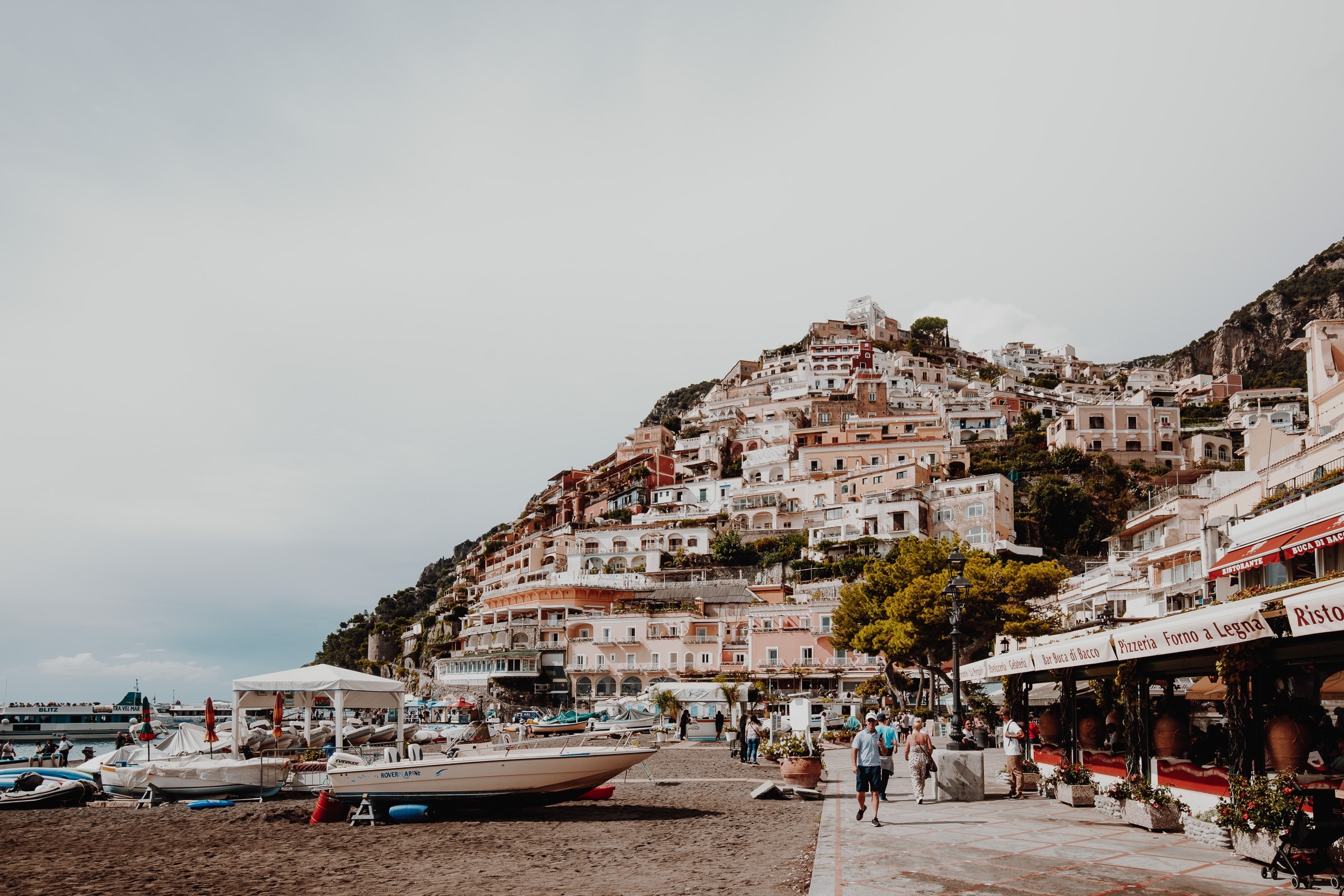
Positano is probably the most beautiful place on the Amalfi Coast for many people! The pastel-colored houses that seem to pile up on the slopes around the bay of Positano are world famous.
The most important locations in Positano
Around the church of Santa Maria Assunta with its colorful dome of majolica tiles, life flourishes in small alleys! On the promenade you can enjoy the postcard-perfect panorama with a drink.
Where to stay in Positano
In Positano, you’ll find some of the most expensive hotels on the Amalfi Coast, such as Le Sirenuse*. Staying in Positano is generally very expensive, but in hotels like these even more. However, you will then be rewarded with unforgettable views!
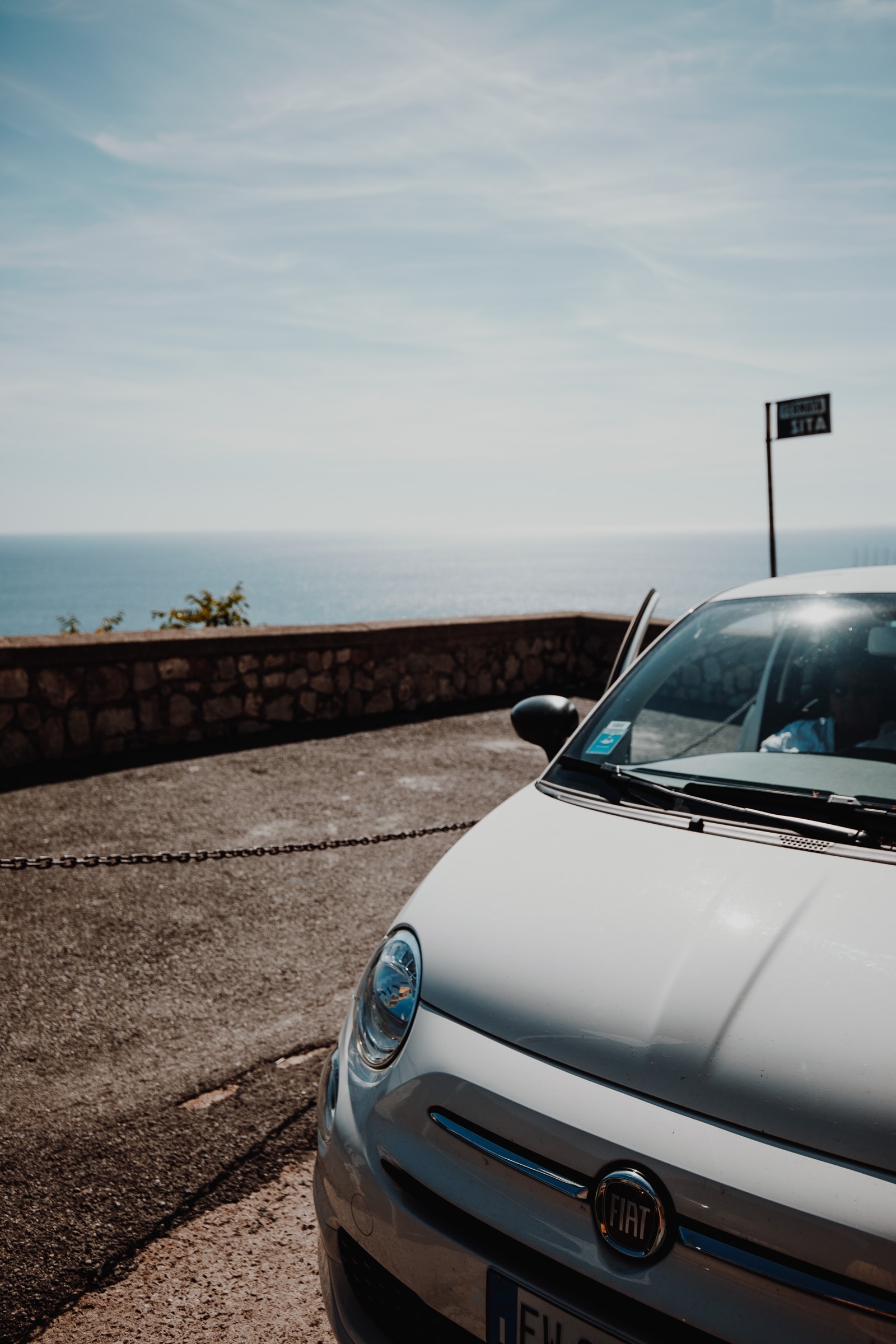
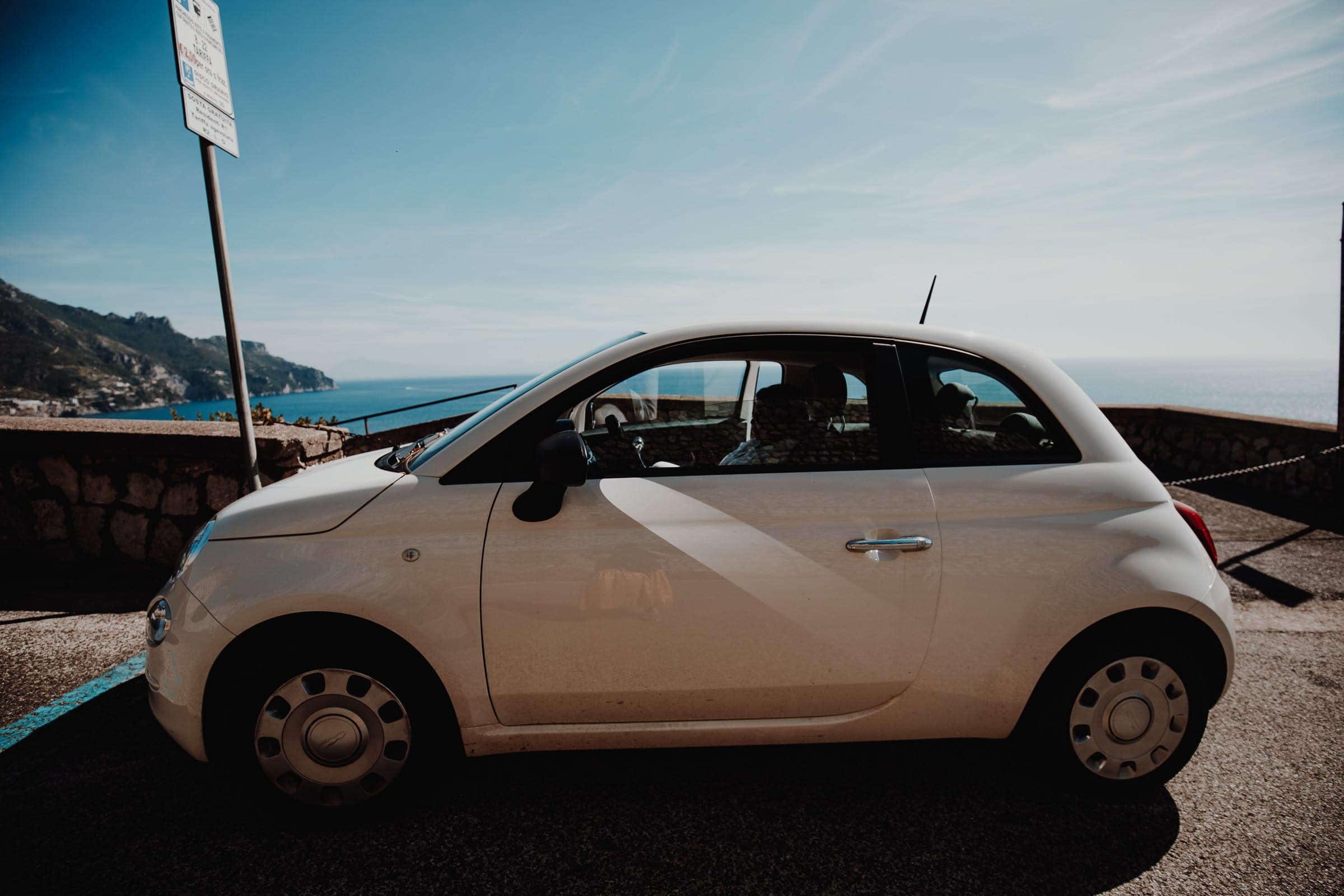
If busloads of tourists didn’t arrive in Ravello during the season, it would probably be a very remote, dreamy mountain village. However, even the journey up here can sometimes be exciting, as the road up here is sometimes even more winding and narrower than the Amalfitana on the coast – and if you then find yourself in our little Cinquecento between the coaches like we did… oops!
The most important sights in Ravello
Nevertheless, you should definitely pay a visit to Ravello. The view from Villa Rufolo with its gorgeous gardens is just too beautiful!
In the old town of Ravello around the Piazza Duomo you will also find many small studios and stores with pretty handicrafts, which also make great photo opportunities.
By the way, Ravello is also a popular wedding location! If you want to enjoy some romantic flair yourself, I recommend an overnight stay at Villa Cimbrone*.
If you visit this cute little town today, I guarantee you won’t believe what a big deal it used to be in the past!
In the early Middle Ages, Amalfi was an important center of maritime trade. Today, especially the impressive cathedral from the 10th century (Duomo di Sant’Andrea) bears witness to the splendor of days gone by.
The Cathedral of Amalfi
Where to eat in Amalfi
My recommendation: Take a seat at the Piazza Duomo outside Pasticceria Andrea Pansa and taste delicious babá soaked in rum.
Babà napolitano with rum: At Pasticceria Andrea Pansa
Shopping tip for Amalfi
You should also visit Antichi Sapori d’Amalfi in the old town. There you can get the famous lemon liqueur Limoncello and its creamy version Crema di Limoncello from in-house production!
Lemons: Typical of the Amalfi Coast
Maiori
Maiori is one of the more relaxed places on the Amalfi Coast. You won’t find many sights here, but you will find a small, nice pedestrian zone and a beach promenade where you can soak up the sun or a beach that is good for swimming.
On the promenade in Maiori you will find a few simple and good cafes
We found a really nice place to stay here with the Relais San Giacomo*. Parking was easy and our accommodation was perfectly located on the promenade. Good base if you are on the road a lot during the day anyway, want to stay far from the crowds, but still love have a beach and small restaurants nearby.
Strictly speaking, Salerno doesn’t belong to the Amalfi Coast. But I had such a great time in Salerno that I definitely recommend a side trip here. From here you can easily get to Naples by train or further into the south of Italy, so chances are good you might be passing by here anyway.
The Cathedral of Salerno
The most important sights in Salerno
Salerno hasn’t been discovered by the majority of tourists yet, but it has a really nice old town. And if you want to get a breath of sea air in the evening after sightseeing, you can enjoy the sunset with a long walk along the promenade in the middle of the city!
Strolling along the seafront in Salerno
An absolute must-see in Salerno is the cathedral. It’s over 1000 years old! Even if you’re not much fan of churches, you’ll be impressed. Moreover, the cathedral is located in the middle of the old town, which is really worth seeing with its rough charm.
Rustic charm: Salerno’s authentic old town
My favorite tip for Salerno is the Giardino della Minerva. Salerno, with its first university, is considered the cradle of traditional medicine! The gardens are a bit secluded. Here you will find a garden complex above the rooftops of Salerno, where medicinal herbs and plants were already cultivated in the Middle Ages.
Best view of Salerno is from the Giardino della Minerva
How to get there: The best way to get to the Amalfi Coast
The best way to arrive by plane is to land in Naples. The airport in Naples is served by many major airlines such as Lufthansa*.
From there there are several ways to get to the Amalfi Coast:
By public transport
You can take the Circumvesuviana regional train from Naples to Sorrento. From there you can travel the entire Amalfi Coast with the SITA bus. Attention: In summer it gets very crowded!
Finding the official timetables online can be difficult. Here’s a link to save you lots of time looking for it:
SITA Bus timetables (Italian only, it is best to select “Campania” as the region)
Many operators offer day tours to the Amalfi Coast from Naples. Of course, if you don’t have time, that’s a good option. However, a single day is really very, very little to explore the full beauty of the Amalfi Coast.
If you don’t want to drive yourself, don’t feel like a day trip and public transportation is too complicated for you, you can organize a private shuttle from Naples to many places at the Amalfi Coast. This is super convenient, because you are still flexible and don’t need to worry driving along the adventurous roads.
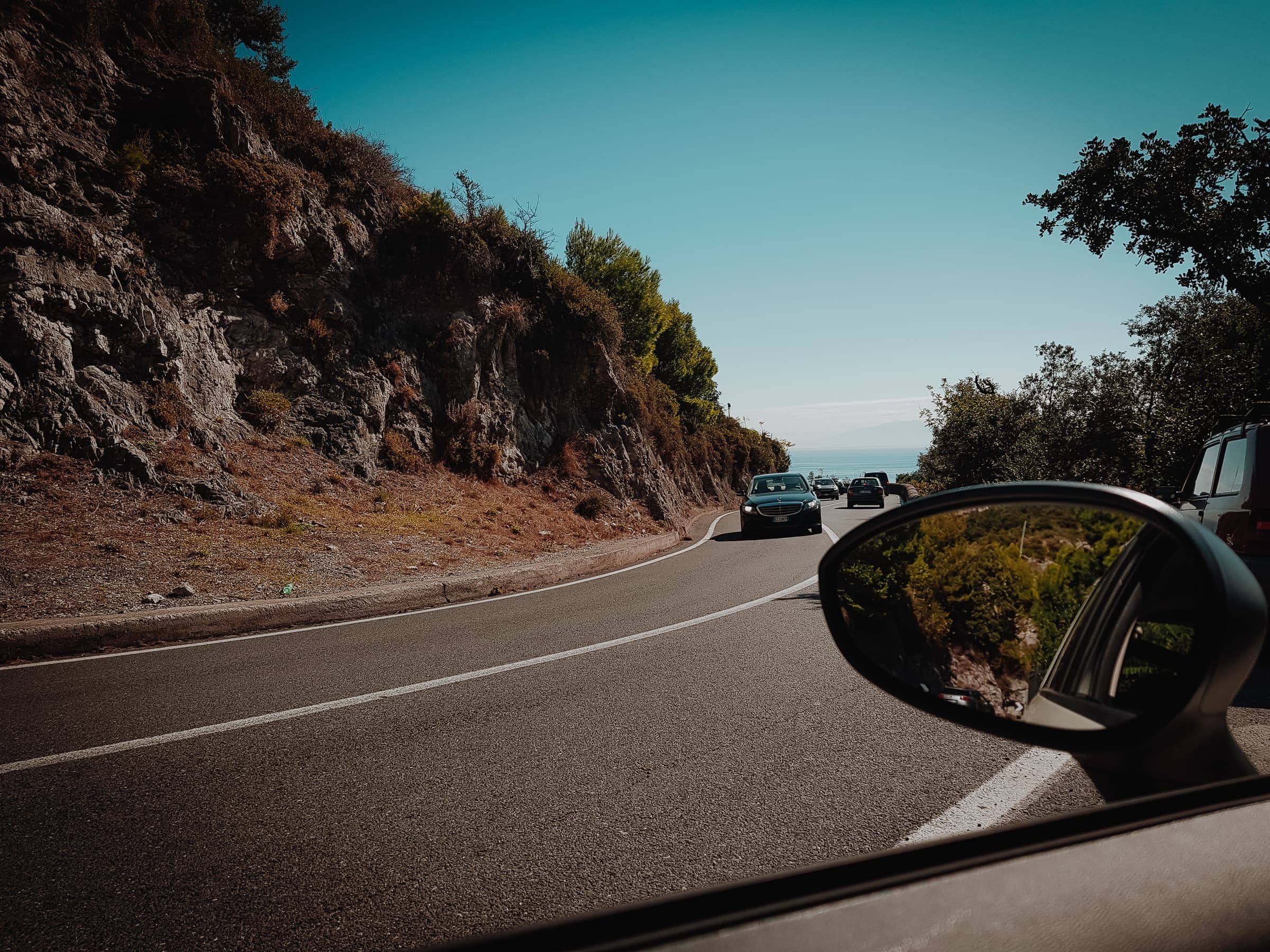
For me by far the most beautiful way to travel the Amalfi Coast! Indeed, the coastal road along the Amalfi Coast is one of the most spectacular roads in the world.
Perfect car for a drive along the Amalfi Coast
With its many tight curves along vertiginous cliffs, however, a road trip there is not for everyone. The driving is exhausting, parking spaces are scarce everywhere – but still: I would do it again anytime. The views are simply breathtaking, and the flexibility of having your own car is totally worth it.
The busiest months on the Amalfi Coast are from about April to October. In July and August it gets very crowded everywhere, the temperatures are high; in places like Ravello up in the mountains it is a bit cooler. Beaches do exist on the Amalfi Coast, for example in Positano or Maiori, but personally, I would not classify them as “dream beaches”. I therefore recommend you rather somewhat cooler months, e.g. April/May (except Easter) or September/October! The weather is then pleasantly warm, there are not quite so many tourists on the road and hotels are more affordable.
General tips for planning
The Amalfi Coast is not that long, but there are many beautiful places to discover. Due to the adventurous winding coastal road, you don’t get from one place to another quite as fast as you might think. Therefore, plan enough time! I found it very convenient to always stay 1-2 nights in one place and then move on. This way you have enough time to explore the most beautiful sights and simply work your way from place to place.
Accommodation on the Amalfi Coast
Tip: Book early, because the cheap & good accommodations are always booked up quickly! Spontaneous booking can get very pricey at the Amalfi Coast!
Are you traveling by car? If you want to stay overnight in and around Positano, for example, be sure to check out the parking options. Some accommodations offer parking and and that is really worth it with the often difficult parking situation.
More articles about the Amalfi Coast & surroundings:
If you’ve ever taken the Brenner freeway on vacation, then you’ve at least passed it: The Eisack Valley (Italian: Valle d’Isarco) is located south of the Brenner Pass and is named after the river Eisack. Here you can relax in nature, explore hiking trails, enjoy the alpine panorama or enjoy the South Tyrolean hospitality! I spent a few days there and now I’ll show you my favourite tips for the Valle d’Isarco in South Tyrol!
Apple blossom in the Eisack Valley
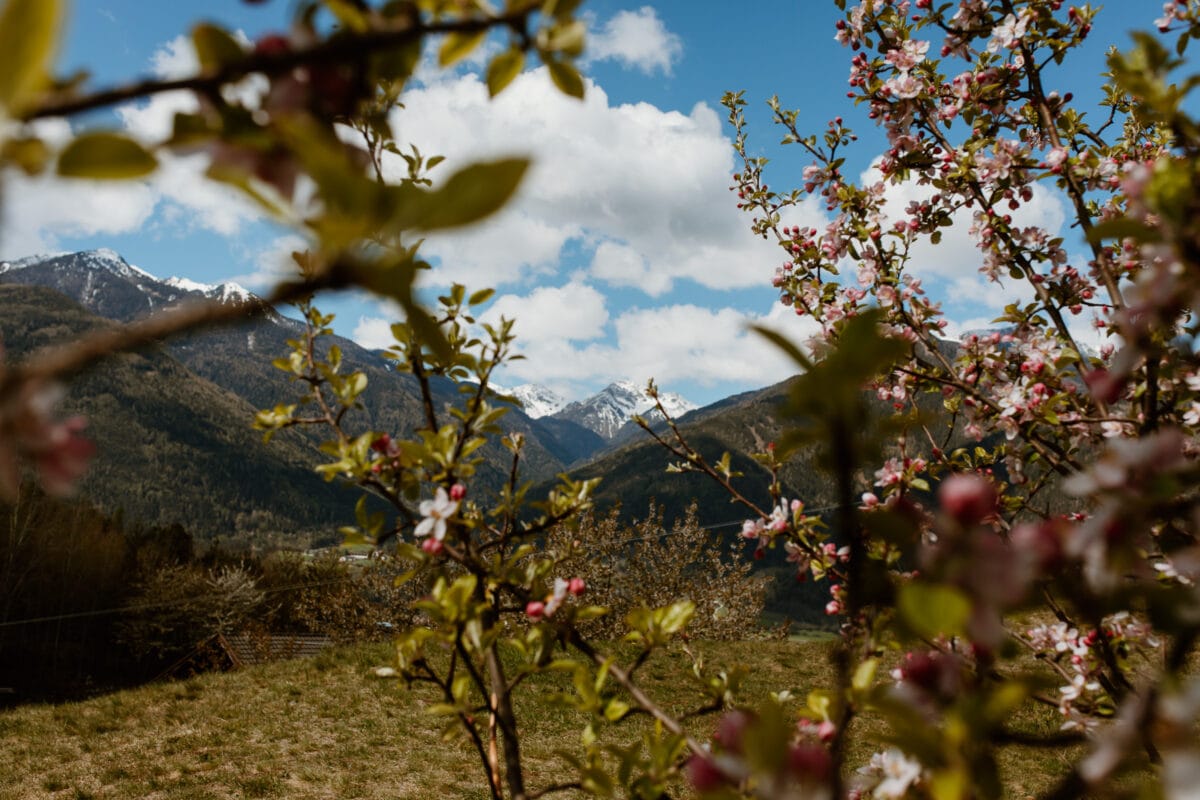
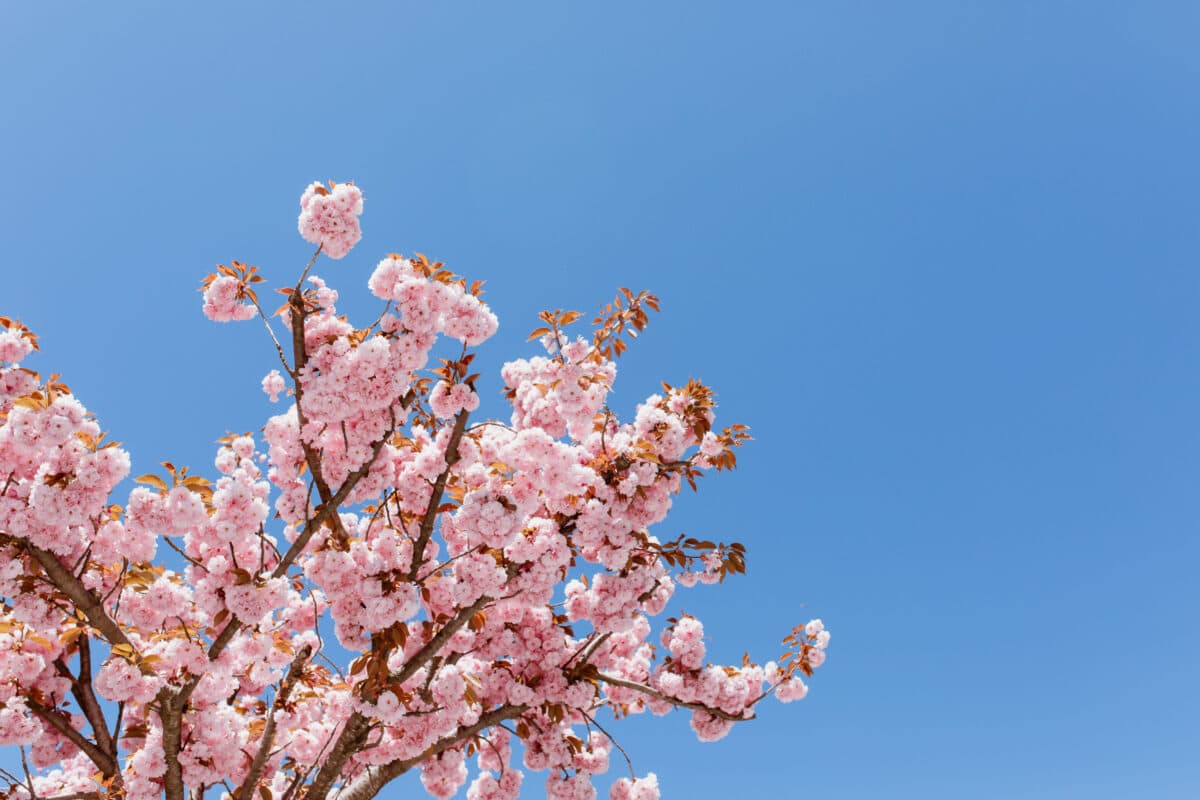
I was really lucky that I arrived in the Eisack Valley exactly at the time of the apple blossom. Apple blossom lasts only a few weeks in the spring. Then all the apple meadows are full of pink blossoming apple trees! In fact, the majority of all Italian apples comes from South Tyrol. Especially in the Valle Isarco apple growing has a long tradition.
From Natz-Schabs you can walk along the apple trail and admire this spectacular event in spring.
The Raier Moos is a protected biotope and home to many animals and rare plants. A hiking trail leads around the Raier Moos, which provides a lot of information about the special flora and fauna.
By the way, from Natz you can take a short hike to Neustift. A short break at the Pacherhof, however, is recommended! The Pacherhof is not only a hotel and restaurant, but also a winery. The farm itself has existed since 1142 and has always been family owned. On the sun-drenched slopes of the Pacherhof, grapes are cultivated and then being processed into the most tasty award-winning white wines.
The modern wine cellars, which are also an interesting architectural contrast to the historic building, can be visited during a tasting.
In general, the combination of tradition and modernity is impressive!
You can also stay overnight at the Pacherhof and then continue sipping white wines all day long by the pool with a view of the mountains!
Nearby you will find another popular sight in the Eisack Valley. The Abbazia di Novacella is the largest monastery in Tyrol and is open to the public in large parts. The monastery church with its impressive frescoes is particularly pretty.
And if you need a break from all that hiking: In the beer garden of the Stiftkeller you can relax and taste themonastery’s own products. Like the wines, for example, because wine is also pressed here in the monastery!
Brixen
The largest town in the Eisack Valley, Bressanone, has one of the most beautiful old town centers in the region. Worth seeing here are the Bressanone Cathedral, the Bressanone Cloister and the Hofburg.
For great tips on Bressanone, check out Lea’s post on her blog Escape Town (german):
I stayed at Seehof Nature Retreat, a wellness hotel with a really outstanding spa area. If you are in the region for a longer time and in need for a bit of relaxation, I can only recommend a few days here: The perfect combination of wellness and nature!
Simply unwind, escape the stress of everyday life and recharge your batteries: who wouldn’t want that in stressful times? In any case, at Seehof Nature Retreat in South Tyrol, I enjoyed the ultimate form of total relaxation and pure nature.
Around the Seehof Nature Retreat: Valle Isarco in South Tyrol
South Tyrol: Apples, fresh air and many, many mountains
I arrive in South Tyrol just in time for the apple blossom. Did you know that most of the Italian apples on our supermarket shelves come from South Tyrol? Apple growing has a long tradition here. Originally intended for their own supply only, South Tyrolean farmers started to export their apples right across Europe from the end of the 19th century. Apples were seen as an absolute luxury good at that time.
Apple blossom in the Eisack Valley
Today, many areas at my destination, the Valle Isarco, are full of bright pink blossoming apple trees in spring. And as luck would have it, the nearest apple grower is just a stone’s throw from the Seehof Nature Retreat in Natz near Brixen! So beautiful!
Hiking the apple trail: South Tyrol is famous for apple growing
Cocooning at the Seehof Nature Retreat
After a comfortable arrival, I move into a junior suite. The bathroom has an open design: Usually not my cup of tea, but here it’s perfectly integrated and just fits the cocooning style of the rest of the room. The Junior Suite has a balcony and a window front with two double doors across the entire width. Like in a movie, I get up in the morning and enjoy the fine rays of sunlight, open both double doors and admire the unobstructed view over the mountains and the hotel’s own lake.
In line with the wellness concept, there are small details in the room that make the stay even more enjoyable. For example, if you’re a stressed-out city dweller who forgot your spa gear in the rush to get going (hellooo me!), you’ll find everything you need in the room: A fluffy bathrobe, a pair of flip-flops and a sauna towel are waiting for you in a large bath bag. Another nice gimmick: a backpack is provided in the spacious closet for hiking trips.
Celtic druids know how to relax
Relaxing at the touch of a button might be difficult to some people. At Seehof, everyone relaxes in their own pace and way, and although there so much offered in terms of quality and service, the atmosphere is unpretentious and welcoming. For the more active, there is a small sports and hiking program, sometimes with unusual offers such as Wyda, the yoga of the Celtic druids, which combines static poses with quite a bit of primal screaming and chanting. Sounds crazy, doesn’t it? It definitely is. At first you might feel like an ecstatic Icelandic soccer fan on the way to the next European soccer championship, but in the end you’ll feel strangely liberated after all the collective screaming in the group. Worth to try!
Hiking trails around Natz & the Valle Isarco
If you want to enjoy even more nature, all you have to do at Seehof Nature Retreat is step outside the door. The hiking trails in the Eisack Valley are well signposted. If you prefer to hike in company and with someone who knows the area, simply join a group. The hotel has its own hiking guides who offer tours to sights in the area such as the Neustift monastery or walks through the idyllic old town of Brixen.
A retreat would not be a retreat without a classic wellness program. If the nature around it wasn’t so beautiful, I could have easily spent a whole day in the spa area of the Seehof Nature Retreat. There you will find everything your heart desires! In addition to a steam bath, the Seehof has no less than two saunas, one of which is a mild bio-sauna and the other a Finnish sauna with a spectacular view of the mountains and the hotel’s own lake. If you can’t stand hot sauna temperatures for long, you really have to watch out here: Staring at the mountain panorama through the floor-to-ceiling windows, you might forget the time!
In between sauna sessions, you can swim a few laps in the heated infinity pool or even in the lake, and then get busy deciding where you’d like to chill out most. Whether on the green roof in the sun, on one of the fluffy lounge chairs on the lakeside or indoors in the oriental-inspired séparée with relaxing trance sounds – you can indulge in sweet idleness everywhere on the premises without squatting too much on each other. Because space is also a luxury, of which enough has been planned at the Seehof.
The wellness area is located in the annex, but due to its special architecture it almost seems to merge with the green surroundings. You don’t even notice from the outside how much space there is to relax in the Seehof! In the basement of the hotel are the premises for massages and treatments, from there you’ll get to the sauna and pool area.
Good food good mood
Foodies are spoiled by the way with 4 meals a day with South Tyrolean delicacies. Breakfast, a light lunch, a snack or coffee and cake in the afternoon and a brilliant 5-course menu in the evening are served. For the main course, there are always 3 dishes to choose from (fish, meat or vegetarian) and I would have loved to try them all because it tasted so fantastic.
The evening can be concluded with a good drink in the cozy bar with a surprisingly well-stocked library.
The bar and restaurant, along with the wellness area, are the heart of the hotel: from morning to night, you can be pampered here on the sun terrace with drinks and small snacks; the service is always unobtrusive, but in the best of moods, and somehow always there if you have a wish. “Prego, signorina,” and in front of me I’ll find the perfectly chilled Coke in a crystal tumbler with ice and lemon, along with a small bowl of small aperitivi, potato chips and homemade savory cookies, just like that, and I enjoy the sun and the view of the postcard-perfect landscape spread out before me.
For whom is the Seehof Nature Retreat suited?
The Seehof Nature Retreat is an adults only hotel. Guests must therefore be at least 14 years old. Whether it’s a romantic weekend for two, traveling alone, or a girls’ getaway where everyone can relax and chat, the Seehof Nature Retreat appeals to a wide range of guests. Except for the restriction for children, all age groups were represented during my stay, from young to old.
Nature lovers and relaxation seekers with a penchant for aesthetics and a sense for small and fine details will feel especially at home here.
Seehof Nature Retreat Flötscher 2 39040 Natz near Brixen South Tyrol Italy
Although Seehof Nature Retreat is so nestled in nature, it can be easily reached. Even if you’re traveling from further away, like I did from Berlin, there are very good travel options.
The Seehof Nature Retreat is located in Natz-Schabs in the Eisack Valley in South Tyrol, between Innsbruck and Bolzano.
By car
From Munich: approx. 3 hours drive (via the Brenner Pass) From Innsbruck: approx. 1 1/2 hours drive
By plane
The nearest airports are Bolzano and Innsbruck, but there are only a few connections. From Berlin, for example, there is a direct connection a few times a week with Skyalps, a small South Tyrolean airline based in Bolzano.
The nearest airports are Verona and Munich, but you will need to hire a car or travel by train from both.
My personal tip! I traveled from Berlin by train. It takes time (about 9 hours), but with only one perfectly coordinated change in Munich, it was the most stress-free option for me. The Seehof Nature Retreat offers a free hotel shuttle to the nearest train station in Franzensfeste (just call, travel time 10 minutes). Franzensfeste is located exactly on the train route Munich-Innsbruck-Venice and is therefore perfectly accessible by train.
If you book in time, you can make a real bargain here with a journey by train and save stressful car trips!
Although Ravello is not located directly on the Amalfitana, it is still one of the most worthwhile places to visit on the Amalfi Coast. Half a day in the picturesque village in the mountains with crystal-clear mountain air and a fresh sea breeze – and the batteries are recharged! I’ll show you the main sights in Ravello and give you a few tips for a great day out!
Ravello is a popular destination on the Amalfi Coast
From the Amalfitana to the mountain village of Ravello
If you’re traveling along the Amalfi Coast by car, you’re already used to a lot. After winding our way along the dizzying coastal road for several kilometers, it couldn’t get any worse. But the road up to Ravello is all the more adventurous. Narrow, winding and many more large coaches on it, which also have the cozy mountain village as their destination. Somehow we made it after all, and up in Ravello, peace, relaxation and lots of music awaited us!
The Duomo of Ravello and the Piazza Duomo in front of it are the heart of this romantic town. The neighboring restaurants seemed to me to be tourist traps. However, the location is too beautiful not to treat yourself to an Aperol Spritz or a cappuccino and enjoy the fantastic mountain panorama all around.
Duomo in RavelloRavello has always attracted artists and art lovers
From Piazza Duomo, you can also start a short walk through the clearly laid out town center. Here you’ll find studios, galleries and small stores selling arts and crafts: I’m particularly taken with the colorful plates!
Villa Rufolo is one of the most beautiful sights in Ravello, and you really shouldn’t miss it! The seat of the rich noble family of the same name was built in the 13th century and has one of the most beautiful views of the Amalfi Coast. The garden is beautifully planted and such a feast for the eyes that it is a popular location for wedding shoots.
The most beautiful view in Ravello: Villa Rufolo
Torre Maggiore
You have an even better view from the Torre Maggiore, but there are glass panes here for security reasons – so it’s better to take photos of the view from the garden side. In the tower itself, however, there is an interesting exhibition on the history of Ravello and Villa Rufolo.
Wagner & the Villa Rufolo
You will soon notice the classical music playing softly in the gardens of Villa Rufolo. Even if you’re not a fan of classical music, it’s a good fit here. In a wondrous way, the music combines with the magnificent view, the view of the deep blue Mediterranean and the clear mountain air. For me, Ravello was one of the most relaxed places on the Amalfi Coast.
This magical connection is nothing new: Ravello has always attracted not only old Italian aristocratic families, but also artists! The composer Richard Wagner is said to have been inspired by the gardens of Villa Rufolo for the set design of the Klingsor Gardens in Parsifal.
A music festival is also dedicated to him, which takes place every year at Villa Rufolo: The Ravello Festival lasts for two months every summer and offers many musical concerts and events throughout the town.
Also worth seeing: the gardens of Villa Cimbrone. Just like Villa Rufolo, there is an entrance fee, and you may prefer to choose just one of the two gardens.
But if you want to immerse yourself more deeply in the atmosphere of Ravello and soak up the elegance of this special village, you can even spend the night there in style:
It’s more for architecture fans, but I was fascinated by my family connection to Brasília, the life’s work of Oscar Niemeyer. Clear lines, a modern building and yet the auditorium built for the numerous events in 2010 nestles perfectly into the blue backdrop of the Mediterranean. Great photo spot.
Modern architecture in the heart of Ravello: the Oscar Niemeyer Auditorium
(Oscar Niemeyer was a visionary all his life, his style and his view of things were really very impressive! If you are more interested, I recommend this documentation*).
Ravello & the Amalfi Coast
The Amalfi Coast is full of great places and sights. It can be difficult to make a decision. But I would really recommend Ravello to you! It’s very touristy there (which is unavoidable in this region), but it’s a nice contrast to the other popular spots! A day trip is enough, but if you like the atmosphere here, you can also consider making a stopover here if you are traveling along the coast for several days. It’s always relaxing in Ravello!
Positano is Instagram’s favorite. Not that the rest of the Amalfi Coast, with places like Amalfi and Ravello, is just as worth seeing: Positano is in a different league. There aren’t really many sights in Positano. The special atmosphere of the most famous town on the Amalfi Coast is enough of an attraction in itself. Is it really worth staying there? And what if you just want to have a good time in Positano instead of chasing after the next hotspots? See for yourself.
Positano is the small Italian coastal village with the pretty little houses that frame a bay on steep slopes. Positano is probably the most famous town on the Amalfi Coast and the highlight of any trip through the region. The journey is adventurous: you drive towards Positano on winding, narrow roads. The town center itself and the slope down to the bay are best reached on foot. And Positano is definitely one of the places in the world that has become even more popular thanks to Instagram.
However, I thought Positano looked nice in pictures, but it wasn’t the place that was at the top of my wish list for our road trip along the Amalfi Coast. The Instagram hype was too much for me. But since we’ve been there before, I’ve researched a few nice Instagram hotspots in Positano:
#1 The beach of Positano & Fornillo Beach
Positano has two beaches, both of which are rather disappointing for real beach lovers. The beaches are relatively small. Sun loungers are expensive and the sand is dark brown instead of powdery white. But the real attraction is the scenery around it: the steep slopes with the cute houses frame the beaches. Positano Beach is the beach directly below the town center, Fornillo Beach is a little away from the center and is less crowded.
In the Blu Bar you can enjoy the beach life in the first row with a cocktail, but the same applies here as everywhere else in Positano: don’t look at the prices!
#2 Santa Maria Assunta Church
The Santa Maria Assunta church is part of the panorama of Positano. The dome with its majolica tiles is one of the town’s most striking features. From the stairs down to the large forecourt, you even have a view of the sea.
#3 Viewpoint: Restaurant Il Capitano
From the restaurant Il Capitano you have a perfect view over the bay of Positano. But if you don’t necessarily want to eat here, the view from the path above is at least as beautiful.
StillMore dolce vita? You can also find lots of tips on Naples and the Amalfi Coast here ➜ To the Italy blog
#4 Lunch tip: Casa E Bottega
We discovered Casa E Bottega by chance, the perfect lunch spot in Positano and: Very instagrammable! At Casa E Bottega, special emphasis is placed on freshness and good quality. There are several options for vegans and vegetarians. The dishes are okay, the portions small, but definitely a good choice for Positano if you don’t fancy the usual tourist traps. And when I saw the dog of the house, I was a fan anyway. Incidentally, Casa E Bottega is the cheaper sister restaurant of Next 2 a little further up the street.
#5 The alleyways of Positano
A tip for choosing an outfit for Positano: sneakers are an advantage! Many steps and narrow alleyways lead down to the town center and the beach. High heels are out of place here. The most beautiful Insta-motifs appear in the romantic urban canyons.
Practical tips for Positano
Well, Positano is indeed very picturesque. However, I didn’t become a real fan. Even in the low season in October, day tourists and tour groups squeeze through the narrow streets. After a few days on the Amalfi Coast and places that were also unexpectedly quite crowded, I didn’t like seeing crowds any more. And the prices! Positano is an expensive place, a visit to a restaurant is a small investment, not to mention an overnight stay in a hotel.
Where to stay in Positano
It’s worth booking early, especially in the high season! Positano and the Amalfi Coast are then so overcrowded that the cheapest options are long since fully booked. If you are traveling by rental car, make sure you have good parking facilities at your accommodation. Otherwise it can be expensive and difficult to find a parking space in the narrow and winding streets. Parking spaces are rare!
Tip: Accommodation in Positano is scarce in summer! And don’t shy away from the high prices – it doesn’t get any cheaper, and whoever books first has a clear advantage.
You can get to Positano by SITA bus, the public transport on the Amalfi Coast, with some ferry companies that call at the small bay of Positano from several ports nearby or by car/rental car (which is my personal recommendation due to the beautiful route!).
If you are only going to the city for one day, I recommend going straight to one of the paid parking lots at the entrance to the city. The parking options don’t get any better, you have to walk a lot in Positano anyway (and climb a lot of stairs!) and you save yourself a lot of stress. Also, the main road is a one-way street, so you can’t just turn around and drive back to the parking lot.
Paid parking lots are often privately operated and cost 5 euros/hour during our visit. The vehicles are parked on site by the staff to make use of every last centimeter, so you have to hand in your car keys. I was suspicious at first, but everything went well. However, as always, I had taken out fully comprehensive insurance with no excess for the rental car, so I didn’t have to worry about parking damage.
***
You can find more articles about Naples and the Amalfi Coast here:
The Amalfitana, officially known as Strada Statale 163 Amalfitana (SS 163), runs along the Amalfi Coast. A road trip on one of Italy’s most exciting roads is surely on many people’s bucket lists. The Amalfitana winds its way from Sorrento past such famous towns as Positano, Minori, Amalfi, and Maiori. It winds constantly along the rugged coastline, always offering views of the sparkling blue Mediterranean Sea. The Amalfitana is only 50 kilometers long, but this short stretch packs a punch! With a few tips, however, a drive along the Amalfi Coast in your own car or a rental car will be an unforgettable experience!
How long does it take to drive along the Amalfi Coast?
You should take your time on the Amalfi Coast and plan to stay at least one night! You can also easily spend several days or an entire vacation here. The route is short, but there’s just so much to see. But be warned: Booking in advance is super important—otherwise, it’ll get really, really expensive during the high season!
Hardly a straight stretch: The Amalfitana winds its way laboriously along the Amalfi Coast in Italy for 50 kilometers.
Amalfitana: The Most Beautiful Road in Italy?
When people talk about beautiful driving routes in Italy, the Amalfitana is always mentioned. No wonder—it’s a true masterpiece of modern road engineering. The fact that it was built at all is a feat of engineering: here on the Amalfi Coast, the massive cliffs drop almost vertically into the sea, and the terrain is winding; in some places, tunnels had to be carved into the rock to build the Amalfitana.
Over fifty kilometers, there’s hardly a single straight stretch; you wind your way back and forth along the curves in your car, with cliffs on one side and the sea below. It’s quite challenging to drive. Or does anyone in our part of the world have experience with switchbacks?
Driving along the Amalfi Coast: Is it difficult?
I haven’t owned a car for at least ten years—you don’t really need one in Berlin anyway. I’ve never been an enthusiastic driver either. Still, I do drive from time to time, and I have no trouble quickly getting the hang of rental cars or other people’s cars. I’m not afraid of driving either, but I still felt a little queasy before the road trip along the Amalfi Coast. All those curves, the steep cliffs dropping into the sea, the chaotic Italian traffic —would it all go well?
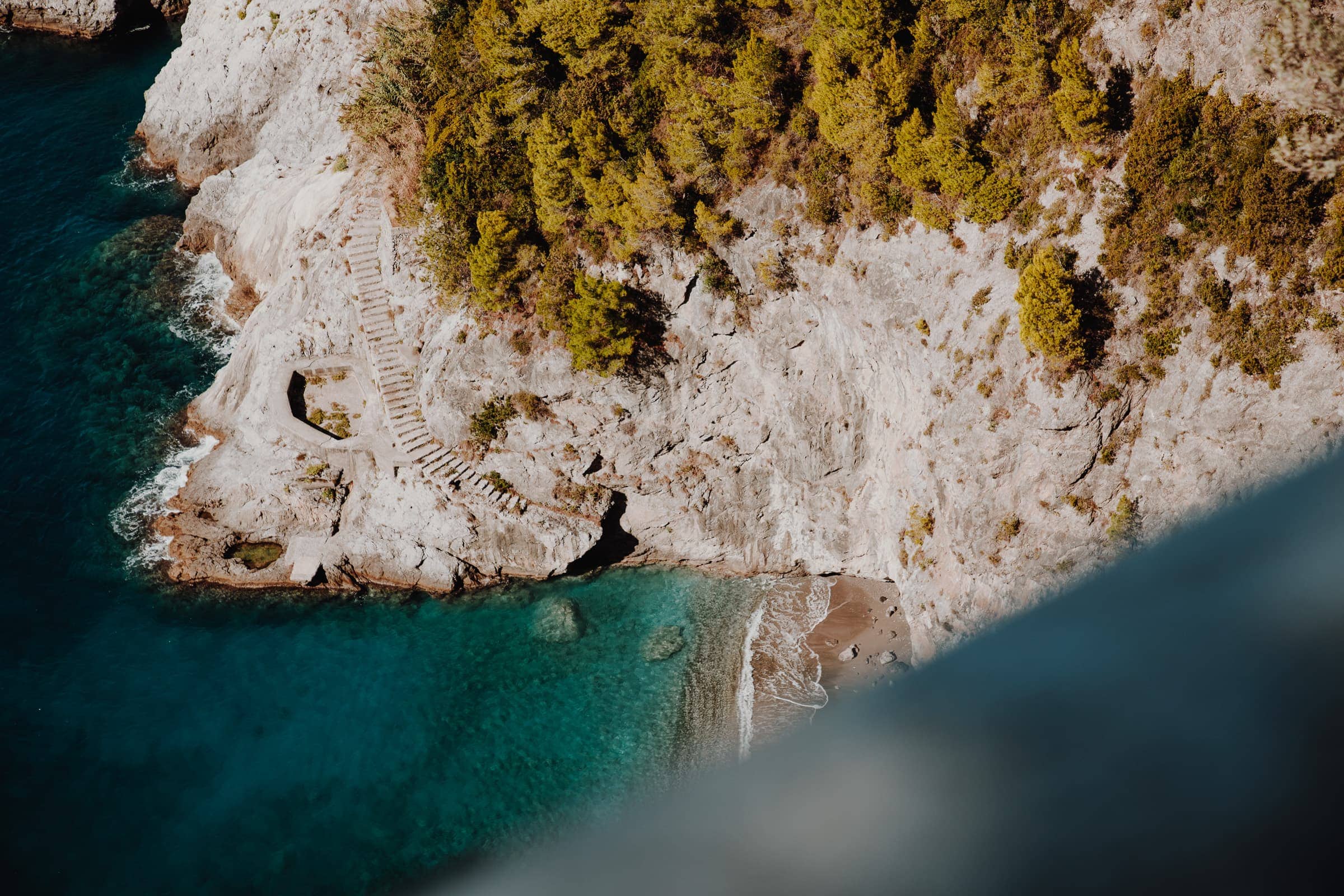
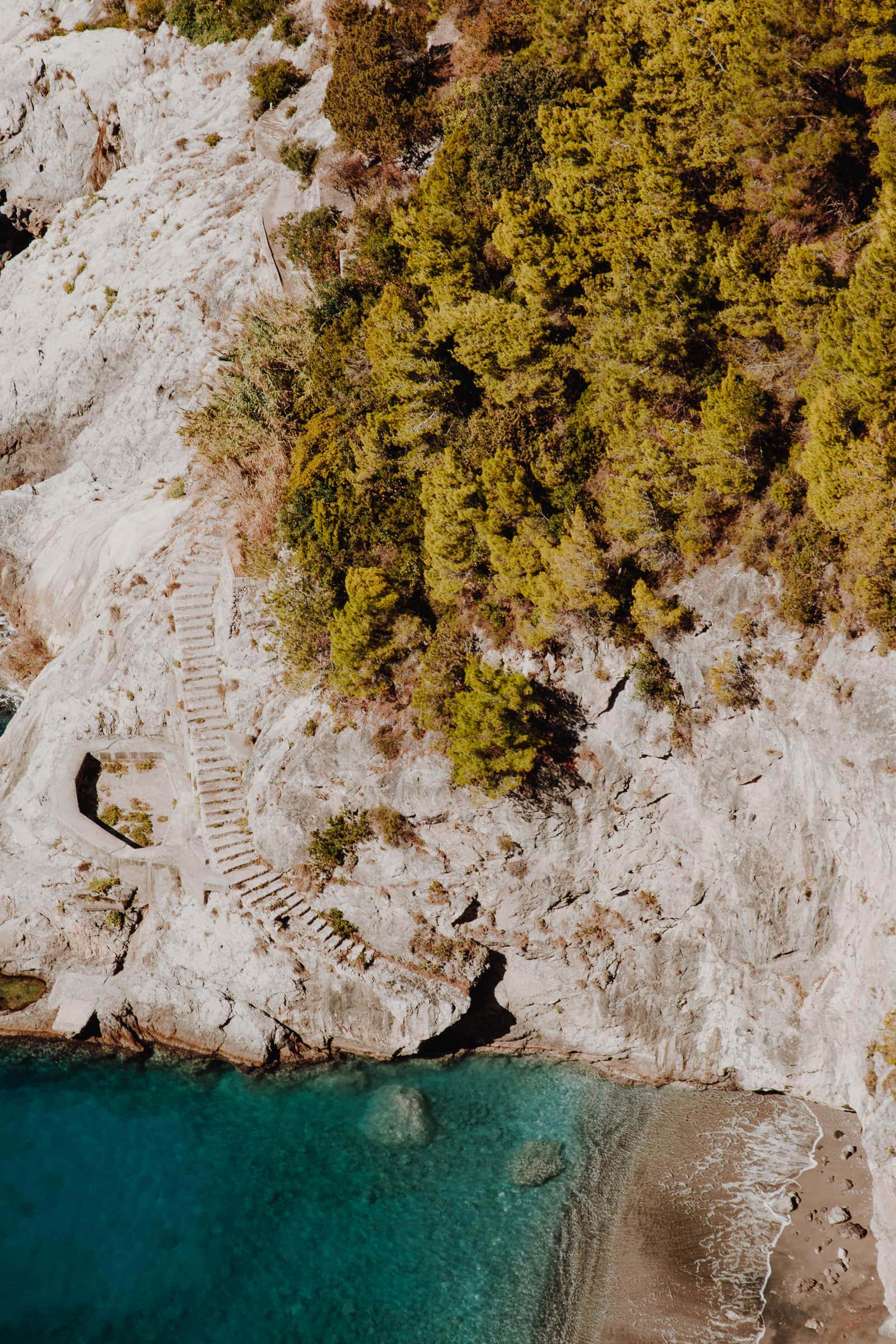
Spectacular views time and time again: I wonder how you get to this unusual beach?
It went okay. It took a little while to get used to it. Because, unexpectedly, I felt pretty sick after the first day and all those curves—even though I was the one driving! That said, the driving itself wasn’t nearly as bad as I’d expected, and I’ve picked up a few tips that will help you if you’re planning a trip to the Amalfi Coast by car or rental car.
Tips for a Road Trip Along the Amalfi Coast (in Your Own Car or a Rental Car)
Avoid the peak season! The Amalfi Coast is one of Italy’s most popular vacation destinations. It gets really crowded in the summer! That just adds to the stress and takes the fun out of driving.
Choosing the right direction: A drive along the Amalfi Coast is only truly enjoyable when heading from Sorrento toward Salento. That way, you always have the sea on your right and can enjoy the phenomenal views. Besides, I personally find it much more pleasant to drive close to the steep coastline rather than close to the rugged cliffs.
Take advantage of the parking bays: Along the Amalfitana, there are frequent small parking bays where you can pull over briefly to take photos. Pull over as soon as you see a spot. Spots aren’t always available—you might not find one at the next opportunity, and waiting isn’t an option due to the narrow road and oncoming traffic.
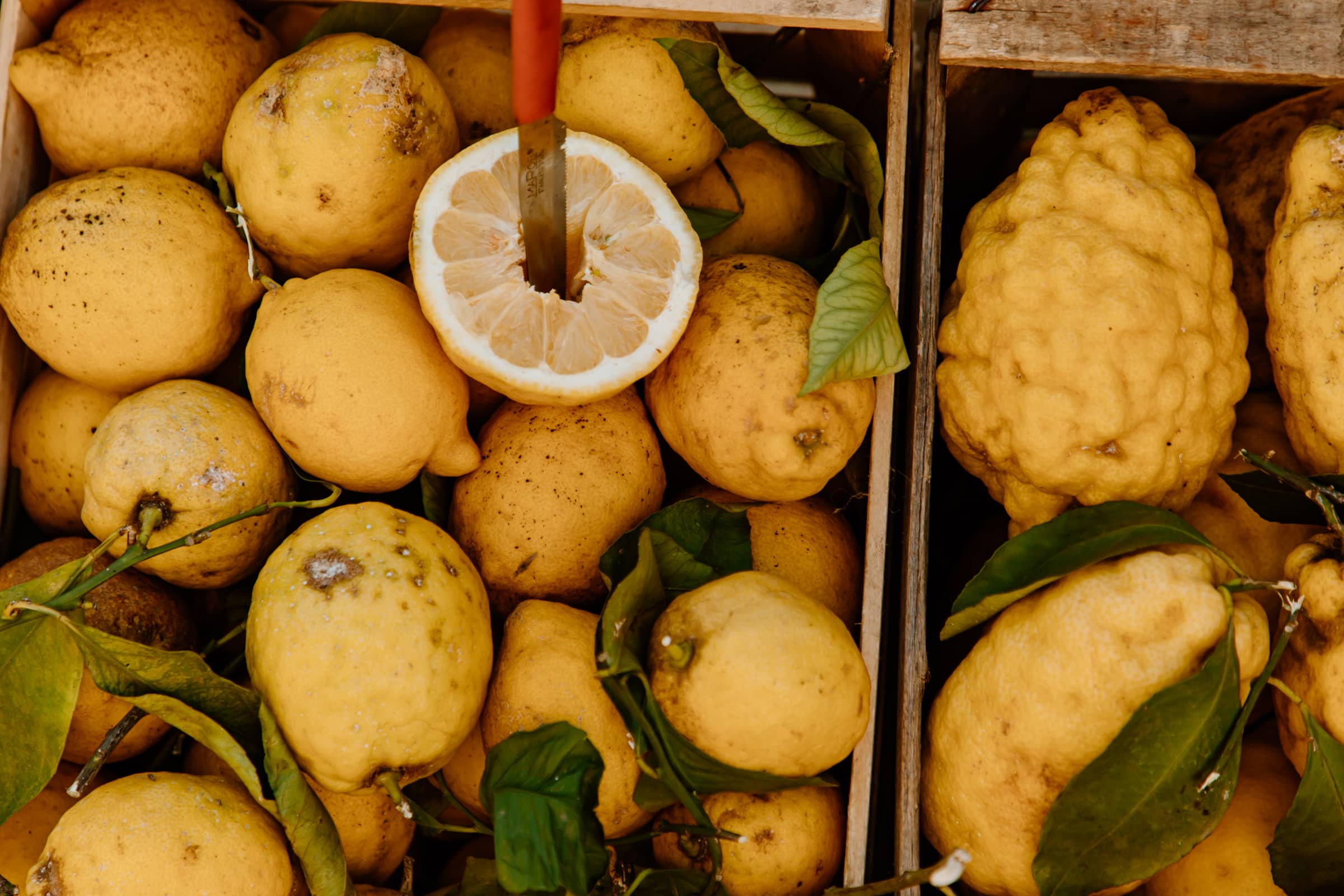
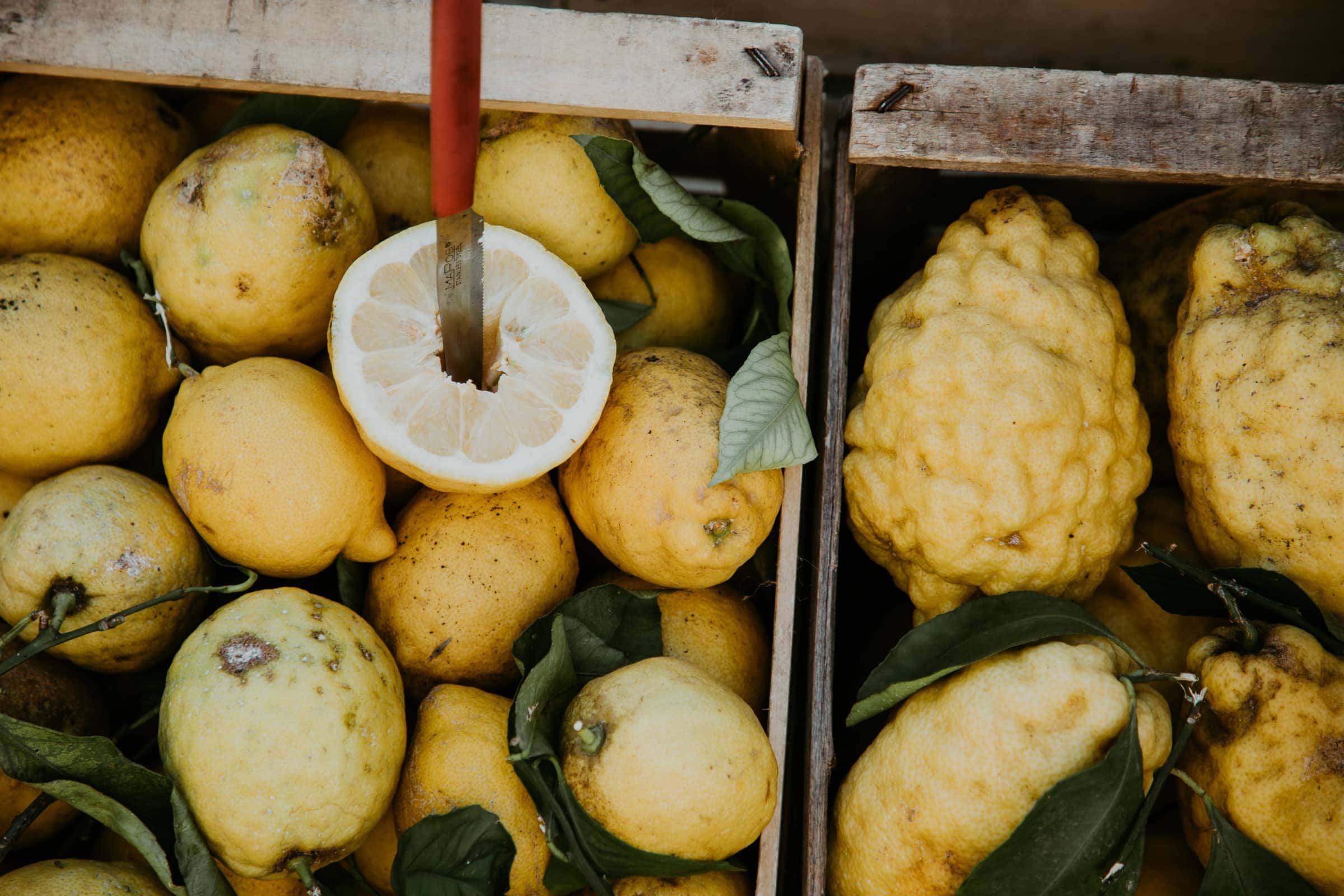
Drinking plenty of fluids and sucking on lemon candies: By the end of the first day, after a few kilometers on the Amalfitana, I actually felt nauseous and lightheaded, even though I’m not usually that sensitive. Those countless curves really take it out of you! Maybe the change in elevation played a part, too. How fortunate, though, that the Amalfi Coast is known for its particularly aromatic lemons and that the Amalfitana is dotted with small stalls. Along the roadside, you can buy lemons and all sorts of products, such as lemon candies. Just scratch the peel of a lemon and take a whiff, or suck on a lemon candy, and your queasy stomach will settle: an old home remedy for motion sickness! It really works! Drinking plenty of fluids helps with altitude changes.
It’s best to drive right behind a SITA bus! These are the public buses that run along the Amalfitana, and I found it very helpful to drive right behind them. For one thing, the bus drivers know the Amalfitana like the back of their hand and know just how tight the next curve is; for another, I could easily gauge our speed based on theirs: If the bus can make it, so can we in our rented Cinquecento.
Avoiding tailgaters: Parking spaces are also a great way to let tailgaters pass you! Don’t let it rattle you—driving on the Amalfi Coast already requires plenty of concentration.
Keep your distance— especially behind a bus! If another bus suddenly comes toward you on a curve or in a tunnel, things can get tight. On the Amalfitana, such problems are easily solved by the bus simply backing up a few—or even quite a few—meters; that’s when it really comes in handy not to be right behind it.
By rental car or by your own car?
Driving my own car wasn’t an option for me, since I don’t even own one. Plus, it’s quite a long way from Germany down to Campania and the Amalfi Coast. That’s more of an option if you have more time to spare. By the way, traveling along the Amalfi Coast in a motorhome, trailer, or larger vehicle can be difficult. RV drivers, for example, are only allowed to drive along the Amalfitana from midnight to 6:30 a.m., and even that doesn’t sound easy to me.
Looking for a parking spot in Positano? You can probably guess: It’s going to be quite an adventure.
Important Tips for Choosing a Rental Car
When renting a car, be sure to get comprehensive insurance with no deductible! It’s not that accidents happen all the time (we haven’t had any), but the narrow streets in places like Positano and the often difficult parking situation can quickly lead to scratches.
So it’s better to spend a little more now to avoid bigger bills later! We picked up the car in the city after our stay in Naples and drove off right away.
Tip: Don’t rent a car in Naples! Driving there can be very stressful, and you’ll get around the city much better using public transportation, a taxi, or Uber. Also, due to the risk of theft, many car rental companies require that you park the car only in guarded parking lots, which makes parking in the city center more complicated.
Stylish and practical: Driving a white Fiat Cinquecento along the Amalfi Coast.
Alternative Road Trips Without a Rental Car
If driving along the Amalfi Coast on your own feels a bit too daunting, why not join a guided tour? Especially if you don’t have much time—for example, during a short stay in Naples—this way you can still see some of the beautiful Amalfi Coast.
Advertising / *affiliate link
From Naples to Salerno: Even More Tips for the Amalfi Coast
Along the Amalfi Coast—and in the surrounding area as well—you’ll find plenty of great places to stop by or spend a short stay. Here’s some inspiration for a trip to the Amalfi Coast, with tips from Naples to Salerno:
Capri, in the Gulf of Naples, is the island of Capri fishermen, Capri pants, and home to the famous blue grotto – not to mention the inspiration for one of the most popular postwar hits in Germany(“When the red sun sinks into the sea at Capri…”). I tell you in this article, how to spend a day on Capri and which attractions are really worth it!
Where is Capri?
Capri is an island in the Gulf of Naples and can be reached by ferry in just 45 minutes from Naples. The island with the famous Blue Grotto has always been a magnet for the rich and intellectuals – but once you’ve been to Capri, you’ll soon know why: the Mediterranean flair is simply unique and reminiscent of places like Positano!
By ferry from Sorrento or Naples to Capri
Most ferry connections are from Naples, but smaller ports along the Amalfi Coast are also connected to Capri. The ferry ride from Sorrento takes just 25 minutes. Capri is therefore perfect for a day trip, for example if you are on a city trip to Naples or are visiting the most beautiful locations on the Amalfi Coast on a road trip.
Tickets can be easily purchased online. You should only be at the ticket counter one hour before departure to exchange the online ticket for a regular one (but it’s faster than buying on the spot). You also get the return ticket at the same time, so you just have to show up at the ferry in the evening.
Before boarding the ferry, a vendor sells tickets for a boat trip around Capri. Sounds like a rip-off at first, but the prices are the same everywhere. And you really shouldn’t miss out on a boat tour around the island to see the full beauty of the island.
The best thing is, if you buy a ticket for the round trip before going on the ferry: You can transfer directly to the smaller boat after arriving in Capri. The Capri tour costs €18. Or you can save yourself all the crowds and on-site sales and buy your ticket for the island tour with a stop at the Blue Grotto (weather permitting) right online!
If you want to visit the Blue Grotto, the boat stops just before the grotto. When the water level is right (depending on the tide and weather), you can change to a rowing boat and row into the Blue Grotto for an extra charge.
Turquoise water everywhere
Tips for the Blue Grotto in Capri
The Blue Grotto is a cave that owes its name to the particularly blue water. The cave can be reached only from the sea side and is very low. Only small rowboats can go in. The entrance fee or the ride in a rowing boat costs 14€. But whether you can really go in depends on the weather. Like on our visit, the sea level can be so high that the entrance is closed.
The dark spot in the rock on the left: The entrance to the Blue Grotto on Capri at high tide.
The Faraglioni of Capri
Regardless of the weather, during the tour you will definitely see one of the most famous sights of Capri. By boat you pass right between the Faraglioni, the striking rocks off the coast of Capri.
Impressive: The Faraglioni in front of Capri.
By the way, from the boat you can also see the Via Krupp, a road with adventurous serpentines carved into the rock. Around 1900, the German industrialist Friedrich Alfred Krupp had this road built to get from his luxury hotel down to the sea more quickly.
From Marina Grande to Capri Town
The tour ends again in Marina Grande. Once you settle down in one of the cafés at the harbor, you can immediately familiarize yourself with the price structure on Capri. A Coke for five euros? On Capri, this is a quite normal price, everything is more expensive here.
The ride on the Funicolare saves you the arduous climb to Capri town.
To get to Capri Town, there are several options:
Cab
Public bus
Cable car
For the bus and the cable car there is a ticket office opposite the Bar Azzura, it is best to buy a cable car ticket and one or more bus tickets for the later trips.
Tip: Day trips to Capri
No time to plan everything yourself? With these organized tours you have everything included, transfer from your accommodation to the port, the trip to Capri and the island tour itself with optional visit to the blue grotto.
If Marina Grande is quite pretty but not very exciting, Capri town shows exactly the flair that made Capri so famous. Capri has become a favorite destination of stars and starlets especially in the 50’s and 60’s, many Hollywood movies were filmed here.
The alleys of Capri Town
The small, narrow streets in Capri town, the mild climate, nestled in the beautiful nature of the island: the atmosphere on Capri is really perfect, if it weren’t for the many other tourists who are also looking for exactly that.
The most beautiful thing is to simply stroll through the tiny alleys off the piazza and take in the Italian Dolce Vita vibes.
In Capri town you will find the Giardini di Augusto, from which you can descend to the sea via Via Krupp. (If you like it more relaxed, I would skip Via Krupp on a day trip).
Carthusia: The perfumes with the scent of Capri
Capri is also associated with the perfumes of Carthusia: classic fragrances with typical Mediterranean notes. Only high-quality fragrances are used and production is still entirely by hand. The perfumes can also be bought online – but on site you can of course try better and buy a typical Capri souvenir straight away.
Restaurant recommendation in Capri Town
Eating out in Capri Town is a bit of an adventure: there are a lot of tourist traps, and it’s expensive to boot. It’s worth taking a look at the less crowded little streets. That’s also how we found the E’ Divino. Tucked away and inconspicuous from the outside, this place serves delicious Italian cuisine in a beautiful setting. And affordable by local standards.
Anacapri: The quieter Capri
The crowds in Capri town can get to you. If you want to experience Capri in a more relaxed way, you should continue to Anacapri. From Capri town you can get to Anacapri by public bus, adventure included. Because the way the small, packed buses wind their way along the narrow streets is quite an experience!
The old town of Anacapri is quite small, just enjoy the Mediterranean atmosphere.
Anacapri: Capri from its quieter side.
Monte Solaro: The best view
Directly in Anacapri there is also the chairlift station of Monte Solaro, the highest mountain of the island. Monte Solaro can also be climbed on foot, from Anacapri the short hike takes about an hour. Or you can take the chairlift, which offers you the most beautiful panoramic view over Capri.
From the viewpoint of Monte Solaro you have another beautiful view of the Faraglioni.
The Faraglioni from Monte Solaro
Back we go again with the chairlift to Anacapri. From there you can take the bus directly back to Marina Grande, where the ferry to the mainland is waiting.
Looking for more inspiration for a trip to Campania or the Gulf of Naples?Here you can find all articles:
Not that you can’t find good pizzerias almost everywhere in Italy. But once in Naples, you should definitely stop by L’Antica Pizzeria Da Michele. Here you can get the best pizza in Naples, oh, even the best pizza in the world! At least that’s what pizza connoisseurs say. Da Michele is no longer an insider tip for the best pizza in Naples: celebrities such as Maradona, Bill Clinton and Julia Roberts have dined in this traditional pizzeria. The latter ate pizza here for the movie “Eat, Pray, Love”, and just like the island of Bali, which also appears in the film, the Da Michele pizzeria in Naples was given a new boost in popularity by the movie.
Neapolitan pizza is a little different from traditional pizza: the edges are still relatively crispy, but the dough is generally much softer. They don’t skimp on the tomato sauce either. This can make eating a little more adventurous. Especially if you want to eat your pizza in large pieces with your hands instead of piece by piece with a knife and fork.
Spoilt for choice: Pizza Margherita or Pizza Marinara
The menu at Pizzeria Da Michele in Naples is simple: there is none! Why should they, there are only two types of pizza! For almost a hundred years, only two traditional Neapolitan pizzas have been served here: Pizza Marinara and Pizza Margherita. The Marinara pizza contains no seafood, but tomato sauce, garlic, oregano and olive oil. The Margherita pizza consists of tomato sauce, mozzarella, a little fresh basil and olive oil. These two varieties are the most traditional, original pizzas in Naples. And Da Michele in particular doesn’t serve anything else.
The best Margherita pizza in the world?
And the taste: you have to try it! The tomato sauce is juicy and fruity, with the light mozzarella cheese and the soft dough in the middle… and everything together tastes so passionately sun-kissed! It’s fascinating how you can conjure up such a delicious pizza from so few ingredients.
At L’Antica Pizzeria Da Michele in Naples, you can watch the pizzaiolos baking pizzas.
Despite the hype, despite the sometimes long queues outside the door: the atmosphere is unpretentious, people shout loudly, chatter, bake pizza, knead dough and simply squeeze themselves into one of the small tables, or simply join others if necessary. The ambience is like the menu: Simple, but good! And affordable.
It is not possible to reserve a table in advance. If all the tables are occupied, you get a waiting number from one of the waiters at the entrance and simply wait outside in front of the restaurant. The numbers are then called out loudly.