Author: Tatiana

  • 10 Best Things to Do in Tel Aviv

    10 Best Things to Do in Tel Aviv

    In this ultimate article, I reveal my highlights in Tel Aviv: the best locations, tips and sights in Tel Aviv! And what you have to see in the party capital of Israel. Plus practical tips, because you’ll need them: Tel Aviv is an expensive place! Every budget tip is worth its weight in gold!

    Tip: Plan ahead and check the best hotel deals in Tel Aviv*

    Can I find the right words to describe the energy of Tel Aviv? Tel Aviv is bursting with life. No wonder Israel’s party stronghold is a popular travel destination. In addition to sightseeing, good food and a lively club scene, you can relax on the long beaches here, including the most beautiful sunshine.

    1. Beaches of Tel Aviv: Alma Beach to Gordon Beach

    The beaches in Tel Aviv blew me away: I didn’t expect such fine sandy beaches! Even in spring, the temperatures were perfect for swimming or at least sunbathing. And the beach life in Tel Aviv is unique. As if the whole life of Tel Avivis takes place on the city’s beaches. Beautiful people everywhere, active, sporty, cheerful – you’d think you were in Miami Beach. Each individual beach attracts its own audience, from families to LGBT to water sports enthusiasts.

    Gordon Beach

    At Gordon Beach there is even a 50-meter saltwater pool next to the beach, where you can swim a few lengths for a fee if the sea is too wild for you.
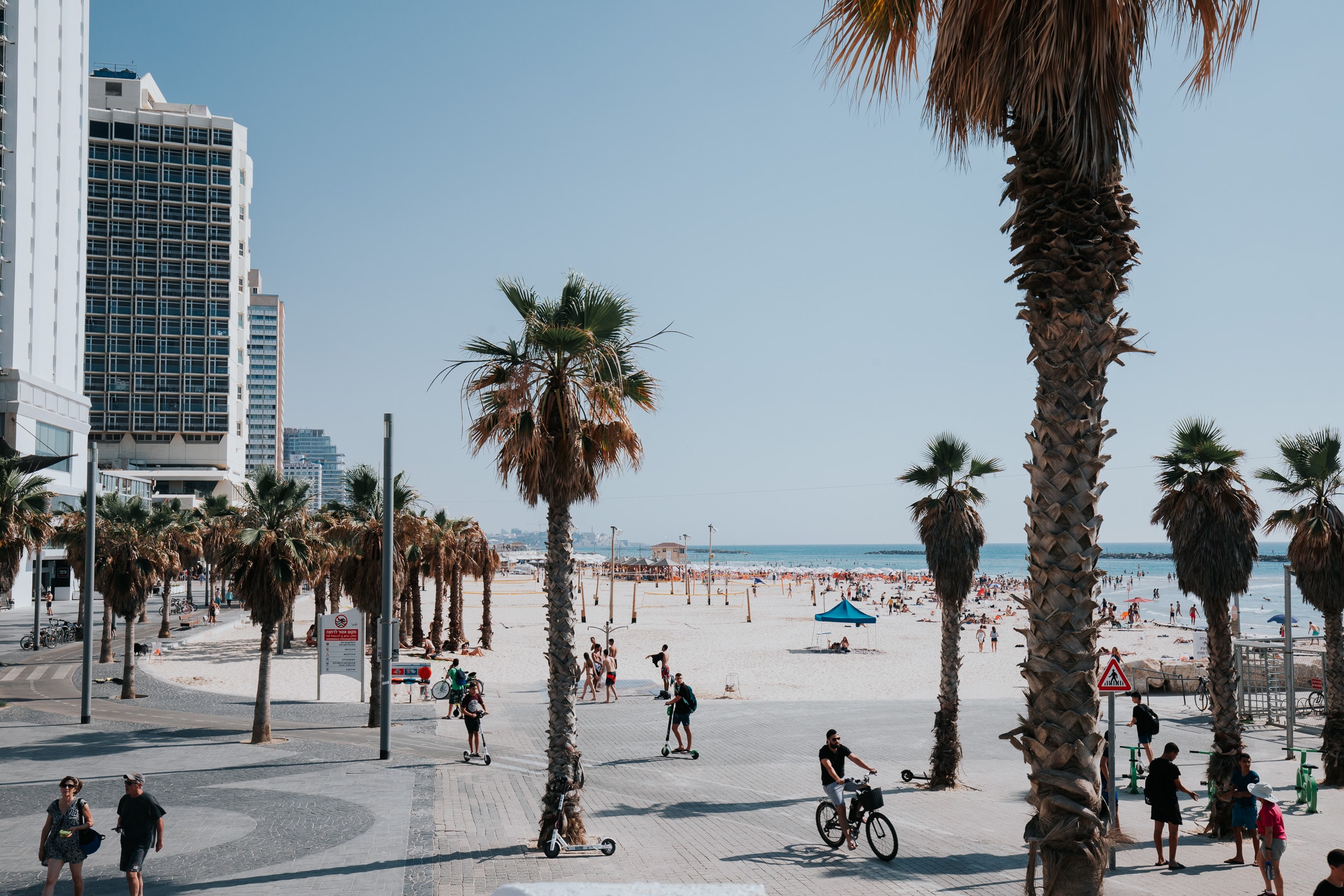
    Tel Aviv Sights Gordon Beach Promenade
    From Gordon Beach southwards: endless beach.

    Frishman Beach & Bograshov Beach

    The central beaches are Frishman Beach (the one with the brightly painted lifeguard bungalow) and Bograshov Beach: it’s busy here from morning until late at night.

    Tel Aviv Sights Frishman Beach Promenade
    Beautiful people, lots of sun: Frishman Beach in the center of Tel Aviv.
    Tel Aviv sights Frishman Beach lifeguard lifeguard
    Striking: The brightly painted lifeguard house is the landmark of Frishman Beach.
    Tel Aviv Beach Frishman Beach Volleyball at sunset
    Beach volleyball at sunset: the end of a day at the beach in Tel Aviv.

    There are always great beach bars on every beach where you can spend hours simply enjoying the beach life with a cocktail. Or you can come towards evening and watch the sun as it slowly sets into the sea.

    My tips for the best beach bar in Tel Aviv

    Gazoz Once you’ve sat in the almost-as-cool deckchairs in the sand and have your first drink in your hand, you won’t be leaving here in a hurry: it’s better to stop here at the end of the day!

    Tel Aviv Cocktail Bar on Alma Beach

    2. Jaffa: Romantic alleyways and a fresh sea breeze

    Jaffa (Yafo in Hebrew), a coastal town over 4000 years old, is located south of Tel Aviv. You should allow at least half a day for Jaffa! Here you will find the small stone alleyways and not forgetting the famous flea market. The small boutiques in Jaffa are a wonderful place to browse, the warm sea air wafts through the streets and in general I found the atmosphere here much more relaxed than in busy Tel Aviv. While Tel Aviv is a bit like Miami, Jaffa is Ibiza in hippie style: the clocks seem to tick more slowly here – and for me, the romantic alleyways in the old town are among the absolute must-see sights in Tel Aviv!

    Tel Aviv Sights Jaffa Old City Alley
    Alley in the old town of Jaffa.
    Tel Aviv sights panoramic view Jaffa
    From Jaffa you have a fantastic view of the Tel Aviv beaches.
    Tel Aviv sights Jaffa flea market stall with antiques
    You can find all kinds of treasures at Jaffa’s famous flea market.
    Tel Aviv Sights Jaffa Graffiti Street Art Mural
    Alternative: There is a lot of graffiti in the streets of Jaffa.
    Tel Aviv sights View from Jaffa
    Tel Aviv Sights Food Guide Abouelafia Salads
    Popular in Israel: small plates with salads and sauces that are served with every dish.

    Tour of Old Jaffa

    It’s best to start your tour at the Jaffa flea market and then head towards St. Peter’s Church. On the way, you have the best view of Tel Aviv and its endless beaches from the hill! Don’t miss it!

    Tel Aviv Sights Old Jaffa St Peter Church Clock Tower
    The clock tower of St. Peter’s Church in Jaffa can be seen from afar.

    Then let yourself drift from Kikar Kedumin Square through the narrow streets of the old town down to Jaffa Port, Jaffa’s old harbor. There are many restaurants and cafés on the promenade, perfect for a short break.

    Tel Aviv landmarks ships paper boats art installation sculpture Jaffa harbor
    This installation with paper boats hangs between old port buildings in Jaffa. Pretty, isn’t it?

    Tip: The archaeological excavation in the middle of a store in the old town of Jaffa at Adina Plastelina, lunch at Abouelafia (grill restaurant, but also bakery) or the hyped Dr. Shakshuka.

    3. Carmel Market

    Markets are always a good tip in foreign cities, especially for trying out culinary delights. Especially in Tel Aviv, where there is so much to discover in terms of food thanks to the different cultural influences!

    Tel Aviv Sights Carmel Market Street Food
    Tip for budget travelers: At the Carmel Market there are many stalls with cheap and delicious street food!

    At the Carmel Market you will find everything your heart desires, from underpants to fruit and the hippest coffee stalls. And as usual in Israel, the hustle and bustle is lively and spirited! Here you can try dishes from all over the world at one of the many street food beaches– or simply eat some falafel and hummus.

    Insta tip: Colorful umbrellas are set up at the entrance to the Carmel Market on Magen David Square – a beautiful photo location!

    Tel Aviv sights Carmel Market entrance with colorful umbrellas
    Instagrammable: The entrance to Carmel Market in Tel Aviv.

    You can find even more tips for Israel here

    4. Rothschild Boulevard

    See and be seen could be the motto on Rothschild Boulevard in the middle of the city center. A large boulevard with space for pedestrians, cyclists and scooters. There are always little stalls here that once sold gazoz (flavored soda water) and are now mostly home to hip little cafés. Unfortunately, the buildings along the boulevard are suffering from the ravages of time, as is often the case in the center of Tel Aviv: I was surprised at how neglected many of the neighborhoods appear.

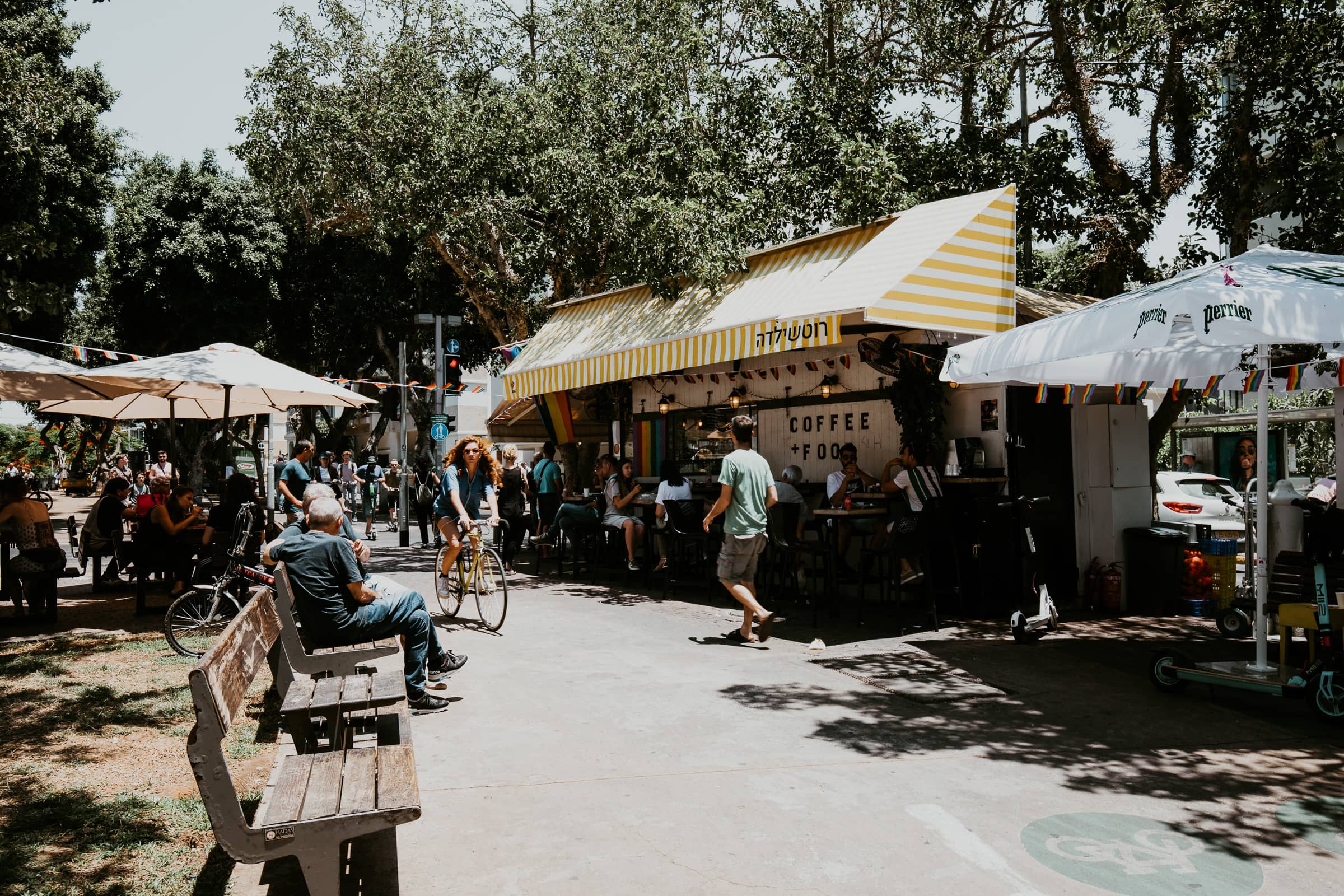
    Tel Aviv sights Gazoz stalls Kiosk Cafés Rothschild Boulevard
    Refreshment on hot days: the kiosks on Rothschild Boulevard in Tel Aviv.
    Tel Aviv Sights Rothschild Boulevard
    Tel Aviv Sights Rothschild Boulevard

    5. Dizengoff Square

    One of the best locations to experience Bauhaus architecture in Tel Aviv is Dizengoff Square. When the glistening sunlight typical of Tel Aviv falls on the snow-white façades, it is impressive.

    Tel Aviv Sightseeing Dizengoff Square Bauhaus
    Snow-white: The Bauhaus-style buildings around Dizengoff Square.

    Dizengoff Square with its traffic circle is one of the central points of the city. Tel Aviv’s first shopping center is located along Dizengoff Street – you can forget about it, it’s just like everywhere else. Instead, the rest of the street is lined with small boutiques and inviting cafés.

    Tips around the Dizengoff Square: Yashka (stylish snack bar, I could have laid down in the shawarma! Attention: huge portions!), Bauhaus Center Tel Aviv, Ben Gurion House

    Tel Aviv sights Dizengoff Square Fountain
    Tel Aviv Dizengoff Square Falafel at Yashka
    Yashka serves falafel and shawarma galore: delicious Israeli street food.
    Tel Aviv Sights Gay Pride
    Even the dogs wear rainbows at Gay Pride: Tel Aviv is one of the most popular cities for the LGBT community.
    Tel Aviv Shopping Dizengoff Street

    6. Ben Gurion House

    Not far away is the house of Israel’s first Prime Minister David Ben-Gurion, the Ben-Gurion House. He proclaimed Israel’s independence in 1948 and is still revered in the country today. His home near Dizengoff Street can be visited and is one of the lesser-known sights in Tel Aviv. Nevertheless, I found it very interesting, also to learn something about the history of Israel. The strikingly modest furnishings are still in their original condition. Very informative. And: Admission is free!

    Tel Aviv Sights Ben Gurion House
    Modest conditions: The kitchen in the house of Israel’s first prime minister, Ben Gurion.

    7. Tel Aviv, Bauhaus and the White City

    Tel Aviv has the highest density of Bauhaus buildings in the world. As many of these buildings are white, this group of buildings is also known as the White City. You can get an overview of Bauhaus in Tel Aviv at the Bauhaus Center Tel Aviv.

    Where can you find Bauhaus in Tel Aviv?

    Unfortunately, many of the buildings are not quite as well preserved as they once were, but the Bauhaus influences can be seen quite clearly in certain corners, such as the impressive Dizengoff Square in the center of Tel Aviv.

    ➜ Architectural tour of Tel Aviv with many Bauhaus buildings*

    Why is there so much Bauhaus in Tel Aviv?

    Tel Aviv Sightseeing Dizengoff Square

    Tel Aviv is actually a very young city. At the beginning of the 20th century, Tel Aviv was just a tiny suburb of the historic city of Jaffa. Curious: today it works the other way around! Following persecution by the National Socialists, many Jews of German descent came to Tel Aviv in the 1930s and 1940s, bringing with them the modern architectural trends of the time.

    Tel Aviv Sights Bauhaus Center Tel Aviv White City
    In the Bauhaus Center you can learn all about Bauhaus and the White City in Tel Aviv.

    8. Sarona Market: A foodies’ paradise

    The Sarona Market is completely different, but still worth a visit. Situated a little further away, the Sarona Market is the finer counter-program to the Carmel Market. As a newly opened indoor market, it lacks a little of the patina and bustling market life, but you will find all kinds of culinary delights! They don’t shy away from experimental offerings either: there is even a stand with Bavarian street food. Freely interpreted, though, because Bavarian hot dogs? Anyway, somehow this is also typical of Tel Aviv: Tel Avivis seem to have little fear of trying out new things!

    Tip: Shakshuka at Benedict! (Benedict is a small chain of breakfast restaurants, some of which are open around the clock and serve breakfast throughout the day).

    Tel Aviv Sights Sarona Market
    Sarona Market is located in the middle of a high-rise district in Tel Aviv.
    Tel Aviv Sights Sarona Market
    The Sarona Market is modeled on a real market: Many small stalls with delicacies from all over the market.
    Tel Aviv Sights Sarona Market Bavarian Cuisine
    Bavarian specialties are also represented in the Sarona market. However, the dishes themselves are interpreted very creatively.
    Tel Aviv Food Shakshuka at Benedict
    Be sure to try it: Shakshuka is an oven dish made from poached eggs in a spicy tomato and bell pepper sauce. Typically Israeli and an absolute taste sensation!

    9. Florentin: Tel Aviv’s alternative neighbourhood

    While many parts of Tel Aviv are already modern and hip, Florentin tops them all. This district is probably the most alternative in Tel Aviv. Colorful street art adorns the walls, the cafés are full of digital nomads sitting behind their laptops. Florentin seems like a free island in an already detached Tel Aviv.

    Tip: Levinsky spice market (neighborhood market with many small stalls)

    By the way: Florentin is also a nice district to stay in! The atmosphere is relaxed and you can always find some nice accommodation here!

    ➜ Find places to stay in Florentin*

    10. Life in Tel Aviv: eating, drinking, partying

    It’s hard to escape the dynamism of Tel Aviv. Sometimes it seems as if everyone is out of control. Determined to enjoy life with all its ups and downs as intensively as possible. The mild climate means that people spend a lot of time outdoors – and Israelis are sociable anyway. As a matter of course, I was invited to private Shabbat dinners, yacht parties and other events – without much fanfare. Israelis value the community, and it’s easy to make friends. If you don’t have to worry about high walls and deep graves elsewhere in Israel, you are always welcome as a visitor in Israel. (Provided you get through the entry procedure unscathed; I was hit so badly on both trips to Israel that Israel will probably not see me again any time soon).

    Many Israelis originally come from other countries. Tel Aviv attracts young people from all over the world, and if you can prove your Jewish faith, the path to Israeli citizenship is short. I was warmly welcomed everywhere, which made up for the lack of service culture in many places, and I was very touched on more than one occasion.

    Indulgence is a top priority, so it is not surprising that Tel Aviv has an almost endless gastronomic offering. There is also no fear of alternative concepts: Bicicletta, for example, is a club/café/restaurant/plant store in the Nachalat Benjamin district.

    Tip: Go out for a good meal in the evening, turn night into day at Kuli Alma, an alternative club, and hang out on the beach the next day: Enjoy life in Tel Aviv to the full!

    Practical tips for Tel Aviv

    Money & Currency

    In Israel, you pay in Israeli shekels. But you can also pay by credit card in many places, which is rarely a problem in technologically advanced Israel.

    I always use my DKB credit card when I travel:

    ➜ Apply for a DKB credit card here*

    But: Tel Aviv, like the whole of Israel, is very, very expensive! The cost of living is also very high for Israelis, with low wages. I have no idea how the largely young population will cope with this. As a visitor, you simply have to go through it. You can spend a lot of money on food in particular, as many goods are imported. Which is a shame, because there is so much to discover in Tel Aviv, especially when it comes to food!

    Arrival & Visa

    With a German passport you do not need a visa for Israel. There are direct flights to Tel Aviv from many German airports, e.g. Easyjet and El Al fly directly from Berlin-Schönefeld. However, the journey itself can be adventurous, depending on which airline you choose. El Al, for example, has very strict safety regulations. Unfortunately, I didn’t have such good experiences and could write half a novel about my arrival and entry. However, as complications on arrival/departure also depend heavily on individual factors, I may prefer to go into this topic in more detail in another blog post.

    However, on my two trips to Israel, I had the strong feeling that if you have a southern European/slightly Arab appearance and a German passport, it is easier to fall into a group of people who are subject to more intensive checks. I personally found the security checks very stressful and degrading. This is currently preventing me from traveling to Israel again. However, other travelers from Germany had few to no problems with the security check.

    Accommodation in Tel Aviv

    Budget hotels and hostels in Tel Aviv

    Hostels such as the Abraham Hostel* or The Spot Hostel* are popular with budget travelers. The Abraham Hostel also has a rooftop bar, which is not only popular with guests, and offers many tours of Tel Aviv and the whole of Israel. However, I didn’t find the location particularly appealing.

    ➜ All hostels in Tel Aviv*

    Design and boutique hotels in Tel Aviv

    If you have a higher budget, you will be hard pressed to find designer accommodation in Tel Aviv. The Brown Hotels, of which there are a total of nine spread across the city, are particularly individually furnished: Brown TLV, Brown Beach House, Dave Gordon, Dave Levinsky, Poli House, Lighthouse, Theodor, Town House and Hôtel Bobo.

    ➜ Design hotels in Tel Aviv*

    My personal hotel tip for Tel Aviv

    I ended up at Jojo TLV*, a small boutique hotel located in an old factory floor. Absolutely inconspicuous from the outside, the operators have created an inspiring place here. Due to its small size (there are only a few rooms), the Jojo TLV is more of a stylish shared flat than a hotel. In the shared lounge/kitchen there is the best coffee and nice conversation for free. Very communicative – and I found the close location to Jaffa and the beach perfect. The price-performance ratio is absolutely right.

    ➜ Prices and availability at Jojo TLV*

    Security in Tel Aviv

    The military/police presence in Tel Aviv is quite high, but not as massive as in Jerusalem, where I was before. Nevertheless, conscripts in full uniform with machine guns are part of everyday life. Irritating, but overall I found the atmosphere in Tel Aviv more relaxed than in Jerusalem. I never felt unsafe, even when I was out alone in the evening. Due to the constantly changing political situation, I recommend that you take another look at the information page of the Federal Foreign Office on Israel, which is constantly updated.

    Transportation & public transport

    On foot in Tel Aviv

    The actual center of Tel Aviv is not as big as you might think: You can get to many places on foot. I have explored most of Tel Aviv on foot myself.

    Rent bikes & e-scooters in Tel Aviv

    For example, I always wanted to rent one of the many rental bikes (there are several providers in Tel Aviv), but in the end I mainly got around on foot. Scooters are also very popular in Tel Aviv (and very fast – watch out!).

    Public transportation: Bus & Train

    There is also a well-developed bus network and, more recently, a streetcar line. However, I didn’t try any of this, as I was in Tel Aviv on one of the highest Jewish holidays (Shavuot), and there is no public transportation at all! This also applies to every Shabbat/Saturday! Cabs also run less on these days.

    Cab & Uber

    Instead of Uber, Gett is used in Tel Aviv, unfortunately the app is mostly in Hebrew and it is not always possible to pay by app. On one trip I had to pay the driver at the end, who then promptly and loudly demanded double. It was only thanks to my spirited Israeli companion, who showed the driver just as loudly where the frog’s curls were, that we got away again: People like to argue loudly and aggressively in traffic, and Israel is a service desert in my eyes anyway. So keep your eyes open when traveling with Gett.

    Excursions & onward journey from Tel Aviv

    Israel is a small country, and Tel Aviv is right in the middle. From Tel Aviv you can book day trips or tours lasting several days, or travel on your own. So it’s worth taking a little more time and discovering more of Israel!

    With long-distance buses through Israel

    The state-owned bus company Egged will take you to every corner of the country, including Jerusalem, for little money.

    Car rental in Israel

    I spent most of my time in Israel traveling by rental car. This gave me more flexibility, especially for the route to Masada and the Dead Sea, and I was able to return the rental car directly to the airport for my return flight. Despite the reckless driving skills of some Israelis outside Tel Aviv, driving in Israel is relatively relaxed and the roads are well developed. Like everything else, however, rental cars in Israel are quite expensive, so it’s worth comparing prices early on!

    ➜ Find the best rental car deal here*

    From Tel Aviv to Jerusalem

    I really recommend a trip to Jerusalem! It’s a completely different world to Tel Aviv and hard to digest, but if you’re ever in Israel, you shouldn’t miss this place. From Tel Aviv you can easily travel to Jerusalem on your own, there are good train and bus connections. Or you can join a guided tour that travels to Jerusalem in the morning and back again in the afternoon.

    ➜ Book a day tour from Tel Aviv to Jerusalem here*

    You can also find out more about Jerusalem in my blog articles:

    Jerusalem: All the most important sights & a great travel guide!
    City of David: An archaeological excavation with depth
    Jerusalem: Thoughts on a difficult city

    The Masada fortress is also well worth a visit!
    Masada: Sunrise over the Dead Sea

  • Best Things to Do in Tirana, Albania

    Best Things to Do in Tirana, Albania

    Tirana is one of those cities that you might not have on your radar for a city trip! In this article, I’ll tell you why a trip there is still worthwhile and lots of things to do for one of the new insider spots in Southeast Europe!

    Blloku

    My first visit to Tirana about ten years ago left me with a bleak impression: a gray, characterless cityscape dominated by countless old German Mercedes sedans and evident poverty. I didn’t pay much attention to the Blloku district; there were a few shops and restaurants, but the overall environment wasn’t welcoming.

    Tirana Blloku Block Quarter

    My overnight activities were mainly limited to hanging out by the pool of our crew hotel, which, with its luxurious ambiance, made us feel like we were on an island away from the world in the middle of the dreariness. I left the hotel only to immediately realize that there was simply nothing to see. Nothing but everyday life, which was so oppressive that it made me feel guilty with my banal desire for a bit of sightseeing.

    Today, Tirana is still not Berlin or Barcelona, and perhaps it never will be. Nevertheless, the change that has taken place in recent years is remarkable. The Blloku district is located in the center of Tirana and is one of the most exciting neighbourhoods to have developed.

    Korner Cafe Tirana Block Quarter Street Art

    Cafés, bars and restaurants in Blloku

    Here you will find boutiques, cafés, bars and restaurants in a wild mixture of Albanian tradition and international influences, always well frequented, with the flair of Tirana’s haute volée. By Albanian standards, Blloku is not a cheap spot in the city, but by European standards it is – which has made Tirana extremely attractive to more adventurous city travelers in recent years.

    Tirana Hotspot Blloku

    It’s a bit like Italy in general, when the cafés here are full even on a midweek morning and locals and expats sip delicious, creamy cappuccinos as if they were in Milan, Turin or Rome.

    Villa Enver Hoxha

    Amidst the hustle and bustle of the high-rise district, a notable curiosity stands out in Tirana. It’s a sizable plot featuring a multi-storey, detached villa, fenced in, guarded, yet visibly abandoned: the former residence of dictator Enver Hoxha, who governed Albania with an iron fist from 1944 to 1985. This entire block was once sealed off and designated for top party officials and their families. Now, the villa sits vacant as Albania continues to grapple with its past.

    Tirana Sights Villa Enver Hoxha

    Tirana and its bunkers: Sightseeing tip!

    Enver Hoxha was not only the head of state of Albania at the time, but also highly paranoid. In contrast to his Eastern European neighbors, the staunch communist initially aligned himself not with Russia but with China, until he also distanced himself from Chinese Maoism and isolated Albania politically.

    This circumstance and the fear of military intervention by other states led Hoxha to have hundreds of thousands of bunkers built all over Albania. Some of them are open to the public in Tirana today:

    ➜ Click here for the website of the two bunker museums in Tirana

    Skanderbeg Square

    Skanderbeg Square is the heart of Tirana. This square is so huge that it is almost unreal. You get a good impression of how architecture was also used as a demonstration of power in Tirana.

    Skanderbeg Square is also home to one of Tirana’s two bunker museums.

    The Pyramid

    You will immediately notice the pyramid in the center of Tirana: Once intended as a museum and eulogy for the late Enver Hoxha, it was used in many ways after his fall, including as a conference center. What will happen to it in the future is still being planned. Until then, the pyramid remains one of Tirana’s most striking buildings and sights.

    Tirana Pyramid Museum

    There are also many interesting city tours that deal with the unusual history of Tirana and Albania:

    Where to Stay in Tirana

    For those who don’t want to compromise on comfort, there are a few more luxurious hotels in Tirana that meet international standards, such as the Mak Albania(formerly the Sheraton) or The Plaza. Accommodation prices in Albania are generally quite low, so you can certainly look for higher-end hotels if you’d like to treat yourself to something a little more special.

    Tirana Arte Cafe Blloku

    With the rise of tourism, however, a number of boutique hotels have now opened, such as the Arté Hotel, which features a truly charming atmosphere, as evidenced by its Arté Café (also a great spot in the Block District!).

  • Amalfi Coast Road Trip: Driving Along the Amalfi Coast

    Amalfi Coast Road Trip: Driving Along the Amalfi Coast

    The Amalfitana, officially known as Strada Statale 163 Amalfitana (SS 163), runs along the Amalfi Coast. A road trip on one of Italy’s most exciting roads is surely on many people’s bucket lists. The Amalfitana winds its way from Sorrento past such famous towns as Positano, Minori, Amalfi, and Maiori. It winds constantly along the rugged coastline, always offering views of the sparkling blue Mediterranean Sea. The Amalfitana is only 50 kilometers long, but this short stretch packs a punch! With a few tips, however, a drive along the Amalfi Coast in your own car or a rental car will be an unforgettable experience!

    Tip: The Amalfi Coast is a super popular travel destination, and small rental cars—which are great for navigating narrow streets—get booked up fast! It’s best to book in advance!
    ➜ Find a rental car here for your road trip along the Amalfi Coast*

    How long does it take to drive along the Amalfi Coast?

    You should take your time on the Amalfi Coast and plan to stay at least one night! You can also easily spend several days or an entire vacation here. The route is short, but there’s just so much to see. But be warned: Booking in advance is super important—otherwise, it’ll get really, really expensive during the high season!

    ➜ Find the right place to stay on the Amalfi Coast here

    ➜ Here are some tips for the most beautiful spots on the Amalfi Coast

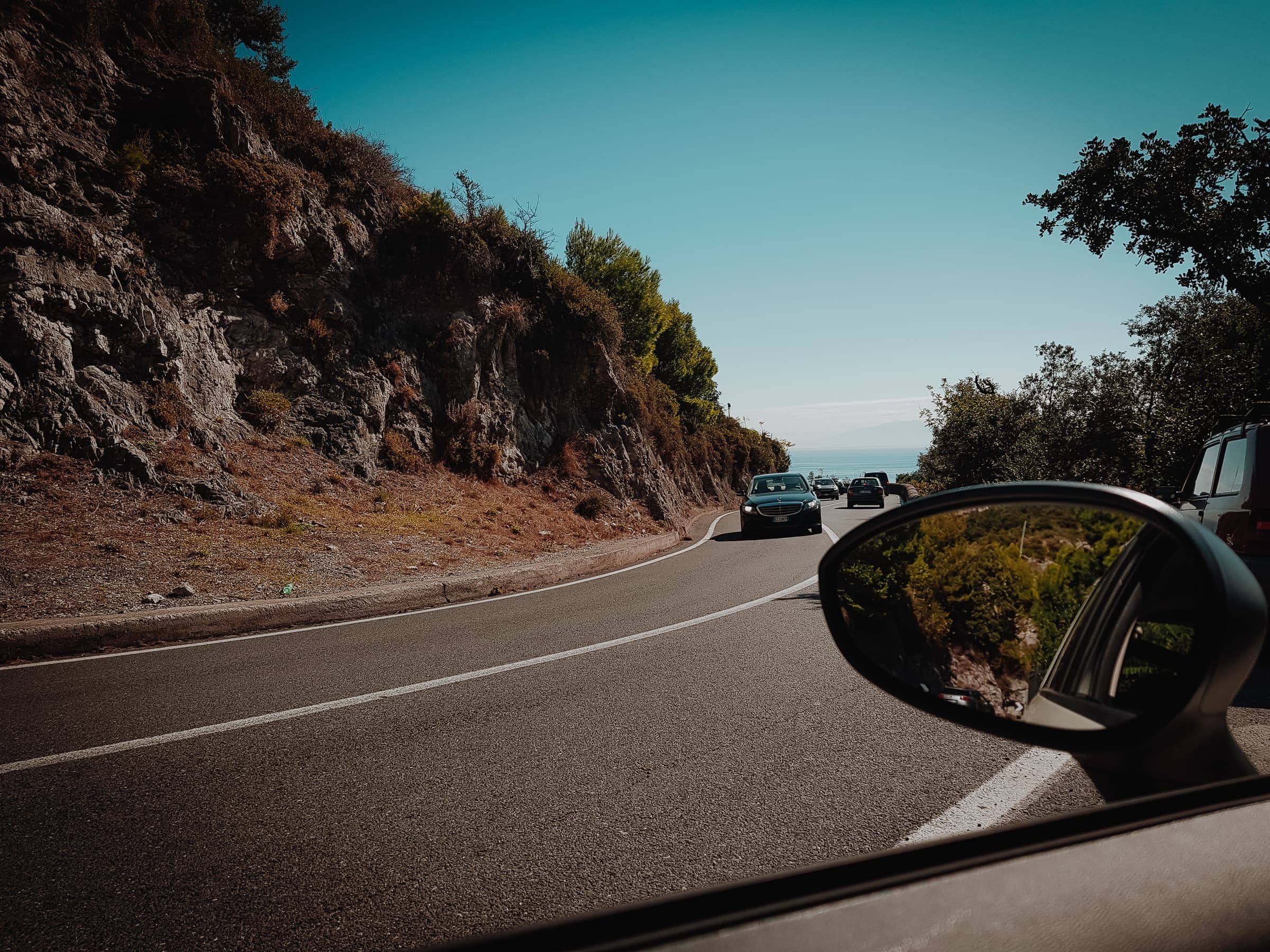
    A road on the Amalfi Coast with curves and a car
    Hardly a straight stretch: The Amalfitana winds its way laboriously along the Amalfi Coast in Italy for 50 kilometers.

    Amalfitana: The Most Beautiful Road in Italy?

    When people talk about beautiful driving routes in Italy, the Amalfitana is always mentioned. No wonder—it’s a true masterpiece of modern road engineering. The fact that it was built at all is a feat of engineering: here on the Amalfi Coast, the massive cliffs drop almost vertically into the sea, and the terrain is winding; in some places, tunnels had to be carved into the rock to build the Amalfitana.


    Looking for more tips on Italy?
    Visit the Italy blog featuring city trips from Rome to Naples


    Over fifty kilometers, there’s hardly a single straight stretch; you wind your way back and forth along the curves in your car, with cliffs on one side and the sea below. It’s quite challenging to drive. Or does anyone in our part of the world have experience with switchbacks?

    Amalfi Coast View of the Mediterranean Sea

    Driving along the Amalfi Coast: Is it difficult?

    I haven’t owned a car for at least ten years—you don’t really need one in Berlin anyway. I’ve never been an enthusiastic driver either. Still, I do drive from time to time, and I have no trouble quickly getting the hang of rental cars or other people’s cars. I’m not afraid of driving either, but I still felt a little queasy before the road trip along the Amalfi Coast. All those curves, the steep cliffs dropping into the sea, the chaotic Italian traffic —would it all go well?

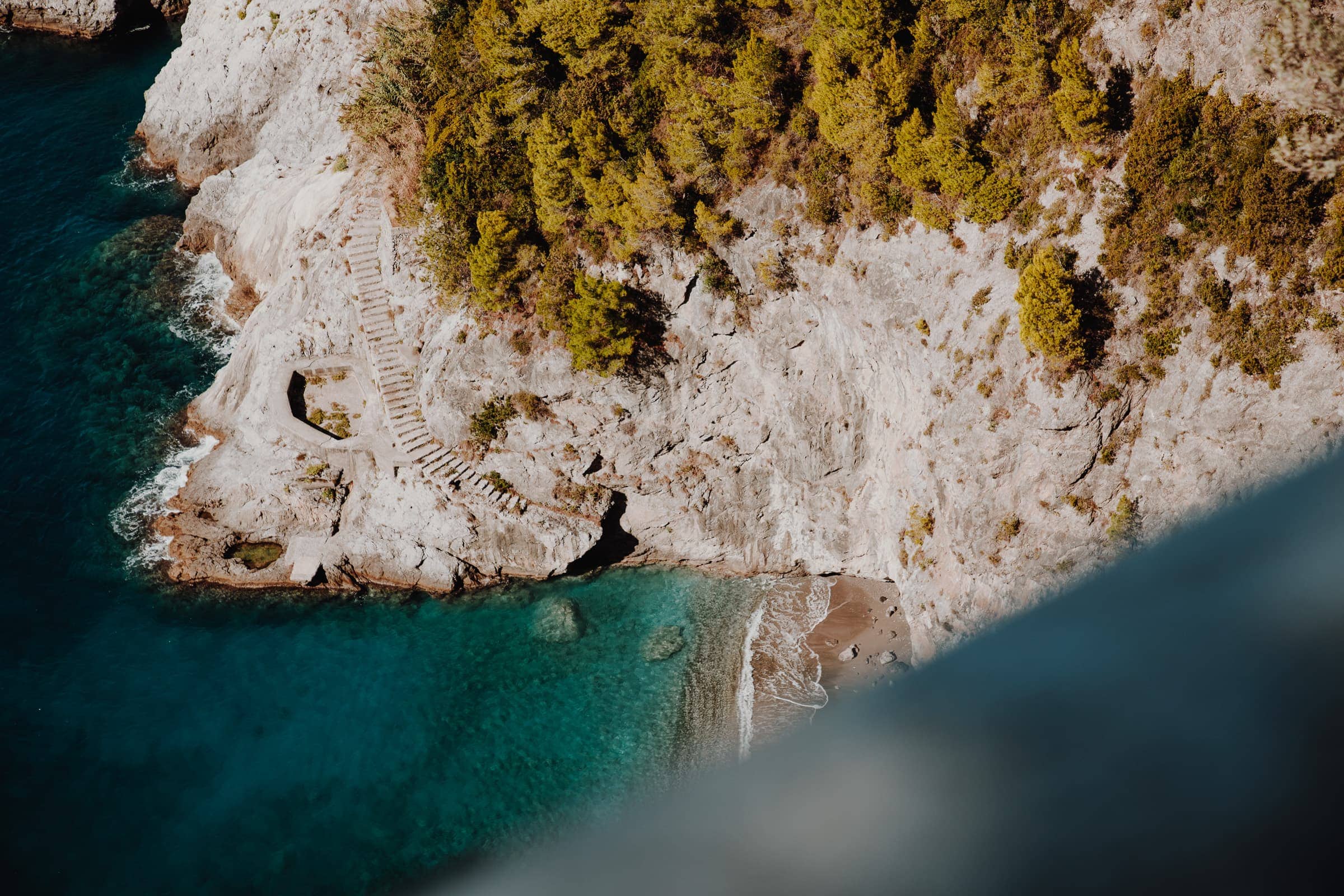
    Amalfitana Bay with a Beach
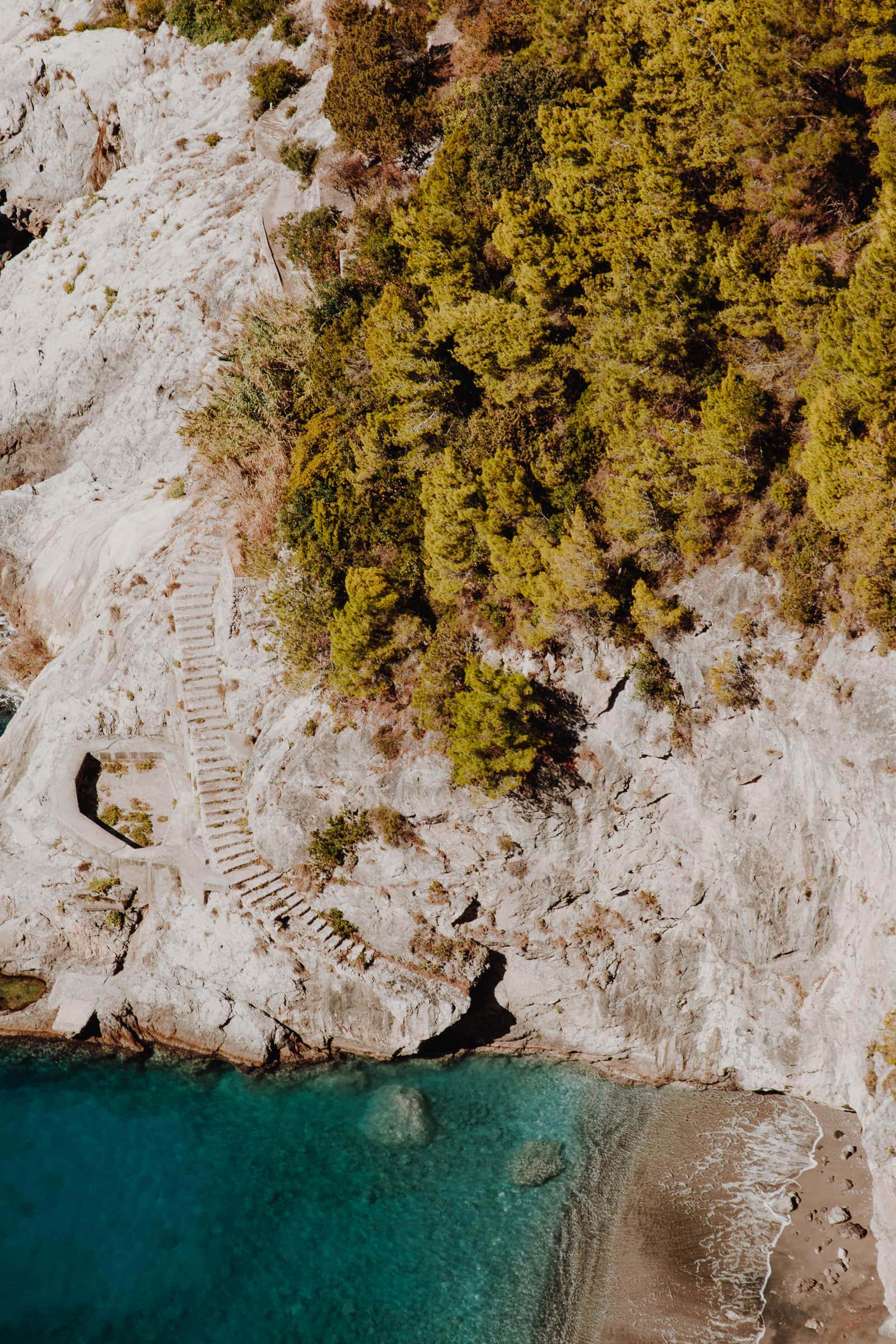
    Spectacular views time and time again: I wonder how you get to this unusual beach?

    It went okay. It took a little while to get used to it. Because, unexpectedly, I felt pretty sick after the first day and all those curves—even though I was the one driving! That said, the driving itself wasn’t nearly as bad as I’d expected, and I’ve picked up a few tips that will help you if you’re planning a trip to the Amalfi Coast by car or rental car.

    Tips for a Road Trip Along the Amalfi Coast (in Your Own Car or a Rental Car)

    • Avoid the peak season! The Amalfi Coast is one of Italy’s most popular vacation destinations. It gets really crowded in the summer! That just adds to the stress and takes the fun out of driving.
    • Choosing the right direction: A drive along the Amalfi Coast is only truly enjoyable when heading from Sorrento toward Salento. That way, you always have the sea on your right and can enjoy the phenomenal views. Besides, I personally find it much more pleasant to drive close to the steep coastline rather than close to the rugged cliffs.
    • Take advantage of the parking bays: Along the Amalfitana, there are frequent small parking bays where you can pull over briefly to take photos. Pull over as soon as you see a spot. Spots aren’t always available—you might not find one at the next opportunity, and waiting isn’t an option due to the narrow road and oncoming traffic.
    • Drinking plenty of fluids and sucking on lemon candies: By the end of the first day, after a few kilometers on the Amalfitana, I actually felt nauseous and lightheaded, even though I’m not usually that sensitive. Those countless curves really take it out of you! Maybe the change in elevation played a part, too.
      How fortunate, though, that the Amalfi Coast is known for its particularly aromatic lemons and that the Amalfitana is dotted with small stalls. Along the roadside, you can buy lemons and all sorts of products, such as lemon candies. Just scratch the peel of a lemon and take a whiff, or suck on a lemon candy, and your queasy stomach will settle: an old home remedy for motion sickness! It really works! Drinking plenty of fluids helps with altitude changes.
    Lemons in a wooden crate from Amalfi
    • It’s best to drive right behind a SITA bus! These are the public buses that run along the Amalfitana, and I found it very helpful to drive right behind them. For one thing, the bus drivers know the Amalfitana like the back of their hand and know just how tight the next curve is; for another, I could easily gauge our speed based on theirs: If the bus can make it, so can we in our rented Cinquecento.
    • Avoiding tailgaters: Parking spaces are also a great way to let tailgaters pass you! Don’t let it rattle you—driving on the Amalfi Coast already requires plenty of concentration.
    • Keep your distance— especially behind a bus! If another bus suddenly comes toward you on a curve or in a tunnel, things can get tight. On the Amalfitana, such problems are easily solved by the bus simply backing up a few—or even quite a few—meters; that’s when it really comes in handy not to be right behind it.

    By rental car or by your own car?

    Driving my own car wasn’t an option for me, since I don’t even own one. Plus, it’s quite a long way from Germany down to Campania and the Amalfi Coast. That’s more of an option if you have more time to spare. By the way, traveling along the Amalfi Coast in a motorhome, trailer, or larger vehicle can be difficult. RV drivers, for example, are only allowed to drive along the Amalfitana from midnight to 6:30 a.m., and even that doesn’t sound easy to me.

    Positano, Amalfi Coast, Amalfi Coast Houses
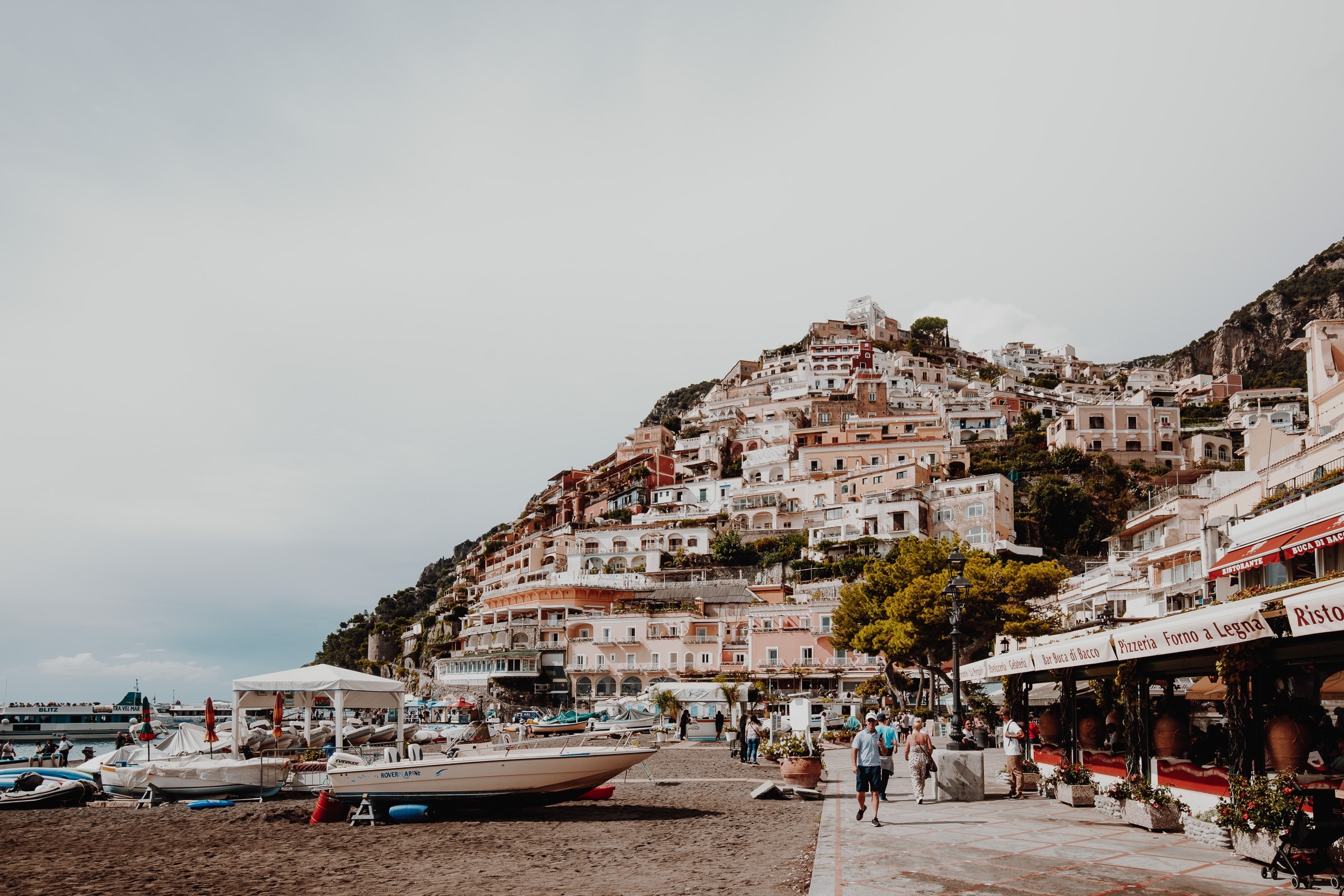
    Looking for a parking spot in Positano? You can probably guess: It’s going to be quite an adventure.

    Important Tips for Choosing a Rental Car

    When renting a car, be sure to get comprehensive insurance with no deductible! It’s not that accidents happen all the time (we haven’t had any), but the narrow streets in places like Positano and the often difficult parking situation can quickly lead to scratches.

    ➜ Click here to compare prices for rental cars from Naples*

    So it’s better to spend a little more now to avoid bigger bills later! We picked up the car in the city after our stay in Naples and drove off right away.

    Tip: Don’t rent a car in Naples! Driving there can be very stressful, and you’ll get around the city much better using public transportation, a taxi, or Uber. Also, due to the risk of theft, many car rental companies require that you park the car only in guarded parking lots, which makes parking in the city center more complicated.

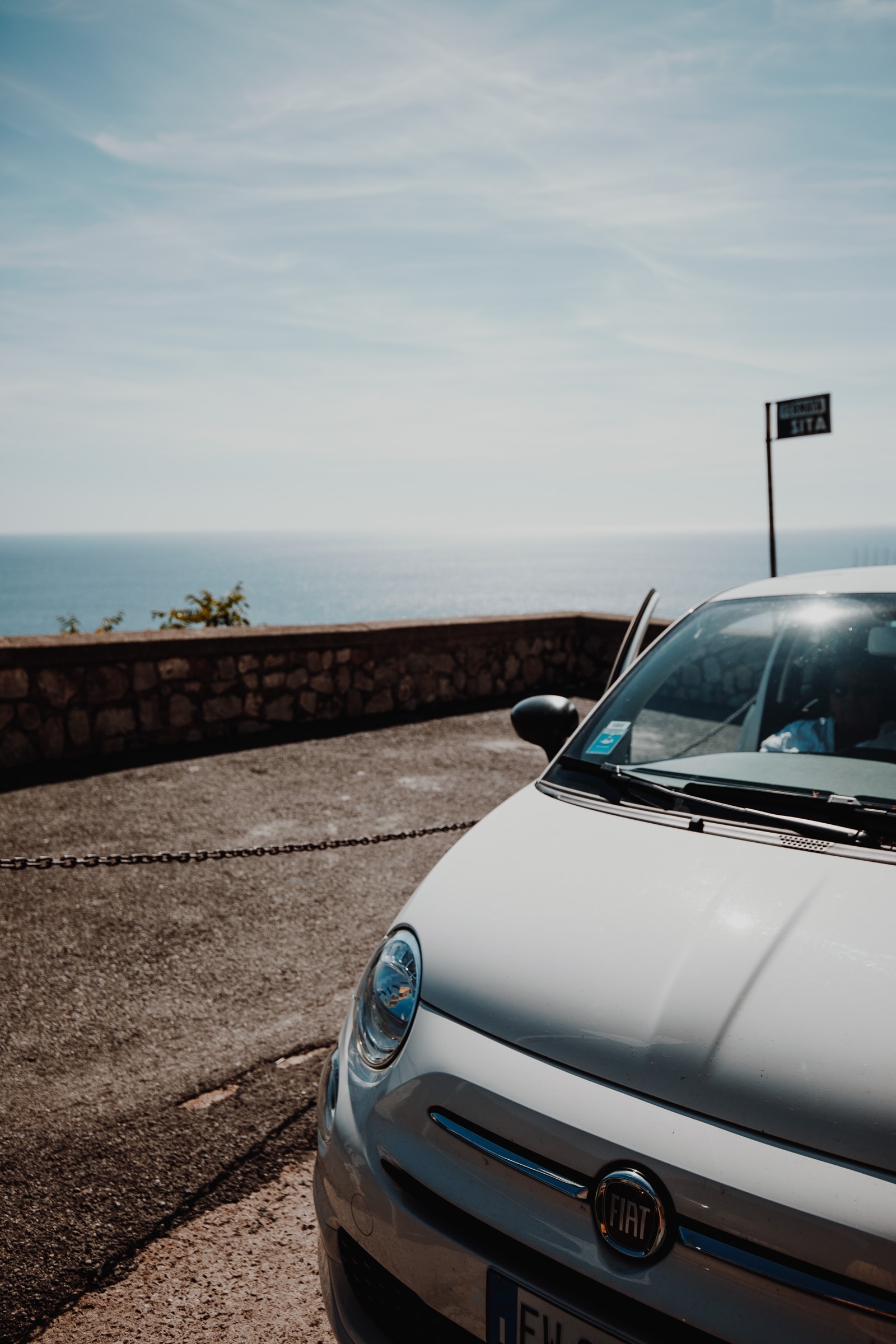
    Amalfi Coast with a Fiat 500 Rental Car
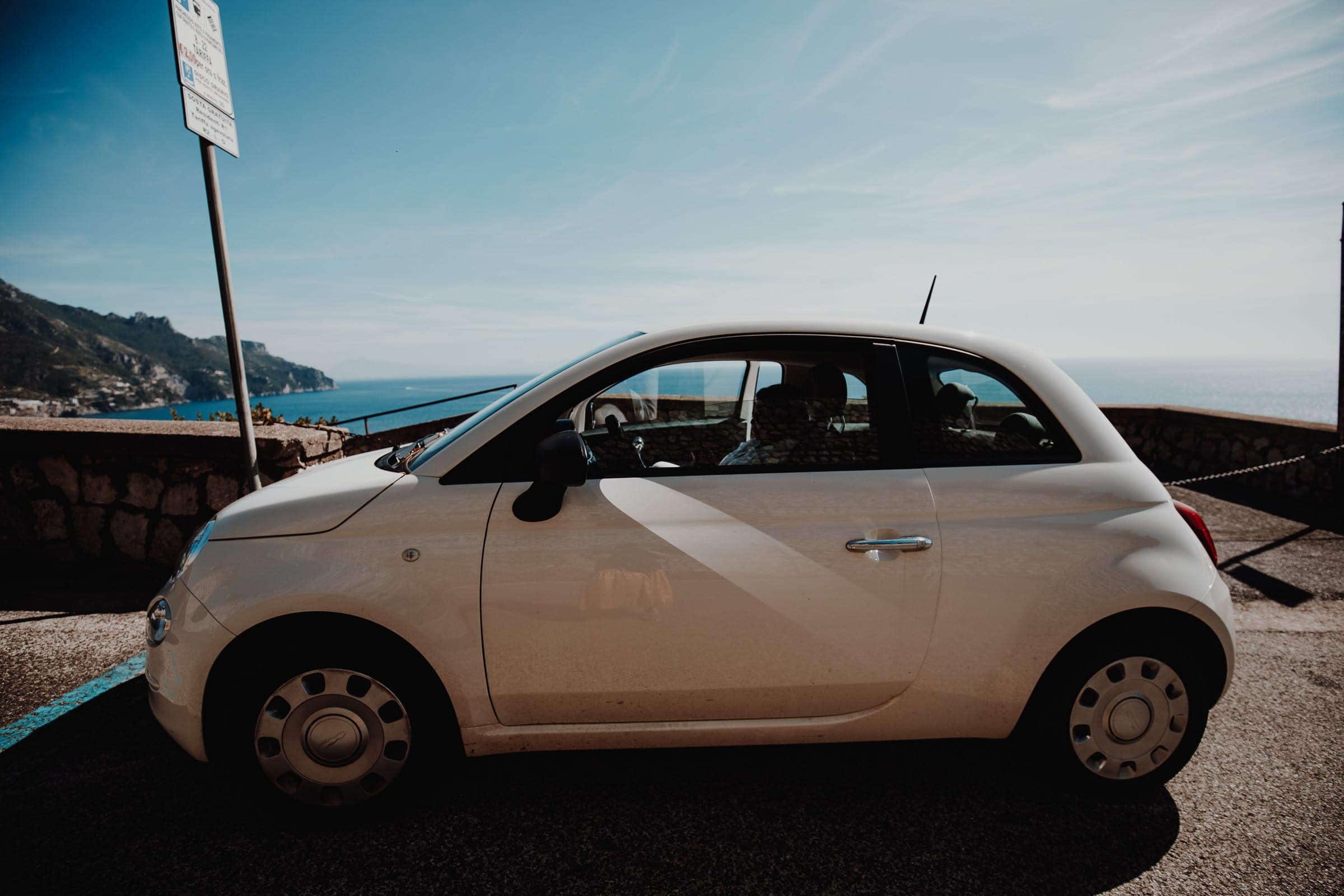
    Stylish and practical: Driving a white Fiat Cinquecento along the Amalfi Coast.

    Alternative Road Trips Without a Rental Car

    If driving along the Amalfi Coast on your own feels a bit too daunting, why not join a guided tour? Especially if you don’t have much time—for example, during a short stay in Naples—this way you can still see some of the beautiful Amalfi Coast.

    From Naples to Salerno: Even More Tips for the Amalfi Coast

    Along the Amalfi Coast—and in the surrounding area as well—you’ll find plenty of great places to stop by or spend a short stay. Here’s some inspiration for a trip to the Amalfi Coast, with tips from Naples to Salerno:

    Naples Travel Guide: The Best Tips and Attractions
    The Best Pizza in Naples: Where to Find the Authentic Pizza Margherita
    Pompeii: What You Absolutely Must See
    Day Trip from Sorrento (or Naples): A Day on Capri
    Positano: Tips for a Day Trip

  • Best Things to Do in Capri in One Day

    Best Things to Do in Capri in One Day

    Capri, in the Gulf of Naples, is the island of Capri fishermen, Capri pants, and home to the famous blue grotto – not to mention the inspiration for one of the most popular postwar hits in Germany(“When the red sun sinks into the sea at Capri…”). I tell you in this article, how to spend a day on Capri and which attractions are really worth it!

    Capri fishing boats in Marina Grande

    Where is Capri?

    Capri is an island in the Gulf of Naples and can be reached by ferry in just 45 minutes from Naples. The island with the famous Blue Grotto has always been a magnet for the rich and intellectuals – but once you’ve been to Capri, you’ll soon know why: the Mediterranean flair is simply unique and reminiscent of places like Positano!

    By ferry from Sorrento or Naples to Capri

    Most ferry connections are from Naples, but smaller ports along the Amalfi Coast are also connected to Capri. The ferry ride from Sorrento takes just 25 minutes. Capri is therefore perfect for a day trip, for example if you are on a city trip to Naples or are visiting the most beautiful locations on the Amalfi Coast on a road trip.

    Tickets can be easily purchased online. You should only be at the ticket counter one hour before departure to exchange the online ticket for a regular one (but it’s faster than buying on the spot). You also get the return ticket at the same time, so you just have to show up at the ferry in the evening.

    ➜ Here you can buy tickets online for all ferry connections to Capri*

    Marina Grande Port Capri

    Capri Island Tour with Blue Grotto

    Before boarding the ferry, a vendor sells tickets for a boat trip around Capri. Sounds like a rip-off at first, but the prices are the same everywhere. And you really shouldn’t miss out on a boat tour around the island to see the full beauty of the island.

    ➜ Book your boat tour around Capri in advance*

    The best thing is, if you buy a ticket for the round trip before going on the ferry: You can transfer directly to the smaller boat after arriving in Capri. The Capri tour costs €18. Or you can save yourself all the crowds and on-site sales and buy your ticket for the island tour with a stop at the Blue Grotto (weather permitting) right online!

    If you want to visit the Blue Grotto, the boat stops just before the grotto. When the water level is right (depending on the tide and weather), you can change to a rowing boat and row into the Blue Grotto for an extra charge.

    Capri cave
    Turquoise water everywhere

    Tips for the Blue Grotto in Capri

    The Blue Grotto is a cave that owes its name to the particularly blue water. The cave can be reached only from the sea side and is very low. Only small rowboats can go in. The entrance fee or the ride in a rowing boat costs 14€. But whether you can really go in depends on the weather. Like on our visit, the sea level can be so high that the entrance is closed.

    Blue Grotto Capri Entrance
    The dark spot in the rock on the left: The entrance to the Blue Grotto on Capri at high tide.

    The Faraglioni of Capri

    Regardless of the weather, during the tour you will definitely see one of the most famous sights of Capri. By boat you pass right between the Faraglioni, the striking rocks off the coast of Capri.

    Faraglioni rocks in front of Capri
    Impressive: The Faraglioni in front of Capri.
    Capri lighthouse Faro di Punta Carena

    By the way, from the boat you can also see the Via Krupp, a road with adventurous serpentines carved into the rock. Around 1900, the German industrialist Friedrich Alfred Krupp had this road built to get from his luxury hotel down to the sea more quickly.

    From Marina Grande to Capri Town

    The tour ends again in Marina Grande. Once you settle down in one of the cafés at the harbor, you can immediately familiarize yourself with the price structure on Capri. A Coke for five euros? On Capri, this is a quite normal price, everything is more expensive here.

    Capri ticket ticket for cable car
    The ride on the Funicolare saves you the arduous climb to Capri town.

    To get to Capri Town, there are several options:

    • Cab
    • Public bus
    • Cable car

    For the bus and the cable car there is a ticket office opposite the Bar Azzura, it is best to buy a cable car ticket and one or more bus tickets for the later trips.

    Tip: Day trips to Capri

    No time to plan everything yourself? With these organized tours you have everything included, transfer from your accommodation to the port, the trip to Capri and the island tour itself with optional visit to the blue grotto.

    ➜ Day tour from Naples*
    ➜ Day tour from Sorrento*

    The Best Spots in Capri Town

    If Marina Grande is quite pretty but not very exciting, Capri town shows exactly the flair that made Capri so famous. Capri has become a favorite destination of stars and starlets especially in the 50’s and 60’s, many Hollywood movies were filmed here.

    Capri Hotel La Palma Entrance

    The alleys of Capri Town

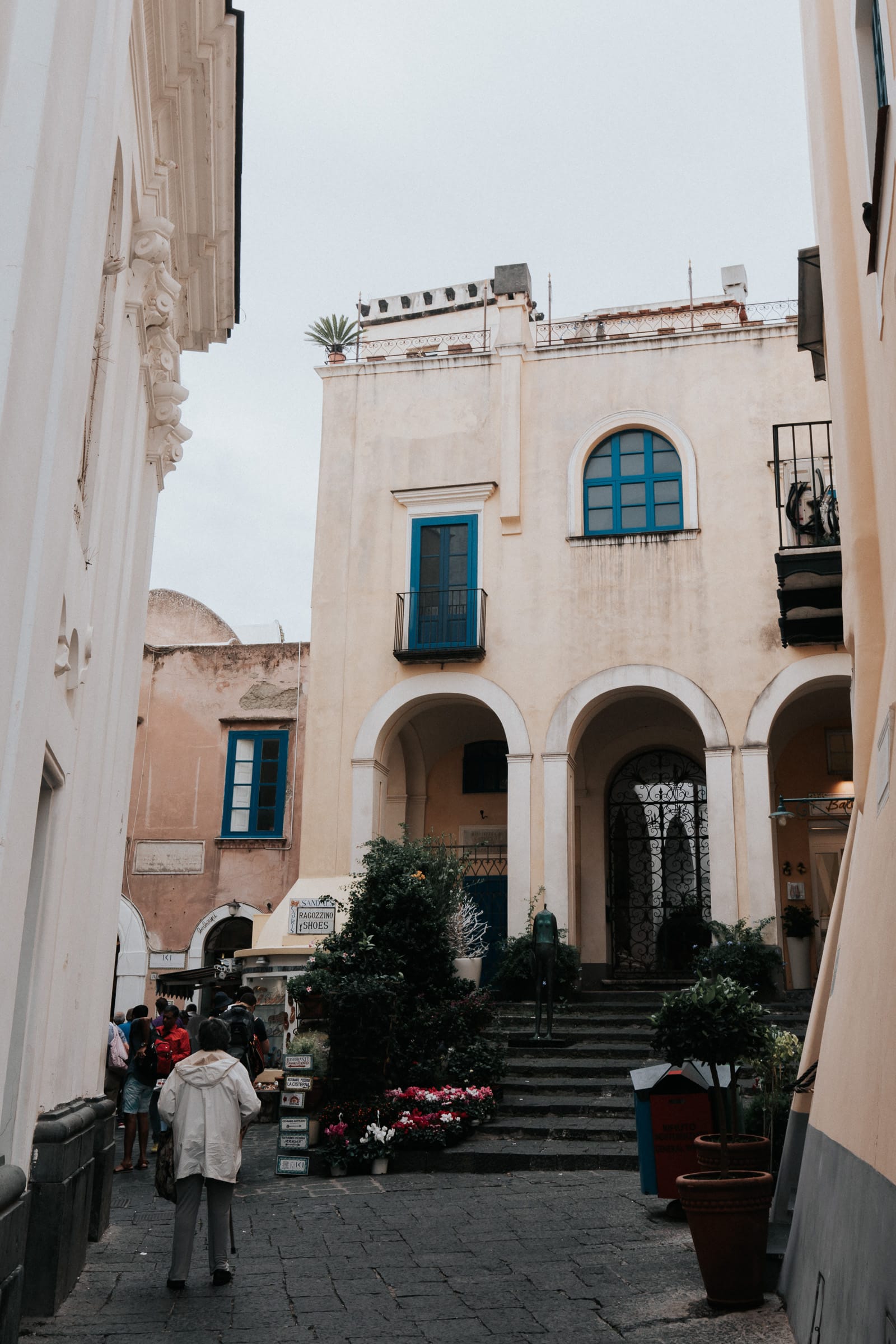
    The small, narrow streets in Capri town, the mild climate, nestled in the beautiful nature of the island: the atmosphere on Capri is really perfect, if it weren’t for the many other tourists who are also looking for exactly that.

    Man in alley in Capri

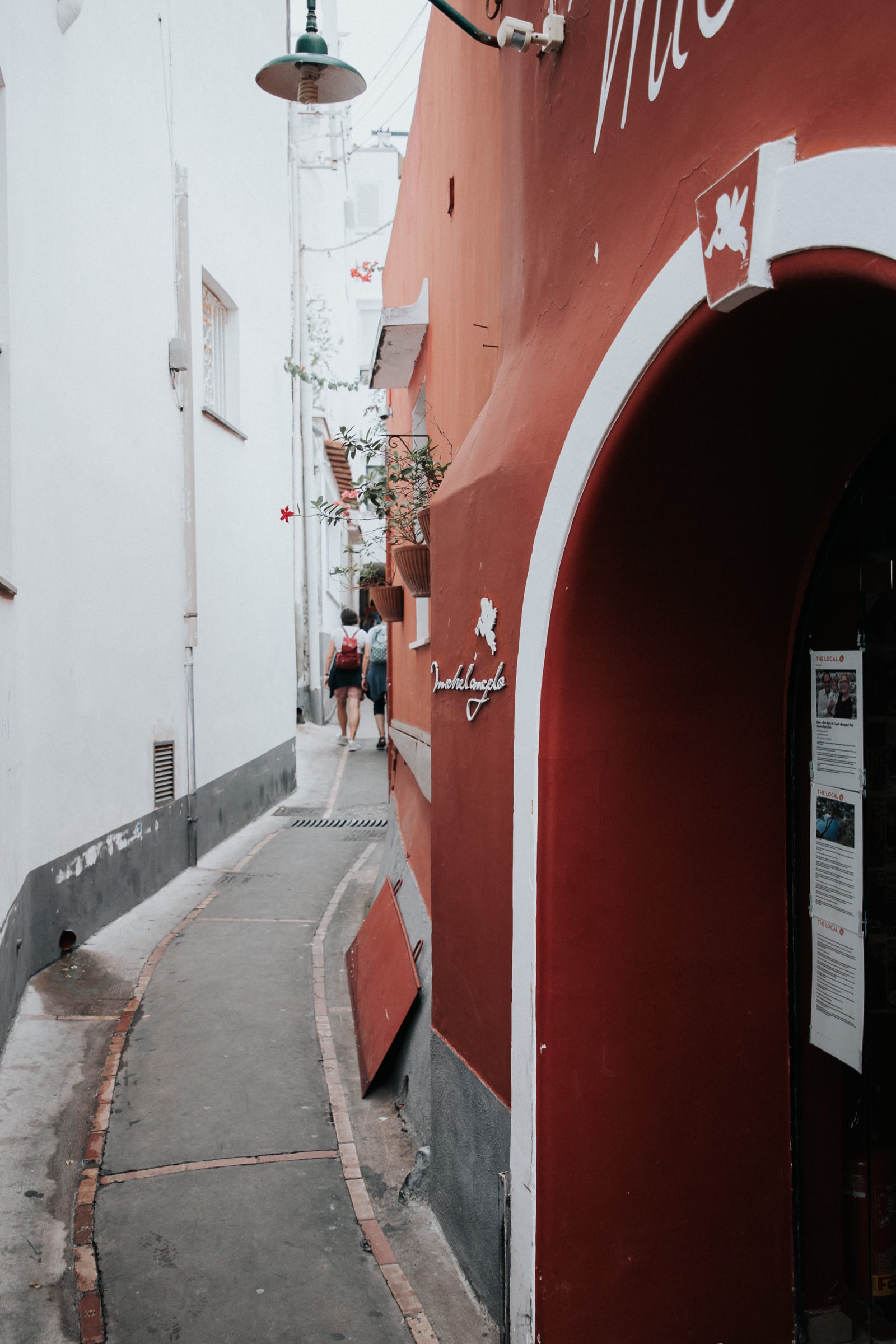
    The most beautiful thing is to simply stroll through the tiny alleys off the piazza and take in the Italian Dolce Vita vibes.

    Bella Italia! Find even more travel inspiration for Italy here

    Giardini di Augusto & Via Krupp

    In Capri town you will find the Giardini di Augusto, from which you can descend to the sea via Via Krupp. (If you like it more relaxed, I would skip Via Krupp on a day trip).

    Carthusia: The perfumes with the scent of Capri

    Capri is also associated with the perfumes of Carthusia: classic fragrances with typical Mediterranean notes. Only high-quality fragrances are used and production is still entirely by hand. The perfumes can also be bought online – but on site you can of course try better and buy a typical Capri souvenir straight away.

    Balcony in Capri city in alley

    Restaurant recommendation in Capri Town

    Eating out in Capri Town is a bit of an adventure: there are a lot of tourist traps, and it’s expensive to boot. It’s worth taking a look at the less crowded little streets. That’s also how we found the E’ Divino. Tucked away and inconspicuous from the outside, this place serves delicious Italian cuisine in a beautiful setting. And affordable by local standards.

    Anacapri: The quieter Capri

    The crowds in Capri town can get to you. If you want to experience Capri in a more relaxed way, you should continue to Anacapri. From Capri town you can get to Anacapri by public bus, adventure included. Because the way the small, packed buses wind their way along the narrow streets is quite an experience!

    The old town of Anacapri is quite small, just enjoy the Mediterranean atmosphere.

    Capri Bus to Anacapri Bus Stop
    Piaggio Ape Vespacar on Capri
    Dove on Museo Casa Rossa di Anacapri Capri
    Capri souvenir handicraft tiles
    Capri Anacapri door in old town
    Capri Anacapri couple in old town
    Anacapri: Capri from its quieter side.

    Monte Solaro: The best view

    Directly in Anacapri there is also the chairlift station of Monte Solaro, the highest mountain of the island. Monte Solaro can also be climbed on foot, from Anacapri the short hike takes about an hour. Or you can take the chairlift, which offers you the most beautiful panoramic view over Capri.

    Capri Monte Solaro view with Faraglioni
    Monte Solaro Capri flower
    Monte Solaro view Capri coast

    From the viewpoint of Monte Solaro you have another beautiful view of the Faraglioni.

    Capri Faraglioni rocks in front of island
    The Faraglioni from Monte Solaro

    Back we go again with the chairlift to Anacapri. From there you can take the bus directly back to Marina Grande, where the ferry to the mainland is waiting.

    Looking for more inspiration for a trip to Campania or the Gulf of Naples? Here you can find all articles:

  • Mutianyu: From Beijing to the Great Wall of China

    Mutianyu: From Beijing to the Great Wall of China

    I’m slowly starting to look back on the last few years of travel. Not only have I flown halfway around the world what feels like hundreds of times, I’ve battled jet lag – sometimes more, sometimes less happily – and perfected my talent for getting to know cities with millions of inhabitants like Beijing completely within 24 hours (or at least trying to). Until the ultimate sightseeing and travel burnout. Yes, there is such a thing. In Beijing, I made it to the Great Wall of China in Mutianyu, to the Forbidden City, to two gluttonous feasts with full plates (they like to serve up in China) and even to one of the most stupid tourist traps I’ve ever fallen into in 24 hours.

    More and more often, I find myself squinting at the Germany shelf in the travel book section of my favorite bookstore instead of looking at the latest books on some faraway destination, as I usually do. Other people dream of exotic destinations like Beijing and the Great Wall of China, I sometimes dream more of wet beach walks on windy North Sea islands or worse, hikes in the Elbe Sandstone Mountains. But don’t worry, this blog will probably never become a politically correct I’ve-seen-the-world-and-now-no-one-can-sustain-it blog. As a flight attendant, I will forever remain the worst contact person for this anyway. For someone like me, who has actually only had the worst wanderlust in the last few years, a nice feeling. Finally, no restlessness, but satisfaction about what I have left there in retrospect travel memories like from Beijing. Or who would have thought that I would ever stand on the Great Wall of China?

    For the first time in Beijing.

    I must have had a good day – on the street I saw only a few people wearing respirators and there was no sign of a smog bell. Could I probably leave mine at the hotel – my company at the time provided a mask for each crew member, then it usually had to be really bad. In general, Beijing made a surprising first impression on me. Somehow, I thought, you should feel more communism, so everything gray in gray as before in the GDR, long lines at fruit stores, lurking everywhere secret service officers, control without end and nothing with shameful capitalist stuff like Coca-Cola and McDonald’s. Hurray for unprejudiced travel! But all was not. Or at least not obviously. It did not become love between me and Beijing. But quite good friends. Later I was to get to know China in a completely different way!

    You can find all my travel stories on my China page

    From Beijing to the Great Wall of China: Mutianyu or Badaling?

    The first insight: The Chinese do not call the Great Wall of China the Great Wall of China in English. But Great Wall. Makes sense, in China every wall is Chinese. From Beijing you can get to the Great Wall relatively quickly, by car you can be there in about 1 1/2 to 2 hours, depending on the place. There are two places that are particularly good for a trip from Beijing: Badaling and Mutianyu.

    While Badaling is also accessible by bus and train, Mutianyu can only be reached by car. Mutianyu is therefore not quite as crowded as Badaling, which is something like a Great Wall pilgrimage site and must be bursting with tourists. Mutianyu, on the other hand, was quite pleasant, no crowds – and the weather was unique. Also uniquely hot and sunny – sunscreen was THE tool of the trip!

    Book your tour to Mutianyu from Beijing*

    Great Wall of China Beijing Mutianyu
    An incredible masterpiece: The Great Wall of China winds its way through the most impassable mountain landscapes.
    Ropeway at the Great Wall of China
    The last part up to the Great Wall of China is by cable car.

    And then I stood there, as a little dot on this huge centuries-old endless wall that is supposed to be over 8,800 kilometers long. Quite crass. And it looked like in a movie: Hilly mountain landscapes in lush green – over which then up and down and around it the great wall meandered. Unbelievable that this was built by man in the middle of nowhere.

    Great Wall of China Mutianyu Beijing Length
    Every few hundred meters there are watchtowers on the Great Wall of China, which was manned by sentries.

    Down you can again with the cable car or on foot. Or tobogganing on the toboggan run. Which is actually really fun. Unless you have the only tobogganing expert in front of you who doesn’t realize that the brake is a brake and not a throttle. And so we just tobogganed down into the valley at the fabulous speed of three kilometers per hour. My motorcyclist self cried. But still: I have actually seen the Great Wall of China!

    Toboggan run in Mutianyu China
    Mutianyu: Up on the cable car, down on the summer toboggan run.
    Great Wall of China Map Mutianyu
  • Where To Find The World’s Best Pizza in Naples, Italy

    Where To Find The World’s Best Pizza in Naples, Italy

    Not that you can’t find good pizzerias almost everywhere in Italy. But once in Naples, you should definitely stop by L’Antica Pizzeria Da Michele. Here you can get the best pizza in Naples, oh, even the best pizza in the world! At least that’s what pizza connoisseurs say. Da Michele is no longer an insider tip for the best pizza in Naples: celebrities such as Maradona, Bill Clinton and Julia Roberts have dined in this traditional pizzeria. The latter ate pizza here for the movie “Eat, Pray, Love”, and just like the island of Bali, which also appears in the film, the Da Michele pizzeria in Naples was given a new boost in popularity by the movie.

    Make your own original Neapolitan pizza? You can get the pizza recipe here
    ➜ Take a pizza course in Naples*

    Pizza Naples L'Antica Pizzeria Da Michele

    Neapolitan pizza at L’Antica Pizzeria Da Michele

    Neapolitan pizza is a little different from traditional pizza: the edges are still relatively crispy, but the dough is generally much softer. They don’t skimp on the tomato sauce either. This can make eating a little more adventurous. Especially if you want to eat your pizza in large pieces with your hands instead of piece by piece with a knife and fork.

    Looking for more tips for Naples? Take a look at this article:
    My Travel Guide for Naples – The best locations!

    Spoilt for choice: Pizza Margherita or Pizza Marinara

    The menu at Pizzeria Da Michele in Naples is simple: there is none! Why should they, there are only two types of pizza! For almost a hundred years, only two traditional Neapolitan pizzas have been served here: Pizza Marinara and Pizza Margherita. The Marinara pizza contains no seafood, but tomato sauce, garlic, oregano and olive oil. The Margherita pizza consists of tomato sauce, mozzarella, a little fresh basil and olive oil. These two varieties are the most traditional, original pizzas in Naples. And Da Michele in particular doesn’t serve anything else.

    Pizza Naples best Pizza Margherita at Da Michele
    The best Margherita pizza in the world?

    And the taste: you have to try it! The tomato sauce is juicy and fruity, with the light mozzarella cheese and the soft dough in the middle… and everything together tastes so passionately sun-kissed! It’s fascinating how you can conjure up such a delicious pizza from so few ingredients.

    Pizza Naples L'Antica Pizzeria Da Michele Pizzaiolo
    At L’Antica Pizzeria Da Michele in Naples, you can watch the pizzaiolos baking pizzas.

    Looking for a place to stay in Naples? Here is my recommendation:
    Perfect location and great atmosphere in a historic Neapolitan building

    Pizza Naples Most famous pizzeria Eat Pray Love

    Casual atmosphere: Eating pizza like a Neapolitan

    Despite the hype, despite the sometimes long queues outside the door: the atmosphere is unpretentious, people shout loudly, chatter, bake pizza, knead dough and simply squeeze themselves into one of the small tables, or simply join others if necessary. The ambience is like the menu: Simple, but good! And affordable.

    Pizza Naples L'Antica Pizzeria da Michele Snake
    Pizza Naples Waiting number for Pizzeria Da Michel in Naples

    It is not possible to reserve a table in advance. If all the tables are occupied, you get a waiting number from one of the waiters at the entrance and simply wait outside in front of the restaurant. The numbers are then called out loudly.

    L’Antica Pizzeria Da Michele Via Cesare Sersale 1, Naples (Centro Storico)
    Opening hours Mon-Sat 11-23h

    * * *

    Want more Italy tips? Then take a look at my other articles.

  • Pompeii: Of Mummies and Vicious Dogs.

    Pompeii: Of Mummies and Vicious Dogs.

    Actually, I had no idea at all about Pompeii. The city on the Gulf of Naples was destroyed in the great eruption of Mount Vesuvius in 79 AD. completely buried under rubble and lava ash and rediscovered only in the 18th century. Pompeii is really huge and the excavations are endless. Without a plan, you don’t even know which houses and interesting places to look at first! In this article, I’ll show you which locations in Pompeii you shouldn’t skip!

    Tips for Pompeii

    Skip the long lines at the ticket counter!
    Book your ticket to Pompeii online*

    Don’t want to make your way through the ruins on your own?
    Book a guided tour of Pompeii here*

    Find places to stay here:
    Accommodations near Pompeii

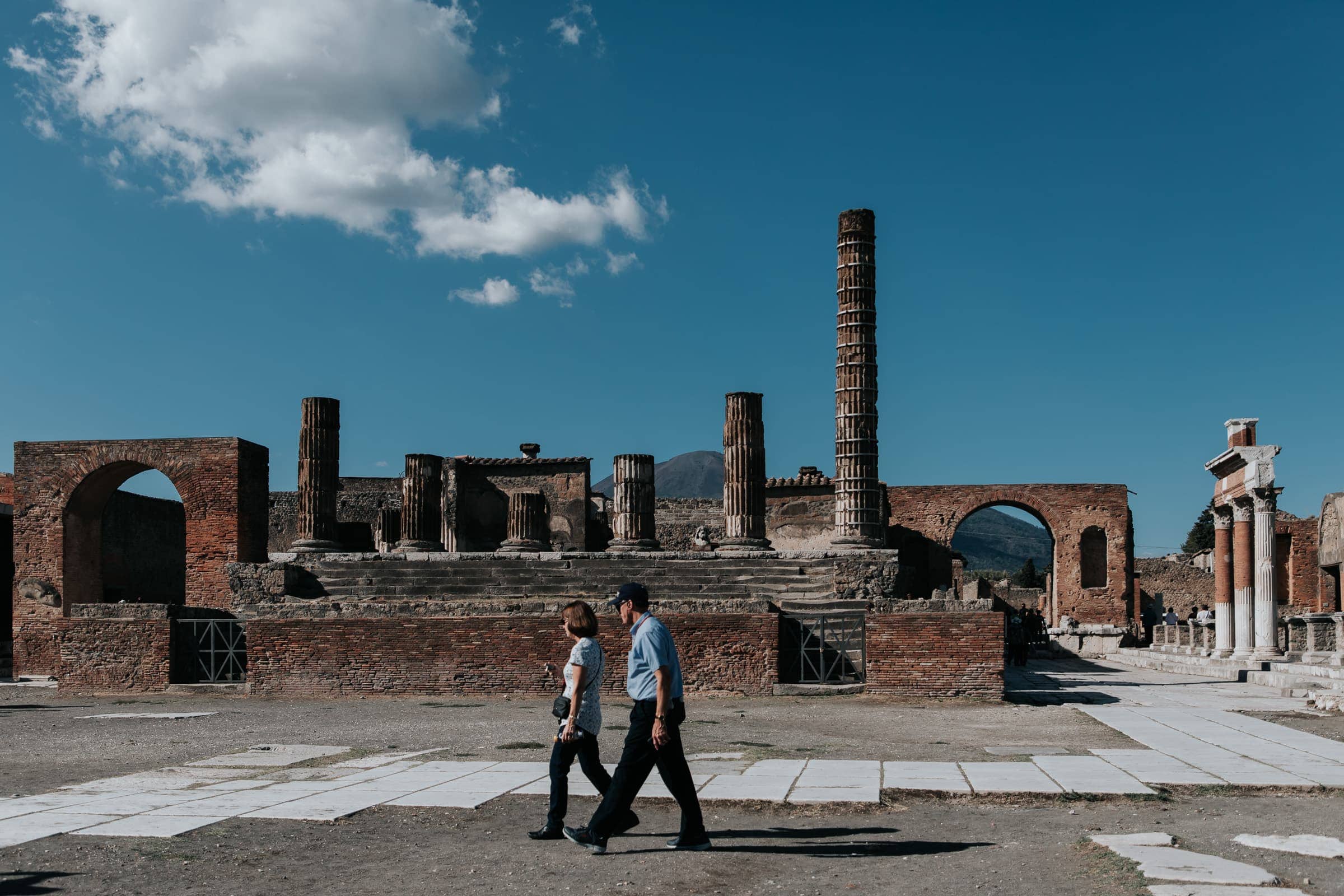
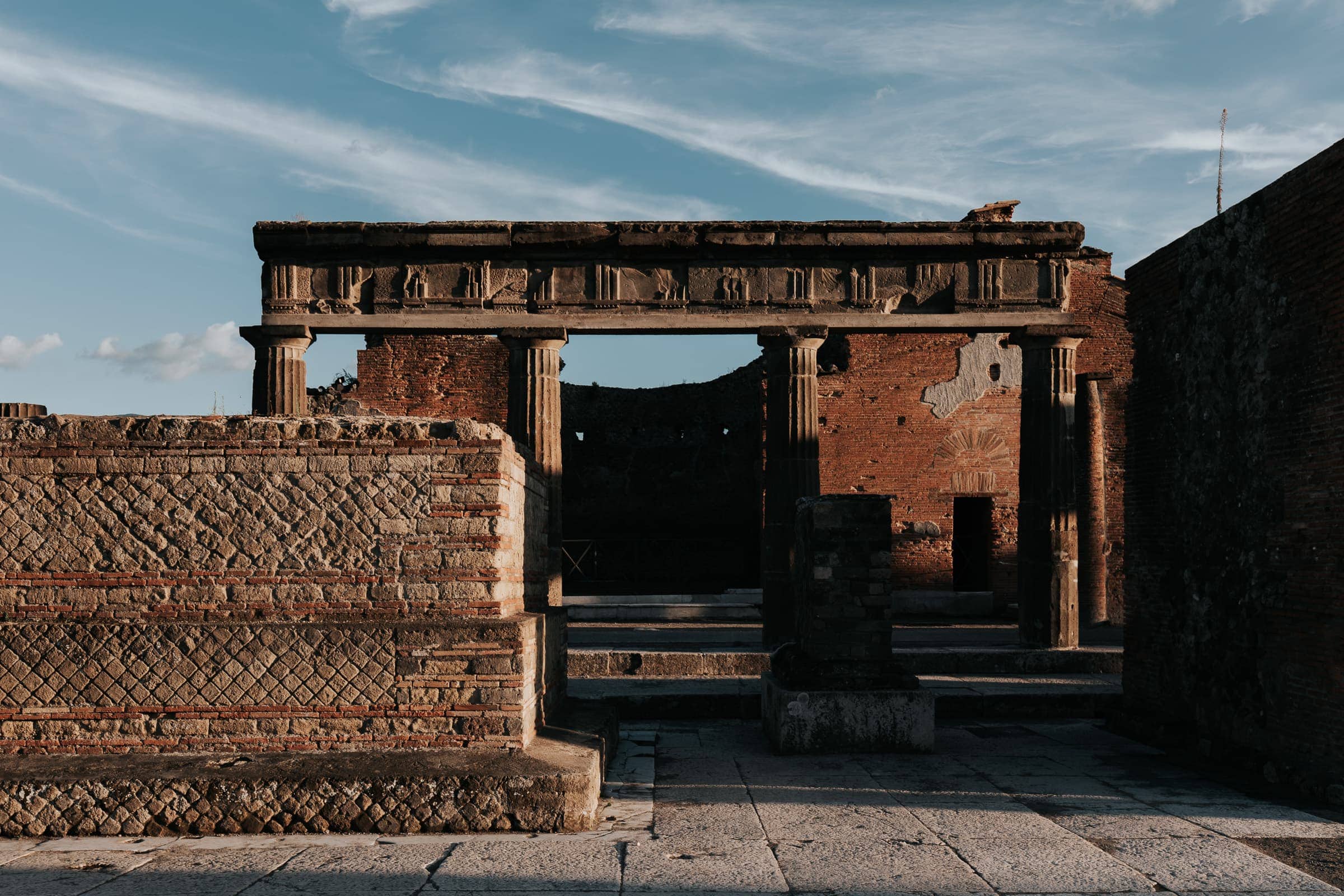
    Pompeii Forum Marketplace

    Attractions in Pompeii: Must-See from Naples.

    I have to admit archaeology is not my biggest area of interest. But I’ve been to Naples numerous times, not once of them to Pompeii, and Naples without Pompeii – that’s almost a travel faux pas. This time it should be different. Besides, we were on a big mother-daughter trip and really wanted to take everything with us. Also Pompeii.

    Pompeii Excavations, Archaeology, Attractions, Italy

    Pompeii: It’s best to have a plan.

    “Your best bet is to start in the Roman Seven quadrant, then Roman Eight, and then further back are the mummies,” said the cashier at the entrance, pointing to an itty-bitty portion of the huge map of Pompeii spread out before us. It was already half past three in the afternoon, the search for a parking lot before adventurous and actually every guidebook says: You will need a day to see Pompeii. I can only confirm this now! Not only because of the size, but also because of the overwhelming impressions. We actually only saw the part with the most important excavations, but that is fascinating enough.

    Book tickets for Pompeii online*

    Pompeii Via Stabiana

    First of all: Pompeii really impressed me. It is hard to grasp how advanced people were living 2000 years ago. The sheer size of the city, the preserved streets and buildings, are also hard to grasp and one vacillates between disbelief and amazement when imagining Pompeii at that time.

    Facts About Pompeii

    • In ancient times, Pompeii was a thriving trading city on the Gulf of Naples
    • became 79 A.D. completely buried under volcanic ash and rock after an eruption of Vesuvius
    • 1,500 years later, the first remains were rediscovered
    • It was not until around 1800 that serious archaeological excavations began
    • Today, two-thirds of the city’s former area has been excavated
    • After the Colosseum in Rome, Pompeii ranks second among the most-visited attractions in all of Italy

    The Forum: Marketplace and Heart of the City

    This is where the streams of visitors will automatically lead you: The Forum is the center of the city, so to speak. Interesting are also the former granaries on one side of the forum, where today archaeological finds are kept.

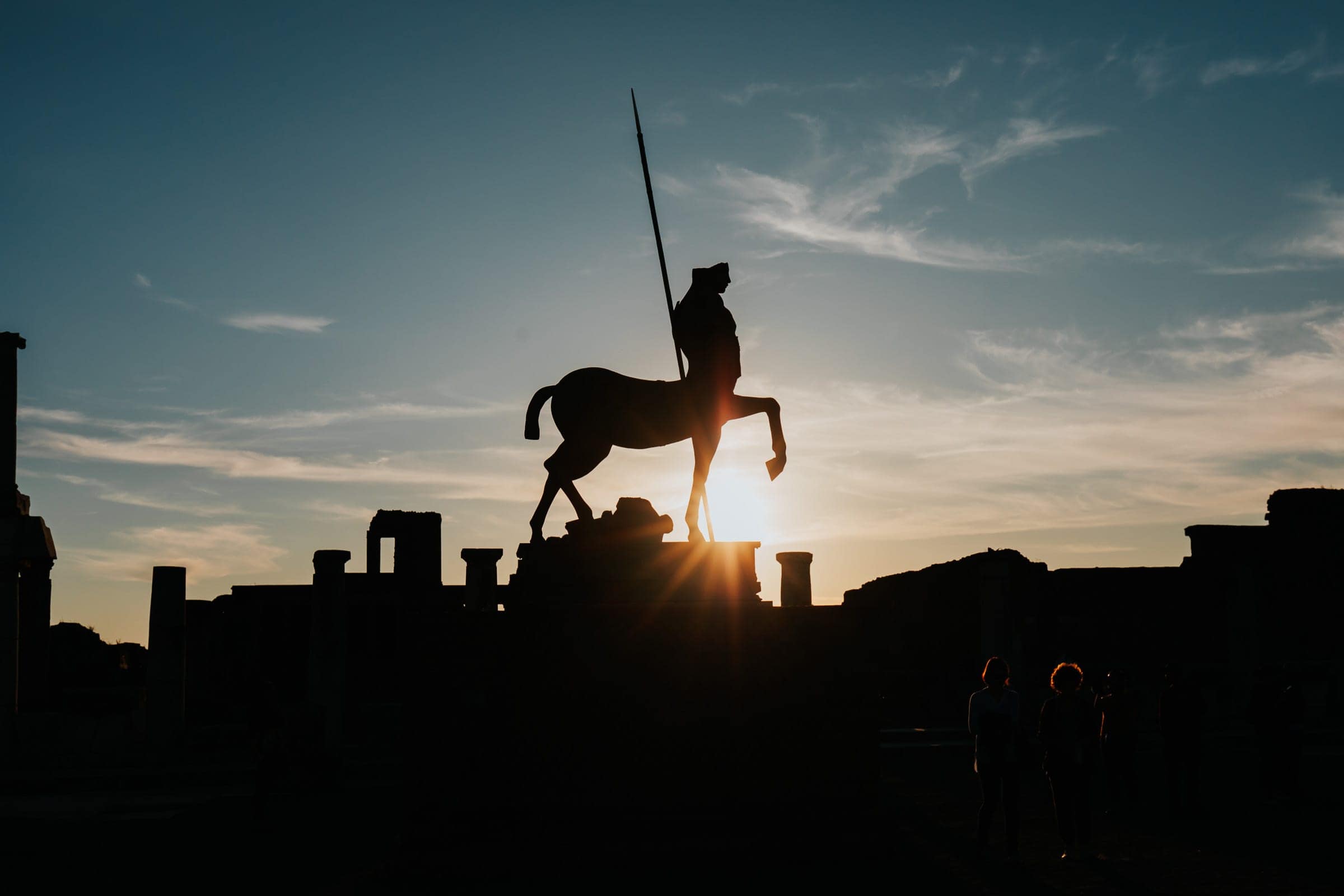
    Pompeii Vesuvius with Centaur

    Cave Canem in Pompeii: The Dog in the Casa del Poeta Tragico

    The house of the tragic poet shows one of the most famous motifs from Pompeii. A filigree floor mosaic in the entrance to the house, warning of the biting dog: Cave Canem (Latin for “Beware of dog”). A similar mosaic from another house can be seen in the Archaeological Museum in Naples. The crowd foreshadows: One of the most popular sights of Pompeii.

    Pompeii Cave Canem Casa del Poeta Tragico

    The Theater of Pompeii

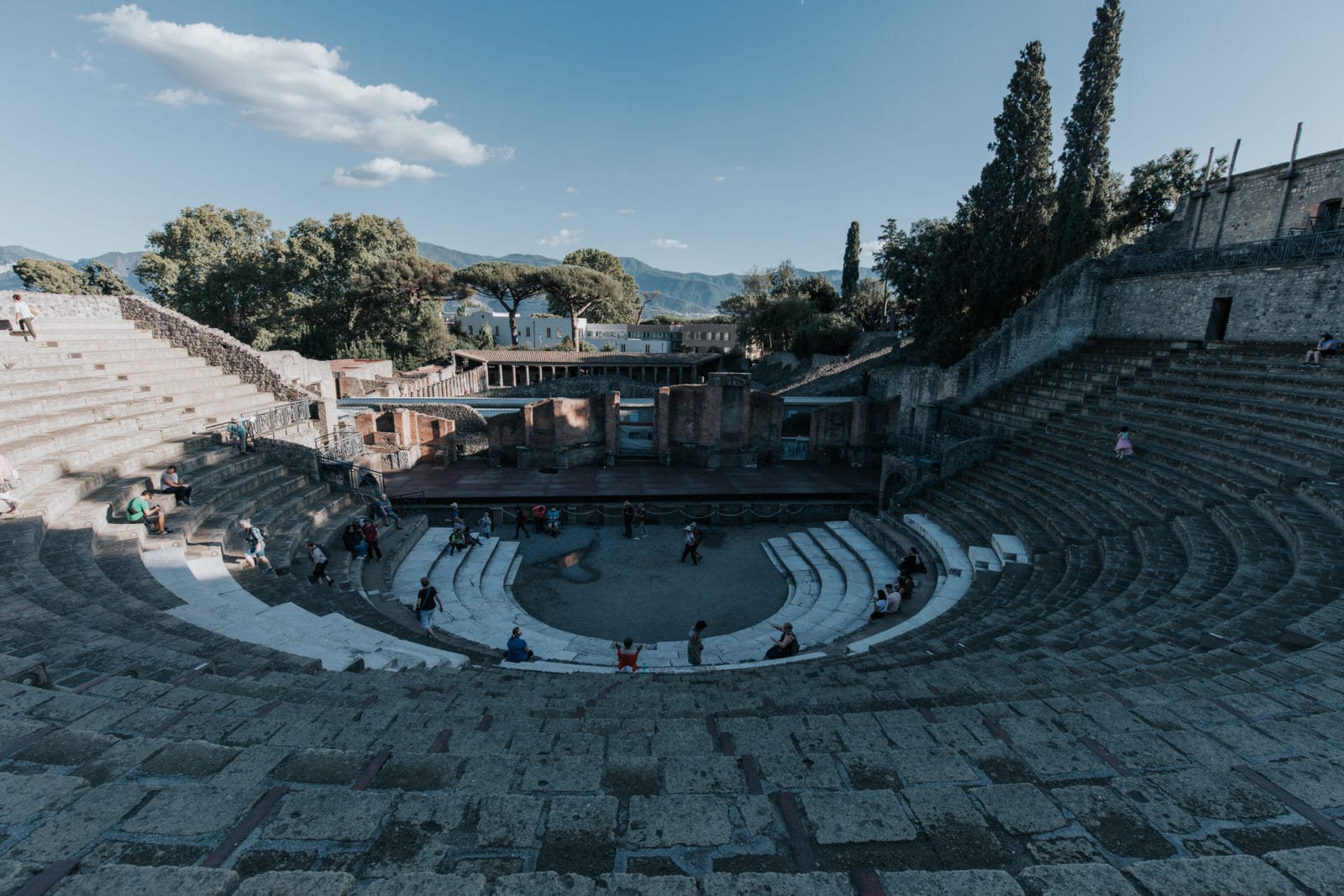
    Actually we wanted to visit the amphitheater at the other end of Pompeii, but our feet didn’t carry us that far. The area is really huge. For that, the Grand Theater is also quite impressive.

    Pompeii Attractions: Theater

    The Mummies of Pompeii

    No idea why the cashier always talked about mummies. But somehow it also sounds more reverent than the expression “corpses” of Pompeii, which is also sometimes used. In fact, some inhabitants of Pompeii were surprised by the eruption of Vesuvius and were buried on the spot by volcanic ash and rocks. Contrary to popular belief, some of Pompeii’s inhabitants had already fled before the great eruption.

    Pompeii Ruins Forum

    After a strong earthquake in 62 AD. with major damage, Pompeii was still half a construction site anyway and the volcanic eruption announced itself days before. During excavations, cavities were then found within the rock containing human remains and filled with plaster. Human outlines appeared, some of them in the middle of performing activities. The Orto dei Fugaschii (Garden of the Fugitives) contains the largest number of victims found in one place.

    I didn’t feel like taking any photos of it. But there are plenty of beautiful sights to take in—I never would have believed beforehand that Pompeii would make such an impression on me.

    Pompeii Thermal Baths Mural
    Pompeii Attractions: Forum, Sunset, Centaur
    Pompeii Ruins Vesuvius Naples
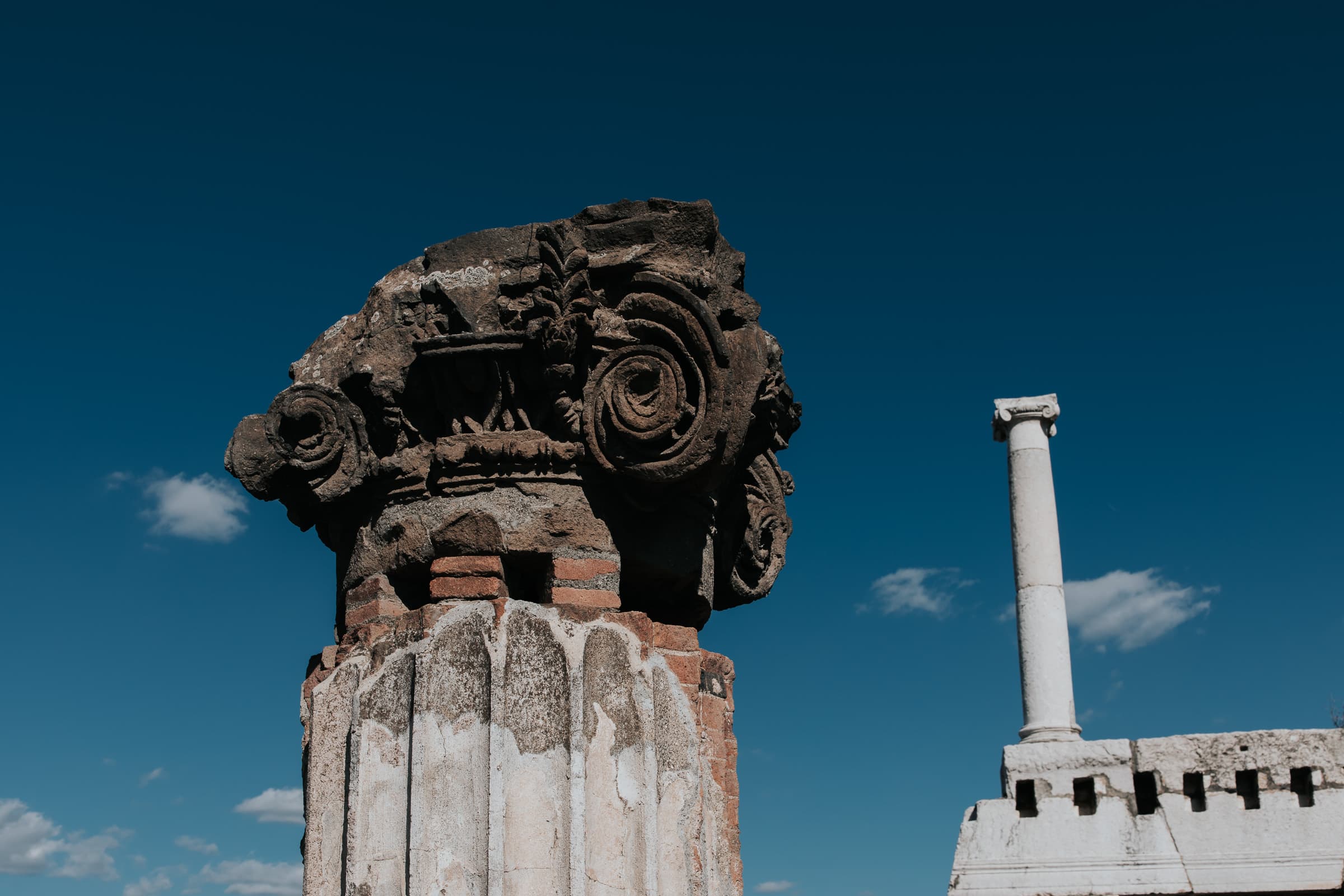
    Pompeii City at Vesuvius, Ruins, Volcanic Eruption

    Are you looking for more travel inspiration for Italy?
    ➜ Then click here to see all our Italy travel stories!

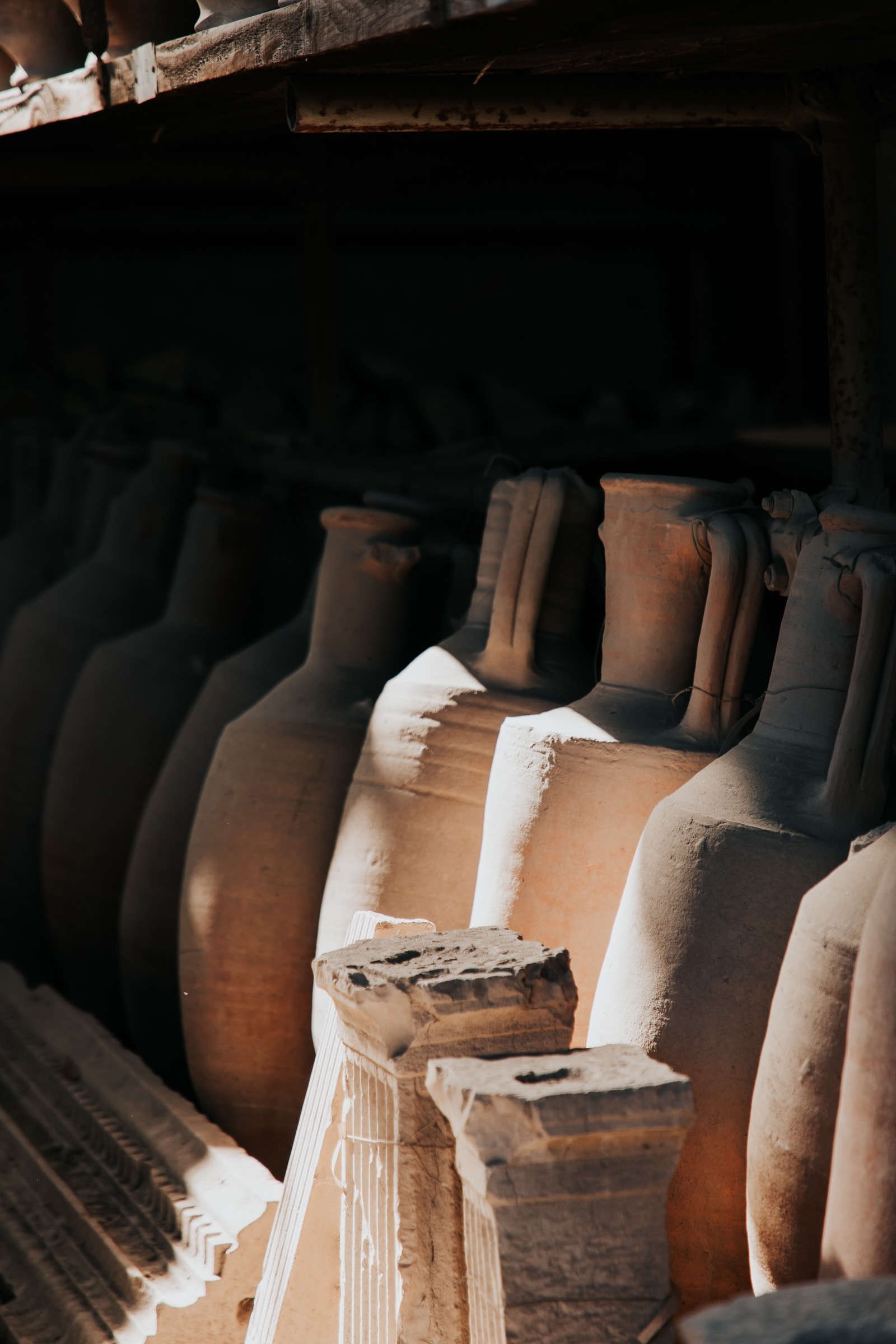
    Pompeii Italy Amphorae Archaeological Finds Granary
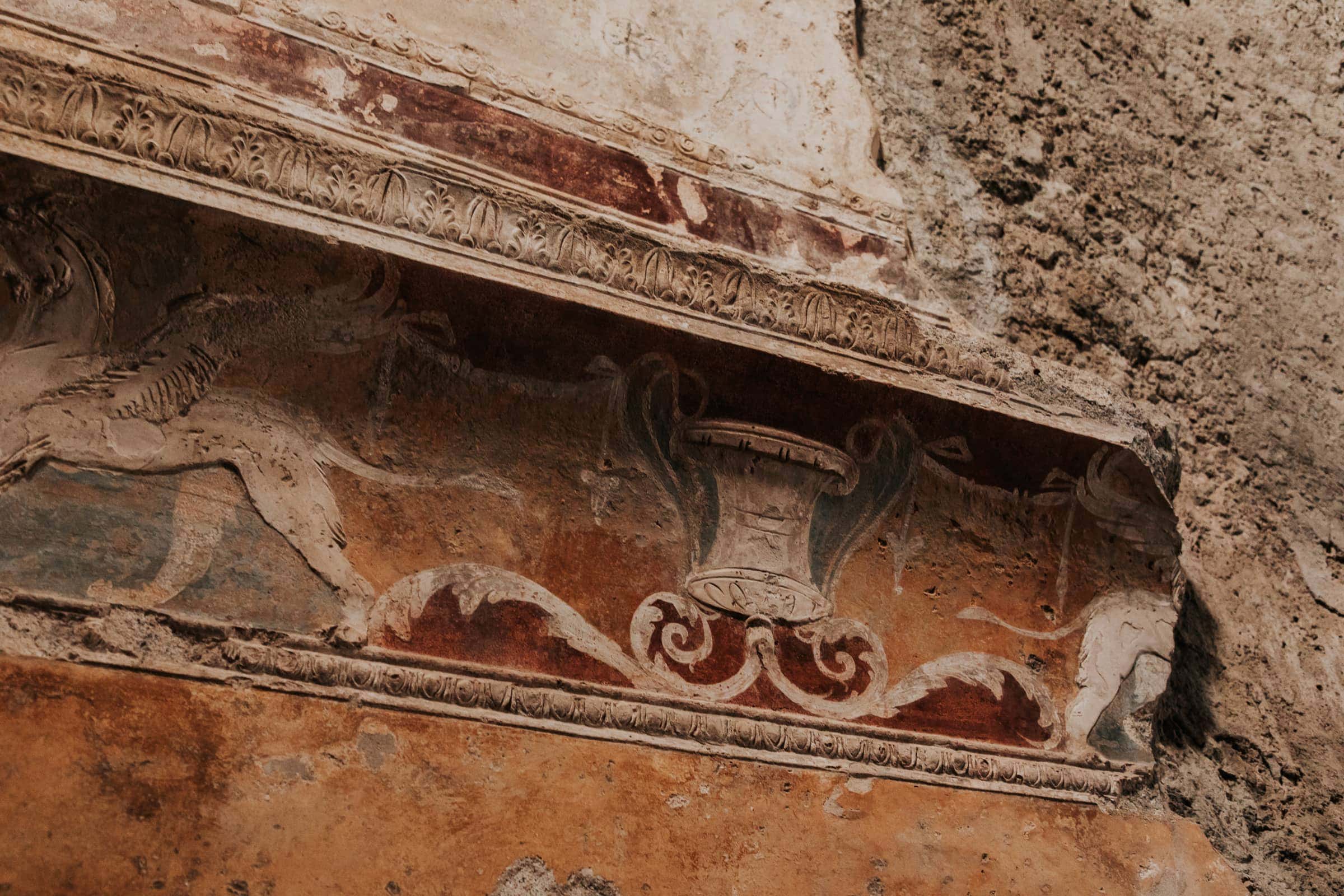
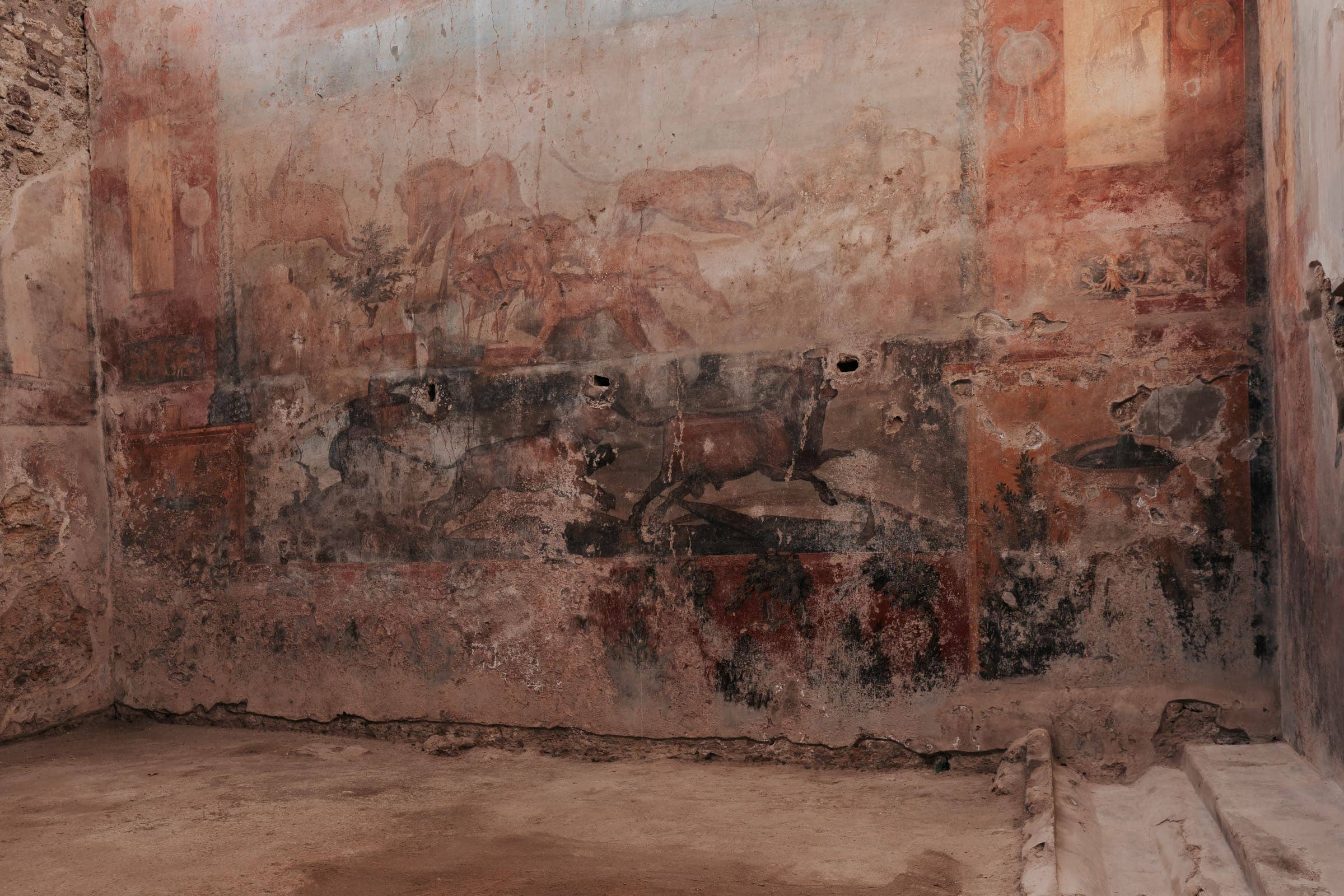
    Pompeii mural fresco
    Pompeii: Wall Paintings on Houses
    Pompeii Mosaic Floor

    Best Time to Visit Pompeii

    How you can even visit Pompeii in plain summer is a mystery to me. Even during our visit in the cooler month of October, the sun was particularly hot in Pompeii. The location on the hill, many open spaces and the massive stones everywhere quickly heat up the excavation. However, in bad weather and rain, I imagine the ancient roads made of cobblestones can be quite slippery. So we were very lucky with our sunny autumn day and had the best Pompeii weather. In summer, the sun is said to be merciless. The volume of visitors is also a challenge, even during off-season: we struggled to always find the right slot between two tour groups at each house.

    Practical Tips for Visiting Pompeii

    Tickets for the Pompeii Excavations

    Pompeii can be expensive: Admission alone costs €15. However, there are a number of discounts or even free admission for young adults, journalists, teachers, lecturers, students of relevant faculties. Admission is also free for children and teenagers under 18! I thought that was great. Unfortunately, neither of us fell into any of those categories.

    Tip: Avoid long lines and buy your ticket in advance! Buy your ticket to Pompeii online*

    Audio Guides

    Audio guides are available separately, and given the dimensions and historical background, a great thing – if they worked. The audio guides are stored on old smartphones, which supposedly have a battery life of four hours. Alleged. One of the two lasted only half as long with minimal use. At the price of 15€ for two audio guides this was very disappointing. The audio guides for Pompeii are available only at the entrance Porta Marina. For the rest, however, I was so impressed by everything that I had no capacity left to listen to an audio guide anyway. If I had more interest, I would probably still prefer to use a tour guide.

    Without a map, you’re practically lost in Pompeii: You can download the official site map of the archaeological site here

    What to Wear in Pompeii

    You can already guess: sturdy shoes are required. And real solid. Preferably shoes in which you do not slip much. Even though we were wearing comfortable sneakers, our feet ended up hurting. That’s because walking on those huge cobblestones is more uncomfortable than you might think. Thicker soles with some traction come in very handy! Sun protection—such as a hat, sunglasses, and sunscreen—is advisable or even essential, depending on your sensitivity to the sun.

    Parking in Pompeii

    We finally ended up in a restaurant parking lot that takes 3.50 euros per hour. This was about a 5 minute walk from the Porta Marina entrance. However, I have not seen cheaper alternatives at a comparable distance.

    Getting There by Bus and Train

    The Circumvesuviana train lines offer a relatively comfortable way to get to Pompeii. If we hadn’t had the rental car with us for the rest of our trip anyway, this would probably have been the better option. The Naples–Sorrento Circumvesuviana line stops at Porta Marina (station: Pompei Villa dei Misteri), while the Circumvesuviana–Poggiomarino line stops at the entrance to Piazza Anfiteatro (station: Pompei Santuario).

    From Naples, you can also book all-inclusive packages that include a tour guide and transportation:

    Where to Stay in Pompeii

    Pompeii is only a 40-minute drive from Naples. If you want to spend the night closer to Pompeii, e.g. because you want to get to the area at 9 a.m. or because you are on the way to Sorrento or the Amalfi Coast, a stop in the neighboring Castellammare di Stabia is a good idea. Accommodation prices are a bit lower here, and yet in this authentic little town you will find a nice beach promenade and a cable car that goes up to Monte Faito.

    ➜ Our B&B in Castellammare di Stabia (very well-maintained and centrally located)

    More tips for Naples:

    Naples City Guide: Sights, Tips, and the Best Spots!

    The best Margherita pizza in Naples!

  • 10 Best Things to do in Naples, Italy

    10 Best Things to do in Naples, Italy

    Naples is wild and rough, cheerful and fun at the same time. Perhaps it is also due to its proximity to Mount Vesuvius, the still active volcano, that Naples is literally bubbling with life. In this article, I’ll show you the best things to do in Naples, attractions you shouldn’t miss and I’ll give you insider tips for this delightfully chaotic city in Italy.

    Naples Castell Sant Elmo Vomero

    The best attraction in and around Naples

    Not even two hours by plane from Germany, you’ll land in Naples in another world: Naples is perfect for a short city trip! But also the region around the Gulf of Naples has a lot to offer: If you have time, you should definitely visit the Amalfi Coast as well! If possible, be sure to stay longer than just a few days or a weekend in and around Naples! From Naples you can explore the famous Amalfi Coast, impressive islands like Capri or Ischia, ancient Pompeii or Mount Vesuvius!

    ➜ Find cheap accommodation in Naples here
    ➜ Excursion to the Amalfi Coast from Naples*
    ➜ See Pompeii & Vesuvius in one day*

    Things to do in Naples Old Town

    #1 Centro Storico (Old Town)

    The Centro Storico, the old town, is where many of the sights in Naples are located. The name “Old Town” is actually misleading – also the rest of the city is quite historic. Because Naples is, to put it mildly, a very rustic city.

    Even in tourist areas like the old town, the alleys are still authentically dim and that the garbage all around might be something you should get used to when visiting Naples. Waste disposal is said to be firmly in mafia hands in Naples, and the fact that actual cleaning is not at the top of the government’s to do list is unfortunately noticeable. But it is exactly this patina that makes the charm of Naples!

    Things to do in Naples Old Town Café
    Things to do in Naples Old Town Fountain with Lion

    #2 Spaccanapoli: The main street of Naples

    The Spaccanapoli is the heart of Naples. On this shopping street you will experience the real Naples. Corner stores, old-established businesses, touristy souvenir shops or ice cream parlors, here, you’ll find it all. You won’t find Spaccanapoli under this name on most maps, because it actually consists of three streets: Via Maddaloni, Via Benedetto Croce and Via San Biaggio dei Librai.

    Naples Sights Spaccanapoli Sorbillo
    The Spaccanapoli is the heart of Naples.

    Along the Spaccanapoli are also many Naples attractions! In addition, it is always worthwhile to take a look at the small side streets and immerse yourself in real Neapolitan lifestyle. Definitely a good starting point to get to know Naples.

    Naples sightseeing old town clothesline with laundry
    Typical: Laundry is simply dried on the wildest constructions between the houses.

    ➜ You can find more impressions from Italy in my Italy Blog!

    #3 Cappella Sansevero

    At the Cappella Sansevero you get a taste of how much history and culture Naples has in store. The Cappella Sansevero is a former private chapel of a rich nobleman, the Prince of Sansevero, converted into a museum. He was a Freemason and an alchemist, so the small chapel looks more like a cabinet of curiosities of that time.

    The main attraction is the veiled Christ(Cristo velato), a marble statue laid out in the center of the main room – and crafted deceptively real! In the cellar there are still two anatomical models, which are just as intricate for the 18th century.

    Cappella Sansevero

    The entrance fee of 8 euros for the small chapel is quite expensive (by the way, photos are also prohibited and are immediately prevented by the museum guards!). Therefore, if you are on a tight budget, I would rather recommend a visit to the other museums of Naples if you are in the mood for culture.

    #4 Museums in Naples

    Other museums worth visiting in Naples:

    Museo Archeologico Nazionale di Napoli (MANN)

    The Archaeological Museum of Naples is one of the most important museums in all of Italy and one of Naples’ top sights. Here you can find many treasures of antiquity, including from Pompeii. (But since we went to Pompeii later, we didn’t visit the Archaeological Museum this time).

    Museo di Capodimonte

    The summer residence of the then King of Naples and Sicily now houses the Museo di Capodimonte with a huge collection of paintings from the Middle Ages to the Renaissance. Located a bit out of town, but definitely worth seeing for the surrounding park with views of downtown and Vesuvius.

    Museo d’Arte Contemporanea Donnaregina (MADRE)

    With so much heavy history and many churches, the MADRE can be a good change of pace: The Museo d’Arte Contemporanea Donnaregina (MADRE) houses modern and contemporary art.

    #5 Churches in Naples

    Il Duomo di Napoli

    My personal tip is always to visit churches anyway, if you want to get to know more about the cultural history of Europe, but don’t necessarily have the budget or time for extensive museum tours. And in the exceedingly pious south of Italy, churches can be found almost on every corner. In Naples you should not skip the Duomo.

    Naples Duomo

    Other churches worth seeing in Naples

    Complesso Monumentale di Santa Chiara

    Church with adjoining monastery. You have to pay an admission fee, but the cloister is a true oasis in the otherwise bustling old town of Naples.

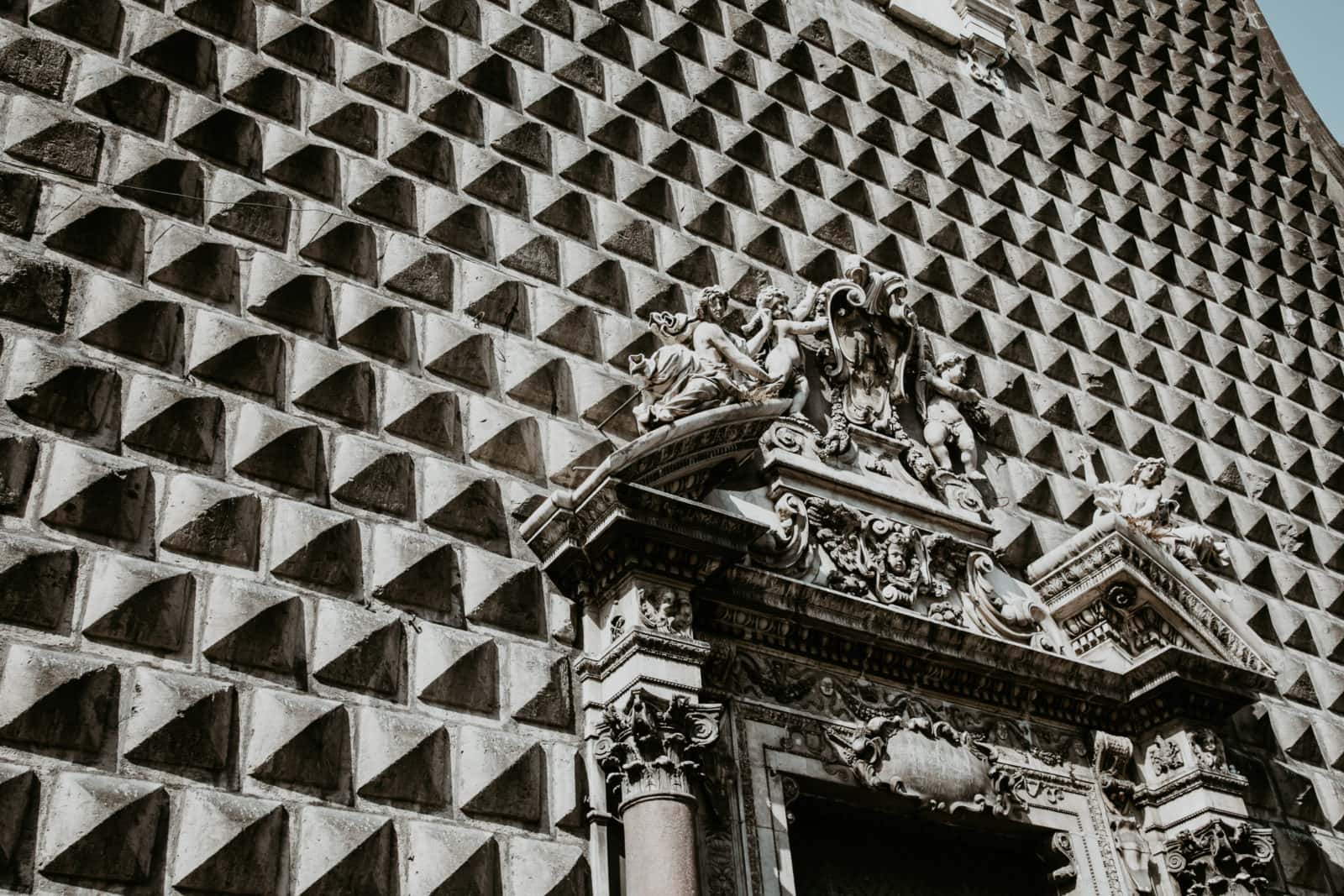
    Chiesa del Gesù Nuovo

    The facade of this church alone is extraordinary! Inside, things continue pompous again.

    Naples Attractions Chiesa del Gesu Nuovo
    Modernist facade of the Chiesa del Gesù Nuovo.

    #6 Via San Gregorio Armeno: The Nativity Street

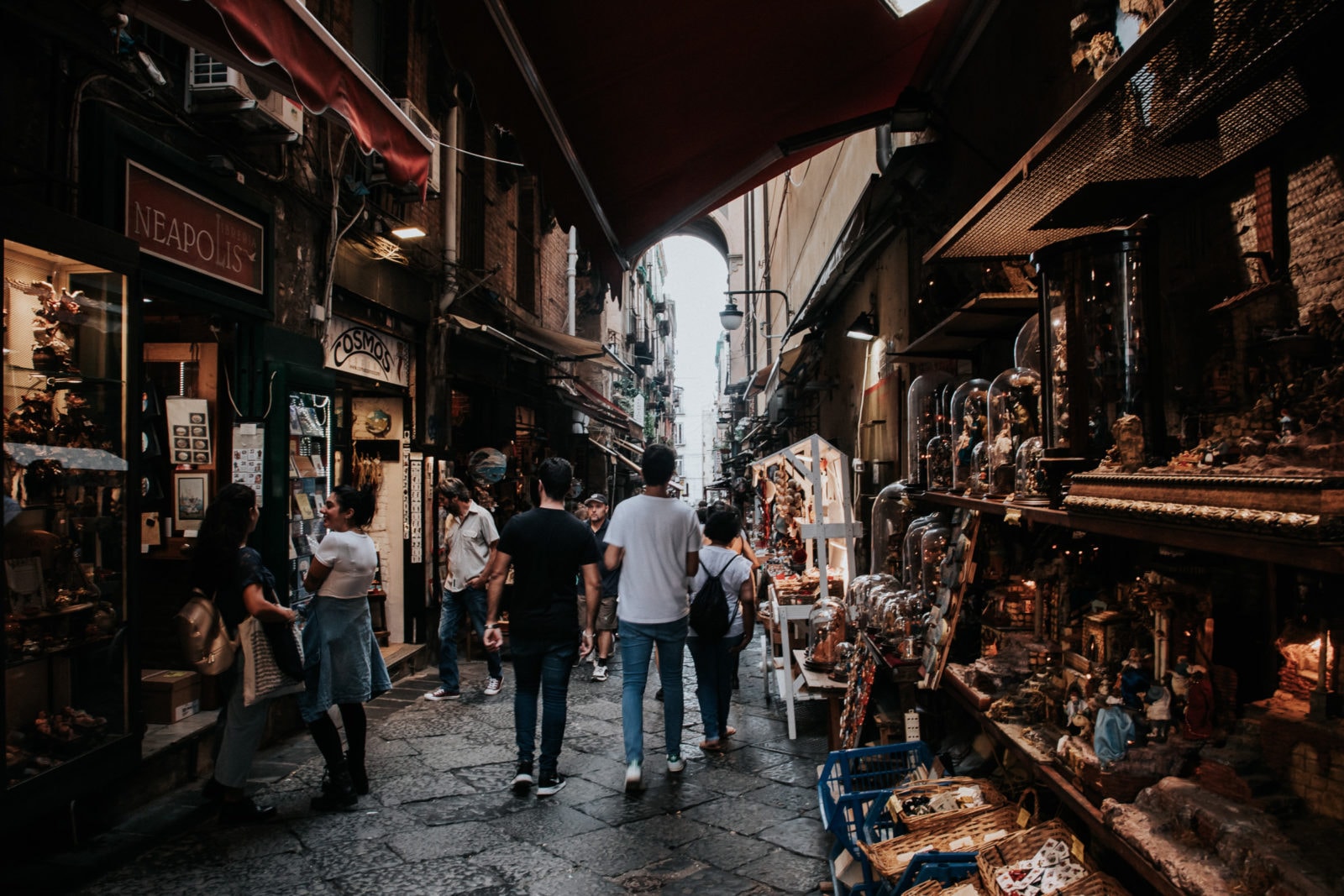
    The Via San Gregorio Armeno is one of the most extraordinary streets in Naples. Even if you are not religious you will enjoy the not necessarily always Christian nativity figures sold here on this street, some of which are still handcrafted. In between, there are all kinds of satirical things, such as toilet paper rolls with Italian and international politicians. The italian humor is one of a kind!

    Naples sights nativity scenes Via San Gregorio Armeno
    Via San Gregorio.

    #7 Vomero and the Castel Sant’Elmo

    If you want to experience Naples away from the touristy old town, I recommend a trip to the Vomero district. Vomero is a somewhat calmer district, many well-kept old buildings in tree-lined avenues and a pleasant street life – it almost seems a bit like being in Paris. We also had a fantastic lunch here, by the way, at a tiny family-run osteria. No menu, no one speaks English, but instead there is real homemade Neapolitan cuisine, della Nonna, of course.

    By the way, if you want to know where to find the most famous pizza in Naples, click here in my article: The best pizza in Naples

    Naples Osteria Donna Teresa
    Osteria Donna Teresa in Vomero

    Situated on a hill, Castel Sant’Elmo has the best view over the city. If you don’t want to pay the entrance fee, there is a viewpoint below the castle with a fantastic view over the old town, the harbor of Naples and the Vesuvius. The best way to get to Vomero is by metro (a sight in itself in Naples, by the way!) to Vanvitelli station, or by funicolare from Augusteo.

    Naples Castell Sant Elmo
    Best view over Naples
    Naples Funicolare Piazza Duca d'Aosta
    By Funicolare to Castel Sant’Elmo

    #8 Metro dell’Arte: Line 1 & Toledo Station

    The metro in Naples is still quite new, the first line was opened only in 1986. Some downtown stations were even added just a few years ago. Line 1 is nicknamed Metro dell’Arte because many of its stations are particularly artistic. Most worth seeing is the Toledo station – if you ride down the extra-long escalator here, you feel like you’re diving down into an aquarium. To get there, you need a valid metro ticket (single trip 1,10€). But I recommend you to buy a day ticket for your stay in Naples. It costs only 4,50€ and you can use ALL public transport like metro, bus and cable car!

    Naples Metro Toledo
    The most beautiful of all metro stations in Naples: Toledo.

    #9 Via Toledo & Galleria Umberto I

    Shopping enthusiasts will have a great time on Via Toledo. I still think Italy is a teeny bit ahead in terms of fashion. Here you can still get the most beautiful clothes, from cheap to high-end, and just watching the Italians with their unique fashion sense gives you enough inspiration for your own closet. Those who are not so fashion-savvy may be pleased to see the many small snack stands, the friggitorias, with the typical deep-fried Neapolitan delicacies.

    Naples Galleria Umberto I
    Impressive: The Galleria Umberto I

    At the end of Via Toledo, almost somewhat hidden, is the Galleria Umberto I, a shopping gallery in the style of Galleria Vittorio Emmanuele II in Milan. Whenever I enter such shopping galleries, I’ll always enjoy the particular Italian style. The architecture is so impressive!

    Naples sights Galleria Umberto roof dome glass

    #10 Piazza Plebiscito to Castel dell’Ovo

    Naples can be beautiful, but it can also be exhausting: The many small streets, uphill, downhill, the noise everywhere, the bustling traffic and daring scooter riders make the old town of Naples an experience. From Piazza Plebiscito you can take a short walk that will take you to a more relaxed area. Piazza Plebiscito is a real huge square, quite a contrast to the narrow old town. From here you can walk down to the water and enjoy the view of the Gulf of Naples and Mount Vesuvius with an Aperol Spritz in one of the simple beach bars on Via Nazario Sauro. For me one of the most beautiful places in Naples!

    Naples Promenade

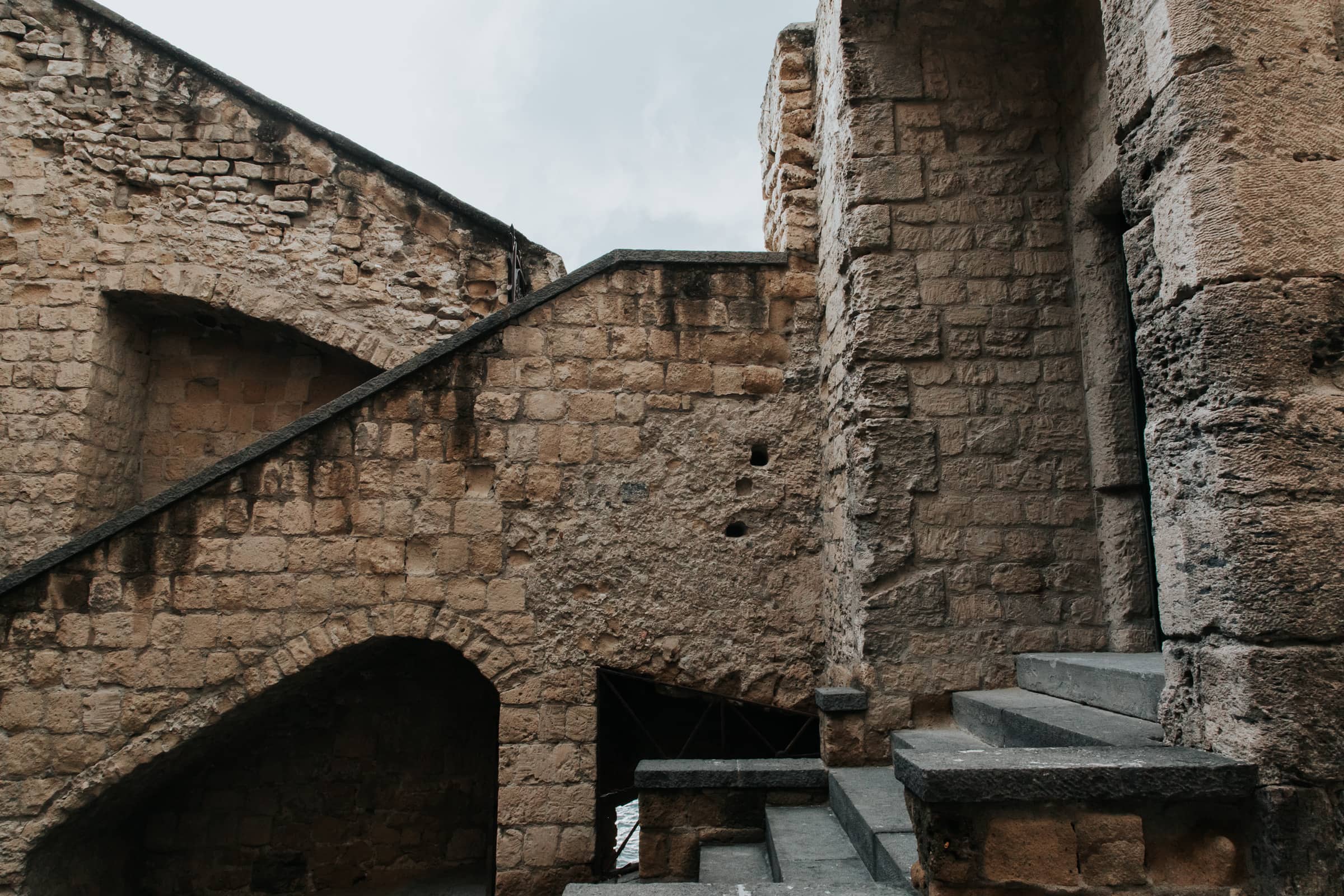
    A little further on you will come to Castel dell’Ovo, a really impressive castle. Many rooms of the castle are not open to the public, but the entrance is free and from the top you also have a beautiful view.

    Tips & hacks for your trip to Naples

    Safety in Naples

    Naples is one of the European capitals of pickpockets, along with Barcelona. I have been to both cities several times and personally, I think Barcelona is much more dangerous in terms of petty crime. Naples never seemed to me as critical as people say, except perhaps the area around the main train station. Nevertheless, you should be just as careful in Naples as in other big cities: Stow your cell phone and wallet away well and always be a little careful.

    Tip for photographers

    I always had my big camera * with me and haven’t been only for ergonomic reasons grateful for my cross body strap* . It also makes the camera less interesting for potential thieves, because you can’t tear the camera off the body. Cars should be parked in monitored parking lots or parking garages and do not leave valuables in them.

    ➜ You can find my full camera equipment here

    Piazza del Plebiscito by night
    Piazza Plebiscito by night

    Best time to visit Naples

    In my opinion, spring or fall is the best time to visit Naples. Under no circumstances would I recommend August (as for all other Italian cities). It gets very hot, besides August is general vacation month in Italy. Many stores are closed and the city is full of tourists.

    Accommodation in Naples

    In Naples, there are numerous small Bed & Breakfasts or apartments. We stayed at Tutt’e Sant Luxury Rooms, a small B&B consisting of only two very individually and tastefully furnished accommodations – with an authentic Neapolitan view. Particularly amusing was the elevator with absolute vintage flair, which ran right through the huge stairwell – and was equipped with a coin machine where you had to insert 5 cents before each ride. Quirky!

    How to get to Naples

    There are now many direct flights from different European cities to Naples, but unfortunately the airport is far too small for all the crowds that land there every day. It’s quite messy. You really need a good set of nerves there.

    Statue in the old town of Naples
    Reached by plane in two hours from Germany: Naples is perfect for a short trip.

    From the airport you can get to the city by cab or public bus. If you go by cab, you will be asked whether you want to pay the flat rate (to the city about 18 euros, price list is displayed in the cab) or by taximeter. We thought we were particularly smart to choose the taximeter, but then had to pay 5 euros more. So don’t be shy to choose the flat rate.

    If you want to travel from another city in Italy, I can also recommend the Italian train.

    Driving through Naples by car, by the way, is adventurous (but doable if you follow Italian traffic rules: they are basically non-existent). In addition, car theft is not uncommon. We booked a rental car for our further trip to the Amalfi Coast, but at the rental office we were told to park the car in Naples in guarded parking lots only. I therefore advise you to book a rental car only when you continue your journey from Naples to the surrounding area. Many car rental companies also have stations in the city center around Garibaldi Central Station.

    ➜ Book a cheap rental car in Naples here*

    Excursions from Naples

    Naples is a perfect starting point for a road trip to the Amalfi Coast or excursions to the islands of Capri, Ischia or Procida in the Gulf of Naples.

    Ideas for excursions from Naples:
    ➜ Trip to Capri
    ➜ Archaeological excavations in Pompeii
    ➜ Road trip along the legendary Amalfi Coast
    ➜ What you must see on the Amalfi Coast!

    View of Vesuvius from Naples
    Visible from Naples: Mount Vesuvius.

  • Ocna Sibiului: The Salt Lakes of Sibiu in Romania

    Ocna Sibiului: The Salt Lakes of Sibiu in Romania

    Sometimes my job takes me to the most remote corners, which often leads to questions about my leisure activities: What do people do in Sibiu, Romania? For warm days, I discovered the healing springs of Ocna Sibiului. They are very close to Sibiu and are an incredible bargain.

    Well, it’s a bit rustic, but for the few cents admission you really can’t complain. The complex itself consists of several small salt lakes, former salt pans – and they are so salty that you can float on the surface of the water without sinking a bit. Swimming is almost impossible, you feel more like a floating buoy. And it’s so relaxing! One of the lakes even has a higher salt concentration than the Dead Sea.

    Ocna Sibiului Salt Lake
    Just let yourself drift: The salt lakes of Ocna Sibiului.

    Bathing lakes, mud baths and beautiful skin

    A special highlight is the mud bath – a spring full of black mud in which everyone can wallow together and rub themselves with mud. We have been told that it makes your skin really beautiful, is good for rheumatism and actually heals everything.

    Ocna Sibiului Mud healing springs health resort
    This mud makes really beautiful skin.

    I can’t confirm that, but the skin feels really great afterwards. Only the slightly musty smell could be improved. When the three of us got into the cab back to Sibiu after a whole day of salt and mud baths, I felt kind of sorry for our cab driver. But he took it in his stride.

    In fact, we were the only foreigners far and wide at the lakes – and were a bit of the attraction of the day. We communicated with our hands and feet and were initiated into the correct technique for a perfect mud bath.

    Ocna Sibiului outdoor pool Sibiu

    Ocna Sibiului: Wellness in Romania

    The spa town of Ocna Sibiuliu is located near the city of Sibiu in Transylvania, Romania. In recent years, there has been increased investment in the old spa complex with the salt lakes. However, the entrance fee is so cheap that I can’t remember the exact amount.

    Ocna Sibiului Health Resort Romania
    Rustic and often improvised: This is exactly what makes places like Ocna Sibiului in Romania so charming.

    Accommodation & Arrival Ocna Sibiului

    There is some basic accommodation around the salt lakes, but the salt lakes can also be reached quickly and cheaply by cab from the center of Sibiu. There are direct flights to Sibiu from several German airports.

    All accommodations near the salt lakes near Sibiu

    Ocna Sibiului Salt Lakes Romania
    Ocna Sibiului Salt Lakes Skin Care Wellness
    Ocna Sibiului Salt Lakes Sibiu
    Ocna Sibiului Spa Mud Application
    Ocna Sibiului Lakes Romania

    ***

    More excursions for Sibiu:

  • Santa Teresa in Rio de Janeiro: The Best Hotspots

    Santa Teresa in Rio de Janeiro: The Best Hotspots

    Copacabana, Sugarloaf Mountain, beaches —these are probably the first images that come to mind when you think of Rio de Janeiro. And rightly so, because no trip to Rio is complete without visiting these places! However, Rio de Janeiro is so much more than that: the artistic neighborhood of Santa Teresa, for example. Perched on a hill, Santa Teresa feels almost like a completely different world. Santa Teresa has always been a magnet for artists and creative types in Rio de Janeiro. In this article, I’ll tell you what else makes Santa Teresa so interesting.

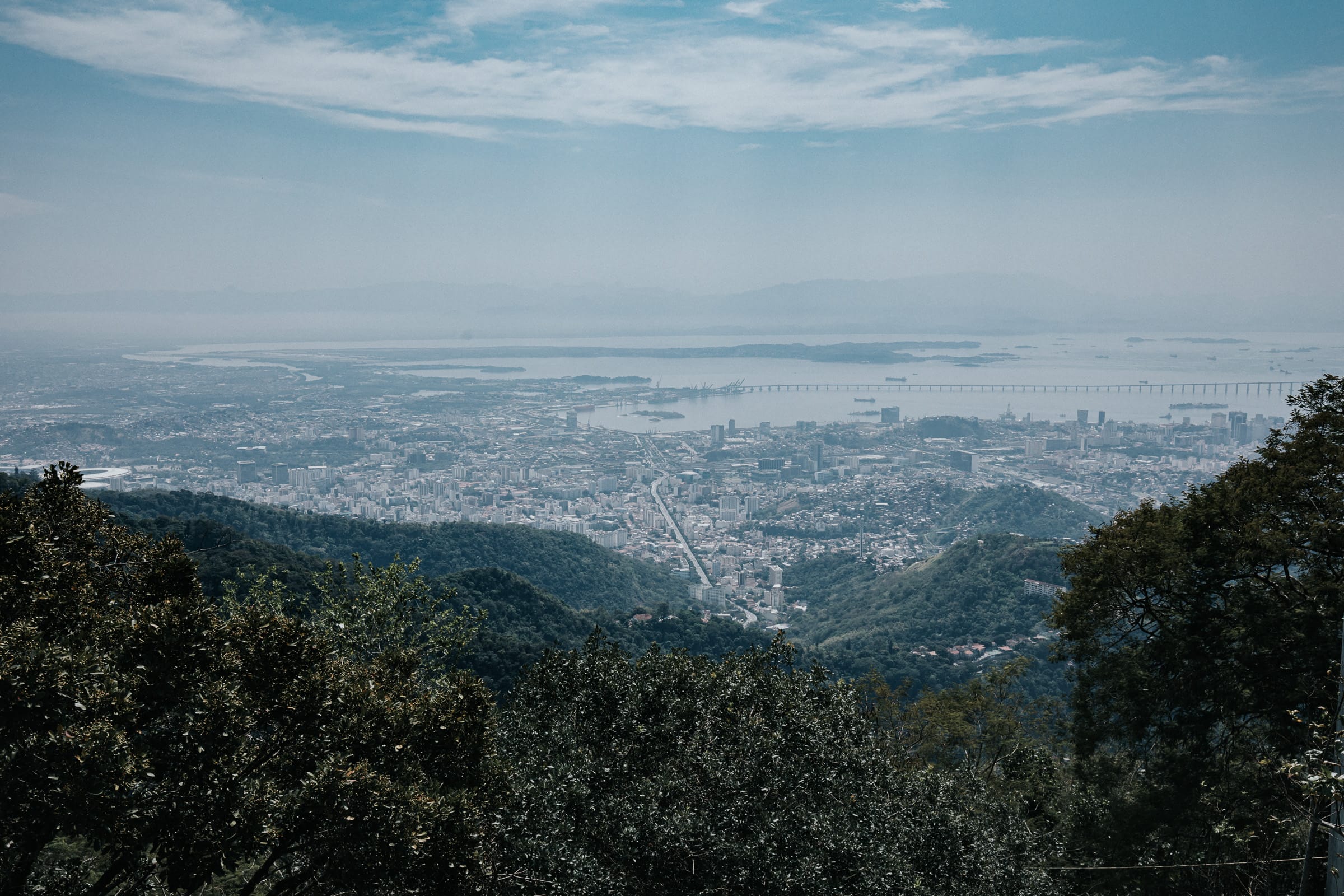
    Santa Teresa Rio de Janeiro View
    View from Santa Teresa

    Santa Teresa: The creative hotspot in Rio de Janeiro

    Santa Teresa is one of the older districts of Rio de Janeiro. The European immigrants who settled here at the beginning of the last century also brought their different architectural styles: There are impressive city villas in all kinds of styles all over the place. Santa Teresa is also located on one of the many hills in Rio. Therefore, from many houses, you have a great view over the city. For a long time, Santa Teresa was a neglected part of Rio de Janeiro – until it was rediscovered by many creative people and artists in the last years! Today I consider Santa Teresa to be one of the most exciting parts of Rio de Janeiro!

    Santa Teresa Rio de Janeiro Street Art

    Brazil is a fascinating country:
    More travel stories from my second home

    Santa Teresa Rio de Janeiro

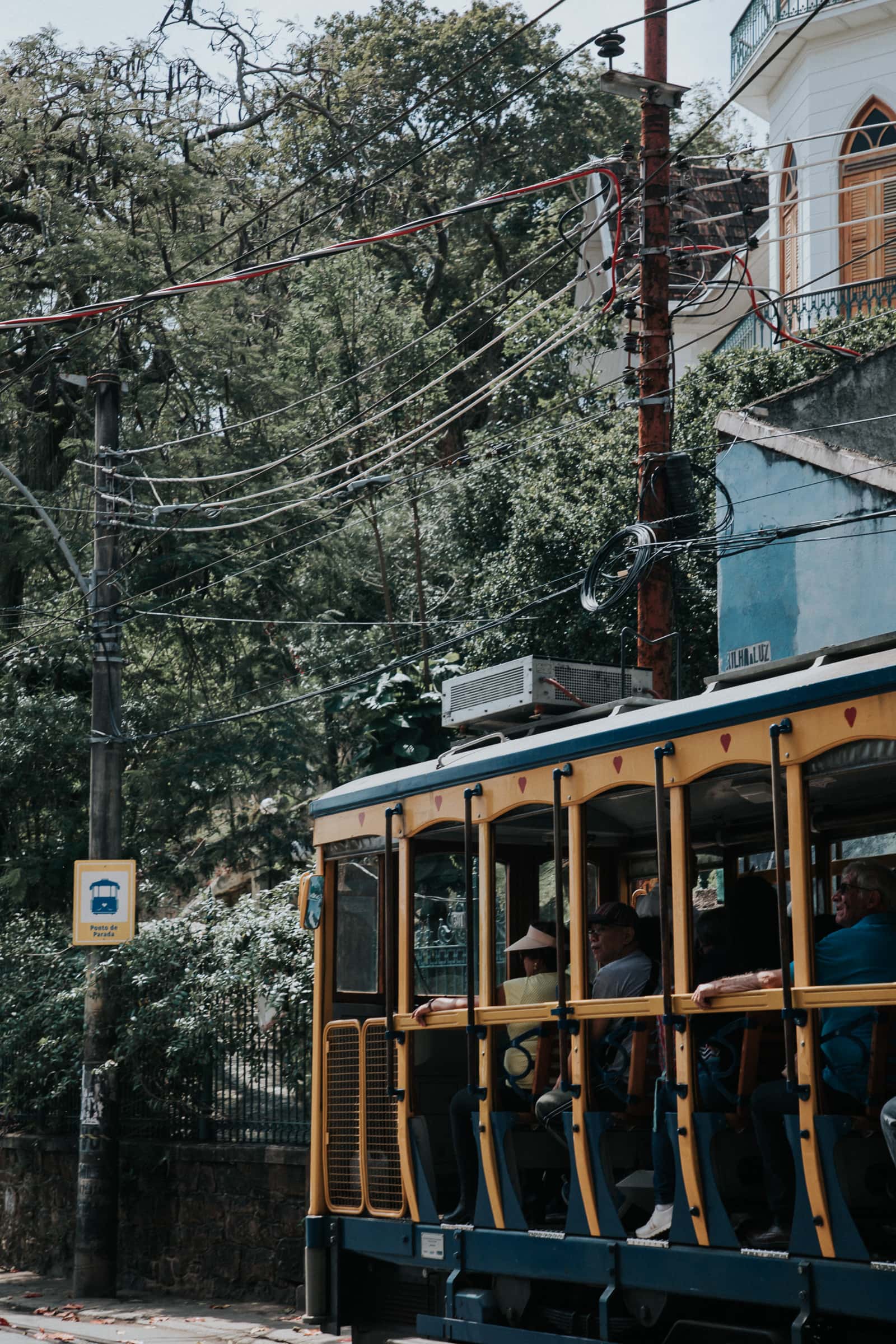
    Santa Teresa’s historical streetcar: O bonde de Santa Teresa

    The nostalgic tram is the landmark of Santa Teresa (called “bonde” in Portuguese). You can ride up and down through Santa Teresa to the famous Arcos da Lapa. The Arcos da Lapa are a narrow aqueduct and the tram runs on top! A true experience! After there was a serious accident some years ago, the tramways are however not that crowded anymore: In former times, you could take the train for free if you just jumped up and held on outside.

    Santa Teresa Rio de Janeiro Largo dos Guimaraes

    One ride costs 20 Reais (about 5€), but it’s worth it! It is best to get on at the beginning of the line at the Estaçao Carioca. From there, the train goes up the Arcos da Lapa to Santa Teresa. Unfortunately, there is no day ticket, so either you have to buy a new ticket every time you want to get off the tram and on again. Or you can change to Uber or Bus. Therefore, I recommend to drive up to the terminal station first and then to work your way down again.

    Santa Teresa Rio de Janeiro Streetcar Bonde

    The Santa Teresa tram is one of Rio’s landmarks. You can find out more about even more famous sights, such as the Christ the Redeemer statue and Sugarloaf Mountain, in this article: The Most Beautiful Sights in Rio de Janeiro

    Tips for Santa Teresa in Rio de Janeiro

    The Largo dos Guimaraes is the heart of Santa Teresa! Especially on weekends, restaurants and bars are well filled! Here you can enjoy typical Brazilian cuisine, even Cariocas come here to the traditional Feijoada lunch (bean stew with rice) on Saturday. Some nice addresses:

    Bars, Restaurants und Cafés

    Explorer Bar

    A small bar near Largo dos Guimaraes with fantastic cocktails (the caipirinha is great here, but the rest of the menu is highly recommended!) serving Israeli-Brazilian cuisine with many original vegetarian and vegan dishes. There’s also a small boutique hotel attached to the bar. Click here for prices and info*

    Livraria Largo das Letras

    Bookstore with café in a romantic courtyard directly at Largo dos Guimaraes! Good for a short break from sightseeing!

    Santa Teresa Rio de Janeiro

    Adega do Pimenta

    German cuisine may not be your first choice when in Brazil, but the atmosphere at the Adega do Pimenta is so bizarre that you might change your mind. One of the institutions in Santa Teresa which has been around forever!

    Bar do Mineiro

    Another classic in Santa Teresa: The perfect address for a Brazilian feijoada, Brazil’s national dish. If you aren’t that hungry will also find typical snacks like Salgadinhos, which are traditionally served with an ice-cold beer.

    Accomodation

    Santa Teresa has a lot of great airbnbs. Especially if you are into cool design and a creative environment! I stayed in a small house that belongs to an artist collective; very nice and definitely an unusual place to stay.

    If you prefer more hotel-like accommodations, this is perfectly situated with the Explorer Bar on the first floor and close to Largo dos Guimaraes: Discovery Suites Rio*

    If you want to spoil yourself a little bit I’ll recommend this place: MGallery Santa Teresa*

    Safety in Santa Teresa und Rio de Janeiro in general

    Santa Teresa is not a super unsafe part of the city due to the many tourist attractions. But you have to be very careful here as well. In the evenings, it can get a little more deserted here and not all streets are so busy that you might feel uncomfortable. As a solo traveller (and half-Brazilian, who is familiar with local habits), I didn’t always consider Santa Teresa the best place to stay overnight.

    I had booked a nice Airbnb, which was centrally located, but in a quieter street. In the evening, I always took an Uber, when I left my place. But I’ve heard from many drivers that Santa Teresa isn’t a popular destination for some drivers due to its remote location and because there are some shady people around, especially at night.

    During the day, I felt safe in Santa Teresa. Just be cautious and don’t talk longer walks around the neighbourhood at night.

    You can also find out more about safety in Rio de Janeiro in this article:
    ➜ Alone as a woman in Rio de Janeiro – is it really that dangerous?

    Rio de Janeiro landmark Santa Teresa bonde
    The old streetcar is the landmark of Santa Teresa.
  • The 10 Best Things to Do in Rio de Janeiro

    The 10 Best Things to Do in Rio de Janeiro

    Rio de Janeiro is one of the most impressive cities in the country and should not be missed on any trip to Brazil, even as a half-Brazilian, the beauty of Rio knocks me off my feet every time. And I’m not alone in this. Everyone knows the famous sights in Rio de Janeiro, such as Sugar Loaf Mountain and the Christ the Redeemer statue! In this article, I’ll tell you what you shouldn’t miss in Rio. So off to the best Rio sights! By the way: At the end of the article you will find some very helpful tips for your stay in Rio, read them carefully!

    #1 Cristo Redentor / Christ the Redeemer

    From here you have the perfect view of the Cidade Maravilhosa, the great city, as Rio de Janeiro is often called. You can get to the Corcovado by car (or coach), the Corcovado train or even on foot via a hiking trail.

    An excursion to the Cristo Redentor is only worthwhile in good weather, in Rio the weather can change quickly and on cloudy days you really can’t see anything. But when the sun shines, you have the complete Rio panorama: breathtaking! It’s worth coming early as it’s a little emptier then.

    Buy your ticket for the Corcovado cable car and Christ the Redeemer in advance & avoid the queue*

    Rio de Janeiro sights Cristo Redentor
    It’s worth arriving early to avoid the crowds on the Cristo Redentor viewing platform.
    Rio de Janeiro sights Cristo Redentor Jesus Christ statue
    The world-famous Rio landmark: Jesus with outstretched arms.

    #2 Tijuca National Park / Floresta da Tijuca

    Rio de Janeiro is surrounded by lush nature, vast forests, and green mountains. Right in the heart of the city lies Tijuca National Park, known as the Floresta da Tijuca. Corcovado, home to the Cristo Redentor statue, is also part of the national park. In the past, almost the entire area was cleared by coffee farmers; in the mid-18th century, the clearing was halted and the land was reforested. Today, it is home to dense forest with many waterfalls and beautiful hiking trails. It’s hard to believe you’re in the middle of a major city!

    Rio de Janeiro sights Tijuca Waterfall National Park
    In the middle of Rio: pure nature in the Tijuca National Park.

    Are you planning a trip to Brazil?
    Check out my Brazil blog for even more helpful tips and inspiration!

    #3 Pão de Açúcar / Sugarloaf Mountain

    Unfortunately, I had a bit of bad luck with the weather this time: In the pouring rain, it’s not worth taking the cable car up to Pão de Açúcar (Sugar Loaf). However, I’ve already been up there twice on previous visits. The best time to go up is at sunset! Down below, at the foot of Pão de Açúcar, in the Urca neighborhood, is Praia Vermelha, a beautiful little city beach.

    Buy your ticket for the cable car here*

    Rio de Janeiro Sights Sugar Loaf Pao de Acucar
    Easy to see from Cristo Redentor: The Sugar Loaf Mountain with cable car.

    #4 Escadaria Selarón

    Jorge Seláron, a Chilean artist, began renovating the dilapidated staircase in front of his house in the 1990s. Not just like that, he covered them with thousands of pieces of tile, mainly in the colors yellow, green, red, white and blue, the national colors of Brazil and Chile. His small work of art grew in size and popularity, and many tourists brought back tiles with motifs from their hometowns, which Selarón then also used.

    Selarón died a few years ago, but his staircase is now one of Rio de Janeiro’s visitor magnets. Incidentally, the Escadaria Selarón can also be seen in a fairly well-known music video: “Beautiful” by Pharell Williams feat. Snoop Dogg.

    Rio de Janeiro sights Escadaria Selaron

    #5 Arcos da Lapa

    Near the Escadaria Selarón are the Arcos da Lapa, an imposing white aqueduct. At the top of the narrow Arcos da Lapa, after a long period of restoration (there was a serious accident years ago), the old streetcar, “o bonde”, is running again, and you shouldn’t miss a ride on it! It’s best to take it straight up to Santa Teresa!

    #6 Santa Teresa

    Santa Teresa is the neighborhood of creatives and bohemians in Rio de Janeiro! The historic streetcar (called bonde or bondinho) also runs along this route. In Santa Teresa, you can stroll through the streets around Largo do Guimarães, discover small stores and studios and enjoy a pleasant meal in the surrounding restaurants and bars.

    Rio de Janeiro landmark Santa Teresa bonde
    The old streetcar is the landmark of Santa Teresa.

    #7 Rocinha, Vidigal, Complexo do Alemão & Co.

    Rocinha, Vidigal, Complexo do Alemao—you’ll come across these names of favelas from time to time. However, never, ever go into a favela on your own! If you’re interested in what life is like there, join a favela tour*. You’ll be safe there. Some people may see this as “poverty tourism,” but the favelas are part of Rio’s cityscape, and a tour like this can also help you understand the lives of the local people a little better.

    Many favelas also showcase the ingenuity and improvisational skills of Brazilians. Since these are illegal settlements, the entire infrastructure is maintained by the residents themselves. Electricity, water, cable TV, internet access, trash collection, streets, and paths: everything is organized by the residents themselves. And all of this on the steepest slopes!

    Book the Favela Tour* here

    Dennis has described what such a favela tour can look like on his blog Awesome Wild:
    favelarocinha, a detour to the other rio de janeiro

    Rio de Janeiro sights Favela
    Part of everyday life in Rio de Janeiro: the many favelas on the hillsides.

    #8 Copacabana, Ipanema, Leblon: the beaches of Rio

    Rio is also mega famous for its wonderful beaches in the middle of the city! Copacabana and Ipanema are the top addresses for swimming. The hip Cariocas meet at Posto 9 in Ipanema. Unfortunately, for once it wasn’t beach weather when I visited. Beach life in Rio is definitely something special: the whole city meets here, the beach belongs to everyone! Be careful with the strong currents: They are not without! Tip: It’s best to go to the beach with just a towel and a few reais for a guaraná (Brazilian soda), a coconut or a caipirinha and enjoy the hustle and bustle!

    Rio de Janeiro sights Ipanema beach
    No beach weather this time: Posto 9 in Ipanema is usually the meeting place for Rio de Janeiro’s It crowd.

    #9 Catedral Metropolitana

    Not particularly beautiful, but special: Rio’s cathedral, which was only built in 1979, can hold 20,000 people standing up. If you don’t have that much time and aren’t particularly religious, this is a location that you can skip if necessary. Nearby, however, is the Confeitaria Colombo!

    Rio de Janeiro sights Catedral Metropolitana
    Standing fit into the cathedral of Rio 20,000 people.

    #10 Confeitaria Colombo

    The Confeitaria Colombo is the oldest coffee house in Rio de Janeiro! Founded in 1894, it is reminiscent of European coffee houses – a total contrast to tropical Rio. Cariocas find the prices overpriced, but as Europeans they are okay – the ambience is worth it. It’s also a great opportunity to sample Brazilian specialties! In addition to sweet pastries and cakes, there is also typically a large selection of salgadinhos (small balls, croquettes or pastry pockets – salty, hence the name), which are also eaten in Brazil with coffee or as a snack between meals.

    Rio de Janeiro Sights Confeitaria Colombo
    The café institution in Rio de Janeiro: the Confeitaria Colombo in the city center.

    You can explore the locations mentioned above on your own (except for the favelas, of course, which only require a tour! You can easily get around the city with Uber, buses and the metro. However, I wanted to take carefree photos with my flashy camera, so this time I decided to go on a day trip.

    The downside, of course, is that you often end up at a location at the same time as other tour groups, which can be a bit stressful. However, everything is planned out, so you can completely relax when it comes to safety and organization.

    One-Day Sightseeing Tour of Rio*(Full itinerary—the expensive tickets for Sugarloaf Mountain and Christ the Redeemer are included!)

    Safety in Rio de Janeiro

    Unfortunately, crime is always an issue in Rio de Janeiro and one that does not go unnoticed by tourists. Increased caution is required! However, the Cariocas are always very nice and helpful, often giving you spontaneous tips on where you should pay a little more attention. Even if no danger is immediately visible, take all the advice from the locals to heart, it’s no coincidence.

    You can read more about my personal assessment of the safety situation and my experiences in this article: A Woman Traveling Alone in Rio de Janeiro—Is It Really That Dangerous?

    Arrival & onward journey

    Rio de Janeiro has two airports: Galeão, which is farther away, primarily handles international flights, while Santos Dumont Airport, located closer to the city, is reserved for domestic flights within Brazil. Many European airlines offer direct flights to Rio de Janeiro. Tip: Take an Uber into the city (there’s a separate Uber pickup area where you can meet your driver) or a regular taxi. Although there is a bus service, I wouldn’t recommend taking public transportation with luggage for safety reasons.

    Best time to visit Rio de Janeiro

    During the Brazilian summer, from December through March/April, Rio de Janeiro is a hive of activity. Weather-wise, you might experience summer downpours, but they usually pass quickly. It can get very hot! But on the other hand, you get to experience Rio in full summer mode! The other months are just as great, though: It can be a bit cooler in the winter, but in Rio that still means 25 degrees—perfect for sightseeing and hiking. Unfortunately, I happened to visit in September when it rained a few days.

    Rio de Janeiro sights Tijuca National Park Monkey
    Perfect for colder temperatures: hiking in the Tijuca National Park.

    Accommodation in Rio de Janeiro

    Rio de Janeiro has some of the highest accommodation prices in Brazil! Prices rise dramatically, especially during the Brazilian high summer from December through March/April. Not to mention events like New Year’s Eve and Carnival: You’ll need to book well in advance for those dates!

    In addition, many accommodations require a minimum stay during these times. The Copacabana neighborhood is the most popular among tourists; this is where most of the hotels are located. It’s very touristy there, but you’re also staying in a very central location. Recently, however, locations like the artistic neighborhood of Santa Teresa and some accommodations in pacified favelas have also become trendy. In both cases, though, I wouldn’t necessarily recommend these places to every visitor to Rio. I’ve written more about my experiences in Santa Teresa in my article on safety in Rio.

    Among other places, I stayed at the B+B Copacabana Hotel: It’s in a perfect location near the beach and right between Copacabana and Ipanema!

    Excursions from Rio de Janeiro

    From Rio, you can also take a number of great day trips to the surrounding areas of Rio de Janeiro! Beaches, islands, nature, culture—you could actually spend two weeks in Rio and still have things left to see. If you’re planning a longer trip, you can, of course, travel directly to places like Paraty or Búzios instead of taking day trips. Many intercity buses depart from the bus station in Rio to all parts of the country.

    Here you’ll find all the articles about Brazil

  • Traveling alone to Rio de Janeiro: Is it dangerous?

    Traveling alone to Rio de Janeiro: Is it dangerous?

    “Take good care of yourself! Rio de Janeiro is so dangerous!” My otherwise always cheerful mother and the rest of my family were really concerned who I told them that I would travel to Rio on my own. I tried not to laugh too much. After all, I’m living in Berlin-Neukölln, according to the media reports one of the worst corners in all of Germany!

    How unsafe is Rio de Janeiro?

    I’ve traveled halfway around the world, often alone, sometimes arriving in strange cities at night, without a plan, but also fearless, because hey, some cab will get me to my destination – but Rio de Janeiro? Rio, that’s apparently too dangerous. Dark favelas, drug gangs, shootouts and an eternal war between special forces of the military, police and gangsters, where good and evil are not necessarily always who they seem to be. Rising crime everywhere. Safety? A foreign word in Rio de Janeiro. Every day the news are full of muggings, flash kidnappings in the open street and tourists being robbed blind.

    Rio de Janeiro Sights Sugar Loaf Pao de Acucar
    View from the Cristo Redentor: The Sugar Loaf with cable car.

    Rio de Janeiro and Safety: Is it all scaremongering?

    At the same time, it seems to me that a certain carelessness in Rio de Janeiro with regards to crime is out of place. I remembered the story of some fellow crew member in Mexico City. (Can’t really say if this story is true, but you’ll get the point.) The aforementioned colleague was sitting in a sidewalk café in a chic district of Mexico City, and poof… the Rolex was gone. Just like that someone pulled it of his wrist. May be one of our legends in aviation, but still: You get the advice all the time to wear as little jewelry as possible or better, no jewelry at all.

    Tip: The Top 10 Attractions in Rio de Janeiro

    That’s also one of the reasons why I prefer to travel alone in Southeast Asia; where—as long as you take the usual precautions (like not walking around in the middle of the night in a train station district waving a wad of cash and the latest Chanel handbag—a fake one, of course)—you’re largely free from street crime and shady characters.

    Crime in Rio de Janeiro: Should we be afraid?

    I wish I could write here that there is nothing at all to worry about in Rio, and that everything is pure exaggeration if you are not wandering the favelas on your own. However, I can remember a moment when I was walking in the evening through Santa Teresa, the new in district for creative people in Rio de Janeiro.

    Rio de Janeiro Safety Tips Alone Travel Woman
    Santa Teresa by day: An artists’ quarter with many studios, restaurants and small stores – and quiet.

    I had booked an Airbnb there, right next to the German consulate, which is guarded around the clock—that did put my mind at ease a bit in this situation. A few Uber drivers had already warned me that I might have to wait longer for a ride—Santa Teresa isn’t exactly a popular spot, since it’s outside the typical tourist areas like Copacabana and Ipanema. Not many drivers were eager to crawl up and down the winding mountain roads, and besides, well, it could get a little weird there from time to time…

    Dangerous places in Rio de Janeiro (examples)

    • Copacabana: Centrally located, many hotels and the famous beach are here. Copacabana looks relatively safe, especially during the day, due to everyday city life. Nevertheless, you should beware of pickpockets here around the clock. In the evening, as everywhere else, don’t walk along the beach even if it’s tempting. Stay on the promenade, have a drink in one of the bars and enjoy the night. Don’t be tempted to dip your feet in the water at night: Beaches aren’t illuminated and you might get robbed.
    • Corcovado: At Corcovado there is a hiking trail up to the statue of Christ the Redeemer. Attention: Tourists are often being assaulted here. At the bottom of the climb, the police is present from time to time, but along the trail you are on your own. Better take alternative means of transportation up here.
    • Favelas: Do not enter favelas on your own! As a non-resident, you’ll immediately stand out here. Join a guided tour if you are interested in life in a favela: for example, there are tours in Rocinha*, Vidigal* or Santa Marta*.
    • Centro: After business hours, it gets shady pretty quickly in the center of Rio! Avoid the centro after the shop are closed or on Sundays at all costs! The streets are empty and there are some shady characters on the road.

    An evening in Santa Teresa – and an incisive experience

    Santa Teresa is a very nice district at first sight. Once upon a time it was gloomier here, but now many artists and creatives have settled here, a pleasant vibe runs through the neighborhood, and somehow during the day it looks like the post-reunification Prenzlauer Berg under palm trees. The streets are lined with old villas of various types; the European immigrants who came here in the early 20th century brought a diverse range of architectural styles.

    Read more about this interesting district of Rio de Janeiro: Santa Teresa Travel Guide

    Dangers in Rio: Always be prepared!

    And yet, the short five minutes I had to walk from my accommodation to the bar where I had an appointment had a certain tension in it. It was eight o’clock, already dark, in the middle of the week, and the streets were mostly deserted. I was on my to the Explorer Bar and suddenly two boys walked towards me. Just walking! I didn’t know if maybe they weren’t just on their way home or something.

    So my panic level raised and I wasn’t even able to control myself anymore. I got sacred and suddenly I was running as fast as I could up the street on the other side. With slippery sneakers! It must have been a bizarre picture. Me, stumbling up the hill in panic, even though there was no danger all around. No question I took an Uber for the five minute walk at the end of the evening. And the driver was remarkably understanding: “Of course I’ll take you even if it’s just the few meters!” Better be safe than sorry.

    Precautions are important

    I definitelylost my nerves that evening. But it wasn’t that unreasonable. In my opinion, the only reason why there aren’t even more robberies and assaults happening in Brazil, but also especially in Rio, is because the population is used to take precautions all the time. You will see massive metal fences around apartment building entrances, hotel lobbies locked after dark or police checkpoints at tourist hotspots. Often, however, they are also corresponding behaviors; a certain caution that has crept into all areas of everyday life.

    My Airbnb hostess, for example, said that the area in Santa Teresa wasn’t dangerous on one hand, but on the other she also advised me to only carry a copy of my ID (in Brazil, ID is mandatory at all times) and just little money, in case I get mugged. Or when I left the house with two pieces of luggage and left one suitcase briefly for a few minutes at the leaning gate in the middle of broad daylight, a neighbor warned me: “I’d better close it up, not that anyone gets any stupid ideas.” By the way, only hundred meters away and in sight was the German consulate, heavily guarded with security and everything.

    4a0b7f5cff0b55481aaa085c85afa485

    Evenings in Copacabana: Watch out!

    Copacabana, the neighborhood where most tourists end up—because of the beach, Rio, and all that—isn’t any better, by the way. Here, too, you have to exercise a certain amount of caution after dark. It’s not for nothing that the concierge at my hotel in Copacabana* quickly locked the door every time a guest went in or out. Once, I was still chatting with a German acquaintance outside the door (which made me a little uncomfortable—my “Rio panic” kicked in again)—two female tourists in the bright glow of a hotel on an otherwise dimly lit street—oh-oh, he didn’t unlock the door until I made a move to go inside. As if, in an emergency, he’d just stand by and watch from the safety of his post. Because, well, who stands around in the dark in front of the door for that long? It’s not exactly safe around here.

    Looking for accommodation in Rio?
    Here you’ll find not only the best hotel deals but also safe apartments!

    Traveling solo as a female in Rio de Janeiro

    Nevertheless, there are certain rules in Brazil as well, and Brazilians are by no means as open and liberal as you might think. For example, topless bathing is frowned or sometimes even forbidden in Brazil, depending on the location? Also, Brazilian men can be very flirtacious. My simple advice: be alert, but also relaxed, maybe your counterpart really just wants to have a nice conversation or flirt a bit. If it gets too much for you or you can’t assess the situation, however, you’d better be careful and follow your instincts!

    Rio de Janeiro safety traveling alone woman Floresta da Tijuca Rio de Janeiro is incredibly green: In Rio’s national parks you can go for endless hikes

    Rio de Janeiro is an experience in itself, I’ve been there several times and the city always gets me. I don’t want to scare anyone into going, but a few safety tips are worth their weight in gold. As a woman alone, I think it is feasible, but I always advise not to choose Brazil or even Rio if you have never traveled alone before.

    Personally, I don’t see much difference between traveling to Rio solo as a woman or as a man. Probably the only thing you are more likely to encounter as a woman are numerous flirting attempts – which I personally don’t mind that much. Brazilians are very communicative by nature, and Brazilian men just like to try their luck. Still, no means no, and there are other places in the world where I have felt much worse than in Brazil (e.g. in Marrakech). In general, just be aware that Brazilians might seem a bit more touchy than people in other cultures, but also in a non-sexual way.

    Are you looking for inspiration for your trip to Brazil?
    Here you’ll find all the posts about Brazil

    Safety tips for a trip to Rio de Janeiro (not only for solo travelers)

    Here are a few golden rules for your stay in Rio:
    (Much of this goes without saying and isn’t anything new, but in Rio, it’s best to just err on the side of caution!)

    Don’t wear flashy jewelry (think about the Rolex story!), clothing or accessories.

    If you’re going to the beach take only with a cheap towel with you and at most a few Reais for a drink. Nothing else. Leave everything else like cell phone, camera, etc. in your accommodation. Even if you are traveling with several people and one person always stays with your stuff. You will quickly notice: no one, but really no Brazilian goes to the beach with huge luggage. Food and drinks are usually purchased on site at booths, beach bars or from passing vendors.

    Especially with flashy camera equipment: pay attention to where you are! I actually used my camera, a Canon 5D Mark IV, in Rio, which gave me a lot of bellyache, since it is very expensive after all. However, I had already prepared it for travel anyway, so that it wouldn’t look conspicuous: I never use the enclosed camera strap, which, at least for Canon and Nikon, not only indicates the brand, but also the exact model. These straps are really noticeable. Most of the time I’ll put the camera on my cross-body strap, or I use old straps from analog cameras. I also cover model numbers etc. on the camera and lenses with black masking tape. Especially the red ring of Canon’s L lenses is quite eye-catching and immediately gives away professional equipment.

    I finally booked a tour, so I was able to use my camera without any worries. By the way, these kinds of bus tours in small vans are also very popular with Brazilian tourists—a great atmosphere is guaranteed! I always recommend them to solo travelers, too—you can easily strike up conversations, and you can really relax when it comes to safety.

    Here you’ll find the complete day tour of Rio de Janeiro, featuring all the sights, including Christ the Redeemer and Sugarloaf Mountain!*

    Always keep an eye on your purse! Stow away your wallet that no one can easily access it! Avoid backpacks or carry them mainly in front of the body.

    Always take only one copy of your ID with you (ID is mandatory in Brazil) and leave your passport at your accommodation.

    Only ever withdraw money during the day and in monitored bank vestibules. Keep an eye out for strange characters in the vicinity. Tip: You can safely withdraw money in shopping malls.

    If you’re arriving in the city with luggage, you should definitely take an Uber instead of public transportation. If you want to be on the safe side—perhaps because it’s your first time in Rio or you’re tired from a long-haul flight—make sure to arrange for a ride in advance.

    Book a private airport transfer to the city here*

    Always make sure you get into the right car when you call an Uber. Check the license plate!

    When you go out in the evening: always watch your drink. Be careful with Caipirinha: It’s tasty, but it’s also pure alcohol and you’re likely to pay less attention when tipsy.

    Avoid public transportation in the evening! Uber is cheap and safer.

    Avoid the center of Rio after business or office hours and on weekends: This part of Rio is then completely deserted and there are many shady characters on the streets! Even in daylight, it’s very dangerous here on sundays!

    Also be careful on lonely hiking trails in Rio’s national parks and up to Corcovado. Walk in groups and ask locals about the current situation.

    Don’t even think about exploring a favela on your own! If you’re interested in life in the favela, you can book a favela tour*, for example. I’ve never been on one myself, but they’re supposed to be very interesting and often benefit the community as well.

    If the worst should happen to you: In the event of a assault, no resistance, no discussion, give up everything, then go to the police.

    Conclusion:
    In general, I wouldn’t discourage anyone from traveling to Rio. However, especially as a Central European, you should be aware that you need to be more vigilant when traveling in Rio. In any case, you’ll love Rio!

This site is registered on wpml.org as a development site. Switch to a production site key to remove this banner.