Even when you are on vacation, you sometimes have to push yourself to do things you’d never do willingly. Like getting up at 5am. Well, traveling can be hard work sometimes, too. But when in Luang Prabang you have to get up early to see the monks’ daily ceremony of receiving alms. I don’t know what was more fascinating, the procession itself or the fact, that it turned out to be a very touristy event – which was kind of irritating.
A part of Sisavangvong Road is blocked for the whole procession and so the street was filled more with tourists taking pictures of the scenery than with the main characters of this event, namely the monks and buddhist people giving alms.
Peace and quiet
But in the end, as a tourist myself watching the procession I became a part of the bizarre monk-watching event, too, and I decided to go with the flow. It was kind of strange, as the whole thing has still a religious meaning and should be respected as such. So, no music, no loud yelling, no noise at all – despite of all the people in the street it was really calm and quiet. Small chairs were put on one side of the street, so people could sit and give their alms like money, sweets or sticky rice to the monks passing by. Monks are not allowed to have any possessions, so they really live on what people share with them every day.
Thoughts – how was it?
All in all, it was an interesting thing to see, but I left with mixed emotions. Is it really necessary to watch such an intimate ceremony of a religion I barely know? Of which I don’t know the rules and habits? Should a religious event become a tourist sight? I didn’t come to a clear conclusion. I just know that I was impressed once more how peaceful buddhism can be and with how much dedication people are sharing. I was glad for that insight, but somehow – it had its awkward moments and I had the very strong feeling I was at the wrong place at the wrong time.
“Should I go see the monk procession?”
After reading this, you might ask yourself that – and the answer is simple: Just go. See for yourself. Maybe you won’t find it that awkward at all. Maybe you will. But that’s the purpose of traveling:
I’ve always loved flying because it used to be one of the last mobile-free bastions. No cell service, no WiFi on the plane. Being forced to go without internet for hours on long-haul flights and just relax without constantly staring at my phone – that was incredibly slowing. However: When is it better to comfortably write (and send) emails or read blogs in peace than when you’re lounging around in your seat for 10 hours?
Is there WiFi on board everywhere?
Not all airlines offer WiFi on board, and not on all aircraft. And sometimes it’s quite expensive, but sometimes it’s free. So to shed some light, I’ve put together a list of airlines where you can get online on board.
Airlines with Internet access on the plane
Air Canada
In which airplanes: CRJ705, Embraer 175/190, A319/320/321 (only on North American flights) Prices: 6.50 CAD/h or 21 CAD/flight, monthly pass with subscription 65.95 CAD$
unlimited data volume, purchase of passes in advance here
Air France
In which aircraft: 90% of all aircraft, including Boeing 777/787, Airbus A318, A319, A330, A350, A220, A320, A321 Prices: not specified
American Airlines
On which aircraft: on almost all flights Prices: per flight 10 USD or monthly pass 49.95 USD, for 2 devices 59.95 USD (monthly pass only with American credit card + frequent flyer program membership)
unlimited data volume
Austrian Airlines
On which aircraft: only on some routes with A320 (short and medium-haul) Prices: €3, €5 or €7, €10 or €12 per flight (depending on speed and flight time)
Streaming possible in the most expensive tariff
Cathay Pacific
In which airplanes: A350, A321neo, partly Boeing 777, A330 Prices: Flight time <6h 3.95 USD (messages only) or 12.95 USD, >6h 19.95 USD or 9.95 USD/h
Delta
On which airplanes: all Prices: Monthly pass domestic flights 49.95 USD, monthly pass worldwide 69.95 USD
Free messaging offer Additional pass offers possible on the respective flight
On which airplanes: n/a Prices: Messaging 2.99-5.99 USD/flight Surfing 9.99-19.99 USD/flight in certain regions 9.99 USD/30min without data limit
Messaging free of charge for Skywards members in Business Class and for Gold members in Economy Class Surfing free of charge for Skywards members in First Class or for Platinum members in any flight class
On which aircraft: partly not available on A319, A320, A321, A333, A343, B737 Prices: messaging only 2.90-3.90€/flight Surfing 3.90€/30min, 6.90€/60min, 7.90-9.90€/flight
Finnair
On which aircraft: Airbus within Europe, long-haul Prices: free for frequent flyers Finnair Plus Platinum Lumo (always), Finnair Plus Platinum (30 min/account, entire flight/long-haul), Finnair Plus Gold (30 min/account, 60 min/long-haul), Business Class Flex and Classic (30 min/account, 60 min/long-haul)
On which airplanes: Boeing 757, 767 and 737 Prices: 737: 10€ (Iceland – Europe), 20€ (Iceland – North America); 757/767: 6€ (Iceland – Europe), 12€ (Iceland – North America)
free of charge in Saga Premium and Saga Premium Flex and for Icelandair Saga Gold members (2 devices)
KLM
On which planes: n/a Prices: within Europe Messaging 30min free of charge, surfing 8€/flight, streaming 12€/flight intercontinental Messaging 60min free of charge, surfing 8€/60min or 18€/flight, streaming 30€/flight (only B777 and A330)
all long-haul types: A330, A340, A350, A380, Boeing 747 and some A319/A320/A321 (short- and medium-haul)
Short and medium-haul: 3/7/12€ for the entire flight, depending on speed Long-haul: 1 hour – 9€ 4 hours – 14€ Full flight – 17€
Unlimited data volume Attention for switchers: short and long-distance offers cannot be combined Long-distance: as a Telekom customer, billing via the monthly bill is also possible Phone calls (FaceTime, Skype, etc.) not permitted
Norwegian
on European routes, not on all aircraft
free of charge, if available
completely free access
Oman Air
A330, Boeing 787
Economy Class: from 10US$
Roaming with billing via own provider possible (Attention: Roaming fees will be charged!)
Qantas
A380, Boeing 747
only roaming with billing via your own provider (note: roaming charges apply!) additional SMS service from the handset at the seat: 1.90 US$/SMS
only roaming with billing via own provider (Attention: Roaming fees will be charged!)
Qatar Airways
A380, A350, B787, A319 (all) on selected A320, A321 and A330-200
Billing via roaming
by billing via the own mobile phone provider, enormously high costs can arise, depending on the overflown area and own provider/contract!
SAS
all long-haul types and on 10 Boeing 737-300s
European and Scandinavian flights 6€ Rest of the world 15€
Free access: EuroBonus Gold/Diamond members, SAS Plus/SAS Business also possible to use 3G with roaming via your own provider
Saudia
A330, soon Boeing 777-300
Roaming via 3G with billing via own provider possible (Attention: Roaming fees will be charged!)
Singapore Airlines
partly A380, A350, Boeing 777-300ER
changing providers depending on the area, prices may vary
all (Boeing737 and some 757-300 only over the USA; on regional aircraft only over the USA and Canada)
No video streaming possible (Netflix, YouTube, Amazon Prime etc.) VoIP not allowed (FaceTime, Skype etc.)
Status: January 2018
Tips for using WLAN on board aircraft
Many airlines only offer a limited data volume, so be sure to deactivate all automatic update functions and background updates for apps before connecting!
Be careful with flights where you use the roaming of your own network provider (i.e. no WLAN). This can become really expensive very quickly!
Do you have frequent flyer status? Check if there is not a special offer for you.
For connecting flights: Often the purchased pass is only valid for one flight.
With most airlines, you can check on the respective website or in the app before taking the flight whether the aircraft used offers Internet access. The closer the departure, the more reliable.
(Video) calls are often theoretically possible, but usually not allowed for the comfort of fellow passengers.
Payment can also be made with miles from the airline’s mileage program.
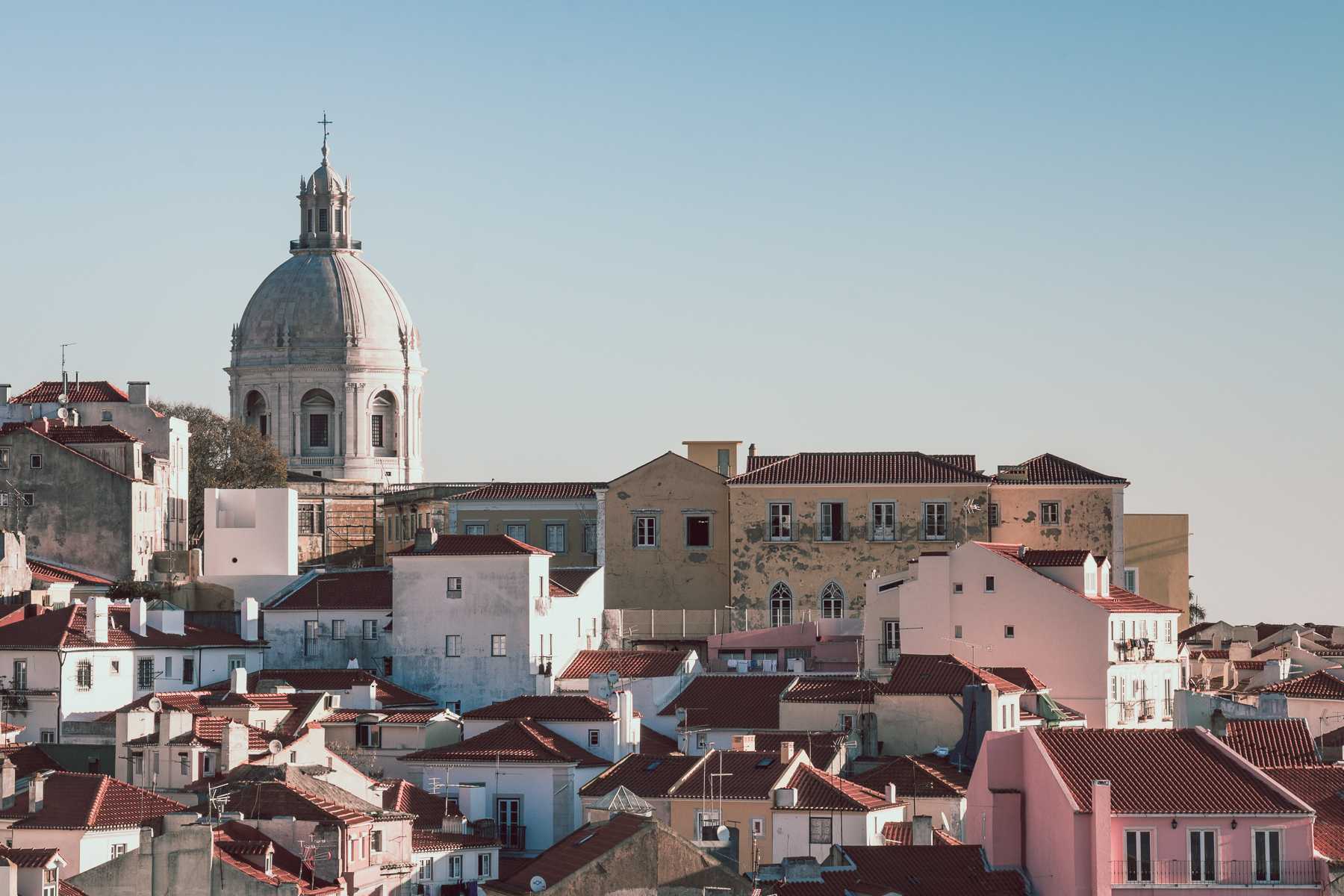
Recently, I’ve been to Lisbon. Not for the first time, and since I’ve pretty much covered all the sights several times already, I didn’t necessarily bring back many classic Lisbon photos this time. It’s a shame really, because there is so much beauty to see there. So I dug out a few Lisbon pictures from my meanwhile exploding photo archive.
Alfama & Tramway
What absolutely belongs to Lisbon: A ride through the Alfama with one of the old streetcars. I do it every time, because it’s so Lisbon.
Miradouro de Santa Luzia
Lisbon has so many hills, it’s incredible. Good for staying in shape – and there are just so many great viewpoints like the Miradouro de Santa Luzia.
Located at the mouth of the Tagus River where it flows into the Atlantic Ocean, the Portuguese have always been a seafaring people. In general, all the water around Lisbon is wonderful: I love that fresh sea air. There are also some really nice beaches nearby, by the way.
Azulejos
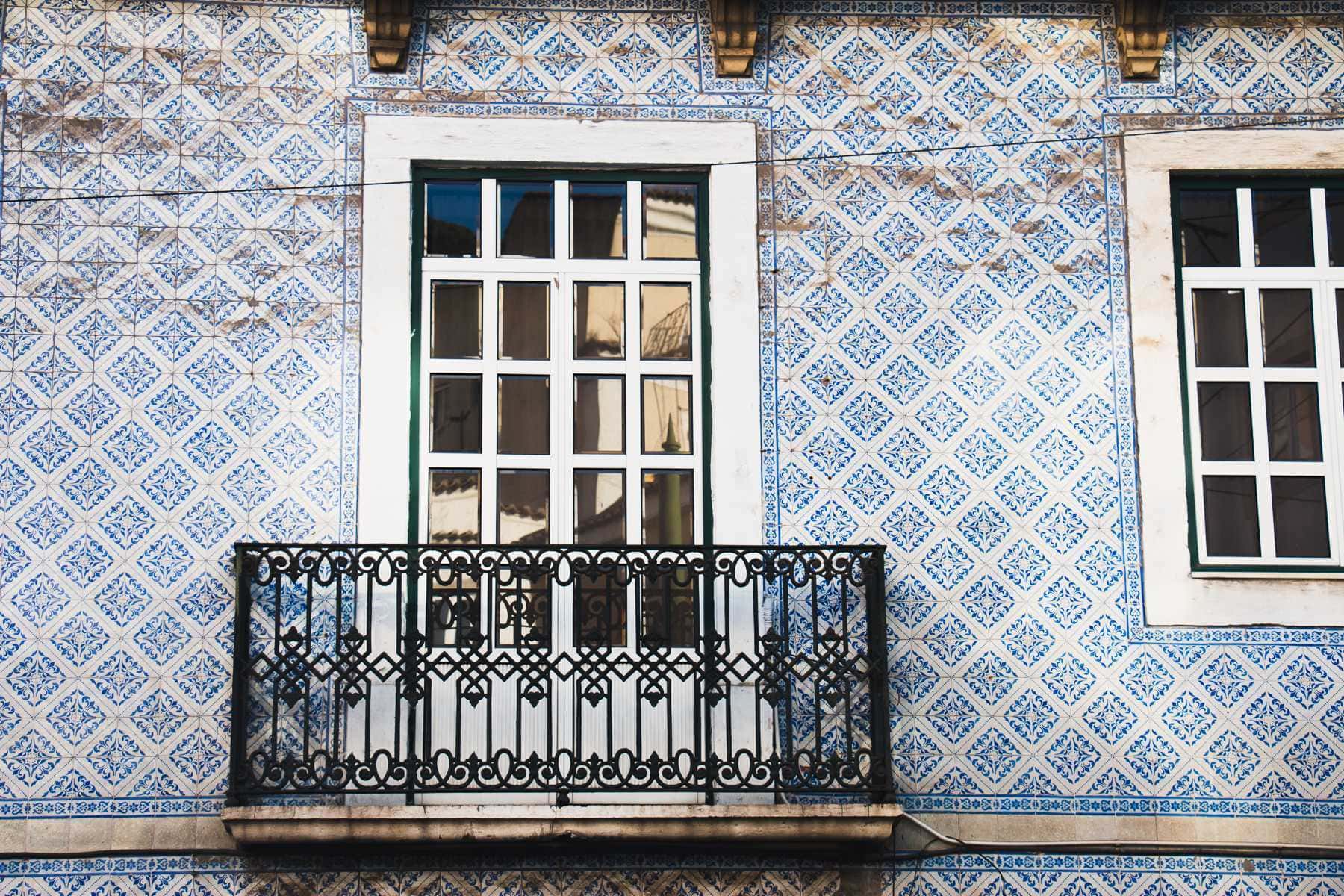
Those facades! All over Lisbon, you can still find these amazing old buildings, covered from top to bottom with tiles—the azulejos. One facade is more beautiful than the next. The Portuguese are true tile artists. It’s a craft in its own right. At flea markets and in antique shops, you can also find plenty of old tiles to take home as souvenirs—though, due to the growing popularity of tiles among tourists, they’re apparently often stolen from old houses to be resold…
Elevador do Carmo
From the Castelo de São Jorge up in Alfama, you have one of the best views of the city. By the way, that gray thing in the middle is an elevator! The Elevador do Carmo, also known as the Elevador de Santa Justa, connects the Baixa (down) and Chiado (up) neighborhoods. The steel structure is over 100 years old and runs like a charm! And taking a ride on it is one of those things you absolutely have to do when you’re in Lisbon.
Castelo de São Jorge
The area around Castelo de São Jorge is a great place to spend time, especially during the hot summer months—there are plenty of trees providing shade, a fantastic view, and even peacocks roaming freely.
Cobblestone
One more thing Lisbon is known for: ornate cobblestone streets. The patterns are always black and white—and so beautifully done.
Corner stores
What stands out in Lisbon: there are so many old specialty shops steeped in history. Sure, you see plenty of big-chain stores in the city center, but all in all, Lisboners love their charming little corner stores. And so do I. Like this candle shop. By the way, there’s also a centuries-old store right in the heart of Lisbon that sells nothing but gloves. All year round! Nothing but gloves! And it doesn’t even get that cold here…
Vintage charm
Lisbon isn’t dirty—Lisbon has character! Weathered facades like this one are really what give the city its charm. And I just loved the color.
Elevador da Bica
It’s not a streetcar, but an elevator: The Elevador da Bica simply goes up and down a single street. All day long. But given the steep incline, people are happy to use it.
Everyday life in Lisbon
You can’t find clothes racks in Lisbon. Just hang the laundry out the window, and you’re all set.
Views
Who wouldn’t want to go there right away with the view? I would want to right away!
Unfortunately, Lisbon is not part of my professional travel repertoire, so I am rarely there. But when I do, this city flashes me every time. And I always feel like I’m in a second home. I like Portugal at all, maybe that’s also due to my early childhood imprinting.
So that I could pick up at least a little Portuguese, my Brazilian mother always sent me to “supplementary native-language classes” when I was in elementary school. It sounds important, but it was just hot air. I was the only girl among eight Portuguese boys, because the program was actually aimed at families of guest workers from Portugal. Brazilians? There weren’t any in our big city back then. And so, once a week in the afternoon, I’d take the bus and train all the way across town so I could spend an hour watching the boys mess around, otherwise I didn’t understand a word and tried to cover it up by consistently refusing to speak and resorting to a heart-wrenching, wide-eyed puppy dog look. Because our grandmotherly teacher spoke Portuguese from Portugal, which I understood even less with my meager language skills. At the end of each school semester, though, I’d get a nice “B” (for the big, round eyes, not for the Portuguese—but that didn’t show up on the report card) and a big hug from our teacher for sticking it out.
Lisbon’s 28: Nostalgia in the Alfama
Decades later, I’m standing in a crowded tram, wondering why on earth I had to put myself through this. Small, cramped spaces packed with strangers just aren’t my thing. It’s just an occupational hazard. It rumbles and jolts, creaks and clatters. With unexpected gusto, the miniature tram races through the streets of Alfama, up hill and down dale, and with every rapid acceleration, I find my nose buried in the armpit of yet another stranger hanging from one of the handrails dangling from the ceiling: At 1.60 meters tall in sneakers, I’m not exactly at an advantage on crowded public transportation. But a ride on Line 28 is a must when you’re in Lisbon anyway. That’s what the hundred other tourists I’m crammed into the tram with are thinking, too—all on the hunt for that genuine, authentic Lisbon vibe.
Vamos passear! Vamos para a Feira da Ladra!
I guarantee none of the locals ride this line anymore. The 28 is basically like the No. 100 bus here in Berlin—for just a little money, you get a ride to the best sights and a whole lot of local color thrown in for free. But while in Berlin the bus driver’s scolding for whatever reason is also free, our driver is brimming with Portuguese joie de vivre: “Come on in, everyone, hop on, let’s go for a ride—it’s such a great day today! Head over to the flea market! And take lots of photos of the tram—come on up close!” he calls out to the tourists standing on every corner to snap that classic Lisbon shot, proudly posing behind his tram steering wheel for every photo. A tram in a narrow street, a tram in front of the Sé Cathedral, a tram coming around the corner, a tram at the Miradouro. You can’t visit Lisbon without taking a photo of a tram. But these indestructible, nostalgic trams are simply one-of-a-kind.
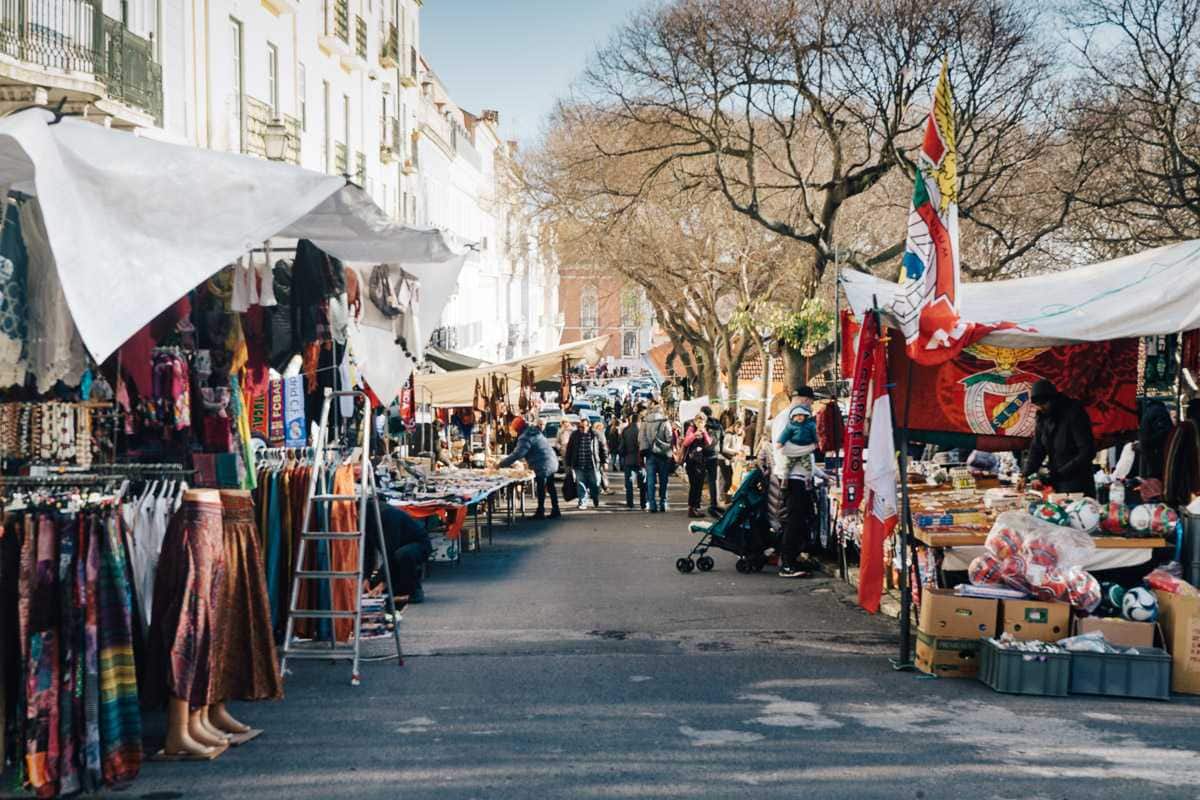
If you’re in Alfama on Tuesdays or Saturdays, be sure to stop by the Feira da Ladra, a flea market with some Lisbon kitsch souvenirs – but also some really nice junk.
Lx Factory in Lisbon: nostalgia for hipsters
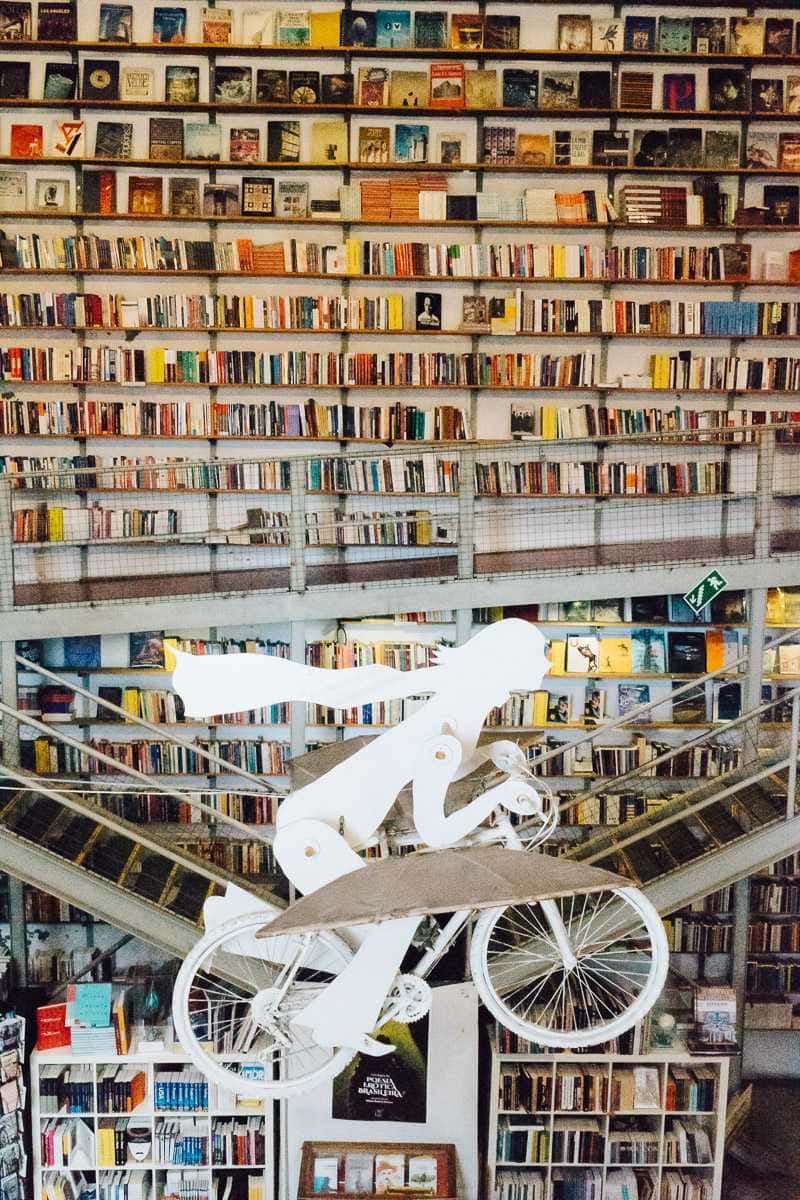
The Lx Factory, an old factory site, is the counterpart to the historic Alfama – this is hipster Lisbon. And somehow a bit like all the other hipster places in the world. Hipster Cafe. Hipster restaurants. Hipster stores. Beards. Street Art. Worth seeing: the Ler Devagar bookstore. A bit out of the city center, but easy to reach by bus and train (a day pass for only 6€ or so is a good idea in Lisbon anyway, just for the spectacular streetcar rides through the old town).
I have to say, though: I wasn’t really blown away by the Lx Factory—maybe it was just because I was there at noon; it might be even more interesting in the evening. Or maybe I’m just tired of the same old hipster shops all over the world. Or: It just doesn’t really feel much like Lisbon—or at least not like what I associate with Lisbon: that magnificent charm of a once-grand city, surrounded by sun and water and still brimming with history. Old factory or not—Lisbon simply has so much more to offer.
When I visit a country for the first time—like I did recently in Malaysia—I always want to see everything right away. Ideally, the whole country at once. That’s pretty unrealistic. So I try to plan my trip so that I visit just a few areas—but ones that are as diverse as possible. Fortunately, that works well in Malaysia; the country is small, and you can get around quickly and comfortably by bus, train, car, plane, or boat.
So after a weekend in Kuala Lumpur, I took the bus to the Cameron Highlands, to Tanah Rata. In the middle of the interior, in the middle of the mountains, in the middle of the tea plantations. Pure nature. And pretty much the complete opposite of busy Kuala Lumpur. And the fresh air. A little cooler – but pleasant in summer. And the nature here was really good for me: you can find out everything you can do in the Cameron Highlands in this article!
Lush green everywhere: the tea plantations in the Cameron Highlands in Malaysia.
The tea plantations ensure that the landscape is dotted with lush green fields. This is because only the very young, light green leaves are picked for our tea, while the older, dark green leaves remain on the bush. And so the tea plantations stretch like a bright green blanket over the mountain landscape of the Cameron Highlands. Incidentally, the tea plantations here are – how could it be otherwise – a legacy of the British, who found perfect conditions here in colonial times to grow their beloved tea. Mild tropical climate, not too hot, not too cold.
I just couldn’t get enough of the green mountains in the Cameron Highlands.
Advertising
Original BOH tea from the Cameron Highlands
Around the time I was in Malaysia, I became an absolute tea drinker. And after being able to enjoy really good tea right at the source in the Cameron Highlands, so to speak, I am now quite discerning when it comes to good tea.
But luckily I can now order my tea happiness from the Cameron Highlands directly to my home! In the Salacca tea house you will find a wide variety of BOH tea from Malaysia!
And it wasn’t just the tea that the English brought with them, but also plenty of Land Rovers to get them through the adventurous landscape. To this day, the world’s highest density of Land Rovers can be found in the Cameron Highlands!
Sunrise in the Cameron Highlands: the magic of nature
As a city kid, I never considered myself particularly close to nature. But that’s been changing for a while now. Maybe it’s because of my age—oh dear. Or maybe it’s because Berlin, the city where I live, is just too much of a city: too rough, too gray, too crowded. That’s annoying and sometimes makes my enthusiasm for city life fade. In other cities, on the other hand, I find my way around right away. New York, Bangkok, São Paulo—it doesn’t matter. Big cities are my territory. And they don’t impress me at all anymore, because there’s no challenge.
Be sure to join in: A sunrise tour in the middle of the Cameron Highlands is an unforgettable experience.
What really blows me away: a simple sunrise. In Berlin, you might catch one at most on your way home from a club. But a sunrise over the mountains of the Cameron Highlands, filled with lush green tea plantations and pristine tropical forest—that’s truly mind-blowing. And suddenly you’re drawn into this vast, everyday natural world—and you feel so small yourself.
The Mossy Forest in the Cameron Highlands
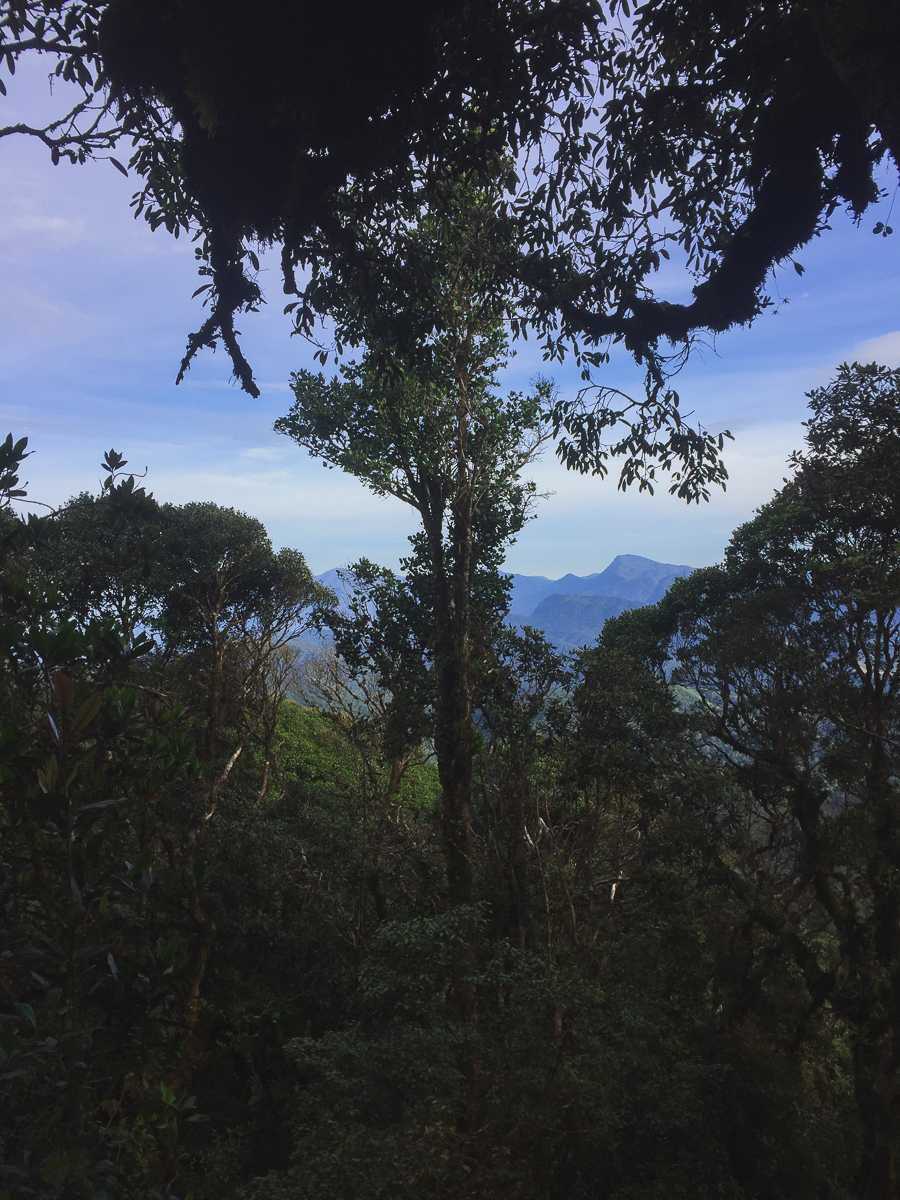
The tea plantations are certainly impressive. But in the Cameron Highlands, you’ll also come across a strip of rainforest, high up in the mountains. It’s humid and covered in moss from top to bottom.
The moss in Mossy Forest grows very slowly, which is why a large part of the area is a nature reserve.
It takes an incredibly long time for it to grow just a few millimeters. That’s why there’s a section of the Mossy Forest that you can explore via a wooden walkway—and it’s best to do so early in the morning, because otherwise you’ll have to share this impressive natural experience with many other tourists.
Impressive: a rainforest in the middle of the Cameron Highlands.
Tips for the Cameron Highlands: Enjoying Tea and Hiking
There are two major producers with tea plantations in the Cameron Highlands: BOH Tea and Bharat. Both operate visitor centers where you can buy tea, sample it, and watch it being produced. Or you can simply take a walk through the green fields. That’s nice, too.
There are numerous hiking trails around Tanah Rata. They are not necessarily well signposted, but pretty much every accommodation has more or less accurate maps. But you should be really careful, the paths are sometimes adventurous and lying injured somewhere in the Malaysian jungle is stupid. So it’s better to set off at least in pairs and always have a small survival kit with water, cell phone, etc. with you.
By the way, the strawberry farms are another major tourist attraction in the Cameron Highlands. But that didn’t really blow me away. The Butterfly Farm is small and easy to navigate, but it still gives you a nice sense of the surrounding nature. And that’s where I saw butterflies for the first time that were as big as (and looked almost like) bats.
Overnight stay in the Cameron Highlands or Tanah Rata
Accommodations in Tanah Rata are more expensive than elsewhere in terms of value for money—and also much simpler. But that’s okay, because in the Cameron Highlands you’re just walking around all day anyway, and by evening you’ll fall into bed exhausted from all that fresh air and natural beauty. Two popular places to stay (which were even recommended to me by my Uber driver in Kuala Lumpur) are Gerard’s Place and Father’s Guesthouse, which are part of the same establishment and have a similar style: simple rooms, but functional, with a friendly, sociable backpacker atmosphere.
Tanah Rata has a good selection of restaurants and cafés—even a Starbucks, for those who just can’t do without it. But I found the best breakfast right on the side of the road, at one of the self-service stands with plastic stools and folding tables. It came with lots of rice, chili, and sickly sweet Nescafé. Sounds bizarre. It was. And incredibly delicious.
Malaysia, where do you start? I am the best travel planner ever. Not. While others have thought out elaborate routes months in advance and planned whole days through, I know about three days in advance, with luck, in which direction I will set off at all. I hate planning. And so I knew about Malaysia also only what I could still read out in the fast passage from the travel guide. Was not much. Anyway, it is more exciting to experience with your own eyes and so I explored the most beautiful sights in Kuala Lumpur.
What to do in Kuala Lumpur a few facts
A few rough facts about Kuala Lumpur before I provide you with some really cool tips for your Kuala Lumpur visit:
Kuala Lumpur is the capital of Malaysia and is rather small for a major Asian city with a population of around 1.6 million
The Petronas Towers are THE landmark of the city and WERE once the tallest building in the world, but are still the tallest twin towers in the world for it
Multicultural: In Kuala Lumpur, as in the rest of Malaysia, a wide variety of cultures and religions live in a very small area: Chinese, Malays, Indians, Arabs, Buddhists, Muslims, Christians, Hindus – everyone finds their place here.
Petronas Twin Towers
In Kuala Lumpur, you can’t miss the Petronas Towers. Sparkling clean and featuring interesting design details, the twin towers are an extraordinary piece of architecture—not to mention their immense height. By the way, you can go up there, too.
Are you planning a trip to Malaysia? Then you should also check out my Malaysia blog with lots of information & inspiration!
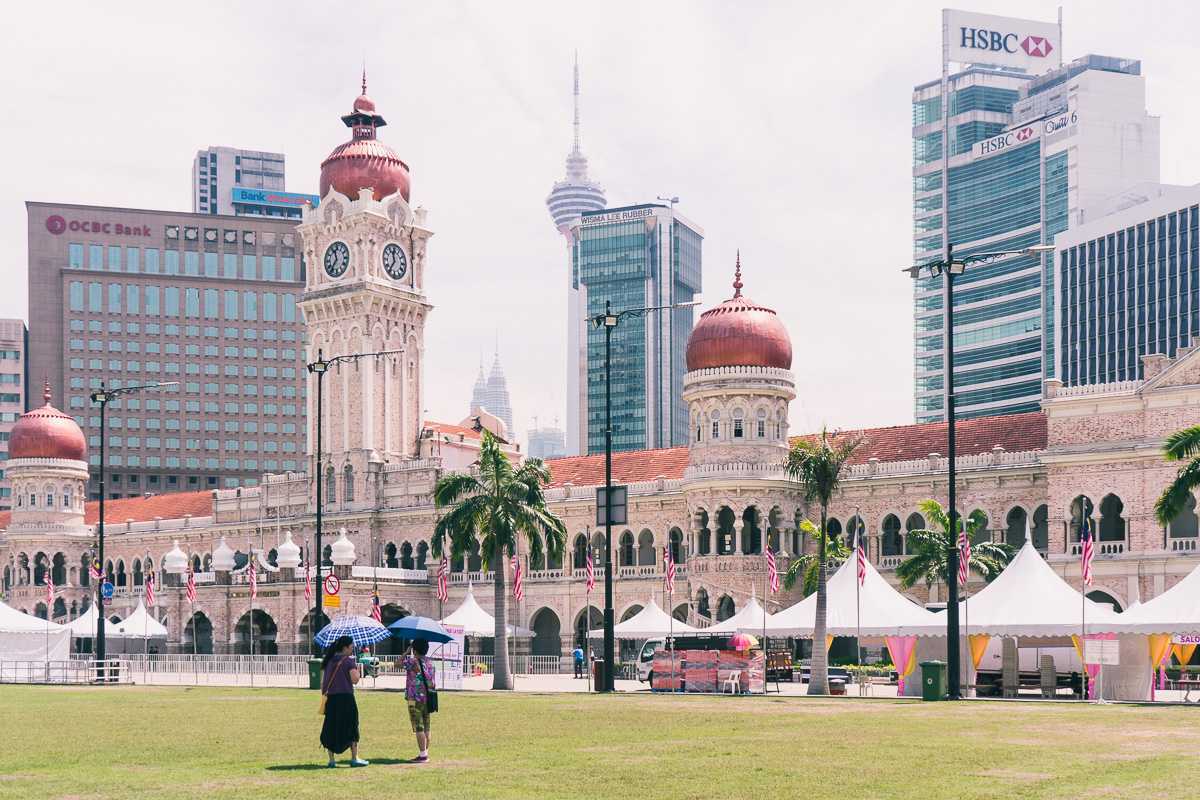
Merdeka Square
A little something for history buffs: This is where the Malaysian flag was first raised in 1957 and independence from Great Britain was celebrated. It’s really just a large lawn—it used to be a cricket field, after all. But the building on the square, the Sultan Abdul Samad Building, is well worth seeing with its huge clock tower, unusual spiral staircases, and arcades.
In addition, the two tourist information centers are a good reason to stop by here. One is the national tourist office for all of Malaysia, located in the Sultan Abdul Samad Building, and just a few meters away across the square is the Kuala Lumpur tourist information office. Here, you can pick up some really informative brochures, and the staff are consistently very friendly and happy to offer tips.
Chinatown
There are definitely more authentically Chinese and exciting Chinatowns around the world than the one in Kuala Lumpur. Still, there are some great temples and a lovely indoor market here that you shouldn’t miss:
Central Market
There are some nice souvenir stores and stalls here and a good and cheap food court on the upper floor.
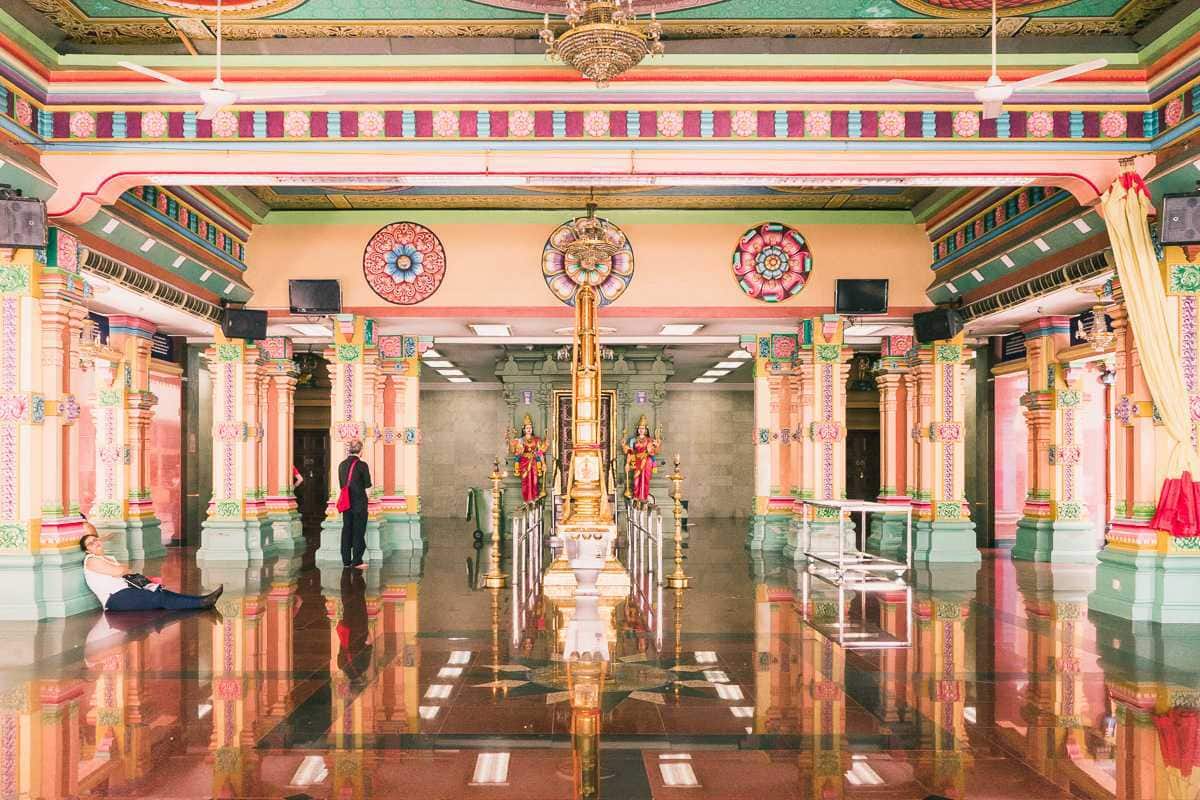
Sri Mahamariamman Temple
A Hindu temple right in the middle of Chinatown—that’s Malaysia for you. When it comes to multiculturalism, no one can outdo them. You take off your shoes at the entrance—just like in Hindu temples, where you walk around barefoot—and then you can explore the temple from the inside. The same rule applies here: it’s best to cover up those skin-tight hot pants. You can rent saris on site.
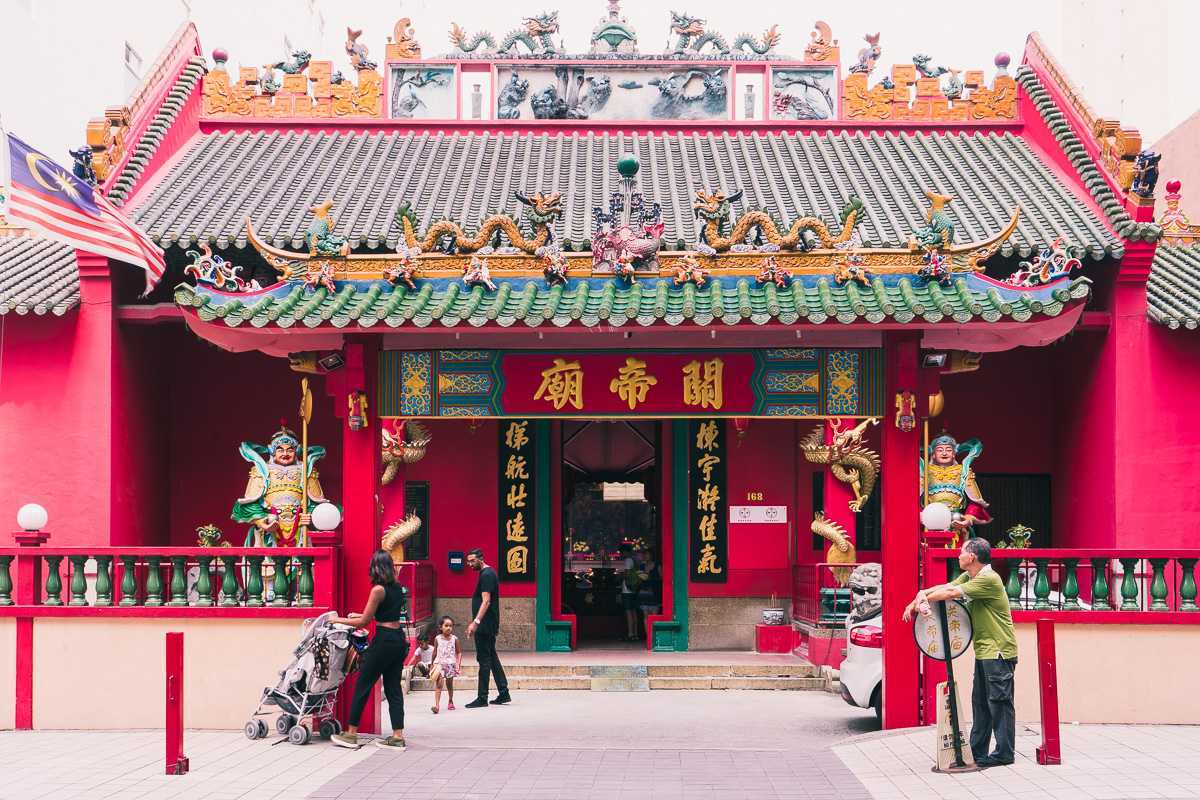
Guan Di Temple
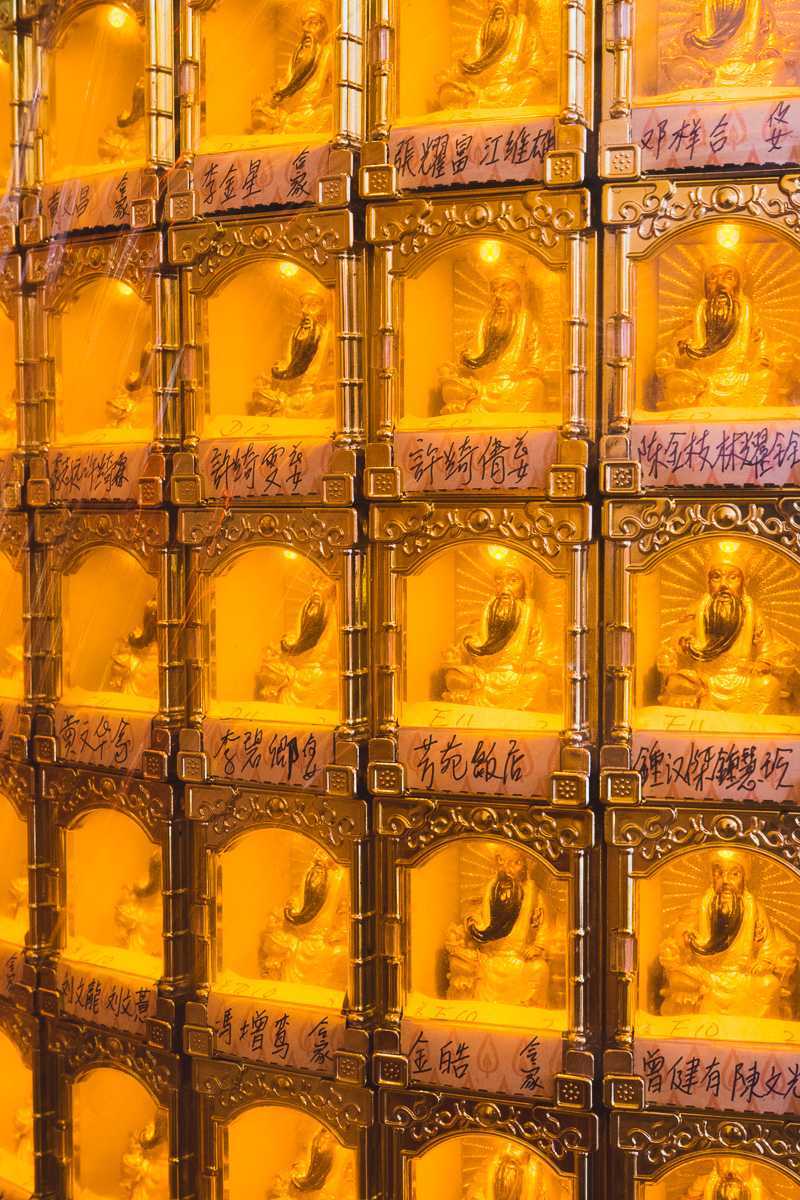
Just a few meters away from the Hindu temple, you find yourself immersed in a completely different world. Here in Malaysia, you can jump from one world religion to another in the blink of an eye. The Guan Di Temple is a Taoist shrine dedicated to the god Guan Di, the patron saint of martial arts. Police officers and triad members reportedly come here in equal measure to seek protection.
Petaling Street
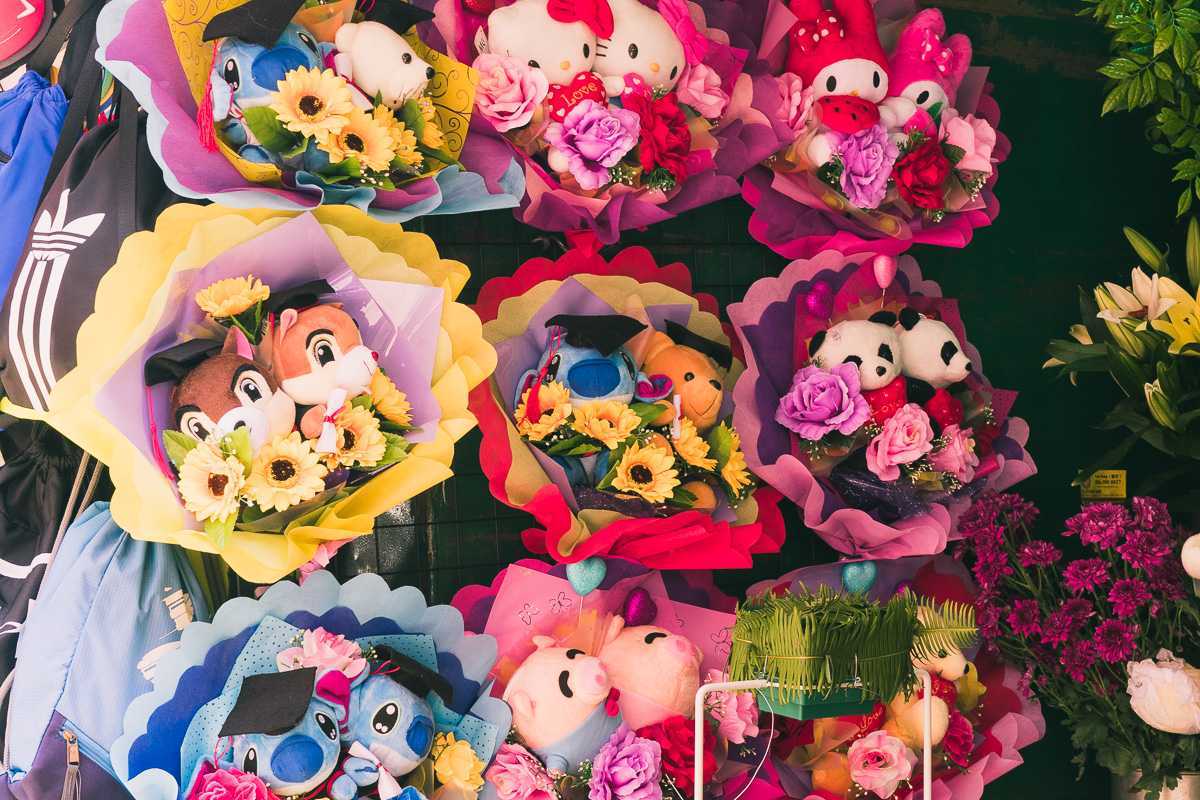
I didn’t find it all that spectacular, but anyone who wants to buy Chinese knickknacks, plastic teddy bear bouquets, and “authentic” counterfeit Louis Vuitton bags, should check out Petaling Street, a covered shopping mall right in the middle of Chinatown and at the heart of the neighborhood.
Jalan Alor Food Street
The best place for nighttime street food adventures is Jalan Alor. You’ll find everything here—but especially plenty of Chinese cuisine. There’s one restaurant after another, endless food stalls, and live music here and there.
Once you’ve had your fill of sampling the food, head over to Changkat Bukit Bintang —a nearby street with plenty of bars, music, and nightlife.
Batu Caves
The absolute highlight of the temples! A Hindu temple carved right into the middle of a huge rock crevice! The imposing statue at the entrance points the way: Steep stairs lead up into the heart of the Batu Caves. Along the stairs, among the trees, there are tons of monkeys: Don’t feed them, hold on tight to small items (cameras, etc.—monkeys are really good at stealing), and just enjoy watching them!
By the way, construction is currently underway at the temple, and the workers welcome any help, since the temple is funded by donations and there’s no admission fee—just grab a bucket of sand at the entrance upstairs, drop it off at the construction site, and take an empty bucket with you on your way out.
Rooftop bars are always a good idea. But the Heli Lounge Bar is really unique, not only for aviators. A REAL helipad (!) in the middle of Kuala Lumpur on top of a nondescript skyscraper with a spectacular, unobstructed view of the sparkling Petronas Twin Towers. Railing? There is no such thing. Free as a bird over Kuala Lumpur – plus drinks at their best. During the day, the helipad is actually used, but at night, the landing pad becomes the most unusual rooftop bar in Kuala Lumpur.
A bit more expensive, a bit difficult to find as there is hardly any signage at the entrance below – but definitely worth it. Downstairs is the lounge bar proper, but stairs and narrow metal staircases take you up to the helipad with the best view ever. It really doesn’t get any cooler than this.
Address: Menara KH Tower, 34th floor, Jalan Sultan Ismail; open Monday through Saturday starting at 6:00 p.m.
Practical tips for travel and transportation in Kuala Lumpur
Kuala Lumpur has two airports: Kuala Lumpur International Airport (KUL), called KLIA, and Sultan Abdul Aziz Shah Airport (also Subang Airport). The latter is the older of the two and is closer to the city, but is now served by only three smaller Malaysian airlines (Berjaya Air, Malindo Air, Firefly). There is no direct flight from Germany to Kuala Lumpur (KUL) – I flew from Berlin with Qatar Airways via Doha, which was the shortest connection.
The public transport system in Kuala Lumpur is very well equipped with subways and buses – but I really didn’t use it much, because in Kuala Lumpur I finally became a total Uber and Grab fan. The two services are unbeatably cheap and super convenient.
What? Marrakech has a beach? Not quite. But Essaouira is only a good two-and-a-half-hour drive from Marrakech – so for a sprawling country like Morocco, it’s just around the corner. And after an exciting and sometimes exhausting stay in Marrakech, I was ready for some relaxation.
Is a trip to Essaouira worthwhile?
By the way, in many Marrakech travel guides Essaouira is mentioned as a day trip. One day in Essaouira should be enough, there would be nothing more to see anyway. However, one sits then on a day at least five hours for round trip in the bus, and on the other hand a half day is much too short for this beautiful place. But if you’re short on time, there are organized tours; at least that takes some of the planning out of it:
In Essaouira, there is simply a different wind blowing. Uah. What a play on words. But it’s true. In Essaouira it is much fresher than in Marrakech, but the sea air is unique. It drives through all your pores, wiping away the red dust of Marrakech’s old town with fervor – and in front of you, you see this coastal village, which couldn’t look more like rough seas and stiff Atlantic breezes. Not without reason Essaouira also bears the nickname“City of the Winds“.
Tip #1: The port of Essaouira – Mogador in Essaouira
You feel a bit like Hitchcock’s “The Birds” as greedy flocks of seagulls circle overhead; hungry, at times beastly, and screeching loudly. It’s noon. The fishermen have just arrived at the port, spreading their freshly caught goods on improvised tables and sometimes just on a plastic bag on the bare ground. And what fish there are. For lovers of sea creatures this is a real feast, you can’t get fresher fish anywhere – but in general you can eat well and for little money in Essaouira.
The atmosphere at the harbor is really special, and when you sit on one of the huge rocks in the bay and let the Atlantic wind blow around your ears, you don’t even notice the small blemishes around it, such as the plastic garbage that unfortunately occasionally emerges from the waves.
By the way, the best view of the old town and the sea is from the Mogador:
Tip #2: The alleys of the old town
Essaouira is quite clear, that’s true. Still, you can easily spend a whole day just drifting through the alleys of the old town – and enjoy Essaouira’s charm. There are pretty little details to discover everywhere. If you want to develop an interest in photography or want to practice looking for motifs – then go to Morocco!
After I was bitterly ripped off in Marrakech, here is the ultimate shopping tip for you: Forget Marrakech! Everything there in beautiful lamps, blankets, carpets and other knickknacks, you can also find in Essaouira – then often at fixed prices, but they are really realistic.
Me in Marrakech a windy Berber 40 euros for ‘ne olle bedspread abgeknöpft! At first, this sounded like a good price, but we had started the apparently typical Berber negotiation ritual with lots of Chi-Chi, warm words and tearful stories of old women who weave their hands sore on the blankets in the barren Atlas mountains for a pittance, at a fabulous 250 euros. Two hundred and fifty!!! From 250 down to 40, that’s an almost obscene margin. But my face when I saw the exact same blanket for ten (!) euros in Essaouira was priceless. So we learn: Buy nothing in Marrakech! (And I’m sure: Other cities, even less touristy than Essaouira are another ’round more attractive for shopping). Another plus: As far as annoying vendors are concerned, Essaouira is the absolute opposite of Marrakech! One is not harassed, much less often approached and in general the mood in this regard in Essaouira is much more relaxed.
Tip #4: The beach promenade of Essaouira
Outside the old town center is the long, wide beach of Essaouira. I didn’t find it particularly exciting for swimming, the water is relatively cool and the real Miami South Beach feeling just doesn’t come up in Morocco as a Muslim country. Water sports enthusiasts, however, will be thrilled, not for nothing is the whole corner here a total hotspot for surfers.
In the evenings and especially on weekends, the beach promenade mutates into Essaouira’s“nightlife mile” with popcorn carts and snail vendors, where you can pick freshly cooked mini snails out of their shells and eat them right at the stand. Who likes it. In any case, it’s a good opportunity to experience a bit of original life – the promenade is also a popular destination for local families. And there is a lounge bar or two where you can get wonderful mint tea: cardboard sweet, but delicious.
Practical tips for Essaouira
How to get there: How to get from Marrakech to Essaouira?
There are several ways to get from Marrakech to Essaouira:
a) Private cab (most expensive)
b) As part of a booked excursion with or without a program: Some tours stop at argan trees along the way, where goats perch in the treetops in search of the argan fruit. Looks fun, but since I once heard rumors that the goats are tied up there especially for the tourists, I didn’t find that exciting either.
c) By bus: Intercity buses also depart from the train station in Marrakech and go directly to Essaouira, where they stop practically at the gates of the old town. Tickets are cheap and the VIP bus in the morning is very comfortable with wifi and comfortable seats.
Accommodation in Essaouira
At the Maison du Sud, you’ll stay in an old, winding riad right in the heart of the old town. The rooms are pretty worn out—nothing to write home about—but the location is fantastic, and the breakfast atmosphere in the riad’s traditional courtyard is one of a kind.
The right clothes
Do not forget a sweater or jacket! In Essaouira it is a few degrees colder than in Marrakech, and the stiff breeze is really not to be underestimated, even if the weather app says something about 30 degrees!
Marrakech is a dream of a thousand and one nights. I was on fire when I set out to explore the most beautiful sights in Marrakech. But alone as a woman in Morocco it is not always easy! At the end of the article you will find some helpful Marrakech tips especially for women!
The most beautiful sights in Marrakech
“Are the colors in Morocco really as intense and beautiful as they always say?” a friend asked me after my trip. And yes, indeed – the colors, the patterns: Morocco and especially Marrakech are an absolute feast for the eyes. There are interesting things to see everywhere, and it’s fun to get lost in the narrow, winding streets of the historically rich medina and discover new things. I probably would have spent a lot more time in this unique place, too, if it weren’t for a few things….
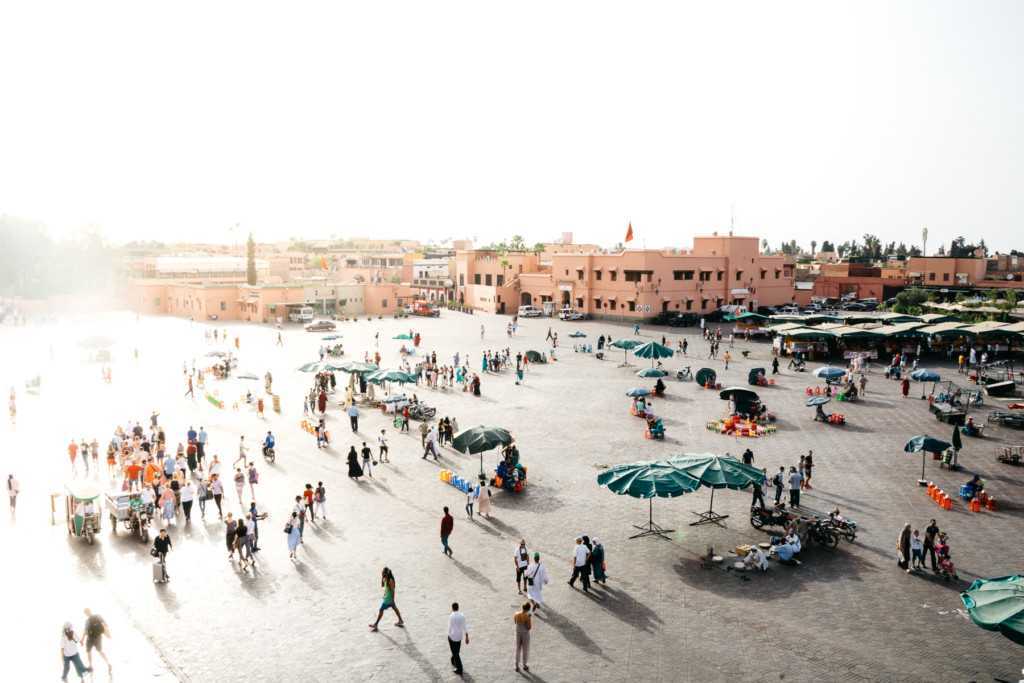
Place Djemaa el-Fna – Of snake charmers and Moroccan barbecue
The Place Djemaa el-Fna is the central point in the Medina, the old town of Marrakech, and at the same time the big market place where everything happens. Even if you get lost in the labyrinthine corridors in the old town, you somehow always find your way back to the Place Djemma-el-Fna. The square is huge, around it some stores and cafes. There’s really not much going on during the day – a few juice stands here and there, a few henna painters. Until the evening approaches – then movement comes to the square. And every evening!
The Place Djemaa el Fna in Marrakech: especially beautiful at sunset.
Slowly, the previously empty square fills up with tons of food stalls where meat and fish are put on the grill, musicians and snake charmers. Moroccan folk festival atmosphere! The best way to watch all the hustle and bustle is from one of the roof terraces around the square. Don’t worry, the places all look a lot like tourist traps, but they’re not that overpriced! And you can sit there undisturbed for 1-2 hours, watch the sunset and soak up the atmosphere.
On the square itself, however, you should be careful with looking around and looking… Each food stall has its tourist catchers well posted, who don’t let up and tirelessly wave their menus in front of you. Really look in peace is impossible. Also with the snake charmers and musicians caution is required, pulls out the camera. For each photo a fee is demanded not exactly unaggressively, if one does not come from itself on it. After all, the performers live on it – so donate or no photo. Then, if you don’t have a heart for animals either, you can still take pictures with monkeys that are kept on chains and have to wear silly disguises like tutus and sunglasses.
Jardin Majorelle – the gardens of Yves Saint Laurent
The Jardin Majorelle was actually always the first thing that came to my mind when I thought of Marrakech. Exotic plants, in the middle a house in rich Mondrian blue (those colors again!) and the symbiosis between Orient and modernity. I wasn’t quite that flashed after all. The garden itself is smaller than I imagined and unfortunately the Yves Saint Laurent Museum on the grounds was just closed. But the collection of diverse plants from all over the world is impressive even for non-botanists. In the air-conditioned cozy café (a dream with outside temperatures of 40 degrees) you can take a break comfortably with mint tea and fresh juices.
The Jardin Majorelle is located outside the medina and is best reached by cab. Even if you should bargain here – we never really made it to a realistic price and paid overpriced 40 to 50 Dirham (ca.4-5€) for round trip. Entrance fee for the Jardin Majorelle (without museum): 70 dirham.
The Medersa Ben Youssef from the inside: One of the most impressive buildings in Marrakech.
One of the most beautiful buildings in Marrakech is the Merdersa Ben Youssef, a former Koranic school. The courtyard is very impressively designed with stucco ornaments and mosaics – absolutely worth seeing!
Musée de Marrakech
Nearby is the Musée de Marrakech – cultural events and exhibitions are often held there. But what is more interesting is that the museum is located in an old palace.
La Maison de la Photographie
Maybe not interesting for everyone, but a little insider tip near the Musée de Marrakesh and the Medersa: the Maison de la Photographie. In a small riad (beautifully restored, by the way), black-and-white photos by various photographers who visited Morocco between 1870 and 1950 are on display. A great insight into a world that was much more exotic back then than it is today! At reasonable prices you can also take home your favorite photo.
Expressive black and white photographs at the Maison de la Photographie.
Tip: Be sure to go up to the roof terrace, enjoy the view and eat and drink at relatively reasonable prices!
Saadian Tombs
Only through a large window can you catch a glimpse of the magnificent Saadian tombs.
The Saadian Tombs are one of the most visited sights in Marrakech. However, the waiting time here can sometimes be quite long if you are unlucky. The main attraction here is the Great Mausoleum, where sultans and their servants are buried – really very beautiful! Unfortunately, you can only view the mausoleum through a narrow side door, which means you have to stand in line for a long time when there is a large crowd. So if you have little time, I would skip this place.
Bahia Palace
Tropical flair at Palais Bahia
Near the Saadian tombs you can find the Bahia Palace. Here it really feels once more like Marrakech and a thousand and one nights. Tropically planted courtyards, colorful mosaics and magnificent decorations!
The souks of Marrakech
For the souks themselves, you can easily take a whole day – in many cases, the souks are divided by industry: Here more leather goods, there more lamps, there more carpets. In part, you can also still look over the shoulders of the craftsmen and see how, for example, leather is tanned or fabric is dyed. All very original and fascinating.
Real bargains can hardly be made in Marrakech. You also have to be prepared for long price negotiations (and I’m really bad at that!). In Marrakech, the prices are exorbitant, so if you are still traveling, better shop elsewhere. But the market hustle and bustle is always interesting.
Excursion tip from Marrakech: Essaouira
Marrakech is not located by the sea, and depending on the time of year, a little cooling down is not bad at all. The coastal town of Essaouira is just under a 3 hour bus ride from Marrakech and is an interesting contrast to Marrakech. I spent a few days there. You can read more in this blogpost:
In my view, Morocco is not an “easy” country for women traveling alone. Still, I would say that at least in tourist places like Marrakech and Essaouira, as well as big places like Casablanca and Rabat, you can get around just fine if you keep a few things in mind.
Clothing for Morocco: What do I wear as a woman?
Even if some female tourists show it and do not care about hints that one should better choose more “modest” clothes in a Muslim country, tight hot pants are probably not a good idea as a solo traveler. Personally, I think that it makes no difference whether you wear long pants or short shorts as a woman – you get picked on anyway, and I don’t think that bare legs make anything worse than it already is. I have always “covered” myself very well. Nevertheless, the nastiest things were shouted after me.
However, as a solo traveler, you’re guaranteed to feel more comfortable wearing a little more fabric on your body such as loose fabric pants and breezier tops. You’re still not immune to stupid comments, but you won’t draw more attention to yourself than necessary. There is no compulsory headscarf for women in Morocco, and wearing a headscarf is not expected of non-Muslims.
Pickpockets in Marrakech
Pickpocketing is probably less of a problem in Marrakech, except around Place Djemma-el-Fna. There I have been warned several times about pickpockets.
Safety at night – is it dangerous as a woman in Marrakech?
If you are staying in the old town: Depending on where your hotel is located, it can seem dodgy there at night. The first night I didn’t leave my lodgings after nightfall, and that even though I’m not usually a big chicken. The next few nights I did dare, but basically walked fast and with open eyes and ears through the sometimes pitch-black alleys when I was alone.
While I ultimately don’t think it’s mega dangerous in the old city, it’s the subjective feeling that might make it uncomfortable for one woman or another. I found it scary at times.
So be careful with the location of your accommodation! Or choose accommodation outside the medina, where you can cab right up to the door if you’re traveling after dark. (In the medina, this is often not possible). Oh, and who says, you have to stay as a woman better in the evening in the hotel: You should really have experienced the Place Djemaa el Fna in the evening, because you miss a lot!
Accommodation in Marrakech
The range of accommodation in Marrakech is huge. If you want to stay in a typical riad, with a cozy courtyard, real Moroccan ambience and so on, you have to look around in the old town. (It can get a little spooky here at night though, see above). As a solo traveler, I would advise you to choose an accommodation that is a bit more communicative and where you can get in touch with other travelers more quickly.
My recommendation:Rodamon Marrakech (they also have private rooms there). It’s brand-new and spotlessly clean, with friendly service—an absolutely fantastic find! However, the location is a bit outside the hustle and bustle (a little lonely at night), and the address provided by the hotel is incorrect, so you’ll have to rely on the shady services of one of the numerous “tour guides” anyway.
Alone as a woman in Morocco? You are not alone!
You think you’re the first woman to come up with the idea of traveling alone to a country like Morocco? Nope! Surprisingly, I met many women traveling alone in Marrakech. And that was really my salvation. Almost on the first day I met another single traveler. From then on I felt a little more comfortable in the alleys of the medina, in pairs you feel a little safer and can better defend yourself against pushy sellers. Or laugh together at their advances! So, feel free to look for other “fellow sufferers”!
Traveling to Marrakech alone as a woman: Sometimes a challenge.
Beware of friendly helpers and city guides
A huge warning against all seemingly helpful and sometimes pushy people in the streets of the old town, who immediately want to show you the way or have tips ready! Don’t believe anything people shout at you as you walk by and don’t talk to anyone! This sounds very harsh (and is also very sad) – but in 99.9% of all cases you will only get rid of money and at worst get into nastier discussions that can quickly become unpleasant. Especially if you are traveling alone! The vendors/ wannabe city guides/whatever in Marrakech are very crafty and can get really abusive and threatening if you get too involved with them.
A small selection of the most popular scams in Marrakech:
“it’s closed” – no matter where you want to go: it’s closed right now. At least that’s what some resourceful guys say. And direct you somewhere else, preferably to your own store or that of your brother-in-law, where you first have to undergo a sales pitch.
“the place is this way” – because tourists often orientate themselves at the Place Djemma el-Fna, you basically get this info shouted after you, but the direction is pretty much right
“I show you the way, but I don’t want any money” – worst scam ever, because the guy makes a really trustworthy impression, but then refers you to another “friend” who turns up by chance, who then refers you to the next one and so on, and the last one at the latest asks for money for whatever.
Actually, there is nothing better when traveling than to be able to talk to locals (no matter if man or woman) to learn more about the country and its people first hand. However, I strongly advise against making any kind of contact with men as a solo traveler. Women usually keep a low profile anyway and are less visible in public areas. I was somehow often uncomfortable and felt like I would make a wonderful victim for tourist cams. Even in a café we were towed by the previously sympathetic waiter to a spice store under the pretext of a small tour.
In general, a confident demeanor and determination are worth their weight in gold! And that’s not so easy, because you often find yourself in very unpleasant situations for which you are not prepared as a semi-naïve tourist with an otherwise positive view of people. All in all, this made my Marrakech visit very exhausting – unfortunately.
Chicago’s architecture is simply remarkable: a wild mix of diverse modernist styles can be found here. Even people who aren’t interested in architecture will quickly notice this. The best way to see these artistic skyscrapers is from a boat: I’ll let you in on which boat tour you shouldn’t miss on your trip to Chicago!
Boat Tour in Chicago: A Quick Tour of the Architecture
Regular water taxis run on the Chicago River, which flows right through the heart of the city—but there are also boat tours offered by various companies that let you take your time exploring Chicago from the water. The Chicago Architecture Boat Tour is especially recommended; on this tour, you’ll also get plenty of interesting information about Chicago’s architecture from local experts!
I’ve pretty much perfected my talent for speed sightseeing, but spending half a day in Chicago while jet-lagged was a real challenge. I do like to explore cities on foot or by bike (when possible). During layovers after long-haul flights, I’ve found myself increasingly craving the luxury of just being driven around—so I often ended up on some red hop-on-hop-off tourist buses. But in Chicago, a colleague recommended the architecture boat tour—and that sounded very relaxing, too.
Chicago: Architecture in the Second City
I didn’t know much about Chicago itself. But the fact that Chicago is so underrated is probably nothing new. That’s also reflected in Chicago’s nickname: “The Second City.” Second, because it’s always in New York’s shadow. In a way, Chicago and New York are cut from the same cloth: big cities, steeped in history (by American standards), and towering skyscrapers. But somehow, there’s just nothing particularly iconic that everyone in the world knows: no Empire State Building, no Statue of Liberty, no Big Apple. Or does anything about Chicago come to mind right away?
And yet Chicago has so much to offer! Lake Michigan, which is actually more like an ocean than a lake. The famous pan pizza (which I didn’t try a single slice of—what a shame!). Gangster stories from the old days. Art! Art! Art! And: architecture. And the best way to see it is on a boat tour.
Ad / *affiliate links
Chicago’s architecture by boat
As I’ve already hinted at, long-haul travel makes you lazy when it comes to sightseeing. After all, how are you supposed to get around when you fly halfway around the world in two and a half days and spend most of that time working? I highly recommend a boat tour. In good weather, of course. Which, admittedly, can get a little difficult in Chicago – because Chicago has another nickname: The Windy City. And the wind there can really blow you away. In our case, the Chicago wind just swept away the last little clouds and rewarded us with an absolutely fantastic blue sky! No wonder my enthusiasm for Chicago was ignited immediately.
The boat tour sounded appealing. And it didn’t disappoint. We chose the architecture boat tour through Chicago’s skyscraper canyons. I’m not sure I would have paid such close attention to the individual giant skyscrapers if I’d just been striding through the streets with a stiff neck from looking up. Many of the buildings are simply impressive—after all, Chicago was the birthplace of skyscrapers over a hundred years ago. So much for New York! Ha!
The famous Buckingham Fountain
A little anecdote to wrap things up: On the ride back to the hotel, our driver raved to us about his hometown of Chicago, and we realized just how little of the city we’d actually seen, despite having had such a great day. He enthusiastically listed all of Chicago’s attractions. None of it sounded familiar to us. Until we drove past the Buckingham Fountain—a huge freestanding fountain—and, as kids of the ’90s, we immediately started singing the theme song from “Married… with Children” —and our driver couldn’t believe that, of all the things from his Chicago, only Al Bundy had stuck in our minds here in Germany.
As a flight attendant, I’m not afraid of flying, but when I came across the idea of flying over the pyramids ofTeotihuacán in a hot air balloon in Mexico City, I felt quite queasy. Ballooning in Mexico is different from my day job after all. The pyramids of Teotihuacán are not the most famous pyramids in Mexico, but they can be reached in about an hour’s drive from the center of Mexico City. A good opportunity, then, if you are just in town.
There are many ways to get to Teotihuacán from Mexico City. We opted for a balloon ride at sunrise followed by a tour to the pyramids. For the first time ballooning, and then also in Mexico. I heard about hot air balloons landing in a cactus field and all kinds of scary stories. Our balloon pilot instructed us to bend the legs during landing, in order to be able to buffer the landing if necessary – how bumpy would this be? I had already signed a waiver that I would not sue the balloon company even in the event of potential loss of life and limb – so I had to go through with it.
Unique: In a hot air balloon over the pyramids of Teotihuacán.
With a hot air balloon over the pyramids of Teotihuacán
The queasy feeling quickly faded. I was far too distracted by the view. From the soft light of the rising sun. From the vastness of the landscape. From the other balloons that floated like pearls on a string around us over Teotihuacán. And from the breathtaking silence. Except when our pilot was firing to keep the balloon flying. Fascinating for someone like me who automatically associates flying with loud, sometimes annoying engine noise. Floating silently through the air.
The Aztecs in Mexico: Were they also in Teotihuacán?
It’s crazy, what mankind has already brought forth in terms of peoples. In Mexico City, all the souvenir stores are full of Aztec stuff. Aztec jewelry, Aztec handicrafts, Aztec art, Aztec calendars – all in the spirit of the Aztecs, the people who ruled and lived here until almost 600 years ago. Until the Spanish came. And then, pretty quickly, that was the end of the Aztec people.
Pyramid of the Sun & Pyramid of the Moon in Teotihuacán
However, as impressive and ancient as the culture of the Aztecs seems, they were not the first to settle around Mexico City, for by this time the Pyramid of the Sun, the Pyramid of the Moon, and a few other remnants of an even much older culture already existed in Teotihuacán. The Aztecs gave the place only its name, Teotihuacán – and that translates as: Where you become a god.
The pyramid of the moon from above
The enigma of Teotihuacán
The thing with becoming a god didn’t really work out – but somehow Teotihuacán definitely is a spiritual place. Just by the fact that people put huge pyramids in this highland centuries ago. Just like that, with no other functional purpose such as housing tombs or treasures. This is what makes Teotihuacán special. Because from the inside, both the Pyramid of the Sun and the Pyramid of the Moon are made entirely of clay! And both are really more huge than they may look in pictures! Or from above.
Spiritual experience on the pyramid of the sun
What looked spectacular from above was even more impressive from the ground. After the ride there was still time for a tour on foot. If you are very interested, you can book a guide at the entrance of the Teotihuacán pyramids, who will explain a bit. But looking and exploring for yourself is also possible. Be sure to climb up the sun pyramid, it’s steeper than you might think, but it’s an absolute highlight!
Quite steep: At midday, the ascent of the Pyramid of the Sun is an ordeal!
At the Pyramid of the Sun, stairs are so steep that you might want to climb up on all fours! How that elderly couple in their 80s, who I met on the way up, managed that climb will forever remain a mystery to me. (And they reminded me to start exercising more after all!)
At the top of the sun pyramid you can then enjoy the view. Or recharge your batteries. Spirituals like to recharge their batteries here. The top of the sun pyramid in particular is considered an energetic place. So high up. In glaring sunlight. Even though I’m really not averse to spirituality – I didn’t notice any energy. But it may also be because I first had to recover from running upstairs for half an hour!
The sun pyramid is attributed a special spiritual energy
The Pyramid of the Moon in Teotihuacán
You can also climb up the moon pyramid, the counterpart to the sun pyramid. Provided you’re not a cardiovascular patient. Another tip: Come early! Because with hot temperatures, climbing pyramids in the midday sun is really no fun.
The Pyramid of the Moon in Teotihuácan
Ballooning in Teotihuacan: Spectacular landing in the cactus field
Last but not least, we actually ended up in the nearby cactus field! So there was adventure on top. The crew picking us up was fit though, the balloon was wrapped up quickly and loaded onto a trailer along with the balloon basket, while we have already been seated safely in the van that drove us back to the airfield.
Landed safely despite a cactus field: The balloon ride was a unique experience.
At the end of the trip, by the way, there’s a balloon baptism (is that what it’s called?) with a glass of champagne and a balloonist’s certificate. Oh yes, of course you have to get up early – otherwise you won’t see the magical sunrise over the pyramids of Teotihuacán. But: It’s worth it!
More great locations for ballooning in the rest of the world
Actually, I always thought I would experience my first balloon flight either in Cappadocia in Turkey or in Bagan in Myanmar – two destinations that are always high on my travel wish list. There are just so many great places to take a balloon ride:
The dear money. Being on the road without money is not possible at all. I can still remember times when I traveled with bundles of cash and traveler’s checks – because that was the best way to get money on the road. Fortunately, travel credit cards are now available to everyone, and even in the last jungle village there is still an ATM that will accept international credit cards. So a credit card is always a must when traveling! Only there are now so many… and it is worth to compare, so that the travel fund is not emptied by bank fees alone!
Which is the best credit card to use when traveling?
Meanwhile, there is a sheer huge offer of credit cards: with or without annual fee, with or without mileage accumulation program, with free money withdrawal or not… I’ve been doing some research on this topic because I’ve noticed how much I’ve been charging banks just for using the wrong card at the wrong ATM. And since I travel a lot around the world, it quickly became clear: I need to find the best credit cards for traveling.
Do I need multiple credit cards when traveling?
Even if you do not want to have so many credit cards: I recommend a combination of at least two different credit cards, preferably one MasterCard and one Visa. This way, you are prepared for all eventualities should one of them not be accepted.
My recommendation for travel credit cards:
Personally, I opted for a combination of two or three credit cards!
Fast service in case of credit card fraud: I have already been contacted several times in advance by the fraud department in the case of suspicious transactions – even in the case of charges that have already been made, the reversal was quick and problem-free!
I usually use the DKB credit card* to withdraw money and the Barclaycard Visa* to pay in stores or online. For me the perfect combination!
I’m not a big fan of hotel chains. Sure, the amenities are usually pretty nice—but somehow it reminds me too much of work, because we usually stay at larger hotels with the crew. And when I have time off, I tend to look for more unusual places to stay, like The Memory at On On Hotel in Phuket.
I landed in Phuket at noon and was actually just passing through on my way to Koh Phi Phi. Half a day should be enough to get from the airport to the boat dock. But somehow it all went wrong, I found myself in a totally overpriced cab to Phuket town – and way too late to catch the ferry from Phuket to Koh Phi Phi.
In the middle of Phuket Old Town: The Memory at On On Hotel
So a hotel was needed, preferably in Phuket City – and The Memory at On On Hotel was just right. The location turned out to be absolutely perfect: there was a great night market just around the corner in the evening!
The location of the Memory at On On Hotel
The location is perfect, right in the heart of Phuket City’s Old Town. Although Phuket was never really a colony like Macau, the Portuguese used to have very close trade ties with Phuket. In addition, many Chinese immigrants arrived and also left traces of their culture, so in Phuket, Thailand, you’ll now find an old town full of Sino-Portuguese colonial architecture. It’s a truly unique blend.
An unique ambience in Sino-Portuguese colonial style
The Memory at On On Hotel is designed entirely in the colonial architectural style and is located near all the attractions in Phuket Old Town. For example, there’s a great street food market just around the corner on Sundays.
The rooms are simply but comfortably furnished. The real charm, however, lies in the atmosphere of the hotel itself. The Memory at On On Hotel is simply a sight to behold. I later learned that the Memory at On On even served as the backdrop for the movie “The Beach” starring Leonardo DiCaprio!
Breakfast is served downstairs in the beautifully decorated lobby; as is customary in Thailand, it isn’t lavish, but it is served beautifully, in keeping with the style of The Memory at On On Hotel.
This site is registered on wpml.org as a development site. Switch to a production site key to remove this banner.