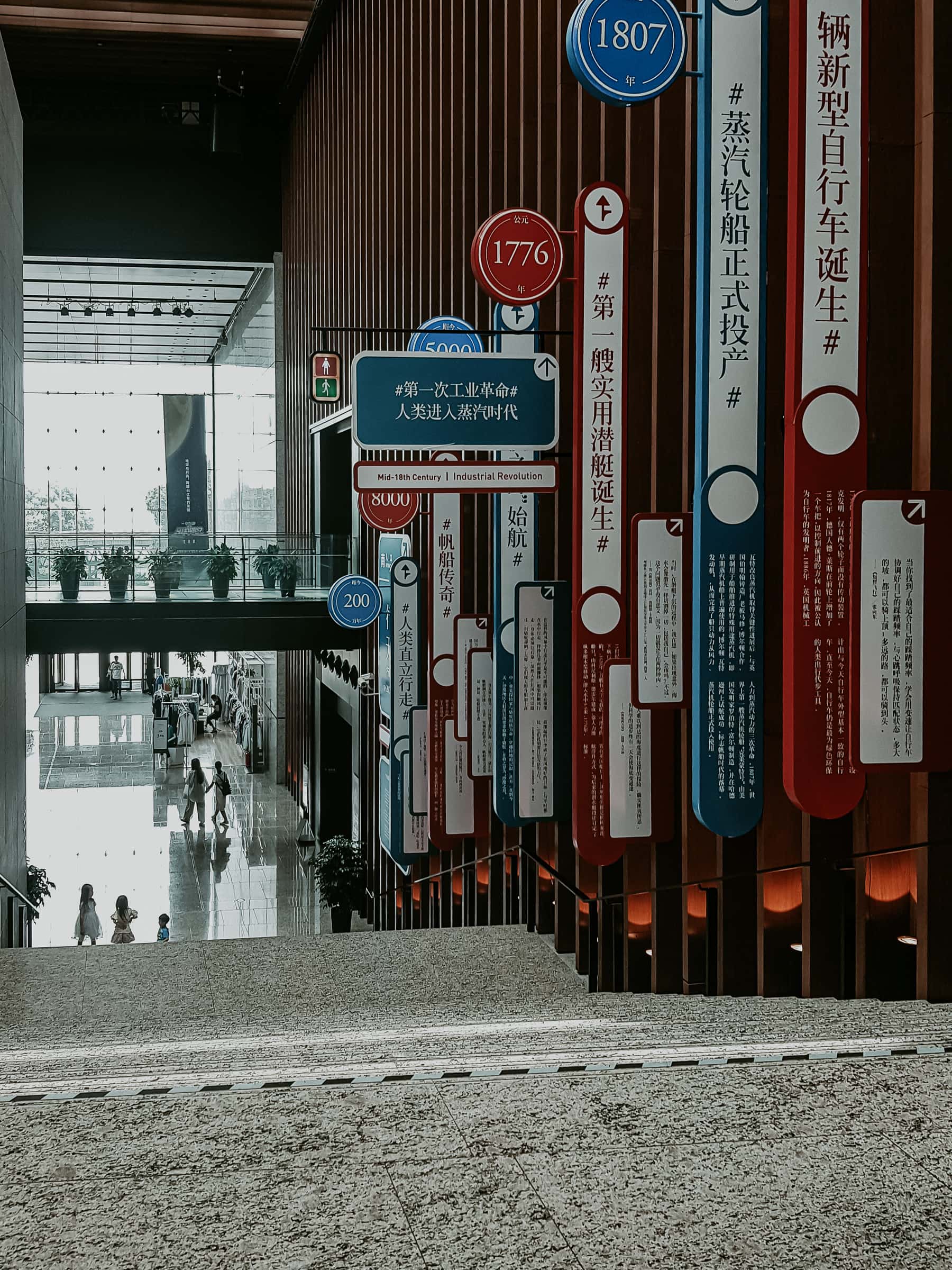
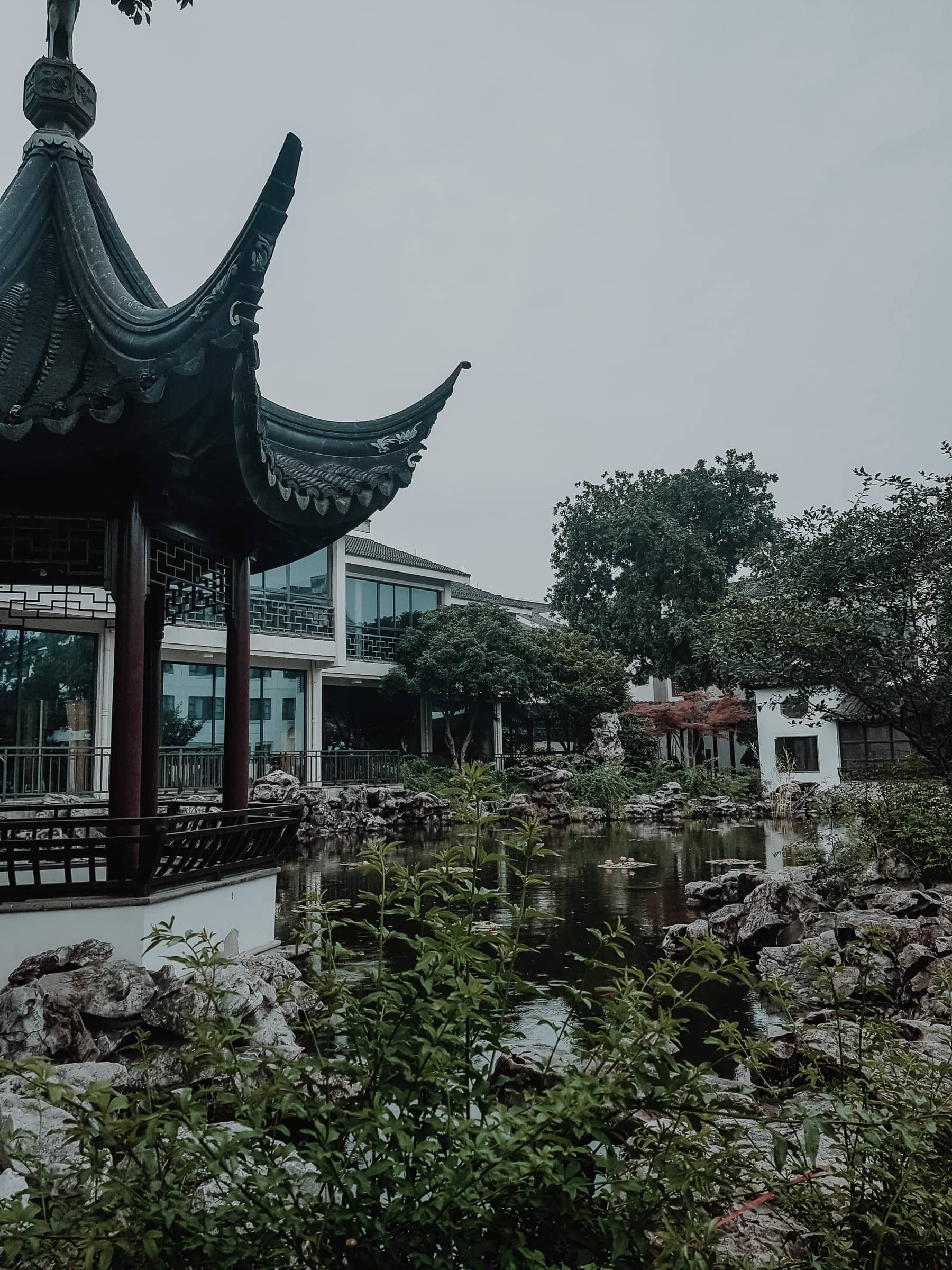
China is one of the countries where I had the most prejudices before my first trip. Today I am glad that I was able to see it for myself: China is a diverse country and I made so many exciting experiences.
I’m slowly starting to look back on the last few years of travel. Not only have I flown halfway around the world what feels like hundreds of times, I’ve battled jet lag – sometimes more, sometimes less happily – and perfected my talent for getting to know cities with millions of inhabitants like Beijing completely within 24 hours (or at least trying to). Until the ultimate sightseeing and travel burnout. Yes, there is such a thing. In Beijing, I made it to the GreatWall ofChina in Mutianyu, to the Forbidden City, to two gluttonous feasts with full plates (they like to serve up in China) and even to one of the most stupid tourist traps I’ve ever fallen into in 24 hours.
More and more often, I find myself squinting at the Germany shelf in the travel book section of my favorite bookstore instead of looking at the latest books on some faraway destination, as I usually do. Other people dream of exotic destinations like Beijing and the Great Wall of China, I sometimes dream more of wet beach walks on windy North Sea islands or worse, hikes in the Elbe Sandstone Mountains. But don’t worry, this blog will probably never become a politically correct I’ve-seen-the-world-and-now-no-one-can-sustain-it blog. As a flight attendant, I will forever remain the worst contact person for this anyway. For someone like me, who has actually only had the worst wanderlust in the last few years, a nice feeling. Finally, no restlessness, but satisfaction about what I have left there in retrospect travel memories like from Beijing. Or who would have thought that I would ever stand on the Great Wall of China?
For the first time in Beijing.
I must have had a good day – on the street I saw only a few people wearing respirators and there was no sign of a smog bell. Could I probably leave mine at the hotel – my company at the time provided a mask for each crew member, then it usually had to be really bad. In general, Beijing made a surprising first impression on me. Somehow, I thought, you should feel more communism, so everything gray in gray as before in the GDR, long lines at fruit stores, lurking everywhere secret service officers, control without end and nothing with shameful capitalist stuff like Coca-Cola and McDonald’s. Hurray for unprejudiced travel! But all was not. Or at least not obviously. It did not become love between me and Beijing. But quite good friends. Later I was to get to know China in a completely different way!
From Beijing to the Great Wall of China: Mutianyu or Badaling?
The first insight: The Chinese do not call the Great Wall of China the Great Wall of China in English. But Great Wall. Makes sense, in China every wall is Chinese. From Beijing you can get to the Great Wall relatively quickly, by car you can be there in about 1 1/2 to 2 hours, depending on the place. There are two places that are particularly good for a trip from Beijing: Badaling and Mutianyu.
While Badaling is also accessible by bus and train, Mutianyu can only be reached by car. Mutianyu is therefore not quite as crowded as Badaling, which is something like a Great Wall pilgrimage site and must be bursting with tourists. Mutianyu, on the other hand, was quite pleasant, no crowds – and the weather was unique. Also uniquely hot and sunny – sunscreen was THE tool of the trip!
An incredible masterpiece: The Great Wall of China winds its way through the most impassable mountain landscapes.The last part up to the Great Wall of China is by cable car.
And then I stood there, as a little dot on this huge centuries-old endless wall that is supposed to be over 8,800 kilometers long. Quite crass. And it looked like in a movie: Hilly mountain landscapes in lush green – over which then up and down and around it the great wall meandered. Unbelievable that this was built by man in the middle of nowhere.
Every few hundred meters there are watchtowers on the Great Wall of China, which was manned by sentries.
Down you can again with the cable car or on foot. Or tobogganing on the toboggan run. Which is actually really fun. Unless you have the only tobogganing expert in front of you who doesn’t realize that the brake is a brake and not a throttle. And so we just tobogganed down into the valley at the fabulous speed of three kilometers per hour. My motorcyclist self cried. But still: I have actually seen the Great Wall of China!
Mutianyu: Up on the cable car, down on the summer toboggan run.
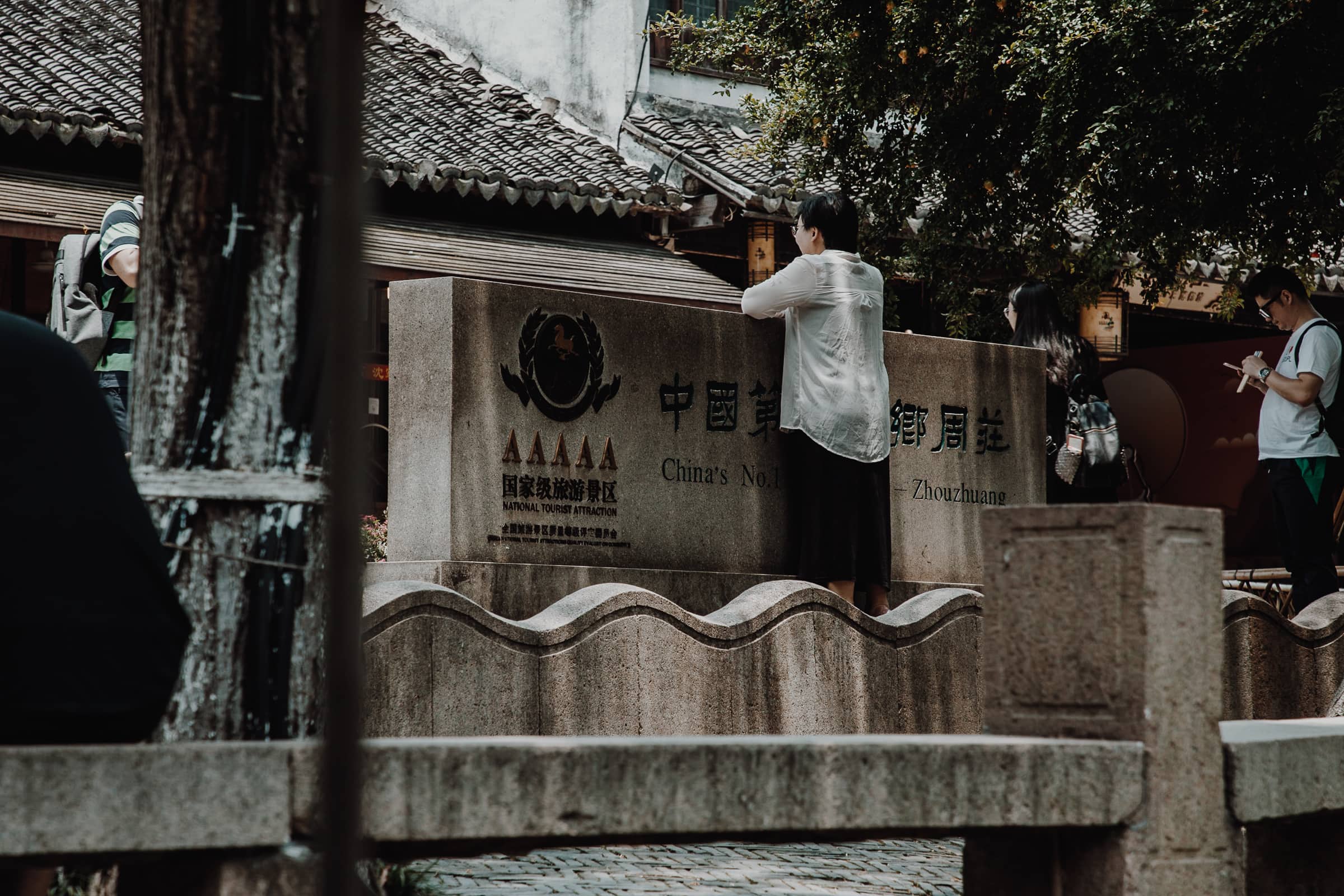
Zhouzhuang is located in eastern China and modestly calls itself China’s number one water city. Not far from Shanghai and Suzhou, Zhouzhuang is a popular excursion destination: with its many canals and waterways as well as a pretty little old town, Zhouzhuang (pronounced: chuu-chuang) is definitely worth a visit. The small water town is considered one of the cultural centers of the region and offers not only Chinese tourists but also foreign visitors like me fascinating insights into China’s extensive culture and history.
Zhouzhuang: Back to ancient China
The term China’s number one water city is no coincidence: in 1985, the two now best-known Zhouzhuang bridges adorned the first issue of the United Nations stamp. Shuangqiao (key bridges) is the name given to the two bridges standing at right angles to each other because they look like a Chinese key. Chen Yifei, a Chinese artist, was exhibiting in a gallery in New York at the time, including a painting of the same key bridges. In short, the paintings were a success, the bridges made it onto the stamp, the stamp into the world and Zhouzhuang (and China’s water towns) onto the international stage.
Popular motif: the two key bridges directly at the main entrance to the number one water city: Zhouzhang.
But Zhouzhuang has been around for much longer, of course – just like Suzhou Zhouzhuang can look back on over 2000 years of history. Like the entire region, the city experienced its heyday during the Ming dynasty and some remnants of this can still be admired in the city today.
Boat trip in Zhouzhuang: China’s romantic waterways
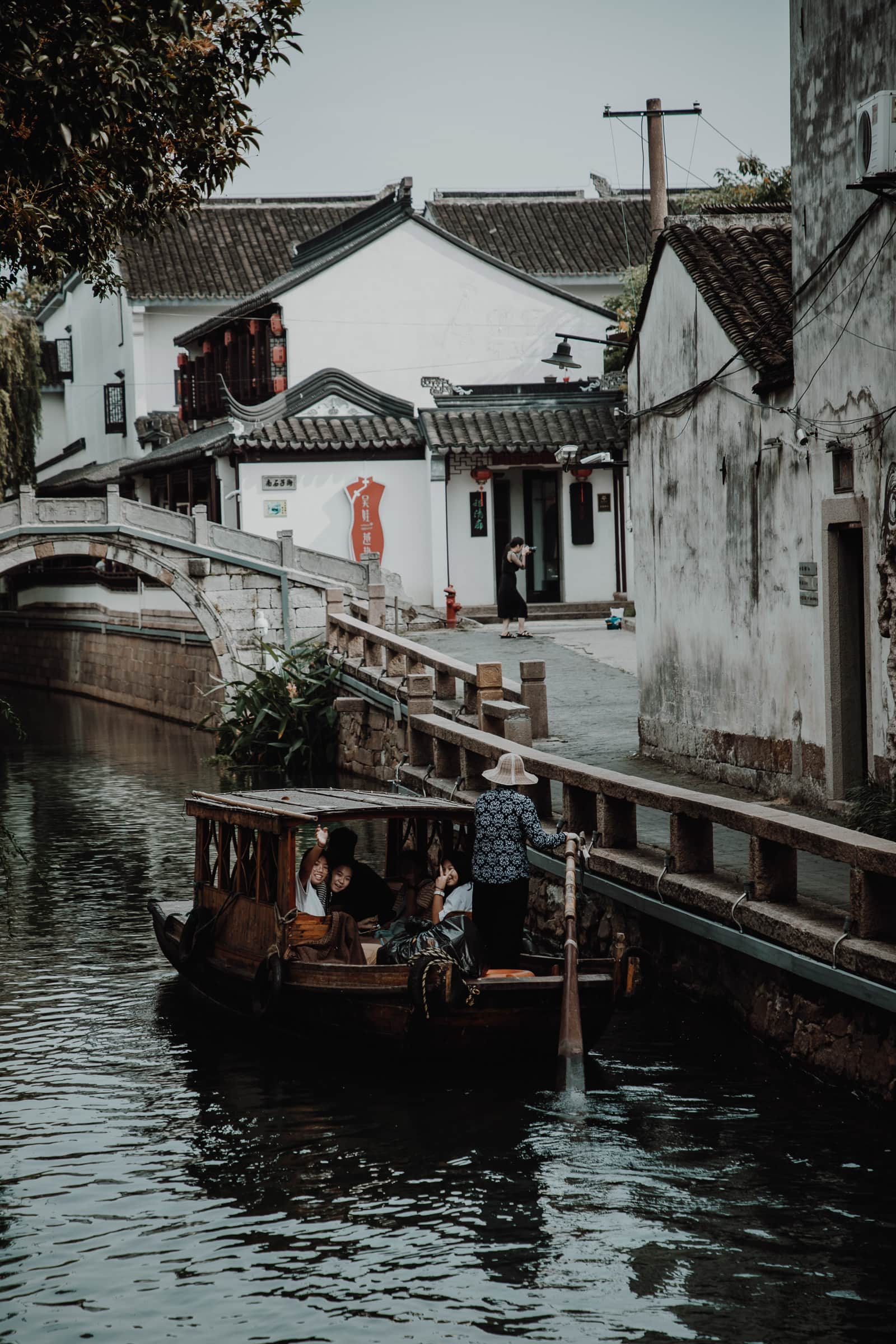
Don’t miss out on a boat trip on the numerous small wooden boats that sail along the small canals. The tour starts collectively at a departure point, where tickets are purchased at the same time. A 20-minute trip costs 150 yuan per boat, and up to 6 people can go on it. The trip was a bit short for my taste, but that could also be because it was just too nice to glide through the atmospheric canals on this traditional wooden boat! On request (and a small tip), the boatwomen will also sing classical Chinese folk songs – it doesn’t get much more idyllic than that.
Female power: gondoliers in Zhouzhuang are also female.
Places of interest in Zhouzhuang: Shen House
One of the main attractions in Zhouzhuang is the Shen House. Shen Wansan was a wealthy businessman who left his mark on Zhouzhuang – and he was so rich that even his descendants benefited from it for a long time. In 1742, they built Shen House – and “house” is a slight understatement! The entrance to the building, inconspicuous from the outside, leads into a complex with over 100(!) rooms that extends over 6 blocks. I could have spent hours wandering through the many detailed rooms and courtyards: The Shen House is an absolute experience, you immediately feel transported back to ancient China.
Proud tourists in Shen House: Zhouzhuang is one of the most famous water towns in the whole of China.
Would you like to spend the night in a traditional Chinese house? Right in the heart of Zhouzhuang’s Old Town, there are great places to stay like this one: Click here for more info*
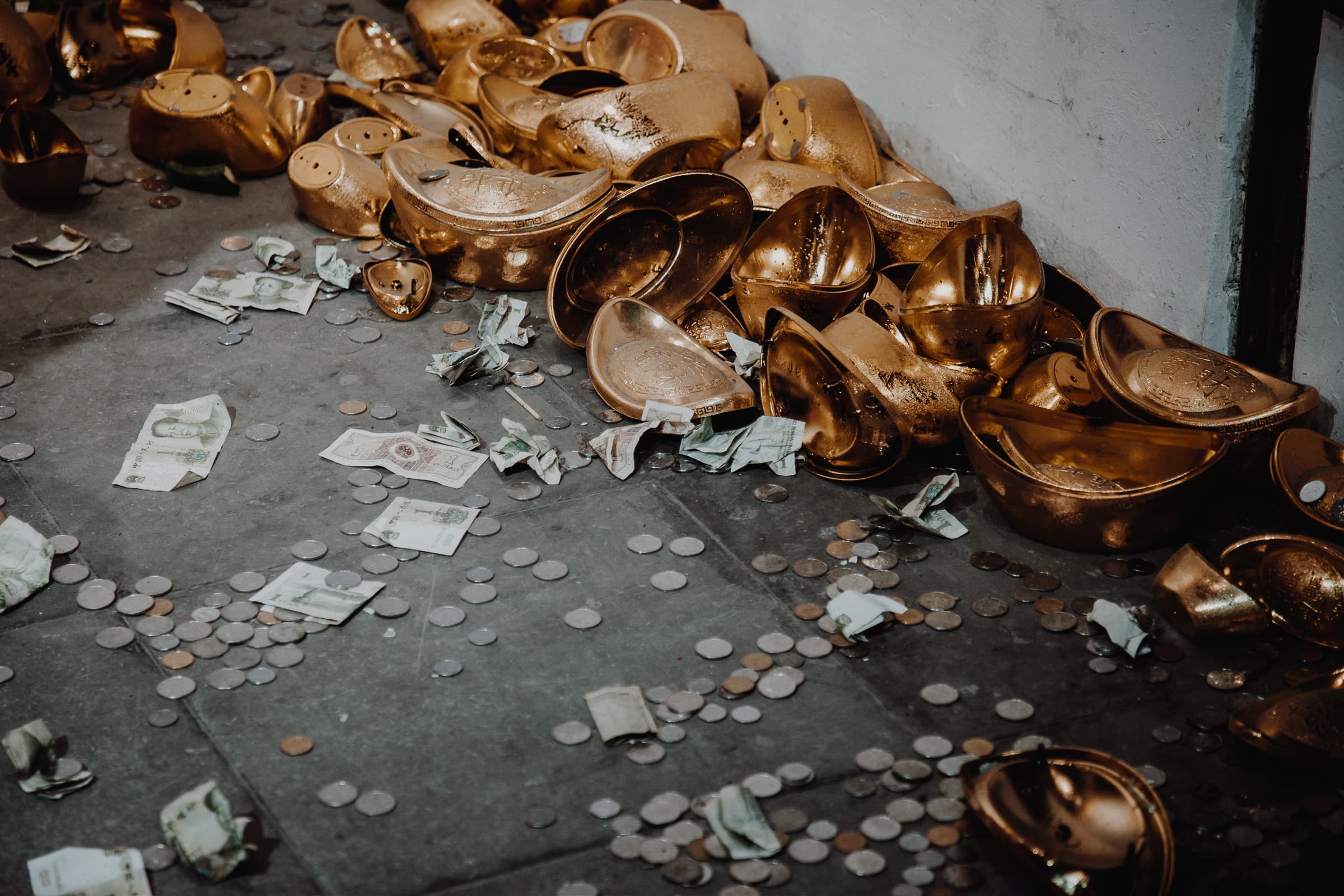
There is a golden Buddha in one of the many rooms of the Shen House – placing money under the Buddha is said to bring good luck.
Quang Fu Temple: relaxation from sightseeing
There is also a huge temple complex in the middle of Zhouzhang. If the narrow streets of the old town have become too narrow and you need some space, you should definitely take a short break around the Buddhist Quang Fu Temple in Zhouzhuang. The temple is located in the huge Nanhu Garden and the grounds are a great contrast to the bustling old town. Zhouzhuang is a popular destination for Chinese tourists – and not without reason, as it is beautiful! It can sometimes get crowded and a little more air is not a bad thing, especially in hot tropical temperatures.
The Nanhu Garden is located around the Quanfu Temple.
The old town of Zhouzhuang: stroll, store, enjoy
Zhouzhuang is not only steeped in history, the small alleyways are also great for a stroll. There is certainly a lot of tourist kitsch, but for me as a European, everything here is so exotic that I can even enjoy the banal trinkets. The small souvenir stores blend in surprisingly harmoniously with the historic streets, so that I was once again amazed at how well cultural assets are maintained here in the region – despite the hordes of tourists. You can even still find real street life, and the best moments can be captured in the small side streets.
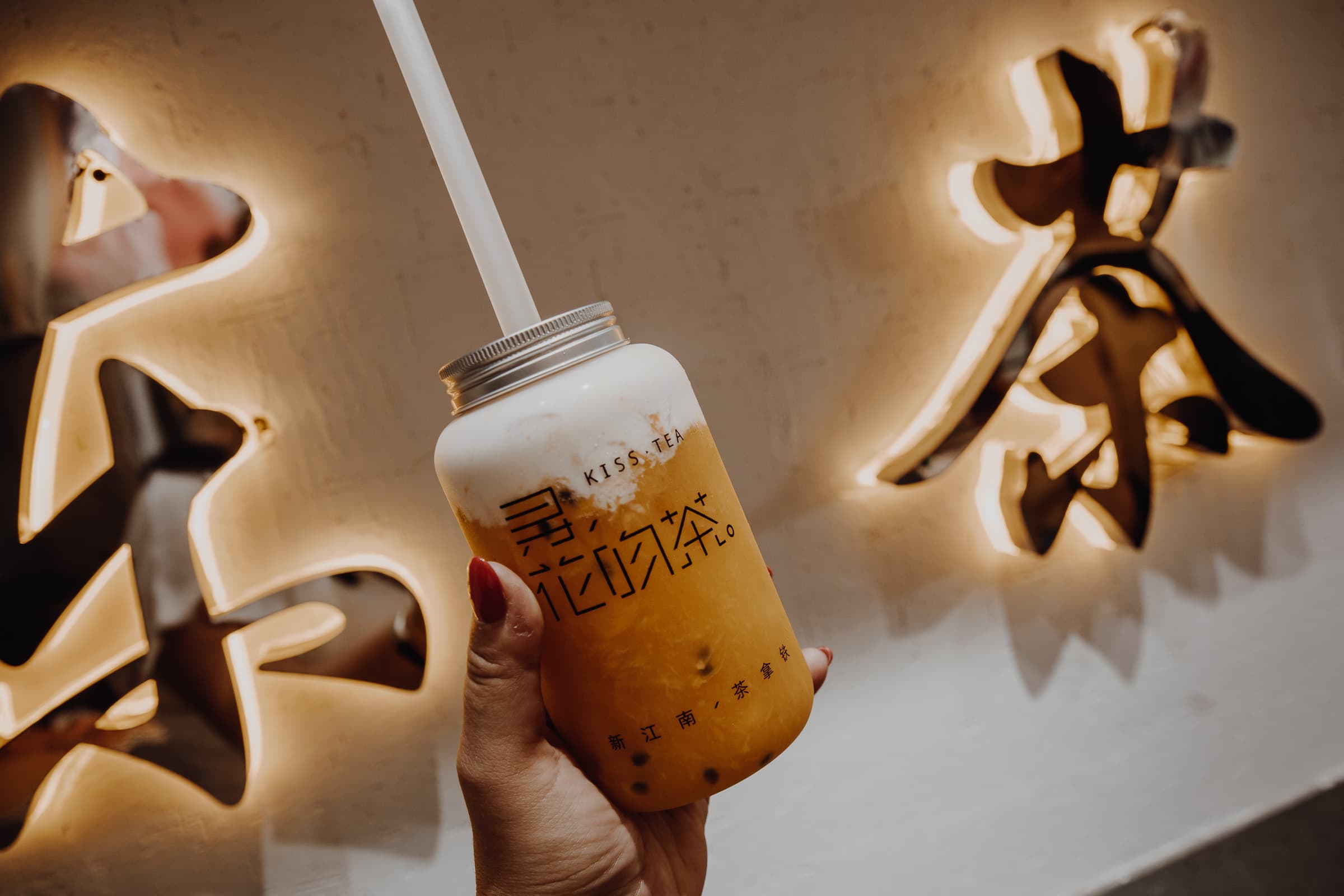
Local life in the side streets.Stores are still traditionally closed with large wooden boards after closing time.Tea store in the old town of Zhouzhang.I completely forgot what it was because of all the exotic food. Even the vegetables are prettier in Zhouzhuang.
How to get to Zhouzhuang
Visiting Zhouzhang is surprisingly well regulated: Access is limited! There is a huge parking lot for cars and coaches, with a large visitor center where you can also buy tickets. That’s right: Zhouzhang charges admission. What has long been discussed in crowded tourist attractions such as Venice and is now slowly gaining acceptance there at least, is simply done in Zhouzhang. Once again, I was struck by the well thought-out management of tourist flows and sophisticated infrastructure.
However, so much organization is probably necessary, as we were advised not to come to Zhouzhuang during Golden Week. Golden Week is the name given to three different weeks in China: The Chinese New Year or Spring Festival (January or February), the week around May 1st (Labor Day Golden Week) and the week around October 1st (National Day Golden Week). Then Zhouzhuang, like many other popular destinations in China, will be bursting at the seams.
Zhouzhang is only about 30 kilometers away from Suzhou, which I also liked very much. But Zhouzhuang is also easily accessible from Shanghai by public transport or with tour operators.
Suzhou in eastern China, very close to Shanghai, is known for its picturesque gardens and picturesque old town with its many waterways. Suzhou is over 2500 years old and is known throughout the country as a place of poets and thinkers. But above all, Suzhou is one thing for me on this China trip: quite a surprise. I’ll tell you here which great sights in Suzhou are waiting for you!
Many houses along the canals in Suzhou are decorated with red lanterns: pure China.
The most beautiful sights in Suzhou
Because of its many small canals that run through the rather large old town center, Suzhou is also often and gladly referred to as the Venice of the East. And I shudder at this expression at the latest.
Suzhou: A boat trip through the romantic canals is a must.
Tip: In Suzhou you will find numerous large hotels of western chains with corresponding comfort. Unfortunately, these are often housed in uninspired high-rises or large complexes. For an authentic atmosphere, it’s best to look for accommodation near the old town, such as the Garden Hotel*.
“Venice of…” (as well as “Mecca of…” and “Paris of…”) – as an author or copywriter, you only ever write this when you really can’t think of any better comparisons. The main thing is a few boats, a few canals, and the analogy with Venice can be formed. As with the waterways in Suzhou in the Yangtze River Delta in eastern China near Shanghai.
All Venice, although nothing really compares to Venice, not even Suzhou. But anyone who has been there will wonder why Suzhou needs any comparison at all – because Suzhou is a true gold treasure.
By the way, Suzhou is easy to reach from Shanghai. And you don’t even need a visa for China. The trick: German citizens can enter China without a visa for stays of less than 72 hours in Shanghai and the surrounding area. And from Shanghai, you can reach Suzhou and the surrounding water towns worth seeing, such as Zhouzhuang and Tongli, in no time at all.
The nearby water town of Zhouzhuang is also well worth seeing. Read more in this article:
Suzhou and its gardens: The garden of the humble official
The garden of the humble official has a rather misleading name. Modesty is the last thing that comes to mind when you see what is probably the most famous garden in Suzhou. The garden is actually a huge park with secluded pavilions and thoughtfully landscaped lakes and trees.
One of the most popular gardens in Suzhou: the garden of the humble official.
According to Chinese horticulture, the main focus is not so much on flowers and colors, but on the harmonious interaction of the so-called “seven elements”: earth, sky, water, stones, buildings, living creatures and plants, although here rather trees and green plants are meant.
Otherwise, just a lot of green: lotus blossoms are among the few splashes of color in the garden of this modest official in Suzhou.
And it soon becomes clear how harmonious the garden of the modest civil servant is: although hopelessly overrun by tourists, an aura of peace and relaxation nevertheless shines over the garden. Very impressive. In many corners you can meet painters and draftsmen who give free rein to their creativity and are inspired by the atmosphere of the garden. I was briefly annoyed that I didn’t have my watercolor stuff with me – I would have loved to just sit next to it and paint along. But there was much more to see in Suzhou anyway, that time was short anyway.
Painters and draftsmen like to be inspired in the garden of the modest official.
How much history there is in Suzhou can also be seen here: For almost 900 years, a garden has existed on this site, which passed through many hands until a high-ranking official chose it as his retirement home in the 16th century and gave the garden its name. Today, the garden of the humble official is state-owned, a UNESCO World Heritage Site and one of the most beautiful gardens in China.
The garden of the humble official in Suzhou is also a real Instagram hotspot: Very instagrammable!
Shantang Street: Immersion in Ancient China
With temperatures around 35 degrees (yes, it can get very, very hot!) and what feels like 100 percent humidity, a boat trip is always a welcome change, especially in Suzhou with its picturesque canals. Clotheslines fluttering in the wind, children waving enthusiastically at the foreign tourists (as a Western visitor in Suzhou you are still something special) or sneak peeks into foreign kitchens: My eyes did not even know where to look first.
Suzhou’s canals can also be explored by boat.Some bridges are particularly ornate in the old city of Suzhou.Concentrated, our captain steers the boat through the canals of Suzhou.
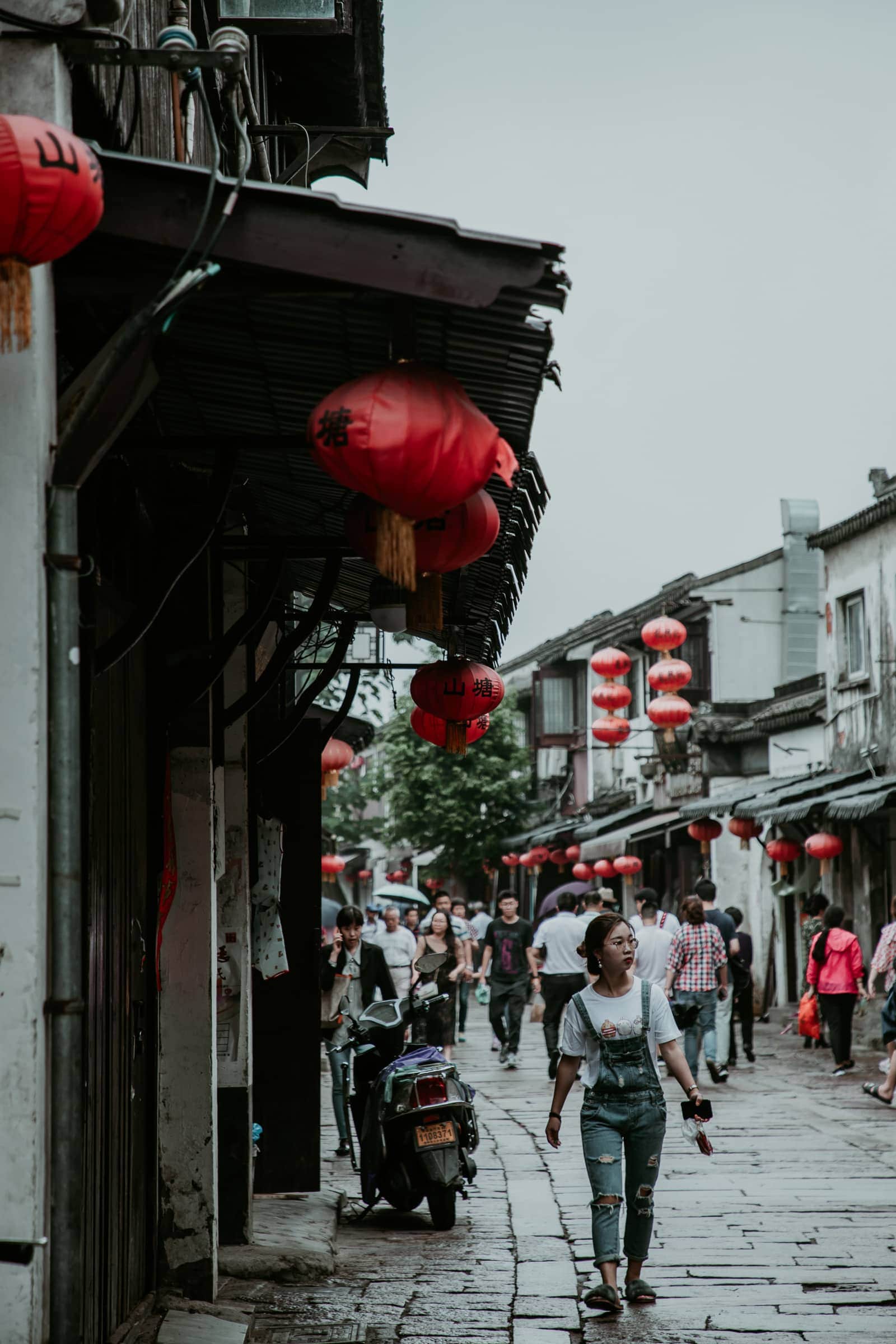
Even on foot, Shantang Street (Shāntáng Jiē) was the China I was looking for: red lanterns, small houses with old wooden beams – and relaxed, friendly faces everywhere. On 7 miles you can find everything at once: tourist stuff, culture, history, snack bars and cafes with all kinds of exotic delicacies and actually real street life. If you turn into the more deserted alleys, you will quickly find yourself in local hustle and bustle, without any touristy stuff. A real experience.
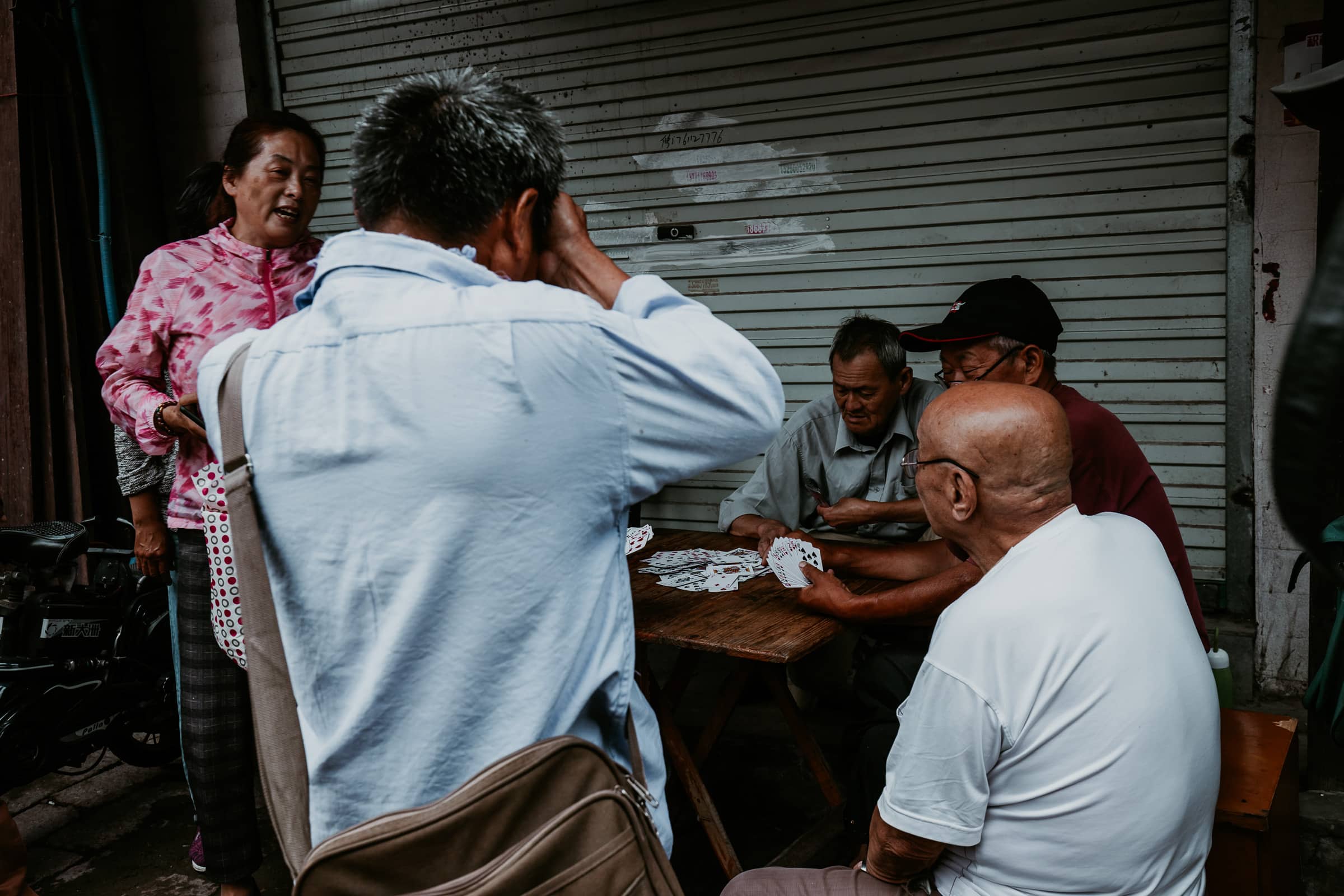
Shopping mile: Shantang Street in Suzhou.Colorful souvenirs in the tourist part of Shantang Street.In the middle of the street: Concentrated card game.
Street Food in Suzhou: No inhibitions, it’s worth trying!Fruit and vegetable vendors can also be found on Shantang Street.In the side streets of Shantang Street you can find authentic everyday life: a small cookshop is cooking breadcrumbs.
Pingjiang Road: tea houses, canal boats and nightlife
Even more authentic Chinese flair can be found on Pingjiang Road (Píngjiāng Lù), similar to Shantang Street a street with many stores and restaurants. Here it is even a little bit more cozy than on Shantang Street. The boats are smaller, the bridges even a little prettier.
Happy tourists on Pingjiang Road: a boat trip here is even more idyllic.
My highlight was the tea house, a small café by the canal, more wooden shack than house, where we listened to 80 year old(!) Mr. Wang playing original Pingtan music to us over a cup of tea. It could hardly get more Chinese! By the way, Pingjiang Road is also very busy in the evening and a nice nightlife spot in Suzhou.
Unusual creations: The many small cafés along Pingjiang Road serve the most curious drinks.
Suzhou Opera in the Garden of the Master of the Nets
In general, music, like all other arts, plays a major role in Suzhou. Somehow creativity and appreciation of art and culture are in the air here, so I wasn’t surprised to learn that Suzhou is considered a “very elegant” city in China. Found it apt – and I never thought before that I could find a place in China elegant. For me, China was big, crowded and rough at times – but this trip showed me once again how unfair prejudices can be. Suddenly China was small, picturesque and warm (oh, the people!).
I would even recommend an evening at the opera to anyone here, even if you are one of those people for whom operas are more likely to trigger flight impulses. Or where else do you watch an opera in one of the most beautiful gardens?
Colorfully illuminated at night: The garden of the Master of Nets in Suzhou.
In the garden of the Master of the Nets there is a performance of a Kunqu opera every evening. The opera consists of several parts: Comedy, song, music and dance. The special thing: Each part is performed in a different place within the garden, so you walk along the garden between each performance.
The performance in the garden of the Master of Nets consists of several parts: Drama, song, dance, music.
Real Chinese Silk: A Visit to the Silk Factory
Suzhou is famous for its silk – and the region has always formed one end of the Silk Road, from where the beautiful fabric found its way to the world. The silk factory, modestly named No.1, is therefore on the agenda of many tours of Suzhou. You should think about this carefully beforehand – because what many people don’t consider is that here you can observe the production process (at least part of it). That also means watching caterpillars crawl. And later it becomes even less something for the faint of heart, because the silk thread is obtained from the cocoon of silkworms. In order not to damage it, the cocoons including caterpillars are thrown into boiling water. Not for everybody.
Nicely draped in a basket: silkworms for silk production.From caterpillars to cocoons: the next phase of silk production at the silk factory in Suzhou.The cocoons later become silk.
Personally, I have an affinity for fabrics anyway (I actually used to have a fabric store in Berlin) and silk anyway (I always like to block out the boiled caterpillar part), so I found the visit interesting in itself. Unfortunately, the production process is shown only abbreviated (there is no weaving or dyeing here), and shortly after watching the spinning of the threads, you will find yourself standing in a huge sales hall with clothing made of silk for (almost) every taste. I didn’t like the clothes that much, but I was a bit sad afterwards not to have bought some fabric. So for all people who love to sew: In Suzhou, do not forget to buy silk!
On this machine the silk threads are spun.
The Suzhou Museum
The Suzhou Museum is particularly striking because of its architecture – somehow angular and not at all traditional Chinese. It was designed by Chinese star architect Ieoh Ming Pei, who also planned the famous glass pyramid in the courtyard of the Louvre in Paris and the Museum of Islamic Art in Qatar – and he was born and raised in Suzhou.
Here you will find an overview of Suzhou’s long history in the form of works of art and artifacts, from calligraphy to porcelain to handicrafts. Worth seeing, but perhaps not necessarily interesting for everyone. But what is really fascinating is the way the mostly Chinese visitors interact with the exhibition: I have never seen so many young people in German museums who are so intensely interested in history and who press their noses against the display cases out of sheer thirst for knowledge.
Marvelled at: exhibits in the Suzhou Museum.
The modern part of Suzhou
Gate of the Orient & Jinji Lake
Outside the sprawling old city, Suzhou looks a bit more like how you’d imagine big Chinese cities to look. The city currently has over 10 million inhabitants and as well as Suzhou is developing, there is no end in sight. Large companies produce and conduct research here. The good transport links and proximity to Shanghai ensure that Suzhou is one of China’s up-and-coming cities. The spirit of optimism is also reflected in the bold architecture in the modern part: the landmark of the new Suzhou is the Gate of the Orient (Dongfang Zhimen) or Gate of the East, the second tallest skyscraper in Suzhou. Located on Lake Jinji, it is supposed to act as a gateway to the East – but locals affectionately nicknamed the building “the pants” due to its unusual shape.
Looks like a pair of pants: The Gate of the Orient in Suzhou.
Suzhou Supertower
The “pants” are topped by the Suzhou Supertower, 450 meters high – and that’s where it really starts to look futuristic. Every time we passed it, I could hardly believe that just a few kilometers away we were sailing on small wooden boats along romantic canals. The way the old and the futuristic are combined here is breathtaking.
Suzhou Industrial Park & Suzhou Culture and Arts Center
In the Suzhou Industrial Park there are further examples of modern Suzhou: The Suzhou Culture and Arts Centre is a gigantic cultural center with a (free) museum of modern art, various exhibition rooms, a musical theater and a small amusement park with a Ferris wheel, cafés and restaurants. In good weather, there is a fantastic view from here across Lake Jinji to the Suzhou skyline.
Shopping in Suzhou – shopping from silk to designer clothes
In Suzhou you can shop till you drop. I’ve long imposed a strict no-shopping policy on myself, which I usually stick to, because otherwise I’d be impoverished by now with all the traveling I do. My souvenirs are my photos – but in places like Suzhou, it’s pretty hard to contain yourself.
Popular souvenirs from Suzhou
Popular souvenirs from Suzhou are silk in all variations, green tea (Bi Leo Chun), fans in all shapes, and lots of handicrafts like embroidery and fruit core carvings. On Shantang Street and around Pingjiang Road there are also a lot of small stores selling pretty hip handicrafts – no more boring tourist stuff!
Tip for design lovers
I could have shopped myself to death in Chengpin Eslite, which is actually a huge bookshop. I have a thing for beautiful bookstores anyway, and this one is embedded in a state-of-the-art shopping center with countless small designer stores. I’m usually put off by shopping malls, but the Eslite reminded me a lot of trendy temples like Terminal 21 in Bangkok! Between the stores, there are always small snack bars and cafés, so you can sample all the delicacies of the region here if you don’t dare try street food.
Not only a huge bookstore, but also a shopping center with many innovative designer stores: Chengpin Eslite.
Food & Drink in Suzhou
Exotic dishes: What is one in Suzhou?
Food in general can be quite exotic in China. And it has nothing whatsoever to do with the Chinese restaurant from the German provinces. Vegetarians often have a hard time, somewhere there is meat in it or seasoned with fish sauce. Meat eaters like me have to deal with the most off-the-wall dishes like duck tongues or braised offal. Basically, Western tourists are already careful not to offer the most unusual dishes, but due to communication difficulties, you should be prepared for anything.
Jiangsu cuisine
However, Jiangsu cuisine (the name of the province in which Suzhou is located) is so sophisticated and varied that I often wished I could jump over my shadow even more and try dishes such as pork snouts or chicken feet – but unfortunately I’m really mean about it, as they say here in the Ruhrpott. After all, if you’re going to eat meat, it’s only logical to use every piece of it. Especially the cuisine in Suzhou is a true paradise for gourmets!
Vegetarian cuisine
Vegetarians don’t have to starve though, there are plenty of exotic ingredients to try like water asparagus, lotus roots or purple sweet potatoes. Not everything is spicy, but a lot is greasy and due to the foreign spices and the different climate, one or the other stomach needs some time to get used to the new cuisine. However, I have tried so many new and delicious things in the whole days that I can not even remember everything!
Dishes are always shared, which means if you sit in a big group, you can try a lot more!
Specialties of Suzhou cuisine
Mandarin fish
Sooner or later you will get it served in Suzhou, this specially prepared fish is THE dish in Suzhou. The fish is completely deboned, cleverly draped in the shape of a squirrel and then deep fried. Finally, a sweet and sour sauce is added on top, which took sweet and sour to another level for me!
Suzhou noodles
Noodle soup is noodle soup you could say. But the fresh noodles at Zhuhongxing in homemade broth with tender beef were so divine that I still think about them sometimes. Tip: Don’t spend too long marveling at the food and enjoying it, because the noodles soak up so much broth in the bowl that the mountain of noodles gets bigger and bigger instead of smaller. The professional slurps quickly! (Don’t be afraid of table manners: Hanging over the bowl and slurping loudly is not seen as closely in China as it is here).
Tangbao
Dumplings in all varieties can not be missing! The Tangbao are again a special variety, filled with broth in addition to the mostly meat content. This is slurped out beforehand with a straw, similar to the xiaolongbao that exists in neighboring Shanghai.
Street food in Suzhou
Always dare to try street food! Sometimes it can also be surprising, like the particle on the right, which I bought in a bakery. It looked delicious, so hairy breaded – but what I imagined was sweet ended up being a breading of finely ground pork. Wasn’t mine – but I still like to try strange things. The dumplings, however, were divine!
Accommodation in Suzhou
Our accommodation in Suzhou could not have been better. Centrally located, equipped with all the bells and whistles like a pool and tennis court, and with a breakfast buffet to die for, the Garden Hotel* was perfect. The hotel consists of several smaller guest houses and two main houses, nestled – it couldn’t be more fitting in the City of Gardens – in a beautiful, tranquil garden setting. If you want to treat yourself and stay in Suzhou in style: Absolutely recommended!
In the middle of a garden and yet central: The Garden Hotel in Suzhou.
Travel & Getting around Suzhou: How to plan your trip!
Location & Arrival
Suzhou is located only 80 kilometers from Shanghai, and is directly on the express train line that runs from Shanghai to Beijing. So if you are in Shanghai for a few days, Suzhou is definitely a good choice for a multi-day trip: by train you can be in Suzhou within 90 minutes.
Shanghai is very beautiful, but I personally find Suzhou much more appealing from a historical and cultural point of view – and always only mega big cities can also be very exhausting. By the way, train travel in China is a thousand times more organized than I thought. However, there may be communication problems here as well, since English is not widely spoken.
It takes 10 minutes to get down to the tracks, the tickets are personalized and the identity is checked at the access control: In China, everything is in order when riding a train.
Individual travel vs. group travel
We were traveling in a small tour group. Although I usually travel independently in Asia and plan everything myself, I was glad to have a tour guide with us who could explain many things and translate when necessary. Precisely because the region around Suzhou is not yet particularly familiar with Western tourists, not much English is spoken and most attractions do not provide information in English, meaning that you would otherwise miss out on a lot of interesting information.
Individual travel modules instead of a complete round trip
Complete China tours are often very expensive, and honestly, you can book a flight to Shanghai and spend a few days there on your own. For more “exotic” destinations like Suzhou, however, you can book individual modules with China Tours, which I can really only recommend.
We wore out three guides during our trip through several places around Shanghai, all of whom were highly professional, even spoke very good German (!) and had absolutely in-depth knowledge on every topic. Especially with such a complex destination as China with so much culture and history, about which I admittedly didn’t know very much beforehand, professional guidance was worth its weight in gold.
Getting around in Suzhou
If you prefer to travel independently, you can cover longer distances in Suzhou by taxi or take one of the tourist bus routes. There are rental bikes in many places. The subway network is being expanded.
Is Suzhou worth visiting?
I really liked Suzhou and often wondered why it is almost unknown among Western tourists. Especially when you visit Shanghai, a trip (sporty people can do it in one day) to Suzhou is a must. Shanghai is fascinating, but I always missed a little patina there. A detour to Suzhou is a great way to complement this. Also, the city is much more relaxed and everywhere you are warmly welcomed as an exotic tourist from the West, which showed me again a whole new side of China.
Disclaimer: I was invited on this trip by the Tourist Offices of Suzhou and Nanjing and China Tours.
See Hong Kong in two days: extremely sporty. See Hong Kong in a day and a half: actually impossible. But the typhoon did not mean well with us. A day and a half had to be enough. Far too little for a city like Hong Kong.
Stopover in Hong Kong – my tips!
Already when looking out of the hotel window (mega! – and kindly with orientation help) it was clear: I will see only a fraction of the city. So big, so fascinating, so versatile, so tropical. I will be back, I am sure of it.
Ad / *affiliate links
1st Temple Street Night Market – Food in Hong Kong
Located in the middle of Kowloon, the market is very easy to reach by bus and train. A typical Asian night market, perfectly adapted to the needs of tourists. From charging cables for the latest iPhone to Chinese tea services and the usual souvenirs, there is everything a tourist’s heart desires. The prices already seemed moderate, but haggling is still worthwhile.
But the really interesting thing are the restaurants around it, partly located in small dark alleys and very simply furnished. Not for cleanliness fanatics and probably not for sensitive animal lovers, because species-appropriate husbandry of marine animals looks different. In front of the restaurants are vats with live animals – waiting to be prepared. The crabs are supposed to be fantastic.
I’m not a fan of seafood, dead or alive. So the little animals were allowed to continue swimming in their tubs. But the rest was delicious. And the gruff Chinese service make the Hong Kong experience perfect.
For dessert – typical for Hong Kong – the photogenic Egg Waffles:
3. by ferry through Victoria Harbour
Probably one of the most affordable attractions in Hong Kong. You can also take one of the beautiful junks with a tourist program, but quickly crossing Victoria Harbour on one of the ferries is impressive. Especially at night, when the skyline is brightly lit. Costs only a few cents, and always goes.
4. ride Hong Kong streetcar
Hong Kong’s streetcars are probably unique: two stories, brightly painted and almost as short as a VW Golf.
5. shopping and chilling in Stanley
A bit out of the city center is Stanley, but with the bus line 6 even the trip there flies by. Passing the most beautiful beaches of Hong Kong such as Repulse Bay, along the serpentines between the tropical mountains.
Stanley itself is a pretty little town, with cafes and restaurants on a boardwalk and a small mall. Perfect to get away from the noisy city. Stanley is also known for its market – once an insider’s tip for bargain hunters, now more of a tourist market like everywhere else. Anyway, it’s still beautiful.
You can also take in the Tin Hau Temple in Stanley directly – one of many temples in Hong Kong dedicated to Tin Hau, the patron saint of fishermen and sailors. Beautiful to look at.
I’m dealing with natural disasters at the moment. Either they travel after me like they did the other day in Charlotte or they rush ahead of me. The latter then happened in Hong Kong. As a result, the briefing was postponed by a full 12 hours due to a typhoon – dramatically shortening my very first stay in Hong Kong . No matter. Better to arrive behind the typhoon than during it, right? At least I thought so and tightened the sightseeing program for Hong Kong a bit. The nightlife in Hong Kong then unfortunately fell away, no cocktails in rooftop bars or dancing through club nights. But then the most spectacular view ever.
Hong Kong: Take the Peak Tram to Victoria Peak
It’s Sunday. The first sunny day after a typhoon. Not a good idea to take the historic Hong Kong Peak Tram up to Victoria Peak – unless you’re not deterred by an hour and a half wait. On other days it is supposed to be better, but unfortunately we had no choice. Thousands of tourists must have held out in Hong Kong during the typhoon, only to be able to continue directly with their sightseeing program on the next possible day and storm Victoria Peak together.
Nevertheless: it’s worth it. The ride on the Hong Kong Peak Tram is quite short, but spectacular in places, as it gets so steep that you tend to lie on the wooden benches instead of sitting. Once at the top, there is a large shopping and entertainment center with an observation deck, Sky Terrace 428. It’s called that because it’s 428 meters high. (Who would have thought.) Costs extra, of course, but down at the streetcar station you can buy a combo ticket, save a few bucks and get the most fantastic view of Hong Kong’s skyline in return!
Breathtaking: View from Victoria Peak in Hong Kong
The view from the Peak is magical. We spent the afternoon at the top, watching the sunset and marveling at the colorful lights of the city at night. Like in a movie, like on a postcard, like a photo wallpaper – that’s how surreal this view felt. And all the efforts and waiting time for the ascent were forgotten.
This site is registered on wpml.org as a development site. Switch to a production site key to remove this banner.