If you spend a few days in downtown Vancouver, you’ll see them all the time: small propeller planes gliding over Coal Harbour every minute, touching down on the water, and taking off again toward the mountains shortly afterward. Seaplanes are as much a part of the cityscape here as the skyline itself—Vancouver has one of the busiest seaplane harbors in the world, right in the heart of downtown.
Right in the Heart of Downtown: Departure from Coal Harbour
Harbour Air is the name of the airline whose seaplanes keep Vancouver Harbor bustling with activity. In addition to sightseeing flights, you can also take regular scheduled flights on a seaplane. In addition to ferries and “regular” airplanes, seaplanes are a common mode of transportation in Vancouver for longer trips within British Columbia or even as far as Seattle. Conveniently, the departure point in Vancouver is right in the heart of downtown. The Vancouver Harbour Flight Centre is located right next to the large cruise terminal at Canada Place.
For the 30-minute scenic flight, you’ll check in at a small departure lounge (usually 40 minutes beforehand), and then head out to the jet bridges to board the plane shortly before departure. The flights are operated by small De Havilland propeller planes that can seat up to 19 passengers. I flew on a 14-seat DHC-3 Single Otter, and even though I’m used to flying on small commercial planes, it was still incredibly exciting.
A Flight Over Vancouver in a Seaplane
I was feeling a bit down before my flight. My first few days in Vancouver were so sunny that I even caught a mild sunstroke! (Next time, don’t forget to wear good sunscreen, even if it doesn’t seem that hot!) Sadly, the weather on my departure day wasn’t as nice, and since I couldn’t change my reservation, I had to take the flight on that day anyway.
However, my mood brightened again quickly because, even without sunshine, the whole flight turned into a wonderful experience. It was my first time flying in a seaplane, and the fact that we took off and landed on water was so exciting and unique that it made the flight truly unforgettable.
Vancouver: Surrounded by Unspoiled Nature
The scenic flight is officially advertised as 30 minutes, but the actual flight lasts only 20 minutes. Nonetheless, it’s enough time to enjoy Vancouver’s unique beauty. Soon after takeoff, the plane starts to circle over stunning scenery: rugged mountains, vibrant green hills, and a fjord-like landscape that resembles Norway. Vancouver is truly encircled by pristine nature.
Vancouver’s Skyline
Our pilot quickly turned the plane around, circling downtown and the harbor. It felt like he was eager to remind us of the beautiful contrast once again: Vancouver’s skyline is truly impressive. Plus, we got lovely views of BC Place Stadium and the expansive harbor filled with countless containers.
How and when to book: Sightseeing flights are in high demand during the summer and cruise season—it’s best to make a reservation a few days in advance.
What about the weather? Flights operate under visual flight rules. If low clouds or strong winds occur, the flight might be delayed; therefore, avoid booking the sightseeing flight on your last day.
What are the costs of a sightseeing flight? It’s not exactly cheap—expect to pay about 150 CA$ (100€) for a 30-minute trip. In my opinion, it was worth every cent, and considering Vancouver’s typically high living expenses, the cost didn’t feel as steep once I was there.
Are the planes safe? I didn’t have any safety concerns. However, if you’re very afraid of flying, this scenic flight might not be suitable for you. The planes are small, so you can feel every turn, and the cabin noise could add to stress. Still, the flight lasts only about 20 minutes. Overall, the view from above is truly breathtaking.
Where To Stay in Vancouver: My Recommendation
Vancouver can be pricey, and good tips make a big difference! I suggest checking out The Burrard in downtown Vancouver—a charming spot that used to be a 1950s motel, complete with retro style, a lovely courtyard filled with palm trees, and surprisingly affordable prices by local standards. Plus, it’s just about a 20-minute walk to the seaplane terminal at Canada Place.
More Than Just a Sightseeing Flight: Traveling to Vancouver Island by Seaplane
Harbour Air isn’t only a sightseeing airline; it also offers scheduled flights across British Columbia. From the downtown Vancouver terminal, you can regularly fly to Victoria, Nanaimo, Tofino, and Whistler, with seasonal flights to Seattle as well. The trip to Victoria lasts roughly 35 minutes and lands directly in the Inner Harbour, making it the quickest way to reach Vancouver Island—from city center to city center.
These small seaplanes are highly sensitive to weight, so they require strict baggage limits. The amount of baggage allowed depends on your fare, with every item weighed, including the smallest bags. If you have a lot of luggage, confirm whether you can take everything and book early. Luggage space is very limited. Harbour Air’s baggage policies
Alternative Option: Taking the Ferry to Vancouver Island
Recently, there have been several changes to the ferry services. The traditional choice remains BC Ferries’ car ferries, but they don’t depart from downtown. Instead, departures take place from Horseshoe Bay (West Vancouver) and Tsawwassen, both about an hour away from downtown by bus or car.
If you’re traveling without a car, there’s now a much more convenient option: Since 2023, the hullo express ferry has been providing a direct connection between downtown Vancouver and downtown Nanaimo in approximately 70 minutes, serving as a passenger-only ferry.
The best part is that the ferry leaves from Canada Place, right next to the seaplane terminal. This means you don’t have to drive all the way out to Horseshoe Bay anymore—you can hop aboard right in the middle of downtown! For those walking to Vancouver Island, this is currently the simplest way to get there, and it’s especially more comfortable with luggage compared to taking a seaplane. I personally used the Hullo Ferry to travel from Vancouver to Vancouver Island, and I found it very easy and enjoyable.
Is the Seaplane Sightseeing Flight Worth It?
In my opinion, no trip to Vancouver is complete without a seaplane flight. Even though the weather wasn’t perfect during my visit, the whole experience was unforgettable.
It offers a chance to experience Vancouver’s stunning location—surrounded by rainforest, ocean, and mountains—and the thrill of taking off and landing on water. Although it’s quite costly for such a brief flight, it’s a memorable experience that’s definitely worth the expense and will leave a lasting impression.
Disclaimer: I traveled to the Pacific Northwest on behalf of Travellers Insight, Munich Airport’s online magazine. You can read more about Vancouver in this article —and be sure to check out my tips for Victoria and Seattle as well.
Creative vibe, lots of history and fresh sea air: A stop in the versatile port city of Lunenburg is simply a must on a trip through Canada’s second smallest province, Nova Scotia. In this guide, I’ll reveal my personal highlights in Lunenburg and give you some helpful tips for one of Nova Scotia’s greatest treasures.
Lunenburg may be a small town, but it still plays an important role in Nova Scotia’s history. It was founded by the British in 1753 in the hope of attracting more Protestants to the region. Although there were no British Protestants, there were more and more German emigrants who sought their fortune in Lunenburg. To this day, you can find the German-speaking influence not only in the city name, but also in many street names.
With its harbor, Lunenburg also became an important economic pillar of the region: Fishing became an important source of income and also attracted other industries such as large shipyards. Cod and lobster fishing still play a role in Lunenburg today, although not quite as big as they once were.
Thanks to its historic architecture and long-standing maritime tradition, Lunenburg was declared a UNESCO World Heritage Site in 1995 and is now a magnet for many tourists, without being too crowded, on the contrary. For me, Lunenburg was the perfect combination of history and the present, because the place exudes a creative vibe that I would not have expected!
The most important sights in Lunenburg
There are some sights in Lunenburg that you shouldn’t miss! Since the town itself is not particularly large, you can easily reach most of the locations on foot. If you want to delve deeper into the history of Lunenburg and get to know real locals, you can also take part in walking tours that take you to the most important places.
Fisheries Museum of the Atlantic
To learn more about Lunenburg’s history, there is no way around the Fisheries Museum of the Atlantic. The bright red building directly on the harbor is also hard to miss and is so centrally located on the promenade that you can start your exploration of Lunenburg from here.
Here you will learn about the important role that fishing has always played for Nova Scotia, learn sailor’s knots and simply marvel at the restored ships that are anchored directly in front of the museum.
Bluenose
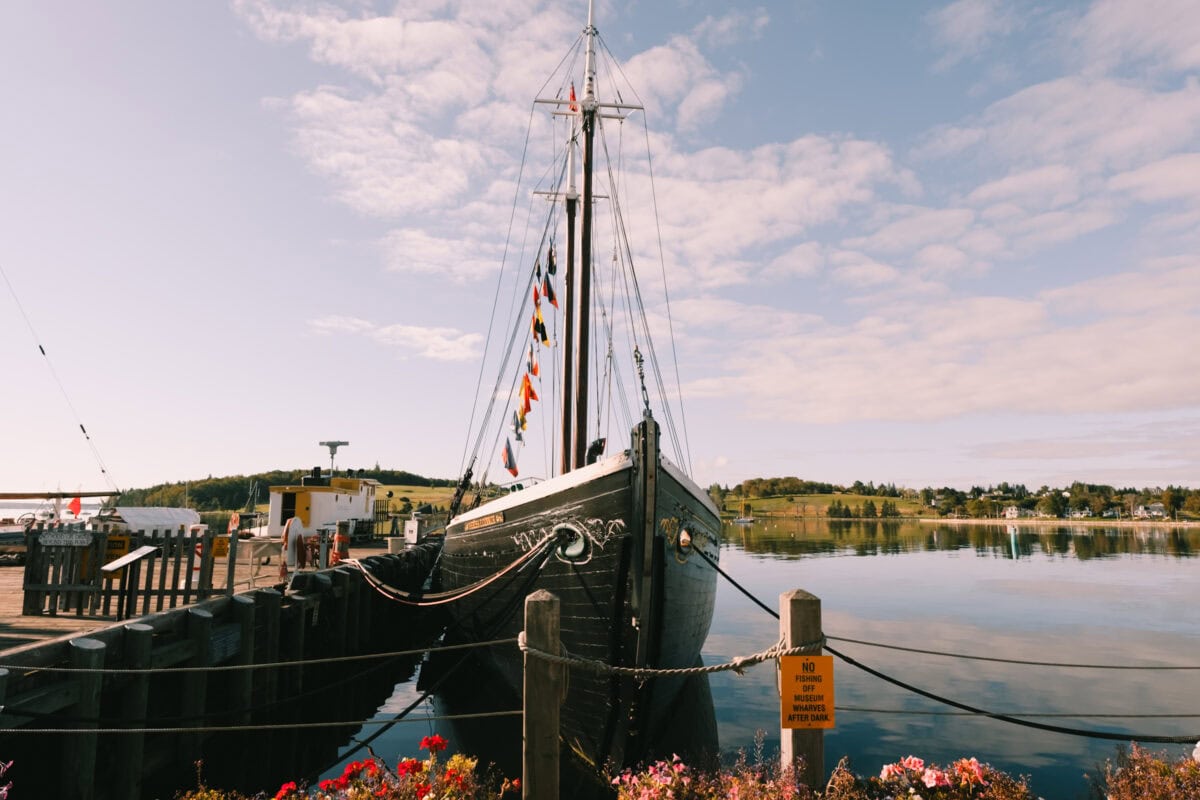
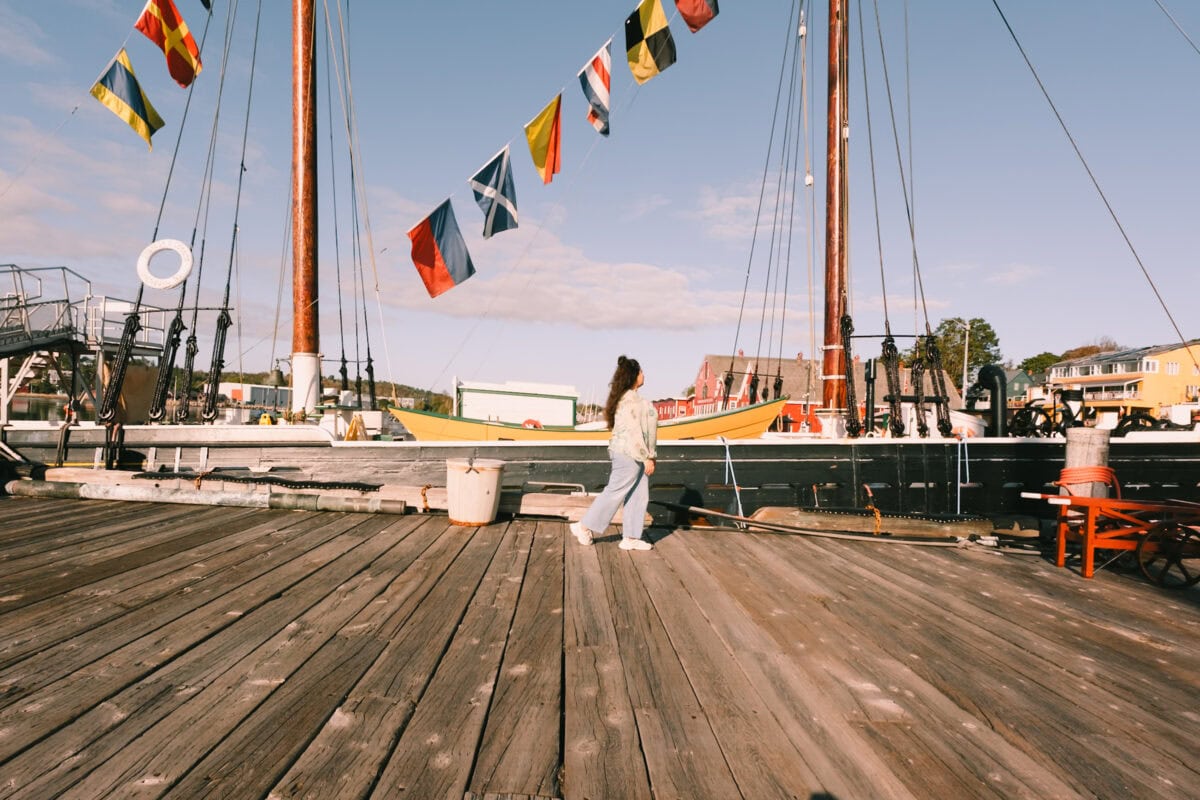
Lunenburg’s shipyards have also produced a very special ship that every Canadian knows: The Bluenose is the legendary sailing ship that is depicted on the Canadian 10-cent coin. Originally built as a fishing and regatta ship, the schooner is still the ultimate symbol of Canada’s maritime history, similar to the Gorch Fock in Germany, and is considered a national treasure.
Unfortunately, the real Bluenose sank in 1946. Due to its historical significance, it was later decided to build a replica, which was launched in 1963. If you’re lucky, you can admire the Bluenose II today in Lunenburg on the quay directly opposite the Fisheries Museum, when it’s not on the road.
Tip: From Lunenburg and Halifax you can book harbor tours with the Bluenose II! Since the Bluenose II is very popular, it is best to book in advance.
The highest point of the city towers the Lunenburg Academy. In the past, the striking building was used as a school, today it houses offices, a kindergarten, but also rooms for cultural events. If you would like to see the building from the inside, you can also take a guided tour. You can find dates on the website of the Lunenburg Academy Foundation.
St. Johns Anglican Church
A similarly striking building in Lunenburg is the white St. Johns Anglican Church. Inside, the light shines through impressive stained glass windows, giving the church its special atmosphere. In 2001, Lunenburg’s first church (and also one of the oldest in the country) was severely damaged in a fire, but was later completely reconstructed with great support from the population.
Nova Scotia is such an exciting region in Canada! Discover many more inspiring ideas for an exciting journey in my article about our full road trip. Road trip through Nova Scotia
Waterfront
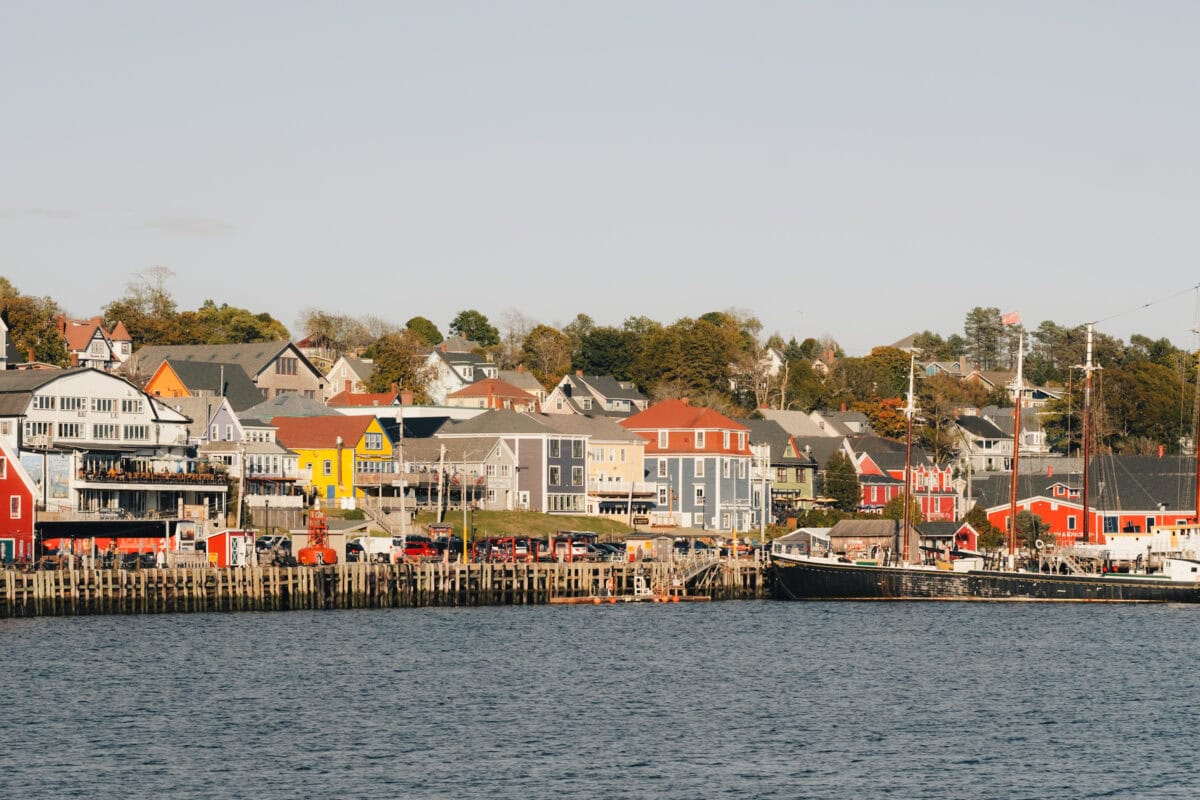
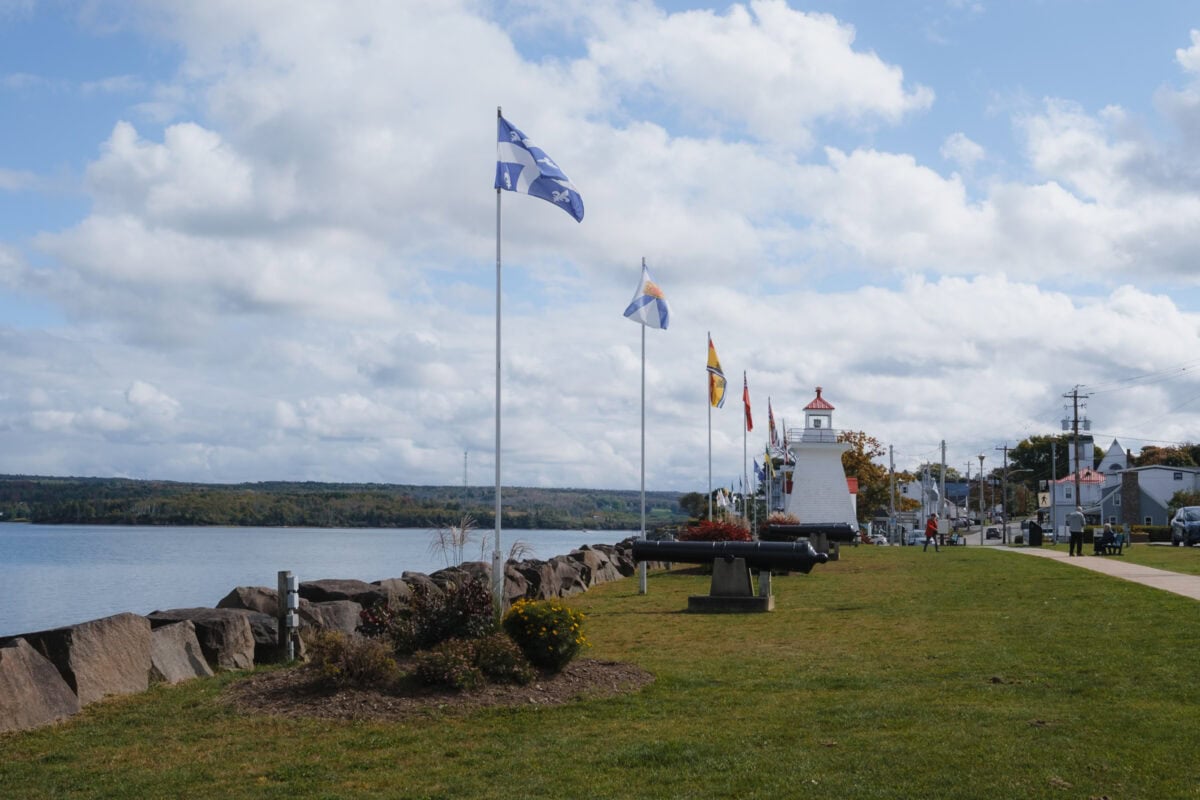
You can stroll along the waterfront promenade of Lunenburg and enjoy the sun. From here you also have a truly dreamlike view – absolutely postcard-perfect.
Architecture in Lunenburg
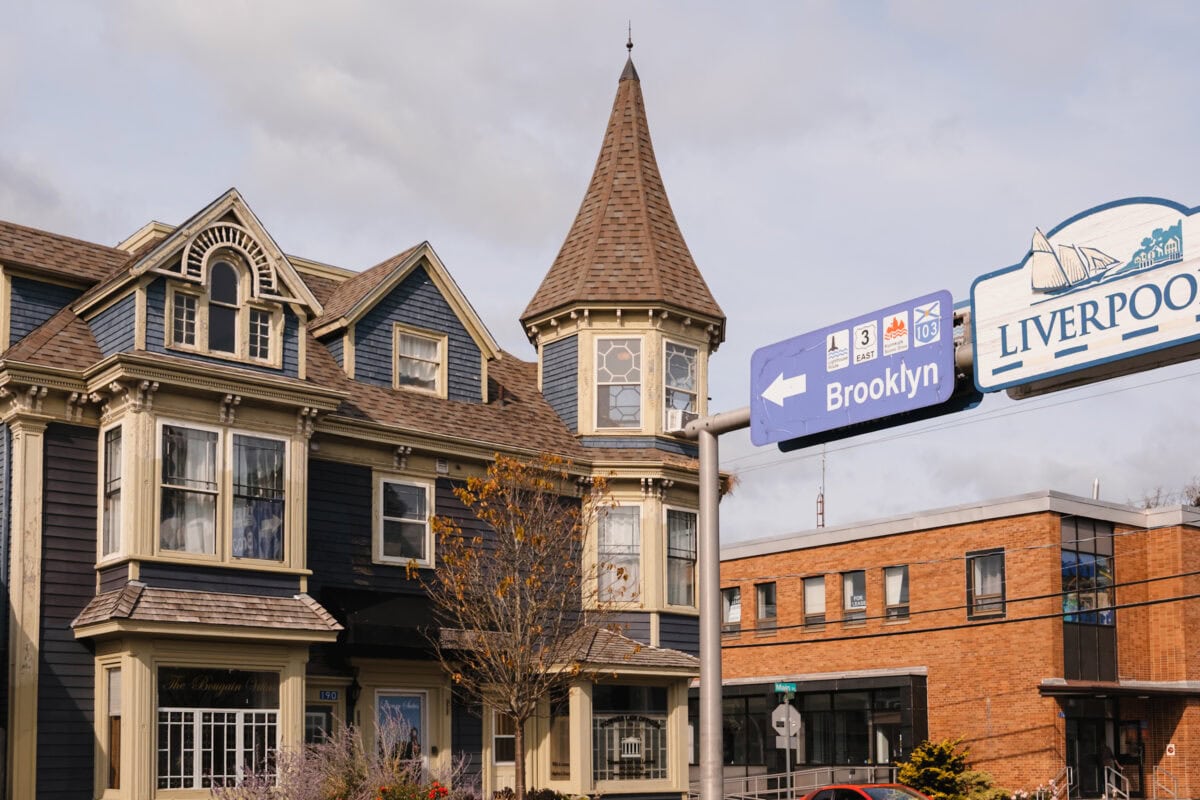
Lunenburg owes its entry as a UNESCO World Heritage Site to its wooden architecture and the many colorful, lovingly preserved houses. You should definitely take some time to explore the side streets on foot and take a look at the beautiful residential buildings with their peculiarities.
Many houses on the top floor have a striking bay window, called Widow’s Watch. Since Lunenburg is partly situated on a hill, legend has it that the wives watched the harbor from here, waiting for the fishermen to return.
Food & Drink in Lunenburg
Lunenburg is a port city and fishing is still very popular. You will especially get your money’s worth if you love fish and seafood – because of course, this is where you can find the best lobster and fresh fish in unique quality.
But Lunenburg, like so many other places in Nova Scotia, surprised me a lot: The gastronomy scene here is surprisingly diverse and innovative! There are so many great locations that the decision is really difficult.
Here are my personal tips for Lunenburg:
Lincoln Street Food is a bit off the main street with most of the restaurants, but it’s a great insider tip. Emphasis is placed on regional ingredients, the menu changes frequently and the dishes are really very creative.
Bar Salvador Who would have thought that an absolutely authentic tapas bar would be located in a fishing village in Nova Scotia? Before you stop for dinner in one of the surrounding restaurants, I highly recommend a small aperitif in a Mediterranean atmosphere!
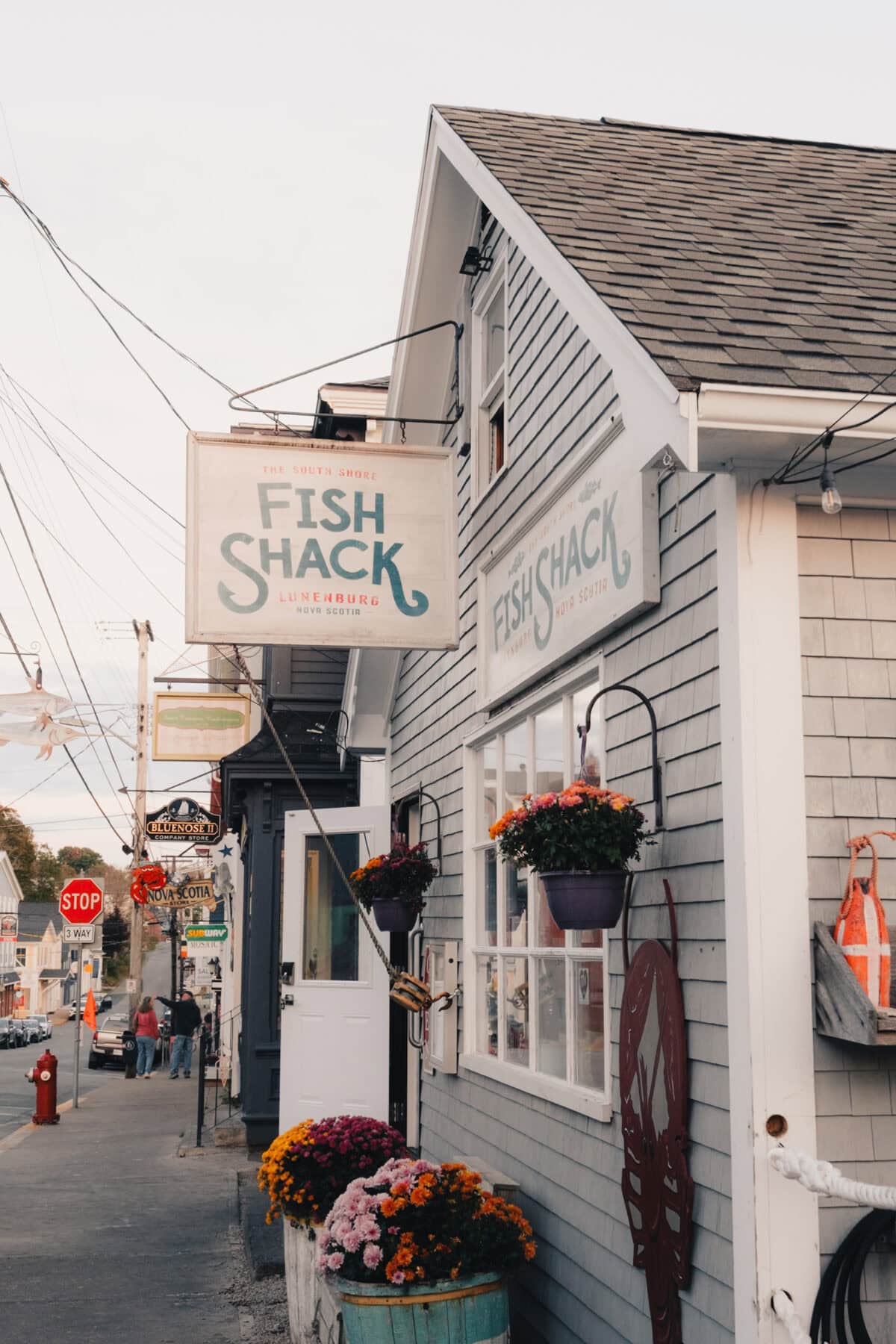
The South Shore Fish Shack You should stop here for good Fish & Chips. From the terrace you have a beautiful view of the idyllic bay.
The Half Shell Oysters & Seafood Next door there is fresh lobster and oysters, which you can also enjoy in the open air with a great view.
The Savvy Sailor Café If you’re in the mood for a hearty Canadian breakfast, then you should stop here. The Savvy Sailor Café is also located in the middle of Lunenburg with a view of the harbor.
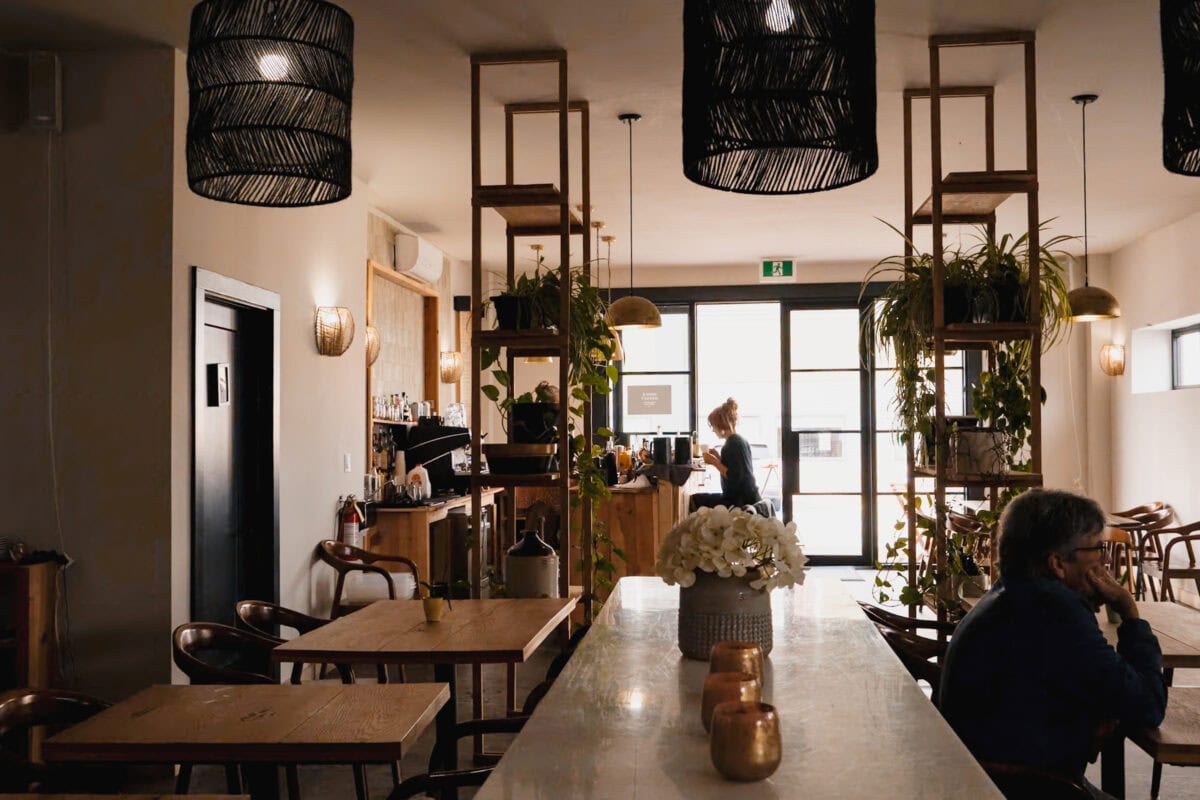
No. 9 Coffee Bar Absolutely love this café! With modern artworks by local artists adorning the walls and cozy, stylish furnishings, it feels both inviting and unique. Their homemade granola is a delightful treat! No.9 really has a warm, special atmosphere that makes it a favorite spot for locals to meet up and enjoy good times.
The Laughing Whale is the place to go for coffee connoisseurs: As soon as you enter, you will be enveloped by the scent of freshly roasted coffee. The atmosphere is super warm and cozy.
Lightship Brewery From hoppy-fruity IPAs to strong stouts, you can test local craft beers here. But even if you don’t like beer at all, you should definitely drive out to the Lightship Brewery on the opposite bank: From here you have a fantastic view of the historic center of Lunenburg and its waterfront.
Next door at Boathouse Bites there is delicious poutine; the crispy fries with a topping of cream sauce and cheese cubes are a real temptation!
If you enjoy exploring creative and unique stores and studios, then Lunenburg is the perfect destination for you. You’ll discover some charming, inspiring shops that are sure to spark your imagination.
Lunenburg Bound is one of the small but fine bookstores where I could browse for hours. Plus point: Around the corner you will find the colorful Lunenburg mural on the facade.
Pearl’s Vintage & Thrift If you are looking for unusual unique pieces, then you will love this store. Vintage clothing and accessories are lovingly put together and just browsing here is a pleasure.
Staying in Lunenburg
I really liked Lunenburg. There’s just something so charming about this city that I could have just settled down here for the rest of the trip. But maybe our accommodation wasn’t entirely innocent either.
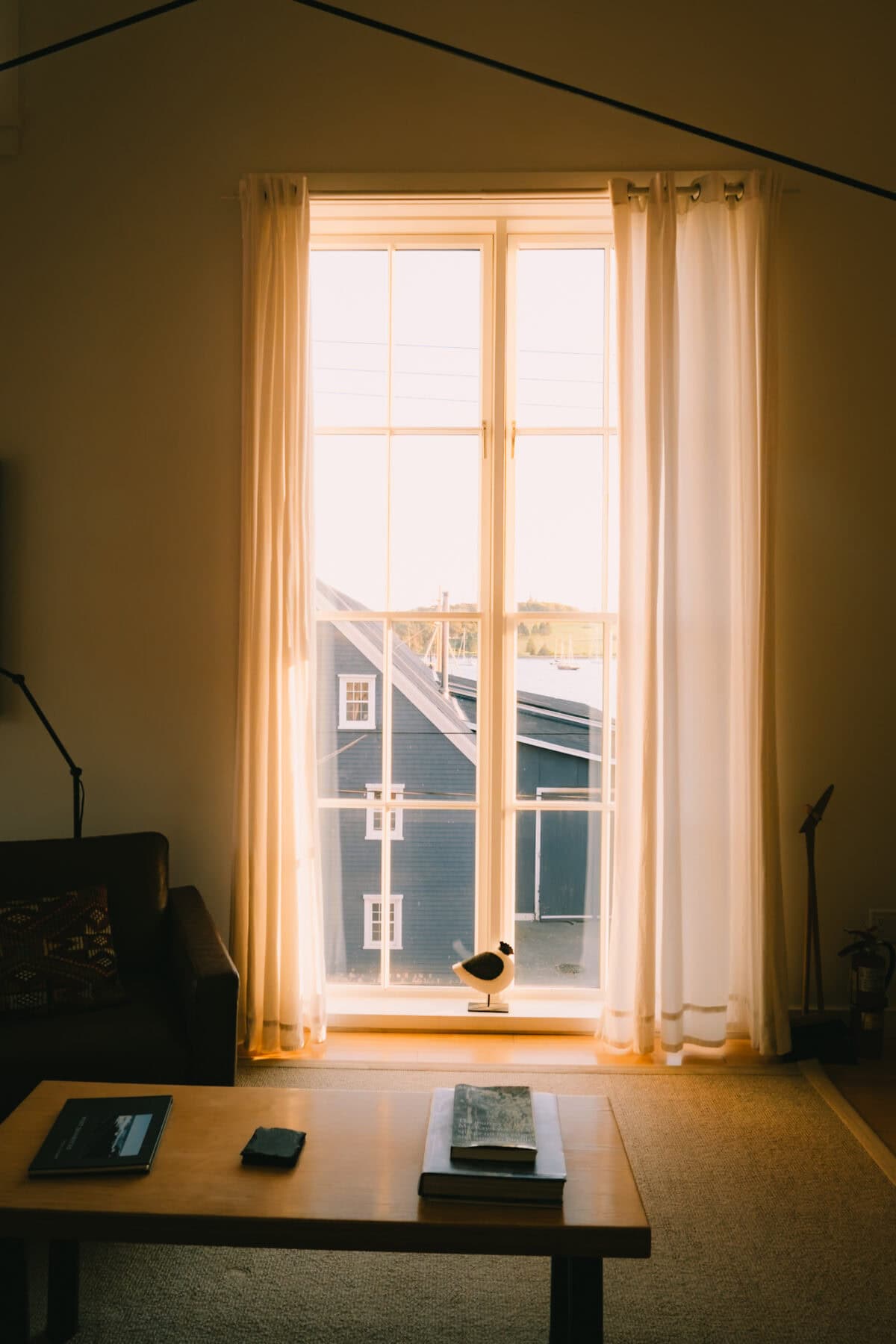
Because from our attic in the B2 Lofts we had the perfect view over the harbor of Lunenburg. Being able to slowly watch the sunrise over the misty water here in the morning was simply magical. The location in the middle of the village is also perfect for strolling through the bars and restaurants in the evening without having to get in the car.
Map with the most important highlights in Lunenburg
If you are planning a trip to Lunenburg, just save my map with all the highlights. So you always have all the tips from the article at hand on the go!
Excursion from Lunenburg
From Lunenburg you can also take a quick detour to the nearby Blue Rocks. The tiny fishing village is great for some great photo opportunities, especially at sunset.
Arrival: How to get there
Lunenburg is located approximately 90 kilometers southwest of Halifax. The best way to reach Lunenburg is by car, e.g. with a rental car. However, there are also several tour operators that offer day trips from Halifax to Lunenburg; also in connection with Peggy’s Cove, which is also very worth seeing.
If I had known what to expect beforehand, I would have planned a little more time for Halifax on our road trip through Nova Scotia. Its relaxed mix of maritime vibes and lots of street art were quite surprising.
In my guide, I’ll show you what you can experience on a short trip to Halifax and which sights and hotspots in the capital of Nova Scotia you shouldn’t miss out on.
Halifax: The most important facts in brief
is located on the east coast of Canada and is known for its natural harbor, which is one of the largest in the world
is the largest city in Canada’s Atlantic provinces with around 440,000 inhabitants
has historical sights such as the Halifax Citadel, interesting museums and a great harbor promenade, but also lots of street art and an exciting gastronomic scene
Best time to visit: between May and October
The best sights in Halifax
We only had a short time for our sightseeing tour of Halifax. Nevertheless, we were able to see a lot, as Halifax is also great to explore on foot.
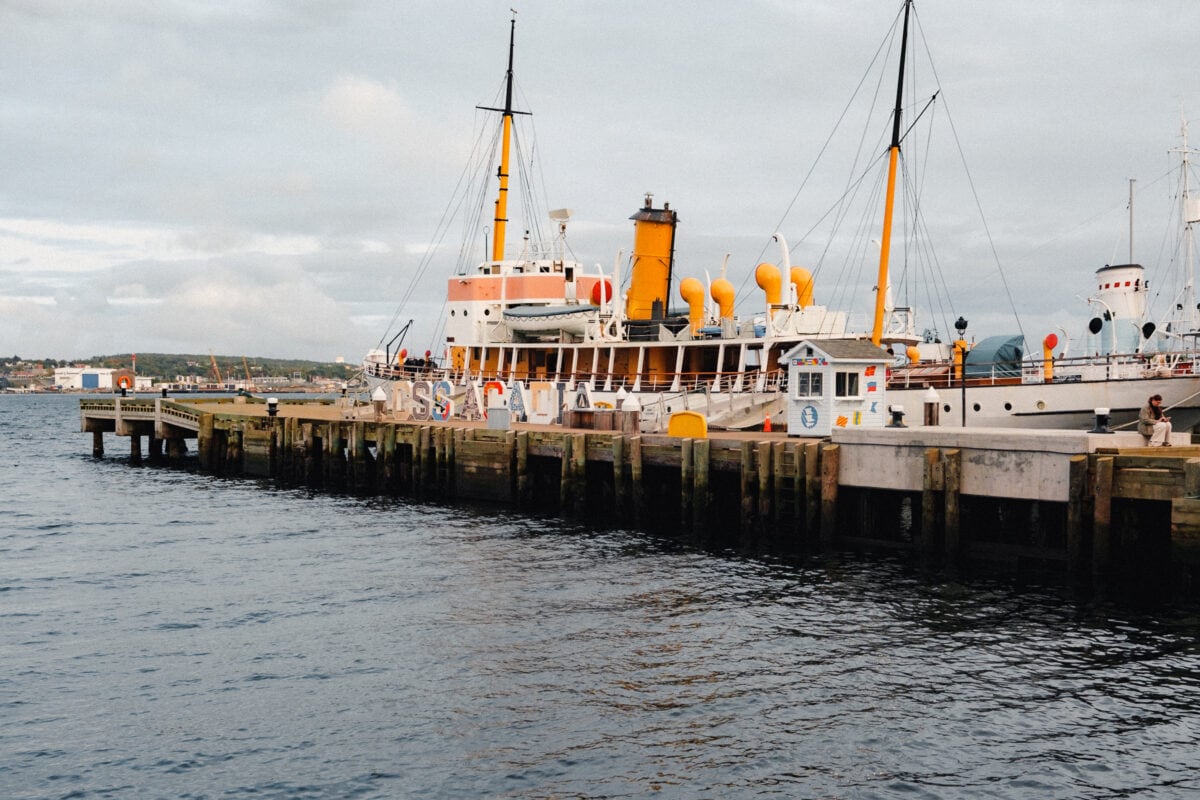
Waterfront Boardwalk
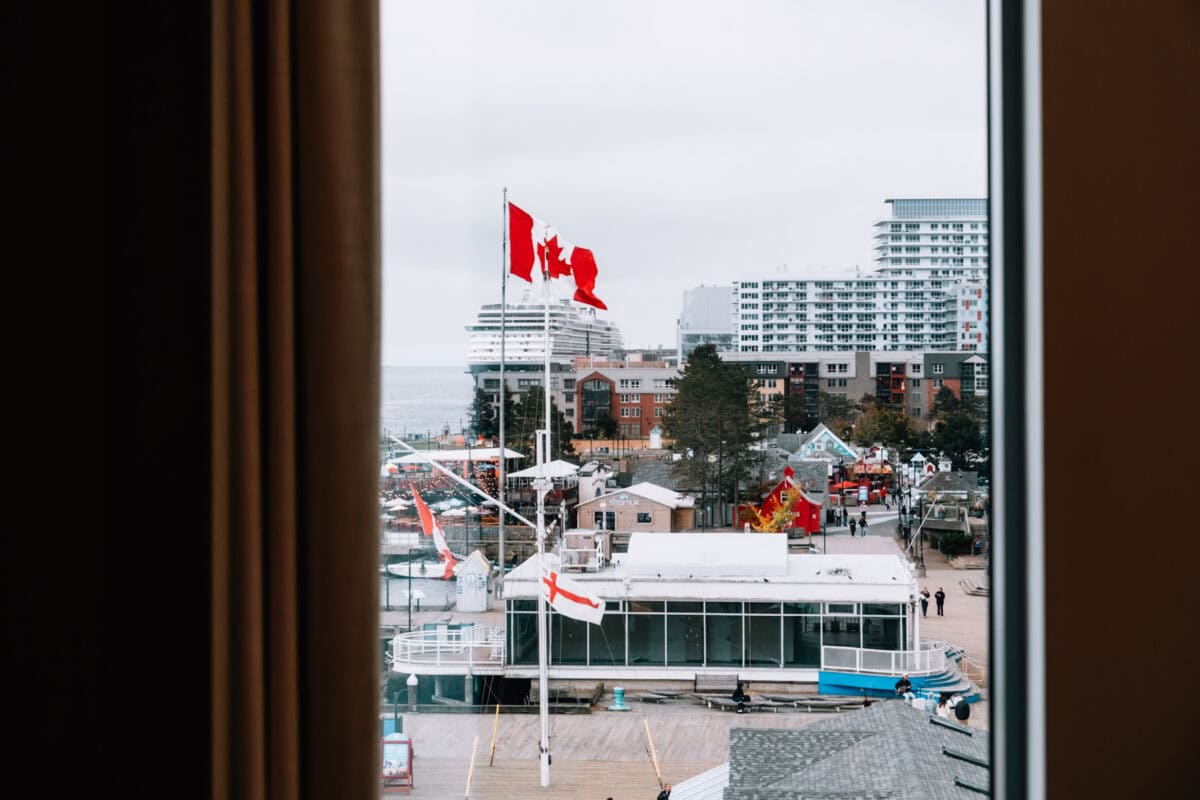
The Waterfront Boardwalk stretches for several kilometers along the Halifax harbour. You can stroll along the promenade, explore gastronomic highlights or simply enjoy the view of the water.
From here, you can also quickly reach many of Halifax’s other attractions, such as the Maritime Museum of the Atlantic or the Pier 21 Museum of Immigration, which are also located on the waterfront.
If you want to see the Halifax skyline from a distance, you can also take a sunset boat tour from the harbor or go on a short sightseeing tour through the city and on the water in one of the popular amphibious vehicles.
Budget tip, if you can: For a few dollars, you can also take the regular ferry to Dartmouth or Alderney. This is part of the public transport system in Halifax and runs every 15 to 30 minutes between the two ferry terminals.
The Maritime Museum of the Atlantic is not only worth a visit if you are interested in seafaring. The port of Halifax is one of the largest ports in North America and is not only quite busy, but also very historically significant.
In 1912, the survivors of the sunken Titanic came ashore in Halifax, having been rescued by other ships. Part of the exhibition therefore also deals with the sinking of the Titanic and displays original objects from the ship as well as eyewitness accounts.
Another part of the museum deals with the great explosion in 1917 in the port of Halifax, which completely destroyed part of the city and killed or injured thousands of people. This catastrophe is still deeply rooted in the city’s history and remains one of the deadliest disasters on North American soil.
Pier 21 Museum of Immigration
The Pier 21 Museum of Immigration deals with the maritime history of Halifax in a different way and is one of my absolute favorite spots in the city. Like the Maritime Museum of the Atlantic, the exhibition is rich in detail, but is also very interactive.
Today, cruise ships dock directly behind the museum.
On the one hand, the history of Canada as a classic country of immigration is shown here and examined in more detail using family stories from a wide variety of countries of origin. Thanks to its large harbor, Halifax has always been one of the places where countless immigrants came to the country in search of great fortune. On the other hand, interactive elements invite visitors to share their own family immigration history – and it is so beautifully designed that there really isn’t a dry eye in the house.
I could really have spent hours browsing through the many moving snapshots and souvenirs that individual museum visitors have left behind. If, like me, migration has shaped your family history, you will certainly find yourself here and perhaps remember your roots.
I was also very impressed by how much Canada values its tradition as a destination for many immigrants and, contrary to what I see as a sad development in many other Western countries, very much cultivates its open welcoming culture. No wonder Canada is still a place of longing for many people.
Queen’s Marque is the latest trendy district on the waterfront, and the large building complex in the middle of it is a sight in itself. The combination of contemporary architecture, art and gastronomy is really very successful. We stayed at the Muir Hotel*, which is integrated into the complex, and were able to really enjoy the vibe here.
During the day, you can store in the small boutiques or sit down in a café. In the evening, you’ll find some of the best restaurants and bars in the city, and in summer it’s really lively outside with street music.
If you like modern architecture, you shouldn’t miss the Halifax Central Public Library on your sightseeing tour of the city center. The modern building with its striking design is a real eye-catcher and is located directly on one of Halifax’s main shopping streets, Spring Garden Road.
You can simply go inside and walk through the library. The long staircases between the floors inside the library are a great photo spot. At the top of the last floor there is a small café with a terrace: a great tip in summer for a quick coffee stop with a view over the rooftops of Halifax!
Halifax Public Gardens
On Spring Garden Road, you will find another of Halifax’s not-so-little treasures. The Halifax Public Gardens are one of the oldest Victorian gardens in North America.
In this green oasis, you can recharge your batteries, go for a walk or simply enjoy the idyllic atmosphere in the middle of the busy city.
Street art in Halifax
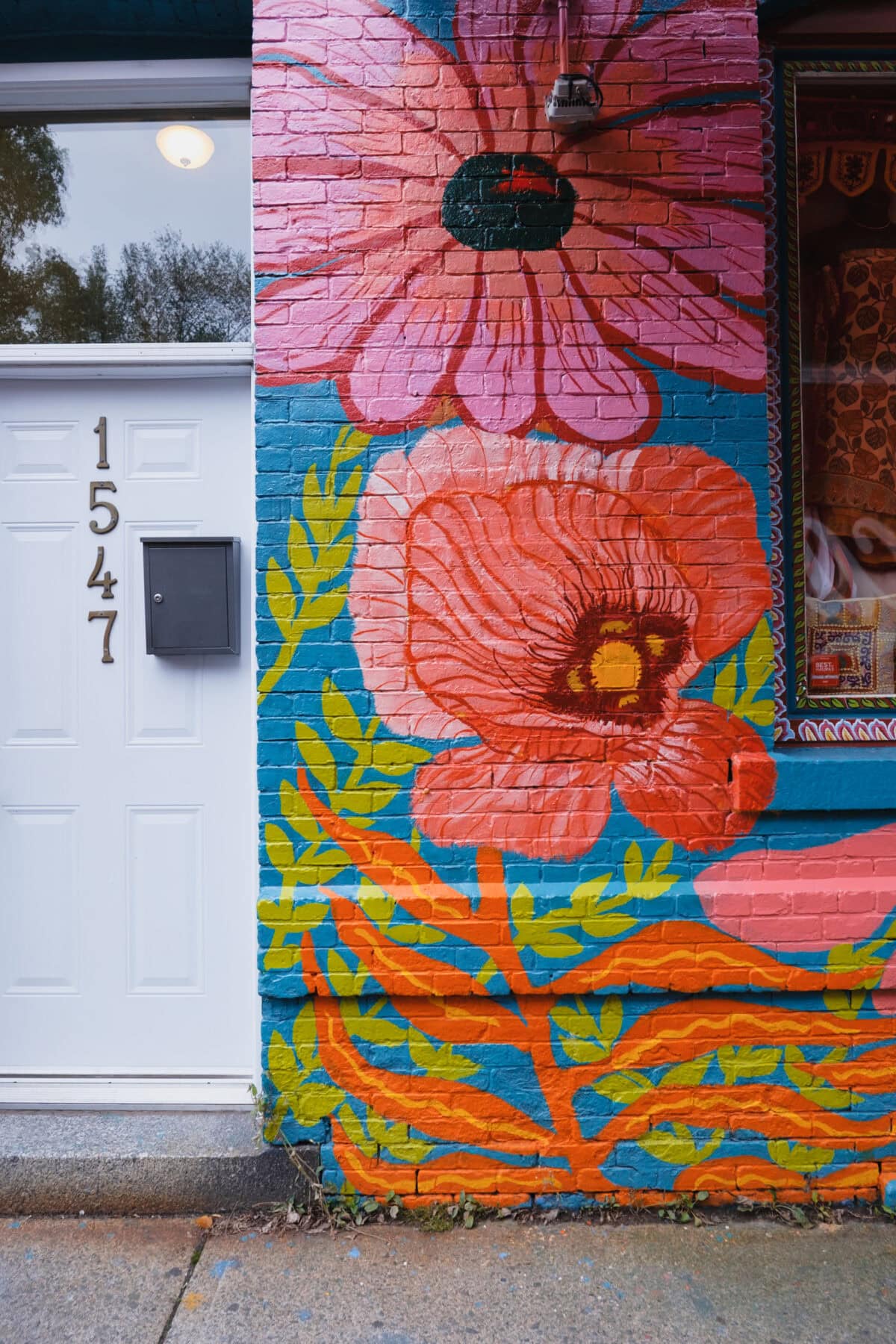
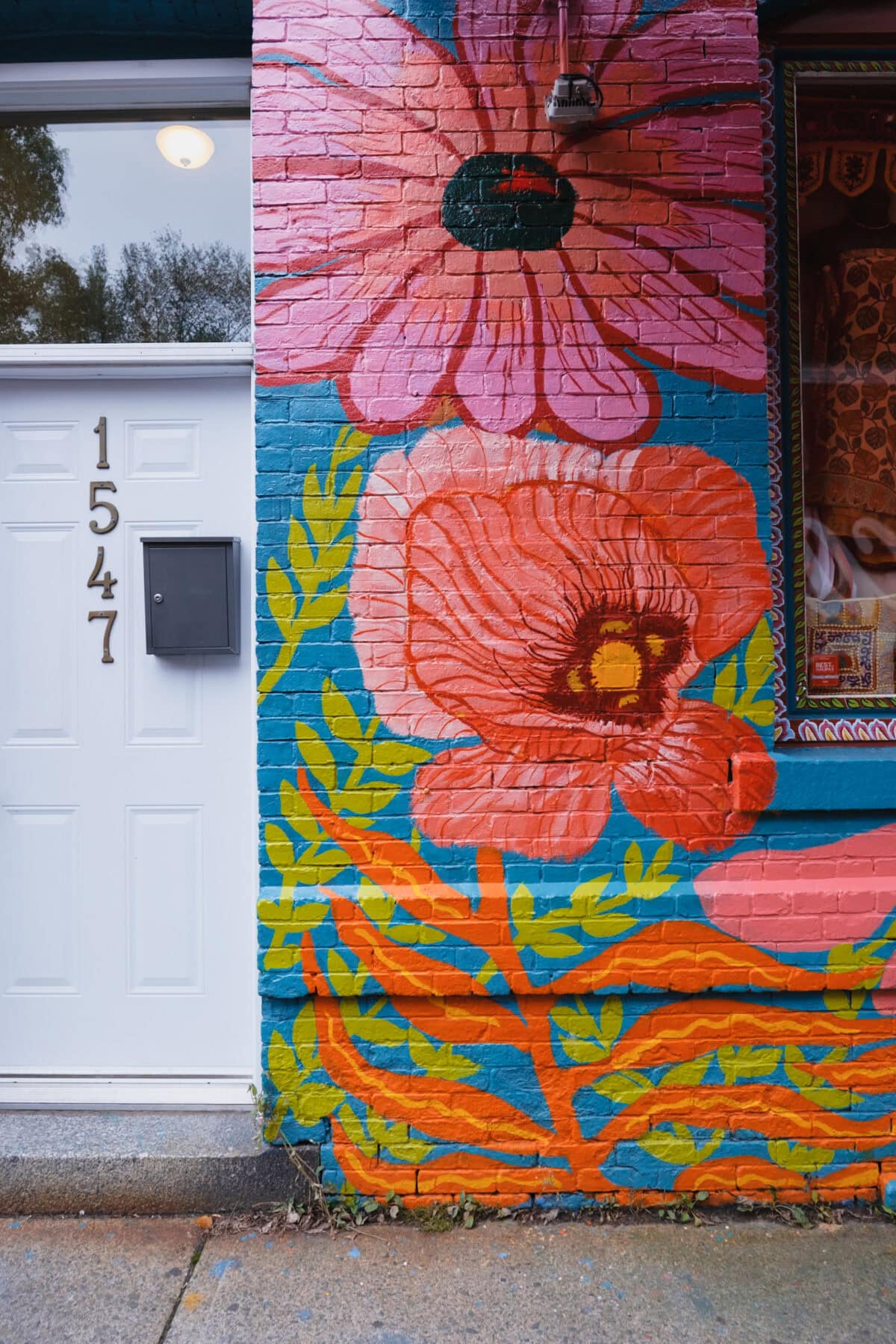
Halifax is extremely colorful: we kept coming across the most beautiful murals in the city. There really are so many that you can just walk around downtown and automatically come across street art somewhere. You’ll find a lot of street art around Gottingen Street in the North End in particular.
Other highlights in Halifax & what else you can do
36 hours is really not much time to explore Halifax, and even with our power program we didn’t manage to do everything we had planned. But if you have more time, I have another suggestion for you on what to see in Halifax.
Halifax Citadel
The Citadel is one of Halifax’s most famous sights, but unfortunately the recent rainy weather put paid to our visit and we preferred to head to the equally interesting museum on Pier 21.
In good weather, however, you have a great view of Halifax and the surrounding landscape from the higher citadel. The fortress dates back to the 18th century and was built by the English to defend themselves against the French, who were also present in Nova Scotia.
Especially if you are interested in history, the star-shaped complex with the Army Museum and a wide range of themed tours is a must-see. Tour guides in historical costumes can explain the entire background and at lunchtime you can watch the daily (!) cannon firing.
Food & drink in Halifax
My personal tips for restaurants in Halifax
The Bicycle Thief was repeatedly mentioned to us as a tip, and the restaurant on the waterfront is indeed really popular. Even during the week and in the low season, it was so full that it was impossible to get a table without a reservation. It serves Italian cuisine with a Canadian twist (lots of fish and lobster) and it’s certainly very good – but it didn’t seem spectacular enough to justify the expense.
Bar Sofia in the Queen’s Marquee ended up being our alternative, and it couldn’t have suited us better. Here we were able to sample the wildest Latin American fusion dishes and enjoy really good cocktails. The colorful interior and super attentive service put us in such a good mood that I highly recommend a visit here when you’re in Halifax.
The Drift is suitable for all times of day. It is actually part of the Muir Hotel, but like Bar Sofia, it is also part of the large Queen’s Marquee complex. We had breakfast here as part of our hotel stay and, contrary to what is on offer in many other (even more expensive) hotels, I would recommend the Drift to non-hotel guests at any time.
Breakfast is à la carte anyway, so you won’t find an uninspired hotel buffet here, but only what you actually order. So if you’re looking for a location for a relaxed breakfast or brunch in a great atmosphere, this is the place for you!
Typical specialties from Halifax
It is impossible to imagine Halifax without the donair, a snack specialty that is now known beyond the borders of Halifax. However, the donair has little to do with the doner kebab invented in Germany: For a real donair, pita bread is served with meat, diced tomatoes, onions and a sweet garlic sauce.
The most authentic donair is served at King of Donair on Quinpool Road (but there are other outlets in Halifax), which boasts of having introduced the donair to Halifax in the 1970s. Others prefer the donair from Tony’s Famous Donairs on Robie Street.
For the meat-free option, we went to Real Fake Meats, just outside the city center. The meat substitute tastes super delicious here, but I found the combination with the sweet sauce took some getting used to. The store is definitely interesting: all the meat substitutes are made on site and you can also take a look at the production process.
Staying overnight in Halifax
In Halifax, you’ll find a good selection of hotels for every budget, but it’s worth spending a little more! The Muir* is a five-star hotel and is centrally located in the newly redeveloped Queen’s Marque District, right on the promenade – the location couldn’t be better! From here, you can reach the most important places in Halifax on foot.
The best thing, however, is the exceptionally pleasant atmosphere, from the consistently attentive and cordial staff to the detailed room furnishings: everything has been thought of here to make your stay as relaxing as possible.
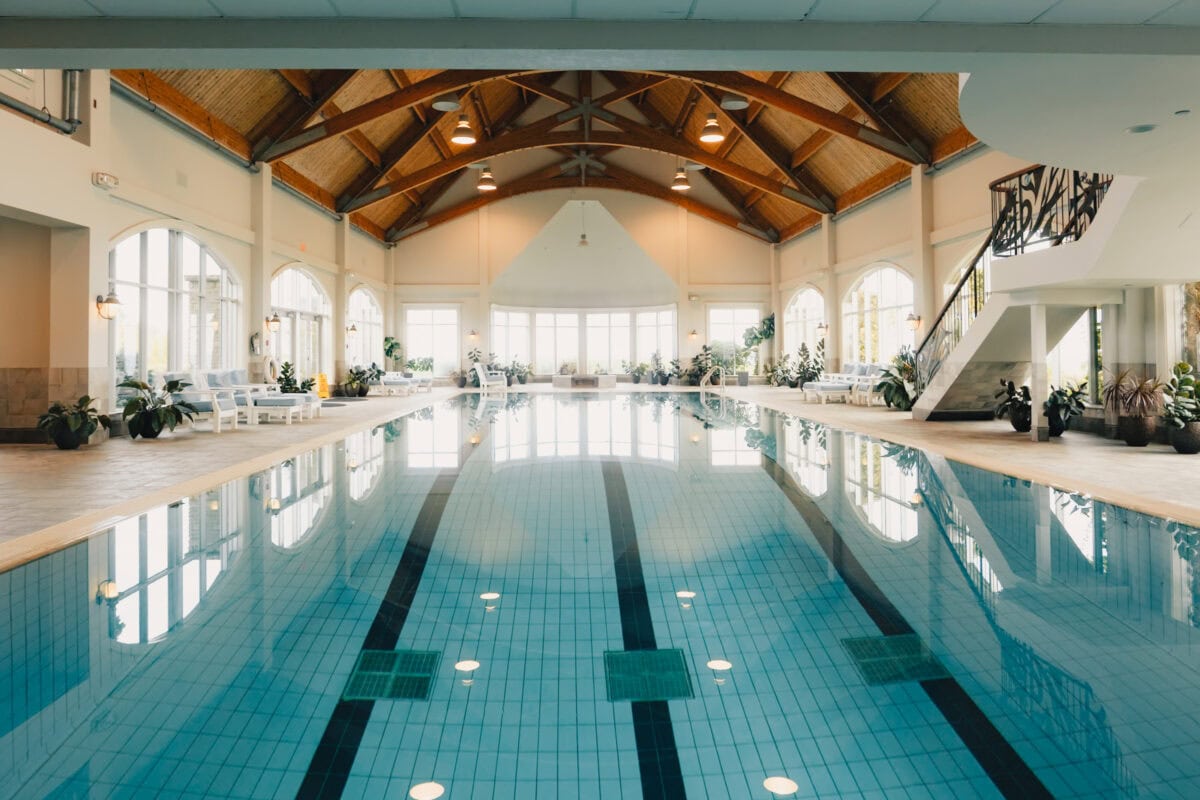
If you need a bit of relaxation, the Muir also has a first-class spa with pool, sauna and steam room. After our eventful road trip and the short sightseeing tour through Halifax, this was simply the crowning glory of a great trip.
Although Halifax is a big city, driving into the city in a rental car was no problem. There can be traffic jams during rush hour, but all in all driving is very relaxed, as it is elsewhere in Canada and the USA (at least in my experience).
Halifax Airport is relatively far away. You should therefore consider renting a car if you are planning a road trip through Nova Scotia. Even if you use the rental car less in the city, it is much more practical this way. It is best to check with your accommodation beforehand whether parking is available so that you can park your rental car safely.
If you are traveling without a rental car and simply want to go to the hotel in the city before or after the flight, you can also organize a private transfer .
If you are staying in the city center, you can also reach many locations on foot. The public transport network in the city only consists of buses, but is easy to use. Alternatively, you can also get around by Uber, which is relatively cheap.
If you don’t want to bother with timetables or finding a parking space and are a little lazy when it comes to walking, you can also opt for a hop-on hop-off tour* for sightseeing.
Map with all the highlights
To help you find your way around Halifax, I have summarized all the locations from the article on a map. You can also save them. That way you’ll have everything to hand when you’re out and about.
Excursions around Halifax
Halifax is an excellent starting point for an exploration tour through Nova Scotia. However, if you don’t have much time, here are the best places to visit that you can reach within a day.
Peggy’s Cove
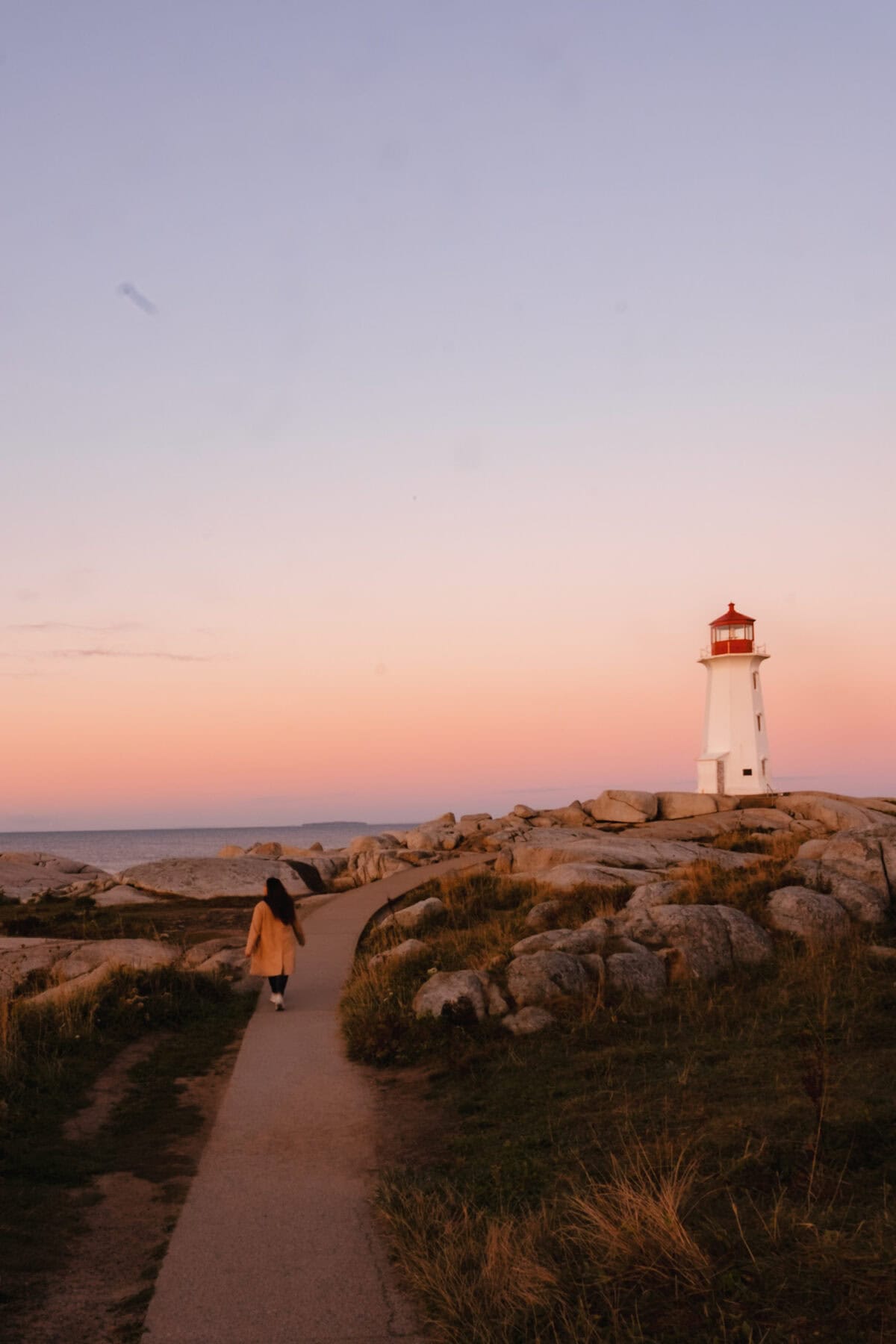
The picturesque fishing village of Peggy’s Cove is just 45 minutes from Halifax. Famous for its impressive lighthouse, it is a popular destination for day trips. The most beautiful photo opportunities can be found here, especially at sunrise and sunset. But Peggy’s Cove is also worth a detour during the day.
In addition to the lighthouse, there are small galleries and souvenir stores in the small fishing village next door where you can stock up on handmade products and local art. Very cute indeed!
The historic town of Lunenburg is about an hour’s drive from Halifax and is a UNESCO World Heritage Site. Lunenburg is very touristy, but with its colorful wooden houses, cute cafés and pretty stores, it’s no wonder. If you haven’t already planned Lunenburg as a stop on a road trip through Nova Scotia, you can also book day trips to Lunenburg from Halifax.
Another worthwhile detour is Mahone Bay, which is actually known for its three churches that stand picturesquely on the shore. However, I personally found the special flair of this small town with its pretty cafés, antique stores and small craft stores much nicer.
Wineries in the Annapolis Valley
If you like drinking wine, you shouldn’t miss the Annapolis Valley. This region is known for its wineries and large-scale fruit cultivation.
I can highly recommend Luckett Vineyards, for example: Not only is the winery itself worth a visit (where else can you see an original British red telephone box in the middle of the vines?), but also the adjoining restaurant with a great view of the countryside: I had the most divine chicken pie of my life here with a glass of chilled rosé! Highly recommended!
The Annapolis Valley is particularly beautiful in autumn, when the leaves on the trees slowly turn their brightest colors and the harvest season begins. In many places you will find stalls with fresh apples, pumpkins and everything else that nature has to offer.
Nova Scotia is the second-smallest province in Canada and, admittedly, is sometimes a little overshadowed by other regions of the country when it comes to travel planning. But after a road trip through Nova Scotia, I still can’t tell you why that is: I was pretty impressed!
Fantastic food, unusual accommodation, and the Nova Scotians’ nonchalance made this round trip from Halifax an unforgettable experience. In this article, I share the highlights of the route and some useful insider tips for your trip.
Nova Scotia: A road trip for foodies & wellness seekers
Nova Scotia is a true paradise for hikers, outdoor sports lovers, and nature enthusiasts, thanks to its endless coastline. However, I don’t always want to navigate rapids in a kayak, hike for days, or engage in the most extreme sports. Sometimes, I just want to explore the country and its people, leave daily routine behind, and find inspiration for life and beyond. If luck is on my side, I also get to enjoy the local cuisine—no problem at all in Nova Scotia!
On this somewhat different road trip, which mainly took us around the south coast of Nova Scotia, but also to Halifax and a little further north, we had a pretty good time and discovered some really great spots.
Our route through Nova Scotia: Halifax – Peggy’s Cove – Mahone Bay – Lunenburg – Liverpool – Summerville Beach – Cape Sable Island – Yarmouth – Digby – Harbourville – Wolfville – Wallace Bay – Halifax
Peggy’s Cove
Peggy’s Point Lighthouse
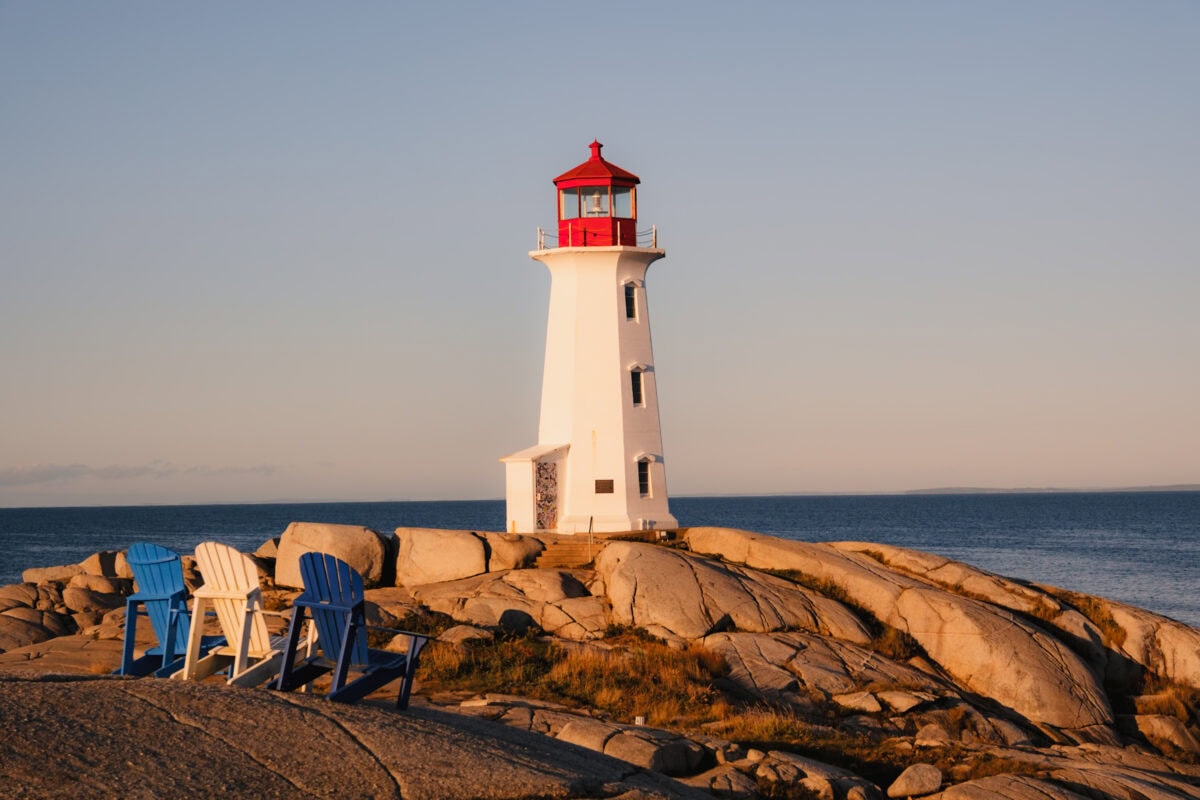
Just outside Halifax is one of Nova Scotia’s most important and beautiful sights: Peggy’s Cove Lighthouse, Peggy’s Point Lighthouse, is one of the most photographed lighthouses in the world.
Incidentally, you will come across lighthouses again and again in Nova Scotia with its endless Atlantic coastline – you can easily discover the most popular ones, such as Peggy’s Point Lighthouse, if you follow the signposted “Lighthouse Route”.
Tip: If you have the opportunity, visit Peggy’s Point Lighthouse at sunrise or sunset. Then it is particularly atmospheric here.
Peggy’s Cove
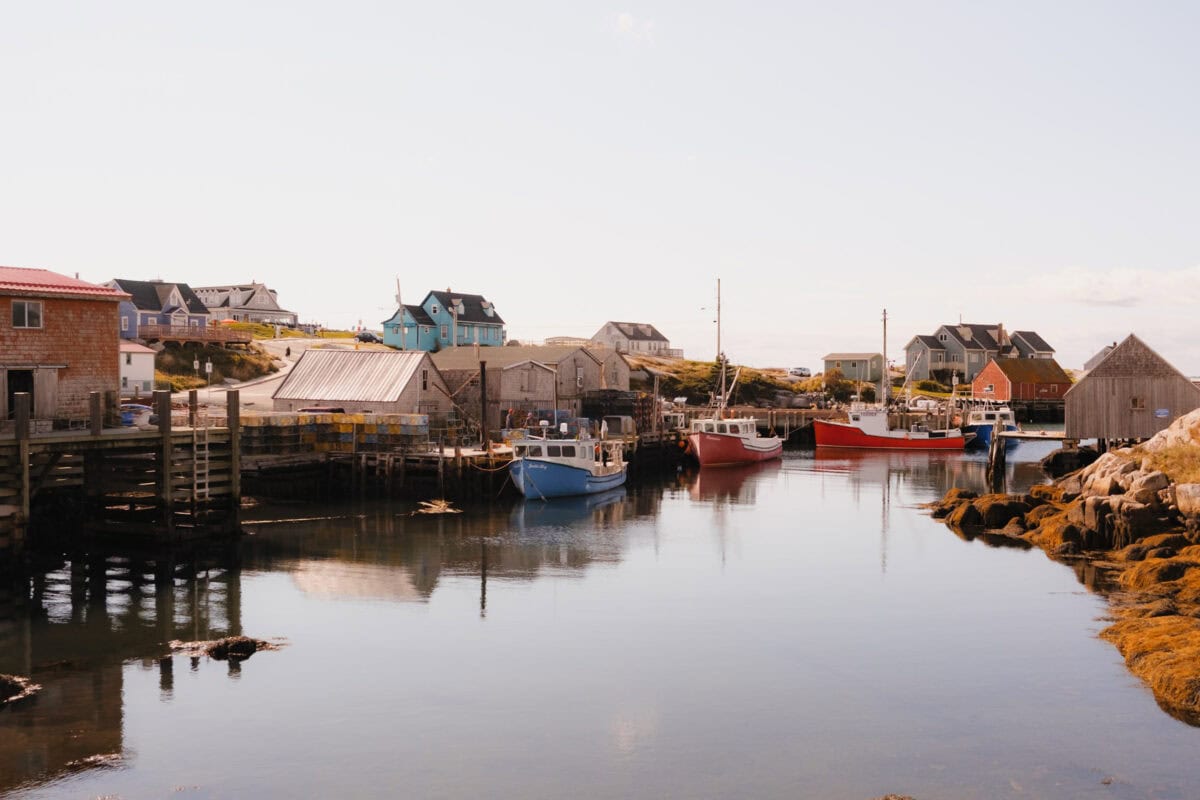
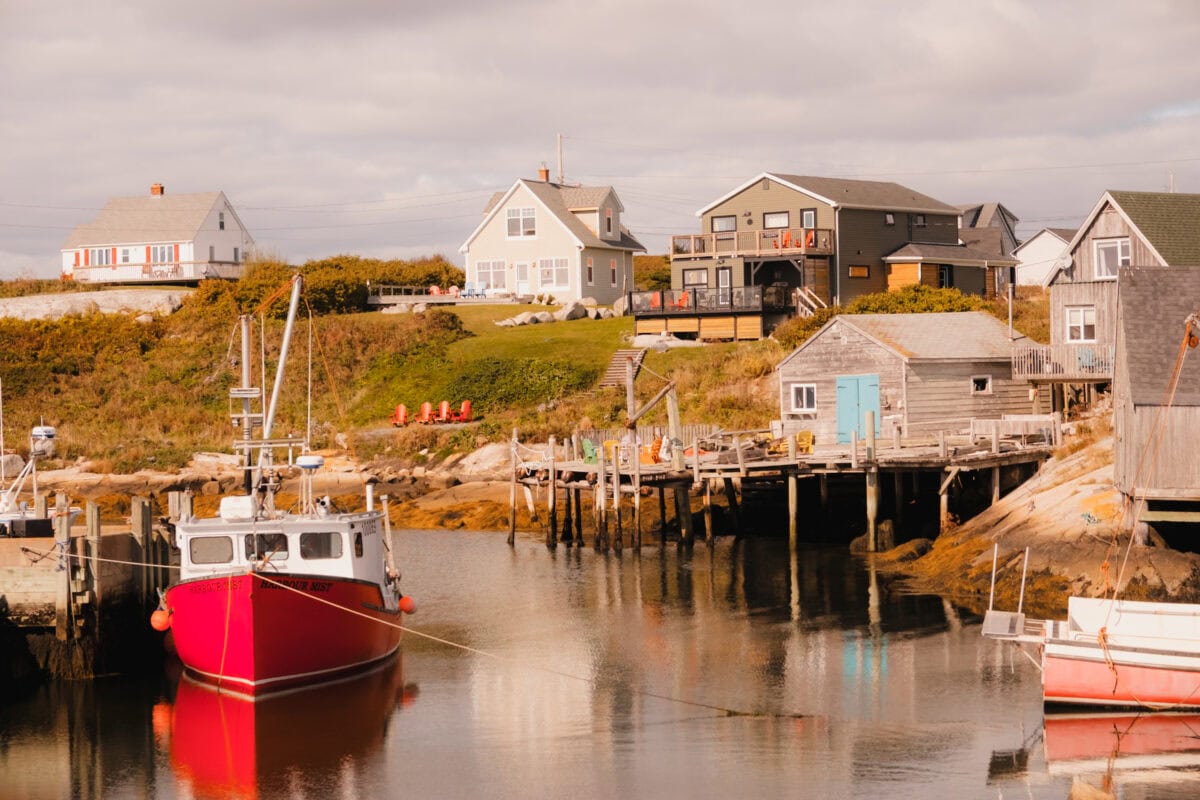
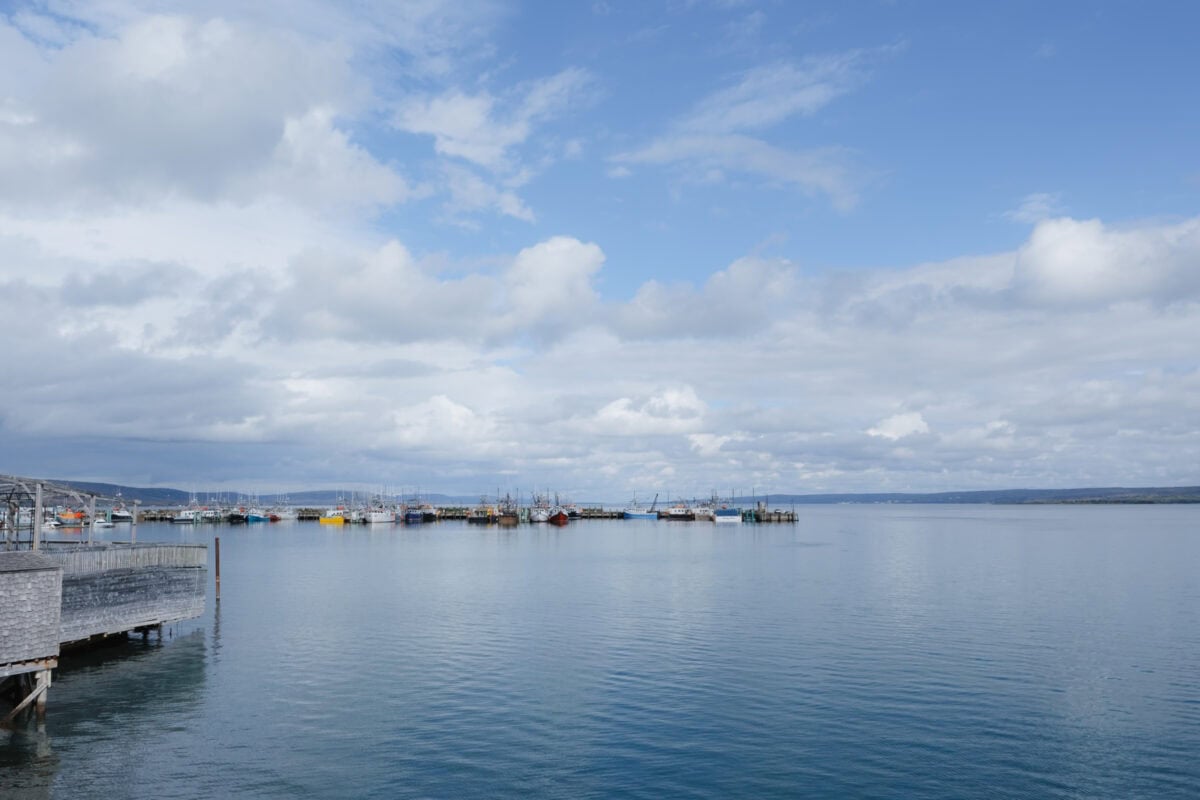
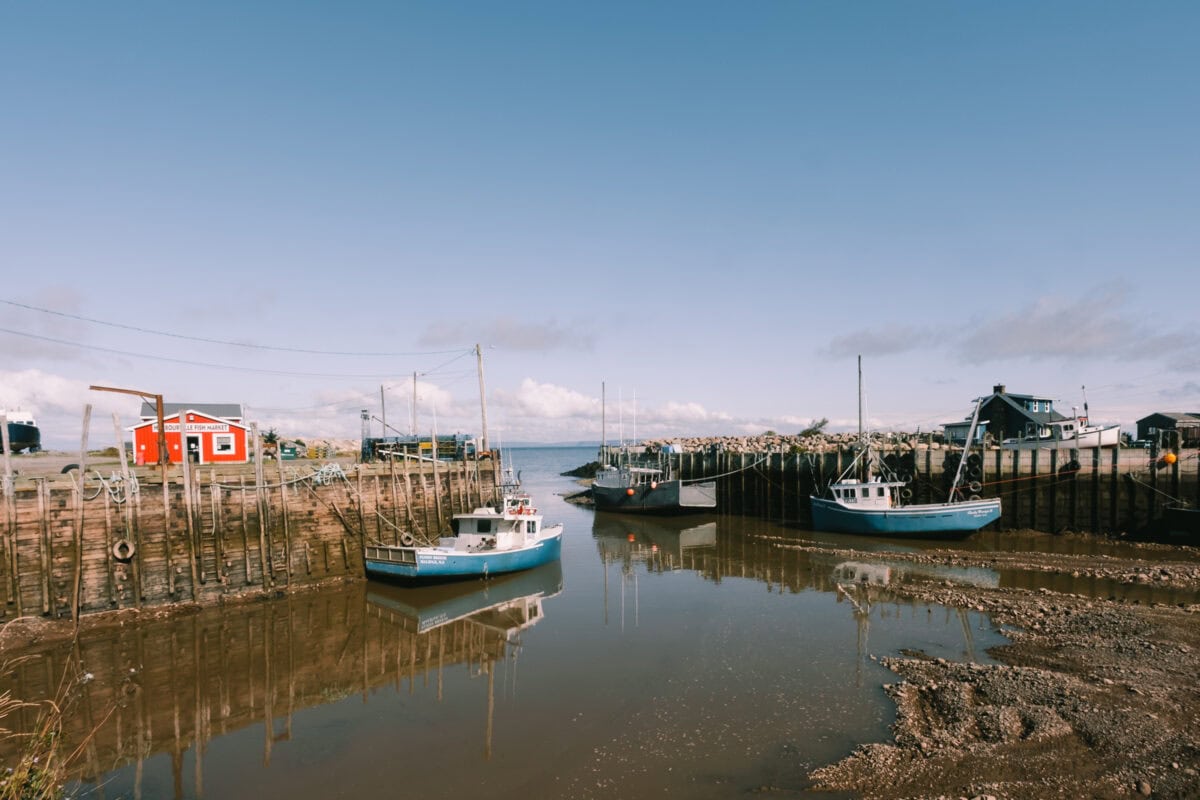
A stone’s throw from the lighthouse, you can visit the actual fishing village of Peggy’s Cove. Only 30 people live here all year round, but the small harbor with its maritime atmosphere is one of the most beautiful on the south coast of Nova Scotia.
You can also stroll through really pretty souvenir stores and unique arts and crafts studios: if you are looking for original maritime decorations such as old buoys or driftwood, this is the place for you. And even if you don’t have room in your luggage: A visit to The Buoy Shack alone is an experience in itself.
Where to stay in & around Peggy’s Cove
If you want to see Peggy’s Cove at sunrise, you should stay nearby. I can recommend the Oceanstone Seaside Resort and Spa, which is just a few minutes’ drive from Peggy’s Cove. The cozy resort with its own beach was our first port of call straight after arriving at Halifax airport – and it was the best decision!
Here you can start your road trip relaxed, as the Oceantime Seaside Resort and Spa has an outdoor spa area with aromatherapy sauna, steam bath, Kneipp stream, various pools and fire pits to warm up in cooler temperatures.
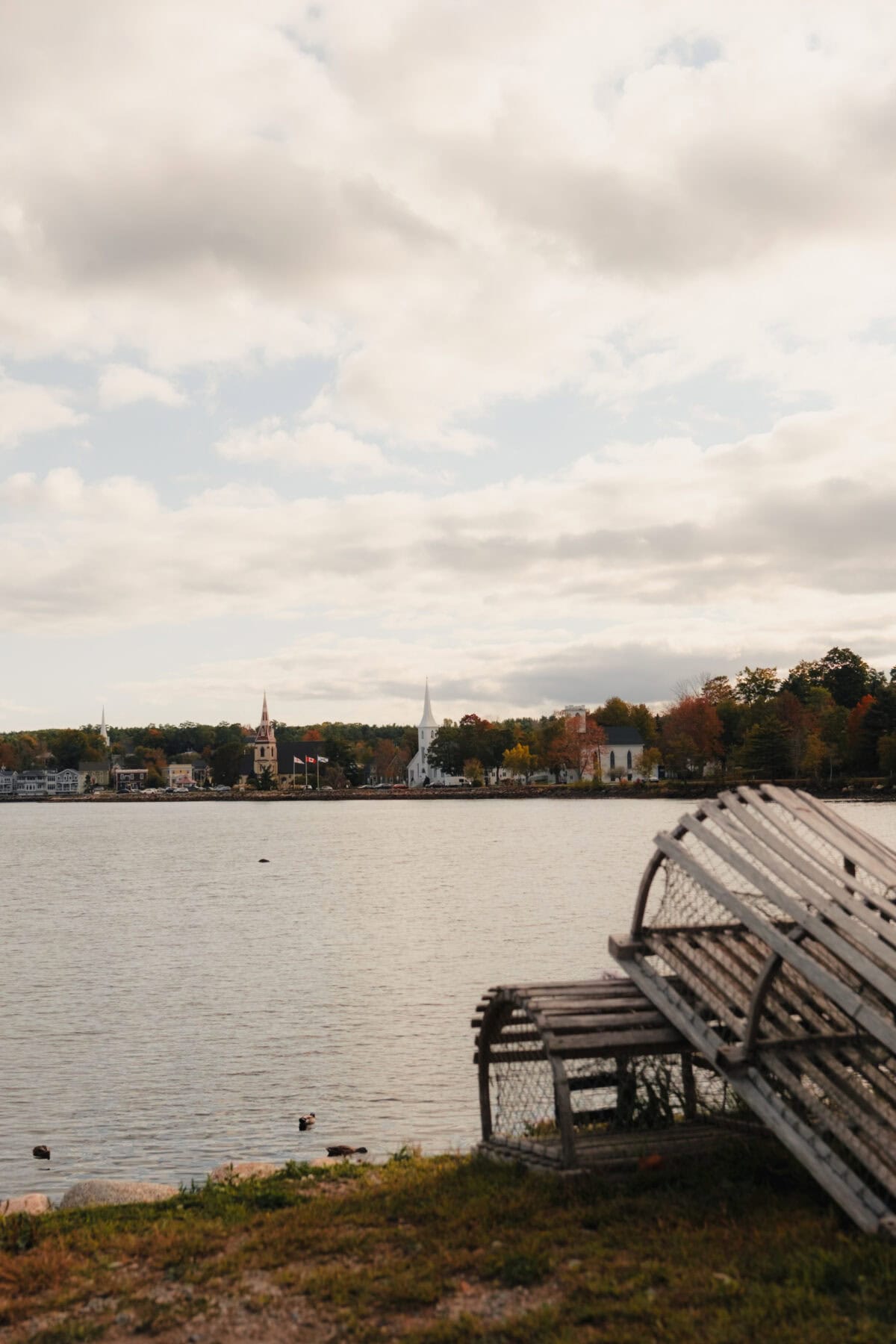
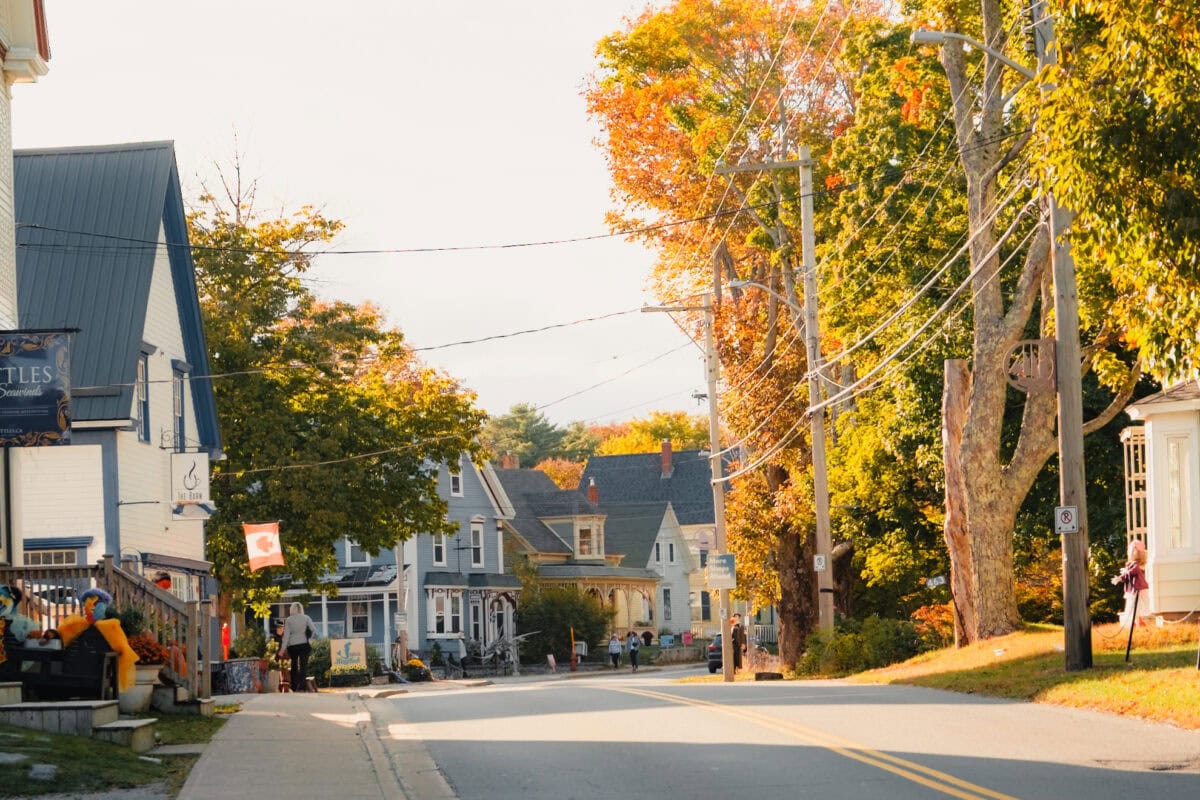
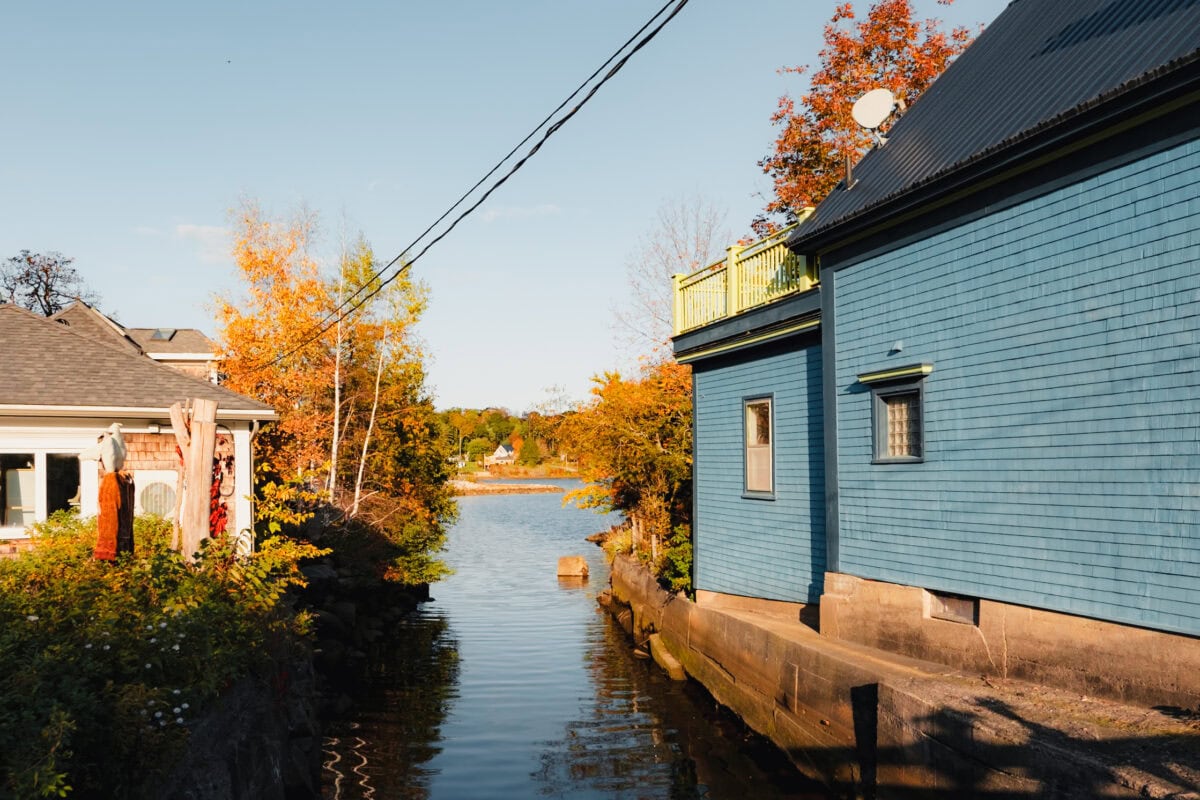
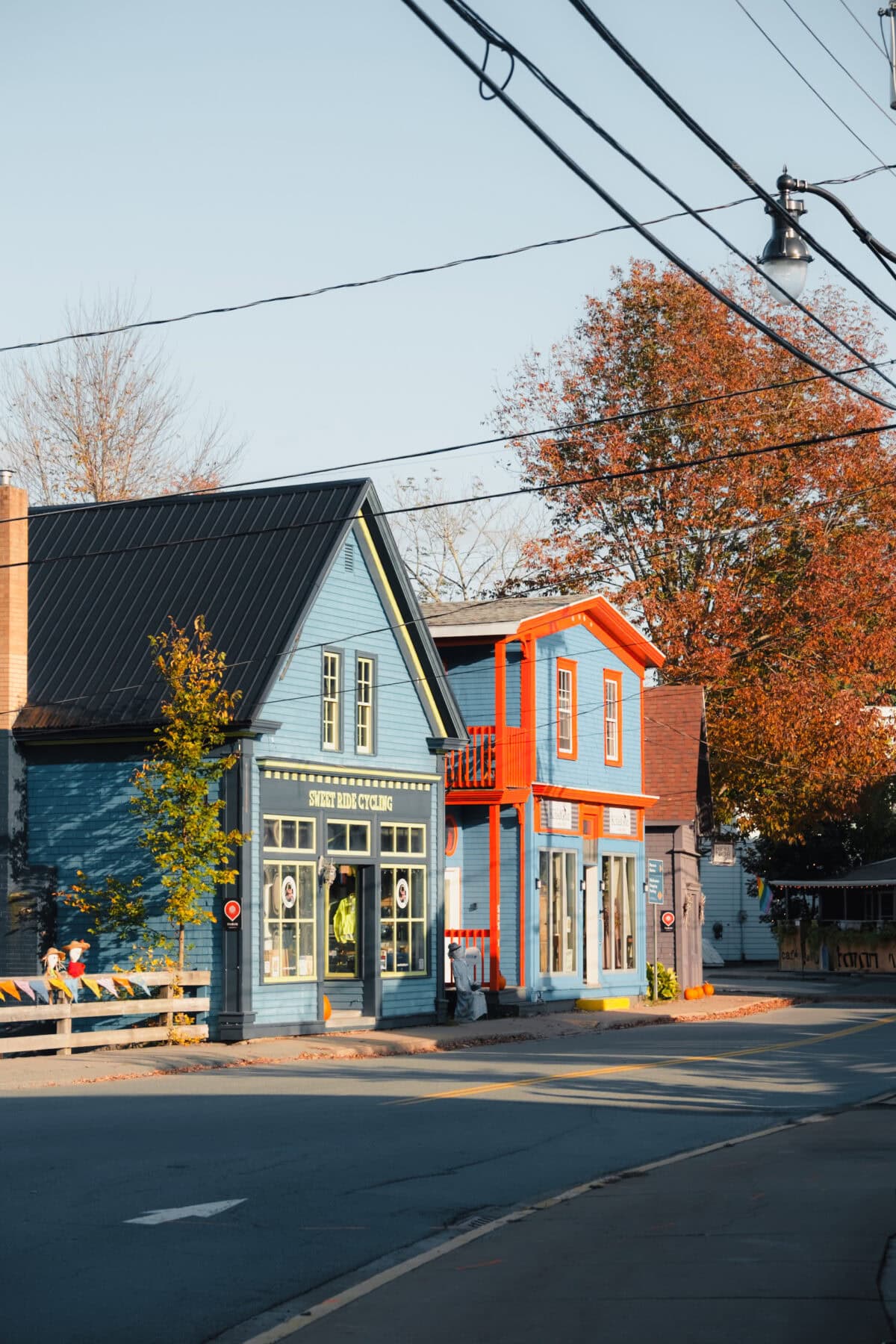
From Peggy’s Cove, we continue towards Mahone Bay, a small town straight out of a picture book. The main attraction here is actually the three churches on the bay of the same name, whose three steeples dominate the panorama of Mahone Bay – but the town itself is even more photogenic.
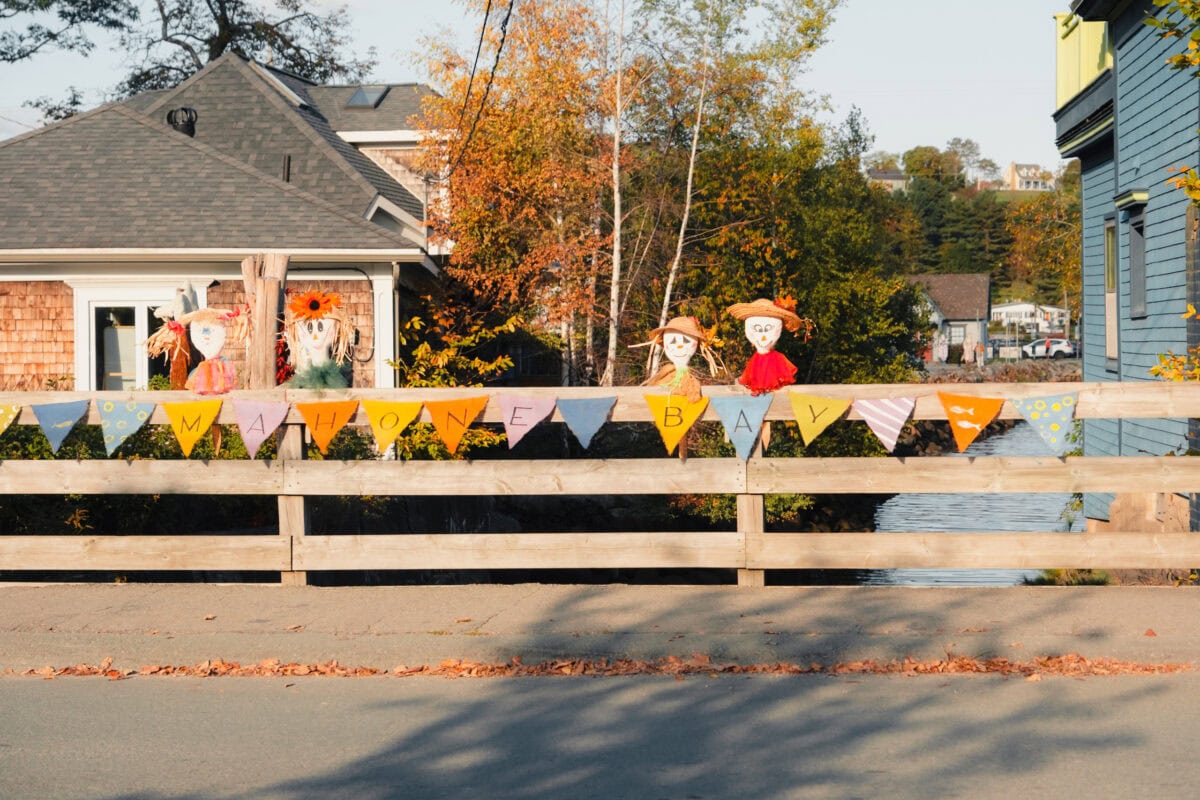
This was certainly also due to the annual Scarecrow Festival held in October, where artistically crafted scarecrows line the streets. Famous people, film characters or even monarchs such as the British King Charles I are sculpted into scarecrows and, together with the slowly changing colors of the leaves, create a colorful street scene in Mahone Bay.
It was here that I realized for the first time that autumn is the perfect time of year for a trip to Nova Scotia: with a bit of luck, the days are sunny and dry – and the autumnal small-town atmosphere is like something out of a romantic Hollywood movie.
What to do in Mahone Bay
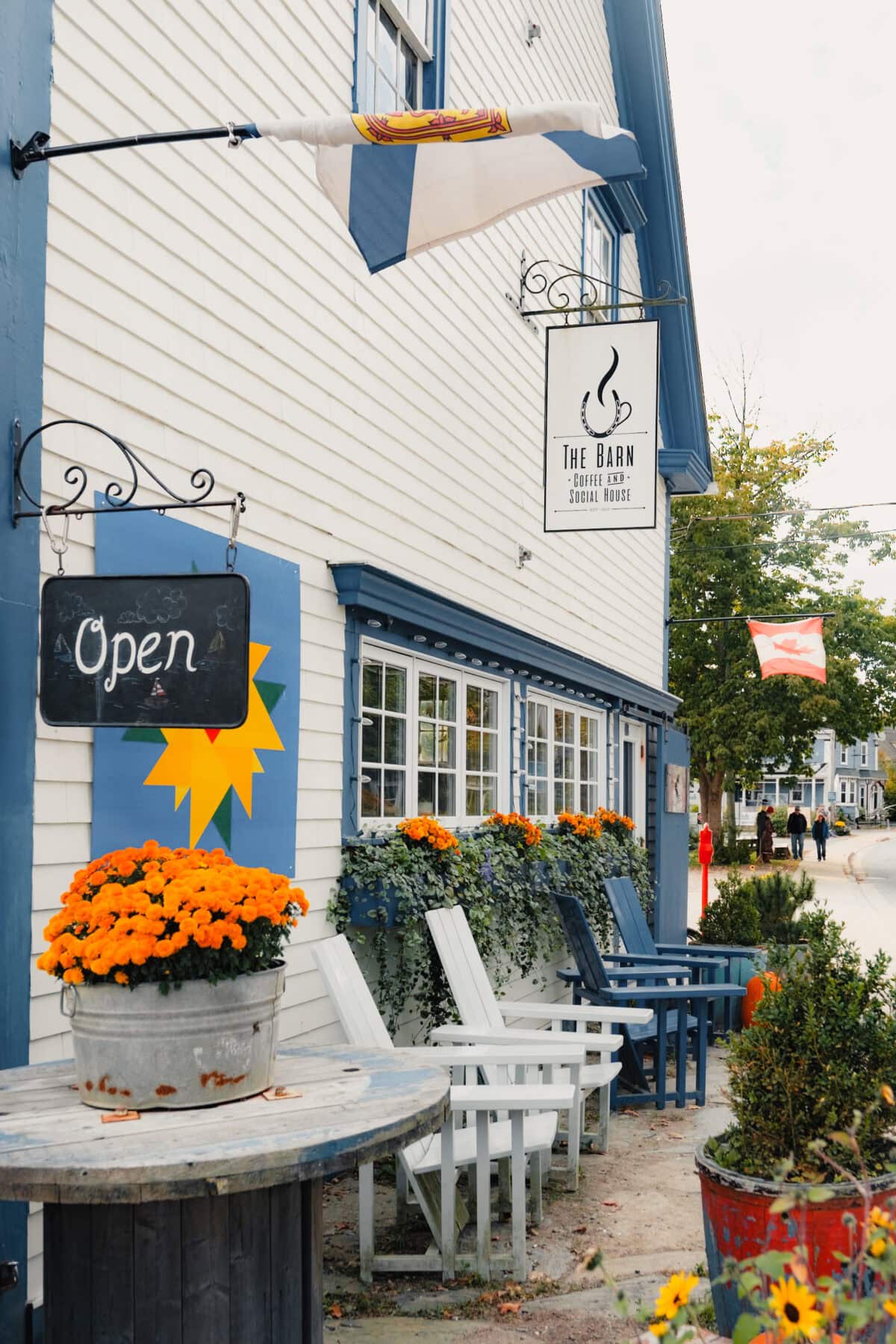
In Mahone Bay, you’ll find some lovely locations where you can really enjoy the fall atmosphere: At The Barn, you can snuggle up in one of the cozy armchairs with a warm Pumpkin Spice Latte and enjoy the cozy atmosphere of an authentic coffee house. If you prefer tea, I recommend the Tea Brewery with its really good selection of loose tea.
Lunenburg is a real grab bag: founded by mostly German settlers in the mid-18th century, the once most important port town in the region can look back on a long history.
You’ll find lots of architecture from this period here, such as neat captain’s villas or significant sights such as the Bluenose II, a replica of the famous sailing schooner Bluenose, which has become Canada’s national treasure due to its enormous size and maneuverability.
So much history has even led to Lunenburg being named a UNESCO World Heritage Site in 1995. But apart from the important history, you will also find a pretty little town here that has a lot to offer: There’s plenty to discover in terms of culinary and cultural delights!
Whether colorful fish stalls with freshly caught lobster(The South Shore Fish Shack), a Spanish tapas bar(Bar Salvador) or cozy coffee shops (No. 9 Coffee Bar ) is wallpapered all over with works by local artists – I could easily have spent a few more days in Lunenburg, also strolling through the many small galleries and vintage stores.
Where to stay in Lunenburg
It’s best to spend the night in the middle of it all, because you shouldn’t miss out on wandering through the bars here in the evening. We spent the night in the B2 Lofts – including a fantastic view of Lunenburg Bay.
From Lunenburg to Yarmouth: beautiful beaches, wild pets and a residential paradise
The next stage had a few more kilometers in store – like everywhere else in Canada, the distances are not insignificant, even in a small province like Nova Scotia. And with the stunning coastal landscape in southern Nova Scotia , there are plenty of beautiful stops, so it’s really hard not to stop every few kilometers.
My favorite spots on the way from Lunenburg to our next longer stop in Yarmouth:
Liverpool
We almost drove through, but sometimes it’s precisely these places that provide the biggest surprises on a road trip. Away from the big sights, Liverpool is a small, easily overlooked town. Nevertheless, I recommend you make a little stop here.
On the one hand, you can experience real local life in Liverpool, and on the other, you can discover a real culinary gem. The Main & Mersey serves Japanese-Canadian fusion cuisine: Really, really good, absolutely unique and doesn’t even break the bank. Definitely worth a visit!
Summerville Beach
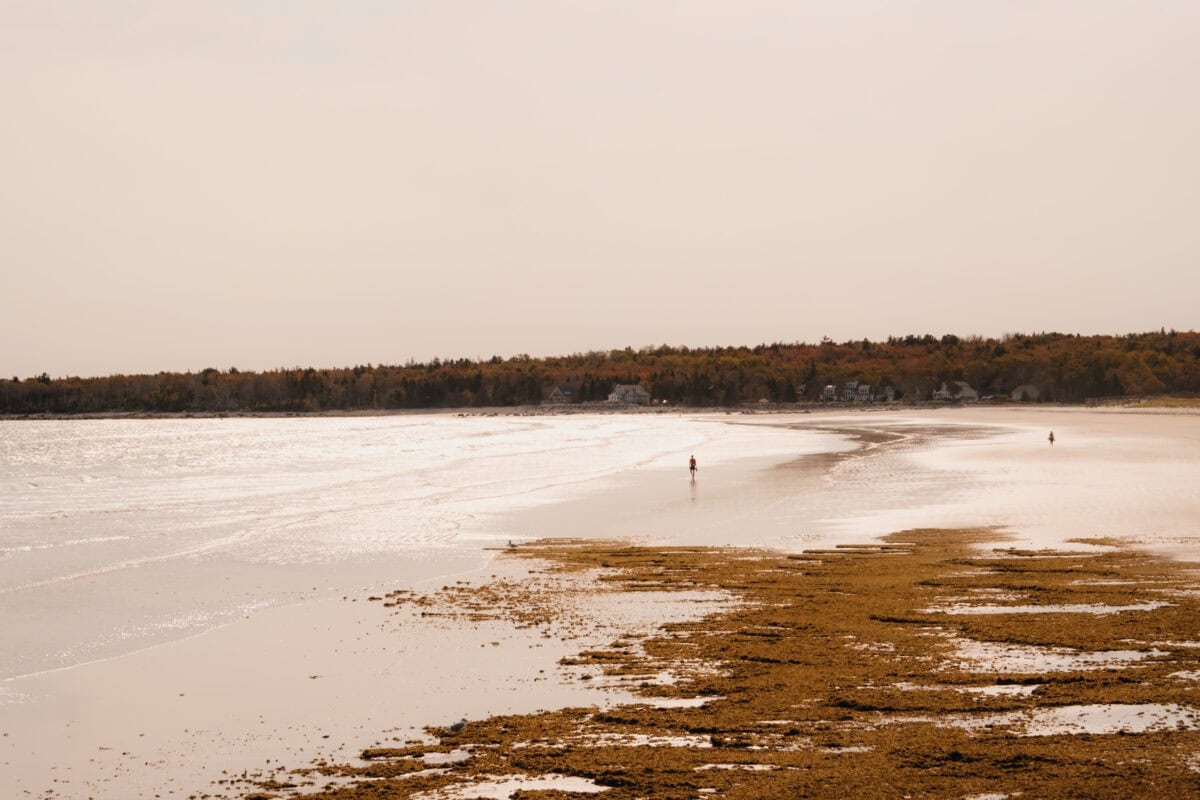
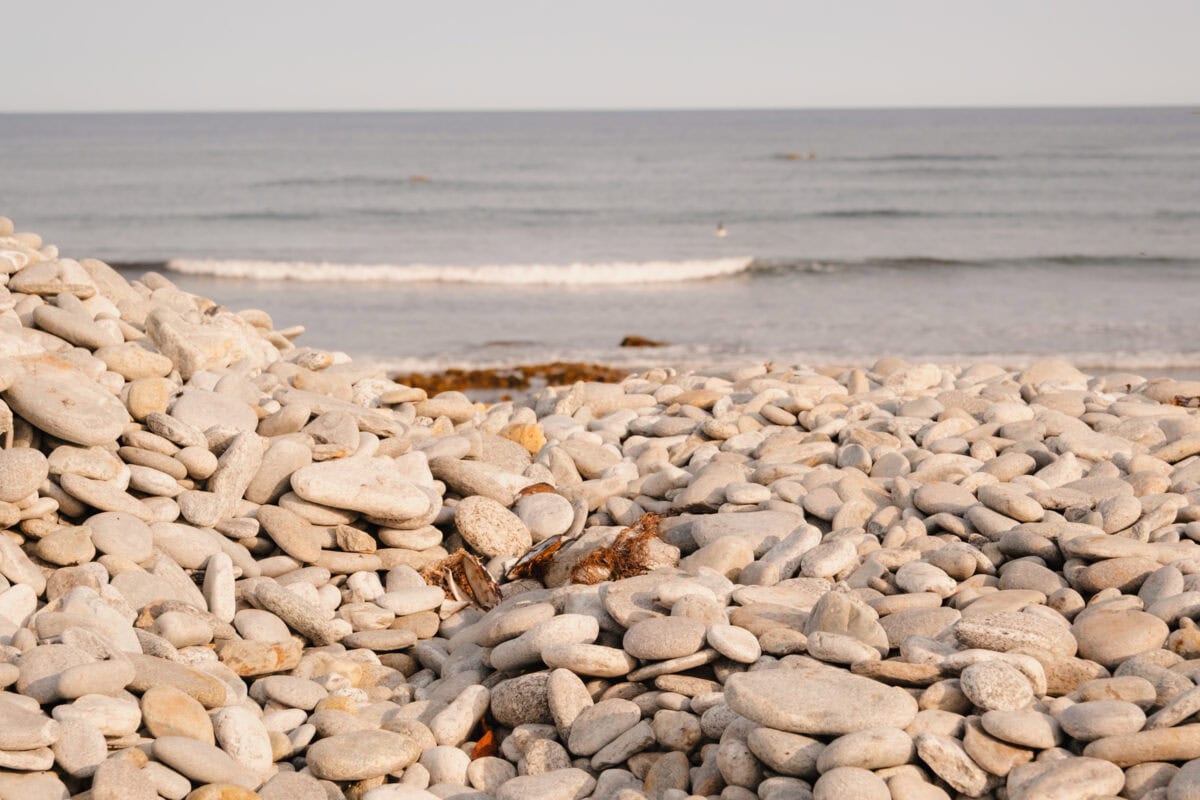
Along the rugged, expansive south coast of Nova Scotia, there are some fantastic wild beaches – one of which is Summerville Beach. The almost one kilometer long sandy beach with turquoise blue water is considered one of the most beautiful in Nova Scotia.
The Quarterdeck Grill has the best view of the beach and is also a good option for a culinary stopover.
A detour to the southernmost tip of Nova Scotia takes you via the Cape Sable Island Causeway to Cape Sable Island, a small, inhabited island with endless, rugged Atlantic beaches. Perfect for enjoying the fresh breeze.
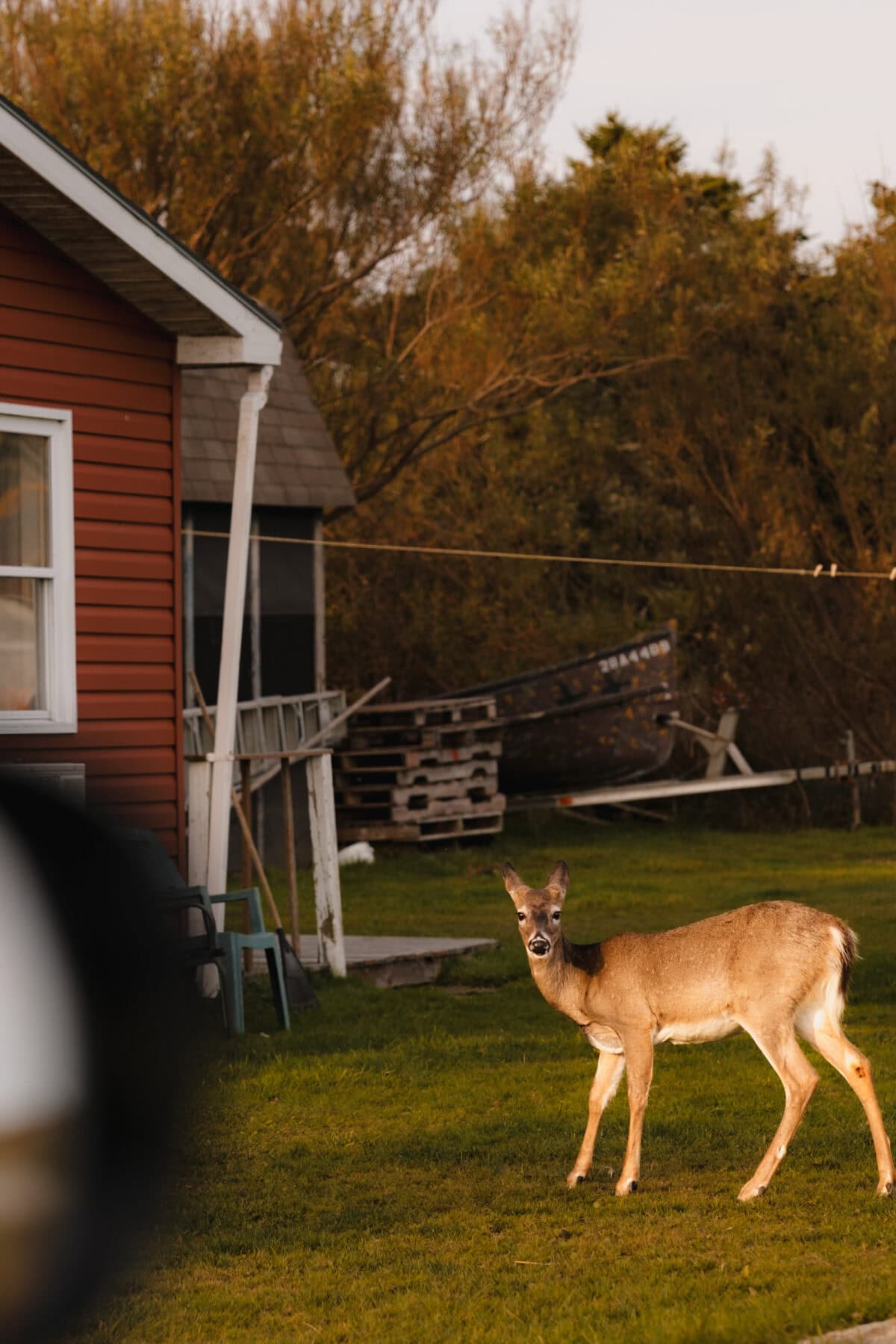
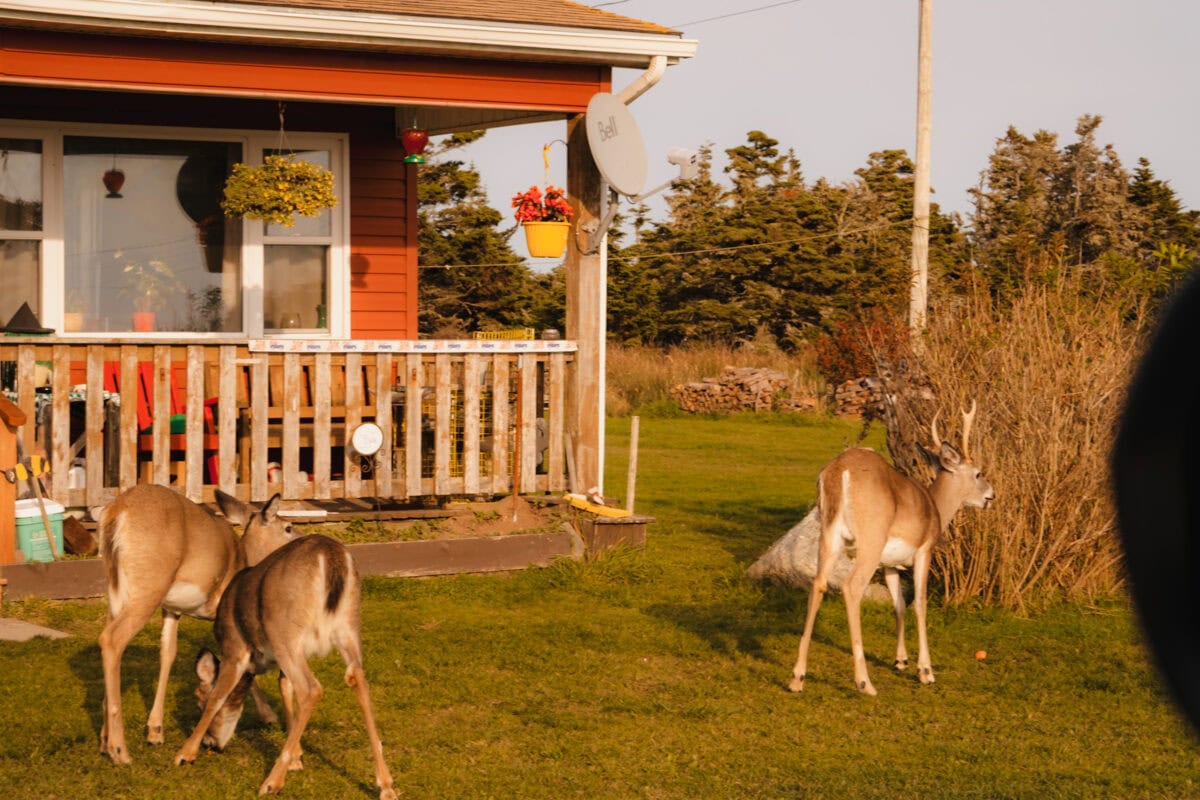
But Cape Sable Island has another surprise in store: the southern part, known as The Hawk, is home to a small population of deer that settled on the island at some point, although there is no real forest to be seen here. In search of food, however, they roam quite naturally through the front gardens of the few houses on the island – and the residents have become so accustomed to them that they provide them with carrots and other food from time to time.
However, feeding from the car is forbidden, probably so that the animals don’t get used to cars and the risk of accidents increases. But it wasn’t long before we found ourselves having a fun chat on a couple’s veranda, a bag of carrots in front of us and surrounded by wild deer.
If you’re passing by yourself, the local residents are happy to receive food donations. Especially during the hunting season, you will find street vendors selling large quantities of vegetables such as carrots (which are then used in a different way, namely as a lure) – just bring them with you, you will find donation boxes in The Hawk that you can fill.
Yarmouth
Rather quiet and inconspicuous, Yarmouth turned out to be an absolute insider tip for accommodation: the Rennesouth Apartments are located in an ensemble of historic merchant houses, which were in a poor condition and uninhabitable until they were renovated – unimaginable when you see the individual apartments today!
The entire renovation project was so impressive that the process was documented in its own television show on the HGTV channel.
What to do in Yarmouth: YarmouthFarmer’s Market Every Saturday there is a small farmer’s market with lots of handicrafts and delicacies from small producers. You’ll find the best and most unusual souvenirs here. Rudder’s Brew Pub Cozy pub with countless types of beer. Perfect for immersing yourself in small-town life. Warehouse 87 Antiques Emporium Small antiques paradise for vintage lovers, right on Water Street
Digby: The capital of scallops
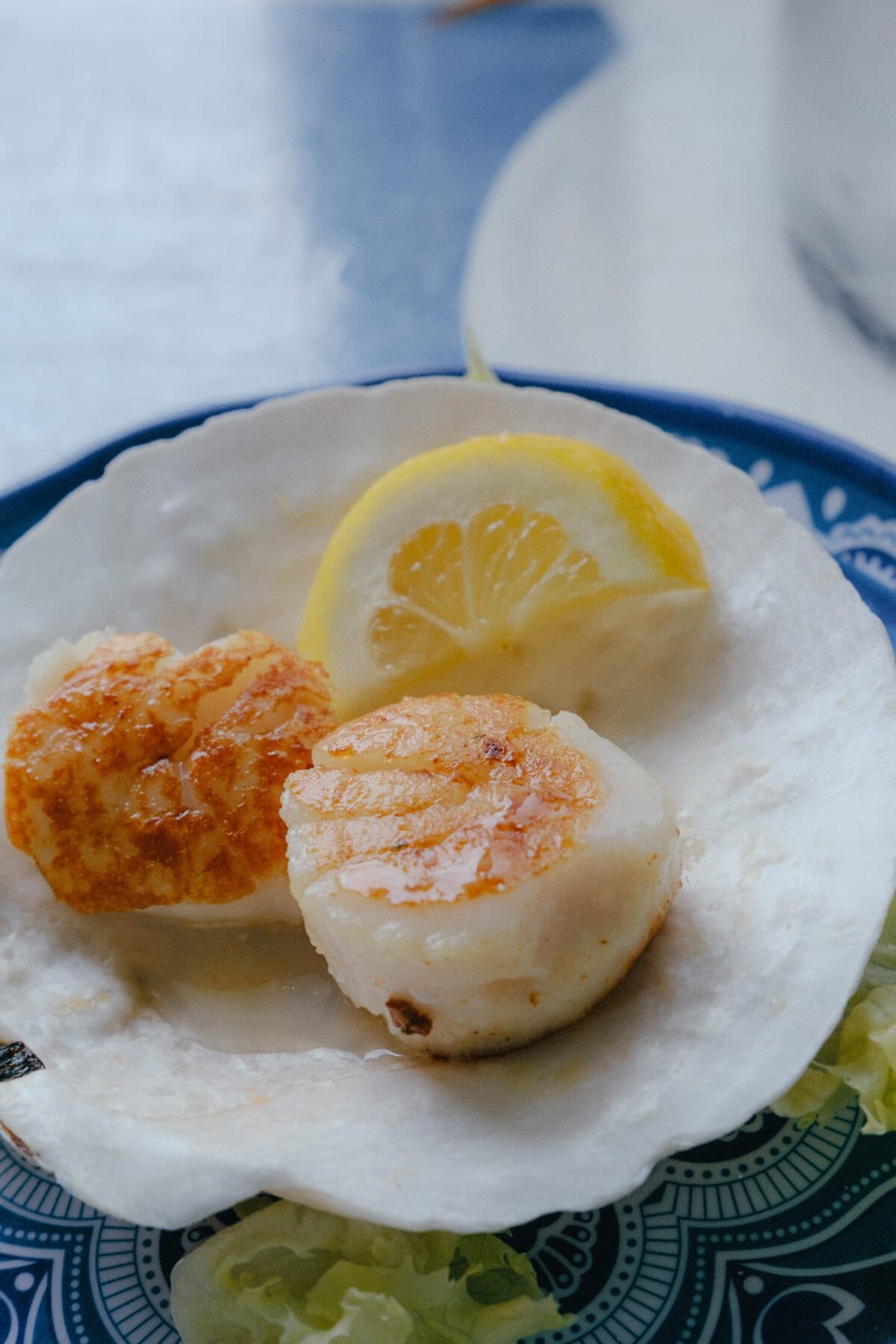
Having already eaten some pretty tasty lobster dishes, but still not a complete lobster (I just didn’t dare), I had to try another of Nova Scotia’s seafood specialties. Digby calls itself the“scallopcapital of the world“, and if not here for the first time, then where else?
Admittedly, I haven’t really become a fan of scallops, but the rustic ambience of The Crow’s Nest with a view of Digby harbor and the Bay of Fundy is worth the visit. (And even if you’re not a seafood eater or vegetarian, you’ll still find something on the menu).
Harbourville: Close to nature
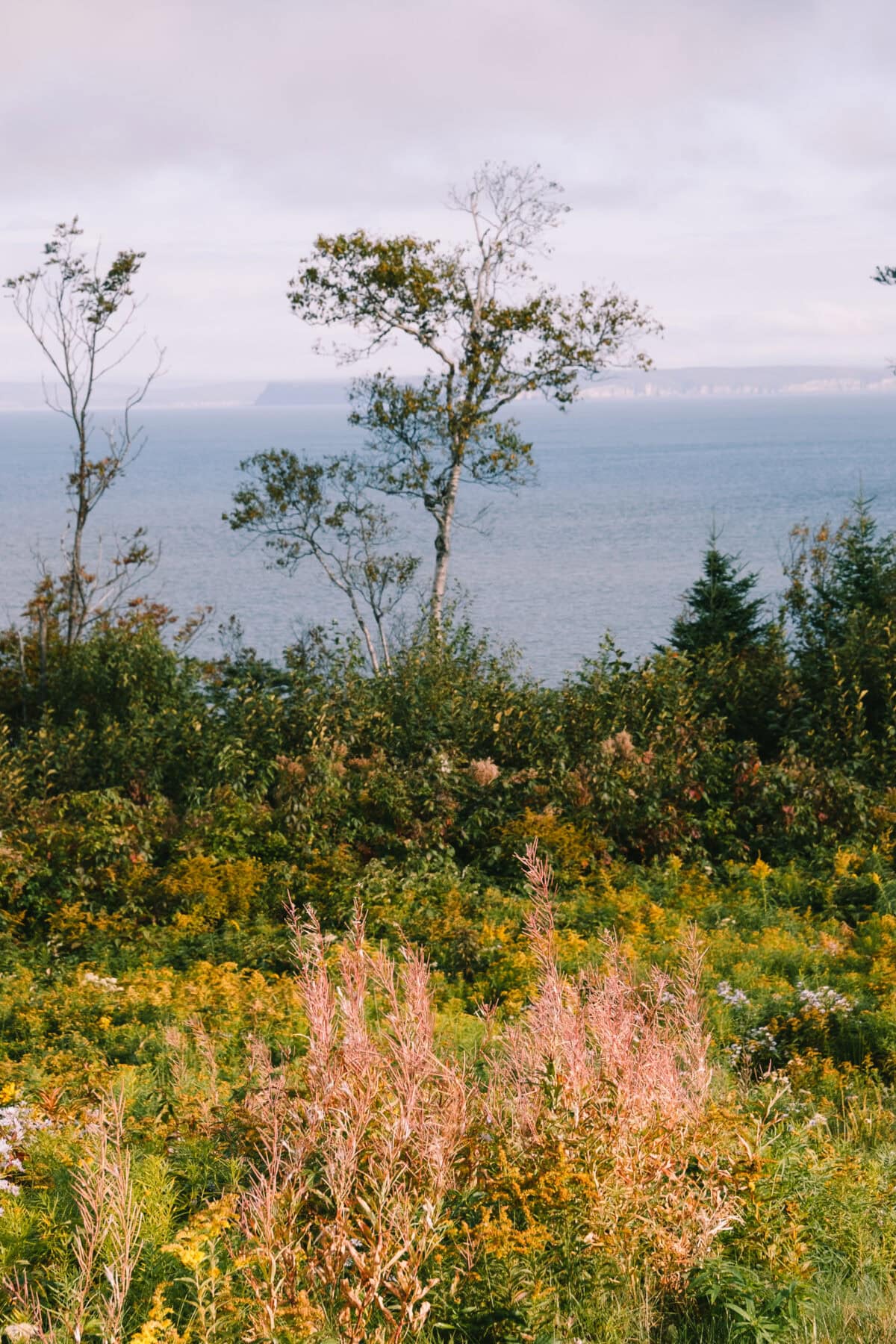
Harbourville consists mainly of a small harbor and is probably not often on the agenda of visitors to Nova Scotia. But just a few minutes’ drive away, you’ll find a real insider tip if you just want to relax and enjoy nature.
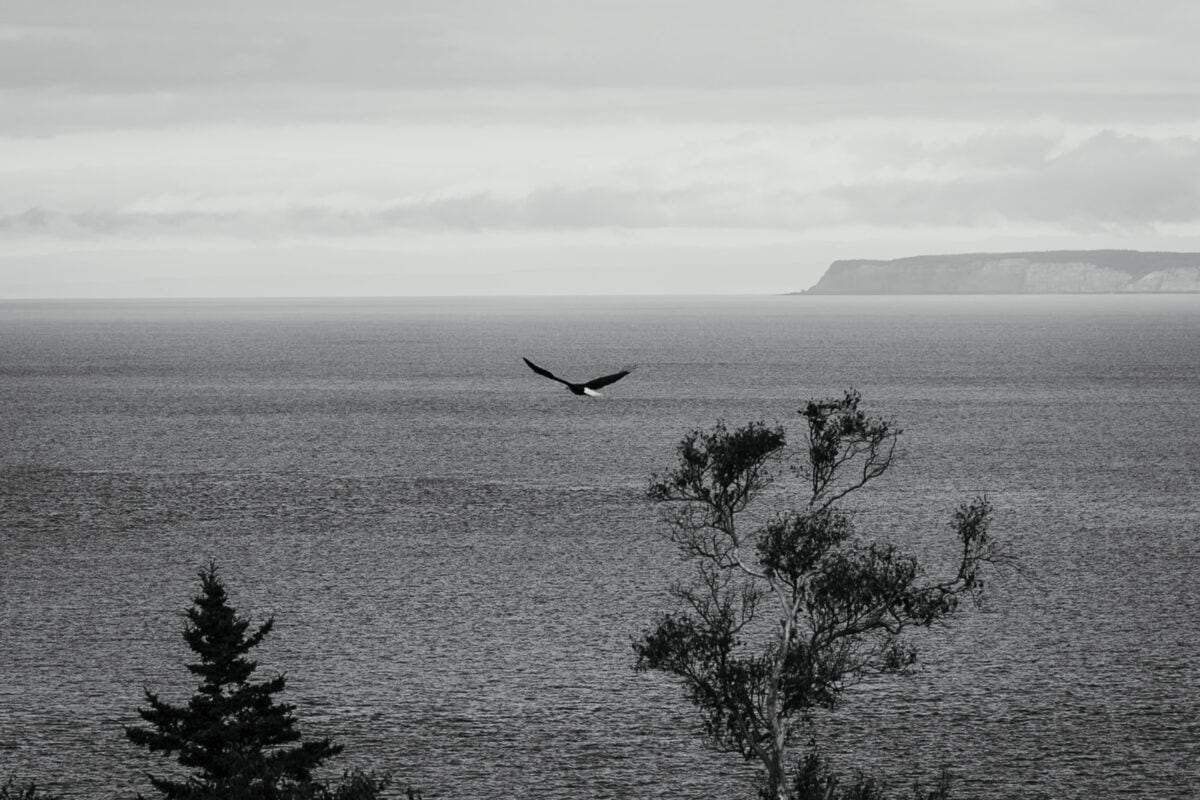
Harbourville Villa West is the perfect place to recharge your batteries. There is nothing but nature around the building with 2 large maisonettes: the unobstructed view of the Bay of Fundy is breathtaking, and during the day you can even see bald eagles flying over the house.
The entire house is very open and bright, which is a real blessing; being able to lie in bed at night and look up at the sparkling starry sky, which is completely free of distracting light sources all around, is simply magical.
Wolfville: Juicy apples and a bit of magic
In Wolfville, we really immersed ourselves in the Nova Scotia fall atmosphere once again: just in time for harvest season, we trundled into this pretty little town that stole my heart a little.
There is a lot of agriculture in the Wolfville area. That’s why you’ll find lots of street vendors selling fresh fruit and vegetables, as well as pumpkin patches, which are large meadows with the most beautiful pumpkins in all kinds of colors. Or you can simply pick your own fruit – pick up a basket from the small market at the front of the street and disappear into the thicket of fruit trees. Home-picked apples are simply the tastiest!
In Wolfville itself, you can wander through the small pubs, discover cozy coffee shops like the Charts Café or unusual stores like the Realm.
Wallace Bay: Wine & Wellness
We still had a little time left on our road trip, so we made a detour to another area of Nova Scotia: the Northumberland Shore is known for its long beaches, where the water is warmer than in other places due to the geographical location (unique given the otherwise rather cold Atlantic temperatures) and one of Nova Scotia’s most famous wineries.
At Jost Vineyards, you can stroll around the winery and taste one of Nova Scotia’s best wines.
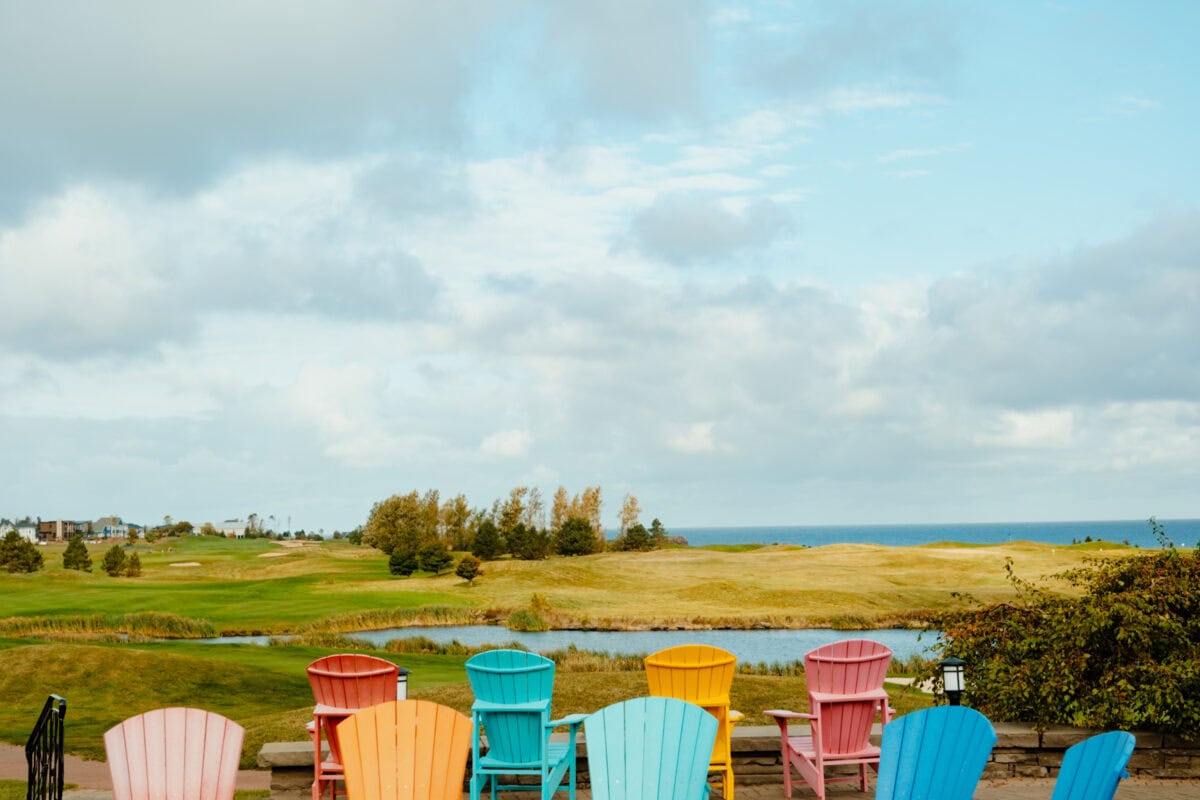
However, it was already too cold for swimming in the sea in the fall, so we had a good time at the luxurious Fox Harb’r Resort right by the sea. Situated in the middle of a golf course (an absolute tip for golfers and those who want to become one – unfortunately we didn’t have enough time), you are surrounded by greenery and can relax in the large spa with sea views during the day and indulge yourself in the restaurant in the evening.
Halifax: Nova Scotia’s big city with a big heart
As the capital, Halifax is naturally much busier than other cities in the province. Here you can expect a big city with countless shopping opportunities and great cafés and restaurants. Nevertheless, Halifax also has the laid-back charm of Nova Scotia, so we were able to end our eventful road trip here in a relaxed manner.
I have saved everything on this map so that you don’t have to write down all the locations individually. You can also load it into your Google Maps app – so you have all the locations to hand when you’re out and about.
Practical tips for your trip to Nova Scotia
What is the best way to get to Nova Scotia?
If you want to travel to Nova Scotia from Germany, there’s good news: You can fly directly from Frankfurt to Halifax, the capital of Nova Scotia, with Condor. As Frankfurt is a huge hub with connections to countless European cities, a flight with Condor might also be a good alternative if you’re starting your trip outside Germany. The flight itself is really short for a transatlantic flight with a maximum of only 7 hours! We took off from Frankfurt in the early afternoon, landed in Halifax at sunset and set off straight away.
Condor flies to Halifax with a brand new A330neo, and even in Economy Class the service is very good in terms of comfort and in-flight catering. However, it is also worth keeping an eye out for possible upgrades.
Sometimes the price difference to Premium Economy Class or Business Class is not as big as you might think. If you don’t want to commit yourself directly when booking, that’s not a problem. Depending on the booking situation, you can even spontaneously book an upgrade at the gate shortly before the flight (and sometimes get a good bargain!).
What is the best time to travel to Nova Scotia?
Good months for a trip to Nova Scotia are from June to September. The climate is mild to warm in summer. If you want to experience an impressive Indian summer, October is also a good month to travel.
Nova Scotia’s landscape takes on its brightest colors and you can get into the autumn mood in the individual towns with events such as the Scarecrow Festival in Mahone Bay or preparations for Halloween.
Do you need a rental car?
In fact, yes. Traveling through Nova Scotia without a rental car is difficult. There are bus connections, but the distances are not to be underestimated. In addition, some of the places mentioned are not accessible by public transportation.
However, driving in Nova Scotia is very easy. Traffic is relaxed and parking is never really a problem, even in larger towns. Canada uses the metric system, so unlike traveling in the USA, you won’t have any problems converting miles to kilometers.
Even in Halifax, you can cruise through the city in a relatively relaxed manner; in the city center, you may just have to look for the best place to park your car overnight, depending on your accommodation – our hotel offered a space in the hotel’s own underground car park for an extra charge.
It also makes sense to use the car for Halifax. The airport is located just outside the city, and it takes 35 to 40 minutes to get to the city center by car alone. By public transport, the journey takes more than an hour. It is therefore worth reserving a rental car for your entire stay, even if you don’t necessarily need it for sightseeing in Halifax.
By the way, a German/EU driver’s license is sufficient for renting.
If you have a German passport, you must apply for an electronic travel authorization (eTA) before entering Canada. The eTA costs €7 and is valid for up to five years, depending on the expiration date of your passport. You can also use it for subsequent trips to Canada.
You can also download the ArriveCAN app ( iOS / Android ) for customs clearance. This may save you longer waiting times when entering the country.
Somehow I had imagined huge masses of snow in Montreal and Canada in December. Trudging through the snow at minus 20 degrees. Well, yes. While I landed in Tehran in the middle of winter, in Montreal the last snow had just melted due to a small heat wave. So no Canadian Winter Wonderland for me. It’s a shame really, as it would have made Christmas shopping in Montreal even more atmospheric. But the mild winter weather had one good thing: I was able to explore the sights of Montreal in peace and quiet and without the freezing cold.
The Underground City in Canada
Nevertheless, Montreal is the perfect shopping city, even or especially in winter. Most of the malls can be reached underground and almost the entire city center has a labyrinthine underground system. Montreal is like an underground city. Subway stations, office buildings, shopping centers – everything is connected by tunnels. Very practical when it gets really cold outside: you can walk through the entire city without having to set foot on the street even once. It’s a bit surreal how life underground feels like a parallel world.
Places to See in Montreal
In addition to underground shopping, there are also a few other beautiful sights in Montreal – here are a few tips, unsorted and without any claim to completeness, but tried out for yourself! 🙂
Where to Eat and Drink in Montreal
Somehow it’s probably the French heritage: cafés and restaurants on every corner, one cozier than the next. For example, the Bar A Beurre or the Café de Mercanti in the old town of Montreal. Good coffee and lots of sweet stuff, such as the filled butter balls in all colors and flavors.
Café de Mercanti 350 Notre Dame Est. Old Port Montreal, QC H2Y1C7 Website
Looking for a few souvenirs? Available at the Marché Bonsecours, a covered market hall. There are lots of small craft stores with unusual Montreal and Canadian souvenirs. Not cheap, but nice. I brought an Indian dreamcatcher with me.
Quai de l’Horloge
At the old port of Montreal(Vieux-Port de Montréal), at the end of the Quai d’horloge, there is a tiny city beach with a rustic harbor atmosphere. It was of course empty, but definitely reserved for sunnier days. (Should I be lucky enough to come back in a few months). And if the weather doesn’t play ball: There’s another great spa in the Vieux-Port, the Bota Bota – I would have loved to try it out too, but the pick-up was calling again. Next time.
Basilica Notre-Dame
Montreal is known for its many churches. There are some really outstandingly beautiful ones, such as the St. Joseph’s Oratory on Mont Royal. Or the Basilica Notre-Dame de Montréal (see photos). Also worth seeing for non-churchgoers.
Where to Stay in Montreal
I stayed at the Delta Hotel by Marriott . It was very good, but also quite upscale. The location, however, was perfect for exploring the city! For those who don’t want to spend quite as much: Right nearby is the Zero 1, which is a bit more affordable, more modern, and just as comfortable.