Jerusalem is a fascinating city and, alongside Tel Aviv, the top destination on any trip to Israel! But what are the must-sees in Jerusalem? Here I’ll tell you which sights you should definitely see and give you some valuable tips!
Places of interest in Jerusalem
Most of the sights in Jerusalem can be found in the Old City. Everything is within walking distance here, and you can easily visit the most important locations such as the Wailing Wall or the Church of the Holy Sepulchre in one day. You will also find the very picturesque narrow streets here. But the newer part of Jerusalem is also well worth seeing and a little more secular.
#1 The Wailing Wall / Western Wall
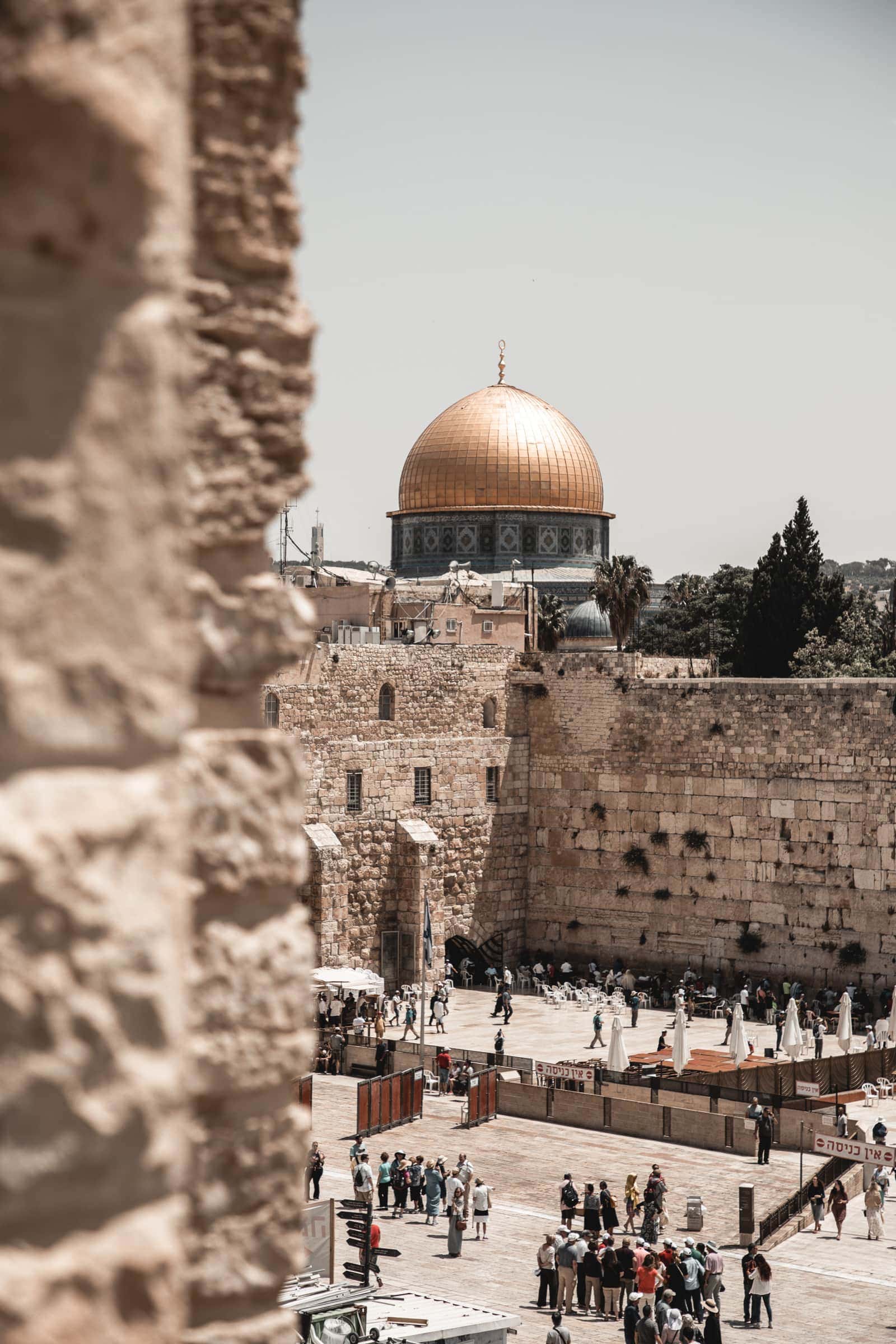
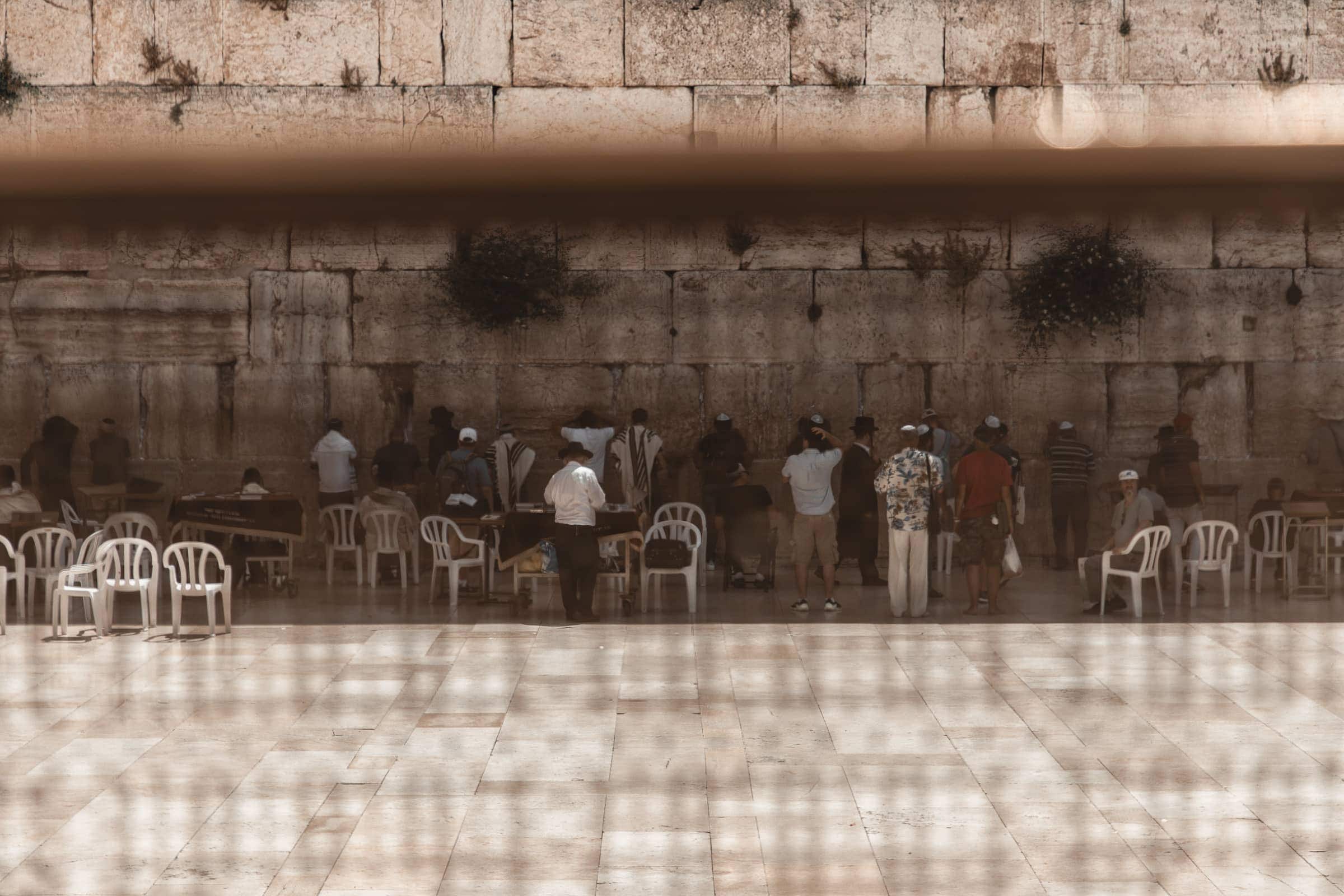
The Wailing Wall is actually the back of a protective wall of the Second Temple of Jerusalem, built by King Herod and almost completely destroyed in 70 AD during the battle between Jews and Romans for supremacy in Jerusalem. Seventy years after Christ – that’s how early people were already arguing and fighting in Jerusalem! And there are still remains from this period to this day – Jerusalem is a treasure trove of antiquity. Over the centuries, this section of the Western Wall (hence the English name“Western Wall“) became a place of Jewish pilgrimage, today’s Wailing Wall – and a symbol of Jerusalem.

Helpful tips for visiting the Wailing Wall:
- Access to the Wailing Wall is blocked off by security gates. Bringing cameras is not a problem – but photography is not permitted at the Wailing Wall during the Sabbath.
- A visit to the Wailing Wall itself is free of charge,
- Women and men pray strictly separate at the Western Wall. The men’s side usually seems emptier because 1. it is larger and 2. the men also use a covered part under an archway.
- Men have to wear a kippah right next to the wall, women should cover their shoulders and knees, but somehow it’s not particularly noticeable in warm weather, if not.
- There are small benches on the partition wall to the men’s section, which you can climb on to look over to the men’s section.
- At the entrance in front of the wall you can get a pen and paper to write your prayers/wishes/thanksgiving/etc. on. The paper is then inserted into one of the cracks in the wall.
- You move away from the wall in reverse – so as not to turn your back on it
- The Wailing Wall is open 24 hours a day
- Some of the roof terraces opposite are open to the public. From there you have the world-famous postcard view of the Dome of the Rock and the Wailing Wall.
Looking for accommodation in Jerusalem in Jerusalem?
You’ll get the best price here

Looking for information for your trip to Israel? You can also find out more in my Israel blog!
#2 The Church of the Holy Sepulchre
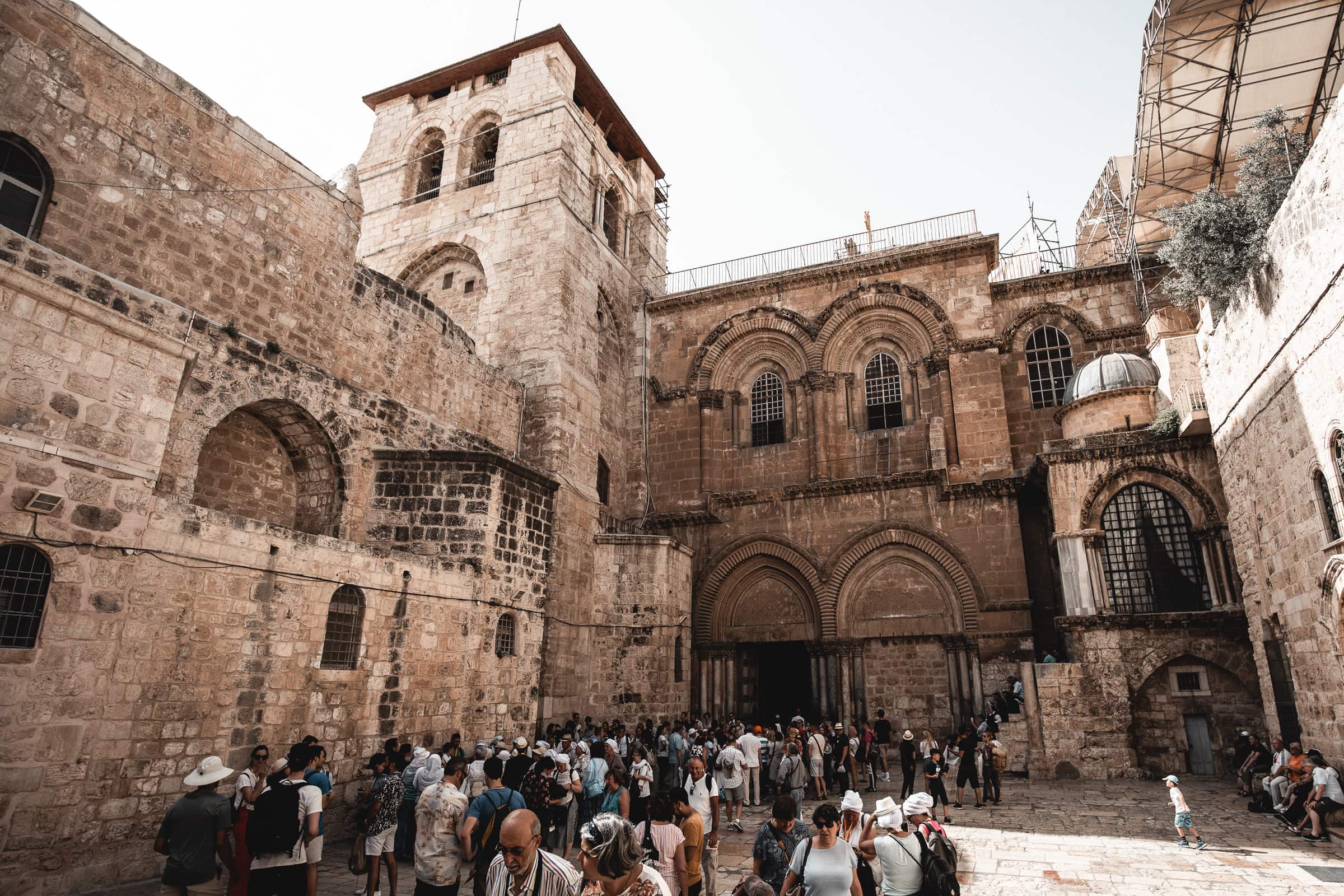
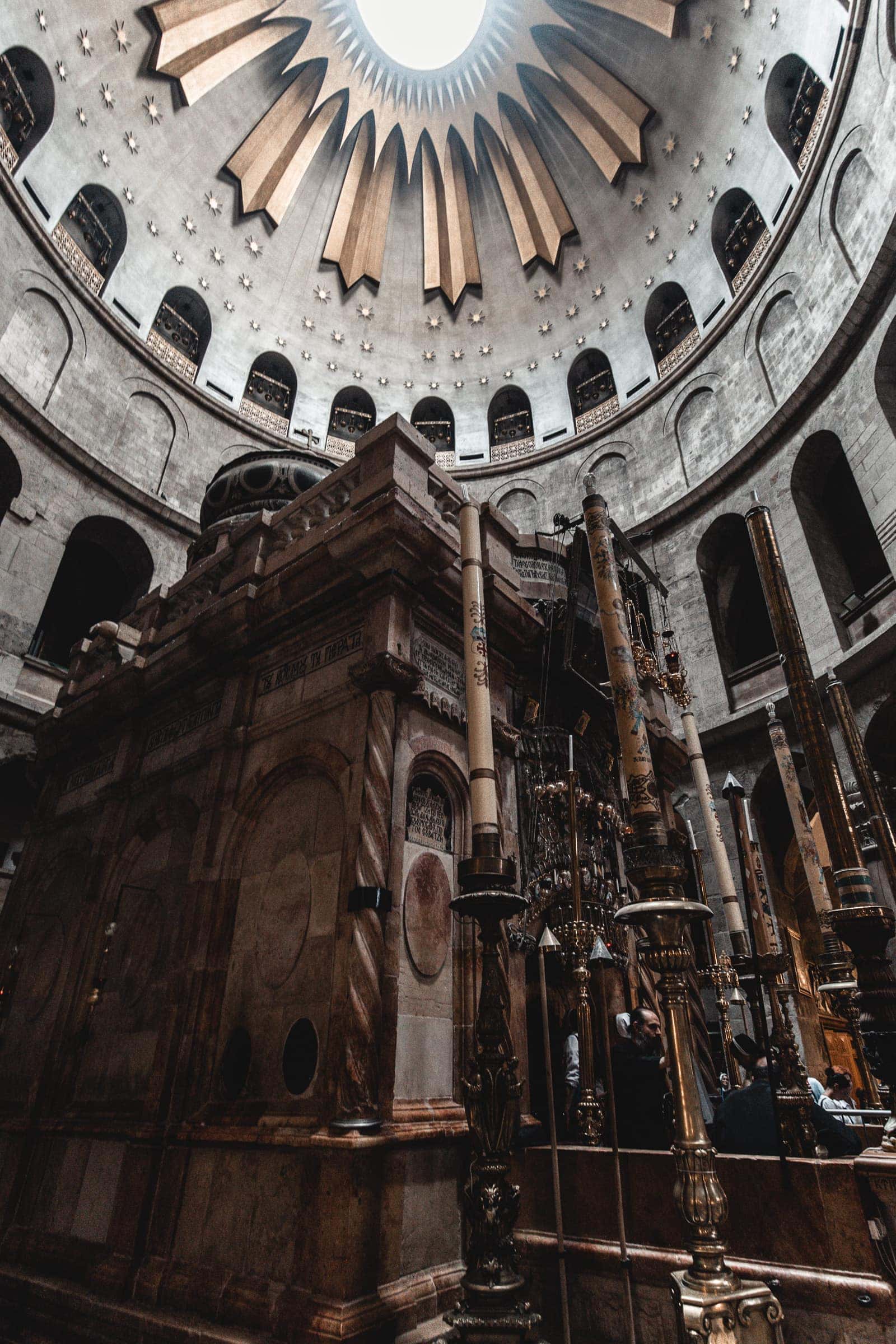
The Church of the Holy Sepulchre is THE hotspot of Christianity, no other church in the world is as significant, as important. This is where Jesus is said to have been crucified and buried, then resurrected. Whether this is true or not is still disputed by historians to this day, as it is at many sites in Jerusalem – much of what is assumed today is biblical tradition that has not always been scientifically proven beyond doubt. This is also one of the reasons that can be so confusing in Jerusalem. What is true, what is not? What is scientifically proven? The stories in individual places change depending on the faith and world view. In any case, I was very impressed by the Church of the Holy Sepulchre, a veritable labyrinth of chapels for all possible Christian faiths and so very different from other classic large sacred buildings. The first church was built on this site between 326 and 335 and was extended, destroyed and rebuilt several times over the following centuries.

What you should look at here:
- The anointing stone right at the entrance: This stone commemorates the anointing of the body of Christ, where believers wipe the stone with cloths and towels and pray
- The tomb of Jesus, THE pilgrimage destination for devout Christians all over the world: another small building stands in the huge, mystical-looking rotunda. Inside is the place where Jesus is said to have been buried. You can enter the shrine, but you have to queue – sometimes for up to an hour! (I have to admit, I then gave it to myself)
- The Rock of Golgotha: Under the altar in the Greek Orthodox chapel is the rock on which Jesus is said to have been crucified – you can even touch it!
Fun fact (or not so fun, as the case may be):
The Church of the Holy Sepulchre is used by six different Christian denominations. However, as they were never able to agree on certain issues, two Muslim families hold the key to the Church of the Holy Sepulchre and open the church in the morning and lock it again in the evening. The key is passed down from generation to generation within the family.
#3 Jewish, Armenian, Muslim and Christian quarter
The Old City of Jerusalem is divided into four different neighborhoods; Jewish, Armenian, Muslim and Christian. In the old town itself, you mainly get around on foot – and this is the best way to explore the individual districts.

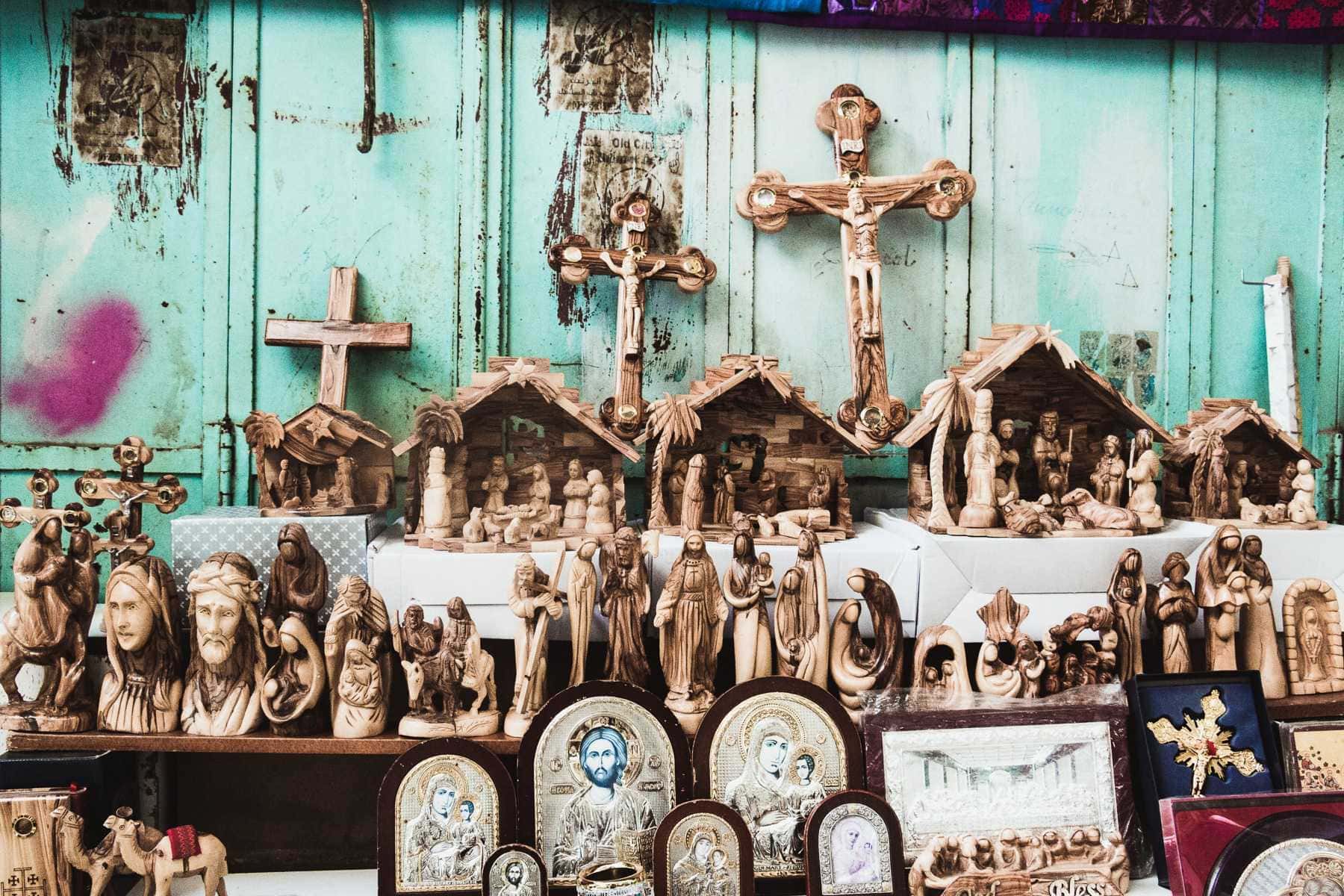
My tip is: just start walking, the most important sights are well signposted for orientation on the way anyway, let yourself drift and find out for yourself which part you are currently in. In the Muslim quarter you will find a colorful market in the alleys of the old town, the Church of the Holy Sepulchre is the center of the Christian quarter, where you will also find many souvenir stores with religious articles.

The Jewish quarter was badly damaged during the Palestine War in 1948 and is therefore largely rebuilt in the old style – which is also well worth seeing. In the Armenian quarter, people tend to keep to themselves and there is less street life here.

The Via Dolorosa is a pilgrimage route that follows the traditional path of Jesus through the city to his crucifixion. There are a total of 14 stations, and if you are interested you can take part in the Franciscan procession of the cross on the Via Dolorosa every Friday. The starting point is at the Stephanstor (St. Stephen’s Gate), but beware: the cross procession is a huge event, even among religious tourists – it gets crowded in the Old Town.
#4 Temple Mount with Dome of the Rock and Al-Aqsa Mosque
The golden dome of the Dome of the Rock is probably one of Jerusalem’s most famous landmarks. The Al-Aqsa Mosque is less magnificent from the outside, but together with the Dome of the Rock it is one of the most important shrines of Islam.

Access to the Dome of the Rock for non-Muslims is only possible via the covered wooden structure at the Wailing Wall and under the following conditions:
- A passport/ID document must be presented.
- A security check must be passed upon entry and, in addition to dangerous objects, non-Muslim religious objects may not be brought onto the Temple Mount
- Observe the dress code: Shoulders and knees must be covered
- Non-Muslims are not allowed to enter the Dome of the Rock and the Al-Aqsa Mosque
- Visiting times for the Temple Mount: Sunday to Thursday 7.30-11.30, 13.30-14.30 (summer), Sunday to Thursday 7.00-10.30, 12.30-13.30 (winter)
The crowds are very large, the controls very high – it is advisable to arrive early. However, access may also be blocked at short notice due to the political situation. It is best to obtain the latest information on the day in advance.

All too much history? Especially in Jerusalem, it is a good idea to take part in a tour to find out more about Jerusalem! It’s worth it, because you can’t get that much background knowledge!
➜ Book a tour of the Old City of Jerusalem with Yad Vashem* here
#5 Tower of David/Citadel
Located right next to the Jaffa Gate, the citadel offers an absolute panoramic view of the old town. In addition to the impressive building itself, you can also visit the museum with exhibits on the history of Jerusalem and interesting temporary exhibitions (I was very impressed by the expressive photo exhibition!).

After dark, there’s a light show on the history of Jerusalem, and if you think it’s boring, it’s best to see it for yourself – there’s almost no better and more light-footed way to be guided through the history of the city.

#6 City of David
The City of David is an archaeological site near the old town, which I have already written about in this post in this post. A particular highlight is the Hiskija Tunnel, a 2700-year-old water supply canal that still carries water today and can be forded with the appropriate equipment.

#7 Israel Museum & Yad Vashem
If you still have time for art and culture after all the sightseeing in the Old City, you should also visit the Israel Museum, one of the top museums in Israel. Everything from archaeology to modern art is represented here. The main attraction are the Dead Sea Scrolls, the Qumran scrolls, named after the Qumran caves in which they were found. The scrolls are around 2000 years old and provide important information about the time of ancient Judaism. The scrolls are displayed in a specially constructed building, the “Shrine of the Book”, which looks like a white onion cut in half from the outside.
Yad Vashem is probably the world’s most important memorial to the victims of the Holocaust. The architecture and exhibition should be very moving – and I think it is always important to remember what happened so that such a memorial never has to be built again. Unfortunately, I was no longer able to visit Yad Vashem. Which I very much regret. If you have the opportunity: definitely go. With time, because this is not a program item that you should tick off in a hurry.
Admission is free, and the nearby “Mount Herzl” streetcar stop is only a 15-minute ride from the city center. A free shuttle bus runs from the bus stop to Yad Vashem.
#8 Montefiore windmill
A windmill? That’s right, the world’s most visited windmill is in Jerusalem! Holland my ass. (They have thousands for that, too.) This windmill was built in 1857 to enable the surrounding new settlements to become self-sufficient.

There wasn’t much wind after all, but a pretty little residential area, Mishkenot Sha’ananim, grew up around the windmill. The mill has recently been extensively restored and flour is still ground here for special events, albeit now motorized.

Wine tastings are also organized in the Montefiore windmill. My untrained palate can only ever distinguish between “I like” and “I don’t like” – but the wines I tasted mostly fell into the “I like” category. So Israeli wines can’t be all that bad. A clear recommendation for a wine tasting in a somewhat different ambience.

In front of the windmill is a large viewing terrace, according to our tour guides the most popular place in Jerusalem for marriage proposals! The view of the surrounding hills is truly fantastic. However, I couldn’t help but stare at the towering concrete wall on the opposite ridge, which reminded me so much of the remains of the wall at home in Berlin – and couldn’t follow our guide’s stories about the history of this and the surrounding neighborhoods. “We have our problems, you know,” he commented curtly, and I wondered whether this human need to always have to build walls would ever stop.

We went up to the Montefiore windmill as part of a Segway tour. I’ve only ever ridden a Segway on the flat promenade along Lake Michigan in Chicago – that was quite nice. The hilly Jerusalem then gives a Segway tour a completely different adventurous twist!
#9 Mahane Yehuda Market
You shouldn’t miss the hustle and bustle at the Mahane Yehuda market – and it’s best to come twice: once during the day and once at night. Because during the day, normal market life takes place here: Fruit, vegetables, sweets, spices – you can find tasty delicacies on every corner. For example, at the stand that only sells halva, a sesame sweet.


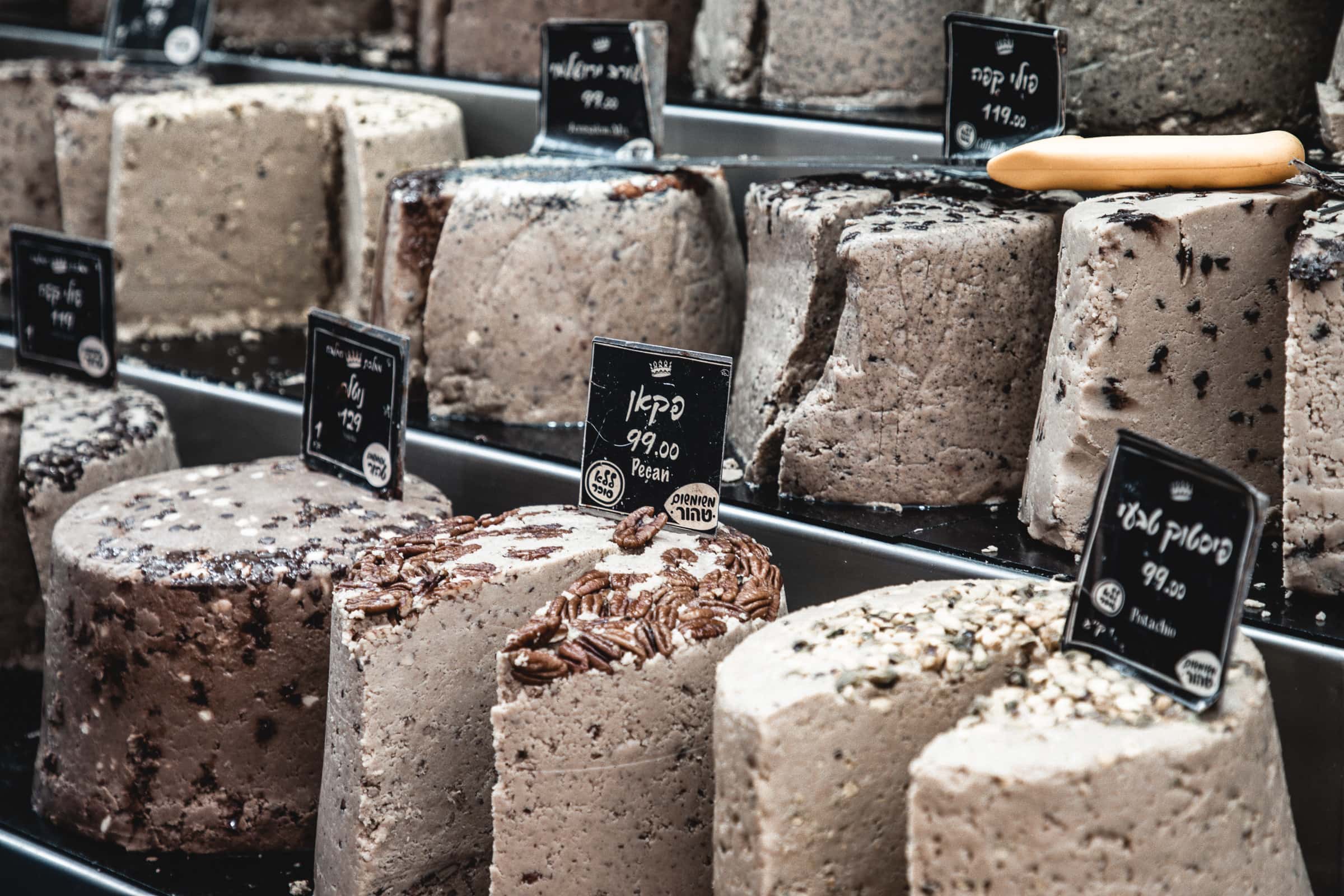

In between there are always small cafés, but also bars and pubs – and when the fruit and vegetable vendors close for the day, the Mahane Yehuda market mutates into a hip pub mile!

#10 First Station
Formerly the station from which trains to Tel Aviv departed, the First Station stood empty for a long time until it was reopened as an event space a few years ago. There are cafés, bars, restaurants, coworking spaces and various events from time to time – here as part of the Pride Parade that takes place in the city in June. The remarkable thing is that, on the one hand, Jerusalem is a strictly religious city, but on the other hand, despite many dissenting voices from religious camps, it is slowly opening up towards more diversity.
Recommended: The DIY market, every Thursday in summer, from 4 pm.


Food tips: Cafés and restaurants in Jerusalem
This list can only remain incomplete – the range of great restaurants, bars and cafés is simply huge. You can eat well in Jerusalem, as in the rest of Israel, on every corner – unfortunately the price level is often very high. That means: Close your eyes and go for it if you don’t want to miss out on the truly fantastic cuisine!
Incidentally, in my experience, the portions are very large in return – it often makes sense to share a dish before you have to go back for half due to an acute food coma. (Dishes are often served in several bowls anyway, which makes it easier). Alternatively, there is always a falafel store somewhere that also serves good food on a budget.
Pergamon Vegetarian cuisine, very nice to sit outside in the evening!
At first glance, Mori’s Grill Bar looks like a simple chip shop, but it has the best grilled meat!
Grill Bar the Grill Bar without a name! Tip: The starters alone are so varied – there’s no need for a main course.
Notre Dame Rooftop Wine&Cheese good wine, good cheese, spectacular view of the Temple Mount
Café Rimon good cocktails, but the best thing is the location: sit here in the evening in the pedestrian zone and watch the nightlife!
Acrmavi – the best hummus in town, so they say. The store has existed at Damascus Gate since the 1950s and somehow you get the feeling that not much has fundamentally changed since then. Except for the hummus! This is prepared fresh every day according to an old family recipe, early in the morning, as the store opens at 5.30am. Hummus is still considered the daily bread of the little man and is eaten for breakfast as well as on all other occasions. Everyone comes here: construction workers, students, office workers. You should come by by early afternoon before the hummus runs out and you have to wait until the next day’s production. Because what’s gone is gone!
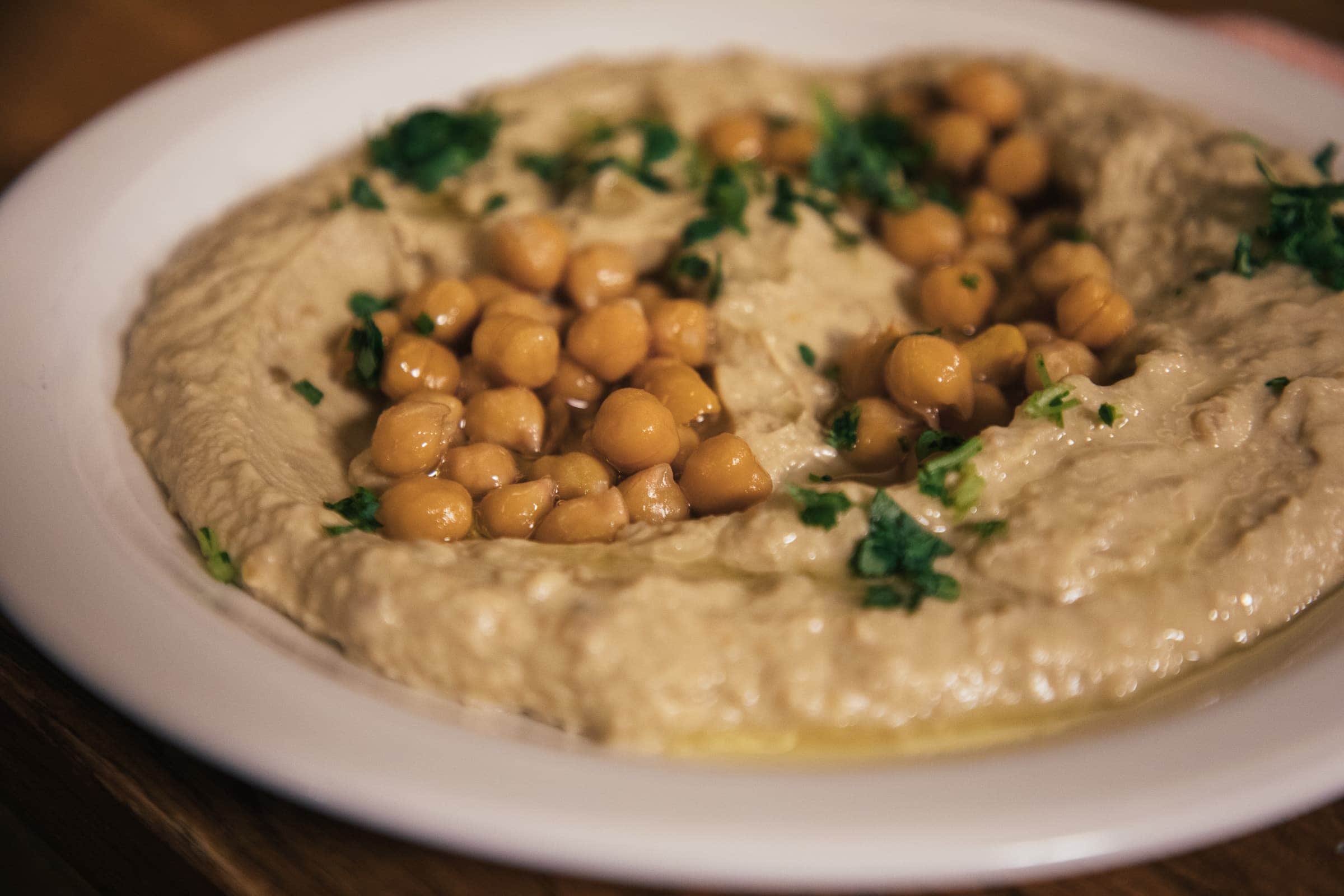
Hummus recipe:
Ingredients:
140g dried chickpeas
50g tahini (sesame butter)
1 large clove of garlic
3 tbsp olive oil
3 tbsp lemon juice
Salt and pepper to taste
Soak the chickpeas in water overnight. Cook for approx. 3 hours. (Yes, it takes time! And cheating with canned chickpeas is not an option!) Drain and collect the pea water. Crush the garlic clove and mix with the other ingredients. Add the peas and mash until creamy. If the mixture becomes too firm, add pea water until the desired texture is achieved.

Hotels in Jerusalem – accommodation for every budget
Luxury hotels in Jerusalem – high-end, but worth a look even without an overnight stay!
King David Hotel – The King David Hotel has a storied past: This monumental building served as the seat of the British Mandate government in the 1930s and 1940s, survived a bomb attack during that time, and later became one of Israel’s most luxurious hotels. Heads of state and everyone who’s anyone stay here.
YMCA Three Arches —The YMCA Three Arches, located directly across the street, is part of the Jerusalem YMCA (Young Men’s Christian Association), and even if you can’t afford to stay the night here, you should still come by: The unmissable bell tower is the tallest building in Jerusalem, and from the top you’ll have the best view of the city!

Medium budget – Middle class hotels in Jerusalem
Ibis Styles – A solid, clean hotel in a prime location—and brand-new! Right in the heart of Jerusalem’s new city center, with restaurants, bars, and a shopping district just steps away—it doesn’t get any better than this. The Old City is within walking distance.
And best of all: the breakfast buffet on the top floor with a view of the city is amazing. Typically Israeli, typically abundant, typically delicious. Be sure to book.

Low budget hostels in Jerusalem
The Post – Super central location, relaxed atmosphere. Private rooms are also available.
Abraham Hostel*– Probably the best-known hostel in Jerusalem: Not quite as party-like as the offshoot in Tel Aviv, but still a good option for those who are on a budget and love communicative accommodation. There are also private rooms.
Journey to Jerusalem
If you are traveling to Israel from Germany or Europe, you will almost certainly land in Tel Aviv (and will certainly want to see Tel Aviv!). Ben Gurion Airport is outside on the way from Tel Aviv to Jerusalem and both cities are very easy to reach directly from the airport.
From Ben Gurion/ From Tel Aviv Airport to Jerusalem
The train connection from Tel Aviv airport to the train station in Jerusalem is brand new and takes just under half an hour. From the station, it is only a few stops by streetcar to the city center. Alternatively, there is a bus – but it takes a good hour and only goes as far as the station. I would generally advise against taking a cab – taking a cab in Israel is sometimes adventurous anyway and the train connection is unbeatable in terms of comfort.
With the Jerusalem City Pass, travel by train or bus to Jerusalem and back to the airport is free! The pass is available in three versions, the cheapest of which costs 35 euros.
From Tel Aviv (city center) to Jerusalem
There are plenty of bus connections from Tel Aviv to Jerusalem, the journey takes about 1 1/4 hours. On the website of Egged (the state bus company) you can find current timetables. Alternatively, you can also see if you can book a day trip from Jerusalem or Tel Aviv, e.g. to the Dead Sea*, and be dropped off in the other city on the way back (some tour providers offer this), saving you a trip.
Or you can book a day trip to Jerusalem from Tel Aviv, the journey doesn’t take long. However, I would say that a single day is far too short for Jerusalem – if you have the time, it’s better to stay overnight or longer.
➜ Book a day tour from Tel Aviv to Jerusalem here*
Ad / *affiliate links
I will probably write a separate post about entering Israel in general, as it is a bit more extensive. Please note: Traveling within Israel by public transport is generally difficult on Shabbat . From late Friday afternoon until Saturday evening there is no public transportation! Especially in Jerusalem, the rules of Shabbat are strictly adhered to, restaurants, cafés, stores, everything is closed – if possible, it is better to travel to Jerusalem on one day.
Security in Jerusalem
Basically, I wasn ‘t at all afraid of minor crimes like purse snatching or trick theft, which often occur at tourist hotspots, in Jerusalem. There are no official warnings about this, nor was I personally approached – that tends to happen to me when I’m traveling, as I’m often out and about with a camera that isn’t exactly inconspicuous.
However, this may also be due to the enormous police and military presence, which suggests that a machine gun is quickly at hand in an emergency. As a pickpocket, you’d probably be better off looking for another field of activity. Weapons can be seen everywhere, even individual young soldiers carry their machine guns outside of their duty time, both in military uniform and in private clothing, as they are only allowed to keep their weapons out of sight under certain conditions for security reasons. What at first seems disturbing for us Central Europeans is everyday life for Israelis and – in contrast to us – has an extremely calming effect on the locals. Most Israelis have also completed basic military training (men three years, women two years) and are well equipped for emergencies of any kind. Someone told me, not without a little pride, that there are always very few casualties in attacks on Israeli soil, because everyone knows what to do at the crucial moment thanks to their basic training and this may save more lives.

I got a taste of this speed of reaction one evening when we were standing in front of our hotel and a commotion suddenly broke out about 200 meters away in one of the busy street cafés: shouting, plastic chairs falling over. It was impossible to tell from a distance exactly what had happened, perhaps just a quarrel between guests, a scuffle, nothing more serious – but nevertheless the crowd around them suddenly jumped apart as if choreographed and soldiers ran off in a star shape in different directions. However, our Israeli escort had immediately analyzed the situation in no time at all and determined that there was no immediate danger to us and remained relaxed – while I, with my jaw dropped, was still busy trying to assess what was happening.
We were warned just once: we shouldn’t go to the Damascus Gate. (Buses to East Jerusalem and the Palestinian territories stop in front of this gate). Unfortunately, we did not receive an answer to our question about the reason for this very firm warning.
Later I found this article about it.
Later, however, I remembered that on my last visit in 2017, I strolled along there without a care in the world, ate hummus at Acrmavi and couldn’t remember feeling uncomfortable.

My personal assessment? It is ambivalent. Personally, I wouldn’t let the current overall situation stop me from traveling to Jerusalem; I didn’t feel in any danger. However, I don’t want to make a general statement on safety issues in particular, as everyone has a different perception of safety and is responsible for their own well-being.
I therefore recommend that you carefully follow the news from the region before traveling (there’s nothing like the Tagesschau and heute-journal!) and check the information page of the Federal Foreign Office for the current situation.
Conclusion: Is a trip to Jerusalem worthwhile?
After so much information and my very subjective opinion, you may be wondering whether a trip to Jerusalem is worthwhile at all. If you want to go on a city break other than Paris, Milan, London or Lisbon for a longer weekend – why not? Jerusalem it is. It’s also something a little more exotic to make your friends jealous of. The old town is very pretty, the narrow alleyways make for excellent posing pictures for your Instagram feed and it’s even more picturesque when one of the many Orthodox Jews with their big black hats scurry through the picture in the background while you’re walking around in your Sunday best.
Jerusalem is a very well developed tourist destination, there are great hotels with pools to relax in after sightseeing and good food everywhere (provided you have the necessary change, because Israel is expensive and Jerusalem as the number one Israeli tourist attraction even more so),
You don’t really have to fear handbag thieves due to the high police presence, despite religion everywhere you can still run around in a mini dress and in general you can have a really nice time here, even if you’re not at all interested in religion, history, politics, art and culture. A few pictures in front of the Church of the Holy Sepulchre, leaning dreamily against the Wailing Wall, trying hummus at the Mahane Yehuda market in between, enjoying the balmy summer breeze with a glass of wine in the evening (Jerusalem is always a winner in terms of weather with its mild to hot climate!
You can even go on a pub crawl* here with the people from Abraham Hostel* if you’re in the mood for nightlife – also a good tip for accommodation if you like it more budget-friendly but also more communicative. Jerusalem wants to become a bit hipper, and there’s nothing wrong with jumping on this bandwagon too.

But if, after reading this article, you have come across some details that have made you feel insecure, I would like to say to you: Then travel to Jerusalem all the more! If you have the feeling that you would have similar thoughts to mine, then I highly recommend a trip to Jerusalem!
It will not be easy, many things will keep you busy for a long time, you will be confused and doubt your perception. But that’s exactly what this city is all about! Feel the intensity of the city for yourself, talk to the local people, educate yourself as you pass by and learn about the history, culture and religion of a region that has influenced world events for thousands of years, ask questions, seek answers and form your own opinion – and you will be rewarded with a travel experience that you will remember for the rest of your life!
More about Israel:
Disclaimer: I was invited on this trip by iTravelJerusalem and the Jerusalem Development Authority.