Illinois and its capital Chicago are a destination that may not immediately come to everyone’s mind when traveling to the USA. Nevertheless, the Windy City and its surroundings are worth the trip! Discover the metropolis of Chicago and then start a road trip along the famous Route 66!
Pontiac was another stop on our road trip along the legendary Route 66 through Illinois. At first glance, it’s a quiet little American town, but in Pontiac you can soak up the full Route 66 atmosphere. At the local Route 66 Museum, you can learn just about everything there is to know about the famous highway.
But even better are the conversations with the local people: everyone has their own personal Route 66 story and tells it with pride. And this despite the fact that Route 66 has long since been replaced as an official highway by modern interstate highways. Find out what you can experience in the small town of Pontiac in Illinois here!
Pontiac: Route 66 Association Hall of Fame & Museum
The Route 66 Museum is the must-see attraction in Pontiac on a Route 66 road trip in Illinois. So many memorabilia, photos and exhibits about life on Route 66 have been collected here that you could be forgiven for thinking you were in a time machine. I could have browsed here for hours!
Walldogs: Street art artists from the very beginning
Special highlight: The inner courtyard of the Route 66 Museum is home to impressive murals! These are reminiscent of the Walldogs, the artists who creatively painted stores, billboards and walls with advertising messages before the advent of mass media. Today, Pontiac is trying to revive this tradition, and the most beautiful Route 66 murals can be found all over the city.
Looking for more inspiration? You can find even more travel reports from the land of opportunity on my USA blog.
The most beautiful (and totally Instagram-worthy) mural is located at the back of the Route 66 Museum! The artistic Route 66 emblem is legendary!
Even before the terms “digital nomads” and “van life” existed, Bob Waldmire (1945–2009) was drawn to the open road: He spent half his life traveling up and down Route 66 in his converted van, writing stories, drawing, and illustrating. His yellow VW Bus, which now stands in the center of the museum, even served as the inspiration for Fillmore from the Pixar movie “Cars”! Bob Waldmire drove this van across the U.S., always along Route 66. His artistic Route 66 maps are still relevant today and definitely make a great souvenir—available for purchase in the museum shop.
An even better souvenir, however, is the attitude toward life that defines the fascination surrounding Bob Waldmire: His passion for living life on his own terms, away from the mainstream and in complete freedom, really impressed me.
When he wasn’t traveling, he lived in a converted school bus, which was usually parked somewhere in his hometown of Springfield. The school bus is on display in the courtyard of the Route 66 Museum, fully furnished just as Bob Waldmire lived in it: a cozy collection of mementos and souvenirs from several decades on Route 66.
Fun Fact: Bob Waldmire was the son of Ed Waldmire Jr., founder of the legendary Cozy Dog Drive-In in Springfield, Illinois! In addition to the famous Cozy Dogs, Bob Waldmire’s works can also be purchased here.
Museum of the Gilding Arts & Pontiac-Oakland Automobile Museum
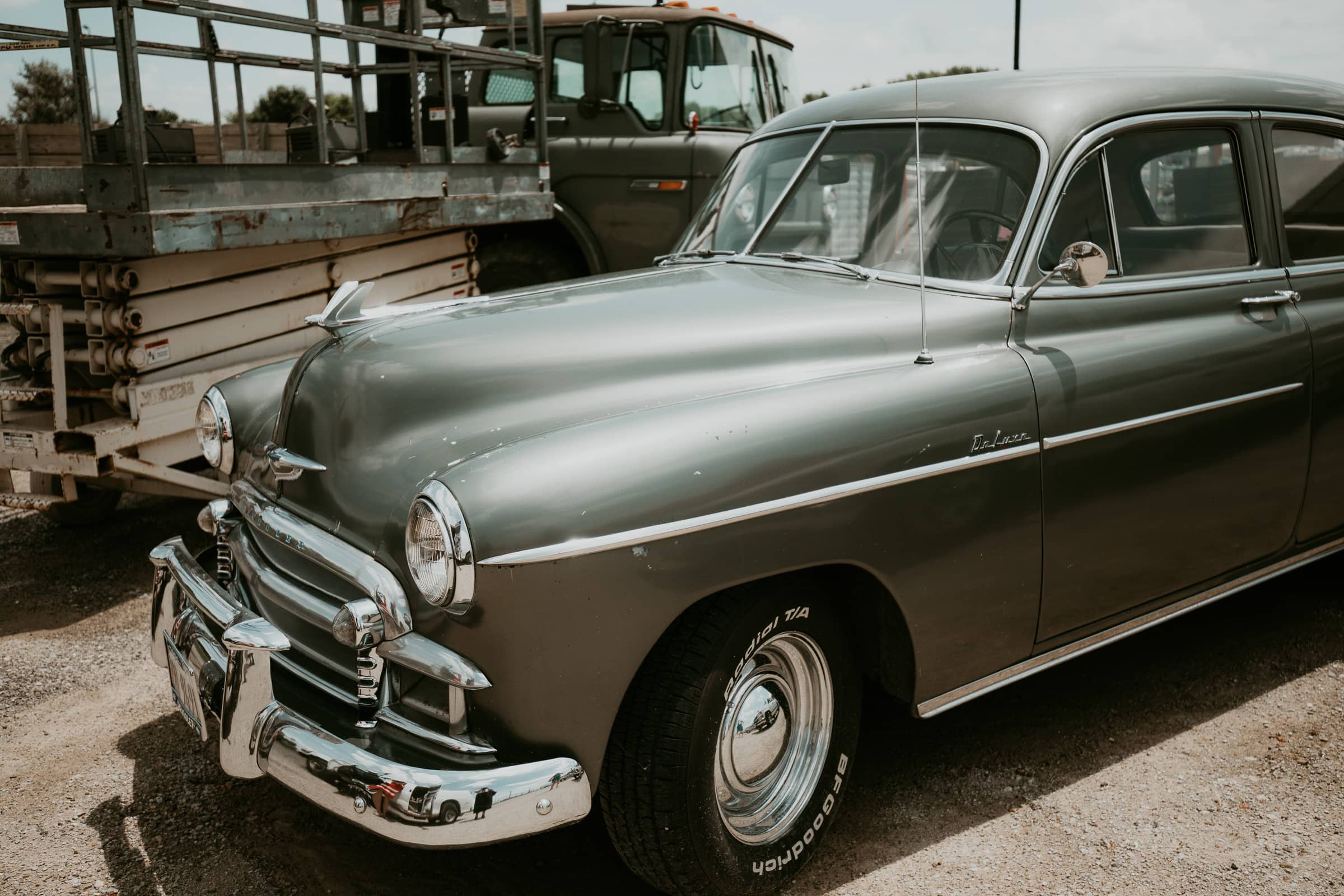
Although Pontiac is named after a Native American chief and not after the well-known U.S. car brand, there are still plenty of vintage Pontiacs on display next door at the Pontiac-Oakland Automobile Museum.
Not far away is the Museum of the Gilding Arts —at the end of the 19th century, the production and application of gold leaf were very popular. Here at the museum, you can learn more about this technique. Neither museum is an absolute must-see—but if you happen to be in Pontiac, it’s worth stopping by to take a look.
Admission to all three museums (Route 66, Gilding Arts and Automobile Museum) is free, but donations are welcome.
Where to Eat & Drink in Pontiac
Italian cuisine in huge portions is served at Bernardi’s, probably the best Italian restaurant in the city. The dishes were okay, but the ambience was much more interesting.
Coffee shop, which is also a meeting place in the town: At The Cup and The Scone, you can make friends right away.
All locations are within walking distance in the small Pontiac, so simply park your rental car and explore the city on foot!
Route 66 has an irresistible charm that touches everyone. Its promise of freedom, open spaces, and classic Americana is truly captivating. I remember feeling this myself when we started our road trip from Chicago along Route 66 through Illinois. It’s interesting to note—despite its fame as the oldest east-west highway in the U.S., Route 66 doesn’t begin on the East Coast as I had always assumed. Instead, it starts right in Chicago, Illinois, and winds through states like Missouri and Texas all the way to California.
In this article I take you on our USA road trip on Route 66 in Illinois – and I can reveal in advance: After so many wonderful encounters on our way through Illinois, I would have loved to just drive on endlessly like Bob Waldmire, my secret hero of Route 66!
#1 Chicago: The Beginning of Route 66 in Illinois
Route 66 actually begins in the middle of Chicago opposite the Art Institute Chicago, not far from the famous sculpture The Bean. On East Adams Street between Wabash Avenue and Michigan Avenue is the beginning of Route 66.
If you don’t know, you’ll walk right past the small street sign, in the skyscraper canyons of Chicago! Nearby, by the way, is already the first mandatory stop on Route 66:
At the legendary Lou Mitchell’s, the oldest diner in town, you can get in the mood for a road trip in an authentic vintage diner atmosphere. The food is typical American diner fare: hearty and plentiful. The taste didn’t exactly blow me away, but the rustic atmosphere made up for it.
Chicago, by the way, is one of the American cities that have taken my heart by storm!
For more on Chicago, check out the following posts:
#2 Joliet: Blues Brothers & Old State Prison on Route 66 in Illinois
The authentic road trip feeling kicks in within minutes of leaving the city as the expansive Midwest begins to reveal itself. Illinois’s Route 66 is rich with sights, making the first stop only 77km from Chicago. Joliet, Illinois, offers a charming preview of a journey filled with surprises and friendly encounters: Route 66 is alive with stories!
Like many stories, the Old State Prison in Joliet has a tale to tell. You can’t miss this historic prison, over 150 years old and operational until 2002. For many years, access was restricted, leading to the large complex falling into disrepair.
Facts About Route 66
opened in 1926
Length: just under 4000km
Start: Chicago, Illinois – End: Santa Monica, California
runs through Illinois, Missouri, Kansas, Oklahoma, Texas, New Mexico, Arizona, California
today completely replaced by interstate highways that run parallel to the old Route 66
many parts are abandoned today
in Illinois a lot of restoration has been done around Route 66
Today, events and guided tours are held there. Fun Fact: The prison has appeared in many series, such as Prison Break, and movies like Blues Brothers. Visitors can even see the cell from Blues Brothers.
More about our visit to Joliet Prison shortly before it was opened to the public: Lost Place on Route 66
The Rialto Square Theatre built in 1926, is a magnificent theater that can also be visited during the day.
Where to Eat & Drink in Joliet
For a midday snack, we visited MyGrain Brewery (a pun in the name!), situated in the recently renovated old Joliet train station. Beer enthusiasts will enjoy the house-brewed beers. The small brewing facility can be explored more up close by request, with a personal tour included. Like much of Illinois, the people are exceptionally friendly and welcoming!
Are you planning a trip to the U.S.? You’ll find lots of tips and inspiration on my USA blog
#3 Wilmington: Gemini Giant & The Launching Pad
Just beyond Joliet, in Wilmington, you’ll find the well-known Gemini Giant! This statue is part of the iconic “Muffler Men,” large figures used to promote stores, gas stations, and restaurants along Route 66. Nearby is the Launching Pad, a former Route 66 restaurant.
After standing empty for a long time, the new owners have opened a very charming Route 66 Welcome Center there, where you can reminisce about good old Route 66 with many original photos and exhibits.
As with everywhere else, the locals here are proud and eager to share stories about their lives on Route 66, including Tully, owner of the Launching Pad. For an authentic tourist photo, even the local sheriff arrived at the end, happily allowing us to take a picture with him—showcasing the warm-hearted American friendliness that is truly special.
#4 Pontiac: Route 66 Sights, Street Art & My Hero Bob Waldmire
Although Pontiac is associated with Route 66 and cars, its name actually comes from an Indian chief, not the car brand. It might seem like a quiet, sleepy town at first, but there’s so much to explore that we ended up spending nearly a whole day here! Highlights in Pontiac include:
Route 66 Hall of Fame Museum
At the Route 66 Hall of Fame Museum, I learned about Bob Waldmire’s story—someone who, in today’s Instagram era, might be summed up with the hashtag #vanlife.
Bob Waldmire’s van: an entirely unique piece!Also inside, it remains in its original condition: a creative chaos filled with Route 66 souvenirs.Bob Waldmire’s older VW Bulli, which can also be seen in the museum, even appeared in a Pixar movie.
In his van, displayed in the museum courtyard, he traveled the full length of Route 66 from Illinois to California over his lifetime. He led a simple life, living in harmony with nature, and earned a living through his art. He carefully wrote travel guides for Route 66, among other projects, until he passed away from cancer at an advanced age. His motto was:
I didn’t want to learn anything, so I became a traveling artist.
Bob Waldmire
International Walldog Mural & Sign Art Exhibit
Murals by the Walldogs, a group of street artists, can be seen throughout Pontiac. An interesting exhibition is integrated into the Route 66 Museum. The most famous mural is located at the back of the Route 66 Museum: don’t miss it!
Pontiac-Oakland Automobile Museum
Mainly beautiful classic cars from the golden age of Route 66, but also lots of vintage flair. If you still have some time, you should also take a look at the Pontiac Automobile Museum!
Dongbai International Airbrush Art School
A few years ago, Dong Bai, a Chinese artist, came to Pontiac from Beijing—and stayed because he liked it so much. Today, he teaches airbrush classes in his studio, sells his paintings, and also paints portraits, such as that of the mayor, who—full of pride at so much international flair—showed us around Dong’s studio after closing time—he has the key, after all; the two are friends.
Where to Eat & Drink in Pontiac
Bernardi’s, located across from the Livingston County Courthouse, serves Italian cuisine with an American twist. The spacious aisles are intentional, accommodating a large folding table used for main courses for several people, where large plates are set and organized. The portions are generous.
The Cup and the Scone offers coffee with a twist: the owners are incredibly cordial, and anyone who likes is always welcome to join the regular game nights.
#5 Springfield, Illinois: Abraham Lincoln & The Original Route 66
For Americans, Springfield is like a pilgrimage site of modernity: Abraham Lincoln, one of the most beloved US presidents and the father of modern America, worked here. Slavery was abolished during his presidency! Springfield is not only home to Lincoln landmarks, but it also serves as the capital of Illinois (not Chicago!) and boasts plenty of Route 66 and Midwest charm.
What to See in Springfield
Don’t miss Abraham Lincoln’s house and the mausoleum (rubbing the nose of the Lincoln statue in front of it is said to bring good luck!). The Abraham Lincoln Presidential Museum offers an excellent overview of history (be sure to check out the movie theater—it’s fascinating!).
Original Route 66: Historic Brick Road Near Springfield
Just outside Springfield (Snell Road and Curran Road, Auburn, IL), nestled among cornfields, there’s still an original, preserved section of Route 66. It’s hard to believe that Route 66 was originally paved with nothing but thick bricks. By the way, this section is open to traffic. A must-see for that authentic Route 66 vibe!
Where to Eat in Springfield
Leave room in your stomach for Springfield’s famous specialties: Cozy Dogs and Horseshoe Sandwiches are classic Route 66 fare.
#6 Pink Elephant Antique Mall in Livingston, IL: Vintage Shopping on Route 66
By now, you’re definitely caught up in Route 66 fever —and that’s when a shopping paradise like the Pink Elephant Antique Mall comes in handy! Here, you’ll find every kind of vintage item and Route 66 memorabilia you could ever dream of. Old advertising signs, LPs, furniture……the list is endless. I picked up a working, pastel-colored typewriter there for a bargain price, and the surprised looks from the security staff at the airport when I placed my typewriter next to my MacBook on the conveyor belt were priceless.
Tip: Are you fascinated by the Route 66 vibe? Then you’ll really enjoy this article about Amarillo, Texas—because the historic Route 66 runs through there, too!
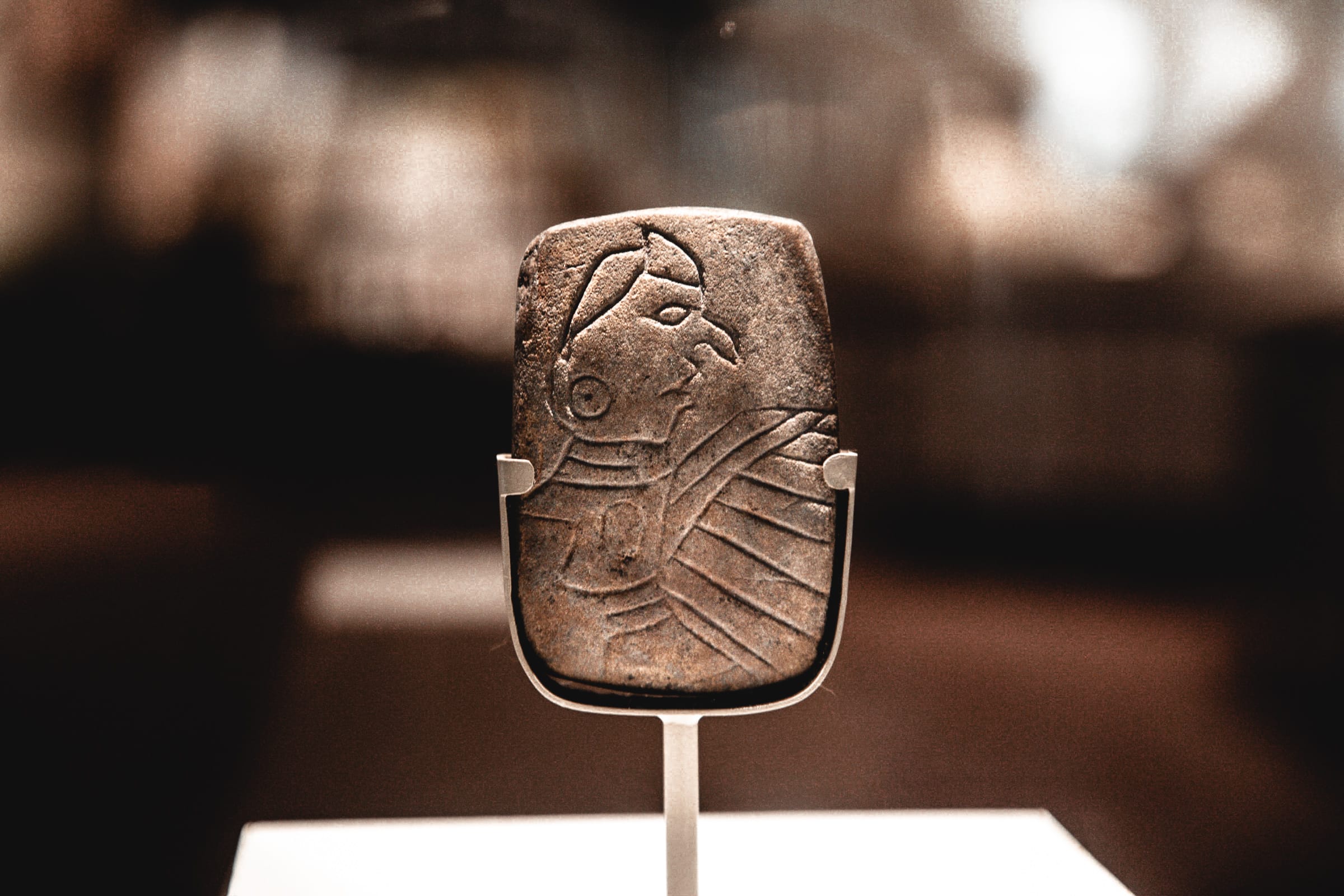
#7 Cahokia Mounds: A Pre-Columbian Mystery
For a long time, the Cahokia Mounds remained undiscovered. People simply didn’t wonder about the uniform, tall mounds in the otherwise flat landscape—after all, they had always been there. That is, until archaeologists discovered one of the largest pre-Columbian cities north of Mexico here in the 1960s: Thousands of people lived in Cahokia at that time. The significance of the mounds, the Cahokia Mounds, remains unclear to this day. In part, the flat mounds served as building sites for more stately dwellings, but also as burial sites.
#8 Alton: Famous Men & The World’s Biggest Ketchup Bottle
Alton is the last stop on Route 66 in Illinois. For a town of its size, little Alton on the Mississippi (yes, it really feels like the South here, with its Mississippi River cruises on paddlewheelers) has produced quite a few famous sons: One of them, Miles Davis, was quite short, but he was one of the world’s greatest jazz trumpeters, and the other, Robert Wadlow, at 2.72 meters, was actually the tallest person ever to live. Even bigger, however, is the world’s largest ketchup bottle (or, as they say here, “catsup”)! Water towers are typical of the U.S. Midwest, and a former ketchup factory in Collinsville simply built theirs in the shape of a ketchup bottle!
By the way, Alton is considered by many to be a spritual place. Mark Twain once referred to Alton as a gritty little town on the Mississippi. High crime rates and the turmoil of the Civil War (the border between the northern and southern states ran through the region) did the rest.
There’s no trace of that gloomy atmosphere left today—but you can still follow in the footsteps of “Haunted Alton”on a guided tour. The McPike Mansion offers guided tours and séances—it sounds a bit bizarre, but once I stepped into the atmospheric vaulted cellar, I realized you can’t deny the house’s unique energy.
Food & Drink in Alton
Fast Eddie’s Bon Air Whether for steamy bachelor parties or a lazy afternoon beer, Fast Eddie’s Bon Air is an institution! The food is good value and the beer selection is huge.
Gentelin’s on Broadway The perfect change of pace for the evening: Gentelin’s on Broadway offers fine dining and the best cocktails, served at your table in a mini shaker.
Where To Stay in Alton
Here’s a unique tip for Alton: stay at the Beall Mansion, where you’ll experience an elegant city villa that’s thoughtfully furnished and offers exquisite dining. You can also opt for a personalized spa package including a massage. I truly suggest it for its romantic ambiance and as an ideal way to conclude a memorable road trip.
Can you really save money with the Chicago City Pass? Chicago is a popular destination for city breaks in the U.S. But if you try to see every single attraction, sightseeing in Chicago can quickly get expensive. The Chicago City Pass is often promoted as a great way to save money. But is it really worth it? In this article, I’ll compare which Chicago attractions let you save money.
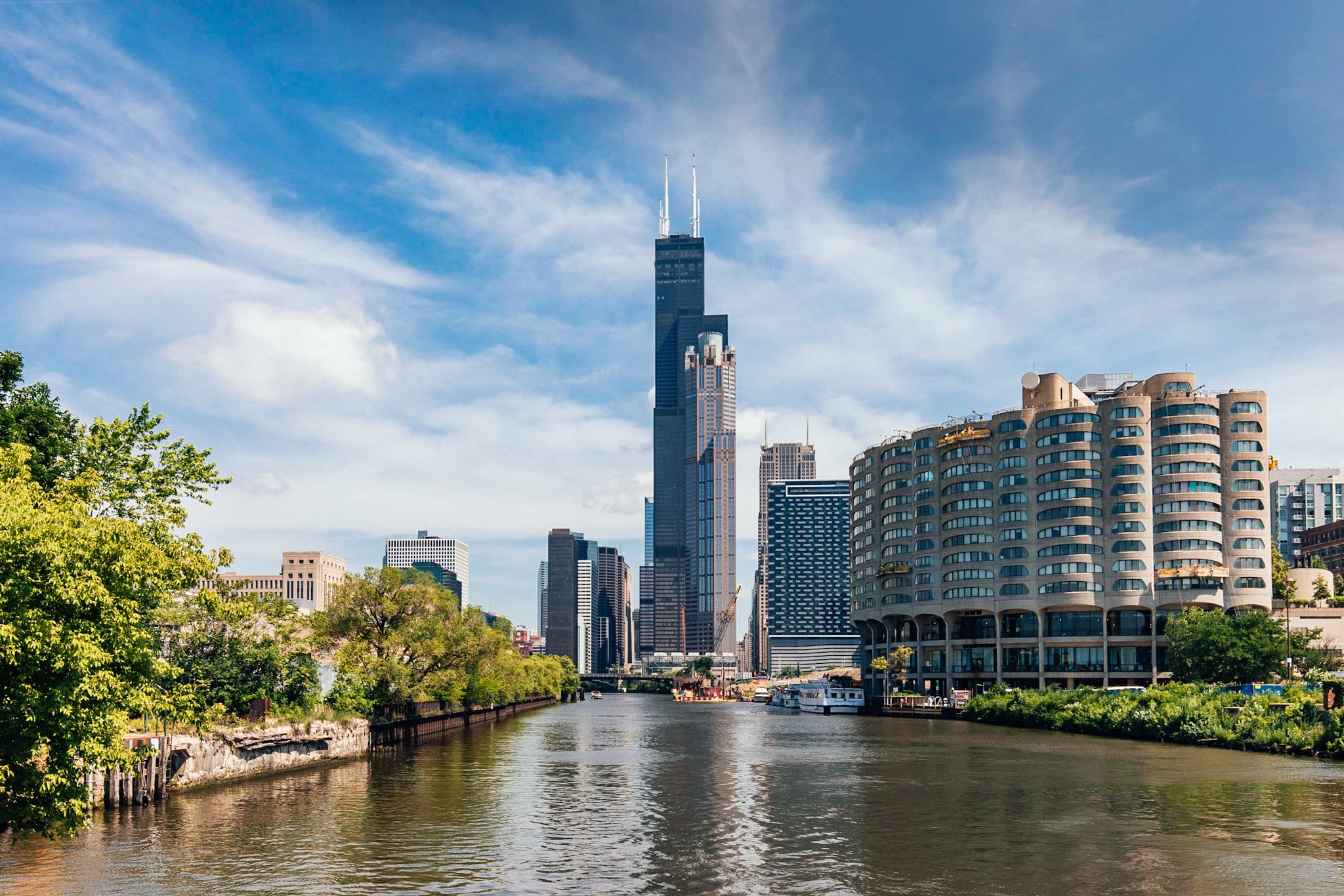
With the Chicago City Pass, admission to both of Chicago’s top observation decks is included! The Willis Tower is THE must-see attraction in Chicago! From the Skydeck at the very top, you’ll have a fantastic view of Chicago and Lake Michigan!
By the way, the Willis Tower used to be called the Sears Tower, after the company that had the building constructed, and was actually the tallest skyscraper in the world when it opened in 1974. These days, it’s “only” the second-tallest building in the U.S. after One World Trade Center in New York, but hey, I can tell you, that’s still high enough!
On a clear day, you can see four states at once, and Chicago, with its 2 million residents, looks absolutely tiny.
By the way, the Skydeck Chicago features four glass balconies—the “Ledges”—made entirely of glass: walls, ceiling, and floor! The area measures about 2 by 3 meters. So when you step forward, you’re standing entirely on glass. Below you: over 90 stories! By the way, I thought I wouldn’t dare—but the idea of standing on nothing but a glass floor hundreds of meters above the street is so bizarre and unbelievable that my reservations vanished immediately.
Advantage with the ChicagoCityPass: The CityPass entitles you not just to one, but to TWO visits to the Skydeck on the same day. In addition to the regular daytime admission, you also get an evening admission starting at 6 p.m., so you can see Chicago at night, too! Highly recommended for taking photos.
#2 Art Institute of Chicago / Adler Planetarium
With the Chicago City Pass, you have to choose: art or science? The Chicago City Pass grants you admission to either the Art Institute of Chicago or the Adler Planetarium.
Art Institute Chicago
The Art Institute of Chicago is exceptional in the scope of its collection: From Byzantine art to contemporary photography, you’ll find everything here. It’s guaranteed to take a full day to see the entire exhibition. So it makes sense to think about what you’d like to see beforehand, before you get overwhelmed by so much art. I really wanted to see “Nighthawks” by Edward Hopper, and even if the name doesn’t ring a bell—everyone knows the painting. And there’s hardly any other painting that’s perceived as so quintessentially American.
At $25, admission is very expensive, but it’s well worth it—the collection is fantastic, and the temporary exhibitions are always interesting and varied. The helpful audio guide costs extra as well!
Regular price $25 + $7 audio guide = $32
Adler Planetarium
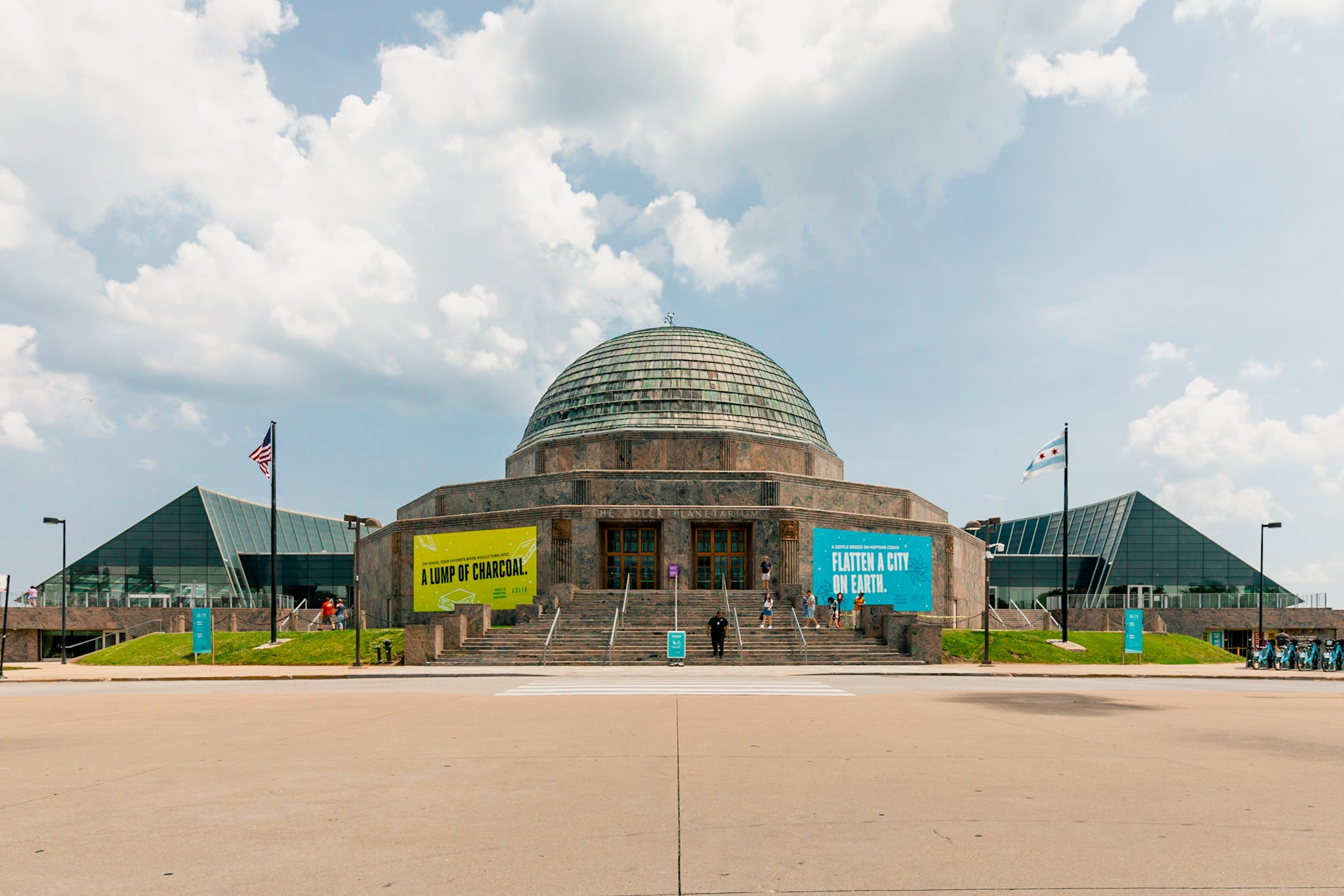
The Adler Planetarium is the must-see attraction in Chicago for all space enthusiasts. Here, you can see an old space capsule and many other interesting exhibits related to space exploration.
The film screenings (Sky Shows) are also highly recommended! Without them, the planetarium is only half as exciting!
Regular price for admission + 2 Sky Shows: $35
Ad / *affiliate links
#3 Field Museum
The Field Museum of Natural History is one of the most visited museums in the United States! It is known worldwide as a natural history museum and houses one of the largest collections of natural history and anthropological artifacts. Here, you can marvel at the best-preserved Tyrannosaurus rex ever found!
Regular Price for All-Access Pass: $40
#4 Shedd Aquarium
The Shedd Aquarium is the world’s largest indoor aquarium and has been around since 1929! Here, you can truly immerse yourself in the underwater world and see all kinds of marine life, amphibians, and insects—from seahorses to beluga whales—up close!
#5 360 Chicago Observation Deck / Museum of Science and Industry
If you don’t want to go up to another observation deck, here’s your option: As an alternative to 360 Chicago, you can also visit the Museum of Science and Industry!
360 Chicago Observation Deck
The 360 Chicago Observation Deck is located in the John Hancock Center right in the heart of the Magnificent Mile—so it’s right in the thick of things!
In addition to the naturally fantastic view, TILT stands out for its floor-to-ceiling panoramic windows that you can lean against and tilt forward along with the window!
TILT costs an additional $8; for Chicago City Pass holders, it’s an extra $7. There’s also a Day/Night package available, but it’s not included in the Chicago City Pass.
Regular price: 360 Chicago $25
Museum of Science and Industry
The Museum of Science and Industry is the largest science museum in the U.S. It features exciting and interactive exhibits on the topic of science. It’s not just kids and science buffs who’ll enjoy this elaborately designed museum! Downside: The Museum of Science and Industry is quite far from all the other attractions south of downtown. So if you don’t have much time, you’re better off choosing 360 Chicago.
Regular price $19.95
Pros and Cons of the Chicago City Pass:
Advantages:
Long Validity Period: The Chicago City Pass is valid for up to one year after purchase. This means you can plan well in advance while still maintaining flexibility.
Long Validity Period: The Chicago City Pass is valid for 9 days starting from the first day of use—that’s longer than most people even stay in the city! So you can take your time exploring everything without rushing!
Instantly printable or mobile tickets: You don’t necessarily need the coupon booklet—you can print out the Chicago City Pass right after purchase or save it to your phone. At the attractions, all you have to do is show your smartphone.
All the Major Attractions The Chicago City Pass covers Chicago’s major attractions—in other words, everything you’ll probably want to see anyway!
Fast Entry: At some attractions, you can get in faster with the Chicago City Pass
Disadvantages:
Unnecessary Options: The Chicago City Pass includes some options that you might not necessarily choose to add if you were buying them individually, such as the Sky Shows at the Adler Planetarium or the audio guide at the Art Institute
Fast Track Isn’t Available Everywhere: Where it would really be worth it—namely, on the ride up to the Skydeck—the Chicago City Pass doesn’t grant fast access through the Fast Track entrance. The Fast Track pass costs $30 with the Chicago City Pass (regular price: $75). If you’re in a hurry, you should factor this additional cost into your budget.
Conclusion: Is the Chicago City Pass worth it?
I recommend the Chicago City Pass to anyone visiting Chicago for the first time and staying for several days! For example, the Skydeck, the Art Institute, and 360 Chicago were already on my Chicago bucket list! Without the pass, I would have paid $105 just for those three attractions—the Chicago City Pass costs $108.
The Chicago City Pass is a great value for first-time visitors and trips lasting several days!
So with 3 out of 5 attractions, you’ve already gotten your money’s worth (give or take $3). Since you have a full 9 days to redeem the other two vouchers and explore two more great (and otherwise expensive!) attractions, the Chicago City Pass is definitely worth it!
What there is to see on Route 66 in Illinois! I could have spent weeks more driving along “The Mother of Roads” and discovering small and large towns and their stories. This trip was just full of surprises, like in Joliet, where I suddenly found myself quite unexpectedly in a fascinating lost place: the Old Joliet Prison.
Joliet, the Heritage Corridor and Route 66
Our very first stop from Chicago, where the famous Route 66 starts, was Joliet, just a few kilometers away. Joliet is part of the Heritage Corridor, an area around the Illinois and Michigan canal that connects the Great Lakes from Chicago to the Mississippi River. The Heritage Corridor is primarily a popular recreation area with many opportunities for outdoor activities. By the way, the Joliet Area Historical Museum and its Route 66 Welcome Center, which showcases the history of the area, are a great way to get in the mood for a drive along Route 66.
Lost Place: The insider tip Old Joliet Prison
But the real attraction – and really only recently officially open to visitors at all – is the old Joliet Correctional Center (also: Illinois State Penitentiary), a prison built in 1858 that was still in operation until 2002, believe it or not. Then the new prison opened across the street, inmates and guards moved. What remained was an abandoned building, left to decay – and now a dream for all photographers in search of atmospheric lost places.
The old jail in Joliet – How to get in?
Entering without permission is, of course, strictly forbidden, but in the meantime the city administration has given in to the increasing interest and offers guided tours.
The Old Joliet Prison, however, was a popular setting even when it was in operation, not only for photos, but also for major Hollywood movies and series! Our tour guide proudly showed us John Belushi’s cell from Blues Brothers, and we were not allowed to go any further without first having a photo taken of us in the cell. But the Old Joliet Prison is also a popular filming location in more recent productions!
If you have watched the series“Prison Break“, the prison facility will look familiar to you: The Old Joliet Prison served as the set here too! In the series, the prison was given the name“Fox River State Penitentiary“, where one of the two main characters, Lincoln Burrows, is wrongly serving a prison sentence, while his brother Michael Scofield does everything he can to free him.
Old prison – many stories
In many places, you can still sense an oppressive atmosphere. Many cells are still in their original condition, just as they were left; the bars and the cold, metal plumbing fixtures are still there. And when you consider that prisoners were still held here less than 20 years ago, it sends a chill down your spine.
The atmosphere throughout the facility is gloomy, and I wouldn’t want to know how many creepy stories these thick walls have witnessed.
Old Joliet Prison: Is it worth it?
Unique as a photo backdrop anyway, the visit to Joliet Prison was absolutely worth seeing. Due to the dilapidated condition and the unclear further use of the huge area, be sure to inquire about the current state of affairs beforehand. And: Don’t get any stupid ideas to visit the prison on your own, the area is monitored by the local police. You don’t want to end up in the other prison across the road 🙂
What to see on Route 66 in Illinois! I could have spent weeks more driving along “The Mother of Roads” and discovering small and large towns and their stories. This trip was just full of surprises, like in Joliet, where I suddenly found myself quite unexpectedly in a fascinating lost place: the Old Joliet Prison.
Joliet, the Heritage Corridor and Route 66
Our very first stop from Chicago, where the famous Route 66 starts, was Joliet, just a few miles away. Joliet is part of the Heritage Corridor, an area around the Illinois and Michigan canal that connects the Great Lakes from Chicago to the Mississippi River. The Heritage Corridor is primarily a popular recreation area with many opportunities for outdoor activities. By the way, the Joliet Area Historical Museum and its Route 66 Welcome Center, which showcases the history of the area, are a great way to get in the mood for a drive along Route 66.
But the real attraction – and really only recently officially open to visitors at all – is the old Joliet Correctional Center (also: Illinois State Penitentiary), a prison built in 1858 that was still in operation until 2002, believe it or not. Then the new prison opened across the street, inmates and guards moved. What remained was an abandoned building, left to decay – and now a dream for all photographers in search of atmospheric lost places.
The old jail in Joliet – How to get in?
Entering without permission is, of course, strictly forbidden, but in the meantime the city administration has given in to the increasing interest and offers guided tours.
The Old Joliet Prison, however, was a popular setting even when it was in operation, not only for photos, but also for major Hollywood movies and series! Our tour guide proudly showed us John Belushi’s cell from Blues Brothers, and we were not allowed to go any further without first having a photo taken of us in the cell.
Old prison – many stories
It felt a bit macabre, because you can still sense an oppressive atmosphere somehow. Many cells are still in their original condition as they were left, with bars and the cold, metal sanitary equipment still there. A shiver ran down my spine by the thought that 20 years ago prisoners have still been incarcerated here.
The atmosphere throughout the facility is gloomy, and I wouldn’t want to know how many creepy stories these thick walls have witnessed.
Old Joliet Prison: Is it worth it?
Unique as a photo backdrop anyway, the visit to Joliet Prison was absolutely worth seeing. Due to the dilapidated condition and the unclear further use of the huge area, be sure to inquire about the current state of affairs beforehand. And: Don’t get any stupid ideas to visit the prison on your own, the area is monitored by the local police. You don’t want to end up in the other prison across the road 🙂
Springfield, Illinois, one of the most historic places in the United States, is located 300 kilometers from Chicago. And no, it’s not the Springfield from *The Simpsons*: It’s just called that because Springfield is one of the most common names for small towns in the U.S. This Springfield is, for one thing, the capital of the state of Illinois (not Chicago—who would have thought?) and, for another, the place where arguably the most significant U.S. president— Abraham Lincoln—made his mark. The historic Route 66 also runs through Springfield, so a stop in Springfield on our Route 66 road trip was an absolute must for a full dose of American history.
Springfield Illinois: The main attractions
History always sounds so dull anyway – and what’s a European to do with American history? The whole of Springfield, Illinois, revolves around Abraham Lincoln, there’s no escaping it, and at first glance, the city that is so meaningful to Americans seems only moderately interesting to us. But turns out, Springfield is so interesting!
First of all, Lincoln was a great person who changed not only America but also the world. And second, Springfield, Illinois, is a charming town and the Lincoln attractions are so wonderfully designed that even if you’re a culture vulture, you’ll be enthralled. And you also learn something along the way. (By the way, as so often on this trip, I thought that such a road trip is also a nice trip for families: many museums and sights are designed to be kid-friendly and kids are always welcome in family-oriented Illinois anyway!)
Abraham Lincoln Presidential Library & Museum
Dedicated exclusively to the life and work of Abraham Lincoln, the museum is a mix of interactive exhibits and multimedia demonstrations. It’s very informative and people put so much detail into it!
Don’t miss the screening of “Ghosts of the Library” at the Holavision Theatre – and afterwards puzzle over whether the narrator was a hologram or actually on stage. And be sure to look out for costumed guards: they are part of the exhibition and perform pieces throughout the museum!
Abraham Lincoln was in and out of the Old State Capitol in Springfield, which served as the Illinois House of Representatives from 1840 to 1876, throughout his life as a politician and lawyer. Today, you can still visit all the halls there, including furnishings from that time. In 1858, Abraham Lincoln announced his presidential candidacy right here, and in 2007, he was followed by then Senator of Illinois: Barack Obama.
Here, in a sort of an open-air museum, you can see the home of Abraham Lincoln, where he lived until his election as president. The residence has been extensively restored to its condition during Lincoln’s lifetime. But not only was Lincoln’s residence preserved, but so was the entire street.
And with the help of the ubiquitous actors who show life at the time, a visit to the site is like going back in time! If you’re lucky, you might even encounter a deceptively real Abraham Lincoln strolling down the street every now and then.
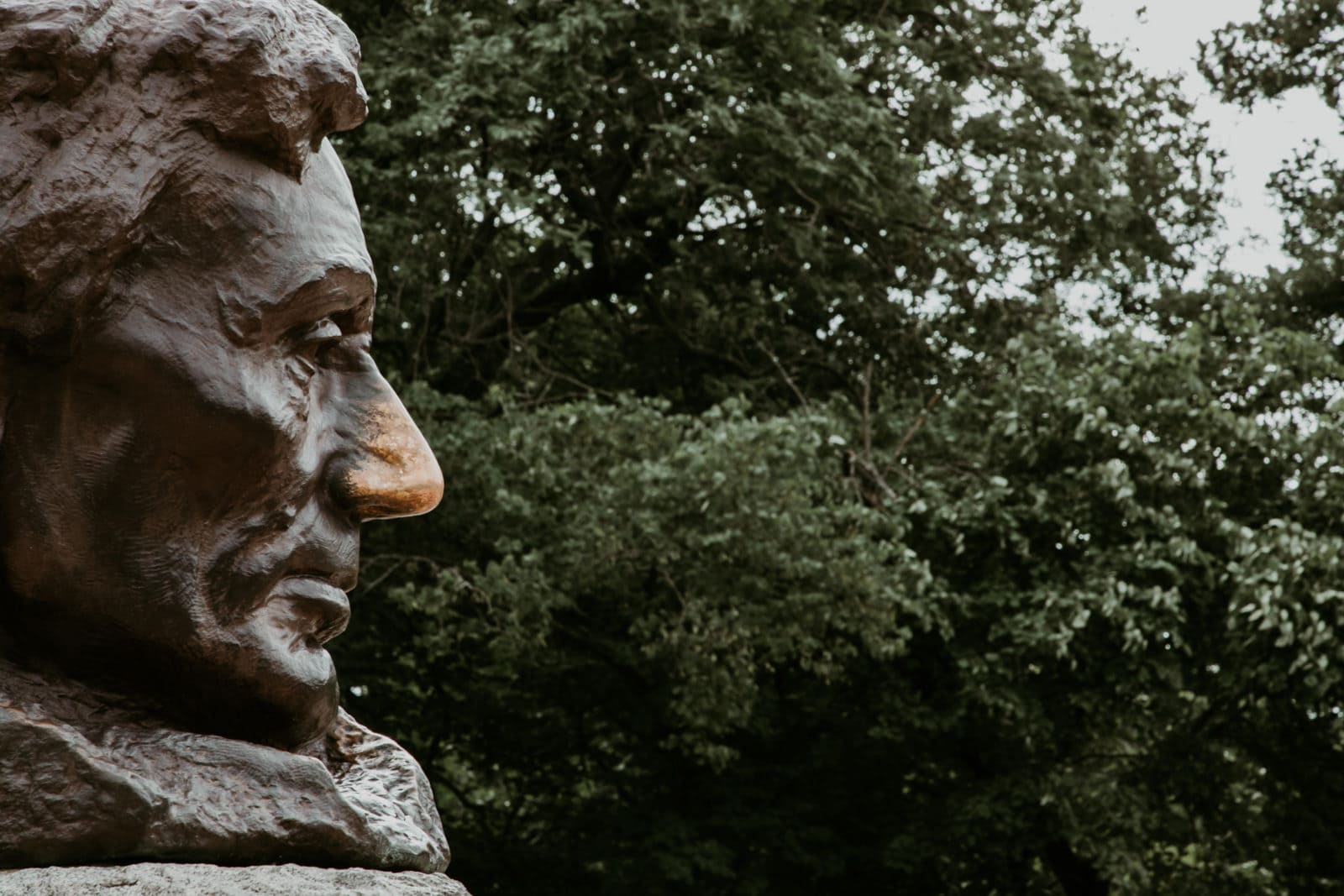
Abraham Lincoln was buried in Oak Ridge Cemetery, which is one of the most visited cemeteries in the United States as a result. Don’t forget: Be sure to rub the nose of the Lincoln bust in front of the entrance to the mausoleum, it’s supposed to bring good luck! Judging by the scrubbed nose, this is probably really popular and for small people like me, there’s even a stool in front of it!
Shiny from all the rubbing: Abraham Lincoln’s nose.
A few Lincoln Facts:
Abraham Lincolm was President of the USA from 1861 to 1865
the first US president to die in an assassination attempt
Opponent of slavery, which led to the War of Secession between the liberal North and the slave-holding South
Won the Civil War, reunited the North and South, and ensured the end of slavery in all states
lived with his family in Springfield, Illinois, where he began his career as a lawyer and politician
Springfield also has a lot to offer outside of the Lincoln sites, so plan at least one full day for that, better yet two days! What else you should have seen:
Illinois State Capitol
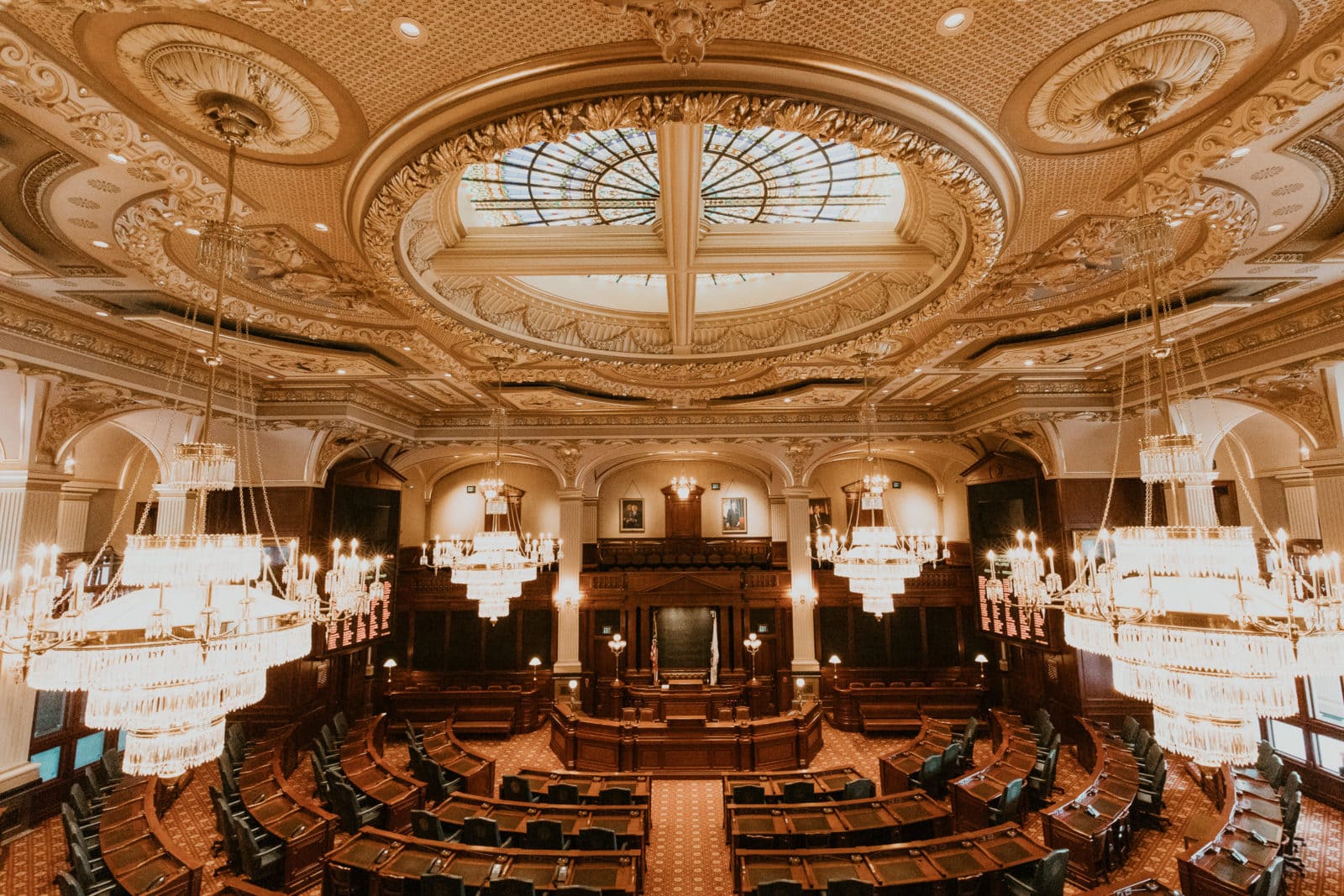
Inaugurated in 1877, the Illinois State Capitol still serves as the Illinois House of Representatives. The dome, visible from a great distance, is over 100 meters high (even taller than the Capitol in Washington, D.C.!) and truly spectacular, especially against the backdrop of the low-rise buildings in the small town of Springfield. (Although Springfield is the capital of Illinois, it has a mere 115,000 residents!)
Tours are held throughout the day, allowing visitors to explore the Chamber of Deputies with its impressive crystal chandeliers—subject to availability. The huge dome is even more impressive from the inside—after experiencing so much small-town charm along Route 66, I couldn’t believe my eyes when I suddenly saw such opulent architecture. Truly impressive.
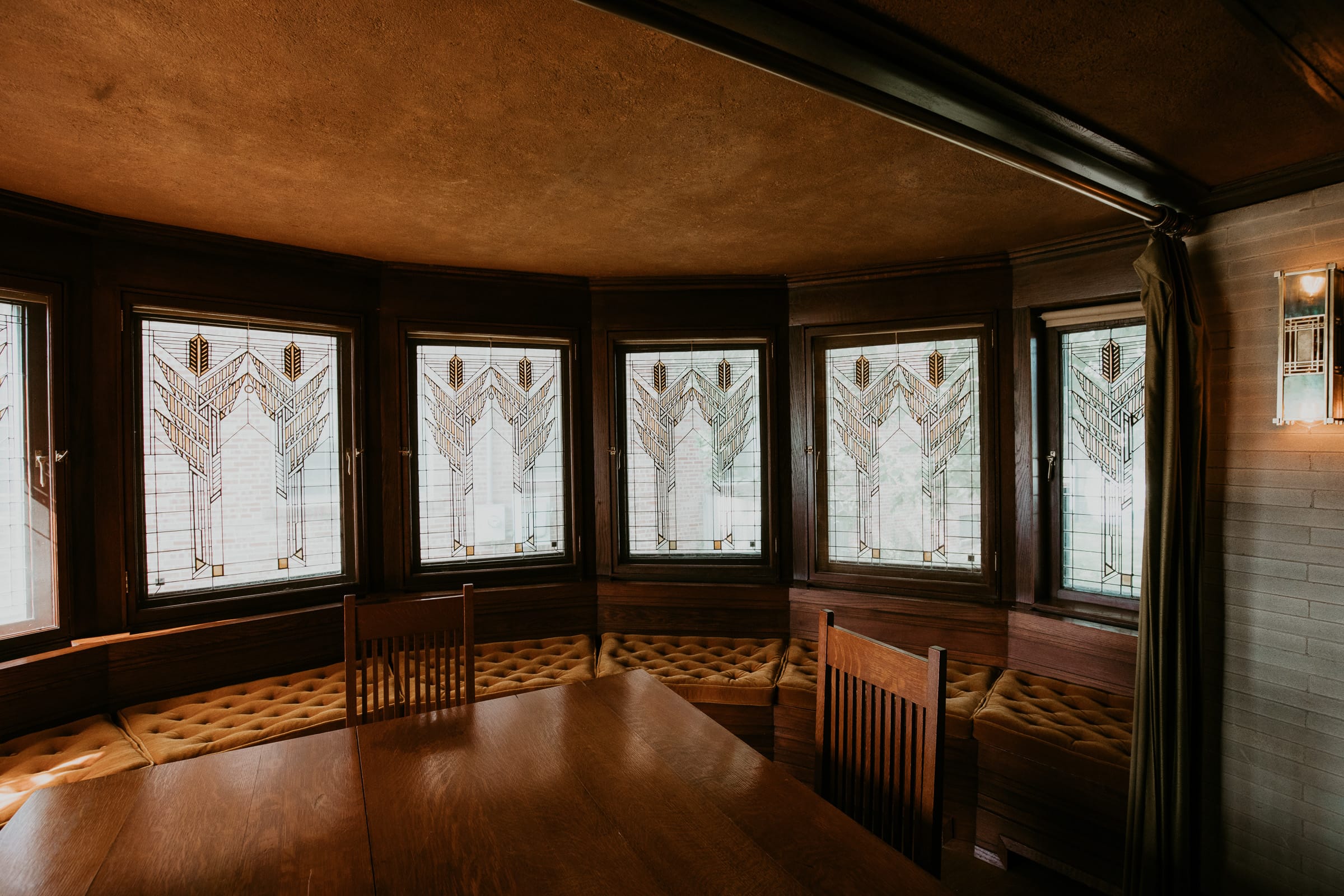
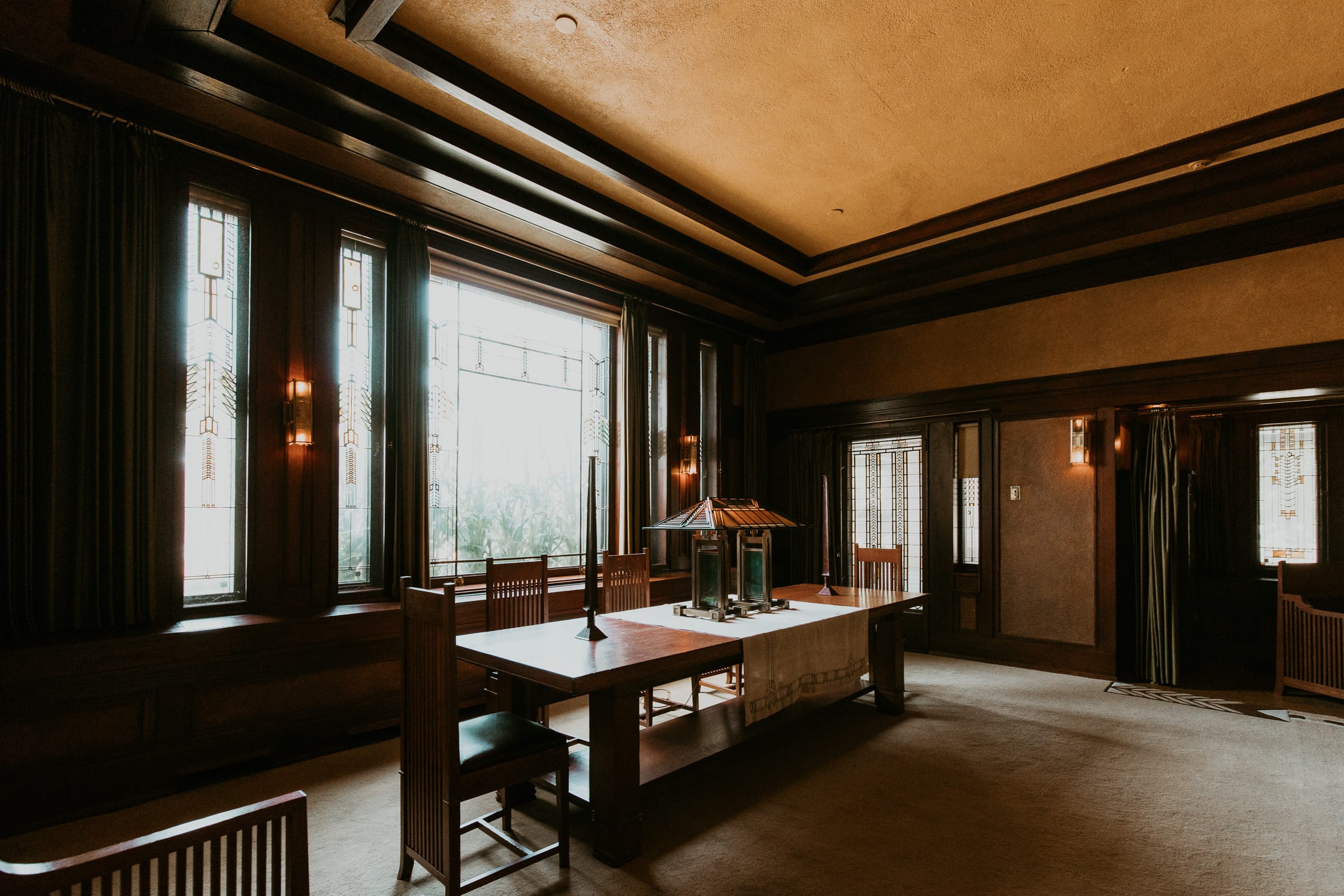
Frank Lloyd Wright was one of the most famous American architects of the last century: for example, he designed the Guggenheim Museum in New York. With his “Prairie Houses,” he created the concept of “organic architecture,” where houses and buildings were meant to blend seamlessly into the landscape, art, and culture.
One of these Prairie Houses is Susan Lawrence Dana‘s house: lots of wood, unexpectedly dark, but tremendously visionary for its year of construction (1902). 35 rooms spread over 3 floors and 16 mezzanines in total. Wild parties are said to have taken place here. Oh, and there’s also a bowling alley right behind the entrance.
Eating and drinking in Springfield: The best locations
In Springfield, Illinois, there are quite a few places you absolutely shouldn’t miss on your Route 66 trip! It doesn’t get any more American than this. And just like in the rest of Illinois, you’ll find plenty of “makers” here: creative small business owners in crafts, retail, and agriculture —producing fair, local, and sustainable goods. They’re all part of a public program called Illinois Made.
On our road trip through Illinois, we met a number of people along the way—café and restaurant owners, microbrewery operators, and artisans—and it’s impressive to see the enthusiasm with which these small businesses go about their work.
Custom Cup Coffee
The coffee is roasted right here on the premises—and you can even watch it happen! If you’re interested, they’ll answer any questions you have about coffee. The owners of Custom Cup Coffee are committed to fair-trade coffee and know most of their suppliers from around the world personally. And in addition to fantastic coffee and friendly service, they serve up the most amazing apple-cinnamon-bacon pastries ever.
Route 66 Motorheads Bar
The Route 66 Motorheads Bar isn’t just a classic Route 66 trucker bar on the side of the road—it’s also a museum, with classic cars parked out front, vintage signs inside and out, and plenty of neon. In the shed next door, you can not only admire even more exhibits but also watch the restoration work in progress. By the way: It’s an absolutely fantastic spot for photos!
Cozy Dog Drive In
A real must-see on Route 66: The Cozy Dog was invented at the Cozy Dog Drive-In —it’s a hot dog on a skewer, deep-fried in a batter coating. It sounds outrageously greasy—and it is—but it’s also kind of delicious. One order with fries for two is easily enough for four—just like everywhere else. The portions are huge.
The Cozy Dog Drive-In is a Route 66 institution. People of all ages—not just tourists—have been coming here since 1949! The atmosphere is warm and family-friendly; everyone knows everyone else, and everyone knows Bob Waldmire: This Route 66 legend—who has an entire exhibit dedicated to him at the Route 66 Hall of Fame and Museum in Pontiac —is the son of the founder, Ed Waldmire. Incidentally, the Cozy Dog Drive-In is still family-owned and is now run by one of Ed’s grandsons.
Engrained Brewery & Restaurant
At Engrained, they’re brewing up a storm: If you’d like, you can order a selection of five different beers, served on a wooden board. I highly recommend it—each one is more delicious than the last. By the way, Engrained uses the leftover grains from beer production to make the dough for their flatbread pizzas—nothing goes to waste!
And here, too, you’ll find the Horseshoe Sandwich, a Springfield, Illinois, classic: a slice of toast with a juicy burger patty, piled high with endless fries, and topped with cheese sauce. The portion, as always: huge. If that’s too much for you, order a “Ponyshoe.” Not that it makes much of a difference: Either way, on Route 66, between the beer, Horseshoes, and Cozy Dogs, you’ll have to slowly say goodbye to your diet anyway.
Practical tips for visiting Springfield, Illinois
Be sure to set aside enough time for Springfield—there’s plenty to see. It’s definitely worth making a stop in Springfield and staying overnight. The city has several large hotels offering good accommodations, including the Wyndham Springfield City Centre. From the outside, it’s an eye-catching high-rise—which some Springfield residents have given a suggestive nickname—but it has one major advantage: from the upper floors, you’ll have the best view of the city and the State Capitol. Be sure to ask for a room with a view of downtown.
By the way, you can also reach Springfield from Chicago by train if you don’t want to rent a car—but once you’re there, it’s actually often easier to get around by car, since public transportation isn’t particularly well-developed and some locations are quite far apart.
This research trip was sponsored byEnjoy Illinoiswas supported.
Route 66. The name alone evokes all sorts of associations: I dream of freedom, endless roads through the American Midwest, and driving, driving, driving into the vastness of a country that seems both more mysterious and more fascinating to me with every visit. Did you actually know that Route 66 starts right in the heart of Chicago? Just around the corner from The Bean, so to speak? This makes it perfect to combine a few days in Chicago with a short trip along Route 66: a truly American road trip! Just like in the movies. It’s always been on my “must-see-in-my-lifetime” list.
The charm of the Midwest
Starting in Chicago, you can follow the old Route 66 throughout Illinois, and it feels like traveling back in time through the America of the last century. Every place along Route 66 in Illinois has its own charm and its own history in connection with the road that criss-crossed not only the country but also people’s lives. And it was these that made this road trip so special.
Even in Chicago, I was struck by the incomparable friendliness of the people. The gruff Berliner in me was irritated when, on more than one occasion, complete strangers threw themselves in front of me just to hold the door open for me. Or spontaneous high-fives with shoe sellers who admired my shoes. Or strange women shouting at you in the middle of the street: “I love your skirt!” Just like that. Because you can say something nice out loud instead of just looking furtively. In general, being nice is a basic requirement for life here. And we were still in an anonymous city!
But things got even more amazing when we left the city on our road trip. Chicago itself only has 2.7 million inhabitants, and the rest is so spread out that you quickly get the feeling that you’re in the countryside as soon as you leave the city by car.
And this is where the positive energy and joie de vivre of the Midwest really hits you. Not once, not a single damn time, did I have the feeling of encountering bad-tempered or unfriendly people on our road trip. It was crazy, almost unreal. On the contrary, the joy of showing his city, his Route 66, his Midwest, was a gesture from everyone’s heart – and this paragon of a positive attitude to life and pure, genuine joy was so infectious that for the first time I really understood why people are so fascinated by America.
Route 66 – a road full of American history
Actually, Route 66 no longer exists as an official road. At some point, no one was in the mood for almost 4,000 kilometers of cobblestones and/or single-lane country roads: Route 66 was put into operation as early as 1926 as the most important east-west connection.
What was a revolution for the infrastructure at the time was no longer sufficient to cope with the increasing traffic. Route 66 was relocated and rebuilt several times until it was replaced by interstate highways in most places. What remained was the legend. Along with the quirky stories, the warm-hearted people and the many rest stops and stores along the road that lured passing cars with the most eye-catching signs and craziest buildings.
*Transparency: I was invited on this trip by Enjoy Illinois for research purposes. for research purposes.
Chicago is an absolute foodie paradise! Endless restaurants, bars, and cafés! Do people think you can only get bad food in the U.S.? Not in Chicago… researching this Chicago Food Guide was really no trouble at all. I have to admit that I often have a hard time finding good food in the U.S. Burgers and the like are certainly okay every now and then, but constantly eating fried, oversalted food, with little fresh fruit and vegetables and no variety in flavors, gets boring in the long run. In big cities, you can still find alternatives—expensive as usual, but not very spectacular or worth the price. Chicago, on the other hand, is a paradise for anyone who loves good food and drinks: here, one great restaurant follows another, just like the fantastic bars with excellent bartenders. I’ve put together a small selection for you here: My Top Restaurants in Chicago—Classics and New Trends!
1) Gino’s East: The Original Chicago Deep Dish Pizza
The Deep Dish Pizza is probably the most famous Chicago dish. Invented by Italian immigrants, deep dish pizza is as much a part of Chicago as the Willis Tower. You really shouldn’t leave Chicago without trying a Deep Dish Pizza once. At the same time, the Deep Dish Pizza is so very different from the traditional Italian pizza.
It’s smaller and thicker, similar to a quiche, and secondly, the toppings are placed in a different order, almost exactly the other way around. The dough is yellowish because it’s made of corn flour and is more like a mixture of puff pastry and shortbread. The cheese goes on the bottom of the pizza, tomato sauce and other toppings on top. Cut the pizza into quarters, and when you lift the pizza slice, the abundant cheese pulls oodles of strings.
Tip for pizza fans On this food tour, you will learn all about the famous deep dish pizza and can try different varieties: Bookyour pizza tour here*
Gino’s East has been one of Chicago’s institutions when it comes to deep dish pizza since 1966! The special thing about this location is not only the pizza, but the fact that every guest is lent a sharpie with the pizza, with which he can immortalize himself somewhere on one of the walls in this restaurant, which extends over several floors! And nothing is painted over! The probability is therefore very high that you’ll find your piece of art at the next visit!
There’s also real American food in Chicago! Located right at the end of the famous Route 66 (the beginning is on the parallel street, as both streets are one-way), Lou Mitchell’s is a classic American diner. The food is authentic, heavy as usual, and perhaps therefore not everyone’s cup of tea. However, what impressed me much more than the food (and that’s why I included it here in the list) is the absolutely authentic American diner atmosphere with the vintage interior. There’s really no better place to start a road trip along Route 66!
As with the pizza, I didn’t know that there was a Chicago-style hot dog, which is available on every corner in Chicago and is much more popular than the traditional versions with fried onions or sauerkraut.
The beer garden at Navy Pier has a particularly tasty hot dog! You get a fantastic view of Lake Michigan and the Chicago skyline for free. By the way, the Chicago hot dog has all kinds of fresh stuff on it: diced white onions, lots of tomato chunks, pickles, mustard and pickled vegetables. The bun is sprinkled with poppy seeds, the sausage is made of beef only. Colorful and delicious! Plus, ketchup is an absolute no-go on the Chicago-style hot dog!
Yes, I really did it: I ate frog legs. And what can I say? They taste like chicken! Of course! 🙂 Hugo’s Frog Bar is the Chicago institution for frog legs, the French influence has left its mark in Chicago. Hugo’s is a bit more high-priced, but also unbeatable when it comes to quality. I love to eat fish anyway, seafood like crabs and mussels rather less, but at Hugo’s I even ate king crabs with pleasure.
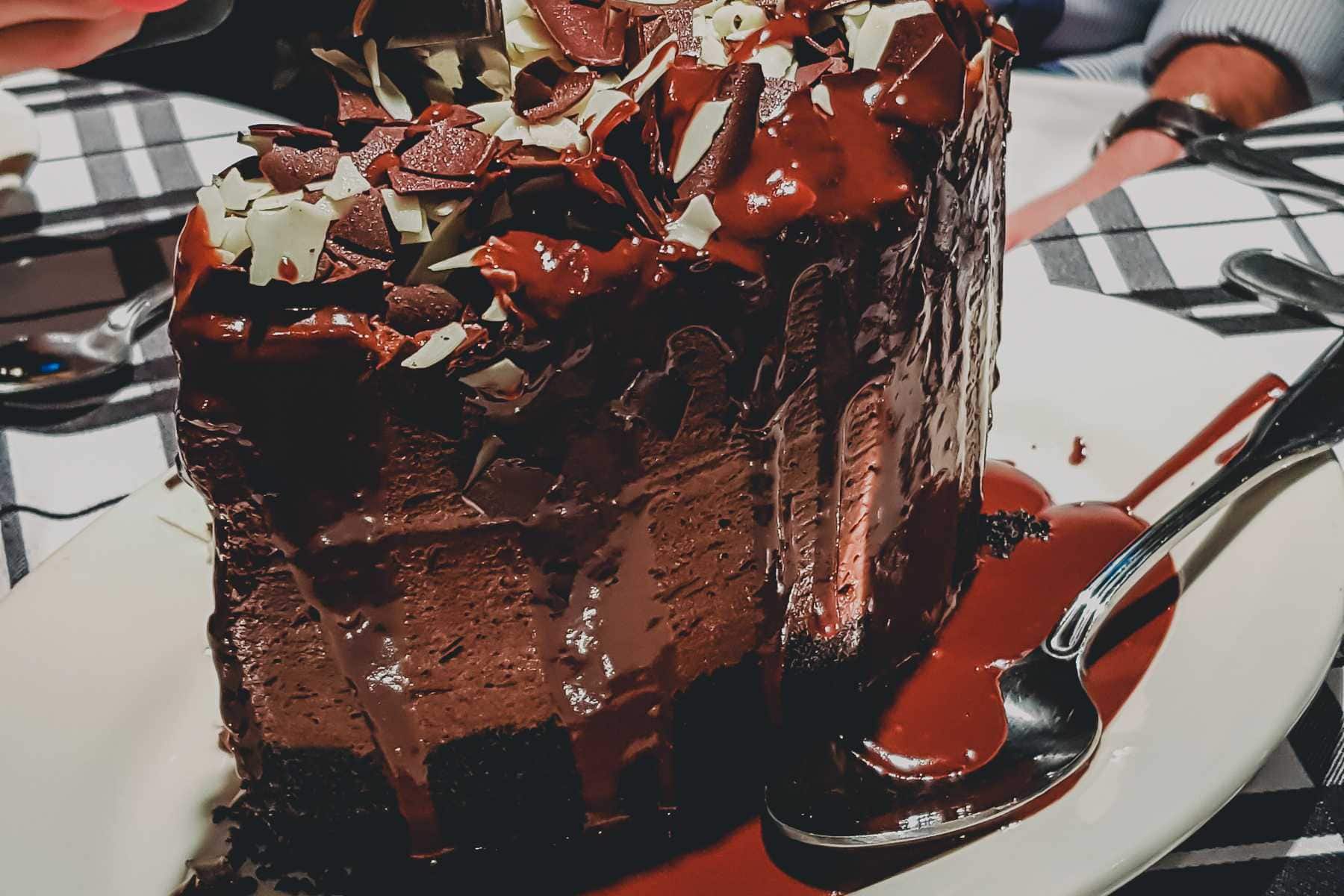
Hugo’s Frog Bar & Fish House, by the way, is owned by the best steakhouse in town, Gibson’s (right next door), and also serves the best Black Angus beef if you’re not into seafood. My filet was divine! The ambience is also classic American. Large bar, lots of dark wood, tables with checkered tablecloths and attentive service. Be careful with the desserts: One serving is easily enough for five – or you can take the rest in the doggy bag and still invite guests for coffee the next day.
A Soho House is always a guarantee of a nice cafe as well. In Chicago, you’ll find The Allis on the first floor of Soho House, nice for coffee, breakfast or afternoon tea. The decor is something between an English library and an American clubhouse, cozy but zero dusty. Drink coffee and be amazed.
6) Dove’s Luncheonette: Chicago Blues & Soul from the 70s
Another diner. This time, however, a successful symbiosis of retro look and modern Tex-Mex cuisine. The interior with wood paneling and jukebox immediately transport you to the 70s. In addition, the cuisine is modern: No overloaded plates, as you might be used to from Mexican cuisine in the USA, lots of fresh ingredients and unusual combinations.
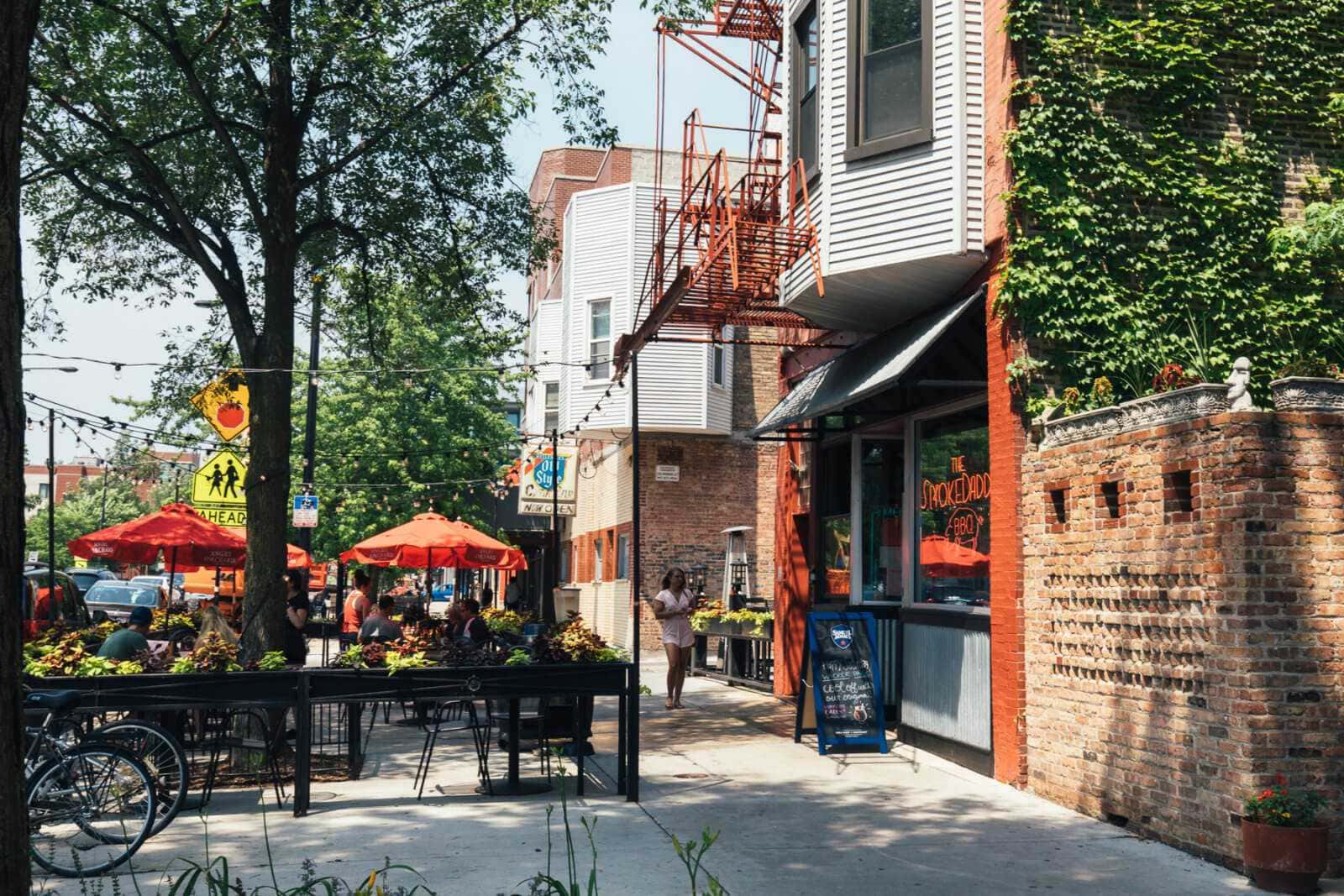
Dove’s Luncheonette is located in Wicker Park just below the Damen CTA station. By the way, there are lots of exciting places to eat in the area, and right around the corner is Milwaukee Avenue, a really nice shopping street where you can find smaller boutiques, but also bigger stores like Urban Outfitters. Perfect if you don’t feel like shopping malls or the hustle and bustle around Michigan Avenue downtown.
Chicago has much more to offer, of course, but I think this is a nice sampling that represents well the range of possibilities. Discovering on your own is also fun – here are a few more areas where you can find great places to eat:
West Loop: a former industrial area, around Fulton Market and along Randolph Street you will find a lot of great places to eat and drink, also a nice nightlife area. Once a year, the “Taste of Randolph” food festival takes place with lots of music and food from the surrounding restaurants.
Wicker Park: around the Damen station, along Milwaukee Avenue and Division Street.
around Logan Square
and of course Downtown
More articles about Chicago and Illinois at a glance:
Want to go to Chicago this summer? City breaks in the US actually go all year round, but here in this article I’ve put together a few summer ideas for you specifically! And don’t worry, Chicago is really exciting in the summer too!
When I said goodbye to Chicago for the last time, I actually became very sentimental: only 24 hours had been enough to let this city fascinate me. Maybe also because I ended up there without great expectations.
Chicago: The insider’s tip among major American cities
Who already has Chicago on their radar as a cool city? During this time, when I exceptionally flew long haul instead of short haul, I was often in the USA. That never really gladly: the flights were anyway strenuous, the rest time short and if one already stands as actual Berlin long sleepers unusually already at four o’clock in the morning jetlagbedingt vertically in the hotel bed, then the following half free day takes already no good beginning.
And in general, there wasn’t much that attracted me to the destinations in the USA: Sure – it was great to get to know Boston, Washington or Denver, not to mention New York (which I already knew, but you can never get enough of New York) and Miami. But New York is New York, and Miami – well, with my South American roots, that was more like a visit home than the great America.
Only Chicago had grabbed me by the end of my long-distance visit, and somehow quite unexpectedly. Chicago was never on my personal must-see map – but then it turned out to be such a great city that I didn’t want to leave: Great architecture, a skyline and big city flair almost like New York, great museums, huge shopping temples and yet a friendly, almost warm atmosphere everywhere you go. The grumpy Berliner in me was irritated and thrilled at the same time. As expected, it was hard to say goodbye. I would have liked to stay 1-2 days longer, but no one asks me when I’m on duty. The pick-up is waiting, go, go, off to the airport, back to Germany. And I knew: This was definitely not the last time I was here. As luck would have it, I ended up back in Chicago almost a year later – and this time I didn’t have to go back after 24 hours. One thing in advance: My enthusiasm for the city has not changed.
Chicago as a summer destination: city trip to the USA
Chicago can get freezing cold and more than uncomfortable in the winter – summer is all the more beautiful for it. Basically, you have to be prepared for all kinds of weather in Chicago. Within a few days, the weather changed from windy and rainy to the worst heat wave with an official weather warning. But the constant extreme weather changes didn’t seem to rob anyone of their good mood, and more than once I heard the standard general saying about the weather:
If you wish for different weather in Chicago, just switch sides of the street!
And that’s how everyone enjoys summer in Chicago: with free concerts and events everywhere, street festivals, beach life (yes, there are little stretches of beach on Lake Michigan almost in the middle of the city, too) or just barbecuing in the front yard.
What is there to do in Chicago in the summer? Some tips.
The list of sights and “things to do” in Chicago is long. Especially in the summer, there are many more outdoor options, so these are just a few suggestions for making the most of your stay in Chicago.
Millenium Park – Concerts for free and a photo in front of “The Bean
The Bean is actually called Cloud Gate and is a sculpture by Sir Anish Kapoor. The Bean quickly became the city’s landmark after its completion in 2006, and today crowds of tourists scramble in front of it every day to get the best photo together with The Bean. Me too, of course, because The Bean impressed me last time I was in Chicago. The reflections of people, skyline and sky on the brightly polished surface are simply fascinating.
Next door, at the Jay Pritzker Pavilion, an open-air venue, and the adjacent parks, there are free(!) concerts and music festivals throughout the summer, from jazz to house to reggae, plus all sorts of events like morning yoga or urban gardening projects. It’s worth taking a look at Millennium Park’s annual summer program!
Street parties without end: Get out into the neighborhoods of Chicago!
It’s not just the middle of the city that’s celebrating summer; outdoor events are always happening in Chicago’s individual neighborhoods and wards. Chicago is truly a melting pot of many different cultures and each one celebrates itself with its own event, or so one gets the impression. What I found remarkable was that many immigrant families in Chicago have lived in Chicago for several generations and still maintain their own culture – without isolating themselves. They’re all Chicagoans at heart, too – and you can feel that commonality. The atmosphere in Chicago is also truly unique in terms of multicultural coexistence.
In Humboldt Park, for example, the Puerto Rican Festival took place – parades, car parades, a park full of fairground booths and salsa and reggaeton on every corner. Inviting and open to all.
Or there are food festivals like theTaste of Randolph in West Loop. This district used to be an industrial area with warehouses and factories, but in recent years it has mutated into an absolute food mecca (Chicagoans love good food so much) and hipster district.
Around Fulton Market and along Randolph Street, there are the most amazing restaurants and bars; so many that you would definitely need a few weeks to try your way through them. The Taste of Randolph is therefore the best opportunity. All of these restaurants have a food stand and offer their best dishes for a small price. In addition, there are stages with really good music – and once again: an absolutely inviting and relaxed atmosphere. They’re just hearty, these Chicagoans.
With the Segway through the parks of Chicago
When you see all the skyline photos of Chicago, it seems incredible that there are large green spaces in the middle of this city. But just as with Central Park in New York, Chicago has made a point of maintaining large parks in the middle of the city, such as Grant Park, which houses Millennium Park, or Lincoln Park with its free (!) zoo.
I explored Grant Park and the following green areas along the shore of Lake Michigan by Segway – which in retrospect was really a good idea despite the high temperatures. On the one hand, the airstream cools a bit, and on the other hand, the whole facility is so huge that it would take a long time to walk around. In addition, the entire route is relatively flat and well paved. Segway riding is learned within minutes and is a lot of fun!
A city like Chicago is best viewed from above – there are two special spots for this: the Willis Tower (formerly the Sears Tower and once the tallest building in the world) or the 360 Chicago Observation Deck on the John Hancock Tower in the middle of Michigan Avenue, the main shopping street on the Magnificent Mile. Both offer great views of all of Chicago and Lake Michigan when the weather is good – and both locations have an extra gimmick! On the Willis Tower skydeck, there are four fully glazed exits, and in 360 Chicago, you can recline on angled panoramic windows that tilt forward.
Coming early is worth it, the view is better and you save long queues, especially in summer. The sunset from one of the viewing platforms is also worth seeing. Unfortunately, the entrance fee is quite steep, but with a Chicago City Pass you can save money. The best thing you can do is just compare: Is the Chicago City Pass worth it? (Experience & Prices)
Want to read more about Chicago? Find out more here:
The 606 – outdoor secret in Wicker Park
The neighborhoods in Chicago are definitely worth exploring. Areas like Wicker Park, Bucktown, Logan Square or Boystown all have their own charm and you can easily spend a whole day exploring individual neighborhoods. Wicker Park, for example, has lots of great cafés and restaurants where you can sit outside in summer temperatures (which is always very convenient for me as an air conditioning avoider!) And small, fine stores. And in between street art. The perfect environment for a chill day in Chicago!
If you’re still in the mood for the outdoors after the downtown parks, check out the 606 Trail in Wicker Park – a relatively well-hidden old elevated train track that’s been converted into a recreation area similar to the Highline in New York. The entrances are hard to find right away and tourists are less attracted to it, but once you’re up there, you get to see Chicago’s residential areas from a different perspective. Nice contrast to the busy center! How to get there: 606 Trail website.
By boat, bus and train through Chicago
Because it was so nice last time, and to remember this great day again, I took a boat trip again this time. The possibility to almost drive through the skyscrapers is unique.
The architecture boat tour* is really very good and stands out very much from usual tourist tours. The guides really have a broad knowledge of architecture – and I would never have guessed before my first visit that Chicago was so interesting architecturally! For those who are not so interested in architecture after all, I recommend at least a classic boat tour through Chicago to see Chicago from Lake Michigan at least once – the view of the skyline from the water is unique.
To get around the city, you can simply take one of the water cabs. They’re smaller, usually never crowded, and with a day pass for just $10, you can explore the city like a hop-on hop-off bus! In fact, the Water Taxis stop at all major points along the Chicago River. Coupled with a CTA day pass, also only $10, which allows you to use all public buses, subways and elevated trains (including the one that goes all around the center, The Loop, and has great views!), it’s the perfect combination.
A hotel or a place to stay is no problem in a city like Chicago – just unfortunately very expensive. But what is also really worth it with this fantastic city.
Here are a few self-tested hotel suggestions:
Low-budget with authentic charm: Freehand Chicago, right in the heart of the city and featuring a sensational bar open to everyone, not just hotel guests A massive hotel classic with an impressive ballroom serving as the lobby: Hilton Chicago on Michigan Avenue Right on the Magnificent Mile: the Warwick Allerton Chicago combines big-city flair with classic luxury
I was invited on the trip to Chicago and Illinois by Enjoy Illinois. Of course, my opinion remains unaffected – I was already enthusiastic about Chicago before anyway 🙂
Chicago’s architecture is simply remarkable: a wild mix of diverse modernist styles can be found here. Even people who aren’t interested in architecture will quickly notice this. The best way to see these artistic skyscrapers is from a boat: I’ll let you in on which boat tour you shouldn’t miss on your trip to Chicago!
Boat Tour in Chicago: A Quick Tour of the Architecture
Regular water taxis run on the Chicago River, which flows right through the heart of the city—but there are also boat tours offered by various companies that let you take your time exploring Chicago from the water. The Chicago Architecture Boat Tour is especially recommended; on this tour, you’ll also get plenty of interesting information about Chicago’s architecture from local experts!
I’ve pretty much perfected my talent for speed sightseeing, but spending half a day in Chicago while jet-lagged was a real challenge. I do like to explore cities on foot or by bike (when possible). During layovers after long-haul flights, I’ve found myself increasingly craving the luxury of just being driven around—so I often ended up on some red hop-on-hop-off tourist buses. But in Chicago, a colleague recommended the architecture boat tour—and that sounded very relaxing, too.
Chicago: Architecture in the Second City
I didn’t know much about Chicago itself. But the fact that Chicago is so underrated is probably nothing new. That’s also reflected in Chicago’s nickname: “The Second City.” Second, because it’s always in New York’s shadow. In a way, Chicago and New York are cut from the same cloth: big cities, steeped in history (by American standards), and towering skyscrapers. But somehow, there’s just nothing particularly iconic that everyone in the world knows: no Empire State Building, no Statue of Liberty, no Big Apple. Or does anything about Chicago come to mind right away?
And yet Chicago has so much to offer! Lake Michigan, which is actually more like an ocean than a lake. The famous pan pizza (which I didn’t try a single slice of—what a shame!). Gangster stories from the old days. Art! Art! Art! And: architecture. And the best way to see it is on a boat tour.
Ad / *affiliate links
Chicago’s architecture by boat
As I’ve already hinted at, long-haul travel makes you lazy when it comes to sightseeing. After all, how are you supposed to get around when you fly halfway around the world in two and a half days and spend most of that time working? I highly recommend a boat tour. In good weather, of course. Which, admittedly, can get a little difficult in Chicago – because Chicago has another nickname: The Windy City. And the wind there can really blow you away. In our case, the Chicago wind just swept away the last little clouds and rewarded us with an absolutely fantastic blue sky! No wonder my enthusiasm for Chicago was ignited immediately.
The boat tour sounded appealing. And it didn’t disappoint. We chose the architecture boat tour through Chicago’s skyscraper canyons. I’m not sure I would have paid such close attention to the individual giant skyscrapers if I’d just been striding through the streets with a stiff neck from looking up. Many of the buildings are simply impressive—after all, Chicago was the birthplace of skyscrapers over a hundred years ago. So much for New York! Ha!
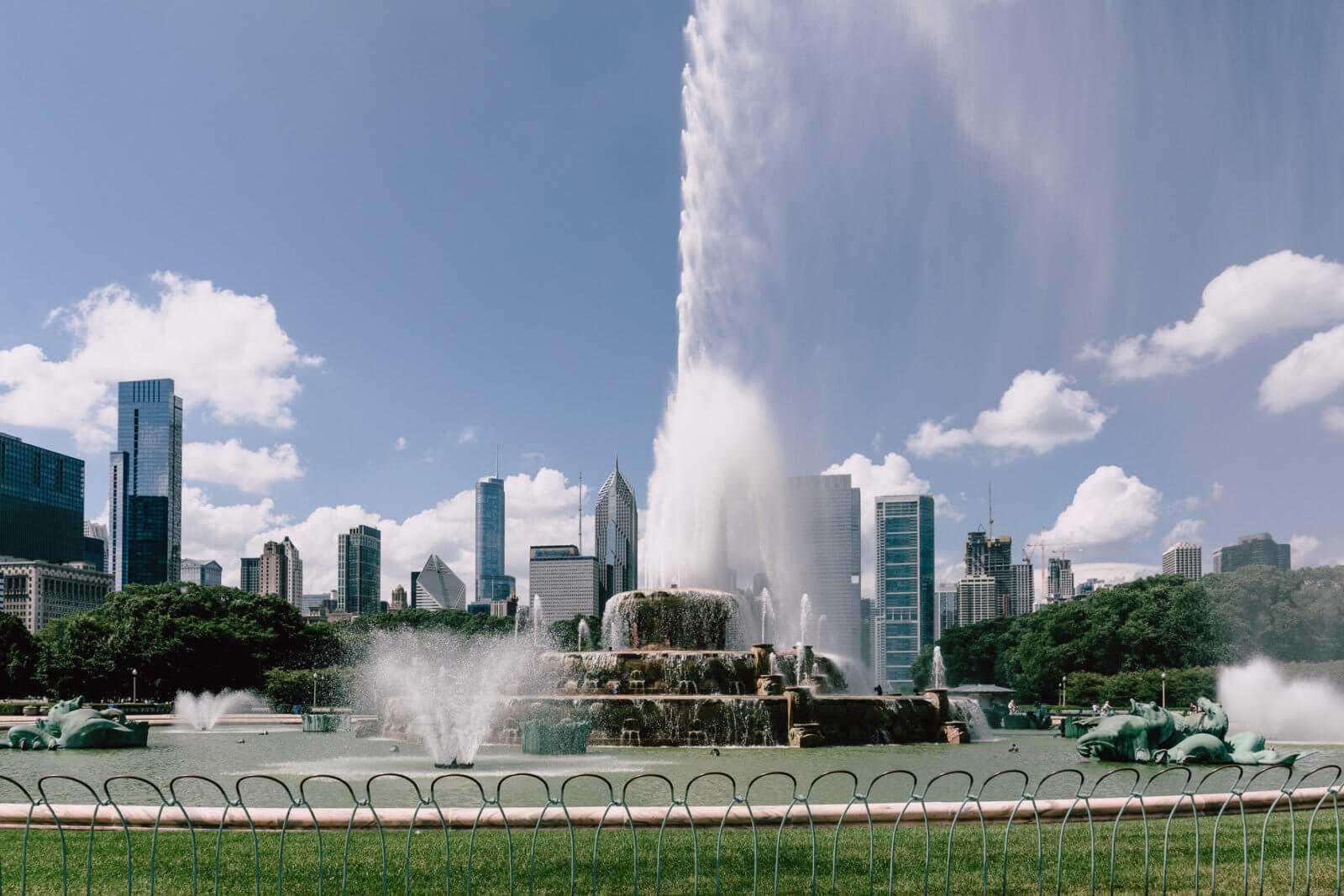
The famous Buckingham Fountain
A little anecdote to wrap things up: On the ride back to the hotel, our driver raved to us about his hometown of Chicago, and we realized just how little of the city we’d actually seen, despite having had such a great day. He enthusiastically listed all of Chicago’s attractions. None of it sounded familiar to us. Until we drove past the Buckingham Fountain—a huge freestanding fountain—and, as kids of the ’90s, we immediately started singing the theme song from “Married… with Children” —and our driver couldn’t believe that, of all the things from his Chicago, only Al Bundy had stuck in our minds here in Germany.