Ad. | Seattle – nestled between the Pacific Ocean and majestic mountains – is the great metropolis of the Pacific Northwest. Of course, I had to spend a few days there on my West Coast trip. But like many big cities in the USA, Seattle is incredibly expensive and a sightseeing tour can be a small investment.
The Seattle CityPASS* promises a range of savings on the most important sights. I researched for you in Seattle whether this is really true and for whom such a ticket is really worthwhile.
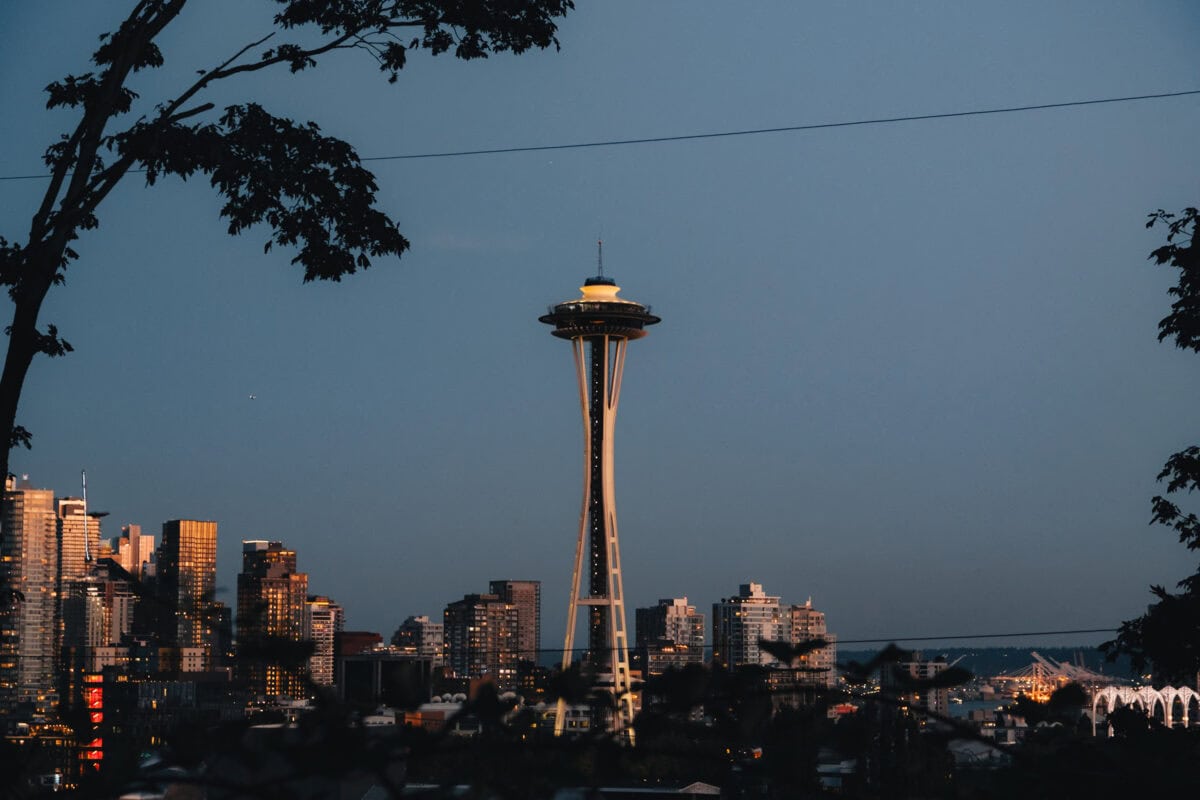
The famous Space Needle is also included in the Seattle CityPASS.
What is the Seattle CityPass?
The Seattle CityPASS* is basically a collective ticket that gives you access to the city’s most important sights. Instead of having to buy new tickets each time (and often paying more overall), you can use the CityPASS to put together an individual package of admission tickets that covers many highlights at once.
This means you save time at the ticket office – and in most cases also money, as these combined tickets are cheaper overall and/or include other extras that are not included in individual tickets.
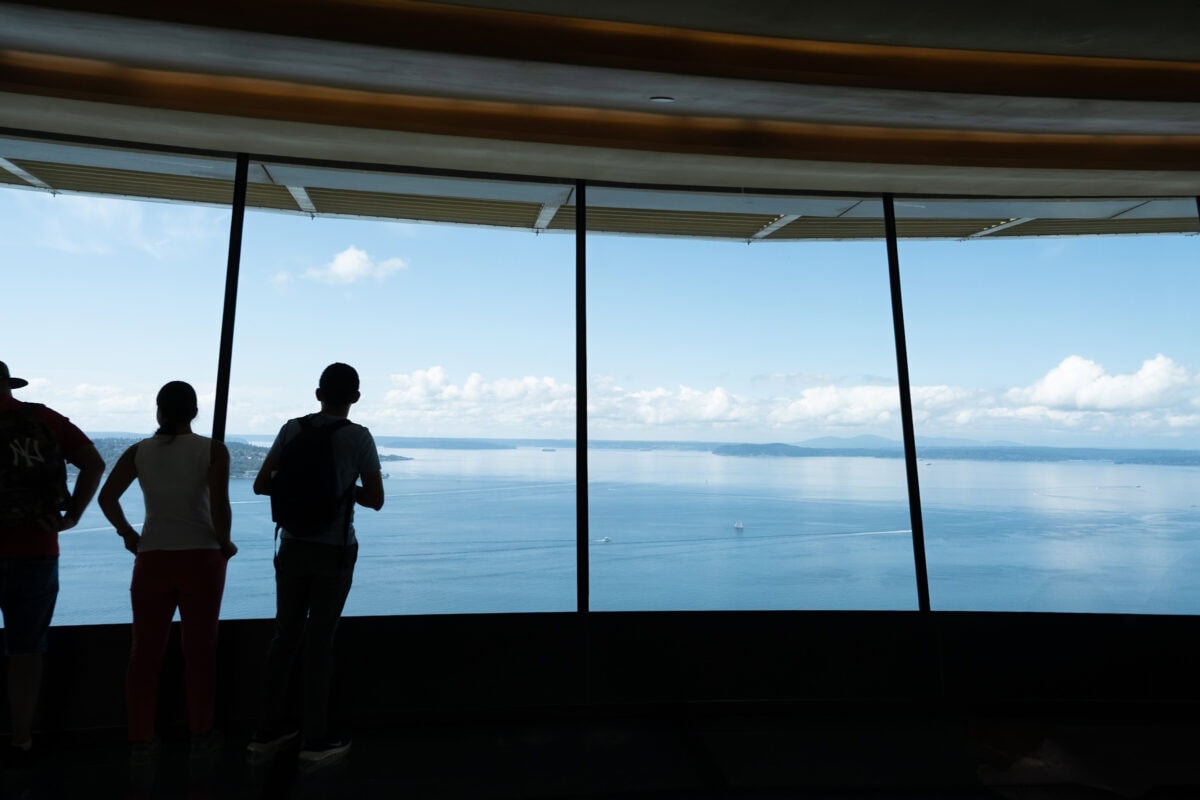
The breathtaking view of the Puget Sound alone makes a visit to the Space Needle in Seattle worthwhile.
What is included in the Seattle CityPass?
You can visit five attractions with the Seattle CityPASS. Included as standard are:
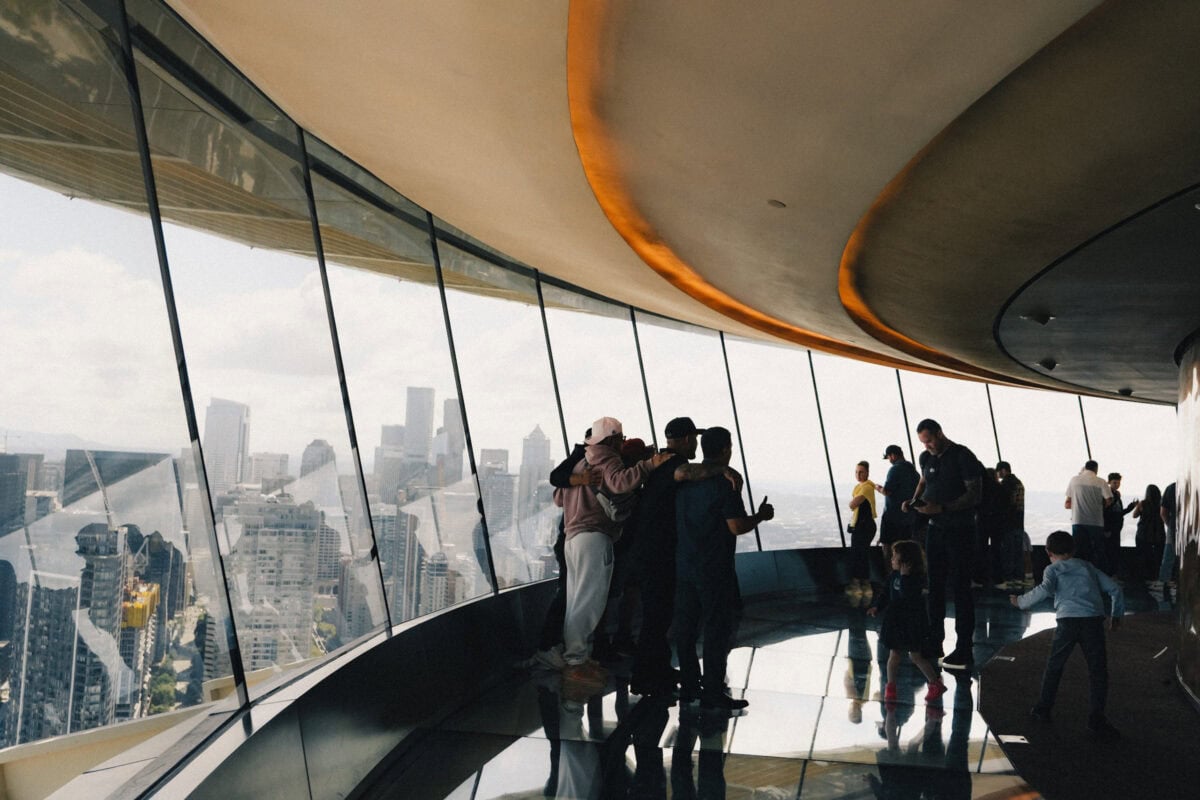
Space Needle – Seattle’s landmark and an absolute must-see. From the viewing platform, you’ll have a breathtaking view of Seattle’s skyline, the Puget Sound and the surrounding mountains.
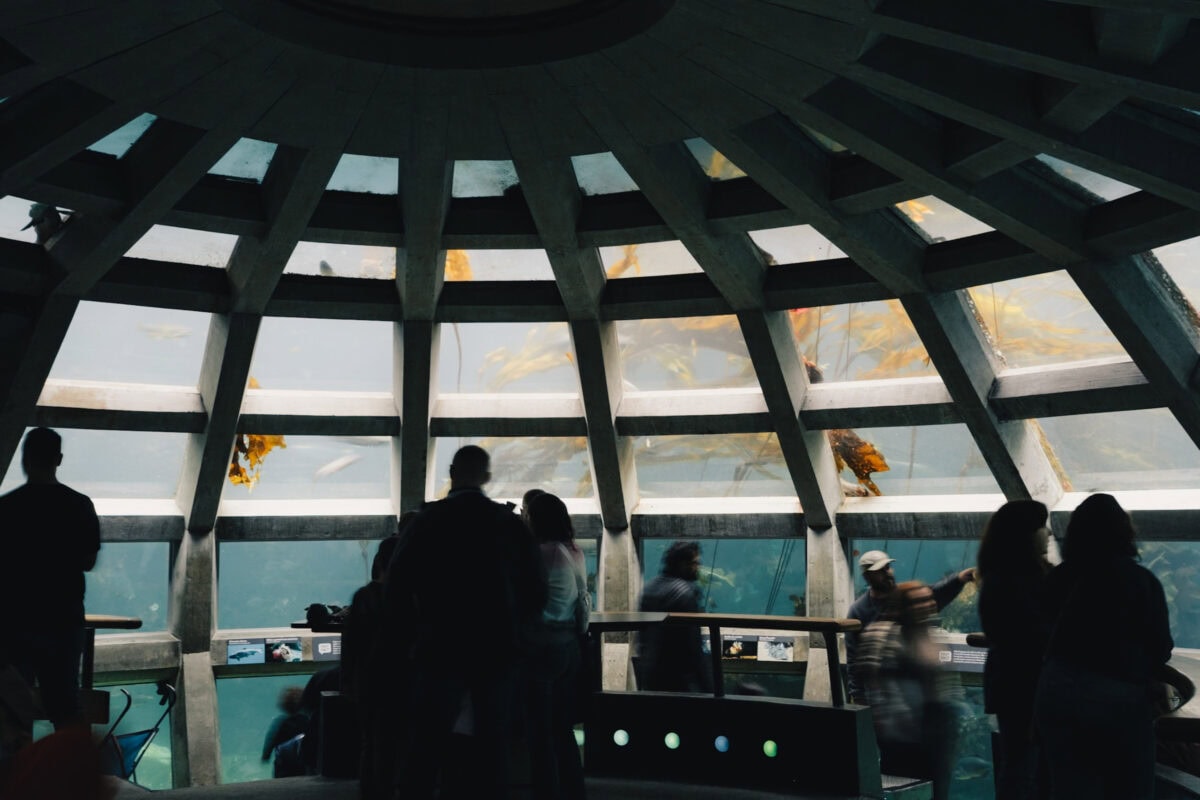
Seattle Aquarium – Located on the waterfront, you can experience the fascinating underwater world of the Pacific.
You also get access to 3 other attractions of your choice. You don’t have to decide at the time of purchase. This are the three attractions you can choose from:
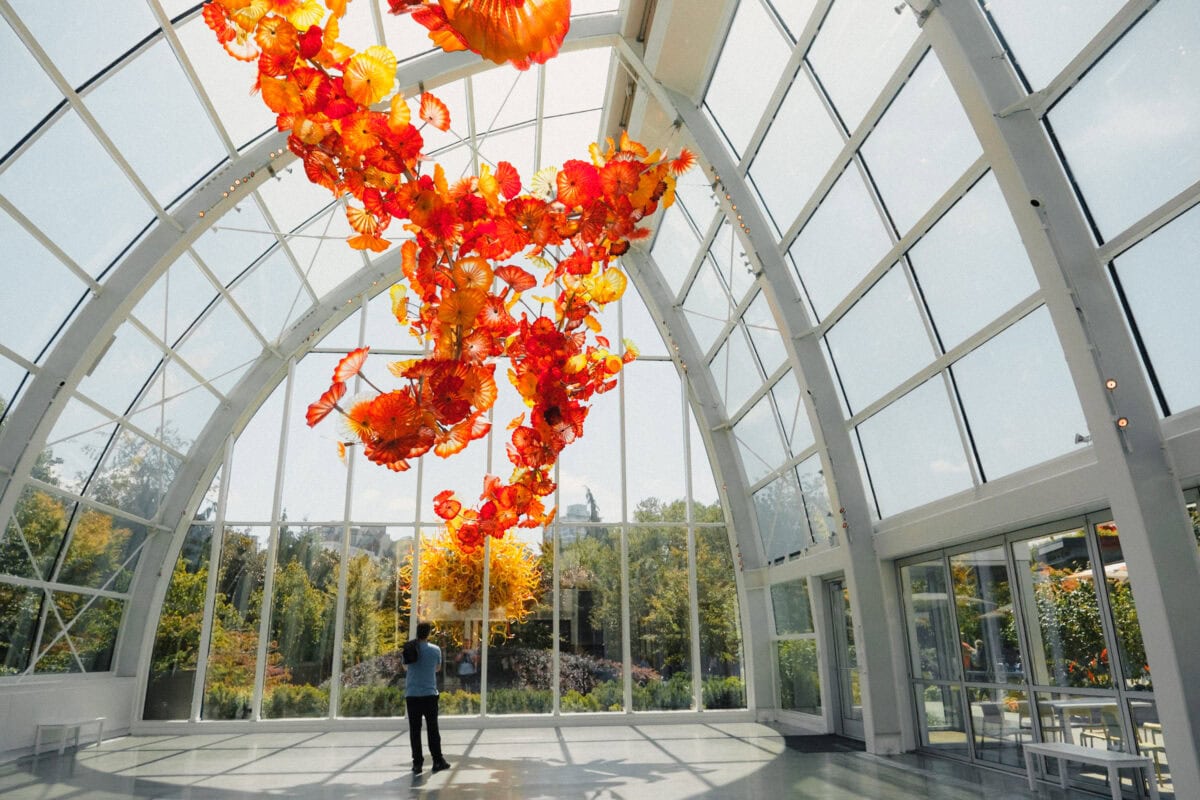
Chihuly Garden and Glass
Argosy Cruises Harbor Tour A boat tour through Seattle Harbor, where you can see the skyline from the water.
Museum of Pop Culture (MOPOP)
Woodland Park Zoo
Pacific Science Center
As soon as you use the pass for the first time, it is valid for nine consecutive days. This gives you enough time to see all the sights stress-free and at your leisure.
The Chihuly Garden and Glass with its impressive sculptures by glass artist Dale Chihuly is located close to the Space Needle.
Why you should buy the Seattle CityPASS
Price savings: If you buy tickets for each attraction individually, it can really add up. The CityPASS bundles everything together for a lower total price.
Planning convenience: If you know that you want to see certain highlights, you have everything in one place with the CityPASS. You don’t need to keep looking for individual tickets.
Priority admission and less queuing: At some attractions, admission is slightly faster with the CityPASS, so you spend less time queuing.
Planning aid: Not only do you save time on queuing, but you also get a good overview of what you can see during your time in Seattle. I often find this very useful for structuring my days during the trip and making the most out of my time.
Perfect for first-time visitors: If you are new to Seattle and want to see as much as possible, the pass covers the must-see highlights.
Downsides of the Seattle CityPASS
Time pressure: Even if you have nine days, they can pass quickly. If you plan too many other activities (trying out restaurants, day trips, strolling through different districts), you may not manage to see all the CityPASS attractions.
Limited selection: You may not be interested in all the attractions, or you may want to see something completely different. If you are more into visiting small trendy districts or other museums, the pass may not be worthwhile.
Advance planning: Of course, you need to know a little in advance when you will visit which sights. Spontaneously only visting a few attractions is often not worthwhile because the ticket price may then not be fully utilized.
Alternative discounts: Some attractions offer their own promotions, e.g. combined tickets for families or reduced admission tickets at certain times of day. If you like to be flexible and mix and match different options, this could be cheaper than the CityPASS in some cases.
Who should buy the Seattle CityPASS?
First-time visitors: I love city cards in general when I’m visiting a city for the first time. The most important sights are already covered and I don’t have to worry about buying individual admission tickets.
Families and groups: Especially if you are traveling with several people, the costs can escalate quickly. With the CityPass, the savings are even greater for several people, and group visits to popular sights are easier to organize if everyone already has their admission ticket ready.
Short-term travelers: If you only have a few days in Seattle and want to make sure you take in the main attractions, these combo tickets are worth their weight in gold.
The alternative to the Seattle CityPASS: Seattle C3
If you’re not interested in many of the sights on the Seattle CityPASS list, or you don’t have much time in the city, there’s a great alternative!
With a Seattle C3 ticket, you can simply pick three sights from the following list:
Space Needle
Chihuly Garden and Glass
Seattle Aquarium
Argosy Cruises Harbor Tour
Museum of Pop Culture (MOPOP)
Woodland Park Zoo
The Museum of Flight
Sky View Observatory
Seattle Art Museum
Pacific Science Center
Either way, the Space Needle is an absolute must-see and I can also highly recommend the Museum of Flight and the Seattle Art Museum. With a C3 ticket, you have an even greater choice and can concentrate on really selected spots. The C3 ticket is also a whole 30 euros cheaper.
Pros of Seattle C3
more selection
a good 30 euros cheaper
no attractions that involves animals (the Seattle CityPASS always includes the Seattle Aquarium)
You can swap the Seattle Aquarium for another attraction with a C3 ticket.
In my opinion, yes, if you are planning to see the most important sights in Seattle anyway. You’ll save time and money, especially on your first visit to Seattle – and the Space Needle is a must-see anyway. I also found it super convenient not to have to deal with buying tickets on the spot.
If you want to be more flexible, I would recommend at least the Seattle C3 – you are guaranteed to visit the Space Needle and two other sights!
I visited Seattle as part of a research trip for Travellers Insight, the Munich Airport’s renowned travel blog. Read my article about Seattle here. The Seattle CityPASS was provided by CityPASS.
If I had known what to expect beforehand, I would have planned a little more time for Halifax on our road trip through Nova Scotia. Its relaxed mix of maritime vibes and lots of street art were quite surprising.
In my guide, I’ll show you what you can experience on a short trip to Halifax and which sights and hotspots in the capital of Nova Scotia you shouldn’t miss out on.
Halifax: The most important facts in brief
is located on the east coast of Canada and is known for its natural harbor, which is one of the largest in the world
is the largest city in Canada’s Atlantic provinces with around 440,000 inhabitants
has historical sights such as the Halifax Citadel, interesting museums and a great harbor promenade, but also lots of street art and an exciting gastronomic scene
Best time to visit: between May and October
The best sights in Halifax
We only had a short time for our sightseeing tour of Halifax. Nevertheless, we were able to see a lot, as Halifax is also great to explore on foot.
Waterfront Boardwalk
The Waterfront Boardwalk stretches for several kilometers along the Halifax harbour. You can stroll along the promenade, explore gastronomic highlights or simply enjoy the view of the water.
From here, you can also quickly reach many of Halifax’s other attractions, such as the Maritime Museum of the Atlantic or the Pier 21 Museum of Immigration, which are also located on the waterfront.
If you want to see the Halifax skyline from a distance, you can also take a sunset boat tour from the harbor or go on a short sightseeing tour through the city and on the water in one of the popular amphibious vehicles.
Budget tip, if you can: For a few dollars, you can also take the regular ferry to Dartmouth or Alderney. This is part of the public transport system in Halifax and runs every 15 to 30 minutes between the two ferry terminals.
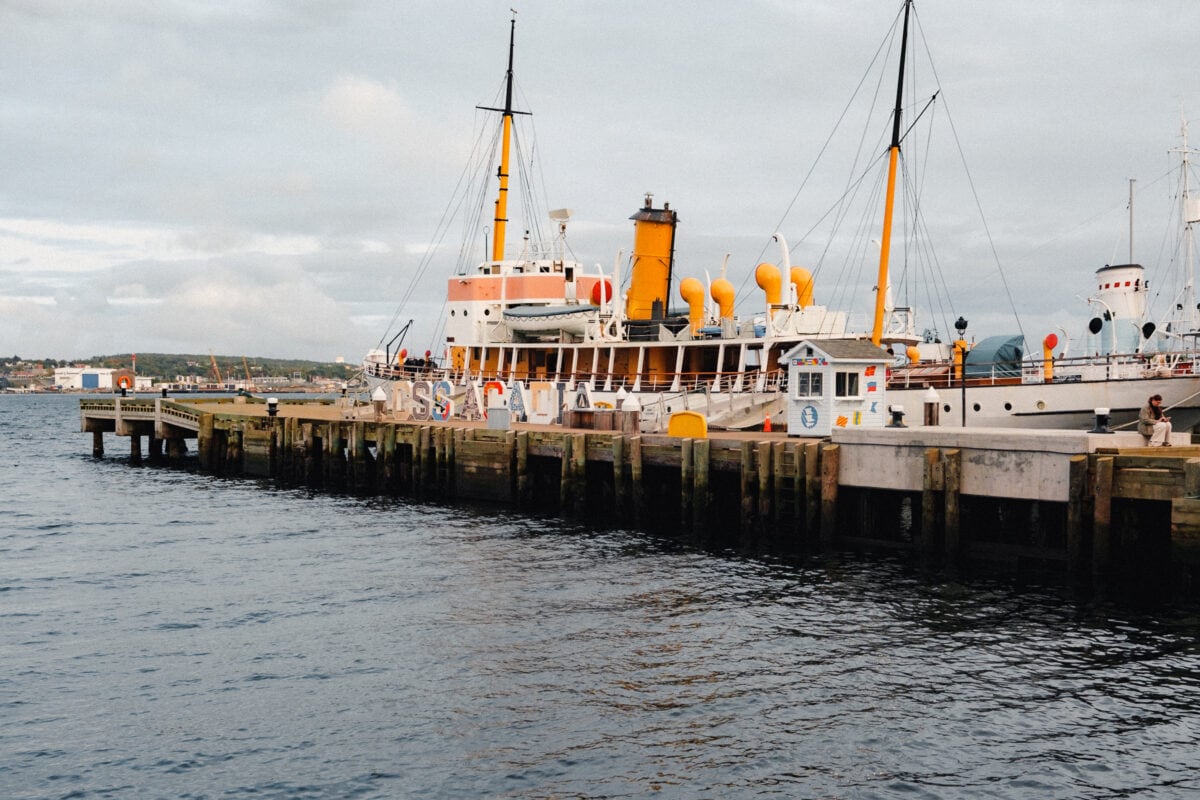
The Maritime Museum of the Atlantic is not only worth a visit if you are interested in seafaring. The port of Halifax is one of the largest ports in North America and is not only quite busy, but also very historically significant.
In 1912, the survivors of the sunken Titanic came ashore in Halifax, having been rescued by other ships. Part of the exhibition therefore also deals with the sinking of the Titanic and displays original objects from the ship as well as eyewitness accounts.
Another part of the museum deals with the great explosion in 1917 in the port of Halifax, which completely destroyed part of the city and killed or injured thousands of people. This catastrophe is still deeply rooted in the city’s history and remains one of the deadliest disasters on North American soil.
Pier 21 Museum of Immigration
The Pier 21 Museum of Immigration deals with the maritime history of Halifax in a different way and is one of my absolute favorite spots in the city. Like the Maritime Museum of the Atlantic, the exhibition is rich in detail, but is also very interactive.
Today, cruise ships dock directly behind the museum.
On the one hand, the history of Canada as a classic country of immigration is shown here and examined in more detail using family stories from a wide variety of countries of origin. Thanks to its large harbor, Halifax has always been one of the places where countless immigrants came to the country in search of great fortune. On the other hand, interactive elements invite visitors to share their own family immigration history – and it is so beautifully designed that there really isn’t a dry eye in the house.
I could really have spent hours browsing through the many moving snapshots and souvenirs that individual museum visitors have left behind. If, like me, migration has shaped your family history, you will certainly find yourself here and perhaps remember your roots.
I was also very impressed by how much Canada values its tradition as a destination for many immigrants and, contrary to what I see as a sad development in many other Western countries, very much cultivates its open welcoming culture. No wonder Canada is still a place of longing for many people.
Queen’s Marque is the latest trendy district on the waterfront, and the large building complex in the middle of it is a sight in itself. The combination of contemporary architecture, art and gastronomy is really very successful. We stayed at the Muir Hotel*, which is integrated into the complex, and were able to really enjoy the vibe here.
During the day, you can store in the small boutiques or sit down in a café. In the evening, you’ll find some of the best restaurants and bars in the city, and in summer it’s really lively outside with street music.
If you like modern architecture, you shouldn’t miss the Halifax Central Public Library on your sightseeing tour of the city center. The modern building with its striking design is a real eye-catcher and is located directly on one of Halifax’s main shopping streets, Spring Garden Road.
You can simply go inside and walk through the library. The long staircases between the floors inside the library are a great photo spot. At the top of the last floor there is a small café with a terrace: a great tip in summer for a quick coffee stop with a view over the rooftops of Halifax!
Halifax Public Gardens
On Spring Garden Road, you will find another of Halifax’s not-so-little treasures. The Halifax Public Gardens are one of the oldest Victorian gardens in North America.
In this green oasis, you can recharge your batteries, go for a walk or simply enjoy the idyllic atmosphere in the middle of the busy city.
Street art in Halifax
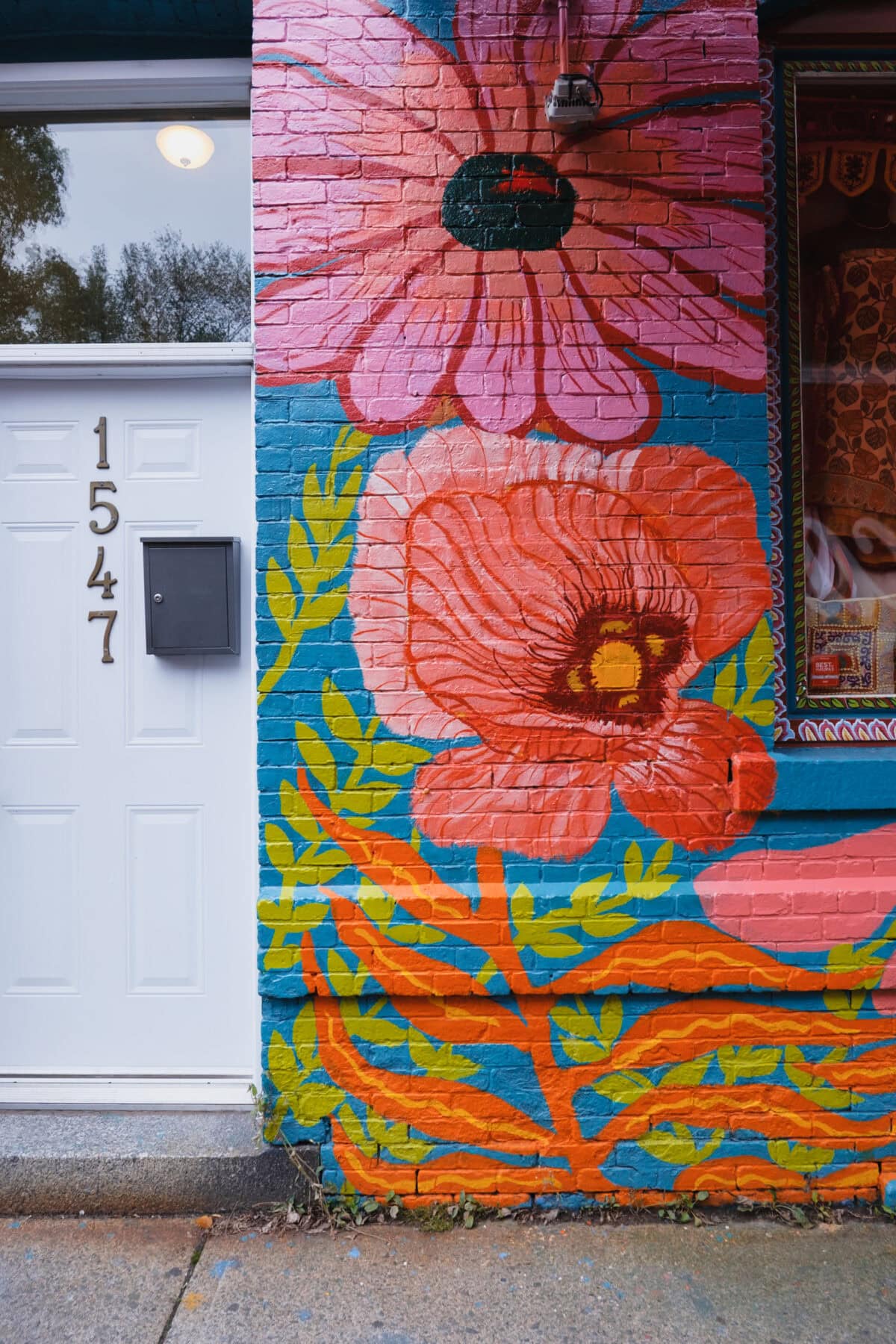
Halifax is extremely colorful: we kept coming across the most beautiful murals in the city. There really are so many that you can just walk around downtown and automatically come across street art somewhere. You’ll find a lot of street art around Gottingen Street in the North End in particular.
Other highlights in Halifax & what else you can do
36 hours is really not much time to explore Halifax, and even with our power program we didn’t manage to do everything we had planned. But if you have more time, I have another suggestion for you on what to see in Halifax.
Halifax Citadel
The Citadel is one of Halifax’s most famous sights, but unfortunately the recent rainy weather put paid to our visit and we preferred to head to the equally interesting museum on Pier 21.
In good weather, however, you have a great view of Halifax and the surrounding landscape from the higher citadel. The fortress dates back to the 18th century and was built by the English to defend themselves against the French, who were also present in Nova Scotia.
Especially if you are interested in history, the star-shaped complex with the Army Museum and a wide range of themed tours is a must-see. Tour guides in historical costumes can explain the entire background and at lunchtime you can watch the daily (!) cannon firing.
Food & drink in Halifax
My personal tips for restaurants in Halifax
The Bicycle Thief was repeatedly mentioned to us as a tip, and the restaurant on the waterfront is indeed really popular. Even during the week and in the low season, it was so full that it was impossible to get a table without a reservation. It serves Italian cuisine with a Canadian twist (lots of fish and lobster) and it’s certainly very good – but it didn’t seem spectacular enough to justify the expense.
Bar Sofia in the Queen’s Marquee ended up being our alternative, and it couldn’t have suited us better. Here we were able to sample the wildest Latin American fusion dishes and enjoy really good cocktails. The colorful interior and super attentive service put us in such a good mood that I highly recommend a visit here when you’re in Halifax.
The Drift is suitable for all times of day. It is actually part of the Muir Hotel, but like Bar Sofia, it is also part of the large Queen’s Marquee complex. We had breakfast here as part of our hotel stay and, contrary to what is on offer in many other (even more expensive) hotels, I would recommend the Drift to non-hotel guests at any time.
Breakfast is à la carte anyway, so you won’t find an uninspired hotel buffet here, but only what you actually order. So if you’re looking for a location for a relaxed breakfast or brunch in a great atmosphere, this is the place for you!
Typical specialties from Halifax
It is impossible to imagine Halifax without the donair, a snack specialty that is now known beyond the borders of Halifax. However, the donair has little to do with the doner kebab invented in Germany: For a real donair, pita bread is served with meat, diced tomatoes, onions and a sweet garlic sauce.
The most authentic donair is served at King of Donair on Quinpool Road (but there are other outlets in Halifax), which boasts of having introduced the donair to Halifax in the 1970s. Others prefer the donair from Tony’s Famous Donairs on Robie Street.
For the meat-free option, we went to Real Fake Meats, just outside the city center. The meat substitute tastes super delicious here, but I found the combination with the sweet sauce took some getting used to. The store is definitely interesting: all the meat substitutes are made on site and you can also take a look at the production process.
Staying overnight in Halifax
In Halifax, you’ll find a good selection of hotels for every budget, but it’s worth spending a little more! The Muir* is a five-star hotel and is centrally located in the newly redeveloped Queen’s Marque District, right on the promenade – the location couldn’t be better! From here, you can reach the most important places in Halifax on foot.
The best thing, however, is the exceptionally pleasant atmosphere, from the consistently attentive and cordial staff to the detailed room furnishings: everything has been thought of here to make your stay as relaxing as possible.
If you need a bit of relaxation, the Muir also has a first-class spa with pool, sauna and steam room. After our eventful road trip and the short sightseeing tour through Halifax, this was simply the crowning glory of a great trip.
Although Halifax is a big city, driving into the city in a rental car was no problem. There can be traffic jams during rush hour, but all in all driving is very relaxed, as it is elsewhere in Canada and the USA (at least in my experience).
Halifax Airport is relatively far away. You should therefore consider renting a car if you are planning a road trip through Nova Scotia. Even if you use the rental car less in the city, it is much more practical this way. It is best to check with your accommodation beforehand whether parking is available so that you can park your rental car safely.
If you are traveling without a rental car and simply want to go to the hotel in the city before or after the flight, you can also organize a private transfer .
If you are staying in the city center, you can also reach many locations on foot. The public transport network in the city only consists of buses, but is easy to use. Alternatively, you can also get around by Uber, which is relatively cheap.
If you don’t want to bother with timetables or finding a parking space and are a little lazy when it comes to walking, you can also opt for a hop-on hop-off tour* for sightseeing.
Map with all the highlights
To help you find your way around Halifax, I have summarized all the locations from the article on a map. You can also save them. That way you’ll have everything to hand when you’re out and about.
Excursions around Halifax
Halifax is an excellent starting point for an exploration tour through Nova Scotia. However, if you don’t have much time, here are the best places to visit that you can reach within a day.
Peggy’s Cove
The picturesque fishing village of Peggy’s Cove is just 45 minutes from Halifax. Famous for its impressive lighthouse, it is a popular destination for day trips. The most beautiful photo opportunities can be found here, especially at sunrise and sunset. But Peggy’s Cove is also worth a detour during the day.
In addition to the lighthouse, there are small galleries and souvenir stores in the small fishing village next door where you can stock up on handmade products and local art. Very cute indeed!
The historic town of Lunenburg is about an hour’s drive from Halifax and is a UNESCO World Heritage Site. Lunenburg is very touristy, but with its colorful wooden houses, cute cafés and pretty stores, it’s no wonder. If you haven’t already planned Lunenburg as a stop on a road trip through Nova Scotia, you can also book day trips to Lunenburg from Halifax.
Another worthwhile detour is Mahone Bay, which is actually known for its three churches that stand picturesquely on the shore. However, I personally found the special flair of this small town with its pretty cafés, antique stores and small craft stores much nicer.
Wineries in the Annapolis Valley
If you like drinking wine, you shouldn’t miss the Annapolis Valley. This region is known for its wineries and large-scale fruit cultivation.
I can highly recommend Luckett Vineyards, for example: Not only is the winery itself worth a visit (where else can you see an original British red telephone box in the middle of the vines?), but also the adjoining restaurant with a great view of the countryside: I had the most divine chicken pie of my life here with a glass of chilled rosé! Highly recommended!
The Annapolis Valley is particularly beautiful in autumn, when the leaves on the trees slowly turn their brightest colors and the harvest season begins. In many places you will find stalls with fresh apples, pumpkins and everything else that nature has to offer.
Chicago is a truly impressive city: a huge skyline, pure city life, but also lots of greenery and long beaches on the shores of the huge Lake Michigan. Unlike its big sister New York, the people here are incredibly open-minded and friendly: Chicago is known for its positive attitude to life! Although I’ve never been a big fan of the USA, I was immediately taken with Chicago. I’ll tell you my favorite Chicago sights here!
Sightseeing in Chicago: My budget tip!
Chicago is not exactly cheap! As in all major American cities, accommodation and meals are a big hole in the wallet. But you shouldn’t skimp on good food in the foodie mecca of Chicago! And you shouldn’t miss out on some of the paid attractions such as the Willis Tower (or 360 Chicago) or the Art Institute.
Sir Anish Kapoor’s sculpture in Millennium Park is actually called Cloud Gate, but because it looks like a bean, the nickname stuck: The Bean. This is probably the most popular must-see photo spot in the whole of Chicago. Not only because of the crowds of people who make a pilgrimage here every day, but also because of The Bean itself: The reflections in the stainless steel sculpture are simply fascinating.
But The Bean is not the only work of art worth seeing here: next door is the Crown Fountain, a water-spouting video installation that provides refreshment, especially for children, during Chicago’s scorching hot summers.
#2 Willis Tower
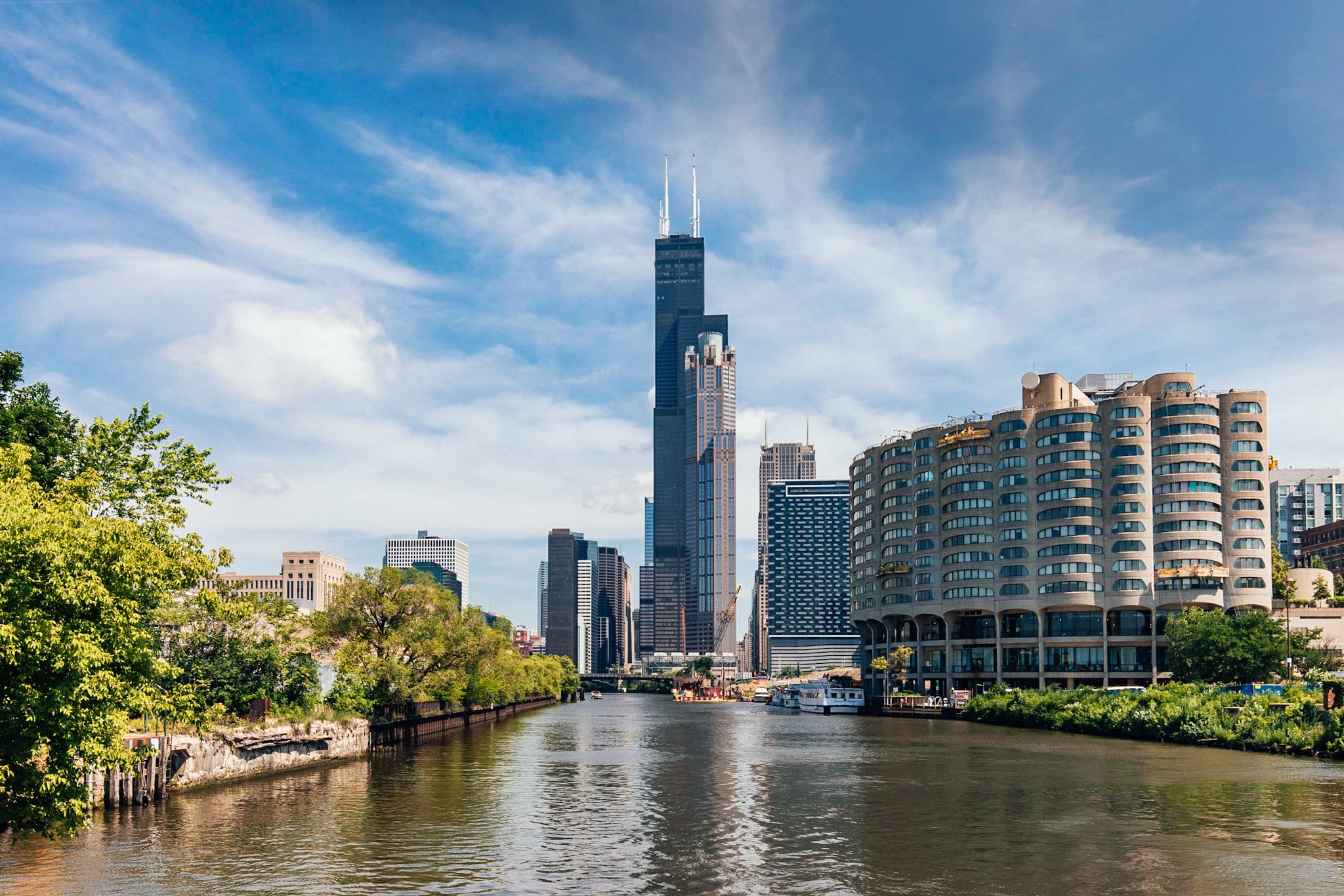
The Willis Tower used to be called the Sears Tower and was the tallest building in the world. That is ancient history, but the view from Skydeck Chicago is still impressive. The four glass balconies (“The Ledge”) are a particular highlight: Even the floor is made of glass. Not for those afraid of heights.
Do you also want to travel to the USA? There are lots of helpful tips and travel reports on my USA blog.
#3 360 Chicago at the John Hancock Center
If you want to see Chicago from a different perspective than from the Willis Tower, you should go to 360 Chicago. On the Tilt extra attraction, you can lie down on glass panes that tilt forwards.
By the way: admission to attractions such as the Skydeck or 360 Chicago is quite expensive. With the Chicago City Pass* you can save up to 50%, so it’s best to work out in advance whether you want to pay for admission individually or whether you’d rather take the pass.
Michigan Avenue in the center of Chicago is lined with one huge store after another: All the big stores are represented here. Quite ostentatious – which is why this stretch of Michigan Avenue is also known as the “Magnificent Mile”.
Incidentally, you can stay here in style at the Warwick Allerton, one of Chicago’s most historic hotels. Recently renovated, you live here in one of those old skyscrapers like in the movies: large rooms, high ceilings. And everything at its finest.
The formerly derelict banks of the Chicago River have been given a real facelift: now you can stroll along them or simply take a short lunch break at one of the beach bars. The more sporty get into a kayak, the more comfortable take one of the water cabs and explore Chicago by water. By the way, water cabs are part of Chicago’s public transportation system!
The leisure area directly on the lake is almost in the middle of the city. Almost a hundred years old, it was given quite a facelift in the nineties and now offers all kinds of leisure activities, from a Ferris wheel to a musical theater and art exhibitions.
The numerous cafés and restaurants are a great place to take a break from sightseeing and enjoy the view of Lake Michigan – in the beer garden, for example, with a beer and a traditional Chicago hot dog. There are always free fireworks on Wednesday and Saturday evenings. Many other free events such as concerts and festivals can also be found in the event calendar.
#7 Chicago Elevated, Loop, “L”
It is actually called Chicago Elevated, but Chicago’s elevated train is also known simply by the letter “L”. Particularly striking is the Loop, the ring that cuts through the street canyons in the middle of Downtown.
#8 Lake Michigan and Lakefront Trail by Segway
The Lakefront Trail runs along the entire length of the city, perfect for jogging, cycling – and Segway riding! The distances are huge, so a vehicle is pretty handy.
With a Segway you can see a lot more of Chicago’s long waterfront promenade. The lakefront is definitely one of Chicago’s great leisure attractions: An absolute must when the weather is nice!
If you really want to see all the exhibitions, you’re guaranteed to be busy for a whole day. But a visit just for the highlights is also worthwhile! Numerous American classics such as Edward Hopper’s Nighthawks hang in the Art Institute of Chicago .
Admission is quite steep at 25 dollars, but with city passes such as the Chicago City Pass* you can save a lot of money here too if you are sightseeing through Chicago anyway.
Even if you don’t attend a show at the Chicago Theatre, a photo in front of the legendary neon sign is a must! At lunchtime, you can take a guided tour of the inside of the venerable Chicago Theatre, and in the evening, superstars from Jerry Seinfeld to Madonna perform here. Or you can visit the Chicago Theatre during the day with a guided tour*.
#11 Jazz clubs & live music
Jazz and blues are the leading musical genres in Chicago. And if you don’t feel like dancing after a long day of sightseeing, a jazz club is the perfect choice to round off a day in Chicago. Andy’s Jazz Club, for example, offers live music from all jazz genres every evening with good cocktails.
#12 Chicago’s Deep Pan Pizza
Chicago is famous for its deep dish pizza or deep pan pizza, which was invented here in the 1940s. The original is said to have originated at Pizzeria Uno – but Gino’s East and Lou Malnati’s can also look back on a long deep pan pizza tradition. Unlike traditional pizza, Chicago pizza is served in a pan, with the cheese underneath the other toppings on a cornmeal crust. It may not have much to do with an original Italian pizza, but the Chicago pizza is still delicious.
Gino’s East is worth a visit for the interior design alone: the entire(!) restaurant is scribbled on from top to bottom. Every guest can immortalize themselves here with a sharpie!
#13 Route 66
The legendary Route 66 actually starts here in Chicago! Route 66 is no longer an official road, but the old sign on Adams Boulevard marking the beginning is still there. By the way: A road trip along Route 66 from Chicago, as I did, is also highly recommended! You can read more about my road trip through Illinois here:
#14 West Loop, Randolph Street & Fulton Market Street
The new restaurant mile in Chicago’s gastronomic heaven: Chicago is known for its fantastic restaurants. In West Loop, a new generation of eateries has established itself along Randolph Street and Fulton Market. There’s always something going on here in the evening.
Once a year, in the summer, there’s the “Taste of Randolph,” a street festival featuring events and live music, in which many of the neighborhood’s restaurants participate and where you can sample all their specialties at affordable prices. My tip: breakfast at Soho House.
#15 Wicker Park
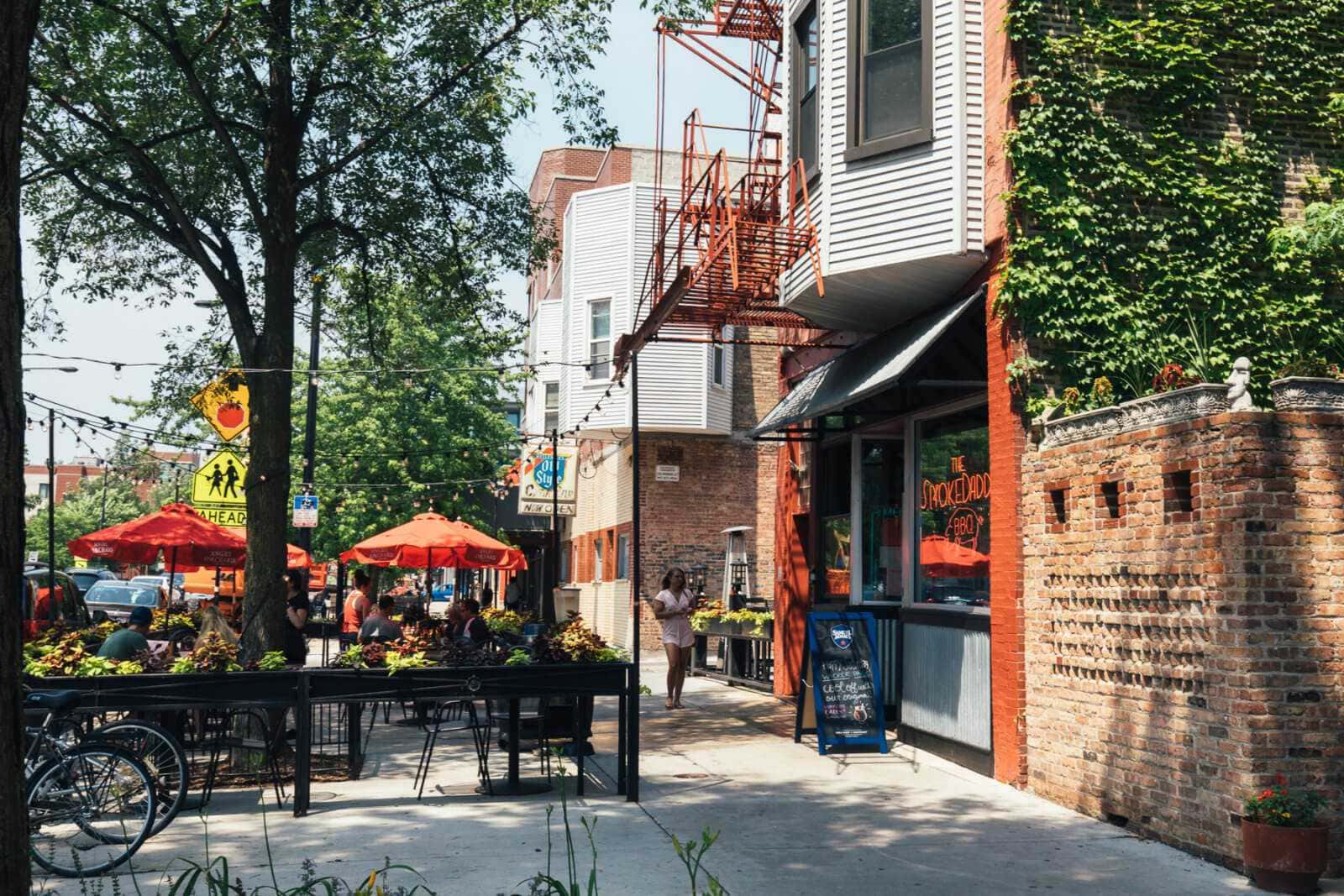
In Berlin you would say: Wicker Park is really cool. In big cities, I always like to take a look at the small, neighborhoods because you simply get to see more of real life here. If I hadn’t opted for accommodation in the middle of the city, I would probably have ended up in Wicker Park, one of Chicago’s hipster neighborhoods, so to speak. Street art, cool bars, individual stores – my creative heart was happy!
My tips for Wicker Park:
Dove’s Luncheonette Really, really cool location: Tex-Mex cuisine is reinterpreted here in retro luncheonette style under the elevated railway bridge. Could have tasted my way through the entire menu.
Milwaukee Avenue If the Magnificent Mile is too busy with huge chain stores, you’ll feel much more at home shopping on Milwaukee Avenue. Here you can still find small stores between larger indie chains like Urban Outfitters, and you can stroll around much more comfortably than on the sometimes hectic Mag Mile.
#16 The 606 / Bloomingdale Trail and Park
Relatively unknown, as it is located just outside the city center between Logan Square and Humboldt Park: The 606 is a disused elevated railway line that has now been converted into an amusement park. Above the rooftops of Chicago, you can jog, cycle and do whatever else you can think of over a length of more than 4 kilometers. A great detour when visiting Wicker Park!
#17 Humboldt Park
A melting pot of cultures – that’s always a hackneyed phrase when talking about life in big cities. In Chicago, however, it really hits the nail on the head. People from so many nations live here that you sometimes feel like you’re on a little trip around the world. Humboldt Park is a district where many Puerto Ricans live: In summer, there is a big street carnival here with lots of salsa, bachata, reggaeton and merengue and my Brazilian genes were jumping in triangles!
#18 Buckingham Fountain
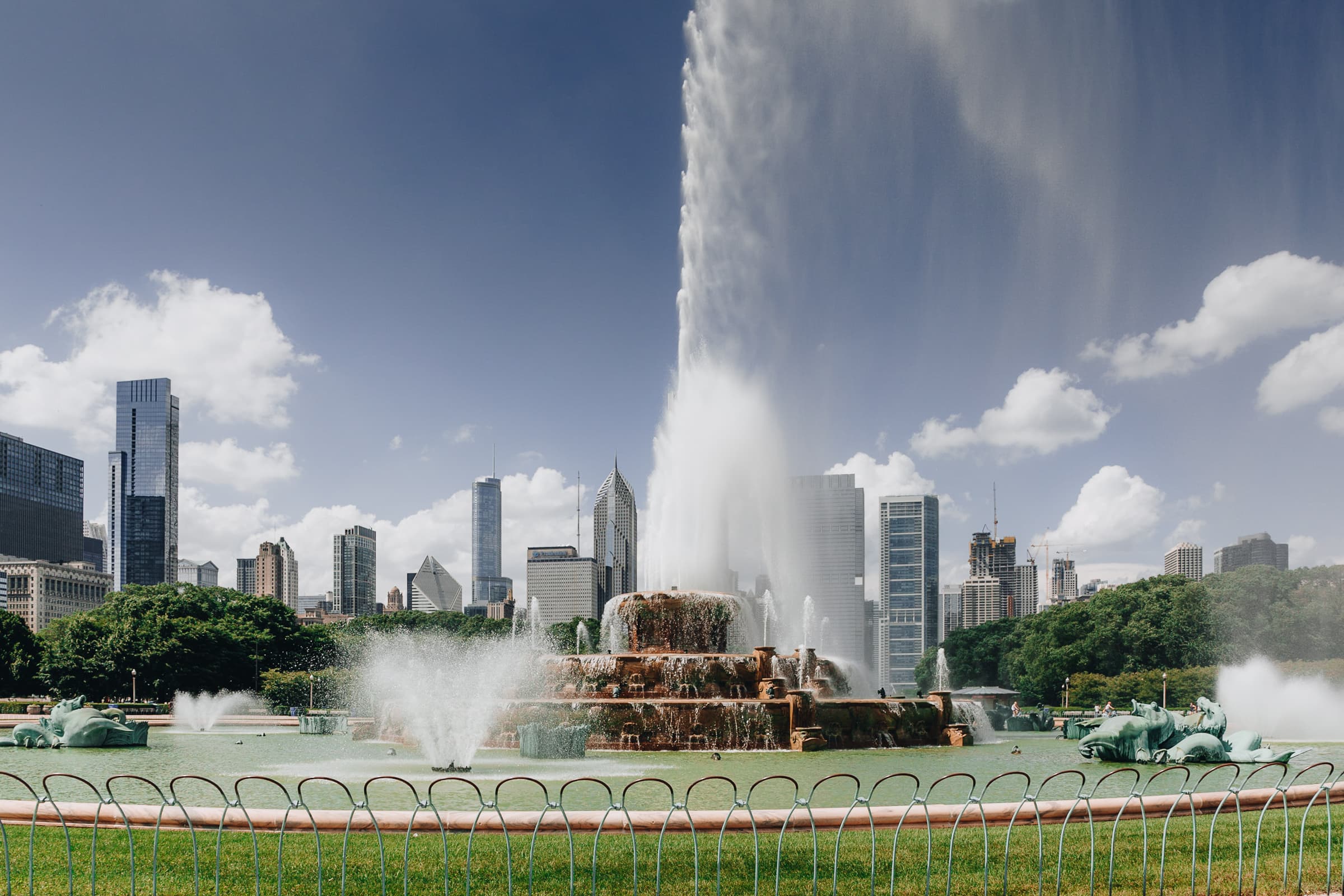
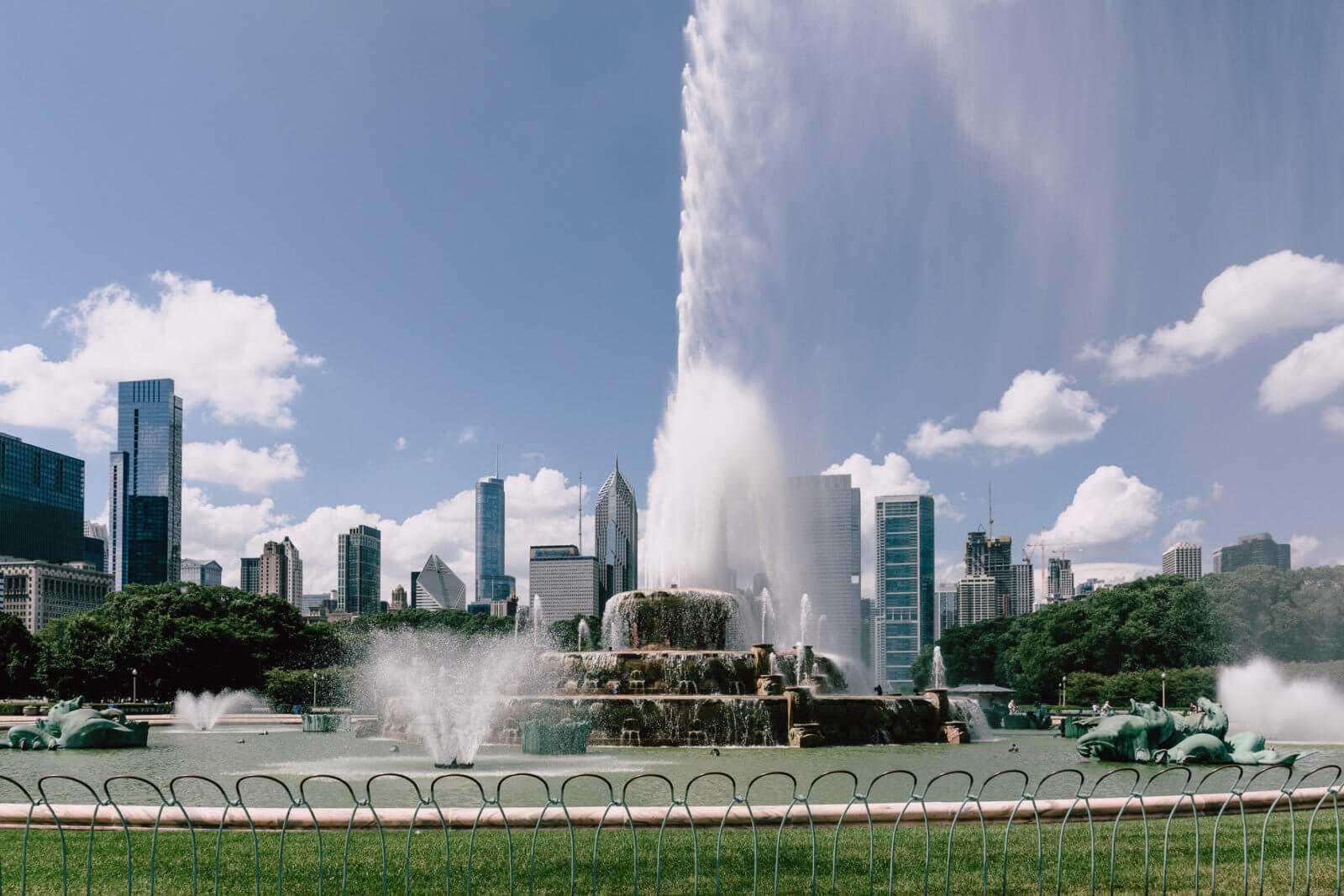
Children of the 90s will immediately recognize it and revel in TV memories: When I saw the Buckingham Fountain in Grant Park, I immediately thought of the opening credits of “A terribly nice family”. The best thing for everyone else to do is simply marvel at one of the largest fountains in the world. The Buckingham Fountain is really huge!
#19 Oak Street Beach & Co.
Chicago simply has it all: vibrant city life, lots of greenery, the great Lake Michigan – and even great city beaches! Oak Street Beach is one of the most popular, but you wouldn’t expect to find beaches like 12th Street Beach next to the Adler Planetarium in a big city like Chicago.
#20 Chicago for gourmets and foodies
Chicago lives up to its name as a gourmet destination. Food is generally a tricky subject in the USA – while you can find burgers and deep-fried convenience products on every corner, other dishes can sometimes be a bit hit and miss. In Chicago, however, everyone should be able to find what they are looking for.
Can you really save money with the Chicago City Pass? Chicago is a popular destination for city breaks in the U.S. But if you try to see every single attraction, sightseeing in Chicago can quickly get expensive. The Chicago City Pass is often promoted as a great way to save money. But is it really worth it? In this article, I’ll compare which Chicago attractions let you save money.
With the Chicago City Pass, admission to both of Chicago’s top observation decks is included! The Willis Tower is THE must-see attraction in Chicago! From the Skydeck at the very top, you’ll have a fantastic view of Chicago and Lake Michigan!
By the way, the Willis Tower used to be called the Sears Tower, after the company that had the building constructed, and was actually the tallest skyscraper in the world when it opened in 1974. These days, it’s “only” the second-tallest building in the U.S. after One World Trade Center in New York, but hey, I can tell you, that’s still high enough!
On a clear day, you can see four states at once, and Chicago, with its 2 million residents, looks absolutely tiny.
By the way, the Skydeck Chicago features four glass balconies—the “Ledges”—made entirely of glass: walls, ceiling, and floor! The area measures about 2 by 3 meters. So when you step forward, you’re standing entirely on glass. Below you: over 90 stories! By the way, I thought I wouldn’t dare—but the idea of standing on nothing but a glass floor hundreds of meters above the street is so bizarre and unbelievable that my reservations vanished immediately.
Advantage with the ChicagoCityPass: The CityPass entitles you not just to one, but to TWO visits to the Skydeck on the same day. In addition to the regular daytime admission, you also get an evening admission starting at 6 p.m., so you can see Chicago at night, too! Highly recommended for taking photos.
#2 Art Institute of Chicago / Adler Planetarium
With the Chicago City Pass, you have to choose: art or science? The Chicago City Pass grants you admission to either the Art Institute of Chicago or the Adler Planetarium.
Art Institute Chicago
The Art Institute of Chicago is exceptional in the scope of its collection: From Byzantine art to contemporary photography, you’ll find everything here. It’s guaranteed to take a full day to see the entire exhibition. So it makes sense to think about what you’d like to see beforehand, before you get overwhelmed by so much art. I really wanted to see “Nighthawks” by Edward Hopper, and even if the name doesn’t ring a bell—everyone knows the painting. And there’s hardly any other painting that’s perceived as so quintessentially American.
At $25, admission is very expensive, but it’s well worth it—the collection is fantastic, and the temporary exhibitions are always interesting and varied. The helpful audio guide costs extra as well!
Regular price $25 + $7 audio guide = $32
Adler Planetarium
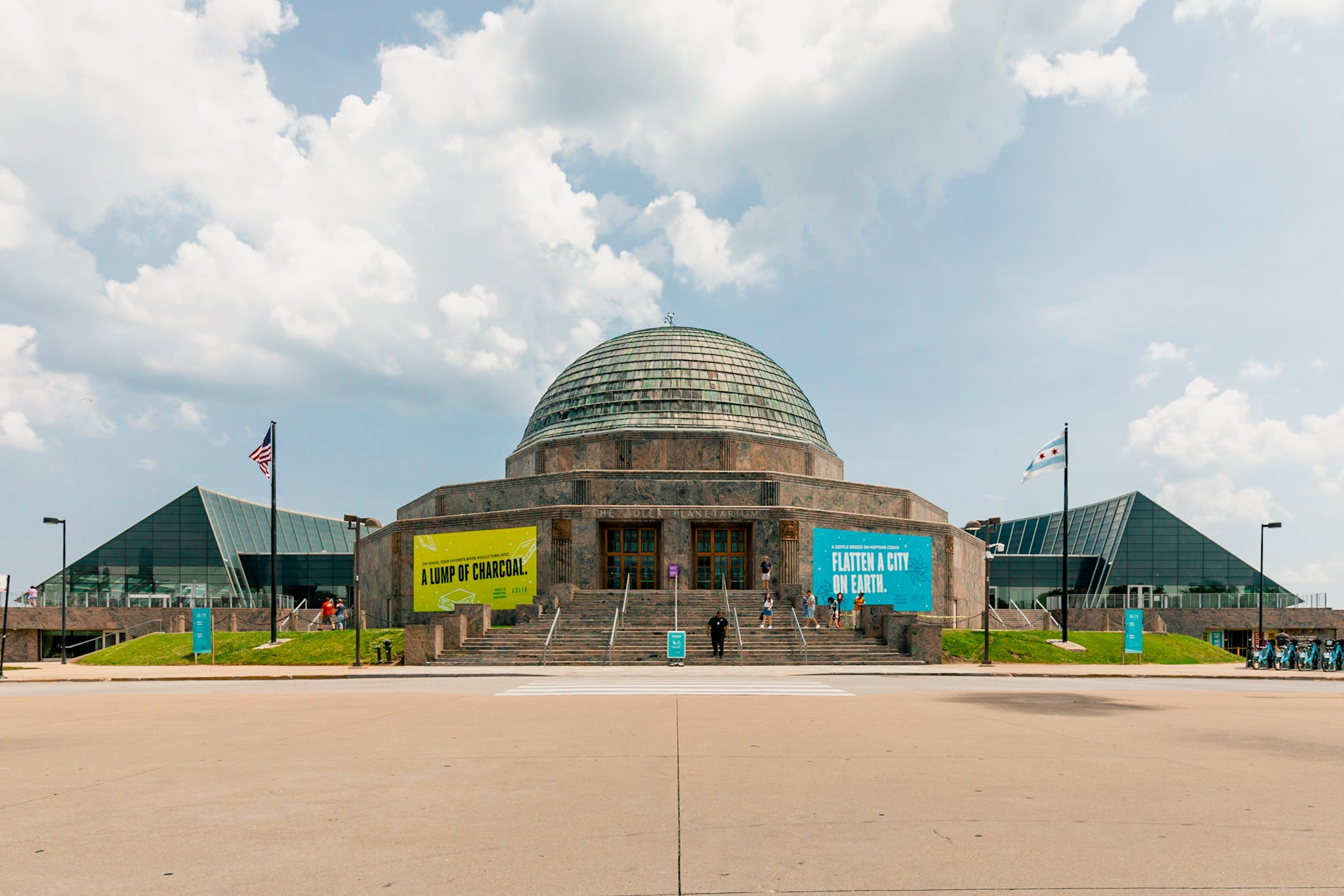
The Adler Planetarium is the must-see attraction in Chicago for all space enthusiasts. Here, you can see an old space capsule and many other interesting exhibits related to space exploration.
The film screenings (Sky Shows) are also highly recommended! Without them, the planetarium is only half as exciting!
Regular price for admission + 2 Sky Shows: $35
Ad / *affiliate links
#3 Field Museum
The Field Museum of Natural History is one of the most visited museums in the United States! It is known worldwide as a natural history museum and houses one of the largest collections of natural history and anthropological artifacts. Here, you can marvel at the best-preserved Tyrannosaurus rex ever found!
Regular Price for All-Access Pass: $40
#4 Shedd Aquarium
The Shedd Aquarium is the world’s largest indoor aquarium and has been around since 1929! Here, you can truly immerse yourself in the underwater world and see all kinds of marine life, amphibians, and insects—from seahorses to beluga whales—up close!
#5 360 Chicago Observation Deck / Museum of Science and Industry
If you don’t want to go up to another observation deck, here’s your option: As an alternative to 360 Chicago, you can also visit the Museum of Science and Industry!
360 Chicago Observation Deck
The 360 Chicago Observation Deck is located in the John Hancock Center right in the heart of the Magnificent Mile—so it’s right in the thick of things!
In addition to the naturally fantastic view, TILT stands out for its floor-to-ceiling panoramic windows that you can lean against and tilt forward along with the window!
TILT costs an additional $8; for Chicago City Pass holders, it’s an extra $7. There’s also a Day/Night package available, but it’s not included in the Chicago City Pass.
Regular price: 360 Chicago $25
Museum of Science and Industry
The Museum of Science and Industry is the largest science museum in the U.S. It features exciting and interactive exhibits on the topic of science. It’s not just kids and science buffs who’ll enjoy this elaborately designed museum! Downside: The Museum of Science and Industry is quite far from all the other attractions south of downtown. So if you don’t have much time, you’re better off choosing 360 Chicago.
Regular price $19.95
Pros and Cons of the Chicago City Pass:
Advantages:
Long Validity Period: The Chicago City Pass is valid for up to one year after purchase. This means you can plan well in advance while still maintaining flexibility.
Long Validity Period: The Chicago City Pass is valid for 9 days starting from the first day of use—that’s longer than most people even stay in the city! So you can take your time exploring everything without rushing!
Instantly printable or mobile tickets: You don’t necessarily need the coupon booklet—you can print out the Chicago City Pass right after purchase or save it to your phone. At the attractions, all you have to do is show your smartphone.
All the Major Attractions The Chicago City Pass covers Chicago’s major attractions—in other words, everything you’ll probably want to see anyway!
Fast Entry: At some attractions, you can get in faster with the Chicago City Pass
Disadvantages:
Unnecessary Options: The Chicago City Pass includes some options that you might not necessarily choose to add if you were buying them individually, such as the Sky Shows at the Adler Planetarium or the audio guide at the Art Institute
Fast Track Isn’t Available Everywhere: Where it would really be worth it—namely, on the ride up to the Skydeck—the Chicago City Pass doesn’t grant fast access through the Fast Track entrance. The Fast Track pass costs $30 with the Chicago City Pass (regular price: $75). If you’re in a hurry, you should factor this additional cost into your budget.
Conclusion: Is the Chicago City Pass worth it?
I recommend the Chicago City Pass to anyone visiting Chicago for the first time and staying for several days! For example, the Skydeck, the Art Institute, and 360 Chicago were already on my Chicago bucket list! Without the pass, I would have paid $105 just for those three attractions—the Chicago City Pass costs $108.
The Chicago City Pass is a great value for first-time visitors and trips lasting several days!
So with 3 out of 5 attractions, you’ve already gotten your money’s worth (give or take $3). Since you have a full 9 days to redeem the other two vouchers and explore two more great (and otherwise expensive!) attractions, the Chicago City Pass is definitely worth it!
It just had to be a New York sunset. And especially from the Top of the Rock at Rockefeller Center. As I’ve gotten more into photography, my travel habits while on location have changed more and more. When I’m searching for the perfect light, no time of day is too odd for me. Like that time, for example, when I left the hotel at 4:30 a.m.—still in the dark—to catch the perfect sunrise over the Brooklyn Bridge in New York. Sunrises—and sunsets, for that matter—are always amazing anyway!
Especially with a view that’s so fascinating and surreal at the same time, you finally get to see it in person from the Top of the Rock observation deck. I’ve seen this skyline thousands of times—in American TV shows, on posters, in movies, and on Instagram. Every kid knows the Manhattan skyline, and without even thinking, you know right away: That’s New York.
From the Top of the Rock, you have the perfect postcard view of the Empire State Building and southern Manhattan.
Ad / *affiliate links
Top of the Rock: The Most Beautiful Sunset in New York
And even if, in the end, it’s just a cluster of towering skyscrapers in an even more massive city, teeming with people and traffic: watching the sunset in New York from the Top of the Rock is one of the most magical moments of my entire travel career.
At Top of the Rock in the evening: Goosebumps at the sight of the Empire State Building.
Sunset over Manhattan: Magical.
By the way: You’ll find lots more tips on my New York blog.
Information & Tickets for Top of the Rock at Rockefeller Center
Top of the Rock is the observation deck at Rockefeller Center. Located on Fifth Avenue, it’s impossible to miss, thanks to the statue of Atlas struggling to hold up his globe.
However, the entrance to Top of the Rock is tucked away on a side street (50th Street) between Fifth and Sixth Avenues. The tickets are time-stamped, which means you can only go up at a predetermined time.
It wasn’t very busy in January, and since I was just passing by by chance, I bought a ticket right away and didn’t have to wait long. During busier months (which, in New York, means pretty much every month except January and February), it’s a good idea to buy tickets in advance.
Please note: Tickets for the sunset viewing are $10 more expensive when purchased on-site or on the Rockefeller Center website! Get Your Guide offers flexible tickets for this event, which you can then exchange for a timed ticket on-site.
At GetYourGuide, there’s actually only one price, but at Top of the Rock itself, there’s an additional sunset surcharge of a full 10 US dollars for late-afternoon time slots (they know why people like to come in the late afternoon).
How much time should you set aside for the Top of the Rock?
Although you’re assigned a time slot, it can still take a while to finally make it to the top. I was down at the ticket counter about an hour before sunset, and it worked out perfectly. So it’s best to plan enough time if you absolutely want to catch the sunset from the very beginning (it’s worth it!). Once you’re up there, though, you can stay as long as you like.
That worked out well for me, because I’d actually only intended to take a quick photo—and in the end, it took me nearly four hours before I could tear myself away from the spectacular view. Seeing the lights of Manhattan twinkling in the darkness after that perfect sunset was just too beautiful. New York at night: indescribable.
Chicago is an absolute foodie paradise! Endless restaurants, bars, and cafés! Do people think you can only get bad food in the U.S.? Not in Chicago… researching this Chicago Food Guide was really no trouble at all. I have to admit that I often have a hard time finding good food in the U.S. Burgers and the like are certainly okay every now and then, but constantly eating fried, oversalted food, with little fresh fruit and vegetables and no variety in flavors, gets boring in the long run. In big cities, you can still find alternatives—expensive as usual, but not very spectacular or worth the price. Chicago, on the other hand, is a paradise for anyone who loves good food and drinks: here, one great restaurant follows another, just like the fantastic bars with excellent bartenders. I’ve put together a small selection for you here: My Top Restaurants in Chicago—Classics and New Trends!
1) Gino’s East: The Original Chicago Deep Dish Pizza
The Deep Dish Pizza is probably the most famous Chicago dish. Invented by Italian immigrants, deep dish pizza is as much a part of Chicago as the Willis Tower. You really shouldn’t leave Chicago without trying a Deep Dish Pizza once. At the same time, the Deep Dish Pizza is so very different from the traditional Italian pizza.
It’s smaller and thicker, similar to a quiche, and secondly, the toppings are placed in a different order, almost exactly the other way around. The dough is yellowish because it’s made of corn flour and is more like a mixture of puff pastry and shortbread. The cheese goes on the bottom of the pizza, tomato sauce and other toppings on top. Cut the pizza into quarters, and when you lift the pizza slice, the abundant cheese pulls oodles of strings.
Tip for pizza fans On this food tour, you will learn all about the famous deep dish pizza and can try different varieties: Bookyour pizza tour here*
Gino’s East has been one of Chicago’s institutions when it comes to deep dish pizza since 1966! The special thing about this location is not only the pizza, but the fact that every guest is lent a sharpie with the pizza, with which he can immortalize himself somewhere on one of the walls in this restaurant, which extends over several floors! And nothing is painted over! The probability is therefore very high that you’ll find your piece of art at the next visit!
There’s also real American food in Chicago! Located right at the end of the famous Route 66 (the beginning is on the parallel street, as both streets are one-way), Lou Mitchell’s is a classic American diner. The food is authentic, heavy as usual, and perhaps therefore not everyone’s cup of tea. However, what impressed me much more than the food (and that’s why I included it here in the list) is the absolutely authentic American diner atmosphere with the vintage interior. There’s really no better place to start a road trip along Route 66!
As with the pizza, I didn’t know that there was a Chicago-style hot dog, which is available on every corner in Chicago and is much more popular than the traditional versions with fried onions or sauerkraut.
The beer garden at Navy Pier has a particularly tasty hot dog! You get a fantastic view of Lake Michigan and the Chicago skyline for free. By the way, the Chicago hot dog has all kinds of fresh stuff on it: diced white onions, lots of tomato chunks, pickles, mustard and pickled vegetables. The bun is sprinkled with poppy seeds, the sausage is made of beef only. Colorful and delicious! Plus, ketchup is an absolute no-go on the Chicago-style hot dog!
Yes, I really did it: I ate frog legs. And what can I say? They taste like chicken! Of course! 🙂 Hugo’s Frog Bar is the Chicago institution for frog legs, the French influence has left its mark in Chicago. Hugo’s is a bit more high-priced, but also unbeatable when it comes to quality. I love to eat fish anyway, seafood like crabs and mussels rather less, but at Hugo’s I even ate king crabs with pleasure.
Hugo’s Frog Bar & Fish House, by the way, is owned by the best steakhouse in town, Gibson’s (right next door), and also serves the best Black Angus beef if you’re not into seafood. My filet was divine! The ambience is also classic American. Large bar, lots of dark wood, tables with checkered tablecloths and attentive service. Be careful with the desserts: One serving is easily enough for five – or you can take the rest in the doggy bag and still invite guests for coffee the next day.
A Soho House is always a guarantee of a nice cafe as well. In Chicago, you’ll find The Allis on the first floor of Soho House, nice for coffee, breakfast or afternoon tea. The decor is something between an English library and an American clubhouse, cozy but zero dusty. Drink coffee and be amazed.
6) Dove’s Luncheonette: Chicago Blues & Soul from the 70s
Another diner. This time, however, a successful symbiosis of retro look and modern Tex-Mex cuisine. The interior with wood paneling and jukebox immediately transport you to the 70s. In addition, the cuisine is modern: No overloaded plates, as you might be used to from Mexican cuisine in the USA, lots of fresh ingredients and unusual combinations.
Dove’s Luncheonette is located in Wicker Park just below the Damen CTA station. By the way, there are lots of exciting places to eat in the area, and right around the corner is Milwaukee Avenue, a really nice shopping street where you can find smaller boutiques, but also bigger stores like Urban Outfitters. Perfect if you don’t feel like shopping malls or the hustle and bustle around Michigan Avenue downtown.
Chicago has much more to offer, of course, but I think this is a nice sampling that represents well the range of possibilities. Discovering on your own is also fun – here are a few more areas where you can find great places to eat:
West Loop: a former industrial area, around Fulton Market and along Randolph Street you will find a lot of great places to eat and drink, also a nice nightlife area. Once a year, the “Taste of Randolph” food festival takes place with lots of music and food from the surrounding restaurants.
Wicker Park: around the Damen station, along Milwaukee Avenue and Division Street.
around Logan Square
and of course Downtown
More articles about Chicago and Illinois at a glance:
Want to go to Chicago this summer? City breaks in the US actually go all year round, but here in this article I’ve put together a few summer ideas for you specifically! And don’t worry, Chicago is really exciting in the summer too!
When I said goodbye to Chicago for the last time, I actually became very sentimental: only 24 hours had been enough to let this city fascinate me. Maybe also because I ended up there without great expectations.
Chicago: The insider’s tip among major American cities
Who already has Chicago on their radar as a cool city? During this time, when I exceptionally flew long haul instead of short haul, I was often in the USA. That never really gladly: the flights were anyway strenuous, the rest time short and if one already stands as actual Berlin long sleepers unusually already at four o’clock in the morning jetlagbedingt vertically in the hotel bed, then the following half free day takes already no good beginning.
And in general, there wasn’t much that attracted me to the destinations in the USA: Sure – it was great to get to know Boston, Washington or Denver, not to mention New York (which I already knew, but you can never get enough of New York) and Miami. But New York is New York, and Miami – well, with my South American roots, that was more like a visit home than the great America.
Only Chicago had grabbed me by the end of my long-distance visit, and somehow quite unexpectedly. Chicago was never on my personal must-see map – but then it turned out to be such a great city that I didn’t want to leave: Great architecture, a skyline and big city flair almost like New York, great museums, huge shopping temples and yet a friendly, almost warm atmosphere everywhere you go. The grumpy Berliner in me was irritated and thrilled at the same time. As expected, it was hard to say goodbye. I would have liked to stay 1-2 days longer, but no one asks me when I’m on duty. The pick-up is waiting, go, go, off to the airport, back to Germany. And I knew: This was definitely not the last time I was here. As luck would have it, I ended up back in Chicago almost a year later – and this time I didn’t have to go back after 24 hours. One thing in advance: My enthusiasm for the city has not changed.
Chicago as a summer destination: city trip to the USA
Chicago can get freezing cold and more than uncomfortable in the winter – summer is all the more beautiful for it. Basically, you have to be prepared for all kinds of weather in Chicago. Within a few days, the weather changed from windy and rainy to the worst heat wave with an official weather warning. But the constant extreme weather changes didn’t seem to rob anyone of their good mood, and more than once I heard the standard general saying about the weather:
If you wish for different weather in Chicago, just switch sides of the street!
And that’s how everyone enjoys summer in Chicago: with free concerts and events everywhere, street festivals, beach life (yes, there are little stretches of beach on Lake Michigan almost in the middle of the city, too) or just barbecuing in the front yard.
What is there to do in Chicago in the summer? Some tips.
The list of sights and “things to do” in Chicago is long. Especially in the summer, there are many more outdoor options, so these are just a few suggestions for making the most of your stay in Chicago.
Millenium Park – Concerts for free and a photo in front of “The Bean
The Bean is actually called Cloud Gate and is a sculpture by Sir Anish Kapoor. The Bean quickly became the city’s landmark after its completion in 2006, and today crowds of tourists scramble in front of it every day to get the best photo together with The Bean. Me too, of course, because The Bean impressed me last time I was in Chicago. The reflections of people, skyline and sky on the brightly polished surface are simply fascinating.
Next door, at the Jay Pritzker Pavilion, an open-air venue, and the adjacent parks, there are free(!) concerts and music festivals throughout the summer, from jazz to house to reggae, plus all sorts of events like morning yoga or urban gardening projects. It’s worth taking a look at Millennium Park’s annual summer program!
Street parties without end: Get out into the neighborhoods of Chicago!
It’s not just the middle of the city that’s celebrating summer; outdoor events are always happening in Chicago’s individual neighborhoods and wards. Chicago is truly a melting pot of many different cultures and each one celebrates itself with its own event, or so one gets the impression. What I found remarkable was that many immigrant families in Chicago have lived in Chicago for several generations and still maintain their own culture – without isolating themselves. They’re all Chicagoans at heart, too – and you can feel that commonality. The atmosphere in Chicago is also truly unique in terms of multicultural coexistence.
In Humboldt Park, for example, the Puerto Rican Festival took place – parades, car parades, a park full of fairground booths and salsa and reggaeton on every corner. Inviting and open to all.
Or there are food festivals like theTaste of Randolph in West Loop. This district used to be an industrial area with warehouses and factories, but in recent years it has mutated into an absolute food mecca (Chicagoans love good food so much) and hipster district.
Around Fulton Market and along Randolph Street, there are the most amazing restaurants and bars; so many that you would definitely need a few weeks to try your way through them. The Taste of Randolph is therefore the best opportunity. All of these restaurants have a food stand and offer their best dishes for a small price. In addition, there are stages with really good music – and once again: an absolutely inviting and relaxed atmosphere. They’re just hearty, these Chicagoans.
With the Segway through the parks of Chicago
When you see all the skyline photos of Chicago, it seems incredible that there are large green spaces in the middle of this city. But just as with Central Park in New York, Chicago has made a point of maintaining large parks in the middle of the city, such as Grant Park, which houses Millennium Park, or Lincoln Park with its free (!) zoo.
I explored Grant Park and the following green areas along the shore of Lake Michigan by Segway – which in retrospect was really a good idea despite the high temperatures. On the one hand, the airstream cools a bit, and on the other hand, the whole facility is so huge that it would take a long time to walk around. In addition, the entire route is relatively flat and well paved. Segway riding is learned within minutes and is a lot of fun!
A city like Chicago is best viewed from above – there are two special spots for this: the Willis Tower (formerly the Sears Tower and once the tallest building in the world) or the 360 Chicago Observation Deck on the John Hancock Tower in the middle of Michigan Avenue, the main shopping street on the Magnificent Mile. Both offer great views of all of Chicago and Lake Michigan when the weather is good – and both locations have an extra gimmick! On the Willis Tower skydeck, there are four fully glazed exits, and in 360 Chicago, you can recline on angled panoramic windows that tilt forward.
Coming early is worth it, the view is better and you save long queues, especially in summer. The sunset from one of the viewing platforms is also worth seeing. Unfortunately, the entrance fee is quite steep, but with a Chicago City Pass you can save money. The best thing you can do is just compare: Is the Chicago City Pass worth it? (Experience & Prices)
Want to read more about Chicago? Find out more here:
The 606 – outdoor secret in Wicker Park
The neighborhoods in Chicago are definitely worth exploring. Areas like Wicker Park, Bucktown, Logan Square or Boystown all have their own charm and you can easily spend a whole day exploring individual neighborhoods. Wicker Park, for example, has lots of great cafés and restaurants where you can sit outside in summer temperatures (which is always very convenient for me as an air conditioning avoider!) And small, fine stores. And in between street art. The perfect environment for a chill day in Chicago!
If you’re still in the mood for the outdoors after the downtown parks, check out the 606 Trail in Wicker Park – a relatively well-hidden old elevated train track that’s been converted into a recreation area similar to the Highline in New York. The entrances are hard to find right away and tourists are less attracted to it, but once you’re up there, you get to see Chicago’s residential areas from a different perspective. Nice contrast to the busy center! How to get there: 606 Trail website.
By boat, bus and train through Chicago
Because it was so nice last time, and to remember this great day again, I took a boat trip again this time. The possibility to almost drive through the skyscrapers is unique.
The architecture boat tour* is really very good and stands out very much from usual tourist tours. The guides really have a broad knowledge of architecture – and I would never have guessed before my first visit that Chicago was so interesting architecturally! For those who are not so interested in architecture after all, I recommend at least a classic boat tour through Chicago to see Chicago from Lake Michigan at least once – the view of the skyline from the water is unique.
To get around the city, you can simply take one of the water cabs. They’re smaller, usually never crowded, and with a day pass for just $10, you can explore the city like a hop-on hop-off bus! In fact, the Water Taxis stop at all major points along the Chicago River. Coupled with a CTA day pass, also only $10, which allows you to use all public buses, subways and elevated trains (including the one that goes all around the center, The Loop, and has great views!), it’s the perfect combination.
A hotel or a place to stay is no problem in a city like Chicago – just unfortunately very expensive. But what is also really worth it with this fantastic city.
Here are a few self-tested hotel suggestions:
Low-budget with authentic charm: Freehand Chicago, right in the heart of the city and featuring a sensational bar open to everyone, not just hotel guests A massive hotel classic with an impressive ballroom serving as the lobby: Hilton Chicago on Michigan Avenue Right on the Magnificent Mile: the Warwick Allerton Chicago combines big-city flair with classic luxury
I was invited on the trip to Chicago and Illinois by Enjoy Illinois. Of course, my opinion remains unaffected – I was already enthusiastic about Chicago before anyway 🙂
Ah, New York. I’ll probably never get tired of this city, even the fresh breeze on Brighton Beach in Coney Island couldn’t harm me. In January, I flew to New York again. In nine months on the long haul I was there three or four times, I think. This is a special circumstance, because I have actually always made sure that the destinations in my roster do not repeat themselves too much. I wanted to see as much as possible of the flight schedule in the short time available.
But for New York, I made an exception to my resolution. New York is never too much. But the stays were always short and I had to fight with my mixture of exhaustion and jetlag, so that at the end of a good 24 hours on site minus long bus rides to the hotel and a bit of sleep there was never much time. So it was clear: I would have to go back to New York again with more time. And so I packed my bags.
Coney Island is located in the southern part of the New York borough of Brooklyn
At the beginning of the 20th century, Coney Island was famous worldwide for its amusement mile
Rides such as theWonder Wheel, built in 1920, andthe wooden roller coasterThe Cyclone, which opened in 1927, were revolutionary
The Mermaid Parade, a large street parade that marks the start of the summer season, takes place every year
Coney Island in winter
Three factors then came together at the beginning of the year: I had plenty of time off, I still had a vacation flight left over from last year, and best of all, there was a direct flight from Berlin to New York, which was always empty. Long-haul flights from Berlin are always a rarity, and many routes do not survive more than one season. (The flight to New York is no longer available either). I hate changing planes, especially at large airports. You have to walk a lot, the hustle and bustle is stressful and noisy. That’s why a direct flight from a smaller airport right on your doorstep is a real gift.
The famous Wonder Wheel Ferris wheel is the landmark of Coney Island
Brighton Beach: The Beach of Coney Island
It became clear pretty quickly during my time on the long-haul route: I like New York, I like traveling far away—but I’d rather do it for personal reasons than for work. Having more time in America again for the first time, without being plagued by total exhaustion and various emotional distractions, was so relaxing and pleasant. And all that time on the ground! I spent almost an entire day driving from Coney Island all the way to Brighton Beach and enjoying a sunny day by the sea. Weather-wise, it was a real treat.
Perfect for swimming in summer: The wide beaches of Coney Island
And everything is so beautifully nostalgic. The boardwalk, the food stands, the famous Wonder Wheel, which is one of Coney Island’s most impressive attractions. Everything is closed during the winter; no wonder, since winters in New York are sometimes so harsh that you don’t want to leave the house for weeks on end. Still, on a clear winter day, Coney Island offers a complete change of pace from the urban jungle of Manhattan, and you can let the fresh Atlantic breeze clear your head.
If you want to experience Coney Island in full swing, with all its food stands and rides, you should visit between spring and fall: The season in Coney Island runs from late March to late October. For a ride on the legendary Wonder Wheel, head to Deno’s Wonder Wheel Amusement Park; for the nostalgic Cyclone roller coaster, head to Luna Park.
Coney Island is kind of like a cabinet of curiosities from days gone by: Every year, the Coney Island Art Center organizes quirky events like the Mermaid Parade. Mainly during the season, of course—you can find all the dates here.
The famous hot dogs of Coney Island
Nathan’s Famous is said to have the best hot dogs in town, and definitely the most famous. Founded in 1916 by Polish-Jewish immigrants, the initially small hot dog stand became a popular fast food restaurant in Coney Island.
In the 1970s, the annual hot dog eating contest was invented, which brought Nathan’s Famous even more popularity. This well-attended and very popular event takes place every year on July 4, Independence Day, a major national holiday in the United States. It is held at the large flagship location on the corner of Surf and Stillwell Avenues.
But even if you can’t make it to the big eating contest (and you like meat, because unfortunately there aren’t too many options for vegetarians), you should definitely stop by the main branch and try one of the legendary hot dogs in a stylish ambience.
Popular since 1916: the hot dogs from Nathan’s Famous in Coney Island.
The Coney Art Walls are also just around the corner. The freely accessible open-air gallery consists of several colorful murals and reminded me a bit of the Wynwood Walls in Miami. Very worth seeing and another beautiful photo spot in Coney Island.
Frequently asked questions about Coney Island
Are you planning a trip to New York? Coney Island isn’t necessarily the very first place you’d think to visit in New York, but it’s still well worth seeing. Plus, Coney Island is relatively easy to get to. Here, I’ll answer the most important questions so you have a good overview.
Chicago’s architecture is simply remarkable: a wild mix of diverse modernist styles can be found here. Even people who aren’t interested in architecture will quickly notice this. The best way to see these artistic skyscrapers is from a boat: I’ll let you in on which boat tour you shouldn’t miss on your trip to Chicago!
Boat Tour in Chicago: A Quick Tour of the Architecture
Regular water taxis run on the Chicago River, which flows right through the heart of the city—but there are also boat tours offered by various companies that let you take your time exploring Chicago from the water. The Chicago Architecture Boat Tour is especially recommended; on this tour, you’ll also get plenty of interesting information about Chicago’s architecture from local experts!
I’ve pretty much perfected my talent for speed sightseeing, but spending half a day in Chicago while jet-lagged was a real challenge. I do like to explore cities on foot or by bike (when possible). During layovers after long-haul flights, I’ve found myself increasingly craving the luxury of just being driven around—so I often ended up on some red hop-on-hop-off tourist buses. But in Chicago, a colleague recommended the architecture boat tour—and that sounded very relaxing, too.
Chicago: Architecture in the Second City
I didn’t know much about Chicago itself. But the fact that Chicago is so underrated is probably nothing new. That’s also reflected in Chicago’s nickname: “The Second City.” Second, because it’s always in New York’s shadow. In a way, Chicago and New York are cut from the same cloth: big cities, steeped in history (by American standards), and towering skyscrapers. But somehow, there’s just nothing particularly iconic that everyone in the world knows: no Empire State Building, no Statue of Liberty, no Big Apple. Or does anything about Chicago come to mind right away?
And yet Chicago has so much to offer! Lake Michigan, which is actually more like an ocean than a lake. The famous pan pizza (which I didn’t try a single slice of—what a shame!). Gangster stories from the old days. Art! Art! Art! And: architecture. And the best way to see it is on a boat tour.
Ad / *affiliate links
Chicago’s architecture by boat
As I’ve already hinted at, long-haul travel makes you lazy when it comes to sightseeing. After all, how are you supposed to get around when you fly halfway around the world in two and a half days and spend most of that time working? I highly recommend a boat tour. In good weather, of course. Which, admittedly, can get a little difficult in Chicago – because Chicago has another nickname: The Windy City. And the wind there can really blow you away. In our case, the Chicago wind just swept away the last little clouds and rewarded us with an absolutely fantastic blue sky! No wonder my enthusiasm for Chicago was ignited immediately.
The boat tour sounded appealing. And it didn’t disappoint. We chose the architecture boat tour through Chicago’s skyscraper canyons. I’m not sure I would have paid such close attention to the individual giant skyscrapers if I’d just been striding through the streets with a stiff neck from looking up. Many of the buildings are simply impressive—after all, Chicago was the birthplace of skyscrapers over a hundred years ago. So much for New York! Ha!
The famous Buckingham Fountain
A little anecdote to wrap things up: On the ride back to the hotel, our driver raved to us about his hometown of Chicago, and we realized just how little of the city we’d actually seen, despite having had such a great day. He enthusiastically listed all of Chicago’s attractions. None of it sounded familiar to us. Until we drove past the Buckingham Fountain—a huge freestanding fountain—and, as kids of the ’90s, we immediately started singing the theme song from “Married… with Children” —and our driver couldn’t believe that, of all the things from his Chicago, only Al Bundy had stuck in our minds here in Germany.
Get up really early, be on the Brooklyn Bridge in time for sunrise, and then listen to Frank Sinatra’s ultimate New York anthem or, alternatively, “Empire State of Mind” by Alicia Keys: that was the plan. For the absolutely bombastic, ultimate New York feeling.
Incidentally, the Brooklyn Bridge offers a fantastic view of the southern tip of Manhattan, where you can see New York’s most famous skyscrapers, such as the Empire State Building and One World Trade Center. For me, this view is one of the most beautiful in New York, alongside the panorama from the Top of the Rock.
The Brooklyn Bridge at sunrise: one of the highlights in New York!
Sunrise New York: From Brooklyn to Manhattan
I don’t know why you’re not allowed to wear headphones on the Brooklyn Bridge in New York. Music on your ears is probably too distracting – the pedestrian path is too narrow for all the crowds of visitors and joggers that populate the Brooklyn Bridge every day after sunrise. And on the cycle path side, cyclists just shoot back and forth. Music on your ears can be so distracting that collisions are inevitable. But this rule doesn’t actually help much – because the real distraction is the view from the Brooklyn Bridge itself.
Looking for more New York inspiration? ➜ Browse through my New York blog
The music didn’t work out, there were too many policemen buzzing around and on the bridge. And since I am always confused in the USA about what is considered a serious crime and what is not, the headphones stayed in my pocket. Not showing up for your return flight because you’ve just been jailed in New York for violating the earplug ban on the Brooklyn Bridge is only semi-funny in a highly reputable company.
Advertising / *affiliate link
The view of Manhattan from the Brooklyn Bridge
But who needs background music with this view of the Manhattan skyline? More New York is not possible. First the spectacular, well-known bridge piers themselves. The breathtaking construction made of steel cables. Below you, on the second floor of the bridge, the thundering traffic of a city of millions. The Statue of Liberty on Ellis Island in the distance.
The closer you get to the other side of the bridge, the more the very best Manhattan panorama unfolds before you. With the One World Trade Center, the Empire State Building, the Chrysler Building, and everything else New York has to offer. Until your heart almost stops in awe and fascination. Oh yes, and all lit up by the most beautiful sunrise ever.
At sunrise, you still have the Brooklyn Bridge to yourself.
Tips for the sunrise on the Brooklyn Bridge in New York
Experiencing a sunrise like this in New York is a highlight of any trip to New York. If you have recently arrived from Germany or Europe, jet lag makes it easier to get up early. The time difference between Germany and New York is six hours. While 5 a.m. local time sounds early in New York, it’s already 11 a.m. in Germany. So if you’re spending a long time in New York, I recommend that you start your trip with activities like this one at sunrise in New York.
History of the Brooklyn Bridge
The Brooklyn Bridge was actually built over 150 years ago by a German, overshadowed by many difficulties and tragic incidents – and is a masterpiece of engineering of the time.
Where to stay in Brooklyn: A budget tip for New York
Maybe you’re staying in Brooklyn like me, in which case this is the perfect start to a day of sightseeing in Manhattan. You’ll find cheaper accommodation in Brooklyn than in Manhattan. What’s more, Brooklyn has become really hip in recent years. The Brooklyn Bridge ends in the south of Manhattan.
Advertising / *affiliate link
From there, you can see sights such as One World Trade Center, Wall Street and Battery Park. You can also hop on the subway and explore other parts of Manhattan. The New York subway will be your most practical helper when sightseeing in New York anyway. The network is very good, easy to navigate and the best way to get around New York.
Wynwood and its Wynwood Walls in Miami have long been a dream of mine. One of the best parts about flying to North America is that I get to wake up really early—perfect for watching breathtaking sunrises. And honestly, the sunrise by a hotel on Miami’sSouth Beach is something special, much more spectacular than anywhere else. What’s not to love about Miami? Its beautiful people, gorgeous beaches, and dazzling light—all together create a truly stunning place. Plus, the incredible art and street art scene, especially at Wynwood Walls, makes it even more exciting to visit!
Note: When I visited, admission to the Wynwood Walls was still free, which was really exciting. Since then, things have changed a bit, and now there is a fee. You’ll find all the updated information a little further down in the article. Buy your ticket in advance and avoid waiting in line when you get there
Wynwood Walls: The Street Art Hotspot in Wynwood, Miami
The Wynwood Walls are located a bit off the beaten path from the beach scene in Miami Beach—surprise!— in Wynwood. And actually, they’re not just a few painted, colorful walls, but a self-contained open-air museum with adjoining galleries, a café, and a shop. It’s worth arriving early, before the hordes of tourists show up—especially if you’d like to take a photo in front of one of the walls without a hundred other people in the shot.
Even if you’re not that interested in art, you’ll love the Wynwood Walls: they’re like a giant playground for adults. Everything is colorful, large, and you can touch it. In the park itself, you can touch the walls, marvel at them, and some sculptures are positioned so that you can walk around them and photograph them from every angle. (Climbing on them is prohibited.)
In the large gallery at Wynwood Walls, you can buy your favorite paintings right away.
And the paintings are all so expressive and colorful—especially in the bright, radiant Florida sun—that my jet lag vanished instantly. The Wynwood Walls just put you in a good mood.
Street Art to Go
If you still have some spare change in your pocket, you can take a piece of Wynwood Walls home with you by purchasing one of the artworks from the park’s galleries. But if you’re on a tight budget, you’ll also find prints, books, and other small items in the shop that won’t break the bank.
By the way: You’ll find lots more exciting travel stories from the U.S. on my blog. Click here!
Wynwood Walls: In the Middle of the Wynwood Art District in Miami
In general, Wynwood is the district to visit if you like art. Many galleries are nearby, and you can always find great street art on the sprawling streets of this former industrial area. A good starting point for your walk through Wynwood is NW 2nd Avenue between 23rd and 29th Streets; from there, it’s best to turn down the side streets and let yourself wander through the neighborhood.
In specialty shops, you’ll discover handy maps showing off the best street art spots and stunning pieces. Since the art scene is always evolving and new, exciting artworks appear regularly, it’s a great idea to head out and keep your eyes open mind. I was truly captivated by the vibrant colors and I highly recommend dedicating a full day to exploring Wynwood. Just nearby the Wynwood Walls, you’ll come across the famous mural by Brazilian artist Kobra—it’s definitely worth seeing!
If you want to know who did the work and why it was placed exactly there, a guided tour is worth more than any map.
Guided Tours of the Wynwood Art District
Buggy Tour, including admission to the Wynwood Walls On this tour, you’ll spend an hour riding through the streets of Wynwood in an open-air buggy while a guide explains the most beautiful murals. Bonus: Admission to Wynwood Walls is included in the tour price! Walking Tour Through the Art District —Do You Prefer Walking? Explore Wynwood’s best murals on foot with a guide. Wynwood Foodie Tour: Even aside from all the art, Wynwood is an exciting part of Miami. On this tour, you’ll also discover a few select foodie hotspots and new flavors: a great mix of food trends and street art.
Update: Wynwood Walls now has an admission fee.
Visiting the Wynwood Walls used to be free. Now there is an admission fee—the proceeds are used to pay the artists’ fees and to fund the Wynwood Walls Foundation.
Here are the approximate prices: Adults: approx. 12 USD Seniors 65 and older: 10 USD Children and teens ages 6 to 17: 5 USD Children 5 and under: free, but still need a ticket
The hours of operation have also changed and are now much shorter: daily 10:30 a.m.–6:30 p.m. (last admission at 6:00 p.m.)
Don’t miss the Wynwood Art Walk
If you’re in Miami on the second Saturday of the month, I suggest visiting Wynwood. That day hosts the Wynwood Art Walk, showcasing Wynwood Walls along with numerous galleries and museums. Throughout the day and evening, there are special events and guided tours, with streets filled with street food vendors and live music.
Seeing Washington in one day is a challenging undertaking. How fortunate that pretty much all the major Washington attractions are gathered in one central spot: On the Mall (no, it’s not a shopping mall) are all major government buildings and numerous museums of the Smithsonian Institution like the Museum of Natural History. The Capitol, the White House or the Washington Monument are just some of the major sights here.
Tips for Washington in a day: the best sightseeing attractions
Being in Washington right now was exciting. The presidential election had just been decided. The world was still in shock, while comedians around the world were rubbing their hands: There wouldn’t be any lack of material for new comedy programs for the next four years.
In my job as a flight attendant, you get to go places that you often would never have gotten to otherwise. Every leg, every layover can be a new experience. And sometimes you are just at the right place at the right time like here in Washington, DC. For example, when you walk through London still exhausted from your early morning shift and are wondering about the masses people on the side of the road – and then suddenly the Queen drives past you, waving.
Or when, after arriving at the terminal, your own landing is shown from all angles on all the big screens. Because you had the local football club on board, which has just brought home an important trophy and you didn’t notice at all during the flight! Life in aviation can be so crazy. And so I happened to be in Washington DC just as the whole country was preparing everything for the new president.
#1 The White House
For the first time I stood in front of the White House and then in these exciting times. While outside construction workers were already putting together the stands for the festivities, inside people were probably packing boxes. Poor Obama. Moving is really exhausting. Especially if you don’t get along at all with the next tenant.
So I wished the Obamas well in my mind and at the same time wondered if they might not be a little glad to be moving away, because the White House looks somehow much smaller from the outside than I had imagined. And not glamourous at all!
#2 Washington Monument
In general, it’s one thing with architecture in Washington. I had just come from Brasília, a planned capital with extravagant architecture, so I could compare two very different capitals. The two cities are pretty similar: lots of space, lots of unusual architecture. The Washington Monument is located in the middle of the Mall on top of a hill: From here, you have the perfect view of the Capitol and the Mall in general. And on sunny days (and a wide-angle lens) you’ll get surreal photos like this one.
Washington is the center of power. Somehow, it wasn’t quite as impressive as I expected. Lots of open space and the architecture is more are a copy of ancient Greek and Roman buildings. Places you’ve seen a zillion times on TV, the Capitol, the Washington Monument, the oversized Lincoln Memorial Reflecting Pool, the Lincoln Memorial itself. Often when you get to see famous places like these in real life, it’s quite impressive. However, that failed to happen in Washington, I wasn’t as flashed as I expected. But it was still enough for a nice photo at the Lincoln Memorial.
#4 The Capitol
I could only admire the Capitol, the seat of the U.S. Congress, from afar (above from the Washington Monument), because time was too short! In hindsight, I would have preferred to spend a little more time at the Capitol and to take one of the tours there. Tours of the Capitol must be booked in advance.
At the end of the Mall in Washington DC: The Capitol.
#5 Smithsonian National Museum of Natural History
The Mall is lined with some of the best museums in the entire world. One thing I didn’t know before: The admission in all the museums along The Mall is free. So great! I could have spent the whole day just by exploring the various museums here. If I had done better research before, I would now know that most of the state museums in Washington, DC are free of charge. And that’s how I ended up at the SmithsonianNational Museum of Natural History! And I loved it. The quality of the exhibition is truly unique. A lot of volunteers are on hand to answer any questions you might have. An experience not only for children.
I fell in love with the butterfly garden.Trillions of butterflies like in a jungle: The Butterfly Garden!
#6 The Mall
Of course, there’s much more to discover in Washington, DC —but a stroll along the Mall actually covers the basics, such as the White House, the Washington Monument, and the Capitol, and gives you a good overview of the center of power in the U.S. And you could spend hours in each and every one of the museums along the Mall. However, if you’re short on time, it’s best to pick one or two museums based on your own interests. Either way, it’s worth a visit—if only because admission to all the museums is free!
By the way, you can also save money and time with a Washington Sightseeing Pass! Skip the lines and enjoy lots of discounts on most attractions in Washington, D.C.—plus a bus tour is included!