Tag: City breaks in Asia

Asian cities are exciting: big, loud, chaotic. City breaks in Asia are therefore not always easy. Nevertheless, I love to explore foreign cities, try exotic dishes and visit interesting locations. Here I share my best travel tips for many Asian cities!
Shanghai | Peking | Hong Kong | Seoul | Tokio | Bangkok | Chiang Mai | Saigon | Kuala Lumpur | Singapur | Vientiane | Tbilisi

  • 6 Crazy Things to Do in Seoul

    6 Crazy Things to Do in Seoul

    Seoul is truly a special travel destination: on the other side of the world, and in many ways similar to—yet different from—Europe. Honestly, you don’t even know where to start looking and marveling. And for those who are as fascinated as they are bewildered, I’ve brought back a little personal list from Seoul of things you really should see in person and in all their glory. You’ll find my very own list of the top sights in Seoul in this article.

    #1 N Seoul Tower / Namsan Tower

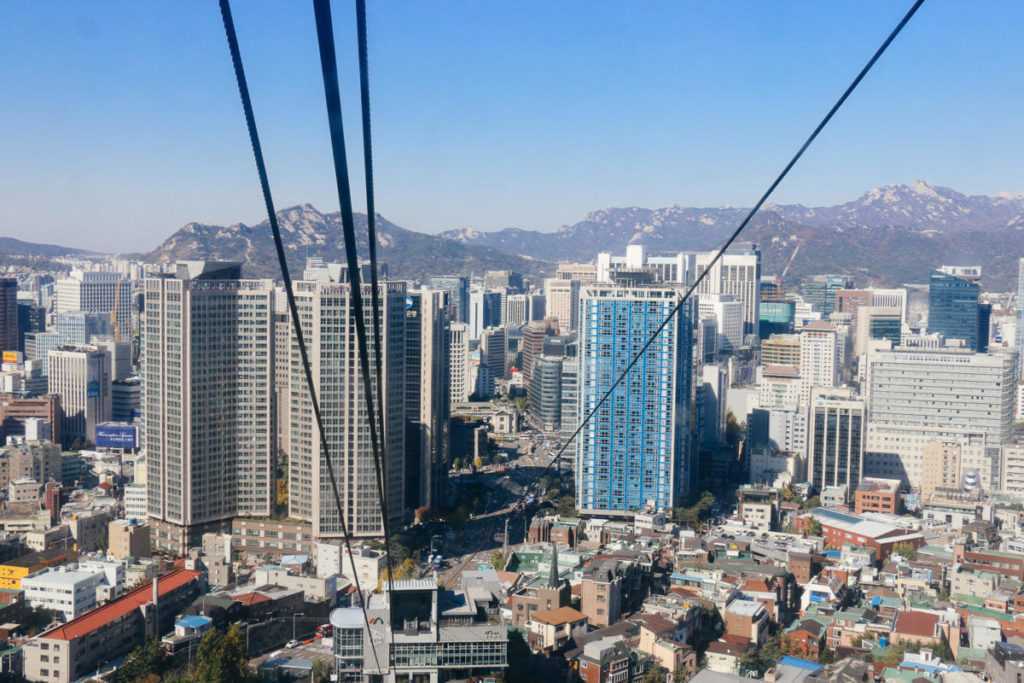
    The N Seoul Tower is located on the top of the highest mountain in Seoul, Mount Namsan. This makes the view from the tower even more fascinating, on clear days you have an incomparable view over the entire city.

    Seoul sightseeing view from Namsan mountain

    You’ll go up first with an elevator, then with a cable car. Or you can hike up in about an hour. The area around the tower is a recreational area with beautifully landscaped gardens, some cafes and stores and a changing cultural program.
    And the N Seoul Tower seems to be the place of pilgrimage for all newlyweds; railings and fences around the tower are covered all over with love locks, creating a fascinating colorful carpet of love locks. So crazy! 98% of the world’s production of padlocks probably ends up near the N Seoul Tower.

    Love locks at Namsan Tower, Seoul
    The railing is no longer recognizable: Decorated by thousands of love locks.

    #2 Gwangjang Market: Seoul’s Famous Street Food Market

    Not for the faint of heart. Mainly a fabric market, there’s also a small but effective street food corner here that will test even the toughest stomach. From dog meat soup to pigs’ feet and snouts, from live squid ready for slaughter to indefinable blood sausages, there’s everything you need to train for your next adventure in the jungle. Personally, it turned my stomach at the live sea worms, a marine animal without eyes looking like guts – that’s nothing for me, not even to look at.

    Otherwise, there are also much more tolerable dishes, soy pancakes made from freshly ground soybeans (very tasty!) or freshly rolled noodles in broth.

    #3 The Palaces

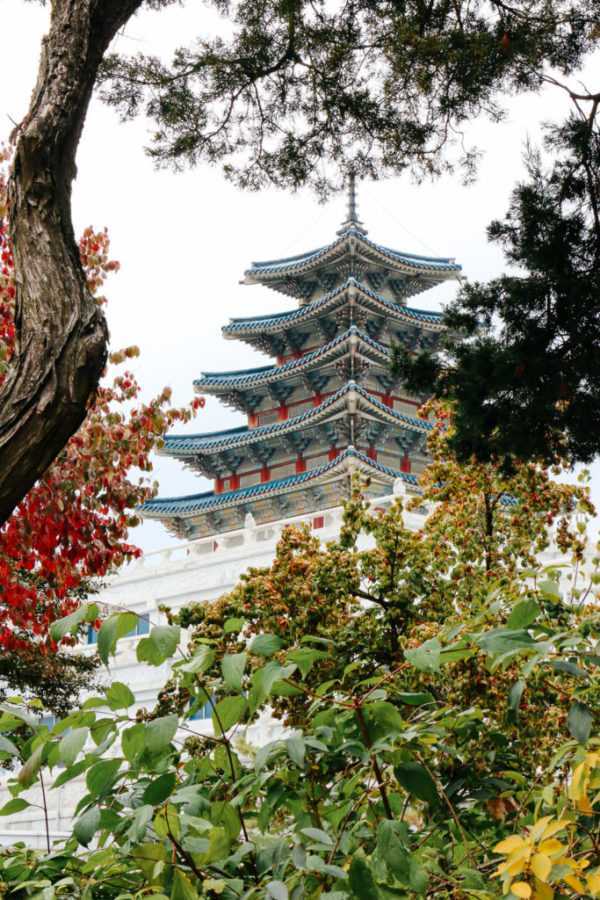
    Seoul has several palaces from the times of the Joseon Dynasty – be sure to visit one of them. The largest is the Gyeongbokgung Palace.

    Gyeongbokgung Palace, Seoul Sightseeing, Korea

    #4 Whimsical Theme Cafés

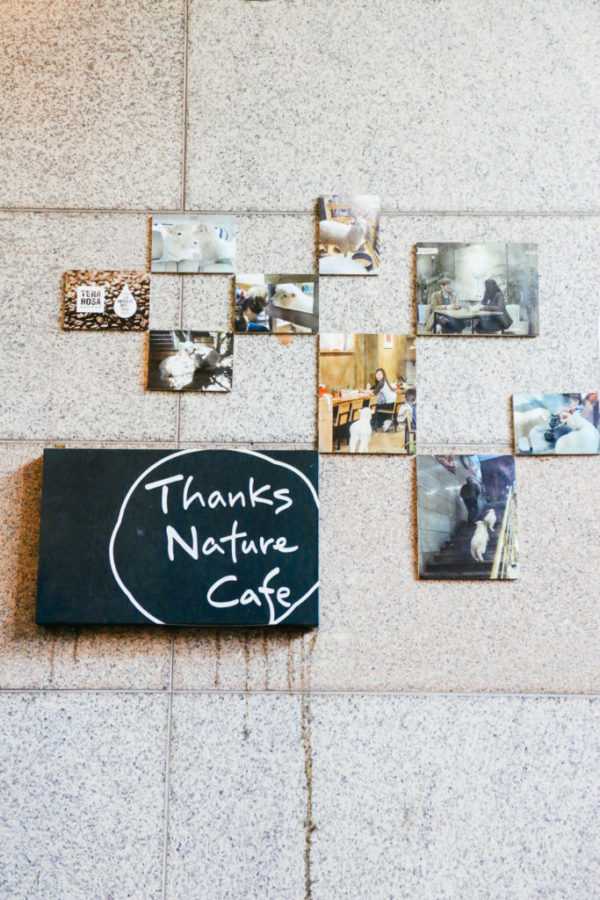
    Koreans seem to love cafés. (Note: bring time, usually the service is rather slow). And quirky cafes in particular. Like the sheep cafe Thanks Nature.

    The two sheep belonging to the café are probably intended to bring alienated city dwellers closer to nature again. Whether the way of keeping is animal-loving and lifelike enough, so on bare concrete in a dark concrete, let’s see.

    Or the Poop Café in Insadong. In this café, everything revolves around poop! Poop piles. Poop piles as a pillow, as a notepad or as a table decoration. Soups are served in small toilet bowls. Yum.

    More travel reports from exciting South Korea

    #5 Seoul’s Public Transportation

    Admittedly, the Berlin subway is no benchmark. But in any subway in Seoul, it’s so much cleaner than at home in my beloved-hated U7. Floors so smooth as glass you could eat off them. And even during rush hour, everyone is calm and disciplined, no crowding, no pushing, no bad vibes. So impressive!
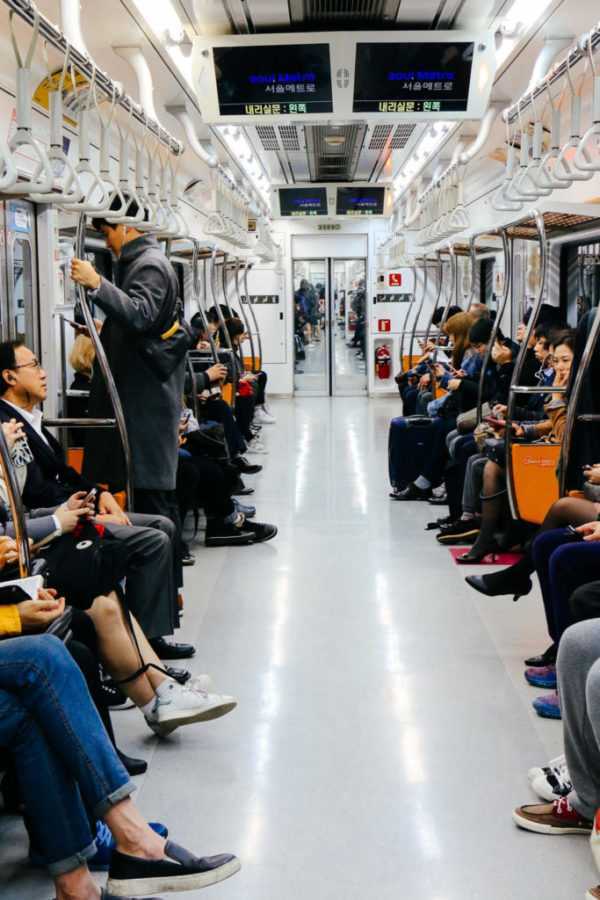
    Metro in Seoul, Korea

    #6 Food: From Bibimbap to Korean Barbecue

    There are two dishes you have to try in Seoul! No visit to Korea without Bibimbap or Korean Barbecue.

    Bibimbap is really just a bowl of rice with fresh vegetables and optional meat on top. Put some hot sauce in, stir it – and in addition, as with everything in Korea: Kimchi. Pickled, fermented white cabbage. Some people swear by it, but I don’t like it. But what the heck, trying is part of it.

    The second famous dish: Korean Barbecue. I have to admit it didn’t blow me away either. At a Korean Barbecue you’ll grill the meat by yourself at the table, and you’ll be served a few varieties of – of course – kimchi and the whole thing is then rolled up with rice together in a thin lettuce leaf(!). In my case, it was a mess! I definitely need some more practice! So I wasn’t that impressed by the Korean Barbecue, but still the experience was worth it! And the atmosphere, which ranged from neon-lit canteen to noisy market hall, was also worth seeing.

    * * *

    More articles about South Korea:

  • Seoul: Gyeongbokgung Palace in autumn

    Seoul: Gyeongbokgung Palace in autumn

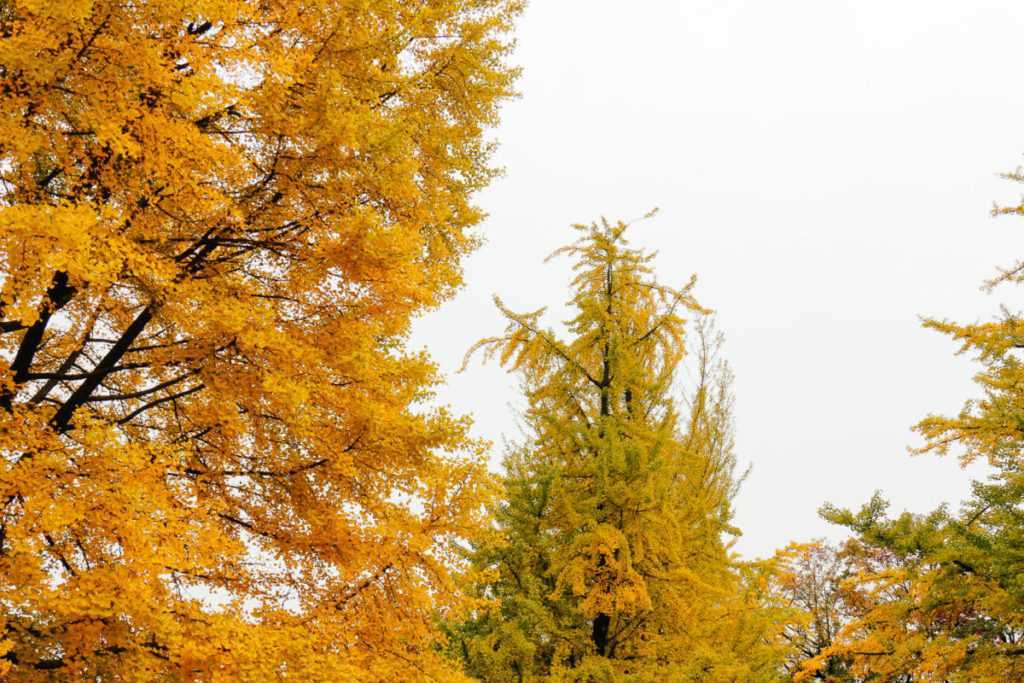
    In the right place at the right time. It is freezing cold, but the day is sunny. And it is just the right, unfortunately far too short phase, when the autumn leaves still shine from the trees in their full color splendor. I wonder if the gardeners of Gyeongbokgung Palace in Seoul planted the trees after that? It almost looks like it, because this cheerful warm mixture of all imaginable leaf colors is unique and too beautiful to be just a coincidence. Or it may simply be because the palace complex itself is very plain. No pomp, no gold, no flaunted wealth. And quite a lot of gray. Modesty is probably something original to Korea.

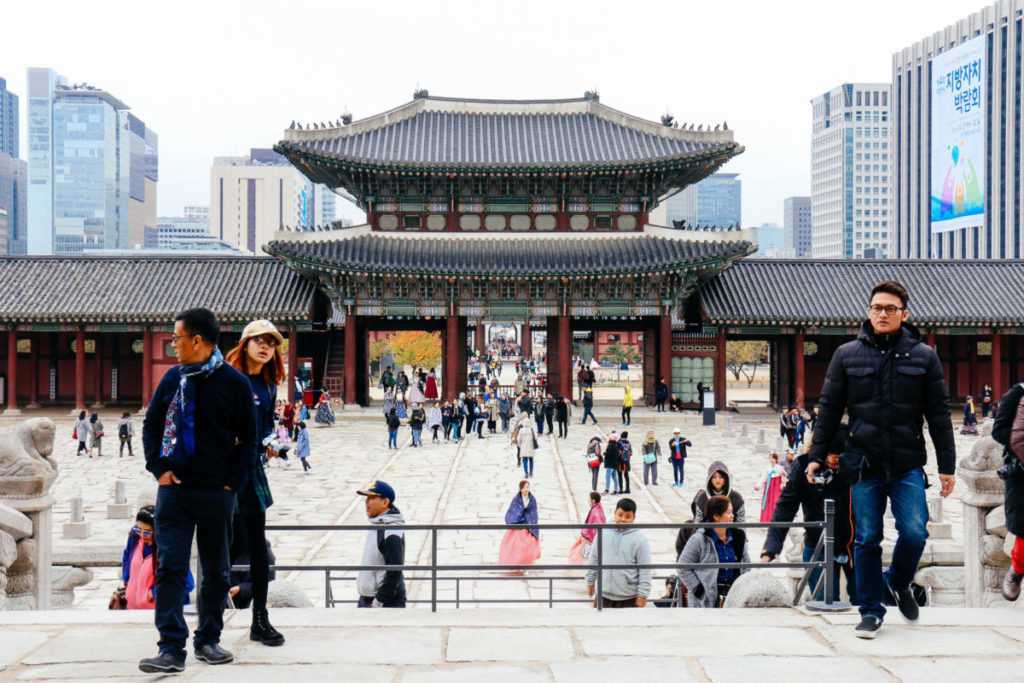
    Main entrance, Gyeongbokgung Palace, Seoul, Korea

    Tradition at Gyeongbokgung Palace in Seoul – or: how to get in for free!

    But not only the sea of leaves around the palace is colorful, but also its visitors: Many young Koreans in the most amazing traditional costumes buzz through the complex, taking selfies or draping themselves giggling in front of their cameras for the most beautiful photo. They also proudly let themselves be photographed with strangers, because Koreans are really happy from the bottom of their hearts when tourists are interested in their culture.

    Girl in traditional costume, Gyeongbokgung Palace, Seoul, Korea

    You can find all the South Korea travelogues here

    No one really knows who came up with the idea of dressing up or what it’s really all about. But everyone’s having fun. And admission is free. Because if you show up in traditional dress, you don’t have to pay to get in! That said, the money saved is usually spent beforehand on a rental fee at one of the nearby costume rental shops—but who cares.

    By the way, I didn’t pay any admission either—I wasn’t even in costume. On my way to the ticket booth, a Korean woman came up to me and pressed a ticket she’d bought by mistake into my hand. Why? Just because. “Take it as a gift. You look so nice. And enjoy Korea!” she said, and ran off happily. What a nice, cheerful people. Seriously.

    Gyeongbokgung Palace, Seoul, Korea

    Information about Gyeongbokgung Palace

    Closed on Tuesdays
    Subway line 3 Gyeongbokgung
    Admission 3000 won (approx. €2.50)
    Free guided tours in English 11.00, 13.30, 15.30 (highly recommended, as otherwise little information is available on site)
    more info here

    Bukchon Hanok Village – an ancient village from the Joseon Dynasty

    Near the palace is also Bukchon Hanok Village, a small, hilly neighborhood with well-preserved houses that dates back 600 years. Despite the crowds of tourists, it’s actually quite peaceful here. There’s a sign on just about every front door asking for quiet—and, fascinatingly, everyone obeys it, moving silently and deliberately through the narrow alleys.

    Downhill view, Bukchon Hanok Village, Seoul, Korea

    In the alleys themselves, there are few, if any, restaurants, shops, or similar establishments. But a little further down, you’ll find charming little streets with the most idyllic cafés. Stop in, have some tea, and lose track of time.

    Information about Bukchon Hanok Village

    About a 15- to 20-minute walk from the main entrance of Gyeongbokgung Palace (
    ) or Anguk Station on Subway Line 3

  • 24 Hours in Hong Kong: The 5 Best Tips

    24 Hours in Hong Kong: The 5 Best Tips

    See Hong Kong in two days: extremely sporty. See Hong Kong in a day and a half: actually impossible. But the typhoon did not mean well with us. A day and a half had to be enough. Far too little for a city like Hong Kong.

    Hong Kong Harbour View Hotel

    Stopover in Hong Kong – my tips!

    Already when looking out of the hotel window (mega! – and kindly with orientation help) it was clear: I will see only a fraction of the city. So big, so fascinating, so versatile, so tropical. I will be back, I am sure of it.

    1st Temple Street Night Market – Food in Hong Kong

    Located in the middle of Kowloon, the market is very easy to reach by bus and train. A typical Asian night market, perfectly adapted to the needs of tourists. From charging cables for the latest iPhone to Chinese tea services and the usual souvenirs, there is everything a tourist’s heart desires. The prices already seemed moderate, but haggling is still worthwhile.

    Restaurant at night market in Temple Street, Hong Kong

    But the really interesting thing are the restaurants around it, partly located in small dark alleys and very simply furnished. Not for cleanliness fanatics and probably not for sensitive animal lovers, because species-appropriate husbandry of marine animals looks different. In front of the restaurants are vats with live animals – waiting to be prepared. The crabs are supposed to be fantastic.

    Hongkong
    water basin with seafood in chinese restaurant

    I’m not a fan of seafood, dead or alive. So the little animals were allowed to continue swimming in their tubs. But the rest was delicious. And the gruff Chinese service make the Hong Kong experience perfect.

    Read more about Hong Kong and China here

    2. try Egg Waffles

    For dessert – typical for Hong Kong – the photogenic Egg Waffles:

    3. by ferry through Victoria Harbour

    Probably one of the most affordable attractions in Hong Kong. You can also take one of the beautiful junks with a tourist program, but quickly crossing Victoria Harbour on one of the ferries is impressive. Especially at night, when the skyline is brightly lit. Costs only a few cents, and always goes.

    4. ride Hong Kong streetcar

    Hong Kong’s streetcars are probably unique: two stories, brightly painted and almost as short as a VW Golf.

    5. shopping and chilling in Stanley

    A bit out of the city center is Stanley, but with the bus line 6 even the trip there flies by. Passing the most beautiful beaches of Hong Kong such as Repulse Bay, along the serpentines between the tropical mountains.

    Repulse Bay, Hong Kong

    Stanley itself is a pretty little town, with cafes and restaurants on a boardwalk and a small mall. Perfect to get away from the noisy city. Stanley is also known for its market – once an insider’s tip for bargain hunters, now more of a tourist market like everywhere else. Anyway, it’s still beautiful.

    You can also take in the Tin Hau Temple in Stanley directly – one of many temples in Hong Kong dedicated to Tin Hau, the patron saint of fishermen and sailors. Beautiful to look at.

    ***

    More about Hong Kong:

    Hong Kong: A Typhoon, the Peak Tram and a Skyline

  • Hong Kong: A Typhoon, the Peak Tram and a Skyline

    Hong Kong: A Typhoon, the Peak Tram and a Skyline

    I’m dealing with natural disasters at the moment. Either they travel after me like they did the other day in Charlotte or they rush ahead of me. The latter then happened in Hong Kong. As a result, the briefing was postponed by a full 12 hours due to a typhoon – dramatically shortening my very first stay in Hong Kong . No matter. Better to arrive behind the typhoon than during it, right? At least I thought so and tightened the sightseeing program for Hong Kong a bit. The nightlife in Hong Kong then unfortunately fell away, no cocktails in rooftop bars or dancing through club nights. But then the most spectacular view ever.

    Hong Kong: Take the Peak Tram to Victoria Peak

    It’s Sunday. The first sunny day after a typhoon. Not a good idea to take the historic Hong Kong Peak Tram up to Victoria Peak – unless you’re not deterred by an hour and a half wait. On other days it is supposed to be better, but unfortunately we had no choice. Thousands of tourists must have held out in Hong Kong during the typhoon, only to be able to continue directly with their sightseeing program on the next possible day and storm Victoria Peak together.

    More Travel Reviews & Tips for China and Hong Kong

    Riding the Peak tram in Hongkong

    Nevertheless: it’s worth it. The ride on the Hong Kong Peak Tram is quite short, but spectacular in places, as it gets so steep that you tend to lie on the wooden benches instead of sitting. Once at the top, there is a large shopping and entertainment center with an observation deck, Sky Terrace 428. It’s called that because it’s 428 meters high. (Who would have thought.) Costs extra, of course, but down at the streetcar station you can buy a combo ticket, save a few bucks and get the most fantastic view of Hong Kong’s skyline in return!

    Breathtaking: View from Victoria Peak in Hong Kong

    The view from the Peak is magical. We spent the afternoon at the top, watching the sunset and marveling at the colorful lights of the city at night. Like in a movie, like on a postcard, like a photo wallpaper – that’s how surreal this view felt. And all the efforts and waiting time for the ascent were forgotten.

    view from victoria peak hongkong
    Hongkong by night
  • What to See in Vientiane, Laos

    What to See in Vientiane, Laos

    Have you ever heard of Vientiane? Neither had I, really, until I planned my trip to Laos. Probably for good reason: Vientiane is simply less spectacular than other major cities in Southeast Asia, like Bangkok or Hanoi. On the other hand, that’s exactly what makes Vientiane so special: it just feels like a big village.

    The skyline of Vientiane: The Don Chan Palace

    Vientiane lacks true skyscrapers, which is unusual for an Asian city. The only exception is the Don Chan Palace, a 14-story hotel that stands out as an architectural misfit in this peaceful city. Interestingly, it is also the tallest building in Laos, although it’s hard to imagine given the city’s skyline. No building in Vientiane can surpass the Patuxai Monument, one of the few prominent landmarks in the city.

    The only skyscraper in Vientiane, Lao

    Vientiane’s must-see attractions

    Vientiane is a small city, which makes it easy to get around. Most of the main sights are close to each other, so you can explore at your own pace and see a lot in just a short time. You’ll still have time to relax with a great Laotian coffee at one of the cozy cafés in the Old Town or try different foods at the night market along the river.

    You can find more inspiration for your Laos trip here

    Patuxai Monument

    The Patuxai Monument resembles the Laotian version of the iconic Arc de Triomphe in Paris, though it was only built in the 1960s. When you reach the top, you’ll enjoy the most incredible view of the city, and the monument itself is quite charming with its many intricate details. Visiting in the afternoon is lovely, especially when the weather is clear and the sunlight makes everything glow beautifully. Just remember to arrive early, as the monument closes at 5 p.m., so you don’t miss out on the experience.

    Patuxai Monument, Vientiane, Lao

    That Luang: The Golden Landmark

    The huge stupa of That Luang is Laos’s most important religious landmark. It’s big, golden, and truly impressive. Though you can’t get very close, it’s definitely worth seeing. The complex is expansive and features some beautiful temples and buildings. The best way to explore the area is by bike, which you can rent easily anywhere in the city. Biking is a fantastic way to enjoy the whole site comfortably.

    Pha That Luang, Vientiane, Lao

    That Dam: The Forgotten Stupa

    That Dam is a large, old stupa located in the middle of a residential neighborhood, now abandoned. Surrounding the square are a few restaurants, making it a pleasant spot to enjoy a quick break from sightseeing.

    That Dam in Vientiane, Lao

    How to Get to Vientiane

    By Bus

    Intercity buses stop at either the northern or southern bus station, both of which are quite far from the city. Afterward, depending on traffic, you’ll need about 45 minutes in a tuk-tuk to reach the city center. Private tourist buses are more convenient; they typically go directly to the Old Town, where most of the city’s hotels are located. City buses operate from and return to the central bus station near Talat Sao, right in the city center.

    Heading north, the bus has become less significant since the railway opened; few people now opt for the winding road to Vang Vieng or Luang Prabang. However, for trips south to Thakhek and Pakse, and for long-distance routes to Hanoi or Hue, it remains the primary choice. Schedules and prices are available on 12Go Asia.

    By Train

    This is the area that has seen the most change since my last visit. Vientiane now features two train stations, each part of a different rail network.

    The China-Laos Railway has been operational since December 2021, starting from Vientiane Station in Don Noun, about 15 kilometers northeast of the city center. From there, you can reach Vang Vieng in just over an hour and Luang Prabang in approximately two hours. Previously, the bus journey to these destinations took about eight to ten hours. The northernmost border station is Boten, where once daily, a through train connects directly to Kunming in China. Tickets are in high demand, especially on weekends and holidays, and can be purchased at the station, through the LCR Ticket app, or at various travel agencies. Note that tickets for departures from Laos are only sold within Laos and are not available for advance purchase in China.

    Since July 2024, there has also been a direct overnight train from Bangkok. It departs in the evening from Krung Thep Aphiwat Station and arrives in Vientiane the next morning—the trip takes about eleven hours and includes border checks handled directly at the stations—you don’t have to change trains. The train arrives at Khamsavath Station, about seven to nine kilometers southeast of the city center.

    A sleeper car typically costs around 30 euros, varying with the class, while a standard seat is much cheaper. Trains operate multiple times daily between Udon Thani or Nong Khai and Khamsavath, making travel especially convenient if you’re catching one of the modern Thai night trains to the border.

    Tip: If you’re arriving by train from Bangkok and plan to continue on to Luang Prabang, you’ll need to arrange an additional taxi or bus ride from Khamsavath Station to the China-Laos Railway station. Allow at least an hour for this trip. Also, you cannot book a through ticket.

    By plane

    The small Wattay Airport (VTE) is located just about three kilometers from the city center; a taxi ride to the Old Town takes ten to fifteen minutes.

    Thai Airways and Thai AirAsia fly from Bangkok; Vietnam Airlines and VietJet fly from Hanoi and Ho Chi Minh City; and Scoot flies from Singapore to Vientiane. In addition, numerous flights to China are operated by China Eastern, China Southern, and other airlines. Within Laos, Lao Airlines, Lao Skyway, and Lanexang Airways operate flights. There are no direct flights from Europe.

  • Bangkok: The Golden Buddha in Wat Traimit

    Bangkok: The Golden Buddha in Wat Traimit

    You’ve probably seen them before: the magnificently decorated temples for which Bangkok is so famous. The Thai capital is home to over 400 Buddhist temples, many of which are absolute architectural masterpieces. Whether magnificent royal temples with golden towers or small hidden sanctuaries in quiet side streets: Each temple gives you fascinating insights into Buddhist culture and Thailand’s long history.

    Bangkok and its impressive temples

    The most famous temples such as Wat Phra Kaew with the Emerald Buddha, Wat Pho with the giant reclining Buddha or Wat Arun on the Chao Phraya should not be missed on any trip to Bangkok. But even lesser-known temples have their very own charm and are often less crowded.

    Check out all the articles about Bangkok right here

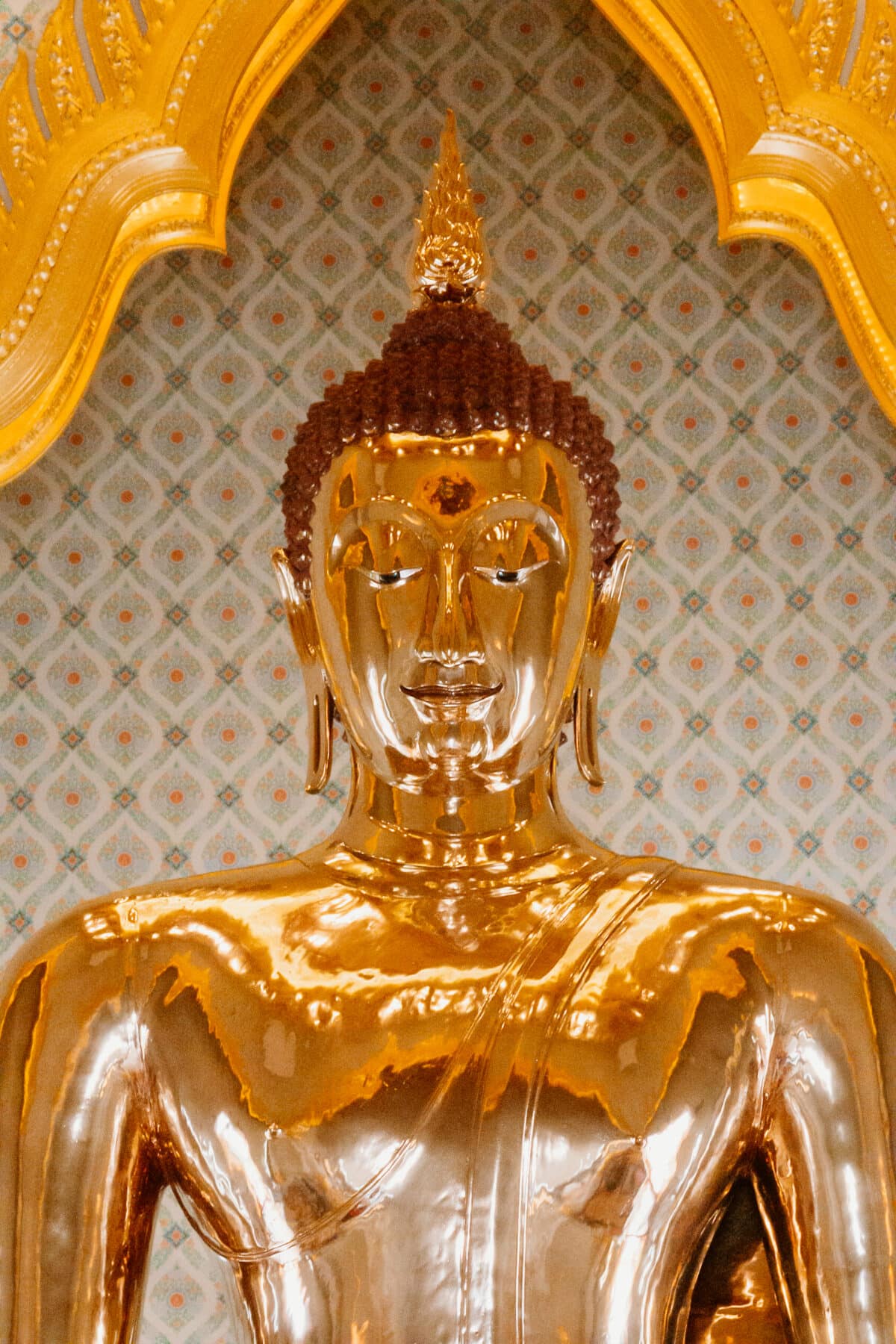
    A particular highlight is Wat Traimit with its legendary Golden Buddha. This temple may appear more inconspicuous from the outside than the large magnificent buildings, but inside it holds an absolutely unique treasure – the world’s largest solid gold statue of a seated Buddha.

    Where to find the Golden Buddha in Bangkok

    The Golden Buddha in Bangkok is housed in the Wat Traimit temple, which can easily be combined with a visit to nearby Chinatown. If you’re looking for a little exercise while sightseeing, there are a few steep steps to climb up to Wat Traimit. Once inside, you’ll find the stunning Golden Buddha, made entirely of pure gold, shimmering and gleaming beautifully.

    Golden Buddha statue in a Thai temple
    The Golden Buddha in Bangkok: made entirely of gold!

    Facts about the Golden Buddha at Wat Traimit in Bangkok

    The Buddha is not only called the “Golden Buddha” – it is actually made almost entirely of gold! Weighing over 5 tons and worth around 250 million US dollars, it stands in the open, without any special safety precautions, in the small temple at the top of the building. Fascinating. Once more, your first impression might be right: first, Thais hold their religion in high regard, and second, theft is heavily disapproved of — making people feel much safer here compared to many other countries.

    Important rules for visiting the temple

    As in all temples, if you want to see the Golden Buddha up close at Wat Traimit, take off your shoes and cover your shoulders and knees. After all, temples are religious sites that should be respected. Even though the weather in Thailand often calls for light clothing, you should refrain from wearing shorts and tank tops when visiting temples.

    You can find more inspiration for your trip in my
    Thailand blog

    However, in Wat Traimit – as in most temples popular with tourists – there is a small clothes stall with scarves and shawls, which you can help yourself to for a small donation. The stall is located right at the top of the temple.

    Golden Buddhist temple in Bangkok with white columns

    Chinatown in Bangkok

    From Wat Traimit you also have a great view of the gateway to Bangkok’s Chinatown, an exciting district that you should definitely visit in conjunction with the Golden Buddha.

    Chinatown is one of Bangkok’s oldest and liveliest districts. The streets are lined with traditional stores, cookshops and gold stores, which are particularly lively and brightly lit in the evenings. Here you can sample authentic street food and get to know the life of Bangkok’s Chinese community.

    Chinese gate in Bangkok's Chinatown with red columns

    Other temples worth seeing in Bangkok

    If a Golden Buddha is not enough, perhaps a private temple tour through Bangkok is something for you! There you will not only visit the temples, but also get a lot of background information:

    Book a tour of Bangkok’s most beautiful temples here*

    In addition to Wat Traimit, there are many other impressive temples in Bangkok that you should not miss. Wat Pho is home to the famous reclining Buddha, which is one of the most impressive Buddha statues in the world, measuring 46 meters in length.

    Wat Arun, also known as the Temple of Dawn, stands out with its striking prang (tower) on the banks of the Chao Phraya River and is a magical sight, especially at sunset.

This site is registered on wpml.org as a development site. Switch to a production site key to remove this banner.