Brazil is a very large and diverse country, so vacation to Brazil needs to be well planned. With my travel tips I want to give you some help so that you are well prepared. On my blog, you will find many helpful travel guides for Brazil!
As half Brazilian, I am there regularly. I’ll show you insights into a very special country full of joie de vivre, nature and charisma. You won’t forget a trip to Brazil!
I developed a fondness for Jorge Amado in Paraty! Not the writer, but the cocktail. (I’ll tell you what the author Jorge Amado is all about afterwards). Few drinks embody the taste of summer, the sea and palm trees so much. If you like caipirinha anyway, you’ll love Jorge Amado as a caipirinha alternative. And so that you too can bring a little bit of Brazil home with you, I have brought you the recipe from Paraty.
With a Jorge Amado in your hand, it’s easier to dream of Paraty.
Tips for a good Jorge Amado
The right sugar
I don’t know why this misconception is still so widespread, but a caipirinha isn’t made with brown sugar. The same goes for the Jorge Amado, which is basically just a variation of the caipirinha. In Brazil, they don’t use brown sugar in caipirinhas!
Conventional white sugar is used, but this is typically always obtained from sugar cane and has a slightly different taste to our household sugar. However, white cane sugar is now also very easy to find here, e.g. at dm or in organic markets. By the way, sugar is not spared: Jorge Amado as well as “normal” Caipirinha are drunk super sweet in Brazil!
The right passion fruit
Brazilian passion fruit is really hard to find in Germany! Unfortunately for me, because I’m really addicted to it. Passion fruit in Brazil is much larger, elongated, yellow, relatively sour and very intense. If you eat too much passion fruit, you will get tired quite quickly, as it has a sleep-inducing effect.
In our latitudes you are more likely to find the small purple ones, if at all. These have less flesh, so you will need to use two fruits for the recipe above.
The main ingredient: Gabriela
Gabriela is the signature cachaça from Paraty. Unlike conventional sugar cane schnapps, Gabriela is also infused with cinnamon and cloves, which makes Jorge Amado particularly aromatic.
Many discos around Paraty produce Gabriela, like here at Pedra Branca.
Outside of Paraty, gabriela is rarely available in stores in Brazil (or here), but thanks to the internet you can have the main ingredient for the Jorge Amado delivered directly to your home!
Jorge Amado: Cocktail from Paraty, Brazil
Wooden mortar
1 lime
1 yellow passion fruit ((if you use purple ones, use two!))
4 cl Gabriela
2 tsp white cane sugar
Crushed ice
Dice the limes and pour into a large caipirinha glass.
Halve the passion fruit, place the flesh in the glass and add the sugar.
Pour over the gabriela.
Crush with a wooden mortar until the juice comes out of the lime pieces.
Fill the glass completely with ice and stir with a long cocktail stick or stirring spoon. Cheers!
Drinks
Brazilian
Cocktail
You can find out more about Paraty, its beautiful old town and dreamlike surroundings with secluded islands and waterfalls in the middle of the jungle here:
Paraty is world-famous for its picturesque old town!
The story behind Jorge Amado
Jorge Amado is one of Brazil’s most important authors. His works are often set in Bahia, are very passionate and deal with social injustice and the Brazilian attitude to life. The book Gabriela like Cinnamon and Cloves* was filmed in Paraty decades ago. Paraty used to be an important center of sugar cane cultivation and still has many disceries today. This is how the special Cachaça Gabriela, a sugar cane schnapps with cinnamon and cloves, was created.
Paraty is located between Rio de Janeiro and São Paulo, nestled in the thick foliage of the Mata Atlântica: a small tropical paradise with a rich historical charm! Quite a few travelers to Brazil simply end up staying in Paraty. The surrounding area offers everything from stunning beaches to jungle adventures among waterfalls and mountain streams—and Paraty’s historic district is magically beautiful!
Romantic and steeped in history: Paraty’s Old Town
Paraty: Relaxation with an Exotic Colonial Flair
Despite the tourism, the Old Town has retained its laid-back character. Time seems to stand still. In the picturesque Old Town, you feel as if you’ve been transported back a hundred years to old Brazil under Portuguese colonial rule.
Are you looking for more information about Brazil? As someone who is half-Brazilian, I’m sure I have a few special tips for you: All articles about Brazil
Praça da Matriz is the heart of the Old Town.Today, horse-drawn carriages carry tourists along the cobblestone streets.
Horse-drawn carriages rattle leisurely over the huge cobblestones (you can leave your high heels at home!) and now take tourists on sightseeing tours. Nearly the entire historic center of Paraty is very well preserved; Paraty has been a UNESCO World Heritage Site since the mid-1950s.
Many of the once-neglected houses have been purchased and restored by wealthy Brazilian businesspeople and public figures. One of these houses is even home to a descendant of Brazil’s last emperor, Dom Pedro II, who lives there right in the heart of the neighborhood, without any pomp or ceremony.
Tip: Every morning, a free walking tour departs from Praça da Matriz and takes you to all the major sights in the Old Town. (Portuguese & English)
There are small bars and restaurants on every corner.
Advertising / *affiliate link
Nightlife & Shopping in Paraty
In the evening, the otherwise tranquil old town comes to life: shops showcase truly beautiful souvenirs; no two stores are alike, and there are so many handmade, original items—from plates to hammocks—that you can’t get enough of them. Paraty has style—no question about it.
Livraria das Marés – A small bookstore with a curated selection, featuring many coffee-table books about Paraty and Rio, as well as English-language literature and a cozy café in the backyard. An insider’s tip!
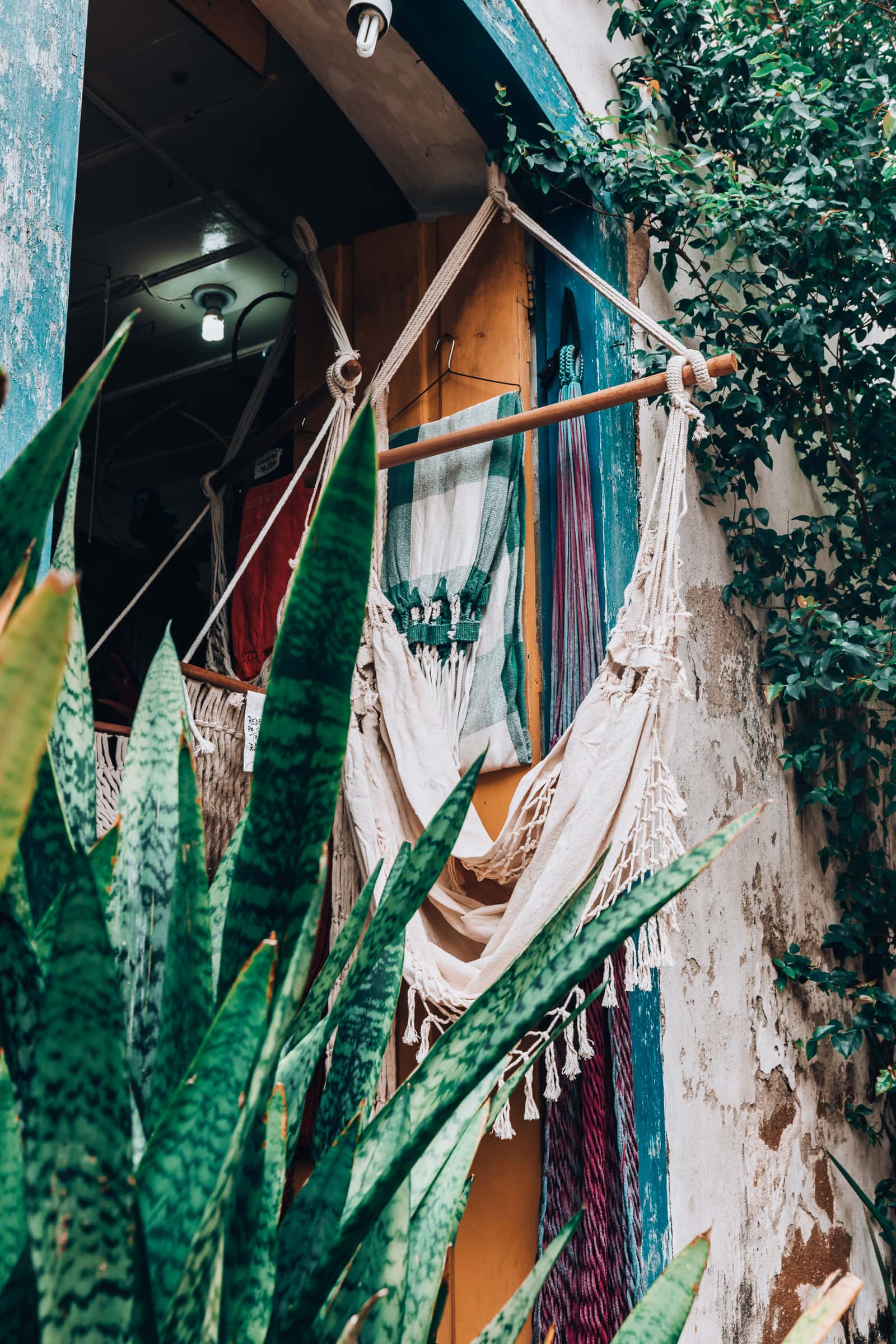
Shopping: Handmade hammocks.
Food & Drink in Paraty
A good meal and a little cervejinha (beer) are a must in Brazil in the evening! Around Praça da Matriz, the central market square in the Old Town, you’ll find many bars and restaurants, but there are also plenty of interesting spots in the cozy side streets. Most venues feature live music every evening; the atmosphere is cheerfully Brazilian and infectious—you can really let loose almost anywhere here.
Café Paraty | Very popular—you’ll have to wait during peak hours, but the tropical atmosphere with laid-back live music makes it worth it! Brazilian cuisine. Recommendation: Picanha (beef steak cut in a special way).
Frida y Diego | A small taqueria with live music in the evening, away from the hustle and bustle of the Old Town, serving Mexican cuisine.
Sabor da Terra | A down-to-earth self-service restaurant serving delicious Brazilian cuisine. Self-service restaurants are very popular in Brazil and offer visitors a great opportunity to sample a variety of typical Brazilian dishes.
Manuê Sucos | It’s technically a juice bar, but it’s open until the evening and offers plenty of fresh snacks like açaí or pão na chapa (toasted rolls with cheese). Good and affordable. It could be the perfect place to work for digital nomads who want to get some work done while on the go—though laptops aren’t allowed.
The following applies to all venues: When there is live music, it is customary to charge a cover charge of 10 to 15 R$ (3–4€) per person.
The historic district of Paraty is full of colorful details.
If you’re feeling a little hungry, there are plenty of street stalls offering a wide variety of dishes, from tapioca (pancakes made from cassava flour) to pasteis (fried pastries). Be sure to stop by one of the many cake carts scattered throughout the old town: Brazilians are true masters of sweets! Try a cocada (fresh, sugared shredded coconut) or a bolo de tapioca: this snow-white, sticky mixture made from cassava flour tastes more like pudding at first, but the sugared condensed milk poured fresh over it makes the dessert perfect.
There’s one name you need to remember: Jorge Amado!
You absolutely have to try a Jorge Amado here—you’ll find it in every bar! Paraty’s signature cocktail tastes like a sweet caipirinha: instead of cachaça, the sugarcane spirit, it uses Gabriela liqueur, which is infused with cloves and cinnamon (cravo e canela). It’s no coincidence: Jorge Amado is one of Brazil’s most famous authors, and his novel *Gabriela, Cloves and Cinnamon* was adapted into a film right here in Paraty. You don’t have to like his books—but after five days in Paraty, I was hooked on Jorge Amado!
But Paraty is so much more than just culture and history: there are so many different places to explore around the town, from the deepest jungle to secluded islands! That’s why most tourists spend their days exploring the area around Paraty. I’ve put together a list of the most beautiful spots for you here!
Trindade
There is a beach in Paraty itself, but the beaches in Trindade are even more beautiful! You can easily get there on your own: A bus leaves for Trindade every hour from the central bus station (Rodoviária). (One-way fare: 5 R$, approx. 1.20€, pay on the bus, get off at the last stop).
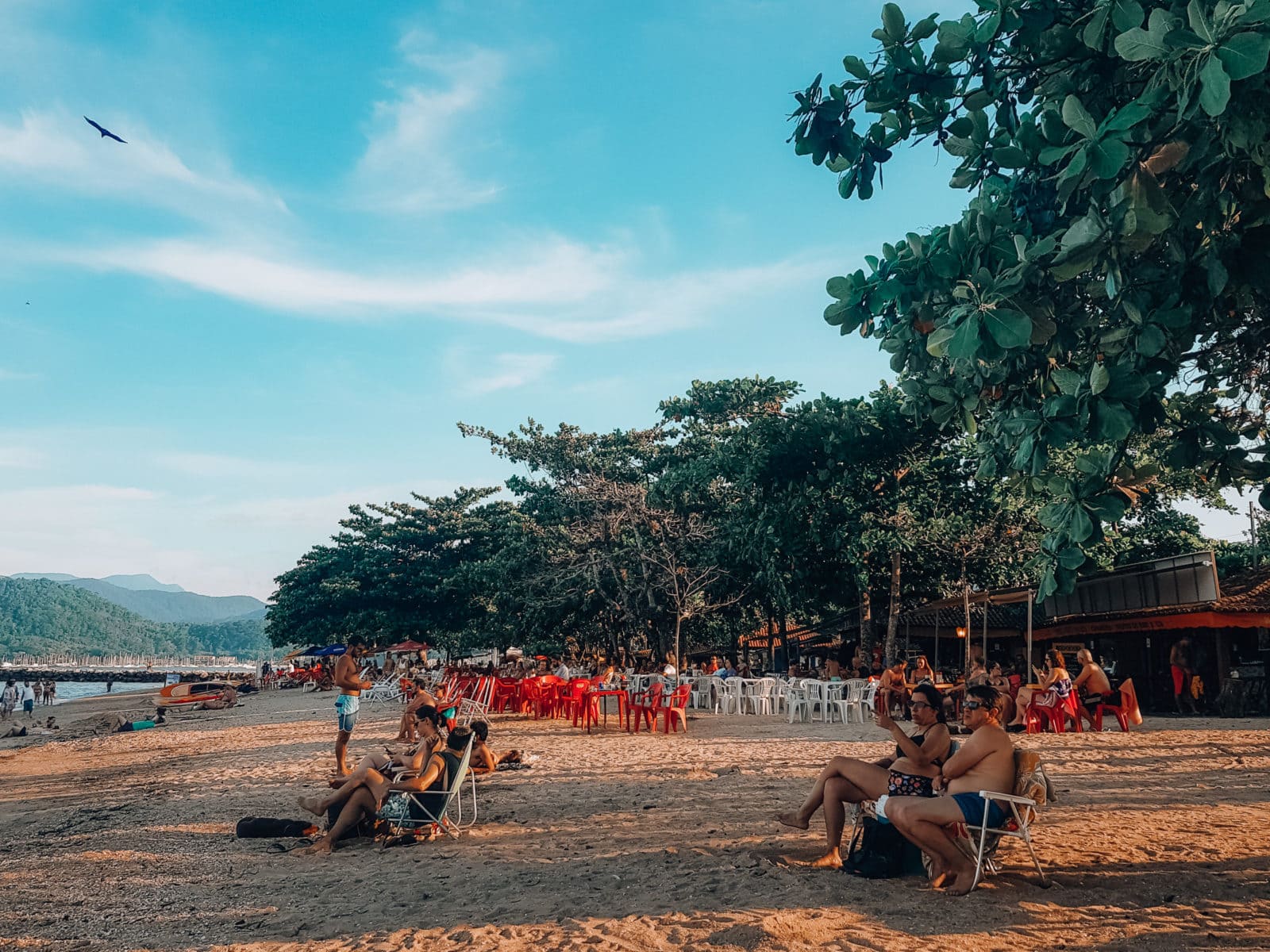
Whether you’re looking for peace and quiet or a party atmosphere, Trindade has something for everyone. At Praia dos Ranchos, you’ll find plenty of bars and restaurants. There, you can use the umbrellas and chairs if you order something at one of the nearby establishments. It’s a typically lively Brazilian spot with lots of music.
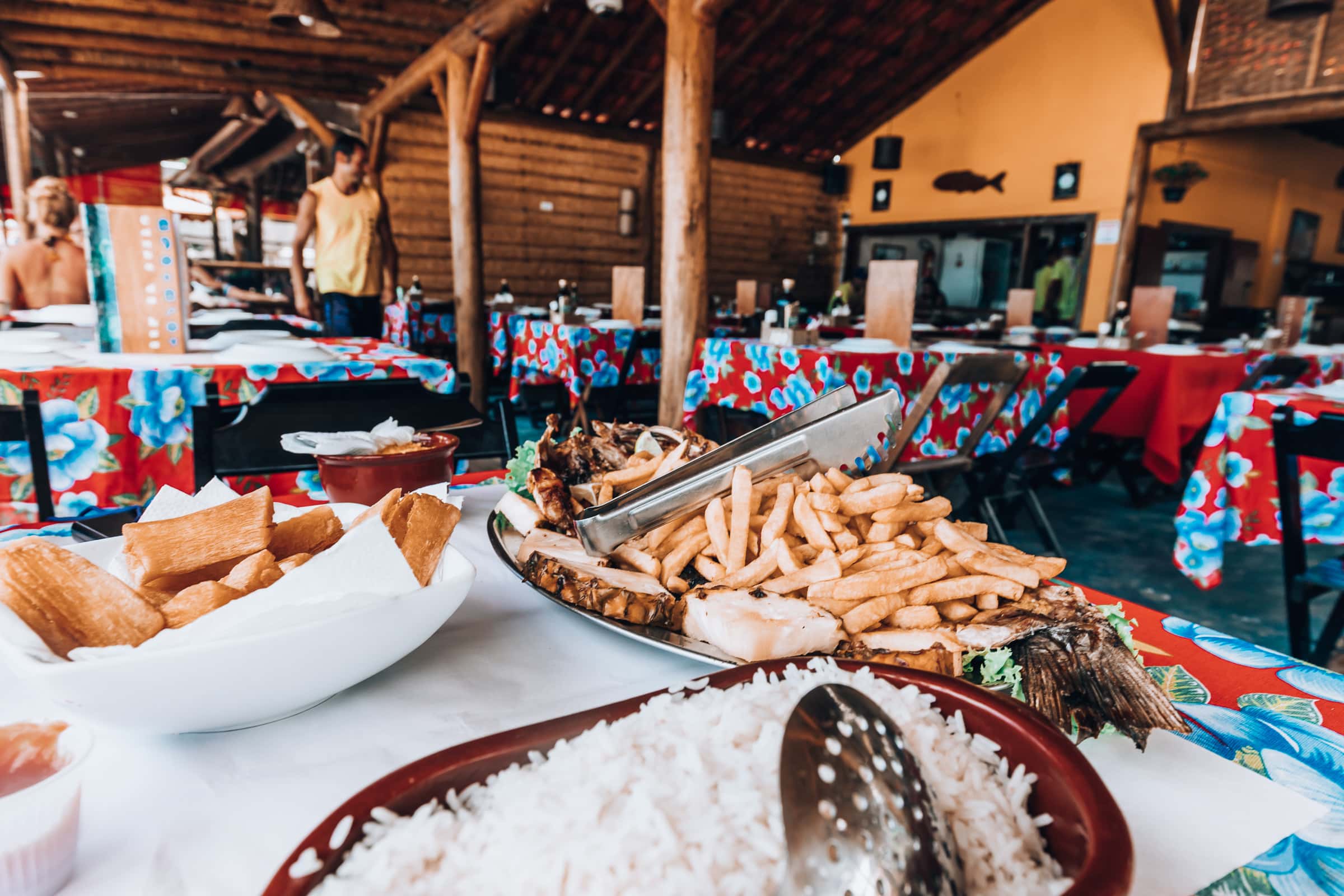
There are also livelier beaches in Trindade.Fresh fish: It’s never as delicious as it is by the sea.
Follow a small path to reach Praia do Meio. Restaurants and beach vendors are not allowed here, as this beach is part of the surrounding nature reserve. The beach is relatively spacious, and the huge rocks are very impressive.
Nature Reserve: Praia do Meio in Trindade.
Waterfalls Around Paraty
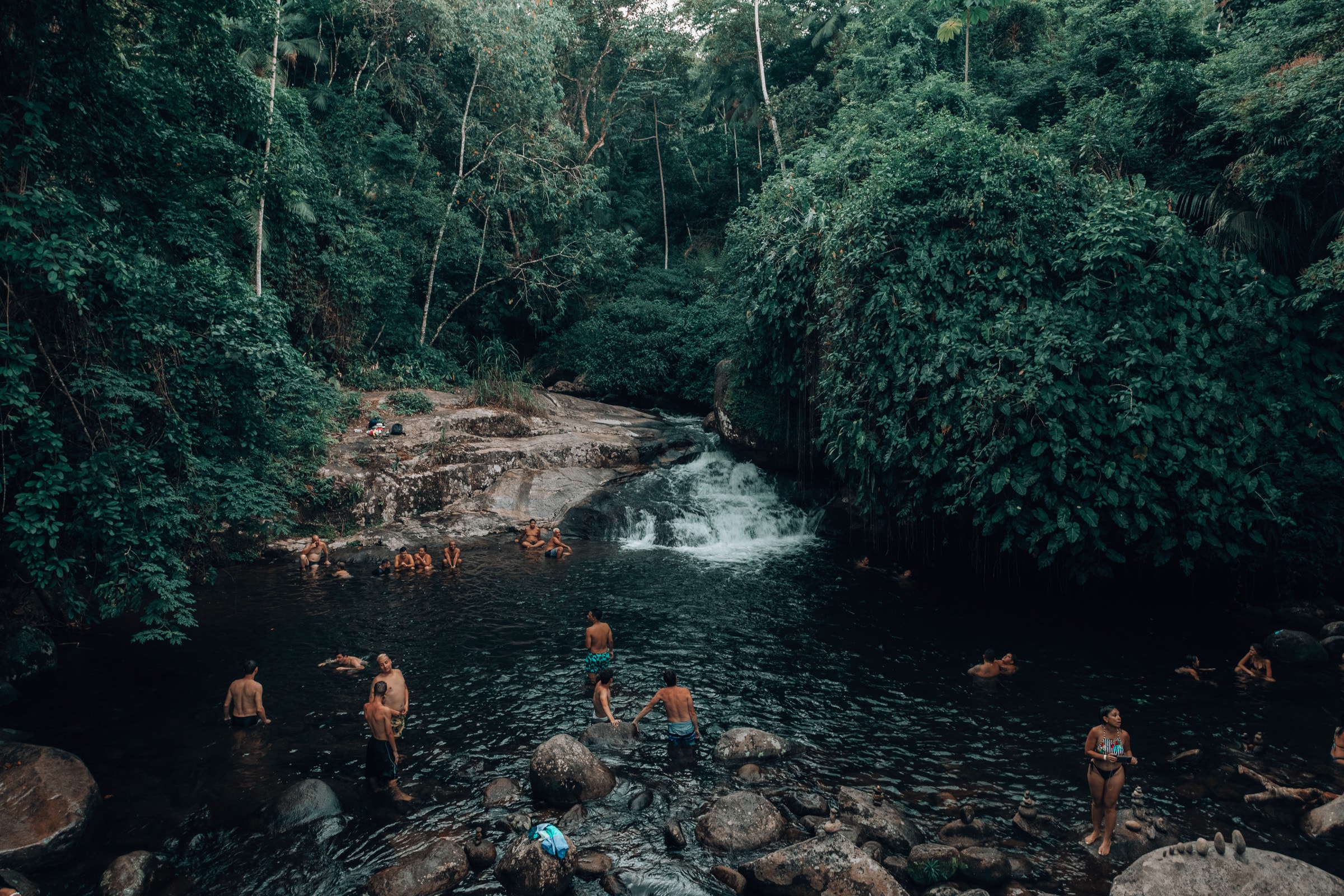
There are plenty of waterfalls in the densely forested mountains around Paraty. One of them is particularly impressive and is simply called Tobogã . In Portuguese, that means “water slide,” and once you’re there, it becomes clear why: on a huge, slippery rock, you can plunge down the waterfall like a killer slide. If that’s too dangerous for you (accidents aren’t uncommon here), it’s best to just watch the local kids, who’ve already perfected their daring stunts—my jaw dropped.
At Poço do Tarzan (Tarzan’s Pond) further up, you can safely wade into the water and feel a little like Tarzan taking a dip. Just remember, though, that you’re in the middle of the jungle: don’t forget your bug spray!
Swimming like Tarzan: The waterfalls around Paraty are breathtaking.
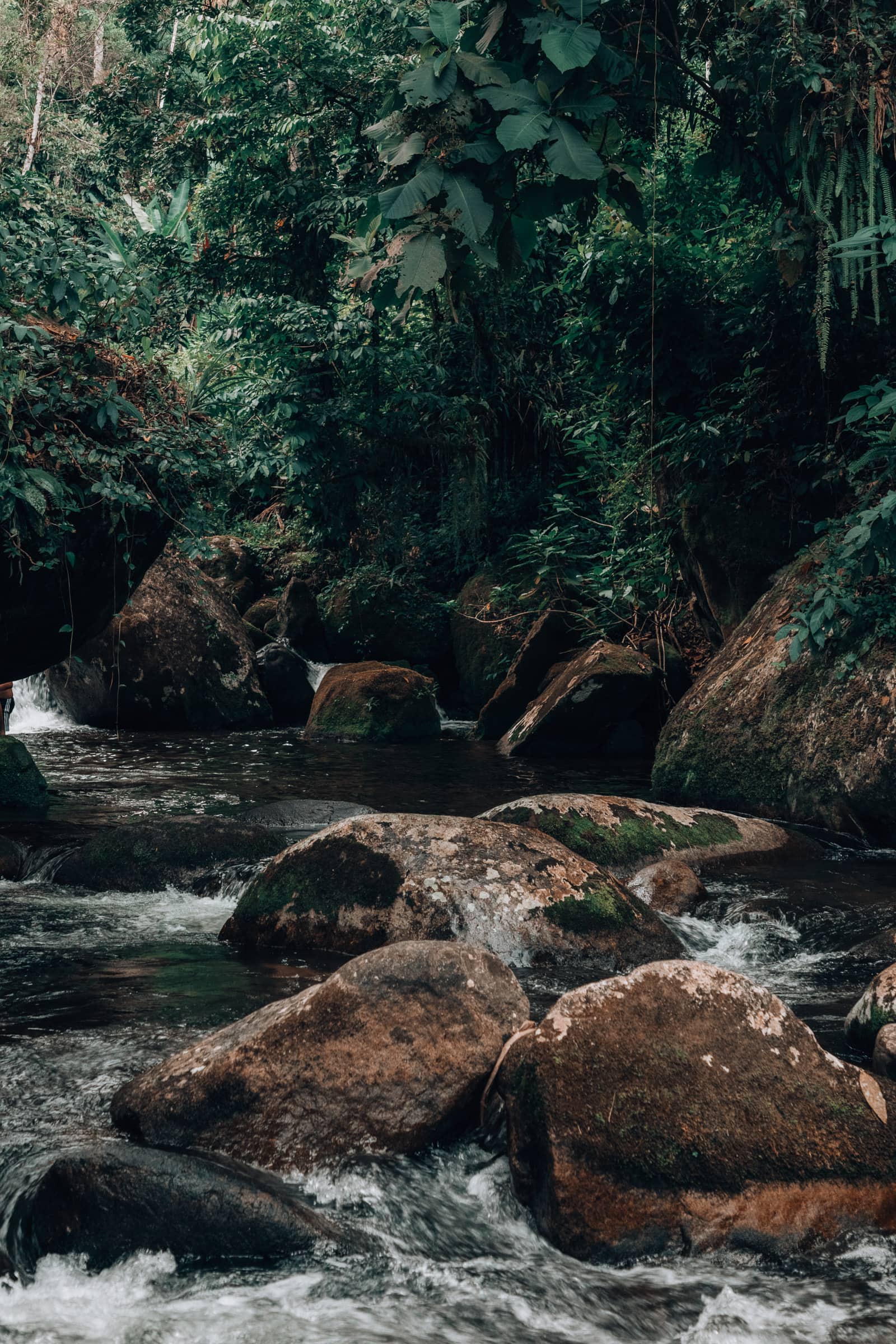
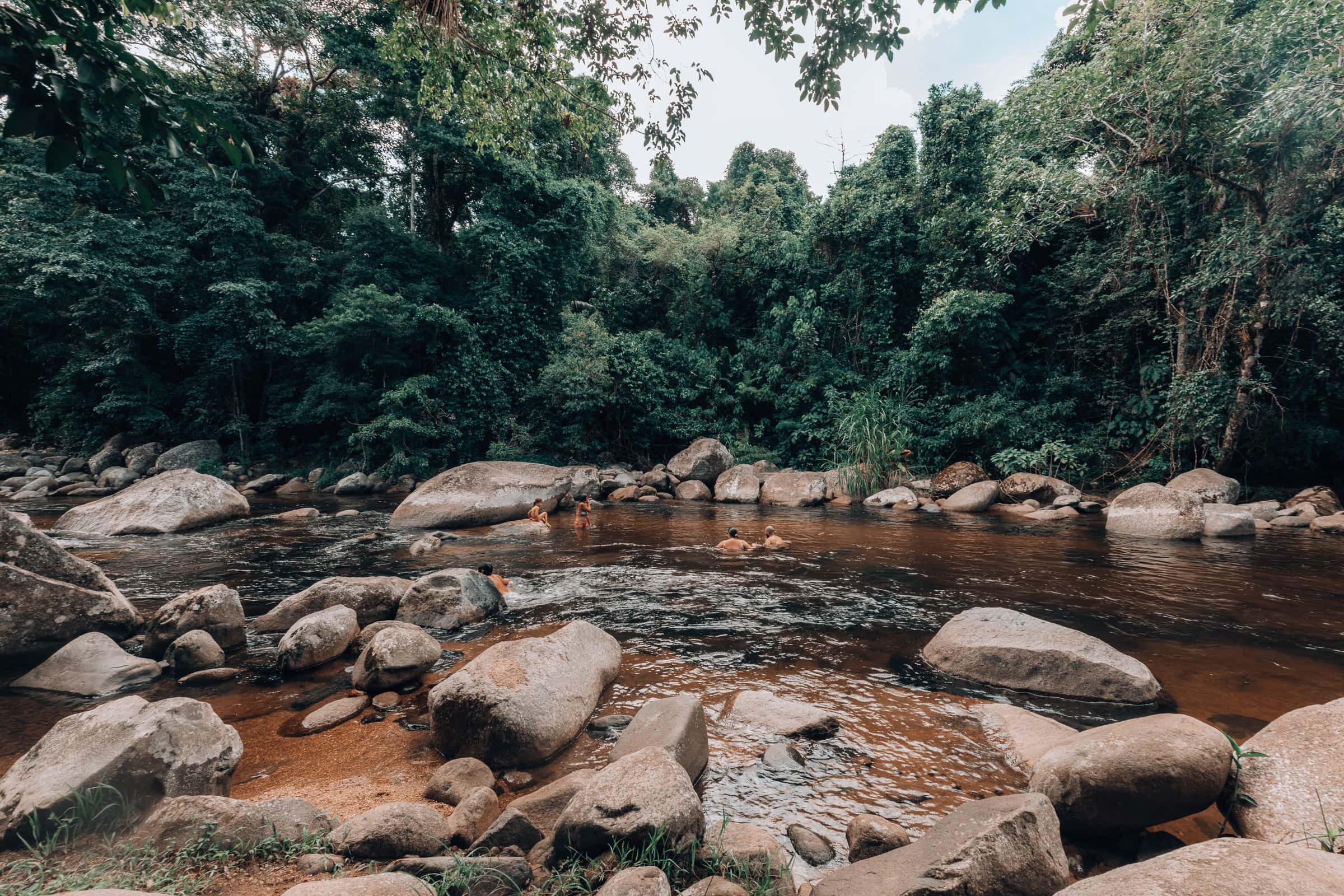
Right next to the Vila Verde restaurant, guests will find one of the most beautiful swimming spots: Here, you can take a dip in a cool mountain stream, far away from the hustle and bustle! The water may be cold, but it’s crystal clear—pure nature! If you’re visiting the restaurant as part of an outing, you don’t have to eat there—you can just relax and enjoy nature!
All kinds of exotic plants grow in the Vila Verde garden.Perfect for a cool refreshment during the hot temperatures of the Brazilian high summer.
The best way to visit these places is on a guided jeep tour! I recommend Paraty Tours—the organization was great, and their Land Rover jeeps were nicer than the competition’s, whose passengers had to sit in stuffy cars 🙂
(Don’t let the reviews get to you—during our long lunch break, we just relaxed, floating down the mountain stream and enjoying our picnic!)
By Boat Around Paraty
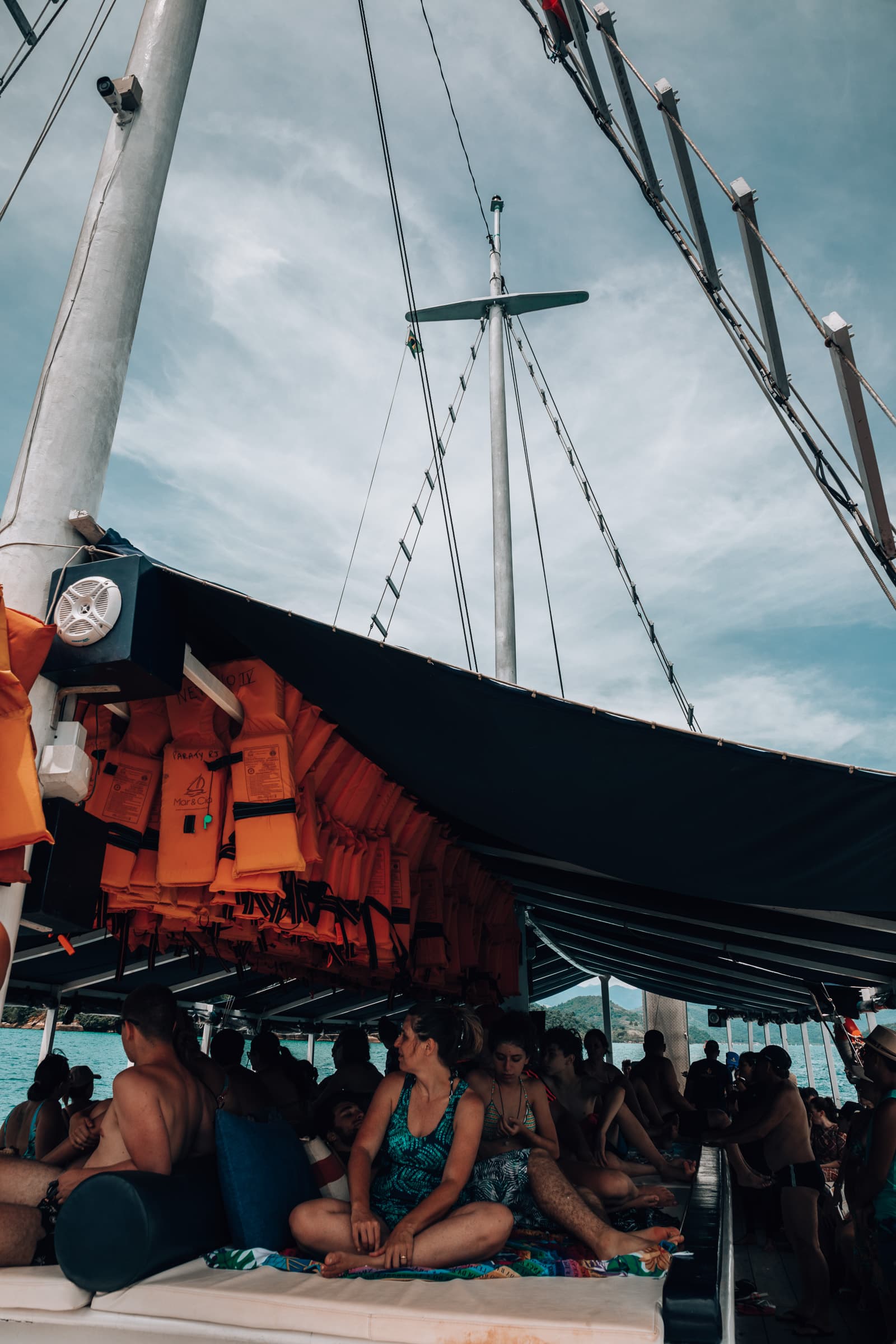
You definitely shouldn’t miss a boat trip either! For one thing, you’ll get to meet Brazilians on vacation (spoiler: they’re even more exuberant than usual!), and for another, you’ll get to see the beautiful islands around Paraty. If you choose a “Passeio de escuna,” it’s a larger boat, usually with a full kitchen and bar on board.
Turquoise-blue water & sunshine: You can reach the islands in Paraty Bay by taking a boat tour.
If you get there early, you’ll get the best spots. You’re welcome to bring your own food, but it’s not absolutely necessary. The trip lasts about 4–5 hours; we’ll stop at beaches, there will be opportunities to swim (I love jumping right into the water from the boat), and plenty of music. And, of course, Jorge Amado!
The swimming spots are great for snorkeling. However, equipment is only available on board for a fee, and it’s not that great, so it’s better to bring your own if you want to snorkel!
Where to Stay in Paraty
Location is everything in Paraty! The best spots are actually near the historic center! There, you’ll enjoy an idyllic stay right in the heart of it all. Praia do Pontal, just a few minutes’ walk from the center, is also a great place to stay—and it comes with that laid-back beach vibe to boot.
It’s often cheaper to stay outside the city, but everything interesting is farther away, and the newer neighborhoods aren’t necessarily that pretty either. So it’s worth spending a little more!
How do you get to Paraty?
Traveling by Bus
Paraty is located between Rio de Janeiro and São Paulo; you can reach both cities by intercity bus. Paraty does not have a commercial airport. The trip takes about 4 hours in either direction, and a one-way ticket costs around 80 R$ (approx. 20 €). The buses are comfortable, but they often don’t have Wi-Fi or USB charging ports.
Bus Station in Paraty
The bus station in Paraty is located relatively centrally in the city, and you can reach many accommodations on foot from there. If you have a lot of luggage or need to go farther away, just take a taxi from the taxi stand—it won’t cost an arm and a leg. Uber isn’t available in Paraty (yet).
Buying Bus Tickets in Brazil
In Brazil, you can always buy tickets directly at the bus stations. It’s best to take care of your tickets a little in advance. Intercity buses are a popular mode of transportation in Brazil, and especially for destinations like Paraty, they can get quite crowded during peak travel season or on weekends.
But so you don’t have to make a special trip to the station (in Rio, for example, the Rodoviária/bus station is relatively far from downtown), I recommend buying your tickets online at Clickbus*. You can often get an additional discount there.
Clickbus* is the largest ticket platform in Brazil, and most bus companies are listed there. (Note: With some bus companies, you have to exchange your online tickets at the ticket counter.)
The bus station is centrally located in Paraty, near the Old Town.
Where to go next from Paraty?
Paraty, for example, is a popular destination from Rio de Janeiro. On the way there, you can also stop at the beach resort of Angra dos Reis or take a ferry to Ilha Grande —a paradise for nature lovers.
Advertising / *affiliate link
Helpful Tips
Avoid the peak travel season between Christmas and Carnival: Prices go up and accommodation options become scarce!
On the topic of safety: While it’s generally a good idea to be cautious here as well, Paraty is actually a very laid-back place. I never felt unsafe at any point—quite the opposite, in fact.
Don’t forget mosquito repellent—the strong kind with DEET—if mosquitoes love you as much as they love me! You can find good repellents at any local pharmacy.
In Brazilian Portuguese, “Paraty” is pronounced “Pa-ra-tschie” 😉
Búzios is actually called Armação dos Búzios, but among Brazilians the popular resort is simply called Búzios. There you will find some of the most beautiful beaches in Brazil! When the weather is nice, many Cariocas from Rio de Janeiro are drawn here.
So if you’re ever in Rio, I highly recommend a trip to Buziós! In only three and a half hours by car you can reach unforgettable dream beaches. I’ll show you the best locations, sights and give you some tips for a great vacation in Brazil!
Fishing boats on the Orla of Buzíos
Armação dos Búzios: Beaches & Brazilian Lifestyle
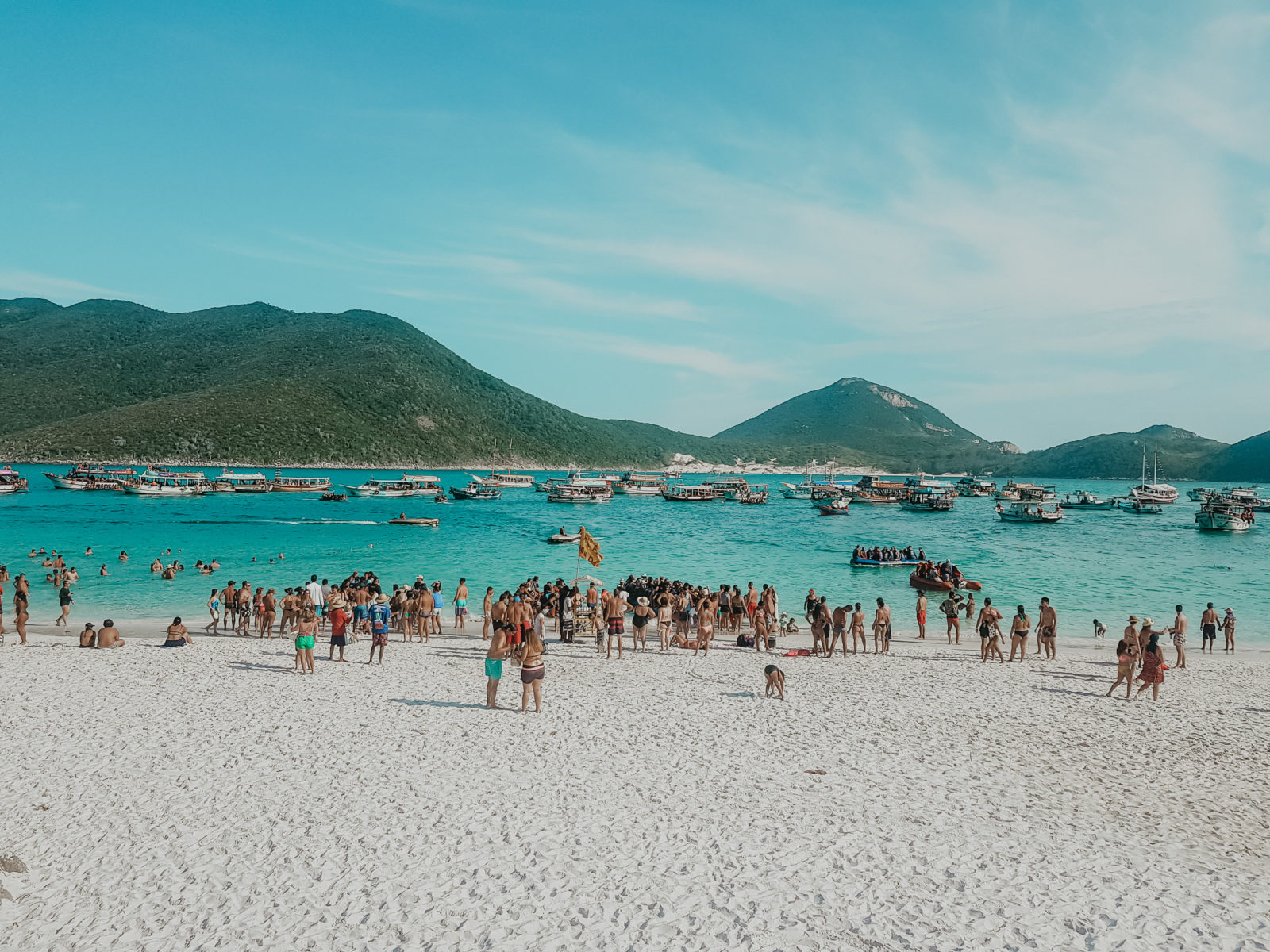
Búzios is located on a peninsula and has more than 20 beaches, each more beautiful and unique than the other. While the water on the beaches in the north is calmer and warmer, the beaches in the south are wider, the water temperature is colder and the waves are rougher. Depending on your mood, you can choose busy and less busy beaches: On some beaches one beach hut follows the other, on others you are relatively alone.
Praia de Geribá
One of the wilder mega beaches in Buzíos. Relatively natural and wide, but with many small beach stalls that rent umbrellas and chairs and sell small snacks. In the high season very well visited to full, but also the perfect opportunity to experience original Brazilian beach life. The water here is a bit colder, the waves higher, but the beach falls relatively shallow into the water, so even children and non-swimmers can have fun here.
Praia de Manguinhos
Very quiet, with some nice bars on one side, nothing but a few fishing boats on the other. If you are looking for total peace and quiet, this is the place for you! Here, by the way, you can also stand-up paddle well and with luck you can even see a few large sea turtles swimming past from the board! Otherwise, the water is not suitable for swimming in all places; there are probably also a few sewage land here, but that is unfortunately not uncommon in Brazil.
For those who like it quieter, Praia de Manguinhos is the place to be.
Rua das Pedras
It’s all night on the Rua das Pedras! Between chic boutiques and simple restaurants, everything squeezes on the famous pedestrian street in the center of the former village. You stroll, walk, have dinner or just a little drink – but the evening trip to Rua das Pedras is a must.
More desire for Brazil? You can find all articles in the ➜ Brazil Blog
Rua das Pedras is rarely this empty in the evening. After sunset life is raging here!
The Orla in Búzios and Brigitte Bardot
At the end of Rua das Pedras you reach Orla, the beach promenade of Armação dos Búzios. Despite the many tourists (especially in the high season between Christmas and Carnival), the atmosphere here is particularly cozy in the evenings. Small fishing boats are still anchored here in front of the narrow promenade of natural stone, the view wanders over the quiet bay. One place is always particularly busy: everyone wants to have their picture taken with the statue of Brigitte Bardot!
Until the sixties, Búzios was a really sleepy fishing village, no trace of tourism! Until Brigitte Bardot showed up here in 1964, in tow with her then-boyfriend Bob Zaguri. Fed up with the hype in Rio de Janeiro (such a world star at that time in Brazil, that was an event!) they fled to the then unknown Armação dos Búzios – the reporters after them and suddenly everybody knew Buzíos. Therefore, until today, Búzios is called the “Saint-Tropez of Brazil”. In fact, the atmosphere here is similar; to this day, the rich and famous of Rio and Brazil meet in Buzíos.
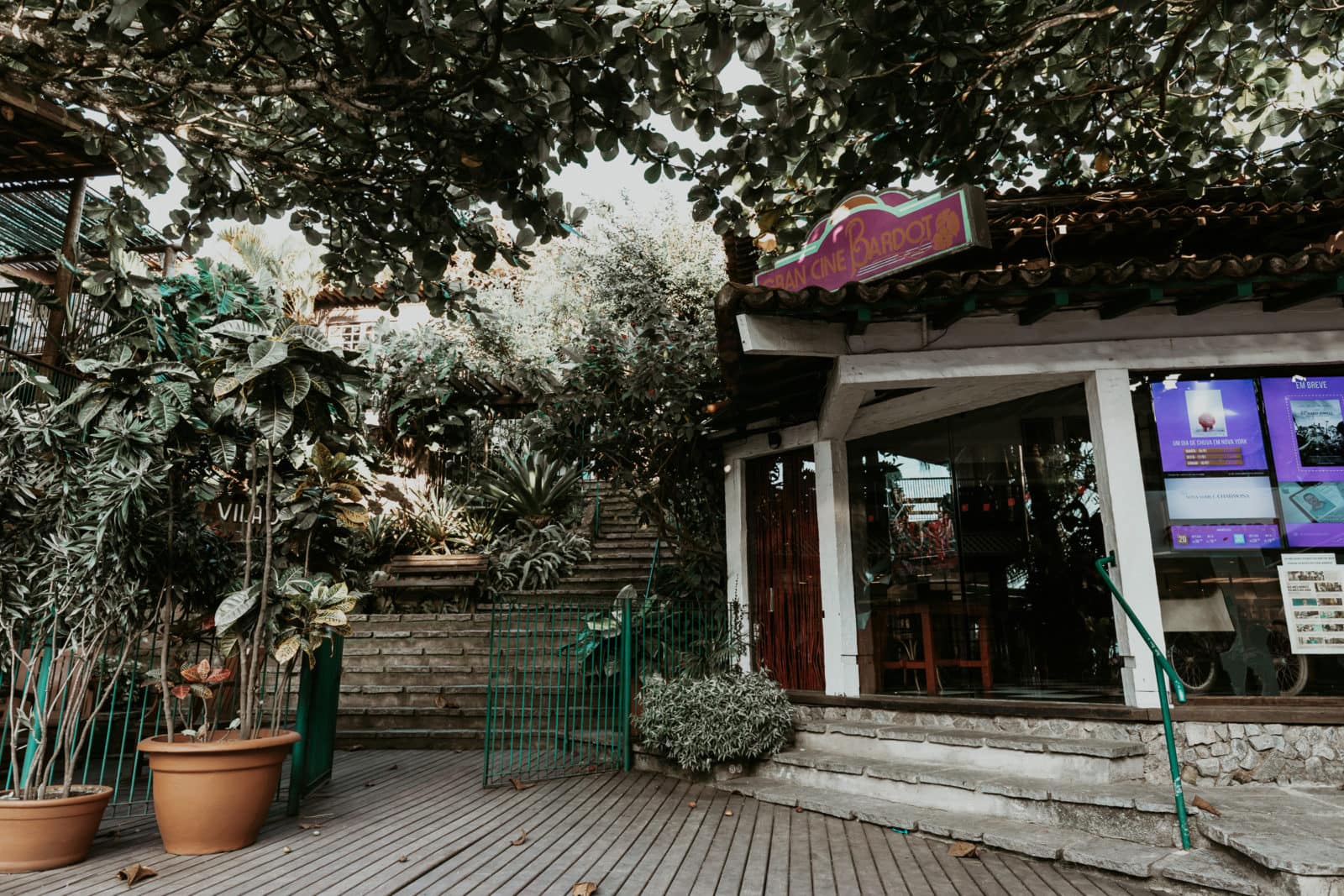
Directly on the promenade in Búzios: The restaurant La Bardot.Rather untypical for Brazil: There is even a small art house cinema, “Gran Cine Bardot”.Still a bit the romantic fishing village of yesteryear: the Orla Brigitte Bardot.
Practical tips for your stay in Búzios
Arrival | Plane, Bus, Shuttle Service & Tour
From Rio de Janeiro it is only a three and a half hour drive to Búzios. From Rio you can also book day trips by car, van or boat, but in my opinion it is not worth it.
If you have the time, organize transportation separately and spend several days in Búzios!
There are plenty of shuttle services that go directly to Búzios from Rio’s Galeao International Airport or from neighborhoods like Copacabana or Ipanema.
Just as convenient (and cheaper), however, are the intercity buses that depart either from Rio de Janeiro’s central bus station (Rodoviária) or from Galeão Airport. There is no airport for scheduled flights in Búzios.
From Búzios you can also reach the beaches of Arraial d’Ajuda by day trips.
Best time to travel | May to August
I was in Búzios in January, right in the middle of Brazil’s peak tourist season. However, trips in the low season, e.g. from May to August, are more recommended. Then the prices are lower, the weather is dry and warm. During the peak tourist season from Christmas to Carnival, prices rise, accommodations are often fully booked, beaches and the town itself are crowded. In addition, there can be rainy days every now and then due to the rainy season.
Accommodation in Búzios
Tip: Look for a small pousada (guesthouse). Pousadas are usually very small, family run and communicative. There you always quickly find a connection, even among the other guests. Most of them also offer breakfast, usually very rich with fresh typical fruits like papayas, pineapples or watermelons and many sweet treats, often homemade.
There are pousadas for every budget, from simple to luxurious. I can recommend the Blanca Hostel*(don’t be put off by the “hostel”, there are also nice, simple double rooms), very close to Praia do Geribá and with bus or Uber you are quickly in the center.
As in Rio, Uber is always a good and safe choice to get from point A to point B. However, public buses also run regularly and are cheaper. Tickets are available on the bus. In addition, so-called vans, privately organized lines, stop at the bus stops, but you can take them without any problems. Payment is made directly to the driver when boarding or disembarking.
A walk along the Orla River in Buzíos is a must, from there many small boats also depart for individual tours.
Security | Crime & Women traveling alone
Even though Búzios is very close to Rio, you will quickly notice that the mood regarding public safety is quite different here. In Rio you are often warned of somewhat unsafe corners, general attention is in order.
In Búzios, however, the situation is much more relaxed, there is little sign of crime and after a visit to Rio, Búzios is a real boon in this respect.
Women traveling alone can move around here (and, in my opinion, the rest of Brazil) without any problems and do not have to take any different precautions than men, couples or friends traveling together.
Many Brazilians vacation in Buzíos with the entire family or you go here in a large group of friends: be just as open-minded and you’ll make friends right away! Brazilians are very communicative, open and like to accept strangers into their group!
* * *
Looking for more tips about Rio de Janeiro and Brazil?
Copacabana, Sugarloaf Mountain, beaches —these are probably the first images that come to mind when you think of Rio de Janeiro. And rightly so, because no trip to Rio is complete without visiting these places! However, Rio de Janeiro is so much more than that: the artistic neighborhood of Santa Teresa, for example. Perched on a hill, Santa Teresa feels almost like a completely different world. Santa Teresa has always been a magnet for artists and creative types in Rio de Janeiro. In this article, I’ll tell you what else makes Santa Teresa so interesting.
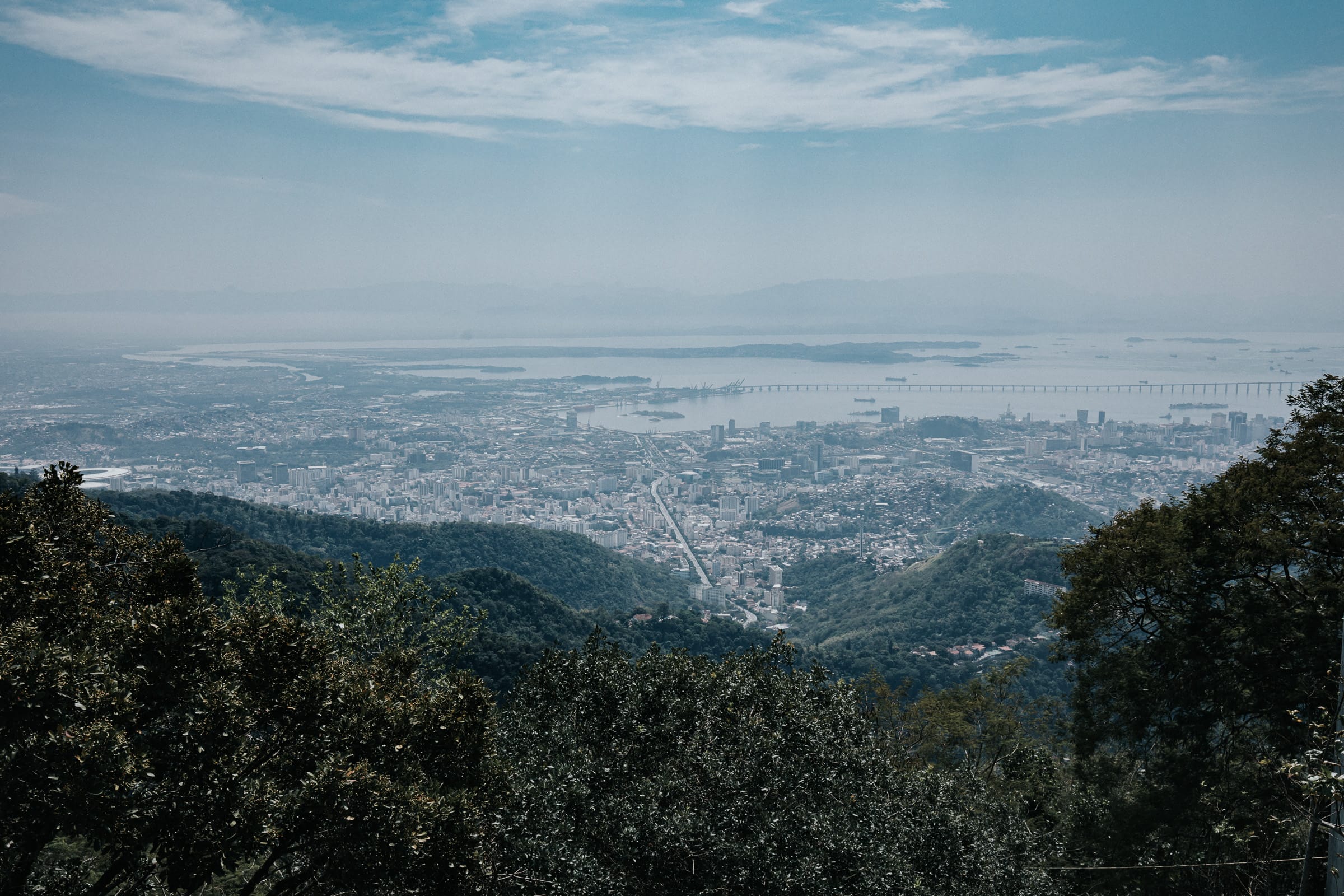
View from Santa Teresa
Santa Teresa: The creative hotspot in Rio de Janeiro
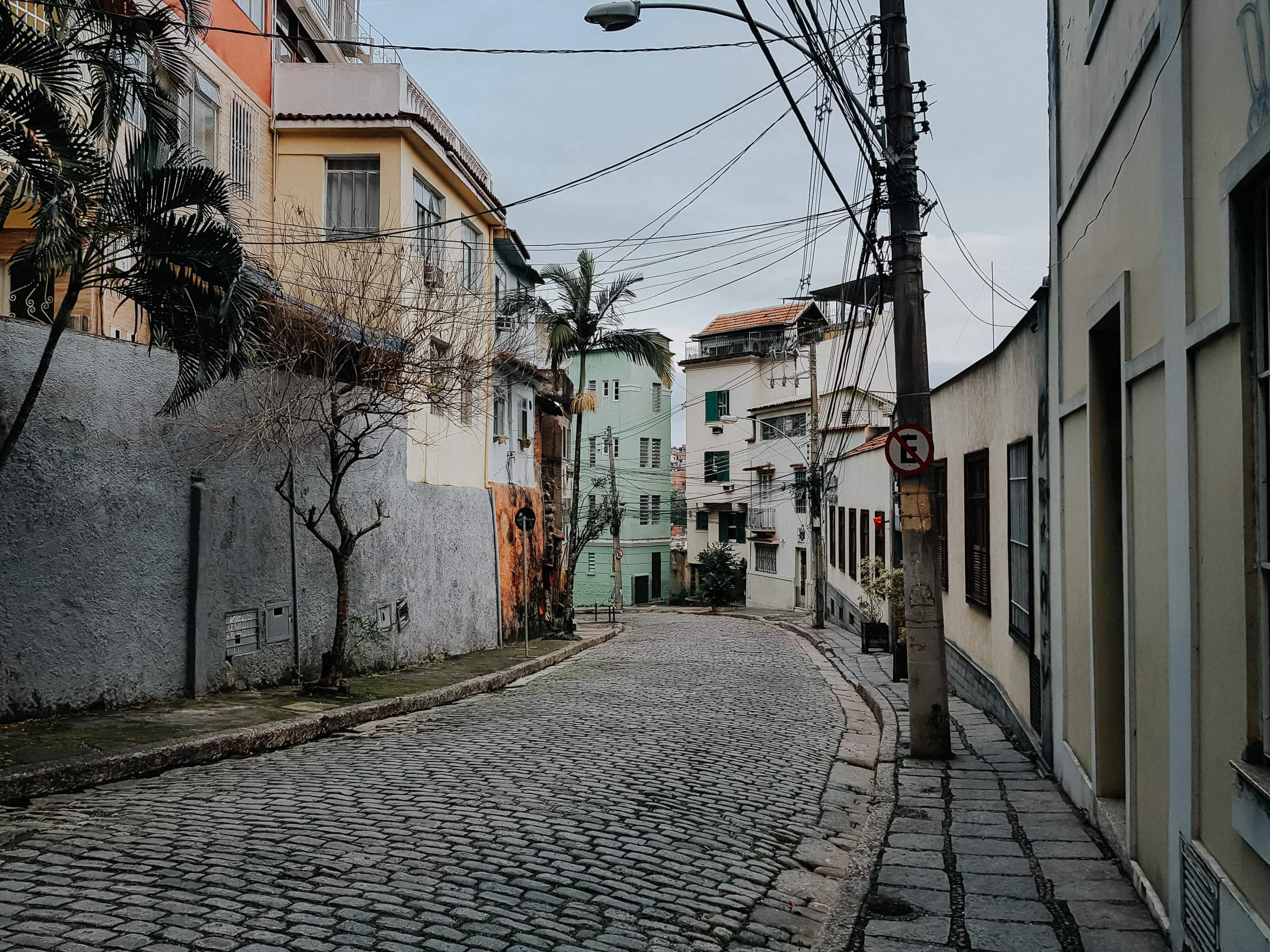
Santa Teresa is one of the older districts of Rio de Janeiro. The European immigrants who settled here at the beginning of the last century also brought their different architectural styles: There are impressive city villas in all kinds of styles all over the place. Santa Teresa is also located on one of the many hills in Rio. Therefore, from many houses, you have a great view over the city. For a long time, Santa Teresa was a neglected part of Rio de Janeiro – until it was rediscovered by many creative people and artists in the last years! Today I consider Santa Teresa to be one of the most exciting parts of Rio de Janeiro!
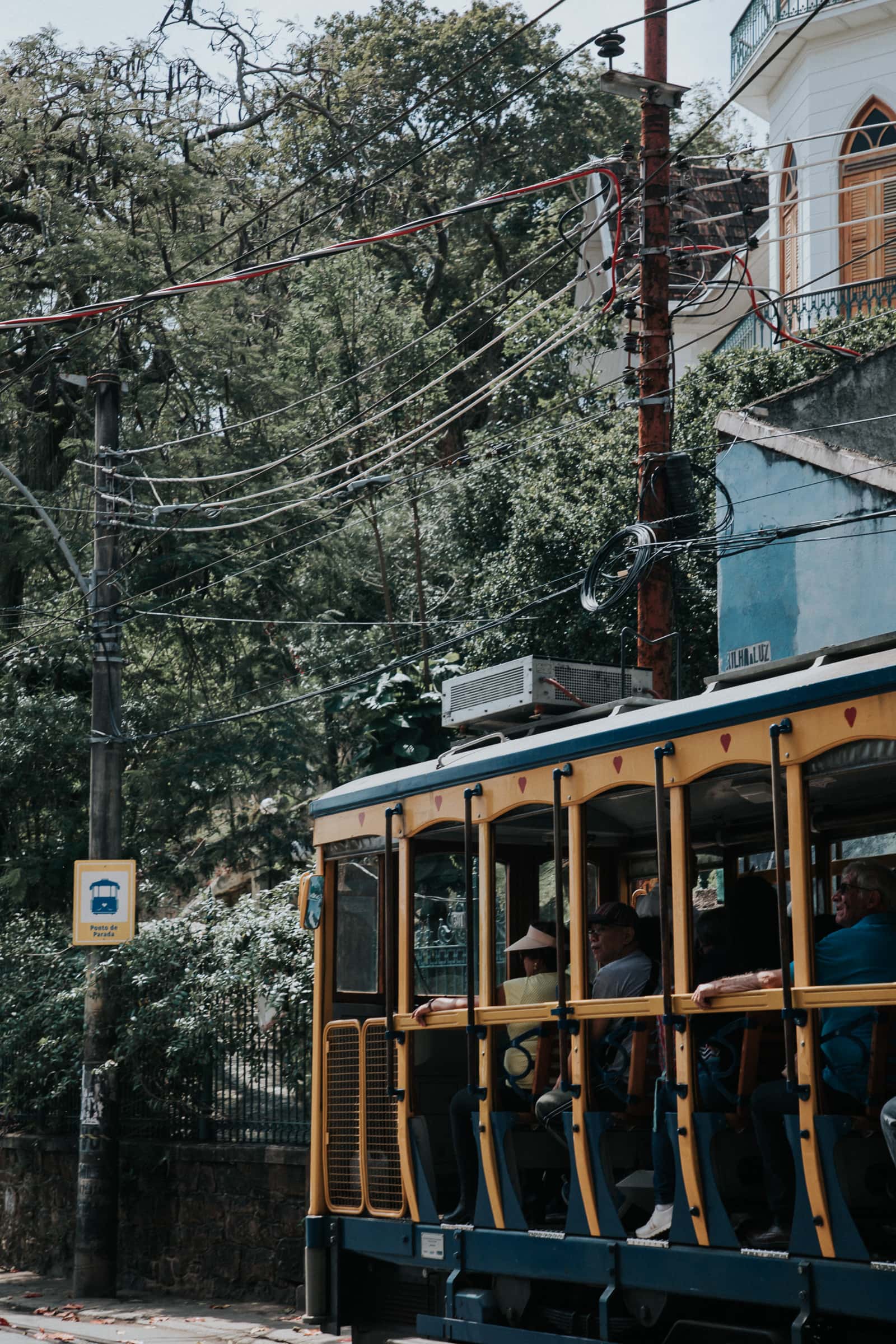
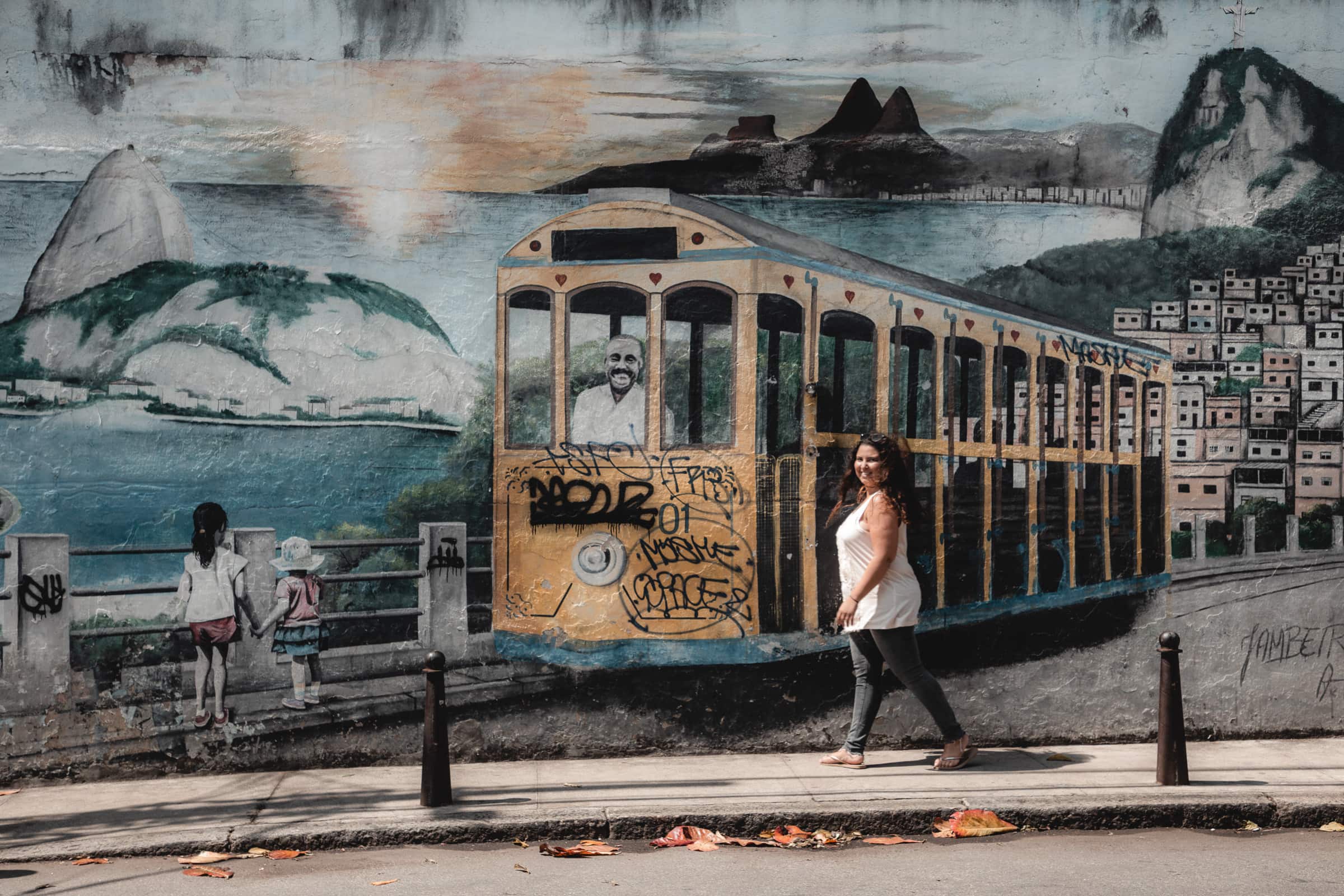
Santa Teresa’s historical streetcar: O bonde de Santa Teresa
The nostalgic tram is the landmark of Santa Teresa (called “bonde” in Portuguese). You can ride up and down through Santa Teresa to the famous Arcos da Lapa. The Arcos da Lapa are a narrow aqueduct and the tram runs on top! A true experience! After there was a serious accident some years ago, the tramways are however not that crowded anymore: In former times, you could take the train for free if you just jumped up and held on outside.
One ride costs 20 Reais (about 5€), but it’s worth it! It is best to get on at the beginning of the line at the Estaçao Carioca. From there, the train goes up the Arcos da Lapa to Santa Teresa. Unfortunately, there is no day ticket, so either you have to buy a new ticket every time you want to get off the tram and on again. Or you can change to Uber or Bus. Therefore, I recommend to drive up to the terminal station first and then to work your way down again.
The Santa Teresa tram is one of Rio’s landmarks. You can find out more about even more famous sights, such as the Christ the Redeemer statue and Sugarloaf Mountain, in this article: The Most Beautiful Sights in Rio de Janeiro
Tips for Santa Teresa in Rio de Janeiro
The Largo dos Guimaraes is the heart of Santa Teresa! Especially on weekends, restaurants and bars are well filled! Here you can enjoy typical Brazilian cuisine, even Cariocas come here to the traditional Feijoada lunch (bean stew with rice) on Saturday. Some nice addresses:
Bars, Restaurants und Cafés
Explorer Bar
A small bar near Largo dos Guimaraes with fantastic cocktails (the caipirinha is great here, but the rest of the menu is highly recommended!) serving Israeli-Brazilian cuisine with many original vegetarian and vegan dishes. There’s also a small boutique hotel attached to the bar. Click here for prices and info*
Livraria Largo das Letras
Bookstore with café in a romantic courtyard directly at Largo dos Guimaraes! Good for a short break from sightseeing!
Adega do Pimenta
German cuisine may not be your first choice when in Brazil, but the atmosphere at the Adega do Pimenta is so bizarre that you might change your mind. One of the institutions in Santa Teresa which has been around forever!
Bar do Mineiro
Another classic in Santa Teresa: The perfect address for a Brazilian feijoada, Brazil’s national dish. If you aren’t that hungry will also find typical snacks like Salgadinhos, which are traditionally served with an ice-cold beer.
Accomodation
Santa Teresa has a lot of great airbnbs. Especially if you are into cool design and a creative environment! I stayed in a small house that belongs to an artist collective; very nice and definitely an unusual place to stay.
If you prefer more hotel-like accommodations, this is perfectly situated with the Explorer Bar on the first floor and close to Largo dos Guimaraes: Discovery Suites Rio*
If you want to spoil yourself a little bit I’ll recommend this place: MGallery Santa Teresa*
Safety in Santa Teresa und Rio de Janeiro in general
Santa Teresa is not a super unsafe part of the city due to the many tourist attractions. But you have to be very careful here as well. In the evenings, it can get a little more deserted here and not all streets are so busy that you might feel uncomfortable. As a solo traveller (and half-Brazilian, who is familiar with local habits), I didn’t always consider Santa Teresa the best place to stay overnight.
I had booked a nice Airbnb, which was centrally located, but in a quieter street. In the evening, I always took an Uber, when I left my place. But I’ve heard from many drivers that Santa Teresa isn’t a popular destination for some drivers due to its remote location and because there are some shady people around, especially at night.
During the day, I felt safe in Santa Teresa. Just be cautious and don’t talk longer walks around the neighbourhood at night.
Rio de Janeiro is one of the most impressive cities in the country and should not be missed on any trip to Brazil, even as a half-Brazilian, the beauty of Rio knocks me off my feet every time. And I’m not alone in this. Everyone knows the famous sights in Rio de Janeiro, such as Sugar Loaf Mountain and the Christ the Redeemer statue! In this article, I’ll tell you what you shouldn’t miss in Rio. So off to the best Rio sights! By the way: At the end of the article you will find some very helpful tips for your stay in Rio, read them carefully!
#1 Cristo Redentor / Christ the Redeemer
From here you have the perfect view of the Cidade Maravilhosa, the great city, as Rio de Janeiro is often called. You can get to the Corcovado by car (or coach), the Corcovado train or even on foot via a hiking trail.
An excursion to the Cristo Redentor is only worthwhile in good weather, in Rio the weather can change quickly and on cloudy days you really can’t see anything. But when the sun shines, you have the complete Rio panorama: breathtaking! It’s worth coming early as it’s a little emptier then.
It’s worth arriving early to avoid the crowds on the Cristo Redentor viewing platform.The world-famous Rio landmark: Jesus with outstretched arms.
#2 Tijuca National Park / Floresta da Tijuca
Rio de Janeiro is surrounded by lush nature, vast forests, and green mountains. Right in the heart of the city lies Tijuca National Park, known as the Floresta da Tijuca. Corcovado, home to the Cristo Redentor statue, is also part of the national park. In the past, almost the entire area was cleared by coffee farmers; in the mid-18th century, the clearing was halted and the land was reforested. Today, it is home to dense forest with many waterfalls and beautiful hiking trails. It’s hard to believe you’re in the middle of a major city!
In the middle of Rio: pure nature in the Tijuca National Park.
Unfortunately, I had a bit of bad luck with the weather this time: In the pouring rain, it’s not worth taking the cable car up to Pão de Açúcar (Sugar Loaf). However, I’ve already been up there twice on previous visits. The best time to go up is at sunset! Down below, at the foot of Pão de Açúcar, in the Urca neighborhood, is Praia Vermelha, a beautiful little city beach.
Easy to see from Cristo Redentor: The Sugar Loaf Mountain with cable car.
#4 Escadaria Selarón
Jorge Seláron, a Chilean artist, began renovating the dilapidated staircase in front of his house in the 1990s. Not just like that, he covered them with thousands of pieces of tile, mainly in the colors yellow, green, red, white and blue, the national colors of Brazil and Chile. His small work of art grew in size and popularity, and many tourists brought back tiles with motifs from their hometowns, which Selarón then also used.
Selarón died a few years ago, but his staircase is now one of Rio de Janeiro’s visitor magnets. Incidentally, the Escadaria Selarón can also be seen in a fairly well-known music video: “Beautiful” by Pharell Williams feat. Snoop Dogg.
#5 Arcos da Lapa
Near the Escadaria Selarón are the Arcos da Lapa, an imposing white aqueduct. At the top of the narrow Arcos da Lapa, after a long period of restoration (there was a serious accident years ago), the old streetcar, “o bonde”, is running again, and you shouldn’t miss a ride on it! It’s best to take it straight up to Santa Teresa!
Ad / *affiliate links
#6 Santa Teresa
Santa Teresa is the neighborhood of creatives and bohemians in Rio de Janeiro! The historic streetcar (called bonde or bondinho) also runs along this route. In Santa Teresa, you can stroll through the streets around Largo do Guimarães, discover small stores and studios and enjoy a pleasant meal in the surrounding restaurants and bars.
The old streetcar is the landmark of Santa Teresa.
#7 Rocinha, Vidigal, Complexo do Alemão & Co.
Rocinha, Vidigal, Complexo do Alemao—you’ll come across these names of favelas from time to time. However, never, ever go into a favela on your own! If you’re interested in what life is like there, join a favela tour*. You’ll be safe there. Some people may see this as “poverty tourism,” but the favelas are part of Rio’s cityscape, and a tour like this can also help you understand the lives of the local people a little better.
Many favelas also showcase the ingenuity and improvisational skills of Brazilians. Since these are illegal settlements, the entire infrastructure is maintained by the residents themselves. Electricity, water, cable TV, internet access, trash collection, streets, and paths: everything is organized by the residents themselves. And all of this on the steepest slopes!
Part of everyday life in Rio de Janeiro: the many favelas on the hillsides.
#8 Copacabana, Ipanema, Leblon: the beaches of Rio
Rio is also mega famous for its wonderful beaches in the middle of the city! Copacabana and Ipanema are the top addresses for swimming. The hip Cariocas meet at Posto 9 in Ipanema. Unfortunately, for once it wasn’t beach weather when I visited. Beach life in Rio is definitely something special: the whole city meets here, the beach belongs to everyone! Be careful with the strong currents: They are not without! Tip: It’s best to go to the beach with just a towel and a few reais for a guaraná (Brazilian soda), a coconut or a caipirinha and enjoy the hustle and bustle!
No beach weather this time: Posto 9 in Ipanema is usually the meeting place for Rio de Janeiro’s It crowd.
#9 Catedral Metropolitana
Not particularly beautiful, but special: Rio’s cathedral, which was only built in 1979, can hold 20,000 people standing up. If you don’t have that much time and aren’t particularly religious, this is a location that you can skip if necessary. Nearby, however, is the Confeitaria Colombo!
Standing fit into the cathedral of Rio 20,000 people.
#10 Confeitaria Colombo
The Confeitaria Colombo is the oldest coffee house in Rio de Janeiro! Founded in 1894, it is reminiscent of European coffee houses – a total contrast to tropical Rio. Cariocas find the prices overpriced, but as Europeans they are okay – the ambience is worth it. It’s also a great opportunity to sample Brazilian specialties! In addition to sweet pastries and cakes, there is also typically a large selection of salgadinhos (small balls, croquettes or pastry pockets – salty, hence the name), which are also eaten in Brazil with coffee or as a snack between meals.
The café institution in Rio de Janeiro: the Confeitaria Colombo in the city center.
You can explore the locations mentioned above on your own (except for the favelas, of course, which only require a tour! You can easily get around the city with Uber, buses and the metro. However, I wanted to take carefree photos with my flashy camera, so this time I decided to go on a day trip.
The downside, of course, is that you often end up at a location at the same time as other tour groups, which can be a bit stressful. However, everything is planned out, so you can completely relax when it comes to safety and organization.
One-Day Sightseeing Tour of Rio*(Full itinerary—the expensive tickets for Sugarloaf Mountain and Christ the Redeemer are included!)
Safety in Rio de Janeiro
Unfortunately, crime is always an issue in Rio de Janeiro and one that does not go unnoticed by tourists. Increased caution is required! However, the Cariocas are always very nice and helpful, often giving you spontaneous tips on where you should pay a little more attention. Even if no danger is immediately visible, take all the advice from the locals to heart, it’s no coincidence.
Rio de Janeiro has two airports: Galeão, which is farther away, primarily handles international flights, while Santos Dumont Airport, located closer to the city, is reserved for domestic flights within Brazil. Many European airlines offer direct flights to Rio de Janeiro. Tip: Take an Uber into the city (there’s a separate Uber pickup area where you can meet your driver) or a regular taxi. Although there is a bus service, I wouldn’t recommend taking public transportation with luggage for safety reasons.
Best time to visit Rio de Janeiro
During the Brazilian summer, from December through March/April, Rio de Janeiro is a hive of activity. Weather-wise, you might experience summer downpours, but they usually pass quickly. It can get very hot! But on the other hand, you get to experience Rio in full summer mode! The other months are just as great, though: It can be a bit cooler in the winter, but in Rio that still means 25 degrees—perfect for sightseeing and hiking. Unfortunately, I happened to visit in September when it rained a few days.
Perfect for colder temperatures: hiking in the Tijuca National Park.
Accommodation in Rio de Janeiro
Rio de Janeiro has some of the highest accommodation prices in Brazil! Prices rise dramatically, especially during the Brazilian high summer from December through March/April. Not to mention events like New Year’s Eve and Carnival: You’ll need to book well in advance for those dates!
In addition, many accommodations require a minimum stay during these times. The Copacabana neighborhood is the most popular among tourists; this is where most of the hotels are located. It’s very touristy there, but you’re also staying in a very central location. Recently, however, locations like the artistic neighborhood of Santa Teresa and some accommodations in pacified favelas have also become trendy. In both cases, though, I wouldn’t necessarily recommend these places to every visitor to Rio. I’ve written more about my experiences in Santa Teresa in my article on safety in Rio.
Among other places, I stayed at the B+B Copacabana Hotel: It’s in a perfect location near the beach and right between Copacabana and Ipanema!
Excursions from Rio de Janeiro
From Rio, you can also take a number of great day trips to the surrounding areas of Rio de Janeiro! Beaches, islands, nature, culture—you could actually spend two weeks in Rio and still have things left to see. If you’re planning a longer trip, you can, of course, travel directly to places like Paraty or Búzios instead of taking day trips. Many intercity buses depart from the bus station in Rio to all parts of the country.
“Take good care of yourself! Rio de Janeiro is so dangerous!” My otherwise always cheerful mother and the rest of my family were really concerned who I told them that I would travel to Rio on my own. I tried not to laugh too much. After all, I’m living in Berlin-Neukölln, according to the media reports one of the worst corners in all of Germany!
How unsafe is Rio de Janeiro?
I’ve traveled halfway around the world, often alone, sometimes arriving in strange cities at night, without a plan, but also fearless, because hey, some cab will get me to my destination – but Rio de Janeiro? Rio, that’s apparently too dangerous. Dark favelas, drug gangs, shootouts and an eternal war between special forces of the military, police and gangsters, where good and evil are not necessarily always who they seem to be. Rising crime everywhere. Safety? A foreign word in Rio de Janeiro. Every day the news are full of muggings, flash kidnappings in the open street and tourists being robbed blind.
View from the Cristo Redentor: The Sugar Loaf with cable car.
Rio de Janeiro and Safety: Is it all scaremongering?
At the same time, it seems to me that a certain carelessness in Rio de Janeiro with regards to crime is out of place. I remembered the story of some fellow crew member in Mexico City. (Can’t really say if this story is true, but you’ll get the point.) The aforementioned colleague was sitting in a sidewalk café in a chic district of Mexico City, and poof… the Rolex was gone. Just like that someone pulled it of his wrist. May be one of our legends in aviation, but still: You get the advice all the time to wear as little jewelry as possible or better, no jewelry at all.
That’s also one of the reasons why I prefer to travel alone in Southeast Asia; where—as long as you take the usual precautions (like not walking around in the middle of the night in a train station district waving a wad of cash and the latest Chanel handbag—a fake one, of course)—you’re largely free from street crime and shady characters.
Crime in Rio de Janeiro: Should we be afraid?
I wish I could write here that there is nothing at all to worry about in Rio, and that everything is pure exaggeration if you are not wandering the favelas on your own. However, I can remember a moment when I was walking in the evening through Santa Teresa, the new in district for creative people in Rio de Janeiro.
Santa Teresa by day: An artists’ quarter with many studios, restaurants and small stores – and quiet.
I had booked an Airbnb there, right next to the German consulate, which is guarded around the clock—that did put my mind at ease a bit in this situation. A few Uber drivers had already warned me that I might have to wait longer for a ride—Santa Teresa isn’t exactly a popular spot, since it’s outside the typical tourist areas like Copacabana and Ipanema. Not many drivers were eager to crawl up and down the winding mountain roads, and besides, well, it could get a little weird there from time to time…
Dangerous places in Rio de Janeiro (examples)
Copacabana: Centrally located, many hotels and the famous beach are here. Copacabana looks relatively safe, especially during the day, due to everyday city life. Nevertheless, you should beware of pickpockets here around the clock. In the evening, as everywhere else, don’t walk along the beach even if it’s tempting. Stay on the promenade, have a drink in one of the bars and enjoy the night. Don’t be tempted to dip your feet in the water at night: Beaches aren’t illuminated and you might get robbed.
Corcovado: At Corcovado there is a hiking trail up to the statue of Christ the Redeemer. Attention: Tourists are often being assaulted here. At the bottom of the climb, the police is present from time to time, but along the trail you are on your own. Better take alternative means of transportation up here.
Favelas: Do not enter favelas on your own! As a non-resident, you’ll immediately stand out here. Join a guided tour if you are interested in life in a favela: for example, there are tours in Rocinha*, Vidigal* or Santa Marta*.
Centro: After business hours, it gets shady pretty quickly in the center of Rio! Avoid the centro after the shop are closed or on Sundays at all costs! The streets are empty and there are some shady characters on the road.
An evening in Santa Teresa – and an incisive experience
Santa Teresa is a very nice district at first sight. Once upon a time it was gloomier here, but now many artists and creatives have settled here, a pleasant vibe runs through the neighborhood, and somehow during the day it looks like the post-reunification Prenzlauer Berg under palm trees. The streets are lined with old villas of various types; the European immigrants who came here in the early 20th century brought a diverse range of architectural styles.
And yet, the short five minutes I had to walk from my accommodation to the bar where I had an appointment had a certain tension in it. It was eight o’clock, already dark, in the middle of the week, and the streets were mostly deserted. I was on my to the Explorer Bar and suddenly two boys walked towards me. Just walking! I didn’t know if maybe they weren’t just on their way home or something.
So my panic level raised and I wasn’t even able to control myself anymore. I got sacred and suddenly I was running as fast as I could up the street on the other side. With slippery sneakers! It must have been a bizarre picture. Me, stumbling up the hill in panic, even though there was no danger all around. No question I took an Uber for the five minute walk at the end of the evening. And the driver was remarkably understanding: “Of course I’ll take you even if it’s just the few meters!” Better be safe than sorry.
Precautions are important
I definitelylost my nerves that evening. But it wasn’t that unreasonable. In my opinion, the only reason why there aren’t even more robberies and assaults happening in Brazil, but also especially in Rio, is because the population is used to take precautions all the time. You will see massive metal fences around apartment building entrances, hotel lobbies locked after dark or police checkpoints at tourist hotspots. Often, however, they are also corresponding behaviors; a certain caution that has crept into all areas of everyday life.
My Airbnb hostess, for example, said that the area in Santa Teresa wasn’t dangerous on one hand, but on the other she also advised me to only carry a copy of my ID (in Brazil, ID is mandatory at all times) and just little money, in case I get mugged. Or when I left the house with two pieces of luggage and left one suitcase briefly for a few minutes at the leaning gate in the middle of broad daylight, a neighbor warned me: “I’d better close it up, not that anyone gets any stupid ideas.” By the way, only hundred meters away and in sight was the German consulate, heavily guarded with security and everything.
4a0b7f5cff0b55481aaa085c85afa485
Evenings in Copacabana: Watch out!
Copacabana, the neighborhood where most tourists end up—because of the beach, Rio, and all that—isn’t any better, by the way. Here, too, you have to exercise a certain amount of caution after dark. It’s not for nothing that the concierge at my hotel in Copacabana* quickly locked the door every time a guest went in or out. Once, I was still chatting with a German acquaintance outside the door (which made me a little uncomfortable—my “Rio panic” kicked in again)—two female tourists in the bright glow of a hotel on an otherwise dimly lit street—oh-oh, he didn’t unlock the door until I made a move to go inside. As if, in an emergency, he’d just stand by and watch from the safety of his post. Because, well, who stands around in the dark in front of the door for that long? It’s not exactly safe around here.
Nevertheless, there are certain rules in Brazil as well, and Brazilians are by no means as open and liberal as you might think. For example, topless bathing is frowned or sometimes even forbidden in Brazil, depending on the location? Also, Brazilian men can be very flirtacious. My simple advice: be alert, but also relaxed, maybe your counterpart really just wants to have a nice conversation or flirt a bit. If it gets too much for you or you can’t assess the situation, however, you’d better be careful and follow your instincts!
Rio de Janeiro is incredibly green: In Rio’s national parks you can go for endless hikes
Rio de Janeiro is an experience in itself, I’ve been there several times and the city always gets me. I don’t want to scare anyone into going, but a few safety tips are worth their weight in gold. As a woman alone, I think it is feasible, but I always advise not to choose Brazil or even Rio if you have never traveled alone before.
Personally, I don’t see much difference between traveling to Rio solo as a woman or as a man. Probably the only thing you are more likely to encounter as a woman are numerous flirting attempts – which I personally don’t mind that much. Brazilians are very communicative by nature, and Brazilian men just like to try their luck. Still, no means no, and there are other places in the world where I have felt much worse than in Brazil (e.g. in Marrakech). In general, just be aware that Brazilians might seem a bit more touchy than people in other cultures, but also in a non-sexual way.
Safety tips for a trip to Rio de Janeiro (not only for solo travelers)
Here are a few golden rules for your stay in Rio: (Much of this goes without saying and isn’t anything new, but in Rio, it’s best to just err on the side of caution!)
Don’t wear flashy jewelry (think about the Rolex story!), clothing or accessories.
If you’re going to the beach take only with a cheap towel with you and at most a few Reais for a drink. Nothing else. Leave everything else like cell phone, camera, etc. in your accommodation. Even if you are traveling with several people and one person always stays with your stuff. You will quickly notice: no one, but really no Brazilian goes to the beach with huge luggage. Food and drinks are usually purchased on site at booths, beach bars or from passing vendors.
Especially with flashy camera equipment: pay attention to where you are! I actually used my camera, a Canon 5D Mark IV, in Rio, which gave me a lot of bellyache, since it is very expensive after all. However, I had already prepared it for travel anyway, so that it wouldn’t look conspicuous: I never use the enclosed camera strap, which, at least for Canon and Nikon, not only indicates the brand, but also the exact model. These straps are really noticeable. Most of the time I’ll put the camera on my cross-body strap, or I use old straps from analog cameras. I also cover model numbers etc. on the camera and lenses with black masking tape. Especially the red ring of Canon’s L lenses is quite eye-catching and immediately gives away professional equipment.
I finally booked a tour, so I was able to use my camera without any worries. By the way, these kinds of bus tours in small vans are also very popular with Brazilian tourists—a great atmosphere is guaranteed! I always recommend them to solo travelers, too—you can easily strike up conversations, and you can really relax when it comes to safety.
Always keep an eye on your purse! Stow away your wallet that no one can easily access it! Avoid backpacks or carry them mainly in front of the body.
Always take only one copy of your ID with you (ID is mandatory in Brazil) and leave your passport at your accommodation.
Only ever withdraw money during the day and in monitored bank vestibules. Keep an eye out for strange characters in the vicinity. Tip: You can safely withdraw money in shopping malls.
If you’re arriving in the city with luggage, you should definitely take an Uber instead of public transportation. If you want to be on the safe side—perhaps because it’s your first time in Rio or you’re tired from a long-haul flight—make sure to arrange for a ride in advance.
Always make sure you get into the right car when you call an Uber. Check the license plate!
When you go out in the evening: always watch your drink. Be careful with Caipirinha: It’s tasty, but it’s also pure alcohol and you’re likely to pay less attention when tipsy.
Avoid public transportation in the evening! Uber is cheap and safer.
Avoid the center of Rio after business or office hours and on weekends: This part of Rio is then completely deserted and there are many shady characters on the streets! Even in daylight, it’s very dangerous here on sundays!
Also be careful on lonely hiking trails in Rio’s national parks and up to Corcovado. Walk in groups and ask locals about the current situation.
Don’t even think about exploring a favela on your own! If you’re interested in life in the favela, you can book a favela tour*, for example. I’ve never been on one myself, but they’re supposed to be very interesting and often benefit the community as well.
If the worst should happen to you: In the event of a assault, no resistance, no discussion, give up everything, then go to the police.
Conclusion: In general, I wouldn’t discourage anyone from traveling to Rio. However, especially as a Central European, you should be aware that you need to be more vigilant when traveling in Rio. In any case, you’ll love Rio!
Salto do Itiquira in Brazil? As a half-Brazilian, I travel through Brazil differently. Sometimes I come to corners that are not touristy at all or only for Brazilian tourists. While Brasília itself admittedly loses its charm after a few days, the surrounding area is all the more exciting for it. Brasília and the Distrito Federal are located in the state of Goiás, a very rural region with many destinations, especially for nature lovers. The Salto do Itiquira waterfall near Formosa is one of them.
186 meters high: The Salto do Itiquira waterfall near Formosa in the Brazilian state of Goiás.
Salto do Itiquira in Brazil: 168 meters of free fall
The Salto do Itiquira is “only” the eighth highest waterfall in all of Brazil, but that should not dampen the joy in the country where the gigantic waterfalls of Iguaçu are located. Because the Salto do Itiquira near the small town of Formosa is also quite impressive. The water plunges 168 meters steeply into the depths and comes up so hard at the bottom that bathing is prohibited directly at the waterfall. You get very close to the waterfall and it gets pretty wet pretty quickly! Further down, however, there are small pools where swimming is allowed, and the Brazilians who like to swim don’t miss out on that.
You can even swim in the small pools below the waterfall.A lot of untouched nature: Around the Salto do Itiquira you can hike wonderfully and enjoy the nature.
An experience just to bathe in the wilderness. Basically, the Salto do Itiquira is a popular destination for the Brazilses, but completely unknown among foreign tourists. Perfect, then, if you ever want to mingle with Brazilians: it’s guaranteed not to take long to get invited to a family picnic and hook up. Brazilians are always warm and hospitable, especially with tourists from outside!
Pure nature around the Salto do Itiquira in Brazil
Around the waterfall you can also walk through the dense tropical forest and enjoy nature. Attention: For the path directly around the waterfall to the top you need sturdy shoes, otherwise it is very slippery.
The Salto do Itiquira is located in Parque Municipal do Itiquira, about 38 kilometers from Formosa and 115 kilometers from Brasília. Admission to the waterfall is free. If you want to stay longer than just one day, you can stay at the nearby Itiquira Park, an amusement park with small chalets and a large pool complex. If you prefer a quieter setting, it’s best to look for one of the many options to stay at a chácara (farmhouse). Online booking is difficult; the nearest option is the Fazenda Hotel Bem Ecologico. There are more options on site; for example, you can book additional accommodations at travel agencies in Brasília, though you should have some knowledge of the language, as these accommodations are really geared toward Brazilians only.
At the moment I am in Brasíliaa very difficult visit, for many reasons. As a half-Brazilian, I have not found the atmosphere here beautiful for a long time. Much is changing, and in a way that scares me more than it gives me hope. And this disorganization! In Brazil, I always realize how much I have been influenced by life in Germany and Central Europe.
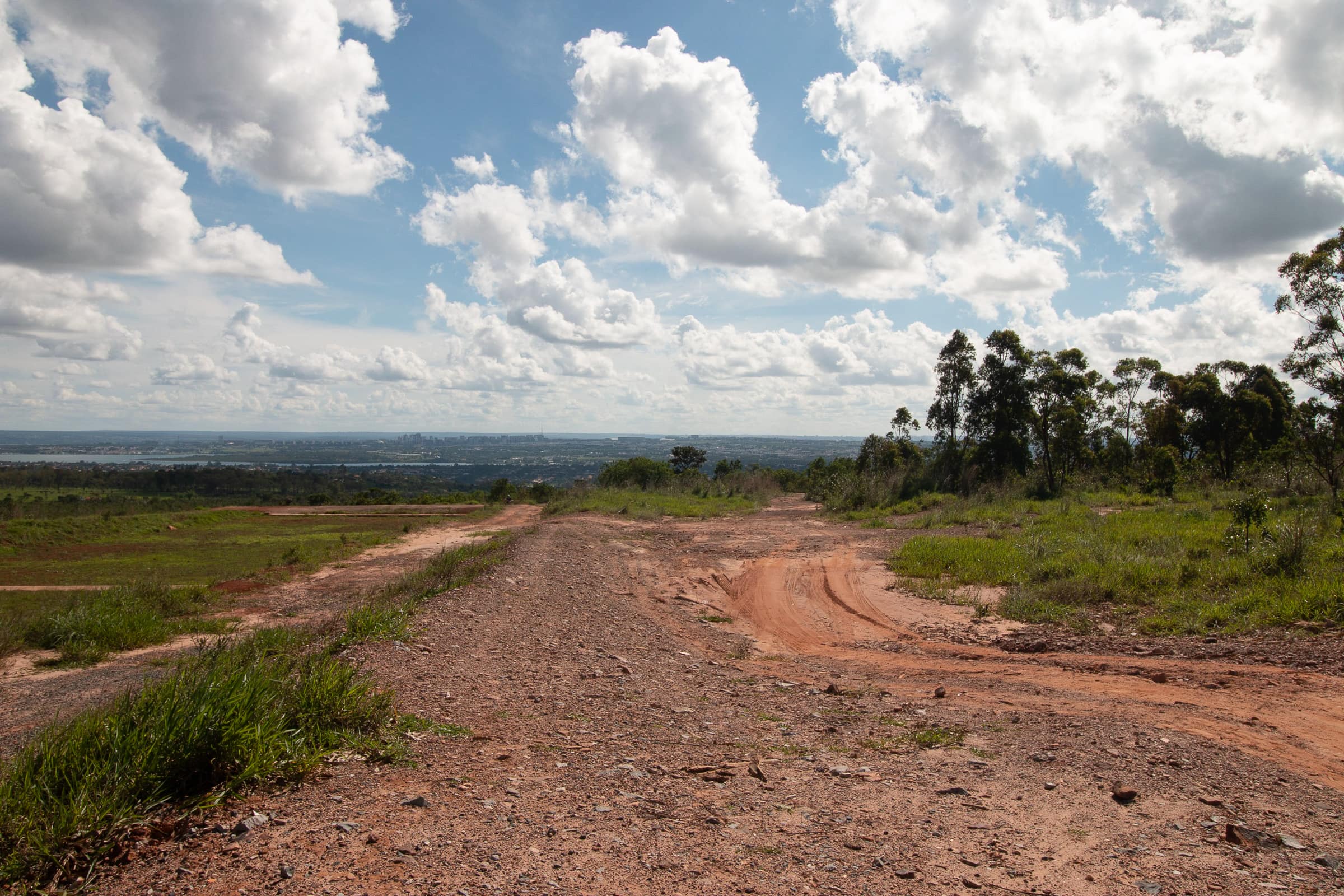
With the Torre Digital in Brasília, for example, it’s the same as with many other things in Brazil. The structure is there, but somehow no one cares. No one really cares about this architectural gem. Three times now I’ve been up here on the hill, outside the city, in the middle of nowhere, traveling three quarters of an hour by car. In joyful anticipation of finally climbing up the tower. From the viewing platforms of the Torre Digital you are supposed to have an amazing view over Brasilia. And the futuristic glass domes, under which there are two platforms, even provide a bit of Star Trek atmosphere. Brazil’s architecture has always been futuristic.
The glass domes of the Torre Digital in Brasília can be walked on.
Reading tip
The Torre Digital was the last project by the great Oscar Niemeyer, Brasília’s main architect, who died in 2012 at the ripe old age of 104. His buildings are legendary and his visions were groundbreaking.
Also called Flor do Cerrado (Flower of the Cerrado) because of its shape: The Torre Digital in Brasília.Already from the hill you have a good view of the center of Brasília, the Plano Piloto.
Torre Digital Brasília: opening hours & bad prospects.
Opened only a few years ago, the Torre Digital was intended not only to be an antenna tower, but also a new attraction for the city, both for tourists and locals. This worked quite well at first, but at some point the opening hours became more and more bizarre. First open to visitors only during the week, then only every other weekend, then different again, strikes intervened, then there were security problems – Brazilian chaos, after all.
Only a few guards are now guarding the tower, but when it will be open, yes, sometime, but when exactly, no idea. On the internet, the official site of the tourism authority never gives any further info except for a fancy little picture. So the visit remains a gamble – and I think I’m slowly giving up both the hope of ever coming up here and the hope that fundamentally some things will change here in the country. Too bad actually. For me, for Brazil, for the rainforest, for the world.
Brasília is probably one of the most extraordinary capital cities in the world. I’ll show you which sights make Brasília so special and which highlights you should see on a trip there! And at the end there’s a little bit of Brasília’s history: how Brasília was built and when Brasília became the capital of Brazil!
The main attractions in Brasília
Planned on the drawing board by Oscar Niemeyer and Lúcio Costa in the 1950s, Brasília’s architecture is still unique today. The first time you drive through the center of Brasília, called Plano Piloto, you will notice the unusual urban planning with its long streets and perfectly divided blocks of houses. Don’t miss out on these sights:
#1 Catedral Metropolitana
The Catedral Metropolitana is quite small for a cathedral. At the same time, it is the perfect starting point for sightseeing and a good first impression of how architecture works here in Brasília. Lots of white, many clear lines and despite its age (Brasilia and thus all the buildings from the founding phase are almost 60 years old) still hypermodern.
Speaking of white: everything seems even whiter in Brasilia than anywhere else – the sun shines brighter, it always seems that way to me. The city is situated at an altitude of 1200m on a plateau and with so many sunny days, dark sunglasses are a good constant companion. Otherwise you almost become a little snow-blind. Only without snow, at an average temperature of 28 degrees.
Brasilia Cathedral is one of the city’s landmarks.
The entrance to the cathedral is hidden, with an underground staircase leading inside. And then, through the colorful glass mosaic windows, which seemed so inconspicuous from the outside, the full splendor of the cathedral unfolds. The acoustics in the church are also special: if you stand very close to the round wall as a couple, you can even hear quiet whispers, even if the other person is standing on the other side!
#2 Esplanada dos Ministerios & Praca dos Tres Poderes
The Esplanada dos Ministérios is home to all the country’s ministries and ends with the Praca dos Tres Poderes, where the most important government buildings are located. All the politics of the huge country of Brazil in one place – and nothing else. No stores, no restaurants, no cafés. This is the Brasília concept: everything is neatly arranged according to purpose, with the most important buildings of a capital city right in the middle.
Big decisions are made here: Brazil’s Senate and Parliament sit in the Congresso Nacional.
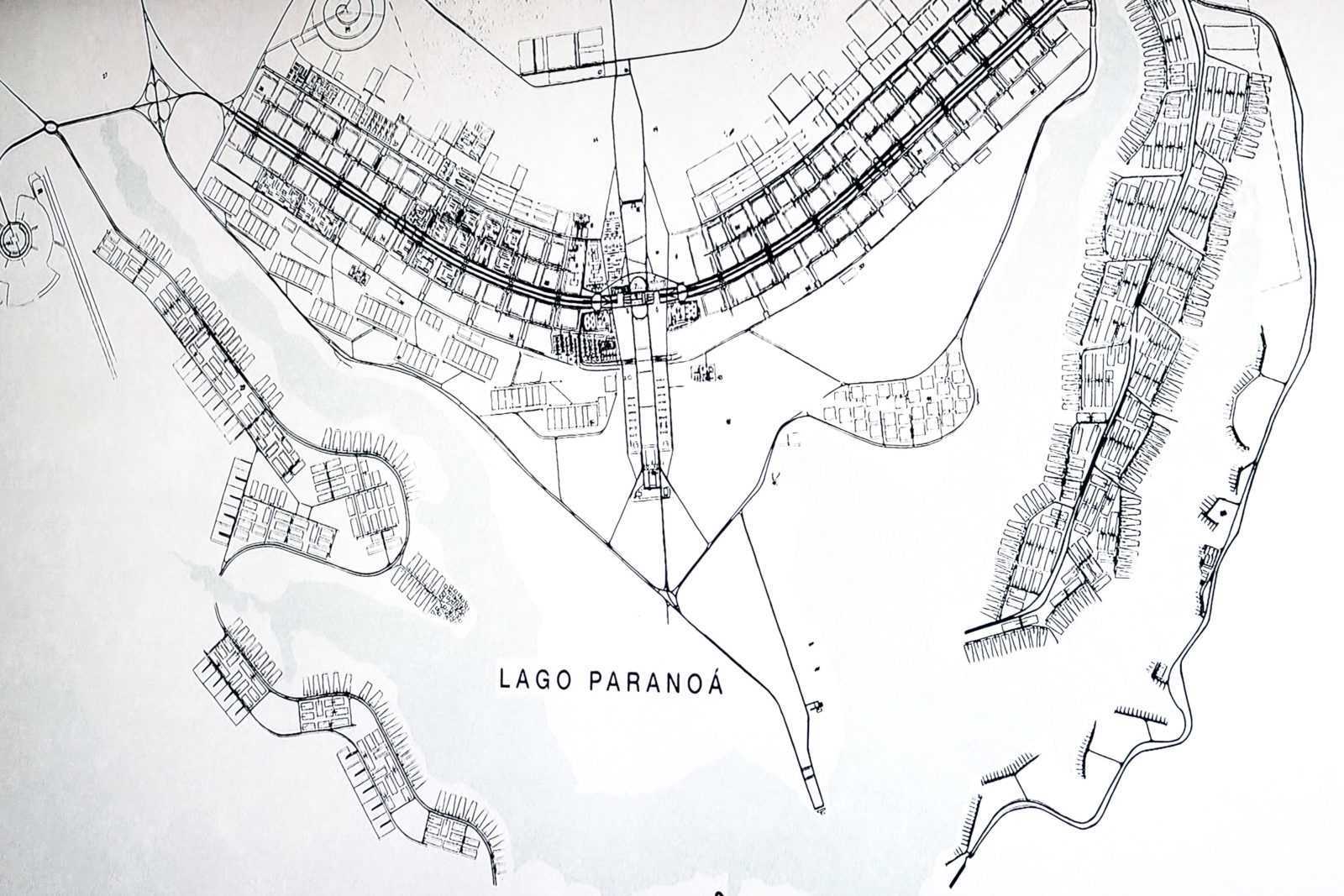
It’s worth taking a look at the map of Brasília: The Plano Piloto, the center of Brasília, looks like an airplane. The wings contain residential areas, while the fuselage houses government buildings and economic sectors such as hotels and banks. Arranged in order of importance: At the front of the cockpit, the Congresso Nacional (Congress consisting of the Senate and the House of Representatives), the Palácio da Alvorada (seat of the President) and the Supremo Tribunal Federal (Supreme Court) meet at the Praca dos Tres Poderes (Square of the Three Powers). All three powers gathered in one place. Very well thought out!
The development plan of Brasília: Looks like an airplane from above.
The Palácio da Alvorada, the seat of the Brazilian president, is not open to the public. What is interesting, however, is the built-in platform that protrudes from the palace and is specially designed for speeches to the people. The palace is guarded by the Dragões da Independência, a special unit of the Brazilian military, and with a bit of luck you can still observe a changing of the guard.
Seat of the president: The Palácio da Alvorada on the Praça dos Três Poderes.
Directly opposite the Palácio da Alvorada is the Supremo Tribunal Federal, the supreme court. The Praca dos Três Poderes is also a good example of the architectural concept: lots of space, straight lines and plenty of light. What you should definitely visit: the Museo Histórico de Brasília and the Panteao da Patria. Admission to both buildings is free and both provide very interesting insights into the history of Brazil. Tip: On the first Sunday of every month, the flag is ceremoniously changed on the huge flagpole with much fanfare, an event that many Brazilians also use as a family outing.
#3 Torre de TV / TV tower
From the Brasília TV tower you have the best view over the Esplanada and the entire Plano Piloto – and the best thing is: the view is free. Around the TV tower is the Feira da Torre, a permanent market with arts and crafts and street food. Since Brasília’s history has always made it a melting pot of all regions of Brazil, you can traditionally find the most exotic specialties from all over the country here, from tacacá from Pará to empadas from Goiás. The Feira da Torre is open every day, but on Sundays there are more stalls in addition to the regular ones and then it’s a funfair atmosphere!
#4 Memorial JK
JK (pronounced dschotta-kaa) is something you come across again and again in Brasília: it is the initials of the Brazilian president who got the long-dreamed-of Brasília project rolling in the first place. Unusually for a politician in Brazil, he is still revered like no other, especially in Brasília. Originally a doctor, Juscelino Kubitschek was known for being very close to the people and for his integrity – my aunt still talks with glazed eyes full of admiration about the day when she was allowed to meet JK for a brief moment as a young girl. JK brought about an economic boom not only in Brasília, but throughout the country, and lost all his political rights during the subsequent military dictatorship (1964-1984) because he was critical of the military. He died in 1976 in a traffic accident under circumstances that remain unexplained to this day.
After long negotiations and political pressure, the military finally gave in and granted the construction of the Memorial JK as a mausoleum and museum about JK’s life in 1981. The exhibition, which also contains a lot about the fascinating history of Brazil’s origins, is also recommended for non-Brazilians.
#5 Museo Nacional & Biblioteca Nacional
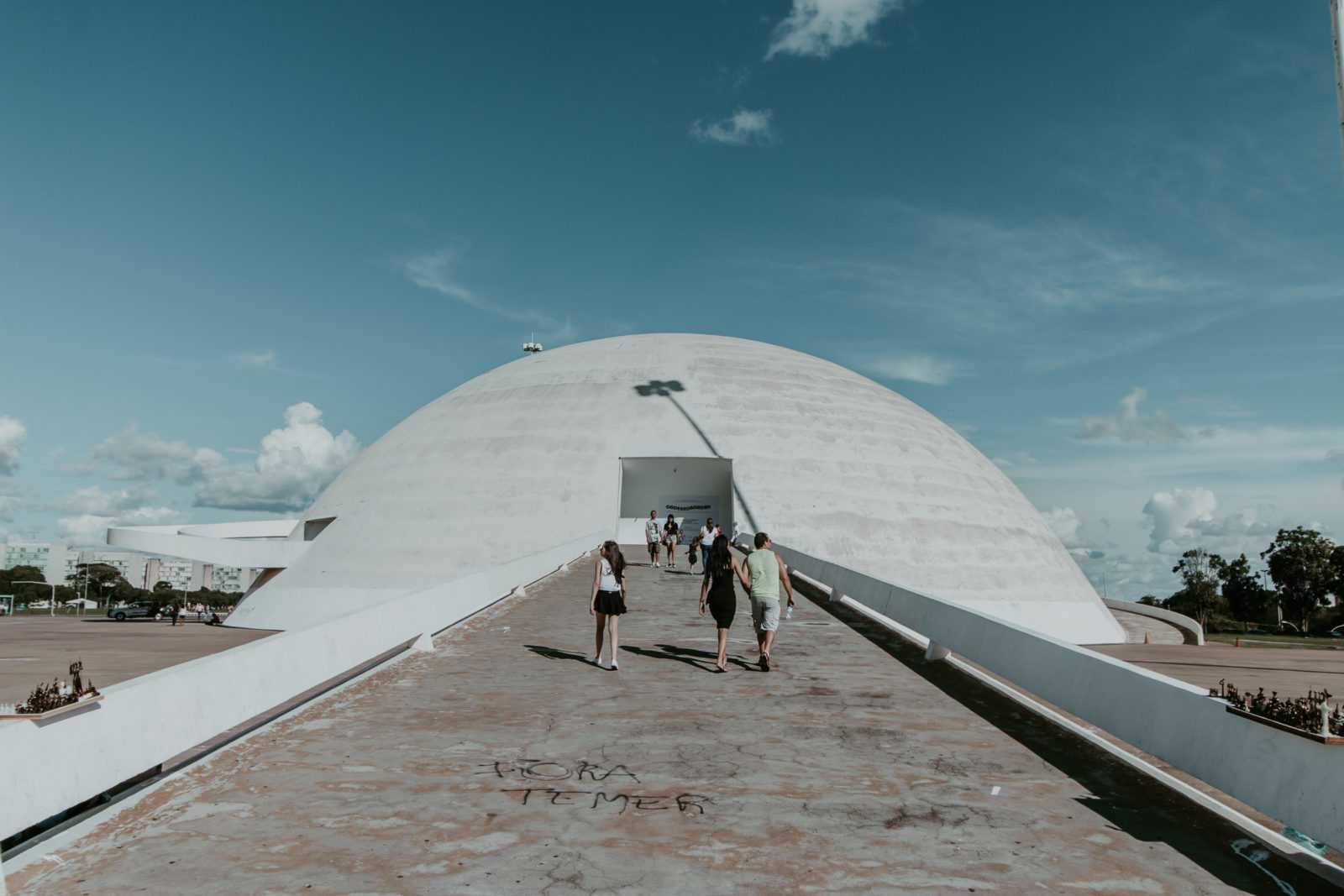
The Museo Nacional Honestino Guimarães and the Biblioteca Nacional de Brasília together form the Complexo Cultural da República João Herculino.
Another example of Brasília’s futuristic architecture: the Museo Nacional in Brasília.
Both buildings were only constructed in 2006 and yet fit seamlessly into the unusual 1960s architecture of Brasília. The Museu Nacional occasionally hosts exhibitions by contemporary artists and admission is free.
#6 Parque da Cidade
Those who have had enough of architecture can relax next door in the Parque da Cidade. Basically, it is no longer a park, but a huge leisure area that can only be crossed by car. Like everything in Brasília, the Parque da Cidade is very extensive, a bit like in the USA: you can’t do anything without a car. Even at weekends it never gets crowded here, although half of Brasília flocks here.
City of motorists: The Parque da Cidade (city park) in Brasilia is so huge that it can be accessed by car.
Helpful information for your stay: tips for your trip to Brasília
Arrival/departure from/to Brasília
If you are making a detour to Brasília as part of a longer trip to Brazil, traveling by plane is a good option. All major Brazilian airlines such as Latam, GOL, Avianca and Azul fly to Brasília. There are remarkably few international flights for a capital city; there are a few direct flights to the USA and neighboring countries such as Paraguay and Chile. As far as safety standards are concerned, I have never had any concerns with any of the airlines mentioned – certainly some things work differently than with European airlines, but I wouldn’t advise against any of them. The in-flight service and seat pitch have been reduced in recent years, but many Europeans are still surprised by the in-flight services offered by airlines that are considered low-cost carriers in Brazil, such as GOL. Tickets can also be purchased at short notice at reasonable prices – provided it is not the peak travel season (Christmas to Carnival or Easter week).
From the Rodoviária in Brasilia, the central bus station, buses travel to all parts of Brazil from Belém to São Paulo.
Although there is a well-developed bus network within Brazil with buses in every conceivable configuration (there are even pure sleeper buses with real beds), the journey can drag on like chewing gum. The roads are not always good and the distances are long. From Sao Paulo alone, it takes a good 20 hours to get to Brasília, and sometimes a day and a half to get up to the northeast. The security aspect should not be ignored: buses are occasionally robbed en route.
Train travel is not an alternative: the rail network in Brazil is virtually non-existent, and there are only a few freight train connections.
Getting around Brasília – public transport or car?
Unfortunately, public transportation within Brasilía is not recommended. Brasília is not a pedestrian-friendly city and public transport is poorly organized. To the delight of the Brazilians, two metro lines were added to the bus network a few years ago, connecting satellite towns such as Samambaia, Guará and Taguatinga with the Plano Piloto. These are not very suitable for visitors. The general rule for public transportation in Brasília is: if you can afford it, take the car because it saves a lot of time.
Wide streets, lots of concrete: Brasilia was designed for motorists. Pedestrians were somehow often forgotten in the planning.
I would recommend renting a car: As far as traffic is concerned, Brasília’s traffic is much more civilized than in other large Brazilian cities due to the size and space on the roads, so that even Europeans can manage there.
It often takes some getting used to the lack of street signs (this has improved somewhat, but not enough, with the hosting of the 2014 World Cup) and the fact that only the larger streets are named.
In residential and commercial districts, only the respective blocks of houses are numbered according to a specific system that varies from district to district or from city to city.
Please note: In Brazil, you used to have to carry an international driving license in addition to your German driving license. This is no longer necessary, a valid German driver’s license (+passport) is now sufficient in Brazil: https://infraestrutura.gov.br/carteira-internacional.html
If you don’t feel confident enough to drive yourself, you can now use Uber as well as regular cabs in Brasília.
Staying overnight in Brasilia
As everything in Brasília is neatly divided into different uses, most of the large hotels are located in the so-called Setor Hoteleiro (hotel sector) near the Esplanada. The majority are bed castles of larger chains without any real atmosphere.
So here are 3 tips for somewhat more unusual accommodation that matches the flair of Brasilia:
Brasilia Palace Hotel Designed by Oscar Niemeyer, the architect of Brasília. It also features the characteristic tile patterns of Athos Bulcao—truly typical of Brasília! Located right on the lake near the Palácio da Alvorada.
Hotel Nacional* Brasília’s first major hotel, opened in 1961, and once hosted all high-ranking state guests. Those days are long gone, but you can still get a feel for the flair of Brasília in those days.
Hotel Diplomat: Another one of the oldest hotels in Brasília—almost a relic. Simple, but very centrally located.
You can find a range of rooms in private accommodation on Airbnb, so look for accommodation in the Asa Norte or Asa Sul districts in typical older residential buildings in Brasília. You can also experience real Brasília flair there.
The retort city Brasilia: history and construction of the Brazilian capital
Brasília is a city planned on the drawing board. Through and through. Not much has changed to this day. Over the years, new so-called satellite cities have sprung up around Brasília proper, the Plano Piloto – but they all follow their own specific urban planning scheme. In 1960, Brasília was inaugurated as the capital after only five years of construction – quite a feat when you consider what had previously stood on this vast land: nothing. Nothing but Cerrado, the Brazilian savannah.
Life was concentrated in cities like Rio and Sao Paulo, with nothing at all happening in the center of Brazil. That should change with Brasília. The architects Lucio Costa and Oscar Niemeyer planned a visionary place right in the geographical center of the country. And to this day, I don’t know of any city that even remotely resembles Brasília. The architecture is unique and the reason why Brasília will always have a special place among all Brazilian cities and probably also among all retort cities in the world. Brasília has been a UNESCO World Heritage Site since 1987.
* * *
Are you interested in Brazil even more? You can find more articles about my second home here:
This site is registered on wpml.org as a development site. Switch to a production site key to remove this banner.





















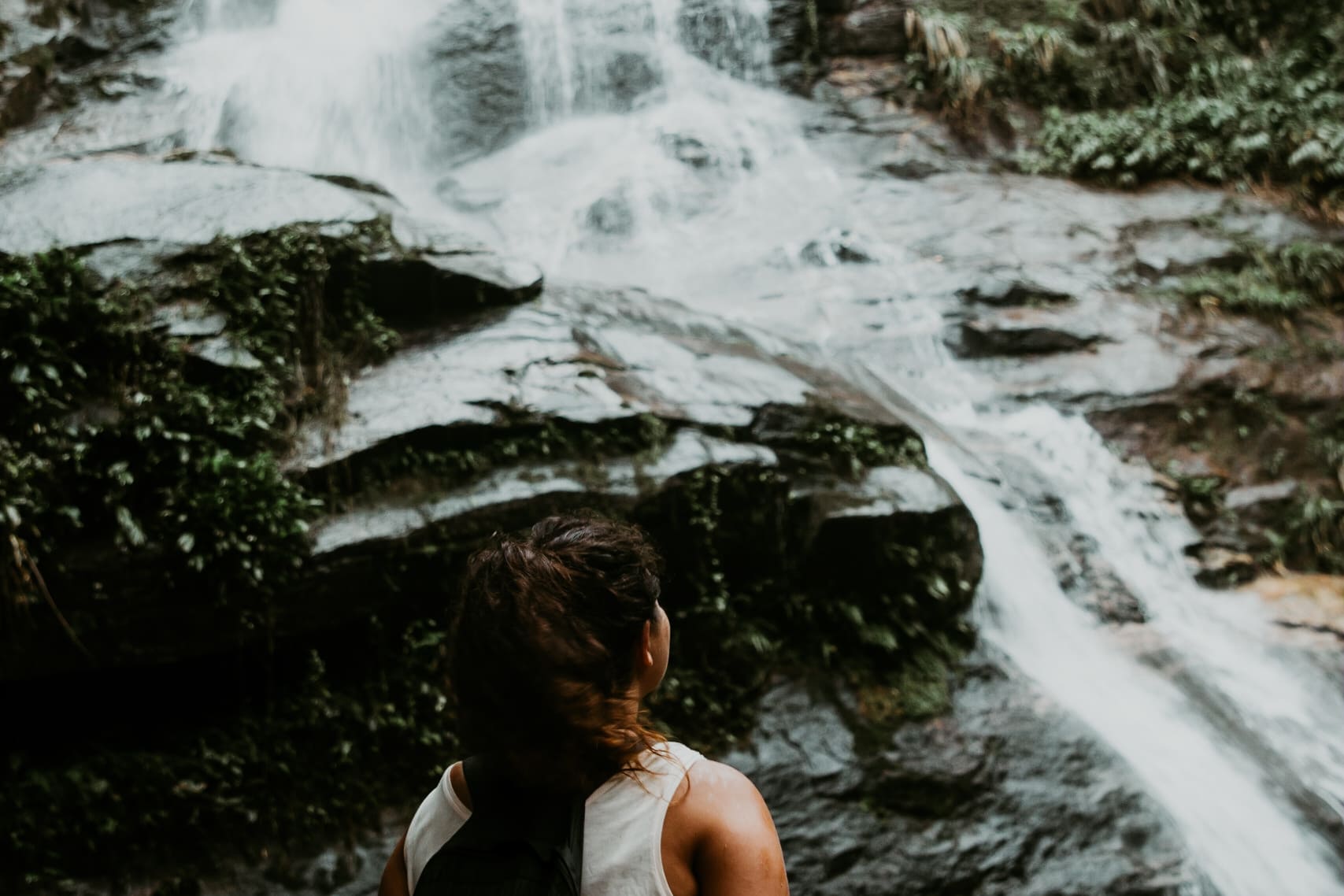 Rio de Janeiro is incredibly green: In Rio’s national parks you can go for endless hikes


 Reading tip