Dubrovnik is also known as the “Pearl of the Adriatic” and is a truly magical city. The narrow cobbled streets are surrounded by an impressive city wall and transport you to the romantic atmosphere of this special place in no time at all.
Discover lively cafés and charming locations with me, while the sun’s rays sparkle like little diamonds on the crystal-clear sea.
The city walls of Dubrovnik are one of the most visited sights in Croatia. Once built to ensure the security of the former Republic of Ragusa, the well-preserved walls are now a UNESCO World Heritage Site. A walk along the city walls is definitely a must-do when you are in Dubrovnik. I’ll show you the most important spots and give you my tips for your visit.
How to Visit the City Walls of Dubrovnik: Tips for a Tour
The city wall is one of the most important sights in Dubrovnik. This means that it is always well frequented, especially in the summer months. So you should make a good plan so that you don’t get caught up in the crowds of tourists that flood Dubrovnik every year.
Visiting time: It is best to plan your visit early in the morning or late in the afternoon. In summer, the city wall is open from 8 am. In the morning you have the best chance to explore the city walls at your leisure. You also avoid the midday sun.
Clothing: Comfortable shoes are an advantage. There is no shade on the wall, so remember to wear sun protection and a hat, especially on sunny days.
Duration: A round trip takes about 1 1/4 hours if you just walk normally. But there is a lot to see on the way and with photo stops and short breaks I would plan at least 2 hours for a complete tour.
Admission: The entrance fees for the city wall are quite steep. Admission costs €35 in summer and €15 in the winter months (although the opening hours are shorter).
Tip: You pay just as much for the Dubrovnik Pass, but in addition to admission to the city walls, it also includes many other sights in Dubrovnik, such as the Rector’s Palace and free travel on public transport. This makes the high expenditure worthwhile after all.
The Dubrovnik City Walls at a Glance
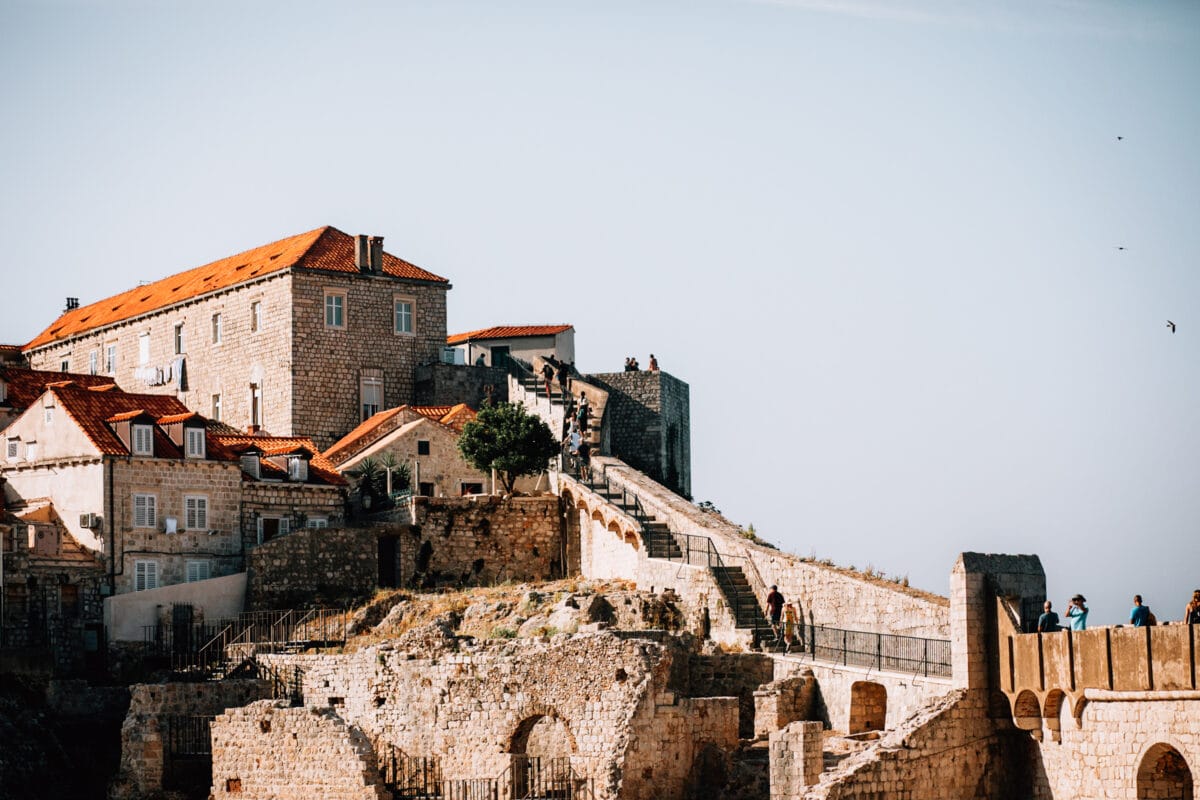
The city wall surrounds the entire old town of Dubrovnik
In some places it is up to 25 meters high and up to 6 meters thick
Length is 1940m
From here you have a breathtaking view of the city and the sea
Construction of the city wall began at the end of the 8th century. It proved its worth as early as 866-867 and withstood the siege by the Saracens. Over the centuries, the city wall was extended and reinforced more and more often. Between the 12th and 17th centuries in particular, further construction work shaped its current appearance. The fortress also largely survived the great earthquake of 1667 that struck the region. In 1979, the city walls of Dubrovnik became a UNESCO World Heritage Site.
Later, during the Yugoslav war in 1991, the city wall played an important role in the siege of the city by the troops of the Yugoslav People’s Army. Here the medieval fortress system proved itself once again. For nine months, the Croatian population behind the defenses withstood the massive attacks until Dubrovnik was recaptured by the Croatian army.
Dubrovnik’s city walls are divided into different sections. Each section plays an important role in the protection and structure of the old town. The various gates and towers are also good for orientation. These are the most important spots:
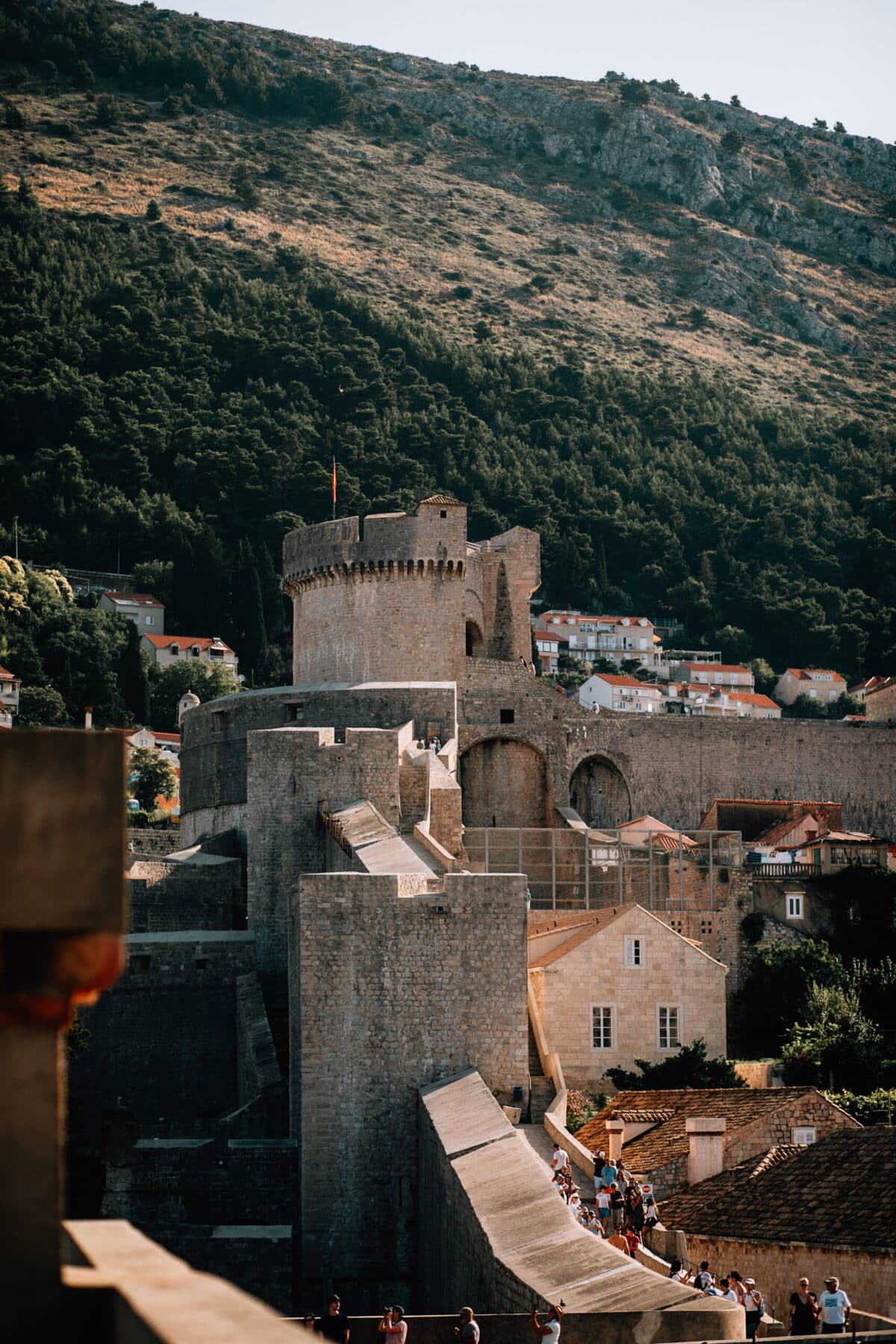
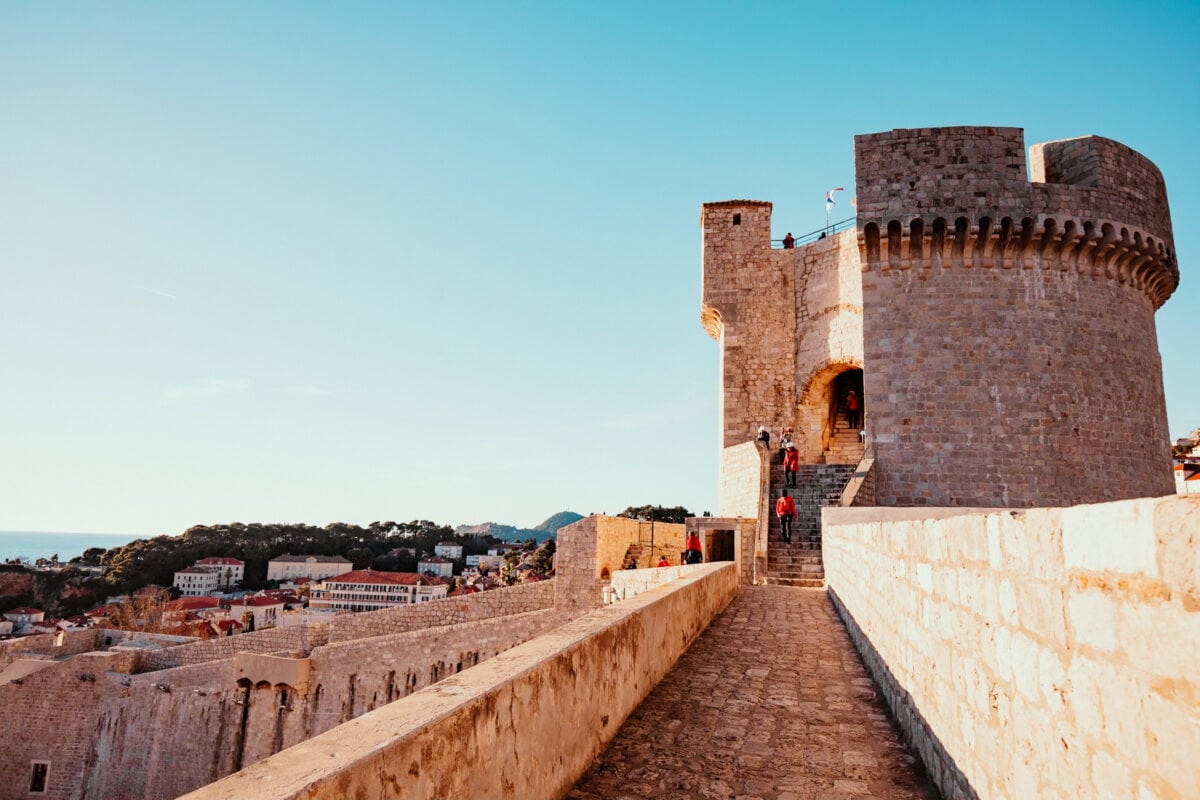
Minčeta Tower: The highest point of the fortress in the north of the old town. From here you have the perfect view of the iconic basketball court.
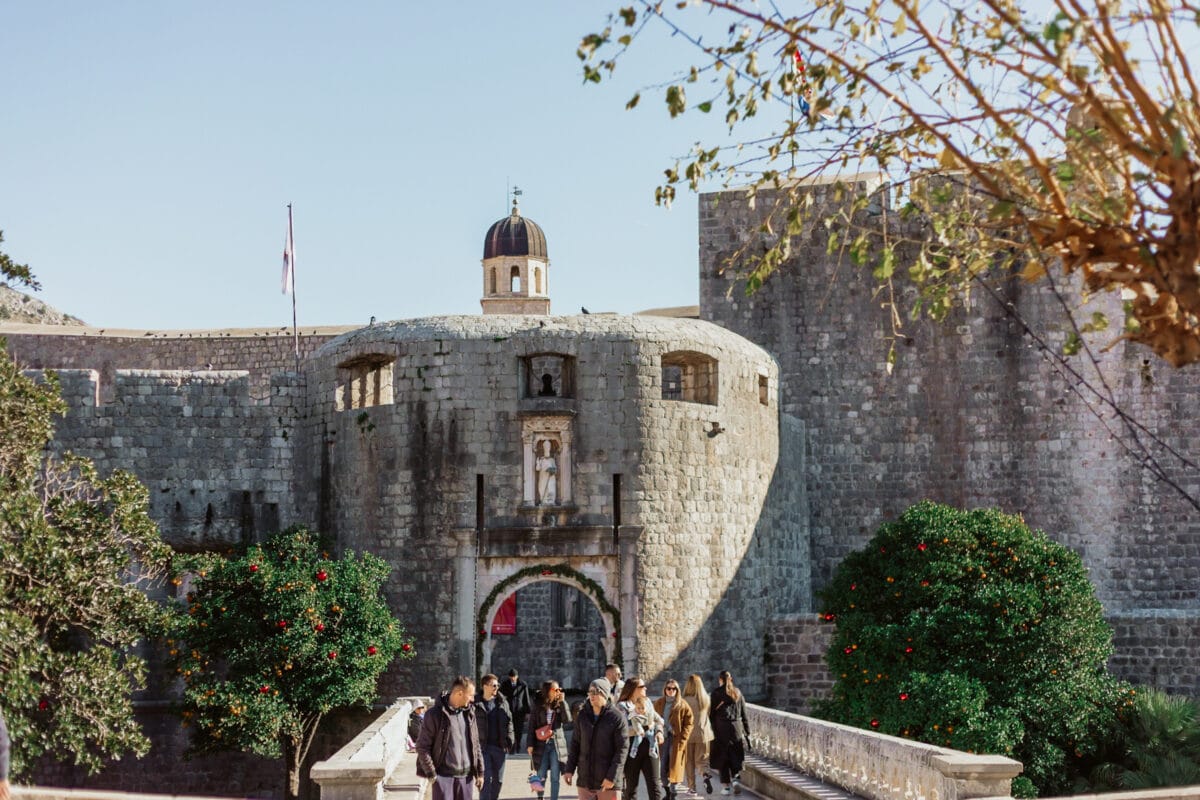
Pile Gate: The main gate to the old town. Cross a stone bridge through the fortifications and you will reach the western end of the Stradun, the main street in the old town of Dubrovnik.
Ploče Gate: The eastern gateway to the old town, less frequented but no less impressive. From here you can also reach the two eastern entrances to the city wall.
Lovrijenac Fortress: Located outside the city walls, it is nevertheless one of Dubrovnik’s fortifications.
Dubrovnik City Walls FAQ
How much is the entrance fee for the Dubrovnik city walls?
The entrance fees for the city wall vary depending on the season. For 2024, admission costs €35 for adults and €15 for children from March to October and €15 and €5 respectively in the remaining months. I recommend that you buy a Dubrovnik Pass. It costs the same for one day, but also gives you free entry to other attractions and free use of public transport.
Where are the entrances to the city walls in Dubrovnik?
There are three entrances to the city wall spread across the city:
Behind the Ploče Gate opposite the Dominican Church
At the Pile Gate opposite the Onofrio Fountain
Next to the Maritime Museum near St. John’s Fortress.
Please note: The city wall can only be walked in one direction, namely counter-clockwise. I recommend that you start at the Pile gate. In contrast to the other two, this entrance is the easiest to find.
Opposite the large Onofrio fountain is an entrance to the city wall.
How long does it take to walk around the city walls of Dubrovnik?
The complete tour of the city wall takes about 1 1/4 hours. However, I wouldn’t plan less than 2 hours, as you stop very often to enjoy the spectacular view or take photos.
What are the opening hours of the city walls in Dubrovnik?
Opening hours vary depending on the season. In winter, for example, the city wall closes at 3 pm. You can find the exact opening hours here.
Dubrovnik on the Croatian Adriatic attracts countless travelers from all over the world every year and has now mutated into an absolute hotspot. But not without reason: the old town of Dubrovnik is simply beautiful and, for me, one of the most romantic cities in Europe. I’ll show you the most important sights you need to see in Dubrovnik. And I still have one or two insider tips in store for you.
1. Old Town of Dubrovnik
Dubrovnik’s Old Town is an absolute gem. Like a massive fortress, it stands proudly on the rugged coast of the Croatian Adriatic and will impress you even as you approach it along the coastal road. Dubrovnik’s origins date back to the 7th century: thanks to its strategically important location in southern Croatia, Dubrovnik was once a major trading hub in the region.
5 highlights of Dubrovnik in a nutshell:
1. the city wall of Dubronik 2. Stradun 3. Game of Thrones filming locations: e.g. Walk of Shame, Blackwater Bay 4. Lokrum Island 5. Buza Bar: Drinks & Sea
The old town of Dubrovnik has been a UNESCO World Heritage Site since 1979 and is packed with sights. It is completely car-free and is best explored on foot: Don’t miss the opportunity to stroll through the narrow streets and enjoy the Mediterranean vibe of Dubrovnik!
2. Stradun
The magnificent main street, Stradun, is impossible to miss: The long street is lined with elegant palaces, cafés and stores and forms the main artery of Dubrovnik’s old town, so to speak. The Stradun runs directly from the western Pile Gate to the Ploče Gate and the city harbor in the east.
The Stradun also divides the old town into two halves, so to speak: Towards the sea, the old town is relatively flat; on the other side of the Stradun, the houses are situated on a slope and there are often narrow, steep steps to climb. (You should bear this in mind when choosing your accommodation. But more on this at the end of the article!)
3. Lovrijenac Fortress
The Lovrijenac fortress is enthroned high on a rock and impresses with its imposing appearance. The history of this fortress dates back to the 11th century! It once served as a defensive fortress and symbol of Dubrovnik’s power. Today, the fortress offers visitors a breathtaking panoramic view of the old town and the glittering sea. Cultural events and theater performances are also held here, combining the historical ambience with contemporary art.
Incidentally, you can visit Lovrijenac Fortress for free with the Dubrovnik Card.
4. Pile Bay
Below the Lovrijenac fortress there is a small, yet very atmospheric bay. Pile Bay will probably also look familiar to you if you’ve followed the series“Game of Thrones“: it was used as the filming location for Blackwater Bay. Located outside the bustling old town directly behind the Pile Gate, you can relax from sightseeing in one of the pubs here. In winter it is quieter and pleasantly mystical here.
5. Walk of Shame / Jesuit Staircase
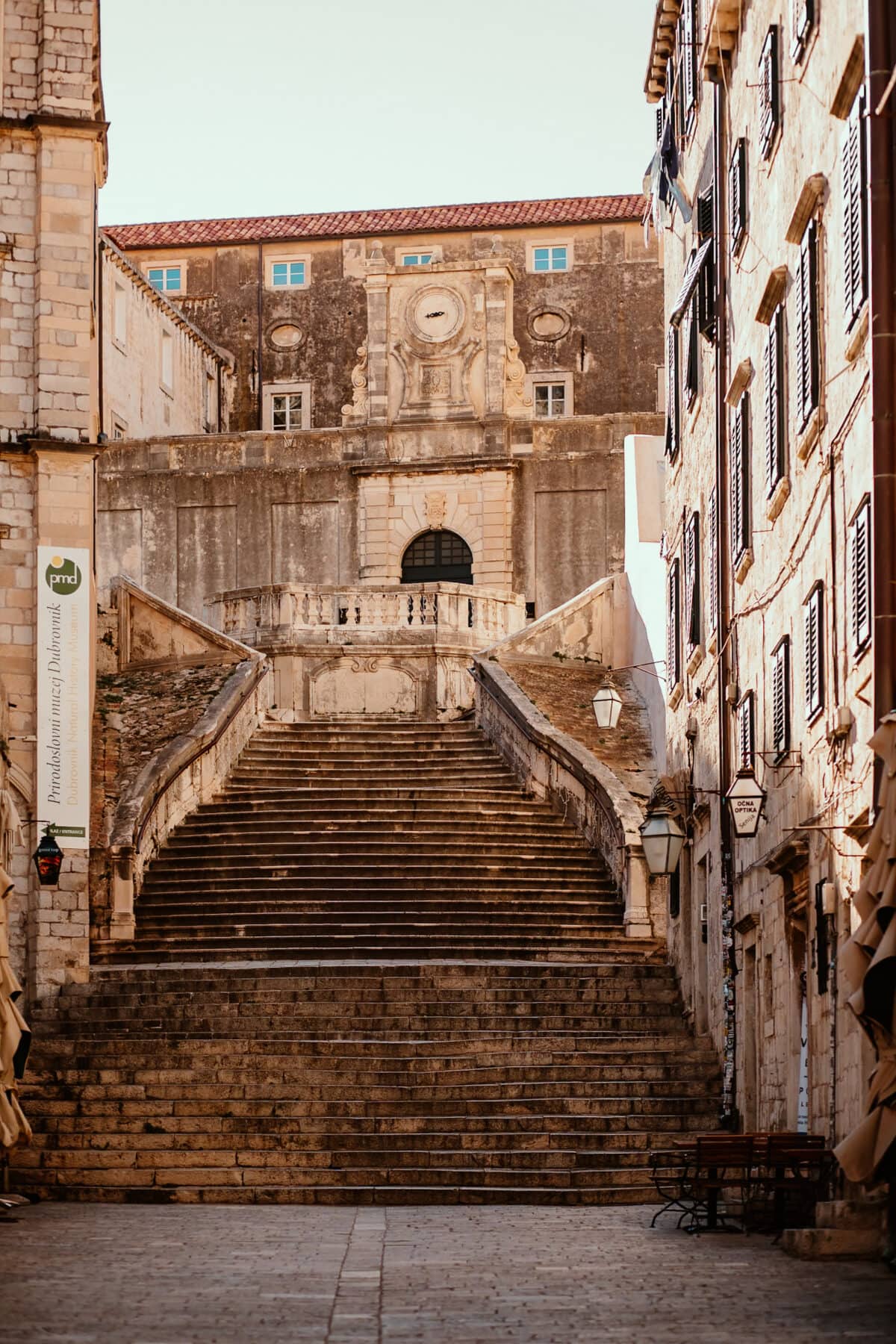
There is this one staircase that is probably partly responsible for the huge tourist boom of recent years: the Walk of Shame in Dubrovnik is probably the most famous filming location for “Game of Thrones”. This staircase has achieved worldwide fame and is now a place of pilgrimage for all fans of the series.
In the series, especially in the dramatic scene of the “Walk of Shame”, Cersei Lannister is forced to descend these stairs – exposed and exposed to the mockery of the crowd. This scene was not only a turning point for Cersei’s character, but also a defining moment in the entire series. I’ve never actually seen Game of Thrones, but even I can remember this scene because it was so impressive.
In reality, however, this staircase is known as the“Jesuit Staircase“. It is located near the Church of St. Ignatius and the Jesuit College. Built in the 18th century, it belongs architecturally to the Baroque era and bears witness to Dubrovnik’s former wealth. At the time, the construction was intended to compete with other European metropolises – and I think it was quite successful, because the staircase is really very impressive. A huge show staircase that is not only historically interesting, but has also become part of pop culture.
Want to know where more Game of Thrones filming locations are in Dubrovnik? Then why not take part in a special Game of Thrones tour*, where you will not only see all the locations, but also learn lots of details about filming in the city.
The Rector’s Palace immediately catches the eye in the old town of Dubrovnik. From the 14th century until 1808, today’s Dubrovnik was part of the Republic of Ragusa, a maritime city-state that was particularly wealthy. You can also see this in the Rector’s Palace, which was the seat of government at the time. From the outside, the Rector’s Palace is really very impressive and is somewhat reminiscent of Venice: Gothic and Renaissance architectural elements come together here. It is also considered one of the most important sights in Dubrovnik and is quite well visited.
But before you stand in line or have to spend extra money: In my opinion, the Rector’s Palace is pretty overrated. I had a Dubrovnik Pass and the entrance is free, but I wouldn’t spend any extra money. The permanent exhibition shows exhibits about the history and culture of the region, but I wasn’t that impressed.
7. Sponza Palace
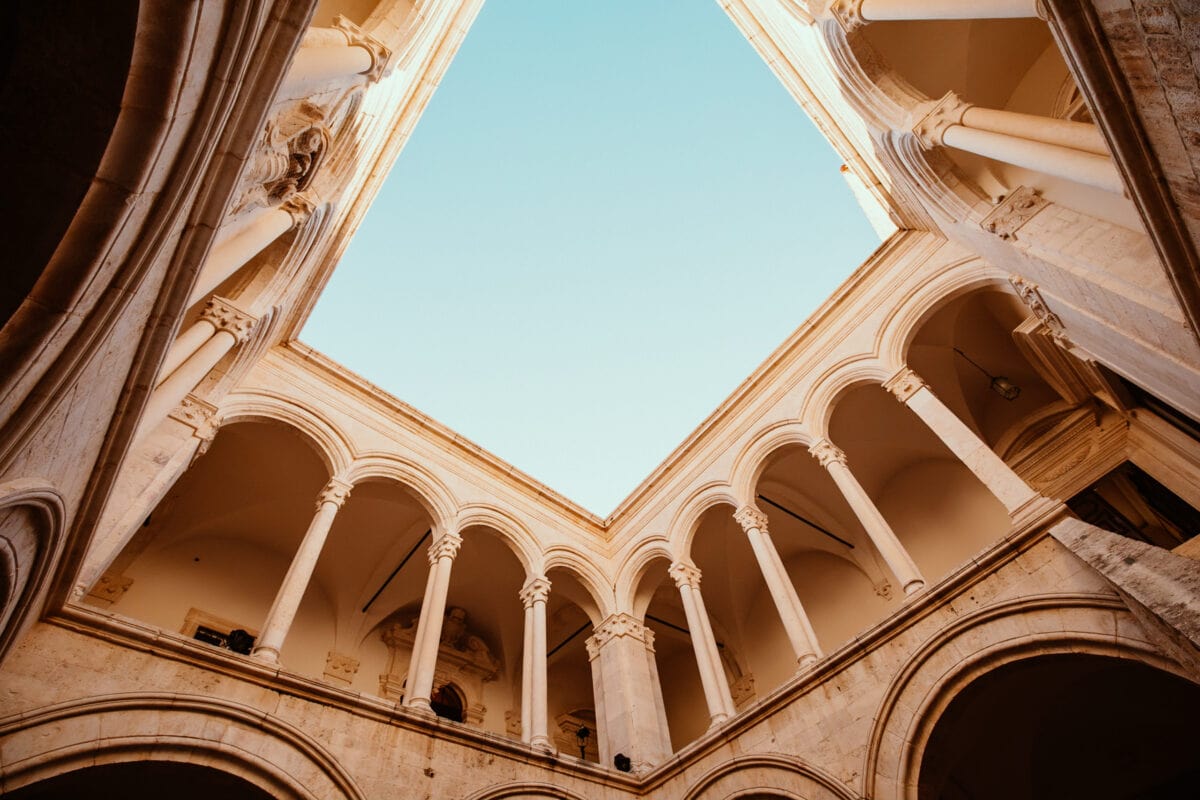
The Sponza Palace is only a few steps away from the Rector’s Palace – and in my opinion much more interesting. The customs house used to be located here, and weapons and coins were also forged here. The impressive courtyard gives an idea of the important role the Republic of Ragusa must have played in the region in its heyday! As most tourists tend to rush into the Rector’s Palace, it is wonderfully relaxed here.
Tip: Directly to the front left is a hall in honor of the defenders of Dubrovnik in the 1991 Yugoslavian war, when Dubrovnik was besieged and massively shelled for months. In the small exhibition you can find out more about this difficult time and the background of individual Dubrovnik residents. Very moving!
8. Lokrum Island
A paradise just outside Dubrovnik is the island of Lokrum, which is only a short boat trip away. This green oasis attracts nature lovers with its impressive botanical diversity, which has been cultivated by monks and researchers over the centuries.
The botanical garden on Lokrum is home to rare plant species and actually offers a quiet retreat from the hustle and bustle of the city – but due to its proximity to the old town, you won’t really be alone here in summer. The boat trip from the old harbor takes just under ten minutes! But you can do a lot here. There are hiking trails, beautiful bathing spots and even a nudist beach!
Lokrum is also home to the Iron Throne from Game of Thrones, where you can even take souvenir photos!
The boat to Lokrum departs every 30 minutes during the season. The ticket is also valid as an entrance ticket for the Lokrum nature reserve and costs €27, children pay €5.
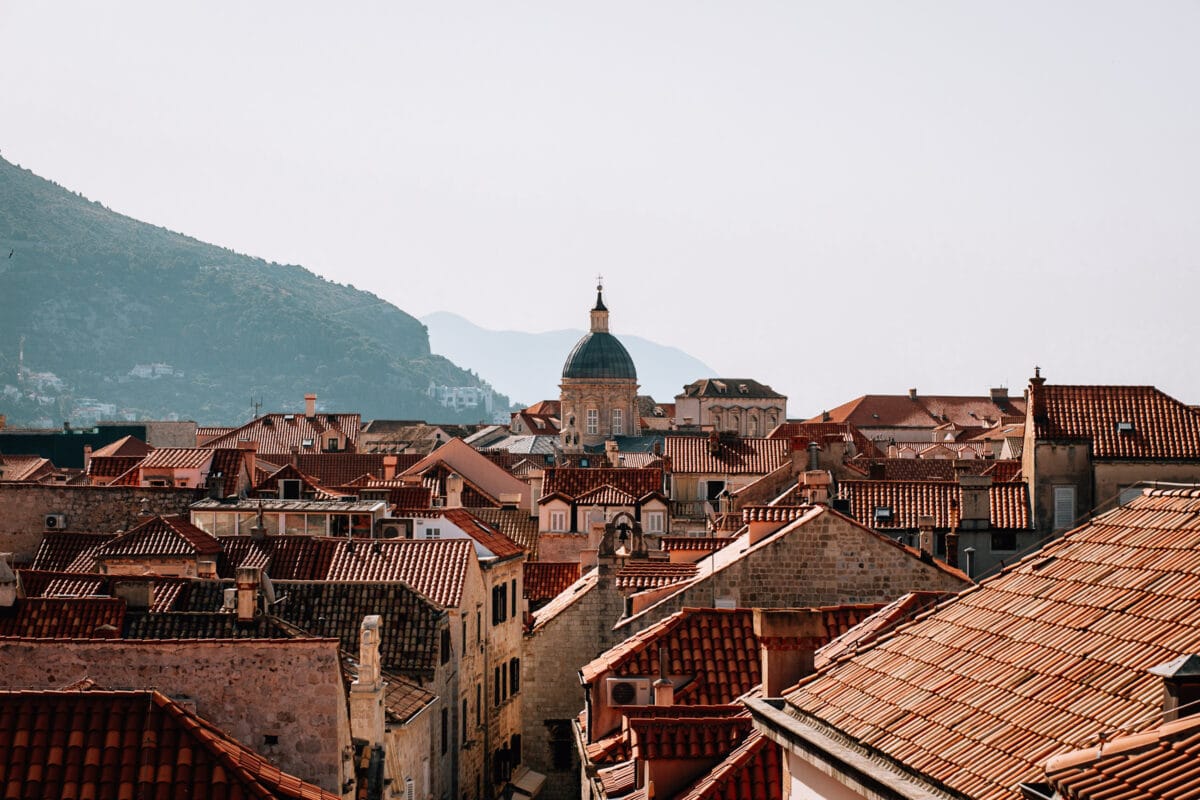
To enjoy an incomparable panoramic view over Dubrovnik, the cable car ride up Mount Srđ is an absolute must. From the top station, you have a breathtaking view of the red roofs of the old town and the sea in the background. A trip there at sunset is particularly spectacular. And if you want to highlight the view with a culinary experience, you will also find the perfect location at the top of the panorama.
10. Dubrovnik City Walls
A highlight is undoubtedly the impressive city wall, which surrounds the old town and is over two kilometers long. I will never forget the experience of walking along the top of this massive fortress wall and enjoying the view of the sea and the huge old town.
Admission is quite high during the summer season, but I think it’s really worth biting the bullet. In the season, admission with the Dubrovnik Pass now costs €35 (a few other sights are still included), in winter only €15. There is no option to buy a ticket for the city walls only.
Incidentally, I once read that the entrance fees were raised so exorbitantly in order to cope with the masses of visitors – the hope was probably to deter many tourists with high prices. But I can tell you: it didn’t work! In summer, however, the city wall is still very busy, so it’s best to get there early in the morning to avoid the crowds of tourists. But the view of the old town is worth every effort!
11. Buža Bar
One of the most unique bars in Dubrovnik is the Buža Bar, which is literally located in the rock walls of the city walls. The name “Buža” means “hole” in Croatian, and the name says it all – access to the bar is through a small hole in the wall. In this relaxed and casual setting, you can sip cold drinks while watching the brave plunge into the water from the rugged cliffs.
Although the view of the sunset here is not quite as good, the Buža bar is still a great place for a chilled drink at the end of an eventful day in Dubrovnik.
12. Old Harbor
As befits a coastal town, Dubrovnik also has a harbor. The Old Port in Dubrovnik is located in the east of the Old Town between Ploče Gate and Stradun. It is protected almost all around by the massive city wall and a long pier.
The long pier in the old harbor is called Porporella and has a special significance among locals: it is a popular meeting place for newlyweds. If a couple who have just fallen in love arrange to meet here, it is a sign that they are serious about love and ready for something more permanent.
This is also where the boats to the island of Lokrum depart. However, the many cruise ships that stop in Dubrovnik during the season have not anchored here for a long time. The port of Gruž, located a few kilometers to the north, was built for large ships just outside the old town.
What you can do in Dubrovnik & the surrounding area
Not only Dubrovnik is worth seeing, but there is also a lot to see all around. There are many interesting places along the Croatian Adriatic coast or you can simply hop from one Croatian island to the next. There is a good reason why Croatia is a good place for a vacation! Trips to neighboring countries are also popular.
Advertising / *affiliate link
You can easily explore the surrounding area by car, camper or rental car anyway. From Dubrovnik, you will also find many providers offering tours to Kotor in Montenegro, Mostar in Bosnia and Herzegovina or other parts of Croatia. So you don’t necessarily have to be traveling in your own car to experience a bit of that road trip feeling.
Staying overnight in Dubrovnik is a topic in itself. On the one hand, Dubrovnik is an expensive place, and on the other, you should really think carefully about where you choose your accommodation. The old town is completely car-free, which means you can have your Uber or cab drop you off in front of one of the three city gates and have to walk from there to your accommodation. Depending on your luggage, this can be more strenuous, as most of the old town consists of cobblestones. There are also a lot of stairs, especially in the upper part of the old town.
The maze of alleyways doesn’t make it any easier to find your way around, so you should ask for directions to your accommodation beforehand. If you don’t want to carry your luggage yourself, you can also use one of the luggage services. At the Ploce Gate, for example, you will find several providers who will bring your luggage to your accommodation by handcart.
The best places to stay in the Old Town (my recommendation)
Nevertheless, it’s really nice to spend the night in the middle of the Old Town. I found an absolutely cute apartment* I can definitely recommend! It is located in a quiet corner in the shade of the city wall, so you can spend the night here even in summer.
On the other hand, there are also many hotels and apartments around the Old Town that are a little more budget-friendly. The Lapad peninsula, which is located a few kilometers north of the old town, is very popular. You will also find more bathing opportunities there and the journey is not as complicated. Perfect if you are also looking for some beach life.