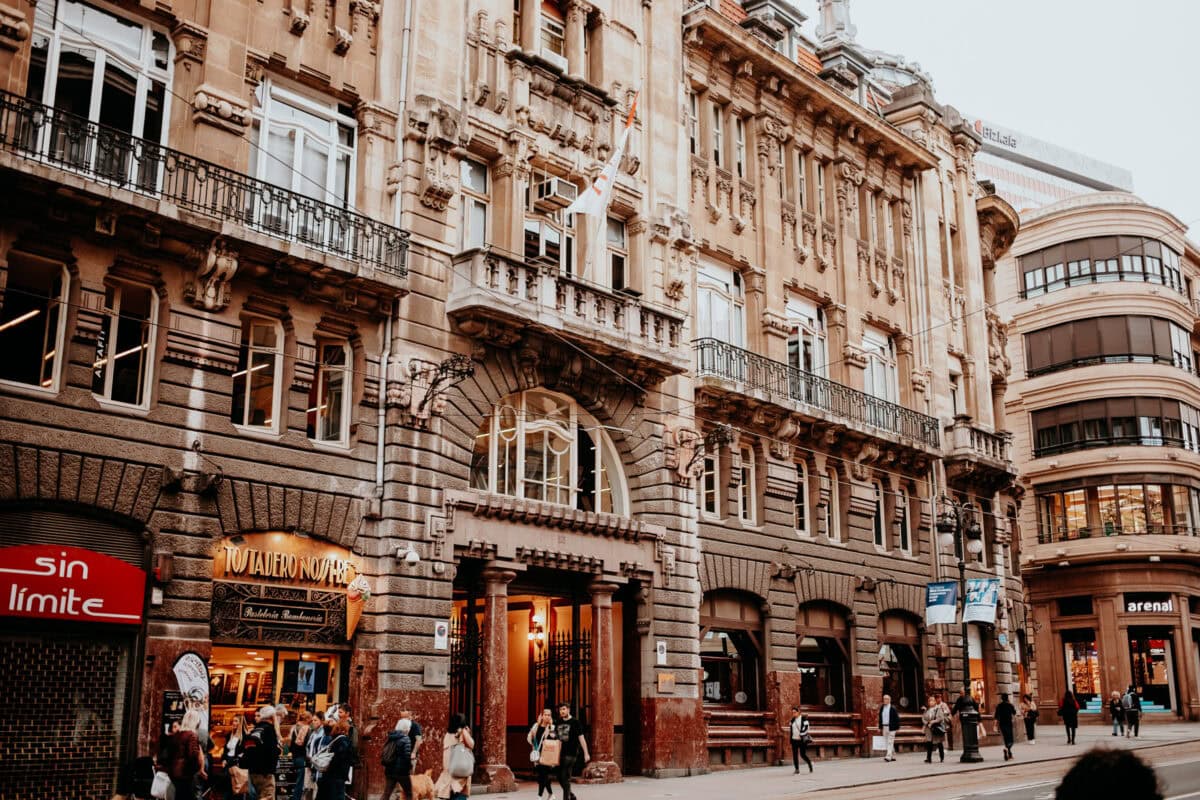
Good food plays a major role in the Basque Country: Nowhere else in Europe is the concentration of Michelin-starred chefs as high as it is here. But even if you don’t have a big budget for gourmet restaurants, you’ll find plenty of great spots in Bilbao that will make any foodie’s heart skip a beat. Here, I’ll introduce you to my favorite cafés and restaurants in Bilbao.
Bilbao & The Pintxos
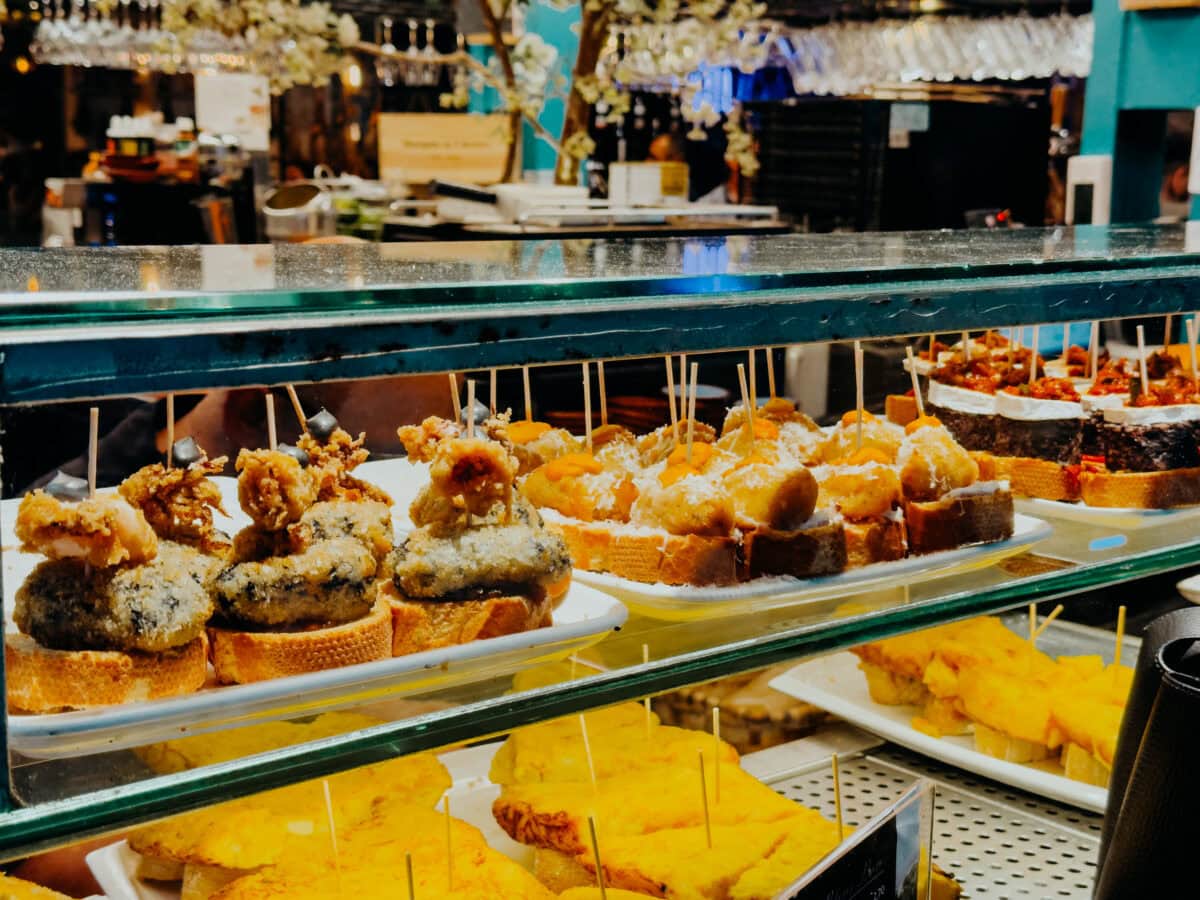
But before you dive into the hustle and bustle of the many bars, you should familiarize yourself with the tradition of pintxos in Bilbao . Pintxos (in Spanish: pinchos) literally means skewers and are slightly larger snacks that are often eaten with a drink.
Originally, they were artfully stacked on large plates on the bar counter and each guest helped themselves as they pleased. The bill was then simply based on the number of wooden skewers that held each morsel together and were left on the plate at the end. This tradition has changed a little: Pintxos are often no longer completely open on the counter, but in glass cabinets, and there are also differences in price depending on the ingredient.
My recommendations for restaurants, pintxos and cafés in Bilbao
Finding good locations in Bilbao is not difficult. The quality is very good and the choice is huge. Here are a few of my favorites:
Baristas Club Right behind the cathedral and therefore in the heart of the old town. Good coffee, relaxed vibe – perfect for a coffee break while sightseeing.
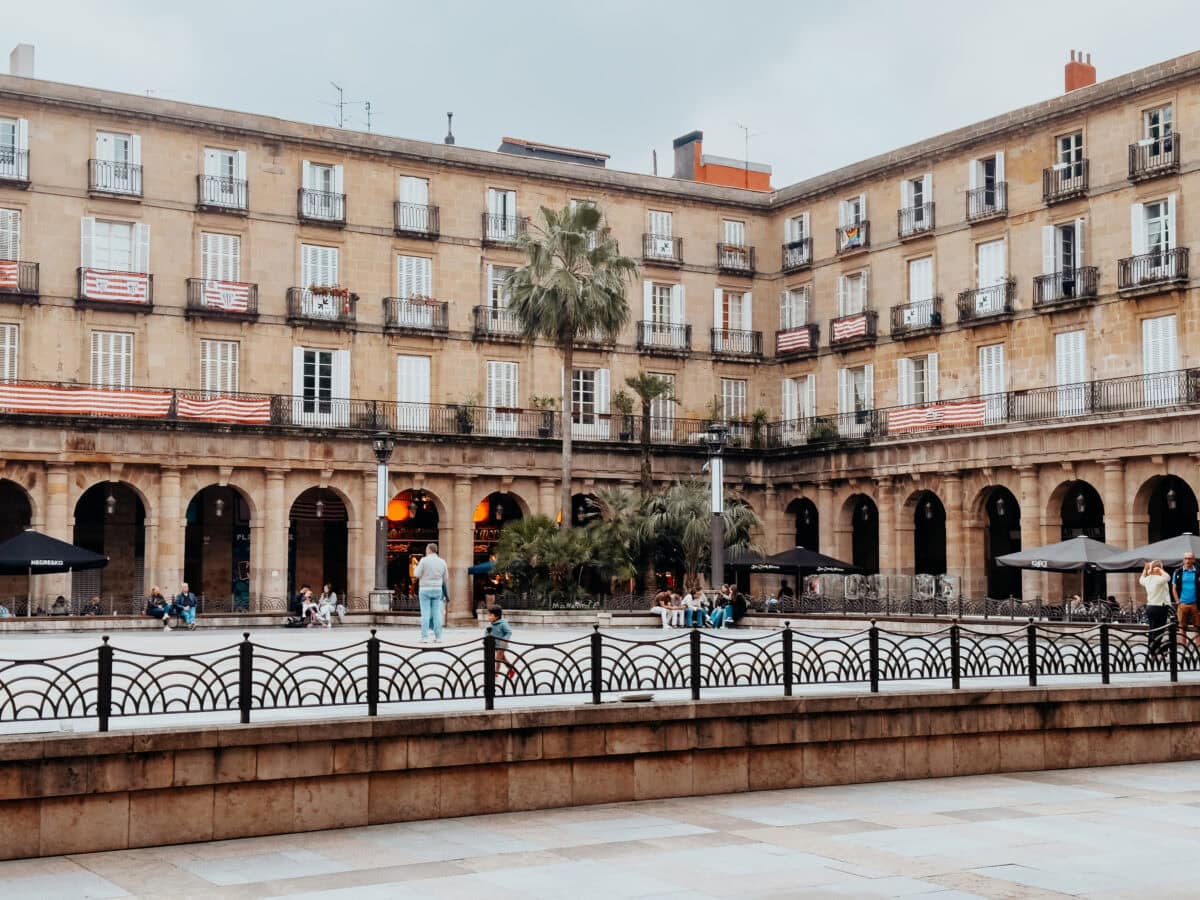
La Olla de la Plaza Nueva & Toma y Daka These two venues are located directly on the Plaza Nueva in the old town. There is a huge selection of pintxos here. Simply stop off at a bar, try a few pintxos and move on.
Los Fueros Centrally located on the edge of the old town, yet somehow hidden away. Small restaurant with really great Basque cuisine made from fresh local produce. Highly recommended for a cozy evening with good food and wine.
By the way: As a vegetarian or vegan, it can be a little difficult in more traditional restaurants, as many dishes are prepared with fish (e.g. the popular bacalao) or meat. However, in a modern city like Bilbao, it shouldn’t be a problem to find good alternatives.
Food tours through Bilbao
Nevertheless, pintxos are a great way to eat your way through Basque cuisine for little money. You can stroll casually from bar to bar and explore Bilbao’s food scene.
A fun way to try pintxos is also a food tour through Bilbao, where you can get to know the tastiest specialties and learn more about Basque cuisine.
Where else you can find good places to eat in Bilbao
I won’t be able to list all the great places in Bilbao here – there’s simply too much on offer. Going out or eating out is a big part of Basque culture, so you will find bars and restaurants almost everywhere. Some streets have a particularly high concentration of eateries, so it’s worth taking a stroll and discovering them for yourself.
You’ll find plenty of restaurants on these streets and in these districts:
Poza Lizentziatuaren Kalea This street parallel to Gran Vía is particularly busy on Atletico Bilbao match days. The street leads directly to the San Mames stadium, whose glittering façade can be seen from afar through the street canyons.
Ledesma Kalea Calle Ledesma is conveniently located between Gran Vía, the Guggenheim Museum and the old town. It is also a pedestrian-only zone and one restaurant follows the next.
Are you planning a trip to the Basque Country? Then Bilbao will certainly be on your sightseeing list! In this article, I’ll show you which sights in Bilbao you shouldn’t miss – but I’ll also tell you why I personally wasn’t really impressed by the city, even after several visits! (More on this later in the article).
Guggenheim Museum
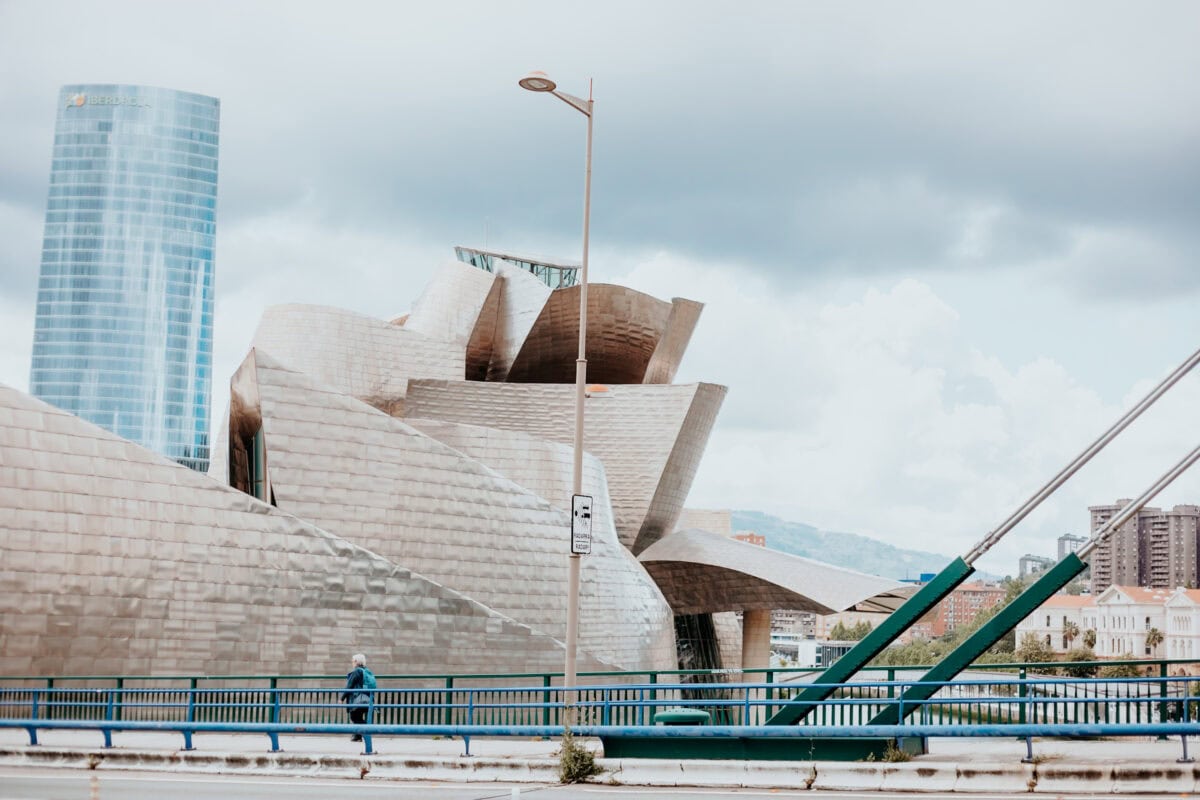
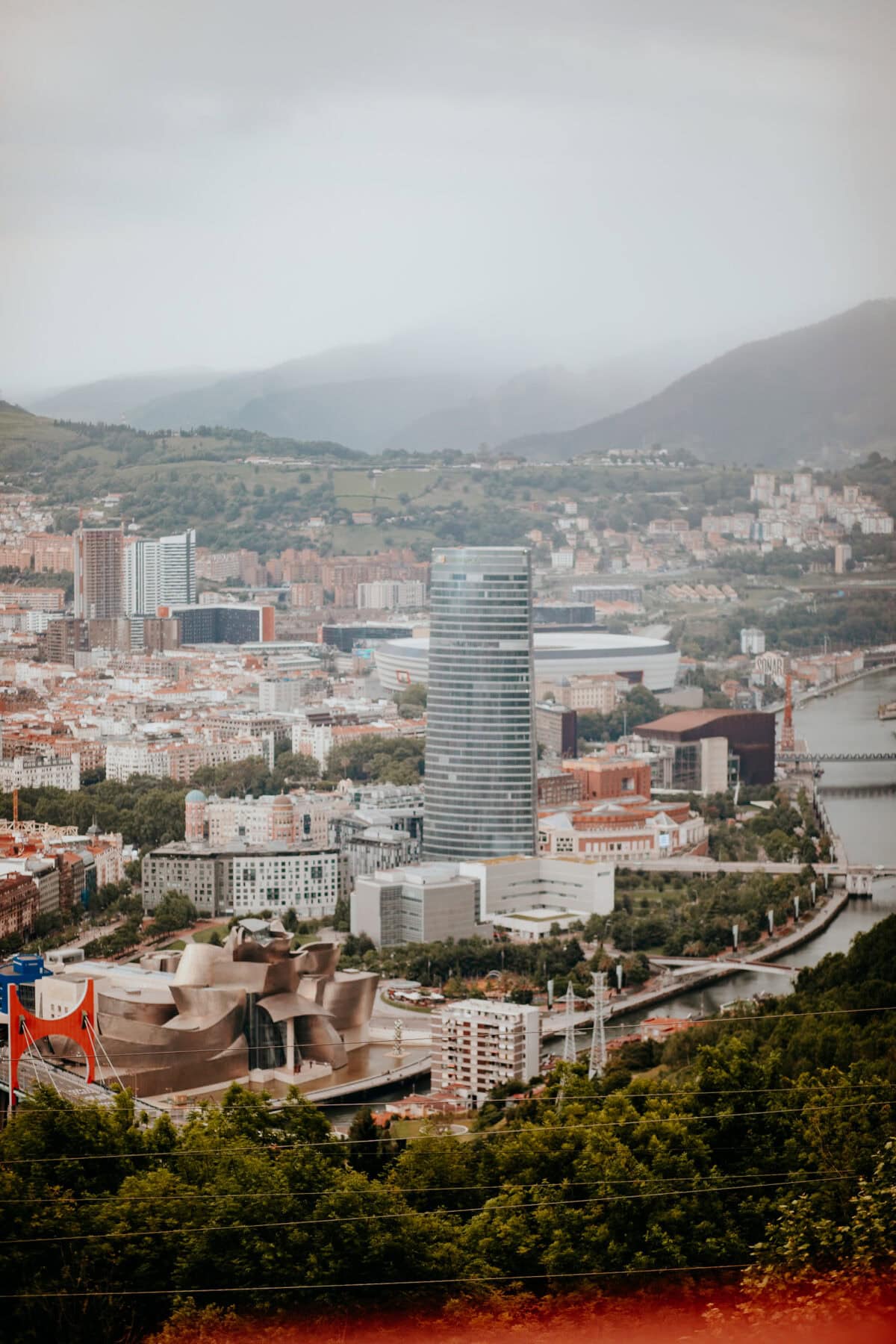
The Guggenheim Museum is probably THE landmark of Bilbao. The Museum of Modern Art is a branch of the Guggenheim Museum in New York and is probably the very first location that visitors head for in Bilbao. The construction of this architectural super project, designed by Frank O. Gehry, has transformed the former industrial city to such an extent that a phenomenon has even been named after this incisive event: The Bilbao effect describes the upgrading of a place solely through a spectacular building.
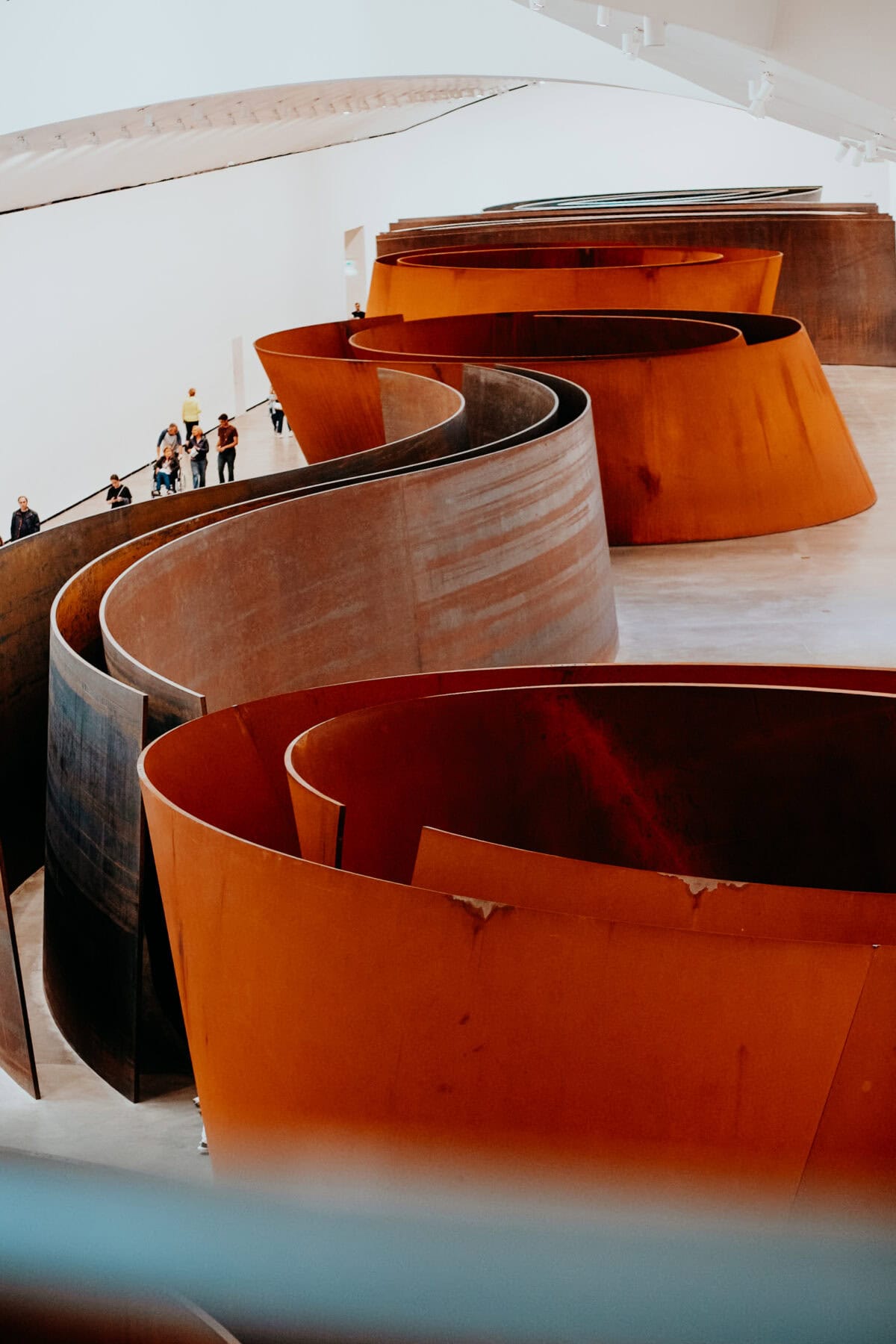
However, the Guggenheim Museum Bilbao is not just a feast for the eyes from the outside: inside you can see really impressive contemporary works of art in the permanent exhibition. In addition, there are always spectacular temporary exhibitions and works on display.
Insider tip: If you want to know what Bilbao used to look like, you will find a small room with a video installation called “Zero” directly to the right of the ticket office. (Most visitors simply walk past it).
It shows what Bilbao used to look like and how drastically the city has changed over the last hundred years. By the way: you don’t need a ticket for the museum to see the installation, as it is located in front of the entrance control. But honestly: if you’re already here, you shouldn’t miss the exhibition!
Don’t miss this tour in Bilbao
The best way to admire the full beauty of the Guggenheim’s architecture is from the water. The 1- or 2-hour boat tour doesn’t cost much and you will learn more about Bilbao’s dramatic development from an industrial city to a tourist magnet.
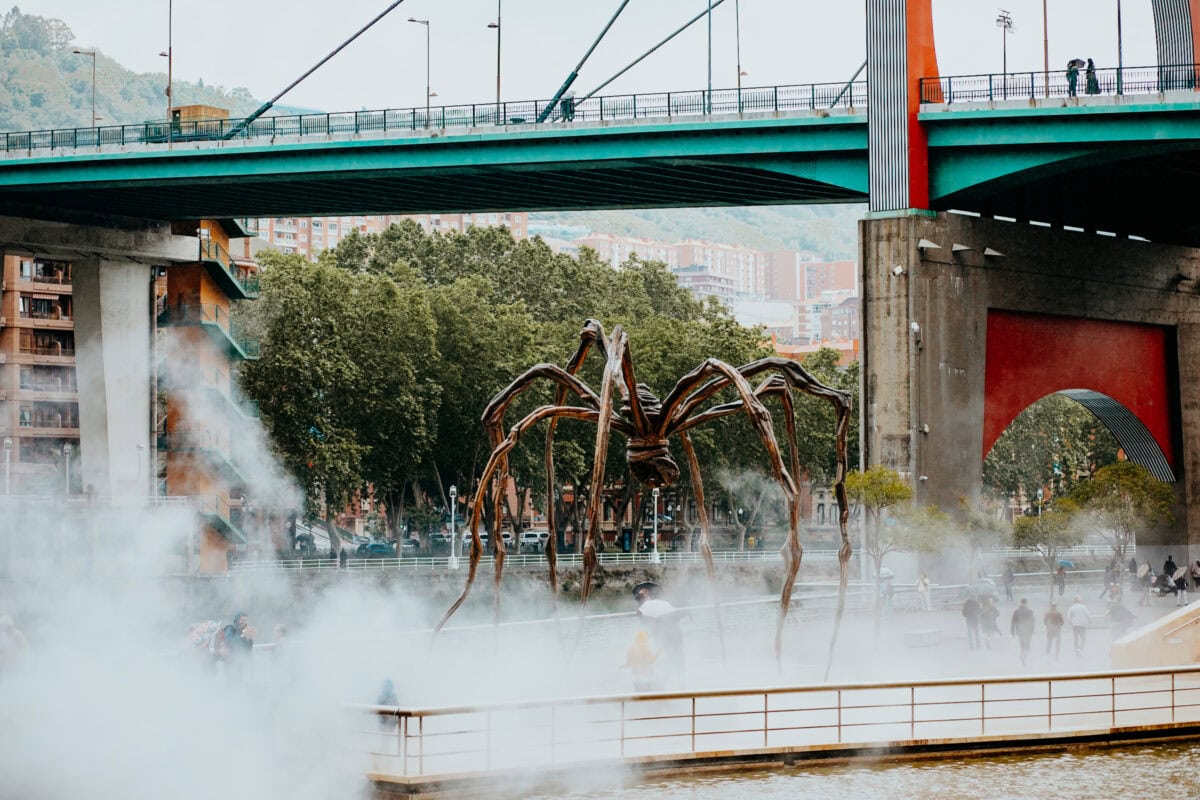
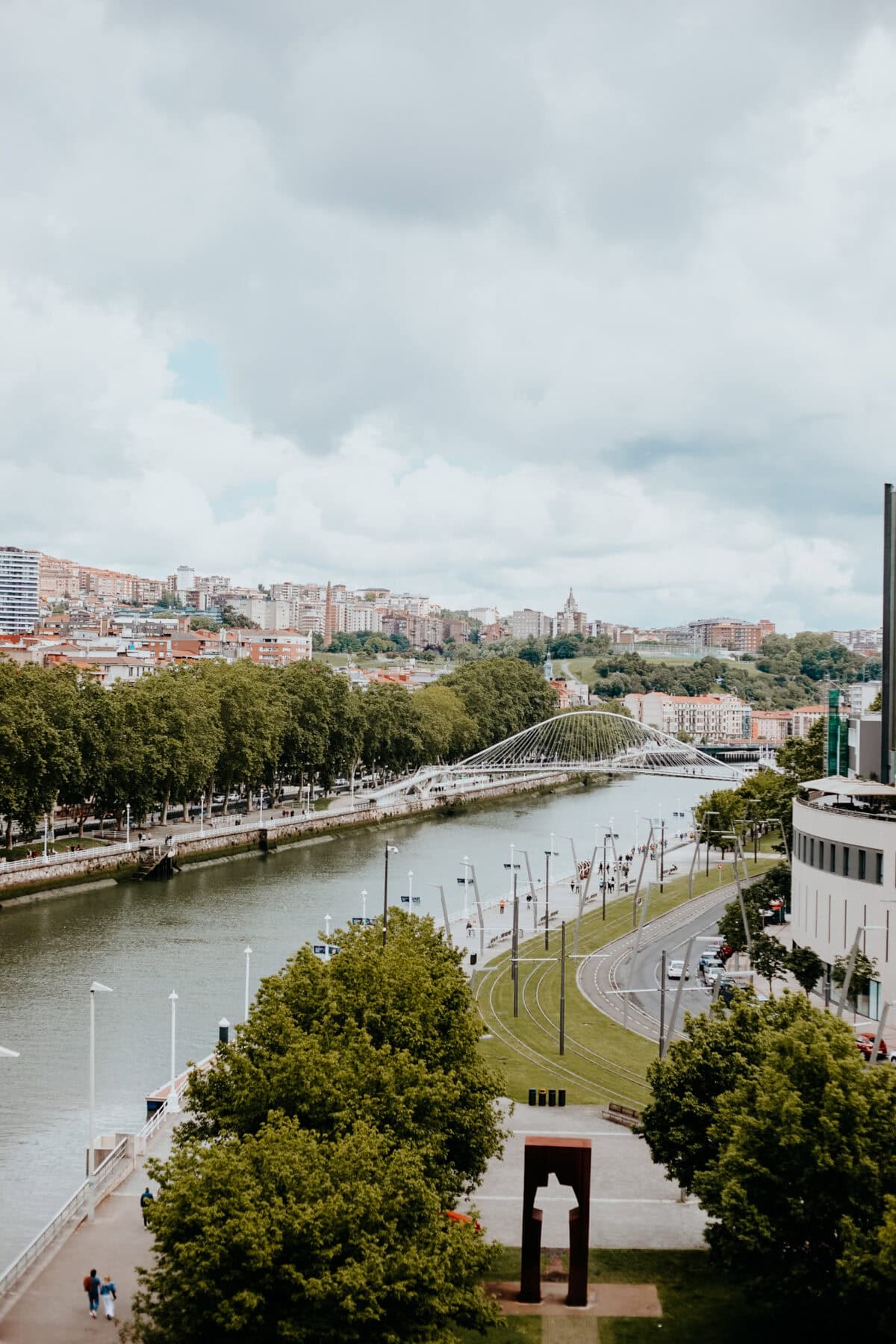
Does the design of the Zubizuri Bridge not far from the Guggenheim Museum look familiar? On the one hand, the curved shape is supposed to be reminiscent of a sail – on the other, it looks quite similar to the terminal at Bilbao airport. No wonder, as both the pedestrian bridge over the Nervión and the terminal were designed by Spanish star architect Santiago Calatrava.
Old town of Bilbao / Casco Viejo
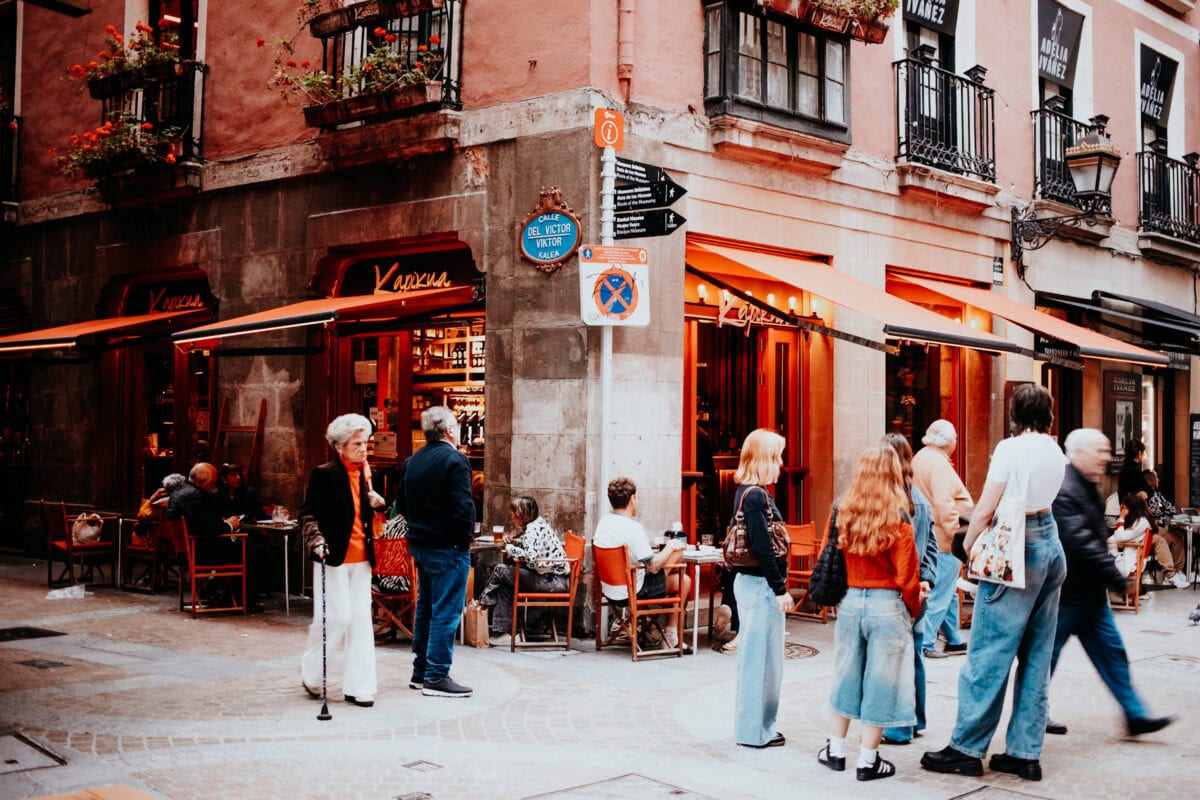
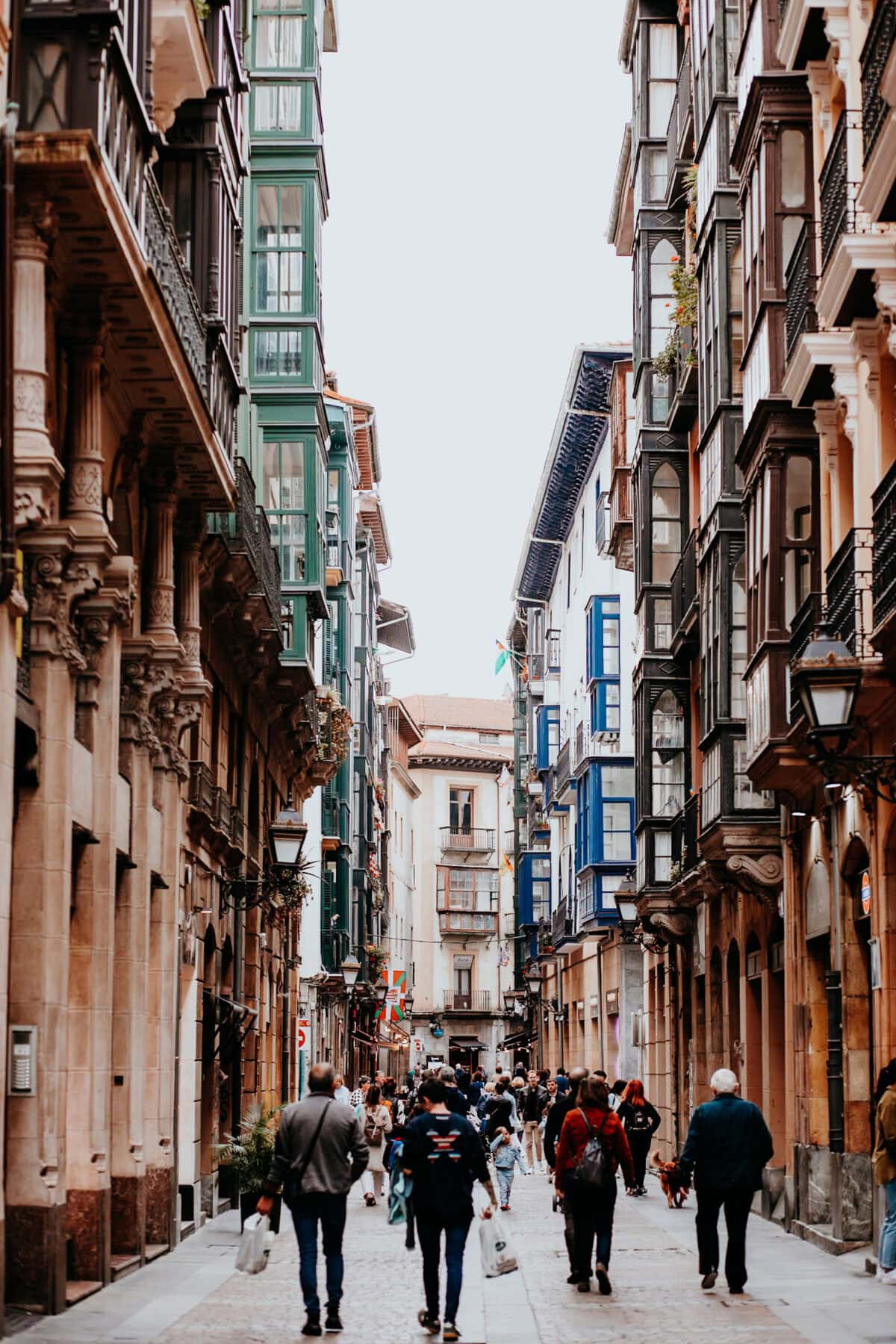
You should also not miss out on a visit to Bilbao’s old town. It is all too easy to get lost in the narrow streets with their numerous eateries. The Basque Country is also known for its excellent cuisine and the number of Michelin-starred restaurants is exceptionally high. So it’s best to come hungry!
Don’t have a big budget for fine gourmet restaurants? No problem either! In the old town of Bilbao you will also find numerous bars and restaurants that offer really good pintxos for a small price. Pintxos are small snacks, similar to tapas, which are traditionally eaten with a drink – but you can also easily fill up on the large selection.
Known as Plaza Mayor in many Spanish cities, Plaza Nueva is the heart of the old town, so to speak. You will also find many good bars and restaurants around the square, where you can sample a selection of pintxos.
Bilbao Cathedral
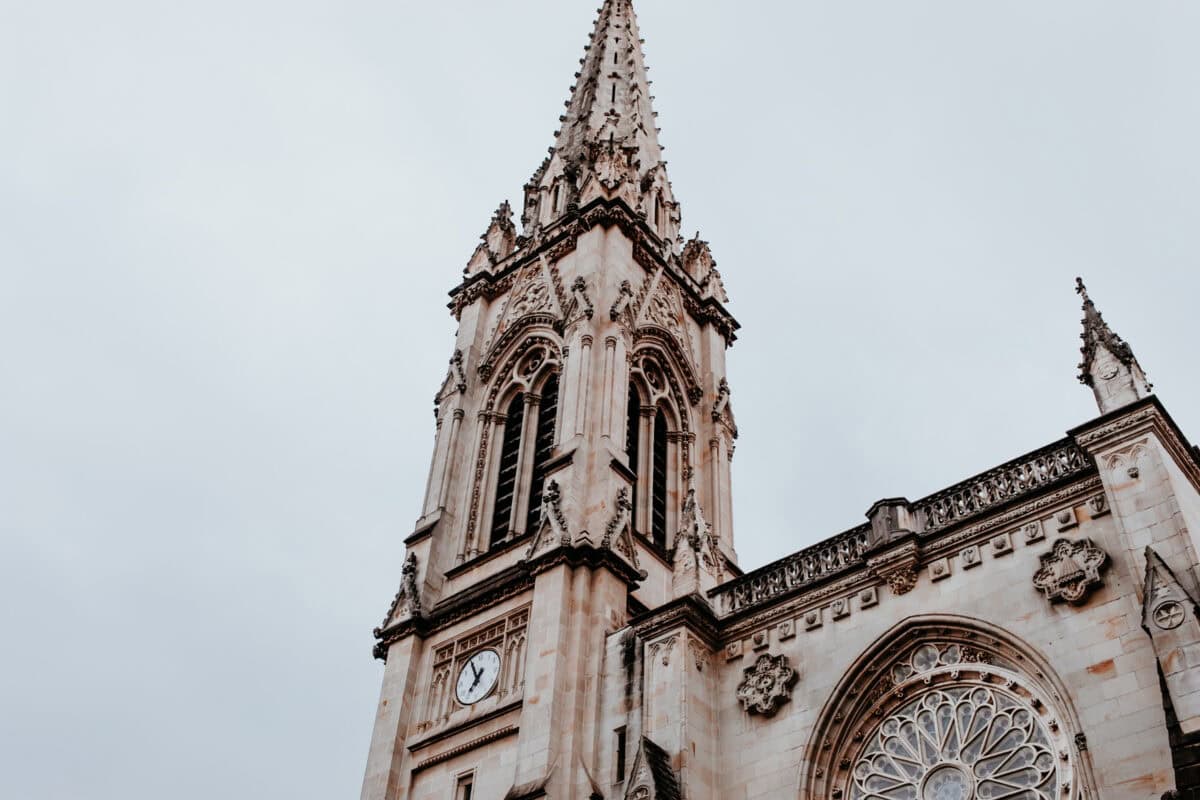
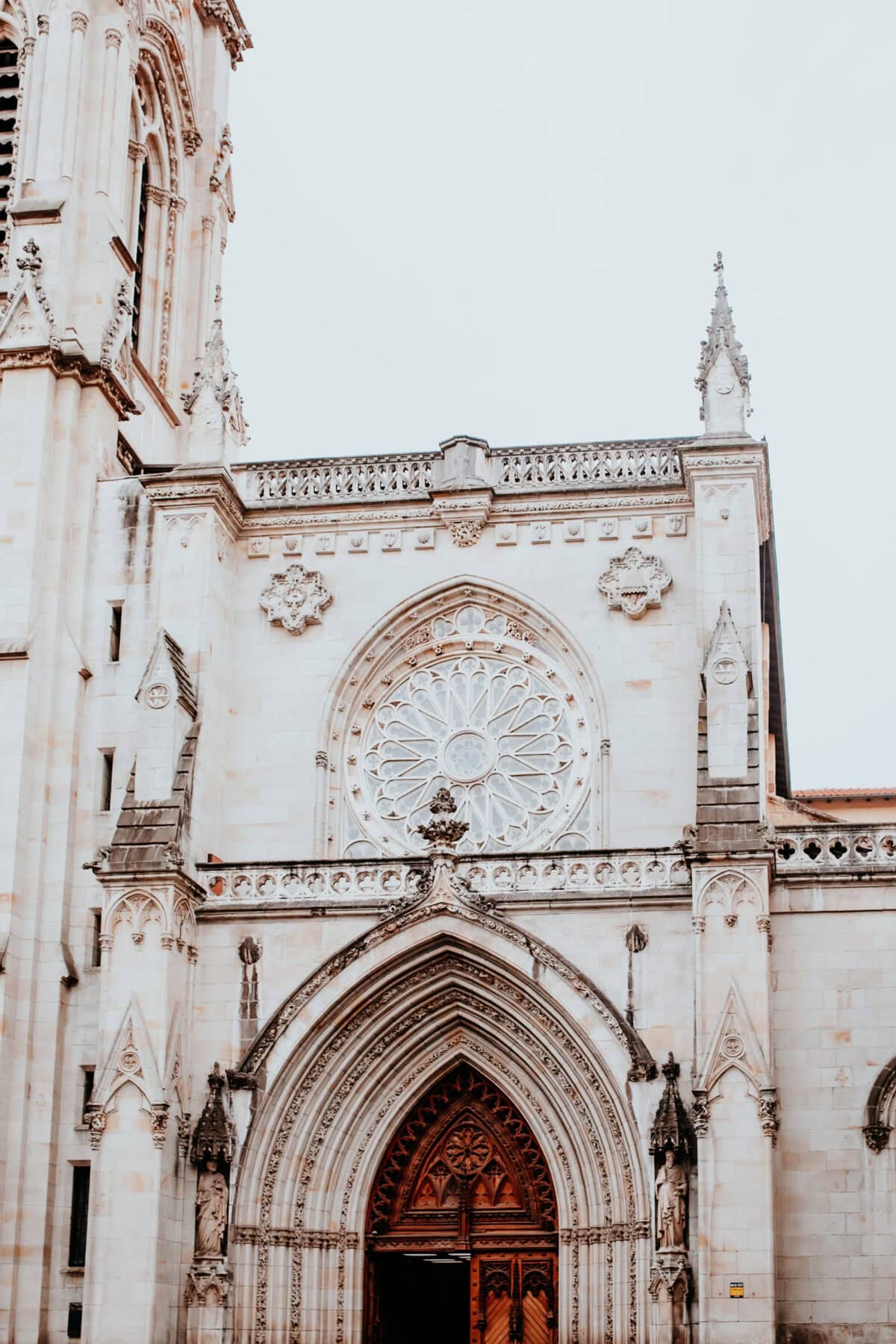
Bilbao Cathedral is also located in the middle of Bilbao’s old town. It is practically impossible to miss. Interesting fact: Bilbao is on the Way of St. James and Bilbao Cathedral dates back to an old pilgrimage church. That’s why you’ll often meet pilgrims here who are on their way to Santiago de Compostela.
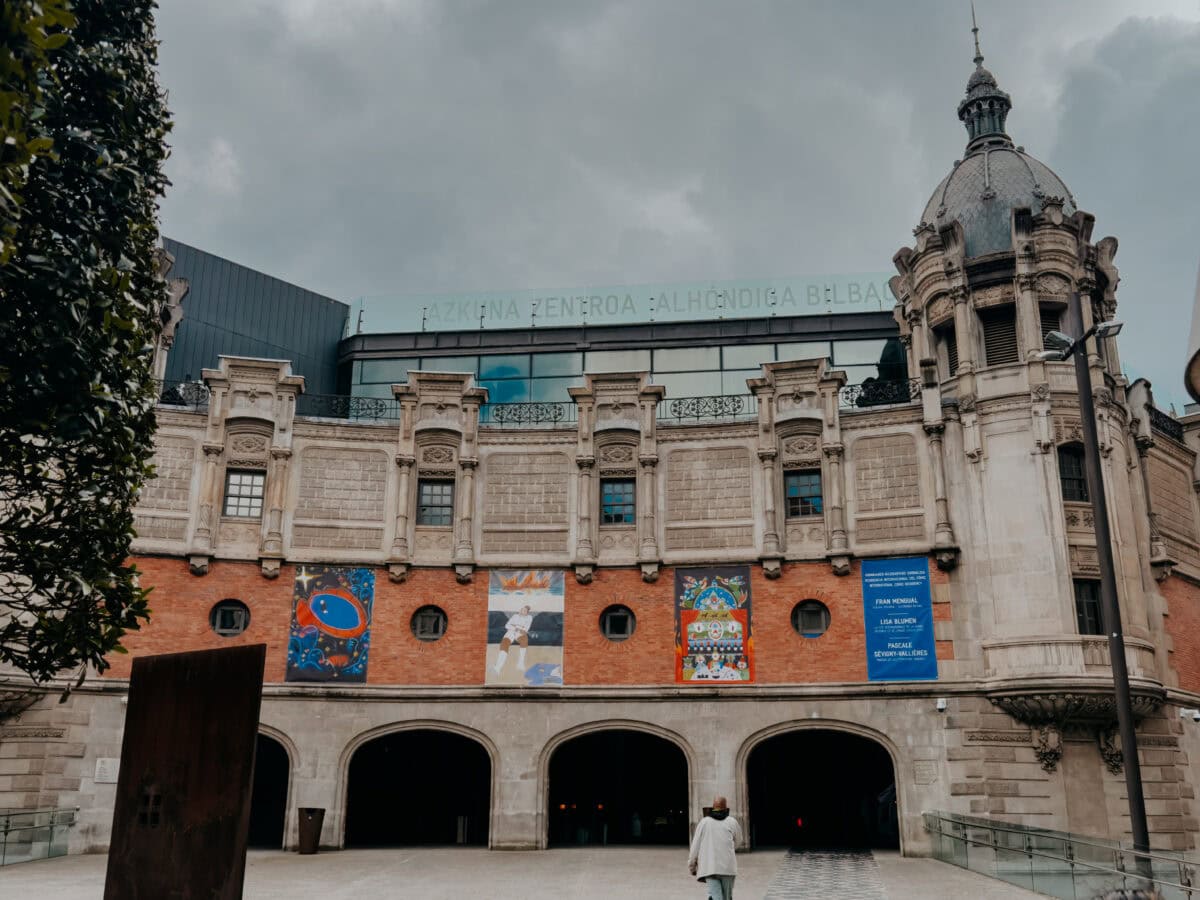
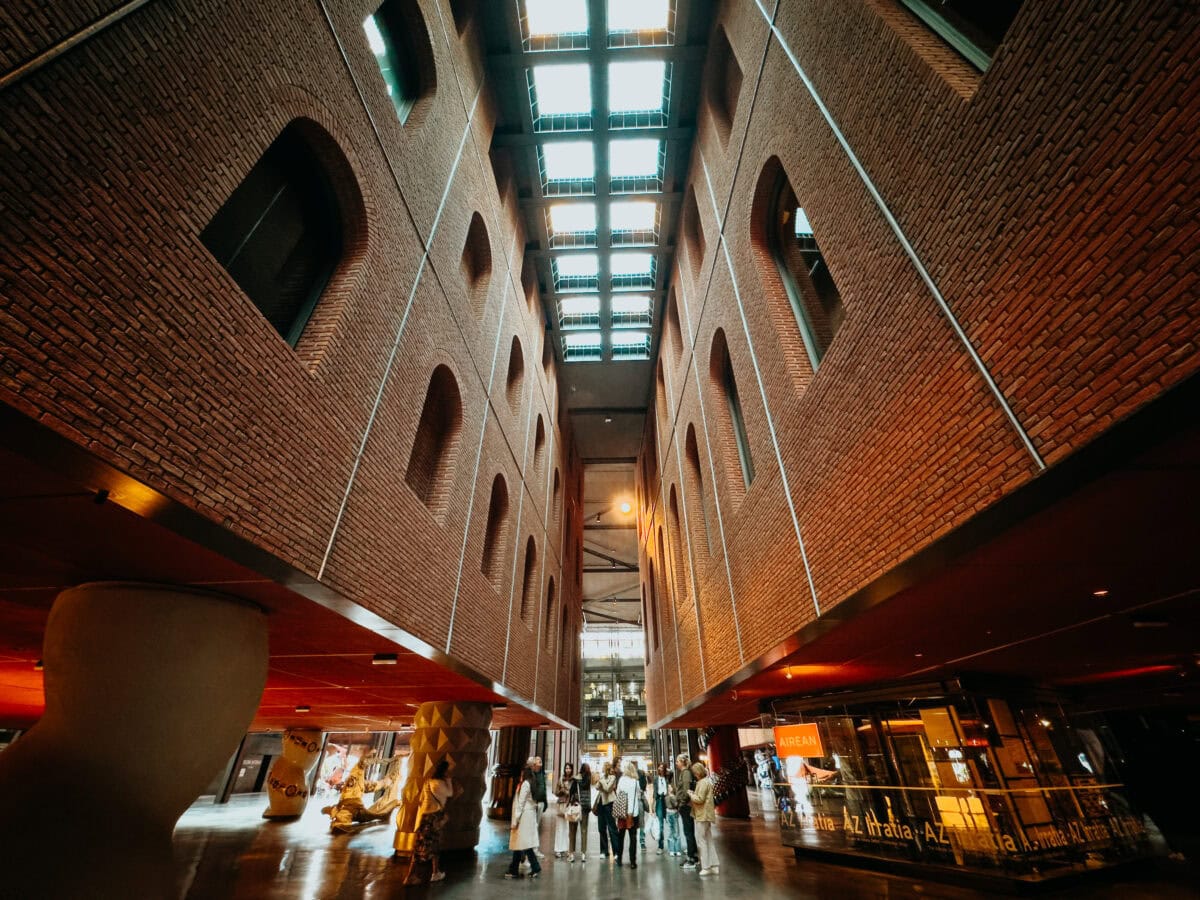
Originally, the vacant former wine storehouse was under discussion as the location for the Guggenheim Museum; the project ultimately fell through due to the lack of space, among other things. Which is a stroke of luck from today’s perspective: the Azkuna Zentroa cultural and multi-purpose center designed by Philippe Starck was opened here in 2010.
In addition to cinemas, restaurants, an auditorium and a municipal library, there is also a fitness studio and a public swimming pool on the top floor of the complex.
One of the pools even has a glass bottom, which you can see from the first floor! You can visit the swimming pool itself with a day ticket – if you have a bit more time in Bilbao, this is definitely a good idea for a bit of sport on the go!
Puente de Viscaya / Bizkaya Bridge
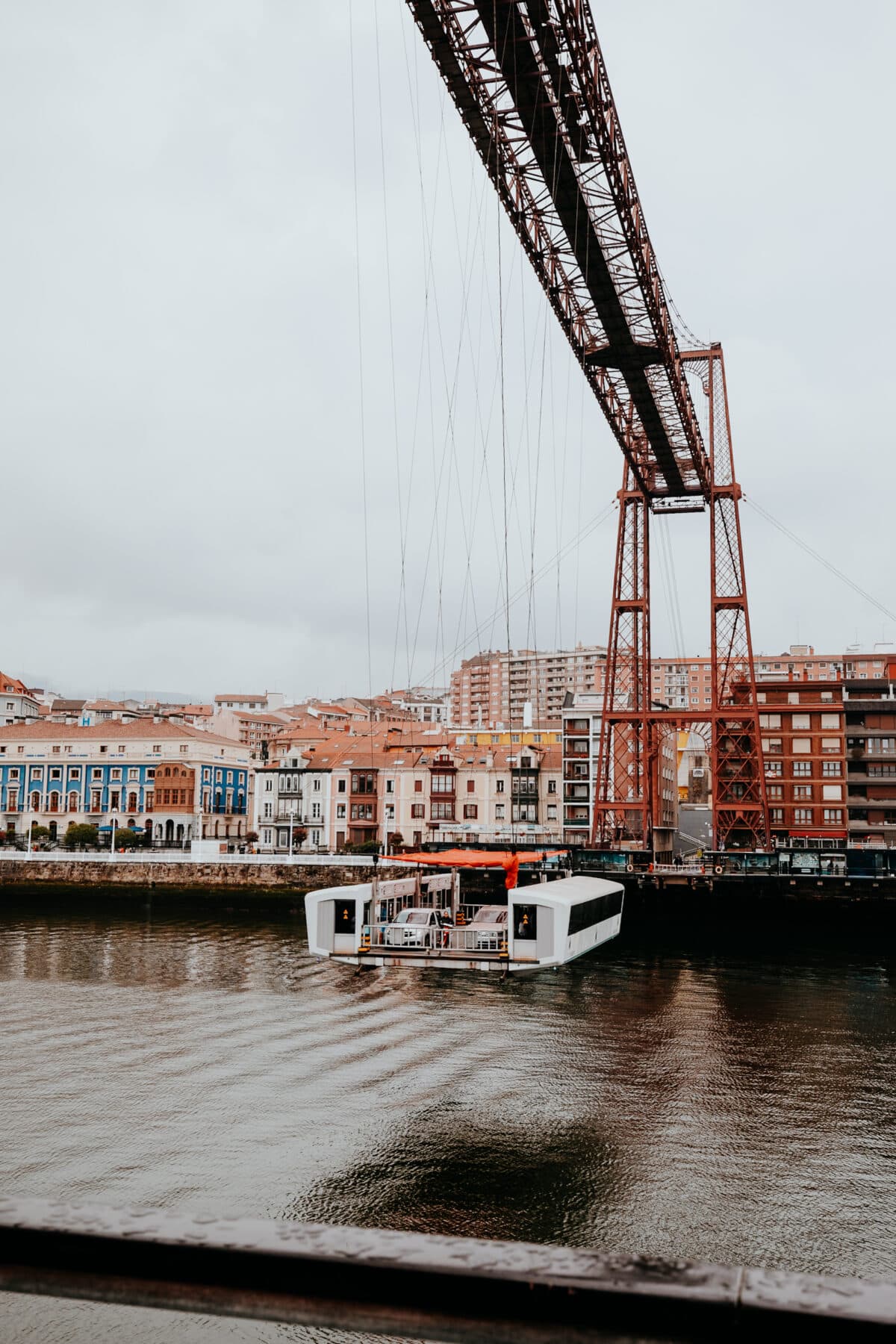
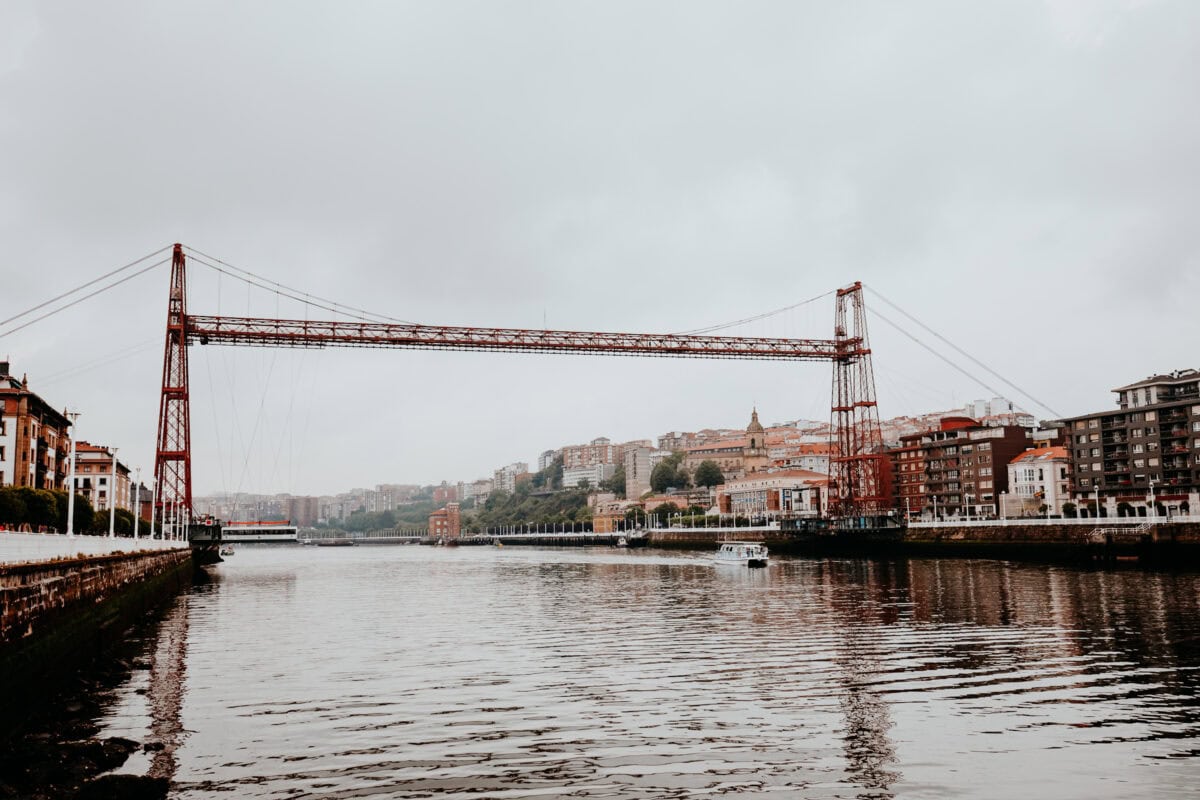
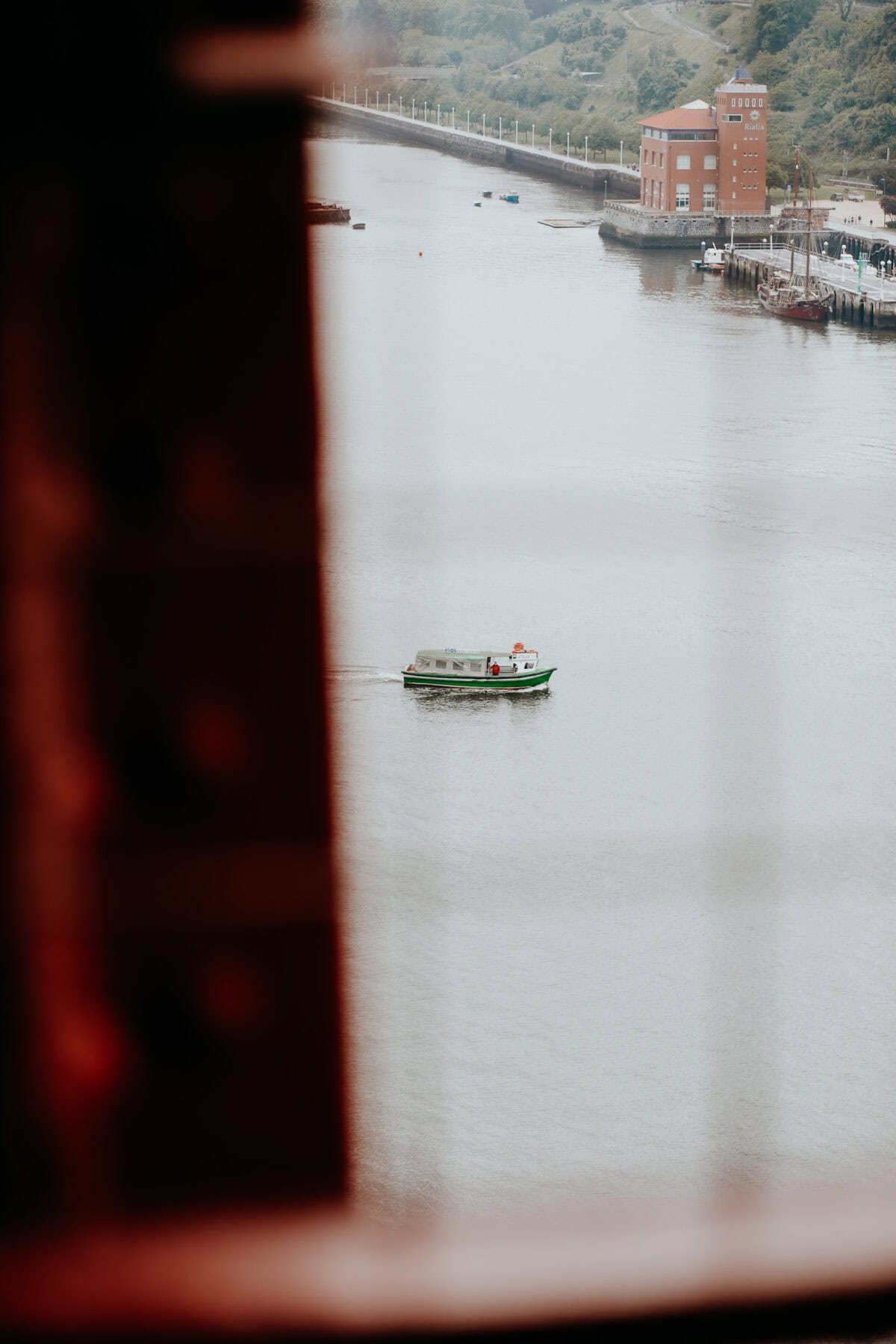
Just outside Bilbao, there is a very unusual sight that you should definitely visit. The Puente de Biscay connects the two municipalities of Portugalete and Getxo and is a UNESCO World Heritage Site. What makes it so special: Pedestrians, cyclists and even cars do not cross the estuary via the bridge itself, but by means of a floating ferry suspended from the bridge structure. The ferry is used by local residents as a normal means of transportation; a one-way ticket costs just 55 cents during the day.
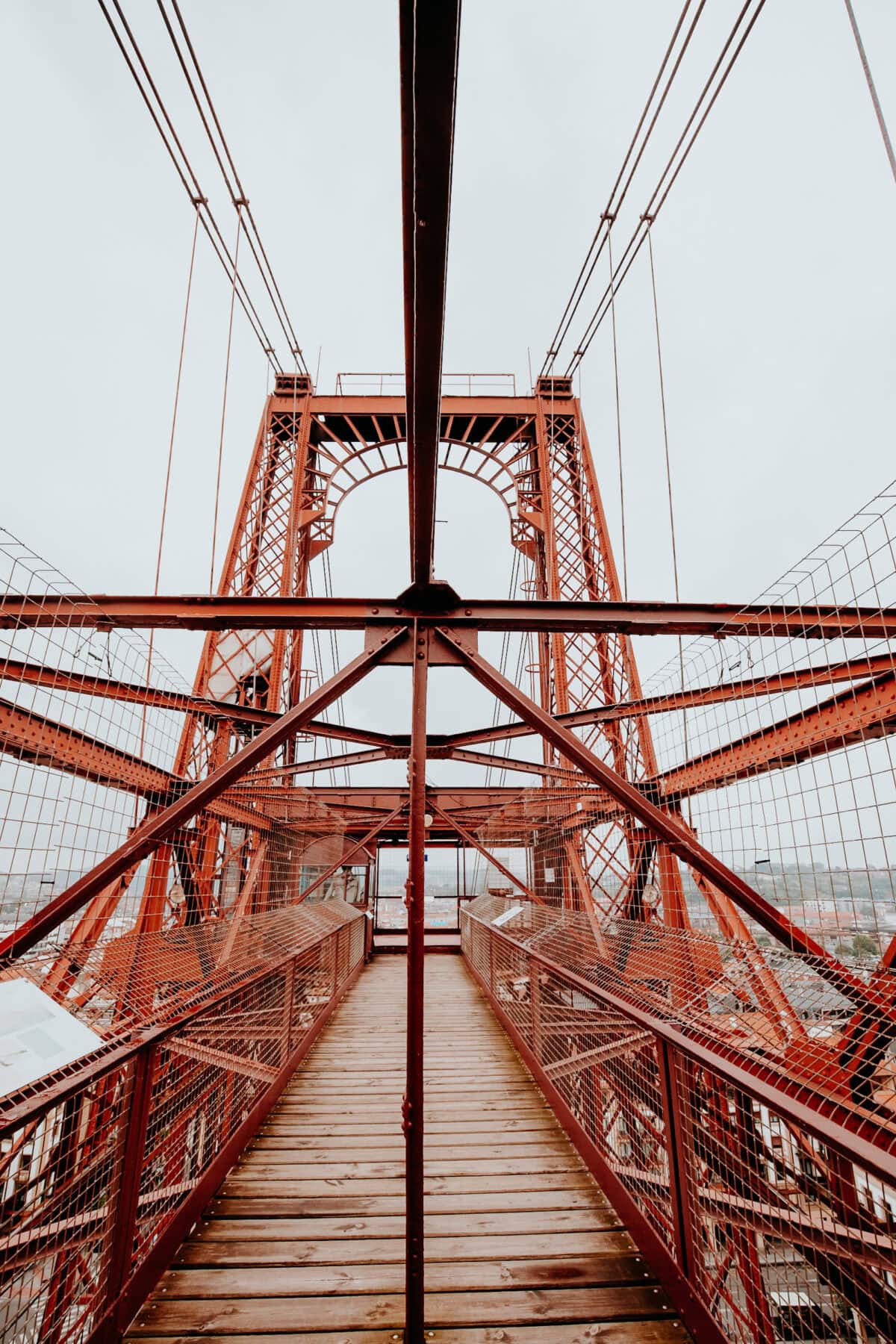
You can also visit the bridge itself and take an elevator to the top; the entrance ticket for the bridge also includes a ferry ride. The Puente de Viscaya can be reached by metro from Bilbao city center.
Tip: Explore the rest of the pretty coastal town of Getxo too! From its promenade, you can also see what is now the port of Bilbao.
Now that all the port facilities in Bilbao itself have disappeared and no large ships operate there, the majority of Bilbao’s port is located in the municipalities of Santurtzi and Zierbena, which lie on the estuary. And it really is huge: the port of Bilbao is the largest in Spain.
From the summit of Artxanda, you have a unique view of Bilbao and the surrounding green mountains. The quickest way up is by funicular, the Funicular de Artxanda. Bilbao’s local mountain is also popular with locals, especially at the weekend: there are various leisure activities for young and old, as well as the popular Txakoli restaurant.
Gran Vía
Gran Vía is actually called Gran Vía de Don Diego López de Haro and is the main shopping street through the center of Bilbao. Over the course of one and a half kilometers, you will find stores from large chains such as Zara and Mango as well as two branches of the Spanish department store El Corte Inglés.
Towards the old town, Gran Vía becomes even busier, and in the side streets you will always find a few corners with smaller bars and restaurants, for example in the parallel Calle Ledesma.
Iberdrola Tower
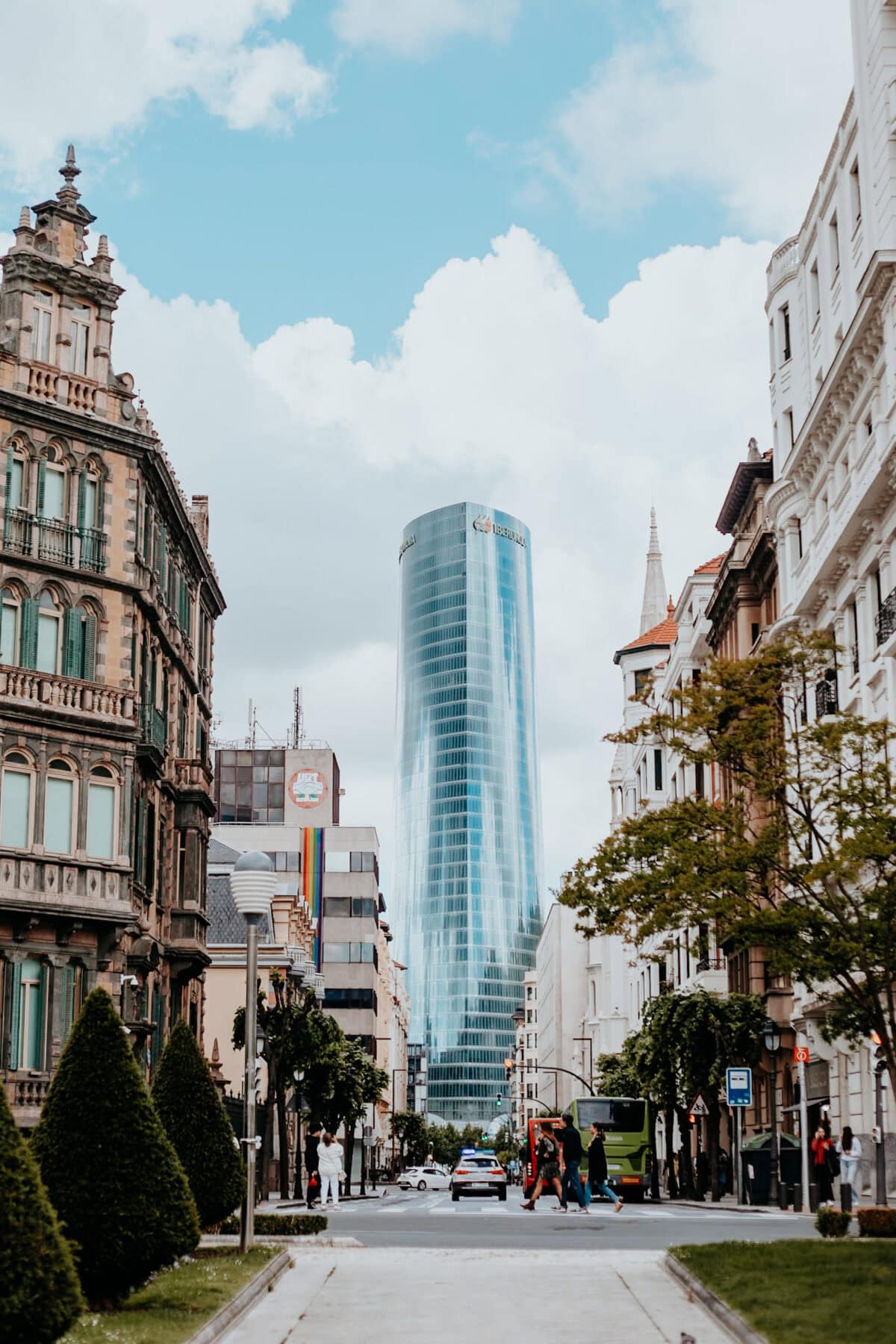
Whether the Iberodrola Tower is really worth seeing is debatable. In any case, the office building is Bilbao’s tallest skyscraper and therefore a good landmark. And with a bit of luck and the right time of day, the sunlight sparkles so beautifully in the reflective façade that it makes a lovely photo motif.
More museums in Bilbao
If the Guggenheim Museum has whetted your appetite (or if the weather isn’t playing ball), you can also visit the following museums in Bilbao:
The Museo de Bellas Artes may not be quite as spectacular as the Guggenheim, but it is still one of the most important museums in Spain. You will find a large collection of art here, ranging from the present day to the 12th century. The building is currently being renovated and expanded, and it sounds very promising what is being created here.
If you want to find out more about Bilbao, the history of the port and its connection to seafaring, you should pay a visit to the Itsas Museum.
Staying overnight in Bilbao
There is a wide range of accommodation options in Bilbao – and there is something for every budget. Personally, I would recommend accommodation around the Gran Vía, not in the old town, e.g. in the Abando district. Here you can easily get to all the important locations, do a bit of shopping and experience the life of the locals.
Although the old town is connected to the metro network with one station, it is otherwise a pedestrian zone. This means you may have to walk halfway through the old town with your luggage to your accommodation. The old town is also very lively in the evening if you prefer a quieter atmosphere.
I stayed at the Catalonia Gran Vía*, a comfortable boutique hotel in a great location (bus to the airport stops right outside the door) and with a really good breakfast buffet (I’m not normally a fan of this, but it’s really good here).
Click around in the map to find the best accommodations in Bilbao
Advertising / *affiliate link
Excursions from Bilbao
If you have a little more time, I highly recommend exploring the surrounding area. Sophisticated San Sebastián, for example, is only an hour’s drive away or you can explore the surrounding coastal towns. You don’t necessarily need a rental car either, there are plenty of organized tours on offer from Bilbao:
You can easily get from the airport to the center of Bilbao on bus line A3247. You can buy the bus ticket directly from the driver on the bus (cash only); the bus stop is located directly in front of the arrivals hall. The bus runs mostly on the highway and also stops on Gran Via. The final stop is Bilbao Intermodal, from here you can change to the train, streetcars, metro or long-distance buses.
Within Bilbao, you can explore a lot on foot (especially in the old town). Bilbao also has a good streetcar and metro network. Tickets are available at the stops and stations and the prices are very reasonable.
Language & culture in Bilbao
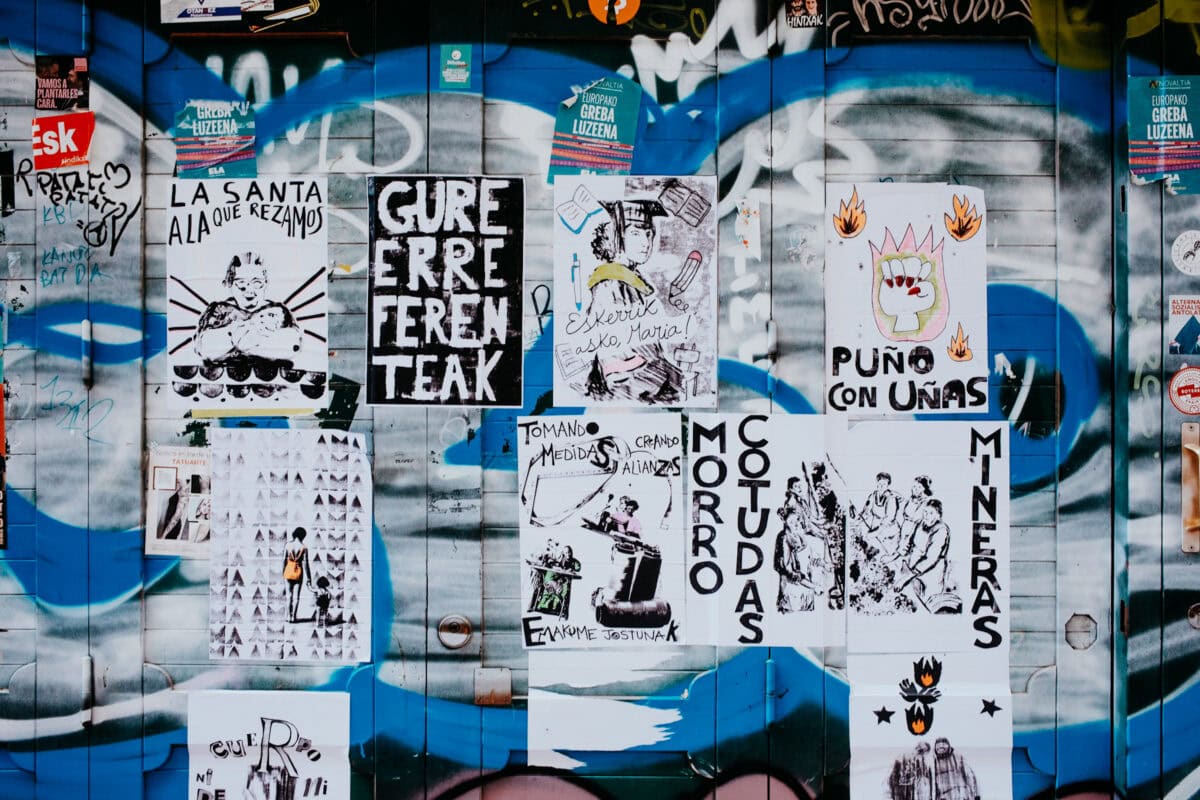
Bilbao is located in the Spanish part of the Basque Country, but is not its capital. (That is Victoria-Gasteiz, an hour’s drive away.) As an autonomous community in Spain, the Basque Country has another official language: in addition to Spanish, Basque is also an equivalent official language here.
Spanish is an official language alongside Basque
As a visitor, however, you don’t need to worry about communication. As in other parts of Spain with other official languages (e.g. Catalonia), the locals generally also speak Spanish, and in an international city like Bilbao you will also get by fine with English.
However, Basque is a super interesting language as it is not related to any other language. It is also spoken in part of neighboring Navarre and in the smaller French part of the Basque Country, where it is not an official language.
Politically, the Basque Country has always been a bit of a hot potato. Independence efforts and resistance to Franco’s dictatorship in Spain, for example, gave rise to the terrorist organization ETA, which kept the country on tenterhooks for several decades with numerous attacks.
I’m no weather expert, but the combination of a location on the wild Bay of Biscay and the surrounding mountains makes the weather in Bilbao quite a challenge. In my memory, I have experienced the worst approaches of my flight attendant career in Bilbao – and so I perceive Bilbao as a constant weather hole.
It likes to be wet here, it often rains; but the summers are warm, but not oppressively hot like in the south of Spain, for example. And the abundant rainfall makes for lush green mountains around Bilbao.
I therefore recommend that you avoid the fall and winter months, even if you have to squeeze through the city with the rest of the tourist crowds in the warmer months. But in my opinion, Bilbao is simply far too uncomfortable and inhospitable in bad weather.
Safety in Bilbao
If you read my blog regularly or follow me on Instagram, you’ll know that I can get excited about any destination. Bilbao also has really interesting sides, for example, I find the history of Bilbao and the changes to the cityscape over the last hundred years super fascinating.
Nevertheless, I haven’t become a big fan even after my last longer stay. This may be due to the city itself in general, which still exudes a bit of industrial dreariness for me, perhaps the occasionally damp weather, but also the fact that I had to part with my brand new iPhone here – it was stolen from my coat pocket.
Pickpocketing happens every day in every major European city, and Bilbao has not yet achieved the notoriety of Barcelona, for example, in this respect, as far as I know. Nevertheless, I would like to take this opportunity to draw your attention to it. At first glance, Bilbao always seemed relatively relaxed and safe to me. But there are a lot of pickpockets out and about, especially in the busy old town with its narrow streets.
Locals also urged me to pay more attention to the area around Calle San Francisco, a district on the other side of the river opposite Mercado Ribera. There’s a lot of street art, exciting restaurants and stores here – but it’s also a problem area and is often referred to as the most dangerous part of Bilbao. I was curious and actually wanted to explore the area, but after my pickpocketing experience, I didn’t feel like it. So if you want to go here (which I have actually decided to do on my next visit despite my experience) – take care.
This article was written in part with the support of Visit Euskadi, the tourism organization of the Basque Country.
This site is registered on wpml.org as a development site. Switch to a production site key to remove this banner.