Looking for ideas for a weekend getaway? Or do you just want to explore another city? City breaks are super convenient within Europe. Many destinations can be reached quickly and cheaply by train, plane, bus or car.
Here on the blog you will find lots of tips and unusual locations for an eventful city trip.
It’s so beautifully called “Vinho do Porto” in Portuguese. And while you’re there, what could be more natural than a port wine tasting in Porto? Port wine is, after all, one of Porto’s oldest export hits and THE city’s signature product. Porto lies on the Douro River, and further east along the Douro lies the Douro Valley. This is where the grapes for this special wine are grown and pressed. In the past, boats known as “rabelos” transported the wine to Porto, to the most beautiful port wine cellars in Vila Nova de Gaia. There, the wines continue to age—for years or even decades, depending on their quality. By the way, today tourists cruise along the Douro on the Rabelos instead of transporting port wine—and I’ve heard it’s really worth seeing.
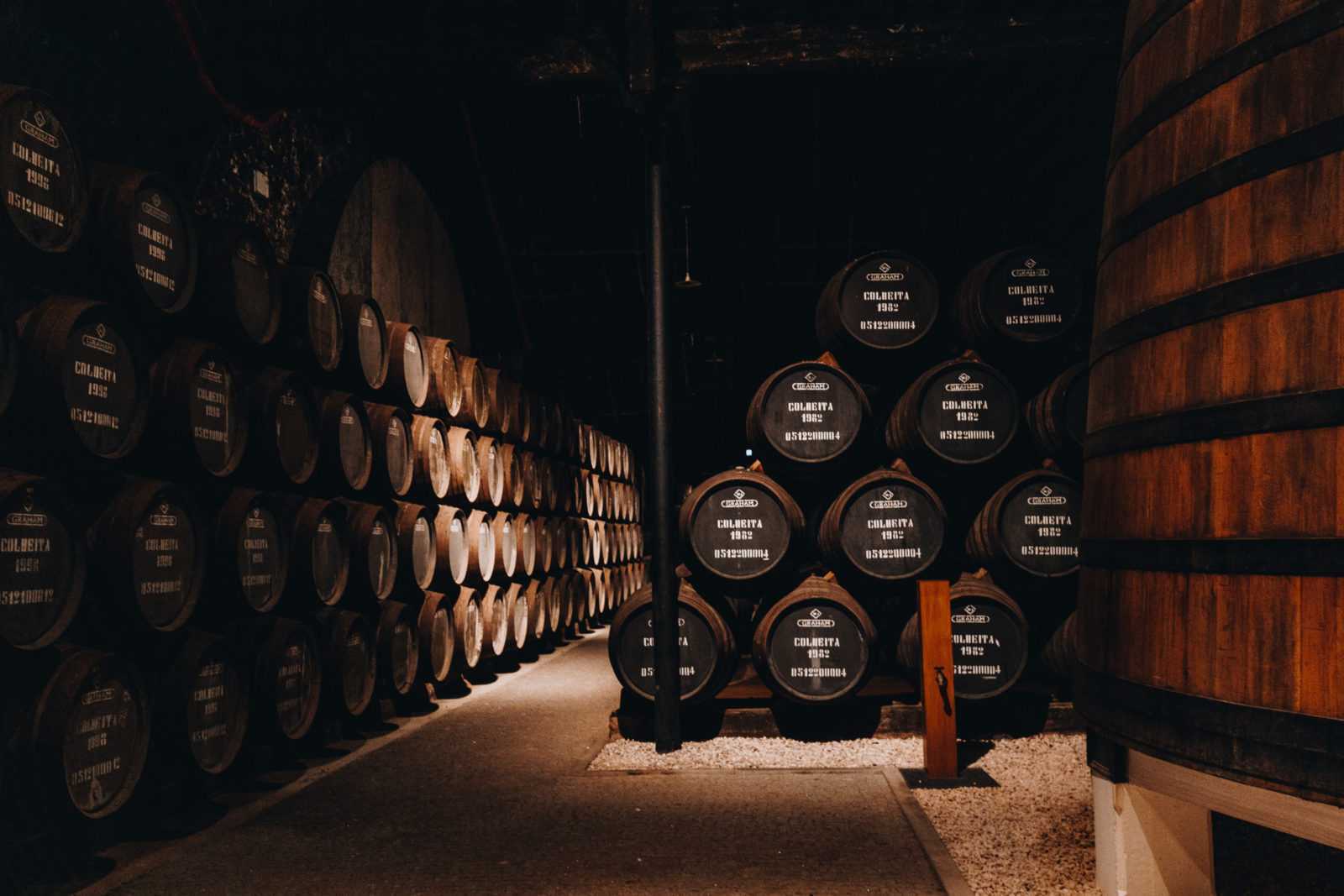
The younger port wines are stored in large wooden barrels.
Are you planning a trip to Porto? If so, I highly recommend my Porto Travel Guide!
What is port wine?
Actually, I’m not a big fan of port wine. Port wine is one of the sweet wines, they say, but it makes me sick to my stomach because it is so strong and reminds me more of cognac. And wine-wise, I’m generally not an expert. Although I’ve had plenty of opportunities to taste good wines, my wine knowledge doesn’t get beyond a simple “I like it” or “I don’t.” I’m sure they could slip me wine from a tetrapak and sell it as the most expensive wine ever. But I like to get to know new things on my travels, and Porto doesn’t work without port wine!
Kept like a treasure: some vintages are really valuable port wines.
When and how do you drink port?
Traditionally, port is enjoyed as a digestif and paired with a cheese platter or dessert. It is served in tulip-shaped glasses that are slightly smaller than standard red or white wine glasses. Since port has a high alcohol content, only small amounts—typically about 80 to 120 ml— are usually served. However, port is also excellent when served chilled as an aperitif, as an accompaniment during a meal, or as an ingredient in cocktails.
Port wine tasting in Porto: Where to go for a good port wine tasting?
The friendly hotel employee recommended Graham’s Winery to me. Because when you stand on the banks of the Douro and look across to Vila Nova de Gaia, the dilemma becomes clear: one port wine winery follows another. Whether it’s Sandeman, Graham’s, Ferreira, Taylor’s, or Calem—one neon sign competes with another for attention. All the wineries offer guided tours followed by tastings; the Sandeman grounds even feature a hotel or hostel.
Graham’s in Vila Nova de Gaia: At this port wine cellar, you can buy and taste port wine
Guided tour of Graham’s Lodge
The tour of Graham’s winery is offered in different languages and is really informative: after a short film about the production in the Douro Valley, a tour guide leads you through the winery.
Port wine tasting at Graham’s in Porto
Port wine tasting with Tawny and Ruby
By the way, I ended up in the Portuguese-speaking tour with a handful of Brazilians. Which made it all the more amusing, because we Brazilians are communicative by nature and even more so after three glasses of port wine. In summer it must be even more beautiful up here: from the in-house restaurant you have the best view over Porto! Incidentally, I could taste out differences despite my untrained palate: I am more Tawny than Ruby. Further insight: Three port wines – and I’m blue.
Tawny or Ruby? With port wine, there are such differences.
The tour includes three different varieties, but connoisseurs can also go all out and sample the crème de la crème of port wines—provided they have the necessary cash on hand, since the wine tasting alone can cost as much as 200€.
Prior reservation is strongly recommended in high season!
How do you get to Graham’s Lodge in Vila Nova de Gaia?
Vila Nova de Gaia is located on the other side of the Douro River. If you’re staying in downtown Porto, it’s a bit of a trip to get to Graham’s Lodge by public transportation. However, with the Porto Card*, you can use public transportation—including the metro and buses—for free. There are many port wine cellars in Porto, but Graham’s Lodge is particularly beautiful with its impressive view of Porto.
If you don’t feel like looking up addresses and directions, you can also join a walking tour and visit several wineries in a single day:
If you don’t feel like or don’t have time to drive all the way out to Graham’s (I took the bus there and strolled back along the Douro in the evening—but it’s quite a distance), you can also visit the Calem wineries and sample some port there! Calem is also located on the other side of the Douro, but right on the riverbank and near the Ponte Dom Luís I.
Poland is generally an increasingly popular destination for city trips, whether it’s Poznan, Warsaw, Krakow, Gdansk or Wroclaw. I’ll show the unusual sights Wroclaw has to offer!
Wroclaw sights: 10 tips for a city trip
Unfortunately, Poland in November is not particularly inviting weather-wise, it is often already freezing cold. In these tips for your next trip to Wroclaw, I’ll tell you how you can still have a great time in Wroclaw even in colder temperatures (and enjoy the fact that the city is not quite as full of tourists as in summer): 10 sights that make Wroclaw so beautiful in winter!
As in many Polish cities, the Rynek, the market square, is the center and heart of the old town. There are numerous pubs here and in the evening there is always something going on. Wroclaw has a big university with many students living here, so there are many cheap bars and pubs and a lively nightlife. There are also many good restaurants everywhere.
#2 Krasnale: The Wroclaw Dwarfs
They are scattered all over the city: Little bronze dwarfs, just 30 centimeters tall, in amusing scenes or telling a funny story. They steal ice cream cones from ice cream parlors, take a siesta in front of restaurants with a full belly, or withdraw money from ATMs. And new, bolder ones keep popping up. There are now over 600 in the city!
Originally from the anti-communist movement, the dwarfs are now a landmark of the city. The Krasnale, as the Wroclawian dwarves are called in Polish, even have their own website, where you can also learn more about the interesting background story.
Situated almost on the Rynek, it is only a stone’s throw from the market square to St. Elizabeth’s Church. For just five zloty (about €1.25), you can get a fantastic view of the city from the tower of St. Elizabeth’s Church. However, the tower is open only from April to October.
#4 Time Travel at the Museum of Games and Computers
Probably younger generations won’t remember a lot of the exhibits here. Or it really feels like a museum with dusty, old things from a distant time.
But I’m a child of the eighties and I was immediately hooked at the sight of Gameboys, Super Mario &Co. in the Museum of Games and Computer in Wroclaw. Best of all, you can try out most consoles and games as you please and play as much as you like.
Around the corner from the Games Museum is Kolejkowo. Kolejkowo is a miniature world with railroads and shows an entertaining recreation of Wroclaw and Lower Silesia. Originally designed more for children, but we had fun there as well. The figures and landscapes are designed down to the smallest detail. And the amount of work people put in here is impressive!
#6 Vegan delicacies in Wroclaw
The fact that you can eat well in Poland is no longer a secret. Only vegetarians and vegans sometimes have a hard time with the hearty Polish cuisine with lots of sausage and meat. However, in cities like Wroclaw with a lot of young people, the options for vegans have improved a lot. There are more and more good vegetarian or even vegan restaurants and the quality is really good. Vega, for example, is a vegan paradise on two floors directly on the market square. (Tip: Sit upstairs, it’s more comfortable!).
Perhaps one reason why vegetarian dishes are so popular in Poland, despite many hearty meat dishes, are the bar mlecznys, or milk bars, from the socialist era. Milk bars were canteen-like eateries that served mainly home-cooked vegetarian meals for little money. Milk bars used to be on every corner instead of privately-owned restaurants, and now the milk bars of those days are experiencing a renaissance. So be on the lookout for milk bars!
You can find lots more tips for cool Polish cities on my Poland blog!
#7 Market life in Hala Targowa
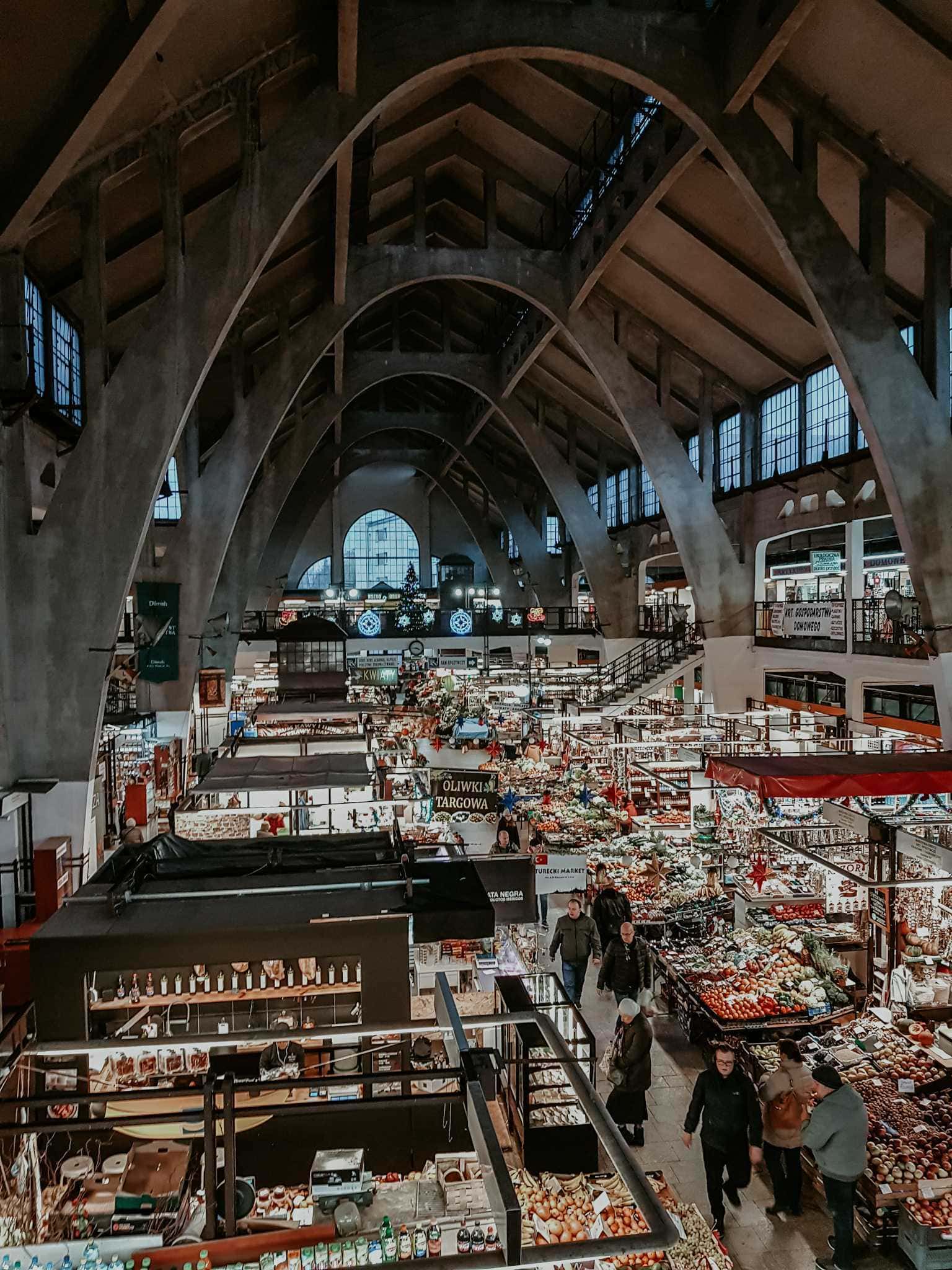
The Market Hall Hala Targowa is a nice place to visit even in winter. Here you can find all kinds of things: Flowers, fruits, vegetables, food and on the upper floor household goods and handicrafts at small prices. Architecturally worth seeing is the roof construction in shape of a ship. Of course, you can also eat well and cheap at Hala Targowa, and there’s even a milk bar here. Definitely worth a visit!
#8 Georgian food in Wroclaw
Not only Polish cuisine is delicious, there is plenty more to explore in Wroclaw. By chance we ended up at Chinkalnia with real Georgian cuisine. I have heard many good things about Georgia, including Georgian cuisine, and at Chinkalnia I was not disappointed. Not only did it taste really good, the really attentive service provided a complete introduction to Georgian food culture! This was the perfect preparation for my trip to Tbilisi I took later: Travel Guide Tbilisi
#9 Coffee culture in Wroclaw
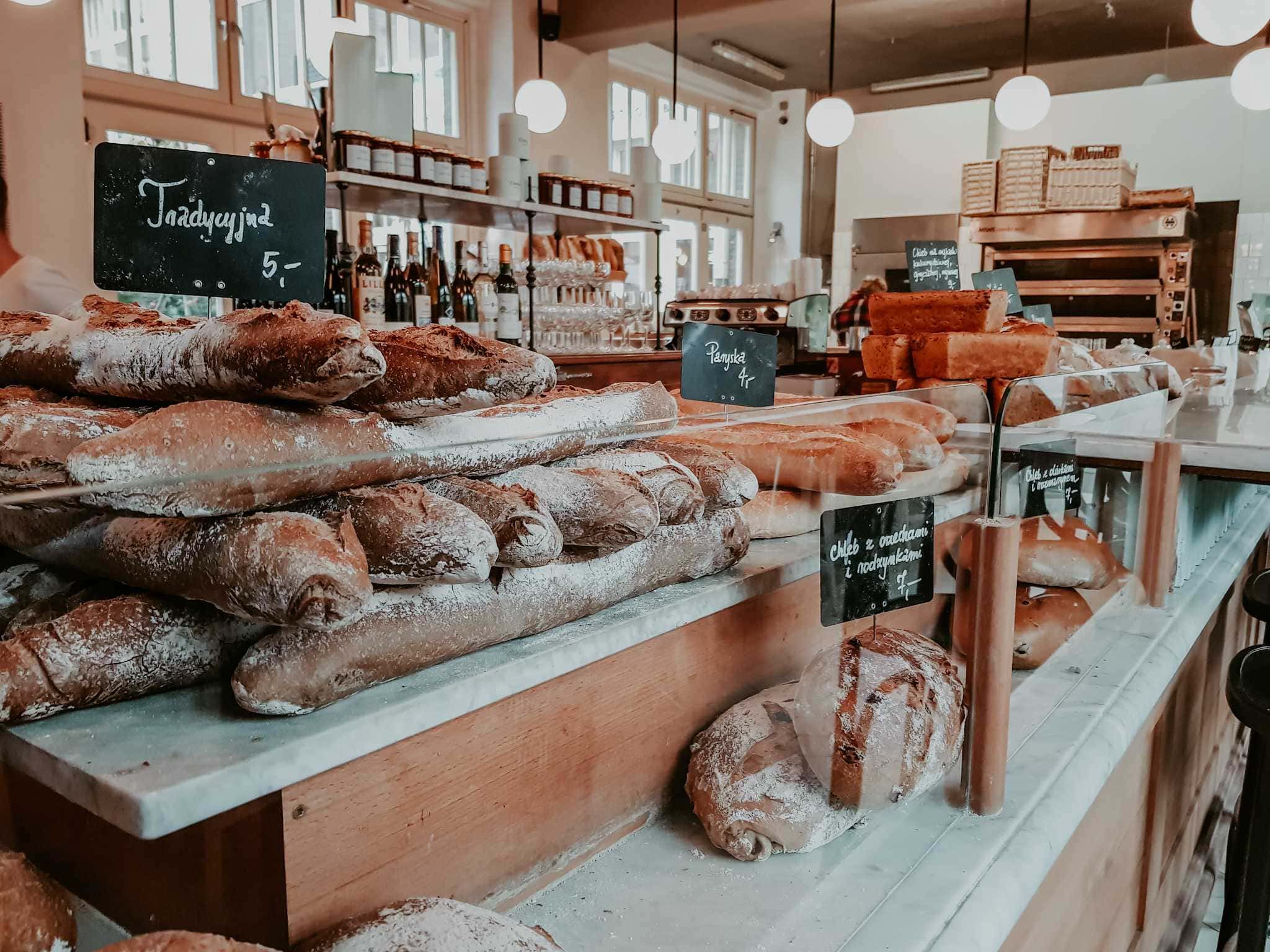
It’s cold outside, so what could be better than hopping from café to café? Not a problem in Wroclaw. A few of my favorites: Charlotte – Located in the middle of Wroclaw’s student district, in a courtyard that reminded me of the Hackesche Höfe in Berlin with its beautiful tiles. With a French touch, you can get freshly baked bread and fragrant croissants all day long, served with homemade chocolate creams and jams. Yum! And perfect for a second breakfast. You’ll feel like in the middle of Paris!
Chocolate Lounge E.Wedel – E.Wedel is something like the Polish Lindt Chocolate: fine chocolate and pralinés. The Café am Rynek has everything a chocolate lover’s heart desires. Be sure to try the pralinés!
Giselle – Small cozy café with Parisian flair. Here you can sit for hours with pleasant background music. And the omelets are great!
An alternative guide to Wroclaw
In their alternative travel guide, Ewa and Mirko give unusual tips off the beaten tourist track. Both also write a blog worth reading with lots of tips about Wroclaw – check it out: WroclawGuide.com
#10 Christmas market
If you come to Wroclaw in December, you can experience the beautiful Christmas market on the Rynek, which has a great atmosphere. Somehow Christmas markets in Poland don’t seem quite so terribly commercialized to me yet.
There are still many small stalls with beautiful handicrafts or treats like the Hungarian Kürtőskalács, which is a kind of Baumkuchen, also called Baumstriezel. These are really tasty when served steaming hot off the spit!
A short trip to Provence can work wonders: the balmy Mediterranean air, the scent of lavender—and everything feels right again. Here, I’ll share my very own tips for Aix-en-Provence.
Aix-en-Provence: The romantic small town in the south of France
I’m probably what you’d generally call a Francophile. While others complain that the French always refuse to speak even a single word of any other foreign language, I’m happy about it. It feels good to dust off my school French again. Admittedly, it’s a bit rusty, but it’s more than enough for a quick chat. French is a beautiful language, and honestly, I can totally understand why the French are so proud of their culture and language.
Rustic charm: In the middle of the old town of Aix-en-Provence is the Place d’Albertas.
That said, a lot has changed in recent years. I still remember well how, during my early years as a pilot on flights to France, there was hardly a single French person who spoke even a little English. Communicating without any knowledge of French was quite a challenge back then. That hardly ever happens these days—almost everyone speaks a few words of English, and if they don’t, they don’t expect the other person to speak French either. The French have really become quite modern. And I always look forward to our now-rare overnight stays in France—for example, in Aix-en-Provence.
Aix-en-Provence: Tips for an afternoon
I feel like I’ve been to Aix-en-Provence a hundred times—though in reality, it’s probably closer to fifty. That’s pretty often. It always surprises even me how much I’ve accumulated over my 18 years of flying. And yet I still manage to get lost time and again in the pretty old town center of Aix-en-Provence, which, admittedly, isn’t even that big. My sense of direction is truly abysmal. But that’s okay—there’s always something new to discover—and something old to enjoy.
Aix is one of the most expensive cities in France, but it also offers one of the highest qualities of life. That makes sense. The city is compact, small, and tranquil—and it’s a college town, so it’s not at all stuffy, as one might expect given its many historic buildings and rich history. The city is constantly reinventing itself without losing even a bit of its old charm.
And in the alleys you can find all kinds of nice little stores, cafes and restaurants. No wonder I’m always happy to while away an afternoon there. A few tips:
Pâtisserie Weibel – A pastry classic in Aix! A bit pricey, but you get mega tartlets, macarons, éclaires, and just about everything French pastry piggy you can imagine. And since the last renovation, the attached café is also visually an absolute pastel sugar dream!
Burger Bar – Open around the clock, which is quite handy in my case when I’m on early duty! Otherwise, in classic French fashion, most restaurants in Aix don’t open until dinner time at 7 p.m., and by then I’m usually already throwing on my pajamas.
Shopping in Aix-en-Provence
Even though Aix is a small town, there are plenty of shopping options—and, conveniently, they’re all concentrated in a small area. There’s even an Apple Store at the end of Cours Mirabeau! Next door, on the new little shopping street, you’ll also find the larger chain stores—like Zara, Zara Home, Sephora, and Fnac—that aren’t located in the historic city center. And there’s a branch of Maisons du Monde, my favorite home decor store. If you’re lucky, the farmers’ market will be on at Place Richelme. Or, on the weekend, check out the flea market on Cours Mirabeau with its beautiful antiques—it’s got that authentic Provence vibe.
Graz has been one of my favorite destinations on duty ever since. Graz is quite a large city by Austrian standards, but for me as a Berliner it is small and tranquil. Nevertheless, there is a little bit of everything: Nature (the Mur river is wonderful to stroll along), a pretty good selection of large and small stores (in case you get the shopping urge), lots of nice cafés and restaurants and even great art exhibitions!
It’s just a shame that it was Monday, and my favorite museum, the Kunsthaus Graz, was closed. It’s really a shame, because no matter what exhibition is on, I always enjoy going there and marveling at the extraordinary architecture—so organically shaped and whimsical. It doesn’t fit in at all with the traditional old town surrounding it, and yet it’s interesting precisely because of the contrast.
Up the Schlossberg in Graz
By the way, one thing you can always do is head up to the Schlossberg and take in the view of Graz from above. The view over the city and the mountains in the background is uniquely beautiful—and luckily, the weather rewarded us with a golden November day.
There are three ways to get to the top: on foot (not an option for me after several days of early shifts with little sleep), by the Schloßbergbahn, or by the Schloßberglift. The Schloßbergbahn is a funicular, and a one-way ticket costs just €2.40. Convenient: Public transit tickets are also valid here. The Schloßberglift costs just €1.60 for a one-way ride but doesn’t offer the beautiful views along the way. However, racing through the massive rock in the glass elevator does have its own appeal. Tickets from the Graz public transit system aren’t valid here.
Once you reach the top, there are several places to stop for a bite to eat: At the very top is the Schlossberg Restaurant with its attached beer garden; right next to the Schlossberg Lift is the stylish Aiola Upstairs; and my absolute favorite, the Starcke Weinhaus, which, with its enchanting terraces on multiple levels, offers the very best view of Graz. I could have spent hours enjoying that view.
Accommodation tips for Graz
Two hotel tips for Graz at this point:
Hotel Daniel – The location next to the main train station takes some getting used to, but it’s impressive what they’ve done with this rather ugly postwar concrete block: a really cool, youthful hotel with a great design.
Grand Hôtel Wiesler – Located in the heart of the Old Town, on the banks of the Mur River, this historic hotel, steeped in tradition, has been restored to modern splendor following a complete renovation several years ago. It offers a wonderful atmosphere and a successful blend of old and new.
I was in Dresden recently. And then I remembered that I’d always wanted to see the Semperoper Dresden from the inside instead of just from the outside – I’ve been to Dresden several times, both professionally and privately, but I’ve only ever walked past the Semperoper. Not that I’m normally a big opera-goer. Somehow it’s one of those things you have to get from home – but nobody in my family was really interested in opera. It wasn’t bad either. Going to the opera was only for high earners.
Semperoper Dresden with King Johann monument on Theaterplatz
Semperoper Dresden: Best seats for little money
Actually nonsense. Opera is for everyone. Even for little money. And it doesn’t have to be a fine tux or the most beautiful evening gown. It also makes you look a little prettier – you always have something black in your wardrobe. Then you need a bit of luck: At the Semperoper Dresden, tickets are available at the box office for every (even sold-out!) performance. For the cheap seats. In the truest sense of the word. 22 euros, in the top right corner – and with a bit of stretching, they were really good seats. I only roughly knew the story of Carmen, but it didn’t matter, it was still impressively beautiful. The stage design, the music, the costumes, the singing. I was fascinated. Classical music doesn’t have to be boring.
Ranks and seats in the Semperoper Dresden
You can find even more ideas for travel destinations within Germany here
Guided tour of the Semperoper Dresden
Not to mention the surroundings: The Semperoper is one of the most striking buildings in Dresden. And the colonnades inside are gorgeous! The ceilings are completely painted in filigree and it is hard to imagine how long it must have taken to create the decorations.
If you want to explore the Semperoper even better, you can take part in a guided tour before the performance – but then it will be tight if you want to get one of the cheap seats at the box office. But you can also visit the Semperoper without the opera; there are also guided tours during the day. It’s really worth seeing the inside of the Semperoper!
It wasn’t far from our hotel on the Altmarkt to the Semperoper, which I can highly recommend: It couldn’t be more central. Otherwise, there are always good offers on sites like booking.com – if there are no major events like the Dresden Striezelmarkt before Christmas.
Save money & benefit from many advantages with the Dresden City Card*! With the City Card you get a number of discounts at museums, exhibitions & for tours. And the best thing is: you can travel free on all public transport and explore the whole of Dresden to your heart’s content! For 1 to 3 days.
Get to know the crazy bookstore in Venice! Don’t miss this amazing attraction! Cats in the bookstore as if it were the most normal thing in the world. But what is normal at the Libreria Acqua Alta in Venice?
Hidden: The entrance to the Libreria Acqua Alta is located in a small courtyard.
Libreria Acqua Alta: A Curiosity in Venice
Very small, the entrance to this other world is hidden in an alleyway of Venice, a bit off the usual tourist stream. If it weren’t for various piles of old maps, prints and books lying around in front of the door, one would hardly suspect this treasure for book nerds like me. There’s always something special about bookstores and libraries for me – they are so calming and so inspiring.
Books and more books at the Libreria Acqua Alta in Venice
And the Libreria Acqua Alta is not only that: it is magical. A total work of art. Thousands of stacks of books, old, new, a mess, it’s cramped, dark, yet fascinatingly beautiful. It’s like being in the middle of a Harry Potter book. In between all the books, there’s always a bowl of cat food, because the (I think) eight cats want to be fed, too.
You can find even more of the “Dolce Vita” on my Italy blog!
The most unusual bookstore in Venice
Books are stacked everywhere—whether in an old gondola or in a bathtub—the possibilities for storing books are endless. Creative chaos around every corner. The name Acqua Alta becomes immediately clear when you see the “emergency exit”: One little hop and you land in the canal that runs along the back of the store. Just a bit of typical Venetian high water—and the bookstore is flooded.
Right on the canal: During high water, the Libreria Acqua Alta is regularly flooded.
Unfortunately, Libreria Acqua Alta isn’t really a hidden gem anymore, so during peak hours you have to jostle your way through the store with dozens of other tourists—and if you also want to snap an Instagram photo in the particularly Instagrammable spots, you’ll have to wait in line for at least a quarter of an hour. Crazy, right? Still, it’s worth a visit!
Address: Libreria Acqua Alta, Calle Longa Santa Maria Formosa 5176 – Castello, 30122 Venice Hours: Daily from 9 a.m. to 8 p.m.
In Rome for the first time? I’ve put together a few tips for all Rome beginners here: what you must see, a few important and less important sights, important tips and first impressions.
Somehow I always thought that the Colosseum was right in the center of Rome. But that’s not true at all. But it was easy to walk there from my accommodation near the main train station, and for everyone else there’s a metro station right in front of it.
It’s unbelievable how big it was built back then and how much the construction method has influenced today’s stadiums. The massive stones everywhere, the sheer size: if you haven’t visited the Colosseum in Rome, you’ve missed out.
The Colosseum in Rome: an absolute must-see, but unfortunately also very crowded.
In summer, the queues are endless. Even if, like me, you think half an hour after opening at 8 a.m. is early enough. You can order tickets from the official ticket office – but they are often sold out.
Please note: In addition to the official ticket store, there are also various commercial tour providers who sell tickets both online and on site with preferential admission so that you don’t have to queue.
In desperation, I actually opted for this option on the spot and ended up paying €30 (probably more by now), which was already the bargain price (yes, be sure to negotiate!). You still have to wait until the whole group is together. In return, you also get some extra information from the tour guide.
Overall, the ticket situation is quite opaque and anything but stress-free on site. So better buy your ticket in advance! If you can’t get a ticket at the official presale anymore, try this tour provider online:
Tip: If you would like to visit even more sights in Rome, it may be worth buying the Roma Pass for 48 or 72 hours. This gives you free entry to one or two sights of your choice and free travel on public transport.
The same applies to St. Peter’s Basilica: queuing is inevitable (at least in summer). In the afternoon, the waiting time is supposed to be shorter, but still: In the end, it was 40 minutes in scorching heat. But you can pass the time by admiring St. Peter’s Square in all its glory: The huge area framed by colonnades is impressive. And inside – well, with so much art, gold and pomp, no one remains unflashed.
Visit to St. Peter’s Basilica: what you need to know!
Admission to St. Peter’s Basilica is free. However, before going in, you have to pass a security check. St. Peter’s Basilica is a religious site, so pay attention to the right clothing, especially in summer: Shoulders and knees should be covered, but no headgear!
If you have time, you can also visit the Sistine Chapel with Michelangelo’s ceiling paintings and the Vatican Museums with their huge art collection!
St. Peter’s Basilica in the Vatican is gigantic. With luck, the sun’s incoming rays will create an even more mystical atmosphere.
Rome Classic No. 3: Fontana di Trevi
Who does not know it, the huge Trevi Fountain, in which once bathed Anita Ekberg? Can still be seen today in Fellini’s film La Dolce Vita. The fountain, by the way, looks even more spectacular live, partly because of the really huge crowds that gather around it, but also because it is monstrous compared to the small Piazza di Trevi.
The Fontana di Trevi stretches across the entire façade of a palazzo and is so richly detailed in marble that you can always discover something new.
If you want to make the Rome experience complete, throw a coin over your shoulder into the fountain. But beware: getting directly to the fountain in summer is nearly impossible thanks to the crowds, unless you’re not afraid to poke your way through the crowd with your selfie stick.
Rome Sightseeing No.4: The Spanish Steps
Near the Fontana di Trevi is theScalinata di Trinità dei Monti – the original name of the Spanish Steps, named after the church it leads up to.
The German name derives from the square below, Piazza di Spagna. And actually, the Spanish Steps is just a staircase – but huge, overcomes quite a height difference and is a meeting place and hangout at the same time. There is enough space on the stairs.
Rome Classic No.5: The Pantheon
The Pantheon has been a Catholic church for over 1500 years – that alone is incredible. Even more unbelievable that it is even much older, almost 2000 years, and at that time was most likely a temple for all sorts of deities.
The Pantheon is a domed structure and was the inspiration for several famous buildings, such as the Capitol in Washington. In the middle of the dome there is a big hole as the only source of light – and when it rains, well, it just rains right into the Pantheon. Whereby the floor was designed so that all rainwater simply drains away. Quite fascinating.
Spend the night in Rome
Finding accommodation in Rome is not difficult, even or especially in the middle of summer. Many articles and travel guides advise against the area around Termini Station. There are a lot of hotels there, but many people are not very enthusiastic about the station flair around it. I admit, if you live in Berlin-Neukölln like I do, you probably have different standards; however, I was not afraid there in the evenings.
I can highly recommend the Generator Hostel (there are also cheap double rooms): Clean, nice, stylish.
The proximity to Termini station, from which you can also get to the airport and everywhere else quickly and easily, made the location perfect for me. Traffic-wise, it couldn’t have been better. Especially with a few days stay!
You really have to want to go to Venice a lot if you dare to travel there in August. In general, all of Italy is on the verge of absolute vacation collapse around August 15, the most important and significant of all Italian holidays for travel. On the Assumption of Mary, “Ferragosto”, all of Italy is on vacation – and this does not go unnoticed in Venice. Small stores lower their shutters, quickly written notes announce company vacations (“siamo di ferie”) and wish a nice summer.
Venice in August: vacation mood in Italy
Instead, the rest of Italy will be visiting Venice, or at least part of it. But they are not really noticeable, because in addition to Italian tourists, half the world from near and far is still a guest. Not to mention the day-trippers from the huge cruise ships that invade Venice every day – yes, you just have to say it. Everything must be seen before the ship departs, quickly a photo between the pigeons in St. Mark’s Square, a short gondola ride with one of the beautiful gondoliers and absolutely an ice cream, in the wafer, with scoops piled so high that the photo of it becomes particularly instagrammable – although it is far too much ice cream for so little time.
Especially when the mass of visitors and the summer heat make sightseeing even more arduous. Venice in one day is an impossibility anyway. Therefore, I wouldn’t exactly recommend high summer as a travel month – but still: Even tourist crowds and summer heat couldn’t spoil Venice for me. I just wanted to go to Venice so badly – because although I’ve been around Italy quite a bit professionally and privately, I only knew the city from stories.
Sightseeing in Venice – the tips: Where to start?
There is much to discover in Venice, art, history, architecture; and the fascinating geographical location with all the canals does her by the way. Seeing it all in a few days is a challenging undertaking, there are still the islands around Venice like Burano or Murano or the city beach on the Lido to discover.
St. Mark’s Square, St. Mark’s Basilica and Doge’s Palace in San Marco
The heart of Venice—an absolute must-see, both day and night. Many vaporetto lines stop here, so chances are you’ll pass by anyway.
In St. Mark’s Square, you’ll find St. Mark’s Basilica (note: admission is free, but you’ll still have to wait in line depending on the number of visitors), the Doge’s Palace with its beautifully romantic façade, the Campanile (which you can climb for a few euros), and various long-established cafés like Caffè Florian, where you can enjoy what’s probably the most expensive cappuccino of your life and, in the evening, be treated to sentimental love songs performed by the café’s own orchestra. It sounds cheesy, and it is. But there’s just an undeniable charm to sitting in this magnificent square and listening to the string section play old-school pop hits. By the way, if you don’t want to pay for a seat, just stand at the edge.
By the way, on the other side of the Doge’s Palace is the Bridge of Sighs, one of Venice’s most famous bridges. And with hundreds of bridges, that’s really saying something.
Finding the way to St. Mark’s Square in Venice is easy even without Google Maps: on many street corners and in many alleys the way to Piazza San Marco is marked, “La Piazza” is simply the central orientation point in the thicket of Venetian alleys and canals.
Grand Canal: Venice’s biggest street
The Grand Canal: Venice’s Lifeline: Instead of streets, Venice has only canals, and boats of all kinds are the main mode of transportation. In that sense, the Grand Canal is the highway that runs through the entire city. You’ll probably end up traveling along it at some point anyway, but it’s worth taking a vaporetto early in the morning to travel the entire length of the Grand Canal and watch the city come to life.
Contrary to my expectations, Venice is actually a city of early risers—no trace of that typical Italian leisureliness. Even at night, Venice is rather quiet; once the day-trippers have left, there isn’t much of a bustling nightlife. Another lovely thing to do on the Grand Canal: watching the sunsets.
Tip: It’s best to time your visit just right and head up to the terrace of the Fondaco dei Tedeschi, right next to the Rialto Bridge, at sunset. Admission is free, but you’re only allowed to stay on the terrace for 15 minutes—so timing is everything. When I was there, you could just walk right up to the rooftop terrace without a ticket. I only had to wait a little while. But the fantastic view over the Grand Canal is definitely worth it.
By the way, the (luxury) department store is also beautiful from the inside, the building used to be, as the name suggests, the trading place of the German merchants in Venice and later the main post office of the city.
Rialto Bridge and Rialto Market
The Rialto Bridge is both a bridge and a shopping street, much like the Ponte Vecchio in Florence. Small shops line the bridge on both sides. From the outer edges, you have a great view of the Grand Canal—unless hundreds of selfie sticks are blocking your view.
Right near the Rialto Bridge is the Rialto Market, where you can buy fresh fruits and vegetables the old-fashioned way. It’s all very traditional and a delight to behold. And don’t miss the fish market, right on the canal under centuries-old arcades—it’s worth getting there early.
Next door at Naranzaria, right on the waterfront and with the Rialto Bridge just around the corner, you can take a break with an Aperol Spritz and watch the gondoliers glide back and forth on the Grand Canal. More Venice is almost impossible.
Dorsoduro: Punta della Dogana, Basilica di Santa Maria della Salute and lots of museums
Directly across from the Doge’s Palace is the Punta della Dogana headland—and this is also the best spot to appreciate the sheer size of the Grand Canal’s entrance, through which all merchant ships used to sail. Next door is the Basilica di Santa Maria della Salute, which houses works by Titian.
Even if you’re not a fan of churches, when you’re in Venice, you simply can’t help but take a look inside a few of these impressive churches. Many of them house works by the most famous Venetian painters—so you get a free museum visit thrown in.
There are plenty of museums here in Dorsoduro, and anyone interested in art can easily spend at least a whole day exploring them all in this small area.
The most important museums in Dorsoduro:
Peggy Guggenheim Museum
Academia dell’Arte
Punta della Dogana
Giudecca – the island of the Venetians
Sitting on the promenade in the evening with a glass of red wine, the Venetian water at your feet and the view of the sun sinking into the sea – definitely one of the highlights that make a trip to Giudecca worthwhile. Incidentally, the restaurants and cafes here are a lot cheaper and better than in San Marco – despite the spectacular view.
Giudecca is one of the islands off the coast of Venice; it’s actually more of a residential area. In the meantime, a few hostels have also opened up here. The vaporetto service to San Marco is excellent, and despite the extra cost of a vaporetto pass, it’s worth staying overnight on Giudecca to escape the tourist crowds a bit and observe everyday Venetian life.
Besides Giudecca, Murano and Burano are two other islands to see!
Accommodations in Venice are a bit of a mixed bag: they’re expensive, they aren’t particularly nice, and they’re especially hard to come by during peak season. That said, I hope this post will inspire you to visit Venice outside of peak season, because Venice really doesn’t need any more visitors in the summer. I wouldn’t go back in August either.
Many visitors to Venice therefore prefer to stay in Mestre, on the mainland, since that means taking the train to Venice every day. That’s an option, but I really wanted to experience the authentic Venice vibe—and in the end, it was incredibly convenient not to have to embark on a long journey every morning or evening.
Although it also involves a daily vaporetto ride, Giudecca offers a truly Venetian atmosphere, which made it a much better choice in my opinion. There are accommodations for those on a tight budget, such as the new, trendy Generator Hostel or the Sunny Terrace Hostel, a former student dorm that’s converted for summer use. But you can also find more upscale accommodations like the Hilton Stucky, a new Hilton hotel housed in an old factory—with the best views and endless charm. Giudecca is still something of an insider tip, but that seems to be changing right now.
In San Marco, you’re right in the thick of things. The Hotel Alla Fava* isn’t anything special, but its location is fantastic thanks to its proximity to the Rialto Bridge. And it’s in a very quiet spot, tucked away between a church and a small canal. It’s almost unbelievable that the tourist hustle and bustle is just two streets away.
The Donà Palace boutique hotel, with its quintessentially Venetian grandeur, is also in a fantastic location—though, of course, much more expensive—but its Venixino bar is in an even better spot, and it’s my absolute top pick for an evening drink:
Tip: Right on the canal—which runs a few meters further on, passing under the Bridge of Sighs—you can sit here in a romantic, secluded garden and watch the gondolas glide by on the canal while sipping one of the excellent cocktails from the hotel’s bar. By the way, the bar isn’t just open to hotel guests.
I’m not particularly religious, but churches and religious sites are always one of my go-to places when sightseeing in foreign places – they tell a lot about culture and society. And in Salzburg, with 800 years of church history, there is simply no getting around churches. Therefore, in this article I present you some highlights of the church city of Salzburg. And at the end it even gets really mystical!
It is impossible to imagine the famous panorama without the Salzburg Cathedral.
Salzburg: The Rome of the North
First lesson: Because of its really many churches Salzburg is also called “Rome of the North”. Which I found very funny, because I just came from a trip through Venice and Rome. And could compare directly: Salzburg really has Italian features. Not only because of the architecture, which was significantly influenced by the then Prince Archbishop Wolf Dietrich von Raitenau (1559-1617), but also because of the Salzburgers’ joie de vivre and the breath of dolce vita that wafts through the city. Music and more music, lots of art and culture, a good atmosphere despite Salzburg’s frequent “Schnürl rain” and of course, as befits an almost-Italian city, a penchant for delicious food garnished with a pinch of piety: Italy really isn’t far away anymore.
Important accessory in Salzburg: The umbrella for the famous Salzburger Schnürlregen
The secret treasure of Prince Archbishop Wolf Dietrich von Raitenau – and what Salzburger Nockerln have to do with it
In general, the said prince-archbishop was quite a rascal. A small scavenger hunt was organized for us as part of the program: We were supposed to find the old treasure of the prince archbishop and for this purpose we sped across Salzburg for one day – to finally find out that Wolf Dietrich’s secret treasure was his mistress Salomé, with whom he fathered 15(!) children. Celibacy and all that. Back then, things were wilder in church than Dallas and Denver Clan combined! But I don’t want to say anything – Salomé is said to have invented the Salzburger Nockerln, and without Salomé and the enterprising Wolf Dietrich I would probably have one favorite dessert less now! (More about Salzburger Nockerln in the Food Guide.)
Salomé is also immortalized in a tiny way in the dome of the otherwise pompous mausoleum of Wolf Dietrich von Raitenau, which we were then able to see for ourselves. Unfortunately, you are not allowed to visit the mausoleum regularly from the inside, but the St. Sebastian cemetery, where it is located, is also worth seeing.
You can find even more insider tips for Salzburg & tips for sightseeing in my Salzburg blog
The mausoleum at the cemetery St.Sebastian
The Catacombs of St. Peter: Death by tickling?
I’m not the ultimate cemetery goer – it creeps me out a little, on the other hand cemeteries always make me sad – but a bit of cemetery culture is part of church Salzburg after all. Especially when such curious stories emerge as that of the Salzburg man who is said to have tickled each of his seven wives to death. The women’s graves are located in St.Peter’s Cemetery, just behind Salzburg Cathedral and at the foot of Hohensalzburg Fortress.
Apart from the fact that the graves of Mozart’s equally musical sister Nannerl, of Johann Michael Haydn, the pioneer of sacred music, and of all Salzburg’s celebrities are located here, a visit is worthwhile for the catacombs alone. They’re not really catacombs, strictly speaking, since the caves carved into the rock never served as tombs, but it just sounds good, whatever. And the caves above St. Peter’s Cemetery do look a bit like catacombs. By the way, from here you have the most beautiful views of Salzburg!
Salzburg Cathedral with Cathedral Museum: a secret that millions simply pass by
Almost next door is the Salzburg Cathedral, one of THE tourist attractions of Salzburg. Not without reason, because the huge cathedral impresses even non-churchgoers like me, as I could already see during my first visit to Salzburg in spring. If you want to avoid the crowds of tourists, just head next door to the Cathedral Museum. There is an admission fee, but if you’ve already treated yourself to a Salzburg Card, you can simply skip the line at the ticket counter and walk right in.
The Salzburg Card, which is available for 24, 48 or 72 hours, also costs – but it’s worth it if you know in advance that you definitely want to visit some of the sights, such as the Hohensalzburg Fortress, the museums or the Mönchsberg.
The stairs leading up to the cathedral museum are conspicuously flat, wide and elongated – and this is not to enable the ladies of the time to climb up elegantly in their waistcoats: The stables for the horses were on the upper floor, and they actually had to climb up and down the stairs day in, day out. What the poor little horses had to endure back then….
The horses were then probably also cordially indifferent to the pompous premises, but the pomp is quite impressive for ours. Through the cathedral museum you then go over a terrace with a fantastic view (hello mega photo spot!) and a few hidden stairs over to the cathedral – where you suddenly then stand on the gallery right behind the ancient cathedral organ! Not many people seem to know, so you are quite undisturbed up there and can enjoy the great view of the cathedral interior from there, while down below the crowds press through the aisles.
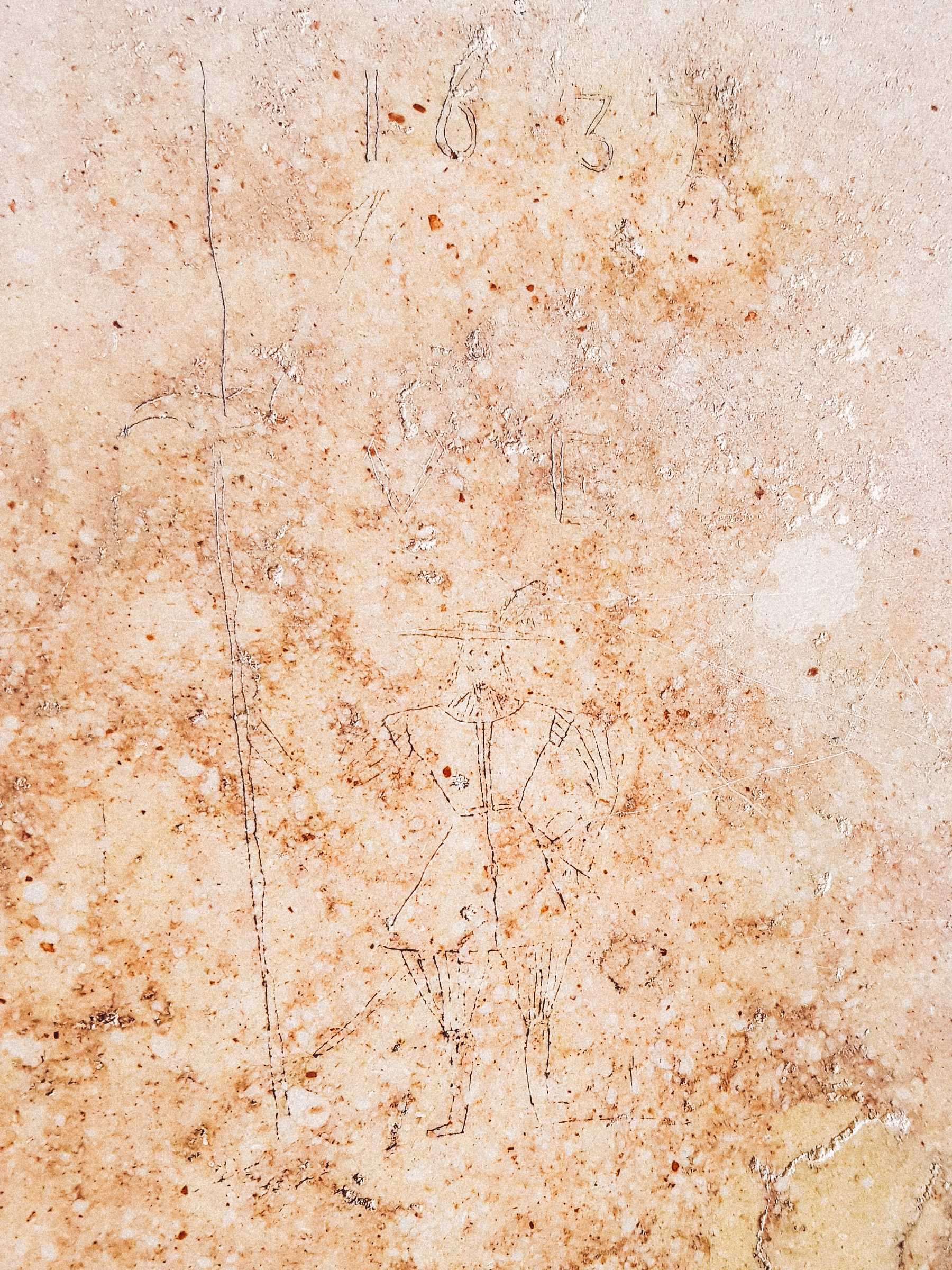
They simply walk past one of the small, fine secrets of the cathedral: directly at the main portal, fine scribbles can be seen, probably carved into the stone by bored guards hundreds of years ago – medieval street art, so to speak!
Insider tip: The Scala Santa in the Kajetanerkirche
A hidden gem among Salzburg’s churches is the Kajetanerkirche with its Scala Santa, a centuries-old replica of the famous original in Rome, which is said to have come from the palace of Pontius Pilate and which Jesus is said to have walked up before his trial. In any case, just like its famous counterpart, the Scala Santa in Salzburg may only be entered on one’s knees, and this rule is strictly observed on site.
The Scala Santa is located in an adjoining room of the also otherwise very pretty Kajetanerkirche and may only be visited (or slid up on knees) within one hour per week: Every Saturday from 10 to 11 am – and not a minute earlier or later. This is probably one of the reasons why Scala Santa is one of the insider tips in Salzburg.
Nonnberg Abbey: Chorals at sunrise
Things got really mystical when we set off at dawn for the Nonnberg, or more precisely the Benedictine Abbey of St. Nonnberg. Not only was this also one of the locations for the old Hollywood movie “Sound of Music”, but in modern times it hides a Salzburg secret that not even all the locals know.
Except for the mystical chorales of the nuns, absolute silence: mornings in Nonnberg Abbey
At Nonnberg Abbey, the Benedictine nuns always—without exception—begin their day by singing choral hymns, which you can listen to down in the nave under dim lighting. Just walk in, enjoy the devotional atmosphere, and listen to the music. And afterward, you’ll be rewarded outside with a postcard-perfect sunrise over the Nonntal valley. Well worth seeing and hearing—a hidden gem in Salzburg!
Dreamlike view: sunrise on the Nonnberg mountain
Maria Plain pilgrimage church: pure mountain idyll.
Devout Catholics make pilgrimages to Maria Plain —and what about the others? They, like me, enjoy the spectacular view of Salzburg, the mountains, the lush greenery, and the traditional customs.
The pilgrimage church Maria Plain was built in the 17th century because the image of grace Maria Plain was the only object that remained intact during a serious house fire – and this was such a great miracle for the believers of the time that it deserved a church. Today Maria Plain is a place of pilgrimage and even lies on the Austrian Way of St. James.
By the way: If you attend the Sunday service, you’ll get a real taste of local color—all the visitors are dressed in their finest traditional costumes, and with the stunning mountain scenery outside and the magnificently restored chapel inside, you can truly immerse yourself in Alpine culture!
Arrival: It’s best to rent an e-bike in the city of Salzburg (then it’s not quite as bad uphill) and incorporate a visit to Maria Plain into a bike tour along the Salzach River. You can take a break with a mega panoramic view either in the traditional Plainer Ansitz with a snack and Stiegl beer or more upscale next door in the Gasthof Maria Plain.
Where to Stay in Salzburg: Mystical Places.
When I’m looking for accommodations, I also always like to stick to the theme of the place I’m in. Because nothing helps better to immerse yourself in the local atmosphere than to spend the night accordingly. What could be more natural than to spend the night in a religious place in a city like Salzburg with such a great church history?
All accommodations are run by church organizations and are affordable. The Gästehaus im Priesterseminar, for example, charges for rooms based on the number of people, so if you’re traveling alone, you pay less for a double room than if you’re a couple—which I find particularly appealing and fair. The location is right in the heart of the city and impressive; the rooms are very well-maintained and clean; and the amenities—from the washing machine to the communal kitchen—are perfect.
I wonder if this travel blog won’t change into a food blog after all? In any case, I ran across a lot of delicious delicacies in Salzburg again. With so many good cafes and restaurants in Salzburg offering delicious cuisine, it’s hard to choose. Therefore, I’ve put together a few very impressive Salzburg restaurants and locations – you won’t stay hungry in Salzburg for long, I promise!
By the way: If you are planning a trip to Salzburg, you should also take a look at my big guide with the most important sights! ➜ To the big Salzburg guide
The Mozartkugel: Round, sweet and typical for Salzburg
In Salzburg, everything revolves around Mozart – and the Mozartkugel. When in Germany, you’ll immediately think of the Mozartkugeln in the red shiny packaging, but in Salzburg there are a few long-established confectioners who produce Mozartkugeln according to their own recipe and in part still completely by hand on site.
The truly original Mozartkugeln can be found at the Konditorei Fürst, whose flagship store is located on the Alter Markt directly across from the historical Café Tomaselli, Austria’s oldest coffee house. But also the small Café Habakuk in Linzergasse, for example, makes the most delicious Mozartkugeln, 100% handmade.
Salzburger Nockerln: 3 mountains for dessert
Salzburg is surrounded by three local mountains, the Kapuzinerberg, the Gaisberg and the Mönchsberg – and if you can’t remember that, just order Salzburger Nockerln in a restaurant. At the latest after seeing this huge powdered sugar dusted soufflé on a cherry sauce, you’ll remember it forever. Each Nockerl stands for a snow-covered local mountain. But be careful: Salzburger Nockerln are always served in only one size, supposedly for two people, but as a dessert they are easily enough for nine! Salzburgers are not stingy with their food portions!
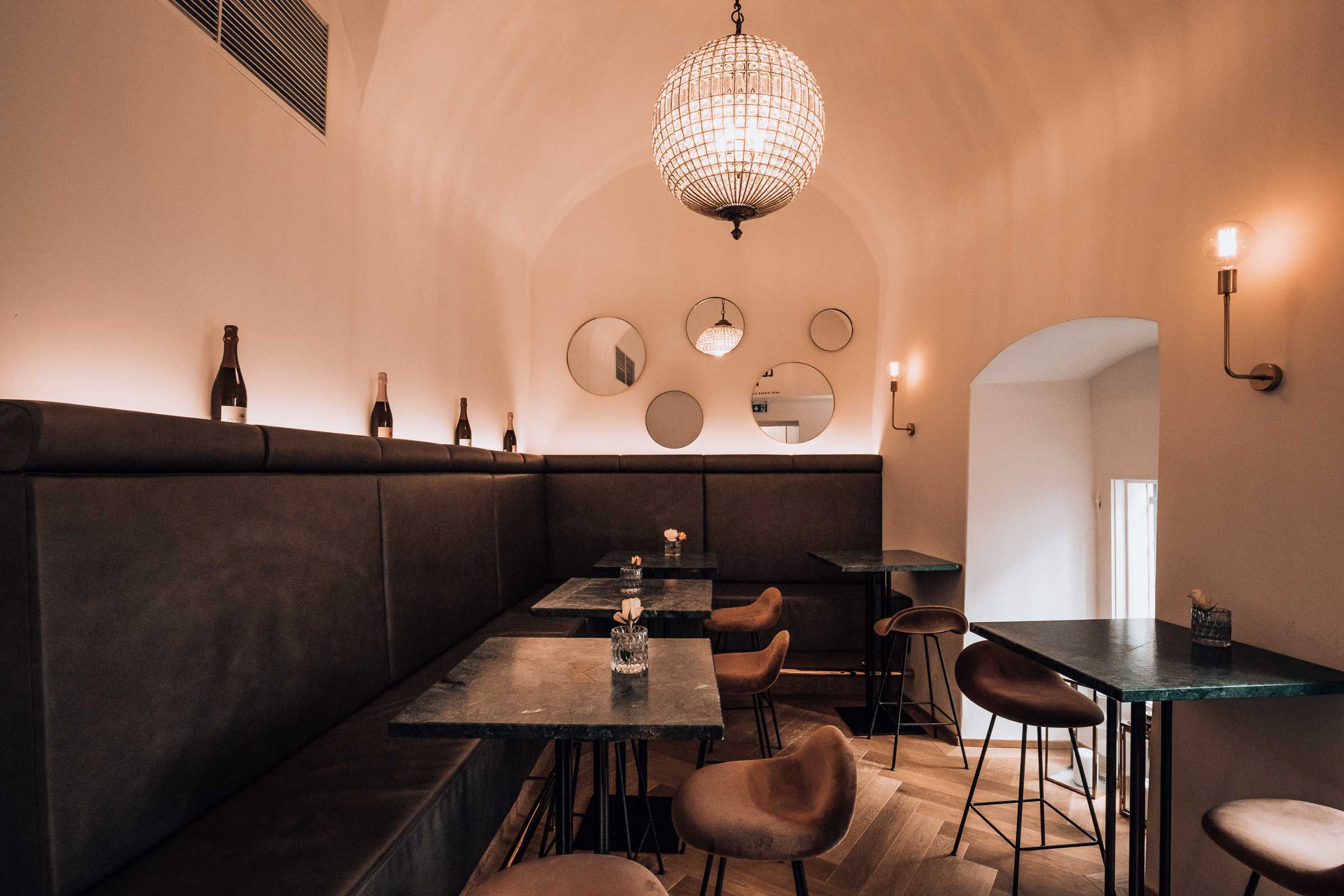
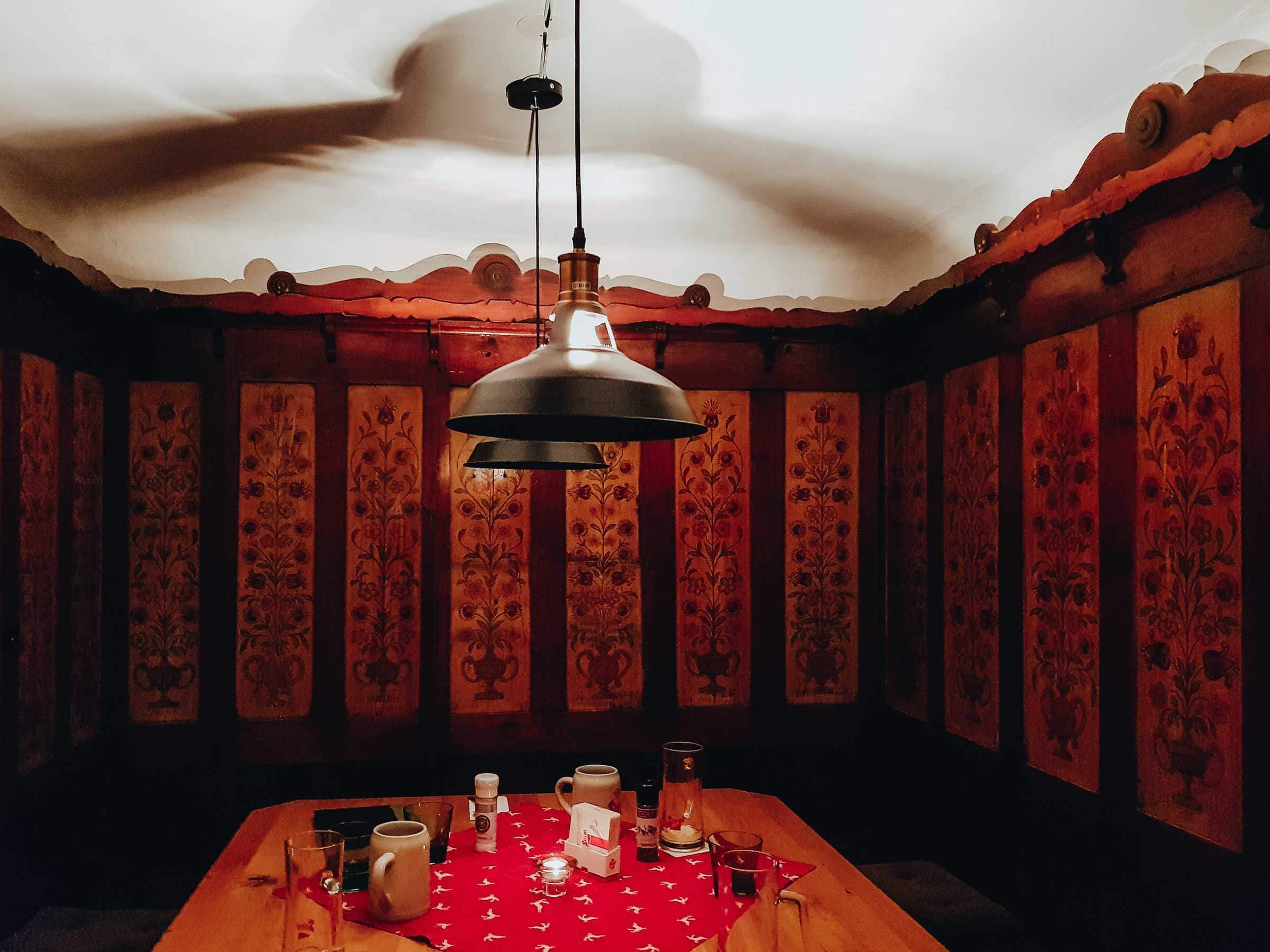
A bit more upscale, but with down-to-earth, modern cuisine: K+K on Waagplatz serves classics like Wiener schnitzel, but also vegan curries. Upstairs you can sit in a traditional ambience with lots of wood, downstairs there’s a freshly renovated bar in the cozy cellar vault!
The portions are not quite as spectacular as elsewhere, but of very high quality.
Seven Senses at Hotel Stein
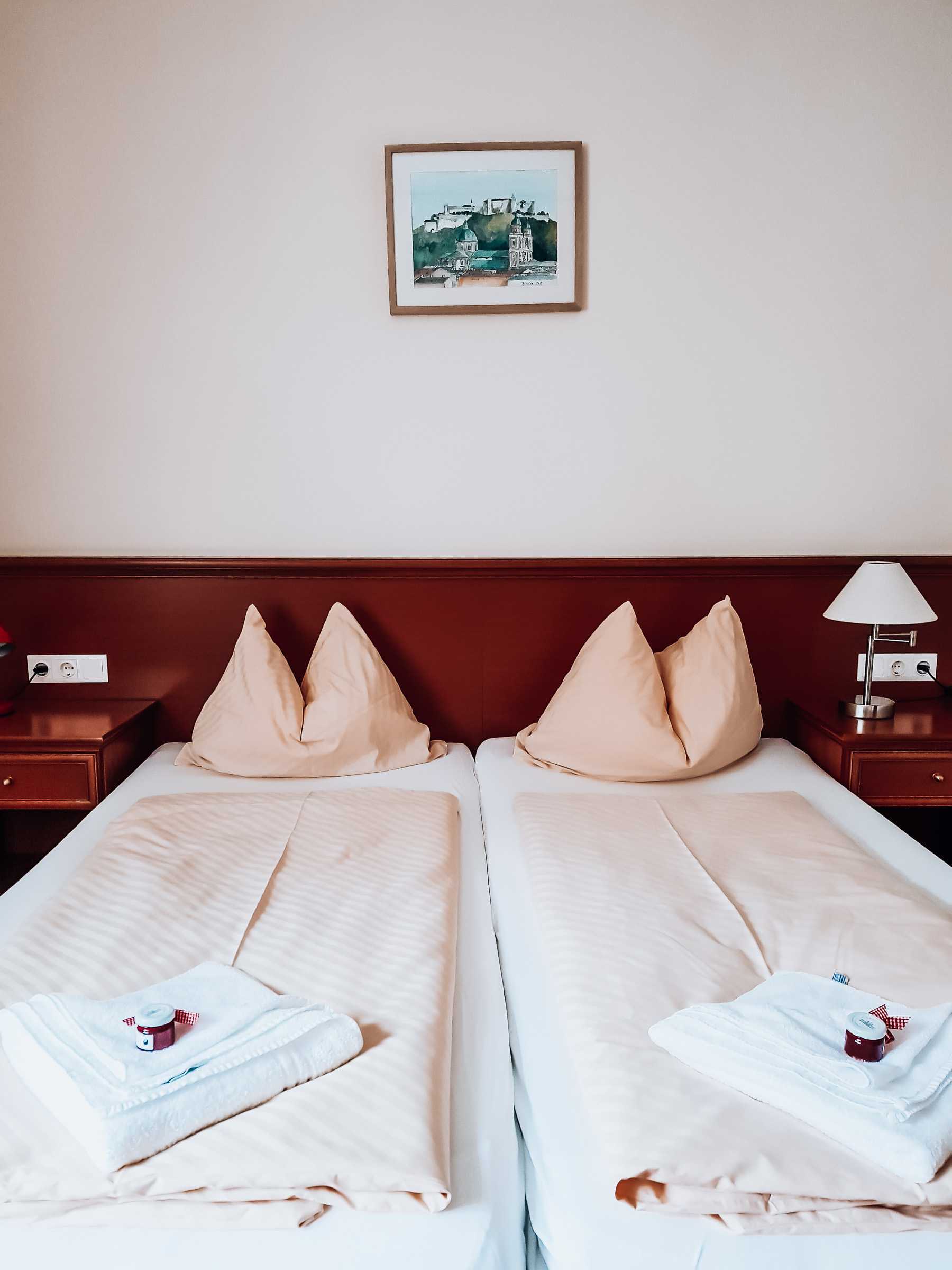
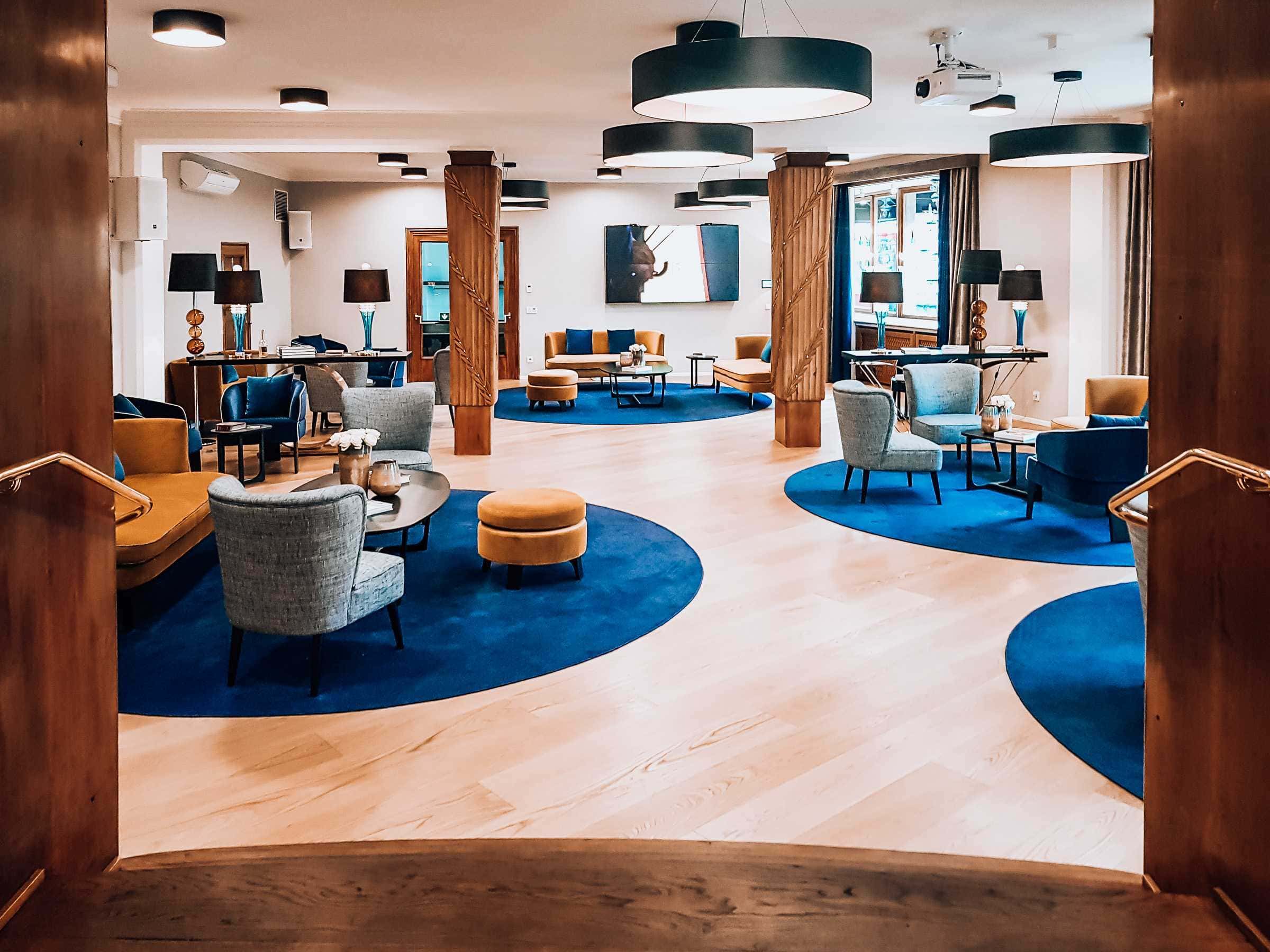
The Hotel Stein, founded in 1399, is Salzburg’s oldest hotel and was recently completely renovated with great attention to detail and an abundance of art. Salzburg is often described as the most Italian city north of the Alps, a reputation to which a Venetian architect contributed in the 17th century. At the Hotel Stein, this connection between Salzburg and Venice is being revived under the motto “Salzburg meets Venice” —and of course, I couldn’t contain my excitement, especially since I’d just been to Venice two weeks ago and had fallen so in love with the city.
If your budget allows, you should stay here – this hotel is so cozy!
On the other hand, if you don’t want to splash out quite so much, simply enjoy the magnificent view on the terrace of the hotel’s own rooftop bar Seven Senses with an Airone Spritz (an Italian bitter somewhere between Ramazzotti and Aperol, which is only available here in Salzburg and the surrounding area!) You won’t regret it!
Bärenwirt
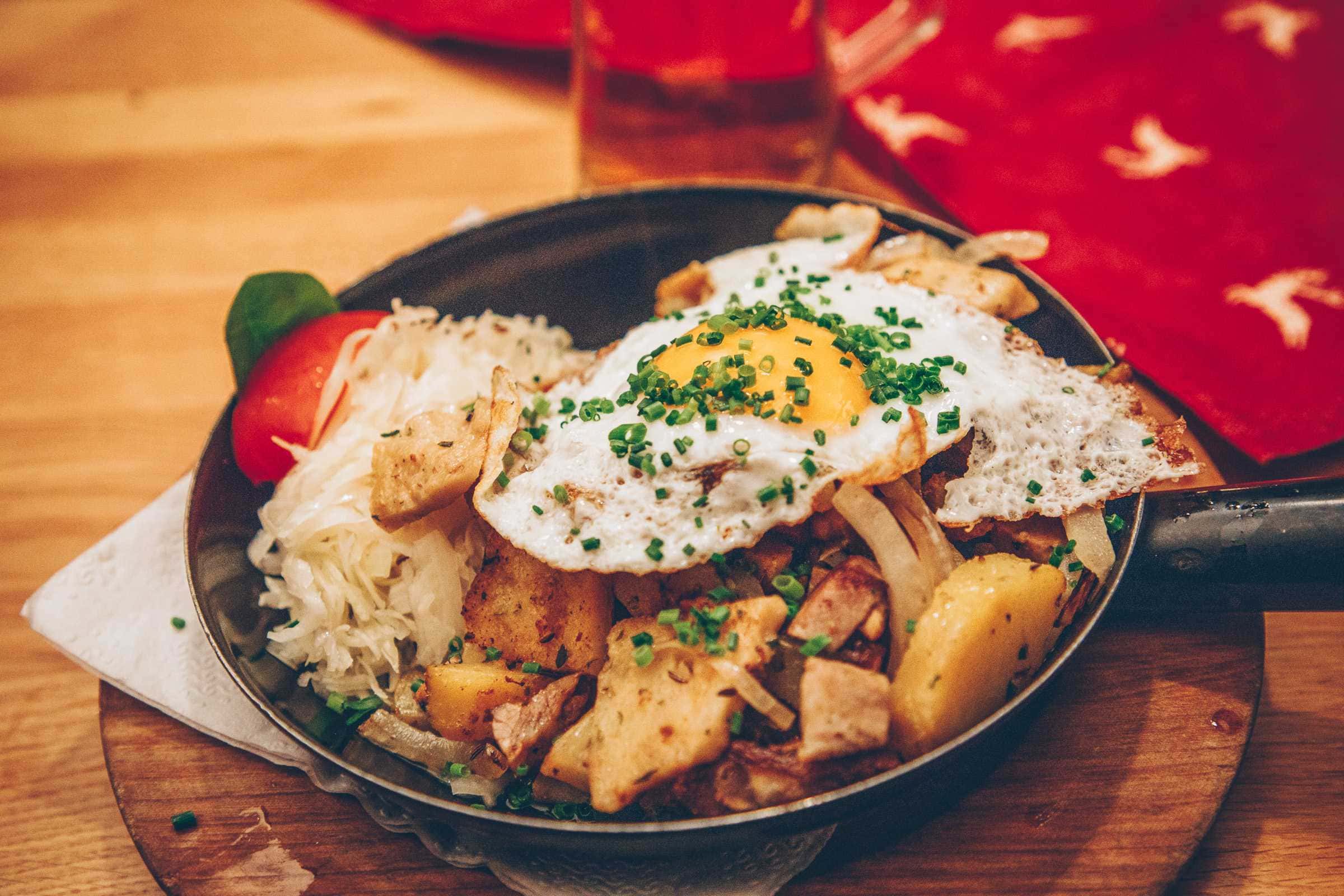
Quaint, classic, delicious. The name almost suggests it, but the addition “for the hunger (Bärenhunger) of a bear” in some dishes on the menu makes it clear: If you do not get full at the Bärenwirt, you are beyond help. My recommendation: beef goulash with football-sized dumplings. If you are really hungry!
Augustiner Bräustübl at Kloster Mülln
Growing up in the Ruhr area, between coal furnaces and breweries, beer always reminds me of home. On hot summer days I love a freshly tapped, cool beer as much as a fine Aperol Spritz. No need to mention that I felt at home immediately at the Augustiner Bräustübl.
You drink your beer from bucket-sized clay mugs here, pick one from a shelf yourself and hold it under cool water so that the beer stays nice and cold. You can buy food at one of the stalls inside, where you can buy everything from Leberkäse to finely sliced radish to sweet pastry like Schaumrollen – or you can bring your snacks from home, which I think is absolutely brilliant. Only beer must be bought on site, otherwise you can picnic here as you wish. And the atmosphere in the beer garden couldn’t be better: Young people sit here next to old people, original Salzburgers next to tourists, people in traditional costumes next to fashionistas, and everyone enjoys the extremely drinkable Augustiner.
Herr Leopold
Finding an open coffee house on Sundays away from the usual tourist attractions is not so easy. Salzburgers love their coffee house, but apparently not on Sundays. So you take what comes, and the Mr. Leopold is the most beautiful emergency solution of all. Foodies will be delighted with Buchteln and Strudel, fresh from the oven and bathed in creamy, warm vanilla sauce – and design junkies should take a look at the stylish wallpaper in the ladies’ room after the wonderful interior design. Definitely worth a visit.
Ludwig Burger
At Ludwig Burger you get probably the best burgers in town. Everything is homemade, from the burger to the ketchup(!). And the vegan mushroom patty is so good that even I as an absolute meat lover would immediately switch a regular burger for it.
Café Würfelzucker
After I already landed here on my first visit, I had to have another apple strudel at Café Würfelzucker: hand-pulled, freshly steamed and served in the coziest ambience right on the Salzach. Yum.
Pauli Stubm: rustic and cozy
The Pauli Stubm is a very cosy, iconic restaurant tucked away in a small alleyway in the old town and serves really hearty food! There’s a night-time establishment two doors down, if you know what I mean… and I mention this because even restaurants like this just look pretty here in picturesque Salzburg.
A few houses further on, at number 30, is the house of Salzburg’s last executioner from the medieval ages, by the way, for those who like to get a little spooky.
More insider tips for Salzburg
By the way: Salzburg, as an old city of churches, has even more spooky stories to share! If you’re interested, just book a spooky tour with Sabine—she knows just about every macabre medieval tale there is and tells them in a highly entertaining way during a tour that’s a little out of the ordinary. I highly recommend it!
Are you more interested in the small and quirky secrets of Salzburg? There are plenty of them in this historic city; I was also quite amazed! Then hop over to my article about churches in Salzburg – there are some interesting spots that you won’t find in a travel guide so quickly!
If you are only in Salzburg for one day, then I recommend my guide Salzburg in one day – and you can see the most important sights in Salzburg in short time!
Note: This article was produced in collaboration with Tourismus Salzburg.
What to do with a day off in Linz, Austria? I landed in Linz for a day, but wanted to do something different! So I decided to spend the day in nearby Salzburg! It takes a good hour to get from Linz to Salzburg by train, so it’s perfect for a day trip. And I’ve always wanted to visit Salzburg. History. Culture. Mozart. Mountains. And anyway. Millions of tourists who are visiting Salzburg every year can’t be wrong. Besides, Salzburg is really good to explore in one day! In this article, I’ll show you what you can see in one day in Salzburg and share some helpful tips!
The man on the Golden Sphere in front of Hohensalzburg Fortress
Discover Salzburg in one day: Start in the Old Town
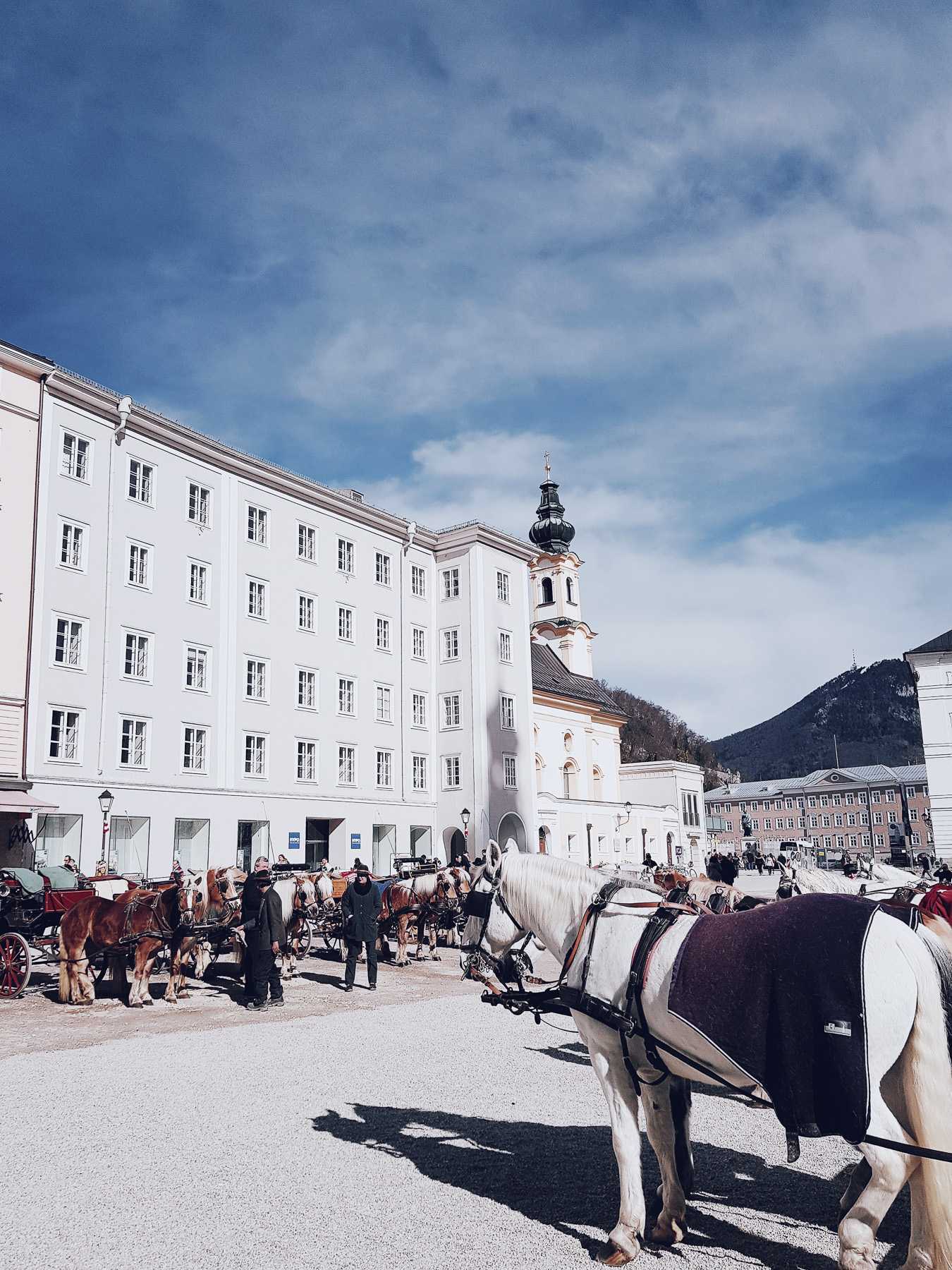
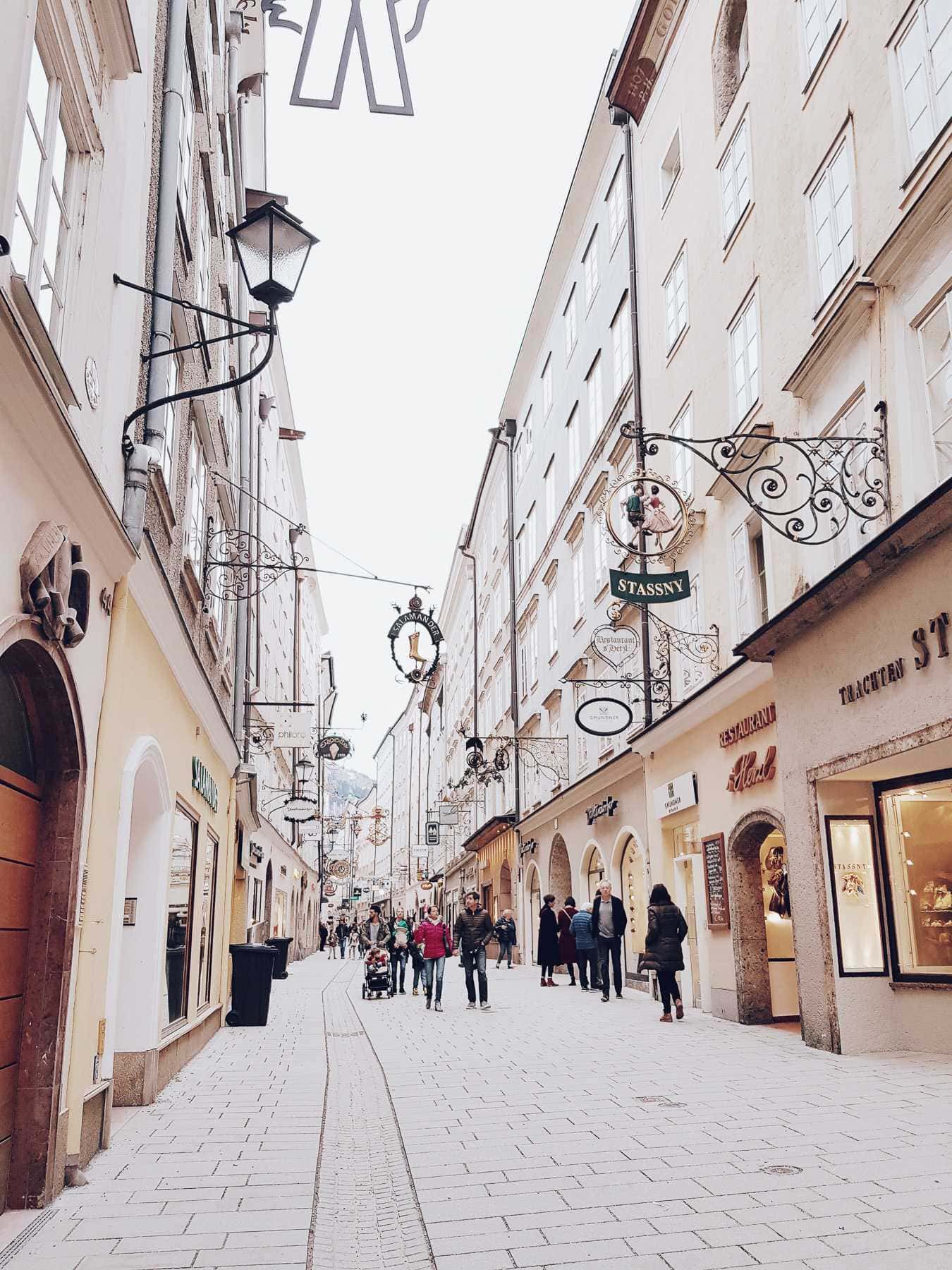
The nice thing about Salzburg for a day trip: everything is within walking distance. Perfect if you are traveling without a car and by train like me! The main train station is outside the old town on the other side of the Salzach River, but you’ll in the middle of town by bus in just 10 minutes . Right in the middle of this lovely old town dream in pastel colors. The alleys of the old town are small and narrow, sometimes crowded, sometimes surprisingly empty, but always neat and pretty to look at.
Tip: With the 24-hour Salzburg Card, you’ll save on admission to most attractions and can use public transportation, the Mönchsberg funicular, and the Festungsbahn (both of which take you to the best viewpoints over Salzburg) for free.
In the middle of the old town: Salzburg Cathedral
In the Old Town, you’ll find magnificent buildings like Salzburg Cathedral —which even if you’re not a fan of churches, you should see from the inside. The restored ceiling paintings are truly impressive.
Mozart. Mozart. Mozart everywhere. For those who have zero knowledge of classical music, Salzburg is perhaps only half as interesting. Salzburg lives from the most famous son of the city, the composer Wolfgang Amadeus Mozart, and at every corner you’ll see something with his name on it. There are Mozartkugeln, Mozart fridge magnets, Mozart postcards and all kind of Mozart souvenirs in every store, every pub, every supermarket.
So I also had to include a little bit of Mozart into my day as well. In Salzburg, both Mozart’s birthplace and his later home can be visited, and I opted for the former. Although I was worried I’d end up in a small museum with numerous tour groups, because Mozart’s birthplace is one of the must-sees in Salzburg and often very crowded.
More places in Salzburg for Mozart fans can be found here: Mozart in Salzburg
But it wasn’t like that in the end. The house/museum is quite spacious (the Mozart’s were a wealthy family) and it wasn’t as crowded as expected. With 11 euros, the entrance fee is also pretty expensive. But it’s a must-see in Salzburg. And the exhibition is really worth it.
With the Salzburg Card, however, you get free admission there, just like at many other attractions—unfortunately, I didn’t find that out until afterward. It’s worth taking the time to compare options—you can save a lot of money that way!
Salzburg from above: Is the view better from the Mönchsberg or the Fortress Hohensalzburg?
“You absolutely have to go up the Mönchsberg,” another friend gave me as the ultimate advice. It would probably be nicer than on top of the fortress Hohensalzburg, which is always well attended. Crowds are not my thing anyway, so I decided to up to the Mönchsberg. How convenient: To get to the top, you can just take an elevator. Which in my case was a good time saver, since I had to slowly make my way back to Linz.
But the view from Mönchsberg of the old town, the fortress and snow-capped mountains in the background is really worth it. In addition, there is a museum of modern art up there, the Museum der Moderne Salzburg, which is very impressive!
If you want to do both: Then it’s definitely worth buying the Salzburg Card—with it, you can ride the Festungsbahn up to Hohensalzburg Fortress for free, and you can use the elevator up the Mönchsberg for free!
Cafés in Salzburg
I still haven’t figured out how to order coffee in Austria. Kleiner Brauner, Einspänner, Verlängerter, Kapuziner, Fiaker… it’s a whole science! And I never get which one is which! I But I found a cozy café to satisfy my sudden hunger for original Austrian cuisine: Café Würfelzucker serves handmade apple strudel! You can also enjoy the perfect view of the Salzach in alpine flair.
Salzburg is really pretty. I couldn’t say otherwise. And I would definitely come back again if I get the chance. The surrounding countryside is also worth a visit! The alleys of Salzburg are really photogenic and the overall vibe is really one of kind. It definitely feels like being in a fairytale!
Where to stay in Salzburg
Do you want to spend more than just a day in Salzburg? Find the best hotels deals here: Best hotels in Salzburg
In Salzburg, there are also 6 accomodations operated by religious institutions. These places are often cheaper than others (Salzburg is otherwise rather expensive). You can learn more about these accommodations in my article Salzburg and its churches.
With illustrious cities such as Edinburgh and Glasgow, Aberdeen is a real underdog among Scotland’s cities. Why a visit is still worthwhile, I tell you in this article! And at the same time show you the Aberdeen sights that you should definitely see.
Aberdeen: The Silver City
On the flight to Aberdeen, a passenger warned me: “Aberdeen is really a very special city. Everything is gray, the entire city. I bet you’ve never seen so much gray in one place in your life!” Ha. No way. As a Ruhrpottkind, I am well acquainted with gray cities and depressing environments. Not that I am misunderstood, the Ruhrpott I love to this day hot and hearty – but beautiful… beautiful is watt different. So I grew up in the middle of the gray and Aberdeen is supposed to be even grayer? But Aberdeen had more to offer than expected…
It came as it had to come, our guest was actually right. Everything, but really everything was gray. Even the sky. Fifty shades of grey live, so to speak. Somehow, this high up in the north of Scotland, the sun doesn’t really come out in the fall. But it wasn’t bad at all, Aberdeen impresses as well.
Aberdeen’s Castlegate neighborhood is named after Aberdeen Castle, which once stood here. Today, the Salvation Army Citadel is located here.
Why is everything gray in Aberdeen?
All the gray that surrounds you in Aberdeen is actually not so pale gray. The vast majority of house facades are made of granite – if you get closer, you can see a slightly silvery shimmer, which becomes even more beautiful when the (admittedly rare) sun shines on it. Normally, you would never build such buildings with granite – it would be way too expensive! But near Aberdeen are large deposits of granite, which in the past provided much prosperity in the region.
Predominant house color in Aberdeen, Scotland: gray.
The Maritime Museum
No wonder Aberdeen has a huge maritime museum, the Aberdeen Maritime Museum. Besides granite, there’s also a lot of oil offshore in the area! And in the Maritime Museum you can learn a lot about ships, oil production and the history of Aberdeen.
Visitor magnet in Aberdeen: The Aberdeen Maritime Museum.A port city through and through: Huge ships are moored in the port of Aberdeen, which lives particularly from oil production in the North Sea.
Cemetery walk at St. Nicholas Church
Okay, I’m not usually a big fan of cemeteries. But this one is really special. Everything in this cemetery is overgrown with bright green moss – the only colorful thing in all the Aberdeen gray all around. By the way, the church is located in the middle of Union Street, the big shopping street in the center of the city. So if you’re out shopping anyway, you can take a little stroll here.
Eerily beautiful: The moss-covered graveyard of St. Nicholas Church in the center of Aberdeen.
Shopping in Aberdeen
In England in general, yes, I love shopping for clothes – if you’re not a normal size, the wide selection of petite sizes in pretty much all stores is a real dream! (And don’t even get me started on the gourmet department at Marks&Spencer…. ) It’s all available in Aberdeen, too. And for fans of Jamie Oliver: This.
Aberdeen food tip: Tea time – the Five O’Clock Tea!
I am an absolute tea drinker, so of course an original teatime is part of it. Best still with scones, jam and clotted cream. Mmh.
Also a must in Aberdeen: Afternoon Tea with scones, clotted cream and jam.
Have you ever been to Aberdeen? Do you have any suggestions for my next Aberdeen overnight? Keep it coming. (And if there are any Berliners reading along… where on earth can I get clotted cream for a real British five o’clock tea)?
***
More to read:
For more about the Brits and their tea, check out Britblog.












 The Pantheon is a domed structure and was the inspiration for several famous buildings, such as the Capitol in Washington. In the middle of the dome there is a big hole as the only source of light – and when it rains, well, it just rains right into the Pantheon. Whereby the floor was designed so that all rainwater simply drains away. Quite fascinating.